St Aleth of Dijon (1064-1106)Laywoman, Mother of St Bernard (of Clairvaux) St Gwerir of Liskeard St Henry of Gheest St Hildebert of Ghent St Peter of Poitiers (c1130-1215) Bishop
St Theodulus of Thessalonica St Theonas of Egypt St Tigernach of Clogher
St Zosimus of Palestine (Died c560) Priest, Monk, Hermit. Priest, Monk, Hermit. As already reported in the legendary life of St Mary of Egypt, St Zosimus, a Monk and Hermit, is the one who discovers St Mary in the desert and gave her Holy Communion shortly before her death. The Roman Martyrology reports: “In Palestine, the Anchorite, St Zosimus, who buried the remains of St Mary of Egypt.” His Life: https://anastpaul.com/2023/04/04/saint-of-the-day-4-april-st-zosimus-of-palestine-c-460-c-560-priest-hermit/
Martyred in Cairo François de la Terre de Labour Nicolas of Montecorpino
Martyrs of Thessalonica – 14 Saints: Fourteen Christians who were Martyred together, date unknown. No other information, except the names of 12 of them, has survived – Ingenuus, Julianus, Julius, Matutinus, Orbanus, Palatinus, Paulus, Publius, Quinilianus, Saturninus, Successus, Victor and two whose names have not come down to us. Agathopus the Deacon, Theodulus the Lector.
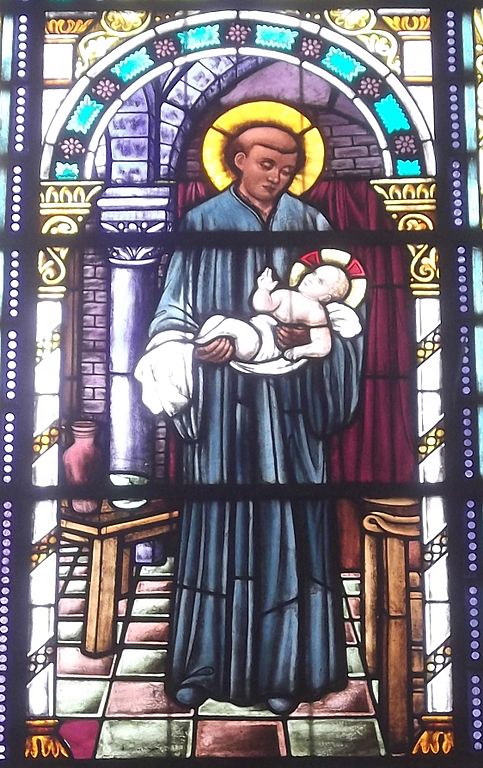
St Benedict of Palermo OFM (1526-1589) Lay Friar of the Order of Friars Minor of the Observance, Confessor, spiritual counsellor, Apostle of the poor and needy, graced with the gift of healing the sick. St Benedict’s gifts for prayer, his love for the Blessed Virgin and the Infant Jesus and the wisdom displayed in his guidance of souls, earned him, a reputation for holiness, throughout Sicily. Following the example of St Francis, Benedict kept seven 40-day fasts throughout the year. He also slept only a few hours each night. His body is incorrupt. Kind and Holy Benedict: https://anastpaul.com/2023/04/03/saint-of-the-day-3-april-st-benedict-of-palermo-ofm-1526-1589-lay-friar/
Blessed Gandulphus of Binasco OFM (c1200-1260)Priest, Friar of the First Order of St Francis. He was a renowned Preacher mainly in Sicily, Hermit, Miracle-worker . He was one of those who entered the Order while the Seraphic Father was still alive and the life he led was one of great self-abnegation. He was Beatified on 10 March 1881 by Pope Leo XIII. Biography: https://anastpaul.com/2022/04/03/saint-of-the-day-3-april-blessed-gandulphus-of-binasco-ofm-c-1200-1260/
Martyrs of Greece – 4 Saints: A group of young Christian men who protested to City authorities that gifts to temples of pagan gods should be used to feed the poor during a regional famine. When the officials refused, the group went to local temples, broke up the idols and fixtures and gave the gold and silver bits to the poor to use to buy food. The group was imprisoned and executed. The only other thing we know about these Martyrs are the names – Bythonius, Elpideforus, Dius and Galycus. They Died in the 3rd Century at an unknown location in Greece.
Martyrs of Tomi (Romania) – 9 Saints who were Martyred together. We know nothing else about them but the names – Arestus, Benignus, Chrestus, Evagrius, Papo, Patricius, Rufus, Sinnidia and Zosimus. They Died at Tomi, Scythia (modern Constanta, Romania).
St Theodulus of Thessalonica St Theonas of Egypt St Tigernach of Clogher St Zosimus of Palestine (Died c560) Priest, Monk, Hermit
Martyred in Cairo François de la Terre de Labour Nicolas of Montecorpino
Martyrs of Thessalonica – 14 Saints: Fourteen Christians who were Martyred together, date unknown. No other information, except the names of 12 of them, has survived – Ingenuus, Julianus, Julius, Matutinus, Orbanus, Palatinus, Paulus, Publius, Quinilianus, Saturninus, Successus, Victor and two whose names have not come down to us. Agathopus the Deacon, Theodulus the Lector.
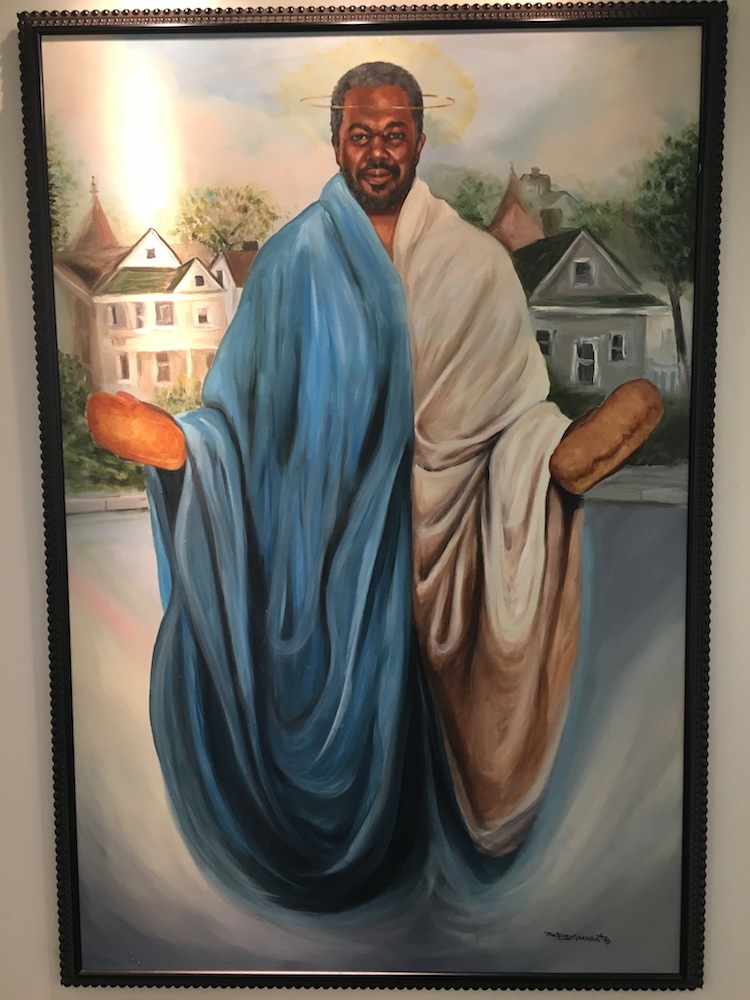
Saint of the Day – 3 April – St Benedict of Palermo OFM (1526-1589) Lay Friar of the Order of Friars Minor of the Observance, Confessor, spiritual counsellor, Apostle of the poor and needy, graced with the gift of healing the sick. Born as Benedetto Manasseri in1526 in San Fratello, Messina, Sicily and died on 4 April 1589 (aged 62–63) in Palermo, Sicily of natural causes. Patronages – African missions and Missionaries to Africa, Black Catholic Americans, African Americans, black people, Palermo, San Fratello. Also known as – Benedict the Moor, Benedict the Black, Benedict the African, Benedetto. His body is incorrupt. Additional Memorial – 4 April. St Benedict’s gifts for prayer, his love for the Blessed Virgin and the Infant Jesus and the wisdom displayed in his guidance of souls, earned him, a reputation for holiness, throughout Sicily. Following the example of St Francis, Benedict kept seven 40-day fasts throughout the year. He also slept only a few hours each night.
Benedict was born to Cristoforo and Diana Manasseri, Africans, who were taken as slaves in the early 16th Century to San Fratello, a small town near Messina, Sicily. They were given Italian names and later converted to Christianity.
Benedict’s parents were granted freedom for their son before his birth because of their “loyal service.” Like most peasants, Benedict did not attend any school and was illiterate. During his youth, he worked as a shepherd and was quick to give what he had earned to the poor.
When he was 21 years old, he was publicly insulted for the colour. of his skin His forbearance and silence was noted by the leader of an independent group of hermits on nearby Monte Pellegrino, who followed the Rule for Hermit life written by St Francis of Assisi.
Benedict was invited to join that community and shortly thereafter, he gave up all his earthly possessions and joined them. He served as the cook for the community and at the age of twenty-eight succeeded Jerome Lanze as the Superior of the group.
In 1564 Pope Pius IV disbanded independent communities of hermits, ordering them to attach themselves to an established religious Order, in this case, the Order of Friars Minor. As soon as Benedict was professed as an official Friar of the Franciscans, he was assigned to Palermo to the Franciscan Friary of St Mary of Jesus. He started there as the cook,but, showing the degree of his advancement in the spiritual life, he was soon appointed as the Master of Novices and later, as Guardian of the community, although he was a lay brother rather than a Priest and was illiterate.
Benedict accepted the promotion and successfully helped the Convent adopt a stricter version of the Franciscan Rule of life. He was widely respected for his deep, intuitive understanding of theology and Scripture and was often sought for counselling. He also had a reputation as a healer of the sick. Combined, these characteristics continued to draw many visitors to him. As he enjoyed cooking, he returned to kitchen duty in his later years.
Benedict died at the age of around 63 on the very day and hour which he had predicted. At the entrance of his cell in the Franciscan Friary of St Mary of Jesus, there is a plaque with the inscription: “Benedict was quickly invited to join that community, and shortly thereafter he gave up all his earthly possessions and joined them. He served as the cook for the community and at the age of twenty-eight succeeded Jerome Lanze as leader of the group.[3]
In 1564 Pope Pius IV disbanded independent communities of hermits, ordering them to attach themselves to an established religious Order, in this case, the Order of Friars Minor. Once a friar of the Order, Benedict was assigned to Palermo to the Franciscan Friary of St. Mary of Jesus. He started at the friary as a cook, but, showing the degree of his advancement in the spiritual life, he was soon appointed as the master of novices, and later as Guardian of the community, although he was a lay brother rather than a priest, and was illiterate.
Benedict accepted the promotion, and successfully helped the order adopt a stricter version of the Franciscan Rule of life. He was widely respected for his deep, intuitive understanding of theology and Scripture, and was often sought for counseling. He also had a reputation as a healer of the sick. Combined, these characteristics continued to draw many visitors to him. As he enjoyed cooking, he returned to kitchen duty in his later years.
Benedict died at the age of around 63 on the very day and hour which he had predicted. At the entrance of his cell in the Franciscan Friary of St Mary of Jesus, there is a plaque with the inscription: “This is the cell where Saint Benedict lived” with the dates of his birth and death – 1526 and 1589.
Upon his death, King Philip III of Spain ordered the construction of a magnificent tomb to house his remains, in the Friary Church. He was Beatified by Pope Benedict XIV in 1743 and Canonised in 1807 by Pope Pius VII. His body was found incorrupt during the Canonisation process.
Benedict is remembered for his patience and understanding when confronted with racial prejudice and taunts. He was declared a Patron Saint of Catholic African Americans, along with the Dominican lay brother, St Martin de Porres. In the United States, at least seven historically Black Catholic Parishes bear his name.
Blessed Gandulphus of Binasco OFM (c 1200-1260)Priest, Friar of the First Order of St Francis. He was a renowned Preacher mainly in Sicily, Hermit, Miracle-worker . He was one of those who entered the Order while the Seraphic Father was still alive and the life he led was one of great self-abnegation. He was Beatified on 10 March 1881 by Pope Leo XIII. Biography: https://anastpaul.com/2022/04/03/saint-of-the-day-3-april-blessed-gandulphus-of-binasco-ofm-c-1200-1260/
Martyrs of Greece – 4 Saints: A group of young Christian men who protested to City authorities that gifts to temples of pagan gods should be used to feed the poor during a regional famine. When the officials refused, the group went to local temples, broke up the idols and fixtures and gave the gold and silver bits to the poor to use to buy food. The group was imprisoned and executed. The only other thing we know about these Martyrs are the names – Bythonius, Elpideforus, Dius and Galycus. They Died in the 3rd Century at an unknown location in Greece.
Martyrs of Tomi (Romania) – 9 Saints who were Martyred together. We know nothing else about them but the names – Arestus, Benignus, Chrestus, Evagrius, Papo, Patricius, Rufus, Sinnidia and Zosimus. They Died at Tomi, Scythia (modern Constanta, Romania).






 AnaStpaul
You must be logged in to post a comment.