Posted in DOMINICAN OP, franciscan OFM, MARIAN TITLES, SAINT of the DAY

The Third Sunday in Lent Sunday, Notre-Dame des Anges / Our Lady of the Angels of Toulouse, France (1212), Blessed Benedetto, the Author of the Angelus and the Saints for 3 March

The Third Sunday in Lent Sunday

St Anselm of Nonantola
St Arthelais of Benevento
St Calupan
St Camilla
St Cele-Christ

Bl Pierre-René Rogue
St Sacer
St Teresa Eustochio Verzeri
St Titian of Brescia Bishop and Confessor
St Winwallus of Landévennec

Posted in DOMINICAN OP, EMBER DAYS, franciscan OFM, MARIAN TITLES, SAINT of the DAY

EMBER FRIDAY – FAST AND ABSTINENCE, First Friday, Notre-Dame des Anges de Toulouse / Our Lady of the Angels of Toulouse, France (1212) and Memorials of the Saints – 3 March

EMBER FRIDAY – FAST AND ABSTINENCE

FIRST FRIDAY

Notre-Dame des Anges de Toulouse / Our Lady of the Angels of Toulouse, France (1212) – 3 March:
HERE:

https://anastpaul.com/2021/03/03/our-lady-of-angels-of-toulouse-france-1212-and-memorials-of-the-saints/

St Anselm of Nonantola
St Arthelais of Benevento
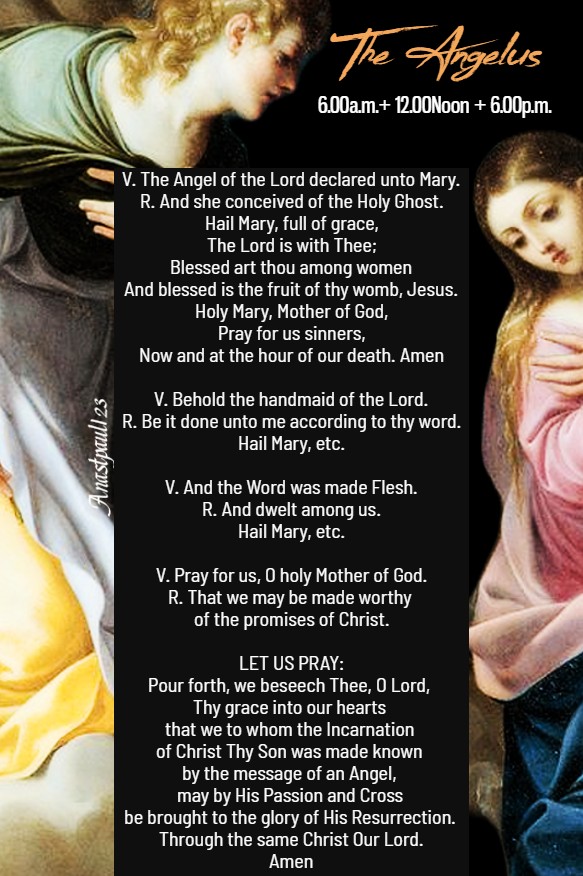
Blessed Benedetto Sinigardi da Arezzo OFM (1190-1282) Friar of the Order of Friars Minor, who received the Habit directly from St Francis of Assisi. Although rarely mentioned, Blessed Benedetto is the Author of the Angelus!
St Calupan
St Camilla
St Cele-Christ

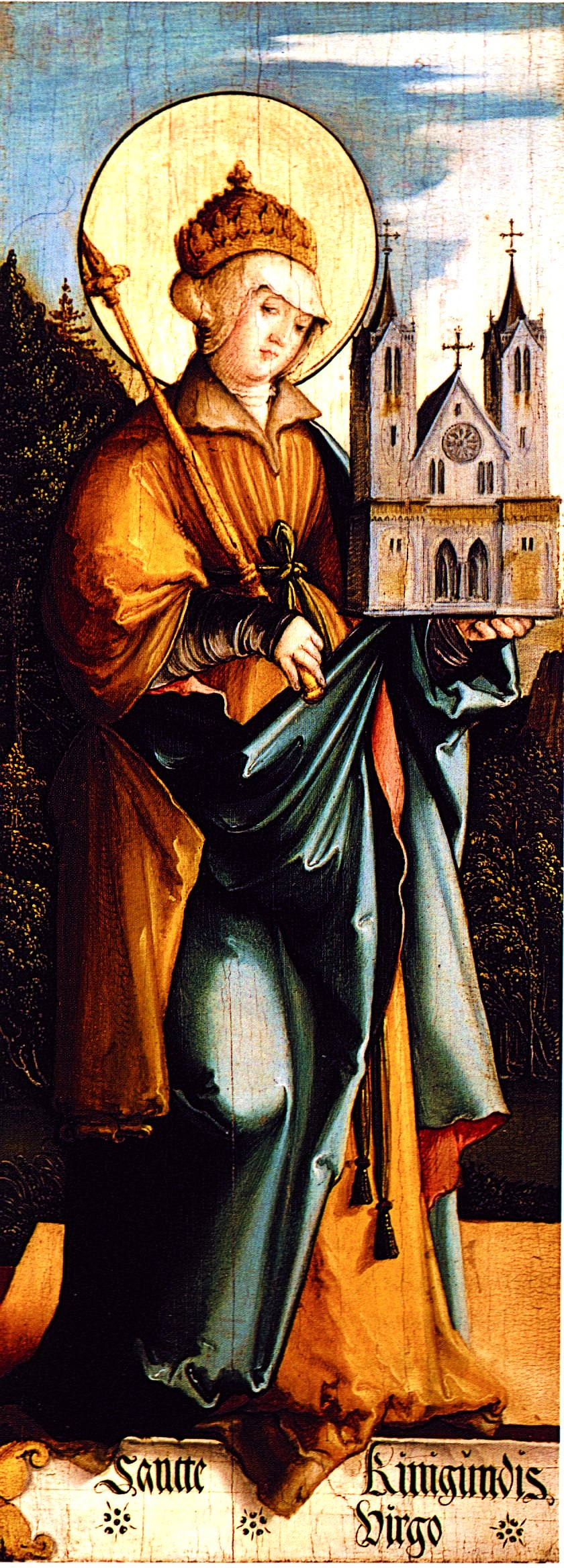
St Cunegundes (c 975-1040) Empress of the Holy Roman Empire, Nun, she took a vow of Virginity before her marriage, which, after a miracle was upheld by her husband, the King (also a Saint). Founder of Monasteries and Churches, Nun in one of her Convents, Apostle of Charity. Born in c 975 and died in 1040 of natural causes.
Biography:

https://anastpaul.com/2022/03/03/saint-of-the-day-3-march-st-cunegundes-c-975-1040/

St Foila
Bl Frederick of Hallum
St Gervinus
Bl Innocent of Berzo
Bl Jacobinus de’ Canepaci
St Lamalisse
St Non

Blessed Pietro de Geremia OP (1381-1452) Priest and Friar of the Order of Preaches, renowned and brilliant Preacher, Miracle-worker. In addition to his many miracles and conversions of sinners, he founded the University of Catania and assisted in the establishment of several Dominican Monasteries.
His Life:

https://anastpaul.com/2021/03/03/saint-of-the-day-3-march-blessed-pietro-de-geremia-op-1381-1452-dominican-priest/

Bl Pierre-René Rogue
St Sacer
St Teresa Eustochio Verzeri
St Titian of Brescia
St Winwallus of Landévennec

40 Martyrs in North Africa – A group of Christians Martyred together in North Africa, date unknown. No details have survived, but we know these names – Antonius, Artilaus, Asclipius, Astexius, Basil, Bosimus, Carissimus, Castus, Celedonius, Claudianus, Cyricus, Donata, Emeritus, Emeterius, Euticus, Felix, Fortunatus, Frunumius, Gajola, Georgius, Gorgonius, Hemeterus, Isicus, Janula, Julius, Luciola, Luciolus, Marcia, Marinus, Meterus, Nicephorus, Papias, Photius, Risinnius, Sabianus, Savinianus and Solus

Martyrs of Pontus – 3+ Saints – A large group of Christians Martyred together in the persecutions of Emperor Maximian Galerius and governor Ascleopiodato. We have some details on three of them – Basiliscus, Cleonicus and Eutropius. 308 in Pontus (in modern Turkey)
Martyrs of Caesarea;
Asterius
Marinus

Martyrs of Calahorra:
Cheledonius
Emeterius

Martyrs of Gondar, Ethiopia:
Bl Antonio Francesco Marzorati
Bl Johannes Laurentius Weiss
Bl Michele Pío Fasol

Posted in SAINT of the DAY

Saint of the Day – 3 March – St Cunegundes (c 975-1040)

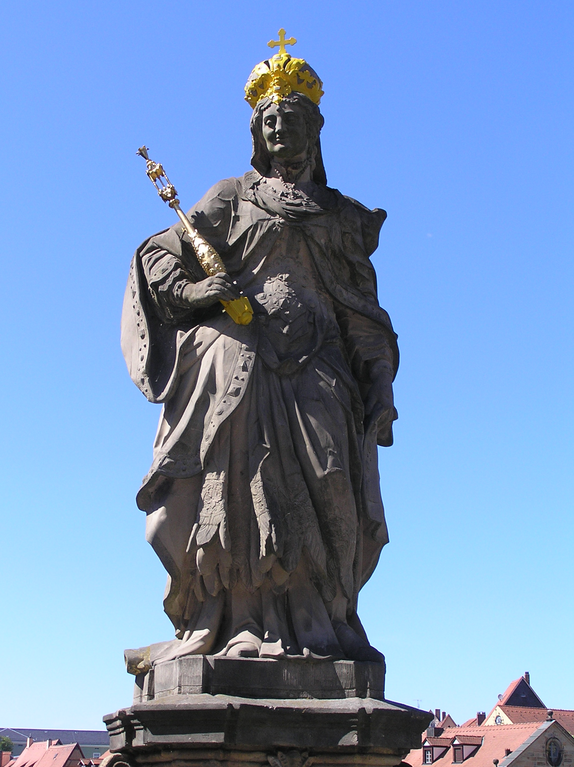
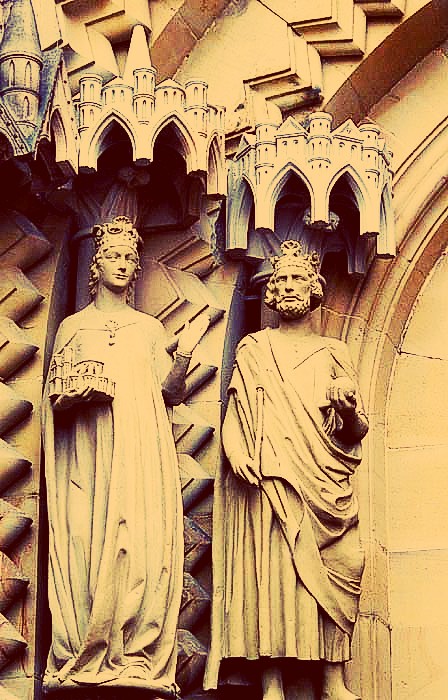
Saint of the Day – 3 March – St Cunegundes (c 975-1040) Empress of the Holy Roman Empire, Nun, she took a vow of Virginity before her marriage, which, after a miracle was upheld by her husband, the King (also a Saint). Founder of Monasteries and Churches, Nun in one of her Convents, Apostle of Charity. Born in c 975 and died in 1040 of natural causes. Patronages – Bamberg, Germany, Archdiocese of, Luxembourg, Lithuania.Also known as – Cunegundes of Luzembourg, Chunigundis, Cunnegunda, Cunigunde, Cunegonda, Kinga, Kunegunda, Kunigunde.

Saint Cunegundes was the daughter of Siegfried I, one of eleven children. Siegfried was the first Count of Luxemburg and his pious wife was Hadeswigee. From her cradle, her virtuous parents instilled into their daughter the most tender sentiments of piety.

When she was of an age to marry, they chose for her spouse Saint Henry, Duke of Bavaria, who at the death of the Emperor Otto III, was named King of Bavaria and the Holy Romans and was crowned on 6 June 1002. Queen Cunegundes was crowned at Paderborn on Saint Laurence’s day.

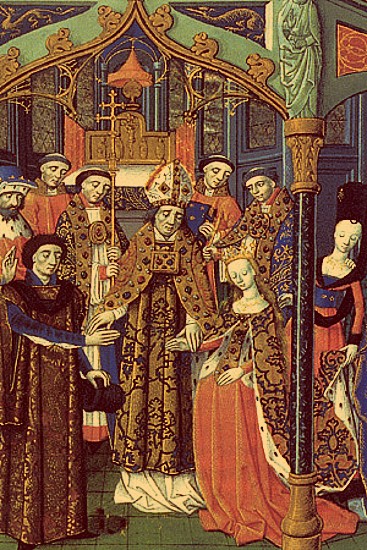
In the year 1014 she went with her husband to Rome and they received the Imperial Crown from the hands of Pope Benedict VIII. With Saint Henry’s consent, before their marriage, she had made a vow of perpetual Virginity. Afterwards, certain vile accusations were made against her chastity and the holy Empress, to remove the scandal of such a slander, trusting in God to prove her innocence, walked over red-hot ploughshares without being hurt. The Emperor in turn, renounced and condemned, his own too scrupulous fears and credulity and from that time on, they lived in the strictest union of heart, working together to promote piety and God’s honour in every sphere.

The Crowning of Sts Henry and Cunegonde’s by Pope Benedict VIII

Going once to make a retreat in Hesse, Saint Cunegonde’s fell dangerously ill and she made a vow to found a Monastery at Kaffungen, in the Diocese of Paderborn, if she recovered. This she executed in a stately manner and gave it to Nuns of the Order of Saint Benedict. Before it was finished, Saint Henry died in 1024. She earnestly recommended his soul to the prayers of the empire and especially to her dear Nuns and expressed her longing desire to join the Sisters.

She had already exhausted her treasures in founding Bishoprics, Churches and Monasteries and in relieving the poor, and she had, therefore,little left to give. But intending to embrace perfect evangelical poverty, to renounce all things in order to serve God without obstacle, she assembled a great number of prelates at the dedication of her Church of Kaffungen, on the anniversary day of her husband’s death in 1025. After the Gospel was sung at Mass, she offered on the Altar a relic of the True Cross and then, putting off her imperial robes, clothed herself with a poor habit. Her hair was cut off and the Bishop gave her the Veil and a ring as a pledge of her fidelity to her heavenly Spouse.

After Cunegonde’s was consecrated to God in religion, she seemed to forget entirely that she had been an Empress and served as the least in the Convent, being persuaded that she was such, before God. She prayed and read a great deal, worked with her hands and took singular pleasure in visiting and comforting the sick. In this way, she passed the last fifteen years of her life.

When her last hour was drawing near, perceiving that they were preparing a cloth fringed with gold to cover her corpse after her death, she ordered it to be taken away and she could not rest until the promise was given, that she would be buried as a poor religious in her Habit. She died on the 3rd of March, 1040. Her body was carried to Bamberg and buried near that of her husband. She was solemnly Canonised by Pope Innocent III, in 1200.