Posted in MARIAN TITLES, SAINT of the DAY

Madonna del Pilerio, Italy (12th Century), Notre-Dame-de- Argenteuil / Our Lady of Argenteuil, Paris, France (c 500), The Seven Holy Founders and the Saints for 12 February

St Alexius of Kiev
St Ammonius of Alexandria
Bl Anthony of Saxony
St Anthony Kauleas of Constantinople (c829-901) Bishop

Bl Benedict Revelli
St Damian of Africa
St Damian of Rome
St Ethelwald of Lindisfarne

St Gaudentius of Verona (Died c465) Bishop

Bl Gregory of Tragurio
Bl Humbeline of Jully
St Julian of Alexandria

St Modestus of Alexandria
St Modestus of Carthage
St Modestus the Deacon
Bl Nicholas of Hungary
St Sedulius
Bl Thomas of Foligno

Posted in SAINT of the DAY

Saint of the Day – 12 February – Saint Goscelinus of Turin OSB (Died c 1053)

Saint of the Day – 12 February – Saint Goscelinus of Turin OSB (Died c 1053) Monk, Abbot. Died on 12 February c 1053 of natural causes. at his Monastery in Turin. Also known as – Goscelinus of San Solutore, Goslin, Goslino, Gozzelino, Gozzelinus.

In the Middle Ages, wars were continuous and severely tested entire populations, often already tried by hunger and epidemics. In most Cities, the highest authority was the Bishop. Turin, being part of a Marquisate with Susa, while undergoing the raids of the Hungarians and Saracens, had the Burgundians as particular enemies. Political instability also caused the malpractice of both the people and the clergy.

Around the year 1000, Bishop Gezone, a lover of the Monastic ideal, saw in the foundation of new Monasteries, a way to counter this moral decline. While St William of Montevergine founded the famous Abbey of Fruttuaria and St Giovanni Vincenzo illuminated the Abbey of St Michael with his holiness, a Benedictine Monastery was born in Turin at the Chapel of the the Protomartyrs of Turin, Sts Solutore, Adventore and Octavius.

The Monks, far from earthly affections, dedicated to prayer and the study of Sacred Scripture, humbly respected the vows of poverty, chastity and obedience. To love the Lord meant to love one’s neighbour and their example was of edification to all. Day and night the incessant prayers accompanied the various occupations to which each one was in charge. The task of the Monks was also to counter the spread of heresies.

The Monastery of St Solutore was founded in the year 1006 and one of the first young people who offered their life to God was Goscelinus.

Goscelinu belonging to the noble Turin Avari family, he was educated and instructed in literature and human sciences.

The religious vocation arrived early and, therefore, he renounced the world to embrace the Rule of St Benedict. His master was the first Abbot, Romanus, while his privileged companion was Atanasius.

Goscelinus respect for the Rule was exceptionable, no leniency was granted, even when he was sick. Most humble, he never dominated his companions although he was superior to most in education and doctrine. Fasts and penances were the weapon to fight the passions while food for the soul was the reading of spiritual books.

In 1031, although he had always declined all honour, he was elected Abbot. Everyone agreed on his appointment and he accepted to fulfill God’s will. He entrusted the care of material things to some trusted collaborators, while he only wished to take care of the spiritual ones. The observance of the Rule by all the Monks guaranteed the path of the community towards evangelical perfection and Goscelinus, first of all, was the model. He was very attentive to the poor, both to those of the surrounding area and to pilgrims, even at the cost of considerably impoverishing the Monastery’s food. Helping others in material needs meant being able to attend to those of the Spirit. The Lord watched over the Monks and they never lacked what they needed. Bishop Cunibert, for his part, made new donations (1048).

Loaded with hard work and above all merits, he died on 12 February c 1053. (some say 1051). He was venerated and esteemed by both the people and the clergy. Considered a Saint, his memory was handed down to the ancient writers of the Order. Unfortunately, however, time has not given us the manuscripts of those who, his contemporaries, had the opportunity to know him.

Goscelinus was buried humbly, as he had lived, but over the centuries, traces of his tomb were lost. It was only in 1472 that the sacred body dressed with a miter and crosier was found – an epitaph clearly indicated that this was our Saint. The whiteness of his bones aroused great astonishment, as if to testify to his holy life. The discovery had a wide effect and numerous were the graces that the people obtained through his intercession. The first miracle was granted to the court doctor, Michele Brutis.

The Monastery was destroyed by the French in 1536. Its relics, along with those of the Protomartyrs and of the Blessed Giuliano, had fortunately been placed in safety in the Consolata Monastery, also run by the Benedictines. It was the last Abbot of St Solutore, Vincent Parpaglia, who took care to give them a worthy location. During one of his missions to Rome, he met St Frances Borgia, third General of the Society of Jesus and Pope St Pius V. It was defined that the Jesuits, who had recently arrived in Turin, would build a Church dedicated to the three Turin Protomartyrs to welcome their remains, as well as the 2 Saints of the Monastery, St Goscelinus and St Giuliano.

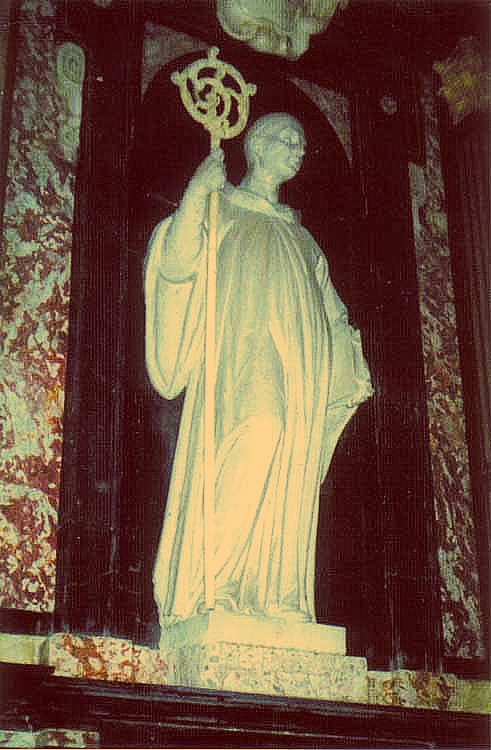
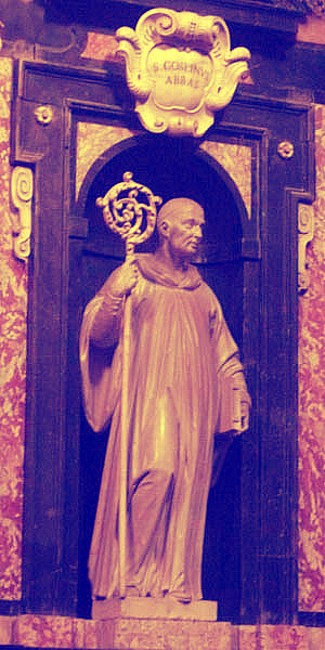
The translation of the five Saints was solemnly celebrated, in the presence of Duke Emanuele Filiberto di Savoia on 19 January 1575. . The relics of St Goscelinus were sealed in a Reliquary and kept with the others, first in the oratory, then in the Chapel of St Paul. Today, they are preserved under the his Statue. The memorial is locally fixed on 12 February.

Posted in MARIAN TITLES, SAINT of the DAY

Madonna del Pilerio, Italy (12th Century), Notre-Dame-de- Argenteuil / Our Lady of Argenteuil, Paris, France (c 500) and Memorials of the Saints – 12 February

Madonna del Pilerio, Italy (12th Century) – 12 February:
HERE:

https://anastpaul.com/2021/02/12/madonna-del-pilerio-our-lady-of-argenteuil-paris-france-and-memorials-of-the-saints-12-february/
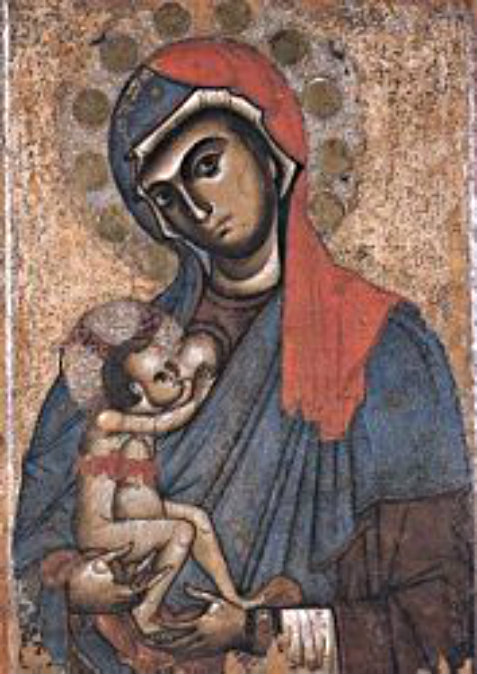
Notre-Dame-de- Argenteuil / Our Lady of Argenteuil, Paris, France (c 500) – 12 February: Cathedral of Our Lady of Argenteuil, Paris, built by King Clovis I containing a portion of the Seamless Garment of Christ.
All about this Marian Title:

https://anastpaul.com/2019/02/12/feast-of-our-lady-of-argenteuil-and-the-seamless-tunic-12-february/
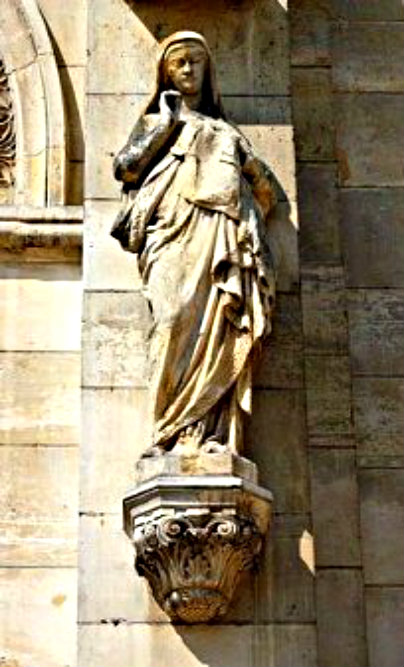
The Seven Holy Founders of the Order of the Blessed Virgin Mary (the Servites)
Pope Leo XIII Canonised them all on 15 January 1888. After the Canonisation of the Seven Founders, their Feast was inserted in the General Roman Calendar for celebration on 11 February, the anniversary of the granting of canonical approval to the order in 1304. In 1909, 11 February became the Feast of Our Lady of Lourdes and the Feast of the seven founders was moved to 12 February.
In 1969 the Feast was moved to 17 February.
HERE:

https://anastpaul.com/2018/02/17/saints-of-the-day-17-february-the-seven-holy-founders-of-the-servite-order-osm-formation-on-15-august-1233/

St Alexius of Kiev
St Ammonius of Alexandria
Bl Anthony of Saxony
St Anthony Kauleas

St Benedict of Aniane OSB (747-821) “The Second Benedict,” Monk. Next to St Benedict himself, St.Benedict of Aniane influenced the shape of Benedictine monasticism in the West more than anyone else.
About St Benedict:

https://anastpaul.wordpress.com/2018/02/12/saint-of-the-day-12-february-st-benedict-of-aniane-747-821-the-second-benedict/

Bl Benedict Revelli
St Damian of Africa
St Damian of Rome
St Ethelwald of Lindisfarne

St Eulalia of Barcelona (c 290-c 303) Virgin Martyr
Her Life and Death:

https://anastpaul.com/2020/02/12/saint-of-the-day-12-february-saint-eulalia-of-barcelona-c-290-c-303-virgin-and-martyr/

St Gaudentius of Verona
St Goscelinus of Turin (Died 1053) Abbot
Bl Gregory of Tragurio
Bl Humbeline of Jully
St Jak Bushati
St Julian of Alexandria

St Julian the Hospitaller / St Julian the Poor – Layman
About St Julian:

https://anastpaul.wordpress.com/2017/02/12/saint-of-the-day-12-february-st-julian-the-hospitaller/
Bl Ladislaus of Hungary
Bl Ludan

St Meletius of Antioch (Died 381) Bishop of Antioch, Confessor.
His Life:

https://anastpaul.com/2021/02/12/saint-of-the-day-12-february-saint-meletius-of-antioch-died-381-bishop-of-antioch/

St Modestus of Alexandria
St Modestus of Carthage
St Modestus the Deacon
Bl Nicholas of Hungary
St Sedulius
Bl Thomas of Foligno

Martyrs of Albitina – 46 Saints:
During the persecutions of Diocletian, troops were sent to the churches of Abitina, North Africa on a Sunday morning; they rounded up everyone who had arrived for Mass and took them all to Carthage for interrogation by pro-consul Anulinus. The 46 who proclaimed their Christianity were executed. We know some of their names and stories. They were tortured to death in 304 in prison at Albitina, North Africa.

Martyred in England:
Bl George Haydock
Bl James Fenn
Bl John Nutter
Bl John Munden
Bl Thomas Hemeford

Martyred in the Spanish Civil War:
Josep Gassol Montseny