St Maximilian St Pauline of Thuringia (Died 1107) Widow St Peter of Africa St Philip of Turin St Talmach Bl Thomas Vives
47 Martyrs of Rome – Forty-sevenpeople who were Baptised into the Faith in Rome, Italy by Saint Peter the Apostle and were later Martyred together during the persecutions of Nero. Martyred c67 in Rome, Italy
Martyrs of Valeria – Two Monks Martyred by Lombards in Valeria, Italy who were never identified. After the monks were dead, their killers could still hear them singing Psalms. They were hanged on a tree in Valeria, Italy.
Quinquagesima Sunday: This Season is seventeen (17) days long and includes the three Sundays before Ash Wednesday. The length of the Season never changes but the start date is dependent on the movable date of Easter, which can fall between 22 March-25 April. For many early Christians Quinquagesima marked the time after which meat was forbidden. In many places, this Sunday and the next two days, were used to prepare for Lent by a good Confession; hence in England, we find the names Shrove Sunday and Shrovetide. Shrove is a form of the English word “shrive,” which means – to obtain absolution for one’s sins by way of Confession and doing penance.. As the days before Lent were frequently spent in merry-making, Pope Benedict XIV by the Constitution “Inter Cetera” (1 January 1748) introduced a Forty Hours’ Devotion to keep the faithful from dangerous amusements and to make some reparation for sins committed. Quinquagesima also means, the time between Easter and Pentecost, or from the Saturday after Easter to the Sunday after Pentecost; it is then called Quinquagesima Paschae paschalis, or laetitae.
St Calocerus of Ravenna St Castrensis of Capua St Dativus the Senator Bl Elizabeth Salviati St Etchen of Clonfad St Eutropius of Adrianopolis St Felix the Senator
St Gobnata (6th Century) Abbess, Founder of a Convent and ‘Order’ of Sisters, Miracle-worker, Apostle of the sick. Patronages – of bees, beekeepers. About St Gobnata or Abigail:
St Lucius of Adrianople St Pedro de Jesús Maldonado-Lucero St Saturninus of Africa St Secundus of Puglia St Severinus of Agaunum (Died c507) Abbot St Simplicius of Vienne (Died c417) Bishop St Theodora the Empress
Guardians of the Sacred Scriptures: Also known as – Anonymous Martyrs in Africa– Martyrs of Africa – Martyrs of Numidia – Martyrs of the Sacred Books A large number of Christians tortured and murdered in Numidia (part of modern Algeria) during the persecutions of Diocletian but whose names and individual lives have not survived. They were ordered to surrender their sacred books to be burned. They refused. Martyrs. c 303 in Numidia.
Martyrs of Africa – 5 Saints: A group of five Christians who were Martyred together; we know nothing else but the names of four of them – Cyriacus, Oecominius, Peleonicus and Zoticus.
St Calocerus of Ravenna St Castrensis of Capua St Dativus the Senator Bl Elizabeth Salviati St Etchen of Clonfad St Eutropius of Adrianopolis St Felix the Senator St Gobnata (6th Century) Abbess
St Lucius of Adrianople St Pedro de Jesús Maldonado-Lucero St Saturninus of Africa St Secundus of Puglia St Severinus of Agaunum St Soter of Rome St Theodora the Empress Bl Tobias Francisco Borrás Román
Guardians of the Sacred Scriptures: Also known as – • Anonymous Martyrs in Africa • Martyrs of Africa • Martyrs of Numidia • Martyrs of the Sacred Books A large number of Christians tortured and murdered in Numidia (part of modern Algeria) during the persecutions of Diocletian but whose names and individual lives have not survived. They were ordered to surrender their sacred books to be burned. They refused. Martyrs. c 303 in Numidia.
Martyrs of Africa – 5 Saints: A group of five Christians who were Martyred together; we know nothing else but the names of four of them – Cyriacus, Oecominius, Peleonicus and Zoticus.
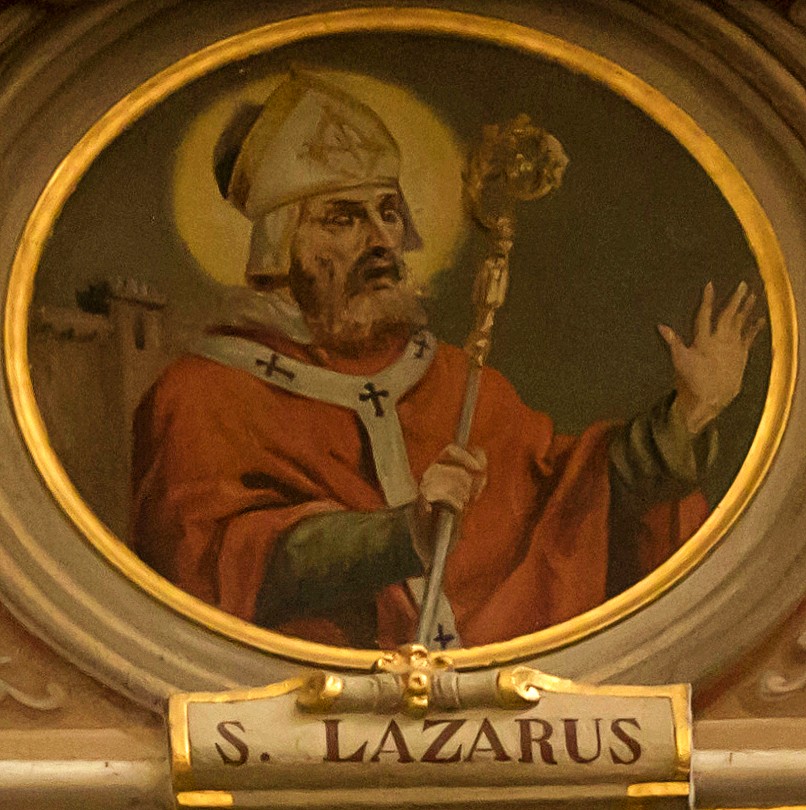
Saint of the Day – 11 February – Saint Lazarus of Milan (Died 449) Archbishop of Milan from 438 to 449.
We have almost no information about the life and episcopate of St Lazarus, though his name means “he who is assisted by God.” He probably studied in Milan and is reported to have been of stern appearance. A late tradition, with little historical basis, associates Lazarus with the Milan’s family of the Beccardi. It is believed that he resisted the Manichaeans, in the footsteps of St Pope Leo the Great.
St Lazarus became Bishop of Milan in 438. The times were volatile and troublesome, for the Goths were ravaging Italy and were masters of Milan but although Lazarus had much to suffer at their hands, he ruled his flock prudently and faithfully.
St Magnus Felix Ennodius (c 473-521), the Bishop of Pavia and Rhetorician and Poet (Feast day – 17 July), includes him in a list of twelve holy Bishops of Milan, of whom St Ambrose was the first and most eminent.
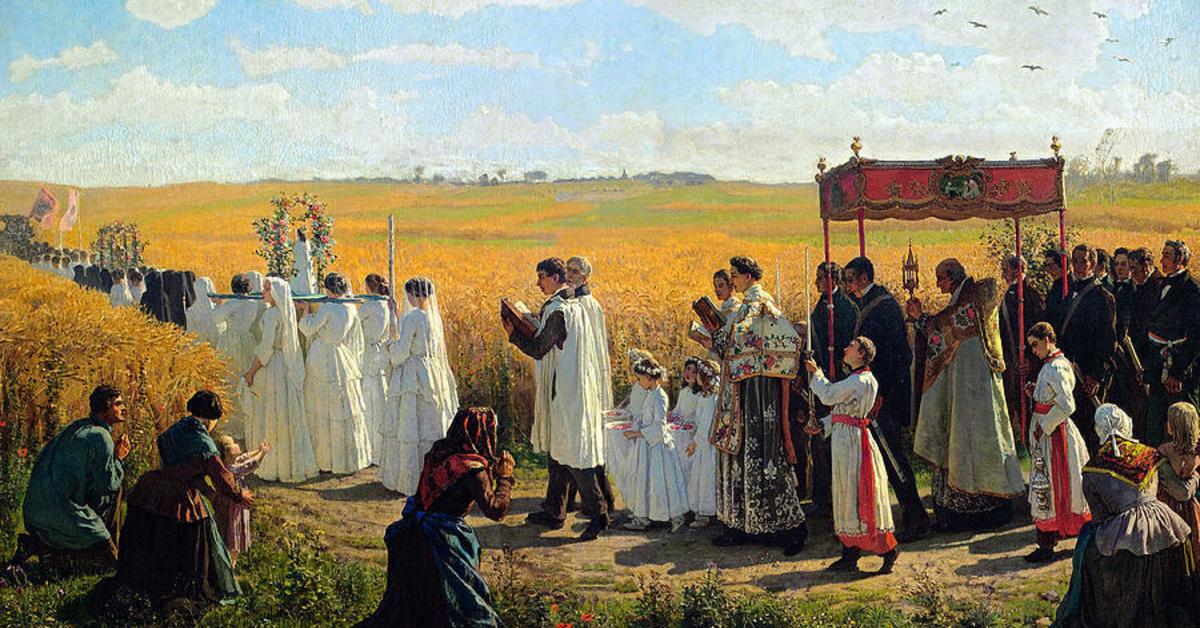
Lazarus is chiefly remembered in connextion with the Rogationtide litanies which, it is believed, he was the first to introduce. To invoke the protection of God at that distressful period, he ordered a three days’ fast with processions, litanies and visits to various Churches from the Monday to the Wednesday within the Octave of the Ascension. Afterwards, it is believed that St Mamertus introduced these litanies into the Diocese of Vienne and changed the date to the three days before Ascension day. The first Council of Orleans (511) ordered that this observance should be general throughout France and it spread quickly to England and elsewhere.
Later still, Archbishop Stephen Nardini and St Charles Borromeo did much to encourage and establish this custom in Milan, which continues to the present day. The word rogation comes from the Latin verb rogare, meaning “to ask,” which reflects the beseeching of God for the appeasement of His anger and for protection from calamities.
Lazarus died on 14 March in the year 449, after having been the Archbishop of Milan for eleven years but his Feast is kept on today, 11 February because Saints’ days are not celebrated during Lent, in the Diocese of Milan which, as is well known, follows its own Ambrosian rite.
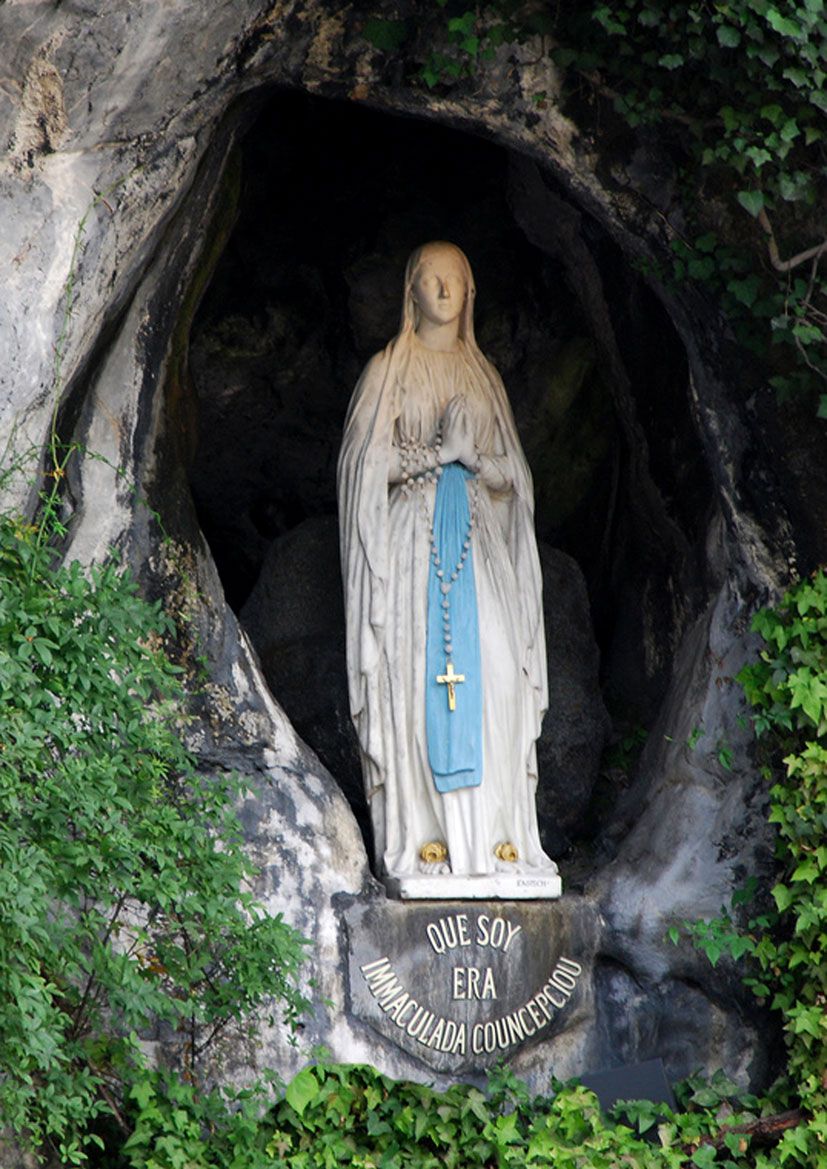
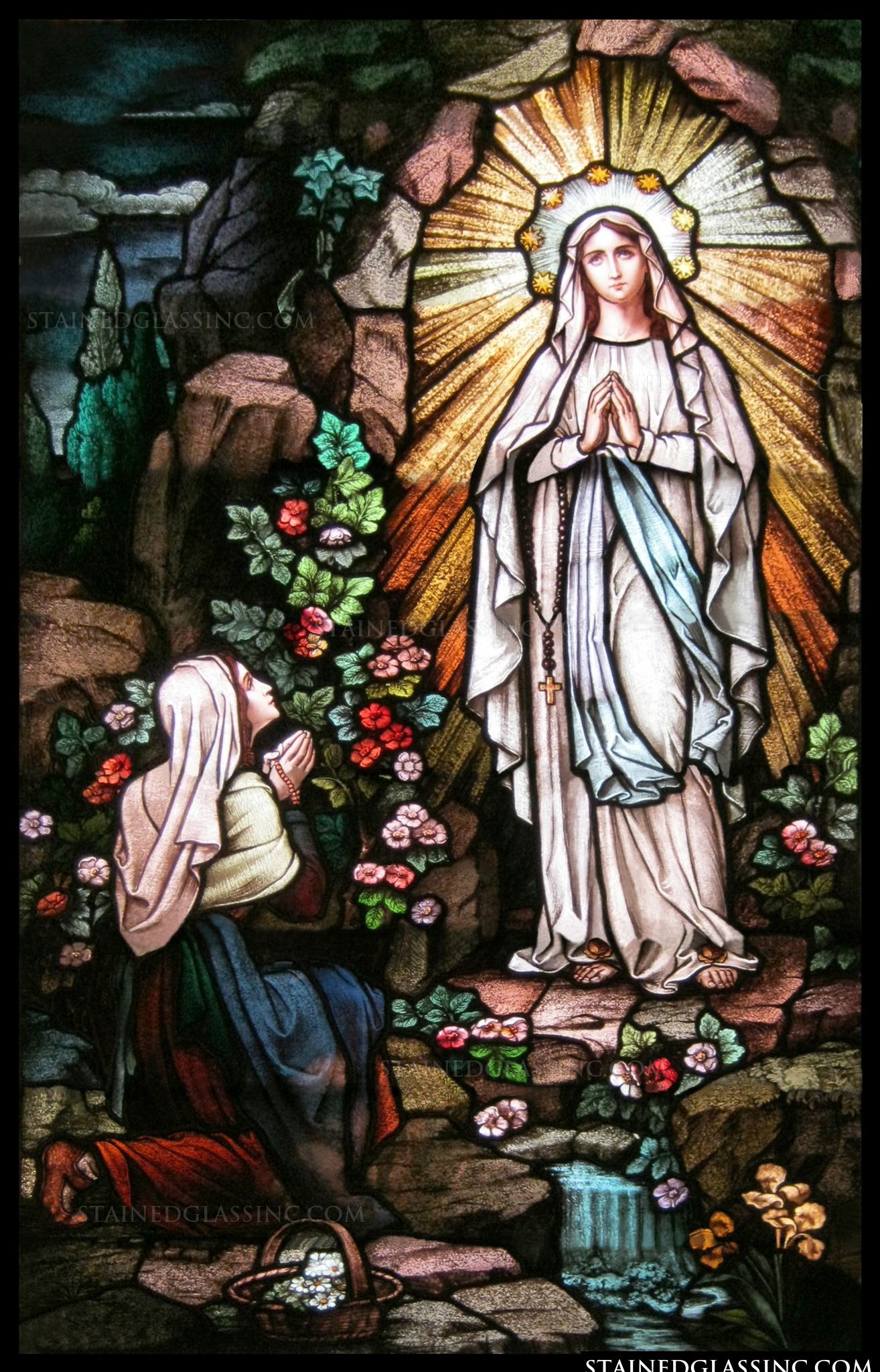
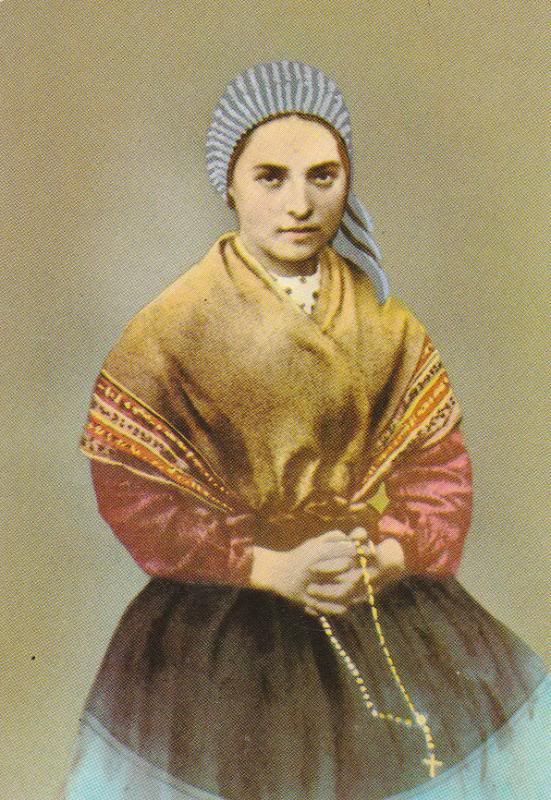
In 1858, there lived in the village of Lourdes, a little peasant girl, Bernadette Soubirous, 14 years old, uneducated, simple, poor, good. On 11 February, she was sent with two more girls to collect wood. They walked to the Rock of Massabielle, where the two companions crossed a mountain stream; while Bernadette was removing her shoes to follow them, she became conscious of a ravishing beautiful Lady, standing in the hollow of the rock, looking at her. Bernadette fell involuntarily upon her knees, gazing enraptured at the lovely Lady, who smiled lovingly at Bernadette and then disappeared. The mysterious Lady from heaven appeared in all, eighteen times to the little girl and among other things told her to drink the water from a mysterious fountain which was not yet observed. Bernadette scratched in the sand at a spot indicated and water began to trickle through the earth; after a few days there gushed forth every day 27,000 gallons of pure, clear spring water and this water flows still.
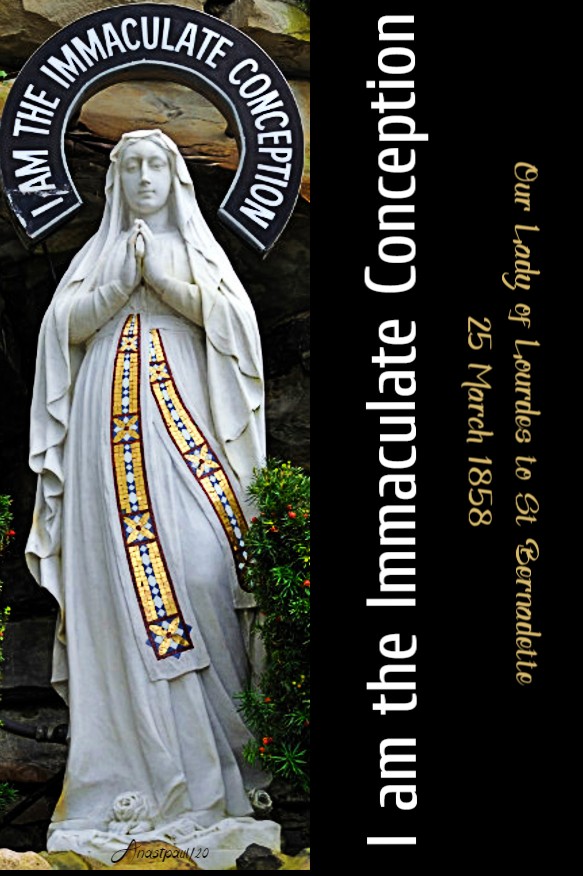
Bernadette was asked by Our Lady of Lourdes, who always showed her a sweet heavenly courtesy, to request the Priest to have a Church built on the spot, that processions should be made to the grotto, that people should drink of the water. The main emphasis of her message was that the faithful should visit the grotto in order to do penance for their sins and for those of the whole world. In answer to Bernadette’s inquiry, “Who are you?” the Lady answered, “I am the Immaculate Conception.”
The apparitions appeared for the last time on 16 July 1858. Bernadette never again had the supreme privilege of seeing and visiting with Our Lady. Later, Bernadette became a nun at Nevers and there spent the rest of her life. Through her, “Lourdes was destined to become a focus of faith and mercy; thousands of souls were to flock thither to increase their piety, to borrow new energy and resolution. Suffering and charity were to join hands under the eyes of the Divine Mother. Miracles were to be never-ceasing.” Four years after, the Bishop declared, upon an exhaustive and scrupulous investigation, to the faithful, that they are “justified in believing the reality of the apparitions.” In 1873, a Basilica was built on top of the rock and in 1883 another Church was built below and in front of the rock. From 1867 when records began to be kept until 1908, about 5,000,000 pilgrims had visited the grotto; now about 1,000,000 people visit Lourdes every year. Although Our Lady never at any time promised that pilgrims who visited the grotto would be healed of their physical ills, remarkable cures began at once and have continued ever since. Many of them are of such a character that they can be ascribed only to supernatural power.
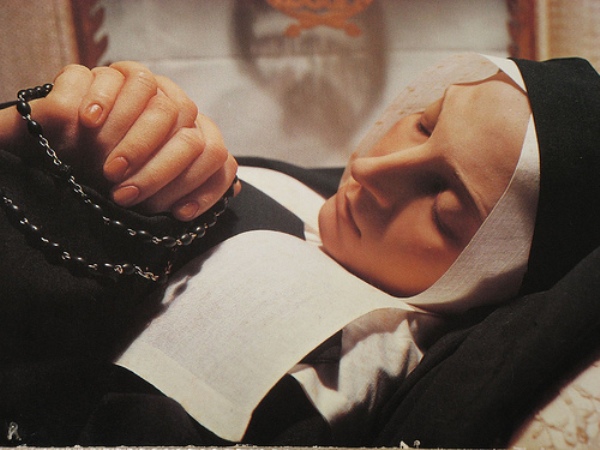
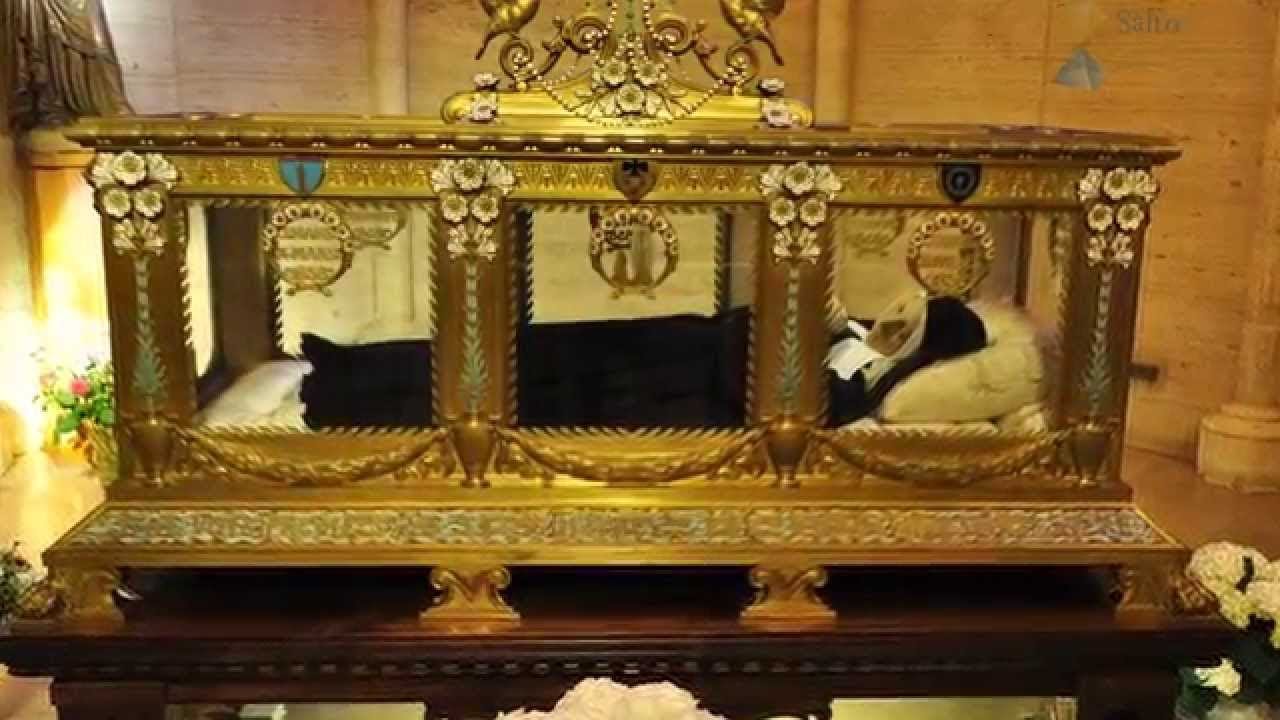
There is no doubt that the cures are miraculous because every possible natural cause has been proved false. There is no chemical composition in the water to make it have curative properties. It has been claimed that the cures might be due to suggestion but Bernheim, head of the famous school of Nancy, says that although suggestion has a chance of success in certain functional diseases, it requires the co-operation of time. Suggestion cures slowly and progressively, while complete cures at Lourdes are instantaneous, the supreme Life Giver Himself is responsible for the many cures witnessed at this shrine of the Immaculate Conception and He chose a simple peasant to reveal to the world the love He bears all mankind, as the adopted children of His Blessed Mother. Bernadette died in 1879 at the age of 35 and was later Canonised. The body of the blessed Saint can still be seen in its glass coffin, intact and incorrupt, looking as its photographs show, like a young woman asleep. The chair at which she prayed, the altar where she received her First Holy Communion, the bed in which she slept, the room in which she lived – all can be seen at Lourdes. Lourdes is one of the greatest Marian shrines in the world. Here, praying to Our Lady of Lourdes, one may obtain refreshment, courage, energy and inspiration to continue the age-old struggle of the great Catholic Faith against the forces of darkness and disintegration. This great shrine, all its miracles and the streams of grace that are poured into the world through Our Lady of Lourdes, were made possible, through the faithfulness and the sanctity of a little peasant girl. Amen Our Lady of Lourdes, pray for us, St Bernadette, pray for us!
St Calocerus of Ravenna St Castrensis of Capua St Dativus the Senator Bl Elizabeth Salviati St Etchen of Clonfad St Eutropius of Adrianopolis St Felix the Senator St Gobnata St Pope Gregory II (669-731) About “The Defender of Icons” https://anastpaul.com/2020/02/11/saint-of-the-day-11-february-saint-pope-gregory-ii-669-731-defender-of-icons/ Bl Gaudencia Benavides Herrero St Helwisa St Jonas of Muchon St Lazarus of Milan (Died 449) Bishop
St Lucius of Adrianople St Pope Paschal I St Pedro de Jesús Maldonado-Lucero St Saturninus of Africa St Secundus of Puglia St Severinus of Agaunum St Soter of Rome St Theodora the Empress Bl Tobias Francisco Borrás Román — Guardians of the Holy Scriptures: Also known as – • Anonymous Martyrs in Africa • Martyrs of Africa • Martyrs of Numidia • Martyrs of the Holy Books A large number of Christians tortured and murdered in Numidia (part of modern Algeria) during the persecutions of Diocletian, but whose names and individual stories have not survived. They were ordered to surrender their sacred books to be burned. They refused. Martyrs. c 303 in Numidia.
Martyrs of Africa – 5 saints: A group of five Christians who were martyred together; we know nothing else but the names of four of them – Cyriacus, Oecominius, Peleonicus and Zoticus.






 AnaStpaul
You must be logged in to post a comment.