Posted in MARIAN TITLES, SAINT of the DAY

Nuestra Señora de las Gracias de Torcoroma / Our Lady of Graces Colombia (1711), St Joachim (Father of Our Lady), St Roch and the Saints for 16 August

St Arsacius of Nicomedia
St Frambaldo
Bl Iacobus Bunzo Gengoro
Bl Jean-Baptiste Menestrel
Bl John of Saint Martha
Bl Laurence Loricatus
Bl Magdalena Kiyota Bokusai
Bl Maria Gengoro
Bl Ralph de la Futaye
St Serena
Bl Simon Kiyota Bokusai
St Theodulus of Valais (4th Century) Bishop
Bl Thomas Gengoro
St Titus the Deacon

Posted in MARIAN TITLES, SAINT of the DAY

Nuestra Señora de las Gracias de Torcoroma / Our Lady of Graces of Torcoroma, Colombia (1711) and Memorials of the Saints – 16 August

Nuestra Señora de las Gracias de Torcoroma / Our Lady of Graces of Torcoroma, Ocaña, Norte de Santander, Colombia (1711) – 16 August:
HERE:

https://anastpaul.com/2021/08/16/nuestra-senora-de-las-gracias-de-torcoroma-our-lady-of-graces-of-torcoroma-colombia-1711-and-memorials-of-the-saints-16-august/

St Joachim, Father of the Blessed Virgin Mary

St Roch (1295-1327) “Pilgrim,” Confessor, Hermit, Apostle of the Sick, Miracle Worker.
The story of St Roch here:

https://anastpaul.wordpress.com/2017/08/16/saint-of-the-day-16-august-st-roch/

Blessed Angelo Agostini Mazzinghi O.Carm. (1385-1438) was an Italian Priest and a professed member of the Carmelite Order. He was a noted Preacher, Prior and Reformer, Teacher of theology and was known for his pious devotion to the Holy Eucharist, the Blessed Virgin Mary and the Carmelite Rule of Life and to the profession of the Gospel.
His Life:

https://anastpaul.com/2019/08/16/saint-of-the-day-16-august-blessed-angelo-agostini-mazzinghi-o-carm-1385-1438/

St Armel of Brittany (Died c 570) Priest, Monk, Missionary, Confessor, Evangeliser, spiritual adviser, Miracle-worker .,
His Life:

https://anastpaul.com/2020/08/16/saint-of-the-day-16-august-saint-armel-of-brittany-died-c-570/

St Arsacius of Nicomedia
St Frambaldo
Bl Iacobus Bunzo Gengoro
Bl Jean-Baptiste Menestrel
Bl John of Saint Martha
Bl Laurence Loricatus
Bl Magdalena Kiyota Bokusai
Bl Maria Gengoro
Bl Ralph de la Futaye
St Serena
Bl Simon Kiyota Bokusai
Bl Thomas Gengoro
St Titus the Deacon

St Ugolina of Vercelli (c 1239-c 1300) Anchorite, Recluse, Penitent, Spiritual advisor. The very strange story that of this Blessed Ugolina who shut herself in a hermitage, representing herself as a man and remained there for forty-seven years! The aim of her subterfuge was to escape the aims of her father, who wished her to marry. In order not to reveal her secret, she called herself Ugo without revealing her identity to anyone. for nearly fifty years
Her Life:

https://anastpaul.com/2021/08/16/saint-of-the-day-16-august-saint-ugolina-of-vercelli-c-1239-c-1300/

Martyrs of Palestine – 33 Saints: Thirty-three Christians Martyred in Palestine; they are commemorated in old martyrologies but the date and exact location have been lost.

Posted in MARIAN TITLES

Nuestra Señora de las Gracias de Torcoroma / Our Lady of Graces of Torcoroma, Colombia (1711) and Memorials of the Saints – 16 August

Nuestra Señora de las Gracias de Torcoroma / Our Lady of Graces of Torcoroma, Ocaña, Norte de Santander, Colombia (1711) – 16 August:

The holy apparition took place on 16 August, 1711. At that time, there lived in the Mountains of Torcoroma in the Ocaña region, a peasant family dedicated mainly to the cultivation of cane with which they made sweets. The family consisted of Don Cristóbal Melo, his wife Pascuala Rodríguez and their two children, José and Felipe. According to their contemporaries, the Melo-Rodríguez were people of good morals and a life consecrated to the Christian Faith.
One morning Don Cristóbal sent his children to cut down a tree, that had wood good enough to carve the box or “canoe” with which he made his sweets. The young boys went into the mountain and as they entered the thick of the forest ,they marked the oaks that were suitable for their purpose. Until they found one that was a “wonder” and despite the fact that it was summer, it had fragrant red flowers. Such was the perfume that it could be perceived from afar.
Excited about the great find, they proceeded to cut down the tree. Given its complicated location, when cutting its base, the main part fell into a ravine. It was dusk and the boys resolved to return home and discuss the event with their father. The next day they restarted their search for the appropriate tree, but not finding one that suited their purposes, they determined to use the one already felled and went to the place where it had fallen.
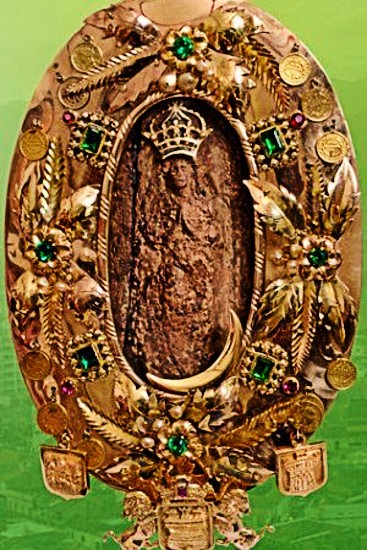
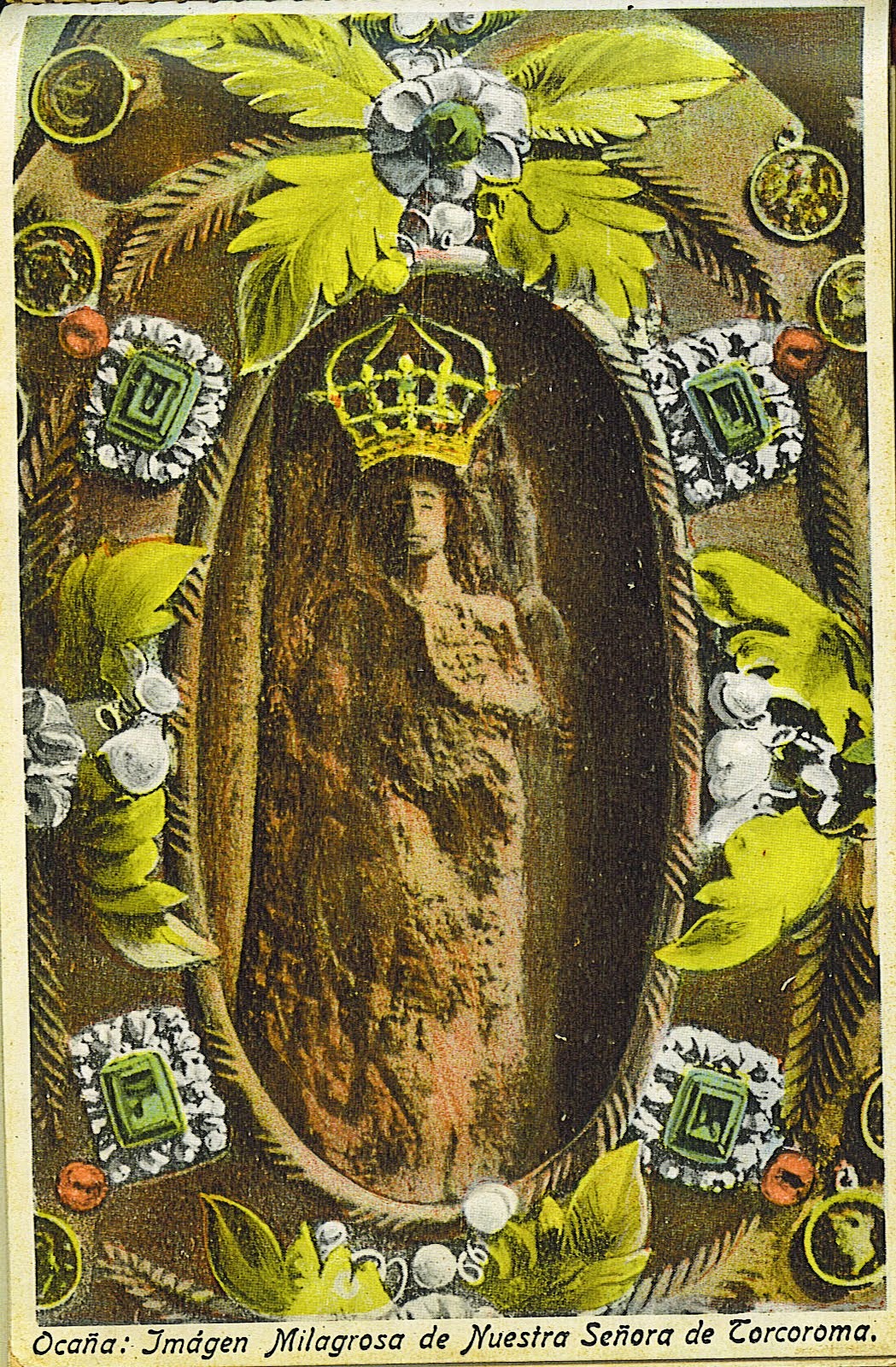
They began to carve the “canoe” right there and shortly after taking the first ax blows, a light so intense came out that it reached out and illumined the lush forest. When the father realised what was lying in the middle of the splinters of the trunk, he, without thinking for a second, put his hands where his sons were preparing to take the next blow, stopping them suddenly. The father and his children were astonished when they saw, in the heart of the trunk, the image of the Virgin, with her hands together and placed on her chest, with the action of her face “as if directed to heaven,” shining with a great light and with an intense and aromatic perfume.
The news of the holy apparition quickly spread through the Ocaña region. Upon reaching the ears of the Priest and Vicar of the City, Fr.Diego Gabino Quintero, he asked Cristóbal Melo to present himself with the image of the Virgin. After carefully examining it and having listened to numerous testimonies that affirmed the divinity of the image, the Priest authorised its private worship.

In 1716 Fray Antonio Monroy y Meneses, Bishop of Santa Marta , came on a pastoral visit and after a rigorous analysis of the image that appeared and the testimony of the witnesses, he granted permission for a Chapel to be erected on the site of the appearance and ordered that the image be brought to the cCty to place it on the Altar of the main Church, today the Cathedral of Santa Ana . The image would rest in the Church for several years while awaiting the Chapel, which was only built in 1882 thanks to the financing of Bogota parishioners. Finally, at the beginning of the 20th century, the image would be definitively transferred to the Sanctuary, where it is visited not only by its faithful but by thousands of pilgrims every year..

St Stephen of Hungary (c 975- 1038) King of Hungary (Optional Memorial) “Apostle of Hungary,” King and Confessor, Marian devotee,  Apostle of Charity, Evangeliser and Missionary. 
Biography:

https://anastpaul.com/2018/08/16/saint-of-the-day-16-august-st-stephen-of-hungary-c-975-038-apostle-of-hungary/

Blessed Angelo Agostini Mazzinghi O.Carm. (1385-1438) was an Italian Priest and a professed member of the Carmelite Order.   He was a noted preacher, prior and reformer, teacher of theology and was known for his pious devotion to the Holy Eucharist, the Blessed Virgin Mary and the Carmelite Rule of Life and to the profession of the Gospel. 
His Life:

https://anastpaul.com/2019/08/16/saint-of-the-day-16-august-blessed-angelo-agostini-mazzinghi-o-carm-1385-1438/

St Armel of Brittany (Died c 570) Priest, Monk, Missionary, Confessor, Evangeliser, spiritual adviser, Miracle-worker .,
His Life:

https://anastpaul.com/2020/08/16/saint-of-the-day-16-august-saint-armel-of-brittany-died-c-570/

St Arsacius of Nicomedia
St Frambaldo
Bl Iacobus Bunzo Gengoro
Bl Jean-Baptiste Menestrel
Bl John of Saint Martha
Bl Laurence Loricatus
Bl Magdalena Kiyota Bokusai
Bl Maria Gengoro
Bl Ralph de la Futaye

St Roch (1295-1327) “Pilgrim,” Confessor, Hermit, Apostle of the Sick, Miracle Worker.
The story of St Roch here:

https://anastpaul.wordpress.com/2017/08/16/saint-of-the-day-16-august-st-roch/

St Serena
Bl Simon Kiyota Bokusai
Bl Thomas Gengoro
St Titus the Deacon
St Ugolina of Vercelli (c 1239-c 1300) Anchorite, Recluse

Martyrs of Palestine – 33 saints: Thirty-three Christians martyred in Palestine; they are commemorated in old martyrologies, but the date and exact location have been lost.

Martyred in the Spanish Civil War:
Bl Amadeu Monje Altés
Bl Antonio María Rodríguez Blanco
Bl José María Sanchís Mompó
Bl Laurentí Basil Matas
Bl Plácido García Gilabert

Posted in SAINT of the DAY

Twentieth Sunday in Ordinary Time, Year A +2020 and Memorials of the Saints – 16 August

Twentieth Sunday in Ordinary Time, Year A +2020

St Stephen of Hungary (c 975- 1038) King of Hungary (Optional Memorial)
Biography:

Saint of the Day – 16 August – St Stephen of Hungary (c 975- 1038) Apostle of Hungary

Bl Angelo Agostini Mazzinghi O.Carm. (1385-1438)
His Life:

Saint of the Day – 16 August – Blessed Angelo Agostini Mazzinghi O. Carm (1385-1438)


St Armel of Brittany (Died c 570) Priest, Monk
St Arsacius of Nicomedia
St Frambaldo
Bl Iacobus Bunzo Gengoro
Bl Jean-Baptiste Menestrel
Bl John of Saint Martha
Bl Laurence Loricatus
Bl Magdalena Kiyota Bokusai
Bl Maria Gengoro
Bl Ralph de la Futaye
St Roch (1295-1327) “Pilgrim”
The story of St Roch here: https://anastpaul.wordpress.com/2017/08/16/saint-of-the-day-16-august-st-roch/

St Serena
Bl Simon Kiyota Bokusai
Bl Thomas Gengoro
St Titus the Deacon

Martyrs of Palestine – 33 saints: Thirty-three Christians martyred in Palestine; they are commemorated in old martyrologies, but the date and exact location have been lost.

Martyred in the Spanish Civil War:
Bl Amadeu Monje Altés
Bl Antonio María Rodríguez Blanco
Bl José María Sanchís Mompó
Bl Laurentí Basil Matas
Bl Plácido García Gilabert

Posted in CARMELITES, SAINT of the DAY

Memorials of the Saints – 16 August

St Stephen of Hungary (c 975- 1038) King of Hungary (Optional Memorial)
Biography:

Saint of the Day – 16 August – St Stephen of Hungary (c 975- 1038) Apostle of Hungary

Bl Angelo Agostini Mazzinghi O.Carm. (1385-1438)
St Armagillus of Brittany
St Arsacius of Nicomedia
St Frambaldo
Bl Iacobus Bunzo Gengoro
Bl Jean-Baptiste Menestrel
Bl John of Saint Martha
Bl Laurence Loricatus
Bl Magdalena Kiyota Bokusai
Bl Maria Gengoro
Bl Ralph de la Futaye
St Roch (1295-1327) “Pilgrim”
The story of St Roch here: https://anastpaul.wordpress.com/2017/08/16/saint-of-the-day-16-august-st-roch/

St Serena
Bl Simon Kiyota Bokusai
Bl Thomas Gengoro
St Titus the Deacon

Martyrs of Palestine – 33 saints: Thirty-three Christians martyred in Palestine; they are commemorated in old martyrologies, but the date and exact location have been lost.

Martyred in the Spanish Civil War:
Bl Amadeu Monje Altés
Bl Antonio María Rodríguez Blanco
Bl José María Sanchís Mompó
Bl Laurentí Basil Matas
Bl Plácido García Gilabert

Posted in Against EPIDEMICS, GOUT, KNEE PROBLEMS, ARTHRITIS, etc, Of ANIMALS / ANIMAL WELFARE, Of BACHELORS, Of the SICK, the INFIRM, All ILLNESS, PATRONAGE - OF DOGS and against DOG BITES and/or RABIES, SAINT of the DAY, SKIN DISEASES, RASHES

Saint of the Day – 16 August- St Roch (1295-1327) Confessor

Saint of the Day – 16 August- St Roch (1295-1327)  Confessor, Pilgrim, Hermit, Apostle of the Sick, Miracle Worker.   Born in 1295 at Montpelier, France and died in 1327 at Montpelier or Angleria, France of natural causes).   His relics are in Venice, Italy in the Church of San Rocco,some reside in Rome and others in Arles, France.   Patronages –  against cholera, against diseased cattle, against epidemics, against knee problems, against the plague, against skin diseases and rashes, bachelors, of dogs, falsely accused people, invalids, relief from pestilence, OF  surgeons, tile makers, The Diocese of Tagbilaran, Philippines,Constantinople, 24 other assorted Cities around the world.   Attributes – angel, bread, dog, pilgrim with staff, often displaying a plague wound on his leg, pilgrim with a dog, pilgrim with a dog licking the wound, pilgrim with a dog carrying a loaf of bread in its mouth.

According to his Acta and his vita in the Golden Legend, he was born at Montpellier, at that time “upon the border of France“, as the Golden Legend has it, the son of the noble governor of that city.   Even his birth was accounted a miracle, for his noble mother had been barren until she prayed to the Virgin Mary.   Miraculously marked from birth with a red cross on his breast which grew as he did, he began to manifest strict asceticism and great devotion and piety from a very early age.    On days when his “devout mother fasted twice in the week and the blessed child Rocke abstained twice also, he would drink from his mother but once that day.”

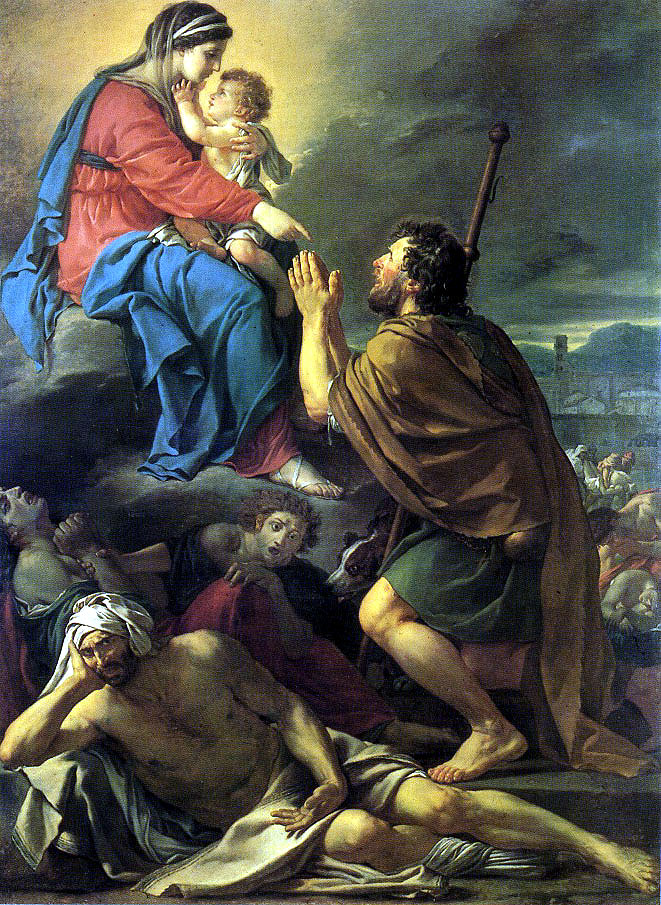
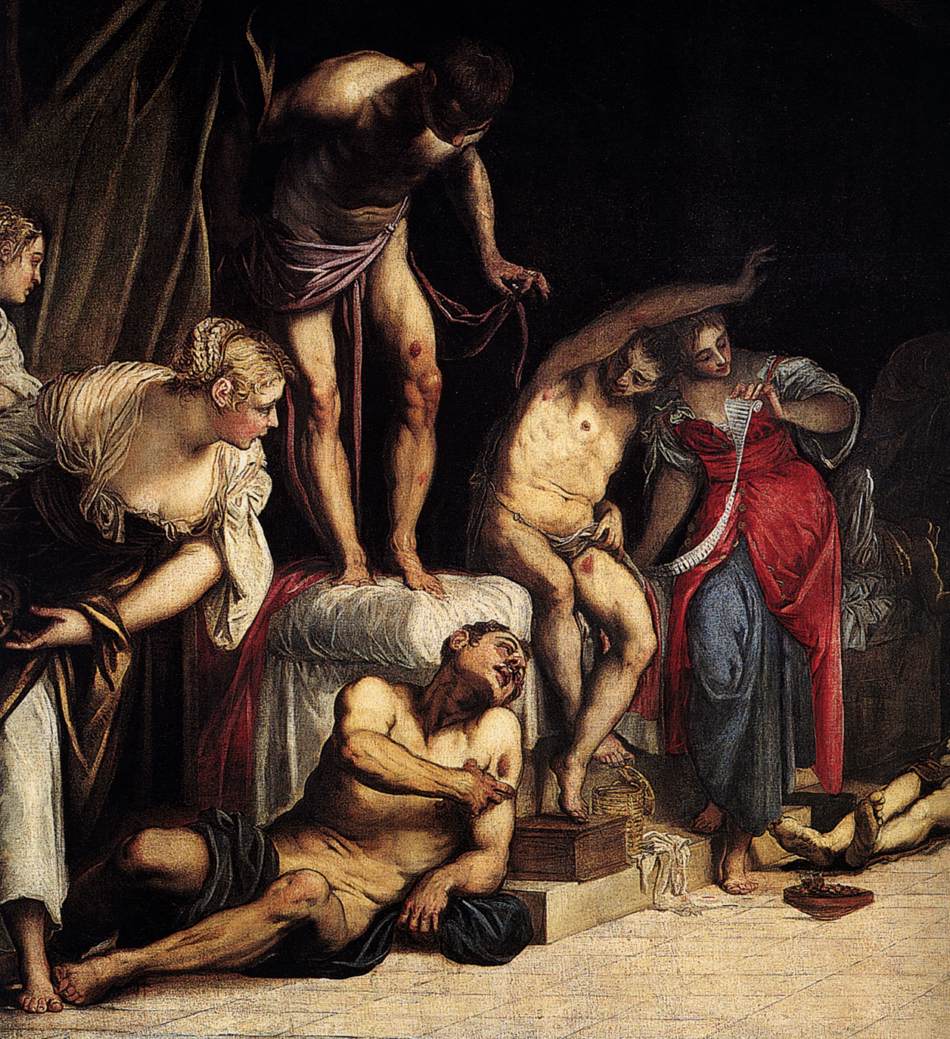
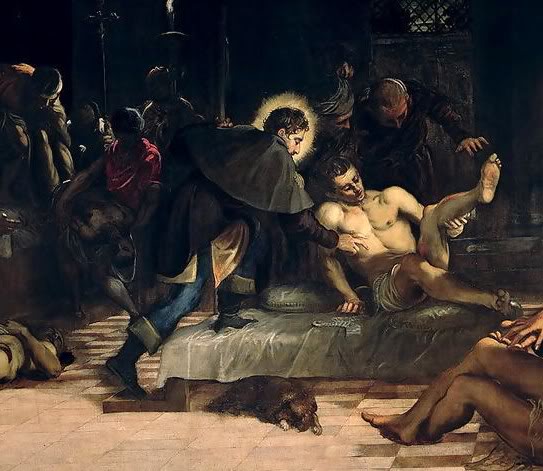
On the death of his parents in his twentieth year he distributed all his worldly goods among the poor like Francis of Assisi—although his father, on his deathbed, had ordained him governor of Montpellier—and set out as a mendicant pilgrim for Rome.   Coming into Italy during an epidemic of plague, he was very diligent in tending the sick in the public hospitals at Acquapendente, Cesena, Rimini, Novara and Rome, and is said to have effected many miraculous cures by prayer and the sign of the cross and the touch of his hand.   St Roch Praying to the Virgin for an End to the Plague Creator(s- Jacques-Louis DavidIn In Rome, according to the Golden Legend he preserved the “Cardinal of Angleria in Lombardy” by making the Sign of the Cross on his forehead, which miraculously remained there, visi nbble to all!    Ministering at Piacenza he himself finally fell ill.   He was expelled from the Town and withdrew into the forest, where he fashioned a shelter of boughs and leaves which was miraculously supplied with water, by a spring wic arose in the place;.   He would have perished, had not a dog belonging to a nobleman named Gothard Palastrelli, supplied him with bread and licked his wounds, healing them.   Count Gothard, following his hunting dog carrying the bread, discovered Saint Roch and became his acolyte.
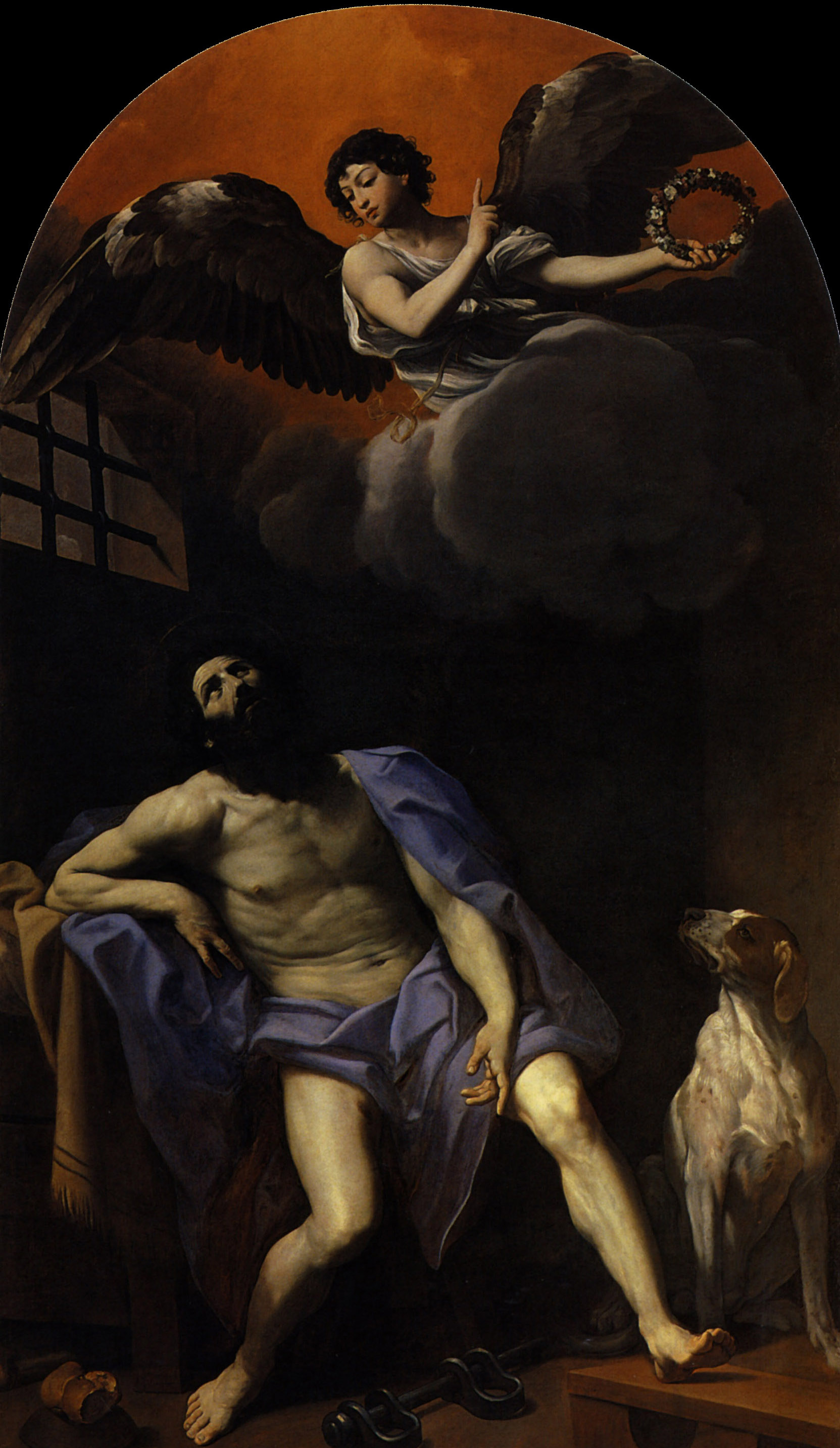
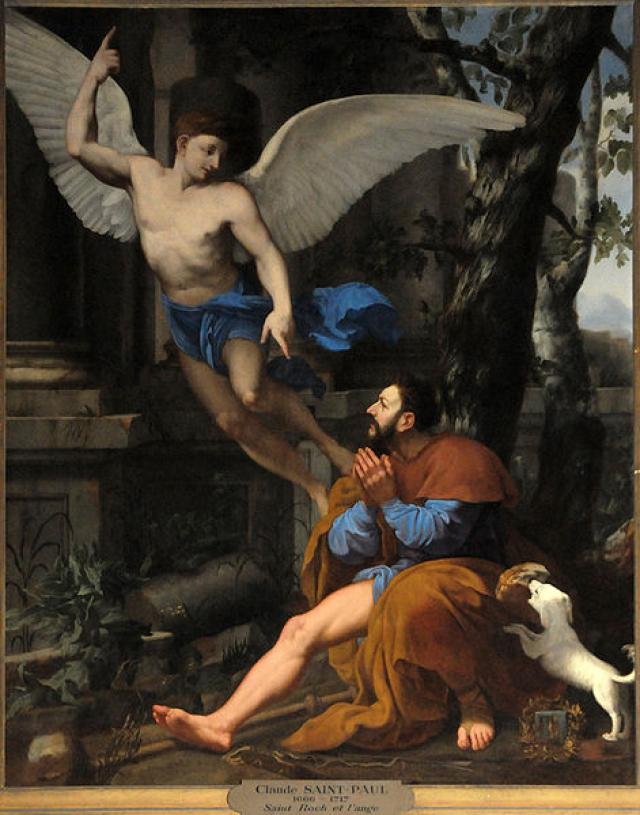
Jacopo_Tintoretto_-_St_Roch_in_the_Hospital_(detail)_-_WGA22606+(2)816roch16guido reni san roque 1617Saint_Paul_Saint_Roch

On his incognito return to Montpellier he was arrested as a spy (by orders of his own uncle) and thrown into prison, where he languished five years and died on 16 August 1327, without revealing his name, to avoid worldly glory.   After his death, according to the Golden Legend;

“anon, an Angel brought a table into the prison, from Heaven, divinely written with letters of gold, which he laid under the head of St Roch.   And on that table was written, God had granted to him his prayer, that is, to wit, that who that calleth meekly to St Roch shall not be hurt with any hurt of pestilence.”

The townspeople recognised him as well by his birthmark;  he was soon Canonised in the popular mind and a great Church erected in veneration.

The story that, in 1414,  when the Council of Constance was threatened with plague, public processions and prayers for the intercession of Roch were ordered and the outbreak ceased, is provided by Francesco Diedo, the Venetian governor of Brescia, in his Vita Sancti Rochi, 1478.   The cult of Roch gained momentum during the bubonic plague that passed through northern Italy in 1477–79.

His popularity, originally in central and northern Italy and at Montpellier, spread through Spain, France, Lebanon the Low Countries, Brazil and Germany, where he was often interpolated into the roster of the Fourteen Holy Helpers, whose veneration spread in the wake of the Black Death.   The magnificent 16th-century Scuola Grande di San Rocco and the adjacent church of San Rocco were dedicated to him by a confraternity at Venice, where his body was said to have been surreptitiously translated and was triumphantly inaugurated in 1485;  the Scuola Grande is famous for its sequence of paintings by Tintoretto, who painted St Roch visited by an angel, in a ceiling canvas (1564).
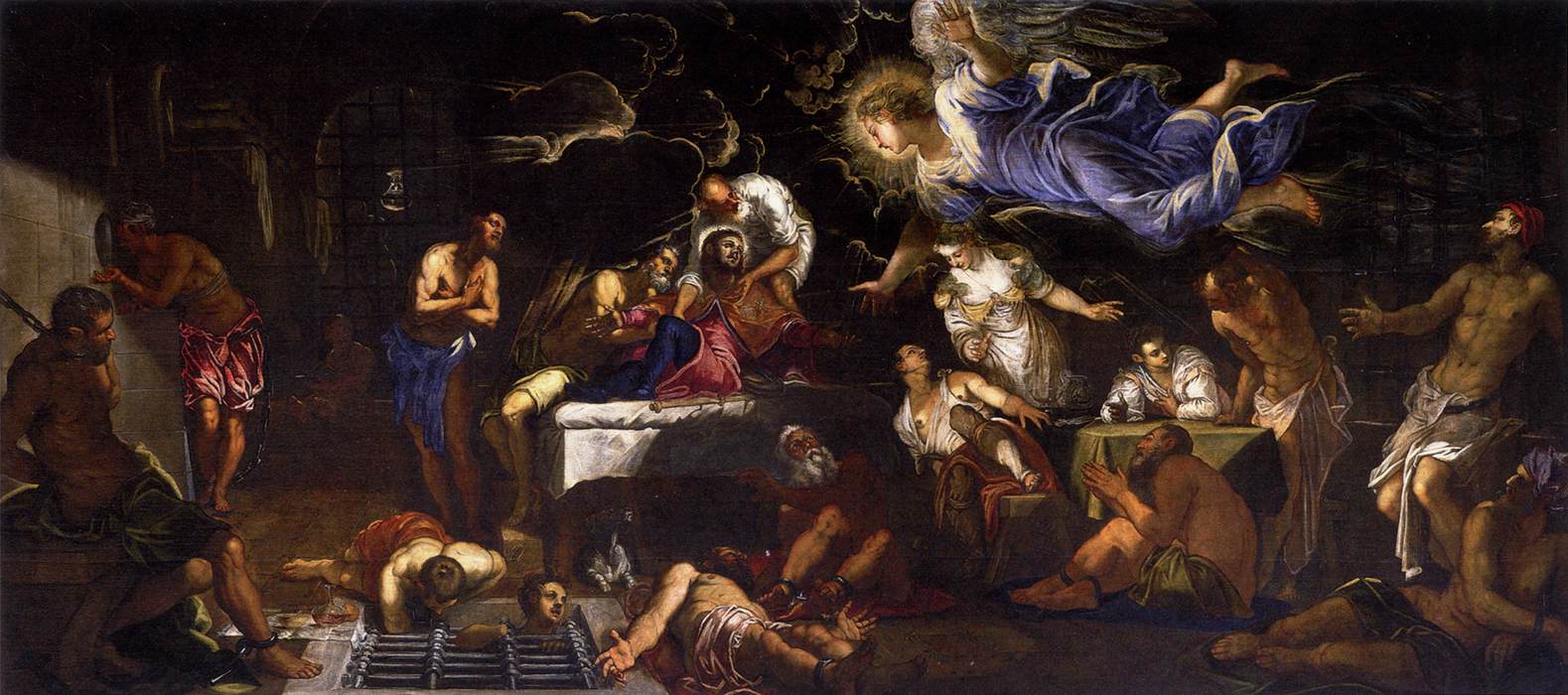
Tintoretto,_Jacopo_-_St_Roch_in_Prison_Visited_by_an_Angel_-_1567

We know for certain that, in 1465,  the body of St Roch was carried from Voghera, instead of Montpellier as previously thought, to Venice.   Pope Alexander VI (1492–1503) built a Church and a hospital in his honour.   Pope Paul III (1534–1549) instituted a confraternity of St Roch.   This was raised to an Arch-confraternity in 1556 by Pope Paul IV;  it still thrives today.

Saint Roch had not been officially recognised as a Saint as yet, however.   In 1590 the Venetian Ambassador to Rome reported to the Serenissima that he had been repeatedly urged to present the witnesses and documentation of the life and miracles of St Rocco, already deeply entrenched in the Venetian life because Pope Sixtus V “is strong in his opinion either to Canonise him or else to remove him from the ranks of the Saints.”    The Ambassador had warned a Cardinal of the general scandal that would result, if the widely venerated St Rocco, were impugned as an impostor.   Sixtus did not pursue the matter but left it to later Popes to proceed with the Canonisation process.   His successor, Pope Gregory XIV (1590–1591), added Roch of Montpellier, who had already been memorialised in the Holy Sacrifice of the Mass for two centuries, to the Roman Martyrology, thereby fixing 16 August as his universal Feast Day.

Numerous brotherhoods have been instituted in his honour.   He is usually represented in the garb of a pilgrim, often lifting his tunic to demonstrate the plague sore in his thigh and accompanied by a dog carrying a loaf in its mouth.   The Third Order of Saint Francis, by tradition, claims him as a member and includes his Feast on its own calendar, observing his Feast on 17 August.