Posted in SAINT of the DAY

Our Lady of Kieff (1010) and Memorials of the Saints – 15 April

Thursday of the Second Week of Easter +2021

Our Lady of Kieff (1010) – 15 April:

Kieff on the banks of the Dneiper River was the first resting place of this famous image of Mary. Here, according to legend, the Apostle Saint Andrew had once stopped on his way from Constantinople to Rome. Waking in the morning to the sights of the heights of Kieff, he was moved to prophecy:

“See those hills? On those hills shall shine hereafter, the grace of God.”

However, it was nearly 1,000 years, 1010, to be exact, before the Russian Prince Vladimir was baptised at Kieff with all his people and the teachings of the Gospel began to go out from the heights, which had so impressed the Apostle.
The Prince sent to Kherson for a picture of Our Lady which was, according to legend, painted by Constantine and according to another, commissioned by him, which seems more likely. The Prince endowed the Monastery in Petchersk to house the famous painting and here it remained until the fifteenth century.
In 1467 Ivan III, Grand Duke of Moscow, built the Church of the Assumption in the Kremlin as a memorial of his marriage. As a crowning jewel of his new Church, he asked for the famous image of Kieff. This aged City was both grieved and frightened at the demand. The people rose in protest; they did not want to lose their dearest treasure. Then the Blessed Virgin appeared in sleep to the Prince and told him to give up the painting because, she would personally ensure, that it was replaced. He gave it to the agents of the Duke of Moscow on the following morning and returned to his Church to find that another painting, exactly like it, had mysteriously appeared in the place of the one he had returned.
Kieff and Moscow were still disputing vigorously up to fifty years ago, the 400-year old customary disagreement over which City had the original picture of Our Lady of Kieff and which City had the one placed there by the Blessed Mother. There are thousands of copies now spread all over the world.

St Abbo II of Metz
St Abbondio of Como (Died c 564) Bishop
St Acuta
St Basilissa of Rome
Blessed Cesar de Bus (1544-1607)
Biography:

https://anastpaul.wordpress.com/2017/04/15/saint-of-the-day-15-april-bl-cesar-de-bus/

St Crescens of Myra
St Eutyches of Rome
St Eutychius of Ferentino
St Huna of Slättåkra
St Hunna (of Strasbourg) (died 679)
The life of St Hunna:

https://anastpaul.wordpress.com/2018/04/15/saint-of-the-day-15-april-st-hunna-died-679/

Bl Laurentinus Sossius
St Maro of Rome
St Maximus of Persia
St Mundus
St Nidger of Augsburg
St Olympiades of Persia
St Ortario of Landelles
St Paternus/Padarn of Wales (c 482-c 568)
About St Paternus:

https://anastpaul.com/2020/04/15/saint-of-the-day-15-april-st-paternus-of-wales-c-482-c-568/
St Pausilopo of Thrace
St Ruadhan of Lorrha (died 584)
About St Ruadhan:

https://anastpaul.com/2019/04/15/saint-of-the-day-15-april-st-ruadan-died-584/
St Sylvester of Réome
St Theodore of Thrace
St Victorinus of Rome
St Waltmann of Cambrai

Mercedarian Martyrs of Africa: A group of Mercedarian monks sailing to Africa as on a mission to redeem capture Christians. Captured by Moors, they were tortured and executed for their faith. Martyrs. 1393

Posted in SAINT of the DAY

Saint of the Day – 15 April – St Ruadán (died 584)

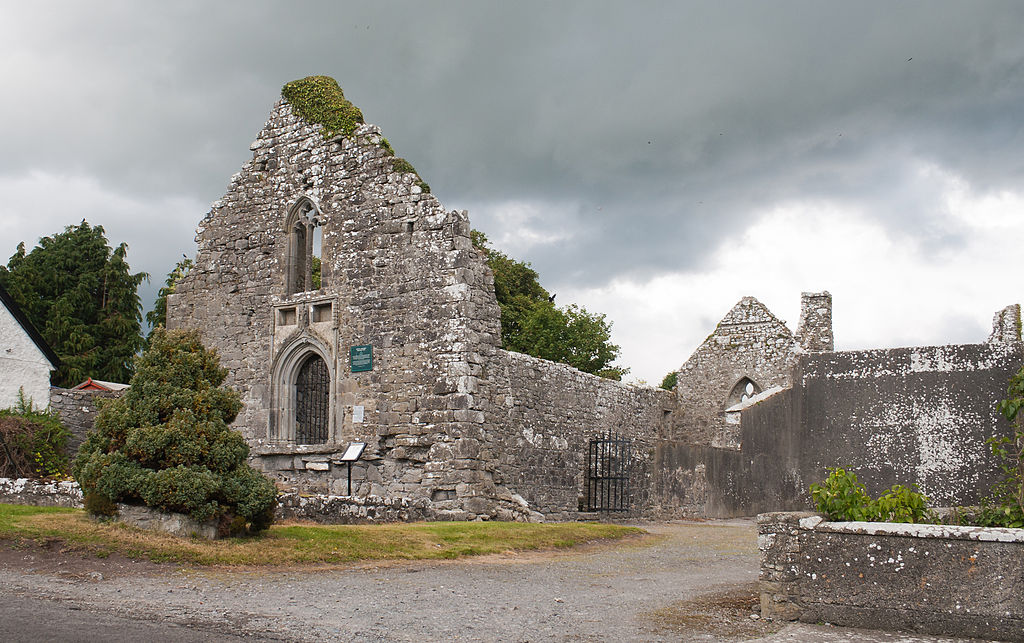
Saint of the Day – 15 April – St Ruadán (died 584) – Priest and Monk –  also known Rowan, Ruadon, Roadan, Rodon and Rodan, was an Irish Christian abbot who founded the monastery of Lorrha (Lothra, County Tipperary, Ireland – see the ruins below), near Terryglass.   He was known for his prophesies. After his death, he was venerated as a saint and as one of the “Twelve Apostles of Ireland”.

img-Twelve-Apostles-of-Ireland.jpg
The Twelve Apostles of Ireland

Ruadhán is said to have been the son of Fergus Bern, son of Dera Dubh, of the race of the kings of Munster.  He studied and was ordained at Clonard.  He was educated in Clonard County Westmeath by St Finian (470-549).   He replaced St Brendan (the navigator) at Lorrha who preceded to cross the Shannon and set up his monastery at Clonfert Co. Galway.

Ruadhan founded a monastic settlement at Lorrha that would have consisted of a monastery and various other buildings including cells for the many monks that would have lived here.   Also a ditch or large mound would have been built around the settlement to keep animals in and intruders out, the outlines of these are still visible today.   Life for the monks would have been tough but simple, rising early from their beds which would have consisted of rushes or straw placed on the bare ground.   They then would pray and fast between their domestic chores.   The settlement would have been self-sufficient providing everything from food, clothing, to shelter.  Despite the evidence of conflicts with the surrounding hierarchy and with St Brendan, Ruadhán was highly regarded.   His monastery was said to have had 150 monks with a very holy reputation.

Ruadhan
St Ruadhan from a set of paintings of the Twelve Apostles of Ireland

On the site of this settlement are the remains of an 11th century church probably on the spot of Ruadhan’s original monastery.   It has at the west end of the south wall an ornate doorway that shows many carved motifs including a pelican drawing blood from its breast.   Also there are the remains of two high crosses with only the decorated shafts remaining, one of these is said to mark the grave of a Munster king who died at Lorrha, the other is said to mark St Ruadhan’s grave although it seems to have been crafted many years after his death.   Villages and towns often popped up around monastic settlements as trade and refuge attracted the local people, the origin of Lorrha village can be attributed to this.1024px-Lorrha_Priory_of_St._Ruadhan_SW_2010_09_04

There are many legends attributed to Ruadhan but he is probably most famous for his curse on the High King’s residence at Tara after the king, Diarmuid Mac Cerbhaill, had violated the sanctity of the church by taken a hostage from its protection.   The downfall of Tara from a once thriving royal residence is credited to Ruadhan.

Ruadhan’s hand, enshrined in silver, was preserved at Lorrha until the Reformation time, when it was lost.  The bell of St Ruadhan which was found in a well named after the Saint is kept in the British Museum after being discovered many years ago.   This well is situated across the road from the present day Church of Ireland.

“My splendid cloak adorned with gold which was on the altar of Rome, bring it to Ruadhan of Lortha, since we shall die this day” extract from the last will and testament of the high king of Cashel.

Today both the Catholic and Church of Ireland churches in Lorrha in the diocese of Killaloe, are dedicated to St Ruadhán.

Base of High Cross at St Ruadhan's Abbey.JPG
Base of the High Cross at St Ruadhan’s Abbey

Praise in the Féilire of Aengus
Aengus praises Ruadhán in his Féilire on his feast of 15th April:

Prímdae bréo nád athbi
ar-fich tola tothlai,
ba caín lie lógmar
Ródán lócharn Lothrai.

An excellent flame that does not wane,
that vanquishes urgent desires.
Fair was the gem,
Ruadhán, lamp of Lorrha.