Posted in DOCTORS of the Church, DOMINICAN OP, franciscan OFM, INCORRUPTIBLES, JESUIT SJ, MARIAN TITLES, SAINT of the DAY, Ven Servant of God John A Hardon

La Moreneta / Our Lady of Montserrat, Spain (718) St Peter Canisius, St Turibius of Mogrovejo and Memorials of these and more, most interesting Saints – 27 April

St Peter Canisius SJ (1521-1597) – The Known as “The Hammer of Protestantism,” “Second Apostle of Germany” – Confessor, Doctor of the Church, Dutch Priest of the Society of Jesus, Reformer, Teacher, Writer, Apostle of Charity. Patronages – Catholic Press, Germany, Catechists. The restoration of the Catholic Church in Germany after the Protestant Reformation is largely attributed to the work there of the Society of Jesus, which he led.
Peter Canisius was the first publisher, the first author, the first editor of the Society of Jesus. By now, Jesuits have followed in his footsteps to the tune of having published in 400 years, thousands of books. From the time of Canisius, and his name is first in the bibliography of Jesuit writers, from Peter Canisius to the end of the l9th century, that is to 1900, there are about twenty volumes of bibliography, each volume about two inches thick, stands about eighteen inches high, filled just with authors and titles, thousands and thousands and thousands, no other religious institute in the Church publishes as much as members of the Society. It was all started by Peter Canisius.” (Ven Servan of God Fr John A Hardon SJ)
His Feast day is 27 April (General Roman Calendar, 1926–1969.

Biography:
https://anastpaul.com/2017/12/21/saint-of-the-day-21-december-st-peter-canisius-s-j-1521-1397-doctor-of-the-church/
AND:
https://anastpaul.com/2018/12/21/saint-of-the-day-21-december-st-peter-canisius-s-j-1521-1397-the-second-apostle-of-germany-doctor-of-the-church/

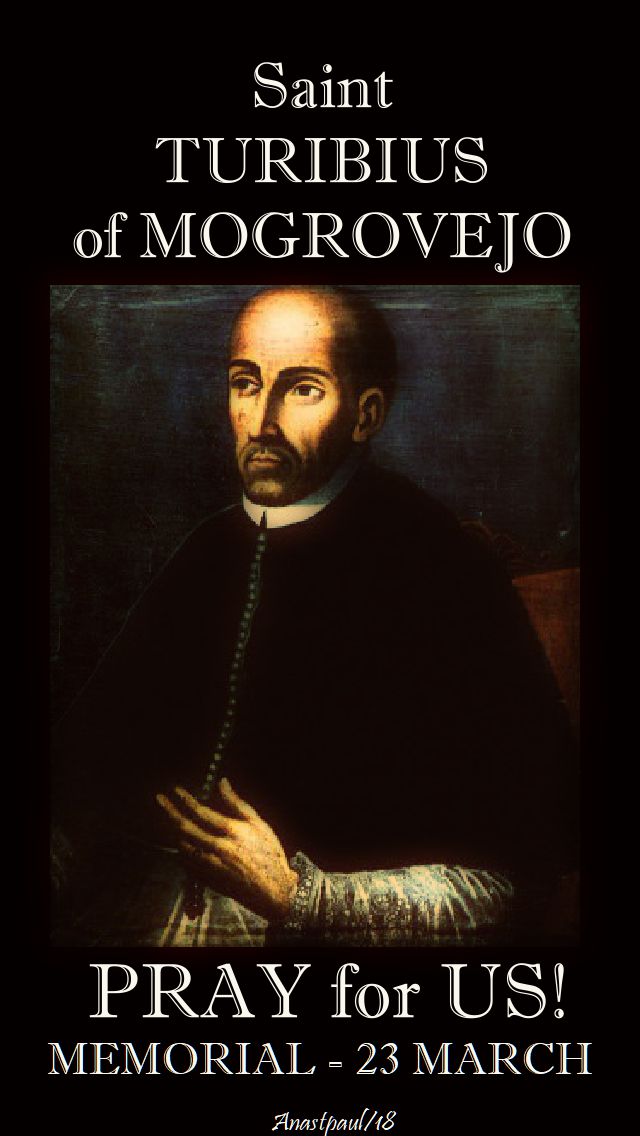
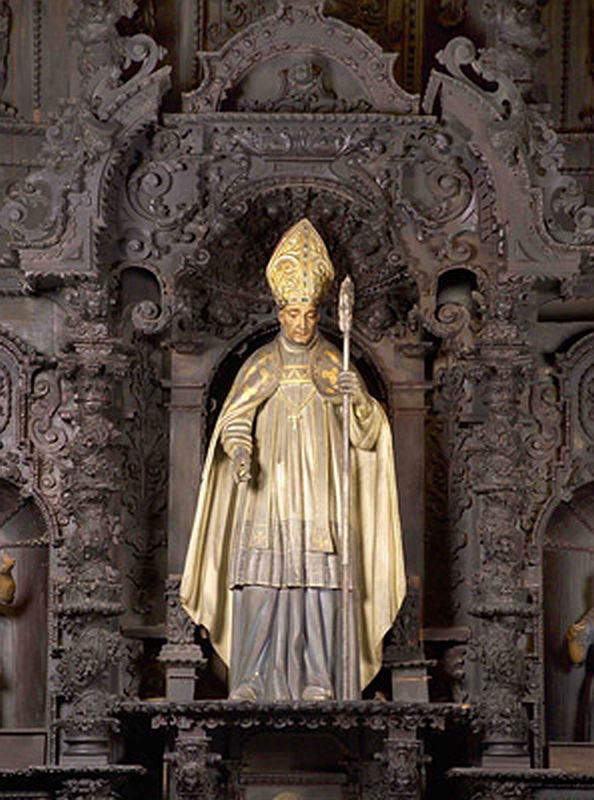
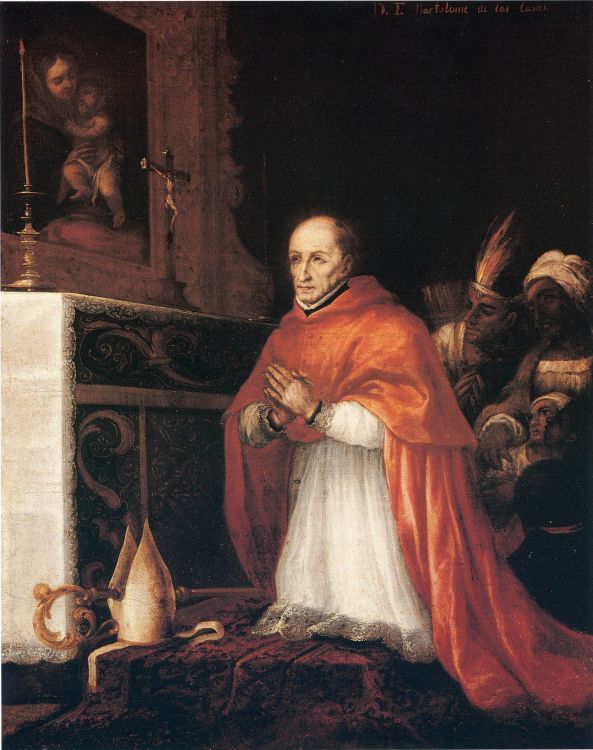
St Turibius of Mogrovejo (1538-1606) ArchBishop of Lima, Peru, Confessor, Lawyer, Missionary, Preacher, Reformer, Professor,
His Feast Day is today. It was moved to 23 March in 1969.
This wonderful Spanish Saint:

https://anastpaul.com/2018/03/23/saint-of-the-day-23-march-st-turibius-of-mogrovejo-1538-1606/

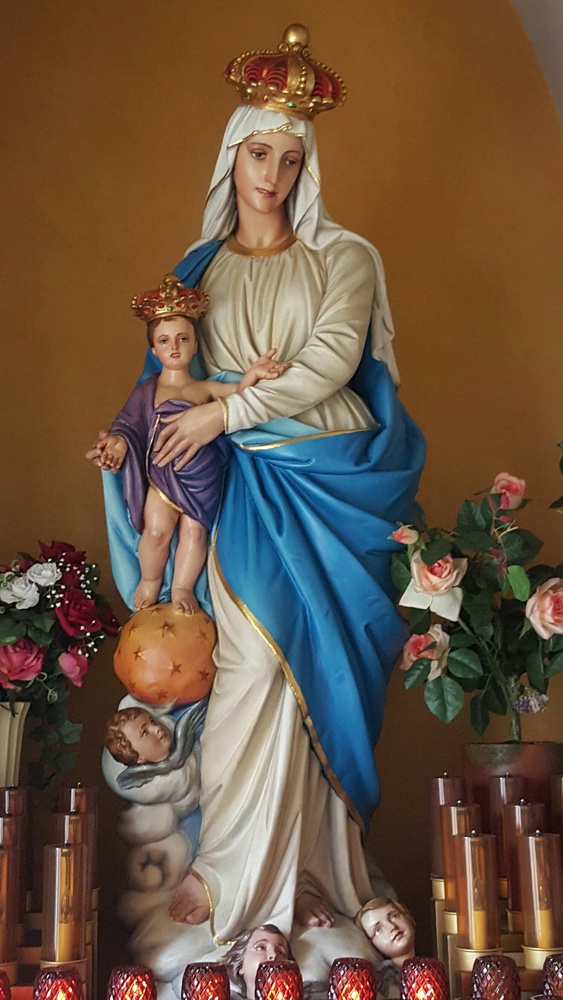
La Moreneta / Our Lady of Montserrat, Spain (718) – 27 April:
HERE:

https://anastpaul.com/2021/04/27/la-moreneta-our-lady-of-montserrat-spain-718-and-memorials-of-the-saints-27-april/
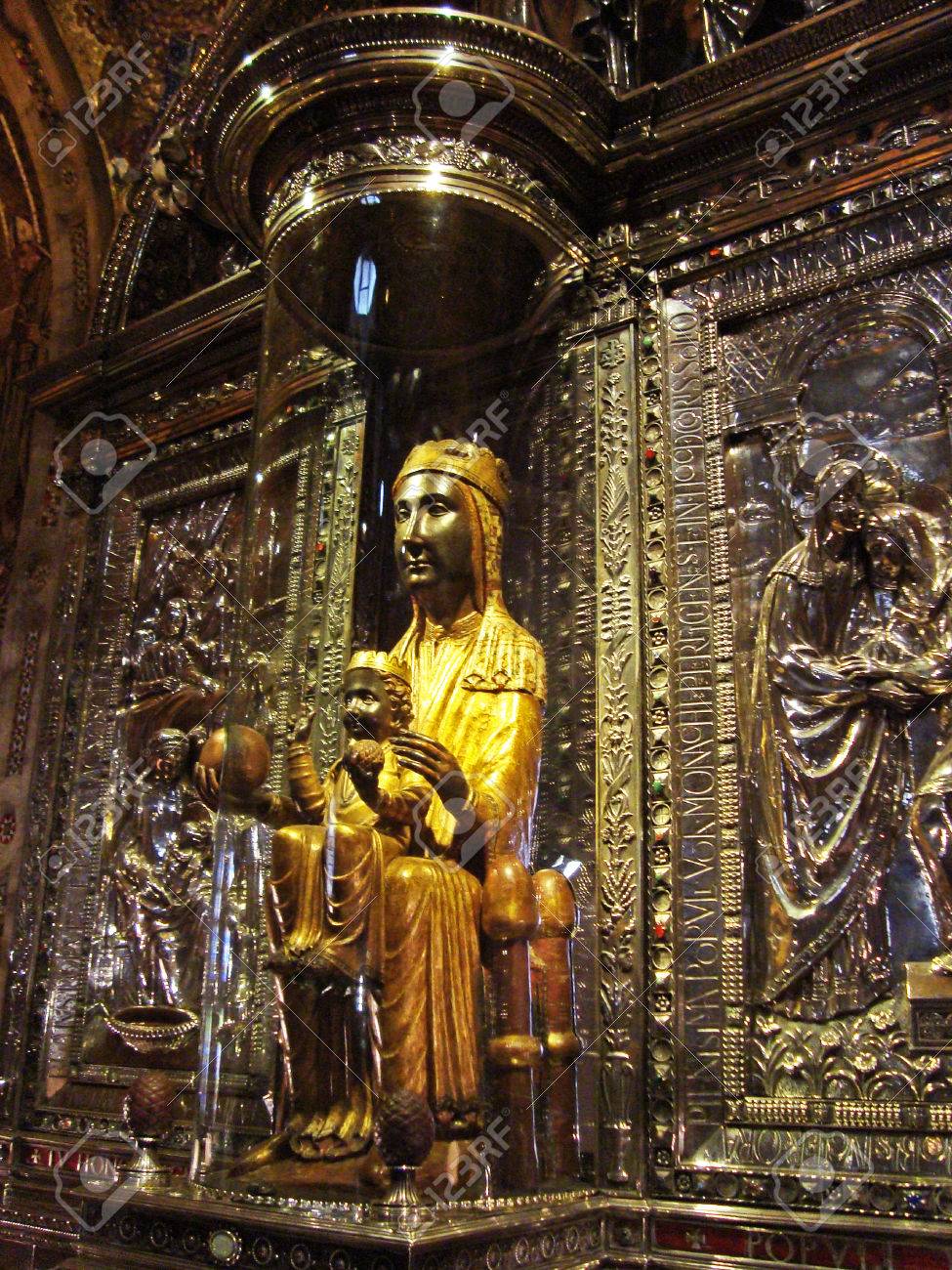
Our lady of Montserrat, patroness of Catalonia. The statue of the black Madonna is in the Church of Santa Maria de Montserrat Abbey, Catalonia, Spain. Photographed from 21.07.2015.

St Adelelmus of Le Mans
St Asicus of Elphin
St Castor of Tarsus
St Enoder
St Floribert of Liege

Blessed Jakov Varingez OFM (c 1400–1496) Croatian professed religious of the Order of Friars Minor, Apostle of charity, Mystic with a great devotion to the Cross of Christ, Marian devotee, he was noted as a miracle worker and levitated. He was Beatified on 29 December 1700 by Pope Clement XIH. His body is incorrupt.
His Life:

https://anastpaul.com/2019/04/27/saint-of-the-day-27-april-blessed-jakov-varingez-ofm-c-1400-1496/

St John of Kathara (c770-c835) Priest, Abbot
St Liberalis of Treviso
St Maughold

Blessed Osanna of Cattaro OP (1493-1565) Virgin, Mystic and Anchoress, Tertiary of the Order of St Dominic, spiritual guide. Her cultus was confirmed on 27 December 1927 by Pope Pius XI and he officially Beatified her in 1934.
Blessed Osanna’s Life:

https://anastpaul.com/2021/04/27/saint-of-the-day-27-april-blessed-osanna-of-cattaro-op-1493-1565-v/

St Peter Armengol OdeM (c 1238-1304) “The Martyr who Wasn’t,” “The Unconquerable Martyr of Jesus Christ,” “The Gangster Saint,”Spanish Priest of the Mercedarian Friars, Penitent, Mystic. Beatified on 28 March 1686, by Pope Innocent XI and Canonised on 8 April 1687, by the same Pope. His body was incorrupt until it was destroyed during the horrors of the Spanish Civil War.
A Miraculous Life:

https://anastpaul.com/2022/04/27/saint-of-the-day-27-april-saint-peter-armengol-odem-c-1238-1304-the-martyr-who-wasnt/

St Pollio of Cybalae
St Simeon of Jerusalem
St Stephen of Tarsus
St Tertullian of Bologna
St Theophilus of Brescia
St Winewald of Beverley

St Zita of Lucca (1212-1272) Virgin, Laywoman, Apostle of the Poor. – Her reputation was such that Dante in the Inferno referred to the City of Luccam, her birthplace and home, as “Santa Zita.” P atronages – housewives, butlers, housemaid, domestic servants (proclaimed by Pope Pius XII), housemaid, lost keys, maids, manservants, people ridiculed for their piety, rape victims, servants, servers, single laywomen, waiters, Lucca, Italy. Her body is incorrupt.
Biography:.

https://anastpaul.wordpress.com/2017/04/27/saint-of-the-day-27-april-st-zita-of-lucca/

Martyrs of Nicomedia: A group of Christians murdered together for their faith. In most cases all we have are their names – Dioscurus, Evanthia, Felicia, Felix, Germana, Germelina, Johannes, Julius, Laetissima, Nikeforus, Papias, Serapion and Victorinus. They died at Nicomedia, Bithynia, Asia Minor (modern Izmit, Turkey).

Posted in MARIAN TITLES, SAINT of the DAY

Madonna della Vittoria di Lepanto / Our Lady of Victory of Lepanto and Hungary, (1716) and Memorials of the Saints – 23 March

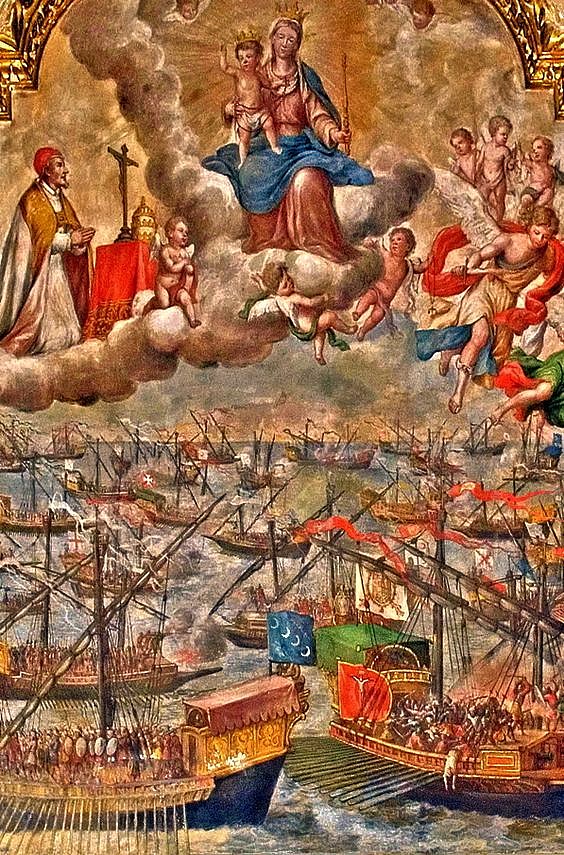
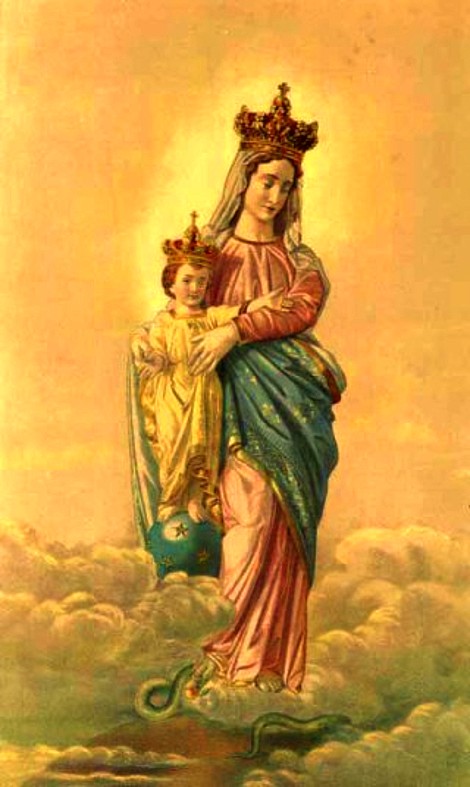
Madonna della Vittoria di Lepanto / Our Lady of Victory of Lepanto and Hungary, (1716) – 23 March:

The Battle of Lepanto was a naval engagement that took place between the ships of the Catholic Holy League under Don Juan of Austria and the navy of the Ottoman Empire under Ali Pasha, supported by a large fleet of corsairs. The Ottoman Empire was far too powerful for any one Christian kingdom to stand against it and, although all of Western Europe was threatened, only Spain, the Papal States, the Duchy of Savoy, the Republic of Venice, the Republic of Genoa and the Knights of Saint John, took a stand against them. Altogether they still had only 212 ships against no less than 278 ships.
For hundreds of years the Ottoman Empire had been making advances into Europe, while also making lightning raids along the coastlines to pillage and take slaves. They intended to eventually overwhelm all of Europe and at that time, Catholics stood almost alone against them, as no Protestant force would do anything to oppose the invasion.
The advantage in this contest went strongly to the Turks and so, Pope Pius V implored all of Christendom, to pray the Rosary to the Blessed Virgin Mary, to obtain her intercession before the throne of God, for their victory. Admiral Andrea Doria sailed to meet the Turks with an image of the Blessed Virgin prominently displayed in his flagship’s state room.
The Venetian forces on Cyprus, had been under siege by the Turks, during the time that the Catholic forces were preparing to meet them. On 1 August they surrendered, after being assured, that they could leave the island unopposed. The Ottoman commander broke his solemn oath, however, taking the Venetians captive and flaying their captain while he was yet alive. Once he had completed this unspeakable torture, the captain’s dead body was hung from a spar on Mustafa’s flagship alongside the heads of all the Venetian commanders. This was the type of barbarism the Catholic forces sailed to oppose.
The engagement took place on the 7th of October 1571, only 6 years after the Knights of Saint John defeated a powerful Ottoman army at Malta. Don Juan of Austria encouraged his men by telling them that “There is no paradise for cowards.” If they should lose the engagement, the Mediterranean Sea would be opened up to assist future Ottoman invasions. Victory would mean at least a brief reprieve.
The Ottoman Turks had not lost any significant naval engagements in the memory of any living man, yet they were defeated. It was widely recognised, that the battle was won through the power of Mary, Our Lady of Victory. The Turks had come up like fire from the East, plundering, raping, enslaving, threatening to master the whole of Christendom but had been defeated at Lepanto through the power of the Rosary.
The Turks had lost nearly 9 of every 10 ships and 30,000 men went to a watery grave. The Holy League lost only 17 galleys and 7,500 men. Many historians rank Lepanto as the most decisive naval engagement since the Battle of Actium in 31 BC, proving to the Christians, that the Turks could be beaten. Although the Turks soon rebuilt their fleet, many of their best soldiers and sailors were already dead at Malta and Lepanto and they could not be easily replaced.

This feast also celebrates another Christian victory, as in 1716, Mary, Queen of Victory, was chosen to protect her children again, at Petenwardein. This battle was fought on 5 August 1716, between the Austrian army of Prince Eugene and the Turks at Peterwardein in Hungary and, it was also won through the power of Mary Most Holy.
To help equip the Christian army against the Turks, Pope Clement XI emptied the Papal treasury.
The two armies met on the morning of the feast of Our Lady of the Snows; the Christian army was outnumbered ten to three; the enemy had the advantage of position but the Christian strength lay in the right of their cause and in Mary, who watched over them. The battle was long but, behind the lines in the Churches of Europe, Catholics prayed – their prayers were heard. That evening the sun set on a free Hungary. Mary’s men had won the day; Mary’s banner floated victoriously over a Christian land.
The news filled the Christian world with joy but nowhere more than at Rome. In thanksgiving to the Mother of God for her help, glorious, solemn, pontifical ceremonies of gratitude were held in the Basilica of Saint Mary Major. After Lepanto, Pius V instituted the feast of the Holy Rosary in Rome and Clement XI extended it to the whole world.
Today, other more sinister errors eat at the heart of Christian culture. Against the errors of our time, we must appeal to Mary; she is our Advocate, our Queen of Victories and of Peace. For her and for her blessed Son, we struggle and in her powerful intercession with the Prince of Peace, we place our trust.
We struggle today to preserve our birthright as sons of God.

__
St Turibius of Mogrovejo (1538-1606) (Optional Memorial)
Biography:

https://anastpaul.wordpress.com/2018/03/23/saint-of-the-day-23-march-st-turibius-of-mogrovejo-1538-1606/

Bl Álvaro del Portillo Díez de Sollano
Bl Annunciata Asteria Cocchetti
St Benedict of Campagna
St Crescentius of Carthage
Bl Edmund Sykes
St Ethelwald of Farne
St Felix the Martyr
St Felix of Monte Cassino
St Fergus of Duleek
St Fidelis the Martyr
St Frumentius of Hadrumetum
St Gwinear
St Joseph Oriol (1650-1702)
His life:

https://anastpaul.com/2019/03/23/saint-of-the-day-23-march-st-joseph-oriol-1650-1702/
St Julian the Confessor
St Liberatus of Carthage
St Maidoc of Fiddown
Bl Metod Dominik Trcka
St Nicon of Sicily
St Ottone Frangipane
Bl Peter Higgins
Bl Pietro of Gubbio
St Rafqa Pietra Choboq Ar-Rayès OLM (1832 – 1914)
Her Story:

https://anastpaul.com/2020/03/23/saint-of-the-day-23-march-st-rafqa-pietra-choboq-ar-rayes-olm-1832-1914/

St Theodolus of Antioch
St Victorian of Hadrumetum
St Walter of Pontoise OSB (c 1030-c 1099) A very reluctant Abbot

Daughters of Feradhach: They are mentioned in early calendars and martyrologies, but no information about them has survived.

Martyrs of Caesarea – 5 saints: A group of five Christians who protested public games which were dedicated to pagan gods. Martyred in the persecutions Julian the Apostate. The only details we know about them are their names – Aquila, Domitius, Eparchius, Pelagia and Theodosia. They were martyred in 361 in Caesarea, Palestine.

Posted in SAINT of the DAY

Memorials of the Saints – 23 March

St Turibius of Mogrovejo (1538-1606) (Optional Memorial)
Biography:
https://anastpaul.wordpress.com/2018/03/23/saint-of-the-day-23-march-st-turibius-of-mogrovejo-1538-1606/

Bl Álvaro del Portillo Díez de Sollano
Bl Annunciata Asteria Cocchetti
St Benedict of Campagna
St Crescentius of Carthage
Bl Edmund Sykes
St Ethelwald of Farne
St Felix the Martyr
St Felix of Monte Cassino
St Fergus of Duleek
St Fidelis the Martyr
St Frumentius of Hadrumetum
St Gwinear
St Joseph Oriol (1650-1702)
His life:
https://anastpaul.com/2019/03/23/saint-of-the-day-23-march-st-joseph-oriol-1650-1702/
St Julian the Confessor
St Liberatus of Carthage
St Maidoc of Fiddown
Bl Metod Dominik Trcka
St Nicon of Sicily
St Ottone Frangipane
Bl Peter Higgins
Bl Pietro of Gubbio
St Rafqa Pietra Choboq Ar-Rayès OLM (1832 – 1914)

St Theodolus of Antioch
St Victorian of Hadrumetum

Daughters of Feradhach: They are mentioned in early calendars and martyrologies, but no information about them has survived.

Martyrs of Caesarea – 5 saints: A group of five Christians who protested public games which were dedicated to pagan gods. Martyred in the persecutions Julian the Apostate. The only details we know about them are their names – Aquila, Domitius, Eparchius, Pelagia and Theodosia. They were martyred in 361 in Caesarea, Palestine.

Posted in SAINT of the DAY

Thought for the Day – 23 March – The Lord writes straight with crooked lines

Thought for the Day – 23 March – Saturday of the Second Week of Lent, Year C and The Memorial of St Turibius of Mogrovejo (1538-1606)

Turibius Alphonsus Mongrovejo, whose feast the Church honours today, was born on 6 November 1538, at Mayorga in the kingdom of Leon in Spain.   Brought up in a pious family where devotion was hereditary, his youth was a model to all who knew him. All his leisure was given to devotion or to works of charity.   His austerities were great and he frequently made long pilgrimages on foot.

The fame of Turibius as a master of canon and civil law soon reached the ears of King Philip II, who made him judge at Granada.   About that time the see of Lima, in Peru, fell vacant and among those proposed Philip found no one who seemed better endowed than our Saint with all the qualities that were required at that city, where much was to be done for religion.   He sent to Rome the name of the holy judge and the Sovereign Pontiff confirmed his choice.   Turibius in vain sought to avoid the honour.  The Pope, in reply, directed him to prepare to receive Holy Orders and be consecrated.   Yielding at last by direction of his confessor, he was ordained priest and consecrated.

He arrived at Lima in 1587 and entered on his duties.   All was soon edification and order in his episcopal city.   A model of all virtue himself, he confessed daily and prepared for Mass by long meditation.   St Turibius then began a visitation of his vast diocese, which he traversed three times, his first visitation lasting seven years and his second four.   He held provincial councils, framing decrees of such wisdom that his regulations were adopted in many countries.   Almost his entire revenues were bestowed on his creditors, as he styled the poor.

While discharging with zeal his duties he was seized with a fatal illness during his third visitation and died on 23 March 1606, at Santa, exclaiming, as he received the sacred Viaticum: “I rejoiced in the things that were said to me – ‘We shall go into the house of the Lord.'”

The proofs of his holy life and of the favours granted through his intercession induced Pope Innocent XI to Beatify him and he was Canonised by Pope Benedict XIII in the year 1726.

The Lord indeed writes straight with crooked lines.   Against his will, and from the unlikely springboard of an Inquisition tribunal, this man became the Christlike shepherd of a poor and oppressed people.   God gave him the gift of loving others as they needed it, with all fervour and total self-giving, a Saint for Lent, indeed!

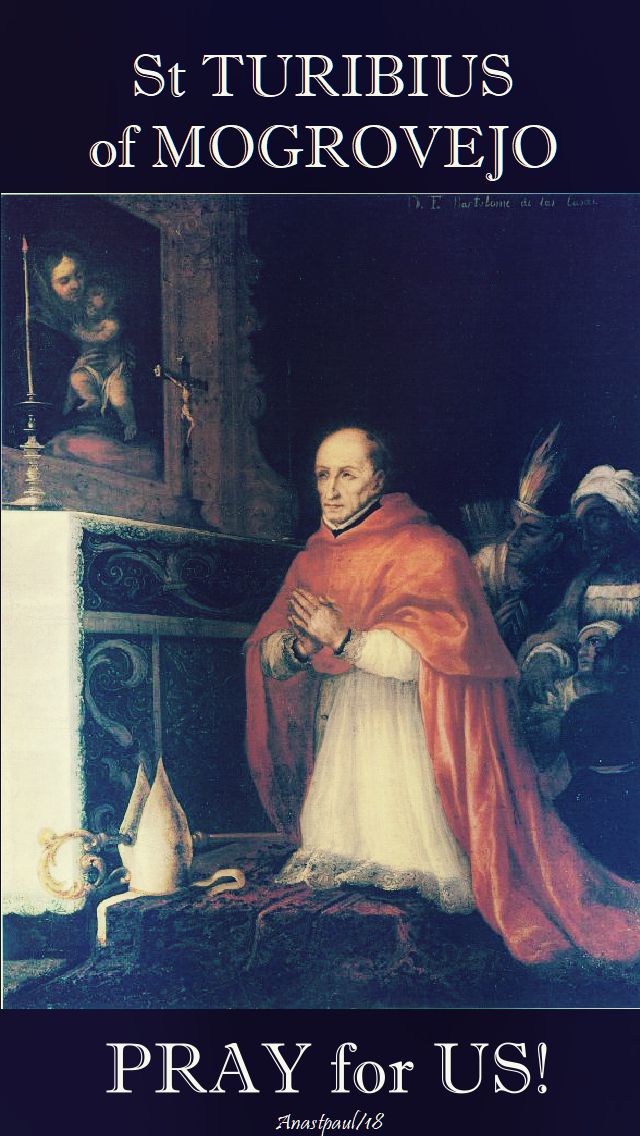
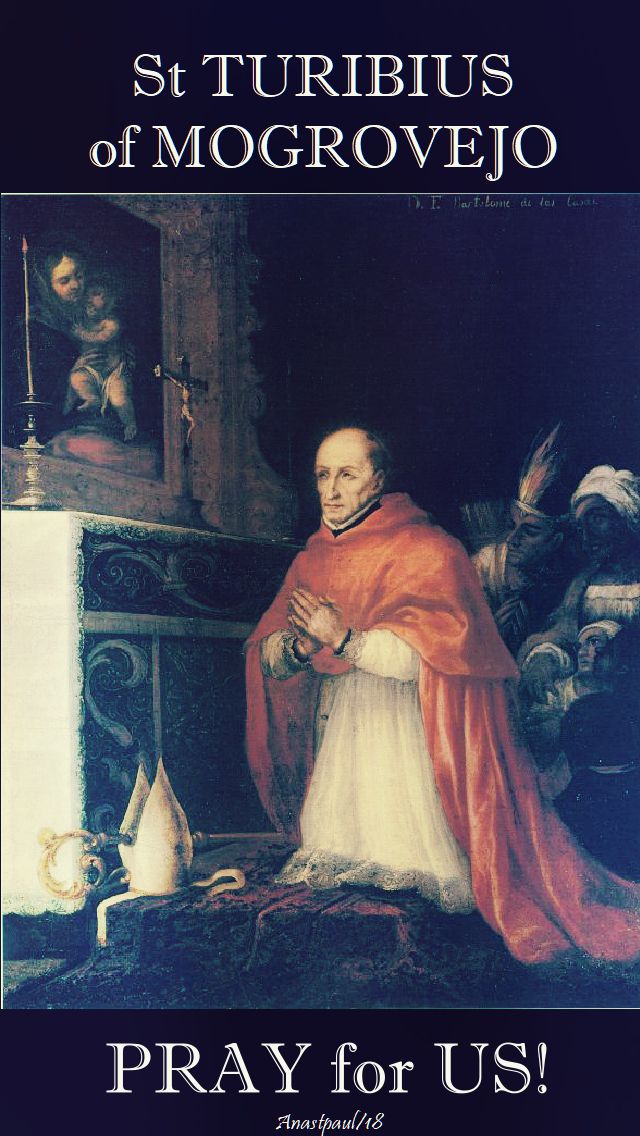
St Turibius, Pray for Us!st-turibius-pray-for-us-23-march-2018-no-2 (1).jpg

Posted in QUOTES of the SAINTS, QUOTES on TIME, QUOTES on TRUTH, SAINT of the DAY

Quote/s of the Day – 23 March – St Turibius

Quote/s of the Day – 23 March – Saturday of the Second Week of Lent, Year C and The Memorial of St Turibius of Mogrovejo (1538-1606)

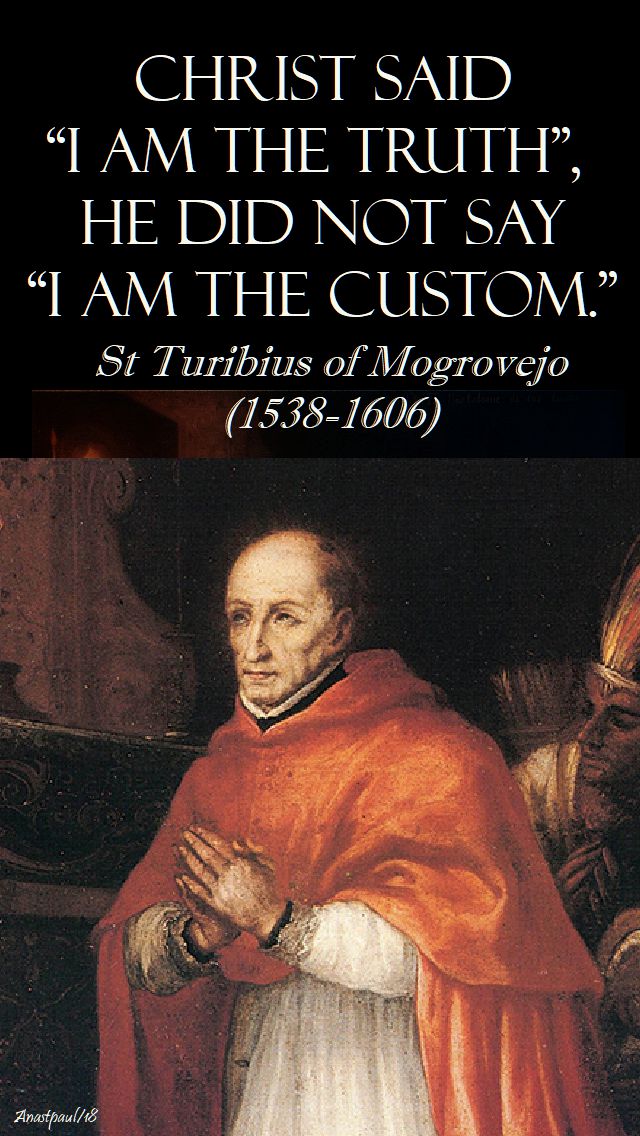
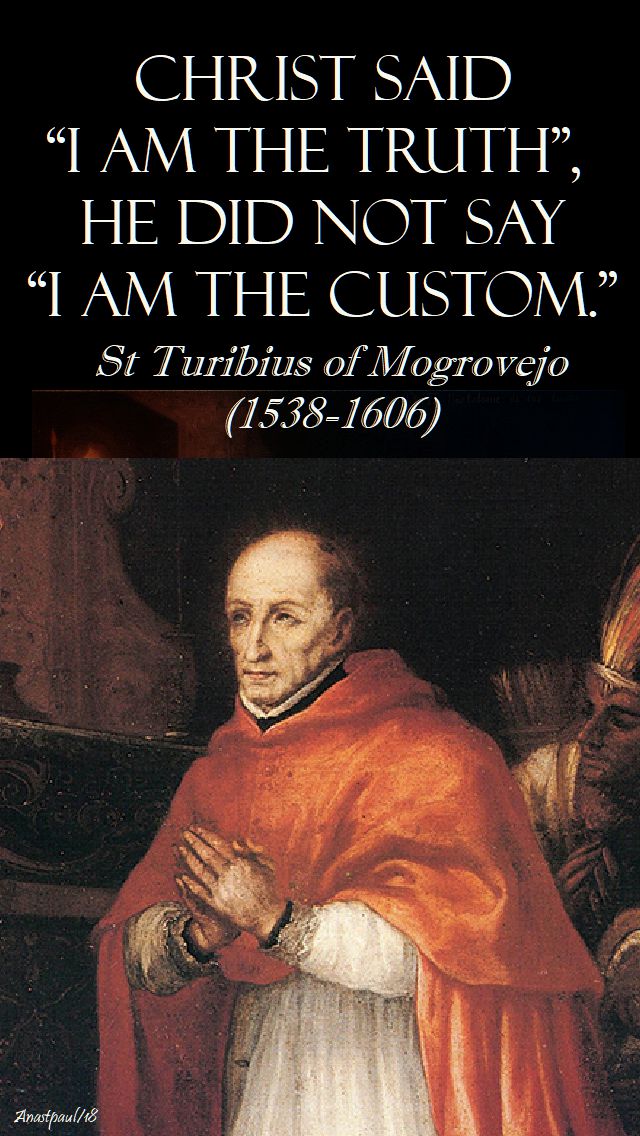
“Christ said ‘I am the Truth’,
He did not say ‘I am the custom’.”christ-said-i-am-the-truth-st-turibius-of-mogrovejo-23-march-2018

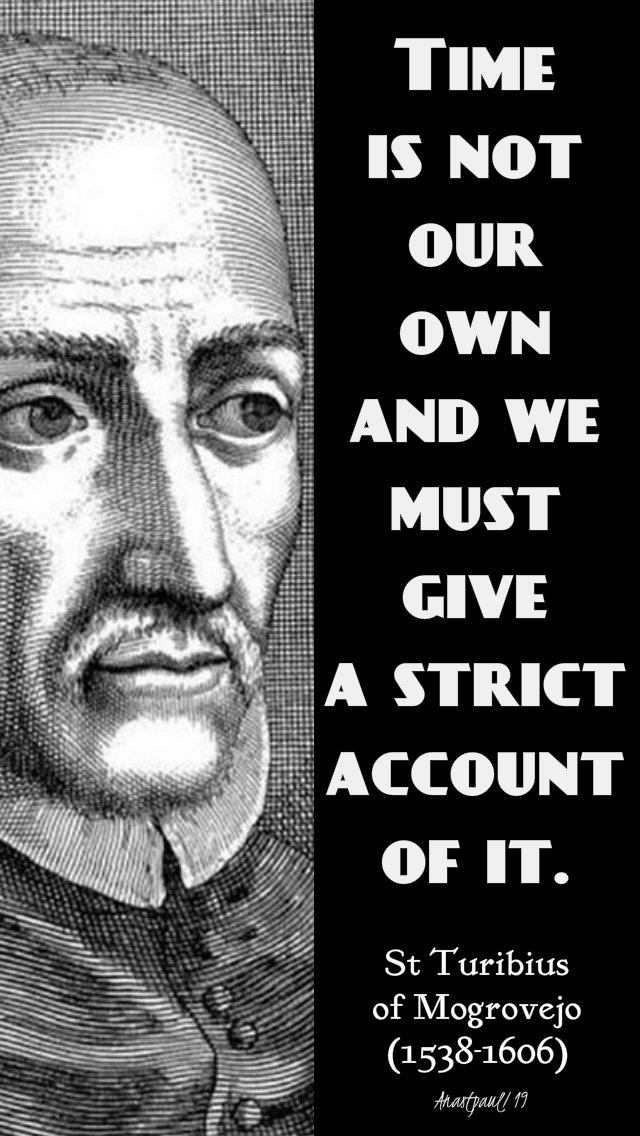
“Time is not our own
and we must give
a strict account of it.”

St Turibius of Mogrovejo (1538-1606)time is not our own - st turibius 23 march 2019

Posted in SAINT of the DAY

Memorials of the Saints – 23 March

St Turibius of Mogrovejo (1538-1606) (Optional Memorial)
Biography: https://anastpaul.wordpress.com/2018/03/23/saint-of-the-day-23-march-st-turibius-of-mogrovejo-1538-1606/

Bl Álvaro del Portillo Díez de Sollano
Bl Annunciata Asteria Cocchetti
St Benedict of Campagna
St Crescentius of Carthage
Bl Edmund Sykes
St Ethelwald of Farne
St Felix the Martyr
St Felix of Monte Cassino
St Fergus of Duleek
St Fidelis the Martyr
St Frumentius of Hadrumetum
St Gwinear
St Joseph Oriol (1650-1702)
St Julian the Confessor
St Liberatus of Carthage
St Maidoc of Fiddown
Bl Metod Dominik Trcka
St Nicon of Sicily
St Ottone Frangipane
Bl Peter Higgins
Bl Pietro of Gubbio
St Rafqa
St Theodolus of Antioch
St Victorian of Hadrumetum

Daughters of Feradhach: They are mentioned in early calendars and martyrologies, but no information about them has survived.

Martyrs of Caesarea – 5 saints: A group of five Christians who protested public games which were dedicated to pagan gods. Martyred in the persecutions Julian the Apostate. The only details we know about them are their names – Aquila, Domitius, Eparchius, Pelagia and Theodosia. They were martyred in 361 in Caesarea, Palestine.

Posted in DOMINICAN OP, MORNING Prayers, ON the SAINTS, QUOTES of the SAINTS, SAINT of the DAY

Thought for the Day – 23 March – The Memorial of St Turibius of Mogrovejo (1538-1606)

Thought for the Day – 23 March – The Memorial of St Turibius of Mogrovejo (1538-1606)

Nothing gave our saint so much pleasure as the greatest labours and dangers, to procure the least spiritual advantage to one soul.   Burning with the most vehement desire of laying down his life for his flock and of suffering all things for Him who died for us, he feared no dangers.   When he heard that poor Indians wandered in the mountains and deserts, he sought them out;  and to comfort, instruct, or gain one of them he often suffered incredible fatigues and dangers in the wildernesses and boldly travelled through the haunts of wild animals.
The ardour of his faith, his hope, his love of his Creator and Redeemer, his resignation and perfect sacrifice of himself, gathered strength in the fervent exercises and aspirations which he repeated almost without ceasing in his illness.   By his last will he ordered what he had about him to be distributed among his servants and whatever else he otherwise possessed to be given to the poor.
His body when translated the year after his death to Lima, was found incorrupt, the joints flexible, and the skin soft.
The Lord indeed writes straight with crooked lines.   Against his will and from the unlikely springboard of an Inquisition tribunal, this man became the Christlike shepherd of a poor and oppressed people.   God gave him the gift of loving others as they needed it. St Turibius, pray for us!st turibius pray for us - 23 march 2018-no 2

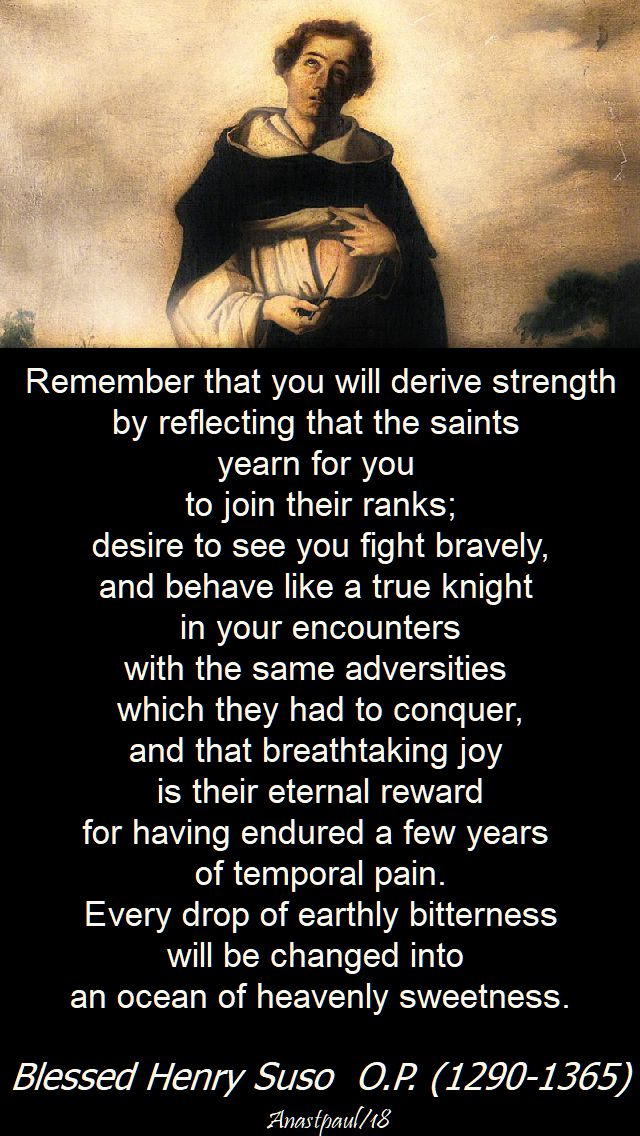
“Remember that you will derive strength
by reflecting that the saints
yearn for you
to join their ranks;
desire to see you fight bravely,
and behave like a true knight
in your encounters
with the same adversities
which they had to conquer,
and that breathtaking joy
is their eternal reward
for having endured a few years
of temporal pain.
Every drop of earthly bitterness
will be changed into
an ocean of heavenly sweetness.”

Blessed Henry Suso O.P. (1290-1365)remember that you will - bl henry suso - 23 march 2018

Posted in MORNING Prayers, QUOTES of the SAINTS, SAINT of the DAY

Quote of the Day – 23 March – The Memorial of St Turibius of Mogrovejo (1538-1606)

Quote of the Day – 23 March – The Memorial of St Turibius of Mogrovejo (1538-1606)

Christ said “I am the Truth”, He did not say “I am the custom”‘.

St Turibius of Mogrovejo (1538-1606)christ said i am the truth - st turibius of mogrovejo - 23 march 2018

Posted in LENT, MORNING Prayers, QUOTES - J R R Tolkien and MORE, QUOTES on PERSECUTION, QUOTES on SANCTITY, QUOTES on SUFFERING, SAINT of the DAY, The HOLY CROSS, The WORD, Thomas a Kempis

One Minute Reflection – 23 March – Friday of the 5th Week of Lent 2018 and the Memorial of St Turibius of Mogrovejo (1538-1606) – Today’s Gospel John 10:31-42

One Minute Reflection – 23 March – Friday of the 5th Week of Lent 2018 and the Memorial of St Turibius of Mogrovejo (1538-1606) – Today’s Gospel John 10:31-42

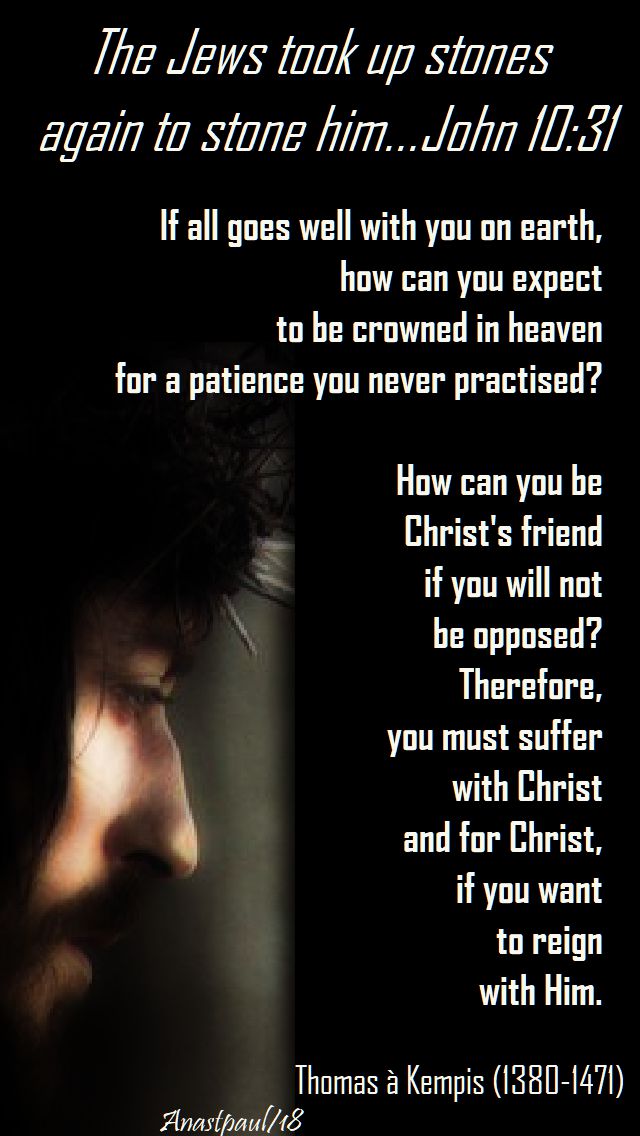
The Jews took up stones again to stone him...John 10:31

REFLECTION – “If all goes well with you on earth, how can you expect to be crowned in heaven for a patience you never practised? How can you be Christ’s friend if you will not be opposed? Therefore, you must suffer with Christ and for Christ, if you want to reign with Him.”…Thomas à Kempis (1380-1471) The Imitation of Christ, Book 2if all goes well with you on earth - thomas a kempis - 23 march 2018

PRAYER – Lord, through the pastoral care, suffering and zeal of St Turibius, You built up Your Church in Peru. Grant that the people of God may continually grow in faith and holiness. Accept his prayers on our behalf, that we may always be willing to stand at Your Cross. Through our Lord, Jesus Christ, in the unity of the Holy Spirit, one God forever amen.st turibius pray for us - 23 march 2018

Posted in SAINT of the DAY

Saint of the Day – 23 March – St Turibius of Mogrovejo (1538-1606)

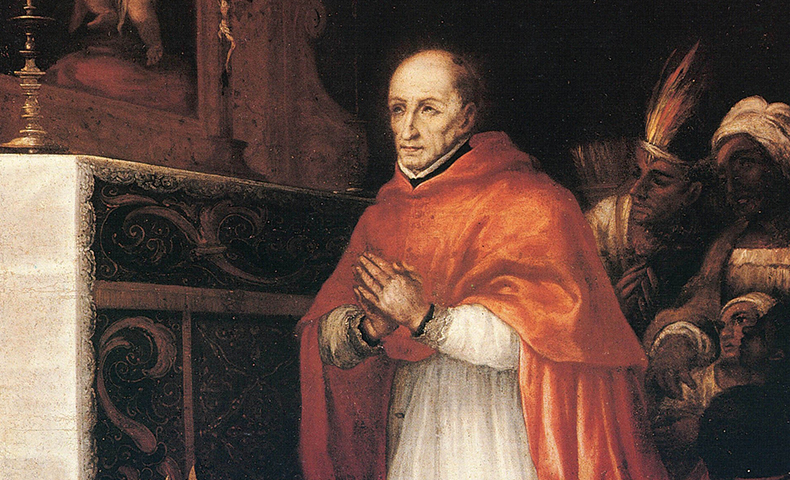
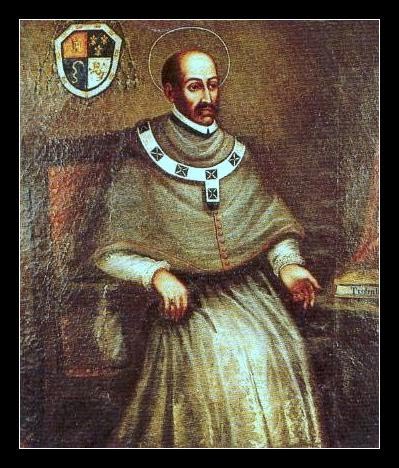
Saint of the Day – 23 March – St Turibius of Mogrovejo (1538-1606) ArchBishop, Lawyer,  Missionary, Preacher, Reformer, Professor, – born Toribio Alfonso de Mogrovejo in 1538 at Mayorga de Campos, Leon, Spain and died on 23 March 1606 at Santa, Peru of natural causes.   Patronages – Peru, Lima, Latin American Bishops, Native rights, Scouts, Valladolid.   St Turibius predicted the exact date and hour he would die, which would come to pass. His reputation for holiness and learning was never forgotten for it led to calls for his Canonisation. Pope Innocent XI Beatified and Pope Benedict XIII Canonise him  on 10 December 1726.SOD-0323-SaintTuribioofMogrovejo-790x480

Toribio Alfonso de Mogrovejo was born on 16 November 1538 in the Valladolid province in Habsburg Spain to the nobles Luis Alfonso de Mogrovejo (1510–1568) and Ana de Roblès i Morán (1515–???);   He was named in honour of Saint Toribio.

He was noted as a pious child with a strong devotion to the Blessed Virgin who fasted once a week in her honour and recited rosaries often.   He received an education befitting for a noble at the time;  he entered the college at Valladolid in 1550 where he studied humanities.   He became a professor teaching law to students at the reputed college in Salamanca.   His uncle Juan de Mogrovejo served as a professor there as well as at the San Salvador High School in Oviedo before King Juan III invited him to teach at the college in Coimbra.   Toribio accompanied his uncle there and studied at the college in Coimbra before returning to Salamanca sometime later.   His uncle died not long after he returned to Salamanca for his studies.   His learning and virtuous reputation led to King Philip II appointing him as the Grand Inquisitor on the Inquisition Court stationed at Granada in February 1571.   He remained in that position until 1576 but not without impressing the king with his work.

During this time Philip II nominated him for the vacant Lima archbishopric despite his strong protests.   He used his knowledge of canon law to remind him and the pope that priests alone could be designated with ecclesial dignities but the pope overruled him. Preparations were made for him to be ordained before the formal announcement could be made.    He was ordained to the priesthood in 1578 in Granada (after four consecutive weeks of receiving the minor orders) and Pope Gregory XIII named him on 16 May 1579 as the Archbishop of Lima;  he received his episcopal consecration in August 1580 from the Archbishop of Seville Cristóbal Rojas Sandoval.   In September 1580 he departed for Peru alongside his sister and her husband.

St.-Turibius-of-Mongrovejo

The new archbishop first arrived in Paita on 12 May 1581 which was 600 miles – or 970 kilometers – from Lima.   He began his new mission travelling to Lima on foot while he baptised and taught the natives.   He was enthroned in his new see a week later.   His favourite topic was:  “Time is not our own and we must give a strict account of it”. He traversed his entire archdiocese three times on foot and alone; exposed to tempests and torrents as well as the wild beasts and tropical heat.   He also had to deal with fevers and often threats from hostile tribes.   He countered these all the while baptising and confirming almost one half million people which included the future Saint Rose and Saint Martin de Porres and also Saint Francis Solano (who later became a close friend) and Blessed Juan Masías.

He built roads and schoolhouses as well as chapels and hospitals;  he never forgot about the religious and established convents for them to live in.   In 1591 founded the first seminary in the western hemisphere and mandated that learning indigenous languages was a prerequisite in their formation.   He inaugurated the first part of the third Lima Cathedral on 2 February 1604.   He also assembled thirteen diocesan synods and three provincial councils during his tenure.   He was seen as a champion of the rights of the natives against the Spanish masters.   He learnt the local dialects for better communication with the native people and his own flock and was seen as a champion for rights and liberties despite Peruvian governors voicing opposition to him since he challenged their power and control.

Mogrovejo sought the reformation of diocesan priests and found that some of their behaviour had grown too scandalous to be continued.   There were those priests who came to resent him for this though Francisco de Toledo supported his reform efforts and rendered assistance to the archbishop in that regard.   He also oversaw the Third Provincial Council from 1582 to 1583 which Philip II had requested he oversee.   He served as the council’s president but guided it rather than lead it;  he involved himself in drafting important concilliar documents.   Mogrovejo also worked to implement the decrees from the Council of Trent and made evangelisation a core theme in his episcopal career.   He produced a trilingual catechism in Spanish as well as in the native languages Quechua and Aymara in 1584 while the council mandated confessional manuals to aid confessors while calling for preaching in indigenous languages.  The council issued a decree from the council – one he endorsed – that proscribed excommunication to those clerics who engaged in business ventures since it was known that there were some clerics who exploited the natives for work and profit.

The council ended and Pope Sixtus V confirmed its decrees in 1588.   He held two more provincial councils in 1591 and in 1601.   Mogrovejo made three pastoral visitations that were all extensive in time.   He visited each parish and would first inspect all objects for divine worship (he expected them to be in good condition) before talking to the parish priest about the life of the parish.   He would then check the parish registers and then checked to see if the priest had the missal that Pope Pius V had mandated over a decade prior.

His prediction of the exact date and hour of his death, would soon come to pass.   It was in Pacasmayo during a pastoral visit that he contracted a fever but continued labouring to the last and arrived at Saña in a critical condition.   He dragged himself to receive the Viaticum and died not long after this on 23 March 1606 (Holy Thursday) at 3:30pm at the Saint Augustine convent.   His final words were those of Jesus Christ on the Cross:  “Lord, into Thy hands I commend my spirit”.   His remains are interred in the archdiocesan cathedral.toribio

His beatification was celebrated under Pope Innocent XI in 1679 (ratified in the papal bull “Laudeamus”) and Pope Benedict XIII later canonised him as a saint on 10 December 1726 through the papal bull “Quoniam Spiritus”.   His liturgical feast was once celebrated on 27 April but is now celebrated on 23 March.   His cult was once confined for the most part to South America but is now universal because of his pioneering reforms.   He became the patron saint for the Latin American episcopate after Pope John Paul II proclaimed him as such in 1983.

Cardinal Juan Luis Cipriani Thorne spoke on Mogrovejo as a tireless pastor who never tired “being close to God” whose “love for the poor manifested itself in the innumerable gestures” that marked his episcopal life.   Thorne further elaborated that “in Saint Toribio we reinforce our conviction that the time devoted to God is a guarantee of a faithful dedication to the fulfillment of our duties and to the service of our brothers”.st turibius at prayer