Quote of the Day – 10 December – The Memorial of Our Lady and the Holy House of Loreto
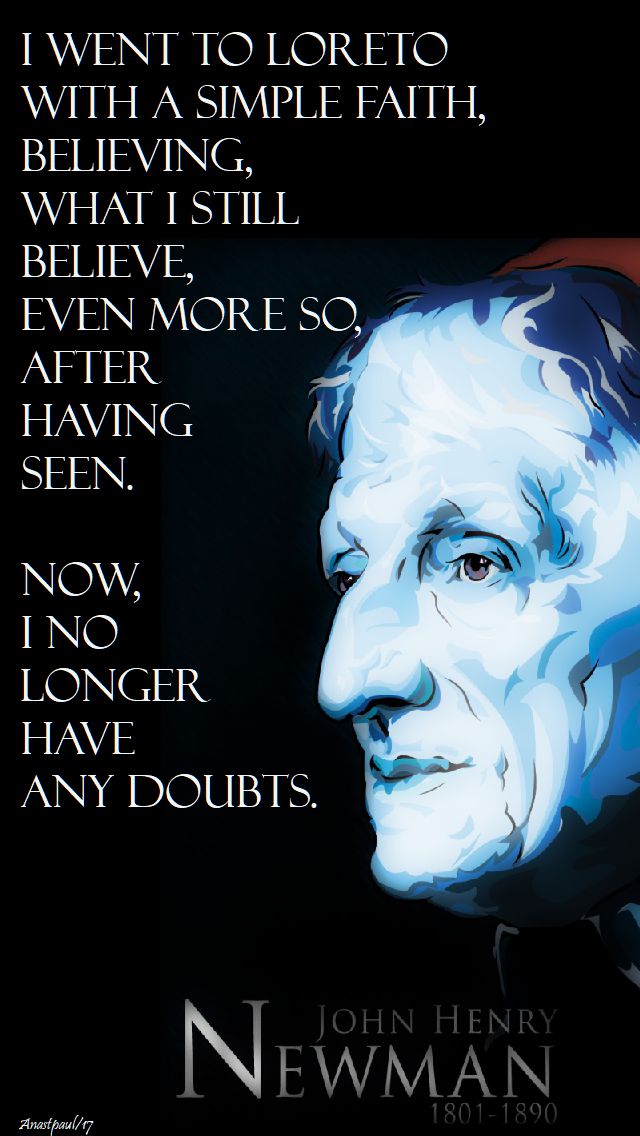
“I went to Loreto with a simple faith, believing what I still believe, even more so after having seen. Now I no longer have any doubts. If you ask me why I believe it, it is because everyone believes it in Rome— cautious and skeptical as they are in many other things. I believe it, as I believe that there is a planet called Neptune, or that chloroform destroys the sense of pain. I have no prior difficulties on this point.”
“It was thought that St Maximilian Kolbe never visited Loreto. Our Lady, however, always manages to bring to what was her hom, while on earth, those who revere and venerate her in a special way. It comes as no surprise, then, to learn from the Mass register of the Basilica, that he participated in a Mass along with thirty priests from Yugoslavia on 13 July 1919. The following day, the feast of the Franciscan theologian St Bonaventure, he celebrated Mass within the Holy house itself. And so another name, a modem day Saint, has been added to the list of Saints and holy persons who have visited the shrine of Loreto. Undoubtedly there will be many more as time goes on, paying their respects and drawing inspiration from the holiest House in this world. ”
Blessed Cardinal Henry John Newman – written in 1848 and 1884
One Minute Reflection – 10 December- The Memorial of Our Lady and the Holy House of Loreto
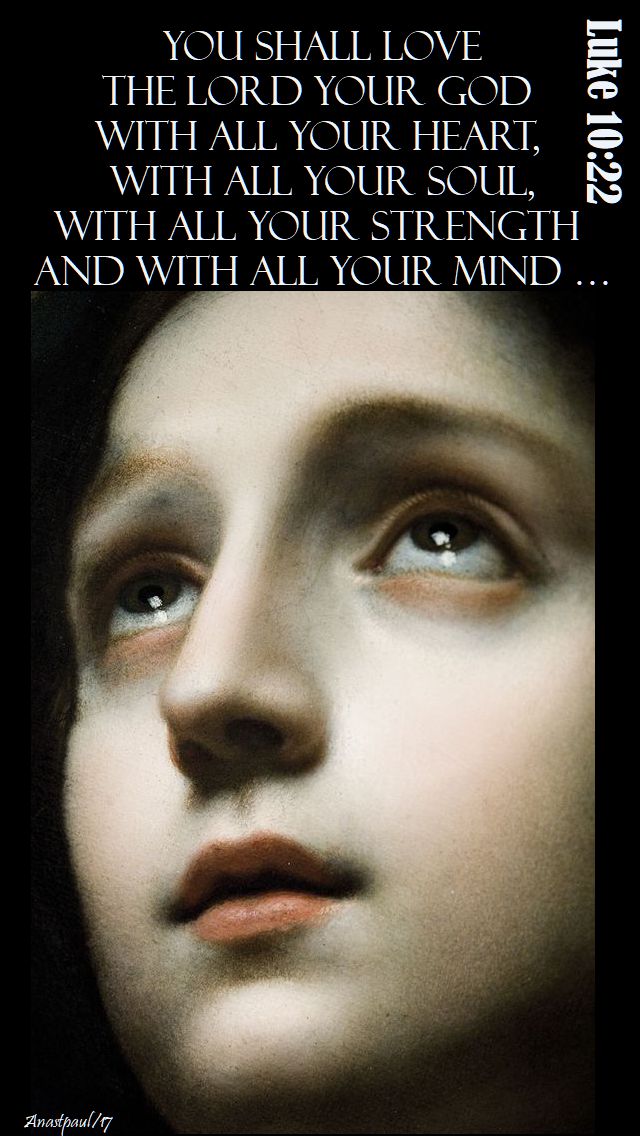
You shall love the Lord your God with all your heart, with all your soul, with all your strength and with all your mind………..Luke 10:27
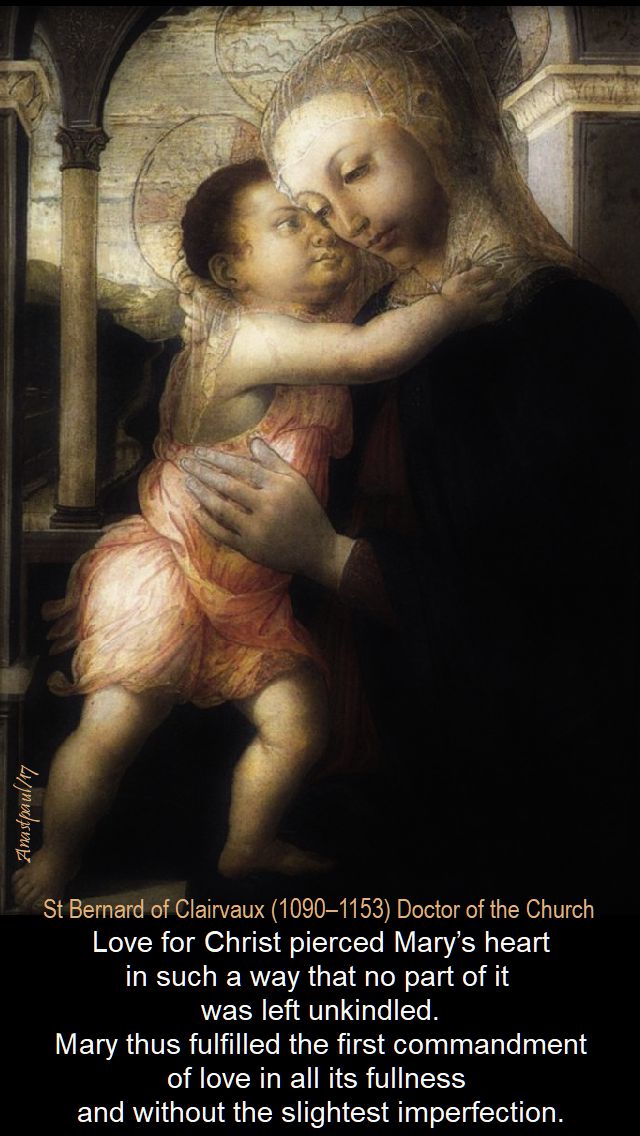
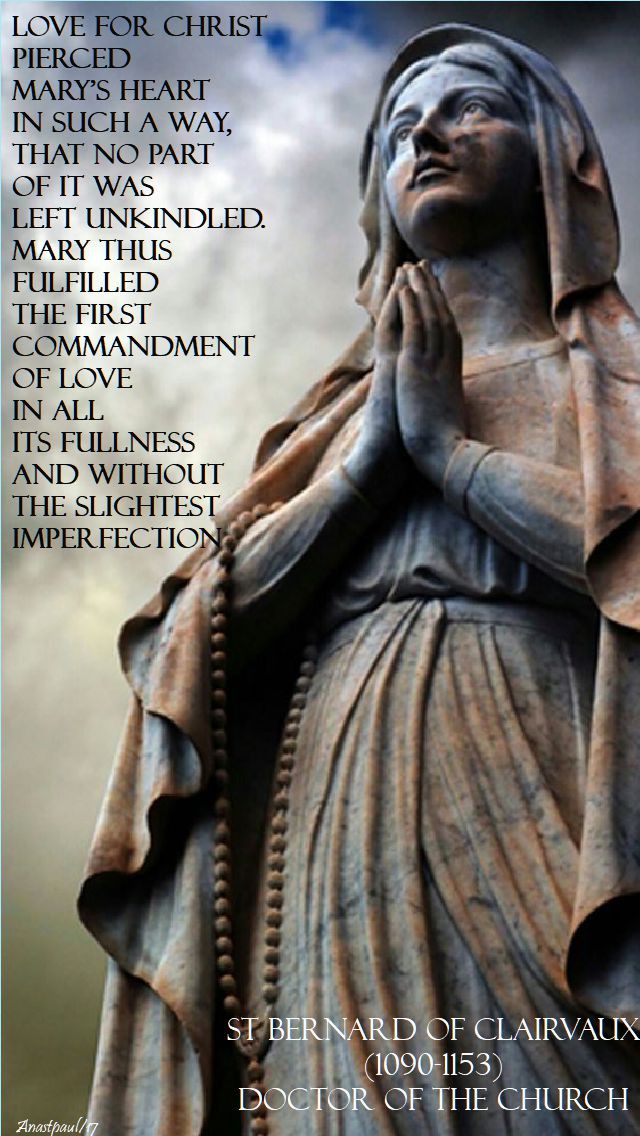
REFLECTION – “Love for Christ pierced Mary’s heart in such a way that no part of it was left unkindled. Mary thus fulfilled the first commandment of love in all its fullness
and without the slightest imperfection.”….St Bernard of Clairvaux (1090–1153) Doctor of the Church
PRAYER – O Mother! You, who carried the Divine Saviour in your immaculate womb and lived with Him in the Holy House that we venerate on the Loreto Hill, grant us the grace to seek Him and imitate His example, He who leads us to salvation. Our Lady of Loreto work miracles in us all! Amen
Our Morning Offering – 10 December – The Second Sunday of Advent and the Memorial of Our Lady and the Holy House of Loreto
Maiden yet a Mother By Dante Alighieri (1265-1321) Tr Msgr Ronald A Knox (1888-1957)
Maiden yet a mother,
daughter of thy Son,
high beyond all other,
lowlier is none;
thou the consummation
planned by God’s decree,
when our lost creation
nobler rose in thee!
Thus His place prepared,
he who all things made
‘mid his creatures tarried,
in thy bosom laid;
there His love He nourished,
warmth that gave increase
to the root whence flourished
our eternal peace.
Nor alone thou hearest
When thy name we hail;
Often thou art nearest
When our voices fail;
Mirrored in thy fashion
All creation’s gird,
Mercy, might compassion
Grace thy womanhood.
Lady, let our vision
Striving heavenward, fail,
Still let thy petition
With thy Son prevail,
Unto whom all merit,
prayer and majesty,
With the Holy Spirit
And the Father be.
Maiden Yet A Mother is a translation of a poem by Durante (Dante) degli Alighieri (c 1265–1321). It is based upon the opening verses of Canto 33 of the Paradiso from his Divine Comedy in which St Bernard of Clairvaux (1090–1153) praises and prays to the Virgin Mother on behalf of Dante. It was translated from the original Italian into English by the Catholic convert, Monsignior Ronald A Knox (1888-1957).
God is coming to save his people and to open up our way into the future.
Daily Meditation:
Comfort, give comfort to my people, In the desert prepare the way of the LORD!…Isaiah 40:1
Since all these things are to be dissolved in this way, what sort of persons ought you to be in leading lives of holiness and godliness, waiting for and hastening the coming of the day of God because of which the heavens will be set ablaze and dissolved and the elements will melt with fire? But, in accordance with his promise, we wait for new heavens and a new earth, where righteousness is at home. Therefore, beloved, while you are waiting for these things, strive to be found by him at peace, without spot or blemish…Peter 3:11-14
We begin this second week of our Advent journey
with this wonderful proclamation of the end of our exile.
Even in the wasteland of our lives,
there will be a smooth highway for our God.
Let us experience today what it will be like to be
freed from the power of our sins to hold us captive.
Our longing, our desire:
that we might be set free.
“Prepare the way of the Lord, make straight his paths.”
Today’s Daily Reflection – Intercessions:
To the Lord Jesus Christ, judge of the living dead,
let us pray:
Come, Lord Jesus!
Lord Jesus, You came to save sinners,
– protect us in times of temptation.
You will come in glory to be our judge,
– show in us your power to save.
Help us to keep the precepts of Your law with the strength
of the Spirit and to look forward in love to Your coming.
You are praised throughout the ages; in Your mercy help
us to live devoutly and temperately in this life,
– as we wait in joyful hope for the revelation of Your glory.
Closing Prayer:
Dear Lord,
Through the darkness, I look for Your wisdom.
I want my heart to be open to You.
But sometimes in these days, it seems that
so many things come between us.
Help me to be awake and aware
of the radiance You bring to my life.
Help me to be grateful each day
for the blessings of family and friends.
Let me be a peacemaker
in my own life and in the world.
Let me pray especially for this difficult world
and those who are so in need of an end to violence.
My heart begs for this as my Advent prayer today.
May the Lord bless us,
protect us from all evil
and bring us to everlasting life.
Amen
The Feast of the Our Lady of Loreto and the Holy House – 10 December – Patronages – Aeroplane Pilots and workers, Aviators, Construction workers, Builders.
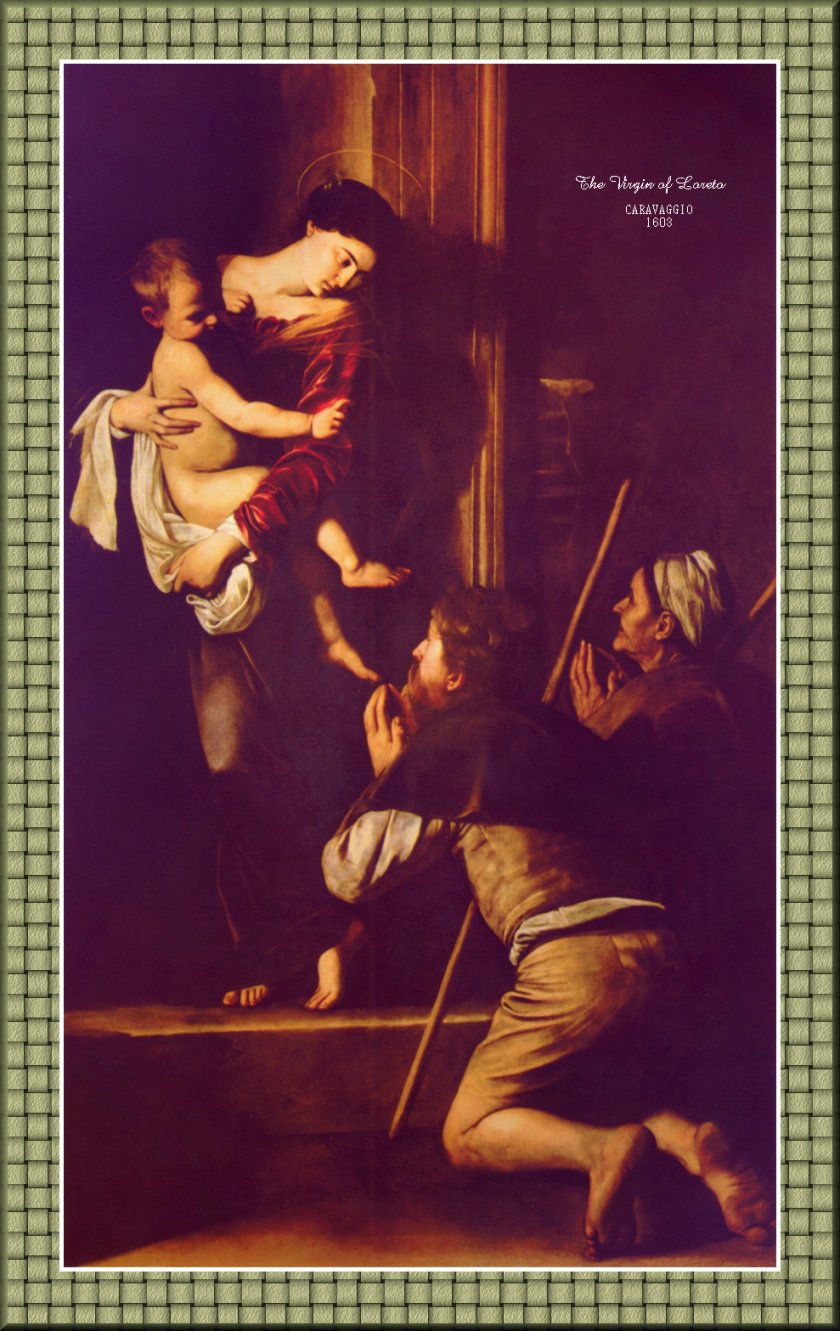
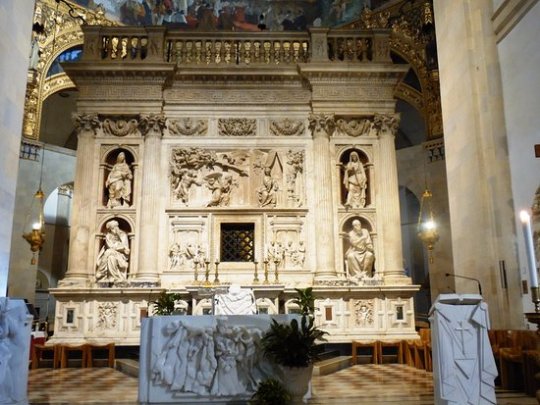
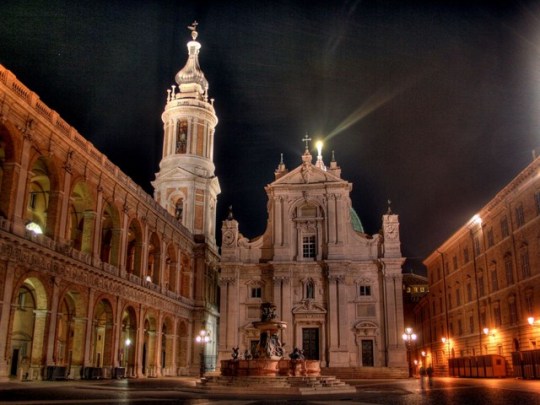
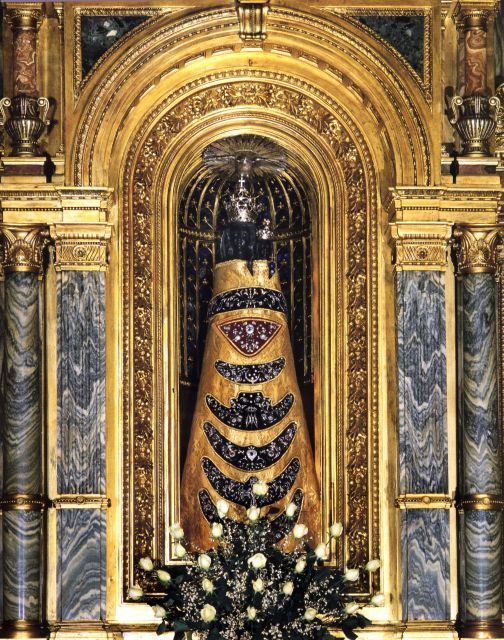
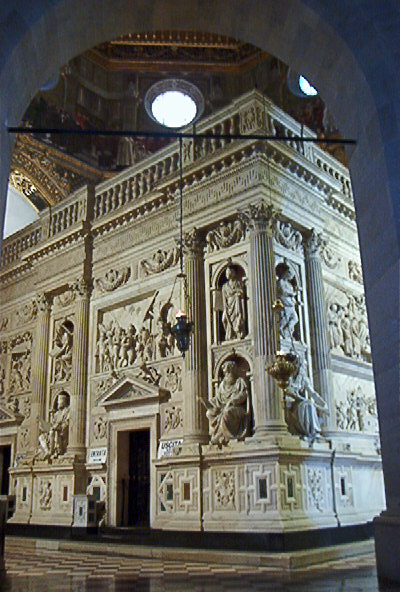
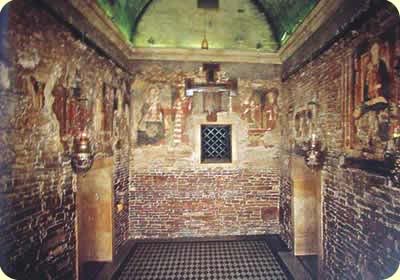
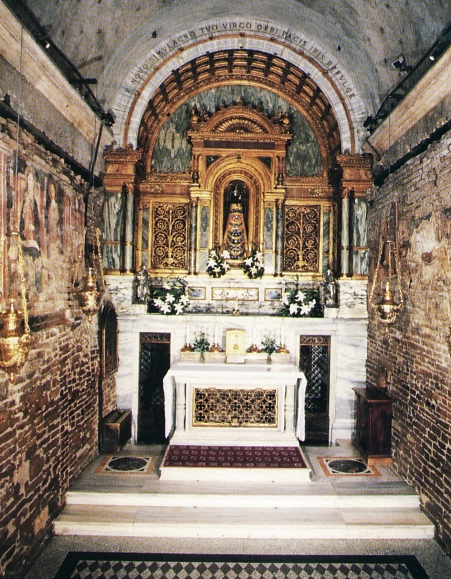
Eighteen miles south of Ancona, and about three miles from the Adriatic coast of Italy, stands the city of Loreto (also spelled Loretto) on the summit of a hill. A vast basilica with a great dome forms the most treasured of all the Pope’s “extraterritorial” Vatican State properties, enshrining, as it does, one of the most sacred and important of all Our Lady’s Shrines — the Home of the Holy Family, “the Holy House of Loreto.” Written at the door of the Basilica are these words: “The whole world has no place more sacred… For here was the Word made Flesh and here was born the Virgin Mother…” On entering the basilica, one finds beneath the central dome and just behind the high altar, a rectangular edifice of white marble, richly adorned with statues. The white marble, however, forms only a protective crust. The contrast between the exterior richness and the poverty of the interior is startling. Inside are the plain, rough walls of a cottage of great antiquity, thirty feet long by fifteen feet wide and about fifteen feet high. In the centre of the House of Our Lady, there is a replica of a wooden statue of the Madonna. The original one, made of cedar of Lebanon, arrived at Loreto together with the house but has since been destroyed.
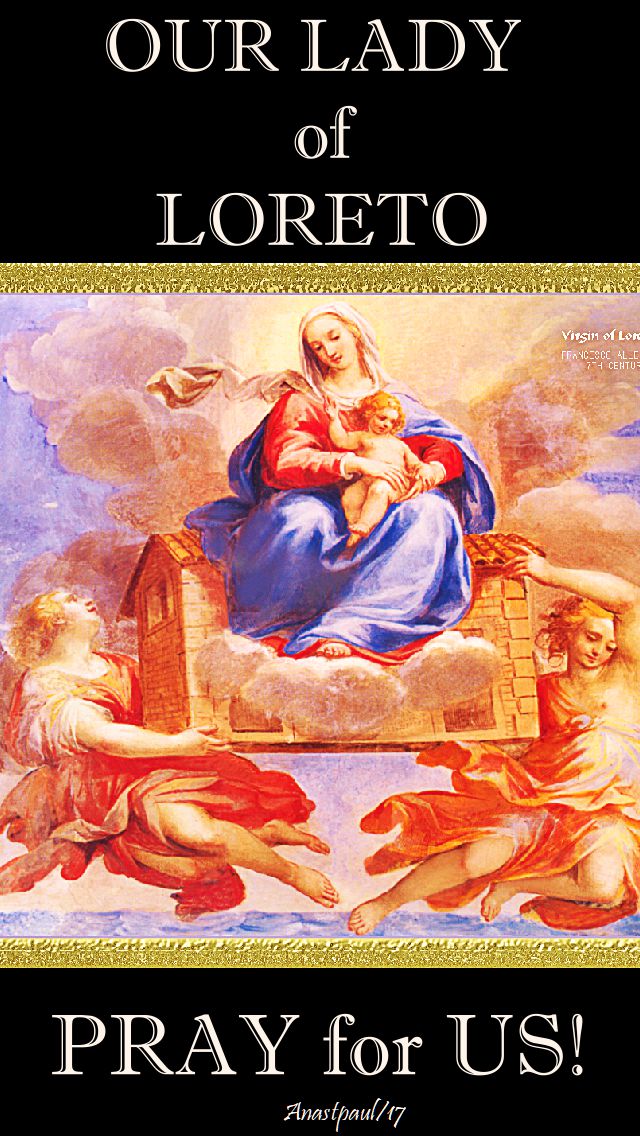
How this Shrine came to be is a fascinating story. This is the House of Nazareth, the home of the Holy Family, which had been brought by angels from Nazareth to the Dalmatian coast and later, by the same angels, transported to Loreto where it stands today enclosed in the huge Basilica just described. The history of Loreto is based upon a wealth of sound tradition and reliably recorded historical facts. We know from the visits of reliable witnesses to the Holy Land, whose journeys were carefully recorded in documents, that the Holy House of Nazareth was intact in Palestine at a relatively late date. St Louis, King of France, heard Mass in Nazareth in 1253 in the same chamber where the Angel announced the coming of Christ to the Blessed Virgin Mary.
Exterior of the Holy House of Loreto
The Holy Land had seen its last and unsuccessful Crusade in 1291. The last of the Christian soldiers withdrew from Nazareth the same year, leaving behind the holiest of houses unprotected. It was to be dealt with according to the Muslim tradition of pillaging and destruction. It may seem far-fetched to think that a tiny clay house venerated by a handful of Christians could merit such vindictive rage. But this was a unique house — visibly an edifice of mud and straw, but preserving within its framework living memories of its Royal Household — Jesus, Mary, and Joseph.
The first assault was that of the Seljukian Turks in 1090. They rampaged through the Holy Land, looting the treasures left in the churches of the Holy Places by devout Christian pilgrims. They turned basilicas and churches into mosques and destroyed what was deemed useless for their unholy purposes. Among the last class fell the fate of Santa Casa, home of the Holy Family. Fortunately, when Constantine had the first Basilica built over the holy spot in 312, the house, along with the grotto that was attached, was interred within a subterranean crypt. And so it survived the initial desecrations of Islam.
In the years that followed, a trickle of Christian pilgrims kept alive the devotion and veneration of the Holy House where the Word was made Flesh. Then, when the first Crusaders arrived victorious in 1100 under Tancred, they built a new Basilica.
During the relative peace that ensued, pilgrims once again freely visited the sanctified ground. But because of the mixed motives that drew some of the Crusaders to the Holy Land, God did not bless all of their attempts to secure a lasting peace for the new Latin Kingdom of Jerusalem. In all there were eight crusades, marked by some glorious victories but punctuated also with terrible defeats. In 1219, Saint Francis of Assisi, whose spiritual sons were later to be given charge of the Holy House, visited this “holiest spot on earth” in Nazareth. It was during the last crusade that St. Louis IX knelt on the ground that had once been frequented by Our Lord and received Him into his heart in Holy Communion. The saintly king deemed this to be a far greater privilege than his earthly royalty.
The year 1263 saw the second destruction of the Basilica, but again the Holy House miraculously survived the assaults of the Infidels. But the defeated Christians eventually withdrew in 1291. Total destruction finally loomed over the former home of the Holy Family, as free reign was given in the Holy Land to its unholy inhabitants. Eternal Wisdom, however, had other plans!
Our Lady of Loretto On the night of May 10th, 1291 the shepherds of Tersatto, now Croatia, parted company to tend to their flocks. The lonely fields in Dalmatia and the shepherds who treaded them daily were well acquainted with each other. So the sudden appearance of a house that wasn’t there the night before caused quite a stir; the evening before, there had been no building, nor any building materials. Little did they realise it once had housed the Morning Star.
The poor, baffled, little shepherds, not suspecting the workings of Divine grace in that little hut, inspected it curiously. The walls did not all evenly touch the ground; half of them hovered over the road and the rest rested in the field. The tiny structure resembled a church more than a domestic abode. The house had an ancient altar, a Greek cross and a strange statue of a lady. As they entered it, the air seemed filled with a heavenly incense. Indeed it was. For in this very house, from the root of Jesse, blossomed the Mystical Rose.
Realising it was no ordinary incident, the shepherds ran off to the local church of St George to awaken Father Alexander Georgevich. The puzzled priest, after investigating the clay “church” himself, could offer little explanation to the humble crowd that gathered. That night the weary old priest, although severely crippled with arthritis, spent hours in prayer beseeching enlightenment from the Virgin Most Powerful. In his sleep the Mother of Good Counsel rewarded his humility by answering his request in a dream. “Know that this house,” She said, “is the same in which I was born and brought up. Here, at the Annunciation, I
conceived the Creator of all things. Here, the Word of the Eternal Father became Man. The altar which was brought with the house was consecrated by Peter, the Prince of the Apostles. This house has now come to your shores by the power of God. And now, in order that you may bear testimony of all these things, be healed. Your unexpected and sudden recovery shall confirm the truth of what I have declared to you.”
The sudden disappearance of Father Georgevich’s familiar malady the next day quite convinced him. He then announced that it was She, who is called Health of the Sick, who had cured him and related the vision of the night before. The peasants of Tersatto now knew for sure that this was the sacred little home of their Saviour. They venerated it accordingly.
Hearing of the miraculous appearance, the Governor of Dalmatia immediately dispatched his emissaries to Nazareth, and they reported that the Holy House had indeed disappeared from there. The length and breadth of the walls of the dwelling found at Tersatto corresponded exactly with the foundations beneath the Basilica of the Annunciation in Nazareth. This basilica had been built over the original Holy Home in Nazareth. Tradition says that the investigation disclosed another bit of valuable evidence: the house found at Tersatto was built of limestone, mortar and cedar wood. These materials were commonplace in Nazareth but almost unobtainable in Dalmatia.
Then suddenly on 10 December 1294, three years later, the little house disappeared as mysteriously as it had come. This time, however, the angels were not so successful in bearing it away without notice! The alert shepherds of Tersatto reported the departure. And across the Adriatic Sea, the happy victims of insomnia, who happened to be out that night, rushed home with reports of a mysterious passage overhead of a little house, borne aloft by angels. The awesomeness of the spectacle gave hint that it was the work of the Son of the Queen of Angels.
To this very day the people of Tersatto in Dalmatia (Croatia), as well as people in the Italian Marche region, on the night of December ninth and tenth, rise at 3:00 a.m. to the sound of a joyful pealing of their bells and light their customary bonfires, as they sing litanies of praise to the Cause of Our Joy.
Across the sea in Italy, on the shores of the Adriatic, a little plain called Banderuolo, four miles from the city of Recanati welcomed the Holy House when the angels lowered its uneven walls onto the wooded area. It took almost no time for people to hear of the arrival of this mysterious, airborne house. Thousands of people began to make pilgrimages to it and it rapidly gained a reputation as a place of cures. But unfortunately, as the pilgrims increased, so did the bandits that lurked in the surrounding forest. Slowly the house of prayer became surrounded by a den of thieves. Feeling the same justified anger that once compelled Him to cast the buyers and sellers from His Father’s House, Our Lord withdrew the House itself!
Once again the soft flutter of angels’ wings stirred the night air as they relocated the home of the House of Gold. This time its foundation-less walls settled down in an open meadow on the Antici property in Recanati. Tradition tells us that, not long after this, the brothers who owned the property, two hot-tempered Italian rustics, took to fighting. The cause of the discord was allegedly over the Holy House itself, each claiming to own the plot it occupied, or perhaps taking credit for its having chosen the land because of their personal holiness! Tradition calls it a mere quarrel but it was sufficient to cause the Refuge of Sinners to abandon the site. Happily, as soon as the Santa Casa moved, the brothers repented and were reconciled.
The Holy House now reached its final destination; final, that is, at least to this present date, on Loreto hill, a few miles away from its previous location, close to the village of Recanati. Although they weren’t quite sure just what was the story behind it, people began to come in droves to venerate it. In 1295 a strong wall was built around it, either for protection, or to keep it from escaping their humble grasp and making another nightly excursion! Identification of Her sweet little home was clearly unfolded by the Virgin of Virgins Herself in 1296 to a saintly hermit who lived nearby. Immediately the government of Recanati sent sixteen of its most reputable citizens to the Holy Land to investigate the situation. After an absence of months, the retinue of homespun scientists returned with the obvious facts. All they found in Nazareth was the spot, still venerated, where the house once stood. The foundation measured up exactly to that of the House of Loreto: thirteen feet by thirty-one. The bricks of the local Nazareth habitation were of the same substance as the Holy House, whereas the other Recanati abodes were completely dissimilar. The Recanati representatives were convinced; this was the House of the Holy Family, miraculously brought to the shores of Italy through the Will of God and for His Glory.
Most of the evidence about the translation of the Holy House came to light through a commission of inquiry set up by Pope Boniface VIII, who sent his investigators to Tersatto and Nazareth, as well as to Loreto. He himself, as well as other popes, declared that the history and traditions of Loreto are “most worthy of belief.” Later the Sacred Congregation of Rites appointed 10 December as the Feast of the “Translation of the Holy House.”
Since 1294, it has become one of the greatest shrines to Our Lady, with pilgrims from all over the world crowding the roads to Loreto. Over 2,000 canonided, beatified and venerable children of the Church have paid homage to the Singular Vessel of Devotion by visiting the home in which she was born and in which she raised the only-begotten Son of God. These include: St Ignatius Loyola, St Francis Xavier, St John Berchmans, St Philip Neri, St Francis de Sales, St John Capistrano, St Clement Mary Hofbauer, St Alphonsus Maria de Liguori, St Louis Marie de Montfort, St Benedict Joseph Labre, St Therese and St Frances Xavier Cabrini, Blessed John Henry Newman, just to mention a few. Forty-seven popes have knelt there during their pontificates and many others came to pray before they were elevated to the Holy See. More than fifty Popes have issued Bulls and Papal Briefs testifying to its authenticity. Hundreds of Papal documents have granted it privileges, exemptions, and authorisations to receive benefits. In 1669, it was given a Mass of its own in the Missal. The Litany of Our Lady, that most beautiful and poetic expression of her virtues and her sublime role for both Heaven and Earth, is named after this Shrine, the Litany of Loreto.
It is a place of many miracles. Those who have come throughout the ages, beseeching aid from the Comforter of the Afflicted, usually return home spiritually aided or physically cured. Three successors to the chair of Peter have physically experienced the benevolence of the Virgin Most Merciful and were restored to health. They were Pope Pius II, Pope Paul II and Pope Pius IX. Even today Her graces continue to flow, for Our Lady still exercises Her Queenship by interceding for Her subjects who implore Her aid under the title of Our Lady of Loreto.
Italy has, perhaps more than any other European country, been the scene of civil strife, wars and revolutions from the thirteenth to the eighteenth centuries. The country was divided with city fighting city, faction pitted against faction, and man against man. Those six centuries of Italian history are the most dramatic in the formation of Europe. But as numerous armies marched from North to South and South to North, no harm was ever done to the House of Loreto and to its mystical image.
It was again one of the many sacrileges of the Freemasonic French Revolution to desecrate this most sacred image of Our Lady. The French Revolutionary Directory seized all the treasures of Loreto, including the image, took them to Paris and exposed them to profane curiosity. Napoleon III finally gave the statue back to Pope Pius VII, who enthroned it first in the Papal Palace at the Quirinal and then, with great solemnity restored it to Loreto in 1802. Tragically, however, an accident in 1921 destroyed the original statue and a new figure, about three feet high, was then carved from the wood of a cedar grown in the Vatican gardens.
Pope Pius XI enthroned this new statue in September of 1924 in the Sistine Chapel. Then, with his own hands, he crowned the Holy Child and His Mother, whereupon the figure was exposed for a day in the Basi1ica of St Mary Major in Rome. Finally, with great solemnity, it was carried to Loreto. On feast days, the figure of Our Lady and the Holy Child were accustomed to be dressed in robes of gold and silk. The jewels on the robe are the marriage jewels of the Catholic Empress, Maria Theresa of Austria and are of inestimable value.
There are, of course, the inevitable skeptics who obstinately reject the fact of the “translation” of the Holy House from Nazareth to Tersatto and thence to its present location. But their objections are refuted by the very fact that no house could stand for as long a time as this one has — certainly not for centuries — resting on the surface of the ground only, without even having a foundation. Yet the fact remains that the house is not artificially sustained in any way and it has no foundation at all. This can be verified by anyone who visits the shrine. During World War II, the shock of airwaves destroyed many more solidly built houses, ancient and modern, as well as fortified castles. The vicinity of Loreto and the city itself were bombed by the Allies (Americans) several times during the conflict but the House of Nazareth, where the Angel announced that the Word would be made Flesh, still stands erect and unshattered, as if proclaiming to mankind that it need only depend upon the unshakable Rock of Peter, the foundation-stone of Christ’s One, True Church.
Sweet were the days the Blessed Virgin Mary spent with Saint Joseph and the Holy Child in their modest little home. Their life within the clay walls was affluent with poverty, resonant with silence and illustrious in humility. “Her actual life, both at Nazareth and later, must have been a very ordinary one…” said Saint Thèrése, the Little Flower of Jesus, who once visited the Holy House.“She should be shown to us as someone who can be imitated, someone who lived a life of hidden virtue and who lived by faith as we must.” This beautiful and much needed lesson of extraordinary sanctity in very ordinary circumstances, is precisely what the humble and Holy House of Loreto bespeaks to us.
Our Lady of Loreto – The title Our Lady of Loreto refers to the Holy House of Loreto, the house in which Mary was born and where the Annunciation occurred and to an ancient statue of Our Lady which is found there. Tradition says that a band of angels scooped up the little house from the Holy Land and transported it first to Tersato, Dalmatia in 1291, then Recanati, Italy in 1294 and finally to Loreto, Italy where it has been for centuries. It was this flight that led to her patronage of people involved in aviation and the long life of the house that has led to the patronage of builders, construction workers, etc. It is the first shrine of international renown dedicated to the Blessed Virgin, and has been known as a Marian center for centuries. Popes have always held the Shrine of Loreto in special esteem and it is under their direct authority and protection.
The Holy House of Loreto – The feast is so named from the tradition that the house where the Holy Family lived in Nazareth, was transported by angels to the city of Loreto, Italy. The Holy House is now encased by a basilica. It has been one of the famous shrines of the Blessed Virgin since the 13th century.
St Abundius
St Albert of Sassovivo
St Angelina of Serbia
Bl Brian Lacey
BL Bruno of Rommersdorf
St Caesarius of Epidamnus
St Carpophorus
St Deusdedit of Brescia
St Edmund Gennings
St Emérico Martín Rubio
St Eulalia of Merida
St Eustace White
St Florentius of Carracedo
St Fulgentius of Afflighem
St Gemellus of Ancyra
St Gonzalo Viñes Masip
Bl Guglielmo de Carraria
St Guitmarus
St Hildemar of Beauvais
Bl Jerome Ranuzzi
Bl John Mason
St John Roberts
St Julia of Merida
St Lucerius
Bl Marco Antonio Durando
St Maurus of Rome
St Mercury of Lentini
St Miltiades, Pope
St Polydore Plasden
Bl Sebastian Montanol
Bl Sidney Hodgson
St Sindulf of Vienne
St Swithun Wells
St Thomas of Farfa
Bl Thomas Somers
St Valeria
Martyrs of Alexandria – 3 saints – A group of Christians murdered for their faith in the persecutions of Galerius Maximian – c312. The only details that have survived are three of the names – Eugraphus, Hermogenes and Mennas.
Thought for the Day – 9 December 2017 – Saturday of the First Week of Advent & the Memorial of St Juan Diego(1474-1548) , the Marian Visionary of the Miracle of Mary of Guadalupe – Five Lessons from the Manger
The Surprise: God does not manifest in great events but in small surprises. The boy in a manger, who would have imagined that God among us shows Himself like this? The Christian lives the surprise in the small gifts of the day to day.
The Silence: Mary meditates all this in her heart, with a look that goes deeper and finds the meaning of things. The Christian feeds on silence, prays and asks the Father for an understanding of what happens to him, in order to discern the best options.
The Light: On the darkest night of the year the Light of Jesus manifests itself. God visits our darkness, the places where we think He could never be. We are not abandoned children but infinitely loved. The Christian lives this hope.
The Poor: The shepherds, despised by all, are the first recipients of the announcement of the birth of Jesus. Always the little ones are the favourites of God. The message is given to the poorest, to whom no one gives importance. This is particularly obvious today, on the Memorial of St Juan Diego, the Marian Visionary of the Miracle of Mary of Guadalupe, for whom we ask, please pray for us St Juan!
These are the five lessons we learn from the manger. Throughout this month, we pray that we might get closer Christ’s coming to us on this Christmas Day, in your prayer proposals and in your union with the Holy Father and his intentions.
A Holy and Blessed Advent!
(Taken partially from Father António Valério, SJ – Director of the Pope’s Global Network of Prayer in Portugal)
Quote/s of the Day – 9 December – The Memorial of St Juan Diego (1474-1548)
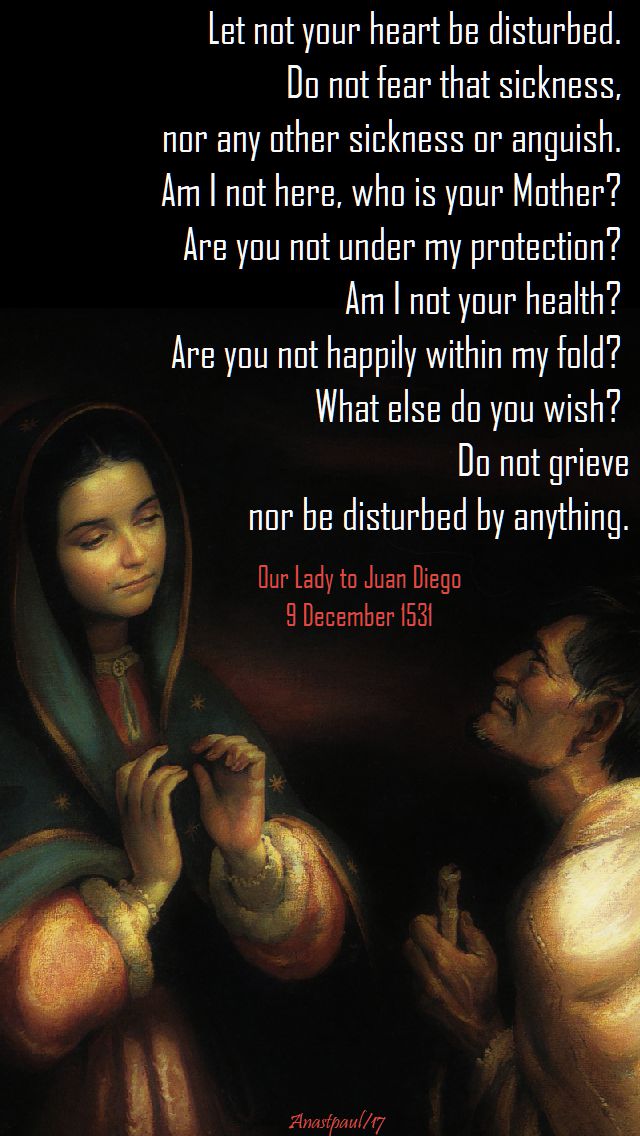
“Let not your heart be disturbed. Do not fear that sickness, nor any other sickness or anguish. Am I not here, who is your Mother? Are you not under my protection? Am I not your health? Are you not happily within my fold? What else do you wish? Do not grieve nor be disturbed by anything.”
Our Lady to Juan Diego, 9 December 1531
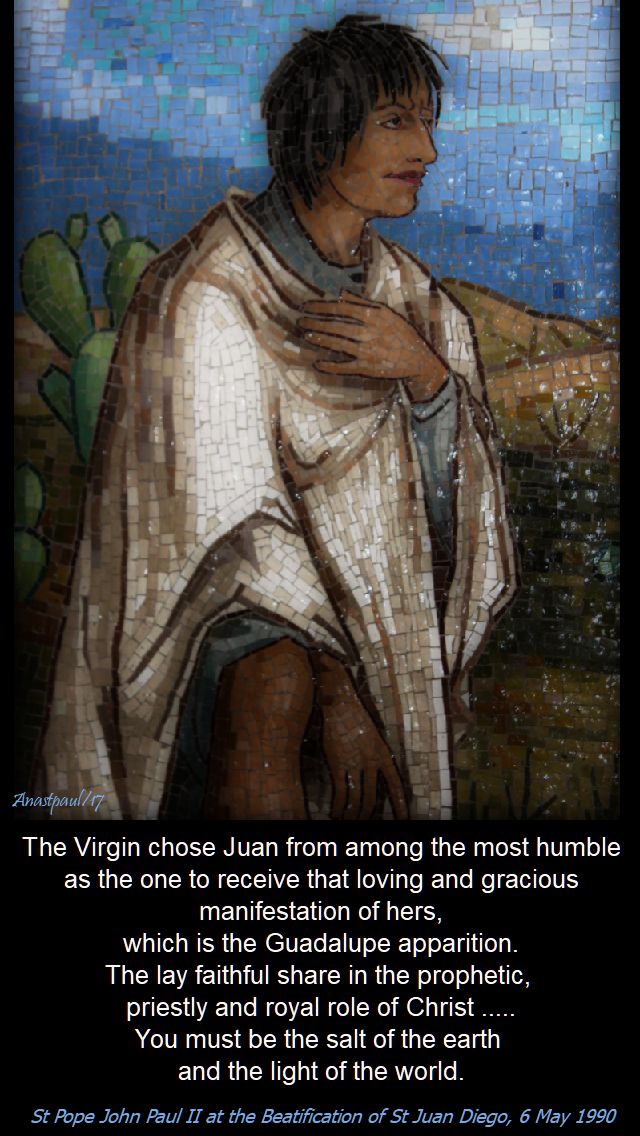
“The Virgin chose Juan from among the most humble as the one to receive that loving and gracious manifestation of hers which is the Guadalupe apparition. The lay faithful share in the prophetic, priestly and royal role of Christ ….. You must be the salt of the earth and the light of the world.”
St Pope John Paul II at the Beatification of St Juan Diego, 6 May 1990
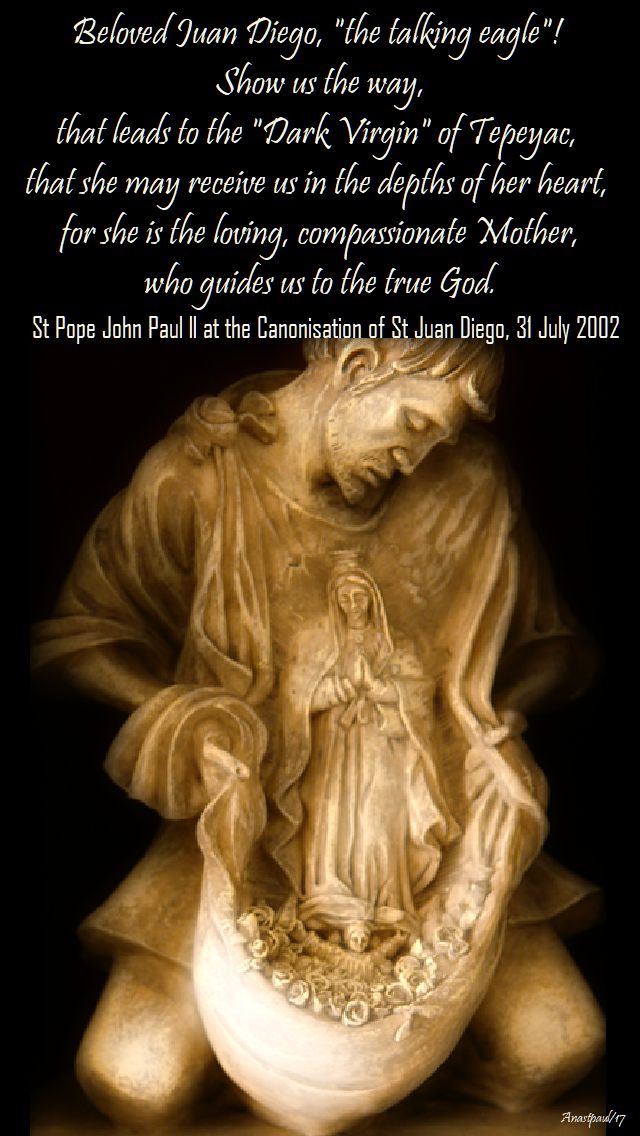
“Beloved Juan Diego, “the talking eagle”! Show us the way, that leads to the “Dark Virgin” of Tepeyac, that she may receive us in the depths of her heart, for she is the loving, compassionate Mother, who guides us to the true God. “
St Pope John Paul II at the Canonisation of St Juan Diego, 31 July 2002
One Minute Reflection – – 9 December 2017- Saturday of the First Week of Advent
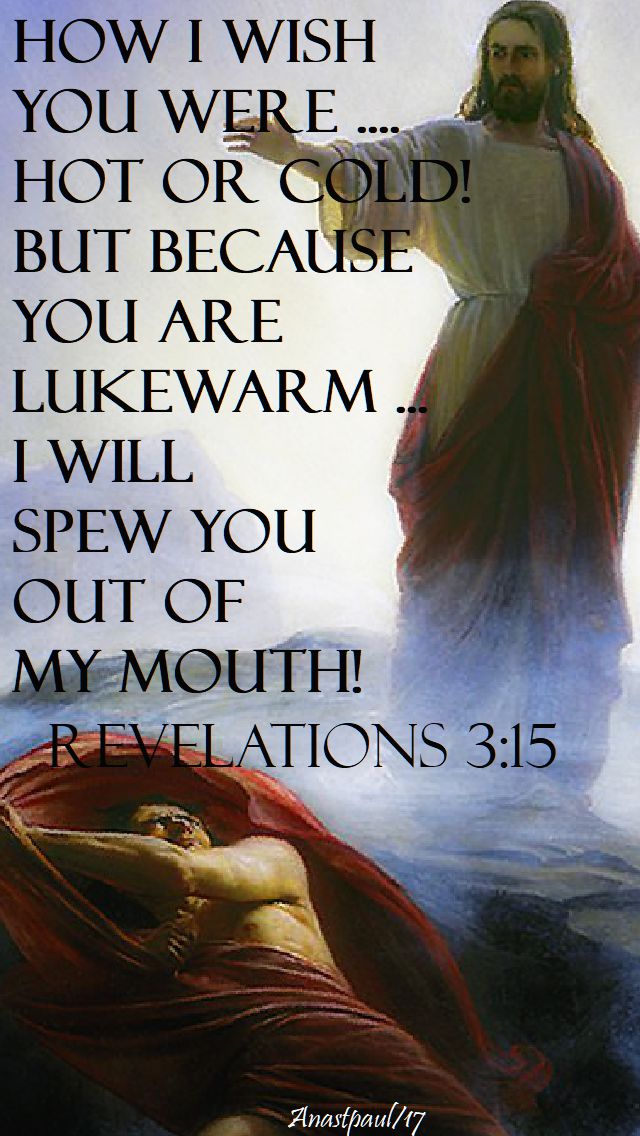
How I wish you were ….hot or cold! But because you are lukewarm … I will spew you out of my mouth!….Revelations 3:15
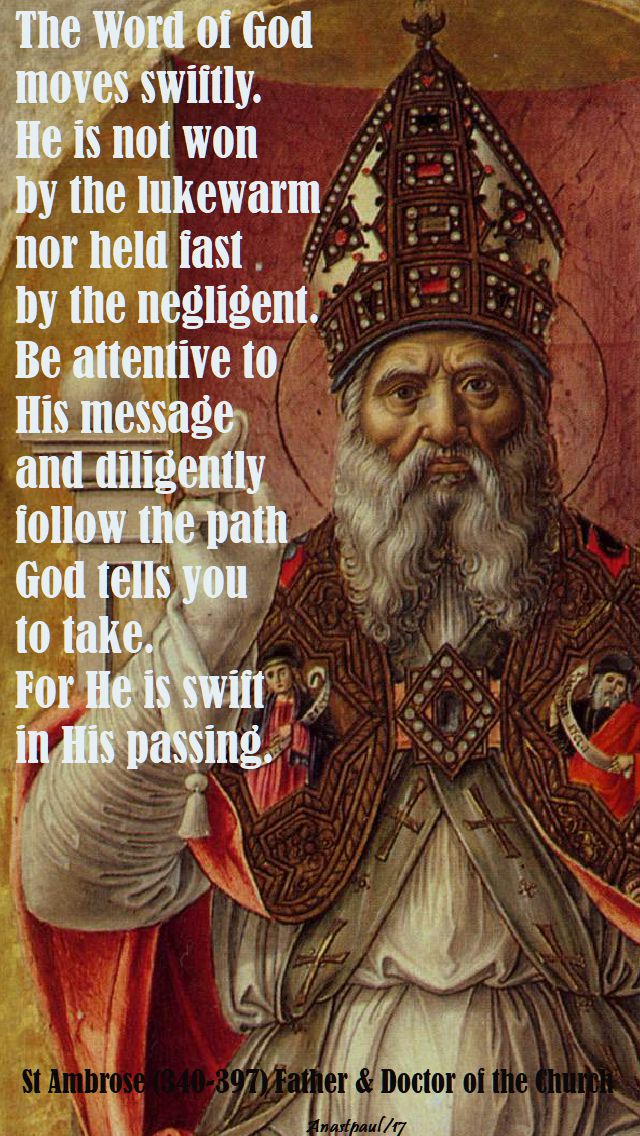
REFLECTION – The Word of God moves swiftly. He is not won by the lukewarm nor held fast by the negligent. Be attentive to His message and diligently follow the path God tells you to take. For He is swift in His passing…..St Ambrose (340-397) Father & Doctor of the Church
PRAYER – Lord Jesus, my Lord and Saviour, help me to avoid this lukewarmness in my spiritual growth. Allow me, this Advent, to use the time well to prepare for Your swift passing. Grant me an ardent faith, hope and love so that I may be ready for Your coming, every watchful and zealous in following You. May the great love and prayers of St Juan Diego, whose feast we celebrate today, be acceptable to You on our behalf, amen.
Our Morning Offering – 9 December 2017- Saturday of the First Week of Advent
A 10th Century Advent Prayer to Our Lord Jesus Unknown author
You are our eternal salvation,
The unfailing light of the world.
Light everlasting,
You are truly our redemption.
Grieving that the human race was perishing
through the tempter’s power,
without leaving the heights You came to the depths
in Your loving kindness.
Readily taking our humanity by Your gracious will,
You saved all earthly creatures, long since lost,
Restoring joy to the world.
Redeem our souls and bodies, O Christ,
and so possess us as Your shining dwellings.
By Your first coming, make us righteous;
At Your second coming, set us free:
So that, when the world is filled with light
and You judge all things,
We may be clad in spotless robes
and follow in Your steps, O King,
Into the heavenly hall.
Amen
He will surely be gracious to you at the sound of your cry; when he hears it, he will answer you.
Isaian 30:19
The prophetic promise is so great.
What our God has done is so complete a victory over sin and death.
In the midst of my day today, can I let myself imagining that salvation
touching and transforming me?
And can I patiently wait for God’s work to take effect in me
– letting him open my heart, day by day?
Imagining “true liberty” today, let us walk in His ways.
Though the Lord may give you the bread of adversity and the water of affliction, yet your Teacher will not hide himself any more but your eyes shall see your Teacher. And when you turn to the right or when you turn to the left, your ears shall hear a word behind you, saying, “This is the way; walk in it.”
Isaiah 30:20-21
Today’s Daily Reflection – Intercessions:
Let us pray to God our Father, who from of old has called
his people to salvation: Lord, protect your people.
You promised to plant the seed of justice among Your people,
– protect the holiness of your Church.
Lord, teach all men and women to listen to Your word,
– and help believers to persevere in holiness.
Keep us in the love of Your Spirit,
– that we may receive the mercy of Your Son who is to come.
Father most merciful, strengthen us to the last,
– until the day of the coming of Jesus Christ, our Lord.
You received without payment; give without payment. Matthew 10:8
Closing Prayer:
Lord of Hope,
Dare I? Can I really hope?
From out of the darkness
I sense a dim light ahead,
the light of Your coming into the world.
I so long for the time
when You are no longer hidden from me
and my deepest desire is
to trust in Your warm voice I hear behind me,
guiding me along a hidden path I do not know.
Dry my tears,
heal my wounds
and help me
to wait for the dawning of the dim light ahead,
with a brighter vision
of healing and freedom.
May the Lord bless us,
protect us from all evil
and bring us to everlasting life.
Amen.
The image of Our Lady of Guadalupe has been the subject of numerous technical studies since 1751 and extensive scientific investigations in recent years, and none of the result offered any sound scientific explanation which, up to this very day, defies science and all human reasoning as it continuous to baffle scientists and even skeptics.
Below are only some of the findings that were drawn from the scientific investigations conducted on the image and the fabric itself which were commissioned by the authorized custodians of the Tilma in the Basilica, and in every case the investigators had direct and unobstructed access to it:
Read all about it here – http://infallible-catholic.blogspot.co.za/2012/04/miraculous-image-of-our-lady-of.html
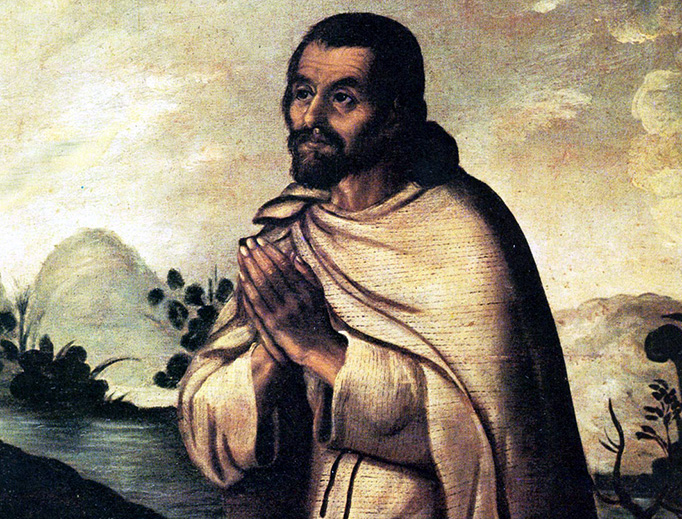
Saint of the Day – 9 December – St Juan Diego Cuauhtlatoatzin (1474-1548) – Layman – Marian Visionary. St Juan was born in 1474 in Tlayacac, Cuauhtitlan (about 15 miles north of modern Mexico City, Mexico) as Cuauhtlatoatzin and he died on 30 May 1548 of natural causes. He was Beatified on 9 April 1990 by St Pope John Paul II at Vatican City and Canonised on 31 July 2002 – recognition celebrated at the basilica of Our Lady of Guadalupe, Mexico by St Pope John Paul II. Patronage – Indigenous people.
Little is known about the life of Juan Diego before his conversion but tradition and archaelogical and iconographical sources, along with the most important and oldest indigenous document on the event of Guadalupe, “El Nican Mopohua” (written in Náhuatl with Latin characters, 1556, by the Indigenous writer Antonio Valeriano), give some information on the life of the saint and the apparitions.
Juan Diego was born in 1474 with the name “Cuauhtlatoatzin” (“the talking eagle”) in Cuautlitlán, today part of Mexico City, Mexico. He was a gifted member of the Chichimeca people, one of the more culturally advanced groups living in the Anáhuac Valley.
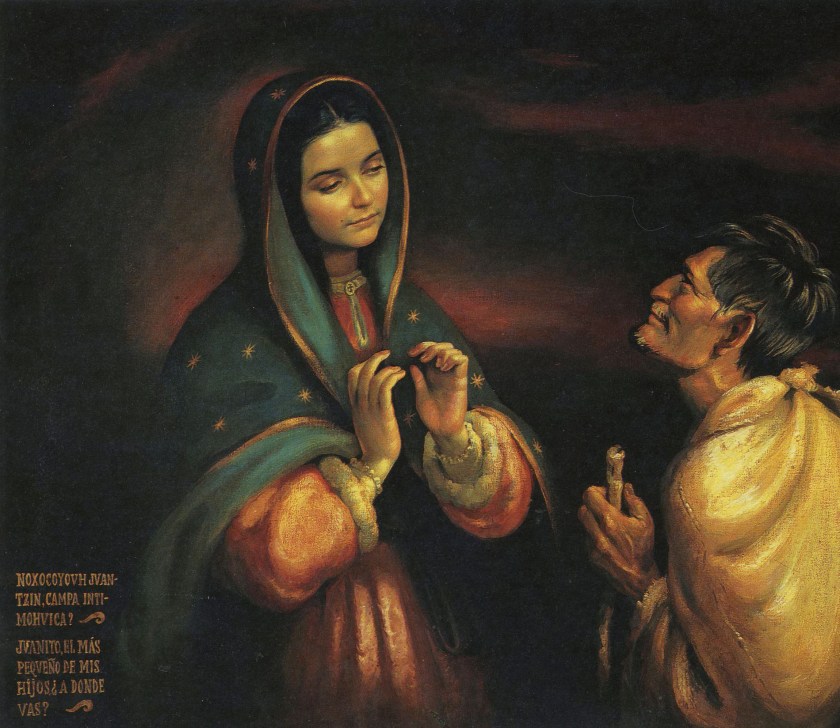
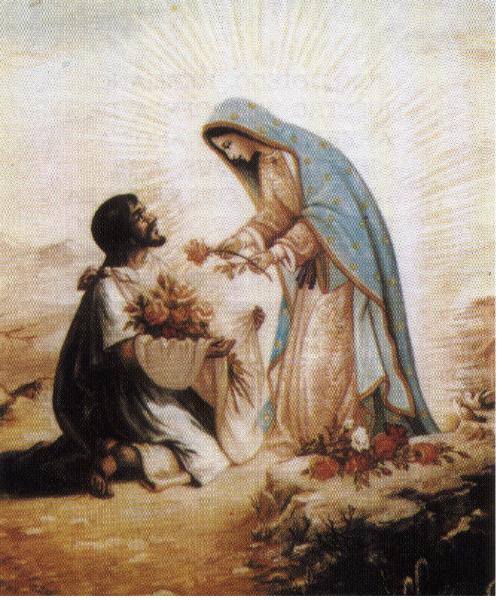
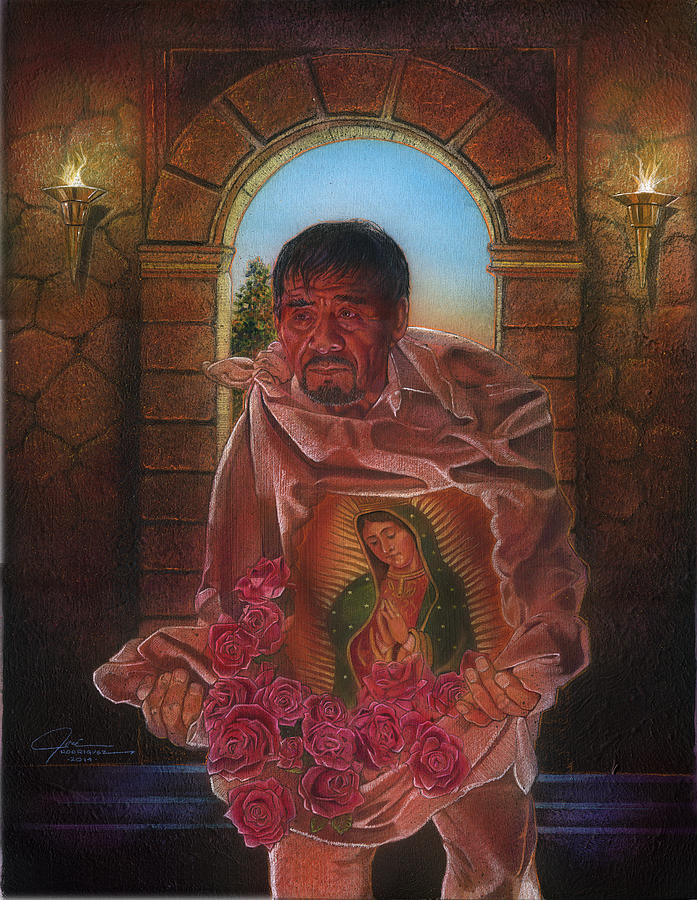
When he was 50 years old he was baptised by a Franciscan priest, Fr Peter da Gand, one of the first Franciscan missionaries. On 9 December 1531, when Juan Diego was on his way to morning Mass, the Blessed Mother appeared to him on Tepeyac Hill, the outskirts of what is now Mexico City. She asked him to go to the Bishop and to request in her name that a shrine be built at Tepeyac, where she promised to pour out her grace upon those who invoked her. The Bishop, who did not believe Juan Diego, asked for a sign to prove that the apparition was true. On 12 December, Juan Diego returned to Tepeyac. Here, the Blessed Mother told him to climb the hill and to pick the flowers that he would find in bloom. He obeyed and although it was winter time, he found roses flowering. He gathered the flowers and took them to Our Lady who carefully placed them in his mantle and told him to take them to the Bishop as “proof”. When he opened his mantle, the flowers fell on the ground and there remained impressed, in place of the flowers, an image of the Blessed Mother, the apparition at Tepeyac.
With the Bishop’s permission, Juan Diego lived the rest of his life as a hermit in a small hut near the chapel where the miraculous image was placed for veneration. Here he cared for the church and the first pilgrims who came to pray to the Mother of Jesus.
Much deeper than the “exterior grace” of having been “chosen” as Our Lady’s “messenger”, Juan Diego received the grace of interior enlightenment and from that moment, he began a life dedicated to prayer and the practice of virtue and boundless love of God and neighbour. He remained poor, simple, humble and devoted to the Eucharist. He spent the next 17 years traveling throughout central Mexico, bringing others to the faith and delivering Guadalupe’s message that Mary loves us and wants to help us. He died in 1548 and was buried in the first chapel dedicated to the Virgin of Guadalupe. He was beatified on 6 May 1990 by Pope John Paul II in the Basilica of Santa Maria di Guadalupe, Mexico City.
The miraculous image, which is preserved in the Basilica of Our Lady of Guadalupe, shows a woman with native features and dress. She is supported by an angel whose wings are reminiscent of one of the major gods of the traditional religion of that area. The moon is beneath her feet and her blue mantle is covered with gold stars. The black girdle about her waist signifies that she is pregnant. Thus, the image graphically depicts the fact that Christ is to be “born” again among the peoples of the New World and is a message as relevant to the “New World” today as it was during the lifetime of Juan Diego.
St Adam Scotus
Bl Agustín García Calvo *
Bl Antonio Martín Hernández *
St Auditor of Saint-Nectaire
St Balda of Jouarre
St Bernhard Mariea Silvestrelli
St Budoc of Brittany
Bl Carmen Rodríguez Banazal *
St Caesar of Korone
St Cephas
Bl Clara Isabella Fornari
St Cyprian of Perigueux
Bl Dolores Broseta Bonet *
Bl Estefanía Irisarri Irigaray *
St Ethelgiva of Shaftesbury
St Gorgonia
Bl Isidora Izquierdo García *
Bl José Ferrer Esteve *
Bl José Giménez López *
Bl Josefa Laborra Goyeneche *
Bl Josep Lluís Carrera Comas *
St Julian of Apamea
Bl Julián Rodríguez Sánchez *
St Leocadia of Toledo
St Liborius Wagner
Bl María Pilar Nalda Franco *
St Michaela Andrusikiewicz
St Nectarius of Auvergne
St Peter Fourier
St Proculus of Verona
Bl Recaredo de Los Ríos Fabregat *
St Syrus of Pavia
St Valeria of Limoges
St Wulfric of Holme
Blessed Mercedarian Fathers – (10 beati): The memorial of ten Mercedarian friars who were especially celebrated for their holiness.
• Arnaldo de Querol • Berengario Pic • Bernardo de Collotorto • Domenico de Ripparia • Giovanni de Mora • Guglielmo Pagesi • Lorenzo da Lorca • Pietro Serra • Raimondo Binezes • Sancio de Vaillo
Martyred Salesians of Valencia – (5 beati)
Martyrs of North Africa – (4 saints): Twenty-four Christians murdered together in North Africa for their faith. The only details to survive are four of their names – Bassian, Peter, Primitivus and Successus.
Martyrs of Paterna – (7 beati)
Martyrs of Samosata – (7 saints): Seven martyrs crucified in 297 in Samosata (an area of modern Turkey) for refusing to perform a pagan rite in celebration of the victory of Emperor Maximian over the Persians. They are – Abibus, Hipparchus, James, Lollian, Paragnus, Philotheus and Romanus. They were crucified in 297 in Samosata (an area in modern Turkey).
Martyrs of the Spanish Civil War – (13 beati):
• Blessed Agustín García Calvo
• Blessed Antonio Martín Hernández
• Blessed Carmen Rodríguez Banazal
• Blessed Dolores Broseta Bonet
• Blessed Estefanía Irisarri Irigaray
• Blessed Isidora Izquierdo García
• Blessed José Ferrer Esteve
• Blessed José Giménez López
• Blessed Josefa Laborra Goyeneche
• Blessed Josep Lluís Carrera Comas
• Blessed Julián Rodríguez Sánchez
• Blessed María Pilar Nalda Franco
• Blessed Recaredo de Los Ríos Fabregat
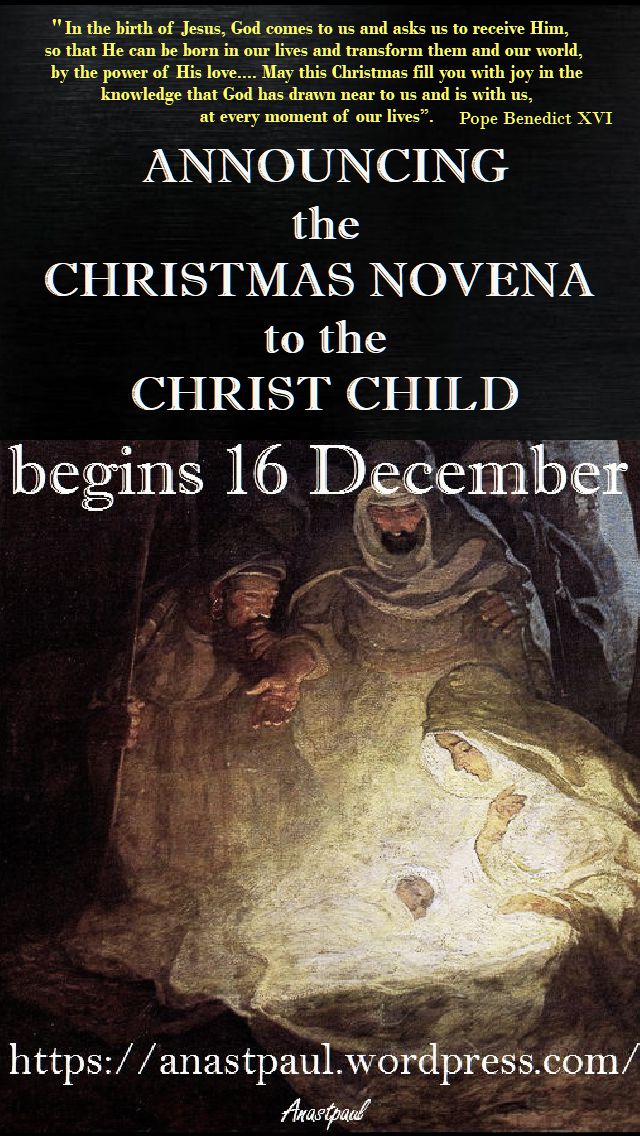
ANNOUNCING a Novena to the Christ Child in preparation for Christmas
In the birth of Jesus, God comes to us and asks us to receive Him, so that He can be born in our lives and transform them and our world, by the power of His love. The Christmas liturgy also invites us to contemplate Christ’s birth against the backdrop of His paschal mystery. Christmas points beyond itself, to the redemption won for us on the Cross and the glory of the Resurrection. May this Christmas fill you with joy in the knowledge that God has drawn near to us and is with us, at every moment of our lives”. …Pope Benedict XVI
Join us for the Christmas Novena to the Christ Child beginning 9 days before Christmas on 16 December. Each day will feature a Scripture Reflection and prayer. Let us dispose ourselves to receive the coming Lord. With great desire, with joy full of hope, with a heart that is free and capable of great love, for after all, we are made in His image and likeness and He is love!
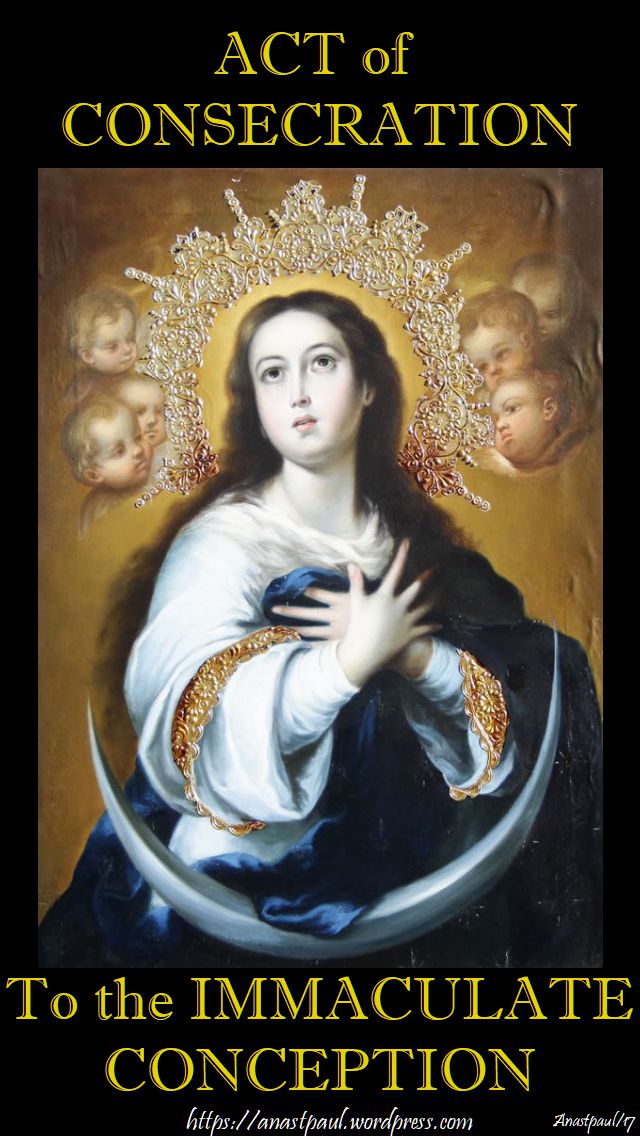
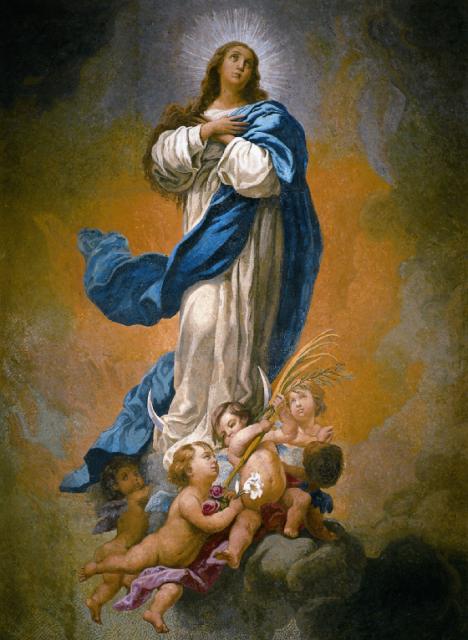
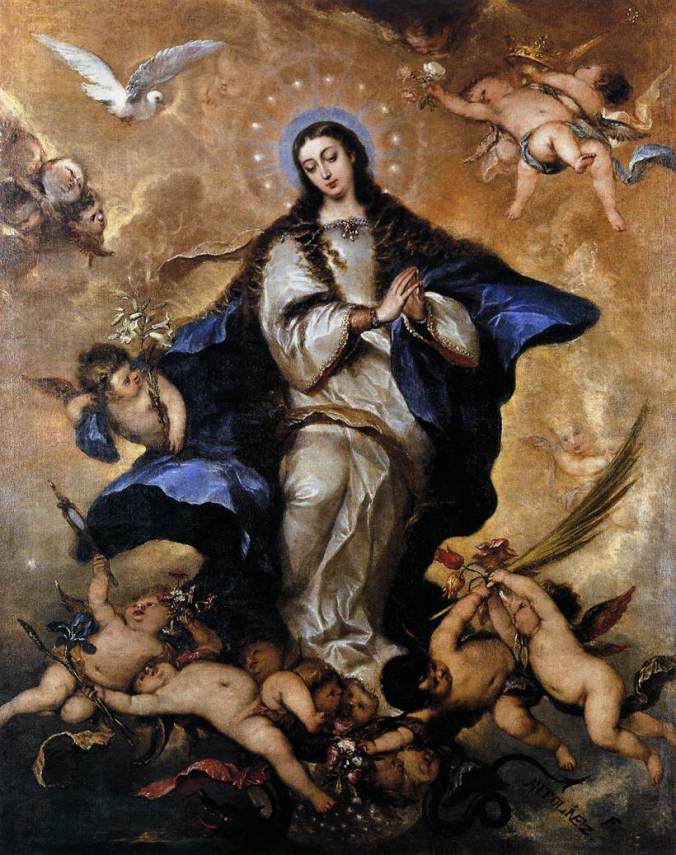
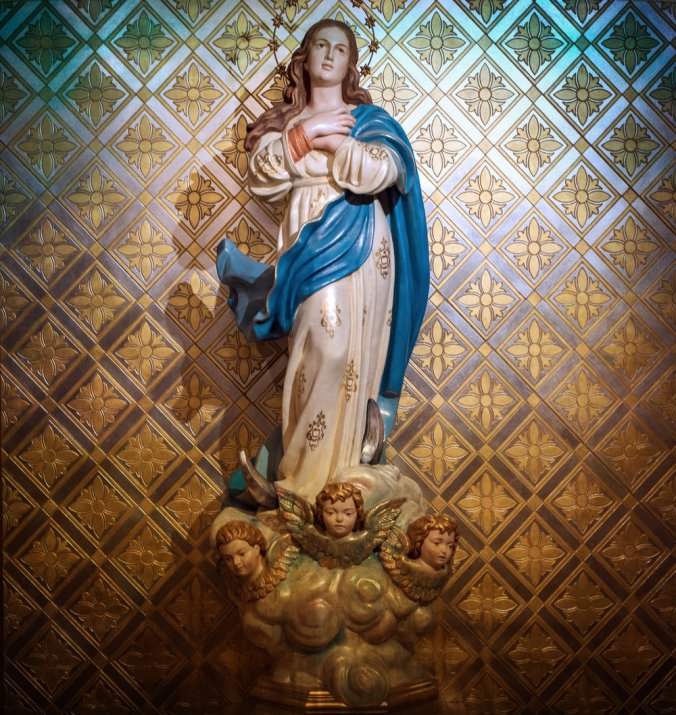
Act of Consecration to the Immaculate Conception On The Feast of the Immaculate Conception
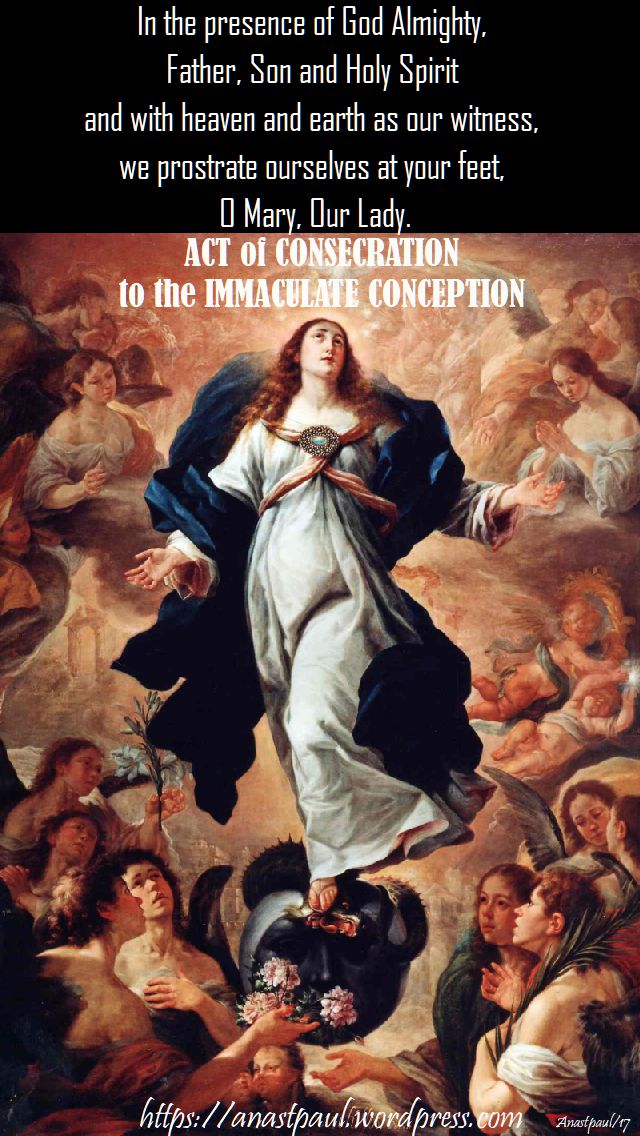
In the presence of God Almighty, Father, Son and Holy Spirit and with heaven and earth as our witness, we prostrate ourselves at your feet, O Mary, Our Lady.
We acknowledge you as our Mother, as the Immaculate Conception, living tabernacle of the Divinity, as Queen of angels and of men, as Mother of the Church and of the Catholic priesthood and as refuge of the afflicted. That is why, small and weak as we are, we wish to consecrate to you our families, our persons, our works, our future, all that pertains to us and is in us and which God, in His immeasurable goodness, has entrusted to us for our good use.
We also consecrate to you the value of our good actions, past, present and future, leaving to you the entire and full right of disposing of us and all that belongs to us. Mary, be our Mother: sanctify us, purify us, correct us, guide us, pray for us and protect us.
Help us to perfectly fulfill the duties of our state of life.
Extinguish in us all self-love, which prevents your Divine Son, King and Sovereign Priest, from reigning in and around us.
Cover abundantly with your maternal protection all the parishes, chapels, schools, works and missions and may you forever impede the devil from reigning, in any manner in the Church which desires to be entirely yours for the greater glory of God, the protection of our Holy Father and the exaltation of our Mother, the Holy Catholic Church and for the conversion of sinners. Amen.
Thought for the Day – 8 December – The Solemnity of the Immaculate Conception
In Luke 1:28 the angel Gabriel, speaking on God’s behalf, addresses Mary as “full of grace” (or “highly favoured”). In that context, this phrase means that Mary is receiving all the special divine help necessary for the task ahead. However, the Church grows in understanding with the help of the Holy Spirit. The Spirit led the Church, especially non-theologians, to the insight that Mary had to be the most perfect work of God next to the Incarnation. Or rather, Mary’s intimate association with the Incarnation called for the special involvement of God in Mary’s whole life.
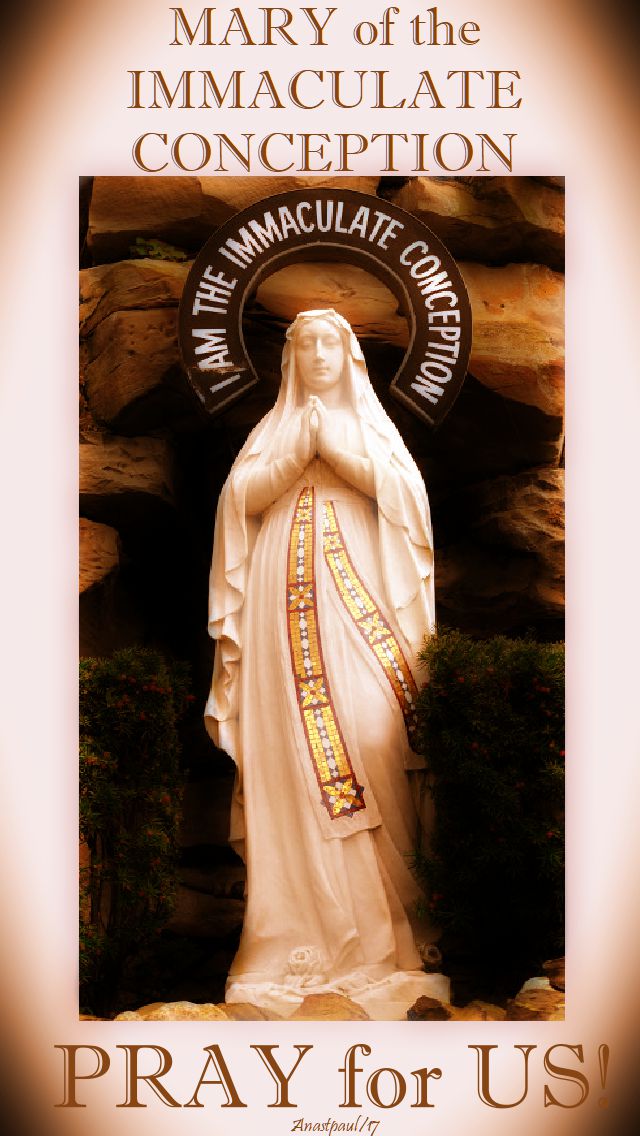
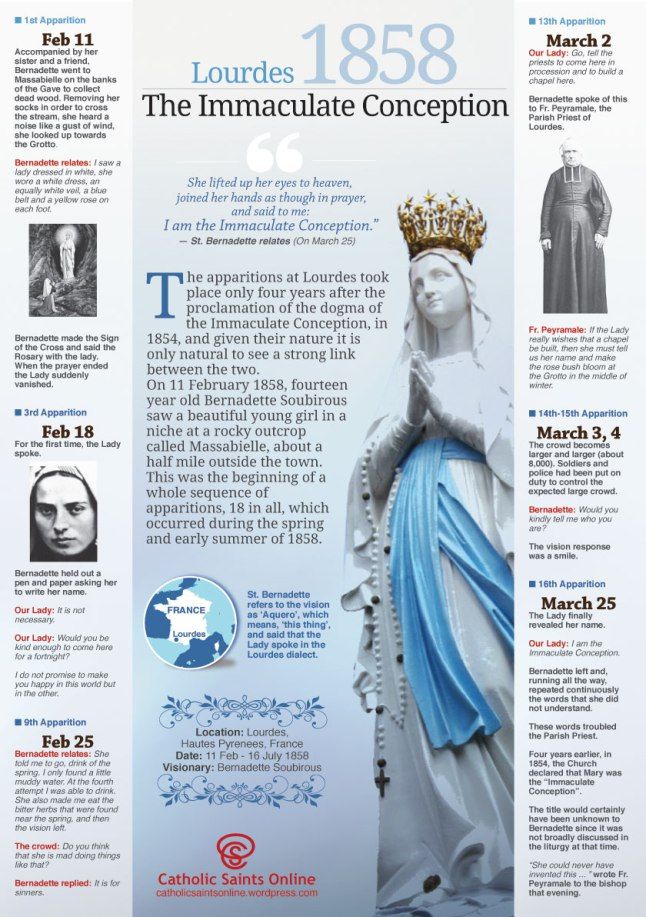
The logic of piety helped God’s people to believe that Mary was full of grace and free of sin from the first moment of her existence. Moreover, this great privilege of Mary is the highlight of all that God has done in Jesus . Rightly understood, the incomparable holiness of Mary shows forth the incomparable goodness of God and the role of Mary in our salvation. And never forget, at Lourdes when Bernadette asked of the beautiful Lady ‘who shall I say you are’ she replied “I am the Immaculate Conception.”
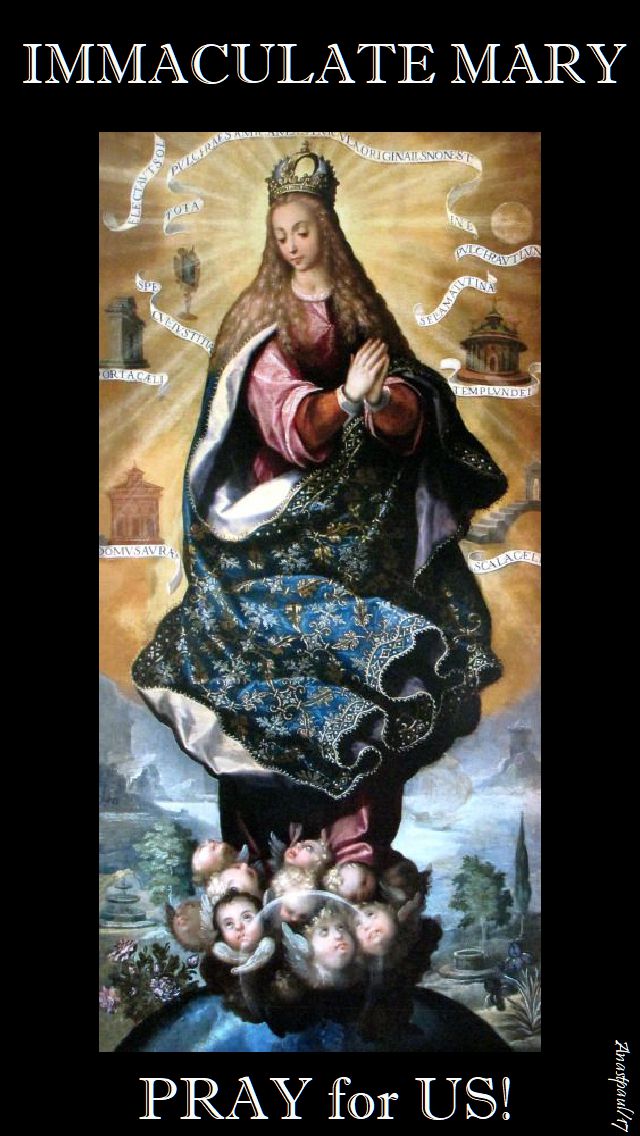
Mary of the Immaculate Conception, Pray for us!
And St John Paul in 1998:
“We sang of this Mother in the Liturgy of the Word. We beheld the Lord’s marvels. In today’s liturgy, the first words of our hymn were “Tota pulchra es Maria”: you are all beautiful, O Mary. In the presence of this beauty, perhaps we find ourselves thinking of the words of the great Fyodor Dostoevski, who wrote that beauty can save the world: your beauty, Mary, which is expressed in the Immaculate Conception.
We entrust our city, the Church and the whole world to you. May you be the “Tota Pulchra” who guides us in all hope through the Great Jubilee of the Year 2000 towards the future, because you, O Mary, are the Mother of hope. Praised be Jesus Christ!
At the end of the prayer celebration at Piazza di Spagna in Rome, the Holy Father added:
Let us conclude this contemplative celebration: we have beheld your marvels, O Lord. Yes, the “Tota Pulchra” must save the world in the mystery of her Immaculate Conception. Praised be Jesus Christ!”
Quote/s of the Day – 8 December – The Solemnity of the Immaculate Conception
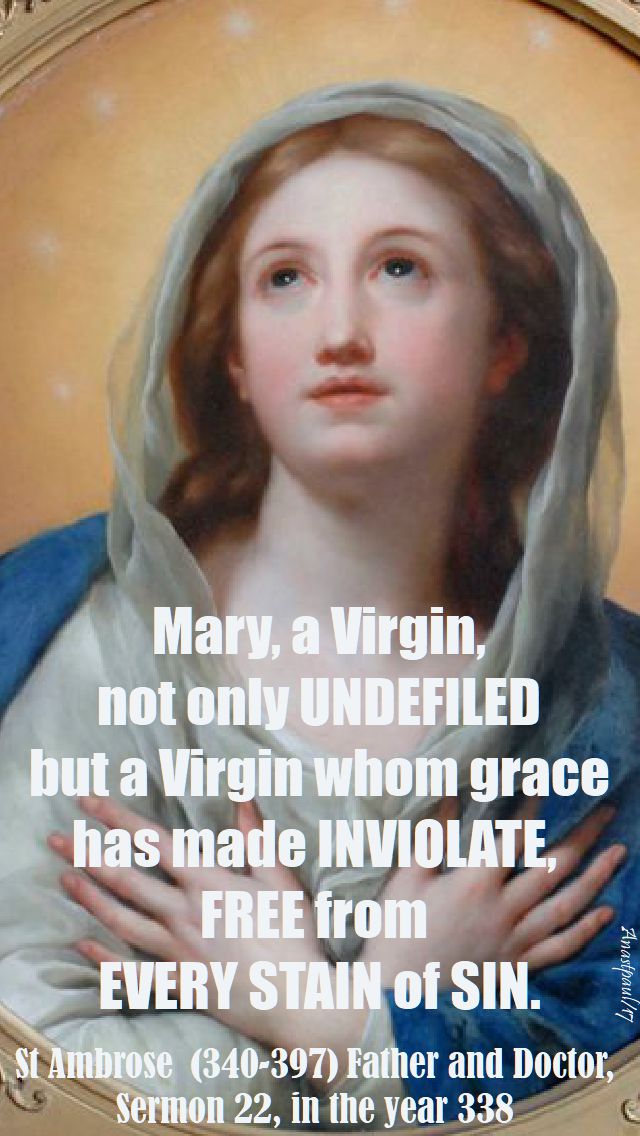
“Mary, a Virgin, not only not only UNDEFILED but a Virgin whom grace has made INVIOLATE, FREE from EVERY STAIN of SIN.”
St Ambrose (340-397) Father and Doctor, Sermon 22, in the year 338
The Apostolic Constitution «Ineffabilis Deus», published on 8th December 1854, more 150 years ago, by Blessed Pope Pius IX on the theology regarding the privilege of the Immaculate Conception, in the following solemn proclamation of this Dogma of Catholic faith:
“To the honour of the holy and undivided Trinity, to the worthiness and splendid beauty of the Virgin Mother of God, to the upholding of the Catholic faith and to the furthering of the Christian religion, with the authority of Our Lord Jesus Christ, with that of the holy Apostles Peter and Paul and with Our own authority, we declare, we pronounce and we define the doctrine which holds that the most Blessed Virgin Mary, in the very first moments of her Conception, through the singular grace of Almighty God and through the foresight of the merits of Christ Jesus, Saviour of the human race, was preserved immune from all stains of original sin. We furthermore declare, pronounce and define that this doctrine has been revealed by God and, therefore, has to be strongly and always believed by all the faithful.” Blessed Pope Pius IX
“As soon as she [Mary] had the use of reason, that is, from the first moment of her Immaculate Conception in the womb of St Anne, from that time she began with all her powers to love her God and thus she continued to do, ever advancing more in perfection and love through her whole life. All her thoughts, her desires, her affections, were wholly given to God. Not a word, not a motion, not a glance of the eye, not a breath of hers that was not for God and for His glory, never departing one step, nor separating herself for one moment from the divine love.”…Saint Alphonsus Ligouri (1696-1787) Doctor of the Church
One Minute Reflection – 8 December – The Solemnity of the Immaculate Conception
You shall love the Lord your God with all your heart, with all your soul, with all your strength and with all your mind ………………Luke 10:22
REFLECTION – Love for Christ pierced Mary’s heart in such a way that no part
of it was left unkindled. Mary thus fulfilled the first commandment of love
in all its fullness and without the slightest imperfection…………St Bernard
PRAYER – Heavenly Father, help us to imitate Your Immaculate Daughter Mary in her love for You. Grant us the grace to love You as much as she, all our lives and grant, that through her help and her prayers, we ourselves may come to You , cleansed from our sins. O Mary Immaculate, mother of our Lord, Pray for us! Amen
Our Morning Offering – 8 December – The Solemnity of the Immaculate Conception
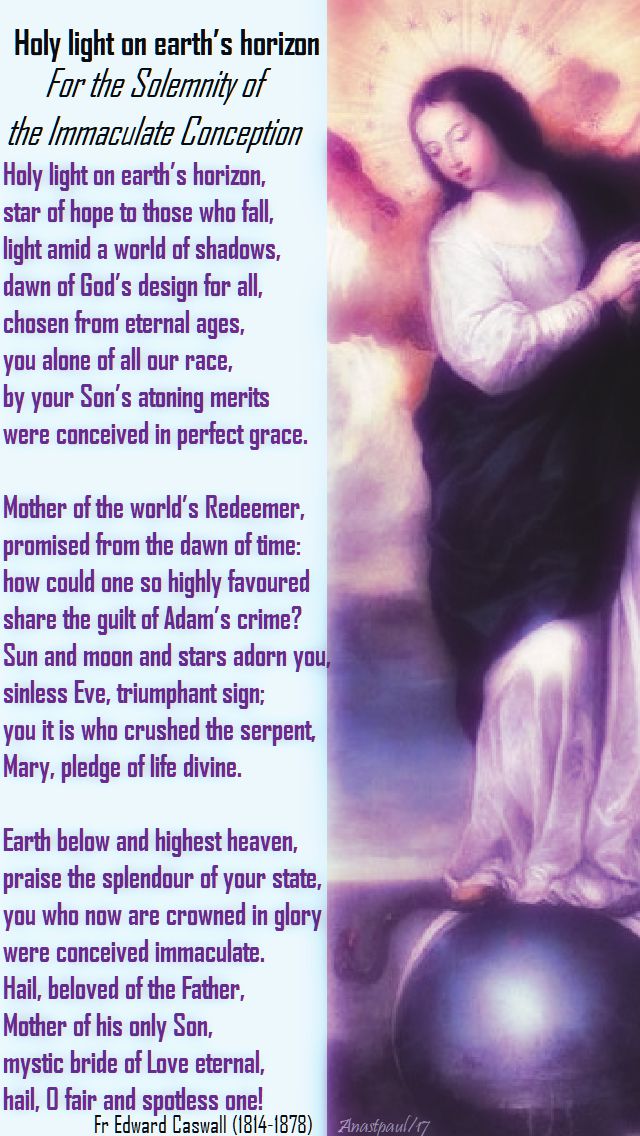
Holy light on earth’s horizon,
star of hope to those who fall,
light amid a world of shadows,
dawn of God’s design for all,
chosen from eternal ages,
you alone of all our race,
by your Son’s atoning merits
were conceived in perfect grace.
Mother of the world’s Redeemer,
promised from the dawn of time:
how could one so highly favoured
share the guilt of Adam’s crime?
Sun and moon and stars adorn you,
sinless Eve, triumphant sign;
you it is who crushed the serpent,
Mary, pledge of life divine.
Earth below and highest heaven,
praise the splendour of your state,
you who now are crowned in glory
were conceived immaculate.
Hail, beloved of the Father,
Mother of his only Son,
mystic bride of Love eternal,
hail, O fair and spotless one!
Fr Edward Caswall (1814-1878)
PRAYER OF THE HOLY FATHER POPE JOHN PAUL II FOR THE SOLEMNITY OF THE IMMACULATE CONCEPTION OF THE BLESSED VIRGIN MARY
Tuesday, 8 December 1998
1. O Mary!
Here we are again at your feet on the day we celebrate your Immaculate Conception
and we beg you, as the beloved daughter of the Father,
during this year of preparation for the Great Jubilee of the Year 2000,
to teach us to walk in unity to the Father’s house, to make all humanity one family.
2. O Mary!
From the very first moment of life,
you were preserved from original sin
through the merits of Jesus,
whose Mother you were to become.
Sin and death have no power over you.
From the moment you were conceived,
you have enjoyed the unique privilege of being filled
with the grace of your blessed Son,
to be holy as he is holy.
For this reason the heavenly messenger,
sent to announce the divine plan to you, greeted you saying:
“Hail, full of grace” (Lk 1:28).
Yes, O Mary, you are full of grace;
you are the Immaculate Conception.
In you is fulfilled the promise made to our first parents,
the primordial Gospel of hope at the tragic moment of the fall:
“I will put enmity between you and the woman
and between your seed and her seed” (Gn 3:15).
Your seed, O Mary, is the blessed Son of your womb, Jesus, the immaculate Lamb who took upon Himself
the sin of the world, our sin. Your Son, O Mother, has preserved you, to offer all humanity the gift of salvation.
For this reason, from generation to generation, the redeemed ceaselessly repeat the angel’s words:
“Hail, full of grace, the Lord is with you” (Lk 1:28).
3. O Mary!
From East to West, from the very beginning, the People of God profess with faith that you are the all pure, the all holy, the sublime Mother of the Redeemer. The Fathers of the Church unanimously attest to it: pastors, theologians and the greatest confessors of the faith proclaim it. Then, in 1854 my venerable Predecessor, Pope Pius IX, officially recognised the truth of this your privilege.
In everlasting memory of that event, this column was erected here, in the heart of Rome, from where you watch over the city with a mother’s love.
Every year since then, on this solemn feast, the Church and the city of Rome come here with their Bishop to Piazza di Spagna, to honour you, a sign of sure hope for all men and women.
With this annual act of veneration, we profess that we want to return to the original, eternal plan of our Creator and Father, and with the Apostle Paul we repeat:
“Blessed be God and Father of our Lord Jesus Christ…. He chose us in him before the foundation of the world, that we should be holy and blameless before him” (Eph 13-4).
4. O Mary!
You are the witness to this primordial choice.
Guide us, O Mother, who know the Way!
Today the People of God and the whole city of Rome
entrust themselves to you, the Immaculate Conception.
Protect us always and lead us all on the ways of holiness. Amen!
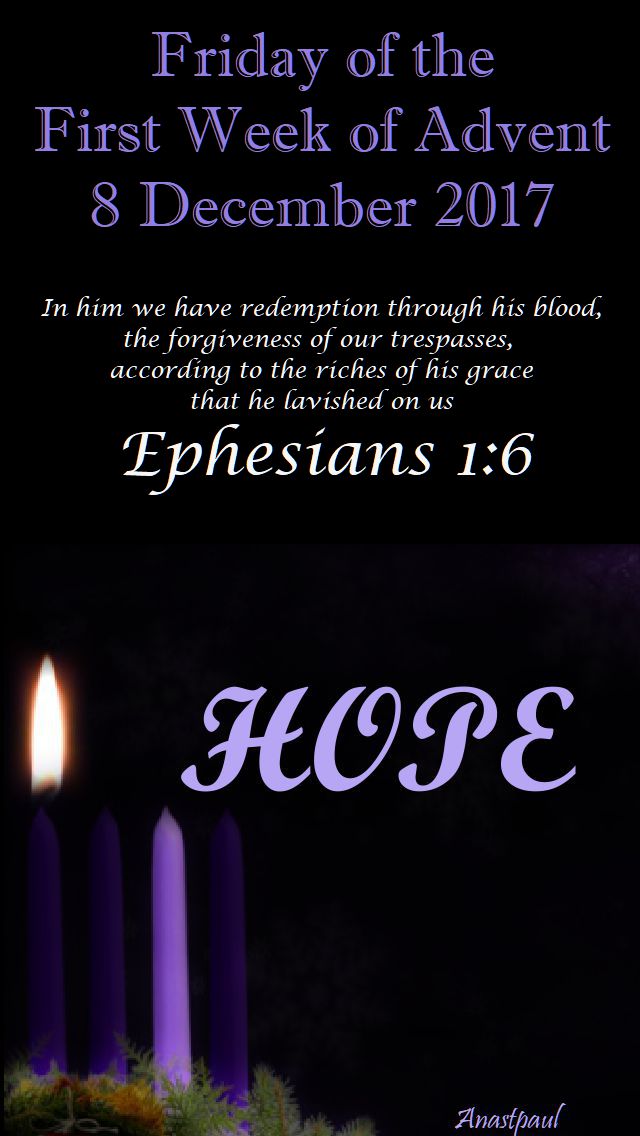
Daily Meditation: In him we have redemption through his blood, the forgiveness of our trespasses, according to the riches of his grace that he lavished on us…Ephesians 1:6
In the busiest of times, it is often difficult to realise
that our worst enemy is our own sinfulness.
When we do realise that, however, we can really beg God to save us.
Today, let’s say the prayer Jesus gave us,
devoutly and as a real Advent prayer.
Our Father, in heaven,
may Your name be holy;
may Your kingdom come;
may Your will be done,
on earth, as it is in heaven.
Give us today, Your faithful bread for the journey.
Forgive us our sins,
the way we forgive the sins of others.
Don’t let us be overcome by temptation,
but deliver us from all evil.
Today’s Daily Reflection – Intercessions:
Through His Son, God the Father revealed His glory to
men and women. Therefore, let our joyful cry resound: Lord, may Your name be glorified.
Teach us, Lord, to love each other,
– as Christ loved us for God’s glory.
Fill us with all joy and peace in faith,
– that we may walk in the hope and strength of the Holy Spirit.
Help all mankind, Lord, in Your loving mercy,
– be near to those who seek You without knowing it.
You call and sanctify the elect,
– though we are sinners, crown us with eternal happiness.
Closing Prayer:
Jesus, protector,
I long for Your coming.
The promise of new light is there
if only I can believe.
Protect me from dangers
and lead me through the gloom and darkness
to the joy I so long to find in You.
Lift me from my lowly sins
and give me the promise of salvation
with no more shame,
only the light and saving grace of Your love.
Let the ancient dream be fulfilled in You
and peace come to this life and world.
May the Lord bless us,
protect us from all evil
and bring us to everlasting life.
Amen.
The Solemnity of the Immaculate Conception – 8 December
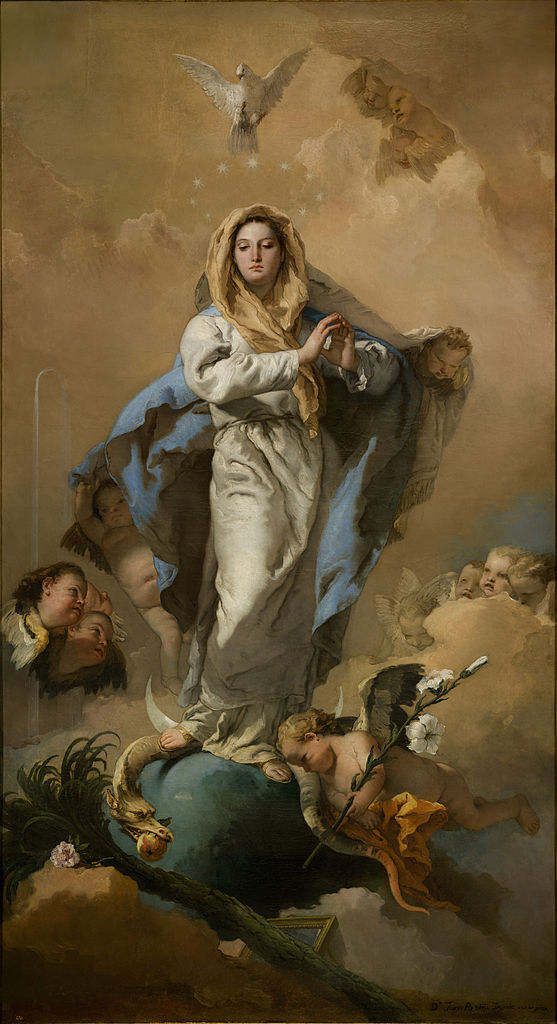
The Solemnity of the Immaculate Conception celebrates the solemn belief in the Immaculate Conception of the Blessed Virgin Mary. It is a Solemnity and is universally celebrated on 8 December, nine months before the feast of the Nativity of Mary, which is celebrated on 8 September. It is one of the most important Marian feasts in the liturgical calendar of the Roman Catholic Church, celebrated worldwide.
By Pontifical designation and decree, it is the patronal feast day of Argentina, Brazil, Korea, Nicaragua, Paraguay, Philippines, Spain, the United States and Uruguay. By royal decree, it is also designated by as the Patroness of Portugal. It is celebrated by the Roman Catholic Church as well as a few other closely related Protestant Christian churches.
On this day since 1854, the Holy See through the Sacred Congregation of Rites grants the Spanish crown the expressed privilege of permitting blue vestments for their present and former territories. Since 1953, the Pope as Bishop of Rome visits the Column of the Immaculate Conception in Piazza di Spagna to offer expiatory prayers commemorating the solemn event.
The feast was first solemnized as a Holy Day of Obligation on 6 December 1708 under the Papal Bull Commissi Nobis Divinitus by Pope Clement XI and is often celebrated with Holy Mass, parades, fireworks, processions, ethnic foods and cultural festivities in honour of the Blessed Virgin Mary and is generally considered a Family day, especially in many Catholic countries.
The Feast of the Immaculate Conception is the subject of a lot of misconceptions (so to speak). Perhaps the most common one, held even by many Catholics, is that it celebrates the conception of Christ in the womb of the Blessed Virgin Mary. That the feast occurs only 17 days before Christmas should make the error obvious! We celebrate another feast—the Annunciation of the Lord—on March 25, exactly nine months before Christmas. It was at the Annunciation, when the Blessed Virgin Mary humbly accepted the honour bestowed on her by God and announced by the angel Gabriel, that the conception of Christ took place.
HISTORY OF THE FEAST OF THE IMMACULATE CONCEPTION
The Feast of the Immaculate Conception, in its oldest form, goes back to the seventh century, when churches in the East began celebrating the Feast of the Conception of Saint Anne, the mother of Mary. In other words, this feast celebrates the conception of the Blessed Virgin Mary in the womb of Saint Anne; and nine months later, on 8 September we celebrate the Nativity of the Blessed Virgin Mary.
The feast arrived in the West probably no earlier than the 11th century and at that time, it began to be tied up with a developing theological controversy. Both the Eastern and the Western Church had maintained that Mary was free from sin throughout her life but there were different understandings of what this meant.
What Is the Immaculate Conception? DEVELOPMENT OF THE DOCTRINE OF THE IMMACULATE CONCEPTION
Because of the doctrine of Original Sin, some in the West began to believe that Mary could not have been sinless unless she had been saved from Original Sin at the moment of her conception (thus making the conception “immaculate”). Others, however, including St Thomas Aquinas, argued that Mary could not have been redeemed if she had not been subject to sin—at least, to Original Sin.
The answer to St Thomas Aquinas’s objection, as Blessed John Duns Scotus (d. 1308) showed, was that God had sanctified Mary at the moment of her conception in His foreknowledge that the Blessed Virgin would consent to bear Christ. In other words, she too had been redeemed—her redemption had simply been accomplished at the moment of her conception, rather than (as with all other Christians) in Baptism.
Who Was Born Without Original Sin? SPREAD OF THE FEAST IN THE WEST
After Duns Scotus’s defense of the Immaculate Conception, the feast spread throughout the West, though it was still often celebrated at the Feast of the Conception of Saint Anne. On 28 February 1476, Pope Sixtus IV extended the feast to the entire Western Church, and in 1483 threatened with excommunication those who opposed the doctrine of the Immaculate Conception. By the middle of the 17th century, all opposition to the doctrine had died out in the Catholic Church.
Immaculate Conception (Solemnity)
Bl Alojzy Liguda
St Anastasia of Pomerania
St Anthusa of Africa
St Antonio García Fernández
St Casari of Villeneuve-lès-Avignon
St Eucharius of Trier
St Pope Eutychian
St Gunthildis of Ohrdruf
Bl Jacob Gwon Sang-yeon
Bl Johanna of Cáceres
Bl José María Zabal Blasco
St Macarius of Alexandria
St Marin Shkurti
St Noel Chabanel
St Patapius
Bl Paul Yun Ji-chung
St Rafael Román Donaire
St Romaric of Remiremont
St Sofronius of Cyprus
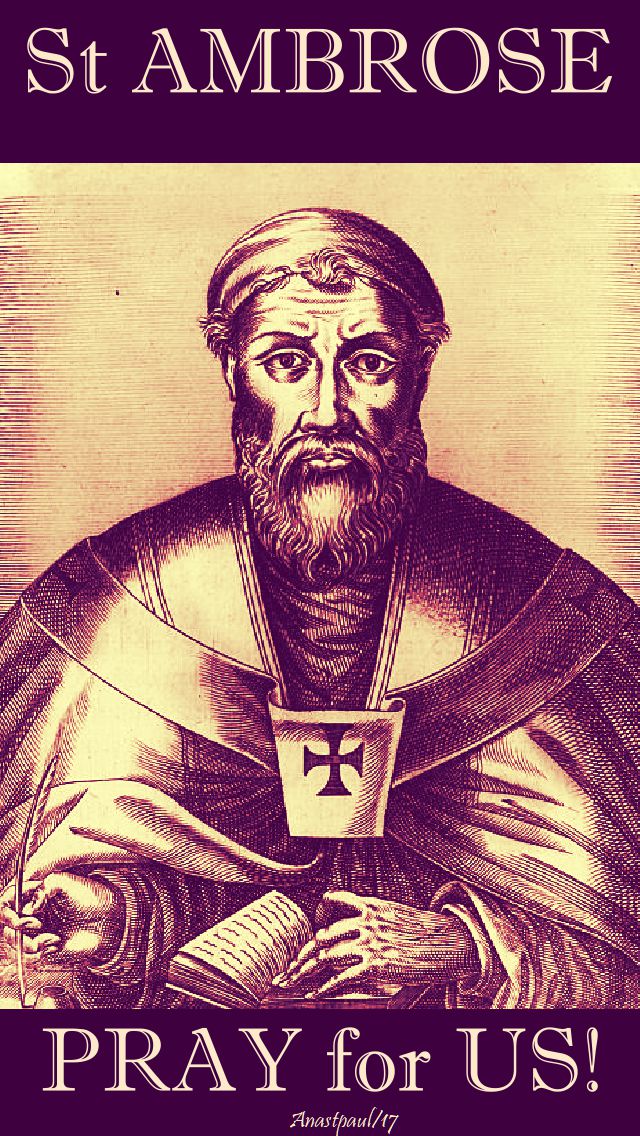
Thought for the Day – 7 December – The Memorial of St Ambrose (c 340-397)- Father and Doctor of the Church
St Ambrose exemplifies for us the truly catholic character of Christianity.
He is a man steeped in the learning, law and culture of the ancients and of his contemporaries. Yet, in the midst of active involvement in this world, this thought runs through Ambrose’ life and preaching – the hidden meaning of the Scriptures calls our spirit to rise to another world.
It is all for HIM, all for the WORD made flesh, all for GOD that we live!
Quote/s of the Day – 7 December – The Memorial of St Ambrose (c 340-397)- Father and Doctor of the Church
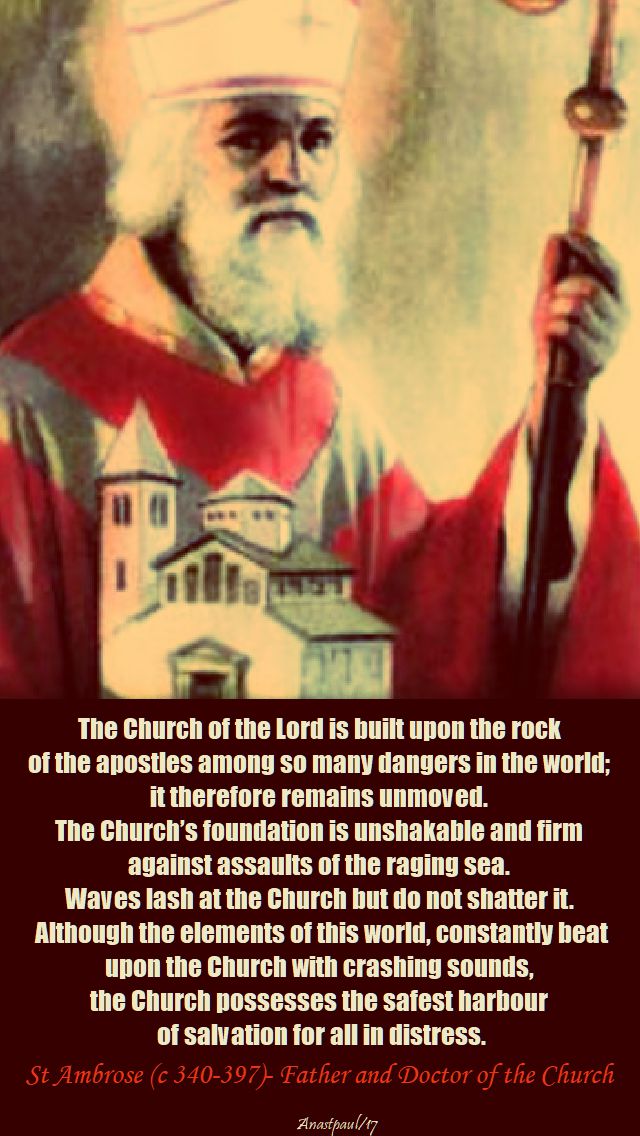
“The Church of the Lord is built upon the rock of the apostles among so many dangers in the world; it therefore remains unmoved. The Church’s foundation is unshakable and firm against assaults of the raging sea. Waves lash at the Church but do not shatter it. Although the elements of this world, constantly beat upon the Church with crashing sounds, the Church possesses the safest harbour of salvation for all in distress.”
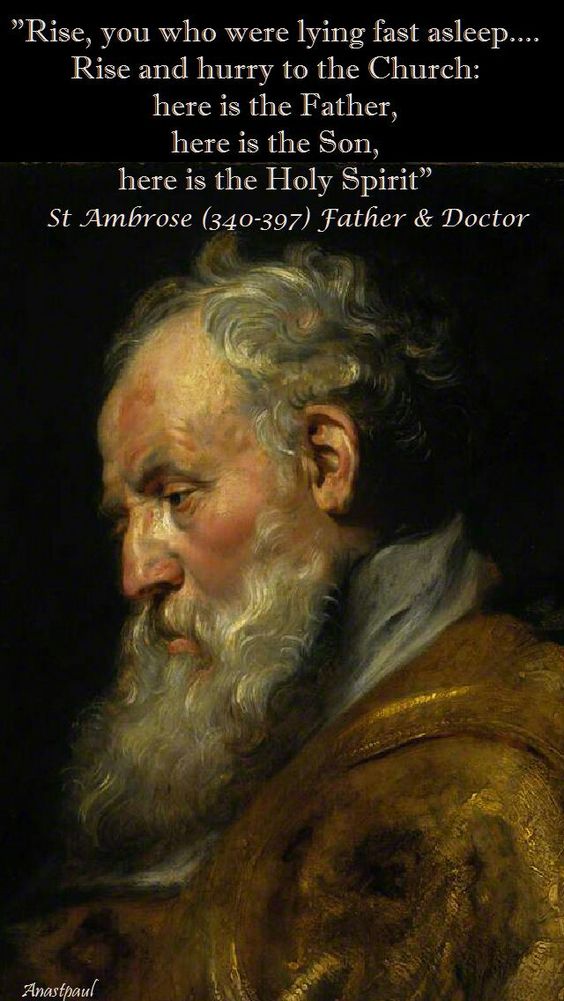
“Rise, you who were lying fast asleep… Rise and hurry to the Church: here is the Father, here is the Son, here is the Holy Spirit.”
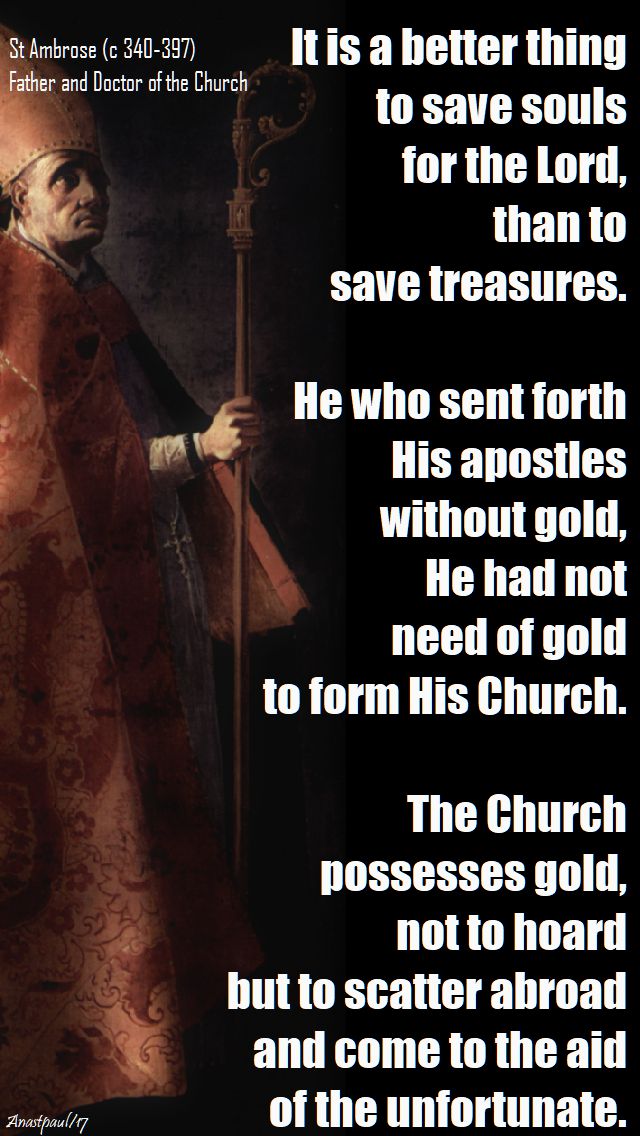
“It is a better thing to save souls for the Lord, than to save treasures. He who sent forth His apostles without gold, He had not need of gold to form His Church. The Church possesses gold, not to hoard but to scatter abroad and come to the aid of the unfortunate.”
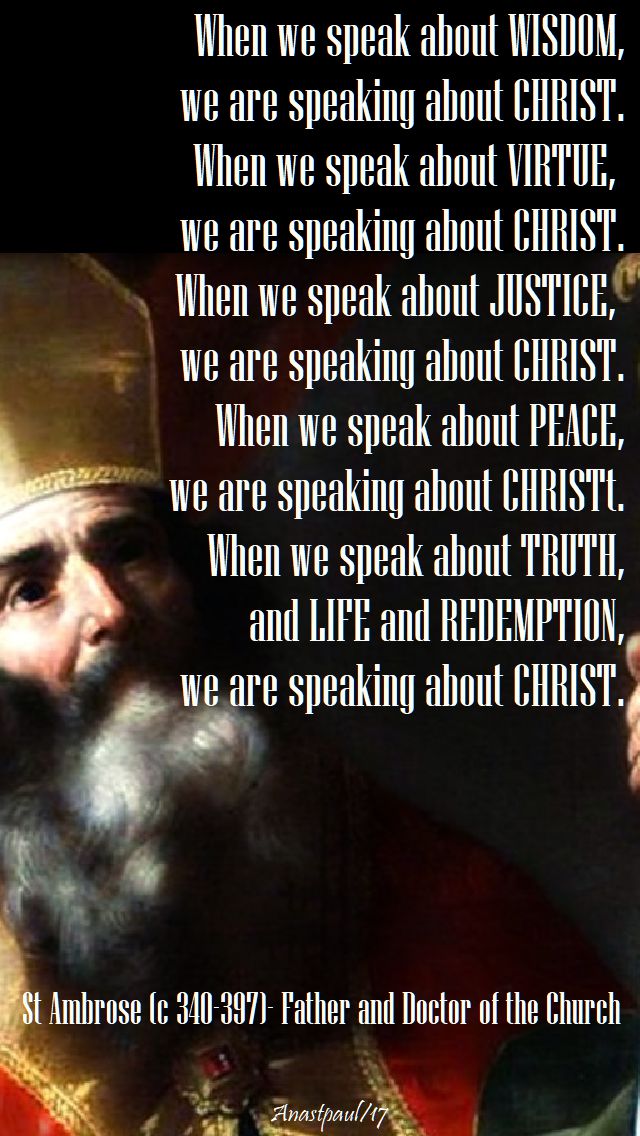
“When we speak about WISDOM, we are speaking about CHRIST. When we speak about VIRTUE, we are speaking about CHRIST. When we speak about JUSTICE, we are speaking about CHRIST. When we speak about PEACE, we are speaking about CHRISTt. When we speak about TRUTH, and LIFE and REDEMPTION, we are speaking about CHRIST.”
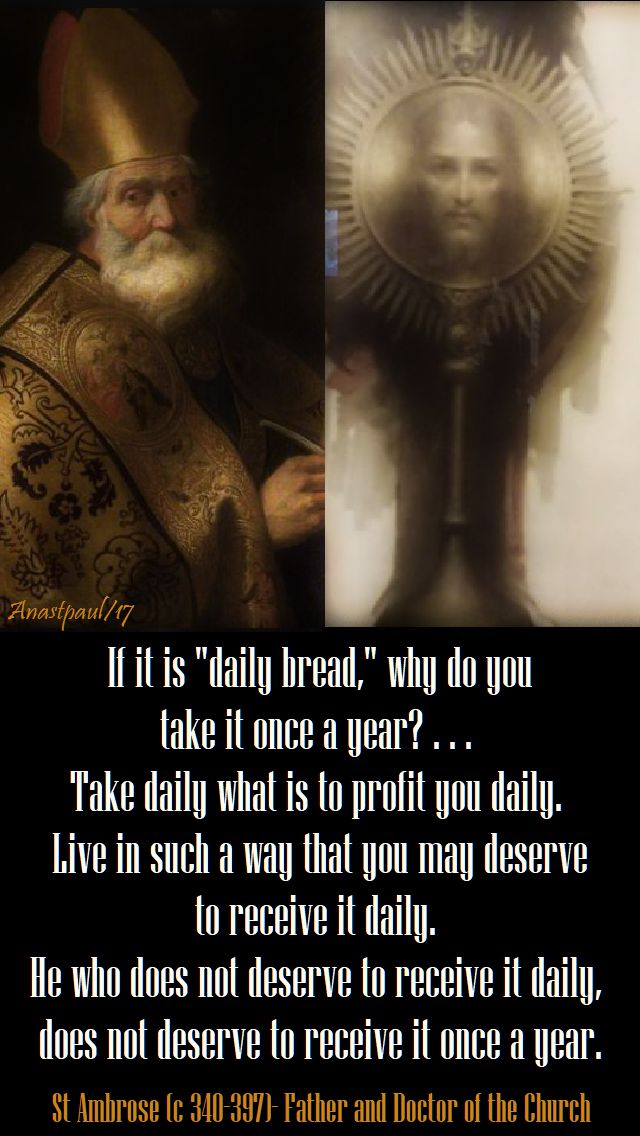
“If it is “daily bread,” why do you take it once a year? . . . Take daily what is to profit you daily. Live in such a way that you may deserve to receive it daily. He who does not deserve to receive it daily, does not deserve to receive it once a year.”
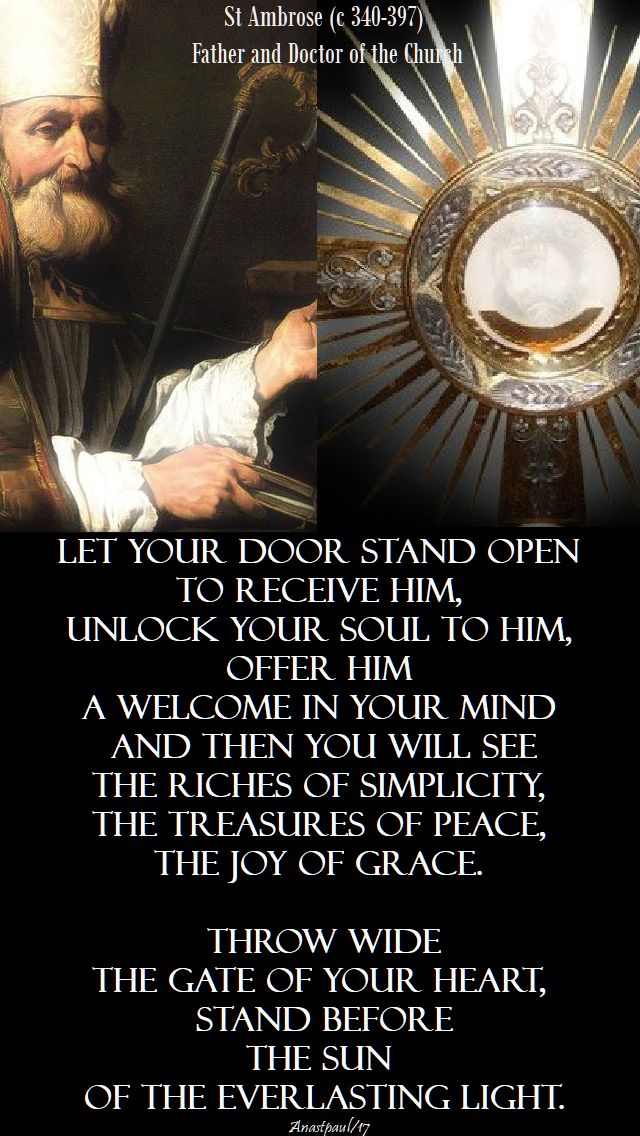
“Let your door stand open to receive Him, unlock your soul to Him, offer Him a welcome in your mind and then you will see the riches of simplicity, the treasures of peace, the joy of grace. Throw wide the gate of your heart, stand before the sun of the everlasting light.”
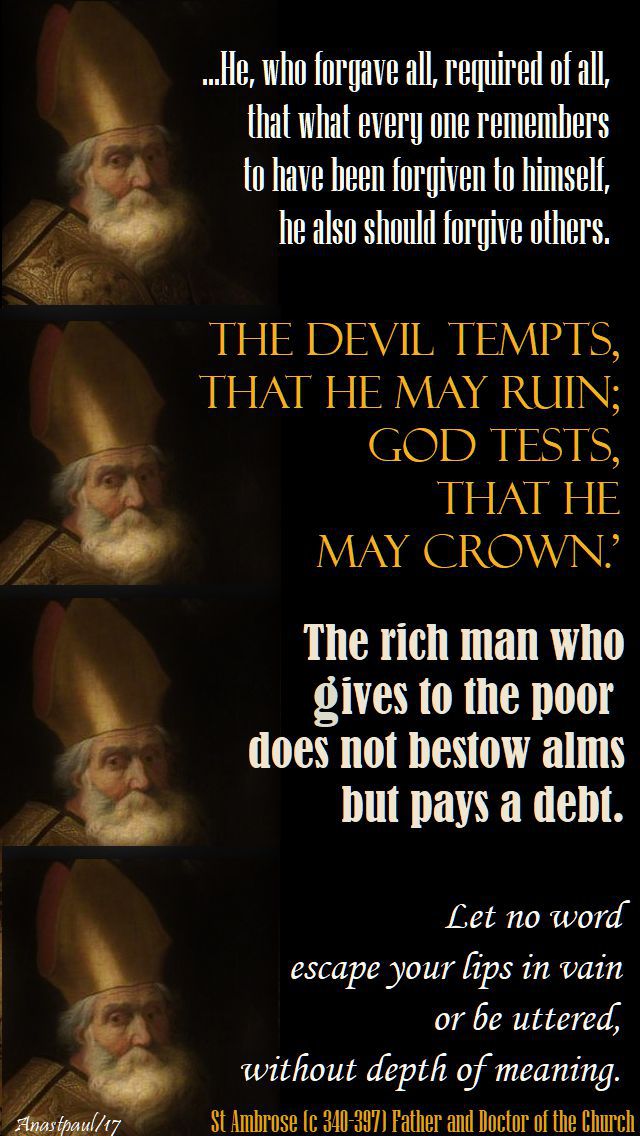
“…He, who forgave all, required of all, that what every one remembers to have been forgiven to himself, he also should forgive others.”
“The devil tempts, that he may ruin; God tests, that He may crown.”
“The rich man who gives to the poor does not bestow alms but pays a debt.”
“Therefore, let your words be rivers, clean and limpid, so that you may charm the ears of people. And by the grace of your words win them over to follow your leadership. …. That is, let the meaning of your words shine forth, let understanding blaze out. Let no word escape your lips in vain or be uttered, without depth of meaning.” – from a letter by Saint Ambrose
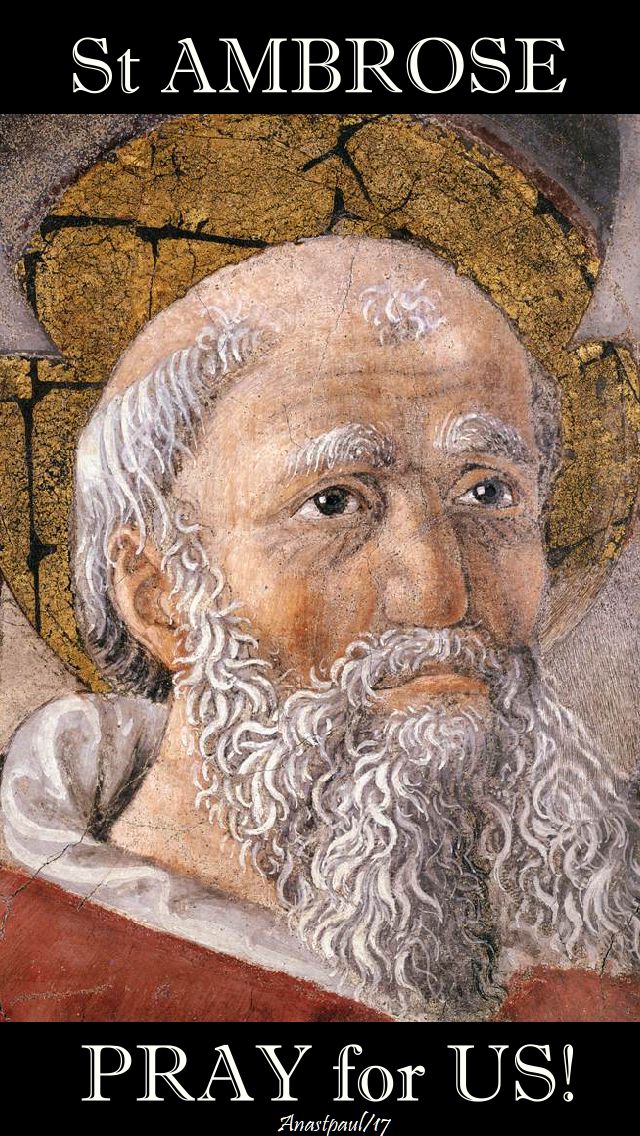
St Ambrose (c 340-397)- Father and Doctor of the Church
One Minute Reflection – 7 December – The Memorial of St Ambrose (c 340-397)- Father and Doctor of the Church
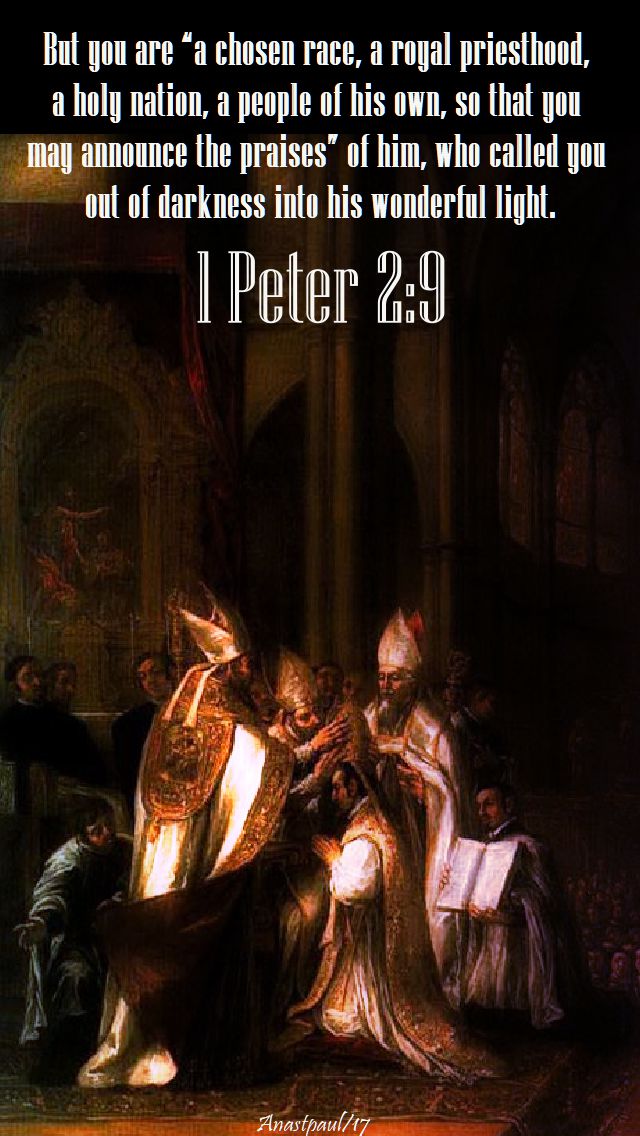
But you are “a chosen race, a royal priesthood, a holy nation, a people of his own, so that you may announce the praises” of him who called you out of darkness into his wonderful light…1 Peter 2:9
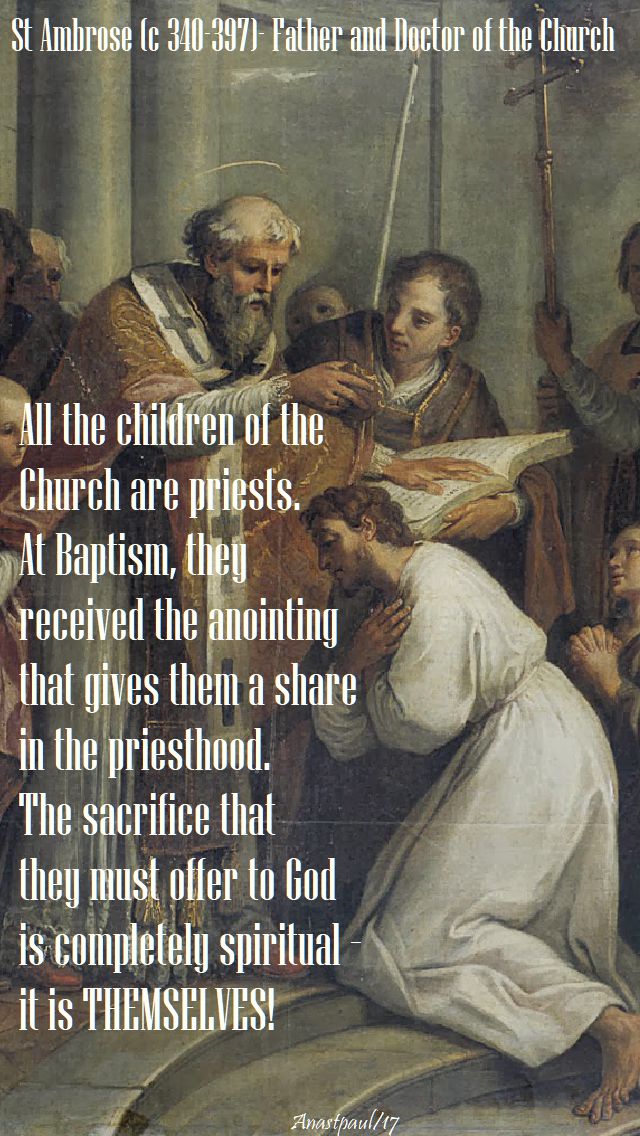
REFLECTION – “All the children of the Church are priests. At Baptism, they received the anointing that gives them a share in the priesthood. The sacrifice that they must offer to God is completely spiritual – it is themselves.”…St Ambrose
PRAYER – Holy Father, teach me to offer myself to You with all my thoughts, words and actions. Let me also exercise my “common priesthood” by faithful participation at Holy Mass and in all my encounters with my neighbour. St Ambrose, holy father, teacher of the saints, pray for us! Amen
Our Morning Offering – 7 December – The Memorial of St Ambrose (c 340-397)- Father and Doctor of the Church
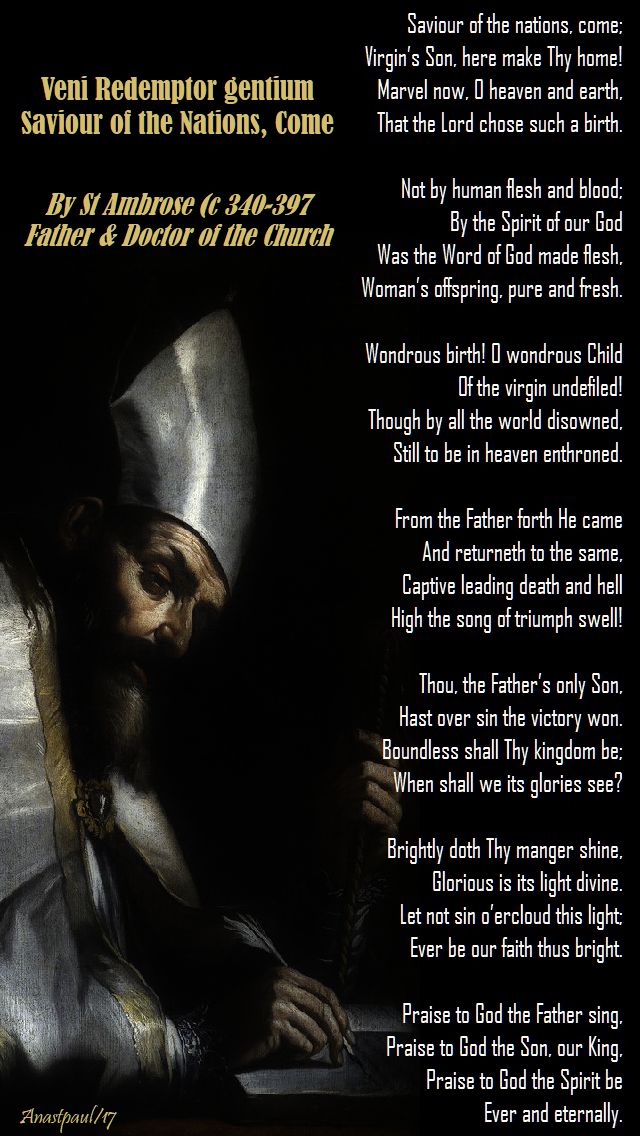
Veni Redemptor gentium Saviour of the Nations, Come St Ambrose’s Advent Hymn
Saviour of the nations, come;
Virgin’s Son, here make Thy home!
Marvel now, O heaven and earth,
That the Lord chose such a birth.
Not by human flesh and blood;
By the Spirit of our God
Was the Word of God made flesh,
Woman’s offspring, pure and fresh.
Wondrous birth! O wondrous Child
Of the virgin undefiled!
Though by all the world disowned,
Still to be in heaven enthroned.
From the Father forth He came
And returneth to the same,
Captive leading death and hell
High the song of triumph swell!
Thou, the Father’s only Son,
Hast over sin the victory won.
Boundless shall Thy kingdom be;
When shall we its glories see?
Brightly doth Thy manger shine,
Glorious is its light divine.
Let not sin o’ercloud this light;
Ever be our faith thus bright.
Praise to God the Father sing,
Praise to God the Son, our King,
Praise to God the Spirit be
Ever and eternally.
Translated from Latin to German by Martin Luther, 1523; translated from German to English by William M Reynolds, 1851
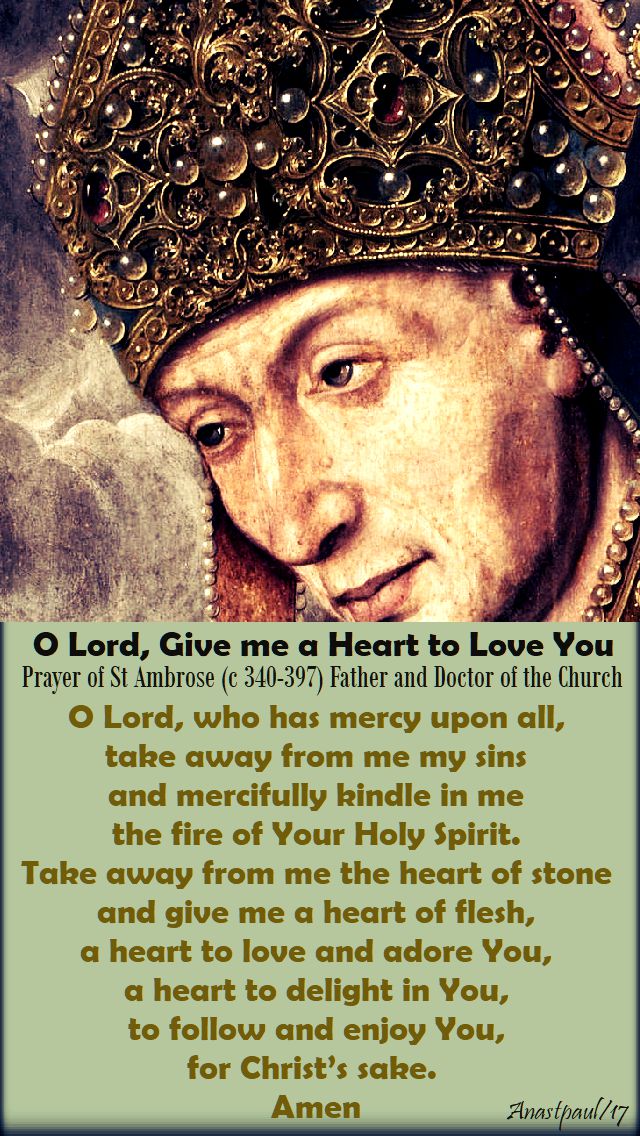
O Lord, Give me a Heart to Love You Prayer of St Ambrose (c 340-397) Father and Doctor of the Church
O Lord, who has mercy upon all,
take away from me my sins
and mercifully kindle in me
the fire of Your Holy Spirit.
Take away from me the heart of stone
and give me a heart of flesh,
a heart to love and adore You,
a heart to delight in You,
to follow and enjoy You,
for Christ’s sake. Amen
Daily Meditation:
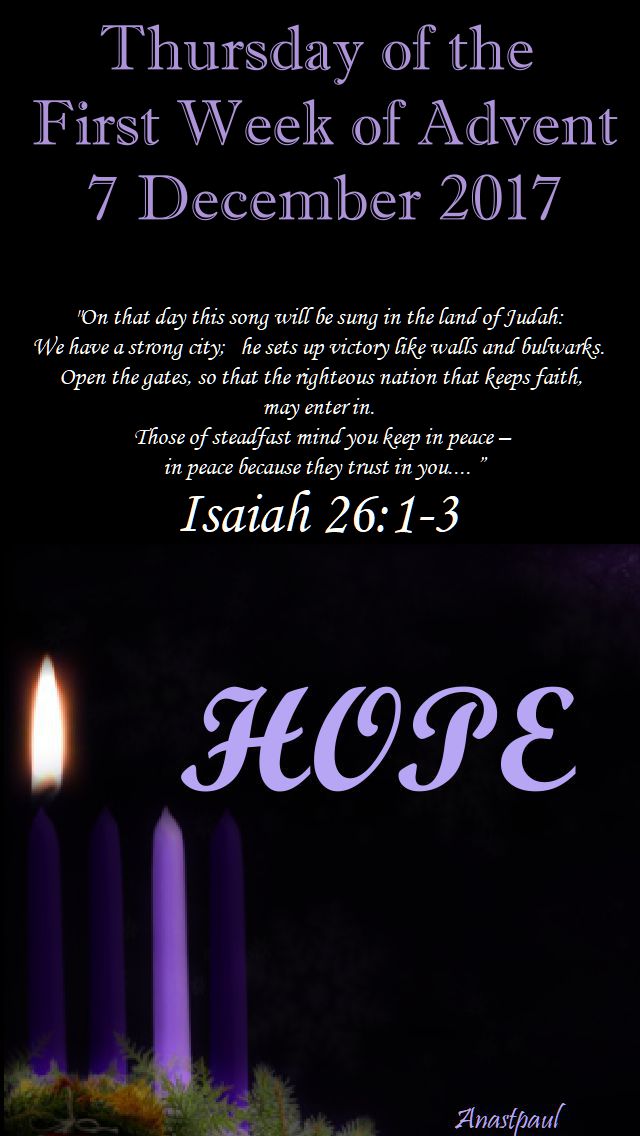
“On that day this song will be sung in the land of Judah: We have a strong city; he sets up victory like walls and bulwarks. Open the gates, so that the righteous nation that keeps faith may enter in. Those of steadfast mind you keep in peace – in peace because they trust in you…. ” Isaiah 26:1-3
The reading from Isaiah is another promise of a day of victory,
when the tables will be turned on injustice.
Today, let’s turn to our God, with all our needs.
Part of our Advent journey is about learning to hope
– learning to imagine what we can’t see.
Let’s go through our day today, desiring freedom
with a growing confidence in our God who promises to save us.
Come and set us free, Lord, God of power and might. Let Your face shine on us and we shall be saved.
Today’s Daily Reflection – Intercessions:
Christ is the wisdom and power of God and His delight is to
be with the children of men. With confidence, let us pray: Draw near us, Lord.
Lord Jesus Christ, you have called us to Your glorious kingdom,
– make us walk worthily, pleasing God in all we do.
You who stand unknown among us,
– reveal Yourself to men and women.
You are nearer to us than we to ourselves,
– strengthen our faith and our hope of salvation.
You are the source of holiness,
– keep us holy and without sin now and until the day
of Your coming.
Closing Prayer:
God of strength and protection,
I turn to You because I need help.
I long to be free enough
to trust that I can lean on You.
But I become afraid.
Help me to trust in You, Lord.
Your strength and power
are a gentle place of protection.
Be a safe refuge when I am being trampled.
I long for Your help, Your protecting care.
Help to deliver me from the cold
loneliness of these dark nights.
May the Lord bless us,
protect us from all evil
and bring us to everlasting life.
Amen.
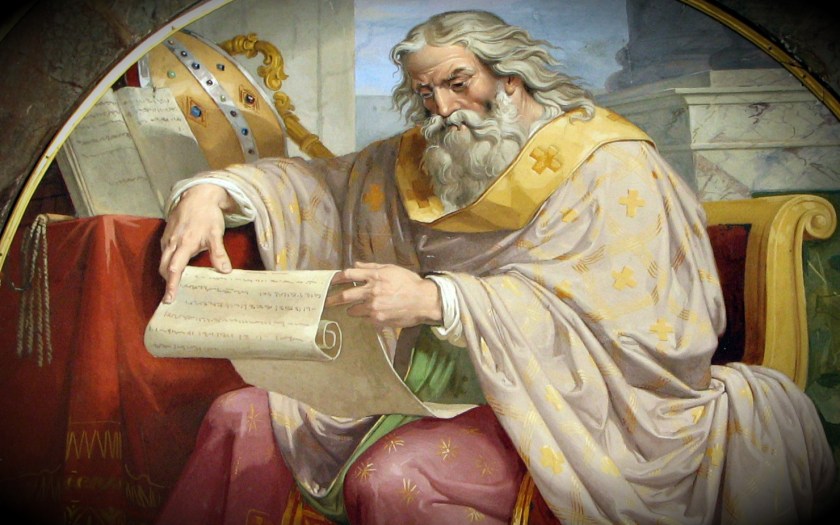
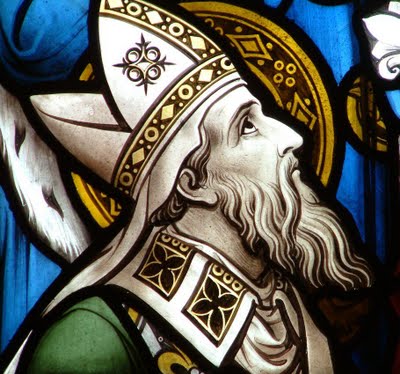
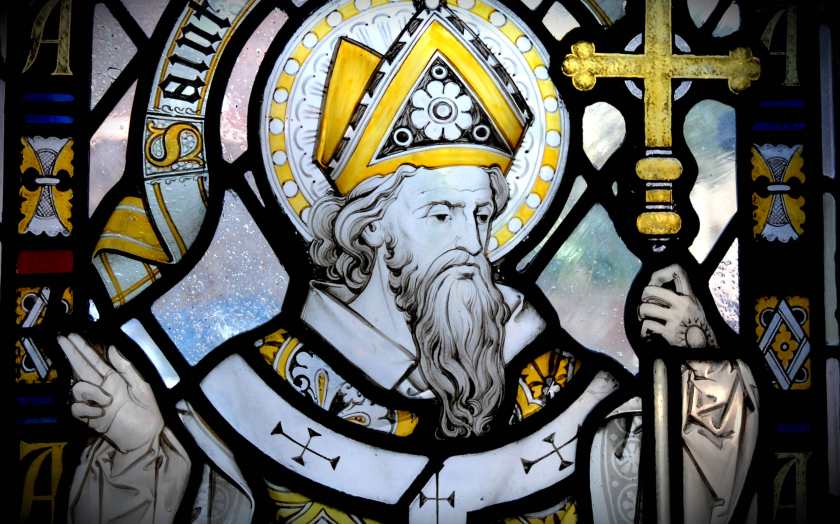
More on today’s Saint – St Ambrose (c 340-397)Confessor, Bishop, Father and Doctor of the Church – Theologian, Apostle of Charity, Writer, Musician, Preacher, Reformer and protector – all-in-all a brilliant, charismatic, vibrant man. Patronages – • bee keepers• bees• Bishops• candle makers• chandlers• domestic animals• French Commissariat• geese• honey cake bakers• learning• livestock• police officers • students, school-children• security personnel• starlings• wax melters• wax refiners• Archdiocese of Milan, Italy• 8 Cities.
Traditionally, Ambrose is credited with promoting “antiphonal chant”, a style of chanting in which one side of the choir responds alternately to the other, as well as with composing Veni redemptor gentium, an Advent hymn. Ambrose is one of the four original Doctors of the Church and is the Patron saint of Milan. He is notable for his influence on St Augustine, whom he Baptised.
This politician-turned churchman was profoundly aware of his lack of preparation for this great responsibility as Bishop and so set himself immediately to prayer and the study of Scripture. His deep spirituality and love of God’s Word married together with the oratorical skill acquired in law and politics made St Ambrose one of the greatest preachers of the early church.
His feast day in the Roman calendar is 7 December, the day he was Ordained Bishop. From the Roman liturgy for the Feast of St. Ambrose: “Lord, you made Saint Ambrose an outstanding teacher of the Catholic faith and gave him the courage of an apostle. Raise up in your Church more leaders after your own heart, to guide us with courage and wisdom. We ask this through our Lord Jesus Christ, Your Son, who lives and reigns with you and the Holy Spirit, one God forever and ever. Amen.”
Early mosaic of Ambrose that might be an actual portrait.
Here is Jimmy Akin’s article “St Ambrose: Strangest Life Story Ever?”
1) Who was St Ambrose?
St Ambrose of Milan was born around A.D. 338 and died in 397.
He was the bishop of Milan, Italy.
2) What makes is his life story so strange?
Originally, he was a government official, he became bishop in a most extraordinary way.
After the death of the local bishop, the Catholics and Arians got into a vehement conflict about who should be the new bishop.
Ambrose was trying to keep the peace and settle the two groups down when someone—allegedly a small boy—began chanting “Ambrose, bishop!”
Soon the two groups began chanting together that Ambrose should be the new bishop.
(The Arians, apparently, felt that although Ambrose was Catholic in belief he would be a kinder bishop than they otherwise would likely get.)
This set of circumstances is extraordinary enough, but what’s even more extraordinary is that Ambrose wasn’t even a Christian yet. He was an unbaptised catechumen!
3) Can it get any stranger?
Ambrose did not want to be bishop and so he went into hiding.
The Emperor Valentinian then got word of all this and declared severe penalties on anyone who would give Ambrose shelter.
He was thus forced to come out of hiding and accept his ordination as bishop.
They quickly ran him through the preliminary grades of orders and he was consecrated a bishop about a week later.
4) How did he do as bishop?
He was great! That’s part of why he ended up as a doctor of the Church.
He left many wonderful writings. He helped convert St Augustine. And he combated heresy.
He also introduced a practice into the West that has remained with us to this day.
5) What practice was that?
Lectio Divina. Pope Benedict XVI explained: Culturally well-educated but at the same time ignorant of the Scriptures, the new Bishop briskly began to study them. From the works of Origen, the indisputable master of the “Alexandrian School”, he learned to know and to comment on the Bible. Thus, Ambrose transferred to the Latin environment the meditation on the Scriptures which Origen had begun, introducing in the West the practice of lectio divina. The method of lectio served to guide all of Ambrose’s preaching and writings, which stemmed precisely from prayerful listening to the Word of God.
6) How did Ambrose help with Augustine’s conversion?
That also involved a rather dramatic story, in which Ambrose stood up to the emperor at the risk of his own life.
Pope Benedict explained: A passage from St Augustine’s Confessions is relevant. He had come to Milan as a teacher of rhetoric; he was a sceptic and not Christian. He was seeking the Christian truth but was not capable of truly finding it. What moved the heart of the young African rhetorician, sceptic and downhearted and what impelled him to definitive conversion was not above all Ambrose’s splendid homilies (although he deeply appreciated them). It was rather the testimony of the Bishop and his Milanese Church that prayed and sang as one intact body. It was a Church that could resist the tyrannical ploys of the Emperor and his mother, who in early 386 again demanded a church building for the Arians’ celebrations. In the building that was to be requisitioned, Augustine relates, “the devout people watched, ready to die with their Bishop”. This testimony of the Confessions is precious because it points out that something was moving in Augustine, who continues: “We too, although spiritually tepid, shared in the excitement of the whole people” (Confessions 9, 7).
7) Was Ambrose remarkable in other ways?
He was remarkable in many ways, one of them we today would find quite surprising.
Pope Benedict explained: [Augustine] writes in his text that whenever he went to see the Bishop of Milan, he would regularly find him taken up with catervae [Latin, “crowd”]of people full of problems for whose needs he did his utmost. There was always a long queue waiting to talk to Ambrose, seeking in him consolation and hope. When Ambrose was not with them, with the people (and this happened for the space of the briefest of moments), he was either restoring his body with the necessary food or nourishing his spirit with reading. Here Augustine marvels because Ambrose read the Scriptures with his mouth shut, only with his eyes (cf. Confessions, 6, 3). Indeed, in the early Christian centuries reading was conceived of strictly for proclamation and reading aloud also facilitated the reader’s understanding. That Ambrose could scan the pages with his eyes alone suggested to the admiring Augustine a rare ability for reading and familiarity with the Scriptures.
Got that?
Ambrose was known for the ability to read with his mouth shut, not using his voice or moving his lips.
We’re all taught to do this today, but it was rare in the ancient world! Back then, if you even could read, you usually had to at least move your lips.
Ambrose also passed on to Augustine a very famous piece of advice, that many people quote today without even knowing where it comes from.
8) What advice was that?
Augustine noted that the liturgical customs in Rome were different than those used in other places and Ambrose told him something we still quote today.
We paraphrase it in English, but it’s the same thought: “When in Rome, do as the Romans do.”














 AnaStpaul
You must be logged in to post a comment.