Posted in Against SCRUPELOSITY, for Scrupulous people, All THEOLOGIANS, Moral Theologians, CONFESSORS, DOCTORS of the Church, GOUT, KNEE PROBLEMS, ARTHRITIS, etc, Of a Holy DEATH & AGAINST A SUDDEN DEATH, of the DYING, FINAL PERSEVERANCE, DEATH of CHILDREN, DEATH of PARENTS, Of and for VOCATIONS, REDEMPTORISTS CSSR, SAINT of the DAY

Saint of the Day – 2 August – St Alphonsus Maria de Liguori C.Ss.R. – Doctor of the Church

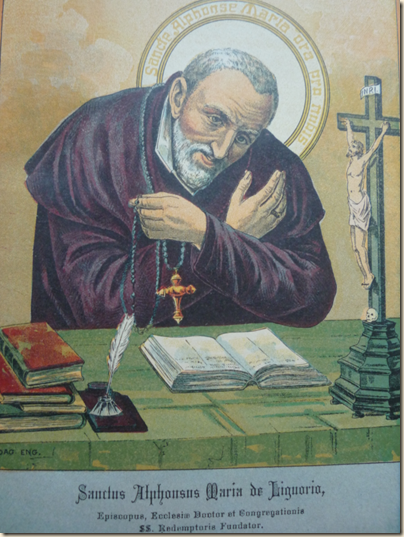
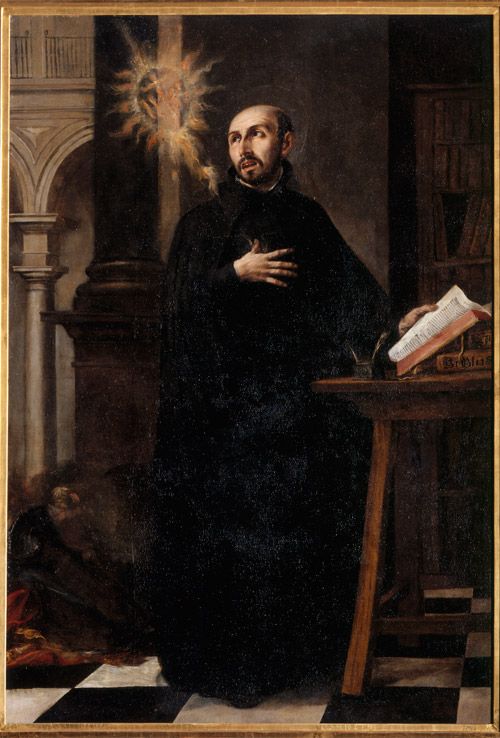
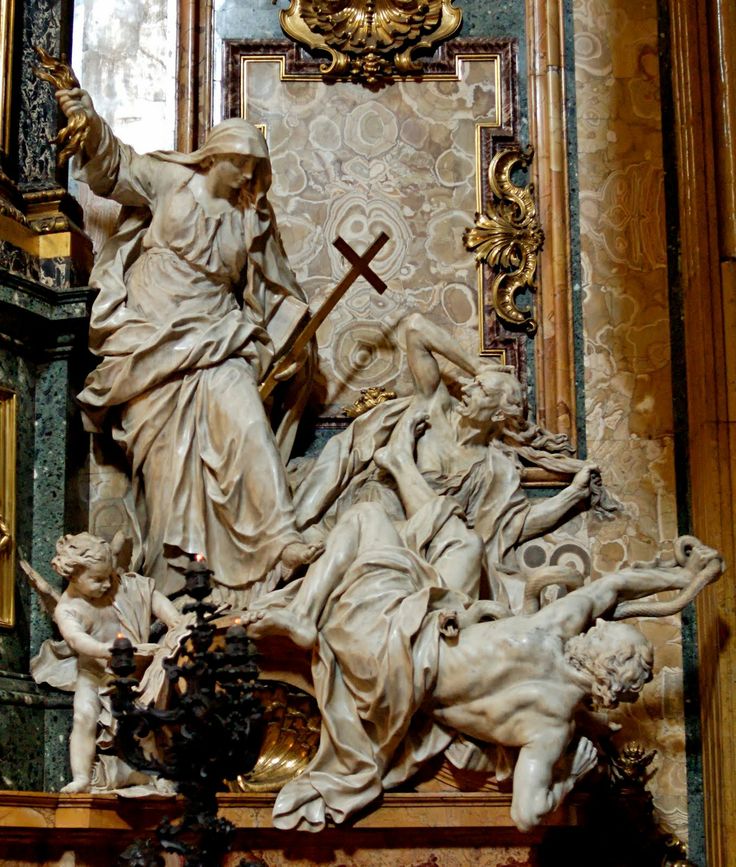
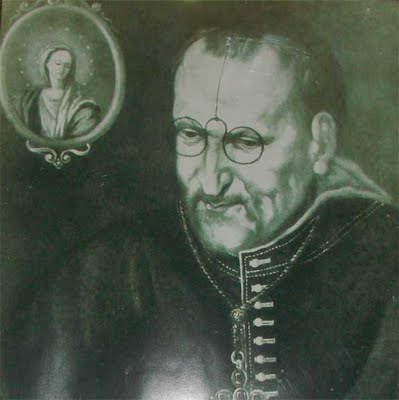
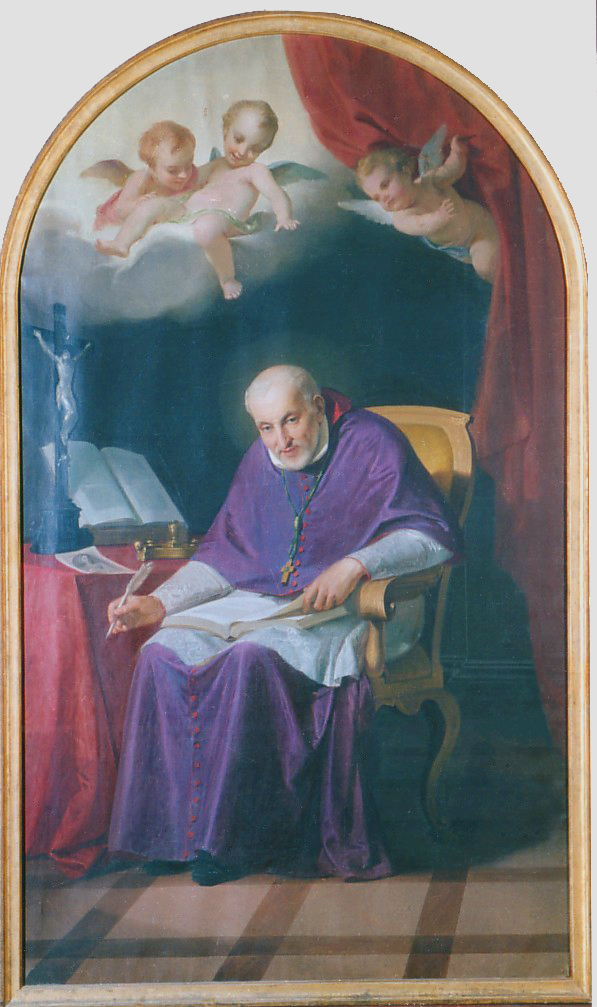
Saint of the Day – 2 August – St Alphonsus Maria de Liguori C.Ss.R. – Doctor of the Church-Bishop, Confessor, Founder, Spiritual Writer, Composer, Musician, Artist, Poet, Lawyer, Scholastic Philosopher and Theologian.   Born on 27 September 1696 at Marianelli near Naples, Italy and died on  1 August 1787 at Nocera, Italy of natural causes.   He was Canonised on 26 May 1839 by Pope Gregory XVI and declared Doctor of the Church by Pope Pius IX in 1871.    He founded the Congregation of the Most Holy Redeemer (the Redemptorists). In 1762 he was appointed Bishop of Sant’Agata dei Goti.  Patronages – against arthritis, against scrupulosity, of Confessors (given on 26 February 1950 by Pope Pius XII), final perseverance, moral theologians, moralists (1950 by Pope Pius XII), scrupulous people, vocations, Diocese of Acerra, Italy, Diocese of Agrigento, Italy,l Pagani, Italy, Sant’Agata de’ Goti, Italy.   Attributes – chaplet, praying with a monstrance in his hands, pen, quill, crucifix, writing, bishop with his chin on his chest (due to his arthritis).
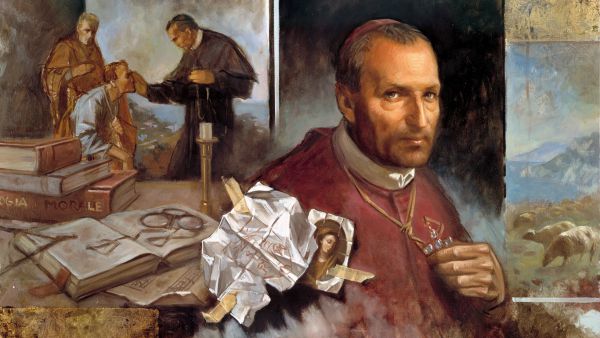
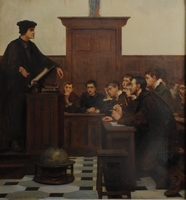
St Alphonsus learned to ride and fence but was never a good shot because of poor eyesight.   Myopia and chronic asthma precluded a military career so his father had him educated for the legal profession.   He was taught by tutors before entering the University of Naples, where he graduated with doctorates in civil and canon law at 16. He remarked later that he was so small at the time that he was almost buried in his doctor’s gown and that all the spectators laughed.   When he was 18, like many other nobles, he joined the Confraternity of Our Lady of Mercy with whom he assisted in the care of the sick at the hospital for “incurables”.

He became a successful lawyer.  He was thinking of leaving the profession and wrote to someone, “My friend, our profession is too full of difficulties and dangers;  we lead an unhappy life and run risk of dying an unhappy death”.   At 27, after having lost an important case, the first he had lost in eight years of practicing law, he made a firm resolution to leave the profession of law.   Moreover, he heard an interior voice saying: “Leave the world, and give yourself to me.”
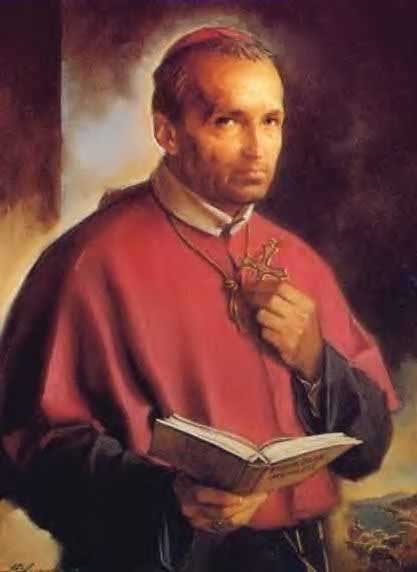
In 1723, he decided to offer himself as a novice to the Oratory of St. Philip Neri with the intention of becoming a priest.   His father opposed the plan but after two months (and with his Oratorian confessor’s permission), he and his father compromised:  he would study for the priesthood but not as an Oratorian and live at home.   He was ordained on 21 December 1726, at 30.   He lived his first years as a priest with the homeless and the marginalised youth of Naples.   He became very popular because of his plain and simple preaching.   He said: “I have never preached a sermon which the poorest old woman in the congregation could not understand”.    He founded the Evening Chapels, which were managed by the young people themselves.   The chapels were centres of prayer and piety, preaching, community, social activities and education.   At the time of his death, there were 72, with over 10,000 active participants.   His sermons were very effective at converting those who had been alienated from their faith.

Liguori suffered from scruples much of his adult life and felt guilty about the most minor issues relating to sin.    Moreover, the saint viewed scruples as a blessing at times and wrote:  “Scruples are useful in the beginning of conversion…. they cleanse the soul and at the same time make it careful”.

In 1729, Alphonsus left his family home and took up residence in the Chinese Institute in Naples.   It was there that he began his missionary experience in the interior regions of the Kingdom of Naples, where he found people who were much poorer and more abandoned than any of the street children in Naples.   In 1731, while he was ministering to earthquake victims in the town of Foggia, Alphonsus claimed to have had a vision of the Virgin Mother in the appearance of a young girl of 13 or 14, wearing a white veil.

Congregation of the Most Holy Redeemer (The Rdemptorists) – On 9 November 1732, he founded the Congregation of the Most Holy Redeemer, when Sister Maria Celeste Crostarosa told him that it had been revealed to her that he was the one that God had chosen to found the congregation.   He founded the congregation with the charism of preaching popular missions in the city and the countryside.   Its goal was to teach and preach in the slums of cities and other poor places.   They also fought Jansenism, a heresy that supported a very strict morality:  “the penitents should be treated as souls to be saved rather than as criminals to be punished”.  He is said never to have refused absolution to a penitent.

A gifted musician and composer, he wrote many popular hymns and taught them to the people in parish missions.   In 1732, while he was staying at the Convent of the Consolation, one of his order’s houses in the small city of Deliceto in the province of Foggia in Southeastern Italy, Liguori wrote the Italian carol “Tu scendi dalle stelle” (“From Starry Skies Descending”) in the musical style of a pastorale.   The version with Italian lyrics was based on his original song written in Neapolitan, which began Quanno nascette Ninno (When the child was born).   As it was traditionally associated with the zampogna, or large-format Italian bagpipe, it became known as Canzone d’i zampognari the (“Carol of the Bagpipers”).

Bishop
Alphonsus was consecrated Bishop of Sant’Agata dei Goti in 1762.   He tried to refuse the appointment by using his age and infirmities as arguments against his consecration.   He wrote sermons, books and articles to encourage devotion to the Blessed Sacrament and the Blessed Virgin Mary.   He first addressed ecclesiastical abuses in the diocese, reformed the seminary and spiritually rehabilitated the clergy and faithful.   He suspended those priests who celebrated Mass in less than 15 minutes and sold his carriage and episcopal ring to give the money to the poor.   In the last years of his life, he suffered a painful sickness and a bitter persecution from his fellow priests, who dismissed him from the Congregation that he had founded.
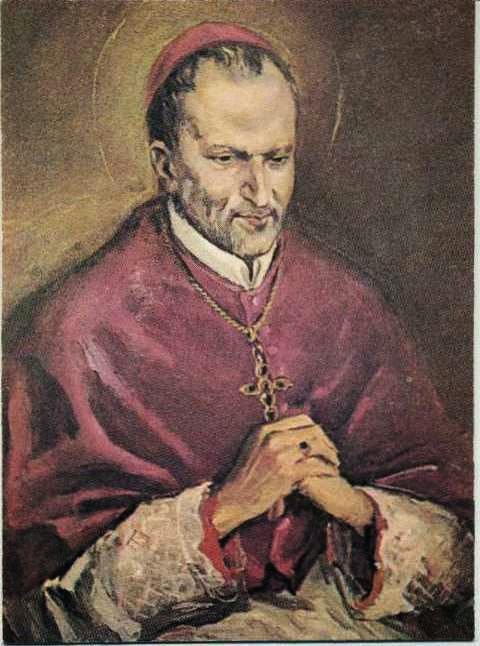
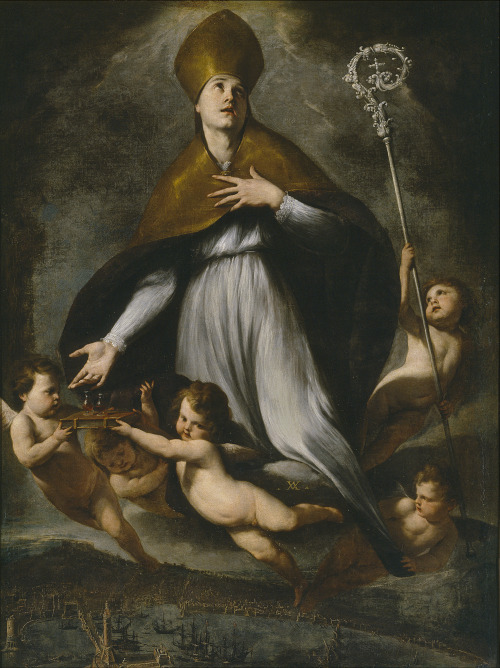
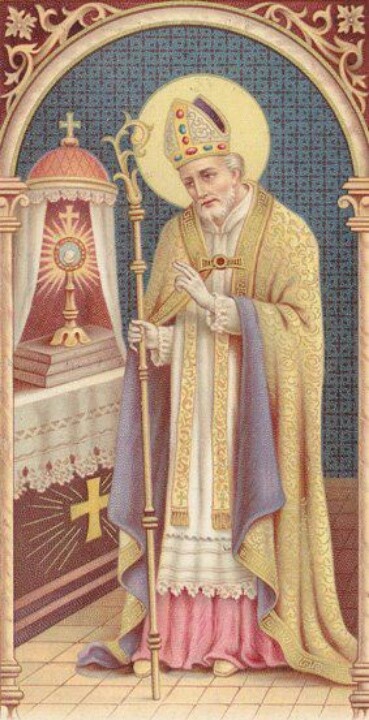
St-Alphonsus-at Mt St A, sm
ST ALPHONSUS - 2.AUG 1
st alphonsus 3
ST ALPHONSUS - HOLYCARD

Death
In 1775, he was allowed to retire from his office and went to live in the Redemptorist community in Pagani, Italy, where he died.

Veneration and legacy
He was beatified on 15 September 1816 by Pope Pius VII and canonized on 26 May 1839 by Pope Gregory XVI.

In 1949, the Redemptorists founded the Alphonsian Academy for the advanced study of Catholic moral theology.   He was named the patron of confessors and moral theologians by Pope Pius XII on 26 April 1950, who subsequently wrote of him in the encyclical Haurietis aquas.

Moral theology
Alphonsus’ greatest contribution to the Church was in the area of moral theology.    His masterpiece was The Moral Theology (1748), which was approved by the Pope himself and was born of Alphonsus’ pastoral experience, his ability to respond to the practical questions posed by the faithful and his contact with their everyday problems.   He opposed sterile legalism and strict rigoururism.   According to him, those were paths closed to the Gospel because “such rigour has never been taught nor practiced by the Church”.   His system of moral theology is noted for its prudence, avoiding both laxism and excessive rigour.   Since its publication it has remained in Latin, often in 10 volumes or in the combined 4-volume version of Gaudé.   It saw only recently its first publication in translation, in an English translation made by Ryan Grant and published in 2017 by Mediatrix Press.   The English translation of the work is projected to be around 5 volumes.

Mariology
His Mariology, though mainly pastoral in nature, rediscovered, integrated and defended that of St Augustine of Hippo, St Ambrose of Milan and other fathers;  it represented an intellectual defence of Mariology in the 18th century, the Age of Enlightenment, against the rationalism to which his often flaming Marian enthusiasm contrasted:

The Glories of Mary
Marian Devotion
Prayers to the Divine Mother
Spiritual Songs
The True Spouse of Jesus Christ

Other works
Great Means of Salvation and of Perfection
The Way of Salvation and of Perfection
The Way of the Cross,
Preparation for Death,
The Incarnation, Birth and Infancy of Jesus Christ
The Holy Eucharist
Victories of the Martyrs

Many of these are available online.
Posted in DEVOTIO, SAINT of the DAY

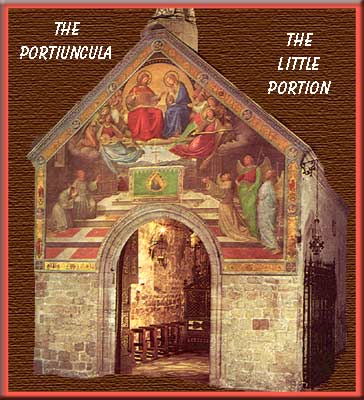
Saints’ Memorials, The Feast of the Chains of St Peter and the Portiuncula Indulgence – 1 August

St Alphonsus Maria de Liguori (Memorial) – https://www.youtube.com/watch?v=yscfHkNWxxg

Portiuncula Indulgence: Between noon of 1 August and midnight of 2 August, or on the Sunday following. Fr Z’s Blog has a good explanation – http://wdtprs.com/blog/2011/08/2-august-portiuncula-indulgence-2/

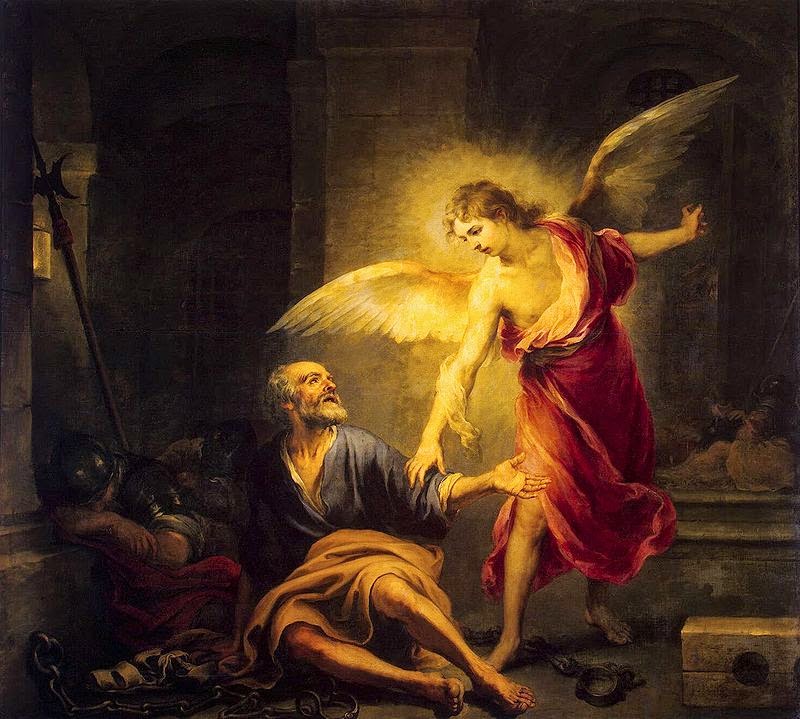
Feast of Saint Peter in Chains:  The feast was originally kept in Rome, Italy to commemorate the dedication of the Church of Saint Peter on the Esquiline Hill built by Eudoxia Licinia in 442 and rebuilt by Adrian I in the 8th century.   When the chains which Saint Peter had worn in prison and from which he was freed by angelic intervention, Acts 12:1-19, were later venerated there, the feast received its present name.   The date when these chains were brought from Jerusalem is disputed; some claim they were brought in 116 by travellers sent in search of them by Saint Balbina and her father Saint Quirinus, while others think Saint Eudoxia brought them in 439.   Pope Saint Leo the Great united them to the chains with which Saint Peter had been fettered in the Mamertine Prison, forming a chain about two yards long which is preserved in a bronze safe and guarded by a special confraternity.


Bl Aleksy Sobaszek
St Alexander of Perga
St Almedha
St Arcadius
St Attius of Perga
St Benado Vo Van Due
St Buono
St Brogan
St Charity
St Ðaminh Nguyen Van Hanh
St Ethelwold of Winchester
St Exuperius of Bayeux
St Faith
St Faustus
St Felix of Gerona
St Friard
Bl Gerhard Hirschfelder
St Hope
St Jonatus
St Justin of Paris
St Kenneth of Wales
St Leontius of Perga
Bl Maria Imelda of the Eucharistic Jesus
Bl Maria Stella of the Most Blessed Sacrament
St Maur
St Nemesius of Lisieux
Bl Orlando of Vallombrosa
St Peregrinus of Modena
St Peter Faber
St Rioch
Bl Rudolph
St Secundel
St Secundus of Palestrina
St Sophia
St Verus of Vienne


Saints Faith, Hope and Charity:  The daughters of Saint Sophia. While still children, they were tortured and martyred for their faith in the persecutions of Hadrian.   They were scourged, thrown into a fire and then beheaded.

Holy Maccabees: Jewish dynasty which began with the rebellion of Mathathias and his five sons against the Syrian king, Antiochus IV (168 BC) and ruled the fortunes of Israel until the advent of Herod the Great. Syrian attempts to force Greek paganism on the Jews, the profanation of the Temple at Jerusalem, and the massacre which followed, brought the nation to arms under Mathathias, a priest of the sons of Joarib. At the death of Mathathias, Judas Machabeus, his third son, drove the Syrians and Hellenists out of Jerusalem, rededicated the Temple, and began an offensive and defensive alliance with the Romans. Before the treaty was concluded, however, Judas, with 800 men, risked battle at Laisa with an overwhelming army of Syrians under Bacchides, and was slain. He was succeeded in command by his youngest brother, Jonathan (161 BC). Jonathan defeated Bacchides, revenged the death of his brother, and made peace with Alexander who had usurped the throne of Demetrius, the successor to Antiochus. A period of peace followed in which Jonathan ruled as high priest in Jerusalem, but Tryphon, who was plotting for the throne of Asia, treacherously captured him at ptolemais and later put him to death. The captaincy of the armies of Israel then fell to Simon, the second son of Mathathias. Under him the land of Juda flourished exceedingly. He obtained the complete independence of the country and a grateful people bestowed upon him the hereditary kingship of the nation. His rule marked five years of uninterrupted peace. He was treacherously slain by his son-in-law, Ptolemy, about the year 135 BC After Simon the race of the Machabees quickly degenerated. In 63 BC the Romans thought it necessary to interfere in the fratricidal war between Hyrcanus II and Aristobulus II. With this interference and the advent of Herod the Great the scepter passed forever from the land of Juda. The story of the Machabees is written in the two books of the Old Testament which bear that name.

Martyrs of Nowogrodek – 11 beati: A group of eleven Holy Family of Nazareth nuns who were murdered by Nazis in exchange for the release of 120 condemned citizens of Nowogrodek, Belarus.
• Adela Mardosewicz
• Anna Kukolowicz
• Eleonora Aniela Józwik
• Eugenia Mackiewicz
• Helena Cierpka
• Jadwiga Karolina Zak
• Józefa Chrobot
• Julia Rapiej
• Leokadia Matuszewska
• Paulina Borowik
• Weronika Narmontowicz
They were murdered on 1 August 1943 by the Gestapo in Novogrudok, Hrodzyenskaya voblasts’, Belarus and
Beatified on 5 March 2000 by St Pope John Paul.

Martyrs of Philadelphia – 6 saints: A group of six Christians martyred. No information about them has survived but the names – Aquila, Cyril, Domitian, Menander, Peter and Rufus. They were martyred on an unknown date in Philadelphia (modern Alasehir, Turkey).

Martyred in the Spanish Civil War:
Bl Benito Iñiguez de Heredia Alzola
Bl Francesc de Paula Soteras Culla
Bl Joan Bonavida Dellá
Bl José de Miguel Arahal
Bl Justino Alarcón Vera
Sebastià Tarragó Cabré
Vicente Montserrat Millán
Nicholas de la Torre Merino

Posted in JESUIT SJ, MORNING Prayers, POETRY, SAINT of the DAY

ON THE FEAST OF ST IGNATIUS LOYOLA

Here is a delightful poem for your prayerful contemplation as you remember and celebrate the life of Iñigo López de Loyola.

beautiful iggy!ST IGNATIUS - BEST PIC EVER - MY SNIP

Ignatius
boy-soldier
hoodlum courtier
day-old dreamer
smashed up good in war
convalescent convert
cannonball Christian
crippled companion
with a knack for re-routing attacks

lend us your gift for woundedness
that turns a shot around
then takes its aim at holiness

think of all the saints
you could socialise
if only you hobbled now into Syria
and taught the fallen your techniques

we’ve got sufficient lead and bloodshed
to gild the whole world
with your inside-out-going
alchemy.

Greg Kennedy, SJ, is a Jesuit scholastic, in his third year of Theological Studies at Regis College, Toronto. 

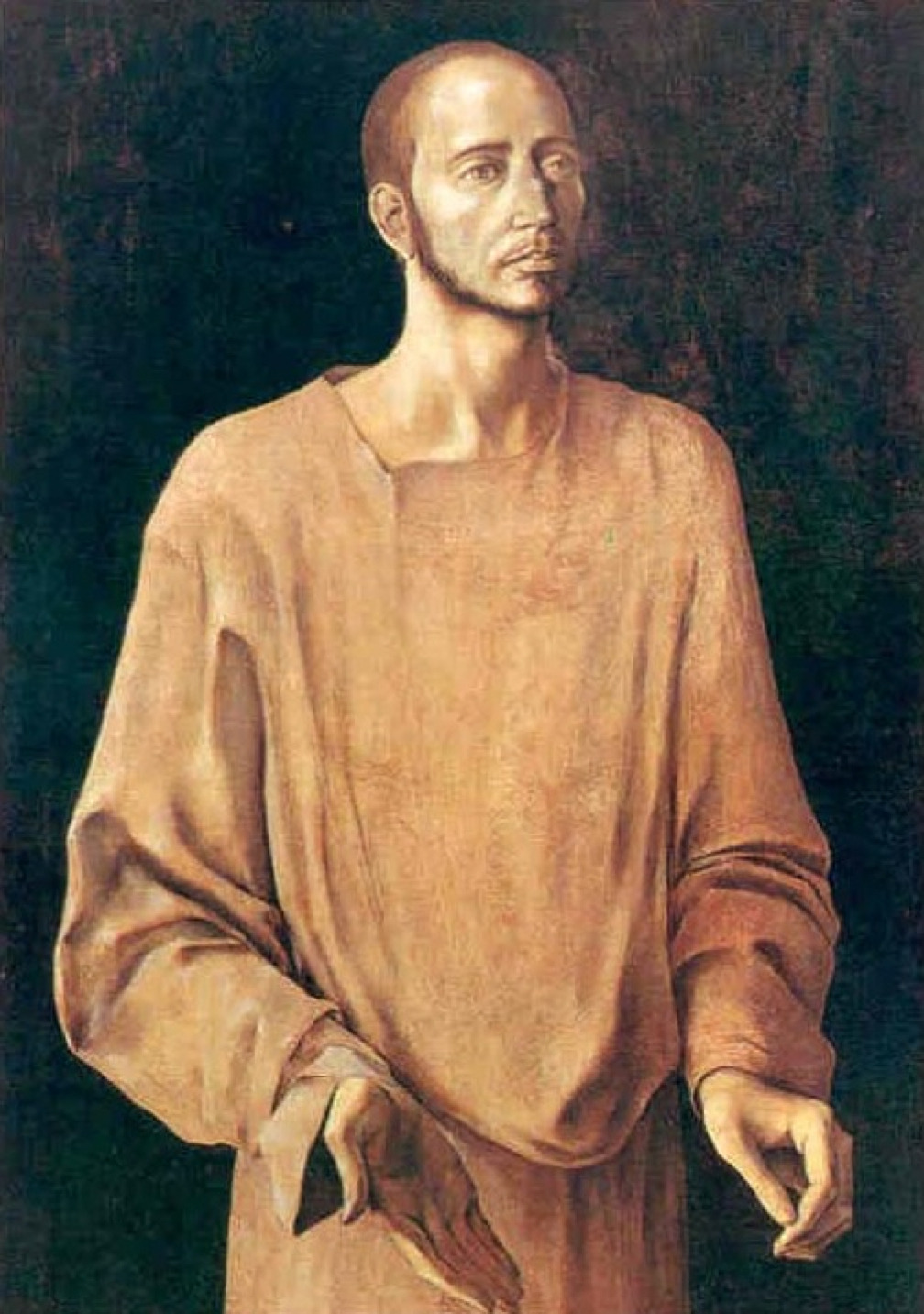
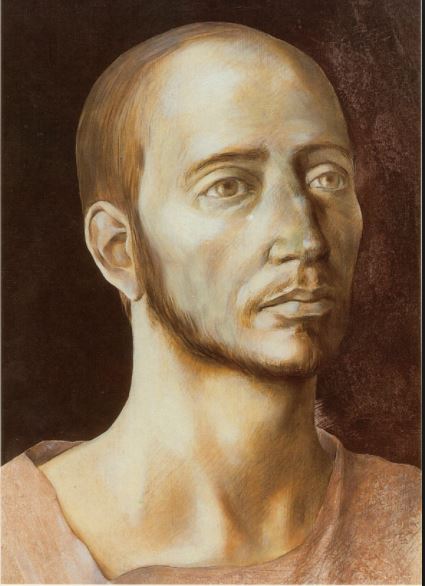
Image | Ignatius at Manresa by Montserrat Gudiol (1991). The painting is at Manresa.ignatius boy soldier posted 31 july 2018


Posted in MORNING Prayers, NOVENAS

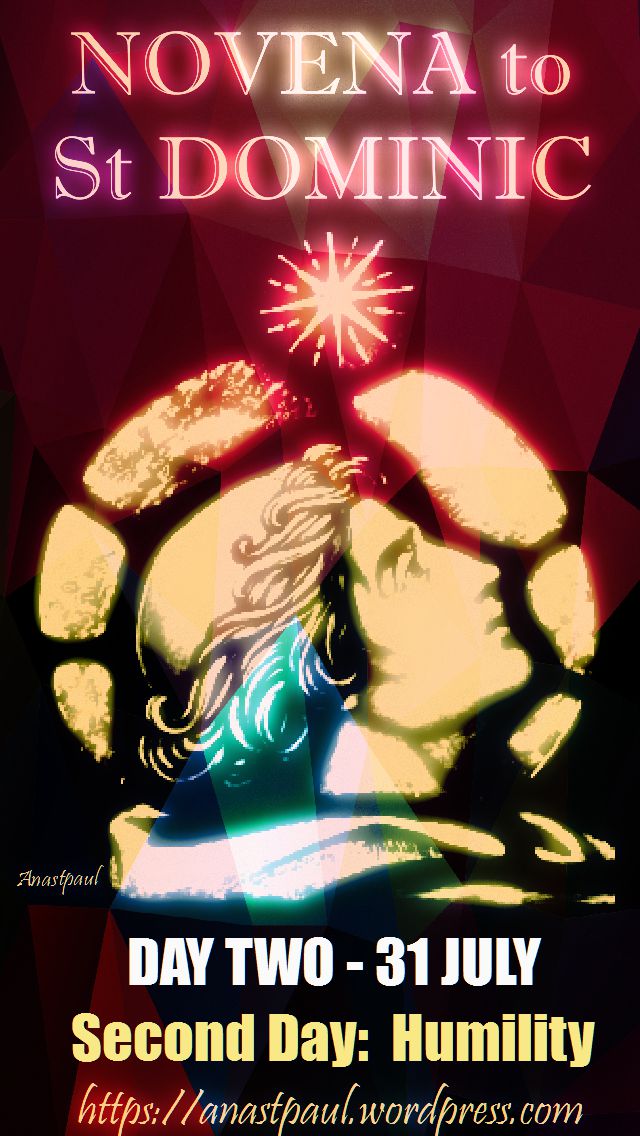
Novena to St Dominic – DAY TWO – 31 July

Novena to St Dominic

Second Day: Humility
Your attitude must be that of Christ:  though he was in the form of God, he did not deem equality with God something to be grasped at.   Rather, he emptied himself and took the form of a slave, being born in the likeness of men.   He was known to be of human estate and it was thus that he humbled himself, obediently accepting even death, death on a cross! (Philippians 2:5-8)

DOCTOR VERITATIS                                   DOCTOR OF TRUTH

Humility is the foundation of perfection and in St. Dominic it was deep and strong.   So clear was his knowledge of the great majesty of God and his own nothingness that he lived always in holy fear and self-distrust.   Though most innocent, he considered himself to be a sinner, unworthy of the least grace.   Constantly he prostrated himself before God, praying for long periods of time.
Before entering a town to preach, he used to kneel down on the road, begging God not to punish the people for his sins but to make his labour fruitful.   When passing an altar or crucifix he would bow profoundly, in token of his nothingness.   Personal praise and honour he detested and three times refused the bishopric.   At the General Chapter he said to his brethren, “I deserve to be deposed from my office, for I am negligent and relaxed.” When asked where he would be buried, “Under the feet of my brethren,” the saint responded.
The saints, though great in virtue, look upon themselves as worthless, because they see themselves in the light of God and knowing Him they know themselves. “Our righteousness,” St. Dominic would say, “when compared to the righteousness of God, is mere uncleanness.”

Learn of me, for I am meek and humble of heart and you will find rest for your souls. …Matthew 11:29

Pray for us, blessed father, St. Dominic, that we may be made worthy of the prom­ises of Christ.

Let us pray:

O Holy Father St. Dominic,
true lover of humility,
the greater you appeared in the sight of men,
the more you humbled yourself before God.
Be to us a loving guide, that, following in your footsteps,
we may be enabled to withstand all the snares of the enemy
and spending our lives in earnest prayer,
self-denial and humility,
we may, at the hour of death,
be received with you into heaven.
Pray too Holy St Dominic,
that as the virtue of our humility grows,
we may draw back those
who have lapsed from the one, true faith
and for this our special intention …
(make your request)
Through Christ our Lord. Amen


DAY TWO - NOVENA TO ST DOMINIC - HUMILITY 31 JULY

Posted in MORNING Prayers, NOVENAS, Uncategorized

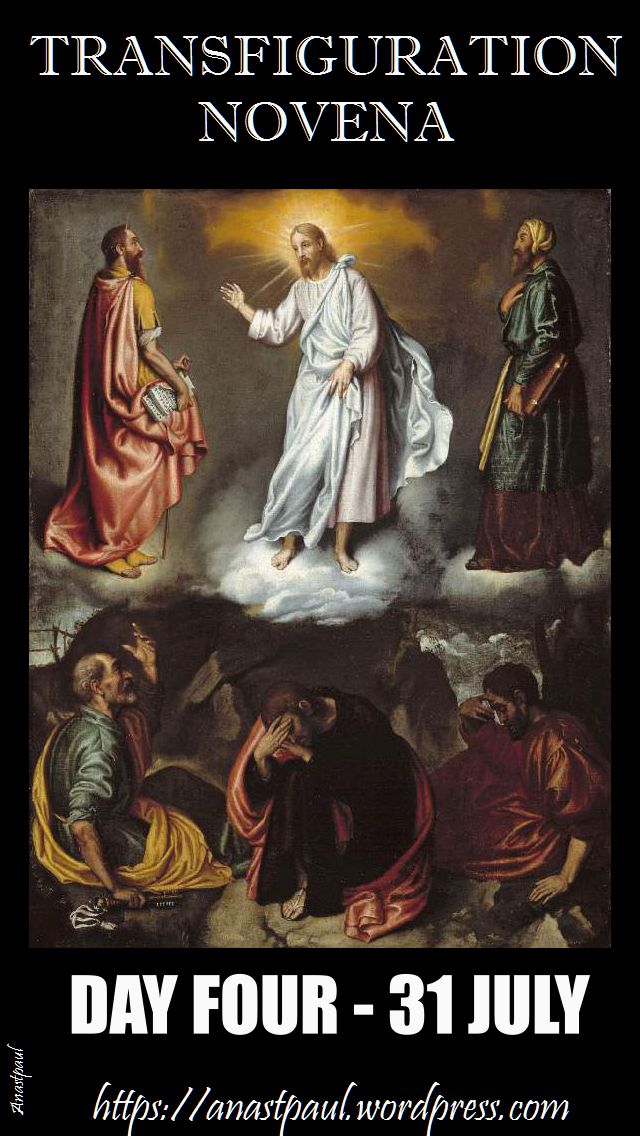
NOVENA in Honour of and preparation for, the Feast of the Transfiguration of our Lord – Day Four – 31 July

NOVENA Transfiguration of our Lord – Day Four – 31 July

Explanation of this Novena here: https://anastpaul.wordpress.com/2017/07/25/announcing-a-novena-in-honour-of-the-transfiguration-of-our-lord/

The Revelation of Christ’s Divine Glory

Fourth Day: Responsibility in our mission

In the transfiguration episode, we can see just how much Peter lived his calling with enthusiasm and with a sense of responsibility. “Master, it is wonderful for us to be here, so let us make three tents, one for You, one for Moses and one for Elijah.”  Here we see Peter in all his generosity.  At this moment he feels at the height of his power and ability.   He is growing in awareness of his responsibility, the weight he carries on his shoulders.

Let us Pray:

Loving Father,
You have so loved us
that we have been called to be Your sons,
Sons and daughters of God.
Help us to fulfil the mission given us by Your Son
with fidelity, responsibility and generosity.
Amen.

DAY FOUR TRANSFIGURATION NOVENA 31 JULY

Posted in MORNING Prayers, NOVENAS, Uncategorized

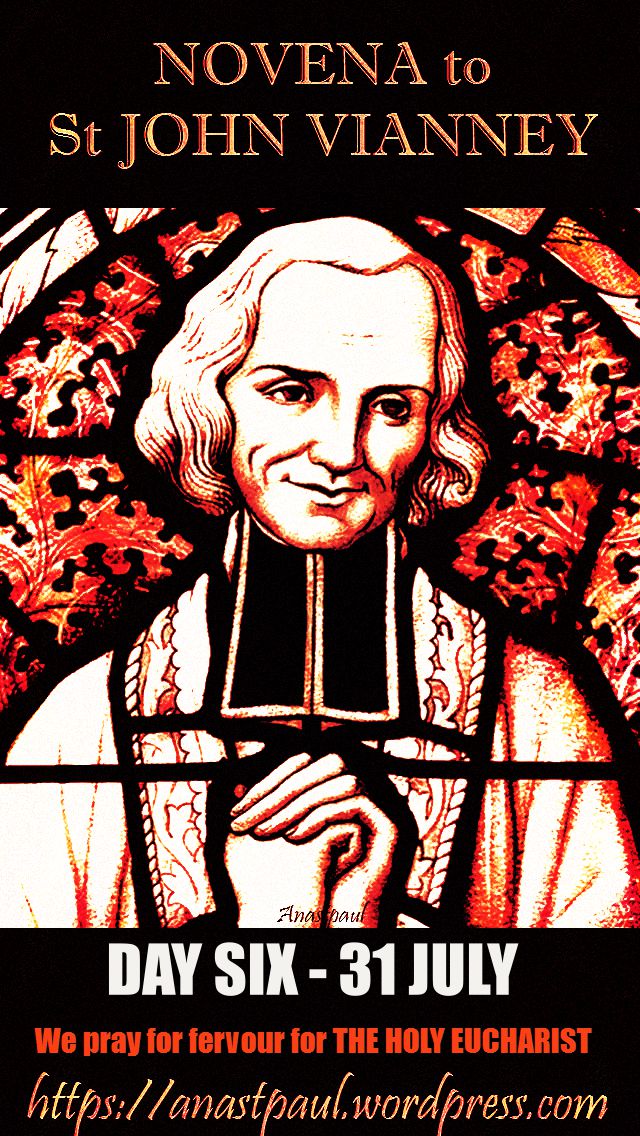
Novena In Honour of Saint John Marie Vianney – Day Six– 31 July

Novena In Honour of Saint John Marie Vianney

DAY SIX – We Pray for REAL PRESENCE

O Holy Priest of Ars,
whose only comfort in this world was the real presence of Jesus in the tabernacle,
was it not your great joy to distribute the Eucharist to the pilgrims who visited you?
You refused Communion to the souls who refused to reform
but to souls of goodwill you opened wide the doors of the Eucharistic Feast.
You, who each day at Holy Mass received Holy Communion with great loves,
give me some of your fervour.
With freedom from mortal sin,
obtain for me a sincere desire to profit from receiving Holy Communion.
Holy Priest of Ars, I have confidence in your intercession.
Pray for me during this novena especially for…
(mention silently your special intentions)
Our Father, Hail Mary, Glory Be.

DAY SIX - NOVENA ST JOHN VIANNEY - 31 JULY HOLY EUCHARIST

Posted in JESUIT SJ, MORNING Prayers, SAINT of the DAY

Thought for the Day – 31 July – The Memorial of St Ignatius

Thought for the Day – 31 July – The Memorial of St Ignatius

Ignatius was a true mystic.   He centered his spiritual life on the essential foundations of Christianity—the Trinity, Christ, the Eucharist.   His spirituality is expressed in the Jesuit motto, Ad majorem Dei gloriam—“for the greater glory of God.”   In his concept, obedience was to be the prominent virtue, to assure the effectiveness and mobility of his men.   All activity was to be guided by a true love of the Church and unconditional obedience to the Holy Father, for which reason all professed members took a fourth vow to go wherever the pope should send them for the salvation of souls.
Luther nailed his theses to the church door at Wittenberg in 1517.   Seventeen years later, Ignatius of Loyola founded the Society that was to play so prominent a part in the Catholic Reformation.   He was an implacable foe of Protestantism.   Yet the seeds of ecumenism may be found in his words:  “Great care must be taken to show forth orthodox truth in such a way that if any heretics happen to be present they may have an example of charity and Christian moderation. No hard words should be used nor any sort of contempt for their errors be shown.” ( Fr Don Miller, OFM)

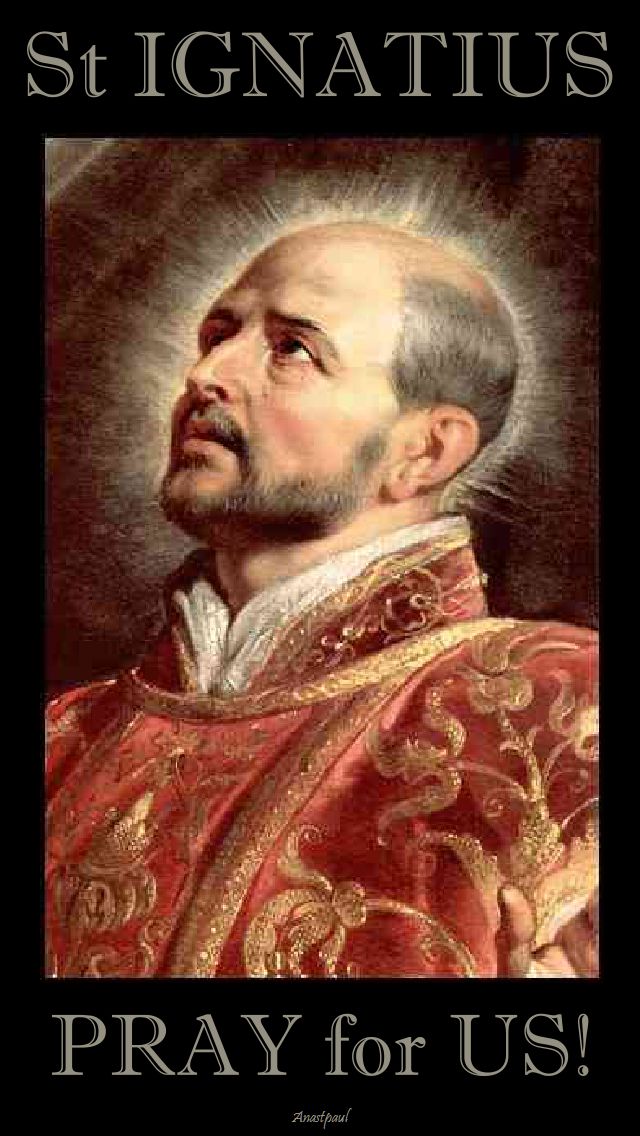
St Ignatius pray for us!

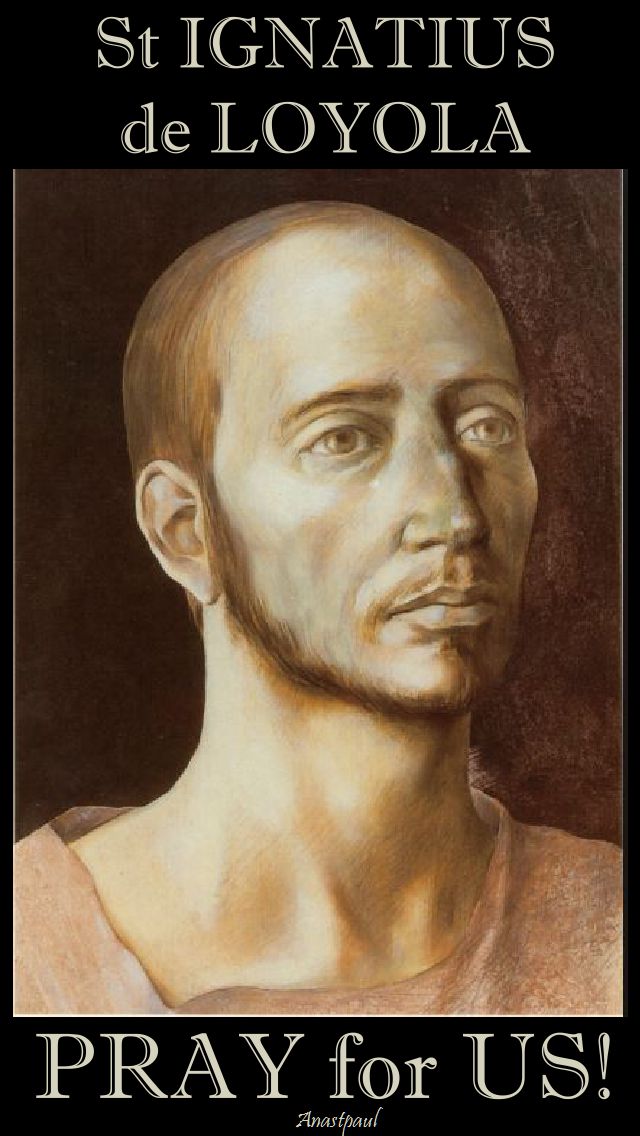
st iggy pray for us 2

Posted in JESUIT SJ, MORNING Prayers, QUOTES on CHARITY, QUOTES on SUFFERING, SAINT of the DAY

Quote/s of the Day – 31 July – The Memorial of St Ignatius de Loyola

Quote/s of the Day – 31 July

“Be generous to the poor orphans and those in need.
The man to whom our Lord has been liberal
ought not to be stingy.
We shall one day find in Heaven as much rest and joy
as we ourselves have dispensed in this life.”

be generous - st iggy

“If our church is not marked by caring for the poor,
the oppressed, the hungry, we are guilty of heresy.”

if our church - st iggy

“If God gives you an abundant harvest of trials,
it is a sign of great holiness which He desires you to attain.
Do you want to become a great saint?
Ask God to send you many sufferings.
The flame of Divine Love never rises higher than when fed
with the wood of the Cross, which the infinite charity
of the Saviour used to finish His sacrifice.
All the pleasures of the world are nothing compared
with the sweetness found in the gall and vinegar offered to
Jesus Christ. That is, hard and painful things endured
for Jesus Christ and with Jesus Christ…..If God causes you
to suffer much, it is a sign that He certainly
intends to make you a saint.”

St Ignatius of Loyola

if gd gives you - st iggy

Posted in JESUIT SJ, MORNING Prayers, SAINT of the DAY, The WORD

One Minute Reflection – 31 July

One Minute Reflection – 31 July

My brothers, I implore you by God’s mercy, to offer your very selves to him: a living sacrifice, dedicated and fit for his acceptance, the worship offered by mind and heart………Romans 12:1

romans 12 1

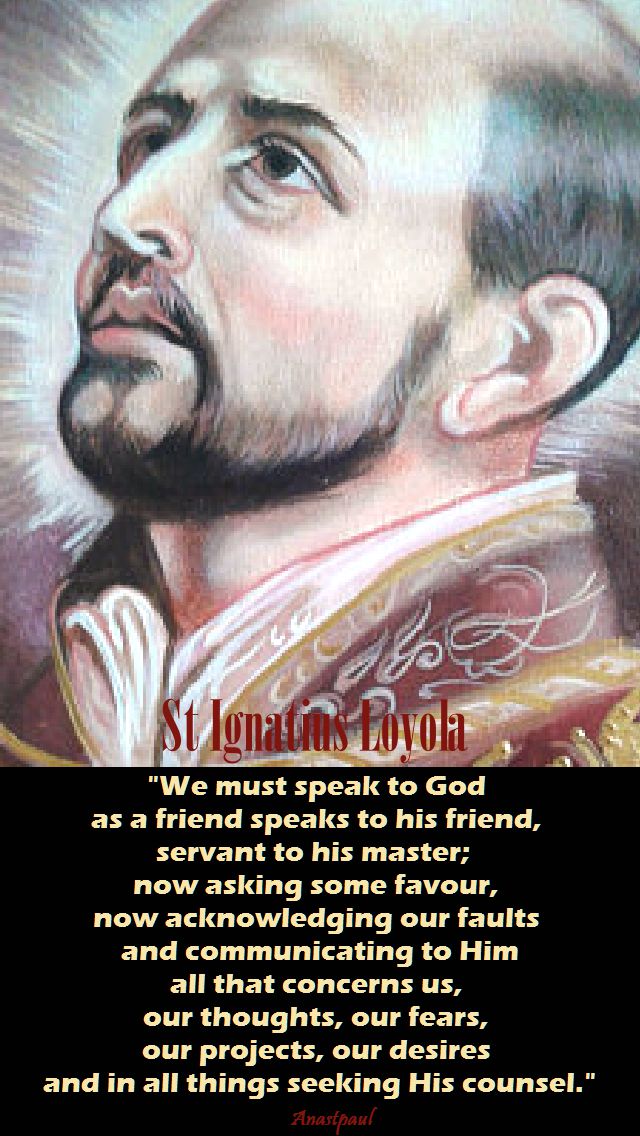
REFLECTION – “We must speak to God as a friend speaks to his friend, servant to his master; now asking some favour, now acknowledging our faults and communicating to Him all that concerns us, our thoughts, our fears, our projects, our desires and in all things seeking His counsel.”…St Ignatius of Loyola (1491-1556)

we must speak to god - st ignatius

PRAYER – Almighty God, grant that the example of Your saints may spur us on to perfection, so that we who are celebrating the feast of St Ignatius, may follow him step by step in his way of life to reach You in heaven. St Ignatius, pray for us, amen.

st ignatius pray for us

Posted in JESUIT SJ, MORNING Prayers, PRAYERS of the SAINTS, SAINT of the DAY, Uncategorized

Our Morning Offering – 31 July – The Memorial of St Ignatius Loyola

Our Morning Offering – 31 July

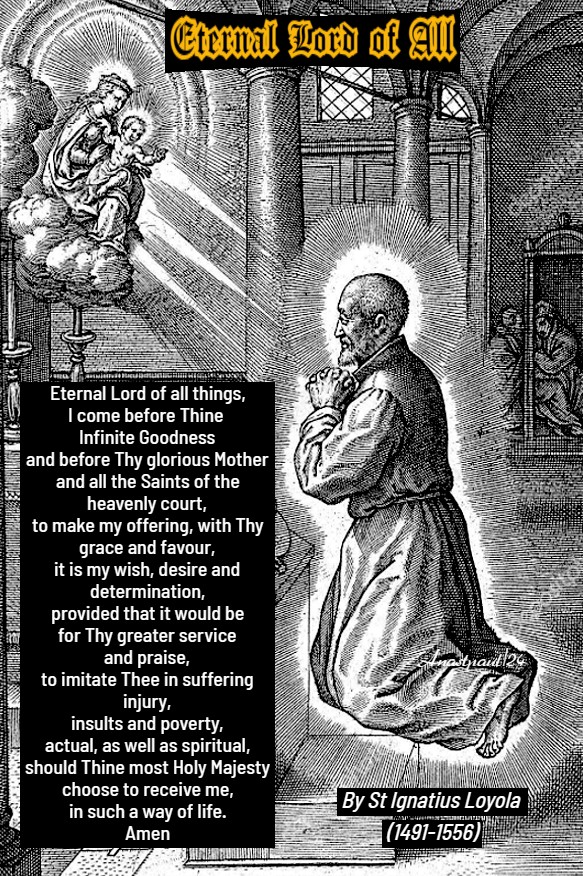
Eternal Lord of All
By St Ignatius Loyola (1491-1556)


Eternal Lord of all things,
I come before Thine Infinite Goodness
and before Thy glorious Mother
and all Saints of the heavenly court,
to make my offering, with Thy help and favour,
it is my wish, desire and determination,
provided that it would be
for Thy greater service and praise,
to imitate Thee in suffering injury,
insults and poverty,
actual as well as spiritual,
should Thine most Holy Majesty
choose to receive me,
in such a way of life.
Amen

Posted in JESUIT SJ, PATRONAGE - POLICE, SOLDIERS, SAINT of the DAY, SOLDIERS/ARMOUR of CHRIST

Saint of the Day – 31 July – St Ignatius Loyola (1491-1556) – Founder of the Society of Jesus/The Jesuits

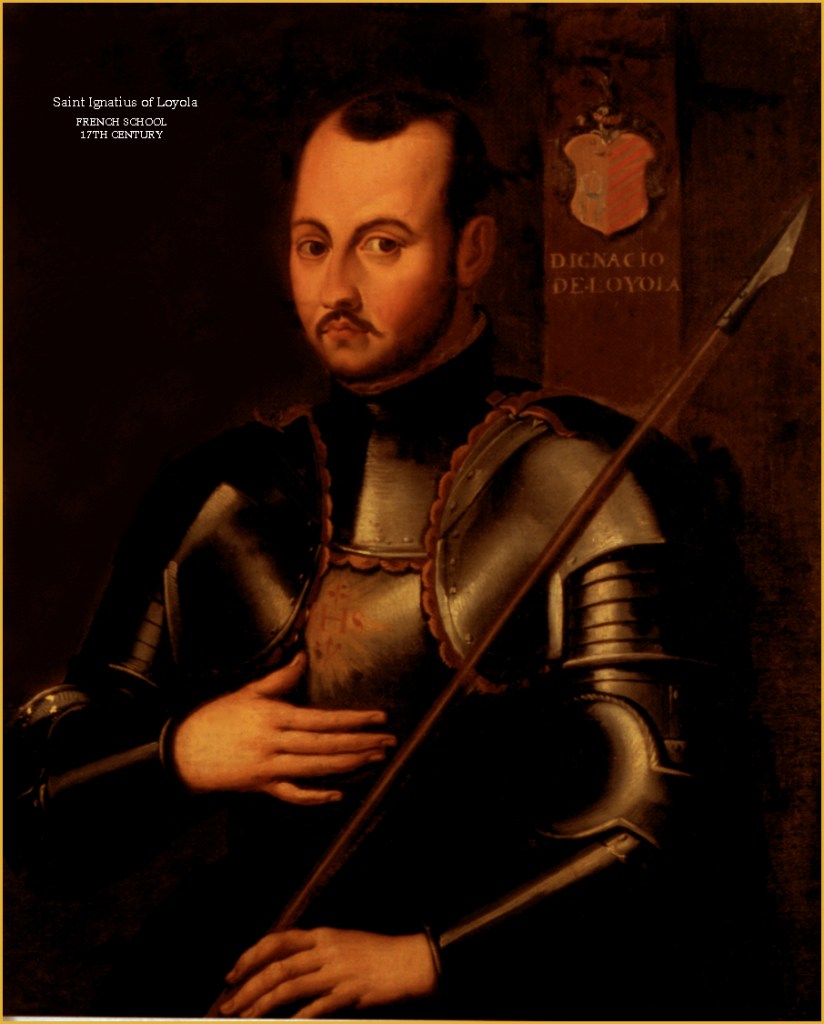
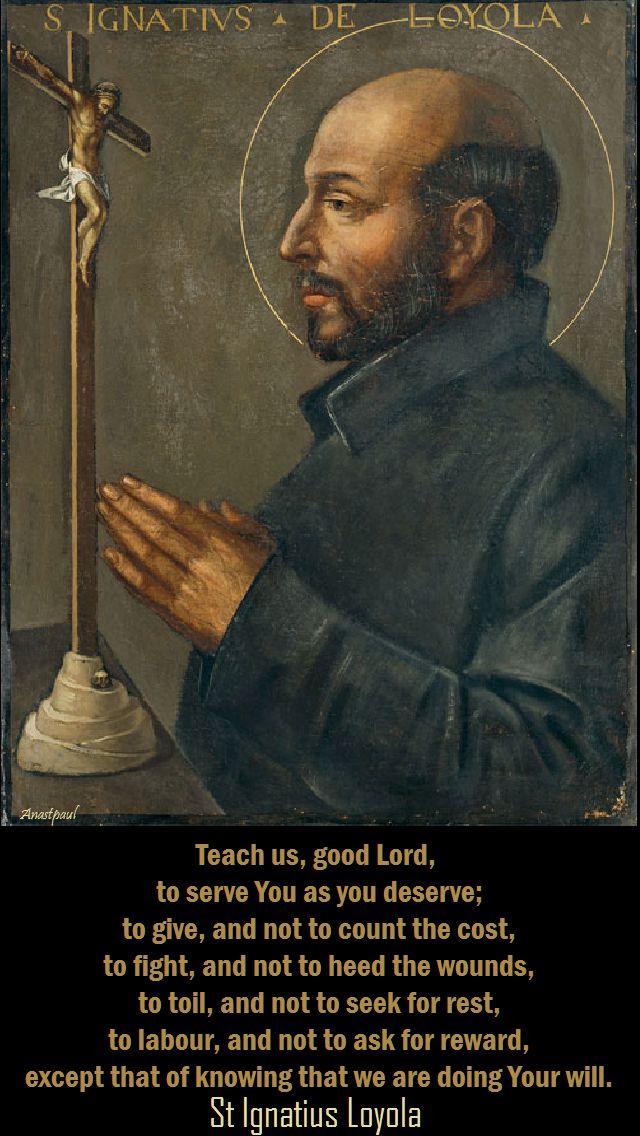
Saint of the Day – 31 July – St Ignatius Loyola sj (1491-1556) Spanish: Ignacio de Loyola; c 23 October 1491 at Loyola, Guipuzcoa, Spain as Inigo Lopez de Loyola – 31 July 1556 at Rome, Italy of fever) was a Spanish Basque Priest, Mystic Founder and Theologian, who founded the religious order called the Society of Jesus (Jesuits) and became its first Superior General.  Ignatius was beatified in 1609 and Canonised on 12 March 1622 by Pope Gregory XV. Patronages – soldiers,The Society of Jesus, Retreats (proclaimed on 25 July 1922 by Pope Pius XI), Spiritual Exercises (by Pope Pius XI), Basque country, Diocese of Bilbao, Spain, military ordinariate of the Philippines, álava, Spain, Bizkaia, Spain, Gipuzkoa, Spain, Guipuscoa, Spain, Guipúzcoa, Spain, Vizcaya, Spain. Attributes – apparition of Our Lord, book, chasuble, Holy Communion.

st ignaius infographic
ST IGNATIUS - BEST PIC EVER - MY SNIP
beautiful iggy!
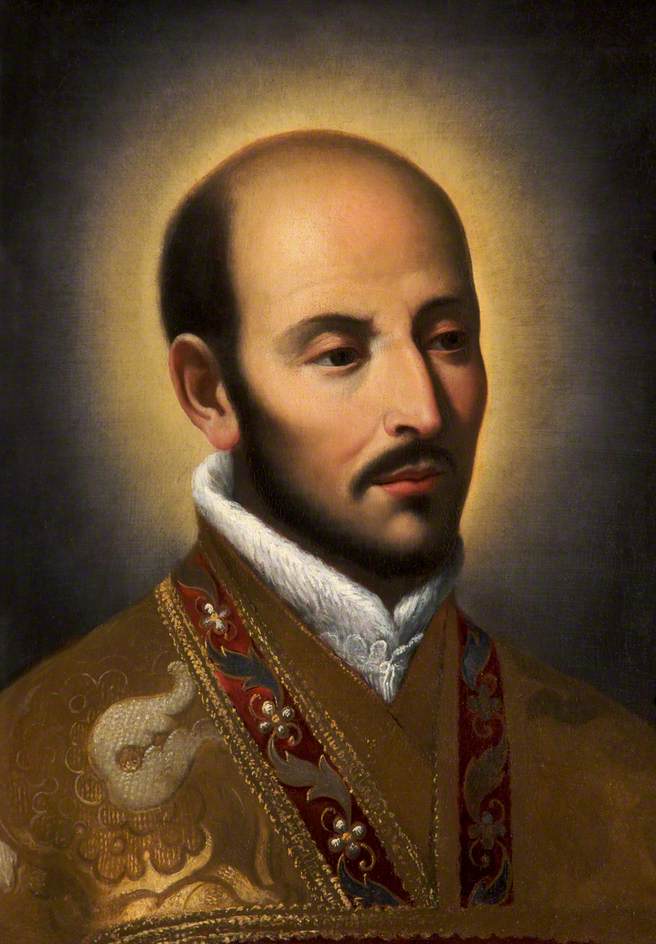
Italian School; St Ignatius of Loyola (1491-1556)

The Early Years

Iñigo Lopez de Oñaz y Loyola, whom we know as St. Ignatius, was born in the Castle Loyola, in the Basque country of northeastern Spain, in 1491, during the reign of King Ferdinand and Queen Isabella.
Iñigo was the youngest of 13 children, raised in a family culture of high Catholic piety but lax morals.    He experienced the contradictions between the ideals of church and crown and the realities of his own family.   His father had several children by another woman and his grandfather’s lawless behaviour led to the top two floors of the Loyola castle being demolished by order of the crown.
Iñigo hardly knew his mother, Marina Saenz de Licona y Balda Maria;  she died when he was a child.   His father, Don Beltrán Yañez de Oñaz y Loyola, died when he was 16.   One of his brothers went on the second voyage of Columbus and another died in battle also far away.
Iñigo was raised to be a courtier and diplomat in service to the crown, having received a chivalric yet academically sparse education typical of his class.   He spent some time as a page at court.   Winning personal glory was his passion.   He was a fancy dresser, an expert dancer, a womanizer, sensitive to insult and a rough punkish swordsman who used his privileged status to escape prosecution for violent crimes committed with his priest brother at carnival time.

The Soldier

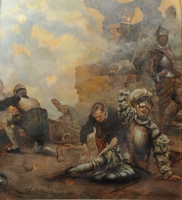
In the spring of 1521, a very large French army attacked the fortress town of Pamplona. A tiny band of Spanish soldiers trying to defend the town were ready to surrender;  all of them except Iñigo de Loyola.   He would hold off the French single-handedly.   But a French cannonball shattered his leg and put an end to his stand.   The French admired the courage of the man.   They carried him on a litter back home to his castle of Loyola.
His leg was not the only thing that had been shattered.   His image of himself as a handsome, dashing courtier – everything that he had ever lived for – was shattered, too.
The broken leg was not properly set.   The bone protruded in a way that would show through the tight hose that a courtier wore, “so much as to be something ugly.”   Iñigo insisted on having the leg re-broken and re-set;  there was, of course, no anesthetic.   In the end one leg was still shorter than the other;  Iñigo limped the rest of his life.
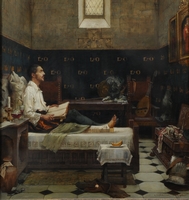
To pass the time while he recovered, he asked for the kind of books he enjoyed reading: romances of chivalry.   But the only reading available in the house was an illustrated Life of Christ and a book of saints’ legends.   He spent hours dreaming.   He dreamed of the exploits he would do in service to his king and in honour of the royal lady he was in love with.   But he would also dream about the exploits he could do to imitate St. Francis of Assisi and St Dominic in fidelity to his heavenly Lord.
Gradually, he began to reflect on these experiences;  he noticed what was going on within.   Both kinds of daydreams engaged him completely but after the romantic chivalry dreaming was over, he felt empty and dissatisfied, whereas after the spiritual dreaming ended, he still felt a deep peace, a quiet happiness.   “[H]e did not consider nor did he stop to examine this difference until one day his eyes were partially opened and he began to wonder at this difference and to reflect upon it.   From experience he knew that some thoughts left him sad while others made him happy and little by little he came to perceive the different spirits that were moving him…”
Here we see the beginning of his powers of discernment, of decision making.   He realised God was leading him by his feelings, drawing him toward an entirely new way of life.

The Pilgrim

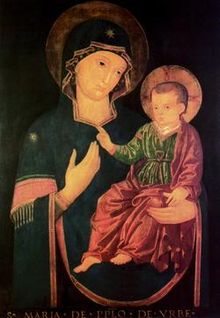
As soon as Iñigo had healed enough to walk, he began a journey to Jerusalem so that he could “kiss the earth where our Lord had walked.”   He traveled through the town of Montserrat, Spain where he gave away his fine clothes to a poor man.   Then, in an all-night vigil before the Black Madonna in the church of the Benedictine abbey there, he hung up his sword and dagger.   Effectively, his old life was over and his new life had begun.
Barcelona was the port from which to embark on a passage to Rome and then to the Holy Land. Not wanting to see his old friends, who might be in conflict with his new values, he went instead to the nearby town of Manresa with the intention of staying there a few days. But those “few days” turned into ten months.

Ignatius at Manresa
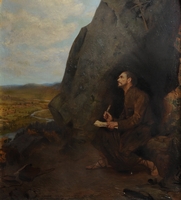
The “Pilgrim,” as he referred to himself in his autobiography, asked for lodging at a hospital for the poor located outside the town’s walls.   In exchange for his bed, he did chores around the hospital;  and he begged for his food in the town.    As we see him here, he spent much of his time in a cave, in prayer with God-praying as much as seven hours a day.   He was blessed with powerful insights into himself and about who God was for him.   Still, for extended periods, he experienced doubts, anxieties, scruples, severe depression;  he even contemplated suicide to end his psychic pain.
He recorded his experiences in a notebook and would soon find his jottings helpful in guiding others.  These notes which he continued to revise and expand over time as he listened to people became his Spiritual Exercises.   Eventually, they were published and then reprinted again and again and translated into many languages as they spread around the world.
An example of a spiritual exercise might be to reflect on the ways you have been loved, or on what your personal gifts are and how you use them and for whom, or to imagine yourself present in one of the gospel scenes-for example, Jesus’ feeding of the 5,000.
Today, nearly 500 years later, Jesuits and other priests and sisters and brothers, and an ever larger number of professional men and women use these Spiritual Exercises to guide others toward spiritual transformation, to a deeper relationship with God.

Visiting the Holy Land

The Pilgrim did manage to beg passage on a ship to the Holy Land.   But instead of being able to fulfill his great dream to remain there for the rest of his life, trying to convert the so-called “infidel,” he was told by church authorities to return to Europe after only a few weeks.   They had enough trouble there without him and his conversion scheme. Another dream of Iñigo shattered.
When it came time for him to set sail and head back to the western Mediterranean, he ran back to the Mount of Olives to see which way the “footprint of Jesus” was facing. Pious legend had it that the mark in a certain rock there was left by Jesus as he ascended into heaven.   Now what may interest us here is not the historical credibility of the legend but rather what this action of the Pilgrim tells us about his own inner life, his imaginative life.   He was in the habit of entering imaginatively into all the various gospel stories and scenes, and, in this way, he made them very concrete and real and immediate to himself.   He wanted to be in an intimate relationship with Jesus and every detail about Jesus was precious to him.

A Non-traditional Student

Although Iñigo was unable to preach and serve God in the Holy Land as he had hoped, he was still determined to meet this goal in some fashion.   He decided that he needed to get an education in order to “help souls.”    He returned to Barcelona and attended a free public grammar school to prepare himself for entrance into a university.   This meant that beginning at the age of 33 and for two years, he was studying Latin grammar and other basics with classmates who were 8 to 14 years old.   He may have felt some discomfort at the age difference but it was at this time that he had the “most beloved” teacher in his entire academic career-Master Jeronimo Ardevol.

tn_Barcelona School

Ignatius in Prison

After this initial schooling in Barcelona, Iñigo moved to Spanish university towns-first Alcala, near Madrid and then Salamanca in the north.   In both places, he spent nearly as much time engaging people in conversation about spiritual matters as he did studying and attending lectures.   Such conversations got him into trouble with the Spanish Inquisition and he was put in prison three times for interrogation.   The charge was always the same: that he dared to speak of theological matters when he did not have a theology degree.   Further, he was not ordained.   In the end, he was always exonerated, but he decided to avoid further harassment by the Inquisition.   He left his homeland and headed north to the premier university of sixteenth-century Europe.

Higher Education in Paris

At the age of 38, the Pilgrim attended the College Ste. Barbe of the University of Paris, considered the heart of the French Renaissance.    He knew little French and he was not very fluent or correct in Latin.    Still he made progress, little by little.   In those days, students rose at 4:00 a.m.;  classes-lectures-began at 5:00 am.   There were also classes for several hours in the later afternoon.   The university curriculum-in the Parisian style-was much more orderly than he was used to in Spain.   There was progression;  there were prerequisites.   As a result, he started all over again with grammar, language and the humanities and only then moved on to the sciences, philosophy and theology.   The present-day notion of levels or classes–freshman, sophomore, junior, senior– is a Jesuit legacy to education based on the experience with this Parisian style of learning.
Eventually, he earned a master’s degree.   The name on his diploma was not Iñigo, but “Ignatius,” which he adopted in Paris and used for the rest of his life.  (It is speculated that he named himself after a saint he admired – Ignatius of Antioch.)   When he applied for doctoral studies, he was turned down as too old;  he was 44, and too ill, from stomach ailments that he attributed to the extreme penances he practiced during his time in Manresa.

The First Companions

While at the University of Paris, Ignatius roomed with Peter Faber, a young man from Savoy in the south of France, and Francis Xavier, a nobleman from the eastern end of the Basque country.

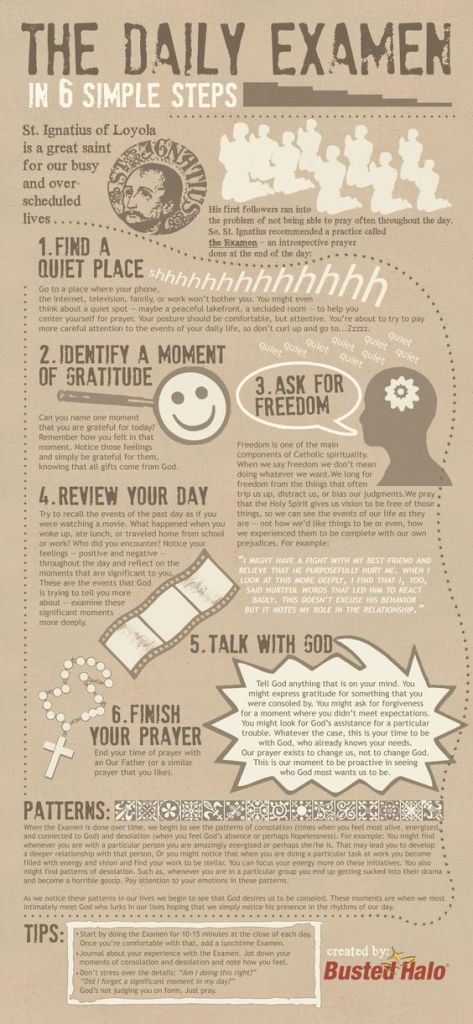
Gradually a whole circle of “Friends in the Lord,” as they called themselves, formed around Ignatius.    What bonded them closely together was the fact that one after another they were led through the Spiritual Exercises.   Most were guided by Ignatius himself.   In a deep sense, they all became “companions of Jesus” and companions of one another.
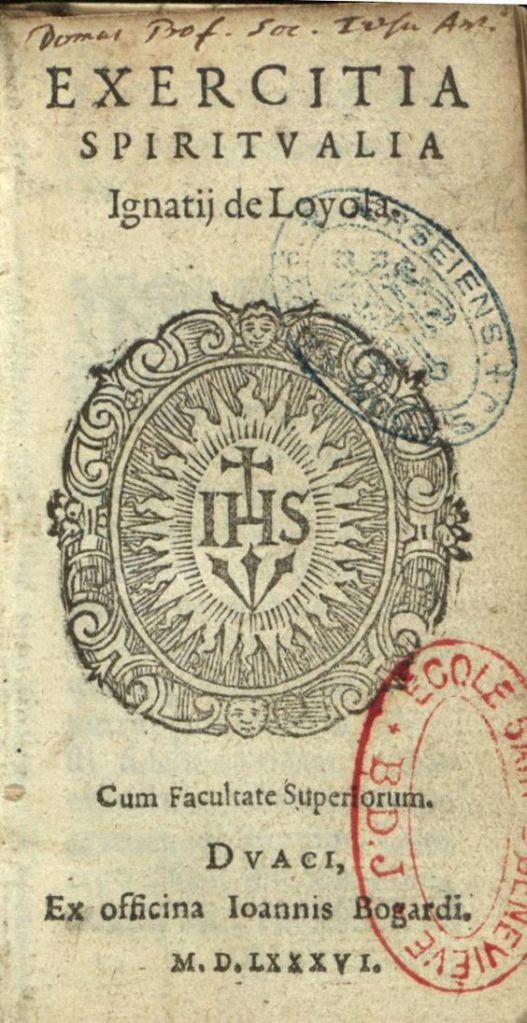
Ignatius also shared with them his dream of going on mission to the Holy Land;  yet this time he was a bit wiser and more practical.   If the Holy Land dream fell through, they would go to Rome and put themselves at the disposition of the pope.   The pope, as universal pastor, should know where the greatest needs were.
They waited in Venice a whole year for a ship to take them to the Holy Land.   As Providence would have it, just that one year because of war between Venice and the Turks, no ship sailed.   So they went to Rome, and there they entered into an extended period of communal discernmen.   They were about to be sent all over Europe and all over the world.   Spread out like that, how would they secure the bond among them? Their decision was to form themselves into a religious order.   They called it the Company (meaning the companionship) or Society of Jesus.   Outsiders disparagingly nicknamed them the “Jesuits” but the name caught-on and eventually was used by all alike.   “On the morning of the 15th of August, 1534, in the chapel of church of Saint Peter, at Montmartre, Loyola and his six companions, of whom only one was a priest, met and took upon themselves the solemn vows of their lifelong work.”  Later, they were joined by Saint Francis Borgia, a member of the House of Borgia, who was the main aide of Emperor Charles V, and other nobles.   Ignatius obtained a master’s degree from the University of Paris at the age of forty-three. In later life he was often called “Master Ignatius” because of this.

The Founder

The Society of Jesus was approved by Pope Paul III in 1540 and thus became an official Catholic religious order.   Ignatius was elected their first leader.   He declined after the first vote.   He felt unworthy for the position because of the vanity and licentiousness of his earlier life and because he felt that others were more theologically knowledgeable. After much discernment, he accepted the position and served until his death sixteen years later.

St Ignatius & Paul III
As the Superior General, he sent companions all over Europe and around the world. He called them to “hurry to any part of the world where…the needs of the neighbor should summon them.”   And he counseled them to serve “without hard words or contempt for people’s errors.”   In addition to writing the Constitutions of the fledgling order, with the help of his assistant Juan Polanco, he wrote nearly 7,000 letters.   He wrote to high and low in church and state and to women as well as men.   But most of these letters were to his Jesuit companions, thus forming a vast communication network of friendship, love, and care.  When companions were sent on various missions by the pope, Ignatius remained in Rome, consolidating the new venture but still finding time to found homes for orphans, catechumens, and penitents.   He founded the Roman College, intended to be the model of all other colleges of the Society.

st-ignatius.writing

Ignatius was a true mystic. He centered his spiritual life on the essential foundations of Christianity—the Trinity, Christ, the Eucharist. His spirituality is expressed in the Jesuit motto, Ad majorem Dei gloriam—“for the greater glory of God.”   In his concept, obedience was to be the prominent virtue, to assure the effectiveness and mobility of his men.   All activity was to be guided by a true love of the Church and unconditional obedience to the Holy Father, for which reason all professed members took a fourth vow to go wherever the pope should send them for the salvation of souls.

for the greater glory of god

At the time of his death, there were 1,000 Jesuits, a good number of them involved in the 35 schools that had been founded.   Twenty-five years later the number of schools rose to 144, and another 35 years after that, it approached 400.
In contrast to the ambitions of his early days, the fundamental philosophy of the mature Ignatius was that we ought to desire and choose only that which is more conducive to the end for which we are created – to praise, reverence, and serve God through serving other human beings.

4ae6b3c26559f2c3c2f607a310b8d7c6
d4be736113115dfde39287379b124c79--catholic-saints-over-the-top
tomb at the gesu church

He prayed:

Teach us, good Lord, to serve You as you deserve;
to give, and not to count the cost,
to fight, and not to heed the wounds,
to toil, and not to seek for rest,
to labour, and not to ask for reward,
except that of knowing that we are doing Your will.

teach us good lord - prayer of st ignatius
Posted in SAINT of the DAY, The BLESSED VIRGIN MARY

Saints’ Memorials and a Feast of the Blessed Virgin Mary – 31 July

St Ignatius of Loyola (Memorial) – https://www.youtube.com/watch?v=CBNjc05zZJQ and https://www.youtube.com/watch?v=8jTq5lBBmek

Our Lady of Consolation: Starting in the 2nd century, Catholics venerated Mary as Our Lady of Consolation, one of her earliest titles of honour. The title of Our Lady of Consolation, or Mary, Consoler of the Afflicted, comes from the Latin Consolatrix Afflictorum. The origin of this invocation is derived from the Augustinian monks who propagated this particular devotion. In 1436 the Confraternity of the Holy Cincture of Our Lady of Consolation was founded in Bologna, Italy. It was based on an Augustinian tradition which hold that Saint Monica in the fourth century, was distraught with anxiety for her wayward son, Augustine and that Mary gave her a sash which the Virgin wore, with the assurance that whoever wore this belt would receive her special consolation and protection. Along with Augustine and Monica, Our Lady of Consolation is one of the three patrons of the Augustinians. The “Augustinian Rosary” is sometimes called the “Corona (or Crown) of Our Mother of Consolation”.

our Lady of Consolation Turin

St Calimerius of Milan
Bl Cecilia Schelingov
Bl Everard Hanse
St Fabius of Caesarea
St Firmus of Tagaste
St Germanus of Auxerre
St Giustino de Jacobis
StHelen of Skofde
Bl Jean-François Jarrige de La Morelie de Breuil
Bl John Colombini
St Marcel Denis
St Neot

Matyrs of Syria – 350 saints: 350 monks massacred by heretics for their adherence to orthodox Christianity and the decrees of the Council of Chalcedon. 517 in Syria.

Martyrs of Synnada:
Democritus
Dionysius the Martyr
Secundus

Martyred in the Spanish Civil War: Thousands of people were murdered in the anti-Catholic persecutions of the Spanish Civil War from 1934 to 1939.
• Blessed Ciriaco Olarte Pérez de Mendiguren
• Blessed Dionisio Vicente Ramos
• Blessed Francisco Remón Játiva
• Blessed Miguel Goñi Ariz
• Blessed Miguel Francisco González-Díez González-Núñez
Agapito Alcalde Garrido
Ciriaco Olarte Pérez de Mendiguren
Dionisio Vicente Ramos
Francisco Remón Játiva
Jaume Buch Canals
Maria Roqueta Serra
Miguel Goñi Ariz
Miguel Francisco González-Díez González-Núñez
Prudencio Gueréquiz y Guezuraga
Segundo de Santa Teresa
Teresa Subirà Sanjaume
Bl Vicenta Achurra Gogenola
Francisca Pons Sardá

Posted in MORNING Prayers, NOVENAS

Novena to St Dominic – DAY ONE – 30 July

Novena to St Dominic

First Day: The Force of Good Example
He shone in his days as the morning star, in the midst of a cloud and as the moon at the full; and as the sun, when it shines, so did he shine in the temple of God. (Sirach 50:6,7)

LUMEN ECCLESIAE:   LIGHT OF THE CHURCH

St Dominic was born in Spain in 1170.   With the dawn of reason his whole soul turned to God.   His childhood was most pious and his youth angelic in purity.   In the University of Palencia he was the model student.   At twenty five he became a canon regular at Osma and with the religious habit he put on the Lord Jesus and strove in all things to imitate Him.   His time was divided into prayer, study of Scripture and community duties. Silence and retirement were his delight; works of penance and tears of contrition his meat and drink. Going in 1205 to France, he spent many years in every kind of labour for the conversion of the Albigensian heretics.  Like Jesus Christ he passed the day in apostolic work, the night in prayer.   His penance was extreme but to others he was gentle, sweet and kind.   Many were converted by his miracles, many by the example of his holy life.   Six times he journeyed to Rome, once to Spain, once to Paris, walking barefoot, praying or singing on the road; preaching in the towns and villages, spending the nights in contemplation.   He founded in 1215 the Order of Friars Preachers for the conversion of souls.   He was a man of truly apostolic heart, a column of the Faith, a trumpet of the Gospel, the light of Christ to men.   He died at Bologna in 1221.

Let us pray:

O most enlightened teacher of divine truth,
Holy father St Dominic,
who taught what was profitable for salvation
and made yourself all things to all men,
that you might win all to Christ;
help us to close our ears and hearts to all false doctrine
and whatever may be harmful to our souls
and to open them joyfully to the truths of Holy Church.
Pray for us, blessed St Dominic,
that we may be examples to others,
especially to those who have fallen away
from the one, true faith
and for this our special intention …
(make your request)
Through Christ our Lord. Amen

DAY ONE - NOVENA ST DOMINIC 30 JULY

Posted in MORNING Prayers, NOVENAS

NOVENA in Honour of and preparation for, the Feast of the Transfiguration of our Lord – Day Three – 30 July

NOVENA Transfiguration of our Lord – Day Three – 30 July

Explanation of this Novena here: https://anastpaul.wordpress.com/2017/07/25/announcing-a-novena-in-honour-of-the-transfiguration-of-our-lord/

The Revelation of Christ’s Divine Glory

Third Day: Way of Witnessing to the Resurrection
The Transfiguration was necessary to help the apostles increase their faith and recognise the divinity of Jesus and His union with the Father, the Spirit and the prophets of the Old Testament.
Maybe there is another kind of transfiguration that is needed for us so that, like the apostles, when the vision was over, we may be able to “look up and see no one, but only Jesus.”
The transfiguration to which we refer is the indwelling of the Father, Son, and Holy Spirit in the word, in our neighbour, and in ourselves.
This kind of transfiguration will enable us to see the common things of earth, sky and sea with a new wonder and fresh joy.
It will also enable us to see the presence of Jesus within ourselves and in the people who cross our path, even if they drive us crazy. We may think that such an attitude is too difficult to acquire but it is something that we can continuously ask for and desire.

Let us Pray:

O God, according to Your plan, You have called us to holiness
by Your grace which You have revealed in Jesus Christ.
Through Your Gospel You show us the way
so that we may share in Your mission of the glorious splendour of unending life. Amen

DAY THREE - TRANSFIGURATION NOVENA 30 JULY

Posted in MORNING Prayers, NOVENAS

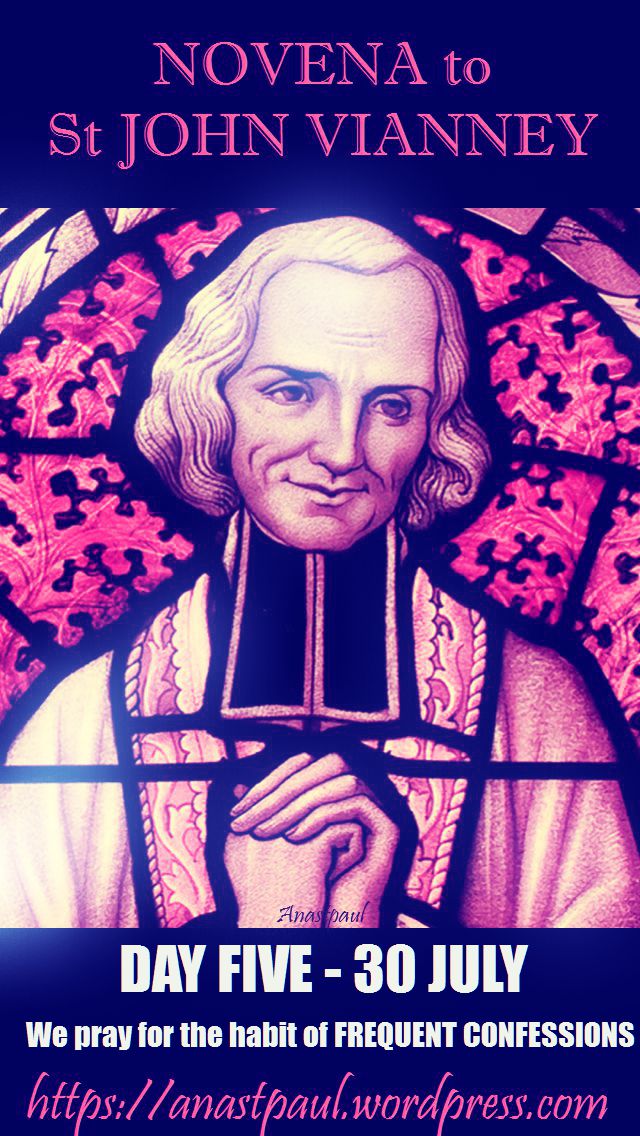
Novena In Honour of Saint John Marie Vianney – Day Five– 30 July

Novena In Honour of Saint John Marie Vianney

DAY FIVE – We pray for the habit of FREQUENT CONFESSIONS

O Holy Priest of Ars,
you knew how important was a good confession for the Christian life.
It was to procure the happy fruits of millions of souls
that you agreed to be in an uncomfortable confessional,
which was like a prison, up to 15 to 16 hours on certain days.
I will try to develop the habit of frequent confession,
to prepare properly each time
and to have always regret for my sins,
so that the grace of final perseverance
but also the sanctification of my soul will be assured.
Ask this grace for me. Holy Priest of Ars,
I have confidence in your intercession.
Pray for me during this novena especially for …
(mention silently your special intentions).
Our Father, Hail Mary, Glory Be


DAY FIVE NOVENA TO ST JOHN VIANNEY - 30 JULY - HABIT OF FREQUENT CONFESSION

Posted in DOCTORS of the Church, MORNING Prayers, SAINT of the DAY

Thought for the Day – 30 July – The Memorial of St Peter Chrysologus “Golden Words”

Thought for the Day – 30 July – The Memorial of St Peter Chrysologus “Golden Words”

In addition to his zeal in the exercise of his office, Peter Chrysologus was distinguished by a fierce loyalty to the Church, not only in its teaching but in its authority as well.   He looked upon learning not as a mere opportunity but as an obligation for all, both as a development of God-given faculties and as a solid support for the worship of God……Next to virtue, learning, in his view, was the greatest improvement to the human mind and the support of true religion.   Ignorance is not a virtue, nor is anti-intellectualism. Knowledge is neither more nor less a source of pride than physical, administrative, or financial prowess. ( Fr Don Miller, OFM)
Keep in mind that we cannot practice anything at all if we do not study it – we cannot “be” a Catholic if we do not study our faith!

St Peter Chrysologus, pray for us!

st peter chrysologus pray for us 2

Posted in DOCTORS of the Church, MORNING Prayers, QUOTES on CHARITY, SAINT of the DAY, The HOLY EUCHARIST / The HOLY MASS

Quote/s of the Day – 30 July – Memorial of St Peter Chrysologus

Quote/s of the Day – 30 July – Memorial of St Peter Chrysologus

“He (Christ) really made His body a living sacrifice,
because, though slain, He continues to live.
In such a victim death receives its ransom
but the victim remains alive.
Death itself suffers the punishment.
This is why death for the martyrs is actually a birth
and their end a beginning.
Their execution is the door to life
and those who were thought to have been
blotted out from the earth
shine brilliantly in heaven.”

he (Christ) really made his body - st peter chrysologus

“He is The Bread sown in the virgin,
leavened in the Flesh,
molded in His Passion,
baked in the furnace of the Sepulchre,
placed in the Churches
and set upon the Altars,
which daily supplies Heavenly Food to the faithful.”

he is the bread 2.- st peter chrysologus

“For he who touches
the Body of Christ unworthily,
receives his damnation.”

for he who touches the body of christ - st peter chrysologus

“Anyone who wishes to frolic with the devil cannot rejoice with Christ.”

anyone who wishes to frolic with the devil -st peter chrysologus

“The poor stretch out the hand
but God receives what is offered.”

the poor stretch out the hand - st peter chrysologus

“Now that we are reborn,…
in the likeness of our Lord
and have indeed been adopted
by God as his children,
let us put on the complete image
of our Creator
so as to be wholly like Him,
not in the glory that He alone possesses
but in innocence, simplicity, gentleness,
patience, humility, mercy, harmony,
those qualities in which He chose to become
and to be, one with us.”

nw that we are reborn-st peer chrysologus

St Peter Chrysologus (400-450) Doctor of the Church


Posted in DOCTORS of the Church, MORNING Prayers, QUOTES of the SAINTS, SAINT of the DAY, The WORD

One Minute Reflection – 30 July – Memorial of St Peter Chrysologus

One Minute Reflection – 30 July

On the way of duty I walk, along the paths of justice, granting wealth to those who love me…..Proverbs 8:20-21

PROVERBS 8 20 21

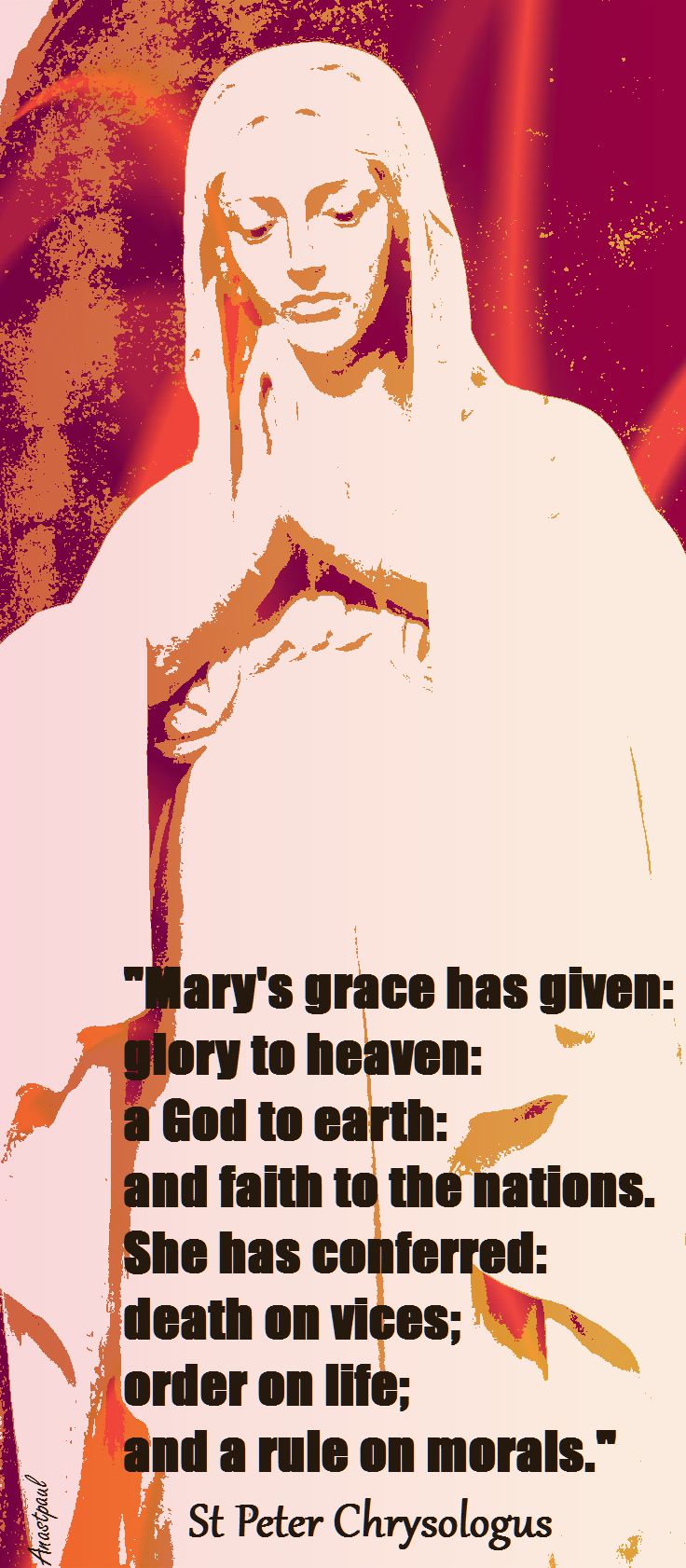
REFLECTION – “Mary’s grace has given glory to heaven; a God to earth and faith to the nations.Sh has conferred death on vices, order on life and a rule on morals.”….St Peter Chrysologus (c400-450) Doctor of the Church

ST PETER CHRYSOLOGUS MARY'S GRACE

PRAYER – Heavenly Father, grant me the grace to have Mary as my constant intercessor. In all difficulties let me call on her aid, for she is Your beloved Daughter. St Peter, you who so loved our Holy Mother, pray that we too may love her with total abandon and trust. Amen

st peter chrysologus pray for us

Posted in MORNING Prayers, PRAYERS of the SAINTS, The HOLY EUCHARIST / The HOLY MASS

Our Morning Offering – 30 July

Our Morning Offering – 30 July

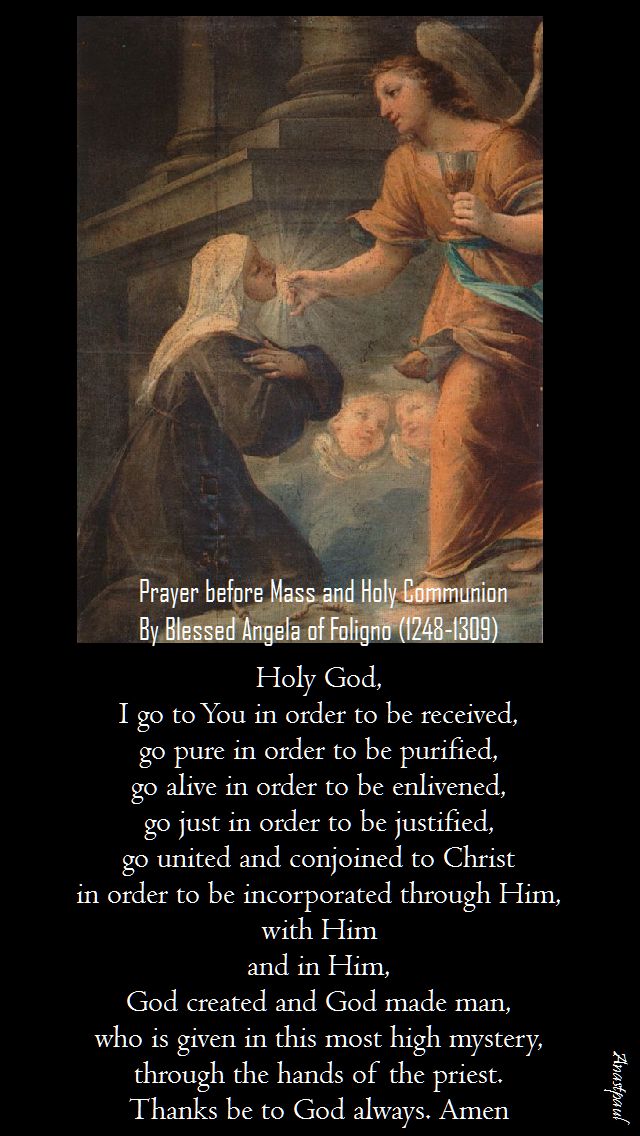
Prayer before Mass and Holy Communion
By Blessed Angela of Foligno (1248-1309)

Holy God,
I go to You in order to be received,
go pure in order to be purified,
go alive in order to be enlivened,
go just in order to be justified,
go united and conjoined to Christ
in order to be incorporated through Him,
with Him
and in Him,
God created and God made man,
who is given in this most high mystery,
through the hands of the priest.
Thanks be to God always.
Amen

prayer before mass and holy communion by bl angela of foligno

Posted in DOCTORS of the Church, SAINT of the DAY

Saint of the Day – 30 July – St Peter Chrysologus “Golden Worded” “Doctor of Homilies” – Doctor of the Church

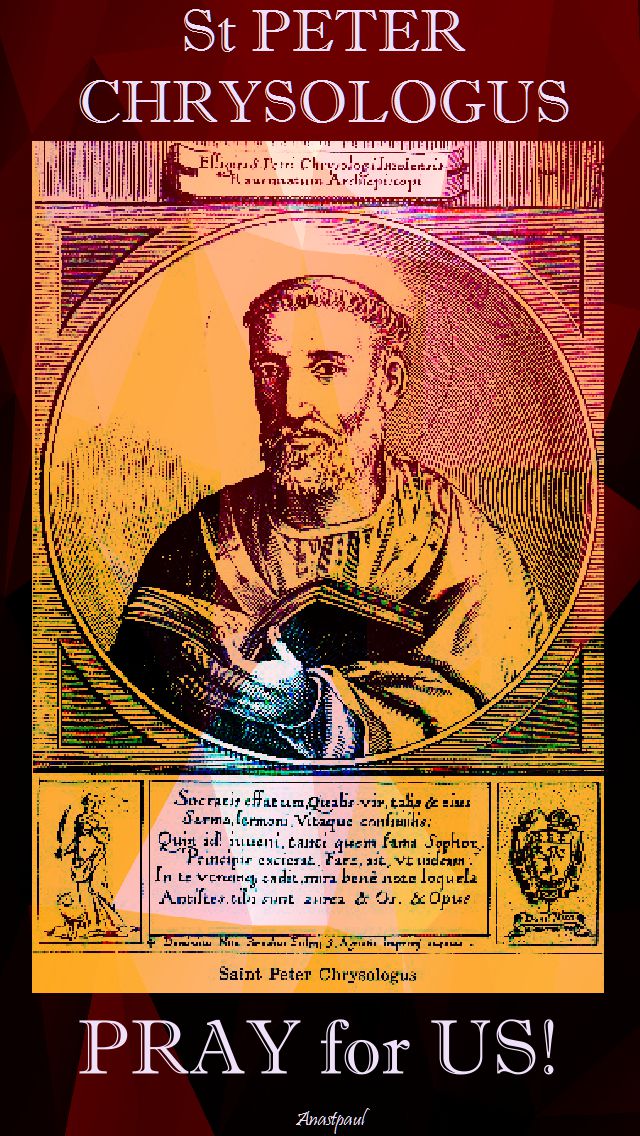
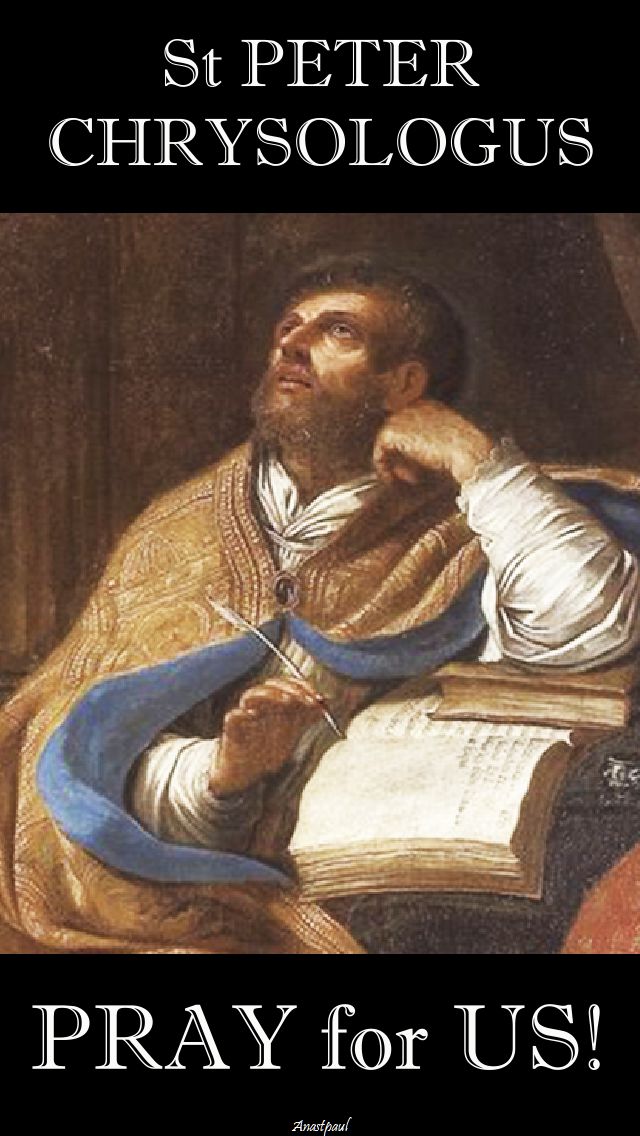
Saint of the Day – 30 July – St Peter Chrysologus “Golden Worded” “Doctor of Homilies” – Doctor of the Church – Bishop, Confessor, Teacher, Writer and Doctor of the Church.   People knew St Peter Chrysologus, the Doctor of Homilies, for his very simple and short but inspired sermons, for he was afraid of fatiguing the attention of his hearers.    He was born c 400 at Imola, Italy and died 2 December 450 at Imola, Italy.   Patronage – against fever and against mad dogs.   His piety and zeal won universal admiration.   After hearing oratory of his first homily as bishop, Roman Empress Galla Placidia supposedly gave him the surname Chrysologus, meaning “golden-worded.”   He fought paganism and the Monophysite heresy, enforced reforms and built several churches and ornate altars in his see.    176 of his sermons have survived;  it is the strength of these beautiful explanations of the Incarnation, the Creed, the place of Mary and John the Baptist in the great plan of salvation, etc., that led to his being proclaimed a Doctor of the Church in 1729 by Pope Benedict XIII.

St. Peter Chrysologus

Peter was born in Imola, where Cornelius, bishop of Roman Catholic Diocese of Imola, baptised him, educated him and ordained him a deacon.   He was made an archdeacon through the influence of Emperor Valentinian III.   Pope Sixtus III appointed Peter as Bishop of Ravenna circa 433, apparently rejecting the candidate whom the people of the city of Ravenna elected.   At that time Ravenna was the capital of the West.

The traditional account, as recorded in the Roman Breviary, is that Sixtus had a vision of Pope Saint Peter the Apostle and Saint Apollinaris of Ravenna, the first bishop of that see, who showed Peter, a young man, the next Bishop of Ravenna.   When a group from Ravenna arrived, including Cornelius and his archdeacon Peter from Imola, Sixtus recognised Peter as the young man in his vision and consecrated him as a bishop.

In his extant homilies, Bishop Peter explained Biblical texts briefly and concisely.   He also condemned Arianism and Monophysitism as heresies and explained the Apostles’ Creed, the mystery of the Incarnation and other topics in simple and clear language.   He dedicated a series of homilies to Saint John the Baptist and the Blessed Virgin Mary.   Peter advocated daily reception of Eucharist.   He urged his listeners to confide in the forgiveness offered through Christ.   His surviving works attest to the Church’s traditional beliefs about Mary’s perpetual virginity, the penitential value of Lent, Christ’s Eucharistic presence and the primacy of St. Peter and his successors.   He shared the confidence of Saint Pope Leo I the Great (440-461), another doctor of the Church.

A synod held in Constantinople in 448 condemned Eutyches for Monophysitism; Eutyches then appealed to Peter Chrysologus but failed in his endeavour to win the support of the Bishop.   The Acts of the Council of Chalcedon (451) preserves the text of letter of Saint Peter Chrysologus in response to Eutyches;  Peter admonishes Eutyches to accept the ruling of the synod and to give obedience to the Bishop of Rome as the successor of Saint Peter.

Archbishop Felix of Ravenna in the early eighth century collected and preserved 176 of his homilies.   Various authors edited and translated these works into numerous languages.

St Peter died circa or after 450 during a visit to Imola, the town of his birth. Older reference books say he died on 2 December but a more recent interpretation of the ninth-century “Liber Pontificalis Ecclesiae Ravennatis” indicated that he died on 31 July.

When in 1729 he was declared a Doctor of the Church, his feast day, not already included in the Tridentine Calendar, was inserted in the General Roman Calendar for celebration on 4 December.   In 1969 his feast was moved to 30 July, as close as possible to the day of his death, 31 July, the feast day of Saint Ignatius of Loyola.

A contemporary portrait of Saint Peter Chrysologus, found in the mosaics of the Church of San Giovanni Evangelista in Ravenna, depicts him among the members of the eastern and western imperial family, showing his extraordinary influence.

Posted in SAINT of the DAY

Saints’ Memorials – 30 July

17th Sunday in Ordinary Time
St Peter Chrysologus (Optional Memorial) “Golden Words” – https://vimeo.com/197619716

St Abdon
Bl Antonio di San Pietro
Bl Edward Powell
St Ermengyth
St Hatebrand
St Julitta of Caesarea
St Leopold Bogdan Mandic
Bl Manés de Guzmán
St María Natividad Venegas de La Torre
Bl Richard Featherstone
St Rufinus of Assisi
St Senen
St Tatwine of Canterbury
St Terenzio of Imola
Bl Thomas Abel
St Ursus of Auxerre
Bl Vicenta Chavez-Orozco

Martyrs of Castelseras: Three Dominicans, two of them priests, one a novice, who were martyred together in the Spanish Civil War for refusing to renounce Christianity.
• Joaquín Prats Baltueña
• José María Muro-Sanmiguel
• Zosimo Izquierdo Gil
They were shot on 30 July 1936 at a farm house outside Castelserás, Teruel, Spain and Beatified on 11 March 2001 by Pope John Paul II.

Martyrs of Tebourba – 3 saints: Three girls martyred together in the persecutions of Diocletian. We know little else about them but the names – Donatilla, Maxima and Secunda. 304 at Tebourba in North Africa.

Martyred in the Spanish Civil War: Thousands of people were murdered in the anti-Catholic persecutions of the Spanish Civil War from 1934 to 1939. Today’s list includes the following:

The Martyred Hospitallers of Spain and
Bl Alejandro Arraya Caballero
Alejandro González Blanco
Bernabé Núñez Alonso
Bl Eugenio García Tribaldos
Francesc Salla Saltó
Bl Guillermo Álvarez Quemada
Bl Jaume Puig Mirosa
Bl Juan Lanz Palanca
Bl Luis Aguirre Bilbao
Bl Luis Herrero Arnillas
Bl Miguel Solas del Val
Bl Pablo Díaz de Zárate y Ortiz de Zárate
Rafael Martí Fugueras
Ramón Palos Gascón
Bl Ricardo Pla Espí
Bl Sebastià Llorens Telarroja
Sergio Cid Pazo

Posted in MORNING Prayers, SAINT of the DAY, The WORD

Thought for the Day – 29 July

Thought for the Day – 29 July – Memorial of St Martha

Martha’s great glory is her simple and strong statement of faith in Jesus after her brother’s death. “Jesus told her, ‘I am the resurrection and the life; whoever believes in me, even if he dies, will live and everyone who lives and believes in me will never die. Do you believe this?’ She said to Him, ‘Yes, Lord. . I believe that you are the Christ, the Son of God, the one who was to come into this world’ (John 11:25-27). ”

Scripture commentators point out that in writing his account of the raising of Lazarus, Saint John intends that we should see Martha’s words to Mary before Lazarus was raised as a summons that every Christian must obey.   In her saying “The teacher is here and is asking for you,” Jesus is calling every one of us to resurrection—now in baptismal faith, forever in sharing His victory over death.   And all of us, as well as these three friends, are in our own unique way called to special friendship with Him….(Fr Don Miller OFM)

St Martha, pray for us!

st martha pray for us 2

Posted in MORNING Prayers, NOVENAS

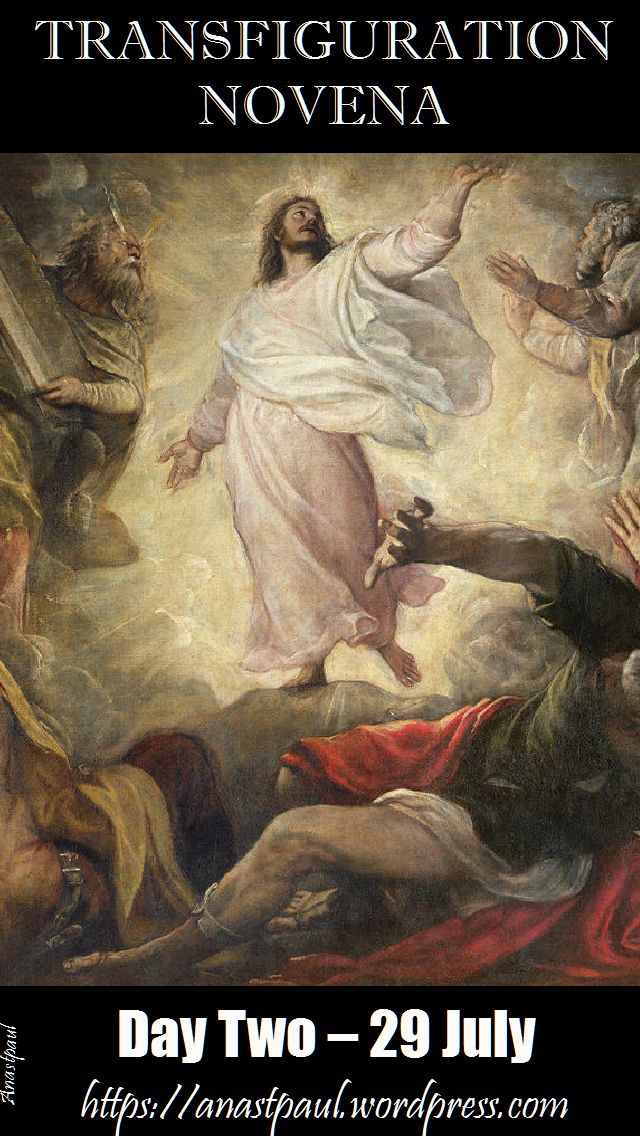
NOVENA in Honour of and preparation for, the Feast of the Transfiguration of our Lord – Day Two – 29 July

NOVENA Transfiguration of our Lord – Day Two – 29 July

Explanation of this Novena here: https://anastpaul.wordpress.com/2017/07/25/announcing-a-novena-in-honour-of-the-transfiguration-of-our-lord/

The Revelation of Christ’s Divine Glory

Second Day: My Own Transfiguration
Sometimes during the intense moments of our lives, we ask ourselves, in a very special way, what we ought to do, what our vocation and responsibility is.   These are moments when we are touched by the pain of injustice around us and with our strength, we share something in the hope that things may change.   This is the time when we experience the presence of God, who leads us toward the future full of hope.   This is the moment when God speaks to us and we become so enlightened as to understand Him.   This is how Jesus felt when He was transfigured in the Mountain of Tabor.

Let us Pray:

God you have scattered the darkness with Your light
and have poured Your light into our hearts
so that we might look upon the radiant face of Jesus Christ.
Nourish in us the desire to contemplate Your beloved Son
and in that contemplation to long to be like Him. Amen

DAY TWO - TRANSFIGURATION NOVENA

Posted in MORNING Prayers, NOVENAS

Novena In Honour of Saint John Marie Vianney – Day Four – 29 July

Novena In Honour of Saint John Marie Vianney

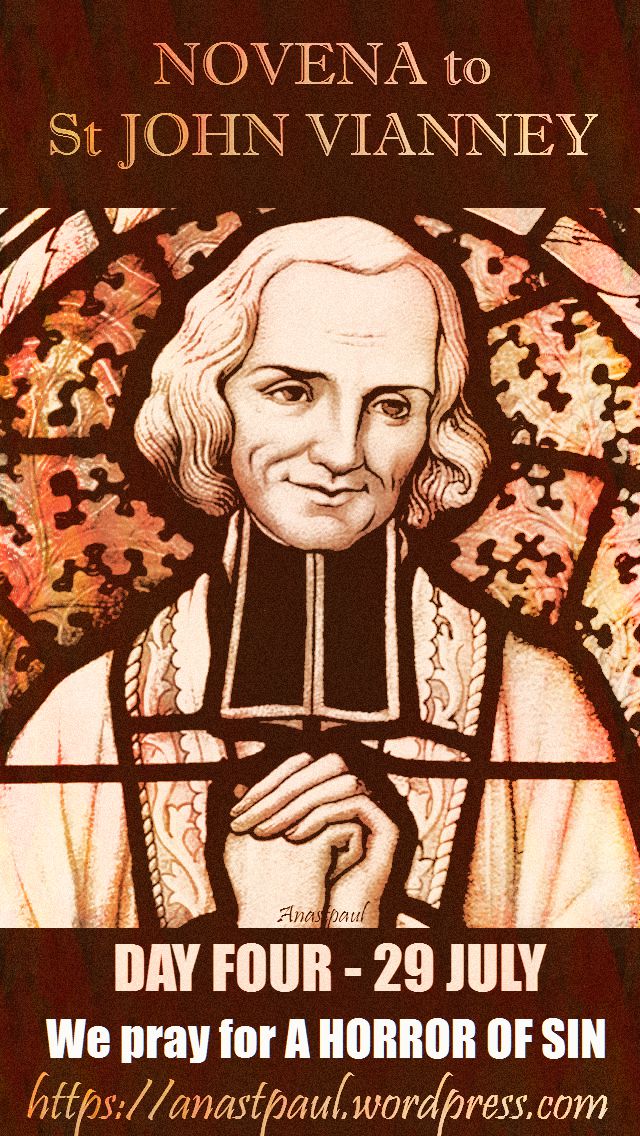
DAY FOUR – We pray for A HORROR OF SIN

Saint John Mary Baptist Vianney,
you were so adamant against sin,
yet so sympathetic and so ready to welcome the sinner.
I come to you today as if you were still alive,
as if I were kneeling at your feet
and you could hear me.
Bend towards me, listen to the repentant confidence
for the weaknesses and miserable deeds of mine.
Priest of the Lord, inexhaustible Confessor,
obtain for me the horror for sin.
You wanted us First to avoid the occasion of sin.
I want to take your advice and make the resolution to break bad habits
and to avoid the dangerous occasions of sin.
Help me today to examine my conscience.
Holy Priest of Ars, I have confidence in your intercession.
Pray for me during this novena especially for…
(mention silently your special intentions).
Our Father, Hail Mary, Glory Be.

DAY FOUR - NOVENA TO ST JOHN VIANNEY

Posted in DOCTORS of the Church, FATHERS of the Church, MORNING Prayers, QUOTES of the SAINTS, SAINT of the DAY

Quote of the Day – 29 July – Memorial of St Martha

Quote of the Day – 29 July – Memorial of St Martha

“Martha, Martha, you are anxious and worried about many things.
There is need of only one thing.
Mary has chosen the better part and it will not be taken from her.” – Luke 10:42

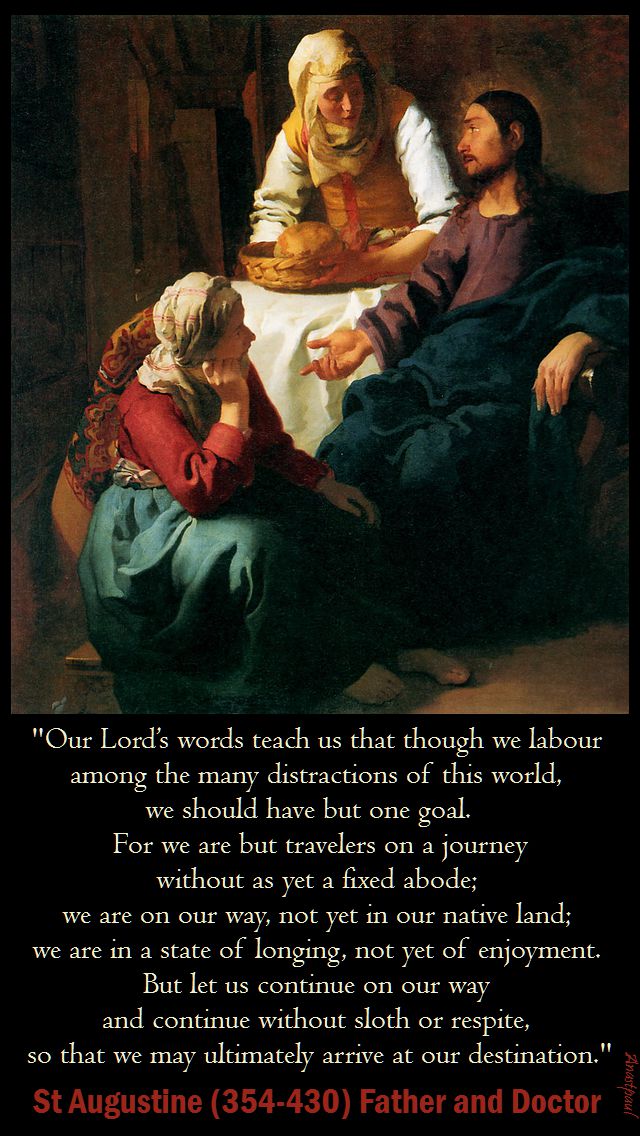
“Our Lord’s words teach us that though we labour
among the many distractions of this world,
we should have but one goal.   For we are but travelers
on a journey without as yet a fixed abode;
we are on our way, not yet in our native land;
we are in a state of longing, not yet of enjoyment.
But let us continue on our way
and continue without sloth or respite,
so that we may ultimately arrive at our destination.”

St Augustine (354-430) Father and Doctor
(Sermo 103, 1-2, 6: PL 38, 613, 615)

our lords words teach us - st augustine

Posted in MORNING Prayers, SAINT of the DAY, The WORD

One Minute Reflection – 29 July

One Minute Reflection – 29 July

“Martha, Martha, you are anxious and troubled about many things; one thing is needful. Mary has chosen the good portion, which shall not be taken away from her”…..Luke 10:41-42.

REFLECTION – “Without daily prayer lived with fidelity, our acts are empty, they lose their profound soul and are reduced to being mere activism which in the end leaves us dissatisfied. There is a beautiful invocation of the Christian tradition to be recited before any other activity which says : “Inspire our actions, Lord and accompany them with Your help, so that our every word and action may always begin and end in you”. Every step in our life, every action, of the Church too, must be taken before God, in the light of his word.”…….Pope Benedict XVI (General Audience – Saint Peter’s Square,Wednesday, 25 April 2012.)

without daily prayer - pope benedict

PRAYER – Almighty ever-living God, Your Son graciously came as a guest to the home of St Martha. By her prayers give us grace to serve Christ faithfully in our brethren and bring us to Your home in heaven. We make our prayer through Christ our Lord, in union with the Holy Spirit, amen.

st martha pray for us

Posted in Of TRAVELLERS / MOTORISTS, PATRONAGE - HOUSEWIVES, SAINT of the DAY, Spinsters - Single LAYWOMEN

Saint of the Day – 29 July – St Martha (1st Century) Virgin Martyr

Saint of the Day – 29 July – St Martha  (1st century), Virgin Martyr – sister of St Lazarus and St Mary of Bethany. Friend of Jesus, and hostess to him in her house.    May have been part of an early mission to France.   Died – c.80 of natural causes.   Patronages –  butlers• Congregation of Martha and Mary (founded in 1979)• cooks (proclaimed on 1 July 1963 by Pope Paul VI)• dieticians • domestic servants• homemakers • hotel-keepers• housemaids• housewives• innkeepers (proclaimed on 1 July 1963 by Pope Paul VI) • laundry workers • maids• manservants • servants• servers• single laywomen• travellers• Villajoyosa, Spain (chosen after a flash flood saved the village from Moorish invaders on her feast day in 1538).  

Christ at the House of Martha and Mary of Bethany, Jacob Jordaens

One of the most precious things in life is to have a home where you can go at any time and find people who accept, love, and understand you.   Jesus found such a home in Bethany, at the house of a woman named Martha.   She welcomed Him and served Him and they developed a special bond of friendship.   One of these visits has ever remained dear to Christian memory.   On that occasion Martha, busily serving the Master, asked Him to persuade Mary to help her.   Without in any way reproaching Martha, Jesus explained to her that certain souls, called by God, should choose a better part still — the primary duty of listening to Him and contemplating Him.
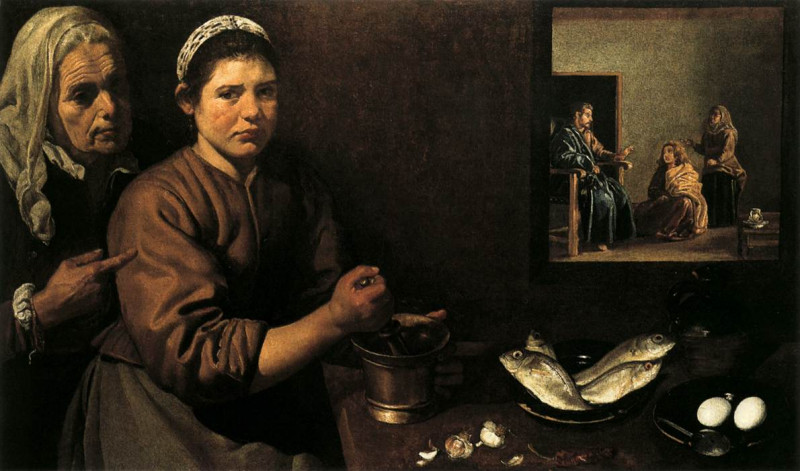
Martha lived with her sister Mary.   Like many other pairs of sisters, these two women were different in personality.   Martha was energetic and outspoken, while Mary was quiet and reflective.   Jesus loved both of them and appreciated the gifts that each one had.

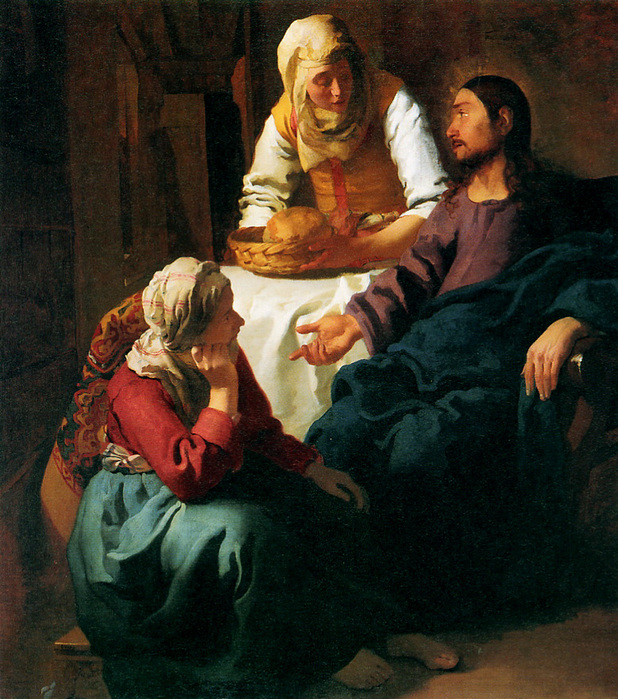
The Gospel of Luke records that once, when Jesus was visiting, Martha prepared the meal while Mary sat talking to their visitor.   Martha complained that Jesus should tell Mary to help her.   Jesus said that because Martha was worrying so much about the work, she did not have time to enjoy being with Him and listening to His words.

Christ in the House of Martha and Mary, by Jan Vermeer Van Delft, 1654
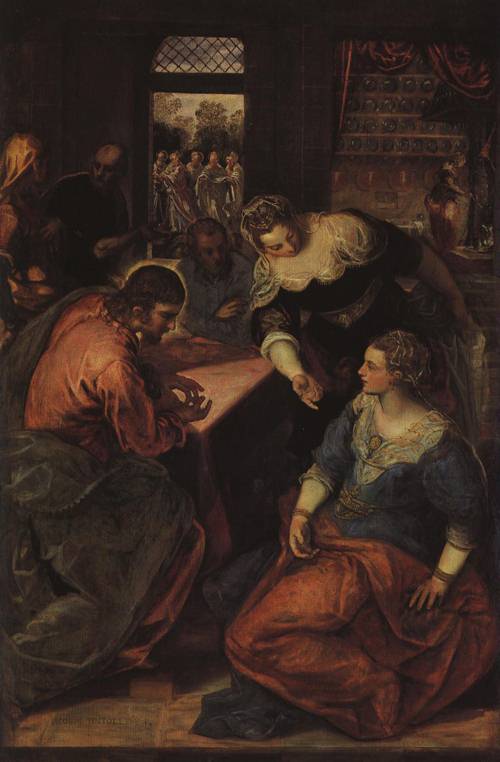
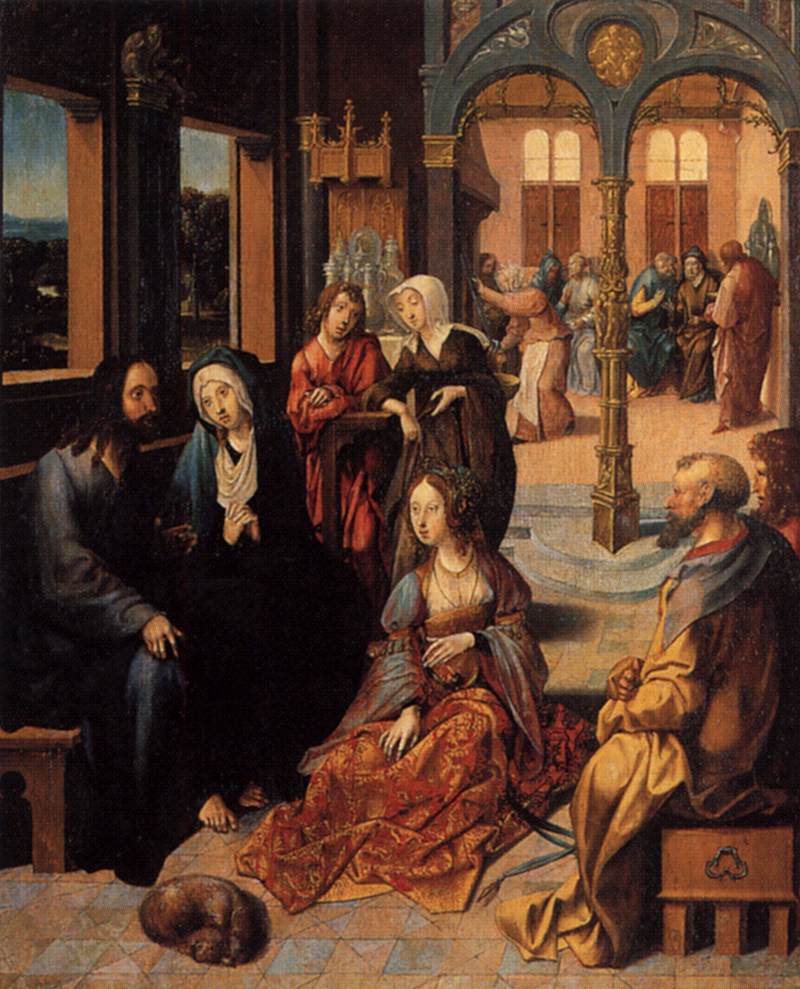
Christ with Martha and Mary
Tintoretto_1580_XX_Christ_in_the_House_of_Mary_and_Martha_(St._Martha)

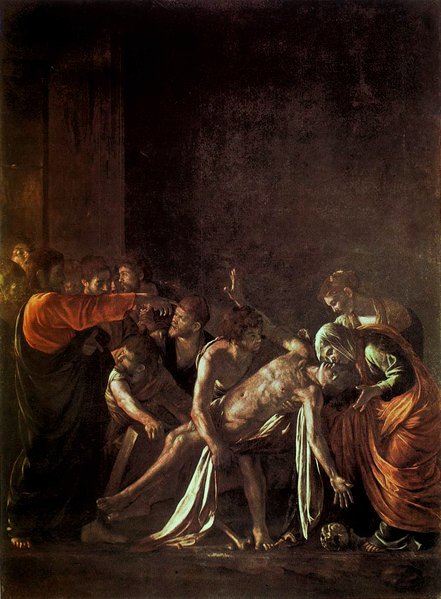
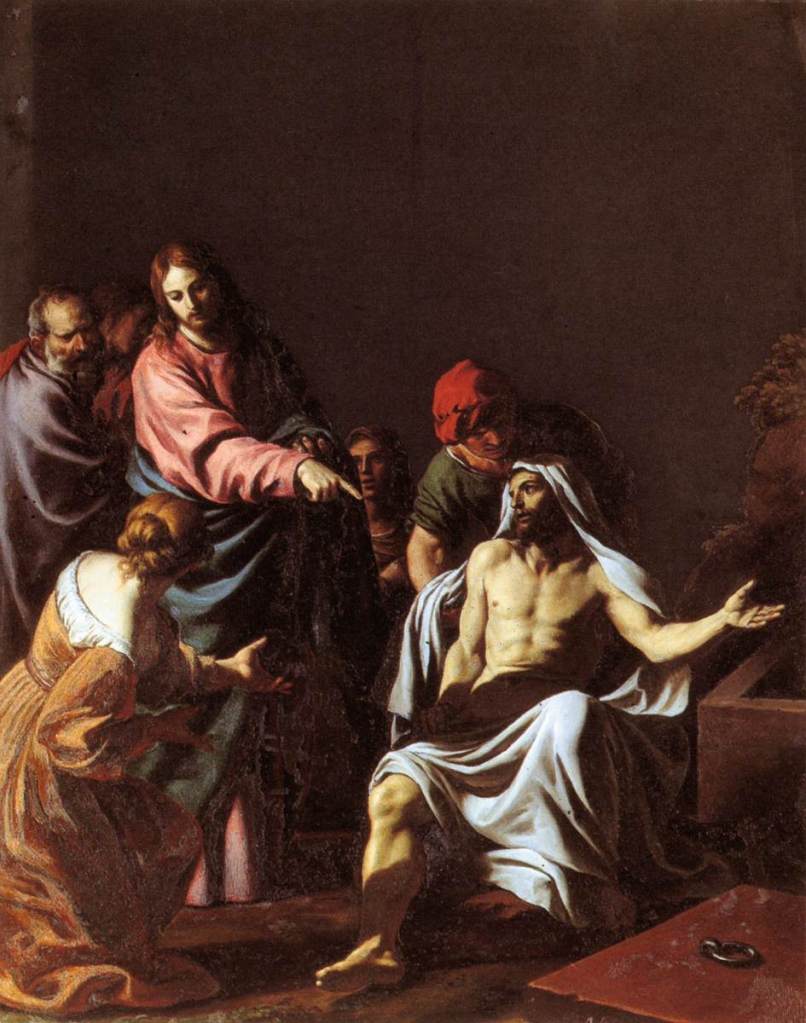
Another time recorded in John’s Gospel, the sisters sent a message to Jesus that their brother, Lazarus, was ill.   They knew Jesus would come and cure him; they trusted in His loving care for them.   When Jesus finally came, Lazarus had already been dead for four days.   As soon as she heard that Jesus was nearby, Martha, a woman of action, went out to meet Him, while Mary stayed in the house.   In her grief, Martha told Jesus honestly what she had expected from Him.   Jesus asked her to believe that He was the resurrection and that He had power to give eternal life to all who believe in Him. Without really understanding this mystery, Martha trusted Jesus totally and said,  “I believe that you are the Christ, the Son of God, the one who was to come into this world” (John 11:27).   That day Jesus raised her brother Lazarus from the dead, showing that He has power over life and death and power to give eternal life.

The home Jesus found in Bethany was not only in the house but in the faithful heart of a woman named Martha.

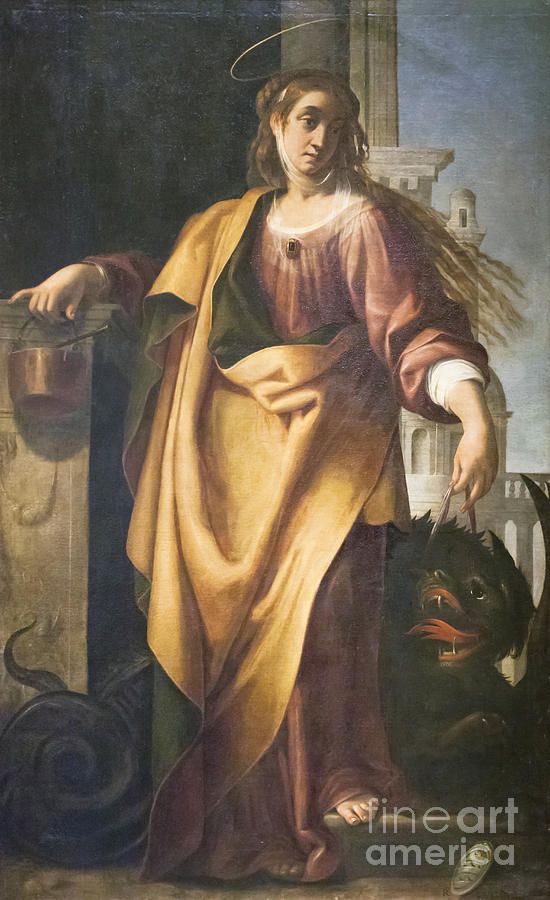
Giovanni Bagliione - St. Martha
st martha
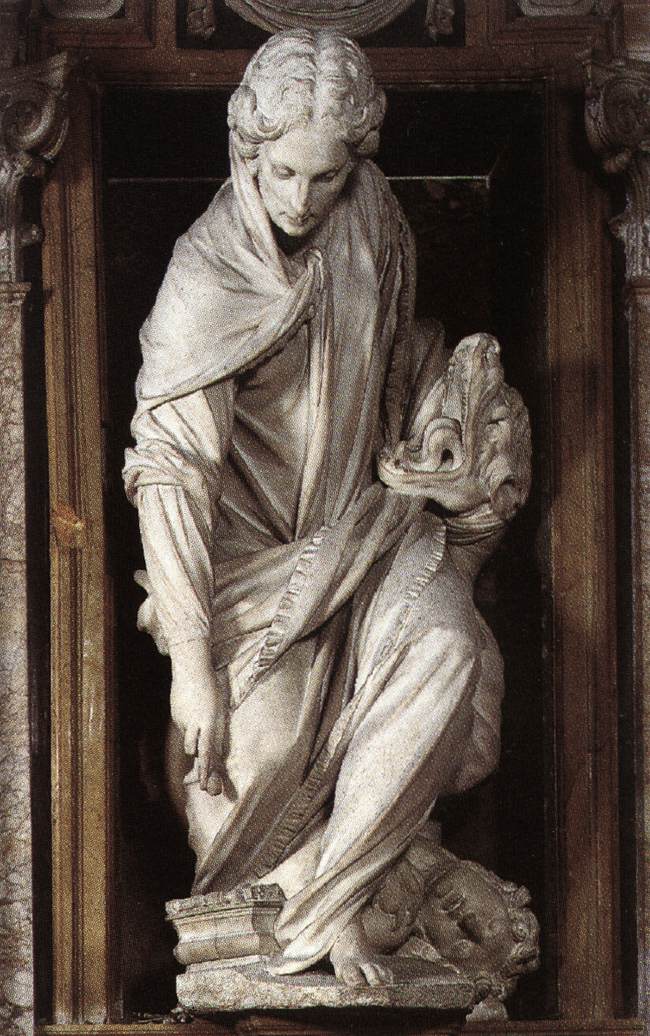
St. Martha by Francesco Mochi
St. Martha [Large]
Posted in CATHOLIC DEVOTIONS of the Month, JESUIT SJ, MORNING Prayers, PRAYERS of the SAINTS

Our Morning Offering – 29 July

Our Morning Offering – 29 July

Jesus Help me, Your Servant
By Ven Servant of God
Fr John A Hardon S.J. (1914-2000)

Jesus, help me, Your servant,
whom You redeemed by Your Precious Blood.
In every need let me come to You
with humble trust, saying:
Jesus help me.
In all my doubts, perplexities and temptations:
Jesus help me.
In hours of loneliness, weariness and trial:
Jesus help me.
In the failure of my plans and hopes:
Jesus help me.
In disappointments, troubles and sorrows:
Jesus help me.
When I throw myself on Your tender love
as Brother and Saviour:
Jesus help me.
When I feel impatient and my cross is heavy:
Jesus help me.
When I am ill and my head and hands
cannot do their work:
Jesus help me.
Always, always, in joys and sorrows,
in falls and shortcomings:
Jesus help me. Amen


jesus help me, your servant by ven servant of god john a hardon sj

Posted in SAINT of the DAY, The BLESSED VIRGIN MARY

Saints’ Memorials and Feasts of the Blessed Virgin Mary

St Martha (Memorial)
Chirsk-Pskov Icon of the Mother of God
Holy Mary of the Miracles

St Antony
St Beatrix of Rome
Bl Beatrix of Valfleury
St Callinicus of Paphlagonia
Bl Charles-Antoine-Nicolas Ancel
St Faustinus of Rome
St Faustinus of Spello
St Felix of Rome
St John Baptist Luo Tingyin
St John the Soldier
Bl José Calasanz Marqués
St Joseph Zhang
St Kilian of Inishcaltra
St Lek Sirdani
Bl Luis Bertran
St Lupus of Troyes
Bl Mancius of the Cross
St Martha Wang
St Olaf II
St Olaus of Sweden
St Paulus Chen Changpin
Bl Petrus of Saint Mary
St Pjetër Çuni
St Prosper of Orleans
St Rufo of Rome
St Seraphina
St Serapia of Syria
St Simplicius of Rome
St Sulian
Bl Pope Urban II
St William of Saint Brieuc

Four Anonymous Martyrs

Martyrs of Calanda – 8 beati: A group of Dominican priests and friars who were martyred over the course of a day in the same town by the same group of anti-Christian forces in the Spanish Civil War.
• Antonio Manuel López Couceiro
• Felicísimo Díez González
• Gumersindo Soto Barros
• Lamberto María de Navascués de Juan
• Lucio Martínez Mancebo
• Matías Manuel Albert Ginés
• Saturio Rey Robles
• Tirso Manrique Melero
They were martyred on 29 July 1936 in Calanda, Teruel, Spain and Beatified on 11 March 2001 by St Pope John Paul II.
Martyrs of Lleida – 12 beati: Carmelites of the Ancient Observance novices, friars and priests who were all martyred together in the Spanish Civil War.
• Àngel Prat Hostench
• Eliseo Maneus Besalduch
• Gabriel Escoto Ruiz
• Ginés Garre Egea
• Joan Maria Puigmitjà Rubió
• Joan Prat Colldecarrera
• Josep Solé Rovira
• Lluis Fontdecava Quiroga
• Manuel Serrano Buj
• Miquel Soler Sala
• Pere Dorca Coromina
• Pere Ferrer Marín
They were martyred on 29 July 1936 in Clot dels Aubens, Cervera, Lleida, Spain and Beatified on 28 October 2007 by Pope Benedict XVI.

Martyred in the Spanish Civil War: Thousands of people were murdered in the anti-Catholic persecutions of the Spanish Civil War from 1934 to 1939.
Bl Bartolomé Rodríguez Soria
Joseph-Louis Marcou Pecalvel
Bl Juan Bautista Egozcuezábal Aldaz
Martyrs of Rome – 23 saints
Eugene
Flora the Martyr
Lucilla
Theodore


Posted in CATHOLIC-PRAYERS OF THE CHURCH, MORNING Prayers, NOVENAS

NOVENA in Honour of and preparation for, the Feast of the Transfiguration of our Lord – Day One – 28 July

NOVENA  Transfiguration of our Lord – Day One – 28 July

Explanation of this Novena here: https://anastpaul.wordpress.com/2017/07/25/announcing-a-novena-in-honour-of-the-transfiguration-of-our-lord/

The Revelation of Christ’s Divine Glory

First Day: Today is a Joyful Day
One day Jesus left Nazareth, His hometown and lived in Capernaum.   During that time it was a big city, not distant form Nazareth.   The decision entailed a gesture of farewell to His mother and His town mates.   Everyone making a decision says goodbye and gives up something.   A vocation of service always signifies some form of sacrifice.   It is the price of the Kingdom of God.

Mary, our mother, like her son, was growing in her faith, her understanding of Jesus’s vocation and her acceptance of the mission God destined for her son.   For her, this process meant uncertainties, sufferings, fears and anxieties, just as for many mothers who share with their son’s commitment to fight for justice and risk their lives.

Let us Pray:

God of life and glory, Your son was revealed in splendour before He suffered death upon the cross;  grant that we, beholding His majesty, may be strengthened to follow Him and be changed into His likeness from glory to glory;   for He lives and reigns with You and the Holy Spirit, one God now and forever. Amen

DAY ONE - TRANSFIGURATION NOVENA 28 JULY