Posted in EASTER, MYSTICS, SAINT of the DAY

Saint of the Day – 11 April – St Gemma Galgani (1878-1903)

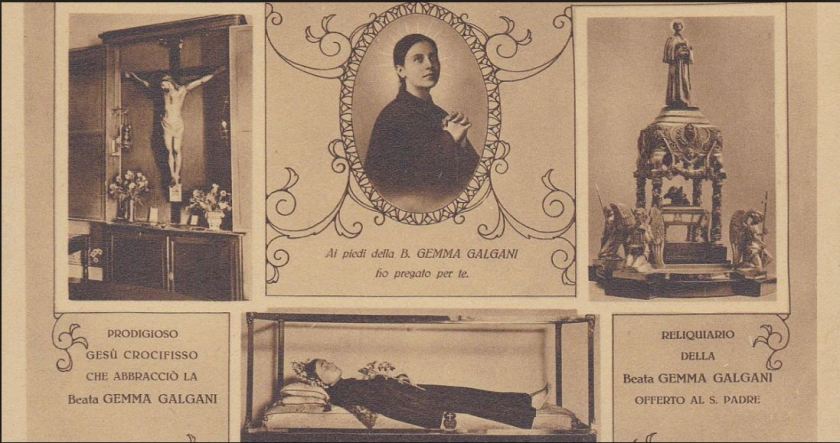
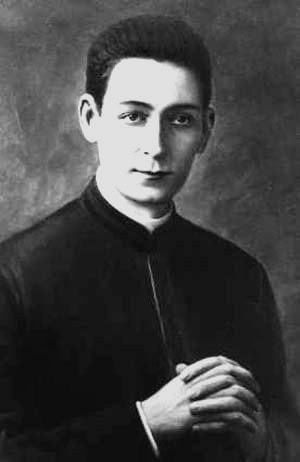
Saint of the Day – 11 April – St Gemma Galgani (1878-1903) known as “The Flower of Lucca,” “The Virgin of Lucca ” and “Daughter of the Passion” – Stigmatist & Mystic – born on 12 March 1878 at Borgo Nuovo di Camigliano, Lucca, Tuscany, Italy and died on Holy Saturday, 11 April 1903 at Borgo Nuovo di Camigliano, Lucca, Italy of tuberculosis., aged 25.  Her relics interred in the Passionist monastery, Lucca.   Patronages – Students, Pharmacists, Paratroopers and Parachutists, loss of parents, those suffering back injury or back pain, those suffering with headaches/migraines, those struggling with temptations to impurity and those seeking purity of heart.   Attributes – Passionist robe, flowers (lilies and roses), guardian angel, stigmata, heavenward gaze.header - st gemma galgani
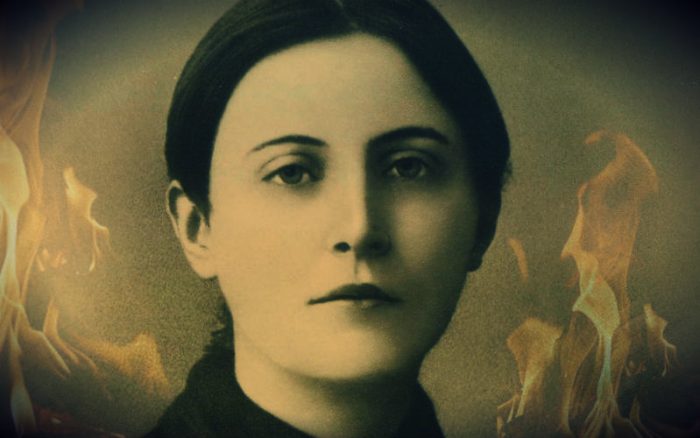
Gemma Galgani was born on 12 March 1878, in a small Italian town near Lucca.  Gemma is the Italian word for gem.   The child’s mother was worried that this name was not a saint’s name but a priest friend comforted her with the remark that perhaps the child would one day be a “gem of Paradise.”

At a very young age, Gemma developed a love for prayer.   She credited her mother, who died when Gemma was very young, with inspiring in her the desire for Heaven and with teaching her about God.   Gemma made her First Communion on 17 June 1887.   Later, she wrote, “It is impossible for me to describe what passed between Jesus and myself in that moment.   He made himself felt so strongly in my soul.   I realised in that moment how the delights of Heaven are not like those of the earth and I was seized by a desire to make that union with my God everlasting.”

As a day pupil at the school run by the Sisters of St Zita, Gemma was loved by her teachers and her fellow pupils.   Although quiet and reserved, she always had a friendly smile for everyone.   Though by nature a bright and lively child, she exercised great self discipline even as a schoolgirl, keeping her feelings under control.   The superior of the sisters at the school once asked Gemma’s teacher and her class to pray for a dying man who refused the Sacraments.   After the prayer, Gemma arose from her seat and going up to her teacher, whispered in her ear, “The grace is granted.”   That evening the news as brought that the man had indeed converted and received the consolations of the Faith before his death.
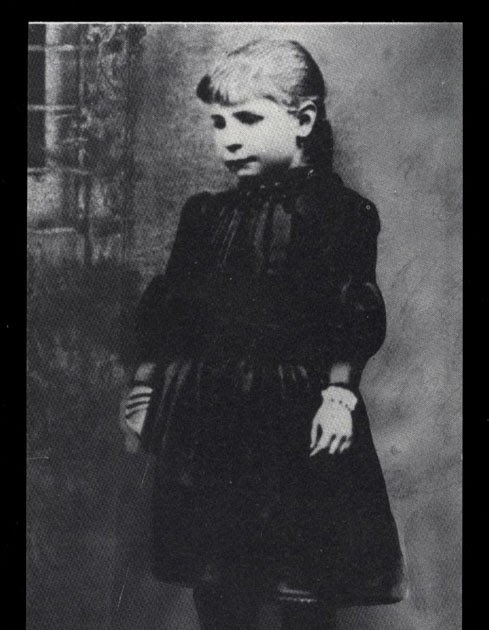
St_Gemma_Galgani_child_age_7

Throughout her life, Gemma was to be favoured with many mystical experiences and special graces.   Often these were misunderstood by others, bringing ridicule.  A sensitive person, Gemma suffered these heartaches, too, in reparation, remembering that Our Lord Himself had been misunderstood and ridiculed.

Although she was a good student, Gemma had to quit school due to chronic ill heath before completing the course of study.   Throughout her life, her frail constitution did not stand up well to several illnesses.

Gemma’s father had been a moderately successful pharmacist.   But because of his generosity and his willingness to extend credit to those in need, he began to get into financial trouble.   His death in 1897 left Gemma and his other children penniless orphans.   Gemma felt the loss of her father keenly but did not appear to be bothered by the poverty of her circumstances.   She must have felt desolate when the creditors came and took away the few possessions left to the family on the very day of her father’s funeral but she maintained her cheerful, patient attitude.

Gemma had an immense love for the poor and when she went out, many poor people came to her for help.   When she could, she gave them things from home.   Later, when she too was a “povera,” or poor girl, she gave them the gift of friendship.   She would weep over their misfortunes, completely ignoring her own.

After her father’s death, the nineteen-year-old Gemma became the mother of her seven brothers and sisters.   When some were old enough to share this responsibility, she lived briefly with a married aunt.   Although she returned the love given by this aunt and uncle, Gemma was unhappy with the busy social life of the couple.   They were well off and wanted Gemma to join in the fun which they could afford to provide.   At this time, two young men proposed marriage to her.   Gemma, however, wanted silence and retirement and more than ever she desired to pray and speak only to God.

Gemma returned home and almost immediately became very ill with meningitis. Gradually she lost her hearing and some of her hair.   In addition, she suffered a complete paralysis of her limbs.   All earthly remedies proved vain and Gemma was confined to bed for more than a year.   Throughout this illness, her one regret was the trouble she caused her relatives in taking care of her.   News of the heroic patience of the gentle girl spread about the town and many visitors came to cheer her up.   For each visitor, Gemma had a smile and a welcoming comment.

Feeling herself tempted by the devil, she prayed for help to the Venerable Passionist, Gabriel Possenti.   (Gabriel was later canonised.)   He appeared to her in dreams several times, promising her help and calling her “sister.”   Through his intercession, Gemma was miraculously cured.   In one of her visions of Gabriel, he placed the badge of the Passionists on Gemma.   When she spoke of her desire to enter a convent, he told her to make her vow to be a religious but not to add anything to this vow.   Gabriel was telling her that although she might live the life of a nun, she would never enter any particular convent.   Later, Gemma was rejected as a candidate for the religious life on the grounds of her health was too delicate.   She offered this disappointment to God as a sacrifice.

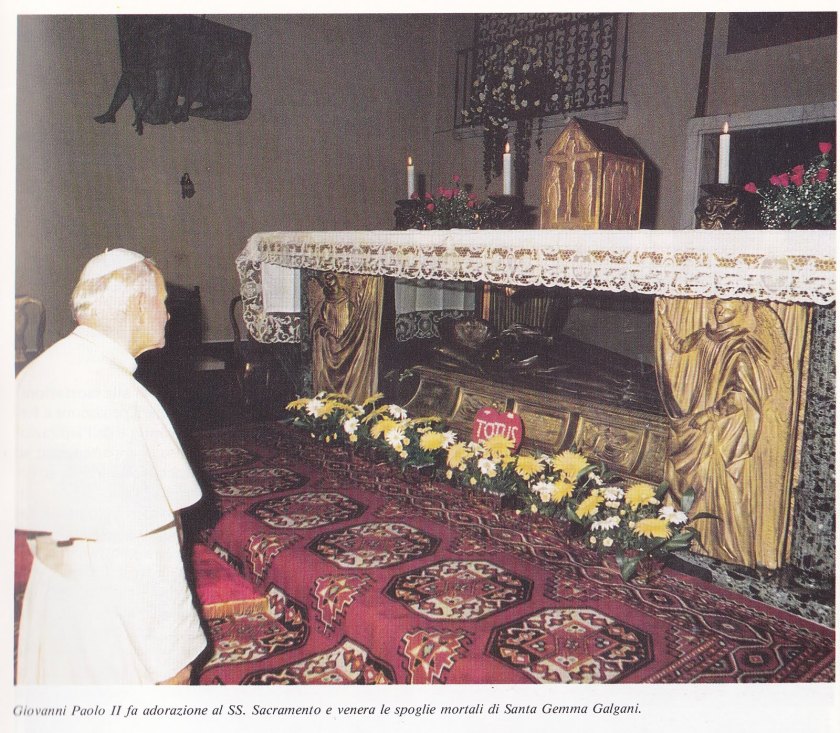
Gifted with an ability for prophecy, Gemma predicted that the Passionists would establish a monastery at Lucca;  this came to pass two years after her death.   When she understood that she would not be able to enter a Passionist monastery, Gemma said, “The Passionists did not wish to receive me;  nevertheless, because I wish to stay with them, I shall when I am dead.”   Today, Gemma’s mortal remains are still treasured at the Passionist monastery in Lucca.
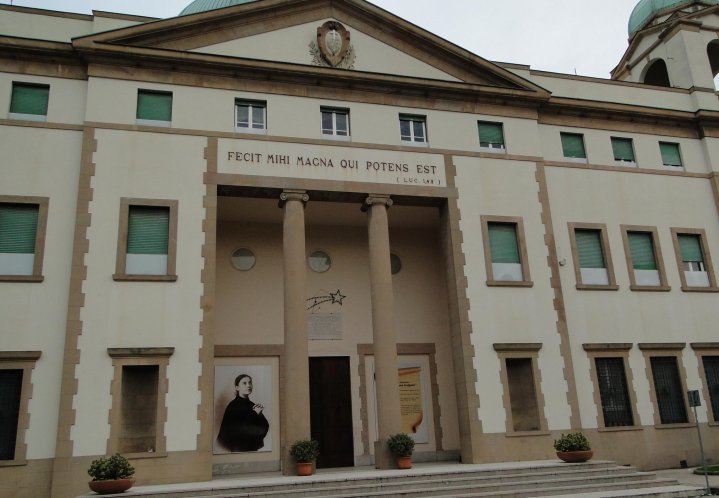
Monastery-Sanctuary-of-St-Gemma-Galgani-22passionist monastery lucca - holy card issuedGiovanni-Paolo-II-adorazione-al-SS.-Sacramento

On the 8 June, 1899, Gemma had an interior warning that some unusual grace was to be granted to her.   She spoke of this to her confessor and received absolution.   She later gave the following account to her spiritual director:  “It was Thursday evening, and suddenly I felt an inward sorrow for my sins;  but so intense that I have never felt the like again;  my sorrow made me feel as if I should die then and there.   After that I felt all the powers of my soul in recollection.   My intellect seemed to know nothing but my sins and how they offended God . . . Then thoughts crowded thickly within me and they were thoughts of sorrow, love, fear, hope and comfort.”

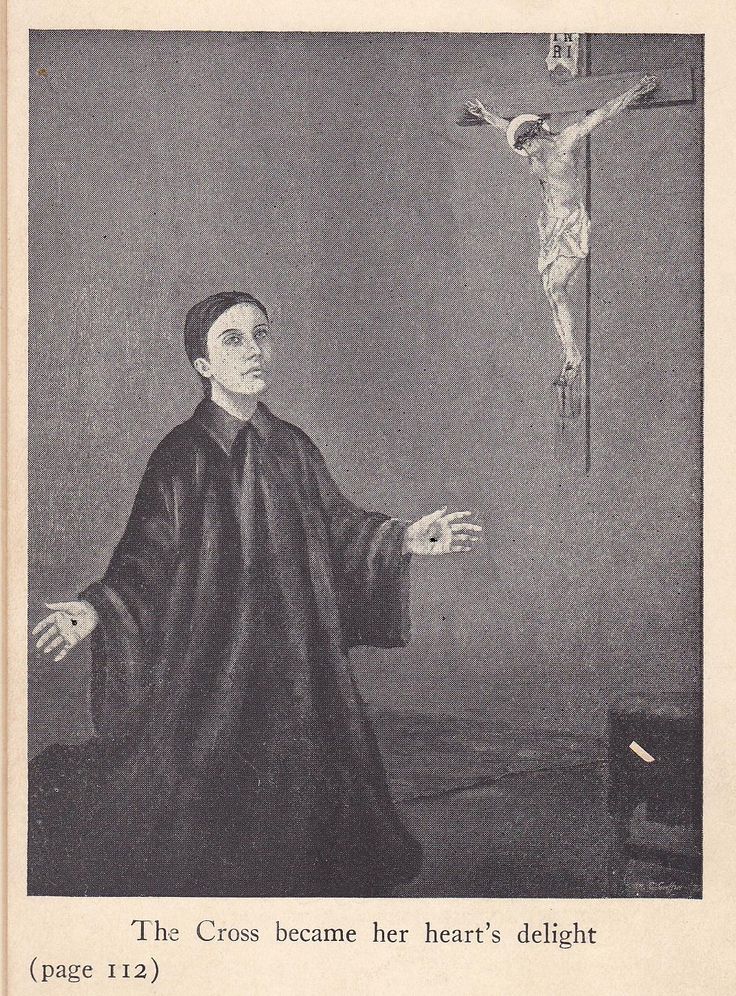
In rapture, she saw her heavenly Mother, who wrapped Gemma in her mantle.   At that moment, according to her own account, “Jesus appeared with His wounds all open; blood was not flowing from them but flames of fire which in one moment came and touched my hands, feet and heart.   I felt I was dying and should have fallen down but for my Mother who supported me and kept me under her cloak.   Thus I remained for several hours.   Then my Mother kissed my forehead, the vision disappeared and I found myself on my knees;   but I had still a keen pain in my hands, feet and heart.   I got up to get into bed and I saw that blood was coming from the places where I had the pain.   I covered them as well as I could and then, helped by my Guardian Angel, got into bed.”

The next day, covering her hands with gloves, Gemma attended Mass as usual.   Later, she showed the marks of the stigmata to one of her aunts, saying, “Just look at what Jesus has done to me!”

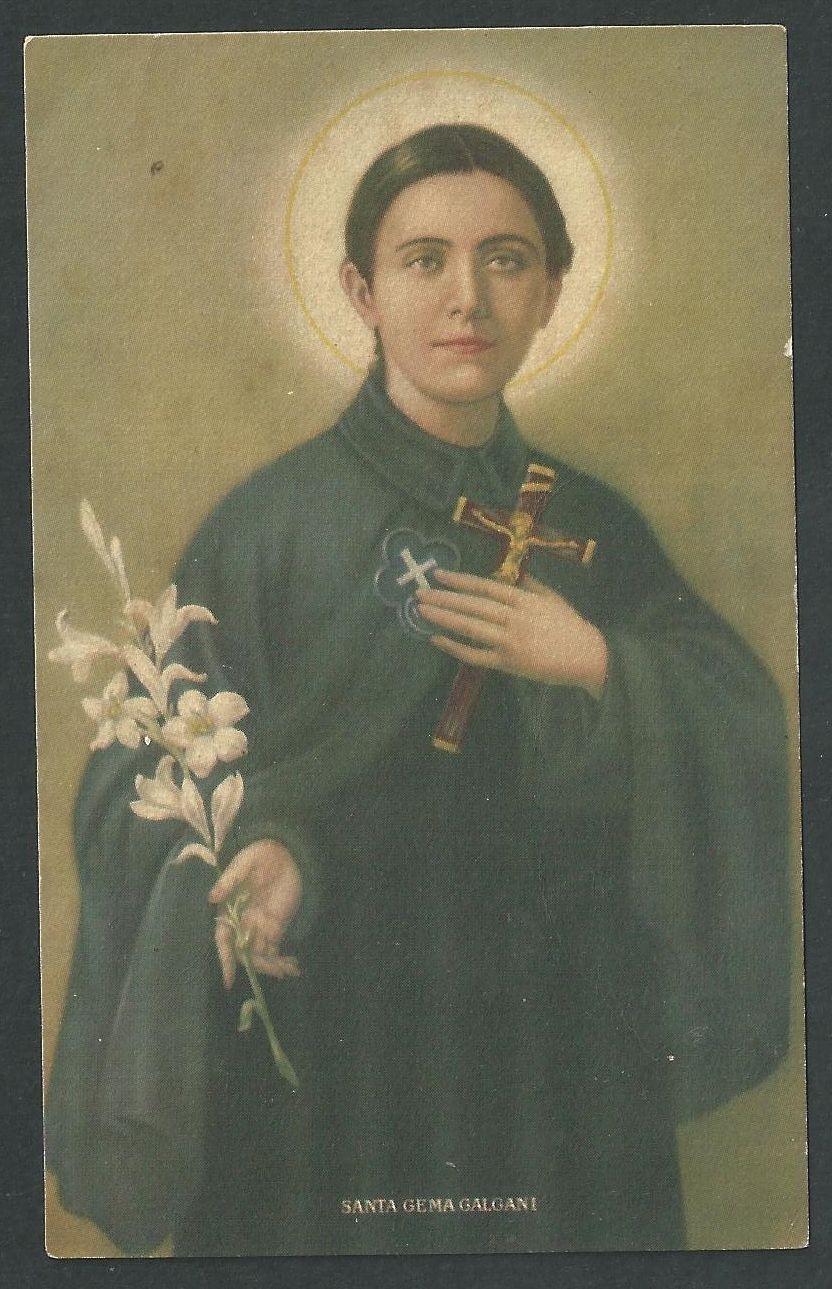
Saint Gemma Galgani 89Saint Gemma Galgani large8the cross and st gemma galgani

Each Thursday evening, Gemma would fall into rapture and the marks would appear. The stigmata remained until Friday afternoon or Saturday morning when the bleeding would stop, the wounds would close and only white marks would remain in place of the deep gashes.   Later, one of Gemma’s directors turned to science and had a doctor examine the stigmata.   As Gemma had foreseen, the doctor considered them a manifestation of some form of disease, or the delusions of an overly pious soul.  Gemma’s stigmata continued to appear until the last three years before her death.   At this time, her director forbade her to accept this phenomenon and through her prayers it ceased, although whitish marks remained on her skin until her death.

Through the help of her confessor, Gemma went to live with a family named Giannini, where she was allowed more freedom than at home for her spiritual life.   She was very grateful to this adoptive family and was more than once overheard in ecstasy praying for its members.   In this home, Gemma cheerfully did housework and helped in the training and education of the children.

There is a good record of Gemma’s words during ecstasy.   In this state of rapture, the soul is so absorbed in God that the normal activity of the senses is suspended.   Both her confessor and a relative of the head of her adoptive family, Aunt Cecilia, often overheard Gemma and recorded her conversations.

Father Germano once overheard her arguing with Divine Justice for the salvation of a soul.   Some of her words were:  “I do not seek Your justice, but for Your mercy.   I know, he made You shed tears;  but . . . You must not think of his sins;  You must think of the Blood You shed.   And now answer, Jesus and tell me You have saved my sinner.”   Gemma actually named the man she was praying for.   Soon afterwards, she broke out joyfully, “He is saved!  You have won, Jesus;  triumph always thus.” Then she came out of ecstasy.

Father Germano had just left the room when he heard a knock and was told that a stranger wished to speak to him.   As soon as the man was before the priest, he fell to his knees weeping and said, “Father, I want to make my confession.”  The priest was stunned to realise that it was Gemma’s sinner.
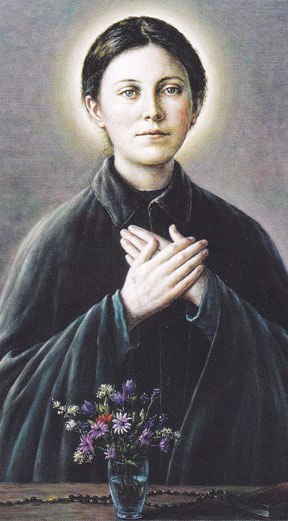
St.-Gemma-4

Gemma often saw her guardian angel, with whom she was on familiar terms.   Sometimes the angel protected and consoled her, sometimes he counselled her and occasionally he scolded her very severely for her faults.   He would say, “I am ashamed of you.”   At times Gemma was heard arguing with her guardian angel, so that her spiritual director, Father Germano, had to remind her that she was speaking with a blessed spirit of Heaven and should be very respectful.   The angel is mentioned on almost every single page of Gemma’s diary.   In one entry, Gemma wrote that the devil had been raining down blows on her shoulder for nearly half an hour.   “Then my guardian angel came and asked me what was the matter;  I begged him to stay with me all night and he said: ‘But I must sleep.’ ‘No,’ I replied, ‘the Angels of Jesus do not sleep!’   ‘Nevertheless,’ he rejoined, smiling, ‘I ought to rest.   Where shall you put me?’   I begged him to remain n ear me.   I went to bed; after that he seemed to spread his wings and come over my head. In the morning he was still there.”

One of the most extraordinary things is the fact that Gemma often sent her guardian angel on errands, usually to deliver a letter or oral message to Father Germano in Rome. Often the reply was delivered by the priest’s guardian angel.   Realising how unusual this was, Father Germano asked Heaven for a sign that it was in accord with God’s Will.  After Gemma’s death, he wrote: “To how many tests didn’t I submit this singular phenomenon in order to convince myself that it took place through a supernatural intervention!   And yet none of my tests ever failed;  and thus I was convinced again and again that in this, like in many other extraordinary things in her life, Heaven was delighted in amusing itself, as it were, with this innocent and dear maiden.”

During the apostolic investigations into her life, all witnesses testified that there was no artfulness in Gemma’s manner.   At the end of each of her ecstasies, she returned to normal and went quietly and serenely about the family life.   Most of her severe penances and sacrifices were hidden from most who knew her.   Only a few around her privileged to realise that she was exceptionally favoured.

In spite of everything which had happened to her, Gemma understood the true joy of her way of life.   She said, “There is neither cross nor sorrow, when we are tightly united to Jesus.”

In January of 1903, Gemma was diagnosed as having tuberculosis.   To avoid danger to her adoptive family, she was isolated in a small apartment close to the Giannini house. For four months Gemma suffered uncomplainingly from the disease.   She died quietly, in the company of the parish priest, on 11 April.   In his testimony he said, “I have been present at many deathbeds but never have I seen anyone die like Gemma, without even a precursor sign, nor a tear, nor a panting breath.   She died with a smile which remained upon her lips, so that I could not convince myself that she was really dead.”

The Church authorities began to study Gemma’s life in 1917 and she was beatified in 1933.   The decree approving the miracles for canonisation was read 26 March 1939—Passion Sunday.   Gemma was canonised on 2 May 1940, only thirty-seven years after her death.
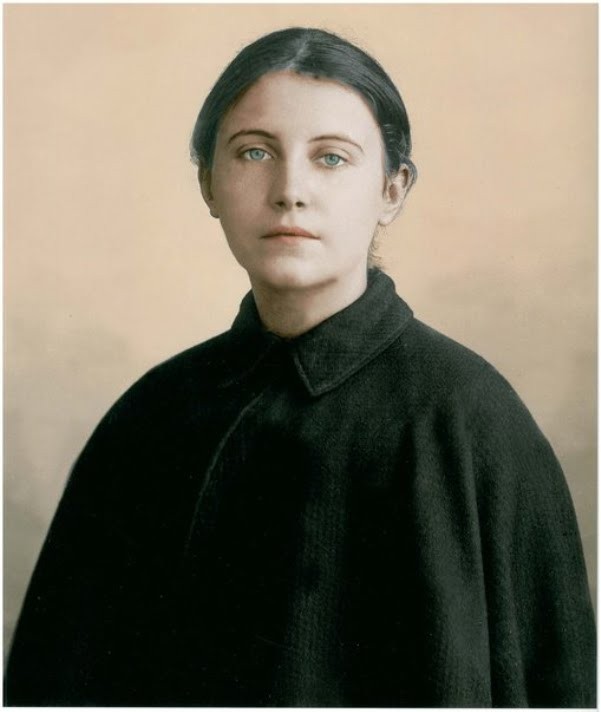
St-Gemma-Galgani-color-picture-123

Posted in EASTER, SAINT of the DAY

Memorials of the Saints – 11 April

St Stanislaus (1030-1079) Bishop and Martyr (Memorial)

https://youtu.be/6fBMC8cVCzM

St Agericus of Tours
St Aid of Achard-Finglas
Bl Angelo Carletti di Chivasso
St Antipas of Pergamon
St Barsanuphius of Gaza
St Domnio of Salona
Bl Elena Guerra
St Eustorgius of Nicomedia
St Gemma Galgani (1878-1903)

Bl George Gervase
St Godeberta of Noyon
St Guthlac of Croyland
St Hildebrand of Saint-Gilles
St Isaac of Monteluco
Bl James of Africa
Bl John of Cupramontana
Bl Lanunio
St Machai
St Maedhog of Clonmore
Bl Mechthild of Lappion
Bl Paul of Africa
St Philip of Gortyna
St Raynerius Inclusus
St Sancha of Portugal
St Stephen of Saint-Gilles
Bl Symforian Ducki

Posted in DOCTORS of the Church, EASTER, FATHERS of the Church, PRACTISING CATHOLIC, QUOTES of the SAINTS

Thought for the Day – 10 April – Tuesday of the Second Week of Eastertide

Thought for the Day – 10 April – Tuesday of the Second Week of Eastertide

“As they were looking on, so we too,
gaze on His wounds as He hangs.
We see His blood as He dies.
We see the price offered by the Redeemer,
touch the scars of His Resurrection.
He bows His head, as if to kiss you.
His heart is made bare open, as it were, in love to you.
His arms are extended that He may embrace you.
His whole body is displayed for Your redemption.
Ponder how great these things are.
Let all this be rightly weighed in your mind:
as He was once fixed to the Cross
in every part of His body for you,
so He may now be fixed in every part of your soul!”

St Augustine (354-430) – Father & Doctor

as they were looking on - 10 april 2018 - st augustineas he was once fixed to the cross - st augustine - 10 april 2018


Posted in CATHOLIC Quotes, DOCTORS of the Church, EASTER, FATHERS of the Church, MORNING Prayers, QUOTES - J R R Tolkien and MORE, QUOTES of the SAINTS, QUOTES on EVANGELISATION, SPEAKING of .....

Quote/s of the Day – – 10 April – Tuesday of the Second Week of Eastertide Speaking of Evangelisation  Living and Preaching the Gospel

Quote/s of the Day — 10 April – Tuesday of the Second Week of Eastertide

Speaking of Evangelisation 
Living and Preaching the Gospel

The Christian should be an ‘Alleluia’ from head to foot.

St Augustine (354-430) – Father & Doctorthe christian should be an alleluia - st augustine - 10 april 2018 - speaking of evangelisation

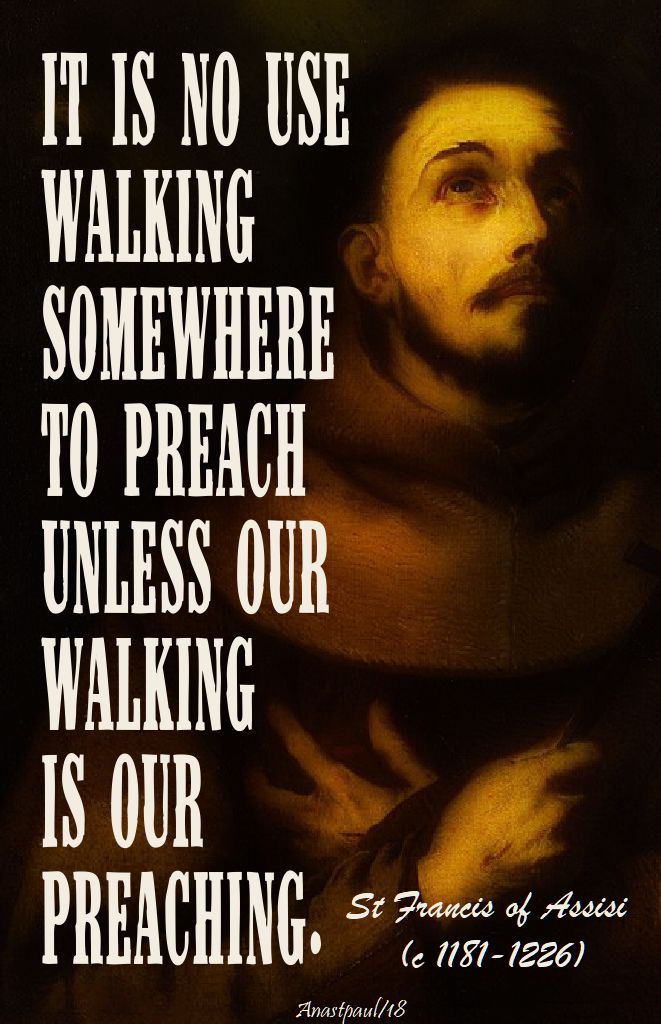
It is no use walking somewhere to preach
unless our walking is our preaching.

St Francis of Assisi (1181/82-1226)it is no use walking - st francis of assisi - 10 april 2018 - speaking of evangelisation

We must speak to them with our hands
before we try to speak with our lips.

St Peter Claver (1580-1654)we must speak to them with our hands - st peter claver - 10 april 2018 - speaking of evangelisation

People will remember the faith you had,
not the words you preached.

Cardinal Francis George (1937-2015)people will remember the faith you had - card francis george - 10 april 2018 - speaking of evang

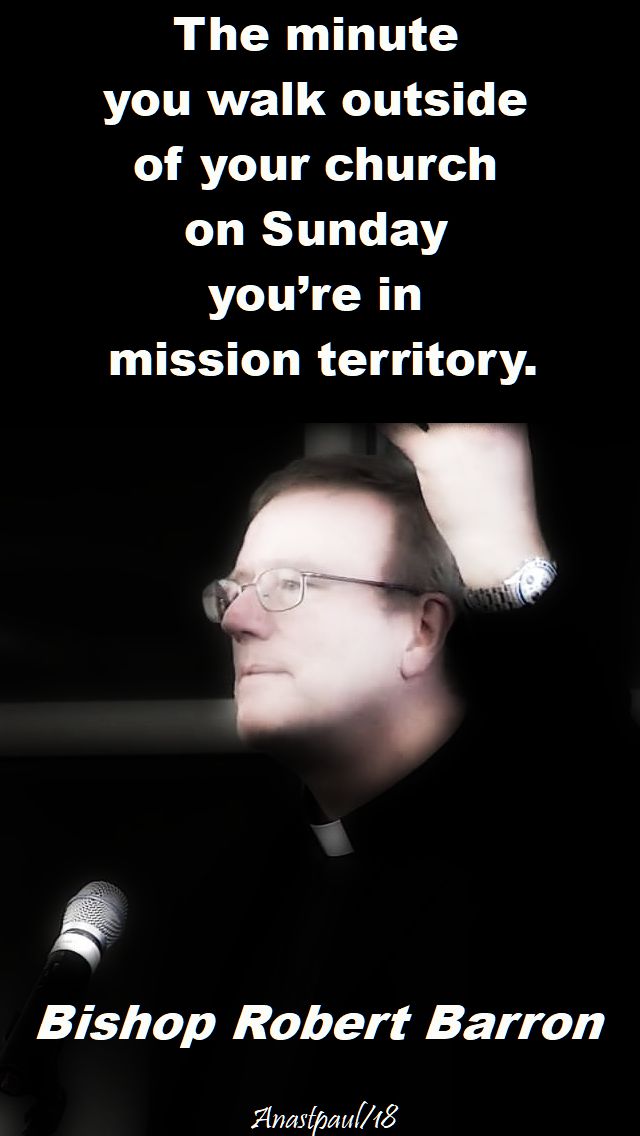
The minute you walk outside of your church
on Sunday you’re in mission territory.

Bishop Robert Barronthe minute you walk outside - bishop robert barron - 10 april 2018 - speaking of evang

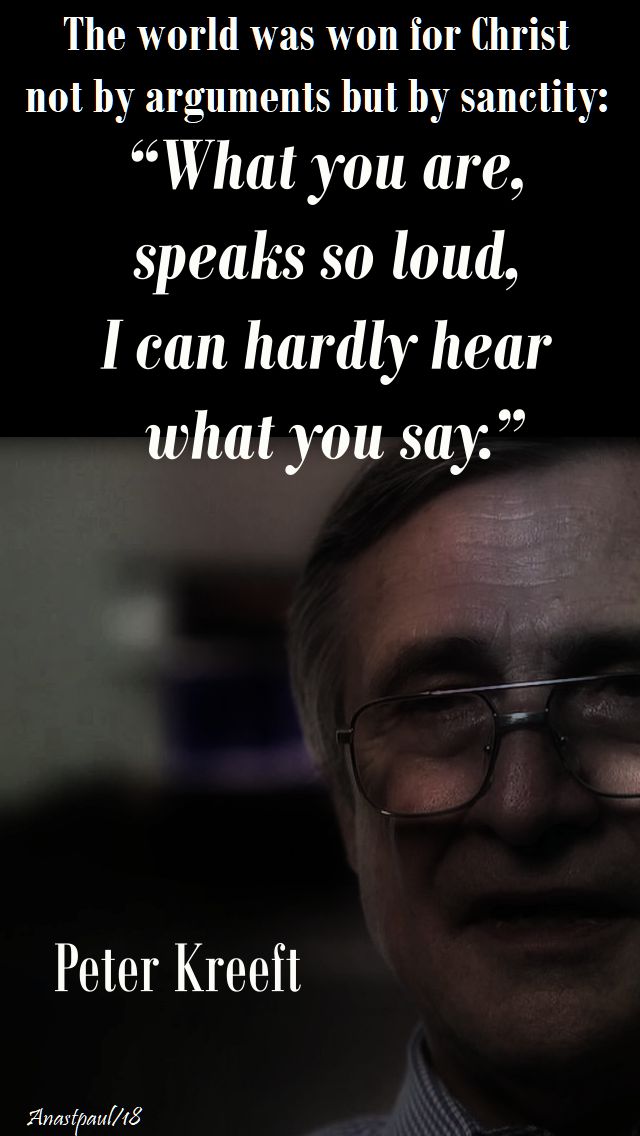
The world was won for Christ
not by arguments but by sanctity:
“What you are speaks so loud,
I can hardly hear what you say.”

Peter Kreeftthe world was won for christ - peter kreeft - 10 april 2018 - speaking of evang

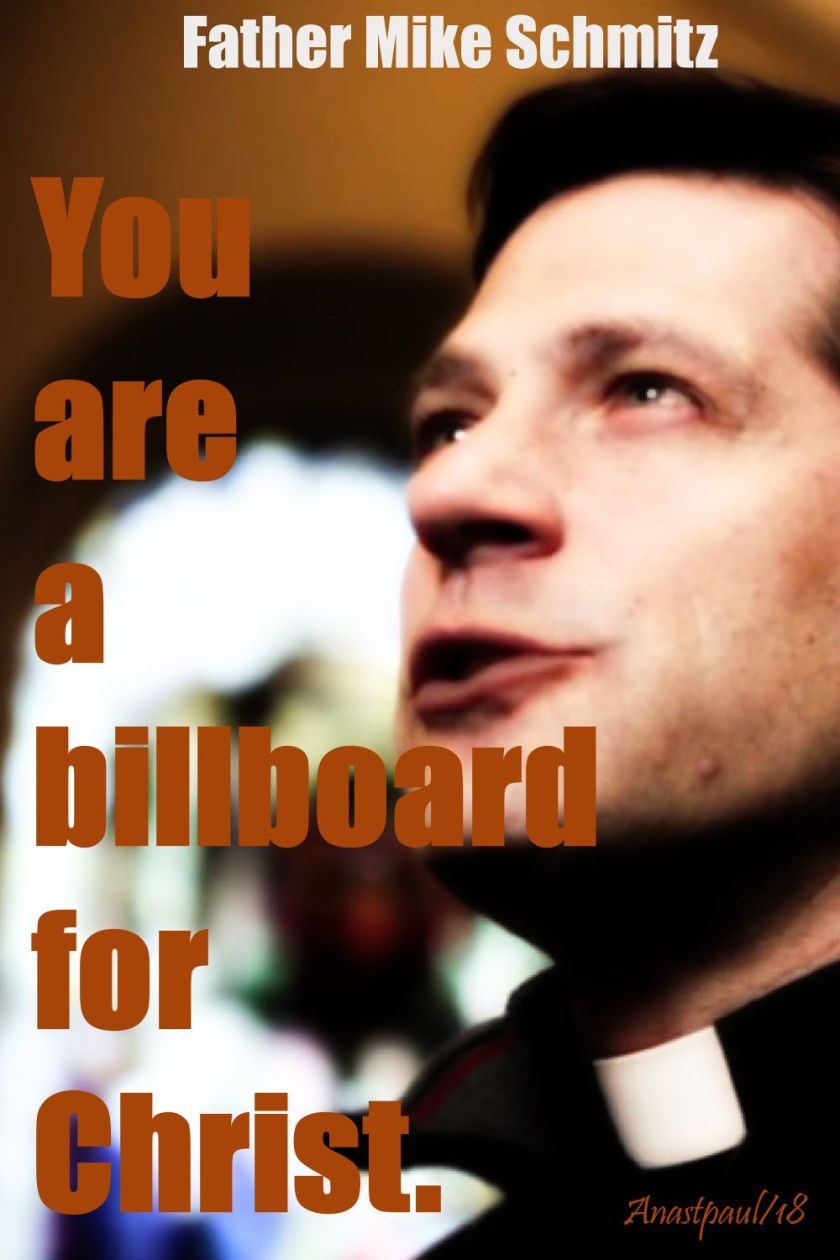
You are a billboard for Christ.

Father Mike Schmitzyou are a billboard for christ - fr mike schmitz - 10 april 2018 - speaking of evang


Posted in EASTER, MORNING Prayers, QUOTES of the SAINTS, QUOTES on EVANGELISATION, The RESURRECTION

One Minute Reflection – 10 April – Tuesday of the Second Week of Eastertide

One Minute Reflection – 10 April – Tuesday of the Second Week of Eastertide

With great power the Apostles bore witness to the resurrection of the Lord Jesus and great favour was accorded them all…Acts 4:33

REFLECTION – “Modern man listens more willingly to witnesses than to teachers and if he does listen to teachers, it is because they are witnesses.”…Blessed Pope Paul VImodern man listens more willingly to witnesses than to teachers - bl pope paul VI - 10 april 2018

PRAYER – Almighty God, give Your Church the grace to proclaim the power of Jesus, our Risen Lord.   We have received the first fruits of His grace, prepare us for the full revelation of His gifts and help us Lord God, to proclaim all we believe both in word and deed.   Through our Lord Jesus, in union with the Holy Spirit, one God forever, amen.christ is risen alleluia - 10 april 2018 tuesday of 2nd week eastertide

Posted in DIVINE Mercy, Goodness, Patience, DOCTORS of the Church, EASTER, FATHERS of the Church, MORNING Prayers, PRAYERS of the SAINTS

Our Morning Offering – 10 April

Our Morning Offering – 10 April

For Your Mercy’s Sake
By Saint Augustine (354-430) Father & Doctor

For Your mercy’s sake, O Lord my God,
tell me what You are to me.
Say to my soul: “I am your salvation.”
So speak that I may hear, O Lord,
my heart is listening,
open it, that it may hear You,
and say to my soul: “I am your salvation.”
After hearing this word,
may I come in haste to take hold of You.
Hide not Your face from me.
Let me see Your face, even if I die,
lest I die with longing to see it.
The house of my soul
is too small to receive You;
let it be enlarged by You.
It is all in ruins,
do You repair it.
There are thing in it,
I confess and I know,
that must offend Your sight.
But who shall cleanse it?
Or to what others besides You, shall I cry out?
From my secret sins cleanse me, O Lord,
and from those of others, spare Your servant.
Amenfor your mercy's sake - st augustine - 10 april 2018

Posted in DOMINICAN OP, SAINT of the DAY

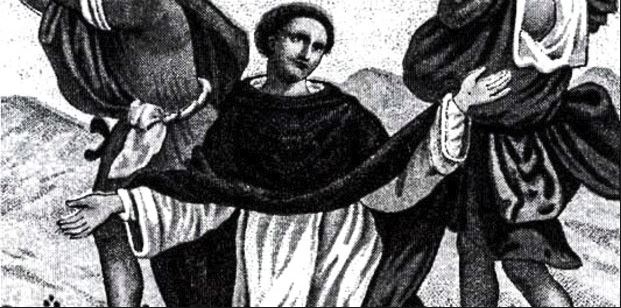
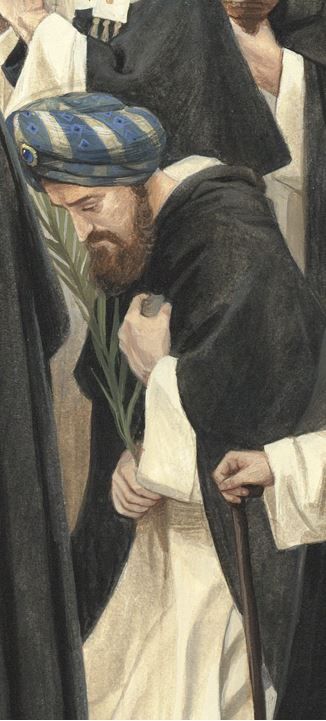
Saint of the Day – 10 April – Blessed Antony Neyrot O.P. (1425-1460) Martyr

Saint of the Day – 10 April – Blessed Antony Neyrot O.P. (1425-1460) Martyr, Dominican Priest, an Apostate who reconverted, Penitent.   Bl Anthony was born c 1425 at Rivoli, Diocese of Turin, Italy and died by being stoned to death on 10 April 1460 in Tunis, Tunisia.   His body was returned to Rivoli, Italy by merchants travelling through the region.  He was Beatified on 22 February 1767 by Pope Clement XIII (cultus confirmation).

header - bl anthony neyrot

Anthony was the only Dominican blessed ever to renounce his faith and yet in the end return to the faith and die a Martyr’s death.   Bl Anthony is a reminder to us that nothing is lost which cannot be found again and no-one can stray so far that the Good Shepherd cannot bring him or her home.

Not much is known about the youth of Bl Anthony, only that he was from Rivoli in Italy. He was received into the Order by the great Dominican, Saint Antoninus.   After his studies and ordination, Anthony was assigned to the convent of San Marco in Florence. Being somewhat wayward and impatient, Anthony quickly grew tired of this and asked for a change of scenery.   He was sent first to Sicily, about which he was not thrilled and then to Naples.   While sailing to Naples, Anthony’s ship was captured by pirates and he and the other passengers were taken to the city of Tunis in North Africa.

At first, Anthony was well-liked by the emir in Tunis and was allowed a measure of freedom.   His continuing arrogance, though, quickly brought the wrath of his captors and Anthony was put in prison and given only bread and water.   Anthony eventually gave in, denying his faith in order to obtain his freedom.   Anthony quickly embraced his new faith, even going so far as to attempt a translation of the Qur’an.   Soon, he was adopted by the emir and married a high-born Turkish lady.

Anthony’s newfound complacency, though, was quickly shattered.   Into his life came the news that his beloved teacher and mentor, Saint Antoninus, had died.   Love for his old master stirred in Anthony’s heart a desire for the Truth which he had abandoned.   He had a dream in which Antoninus appeared to him;   the conversation that transpired caused Anthony to resolve to readopt the faith which he had left behind, although such an action would result in his certain death.

Finding a Dominican priest, Anthony confessed his sins, and on Palm Sunday of 1460, he publicly asked forgiveness from his fellow Catholics and was thereafter readmitted to his order.    Wanting his re-conversion to be as public as his denial had been, Anthony waited until the king held a public procession then, Anthony appeared on the palace steps wearing again his Dominican habit and proclaiming his faith in a loud voice and his sorrow at ever having abandoned it.   Failing to change Anthony’s mind, the emir ordered his death.   Anthony died under a shower of stones, proclaiming his faith and his sorrow on Holy Thursday, 1460.   His body was eventually returned to Rivoli,  where it soon became a site of pilgrimage and many miracles were attributed to it and an annual procession was held at his shrine.

bl anthony neyrot

Holy Mary, Searcher for the Lost, pray for us.

 Blessed Anthony Neyrot, pray for us.

Posted in DOMINICAN OP, SAINT of the DAY

Memorials of the Saints – 10 April

Bl Antony Neyrot O.P. (1425-1460) Martyr
Bl Antonio Vallesio
St Apollonius of Alexandria
Bl Archangelus Piacentini
St Bademus
St Bede the Younger
St Beocca of Chertsey
Bl Boniface Zukowski
Bl Eberwin of Helfenstein
St Ethor of Chertsey
St Ezekiel the Prophet
St Fulbert of Chartres
St Gajan
St Hedda of Peterborough
St Macarius of Antioch
St Maddalena of Canossa
St Malchus of Waterford
Bl Marco Mattia
Bl Mark Fantucci
St Michael de Sanctis
St Palladius of Auxerre
St Paternus the Scot

Martyrs of Carthage – 50 saints: A group of 50 Christians who were imprisoned in a pen of snakes and scorpions, and then martyred, all during the persecutions of Decius. Only six of their names have come down to us – Africanus, Alessandro, Massimo, Pompeius, Terence and Teodoro. Beheaded in 250 at Carthage.

Martyrs of Georgia: Approximately 6,000 Christian monks and lay people martyred in Georgia in 1616 for their faith by a Muslim army led by Shah Abbas I of Persia.

Martyrs of Ostia: A group of criminals who were brought to the faith by Pope Saint Alexander I while he was in prison with them. Drowned by being taken off shore from Ostia, Italy, in a boat which was then scuttled, c 115.

Posted in PAPAL MESSAGES, Uncategorized

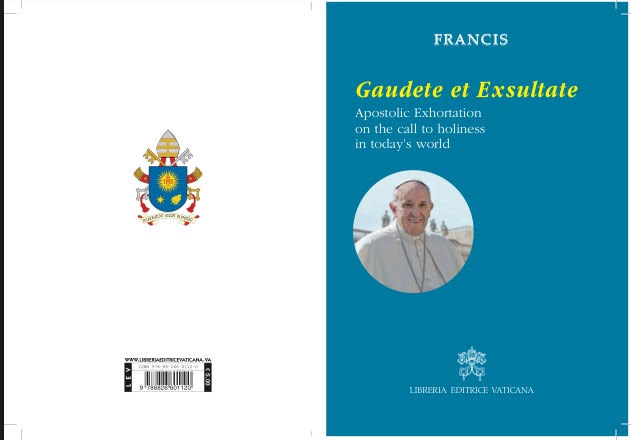
GAUDATE ET EXSULTATE: The Call for Holiness Is a Constant Battle, But We Can Count on Powerful Weapons God Gave Us

Pope’s 3rd Apostolic Exhortation on Holiness, Gives Practical Advice on How Not to Settle for Failure or Mediocritygaudete et exsultate

Jesus wants our happiness and wants us to be saints.   He does not want us to settle for a bland and mediocre existence.

Gaudate et Exsultate:  On the Call for Holiness in our Modern World was published today, marking Pope Francis’ 3rd Apostolic Exhortation after Evangelii Gaudium and Amoris Laetitia.pope francis gaudete et exsultate

The five-chapter, 98-page document can be considered somewhat of a practical handbook on how to help us achieve holiness in the circumstances of our ordinary lives. The chapters include: 1) The Call to Holiness 2) Two Subtle Enemies of Holiness 3) In the Light of the Master 4) Signs of Holiness in Today’s World 5) Spiritual Combat, Vigilance and Discernment.

Reflecting on saints, the Pope speaks specifically of the saints ‘next door:’ “Nor need we think of those already beatified and canonised” but, he stressed, “I like to contemplate the holiness present in the patience of God’s people:  n their daily perseverance, I see the holiness of the Church militant.   A holiness found in our next-door neighbors, the middle class of holiness.”

The document which stresses the need for discernment acknowledges that the Christian life is a battle. It notes that the devil tries to “poison with the venom of hatred, desolation and vice.”

Our call to holiness, it also asserts, is a constant battle.   If we do not realize this, it warns, we “will be prey to failure or mediocrity.”   Yet, it suggests, we can count on “the powerful weapons” God has given us, including prayer, meditation, Mass, Confession, Eucharistic adoration, charitable acts and community outreach.

While recalling some of the saints’ great examples, including St Francis of Assisi, St John Paul II, and Edith Stein, the Pope provides advice on how we can be good Christians.

The answer is clear, he says: “We have to do, each in our own way, what Jesus told us in the Sermon on the Mount.”

The life of a Christian, the text also stresses, is a constant battle, noting we need strength and courage to reject the devil’s temptations–those “dangers and limitations that distract and debilitate”– and to proclaim the Gospel. Pope Francis also warns against that which impedes our call to holiness, such as hedonism and consumerism, noting they “can prove our downfall.”

Pope Francis concludes the work, stating:  “It is my hope that these pages will prove helpful by enabling the whole Church to devote herself anew to promoting the desire for holiness.” (via Zenit)

***

Link to full text of Apostolic Exhortation:  https://zenit.org/articles/gaudate-et-exsultate-on-the-call-to-holiness-in-todays-world-full-text/

Vatican Media has released a new video that focuses on the theme of the Apostolic Exhortation Gaudete et Exsultate: On the Call for Holiness in our Modern World.  The two-and-a-half-minute video shows how the exhortation addressed the needs of people of all ages around the world.

Posted in DOCTORS of the Church, EASTER, FATHERS of the Church, MORNING Prayers, QUOTES of the SAINTS, QUOTES on ETERNAL LIFE, QUOTES on LOVE, QUOTES on OBEDIENCE, QUOTES on SANCTITY

Thought for the Day – 9 April – Low Monday of Eastertide

Thought for the Day – 9 April – Low Monday of Eastertide

St Augustine of Hippo – The Easter Alleluia

This excerpt on the Easter Alleluia from St Augustine is a wonderful explanation of the joy of the Easter Season.   Just as Lent was a season of penance, so the fifty days of Easter is a season of praise and song, an anticipation for the age to come in heavenly glory.

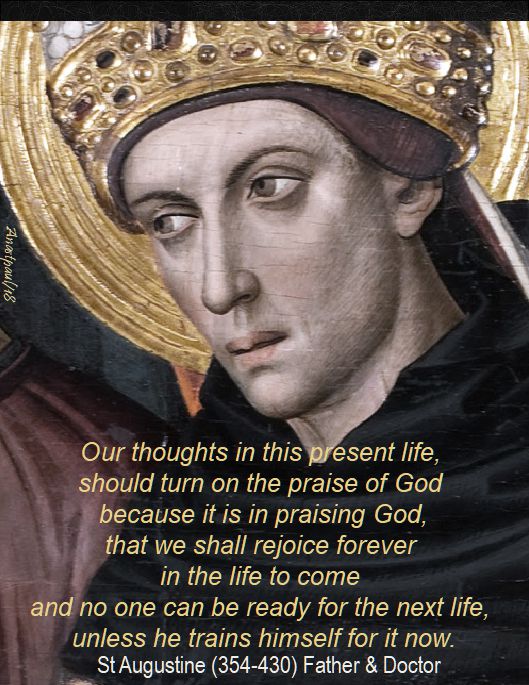
“Our thoughts in this present life, should turn on the praise of God because it is in praising God, that we shall rejoice forever in the life to come and no one can be ready for the next life, unless he trains himself for it now. 

our thoughts in this present life - st augustine - 9 april 2018 - low monday  So we praise God during our earthly life and at the same time we make our petitions to Him.   Our praise is expressed with joy, our petitions with yearning.   We have been promised something we do not yet possess and because the promise was made by one who keeps His word, we trust Him and are glad;  but insofar as possession is delayed, we can only long and yearn for it.   It is good for us to persevere in longing until we receive what was promised and yearning is over, then praise alone will remain.
Because there are these two periods of time – the one that now is, beset with the trials and troubles of this life and the other yet to come, a life of everlasting serenity and joy – we are given two liturgical seasons, one before Easter and the other after.   The season before Easter signifies the troubles in which we live here and now, while the time after Easter which we are celebrating at present, signifies the happiness that will be ours in the future.   What we commemorate before Easter is what we experience in this life; what we celebrate after Easter points to something we do not yet possess.   This is why we keep the first season with fasting and prayer but now the fast is over and we devote the present season to praise.   Such is the meaning of the Alleluia we sing.

Both these periods are represented and demonstrated for us in Christ our head.   The Lord’s passion depicts for us our present life of trial – shows how we must suffer and be afflicted and finally die.   The Lord’s resurrection and glorification show us the life that will be given to us in the future.

Now therefore, brethren, we urge you to praise God.   That is what we are all telling each other when we say Alleluia.   You say to your neighbour, “Praise the Lord!” and he says the same to you.   We are all urging one another to praise the Lord and all thereby doing what each of us urges the other to do.   But see that your praise comes from your whole being;  in other words, see that you praise God, not with your lips and voices alone but with your minds, your lives and all your actions.

but see that you praise god - st augustine - low monday - 9 april 2018

We are praising God now, assembled as we are here in church;  but when we go on our various ways again, it seems as if we cease to praise God.   But provided we do not cease to live a good life, we shall always be praising God.   You cease to praise God only when you swerve from justice and from what is pleasing to God.   

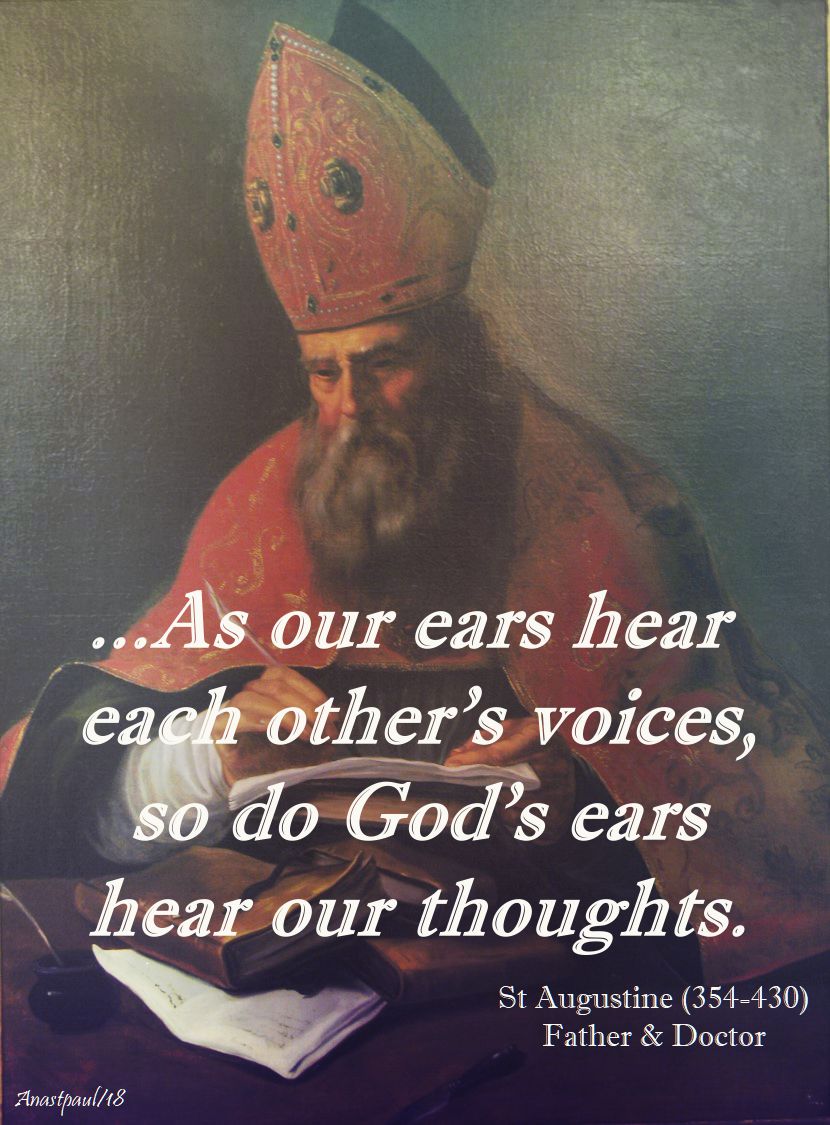
If you never turn aside from the good life, your tongue may be silent but your actions will cry aloud and God will perceive your intentions;  for as our ears hear each other’s voices, so do God’s ears hear our thoughts.”

if you never turn aside from the good life - st augustine - low monday - 9 april 2018as our ears hear each other's voices - st augustine - 8 april 2018 - low monday of eastertide

This excerpt on the Alleluia as the song of the Easter Season of praise comes from St. Augustine’s discourse on the Psalms (Ps. 148, 1-2: CCL 40, 2165-2166).

We are the Easter People and Alleluia is our Song!

St Pope John Paul (1920-2005)we are the easter people and alleluia is our song - st john paul - 9 april 2018 - low monday

Posted in DOCTORS of the Church, EASTER, FATHERS of the Church, GOD the FATHER, MORNING Prayers, QUOTES of the SAINTS

Quote of the Day – 9 April – Low Monday of Eastertide

Quote of the Day – 9 April – Low Monday of Eastertide

“God is always trying to give good things to us
but our hands are too full to receive them.”

St Augustine (354-430) Father & Doctorgod is always trying to give good things - st augustine - 9 april 2018 low monday of eastertide

Posted in DOCTORS of the Church, EASTER, MORNING Prayers, QUOTES of the SAINTS, SAINT of the DAY, The WORD

One Minute Reflection – 9 April – Low Monday of Eastertide & the Memorial of St Liborius of le Mans (early 4th century – 397)

One Minute Reflection – 9 April – Low Monday of Eastertide & the Memorial of St Liborius of le Mans (early 4th century – 397)

By his ‘will’ we have been sanctified through the offering of the body of Jesus Christ....Hebrews 10:10HEBREWS 10-10 - no 2 used on 9 april 2018

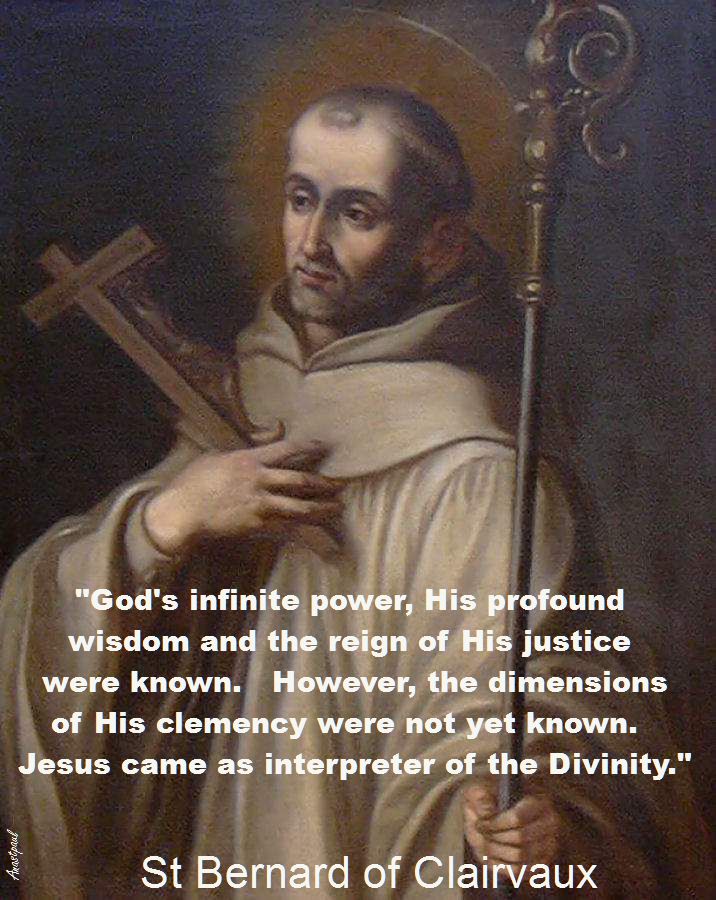
REFLECTION – “God’s infinite power, His profound wisdom and the reign of His justice were known.   However, the dimensions of His clemency were not yet known.   Jesus came as interpreter of the Divinity.”…St Bernard (1090-1153) Doctor of the ChurchGOD'S INFINIE POWER-ST BERNARD

PRAYER – Merciful Father, let us not turn from Your mercy and clemency.   In Jesus Your Son, You sent us all Your loving kindness.   Grant that Christ’s complete sacrifice may bear fruit in me in accord with Your Will for me.   St Liborius, faithfully sought Your will in all things and lovingly gave himself to fulfil it to the best of his ability, grant that by his prayers, we may understand and complete Your will in our lives.   Through Jesus our Lord, in the unity of the Holy Spirit, one God forever, amen.st liborius - pray for us - 9 april 2018

Posted in EASTER, MORNING Prayers, PRAYERS of the SAINTS

Our Morning Offering – 9 April – Low Monday of Eastertide

Our Morning Offering – 9 April – Low Monday of Eastertide

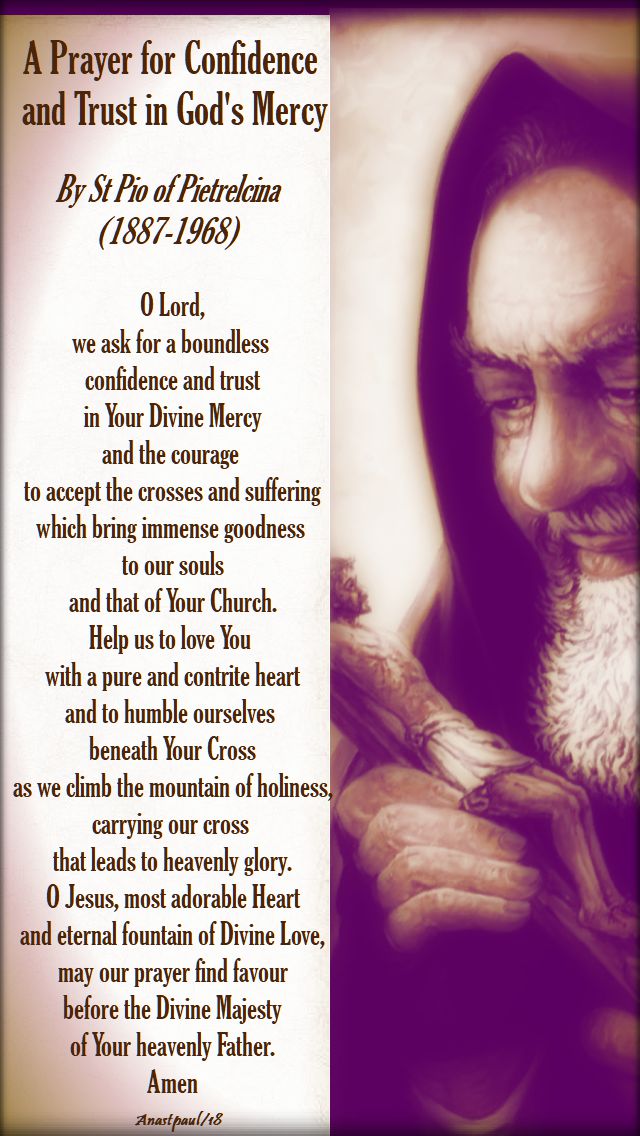
A Prayer for Confidence and Trust in God’s Mercy
By St Pio of Pietrelcina (1887-1968)

O Lord,
we ask for a boundless confidence and trust
in Your Divine Mercy
and the courage to accept the crosses and suffering
which bring immense goodness to our souls
and that of Your Church.
Help us to love You with a pure and contrite heart
and to humble ourselves beneath Your Cross
as we climb the mountain of holiness,
carrying our cross that leads to heavenly glory.
O Jesus, most adorable Heart
and eternal fountain of Divine Love,
may our prayer find favour
before the Divine Majesty
of Your heavenly Father.
Amena prayer for confidence and trust in god's mercy - by st padre pio - 9 april 2018 low monday

Posted in Of a Holy DEATH & AGAINST A SUDDEN DEATH, of the DYING, FINAL PERSEVERANCE, DEATH of CHILDREN, DEATH of PARENTS, Of the SICK, the INFIRM, All ILLNESS, SAINT of the DAY, STOMACH DISEASES and PAIN, INTESTINAL DISORDERS

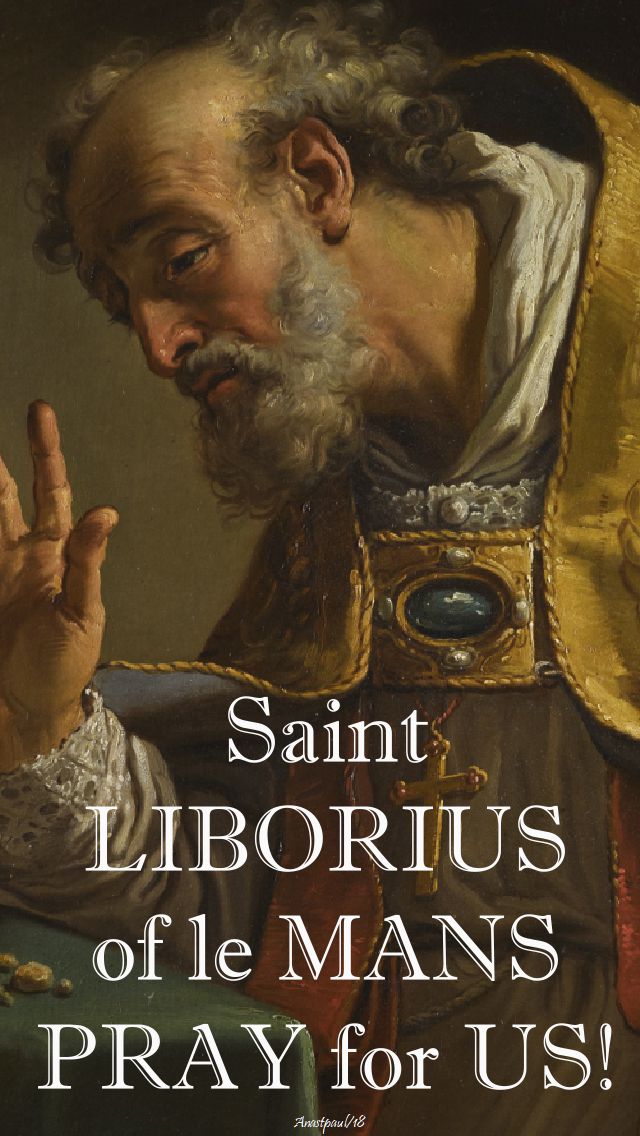
Saint of the Day – 9 April – St Liborius of Le Mans (early 4th century – 397)

Saint of the Day – 9 April – St Liborius of Le Mans (early 4th Century – 397) Bishop, Confessor, Reformer, Evangeliser and Shepherd of souls, Builder of Churches and Monasteries.   Patronages – abdominal pains, against urinary tract diseases, kidney stones or gall stones, against colic, against fever/general illness, of a Holy death, Archdiocese of Paderborn, Germany, City of Paderborn, Germany, Paderborn Cathedral.

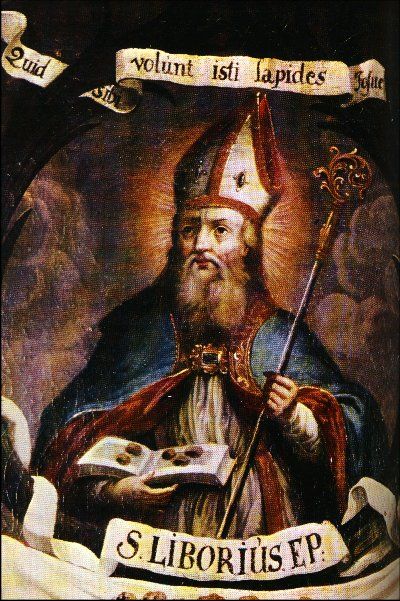
st liborius - v large

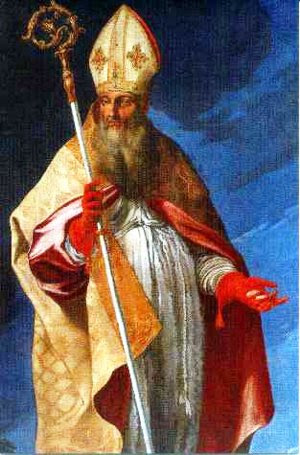
St Liborius was born of an illustrious family of Gaul (a region in the Roman Empire which extended to the area on the west bank of the Rhine river of the present day Germany) and became Bishop of Le Mans, France.   He was a trusty companion and great friend to St Marinus (Martin of Tours).   They were both bishops, neighbours in office.  St Liborius was bishop for about 49 years and ordained 217 priests, 186 deacons and 93 sub deacons and other churchmen.

st liborius

Much of the ministerial life of Bishop Liborius covered the second half of the 4th century. By this time, the Roman Empire ended its persecution of Christianity with Emperor Constantine the Great’s Edict of Milan in the year 313.   Freed from persecution, the Christian faith was now free to grow.   However, during this time, foreign tribes roamed the land.   There was chaos and misery.   Bishop Liborius’ Episcopal area had been Christian for some time but heathen Druids were still active and through their mysterious pagan rites were able to influence the people.   So, Bishop Liborius built many churches and celebrated the Eucharist with piety and dignity.   The well-trained priests in his diocese finally triumphed over the Druids.   Nowadays, we would call the works of Bishop Liborius and his clergy at the time as primary evangelisation.

st liborius of le mans

In the year, 836 A.D., (9th century), the relics of Saint Liborius were brought from Le Mans, France, to Paderborn, Germany.   At this time, relics of the saints were well guarded and venerated in churches and dioceses which had them.   The willingness of the diocese of Le Mans to handover the relics of St Liborius to the diocese of Paderborn was a true act of charity.   The event forged a long lasting friendship between the sister cities of Le Mans and Paderborn;  it has existed for over 1,000 years to this day.

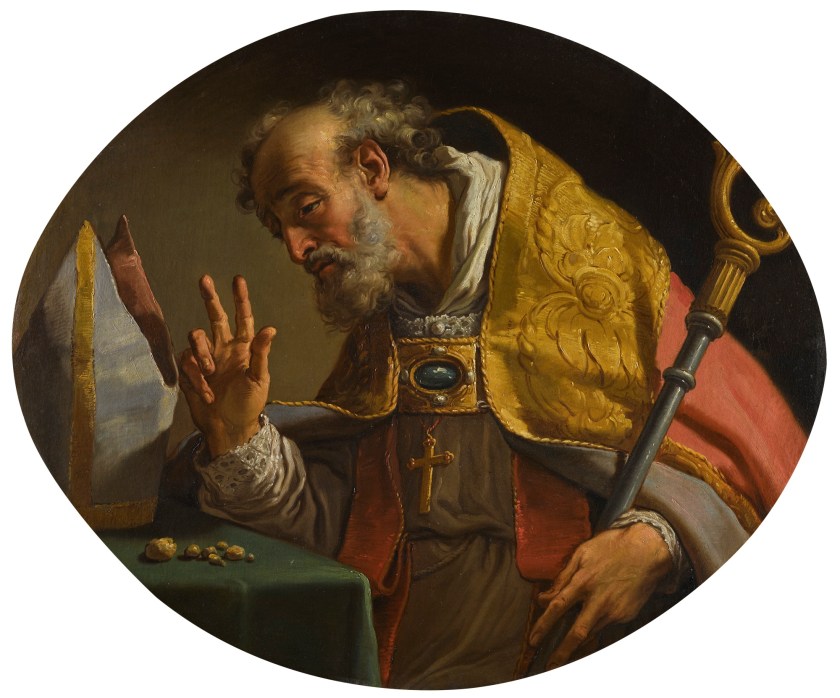
Since St Liborius died in the arms of his friend St Martin of Tours, he is looked to as a patron of a good death.   Since the century he is prayed to for assistance against that gallstones that are caused by the water of the limestone area; the first account of a healing of this kind concerns the cure of Archbishop Werner von Eppstein, who came on pilgrimage to the saint’s shrine in 1267.   This is the origin of the saint’s attribute of three stones placed on a copy of the Bible.   In the same period he became the patron of the cathedral and the archdiocese, rather than the Blessed Virgin Mary and Saint Kilian, who were previously in first place.   And he is often cited as a patron of peace and understanding among peoples.   He is invoked against colic, fever, and gallstones.

As well as being shown as a bishop carrying small stones on a book, Saint Liborious is also shown with the attribute of a peacock because of a legend that, when his body was brought to Paderborn, a peacock guided the bearers.

The popularity of the saint in Paderborn is shown in the week-long yearly festival known as “Libori”, that begins on the Saturday after his local 23 July feast day but his universal memorial is today, 9 April.   Today, many parishes across the world are named after this great man and Saint, as their patron.

Posted in FEASTS and SOLEMNITIES, MORNING Prayers, PRACTISING CATHOLIC, SAINT of the DAY

Solemnity of the Annunciation of the Lord 2018 & Memorials of the Saints – 9 April

Feast of the Annunciation of the Lord 2018

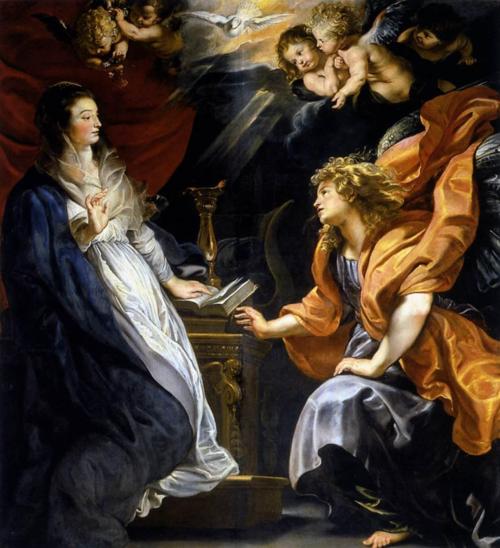
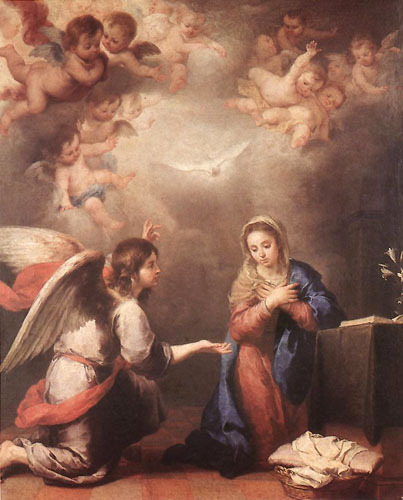
The Annunciation of the Lord celebrates the angel Gabriel’s appearance to the Virgin Mary, announcing that she had been chosen to be the Mother of Our Lord.
How Is the Date of the Feast of the Annunciation Determined?
The Annunciation always falls on 25 March, exactly nine months before the birth of Jesus Christ at Christmas.   However, the celebration of the feast is transferred to a different date if it falls on a Sunday of Lent, during Holy Week (which was the case this year), or during the octave of Easter.
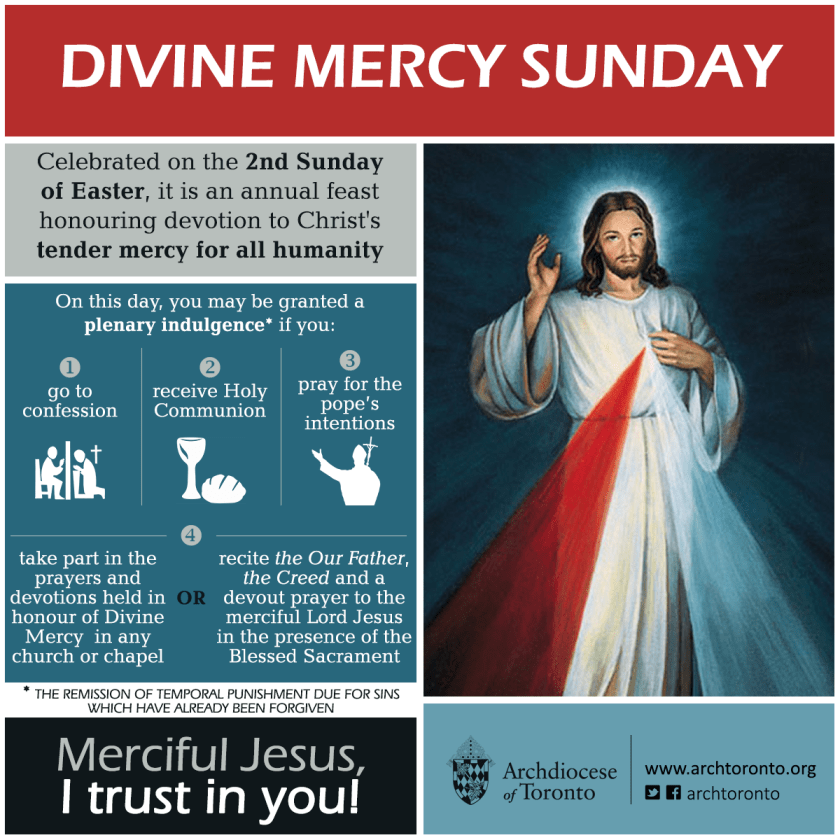
The Church considers Masses for the Sundays of Lent, any time in Holy Week and any time from Easter through the Sunday after Easter (Divine Mercy Sunday) to be so important that even this Marian feast cannot replace one of them.   So, when the Annunciation falls on a Sunday in Lent (before Palm Sunday), it is transferred to the following Monday.   If it falls on Palm Sunday or on any day in Holy Week, it is transferred to Low Monday, the Monday after the Sunday after Easter and so, this year, 2018, the Solemnity of the Annunciation of the Lord is transferred to today, Monday, 9 April 2018.

Rubens-1610
Rubens
the_annunciation- murillo
Murillo
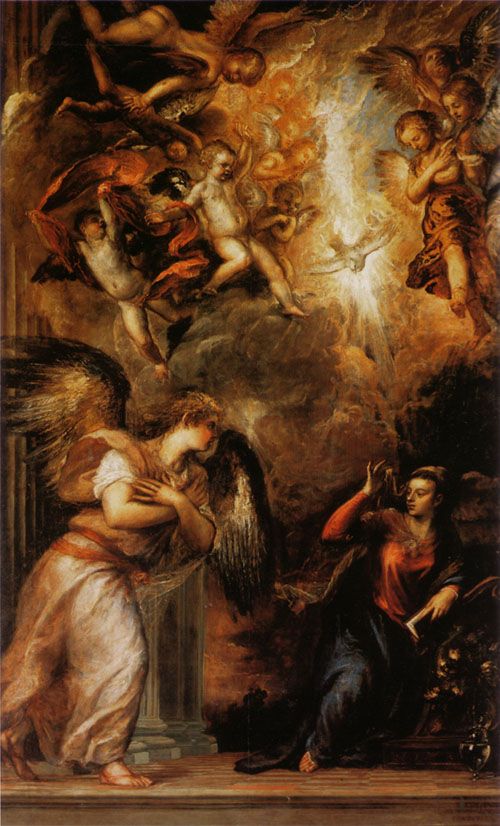
titian annunciation
Titian

_
St Acacius of Amida
St Aedesius of Alexandria
Bl Antony of Pavoni
St Brogan
St Casilda of Toledo
St Concessus the Martyr
St Demetrius the Martyr
St Dotto
St Eupsychius of Cappadocia
St Gaucherius
St Hedda the Abbot
St Heliodorus of Mesopotamia
St Hilary the Martyr
St Hugh of Rouen
Bl James of Padua
Bl John of Vespignano
Bl Katarzyna Faron
St Liborius of Le Mans
Bl Lindalwa Justo de Oliveira
St Madrun of Wales
St Marcellus of Die
Bl Marguerite Rutan
St Maximus of Alexandria
Bl Pierre Camino
St Prochorus
Bl Thomas of Tolentino
Bl Ubaldo Adimari
St Waltrude of Mons

Martyrs of Croyland – 9 saints: A group of Benedictine monks martyred by pagan Danes – Agamund, Askega, Egdred, Elfgete, Grimkeld, Sabinus, Swethin, Theodore and Ulric. Croyland Abbey, England.

Martyrs of Masyla: Massylitan Martyrs Group of Christians martyred in Masyla in northwest Africa.

Martyrs of Pannonia: Seven virgin-martyrs in Sirmium, Pannonia (modern Sremska Mitrovica, Serbia).

Martyrs of Thorney Abbey – 3+ saints: A group of Hermits, hermitesses and monks who lived in or around Thorney Abbey who were martyred together during raids by pagan Danes.   We know little more than the names of three – Tancred, Torthred and Tova. 869 by raiders at Thorney Abbey, Cambridgeshire, England.

Posted in EASTER, EUCHARISTIC Adoration, FEASTS and SOLEMNITIES, MORNING Prayers, QUOTES - J R R Tolkien and MORE, QUOTES of the SAINTS, SUNDAY REFLECTIONS, The HOLY EUCHARIST / The HOLY MASS

Sunday Reflection – 8 April – Low Sunday the Octave Day of Easter and Divine Mercy Sunday

Sunday Reflection – 8 April – Low Sunday the Octave Day of Easter and Divine Mercy Sunday

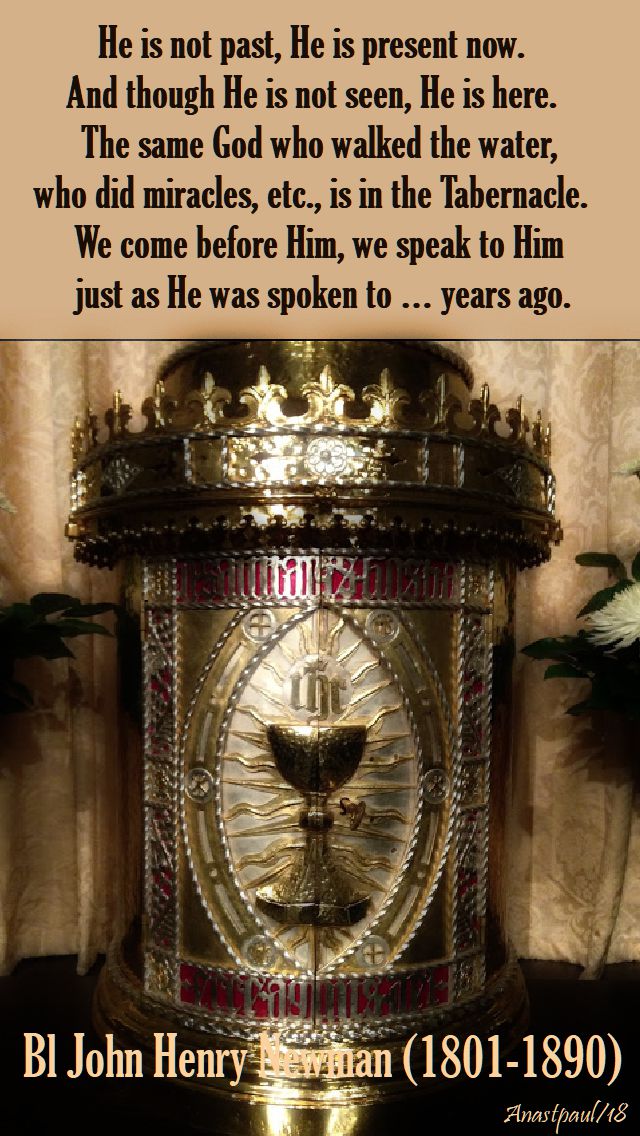
“He is not past, He is present now.” – Bl John Henry Newman (1801-1890) on the Eucharist

In every Mass Christ comes to us, in the Blessed Eucharist, Christ remains with us – Christ counteracts Time and the World

What makes Christianity in its fullness, much more than a historical religion – though Protestants claim their religion to be just that, and, indeed, Christ died long ago – is the fact that He is “living among us with a continual presence”.

In every Holy Mass we are touched by Christ’s spiritual presence when the Gospel is proclaimed.   We are touched by His real, full and personal presence in the Eucharist. When we walk up to receive the Eucharist, Christ Jesus comes to us.   He remains with us in the Blessed Sacrament, whether in the tabernacle or exposed for our adoration.   With Newman’s words from a sermon of 25th May 1858:

He is not past, He is present now.   And though He is not seen, He is here.   The same God who walked the water, who did miracles, etc., is in the Tabernacle. We come before Him, we speak to Him just as He was spoken to … years ago.”

We receive Christ Jesus, when we receive the consecrated host.   We adore Him, we listen to Him and we dare to speak to Him.   When we receive Holy Communion, He wants to grow in us and wants us to grow towards Him:

“In every holy mass and especially in communion but also whenever we adore Christ Jesus, kneeling before the tabernacle or before the exposed Blessed Sacrament, our fleeting lives touch eternity as the living God touches us.   God, does not merely present Himself before us as the Object of worship but God actually gives Himself to us to be received into our breasts. wonderful communion”!

The Eucharist brings Christians of all times, whether in the action of holy Mass or in the stillness of the Blessed Sacrament into the presence of Christ and is the living reminder that we live at all times in the presence of God and have the presence of God within us and before us in a passing world.   It makes us realise that although every day and hour passes and will never come back, we are held and find our stay in the presence and love of God.   The real presence of God in the Holy Eucharist makes us realise that eternal life, our life with God, has begun for us with baptism and cannot be lost to us by any outward force, only by severe sin.   Therefore Newman can say that by the Holy Eucharist “We are brought into the unseen world.” (Excerpted Sr Brigitte Maria Hoegemann FSO)he is not past, he is present now - bl john henry newman - sunday reflection - 8 april 2018 - div mercy sunday

Posted in DIVINE Mercy, Goodness, Patience, EASTER, FEASTS and SOLEMNITIES, MORNING Prayers, QUOTES - J R R Tolkien and MORE, QUOTES of the SAINTS

Thought for the Day – 8 April – Low Sunday the Octave Day of Easter and Divine Mercy Sunday

Thought for the Day – 8 April – Low Sunday the Octave Day of Easter and Divine Mercy Sunday

What many do not know is that St John Paul II had been anticipating preaching a homily on Divine Mercy Sunday 2005 at a new parish in Albis, Rome.  It was dedicated to God, the Merciful Father.   We all watched with grief as his health rapidly declined during that Lent of 2005.   He began to prepare his homily for the event, what some believe may be the last handwritten lines of our saintly pontiff.   He left this world hours before it was to be delivered.

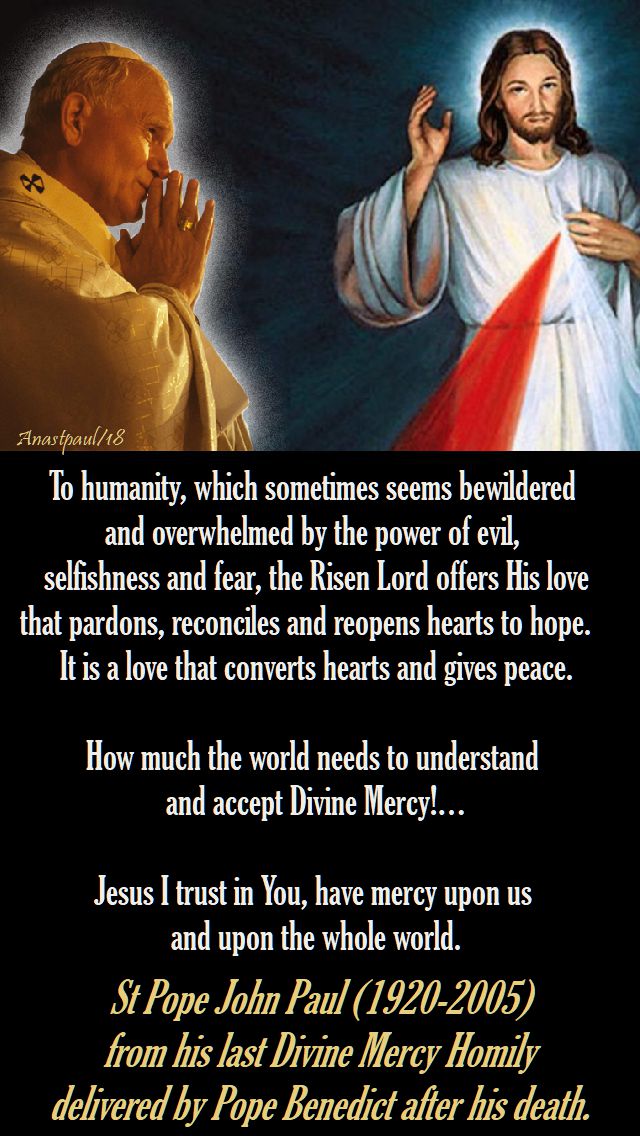
It would be his successor, Benedict XVI, who would deliver to that community the pope’s final words  . In fact Pope Benedict called them St John Paul II’s spiritual last will and testament.   It’s clear he didn’t intend them solely for a parish in the suburbs but for all of us. It represents his final mercy mandate to the world. ”To humanity, which sometimes seems bewildered and overwhelmed by the power of evil, selfishness and fear, the Risen Lord offers His love that pardons, reconciles and re-opens hearts to hope.   It is a love that converts hearts and gives peace.”

Ten years later, with the emergence of unimagined evils perpetrated by groups like ISIS and others, we may be more overwhelmed than ever.   Jesus and the Gospel are our only hope.   He continued, “How much the world needs to understand and accept Divine Mercy!…Jesus I trust in You, have mercy upon us and upon the whole world.”to humanity which sometimes seems - st john paul - 8 april 2018 - div mercy sunday

This Divine Mercy Sunday invites us each to evaluate our lives in light of St John Paul II and the Church’s profound message of mercy.   Take a few moments to reflect on the meaning of your life, evaluate your plans and goals.   Consider where you spend your attention, energy and affection.   Gathered together would a fitting summary of your life be, “Here was one who modelled God’s Divine Mercy in prayer, word and deed. Here was one who loved, forgave, pardoned, reconciled and reopened hearts to hope”? It is my prayer for you and it is certainly possible by God’s grace and the intercession of St Faustina and St John Paul II……Thomas Smith – writer/presenter/speaker and moreplenary indulgence - div mercy

Posted in BREVIARY Prayers, DIVINE Mercy, Goodness, Patience, EASTER, FEASTS and SOLEMNITIES, MORNING Prayers, The WORD

Quote of the Day – 8 April – Low Sunday the Octave Day of Easter and Divine Mercy Sunday

Quote of the Day – 8 April – Low Sunday the Octave Day of Easter and Divine Mercy Sunday

“You are a chosen race, a royal priesthood, a consecrated nation, a people set apart to sing the praises of God, Who called you out of darkness into his wonderful light. Once you were not a people at all and now you are the people of God: once you were outside the mercy and now you have been given mercy.”

1 Peter 2:9-101 peter 2 9-10 - octave day of easter and div mercy sunday - breviary reading - 8 april 2018

Posted in DEVOTIO, DIVINE Mercy, Goodness, Patience, EASTER, FEASTS and SOLEMNITIES, MORNING Prayers, QUOTES of the SAINTS, QUOTES on PRAYER, SAINT of the DAY, The HOLY GHOST, VATICAN Resources

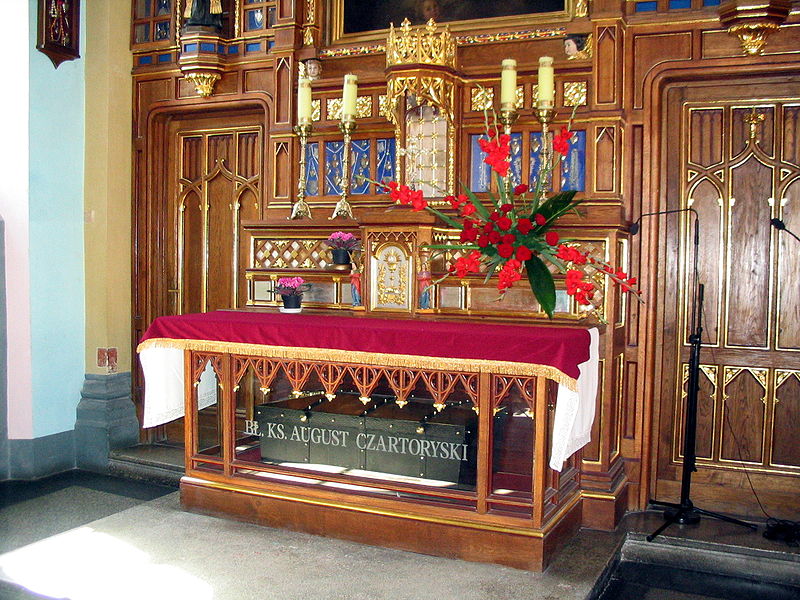
One Minute Reflection – 8 April – Low Sunday the Octave Day of Easter and Divine Mercy Sunday and the Memorial of Bl Augustus Czartoryski S.D.B. (1858-1893)

One Minute Reflection – 8 April – Low Sunday the Octave Day of Easter and Divine Mercy Sunday and the Memorial of Bl Augustus Czartoryski S.D.B. (1858-1893)

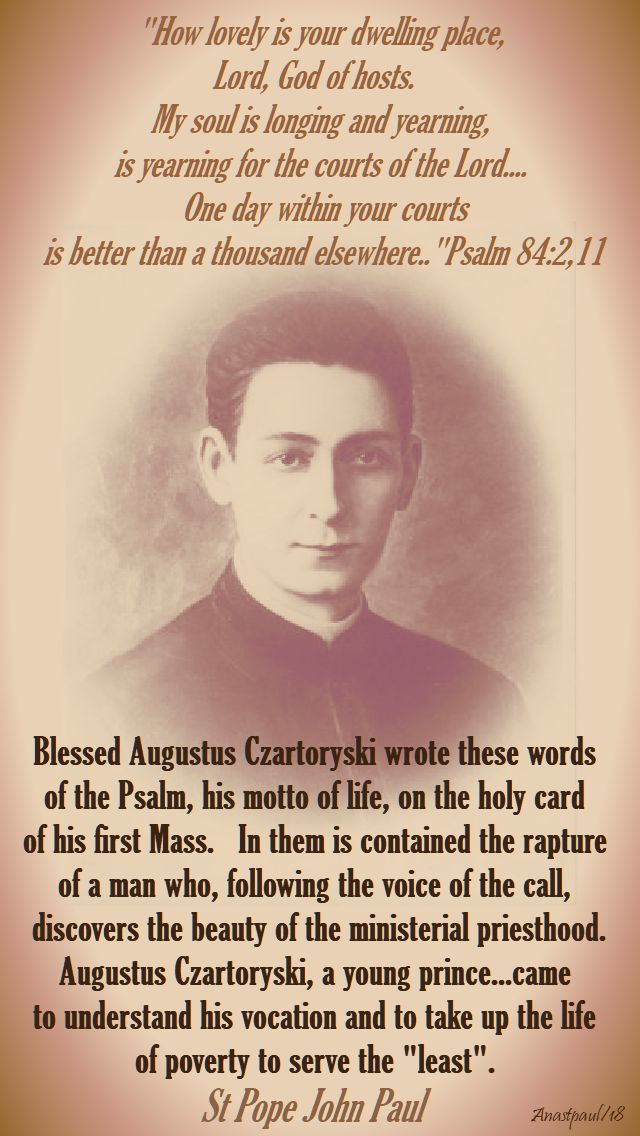
“How lovely is your dwelling place, Lord, God of hosts.   My soul is longing and yearning, is yearning for the courts of the Lord…. One day within your courts is better than a thousand elsewhere” …Psalm 84[83]: 2, 11

REFLECTION – “Blessed Augusto Czartoryski wrote these words of the Psalm, his motto of life, on the holy card of his first Mass.   In them is contained the rapture of a man who, following the voice of the call, discovers the beauty of the ministerial priesthood.   In them resounds the echo of the different choices that the person who is discerning God’s will and wishes to fulfil it must make.   Augustus Czartoryski, a young prince, carefully prepared an effective method to discern the divine plan.   In prayer, he presented to God all questions and deep perplexities and then in the spirit of obedience he followed the counsel given by his spiritual guides.   In this way he came to understand his vocation and to take up the life of poverty to serve the “least”.   The same method enabled him throughout the course of his life to make decisions, so that today we can say that he accomplished the designs of Divine Providence in a heroic way.   I would like to leave this example of holiness especially to young people, who today search out the way to decipher God’s will relating to their own lives and desire to faithfully forge ahead each day according to the divine word.   My dear young friends, learn from Blessed Augustus to ask ardently in prayer for the light of the Holy Spirit and wise guides, so that you may understand the divine plan in your lives and are able to walk constantly on the path of holiness.”…St Pope John Paul on the Beatification of Blessed Augustus on Sunday, 25 April 2004

bl augustus czartoryski wrote these words - st john paul - 8 april 2018

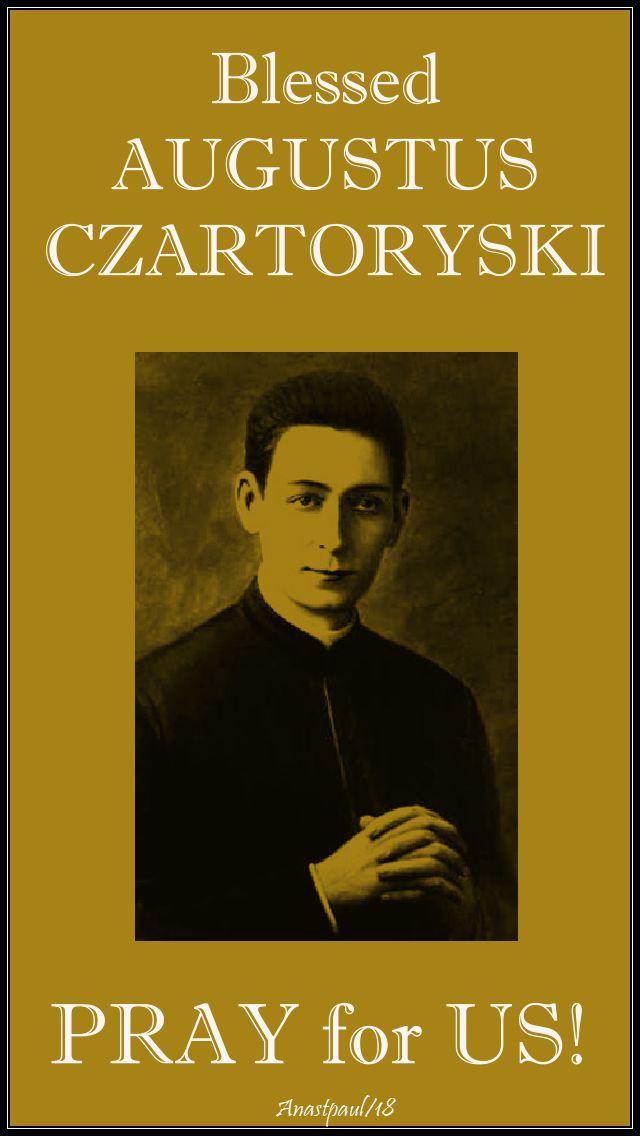
PRAYER – Heavenly God and Father and Your divine Son, dear Jesus in whom we trust, send Your Holy Spirit to guide and teach us, to lead us into the ways of holiness.   Grant, we pray, that by the intercession of Blessed Augustus, we may fulfil Your Holy Will by the light of the Holy Spirit.   Through Jesus Christ, our Lord, in union with the Holy Spirit, one God forever, amen.bl augustus czartoryski - pray for us - 8 april 2018

Posted in DEVOTIO, DIVINE Mercy, Goodness, Patience, EASTER, FEASTS and SOLEMNITIES, MORNING Prayers, PRAYERS of the CHURCH

Our Morning Offering – 8 April – Low Sunday the Octave Day of Easter and Divine Mercy Sunday

Our Morning Offering – 8 April – Low Sunday the Octave Day of Easter and Divine Mercy Sunday

Most Merciful Jesus,
whose very nature it is
to have compassion on us
and to forgive us,
do not look upon our sins
but upon our trust which we place
in Your infinite goodness.
Receive us all into the abode
of Your Most Compassionate Heart
and never let us escape from It.
We beg this of You by Your love
which unites You to the Father
and the Holy Spirit.
Eternal Father, turn Your merciful gaze
upon all mankind and especially upon poor sinners,
all enfolded in the Most Compassionate Heart of Jesus.
For the sake of His sorrowful Passion,
show us Your mercy,
that we may praise the omnipotence of Your mercy
forever and ever.
Amen.div mercy prayer - day one from the novena - 8 april 2018 for div mercy sunday

Posted in SAINT of the DAY, VATICAN Resources

Saint of the Day – 8 April – Blessed Augustus Czartoryski S.D.B. (1858-1893)

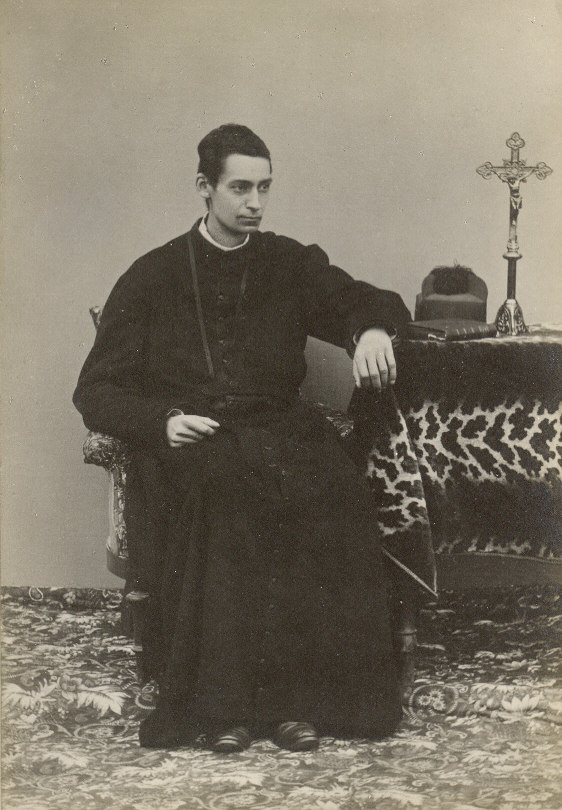
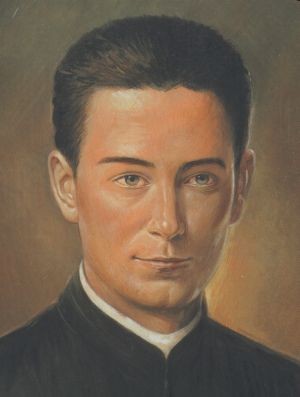
Saint of the Day – 8 April – Blessed Augustus Czartoryski S.D.B. (1858-1893) Religious Priest of the Salesians of Don Bosco, Royal Prince and Duke – born Prince August Franciszek Maria Anna Józef Kajetan Czartoryski/the Duke of Vista Alegre on 2 August 1858 in Paris, France – evening of 8 April, 1893 in Alassio, Savona, Italy of tuberculosis.  His remains were interred in the family mausoleum in the parish crypt in Sieniawa, Poland and later re-interred in the Salesian church in Przemysl, Poland.

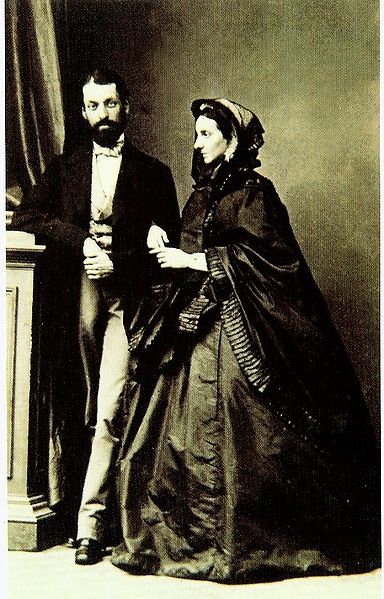
Augusto Czartoryski was born on 2 August 1858 in Paris, France, the firstborn son to Prince Ladislaus of Poland and Princess Maria Amparo, daughter of the Duke and Queen of Spain.   The noble Czartoryski Family had been living in exile in France for almost 30 years, in the Lambert Palace.   Here, with the hope of restoring unity in Poland, they continued to direct activities between their fellow Polish countrymen and the European chancellery.
BlAugustoCzartoryski08-4

Plans for a future Prince

It was already planned that Augusto would be a future “reference point” for this restoration and would carry on the “Czartoryski” name.   God’s designs, however, were to unfold differently.
When Augusto was 6, his mother died of tuberculosis;  the disease was also transmitted to him and for the rest of his life he would be plagued by ill health.   Although he had to make “forced pilgrimages” with his father to Italy, Switzerland, Egypt and Spain in search of a cure, he never regained his health.

384px-María_Amparo_Muñoz_y_Borbón,_condesa_de_Vista_Alegre_–_conde_Ladislao_Czartoryski
His parents, c 1860

As he grew up, Augusto felt that he was not meant for the life of nobility and one day, when he was 20 years old, he wrote to his father:  “I confess to you that I am tired [of all the parties;  they are superficial entertainments that cause me anguish and I feel myself “forced’ to make acquaintances with others at these banquets”.

Augusto already received spiritual direction from his tutor, Joseph Kalinsowski (later Saint Raphael of Saint Joseph Kalinowski O.C.D. (1835-1907) , who would later become a Carmelite and who, before leaving for Carmel in 1877, wrote to Prince Ladislaus to suggest that it would be wise, considering the boy’s love for God, to entrust him to the direction of a priest.

Encounter with Don Bosco

Prince Ladislaus accepted the counsel given by Augusto’s tutor and Fr Stanislaus Kubowicz began to guide him.   Augusto was already feeling more and more called to religious life and was hoping for a clearer indication of what God wanted from him:  this “decisive event” took place when he was 25 and met Don Bosco, founder of the Salesians.

When Don Bosco came to Paris and celebrated Mass in the family chapel of the Lambert Palace, Augusto saw in this holy founder and teacher the “father of his soul” and guide for his future.   While Augusto remained quiet and withdrawn in the face of matrimony plans made for him by his father, he had no intention of continuing the “noble line”. Indeed, after his first encounter with the Salesian saint, he was more resolute than ever to answer God’s call by becoming a Salesian.
When his father gave him permission, Augusto would travel to Turin to meet with Don Bosco and participate in spiritual retreats.   He became comfortable with the “poverty” of the Salesian Oratory and was not disturbed by his frequent ill health or his father’s opposition;  he instead saw God’s hand in all these circumstances.
He would say: “If God wants this, all will go well since he can take away every obstacle.   If he does not want this, then neither do I”.BL AUGUSTUS

A “Prince’ for God’s Kingdom

Don Bosco was somewhat reluctant to accept Augusto into the Salesian community:  it took Pope Leo XIII to remove his doubts when he gave Augusto this message:  “Tell Don Bosco that it is the Pope’s will that he receives you among the Salesians”.

Don Bosco replied: “Well then, my dear son, I accept you. From this moment, you are a part of the Salesian Family and I desire that you belong here until you die”.

In 1887 he began his novitiate under the guidance of Don Giulio Barberis.   The young man had to overcome many “habits” and adjust to community life, schedule, frugal meals and other sacrifices.   All this he did with great serenity and abandonment to God.

When his father came to try to convince him to return home and accept his nobility as “Prince”, he refused.   On 24 November 1887, the day of his vesting in the hands of Don Bosco, the holy founder whispered into Augusto’s ear:  “Courage, my prince! Today we have conquered, and I can also say with great joy that one day when you become a priest you will do much for your Country”.

0802_august-czartoryski

One year as Christ’s Priest

Don Bosco died two months later.   Augusto’s health was also worsening and his father continued to try to dissuade him from becoming a priest, using his ill health as an “excuse”.

When Prince Ladislaus asked the “help” of Cardinal Parocchi to dismiss him from the Salesians, Augusto wrote:   “In full liberty I made my vows and I did this with great joy of heart.   From that day I continue to live in the Congregation with an immense peace of spirit and I thank the Lord for allowing me to know the Salesian Family and for having called me to become a Salesian”.

On 2 April 1892 he was Ordained a Priest by the Bishop of Ventimiglia.   Although Prince Ladislaus was not present at the Ordination, a month later, joined by the entire family in Mentone, he reconciled himself with his son’s decision and renounced his own dreams of prestige and nobility for Augusto.

Fr Augusto died on 8 April 1893 in Alassio, where he lived his year as a Priest, occupying a room which looked out onto the courtyard where the children of the Oratory played. He was 35 years old.

BL AUGUTUS TOMB-Salezjanie_-_Czartoryski1
Relics of August Czartoryski in Salesians Church in Przemyśl, Poland
Posted in SAINT of the DAY

Memorials of the Saints – 8 April

St Agabus the Prophet
Bl Augustus Czartoryski (1858-1893)
St Amantius of Como
St Asynkritos of Marathon
St Beata of Ribnitz
Bl Clement of Osimo
St Concessa
St Dionysius of Alexandria
St Dionysius of Corinth
Bl Domingo Iturrate Zubero
St Gonzalo Mercador
St Herodion of Patras
St Julia Billiart
Bl Julian of Saint Augustine
Bl Libania of Busano
St Perpetuus of Tours
St Phlegon of Hyrcania
St Redemptus of Ferentini

Martyrs of Africa – 3 saints: A group of African martyrs whose name appears on ancient lists, but about whom nothing is known but their names – Januarius, Macaria and Maxima.Martyrs of Antioch – 4 saints: A group of Christians martyred together for their faith. We know little more than their names – Diogene, Macario, Massimo and Timothy. Antioch, Syria.

Martyrs of Antioch: A group of Christians martyred together for their faith. We know little more than their names – Diogene, Macario, Massimo and Timothy. Antioch, Syria.

Martyrs of Seoul – 5 saints: A group laymen who were martyred together in the apostolic vicariate of Korea.
• Augustinus Jeong Yak-jong
• Franciscus Xaverius Hong Gyo-man
• Ioannes Choe Chang-hyeon
• Lucas Hong Nak-min
• Thomas Choe Pil-gong
They were martyred on 8 April 1801 at the Small West Gate, Seoul, South Korea and Beatified on15 August 2014 by Pope Francis.

Posted in DOCTORS of the Church, EASTER, FATHERS of the Church, MORNING Prayers, QUOTES - J R R Tolkien and MORE, QUOTES of the SAINTS, QUOTES on FAITH

Thought for the Day – 7 April – Easter Saturday, Seventh Day in the Octave of Easter

Thought for the Day – 7 April – Easter Saturday, Seventh Day in the Octave of Easter

What is Faith? by Father Richard Frederick Clarke, SJ

Faith is that disposition of our minds which makes us ready to accept all that God has revealed simply because He has revealed it.   It is an assent to that which comes to us with God’s authority because it comes with His authority and not because in itself it commends itself to our reason.   It is quite satisfied that God has said that this or that is true and it gives its adherence to what He has said without any further question.   It thus earns the benediction of those “who have not seen but have believed.” (John 20:29)   Have I this simple, unquestioning faith?

Faith is never opposed to reason.   It is above and beyond reason but never contrary to it. What God has spoken can never be in contradiction with what our reason tells us is true. It may contradict our ordinary experience, as in the case of miracles; it may seem to set aside the testimony of our senses, as in the case of the Blessed Eucharist;  it may require our acceptance of what is beyond the power of reason to grasp, as the doctrine of the Blessed Trinity but it never requires us to believe in an absurdity.   Thank God for your faith in the Catholic religion, since all others are ultimately in contradiction with reason.

Yet faith requires us to believe many things that are difficult of belief and that we cannot believe without the help of God.   Faith is a gift of God.   No amount of searching or inquiry will obtain it.   I must humbly pray to God, “Give me a strong faith; increase my faith; make me loyal in my readiness to believe,” if I wish my faith to be that of a true child of the Catholic Church. (Beautiful Pearls of Catholic Truth-1897)

“Of course, this adherence to God is not without content;  with it we are aware that God has shown Himself to us in Christ, He has made us see His face and has made Himself really close to each one of us.   Indeed, God has revealed thatHhis love for man, for each one of us, is boundless:  on the Cross, Jesus of Nazareth, the Son of God made man, shows us in the clearest possible way how far this love reaches, even to the gift of Himself, even to the supreme sacrifice.   With the mystery of Christ’s death and Resurrection, God plumbs to the depths of our humanity to bring it back to Him, to uplift it to His heights. Faith is believing in this love of God that is never lacking in the face of human wickedness, in the face of evil and death but is capable of transforming every kind of slavery, giving us the possibility of salvation.

Having faith, then, is meeting this “You”, God, who supports me and grants me the promise of an indestructible love that not only aspires to eternity but gives it;  it means entrusting myself to God with the attitude of a child, who knows well that all his difficulties, all his problems are understood in the “you” of his mother.   And this possibility of salvation through faith is a gift that God offers all men and women.   I think we should meditate more often — in our daily life, marked by problems and at times by dramatic situations — on the fact that believing in a Christian manner means my trusting abandonment to the profound meaning that sustains me and the world, that meaning that we are are unable to give to each other but can only receive as a gift and that is the foundation on which we can live without fear.   And we must be able to proclaim this liberating and reassuring certainty of faith with words and show it by living our life as Christians.”

Pope Benedict XVI – General Audience “What is faith?” – 24 October 2012

having faith then - pope benedict - 7 april 2018 easter sat 7th day of the octave

“We speak, we cast the seed, we scatter the seed.
There are those who deride us,
those who reproach us,
those who mock at us.
If we fear them, we have nothing left to sow
and on the day of reaping, we will be left without a harvest.
Therefore, may the seed in the good soil sprout!”

St Augustine (354-430) Father & Doctor of the Churchwe speak, we cast the seed - st augustine - 7 april 2018 - easter saturday

Posted in "Follow Me", EASTER, MIRACLES, MORNING Prayers, QUOTES of the SAINTS, QUOTES on DISCIPLESHIP, QUOTES on EVANGELISATION, QUOTES on FAITH, QUOTES on LOVE, QUOTES on PRAYER, QUOTES on SANCTITY, QUOTES on SELF-DENIAL, QUOTES on the CROSS of CHRIST, SAINT of the DAY, The HEART, The HOLY EUCHARIST / The HOLY MASS, The KINGDOM of GOD / HEAVEN, The PASSION, The WILL of GOD

Quote/s of the Day – 7 April – Easter Saturday and the Memorial of St John Baptiste de La Salle (1651-1719)

Quote/s of the Day – 7 April – Easter Saturday and the Memorial of St John Baptiste de La Salle (1651-1719)

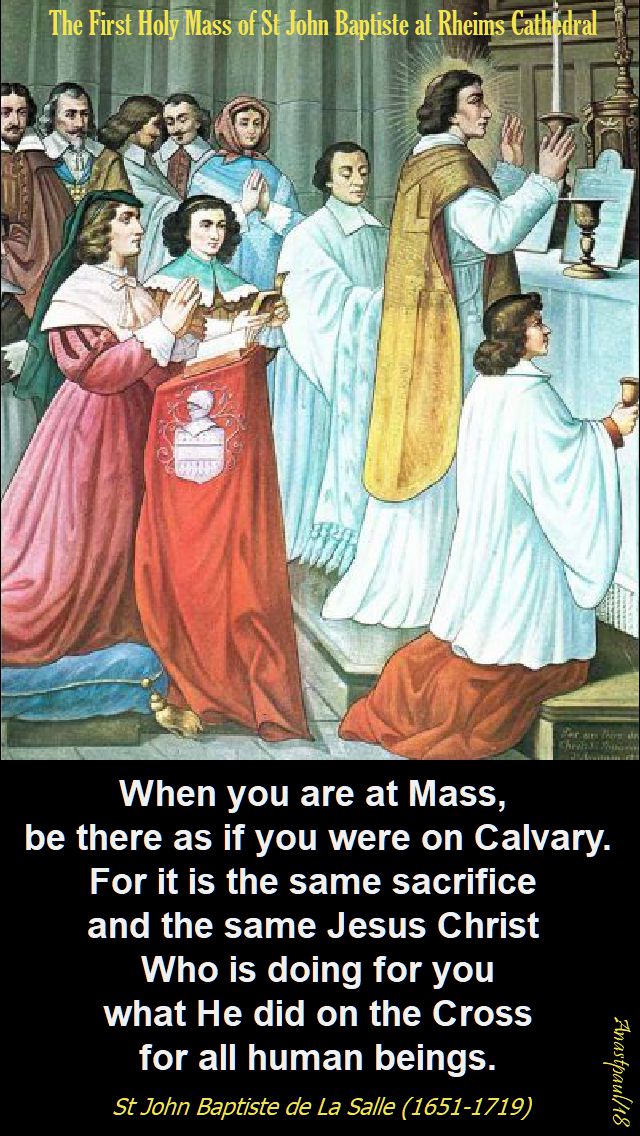
“When you are at Mass,
be there as if you were on Calvary.
For it is the same sacrifice
and the same Jesus Christ
Who is doing for you
what He did on the Cross
for all human beings.”when you are at Mass - st john baptiste de la salle - 7 april 2018

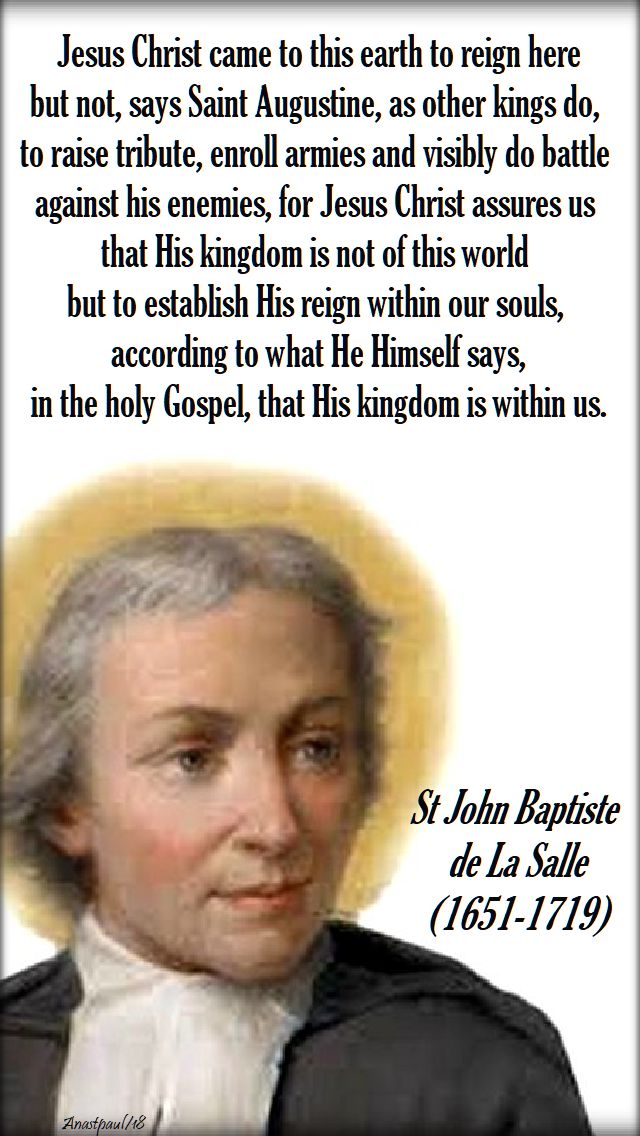
“Jesus Christ came to this earth to reign here
but not, says Saint Augustine, as other kings do,
to raise tribute, enroll armies and visibly do battle
against his enemies, for Jesus Christ assures us
that His kingdom is not of this world
but to establish His reign within our souls,
according to what He Himself says,
in the holy Gospel, that His kingdom is within us.”jesus christ came to this earth - 7 april 2018

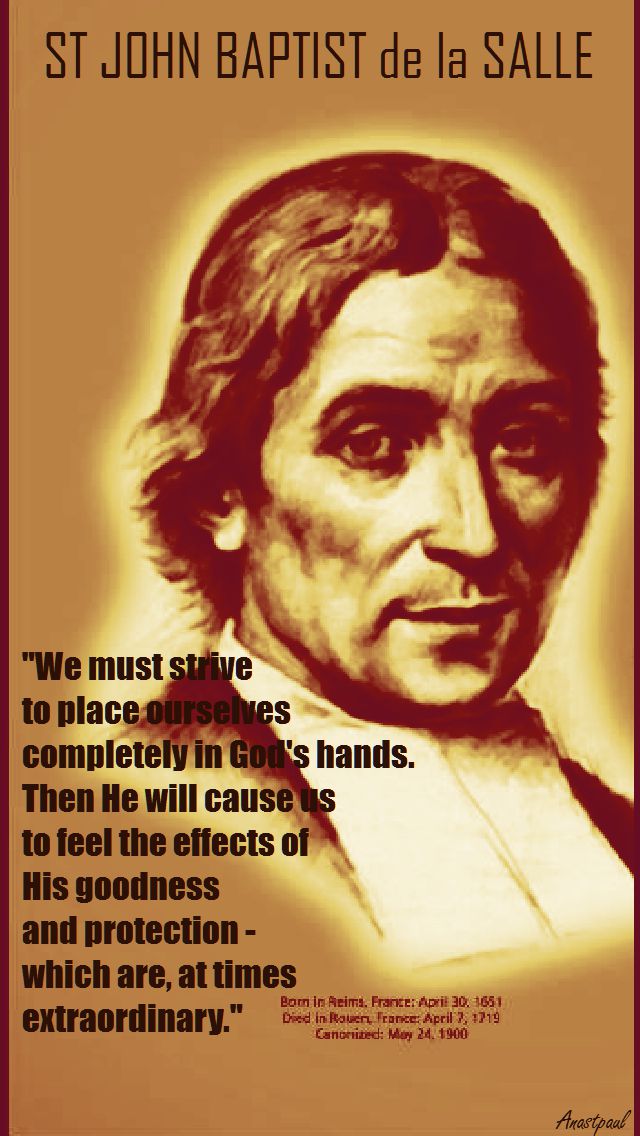
“We must strive to place ourselves completely in God’s hands.
Then He will cause us to feel the effects
of His goodness and protection – which are, at times extraordinary.”we-must-strive-stjohnbaptistdelasalle.14 jan 2017

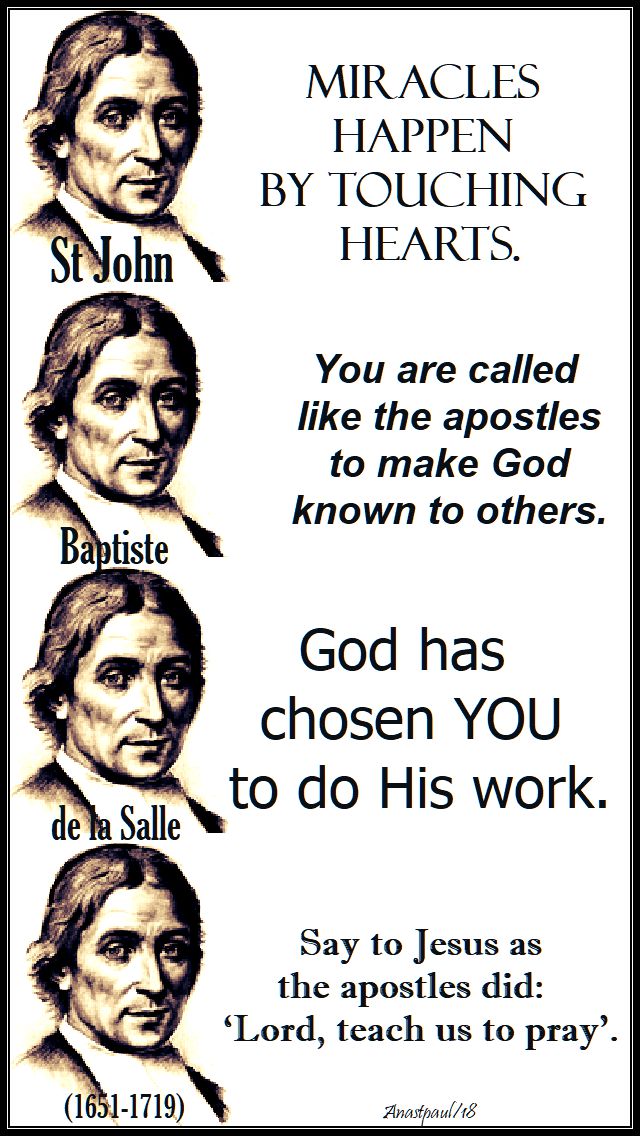
“Miracles happen by touching hearts.”

“You are called like the apostles
to make God known to others.”

“God has chosen you
to do his work.”

“Say to Jesus as the apostles
did: ‘Lord, teach us to pray’.“miracles happen, you are called, god has chosen you, say to Jeus - st john baptiste de la salle - 7 april 2018

St John Baptiste de La Salle (1651-1719)

Posted in EASTER, FEASTS and SOLEMNITIES, MORNING Prayers, QUOTES of the SAINTS, QUOTES on WORRY/ANXIETY, SAINT of the DAY, The WORD

One Minute Reflection – 7 April – Easter Saturday and the Memorial of St John Baptiste de La Salle (1651-1719)

One Minute Reflection – 7 April – Easter Saturday and the Memorial of St John Baptiste de La Salle (1651-1719)

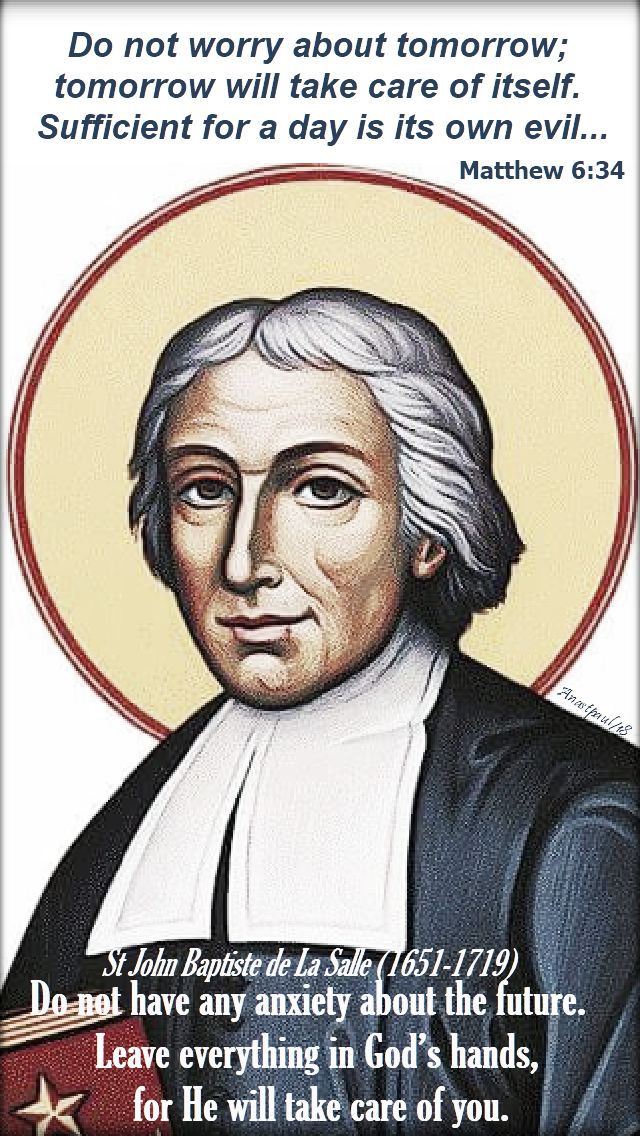
Do not worry about tomorrow;  tomorrow will take care of itself.   Sufficient for a day is its own evil.…Matthew 6:34

REFLECTION – “Do not have any anxiety about the future.   Leave everything in God’s hands, for He will take care of you.” …St John Baptiste de La Salle (1651-1719)do not have any anxiety - st john baptiste de la salle - 7 april 2018

PRAYER – In Your providence, Lord God, You chose St John Baptiste de la Salle, to educate the young in the Christian faith and way of life. Raise up, Lord, in the Church today, teachers who will devote themselves wholeheartedly to the human and Christian education of our youth.   May the prayers of St John, help us all to seek and do Your holy will in all things, amen.st john baptiste de la salle - pray for us - 7 april 2018

Posted in EASTER, FEASTS and SOLEMNITIES, MORNING Prayers, PRAYERS of the SAINTS, SAINT of the DAY

Our Morning Offering – 7 April – Easter Saturday and the Memorial of St John Baptiste de La Salle (1651-1719)

Our Morning Offering – 7 April – Easter Saturday and the Memorial of St John Baptiste de La Salle (1651-1719)

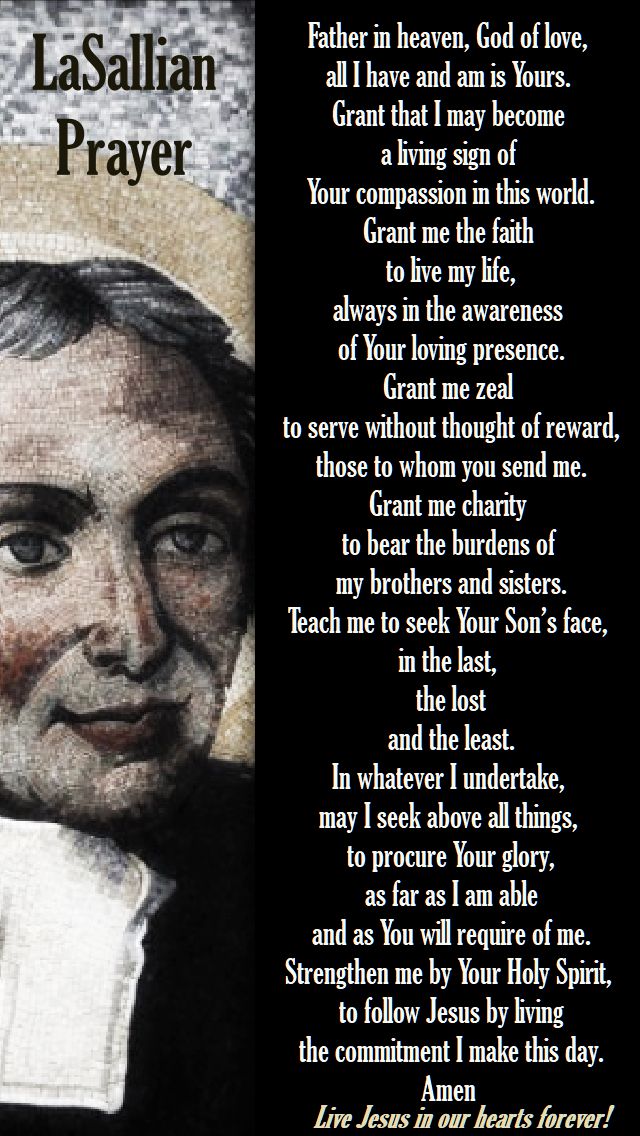
LaSallian Prayer

Father in heaven, God of love,
all I have and am is Yours.
Grant that I may become
a living sign of Your compassion in this world.
Grant me the faith
to live my life,
always in the awareness of Your loving presence.
Grant me zeal
to serve without thought of reward,
those to whom you send me.
Grant me charity
to bear the burdens of my brothers and sisters.
Teach me to seek Your Son’s face,
in the last
the lost
and the least.
In whatever I undertake,
may I seek above all things,
to procure Your glory,
as far as I am able
and as You will require of me.
Strengthen me by Your Holy Spirit,
to follow Jesus by living
the commitment I make this day.
Amen

LaSallian Invocation:
Live Jesus in our hearts forever!lasallian prayer - father in heaven, god of love - st john baptiste de la salle - 7 april 2018

Posted in EASTER, MORNING Prayers, SAINT of the DAY

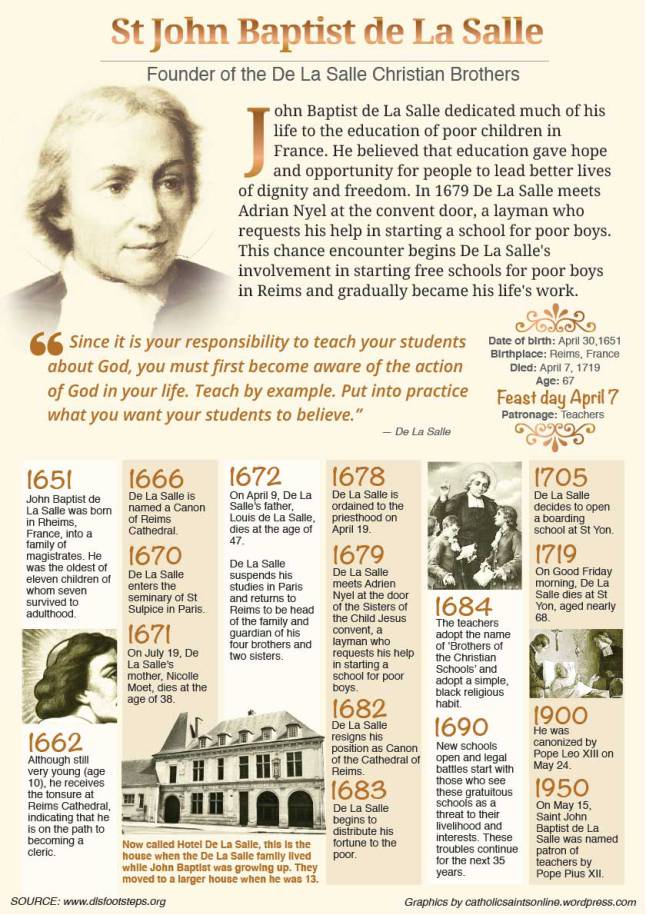
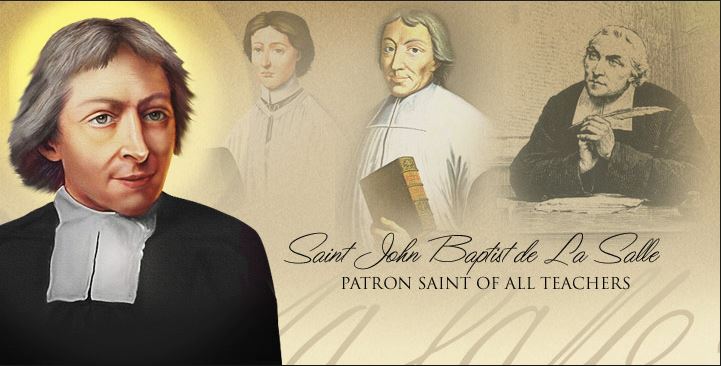
Saint of the Day – 7 April – St John Baptiste de la Salle (1651-1719) – the “Father of Modern Education”

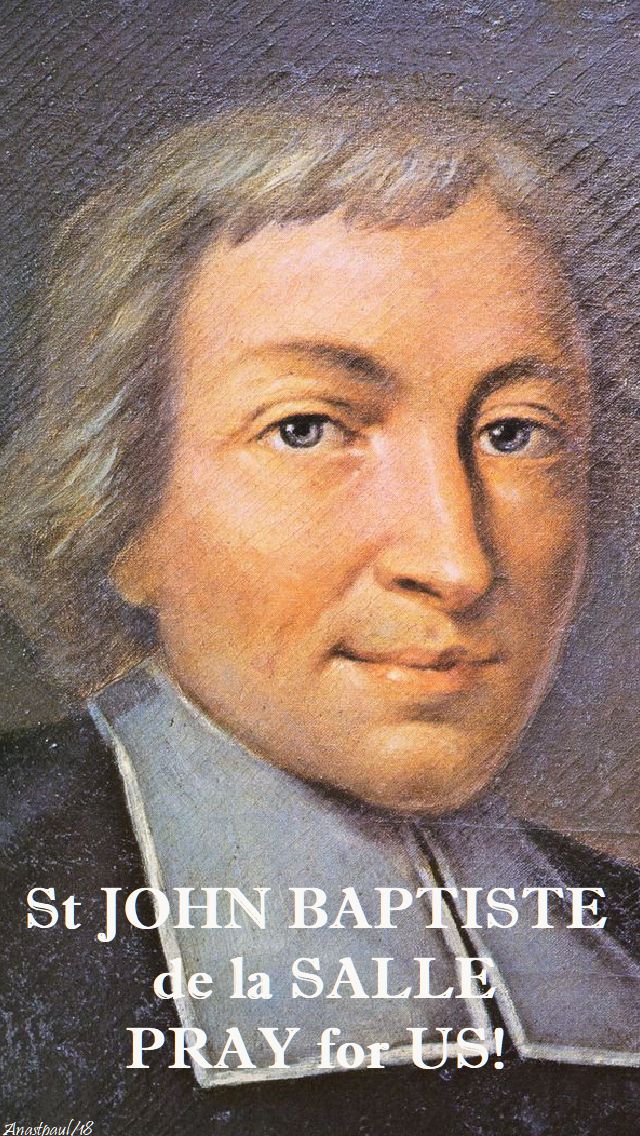
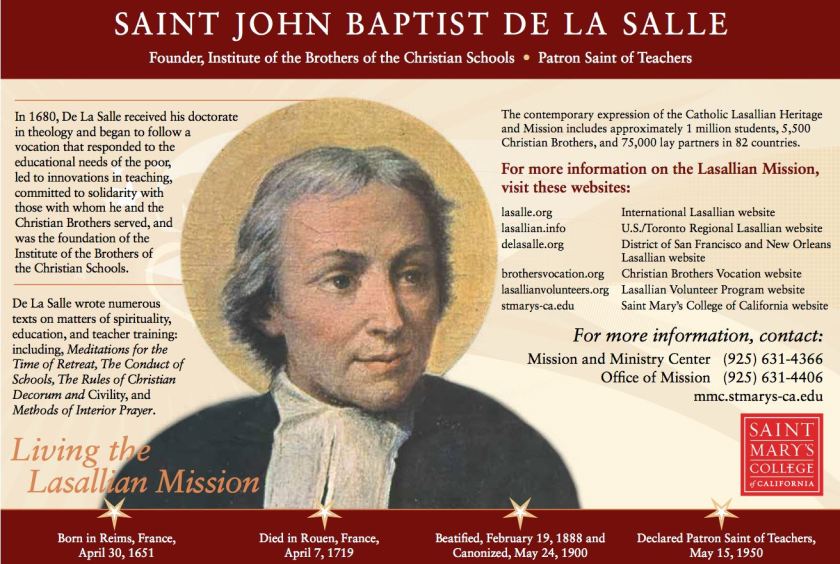
Saint of the Day – 7 April – St John Baptiste de la Salle (1651-1719) Priest, Founder of La Salle Schools and of the Brothers of the Christian Schools or FSC (Fratres Scholarum Christianarum), Educational Reformer, known as the “Father of Modern Education”.   St John was born on 30 April 1651 at Rheims, France and died on 7 April 1719 at Saint-Yon, Rouen, France of natural causes.  Patronages – Teachers of Youth, (15 May 1950, Pius XII), Institute of the Brothers of the Christian Schools, Lasallian educational institutions, teachers, school principals.st john baptiste de la salle - header

st-john-baptist-de-la-salle.infost john baptiste de la salle patron of teachers

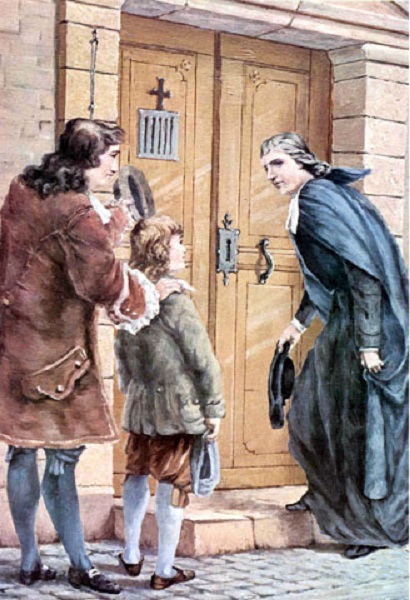
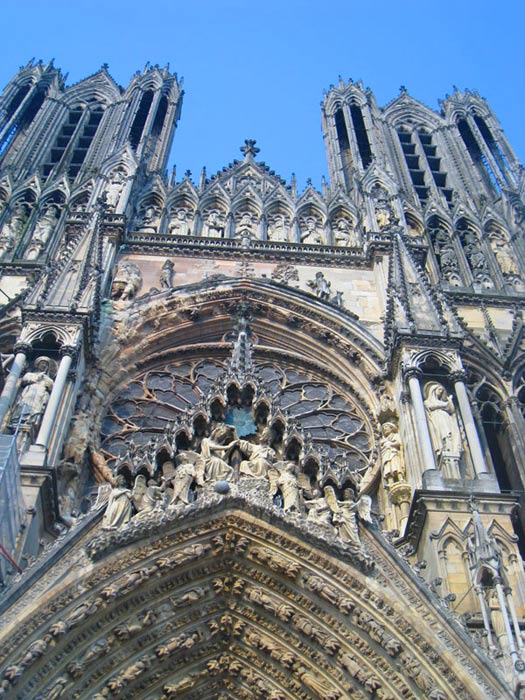
St John’s parents were people of standing, his father holding a judicial post.   From childhood he gave evidence of such unusual piety that he was designated for the priesthood.   At eleven he received the tonsure and at sixteen became a canon of the cathedral chapter at Rheims.   Later he was sent to the seminary of St Sulpice to complete his studies.   The young canon, handsome in appearance and scholarly in his tastes, seemed destined for high ecclesiastical preferment.   An altar server from the start, De La Salle regularly attended Mass and prayers in Rheims Cathedral and was a Canon for 16 years.   This is also where he said his first Mass and around which his liturgical life revolved.  Soon after his return to Rheims he was to discover his true life workthe education of the poor.   It was to be a long, hard struggle, with few tangible rewards but he unquestionably started a movement which was to result in furthering free elementary instruction.

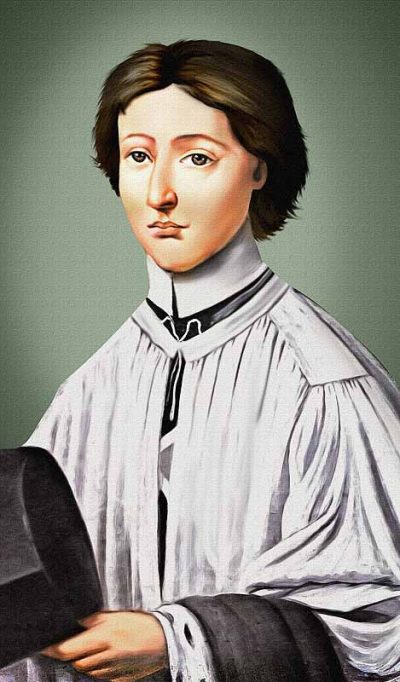
young de la salle as Canon
Young De La Salle as canon
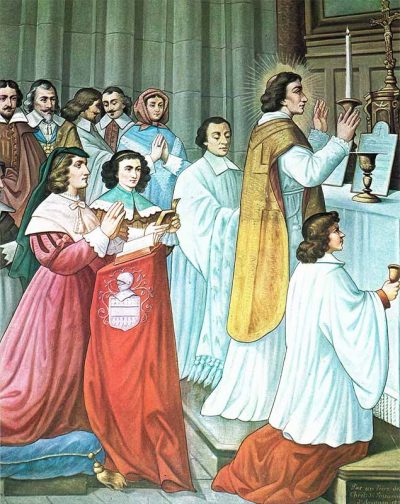
17-dls-first-mass-400x504
De La Salle says his first Mass at Rheims Cathedral

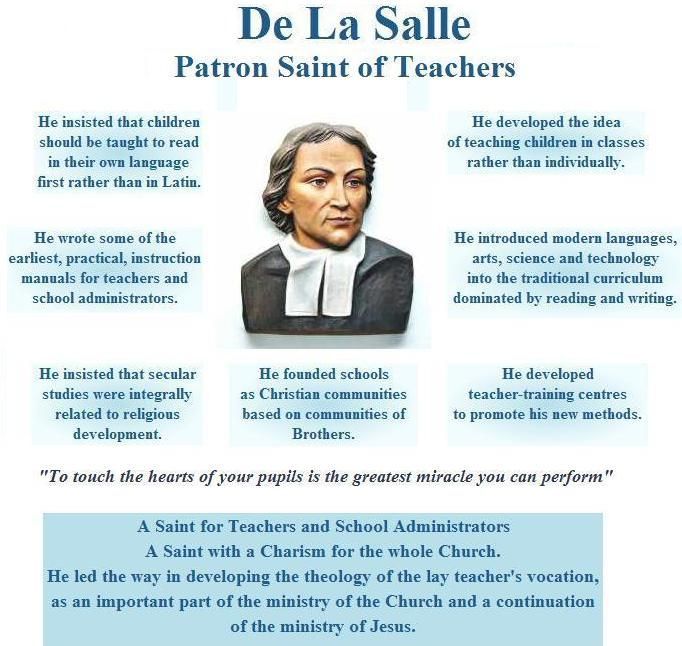
In 17th-century France, education was reserved for those who were rich and only by special providence did John Baptiste de La Salle become interested in schools for boys who were poor.   By chance, John met Adrien Nyel, who was establishing some charitable schools for boys in need.   John disliked the rough behaviour of those who were poor and the smells and sights of the slums but he sympathised with their poverty.   John helped open a school for boys in need.   He secured five teachers and rented a building.   As John checked on his school, he witnessed shocking conditions.   John decided he had to bring order to the school.   He planned to upgrade the standards of the teachers and train them to be religious educators.   His teachers quit.   But soon men of better quality took their places and thrived under John’s training.   John began to see that he must identify with his teachers, so he gave away his fortune and dedicated himself to education.


John founded the Brothers of Christian Schools to educate those who were poor. “The more religious a school is, the more successful it is,” was John’s philosophy.   His boys attended daily Mass, were taught the catechism and prayers and had religion integrated into other subjects.

John motivated the students to prepare for a career and to live their lives by Christian principles.   His schools attracted boys from fee-paying schools.   Jealous instructors tried to bring lawsuits to ruin his work but his efforts were praised by the people.   John opened boarding schools for boys in need and gave them courses in practical skills.

Although the schools had originally been founded for orphans and the children of the poor, a new departure was made at the request of King James II of England, who was then living in exile.   He urged the founding of a college for the sons of his adherents, mainly Irish, who were living in France and Father John opened such a school for fifty young men of gentle birth.   At about the same time he started a school for boys of the artisan class.   Here technical instruction was combined with religious exercises and this type of school became very popular.   There were also schools started for “troublesome boys,” now usually called “juvenile delinquents.”   Efforts were thus being made to meet the needs of all types and classes of boys and young men.   This constantly expanding work required insight and adaptability in an unusual degree.st john teacher

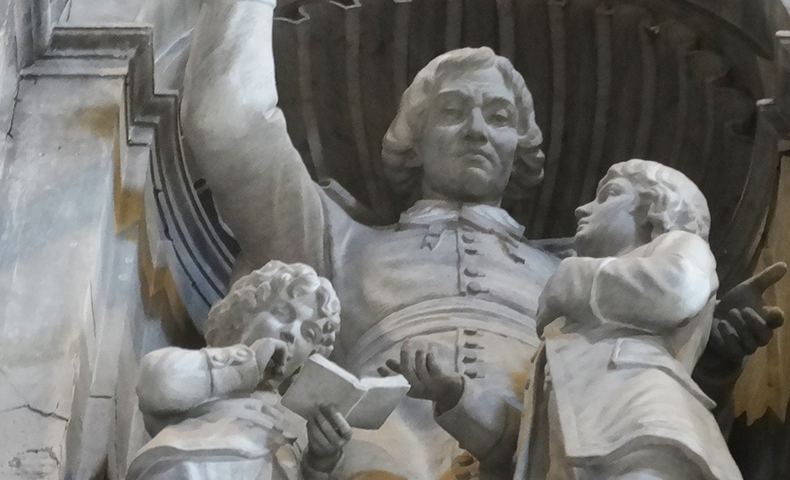
Father John Baptist’s later years were spent at the College of St Yon, in Rouen, where the novitiate had been transferred in 1705, after it had functioned for some years in Paris.   In 1716 he resigned from the active direction and government of the Institute and from then on would give no orders and lived like the humblest of the brothers, teaching the novices and young boarders.   He wrote for them several treatises, including <A Method of Mental Prayer>.   Worn out by illness and austerities, he passed away on Good Friday, April 7, 1719, at the age of sixty-seven.   Six years after his death, the Christian Brothers’ institute was recognised by Pope Benedict XIII and its rule approved.   Father John was canonised in 1900.   To his valiant efforts we owe in large part the acceptance of the idea of universal education.

SOD-0407-SaintJohnBaptistdelaSalle-790x480-1
Saint Peter Basilica, Rome

In spite of internal difficulties, chiefly concerning the degree of austerity to be observed by the Brothers, the schools spread and flourished up to the French Revolution.   During that period of persecution, the Christian Brothers were at one point reduced to twenty active members.   However, when the ban was lifted by Napoleon I in 1799, the community sprang back to life with remarkable resilience.   During the nineteenth century the schools expanded steadily;  then, from 1904 to 1908, there was another setback:  1285 establishments were closed by legislative decree in France.   Meanwhile the Brothers had established themselves in other countries of Europe, in England, Ireland, the Levant, North and South America, the West Indies, South Africa and Australia. Their first school in the United States was founded in 1846, today many of them are on the college level.st john info

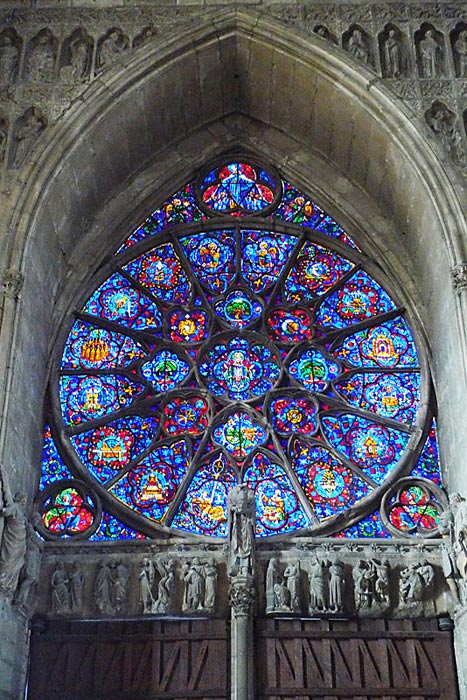
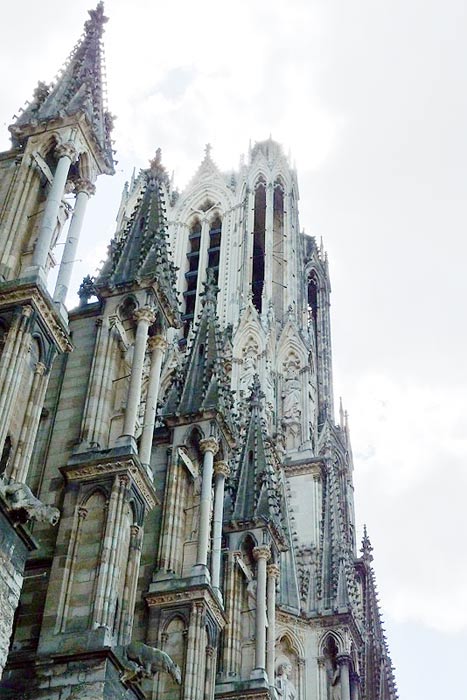
Outside-FrontDetail-2Inside-RoseWindwoOutside-Silhouette-1


Posted in EASTER, SAINT of the DAY

Memorials of the Saints – 7 April

St John Baptiste de La Salle (1651-1719) (Memorial)

St Albert of Tournai
Bl Alexander Rawlins
St Brenach of Carn-Engyle
St Calliopus of Pompeiopolis
Bl Cristoforo Amerio
St Cyriaca of Nicomedia
St Donatus of North Africa
Bl Edward Oldcorne
St Epiphanius the Martyr
St Finian of Kinnitty
St George the Younger
St Gibardus of Luxeuil
St Goran
St Guainerth
St Hegesippus of Jerusalem
St Henry Walpole
Bl Herman Joseph
Bl Mary Assunta
St Peleusius of Alexandria
St Peter Nguyen Van Luu
Bl Ralph Ashley
St Rufinus the Martyr
St Saturninus of Verona
Bl Ursuline of Parma

Martyrs of Pentapolis – 4 saints:  A bishop, deacon and two lectors at Pentapolis, Lybia who for their faith were tortured, had their tongues cut out, and were left for dead.  They survived and each died years later of natural causes; however, because they were willing to die and because there were attempts to kill them, they are considered martyrs.   We know little else except their names – Ammonius, Irenaeus, Serapion and Theodore c 310 at Pentapolis, Lybia.

Martyrs of Sinope – 200 saints: 200 Christian soldiers martyred together for their faith. We don’t even have their names.   They were martyred in Sinope, Pontus, Asia Minor (in modern Turkey).

Posted in EASTER, FEASTS and SOLEMNITIES, MORNING Prayers, QUOTES - J R R Tolkien and MORE, QUOTES of the SAINTS, QUOTES on FAITH, The RESURRECTION

Thought for the Day – 6 April – Easter Friday the Sixth day in the Easter Octave

Thought for the Day – 6 April – Easter Friday the Sixth day in the Easter Octave

“When they got out on land, they saw a charcoal fire there, with fish lying on it, and bread. Jesus said to them, “Bring some of the fish that you have just caught.” So Simon Peter went aboard and hauled the net ashore, full of large fish, a hundred and fifty-three of them; and although there were so many, the net was not torn. Jesus said to them, “Come and have breakfast.” Now none of the disciples dared ask him, “Who are you?” They knew it was the Lord. Jesus came and took the bread and gave it to them, and so with the fish. This was now the third time that Jesus was revealed to the disciples after he was raised from the dead.”…John 21:9-14

“Today …. is bathed in the luminous joy of Easter.   In these days, in fact, the Church celebrates the mystery of the Resurrection and experiences the great joy that comes to her from the Good News of Christ’s victory over evil and over death.   This joy is not only prolonged in the Octave of Easter but is extended for 50 days until Pentecost.

Christ’s Pasch is the supreme and unequalled act of God’s power.   It is an absolutely extraordinary event, the most beautiful, ripe fruit of the “Mystery of God”.   It is so extraordinary that it is ineffable in its dimensions that escape our human capacity for knowing and investigating.   Yet, it is also a “historical” event, witnessed to and documented.   It is the event on which the whole of our faith is founded.   It is the central content in which we believe and the main reason why we believe.

There is a glorified Resurrected Saviour now seated at the right hand of the Father, holding the place He has prepared for each of us.   His wounds are glorified now, beautiful, streaming the light of grace upon an earth being reborn, revealing the depth of His love and the Hope that springs eternal.   Through taking on our very humanity, He did for us what we could never have done for ourselves.   He “who knew no sin” walked in the perfect obedience of the Son and bridged the gap between the Father and the sons and daughters who had rejected His invitation to communion, through the offering of His own Body on the altar of the Cross.

Through His passion, obedience unto death, and Resurrection, He welcomed us into the very inner life of the Trinity.   In Him we now make our home in God.   In His sacred humanity He transforms the entire human experience.   He invites us to live differently and shows us the path to a fullness of life now and eternal glory in the new world to come.   He opened eternity to all who were bound by the chains of time.   He clothed in glorious freedom those once wrapped in the grave clothes of death.   He gave purpose to the sheep who had wandered aimlessly in empty self pursuits.

The whole world, created through Him, is now re-created in Him.   We can see our lives differently as we open ourselves to His Spirit and allow Him to replace our finite vision with the eyes of eternal perspective.   Our feet are now shod with the hope of the Good News.   His redemptive mission continues through us to a world waiting to be born anew. He walks through time in His Body on earth, His church;  the world reconciled and invites all men and women to follow Him.”

Pope Benedict XVIhe walks through time - pope benedict - 6 april 2018

Faith helps us recognise that Christ is God;  it shows that He is our saviour;  it brings us to identify ourselves with Him and to act as He acted.   When the risen Christ frees the apostle Thomas from his doubts, showing him His wounds, Jesus exclaims:  “Blessed are they who have not seen, and yet have believed.”   And St Gregory the Great comments that “He is referring in particular to us, for we possess spiritually Him whom we have not seen in the body.”  He is referring to us, provided our behaviour agrees with our faith.   A person does not truly believe unless he puts into practice what he believes.   That is why St Paul says of those whose faith is limited to words:   “They profess recognition of God, but in their behaviour they deny him”

St Josemaria Escrivá (1902-1975)

(Christ is Passing By)

a person does not truly believe - st josemaria - 6 april easter friday - 2018

Posted in CATHOLIC Quotes, DOCTORS of the Church, EASTER, FATHERS of the Church, FEASTS and SOLEMNITIES, MORNING Prayers, QUOTES - J R R Tolkien and MORE, QUOTES of the SAINTS, QUOTES on LOVE, SPEAKING of ....., The HOLY EUCHARIST / The HOLY MASS, Thomas a Kempis

Quote/s of the Day – 6 April – Easter Friday the Sixth day in the Easter Octave – “Speaking of Love”

Quote/s of the Day – 6 April – Easter Friday the Sixth day in the Easter Octave

“Speaking of Love”

“Nothing is sweeter than love,
nothing stronger or higher or wider;
nothing is more pleasant, nothing fuller
and nothing better in heaven or on earth,
for love is born of God
and cannot rest except in God,
Who is above all created things.”nothing is sweeter than love - thomas a kempis - 6 april 2018

“Love is watchful.
Sleeping – it does not slumber.
Wearied – it is not tired.
Pressed – it is not straitened.
Alarmed – it is not confused
but like a living flame,
a burning torch,
it forces its way upward
and passes unharmed,
through every obstacle.”

Thomas à Kempis (1380-1471) The Imitation of Christlove is watchful - st thomas a kempis - 6 april 2018

“What does love look like?
It has the hands to help others.
It has the feet to hasten to the poor and needy.
It has eyes to see misery and want.
It has the ears to hear the sighs
and sorrows of men.
That is what love looks like.”

St Augustine of Hippo (354-430) Father & Doctorwhat does love look like - st augustine - 6 april 2018

“The proof of love is in the works.
Where love exists, it works great things.
But when it ceases to act, it ceases to exist.”

St Pope Gregory the Great (540-604) Father & Doctorthe proof of love is in the works - st pope gregory the great - 5 april 2018

“The Eucharist is the Sacrament of Love;
It signifies Love,
It produces love.
The Eucharist is the consummation
of the whole spiritual life.”

St Thomas Aquinas (1225-1274) Doctor angelicus / Doctor communisthe eucharist is the sacrament of love - st thomas aquinas - 6 april 2018

Love knows no limit to its endurance,
no end to its trust,
no fading of its hope,
it can outlast anything.
Love still stands,
when all else has fallen.

Blaise Pascal (1623-1662)love knows no limits - blaise pascal - 6 april 2018

“The person who does not decide to love forever
will find it very difficult to really love, even for one day.”

St Pope John Paul II (1920-2005)the person who does not - st john paul - 6 april 2018