
Thought for the Day – 14 November – The Memorial of St Laurence O’Toole (1128 – 1180)
“In his letter announcing the Jubilee year Pope Francis describes Mercy as the ‘summary of the Christian faith… the mystery of the Trinity… the bridge between God and man’, ‘the ultimate and supreme act by which God comes to meet us’ (MV2). These are very large claims and warrant our deep reflection and humble openness to receive. They are reflected in the actions of Pope Francis where he makes the work of compassion – Lampedusa, prisoners, travellers in mourning – take precedence over the defence of doctrine. Cardinal Kasper, whose book on Mercy had such influence on him, tells us that compassion is the ultimate ethic and that mercy is the attribute of God which envelopes and infuses all the other divine attributes. Mercy is not a piece of God beside other pieces, it is God-size. Meister Eckhart says that we can call God good, we can call God love, but the best name for God is Mercy. This is a far-cry from the narrow, wimpy, disparaging notion of mercy which often prevails among us.
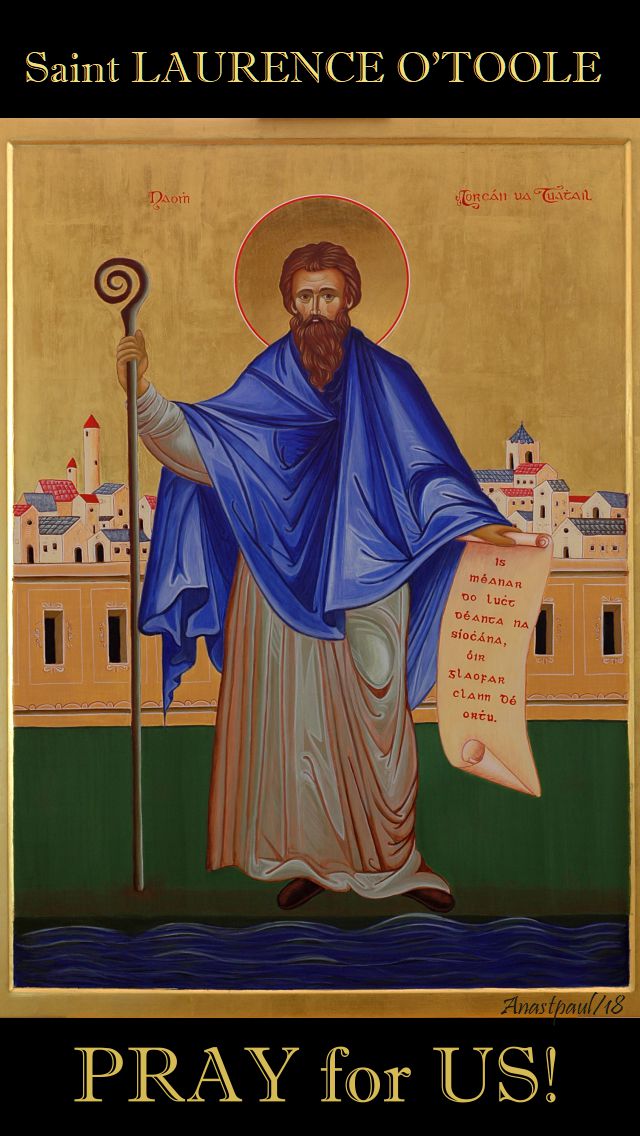
St Laurence O’Toole was a prophetic witness to that power of mercy, an intercessor driven by his deep concern for his people. As a ten year old he was the personification of intercession, the fragile guarantee of no harm to his family from a violent leader. As Archbishop he was like a combination of a Bro Kevin and a Crosscare service at the frequent times of famine, siege and poverty in the city. He was exercised by the hold which chieftains, rulers and corruption had over monastic, diocesan and Church life, and brought significant reform across them all including the abolition of slavery in 1170.
Again, in all his dealings with and journeys to meet Henry II he truly carried his suffering people on his shoulders, as the symbol for the Holy Year depicts, a shepherd pleading for and negotiating reconciliation at great cost to himself. This hermit of Glendalough, this good shepherd of Dublin, died like his Lord, while on a last superhuman effort to soften the hard heart of Henry II.
Such is the quality and depth of advocacy and intercession. Where might find Laurence today in our seriously divided and pain-filled society?”…Sr Helena O’Donoghue RSM, Dublin, November 2015

 AnaStpaul