Posted in DOCTORS of the Church, franciscan OFM, MORNING Prayers, QUOTES of the SAINTS, QUOTES on HUMILITY, SAINT of the DAY, The WORD

One Minute Reflection – 13 June – The Memorial of St Anthony of Padua (1195-1231) Doctor of the Church

One Minute Reflection – 13 June – The Memorial of St Anthony of Padua (1195-1231) Doctor of the Church

Do nothing out of selfishness or out of vainglory; rather, humbly regard others as more important than yourselves…Phil 2:3

REFLECTION – “The spirit of humility is sweeter than honey, and those who nourish themselves with this honey produce sweet fruit.”…St Anthony of Paduathe spirit of humily - st anthony of padua - phil 2 3 do nothing out of selfishness - 13 june 2018

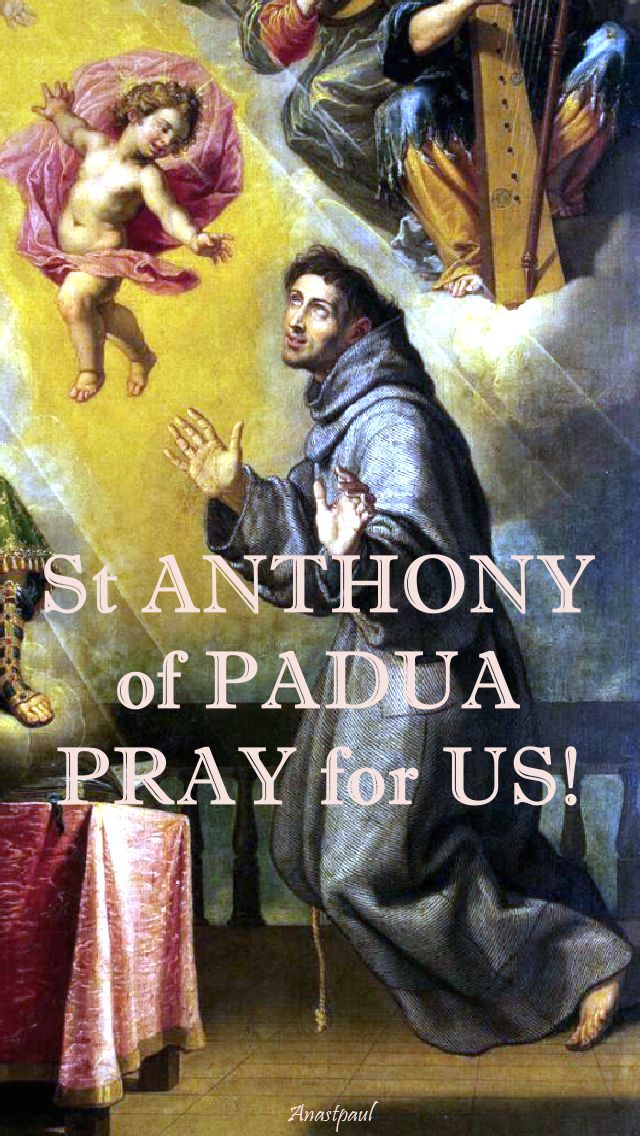
PRAYER – Almighty, everliving God, You gave St Anthony of Padua to Your people as a preacher and teacher and a patron in their needs. Grant that we may learn from his words inspired by Your Holy Spirit and by his prayers, grow in faith, hope and humility. We make our prayer through Christ our Lord, amen.st-anthony-pray-for-us-13 june 2017

Posted in franciscan OFM, MORNING Prayers, PRAYERS of the SAINTS, SAINT of the DAY

Our Morning Offering – 13 June – The Memorial of St Anthony of Padua (1195-1231) Doctor of the Church

Our Morning Offering – 13 June – The Memorial of St Anthony of Padua (1195-1231) Doctor of the Church

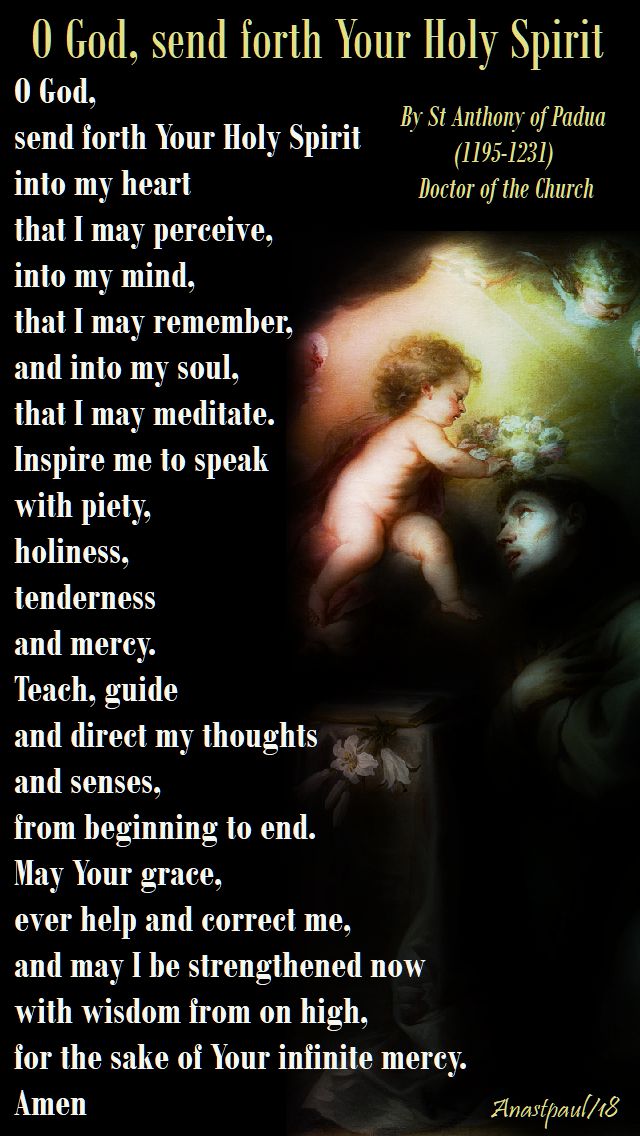
O God, send forth Your Holy Spirit
By St Anthony of Padua (1195-1231) Doctor of the Church

O God,
send forth Your Holy Spirit
into my heart
that I may perceive,
into my mind,
that I may remember,
and into my soul,
that I may meditate.
Inspire me to speak
with piety,
holiness,
tenderness
and mercy.
Teach, guide and direct my thoughts
and senses, from beginning to end.
May Your grace,
ever help and correct me,
and may I be strengthened now
with wisdom from on high,
for the sake of Your infinite mercy.
Ameno god send forth your holy spirit - st anthony of padua - 13 june 2018

Posted in DOCTORS of the Church, DOMESTIC ANIMALS, For FAITH in the BLESSED SACRAMENT, franciscan OFM, Of ANIMALS / ANIMAL WELFARE, Of BEGGARS, the POOR, against POVERTY, PATRONAGE - LOST KEYS/LOST ARTICLES, PATRONAGE - of MOTHERS, MOTHERHOOD, PATRONAGE - THE ELDERLY, OLD AGE, PATRONAGE-INFERTILITY & SAFE CHILDBIRTH, PREGNANCY, SAILORS, MARINERS, NAVIGATORS, SAINT of the DAY

Saint of the Day – 13 June – St Anthony of Padua O.F.M! Evangelical Doctor – Hammer of Heretics – Professor of Miracles – Wonder-Worker – Ark of the Testament – Repository of Holy Scripture

Saint of the Day – 13 June – St Anthony of Padua OFM (1195-1231) Evangelical Doctor – Hammer of Heretics – Professor of Miracles – Wonder-Worker – Ark of the Testament – Repository of Holy Scripture.

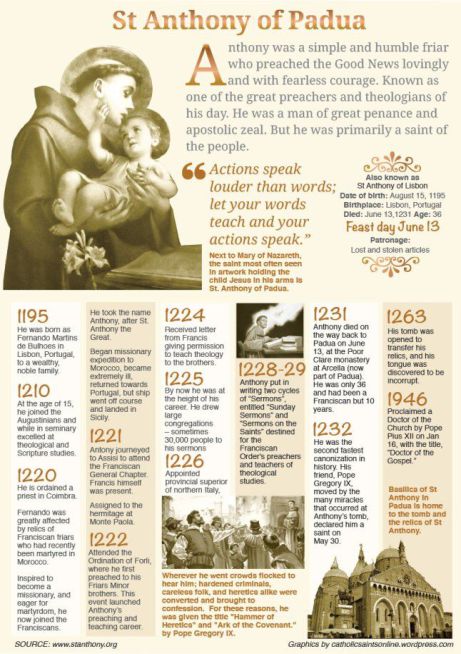
St Anthony of Padua is one of the most famous disciples of St Francis of Assisi.   He was a famous preacher and worker of miracles in his own day and throughout the eight centuries since his death, he has so generously come to the assistance of the faithful who invoke him, that he is known throughout the world amongst many who are not Catholics too.st-anthony-info

The gospel call to leave everything and follow Christ was the rule of Anthony’s life.   Over and over again, God called him to something new in his plan.   Every time Anthony responded with renewed zeal and self-sacrifice to serve his Lord Jesus more completely.

His journey as the servant of God began as a very young man when he decided to join the Augustinians in Lisbon, giving up a future of wealth and power to be a servant of God.   Later when the bodies of the first Franciscan martyrs went through the Portuguese city where he was stationed, he was again filled with an intense longing to be one of those closest to Jesus himself: those who die for the Good News.
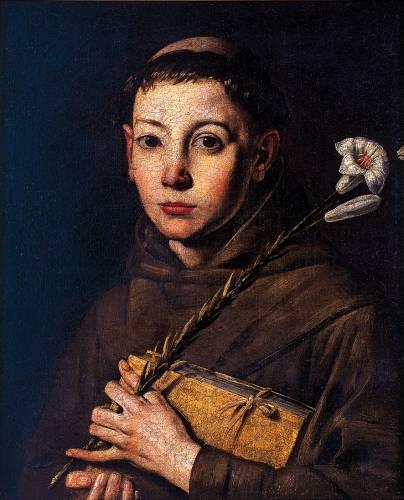
HEADER 2 - Tanzio SantAntonio

So Anthony entered the Franciscan Order and set out to preach to the Moors.   But an illness prevented him from achieving that goal.

He went to Italy and was stationed in a small hermitage where he spent most of his time praying, reading the Scriptures and doing menial tasks.

The call of God came again at an ordination where no one was prepared to speak.   The humble and obedient Anthony hesitantly accepted the task.   The years of searching for Jesus in prayer, of reading sacred Scripture and of serving him in poverty, chastity and obedience had prepared Anthony to allow the Spirit to use his talents.   Anthony’s sermon was astounding to those who expected an unprepared speech and knew not the Spirit’s power to give people words.

Recognised as a great man of prayer and a great Scripture and theology scholar, Anthony became the first friar to teach theology to the other friars.   Soon he was called from that post to preach to the Albigensians in France, using his profound knowledge of Scripture and theology to convert and reassure those who had been misled by their denial of Christ’s divinity and of the sacraments..

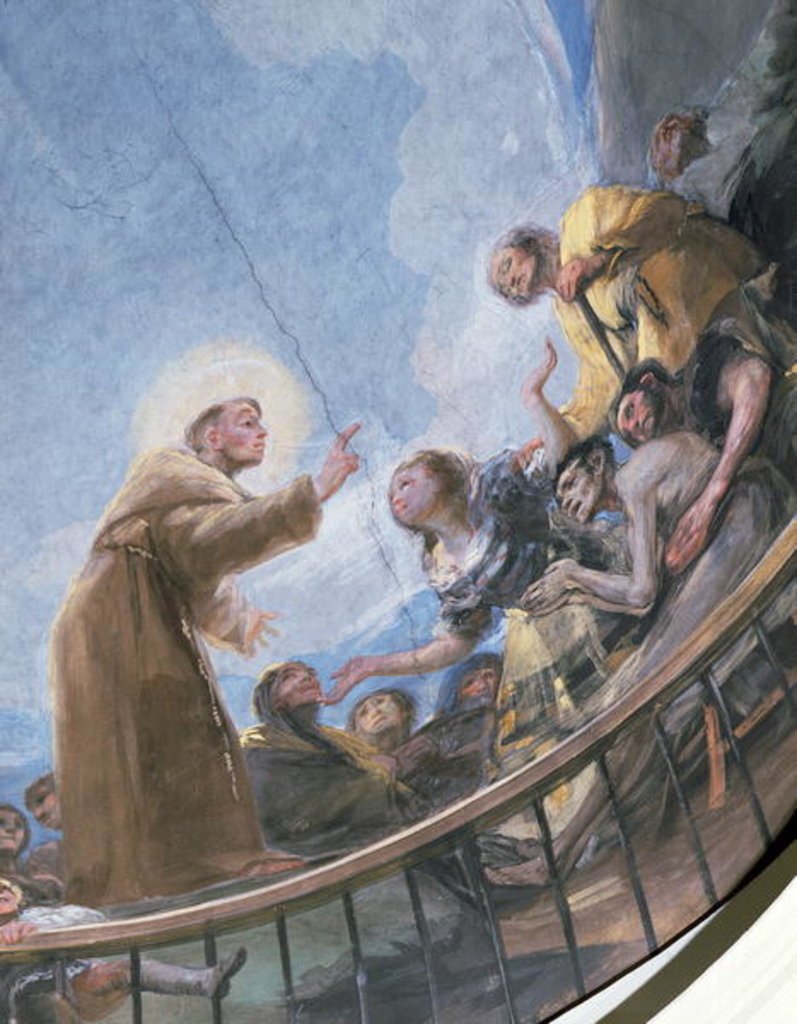
St. Anthony Preaching, detail from the Miracle of St. Anthony of Padua, from the cupola, 1798 (fresco)

The number of those who came to hear him was sometimes so great that no church was large enough to accommodate and so he had to preach in the open air.   Frequently St Anthony wrought veritable miracles of conversion.   Deadly enemies were reconciled. Thieves and usurers made restitution.   Calumniators and detractors recanted and apologised.   He was so energetic in defending the truths of the Catholic Faith that many heretics returned to the Church.   This occasioned the epitaph given him by Pope Gregory IX “the ark of the covenant.”

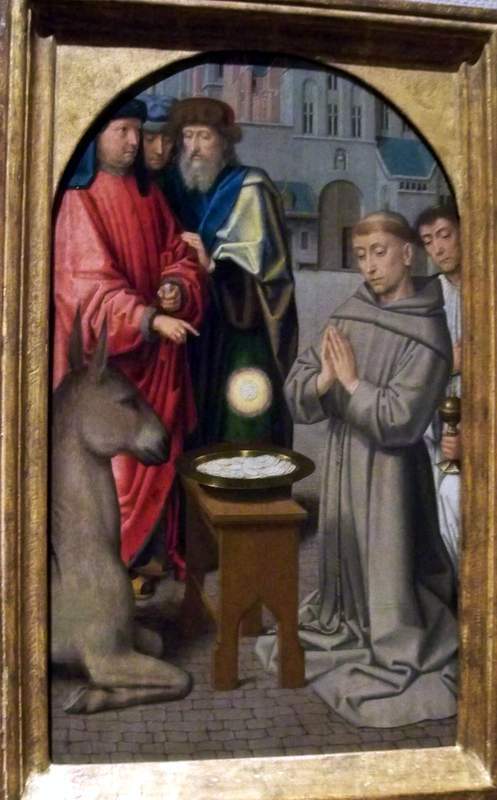
In all his labours he never forgot the admonition of his spiritual father, St Francis, that the spirit of prayer must not be extinguished.   If he spent the day in teaching and heard the confession of sinners till late in the evening, then many hours of the night were spent in intimate union with God before the Blessed Sacrament.  toledo-gerard-st-anthony-padua

After he led the friars in northern Italy for three years, he made his headquarters in the city of Padua.   He resumed his preaching and began writing sermon notes to help other preachers.   In the spring of 1231 Anthony withdrew to a friary at Camposampiero where he had a sort of treehouse built as a hermitage.   There he prayed and prepared for death.   After receiving the last sacraments he kept looking upward with a smile on his countenance. When he was asked what he saw there, he answered:  “I see my Lord.”   He breathed forth his soul on 13 June 1231 being only thirty six years old.   Soon the children in the streets of the city of Padua were crying:  “The saint is dead, Anthony is dead.”

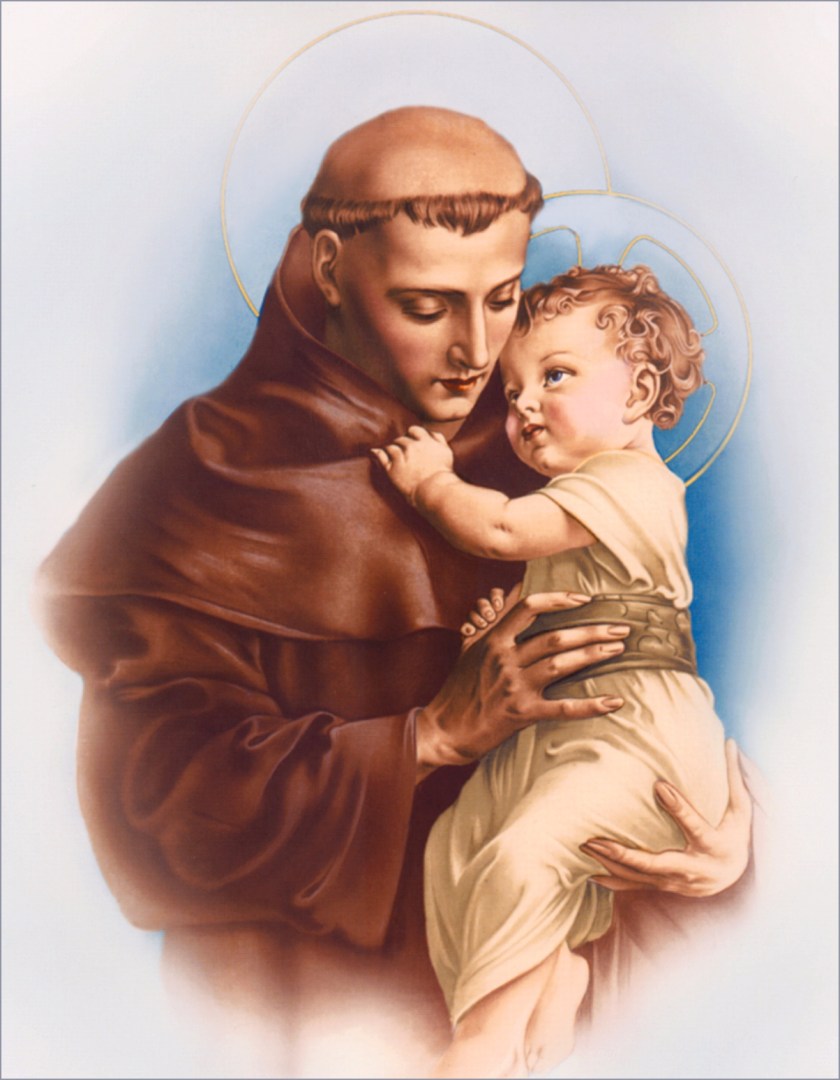
Once a man, at whose home St Anthony was spending the night, came upon the saint and found him, in ecstasy, holding in his arms the Child Jesus, unspeakably beautiful and surrounded with heavenly light.   For this reason St Anthony is often depicted holding the Child Jesus.padua13-6anthony

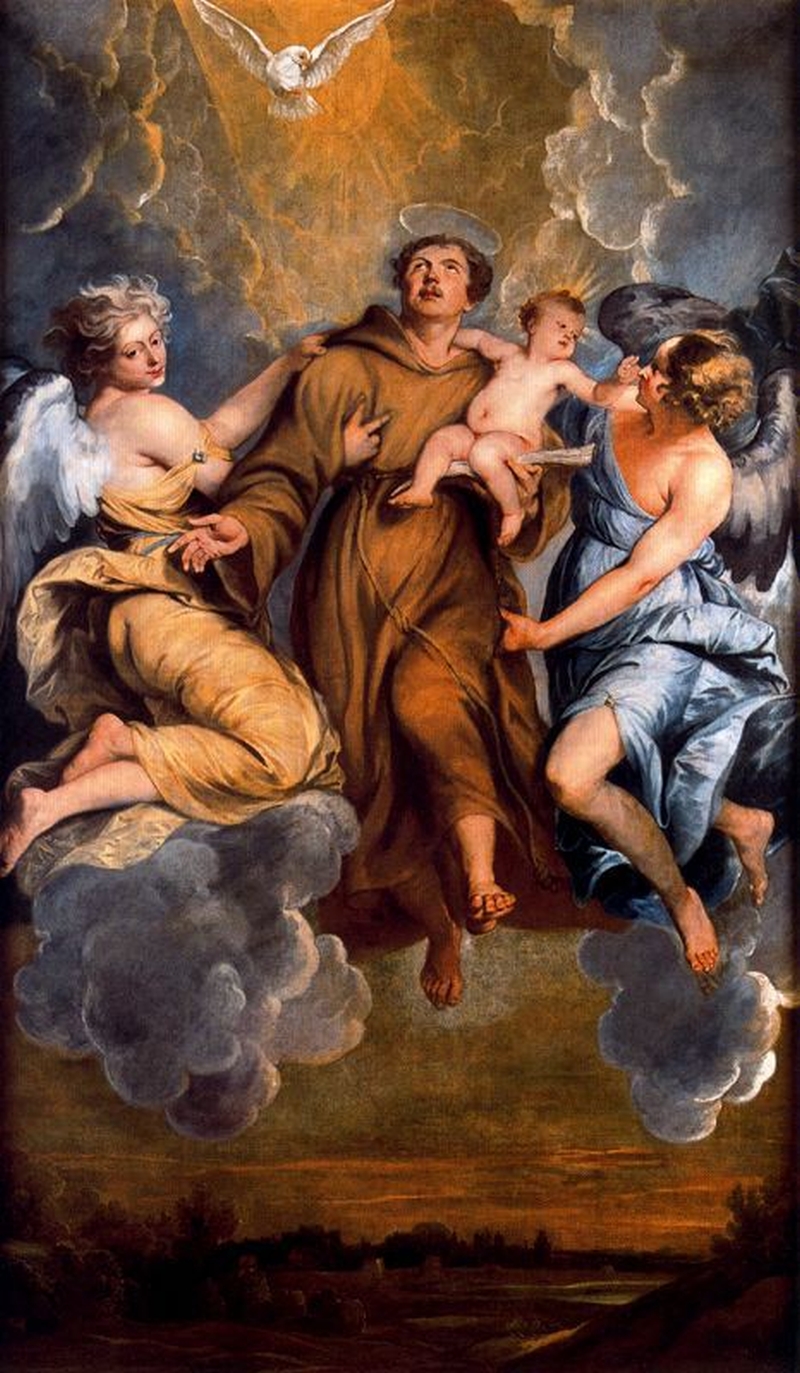
Pope Gregory IX enrolled him among the saints in the very next year.   At Padua, a magnificent basilica was built in his honour, his holy relics were entombed there in 1263.  From the time of his death up to the present day, countless miracles have occurred through St Anthony’s intercession, so that he is known as the Wonder-Worker.   In 1946 St Anthony was declared a Doctor of the Church and titled “The Evangelical Doctor.   For more on St Anthony, including why he is invoked for the finding of lost articles, here:  https://anastpaul.wordpress.com/2017/06/13/saint-of-the-day-13-june-st-anthony-of-paduao-f-m-evangelical-doctor-hammer-of-heretics-professor-of-miracles-wonder-worker-ark-of-the-covenant/Assumption-of-St.-Anthony-of-Padua-Thomas-Willeboirts-Bosschaert-Oil-Painting

Posted in DOCTORS of the Church, SAINT of the DAY

Memorials of the Saints -13 June

St Anthony of Padua (Memorial) (1195-1231) Doctor of the Church


Bl Achilleo of Alexandria
Bl Alfonso Gomez de Encinas
Bl Anthony of Ilbenstadt
St Aquilina of Syria
St Augustine Phan Viet Huy
St Aventino of Arbusto
St Damhnade
St Diodorus of Emesa
St Eulogius of Alexandria
St Fandilas of Penamelaria
St Felicula of Rome
St Fortunatus of North Africa

Bl Gerard of Clairvaux – was the brother of Saint Bernard of Clairvaux. H e was a Soldier. When he was wounded in combat at the siege of Grancy, Gerard resolved to become a monk. Benedictine Cistercian monk at Citeaux. He worked with Saint Bernard at Clairvaux and became his closest confidant. Cellarer. He died in 1138 of natural causes.

St Lucian of North Africa
St Mac Nissi of Clonmacnoise
Bl Marianna Biernacka
St Maximus of Cravagliana
St Nicolas Bùi Ðuc The
St Peregrinus of Amiterno
St Rambert
St Salmodio
Bl Servatius Scharff
St Thecla
St Tryphillius of Leucosia
St Victorinus of Assisi
St Wilicarius of Vienne

Posted in MORNING Prayers, SAINT of the DAY, The WORD

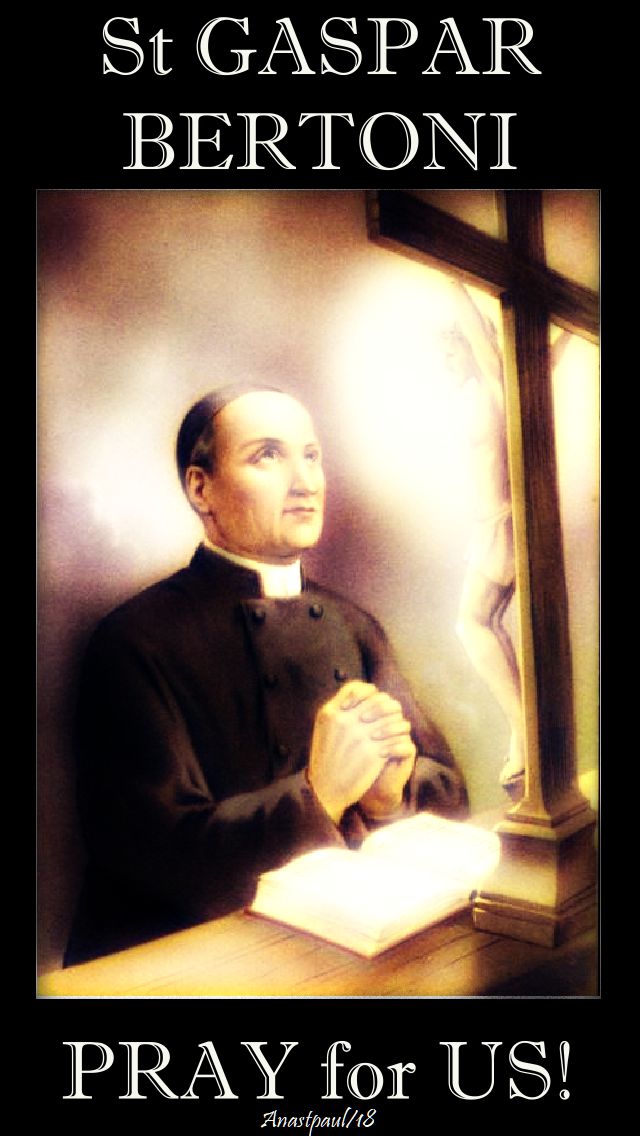
Thought for the Day – 12 June – Tuesday of the Tenth week in Ordinary Time Year B – Today’s Gospel Matthew 5:13-16 and the Memorial of St Gaspar Bertoni C.S.S. (1777-1853)

Thought for the Day – 12 June – Tuesday of the Tenth week in Ordinary Time Year B – Today’s Gospel Matthew 5:13-16 and the Memorial of St Gaspar Bertoni C.S.S. (1777-1853)

“You are the salt of the earth.

You are the light of the world”

At about the time of the Mission, St Gaspar suffered a physical relapse and sickness continued as a constant companion until his death.   Shortly after, on 27 July 1816, the “Stimmate”, a small private chapel, with several rooms attached, named after the Stigmata of St Francis, was bequeathed to a priest in Verona.   Just a few months later, the Stimmate was given to Father Bertoni with the stipulation that he continue to teach the youth.  Fr Bertoni and confreres, Fr Mariani and layman, Paul Zanolli move into the Stimmate on 4 November 1816 resolving, “never again to leave,” thus establishing the new religious community.   Suspicion lingered about all religious groups after the French Revolution and the Napoleonic conquest of Verona but since the school was a very visible reason for the men to be together at the Stimmate, the authorities did not object. In 1833, Father Bertoni had 180 young people in his care.   The Oratory, which remained quiet during the period of repression, flowered into a beautiful movement blossoming admiration from visitors throughout Italy.   It was a powerful instrument for God.  Father Bertoni was asked regularly to pray and to intercede for the sick.   Many people recovered for whom he prayed.   He always acknowledged that thanks were due to the Madonna, or Saint Joseph, or St Zeno (patron of Verona).

Over the years following his first illness,Father Bertoni endured over 300 operations, all without anaesthesia, to lacerate leg ulcers and to remove gangrene which invaded his right leg.   At age 61, St Gaspar was confined to his bedroom “between his bed and wheelchair.”   He spent the remaining 14 years of his life in that bare room with empty walls, adorned only by his beloved Crucifix.

By his every action, by his every word, St Gaspar lived every moment in the Light of Christ, sending the rays to all around him, in good and bad times, never ceasing to live the mission given to us all, to be the salt of the earth and the light of the world!

St Gaspar Bertoni, pray for us, that we may always strive to be salt and light, amen!st gaspar bertoni - 12 june 2018 - pray for us

Posted in CARMELITES, EUCHARISTIC Adoration, MORNING Prayers, QUOTES of the SAINTS, SAINT of the DAY, The BLESSED VIRGIN MARY, The HOLY EUCHARIST / The HOLY MASS

Quote of the Day – 12 June – The Memorial of Blessed Maria Candida of the Eucharist (1884-1949) (celebrated by the Carmelite Order today)

Quote of the Day – 12 June – The Memorial of Blessed Maria Candida of the Eucharist (1884-1949) (celebrated by the Carmelite Order today)

“I want to be like Mary, to be Mary for Jesus,
to take the place of His Mother.
When I receive Jesus in Communion,
Mary is always present.
I want to receive Jesus from her hands,
she must make me one with Him.
I cannot separate Mary from Jesus.
Hail, O Body born of Mary.
Hail Mary, dawn of the Eucharist!”

Bl Maria Candida of the Eucharist OCD (1884-1949)i want to be like mary, like mary for jesus - 12 june 2018 - bl maria candida of the eucharist

Posted in MARIAN QUOTES, MORNING Prayers, PAPAL SERMONS

One Minute Reflection – 12 June – Tuesday of the Tenth week in Ordinary Time Year B – Today’s Gospel Matthew 5:13-16.

One Minute Reflection – 12 June – Tuesday of the Tenth week in Ordinary Time Year B – Today’s Gospel Matthew 5:13-16.

“Just so, your light must shine before others, that they may see your good deeds and glorify your heavenly Father.“…Matthew 5:16just so, your light must shine - matthew 5 16 - 12 june 2018

REFLECTION – “…We have a task and a responsibility for the gift received:  the light of faith, which is in us through Christ and the action of the Holy Spirit, we must not keep as if it were our property.   Instead, we are called to make it shine in the world, to give it to others through good works.   And how much the world needs the light of the Gospel, which transforms, heals and guarantees salvation to those who receive it!    By giving itself, the light of our faith is not extinguished but reinforced.   Instead, it can fail, if we do not nourish it with love and with works of charity….Therefore, the mission of Christians in society is to give “flavour” to life with the faith and love that Christ has given us.”…Pope Francis, Angelus 5 Feb 2017we have a task and a responsibility - pope francis - light and salt - 12 june 2018

PRAYER – Holy Almighty Father, we pray that we may be the light of Your divine Son and the salt of the earth.   Help us, we pray, to ever strive to be both the light and salt of the earth and “may the protection of Mary Most Holy, first disciple of Jesus and model, be of help to believers who live every day their vocation and mission in history.   May our Mother help us, to let ourselves always be purified and illumined by the Lord, to become in turn “salt of the earth” and “light of the world.” …(Pope Francis Angelus 5 Feb 2017)sancta maria -mary most holy - pray for us - 10 may 2018

Posted in MORNING Prayers, PRAYERS of the SAINTS, SACRED and IMMACULATE HEARTS, The BLESSED VIRGIN MARY

Our Morning Offering – 12 June – June the Month of the Sacred Heart

Our Morning Offering – 12 June – June the Month of the Sacred Heart

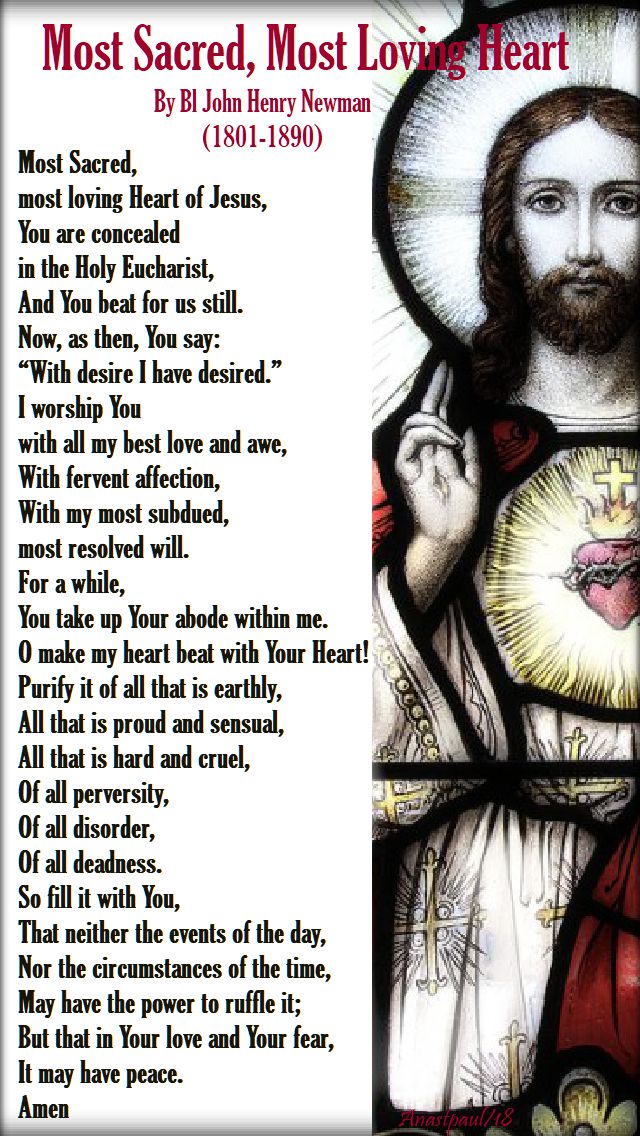
Most Sacred, Most Loving Heart
By Bl John Henry Newman (1801-1890)

Most Sacred, most loving Heart of Jesus,
You are concealed in the Holy Eucharist,
And You beat for us still.
Now, as then, You say:
“With desire I have desired.”
I worship You with all my best love and awe,
With fervent affection,
With my most subdued, most resolved will.
For a while You take up Your abode within me.
O make my heart beat with Your Heart!
Purify it of all that is earthly,
All that is proud and sensual,
All that is hard and cruel,
Of all perversity,
Of all disorder,
Of all deadness.
So fill it with You,
That neither the events of the day,
Nor the circumstances of the time,
May have the power to ruffle it;
But that in Your love and Your fear,
It may have peace.
Amenmost sacred most loving heart - bl john henry newman - 12 june 2018

Posted in SAINT of the DAY, VATICAN Resources

Saint of the Day – 12 June – St Gaspar Bertoni C.S.S. (1777-1853)

Saint of the Day – 12 June – St Gaspar Bertoni C.S.S. (1777-1853) – Priest and Founder of the Congregation of the Sacred Stigmata of Our Lord Jesus Christ C.S.S., commonly known as the Stigmatines, Teacher,  Apostolic missionary, Spiritual advisor.   Born Gaspare Luigi Bertoni on 9 October 1777 in Verona, Italy and he died on Sunday 12 June 1853 in Verona, Italy of natural causes.   Patronage – The Stigmatines. st Gaspare Bertoni (1777-1853)

GASPAR BERTONI was born in Verona, in the Republic of Venice, on 9 October 1777, of Francis Bertoni and Brunora Ravelli of Sirmione.   He was baptised the following day by his uncle, Fr James Bertoni, in the parish church of St Paul, in the Campo Marzo section of Verona.   On both sides of the family, the profession of “Notary” was exercised and from an old legal document, it can be seen that the family was fairly well off.   Even more outstanding, however, was the practice of the faith.

Following the death of his baby sister, young Gaspar remained the only child.   He had the benefit of an excellent education both at home and at St Sebastian’s school, that was conducted by the municipality after the suppression of the Jesuits.   They, however, continued teaching and also in the direction of the Marian Congregation.   Young Bertoni here came under the influence of Fr Louis Fortis, who would in the future be the first Jesuit General after the reinstatement of the Company of Jesus.

From the grace of his first Holy Communion at age 11, Gaspar Bertoni was called to a life of mystical union.   His vocation to the priesthood matured and at 18, he entered the seminary.   In frequenting the theological course as an external student, he found in his professor of moral theology, Fr Nicholas Galvani, an excellent spiritual director.

During his first year of theology, he witnessed the invasion of the French armies (1 June 1796).   This was the beginning of a 20 year period of great upheaval for his native city. Inspired by deep charity, he dedicated himself to the assistance of the sick and wounded, as a member of a Gospel Fraternity for the Hospitals, that had just then been instituted by the Servant of God, Fr Peter Leonardi.

At his priestly ordination (20 September 1800), at the dawn of a new century, he found himself in a world in need of much assistance for the resolution of the serious problems that disturbed it.

His pastor assigned the youth of parish to his pastoral care.   He dedicated himself with all his energies and great organisational ability to the new mission.   He established an Oratory in the form of a “Marian Cohort”, that had as its goal the Christian and social formation of the youth.   All such organisations were suppressed by a decree from Napoleon (1807) and Fr Bertoni reserved the carrying out of his plans for better times.Gaspar-48
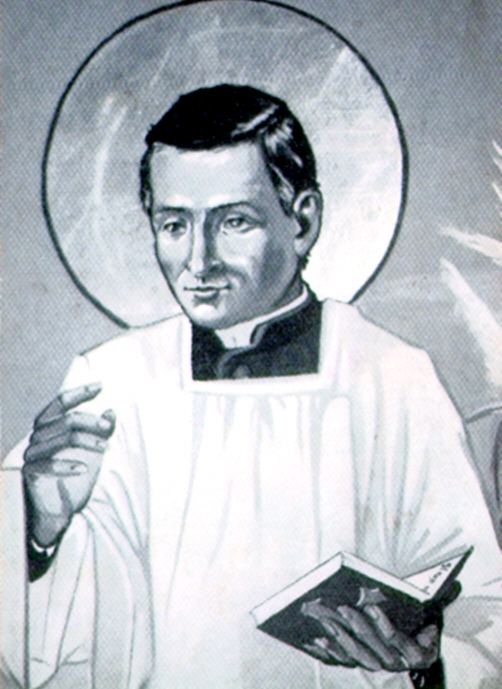
Meanwhile, he took over the spiritual direction of a community founded then by St. Magdalena of Canossa at St. Joseph’s Convent (May 1808). It was here that he met the Servant of God, Leopoldina Naudet, whom he would then spiritually guide to the heights of the mysticism of holy abandonment and to the foundation of the Sisters of the Holy Family. He extended this aspect of his ministry to another Servant of God, Teodora Campostrini, of a noble family, both in the discernment of her vocation, as in the foundation of her Community, of the “Sorelle Minime” of the Charity of the Sorrowful Mother.

By September of 1810, he had already moved from his family home after the death of his mother and was transferred from St Paul’s Parish, to St Firmus Major.   Here, the bishop also entrusted him with the spiritual direction of the seminarians in the diocesan seminary.   A solid spiritual and theological formation of the young was always the clear objective of the frequent gatherings that he held in his own home.   At this time, he began to organise this endeavour in a more orderly fashion.   His overall idea was the renewal of the clergy based on an unconditional adherence to the Supreme Pontiff, Pius VII, at that time, Napoleon’s prisoner.   For Fr Bertoni, the Pontiff, was always “the first and irremovable stone” of the Church.   The reform of the Church had to begin from the sanctuary itself, with the return of its ministers to the integral following of the Gospel. The diocesan seminary was going through a very bad crisis.   However, in a short time it regained its proper form with his assistance and even assumed a monastic aspect as a contemporary witness stated.gaspare-bertoni-5d93dd14-c710-41b8-8d5a-a499289558c-resize-750

With the fall of Napoleon, the need for restoration was widely felt.   Fr Bertoni clearly understood that to gather the flock once again, it would be necessary to awaken them by the presentation of the fundamental truths of the faith through the preaching of missions to the people.   On 20 December 1817, Pope Pius VII conferred on him a precise mandate, by conferring on him the faculty of “apostolic missionary“.   While the suspicious government of Austria forbade this specific ministry, Fr Bertoni dedicated himself to other preaching and catechetical instruction.header - Gaspare_Bertoni2
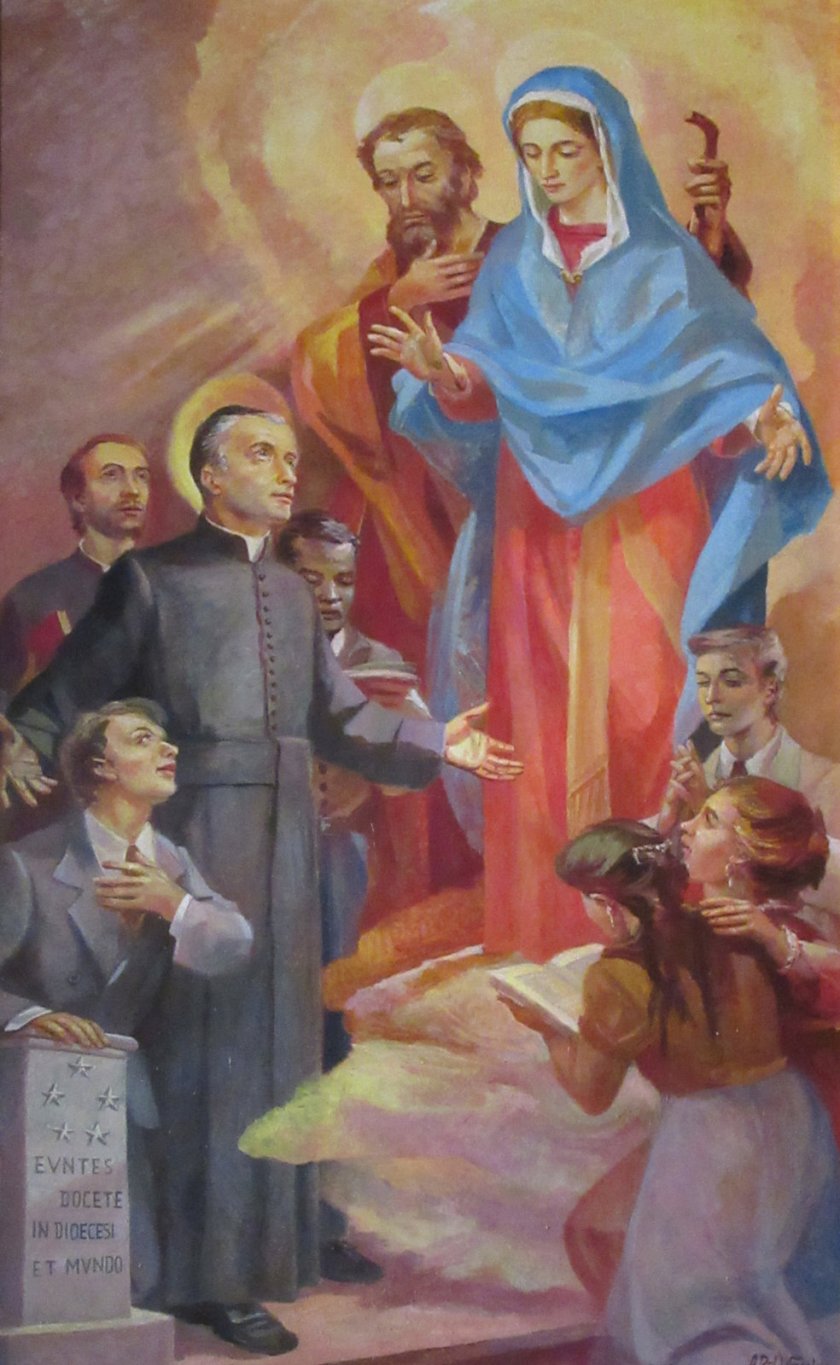
While becoming all things to gain all for Christ, Fr Bertoni cultivated a very intense interior life.   From the reading of his Spiritual Diary, it appears that he was also grace by mystical gifts.   Among these, was the call, made evident to him by grace, to the foundation of a religious family.

On 4 November 1816, with two companions, he moved into a small house, adjacent to a suppressed Church, that bore the title of “the Sacred Stigmata of St Francis (from this, the name of his community was eventually adapted;   in this small church, he also worked to spread the devotion to the Passion and the wounds of Christ).   In a very unostentatious manner, the new community opened a tuition-free school, offering this and other gratuitous services to the Church and society.   The men lived together a common life of strict observance and penance.   An intense life of contemplation was joined to a broad apostolate, including the Christian education of the youth, the formation of the clergy and missionary preaching, in perfect availability to the requests of the bishop.gasparebertoni3

Right after an ecstasy that he experienced praying before a Crucifix (on 30 May 1812), he suffered a first attack of “miliary fever” that brought him to the very threshold of death. Almost miraculously, he did recover but for the rest of his 41 years of life he remained in poor health, all this while giving a wonderful example of patience and heroic confident abandonment to God.   Even from his sick-bed, suffering indescribable discomfort, he became the “angel of counsel” for countless persons who sought him out.   A number among these were gifted human beings, who were founding charitable works, such as Blessed Charles Steeb, the Servants of God, Fr Nicholas Mazza and Fr Anthony Provolo – and others from outside the city, who came to Verona to meet with him.st gaspar bertoni

St Gaspar was an authentic image of Christ Crucified, with nearly 300 surgical procedures on his right leg that he endured, he could not suffer enough for the good of the Church and the salvation of souls.   Once doctor asked him if he needed anything – and among his last words were: “I need to suffer”.
In a vision of vivid hope in the Risen Christ, bearing the signs of His Triumph, and supported by the Holy Spouses and Patrons, Mary and Joseph, he died a holy death, at 3:30 on a Sunday afternoon, 12 June 1853.

His Congregation of the Sacred Stigmata of Our Lord Jesus Christ, enriched by so many sufferings, gradually spread beyond Verona, to other cities in Italy and then to the United States, to Brazil (where it presently has 6 Bishops), to Chile, to the Philippines and to mission territories:  South Africa, the Ivory Coast, Tanzania, Thailand.   In 2012 they had 94 houses spread around the world….(vatican.va) 

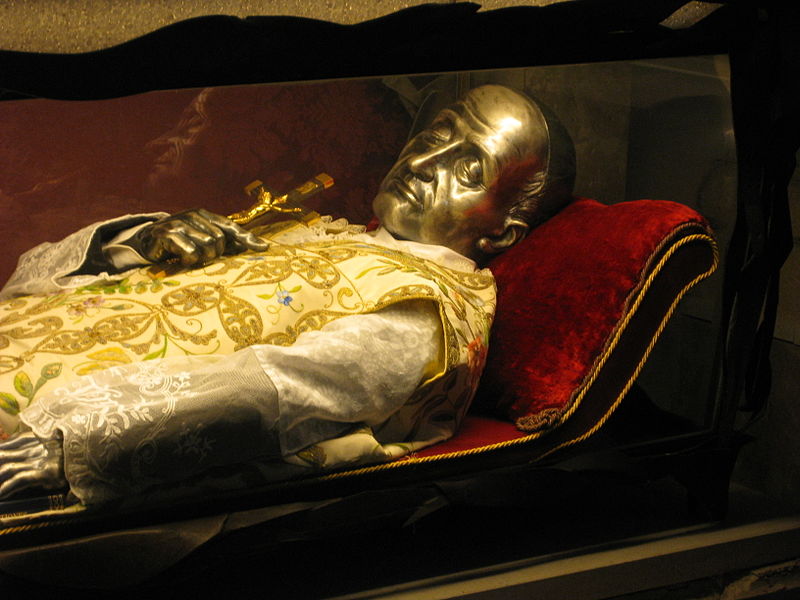
St Gaspar was Beatified on 1 November 1975, Saint Peter’s Square, Vatican City by Blessed Pope Paul VI and Canonised 1 November 1989, Saint Peter’s Square, Vatican City by St Pope John Paul II.Saint Gaspar Bertoni, in the Church of Stigmates in Verona
 

Posted in SAINT of the DAY, The BLESSED VIRGIN MARY

Memorials of the Saints -12 June and the Feast of Our Lady of Montalto, Italy

Our Lady of Montalto: Shrine of Our Lady of Montalto in Messina, Italy
In 1282, the Virgin Mary appeared in a dream to a friar named Nicholas. During the apparition she promised to send a white dove to the Caperrina hill where she wanted a church built in her name. The cornerstone for the Shrine of Our Lady of Montalto was laid in 1295 by Queen Constance of Sicily. It was a monastery for Cistercian nuns from 1389 until 1866. The Santuario della Madonna di Montalto was severely damaged during the 1908 earthquake and rebuilt in 1930. This view of the bell tower gives you a hint at the beauty of this Gothic and Romanesque structure.


St Amphion of Nicomedia
Bl Antonia Maria Verna
Bl Antonio de Pietra
St Arsenius of Konev
St Christian O’Morgair of Clogher
St Chrodobald of Marchiennes
St Cominus
Bl Conrad of Maleville
St Cunera
St Cuniald
St Cyrinus of Antwerp
St Eskil
St Galen of Armenia
St Gaspar Bertoni C.S.S. (1777-1853)
St Gerebald of Châlons-sur-Seine
St Geslar
Bl Guy Vignotelli of Cortona
St John of Sahagun
St Pope Leo III
St Lochinia of Ireland
Bl Lorenzo Maria Salvi
Bl Mercedes Maria of Jesus
St Odulf of Utrecht
St Olympius of AEnos
St Onuphrius of Egypt
Bl Pelagia Leonti of Milazzo
St Peter of Mount Athos
St Placid of Val d’Ocre
Bl Stefan Kielman
St Ternan of Culross
St Valerius of Armenia

Martyrs of Bologna:  Three Christians who were martyred at different times and places, but whose relics have been collected and enshrined together – Celsus, Dionysius, and Marcellinus. Their relics were enshrined in churches in Bologna and Rome in Italy.

Martyrs of Rome:   Four members of the Imperial Roman nobility.   They were all soldiers, one or more may have been officers, and all were martyred in the persecutions of Diocletian – Basilides, Cyrinus, Nabor and Nazarius.
They were martyred in 304 outside Rome, Italy and buried along the Aurelian Way.

Three Holy Exiles:  Three Christian men who became Benedictine monks at the Saint James Abbey in Regensburg, Germany, then hermits at Griestatten, and whose lives and piety are celebrated together. – Marinus, Vimius and Zimius.

108 Martyrs of World War II:
Also known as
• Polish Martyrs
• 108 Polish Martyrs of the Nazis
• 108 Blessed Polish Martyrs
Among the millions murdered by Nazis in World War II, many were Poles killed for being Poles and many were Catholics killed for being Catholic. As emblematic of this group, 108 Polish Catholics who were murdered for their faith, and whose faithfulness was attested by by witnesses, were beatified as a group of by Pope John Paul II. They each have a separate memorial day on the calendar but they are celebrated as a group today.
• Adalbert Nierychlewski • Adam Bargielski • Aleksy Sobaszek • Alfons Maria Mazurek • Alicja Maria Jadwiga Kotowska • Alojzy Liguda • Anastazy Jakub Pankiewicz • Anicet Koplinski • Antoni Beszta-Borowski • Antoni Julian Nowowiejski • Antoni Leszczewicz • Antoni Rewera • Antoni Swiadek • Antoni Zawistowski • Bogumila Noiszewska • Boleslas Strzelecki • Boniface Zukowski • Bronislao Kostkowski • Bronislaw Komorowski • Bruno Zembol • Czeslaw Jozwiak • Dominik Jedrzejewski • Edward Detkens • Edward Grzymala • Edward Kazmierski • Edward Klinik • Emil Szramek • Fidelis Jerome Chojnacki • Florian Stepniak • Franciszek Dachtera • Franciszek Drzewiecki • Franciszek Kesy • Franciszek Rogaczewski • Franciszek Roslaniec • Franciszek Stryjas • Grzegorz Boleslaw Frackowiak • Henryk Hlebowicz • Henryk Kaczorowski • Henryk Krzysztofik • Hilary Pawel Januszewski • Jan Eugeniusz Bajewski • Jan Franciszek Czartoryski • Jan Nepomucen Chrzan • Jan Oprzadek • Jarogniew Wojciechowski • Jerzy Kaszyra • Jozef Achilles Puchala • Józef Cebula • Jozef Czempiel • Józef Jankowski • Jozef Kowalski • Józef Kurzawa • Jozef Kut • Józef Pawlowski • Jozef Stanek • Jozef Straszewski • Józef Wojciech Guz • Jozef Zaplata • Julia Rodzinska • Karol Herman Stepien • Katarzyna Faron • Kazimiera Wolowska • Kazimierz Gostynski • Kazimierz Grelewski • Kazimierz Tomasz Sykulski • Leon Nowakowski • Leon Wetmanski • Ludwik Mzyk • Ludwik Roch Gietyngier • Maksymilian Binkiewicz • Marcin Oprzadek • Maria Antonina Kratochwil • Maria Klemensa Staszewska • Marian Gorecki • Marian Konopinski • Marian Skrzypczak • Marianna Biernacka • Michal Ozieblowski • Michal Piaszczynski • Michal Wozniak • Mieczyslaw Bohatkiewicz • Mieczyslawa Kowalska • Narcyz Putz • Narcyz Turchan • Natalia Tulasiewicz • Piotr Edward Dankowski • Roman Archutowski • Roman Sitko • Stanislaw Antoni Trojanowski • Stanislaw Kostka Starowieyski • Stanislaw Kubista • Stanislaw Kubski • Stanislaw Mysakowski • Stanislaw Pyrtek • Stanislaw Starowieyski • Stefan Grelewski • Stefan Wincenty Frelichowski • Symforian Ducki • Tadeusz Dulny • Wincenty Matuszewski • Wladyslaw Bladzinski • Wladyslaw Demski • Wladyslaw Goral • Wladyslaw Maczkowski • Wladyslaw Miegon • Wlodzimierz Laskowski • Wojciech Gondek • Zygmunt Pisarski • Zygmunt Sajna
Died
between 5 October 1939 and April 1945 in Germany and Nazi-occupied Poland and were Beatified on 13 June 1999 by St Pope John Paul II in Warsaw, Poland.

Posted in MORNING Prayers, SAINT of the DAY, The APOSTLES & EVANGELISTS, The HOLY GHOST, The WORD

Thought for the Day – 11 June – Memorial of St Barnabas, Apostle

Thought for the Day – 11 June – Memorial of St Barnabas, Apostle

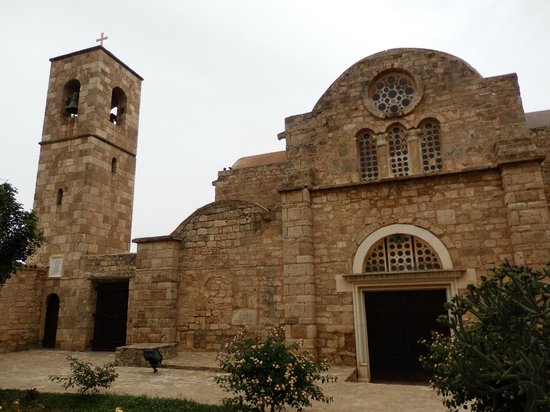
Barnabas, a Jew of Cyprus, comes as close as anyone outside the Twelve to being a full-fledged apostle.   He was closely associated with Saint Paul—he introduced Paul to Peter and the other apostles—and served as a kind of mediator between the former persecutor and the still suspicious Jewish Christians.

When a Christian community developed at Antioch, Barnabas was sent as the official representative of the church of Jerusalem to incorporate them into the fold.   He and Paul instructed in Antioch for a year, after which they took relief contributions to Jerusalem.

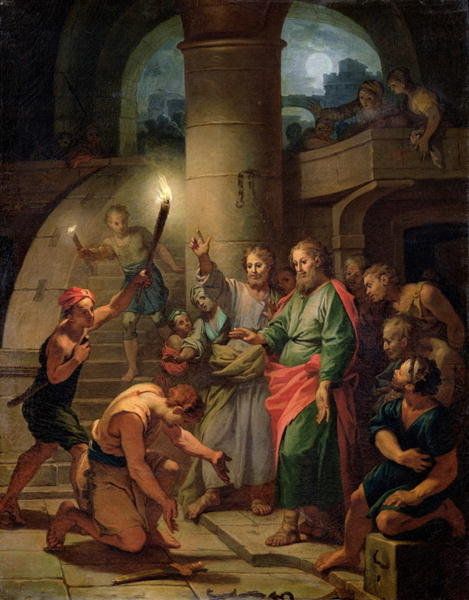
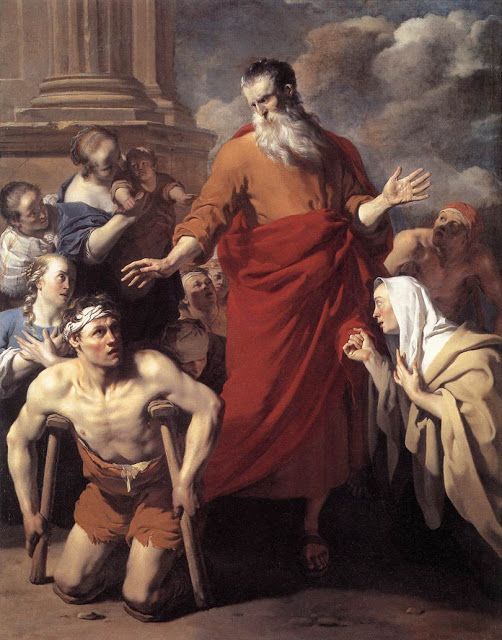
Later Paul and Barnabas, now clearly seen as charismatic leaders, were sent by Antioch officials to preach to the gentiles.  Enormous success crowned their efforts.   After a miracle at Lystra, the people wanted to offer sacrifice to them as gods—Barnabas being Zeus, and Paul, Hermes—but the two said, “We are of the same nature as you, human beings.   We proclaim to you good news that you should turn from these idols to the living God” (see Acts 14:8-18).

But all was not peaceful.   They were expelled from one town, they had to go to Jerusalem to clear up the ever-recurring controversy about circumcision and even the best of friends can have differences.   When Paul wanted to revisit the places they had evangelised, Barnabas wanted to take along his cousin John Mark, author of the Gospel but Paul insisted that since Mark had deserted them once, he was not fit to take along now.   The disagreement that followed was so sharp, that Barnabas and Paul separated: Barnabas taking Mark to Cyprus, Paul taking Silas to Syria.   Later they were reconciled—Paul, Barnabas and Mark.

When Paul stood up to Peter for not eating with gentiles for fear of his Jewish friends, we learn that “even Barnabas was carried away by their hypocrisy” (see Galatians 2:1-13)

Barnabas is spoken of simply as one who dedicated his life to the Lord.   He was a man “filled with the Holy Spirit and faith. Thereby, large numbers were added to the Lord.” Even when he and Paul were expelled from Antioch in Pisidia—modern-day Turkey—they were “filled with joy and the Holy Spirit.”

Come O Holy Spirit, come, fill the hearts of Your faithful!come o holy spirit come fill the hearts of your faithful - 11 june 2018

St Barnabus, Pray for us!st-barnabas-pray-for-us.11 june 2017

Posted in DOCTORS of the Church, FATHERS of the Church, MORNING Prayers, QUOTES of the SAINTS, QUOTES on CONVERSION, QUOTES on FAITH, QUOTES on PRAYER, QUOTES on SANCTITY, SPEAKING of .....

Quote/s of the Day – 11 June – Memorial of St Barnabas, Apostle

Quote/s of the Day – 11 June – Memorial of St Barnabas, Apostle

Speaking of: “Seeking Sainthood”

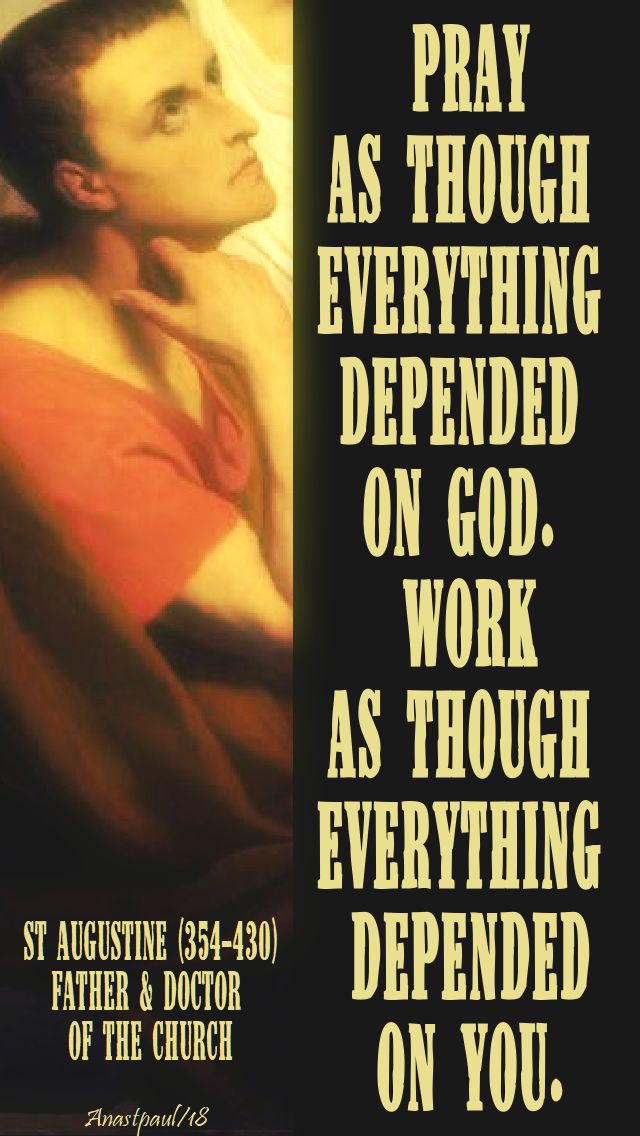
“Pray as though everything depended on God.
Work as though everything depended on you.”

St Augustine (354-430) Father & Doctor of the Churchpray as though - st augustine - speaking of seeking sainthood - 11 june 2018

“Teach us to give
and not to count the cost.”teach us to give and not to count - st ignatius loyola - 11 june 2018 - speaking of seeking sainthood

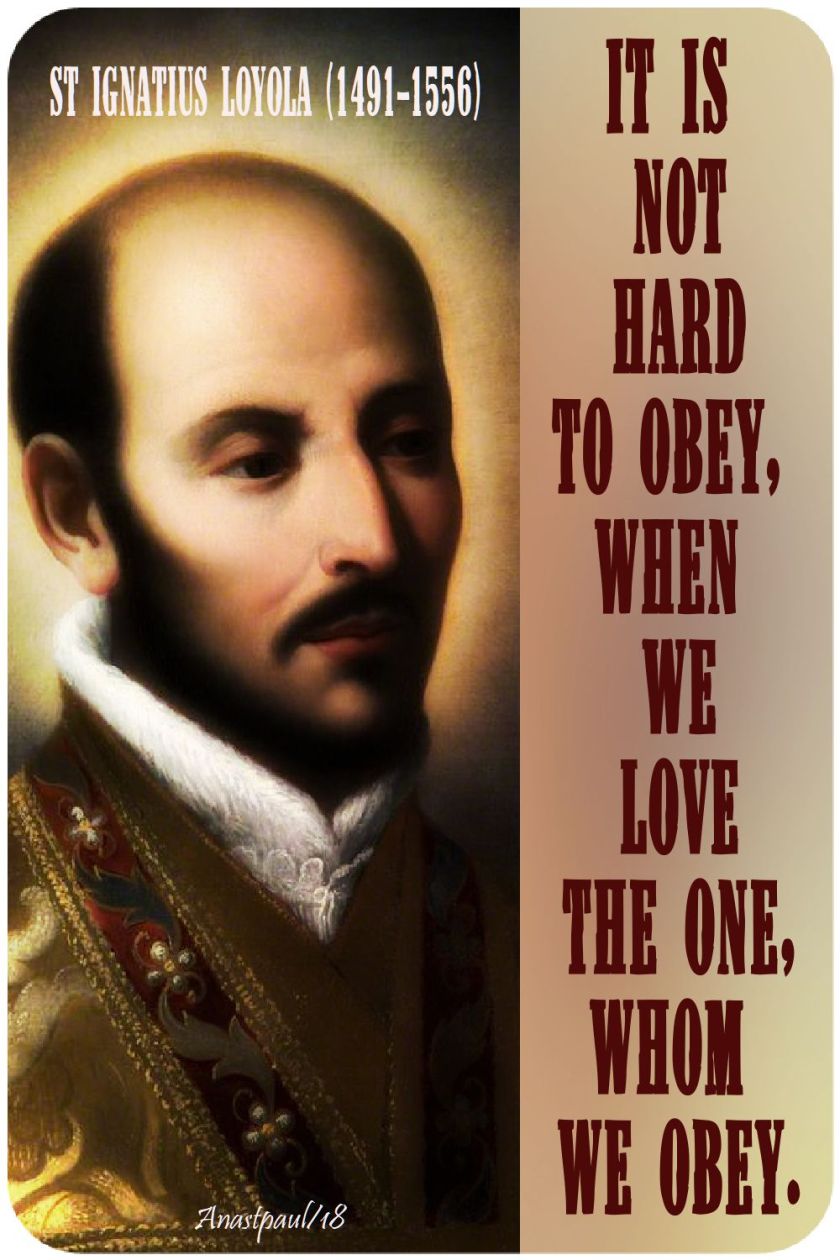
“It is not hard to obey
when we love the one,
whom we obey.”

St Ignatius Loyola (1491-1556)it is not hard - st ignatius - 11 june 2018 - seeking sainthood

“Let us begin in earnest to work out our salvation,
for no one will do it for us, since even He Himself,
Who made us without ourselves,
will not save us without ourselves.”

St Margaret Mary Alacoque (1647-1690)let us begin in earnest - st margaret mary alacoque - 11 june2018 - seeking sainthood

“You cannot be half a saint;
you must be a whole saint
or no saint at all.”

St Therese of the Child Jesus/Lisieux (1873-1897) Doctor of the Churchyou cannot be half a saint - st therese lisieux - 11 june 2018 - seeking sainthood

Posted in BREVIARY Prayers, DOCTORS of the Church, FATHERS of the Church, MORNING Prayers, PAPAL SERMONS, QUOTES of the SAINTS, SAINT of the DAY, The APOSTLES & EVANGELISTS, The WORD

One Minute Reflection – 11 June – Memorial of St Barnabas, Apostle

One Minute Reflection – 11 June – Memorial of St Barnabas, Apostle – Today’s First Reading  Acts of the Apostles 11:21b-26.13:1-3.

News of this came to the ears of the church in Jerusalem and they sent Barnabas to Antioch.   When he came and saw the grace of God, he was glad and he exhorted them all, to remain faithful to the Lord, with steadfast purpose;  for he was a good man, full of the Holy Spirit and of faith.   And a large company was added to the Lord...Acts 11:22-24

REFLECTION – “While we cannot see God, there is something we can do, to open a way, for the eye of our understanding to come to Him.   It is certain that we can see now in His servants, one whom we can in no way see in Himself.   When we see them doing astonishing things, we can be sure that God dwells in their hearts…   None of us can look directly at the rising sun by gazing at its orb.   Our eyes are repelled as they strain to see its rays.   But we look at mountains bathed in sunlight and see that it has risen.   Because we cannot see the Sun of righteousness (Mal 3,20) Himself, let us see the mountains bathed in His brightness, I mean the holy apostles.   They shine with virtues and gleam with miracles…  The power of His divinity, is in itself, like the sun in the sky;  in human beings it is like the sun shining on earth…”…St Pope Gregory the Great (c 540-604), Father & Doctor of the Church (Homilies on the Gospel, no 30)when he came and saw - acts 11 22-24 - when we see them doing - st pope gregory the great - 11 june 2018 st barnabas

PRAYER – O God, who decreed that Saint Barnabas, a man filled with faith and the Holy Spirit, should be set apart to convert the nations, grant that the Gospel of Christ, which he strenuously preached, may be faithfully proclaimed by word and by deed.   We pray you Lord, that by the intercession of St Barnabas, we too may grow in faith and love and live to glorify Your kingdom.   Through our Lord Jesus Christ, Your Son, who lives and reigns with you in the unity of the Holy Spirit, one God, forever and ever. Amen.st barnabas - pray for us - 11 june 2018

Posted in DOCTORS of the Church, FATHERS of the Church, MORNING Prayers, PRAYERS of the SAINTS

Our Morning Offering – 11 June – Memorial of St Barnabas, Apostle

Our Morning Offering – 11 June – Memorial of St Barnabas, Apostle

Steer the Ship of my Life, Lord
By St Basil the Great (329-379)

Steer the ship of my life, Lord,
to Your quiet harbour,
where I can be safe from
the storms of sin and conflict.
Show me the course I should take.
Renew in me the gift of discernment,
so that I can see the right direction
in which I should go.
And give me the strength
and the courage to choose the right course,
even when the sea is rough
and the waves are high,
knowing that through enduring
hardship and danger in Your name
we shall find comfort and peace.
Amensteer the ship of my life lord - st basil - 11 june 2018 - no 2. jpg

Posted in Against STORMS, EARTHQUAKES, THUNDER & LIGHTENING, FIRES, DROUGHT / NATURAL DISASTERS, Of and For PEACE, SAINT of the DAY, The APOSTLES & EVANGELISTS

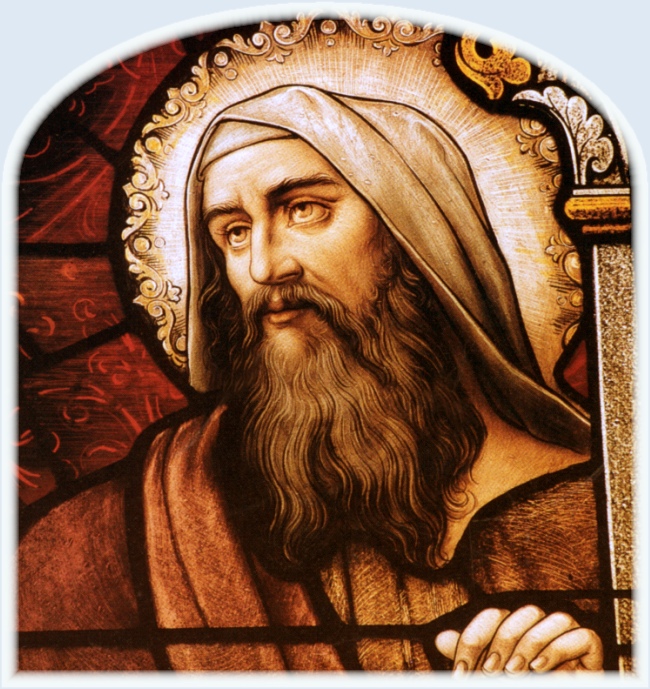
Saint of the Day – 11 June – St Barnabas, Apostle “Son of Encouragement”

Saint of the Day – 11 June – St Barnabas, Apostle – Prophet, Disciple, Apostle to Antioch and Cyprus, Missionary and Martyr – born in Cyprus as Joseph – martyred in c 61 at Salamis.  At his Baptism, when he sold all his goods and gave the money to the apostles in Jerusalem, they gave him a new name, “Barnabas”, which means “Son of Encouragement;  Son of Consolation.”   Patronages – Cyprus, Antioch, against hailstorms, invoked as peacemaker.barnabas - header 1

St Barnabas, was designated by the Holy Spirit to share the charge and mission of the twelve Apostles, is venerated by the Church as one of them.   He played an important part in the first extension of Christianity outside the Jewish world.   It was Barnabas who presented St Paul to the other Apostles when, after his long retreat in Arabia, he came to Jerusalem for the first time after his conversion, to submit for Peter’s approval, the mission to the Gentiles entrusted to him, by the Master Himself.   Barnabas was Paul’s companion and helper on his first missionary journey and returned with him to Jerusalem but left him, when he set out on his second journey and went to Cyprus.   The name of St Barnabas is mentioned in the Canon of the Mass.

We know nothing about St Barnabas except what Scripture tells us.   St Luke says he was “a good man, filled with the Holy Spirit and faith” (Acts 11:24).   No one could ask for a better recommendation!   The saint was born at Cyprus, a Jew of the tribe of Levi.   His given name was Joseph, but the apostles called him Barnabas, which meant “son of encouragement” (Acts 4:36).   That nickname suited him to a tee, for everywhere he went he seems to have played a major supportive role in establishing the Christian community. For example, he sold his property and donated the money to the apostles for the poor.

barnabas sold everything

Later the apostles sent him to care for the fledgling church at Antioch (Acts 11:20–22).  He brought Paul from Tarsus to help him and the community flourished under their leadership (Acts 11:25–26).   Twice Barnabas and Paul travelled to Jerusalem on behalf of the church at Antioch (Acts 11:27–30; 15:2).   He also accompanied Paul on his first missionary journey that began in Cyprus and circuited through Asia Minor (Acts 13:1–2, 7).paul and barnabas at lystra

Before the next missionary journey, however, Paul and Barnabas quarreled over some personal and pastoral matters and decided to separate.   Barnabas returned to Cyprus and evangelised the island.   Paul’s later references to Barnabas in his letters indicate that the two apostles were ultimately reconciled (see 1 Corinthians 9:6; Colossians 4:10).

Early Christians attributed an epistle to Barnabas but modern scholars say he probably did not write it.   Tertullian and other Western writers regard Barnabas as the author of the Letter to the Hebrews.   This may have been the Roman tradition—which Tertullian usually follows—and in Rome the epistle may have had its first readers.   Modern biblical scholarship disagree.

It is believed that he was Martyred at Salamis in 61.

There are two ways of doctrine and authority, one of light and the other of darkness.   But these two ways differ greatly.   For over one are stationed the light-bringing angels of God but the angels of Satan are over the other.   This, then, is the way of light:  Love God who created you.   Glorify God who redeemed you from death.   Be simple in heart, and rich in spirit.   Hate doing anything unpleasing to God.   Do not exalt yourself but be of a lowly mind.   Do not forsake the commandments of the Lord.   Love your neighbour more than your own soul.   Do not slay the child by procuring an abortion, nor destroy it after it is born.   Receive your trials as good things.   Do not hesitate to give without complaint.   Confess your sins.   This is the way of light.   But the way of darkness is crooked and cursed, for it is the way of eternal death with punishment.   In this way are the things that destroy the soul:  idolatry, overconfidence, the arrogance of power, hypocrisy, double-heartedness, adultery, rape, haughtiness, transgressions, deceit, malice, avarice and absence of any fear of God.   Also in this way are those who persecute the good, those who hate truth, those who do not attend to the widow and orphan, those who do not pity the needy, those who murder children, those who oppress the afflicted and are in every respect transgressors.

The Epistle of Barnabas

The Catholic religious order officially known as “Regular Clerics of St Paul” (Clerici Regulares Sancti Pauli – C.R.S.P.), founded in the 16th Century, was in 1538 given the grand old Monastery of Saint Barnabas by the city wall of Milan.   This becoming their main seat, the Order was thenceforth known by the popular name of the Barnabites.st-barnabas-monastery

More about St Barnabas here:  https://anastpaul.wordpress.com/2017/06/11/saint-of-the-day-st-barnabas-the-apostle-11-june/

Posted in SAINT of the DAY

Memorials of the Saints – 11 June

St Barnabas the Apostle (Memorial) (Martyred in c 61 at Salamis)

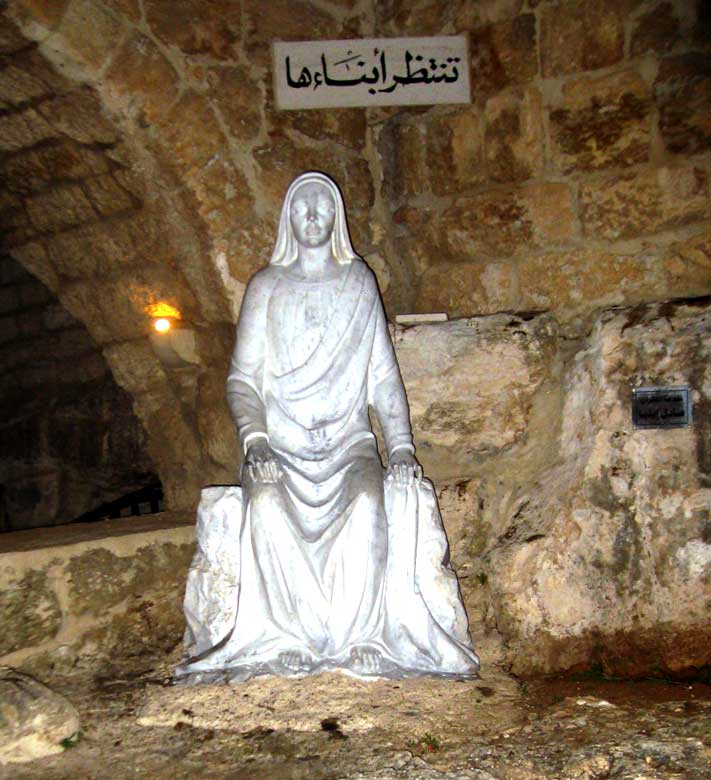
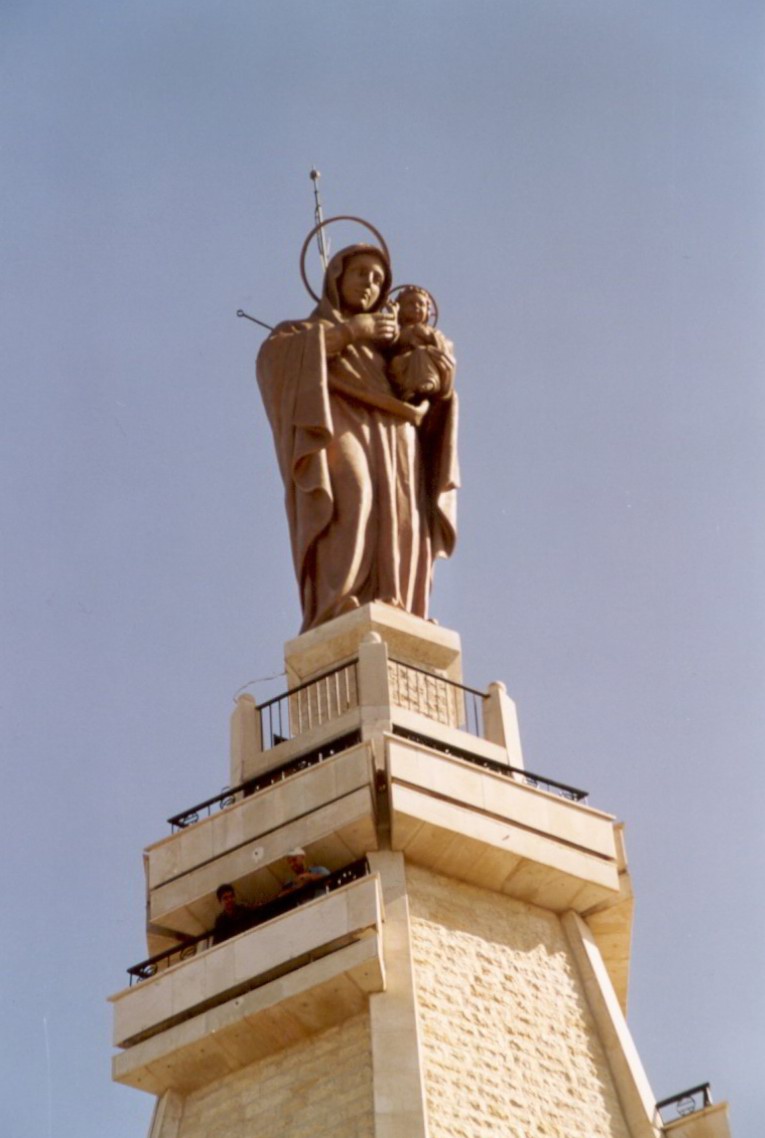
Our Lady of Awaiting/Mantara: Our Lady of Awaiting, also known as Our Lady of Mantara, is a Melkite Greek Catholic Marian shrine in Maghdouché, Lebanon, discovered on 8 September 1721 by a young shepherd. The grotto, which according to a legend dates to ancient times, was subsequently cared after by Monsignor Eftemios Saïfi, Melkite Catholic bishop of the Melkite Greek Catholic Archeparchy of Sidon. The shrine consists of a tower crowned with the statue of the Virgin and Child, a cathedral, a cemetery and a sacred cave believed to be the one where the Virgin Mary rested while she waited for Jesus. Since its discovery, it has been steadily visited by families particularly each year on the occasion of the feast of the Nativity of Mary on 8 September.our lady of mantara at the caveOUR LADY OF MANTARA

St Aleydis of Schaerbeek
St Blitharius of Seganne
St Herebald of Bretagne
Bl Hugh of Marchiennes
Bl Ignazio Choukrallah Maloyan
Bl Jean de Bracq
Bl Kasper of Grimbergen
St Maximus of Naples
St Parisius
St Paula Frasinetti
St Riagail of Bangor
St Tochumra of Kilmore
St Tochumra of Tuam

Martyrs of Tavira – 7 beati: Members of the Knights of Santiago de Castilla. During the re-conquest of the Iberian peninsula from the Muslims by Christian forces, in a period of truce between the armies, the group was allowed to leave the Portuguese camp to hunt. Near Tavira, Portugal, he and his companions were ambushed and killed by a Muslim force. Making a reprisal attack, the Portuguese army took the city of Tavira. The murdered knights were considered to be martyrs as they died in an action defending the faith. They were –
• Blessed Alvarus Garcia
• Blessed Beltrão de Caia
• Blessed Damião Vaz
• Blessed Estêvão Vasques
• Blessed Garcia Roiz
• Blessed Mendus Valle
• Blessed Pedro Rodrigues
They were martyred in 1242 outside Tavira, Faro, Portugal. Their relics are enshrined under the altar of Saint Barnabas in the Church of Our Lady, Queen of the Angels (modern Santa Maria do Castelo) in Tavria

Mercedarian Martyrs of Damietta: Three Mercedarian lay knights who worked to ransom Christians enslaved by Muslims. During the 7th Crusade, a plague swept through the Christian army and these knights volunteered to work with the sick. During this work they were captured by Muslims and ordered to convert to Islam; they refused. They were tortured, taken to Damietta, Egypt where they were murdered for their faith. They were thrown from a tower in the mid-13th century in Damietta, Egypt.

Posted in MORNING Prayers, SAINT of the DAY

Thought for the Day – 10 June -Tenth Sunday of the Year B and the Memorial of Bl John Dominici O.P. (c 1355-1419)

Thought for the Day – 10 June -Tenth Sunday of the Year B and the Memorial of Bl John Dominici O.P. (c 1355-1419)

Why should we worry what future generations think of us?   That seems pretty insecure, to worry about what others who don’t even exist yet think.   It seems much better to worry about whether or not we are doing the right thing.   That’s not easy in our culture, because there is not widespread agreement on precisely what that right thing is.

Most of us will fade into the past without much comment by future generations.   That shouldn’t frighten us; it should motivate us.   Doing the right thing for people of faith–acting according to the demands of our human nature and according to the commands of God–should be the primary motivation:  not some imagined stamp of approval down the road but the approval of our loving Maker.   For people who don’t believe in God or an afterlife, it is even more critical to do what is right because it doesn’t seem like being on the right side of history matters much if you’re not going to exist.

Historical hindsight can be 20/20 but too often our rearview mirror gives a picture that is not so clear.   Bl John Dominic knew not to worry about the vicissitudes of human chroniclers, agonising about his place in the historical annals.   Instead, he acted according to his well-formed conscience and the promptings of the Holy Spirit.   That is why he is a great saint.   He was a world-famous celebrity, now mostly forgotten, except by the One who truly matters. (Br Dominic Bouck)

Blessed John Dominici, Pray for us!bl john dominici - pray for us - 10 june 2018

Posted in EUCHARISTIC Adoration, MORNING Prayers, QUOTES - J R R Tolkien and MORE, QUOTES of the SAINTS, QUOTES on GRATITUDE, SUNDAY REFLECTIONS, The HOLY EUCHARIST / The HOLY MASS

Sunday Reflection – 10 June -Tenth Sunday of the Year B

Sunday Reflection – 10 June -Tenth Sunday of the Year B

“The Holy Sacrifice of the Mass gives boundless honour to the Most Blessed Trinity because it represents the passion of Jesus Christ and because, through the Mass, we offer God the merits of Our Lord’s obedience, of His sufferings and of His Precious Blood.   The whole of the heavenly court also receives an accidental joy from the Mass.

Several doctors of the Church—together with St Thomas Aquinas—tell us that, for the same reason, all the blessed in Heaven rejoice in the communion of the faithful because the Blessed Sacrament, is a memorial of the passion and death of Jesus Chris and that by means of it, men share in its fruits and work out their salvation”

St Louis de Montfort (1673-1716)

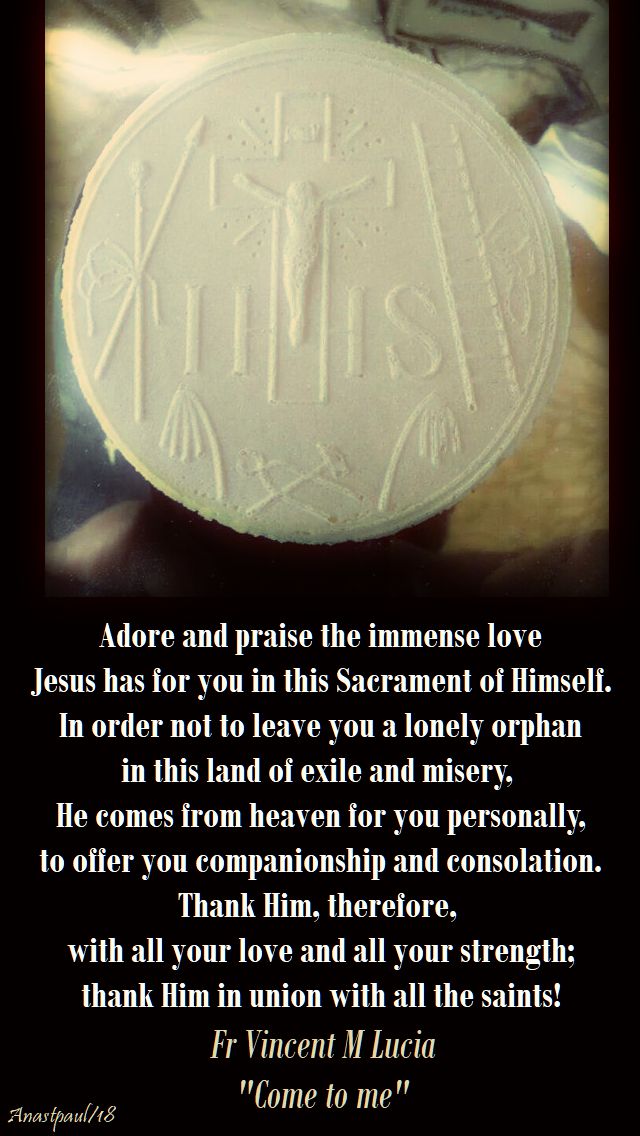
“Adore and praise the immense love Jesus has for you in this Sacrament of Himself.
In order not to leave you a lonely orphan in this land of exile and misery, He comes from heaven for you personally, to offer you companionship and consolation.
Thank Him, therefore, with all your love and all your strength;
thank Him in union with all the saints!”…Fr Vincent M Lucia “Come to me”

adore and praise the immense love - for lucia - 10 june 2018 - sunday reflection

Posted in DOCTORS of the Church, FATHERS of the Church, MORNING Prayers, QUOTES of the SAINTS, QUOTES on FAITH, The HOLY EUCHARIST / The HOLY MASS

Quote of the Day – 10 June -Tenth Sunday of the Year B

Quote of the Day – 10 June -Tenth Sunday of the Year B

“If we approach with faith, we too will see Jesus…
for the Eucharistic table takes the place of the crib.
Here, the Body of the Lord is present,
wrapped not in swaddling clothes, 
but in the rays of the Holy Spirit.”

St John Chrysostom (347-407)

Father & Doctor of the Churchif we approach with faith - st john chrysostom - 10 june 2018

Posted in MORNING Prayers, PAPAL ENCYLICALS, QUOTES of the SAINTS, QUOTES on REPENTANCE, The HOLY GHOST, The WORD

One Minute Reflection – 10 June – Tenth Sunday of the Year B – Today’s Gospel Mark 3:20-35

One Minute Reflection – 10 June – Tenth Sunday of the Year B – Today’s Gospel Mark 3:20-35

“But whoever blasphemes against the holy Spirit will never have forgiveness but is guilty of an everlasting sin.”…Mark 3:29

REFLECTION – “Why is blasphemy against the Holy Spirit unforgivable?   How should this blasphemy be understood?   St Thomas Aquinas replies that it is a question of a sin that is “unforgivable by its very nature, insofar as it excludes the elements through which the forgiveness of sin takes place.”   According to such an exegesis, “blasphemy” does not properly consist in offending against the Holy Spirit in words;  it consists rather in the refusal to accept the salvation which God offers us through the Holy Spirit, working through the power of the Cross.   If man rejects the “convincing concerning sin” which comes from the Holy Spirit (Jn 16:8) and which has the power to save, he also rejects the “coming” of the Counsellor (Jn 16:7) – that “coming” which was accomplished in the Paschal Mystery, in union with the redemptive power of Christ’s Blood:  the Blood which “purifies the conscience from dead works” (Heb 9:15).

We know that the result of such a purification is the forgiveness of sins.   Therefore, whoever rejects the Spirit and the Blood (cf. 1Jn 5:8) remains in “dead works,” in sin.  And the blasphemy against the Holy Spirit consists precisely in the radical refusal to accept this forgiveness, of which he is the intimate giver and which presupposes the genuine conversion which he brings about in the conscience.   If Jesus says that blasphemy against the Holy Spirit cannot be forgiven either in this life or in the next, it is because this “non-forgiveness” is linked, as to its cause, to “non-repentance,” in other words to the radical refusal to be converted…

Blasphemy against the Holy Spirit, then, is the sin committed by the person, who claims to have a “right” to persist in evil – in any sin at all – and who thus, rejects Redemption. One closes oneself up in sin, thus making impossible one’s conversion and consequently the remission of sins, which one considers not essential or not important for one’s life. This is a state of spiritual ruin, because blasphemy against the Holy Spirit does not allow one to escape from one’s self-imposed imprisonment.”… St John Paul II (1920-2005) Encyclical “Dominum et vivificantem”mark 3 29 - but whoever - st john paul - blasphemy against the holy spirit then - 10 june 2018

PRAYER – Lord God strength of those who hope in You, support us in our prayer because we are weak and can do nothing without You.   Grant always the help of Your grace so that, in fulfilling Your commandments, we may please You in the depths of our hearts and souls and be free of sin against You.   Fill us with the Holy Spirit, who is our refuge, our strength, our truth.   Through Christ, our Lord, with You and the Holy Spirit, one God forever, amen.   “Whoever does the will of God is my brother, and sister, and mother.” Mark 3:35mark 3 35 - whoever does the will of god is my brother = 10 june 2018

Posted in JESUIT SJ, MORNING Prayers, PRAYERS of the SAINTS, The HOLY EUCHARIST / The HOLY MASS

Our Morning Offering – 10 June – Tenth Sunday of the Year B

Our Morning Offering – 10 June – Tenth Sunday of the Year B

Anima Christi

Soul of Christ, sanctify me.
Body of Christ, save me.
Blood of Chirst, inebriate me.
Water from the side of Christ, wash me.
Passion of Christ, strengthen me.
O good Jesus, hear me.
Within Your wounds hide me.
Suffer me not to be separated from You.
From the malicious enemy defend me.
In the hour of my death call me
and bid me come unto You,
that with Your saints I may praise You,
forever and ever.
Amen

This well known Catholic prayer dates to the early fourteenth century and was possibly written by Pope John XXII but its authorship remains uncertain.   The prayer takes its name from its Latin incipit, meaning “Soul of Christ”.   The Anima Christi was popularly believed to have been composed by St Ignatius of Loyola (1491-1556), as he puts it at the beginning of his Spiritual Exercises and often refers to it but it was so well known and so popular at the time of St Ignatius, that in the first edition of his Spiritual Exercises he merely mentions it, evidently supposing that the reader would know it.   In later editions, it was printed in full.   It was by assuming that everything in the book was written by St Ignatius that it came to be looked upon as his composition.anima christi - soul of christ sanctify me - 10 june 2018

Posted in DOMINICAN OP, SAINT of the DAY, Uncategorized

Saint of the Day – 10 June – Blessed John Dominici O.P. (c 1355-1419)

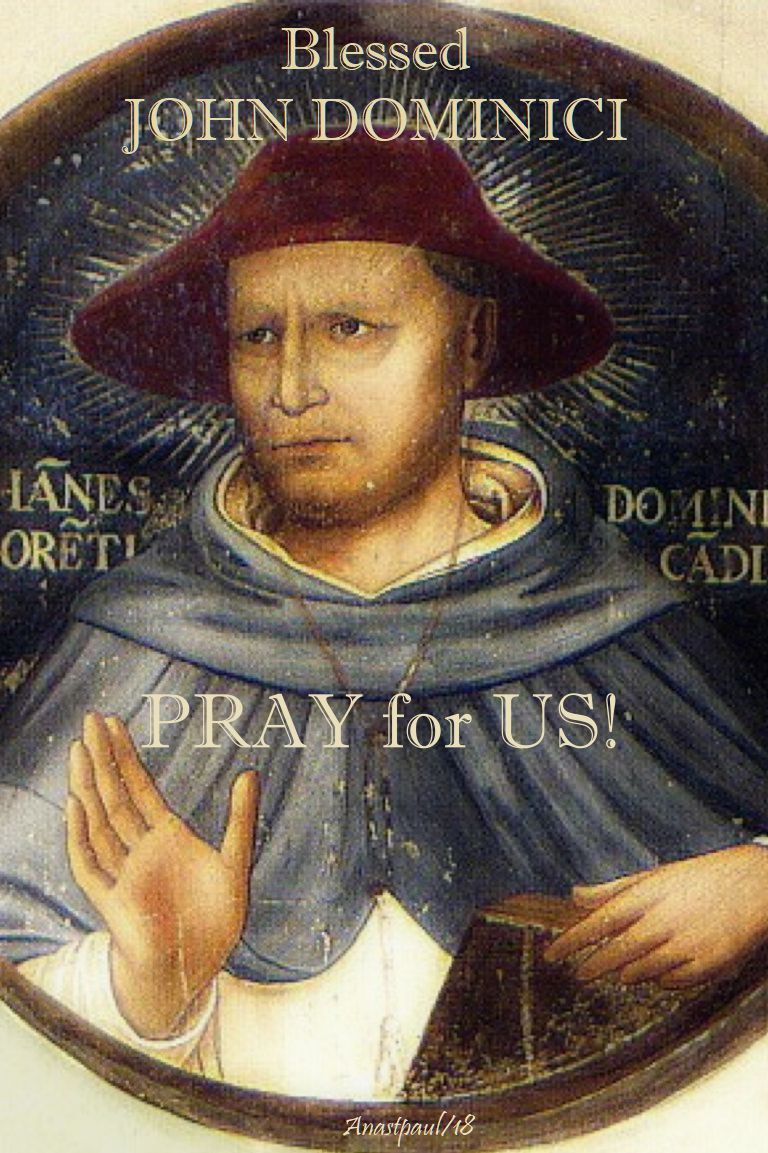
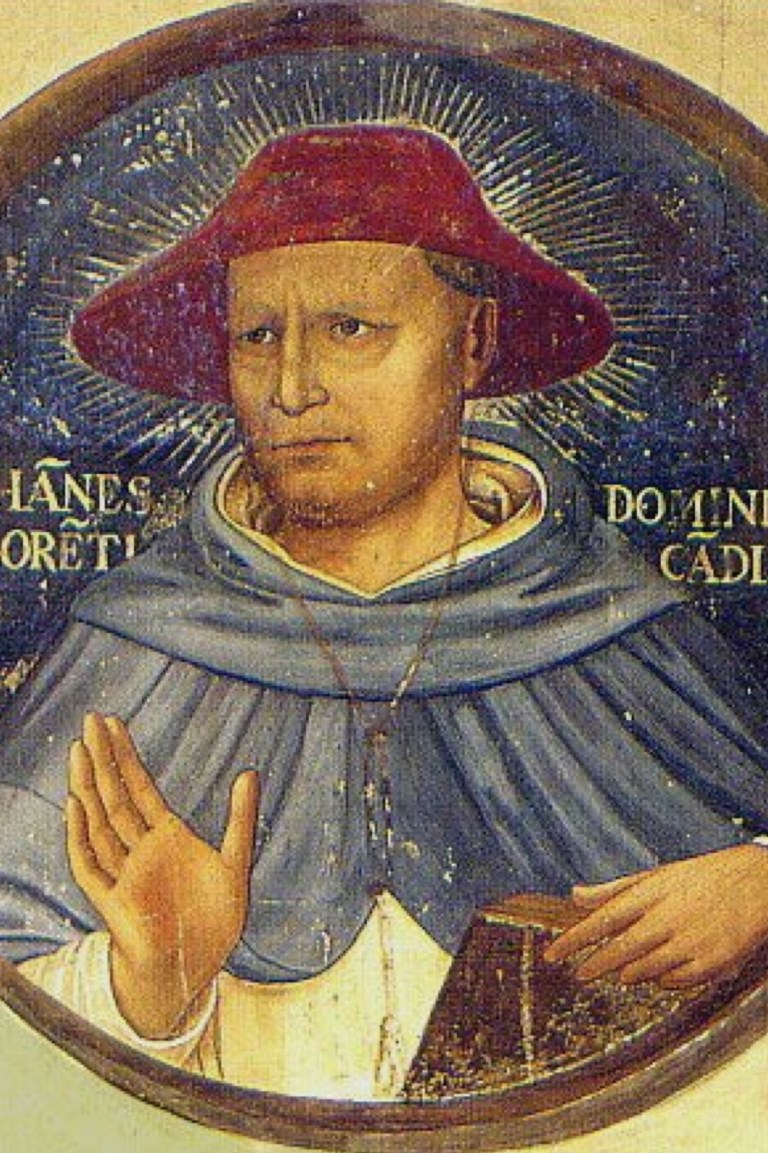
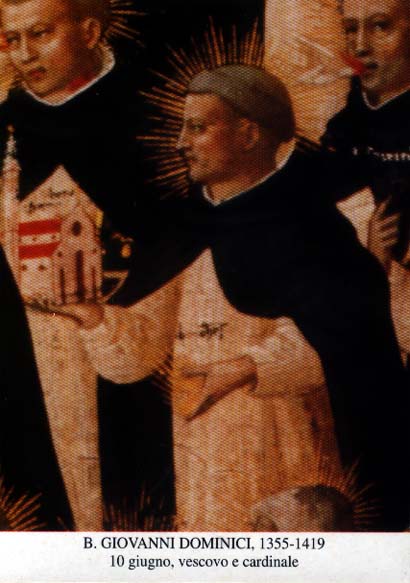
Saint of the Day – 10 June – Blessed John Dominici O.P. (c 1355-1419) ArchBishop, Cardinal, Religious Friar, Theologian, Preacher, Confessor, Reformer, Papal Legate, Papal Counsellor and Confessor, Writer, Evangeliser – born on 1356 at Florence, Italy and died on 10 June 1419 of a fever at Buda, Hungary.  Bl-JohnDominic

Although John had little education and suffered from a speech impediment that caused him to stammer and stutter, he possessed a tremendous drive to improve himself, overcome his obstacles and serve our Lord.   He also had a great memory and later in life became a great theologian and preacher.   John Dominic met St Catherine of Siena when he was young, entered the Order of Preachers and was an integral part of a major reform movement.   This reform helped to revitalise the Order after its decimation by the plague and general laxity of observance.   Not only was he a major force in the Dominican Order but he became a cardinal in the Church and an official legate for the Pope.   Most importantly, he worked to resolve the Great Western Schism.   He also brought Fra Angelico, the world famous painter and St Antoninus, a brilliant theologian and reformer, into the Order.

Born in c 1355 at Florence, Italy, John spent a great deal of his youth in or around the Dominican church of Santa Maria Novella.   He joined the Order at the age of 17, despite his lack of education and his speech impediment, even while the Dominicans are scholars and preachers.   After entering the Order, Blessed John studied in Pisa and Florence and received a degree from the University of Paris.   As a priest, Blessed John once believed that his speech impediment would threaten his vocation but it was cured through the intervention of Saint Catherine of Siena.   Blessed John spent 12 years in Venice as a preacher.

In 1392, Blessed John found himself to be the Vicar provincial serving in Rome.   At the time, Blessed Raymond of Capua was the Master General of the Order and he helped rebuild the Order after the ravages of the Plague and helped return regular discipline to the Order’s members.

Blessed John founded Dominican convents in Venice, Fiesole, Chioggia, Citta de Castello, Cortona, Lucca and Fabriano and was a correspondent of Blessed Clara Gambacorta, advising her of how to restore discipline to Dominican nuns of the day.   For a time, he lost papal support because of support for the Dominican White Penitents in Venice but was later welcomed back and resumed his work in the Order.

Most importantly, Blessed John worked to provide a Christian education to young people. He opposed pagan ideas that were taking hold in the humanism of his day and was a confessor and adviser to Pope Gregory XII.   He was made Cardinal of San Sisto in 1407 and Archbishop of Ragusa in 1408.   In these roles, he helped to heal the Western Schism and convinced Pope Gregory XII to call the Council of Constance and to abdicate the papacy causing the anti-popes to also drop their claims to the papal throne.Blessed John Dominic

He was appointed the Papal legate to Milan, Genoa, Hungary and Bohemia for Pope Martin V and, in that role,  worked to settle the disputes caused by the death of Jon Hus and to heal the Hussite Schism.   However, while Blessed John was able to convert some, he was unable to resolve the Hussite Schism.

John is widely known for his scripture commentaries and hymns.   His portrait was painted by Fra Angelico and a his memoir was written by St Antonius of Florence, who joined the Order after hearing Blessed John preach.

Blessed John died on 10 June 1419 at Buda, Hungary, from a fever and he was buried in the Saint Paul the Hermit church there.   His tomb became a site of miracles and his remains were venerated and miracles reported, until the destruction of the church during a Turkish invasion.   His cultus was confirmed in 1832 and he was beatified by Pope Gregory XVI in 1837.

Posted in MARIAN TITLES, SAINT of the DAY, The BLESSED VIRGIN MARY

Feast of Our Lady of the Grotto, Malta and Memorials of the Saints – 10 June

Our Lady of the Grotto, Mellieħa, Malta: The Sanctuary of Our Lady of Mellieħa is a Marian shrine in the village of Mellieħa in Malta. It was originally constructed in the late 16th century and contains a Byzantine-style fresco, depicting the Blessed Virgin Mary with Christ on her right arm. Tradition has it that the painting was made by St Luke when he was shipwrecked on the island with St Paul. The church expanded several times to accommodate the growing population of the village and the roofed veranda is considered a classic example of 17th century Renaissance architecture. The sanctuary was blessed by Pope John Paul II during his visit to Malta in May 1990.

Bl Amata of San Sisto
St Amantius of Tivoli
St Asterius of Petra
St Bardo of Mainz
Bl Bogumilus of Gniezno
St Caerealis of Tivoli
St Censurius of Auxerre
St Crispulus of Rome
Bl Edward Johannes Maria Poppe (1890-1924)
Bl Elisabeth Hernden
Bl Elizabeth Guillen
St Evermund of Fontenay
St Faustina of Cyzicus
Bl Gerlac of Obermarchtal
St Getulius of Tivoli
Bl Henry of Treviso
St Illadan of Rathlihen
St Ithamar of Rochester
Bl John Dominici O.P. (c 1355-1419)
Bl José Manuel Claramonte Agut
Bl Joseph Kugler
St Landericus of Novalese
St Landericus of Paris
Bl Mary Magdalene of Carpi
St Maurinus of Cologne
St Primitivus of Tivoli
St Restitutus of Rome
Bl Thomas Green
St Timothy of Prusa
Bl Walter Pierson
St Zachary of Nicomedia

Martyrs of North Africa – 17 saints: A group of seventeen Christians martyred together in North Africa; the only surviving details are two of their names – Aresius and Rogatius. Both the precise location in North Africa and the date are unknown.

Martyrs of the Aurelian Way – 23 saints: A group of 23 martyrs who died together in the persecutions of Aurelian. The only details that survive are three of their names – Basilides, Mandal and Tripos. c.270-275 on the Aurelian Way, Rome, Italy.

Martyrs of the Hulks of Rochefort/Martyrs of La Rochelle – 64 beati: In 1790 the French Revolutionary authorities passed a law requiring priests to swear allegience to the civil constitution, which would effectively remove them from the authority of and allegience to, Rome. Many refused and in 1791 the government began deporting them to French Guyana. 827 priests and religious were imprisoned on hulks (old ships no longer sea-worthy and used for storage, jails, hospitals, etc.) at Rochefort, France to await exile, most on the Deux-Associés and the Washington which had previously been used to house slaves or prisoners. There they were basically ignored to death as there was little provision for food and water, less for sanitation and none at all for medical help. 542 of the prisoners died there.
The survivors were freed on 12 February 1795 and allowed to return to their homes. Many of them wrote about their time on the hulks and many of them wrote about the faith and ministry of those who had died. 64 of them have been positively identified and confirmed to have died as martyrs, dying for their faith, they are:
• Antoine Auriel
• Antoine Bannassat
• Augustin-Joseph Desgardin
• Barthélemy Jarrige de La Morelie de Biars
• Charles-Antoine-Nicolas Ancel
• Charles-Arnould Hanus
• Charles-René Collas du Bignon
• Claude Beguignot
• Claude Dumonet
• Claude Laplace
• Claude Richard
• Claude-Barnabé Laurent de Mascloux
• Claude-Joseph Jouffret de Bonnefont
• élie Leymarie de Laroche
• Florent Dumontet de Cardaillac
• François d’Oudinot de la Boissière
• François François
• François Hunot
• François Mayaudon
• Gabriel Pergaud
• Georges-Edme René
• Gervais-Protais Brunel
• Jacques Gagnot
• Jacques Lombardie
• Jacques Retouret
• Jacques-Morelle Dupas
• Jean Baptiste Guillaume
• Jean Bourdon
• Jean Hunot
• Jean Mopinot
• Jean-Baptiste de Bruxelles
• Jean-Baptiste Duverneuil
• Jean-Baptiste Laborie du Vivier
• Jean-Baptiste Menestrel
• Jean-Baptiste Souzy
• Jean-Baptiste-Ignace-Pierre Vernoy de Montjournal
• Jean-Baptiste-Xavier Loir
• Jean-François Jarrige de la Morelie de Breuil
• Jean-Georges Rehm
• Jean-Nicolas Cordier
• Joseph Imbert
• Joseph Juge de Saint-Martin
• Joseph Marchandon
• Lazare Tiersot
• Louis-Armand-Joseph Adam
• Louis-François Lebrun
• Louis-Wulphy Huppy
• Marcel-Gaucher Labiche de Reignefort
• Michel-Bernard Marchand
• Michel-Louis Brulard
• Nicolas Savouret
• Nicolas Tabouillot
• Noël-Hilaire Le Conte
• Paul-Jean Charles
• Philippe Papon
• Pierre Gabilhaud
• Pierre Jarrige de la Morelie de Puyredon
• Pierre-Joseph le Groing de la Romagère
• Pierre-Michel Noël
• Pierre-Sulpice-Christophe Faverge
• Pierre-Yrieix Labrouhe de Laborderie
• Raymond Petiniaud de Jourgnac
• Scipion-Jérôme Brigeat Lambert
• Sébastien-Loup Hunot
They died between 19 May 1794 and 23 February 1795 aboard prison ships docked at Rochefort, Charente-Maritime, France and were beatified on
1 October 1995 by St Pope John Paul II.

Posted in MARIAN DEVOTIONS, MARIAN QUOTES, MARIAN TITLES, MORNING Prayers, QUOTES - J R R Tolkien and MORE, SACRED and IMMACULATE HEARTS, The BLESSED VIRGIN MARY, VATICAN Resources

Thought for the Day – 9 June – The Feast of the Immaculate Heart of Mary

Thought for the Day – 9 June – The Feast of the Immaculate Heart of Mary

“It was through the body of a young, Jewish girl, living in a tiny village called Nazareth, that Jesus, the divine Word, was made flesh.   Mary belonged to that part of the people of Israel, who awaited the Lord’s coming with expectation and longing.   She had no doubt read about His coming in the Old Testament Scriptures and prayed for it.   But she had no idea how it would come about.   Most Israelites thought the Messiah would manifest Himself gloriously.
When the Archangel Gabriel announced to Mary that she was to be the “door’ through which the long awaited desire of the nations would be fulfilled, she must have been astonished:  “Hail, O favoured one, the Lord is with you! … You will conceive in your womb and bear a son, and you shall call His name Jesus” (Lk 1.28-31).   A new life – filled with risks – opened before her.   According to the Church’s tradition, Mary, in an exceptional gesture for a Jewish woman, had decided “not to know man” (Lk 1.34).   She had discerned virginity to be God’s will.   Her Immaculate Heart – the Feast we keep this day – prompted a total giving of herself to God and included the gift of both her body and her heart.   Reassuring her that God had not disdained her vow, Gabriel told Mary that, like the glory of God coming upon the ark, so would the Spirit overshadow her.   The young “handmaid of the Lord” contemplated the Angel’s words.   She treasured them in her heart.   Her response, known as her fiat – “let it be done to me as you say” (Lk 1.38) – shows that she entrusted herself fully to God’s designs.   She chose to forgo her own plans for God’s.   Through her fiat, the Word of God took flesh in the tabernacle of her womb…..

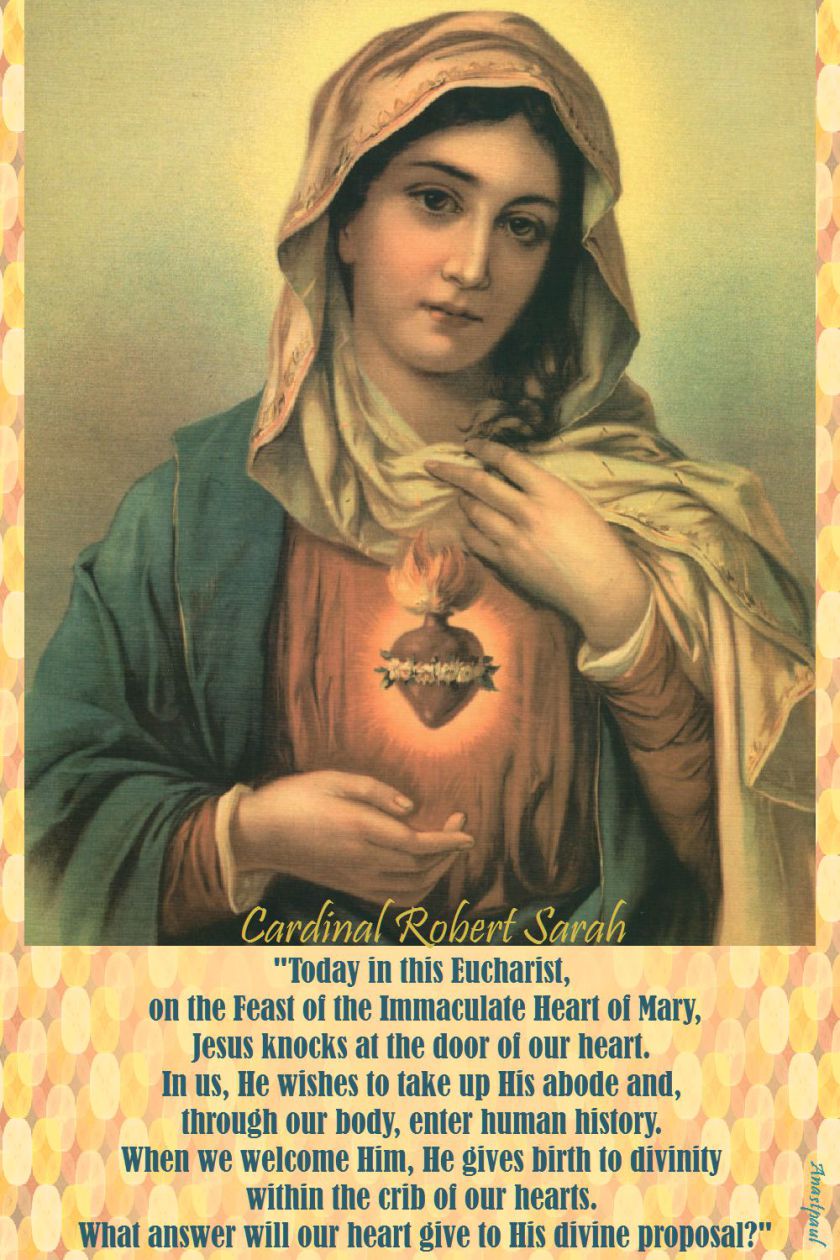
Today in this Eucharist, on the Feast of the Immaculate Heart of Mary, Jesus knocks at the door of our heart.   In us, He wishes to take up His abode and, through our body, enter human history.   When we welcome Him, He gives birth to divinity within the crib of our hearts.   What answer will our heart give to His divine proposal?”…..Cardinal Robert Sarah (16 June 2012)tday-in-this-eucharist-card-robert-sarah-24 june 2017

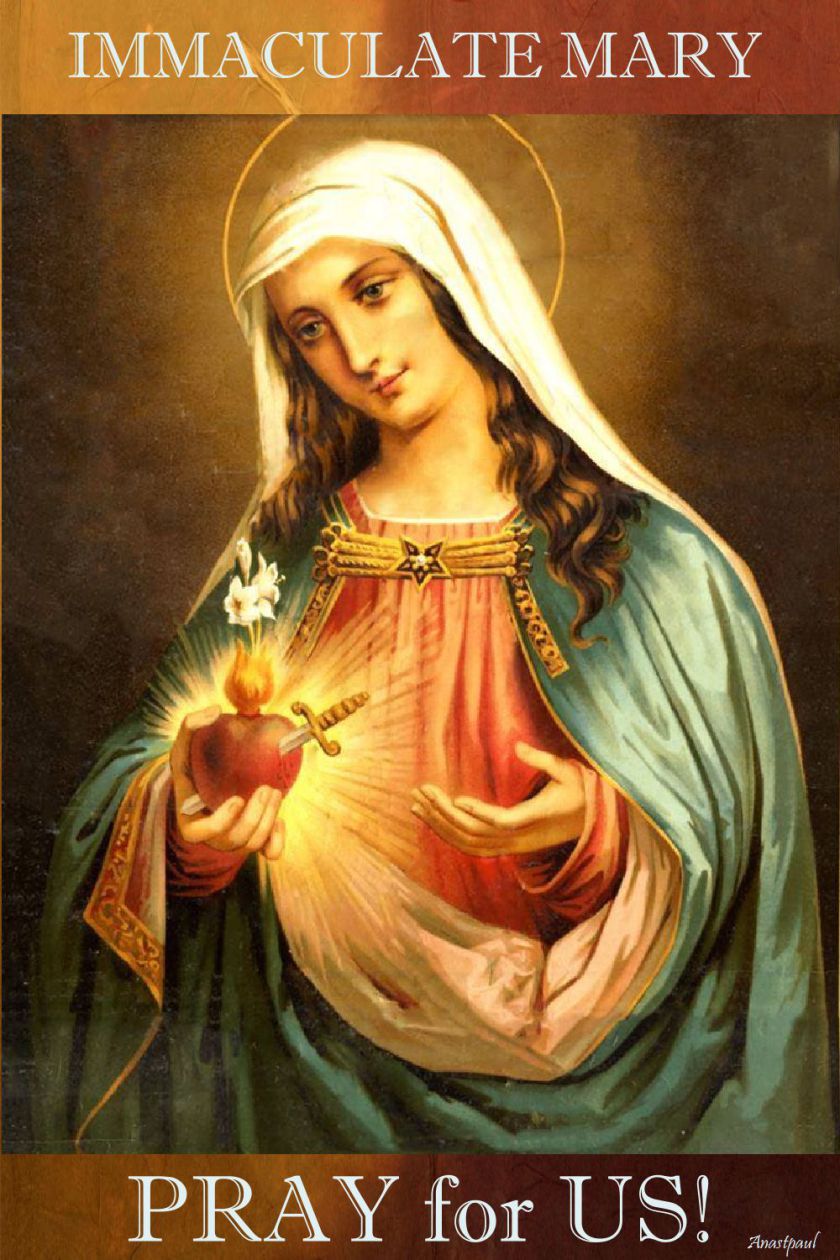
Immaculate Heart of Mary, pray for us!immaculate-mary-poray-for-us-24 june 2017

Posted in DOCTORS of the Church, FATHERS of the Church, MORNING Prayers, PRAYERS of the SAINTS, QUOTES of the SAINTS, SAINT of the DAY

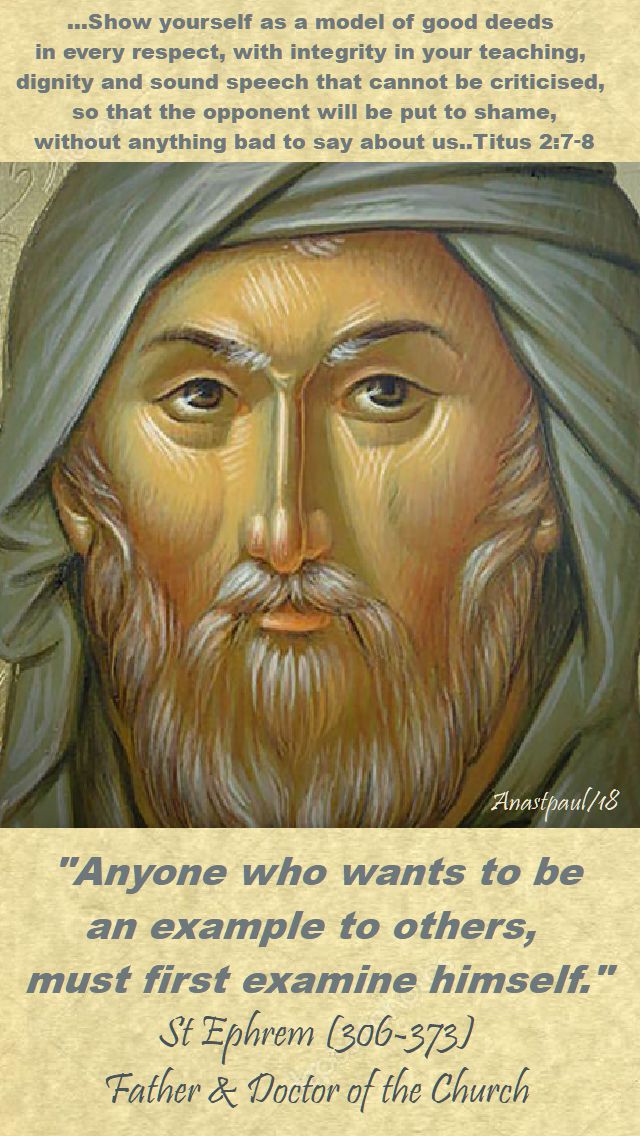
One Minute Reflection – 9 June – The Memorial of St Ephrem (306-373) Father & Doctor of the Church

One Minute Reflection – 9 June – The Memorial of St Ephrem (306-373) Father & Doctor of the Church

Show(ing) yourself as a model of good deeds in every respect, with integrity in your teaching, dignity and sound speech that cannot be criticised, so that the opponent will be put to shame, without anything bad to say about us…Titus 2:7-8

REFLECTION – “Anyone who wants to be an example to others, must first examine himself.”…St Ephremanyone who wants - st ephrem - 2 titus 7-8

PRAYER – O Lord and Master of my life, take from me the spirit of sloth, meddling, lust of power and idle talk.    But give rather the spirit of chastity, humility, patience and love to Thy servant.  Yea, O Lord and King, grant me to see my own sins and not to judge my brother; for Thou art blessed unto ages of ages. Amen….Prayer of St Ephrem of whom we ask, please pray for us!st ephrem pray for us 2

Posted in CATHOLIC-PRAYERS OF THE CHURCH, FEASTS and SOLEMNITIES, MARIAN DEVOTIONS, MARIAN PRAYERS, MARIAN TITLES, MORNING Prayers, PRAYERS of the CHURCH, SACRED and IMMACULATE HEARTS, The BLESSED VIRGIN MARY

Our Morning Offering – 9 June – The Feast of the Immaculate Heart of Mary

Our Morning Offering – 9 June – The Feast of the Immaculate Heart of Mary

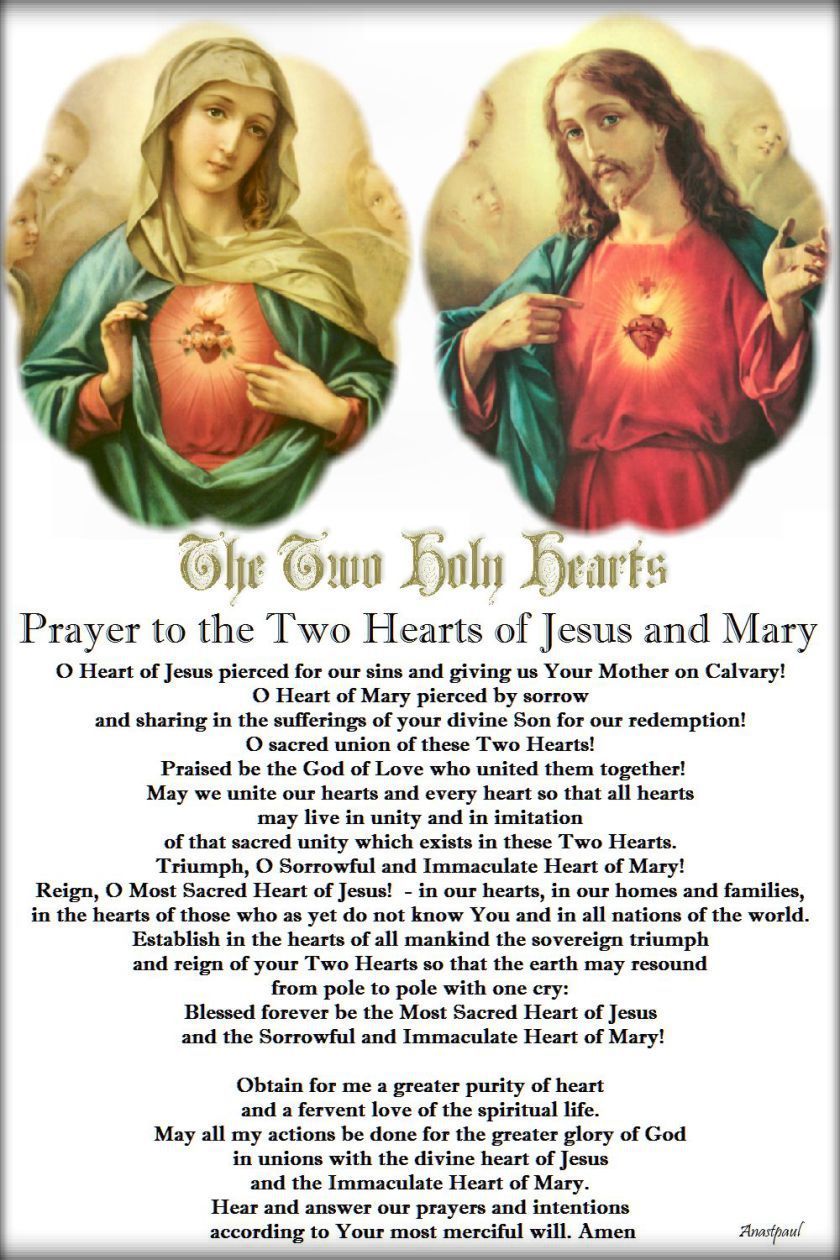
Prayer to the Two Holy Hearts of Jesus and Mary

O Heart of Jesus pierced for our sins
and giving us Your Mother on Calvary!
O Heart of Mary pierced by sorrow
and sharing in the sufferings of your divine Son
for our redemption!
O sacred union of these Two Hearts!
Praised be the God of Love who united them together!
May we unite our hearts and every heart
so that all hearts may live in unity and in imitation
of that sacred unity which exists in these Two Hearts.
Triumph, O Sorrowful and Immaculate Heart of Mary!
Reign, O Most Sacred Heart of Jesus!
– in our hearts, in our homes and families,
in the hearts of those who as yet do not know You
and in all nations of the world.
Establish in the hearts of all mankind the sovereign triumph
and reign of your Two Hearts so that the earth may resound
from pole to pole with one cry:
Blessed forever be the Most Sacred Heart of Jesus
and the Sorrowful and Immaculate Heart of Mary!
Obtain for me a greater purity of heart
and a fervent love of the spiritual life.
May all my actions be done for the greater glory of God
in unions with the divine heart of Jesus
and the Immaculate Heart of Mary.
Hear and answer our prayers and intentions
according to Your most merciful will.
Amenprayer-to-the-two-hearts-of-jesus-and-mary.24 june 2017

Posted in FEASTS and SOLEMNITIES, MARIAN DEVOTIONS, MARIAN QUOTES, MARIAN TITLES, MORNING Prayers, SAINT of the DAY, The BLESSED VIRGIN MARY

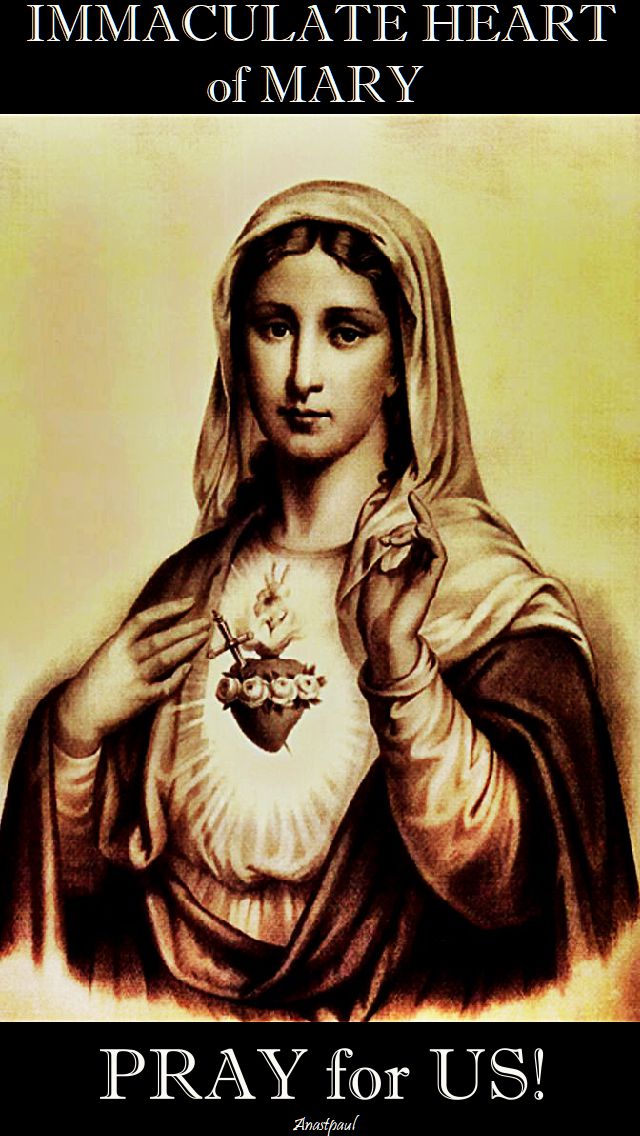
Feast of the Immaculate Heart of Mary – 9 June

Feast of the Immaculate Heart of Mary – 9 June is a devotional name used to refer to the interior life of the Blessed Virgin Mary, her joys and sorrows, her virtues and hidden perfections and, above all, her virginal love for God the Father, her maternal love for her son Jesus and her compassionate love for all people.   Pope Pius XII instituted the feast of the Immaculate Heart of Mary in 1944 to be celebrated on 22 August, coinciding with the traditional octave day of the Assumption.   In 1969, Pope Paul VI moved the celebration of the Immaculate Heart of Mary to the Saturday, immediately after the Solemnity of the Sacred Heart of Jesus.   This means in practice that it is now held on the third Saturday after Pentecost.

Immaculate-Heart-of-Mary-pierced-by-Seven-Swords-of-Sorrow-Absam-Tyrol-Austria-photo-Josef-Stocker

Historically, devotion to the Heart of Mary grew up in parallel but at a lesser intensity  than that of devotion to the Heart of Jesus, only starting to become more prominent during the time of St John Eudes.   John Eudes was born in 1601 in Normandy, France.   He entered the Congregation of the Oratory of France, founded in 1611 by Cardinal de Berulle and was ordained to the priesthood on December 20, 1625.   St John brought people to love Christ and the Virgin Mary by speaking tirelessly about their Hearts, the sign of the love God shows for us and the communion to which we are called.

To offer them liturgical worship, he composed Masses and Offices in their honour and had the first Feast of the Holy Heart of Mary celebrated on 8 February 1648, at Autun (France) and the Feast of the Heart of Jesus celebrated on 20 October 1672.

He died on August 19, 1680 and was canonised by Pope Pius XI on May 31, 1925.

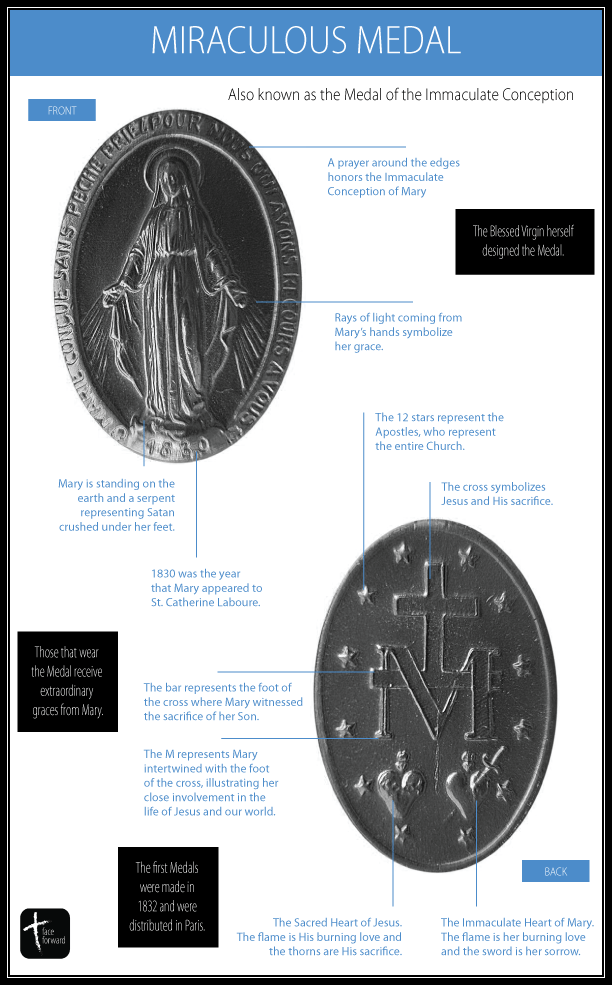
Nevertheless,  it was not until after the Apparitions at Rue du Bac concerning the “Miraculous Medal” made to Catherine Labouré in 1830 and the establishment of a society dedicated to the Immaculate Heart of Mary, at the Church of Our Lady of Victories in Paris in 1836, that this particular devotion became really well known.FF_Infographic_MiraculousMedal- my edit with border - 8 june 2018

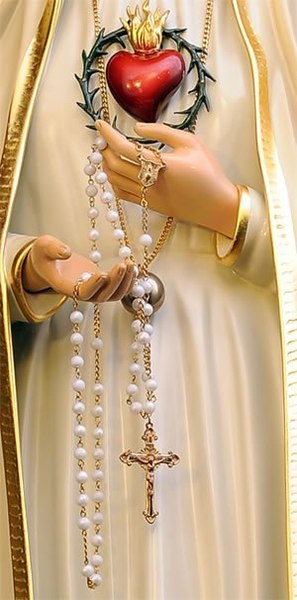
Since then devotion to the Immaculate Heart of Mary, has gradually grown more widespread in the Church, particularly since the apparitions at Fatima.our lady of fatima, the imm heart and the rosary - detail

The main difference between the devotions to the hearts of Jesus and Mary is that the one concerned with Jesus emphasises His divine heart as being full of love for mankind, but with this love for the most part being ignored or rejected, while devotion to Mary’s heart is essentially concerned with the love that her heart has for Jesus, for God.

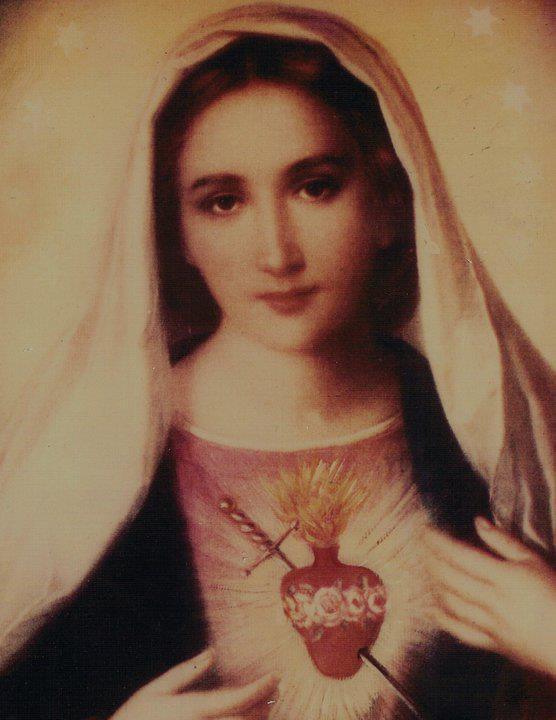
Therefore, it is not an end in itself, so the love of her heart is meant to be a model for the way we should love God.   The fact that her heart is immaculate, that is sinless, means that she is the only fully human person who is able to really love God in the way that He should be loved.immaculate-heart-of-mary

Honouring Mary’s Immaculate Heart is really just another way of honouring Mary as the person who was chosen to be the Mother of God, recognising her extraordinary holiness and the immense love she bestowed on Jesus as His mother, the person who was called to share in and co-operate in His redemptive sufferings.

The aim of  the devotion is to unite mankind to God through Mary’s heart and this process involves the ideas of consecration and reparation.   A person is consecrated to Mary’s Immaculate Heart as a way of being completely devoted to God.   This involves a total gift of self, something only ultimately possible with reference to God but Mary is our intermediary in this process of consecration.

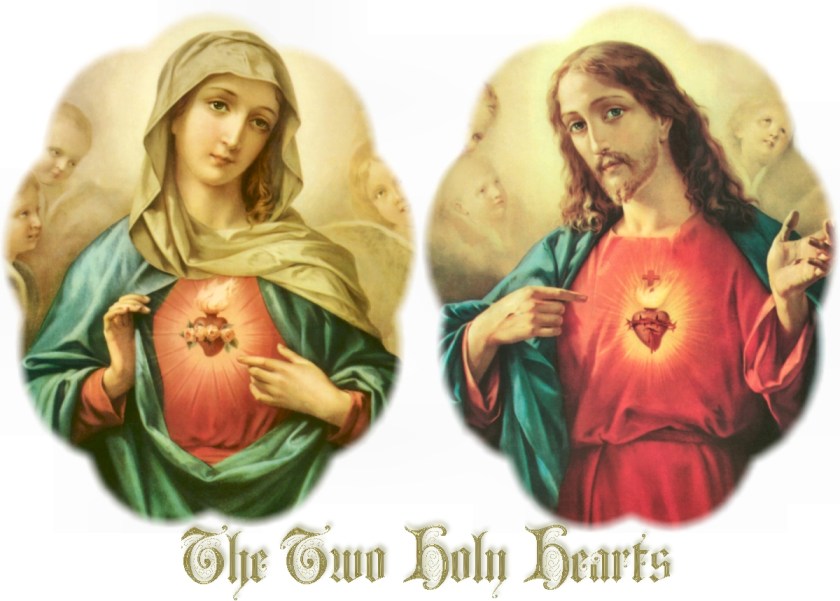
Because of the strong analogy between Jesus and Mary, the consecration to Mary’s Immaculate Heart is closely linked to the consecration to Jesus’ Sacred Heart, although it is subordinate and dependent on it.   That is, although the act of consecration is ultimately addressed to God, it is an act that is made through Mary.   And so we pray through Mary, through her Immaculate Heart, we ask to learn true love.2 holy hearts

The whole world has been repeatedly consecrated to the Immaculate Heart of Mary by different popes:

Pius XII, 31 October 1942
Paul VI, 21 November 1964
John Paul II, 13 May 1982
John Paul II together with all the bishops of the world, 25 March 1984
Francis, 13 October 2013

Immaculate Heart of Mary, Pray for us!immaculate heart of mary - pray for us


Posted in FEASTS and SOLEMNITIES, MARIAN DEVOTIONS, MARIAN TITLES, SAINT of the DAY, The BLESSED VIRGIN MARY

Feast of the Immaculate Heart of Mary and Memorials of the Saints – 9 June

The Immaculate Heart of Mary (Feast) (2018)
St Ephrem of Syria (Optional Memorial)

Bl Alexander of Kouchta
St Alexander of Prusa
Bl Anne Marie Taigi
St Arnulf of Velseca
St Baithen of Iona
St Columba of Iona
St Comus of Scotland
St Cumian of Bobbio
St Cyrus
Bl Diana d’Andalo
St Diomedes of Tarsus
St Felicianus
Bl Henry the Shoemaker
St Jose de Anchieta
Bl Joseph Imbert
St Julian of Mesopotamia
St Luciano Verdejo Acuña
Bl Luigi Boccardo
St Maximian of Syracuse
St Pelagia of Antioch
St Primus
St Richard of Andria
Bl Robert Salt
Bl Sylvester Ventura
St Valerius of Milan
St Vincent of Agen

Martyrs of Arbil – 5 saints: Five nuns who were martyred together in the persecutions of Tamsabur for refusing to renounce Christianity for sun-worship – Amai, Mariamne, Martha, Mary and Tecla. They were beheaded on 31 May 347 at Arbil, Assyria (in modern Kurdistan, Iraq)

Posted in CATHOLIC DEVOTIONS of the Month, CATHOLIC-PRAYERS OF THE CHURCH, DOCTORS of the Church, FATHERS of the Church, FEASTS and SOLEMNITIES, MORNING Prayers, PRACTISING CATHOLIC, PRAYERS for PRIESTS, PRAYERS of the CHURCH, QUOTES - J R R Tolkien and MORE, QUOTES of the SAINTS, SACRED and IMMACULATE HEARTS

Thought for the Day — 8 June – The Solemnity of The Most Sacred Heart of Jesus and The World Day for the Sanctification of Priests

Thought for the Day — 8 June – The Solemnity of The Most Sacred Heart of Jesus and The World Day for the Sanctification of Priests

The World Day for the Sanctification of Priests 2002 takes its inspiration from the theme of John Paul II’s Letters to Priests for Holy Thursday 2000, 2001, and 2002.   Below is an excerpt from the Congregation of the Clergy to all our Priests all over the world.

From St John Chrysostom (347-407)  Father & Doctor

“These are really the ones who are in charge of spiritual travail and responsible for the birth which comes through baptism.   Through them we put on Christ and are buried in union with the Son of God and become members, obedient to our blessed Head (cf. Rom 6,1; Gal 3,27).   For that reason they should not only be more justly feared than rulers and kings but also, be more honoured, than our parents.   For our parents generated us of blood and the will of the flesh (cf. Jn 1,13) but the priests are the authors of our birth from God, even that blessed regeneration which is true freedom and adopted sonship according to grace” (cf. St John Chrysostom, De sacerdotio, III, 6, PG 48, 643-644).

From St Anthony of Padua  (1195-1231) Evangelical Doctor

“Our altar of gold is the Heart of Christ.   We must enter into the Holy of Holies, which is this same Heart of Jesus and gather up the riches of His love” (St Anthony of Padua).

From St John of Avila (1500-1569) Doctor of the Church

“If the Jewish High priest carried the names of the twelve tribes of Israel written on his shoulders and on his breast, how much more Christ, our High Priest, carries our names written on His Heart” (St John of Avila).

From the holy Curé of Ars (1786-1859) Patron of Priests

“The Priesthood is the love of the heart of Jesus” (CCC, n. 1589—St John Vianney, quoted in B. Nodet, Jean-Marie Vianney, Curé d’Ars, 100).

“The priest is not a priest for himself.   He does not give absolution to himself.   He does not administer the sacraments to himself.   He does not exist for himself, he exists for you” (Curé of Ars: Monnin II 453).

From St Pope John XXIII (1881-1963)

“Today everything which concerns the Sacred Heart of Jesus has become familiar and doubly dear to me.   My life seems destined to be spent in the light shining from the tabernacle and it is to the Heart of Jesus that I must look for a solution to all my troubles. I feel I would be ready to shed my blood for the cause of the Sacred Heart.   My fondest wish is to be able to do something for that precious object of my love.

“At times the thought of my arrogance, of my unbelievable self-love and of my great unworthiness alarms and dismays me and robs me of my courage but I soon find reason for comfort, in the words spoken by Jesus to Blessed Margaret Mary Alacoque:  ‘I have chosen you to reveal the marvels of my heart, because you are such an abyss of ignorance and insufficiency’.

“Ah! I wish to serve the Sacred Heart of Jesus, today and always.   I want my devotion to His Heart to be the measure of all my spiritual progress.   I desire to do everything in intimate union with the Sacred Heart of Jesus in the Blessed Sacrament.

“My greatest joy will be to seek and find comfort only in that Heart which is the source of all consolation.   I am determined to give myself no peace until I can truly say, I am absorbed into the Heart of Jesus”   (Bl. John XXIII, Journal of a Soul, [“During the retreat in preparation for the ordination to the diaconate, 9-18 December 1903”], pp. 208-209, New English Library: London, 1966).

Prayer for Priests

O Jesus, eternal High Priest, who, in an incomparable love for men,
allowed Catholic priesthood to issue from Your Sacred Heart,
deign to continue to pour out on Your priest,
the life-giving streams of Infinite Love.
Live in them, transform them into Yourself;
Render them by Your grace instruments of Your Mercy;
Act in them and through them
and grant that they may perform in Your Name
and by the strength of Your Spirit,
the works which You Yourself
accomplished for the salvation of this world.
Divine Redeemer of souls,
see how great is the multitude of those,
who still sleep in the darkness of error;
count the number of those unfaithful sheep,
who are walking on the edge of an abyss;
consider the crowds of the poor, the hungry,
the ignorant and the weak,
who are groaning in their state of abandonment.
Return to us again, dear Sacred Heart of Jesus,
live again in very truth in them;
act through them and pass again through this world
teaching, pardoning, consoling, offering sacrifice,
renewing the Bonds of Love
between the Heart of God and the hearts of men.
We pray through the intercession
of Mary, Mother of all hearts.
Amenprayer for priests - 8 june 2018 - sacred heart.jpg


Posted in CATHOLIC DEVOTIONS of the Month, DOCTORS of the Church, FEASTS and SOLEMNITIES, MORNING Prayers, PAPAL ENCYLICALS, QUOTES - J R R Tolkien and MORE, QUOTES of the SAINTS, SACRED and IMMACULATE HEARTS

One Minute Reflection – 8 June – The Solemnity of The Most Sacred Heart of Jesus

One Minute Reflection – 8 June – The Solemnity of The Most Sacred Heart of Jesus

...But one soldier thrust his lance into his side and immediately blood and water flowed out...John 19:34

REFLECTION – “When the Church, in the days immediately succeeding her institution, was oppressed beneath the yoke of the Caesars, a young Emperor saw in the heavens across, which became at once the happy omen and cause of the glorious victory that soon followed.   And now, to-day, behold another blessed and heavenly token is offered to our sight-the most Sacred Heart of Jesus, with a cross rising from it and shining forth with dazzling splendour amidst flames of love.   …. there is in the Sacred Heart a symbol and a sensible image of the infinite love of Jesus Christ which moves us to love one another…”…Pope Leo XII – Annum Sacrum (Holy Year) 1899there is in the Sacred Heart - pope leo XIII - and john 19 34 but one soldier - 9 june 2018 sacred heart

PRAYER – “May Your heart dwell always in our hearts! May Your blood ever flow in the veins of our souls! O sun of our hearts, You give life to all things by the rays of Your goodness!   I will not go, until Your heart has strengthened me, O Lord Jesus!   May the heart of Jesus be the king of my heart! Blessed be God. Amen.”…St Francis De Sales (1567-1622) Doctor of Charitymay your heart dwell always in our hearts - prayer to the sac heart - st francis de sales - 8 june 2018 sacred heart