
Quote/s of the Day – – 17 February – The First Saturday of Lent 2018
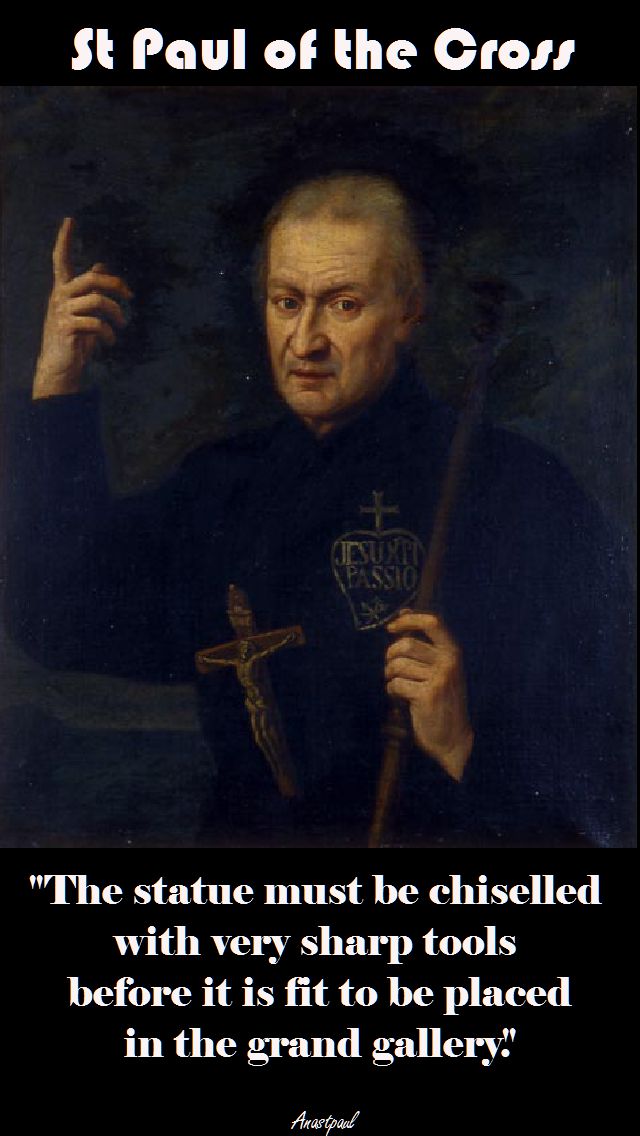
“The statue must be chiselled
with very sharp tools
before it is fit to be placed
in the grand gallery.”
Quote/s of the Day – – 17 February – The First Saturday of Lent 2018
“The statue must be chiselled
with very sharp tools
before it is fit to be placed
in the grand gallery.”
One Minute Reflection – 17 February – The First Saturday of Lent 2018
And Jesus answered them, “Those who are well have no need of a physician but those who are sick; I have not come to call the righteous but sinners to repentance.”...Luke 5:31-32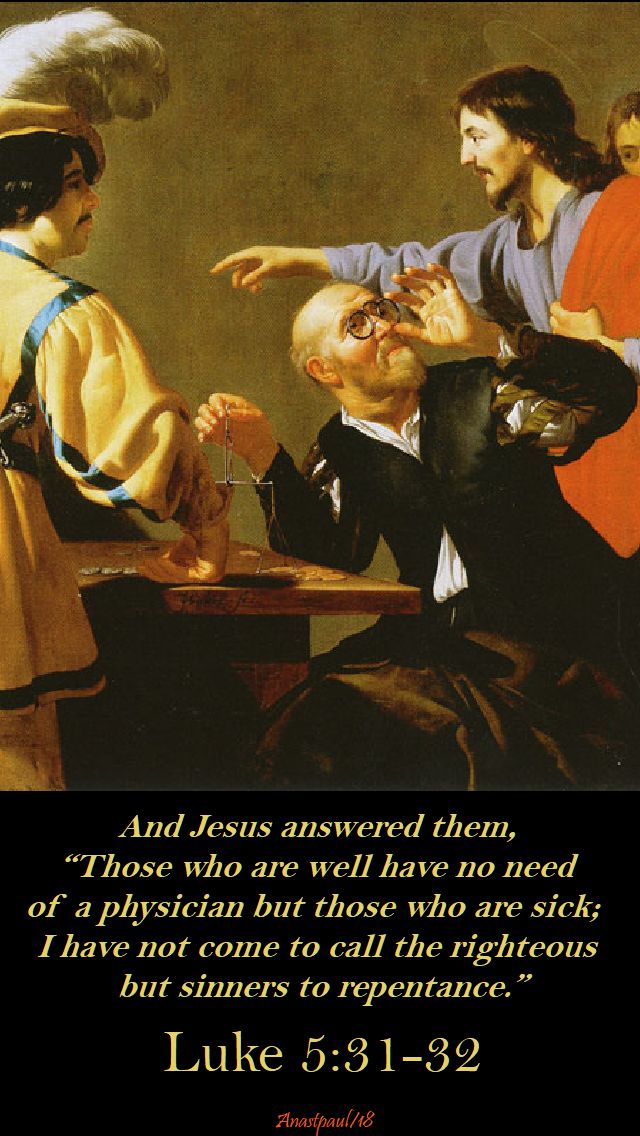
REFLECTION – “I am a sinner, whom the Lord has looked upon.”…Pope Francis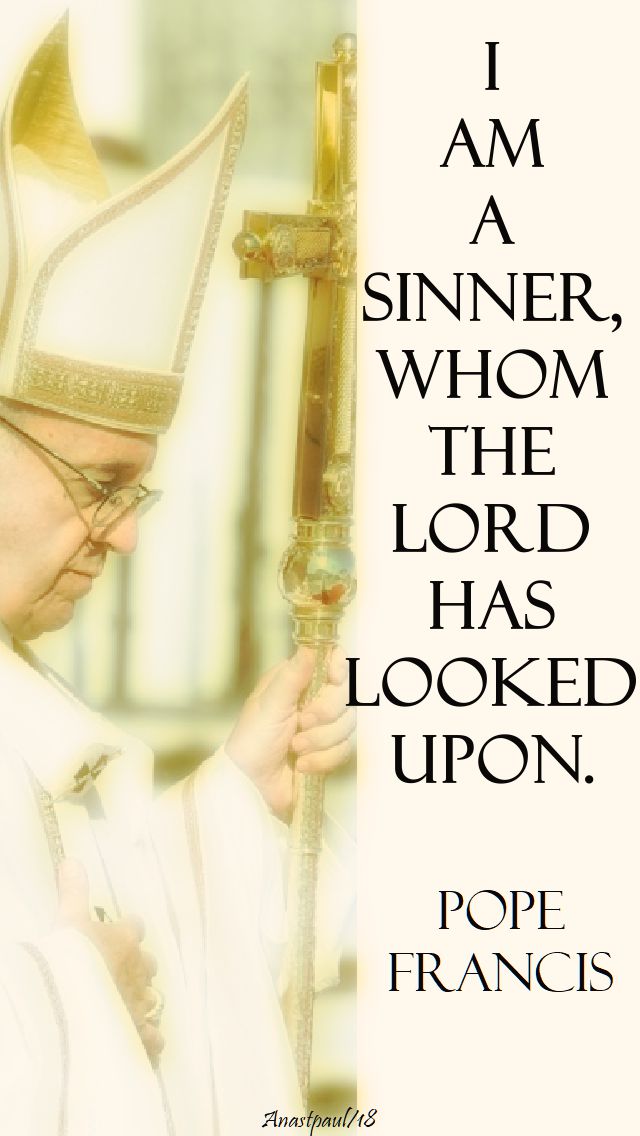
PRAYER – Watch, O Lord, with those who wake, or watch, or weep tonight and give Your angels charge over those who sleep.
Tend Your sick ones, O Lord Christ.
Rest Your weary ones.
Bless Your dying ones.
Soothe Your suffering ones.
Pity Your afflicted ones.
Shield Your joyous ones.
And all for Your love’s sake. Amen…St Augustine (354-430) Father & Doctor of the Church
Our Morning Offering – 17 February – The Memorial of the Seven Holy Founders of the Servite Order (1233)
Prayer to Our Lady
From the Servite Vigil of our Lady I
Loving Mother,
woman of prayer,
we turn to you and pray:
support our prayers
for ourselves,
for all your Servants,
for our friends and families,
for those who share the Christian faith
and for every person on earth
that all may know peace and salvation.
Ask the Father that we may truly know Christ,
be filled with the gifts of the Spirit,
protected in all adversity
and freed from every evil.
Help us to build God’s kingdom:
a kingdom of everlasting praise,
a kingdom of justice and peace
that will endure forever and ever.
Amen.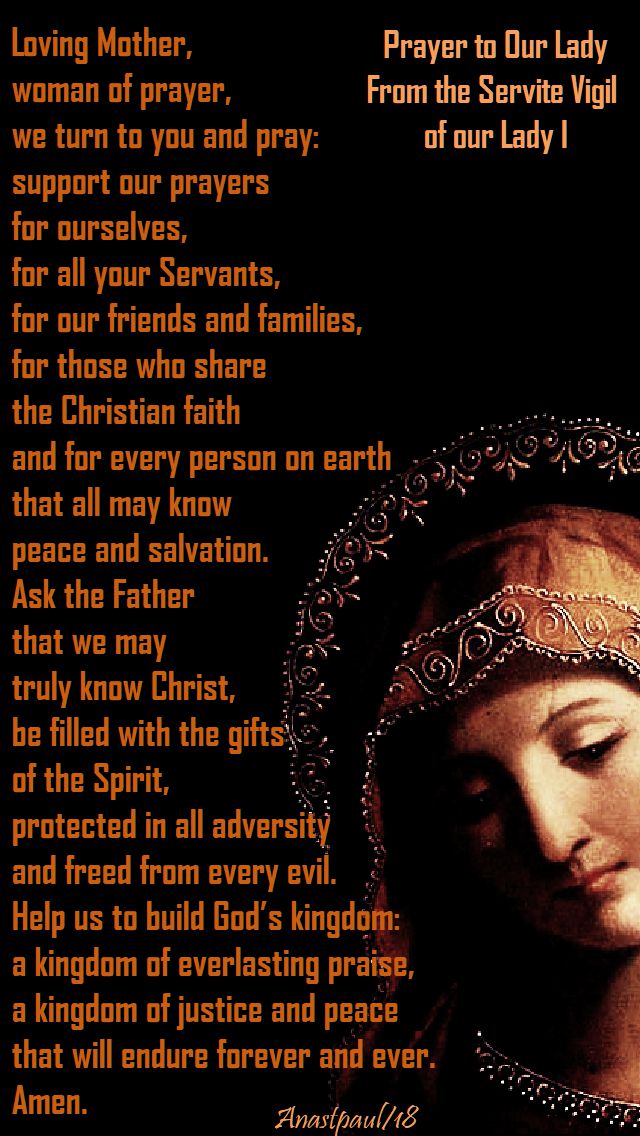
Saints of the Day – 17 February – The Seven Holy Founders of the Servite Order OSM – Formation on 15 August 1233. The Servite Order is one of the five original Catholic mendicant orders. Its objectives are the sanctification of its members, preaching the Gospel and the propagation of devotion to the Mother of God, with special reference to her sorrows. The members of the Order use O.S.M. (Ordo Servorum Beatae Mariae Virginis) as their post-nominal letters. The male members are known as Servite Friars or Servants of Mary. The Order of Servants of Mary (The Servites) religious family includes friars (priests and brothers), contemplative nuns, a congregation of active sisters and lay groups.


Between the years 1225 and 1227 seven young Florentines joined the Confraternity of the Blessed Virgin—popularly known as the ‘Laudesi’ or Praisers. It was a period when the prosperous city of Florence was being rent by political factions and distracted by the heresy of the Cathari: it was also a time of general relaxation of morals even where devotional practices were retained. These young men were members of the most prominent families of the city. Whether they were all friends before they joined the Laudesi is not clear but in that confraternity they became closely allied.
The eldest was Buonfiglio Monaldo, who became their leader. The others were Alexis Falconieri, Benedict dell’ Antella, Bartholomew Amidei, Ricovero Uguccione, Gerardino Sostegni, and John Buonagiunta. They had as their spiritual director James of Poggibonsi, who was chaplain of the Laudesi, a man of great holiness and spiritual insight. All of them came to realise the call to a life of renunciation and they determined to have recourse to our Lady in their perplexity. On the feast of the Assumption, as they were absorbed in prayer, they saw her in a vision and were inspired by her to withdraw from the world into a solitary place and to live for God alone. There were difficulties, because, though three of them were celibates, four had been married and had ties, although two had become widowers. Suitable provision for their dependants was arranged and with the approval of the bishop they withdrew from the world and betook themselves to a house called La Carmarzia, outside the gates of Florence, twenty-three days after they had received their call. Before long they found themselves so much disturbed by constant visitors from Florence that they decided to withdraw to the wild and deserted slopes of Monte Senario, where they built a simple church and hermitage and lived a life of almost incredible austerity.
In spite of difficulties, visitors sometimes found their way to the hermits and many wished to join them but they refused to accept recruits. So they continued to live for several years,—until they were visited by their bishop, Ardingo, and Cardinal Castiglione, who had heard about their sanctity. He was greatly edified but made one adverse criticism: ‘You treat yourselves in a manner bordering on barbarity and you seem more desirous of dying to time than of living for eternity. Take heed, the enemy of souls often hides himself under the appearance of an angel of light . . . Hearken to the counsels of your superiors.’
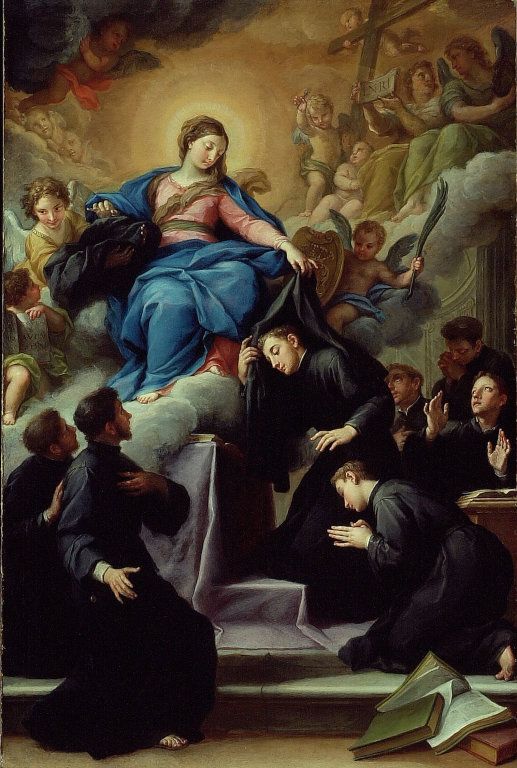
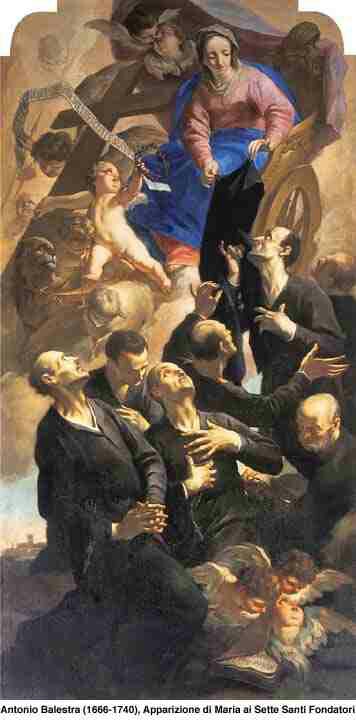
Again the solitaries gave themselves up to prayer for light and again they had a vision of our Lady, who bore in her hand a black habit while an angel held a scroll inscribed with the title of Servants of Mary. She told them she—had chosen them to be her servants, that she wished them to wear the black habit and to follow the Rule of St Augustine. From that date, April 13, 1240, they were known as the Servants of Mary, or Servites.

They were clothed by the bishop himself, Buonfiglio being elected their superior. According to custom they selected names by which they should thenceforth be known, and became Brothers Bonfilius, Alexis, Amadeus, Hugh, Sostenes, Manettus and Buonagiunta. By the wish of the bishop, all except St Alexis, who in his humility begged to be excused, prepared to receive holy orders and in due time they were fully professed and ordained priests. The new order, which took a form more like that of the mendicant friars than that of the monastic orders, increased amazingly and it soon became necessary to form fresh houses. Siena, Pistoia and Arezzo were the first places chosen, and afterwards the houses at Carfaggio, the convent and church of the Santissima Annunziata in Florence and the convent at Lucca were established. Meanwhile, although the Servites had the approval of their immediate superiors, they had not been recognised by the Holy See. It was only in 1259 that the order was practically recognised by Alexander IV, and not until 1304 over sixty years after its foundation-that it received the explicit and formal approbation of Blessed Benedict XI. St Bonfilius had remained as prior general until 1256, when he begged to be relieved owing to old age. He died on new year’s night, 1261.
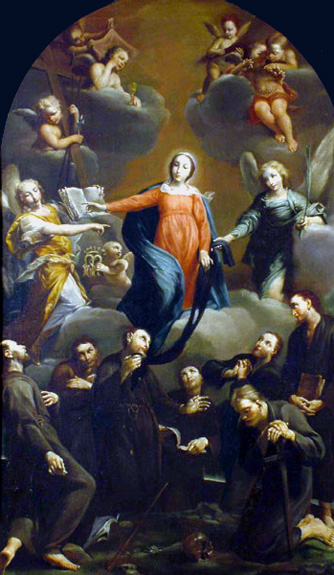
St Buonagiunta, the youngest of the seven, was the second prior general but not long after his election he breathed his last in chapel while the gospel of the Passion was being read. St Amadeus ruled over the important convent of Carfaggio, but returned to Monte Senario to end his days. St Manettus became fourth prior general and sent missionaries to Asia but he retired to make way for St Philip Benizi, upon whose breast he died. St Hugh and St Sostenes went abroad—Sostenes to Paris and Hugh to found convents in Germany. They were recalled in 1276 and, being attacked by illness, they passed away side by side the same night. St Alexis, the humble lay-brother outlived them all and he was the only one who survived to see the order fully and finally recognised. He is reported to have died at the age one hundred and ten.
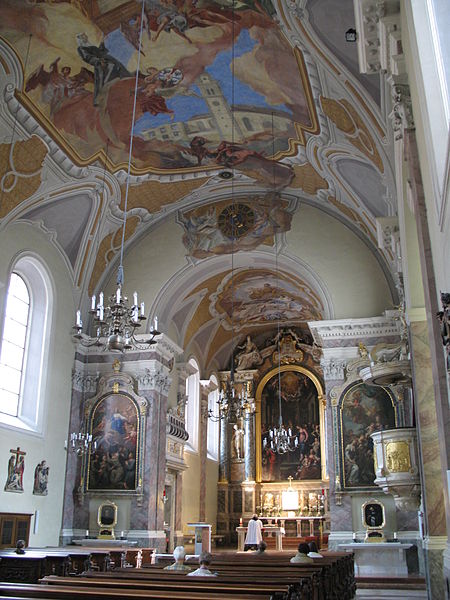
Seven Founders of Servants of Mary (Optional Memorial)
• Sts Alexis Falconieri
• St Bartholomew degli Amidei
• St Benedict dell’Antella
• St Buonfiglio Monaldi
• St Gherardino Sostegni
• St Hugh dei Lippi-Uguccioni
• St John Buonagiunta Monetti
—
St Alexis Falconieri – SEVEN HOLY FOUNDERS
Optional Memorial of the Seven Holy Founders of the Servite Order
St Antoni Leszczewicz
St Bartholomew degli Amidei – SEVEN HOLY FOUNDERS
St Benedict dell’Antella – SEVEN HOLY FOUNDERS
St Benedict of Cagliari
St Buonfiglio Monaldi – SEVEN HOLY FOUNDERS
St Bonosus of Trier
Bl Constabilis of Cava
St Donatus the Martyr
Bl Elisabetta Sanna
St Evermod of Ratzeburg
St Faustinus the Martyr
St Finan of Iona
St Fintan of Clonenagh
St Flavian of Constantinople
St Fortchern of Trim
St Gherardino Sostegni – SEVEN HOLY FOUNDERS
St Guevrock
St Habet-Deus
St Hugh dei Lippi-Uguccioni – SEVEN HOLY FOUNDERS
St John Buonagiunta Monetti – SEVEN HOLY FOUNDERS
St Julian of Caesarea
St Loman of Trim
Bl Luke Belludi
St Lupiano
Bl Martí Tarrés Puigpelat
St Mesrop the Teacher
St Petrus Yu Chong-nyul
St Polychronius of Babylon
St Romulus the Martyr
St Secundian the Martyr
St Silvinus of Auchy
St Theodulus of Caesarea
Bl William Richardson
Friday after Ash Wednesday – 16 February 2018
Isaiah 58:1-9, Psalms 51:3-6, 18-19, Matthew 9:14-15
Isaiah 58:3-4 – Behold, in the day of your fast you seek your own pleasure and oppress all your workers. Behold, you fast only to quarrel and to fight and to hit with wicked fist.
Fasting like yours this day will not make your voice to be heard on high…
Matthew 9:14-15 – 14 – Then the disciples of John came to him, saying, “Why do we and the Pharisees fast but your disciples do not fast?” And Jesus said to them, “Can the wedding guests mourn as long as the bridegroom is with them? The days will come, when the bridegroom is taken away from them, and then they will fast.”
Create in me a clean heart, O God and put a new spirit within me.
Genuine faith does not make a believer pretentious.
Dialogue with God is not a business bargain.
External observance of religion wins little favour with God, if it is combined with unfairness to the weak and indifference to the poor.
Openness to the indigent is the door to true religion.
The world itself changes for the better with the widening of human concern for the poor. Good works multiply on the face of the earth and everyones sees the glory of God in action.
The Gospel presents Jesus, as refusing to absolutise ritual fasting.
What He expects from His disciples is that they remain faithful to the mission He is about to give them even at great sacrifice.
It will make evidently greater demands from them than mere ritual fasting.
They should be prepared.
Jesus is introducing a new set of values of immense worth, for which the old order of things must make way.
(Archbishop Thomas Menamparanpil SDB – GodsWord)
Each of us has different talents, material resources and opportunities. Lent is an invitation, not to introspection and penance for its own sake but always to help us to better partner with God in responding to the needs of our world.
Is there a need I feel called to do something about?
Could I ask God to show me where He is inviting me to act?
What one thing might I do today to reach out to someone in need?
(excerpt Fr Nicholas King S.J. ‘The Long Journey to the Resurrection’)
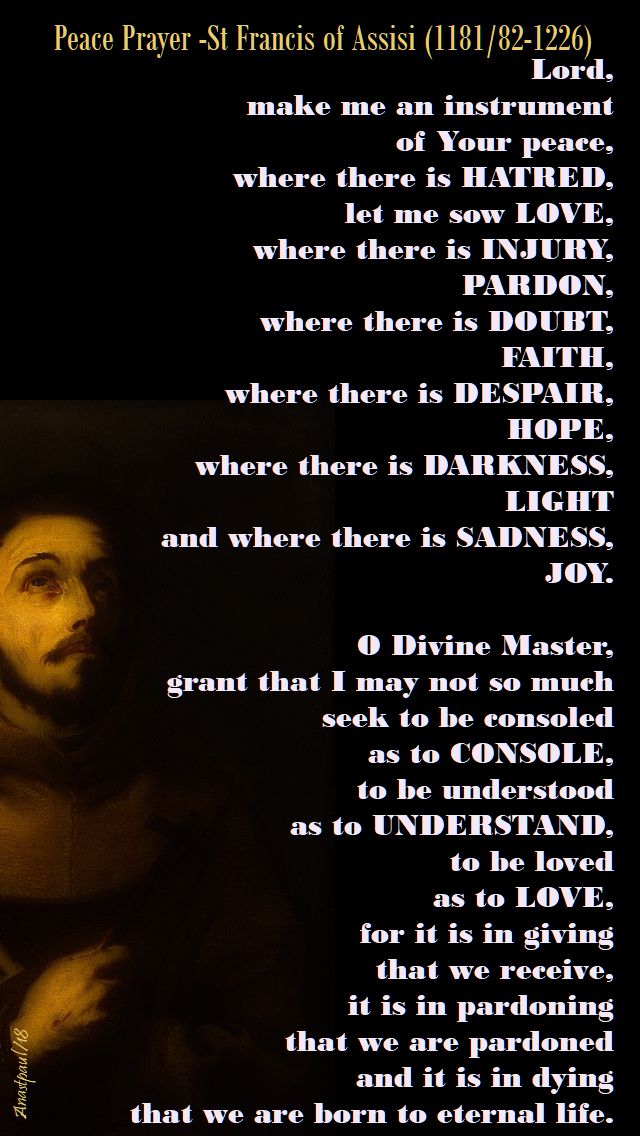
Lord, make me an instrument of Your peace,
where there is hatred, let me sow love,
where there is injury, pardon,
where there is doubt, faith,
where there is despair, hope,
where there is darkness, light
and where there is sadness, joy.
O Divine Master,
grant that I may not so much
seek to be consoled as to console,
to be understood as to understand,
to be loved as to love,
for it is in giving that we receive,
it is in pardoning that we are pardoned
and it is in dying that we are born to eternal life.
Thought for the Day – – 16 February – The First Friday of Lent 2018
Alas, for our dearest Lord! up to this day what have we done for Him?
You see what He has done for us and the end of His doing it was to gain our love!
We look upon a crucifix and it hardly moves us.
We hear of His bittter passion but our eyes are dry and our hearts indifferent.
We kneel down to pray but we can hardly keep our thoughts fixed upon Him for a quarter of an hour together.
We go into His own most holy presence and we hardly bend the knee before the Tabernacle lest it should spoil our clothes.
We see others sin and what is it to us that Jesus is offended, so long as it is not we, who are risking our souls, by offending Him?
These are strange signs of love!
Surely Jesus cannot be much to us if this is the way we feel about Him.
Yet so it is.
We go our own way and do our own will.
The great thing is to please ourselves and to make things easy to ourselves.
Life must be taught to run smooth.
As to penance, it must be kept at arm’s length.
We must have our bodily comforts and worldly conveniences and our spiritual life must be nothing but a sufficiency of those inward consolations without which our souls give us pain, because they are not at rest.
If we worship God it is for self, if we do good to others, it is self we are seeking, even in our charity.
Poor Jesus Christ! as Saint Alphonsus used to say, “Poor Jesus Christ! Who thinks of Him? Who weds His interest?”
Father Faber – Remember Me: Daily Readings for Lent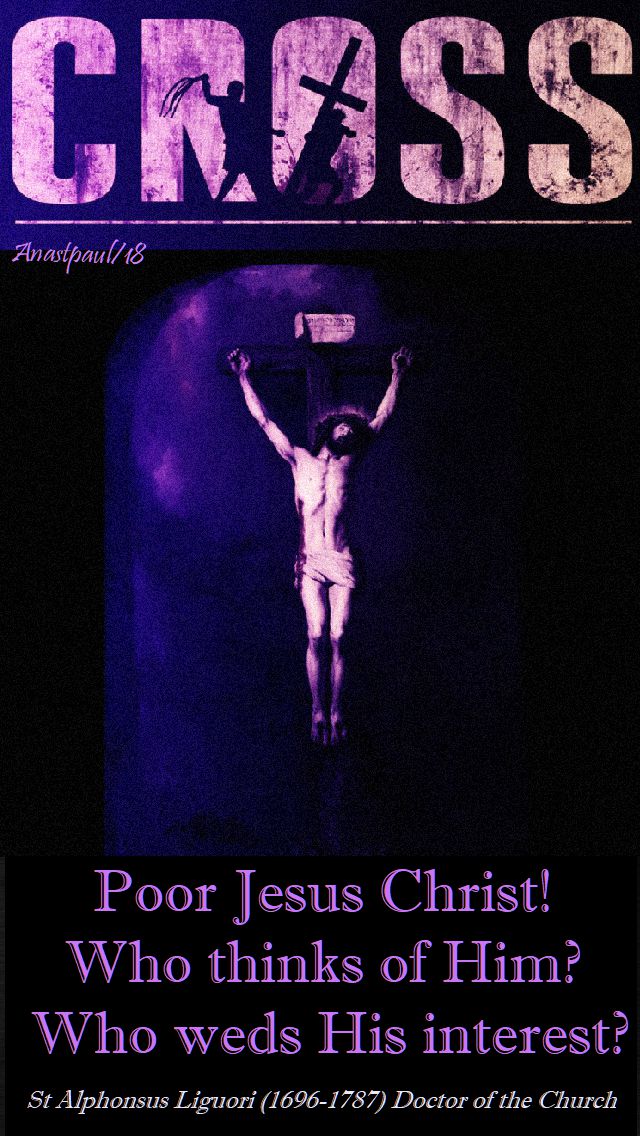
Quote of the Day – 16 February – The First Friday of Lent 2018
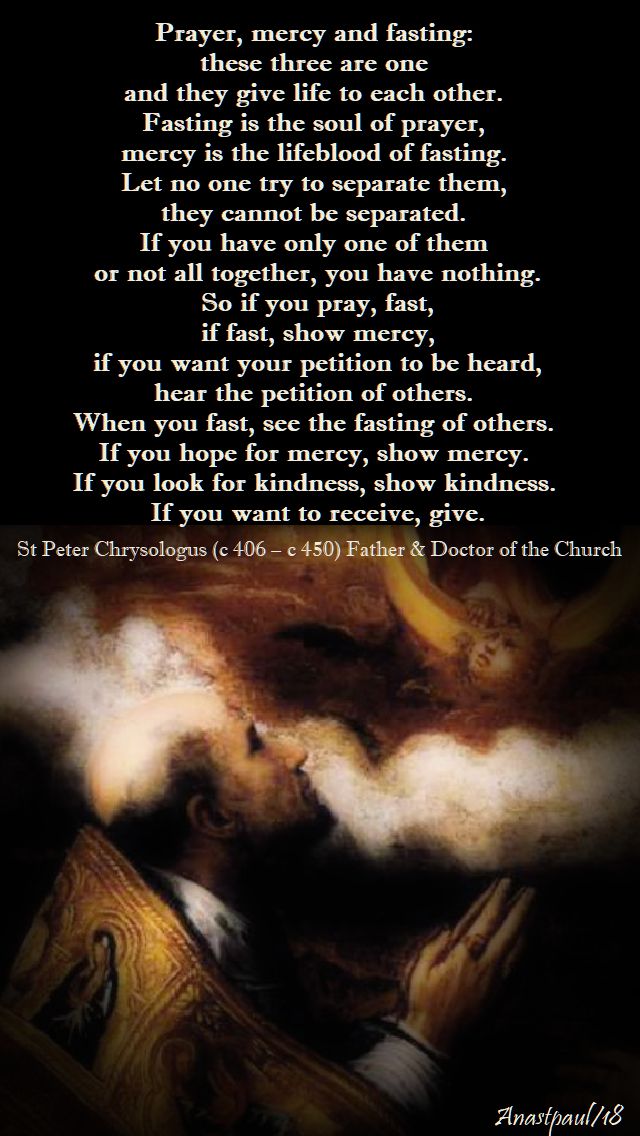
“Prayer, mercy and fasting:
these three are one and they give life to each other.
Fasting is the soul of prayer,
mercy is the lifeblood of fasting.
Let no one try to separate them, they cannot be separated.
If you have only one of them or not all together, you have nothing.
So if you pray, fast,
if fast, show mercy,
if you want your petition to be heard, hear the petition of others.
When you fast, see the fasting of others.
If you hope for mercy, show mercy.
If you look for kindness, show kindness.
If you want to receive, give.”
One Minute Reflection – – 16 February – The First Friday of Lent 2018
‘But the time will come when the bridegroom is taken away from them and then they will fast.’…Matthew 9:15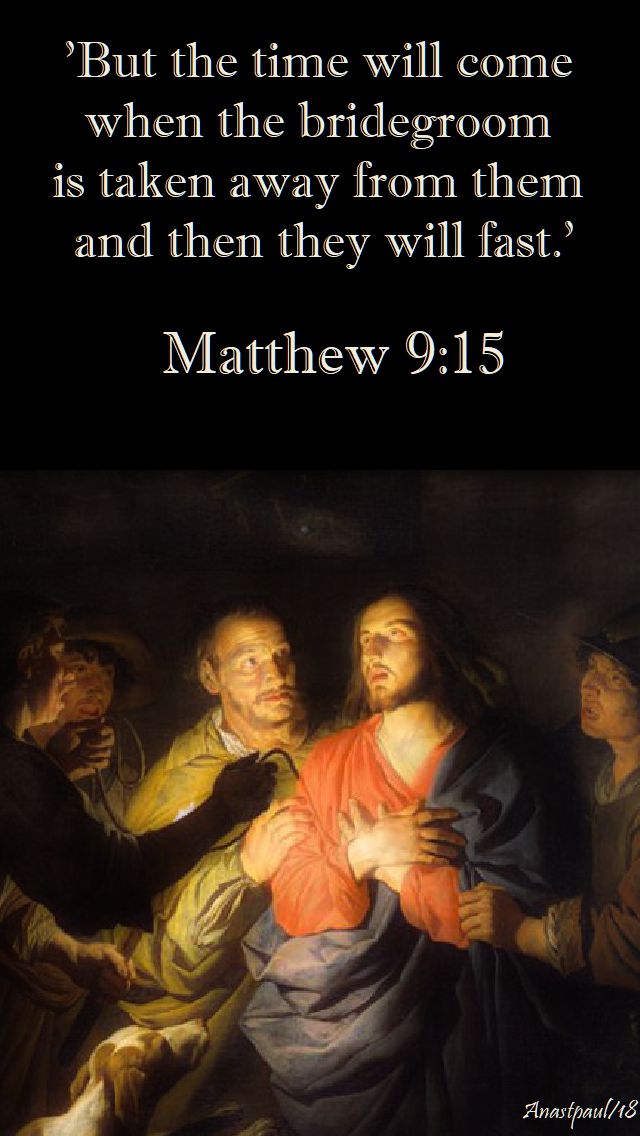
REFLECTION – “The scripture is full of places that prove fasting to be not the invention of man but the institution of God and to have many more profits than one. And that the fasting of one man may do good unto another, our Saviour shows Himself where He says that some kind of devils cannot be cast out of one man by another “without prayer and fasting.” And therefore I marvel that they take this way against fasting and other bodily penance.”…St Thomas More (1478 – 1535)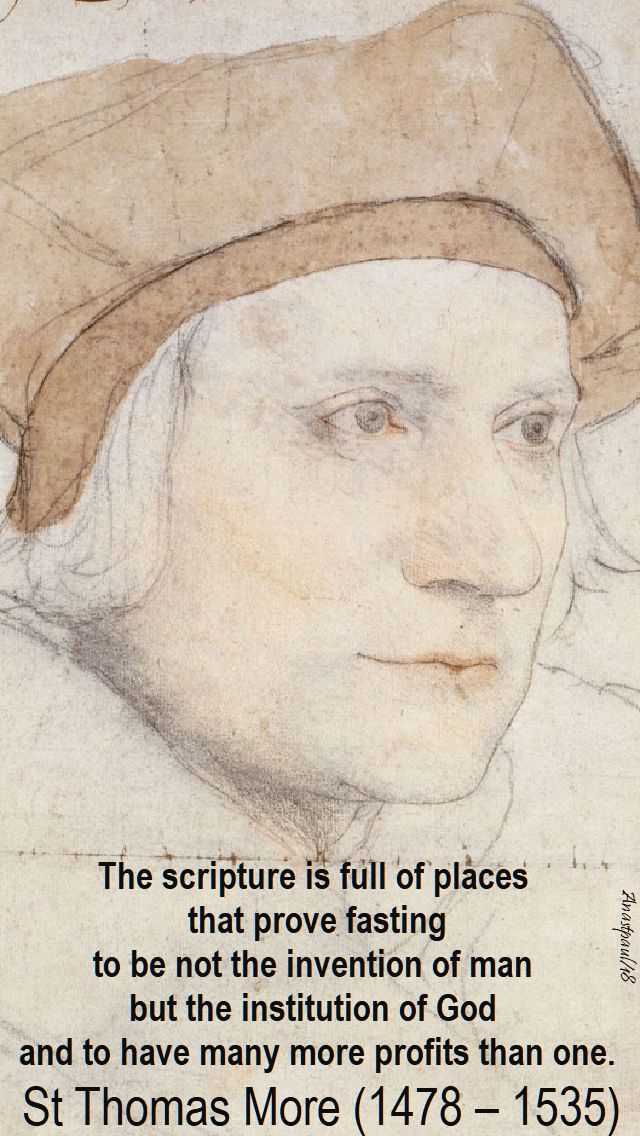
PRAYER – Give us the grace O Lord, to continue the works of penitence we have begun, so that the Lenten observance we have taken upon ourselves, may be accomplished in sincerety of heart. “A humbled, contrite heart, O God, You will not spurn.” (Ps 51) Through our Lord Jesus Christ, in unity with the Holy Spirit, one God forever, amen.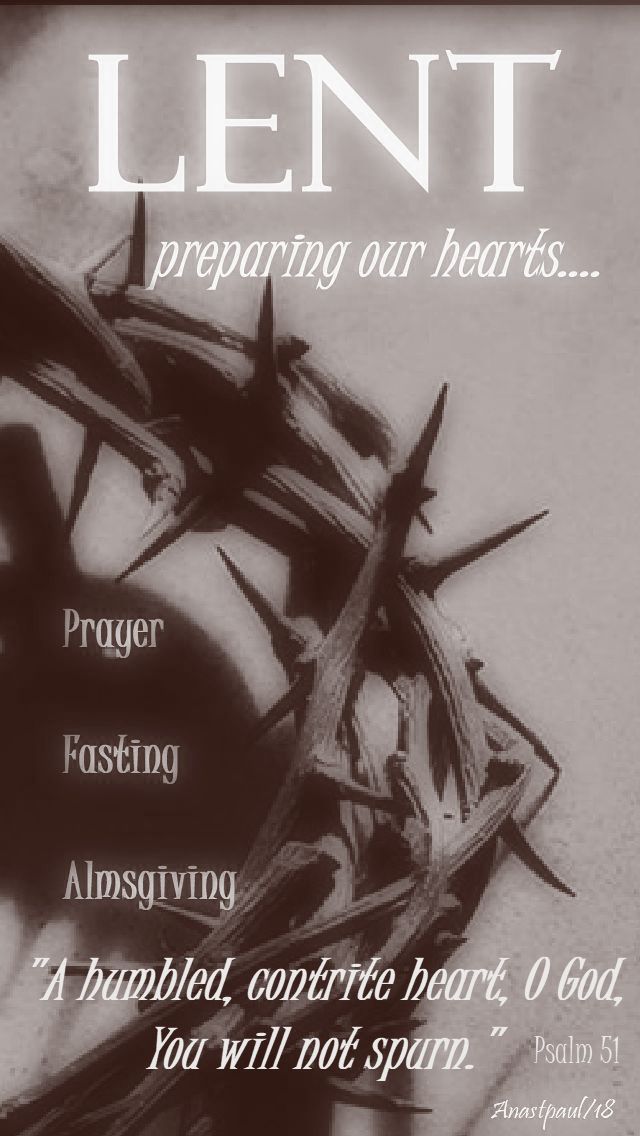
Our Morning Offering – 16 February – The First Friday of Lent 2018
A Prayer to Seek the Consolation of the Cross
By St Alphonsus Rodriguez S.J. (1532-1617)
Jesus, love of my soul,
centre of my heart!
Why am I not more eager to endure pains
and tribulations for love of You,
when You, my God,
have suffered so many for me?
Come, then, every sort of trial in the world,
for this is my delight, to suffer for Jesus.
This is my joy, to follow my Saviour
and to find my consolation
with my Consoler on the Cross.
This is my happiness,
this my pleasure:
to live with Jesus,
to walk with Jesus,
to converse with Jesus,
to suffer with and for Him,
this is my treasure.
Amen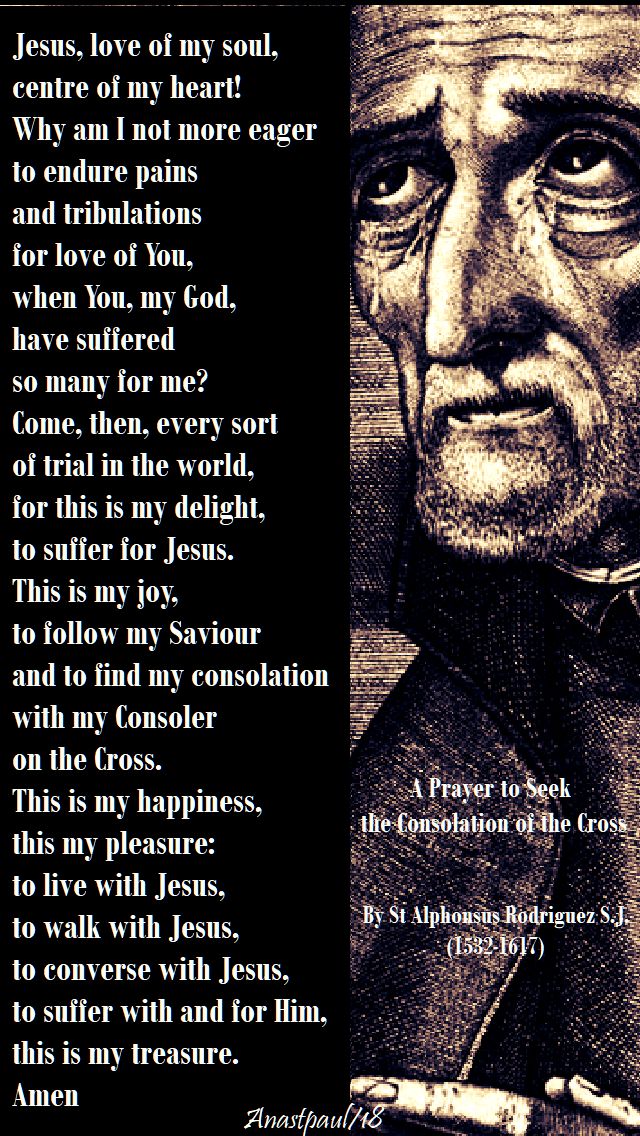
Saint of the Day – 16 February – Blessed Bernard Scammacca O.P. (1430-1487) – Religious Priest, Preacher, apostle of charity, mystic, with a gift of prophecy and a great devotion to the Passion of Christ. Born Bernardo in 1430 in Catania, Sicily and he died on 11 January 1487 of natural causes. Fifteen years after his death he appeared in a vision to the prior in Catania and asked that his remains be moved to the house’s rosary chapel, during this relocation, a man was cured of paralysis by touching the relics. He was Beatified in 1825 by Pope Leo XII (cultus confirmed). His body is incorrupt.
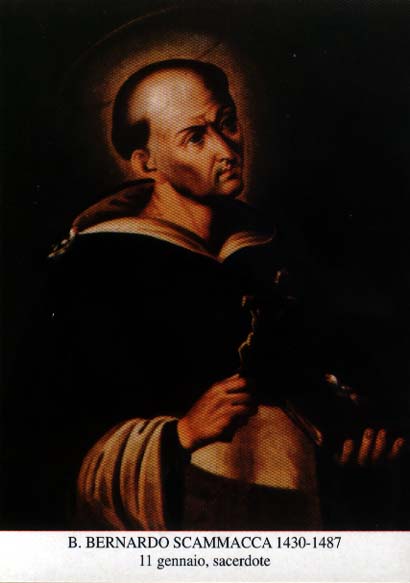
Blessed Bernard Scammacca was born in 1430 in Catania to upper-class and pious parents.
Scammacca was well-educated in his childhood. Despite his education he spent his adolescence as a wild and dissolute man and during one such revel he received a leg wound in a duel with a man with whom he had quarrelled. His subsequent convalescence provided him with adequate time to reflect on what had happened as well as the course his life had taken. This made him realise that he was heading in the wrong direction and needed urgent changes. His healing over time renewed his links to his faith; he approached the Order of Preachers in 1452 in Catania and begged to be admitted into their ranks.
Bl Bernard became known for his range of charitable works and for his life of repentance for the life he had led, as well as for his strict adherence to the rule of St Dominic. He fostered a particular devotion to the Passion of Christ, which sometimes led him into ecstasies. He founded a hospital for the poor, which still exists. He also liked to spend time in the confessional and worked as a spiritual director. He had the gift of being a prophet and used that gift to warn others to change their lives. He also prophesied the date of his own death.
Scammacca was named the prior of the convent of St Dominic in Catania and later named as the prior of the convent in Palermo. He was also made the vicar general of the reformed Sicilian convents.
It was often said that when he walked in his convent’s garden the birds would come and sing to him but would stop at once when he stopped to reflect. On one occasion a porter was sent to his room to fetch him and the man saw a bright light under a door. He peeked in to see a child shining with light holding a book that Scammacca was reading from.
Bl Bernard died in 1487 in Catania. In 1502 it was said that he appeared in a vision to the prior of his convent and asked that his incorrupt remains be relocated the house’s chapel. During the translation a man was cured of his paralysis after he touched Scammacca’s relics.


St Aganus of Airola
Bl Bernard Scammacca O.P. (1430-1487)
St Faustinus of Brescia
St Gilbert of Sempringham
St Honestus of Nimes
St John III of Constantinople
Bl Joseph Allamano
St Julian of Egypt
St Juliana of Campania
St Juliana of Nicomedia
St Nicola Paglia
St Onesimus of Ephesus
Bl Philippa Mareria
—
Martyrs of Cilicia – 12 saints: A group of Christians who ministered to other Christians who were condemned to work the mines of Cilicia in the persecutions of Maximus. They were arrested, tortured and martryed by order of the governor Firmilian.
• Daniel
• Elias
• Isaias
• Jeremy
• Samuel
The group also includes the three known have been sentenced to the mines –
• Pamphilus
• Paul of Jamnia
• Valens of Jerusalem
and those who were exposed as Christians as a result of these murders –
• Julian of Cappadocia
• Porphyrius of Caesarea
• Seleucius of Caesarea
• Theodule the Servant
They were martyred in 309 in Cilicia, Asia Minor (in modern Turkey).
Thursday after Ash Wednesday – 15 February 2018
Deuteronomy 30: 15-30 – See, I set before you life or death, blessing or curse.
Luke 9: 22-25 – ‘if anyone wants to be a follower of mine, let him renounce himself and take up his cross every day and follow me’.
The readings today put the choice for God or against God in stark and dramatic terms. Choose God and follow His ways and you will be happy and live. Choose against God and you will destroy yourself. The Gospel echoes this in the warning that one can win the world but in the process, lose oneself.
We often hear of good and gifted people who were led to compromise their following of Christ. Something hooked them – whether wealth, prestige, sex or power and gradually led them to start making choices which increasingly led them away from their truest selves. When there are things in our lives which we don’t want others we respect to know about, that is often a clue that something is off-key!
Today we are invited to reflect on our choices. The decision to follow Christ and take up our cross each day is a challenging one and one which is gradually consolidated or undermined every day in each of our choices.
When I think over the last week of my life, does it reflect what I would hope someone would be able to say about me at my funeral?
Is there some area of my life which I feel compelled to keep a secret?
What one good daily action could I choose which could deepen my relationship with God and could manifest that “taking up my cross” each day? (excerpt Fr Nicholas King S.J. ‘The Long Journey to the Resurrection’)
O Holy Spirit of God,
take me as Your disciple;
guide me,
illuminate me,
sanctify me.
Bind my hands,
that they may do no evil;
cover my eyes,
that they may see it no more;
sanctify my heart,
that evil may not dwell within me.
Be You my God;
be You my guide.
Wherever You lead me I will go;
whatever You forbid me I will renounce;
whatever You command me, in Your strength, I will do.
Lead me, then,
unto the fullness of Your truth.
Amen
Cardinal Henry Edward Manning (1806-1892)
”Prayer a Day for Lent”
Thought for the Day – 15 February – The Memorial of St Claude de la Colombiere S.J. (1641-1682)
This is a special day for the Jesuits, who claim today’s saint as one of their own. It’s also a special day for people who have a special devotion to the Sacred Heart of Jesus—a devotion Claude de la Colombière promoted, along with his friend and spiritual companion, St Margaret Mary Alacoque. The emphasis on God’s love for all was an antidote to the rigorous moralism of the Jansenists, who were popular at the time.
Claude showed remarkable preaching skills long before his ordination in 1675. Two months later, he was made superior of a small Jesuit residence in Burgundy. It was there he first encountered Margaret Mary Alacoque. For many years after he served as her confessor.
As a fellow Jesuit and as a promoter of the devotion to the Sacred Heart of Jesus, Saint Claude must be very special to Pope Francis who has so beautifully emphasised the mercy of Jesus. The emphasis on God’s love and mercy are characteristic of both men.
“The past three centuries allow us to evalutate the importance of the message which was entrusted to Claude. In a period of contrasts between the fervour of some and the indifference or impiety of many, here is a devotion centred on the humility of Christ, on His presence, on His love of mercy and on forgiveness. Devotion to the Heart of Christ would be a source of balance and spiritual strengthening for Christian communities so often faced with increasing unbelief over the coming centuries.
May the canonisation of Claude La Colombiere be for the whole Church an appeal to live the consecration to the Heart of Christ, a consecration which is a self-giving that allows the charity and mercy of Christ to inspire us, pardon us and lead us in His ardent desire to open the ways of truth and life to all our brothers and sisters!”…St Pope John Paul II, during the canonisation of Saint Claude (31 May 1992)
St Claude de la Colombiere, pray for us!
Quote/s of the Day – 15 February – The Memorial of St Claude de la Colombiere S.J. (1641-1682)
“May the Heart of Jesus Christ be our school!
Let us make our abode there.
Let us study its movements
and attempt to conform ours to them.
Yes, O Divine Jesus, I want to live there.”
“When the Holy Spirit is in a soul,
He communicates Himself,
in one way or another.
We can say that He makes virtue contagious
and turns a simple faithful into an apostle.”
“God is in the midst of us, or rather,
we are in the midst of Him;
wherever we are, He sees us and touches us,
at prayer, at work, at table, at recreation.”
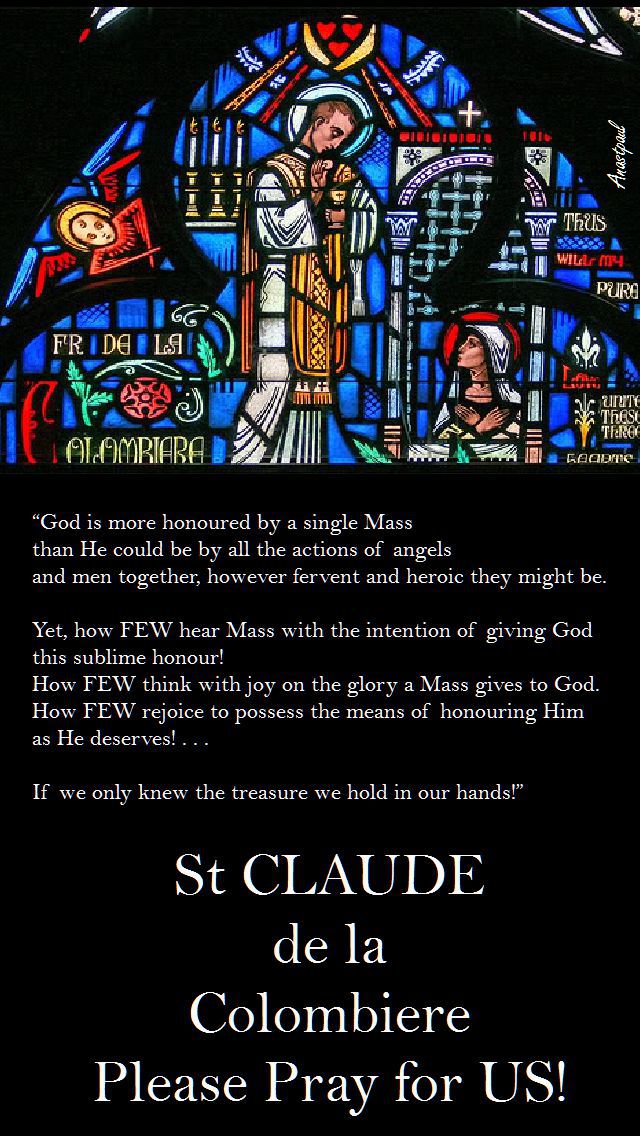
“God is more honoured by a single Mass
than He could be by all the actions of angels
and men together, however fervent and heroic they might be.
Yet, how FEW hear Mass with the intention of giving God
this sublime honour!
How FEW think with joy on the glory a Mass gives to God.
How FEW rejoice to possess the means of honouring Him
as He deserves! . . .
If we only knew the treasure we hold in our hands!”
“St Claude has been a dear friend of mine since I discovered his writings quite some years ago. . I count on his intercession. I turn to him when I feel my heart is tired and a little cold and distressed. This Saint of Hearts is a most willing guide leading us to the warmest Heart of Christ full of Mercy and Love.”
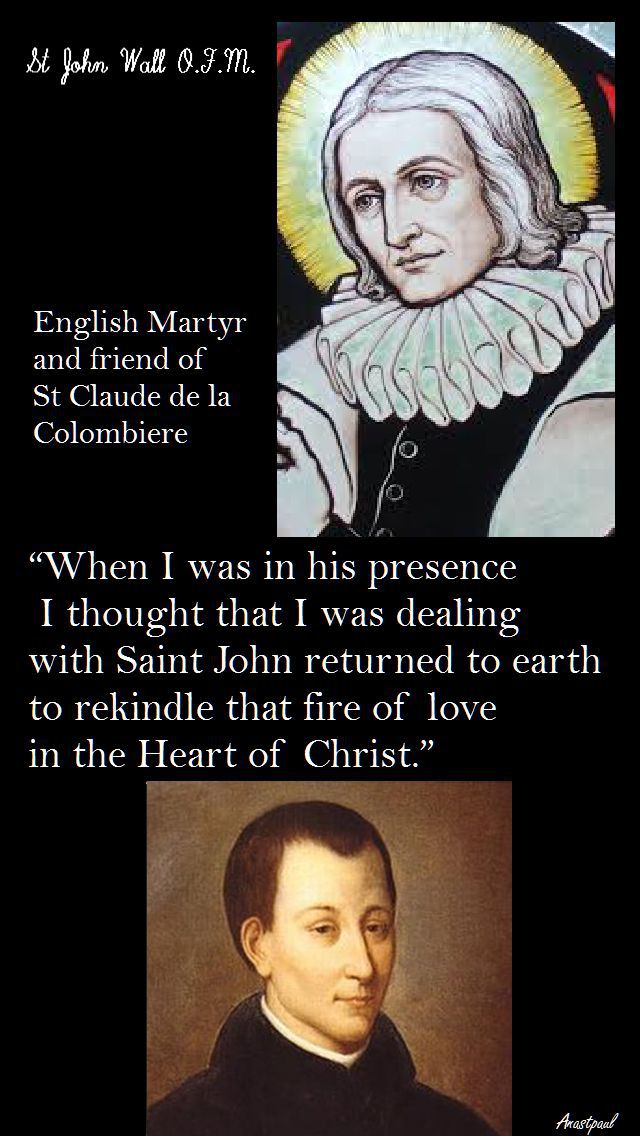
The Franciscan St John Wall O.F.M. (1620-1679) (Joachim of Saint Anne), who was martyred for the crime of being a Catholic priest near Redhill, Corcester, England on August 22nd, 1679, knew Saint Claude. After having spent a night in spiritual conversation with him, the soon–to–be martyr said,
“When I was in his presence I thought that I was dealing with Saint John returned to earth to rekindle that fire of love in the Heart of Christ.”
One Minute Reflection – 15 February – The Memorial of St Claude de la Colombiere S.J. (1641-1682)
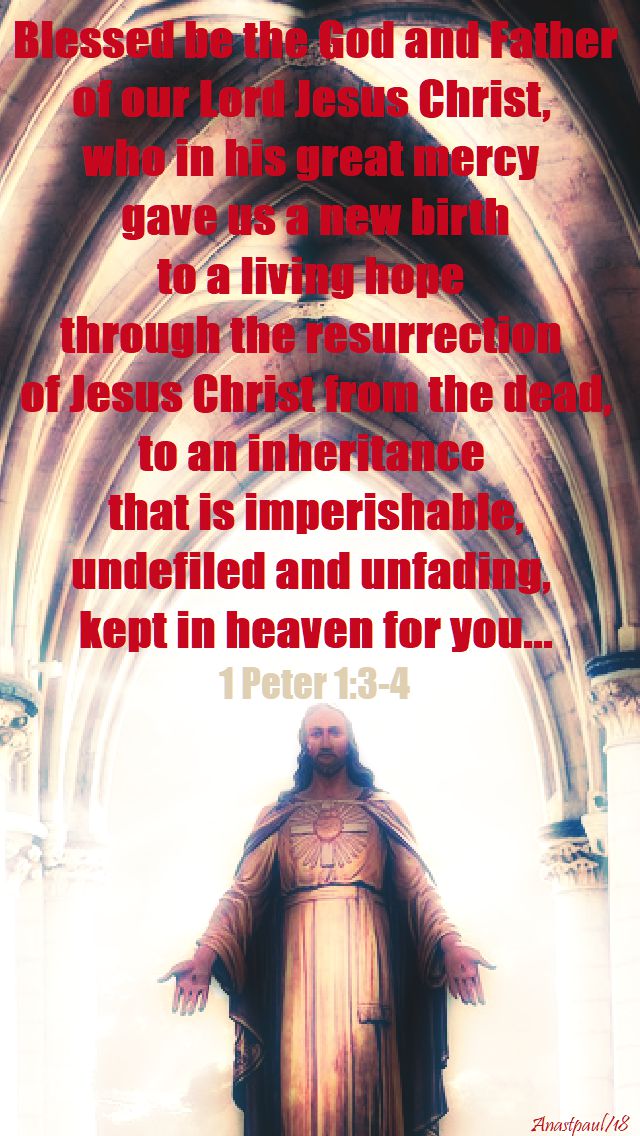
Blessed be the God and Father of our Lord Jesus Christ, who in his great mercy gave us a new birth to a living hope through the resurrection of Jesus Christ from the dead, to an inheritance that is imperishable, undefiled and unfading, kept in heaven for you...1 Peter 1:3-4
REFLECTION – “Lord, I am in this world to show Your mercy to others. Other people will glorify You, by making visible the power of Your grace, by their fidelity and constancy to You. For my part I will glorify You, by making known how good You are to sinners, that Your mercy is boundless and that no sinner, no matter how great his offences, should have reason to despair of pardon. If I have grievously offended You, My Redeemer, let me not offend You even more, by thinking that You are not kind enough to pardon me.” … St Claude de la Colombiere
PRAYER – Heavenly Father, Your great mercy, gave us Your Son! Surely nothing can be a greater proof to us of Your unending love and mercy to Your lowly creatures, we who are dust. Through Him, who died and rose for us, You have shown us the way of true mercy. Grant us this day that by the intercession of St Claude, we may take up our crosses with Him, never leaving the love of His Sacred Heart, so that we may join Your holy saints in eternal life. Through Your Son, our Lord Jesus Christ, in union with the Holy Spirit, one God forever, amen.
Our Morning Offering – 15 February – The Memorial of St Claude de la Colombiere S.J. (1641-1682)
Lord, be the Centre of Our Hearts
by St Claude de la Colombiere
O God, what will You do to conquer
the fearful hardness of our hearts?
Lord, You must give us new hearts,
tender hearts, sensitive hearts,
to replace hearts
that are made of marble and of bronze.
You must give us Your own Heart, Jesus.
Come, lovable Heart of Jesus.
Place Your Heart deep in the centre of our hearts
and enkindle in each heart a flame of love
as strong, as great, as the sum of all the reasons
that I have for loving You, my God.
O holy Heart of Jesus, dwell hidden in my heart,
so that I may live only in You and only for You,
so that, in the end,
I may live with You eternally in heaven, amen
Saint of the Day – 15 February – St Claude de la Colombiere SJ (1641-1682) Religious Priest, Confessor, Patron of the Sacred Heart of Jesus, Ascetical Writer, Teacher, Preacher, Missionary. Patronages – Devotion to the Sacred Heart, toy-makers, turners. St Claude was a Jesuit priest and the confessor of St Margaret Mary Alacoque, the visionary of the Sacred Heart of Jesus. St Claude was born on 2 February 1641 at Saint-Symphorien d’Ozon, Rhône, France and he died on 15 February 1682 at Paray-le-Monial, Saône-et-Loire, France of hemoptysis (coughing up blood). He was Canonised on 31 May 1992 by St Pope John Paul II in Rome, Italy.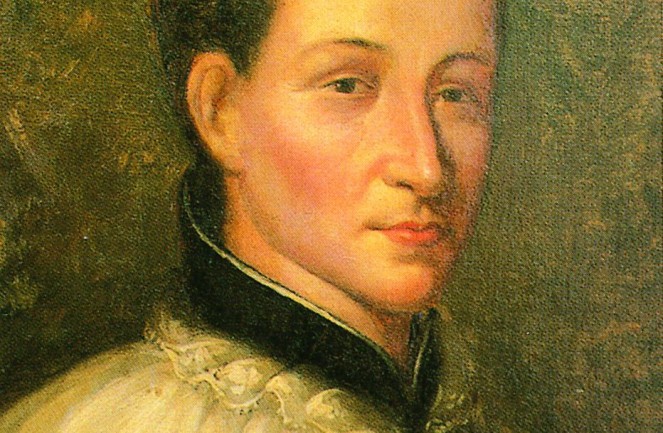

CLAUDE DE LA COLOMBIÈRE, third child of the notary Bertrand de la Colombière and Margaret Coindat, was born on 2nd February 1641 at St Symphorien d’Ozon in the Dauphine, southeastern France. After the family moved to Vienne, Claude began his early education there, completing his studies in rhetoric and philosophy in Lyon.
It was during this period that Claude first sensed his vocation to the religious life in the Society of Jesus. We know nothing of the motives which led to this decision. We do know, however, from one of his early notations, that he “had a terrible aversion for the life embraced”. This affirmation is not hard to understand by any who are familiar with the life of Claude, for he was very close to his family and friends and much inclined to the arts and literature and an active social life. On the other hand, he was not a person to be led primarily by his sentiments. At 17 he entered the Jesuit Novitiate at Avignon. In 1660 he moved from the Novitiate to the College, also in Avignon, where he pronounced his first vows and completed his studies in philosophy. Afterwards he was professor of grammar and literature in the same school for another five years.
In 1666 he went to the College of Clermont in Paris for his studies in theology. Already noted for his tact, poise and dedication to the humanities, Claude was assigned by superiors in Paris the additional responsibility of tutoring the children of Louis XIV’s Munster of Finance, Jean Baptiste Colbert. His theological studies concluded and now a priest, Claude returned to Lyon. For a time he was teacher in the College, then full-time preacher and moderator of several Marian congregations.
Claude became noted for solid and serious sermons. They were ably directed at specific audiences and, faithful to their inspiration from the gospel, communicated to his listeners serenity and confidence in God. His published sermons produced and still produce significant spiritual fruits. Given the place and the short duration of his ministry, his sermons are surprisingly fresh in comparison with those of better-known orators.
The year 1674 was a decisive one for Claude, the year of his Third Probation at Maison Saint-Joseph in Lyon. During the customary month of the Exercises the Lord prepared him for the mission for which he had been chosen. His spiritual notes from this period allow one to follow step-by-step the battles and triumphs of the spirit, so extraordinarily attracted to everything human, yet so generous with God.
He took a vow to observe all the constitutions and rules of the Society of Jesus, a vow whose scope was not so much to bind him to a series of minute observances as to reproduce the sharp ideal of an apostle so richly described by St Ignatius. So magnificent did this ideal seem to Claude that he adopted it as his program of sanctity. That it was indeed an invitation from Christ himself is evidenced by the subsequent feeling of interior liberation Claude experienced, along with the broadened horizons of the apostolate he witnesses to in his spiritual diary.
On 2nd February 1675 he pronounced his solemn profession and was named rector of the College at Paray-le-Monial. Not a few people wondered at this assignment of a talented young Jesuit to such an out-of the-way place as Paray. The explanation seems to be in the superiors’ knowledge that there was in Paray an unpretentious religious of the Monastery of the Visitation, Margaret Mary Alacoque, to whom the Lord was revealing the treasures of his Heart but who was overcome by anguish and uncertainty. She was waiting for the Lord to fulfil his promise and send her “my faithful servant and perfect friend” to help her realise the mission for which he had destined her: that of revealing to the world the unfathomable riches of his love.
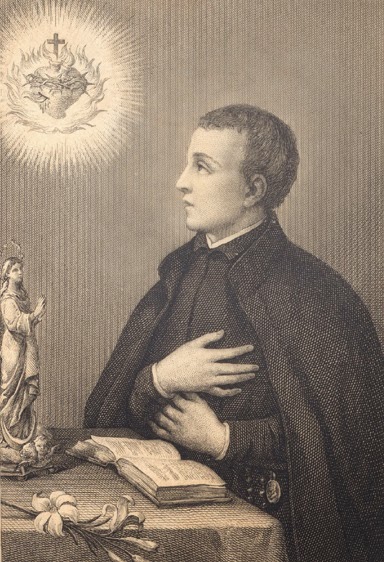
After Father Colombière’s arrival and her first conversations with him, Margaret Mary opened her spirit to him and told him of the many communications she believed she had received from the Lord. He assured her he accepted their authenticity and urged her to put in writing everything in their regard and did all he could to orient and support her in carrying out the mission received. When, thanks to prayer and discernment, he became convinced that Christ wanted the spread of the devotion to his Heart, it is clear from Claude’s spiritual notes that he pledged himself to this cause without reserve. In these notes it is also clear that, even before he became Margaret Mary’s confessor, Claude’s fidelity to the directives of St Ignatius in the Exercises had brought him to the contemplation of the Heart of Christ as symbol of His love.

After a year and half in Paray, in 1676 Father La Colombière left for London. He had been appointed preacher to the Duchess of York – a very difficult and delicate assignment because of the conditions prevailing in England at the time. He took up residence in St James Palace in October. In addition to sermons in the palace chapel and unremitting spiritual direction both oral and written, Claude dedicated his time to giving thorough instruction to the many who sought reconciliation with the Church they had abandoned. And even if there were great dangers, he had the consolation of seeing many reconciled to it, so that after a year he said: “I could write a book about the mercy of God I’ve seen Him exercise since I arrived here!”
The intense pace of his work and the poor climate combined to undermine his health, and evidence of a serious pulmonary disease began to appear. Claude, however, made no changes in his work or life style. Of a sudden, at the end of 1678, he was calumniously accused and arrested in connection with the Titus Oates “papist plot”. After two days he was transferred to the severe King’s Bench Prison where he remained for three weeks in extremely poor conditions until his expulsion from England by royal decree. This suffering further weakened Claude’s health which, with ups and downs, deteriorated rapidly on his return to France.
During the summer of 1681 he returned to Paray, in very poor condition. On 15th February 1682, the first Sunday of Lent, towards evening Claude suffered the severe haemorrhage which ended his life.
On the 16th of June 1929 Pope Pius XI beatified Claude de la Colombière, whose charism, according to St Margaret Mary Alacoque, was that of bringing souls to God along the gospel way of love and mercy which Christ revealed to us. (vatican.va)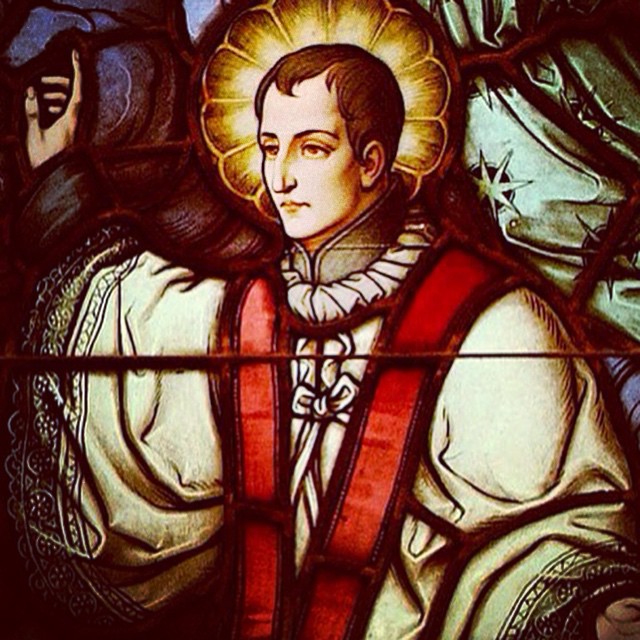
It is said that the day after Claude’s death, Sister Margaret Mary received supernatural assurance that Claude needed no prayers, as he was in already heaven; he was enjoying the fullness of communio with the Trinity. Claude was considered a “dry” martyr, having suffered every abuse for the Christian faith except death. The life of Saint Claude was an example of being in correspondence with the Lord Himself –through the logic of Love– that he was known to be concrete example of mercy in the face of trials. Saint Claude’s life of holiness drew many of the Protestants to the Catholic Church. His was a trust that we must adopt: “In Thee, O Lord, have I hoped; let me never be confounded.”
May we learn from Saint Claude la Colombiere what it means to be in relationship with Jesus the Good Shepherd, true Divine Love.
St Agape of Terni
Bl Angelus de Scarpetti
St Berach of Kilbarry
St Claude de la Colombierre S.J. (1641-1682)
St Craton
St Decorosus of Capua
St Dochow
St Druthmar of Corvey
St Eusebius of Asehia
St Farannan of Iona
St Faustinus
St Faustus of Monte Cassino
St Georgia
St Joseph of Antioch
St Jovita
St Onesimus the Slave
St Quinidius of Vaison
St Severus of Abruzzi
St Walfrid
—
Martyrs of Antioch: 5 saints
A group of Christians murdered together. We know the names of five of them – Agapev, Baralo, Isicio, Joseph and Zosimus.
Martyrs of Passae:
Castulus
Lucius
Magnus
Saturninus
Martyrs of Prague – 14 beati – Franciscan Friars Minor martyred together by a mob led by Lutherans:
Franciscan Friars Minor martyred together by a mob led by Lutherans.
• Antonín of Prague
• Bartolomeo Dalmasoni
• Bedrich Bachstein
• Christoffel Zelt
• Didak Jan
• Emmanuel of Prague
• Gaspare Daverio
• Giovanni Bodeo
• Girolamo degli Arese
• Jakob of Prague
• Jan of Prague
• Juan Martínez
• Klemens of Prague
• Simon of Prague
They were martyred on
• Shrove Tuesday 15 February 1611 at the Church of Our Lady of the Snows in Prague, Czech Republic
• body dumped nearby but given Christian burial on 19 February 1611 in the monastery
• re-interred in the side chapel of the church in 1616
Beatified
13 October 2012 by Pope Benedict XVI
Martyrs of Sweden:
Sigfrid
Sunaman
Unaman
Winaman
Martyred in the Spanish Civil War:
Bl Pere Vallmitjana Abarca
Ash Wednesday – 14 February 2018
Joel 2:12-18, 2 Corinthians 5:20 — 6:2, Matthew 6:1-6, 16-18
At the beginning of Lent, on Ash Wednesday, ashes are blessed during Mass, after the homily. The blessed ashes are then “imposed” on the faithful as a sign of conversion, penance, fasting and human mortality. The ashes are blessed at least during the first Mass of the day but they may also be imposed during all the Masses of the day, after the homily and even outside the time of Mass to meet the needs of the faithful. Priests or deacons normally impart this sacramental but instituted acolytes, other extraordinary ministers or designated lay people may be delegated to impart ashes, if the bishop judges that this is necessary. The ashes are made from the palms used at the previous Passion Sunday ceremonies. …— Ceremonies of the Liturgical Year, Msgr. Peter J Elliott
The act of putting on ashes symbolises fragility and mortality and the need to be redeemed by the mercy of God. Far from being a merely external act, the Church has retained the use of ashes to symbolise that attitude of internal penance to which all the baptised are called during Lent. — Directory on Popular Piety and the Liturgy
From the very early times the commemoration of the approach of Christ’s passion and death was observed by a period of self-denial. St Athanasius in the year 339 enjoined upon the people of Alexandria the 40 days’ fast he saw practised in Rome and elsewhere, “to the end that while all the world is fasting, we who are in Egypt should not become a laughing stock as the only people who do not fast but take our pleasure in those days.” On Ash Wednesday in the early days, the Pope went barefoot to St Sabina’s in Rome “to begin with holy fasts the exercises of Christian warfare, that as we do battle with the spirits of evil, we may be protected by the help of self-denial.
“In the course of this trial of forty days, which our weakness only finds long, we shall not be deprived of our Saviour’s presence. He has preceded and outpaced us on the royal road. He has tried it and accomplished its course before us, in order to answer, by His example, the excuses and arguments our self-indulgence or pride may urge. Let us accept the lesson fully and so arrive at an understanding of the law of expiation. “Do penance, for the kingdom of heaven is drawing near.” Let us open our heart to this appeal, that the Saviour may not be compelled to awake us from our lethargy by the terrible threat He employed on another occasion: “If you do not repent you shall all perish.”...Abbot Dom Prosper Gueranger
“The enormity of the fact that Christ has, on our behalf, already taken the most extreme punishment upon Himself, should move us, not to leave Him isolated. It should also inspire us to rejoice that another has taken our place in representing sin before God – for not to rejoice at that, would be a further enormity. Instead of leaving Him alone, we should be moved to enter into His suffering for us, doing together with Him, what little we can do, to atone for the world’s sin!”…Hans Urs von Balthasar “Light of the World”
ACT OF CONTRITION
Forgive my sins, O my God, forgive my sins:
the sins of youth,
the sins of age;
the sins of my soul
and the sins of my body;
the sins which, through frailty, I have committed;
my deliberate and grievous sins,
the sins I know and the sins I do not know,
the sins I have laboured so long to hide from others,
that now they are hidden from my own memory;
let me be absolved from all these iniquities
and delivered from the bond of all these evils,
by the Life, Passion, and Death
of my Lord and Saviour, Jesus Christ.
Amen
Thought for the Day – 14 February – The Memorial of Sts Cyril (827-869) & Methodius (826-885)
Wishing now to sum up concisely the profile of the two Brothers, we should first recall the enthusiasm with which Cyril approached the writings of St Gregory of Nazianzus, learning from him the value of language in the transmission of the Revelation. St Gregory had expressed the wish that Christ would speak through him: “I am a servant of the Word, so I put myself at the service of the Word”. Desirous of imitating Gregory in this service, Cyril asked Christ to deign to speak in Slavonic through him. He introduced his work of translation with the solemn invocation: “Listen, O all of you Slav Peoples, listen to the word that comes from God, the word that nourishes souls, the word that leads to the knowledge of God”. In fact, a few years before the Prince of Moravia had asked the Emperor Michael III to send missionaries to his country, it seems that Cyril and his brother Methodius, surrounded by a group of disciples, were already working on the project of collecting the Christian dogmas in books written in Slavonic. The need for new graphic characters closer to the language spoken was therefore clearly apparent: so it was that the Glagolitic alphabet came into being. Subsequently modified, it was later designated by the name “Cyrillic”, in honour of the man who inspired it. It was a crucial event for the development of the Slav civilisation in general. Cyril and Methodius were convinced that the individual peoples could not claim to have received the Revelation fully, unless they had heard it in their own language and read it in the characters proper to their own alphabet.
Methodius had the merit of ensuring that the work begun by his brother was not suddenly interrupted. While Cyril, the “Philosopher”, was more inclined to contemplation, Methodius on the other hand had a leaning for the active life. Thanks to this he was able to lay the foundations of the successive affirmation of what we might call the “Cyrillian-Methodian idea”: it accompanied the Slav peoples in the different periods of their history, encouraging their cultural, national and religious development. This was already recognised by Pope Pius XI in his Apostolic Letter Quod Sanctum Cyrillum, in which he described the two Brothers: “Sons of the East, with a Byzantine homeland, of Greek origin, for the Roman missions to reap Slav apostolic fruit” (AAS 19 [1927] 93-96). The historic role they played was later officially proclaimed by St Pope John Paul II who, with his Apostolic Letter Egregiae Virtutis, declared them Co-Patrons of Europe, together with St Benedict (31 December 1980; L’Osservatore Romano English edition, 19 January 1981, p. 3).
Cyril and Methodius are in fact a classic example of what today is meant by the term “inculturation”: every people must integrate the message revealed into its own culture and express its saving truth in its own language. This implies a very demanding effort of “translation” because it requires the identification of the appropriate words to present anew, without distortion, the riches of the revealed word. The two holy Brothers have left us a most important testimony of this, to which the Church also looks today in order to draw from it inspiration and guidelines. Pope Benedict XVI, Wednesday, 17 June 2009
The work of Saints Cyril and Methodius are a powerful reminder of our role in the celebration of the Liturgy. God speaks to us—to each of us—in a language that we can understand and based upon that understanding we are called to live the Gospel. We pray today for more active participation, greater comprehension and the ability to successfully live the Word of God for all to see!
Almighty and everlasting God, who by the power of the Holy Spirit moved your servant Cyril and his brother Methodius to bring the light of the Gospel to a hostile and divided people, overcome all bitterness and strife among us by the love of Christ and make us one united family under the banner of the Prince of Peace, who lives and reigns with You and the Holy Spirit, one God, now and for ever, amen.
Sts Cyril and Methodius, pray for us!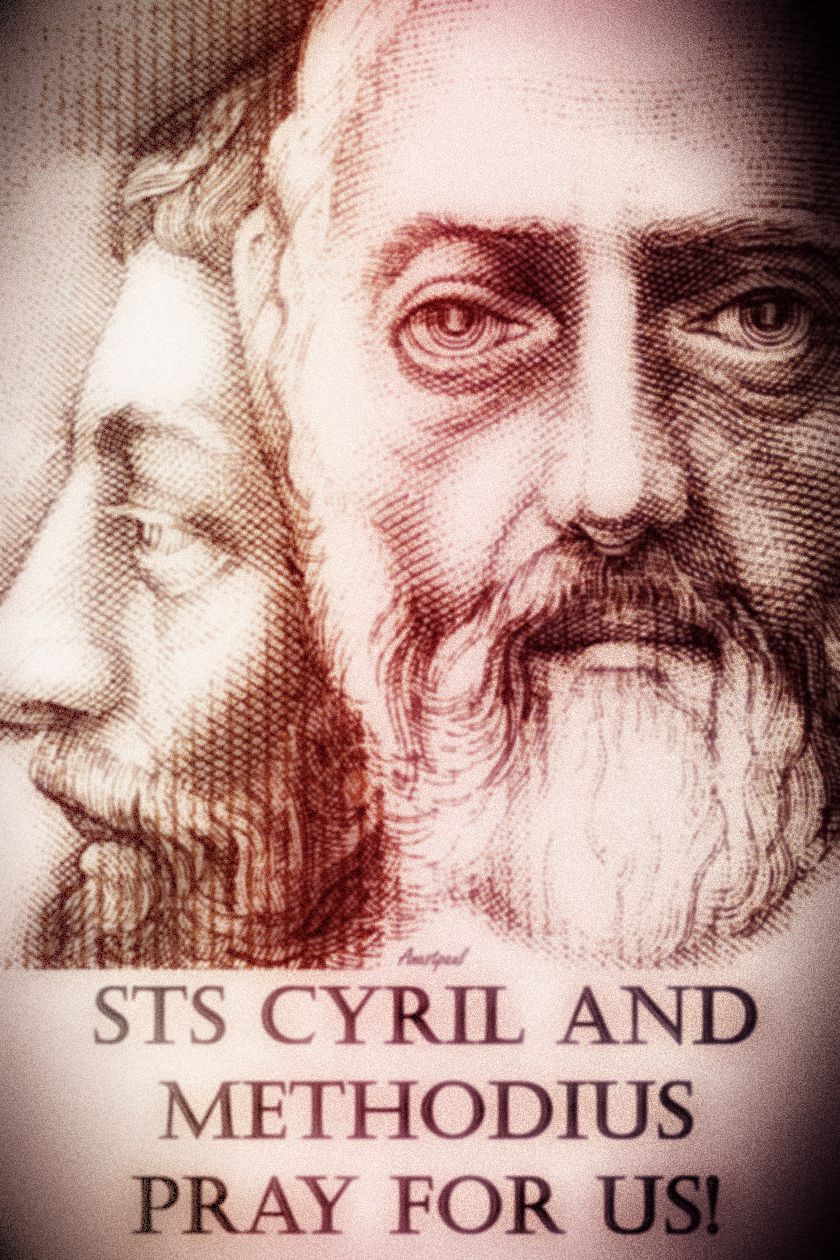
Quote of the Day – 14 February 2018 – Ash Wednesday
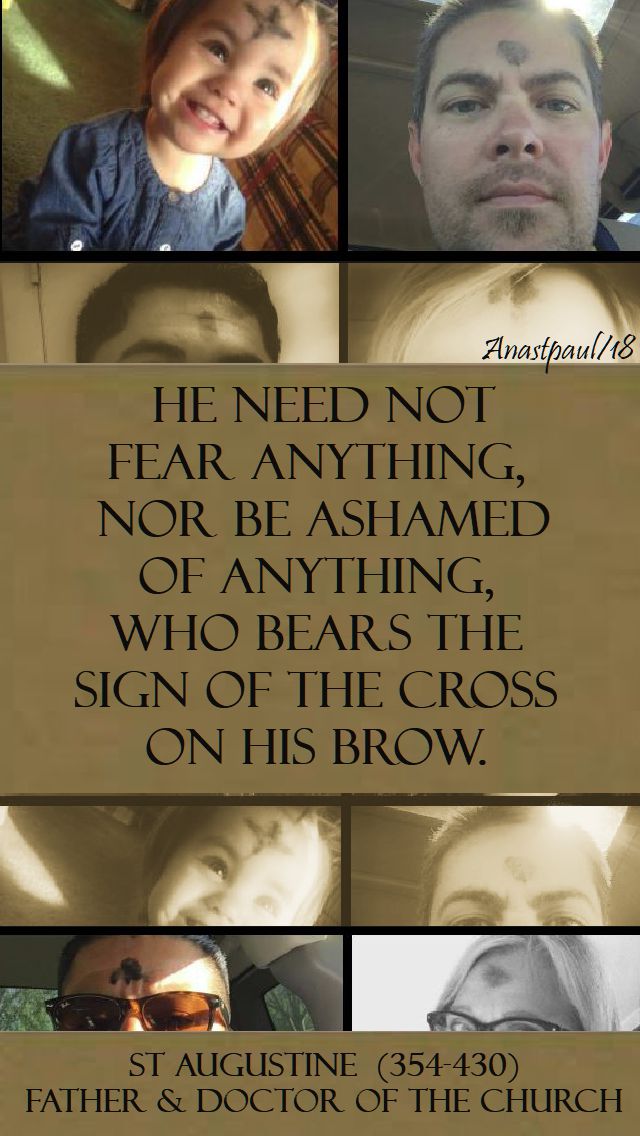
He need not fear anything,
nor be ashamed of anything,
who bears the sign of the cross
on his brow.
One Minute Reflection – 14 February 2018 – Ash Wednesday
When you fast …groom your hair and wash your face ….Your father, who sees what is hidden will repay you.…Matthew 6:17-18
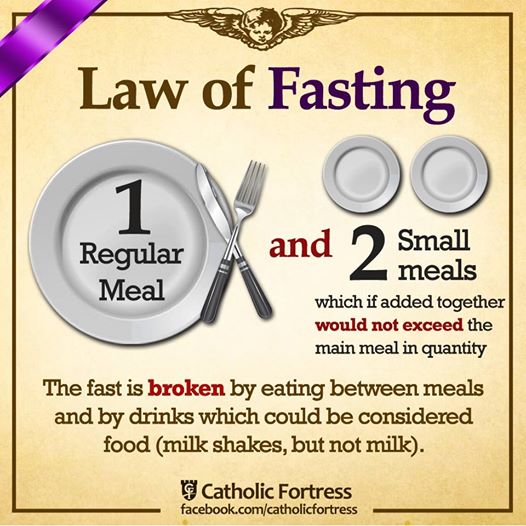
REFLECTION – “Fasting, when rightly practised, lifts the mind to God and mortifies the flesh. It makes virtue easy to attain and increases our merits.”…St Francis de Sales (1567-1622) Doctor of the Church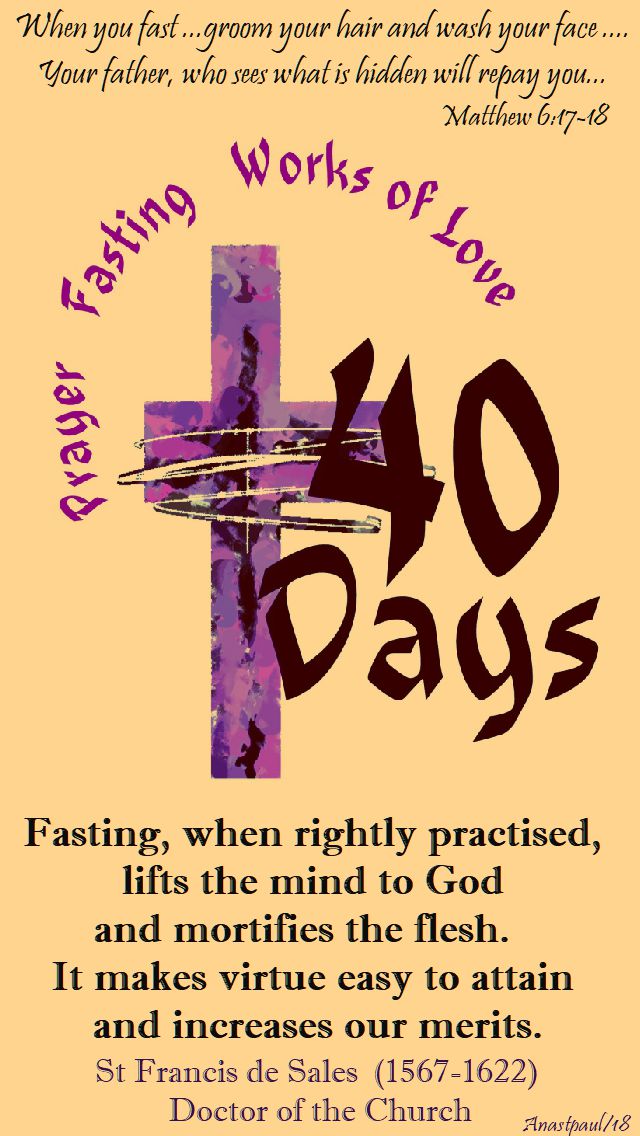
PRAYER – Support us Lord, as with this Lenten fast we begin our Christian warfare, so that in doing battle against the spirit of evil, we may be armed with the weapon of self-denial. Heavenly Father, help us to fast for the right reasons. Teach us to fast to curb illicit desires and to obtain closer union with You. Help us Lord, during this Lenten season to cleave to You alone and grow in sanctity and charity. Create in me a clean heart O Lord! Through our Lord Jesus Christ in unity with the Holy Spirit, one God forever, amen.
Our Morning Offering – 14 February – Ash Wednesday 2018
You alone are my All and Every Good
By Thomas à Kempis
O Lord, my God,
You are my all and every good.
And what am I, that I should presume to address You?
I am the poorest of Your servants and a wretched worm,
far more poor and worthless, than I can ever realise or express.
Yet, Lord, remember that I am nothing,
I have nothing
and can do nothing.
You alone are good, just and holy,
You can do all things, fill all things, bestow all things,
leaving only the wicked empty-handed.
Remember Your mercies, Lord
and fill my heart with Your grace,
since it is Your will, that none of Your works, should be worthless.
How can I endure this life of sorrows,
unless You strengthen me with Your mercy and grace?
Do not turn Your face from me;
do not delay Your coming,
nor withdraw Your consolation form me,
lest my soul become like a waterless desert.
Teach me, O Lord, to do Your will;
teach me to live worthily and humbly in Your sight;
for You are my wisdom, who know me truly
and who knew me before the world was made
and before I had my being.
Amen
Saints of the Day – 14 February – Sts Cyril (827-869) & Methodius (826-885) Bishops, Confessors, Theologians, Missionaries, Writers, Preachers, Patrons of Europe, Apostles to the Slavs. Sts Cyril & Methodius were two brothers who were Byzantine Christian theologians and Christian missionaries. Through their work they influenced the cultural development of all Slavs, for which they received the title “Apostles to the Slavs”. They are credited with devising the Glagolitic alphabet, the first alphabet used to transcribe Old Church Slavonic. After their deaths, their pupils continued their missionary work among other Slavs. In 1880, Pope Leo XIII introduced their feast into the calendar of the Roman Catholic Church. In 1980, St Pope John Paul II declared them co-patron saints of Europe, together with Benedict of Nursia.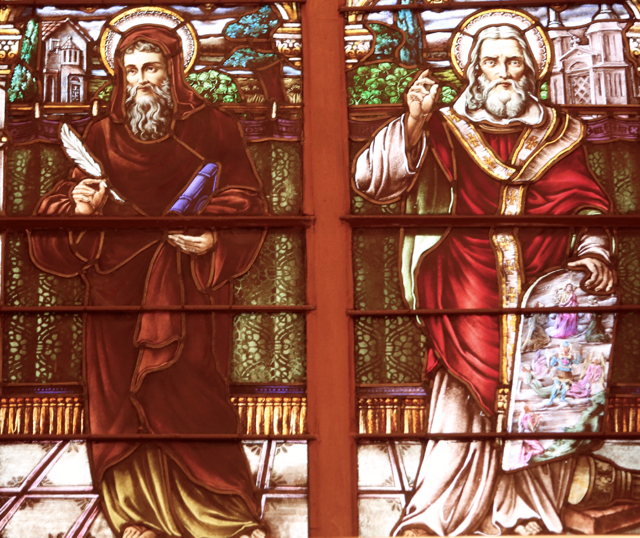
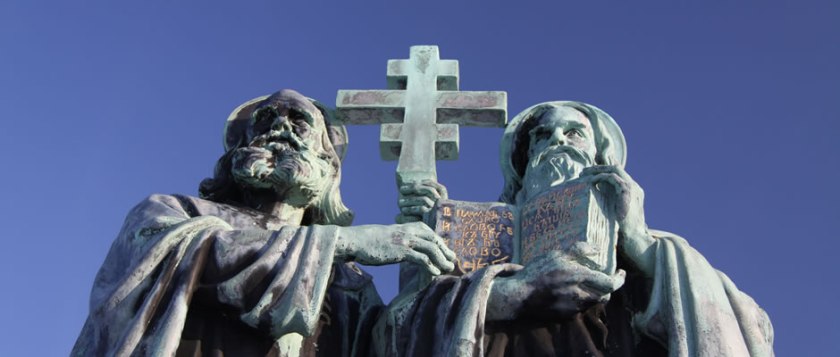
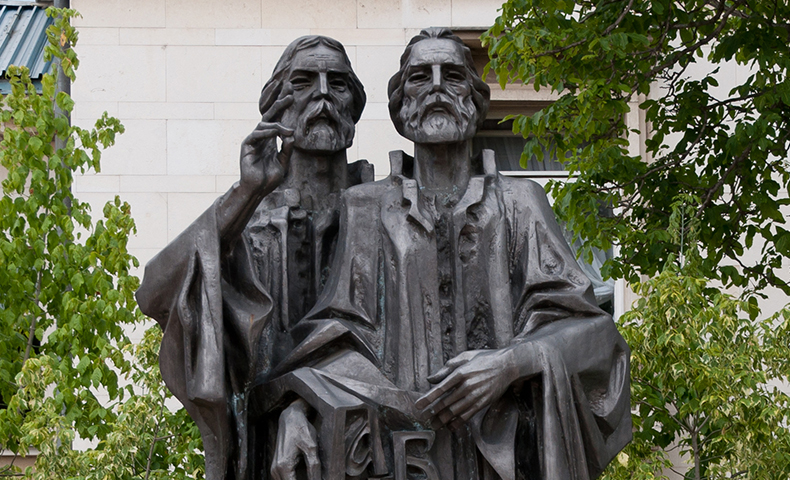
St Cyril’s Patronages – against storms, ecumenism, Slavic peoples (given in 1863 by Pope Pius IX), unity of the Eastern and Western Churches, Bohemia, Bosnia, Bosnia-Herzegovina, Bulgaria, Carinthia, Austria, Carniola, Circassia, Croatia, Czech Republic, Czechoslovakia, Dacia, Dalmatia, Europe (given in 1980 by St Pope John Paul II), Khazaria, Krain, Krajna, Kranjska, Moravia, Pannonia, Russia, Silesia, Slovenia, Yugoslavia, Ljubljana, Slovenia, archdiocese of, Maribor, Slovenia, archdiocese of, Saints Cyril and Methodius of Toronto, Ontario, diocese of. St Methodius’s Patronages – against storms, ecumenism, Slavic peoples (given in 1863 by Pope Pius IX), unity of the Eastern and Western Churches, Bohemia, Bosnia, Bosnia-Herzegovina, Bulgaria, Carinthia, Austria, Carniola, Circassia, Croatia, Czech Republic, Czechoslovakia, Dacia, Dalmatia, Europe (given in 1980 by St Pope John Paul II), Khazaria, Krain, Krajna, Kranjska, Moravia, Pannonia, Russia, Silesia, Slovenia, Yugoslavia, Ljubljana, Slovenia, archdiocese of, Maribor, Slovenia, archdiocese of, Saints Cyril and Methodius of Toronto, Ontario, diocese of.


Methodius and Cyril (born Constantine) were born into a prominent Christian family in Thessalonica. As the area in which they were raised was a popular spot for Slavic people to settle in, traditions tells us that the holy brothers grew up familiar with the Slavic language (Slavonic). While we know their father was a prominent officer in the army, little is known of their young lives. History has recorded that Methodius, the elder brother, rose to the position of an important civil authority, who likely dealt in law and trade. His brother, Cyril, was trained as a scholar, professor and philosopher who gained renown in Constantinople.
After some years in public service, Methodius grew tired of worldly affairs and retired, seeking out solace and contemplation in a monastery. Eventually, Cyril joined him there, refusing a district to govern, preferring quiet devotion to the Lord. Together they lived in peace until the Byzantine emperor, having received a request for missionaries by the Moravian prince Rastislav, sent the brothers as missionaries to modern-day Ukraine. Being familiar with the language and well-acquainted with administration and politics, they were the perfect choice for such a mission. And given Rastislav’s desire for independence from Germany, Eastern missionaries (such as Methodius and Cyril) could help him gain independence over Church affairs.


Cyril and Methodius firmly believed that the Liturgy should be celebrated in the native language of the people, for greater inclusion in the Mass—a tradition which continues today. At that time, many were committed to only celebrating Mass in Greek or Latin, but these holy brothers dedicated themselves to proving otherwise. Prior to their departure for Moravia, they created a script for Slavonic (which had not previously existed). Known as Glagolithic, this written script is considered the precursor to Cyrillic (named after Saint Cyril). The creation of this script would allow the translation of Scripture and Liturgy into the language of the people.
Upon their arrival, Cyril immediately began translating the Liturgy into Slavonic. This created anxiety in the German priests, who saw the use of language as the next step to Slavic independence, and they actively worked against the translation. As neither Cyril nor Methodius was ordained a bishop, they travelled to Rome with their candidates for the priesthood to see the pope. After an audience, the pope approved the use of the Slavonic language in services, ordaining the local priests and securing the presence of Catholicism in the region.


Sadly, Constantine never returned to Moravia. He entered the monastery, taking the name Cyril and not long after died. Methodius was stricken with grief and wished for nothing more than live the remainder of his days in the monastery but honoured a promise made to his brother and returned to finish their missionary work. Due to the political upheaval in Moravia, he was forbidden to return there. However, upon his ordination as bishop, he was invited to modern-day Serbia and Croatia, where he assumed the bishopric of Sirmium. There he continued to say Mass and administer baptisms in the native, Slavonic tongue.
Again, falling victim to the anxiety of the German priests and bishops, Saint Methodius was imprisoned and only released following Moravian independence from German and intervention from the pope. Again, Methodius traveled to Rome, meeting with the Pope, and explaining how important it was to celebrate the Liturgy in the tongue people understood. Instead of condemning him, as the German bishops had hoped, the pope gave him permission to use Slavonic in the Mass, in Scripture reading and in the office. He also made him head of the hierarchy in Moravia.
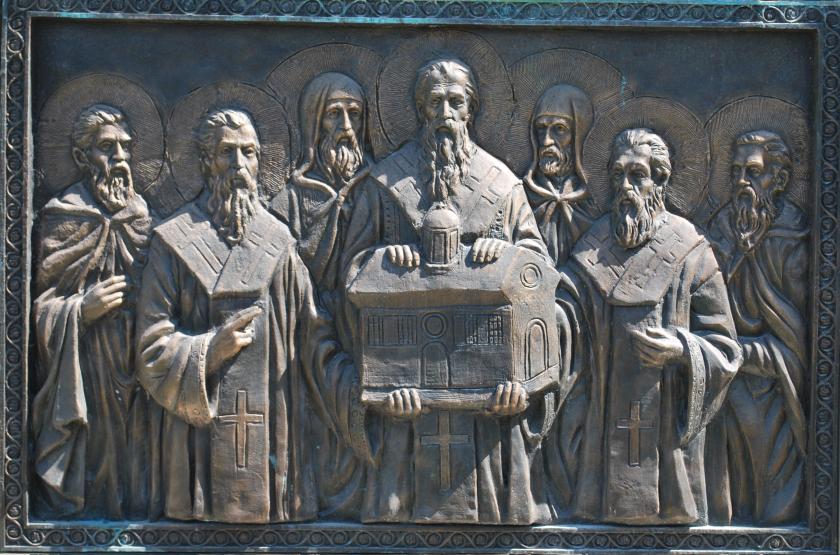
Saint Methodius, despite constant criticism and backlash, never stopped translating. It is said that he had translated the Bible and the works of the Church Fathers into Slavonic before his death.


Ash Wednesday 2018: The first day of the season of Lent, so called from the custom of marking the foreheads of the faithful with blessed ashes. Its date depends upon that of Easter, and this year it’s on 14 February.
St Cyril (Memorial)
St Methodius (Memorial)
St Valentine of Rome (Optional Memorial)
—
St Abraham of Harran
St Antoninus of Sorrento
St Auxentius of Bithynia
St Conran of Orkney
St Eleuchadius
St Juan García López-Rico
St Nostrianus of Naples
St Theodosius of Vaison
St Valentine of Terni
Bl Vicente Vilar David
St Vitale of Spoleto
—
20 Mercedarians of Palermo
Martyrs of Alexandria – 16 saints
Martyrs of Rome
Felicula
Vitalis
Zeno
Martyrs of Terni: Three Christians who gave proper burial to Saint Valentine of Terni. Martyred in the persecutions of Aurelius.
273 in Terni, Italy – Apollonius, Ephebus, Proculus.
Martyrs of Alexandria: A group of Christians murdered in various ways for their faith in Alexandria, Egypt. We know the names and a few details about 16 of them – Agatho, Agatone, Ammonio, Ammonius, Antonius, Bassiano, Bassianus, Cirione, Cyrio, Dionysius, Dionysius, Lucio, Moses, Moses, Proto and Tonione.
The meaning of Shrove Tuesday – 13 February 2018
Shrove is the past tense of the word shrive, which means to hear a confession, assign penance and absolve from sin. In the Middle Ages, especially in Northern Europe and England, it became the custom to confess one’s sins on the day before Lent began in order to enter the penitential season in the right spirit. How I wish the Church would bring this practice back NOW and not concentrate on flipping pancakes – entendre intended! Though we, as the “Church” can re-institute this practice ourselves.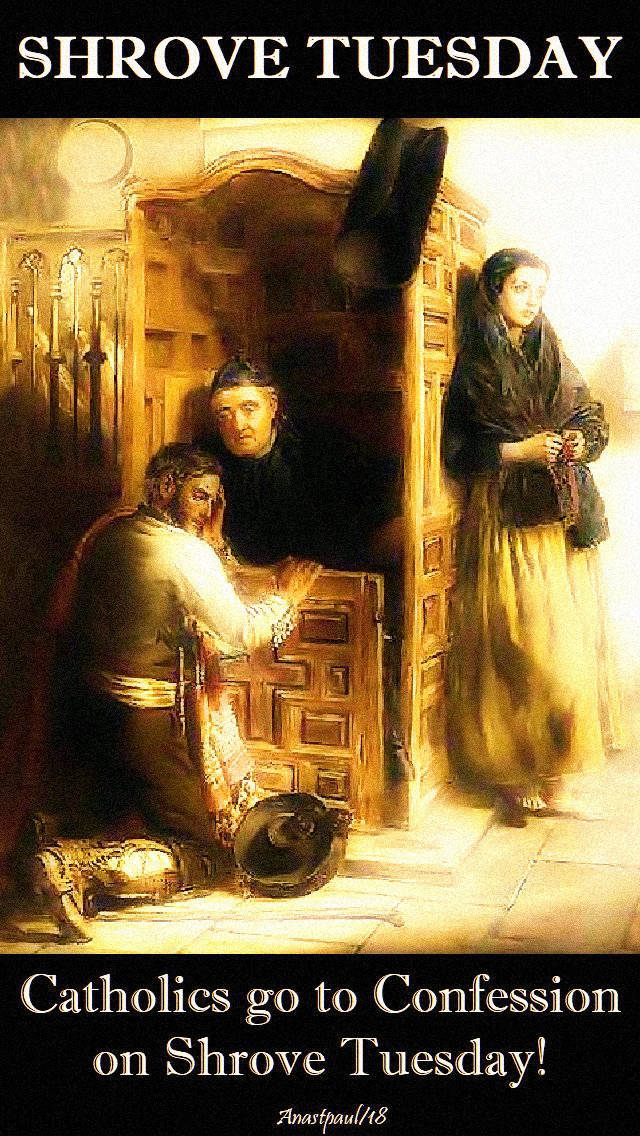
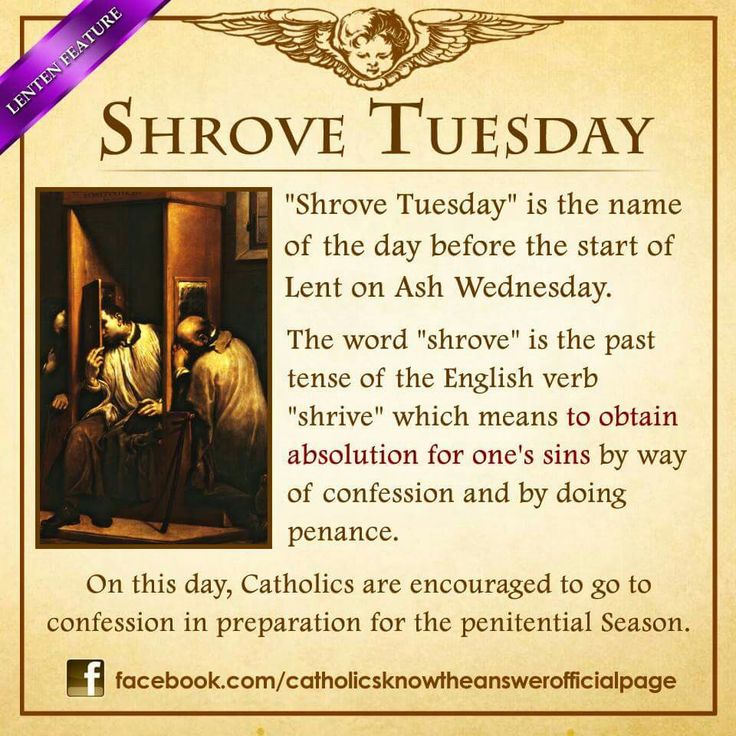
From the earliest days of Christianity, Lent, the penitential period before Easter, has always been a time of fasting and abstinence.
While the Lenten fast today is confined to Ash Wednesday and Good Friday and abstinence from meat is required only on Ash Wednesday, Good Friday and the other Fridays of Lent, in previous times (and not so long away either, ask anyone over 60) the fast was quite severe. Christians abstained from all meat and items that came from animals, including butter, eggs, cheese and fat.
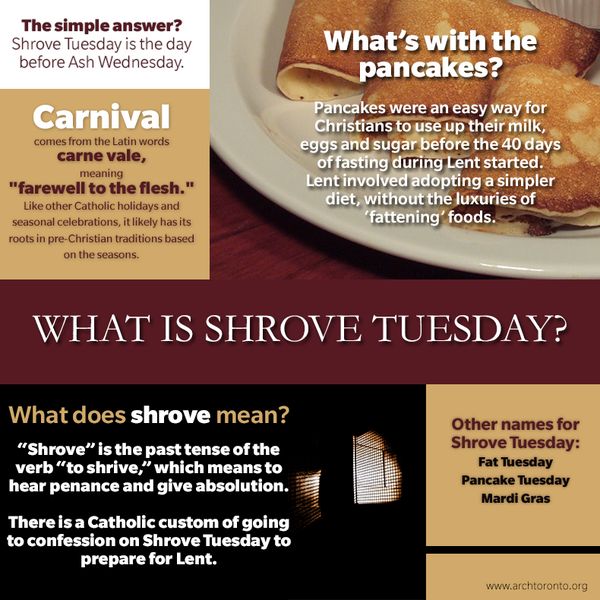
That is why Shrove Tuesday became known as Mardi Gras, the French term for Fat Tuesday. Over time, Mardi Gras extended from a single day to the entire period of Shrovetide, the days from the last Sunday before Lent through Shrove Tuesday.
In the countries that speak Romance language (languages derived primarily from Latin), Shrovetide is also known as Carnivale—literally, “farewell to meat.” In the English-speaking countries, Shrove Tuesday became known as Pancake Day, because Christians used up their eggs, butter and milk to make pancakes and other pastries.
Thought for the Day – 13 February – The Memorial of Blessed Jordan of Saxony O.P. (1190-1237
“You have no doubt heard that our kind Father, Master Jordan, his two companions and ninety-nine other persons have been taken from this wicked world by shipwreck in a violent storm. However, dear brothers, do not let your hearts be saddened by this awful calamity; for God, in His mercy, has already greatly consoled us, who have become orphans through the untimely death of a good Father. After the storm, the bodies of our three confrères were washed ashore and bright lights in the form of crosses shone over them every night until they were found and buried where they lay by those who escaped from the disaster. These, together with many others, have borne testimony to the miracle. Moreover, the inhabitants of the neighbourhood, drawn to the place of the catastrophe by reports of so marvellous an occurrence, testify that they experienced a sweet fragrance all round; while those who touched the bodies declare that this fragrance did not leave their hands for more than ten days. Indeed, this same sweet odour pervaded the locality until the fathers at Ptolomais came in a boat and took up the bodies for burial in the conventual church of that city. There now repose the remains of our late beloved Master General; and many wonders have in this short time been attributed to his intercession. Blessed be God in all His works. Amen”
All through his religious life the second head of the Order had been regarded as a very saintly man. A number of prodigies were said to have been wrought by him. Others came after his death; while several very holy persons declared that, in visions, they saw his soul ascend into heaven. All this, together with the facts recorded in the letter just quoted, occasioned a devotion to the man of God which continued through the course of centuries and caused him to be given the title of Blessed Jordan of Saxony. After a thorough study of this immemorial veneration by the Sacred Congregation of Rites, Leo XII, who reigned from 1823 to 1829, allowed the Friars Preacher the world over to say mass and recite the divine office in his honour. Throughout his Order he is held in an esteem second only to that which is accorded to Saint Dominic.
It is not commonly known or understood the highly efficacious intercession available to us all and thus we pray, Blessed Jordan of Saxony, Pray for us!
Quote of the Day – 13 February – The Memorial of Blessed Jordan of Saxony O.P. (1190-1237)
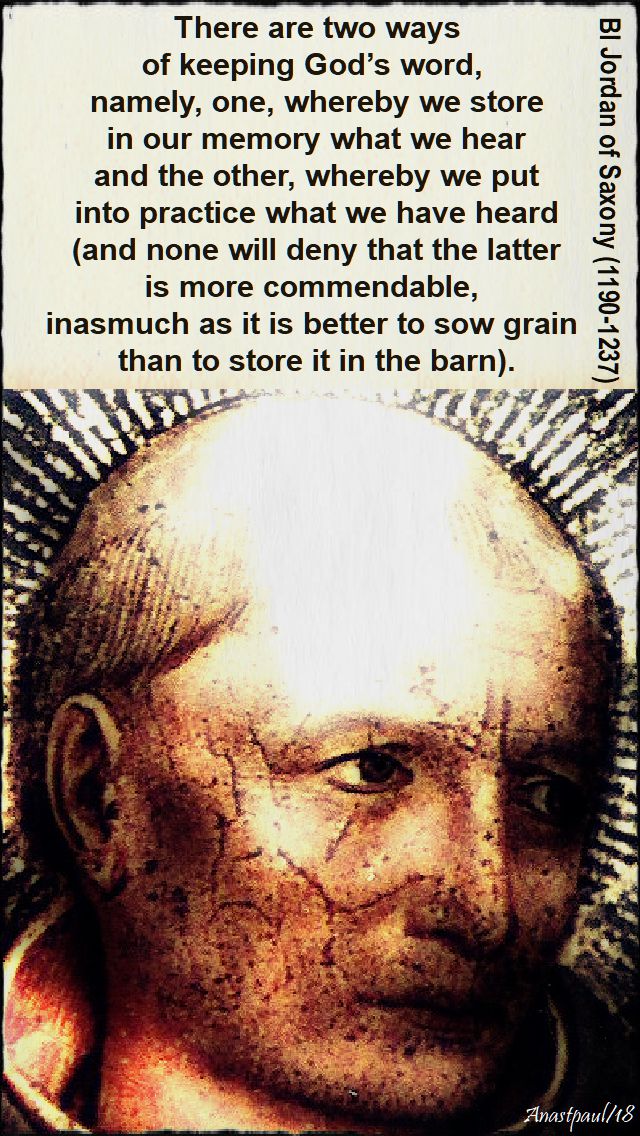
“There are two ways of keeping God’s word, namely, one, whereby we store in our memory what we hear and the other, whereby we put into practice, what we have heard (and none will deny that the latter is more commendable, inasmuch, as it is better to sow grain, than to store it in the barn).”
 AnaStpaul
You must be logged in to post a comment.