Posted in DOMINICAN OP, LENT 2019, LENTEN THOUGHTS, ON the SAINTS, QUOTES of the SAINTS, QUOTES on COURAGE, QUOTES on ETERNAL LIFE

Lenten Thoughts – 23 March – Behave like a true Knight!

Lenten Thoughts – 23 March – Saturday of the Second Week of Lent, Year C

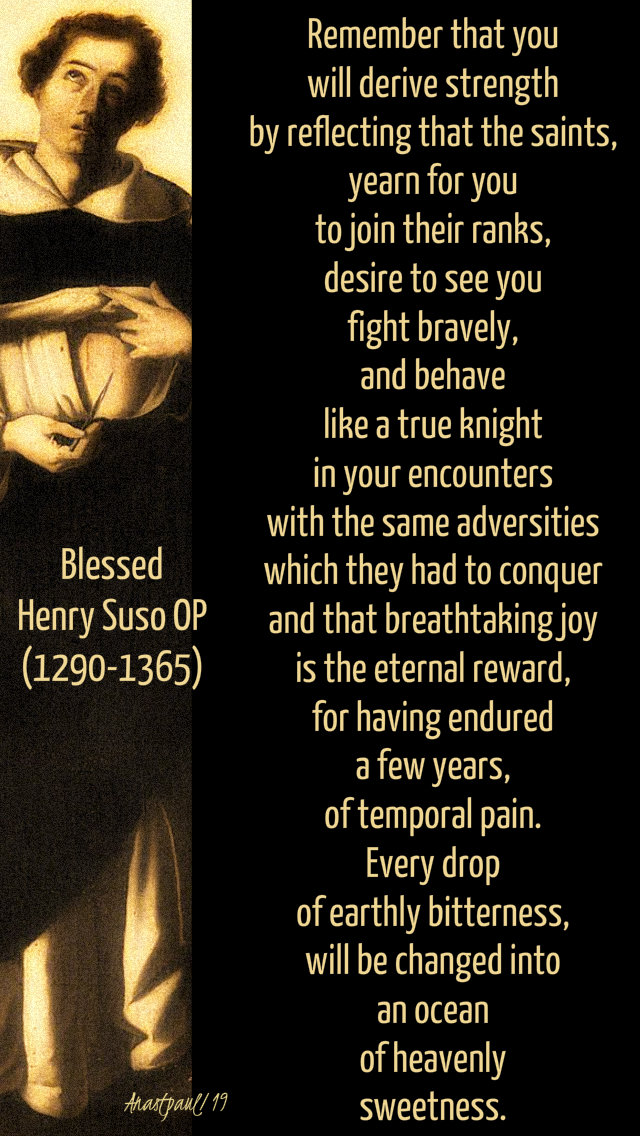
“Remember that you will derive strength
by reflecting that the saints, 
yearn for you
to join their ranks,
desire to see you fight bravely,
and behave like a true knight
in your encounters
with the same adversities
which they had to conquer
and that breathtaking joy
is the eternal reward,
for having endured a few years, 
of temporal pain.
Every drop of earthly bitterness,
will be changed into
an ocean of heavenly sweetness.”

Blessed Henry Suso OP (1290-1365)remember that you will derive strength - lenten thought 23 march 2019 bl henry suso.jpg

Posted in SAINT of the DAY

Thought for the Day – 23 March – The Lord writes straight with crooked lines

Thought for the Day – 23 March – Saturday of the Second Week of Lent, Year C and The Memorial of St Turibius of Mogrovejo (1538-1606)

Turibius Alphonsus Mongrovejo, whose feast the Church honours today, was born on 6 November 1538, at Mayorga in the kingdom of Leon in Spain.   Brought up in a pious family where devotion was hereditary, his youth was a model to all who knew him. All his leisure was given to devotion or to works of charity.   His austerities were great and he frequently made long pilgrimages on foot.

The fame of Turibius as a master of canon and civil law soon reached the ears of King Philip II, who made him judge at Granada.   About that time the see of Lima, in Peru, fell vacant and among those proposed Philip found no one who seemed better endowed than our Saint with all the qualities that were required at that city, where much was to be done for religion.   He sent to Rome the name of the holy judge and the Sovereign Pontiff confirmed his choice.   Turibius in vain sought to avoid the honour.  The Pope, in reply, directed him to prepare to receive Holy Orders and be consecrated.   Yielding at last by direction of his confessor, he was ordained priest and consecrated.

He arrived at Lima in 1587 and entered on his duties.   All was soon edification and order in his episcopal city.   A model of all virtue himself, he confessed daily and prepared for Mass by long meditation.   St Turibius then began a visitation of his vast diocese, which he traversed three times, his first visitation lasting seven years and his second four.   He held provincial councils, framing decrees of such wisdom that his regulations were adopted in many countries.   Almost his entire revenues were bestowed on his creditors, as he styled the poor.

While discharging with zeal his duties he was seized with a fatal illness during his third visitation and died on 23 March 1606, at Santa, exclaiming, as he received the sacred Viaticum: “I rejoiced in the things that were said to me – ‘We shall go into the house of the Lord.'”

The proofs of his holy life and of the favours granted through his intercession induced Pope Innocent XI to Beatify him and he was Canonised by Pope Benedict XIII in the year 1726.

The Lord indeed writes straight with crooked lines.   Against his will, and from the unlikely springboard of an Inquisition tribunal, this man became the Christlike shepherd of a poor and oppressed people.   God gave him the gift of loving others as they needed it, with all fervour and total self-giving, a Saint for Lent, indeed!

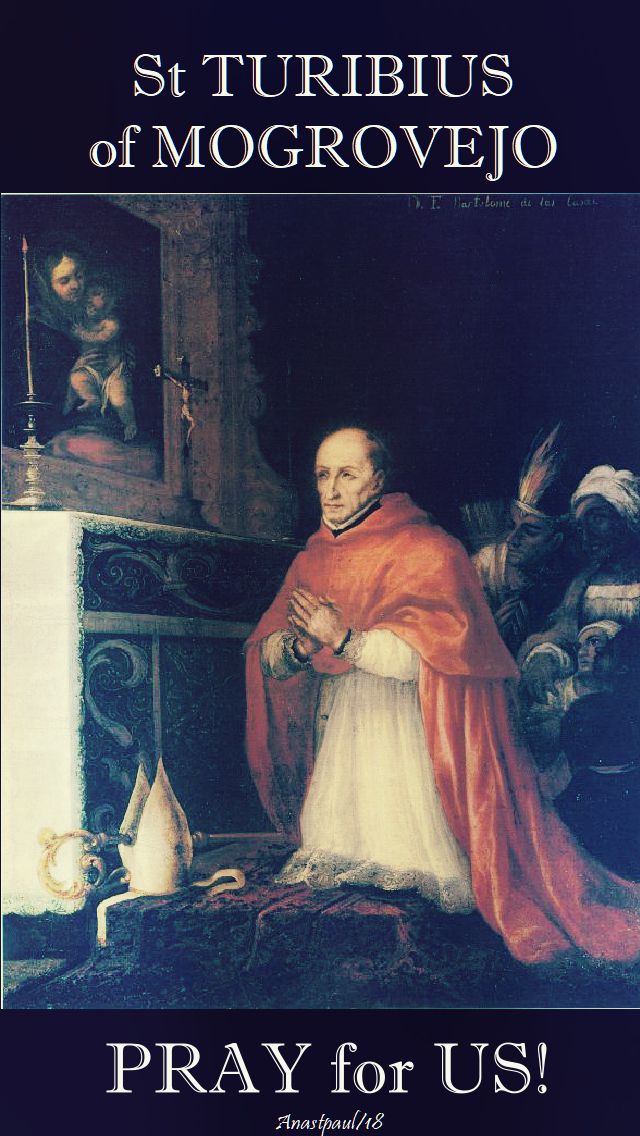
St Turibius, Pray for Us!st-turibius-pray-for-us-23-march-2018-no-2 (1).jpg

Posted in QUOTES of the SAINTS, QUOTES on TIME, QUOTES on TRUTH, SAINT of the DAY

Quote/s of the Day – 23 March – St Turibius

Quote/s of the Day – 23 March – Saturday of the Second Week of Lent, Year C and The Memorial of St Turibius of Mogrovejo (1538-1606)

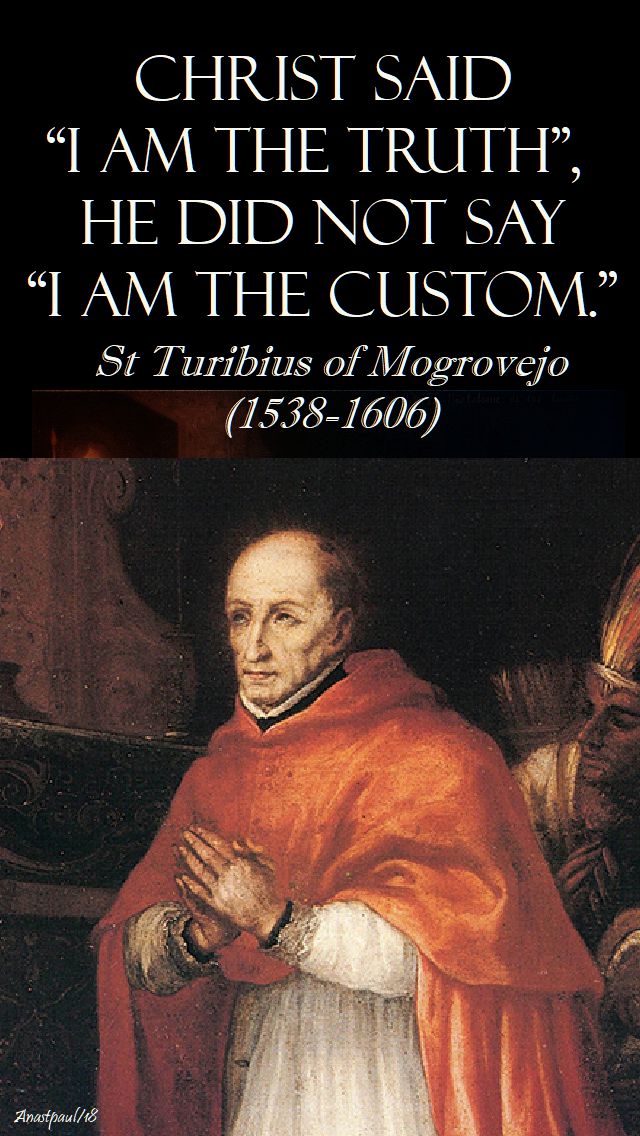
“Christ said ‘I am the Truth’,
He did not say ‘I am the custom’.”christ-said-i-am-the-truth-st-turibius-of-mogrovejo-23-march-2018

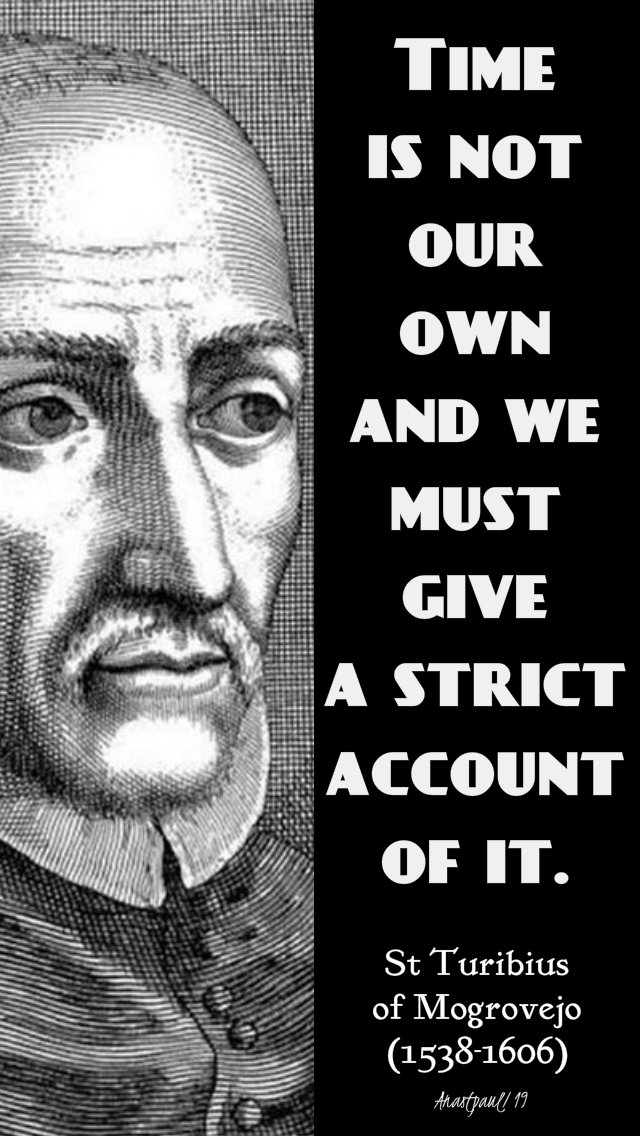
“Time is not our own
and we must give
a strict account of it.”

St Turibius of Mogrovejo (1538-1606)time is not our own - st turibius 23 march 2019

Posted in DIVINE Mercy, Goodness, Patience, DOCTORS of the Church, FATHERS of the Church, GOD the FATHER, LENT 2019, PRACTISING CATHOLIC, PRAYERS of the CHURCH, QUOTES of the SAINTS, The WORD

Lenten Reflection – 23 March – “Who is a God like you”

Lenten Reflection – 23 March – Saturday of the Second Week of Lent, Year C

The Readings
Micah 7:14-15, 18-20; Psalms 103:1-2, 3-4, 9-10, 11-12; Luke 15:1-3,11-32

“Who is a God like you, who removes guilt and pardons sin for the remnant of his inheritance; Who does not persist in anger forever, but instead delights in mercy …” …Micah 7:18

“For what was it Jesus’ detractors said?   “No man can forgive sins but God alone.” Inasmuch then, as they themselves laid down this definition, they themselves introduced the rule, they themselves declared the law.   He then proceeded to entangle them by means of their own words. “You have confessed,” he says in effect, “that forgiveness of sins is an attribute of God alone; my equality therefore is unquestionable.”   And it is not these men only who declare this but also the prophet Micah, who said, “Who is a God like you?” and then indicating his special attribute he adds, “pardoning iniquity and passing over transgression.”

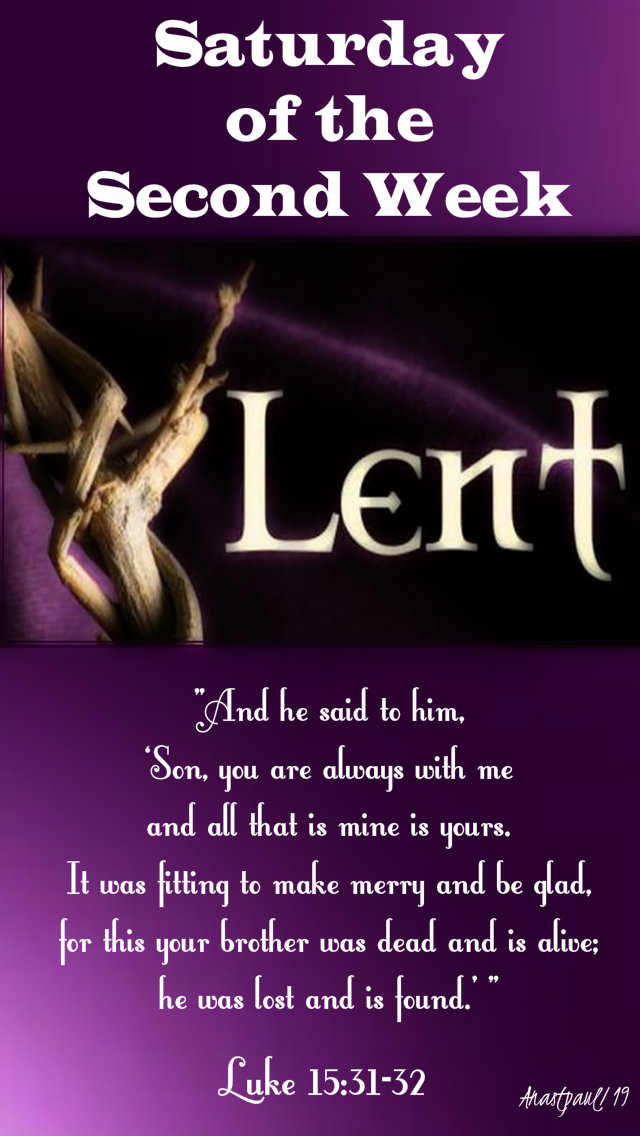
St John Chrysostom (347-407) Father & Doctorluke 15 31-32 sat of the second week lent - 23 march 2019.jpg

Daily Meditation:
We must celebrate and rejoice.

The Saturdays of Lent have a wonderful spirit.
Our lesson today takes us to the parable of the two sons:
– one who is ungrateful and leaves but returns, and
– one who will not accept the forgiveness
the father lavishes on the other.

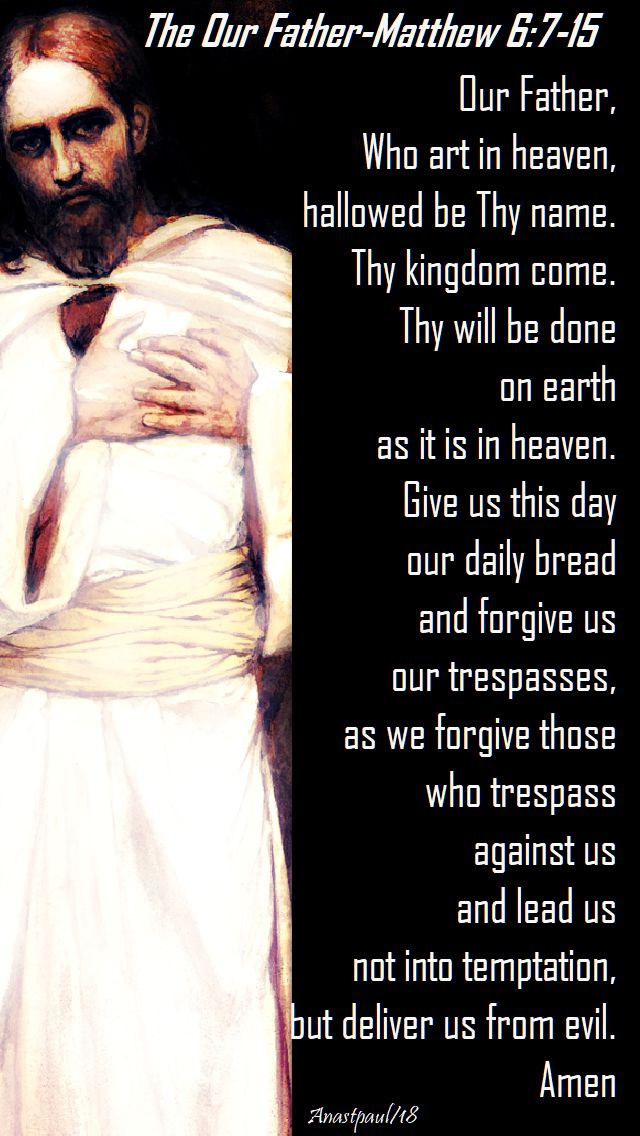
Let us too think of this Father, Our God, who is so taken for granted by all of us! and let us say, Our Father, who art in Heaven…………

And he said, “There was a man who had two sons”...Luke 15:11

“In the parable there is another son, the older one, he too needs to discover the mercy of the father.   The poor father!   One son went away and the other was never close to him!”

Pope Francis – General Audience, 11 May 2016in the parable - pope francis 23 march 2019 the poor father.jpg

Bless the Lord, O my soul,
and all that is within me, bless his holy name!
Bless the Lord, O my soul
and forget not all his benefits,
who forgives all your iniquity,
who heals all your diseases,
who redeems your life from the Pit,
who crowns you with steadfast love and mercy…

Psalm 103:1–4

Closing Prayer:

God of infinite love,
You shower me with limitless gifts in my life.
In my every thought and action today
guide me to the bright and loving light of Your kingdom.
Help me to be aware of
the many ways You allow me
to share in Your life so intimately today.
Thank You for the gifts You have placed in my life.
Let me be grateful every moment of this day.

May the Lord bless us,
protect us from all evil
and bring us to everlasting life.
Amenthe lord's prayer - matthew 6 7-15 - lenten reflection 20 feb 2018 (1).jpg

Posted in CATHOLIC-PRAYERS OF THE CHURCH, LENT 2019, MARIAN PRAYERS, MARIAN Saturdays, MARIAN TITLES, Our MORNING Offering, PRAYERS of the CHURCH, The BLESSED VIRGIN MARY

Our Morning Offering – 23 March – Help Me to Bear My Crosses

Our Morning Offering – 23 March – Saturday of the Second Week of Lent, Year C “Marian Saturdays”

In his General Audience on Ash Wednesday, 5 March 2014, Pope Francis highlighted the special protection and help of the Blessed Virgin for the journey of Lent:

“Let us give thanks to God for the mystery of His crucified love, authentic faith, conversion and openness of heart to the brethren.   These are the essential elements for living the season of Lent.   On this journey, we want to invoke with special trust the protection and help of the Virgin Mary.   

May she, who was the first to believe in Christ, accompany us in our days of intense prayer and penance, so that we might come to celebrate, purified and renewed in spirit, the great paschal mystery of her Son.”

These words of Pope Francis help us to appreciate one reason why Mary is the perfect companion for Lent.   She is the model of the perfect disciple because she entrusted herself completely to God.   At the Annunciation, Mary tells the angel:  “I am the handmaid of the Lord. May it be done to me according to your word” (Lk 1:38).

In 1974, Pope Paul VI taught that Mary is “worthy of imitation because she was the first and the most perfect of Christ’s disciples” (Marialis Cultus, No. 35).

Lent is a perfect time to renew our devotion to Mary as our spiritual mother who cares for us in the midst of challenges and difficulties.

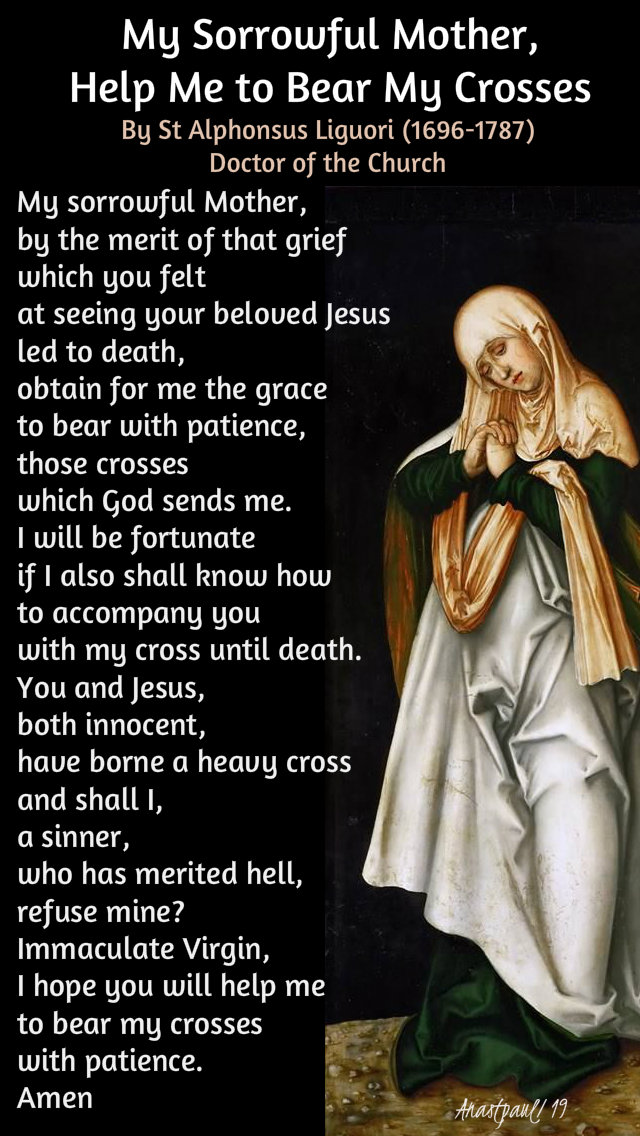
My Sorrowful Mother,
Help Me to Bear My Crosses
By St Alphonsus Liguori (1696-1787) Doctor of the Church

My sorrowful Mother,
by the merit of that grief
which you felt
at seeing your beloved Jesus
led to death,
obtain for me the grace
to bear with patience,
those crosses which God sends me.
I will be fortunate
if I also shall know how
to accompany you
with my cross until death.
You and Jesus,
both innocent,
have borne a heavy cross
and shall I,
a sinner who has merited hell,
refuse mine?
Immaculate Virgin,
I hope you will help me
to bear my crosses with patience.
Amenmy sorrowful mother help me to bear my crosses - st alphonsus liguori 23 march 2019.jpg

Posted in SAINT of the DAY

Saint of the Day – 23 March – St Joseph Oriol (1650-1702)

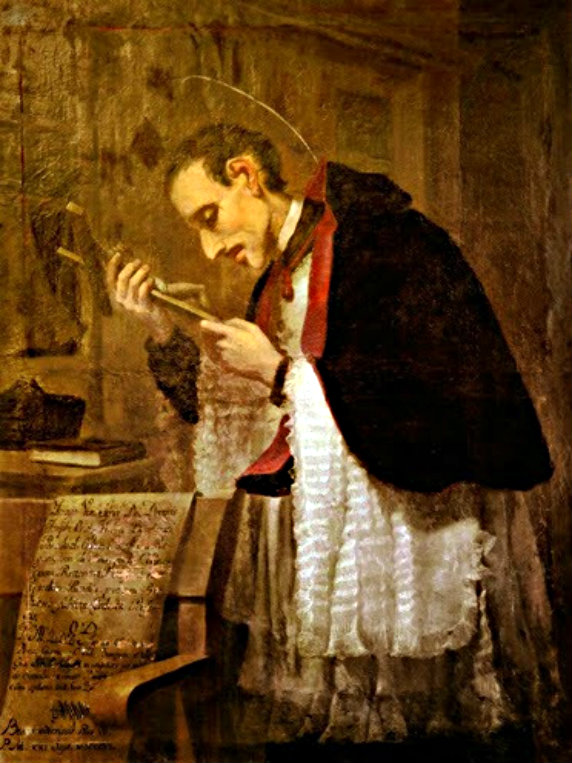
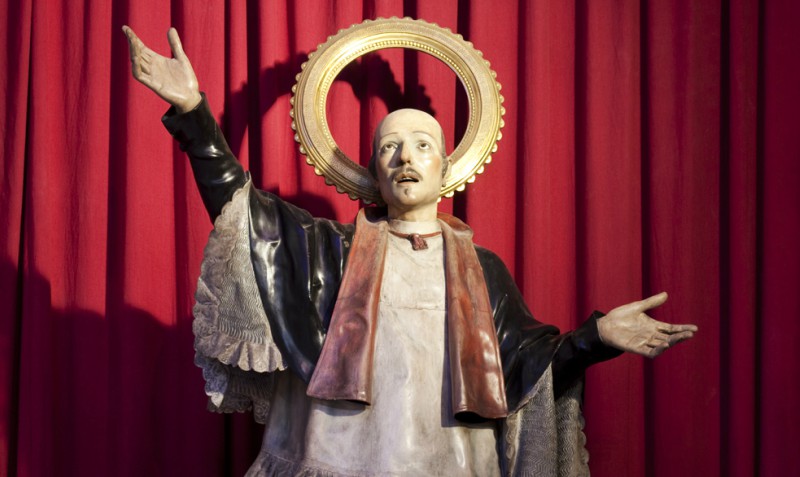
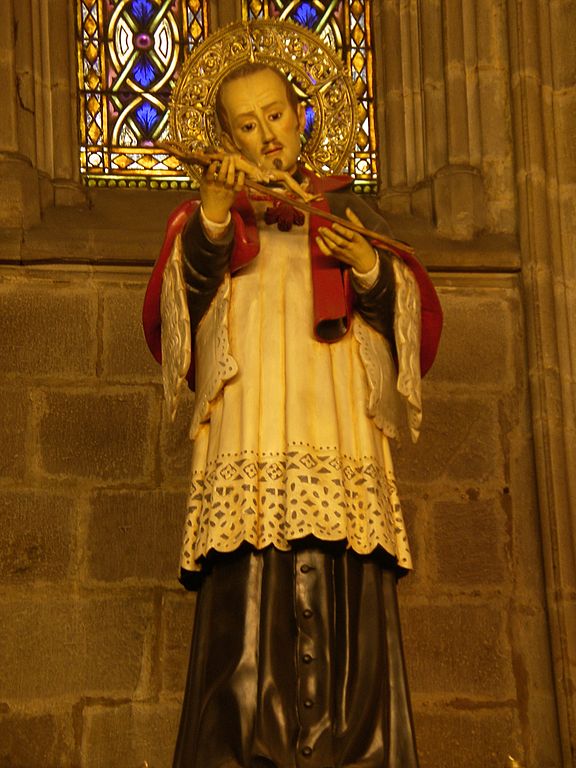
Saint of the Day – 23 March – St Joseph Oriol (1650-1702) Priest, Confessor, prophet, healer, apostle of penance, prayer and the sick and miracle-worker.   Known as the Thaumaturgus of Barcelona.   Born on 23 November 1650 in Barcelona, Spain and died on 23 March 1702 in his hometown of natural causes. Patronage – Barcelona.header st joseph oriol

St Joseph was born into a poor family but managed to study at the University of Barcelona where he was awarded a doctorate of theology on 1 August 1674. He was ordained on 30 May 1676.

He went on a pilgrimage to Rome, Italy in 1686, when Pope Innocent XI granted him a benefice at Santa Maria del Pino (Our Lady of the Pines), Barcelona, Spain, a parish he served for the rest of his life.

Statue_of_Saint_Joseph_Oriol_-_Santa_Maria_del_Mar_-_Barcelona_2014
Statue of St Joseph Oriol at Santa Maria del Pino, below is the Church

He went to Rome to offer himself for the foreign missions, seeking to evangelise the infidels and become a martyr. On the way to Rome, Joseph fell ill at Marseilles, France and had a vision that gave him a new mission – to revitalise the faith in his own country.st joseph oriol 1

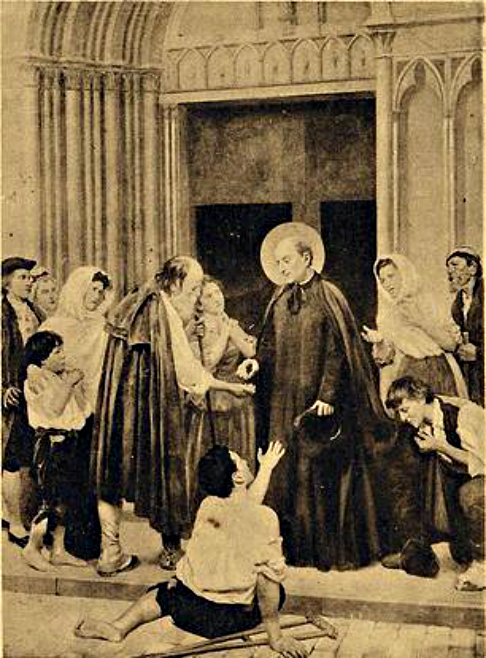
He returned home and worked with the youngest of children and roughest of soldiers and prayed without ceasing for the living and the dead. He wore a hair-shirt, lived for 26 years, half his life, solely on bread and water. He became a famed confessor, prophet, healer and miracle worker. The dying, the blind, the deaf and dumb, the lame and the paralytic, were said to be instantly cured by him.st joseph oriol 2

Joseph was Beatified by Pope Pius VII on 5 September 1808 and Pope Pius X later Canonised him on 20 May 1909.

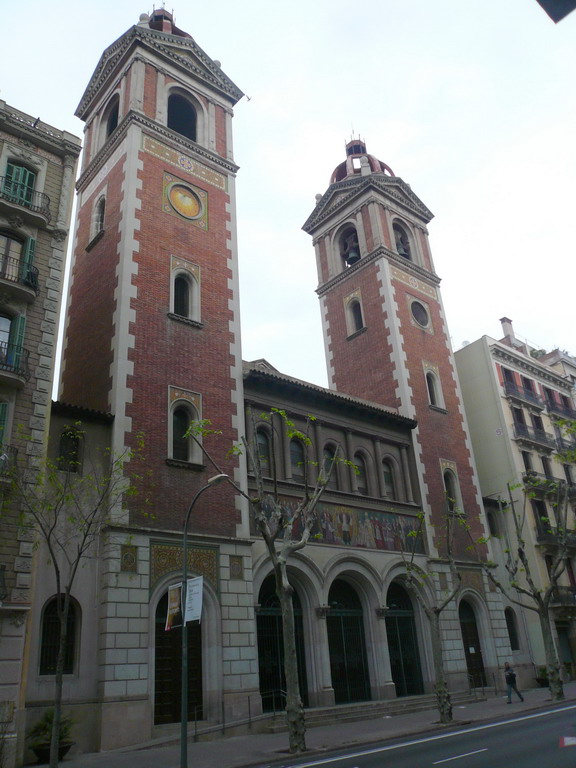
He is buried in the Chapel of the Virgin Mary of Montserrat in Church of the Parish which he served all his life, between 1687 and 1702, Our Lady of the Pines in Barcelona, although a Basilica has also been built in his honour.

Basílica_de_Sant_Josep_Oriol
Basilica of St Joseph Oriol in Barcelona

The Canonisation Miracle:

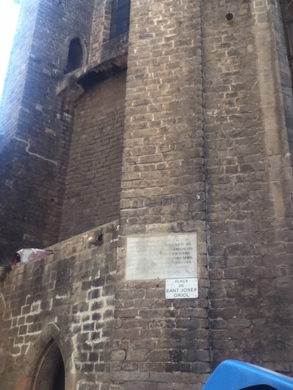
On 6 April 1806, priest José Mestres fell off a walkway on the outside of the church’s apse. He rose unscathed from the experience and attributed the event to St Joseph Oriol, whose remains are interred inside the church.

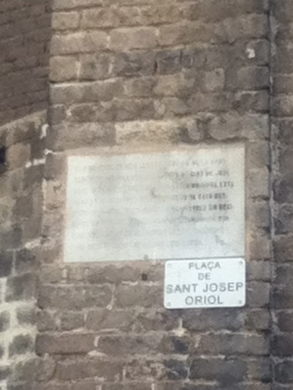
Although St Joseph was renowned for his healing miracles in 17th century Barcelona. He cured the deaf, blind, mute and otherwise disabled people who came to him.   But despite his accomplishments in life, sainthood can only be bestowed upon someone after their death.   As a result of this posthumous miracle, Oriol was canonised by the pope in September of the same year.   A small plaque was installed on the corner of the church to commemorate Padre Mestres’ blessed fall.miracle plaqueplaque 2Placa_a_la_plaça_de_Sant_Josep_Oriol_(1806)xsant-josep-oriol.jpg.pagespeed.ic.uA_BizStH5

This tiny landmark, located on the side of the Church of Santa Maria del Pi in the middle of Barcelona’s dense Gothic Quarter, marks the memory of this miracle of Fr José.

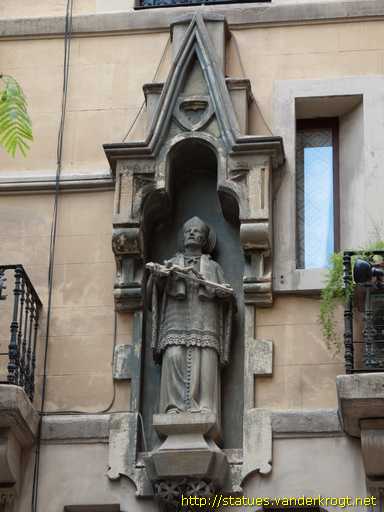
While St Joseph Oriol is little known outside of Spain, his Feast day today is celebrated with a wonderful festival in Barcelona every year and flowers are placed at the numerous statues of St Joseph throughout Barcelona.sant-josep-oriol-festival-barcelona

576px-SantJosepOriol-Cat-BarcelonaBasílica_de_la_Mercè_27_Sant_Josep_Oriolst joseph oriol

Posted in SAINT of the DAY

Memorials of the Saints – 23 March

St Turibius of Mogrovejo (1538-1606) (Optional Memorial)
Biography: https://anastpaul.wordpress.com/2018/03/23/saint-of-the-day-23-march-st-turibius-of-mogrovejo-1538-1606/

Bl Álvaro del Portillo Díez de Sollano
Bl Annunciata Asteria Cocchetti
St Benedict of Campagna
St Crescentius of Carthage
Bl Edmund Sykes
St Ethelwald of Farne
St Felix the Martyr
St Felix of Monte Cassino
St Fergus of Duleek
St Fidelis the Martyr
St Frumentius of Hadrumetum
St Gwinear
St Joseph Oriol (1650-1702)
St Julian the Confessor
St Liberatus of Carthage
St Maidoc of Fiddown
Bl Metod Dominik Trcka
St Nicon of Sicily
St Ottone Frangipane
Bl Peter Higgins
Bl Pietro of Gubbio
St Rafqa
St Theodolus of Antioch
St Victorian of Hadrumetum

Daughters of Feradhach: They are mentioned in early calendars and martyrologies, but no information about them has survived.

Martyrs of Caesarea – 5 saints: A group of five Christians who protested public games which were dedicated to pagan gods. Martyred in the persecutions Julian the Apostate. The only details we know about them are their names – Aquila, Domitius, Eparchius, Pelagia and Theodosia. They were martyred in 361 in Caesarea, Palestine.

Posted in LENT 2019, LENTEN THOUGHTS, QUOTES of the SAINTS, QUOTES on CONVERSION, QUOTES on REPENTANCE, The WORD

Lenten Thoughts – 22 March – “Now is the accepted time, now the day of salvation.”

Lenten Thoughts – 22 March – Friday of the Second week of Lent, Year C

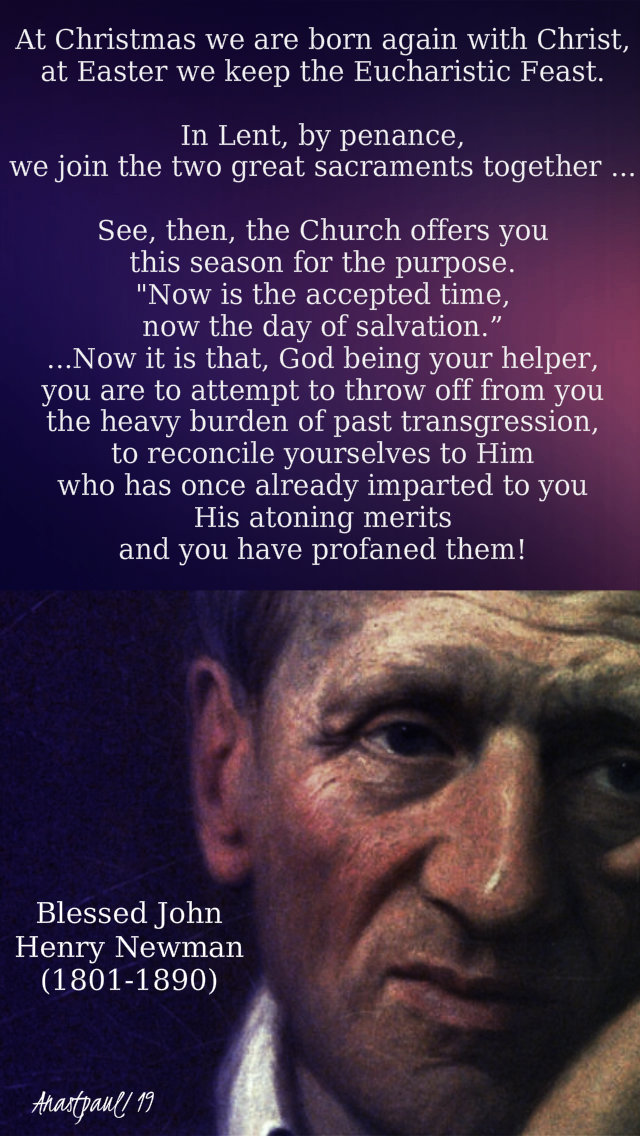
“Now is the accepted time, now the day of salvation.”

“These are thoughts, I need hardly say, especially suited to this season.
From the earliest times down to this day, these weeks before Easter have been set apart every year, for the particular remembrance and confession of our sins.   From the first age downward, not a year has passed but Christians have been exhorted to reflect how far they have let go their birthright, as a preparation for their claiming the blessing.   At Christmas we are born again with Christ, at Easter we keep the Eucharistic Feast.

In Lent, by penance, we join the two great sacraments together.   Are you, my brethren, prepared to say,—is there any single Christian alive who will dare to profess—that he has not in greater or less degree, sinned against God’s free mercies as bestowed on him, in Baptism without, or rather against his deserts?   Who will say that he has so improved his birthright that the blessing is his fit reward, without either sin to confess, or wrath to deprecate?

See, then, the Church offers you this season for the purpose. “Now is the accepted time, now the day of salvation.”

Now it is that, God being your helper, you are to attempt to throw off from you the heavy burden of past transgression, to reconcile yourselves to Him who has once already imparted to you His atoning merits and you have profaned them.”

Blessed John Henry Newman (1801-1890)at christmas we are born again - bl john henry newman - fri2ndweeklent 22 march 2019.jpg

Posted in SAINT of the DAY, VATICAN Resources

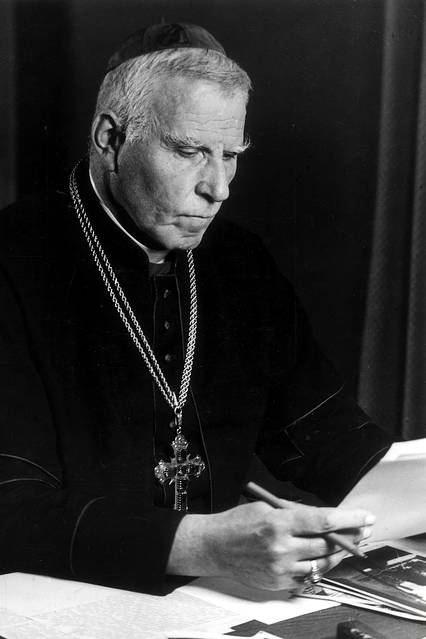
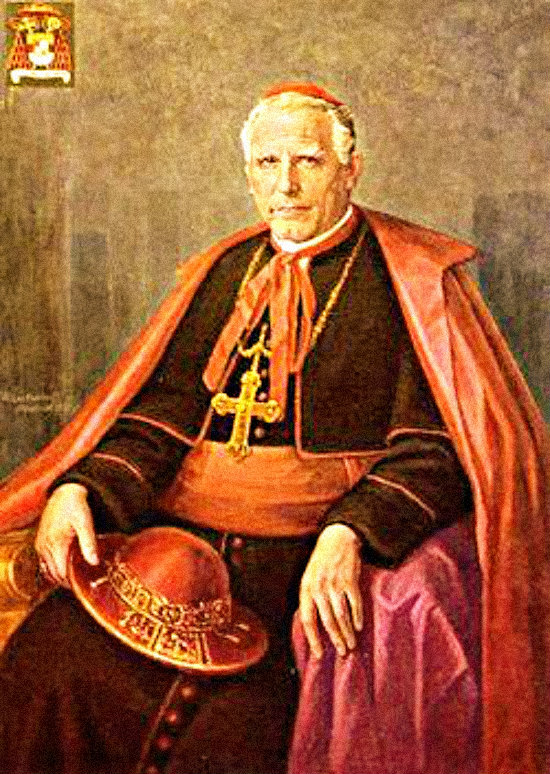
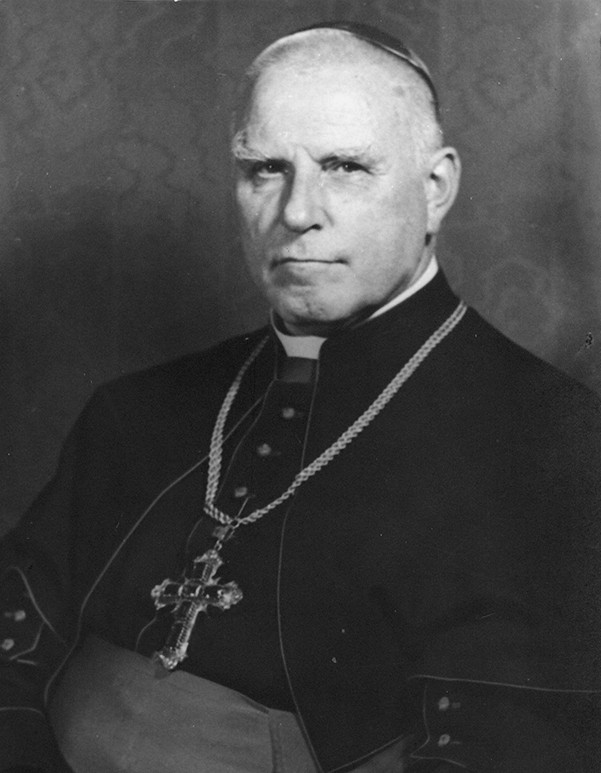
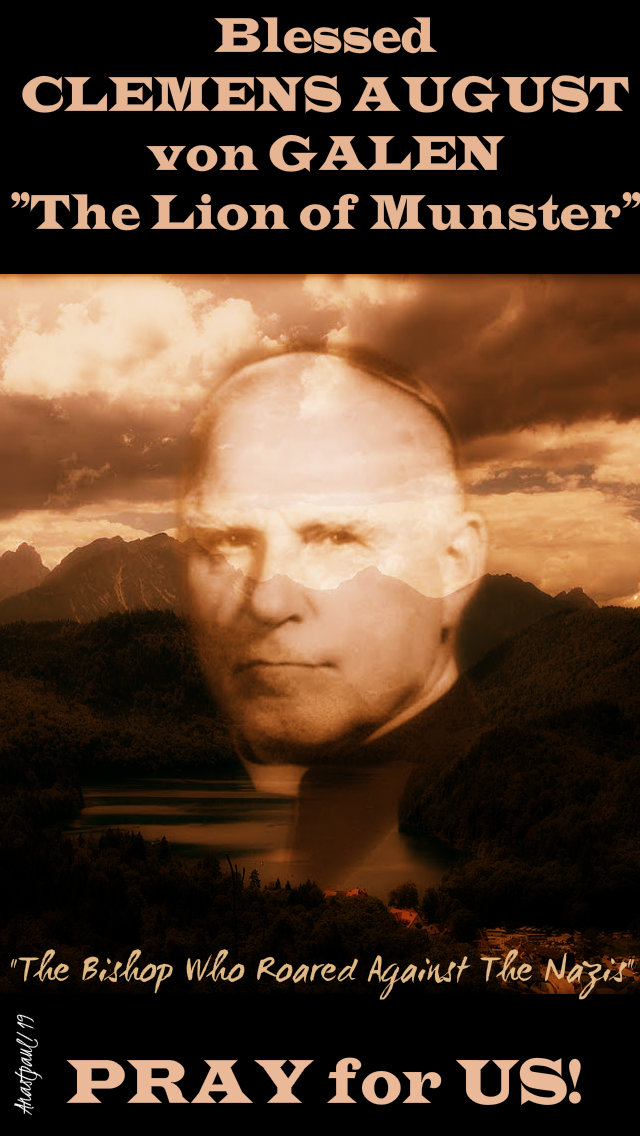
Thought for the Day – 22 March – “The Lion of Munster”

Thought for the Day – 22 March – Friday of the Second week of Lent, Year C and the Memorial of Blessed Clemens August Count von Galen (1878-1946) “The Lion of Munster”

MASS OF BEATIFICATION OF THE SERVANT OF GOD
CLEMENS AUGUST GRAF VON GALEN

EXCERPT from the HOMILY OF CARD. JOSÉ SARAIVA MARTINS

Vatican Basilica
Sunday, 9 October 2005

The tomb of the Supreme Pontiff Hadrian VI, well known for many centuries as the last non-Italian Pope, is located in the Church of Santa Maria dell’Anima, the national church of Germany in Rome. The following epitaph is engraved on his sepulchral monument: “Unfortunately, the conditions of the times strongly dissipate the effectiveness of the virtues of even the best of men”.

This epitaph is a negative reference to the conditions of the times in which Hadrian VI lived, but it also contains a very positive appreciation of the outstanding virtues that he practised precisely in the adverse conditions of his time.

Indeed, a characteristic feature of the famous Cardinal Clemens August von Galen, Bishop of Münster, whose beatification today fills our hearts with joy, is that he eminently and heroically practised the virtues of a Christian and a Pastor in a period so fraught with difficulties for the Church and for the German Nation.

Germany was then dominated by National Socialism.   The Diocese of Münster can boast of having had as Bishop, on the Chair of St Ludger, a Pastor who boldly opposed the ideology that despised humanity and the death mechanism of the National Socialist State.   This earned him the well-deserved nickname, “Lion of Münster”.

Bishop Clemens August Count von Galen, was one of the best known champions of the Church’s resistance to the unjust National Socialist regime.   If we wonder where he found his daring to reprimand the Nazis publicly and with very clear arguments, since they were violating fundamental human rights and how he managed to persevere in this denunciation, we must turn to three important factors that built up his strong personality as a man, a believer, first and subsequently, Bishop.

These were:  Family, Faith, and Politics.   However, we must never lose sight of the fact that the Blessed’s attitude stemmed from his deeply-rooted Christian virtues.

Clemens August came from a family bound by a long tradition both to the Church and to public life.   His father was involved in public affairs and his mother kept the family united – these factors gave Clemens August and his siblings a sense of security and a basis for life that later and rather unexpectedly enabled him to surpass himself and the tradition of the milieu into which he was born.

Traditionally, the life of the von Galen family was strongly oriented to a sense of public responsibility with regard to all the people in the Church and in society.   At the family table in Dinklage Castle, in addition to family conversation and the prayer of the Rosary, the father’s position as a deputy of the Reichstag in Berlin often gave rise to political topics.

Without any doubt he was able to do what he did only thanks to a deep but at the same time very simple spirituality, founded both on the Eucharist and on devotion to the Mother of God.

He countered the deafening martial music and the empty phrases blaring from the amplifiers of the speakers’ platforms with the veneration of the Blessed Eucharist, the silence of contemplative adoration of the Lord who made himself Bread.   Before the Lord present in the Sacrament of the Eucharistic Bread, apparently defenceless and thus not easy to recognise, he found the strength and nourishment that alone could permanently satisfy the human desire for life.

The unifying force of the new Blessed’s spiritual life was his profound and dynamic faith, enlivened by his active charity towards everyone, especially the suffering.   Von Galen’s spirituality, inspired by the Gospel, allowed him to be transparent in his public role.   All his actions and virtues flowed from his lived faith.

At the very outset of his pastoral work in Münster, Bishop von Galen unmasked the ideology of National Socialism and its contempt for human beings.   In the middle of the war in the summer of 1941, he criticised it even more harshly in the three homilies he gave in the months of July and August that year, which have become famous.

In them he targeted the obligatory closure of convents and the arrest of Religious.   He spoke vigorously against the deportation and destruction of those human lives that the regime deemed unworthy to be lived, that is, the mentally disabled.   The Bishop’s fiery words dealt fatal blows to the Nazi’s systematic extermination policy.

His clear arguments infuriated the Nazi leaders who were at a loss as to what to do next, because they did not have the nerve to arrest or kill him due to Bishop von Galen’s extraordinary authority.

It was neither innate courage nor excessive temerity.   Only a deep sense of responsibility and a clear vision of what was right and what was wrong could have induced Bishop Clemens August to speak these words.   They invite us to reflect on the brilliance of his witness to faith, in times that may seem less threatening but are just as problematic with regard to human life, they invite us to imitate his example.

Thus, in March 1946, reflecting on what happened at that time, Cardinal von Galen summarised all this.   He said:  “The good Lord gave me a position that obliged me to call what was black, black, and what was white, white, as outlined in episcopal ordination.   I knew that I could speak on behalf of thousands of people who, like me, were convinced, that only on the basis of Christianity, could our German People truly be united and attain a blessed future”.

Dear German pilgrims, we can look full of gratitude at this great personality from your Homeland.   Bl. Bishop Clemens August realised who our God is and placed all his hope in Him (cf. Is 25: 9).   When he was first a parish priest and later a Bishop, he spared no efforts in his pastoral ministry, he had learned how to do without (cf. Phil 4: 12) and was prepared to give his life in the service of human beings.   Indeed, he was fully aware of his responsibility to God.

Therefore, the Lord has made him worthy of his magnificent riches (cf. Phil 4: 19), of which St Paul spoke in his Letter to the Philippians that we have just heard.   In faith, we are convinced that he was called, that he was chosen to take part in the wedding banquet in the perfection of divine glory – the wonderful parable of Jesus, presented to us by the Gospel of today’s liturgy, prompts us to meditate on this wedding banquet (cf. Mt 22: 1-14).

I would like to congratulate the Diocese of Münster on the fact that precisely in the year in which its establishment, at least 12 centuries ago, is being commemorated, it can celebrate with joy and pride this Beatification here at the Tomb of the Apostle Peter, as if to strengthen its own apostolic roots, anchoring them even more firmly to the Magisterium of the Vicar of Christ who today, through God’s grace, is Benedict XVI.   May the new Blessed be an encouragement to the Diocese of Münster to keep its rich and ever-timely heritage constantly alive, making it fruitful for the people of our times.

May the Lord, through the intercession of the new Blessed, bless the beloved and venerable Diocese of Münster and the entire Church in Germany…Vatican.vabl clemens von galen the lion of munster pray for us 22 march 2019.jpg
Posted in QUOTES of the SAINTS, SAINT of the DAY, The TEN COMMANDMENTS

Quote of the Day – 22 March – ‘Thou shalt not kill.’

Quote of the Day – 22 March – Friday of the Second week of Lent, Year C

and the Memorial of Blessed Clemens August Count von Galen (1878-1946)

“The Lion of Munster”

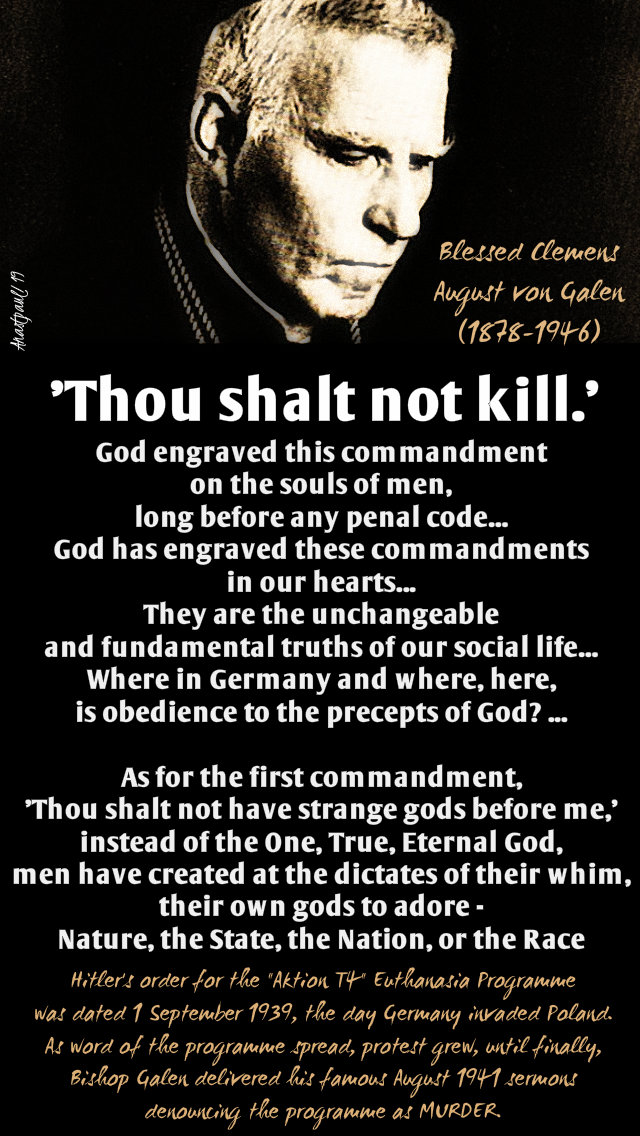
Hitler’s order for the “Aktion T4” Euthanasia Programme was dated 1 September 1939, the day Germany invaded Poland.   As word of the programme spread, protest grew, until finally, Bishop Galen delivered his famous August 1941 sermons denouncing the programme as “murder”.   On 3 August 1941, in one of his series of denunciations, Blessed Galen declared:

“‘Thou shalt not kill.'”
God engraved this commandment on the souls of men,
long before any penal code…
God has engraved these commandments in our hearts…
They are the unchangeable
and fundamental truths of our social life…
Where in Germany and where, here,
is obedience to the precepts of God? …
As for the first commandment,
‘Thou shalt not have strange gods before me,’
instead of the One, True, Eternal God,
men have created at the dictates of their whim,
their own gods to adore –
Nature, the State, the Nation, or the Race.”

Blessed Clemens August Count von Galen (1878-1946)
“The Lion of Munster”

thou shalt not kill - bl clemens august von galen 22 march 2019.jpg

Posted in FATHERS of the Church, LENT 2019, QUOTES of the SAINTS, QUOTES on ALMS, QUOTES on CONVERSION, QUOTES on OBEDIENCE, QUOTES on REPENTANCE, QUOTES on the CROSS of CHRIST, QUOTES on VIOLENCE, The PASSION, The WILL of GOD

Lenten Reflection – 22 March –

Lenten Reflection – 22 March – Friday of the Second week of Lent, Year C

“Therefore, I tell you, the kingdom of God
will be taken away from you
and given to a nation producing the fruits of it.”...Matthew 21:43lent - friday of the second week matthew 21 43 22 march 2019.jpg

Daily Meditation:
Help us open our hearts to you.

We hear of the vineyard owner whose tenants killed his servants and then his son.
Let us open our hearts and lives
to the challenge of Your Gospel.

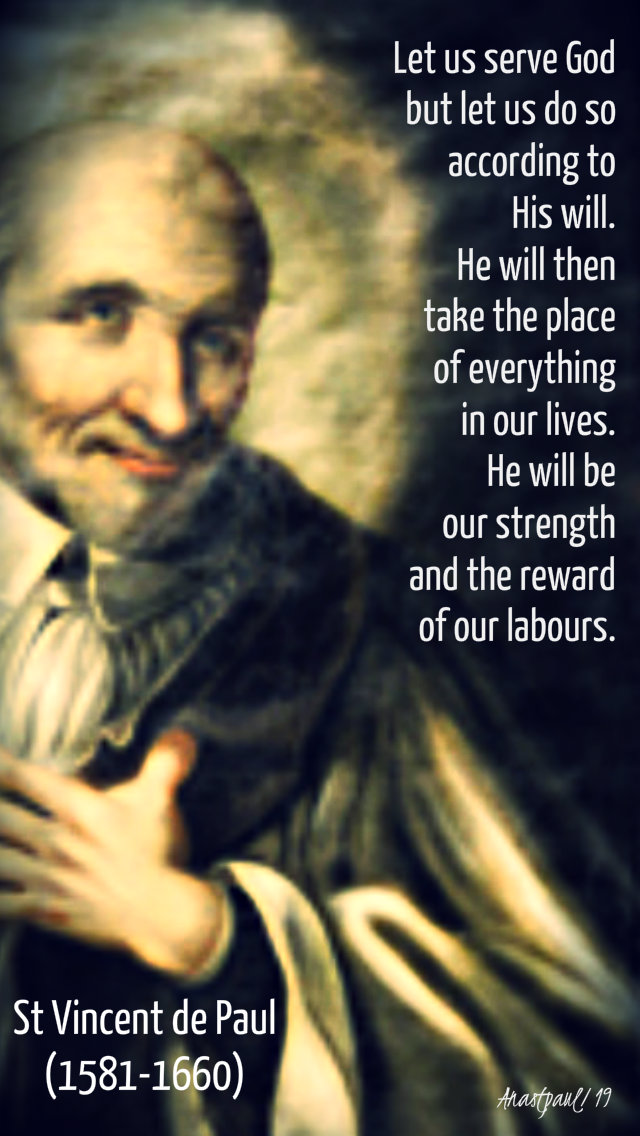
“Let us serve God but let us do so according to His will.
He will then take the place of everything in our lives.
He will be our strength and the reward of our labours.”

St Vincent de Paul (1581-1660)let us serve god but let us do so according to his will st vincent de paul 22 march 2019.jpg

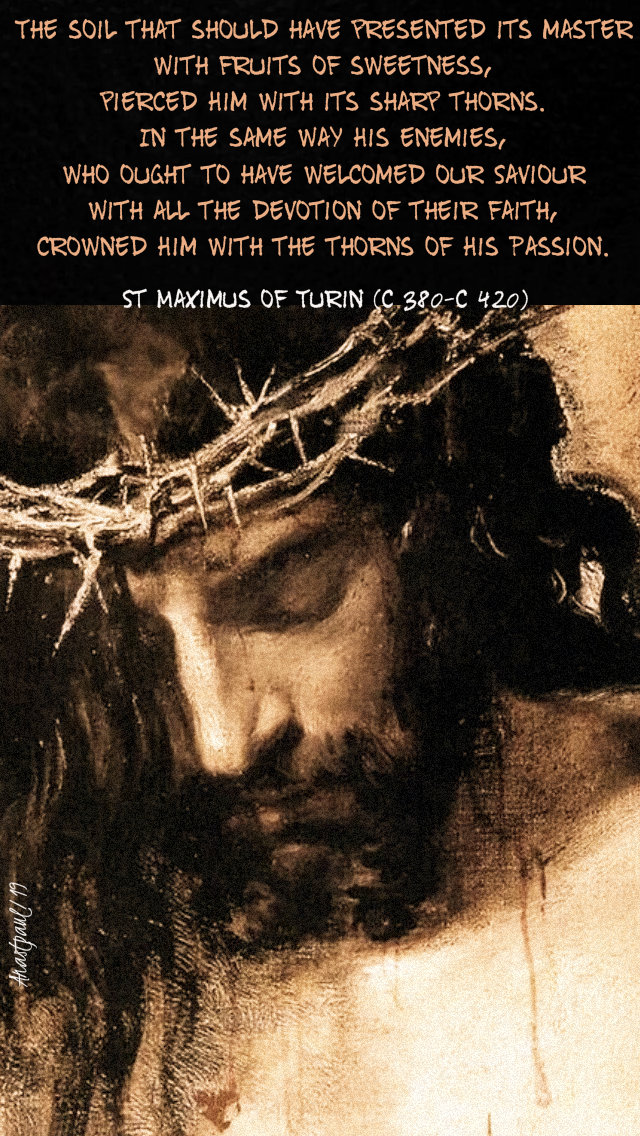
“The vineyard of the Lord of Hosts is the house of Israel” says the prophet (Is 5:7).   We ourselves are this house… and, since we are His Israel, we are the vineyard.   So let us take good care that grapes of wrath (Rv 14:19) rather than sweetness do not grow from our branches, so that no one may say to us:  “I expected grapes but it yielded wild grapes” (Is 5:4).   What fruitless soil!   The soil that should have presented its master with fruits of sweetness, pierced Him with its sharp thorns.   In the same way His enemies, who ought to have welcomed our Saviour with all the devotion of their faith, crowned Him with the thorns of His Passion.   In their eyes this crown expressed insult and abuse but in the Lord’s eyes it was the crown of virtue…

My brethren, take good care that no one says with regard to you:   “He expected it to yield grapes but it yielded wild grapes” (Is 5:2)…   Let us be careful that our evil deeds do not rub against our Lord’s head like thorns.   There are thorns in the heart that have even wounded the word of God, as our Lord says in the gospel when he relates how the sower’s seed fell among thorns that grew and choked what had been sown (Mt 13:7)…  So take care that your vineyard does not bring forth thorns instead of grapes and your vintage produce vinegar instead of wine.   Anyone who gathers in the grapes, without sharing them with the poor, is collecting vinegar instead of wine and anyone who stores his harvests, without sharing them with the needy, is not setting aside the fruit of almsgiving but the briars of greed.”

Saint Maximus of Turin (c 380-c 420)

Sermon for the feast of Saint Cyprian – CC Sermon 11the soil that should have - st maximus of turin 22 march 2019 2nd fri lent.jpg

Closing Prayer:

Loving God, caring parent,
I am a child who so often turns my back
on Your love.
Please accept my small acts of sorrow today
and help to release me from the self-absorption
that closes my heart to You.
As I journey through Lent,
let me remember the feast You have prepared for me
in the resurrection
and let me be filled with gratitude to You.

May the Lord bless us,
protect us from all evil
and bring us to everlasting life.
Amen.

Posted in LENT 2019, Our MORNING Offering, PRAYERS of the SAINTS

Our Morning Offering – 22 March – Give me the grace, good Lord!

Our Morning Offering – 22 March – Friday of the Second week of Lent, Year C

The prayer below, was written by Saint Thomas More while he was imprisoned in the Tower of London, awaiting execution by King Henry VIII.

Give me the grace, good Lord!
By St Thomas More (1478-1535)

Give me the grace, good Lord.
To set the world at naught.
To set the mind firmly on You
and not to hang upon the words of men’s mouths.
To be content to be solitary.
Not to long for worldly pleasures.
Little by little utterly to cast off the world
and rid my mind of all its business.
Not to long to hear of earthly things
but that the hearing of worldly fancies
may be displeasing to me.
Gladly to be thinking of God,
piteously to call for His help.
To lean into the comfort of God.
Busily to labour to love Him.
To know my own vileness and wretchedness.
To humble myself under the mighty hand of God.
To bewail my sins and, for the purging of them,
patiently to suffer adversity.
Gladly to bear my purgatory here.
To be joyful in tribulations.
To walk the narrow way that leads to life.
To have the last thing in remembrance.
To have ever before my eyes,
my death that is ever at hand.
To make death no stranger to me.
To foresee and consider the everlasting fire of Hell.
To pray for pardon before the judge comes.
To have continually in mind,
the passion that Christ suffered for me.
For His benefits unceasingly to give Him thanks.
To buy the time again that I have lost.
To abstain from vain conversations.
To shun foolish mirth and gladness.
To cut off unnecessary recreations.
Of worldly substance, friends, liberty, life and all,
to set the loss at naught, for the winning of Christ.
To think my worst enemies my best friends,
for the brethren of Joseph could never have done him
so much good with their love and favour,
as they did him with their malice and hatred.
These minds are more to be desired of every man,
than all the treasures of all the princes and kings,
Christian and heathen,
were it gathered and laid together, all in one heap.
Amengive me the grace good lord - st thomas more - 4 sept 2018 - new version.jpg

Posted in SAINT of the DAY

Saint of the Day – 22 March – Blessed Clemens August Count von Galen (1878-1946)

Saint of the Day – 22 March – Blessed Clemens August Count von Galen (1878-1946) aged 68 known as “The Lion of Munste,r”,”The Bishop Who Roared Against The Nazis,” “The Bishop Who Took On the Führer.”    Blessed Clemens had a great love for the Blessed Virgin, often leading pilgrimages, or going on his own, to Marian Shrines.   He was too, a great lover of the Holy Eucharist and a fervent apostle of charity.   Patronage – Munster.BL CLEMENS HEADER maxresdefault

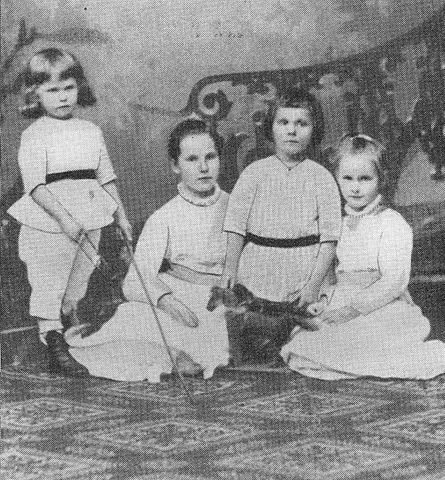
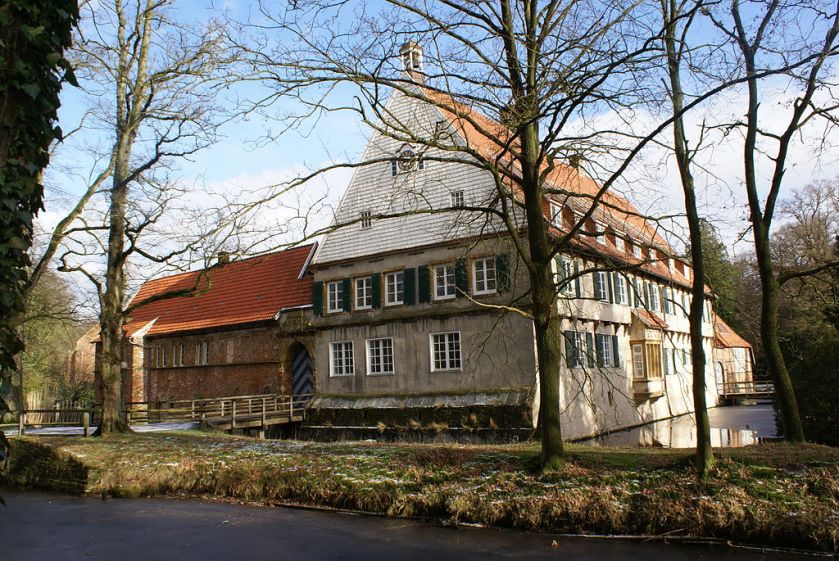
Clemens August von Galen was born on 16 March 1878 in Dinklage Castle, Oldenburg, Germany, the 11th of 13 children born to Count Ferdinand Heribert and Elisabeth von Spee.

Clemens_August_von_Galen_and_siblings_(1884)
Clemens August (third from left) at age six.

His father belonged to the noble family of Westphalia, who since 1660 governed the village of Dinklage.   For over two centuries his ancestors carried out the inherited office of camerlengo of the Diocese of Münster.

Clemens August grew up in Dinklage Castle and in other family seats.   Due to the struggle between Church and State, he and his brothers were sent to a school run by the Jesuits in Feldkirch, Austria.

bl clemns von galen home 1024px-Burg_Dinklage_Wikipedia
The family home in Dinklage

He remained there until 1894, when he transferred to the Antonianum in Vechta.   After graduation, he studied philosophy and theology in Frebur, Innsbruck and Münster and was ordained a priest on 28 May 1904 for the Diocese of Münster by Bishop Hermann Dingelstadt.

Parish priest, concern for poor:
His first two years as a priest were spent as vicar of the diocesan cathedral where he became chaplain to his uncle, Bishop Maximilian Gerion von Galen.

From 1906 to 1929, Fr von Galen carried out much of his pastoral activity outside Münster – in 1906 he was made chaplain of the parish of St Matthias in Berlin-Schönberg; from 1911 to 1919 he was curate of a new parish in Berlin before becoming parish priest of the Basilica of St Matthias in Berlin-Schönberg, where he served for 10 year, here, he was particularly remembered for his special concern for the poor and outcasts.   In 1929, Fr von Galen was called back to Münster when Bishop Johannes Poggenpohl asked him to serve as parish priest of the Church of St Lambert.

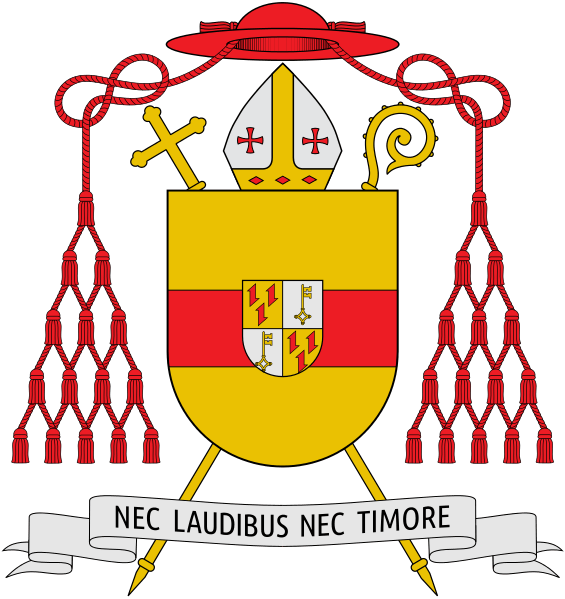
“Nec laudibus, nec timore’:
In January 1933, Bishop Poggenpohl died, leaving the See vacant.   After two candidates refused, on 5 September 1933, Fr Clemens was appointed Bishop of Münster by Pope Pius XI.   On 28 October 1933 he was consecrated by Cardinal Joseph Schulte, Archbishop of Cologne.   Bishop von Galen was the first diocesan Bishop to be consecrated under Hitler’s regime.

565px-Coat_of_arms_of_Clemens_August_von_Galen.svg.png
Coat of Arms of Cardinal von Galen.

As his motto, he chose the formula of the rite of episcopal consecration:  “Nec laudibus, nec timore” (Neither praise nor threats will distance me from God).

Throughout the 20 years that Bishop von Galen was curate and parish priest in Berlin, he wrote on various political and social issues – in a pastoral letter dated 26 March 1934, he wrote very clearly and critically on the “neopaganism of the national socialist ideology“.   Due to his outspoken criticism, he was called to Rome by Pope Pius XI in 1937 together with the Bishop of Berlin, to confer with them on the situation in Germany and speak of the eventual publication of an Encyclical.

On 14 March 1937 the Encyclical “Mit brennender Sorge” (To the Bishops of Germany – The place of the Catholic Church in the German Reich) was published.   It was widely circulated by Bishop von Galen, notwithstanding Nazi opposition.

“Lion of Munster’:
In the summer of 1941, in answer to unwarranted attacks by the National Socialists, Bishop von Galen delivered three admonitory sermons between July and August.   He spoke in his old parish Church of St Lambert and in Liebfrauen-Ueberlassen Church, since the diocesan cathedral had been bombed.   In his famous speeches, Bishop von Galen spoke out against the State confiscation of Church property and the programmatic euthanasia carried out by the regime.bl clemens profile

The clarity and incisiveness of his words and the unshakable fidelity of Catholics in the Diocese of Münster embarrassed the Nazi regime and on 10 October 1943 the Bishop’s residence was bombed.   Bishop von Galen was forced to take refuge in nearby Borromeo College.

From 12 September 1944 on, he could no longer remain in the city of Münster, destroyed by the war, he left for the zone of Sendenhorst.

In 1945, Vatican Radio announced that Pope Pius XII was to hold a Consistory and that the Bishop of Münster was also to be present.

Creation of a Cardinal:
After a long and difficult journey, due to the war and other impediments, Bishop von Galen finally arrived in the “Eternal City”.   On 21 February 1946 the Public Consistory was held in St Peter’s Basilica and Bishop von Galen was created a Cardinal.bl clemens official cardinal pic

On 16 March 1946 the 68-year-old Cardinal returned to Münster.  He was cordially welcomed back by the city Authorities and awarded honourary citizenship by the burgomaster.

On the site of what remained of the cathedral, Cardinal von Galen gave his first (and what would be his last) discourse to the more than 50,000 people who had gathered, thanking them for their fidelity to the then-Bishop of Münster during the National Socialist regime.   He explained that as a Bishop, it was his duty to speak clearly and plainly about what was happening.nl clemens.jpg

No one knew that the Cardinal was gravely ill and when he returned to Münster on 19 March 1946 he had to undergo an operation.

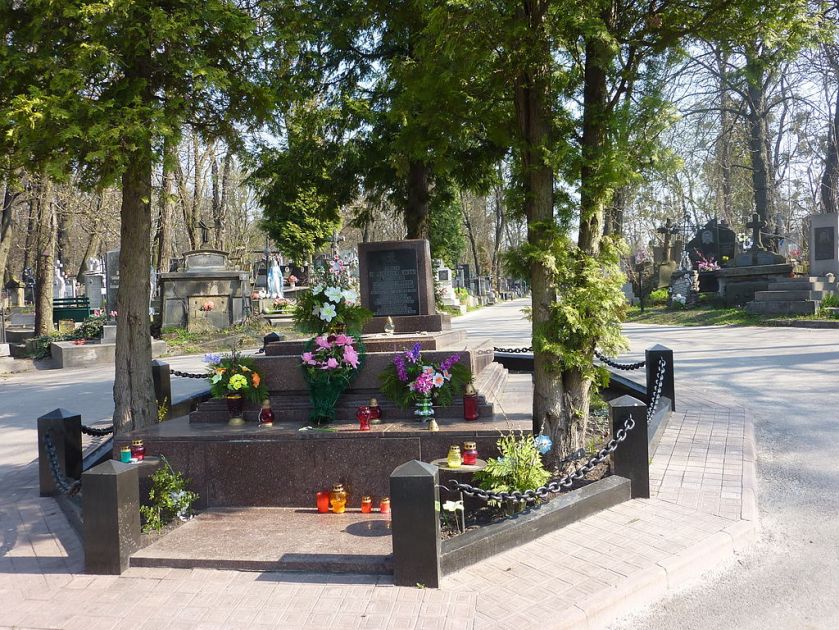
Cardinal von Galen died just three days later, on 22 March.   He was buried on 28 March in the Ludgerus Chapel, which has become a place of pilgrimage to this defender of the faith in the face of political oppression….Vatican.va20051009_von-galen

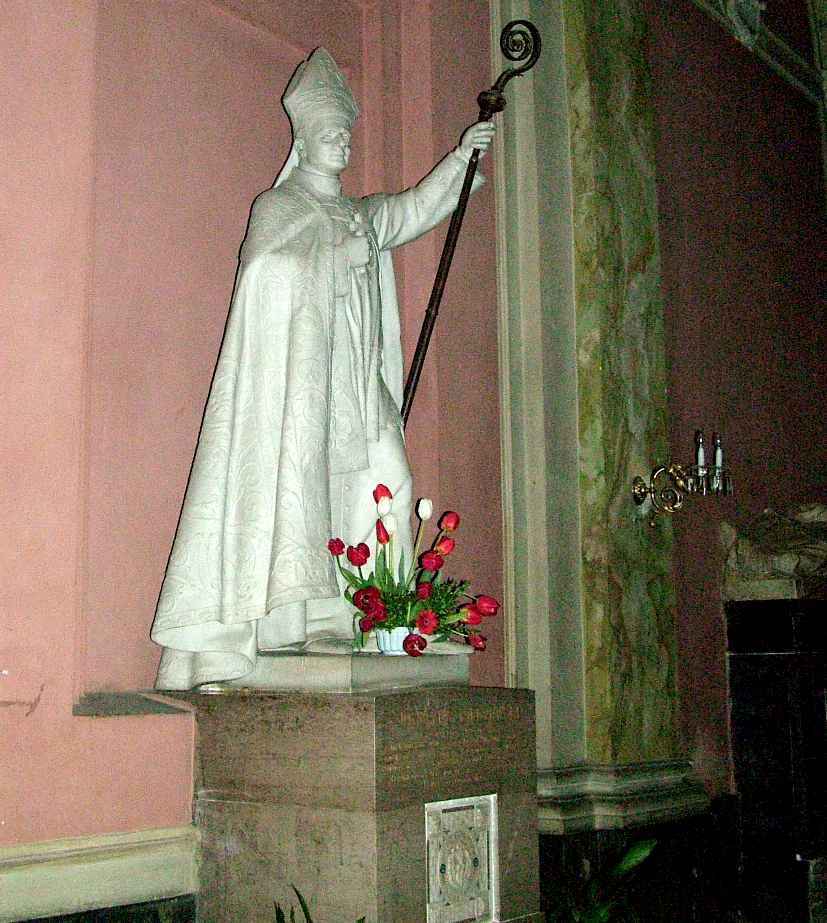
Blessed Clemens was Beatified on 9 October 2005 by Pope Benedict XVI at St Peter’s, Vatican City. His tomb is venerated in Munster Cathedral.Minolta DSC

Posted in JESUIT SJ, SAINT of the DAY

Memorials of Our Lady and the Saints – 22 March

Our Lady of the Seven Veils:
About: https://anastpaul.wordpress.com/2018/03/22/memorial-of-our-lady-of-the-seven-veils-and-memorials-of-the-saints-22-march/

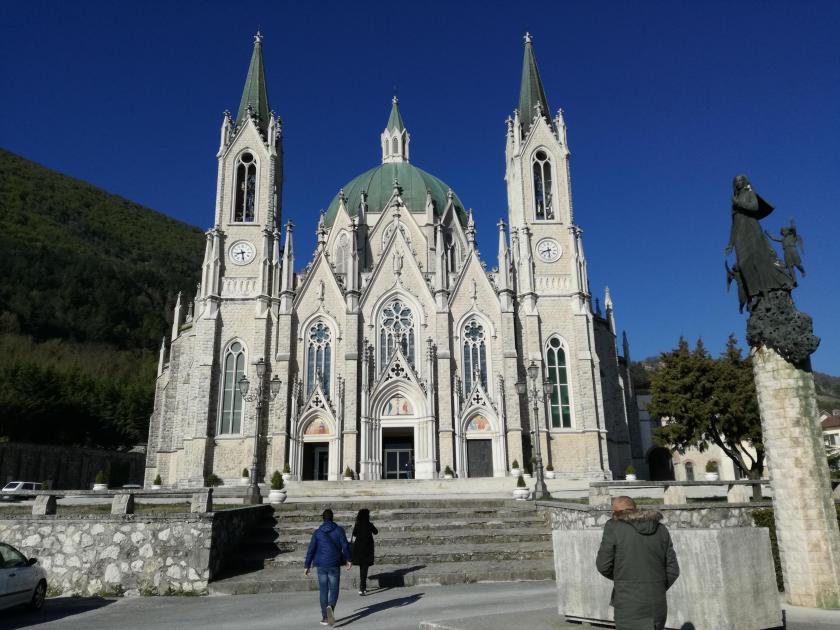
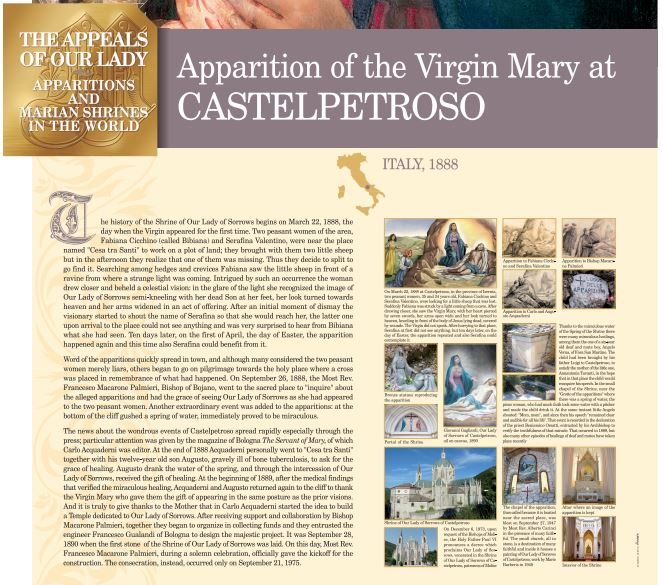
Our Lady of Sorrows of Castelpetroso:
About the Apparitions: http://mariancalendar.org/our-lady-of-sorrows-castelpetroso-italy/picture_castelpetroso-1basilica minor of our lady of seven sorrows

castelproso our lady of seven sorrows.JPG

St Avitus of Périgord
St Basil of Ancyra
St Basilissa of Galatia
St Benevenuto Scotivoli of Osimo
Bl Bronislaw Komorowski
St Callinica of Galatia
Bl Clemens August von Galen (1878-1946)

St Darerca of Ireland
St Deghitche
St Epaphroditus of Terracina
St Failbhe of Iona
Bl François-Louis Chartier
St Harlindis of Arland
Bl Hugolinus Zefferini
St Lea of Rome
Bl Marian Górecki
St Nicholas Owen SJ (1562-1606)
Dear St Nicholas Owen – The Priest-Hole Builder:
https://anastpaul.wordpress.com/2018/03/22/saint-of-the-day-22-march-st-nicholas-owen-s-j-1562-1606-the-priest-hole-builder-martyr/

St Octavian of Carthage
St Paul of Narbonne
St Saturninus the Martyr
St Trien of Killelga

Posted in LENT 2019, LENTEN THOUGHTS, ON the SAINTS, QUOTES - J R R Tolkien and MORE, QUOTES on FAITH, QUOTES on FASTING, QUOTES on GRACE, QUOTES on PRAYER, QUOTES on SANCTITY, SAINT of the DAY, The PASSION

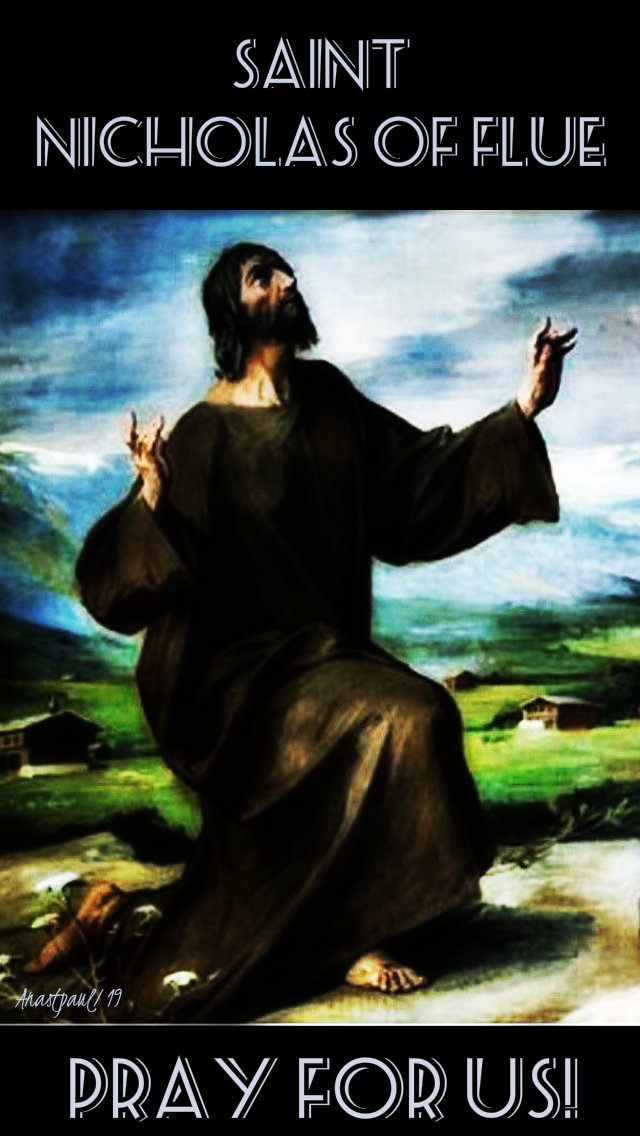
Lenten Thoughts – 21 March – The Primacy of the Spiritual:  Saint Nicholas of Flue

Lenten Thoughts – 21 March – Thursday of the Second week of Lent, Year C and the Memorial of St Nicholas of Flue (1417-1487)

The Primacy of the Spiritual:  Saint Nicholas of Flue (Excerpt)
By Christopher O Blum

Born to a pious, upstanding peasant family, young Nicholas stood out for his goodness, simplicity and mortification.   While still a young man, labouring in the fields and meadows of the valleys south of Lucerne, he fasted four times per week, explaining himself, when pressed, by saying, “Such is the will of God.”   Until his fiftieth year, his life was that of an exemplary Swiss free man.   Like many of his fellow countrymen, he served his canton both under arms and by holding civic office.   And this pillar of the community raised up five sons and five daughters with the help of his exemplary wife Dorothy.   Yet God persisted in calling him to a life beyond that of the domestic holiness he had already embraced and sent visions to him in his late-night prayer vigils and his moments of afternoon solitude in the fields, visions that beckoned him to leave all.st nicholas of flue pray for us 21 march 2019 no 2.jpg

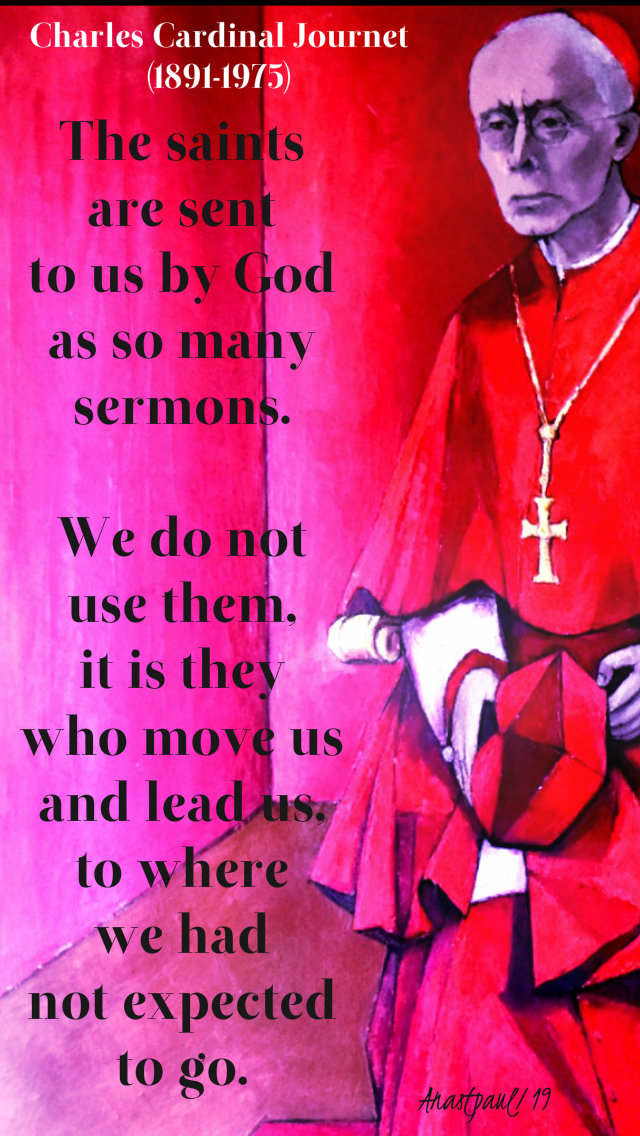
As the eminent Swiss theologian Charles Cardinal Journet (1891-1975) explained in his biography of the hermit-saint, “it no longer sufficed for him to walk along the roads of the world with God in his heart, he had to take the path set aside for him, that he might be taken by the hand and led to where he knew not.”   What praise of Dorothy of Flue could be lovelier, Journet asked, than to admire her magnanimity in being able to “comprehend the drama of this great soul”?   They parted friends, just thirteen weeks after the birth of their youngest child and remained so.   Several years later, a pilgrim visitor to Nicholas’ hermitage saw the saint, with joyous mien, lean out of the window of his tiny cell after the morning Mass to greet his family with a blessing:  “May God give you a blessed day, dear friends and good people!”

Nicholas had initially thought to join a monastery, perhaps one in nearby Alsace known for its austerity.   But a chance conversation with a peasant helped him to understand another of his mystical visions – this one of the nearby town of Liestal wrapped in flames. His good works were needed in his own neighbourhood.   And so, he built himself a hermitage one valley over from his home and spent the next twenty years there, clad only in a tunic, with bare feet and a bare head, to do penance for his beloved people.   His piety was simple, for he was illiterate.   A neighbouring priest had taught him the practice of meditating on Christ’s Passion in stages to match the seven canonical hours of the Church’s daily prayer.   This method bore good results.   He soon became known for the wisdom and holiness of his counsel and pilgrims flocked to his hidden valley to listen to his simple, direct words:  “O man, when the world hates you and is faithless toward you, think of your God, how he was struck and spat upon.   You should not accuse your neighbour of guilt but pray to God, that he be merciful to you both.”

Writing during the Second World War, Cardinal Journet saw in Nicholas of Flue the “supreme incarnation of the genius of Switzerland.”   By this he did not mean that the hermit was a pacifist.   He was something higher and more important.   His greatness “was to have affirmed the primacy of the spiritual life.”   “For the saints”, the Cardinal explained, “are sent to us by God as so many sermons.   We do not use them, it is they who move us and lead us, to where we had not expected to go.”   Those were years of exceptional trial for the Swiss but they were also years in which men and women of good will prepared the ground for spiritual renewal and rebuilding.the saints are sent to us by god - card charles journet 21 march 2019.jpg

What lesson might Nicholas of Flue hold out for our generation?   Were he alive today this simple Swiss peasant would doubtless be startled by our wealth.   The recession of recent years seems to have done little to dull the edge of our consumption.   The adjective “worldly” is now being used as a term of approbation, to signify the savoir-faire of the person who knows the latest fashions and ways of thinking.   It is a telling linguistic development.   Nicholas of Flue spent the last twenty years of his life in a tiny room with two windows.   Through one of them, he could see something of the beauty of his native land, a beauty that nourished his reflection and piety:  “O man, think of the sun so high in the sky and consider its splendour – but your soul has received the splendour of the eternal God.”   Through the other, he saw the altar, whence came the very food of his soul.   “We should carry the Passion of God in our hearts, for this is the greatest consolation to a man at the hour of his death.”   The one thing needful indeed.we should carry the passion of god - 21 march 2019 st nicholas of flue.jpg

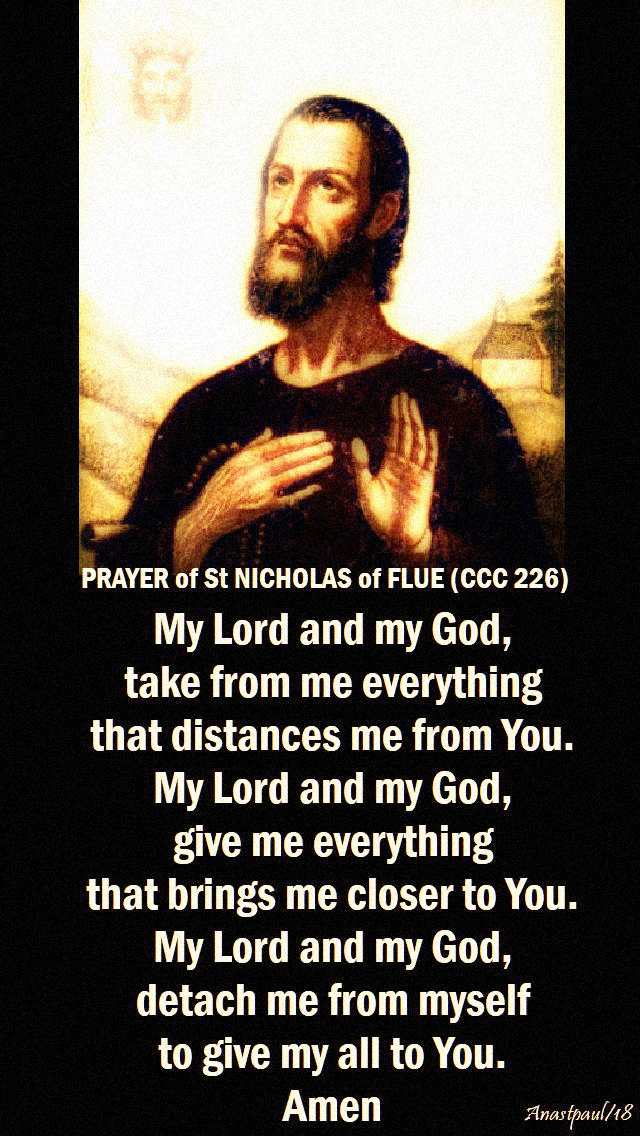
My Lord and my God
St Nicholas of Flue (1417-1487)

My Lord and my God,
take from me everything
that distances me from You.
My Lord and my God,
give me everything
that brings me closer to You.
My Lord and my God,
detach me from myself
to give my all to You.
Amen

The above prayer of St Nicholas, is cited in the Catechism of the Catholic Church in paragraph #226.
CCC 226 – It means making good use of created things: faith in God, the only One, leads us to use everything that is not God only insofar as it brings us closer to Him and to detach ourselves from it insofar as it turns us away from Him.

prayer-of-st-nicholas-of-flue-no-226-my-lord-and-my-god-take-from-me-everything-21-march-20181.jpg

Posted in QUOTES of the SAINTS, SAINT of the DAY, The HOLY GHOST

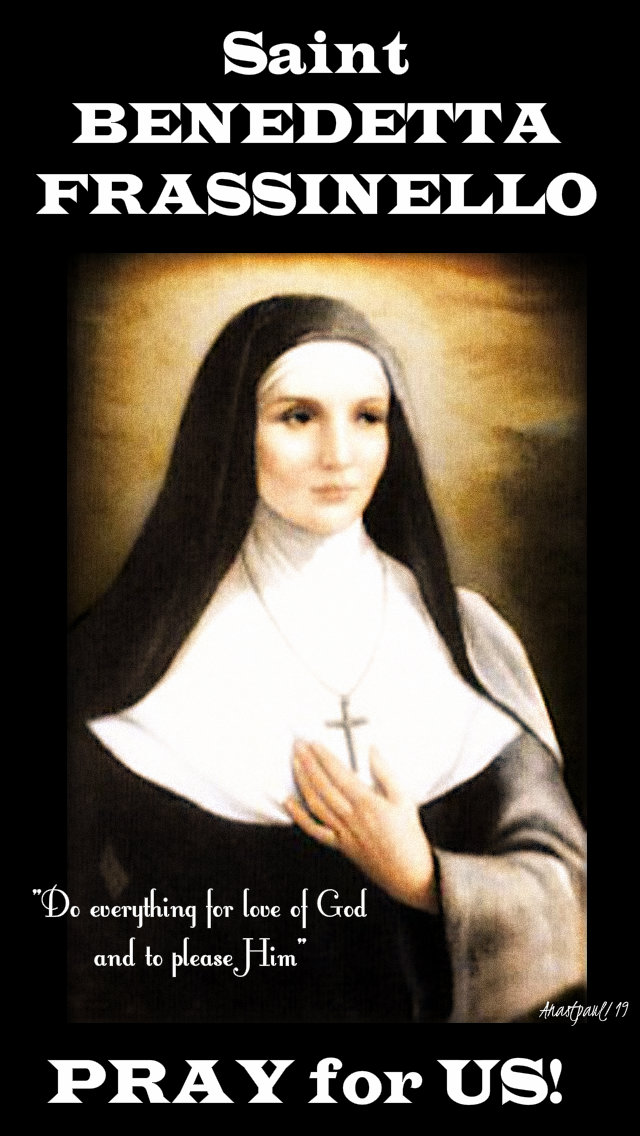
Thought for the Day – 21 March – “Do everything for the love of God”

Thought for the Day – 21 March – Thursday of the Second week of Lent, Year C and the Memorial of St Benedetta Cambiagio Frassinello (1791 – 1858)

“O most blessed Light, fill the interior of the hearts of your faithful.”   The words of the Sequence are a beautiful summary of the life of Benedetta Cambiagio Frassinello and explain its extraordinary spiritual richness.

Guided by divine grace, the new saint was concerned to accomplish God’s will with fidelity and coherence.   With boundless confidence in the Lord’s goodness, she abandoned herself to his “loving Providence”, deeply convinced, as she liked to repeat, that one must “do everything for love of God and to please Him”.   This is the precious inheritance that St Benedetta Cambiagio Frassinello left to her spiritual daughters that today is offered to the entire Christian community.

Come Holy Spirit, enkindle the hearts of your faithful!   Help us to spread the fire of your love in the world.   Amen!

St Pope John Paul on the Canonisation of St Benedetta, Sunday, 19 May 2002

St Benedetta Frassinello, Pray for Us!st benedetta frassinello pray for us 21 march 2019 do everythingforthelove of god.jpg

Posted in QUOTES of the SAINTS, QUOTES on SUFFERING, SAINT of the DAY

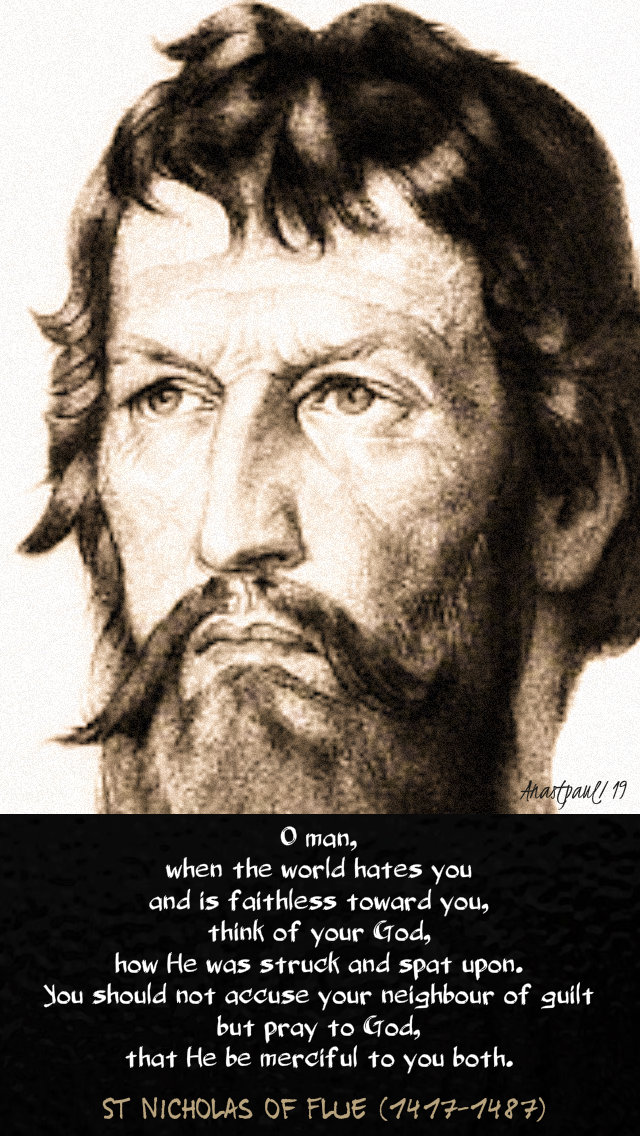
Quote/s of the Day – 21 March – St Nicholas of Flue

Quote/s of the Day – 21 March – Thursday of the Second week of Lent, Year C and the Memorial of St Nicholas of Flue (1417-1487)

“O man,
when the world hates you
and is faithless toward you,
think of your God,
how He was struck and spat upon.
You should not accuse your neighbour of guilt
but pray to God,
that He be merciful to you both.”

St Nicholas of Flue (1417-1487)o man when the world hates you - st nicholas of flue 21march2019.jpg

Posted in CATECHESIS, LENT 2019, MORNING Prayers, PRACTISING CATHOLIC, QUOTES of the SAINTS, QUOTES on ALMS, QUOTES on CHARITY, The WORD

Lenten Reflection – 21 March- The rich man and Lazarus

Lenten Reflection – 21 March – Thursday of the Second week of Lent, Year C

“There was a rich man, who was clothed in purple
and fine linen and who feasted sumptuously every day.
And at his gate lay a poor man named Lazarus…”
Luke 16:19–20Luke 16 19–20 rich man and lazarus turs2ndweeklent-21march2019.jpg

St Peter Chrysologus (400-450)
Bishop of Ravenna, Doctor of the Church

Sermon 122, On the rich man and Lazarus

“Abraham was very rich,” Scripture tells us (Gn 13:2)… My brethren, Abraham wasn’t rich for himself but for the poor, rather than keeping hold of his fortune, he intended to share it…This man, who was himself a stranger, did not hesitate to do all he could so that the stranger might not feel himself to be a stranger.   Living in a tent, he was unable to let a passer-by remain without shelter.   Perpetual traveller, he unfailingly welcomed the travellers who came his way…  Far from taking his ease in God’s bounty, he knew himself called to spread it abroad, he used it to protect the oppressed, set prisoners free, even to snatch those about to die from their fate (Gn 14:14)…  Abraham did not sit but remained standing before the stranger he had received.   He was not his guest’s host but made himself his servant.   Forgetting that he was master in his own home, he himself brought the food and, concerned that it should be carefully prepared, called on his wife.   Where he himself was concerned he relied entirely on his servants, but for the stranger he had received he thought it barely enough to entrust it to his wife’s skill.
What more could I say, my brothers?   It was so perfect a consideration… that drew God himself to Abraham’s home and compelled him to become his guest.   Thus the very one who would later claim to be welcomed in the person of the poor and the stranger, came to Abraham, rest for the poor, refuge of strangers.   “I was hungry,” he said, “and you gave me food, I was thirsty and you gave me drink, a stranger and you welcomed me” (Mt 25:35).
And again, we read in the Gospel:  “When the poor man died, he was carried away by angels to the bosom of Abraham.”   Isn’t it only right, brethren, that Abraham should welcome all the saints even into his own rest and should exercise, even in the blessedness of heaven, his service of hospitality?…  Doubtless, he could not have considered himself wholly happy unless, even in glory, he was able to continue to practice his ministry of sharing.”

Daily Meditation:
Bring us back to you.

The story of the Rich Man and Lazarus is our lesson today.
We beg to be open to the workings of the Spirit,
that we might not settle for the consolations of this life alone.

Blessed is the man
who walks not in the counsel of the wicked,
nor stands in the way of sinners,
nor sits in the seat of scoffers
but his delight is in the law of the Lord
and on his law he meditates day and night.
Psalm 1:1-2

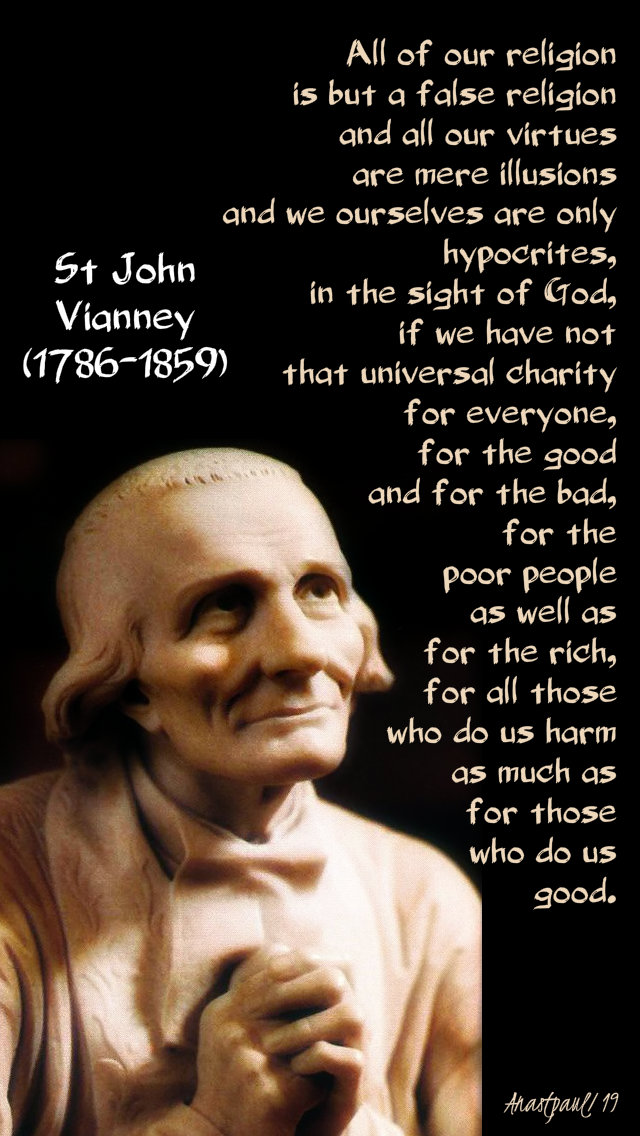
LOVE OF OUR NEIGHBOUR

St John Vianney (1786-1859)

“All of our religion is but a false religion and all our virtues are mere illusions and we ourselves are only hypocrites in the sight of God, if we have not that universal charity for everyone, for the good and for the bad, for the poor people as well as for the rich, for all those who do us harm as much as for those who do us good.
No, my dear brethren, there is no virtue which will let us know better whether we are the children or God than charity.
The obligation we have to love our neighbour is so important, that Jesus Christ put it into a Commandment, which He placed immediately after that by which He commands us to love Him with all our hearts.   He tells us that all the law and the prophets are included in this commandment to love our neighbour.   Yes, my dear brethren, we must regard this obligation as the most universal, the most necessary and the most essential to religion and to our salvation.   In fulfilling this Commandment, we are fulfilling all others.   St Paul tells us that the other Commandments forbid us to commit adultery, robbery, injuries, false testimonies.   If we love our neighbour, we shall not do any of these things because the love we have for our neighbour would not allow us to do him any harm.”

all of our religion is but a false - st john vianney thurs2ndweeklent 21 march 2019.jpg

Closing Prayer:
Loving God,
I hear your invitation, “Come back to me”
and I am filled with such a longing to return to You.
Show me the way to return.
Lead me this day in good works I do in Your name
and send Your Spirit to guide me and strengthen my faith.
I ask only to feel Your love in my life today and if You are with me, how can I not love my neighbour?

May the Lord bless us,
protect us from all evil
and bring us to everlasting life.
Amen

Posted in LENT 2019, MORNING Prayers, QUOTES on ALMS, QUOTES on CHARITY, The WORD

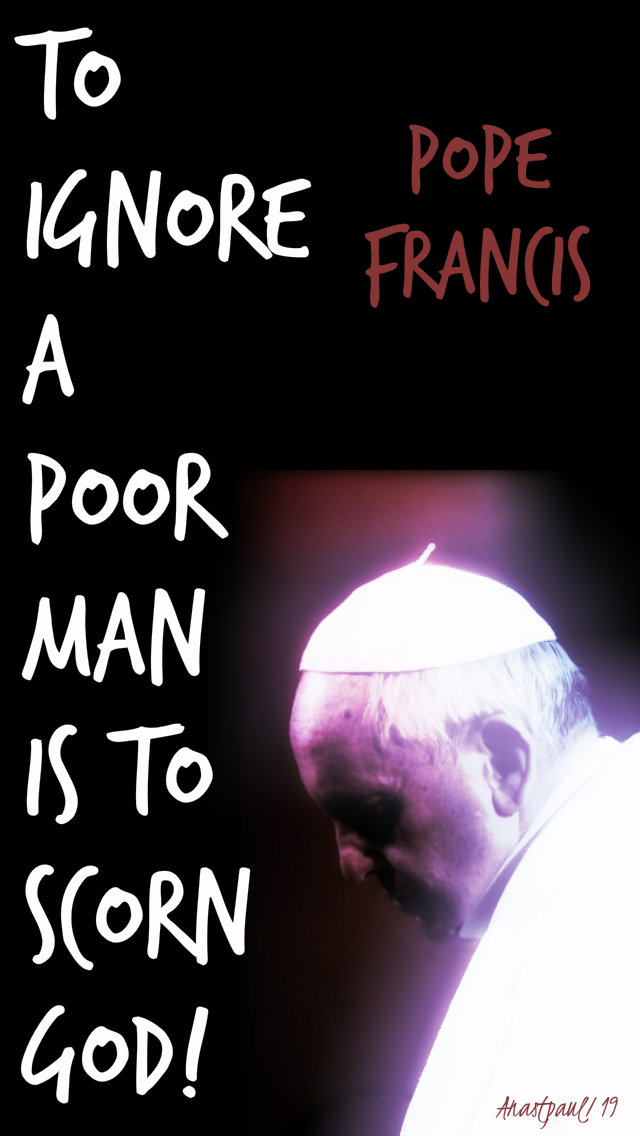
One Minute Reflection – 21 March –  To ignore a poor man is to scorn God!

One Minute Reflection – 21 March – Thursday of the Second week of Lent, Year C

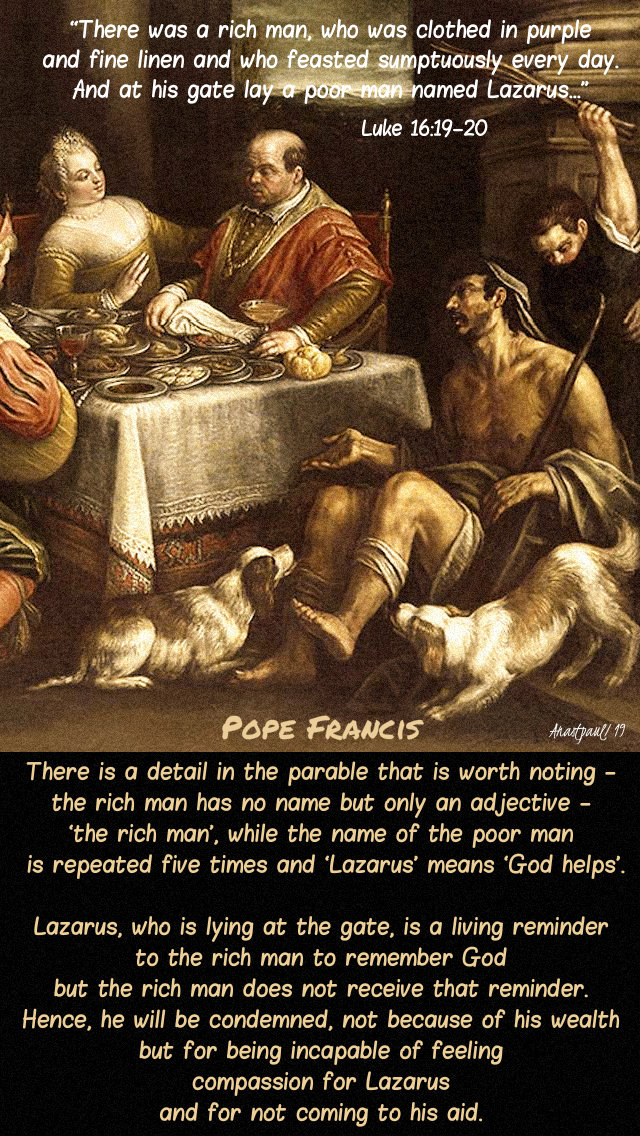
“There was a rich man, who was clothed in purple and fine linen and who feasted sumptuously every day.   And at his gate lay a poor man named Lazarus…”… Luke 16:19–20

REFLECTION – “Lazarus is a good example of the silent cry of the poor throughout the ages and the contradictions of a world in which immense wealth and resources are in the the hands of the few.   To ignore a poor man is to scorn God!   We must learn this well – to ignore the poor is to scorn God.  to ignore a poor man is to scorn god - pope francis 21 march 2019 thurs2ndweeklent

There is a detail in the parable that is worth noting – the rich man has no name but only an adjective – ‘the rich man’, while the name of the poor man is repeated five times and ‘Lazarus’ means ‘God helps’.   Lazarus, who is lying at the gate, is a living reminder to the rich man to remember God but the rich man does not receive that reminder.   Hence, he will be condemned not because of his wealth but for being incapable of feeling compassion for Lazarus and for not coming to his aid.

God’s mercy toward us is linked to our mercy toward our neighbour, when this is lacking, also that of not finding room in our closed heart, He cannot enter.   If I do not thrust open the door of my heart to the poor, that door remains closed.   Even to God. This is terrible.”….Pope Francis – General Audience, 18 May 2016luke 16 19-20 there was a rich man - there is a detail - pope francis - 21 march 2019 thurs2ndweeklent

PRAYER – Lord God, You love innocence of heart and when it is lost, You alone can restore it.   In Your bounty, You give us all that is good, You give us Your Spirit who teaches us to think and do what is right.   Turn then our hearts to You and to our neighbour, especially those who are in need, so that we, may be unwearied in good works.   Always helped by the Blessed Virgin, Mother of Charity, we strive to make our lenten journey, one of total self-giving.   Through Christ our Lord in the unity of the Holy Spirit, one God forever, amen.mary mother of charity pray for us 21 march 2019.jpg

Posted in LENT 2019, Our MORNING Offering, PRAYERS of the SAINTS, The PASSION

Our Morning Offering – 21 March – My Lord, I Offer You Myself

Our Morning Offering – 21 March – Thursday of the Second week of Lent, Year C

My Lord, I Offer You Myself
Blessed John Henry Newman (1801-1890)

My Lord,
I offer You myself in turn,
as a sacrifice of thanksgiving.
You have died for me,
And I in turn make myself over to You.
I am not my own.
You have bought me:
I will, by my own act and deed,
complete the purchase.
My wish is to be separated
from everything of this world;
To cleanse myself simply from sin;
To put away from me even what is innocent,
If used for its own sake
and not for Yours.
I put away reputation and honour
and influence and power,
For my praise and strength,
shall be in You.
Enable me to carry out what I profess
Amenmy lord i offer you myself - by john henry newman 21 march 2019 thurs2ndweeklent.jpg

Posted in SAINT of the DAY

Saint of the Day – 21 March – St Benedetta Cambiagio Frassinello (1791 – 1858)

Saint of the Day – 21 March – St Benedetta Cambiagio Frassinello (1791 – 1858) aged 66 – Wife, Religious and Foundress of the Benedictine Sisters of Providence.   Patronages – her Order and Teachers.

Saint Benedetta Cambiagio Frassinello was born on 2 October 1791 in Langasco (Genoa) Italy and she died on 21 March 1858 in Ronco Scrivia in Liguria.   She was wife, religious and foundress.   She let the Holy Spirit guide her through married life to the work of education and religious consecration.   She founded a school for the formation of young women and also a religious congregation and did both with the generous collaboration of her husband.   This is unique in the annals of Christian sanctity.   Benedetta was a pioneer in her determination to give a high quality education to young women, for the formation of families for a “new Christian society” and for promoting the right of women to a complete education._Benedetta_Cambiagio_Frassinello_(1791-1858).jpg

Call to marriage, then to religious life:
From her parents Benedetta received a Christian formation that rooted in her the life of faith.   Her family settled in Pavia when she was a girl.   When she was 20 years old, Benedetta had a mystical experience that gave her a profound desire for a life of prayer and penance and of consecration to God.   However, in obedience to the wishes of her parents, in 1816, she married Giovanni Frassinello and lived married life for two years. In 1818, moved by the example of his saintly wife, Giovanni agreed that the two should live chastely, “as brother and sister” and take care of Benedetta’s younger sister, Maria, who was dying from intestinal cancer.   They began to live a supernatural parenthood quite unique in the history of the Church.

Congregation founded by wife, who is supported by her husband:
Following Maria’s death in 1825, Giovanni entered the Somaschi Fathers founded by St Jerome Emiliani (1486-1537), and Benedetta devoted herself completely to God in the Ursuline Congregation of Capriolo.   A year later, she was forced to leave because of ill health and returned to Pavia where she was miraculously cured by St Jerome Emiliani. Once she regained her health, with the Bishop’s approval, she dedicated herself to the education of young girls.   Benedetta needed help in handling such a responsibility but her own father refused to help her.   Bishop Tosi of Pavia asked Giovanni to leave the Somaschi novitiate and help Benedetta in her apostolic work.   Together they made a vow of perfect chastity in the hands of the bishop and then began their common work to promote the human and Christian formation of poor and abandoned girls of the city. Their educational work was of great benefit to Pavia.   Benedetta became the first woman to be involved in this kind of work.   The Austrian government recognised her as a “Promoter of Public Education”.

She was helped by young women volunteers to whom she gave a rule of life that later received ecclesiastical approval.   Along with instruction, she joined formation in catechesis and in useful skills like cooking and sewing, aiming to transform her students into “models of Christian life” and so assure the formation of families.benedetta st 20020519_cambiagio

Benedictine Sisters of Providence:
Benedetta’s work was considered pioneering for those days and was opposed by a few persons in power and by the misunderstanding of clerics.   In 1838 she turned over the institution to the Bishop of Pavia.   Together with Giovanni and five companions, she moved to Ronco Scrivia in the Genoa region.   There they opened a school for girls that was a refinement on what they had done in Pavia.

Eventually, Benedetta founded the Congregation of the Benedictine Sisters of Providence. In her rule she stressed the education of young girls.   She instilled the spirit of unlimited confidence and abandonment to Providence and of love of God through poverty and charity.   The Congregation grew quickly since it performed a needed service.   Benedetta was able to guide the development of the Congregation until her death.   On 21 March 1858 she died in Ronco Scrivia.

Her example is that of supernatural maternity plus courage and fidelity in discerning and living God’s will.

Today the Benedictine Nuns of Providence are present in Italy, Spain, Burundi, Ivory Coast, Peru and Brazil.   They are at the service of young people, the poor, the sick and the elderly.   The foundress also opened a house of the order in Voghera.   Forty years after the death of Benedetta, the bishop separated this house from the rest of the Order. The name was changed to the Benedictines of Divine Providence who honour the memory of the Foundress.

She was Beatified on 10 May 1987 and Canonised on 19 May 2002 by St Pope John Paul II…Vatican.va
Posted in SAINT of the DAY

Memorials of the Saints – 21 March

Alfonso de Rojas
St Augustine Tchao
St Benedetta Cambiagio Frassinello (1791 – 1858)
St Birillus of Catania
St Christian of Cologne
St Domninus of Rome
St Enda of Arran
St Isenger of Verdun
St James the Confessor
Bl John of Valence
Bl Lucia of Verona
St Lupicinus of Condat
Bl Mark Gjani
Bl Matthew Flathers
St Nicholas of Flue (1417-1487)
About St Nicholas:   https://anastpaul.wordpress.com/2018/03/21/saint-of-the-day-21-march-st-nicholas-of-flue-1417-1487/

St Philemon of Rome
Bl Santuccia Terrebotti
St Serapion the Scholastic
Bl Thomas Pilcher
Bl William Pike

Martyrs of Alexandria: A large but unknown number of Catholics massacred in several churches during Good Friday services in Alexandria, Egypt by Arian heretics during the persecutions of Constantius and Philagrio. They were martyred on Good Friday in 342 in Alexandria, Egypt.

Posted in LENT 2019, LENTEN THOUGHTS, QUOTES of the SAINTS, QUOTES on DEATH, The LAST THINGS

Lenten Thoughts – 20 March – Each of us must enter on eternity

Lenten Reflection – 20 March – Wednesday of the Second week of Lent, Year C

Each of us must enter on eternity

Blessed John Henry Newman (1801-1890)

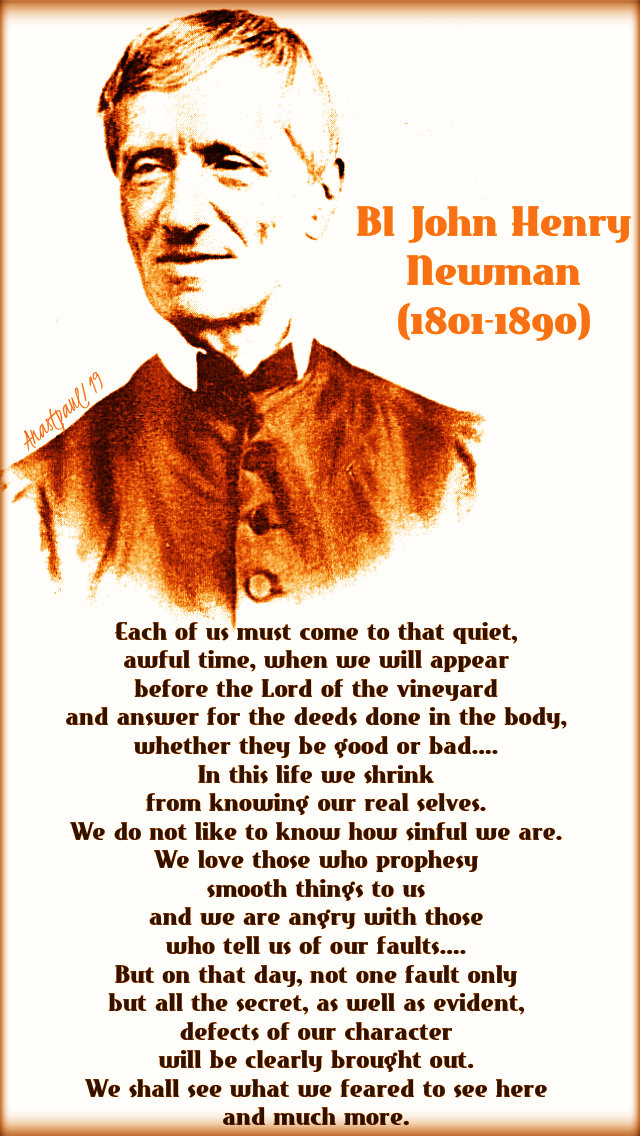
“Each of us must come to the evening of life.   Each of us must enter on eternity.   Each of us must come to that quiet, awful time, when we will appear before the Lord of the vineyard and answer for the deeds done in the body, whether they be good or bad.   That, my dear brethren, you will have to undergo. … It will be the dread moment of expectation when your fate for eternity is in the balance and when you are about to be sent forth as the companion of either saints or devils, without possibility of change. There can be no change, there can be no reversal.   As that judgement decides it, so it will be forever and ever.   Such is the particular judgement. … when we find ourselves by ourselves, one by one, in His presence and have brought before us most vividly all the thoughts, words and deeds of this past life.   Who will be able to bear the sight of himself?

And yet we shall be obliged steadily to confront ourselves and to see ourselves.   In this life we shrink from knowing our real selves.   We do not like to know how sinful we are. We love those who prophesy smooth things to us and we are angry with those who tell us of our faults.each of us must come to theat quiet awful time - bl john henry newman wed 2nd week lent 20march2019.jpg

But on that day, not one fault only but all the secret, as well as evident, defects of our character will be clearly brought out.   We shall see what we feared to see here and much more.   And then, when the full sight of ourselves comes to us, who will not wish that he had known more of himself here, rather than leaving it for the inevitable day to reveal it all to him! …………………….We can believe what we choose.   We are answerable for what we choose to believe.”we-can-believe-what-we-choose-bl-j-h-newman-14-march-2018.jpg

Posted in SAINT of the DAY

Thought for the Day – 20 March – A true Gospel-bearer

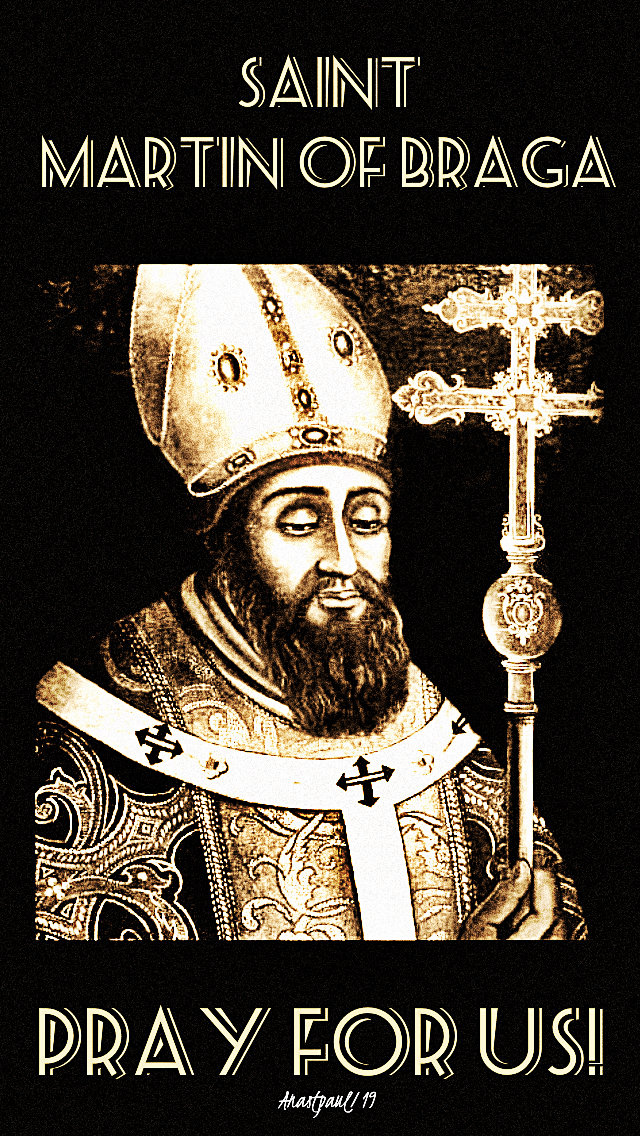
Thought for the Day – 20 March – Wednesday of the Second week of Lent, Year C and the Memorial of St Martin of Braga (c 520–580)

St Gregory of Tours (538-594) declared St Martin to be the greatest scholar of his age.  His writings included a guide to the Christian life, a description of superstitious peasant customs, a set of moral maxims and a version of the sayings of the Egyptian fathers. Listen to Martin’s voice in the following selection from his little essay on vanity:

“A person desires nothing more than to be praised, nor is there a single thing that he would consider it more agreeable to receive than someone’s admiration for him as a person of renown… For those who have usurped the things above, all that is left, so it seems to me, is the things below…Everyone everywhere strives to spread his own fame and, therefore, the cure for such vanity is most difficult, because it mingles not only with vices but also with virtues…For when he rejoices in other people’s praises his joy is followed by exalted triumph and his triumph, in turn, by pretentiousness and overestimation of himself…This is that deadly vice of which the Lord spoke in the gospel thus to the Jews: “How can you believe, who receive glory from one another and do not seek the glory which is from the only God?” (see John 5:44).”

Martin of Braga served the Christians of Galicia for nearly a quarter of a century.   He died at his monastery at Dumium in 579.   He is the true gospel-bearer that carries it, in his hands, in his mouth and in his heart.   A person does not carry it in his heart that does not love it with all his soul.

St Martin of Braga, Pray for Us!st martin of braga pray for us 20 march 2019.jpg

Posted in QUOTES of the SAINTS, QUOTES on CHARITY, QUOTES on HUMILITY, QUOTES on MERCY, QUOTES on SANCTITY, SAINT of the DAY

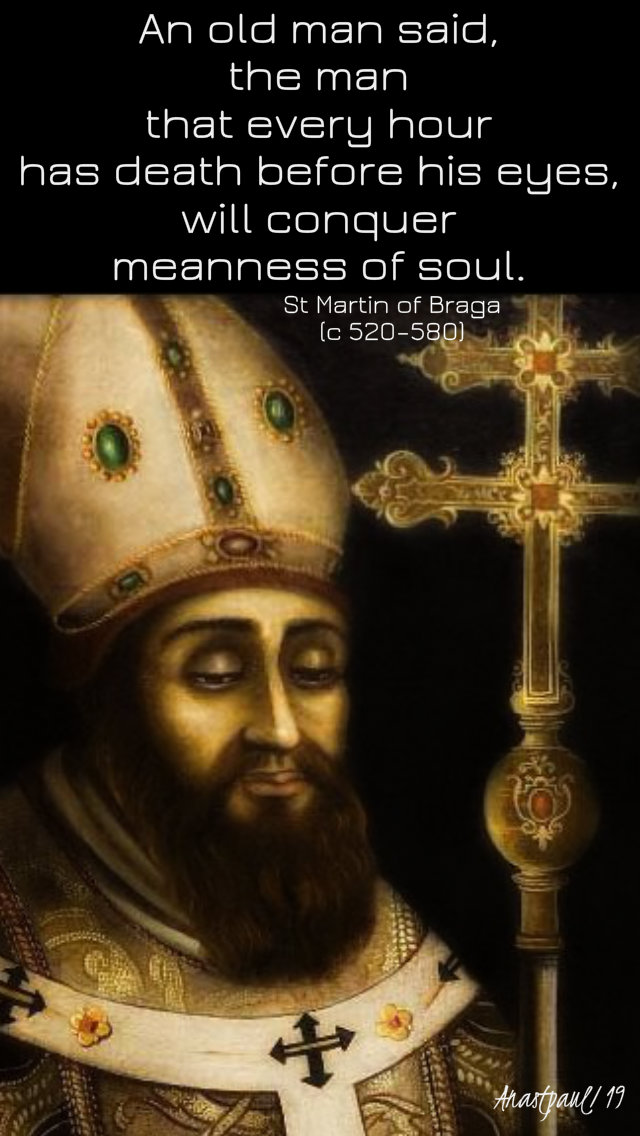
Quote of the Day – 20 March – Keep death before your eyes

Quote of the Day – 20 March – Wednesday of the Second week of Lent, Year C and the Memorial of St Martin of Braga (c 520–580)

“An old man said,
the man
that every hour
has death before his eyes,
will conquer
meanness of soul.”

St Martin of Braga (c 520–580)

About St Martin of Braga – https://anastpaul.wordpress.com/2018/03/20/saint-of-the-day-20-march-st-martin-of-braga-c-520-580/an old man said, the man that every hour st martin of braga 20 march 2019.jpg

Posted in LENT 2019, QUOTES of the SAINTS, QUOTES on HUMILITY, The WORD

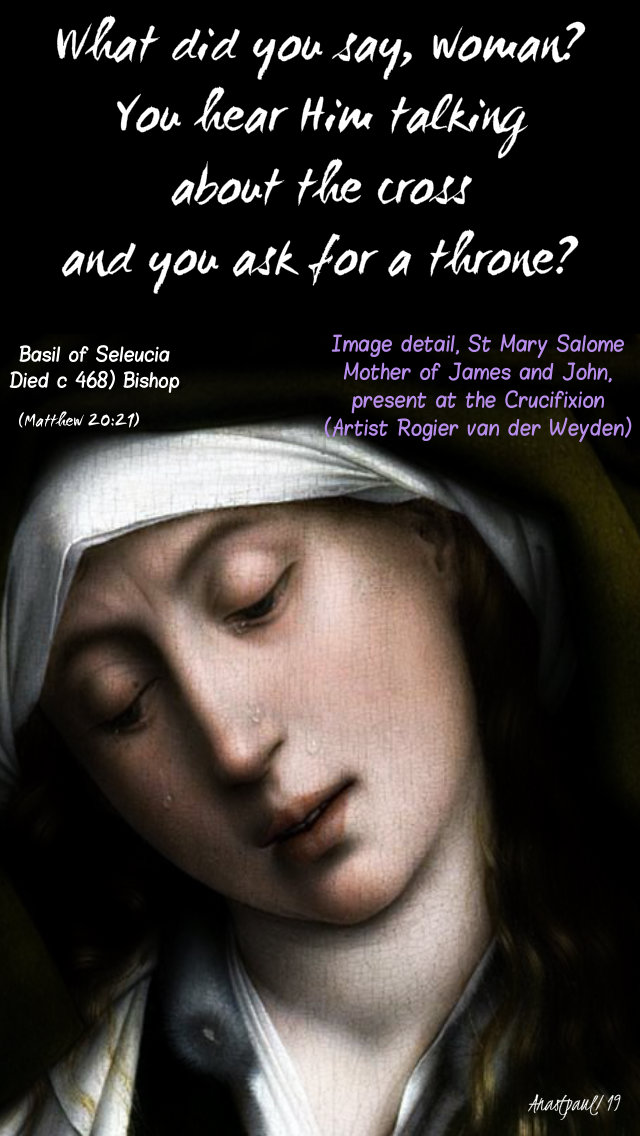
Lenten Reflection – 20 March – You hear Him talking about the cross and you ask for a throne?

Lenten Reflection – 20 March – Wednesday of the Second week of Lent, Year C

“Command that these two sons of mine sit, one at your right and the other at your left, in your kingdom”...Matthew 20:21basil of seleucia 20 march 2019

Basil of Seleucia (Died c 468) Bishop
Sermon 24

Would you like to know the faith of this woman?   Well, just think at the time she does such a request…The cross was ready, the Passion immanent, the crowd of enemies already in place.   The Teacher talks about His death and the disciples are worried, even before the Passion they tremble at the simple mention of it, what they hear startles them, they are overcome by agitation and fear.   At that very moment this mother leaves the group of the apostles and comes to request the kingdom and a throne for her sons.

What did you say, woman?   You hear Him talking about the cross and you ask for a throne?   It is a matter of the Passion and you wish for the Kingdom?   In that case, leave the disciples with all their fears and worries of danger.   But how could you think of asking such dignity?   Out of all that has been said or done, what makes you think about the kingdom?

I see – she says – the Passion but I foresee the Resurrection.  I see the cross set up and I contemplate the open skies.   I see the nails but I also see the throne… I heard the Lord himself say:  “you shall likewise take your places on twelve thrones” (Mt 19:28).   I see the future with the eyes of faith.

This woman anticipates – it seems to me – the words of the good criminal.   He, on the cross, made this prayer:  “Jesus, remember me when you come into your kingdom” (Lk 23:42).   Even before the cross she made the kingdom an object of her supplication… What a desire plunged in the vision of the future!   What time hid, faith revealed.

Daily Meditation:
Whoever wishes to be great among you shall be your servant.

Jesus is telling us about His Passion, Death and Resurrection – for us.
Too often we are fighting over which of us is the greatest.
To take this journey with Him, is to take a journey
that draws us to be with Him in it and like Him:
a servant of love for others.

“The Son of Man did not come to be served but to serve
and to give his life as a ransom for many.”
Matthew 20:28wed of the second week matthew 20 28 the sone of man came not to serve 20 march 2019.jpg

“The importance of Humility”
(Extract from a Sermon on St Philip Neri)

Blessed John Henry Newman (1801-1890)

“But I would beg for you this privilege, that the public world might never know you for praise or for blame, that you should do a good deal of hard work in your generation and prosecute many useful labours and effect a number of religious purposes and send many souls to heaven and take men by surprise, how much you were really doing, when they happened to come near enough to see it but that by the world you should be overlooked, that you should not be known out of your place, that you should work for God alone, with a pure heart and single eye, without the distractions of human applause and should make Him your sole hope and His eternal heaven your sole aim and have your reward, not partly here but fully and entirely, hereafter.”

(The Mission of St Philip Neri, Sermons Preached on Various Occaions.)

Closing Prayer:
God of Love,
through this Lenten journey,
purify my desires to serve You.
Free me from any temptations to judge others,
to place myself above others.
Please let me surrender even my impatience with others,
that with Your love and Your grace,
I might be less and less absorbed with myself,
and more and more full of the desire
to follow You, in laying down my life
according to Your example.

May the Lord bless us,
protect us from all evil
and bring us to everlasting life.
Amen.

Posted in LENT 2019, MORNING Prayers, SAINT of the DAY, The WORD

One Minute Reflection – 20 March – The loneliness of Jesus

One Minute Reflection – 20 March – Wednesday of the Second week of Lent, Gospel:  Matthew 20:17–28

“…even as the Son of man came not to be served but to serve and to give his life as a ransom for many.”…Matthew 20:28

REFLECTION – “Resolute and obedient and nothing else!   It was like this until the very end.   The Lord enters in patience… He enters in patience.   It is not only an example of a journey of suffering and dying on the Cross but also of a journey of patience.
He was unaccompanied in this decision because no-one understood the mystery of Jesus, the loneliness of Jesus on His journey towards Jerusalem, alone!
It was like this to the end.
Let us think, then, of the abandonment by the disciples, of Peter’s betrayal… alone!

How often have I tried to do so many things and have not looked to Him, who did all this for me? You entered in patience – the patient man, the patient God – who, with such patience, bears by sins, my failings?
And talk to Jesus like this.   He is determined to always to go ahead.   And thank Him.   Let us take a little time today, a few minutes – five, ten, fifteen – perhaps before the Crucifix, or with the imagination, to ‘see’ Jesus walking resolutely towards Jerusalem and ask for the grace to have the courage to follow Him closely.”…Pope Francis – Santa Marta, 3 October 2017matthew 20 28 the son of man came not to be served - you entered in patience - pope francis 20 march 2019.jpg

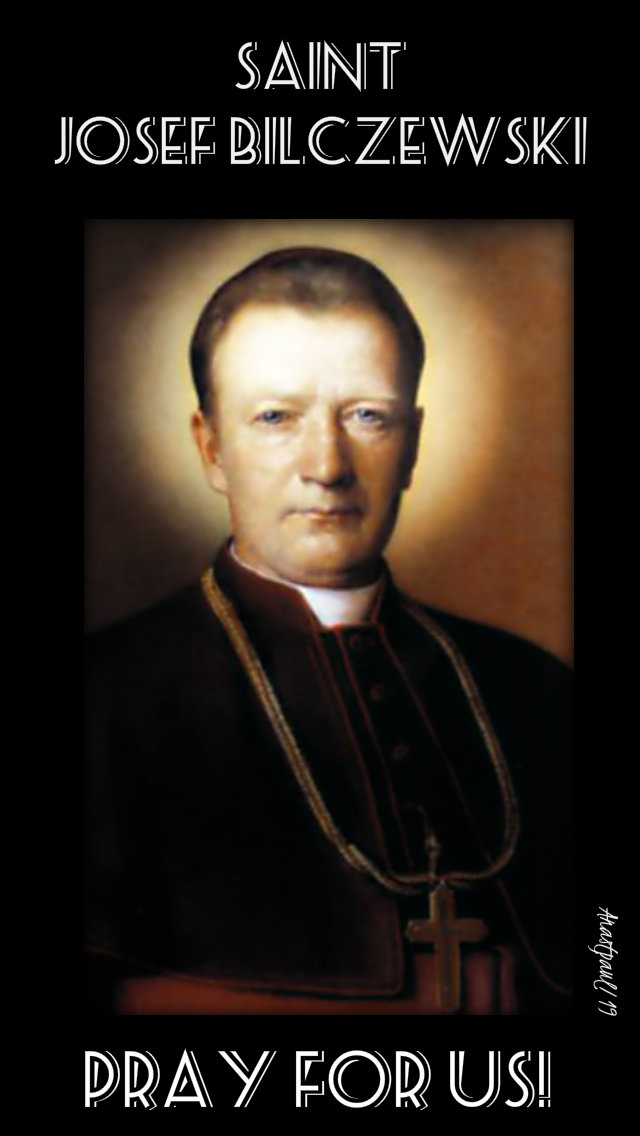
PRAYER – Lord, You go before us! In patience, in total love and self-giving, alone!   And we know You not and abandon You!   Holy Father, grant us Your grace that we may see, understand and walk with Your Son, right behind Him, holding tightly to the hem of His robe, that we may learn to suffer and love as He does.   Kindly listen Father God, to the prayers on our behalf, of St Josef Bilczewski, who always walked with Your Son.   We make our prayer through Jesus, our Lord and Saviour, our Christ who with the Holy Spirit, is God forever, amen.st josef bilczweski pray for us 20 march 2019


Posted in DOCTORS of the Church, FATHERS of the Church, GOD the FATHER, LENT 2019, Our MORNING Offering, PRAYERS of the SAINTS

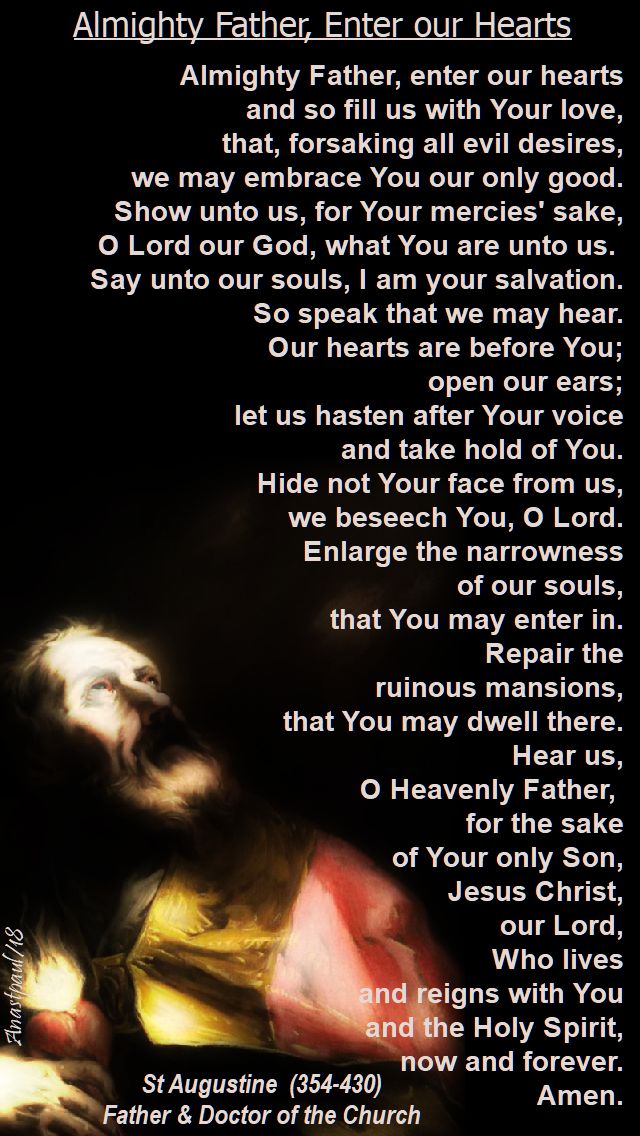
Our Morning Offering – 20 March – Almighty Father, Enter our Hearts

Our Morning Offering – 20 March – Wednesday of the Second week of Lent

Almighty Father, Enter our Hearts
By St Augustine (354-430) Father & Doctor of the Church

Almighty Father, enter our hearts
and so fill us with Your love,
that, forsaking all evil desires,
we may embrace You our only good.
Show unto us, for Your mercies’ sake,
O Lord our God, what You are unto us.
Say unto our souls, I am your salvation.
So speak that we may hear.
Our hearts are before You;
open our ears,
let us hasten after Your voice
and take hold of You.
Hide not Your face from us,
we beseech You, O Lord.
Enlarge the narrowness of our souls,
that You may enter in.
Repair the ruinous mansions,
that You may dwell there.
Hear us, O Heavenly Father,
for the sake of Your only Son,
Jesus Christ, our Lord,
Who lives and reigns with You
and the Holy Spirit, now and forever.
Amenalmighty-father-enter-our-hearts-st-augustine-16-march-2018-friday-of-the-4th-week-lent-2018.jpg

Posted in SAINT of the DAY, VATICAN Resources

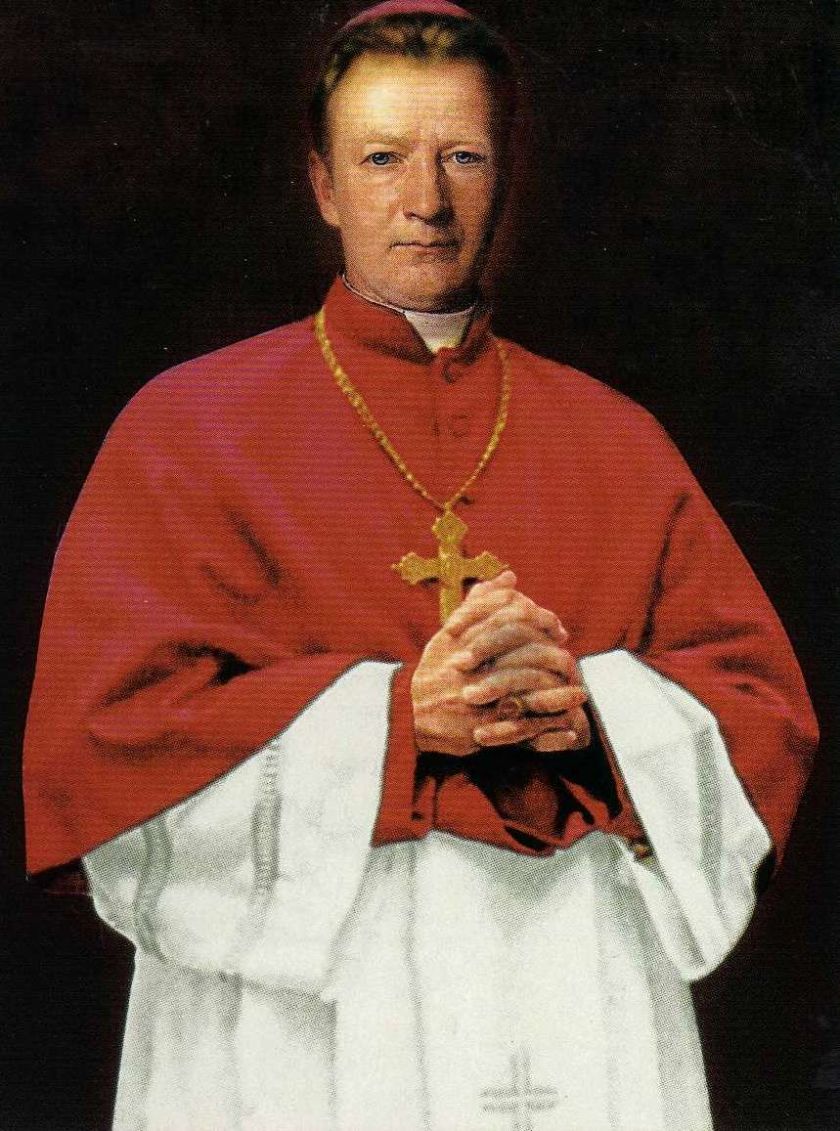
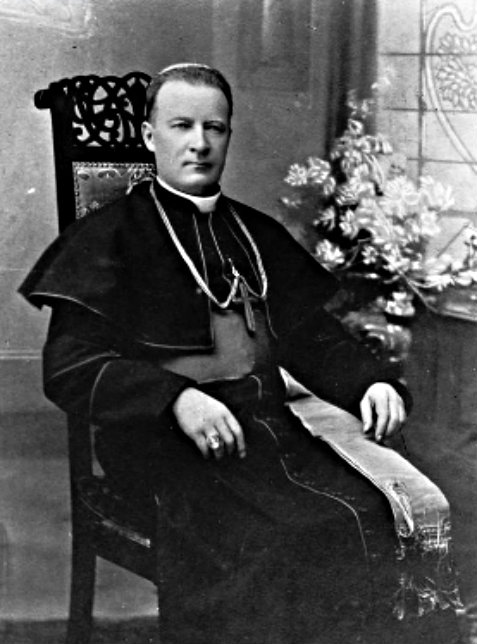
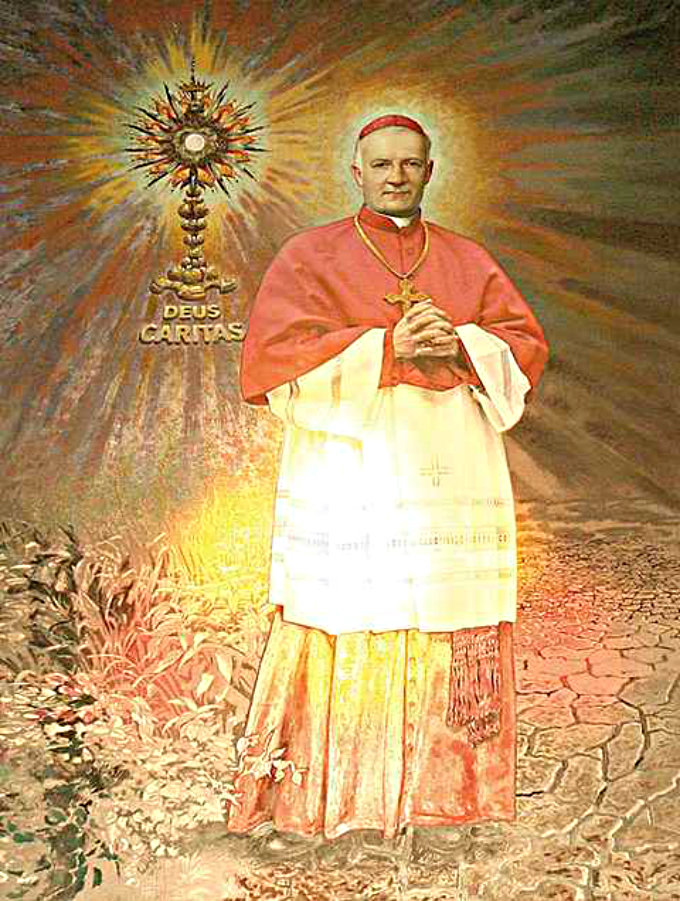
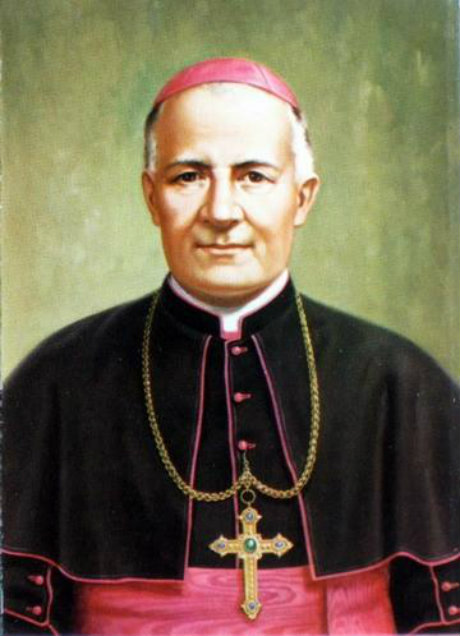
Saint of the Day – 20 March – St Jósef Bilczewski (1860-1923)

Saint of the Day – 20 March – St Jósef Bilczewski (1860-1923) Aged 62 – Archbishop of Lviv, Professor of Dogmatic Theology, Apostle of the Holy Eucharist, Marian devotion, the poor, the homeless, the needy, refugees, Social Reformer and Evangelist, Apostle of Catechesis both of the laity and of priests, Peace-maker. Patronages – Archdiocese of Lviv, Teachers, Wilamowice, Beggars, Homeless people.jozef archbishop bilczewski.jpg

Archbishop JOSEPH BILCZEWSKI was born on 26 April 1860 in Wilamowice near Kęty, in the present day Diocese of Bielsko Żywiec, then part of the Diocese of Krakow.   Having finished elementary school at Wilamowic and Kęty, he attended high school at Wadowice receiving his diploma in 1880.

On 6 July 1884 he was ordained a priest in Krakow by Cardinal Albino Dunajewski.   In 1886 he received a Doctorate in Theology from the University of Vienna.   Following advanced studies in Rome and Paris he passed the qualifying exam at the Jaghellonic University of Krakow.   The following year he became professor of Dogmatic Theology at the John Casimir University of Leopoli.   He also served as Dean of Theology for a period of time prior to becoming Rector of the University.   During his tenure at the University, he was appreciated as a professor by his students and also enjoyed the friendship and respect of his colleagues.   He arduously dedicated himself to scientific work and, despite his young age, acquired a reputation as a learned man.

His extraordinary intellectual and relational abilities were recognised by Francis Joseph, the Emperor of Austria, who presented Monsignor Joseph to the Holy Father as a candidate for the vacant Metropolitan See of Leopoli.   The Holy Father, Leo XIII responded positively to the Emperor’s proposal and on 17 December 1900 he named the forty year old Monsignor Joseph Bilczewski, Archbishop of Leopoli of the Latin Rite.

Given the complex social, economic, ethnic and religious situation, care for the large diocese required of the Bishop a deep commitment and called for great moral commitment, strong confidence in God and a faith enlivened by a continual contact in prayer with God.

Archbishop Joseph Bilczewski became known for his abundant goodness of heart, understanding, humility, piety, commitment to hard work and pastoral zeal which sprung from his immense love for God and neighbour.Józef_Bilczewski

Upon taking possession of the Archdiocese of Leopoli he spelled out very clearly his pastoral plan which can be summed up in his motto “totally sacrifice oneself for the Holy Church”.   Among other things he pointed out the need for the development of devotion to the Most Blessed Sacrament and frequent reception of Holy Communion.

A particular form of pastoral action of Archbishop Bilczewski were the pastoral letters and appeals addressed to the priests and the faithful of the Archdiocese.   In them he spoke of the problems of faith and morals of the time as well as of the most pressing issues of the social sphere.   He also explained devotion to the Eucharist and to the Sacred Heart in them and the importance of religious and moral formation of children and youth in the family and in school.   Above all, he took great care to cultivate many holy priestly vocations.   He saw the priest as first and foremost a teacher of faith and an instrument of Christ, a father for the rich as well as for the poor.   Taking the place of Christ on Earth, the priest was to be the minister of the Sacraments and for this reason his whole heart had to be dedicated to the celebration of the Eucharist, in order to be able to nourish the people of God with the body of Christ.

He often exhorted the priests to adoration of the most Blessed Sacrament.   In his pastoral letter devoted to the Eucharist he invited the priests to participate in the priestly associations – The Association for Perpetual Adoration of the Most Holy Sacrament and the Association of Aid to Poor Catholic Churches, whose goal was to rejuvenate the zeal of the priests themselves.   He also dedicated a great deal of care to the preparation of children and to full participation in the Mass, desiring that every Catechesis would lead children and youth to the Eucharist.jozef with the holy eucharist

Archbishop Joseph Bilczewski promoted the construction of churches and chapels, schools and day-care centres.  He developed teaching to help enable the growth in the instruction of the faithful.   He materially and spiritually helped the more important works which were springing up in his Archdiocese.   His holy life, filled with prayer, work and works of mercy, led to his meriting great appreciation and respect on the part of those of various faiths, rites and nationalities present in the Archdiocese.   No religious or nationalistic conflicts arose during the tenure of his pastoral work.   He was a proponent of unity, harmony and peace.   On social issues he always stood on the side of the people and of the poor.   He taught that the base of social life had to be justice made perfect by Christian love.

During the First World War, when souls were overtaken with hate and a lack of appreciation of the other, he pointed out to the people the infinite love of God, capable of forgiving every type of sin and offence.   He reminded them of the need to observe the commandments of God and particularly that of brotherly love.   Sensitive to the social questions regarding the family and youth, he courageously proposed solutions to problems based on the love of God and of neighbour.  During his 23 years of pastoral service he changed the face of the Archdiocese of Leopoli   Only his death, on 20 March 1923 could end his vast and far-sighted pastoral action.jozef older.jpg

He was prepared for death and accepted it with peace and submission as a sign of God’s will, which he always considered sacred.

He left this world having enjoyed a universal recognition of holiness.   Wanting to rest among those for whom he was always father and protector, in accord with his desires, he was buried in Leopoli in the cemetery of Janów, known as the cemetery of the poor.  buriel place 1024px-Lwów-cmJanowski-GrobJozefaBilczewskiego.jpgThanks to the efforts of the Archdiocese of Leopoli the process for his beatification and canonisation was initiated.   The first step was concluded on 17 December 1997 with the declaration of the life of heroic virtue of Archbishop Joseph Bilczewski by The Holy Father, St Pope John Paul II.   In June 2001, the Congregation for the Causes of Saints recognised as miraculous the fact of the rapid lasting and unexplainable “quo ad modum” healing through the intercession of Archbishop Bilczewski of the third degree burns of Marcin Gawlik, a nine year old boy, thus opening the way for his beatification. The Beatification took place in the Diocese of Leopoli on 26 June 2001 during St Pope John Paul II’s Apostolic Visit to the Ukraine…Vatican.va
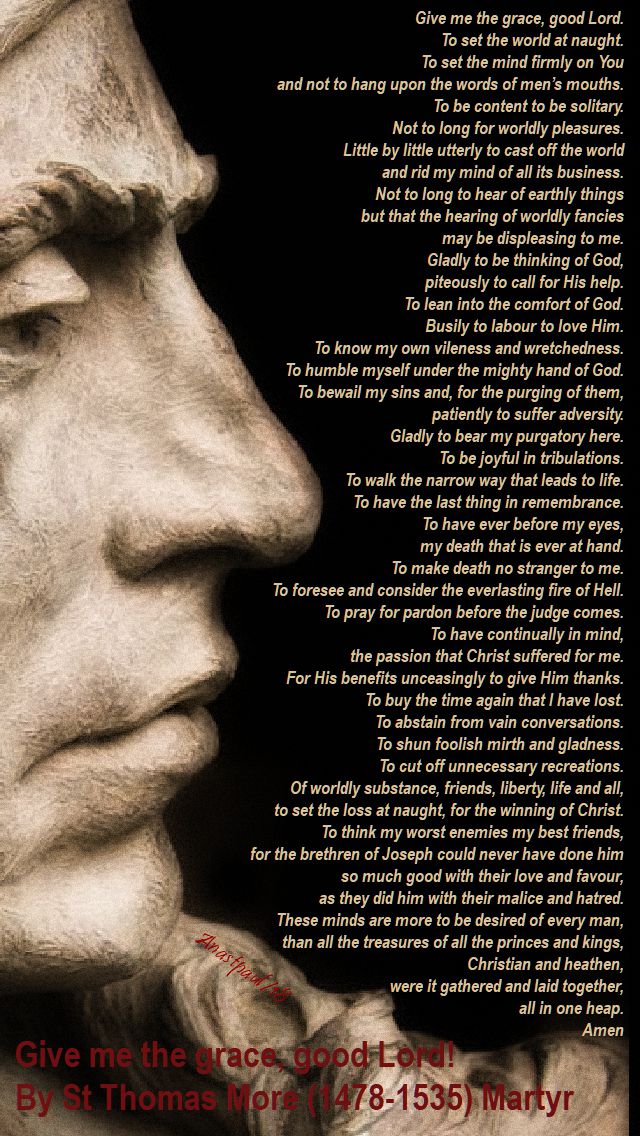
One final miracle was required for sainthood.   St John Paul II approved a second healing on 20 December 2004.   Cardinal Angelo Sodano formalised the date on 24 February 2005 at a consistory, representing the then very ill St John Paul II who died a month later.   The new Pope Benedict XVI celebrated the Canonisation in Saint Peter’s Square on 23 October 2005.
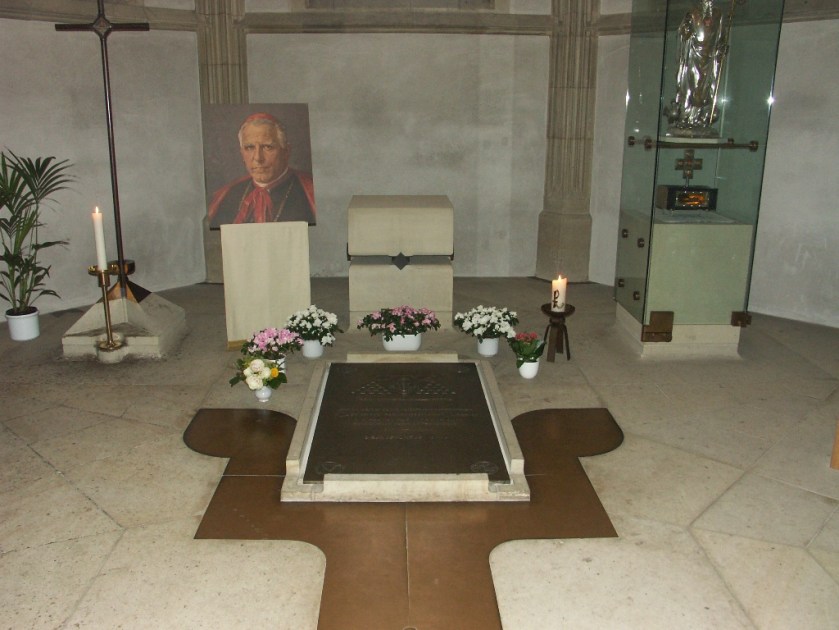
jozef - statue - Bilczewski-KatedraLacinska-Lwow
Statue in Lviv Cathedral


Posted in SAINT of the DAY

Memorials of the Saints – 20 March

Bl Ambrose Sansedoni of Siena
Anastasius XVI
Archippus of Colossi
St Benignus of Flay
St Cathcan of Rath-derthaighe
St Clement of Ireland
St Cuthbert of Lindisfarne
Bl Francis Palau y Quer
St Guillermo de Peñacorada
St Herbert of Derwenwater
Bl Hippolytus Galantini
Bl Jeanne Veron
Bl John Baptist Spagnuolo
St John Nepomucene
St John Sergius
St Jósef Bilczewski (1860-1923) Aged 62

St Maria Josefa Sancho de Guerra
St Martin of Braga (c 520–580)
Biography: https://anastpaul.wordpress.com/2018/03/20/saint-of-the-day-20-march-st-martin-of-braga-c-520-580/

St Nicetas of Apollonias
St Remigius of Strasbourg
St Tertricus of Langres
St Urbitius of Metz
St Wulfram of Sens

Martyrs of Amisus – 8 saints: A group of Christian women martyred together in the persecutions of Diocletian. The only details we have are eight of their names – Alexandra, Caldia, Derphuta, Euphemia, Euphrasia, Juliana, Matrona and Theodosia. They were burned to death c 300 in Amisus, Paphlagonia (modern Samsun, Turkey).

Martyrs of Rome – 9+ saints: A group of Christians martyred together in the persecutions of Nero. We know nothing else about them but the names Anatolius, Cyriaca, Joseph, Parasceve, Photis, Photius, Sebastian and Victor.

Martyrs of San Saba – 20 saints: Twenty monks who were martyred together in their monastery by invading Saracens.
They were martyred in 797 when they were burned inside the San Sabas monastery in Palestine.

Martyrs of Syria – 3+ saints: A group of Christians who were martyred together in Syria. We know nothing else about them but the names Cyril, Eugene and Paul.