Posted in SAINT of the DAY

Saint of the Day – 4 July – Saint Ulric of Augsburg (c 890–973)

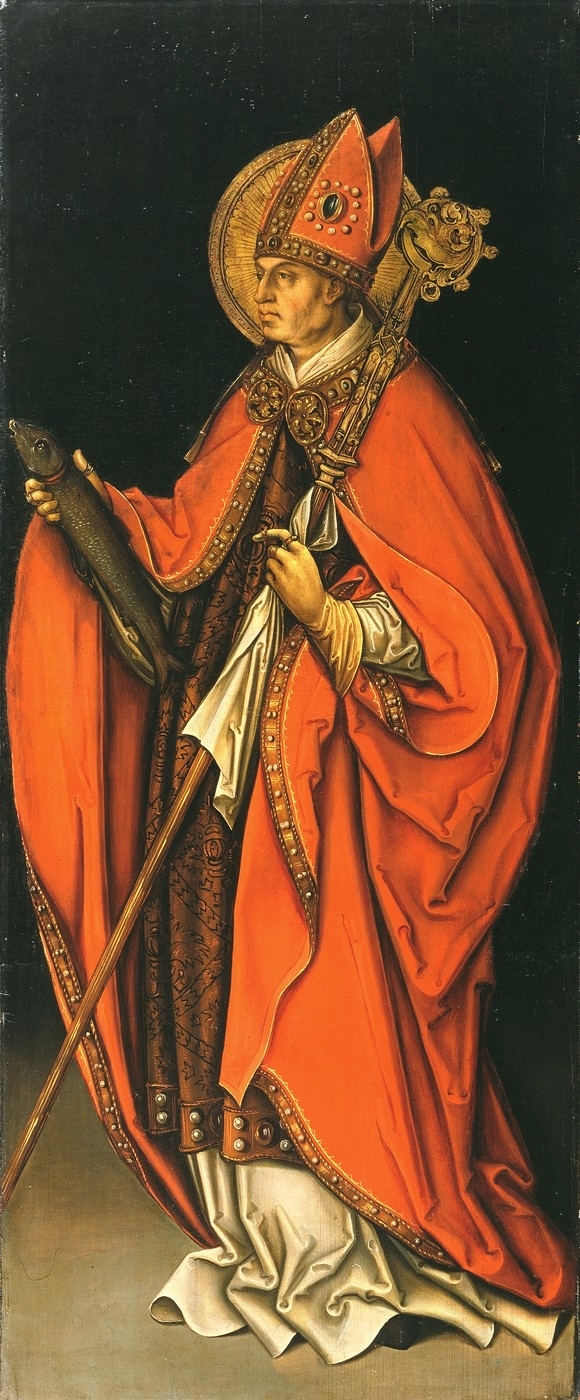
Saint of the Day – 4 July – Saint Ulric of Augsburg (c 890–973) Bishop of Augsburg, Germany – born in 893 at Kyburg, Zurich, Switzerland and died on 4 July 973 at Augsburg, Germany of natural causes.   His remains are interred in the Church of Saint Afra and Ulrich in Augsburg.   Earth from his grave is reported to repel rodents and over the centuries, much has been carried away for that purpose,   Patronages – against birth complications, against faintness, against fever, against mice and moles, diocese of Augsburg, Germany; happy death, weavers, San Dorligo della Valle, Creazzo, Italy.Leonhard_Beck_-_Heiliger_Ulrich_(Veste_Coburg).jpg
St Ulric, renowned for his virtues and the miracles he wrought, was born towards the close of the ninth century.   His parents were Kupald, Count of Kueburg and Thielburga, daughter of Burkard, Duke of Suabia.   When he was only seven years old, his education was entrusted to the religious of the Abbey of Saint Gall, where he progressed in virtue and learning much more than could be expected at his tender age.   When he became older, he entertained the fervent desire to enter the religious state and in order to learn the will of the Almighty, he passed some time in prayer and penance.   He also asked the advice of Wigerade, a virgin renowned for her holiness, who, after having, by a three days’ prayer, called on God for light, said to Ulric that he was not destined by heaven to be a monk, but to become a secular priest.   Hence he left the monastery and returned to his parents, who sent him to Augsburg to the virtuous bishop Adalberon, who soon recognising the virtues and talents that were in Ulric, employed him in all the manifold affairs of his sacred functions and ordained him priest.

After some years, with the permission of the bishop, he made a pilgrimage to Rome, during which time Adalberon died.   The Pope desired to nominate Ulric to the vacant See but when the latter heard of it, he was frightened and secretly left.   The Holy Father, being informed of this, said – “If Ulric is not pleased to take the See of Augsburg, while it is in a peaceful condition, he will be forced to accept it when it will be in a state of great disturbance and anarchy.”   This really happened, for, after the death of Hiltin, who had succeeded Adalberon, Ulric was obliged to yield to the unanimous voice of the clergy and laity.   It was a most sad period, for the enemy had devastated the land with fire and sword, the churches were either reduced to ashes or robbed of all their valuables and the inhabitants were greatly suffering from poverty.   The holy bishop was unwearied in his endeavours to restore the churches, to assist the poor and afflicted, and, when he had nothing else to give, he brought consolation and hope to them.   For fifty years he governed the See of Augsburg and words fail to describe the work he performed, the suffering he endured during this time for the glory of the Almighty and the temporal and spiritual welfare of his flock.Saint-Ulric-of-Augsburg

The Roman Martyrology praises him especially for these virtues: temperance, liberality, and vigilance.   His temperance in eating, drinking and sleeping was so great that more could not have been required of one belonging to an austere religious order.   He never partook of meat, although he had it served to strangers and to the poor.   In short, he was so frugal that his whole life may be called one continued fast.   His bed was straw and his sleep but a short rest, as he passed the greater portion of the night in devout exercises. He wore no linen but a garment of wool and beneath it a rough hair-cloth.   His liberality to the poor could not be surpassed, some of them ate daily at his own table.   He sometimes waited on them, sometimes shared the meal with them, during which a devout book was read aloud.   All that remained of his revenues after he had restored the Church, was devoted to the needy, for whom he procured corn, clothing and houses.   He spent nothing to ornament or furnish his own dwelling, in order to be the better able to assist the poor  . The best evidence of this is that he ate off wooden dishes, one of which is still shown.   Before his death he had all that the house contained brought to him and divided it among the poor.

His vigilance over his fold was indefatigable and truly apostolic.   He preached, administered the Sacraments, visited the sick, comforted the dying and yearly visited every parish in his whole diocese on foot, accompanied by only one chaplain.    He several times assembled the clergy and consulted with them about abolishing abuses, or about some plan that he had devised for the benefit of the people.   In a word, he evinced a father’s solicitude, not only for the spiritual but also for the temporal prosperity of those entrusted to his care and regarded neither care nor danger when their welfare was concerned.st ulrich.jpg

In 955, the Hungarians pillaged Bavaria, and coming to Augsburg, besieged the city. Ulric exhorted the men to be brave and the women, children and sick to pray.   The whole night he was with them in the church, strengthening the soldiers with the blessed Sacrament.   When the morning broke, he mounted a horse, shielded, not in armour but in a stole and accompanied the soldiers out of the city to fight against the barbarians. During this time he received from an angel, who visibly appeared to him, a small cross, which he kept in his hand, not fearing the darts or sword-strokes of the enemy and the sight of which inflamed the courage of his people, who, before long, won a most brilliant victory over the enemy.   All this took place on the feast of Saint Lawrence and the happy result was, under God, ascribed justly to the bishop, as the emperor Otho himself declared when he came to assist the distressed people.

He erected, as well in the city as out of it, many churches and rebuilt those which had been burned or injured by the enemy.   Among the latter was the church of Saint Afra, who was greatly honoured by the holy bishop.   She appeared to him several times, informed him where her holy body was concealed and foretold to him several events, among which was the happy result of the above-mentioned battle.   On account of these and many other admirable qualities, the people called him only the holy bishop, while God proclaimed the sanctity of His servant by many miracles which were known over the whole Christian world.   The oil, which he had consecrated on holy Thursday, healed many sick and restored the limbs of the lame.   He was seen to walk over the river without even wetting his feet.

Once, at Easter, when, in presence of a large multitude of people, he celebrated High Mass, a hand, coming from heaven, was seen, which, jointly with Ulric’s hand, blessed the chalice before the consecration.

This slideshow requires JavaScript.

Having thus faithfully laboured for many years in the service of the Most High, the Saint felt that his end was approaching and prepared himself for his Master’s call.   On the festival of Saint John, he said Holy Mass for the last time, after which he was brought home and occupied the remainder of his life in devotional exercises.   He humbly requested all those around him to pardon any offence of which he might have been guilty towards them and gave them many wholesome instructions.   When his end was near, he had ashes strewn on the floor in the form of a cross, and sprinkled with holy water, then, requesting to be laid on them, he remained in prayer until, at the dawn of day, while he was chanting the Litany, death closed his eyes in the eighty-third year of his life, 973.

St Ulric was the first saint to be Canonised by a pope, Pope John XV on 3 February 993, which led to the canonical process which the church uses today to determine sainthood.

Lives of the Saints, by Father Francis Xavier WeningerGora_Oljka_-_Saint_Ulrich.jpg

Posted in SAINT of the DAY

Memorials of the Saints – 4 July

St Elizabeth of Portugal TOSF (1271-1336) (Optional Memorial)
Biography:
https://anastpaul.com/2018/07/04/saint-of-the-day-4-july-st-elizabeth-of-portugal-t-o-s-f-1271-1336/

Bl Agatha Yun Jeom-Hye
St Albert Quadrelli
St Andrew of Crete
St Anthony Daniel
St Aurelian of Lyons
St Bertha of Blangy
St Carileffo of Anille
Bl Catherine Jarrige
St Cesidio Giacomantonio
Bl Damiano Grassi of Rivoli
St Donatus of Libya
St Edward Fulthrop
St Elias of Jerusalem
St Finbar of Wexford
St Fiorenzo of Cahors
St Flavian of Antioch
St Giocondiano
Bl Giovanni of Vespignano
St Haggai the Prophet
Bl Hatto of Ottobeuren
Bl Henry Abbot
St Henry of Albano
St Hosea the Prophet
St Innocent of Sirmium
Bl John Carey
Bl John Cornelius
Bl Jozef Kowalski
St Jucundian
St Laurian of Seville
St Lauriano of Vistin
Bl Maria Crocifissa Curcio
St Namphanion the Archmartyr
Bl Natalia of Toulouse
St Odo the Good
Bl Odolric of Lyon
Bl Patrick Salmon
Bl Pedro Romero Espejo
Bl Pier Giorgio Frassati (1901-1925) Incorrupt
About dear Blessed Pier Giorgio:
https://anastpaul.wordpress.com/2017/07/04/saint-of-the-day-4-july-blessed-pier-georgio-frassati-t-o-s-d-the-man-of-the-eight-beatitudes/

St Sebastia of Sirmium
St Theodore of Cyrene
St Theodotus of Libya
Bl Thomas Bosgrave
Bl Thomas Warcop
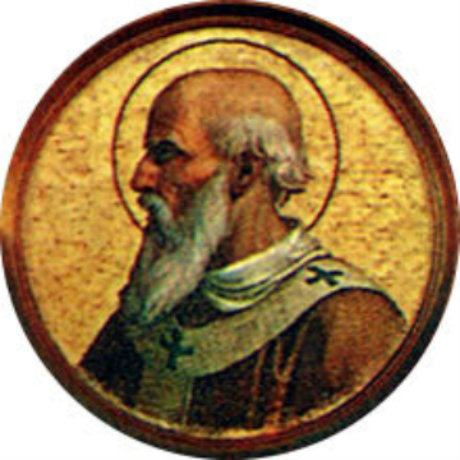
St Ulric of Augsburg (c 890–973)
St Ulric of Ratzeburg
St Valentine of Langres
St Valentine of Paris
Bl William Andleby
Bl William of Hirsau

Posted in DOCTORS of the Church, FATHERS of the Church, FEASTS and SOLEMNITIES, ON the SAINTS, QUOTES of the SAINTS, QUOTES on FAITH, SAINT of the DAY, The APOSTLES & EVANGELISTS

Thought for the Day – 3 July – ‘..The God he could not see’

Thought for the Day – 3 July – Feast of St Thomas Apostle

“My Lord and My God”

Saint Pope Gregory the Great (540-604)
Bishop of Rome and Great Western Father and Doctor of the Church

An excerpt from his Homily 26

Thomas, one of the twelve, called the Twin, was not with them when Jesus came.   He was the only disciple absent, on his return he heard what had happened but refused to believe it.   The Lord came a second time, He offered His side for the disbelieving disciple to touch, held out His hands and, showing the scars of His wounds, healed the wound of his disbelief.

Dearly beloved, what do you see in these events?   Do you really believe that it was by chance that this chosen disciple was absent, then came and heard, heard and doubted, doubted and touched, touched and believed?   It was not by chance but in God’s providence.   In a marvellous way, God’s mercy arranged, that the disbelieving disciple, in touching the wounds of his master’s body, should heal our wounds of disbelief.   The disbelief of Thomas has done more for our faith than the faith of the other disciples.   As he touches Christ and is won over to belief, every doubt is cast aside and our faith is strengthened.   So the disciple who doubted, then felt Christ’s wounds, becomes a witness to the reality of the Resurrection.

Touching Christ, he cried out – My Lord and my God.   Jesus said to him – Because you have seen me, Thomas, you have believed.   Paul said: Faith is the guarantee of things hoped for, the evidence of things unseen.  It is clear, then, that faith is the proof of what cannot be seen.   What is seen gives knowledge, not faith.   When Thomas saw and touched, why was he told – You have believed because you have seen me?   Because what he saw and what he believed were different things.   God cannot be seen by mortal man. Thomas saw a human being, whom he acknowledged to be God and said: -My Lord and my God.   Seeing, he believed, looking at one who was true man, he cried out that this was God, the God he could not see.seeing he believed - st pope gregory - 3 july 2019 st thomas.jpg

What follows is reason for great joy – Blessed are those who have not seen and have believed.   There is here a particular reference to ourselves, we hold in our hearts one we have not seen in the flesh.   We are included in these words but only if we follow up our faith with good works.   The true believer practices what he believes.   But of those who pay only lip service to faith, Paul has this to say – They profess to know God but they deny him in their works.   Therefore James says – Faith without works is dead.

St Thomas, Pray for Us!st thomas apostle of christ pray for us 3 july 2019.jpg

Posted in DOCTORS of the Church, FATHERS of the Church, FEASTS and SOLEMNITIES, QUOTES of the SAINTS, QUOTES on FAITH, SAINT of the DAY, The APOSTLES & EVANGELISTS, The WORD

Quote/s of the Day – 3 July – Faith

Quote/s of the Day – 3 July – Feast of St Thomas Apostle, Gospel John 20:24–29

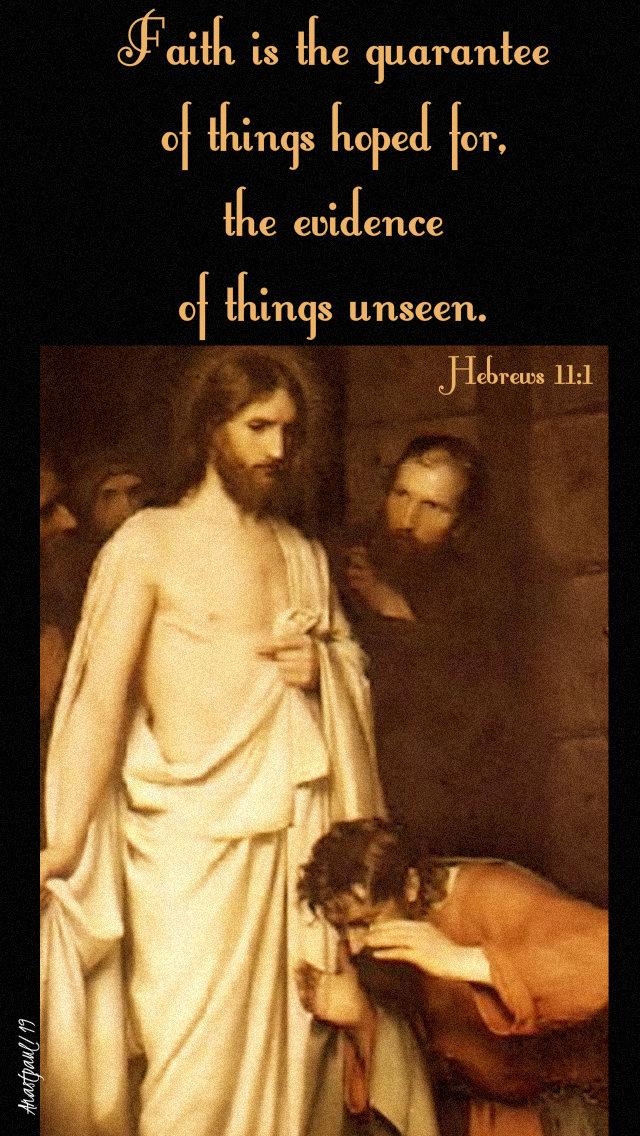
“Faith is the guarantee
of things hoped for,
the evidence
of things unseen.”

Hebrews 11:1hebrews 11 1 - faith is the thing hoped for the guarantee of things unseen 3 july 2019 st thomas.jpg

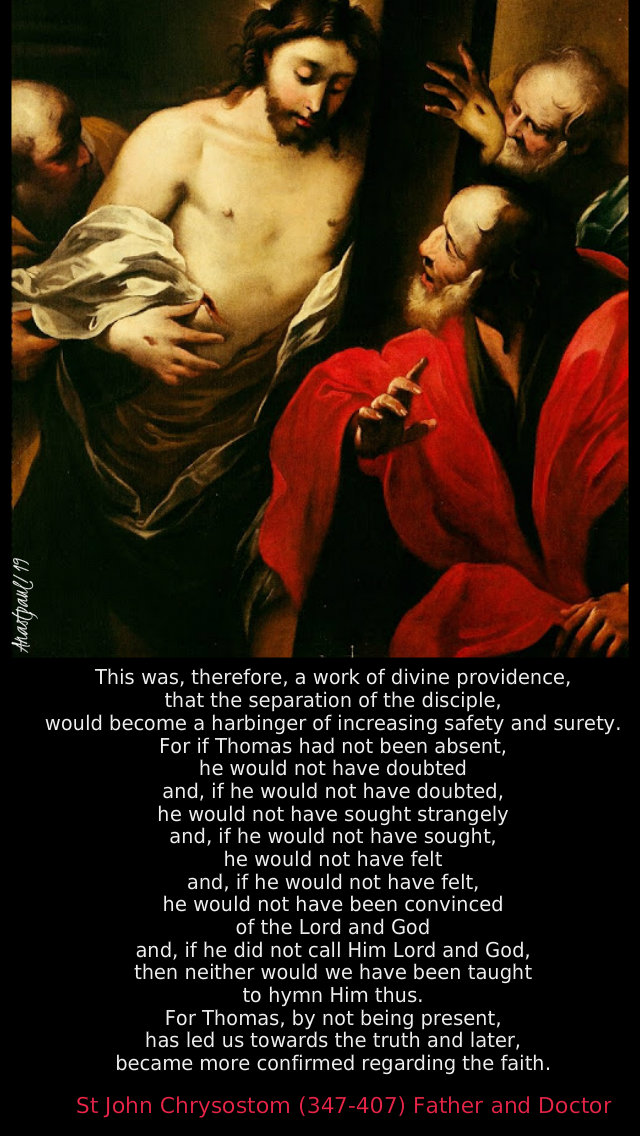
“This was, therefore, a work of divine providence,
that the separation of the disciple,
would become a harbinger of increasing safety and surety.
For if Thomas had not been absent,
he would not have doubted
and, if he would not have doubted,
he would not have sought strangely
and, if he would not have sought,
he would not have felt
and, if he would not have felt,
he would not have been convinced
of the Lord and God
and, if he did not call Him Lord and God,
then neither would we have been taught
to hymn Him thus.
For Thomas, by not being present,
has led us towards the truth and later,
became more confirmed regarding the faith.”

St John Chrysostom (347-407) Father and Doctorthis was therefore a work of divine providence, st john chryosstom feat of st thomas 3 july 2919.jpg

Posted in FATHERS of the Church, FEASTS and SOLEMNITIES, MORNING Prayers, ON the SAINTS, QUOTES - J R R Tolkien and MORE, QUOTES on FAITH, SAINT of the DAY, The APOSTLES & EVANGELISTS, The RESURRECTION, The WORD

One Minute Reflection – 3 July – “Happy are those who have not seen and yet believe!”.

One Minute Reflection – 3 July – Feast of St Thomas Apostle, Gospel John 20:24–29

Thomas answered him, “My Lord and my God!”…John 20:28john 20 28 my lord and my god feat of st thomas 3 july 2019.jpg

REFLECTION – “Put your finger into the marks of the nails”.   You looked for Me when I wasn’t there, now take advantage of it.   I understand your desire despite your silence. Before you tell Me them I already know your thoughts.   I heard you speak and, even though unseen, I was beside you, beside your doubts.   Without revealing Myself I made you wait, so as better to consider your eagerness.   “Put your finger into the marks of the nails.   Put your hand into my side, do not be unbelieving any longer, but believe.”
Then Thomas touched Him and all his mistrust fell away.   Full of genuine faith and all the love owing to God, he cried out:  “My Lord and my God!”   And the Lord said to him – “You believe because you have seen me;  happy are those who have not seen and yet believe!”   Thomas took the news of the Resurrection to those who had not seen.   Draw the whole earth to believe, not by its own sight but at your word.   Go through peoples and cities far away.   Teach them to carry the cross rather than weapons on their shoulders.   Only proclaim me – they will believe and worship.   They will demand no other proof.   Tell them they are called by grace and, with your own eyes, behold their faith.   Truly, blessed are those who did not see and yet believed!
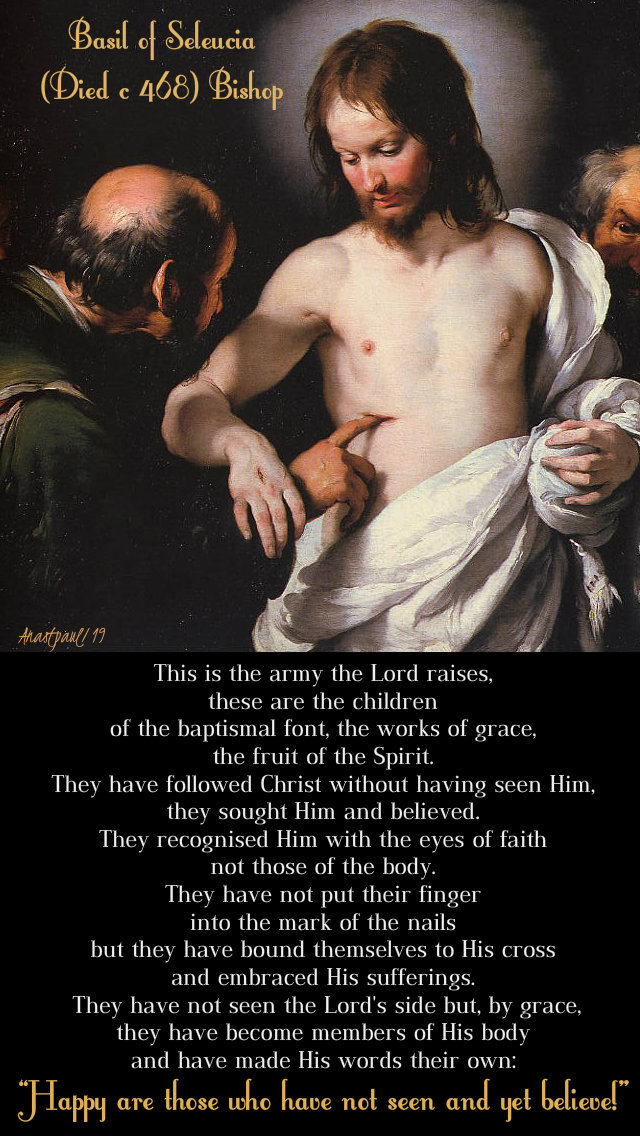
This is the army the Lord raises, these are the children of the baptismal font, the works of grace, the fruit of the Spirit.   They have followed Christ without having seen Him, they sought Him and believed.   They recognised Him with the eyes of faith not those of the body.   They have not put their finger into the mark of the nails but they have bound themselves to His cross and embraced His sufferings.   They have not seen the Lord’s side but, by grace, they have become members of His body and have made His words their own:  “Happy are those who have not seen and yet believe!”Basil of Seleucia (Died c 468) Bishop Sermon for the Resurrection, 1-4this is the army the lord raises - basil of seleucia feast of st thomas 3 july 2019.jpg

PRAYER – Almighty Father,as we honour Thomas the Apostle, let us always experience the help of his prayers. May we have eternal life by believing in Jesus,
whom Thomas acknowledged as Lord, for He lives and reigns with You and the Holy Spirit, one God, forever and ever. Amenst thomas pray for us 2.jpg

Posted in BREVIARY Prayers, CATHOLIC-PRAYERS OF THE CHURCH, FEASTS and SOLEMNITIES, HYMNS, Our MORNING Offering, PRAYERS of the CHURCH, SAINT of the DAY, The APOSTLES & EVANGELISTS

Our Morning Offering – 3 July – O Fathers of Our Ancient Faith

Our Morning Offering – 3 July – Feast of St Thomas Apostle

O Fathers of Our Ancient Faith

O Fathers of our ancient faith,
With all the heav’n, we sing your fame
Whose sound went forth in all the earth
To tell of Christ and bless His name.

You took the gospel to the poor,
The Word of God alight in you,
Which in our day is told again,
That timeless Word, forever new.

You told of God, who died for us
And out of death triumphant rose,
Who gave the truth that made us free
and changeless through the ages goes.

Praise Father, Son and Holy Spirit,
Whos gift is faith that never dies,
A light in darkness now, until
The day-star in our hearts arise.

O Fathers of Our Ancient Faith is written by the Benedictine Nuns of Stanbrook Abbey.   In the Divine Office (1974) it is sung at Morning Prayer in the Common of Apostles.   It is set to the anonymous tune associated with the 7th century Latin hymn, Creator Alme Siderum.o fathers of our ancient faith - feast of st thomas 3 july 2019 breviary hymn.jpg

Posted in SAINT of the DAY, The APOSTLES & EVANGELISTS

Feast of St Thomas, Apostle of Christ, Martyr – 3 July

Feast of St Thomas, Apostle of Christ, Martyr – 3 JulyST THOMAS APOSTLE.jpg

There is very little about the Apostle Thomas in the Gospels, one text calls him the “twin.” Rarely during Jesus’ lifetime does he stand out among his colleagues.   There is the instance before the raising of Lazarus, when Jesus was still in Perea and Thomas exclaimed:  “Let us also go and die with Him.”

Best-known is his expression of unbelief after the Saviour’s death, giving rise to the phrase “doubting Thomas.”   Nevertheless, the passage describing the incident, had as today’s Gospel, must be numbered among the most touching in Sacred Scripture, “My Lord and my God!”thomas apostle.jpg

In the Breviary lessons St Pope Gregory the Great makes the following reflections: “Thomas’ unbelief has benefited our faith more than the belief of the other disciples, it is because he attained faith, through physical touch, that we are confirmed in the faith beyond all doubt.   Indeed, the Lord permitted the Apostle to doubt after the resurrection but He did not abandon him in doubt.   By his doubt and by his touching the sacred wounds, the Apostle became a witness to the truth of the Resurrection.   Thomas touched and cried out – My Lord and my God!   And Jesus said to him – Because you have seen Me, Thomas, you have believed.   Now if Thomas saw and touched the Saviour, why did Jesus say: Because you have seen Me, Thomas, you have believed?   Because he saw something other than what he believed.   For no mortal man can see divinity.   Thomas saw the Man Christ and acknowledged His divinity with the words – My Lord and my God.   Faith, therefore, followed upon seeing.”

This slideshow requires JavaScript.

Concerning later events in the Apostle’s life, very meagre information exists.   The Martyrology has this:  “At Calamina (near Madras in India) the Martyrdom of the Apostle Thomas – he announced the Gospel to the Parthians and, finally, came to India.   After he had converted numerous tribes to Christianity, he was pierced with lances at the king’s command.”

Excerpted from The Church’s Year of Grace, Pius Parschst_thomasApóstolofmichie(4).jpg

Posted in SAINT of the DAY

Saint of the Day – 3 July – St Pope Leo II (611–683)

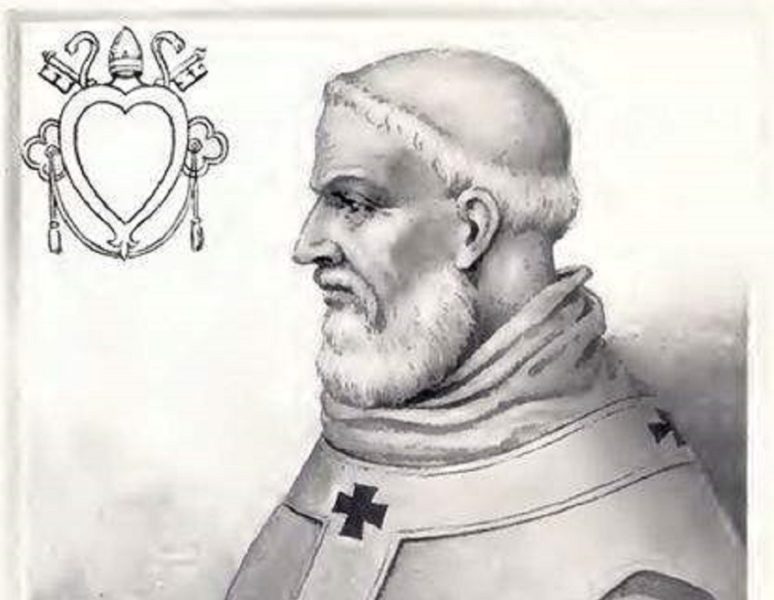
Saint of the Day – 3 July – St Pope Leo II (611–683) was Bishop of Rome from 17 August 682 to 28 June 683, the day of his death.   He is one of the popes of the Byzantine Papacy.Leo_II

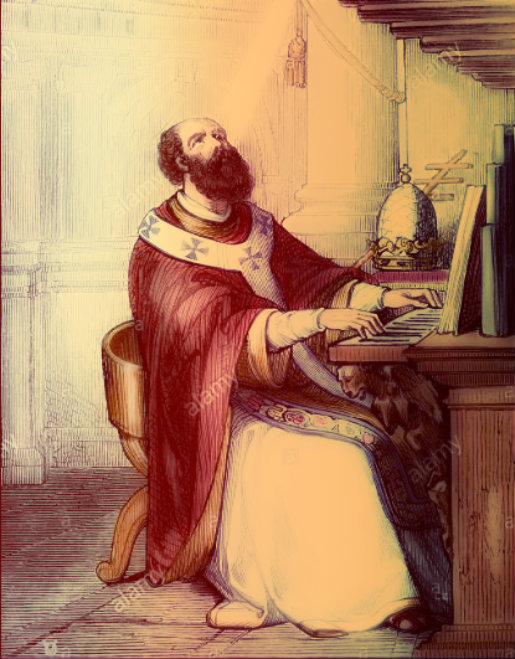
Pope Leo II was a Sicilian.   He was learned in sacred and profane letters, as also in the Greek and Latin tongues and was, moreover, an excellent musician.   He rearranged and improved the music of the sacred hymns and psalms used in the Church. st pope leo II snip alamy

He approved the acts of the sixth General Council, which was held at Constantinople, under the presidency of the legates of the apostolic see, in the presence of the emperor Constantine, the Patriarchs of Constantinople and Antioch and one hundred and seventy bishops – Leo also translated these said acts into Latin.

It was in this Council that Cyrus, Sergius, and Pyrrhus were condemned for teaching that there is in Christ, only one will and one operation.   Leo broke the pride of the Archbishops of Ravenna, who had puffed themselves up, under the power of the exarchs, to set at naught the power of the apostolic see.   Wherefore, he decreed that the elections of the clergy of Ravenna should be worth nothing, until they had been confirmed by the authority of the Bishop of Rome.st pope leo II sml

He was a true father to the poor.   Not by money only but by his deeds, his labours and his advice, he relieved the poverty and loneliness of widows and orphans.   He was leading all to live holy and godly lives, not by mere preaching but by his own life, when he died in the year 683, he had been Pope eleven months.   He was buried in the church of Saint Peter.

St Leo was originally buried in his own monument, however, some years after his death, his remains were put into a tomb that contained the first four of his papal namesakes.st LeoII

Excerpted from The Liturgical Year, Abbot Gueranger OSB

Posted in SAINT of the DAY, The APOSTLES & EVANGELISTS

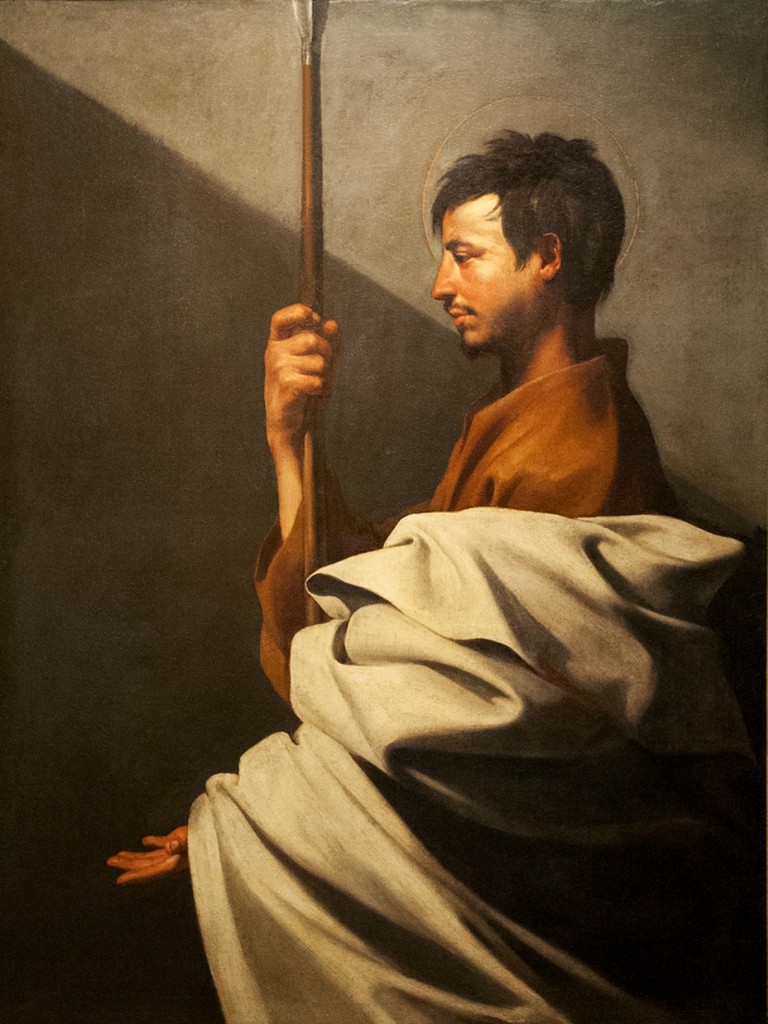
Feast of St Thomas and Memorials of the Saints – 3 July

St Thomas the Apostle (Feast)

St Thomas:   https://anastpaul.com/2018/07/03/saint-of-the-day-feast-of-st-thomas-apostle-of-christ/

St Anatolius of Alexandria
St Anatolius of Constantinople
Bl Andreas Ebersbach
Bl Barbara Jeong Sun-mae
St Bladus
St Byblig
St Cillene
St Dathus of Ravenna
St Eusebius of Laodicea
St Firminus
St Firmus
Bl Gelduin
St Germanus of Man
St Giuse Nguyen Ðình Uyen
St Gunthiern
St Guthagon
St Heliodorus of Altinum
St Hyacinth of Caesarea
St Ioannes Baptista Zhao Mingxi
St Irenaeus of Chiusi
St Pope Leo II (611–683)
St Maelmuire O’Gorman
St Mark of Mesia
St Mennone the Centurian
St Mucian of Mesia
St Paul of Mesia
St Petrus Zhao Mingzhen
St Philiphê Phan Van Minh
St Raymond of Toulouse

Martyrs of Alexandria – 13 saints: Thirteen Christian companions marytred together. No details about them have survived but the names – Apricus, Cyrion (2 of), Eulogius, Hemerion, Julian, Julius, Justus, Menelaus, Orestes, Porfyrios and Tryphon (2 of). They martyred in Alexandria, Egypt, date unknown.

Martyrs of Constantinople – 24 saints: A group of 24 Christians martyred in the persecutions of Arian emperor Valens. We know little more than their names – Acacios, Amedinos, Ammonius, Ammus, Cerealis, Cionia, Cionius, Cyrianus, Demetrius, Eulogius (2), Euphemia, Heliodoros, Heraclios, Horestes, Jocundus, Julian, Martyrios, Menelaeus, Sestratus, Strategos, Thomas, Timotheos and Tryphon. They were martyred in c367 in Constantintinople.

Theodotus and Companions – 6 saints: Six Christians who were imprisoned, tortured and martyred together in the persecutions of Trajan. Saint Hyacinth ministered to them in prison. We know nothing else about them but their names – Asclepiodotus, Diomedes, Eulampius, Golinduchus, Theodota and Theodotus. They were beheaded in c110, location unknown.

Posted in MORNING Prayers, PRACTISING CATHOLIC, QUOTES - J R R Tolkien and MORE, QUOTES on PATIENCE, QUOTES on SUFFERING, QUOTES on TRUST and complete CONFIDENCE in GOD, The WORD

Thought for the Day – 2 July – The Anguish of an Absence

Thought for the Day – 2 July – Tuesday of the Thirteenth Week, Year C – Today’s Gospel: Matthew 8:23-37

The Anguish of an Absence

by Cardinal Joseph Ratzinger (Pope Benedict XVI)

And they went and woke him, saying, “Save us, Lord, we are perishing.”
Matthew 8:25

There is a Gospel scene which in an extraordinary way anticipates the silence of Holy Saturday and which again, therefore, seems to be a profile of the moment in history we are living now.   Christ is asleep on a boat which, buffeted by a storm, is about to sink.
The prophet Elijah had once made fun of the priests of Baal who were futilely invoking their god to send down fire on their sacrifice.   He urged them to cry out louder in case their god was asleep.
But is it true that God does not sleep?   Does not the prophet’s scorn also fall upon the heads of the faithful of the God of Israel who are sailing with Him in a boat about to sink?   God sleeps while His very own are about to drown – is not this the experience of our lives?   Don’t the Church, the faith, resemble a small boat about to sink, struggling futilely against the waves and the wind and all the time God is absent?   The disciples cry out in dire desperation and they shake the Lord to wake Him but He is surprised at this and rebukes them, for their small faith.   But are things any different for us?   When the storm passes we will realise just how much this small faith of ours was charged with stupidity.
And yet, O Lord, we cannot help shaking You, God,   You who persist in keeping Your silence, in sleeping and we cannot help crying to You – Wake up, can’t You see we are sinking?   Stir Yourself, don’t let the darkness of Holy Saturday last forever, let a ray of Easter fall, even on these times of ours, accompany us when we set out in our desperation towards Emmaus so that our hearts may be enflamed by the warmth of Your nearness.
You who, hidden, charted the paths of Israel only to become a man in the end with men – don’t leave us in the dark, don’t let Your word be lost in these days of great squandering of words.

Lord, grant us Your help, because without You we will sink. Amen

matthew 8 25 save us lord we are perishing - joseph ratzinger - the anguish of absence - wake up lord 2 july 2019.jpg

Posted in FATHERS of the Church, MORNING Prayers, QUOTES of the SAINTS, QUOTES on FEAR, The WORD

Quote/s of the Day – 2 July – “Why are you afraid…?”

Quote/s of the Day – 2 July – Tuesday of the Thirteenth week in Ordinary Time, Year C, Gospel: Matthew 8:23-37

“Why are you afraid, O men of little faith?”

Matthew 8:26matthew 8 26 - why are you afraid o men of little faith 2 july 2019.jpg

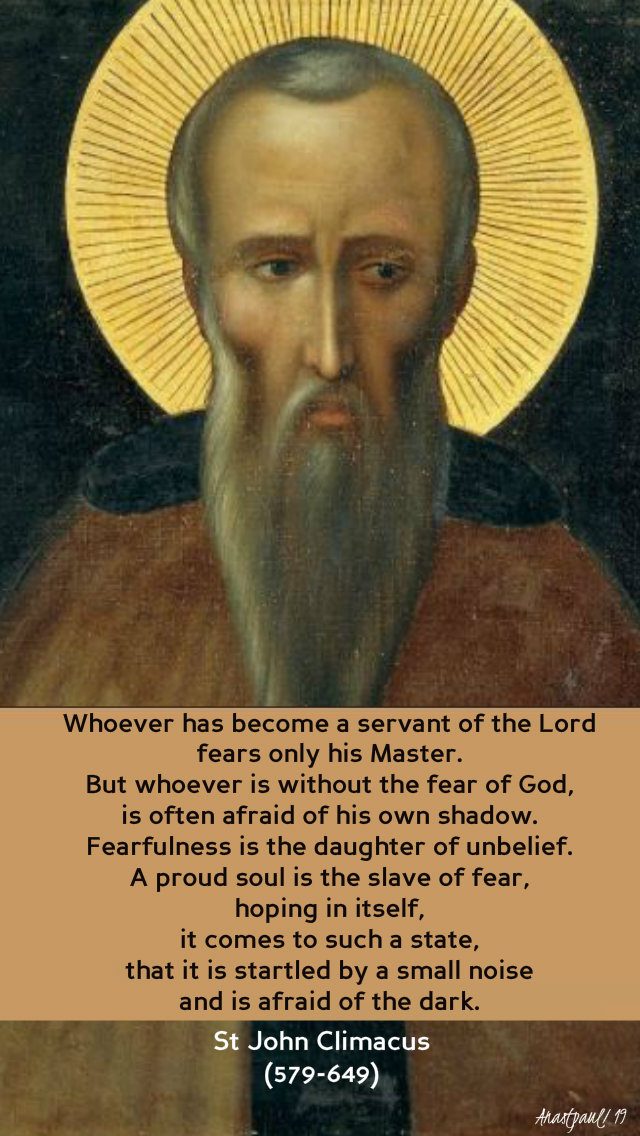
“Whoever has become a servant of the Lord, fears only his Master.
But whoever is without the fear of God,
is often afraid of his own shadow.
Fearfulness is the daughter of unbelief.
A proud soul is the slave of fear,
hoping in itself,
it comes to such a state,
that it is startled by a small noise
and is afraid of the dark.”

St John Climacus (579-649)whoever has become a servant of the lord - st john climacus 2 july 2019

Posted in MORNING Prayers, QUOTES of the SAINTS, QUOTES on FEAR, QUOTES on TRUST and complete CONFIDENCE in GOD, SAINT of the DAY, The WORD

One Minute Reflection – 2 July – ‘It is not a calm sky, beloved but the storm which tests a pilot’s skill.’

One Minute Reflection – 2 July – Tuesday of the Thirteenth Week, Year C – Today’s Gospel: Matthew 8:23-37 and the Memorial of Blessed Eugénie Joubert (1876–1904)

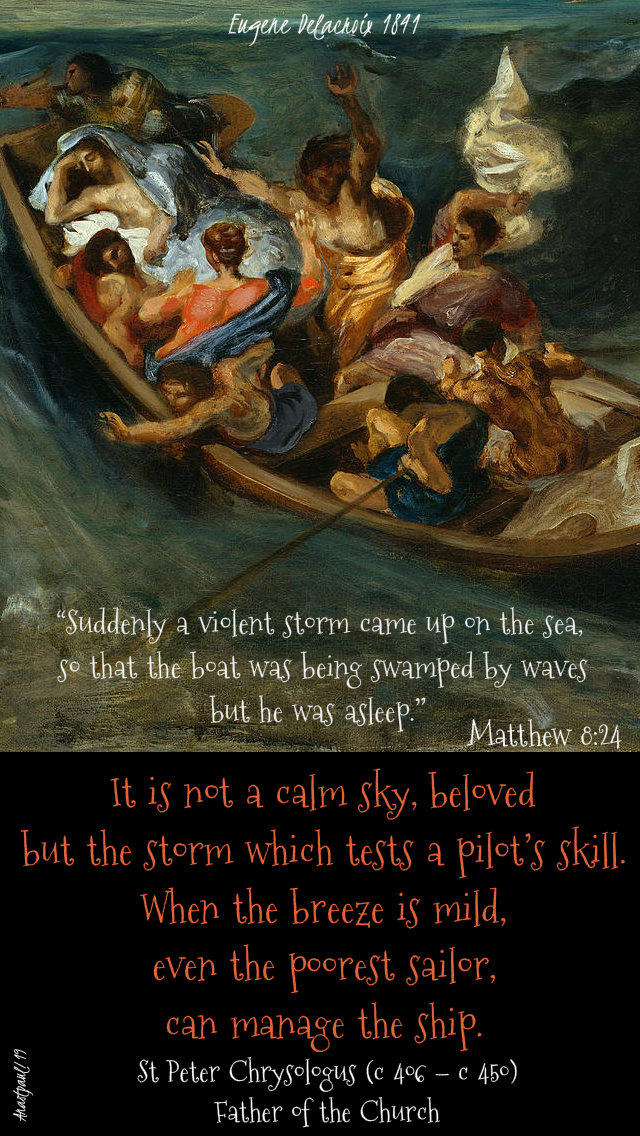
“Suddenly a violent storm came up on the sea, so that the boat was being swamped by waves but he was asleep.”… Matthew 8:24

REFLECTION – “The sea offered its heaving back for Christ to walk upon.   Now it levelled its crests to a plain, checked its swelling and bound up its billows.   It provided rocklike firmness, so He could walk across the waterway.   Why did the seas heave so, and toss and pitch, even as if threatening its Creator?   And why did Christ Himself, who knows all the future, seem so unaware of the present thatHhe gave no thought to the onrushing storm, the moment of its height and the time of its peril?   While all the rest were awake, He alone was fast asleep even with utter doom threatening both Himself and His dear ones.   Why?   It is not a calm sky, beloved but the storm which tests a pilot’s skill.   When the breeze is mild, even the poorest sailor, can manage the ship. But in the crosswinds of a tempest, we want the best pilot with all His skill.”… Saint Peter Chrysologus (c 406 – c 450) (Sermons, 20)matthew 8 24  suddenly a violent sorm..but he was asleep-it is not a calm sky but the storm which tests st peter chryologus 2 july 2019.jpg

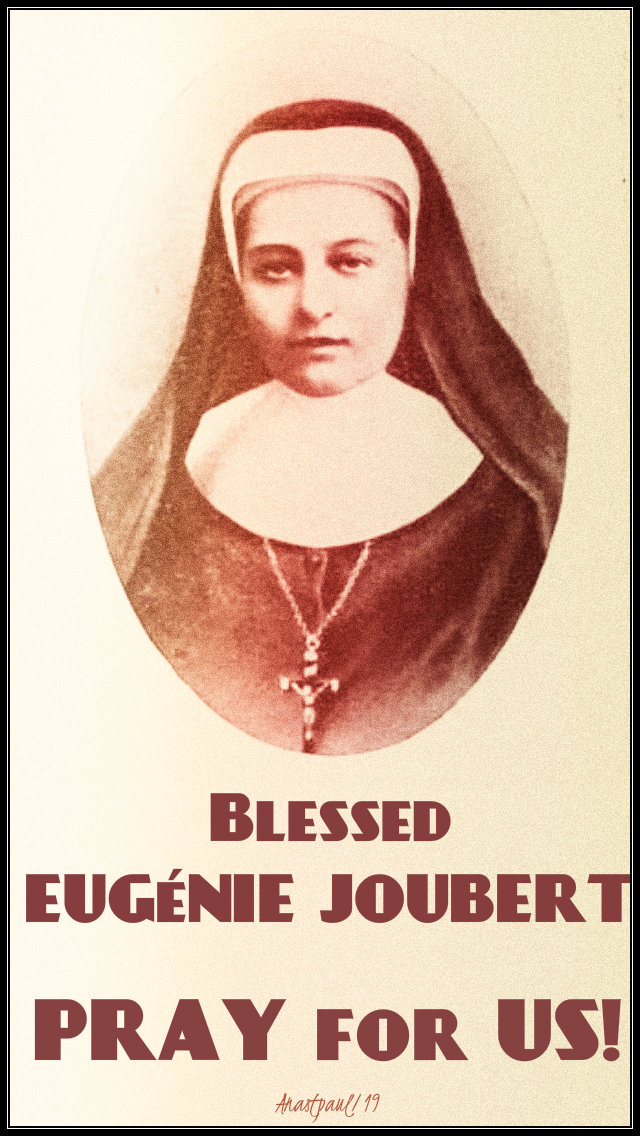
PRAYER – Heavenly Father, grant me an operative faith – a faith that will move mountains and is strong enough to know that absolutely nothing and no-one here on earth can compare to You. Let me show that faith by lively love and by loving deeds and by conforming myself to Your will in all things – teach me that only YOU are first in line. This is how you lived your life Bl Eugénie Joubert putting only the God who created us first and now you are a Saint. Please pray for us. We make our prayer through Christ, our Lord, in the unity of the Holy Spirit, God forever and for always, amen.bl eugenie joubert pray for us 2 july 2019.jpg

Posted in CATHOLIC DEVOTIONS of the Month, DOCTORS of the Church, Our MORNING Offering, PRAYERS of the SAINTS

Our Morning Offering – 2 July – Prayer for the Gift of Prayer

Our Morning Offering – 2 July – Tuesday of the Thirteenth week in Ordinary Time, Year C

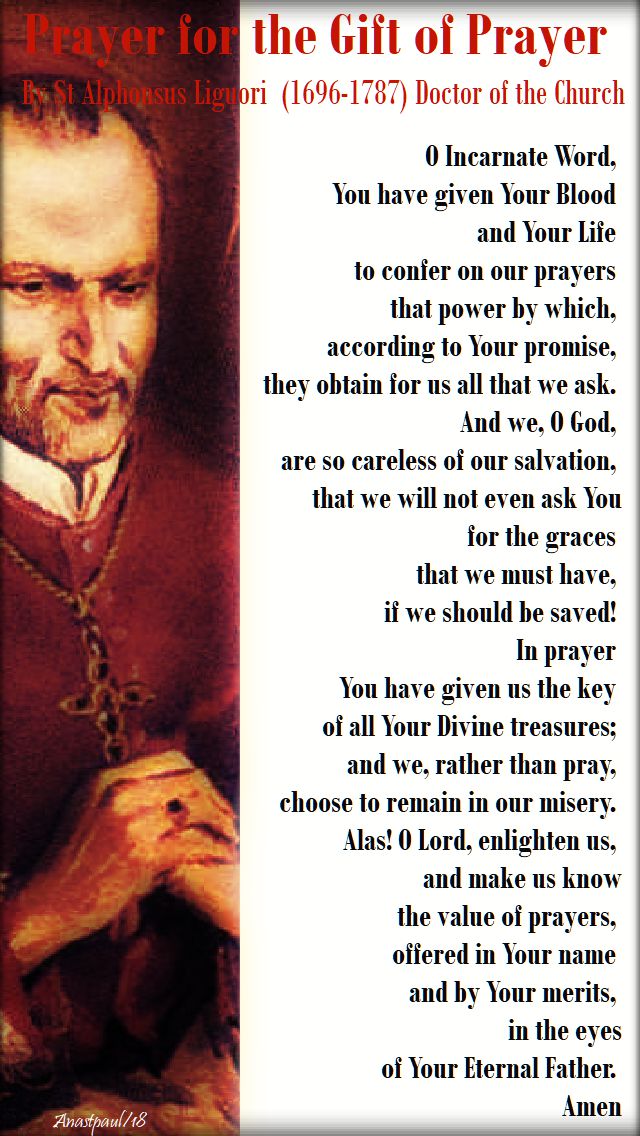
Prayer for the Gift of Prayer
By St Alphonsus Liguori (1696-1787)
Doctor of the Church

O Incarnate Word,
You have given Your Blood and Your Life
to confer on our prayers that power by which,
according to Your promise,
they obtain for us all that we ask.
And we, O God,
are so careless of our salvation,
that we will not even ask You for the graces
that we must have, if we should be saved!
In prayer You have given us the key
of all Your Divine treasures;
and we, rather than pray,
choose to remain in our misery.
Alas! O Lord, enlighten us,
and make us know the value of prayers,
offered in Your name and by Your merits,
in the eyes of Your Eternal Father.
Amenprayer for the gift of prayer by st alphonsus liguori - 24 feb 2018

Posted in SAINT of the DAY

Saint of the Day – Blessed Eugénie Joubert (1876–1904)

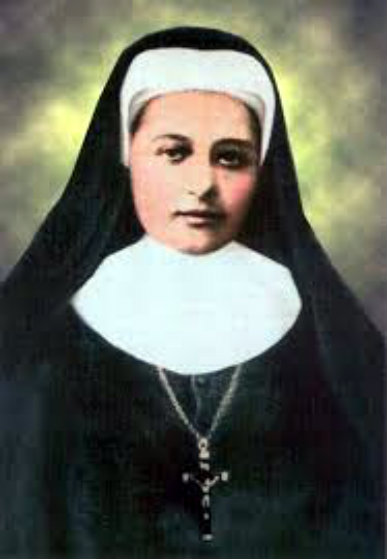
Saint of the Day – Blessed Eugénie Joubert (1876–1904) aged 28 – Religious of the Sisters of the Holy Family of the Sacred Heart – born on 11 February 1876 in Yssingeaux, Haute-Loire, France and died on 2 July 1904 in Liège, Belgium of tuberculosis.   Her life was noted for her staunch devotion to the Mother of God, her boundless care for the children in her charge and her commitment to her spiritual cultivation was well known and admired.eugnie-joubert-41bcf9f7-6f0e-4c5f-a356-be88ec48009-resize-750.jpeg

Eugénie Joubert was born in 1876 to Pierre Joubert and Antonia Celle as the fourth of eight children in France.

Joubert and her elder sister were placed in a boarding school that the Ursulines managed at Ministrel – both grew fond of their time there and came to like their experiences.   She made her First Communion on 29 May 1887.   On 6 October 1895 she joined a religious order at Aubervilliers (near Paris) and began as a postulant and then commenced her period of the novitiate, her mother bid her farewell and said:  “Don’t look back but become a saint!”.

On 13 August 1896 she received the habit from the order’s founder, Jesuit Louis-Etienne Rabussier and made her profession to him on 8 December 1897.   She followed the Spiritual Exercises twice in her novitiate.  She taught catechism to local children.

Bl Eugénie was assigned to be a catechist in Aubervilliers where she worked with poor children to prepare them for their First Communion.    She was then sent to Rome and later moved to Belgium in May 1904 but died soon after.eugenie joubert

Bl Eugénie began to suffer from tuberculosis in 1902 and died in Belgium in 1904.   She had once collapsed from exhaustion after suffering a haemorrhage.   Her breathing grew much more laboured in her final hours and she was presented with an image of the Child Jesus to which she uttered her final words:  “Jesus … Jesus … Jesus”.

Her remains are interred in the chapel of the Sisters of the Holy Family of the Sacred Heart in Dinant, Belgium.

The cause for sainthood started under Pope Pius XI on 1 June 1938 – she was titled as a Servant of God – and the confirmation of her life of heroic virtue allowed for St Pope John Paul II to name her as Venerable on 9 June 1983, that same pope Beatified her on 20 November 1994.eugnie-joubert-87dc5097-0c50-4361-8dba-3e73fe10172-resize-750

Posted in JESUIT SJ, SAINT of the DAY

Memorials of the Saints – 2 July

Bl Benedict Metzler
St Bernadino Realino SJ (1530-1616)
Biography:   https://anastpaul.com/2017/07/02/saint-of-the-day-2-july-st-st-bernadino-realino-sj/
Bl Eugénie Joubert (1876–1904)
Bl Giovanni da Fabriano Becchetti
St Jacques Fermin
Bl Jarich of Mariengaarde
St Jéroche
St Lidanus of Sezze
St Martinian of Rome
St Monegundis
St Oudoceus
Bl Peter of Luxembourg (1369-1387) Bishop and Cardinal
About Blessed Peter:   https://anastpaul.com/2018/07/02/saint-of-the-day-2-july-blessed-peter-of-luxembourg-1369-1387/
Bl Pietro Becchetti da Fabriano
St Processus of Rome
St Swithun

Martyred Soldiers of Rome – 3 saints: Three soldiers who were converted at the martyrdom of Saint Paul the Apostle. Then they were martyred, as well. We known nothing else about them but their names – Acestes, Longinus and Megistus. Martyred c68 in Rome, Italy

Martyrs in Carthage by Hunneric – 7 saints: A group of seven Christians tortured and murdered in the persecutions of the Arian Vandal king Hunneric for remaining loyal to the teachings of orthodox Christianity. They were some of the many who died for the faith during a period of active Arian heresy. – Boniface, Liberatus, Maximus, Rogatus, Rusticus, Septimus and Servus.

Martyrs of Campania – 10 saints: A group of ten Christians marytred together in the persecutions of Diocletian. The only details about them to have survived are their names – Ariston, Crescention, Eutychian, Felicissimus, Felix, Justus, Marcia, Symphorosa, Urban and Vitalis. Martyred in 284 in Campania, Italy.

Martyrs of Seoul – 8 saints: Additional Memorial – 20 September as part of the Martyrs of Korea.
A group of eight Christians who were martyred together as part of the lengthy persecutions in Korea.
• Agatha Han Sin-ae
• Antonius Yi Hyeon
• Bibiana Mun Yeong-in
• Columba Gang Wan-suk
• Ignatius Choe In-cheol
• Iuliana Gim Yeon-i
• Matthaeus Gim Hyeon-u
• Susanna Gang Gyeong-bok
They were martyred on 2 July 1801 at the Small West Gate, Seoul, South Korea. Beatified on 15 August 2014 by Pope Francis.

Posted in HYMNS, ON the SAINTS, PRAYERS of the SAINTS, QUOTES of the SAINTS, QUOTES on OBEDIENCE, QUOTES on TRUST and complete CONFIDENCE in GOD

Pope Francis to Canonise Blessed John Henry Newman (1801-1890) on 13 October 2019

The Vatican announces the date of the Canonisation of Blessed John Henry Newman (1801-1890), along with four others on Sunday 13 October 2019, the 28th Sunday in Ordinary Time, Year C.vatican announces canonisation of Bl John Henry Newman today 1 july 2019.jpg

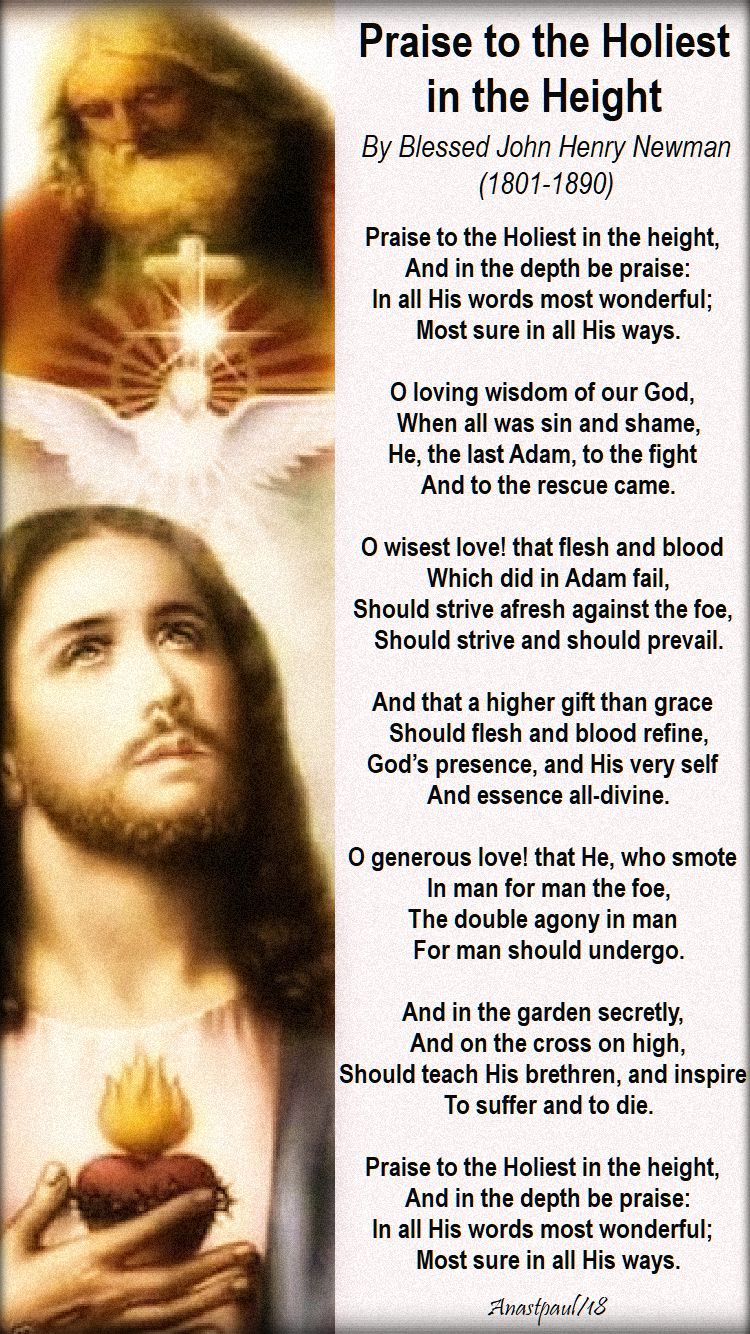
“Praise to the Holiest in the height
And in the the depth be praise.
In all His words most wonderful,
Most sure in all His ways!”
Blessed John Henry NewmanPraise to the Holiest in the Height - bl john henry newman - 9 oct 2018.jpg

In February, the Pope signed a decree recognising a second miracle attributed to Blessed John Henry Newman, the inexplicable healing of a woman with a “life-threatening pregnancy”.

Ordained a Catholic priest in 1847, he was made a cardinal by Pope Leo XIII in 1879, although he was not a bishop.   Newman’s conversion to the Catholic faith was controversial in England and resulted in him losing many friends, including his own sister who never spoke to him again.

The British cardinal founded the Oratory of St Philip Neri in England and was particularly dedicated to education, founding two schools for boys.   He died in Birmingham in 1890 at the age of 89.

In October, Cardinal Newman will become Britain’s first new saint since the Canonisation of St John Ogilvie (1579-1615) Martyr, Memorial 10 March, in 1976.

At Newman’s beatification Mass in Birmingham, England in September 2010, Pope Benedict XVI said that Newman’s “insights into the relationship between faith and reason, into the vital place of revealed religion in civilised society and into the need for a broadly-based and wide-ranging approach to education, were not only of profound importance for Victorian England but continue today, to inspire and enlighten many all over the world.   “What better goal could teachers of religion set themselves than Blessed John Henry’s famous appeal for an intelligent, well-instructed laity:   ‘I want a laity, not arrogant, not rash in speech, not disputatious but men who know their religion, who enter into it, who know just where they stand, who know what they hold and what they do not, who know their creed so well that they can give an account of it, who know so much of history that they can defend it…..” 

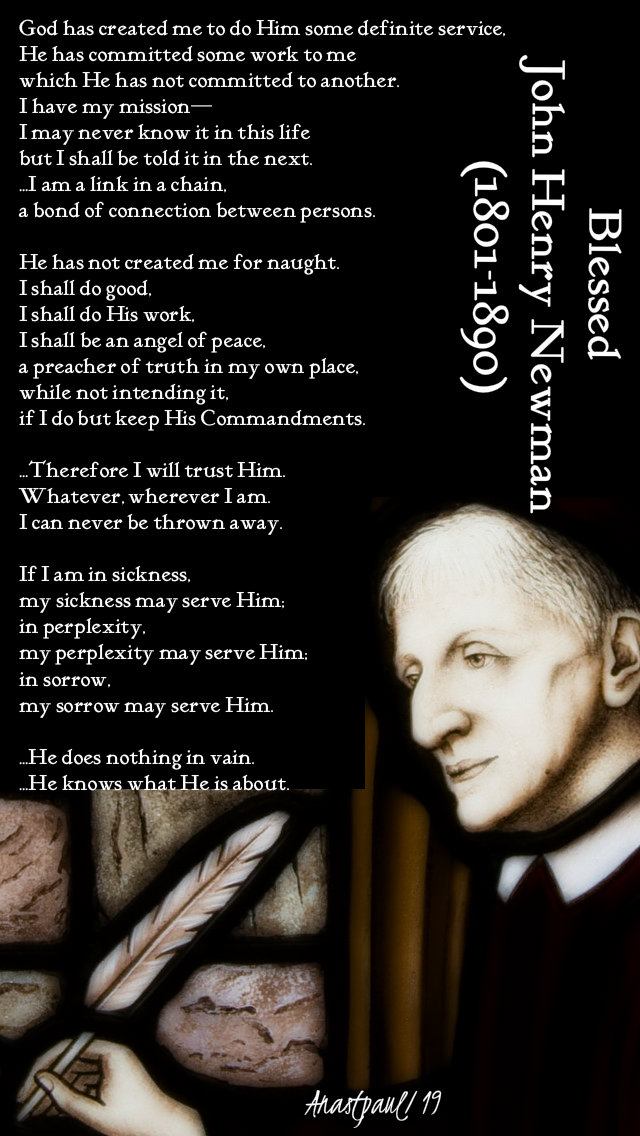
As Blessed, John Henry’s Memorial is 9 October, the date he was received into the Catholic Church.god has created me - bl john henry newman 3 feb 2019

“God has created me to do Him some definite service.
He has committed some work to me
which He has not committed to another.
I have my mission.
I may never know it in this life
but I shall be told it in the next.
I am a link in a chain, a bond of connection between persons.
He has not created me for naught.
I shall do good, I shall do His work.
I shall be an angel of peace,
a preacher of truth in my own place,
while not intending it,
if I do but keep His commandments.
Therefore, I will trust Him…
If I am in sickness, my sickness may serve Him,
in perplexity, my perplexity may serve Him…
He does nothing in vain…
He may take away my friends.
He may throw me among strangers.
He may make me feel desolate,
make my spirits sink,
hide the future from me.
Still, He knows what He is about.”

+++++++++++++++++++++

The Others to be Canonised on the same day are:

Sister Mariam Thresia of India is the founder of the Congregation of the Sisters of the Holy Family.

Italian Sister Giuseppina Vannini is the founder of the Daughters of Saint Camillus.

Brazilian Sister Dulce Lopes Pontes of the Congregation of the Missionary Sisters of the Immaculate Conception of the Mother of God.

Marguerite Bays of Switzerland, of the Third Order of Saint Francis of Assisi.

+++++++++++++++++++++

Posted in CATHOLIC DEVOTIONS of the Month

The Holy Father’s Prayer Intention for July 2019

The Holy Father’s Prayer Intention
for July 2019

The Integrity of Justice

That those who administer justice,
may work with integrity
and that the injustice
which prevails in the world,
may not have the last word.

the holy father's prayer intention july 2019.jpg

Posted in CATHOLIC DEVOTIONS of the Month, CATHOLIC-PRAYERS OF THE CHURCH, PRAYERS for VARIOUS NEEDS, PRAYERS of the CHURCH, The MOST PRECIOUS BLOOD

July Devotion – The Most Precious Blood

July Devotion – The Most Precious Blood

Holy Mother Church dedicates the month of July to the Precious Blood of Jesus, which was “shed for the many, for the remission of sins” (Matthew 26:28). Like the Sacred Heart of Jesus, the subject of Catholic devotion in June, the Precious Blood has long been venerated for its role in our redemption.july the month of the most precious blood - 1 july 2019.jpg

Devotion to the “Body Parts” of Jesus
Many non-Catholics find Catholic devotion to the “body parts” of Jesus Christ to be a little odd. In addition to the Sacred Heart and the Precious Blood, there are devotions to the Five Wounds (in Christ’s hands, feet, and side), to the shoulder wound, where Christ carried the Cross and to the wounds caused by the crown of thorns, to name just a few.

Faced with Protestant discomfort with these devotions, many Catholics have abandoned or downplayed them. But we should not do that. These devotions provide a living witness to our belief in the Incarnation of Jesus Christ. Our Saviour is not an abstraction, He is God-Made-Man. And as the Athanasian Creed tells us, in becoming man, Christ assumed humanity into the Godhead.

It’s an awesome thought – our physical nature is united to God through the Person of Jesus Christ. When we venerate Christ’s Precious Blood or His Sacred Heart, we aren’t making an idol out of Creation, we are worshiping the One True God Who so loved the world that He gave His Only Begotten Son to save us from everlasting death!

Christ’s Precious Blood, like His Sacred Heart, is a symbol of His love for all mankind.   In this prayer, we recall the shedding of His Blood and ask, that He may guide our live,s so that we may be worthy of Heaven.

Lord Jesus Christ,
who came down from heaven to earth
from the bosom of the Father
and shed Thy Precious Blood
for the remission of our sins,
we humbly beseech Thee,
that in the day of judgment
we may deserve to hear,
standing at Thy right hand:
“Come, ye blessed.”
Who lives and reigns forever and ever.
Amen

Posted in PRACTISING CATHOLIC, SAINT of the DAY

Thought for the Day – 1 July – Charity … the Mirror of the Church

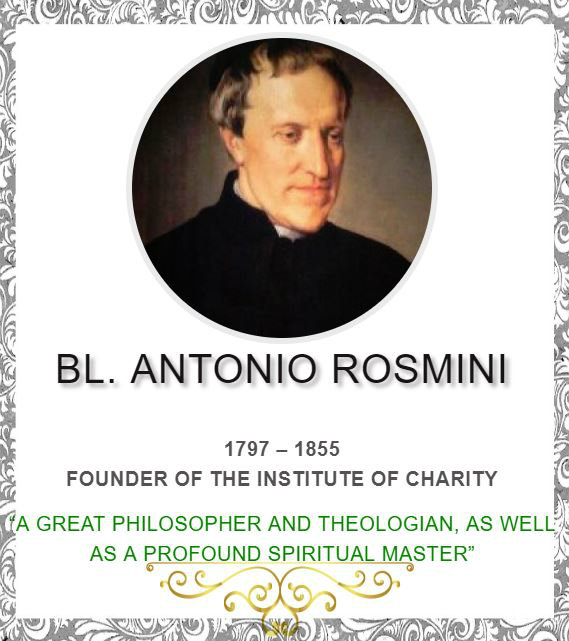
Thought for the Day – 1 July – The Memorial of Bl Antonio Rosmini (1797-1855) and the first day of the Month of the Most Precious Blood

The Pope’s invitation to write books to present, in a modern language, the doctrine of the Church was accomplished by publishing works that were destined to produce fruits well into the future. His prodigious act  ivity in many fields was supported by a mystical life of prayer, which included the daily offering of his blood in union with the precious Blood of JESUS.   On 18 November 2007, he was proclaimed a Blessed and was presented as a luminous model of intellectual charity.

In his exhortation, Veritatis Gaudium of 29 January 2018, Pope Francis, quoting words from the book The Five Wounds of Holy Church, published by Rosmini in 1848, issued an invitation to follow Rosmini’s recommendations for the formation of clergy and of the faithful.

The fundamental dimensions of the charism
The Institute, as a religious family born of Charity, offers God’s help for sanctification in the perfection of charity.   It is a gift for all categories of people, because God does not exclude anyone from His love.   In practice, the following groups belong to the Institute: brothers and priests with vows (Rosminians), the Sisters of Providence (Rosminian Sisters), Adopted Sons and Ascribed members.   These latter do not live in communities but participate in the charism while following their chosen way of life.   They can be men and women, married couples, diocesan priests, even bishops!

Rosmini did not receive from God a call to any specific work of charity, like many other founders and thus the Institute is meant to mirror the Church in its identity and in its mission of universal charity.   The development of our charism has been conditioned and slowed down by historical and ecclesial events but in recent years it has begun to increase.

The fundamental dimensions of the spirituality of our charism
Union with God begins with justice, that is, with the commitment to personal purification and detachment from sin.  It grows into adherence to grace in such a way that we desire only and in an orderly fashion, to do the will of God, manifested through the duties of our state of life, the voice of the Church, the indications of superiors and the demands of our neighbours.   All this is masterly expressed in the pages of Maxims of Christian Perfection.   Since Rosmini affirms the supreme value of the person, the Rosminian way enhances and directs a conscious and mature Christian witness.

The fundamental dimensions of our specific charismatic mission
Indifference to one’s own choices becomes total openness to calls from God and from the Church.   Both Rosminian brethren and Sisters put their total being at the disposal of charity.   Thanks to the marvellous conjunction of consecrated and lay life, the Rosminian charismatic Family is the mirror of the Church.   It tends to promote and develop works of charity that reach the most important places of the Church and society.

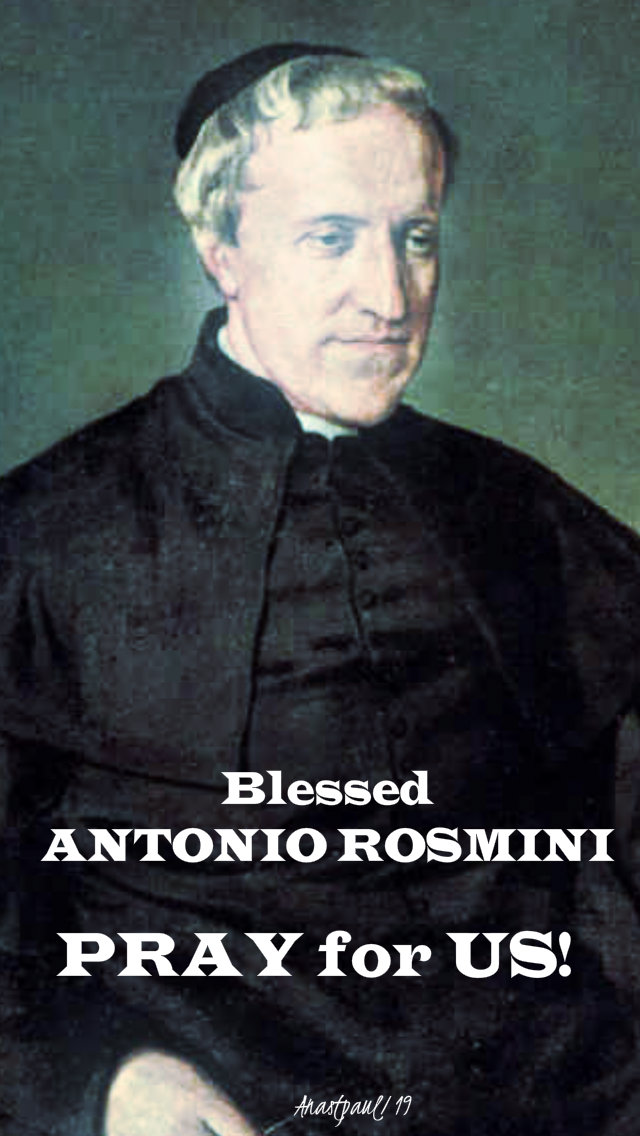
Blessed Antonio Rosmini, Pray for us!bl antonio rosmini pray for us no 2 - 1 july 2019.jpg

Posted in CATHOLIC DEVOTIONS of the Month, QUOTES of the SAINTS, QUOTES on SACRIFICE, QUOTES on SANCTITY, QUOTES on the CROSS of CHRIST, The MOST PRECIOUS BLOOD

Quote of the Day – 1 July – The Blood of Christ

Quote of the Day – 1 July – Monday of the Thirteenth week in Ordinary Tim, Year C – July the Month of the Most Precious Blood

“The Blood of Christ
is His sacrifice
applied to us,
it enters the souls
of the redeemed,
it is the
inextinguishable
source of all heroism!”

St John XXIII (1881-1963)the blood of christ is his sacrifice - st john XXIII 1 july 2019.jpg

Posted in MORNING Prayers, QUOTES of the SAINTS, SAINT of the DAY

One Minute Reflection – 1 July – He totally encloses us …

One Minute Reflection – 1 July – Monday of the Thirteenth week in Ordinary Time, Year C – Today’s Gospel Matthew 8:18–22 and the Memorial of Bl Antonio Rosmini (1797-1855)

“Jesus answered him, “Foxes have dens and birds of the sky have nests, but the Son of Man has nowhere to rest his head.”…Matthew 8:20matthew 8 20 - foxes have dens 1 july 2019.jpg

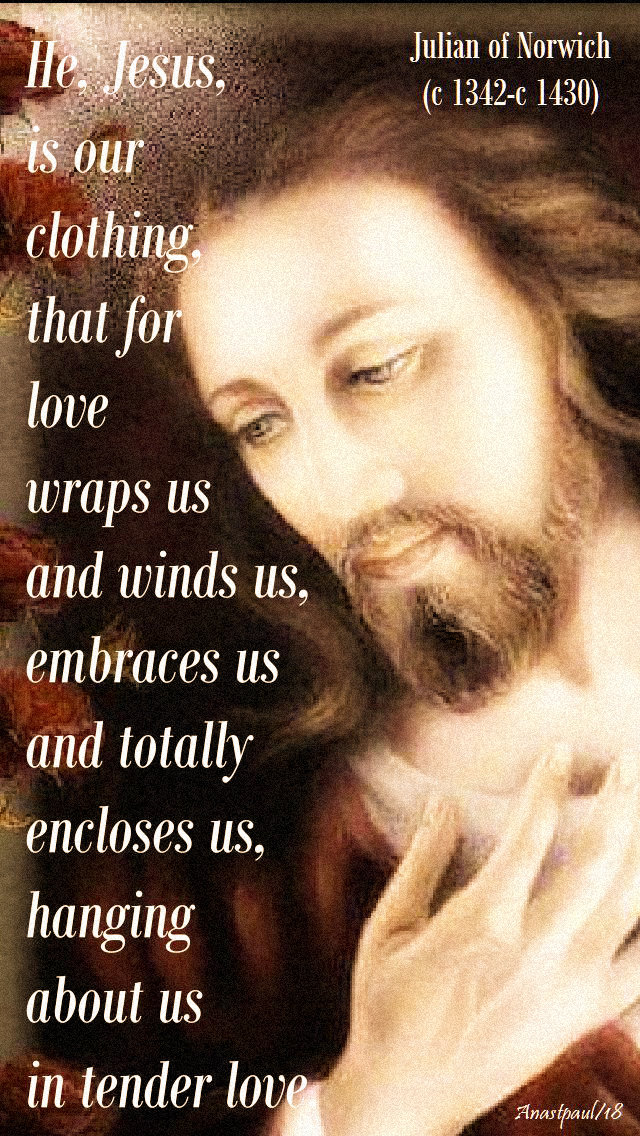
REFLECTION – “He [ Jesus] is our clothing, that for love wraps us and winds us,
embraces us and totally encloses us, hanging about us in tender love.”… Blessed
Julian of Norwich (c 1342-c 1430)he-jesus-is-our-clothing-julian-of-norwich-1-july-2019.jpg

PRAYER – Lord God, be the beginning and the end of all that we are and do and say. Prompt our actions with Your grace, may Your light be our only way, may Your commands be our only need and complete all, with Your all-powerful help.   Blessed Antonio Rosmini who gave all for the sake of glory of God, pray for us!   We make our prayer through Christ our Lord in the unity of the Holy Spirit, one God with You, forever and ever, amen.bl antonio rosmini praty for us 1 july 2019.jpg

Posted in CATHOLIC-PRAYERS OF THE CHURCH, Our MORNING Offering, PRAYERS of the CHURCH, PRAYERS of the SAINTS, The MOST PRECIOUS BLOOD

Our Morning Offering – 1 July- St Gertrude’s Prayer to the Father

Our Morning Offering – 1 July – Monday of the Thirteenth week in Ordinary Time, Year C – July the Month of the Most Precious Blood

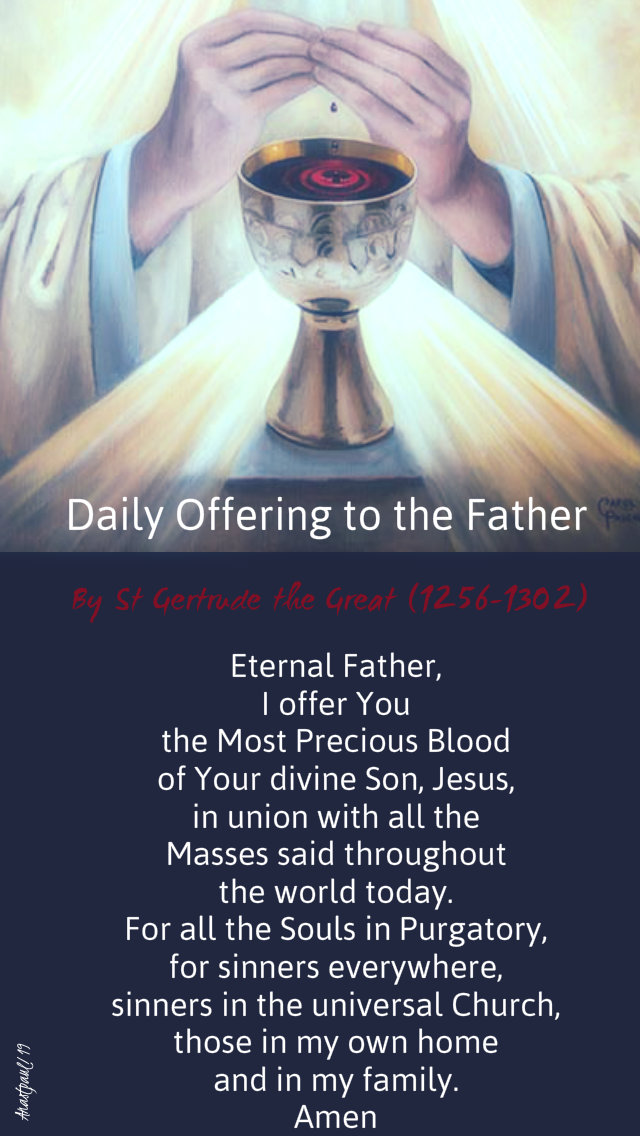
Daily Offering to the Father
by the Merits of the Most Precious Blood
By St Gertrude the Great (1256-1302

Eternal Father,
I offer You
the Most Precious Blood
of Your divine Son, Jesus,
in union with all the
Masses said throughout
the world today.
For all the Souls in Purgatory,
for sinners everywhere,
sinners in the universal Church,
those in my own home
and in my family.
Amendaily offering to the father  - most precious blood - st gertrude 1 july 2019.jpg

Posted in PRAYERS to the SAINTS, SAINT of the DAY, VATICAN Resources

Saint of the Day – 1 July – Blessed Antonio Rosmini (1797-1855)

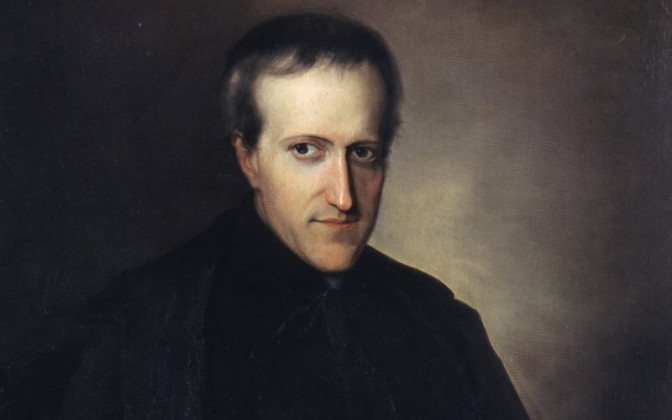
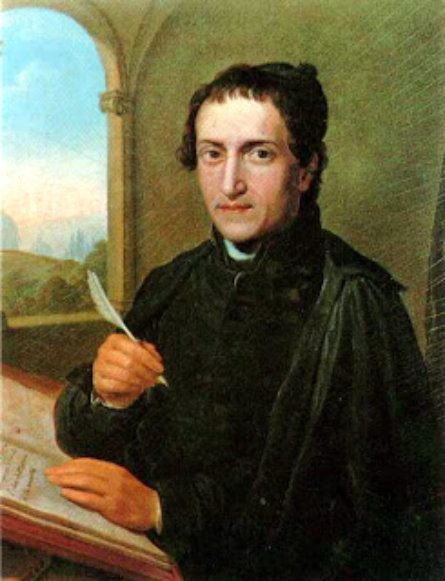
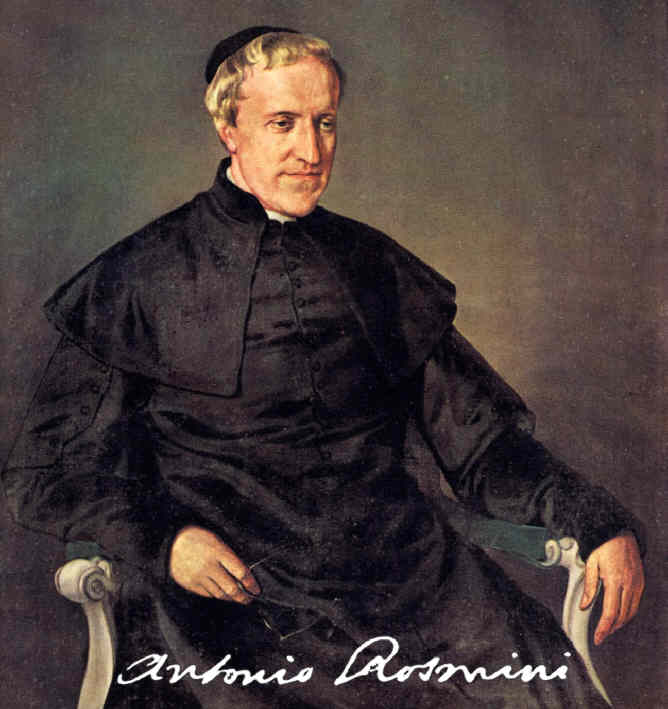
Saint of the Day – 1 July – Blessed Antonio Rosmini (1797-1855) aged 58 – Priest, Founder of the Institute of Charity (also known as the Rosminians), Philosopher, Writer, pioneer of the concept of social justice and was a key figure in Italian Liberal Catholicism.   Born on 24 March 1797 in Rovereto, Austrian Tyrol (modern Trent, Italy) and died on 1 July 1855 in Stresa, Viterbo, Italy of natural causes.   bl-rosmini-ritratto-2-800x500-d0bad0bed0bfd0b8d18f1.jpg

Antonio Rosmini was born on 24 March 1797 to Pier Modesto and Giovanna dei Conti Formenti di Riva at Rovereto, a very “Italian” town although part of the Austrian Empire since 1509.   He was baptised the following day and received his early education locally.

In 1816 he enrolled at the University of Padua, Italy, where he received doctorates in theology and canon law.   After his studies he returned to Rovereto to prepare for Holy Orders.

In February 1820 he accompanied his sister, Margherita, to Verona where the Marquess Maddalena of Canossa (now Blessed) had founded a religious institute.   During the visit Maddalena invited him to found a male religious institute as a twin to her own institute. While the young man politely declined, her invitation in time proved prophetic.

Antonio was ordained a priest on 21 April 1821 at Chioggia, Italy.  bl antonio rosmini.jpgIn 1823 he travelled to Rome with the Patriarch of Venice, who arranged an audience for him with Pope Pius VII.   In that audience the Pontiff encouraged him to undertake the reform of philosophy.
In 1826 he went to Milan to continue his research and publish the results of his philosophical studies.   He wrote on many subjects, including the origin of ideas and certitude, the nature of the human soul, ethics, the relationship between Church and State, the philosophy of law, metaphysics, grace, original sin, the sacraments and education.

On Ash Wednesday, 20 February 1828, Fr Rosmini withdrew to write the Constitutions of the budding Institute of Charity, in which he incorporated the principle of passivity (to be concerned with one’s personal sanctification until God’s will manifests itself to undertake some external work of charity) and the principle of impartiality (to free one of any personal preference in assuming a work of charity).

To assure himself of God’s will in his philosophical and foundational work, Rosmini went to Rome a second time, in November 1828 and there received Pope Leo XII’s support.   On 15 May 1829 he met with the new Pope, Pius VIII, who confirmed his double mission as philosopher and founder.   During this visit to Rome, Fr Rosmini published “Maxims of Christian Perfection” and “Origin of Ideas”, winning the admiration of many scholars.

By 1832 the Institute of Charity had spread to Northern Italy and by 1835 it reached England, where the community enjoyed substantial growth.   In England the Rosminians are credited with introducing the use of the Roman collar and cassock and the practice of wearing the religious habit in public.   They were known for preaching missions, the practice of the Forty Hours, May devotions, the use of the scapular, novena celebrations, public processions and the blessing of throats on the feast of St Blaise.bl antonio rosmini.header.jpg

Pope Gregory XVI approved the Constitutions of the Institute of Charity on 20 December 1838.   On 25 March 1839 vows were taken by 20 Italian and 6 British priests  . On 20 September 1839 Fr Rosmini was appointed provost general for life.

This happy period of growth and apostolic success, however, was tempered by opposition to his intellectual and philosophical writings from 1826 until his death.

Primarily his “Treatise on Moral Conscience” (1839) led to a sharp, 15-year controversy which required more than one Papal injunction to silence the “Rosminian Question”. Another important, controversial work was “The Five Wounds of the Church” (1832).

Fr Rosmini found himself wedged between the obligation to renew Catholic philosophy and finding his works on the Index.   But his obedience to the Church was admirable: ” In everything, I want to base myself on the authority of the Church and I want the whole world to know that I adhere to this authority alone” (Congregation for the Doctrine of the Faith, “Note on the Force of the Doctrinal Decrees”, L’Osservatore Romano English edition [ORE], 25 July 2001, p. 9).

To close the issue definitively, the Pontiff submitted all Rosmini’s works to examination by the Congregation of the Index.   On 3 July 1854, it was decreed:  “All the works of Antonio Rosmini-Serbati that have recently been examined are to be dismissed [from the Index or any error] and this examination in no way detracts from the good name of the author, nor of the religious Society founded by him, nor from his life and singular merits towards the Church” (R. Malone, “Historical Overview of the Rosmini Case”, ORE, 25 July 2001, p. 10).

Less than a year after this Decree Fr Antonio Rosmini died on 1 July 1855 at Stresa, Italy, at age 58…Vatican.va

He was Beatified on 18 November 2007 by Pope Benedict XVI.

400px-9350_-_Milano_-_Giardini_Pubblici_-_Monumento_ad_Antonio_Rosmini_-_Foto_Giovanni_Dall'Orto_22-Apr-2007
Monument to St Antonio Rosmini in Milan (1896).

His body is interred in the Church of the Santissimo Crocifisso built by him in Stresa.

This slideshow requires JavaScript.

Today the Rosminians operate on 5 continents and continue to flourish.

O God, light of the faithful and shepherd of souls,
who set blessed Antonio in the Church
to feed your sheep by his words and form them by his example,
grant that through his intercession
we may keep the faith he taught by his words
and follow the way he showed by his example.
Through our Lord Jesus Christ, Your Son,
who lives and reigns with You in the unity of the Holy Spirit,
one God, forever and ever. Amen

(from The Roman Missal: Common of Pastors)BL ANTONIO SNIP FROM THE ROSMINIANS.JPG

Posted in SAINT of the DAY, The MOST PRECIOUS BLOOD

Memorials of the Saints – 1 July

The Most Precious Blood of Our Lord, Jesus Christ:   The feast was removed from the General Roman Calendar in 1969, “because the Most Precious Blood of Christ the Redeemer is already venerated in the solemnities of the Passion, of Corpus Christi, of the Sacred Heart of Jesus and in the feast of the Exaltation of the Holy Cross.” However, as this is the Month of the Most Precious Blood, this day, is most worthy of celebrating this Feast Day everyday.

St Junipero Serra (1713-1784) (Optional Memorial, USA)
Biography:
https://anastpaul.wordpress.com/2017/07/01/saint-of-the-day-st-junipero-serra-o-f-m-apostle-of-california-1-july/

St Aaron of Caerleon
St Aaron the Patriarch
Bl Antonio Rosmini-Serbati (1797-1855)
St Arnulf of Mainz
Bl Assunta Marchetti
St Atilano Cruz Alvarado
St Calais of Anisole
St Carilephus
St Castus of Sinuessa
St Cewydd
St Concordius of Toledo
St Cuimmein of Nendrum
St Domitian of Lerins
Bl Elisabeth de Vans
St Eparchius of Perigord
St Eutychius of Umbria
St Esther the Queen
St Gall of Clermont
Bl George Beesley
St Golvinus of Leon
St Gwenyth of Cornwall
St Huailu Zhang
Bl Jan Nepomucen Chrzan
Bl Jean-Baptiste Duverneuil
St Julius of Caerleon
St Justino Orona Madrigal
St Juthware
St Leonorious of Brittany
St Leontius of Autun
Bl Luis Obdulio Navarro
St Martin of Vienne
Bl Montford Scott
Bl Nazju Falzon
St Nicasius of Jerusalem
St Oliver Plunkett (1629-1681) Martyr

Bl Pierre-Yrieix Labrouhe de Laborderie
St Secundinus of Sinuessa
St Servan of Culross
St Theobald of Vicenza
St Theodoric of Mont d’Or
Bl Thomas Maxfield
Bl Tullio Maruzzo
St Veep

Martyrs of Rome – 6 saints: Six Christians who were martyred together. No details have survived except their names – Esicius, Antonius, Processus, Marina, Serenus and Victor. They were martyred in Rome, Italy, date unknown.