Quote of the Day – 21 November – Thursday of the Thirty Third week in Ordinary Time, Year C and Memorial of the Presentation of the Blessed Virgin Mary
“Hail, holy throne of God, divine sanctuary, house of glory, jewel most fair, chosen treasure house and mercy seat for the whole world, heaven showing forth the glory of God.
Purest Virgin, worthy of all praise, sanctuary dedicated to God and raised above all human condition, virgin soil, unploughed field, flourishing vine, fountain pouring out waters, virgin bearing a child, mother without knowing man, hidden treasure of innocence, ornament of sanctity, by your most acceptable prayers, strong with the authority of motherhood, to our Lord and God, Creator of all, your Son who was born of you without a father, steer the ship of the Church and bring it to a quiet harbour.”
St Germanus (378-448)
“Give thanks to Almighty God who resists the proud and gives grace to the humble and offer Him all the glory that this Maiden, accorded to His majesty, by her practice of the richest humility, during her childhood and throughout the rest of her life.”
One Minute Reflection – 21 November – Thursday of the Thirty Third week in Ordinary Time, Year C, Gospel: Luke 19:41-44 and Memorial of the Presentation of the Blessed Virgin Mary
And when he drew near and saw the city he wept over it, saying, “Would that even today you knew the things that make for peace!”…Luke 19:41-42
REFLECTION – “I rejoiced because they said to me, ‘We will go up to the house of the Lord.’ And now we have set foot within your gates, O Jerusalem” (Ps 122[121]:1-2). What Jerusalem is this? On earth there is a city of this name but it is a mere shadow of that other Jerusalem. What kind of happiness is there in standing in a Jerusalem here below that is unable to stand of itself but which fell to the ground in ruins?… It is not of the Jerusalem here below that someone speaks who has such great love, such great longing, such great desire to come to the Jerusalem, “our mother”, of which Saint Paul says that it is “eternal in the heavens” (Gal 4:26; 2 Cor 5:1)…
“O Jerusalem, may your peace be in your strength” (Ps 122[121]:7). That is to say, may your peace be in your love, for your love is your strength. Hear the Song of Songs: “Love is strong as death” (8:6)… And indeed, love destroys what we have been, so that we might become, through a sort of death, what we were not… This was the sort of death that was working in him who said: “The world is crucified to me and I to the world” (Gal 6:14). It was of this death that the same apostle was speaking when he said: “You have die, and your life is hidden with Christ in God” (Col 3:3). Yes, “love is strong as death”. If love is strong, then it is powerful, it has great strength, it is strength itself… So may your peace be in your strength, O Jerusalem. May your peace be in your love.” … St Augustine (354-430) Father & Doctor – Discourses on the Psalms, Ps 121[122]:1, §3,12
PRAYER – Lord, as we honour the memory of the Blessed Virgin Mary and seek her help, grant that we, like her, may shine in the fullness of Your grace. Through Christ our Lord, with the Holy Spirit, God forever, amen.
The Presentation of the Blessed Virgin Mary – 21 November
While the Presentation of the Blessed Virgin Mary was not generally celebrated in the West until the 11th century, it appears in most of the earliest calendars of the Eastern Churches. Derived from accounts in apocryphal literature, especially the Protoevangelium of James, the feast seems first to have appeared in Syria, where the Protoevangelium and other apocryphal books, such as the Infancy Gospel of Thomas and the Gospel of Pseudo-Matthew, originated. The Presentation of the Blessed Virgin Mary first rose to prominence, however, in Jerusalem, where it was associated with the dedication of the Basilica of Saint Mary the New.
That basilica was built near the ruins of the Temple in Jerusalem and the Protoevangelium of James and other apocryphal works, told the story of Mary’s presentation at the Temple at the age of three. In gratitude for being granted a child after years of infertility, Mary’s parents, Saints Joachim and Anna, had vowed to dedicate Mary to the service of God at the Temple. When they presented her at the Temple at the age of three, she stayed willingly, showing her dedication to God even at that young age.
Presentation of the Virgin in the Temple, Testa
The Protoevangelium of James, while an extra-biblical document, is the source of many details of Mary’s life that became universally accepted by the Church, including the names of her parents, the story of her birth, her age at her betrothal to Saint Joseph and Saint Joseph’s advanced age and his status as a widower with children by his first wife. It also played a large role among Christians, both Eastern and Western, in recognising Mary as the new Temple, the true Holy of Holies. When Mary left the Temple at the age of 12 after her betrothal to Joseph, she remained pure and chaste and at the Annunciation, God came to dwell in her.
The Feast of the Presentation of the Blessed Virgin Mary first made its way to the West through monasteries in Southern Italy in the ninth century, by the 11th century, it had spread to other locales but was by no means universally celebrated. Under the influence of a French nobleman, Philippe de Mazières, Pope Gregory XI began celebrating the feast during the Avignon papacy.
Pope Sixtus IV first placed the Presentation of the Blessed Virgin Mary on the universal calendar in 1472 but in the Tridentine reform of the calendar in 1568, Pope Pius V removed the feast. It was restored 17 years later by Pope Sixtus V and remains in the Roman calendar today as a memorial.
La Pequeñita / Our Lady of Quinche, Ecuador (1586) – 21 November – Patron of Ecuador:
Also known as – • Virgen de Monte del Sol Virgin of the Rock Devotion to the Blessed Virgin Mary in the image of a cedar Statue in Quinche, Ecuador. About two foot tall, it was carved in 1586 by Don Diego de Robles, an artist who created many other images of Mary. He carved it on order from the Lumbici Indians, who were unable to pay for it at delivery. Diego traded the Statue to the Oyacachi Indians in exchange for a large load of cedar for future projects. Legend says that the vision of Our Lady appeared in a cave to some of the Oyacachi, promising to the protect their children; the image Diego brought for trade looked just like the lady in the vision. The Oyacachi asked Diego to stay and help them build a shrine for the statue; he declined and started home. His horse threw him as they crossed a bridge and Diego was miraculously saved after he had prayed for Our Lady’s intervention; he understood that this was a sign, went back to the Indian, and built an altar for the Statue. In 1604 the Statue was moved to the local village of Quinche and a Chapel was built for it. A new Sanctuary was built in 1630 where the Statue stayed until the Church was destroyed in an earthquake in 1869. The Church was re-built and housed the image until moved to another new Church in 1928; in 1985 the Vatican proclaimed the Chapel to be a national Sanctuary of Ecuador. Many miracles, especially cures, have been associated with the image and there is a huge catalogue of songs in several languages that have been written in devotion over the centuries. St Amelberga of Susteren.
St Celsus the Martyr St Clement the Martyr St Demetrius of Ostia St Digain Bl Eoin O’Mulkern St Pope Gelasius I Bl Gelasius O’Cullenan St Heliodorus of Pamphylia St Hilary of Vulturno St Honorius of Ostia Bl Maria Franciszka Siedliska St Maurus of Cesena St Maurus of Porec St Maurus of Verona Bl Nicholas Giustiniani St Rufus of Rome — Martyrs of Asta – 3 saints: Three Christians martyred together for their faith during the persecutions of Diocletian. The only details about them to survive are their names – Eutychius, Honorius and Stephen. They were martyred in c 300 at Asta, Andalusia, Spain.
Thought for the Day – 20 November – Wednesday of the Thirty Third week in Ordinary Time, Year C, Gospel: Luke 19:11–28 and the Memorial of Blessed Maria Fortunata Viti OSB (1827-1922)
The Heart of the Just Man will Rejoice in the Lord
Saint Augustine (354-430) Bishop and Great Western Father and Doctor of the Church
An excerpt from Sermon 21
“The just man will rejoice in the Lord and put his hope in Him, the hearts of all good men will be filled with joy. We must surely have sung these words with our hearts as well as with our voices. Indeed, the tongue of the Christian expresses his deepest feelings when it addresses such words to God. The just man will rejoice, not in the world but in the Lord. Light has dawned for the just, Scripture says in another place and joy for the upright of heart. Were you wondering what reason he has for joy? Here you are told – the just man will rejoice in the Lord. Another text runs – Delight in the Lord and he will give you your heart’s desires.
What are we instructed to do then and what are we enabled to do? To rejoice in the Lord. But who can rejoice in something he does not see? Am I suggesting that we see the Lord then? No, but we have been promised that we shall see Him. Now, as long as we are in the body, we walk by faith, for we are absent from the Lord. We walk by faith and not by sight. When will it be by sight? Beloved, says John, we are now the sons of God, what we shall be has not yet been revealed but we know that when it is revealed we shall be like Him, because we shall see Him as He is. When this prophecy is fulfilled, then it will be by sight.
That will be the great joy, the supreme joy, joy in all its fullness. Then we shall no longer drink the milk of hope but we shall feed on the reality itself. Nevertheless, even now, before that vision comes to us, or before we come to that vision, let us rejoice in the Lord, for it is no small reason for rejoicing to have a hope that will some day be fulfilled.
Therefore, since the hope we now have inspires love, the just man rejoices, Scripture says, in the Lord but because he does not yet see, it immediately goes on to say and hopes in Him.
Yet already we have the first-fruits of the Spirit and have we not also other reasons for rejoicing? For we are drawing near to the one we love and not only are we drawing near—we even have some slight feeling and taste of the banquet we shall one day eagerly eat and drink.
But how can we rejoice in the Lord if He is far from us? Pray God He may not be far. If He is, that is your doing. Love and He will draw near, love and He will dwell within you. The Lord is at hand, have no anxiety. Are you puzzled to know how it is that He will be with you if you love? God is love.
“What do you mean by love?” you will ask me. It is that which enables us to be loving. What do we love? A good that words cannot describe, a good that is forever giving, a good that is the Creator of all good. Delight in Him from whom you have received everything that delights you. But in that I do not include sin, for sin is the one thing that you do not receive from Him. With that one exception, everything you have comes from Him.”
Quote/s of the Day – 20 November – Wednesday of the Thirty Third week in Ordinary Time, Year C, Gospel: Luke 19:11–28 and the Memorial of Blessed Maria Fortunata Viti OSB (1827-1922)
“‘I tell you, that to everyone who has, will more be given but from him who has not, even what he has will be taken away.”
Luke 19:26
“The Love and the Power of God!”
Blessed Maria Fortunata Viti (1827-1922)
“Fear is the wrong attitude – the servant who is afraid of his master and fears his return, hides the coin inthe earth and it does not produce any fruit …. However, the parable places a greater emphasis on the good fruits brought by the disciples, who, happy with the gift they received, did not keep it hidden, with fear and jealousy but made it profitable by sharing it and partaking in it. Yes, what Christ has given us is multiplied in it’s giving!”
One Minute Reflection – 20 November – Wednesday of the Thirty Third week in Ordinary Time, Year C, Gospel: Luke 19:11–28 and the Memorial of Blessed Maria Fortunata Viti OSB (1827-1922)
“He called ten of his servants and gave them ten gold coins and told them, ‘Engage in trade with these until I return.'” … Luke 19:13
REFLECTION – “What have we to offer God? Faith and love. That is where we find what God asks of us, as it is written: “And now, Israel, what does the Lord your God ask of you but to fear the Lord your God and follow his ways exactly, to love and serve the Lord your God with all your heart and all your soul” (Dt 10:12). These are the offerings and these the gifts we should make to the Lord. And if we are to offer Him these gifts with all our heart, then first of all, we must get to know Him. We must have drunk of the knowledge of His goodness from the deep waters of His well…
People who deny that salvation lay within the power of the our freedom, should be ashamed on hearing these words! Would God ask something from us if we weren’t capable of responding to God’s demand and giving Him what he owed? For there is God’s gift but also our contribution. For example, it was well within that man’s power that one gold coin should make ten or five more but, that the man should possess that gold coin, with which to produce ten more, in the first place, belonged to God. Once he had given God the ten gold coins he had made, the man received a new sort of gift – not money this time but the power and sovereignty over ten cities.
In the same way, God asked Abraham to make an offering of his son, Isaac, on the mountain He would show him. And Abraham, without hesitation, offered his only son – he laid him on the altar and drew out his knife to slay him. But at once a voice restrained him and a ram was given him to be sacrificed in his son’s place (Gn 22). So you see – what we offer God depends on us but, this offering is asked of us, so that, in making our gift, we might witness to our love for God and faith in Him.” … Origen (c185-253) Priest and Theologian – Homilies on the Book of Numbers, no. 12, #3
PRAYER – Lord God, true Light and Creator of light, grant that faithfully pondering on all that is holy, we may ever live in the splendour of Your presence. Protect us by Your power throughout our days, that even as You enable us to begin, do not let us turn aside to any sin but let our every thought, word and deed, aim at doing what is pleasing in Your sight. Listen, we pray, to the intercession of Blessed Maria Fortunata Viti on our behalf. Through Christ our Lord, with the Holy Spirit, God for all eternity, amen.
Our Morning Offering – 20 November – Wednesday of the Thirty Third week in Ordinary Time, Year C
Lord, Teach me How to Pray By St Vincent de Paul (1581-1660)
Oh Lord,
You selected the poor
and simple people to be Your Apostles.
Look upon Your poor servant
kneeling before You now.
I recognise that I am simple and poor too.
Dear Lord, please teach me how to pray
as You taught Your disciples
upon their humble request.
If it pleases You in Your goodness
to grant me that grace,
I shall be able to pray well
and much better
than I could ever could hope for
if left to my own efforts.
Lord, I trust that You will bless me
with the fulfilment of this request.
Amen
Saint of the Day – 20 November – Blessed Maria Fortunata Viti OSB (1827-1922) Benedicitine Religious, Apostle of Eucharistic Adoration and of Prayer, the gift of prophesy and miracles – born on 10 February 1827 in Veroli, Frosinone, Italy as Anna Felicia Viti and died on 20 November 1922 in Veroli, Frosinone, Italy of natural causes. Patronages – against poverty, of the poor, against temptations, loss of parents, against mental illness and the mentally ill.
Anna Felicia Viti was born in Veroli, in Italy’s Province of Frosinone, on 10 February 1827. Her father was Luigi Viti, a landowner who was a gambling addict and a heavy drinker and her mother Anna, died when Maria was fourteen years old. The third eldest of nine children, Maria was burdened with the responsibility of raising the other children. In order to support her family, she worked as a housekeeper. Her father’s alcoholism grew worse and so Maria’s employment constituted the majority of the family’s income. For a while, she was wooed by a young man from Alatri but she decided to enter religious life instead.
Maria joined the Benedictines at the Monastery of San Maria de’Franconi in Veroli on 21 March 1851, at the age of 24. After her religious profession, she took the name Maria Fortunata.
She never went to school and remained illiterate and although she spent more than 70 years in the Convent, she never progressed beyond the office of housekeeper and there she grew in the vital spiritual virtue of humility. During her long life, she knew nothing but assiduous work and constant prayer. She invoked the Lord with such passion and devotion it would edify her fellow Sisters. Admiring the beauties of nature she would be in the habit of often exclaiming: “The Love and the Power of God!” which remained her favourite expression. She dedicated her prayers and sacrifices in particular for the needy, for derelicts and for the redemption of sinners.
Blessed Maria confided to her fellow Sisters, that the devil bothered her both day and night mocking her and hitting her in order to try her patience and humility. Her confessor, Father John Pasqualiti, wrote: “With tears in her eyes, Sister Fortunata confided to me that the devil insulted her with the most vile and crude expressions. Often he threatened and made life difficult for her but she never despaired. These insults became all the more frequent when the Saint was near her death. Many of these disturbances were also heard and witnessed by her fellow Sisters.” – Apparitions of Angels & Demons.
She died a holy death on 20 of November 1922. She was a wonderful example of humility.
After Sister Maria’s death, miracles were reported at her grave site. Also, reports of miracles were attested to during her lifetime, including certain episodes that proved her gift of prophecy. According to one story, she began to cry during Mass, because she had seen that the celebrating priest would leave his calling and she was filled with sorrow for him. She also predicted that another priest would leave the priesthood but that he would repent and come back. In addition, two women who had been healed of meningitis in their childhood attributed their cures to her prayers.
In 1935, her remains were transferred from a mass grave to the Abbey Church and the process of her Canonisation was begun. Sister Maria Fortunata was declared Venerable on 8 April 1964 by St Pope Paul VI and Beatified on 8 October 1967 by the same Pope.
St Agapius of Caesarea
Bl Ambrose of Camaldoli
St Ampelus of Messina
St Anatolius of Nicea
St Apothemius of Angers
St Autbodus of Valcourt
St Basil of Antioch
St Bernerio of Eboli
St Crispin of Ecija
St Dasius of Dorostorum
St Dorus of Benevento
St Edmund of East Anglia
St Eudo of Carméry
St Eustachius of Nicea
St Eval of Cornwall
St Felix of Valois
St Francis Xavier Can Nguyen
St Francisca Desamparados Honorata Lloret Martí
St Gaius of Messina
St Gregory Decapolites
St Hippolytus of Belley
St Humbert of Elmham
St Leo of Nonantula Bl Maria Fortunata Viti OSB (1827-1922)
St Maxentia of Beauvais
St Milagros Ortells Gimeno
St Nerses of Sahgerd and Companions
St Simplicius of Verona
St Sylvester of Châlons-sur-Saône
St Thespesius of Nicea
St Teonesto of Vercelli
—
Martyred Sisters of the Christian Doctrine – 17 beati: A group of 17 religious sisters, members all of the Sisters of the Christian Doctrine, who were martyred in two different incidents in 1936 during the anti-Catholic persecutions of the Spanish Civil War.
They were Beatified on 1 October 1995 by St Pope John Paul II.
Martyrs of Antioch – 3 saints: Group of three Christians executed together for their faith. No details have survived except their names – Basil, Dionysius and Rusticus. They were martyred in Antioch (Antakya, Turkey).
Martyrs of Heraclea – 3 saints: A group of 43 Christians martyred together. The only details about them to survive are three of their names – Agapitus, Bassus and Dionysius. They were martyred in Heraclea, Thrace.
Martyrs of Turin – 3 saints: Three Christian martyrs whose original stories were lost, and somehow came to be associated with the Theban Legion. They are – Adventor, Octavius and Solutor. They were beheaded in 297 in Turin, Italy. Patronage – Turin, Italy.
Martyred in the Spanish Civil War:
Thousands of people were murdered in the anti-Catholic persecutions of the Spanish Civil War from 1934 to 1939.
• Blessed Ascensión Duart Roig
• Blessed Aurea Navarro
• Blessed Catalina Calpe Ibáñez
• Blessed Emilia Martí Lacal
• Blessed Francisca Desamparados Honorata Lloret Martí
• Blessed Gertrudis Rita Florència Surís Brusola
• Blessed Isabel Ferrer Sabrià
• Blessed Josefa Pascual Pallardó
• Blessed Josefa Romero Clariana
• Blessed Josepa Mongoche Homs
• Blessed María Antonia del Sufragio Orts Baldó
• Blessed Maria Dolors Llimona Planas
• Blessed María Isabel López García
• Blessed María Purificación Gómez Vives
• Blessed Milagros Ortells Gimeno
• Blessed Paula de San Antonio
• Blessed Teresa Jiménez Baldoví
• Blessed Teresa Rosat Balasch
Venerable Fulton Sheen (1895-1979) to Be Beatified on 21 December in Peoria, United States of America.
The Diocese of Peoria said, ‘It seems entirely fitting that the Beatification will take place at the end of this 100-year anniversary of his ordination to the priesthood.’
The Diocese of Peoria announced on Monday that Venerable Fulton Sheen will be Beatified on 21 December at the city’s Cathedral of St Mary of the Immaculate Conception.
Archbishop Sheen had been Ordained a Priest of the Diocese in that Cathedral on 20 September 1919.
“It seems entirely fitting that the Beatification will take place at the end of this 100-year anniversary of his ordination to the priesthood,” a statement from the Peoria Diocese announced yesterday, 18 November.
Fulton Sheen was born in Illinois in 1895 and was 24 when he was Ordained a Priest.
He was appointed auxiliary Bishop of New York in 1951 and he remained there until his appointment as the Bishop of Rochester in 1966. He retired in 1969 and moved back to New York City until his death in 1979.
Venerable Sheen was a beloved television catechist during the 1950s and ’60s in the United States. His television show Life Is Worth Living reached an audience of millions.
The Congregation for the Causes of Saints promulgated a decree July 6 recognising a miracle attributed to Sheen’s intercession, which allowed for his Beatification.
The miracle involves the unexplained recovery of James Fulton Engstrom, a boy born apparently stillborn in September 2010 to Bonnie and Travis Engstrom of the Peoria-area town of Goodfield. He showed no signs of life as medical professionals tried to revive him. The child’s mother and father prayed to Archbishop Sheen to heal their son.
The Peoria Diocese opened the cause for Sheen’s Canonisation in 2002, after Archdiocese of New York said it would not explore the case. In 2012, Benedict XVI recognised the heroic virtues of the archbishop.
The Beatification follows legal battles in civil courts over the location of Sheen’s body. His body was transferred to the Peoria cathedral June 27 after a protracted series of suits.
Sheen’s will had declared his wish to be buried in the Archdiocese of New York Calvary Cemetery. Soon after Sheen died, Cardinal Terence Cooke of New York asked Joan Sheen Cunningham, Sheen’s niece and closest living relative, if his remains could be placed in the crypt of St Patrick’s Cathedral in New York City and she consented.
In September 2014, Bishop Daniel Jenky of Peoria suspended Sheen’s cause on the grounds that the Holy See expected Sheen’s remains to be in the Peoria diocese.
Cunningham has since said that Sheen would have wanted to have been interred in Peoria if he knew that he would be considered for sainthood. In 2016, she filed a legal complaint seeking to have her uncle’s remains moved to the Peoria cathedral.
Thought for the Day – 19 November – The Memorial of St Matilda/Mechtilde of Hackeborn (c 1241-1298)
Devotion to the Sacred Heart of Jesus
Matilda and Gertrude of Helfta/the Great, became ardent devotees and promoters of Jesus’ heart after it was the subject of many of their visions. The idea of hearing the heartbeat of God was very important to medieval saints, who nurtured devotion to the Sacred Heart. Women such as Saint Matilda and Saint Gertrude perceived Jesus’ heart as the breast of a mother. Just as a mother gives milk to nourish her child, so Jesus in the Eucharist gives us His life blood.
In one vision, Mechtilde reported that Jesus said, “In the morning let your first act be to greet My Heart and to offer Me your own. Whoever, breathes a sigh toward Me, draws Me to himself.”
One of the visions recounted by Mechtilde states that Jesus having appeared to her, commanded her to love Him ardently and to honour His Sacred Heart in the Blessed Sacrament as much as possible. He gave her His Sacred Heart as a pledge of His love, as a place of refuge during her life and as her consolation at the hour of her death. From this time Mechtilde had an extraordinary devotion to the Sacred Heart and she received such great graces from It, that she was accustomed to say, that if she had to write down all the favours and all the blessings which she had received by means of this devotion, a large book would not contain them.
In another, Jesus Himself recommended the Gospel. Opening to her, the wound of His most gentle heart, He said to her: “Consider how great is my love – if you want to know it well, you will not find it expressed more clearly anywhere, than in the Gospel. No-one has ever expressed stronger or more tender feelings than these – As my Father has loved me, so have I loved you (John 15:9)”.
Her accounts of these visions were later compiled in the Liber Specialis Gratiae – The Book of Special Grace.
Quote of the Day – 19 November – Tuesday of the Thirty Third Week of Ordinary Time, Year C, Gospel: Luke 19:1–10 and the Memorial of St Matilda/Mechtilde of Hackeborn (c 1241-1298)
Devotion of the Three Hail Marys
St Matilda of Hackeborn was distressed over her eternal salvation and prayed that the Most Holy Virgin would assist her at the hour of death.
The Blessed Virgin appeared to her and reassured her, saying:
“Yes, I will! But I wish, for your part, that you recite three Hail Marys everyday, remembering, in the first, the power received from the Eternal Father, in the second, the wisdom received from the Son, with the third one, the love that has filled the Holy Spirit”.
The Blessed Virgin taught her to pray and to understand especially, how the Three Hail Mary’s, honour, the three persons of the Bles
One Minute Reflection – – 19 November – Tuesday of the Thirty Third Week of Ordinary Time, Year C, Gospel: Luke 19:1–10 and the Memorial of St Matilda of Hackeborn (c 1241-1298)
“Zacchaeus, make haste and come down, for I must stay at your house today.” … Luke 19:6
REFLECTION – “Celine, what a mystery is our grandeur in Jesus. This is all that Jesus has shown us in making us climb the symbolic tree about which I was just talking to you. And now, what science is He about to teach us? Has He not taught us all? Let us listen to what He is saying to us: “Make haste to descend, I must lodge today at your house.” Well, Jesus tells us to descend. Where, then, must we descend? Celine you know better than I, however, let me tell you where we must now follow Jesus. In days gone by, the Jews asked our divine Saviour: “Master, where do you live?” And He answered: “The foxes have their lairs, the birds of heaven their nests, but I have no place to rest my head.” This is where we must descend in order that we may serve as an abode for Jesus. To be so poor that we do not have a place to rest our head. This is, dear Celine, what Jesus has done in my soul during my retreat. You understand, there is question here of the interior. (…)
What Jesus desires is that we receive Him into our hearts. No doubt, they are already empty of creatures but, alas, I feel mine is not entirely empty of myself and it is for this reason that Jesus tells me to descend. He, the King of kings, humbled Himself in such a way that His face was hidden and no one recognised Him and I, too, want to hide my face, I want my Beloved alone to see it, that He be the only one to count my tears, that in my heart at least He may rest His dear head and feel that there, He is known and understood!” … St Thérèse of the Child Jesus (1873-1897) Doctor of the Church
PRAYER – Look with favour on our prayer Lord and in Your saving love, may your light so penetrate the hidden places of our hearts, that we may become like You, pure and humble of heart. May no sordid desires darken our minds and may we be renewed and enlightened as we receive Your heavenly grace. Grant that the intercession of St Matilda of Hackeborn lead us to a new way of remorse and repentance as we learn from You, our Saviour. Through Christ, our Lord, with the Holy Spirit, one God forever and ever, amen.
Our Morning Offering – 19 November – Tuesday of the Thirty Third Week of Ordinary Time, Year C
A Prayer for Fulfilling the Will of God Thomas à Kempis (1380-1471)
O most merciful Jesus,
grant me Your grace,
that it may remain with me always
and persevere with me to the end.
Grant me always to will and desire,
what is more pleasing and acceptable to You.
Let Your will be mind
and let my will always follow Yours
in perfect conformity with it.
Let my will and desires always be one with Yours
and let me be unable to will or not to will,
except as You will or do not will.
Grant that I may die to all worldly things
and that I may be despised and unknown
for love of You.
Grant, above all things to be desired,
that I may find rest in You
and that in Your Heart alone may be my peace.
You, O Lord, give true peace to the heart
and perfect rest to body and soul.
Apart from You, all is difficult and never still.
In that peace, in You Who are the one,
supreme and eternal Good,
I will sleep and take my rest.
Amen
Saint of the Day – 19 November – Saint Mechtilde of Hackeborn (c 1241-1298) Benedictine Nun, Mystic, Teacher, Spiritual adviser, called “God’s nightingale” – also known as Saint Matilda of Hackeborn and of Helfta, sister of St Gertrude the Great – born in c 1241 at her family’s castle of Helfta near Eisleben, Saxony, Germany and died on 19 November 1298 at Helfta monastery of natural causes. Patronages – against blindness (one well-known miracle was healing the blindness of a nun).
Saint Mechtilde of Hackeborn’s life by Pope Benedict XVI
Catechesis given at his General Audience on 29 September 2010
Today I want to talk to you about St Matilda of Hackeborn, one of the great figures of the convent of Helfta, who lived in the 13th century. Her sister, St Gertrude the Great, tells of the special graces that God granted to St Matilda in the sixth book of Liber Specialis Gratiae (Book of Special Grace), which states : “What we have written is very little in comparison with what we have omitted. We are publishing these things solely for the glory of God and the usefulness of our neighbour, for it would seem wrong to us to keep quiet about the many graces that Matilda received from God, not so much for herself, in our opinion but for us and for those who will come after us” (Mechthild von Hackeborn, Liber specialis gratiae, vi, 1).
This work was written by St Gertrude and by another sister of Helfta and has a unique story. At the age of 50, Matilda went through a grave spiritual crisis, as well as physical suffering. In this condition, she confided to two of her sisters, who were friends, the special graces with which God had guided her since childhood. However, she did not know that they were writing it all down. When she found out she was deeply upset and distressed. However, the Lord reassured her, making her realise that all that had been written was for the glory of God and for the benefit of her neighbour (cf. ibid., II, 25; V, 20). This work, therefore, is the principal source to refer to, for information on the life and spirituality of our Saint.
With her, we are introduced into the family of Baron von Hackeborn, one of the noblest, richest and most powerful barons of Thuringia, related to the Emperor Frederick II, and we enter the convent of Helfta in the most glorious period of its history. The Baron had already given one daughter to the convent, Gertrude of Hackeborn (1231/1232 – 1291/1292). She was gifted with an outstanding personality. She was Abbess for 40 years, capable of giving the spirituality of the convent a particular hallmark and of bringing it to an extraordinary flourishing as the centre of mysticism and culture, a school for scientific and theological training. Gertrude offered the nuns an intellectual training of a high standard that enabled them to cultivate a spirituality founded on Sacred Scripture, on the Liturgy, on the Patristic tradition, on the Cistercian Rule and spirituality, with a particular love for St Bernard of Clairvaux and William of Saint-Thierry. She was a real teacher, exemplary in all things, in evangelical radicalism and in apostolic zeal. Matilda, from childhood, accepted and enjoyed the spiritual and cultural atmosphere created by her sister, later giving it her own personal hallmark.
Matilda was born in 1241 or 1242 in the Castle of Helfta. She was the Baron’s third daughter. When she was seven she went with her mother to visit her sister Gertrude in the convent of Rodersdorf. She was so enchanted by this environment that she ardently desired to belong to it. She entered as a schoolgirl and in 1258 became a nun at the convent, which in the meantime had moved to Helfta, to the property of the Hackeborns. She was distinguished by her humility, her fervour, her friendliness, the clarity and the innocence of her life and by the familiarity and intensity with which she lived her relationship with God, the Virgin and the Saints. She was endowed with lofty natural and spiritual qualities such as knowledge, intelligence, familiarity with the humanities and a marvellously sweet voice – everything suited her, to being a true treasure for the convent from every point of view (ibid, Proem.). Thus when “God’s nightingale”, as she was called, was still very young she became the principal of the convent’s school, choir mistress and novice mistress, offices that she fulfilled with talent and unflagging zeal, not only for the benefit of the nuns but for anyone who wanted to draw on her wisdom and goodness.
Illumined by the divine gift of mystic contemplation, Matilda wrote many prayers. She was a teacher of faithful doctrine and deep humility, a counsellor, comforter and guide in discernment. We read: “she distributed doctrine in an abundance never previously seen at the convent and alas, we are rather afraid that nothing like it will ever be seen again. The sisters would cluster round her to hear the word of God, as if she were a preacher. She was the refuge and consoler of all and, by a unique gift of God, was endowed with the grace of being able to reveal freely the secrets of the heart of each one. “Many people, not only in the convent but also outsiders, religious and lay people, who came from afar, testified that this holy virgin had freed them from their afflictions and that they had never known such comfort as they found near her. “Furthermore, she composed and taught so many prayers that if they were gathered together they would make a book larger than a Psalter” (ibid., VI, 1).
In 1261 a five year old girl came to the convent. Her name was Gertrude – She was entrusted to the care of Matilda, just 20 years of age, who taught her and guided her in the spiritual life until she not only made her into an excellent disciple but also her confidant. In 1271 or 1272, Matilda of Magdeburg also entered the convent. So it was that this place took in four great women two Gertrudes and two Matildas, the glory of German monasticism.
St Matilda instructing the novice, St Gertrude
During her long life which she spent in the convent, Matilda was afflicted with continuous and intense bouts of suffering, to which she added the very harsh penances chosen for the conversion of sinners. In this manner she participated in the Lord’s Passion until the end of her life (cf. ibid., VI, 2). Prayer and contemplation were the life-giving humus of her existence – her revelations, her teachings, her service to her neighbour, her journey in faith and in love have their root and their context here. In the first book of the work, Liber Specialis Gratiae, the nuns wrote down Matilda’s confidences pronounced on the Feasts of the Lord, the Saints and, especially, of the Blessed Virgin. This Saint had a striking capacity for living the various elements of the Liturgy, even the simplest and bringing it into the daily life of the convent. Some of her images, expressions and applications are at times distant from our sensibility toda, but, if we were to consider monastic life and her task as mistress and choir mistress, we should grasp her rare ability as a teacher and educator who, starting from the Liturgy, helped her sisters to live intensely every moment of monastic life.
Matilda gave an emphasis in liturgical prayer to the canonical hours, to the celebrations of Holy Mass and, especially, to Holy Communion. Here she was often rapt in ecstasy in profound intimacy with the Lord in His most ardent and sweetest Heart, carrying on a marvellous conversation in which she asked for inner illumination, while interceding in a special way for her community and her sisters. At the centre, are the mysteries of Christ which the Virgin Mary constantly recommends to people, so that they may walk on the path of holiness: “If you want true holiness, be close to my Son, He is holiness itself that sanctifies all things” (ibid., I, 40). The whole world, the Church, benefactors and sinners were present in her intimacy with God. For her, Heaven and earth were united.
Her visions, her teachings, the events of her life are described in words reminiscent of liturgical and biblical language. In this way it is possible to comprehend her deep knowledge of Sacred Scripture, which was her daily bread. She had constant recourse to the Scriptures, making the most of the biblical texts read in the Liturgy and drawing from them symbols, terms, countryside, images and famous figures. She had a special love for the Gospel – “The words of the Gospel were a marvellous nourishment for her and in her heart stirred feelings of such sweetness that, because of her enthusiasm, she was often unable to finish reading it….” The way in which she read those words was so fervent that it inspired devotion in everyone. “Thus when she was singing in the choir, she was completely absorbed in God, uplifted by such ardour that she sometimes expressed her feelings in gestures….”“On other occasions, since she was rapt in ecstasy, she did not hear those who were calling or touching her and came back with difficulty to the reality of the things around her” (ibid., VI, 1). In one of her visions, Jesus Himself recommended the Gospel to her; opening the wound in His most gentle Heart, He said to her: “consider the immensity of My love: if you want to know it well, nowhere will you find it more clearly expressed than in the Gospel. No one has ever heard expressed stronger or more tender sentiments than these: “As my father has loved me, so I have loved you (Jn 15: 9)'” (ibid., I, 22).
Dear friends, personal and liturgical prayer, especially the Liturgy of the Hours and Holy Mass are at the root of St Matilda of Hackeborn’s spiritual experience. In letting herself be guided by Sacred Scripture and nourished by the Bread of the Eucharist, she followed a path of close union with the Lord, ever in full fidelity to the Church. This is also a strong invitation to us to intensify our friendship with the Lord, especially through daily prayer and attentive, faithful and active participation in Holy Mass. The Liturgy is a great school of spirituality.
Her disciple, Gertrude, gives a vivid pictures of St Mechtilde of Hackeborn’s last moments. They were very difficult but illumined by the presence of the Blessed Trinity, of the Lord, of the Virgin Mary and of all the Saints, even Gertrude’s sister by blood. When the time came in which the Lord chose to gather her to Him, she asked Him let her live longer in suffering for the salvation of souls and Jesus was pleased with this further sign of her love.
Mechtilde was 58 years old. The last leg of her journey was marked by eight years of serious illness. Her work and the fame of her holiness spread far and wide. When her time came, “the God of majesty… the one delight of the soul that loves Him… sang to her: Venite vos, benedicti Patris mei…. Venite, o voi che siete i benedetti dal Padre mio, venite a ricevere il regno – Come, you who are blessed by my Father, come and receive the kingdom… and He united her with His glory” (ibid., VI, 8).
May St Mechtilde of Hackeborn commend us to the Sacred Heart of Jesus and to the Virgin Mary. She invites us to praise the Son with the Heart of the Mother and to praise Mary with the Heart of the Son: “I greet you, O most deeply venerated Virgin, in that sweetest of dews which from the Heart of the Blessed Trinity spread within you. I greet you in the glory and joy in which you now rejoice forever, you who were chosen in preference to all the creatures of the earth and of Heaven even before the world’s creation! Amen” (ibid., I, 45).
Our Lady of Divine Providence: The title of “Mary, Mother of Divine Providence” is often traced to her intervention at the wedding in Cana. Christ’s first public miracle was occasioned in part by the intercession of his mother. She helped through her foresight and concern to avoid an embarrassing situation for the newlywed couple. Our Lady of Providence is sometimes also identified as Queen of the Home.
Devotion to Our Lady of Divine Providence originated in Italy and spread to France and Spain. The devotion was brought to Puerto Rico in the early 1850s by the Servite Fathers. According to tradition, Philip Benizi (1233 – 1285) prayed to Mary for help in providing food for his friars and subsequently found several baskets of provisions left at the door of the convent. Our Lady of Providence was declared the patroness of Puerto Rico by Pope Paul VI on 19 November 1969. Her feast day is celebrated in many immigrant Puerto Rican communities.
Around 1580, the Italian painter Scipione Pulzone created a work titled “Mater Divinae Providentiae,” which depicted the Blessed Mother cradling the Infant Jesus. Devotion to Mary, Mother of Divine Providence in the first house of the Congregation of the Clerics Regular of St Paul (Barnabites) in Rome at San Carlo ai Catinari church began around year 1611, when one of the clerics travelled to Loreto to pray for assistance in finding the financial resources to complete the Church of San Carlo. Upon his return, they received the necessary assistance and the Barnabites began to promote devotion to Our Lady of Providence.
Pulzone’s painting was given to the Barnabites in 1663. It was placed on the altar of a chapel on the first floor of the Saint Charles rectory behind the main altar. In 1732, a copy of the painting was placed in a location adjacent to the main altar of the church of San Carlo ai Catinari in Rome, where it drew many faithful visitors.
In 1774, Pope Benedict XIV authorised the Confraternity of Our Lady of Providence, a lay organisation created for the purpose of promoting special works of Christian charity or piety. Pope Gregory XVI elevated it to an Archconfraternity in 1839. In 1888, Pope Leo XIII ordered the solemn crowning of the “Miraculous Lady” and approved the Mass and Office of Mary, Mother of Divine Providence. On 5 August 1896, Superior General of the Barnabites, Father Benedict Nisser decreed that every Barnabite have a copy of the painting in their home.
Patronage:
Our Lady of Providence is the patroness of the Barnabite Order.
Our Lady of Providence is the patroness of Indiana and the Roman Catholic Diocese of Providence, Rhode Island. The chapel of Saint Vincent Hospital in Worcester, Massachusetts is dedicated to Our Lady of Providence.
Our Lady of Divine Providence is the patroness of St Benedict’s Abbey in Atchison, Kansas.
Our Lady of Divine Providence is also the patroness of the Caribbean island of Puerto Rico.
Bl Alexandre Planas Saurí
St Atto of Tordino
St Azas of Isauria
St Barlaam of Antioch
St Ebbe of Minster-of-Thanet
Bl Eliseo García y García
Bl James Benefatti
St James of Sasseau
St Maximus of Caesarea
St Maximus of Rome St Matilda or Mechtilde of Hackeborn (c 1241-1298)
St Medana
St Nerses the Great
Obadiah the Prophet
St Pope Pontian St Raphael Kalinowski, OCD (1835-1907) Biography:
Thought for the Day – 18 November – The Memorial of Saint Odo of Cluny (c 880–942) Monk and Abbot
In the following passage, John of Salerno, Odo’s biographer, says he combined the power of his position as Abbot, with wry humour, to compel members of his entourage to behave charitably:
“The blind and the lame, Odo said, would be the doorkeepers of heaven. Therefore, no- one ought to drive them away from his house, so that in the future, they should not shut the doors of heaven against him. So if one of our servants, not being able to put up with their shameless begging, replied sharply to them or denied them access to the door of our tent, Odo at once rebuked him with threats. Then, in the servant’s presence, he used to call the poor man and command him, saying: “When this man comes to the gate of heaven, pay him back in the same way.” He said this to frighten the servants, so that they should not act in this way again, and that he might teach them to love charity.”
Perhaps Odo’s notion was not fictitious—that the poor we refuse or people we snub, will be our greeters after death.
Imagine that the person meeting us at heaven’s gate, will be the person we have offended most, now empowered to welcome or to reject us.
That thought, should make us hurry to be reconciled, with anyone we have hurt!
Let us run in haste and follow Odo’s bidding!
Quote/s of the Day – 18 November – The Memorial of Saint Odo of Cluny (c 880–942) Monk and Abbot
“My Lady, Mother of Mercy, who on this night gave birth to the Saviour, pray for me. May your glorious and unique experience of childbirth, O Most Devout Mother, be my refuge.”
“Jesus took upon Himself the scourging, that would have been our due, in order to save the creature, He formed and loves.”
“]This is the] sacrosanct mystery of the Lord’s Body, in whom the whole salvation of the world consists.”
Our Morning Offering – 18 November – Monday of the Thirty Third week in Ordinary Time, Year C
Jesus, my True Friend By St Claude de la Colombiere S.J. (1641-1682)
You always listen kindly to me.
You have the secret to soften my troubles
and to renew my hope without ceasing.
All alone, You know the depths of my heart.
As my faithful friend,
You are my strong support,
” He who finds You found his Treasury ”.
Always and everywhere, You are with me.
In Your immense tenderness,
You come to my heart
to make Your home.
Reveal the wonder of Your Divine Friendship
to the desperate,
to all overwhelmed with suffering.
Yes, I am so convinced
that You watch over those who hope in You
and that we cannot lose anything
when we wait for You, in all things.
I resolve to live,
now and in the future
without any worry.
For I will discharge all my worries
on You, since You never desert those
who trust, in the love of Your Heart
Amen
St Claude de la Colombière, SJ, was a Jesuit Priest, the Confessor of St Margaret Mary Alacoque, Missionary, ascetical writer and promoter, protector and apostle of the Sacred Heart Devotion.
Saint of the Day – 18 November – Saint Odo of Cluny (c 880–942) Monk and Abbot, Reformer – born in c 880 at Le Mans, France and died on 18 November 942 in Tours, France of natural causes while travelling to Rome, Italy. Patronage – for rain. He was buried in the church of Saint Julian but most of his relics were burned by Huguenots during the French Revolution.
St Odo’s life by Pope Benedict XVI
Catechesis given at his General Audience
on Wednesday, 2 September 2009
“Today, I present to you, the luminous figure of St Odo, Abbot of Cluny. He fits into that period of medieval monasticism which saw the surprising success in Europe of the life and spirituality inspired by the Rule of St Benedict. In those centuries, there was a wonderful increase in the number of cloisters that sprang up and branched out over the continent, spreading the Christian spirit and sensibility far and wide. St Odo takes us back in particular to Cluny, one of the most illustrious and famous monasteries in the Middle Ages, that still today, reveals to us, through its majestic ruins, the signs of a past rendered glorious by intense dedication to ascesis, study and, in a special way, to divine worship, endowed with decorum and beauty.
Ruins of Cluny
Odo was the second Abbot of Cluny. He was born in about 880, on the boundary between the Maine and the Touraine regions of France. Odo’s father consecrated him to the holy Bishop St Martin of Tours, in whose beneficent shadow and memory he was to spend his entire life, which he ended close to St Martin’s tomb. His choice of religious consecration was preceded by the inner experience of a special moment of grace, of which he himself spoke to another monk, John the Italian, who later became his biographer. Odo was still an adolescent, about 16 years old, when one Christmas Eve he felt this prayer to the Virgin rise spontaneously to his lips: “My Lady, Mother of Mercy, who on this night gave birth to the Saviour, pray for me. May your glorious and unique experience of childbirth, O Most Devout Mother, be my refuge” (Vita sancti Odonis, 1, 9: PL 133, 747). The name “Mother of Mercy”, with which young Odo then invoked the Virgin, was to be the title by which he always subsequently liked to address Mary. He also called her “the one Hope of the world … thanks to whom the gates of Heaven were opened to us” (In veneratione S. Mariae Magdalenae: PL 133, 721). At that time, Odo chanced to come across the Rule of St Benedict and to comment on it, “bearing, while not yet a monk, the light yoke of monks” (ibid., I, 14, PL 133, 50). In one of his sermons, Odo was to celebrate Benedict as the “lamp that shines in the dark period of life” (De sancto Benedicto abbate: PL 133, 725) and, to describe him as “a teacher of spiritual discipline” (ibid., PL 133, 727). He was to point out, with affection, that Christian piety, “with the liveliest gentleness commemorates him” in the knowledge that God raised him “among the supreme and elect Fathers of Holy Church” (ibid., PL 133, 722).
Fascinated by the Benedictine ideal, Odo left Tours and entered the Benedictine Abbey of Baume as a monk; he later moved to Cluny, of which in 927 he became abbot. From that centre of spiritual life, he was able to exercise a vast influence over the monasteries on the continent. Various monasteries or coenobiums were able to benefit from his guidance and reform, including that of St Paul Outside-the-Walls. More than once, Odo visited Rome and he even went as far as Subiaco, Monte Cassino and Salerno. He actually fell ill in Rome in the summer of 942. Feeling that he was nearing his end, he was determined and made every effort, to return to St Martin in Tours, where he died, in the Octave of the Saint’s feast, on 18 November 942. His biographer, stressing the “virtue of patience” that Odo possessed, gives a long list of his other virtues that include contempt of the world, zeal for souls and the commitment to peace in the Churches. Abbot Odo’s great aspirations were – concord between kings and princes, the observance of the commandments, attention to the poor, the correction of youth and respect for the elderly (cf. Vita sancti Odonis, I, 17: PL 133, 49).
He loved the cell in which he dwelled, “removed from the eyes of all, eager to please God alone”(ibid., I, 14: PL 133, 49). However, he did not fail also to exercise, as a “superabundant source”, the ministry of the word and to set an example, “regretting the immense wretchedness of this world” (ibid., I, 17: PL 133, 51). In a single monk, his biographer comments, were combined the different virtues that exist, which are found to be few and far between in other monasteries: “Jesus, in his goodness, drawing on the various gardens of monks, in a small space created a paradise, in order to water the hearts of the faithful from its fountains” (ibid., I, 14: PL 133,49). In a passage from a sermon in honour of Mary of Magdala the Abbot of Cluny reveals to us how he conceived of monastic life: “Mary, who, seated at the Lord’s feet, listened attentively to his words, is the symbol of the sweetness of contemplative life; the more its savour is tasted, the more it induces the mind to be detached from visible things and the tumult of the world’s preoccupations” (In ven. S. Mariae Magd., PL 133, 717). Odo strengthened and developed this conception in his other writings. From them transpire his love for interiority, a vision of the world as a brittle, precarious reality from which to uproot oneself, a constant inclination to detachment from things felt to be sources of anxiety, an acute sensitivity to the presence of evil in the various types of people and a deep eschatological aspiration. This vision of the world may appear rather distant from our own; yet Odo’s conception of it, his perception of the fragility of the world, values an inner life that is open to the other, to the love of one’s neighbour and in this very way, transforms life and opens the world to God’s light.
The “devotion” to the Body and Blood of Christ which Odo in the face of a widespread neglect of them which he himself deeply deplored, always cultivated with conviction deserves special mention. Odo was in fact, firmly convinced of the Real Presence, under the Eucharistic species, of the Body and Blood of the Lord, by virtue of the conversion of the “substance” of the bread and the wine.
He wrote: “God, Creator of all things, took the bread, saying that this was His Body and that He would offer it for the world and He distributed the wine, calling it His Blood”; now, “it is a law of nature that the change should come about in accordance with the Creator’s command” and thus “nature immediately changes its usual condition – the bread instantly becomes flesh and the wine becomes blood”; at the Lord’s order, “the substance changes” (Odonis Abb. Cluniac. occupatio, ed. A. Swoboda, Leipzig 1900, p. 121). Unfortunately, our abbot notes, this “sacrosanct mystery of the Lord’s Body, in whom the whole salvation of the world consists”, (Collationes, XXVIII: PL 133, 572), is celebrated carelessly. “Priests”, he warns, “who approach the altar unworthily, stain the bread, that is, the Body of Christ” (ibid., PL 133, 572-573). Only those who are spiritually united to Christ may worthily participate in His Eucharistic Body – should the contrary be the case, to eat His Flesh and to drink His Blood would not be beneficial but rather a condemnation (cf. ibid., XXX, PL 133, 575). All this invites us to believe the truth of the Lord’s presence with new force and depth. The presence in our midst of the Creator, who gives Himself into our hands and transforms us as He transforms the bread and the wine, thus transforms the world.
St Odo was a true spiritual guide both for the monks and for the faithful of his time In the face of the “immensity of the vices widespread in society, the remedy he strongly advised was that of a radical change of life, based on humility, austerity, detachment from ephemeral things and adherence to those that are eternal” (cf. Collationes, XXX, PL 133, 613). In spite of the realism of his diagnosis on the situation of his time, Odo does not indulge in pessimism: “We do not say this”, he explains, “in order to plunge those who wish to convert into despair. Divine mercy is always available; it awaits the hour of our conversion”(ibid., PL 133, 563). And he exclaims: “O ineffable bowels of divine piety! God pursues wrongs and yet protects sinners” (ibid., PL 133, 592). Sustained by this conviction, the Abbot of Cluny used to like to pause to contemplate the mercy of Christ, the Saviour whom he describes evocatively as “a lover of men”: “amator hominum Christus” (ibid., LIII: PL 133, 637). He observes “Jesus took upon Himself, the scourging, that would have been our due, in order to save the creature he formed and loves” (cf. ibid., PL 133, 638).
Here, a trait of the holy abbot appears that at first sight is almost hidden beneath the rigour of his austerity as a reformer – his deep, heartfelt kindness. He was austere but above all he was good, a man of great goodness, a goodness that comes from contact with the divine goodness. Thus Odo, his peers tell us, spread around him his overflowing joy. His biographer testifies that he never heard “such mellifluous words” on human lips (ibid., I, 17: PL 133, 31). His biographer also records, that he was in the habit of asking the children he met along the way to sing and that he would then give them some small token and he adds: “Abbot Odo’s words were full of joy … his merriment instilled in our hearts deep joy” (ibid., II, 5: PL 133, 63). In this way, the energetic, yet at the same time lovable medieval abbot, enthusiastic about reform, with incisive action nourished in his monks, as well as in the lay faithful of his time, the resolution to progress swiftly on the path of Christian perfection.
Let us hope that his goodness, the joy that comes from faith, together with austerity and opposition to the world’s vices, may also move our hearts, so that we too may find the source of the joy that flows from God’s goodness. Amen”
Thank you Papa Eneritus!
A story holds, that once Odo was writing a glossary to the life of St Martin written by Postumianus and Gallus. The book, however, was left in a cellar which was flooded with water during a rainstorm at night. The place where the book lay, was covered by a torrent but, the next day, when the monks came down to the cellar, they found that only the margin of the book was soaked through but all of the writing was untouched. Odo then told the monks, ‘Why do you marvel oh brothers? Know you not, that the water feared to touch the life of the saint?’Then a monk replied, ‘But see, the book is old and moth-eaten and has so often been soaked that it is dirty and faint! Can our father then persuade us that the rain feared to touch a book which in the past has been soaked through? Nay, there is another reason.’ Odo then realised that they were suggesting it was preserved because he had written a glossary in it but he then quickly gave the glory to God and St Martin.
Dedication of the Basilicas of Peter and Paul (Optional Memorial): From the twelfth century the Dedications of the Vatican Basilica of St Peter and the Basilica of St Paul on the Via Ostiense, have been celebrated on this day, as the anniversary of their dedication by St Pope Silvester and St Pope Siricius in the fourth century. In more recent times, this feast has been extended to the whole Roman Rite. As the anniversary of the Dedication of the Basilica of St Mary Major (5 August) honours the motherhood of Our Lady, so this Feast honours the memory of the two Princes of the Apostles. About this Feast: https://anastpaul.wordpress.com/2017/11/18/feast-of-the-dedication-of-the-basilicas-of-sts-peter-and-paul-at-rome-18-november/
St Amandus of Lérins
Bl Andreas Murayama Tokuan
St Anselm of Lérins
St Augusto Cordero Fernández
St Barulas
St Constant
Bl Cosmas Takeya Sozaburo
Bl Domingos Jorge
St Emiliano Martínez de La Pera Alava
St Esteban Anuncibay Letona
Bl Ferdinando Santamaria
St Francisco Marco Alemán
St Germán García y García
Bl Guilminus
Bl Ioannes Yoshida Shoun
St José María Cánovas Martínez
Bl Karolina Kózkówna
St Keverne
Bl eonard Kimura
St Mawes
St Maximus of Mainz
St Modesto Sáez Manzanares
St Mummolus of Lagny
St Nazarius of Lérins
St Noah the Patriarch St Odo of Cluny (c 880–942)
St Oriculus
St Patroclus of Colombier
St Romfarius of Coutances
St Romano of Antioch
St Teofredo of Vellaicum
St Thomas of Antioch
St Vidal Luis Gómara
—
Martyred Visitationists of Madrid:
• Blessed Amparo Hinojosa Naveros
• Blessed Augusto Cordero Fernández
• Blessed Carmen Barrera Izaguirre
• Blessed Emiliano Martínez de La Pera Alava
• Blessed Esteban Anuncibay Letona
• Blessed Francisco Marco Alemán
• Blessed Germán García y García
• Blessed Inés Zudaire Galdeano
• Blessed José María Cánovas Martínez
• Blessed Josefa Joaquina Lecuona Aramburu
• Blessed Laura Cavestany Anduaga
• Blessed Martina Olaizola Garagarza
• Blessed Modesto Sáez Manzanares
• Blessed Vidal Luis Gómara
The Pontifical Council for Promoting the New Evangelisation released a press statement ahead of the 3rd World Day of the Poor, announcing the temporary walk-in-clinic in St Peter’s Square, just as there was last year. The clinic aims to offer medical attention to those most in need and will be open from 8am-10pm every day, offering free medical examinations to the poor.
Last year over 3,500 people were tended to by doctors and nurses. The clinic will open on Sunday the 10th of November and will remain so until Sunday the 17th.
In addition, Pope Francis will preside over Mass in St Peter’s Basilica on that same Sunday. Afterwards, he will have lunch in the Paul VI hall with over 1,500 poor people from Rome and throughout the Lazio region.
MESSAGE OF HIS HOLINESS POPE FRANCIS (Excerpt)
The hope of the poor shall not perish forever
9. At times, very little is needed to restore hope. It is enough to stop for a moment, smile and listen. For once, let us set statistics aside – the poor are not statistics to cite when boasting of our works and projects. The poor are persons to be encountered, they are lonely, young and old, to be invited to our homes to share a meal, men women and children who look for a friendly word. The poor save us because they enable us to encounter the face of Jesus Christ.
In the eyes of the world, it seems illogical to think that poverty and need can possess saving power. Yet that is the teaching of the Apostle, who tells us: “Not many of you were wise by human standards, not many were powerful, not many were of noble birth. But God chose what is foolish in the world to shame the wise; God chose what is weak in the world to shame the strong; God chose what is low and despised in the world, things that are not, to reduce to nothing things that are, so that no-one might boast in the presence of God” (1 Cor 1:26-29). Looking at things from a human standpoint, we fail to see this saving power but with the eyes of faith, we see it at work and experience it personally. In the heart of the pilgrim People of God, there beats that saving power which excludes no-one and involves everyone, in a real journey pilgrimage of conversion, to recognise the poor and to love them.
10. The Lord does not abandon those who seek Him and call upon His name: “He does not forget the cry of the poor” (Ps 9:12), for His ears are attentive to their voice. The hope of the poor defies deadly situations, for the poor know that they are especially loved by God and this is stronger than any suffering or exclusion. Poverty does not deprive them of their God-given dignity; they live in the certainty that it will be fully restored to them by God Himself, who is not indifferent to the lot of His lowliest sons and daughters. On the contrary, He sees their struggles and sorrows, He takes them by the hand and He gives them strength and courage (cf. Ps 10:14). The hope of the poor is confirmed in the certainty that their voice is heard by the Lord, that in Him they will find true justice, that their hearts will be strengthened and continue to love (cf. Ps 10:17).
If the disciples of the Lord Jesus wish to be genuine evangelisers, they must sow tangible seeds of hope. I ask all Christian communities and all those who feel impelled to offer hope and consolation to the poor, to help ensure that this World Day of the Poor will encourage more and more people to cooperate effectively so that no one will feel deprived of closeness and solidarity. May you always treasure the words of the prophet who proclaims a different future: “For you who revere my name, the sun of righteousness shall rise, with healing in its wings” (Mal 3:20 [4:2]).
Sunday Reflection – 17 November – The Third World Day of the Poor and the Thirty Third Sunday in Ordinary Time, Year C
“Taking the five loaves and the two fish, he looked up to heaven and blessed,,
and broke and gave the loaves” … Matthew 14:19
“Jesus loves us so much and wants to be close to us and looks after those who follow Him. The Lord meets the needs of mankind but wants to render each one of us, a concrete participant in His compassion.
Now let us pause on this, Jesus’ gesture of blessing: “taking the five loaves and the two fish, he looked up to heaven and blessed and broke and gave the loaves” (v. 19).
As you see, they are the same signs that Jesus performed at the Last Supper and they are also the same gestures, that each priest performs when he celebrates the Holy Eucharist.
The Christian community is born and reborn continually from this Eucharistic communion.
Living communion with Christ is, therefore, anything but being passive and detached from daily life, on the contrary, it includes us more and more in the relationship with the men and women of our time, in order to offer them the concrete sign of mercy and of the attention of Christ. Jesus wants to reach everyone, in order to bring God’s love to all.”
Thought for the Day – 17 November – The Third World Day for the Poor and The Memorial of St Elizabeth of Hungary (1207-1231)
“The poor acquire genuine hope, not from seeing us gratified by giving them a few moments of our time but from recognising in our sacrifice, an act of gratuitous love, that seeks no reward.
I encourage you to seek, in every poor person whom you encounter, his or her true needs, not to stop at their most obvious material needs but to discover their inner goodness, paying heed to their background and their way of expressing themselves and in this way to initiate a true fraternal dialogue.
For once, let us set statistics aside – the poor are not statistics to cite when boasting of our works and projects. The poor are persons to be encountered, they are lonely, young and old, to be invited to our homes to share a meal; men women and children who look for a friendly word. The poor save us because they enable us to encounter the face of Jesus Christ.” … Pope Francis Third World Day of Poor Message (Excerpt)
“Elizabeth was a lifelong friend of the poor and gave herself entirely to relieving the hungry. She ordered that one of her castles should be converted into a hospital in which she gathered many of the weak and feeble. She generously gave alms to all who were in need, not only in that place but in all the territories of her husband’s empire. She spent all her own revenue from her husband’s four principalities and finally she sold her luxurious possessions and rich clothes for the sake of the poor.”
From a letter by Fr Conrad of Marburg, spiritual director of Saint Elizabeth of Hungary
St Elizabeth of Hungary,
please Pray for the poor and homeless,
Pray for us all!
Quote/s of the Day – 17 November – The Third World Day of Prayer for the Poor and the Thirty Third Sunday in Ordinary Time, Year C, Luke 21:5–19
So if I, your Lord and Teacher, have washed your feet, you also ought to wash one another’s feet.
John 13:14
“A new commandment I give to you, that you love one another, even as I have loved you, that you also lone one another …”
John 13:34
Blest are the Pure in Heart” – From the Breviary (A perfect hymn/prayer for the Feast of St Elizabeth of Hungary)
Blest are the pure in heart,
for they shall see our God,
the secret of the Lord is theirs,
their soul is Christ’s abode.
The Lord, who left the heavens,
our life and peace to bring,
to dwell in lowliness with men,
their pattern and their King.
Still to the lowly soul,
He does Himself impart
and for His dwelling and His throne,
chooses the pure in heart.
Lord, we Thy presence seek,
May ours this blessing be:
give us a pure and lowly heart,
a temple fit for Thee
Hope means to keep living amid desperation and to keep humming in the darkness. Hoping is knowing that there is love, it is trust in tomorrow it is falling asleep and waking again when the sun rises. In the midst of a gale at sea, it is to discover land. In the eyes of another it is to see that you are understood…. As long as there is still hope There will also be prayer…. And you will be held in God’s hands.
One Minute Reflection – 17 November – The Thirty Third Sunday in Ordinary Time, Year C, Luke 21:5–19, The Third World Day of Prayer for the Poor and the Memorial of St Elizabeth of Hungary (1207-1231)
“By your perseverance you will secure your lives.” … Luke 21:19
REFLECTION – “That person has not yet attained perfect love and profound knowledge of Divine Providence who, in time of trial, when affliction befalls, does not have magnanimity but cuts himself off from love for the spiritual brethren.
The aim of Divine Providence is to re-unite by means of right faith and spiritual love, those who were cut asunder and scattered by evil. It was in order to “gather together in one the children of God that were scattered abroad” (Jn 11:52) that the Saviour suffered. So, someone who refuses to bear the burden of arduous circumstances and endure sorrows or suffer pain, walks outside the love of God and the aim of Providence. If “charity is patient and kind” (1Cor 13:4), does not the person who is fainthearted in sorrows, who bears malice against those giving offence, or who severs the love due to them, fall short of the aim of Divine Providence?… They are long-suffering who await the end of the trial and receive praise for what they have endured. “Whoever is slow to wrath abounds in wisdom” (Prv 14:29), for such a one, relates all that happens, to the ultimate end and, in its expectation, bears all afflictions. And the end, says the Apostle, is everlasting life (cf. Rm 6:22). “And this is eternal life, that they might know You, the only true God and Jesus Christ, whom You have sent” (Jn 17:3).” … St Maximus the Confessor (c 580-662) Monk, Theologian, Father – Fourth Century on Love, nos 16-18, 23-24
PRAYER – Holy God and Father, grant us a strong Faith! Poor Your graces into our hearts that we may believe with all our hearts, minds and souls and that in believing, we may constantly raise our entire being to You in prayer and supplication, in prayer and adoration, in prayer and love. May the intercession of St Elizabeth of Hungary, a woman of deep prayer from her youth, strengthen our perseverance and trust. Through Jesus Christ, our Lord in the unity of the Holy Spirit, God forever and ever, amen.
Our Morning Offering – 17 November – The Third World Day of Prayer for the Poor and the Thirty Third Sunday in Ordinary Time, Year C
At Your Table, Lord Cafod Prayer for the World Day of the Poor
Bountiful God,
When we eat this Bread,
and drink this Cup,
remind us that it is at Your table
that we do it,
a table weighed down with good things,
a table full to overflowing.
Remind us that we have neither earned,
nor deserve,
what You freely give.
For it is to the starving
that You bring satisfaction,
whereas the full, You send away empty.
Help us to respond to Your invitation
by sharing what we have received,
by breaking the body and blood of creation
with love and reverence
and by adjusting our own wants,
so that no-one is turned away.
Amen
Ged Johnson/CAFOD Catholic Agncy for Overseas Development
Saint of the Day – 17 November – Saint Hilda of Whitby (c 614–680) Abbess, Apostle of Charity, teacher, administrator and advisor, spiritual director, reformer – born in c 614 at Northumbria, England and died in 680 of natural causes – also known as St Hild. St Hilda was the founding abbess of the monastery at Whitby, which was chosen as the venue for the Synod of Whitby. An important figure in the Christianisation of Anglo-Saxon England, she was abbess at several monasteries and recognised for the wisdom that drew kings to her for advice. Patronages – learning and culture, poetry.
The source of information about Hilda is the Ecclesiastical History of the English People by St Bede the Venerable (673-735) Doctor of the Church, in 731, who was born approximately eight years before her death. He documented much of the Christian conversion of the Anglo-Saxons.
According to Bede, Hilda was born in 614 into the Deiran royal household. She was the second daughter of Hereric, nephew of Edwin, King of Deira and his wife, Breguswīþ. When Hilda was still an infant, her father was poisoned while in exile at the court of the Brittonic king of Elmet in what is now West Yorkshire. In 616, Edwin killed Aethefrith, the son of Æthelric of Bernicia, in battle. He created the Kingdom of Northumbria and took its throne. Hilda was brought up at King Edwin’s court.
In 625, the widowed Edwin married the Christian princess Æthelburh of Kent, daughter of King Æthelberht of Kent and the Merovingian princess Bertha of Kent. As part of the marriage contract, Aethelburh was allowed to continue her Roman Christian worship and was accompanied to Northumbria with her chaplain, St Paulinus of York, a Roman monk sent to England in 601 to assist Augustine of Canterbury. Augustine’s mission in England was based in Kent and is referred to as the Gregorian mission after the pope who sent him. As queen, Æthelburh continued to practice her Christianity and no doubt influenced her husband’s thinking as her mother Bertha had influenced her father.
In 627 King Edwin was Baptised on Easter Day, 12 April, along with his entire court, which included the 13-year-old Hilda, in a small wooden church hastily constructed for the occasion near the site of the present York Minster.
In 633 Northumbria was overrun by the neighbouring pagan King of Mercia, at which time King Edwin fell in battle. St Paulinus accompanied Hilda and Queen Æthelburh and her companions to the Queen’s home in Kent. Queen Æthelburh founded a convent at Lyminge and it is assumed that Hilda remained with the Queen-Abbess.
Hilda’s elder sister, Hereswith, married Ethelric, brother of King Anna of East Anglia, who with all of his daughters became renowned for their Christian virtues. Later, Hereswith became a nun at Chelles Abbey in Gaul (modern France). Bede resumes Hilda’s story at a point when she was about to join her widowed sister at Chelles Abbey. At the age of 33, Hilda decided instead to answer the call of Bishop St Aidan of Lindisfarne and returned to Northumbria to live as a nun.
Hilda’s original convent is not known except that it was on the north bank of the River Wear. Here, with a few companions, she learned the traditions of Celtic monasticism, which Bishop Aidan brought from Iona. After a year Aidan appointed Hilda as the second Abbess of Hartlepool Abbey. No trace remains of this abbey but its monastic cemetery has been found near the present St Hilda’s Church, Hartlepool.
In 657 Hilda became the founding abbess of Whitby Abbey, then known as Streoneshalh, she remained there until her death. Archaeological evidence shows that her monastery was in the Celtic style, with its members living in small houses, each for two or three people. The tradition in double monasteries, such as Hartlepool and Whitby, was that men and women lived separately but worshipped together in church. The exact location and size of the church associated with this monastery is unknown.
Whitby Abbey ruins
Bede states that the original ideals of monasticism were maintained strictly in Hilda’s abbey. All property and goods were held in common, Christian virtues were exercised, especially peace and charity. Everyone had to study the Bible and do good works.
Five men from this monastery later became bishops. Two, John of Beverley, Bishop of Hexham and Wilfrid, Bishop of York, were Canonised for their service to the Church at a critical period in its fight against paganism.
Bede describes Hilda as a woman of great energy, who was a skilled administrator and teacher. As a landowner she had many in her employ to care for sheep and cattle, farmin, and woodcutting. She gained such a reputation for wisdom that kings and princes sought her advice. However, she also had a concern for ordinary folk such as St Cædmon (memorial 11 February). He was a herder at the monastery, who was inspired in a dream to sing verses in praise of God. Hilda recognised his gift and encouraged him to develop it. Bede writes, “All who knew her called her mother because of her outstanding devotion and grace”. Read St Caedmon’s beautiful story and Hymn here: https://anastpaul.com/2019/02/11/saint-of-the-day-11-february-st-caedmon-died-c-680/
St Hilda and St Caedmon
The prestige of Whitby is reflected in the fact that King Oswiu of Northumberland chose Hilda’s monastery as the venue for the Synod of Whitby, the first synod of the Church in his kingdom. He invited churchmen from as far away as Wessex to attend the synod. Most of those present, including Hilda, accepted the King’s decision to adopt the method of calculating Easter currently used in Rome, establishing Roman practice as the norm in Northumbria. The monks from Lindisfarne, who would not accept this, withdrew to Iona and later to Ireland.
Hilda suffered from a fever for the last seven years of her life but she continued to work until her death on 17 November 680, at what was then the advanced age of sixty-six. In her last year she set up another monastery, fourteen miles from Whitby, at Hackness. She died after receiving viaticum and her legend holds that at the moment of her death the bells of the monastery of Hackness tolled. A nun there named Begu claimed to have witnessed Hilda’s soul being borne to heaven by angels.
A local legend says that when sea birds fly over the abbey they dip their wings in honour of Saint Hilda. Another legend tells of a plague of snakes which Hilda turned to stone, supposedly explaining the presence of ammonite fossils on the shore; heads were carved onto these ‘petrified snakes’ to honour this legend. In fact, the ammonite genus Hildoceras takes its scientific name from St Hilda. It was not unknown for local “artisans” to carve snakes’ heads onto ammonites and sell these “relics” as proof of her miracle. The coat of arms of nearby Whitby includes three such ‘snakestones’ and depictions of ammonites appear in the shield of the University of Durham’s College of St Hild and St Bede. A carved ammonite stone is set into the wall by the entrance to the former chapel of St Hild’s College, Durham, which later became part of the College of St Hild and St Bede.
St Hilda monument detail in Whitby. Note ammonites at feet.
St Hilda was never formally Canonised as her life is pre-congregation but the veneration of St Hilda from an early period is attested by the inclusion of her name in the calendar of St Willibrord, written at the beginning of the 8th century. According to one tradition, her relics were translated to Glastonbury by King Edmund, another tradition holds that St Edmund brought her relics to Gloucester.

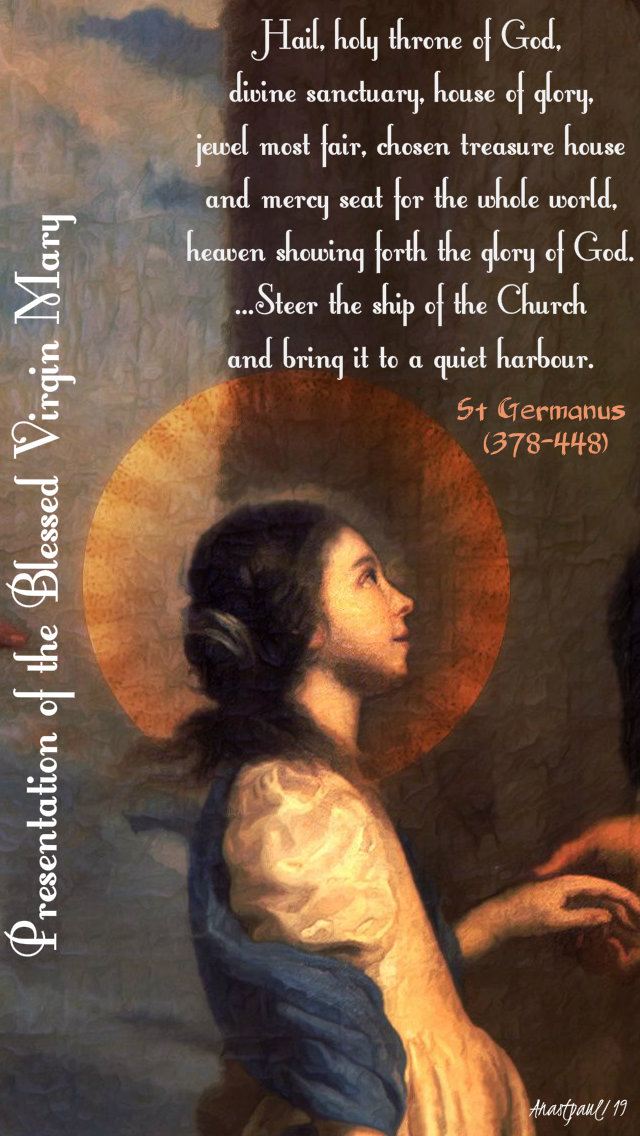
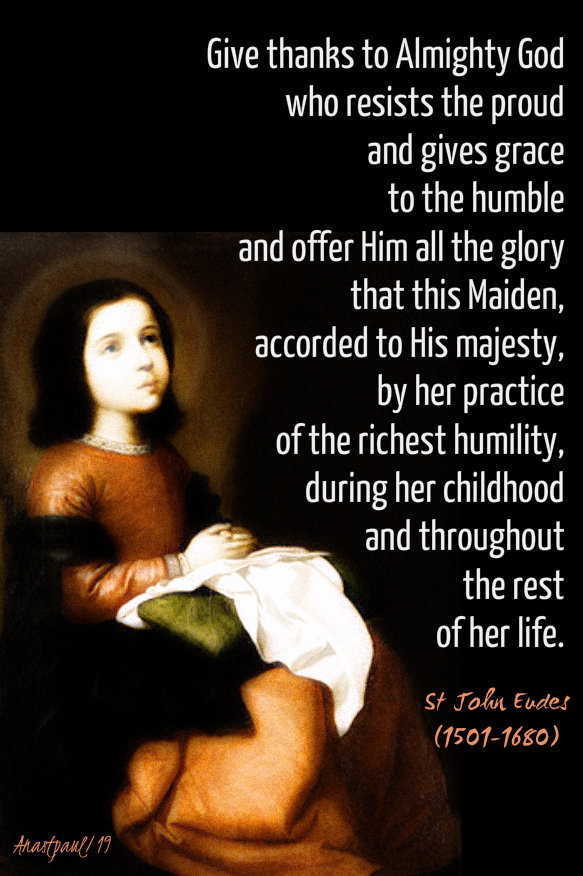

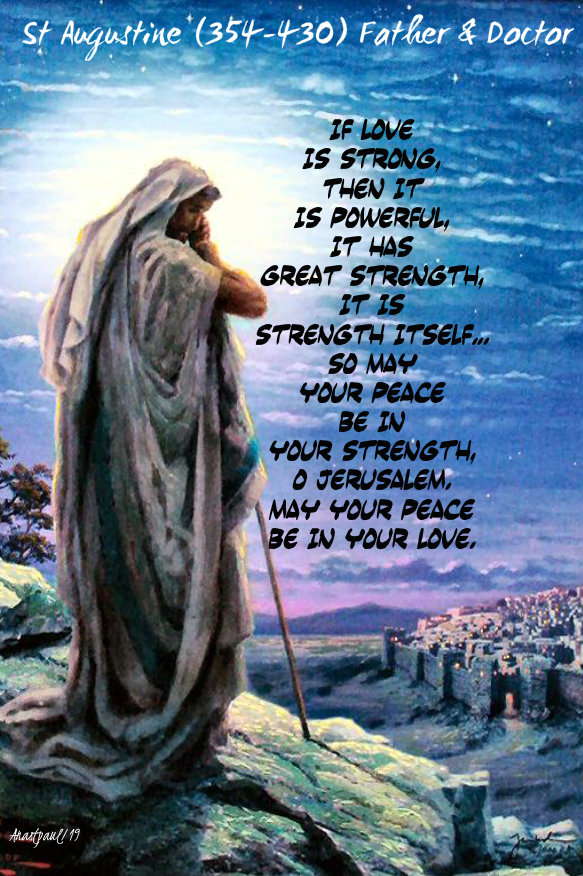

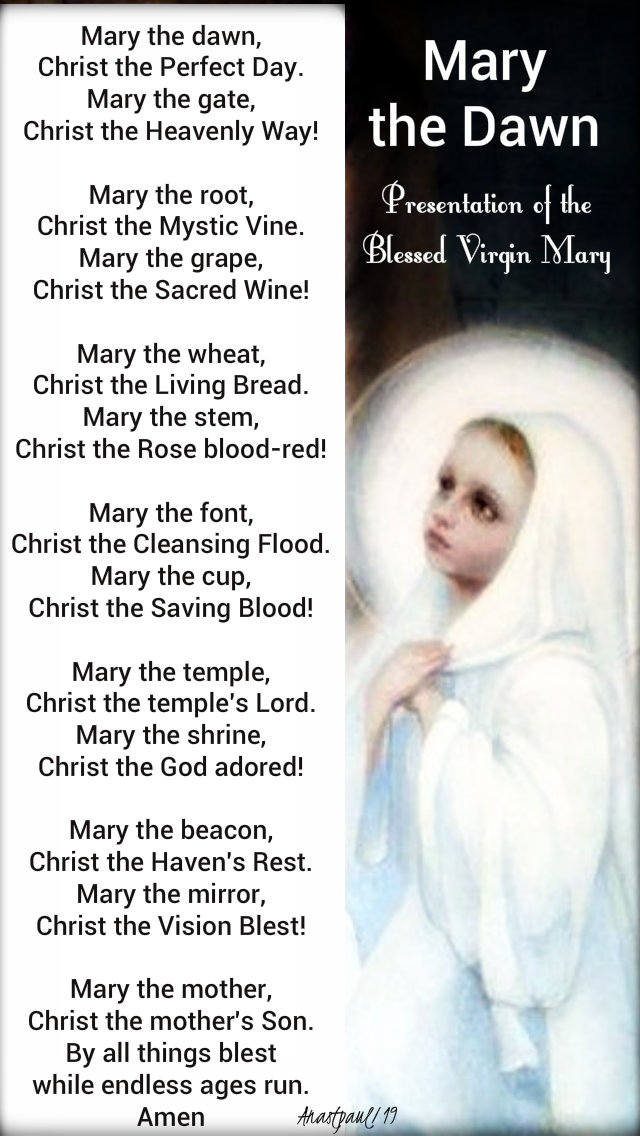

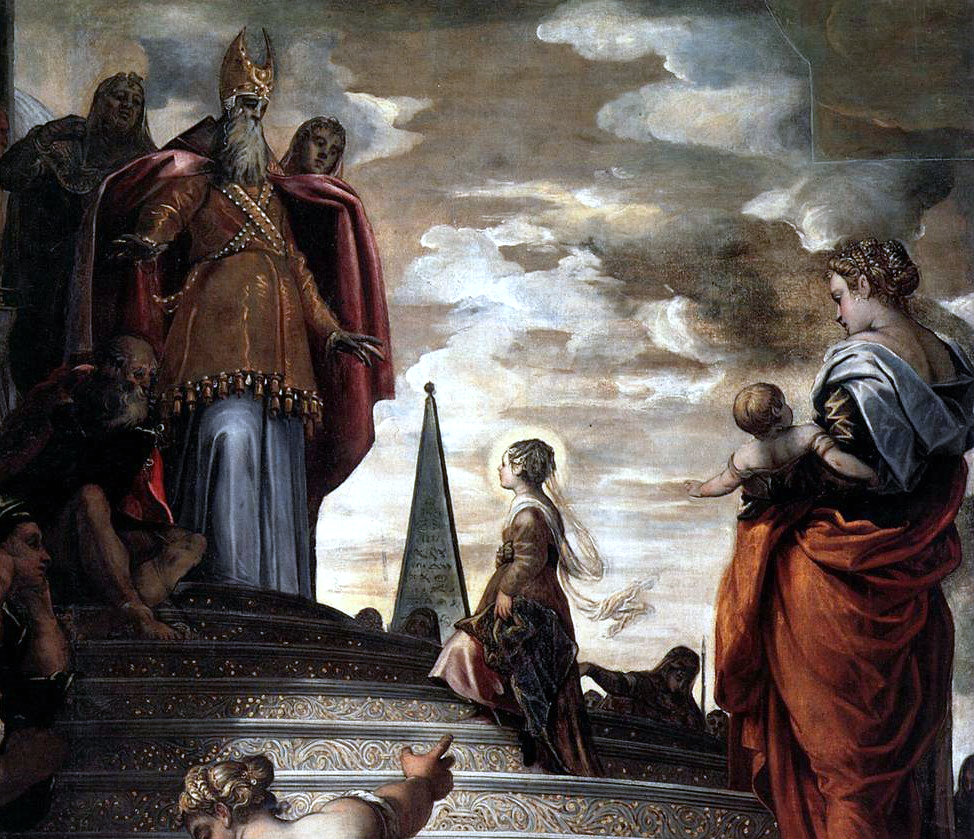
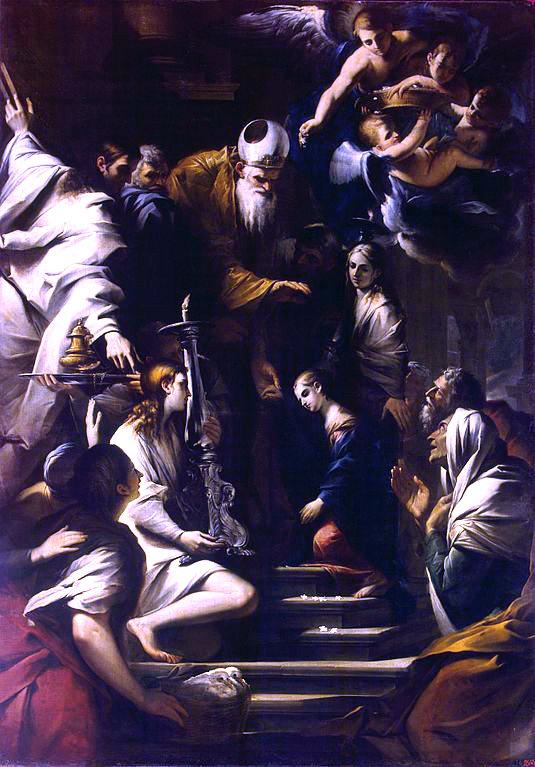


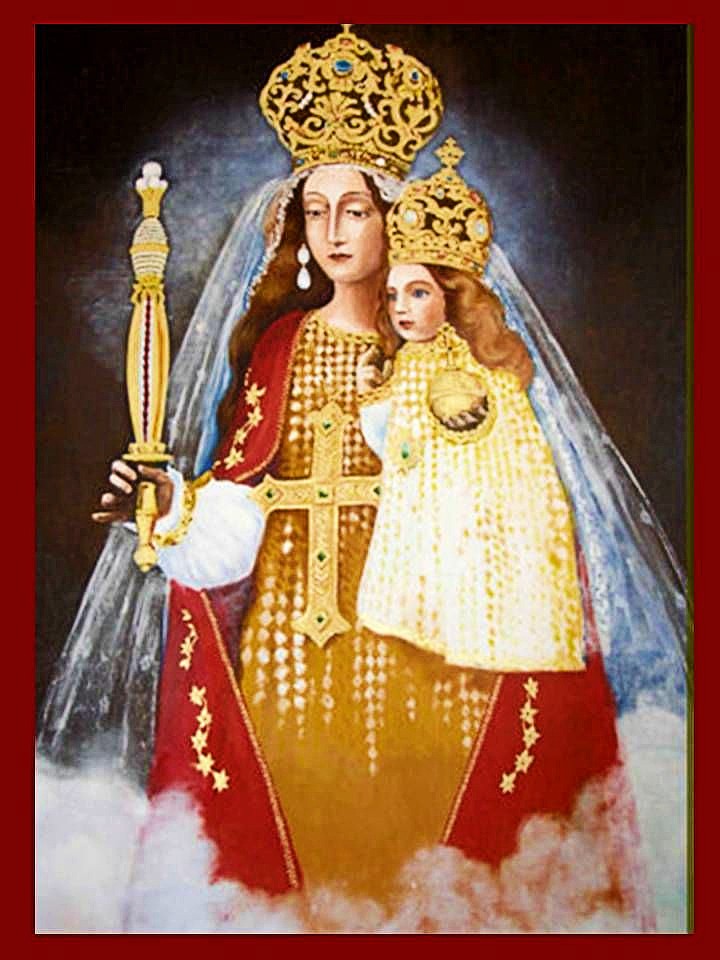

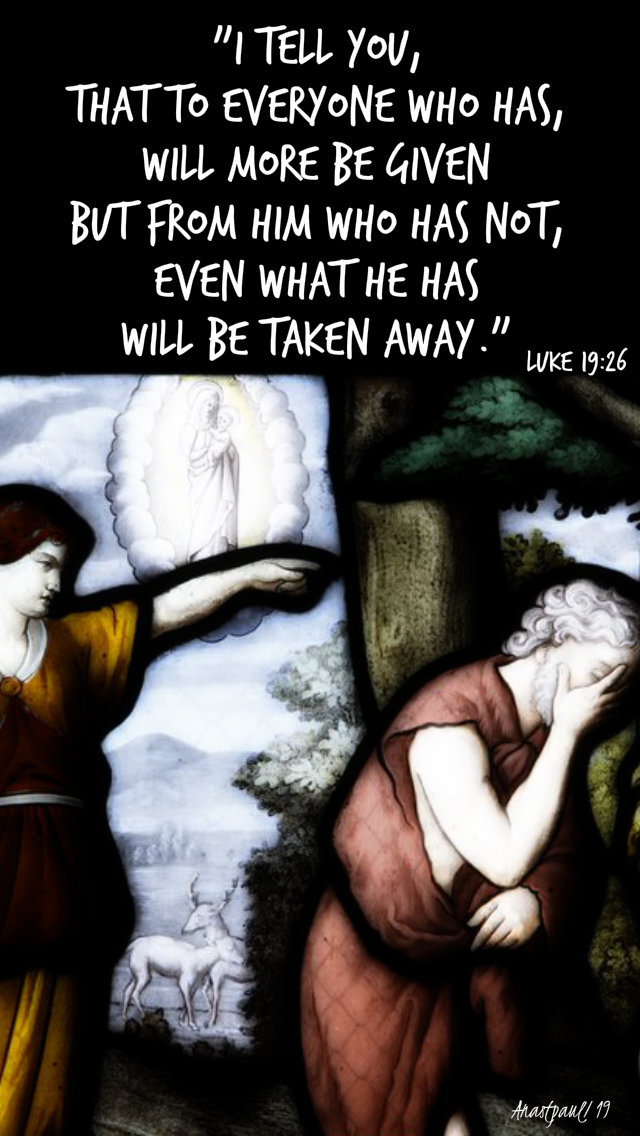


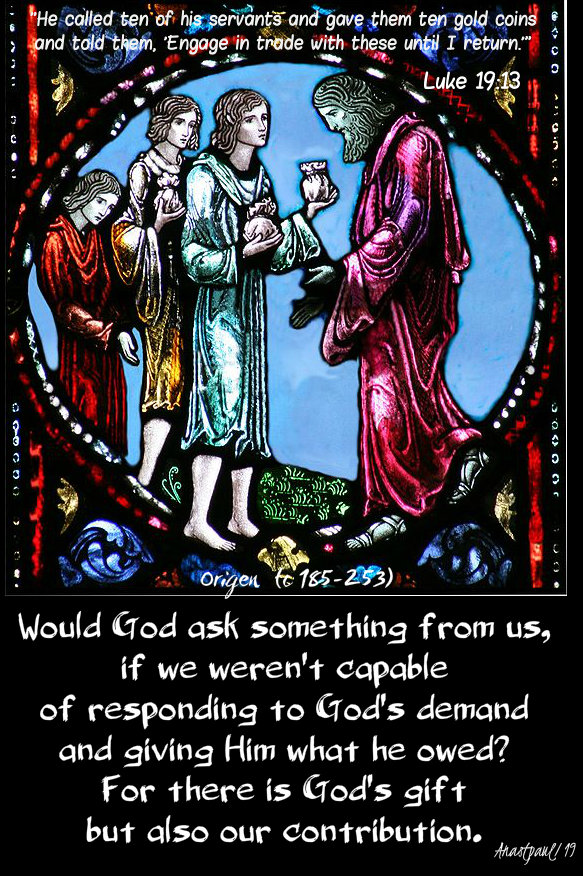
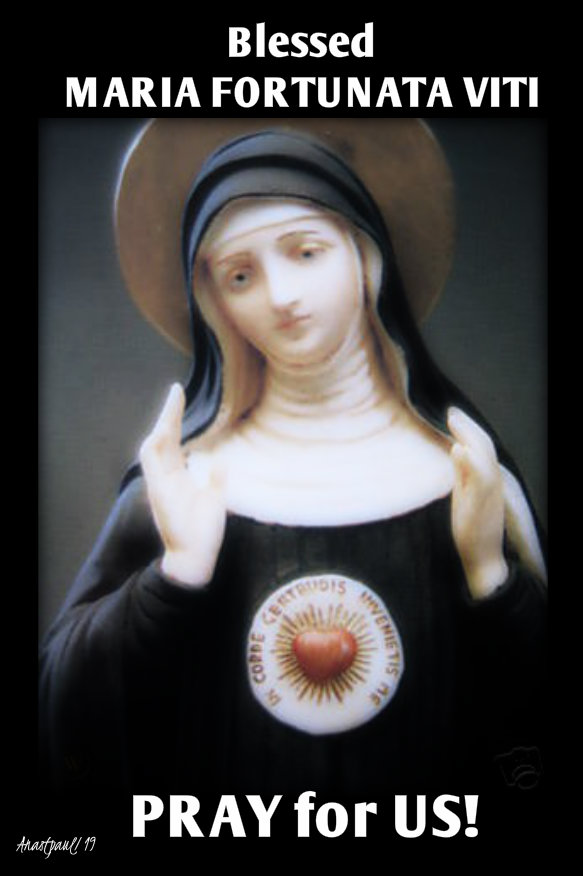
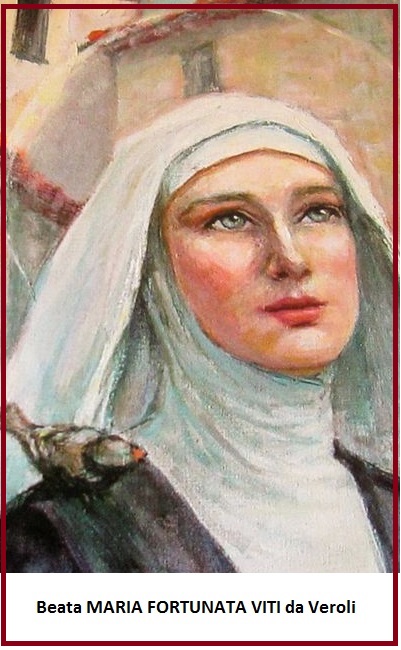
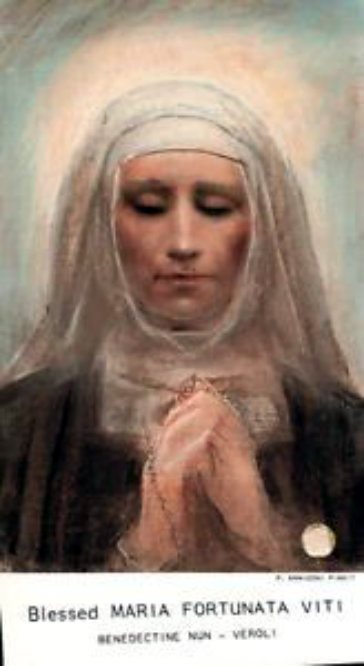
 During her long life, she knew nothing but assiduous work and constant prayer. She invoked the Lord with such passion and devotion it would edify her fellow Sisters. Admiring the beauties of nature she would be in the habit of often exclaiming: “The Love and the Power of God!” which remained her favourite expression. She dedicated her prayers and sacrifices in particular for the needy, for derelicts and for the redemption of sinners.
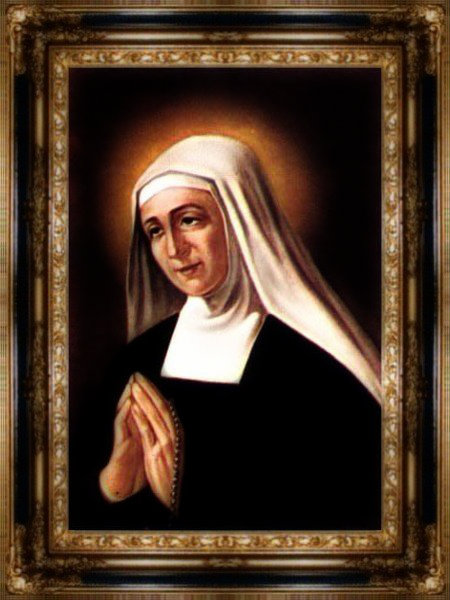
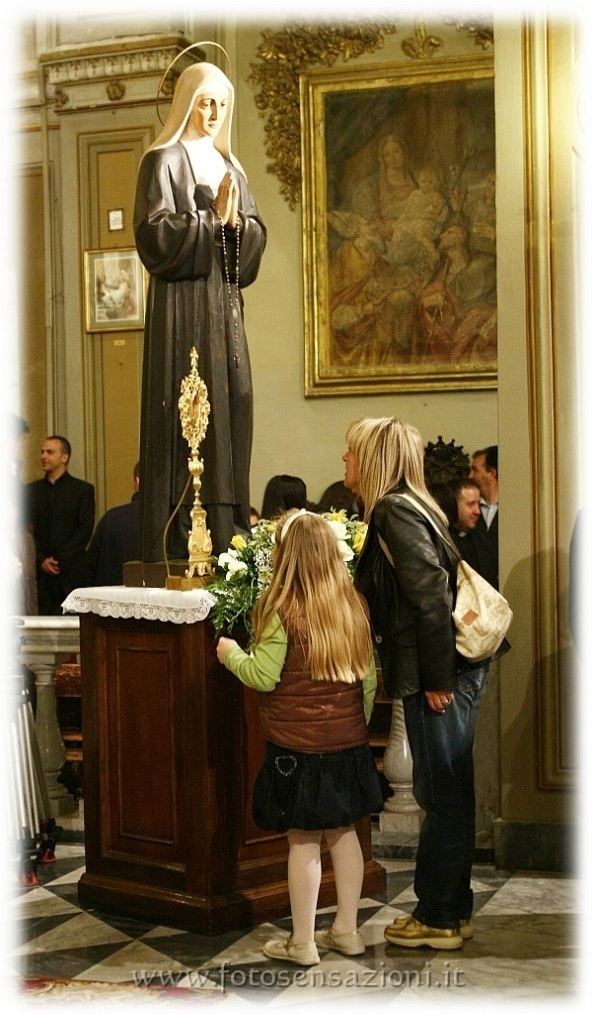

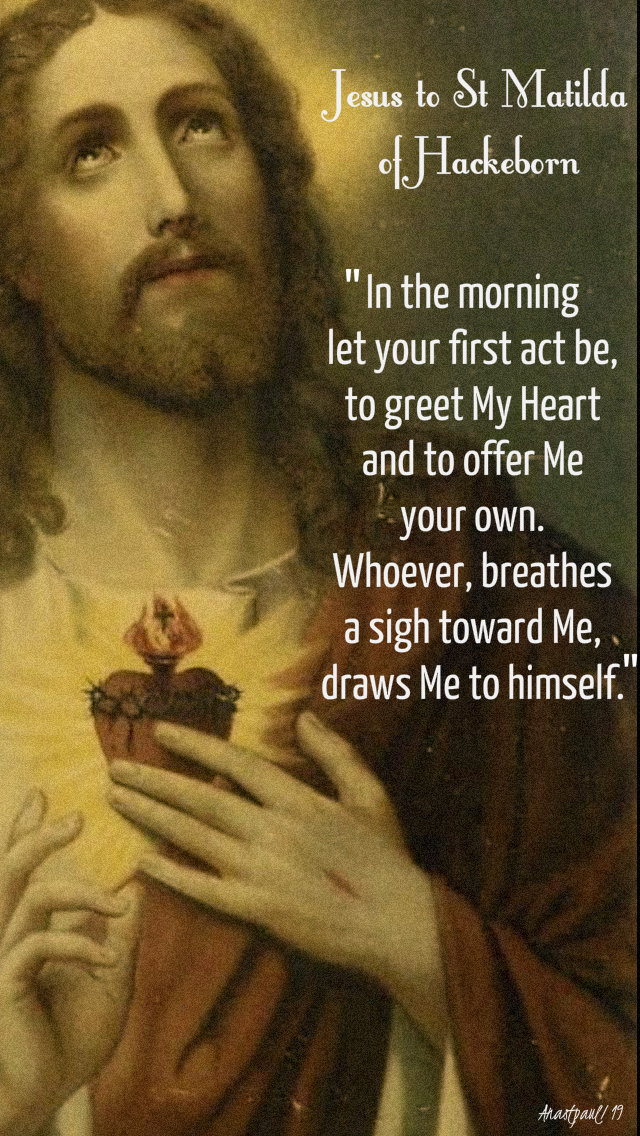
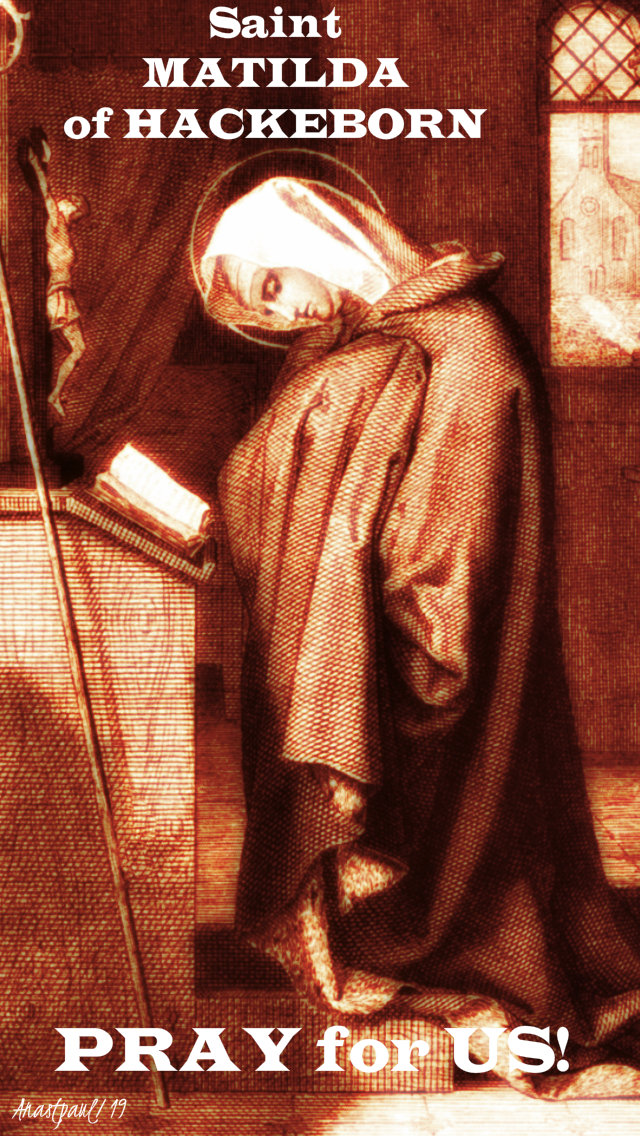
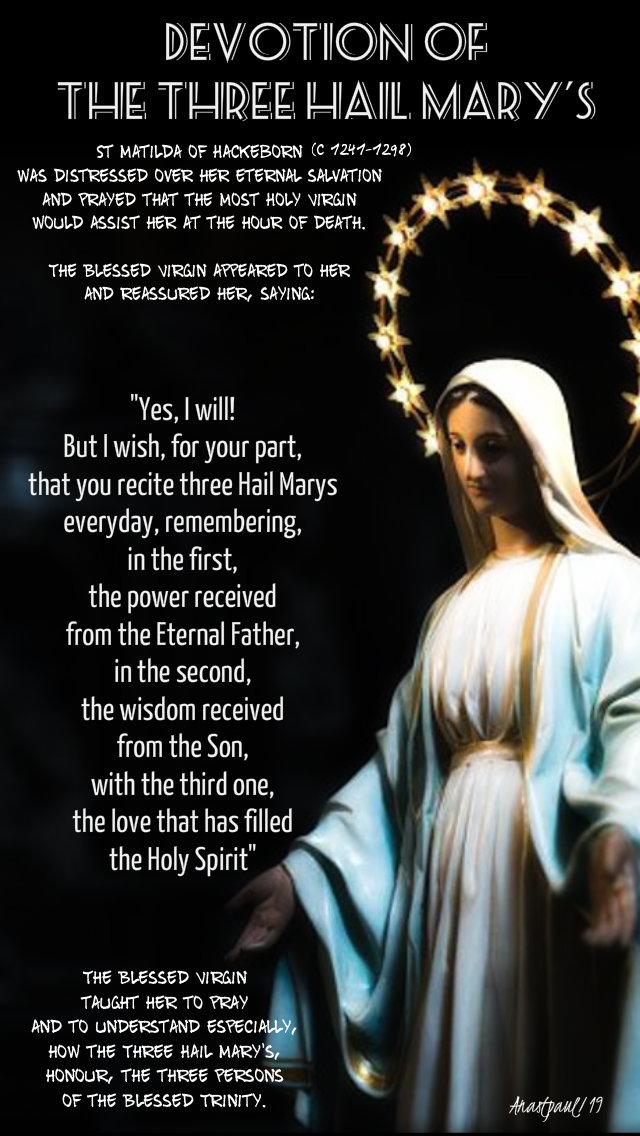
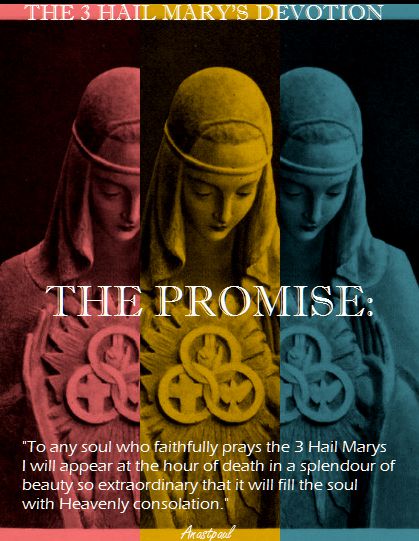
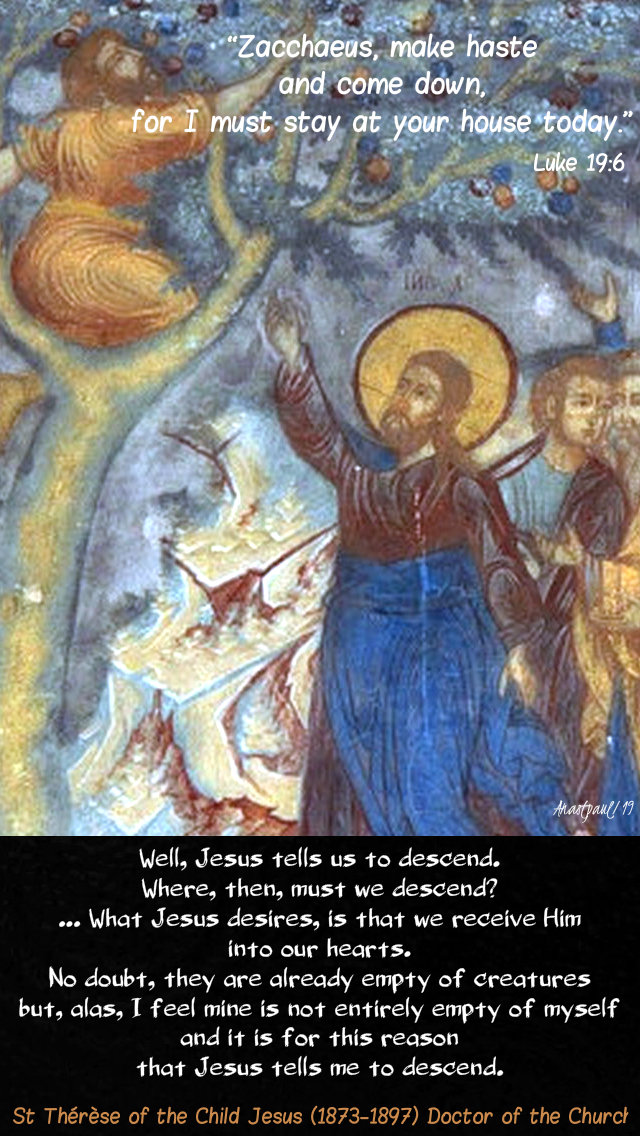
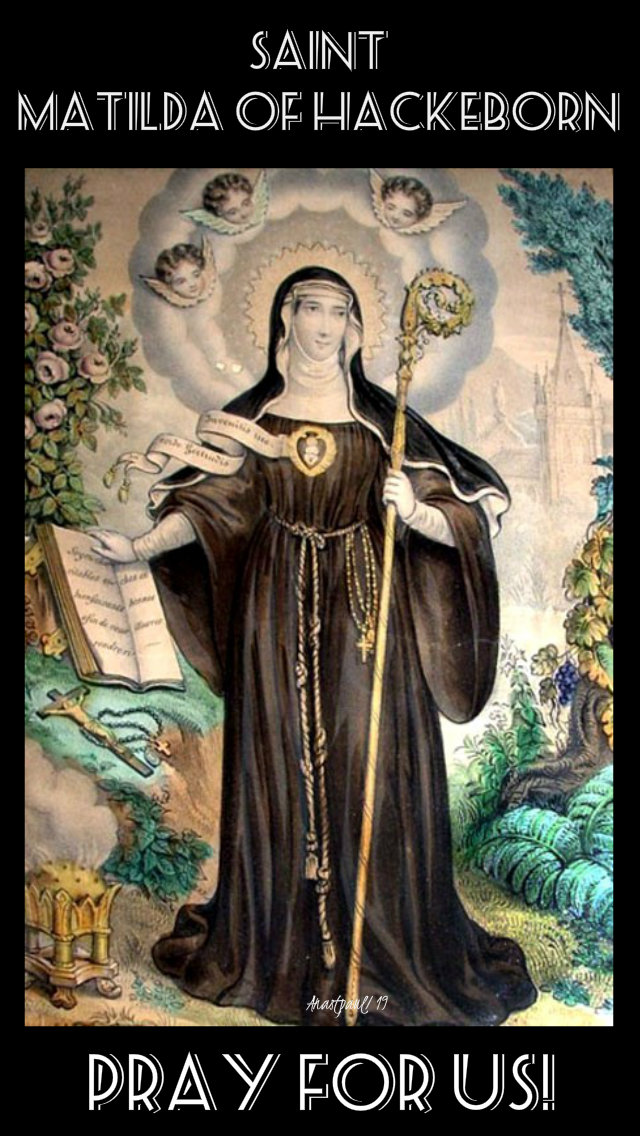
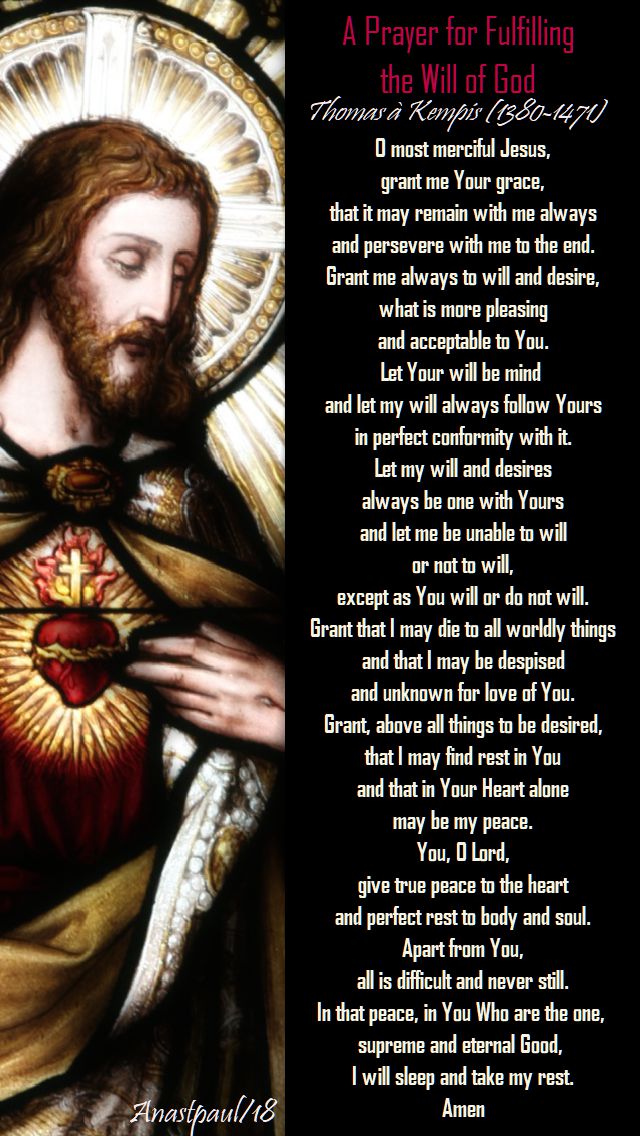
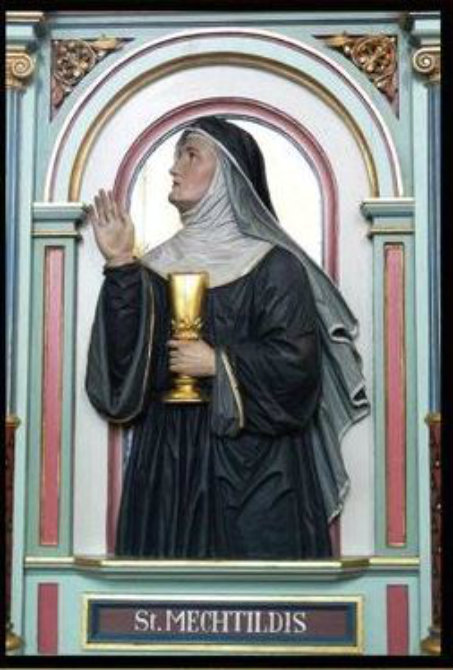
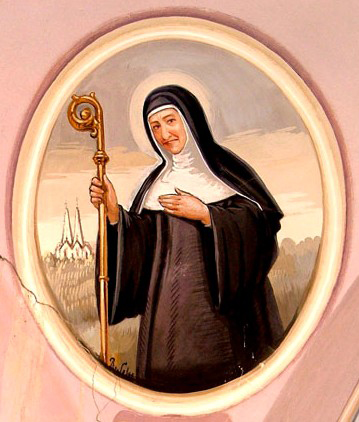
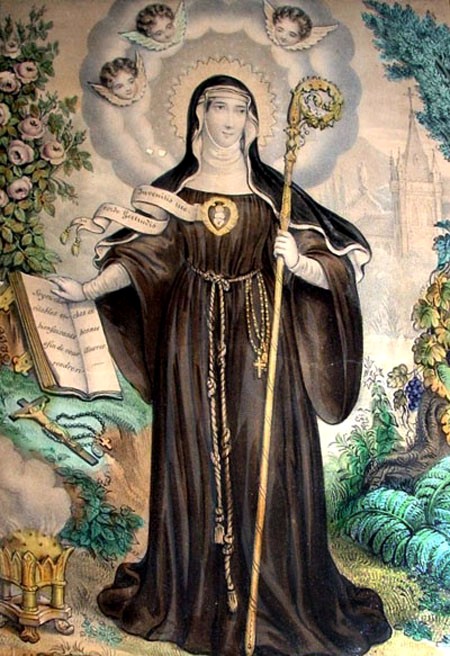
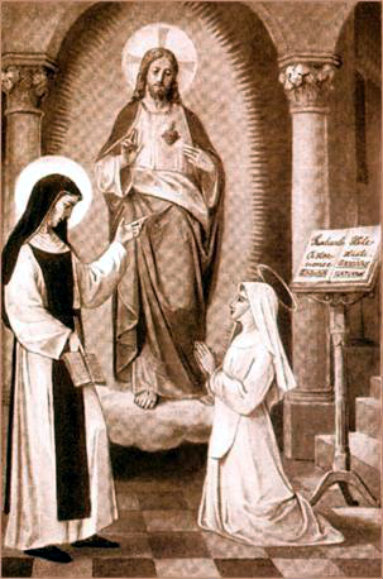
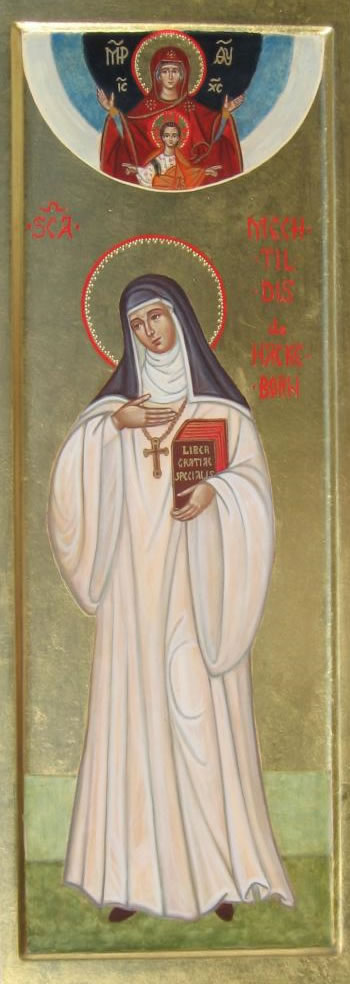
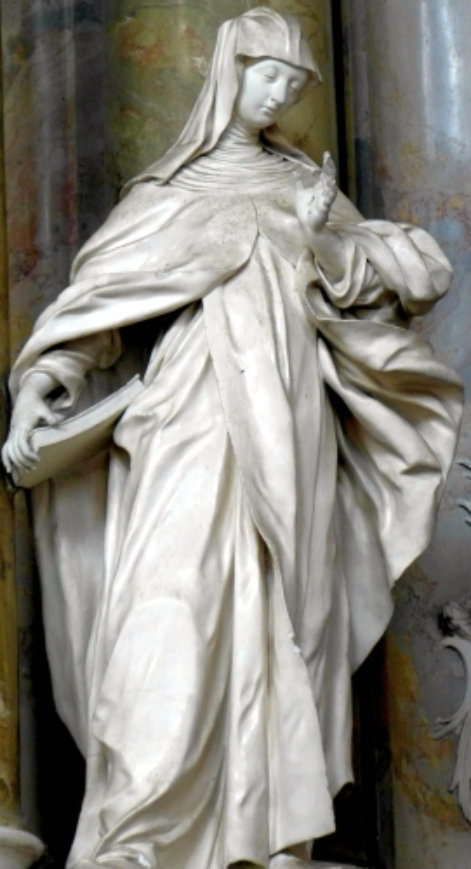
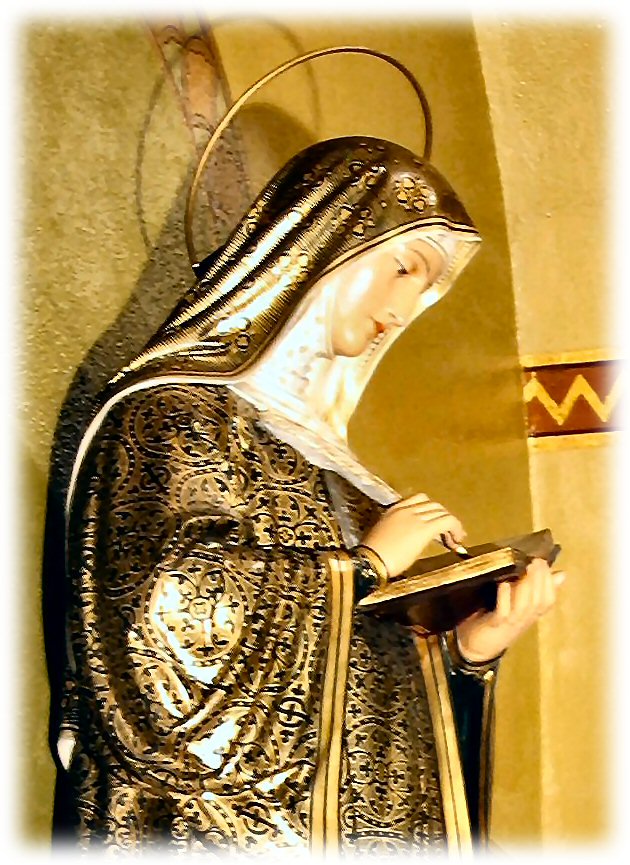
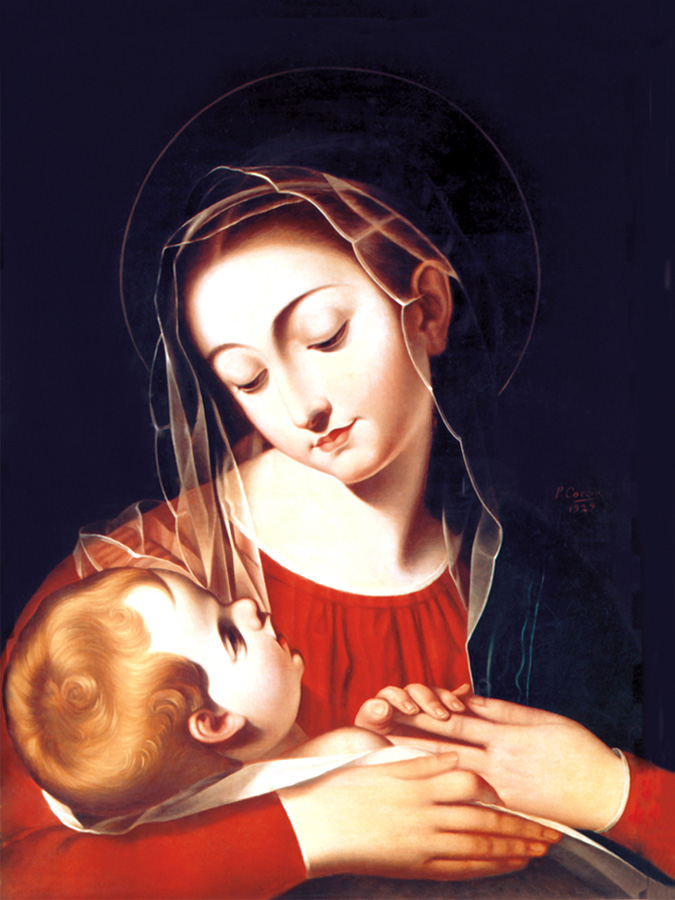
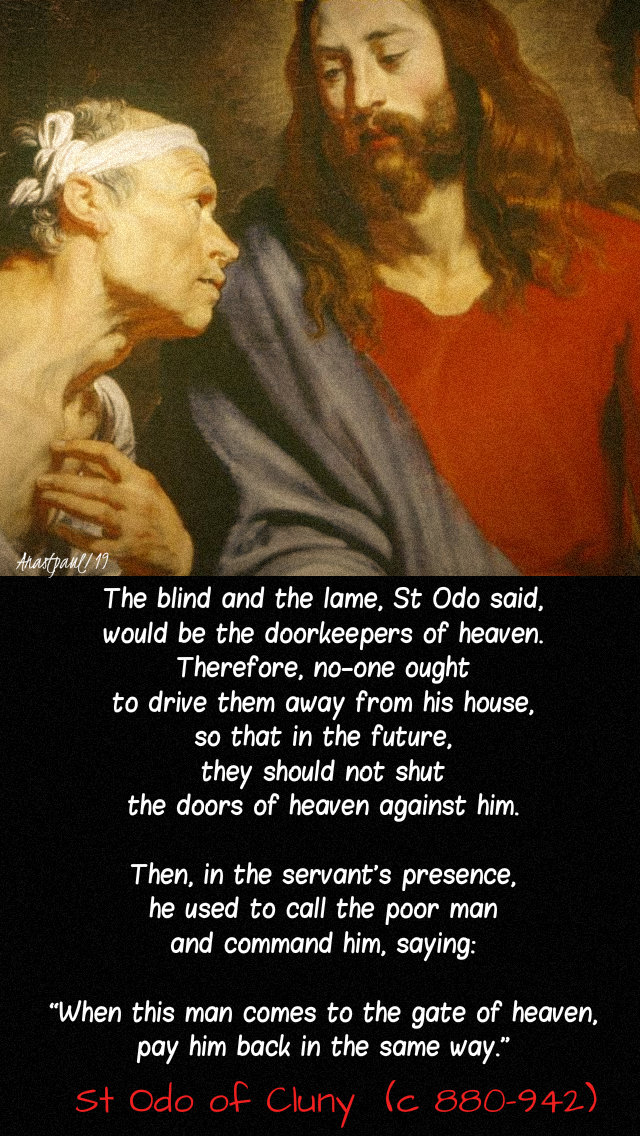


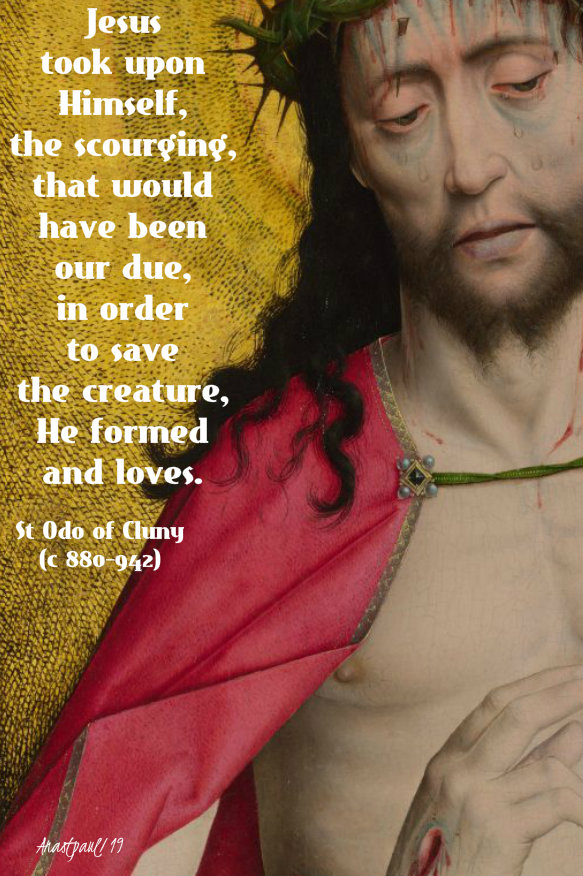
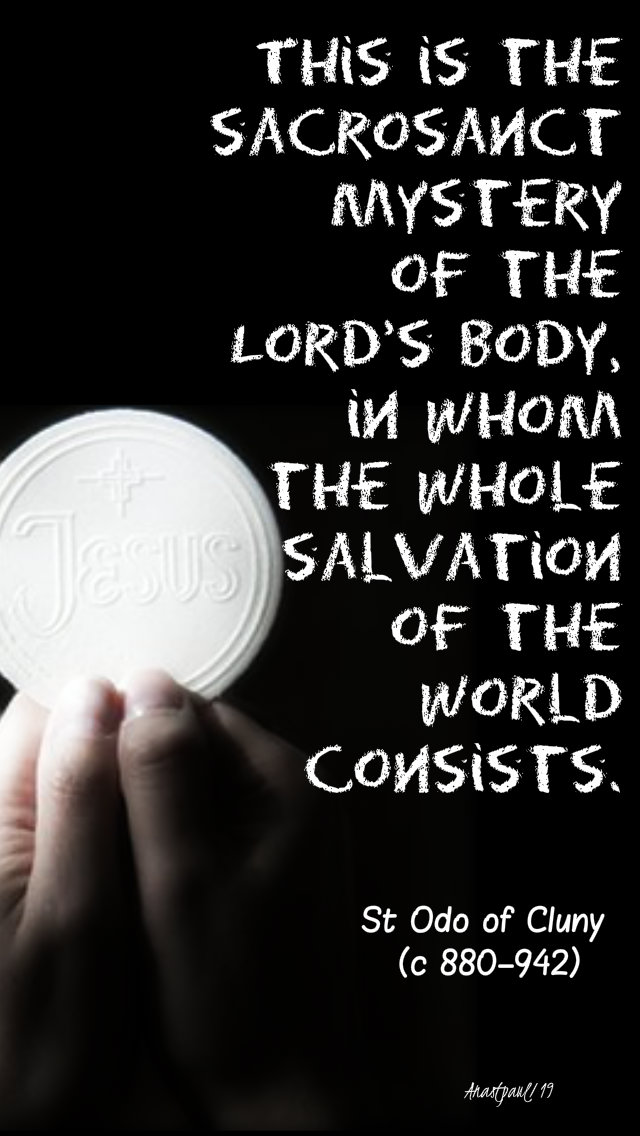

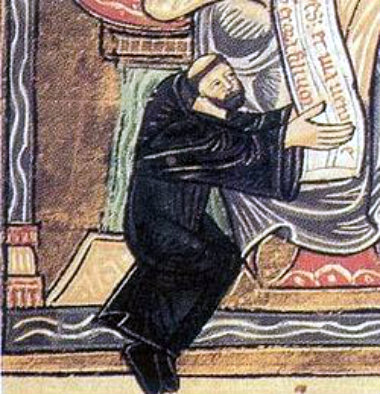
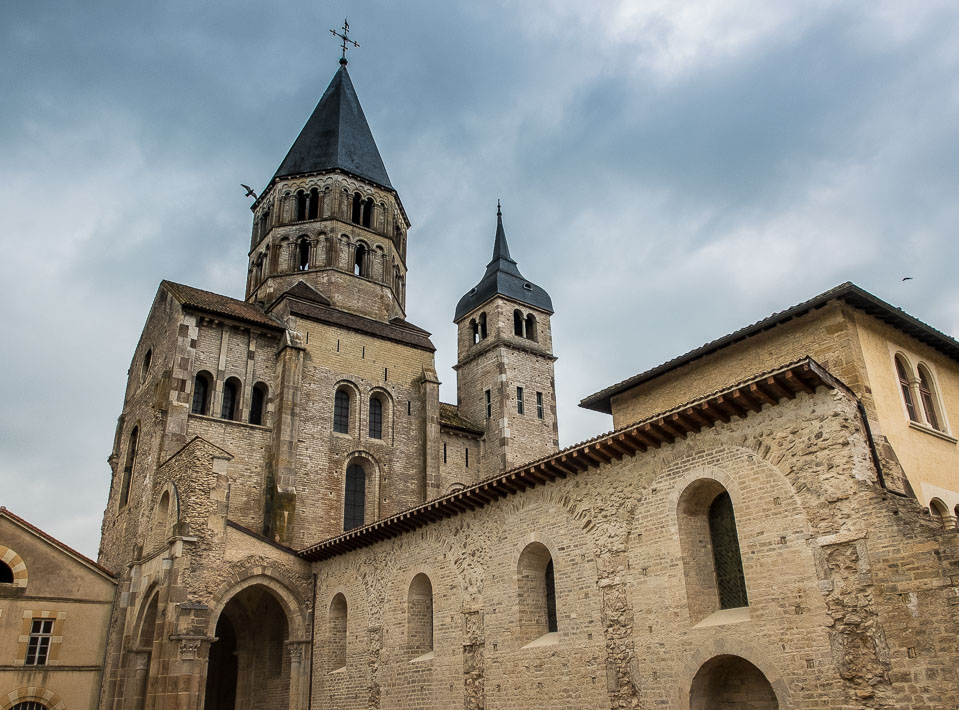
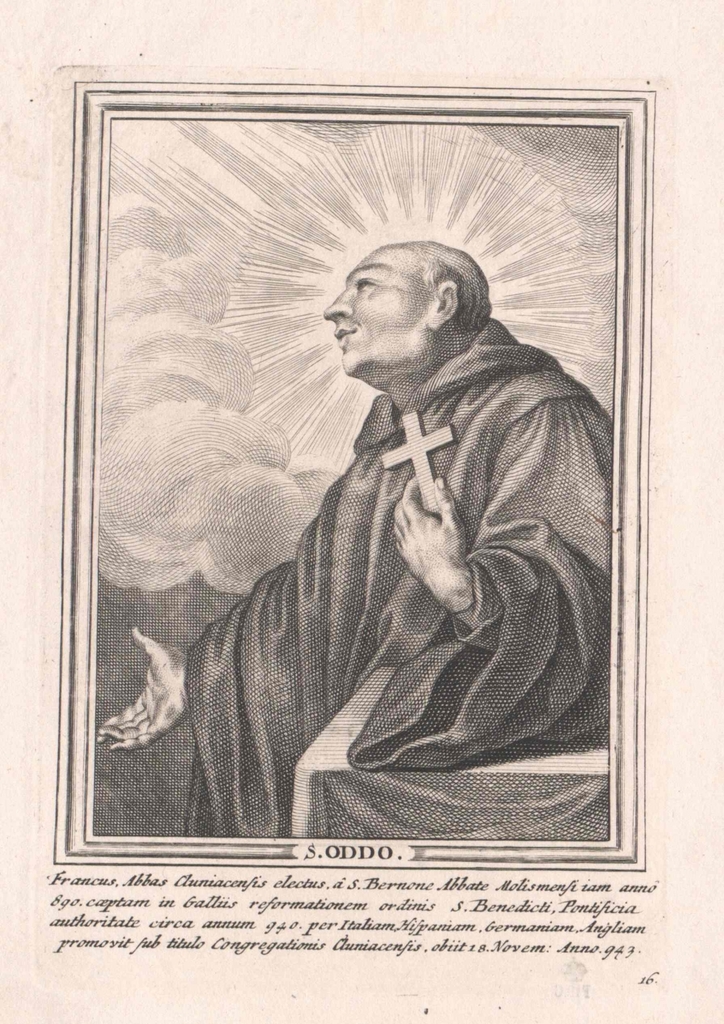
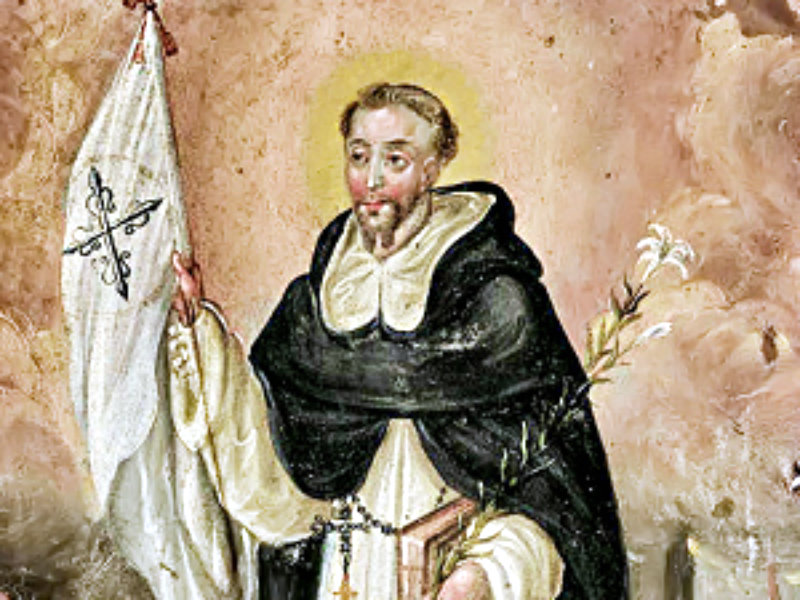
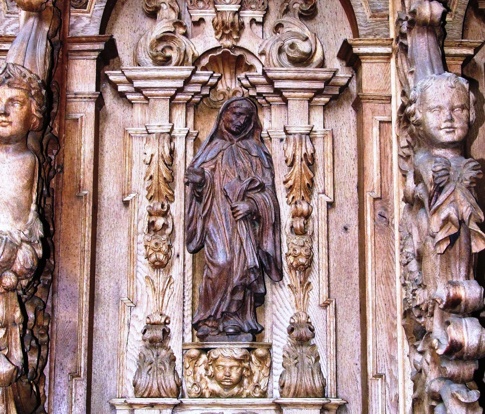
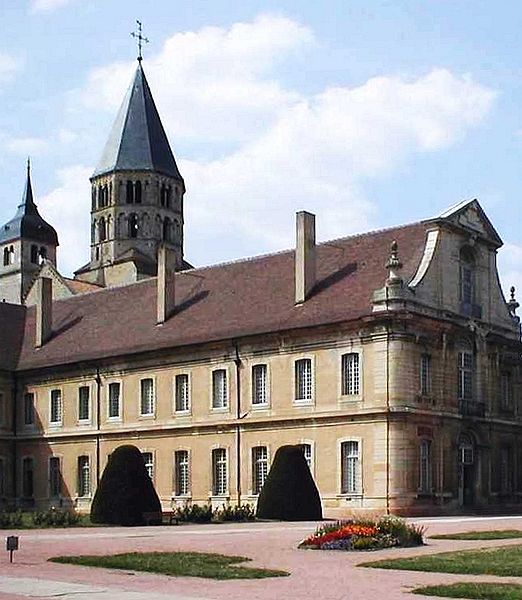
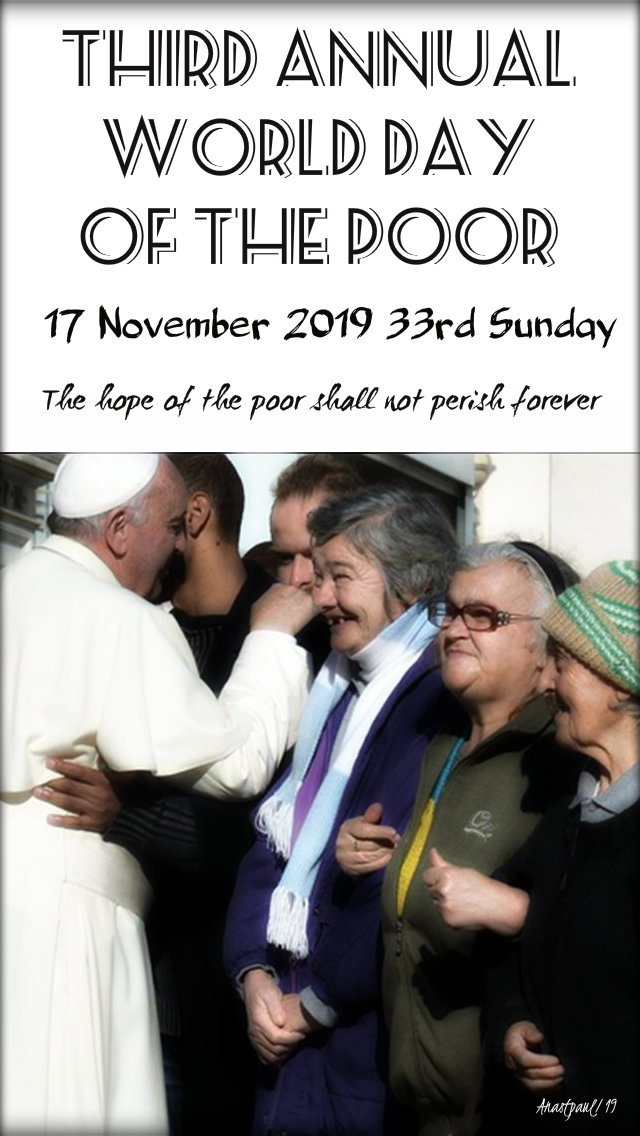
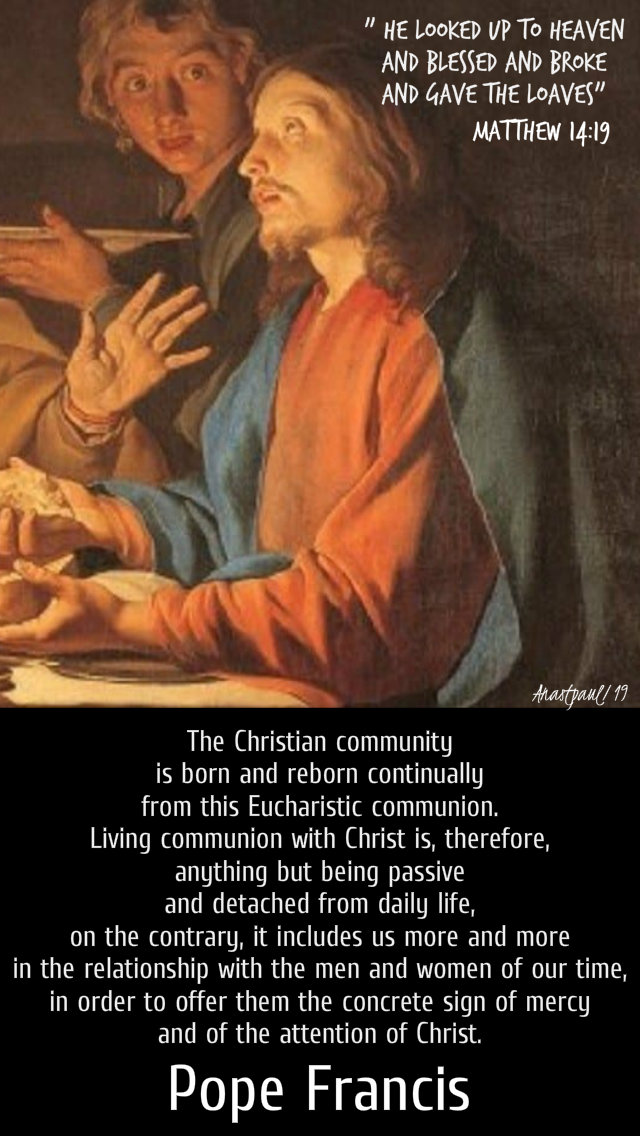
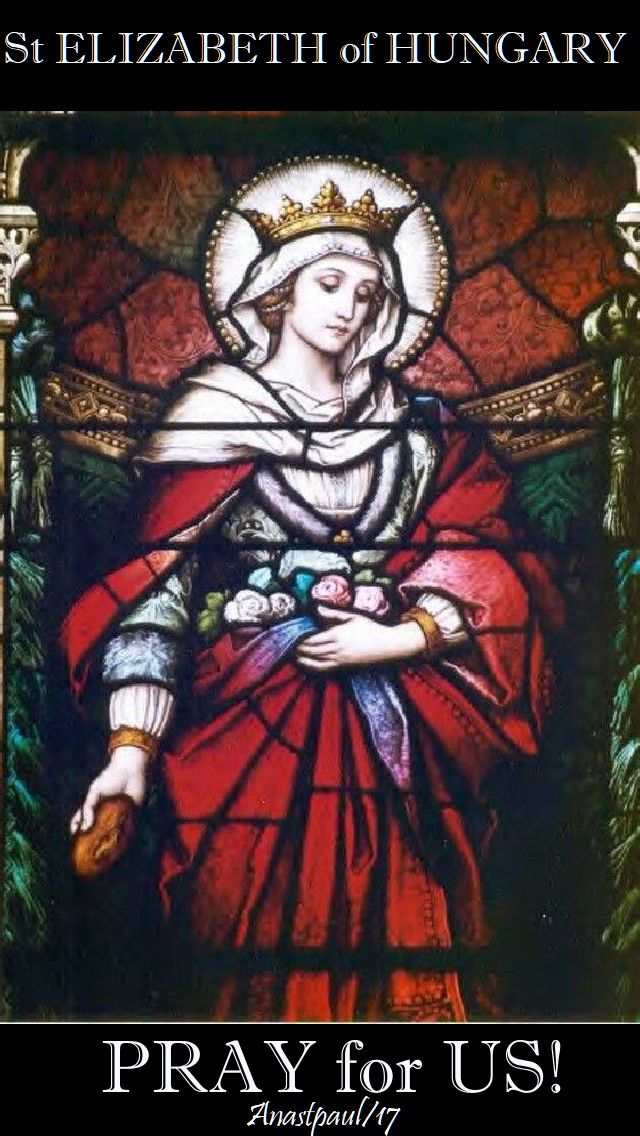
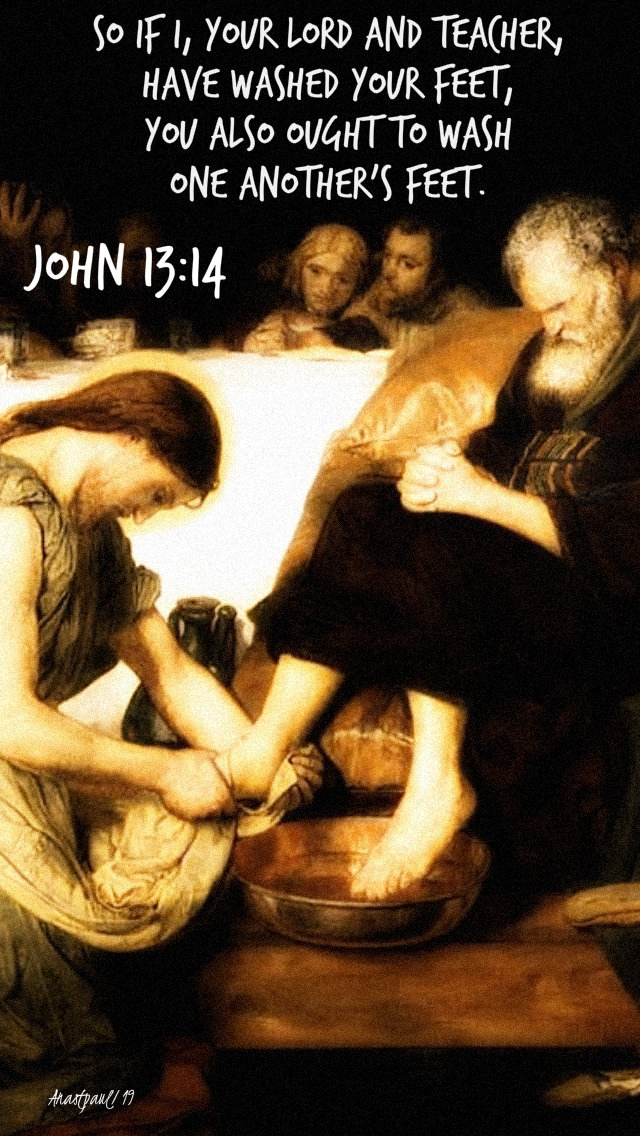


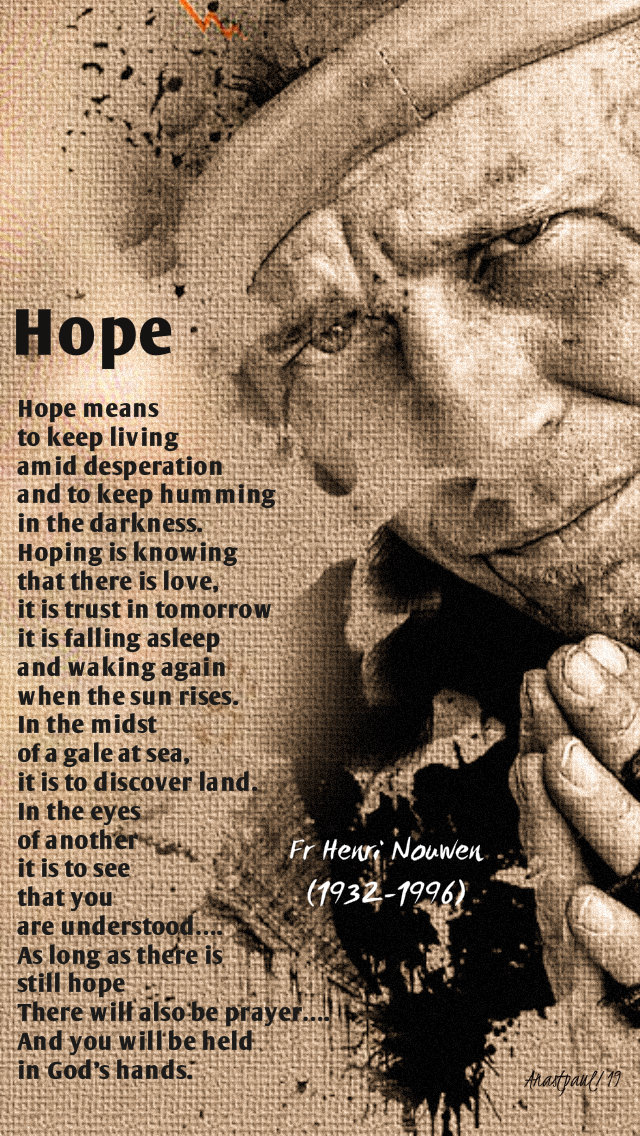

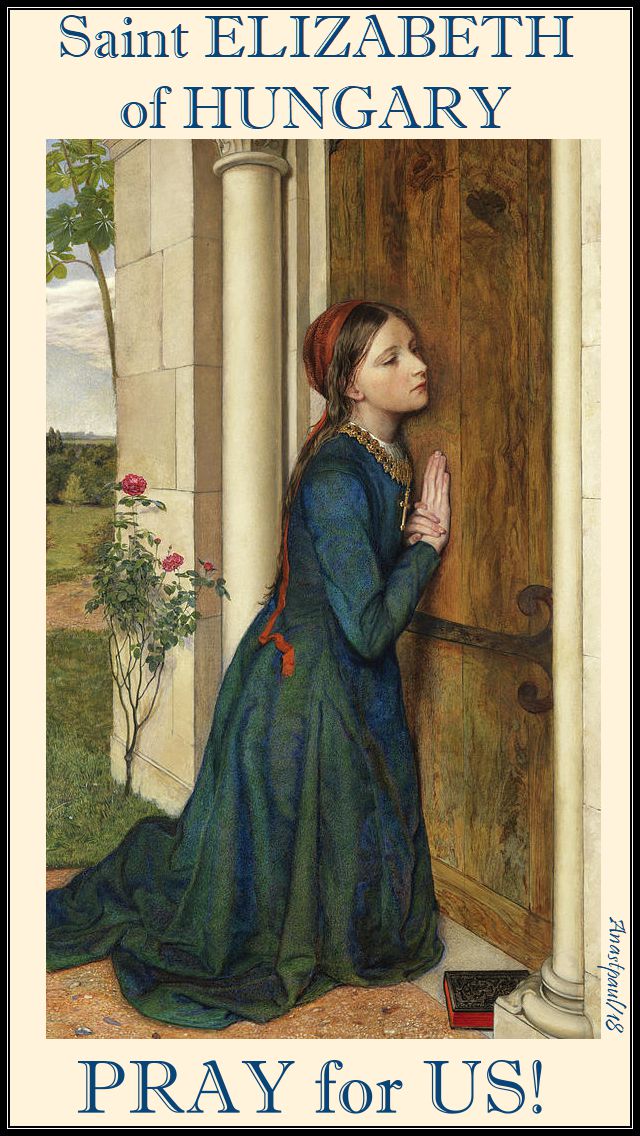
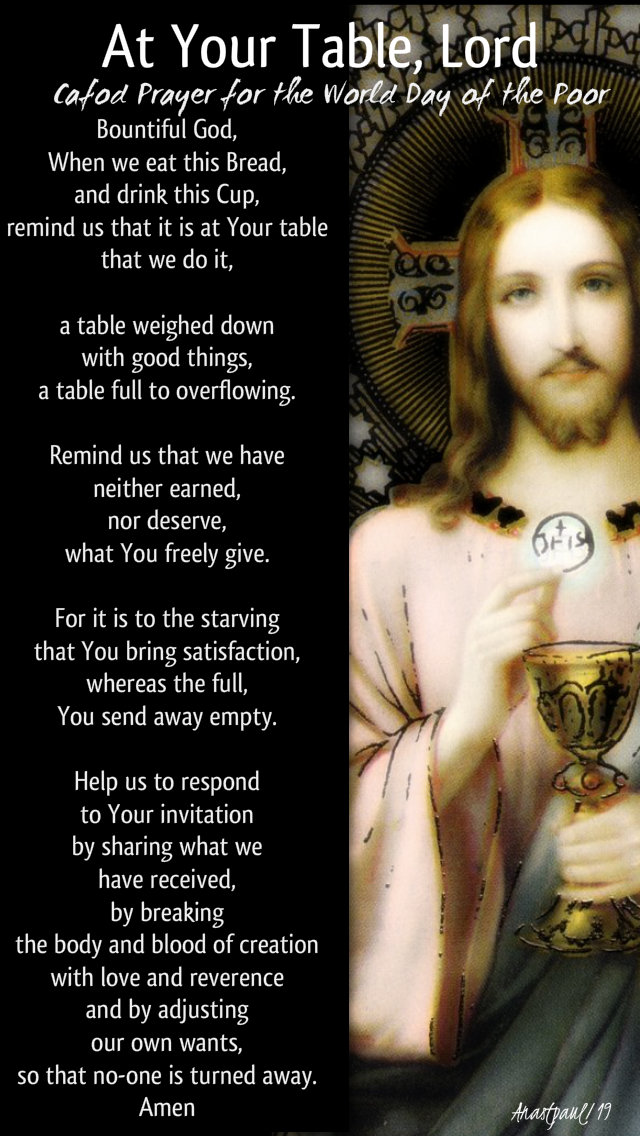

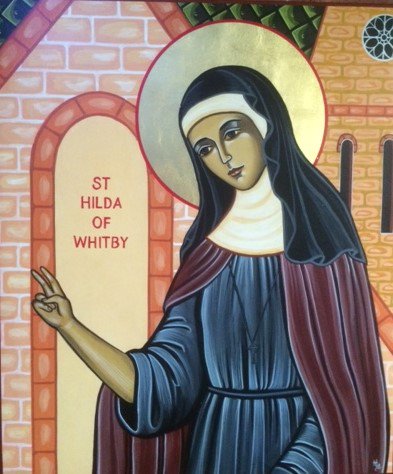


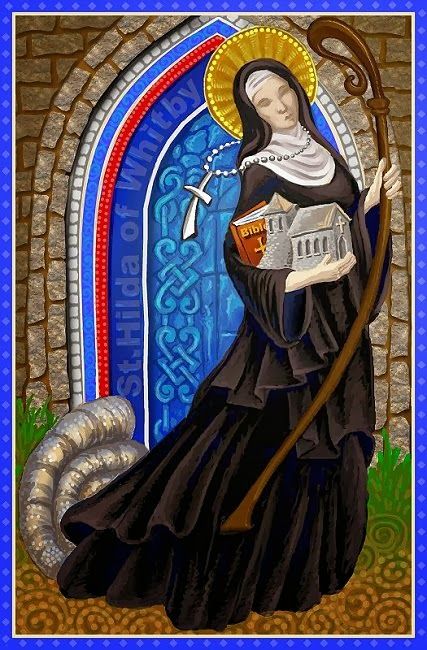

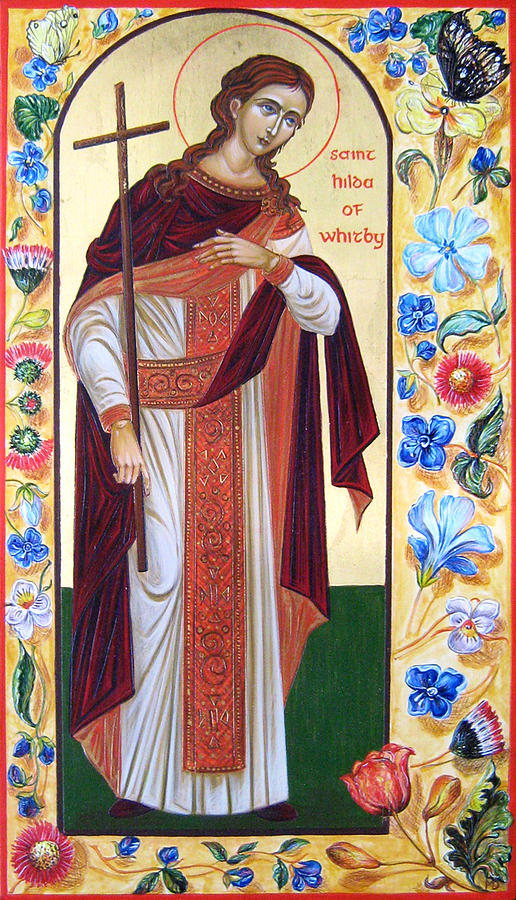
 AnaStpaul
You must be logged in to post a comment.