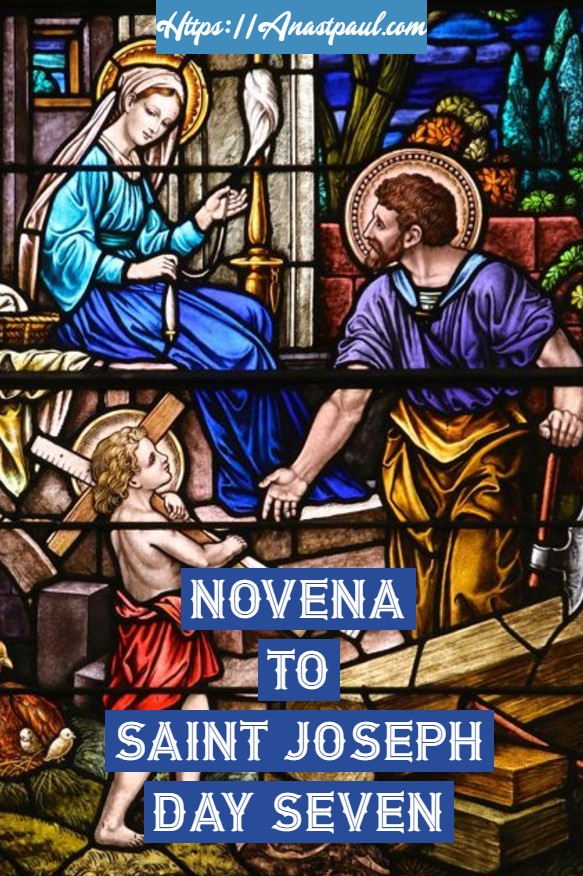
Look down on us, Saint Joseph, Protector of Our Lord, Who followed you through deserts And gave you blessed reward; Our foes are yet about us, Be our strength now at our side, Be light against the darkness. Saint Joseph, be our guide and protector! We venerate your justice, The gospels praise your name, You are the Saint all humble, Who gained eternal fame. In your devoted family Our souls in trust confide, Direct our way to heaven. Saint Joseph, be our guide. We implore your powerful intercession, to obtain from the gentle heart of Jesus all the help and graces necessary for our spiritual and temporal welfare, particularly protection from the powers of evil and the special grace I now implore: …………….. (Mention your request) O guardian of the Word Incarnate we feel animated with confidence, that your prayers on our behalf, will be graciously heard, before the throne of God. St Joseph, Terror of Demons, Pray for us! Amen
Glory be to the Father and to the Son and to the Holy Spirit, as it was in the beginning, is now and ever shall be, world without end. Amen
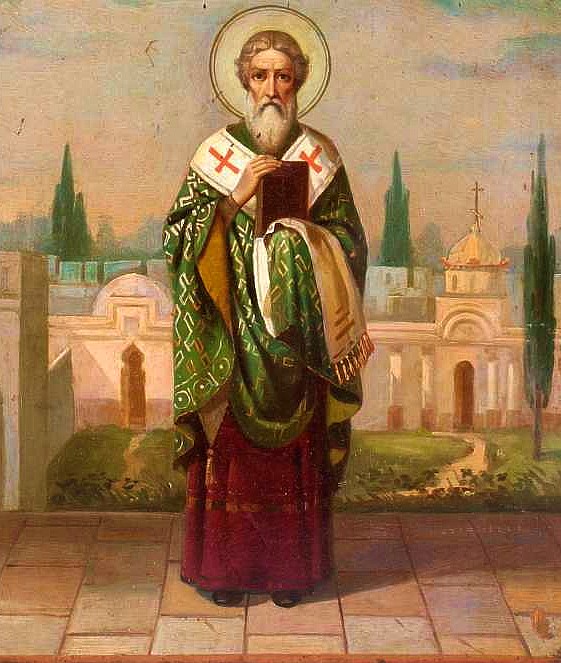
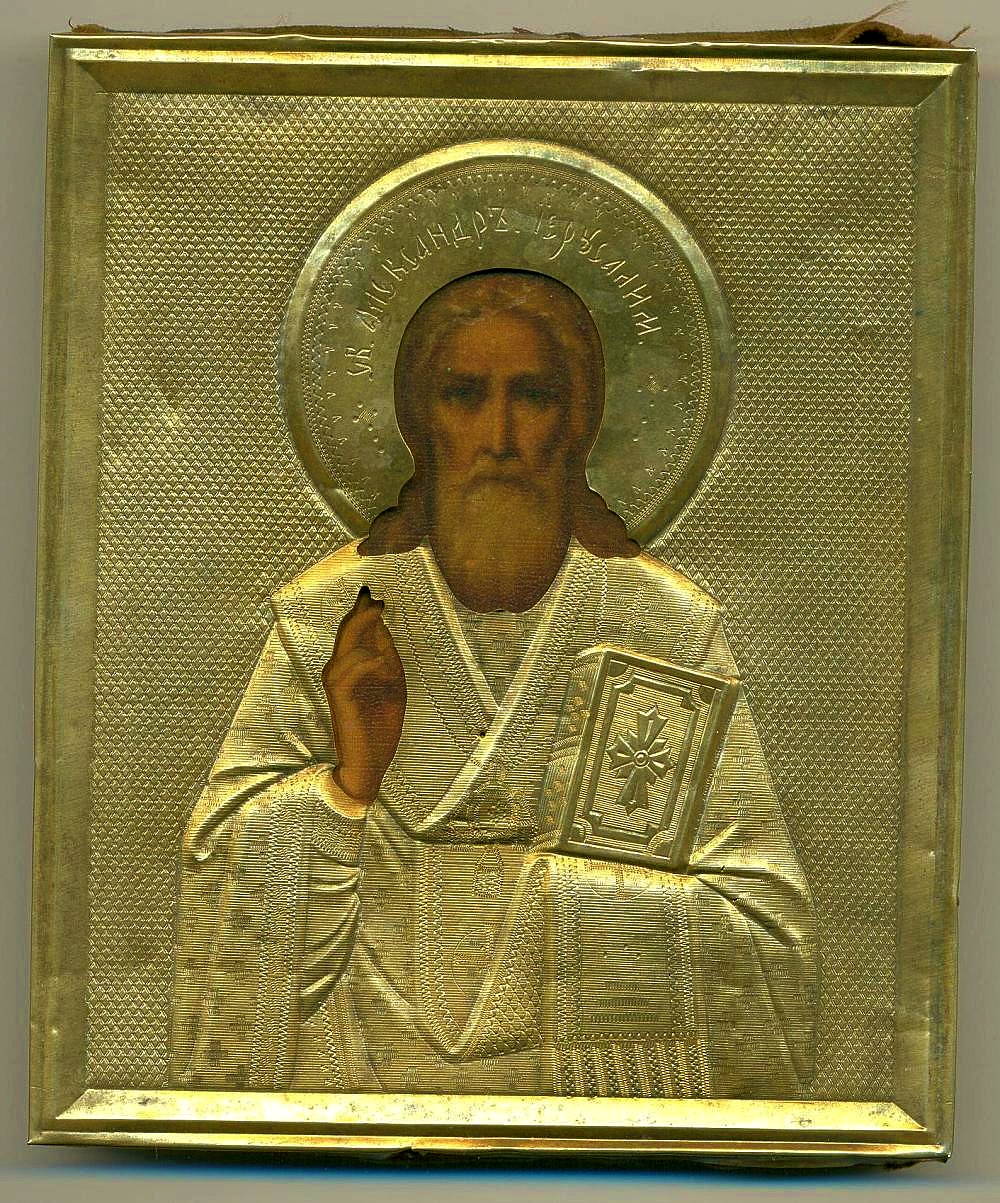
Saint of the Day – 18 March – Saint Alexander of Jerusalem (Died 251) Bishop of Cappadocia and Martyr – martyred in 251 at Ceasarea. Also known as Alexander of Cappadocia.
During the late second century, Alexander studied at the Christian school of Alexandria under the instruction of St Pantaenus (known as “the Philosopher”) (died c 200) and St Clement of Alexandria. He was a friend and pupil alongside Origen, the Christian theologian who composed the seminal work of Christian Neo-Platonism.
It was Alexander who permitted Origen, despite being a layman, to speak in the Churches. For this concession he was taken to task but he defended himself, by examples of other permissions, of the same kind, given even to Origen himself elsewhere, although then quite young. When Alexander became a Bishop, he ordained Origen to the Priesthood.
Alexander eventually became Bishop of Cappadocia. After seven years of imprisonment under the persecution of Severus, Alexander sought to continue his journey of faith. He travelled to Jerusalem where he created an extensive theological library, for which he is much praised and eventually, became the Auxiliary Bishop.
While Alexander achieved several high positions in the Church, he maintained his gentleness of character, expressed most in his homilies. In contrast to his warm demeanour, his faith was strong, unwavering and he was willing to endure torture and death in the name of that faith.
Finally, in spite of his years, he, with several other Bishops, was carried off a prisoner to Caesarea and as the historians say, “The glory of his white hairs and great sanctity formed a double crown for him in captivity.” His vita states that he suffered many tortures but survived them all. When the wild beasts were brought to devour him, some licked his feet and others their impression on the sand of the arena.
When the wild beasts did not attack him, Decius sent Alexander to a Caesarean prison. He died there in 251.
Eusebius of Caesarea has preserved some of writings and letters.
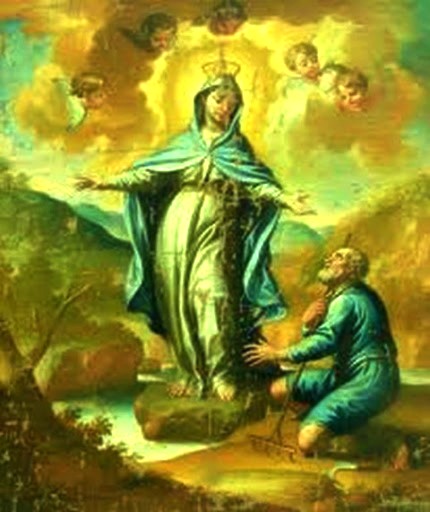
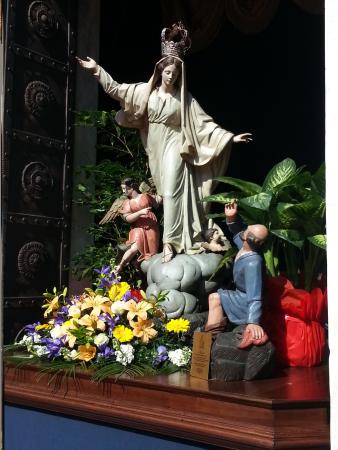
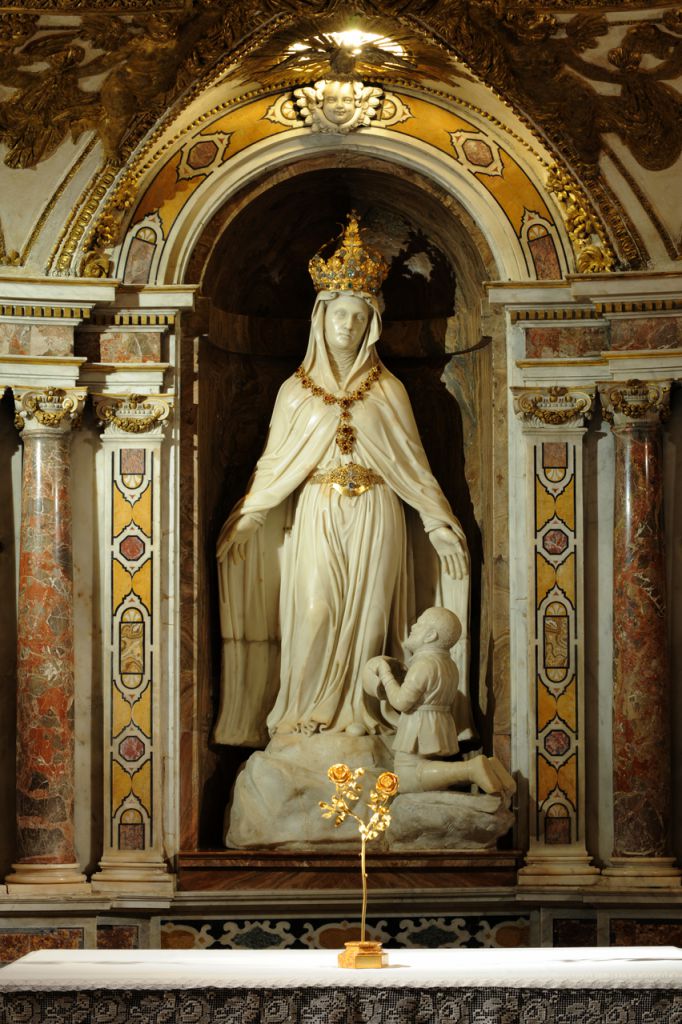
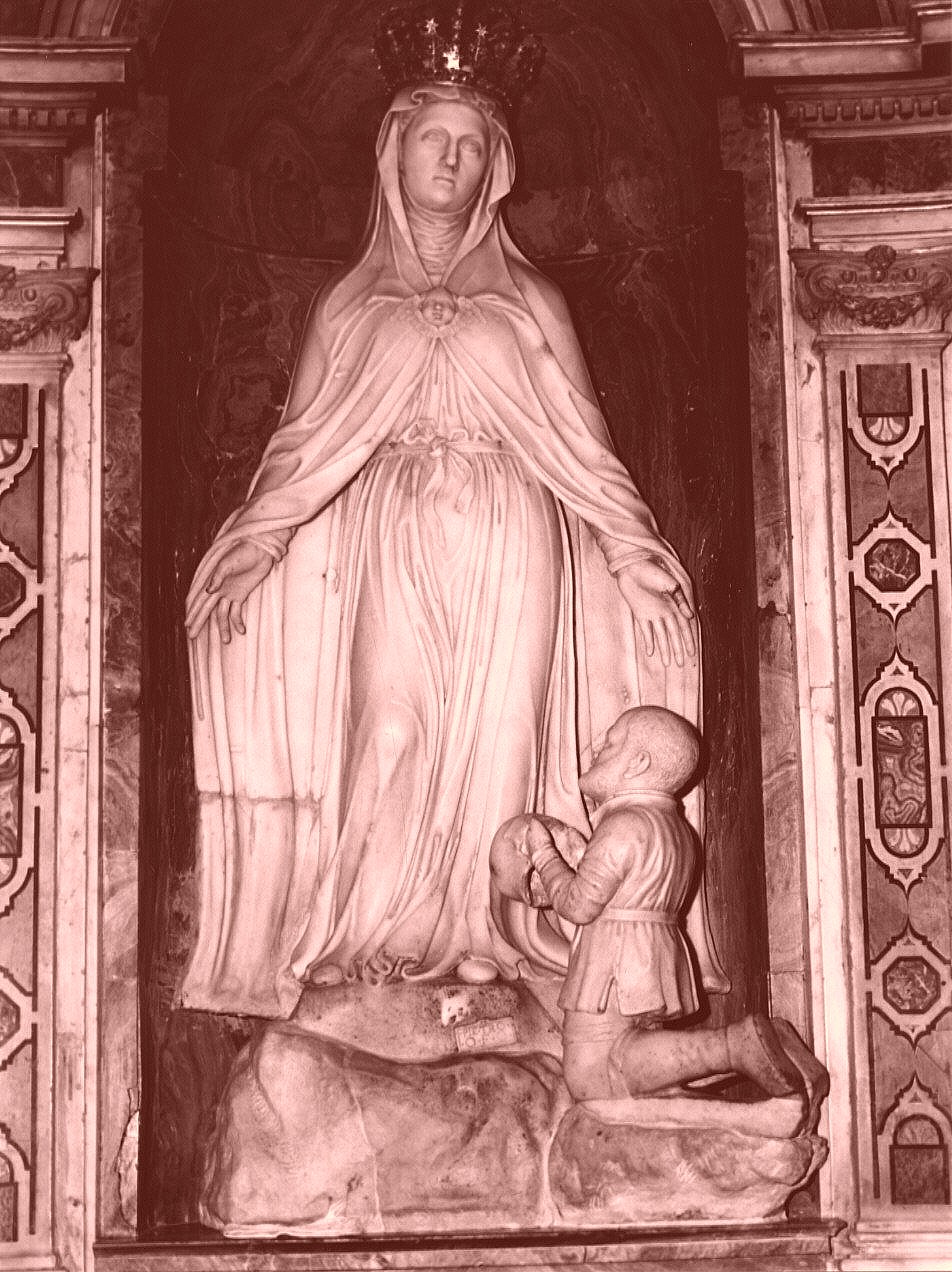
Nostra Signora della Misericordia/Our Lady of Mercy, Patron of Savona, Italy (1536) – 18 March:
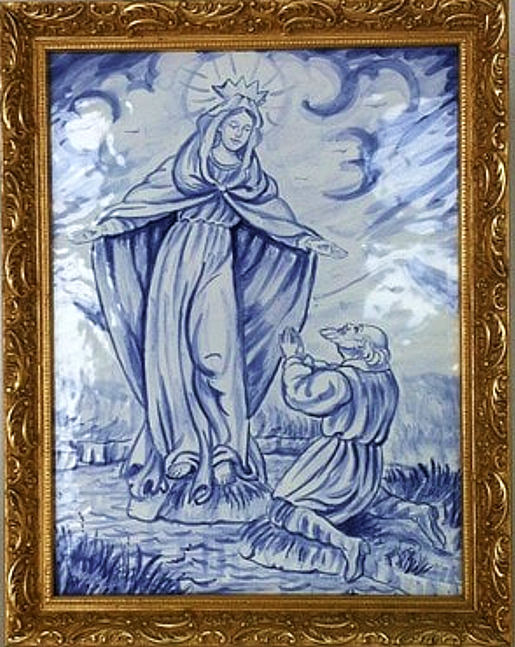
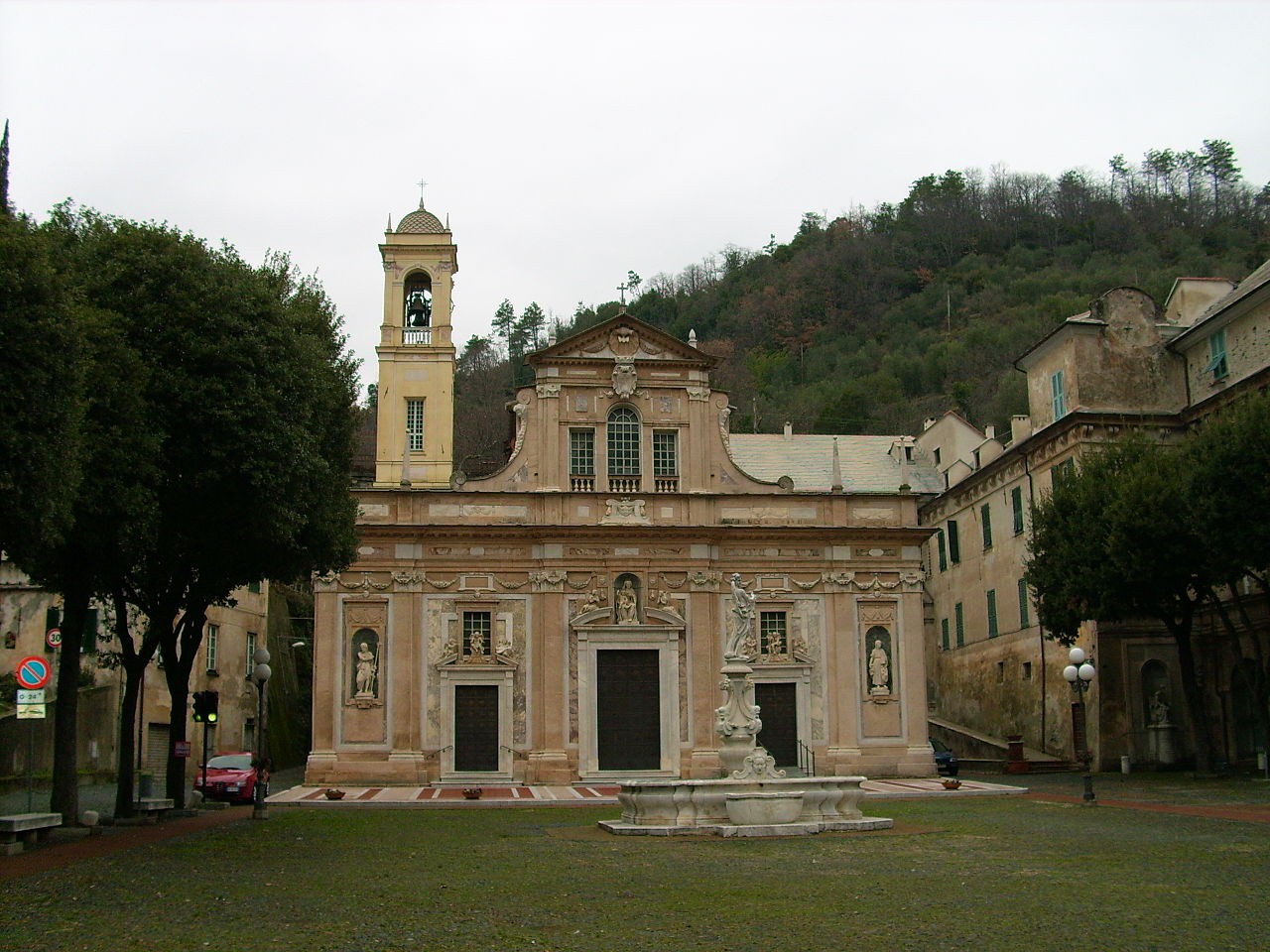
About seven kilometers from the centre of Savona stands the Sanctuary of Our Lady of Mercy, built following the apparition of the Virgin Mary to the farmer Antonio Botta, on 18 March 1536.
During the apparition, the Madonna dressed in white and wrapped in a dazzling light, told Antonio to go to his confessor and ask him to announce to the people, a fast for three Saturdays and a procession to the site where she appeared, to honour God and His Mother. She then asked him to return on the fourth Saturday.
On the fourth Saturday after the event, corresponding to 8 April 1536 and on the eve of Palm Sunday, Antonio Botta returned to the place of the apparition. There the Virgin appeared to him again, asking for three more fast Saturdays and a new procession of the people, especially the disciplinary Confraternities, praising their work and recommending that they announce to everyone, repentance of their vices and sins, to live the Creed and then she disappeared after saying: “Mercy, my son, not justice.”
This teaching of the Madonna was accepted with faith and dedication by the City of Savona, which was going through a difficult period, after the defeat suffered in 1528 by the Republic of Genoa.
Since then, on 18 March of each year, to commemorate the event of the apparition, a procession led by the Bishop is made, with the Confraternities of the Diocese and the faithful, departing from the Cathedral square of Savona and arriving at the Sanctuary of Our Lady of Mercy which was built to honour the apparitions to Antonio Botta.
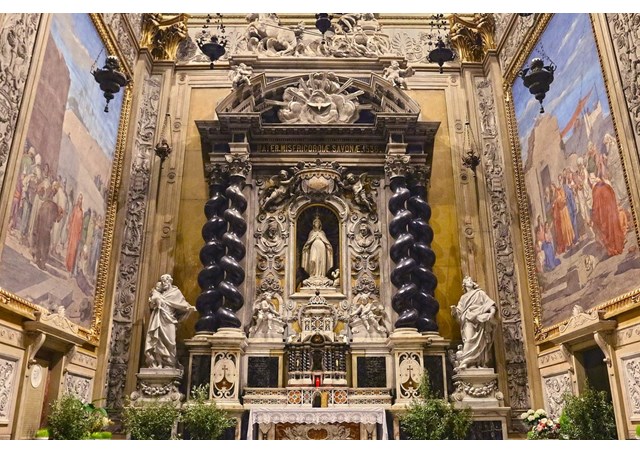
The construction of the architectural complex of the Sanctuary was started in the same year in which the Marian apparition took place, i.e. in 1536. The whole today includes the Basilica with the square, the Pallavicino and Tursi palaces, the large late-sixteenth-century palace of the New Hospice and other buildings. The Basilica collects masterpieces by prestigious artists, such as Gian Lorenzo Bernini, Orazio Borgianni, Bernardo Castello, Domenichino and is also a very honoured place of worship.
Since the Confraternities are remembered and praised in the message to Blessed Botta, this place of worship was proclaimed National Shrine of the Confraternities of Italy, on March 18, 2009, by the Bishop of the Diocese of Savona-Noli.
Pope Pius VII was exiled to Savona by Napoleon from 1809-1812. During those years, he vowed that if he were released, he would crown the Statue of Our Lady of Mercy. The Pope was released and kept his promise, placing a royal diadem on the Statue on 10 May 1815.
__ St Cyril of Jerusalem (c 313-386) (Optional Memorial) Father and Doctor of the Church Biography: https://anastpaul.com/2017/03/18/saint-of-the-day-18-march-st-cyril-of-jerusalem/ — Bl Aimée-Adèle le Bouteiller St Alexander of Jerusalem (Died 251) Bishop and Martyr St Anselm of Lucca the Younger (1036-1086) About this St Anselm: https://anastpaul.com/2020/03/18/saint-of-the-day-18-march-saint-anselm-of-lucca-the-younger-1036-1086/ St Braulio of Saragossa Bl Celestine of the Mother of God Bl Christian O’Conarchy St Edward the Martyr St Egbert of Ripon St Eucarpius of Nicomedia St Felix of Gerona St Finan of Aberdeen St Frigidian of Lucca Bl John Thules St Leobard of Tours St Narcissus of Gerona Bl Roger Wrenno St Salvator of Horta St Trophimus of Nicomedia — Martyrs of Nicomedia – Commemorates the Christians who were martyred anonymously, either singly and in small groups, by local pagans in the area of Nicomedia prior to the year 300 and who may have been over-looked in the waves of Diocletian persecutions that resulted in the deaths of thousands.
O glorious Saint Joseph, faithful follower of Jesus Christ, to you we raise our hearts and hands, to implore your powerful intercession, to obtain from the gentle heart of Jesus all the help and graces necessary for our spiritual and temporal welfare, particularly the grace of a holy death and the special grace I now implore: …………….. (Mention your request) O guardian of the Word Incarnate we feel animated with confidence, that your prayers on our behalf, will be graciously heard, before the throne of God. St Joseph, Patron of the Dying, Pray for us! Amen
Glory be to the Father and to the Son and to the Holy Spirit, as it was in the beginning, is now and ever shall be, world without end. Amen
Thought for the Day –17 March – Meditations with Antonio Cardinal Bacci (1881-1971)
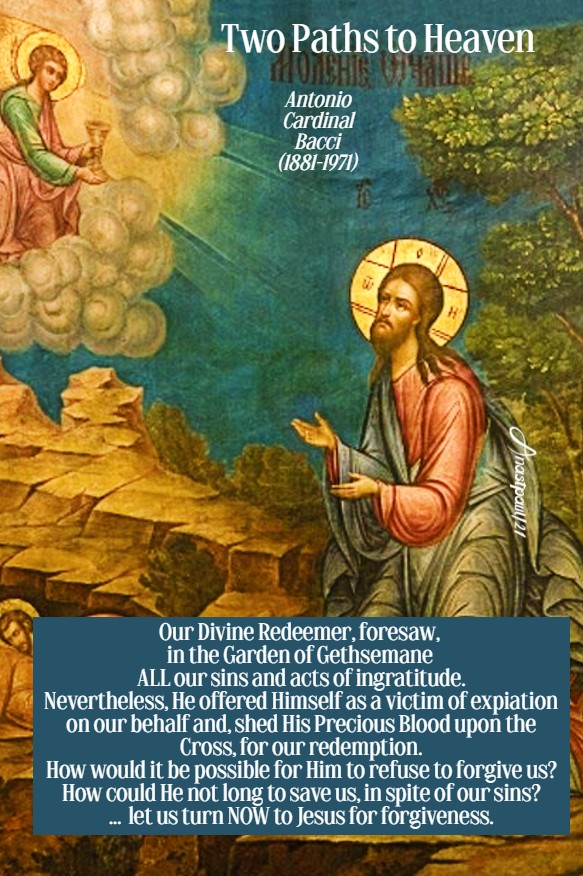
Two Paths to Heaven
“If we have been unfortunate enough to have lost our Baptismal innocence by falling into sin, we should not be discouraged. God’s mercy opens another way for us, the way of penance. “I have come,” Jesus tells us,“to call sinners, not the just” (Mt 9:13).
Our Divine Redeemer, foresaw, in the Garden of Gethsemane ALL our sins and acts of ingratitude. Nevertheless, He offered Himself as a victim of expiation on our behalf and, shed His Precious Blood upon the Cross, for our redemption. How would it be possible for Him to refuse to forgive us? How could He not long to save us, in spite of our sins?
Let us recall the consoling parables of the prodigal son and the lost sheep. If we feel that we fall into the category of prodigal sons or lost sheep, then let us turn NOW to Jesus for forgiveness.”
Day Twenty nine of our Lenten Journey 17 March – Wednesday of the Fourth Week of Lent, Readings: Isaiah 49:8-15, Psalms 145:8-9,13-14, 17-18, John 5:17-30
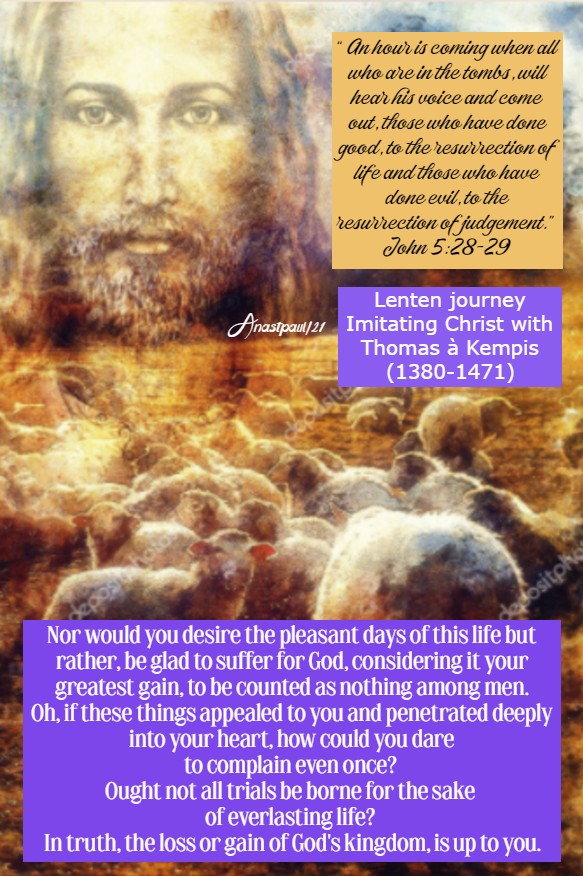
Imitating Christ with Thomas à Kempis (1380-1471)
In You is the source of life and in Your Light Lord, we see light Psalm 35(36)
“ An hour is coming when all who are in the tombs, will hear his voice and come out, those who have done good, to the resurrection of life and those who have done evil, to the resurrection of judgement.” – John 5:28-29
CHRIST: MY CHILD, do not let the labours, which you have taken up, for My sake, break you and do not let troubles, from whatever source, cast you down but in everything, let My promise strengthen and console you. I am able to reward you beyond all means and measure.
You will not labour here long, nor will you always be oppressed by sorrows. Wait a little while and you will see a speedy end of evils. The hour will come when all labour and trouble shall be no more. All that passes away with time is trivial.
What you do, do well. Work faithfully in My vineyard. I will be your reward. Write, read, sing, mourn, keep silence, pray and bear hardships like a man. Eternal life is worth all these and greater battles. Peace will come on a day which is known to the Lord and then there shall be no day or night, as at present but perpetual light, infinite brightness, lasting peace and safe repose. Then you will not say: “Who shall deliver me from the body of this death?” nor will you cry: “Woe is me because my sojourn is prolonged.” For then death will be banished and there will be health unfailing. There will be no anxiety then, but blessed joy and sweet noble companionship.
If you could see the everlasting crowns of the saints in heaven and the great glory wherein they now rejoice – they who were once considered contemptible in this world and, as it were, unworthy of life itself – you would certainly humble yourself at once, to the very earth and seek to be subject to all, rather than to command even one. Nor would you desire the pleasant days of this life but rather, be glad to suffer for God, considering it your greatest gain, to be counted as nothing among men.
Oh, if these things appealed to you and penetrated deeply into your heart, how could you dare to complain even once? Ought not all trials be borne for the sake of everlasting life? In truth, the loss or gain of God’s kingdom, is up to you.
Lift up your countenance to heaven, then. Behold Me, and with Me all My saints. They had great trials in this life but now they rejoice. They are consoled. Now they are safe and at rest. And they shall abide with Me for all eternity in the kingdom of My Father. (Book 3 Ch 47)
Quote/s of the Day – 17 March – Wednesday of the Fourth Week of Lent, Readings: Isaiah 49:8-15, Psalms 145:8-9,13-14, 17-18, John 5:17-30
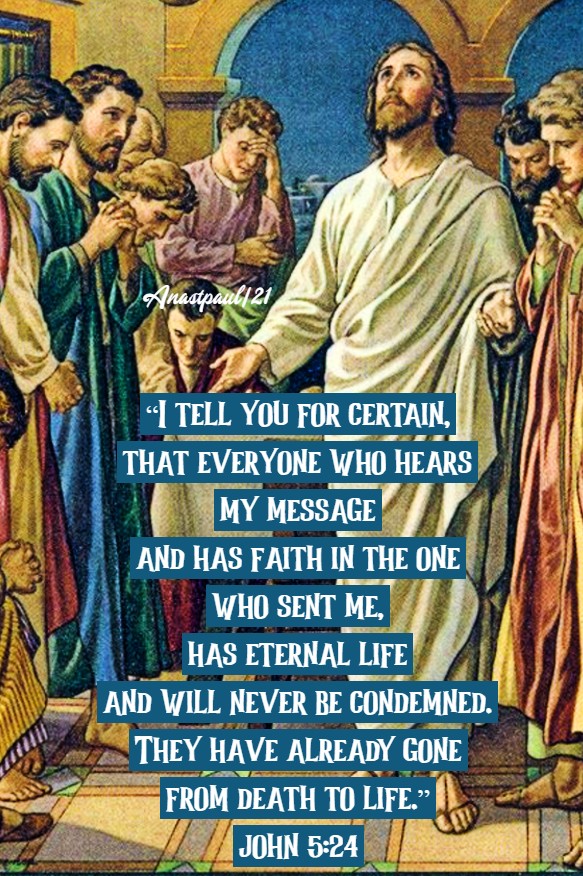
“I tell you for certain, that everyone who hears my message and has faith in the one who sent me, has eternal life and will never be condemned. They have already gone from death to life.”
John 5:24
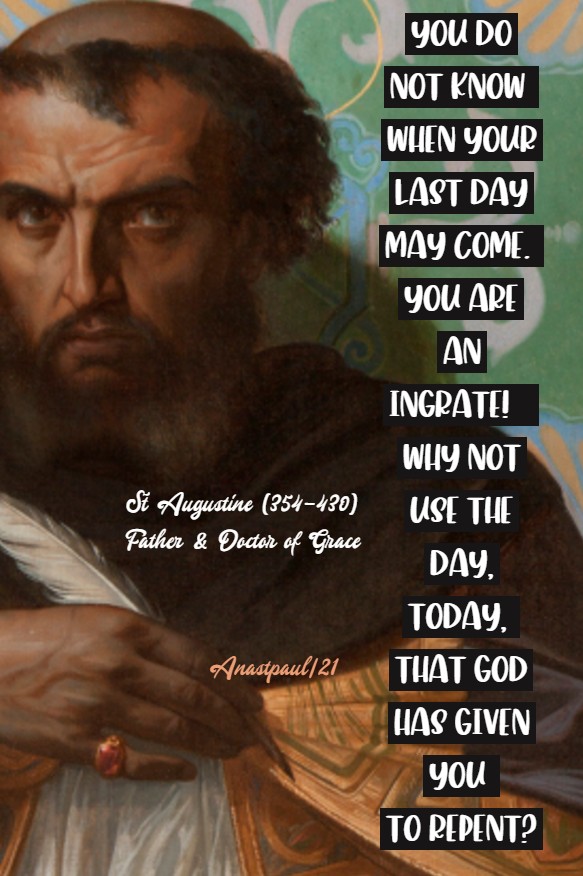
“You do not know when your last day may come. You are an ingrate! Why not use the day, today, that God has given you to repent?”
St Augustine (354-430) Father and Doctor of Grace
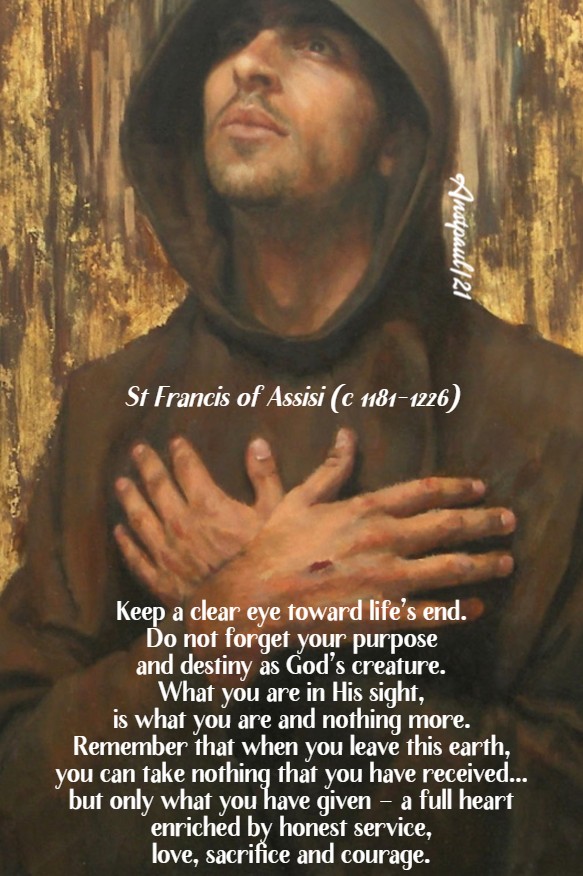
“Keep a clear eye toward life’s end. Do not forget your purpose and destiny as God’s creature. What you are in His sight, is what you are and nothing more. Remember that when you leave this earth, you can take nothing that you have received… but only what you have given – a full heart enriched by honest service, love, sacrifice and courage.”
St Francis of Assisi (c 1181-1226)
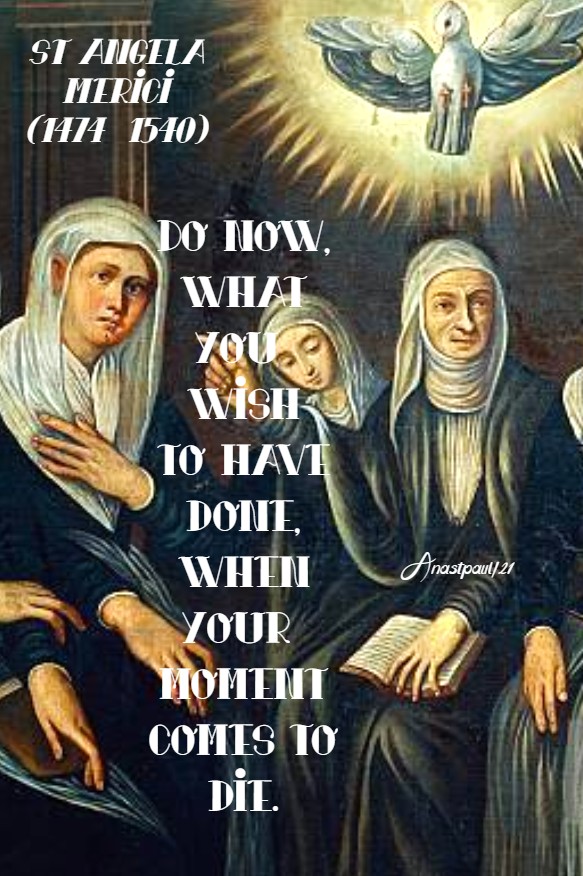
“Do now, what you wish to have done, when your moment comes to die.”
St Angela Merici (1474-1540)
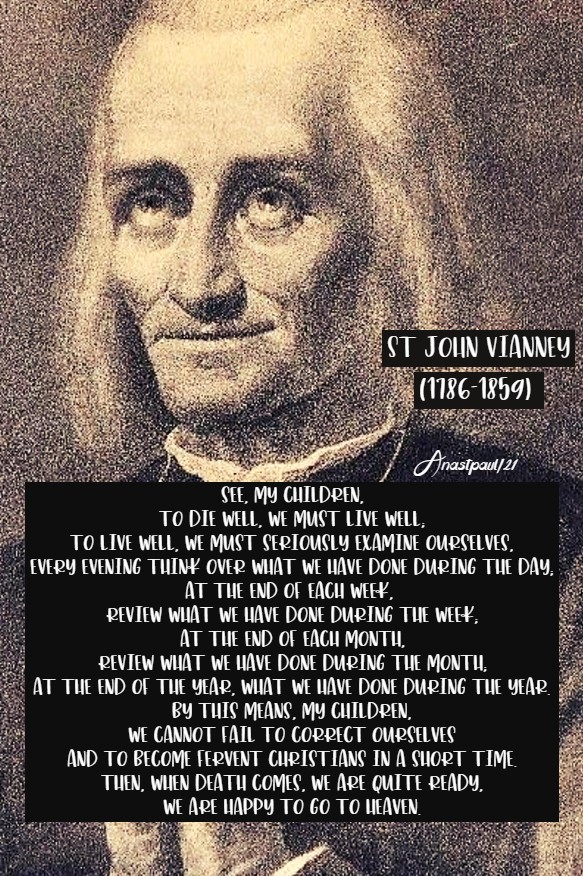
“See, my children, to die well, we must live well; to live well, we must seriously examine ourselves, every evening think over what we have done during the day; at the end of each week, review what we have done during the week; at the end of each month, review what we have done during the month; at the end of the year, what we have done during the year. By this means, my children, we cannot fail to correct ourselves and to become fervent Christians in a short time. Then, when death comes, we are quite ready, we are happy to go to Heaven.”
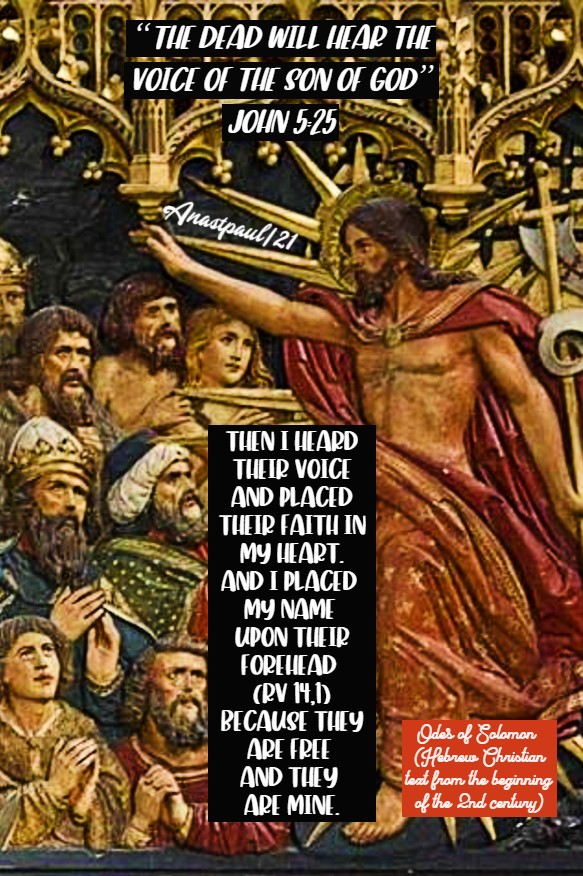
“The dead will hear the voice of the Son of God” – John 5:25
REFLECTION – “[Christ speaks:] I became useless to those who knew Me not, because I shall hide Myself, from those who possessed Me not. And I will be with those who love Me. All my persecutors have died and they, who trusted in Me, sought Me because I am living! I arose and am with them and will speak by their mouths. For they have rejected those who persecute them and I threw over them, the yoke of My love. Like the arm of the bridegroom over the bride (cf Sg 2,6), so is My yoke over those who know Me. And as the bridal feast is spread out by the bridal pair’s home, So is My love, by those who believe in Me.
I was not rejected, although I was considered to be so and I did not perish, although they thought it of Me. Sheol saw Me and was shattered and Death ejected Me and many with Me. I have been vinegar and bitterness to it and I went down with iMt as far as its depth. Death was released because it was not able to endure My Face.
And I made a congregation of living, among his dead (1P 3,19; 4,6); and I spoke with them, by living lips; in order that My word may not fail. And those who had died ran toward Me and they cried out and said, “Son of God, have pity on us. And deal with us according to Your kindness and bring us out from the chains of darkness. And open for us, the door by which we may go forth to You, for we perceive, that our death does not approach You. May we also be saved with You because You are our Saviour.”
Then I heard their voice and placed their faith in My heart. And I placed My Name upon their forehead (Rv 14,1) because they are free and they are Mine.” – Odes of Solomon (Hebrew Christian text from the beginning of the 2nd century) N° 42
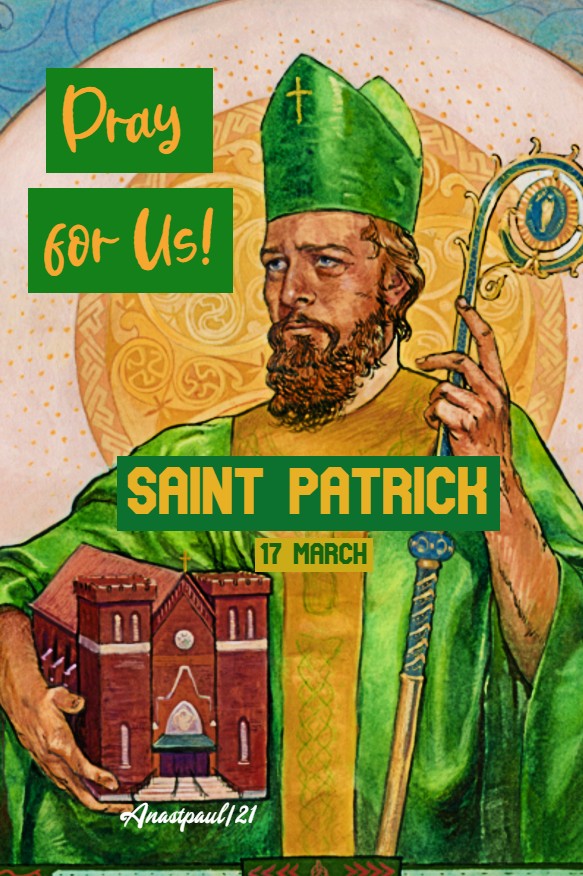
PRAYER – Lord God, You crown the merits of the saints and pardon sinners, when they repent. Forgive us our sins, now that we come before You, humbly confessing our guilt. Take our hand and lead us to our heavenly home. May St Patrick Your Saint, pray for us amidst the strife, he kew so well. Through Christ our Lord and Redeemer, with the Holy Spirit, God now and for all eternity, amen.
Our Morning Offering – 17 March – Wednesday of the Fourth Week of Ordinary Times and the Memorial of St Patrick (c 385-461)
Excerpt of the Lorica St Patrick (c 385-461)
I arise today Through God’s strength, to pilot me; God’s might, to uphold me, God’s wisdom, to guide me, God’s eye, to look before me, God’s ear, to hear me, God’s word, to speak for me, God’s hand, to guard me, God’s way, to lie before me, God’s shield, to protect me, God’s hosts, to save me From snares of the devil, From temptations of vices, From everyone who desires me ill, Afar and anear, Alone or in a mulitude. I arise today Through a mighty strength, the invocation of the Trinity, Through a belief in the Threeness, Through a confession of the Oneness Of the Creator of creation, Amen
Saint of the Day – 17 March – Blessed Conrad of Bavaria O. Cist (c 1105-1126 or 1154) Cistercian Monk, Hermit, pilgrim, miracle-worker, Canon and Civil Lawyer. Born in c 1105 Veitsburg, Baden-Württemberg (in modern Germany) and died in either 1126 or 1154 at the Santa Maria ad Cryptam, a Benedictine Monastery in Molfetta, near Modugno, Italy of natural causes. Patronage – City and Diocese of Molfetta. Blessed Conrad has 3 Feast days – the liturgical feast falls on 9 February, the day of the translation. The day of his birth into Heaven is commemorated on 17 March. The transfer of the relics to the new Cathedral, is celebrated on the second Sunday of July. He is also known as Conrad di Baviera, Conrad of Clairvaux, Conrad of Molfetta, Conrad the Confessor, Corrado, Konrad.
There are different versions of the life of Conrad. The common elements are these below:
Conrad was born in Ravensburg, in Swabia, around 1105, son of the noble Henry IX of Welf known as the Black and Wulfilde of Saxony. Henry became Duke of Bavaria in 1120, succeeding his brother Guelph V. He was succeeded in 1126 by his first-born Henry X the Superb, while the second-born Guelph VI became Duke of Spoleto. The daughters Giuditta, Matilde and Wulfilde entered into important marriages and from Giuditta, Corrado’s elder sister, the Emperor Federico Barbarossa was born. Among the ancestors of Conrad we must include St Conrad of Constance (c 900-975).
Conrad, being the youngest son, he was educated in literary studies and was initiated by his parents to an Ecclesiastical career near Cologne with the intention of making him succeed Archbishop Federico, his paternal cousin. During this period, the young man adorned himself with such virtues as to be considered worthy of the highest honour, arousing admiration among the clergy and the people. He educated himself in higher studies and in ecclesiastical discipline, in Canon and Civil law in Cologne. But his soul was fervently listening to the preaching of Arnoldo, Cistercian Abbot of Morimond. He understood that his vocation was monastic and, in breach of the expectations of the family, he abandoned the honours of his own rank to embrace, while still a teenager, the severe rule of the Cistercian Order at Morimond.
Shortly after Arnoldo started an expedition to the Holy Land for the foundation of a Monastery, involving the Monks of Morimond and arousing the disapproval of St Bernard of Clairvaux, Master of the Order, who was convinced, that in that period, soldiers rather than Monks were needed in Palestine . In two epistles, one sent to the Canon Brunone of the counts of Berg and Altena and the other, sent to Pope Callixtus II, he sought support to prevent the expedition, since among the Monks involved, there was Conrad, the noble young man dragged away. from Cologne a few years ago with great scandal.
According to sources which favour a death in 1126, at the beginning of 1125, Arnoldo died suddenly and the enterprise failed. But Conrad continued the pilgrimage alone, attracted by the mystical charm of the land of Jesus. He crossed the Alps and, having reached Puglia, visited the Sanctuaries of St Michael Michele the Archangel and St Nicholas of Bari, obligatory stops for pilgrims heading to Palestine.
However, exhausted by the journey undertaken with makeshift means, he fell ill before embarking, and found refuge in the Benedictine community of St Maria in the countryside of Modugno, in the Diocese of Bari.
Conrad lived the last months of his short life in a cave adjacent to the Chapel, as a Hermit, praying, fasting and sleeping on the bare rock. He aroused great admiration in the locals, who immediately began to resort to his intercession.
He probably died in the winter between 1125 and 1126, just over twenty years old. Tradition fixes the day of death as 17 March. His body was interred in the Chapel of St Maria and the tomb became a pilgrimage destination.
Those in favour of a death in 1154, add extra years spent either as a Monk at Clairvaux or as a Hermit either in the Holy Land or IN the grotto at Modugno. According to some, Conrad accompanied King Conrad to the Holy Land in 1147 on the Second Crusade, returning in the same year but after some time in Clairvaux travelled back to the Holy Land in 1151 with Bernard’s permission to live as a Hermit; his return to Europe, is dated to 1153, caused by the news that Bernard had fallen ill.
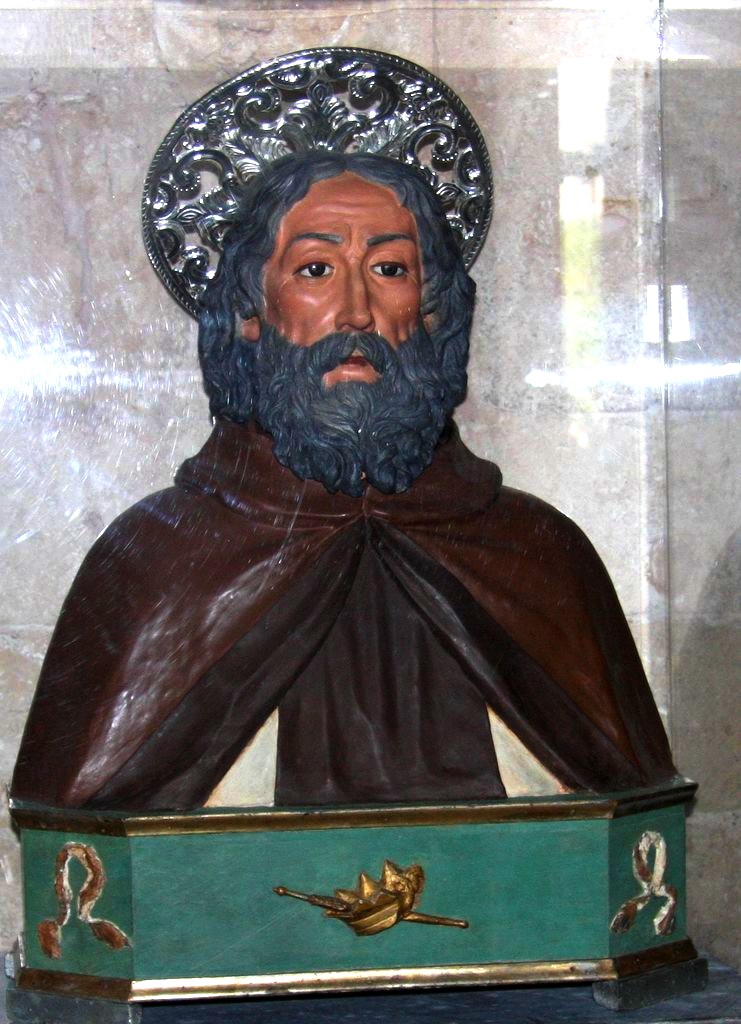
His local cultus was confirmed on 7 April 1832 by his Beatification by Pope Gregory XVI .Nevertheless, he is commonly referred to as aSsaint. In the Cistercian Order his Feast is celebrated on 9 February. The Feast of Conrad is celebrated annually in Molfetta by a procession that carries the skull of the saint in a silver reliquary round the town.
Several times Blessed Conrad has manifested his powerful intercession. For example, in periods of drought, carrying the relic of his skull in procession often resulted in rain.
Famous is an episode of 1529 when, as the City was attacked by surprise at night, by the French troops of Count Caracciolo, the citizens felt called in their sleep by a warrior who was warning them of the imminent danger. They, having reached the walls, saw, surrounded by light, the Madonna of the Martyrs, Blessed Corrado, in whom they recognised the mysterious warrior and St Nicholas. The French army, terrified, fled.
Molfetta was immune through his intercession from many epidemics, including the plague of 1657 and out of gratitude, silver was collected to have a bust sculpted in which to keep his skull. Blessed Conrad has also been credited with the power to calm storms, floods and earthquakes. With the displacement of the episcopal seat, on 10 July 1785 the relics were transferred to the new Cathedral and the Old Cathedral, previously dedicated to the Assumption, was re-dedicated to him. In 1834 his own Mass was approved in Molefetta.
Since 1893 the body is kept in a silver and crystal Reliquary, moved in 1981 to the Chapel of Sts Peter and Paul of the Cathedral. In a safe there is the silver bust containing the skull and the reliquary of the third cervical vertebra, once brought to the bedside of the dying. Fragments of the bones are kept in the various Churches of the city. In Modugno tthe right thumb are preserved in the Cathedral and a bone fragment at the Sanctuary of St Maria ad Cryptam.
For centuries it was believed that Conrad died at an old age and, as such, he was represented with a white beard, cape and staff as a pilgrim. The sackcloth and skull often appear, symbols of self-mortification, and crown and sceptre abandoned on the ground, a sign of noble origins.
Our Lady, Queen of Ireland, or the Madonna of Ireland (1697) – 17 March:
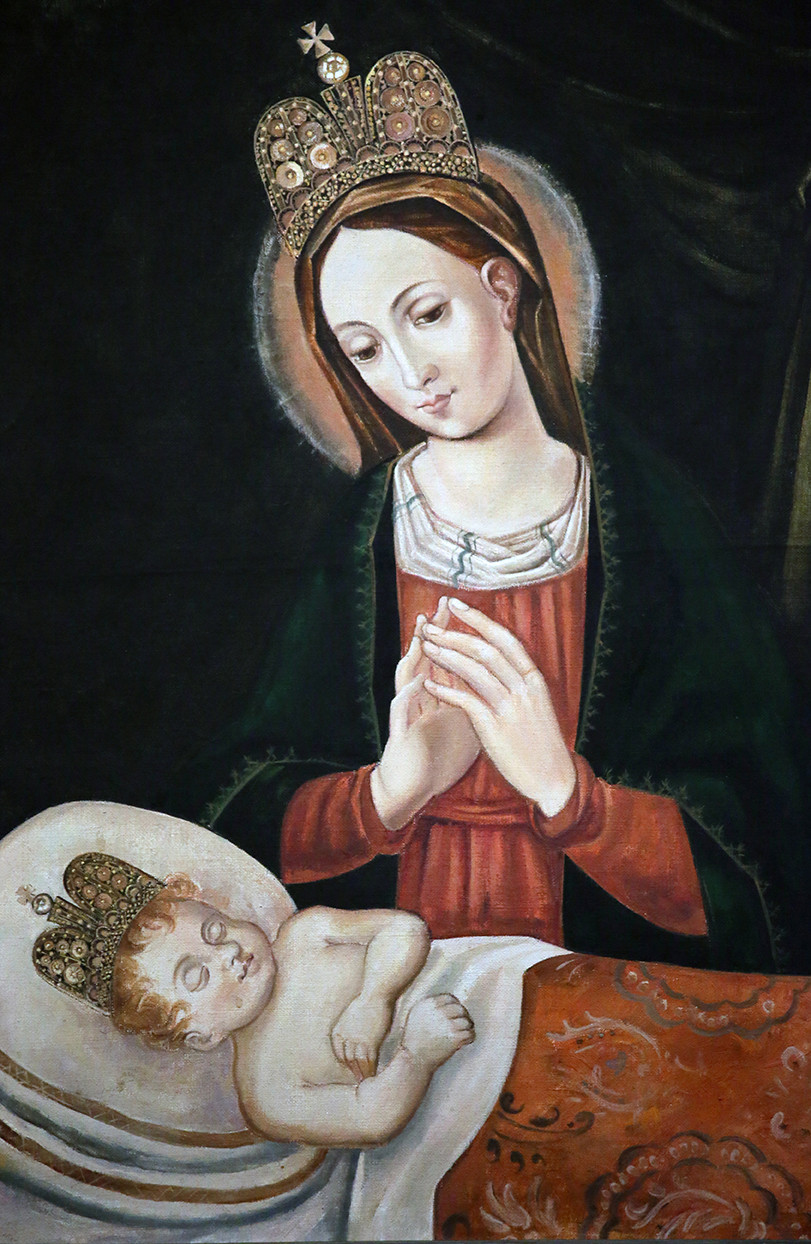
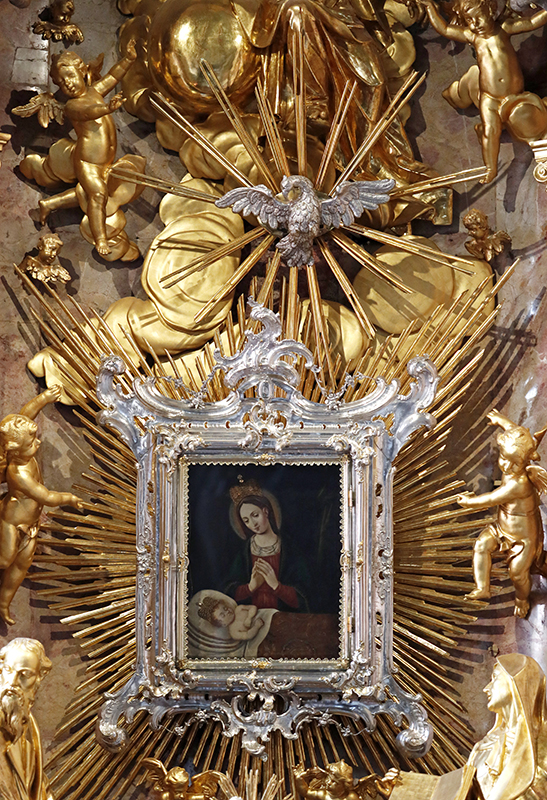
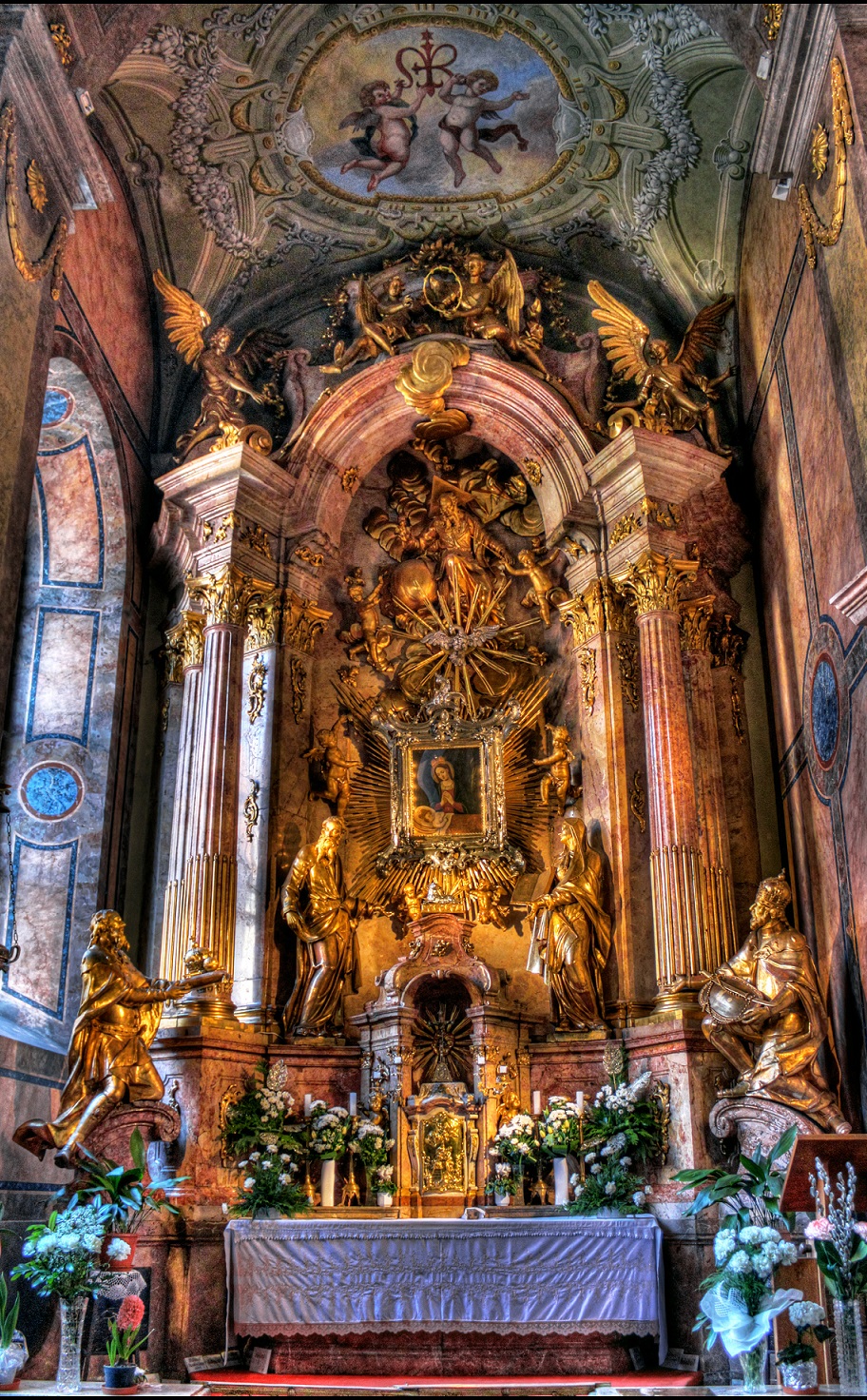
During the difficult times of Oliver Cromwell, one of the bishops who was forced to leave Ireland, was Bishop Lynch, Bishop of Clonfert. He travelled about Europe and finally came to Hungary in 1654. He was kindly received by Bishop John Pusky, Bishop of Gyer and eventually became auxiliary Bishop of the Diocese of Gyer. Ten years later Bishop Lynch planned to return to his native land. Almighty God prevented this; during his dying hours he gave to the Bishop of Gyer, his only material treasure – the picture of the Madonna of Ireland. Soon after, as a memory of the Irish Bishop, the painting of Our Lady was hung on the wall of the Cathedral at Gyer. Years passed. On the Feast of Saint Patrick, while large numbers of the faithful were present in the Cathedral, an awe-inspiring event took place. A bloody sweat was observed to come over the figure of the Blessed Lady in the picture. Drops of blood fell onto the Infant Jesus; as the bleeding continued for three hours. Linen towels, which are still retained under glass at her Shrine, were used to wipe the blood from the blood-perspiring face. In the archives of the Cathedral of Gyer, there is a document written in 1697 on parchment, relating this event. It is signed, not only by the clergy and the laity who were present at the Mass but by the mayor and the councilmen, by the governor, Lutheran and Calvanist preachers, a Rabbi – over one hundred signatures represent eye-witnesses to the miracle. In 1874, Pope Pius IX granted a plenary indulgence on the feasts of Saint Patrick and the Assumption, before which Feasts public novenas are held. Below is the Shrine in Gyer Cathedral.
In 1913 Archbishop Schrembs of Toledo, visited Gyer in Hungary. He saw the beautiful painting and was deeply moved when told of the wonderful event. He requested a copy for the many Irish Catholics in his Diocese who would be happy to learn the history and to possess the picture of Our Lady of Ireland. The copy was placed face to face with the original and then given to Bishop Schrembs. On 23 August 1914, Archbishop Schrembs dedicated the new St Stephen’s Church in Toledo, Ohio. The Hungarian people had paid about 2/3 of the expenses of the building. The Bishop presented the Madonna to this church, saying:
“I am convinced that the picture will be treasured in a Hungarian Church just as much as it would be in an Irish one.”
Both Hungarians and Irish were thrilled. The image depicts Mary crowned as Queen, Our Lady of Ireland, and before her, lying on several circular pillows, is the Infant, also crowned as the Little King and covered with royal robes. __ St Patrick (c 386-461) (Optional Memorial) About dearly loved St Patrick: https://anastpaul.wordpress.com/2017/03/17/saint-of-the-day-17-march-st-patrick/
Martyrs of Alexandria – Also known as Martyrs of Serapis: An unknown number of Christians who were martyred together by a mob of worshippers of the Graeco-Egyptian sun god Serapis. They were Martyred in c 392 in Alexandria, Egypt.
Dear Saint Joseph, you were yourself once faced with the responsibility of providing the necessities of life, for Jesus and Mary. Look down with fatherly compassion upon us in my anxiety over my present inability to support my family. Please help us to find gainful employment very soon, so that this heavy burden of concern, will be lifted from my heart and that I am soon able to provide for those whom God has entrusted to my care. Help us to guard against bitterness and discouragement, so that we may emerge from this trial, spiritually enriched with virtue and with even greater blessings from God. We raise our hearts to you to implore your powerful intercession in obtaining from the Divine Heart of Jesus all the graces necessary for our spiritual and temporal welfare, particularly the grace of a happy death, and the special grace I now implore: …………….. (Mention your request) Guardian of the Word Incarnate, We feel confident, that your prayers on our behalf, will be graciously heard before the throne of God St Joseph Most Holy Patron of Workers, Pray for us! Amen
Glory be to the Father and to the Son and to the Holy Spirit, as it was in the beginning, is now and ever shall be, world without end. Amen
Thought for the Day – 16 March – Meditations with Antonio Cardinal Bacci (1881-1971)
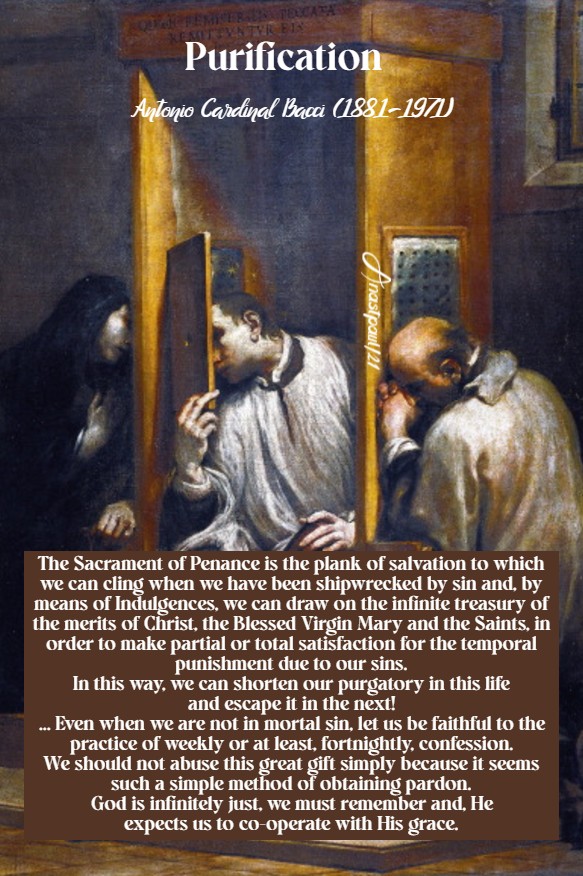
Purification
“God has given us two supernatural means of purifying ourselves after we have sinned – the Sacrament of Penance and Indulgences. The Sacrament of Penance is the plank of salvation to which we can cling when we have been shipwrecked by sin and, by means of Indulgences, we can draw on the infinite treasury of the merits of Christ, the Blessed Virgin Mary and the Saints, in order to make partial or total satisfaction for the temporal punishment due to our sins. In this way, we can shorten our purgatory in this life and escape it in the next!
We should make good use of the Sacrament of Penance. If we fall into mortal sin, let us have recourse at once to this fount of grace. Even when we are not in mortal sin, let us be faithful to the practice of weekly or at least, fortnightly, confession.
We should not abuse this great gift simply because it seems such a simple method of obtaining pardon. God is infinitely just, we must remember and, He expects us to co-operate with His graces.”
Day Twenty-eighth of our Lenten Journey – Tuesday of the Fourth Week of Lent, Readings: Ezekiel 47:1-9, 12, Psalms 46:2-3, 5-6,8-9, John 5:1-16
Imitating Christ with Thomas à Kempis (1380-1471)
In You is the source of life and in Your Light Lord, we see light Psalm 35(36)
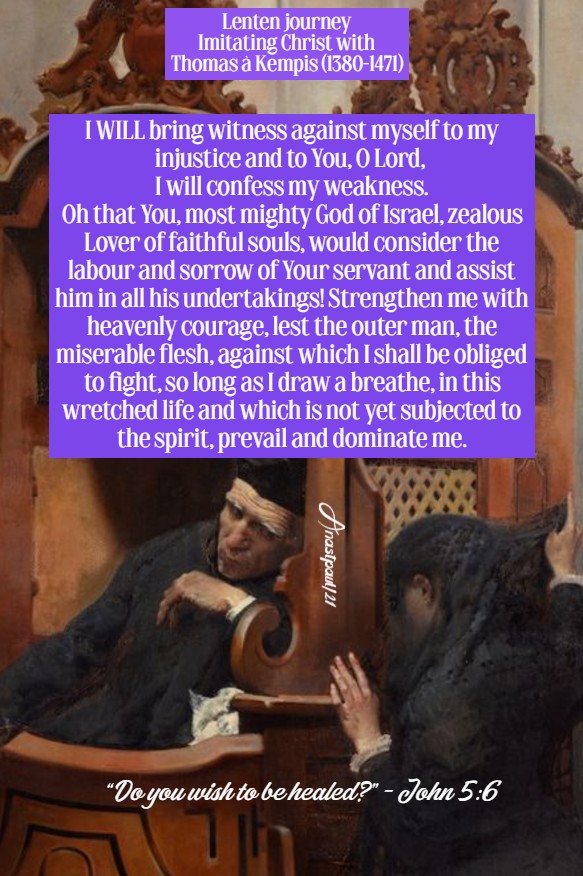
“Do you wish to be healed?” – John 5:6
I WILL bring witness against myself to my injustice and to You, O Lord, I will confess my weakness.
Often it is a small thing that makes me downcast and sad. I propose to act bravely but when even a small temptation comes, I find myself in great straits. Sometimes, it is the merest trifle which gives rise to grievous temptations. When I think myself somewhat safe and when I am not expecting it, I frequently find myself almost overcome by a slight wind. Look, therefore, Lord, at my lowliness and frailty, which You know so well. Have mercy on me and snatch me out of the mire, that I may not be caught in it and may not remain forever utterly despondent.
That I am so prone to fall and so weak in resisting my passions, oppresses me frequently and confounds me, in Your sight. While I do not fully consent to them, still their assault is very troublesome and grievous to me and it wearies me exceedingly, thus to live in daily strife. Yet from the fact that abominable fancies rush in upon me, much more easily than they leave, my weakness becomes clear to me.
Oh that You, most mighty God of Israel, zealous Lover of faithful souls, would consider the labour and sorrow of Your servant and assist him in all his undertakings! Strengthen me with heavenly courage, lest the outer man, the miserable flesh, against which I shall be obliged to fight, so long as I draw a breathw, in this wretched life and which is not yet subjected to the spirit, prevail and dominate me.
Alas! What sort of life is this, from which troubles and miseries are never absent, where all things are full of snares and enemies? For when one trouble or temptation leaves, another comes. Indeed, even while the first conflict is still raging, many others begin unexpectedly. How is it possible to love a life that has such great bitterness, that is subject to so many calamities and miseries? Indeed, how can it even be called life, when it begets so many deaths and plagues? And yet, it is loved and many seek their delight in it.
Many persons often blame the world for being false and vain, yet do not readily give it up because the desires of the flesh have such great power. Some things draw them to love the world, others make them despise it. The lust of the flesh, the desire of the eyes and the pride of life lead to love, while the pains and miseries, which are the just consequences of those things, beget hatred and weariness of the world.
Vicious pleasure overcomes the soul that is given to the world. She thinks that there are delights beneath these thorns because she has never seen or tasted the sweetness of God or the internal delight of virtue. They, on the other hand, who entirely despise the world and seek to live for God, under the rule of holy discipline, are not ignorant of the divine sweetness, promised to those who truly renounce the world. They see clearly how gravely the world errs and in how many ways it deceives. (Book 3 Ch 20)
Quote/s of the Day – 16 March – Tuesday of the Fourth Week of Lent, Readings: Ezekiel 47:1-9, 12, Psalms 46:2-3, 5-6,8-9, John 5:1-16
“ … Sin is washed away by the waters of the font, the Holy Spirit is poured forth in the chrism and we obtain both of these gifts, through the hands and the mouth of the Priest. Thus the whole man is reborn and renewed in Christ.”
St Pacian (c 310–391) Bishop of Barcelona
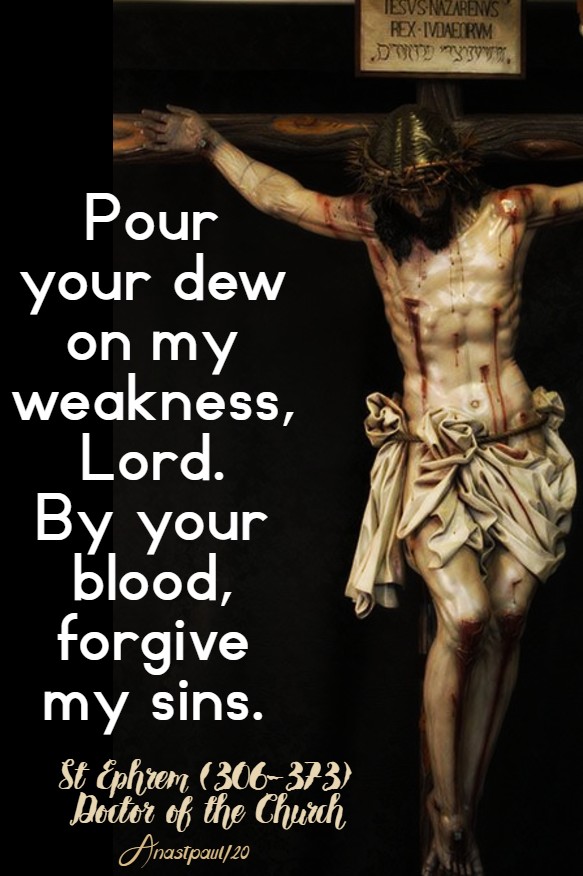
“Pour your dew on my weakness, Lord. By your blood, forgive my sins.”
St Ephrem (306-373) Father & Doctor of the Church
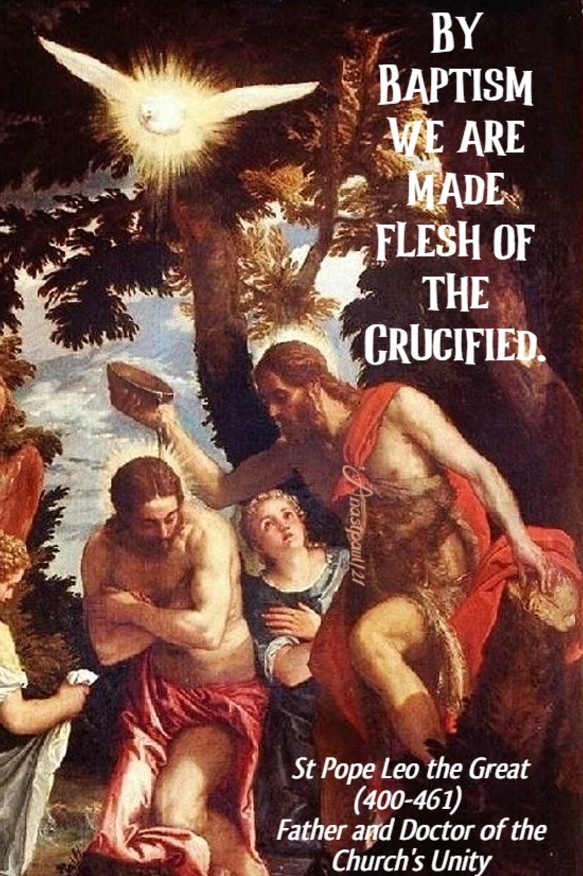
“By Baptism we are made flesh of the Crucified.”
St Pope Leo the Great (400-461) Father and Doctor of the Church’s Unity
“Do you want to be healed?” The sick man answered him, “Sir, I have no one to put me into the pool….” Jesus said to him, “Get up, take up your bed, and walk.” John 5:6-8
REFLECTION – “We read in the Old Testament that in the times of Noah, since all humankind had been won over by sin, heaven’s floodgates opened and rain poured down for forty days… This was a symbol – it was less about a flood, than about a baptism. For it was indeed a baptism that bore away the misdeeds of the sinners and spared the uprightness of Noah. And so today, just as it was then, our Lord has given Lent to us so that the skies can open for the same number of days to inundate us with the floods of divine mercy. Once washed in the saving waters of baptism, this Sacrament enlightens us and, just as formerly, its waters bear away the evil of our sins and confirm the uprightness of our virtues.
Today’s situation is just the same as in Noah’s time. Baptism is flood to sinners and consecration for the faithful. In Baptism the Lord rescues justice and destroys injustice. We can see this in the example of one and the same man – before he was cleansed by the spiritual commands, the Apostle Paul, was a persecutor and blasphemer (1Tm 1,13). But once he had been bathed with the heavenly rain of Baptism, the blasphemer died, the persecutor died, Saul died. Then the Apostle, the just man, Paul, came to life… Anyone who lives Lent in a religious manner and observes the Lord’s decre,es will see sin die in him and grace come to life… such as these die as sinners and live as righteous persons.” – St Maximus of Turin (?-c 420), Bishop – Sermon for Lent 50
PRAYER – Forgive my sins, O my God, forgive my sins: the sins of youth, the sins of age, the sins of my soul and the sins of my body, the sins which, through frailty, I have committed, my deliberate and grievous sins, the sins I know and the sins I do not know, the sins I have laboured so long to hide from others, that now they are hidden from my own memory. Let me be absolved from all these iniquities and delivered from the bond of all these evils, by the Life, Passion and Death of my Lord and Saviour, Jesus Christ. Amen
Our Morning Offering – 16 March – Tuesday of the Fourth Week of Lent
God of Mercy and Compassion By Giovanni Battista Pergolesi (1710-1736) Composer
God of mercy and compassion, Look with pity upon me, Father, let me call Thee Father, ‘Tis Thy child returns to Thee.
Refrain: Jesus, Lord, I ask for mercy. Let me not implore in vain, All my sins, I now detest them, Never will I sin again.
By my sins I have deserved Death and endless misery, Hell with all its pains and torments, And for all eternity. (Refrain)
By my sins I have abandoned Right and claim to heav’n above. Where the saints rejoice forever In a boundless sea of love. (Refrain)
See our Saviour, bleeding, dying, On the cross of Calvary; To that cross my sins have nail’d Him, Yet He bleeds and dies for me. (Refrain)
Giovanni Battista Pergolesi 4 January 1710 – 16 or 17 March 1736 was an Italian Baroque composer, violinist and organist. His best-known works include his Stabat Mater and the opera La serva padrona (The Maid Turned Mistress). His compositions include operas and sacred Masses and music. He died of tuberculosis at the age of 26.
Saint of the Day – 16 March – Saint Finian Lobhar, surnamed “the Luminous Leper” (Died c 560) Bishop, Confessor, Abbot, Founder of Monasteries, mystic, miracle-worker. Born at Bregia, Leinster, Ireland and died in c 560 at Clonmore, Ireland of natural causes. He is also known as Finian Lobur, Finian the Leper, Finnian…, Fintan…
St Finian was born of an illustrious family. He received the surname of Lobhar, or “the Leper,” from the circumstance of his being afflicted with the leprosy, or with some similar scrofulous disorder, during many years of his life.
When grown to be a boy, Finian was educated by a senior, named Brendan, the Saint, to whom he had been brought. By him, the child was instructed in the Christian doctrine and in a knowledge of Sacred Scripture and holy literature. Having received his course of training, with the master’s permission, Finian set out for the south of Ireland, to which part his mother belonged. There, he found the Bishop, called Fathlad, who honourably received him and finding that Finian was remarkable for his sanctity and gravity of demeanour, it was deemed right to promote our saint to Holy Orders.
We are even told, he attained to the Episcopal rank. He was Consecrated by Bishop Fathlad and soon his virtues and miracles, rendered him very renowned. He had frequent angelic visions and colloquies with the heavenly messenger, so that he was thus consoled and comforted.
One day, a certain woman came to him and brought with her a small boy, who, from the time of his birth, was blind, mute and a leper. For this afflicted creature, Finian prayed to the Almighty but received for answer, that he must bear the leprosy himself, if he willed the child to be healed. Finian cheerfully accepted that condition, when, like holy Job, he was covered with ulcers from the sole of his foot even to the top of his head. At the same time, the boy was healed and the saint bore his infirmity, not only with patience, but even with joy.
Finian sat reading one day by the edge of a lake, into which his book accidently fell and it sank to the bottom. The water was so deep, no-one could recover it, however, after an hour’s immersion, it came to the surface, in the presence of many persons there assembled. What was even more wonderful, on being restored to the saint, it seemed to have undergone no damage. There Finian built a Basilica and he established a cemetery, where miracles were wrought, in favour of some sick persons, during his life and after his death. It is believed that the famous Abbey of Innis-fallen, which stood in an island of that name, in the great and beautiful lake of Lough-Lane in the county of Kerry, was situate in this lake and was founded by our Saint.
He founded a second Monastery, called Ardfinnan, he built in Tipperary and a third at Cluainmore Madoc, in Leinster, where he was buried.
St Finian died on 2 February but, says Colgan, who wrote his Vita, his festival is kept on 16 March at all the above-mentioned places.
Our Lady of the Fountain, Constantinople (460) – 16 March:
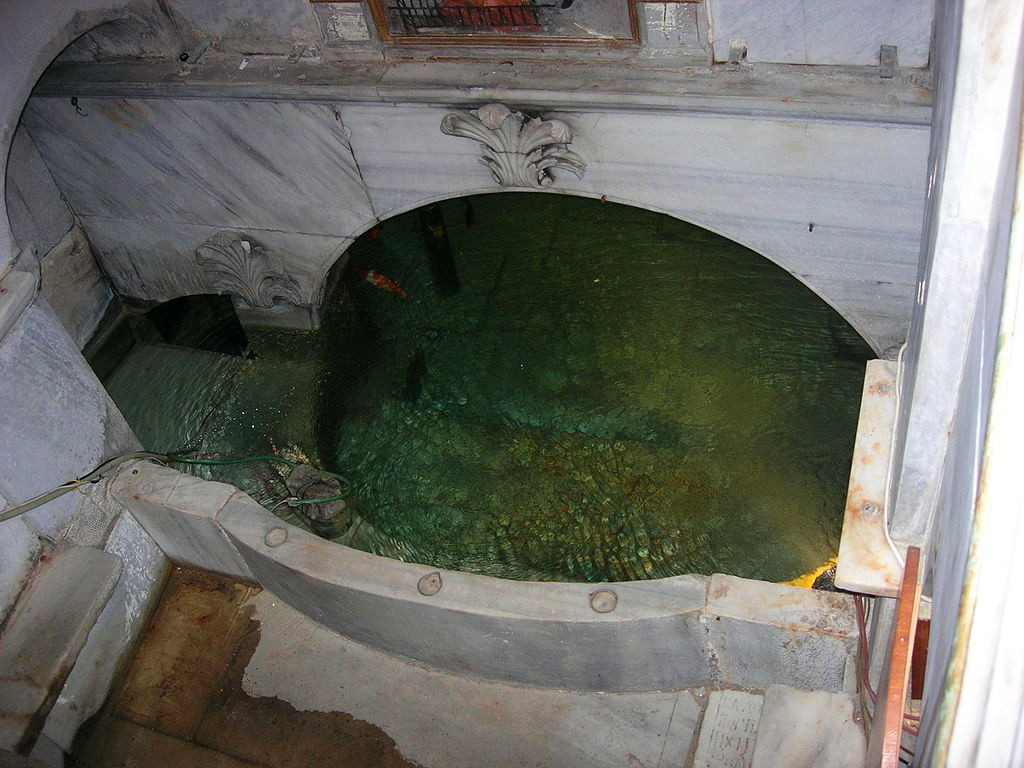
The Abbot Orsini wrote: “Our Lady of the Fountain, at Constantinople, built, by the Emperor Leo, in the year 460, in thanksgiving for the Blessed Virgin’s having appeared to him on the margin of a spring, to which he was charitably leading a blind man, when he was no more than a common soldier and foretold to him, that he would become the emperor.”
Emperor Leo I, also known as Leo I the Thracian, Leo the Great, and even to some, Leo the Butcher, was the Emperor of the Byzantine Empir,e from the year 457 until 474. Leo had begun with a career in the military, eventually rising to the rank of tribune in 457. When the Emperor then reigning died, Leo was acclaimed the new Emperor. It is interesting to note, that he is a Saint in the Orthodox Church. In a certain manner, the Shrine of Our Lady of the Fountain still exists. Instead of the title the Abbot had given it, the Shrine is now known as, the Mother of God of the Life-Giving Spring. the story surrounding it is as follows. the man who would later become Emperor Leo I of the Byzantine Empire, was a good and pious man long before he became Emperor. One day in his travels, he had come upon a blind man, who, being tormented with thirst, begged Leo to find water to quench his thirst. Feeling compassion for this man, Leo went in search of a source of water but found none. As he was about to cease his search, he heard a voice telling him: “Leo, you do not need to tire yourself for there is water nearby.” Leo looked again but still found no water. Then he heard the voice again, this time telling him: “Emperor Leo, enter into the deepest part of the woods and you will find a lake; draw some cloudy water from it with your hands and give it to the blind man to quench his thirst, then anoint his darkened eyes with the clay and you will immediately know who I am, for I have dwelt in this place for a long time. Build a Church here that all who come here, will find answers to their petitions.” Leo found the lake and did as he was instructed. As soon as the blind man’s eyes were anointed, he received his sight. Leo became Emperor a short time later and built a large and beautiful Church in honour of the Blessed Virgin at that place, just outside the Golden Gate near the Seven Towers district. Many miracles began to occur there, including resurrections from the dead, through the intercession of the Mother of God. When this Church was damaged by earthquakes, it was rebuilt by subsequent Emperors who also experienced miraculous cures and the answer to their petitions.
In the year 1453, the Church was razed to the ground when Constantinople fell to the Turks. The material that remained was taken to be used to construct the mosque of the Sultan Beyazid. Even then, people continued to come to the place seeking relief, for the spring remained intact beneath the ruins. The Shrine had twenty-five steps going down to it, and a window in the roof above from which it received a little light. In 1821 the Shrine was destroyed during the Greek War of Independence. In 1833 the Sultan Mahmud allowed the Orthodox Christians to rebuild the Shrine. Later, on the night of 6 September 1955, the Turks killed the Abbot, who was hung and the Shrine was desecrated and burned to the ground. The Shrine has since been restored yet again but appears nothing like it once had in the distant past. Still, it is said, that the water from the spring continues to have miraculous properties.
Procession of Our Lady of the Fountain, 1959
__ St Abban of Kill-Abban St Abraham Kidunaia St Agapitus of Ravenna St Aninus of Syria St Benedicta of Assisi St Dionysius of Aquileia St Dentlin of Hainault Bl Eriberto of Namur St Eusebia of Hamage St Felix of Aquileia St Finian Lobhar, surnamed “the Luminous Leper” (Died c 560) Bishop, Abbot
O most powerful Patriarch, Saint Joseph, Patron of the universal Church, which has always invoked you in anxieties and tribulations. From the lofty seat of your glory, lovingly regard the Catholic Church. Let it move your paternal heart to see the mystical Spouse of Christ weakened by sorrow and persecuted by powerful enemies. We beseech you, by the merits of the most bitter sufferings of Christ, to wipe away the tears of His pilgrim people, to defend and liberate them and to intercede with the Giver of peace and charity, that every hostile power be overcome and every error be destroyed, so that the whole Church may serve the God of all blessings in perfect liberty and peace. We too raise our hearts to you to implore your powerful intercession in obtaining from the Divine Heart of Jesus all the graces necessary for our spiritual and temporal welfare, particularly the grace of a happy death, and the special grace I now implore: …………….. (Mention your request) Guardian of the Word Incarnate, We feel confident, that your prayers on our behalf, will be graciously heard before the throne of God St Joseph Most Holy Patron of the One Holy Catholic Church, Pray for us! Amen
Glory be to the Father and to the Son and to the Holy Spirit, as it was in the beginning, is now and ever shall be, world without end. Amen
Remember, a very important aspect of daily life is MAINTENANCE! This word applies to our temporal affairs and, of course, most importantly, to our spiritual lives.
South Africa’s problem is lack of this big word, “Maintenance” – for very many years – around 30 odd! – Now we stumble in the darkness, the only light being the light of fires – I doubt the analogy is lost on you all.
Please pray for us – let us pray constantly for each other.
Day Twenty Seven of our Lenten Journey – 15 March – Monday of the Fourth week of Lent, Readings: Isaiah 65:17-21, Psalms 30:2 and 4, 5-6, 11-12 and 13, John 4:43-54
Imitating Christ with Thomas à Kempis (1380-1471)
In You is the source of life and in Your Light Lord, we see light Psalm 35(36)
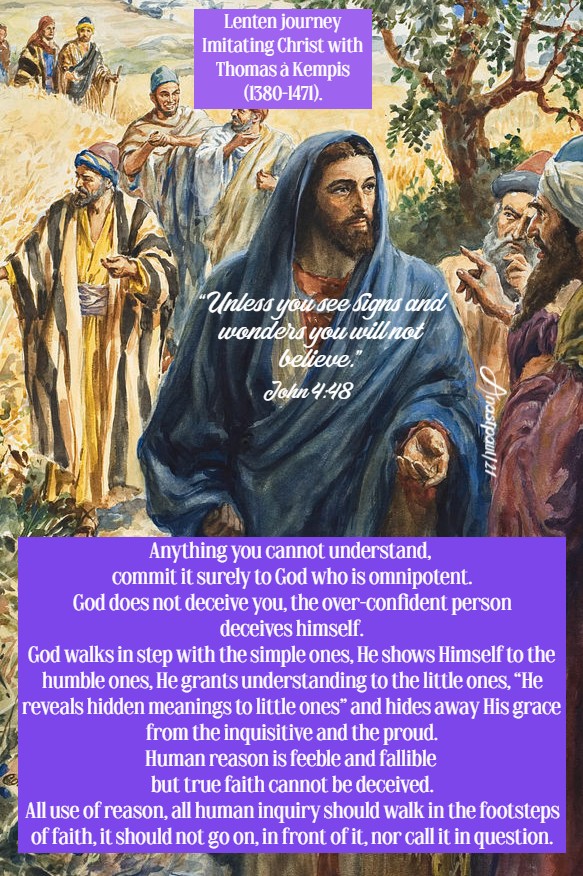
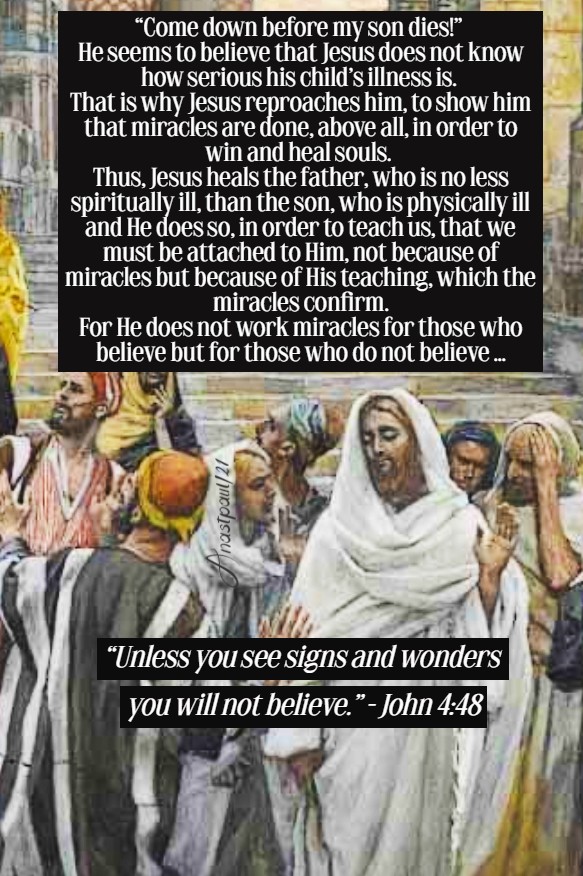
“Unless you see signs and wonders you will not believe.” … John 4:48
“Whoever examines the majesty of God will be crushed by His glory” (Prv 25:27 Vg). God can do works that pass man’s understanding. … Faith is required of you and sincerity of life, not high intelligence, nor penetrating knowledge of the mysteries of God. If you do not understand nor grasp what is below you, how will you comprehend what is above you? Be subject to God, submit your feeling to the faith and the light of knowledge will be given to you, as much as you need and can use.
Some have grave temptations concerning faith in the Blessed Sacrament, which are not to be imputed to them but rather, to the enemy. Take no notice, do not argue with your thoughts, nor answer the doubts with which the devil attacks you, believe God’s word, believe His saints and prophets and the wicked enemy will be routed. It is often most profitable to God’s servant to endure such things. For the devil does not tempt the infidel or sinner, of whom he has already secure possession but, he uses various means to tempt and harass the devout faithful.
Go on then, with simple unquestioning faith and approach the Sacrament with reverent beseeching. Anything you cannot understand, commit it surely to God who is omnipotent. God does not deceive you, the over-confident person deceives himself. God walks in step with the simple ones, He shows Himself to the humble ones, He grants understanding to the little ones, “He reveals hidden meanings to little ones” and hides away His grace from the inquisitive and the proud. Human reason is feeble and fallible but true faith cannot be deceived. All use of reason, all human inquiry should walk in the footsteps of faith, it should not go on, in front of it, nor call it in question. (Book4 Ch 18)
“Unless you see signs and wonders you will not believe.” … John 4:48
REFLECTION – “Unless you people see signs and wonders, you will not believe!” The royal official seems not to believe that Jesus has the power to raise the dead. “Come down before my son dies!” He seems to believe that Jesus does not know how serious his child’s illness is. That is why Jesus reproaches him, to show him that miracles are done, above all, in order to win and heal souls. Thus, Jesus heals the father, who is no less spiritually ill, than the son, who is physically ill and He does so, in order to teach us, that we must be attached to Him, not because of miracles but because of His teaching, which the miracles confirm. For He does not work miracles for those who believe but for those who do not believe …
When the man returned home, “he and his whole household became believers.” People who had neither seen nor heard Jesus … believed in Him. What teaching can we draw from this? We must believe in Him without demanding miracles; we must not demand of God that He prove His power. In our own day, how many people show greater love of God, when their children or wife have received some sort of relief in their illness. But even if our wishes are not heard, we must persevere, just as much, in thanksgiving and praise. Let us remain attached to God in adversity, as much as, in prosperity.” – St John Chrysostom (347-407) Bishop of Constantinople, Doctor of the Church – Homilies on the Gospel of Saint John, no. 35
PRAYER – Teach us Holy Father to do Your will! Grant us Your guiding hand and Your grace, that we may trust You in all things. Strengthen us by Your grace and give us a heart willing to live by the love of Your Son, who so loved the world that He gave Himself up to death for our sake. For if we love as He loved, nothing will lead us from You. Grant that the prayers of St Pope Zachary, may intercede in our necessities. We make our prayer through the Christ, our Lord, one God with You and the Holy Spirit, now and for all eternity, amen.
Our Morning Offering – 15 March – Monday of the Fourth week of Lent
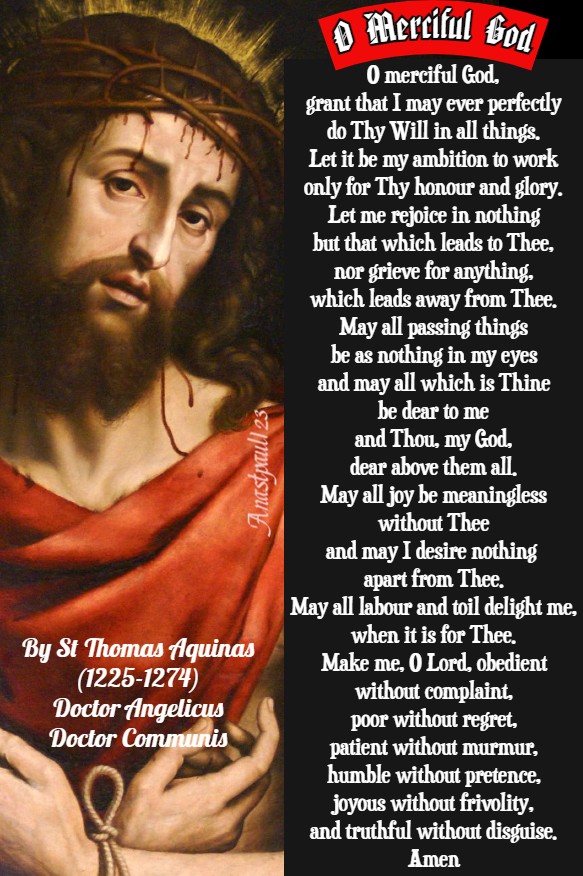
O Merciful God By St Thomas Aquinas (1225-1274) Doctor Angelicus Doctor Communis
O merciful God, grant that I may ever perfectly do Thy Will in all things. Let it be my ambition to work only for Thy honour and glory. Let me rejoice in nothing but that which leads to Thee, nor grieve for anything, which leads away from Thee. May all passing things be as nothing in my eyes and may all which is Thine be dear to me and Thou, my God, dear above them all. May all joy be meaningless without Thee and may I desire nothing apart from Thee. May all labour and toil delight me, when it is for Thee. Make me, O Lord, obedient without complaint, poor without regret, patient without murmur, humble without pretence, joyous without frivolity, and truthful without disguise. Amen
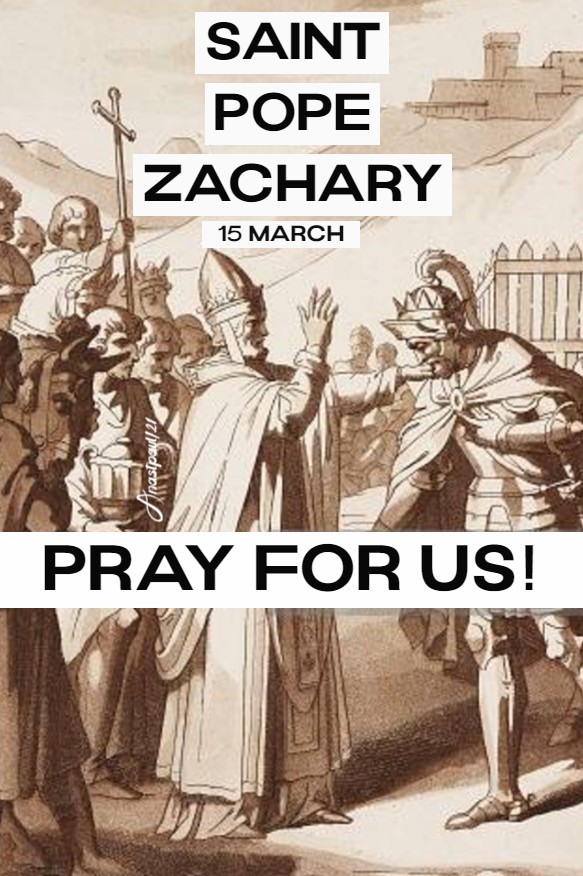
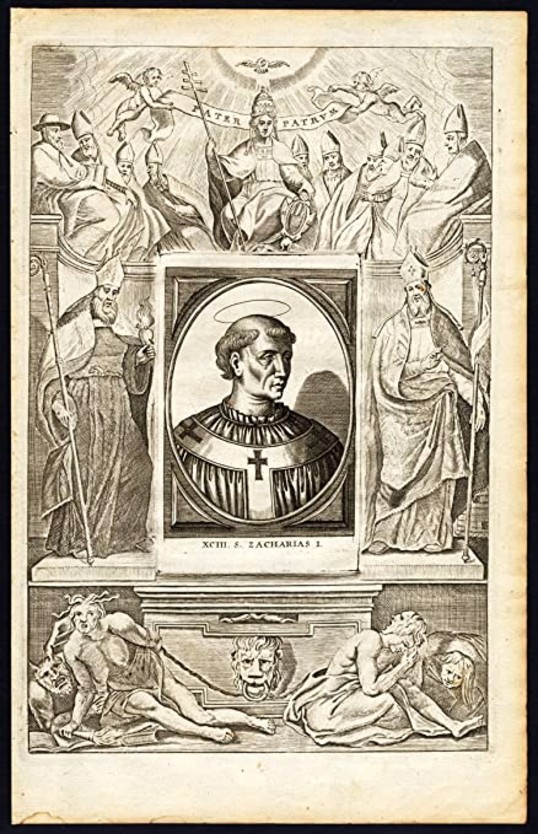
Saint of the Day – 15 March – Saint Pope Zachary (Died 752) – Papal Ascension 5 December 741- 752, abolitionist of slavery, apostle of the poor, Diplomat, Administrator of great renown, peace-maker. Born at Calabria, Italy of Greek ancestry and died on 22 March 752 of natural causes. He was the last Pope of the Byzantine Papacy. Zachary built the original Church of Santa Maria sopra Minerva, near the Pantheon and restored the decaying Lateran Palace, moving the Relic of the head of Saint George to the Church of San Giorgio al Velabro, he forbade the traffic of slaves in Rome, negotiated peace with the Lombards and sanctioned Pepin the Short’s usurpation of the Frankish throne from Childeric III. Zachary is regarded as a capable administrator and a skilful and subtle diplomat in a dangerous time. He is also known as Zacharias. The Roman Martyr ology states: – “At Rome, the birthday of St Zachary, who governed the Church of God with great vigilance and was renowned for his merits, rested in peace.”
Nothing is known of Zachary’s his early life, except that he was the son of a Greek, Polychronius of Calabria. He was most probably a Deacon of the Roman Church and as such, signed the Decrees of the Roman Council of 732. He was selected to succeed Gregory III as Pope on 5 December 741.
His Pontificate was marked by charity for the Clergy and poor of Rome but especially, by vigorous diplomatic relations with the Lombards, the Byzantine Empire and the Franks. Under Zachary’s predecessor, Gregory III, the Papacy had continually suffered the depredations of the Lombard King Liutprand. In line with his new political orientation, Zachary repudiated the alliance of the Papacy with the Duke of Spoleto against Liutprand and, instead, personally met with the King on two occasions, persuading him to return the four Cities he had taken from the Duchy of Rome and to desist from attacking Ravenna. Thus he achieved peace with the Lombards.
In accord with his desire to maintain friendly relations with Byzantium, Zachary immediately dispatched envoys to the Church of Constantinople and to the iconoclastic Emperor Constantine of Copronymos, to inform them of his election and to exhort the Emperor to restore the use of sacred images. His envoys shrewdly withheld their letters from the usurper Artabasdus, who at that time, had seized Constantine’s throne while he campaigned against the Saracens. They finally presented their letters in November 743, after the rightful Emperor had regained his throne and he replied with a gift to Rome of two large estates in South Italy.
Zachary’s close association with the Frankish Church began immediately, as he received St Boniface’s renewed expressions of loyalty and submission to the Chair of Peter and, confirmed for him, the establishment of the Bishoprics of Würzburg, Buraburg and Erfurt. Zachary corresponded with Archbishop Boniface of Mainz, counseling him about dealing with disreputable prelates such as Milo, Bishop of Reims and Trier. “As for Milo and his like, who are doing great injury to the Church of God, preach in season and out of season, according to the word of the Apostle, that they cease from their evil ways.” He also confirmed Boniface as a Papal Legate to a Frankish Council in 742. Until his death Zachary corresponded with Boniface and the Frankish Bishops and rulers, fostering ecclesiastical and moral discipline and extending papal jurisdiction among the Franks. Again in 745, Zachary held a Council at Rome, in which he confirmed the condemnation for heresy, of Aldebert and Clement, previously condemned by a Frankish Council under Boniface. When Pepin took the throne, he inaugurated a new era in Church-State relations, when he obtained the support of Zachary for the deposition of Childeric and for his own Coronation (751).
History has remembered Zachary for his part in creating the Carolingian-Papal alliance. In his own time, he was noted for his Greek translation of the Dialogues of Pope Gregory I the Great.
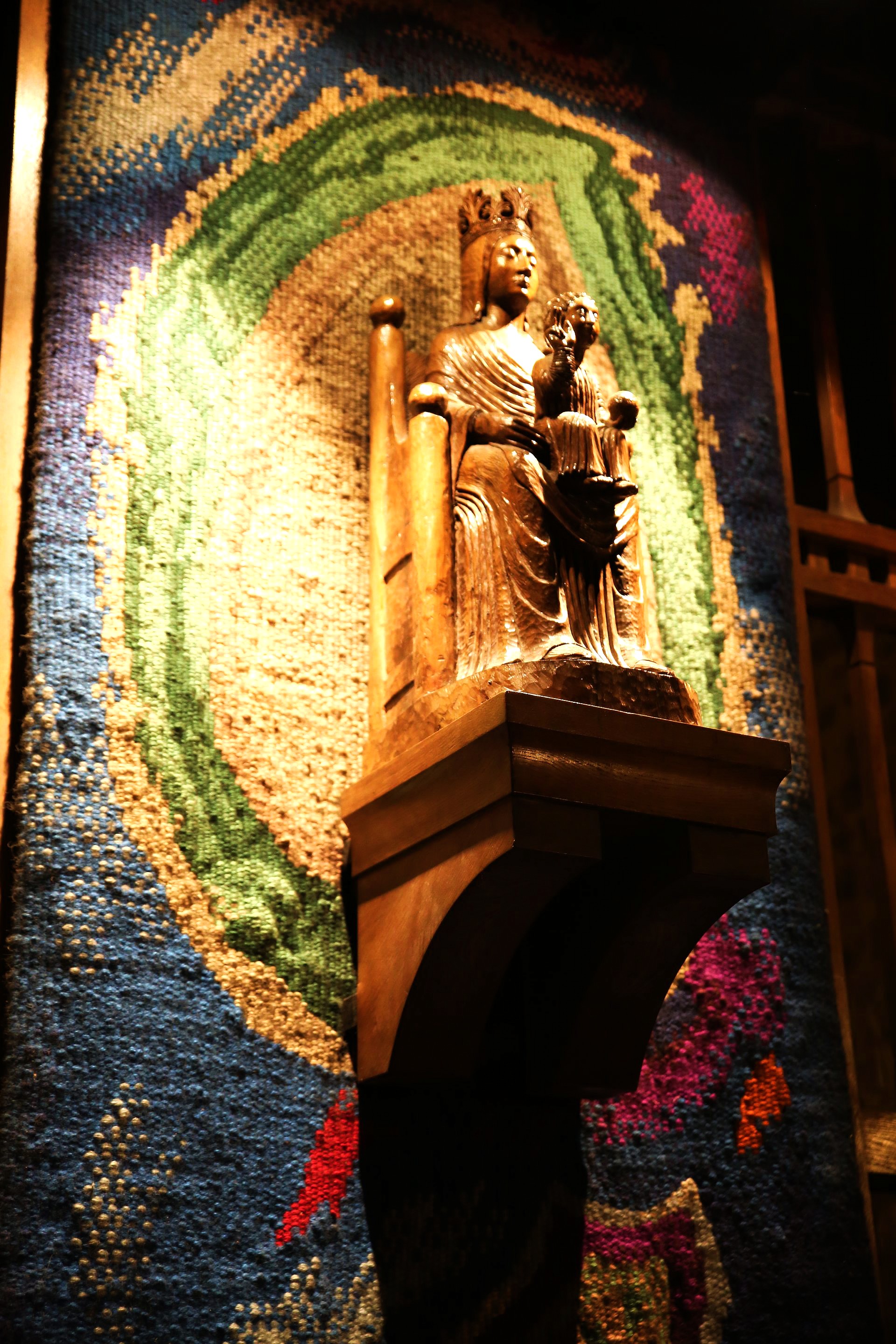
Notre Dame de Sous-Terre/ Our Lady of the Underground, Chartres, France (911) – 15 March:
The Abbot Orsini wrote: “In the year 911, the City of Chartres was miraculously delivered from the siege laid to it by Rollo or Raoul, Duke of the Normans; for as he was on the point of taking the City, Gaucelin, the forty-seventh Bishop of Chartres, mounted on the top of the ramparts, holding a relic of Our Lady as an ensign, which struck such terror in the camp, that all retreated in disorder; in memory of this fact, the meadows of the gate of Drouaise, are called, to this day, the meadows of the fugitives (des Recules).”
The Statue is kept in the Crypt of Chartres Cathedral, hence the name.
Due to the circumstances of its geographic location, the City of Chartres was subject to Viking raids during the 9th and 10th centuries. In the year 858, the City was sacked and burned. Early in the 10th century, a Viking chieftain (later known as Normans, having founded Normandy) named Rollo came to power and he led an army of a few thousand Vikings, against Chartres in the spring of the year 911. Chartres was surrounded by a strong wall, which held the Vikings in check, so the Vikings were forced to lay siege to the City, his men spoiling the surrounding countryside as the days progressed. Eventually Duke Robert and Duke Richard, assembled an army south of Chartres to oppose the fierce Vikings. The relieving force was made up, mainly of Burgundians and Franks and they hoped they were strong enough to attack and drive off the Vikings, as the inhabitants of Chartres continued to resist. They finally attacked the Vikings on 20 July 20 911, before the walls of Chartres. When the Franks and Burgundians advanced, Rollo had his army drawn up in a concave pattern which pressed hard against the centre of the opposing army. Huge, berserk Vikings smote the French line and Duke Richard, under great pressure, began to slowly give ground, which would mean the collapse of his army. Rollo was fighting valiantly, certain he was about to vanquish his enemy, when suddenly Bishop Gaucelin, who led the defence of Chartres, sallied forth from the gates of Chartres surrounded by the steel clad defenders of the City. Unmistakable in his Episcopal mitre, holding aloft the Tunic of the Blessed Virgin Mary, a Relic then kept at Chartres, the defenders of the city fell upon the Vikings with sword and spear. The Vikings, caught between the enemy forces, retreated in defeat.
Dudo, the Norman historian of Saint Quentin, wrote:
“Rollo, mighty and powerful and vigorous and most fierce in arms, do not feel ashamed if you now are considered a runaway. No Frankish or Burgundian assembly, of manifold nations and host,s puts you to flight, fells you, but the nourishing Tunic of the Virgin Mother of God and likewise amulets and relics and the reverend Cross Which the Reverend Prelate carries in his worthy hands.”
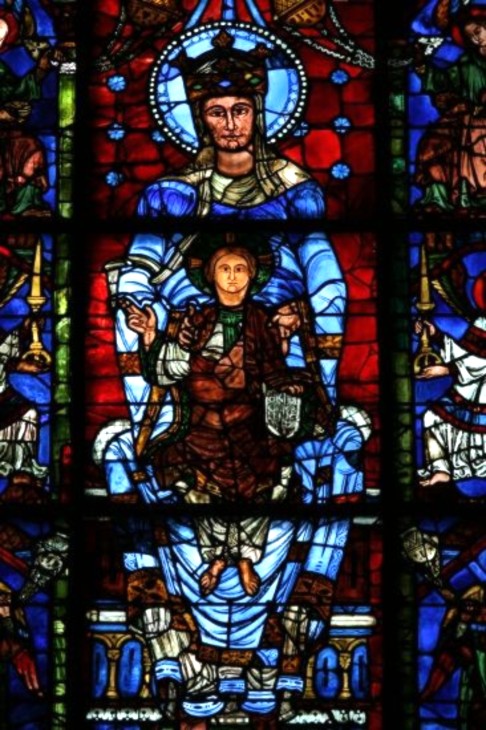
In Chartres amongst the famous windows is the one below, honouring Our Lady of the Underground who saved the City in 911.
St Eoghan of Concullen St Eusebius II Bl Francis of Fermo Blessed Jan Adalbert Balicki (1869-1948) About Blessed Jan: https://anastpaul.com/2019/03/15/saint-of-the-day-blessed-jan-adalbert-balicki-1869-1948/ St Leocritia of Córdoba St Longinus the Centurian Bl Ludovico de la Pena St Mancius of Evora St Matrona of Capua St Matrona of Thessaloniki St Menignus of Parium Bl Monaldus of Ancona St Nicander of Alexandria St Peter Pasquale St Pío Conde y Conde St Sisebuto St Speciosus St Vicenta of Coria Bl Walter of Quesnoy Bl William Hart St Pope Zachary (Died 752) – Papal Ascension 5 December 741- 752
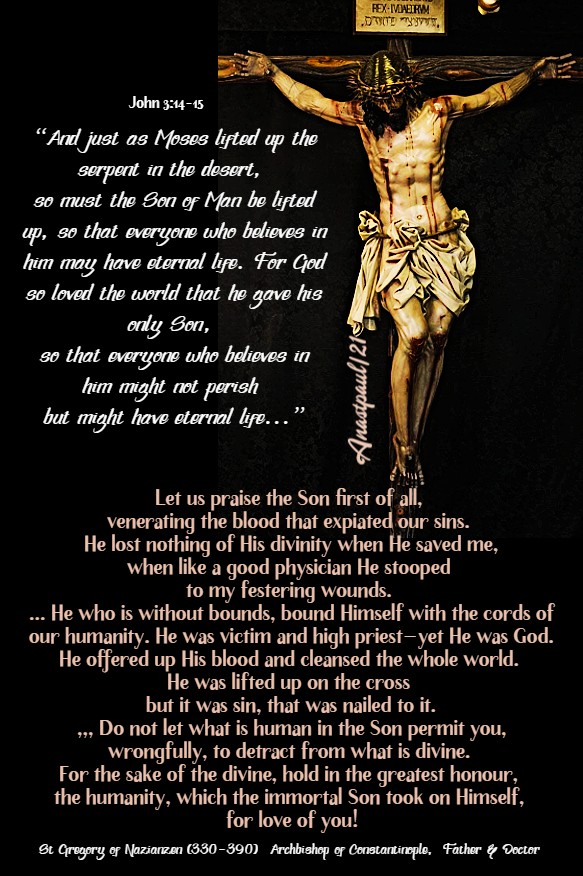
“And just as Moses lifted up the serpent in the desert, so must the Son of Man be lifted up, so that everyone who believes in him may have eternal life. For God so loved the world that he gave his only Son, so that everyone who believes in him might not perish but might have eternal life…” – John 3:14-15
REFLECTION – “Let us praise the Son first of all, venerating the blood that expiated our sins. He lost nothing of His divinity when He saved me, when like a good physician He stooped to my festering wounds. He was a mortal man but He was also God. He was of the race of David but Adam’s creator. He who has no body clothed Himself with flesh. He had a mother who, nonetheless, was a virgin. He who is without bounds, bound Himself with the cords of our humanity. He was victim and high priest—yet He was God. He offered up His blood and cleansed the whole world. He was lifted up on the cross but it was sin, that was nailed to it. He became as one, among the dead but He rose from the dead, raising to life also many who had died before Him. On the one hand, there was the poverty of His humanity, on the other, the riches of His divinity. Do not let what is human in the Son permit you, wrongfully, to detract from what is divine. For the sake of the divine, hold in the greatest honour, the humanity, which the immortal Son took on Himself, for love of you!” – St Gregory of Nazianzen (330-390) Archbishop of Constantinople, Father & Doctor – Poem 2
PRAYER – “All-powerful God, Benefactor and Creator of the universe, hearken to my groaning in my peril. Deliver me from fear and anguish, free me, by the strength of Your might, You who can do all… O Lord Christ, cut the threads of my net with the sword of Your triumphant Cross, with the weapon of life. This net encompasses me on every side, holding me captive so as to bring me to my death. Guide to their rest, my tottering and unsteady steps, heal the stifling fever of my heart.” – St Gregory of Narek (c 951-c 1010) Doctor of the Church – Book of prayers, no 40 (Excerpt)
Saint Joseph, you lived for one purpose — to be the personal servant of Jesus Christ, the Word made flesh. Your noble birth and ancestry, the graces and gifts, so generously poured out on you by God — all this was yours, to serve our Lord. Your every thought, word and action, was a homage to the love and glory of the Incarnate Word. You fulfilled most faithfully the role of a good and faithful servant who cared for the House of God. Glorious Saint Joseph, Spouse of the Immaculate Virgin, pray for me to have a pure, humble, faithful heart and perfect resignation to the divine Will. Be my guide, my father and my model throughout life, that I may die as you did, in the arms of Jesus and Mary. Loving Saint Joseph, faithful follower of Jesus Christ, I raise my heart to you to implore your powerful intercession in obtaining from the Divine Heart of Jesus all the graces necessary for my spiritual and temporal welfare, particularly the grace of a happy death, and the special grace I now implore: …………….. (Mention your request) Guardian of the Word Incarnate, I feel confident that your prayers on my behalf will be graciously heard before the throne of God St Joseph Most Faithful, Pray for us! Amen.
Glory be to the Father and to the Son and to the Holy Spirit, as it was in the beginning, is now and ever shall be, world without end. Amen.
My Lord and my God By St Nicholas of Flue (1417-1487)
My Lord and my God, take from me everything which distances me from Thee. My Lord and my God, give me everything which brings me closer to Thee. My Lord and my God, detach me from myself, to give my all to Thee. Amen
















 AnaStpaul
You must be logged in to post a comment.