Saint of the Day – 10 April – Saint Macarius of Ghent (Died 1012) Archbishop of Constantinople, Pilgrim and Hermit (without a cell), apostle of the sick and the needy, miracle-worker. Born in Antioch, Pisidia and died in 1012 at Monastery of Saint Bavo, Ghent, Belgium. of the plague. Patronages – against plague, Andorra, Ghent, Belgium. Also known as Macarius of Antioch, Macarius of Armenia, Macaire, Macario. The Roman Martyrology states: “St Macarius, Bishop of Antioch, celebrated for his great virtues and miracles.”
Macarius was born in Asia Minor (modern day Turkey), where all indications show, that he received a healthy and normal education. He seems to have discovered his vocation to the Priesthood early on. He was then Consecrated as a Bishop and eventually succeeded to the Archbishop of Antioch, the most important and honoured episcopal see in the Byzantine Empire (this was still a few decades before the schism between the Catholic and Orthodox churches). Imagine how gratifying it must have been to achieve such a level of influence and to have such a great opportunity to assist in the pastoral care of the Church of Christ.
After serving his flock for a time and doing so effectively, it seems, he stepped down from the Archbishop’s throne. He simply retired. He became a pilgrim and spent the rest of his life travelling prayerfully from Shrine to Shrine and Monastery to Monastery, cring for the needs of the poor and sick and working miracles as he went. At one point he was captured by the Saracens but escaped and continued his pilgrimage.
He went west, from Byzantium into Europe. Wherever he stopped, he edified the people greatly but only because of his humility and charity. Finally, having been welcomed into a Benedictine community in Ghent, Belgium, he spent his last years in assisting the needy and sick. During a time of great suffering when the plague descended upon the area, St Macarius went out into the streets, assisting the sick and the dying and administering the Sacraments. He caught the plague and died. He was buried there, and venerated almost immediately as a saint.
Jacob van Oost – St Macarius giving aid to the sick
Admittedly, we don’t really know too much about St Macarius but we do know that he was a holy, humble and gentle man of great charity and virtues., He had the courage to decline the honours of his position in order to give his heart more fully to what it was truly made for – God.
Easter Saturday – The Seventh Day in the Easter Octave +2021
Nuestra Señora de la Naval / Our Lady of Naval, Manila (1646) – 10 April:
The Statue of the Blessed Virgin Mary, Mother of God, that is so dearly loved by the Filipino people, is known as Our Lady of Naval. A large statue, she stands 1,5 metres high and is carved of hardwood, although the faces and hands of the Madonna and Child, are of ivory. Our Lady holds a scepter and a golden Rosary and both Mother and Child, are clothed in exquisite gold, a dress and mantle that are heavily embroidered with golden thread. The lovely Statue was sculpted by a man who was neither Filipino nor a Catholic, and was commissioned in 1593 by the Spanish Governor of the Philippines. The Chinese artist who gave the Virgin somewhat Asian features, was well compensated for his efforts, including being converted to the True Faith through the intercession of the Blessed Mother.
“Fair and comely art thou, terrible as an army set in battle array,” Holy Mother Church chants in her Office and truly, Mary proved herself such, in the battle of “La Naval,” (or Laval), in 1646. It was while the Spanish still governed the islands that they learned that a fleet of five Dutch war ships were sailing for Manila. The Dutch, bent on foraging and possible conquest, sailed their warships dangerously close to the shores of the Philippine Islands. To both the Filipinos, recently converted to the Catholic faith and the Spanish Conquistadores, devoid of sufficient arms and without warships, an invasion for the purpose of pillage or conquest, was a serious threat. The Dutch were Protestants, hating Catholics and there were no Spanish galleons in the area to defend the islands. There were only two cargo ships, large enough to carry cannon and poorly equipped with a few cannons, they were certainly nothing like the famous Spanish galleons with several banks of big guns. Still, they were all that was available to preserve their faith and their homeland, so they were made ready for battle as best as possible. The cargo ships were rechristened “La Rosario,” (The Rosary), and “La Encarnacion,” (The Incarnation), and placed under the special patronage of Our Lady of the Most Holy Rosary. On the Altars built on deck, the sailors carried the image of their beloved Queen and there, on their knees, officers and crew prayed the Rosary daily and dedicated themselves to La Naval, Our Lady of the Holy Rosary. The five Dutch warships were well-equipped with cannons, firearms and mariners but when they encountered the two Spanish cargo ships sailing directly for them, they all inexplicably fled from the area in haste. The Spanish and Filipino defenders sailed home in glory, praising Our Lady for her protection. For the next several months, the two cargo ships patrolled the waters to protect their islands. On one day in July, they were alarmed to discover they had been trapped in a narrow strait by seven Dutch warships. The Dutch did not close the distance to attack, so the men on the cargo ships waited and vowed, that if they were victorious in the coming battle, they would all go on pilgrimage barefoot to the Church of Santo Domingo to thank Our Lady of the Rosary. Through the intercession of Our Lady of La Naval, the Dutch ships left the area and turned toward Manila without even so much as having fired on them. The two cargo ships gave chase, and once again, the Dutch retreated in disgrace. As soon as the victors arrived home, they gratefully fulfilled their vows and went on pilgrimage. After the third encounter with the Dutch fleet, the people of Manila began to call the cargo ships “the galleons of the miracle” and a fourth confrontation and victory seemed to confirm the name. Yet it was not to be so easy, for the Dutch had prepared a fleet of fifteen warships. This time, with overwhelming numbers, they were determined to attack and restore their honour and pride. Resolved to fight and defeat their enemy at any cost, they were lucky enough to come upon the two cargo ships while they lay at anchor. With the wind against them, they would be unable to move. The crews of the cargo ships were casting off and still preparing for battle as the Dutch sailed down upon them, having every advantage. Standing their ground, the Spanish and Filipino sailors fearlessly answered the enemy fire as cannonballs landed at their feet shattering the deck or slammed into the great beams that held their bulky ships together. The smoke from their return fire caused their eyes to water and clouded their vision. Hail Mary’s mingled with the roar of battle; the Rosary beads dangling from the necks of the men as they whole-heartedly launched into the fray. Firing and praying incessantly as the day wore on, they bore the repeated volleys of the enemy and answered back with accurate fire that repelled the closest warships, while others retreated afire and heavily trailing smoke. When the battle finally ended, the Dutch were once again put to flight and only fifteen of the Filipino-Spanish forces were killed. The two meager cargo ships, unable to move, had fought and defeated the enemy, so badly, that they limped away, never to return.
A bas relief commemorating the Battle on the facade of the Church
This naval victory at Manila is similar in many respects to the great naval victory at Lepanto, which was also credited to the intervention of Our Lady and the power of her Holy Rosary. In both instances, Our Lady miraculously defended and granted victory to the seamen who placed their trust in her. Grateful to their heavenly protectress, Our Lady of Naval, the men fulfilled their vows after the battle, which consisted in going to the Church of Santo Domingo at Manila barefoot and instituting a public and perpetual feast in honour of the Mother of God. Even to this day that promise has been fulfilled by the Filipinos, who since that memorable time, have taken as their own, that pledge made by their heroic ancestors.
Procession before the enthronement of Our Lady of the Most Holy Rosary of La Naval which occurs every year at the commemoration of her victory.
On 9 April 1662, the Cathedral chapter of the Archdiocese of Manila, declared the naval victory a miraculous event owed to the intercession of the Virgin Mary, declaring:
Granted by the Sovereign Lord through the intercession of the Most Holy Virgin and devotion to her Rosary, that the miracles be celebrated, preached and held in festivities and to be recounted amongst the miracles wrought by the Lady of the Rosary, for the greater devotion of the faithful to Our Most Blessed Virgin Mary and Her Holy Rosary.
Our Lady of Naval in the Cathedral of Santo Domingo. The Statue is enthroned above the High Altar during the month of October.
Saint Pope Pius X granted the Statue a Canonical Coronation in 1907 and the Philippine government has designated, Our Lady of Naval as a National Treasure.
The massive annual procession of Our Lady of the Most Holy Rosary of Naval
The Church of Santo Domingo was damaged several times by fire and earthquakes and was finally destroyed by bombs in 1941, yet, the Statue has never been damaged! Our Lady of La Naval is presently treasured by the Filipino people, in the new Santo Domingo Church in Quezon City, a few miles from Manila.
Bl Antonio Vallesio St Apollonius of Alexandria Bl Archangelus Piacentini St Bademus St Bede the Younger St Beocca of Chertsey Bl Boniface Zukowski Bl Eberwin of Helfenstein St Ethor of Chertsey St Ezekiel the Prophet St Fulbert of Chartres (c 960-1029) Bishop About St Fulbert: https://anastpaul.wordpress.com/2017/04/10/saint-of-the-day-10-april-st-fulbert-of-chartres/
St Malchus of Waterford Bl Marco Mattia Bl Mark Fantucci St Miguel de Sanctis O.SS.T (1591-1625) About St Miguel: https://anastpaul.com/2020/04/10/saint-of-the-day-10-april-st-miguel-de-sanctis-o-ss-t-1591-1625/ St Palladius of Auxerre St Paternus the Scot — Martyrs of Carthage – 50 saints: A group of 50 Christians who were imprisoned in a pen of snakes and scorpions, and then martyred, all during the persecutions of Decius. Only six of their names have come down to us – Africanus, Alessandro, Massimo, Pompeius, Terence and Teodoro. Beheaded in 250 at Carthage.
Martyrs of Georgia: Approximately 6,000 Christian monks and lay people martyred in Georgia in 1616 for their faith by a Muslim army led by Shah Abbas I of Persia.
Martyrs of Ostia: A group of criminals who were brought to the faith by Pope Saint Alexander I while he was in prison with them. Drowned by being taken off shore from Ostia, Italy, in a boat which was then scuttled, c 115.
Thought for the Day – 9 April – Meditations with Antonio Cardinal Bacci (1881-1971)
The Repentance of St Peter
“Peter had denied his Master three times. He was standing in the courtyard of the High Priest, waming hmself before a brazier and not even thinking of the depths to which he had descended. Jesus, caluminated, struck and mocked, as if He were a criminal, forgets altogether about Himself. Moved by compassion for the leader of His Apostles, now become a perjurer, He turns His gaze towards him. Peter is jerked back to his senses by this look, which is at the same time, stern and affectionate. He realises at last, the level to which he has fallen. He is stricken to the heart and feels a sudden tightness in hs throat. “And Peter went out and wept bitterly” (Lk 22:62).
Peter saw clearly, at this stage, the chasm into which he had fallen. He thought of all the gifts and favours which he had received from Jesus and recalled the prophecy which his Master had made. “A cock will not crow ths day, until thou hast denied, three times, that thou knowest me” (Lk 22:34). He remembered, also, how he had sworn that he would never deny Jesus. Now he saw himself in the role of the prodigal son or the lost sheep … and, as he wept bitterly, he saw again, the reproachful, yet loving gaze of Jesus. His grief found an outlet in hIs tears and he was filled with confidence, that Jesus, in His infinite goodness, wuld forgive him.
If we should fall (as we often do, unfortunately), let us rise again immediately, as Peter did. Let us weep for our sins and kneeling before Jesus, represented by the Priest, let us confess our faults and tell God, that we shall never offend Him again. ”
Quote/s of the Day – 9 April – Easter Friday, Readings: Acts 4:1-12, Psalm 118:1-2, 4, 22-27, John 21:1-14
“Simon Peter, when he heard that it was the Lord, girt his coat about him, (for he was naked) and cast himself into the sea.”
John 21:7
“ How odd, my brethren! … Peter gets into the boat without anything on and jumps into the sea fully clothed! (…) Those who are guilty always cover themselves, so as to disguise themselves. Like Adam, then, Peter wants to hide his nakedness after his sin …”
St Peter Chrysologus (c 400-450) Father and Doctor of Homilies
“For this all-powerful Physician, nothing is incurable. He heals without charge! With one word, He restores to health! I would have despaired of my wound were it not, that I placed my trust in the Almighty.”
St Gregory the Great (540-604) Pope, Father, Doctor of the Church
“In order that you may have the same experience, reflect within yourself that your sin is great but that it is blasphemy against God and an injury to yourself, to despair of His forgiveness, because your sin seems to you to be too great. He has promised to forgive your sins, however many they are; will you tell Him you cannot believe this and dispute with Him, saying that your sin is too great and He cannot heal your sickness? Stop at that point and cry out with the prophet: “Lord, I have sinned against you” (Ps 51[50]:6). At once He will reply, “As for me, I have overlooked your fault, you shall not die.” Glory to Him from us all, through all ages! Amen, Amen.”
One Minute Reflection – 9 April – Easter Friday, Readings: Acts 4:1-12, Psalm 118:1-2, 4, 22-27, John 21:1-14
“It is the Lord!” – John 21:7
REFLECTION – “All creatures that exist, are in the hands of God. The action of the creature can only be perceived by the senses,but faith sees, in all things, the action of the Creator. It believes that in Jesus Christ all things live and, that His divine operation, continues to the end of time, embracing the passing moment and the smallest created atom, in its hidden life and mysterious action. The action of the creature is a veil, which covers the profound mysteries of the divine operation.
After the Resurrection, Jesus Christ took His disciples by surprise in His various apparitions. He showed Himself to them, under various disguises and, in the act of making Himself known to them, disappeared. This same Jesus, ever living, ever working, still takes by surprise, those souls whose faith is weak and wavering. There is not a moment, in which, God does not present Himself under the cover of some pain to be endured, of some consolation to be enjoyed, or of some duty to be performed. All that takes place within us, around us, or through us, contains and conceals, His divine action. It is really and truly there present but, invisibly present, so that we are always surprised and do not recognise His operation until it has ceased.
If we could lift the veil and if we were attentive and watchful, God would continually reveal Himself to us and we should see His divine action, in everything that happened to us and rejoice in it. At each successive occurrence, we should exclaim: “It is the Lord” and we should accept every fresh circumstance, as a gift of God. We should look upon creatures as feeble tools in the hands of an able workman and should discover, easily, that nothing was wanting to us and, that the constant providence of God, disposed Him to bestow upon us, at every moment, whatever we required! ”- Father Jean-Pierre de Caussade (1675-1751) Jesuit – Abandonment to divine Providence (ed. J. Ramière, SJ)
PRAYER – Almighty, ever-living God, You offer the covenant of reconciliation to mankind in the mystery of Easter. Cleanse our hearts by Your truth and guide our lives by Your holiness, may we do what is right and pleasing to You. Open our eyes to see You and our ears to Hear You, that we may follow your commandments and Your Way. Grant that what we celebrate in worship, we may carry out in our lives. May our Holy Mother, ever keep us in her prayers and care. Through Christ, our Lord in the unity of the Holy Spirit, all glory and honour to You, forever, amen
Acts 4: 1-12 1 And as they were speaking to the people, the priests, and the officer of the temple, and the Sadducees, came upon them, 2 Being grieved that they taught the people, and preached in Jesus the resurrection from the dead: 3 And they laid hands upon them, and put them in hold till the next day; for it was now evening. 4 But many of them who had heard the word, believed; and the number of the men was made five thousand. 5 And it came to pass on the morrow, that their princes, and ancients, and scribes, were gathered together in Jerusalem; 6 And Annas the high priest, and Caiphas, and John, and Alexander, and as many as were of the kindred of the high priest. 7 And setting them in the midst, they asked: By what power, or by what name, have you done this? 8 Then Peter, filled with the Holy Ghost, said to them: Ye princes of the people, and ancients, hear: 9 If we this day are examined concerning the good deed done to the infirm man, by what means he hath been made whole: 10 Be it known to you all, and to all the people of Israel, that by the name of our Lord Jesus Christ of Nazareth, whom you crucified, whom God hath raised from the dead, even by him this man standeth here before you whole. 11 This is the stone which was rejected by you the builders, which is become the head of the corner. 12 Neither is there salvation in any other. For there is no other name under heaven given to men, whereby we must be saved.
Gospel: John 21: 1-14 1 After this, Jesus shewed himself again to the disciples at the sea of Tiberias. And he shewed himself after this manner. 2 There were together Simon Peter, and Thomas, who is called Didymus, and Nathanael, who was of Cana of Galilee, and the sons of Zebedee, and two others of his disciples. 3 Simon Peter saith to them: I go a fishing. They say to him: We also come with thee. And they went forth, and entered into the ship: and that night they caught nothing. 4 But when the morning was come, Jesus stood on the shore: yet the disciples knew not that it was Jesus. 5 Jesus therefore said to them: Children, have you any meat? They answered him: No. 6 He saith to them: Cast the net on the right side of the ship, and you shall find. They cast therefore; and now they were not able to draw it, for the multitude of fishes. 7 That disciple therefore whom Jesus loved, said to Peter: It is the Lord. Simon Peter, when he heard that it was the Lord, girt his coat about him, (for he was naked,) and cast himself into the sea. 8 But the other disciples came in the ship, (for they were not far from the land, but as it were two hundred cubits,) dragging the net with fishes. 9 As soon then as they came to land, they saw hot coals lying, and a fish laid thereon, and bread. 10 Jesus saith to them: Bring hither of the fishes which you have now caught. 11 Simon Peter went up, and drew the net to land, full of great fishes, one hundred and fifty-three. And although there were so many, the net was not broken. 12 Jesus saith to them: Come, and dine. And none of them who were at meat, durst ask him: Who art thou? knowing that it was the Lord. 13 And Jesus cometh and taketh bread, and giveth them, and fish in like manner. 14 This is now the third time that Jesus was manifested to his disciples, after he was risen from the dead.
Saint of the Day – 9 April – Blessed Ubaldo Adimari OSM (c 1245-1315) Priest and Servite Friar, Soldier, Politician, Penitent, miracle-worker, spiritul student and later assistant of St Philip Benezi (1233-1285) (one of the Seven Holy Founders of the Order of the Servants of Mary – the Servites). Ubaldo is, therefore, of the second generation of the Servites. Born in c 1245 in Florence, Italy and died on 9 April 1315 on Mount Senario, Tuscany, Italy of natural causes. He is also known as Ubaldo da Borgo San Sepolcro. The Order of the Servants of Mary celebrates his feast day on 4 July
This image shows Blessed Ubaldo carrying the water in his mantle
Ubaldo of the noble Florentine Adimari family, was born around 1245 in Florence and spent his youth amidst the turmoil of that time, which saw the Guelphs in favour of the Papacy and the Ghibellines, in favour of the Emperor of Germany, opposing each other.
He was first a supporter and then head of the Ghibelline faction in Florence, operating abuses and disorders of all kinds; until the Prior General sent St Philip Benezi, who had come to restore peace, accompanied by Blessed Bonaventura of Pistoia and the retinue of the Papal Legate, Latino Orsini.
It was in the early months of 1280, when Ubaldo Adimari met St Philip Benizi, who succeeded in converting him. Ubaldo took on the habit of the Servants of Mary and with the grace of God regained, he retired to a very harsh penance and prayer on Monte Senario (Florence), cradle since 1240, of the Foundation of the Order, located in about 18 km from Florence.
With the wise spiritual guidance of his holy Prior, Ubaldo became a meek and humble soul, so as to work wonders, such as carrying water from the well to the Convent, within his mantel having broken the jug on the way.
He was Ordained a Priest and from 1282 to 1285, assisted St Philip in his duties and travels around the various Houses of the Order and on 22 April 1285, he witnessed the passing away of his General, in the Convent of Todi, giving him comfort by his presence.
Returning to the Convent of Monte Senario, he continued his edifying life as a penitent and religious, gladdened by so many miracles, until he died on 9 April 1315. He was buried in the Church of the same Convent, next to the tombs of the Saints , the Seven Founders.
From a survey of the relics in 1717, his remains turned out to be those of a person of great stature. His cult as Blessed was confirmed by Pope Pius VII on 3 April 1821.
Statue in the choir of the St Annunziata in Florence , by Giovanni Angelo Montorsoli
Easter Friday – Day Six in the Easter Octave +2021
Notre-Dames de Myans, Savoie / Our Lady of Myans, Savoy, France (1249) – 9 April:
The Abbot Orsini wrote: “It is believed that this image, in the year 1249, prevented the thunder, which had already consumed the Town of Saint Andre with sixteen villages, from going farther and was the cause of its stopping at Myans.”
Our Lady of Myans in Savoy, is located on a little hill between Modane and Chambery near the Mont Cenis tunnel. It can be easily recognised, as there is a huge statue of the Blessed Virgin standing atop the Shrine’s belfry. The Shrine has been a pilgrimage site since at least the thirteenth century, and its small ‘Black Virgin’ was an object of the devotion of Saint Francis de Sales. The foundation of the Shrine is no longer remembered but the Church became famous for a miracle that occurred there in 1248.
On the evening of 24 November of that year, a tremendous earthquake shook the region causing Mont Granier, the tallest mountain of the Chartreuse Massif, to disintegrate into huge boulders, which came crashing down into the valley. Some of these boulders, were the size of a house, and 16 villages were crushed and 5,000 lives lost. The Shurch of Myans, however, was spared, though gigantic boulders were stopped abruptly at the very door of the Church. Some of these boulders can still be seen around the church grounds.
Unfortunately, we can’t see the boulders in this image of the Church
A marvellous answer to prayer occurred in 1534, in favour of Jean Grandis of Savoy, who was on a vessel bound from Genoa to Leghorn. When the ship was threatened during a tempest and seemed likely to sink, Jean Grandis called upon Our Lady of Myans, Queen of Savoy. Battered by the waves, the ship foundered and sank. Jean Grandis was the only survivor. As a gesture of thanksgiving, he travelled barefoot to the Shrine and there placed his ex-voto. It is said to be one of the oldest to survive.
Another miracle attributed to Our Lady of Myans was in favour of the brother of Saint Francis de Sales, Count Louis de Sales, who in 1603 was travelling to the Chateau of Cusy to marry Claudine Philiberte de Pingon. Since there was no bridge in sight, the Count attempted to cross the River Cheran at a place that he thought was shallow and safe. However, the Count was swept away by flood water. Invoking the name of Our Lady of Myans and promising to make a pilgrimage, he was suddenly thrust onto an obstruction that saved his life. The wedding ceremony was conducted on 2 April. The next day, Saint Francis de Sales offered a Mass of thanksgiving in the little Crypt Chapel before the miraculous image of Our Lady of Myans.
The Black Madonna of Myans, venerated in the Crypt (lower church), is a 70cm high wooden statue, representing the seated Virgin. It dates to around the 12 th century . With her left arm, she presents the Child Jesus seated on her knees. Under the stiff folds of the mantle, the detail of the attitudes fades and the Virgin appears to be standing. She is a virgin of majesty . The mantle of the Statue is in fine moiré gold cloth, revealing a dress in silver cloth. The whole forms a royal adornment. The Virgin was crowned on 17 August 1905 by decision of Pope Pius X who delegated, for this purpose, Cardinal Couillé, Prelate of Gauls, Archbishop of Lyon, surrounded by 5 Bishops and more than 20,000 faithful.
The Church was half destroyed during the French Revolution but the Statue was saved and later enshrined again in the restored building, where it was crowned in 1905. The Sanctuary is particularly resorted to by pilgrimages of men and the image was taken to Rome by a Savoyard pilgrimage for the definition of the Dogma of the Assumption in the year 1950. At the entrance to the choir is evoked the disaster of the landslide of Granier. In the vault of the nave of the lower Church are painted ten unforgettable figures of the Saints and blessed of Savoy and Dauphiné, including St Francis de Sales (1567-1622) and St Louis of Savoy (1462-1508).
In 1855, the steeple, half demolished during the revolution, was raised in its current form to serve as a pedestal for a monumental Statue which crowns its summit. This Statue, executed in Paris by the sculptor Louis Rochet, was inaugurated on 17 October 1855. It is in gilded bronze, measures 5.25m and weighs 3 tons . The Virgin holds the Child Jesus on her left arm, her right arm is extended as if to bless. She wears the ducal crown, emblem of her sovereignty over Savoy. It is draped in the costume of the 13th century, the time of the Granier disaster.
Martyrs of Masyla: Massylitan Martyrs Group of Christians martyred in Masyla in northwest Africa.
Martyrs of Pannonia: Seven virgin-martyrs in Sirmium, Pannonia (modern Sremska Mitrovica, Serbia).
Martyrs of Thorney Abbey – 3+ saints: A group of Hermits, hermitesses and monks who lived in or around Thorney Abbey who were martyred together during raids by pagan Danes. We know little more than the names of three – Tancred, Torthred and Tova. 869 by raiders at Thorney Abbey, Cambridgeshire, England.
Thought for the Day – 8 April – Meditations with Antonio Cardinal Bacci (1881-1971)
Easter: The Herald of Peace
“For this interior peace to be complete, it is necessary that it should exist in our relations with God, with ourselves and with our neighbour. Peace with God, is especially necessary. This involves the subjection of the intellect and will, to Him, perfect obedience to His law, the avoidance of sin and the entire surrender of ourselves to Him. When we have prepared ourselves in this way, God will visit us with His grace and we shall experience the joy of inward peace.
Jesus came into the world to bring us this peace, which He provides for us with His Precious Blood, thereby, erasing sin and opening the gates of Heaven. So much the worse for us, if we destroy the work of God by turning back to sin. We shall no longer be at peace with God, Who hates sin so much, that in order to redeem us from it, He gave us His only-begotten Son, nor with ourselves because “there is not peace to the wicked” (Is 48:22). Remorse and disgust are the necessary results of sin.
Let us remember, that those who are really content, even in this world, are those who lead good lives. Whoever extinguishes divine grace in himself, destroys the harmony and order which reigned in his soul as a result of the subjection of his reason to his Creator and Redeemer. Then, because we are not at peace with God, nor with ourselves, we cannot really be at peace with men. It is our faith which teaches us, that they are our brothers, redeemed, as we have been, by the Precious Blood of Jesus Christ and that, therefore, we should always love and assist them.”
Quote/s of the Day – 8 April – Easter Thursday, Readings: First: Acts 3: 11-26 Psalm: Psalms 8: 2ab and 5, 6-7, 8-9, Gospel: Luke 24: 35-48
“It is I, fear not.”
Luke 24:36
“After His Resurrection, the Lord appeared to His disciples and greeted them, saying: “Peace be with you!” Peace is what this saving salutation truly is, since the word “salutation” derives from the word for “salvation.” What more could one hope for? Man receives greetings of salvation in person, for our salvation is Christ!”
St Augustine (354-430) Father & Doctor of Grace
“Let us go forward in peace, our eyes upon heaven, the only one goal of our labours.”
St Thérèse of the Child Jesus (1873-1897) Doctor of the Church
One Minute Reflection – 8 April – Easter Thursday, Readings: First: Acts 3: 11-26 Psalm: Psalms 8: 2ab and 5, 6-7, 8-9, Gospel: Luke 24: 35-48
“Touch me and see.” – Luke 24:39
REFLECTION –“See my hands and my feet, that it is I myself.” I think there are four reasons why our Lord showed His side, hands and feet to the Apostles. First of all, to prove He was truly risen and remove from us, any cause for doubt. Secondly, so that the “dove” – that is to say, the Church or the faithful soul – might make its nest in those wounds as in “the crevice of the rock” (Sg 2:14) and find refuge there, from the eye of the bird of prey. Thirdly, to imprint as an emblem, the marks of the Passion in our hearts. And in the fourth place ,as a warning, asking us to show Him pity and not pierce Him anew, with the nails of our sins.
He shows us His hands and His feet: “Behold,” He says, “the hands that have fashioned you (cf. 119[118]:73); see how the nails have pierced them. Behold My heart – the heart where you My faithful, you my Church, were born as Eve was born from Adam’s side: see how the lance has opened it, so that the door of Paradise, held shut by the fiery Cherubim, might be opened to you. The blood that flowed from My side has driven aside that angel and blunted his sword, the water has extinguished the fire (cf Jn 19:34) … Listen carefully, take these words to yourself and peace will be with you.” – St Anthony of Padua (1195-1231) Evangelical Doctor of the Church, Franciscan
PRAYER – Lord God, let there be one faith in our hearts, one love for You, one Way in You, for You are the One Truth and the only Way. We linger in Your light and beg Your unending kindness. Grant that by the prayers of Your Saints we may obtain Your strength and may Your Mother and ours, walk by our side and hold fast to our hand. Through Christ our Lord, with the Holy Spirit, God for always and forever, amen.
Epistle: Acts 3: 11-26 11 And as he held Peter and John, all the people ran to them to the porch which is called Solomon’s, greatly wondering. 12 But Peter seeing, made answer to the people: Ye men of Israel, why wonder you at this? or why look you upon us, as if by our strength or power we had made this man to walk? 13 The God of Abraham, and the God of Isaac, and the God of Jacob, the God of our fathers, hath glorified his Son Jesus, whom you indeed delivered up and denied before the face of Pilate, when he judged he should be released. 14 But you denied the Holy One and the Just, and desired a murderer to be granted unto you. 15 But the author of life you killed, whom God hath raised from the dead, of which we are witnesses. 16 And in the faith of his name, this man, whom you have seen and known, hath his name strengthened; and the faith which is by him, hath given this perfect soundness in the sight of you all. 17 And now, brethren, I know that you did it through ignorance, as did also your rulers. 18 But those things which God before had shewed by the mouth of all the prophets, that his Christ should suffer, he hath so fulfilled. 19 Be penitent, therefore, and be converted, that your sins may be blotted out. 20 That when the times of refreshment shall come from the presence of the Lord, and he shall send him who hath been preached unto you, Jesus Christ, 21 Whom heaven indeed must receive, until the times of the restitution of all things, which God hath spoken by the mouth of his holy prophets, from the beginning of the world. 22 For Moses said: A prophet shall the Lord your God raise up unto you of your brethren, like unto me: him you shall hear according to all things whatsoever he shall speak to you. 23 And it shall be, that every soul which will not hear that prophet, shall be destroyed from among the people. 24 And all the prophets, from Samuel and afterwards, who have spoken, have told of these days. 25 You are the children of the prophets, and of the testament which God made to our fathers, saying to Abraham: And in thy seed shall all the kindreds of the earth be blessed. 26 To you first God, raising up his Son, hath sent him to bless you; that every one may convert himself from his wickedness.
Gospel: Luke 24: 35-48 35 And they told what things were done in the way and how they knew him in the breaking of the bread. 36 Now whilst they were speaking these things, Jesus stood in the midst of them and saith to them: Peace be to you; it is I, fear not. 37 But they being troubled and frightened, supposed that they saw a spirit. 38 And he said to them: Why are you troubled and why do thoughts arise in your hearts? 39 See my hands and feet, that it is I myself; touch and see, for a spirit hath not flesh and bones, as you see me to have. 40 And when he had said this, he shewed them his hands and feet. 41 But while they yet believed not and wondered for joy, he said: Have you any thing to eat? 42 And they offered him a piece of a broiled fish,and a honeycomb. 43 And when he had eaten before them, taking the remains, he gave to them. 44 And he said to them: These are the words which I spoke to you, while I was yet with you, that all things must needs be fulfilled, which are written in the law of Moses and in the prophets and in the psalms, concerning me. 45 Then he opened their understanding, that they might understand the scriptures. 46 And he said to them: Thus it is written and thus it behoved Christ to suffer and to rise again from the dead, the third day: 47 And that penance and remission of sins should be preached in his name, unto all nations, beginning at Jerusalem. 48 And you are witnesses of these things.
O Lamb of God By St Irenaeus (c 130 – c 202) Bishop & Martyr, Father of the Church
O Lamb of God, who takes away the sin of the world, look upon us and have mercy upon us, You who art Yourself, both victim and Priest, Yourself, both Reward and Redeemer, keep safe from all evil those whom You have redeemed, O Saviour of the world. Amen
Saint of the Day – 8 April – Saint Dionysius of Alexandria “The Great” (c 190-265) Archbishop of Alexandria from 248 until his death in 265, Confessor, outstanding Administrator, Writer, Theologian. Born on c 190 in Alexandria, Egypt and died in 265 of natural causes. Called “the Great” by St Eusebius, St.Basil and others, was undoubtedly, after St Cyprian, the most eminent Bishop of the third century. Like St Cyprian, he was less a great theologian, than a great administrator. Like St Cyprian, his writings usually took the form of letters. Both saints were converts from paganism, both were engaged in the controversies as to the restoration of those who had lapsed in the Decian persecution, about Novatian and with regard to the iteration of heretical baptism, both corresponded with the Popes of their day. Yet, it is curious, that neither mentions the name of the other. A single letter of Dionysius has been preserved in Greek Canon law. For the rest, we are dependent on the many citations by Eusebius and, to the works of his great successor St Athanasius.
He is said to have been of distinguished parentage. He became a Christian when still young and discussed his conversion experience with Philemon, a Priest of Pope Sixtus II. Dionysius converted to Christianity when he received a vision sent from God; in it he was commanded to vigorously study the heresies facing the Christian Church, so that he could refute them through doctrinal study. After his conversion, he joined the Catechetical School of Alexandria and was a student of Origen and St Heraclas. He eventually became leader of the School and a Priest. He became Archbishop of Alexandria in 248, succeeding st Heraclas.
Dionysius favoured readmitting penitent apostates to the Church in opposition to those, who wanted to exclude them permanently. Engaged in the bitter controversy over baptism performed by heretics, Dionysius did not insist on rebaptising converts who had received heretical baptism but he recognised the right ,of communities, to rebaptise if they preferred.
Dionysius was especially noted for his attacks on the Sabellians, who accused him of separating the persons of the Trinity (tritheism) and other heresies.
He also wrote a treatise on nature against the atomism of the Greek philosopher, Epicurus. Though highly esteemed and often cited by the leading Byzantine theologians, his works are known only from quotations, many of them extensive, preserved mainly by Bishop St Eusebius of Caesarea.
In 252 an outbreak of plague ravaged Alexandria and Dionysius, along with other Priests and Deacons, took it upon themselves, to assist the sick and dying.
Dionysius was imprisoned and then exiled. during the persecutions but when Gallienus, took over the empire he released all the believers who were in prison and brought back those in exile. Gallienus wrote to Dionysius and the Bishops, a letter to assure their safety in opening the Churches.
Dionysius died in 265 and his relics were buried in the Church of the Cave, Alexandria.
Easter Thursday – The Fifth Day in the Easter Octave +2021
Madonna di Valverde di Rezzato / Our Lady of the Green Valley of Valverde, Sicily (1040) – 8 April and 1 October:
The Sicilian Shrine to Our Lady of the Green Valley (Our Lady of Valverde) is said to have originated about the year 1040.
According to tradition, a soldier named Dionysius remained behind on the island of Sicily to engage in banditry, having been enticed by the wealth on the island and his greed for the money he felt he could easily steal from others. Assault, theft and murder meant nothing to him. Dionysius found a cave in which to hide and then lurked in the shadows of the thick woods, along the path that led from Catania to Aci. Dionysius was so active that this region near Mount Etna, soon became infamous as the scene of robberies, violence and even murder. At that time, there was a certain man named Giles who lived in the City of Catania. In the course of business, it became necessary for him to make the dangerous trip to Aci. Now, while Giles was aware of the danger, he was a pious man who was greatly devoted to the Blessed Virgin Mary and he was absolutely convinced that she would watch over him on his journey. As Giles passed through the wood beneath the dormant but still volcanic Mount Etna, a bandit barred his way and threatened his life with a dagger. Suddenly the earth shook violently and a globe of blinding light appeared nearby. From within the light a woman’s voice could be heard:
“Dionysisus, Dionysius, do not touch my devotee.”
The assassin’s arm was frozen by the command. He turned and looked around at the light.
“Lay down that weapon – and cease this life of banditry.”
At these words ,Dionysius saw the monstrosity of what had been his life passing before his eyes. Throwing away his knife, he humbly acknowledged the errors of his life and prostrated himself at the feet of his intended victim, begging his forgiveness. Dionysus retreated alone to his cave to weep over his sins. Knowing his sincerity, the Blessed Virgin Mary appeared to him to comfort him. She urged him to trust in the goodness and mercy of God and go at once to Confession. She also requested that a Church be built on the hill of Valverde with the wealth Dionysius had obtained through his life of crime. Within a few days word got out about what had happened and the faithful from Aci processed to the hill of Valverde. Once on the hill, they observed a noisy flock of cranes hovering in the sky before landing on a particular clearing nearby. Taking it as a sign, the bandit turned hermit, began the work of constructing the Chapel on that very spot. Although he began working immediately and with impressive fervour, progress soon came to a halt due to the lack of a water supply. Dionysius turned in prayer to the Virgin Mary, who once again appeared to order, that a pickaxe be used, to strike at the base of the rock forming the entrance to the bandit’s cave. The result of the blow was a trickle of water that formed a pool sufficient, not only for the continuation of the work but also proved to be miraculous, as it soon became a source of cures for many of the sick who came and drank there. So many people came to assist the building work, that the work that had begun in the year 1038 was finished only two years later.
Dionysius kept the faith and continued to live on Valverde as a hermit. One night, he was rapt in prayer, when he was struck by an intense beam of light and saw a cloud in which the Madonna appeared surrounded by heavenly angels. The light dispersed as the cloud rose toward heaven, revealing a magnificent image of the Blessed Virgin and her Divine Son imprinted on the rough wall of a pillar of the Church.
The image, now known as Our Lady of the Green Valley, depicts the Virgin Mary seated and wearing a robe with gold accents. Her head is covered with a veil, although Mary’s hair can be seen framing her face. With her right hand she holds the Divine Child, who is seated upon a red and gold cushion. He has curly hair and is dressed in a white tunic. His right hand is raised in blessing, while the other rests upon a small crane that seems to hide behind the Virgin’s left hand.
This lighter coloured image shows the details more clearly – the cushion, the crane and colours of Our Lady’s robes.
In the year 1565 a group of Christian soldiers stopped here to invoke the aid of Our Lady of the Green Valley while on their way to the island of Malta. Suleiman the Magnificent was about to lay siege to the island fortress with countless thousands of his finest warriors, while only 600 Knights of St. John ,would stand against them, to defend the stronghold. These Christian soldiers were the same who would later operate the cannon, which fired the round that mortally wounded the infamous pirate commander Dragut Rais. A votive offering of two iron cannon balls now hang to the left of the Altar, as testimony and thanksgiving for the assistance of the Mother of God during that siege.
The feast of Our Lady of the Green Valley is kept, with great devotion, throughout three Dioceses of Sicily.
Bl Julian of Saint Augustine Bl Libania of Busano St Phlegon of Hyrcania St Redemptus of Ferentini — Martyrs of Africa – 3 saints: A group of African martyrs whose name appears on ancient lists, but about whom nothing is known but their names – Januarius, Macaria and Maxima.
Martyrs of Antioch – 4 saints: A group of Christians martyred together for their faith. We know little more than their names – Diogene, Macario, Massimo and Timothy. They died in Antioch, Syria.
Martyrs of Seoul – 5 saints: A group laymen who were martyred together in the apostolic vicariate of Korea. • Augustinus Jeong Yak-jong • Franciscus Xaverius Hong Gyo-man • Ioannes Choe Chang-hyeon • Lucas Hong Nak-min • Thomas Choe Pil-gong They died on 8 April 1801 at the Small West Gate, Seoul, South Korea Beatified on 15 August 2014 by Pope Francis
Thought for the Day – 7 April – Meditations with Antonio Cardinal Bacci (1881-1971)
The Meaning of Easter, Part Two
“In the course of this battle for our spiritual resurrection, it is necessary for us to grow continually in Jesus. When we make a good Confession t Easter, He favours us anew, by means of His grace. When we receive Holy Communion, He comes to us and is renally present in our souls. But, in what way is He present? Sometimes, He is silent and hidden. He may seem to be asleep, as He slept n the Apostles’ boat o the ea of Galilee, when the waves were raging violently all around them. Often, we have Jesus within us but do not listen to His Voice. He does not live actively in us; He does not speak to us. Why is this? It is because, we are distracted and indifferent, absorbed in the petty affairs of this world. We must be fervent! It is necessary to LISTEN for His Voice, to be united to Him and, above all, to LOVE Him. Then, our actions will not be our own but, HIS. He will grow in us by His grace and we shall act in Jesus, with Jesus and for Jesus. Then, Jesus will be everything to us and we shall be able to say with St Paul, “It is now, no longer I that live but, Christ lives in me” (Gal 2:20).
Does this goal seem too difficult to attain? Does it seem that it is not meant for us? Such a doubt is an insult to Our Lord, Who, has told us to be perfect, as His heavenly Father is perfect. (Cf Mt 5:48). It is enough, however, that we should earnestly desire to reach this goal and should try, with the help of God’s grace, to come gradually nearer to it everyday. THIS is the resurrection which should take place in us this Easter!”
Quote/s of the Day – 7 April – Easter Wednesday and The Memorial of St John Baptiste de La Salle (1651-1719), Priest, Founder of La Salle Schools and of the Brothers of the Christian Schools or FSC
“Let your chief study be the Sacred Scriptures, that it may be the guiding rule of your life.”
“Throw yourself into God’s arms. He will carry you when the road is rough.”
“Learning without piety, produces a proud device; piety without learning, produces a useless one.”
One Minute Reflection – 7 April – Easter Wednesday, Readings: First: Acts 3: 1-10, Psalm: Psalms 105: 1-2, 3-4, 6-7, 8-9, Gospel: Luke 24: 13-35
“And they said one to the other: ‘Was not our hearts burning within us, whilst he spoke in this way and opened to us the scriptures?’” – Luke 24:32
REFLECTION – “What is the innermost reason of this fruitfulness of God’s Word? It is that Christ is ever living: He is ever the God who saves and quickens. … All proportion guarded, that which is true of the person of Jesus is true also of His Word and, what was true yesterday, is still true in our days. Christ lives in the soul of the just, under the infallible direction of this inner master, the soul … penetrates into the divine light, Christ gives it His Spirit, the first author of Holy Writ, that it may there “search into the very depths of the infinite” (cf. 1 Cor 2:10). It contemplates God’s marvels with respect to men; it measures, by faith, the divine proportions of the mystery of Jesus and this wonderful spectacle, whereof the splendours enlighten and illuminate it, touches, draws, enraptures, uplifts, transports and transforms the soul. It experiences in its turn, what the disciples of Emmaus felt when Christ Jesus Himself vouchsafed to interpret to them the sacred books: “Was not our heart burning within us whilst he spoke in the way and opened to us the Scriptures.”
What is there astonishing, then, in the fact, that the soul, charmed and won by this living Word, “which penetrates even to the marrow” (Heb 4:12) makes the prayer of these disciples its own – “Stay with us! O Thou the incomparable Master, indefectible Light, infallible Truth, the only true Life of our souls!” Forestalling these holy desires “the Holy Spirit Himself prays for us with unspeakable groanings” which constitute true prayer, these vehement desires to possess God, to live no longer save for the Father’s glory and for that of His Son Jesus. Love becomes great and burning by contact with God, takes possession of all the powers of the soul, renders it strong and generous, to do perfectly, all the Father’s will, to give itself up ,wholly to the divine good pleasure.” – Blessed Columba Marmion (1858-1923) Abbot – Monastic prayer (Christ, the Ideal of the Monk)
PRAYER – God our Father, you give us the joy of celebrating our Lord’s Resurrection. Let the word of the Word, our Resurrected Saviour, lead us to our eternal joy. May the intercession of all your Angels, Saints and the Blessed Mother of the Risen Christ, bring us safely home. Through Jesus Christ, with the Holy Spirit, one God with You, now and for all eternity, amen.
Epistle: Acts 3: 1-10 1 Now Peter and John went up into the temple at the ninth hour of prayer. 2 And a certain man who was lame from his mother’s womb, was carried: whom they laid every day at the gate of the temple, which is called Beautiful, that he might ask alms of them that went into the temple. 3 He, when he had seen Peter and John about to go into the temple, asked to receive an alms. 4 But Peter with John fastening his eyes upon him, said: Look upon us. 5 But he looked earnestly upon them, hoping that he should receive something of them. 6 But Peter said: Silver and gold I have none; but what I have, I give thee: In the name of Jesus Christ of Nazareth, arise, and walk. 7 And taking him by the right hand, he lifted him up, and forthwith his feet and soles received strength. 8 And he leaping up, stood, and walked, and went in with them into the temple, walking, and leaping, and praising God. 9 And all the people saw him walking and praising God. 10 And they knew him, that it was he who sat begging alms at the Beautiful gate of the temple: and they were filled with wonder and amazement at that which had happened to him.
Gospel: Luke 24: 13-35 13 And behold, two of them went, the same day, to a town which was sixty furlongs from Jerusalem, named Emmaus. 14 And they talked together of all these things which had happened. 15 And it came to pass, that while they talked and reasoned with themselves, Jesus himself also drawing near, went with them. 16 But their eyes were held, that they should not know him. 17 And he said to them: What are these discourses that you hold one with another as you walk, and are sad? 18 And the one of them, whose name was Cleophas, answering, said to him: Art thou only a stranger to Jerusalem, and hast not known the things that have been done there in these days? 19 To whom he said: What things? And they said: Concerning Jesus of Nazareth, who was a prophet, mighty in work and word before God and all the people; 20 And how our chief priests and princes delivered him to be condemned to death, and crucified him. 21 But we hoped, that it was he that should have redeemed Israel: and now besides all this, today is the third day since these things were done. 22 Yea and certain women also of our company affrighted us, who before it was light, were at the sepulchre, 23 And not finding his body, came, saying, that they had also seen a vision of angels, who say that he is alive. 24 And some of our people went to the sepulchre, and found it so as the women had said, but him they found not. 25 Then he said to them: O foolish, and slow of heart to believe in all things which the prophets have spoken. 26 Ought not Christ to have suffered these things, and so to enter into his glory? 27 And beginning at Moses and all the prophets, he expounded to them in all the scriptures, the things that were concerning him. 28 And they drew nigh to the town, whither they were going and he made as though he would go farther. 29 But they constrained him; saying: Stay with us because it is towards evening, and the day is now far spent. And he went in with them. 30 And it came to pass, whilst he was at table with them, he took bread, and blessed, and brake, and gave to them. 31 And their eyes were opened, and they knew him: and he vanished out of their sight. 32 And they said one to the other: Was not our heart burning within us, whilst he spoke in this way, and opened to us the scriptures? 33 And rising up, the same hour, they went back to Jerusalem: and they found the eleven gathered together, and those that were staying with them, 34 Saying: The Lord is risen indeed, and hath appeared to Simon. 35 And they told what things were done in the way; and how they knew him in the breaking of the bread.
Our Morning Offering – Easter Wednesday and the Memorial of St John Baptiste de La Salle (1651-1719)
The Saving Word By St John Baptiste de La Salle (1651-1719)
No father on earth loves his children as much as You love the beings You created. Lord. Not content with just giving them existence, You inspire them with the means for happiness in this life and someday, having a place in Your House. First through the prophets and then through Your holy Apostles. You have given us the Word of Life. But it was through Jesus. Your beloved Son. that You gave the definitive Word to the world: the “Good News’ that saves us. Strengthen us. Lord, against our weakness; guide our steps along the road You have pointed out – Christ our brother, Who is the Way, He, the Truth and He, the Life. Amen
Saint of the Day – 7 April – Blessed Edward Oldcorne SJ (1561-1607) Priest Martyr. Born in 1561 at York, North Yorkshire, England and died by being hanged, drawn and quartered on 7 April 1607 at Worcester, Worcestershire, England.
Edward Oldcorne (1561-1606) had a long and fruitful pastoral apostolate in England operating out of the same residence for 16 years. Ralph Ashley (birthday unknown, 1606) entered the Jesuits in Valladolid, Spain, as a brother and was urged to return to his native England to recover his good health, a prescription that worked well until he was arrested with Father Oldcorne whom he assisted for eight years.
Blessed Edward Oldcore Unknown artist, line engraving, 1608
Oldcorne was born in York of a non-Catholic father and a Catholic mother, whose courage when she was imprisoned for her faith ,set an example for her son who dropped medical studies to travel to Rheims, France in August 1581 in order to study for the priesthood. In 1583 he moved on to Rome where he finished his studies and was Ordained a Priest. Soon afterwards, he asked to enter the Society of Jesus, was accepted and was allowed to complete his novitiate in a very short time because of the difficult conditions he would face, upon his return to England. He landed on a remote beach near Norfolk in November 1588 and joined a group of sailors travelling to London where he stayed with Father Henry Garnet, the Superior of the Jesuits in England. After a few months there, he was assigned to Hinlip Hall just outside Worcester ,where he would enjoy one of the longest periods of any Jesuit ministering in England during the many years of the persecution of the heretical Elizabeth.
The master of Hinlip Hall, was an ardent Catholic who was in prison and had left the property in the care of his sister, Dorothy, a Protestant, who had been at Elizabeth’s court and merely tolerated the presence of the Priest guests in her brother’s residence. Several Priests had tried, unsuccessfully, to convert her back to her family’s Catholicism but she resisted all efforts. Finally Oldcorne began fasting for her conversion; when she learned of his fast, she yielded to God’s grace and became an encouragement for many others in the shire to return to the Catholic religion. The Hall became the Jesuit’s base of operations where many people came to seek the Sacraments and hear Fr Edward’s preaching. His success was accompanied by poor health ever since he returned to England. He had a throat cancer that left him with a hoarse and painful voice but this did not keep him from preaching. He made a pilgrimage around 1591 to St. Winifred’s Shrine seeking a cure. He returned with the cancer healed.
Catholics looked forward to the end of persecution when Queen Elizabeth died and James I became King on 24 March 1603. He had promised he would be more tolerant but ,in fact, the persecution increased. Some angry Catholic laymen plotted to blow up the Houses of Parliament during the King’s visit there on 5 November 1605. Discovery of the plot intensified hatred of Catholics; the government was determined to implicate Jesuits in the so-called “Gunpowder Plot,” despite the fact, that the men behind it had already been captured. The Jesuit Superior, Father Garnet, decided to leave London and seek shelter at Hinlip Hall, which had more hiding places than any other mansion in England. Brother Nicholas Owen, (Saint), who had constructed those places, accompanied him. The two Jesuits joined Oldcorne and Ashley.
On 20 January 1606, the Sheriff of Worcestershire and over 100 men, arrived at the Hall and spent several days fruitlessly searching for the Priests. A man arrested for being involved in the plot against Parliament, tried to curry favour by telling authorities he could lead them to Father Oldcorne. Finally, on the fourth day, hunger forced Brother Ashley and his companion, St Owen, to leave their hiding place. Four more days later, the two Priests emerged weak and ill, from their hiding place. All four were imprisoned in the Tower of London.
When efforts to spy on the conversation between the prisoners failed to yield any damning evidence, Fr Edward was tortured on the rack five hours a day for five consecutive days. He refused to say anything. When he and Ashley were put on trial, the Jesuit Priest denied the charge of being involved in the Gunpowder Plot so well, that the charge against him was changed to simply being a Jesuit Priest. He was found guilty of high treason and ordered to be executed. Just before he was hung, his betrayer asked for pardon, which Fr Edward readily granted. Fr Edward also prayed for the King and royal family, for his accusers, the judge and the jury who had condemned him. He was pushed from the ladder but was cut down before he was dead; he was then beheaded and quartered. Brother Ashley followed him to the gallows as did St Owen.
The Martyrdom of Blessed Edward Oldcorne, Brothr Ashley and Saint Nichola Owe
It is said, that, as Oldcorne waited on the ladder to die, Ashley kissed his feet and said, “What a happy man am I to follow in the steps of my sweet father”. Oldcorne died with the name of St Winifred on his lips. When Ashley came to die, he prayed and asked for forgiveness and noted that like Edward, he was dying for his faith and not as a traitor.
Blessed Edward’s portrait was painted after his death for the Church of the Gesù. A number of his relics survived including one of his eyes which he lost, when the executioner decapitated him:. The force of the blow was so great, that his eye flew out of its socket. A secondary school, Blessed Edward Oldcorne Catholic College, named in his honour, is in Worcester. His right eye and the rope that bound him ,are kept as relics at Stonyhurst College. They believe, that the eye was taken by a Catholic sympathiser while his body was being parboiled after he was quartered.
Reliquary of Blessed Edward’s Right eye
Edward Oldcorne was Beatified on 15 December 1929 by Pope Pius XI.
Easter Wednesday – The Fourth Day in the Easter Octave +2021
Santa Maria El Puig /Our Lady of Puig, Valencia, Spain, Patron of Valencia and the Spanish Army – 7 April:
The fortress and the Church of Our Lady of Puig are a short distance out of Valencia, both date from Roman times, when a temple of Venus stood on the hill overlooking the pleasant valley. At the coming of Christians, it was turned into a Monastery. Early in history they acquired the image of Our Lady of Puig, in bas-relief, carved on a slab of marble, which was said to have formed part of the tomb of the Blessed Virgin Mary. How it got to Spain is not known with certainty, though the pious insist, that it was brought there by angels. It was the principal object of devotion at the Shrine, which thrived and grew beautiful until the ancient kingdom of the Visigoths fell to the Muslim invaders in the 8th Century. In the year 712 the Monks sadly buried their treasure to hide it from desecration, along with the Church bell, under the floor of the Monastery, and fled for their lives. After five centuries the Moors were expelled from Valencia and the Plaque of Our Lady of Puig played a part in its liberation.
King James I of Aragon, victorious in other parts of Spain, moved on Valencia with his armies. The Moors, in an effort to trick the Christians into sending their troops to the wrong place, moved to attack the ancient fortress of Puig. This was done with great secrecy but Our Lady warned the Christians and helped them, to win the desperate battle. Saint Peter Nolasco, who helped to found the Society for the Redemption of Captives under Our Lady’s guidance, was in Puig when the battle took place. One of the soldiers came to him and reported that when he had been on night guard, he had seen strange lights over the old ruined Church of Our Lady of Puig; sometimes the stars seemed to come down from the sky and circle around the building. Especially on Saturday nights there were bright lights around the mount of the Church.
The Battle of Puig
Saint Peter suggested to the King, that all the soldiers should receive the Sacraments and pray, to know what God was trying to tell them. After this had been done, he led them to the top of the hill and directed them to dig under the floor of the old Monastery. Here they found the Plaque and the bell, buried for 500 years, but unharmed. The Plaque was first carried to the Chapel of the castle fortress. As soon as possible, a new Church was built on the mountain and given into the charge of the Mercedarians under Saint Peter Nolasco. The ancient bell which was dated as being cast in 660 and was placed in the tower of the Church. This bell was said to be powerful against storms and always rung of its own accord in time of trouble. In 1550 the bell broke and a new one was cast from the fragments of the old one.
The Church built by Saint Peter Nolasco was called “the angelic chamber” because angels were often heard singing there in the night, especially on Saturdays. Our Lady of Puig has been the Patroness of Valencia for hundreds of years and not longer ago than 1935, was honoured by the Spanish Armies who have carried her image in so many successful battles. She was at this time named as a General in the Army and invoked as Patroness in the Christian War against Communism.
St Albert of Tournai Bl Alexander Rawlins St Brenach of Carn-Engyle St Calliopus of Pompeiopolis Bl Cristoforo Amerio St Cyriaca of Nicomedia St Donatus of North Africa Blessed Edward Oldcorne SJ (1561-1607) Priest Martyr St Epiphanius the Martyr St Finian of Kinnitty St George the Younger St Gibardus of Luxeuil St Goran St Guainerth St Hegesippus of Jerusalem St Henry Walpole Blessed Maria Assunta Pallotta (1878-1905) About Bl Maria Assunta: https://anastpaul.com/2019/04/07/saint-of-the-day-7-april-blessed-maria-assunta-pallotta-1878-1905/ St Peleusius of Alexandria St Peter Nguyen Van Luu Bl Ralph Ashley St Rufinus the Martyr St Saturninus of Verona Bl Ursuline of Parma — Martyrs of Pentapolis – 4 saints: A bishop, deacon and two lectors at Pentapolis, Lybia who for their faith were tortured, had their tongues cut out, and were left for dead. They survived and each died years later of natural causes; however, because they were willing to die and because there were attempts to kill them, they are considered martyrs. We know little else except their names – Ammonius, Irenaeus, Serapion and Theodore c 310 at Pentapolis, Lybia.
Martyrs of Sinope – 200 saints: 200 Christian soldiers martyred together for their faith. We don’t even have their names. They were martyred in Sinope, Pontus, Asia Minor (in modern Turkey).
Thought for the Day – 6 April – Meditations with Antonio Cardinal Bacci (1881-1971)
The Meaning of Easter
“Today the Church adorns herself in festival array. Gone are the lengthy lamentations of Holy Saturday and the sorrowful recitations of the Passion and in their place, is the glad cry of Alleluia, the hymn of vitory over death and sin. The true joy of Easter, lies, not merely in external celebration, however but in the spiritual gladness of the soul. As Jesus has conquered death and sin, so we must purify ourselves of every trace of guilt by a good confession and must be sure, that it will result in a practical renovation of our lives. We should approach Jesus in the Blessed Eucharist with greater fervour and humility and with greater trust in His goodness and mercy. When we have received Him into our hearts, we should ask Him to renew and transform us in Himself. He is everything and we are nothing without Him. He is strong, we are weak. We are capable only of feeble desires to do good but He can make them effective by His grace. We should not be satisfied with forming general resolutions when we go to confession and receive Holy Communion at Easter. We should examine the depths of our soul and discover the sin which we are most accustomed to commit and the virtue which we are principally lacking. As a result of our investigation, we should form a particular resolution to combat this sin and to practise this virtue. It is only in this way, that our celebration of Easter can inaugurate the beginning of a genuine self-renewal which will gain momentum daily, until it becomes a true spiritual resurrection. It will be a hard battle, which will necessitate a constant vigilance and a readiness to begin again, everytime we realise, that we have fallen. It will require an unfailing spirit of prayer but, the final victory, will bring us such happiness, that worldly pleasures will seem empty and illusory, by comparison.”
Alleluia, alleluia, alleluia!!! For with thee is the fountain of life and in thy light, we shall see light.
Psalm 36:9
“Now let the heavens be joyful, Let earth her song begin. Let the world keep triumph, And all that is therein, Invisible and visible, Their notes let all things blend, For Christ the Lord is risen Our joy that hath no end!”
St John Damascene (675-749) Father & Doctor of the Church
One Minute Reflection – 6 April – Easter Tuesday Third Day in the Easter Octave, Readings: First: Acts 2: 36-41, Psalm: Psalms 33: 4-5, 18-19, 20 and 22, Gospel: John 20: 11-18
Some have requested at least the Epistle and the Gospel in full each day – I am, therefore, posting them below from the Douay-Rheims, Challoner translation. If anyone knows of a link to the original English translation, with chapter and verse, please share it with me. And please let me know whether I should continue to post the readings here.
“Do not touch me, for I am not yet ascended to my Father.” – John 20:17
REFLECTION – “Touch me not for I have not yet ascended to my Father.” What are we to say? That Christ is better touched by faith than by flesh. Touching Christ by faith is truly to touch Him. This is what the woman suffering from an issue of blood did: – she drew near to Christ, full of faith and touched His robe … And our Lord, hemmed in by the crowd, was touched by no one but this woman … because she believed (Mk 5:25 f).
My brethren, Jesus is in heaven today. While He was living among His disciples, clothed visibly in flesh and possessing a body that could be touched, He was both seen and touched. But today, now He is seated at the right hand of the Father, which of us can touch Him? And yet, woe to us if we do not touch Him. We all touch Him who believe in Him. He is far away in heaven and the distance separating Him from us cannot be measured. But believe and you touch Him. What am I saying? You touch Him? If you believe, then you have with you, the One in Whom you believe …
Do you know how Mary wished to touch Him? She searched for Him among the dead and did not believe He would rise again: “They have taken my Lord from the tomb!” (Jn 20:2). She wept for a man … “Touch me not for I have not yet ascended to my Father.” You touch me before I have ascended to the Father and see no more than a man in me. What will that sort of faith give you? “Let me ascend to the Father. I have never left Him but, for your sake, I will ascend provided you believe me to be equal to the Father.” Our Lord Jesus Christ ,did not leave His Father when He descended from His side. So neither has He forsaken us, when He went up again from our side. For at the very time of His going up and sitting at the right hand of the Father, He said to His disciples: “I am with you always, until the end of the age” (Mt 28:20).” – St Augustine (354-430) – Bishop of Hippo, Father & Doctor of the Church – 1st sermon for Holy Thursday, Morin Guelferbytanus 13 ; PLS 2, 572
PRAYER – Lord our God and Father, You have brought us solace through the Easter mysteries. Continue to be bountiful to Your people and lead us to perfect freedom, so tht the joy that gladdens our way on earth, will be fulfilled in heaven. May the prayers of the Blessed Virgin grant us strength on our journey. Through Your Son, our Lord and Redeemer, Jesus the Risen Christ, in the unity of the Holy Spirit, one God with Your, now and forever, amen.
First Reading: Acts 2: 36-41 36 Therefore let all the house of Israel know most certainly, that God hath made both Lord and Christ, this same Jesus, whom you have crucified. 37 Now when they had heard these things, they had compunction in their heart, and said to Peter, and to the rest of the apostles: What shall we do, men and brethren?
Gospel: John 20: 11-18 11 But Mary stood at the sepulchre without, weeping. Now as she was weeping, she stooped down, and looked into the sepulchre, 12 And she saw two angels in white, sitting, one at the head, and one at the feet, where the body of Jesus had been laid. 13 They say to her: Woman, why weepest thou? She saith to them: Because they have taken away my Lord; and I know not where they have laid him. 14 When she had thus said, she turned herself back, and saw Jesus standing; and she knew not that it was Jesus. 15 Jesus saith to her: Woman, why weepest thou? whom seekest thou? She, thinking it was the gardener, saith to him: Sir, if thou hast taken him hence, tell me where thou hast laid him, and I will take him away. 16 Jesus saith to her: Mary. She turning, saith to him: Rabboni (which is to say, Master). 17 Jesus saith to her: Do not touch me, for I am not yet ascended to my Father. But go to my brethren, and say to them: I ascend to my Father and to your Father, to my God and your God. 18 Mary Magdalen cometh, and telleth the disciples: I have seen the Lord, and these things he said to me.
A Song of Praise St John Baptiste de la Salle (1651-1719) (Instructions and Prayers Ch 17. 81-82)
My tongue is untied in praise of my God. because His mercy for mankind has no limits and He is loving with all His creatures across the Centuries. I unite my voice with that of the Angels and Saints to sing the glory of God in Heaven and His peace on earth. Through Christ in Whom Thou, Father, are pleased, with Christ and in Christ may every praise, power, honour and glory be given to Thee throughout the ages. Alleluia! SO BE IT!
Saint of the Day – 6 April – Saint Juliana of Cornillon (c 1192-1258) Nun, Mystic “Apostle of the Blessed Sacrament.” Born in c 1192 or 1103 at Retinnes, Flanders, Belgium and died on 5 April 1258 of natural causes. Patronage– Devotion to the Blessed Sacrament. St Juliana is little known but the Church is deeply indebted to her, not only because of the holiness of her life but also because, with her great fervour, she contributed to the institution of one of the most important solemn Liturgies of the year, namely the Solemnity of Corpus Christi. She is also known as Juliana of Mount Cornillon, Julliana, Juliana of Liège.
We know several facts about her life, mainly from a Biography that was probably written by a contemporary cleric; it is a collection of various testimonies of people who were directly acquainted with the Saint.
Juliana was born near Liège, Belgium between 1191 and 1192. It is important to emphasise this place because at that time, the Diocese of Liège was, so to speak, a true “Eucharistic Upper Room.” Before Juliana, eminent theologians had illustrated the supreme value of the Sacrament of the Eucharist and, again in Liège, there were groups of women generously dedicated to Eucharistic worship and to fervent communion. Guided by exemplary Priests, they lived together, devoting themselves to prayer and to charitable works.
Orphaned at the age of five, Juliana, together with her sister Agnes, was entrusted to the care of the Augustinian nuns at the Convent and leprosarium of Mont-Cornillon. She was taught mainly by a Sister called “Sapienza” [wisdom], who was in charge of her spiritual development to the time Juliana received the religious habit and thus became an Augustinian Nun.
She became so learned that she could read the words of the Church Fathers, of St Augustine and St Bernard in particular, in Latin. In addition to a keen intelligence, Juliana showed a special propensity for contemplation from the outset. She had a profound sense of Christ’s presence, which she experienced by living the Sacrament of the Eucharist especially intensely and by pausing frequently to meditate upon Jesus’ words: “And lo, I am with you always, to the close of the age” (Mt 28:20).
When Juliana was 16 she had her first vision, which recurred subsequently several times during her Eucharistic adoration. Her vision presented the moon in its full splendour, crossed diametrically by a dark stripe. The Lord made her understand the meaning of what had appeared to her. The moon symbolized the life of the Church on earth, the opaque line, on the other hand, represented the absence of a liturgical feast for whose institution Juliana was asked to plead effectively, namely, a feast in which believers would be able to adore the Eucharist so as to increase in faith, to advance in the practice of the virtues and to make reparation for offences, to the Most Holy Sacrament.
The vision of St Juliana
Juliana, who in the meantime had become Prioress of the convent, kept this revelation that had filled her heart with joy a secret for about 20 years. She then confided it to two other fervent adorers of the Eucharist, Blessed Eva, who lived as a hermit, and Isabella, who had joined her at the Monastery of Mont-Cornillon. The three women established a sort of “spiritual alliance” for the purpose of glorifying the Most Holy Sacrament. They also chose to involve a highly regarded Priest, John of Lausanne, who was a Canon of the Church of St Martin in Liège. They asked him to consult theologians and clerics on what was important to them. Their affirmative response was encouraging.
What happened to Juliana of Cornillon occurs frequently in the lives of Saints. To have confirmation that an inspiration comes from God, it is always necessary to be immersed in prayer to wait patiently, to seek friendship and exchanges with other good souls and to submit all things to the judgement of the Shepherds of the Church. It was in fact Bishop Robert Torote, Liège who, after initial hesitation, accepted the proposal of Juliana and her companions and first introduced the Solemnity of Corpus Christi in his Diocese. Later other Bishops following his example and instituted this Feast in the territories entrusted to their pastoral care.
However, to increase their faith the Lord often asks Saints to sustain trials. This also happened to Juliana who had to bear the harsh opposition of certain members of the clergy and even of the Superior on whom her Monastery depended. Of her own free will, therefore, Juliana left the Convent of Mont-Cornillon with several companions. For 10 years — from 1248 to 1258 — she stayed as a guest at various Monasteries of Cistercian sisters. She edified all with her humility, she had no words of criticism or reproach for her adversaries and continued zealously to spread Eucharistic worship.
She died at Fosses-La-Ville, Belgium, in 1258. In the cell where she lay, the Blessed Sacrament was exposed and, according to her biographer’s account, Juliana died contemplating with a last effusion of love Jesus in the Eucharist, Whom she had always loved, honoured and adored.
Jacques Pantaléon of Troyes was also won over to the good cause of the Feast of Corpus Christi during his ministry as Archdeacon in Lièges. It was he, who, having become Pope with the name of Urban IV in 1264, instituted the Solemnity of Corpus Christi on the Thursday after Pentecost as a Feast of precept for the universal Church.
In the Bull of its institution, entitled Transiturus de hoc mundo, (11 Aug. 1264), Pope Urban even referred discreetly to Juliana’s mystical experiences, corroborating their authenticity. He wrote: “Although the Eucharist is celebrated solemnly everyday, we deem it fitting, that at least once a year. it be celebrated with greater honour and a solemn commemoration.
Indeed we grasp the other things we commemorate with our spirit and our mind but this does not mean, that we obtain their real presence. On the contrary, in this sacramental commemoration of Christ, even though in a different form, Jesus Christ is present with us in His own substance. While He was about to ascend into Heaven, He said ‘And lo, I am with you always, to the close of the age’ (Matthew 28:20)”.
The Pontiff made a point of setting an example by celebrating the solemnity of Corpus Christi in Orvieto, the town where he was then residing. Indeed, he ordered that the famous Corporal with the traces of the Eucharistic miracle which had occurred in Bolsena the previous year, 1263, be kept in Orvieto Cathedral — where it still is today.
While a Priest was consecrating the bread and the wine, he was overcome by strong doubts about the Real Presence of the Body and Blood of Christ in the Sacrament of the Eucharist. A few drops of blood began miraculously to ooze from the consecrated Host, thereby confirming what our faith professes.
Urban iv asked one of the greatest theologians of history, St Thomas Aquinas — who at that time was accompanying the Pope and was in Orvieto — to compose the texts of the Liturgical Office for this great Feast. They are masterpieces, still in use in the Church today, in which theology and poetry are fused into glorious prayers. These texts pluck at the heartstrings in an expression of praise and gratitude to the Most Holy Sacrament, while the mind, penetrating the mystery with wonder, recogniSes in the Eucharist, the Living and Real Presence of Jesus, of His Sacrifice of Love, that reconciles us with the Father and gives us salvation.
Although, after the death of Urban iv the celebration of the Feast of Corpus Christi was limited to certain regions of France, Germany, Hungary and Northern Italy, it was another Pontiff, John XXII who in 1317, re-established it for the universal Church. Since then, the Feast experienced a wonderful development and is still deeply appreciated by the Catholic faithful.
In remembering St Juliana of Cornillon, let us also renew our faith in the Real Presence of Christ in the Eucharist. As we are taught “Jesus Christ is present in the Eucharist in a unique and incomparable way. He is present in a true, real and substantial way, with His Body and His Blood, with His Soul and His Divinity. In the Eucharist, therefore, there is present in a sacramental way, that is, under the Eucharistic Species of bread and wine, Christ whole and entire, God and Man” (n. 282). (Excerpt – Pope Benedict XVI)
St Juliana was Canonised in 1869 by Blessed Pope Pius IX.
The Saints never failed to find strength, consolation and joy in the Eucharistic encounter. Let us repeat before the Lord present in the Most Blessed Sacrament ,the words of the Eucharistic hymn “Adoro te devote”: [Devoutly I adore Thee]: Make me believe ever more in you, “Draw me deeply into faith, / Into Your hope, into Your love.”
Easter Tuesday – The Third Day in the Easter Octave
Notre-Dame de la Conception /Our Lady of the Conception, Flanders (1553) – 6 April:
The Abbot Orsini wrote: “Our Lady of the Conception, at the Capuchin Convent of Donay, in Flanders, where is seen a picture of the Immaculate Conception, which was miraculously preserved from fire, in the year 1553.”
Donay, now known as Douai in France, was once considered a thriving and populous region of Flanders during the Middle Ages, markedly famous, for its textile market. It is now a commune in northern France located on the Scarpe River 25 kilometers from Arras. The town of Douai is also known as Douay or Doway in the English language. The County of Flanders became part of the domain of the Duke of Burgundy in the year 1384 and then in 1477, became a possession of the Habsburg’s. The Town was taken by the French army and became a permanent part of France in the year 1668. During successive sieges in 1710 and 1712, the City was almost completely razed to the ground by the British Army. The University of Douai was founded in 1562. There was a Benedictine Priory founded at Douai in 1605. In the year 1609, a translation of the Old Te,stament was published there and combined with the recently published New Testament from Rheims, to create the famous Douay-Rheims Bible that is still considered to be the standard for the complete Catholic Bible. It is certain that the French Revolution played a great deal of havoc in the region and the Town was heavily damaged during both World Wars. In Butler’s lives of the Saints, there is a reference to a John Woodcock OFM, born in 1603. According to this history, he joined the English Franciscans at Douai and was clothed there in 1631. For some time he lived as a Chaplain and confessor and became a zealous worker on the English mission for many years but suffered from continual sickness and eventually retired to the Convent at Douai. This is the only reference I could find to the existence of a Capuchin Convent at Donay at the time. There is also mention of a Capuchin Monastery in the list of historical monuments of Douai but other than the above, I can find no other information about this feast.
__ St Agrarius the Martyr St Amand of Grisalba St Berthanc of Kirkwall St Brychan of Brycheiniog Bl Catherine of Pallanza St Diogenes of Philippi St Elstan of Abingdon St Galla of Rome St Gennard St Irenaeus of Sirmium Bl Jan Franciszek Czartoryski St Juliana of Cornillon (c 1192-1258) Nun, Mystic “Apostle of the Blessed Sacrament”
St Phaolô Lê Bao Tinh St Philaret of Calabria Bl Pierina Morosini St Platonides of Ashkelon St Prudentius of Troyes St Pope Sixtus I St Timothy of Philippi St Ulched St Urban of Peñalba St William of Eskilsoe St Winebald Blessed Zefirino Agostini (1813-1896) His Life: https://anastpaul.com/2019/04/06/saint-of-the-day-6-april-blessed-zefirino-agostini-1813-1896/ — Martyrs of Sirmium : 7 saints – A group of fourth century martyrs at Sirmium, Pannonia (modern Sremska Mitrovica, Serbia). We know little more than seven of their names – Florentius, Geminianus, Moderata, Romana, Rufina, Saturus and Secundus.
Martyred in the Spanish Civil War: Bl Enric Gispert Domenech Bl Josep Gomis Martorell
Thought for the Day – 5 April – Meditations with Antonio Cardinal Bacci (1881-1971)
The Resurrection
“Even as Jesus rose from the dead, so we shall rise again. This is a Dogma of ou faith. “I believe … in the resurrection of the body.” When Job was seated on his dunghill, his body rotting with leprosy, deserted by everybody, scorned by his wife and reproved by his friends, he found comfort in this great truth. “I know that my Vindicator lives and that he will at last, stand forth on the dust where I myself shall see and, not another – and from my flesh, I shall see God – my inmost being is consumed with longing” (Job 19:25-27). St Paul describes this resurrection. In the twinkling of an eye, he says, at the sound of the trumpet of the Eternal Judge, our bodies will reformed and will have life again. We shall all rise but not all in the same manner. The body, which was the companion of the soul during our mortal life, will once again be its companion and share with it, either the eternal glory of Heaven, or the everlasting pains of Hell (Cf 1 Cor 15). We shall live forever like Jesus. “I believe in life everlasting,” in everlasting happiness, in Heaven or in eternal damnation in Hell. This great truth is a warning to us. If we remember it all our lives, we shall not steer our course towards evil and towards Hell but, towards goodness and towards Heaven, where one day, we shall come to rest in a land of lasting happiness.
Our life should be a continual resurrection, a continual ascent towards perfection, which will raise us from sin, to the state of grace, from the state of grace, to fervour and from fervour to sanctity.”
Quote/s of the Day – 5 April – Easter Monday -the Second day of the Octave
“For the one whom God sent speaks the words of God. He does not ration his gift of the Spirit… he who does not obey the Son, shall not see life.”
John 3:34,36
“The Lord has turned all our sunsets into sunrises.”
St Clement of Alexandria (150-215) Father of the Church
“He will be with you also, all the way, that faithful God. Every morning when you awaken to the old and tolerable pain, at every mile of the hot uphill dusty road of tiring duty, on, to the judgement seat, the same Christ there as ever, still loving you, still sufficient for you, even then. And then, on through all eternity.”
One Minute Reflection – 5 April – Easter Monday, Readings: Acts 2:14, 22-33, Psalm 16:1-2, 5, 7-11, Matthew 28:8-15
Then Jesus said to them: “Fear not. Go, tell my brethren that they go into Galilee, there they shall see me.” – Matthew 28:10
REFLECTION – “The Gospel pictures the disciples’ joyful race: “They both ran but the other disciple ran faster than Peter and arrived at the tomb first” (Jn 20:4). Which of us would not likewise want to look for Christ, sitting at the right hand of the Father? And which of us, when they joyfully call to mind those Apostles’ eager race, would not try to run in spirit so as to find Him at the end of their search? To encourage us in this desire, we should all eagerly repeat this verse of the Song of Songs: “Draw me after you; we will run in the fragrance of your perfume” (3:4 LXX). To run in the fragrance of perfume, means, to keep going without stopping towards our Creator, using the footsteps of our spirit and strengthened by the holy fragrance of the virtues.
This was exactly what the praiseworthy race of those holy women was like, who, according to the gospels, had followed the Lord from Galilee and stayed faithful to Him at the time of His Passion, whereas the disciples had run away (Mt 27:55). They had run in the fragrance of perfume in their spirit – and even according to the letter – since they had bought spices with which to anoint the Lord’s body, as Mark testifies (16:1).
Brethren, following the example given by the hasty attentions of the disciples – both men and women – beside their Master’s tomb … let us proclaim, after our own fashion, the joys of the Lord’s Resurrection. It would be really sad if our tongues of flesh were to stifle the praises due to our Creator on this day, when His flesh was raised. This wonderful Resurrection prompts us to proclaim the greatness of so great a joy’s Author and, to make known abroad, the victory carried against our ancient enemy … Death is evicted today together with death’s maker; today, through Christ, life is restored to humankind. Today are broken the devil’s chains – on this day, the freedom of the Lord is granted to Christians. ” – St Odilo of Cluny (961-1048) Monk – 2nd Sermon for the Resurrection of the Lord; PL 142, 1005
PRAYER – Lord God, You bring us joy through the Easter mysteries. Continue to be bountiful to Your people, lead us from darkness to the perfect freedom, by which the joy that gladdens our way on earth, will be fulfilled in heaven. May the prayer of your angels and saints, with Mary the Mother of our Saviour and our Mother, grant us peace and strength. We make our prayer through our Lord, Jesus Christ, with the Holy Spirit, God forever amen.
Our Morning Offering – 5 April – Easter Monday and the Memorial of St Vincent Ferrer OP (1350-1419)
Grant me, O my God By St Vincent Ferrer (1350-1419)
Good Jesus, let me be penetrated with love to the very marrow of my bones, with fear and respect toward You. Let me burn with zeal for Your honour, so that I may resent all the outrages committed against You, especially those of which I myself have been guilty. Grant further, O my God, that I may adore and acknowledge You humbly, as my Creator and that, penetrated with gratitude for all Your benefits, I may never cease to render You thanks. Grant that I may bless You in all things, praise and glorify You, with a heart full of joy and gladness and that, obeying You with docility in every respect, I may one day, despite my ingratitude and unworthiness, be seated at Your table together with Your Holy Angels and Apostles to enjoy ineffable delights. Amen



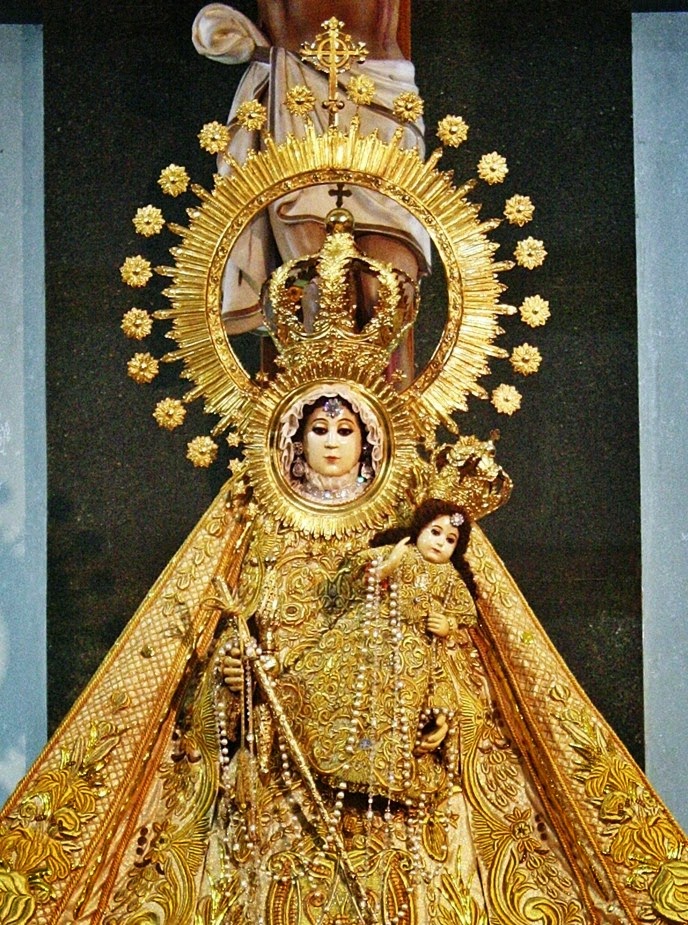
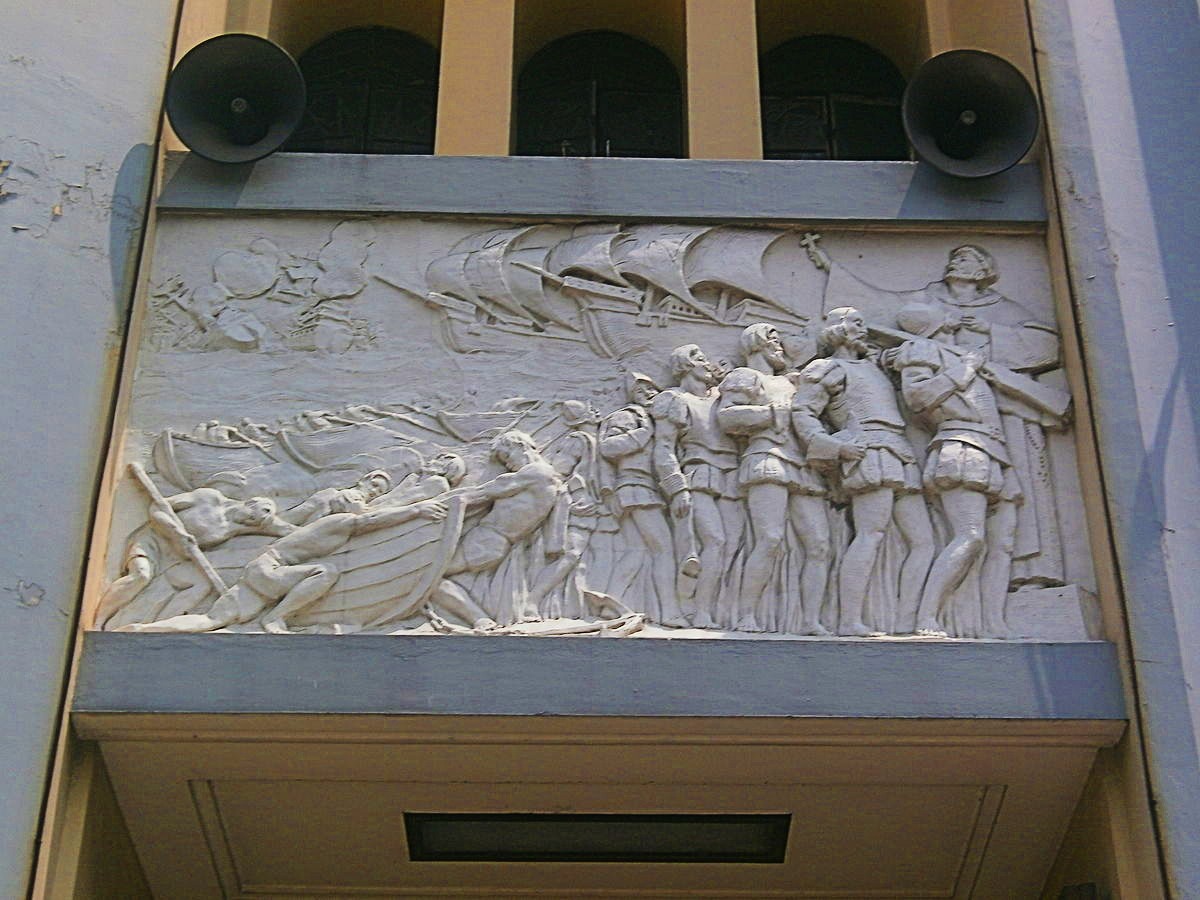
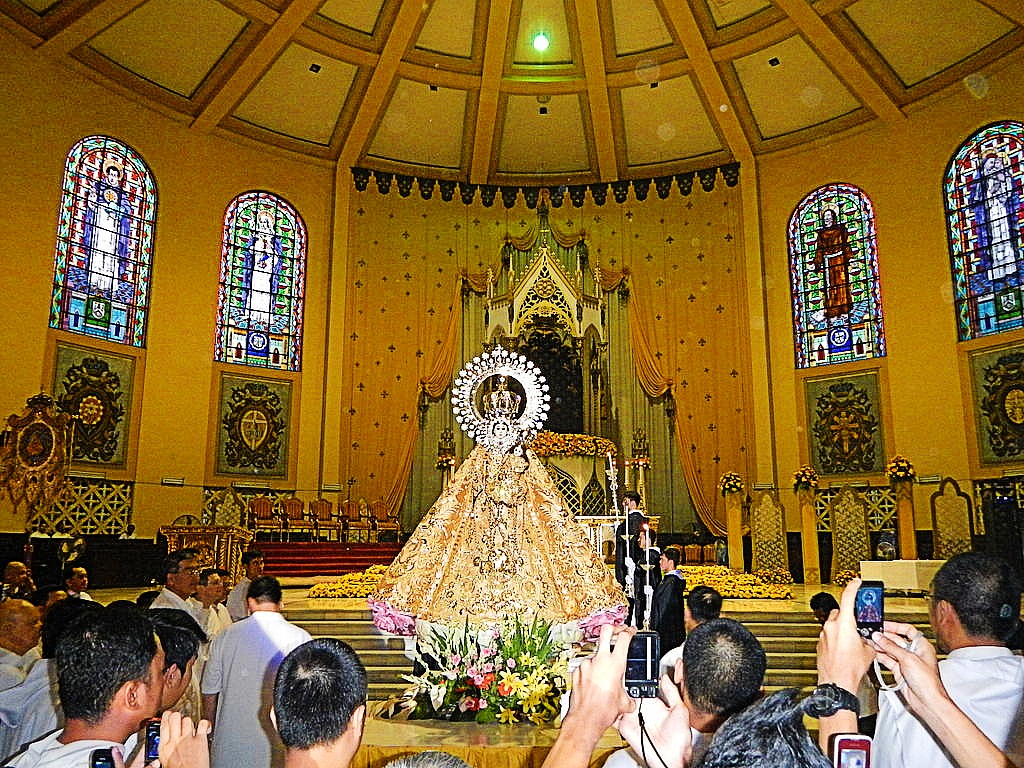
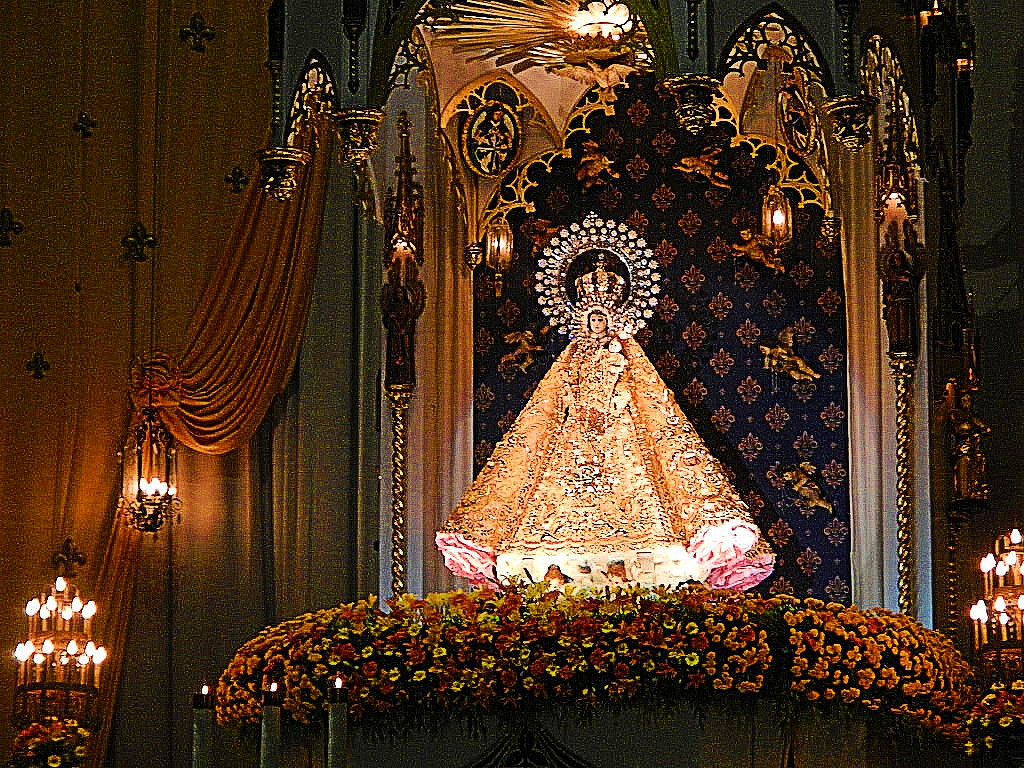
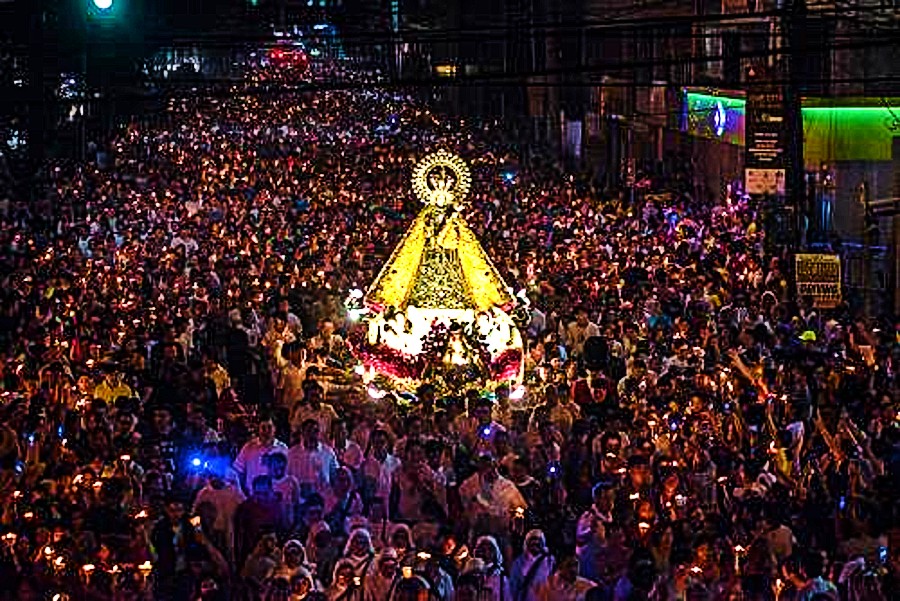

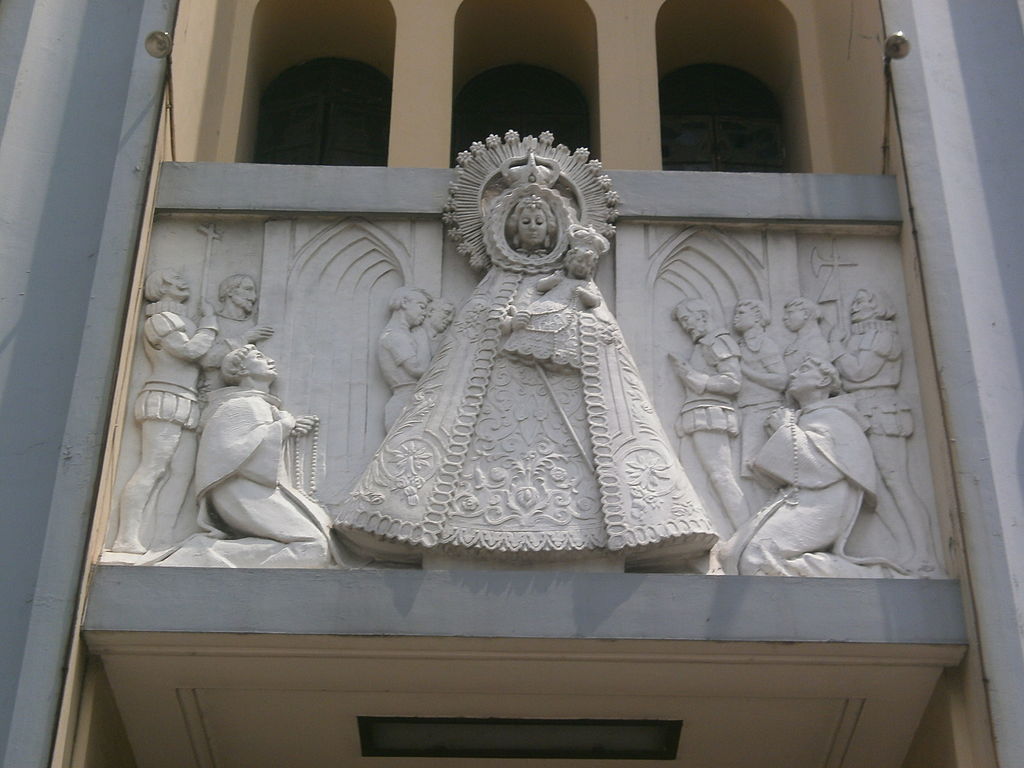
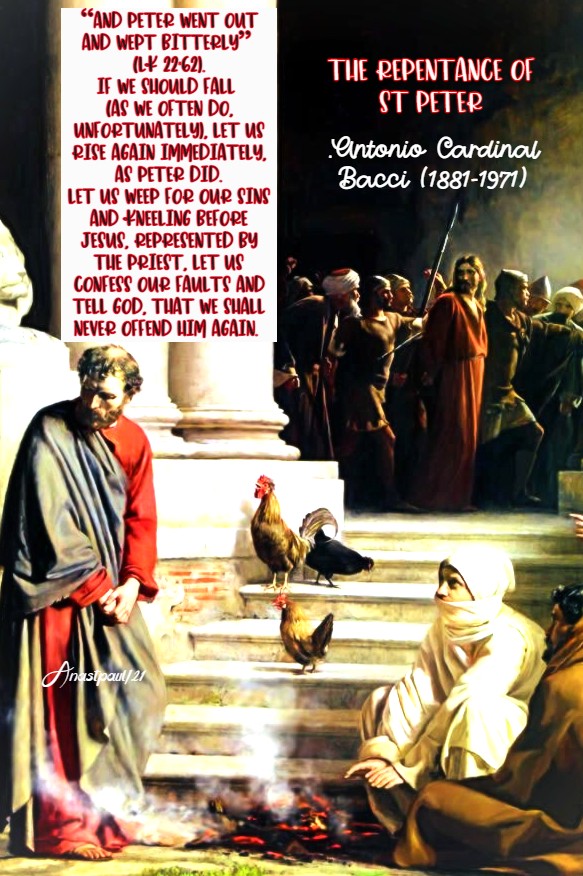
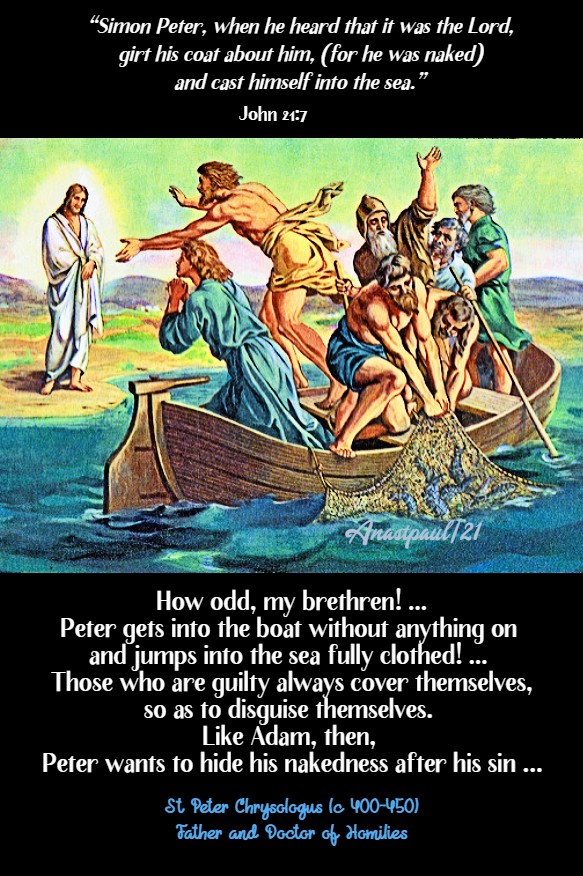
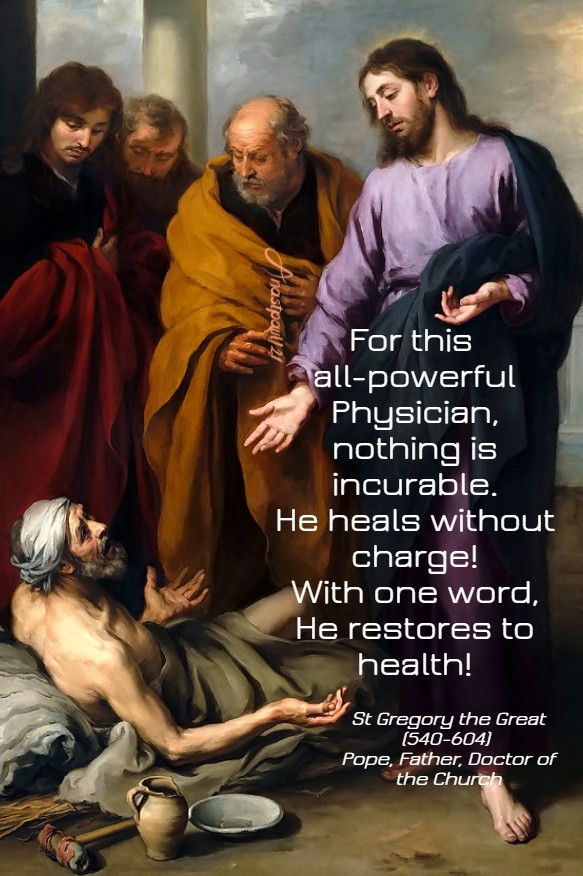
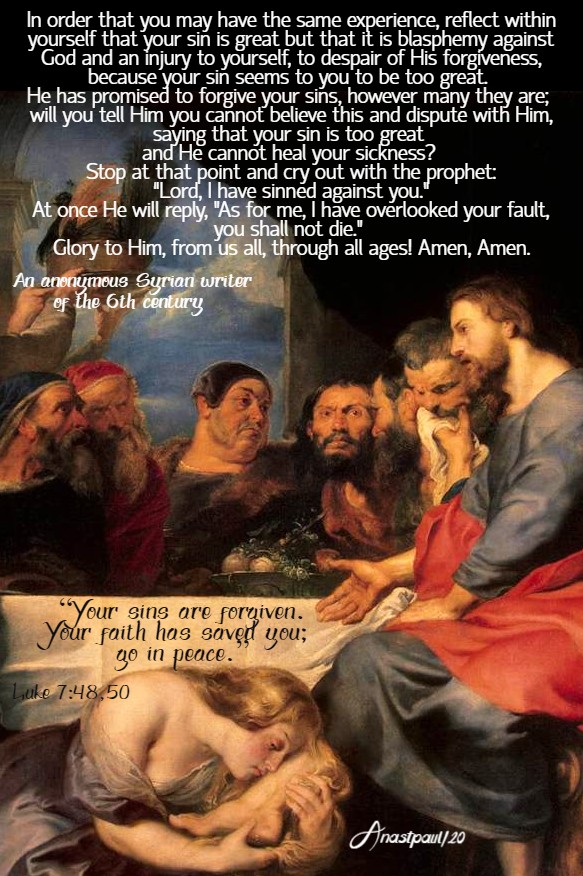
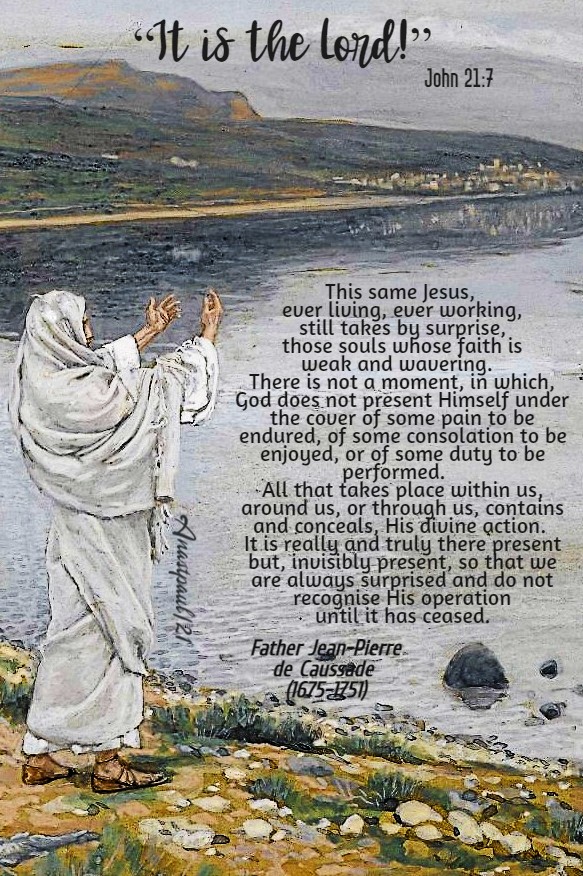

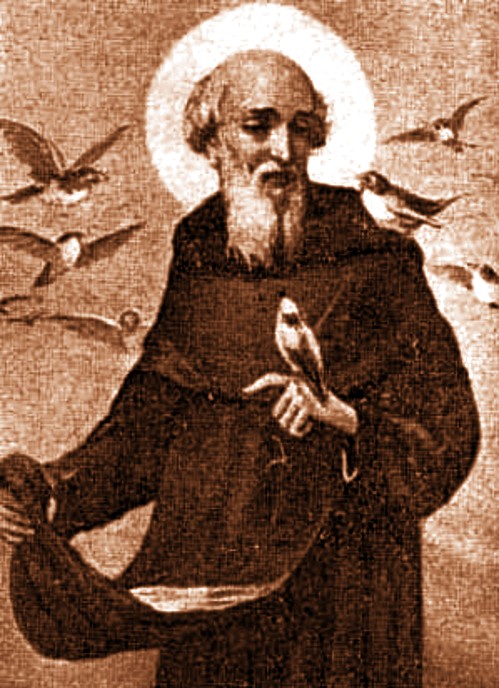
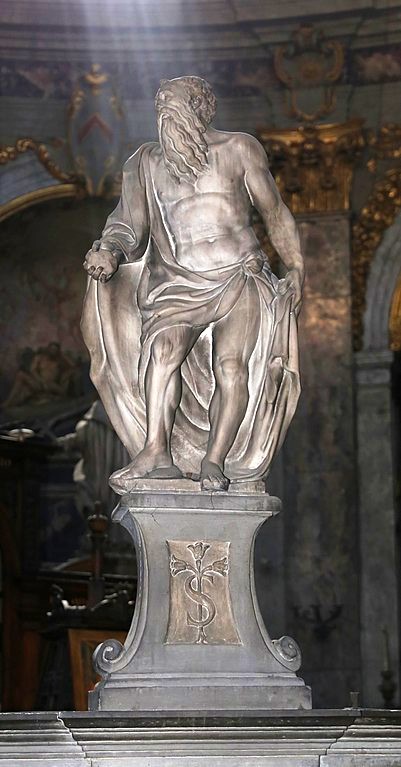
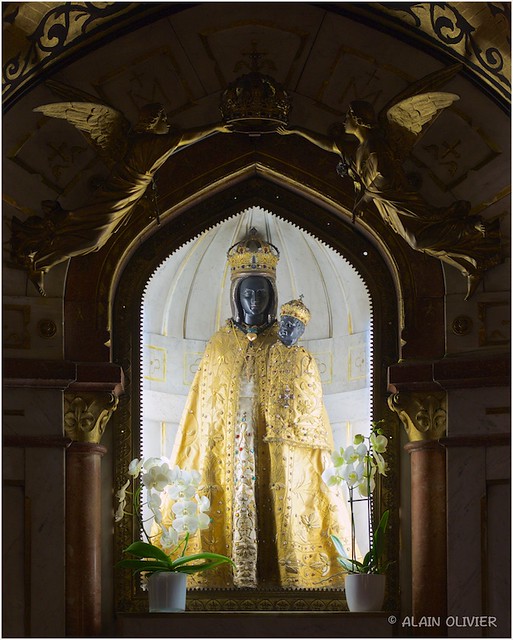
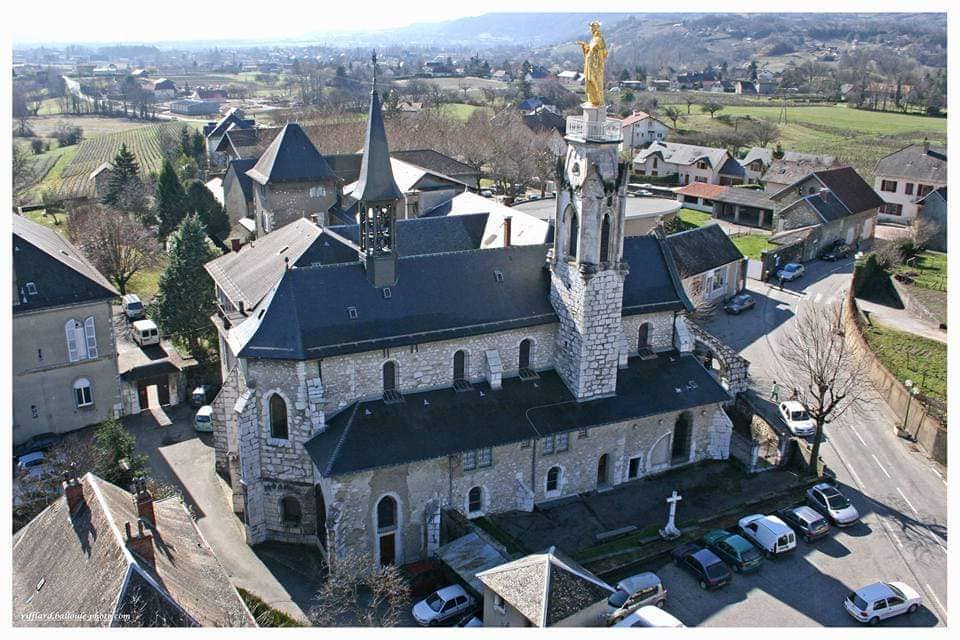

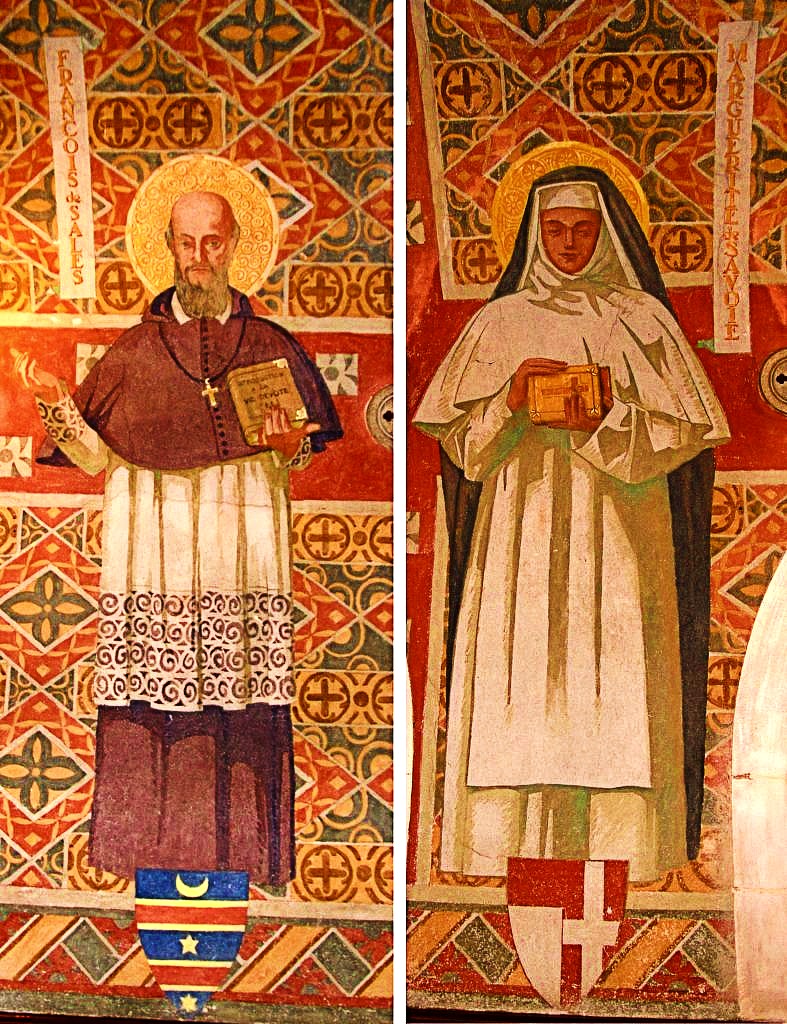
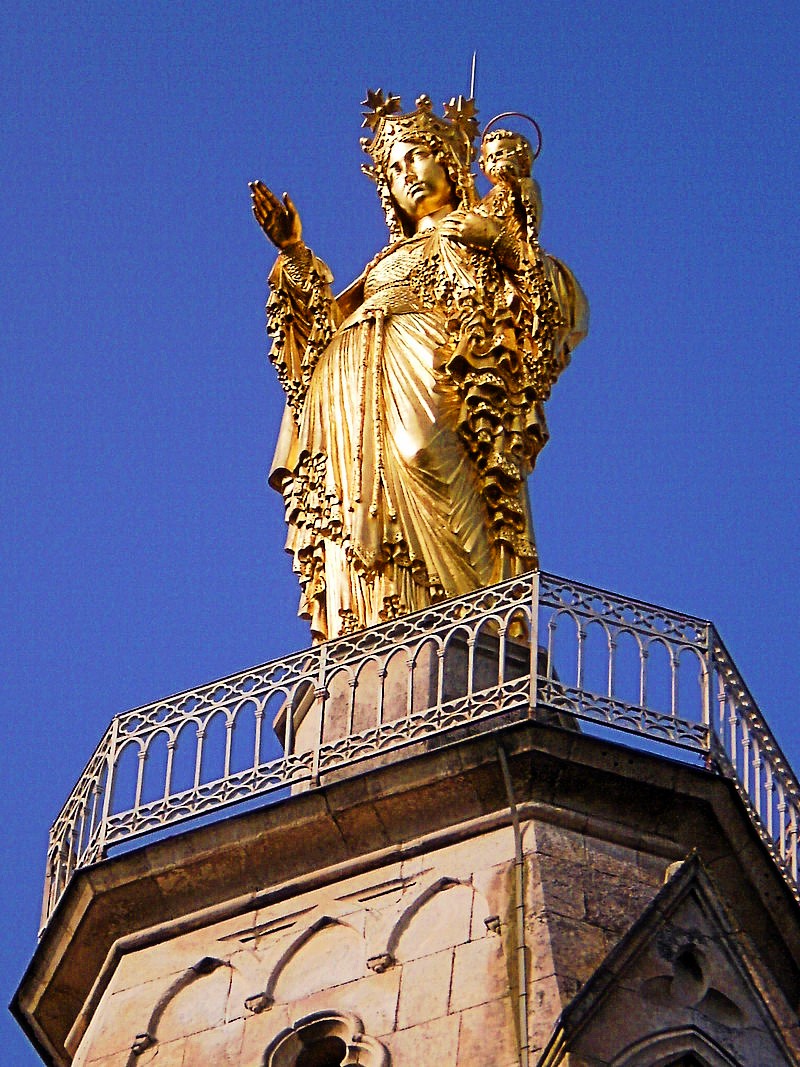
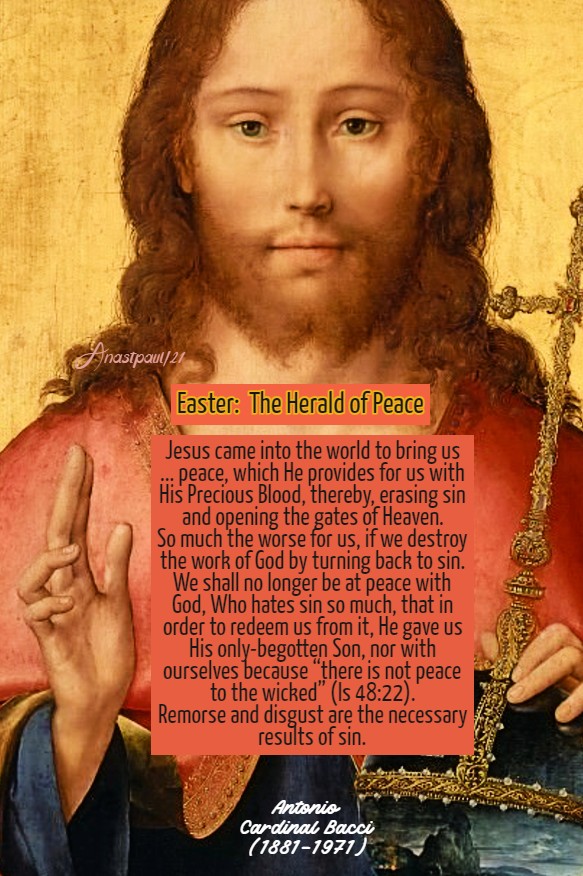
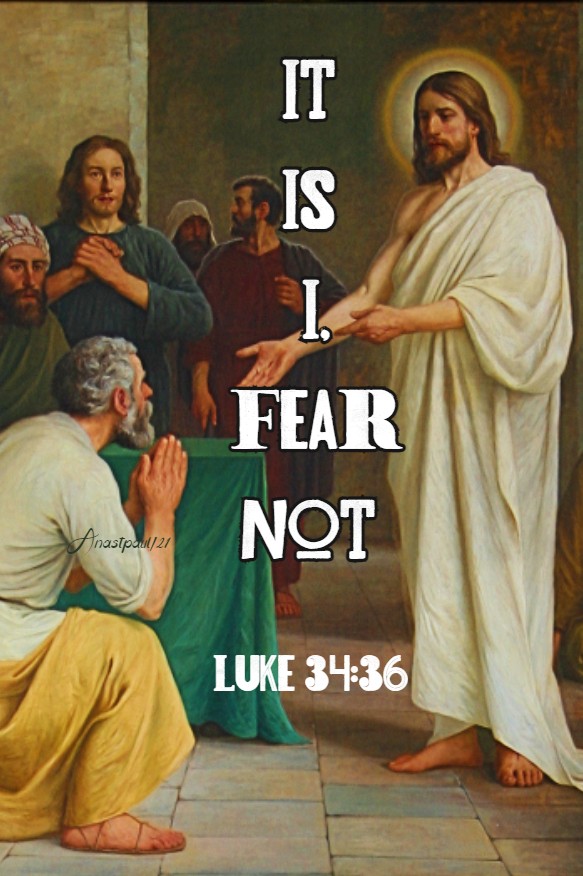
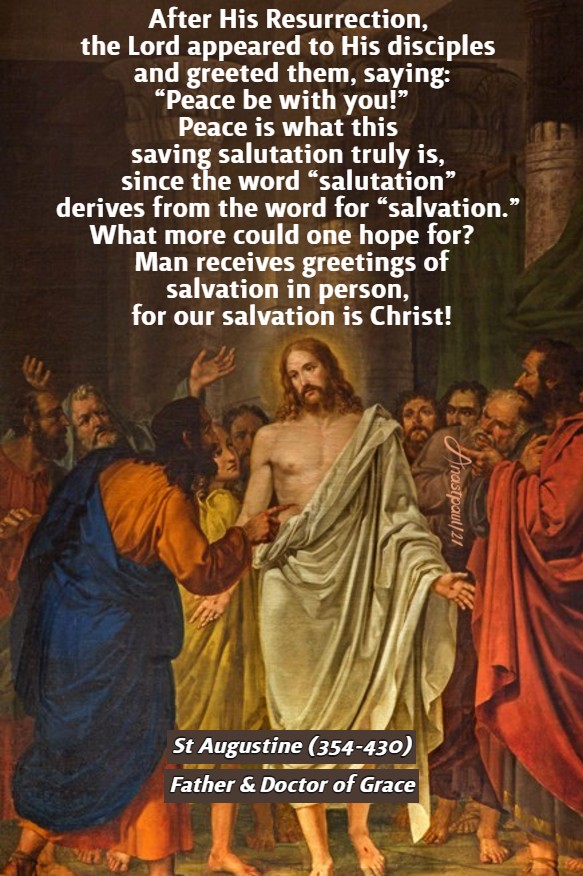
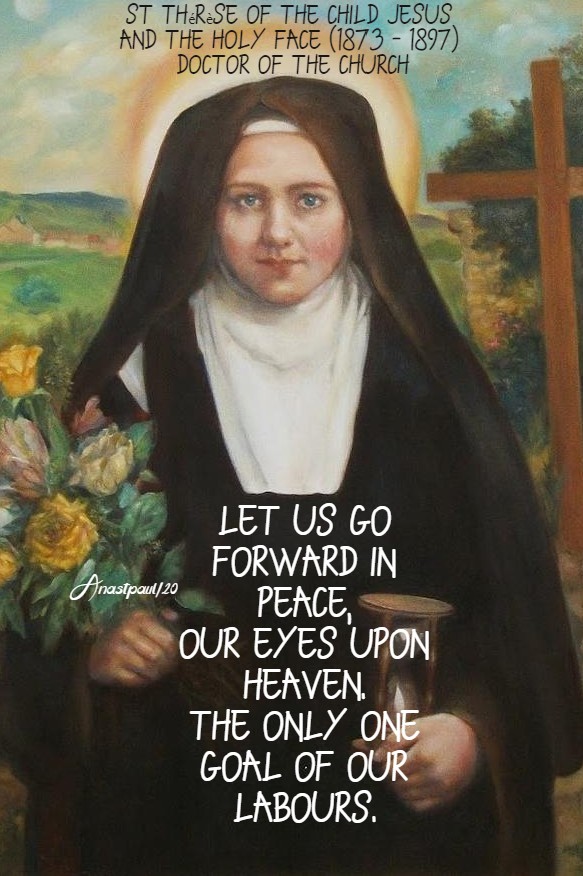


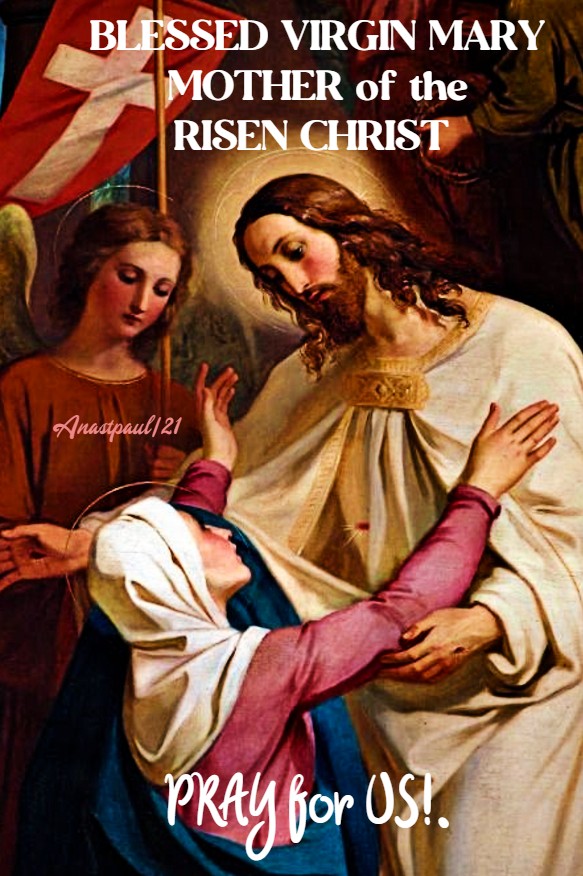

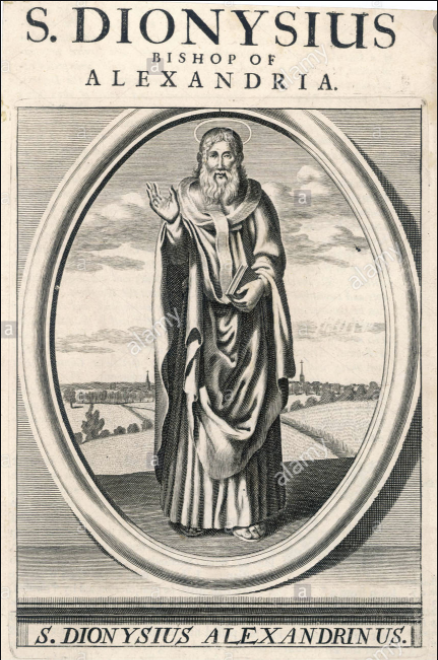
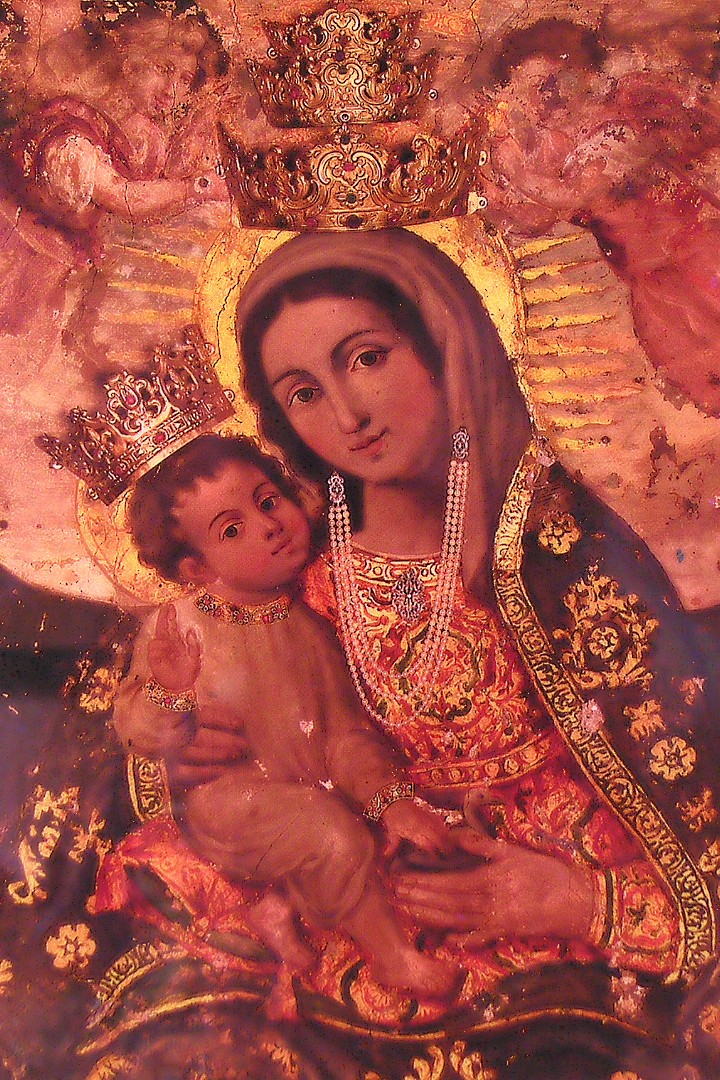
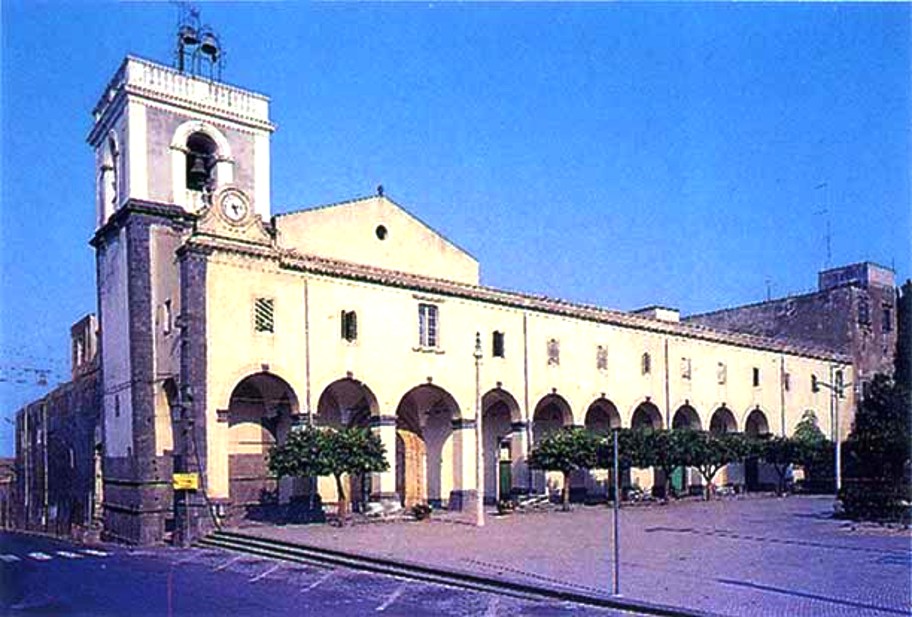
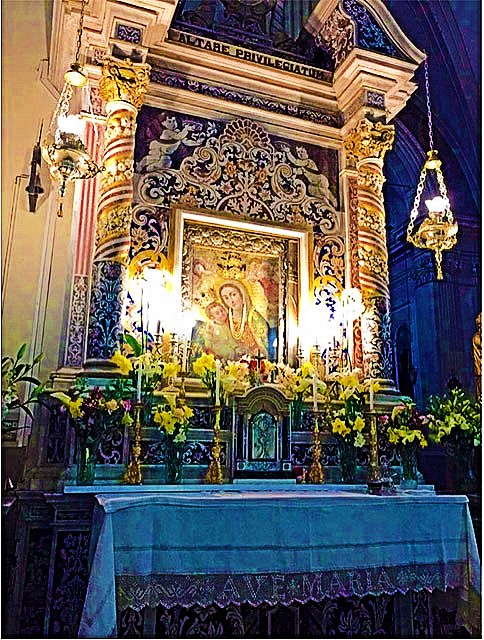

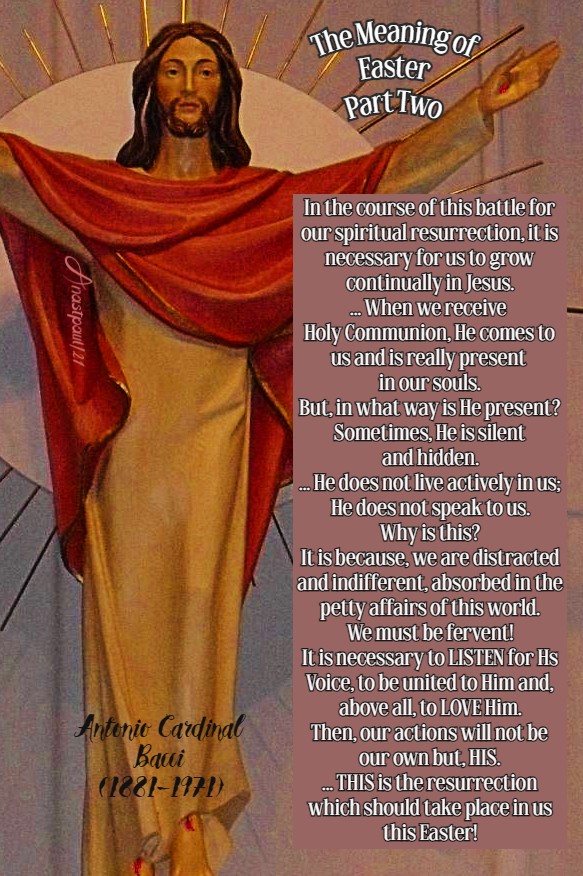


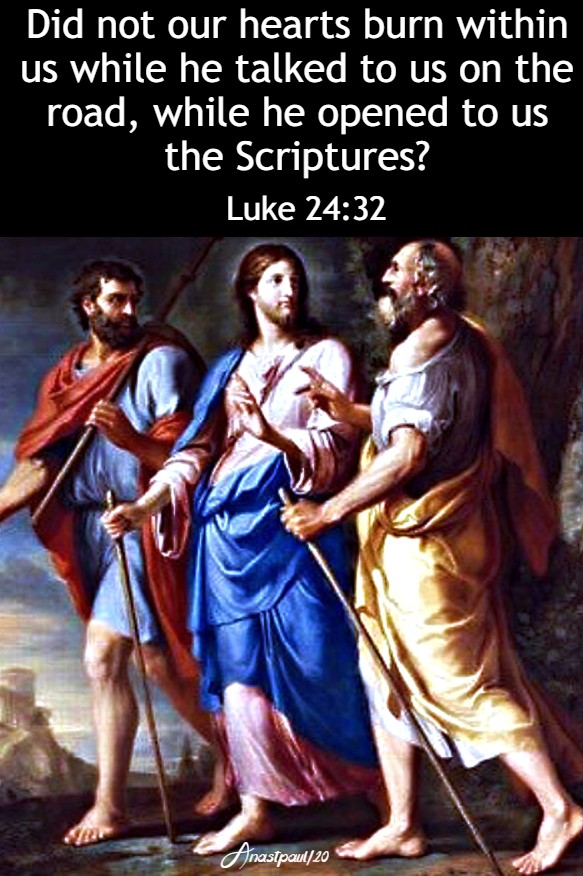
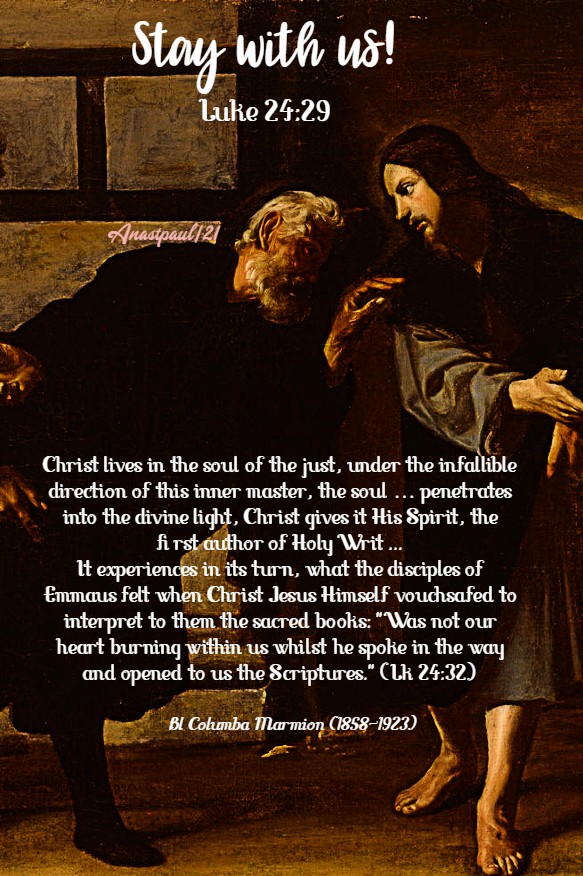
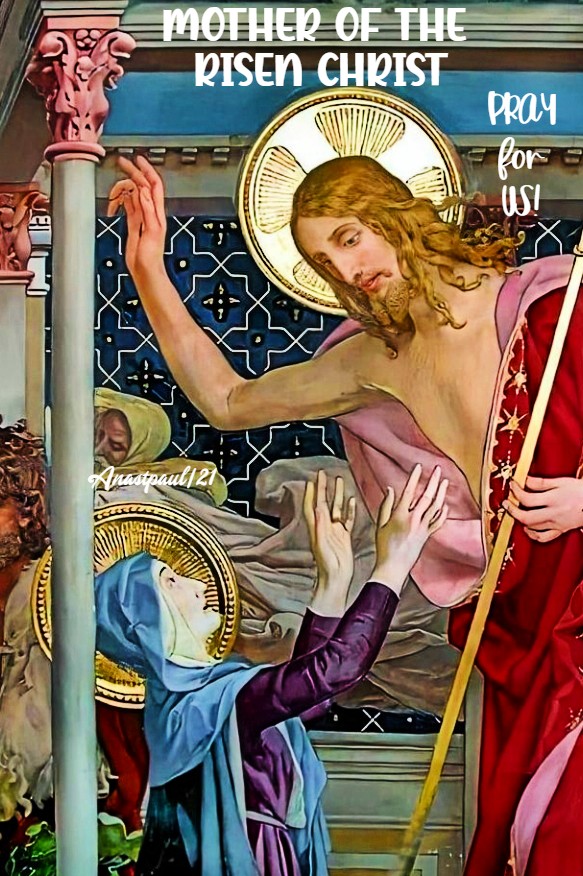
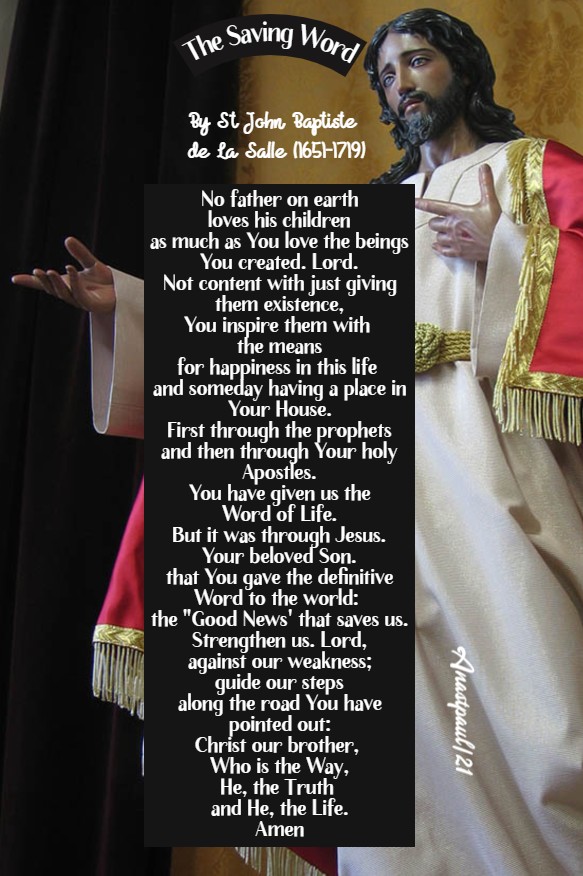
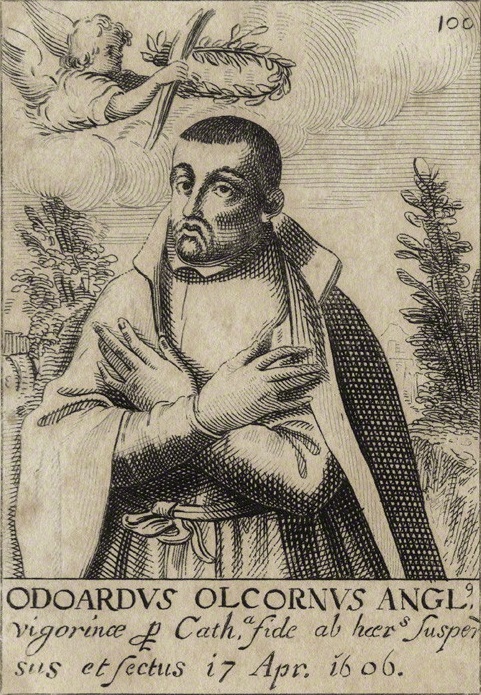
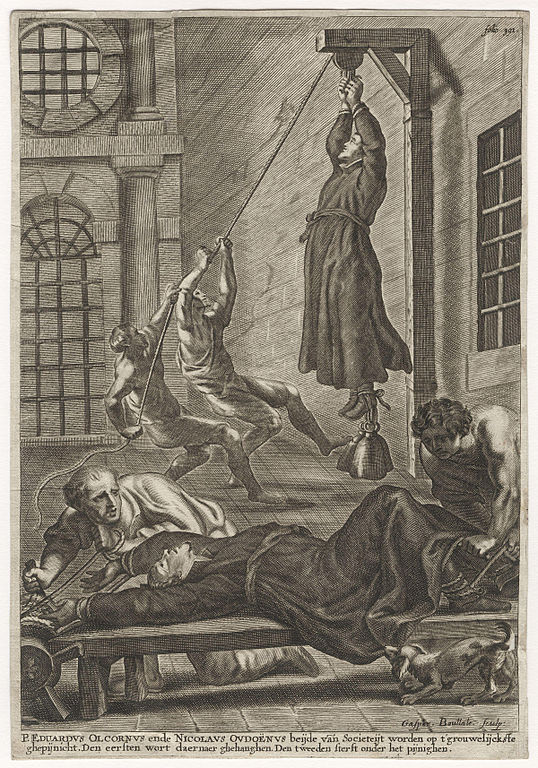
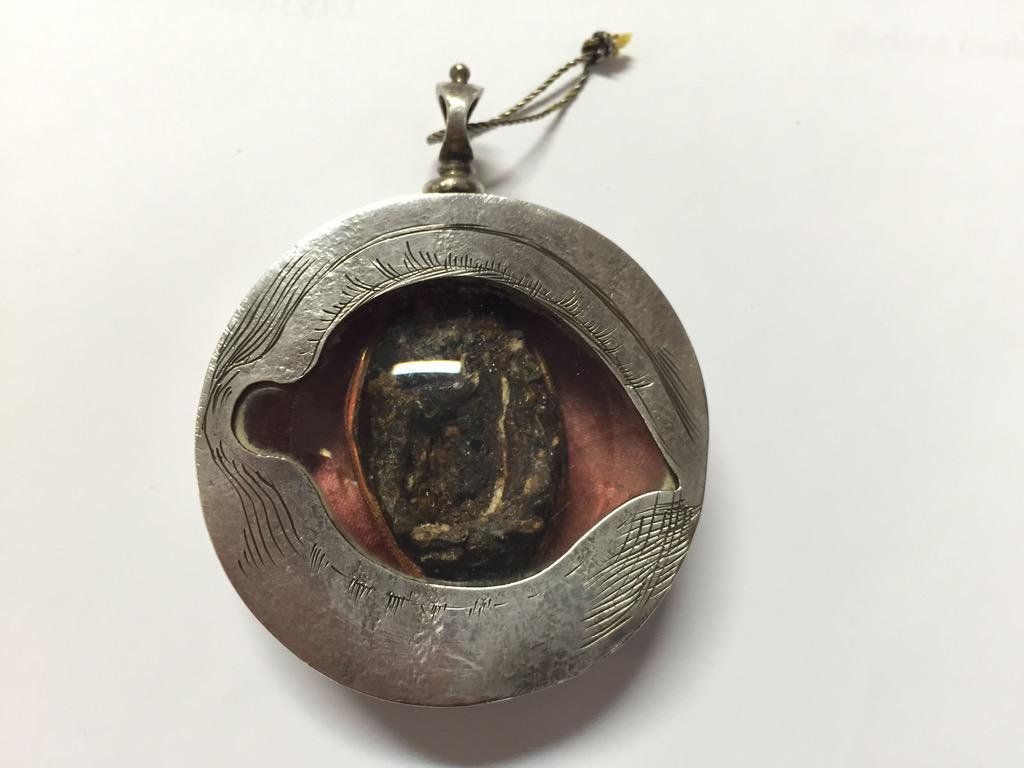
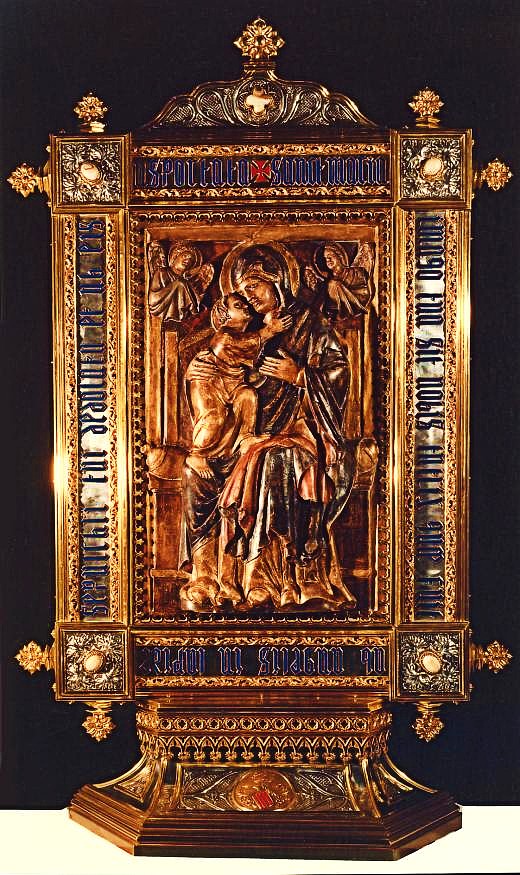


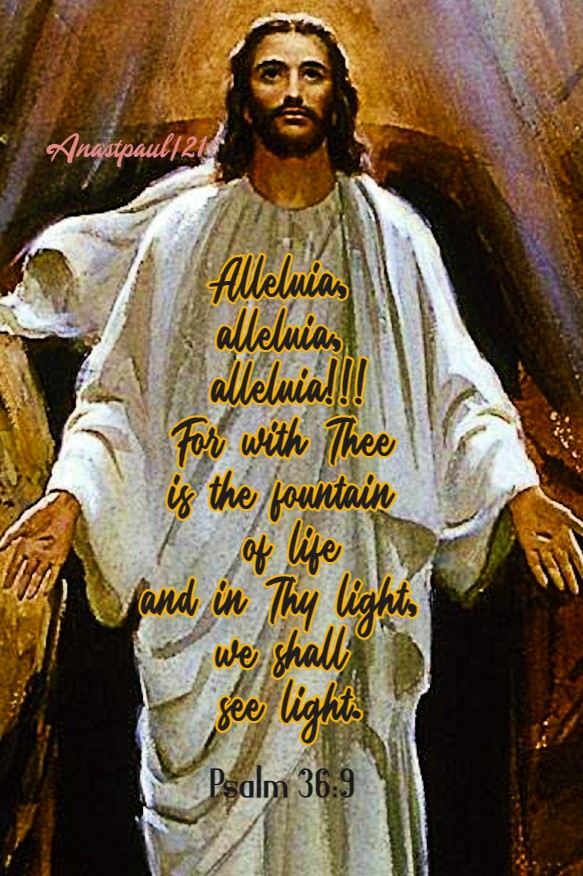
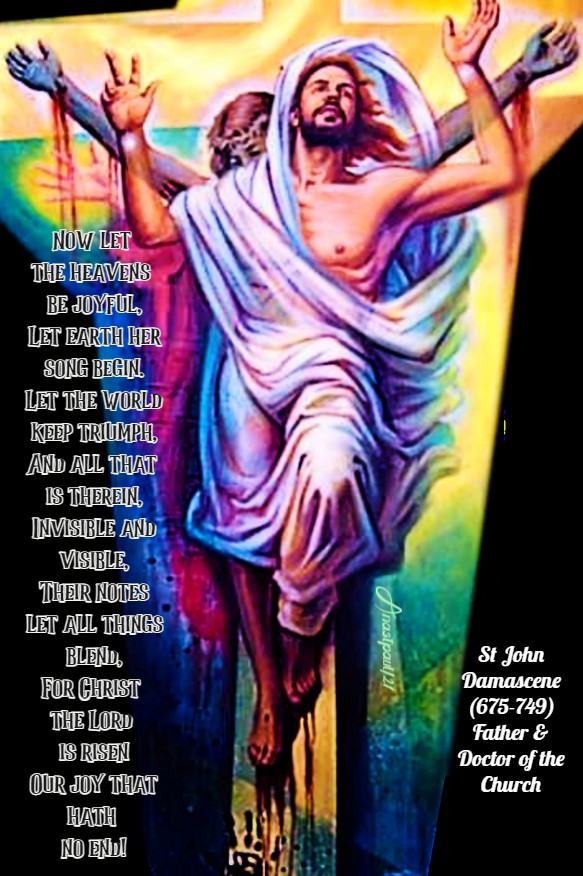

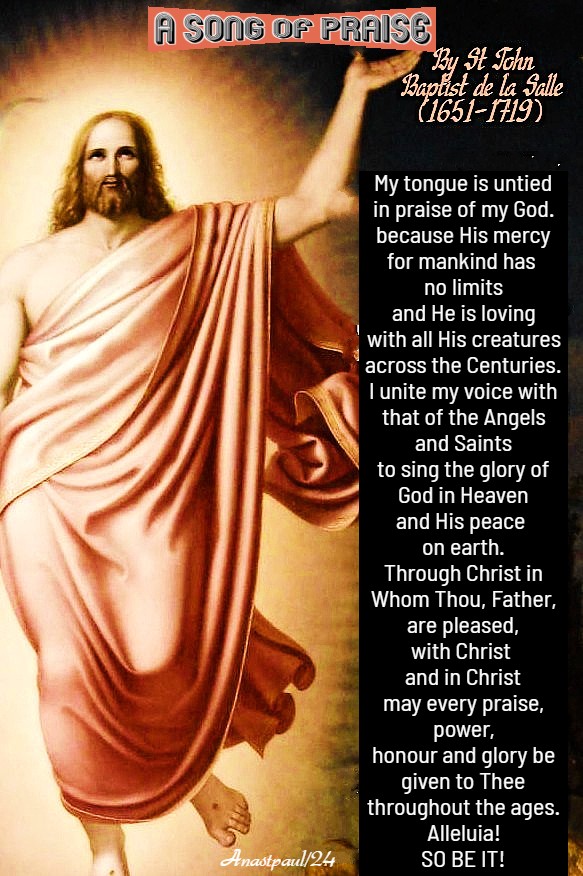
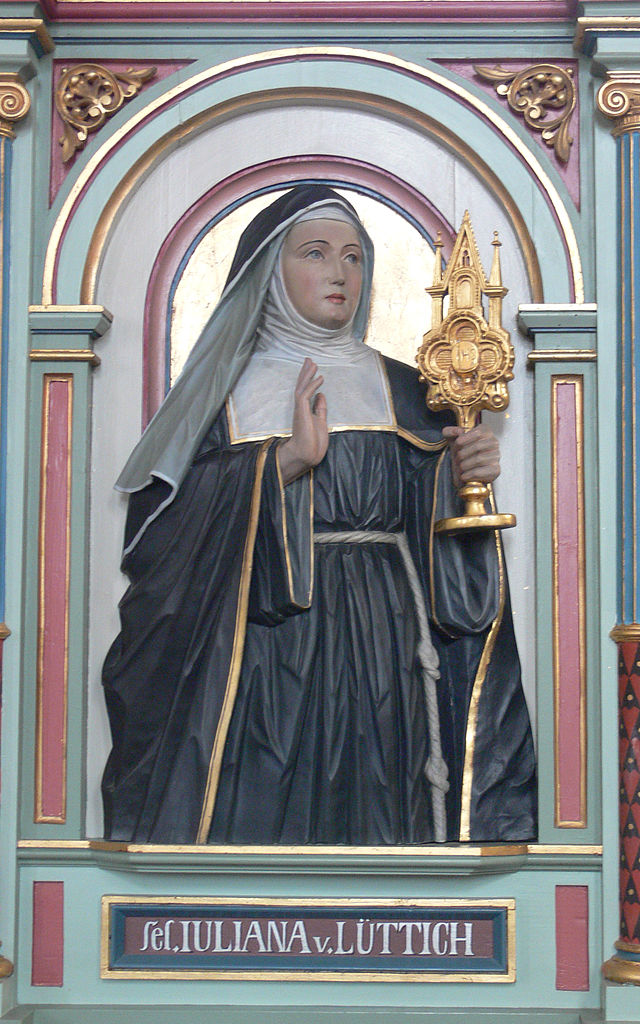


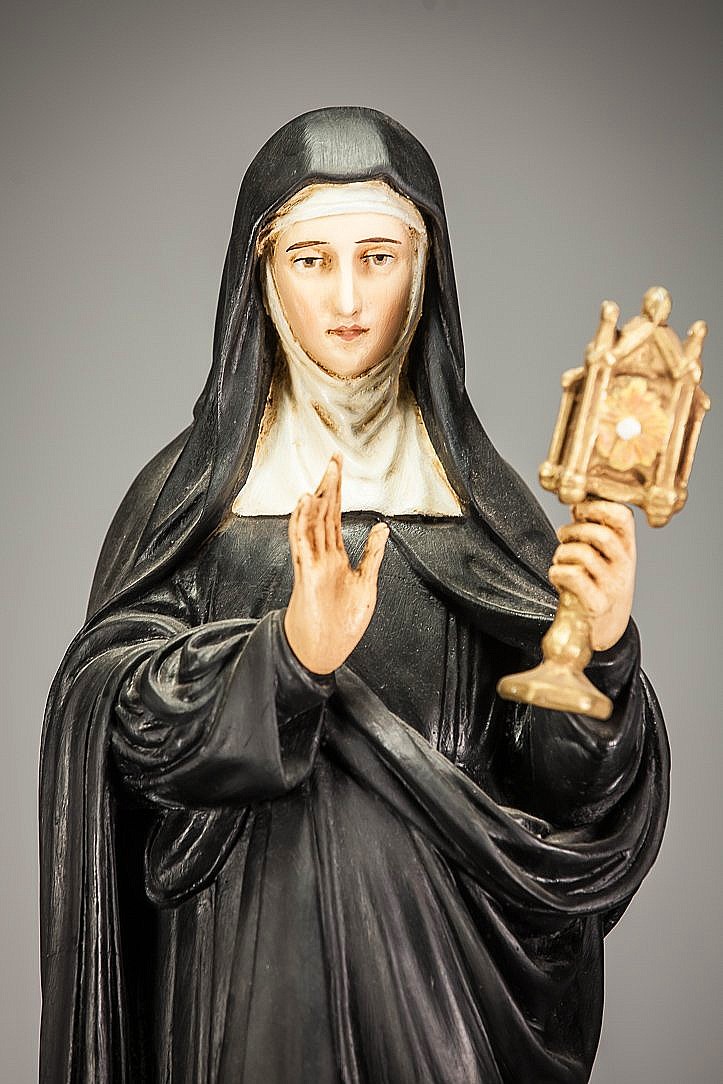


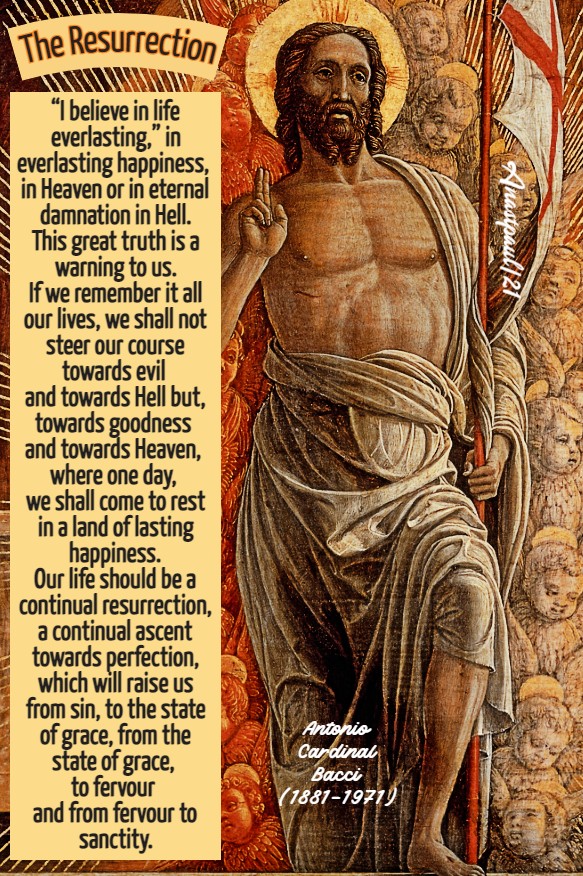



 AnaStpaul
You must be logged in to post a comment.