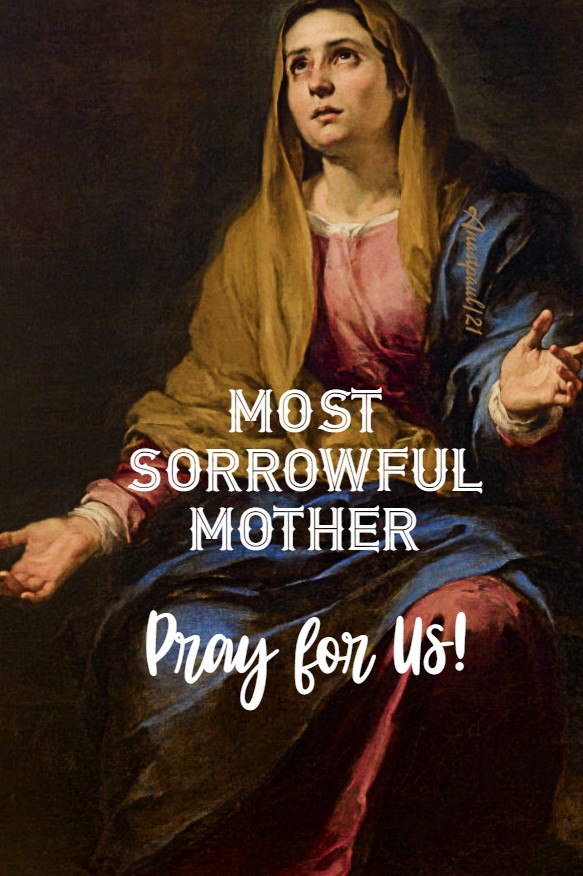
One Minute Reflection – 7 September – “Month of the Seven Sorrows of the Blessed Virgin Mary” – Readings: Colossians 1: 24 – 2: 3; Psalm 62: 6-7,9; Luke 6:6-11
“On another Sabbath, he entered the synagogue and was teaching and there was a man whose right hand was withered. ” – Luke 6:6
REFLECTION – “The miracle sometimes converts to faith those who had disbelieved the word but the Pharisees watched Him to see if He would heal on the Sabbath. The nature of an envious person is such, that he makes the praises of others food for his own disease and is wickedly maddened by their reputation. Once more He spoke thus; “I ask you, is it lawful to do good on the Sabbath rather than to do evil, to save life rather than to destroy it?” And why did He do this? Perhaps it might be to move the cruel and unpitying Pharisee to compassion. The man’s malady [his withered hand] perhaps might shame them and persuade them to dispel the flames of their envy.
This question is most wise indeed and a most suitable statement to meet their folly. If it is lawful to do good on the Sabbath and nothing prevents the sick being pitied by God, cease picking up opportunities for fault-finding against Christ and bringing down on your own head, the sentence which the Father has decreed against those who dishonour the Son. You have heard the Father where He says of the Son by the voice of David, “I will crush his foes before him and strike down those who hate him.” But, if it is not lawful to do good on the Sabbath and the law forbids the saving of life, you have made yourself an accuser of the law.” – St Cyril of Alexandria (376-444) Father and Doctor of the Church. Doctor of the Incarnation (Known a\s the Pillar of Faith) – (Commentary on Luke, Homily 23)
PRAYER – God of mercy and love, You offer all peoples the dignity of sharing in your life. Rule over our hearts and bodies this day. Sanctify us and guide our every thought, word and deed, my our hands be held out to our neighbour in imitation of Your love and mercy. By the intercession of Mary the Sorrowful Mother of Our Lord Jesus Christ and our Mother, strengthen us to love each other as brothers and sisters. We ask this through our Lord Jesus Christ, your Son, who lives and reigns with you and the Holy Spirit, one God, forever and ever amen.
Our Morning Offering – 6 September – “Month of the Seven Sorrows of the Blessed Virgin Mary”
The Day is Filled with Splendour Benedictine Nuns of Stanbrook Abbey
The day is filled with splendour When God brings light from light, And all renewed creation Rejoices in His sight. — The Father gives His children The wonder of the world In which His power and glory Like banners are unfurled. — With every living creature, Awaking with the day, We turn to God our Father, Lift up our hearts and pray: — O Father, Son and Spirit, Your grace and mercy send, That we may live to praise You Today and to the end. Amen
The Day is Filled with Splendour, is a hymn written by the Benedictine Nuns of Stanbrook Abbey. It is sung during Morning Prayer in the Divine Office. It is set to the hymn tune: Paderborn, first published in the Katholische Kirchengesänge of 1616. Psalter Week 3.
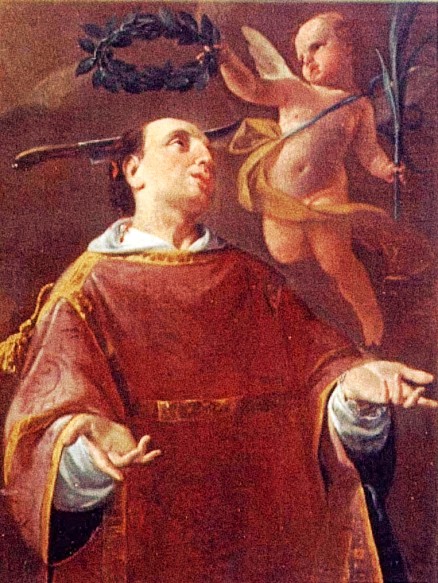
Saint of the Day – 6 September – Saint Frontiniano of Alba (Died 311) Deacon Martyr, miracle-worker. Born in Carcassone, France and died by being beheaded on 23 October 311 on the road outside the city walls of Alba Pompeia, Piedmont, Italy near the City cemetery. Additional Memorials – 23 October (dies natalis), 27 April (translation of relics in the Diocese of Alba, Italy). Patronages – sick children, Alba, Italy, Sinio, Italy. Also known as – Frontinianus.
The events of the life of Frontiniano are not fully documented historically and are known through the contents of an ancient liturgical officiation.
According to the story reported in the readings, Frontiniano, who lived in the fourth century, was originally from the French town of Carcassonne and, after completing his studies, was Ordained a Deacon.
With a companion named Cassiano, he embarked on a journey to Rome to make a pilgrimage to the tombs of the Apostles, several miracles occurred along the way. Frontiniano gave sight to a blind man, speech to a mute, crossed the Rhone on a wreck that miraculously re-emerged from the waters and in Alba, Piedmont, on the way back, he droves the devil away from a noble girl of the City. The young woman’s parents, grateful for the miracle worked in their favour, converted to Christianity and were baptised by the Saint.
But the Prefect of the City had Frontiniano arrested and sentenced him to be beheaded, a sentence carried out outside the City walls, on 23 October 311.
On the site of the martyrdom, along the road to Roddi near a cemetery, a famous Benedictine Abbey was built. it was dedicated to the Saint. The Abbey also kept the relics of the titular saint which, during the fifteenth century, were moved to the Cathedral inside the walls by the Bishop Alerino.
In the pastoral visits of the sixteenth century, the custom is still remembered, by the women of Alba, to bring the sick children to the Church of the Saint, after having walked its perimeter nine times, they entered and placed the children on the steps of the Altar where the remains of the Saint were once kept and implored his help. This practice, looked upon with suspicion by the ecclesiastical authorities for fear that it would degenerate into superstition, was certainly of ancient origin, even if it is not possible to know why the Saint was considered a special protector of children.
St Frontiniano, besides being one of the Patron Saints of Alba, is also the Patron Saint of Sinio. 6 September is the official Memorial and is the day on which his name is reported in the Acta Sanctorum.
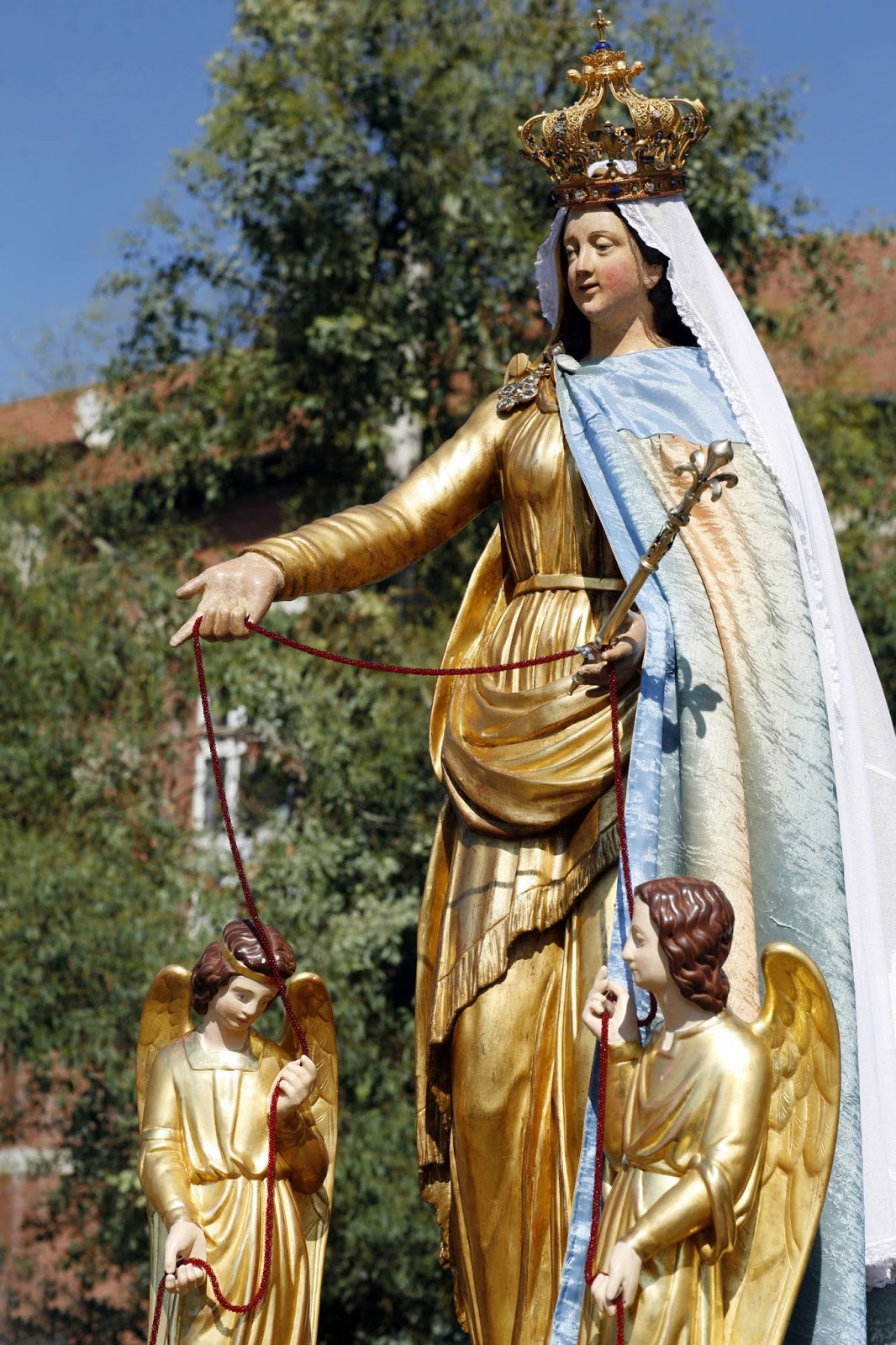
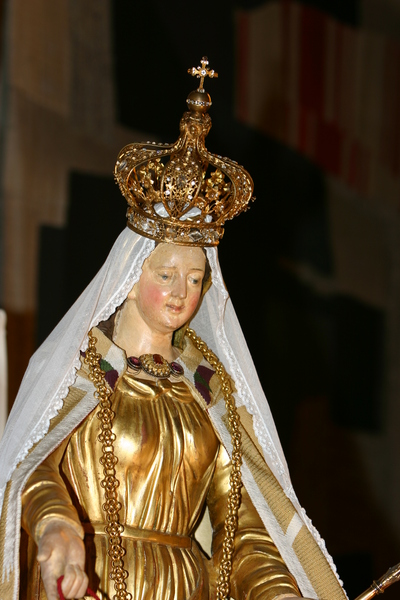
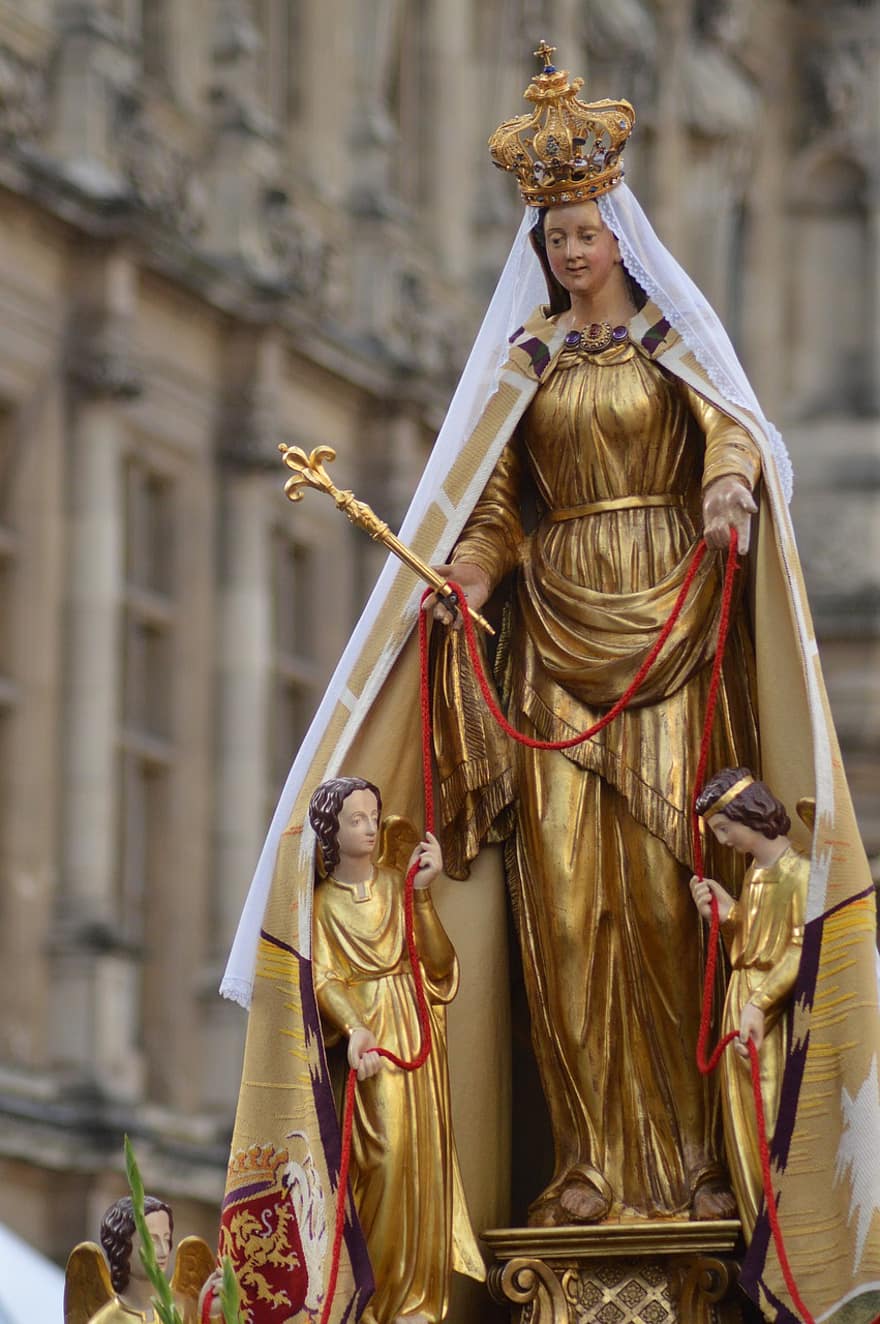
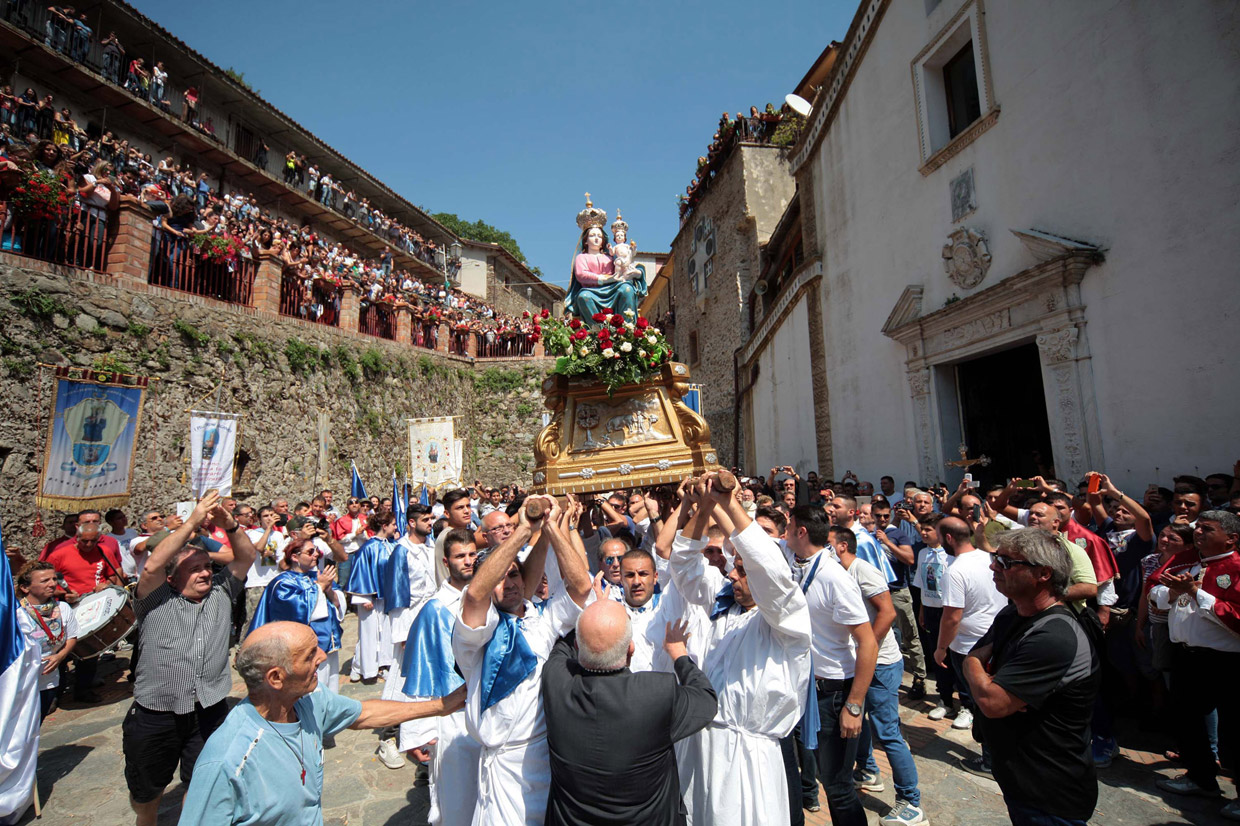
Notre-Dame de la Fontaine / Our Lady of the Fountain, Valenciennes, France (1008) – 6 September:
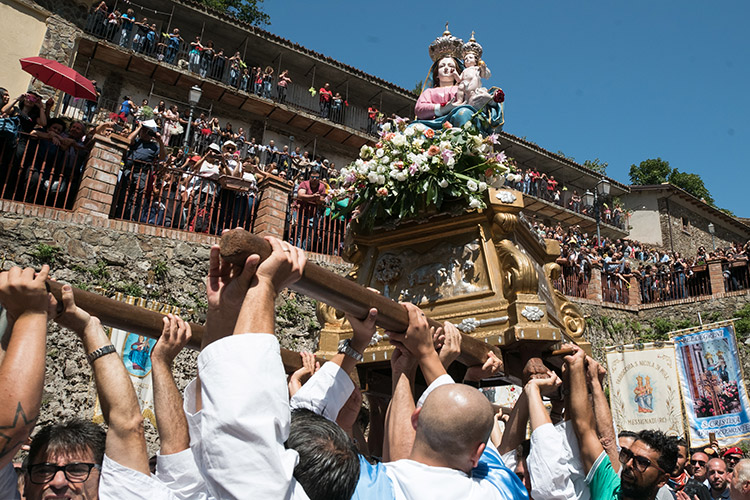
Procession du millenaire du miracle du Saint-Cordon a Valenciennes. En 1008, la Vierge est apparue et a delivre Valenciennes de la peste.
Valenciennes is a City in northern France on the Scheldt River and Our Lady of the Fountain was located half a league from the City in the year 1008. According to tradition, there was a terrible famine that preceded the Plague in that fateful year of 1008. It is recorded that the City of Valenciennes was so ravaged by the plague that nearly 8,000 people died in only a few days, so that the chronicles of the time tell us that it seemed “the dead outnumber the living.” The people grieved profoundly at the spectacle of death which constantly surrounded them,and having no other recourse, went in great crowds to their Churches to take refuge at the feet of Our Mother of Mercy and beg for her intercession. A holy hermit named Bertholin, who lived nearby Our Lady of the Fountain, was touched by the misfortune of his brothers and redoubled his austerities and prayers. He prayed for the people of Valenciennes, saying, “O Mary! Rescue these afflicted who have cried out to you! Will you let this people die who have called upon you for rescue and who confide their cares to you? Will you be invoked in vain?” The Blessed Virgin appeared to the hermit Bertholin while he was fervently praying on the night of the 5th of September. The pious hermit was suddenly dazzled by the brilliance of a light purer than the sun, while at the same time the Mother of Mercy appeared to him with an air of kindness. She commanded Bertholin to tell the inhabitants to fast on the following day and then pass the night in prayer to bring an end to the Plague. “Go to my people of Valenciennes. On the eve of my nativity they will see the guarantee of protection that I want to give them.”
The response was overwhelming. The people of Valenciennes did as they were told,and on the eve of the Nativity, the 7th of September, the people of Valenciennes stood upon the ramparts and towers of the City excitedly awaiting the fulfilment of the heavenly promise. Their confidence was not in vain, for suddenly the night seemed to turn into day and they witnessed the Queen of Heaven descending to earth in majesty, sparkling like a light of heaven, brighter than the sun. Accompanied by a host of Angels, Our Lady seemed to gird the town all round with a cord. Nothing can convey the feelings of joy and devotion with which the people of Valenciennes were seized at this sight. At one point they all bowed and asked the Blessed Virgin’s blessing. Their Heavenly Mother did indeed bless them and those who were sick recovered their health and the inhabitants of Valenciennes have been forever freed from the plague. The Blessed Virgin instructed the hermit to tell the people that they were to make a solemn procession, and then to do so every year. The people were eager to fulfill this desire of their Heavenly Mother and left the City singing praises to the Blessed Virgin Mary.
Since that time the procession of Our Lady of Saint-Cordon, or the Tour of the Holy Cordon, takes place every year, always along the same route where the holy cord had been placed. The cord of the Blessed Virgin was locked up in a Shrine at a beautiful Gothic Church, Notre-Dame-la-Grande. This cord, the Abbot Orsini related, was still preserved at Valenciennes while he was alive. That is no longer the case, as it disappeared during the Terror that was the French Revolution. The Church was sold at auction and then razed to the ground, and the reliquary sent to the mint. Of the Holy Cord nothing is now known, although no one witnessed its destruction when it disappeared in the year 1793.
Saint-Cordon bASILICA
St Arator of Verdun St Augebert of Champagne St Augustine of Sens St Beata of Sens St Bega
St Cagnoald St Consolata of Reggio Emilia St Cottidus of Cappadocia
St Eleutherius the Abbot (Died c 585) Monk and Abbot. A wonderful simplicity and spirit of compunction were the distinguishing virtues of this holy sixth century Abbot. His Lifestory: ttps://anastpaul.com/2020/09/06/saint-of-the-day-saint-eleutherius-the-abbot-at-spoleto-died-c-585/
St Eugene of Cappadocia St Eve of Dreux St Faustus of Alexandria St Faustus of Syracuse St Felix of Champagne St Frontiniano of Alba (Died 311) Deacon Martyr St Gondulphus of Metz St Imperia St Liberato of Loro Piceno St Macarius of Alexandria St Maccallin of Lusk
St Mansuetus of Toul St Onesiphorus St Petronius of Verona St Sanctian of Sens St Zacharius the Prophet — Martyrs of Africa – 6 saints: There were thousands of Christians exiled, tortured and martyred in the late 5th century by the Arian King Hunneric. Six of them, all bishops, are remembered today; however, we really know nothing about them except their names and their deaths for the faith – Donatian, Fusculus, Germanus, Laetus, Mansuetus and Praesidius.
Martyred in the Spanish Civil War: • Blessed Diego Llorca Llopis • Blessed Felipe Llamas Barrero • Blessed Pascual Torres Lloret • Blessed Vidal Ruiz Vallejo
Thought for the Day – 5 September – Meditations with Antonio Cardinal Bacci (1881-1971)
My Life is Christ
“St Paul reached such a degree of union with Christ that he could exclaim” “To me to live is Christ” (Phil 1:21). Elsewhere he says” “It is now no longer I that live but Christ lives in me” (Gal 2:20). This is a characteristic of the Saints. They live their own lives no longer, for they live the life of Christ. That is to say, their minds and hearts are always fixed on Jesus. They love the Lord, more than all things and, more than themselves. God is the object of all their desires, affections and actions. As a result, the soul is transfigured and is infused with divine life, so that it does nothing which is not activated by grace. In the Saints, then, there is reflected something heavenly which attracts and stimulates one to virtue.
The Saints preached effectively in simple, unadorned language, as in the case of the Cure of Ars. But, their most effective sermon was the example of their lives. They could say with St Paul: “To me to live is Christ.” They could repeat the thought of St Jerome: “Christ is the breath of my lips.” Like St John Chrysostom, they could say: “My heart is the heart of Christ.” They could say with St Augustine: “I am only an instrument in the service of Christ” and, with St Anselm: “My eyes are the eyes of Christ.”
When we meditate on these words, which signify the height of sanctity, we feel very small, shabby and far from the Christian perfection to which we should aspire. Perhaps we are still immersed in sin, or perhaps, we are wavering between the things of this world and the things of God, or perhaps, as yet, we have not given up our egoism and complacent mediocrity in order to offer ourselves entirely to God. Real Christianity demands that we renounce ourselves, live the life of Christ and, make every effort to acquire perfection.”
One Minute Reflection – 5 September – “Month of the Seven Sorrows of the Blessed Virgin Mary” – Readings: Isaiah 35: 4-7a; Psalm 146: 7-10 (1b); James 2: 1-5; Mark 7: 31-37 and the Memorial of St Lawrence Justinian (1381-1455) Bishop
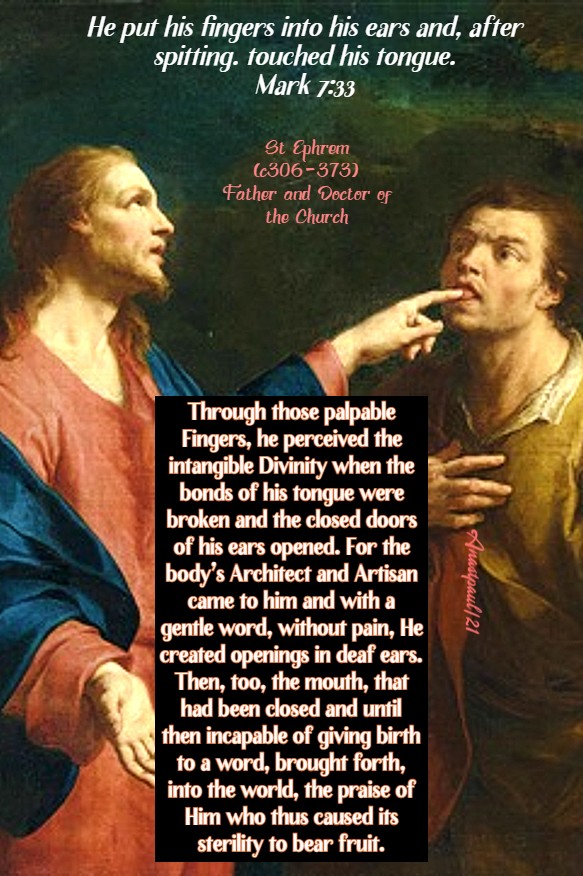
“And taking him aside from the crowd privately, he put his fingers into his ears and, after spitting. touched his tongue.” – Mark 7:33
REFLECTION – “Divine Strength came down, which we humans cannot touch; it covered itself with a palpable body so that the poor might touch it and, in touching Christ’s Humanity, might perceive His Divinity. The deaf-mute sensed that his ears and his tongue were being touched with fingers of flesh. Through those palpable Fingers, he perceived the intangible Divinity when the bonds of his tongue were broken and the closed doors of his ears opened. For the body’s Architect and Artisan came to him and with a gentle word, without pain, He created openings in deaf ears. Then, too, the mouth, that had been closed and until then, incapable of giving birth to a word, brought forth, into the world, the praise of Him who thus caused its sterility to bear fruit.
In the same way, the Lord made paste with His saliva and spread it over the eyes of the man born blind (Jn 9:6), so we might understand that, like the deaf-mute, He was lacking something. An inborn imperfection in our human dough was removed thanks to the leaven that comes from His perfect body …. To complete what was missing in these human bodies of ours, He gave something of Himself, just as He gives Himself to be eaten [in the Eucharist]. By this means, He causes our deficiencies to disappear and raises the dead, so that we might recognise that, thanks to His body in which “the fullness of deity resides” (Col 2:9), the deficiencies in our humanity are brought to completion and true life is given to mortals by this Body in which true life resides.” – St Ephrem (c306-373) Deacon in Syria, Father and Doctor of the Church – Sermon “On our Lord,” 10
PRAYER – Almighty and merciful God, open the ears and eyes of our hearts and fill us with Your grace. May we follow You in holiness all the days of our lives. Grant we pray, that as You brought Your Saints and Martyrs to overcome fearlessly, the persecutions of Your people, that we too may remain invincible under Your protection and by their prayers, be strengthened against the snares of the enemy. St Lawrence Justinian, pray for us in these times of evil! Through our Lord Jesus Christ, your Son, who lives and reigns with you in the unity of the Holy Spirit, one God, forever and ever. Amen.
Our Morning Offering – 5 September – “Month of the Seven Sorrows of the Blessed Virgin Mary” – The Fifteenth Sunday after Pentecost
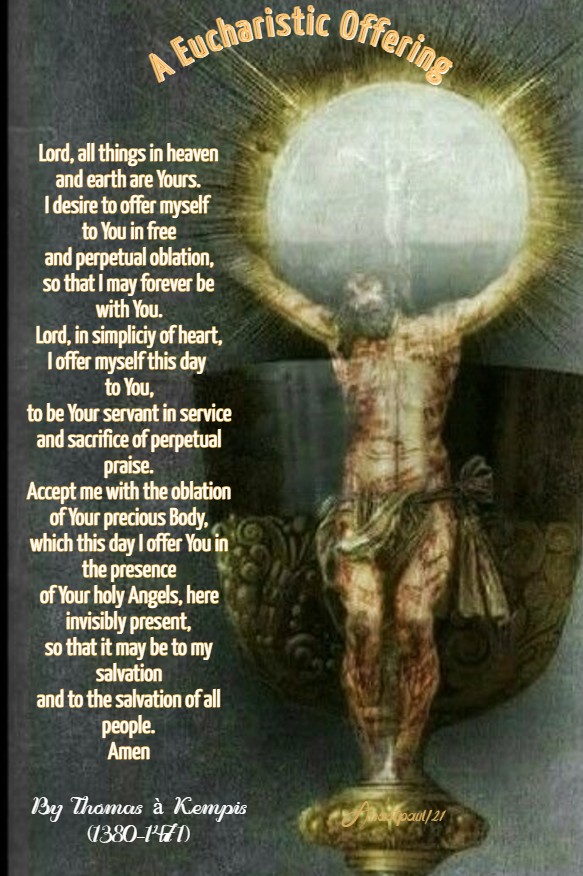
A Eucharistic Offering By Thomas à Kempis (1380-1471)
Lord, all things in heaven and earth are Yours. I desire to offer myself to You in free and perpetual oblation, so that I may forever be with You. Lord, in simpliciy of heart, I offer myself this day to You, to be Your servant in service and sacrifice of perpetual praise. Accept me with the oblation of Your precious Body, which this day I offer You in the presence of Your holy Angels, here invisibly present, so that it may be to my salvation and to the salvation of all people. Amen
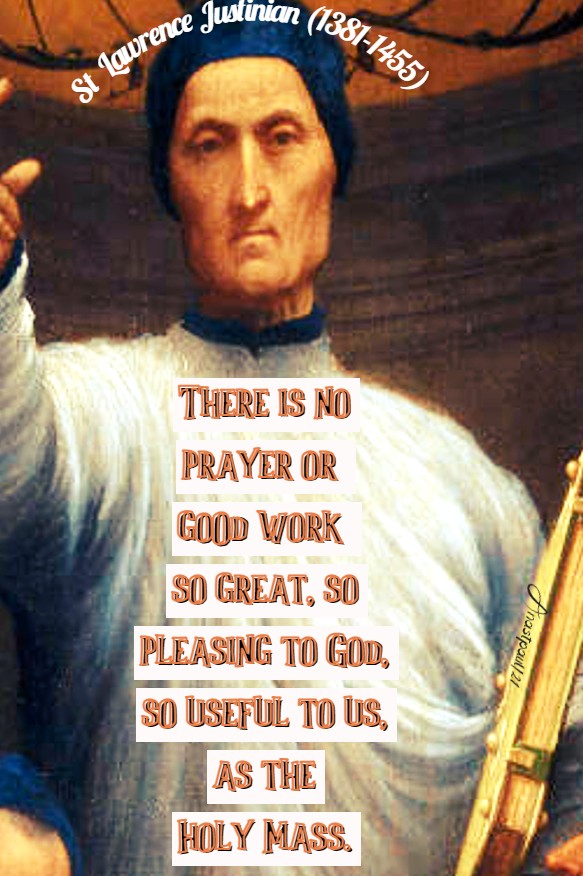
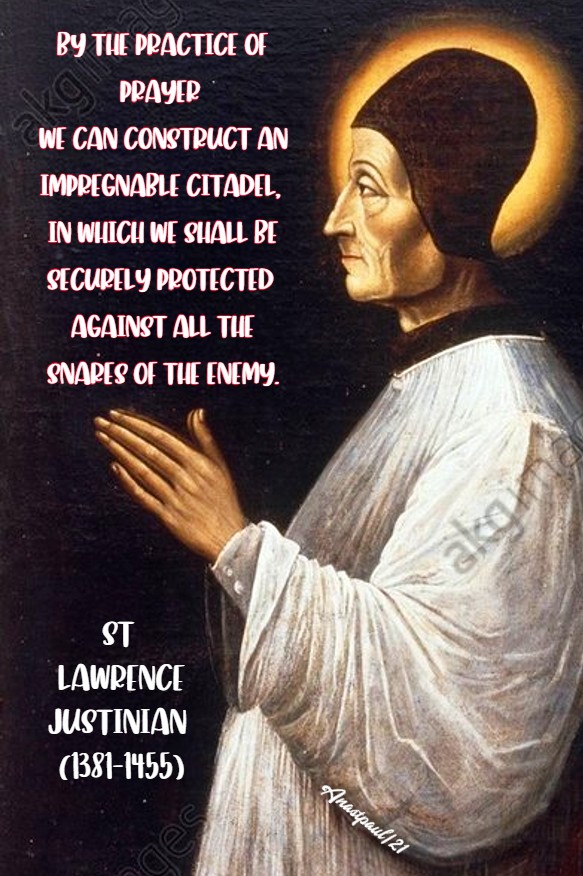
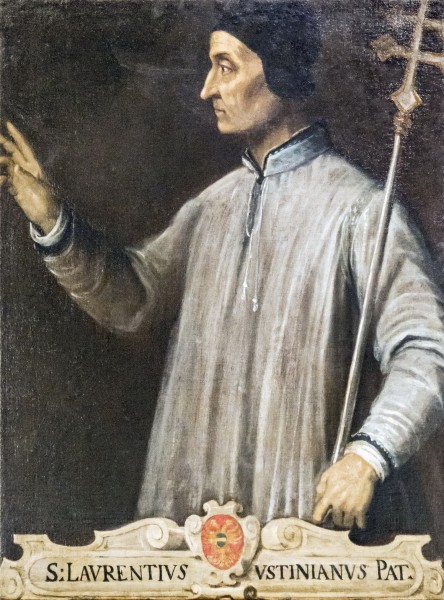
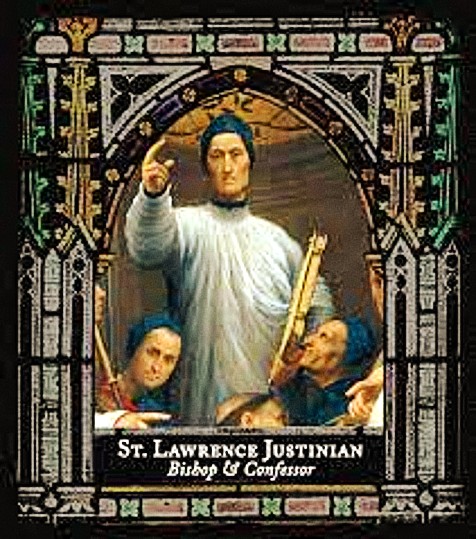
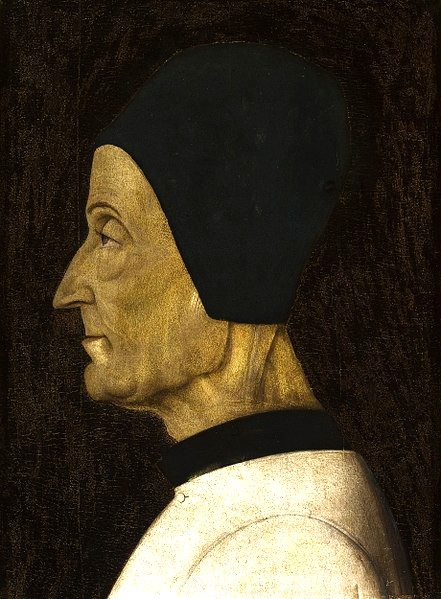
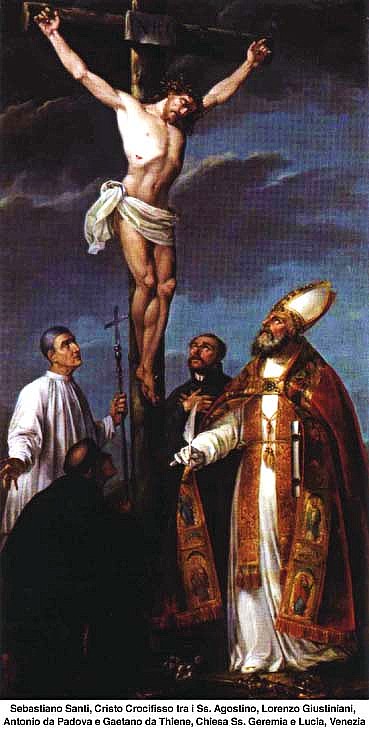
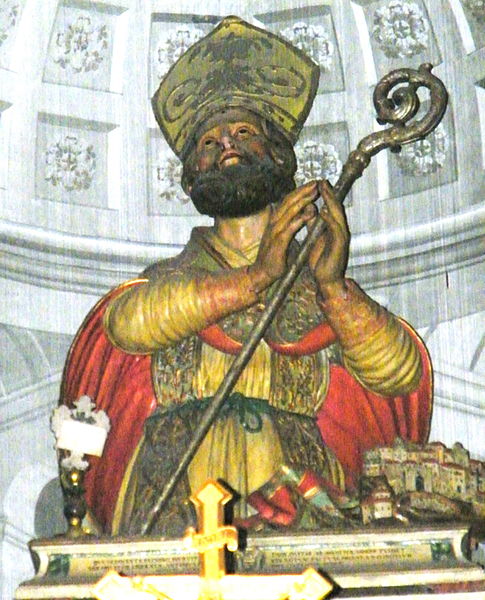
Saint of the Day – 5 September – Saint Lawrence Justinian (1381-1455) Bishop of Venice, Confessor, Reformer, Spiritual writer. Born on 1 September 1381 at Venice, Italy and died on 8 January 1455 at Venice of natural causes. Also known as – Lorenzo Giustiniani, Laurence…Laurentius…Patriarch of Venice.Patronage – Venice, Italy. Additional Memorial – 8 Jamuary.
The Roman Martyrology states of him today: “The Feast of St Lawrence Justinian, first Patriarch of Venice, who, by glorious miracles and virtues, illustrated the Episcopal dignity which he received against his will on this day. His birthday into Heaven is 8 January.”
Lawrence Justinian was a member of the well-known Giustiniani family, which includes several Saints. The piety of his mother seems to have served as an inspiration for his own piety and he chose a life of prayer and service. In 1404, after he had been Ordained a Deacon, at the suggestion of an uncle who was a Priest, he joined a community of Canons regular following a monastic form of life on the island of San Giorgio in Alga. He was admired by his fellows for his poverty, mortification and fervency of prayer. Two years after his Ordination to the Priesthood in 1407, the community accepted the Rule of St. Augustine. He was chosen to be the first Prior of the community.
Lawrence promoted the Constitutions which had been established for the Canons Regular of St George’S Monastery, which was embraced by other communities of Canons in the region and shortly thereafter, he became the Prior General of his Congregation. He was so zealous in spreading the merits of his community, that he was looked upon as if he were the actual Founder of the Order.
His great humility was a lesson to all his fellow Canons – when he went out begging, even to his own family home where the servants were embarrassed and as quickly as they could, gave him the bread he sought and then hrried him away, before the family were aware that their ‘child‘ was the beggar at the door.
Lawrence, although he had no great oratory skills preached very effectively, on the one hand, continuing to go around with his habit and saddlebag begging and, on the other hand, writing tirelessly. He wrote for the learned and the ignorant, theological treatises and popular pamphlets, offering everyone a guide to personal reform in faith and practicing that faith. He urged the faithful to recover a sense of communion with the whole Church, he encouraged trust in God’s mercy rather than fear of His justice.
In 1433, Pope Eugene IV, one of the Founders of the Monastery of San Giorgio, named Lawrence as the Bishop of Castello. Although he resisted this elevation to the Episcopal dignity supported by his brother Canons in protest, Pope Eugene, who knew him very well, did not heed his protesting pretexts – his tiredness, the task too difficult, etc … He found a Diocese in disarray and his administration was marked by considerable growth and reform. In 1451, Pope Nicholas V united the Diocese of Castello with the Patriarchate of Grado, and the seat of the Patriarchate was moved to Venice, making Lawrence the first Patriarch of Venice, a post that he held for over four years.
It was during Lawrence’s rule that Constantinople fell to Muslim forces. Due to their centuries of close trading partnerships with the Byzantine Empire, the people of Venice were in distress as to their future. He took a leading role in helping the Republic to deal with the crisis, working with the Senate to help chart its future, as well as with the clergy and people.
He died on 8 January 1455 and was Canonised by Pope Alexander VIII (1689–1691) on 16 October 1690. His works, consisting of sermons, letters and ascetic treatises, have been frequently reprinted.
Pope Innocent XII (1691–1700) inserted his Feast day into the General Roman Calendar for celebration on 5 September, the Anniversary of his elevation to the Episcopate.
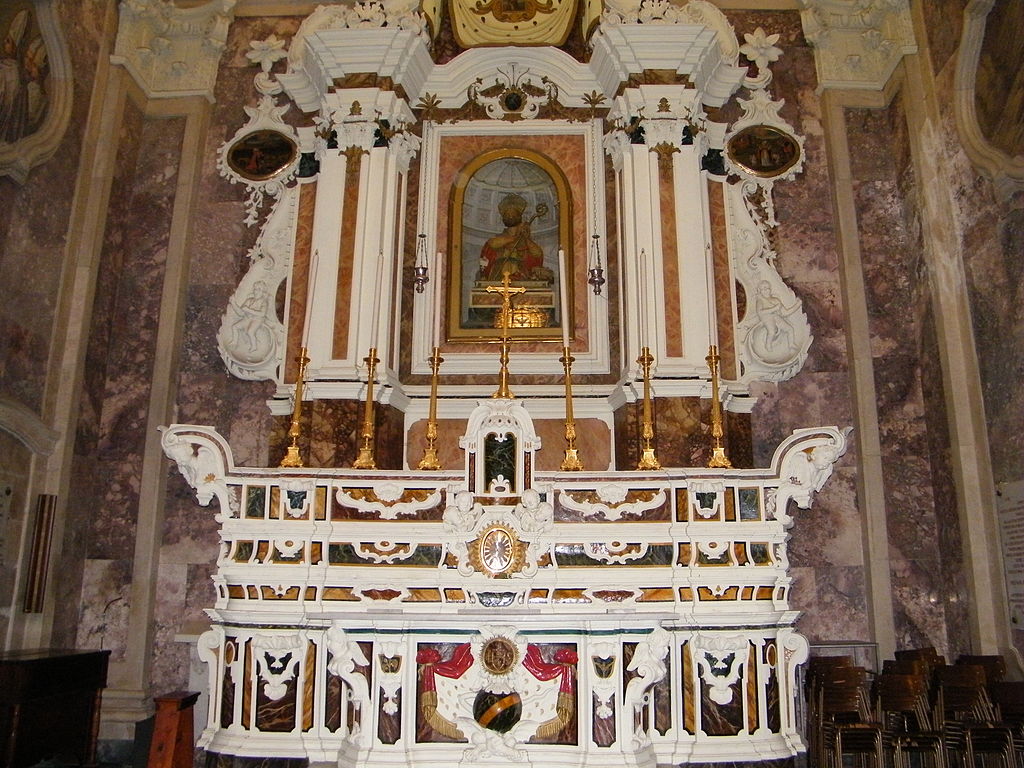
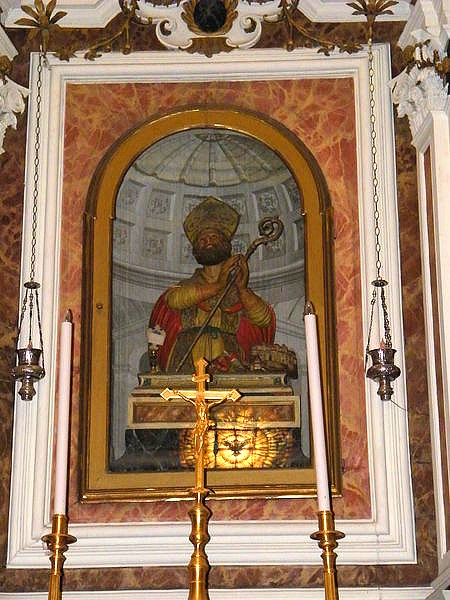
Duomo (Padua) – cappella di San Lorenzo Giustiniani – Statua di Lorenzo Giustiniani
The Fifteenth Sunday after Pentecost +2021 Twenty third Sunday in Ordinary Time
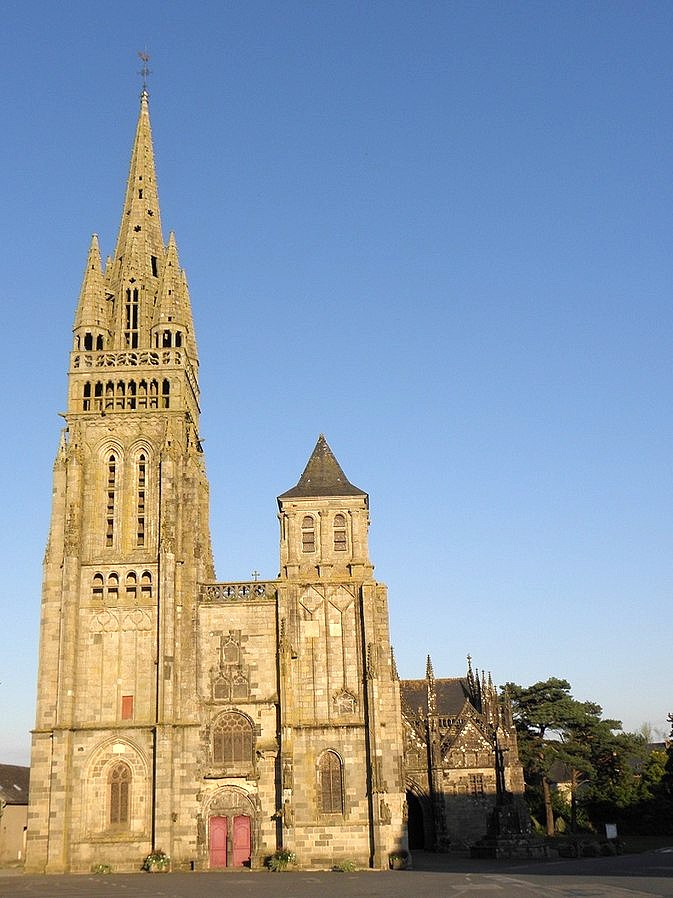
Notre-Dame, Folgoët / Our Lady of Folgoët Finistère, Brittany, France (1650) – First Sunday or the First Week of September:
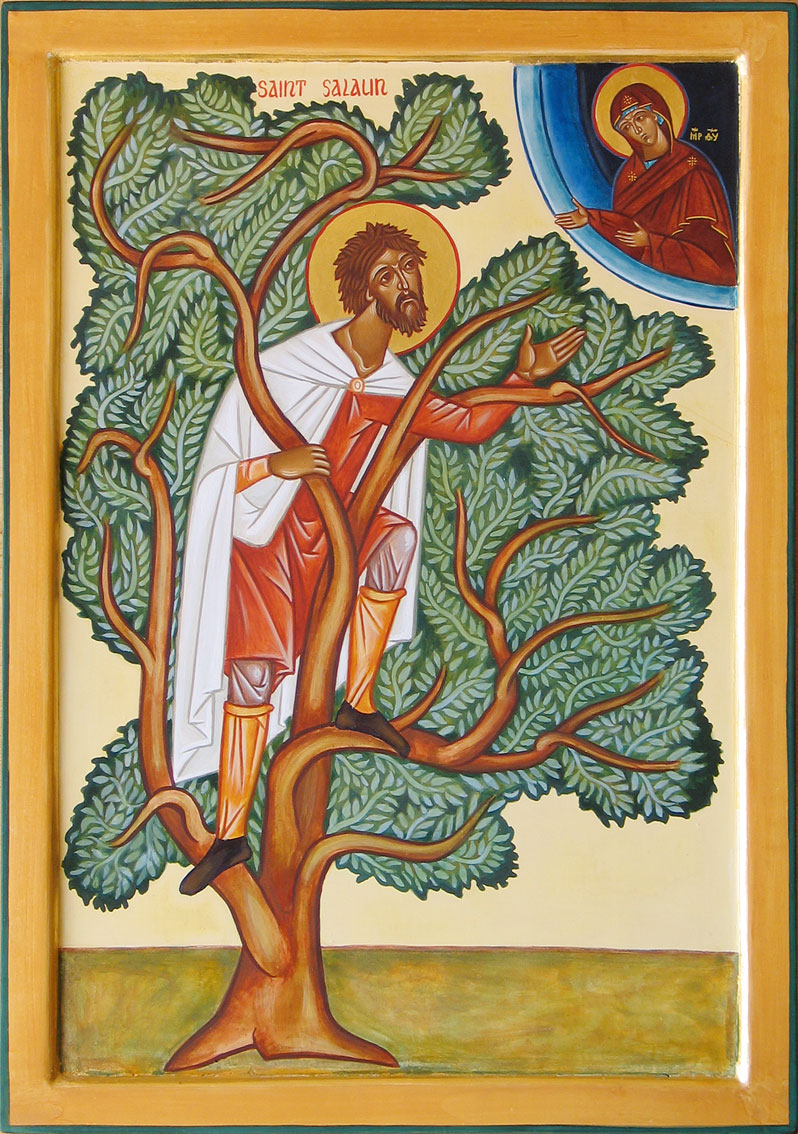
Known as the “the fool of the woods,” St Salaün (Died1358 – Memorial on1 November) lived in a forest clearing near a spring, over which he enjoyed hanging from an oak branch, immersed to his shoulders, singing “O Maria.” He lived by begging: “Ave Maria! Salaün could eat some bread!” After he died in 1358, aged 48, in the woods near the spring, people found a white lily with “Ave Maria” in gold lettering on its petals — growing from the mouth of the dead fool buried beneath.
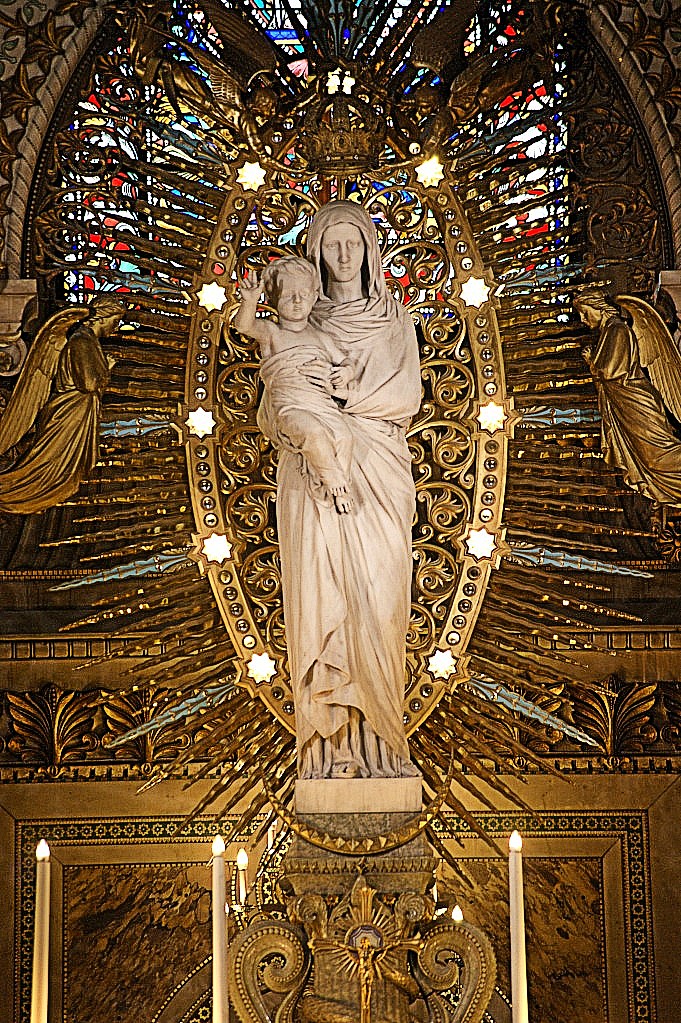
The Basilica of Notre-Dame du Folgoët was begun on the spot in 1365, completed in 1419 and consecrated in 1423. Its main Altar is over the spring, channeled into a basin behind the Church. In 1888, a dark stone Virgin was crowned Our Lady of Folgoët, replacing a polychrome wooden Statue which was moved to a side Altar. The Black Virgin is standing, holding the Child with her left arm; both wear large crowns. Her back is flat; the statue may have been on the exterior of the Church before the Revolution, when some Statues were damaged and removed for safekeeping from the marauding mobs of the French Revolution.
Basilica ceiling
In the late 1500s, the big pilgrimage date was 15 August Feast of the Assumption. Three hundred years later, the celebration moved to 8 September, Nativity of the Virgin. Since 1970 the Grand Pardon has been held the first weekend in September, with a succession of processions and Masses in the Breton language.
St Charbel Bl Florent Dumontet de Cardaillac St Genebald of Laon Bl Gendtilis Bl Gerbrand of Dokkum St Guise Hoang Luong Canh Blessed John the Good OSA (c 1168-1249) Bishop Bl Jordan of Pulsano St Lawrence Justinian (1381-1455) Bishop St Obdulia St Phêrô Nguyen Van Tu St Romulus of Rome
St Victorinus of Amiterme St Victorinus of Como Bl William Browne — Martyrs of Armenia – 1,000 saints: A group of up to 1,000 Christian soldiers in the 2nd century imperial Roman army of Trajan, stationed in Gaul. Ordered to sacrifice to pagan gods, they refused and were transferred to Armenia. Ordered again to sacrifice to pagan gods, they refused again. Martyrs. We know the names of three of them, but nothing else – Eudoxius, Macarius and Zeno.
Martyrs of Capua – 3 saints: Three Christians who were martyred together. Long venerated in Capua, Italy. We know their names, but little else – Arcontius, Donatus and Quintius. They were martyred in Capua, Italy.
Martyrs of Nicomedia – 80 saints: A group of 80 Christians, lay and clergy, martyred together in the persecutions of Valens. We know little more than the names of three of them – Menedemo, Teodoro and Urbano. They were locked on a boat which was then set on fire on the shore of Nicomedia, Bithynia (in modern Turkey) c 370.
Martyrs of Porto Romano – 4+ saints: A group of Christians martyred together in the persecutions of Marcus Aurelius. We know little more than their names – Aconto, Herculanus, Nonno and Taurino. c180 at Porto Romano, Italy.
Thought for the Day – 4 September – Meditations with Antonio Cardinal Bacci (1881-1971)
Christian Optimism
“There are two kinds of optimism. The first is the optimism of worldlings who expect nothing but pleasure from life. They run away from anything which smacks of sacrifice or self-control and, as a result, virtue is completely outside their grasp. Their motto is the “carpe diem” of the poet Horace (Carmina 1:11). Living for the day in this fashion, they seem to uphold the philosophy which the Book of Wisdom puts on the lips of the foolish: “Come, let us enjoy the good things that are real and use the freshness of creation avidly. Let us have our fill of costly wine and perfumes and let no springtime blossom pass us by. Let us crown ourselves with rosebuds ere they wither; let no meadow be free from our wantonness” (Wisdom 2:6-8).
This kind of optimism is an inversion of true human values. It is the result of the domination which man’s lower instincts can sometimes acquire over his reason. But because our natural longing for what is good can never be completely stifled, this pleasant epicurean approach, always leaves in its wake, a sense of disillusionment.
Sooner or later, this optimism is converted into pessimism. Human pleasure must always turn tp sorrow and at this stage, unless some miracle of divine grace intervenes, the spirit rebels and falls prey to despair. It is true, that most of us will have avoided the worst excesses of the epicurean outlook but, we may have developed a distortedly comfortable and selfish approach to life. If this is so, we should remember that our lives are in conflict with Christian principles.
“Unless the grain of wheat falls into the ground and dies,” Jesus said, “it remains alone. But, if it dies, it brings forth much fruit.” (Cf Jn 12:44). “Unless you repent, you will all perish” (Lk13:5). “The kingdom of heaven has been enduring violent assault and the violent have been seizing it by force” (Mt 11:12). “If anyone wishes to come after me, let him deny himself and take up his cross daily and follow me” (Lk 9:23),
Let us consider whether our lives are in accordance with this teaching. Christian optimism abhors the malice of sin, lightens our sufferings and moderates our pleasures. It helps us to see God’s image in all creatures, gives us joy in this life and hope in the hour of death. In this sense, let us be optimists!”
Quote/s of the Day – 5 September – “Month of the Seven Sorrows of the Blessed Virgin Mary” – Readings: Colossians 1: 21-23; Psalm 54: 3-4, 6 and 8; Luke 6: 1-5, 19-21
“The Son of man is Lord of the Sabbath.”
Luke 6:5
“ … The Lord calls on us to rest, telling us: “Come to me, all you who labour and are burdened, and I will give you rest” (Mt 11:28) And He gives rest to all souls who trust Him and come to Him by delivering them from painful, oppressive and impure thoughts. Then they completely stop indulging in evil, celebrating a true, a delightful and holy Sabbath, a feast of the Spirit in inexpressible joy and rejoicing. They offer a pure and acceptable worship to God, coming from a pure heart. That is the true and holy Sabbath.”
St Macarius of Egypt (c 300- c 390) Desert Father, Monk
(Spiritual Homilies, no. 35)
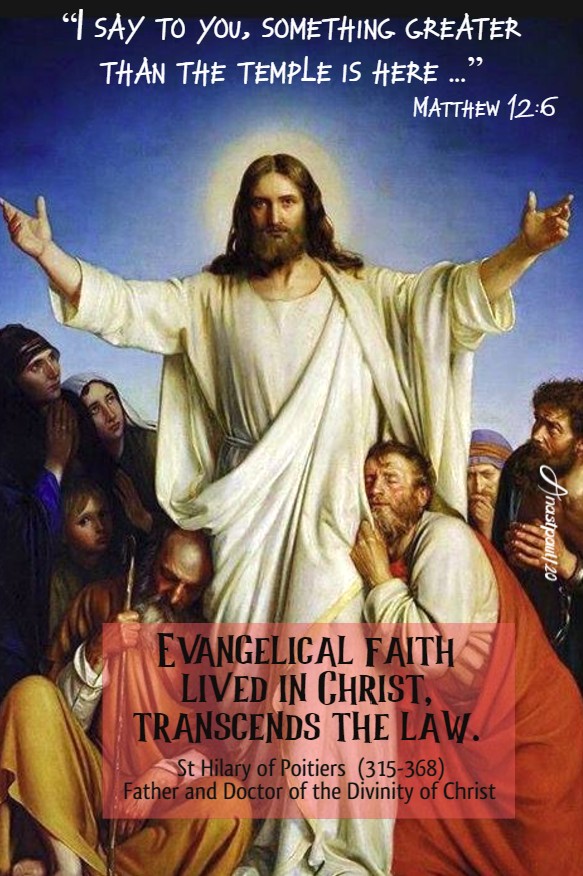
“I say to you, something greater than the temple is here …”
Matthew 12:6
“Evangelical faith lived in Christ, transcends the law.”
St Hilary of Poitiers (315-368) Father and Doctor of the Divinity of Christ
“And He departed from our sight that we might return to our heart and find Him there. For He left us and behold, He is here!”
St Augustine (354-430) Father and Doctor of Grace
“He who carries God in his heart bears heaven with him, wherever he goes.”
St Ignatius Loyola (1491-1556)
“Nothing is anything, anymore to me; everything is nothing to me only Jesus! Neither things nor persons, neither ideas nor emotions, neither honour nor sufferings. Jesus is for me honour, delight, heart and soul.”
One Minute Reflection – 5 September – “Month of the Seven Sorrows of the Blessed Virgin Mary” – Readings: Colossians 1: 21-23; Psalm 54: 3-4, 6 and 8; Luke 6: 1-5 19-21
“The Son of man is Lord of the Sabbath.” … Luke 6:5
REFLECTION – “Now we are in the time of grace revealed to us, the observance of the Sabbath, which was previously symbolised by resting on a single day, has been brought to an end, where the faithful are concerned. For in this time of grace, Christians observe an unending Sabbath, provided, that all the good they do is done in hope of the rest to come and provided, they don’t boast about the good they do as though it were a good belonging to them rather than having received it.
So, when they understand and receive the Sacrament of Baptism as a Sabbath,that is to say, as the Lord’s resting in the tomb (Rm 6:4), Christians rest from their former works to walk, from henceforward, in a new life, recognising that God acts within them. It is God who both works and rests together, on the one hand granting His creatures the guidance they need and, on the other, rejoicing in Himself in everlasting tranquillity.
God was neither worn out by creating the world, nor recovered His strength by ceasing to create but He wished to invite us, by these words of His Scripture, “God rested on the seventh day” (Gn 2:2) – to long for this rest, by giving us the command to make this day holy.” – St Augustine (354-430) Father and Doctor of Grace – Genesis according to the literal sense, 4, xiii/24-xiv/25
PRAYER – Holy God, Almighty Father, You taught us to honour Your holy day and the day of rest. In Your divine Son, Whom You gave to us as our brother and glorified by His Resurrection, You showed us the way to our eternal life. As His glorified body shines anew, we rejoice in our future life with Him and embrace His day as our own, each Sunday renewing His Resurrection and each day of our lives. We run forward to sing Your glory together with our Holy Mother, the Blessed Virgin and most Sorrowful Mary, to eternity, through our Lord Jesus Christ, with the Holy Spirit, God forever, amen.
Our Morning Offering – 4 September – “Month of the Seven Sorrows of Mary” and Mary’s Saturday
To Our Lady of Sorrows By St Bonaventure (1217-1274) Seraphic Doctor of the Church
O most holy Virgin, Mother of our Lord Jesus Christ, by the overwhelming grief you experienced when you witnessed the Martyrdom, the Crucifixion and the Death, of your Divine Son, look upon me, with eyes of compassion and awaken in my heart, a tender commiseration for those sufferings and a sincere detestation of my sins, in order that, being disengaged from all undue affection for the passing joys of this earth, I may sigh after the eternal Jerusalem and that, henceforward, all my thoughts and all my actions may be directed towards this one most desirable object, the honour, glory and love of our divine Lord Jesus, and to you, the Holy and Immaculate Mother of God. Amen
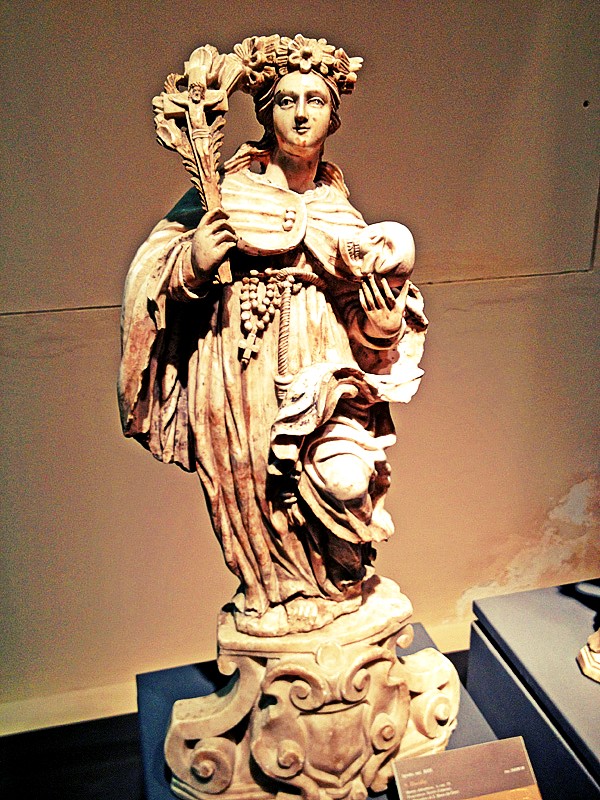
Saint of the Day – 4 September – Saint Rosalia (c 1130-c 1160) Virgin, Recluse, known as “La Santuzza” – “The Little Saint.” Born in c1130 at Palermo, Sicily and died in c 1160 at Mount Pellegrino, Italy, of natural causes. Patronages – Vocations in Italy, Italian fishermen of Monterey, Baucina, Benetutti, Bivona, Campofelice di Roccella, Delia, Isola delle Femine, Lentiscosa, Palermo, Pegli, Racalmuto, San Mango Cilento, Santo Stefano Quisquina, Sicily, Vicari – all in Italy and of California. Additional Memorial – 14 July (Festino).
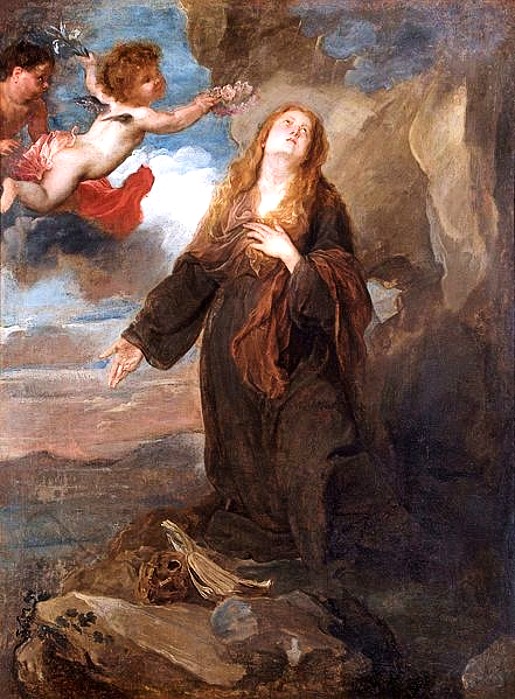
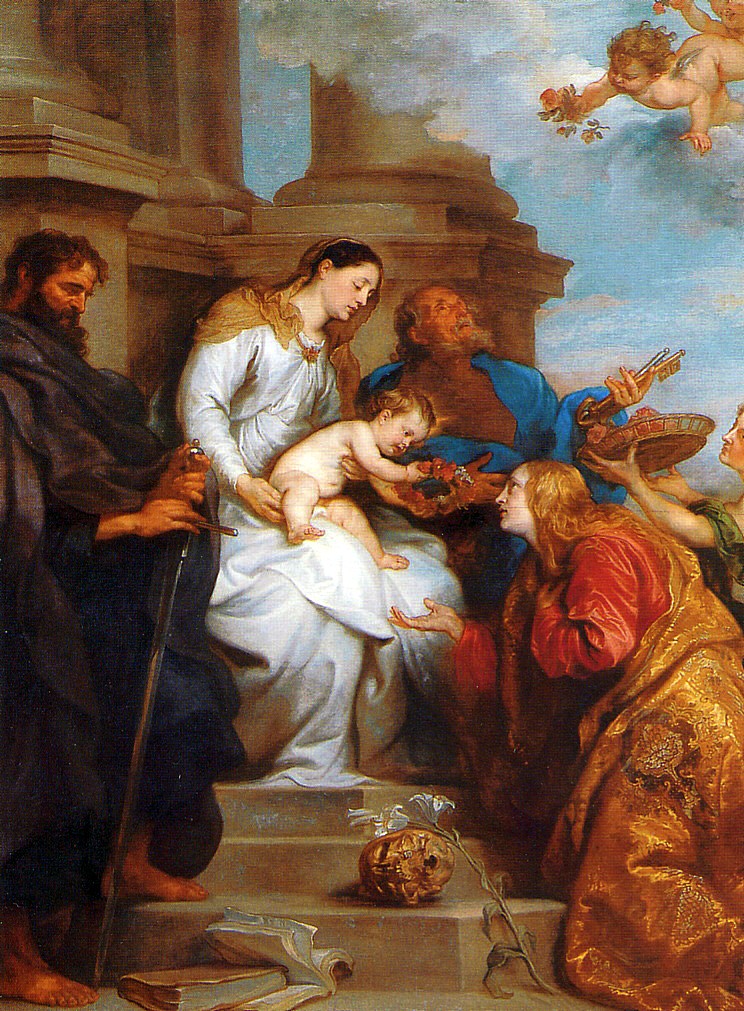
Saint Rosalia Crowned by Angels is a c 1625 oil on canvas painting by Sir Anthony van Dyck, one of five surviving works showing the Saint which he produced whilst he was quarantined in Palermo, Sicily due to a plague
The Roman Martyrology states of her today: “At Palermo. the birthday of St Rosalia, Virgin, a native of that City, issued from the Royal blood of Charlemagne. For the love of Christ, she forsook the princely Court of her father and led a heavenly life alone in the mountains and caverns.“
Saint Rosalie Interceding for the Plague–Stricken of Palermo
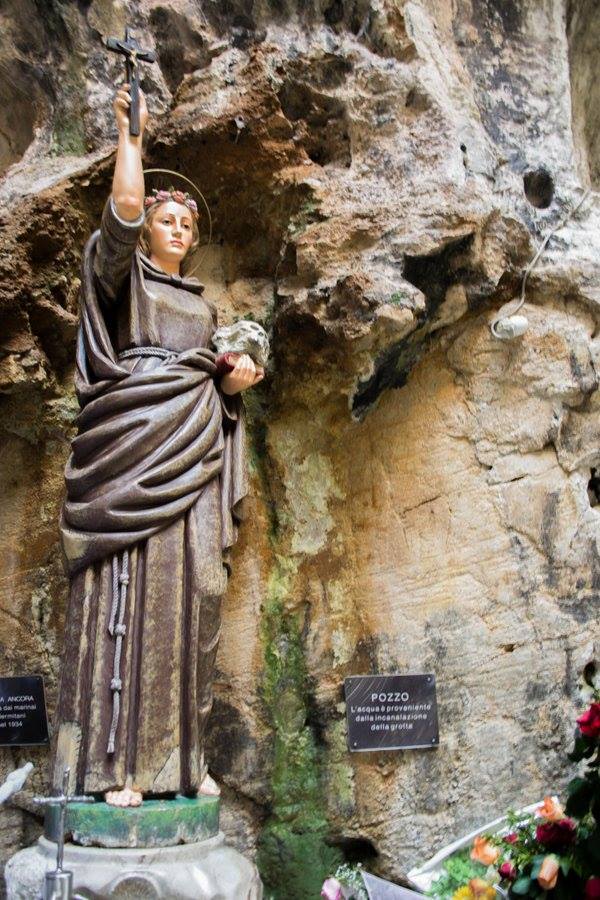
Not much is known about the life of Santa Rosalia. She was born to a noble family, which claimed descent from Charlemagne She rejected that life, being devoutly religious, instead pursuing one as a recluse in a cave on Mount Pellegrino. Tradition says that she was led to the cave by two Angels. On the cave wall she wrote “I, Rosalia, daughter of Sinibald, Lord of [Monte] delle Rose and Quisquina, have taken the resolution to live in this cave for the love of my Lord, Jesus Christ.” She died there alone in 1166.
In 1624 a plague struck Palermo. During this hardship, Rosalia appeared, firstly to a sick woman, then to a hunter, to whom she indicated where her remains were to be found. She ordered him to bring her bones to Palermo and have them carried in procession through the City. The hunter climbed the mountain and found her bones in the cave as described. He did what she had asked in the apparition. After her remains were carried around the City three times, the plague ceased. Rosalia was immediately venerated as the Patron Saint of Palermo and a Sanctuary was built in the cave where her remains were discovered.
Statue of St Rosalia in the cave Sanctuary
After she saved the City of Palermo from the plague, St Rosalia became known as a fierce protectress. She was credited with defending the people from earthquakes and storms and was appealed to in prayers for a safe and successful harvest.
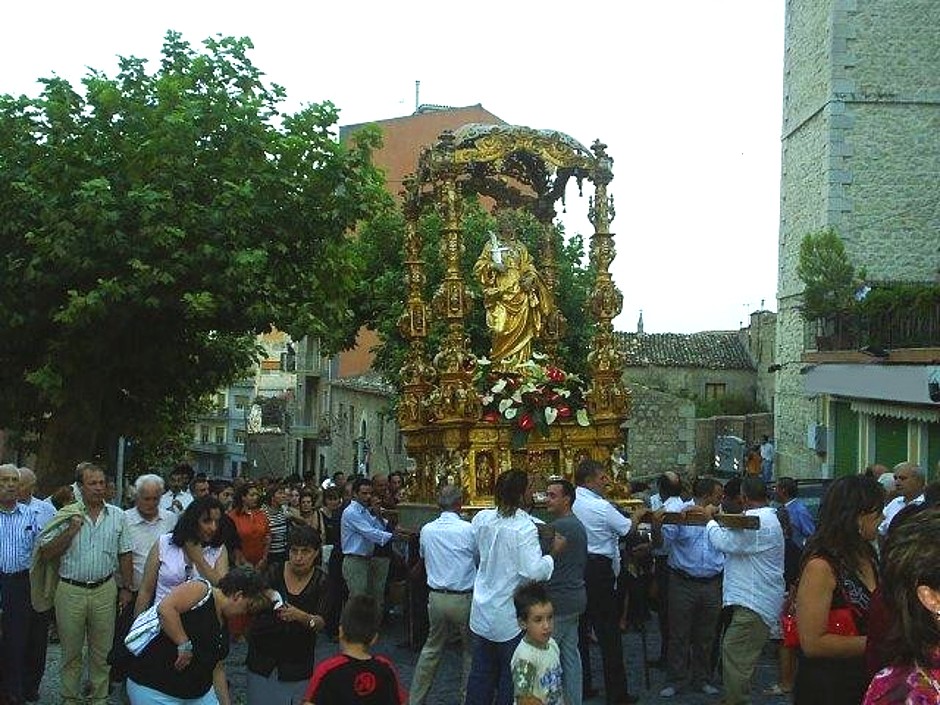
In Palermo, the Festino di St Rosalia is held each year on 14 July and continues into the next day. It is a major social and religious event in the City.
Interestingly the devotion to St Rosalia is widespread among the large and mainly Hindu Tamil community of Sri Lankan origin settled in Palermo.
On 4 September, a tradition of walking barefoot from Palermo up to Mount Pellegrino is observed in honour of Rosalia.
Saint Rosalia was an important subject in Italian Renaissance and Baroque painting, particularly in sacre conversazioni (group pictures of saints flanking the Virgin Mary) by artists such as Riccardo Quartararo, Mario di Laurito, Vincenzo La Barbara and possibly Antonello da Messina.
This painting by Sir Anthony van Dyck, depicts the crowing of St Rosalia by the Divine Baby Jesus in the arms of the Madonna
But it was Flemish master Anthony van Dyck (1599–1637), who was caught in Palermo during the 1624 plague, who produced the most paintings of her (see also above). She is depicted as a young woman with flowing hair, wearing a Franciscan cowl and reaching down toward the City of Palermo in its peril – became the standard iconography of Rosalia from that time onward. Van Dyck’s series of St. Rosalia paintings have been studied by Gauvin Alexander Bailey and Xavier F Salomon, both of whom curated or co-curated exhibitions devoted to the theme of Italian art and the plague. In March 2020, The New York Times published an article about the Metropolitan Museum of Art’s painting of Saint Rosalia by Van Dyck in the context of COVID-19.
Madonna della Consolazione / Our Lady of Consolation, or Mary, Consoler of the Afflicted, (from the Latin Consolatrix Afflictorum):(1436) – 4 September
It is found in the Litany of Loreto. The feast of Our Lady of Consolation is one of the solemnities not inscribed in the General Roman Calendar but which are observed in particular places, regions, churches or religious institutes. Augustinians and many regions, observe today 4 September, the Benedictines 5 July.
St Irmgard of Süchteln St Julian the Martyr St Magnus of Ancyra St Marcellus of Chalon-sur-Saône St Marcellus of Treves St Maximus of Ancyra St Monessa St Moses the Prophet Bl Nicolò Rusca St Oceanus the Martyr Bl Peter of Saint James St Rebecca of Alexandria St Rhuddlad St Rosalia (c 1130-c 1160) Virgin, Recluse, known as “La Santuzza” – “The Little Saint.“
St Rufinus of Ancyra St Salvinus of Verdun Bl Scipion-Jérôme Brigeat Lambert St Silvanus of Ancyra St Sulpicius of Bayeux St Thamel St Theodore the Martyr St Ultan of Ardbraccan St Victalicus — Blessed Martyrs of Nowogródek: The Eleven Nuns of Nowogródek or Blessed Mary Stella and her Ten Companions were a group of members of the Sisters of the Holy Family of Nazareth, a Polish Roman Catholic religious congregation, executed by the Gestapo in August 1943 in occupied Poland (present-day Navahrudak, Belarus).
Thought for the Day – 3 September – Meditations with Antonio Cardinal Bacci (1881-1971)
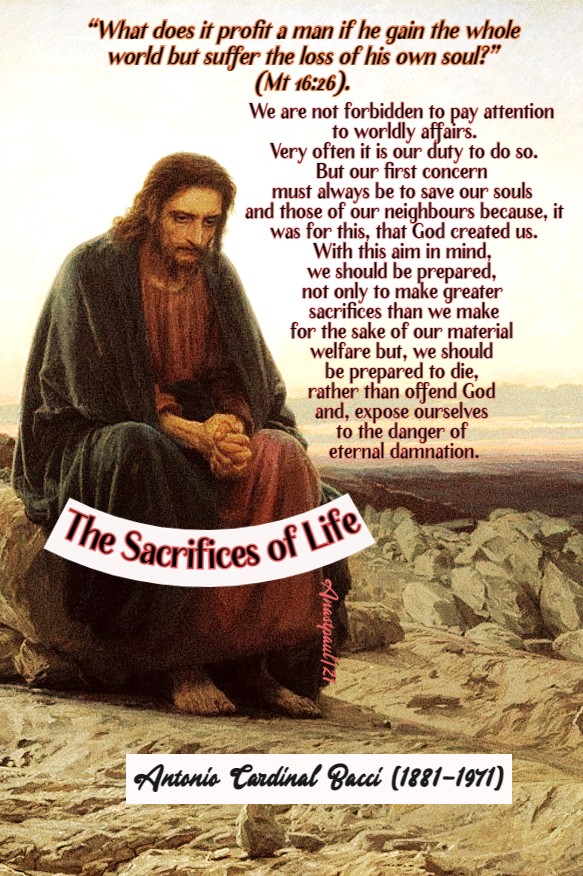
The Sacrifices of Life
“People make many sacrifices for the sake of the present life, to maintain health, to carve out a career, or to obtain money, success and honours. If you are a student, what pains you take to get a degree so that you may establish yourself in society. If you are a labourer, look at the efforts you must make to obtain the necessities of life. If you are a business executive, how you are prepared to strive and strain, in order to do better than your colleagues and gain promotion!
If you become ill, you spare neither expense, nor effort, in order to regain your health. You are even prepared to undergo a surgical operation if that is necessary to save your life.
But how many sacrifices do we make in order to do good or to become holy? We know that the present life is short and is only the forerunner of the true life, which is eternal. We should be able then, to appreciate the profundity of this question of Jesus Christ: “What does it profit a man if he gain the whole world but suffer the loss of his own soul?” (Mt 16:26).
We are not forbidden to pay attention to worldly affairs. Very often it is our duty to do so. But our first concern must always be to save our souls and those of our neighbours because, it was for this, that God created us. With this aim in mind, we should be prepared, not only to make greater sacrifices than we make for the sake of our material welfare but, we should be prepared to die, rather than offend God and, expose ourselves to the danger of eternal damnation.
Let us reflect. What sacrifices have we made so far for our own sanctification and for the sanctification of others? What sacrifices do we propose to make in the near future? We must be prepared to take up our cross voluntarily and generously, at least when we realise, that it is necessary or profitable for our salvation and sanctification.”
Quote/s of the Day – 3 September – “Month of the Seven Sorrows of Mary”
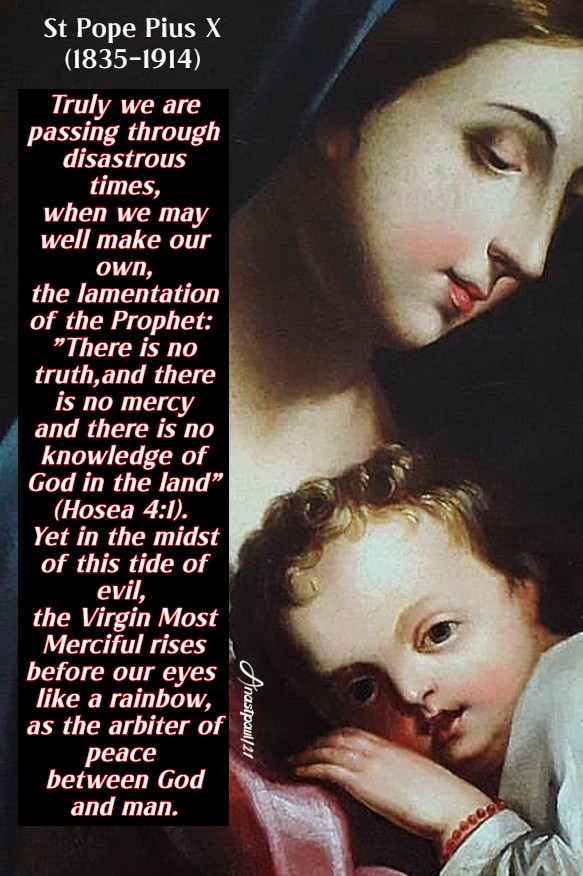
“Truly we are passing through disastrous times, when we may well make our own, the lamentation of the Prophet: “There is no truth,and there is no mercy and there is no knowledge of God in the land” (Hosea 4:1). Yet in the midst of this tide of evil, the Virgin Most Merciful rises before our eyes like a rainbow, as the arbiter of peace between God and man.”
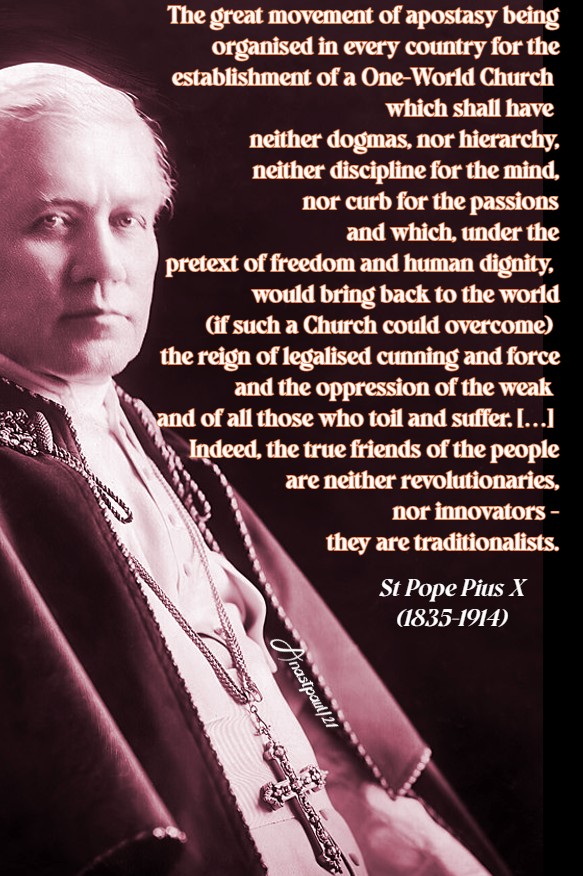
“…The great movement of apostasy being organised in every country for the establishment of a One-World Church which shall have neither dogmas, nor hierarchy, neither discipline for the mind, nor curb for the passions and which, under the pretext of freedom and human dignity, would bring back to the world (if such a Church could overcome) the reign of legalised cunning and force and the oppression of the weak and of all those who toil and suffer. […] Indeed, the true friends of the people are neither revolutionaries, nor innovators – they are traditionalists.”
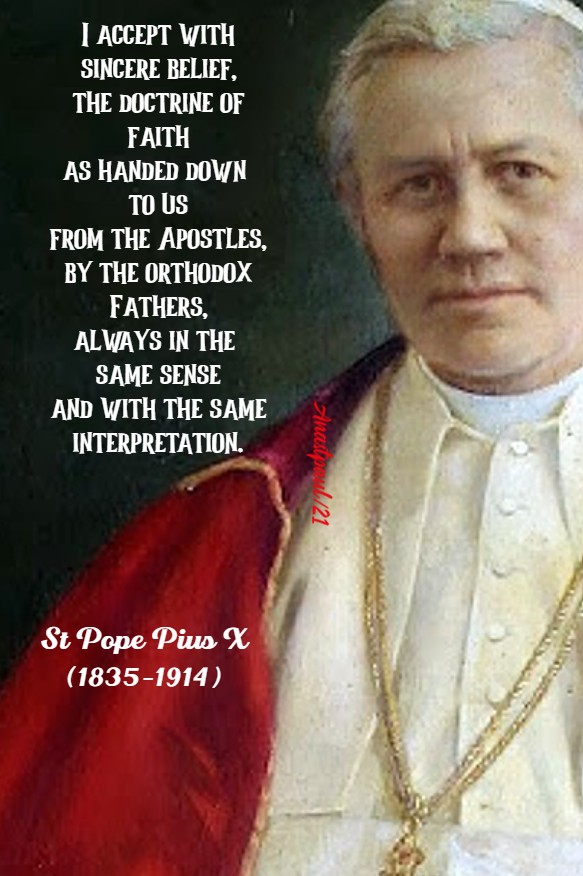
“I accept with sincere belief, the doctrine of faith as handed down to us from the Apostles, by the orthodox Fathers, always in the same sense and with the same interpretation.”
One Minute Reflection – 3 September – “Month of the Seven Sorrows of Mary” – Readings: Colossians 1: 15-20; Psalm 100: 1b-2-5; Luke 5: 33-39
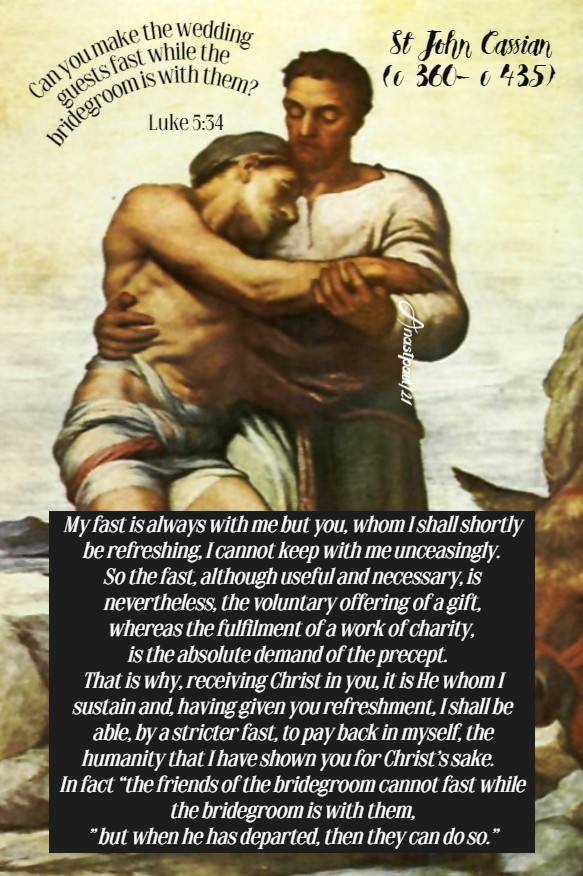
“Can you make the wedding guests fast while the bridegroom is with them?” – Luke 5:34
REFLECTION – “We had left Syria for the Province of Egypt, anxious to learn there, the teachings of the old Monks and were astonished by the great warmth with which we were received.
Contrary to what we had been taught in the Monasteries of Palestine, they did not observe the Rule of waiting for the hour appointed for the meal but, except on Wednesday and Fridays, wherever we went, the fast was broken. One of the elders, from whom we asked why the daily fasts were so easily set aside among them, replied: “My fast is always with me but you, whom I shall shortly be refreshing, I cannot keep with me unceasingly. So the fast, although useful and necessary, is nevertheless the voluntary offering of a gift, whereas the fulfilment of a work of charity, is the absolute demand of the precept. That is why, receiving Christ in you, it is He whom I sustain and, having given you refreshment, I shall be able, by a stricter fast, to pay back in myself, the humanity that I have shown you for Christ’s sake. In fact “the friends of the bridegroom cannot fast while the bridegroom is with them,” but when he has departed, then they can do so.” – St John Cassian (c 360- c 435) Monk, Founder of Monasteries – Institutes
PRAYER – God our Father, Your rule is a rule of love, Your providence is full of mercy for Your people. Through the intercession of Your |Angels and Saints and the Most Sorrowful Mother of Your Son, that we may be granted the spirit of wisdom and understanding in Your Word. Grant that by the light of the Your Word made flesh, we may know our eternal home and strive to attain eternal joy there with You. Through Jesus Christ our Lord, with the Holy Spirit, one God forever, amen.
Our Morning Offering – 3 September – “Month of the Seven Sorrows of Mary” – The Memorial of St Pope Pius X (1835-1914) (Pontiff 1903-1914)
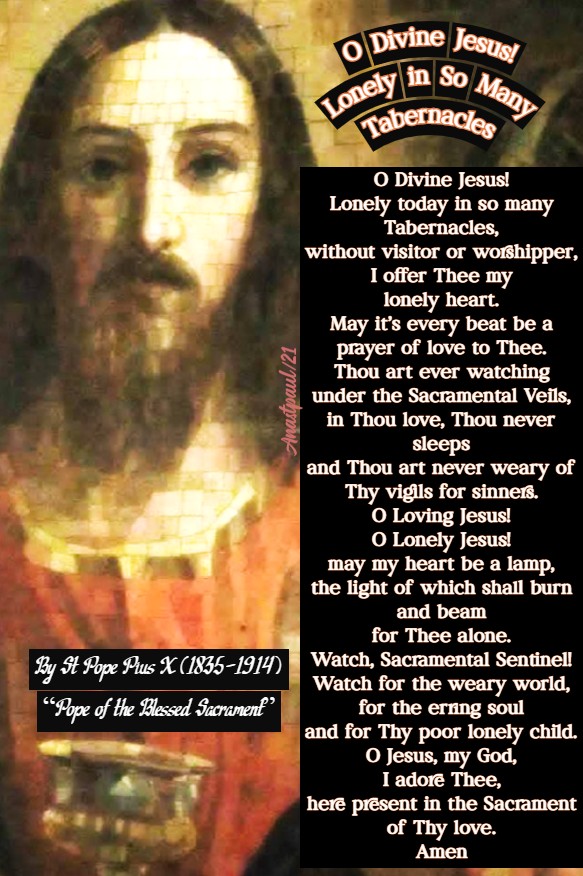
O Divine Jesus! Lonely in So Many Tabernacles By St Pope Pius X (1835-1914) “Pope of the Blessed Sacrament”
O Divine Jesus! Lonely today in so many Tabernacles, without visitor or worshipper, I offer Thee my lonely heart. May it’s every beat be a prayer of love to Thee. Thou art ever watching under the Sacramental Veils, in Thou love, Thou never sleeps and Thou art never weary of Thy vigils for sinners. O Loving Jesus! O Lonely Jesus! may my heart be a lamp, the light of which shall burn and beam for Thee alone. Watch, Sacramental Sentinel! Watch for the weary world, for the erring soul and for Thy poor lonely child. O Jesus, my God, I adore Thee, here present in the Sacrament of Thy love. Amen
Indulgences: 100 days each time before the Tabernacle 300 days each time before the Blessed Sacrament Exposed (St Pope Pius X – 3 July 1908) Prayers to the Sacred Heart 15th Ed 1936
Saint of the Day – 3 September – Saint Vitalian of Capua (Died 699) Bishop of Capua, Hermit, miracle-worker. Died in 699 in Montevergine, Avellino, Italy of natural causes. Patronages – Catanzaro, Italy, San Vitaliano, Italy, Sparanise, Italy. Also known as – Vitalian of Caudium, Vitalian of Montesarchio, Vitaliano of… Additional Memorial 16 July in Catanzaro.
The ‘Roman Martyrology’ reports for 3 September: “In Campania, Saint Vitalian, Bishop.” This record taken from the ‘Geronymian Martyrology‘ suggests that Vitalian was an inhabitant of Sannio, in the Caudina Valley; the ancient “Caudium” today corresponds to the City of Montesarchio on the Via Appia, located between Capua and Benevento.
These two Cities in the past contended for the Saint as their Bishop, in fact, Capua counts him in 25th place on its Episcopal list but nothing detracts from the fact that he was also Bishop of nearby Benevento for some time.
A legendary ‘Life’ was written at the end of the 12th century, perhaps by a cleric from Benevento, with the intention of affirming the consecration of Mount Partenio, later also called Montevergine, even before the arrival of Saint William of Vercelli in 1142, Founder of the venerated Sanctuary of the Madonna and of the Benedictine Congregation there.
Vitalian was acclaimed Bishop by the people of Capua, against his will. When chosen Bishop by the people of the region, which was the custom in those days, he was roundly abused by his enemies, including Priests who had wanted the seat. He was accused of preaching chastity without practising it and being involved in debauchery. Vitalian denounced their lies, then packed up and left the city, intending to go to Rome, Italy and present himself for audience with the Pope. His enemies followed him, captured him, tied him in a leather bag, and threw him into the Garigliano River to drown.
Divine protection saved him from death and caused him land unscathed on the coast at Ostia, after the river had carried him to the sea. Furthermore, the City of Capua was punished with drought, famine and plague.
Then the Capuans went to the holy Bishop, begging him to return home. Their misery ended only when Vitalian returned to them – his entry to the City caused the first rain in months. He became widely known as a miracle worker during the time he remained there.
But Vitalian, desiring a life of prayer and penance, retired to Mount Partenio, where he erected a sacred oratory dedicated to the Virgin and where he died in 699 and was buried in the Chapel he had built.
Before 716, his body was moved from Montevergine to Benevento by the Bishop Giovanni, some scholars say in 914 due to the raids of the Saracens. In 1122 Pope Callixtus II, transferring the bishopric of Capua to Catanzaro and donated the Saint’s relics to the City. In 1311 Pietro Ruffo, Count of Catanzaro, built a special Chapel in that Cathedral to store the relics of St Vitalian. In 1583, when the Chapel had fallen into a state of ruin, Bishop Nicolò Orazio had the relics re-enshrined in a velvet lined cask under the Altar in the Church of Our Lady of Catanzaro. This Sepulcher of St Vitalian exuded a pure water with miraculous properties.
Catanzaro, venerates St Vitalian as its main Patron on 16 July which is perhaps, the date of the translation of his mortal remains from Montevergine to Benevento and then to Catanzaro.
The City of Catabzaro experienced the protection of St Vitalian several times during earthquakes and in 1922 the City solemnly celebrated the seventh centenary of the arrival of the relics.
The cult of St Vitalian Bishop, spread over the centuries in Campania – the famous “Marble Calendar” of Naples, sculpted in the 9th century, remembers him on 3 September. It is believed that his cult in Naples came with the Capuans, who took refuge there in 595. Churches in his honour were built in various Campania municipalities and the Municipality of St Vitaliano, in the Province of Naples, Diocese of Nola, bears his name.
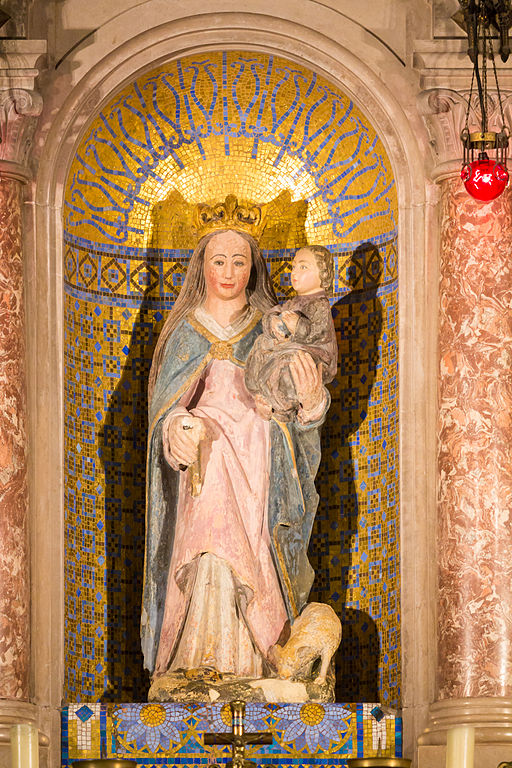
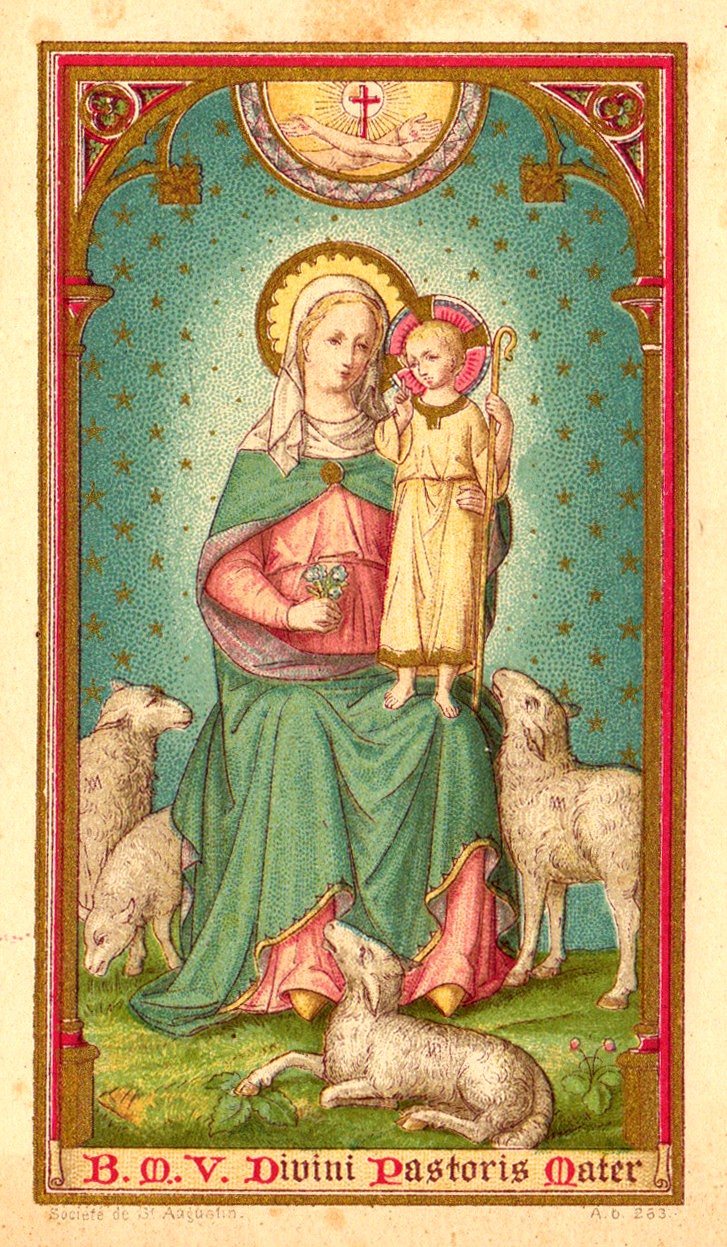
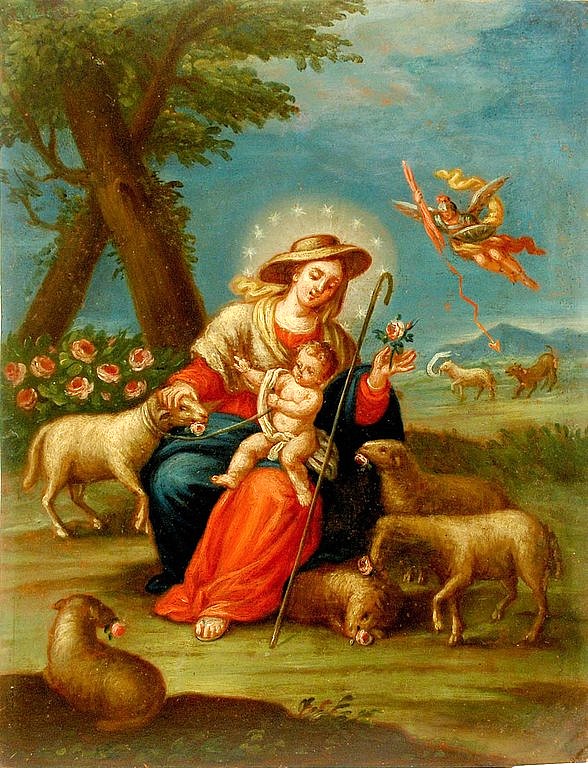
Notre Dame de Brebières / Mother of the Divine Shepherd, France (also known as Le Divine Bergère – The Divine Shepherdess) – 3 September:
The original Statue
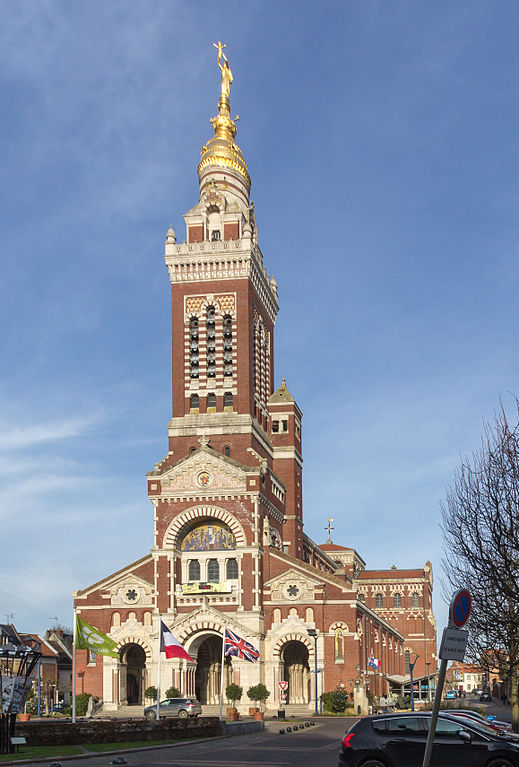
Our Lady, Mother of the Divine Shepherd, or Notre Dame de Brebières, is located in the small town of Albert in the Diocese of Amiens, France. At one time, probably sometime in the 12th century and according to local tradition, a shepherd was grazing his sheep at Brebières when he observed that many of the animals were staying in the same area to eat, ripping the grass out by the roots. It must have seemed very odd to the shepherd, who decided that the sheep were trying to uncover something, so he started to dig in the very spot himself. In a short time he uncovered a Statue of the Blessed Virgin sculpted from a single piece of solid stone.
The Statue was fairly large, nearly 1,22 metres tall and represented the Blessed Mother holding the Divine Child in her arm. There was a sheep depicted quietly reclining at Mary’s feet. As has happened so often throughout history, the finding of the Statue increased the enthusiasm and affection of the local populace toward the Mother of God. A small Chapel was built at the site to honour the Statue and receive the pilgrims who had already begun coming to Albert to visit the Holy Mother. Saint Colette can be credited for helping to spread the fame of Our Lady, Mother of the Divine Shepherd. At age fourteen, she was somewhat short and had a delicate constitution. Seeking a remedy through the favour of the Blessed Virgin, Saint Colette prayed to Our Lady of Brebières She not only obtained vigour and good health, she also found that several inches were miraculously added to her height!
In 1637 the Sanctuary was partially burned and IN 1727 the miraculous image was moved to the Parish Church of Albert. During the French Revolution the Church was made into a pagan temple to the goddess of Reason, while the image of the Mother of God was hidden until 1802 when the horrors of the Terror during this supposed time of reason subsided.
This feast is celebrated in a number of places and by certain religious communities and congregations: Capuchins, Marists and others, on widely different dates. It is a special festival of the Shrine of Our Lady of Brebières a very old Sanctuary near Albert in France, formerly much resorted to by the shepherds.
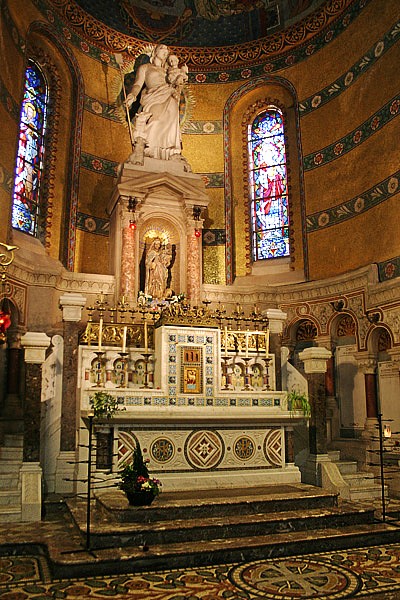
The pilgrimage here was revived after 1870 and a beautiful Basilica was completed in 1887. The Statue was crowned in 1901 and miraculously survived the devastation of both world wars. The Basilica has again been rebuilt. The collect of the Mass prays that by following the Good Shepherd on earth, we may reach the pastures of eternal life with Mary in heaven.
St Chariton St Chrodegang of Séez St Frugentius the Martyr Bl Guala of Brescia St Hereswitha Bl Herman of Heidelberg St Macanisius St Mansuetus of Toul St Marinus (Died c 366) St Martiniano of Como St Natalis of Casale
St Regulus of Rheims St Remaclus St Sandila of Cordoba St Vitalian of Capua (Died 699) Bishop — Martyrs of Aquileia – 4 saints: Four young women, variously sisters and cousins, who were born to the nobility, the daughters of the pagans Valentinianus of Aquileia and Valentius of Aquileia. Each woman converted and made private vows, dedicating themselves to God. They were arrested, tortured and martyred by order of Valentius for becoming a Christian. We know little else but their names – Dorothy, Erasma, Euphemia and Thecla. They were martyred by beheaded in the 1st century in Aquileia, Italy and their bodies were thrown into a nearby river.
Martyrs of Nagasaki – 6 beati: A group of priests and clerics, native and foreign, murdered together in the anti-Christian persecutions in Japan. They were scalded in boiling water and then burned alive on 3 September 1632 in Nishizaka, Nagasaki, Japan and Beatified on 7 May 1867 by Pope Pius IX.
• Anthony Ishida • Bartolomé Gutiérrez Rodríguez • Francisco Terrero de Ortega Pérez • Gabriel Tarazona Rodríguez • Jerome of the Cross de Torres • Vicente Simões de Carvalho
Martyrs of Seoul – 6 saints: A group of Christian lay people martyred together in the persecutions in Korea. They were beheaded on 3 September 1839 at the Small West Gate, Seoul, South Korea and Canonised on 6 May 1984 by Pope John Paul II. • Agnes Kim Hyo-Ch’u • Barbara Kwon Hui • Barbara Yi Chong-hui • Ioannes Pak Hu-jae • Maria Pak K’Un-agi • Maria Yi Yon-hui
Martyred in the Spanish Civil War: • Blessed Andrea Calle González • Blessed Concepción Pérez Giral • Blessed Dolores Úrsula Caro Martín • Blessed Joaquim Balcells Bosch • Blessed Pius Salvans Corominas
Thought for the Day – 2 September – Meditations with Antonio Cardinal Bacci (1881-1971)
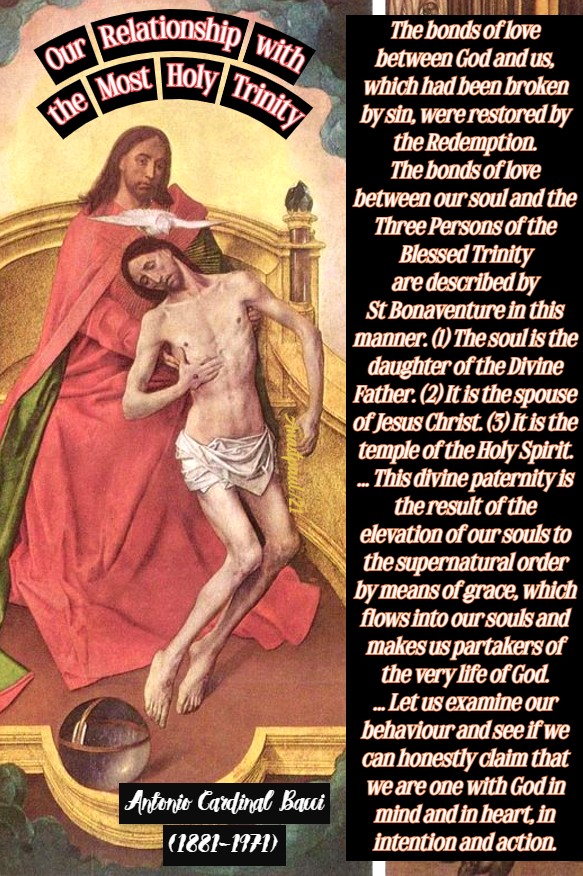
Our Relationship with the Most Holy Trinity
“The bonds of love between God and us, which had been broken by sin, were restored by the Redemption. The bonds of love between our soul and the Three Persons of the Blessed Trinity are described by St Bonaventure in this manner. (1) The soul is the daughter of the Divine Father. (2) It is the spouse of Jesus Christ. (3) It is the temple of the Holy Spirit.
The concept of our divine sonship can be found even in the Old Testament. “As one whom the mother caresseth,” God promises, “so will I comfort you” (Is 66:13). But Jesus insisted in a special way on this concept of our divine sonship, so that we might love our heavenly Father more. He told us to address God as Father in our prayers. He described Him as a loving Father, waiting with love and forgiveness for His prodigal sons. When leaving this earth, He told us: “I go to my Father and to your Father.”
“Behold what manner of love the Father has bestowed upon us.” writes St John, “that we should be called children of God and so we are” (1 Jn 3:1). “You have not received a spirit of bondage,” explains St Paul, “so as to be again in fear but, you have received a spirit of adoption as sons, by virtue of which, we cry: “Abba! Father!” (Rom 8:15). This divine paternity is the result of the elevation of our souls to the supernatural order by means of grace, which flows into our souls and makes us partakers of the very life of God. It is necessary, therefore, to nourish this grace in ourselves by praying to our heavenly Father with humility and with perseverance. It is equally essential for us to keep this grace alive by being obedient always to the commandments of God and to His holy will.
Let us examine our behaviour and see if we can honestly claim that we are one with God in mind and in heart, in intention and action.”
Quote/s of the Day – 2 September – “Month of the Seven Sorrows of Mary” – Readings: Colossians 1: 9-14; Psalms 98: 2-3ab, 3cd-4-6; Luke 5: 1-11
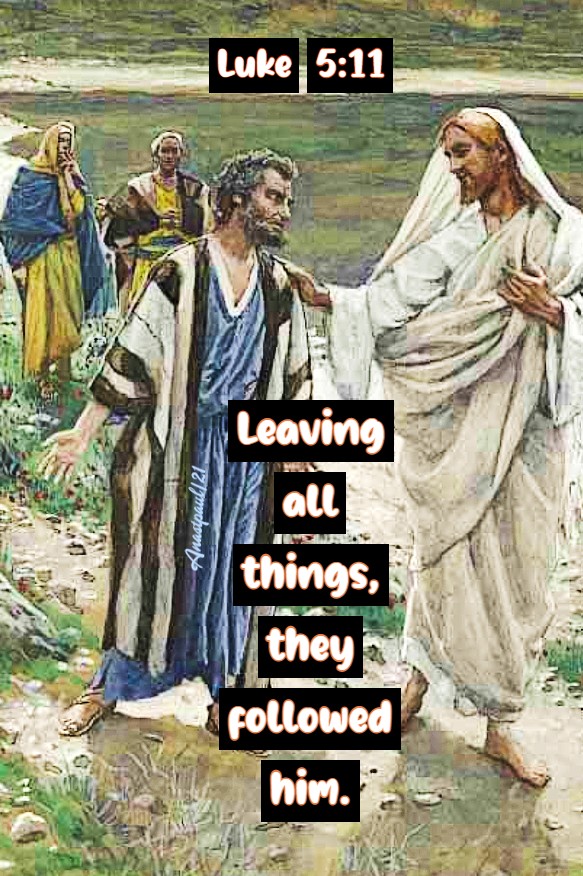
“Leaving all things, they followed him.”
Luke 5:11
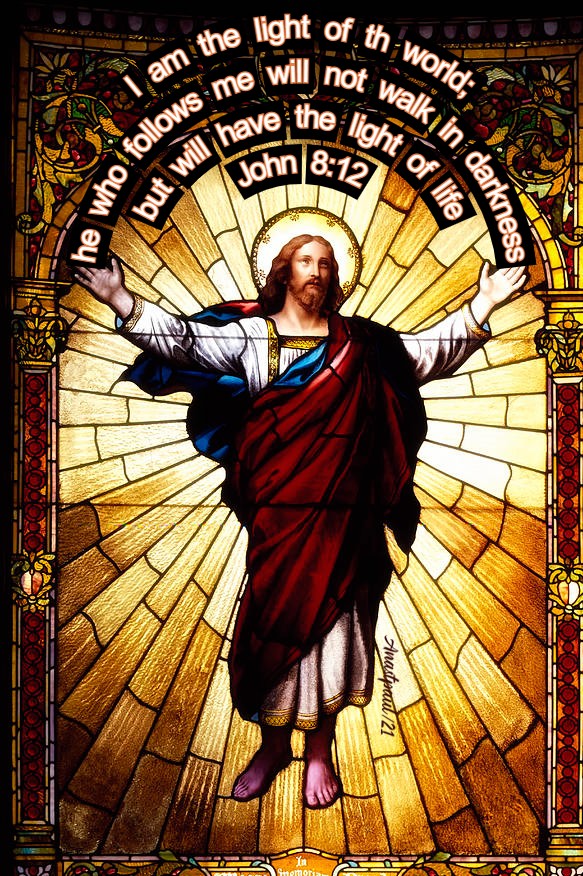
“I am the light of the world; he who follows me will not walk in darkness but will have the light of life.”
John 8:12
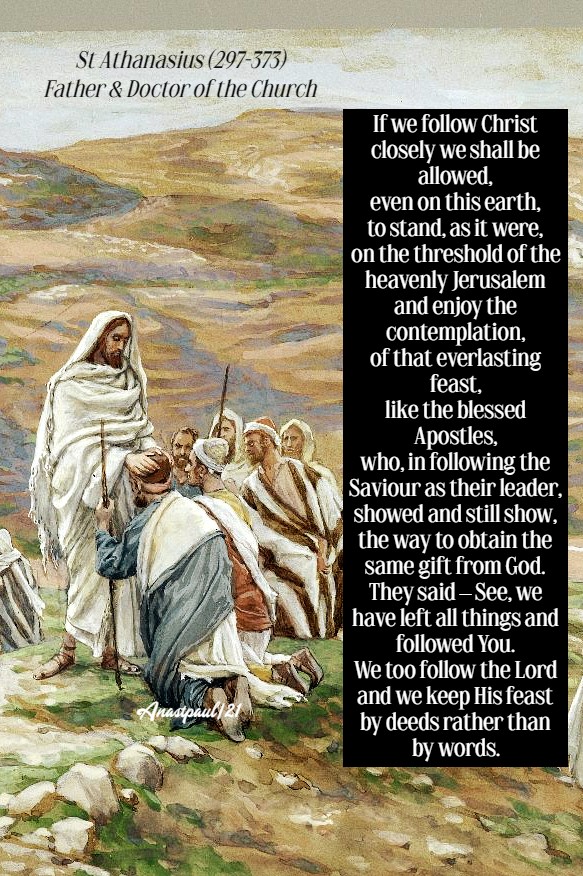
“If we follow Christ closely we shall be allowed, even on this earth, to stand, as it were, on the threshold of the heavenly Jerusalem and enjoy the contemplation, of that everlasting feast, like the blessed Apostles, who, in following the Saviour as their leader, showed and still show, the way to obtain the same gift from God. They said – See, we have left all things and followed You. We too follow the Lord and we keep His feast by deeds rather than by words.”
St Athanasius (297-373) Father & Doctor of the Church
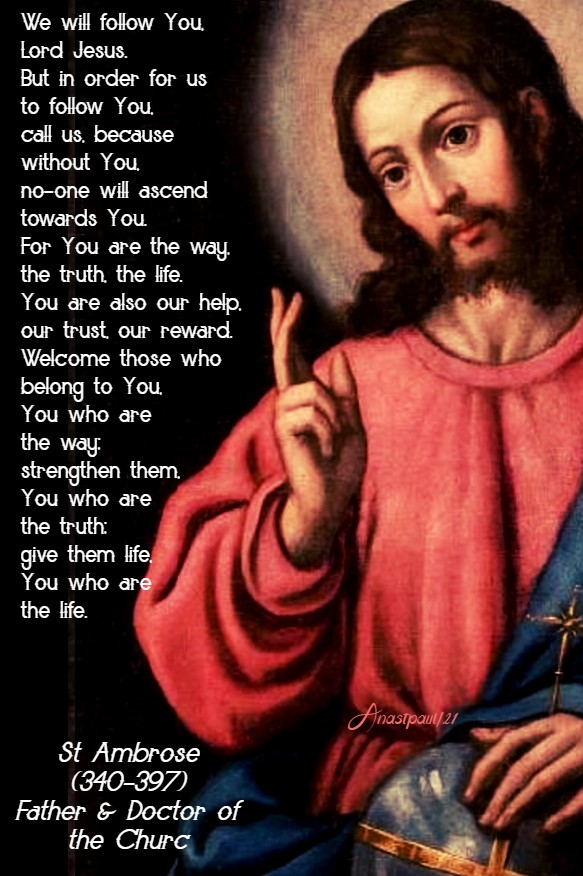
“We will follow You, Lord Jesus. But in order for us to follow You, call us because without You, no-one will ascend towards You. For You are the way, the truth, the life. You are also our help, our trust, our reward. Welcome those who belong to You, You who are the way; strengthen them, You who are the truth; give them life, You who are the life.”
St Ambrose (340-397) Father & Doctor of the Church
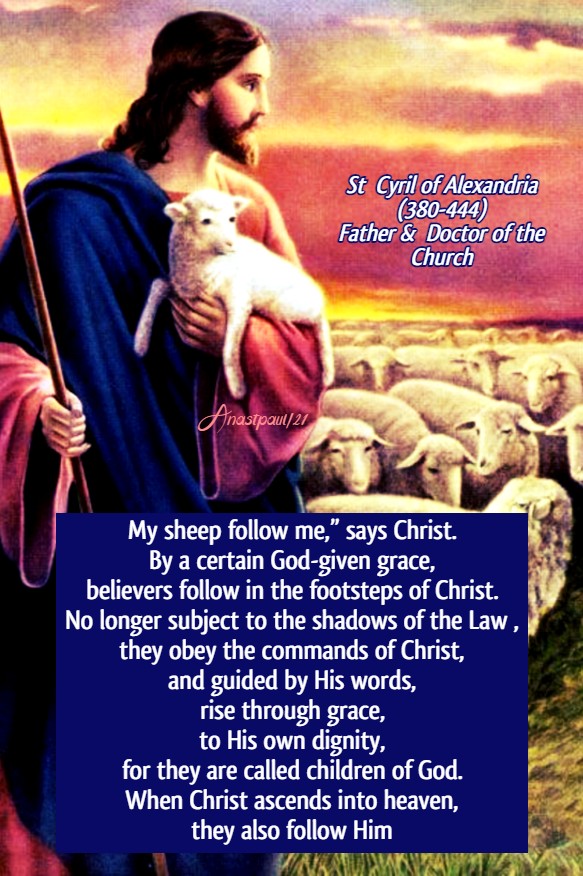
“My sheep follow me,” says Christ. By a certain God-given grace, believers follow in the footsteps of Christ. No longer subject to the shadows of the Law , they obey the commands of Christ, and guided by His words, rise through grace, to His own dignity, for they are called children of God. When Christ ascends into heaven, they also follow Him.”
St Cyril of Alexandria (380-444) Father & Doctor of the Church
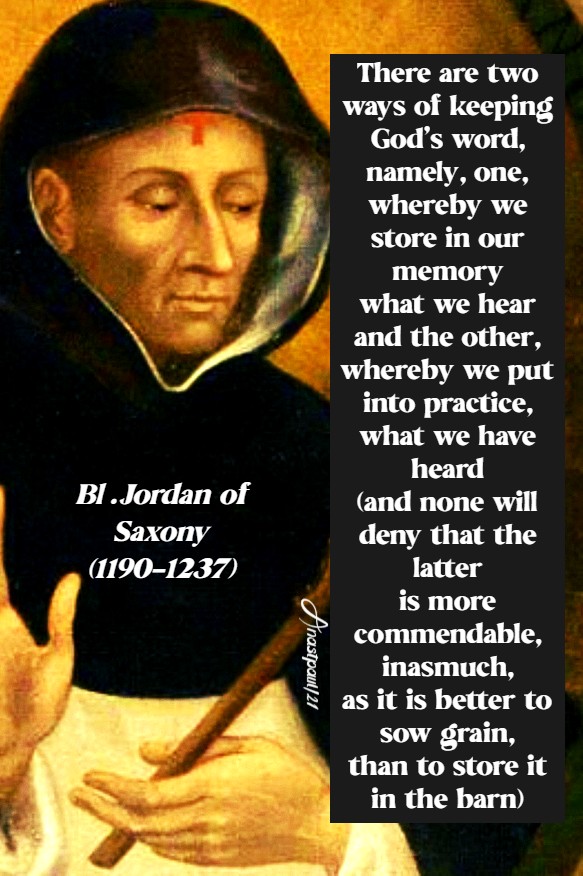
“There are two ways of keeping God’s word, namely, one, whereby we store in our memory what we hear and the other, whereby we put into practice, what we have heard (and none will deny that the latter is more commendable, inasmuch, as it is better to sow grain, than to store it in the barn).”
Blessed Jordan of Saxony OP (1190-1237)
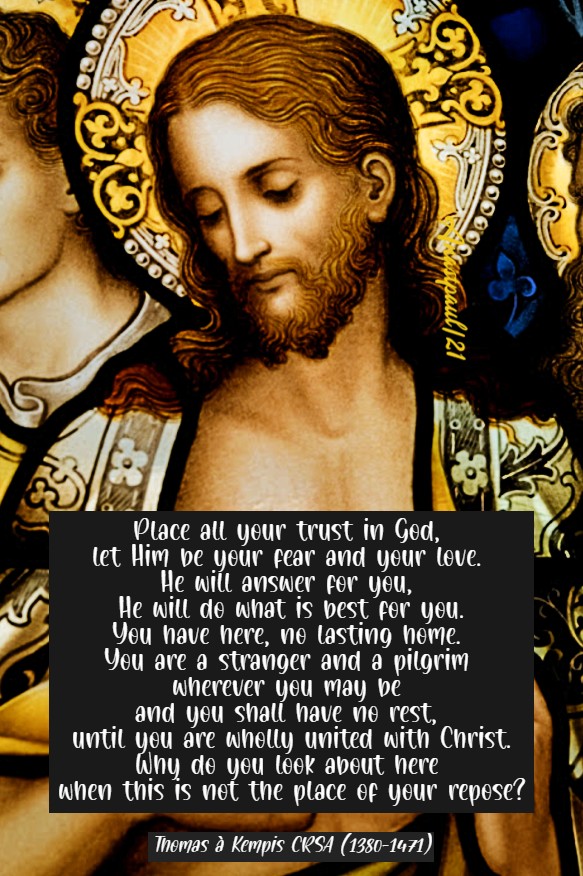
“Place all your trust in God, let Him be your fear and your love. He will answer for you, He will do what is best for you. You have here no lasting home. You are a stranger and a pilgrim wherever you may be and you shall have no rest, until you are wholly united with Christ. Why do you look about here when this is not the place of your repose?”
One Minute Reflection – 2 September – “Month of the Seven Sorrows of Mary” – Readings: Colossians 1: 9-14; Psalms 98: 2-3ab, 3cd-4-6; Luke 5: 1-11
“Fear not, from henceforth thou shalt catch men.” – Luke 5:10
REFLECTION – “I am greatly indebted to God who has granted me so great a grace that “many peoples” have been born anew to God through me …. “I will make you a light to the nations, that my salvation may reach to the ends of the earth.” … This is how I want to “wait for the promise” of Him Who never fails us, as He assures us in the Gospel: “They will come from East and West and will sit at table with Abraham, Isaac and Jacob.” So we are confident that believers will come from the whole world.
That is why we should apply ourselves diligently to the catch, as we ought to do, following the exhortation and teaching of the Lord Who said: “Come after me and I will make you fishers of men.” And again, He said through the prophets: “Look! I will send many fishermen and hunters.” That is why it was so important to cast our nets, so that “a great number [of fish],” “a crowd” of people might be caught for God and, that everywhere, there might be Priests according to the word of the Lord: “Go, therefore and make disciples of all nations, baptising them in the name of the Father and of the Son and of the Holy Spirit, teaching them to observe all that I have commanded you. And, behold, I am with you always, until the end of the age.” – St Patrick (c 386-461) Bishop – Confession, 38-40 (SC 249)
PRAYER – Lord, my God, You chose us from the foundations of the world to be Your children. We pray that our courage may not fail us as we strive to live in obedience to Your commandments and by our lives spread Your holy Word. We ask too for courage, as we are attacked from all sides, in our struggle home to You. Grant that through the prayers of our Sorrowful Mother, we may fight unto death for Your love and the glory of Your Kingdom. Through our Lord, Jesus, in the unity of the Holy Spirit, one God forever and ever, amen.
Our Morning Offering – 2 September – “Month of the Seven Sorrows of Mary”
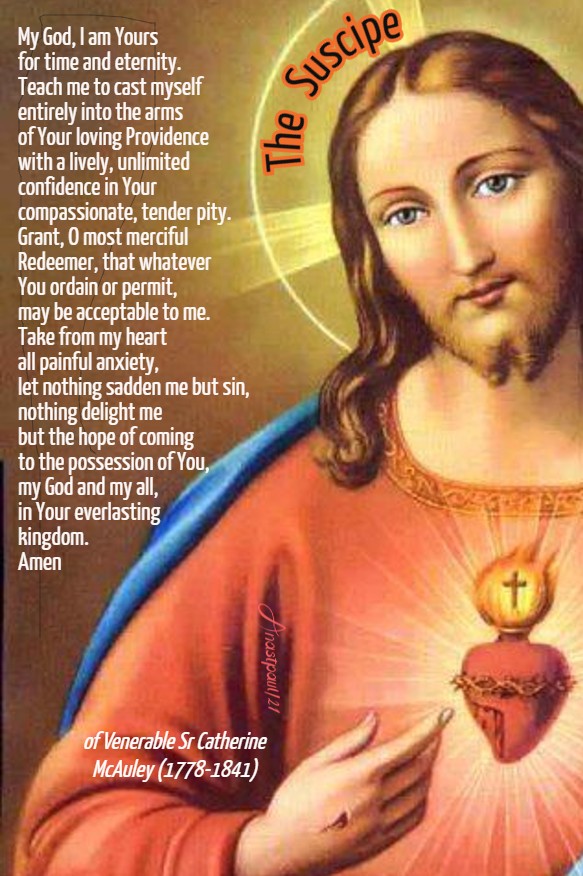
The Suscipe of Venerable Sr Catherine McAuley (1778-1841)
My God, I am Yours for time and eternity. Teach me to cast myself entirely into the arms of Your loving Providence with a lively, unlimited confidence in Your compassionate, tender pity. Grant, O most merciful Redeemer, that whatever You ordain or permit, may be acceptable to me. Take from my heart all painful anxiety, let nothing sadden me but sin, nothing delight me but the hope of coming to the possession of You, my God and my all, in Your everlasting kingdom. Amen
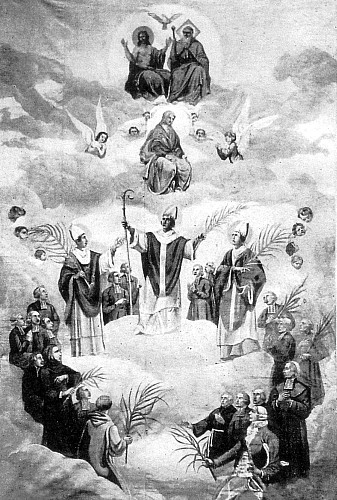
Saint/s of the Day – 2 September – The September Martyrs of the French Revolution, Blessed John du Lau and Companions. They were massacred by a mob on 2 September and 3 September 1792 and Beatified on 17 October 1926 by Pope Pius XI.
A group of 191 Martyrs who died in the French Revolution. They were imprisoned in the Abbey of St-Germain-des-Prés, Hôtel des Carmes in the Rue de Rennes, Prison de la Force and Seminaire de Saint-Firmin in Paris, France by the Legislative Assembly for refusing to take the oath to support the civil constitution of the clergy. This act placed Priests under the control of the state, and had been condemned by the Vatican.
In 1790, the revolutionary government of France enacted a law denying Papal authority over the Church in France. The French clergy were required to swear an oath to uphold this law and submit to the Republic. Many priests and religious took the oath but a sizable minority opposed it. The revolutionary leaders’ primary target was the aristocracy but by 1792, their attention turned to the Church, especially the non-jurors within it.
In August, in the name of Liberty, Equality and Fraternity, those who had refused the oath were rounded up and imprisoned in Parisian monasteries, emptied for that purpose.
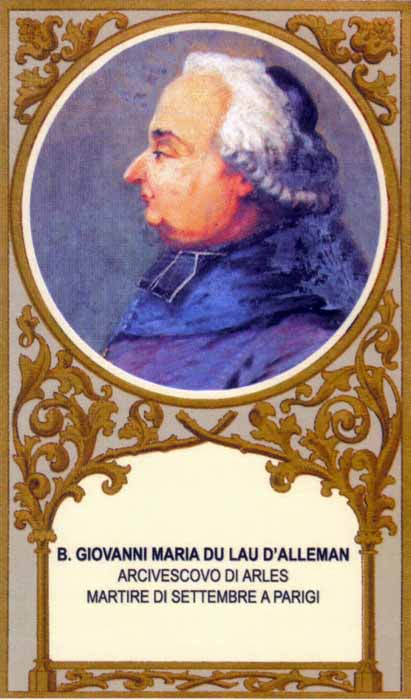
Blessed John du Lau, Archbishop of Arles, was born on 30 October 1738 at the Château de la Côte at Biras in the Dordogne, in the Diocese of Périgueux, of an aristocratic family which had fed many members into the higher ranks of the clergy. His father was Armand du Lau, seigneur de La Coste and his mother Françoise de Salleton. Refusing to take the oath to the civil constitution, he had been brought to Paris and cast into the prison of the Cannes, formerly a Carmelite Monastery.
Bl Jean-Marie du Lau d’Alleman, Archbishop of Arles
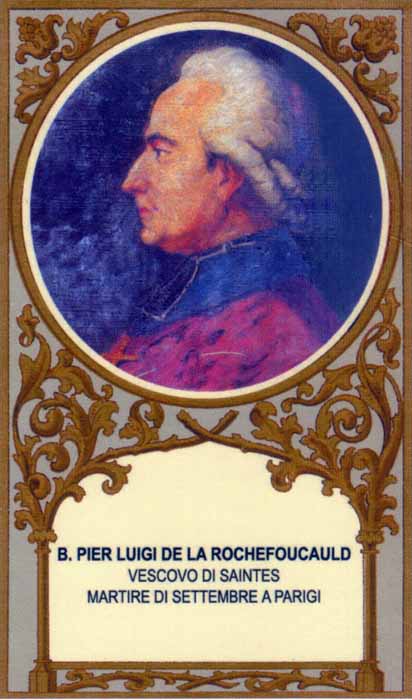
Blessed Pierre-Louis de la Rochefoucauld, Bishop of Saintes and a vigorous antagonist of Jansenism, and his brother, Francois-Joseph de la Rochefoucauld, Bishop of Beauvais, were sons of Jean de La Rochefoucauld, Lord of Maumont, Magnac and other places, Knight of the military orders of Notre-Dame du Mont-Carmel and St-Lazarre de Jérusalem and Marguerite des Escots. Both brothers were imprisoned.
Bl Pierre-Louis de la Rochefoucauld-Bayers, Bishop of Saintes
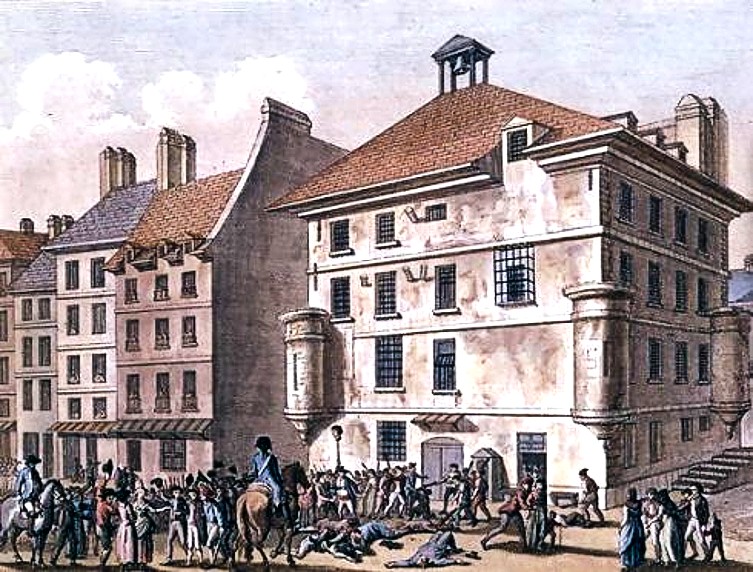
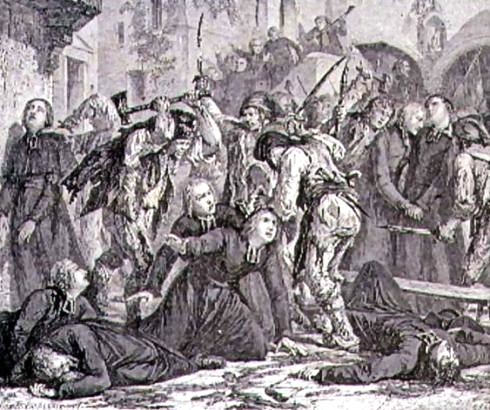
In September “Vigilance Committees” were set up and mobs sent to the make-shift prisons. On 2 September, a season of bloodshed and slaughter began. The inmates were cut-down in cold blood. All of the prisoners, even the old and disabled, were put to the sword. The executions at the old Carmelite monastery in Paris were recorded.
The Massacre at the Abbaye Prison near St Germain des Pres, engraved by Reinier Vinkeles and Daniel Vrydag
Among the Martyrs was Blessed Alexander Lenfant, a Jesuit. Just a few minutes before he died, he had been hearing the confession of a fellow priest. Both were killed moments later. The rioters then went to the Carmelite church which was also being used as a prison.
The mob called out, “Archbishop of Arles!” Archbishop John du Lau of Arles (Jean-Marie du Lau d’Alleman) was praying in the Chapel. When summoned, he came out and he said, “I am he whom you seek.” Thereupon, they cracked his skull, stabbed him and trampled him underfoot. Then the leader set up a “tribunal” before which the imprisoned were herded and commanded to take the oath. All refused; so, as they passed down the stairway, they were hacked to pieces by the murderers.
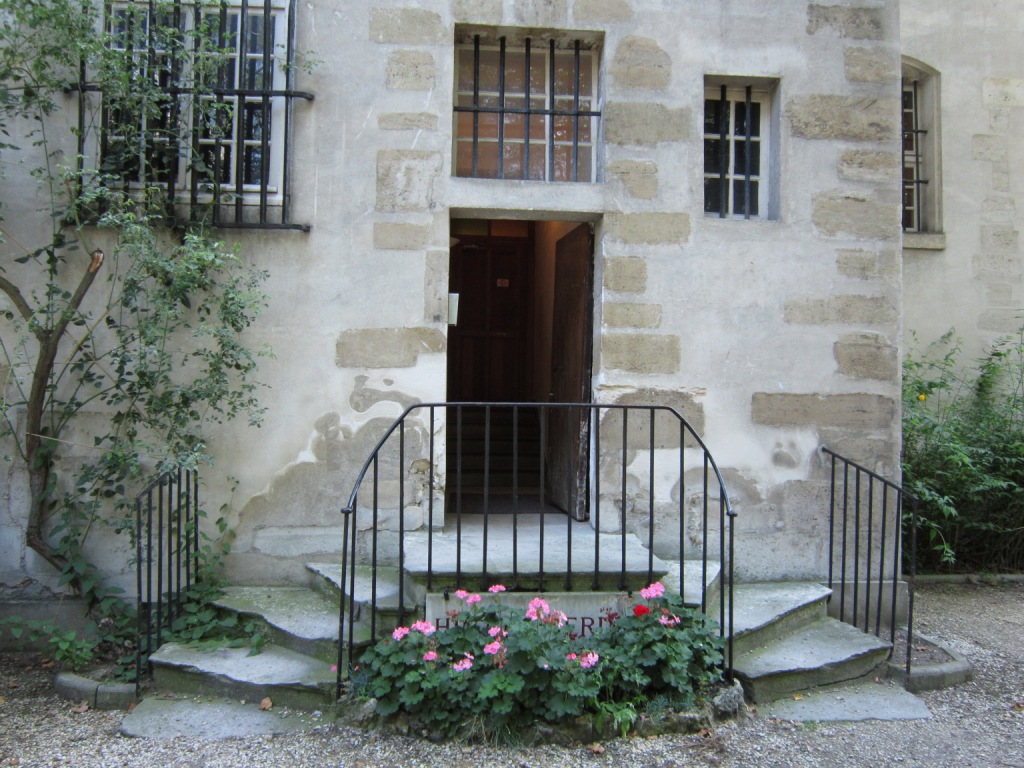
tThe Martyrs’ Stairway
The Bishop of Beauvais had earlier been wounded in the leg. When summoned, he answered, “I do not refuse to die with the others but I cannot walk. I beg you to have the kindness to carry me where you wish me to go.” For a moment, his courtesy silenced the assassins. But, when he, too, refused the oath, he was killed like the rest.
On 3 September the same mob went to the Lazarist Seminary. It was also a temporary prison, with ninety Priests and religious. Only four escaped death.
According to Nicolas-Edme Restif de la Bretonne, “The number of active killers who took part in the September massacres was only about one hundred and fifty. The rest of Paris looked on in fear or approval, or stayed behind closed shutters.”
Earl Gower, a British diplomat, wrote in his dispatches: “These unfortunate people fell victims to the fury of the enraged populace and were massacred with circumstances of barbarity too shocking to describe. The mob went afterwards to the prison of the Abbaye and having demanded of the jailors a list of the prisoners, they put aside such as were confined only for debt and pulled to pieces most of the others. The same cruelties were committed during the night and continue this morning in all the other prisons of the Town. When they have satiated their vengeance, which is principally directed against the refractory Priests,… it is to be hoped the tumult will subside but as the multitude are perfectly masters, everything is to be dreaded.”
THE 191 COURAGEOUS and BLESSED MARTYRS ARE: • Ambroise-Augustin Chevreux • Andé Angar • André Grasset de Saint-Sauveur • André-Abel Alricy • Anne-Alexandre-Charles-Marie Lanfant • Antoine-Charles-Octavien du Bouzet • Antoine-Mathieu-Augustin Nogier • Apollinaris of Posat • Armand de Foucauld de Pontbriand • Armand-Anne-Auguste-Antonin-Sicaire Chapt de Rastignac • August-Dénis Nezel • Bernard-François de Cucsac • Bertrand-Antoine de Caupenne • Charles Carnus • Charles-François le Gué • Charles-Jéremie Bérauld du Pérou • Charles-Louis Hurtrel • Charles-Regis-Mathieu de la Calmette de Valfons • Charles-Victor Véret • Claude Bochot • Claude Cayx-Dumas • Claude Chaudet • Claude Colin • Claude Fontaine • Claude Ponse • Claude Rousseau • Claude-Antoine-Raoul Laporte • Claude-François Gagnières des Granges • Claude-Louis Marmotant de Savigny • Claude-Silvain-Raphaël Mayneaud de Bizefranc • Daniel-Louis André Des Pommerayes • Denis-Claude Duval • Éloy Herque du Roule • Étienne-François-Dieudonné de Ravinel • Étienne-Michel Gillet • Eustache Félix • François Balmain • François Dardan • François Dumasrambaud de Calandelle • François Lefranc • François Varheilhe-Duteil • François-César Londiveau • François-Hyacinthe lé Livec de Trésurin • François-Joseph de la Rochefoucald-Maumont • François-Joseph Monnier • François-Joseph Pey • François-Louis Hébert • François-Louis Méallet de Fargues • François-Urbain Salins de Niart • Gabriel Desprez de Roche • Gaspard-Claude Maignien • Georges Girault • Georges-Jérôme Giroust • Gilbert-Jean Fautrel • Gilles-Louis-Symphorien Lanchon • Guillaume-Antoine Delfaut • Henri-August Luzeau de la Mulonnière • Henri-Hippolyte Ermès • Henri-Jean Milet • Jacques de la Lande • Jacques Dufour • Jacques Friteyre-Durvé • Jacques-Alexandre Menuret • Jacques-Augustin Robert de Lézardières • Jacques-étienne-Philippe Hourrier • Jacques-François de Lubersac • Jacques-Gabriel Galais • Jacques-Jean Lemeunier • Jacques-Joseph Le jardinier desLandes • Jacques-Jules Bonnaud • Jacques-Léonor Rabé • Jacques-Louis Schmid • Jean Charton de Millou • Jean Goizet • Jean Lacan • Jean Lemaître • Jean-André Capeau • Jean-Antoine Guilleminet • Jean-Antoine Savine • Jean-Antoine Seconds • Jean-Antoine-Barnabé Séguin • Jean-Antoine-Hyacinthe Boucharenc de Chaumeils • Jean-Antoine-Joseph de Villette • Jean-Baptiste Bottex • Jean-Baptiste Jannin • Jean-Baptiste Nativelle • Jean-Baptiste-Claude Aubert • Jean-Baptiste-Marie Tessier • Jean-Baptiste-Michel Pontus • Jean-Charles Caron • Jean-Charles Legrand • Jean-Charles-Marie Bernard du Cornillet • Jean-François Bonnel de Pradal • Jean-François Bousquet • Jean-François Burté • Jean-François-Marie Benoît-Vourlat • Jean-Henri Gruyer • Jean-Henri-Louis-Michel Samson • Jean-Joseph de Lavèze-Bellay • Jean-Joseph Rateau • Jean-Louis Guyard de Saint-Clair • Jean-Marie du Lau d’Alleman • Jean-Michel Philippot • Jean-Philippe Marchand • Jean-Pierre Bangue • Jean-Pierre Duval • Jean-Pierre Le Laisant • Jean-Pierre Simon • Jean-Robert Quéneau • Jean-Thomas Leroy • Joseph Bécavin • Joseph Falcoz • Joseph-Louis Oviefre • Joseph-Marie Gros • Joseph-Thomas Pazery de Thorame • Jules-Honoré-Cyprien Pazery de Thorame • Julien le Laisant • Julien Poulain Delaunay • Julien-François Hédouin • Laurent • Louis Barreau de La Touche • Louis le Danois • Louis Longuet • Louis Mauduit • Louis-Alexis-Mathias Boubert • Louis-Benjamin Hurtrel • Louis-François Rigot • Louis-François-André Barret • Louis-Jean-Mathieu Lanier • Louis-Joseph François • Louis-Laurent Gaultier • Louis-Remi Benoist • Louis-Remi-Nicolas Benoist • Loup Thomas-Bonnotte • Marc-Louis Royer • Marie-François Mouffle • Martin-François-Alexis Loublier • Mathurin-Nicolas de la Ville Crohain le Bous de Villeneuve • Mathurin-Victoir Deruelle • Michel Leber • Michel-André-Sylvestre Binard • Michel-François de la Gardette • Nicolas Bize • Nicolas Clairet • Nicolas Colin • Nicolas Gaudreau • Nicolas-Claude Roussel • Nicolas-Marie Verron • Olivier Lefebvre • Philibert Fougères • Pierre Bonzé • Pierre Brisquet • Pierre Brisse • Pierre Gauguin • Pierre Landry • Pierre Ploquin • Pierre Saint-James • Pierre-Claude Pottier • Pierre-Florent Leclercq • Pierre-François Hénocq • Pierre-François Pazery de Thorames • Pierre-Jacques de Turmenyes • Pierre-Jacques-Marie Vitalis • Pierre-Jean Garrigues • Pierre-Louis de la Rochefoucauld-Bayers • Pierre-Louis Gervais • Pierre-Louis Joret • Pierre-Louis-Joseph Verrier • Pierre-Michel Guérin • Pierre-Michel Guérin du Rocher • Pierre-Nicolas Psalmon • Pierre-Paul Balzac • Pierre-Robert Regnet • René Nativelle • René-Joseph Urvoy • René-Julien Massey • René-Marie Andrieux • René-Nicolas Poret • Robert le Bis • Robert-François Guérin du Rocher • Saintin Huré • Sébastien Desbrielles • Solomon Leclerq • Thomas-Jean Montsaint • Thomas-Nicolas Dubray • Thomas-René Dubuisson • Urbain Lefebvre • Vincent Abraham • Vincent-Joseph le Rousseau de Rosencoat • Yves-André Guillon de Keranrun • Yves-Jean-Pierre Rey de Kervisic.
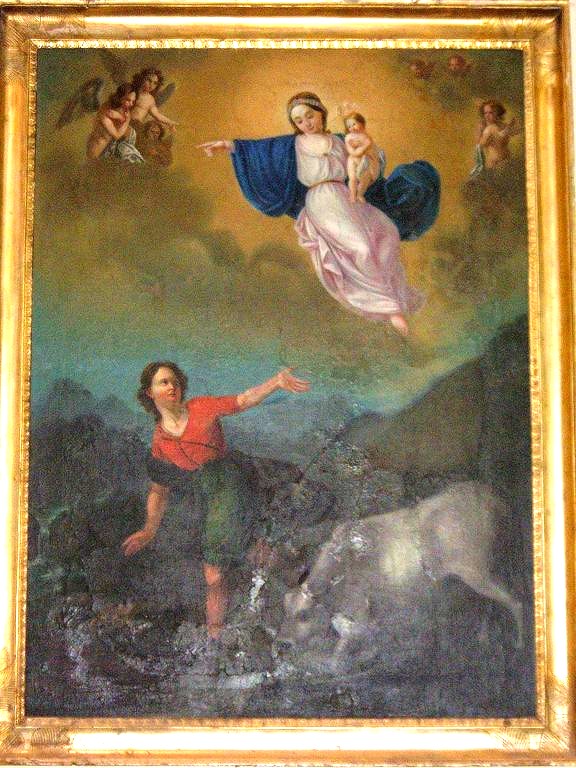
Madonna della Montagna / Our Lady of the Mountain, Polsi di San Luca, Reggio Calabria, Calabria, Italy (1144) – 2 September :
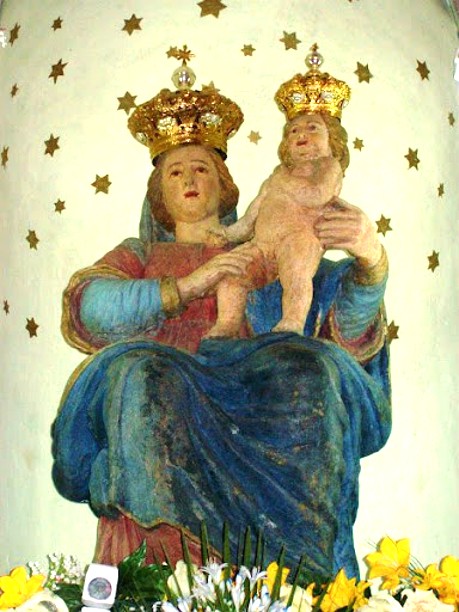
The stone Statue found in the Chest
in 1144, a boy found his calf kneeling before an unusual iron Cross, apparently just unearthed. The Madonna appeared, asking for the young herder to spread the news and for a Church to be built on the spot, half a mile high in the mountains.
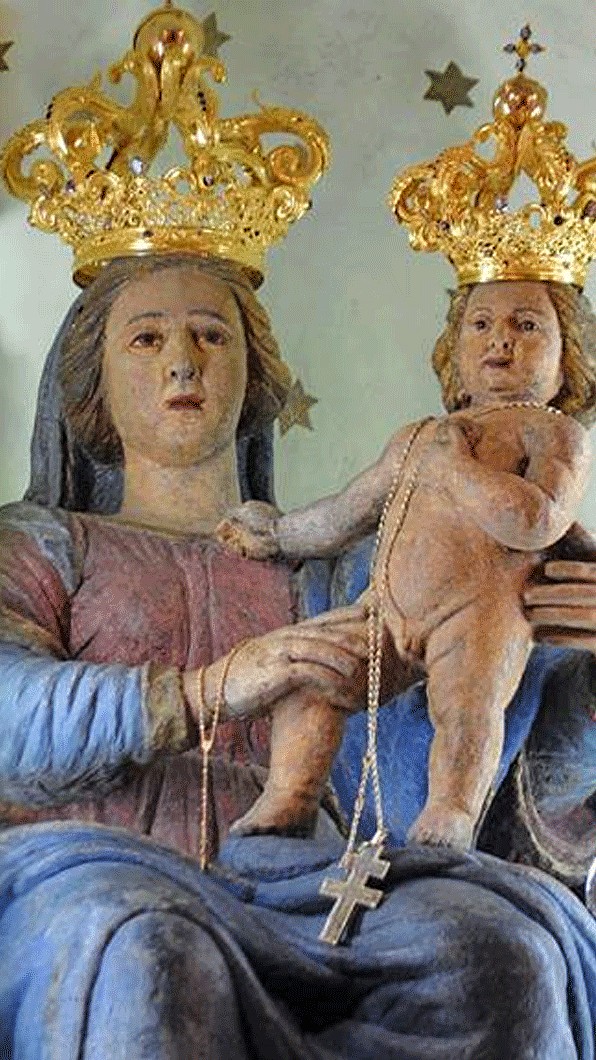
In 1560, a chest was found floating in the sea. It was taken ashore and found to contain a stone Statue of the Madonna. When the chest was placed in a cart, the oxen suddenly took off for the mountain pass and nothing more was heard of the Statue until it turned up in the heart of Aspromonte, at the place where a calf had found a Cross and the Madonna had requested a Church. The Sanctuary there became a place of pilgrimage.
This is the replica Statue which is used for the Processions
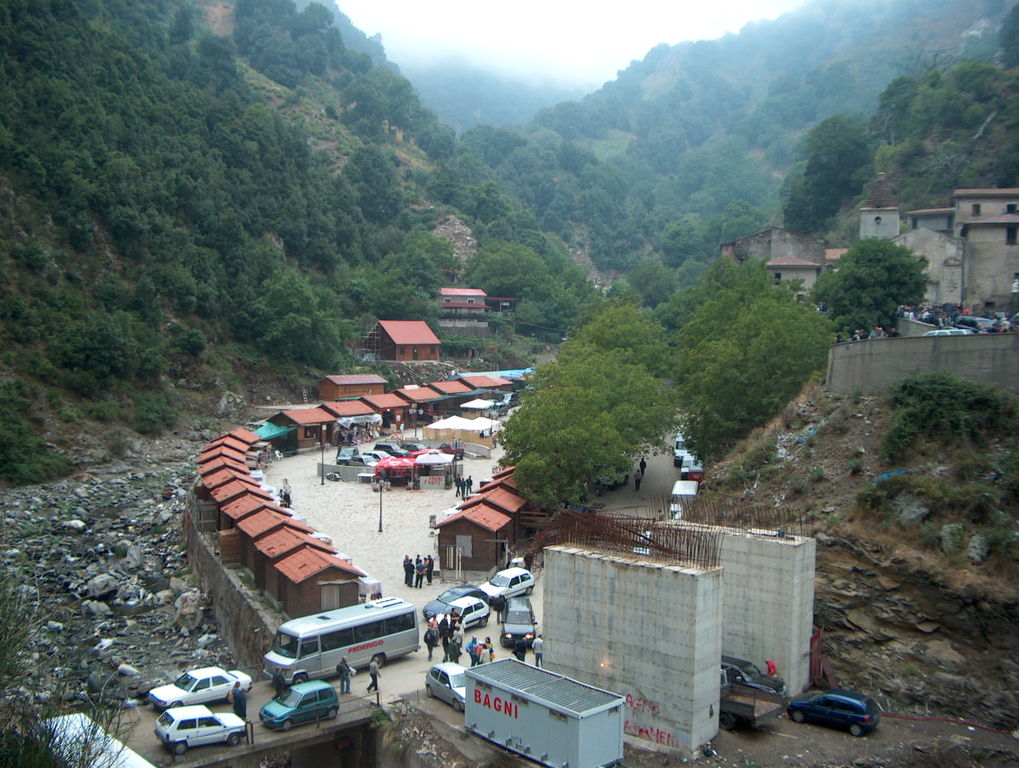
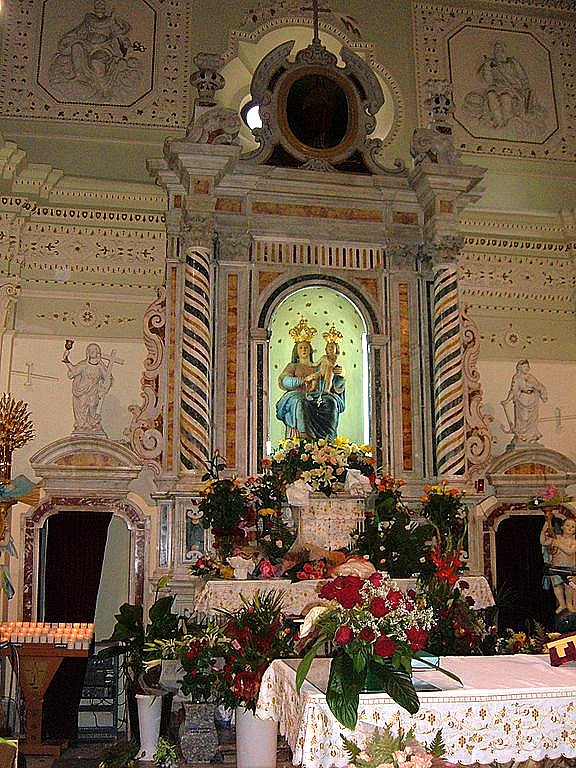
Every year, people from all over Calabria and Sicily would make the 24-hour walk, enlivened by hymns and ballads, along the rugged path to Polsi, where they would greet the Madonna with gunshots on their arrival on 2 September As pilgrims still do — though now they can travel by road or train as well — they would spend the night in one of the hostels near the Shrine. On 3 September, a wooden Madonna is carried in procession. The stone Statue is only taken from its place on the main Altar every 25 years or in special circumstances. Also known as the Mother of the Good Shepherd, the Madonna of the Mountain was crowned in 1881, 1931 and on 2 September 1981.
The stone Statue above the Altar
Bl Albert of Pontida St Antoninus of Pamiers St Antoninus of Syria
St Theodota of Bithynia St Valentine of Strasbourg St William of Roeskilde — Marytrs of Nicomedia – 3 saints: Three Christians who were martyred together in the persecutions of Diocletian. No details about them but their names have survived – Concordius, Theodore and Zenone. They were martyrd in Nicomedia, Bithynia (in modern Turkey).
The Holy Martyrs of September (Died 1792) – 191 beati:Also known as – • Martyrs of Paris,• Martyrs of Carmes.
Martyrs of 2 September – 10 saints: A group of ten Christian martyrs; their names are on old martyrologies but we have lost all record of their lives and deaths. They were canonised. • Antoninus • Diomedes • Eutychian • Hesychius • Julian • Leonides • Menalippus • Pantagapes • Philadelphus • Philip
Holy Bishops of Rennes: Honors all the bishops of the Diocese of Rennes, France who have been recognized as saints and beati. They include : Saint Maximinus of Rennes Saint Modéran of Rennes Saint Rambert of Rennes Saint Riotisme of Rennes Saint Servius of Rennes Saint Synchronius of Rennes
Martyred in the Spanish Civil War: • Blessed Baldomer Margenat Puigmitja • Blessed Fortunato Barrón Nanclares • Blessed Joan Franquesa Costa • Blessed José María Laguía Puerto • Blessed Lorenzo Insa Celma
September – Month of The Seven Sorrows of the Blessed Virgin Mary
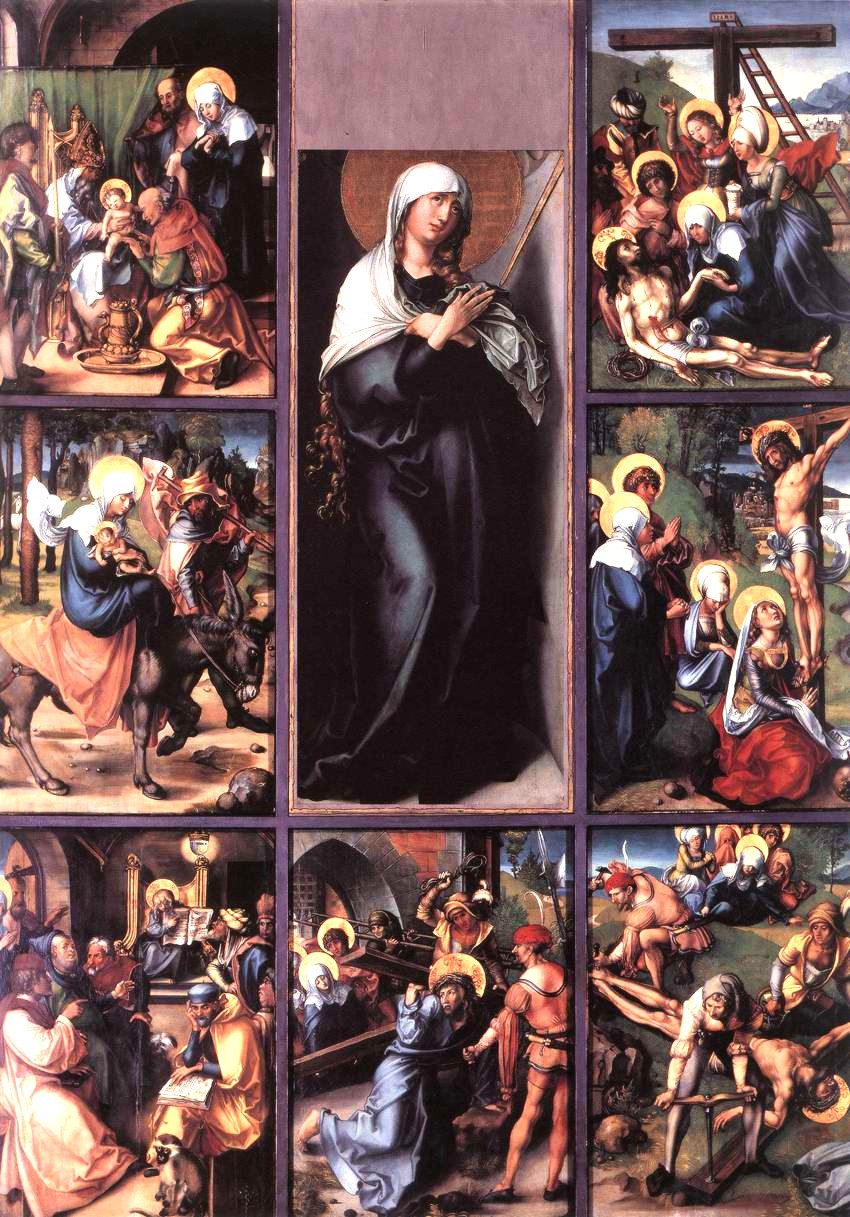
The Seven Sorrows of the Blessed Virgin Mary
1, The prophecy of Simeon 2. The Flight to Egypt 3. Loss of Child Jesus for 3 days 4. Meeting Jesus carrying His Cross 5. The Crucifixion of Jesus 6. The Pieta – receiving Jesus’ Body The Burial of Jesus
The Seven Sorrows of the Virgin – Altarpiece by Albrecht Dürer.
During this month of September, we are drawn into the spiritual Martyrdom which the Blessed Mother experienced during the physical Martyrdom of Jesus. The evils of sin are manifest but conquered through intense suffering. The Blessed Mother’s tears of anguish reflect God’s washing away of sin.
We see this theme of joy followed by affliction mirrored in the liturgical calendar in two September Feasts – the Exaltation of the Holy Cross on 14 September and the Feast of Our Lady of Sorrows on 15 September. Happy the heart of the blessed Virgin Mary! She, without dying, earned the treasure of Martyrdom beneath the Cross of our Lord for her anguish.
The name of Our Lady of Sorrows centres on the extraordinary and bittersweet suffering the Blessed Mother experienced during Christ’s Passion. As seen in the artwork above, her agony is composed of “The Seven Dolors,” that pierced the Heart of Mary. Dürer’s portrayal of each event encompasses the central figure of Christ’s sorrowful Mother.
Thought for the Day – 1 September – Meditations with Antonio Cardinal Bacci (1881-1971)
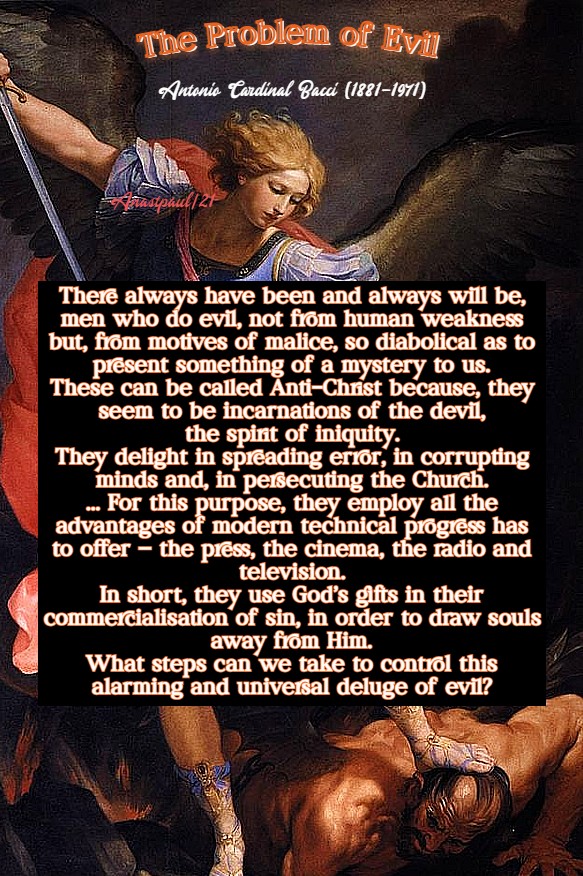
The Problem of Evil
“In his second letter to the Thessalonians, the Apostle Paul speaks of the Anti-Christ, “the man of sin … the son of perdition, who opposes and is exalted above all that is called God…” “Already,” he says, “the mystery of iniquity is at work” (Cf 2 Thess 2:3-7). From the beginning of the Church’s history until the present time, it has always been the same.
There always have been and always will be, men who do evil, not from human weakness but, from motives of malice, so diabolical as to present something of a mystery to us. These can be called Anti-Christ because, they seem to be incarnations of the devil, the spirit of iniquity. They delight in spreading error, in corrupting minds and, in persecuting the Church. They are steeped in all kinds of baseness and nothing pleases them better, than to succeed in inducing the young and the innocent, to follow them in their sinful ways. For this purpose, they employ all the advantages of modern technical progress has to offer – the press, the cinema, the radio and television. In short, they use God’s gifts in their commercialisation of sin, in order to draw souls away from Him.
The realisation of this terrifying fact, provokes two questions. (1) How can such evil be permitted by God, Who made man for Himself and redeemed him with the Blood of His only-begotten Son? (2) What steps can we take to control this alarming and universal deluge of evil?
St Augustine answers the first question by pointing out, that the infinite and good God created us without any assistance from ourselves, but does not will to save us without our co-operatikon, since He has endowed us with the gift of liberty. Moreover, He prefers to draw good from evil, rather than to prevent the evil itself.
We must answer the second question ourselves, remembering that we have a serious obligation to combat evil in ourselves and in our fellow-men. What have we done up to now and what do wqe propose to do in the future?”


























 AnaStpaul
You must be logged in to post a comment.