Thought for the Day – 21 October – Meditations with Antonio Cardinal Bacci (1881-1971)
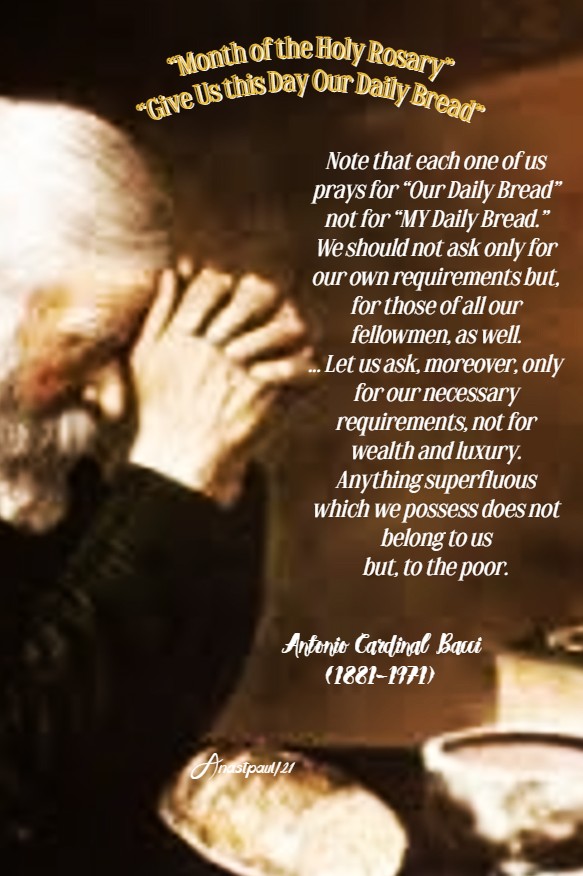
“Month of the Holy Rosary” “Give Us this Day Our Daily Bread”
“Note that each one of us prays for “Our Daily Bread” not for “MY Daily Bread.” We should not ask only for our own requirements but, for those of all our fellowmen, as well.
There are many poverty-stricken people for whom bread is very scarce. We should pray especially for them and should be prepared to share our bread with those who have none. Both charity and justice demand this of us. Let us ask, moreover, only for our necessary requirements, not for wealth and luxury. Anything superfluous which we possess does not belong to us but, to the poor. “Give that which remains,” the Gospel commands, “as alms” (Lk 11:41). Let us remember that, whether we are rich or poor, we are all one great family. Our love for one another should not be merely theoretical but practical, otherwise we are not sincere Christians!”
Quote/s of the Day – 21 October – “The Month of the Most Holy Rosary and of the Angels”
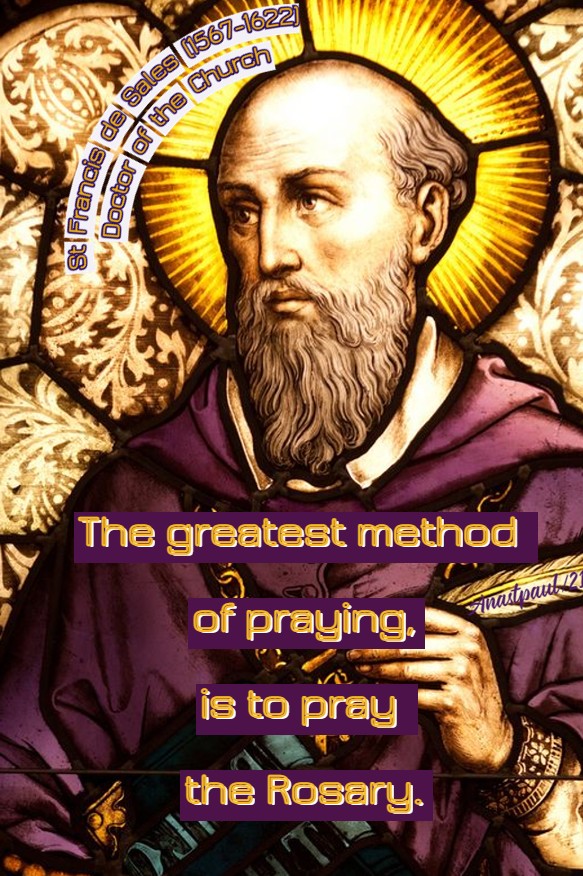
“The greatest method of praying is to pray the Rosary.”
St Francis de Sales (1567-1622)
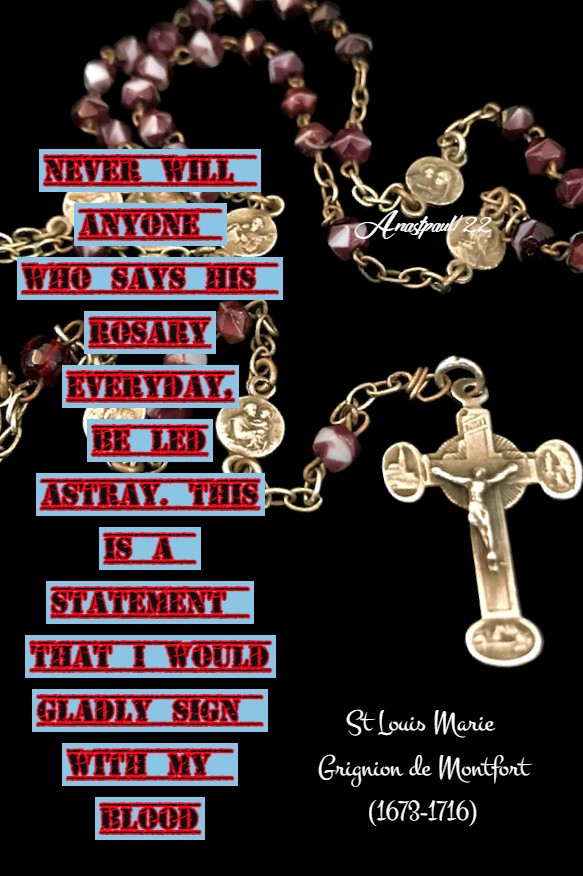
“Never will anyone who says his Rosary everyday, be led astray. This is a statement that I would gladly sign with my blood.”
St Louis Marie Grignion de Montfort (1673-1716)
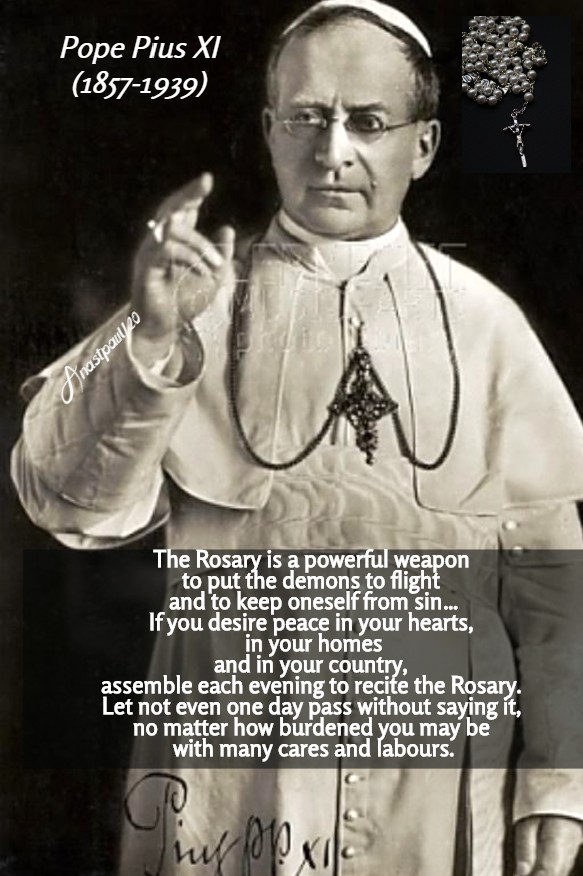
“The Rosary is a powerful weapon to put the demons to flight and to keep oneself from sin… If you desire peace in your hearts, in your homes and in your country, assemble each evening to recite the Rosary. Let not even one day pass without saying it, no matter how burdened you may be with many cares and labours.”
Pope Pius XI (1857-1939)
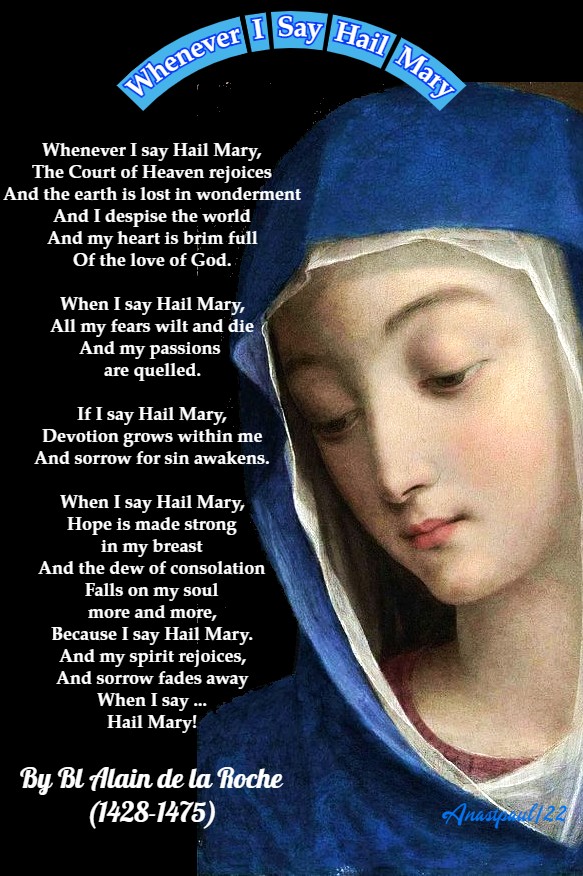
Whenever I Say Hail Mary Blessed Alain de la Roche (1428-1475)
Whenever I say Hail Mary, The Court of Heaven rejoices And the earth is lost in wonderment And I despise the world And my heart is brim full Of the love of God.
When I say Hail Mary, All my fears wilt and die And my passions are quelled.
If I say Hail Mary, Devotion grows within me And sorrow for sin awakens.
When I say Hail Mary, Hope is made strong in my breast And the dew of consolation Falls on my soul more and more, Because I say Hail Mary. And my spirit rejoices, And sorrow fades away When I say … Hail Mary!
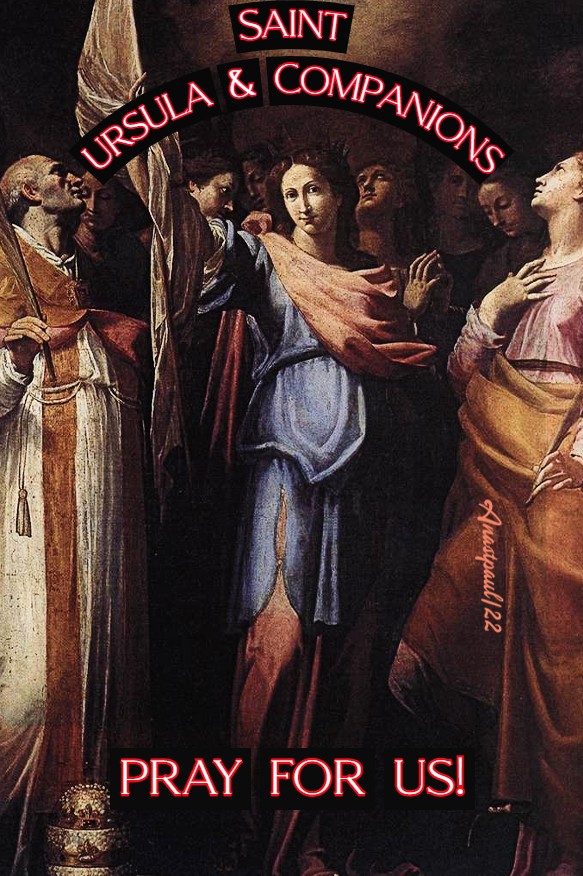
One Minute Reflection – 21 October – “The Month of the Most Holy Rosary and of the Angels” – Saint Ursula and Companions (Died c 238) Virgin Martyrs – Ecclesiasticus 45:1-6, Luke 11:27-28 – Scripture search here: https://www.drbo.org/
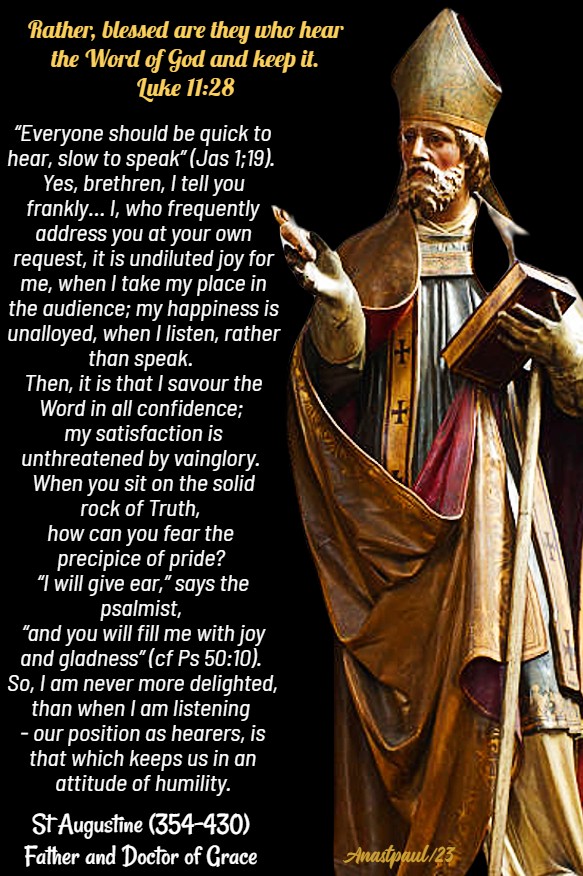
“Rather, blessed are they who hear the word of God and keep it.” – Luke 11:28
REFLECTION – “Everyone should be quick to hear, slow to speak” (Jas 1;19). Yes, brethren, I tell you frankly… I, who frequently address you at your own request, it is undiluted joy for me, when I take my place in the audience; my happiness is unalloyed, when I listen, rather than speak. Then, it is that I savour the Word in all confidence; my satisfaction is unthreatened by vainglory. When you sit on the solid rock of Truth, how can you fear the precipice of pride? “I will give ear,” says the psalmist, “and you will fill me with joy and gladness” (cf Ps 50:10). So, I am never more delighted, than when I am listening – our position as hearers, is that which keeps us in an attitude of humility.
To the contrary, if we speak … we need to have a certain restraint. Even if I do not give in to pride, I am always afraid I might still do so! If I listen, on the other hand, no-one can take my joy away from me, (Jn 16:22) since no-one witnesses it. This is truly the joy of the Bridegroom, of Whom Saint John says: “He stands and listens” (Jn 3:29). He stands because he listens. The first man, too, was standing because he was listening to God, as soon as he listened to the serpent, he fell. The friend of the bridegroom, then, is “overcome with joy at the Bridegroom’s Voice.” What makes him joyful is not his own voice, as preacher and prophet but the Voice of the Bridegroom Himself.” – St Augustine (354-430) Father and Doctor of Grace [Attri] (Cf Discourse on Ps 139:15 – Treatises on St John’s Gospel No 57)
PRAYER – Grant, we beseech Thee, O Lord our God that we may never cease devoutly, to venerate the triumphs of Thy holy Virgins and Martyrs, Ursula and her companions that, as we cannot worthily shew forth their praises, yet we may continually honour them, with lowly service. Through Jesus Christ, Thy Son our Lord, Who lives and reigns with Thee, in the unity of the Holy Ghost, God, world without end. Amen (Collect).
Our Morning Offering – 21 October – “The Month of the Most Holy Rosary and of the Angels” – Saturday of the Blessed Virgin, Sanctæ Mariæ Sabbato
Through Thee, to Us, Our Saviour Came Sweet Lady of the Rosary By St Amadeus of Lausanne O.Cist (1108-1159)
Through thee, to us, our Saviour came, Through thee, to Him, we fain would go. Our lives are marred by wrong and shame, Yet, confidence in thee we know. The friendship thou dost give to all Who love thy name, shall ever be Assurance thou wilt hear our call, Sweet Lady of the Rosary!
Thou art our Strength upon the way, Our Morning Star, to cheer and guide; Our Beacon Light to show the day, And lead us to the Saviour’s Side; A Comforter in ev’ry pain We find, O Mother blest, in thee, And seek we, never, thee in vain, Fair Lady of the Rosary!
Thy praises, Mary, we would sing, And all our faculties employ, That unto thee our hearts might bring A glory-crown of love and joy. Bless thou each humble effort made In thy regard and grant that we, May by thy influence be swayed, Our Lady of the Rosary!
Saint of the Day – 21 October – Saint Berthold of Parma OSB (c1072-c1106) Lay Brother or “Regular Oblate” Sacristan, Sexton, Guardian of the Relics. Berthold died in c1106 in his early thirties, of natural causes. Also known as – Bertold, Bertoldo. Our Saint’s name from an ancient Germanic source means “famous, illustrious, shining” – is not the only one with this name in the Calendars – lived in Parma.Italy and died in c1106.
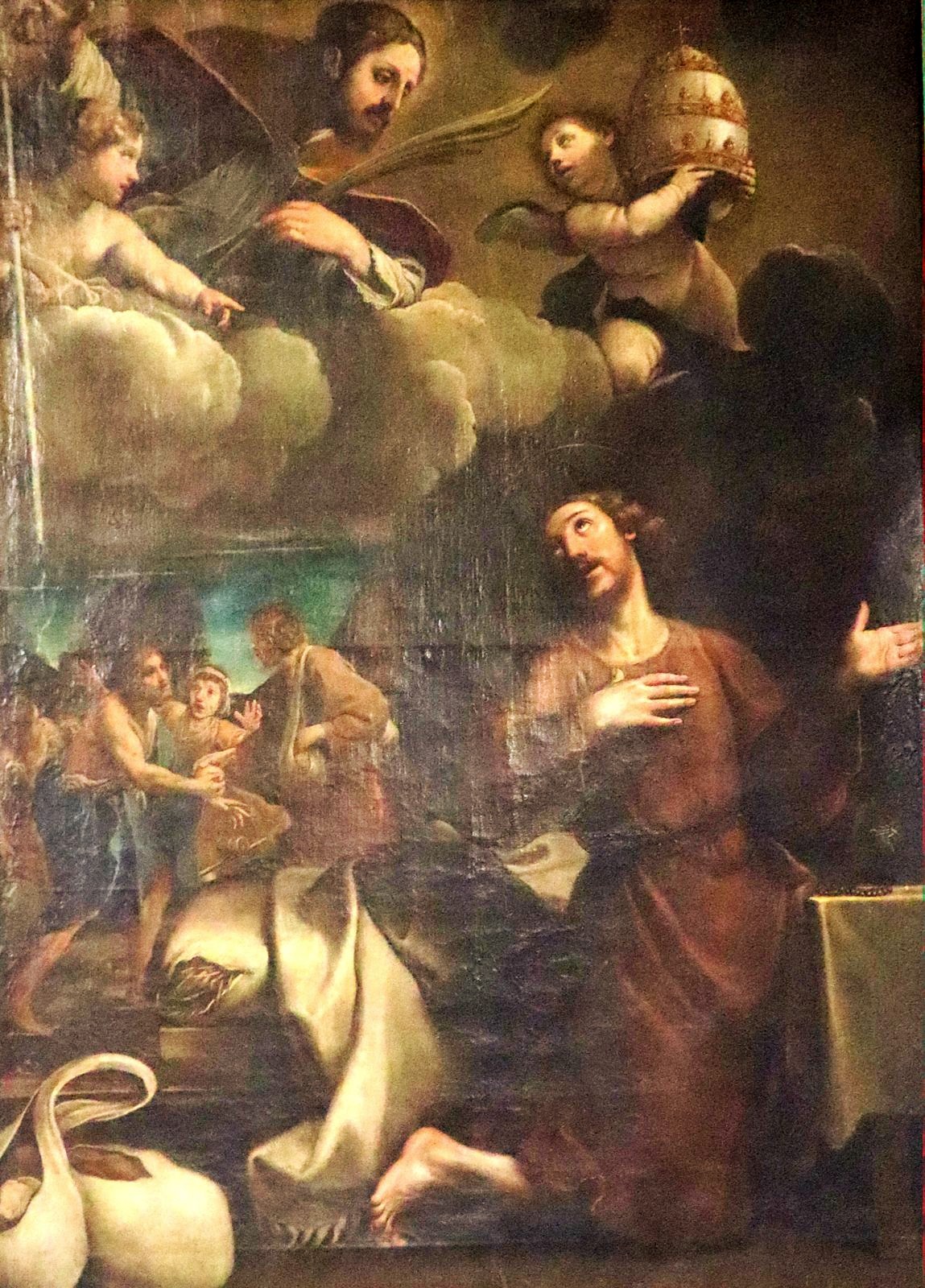
Altarpiece of St Berthold, by Alessandro Tiarini in 1628, in the Church of Sant’Alessandro in Parma
Berthold, was descended from a foreign family – his father, Abbondius, was English, his mother, Berta, was a Briton. They had arrived in Italy, very poor artisans, fleeing the Norman invasion of England in 1066 and initially settled in Milan, where Abbondius practiced the shoemaker’s trade but with little or no success.
They then crossed the Po River, settling in Parma, where their only son, Berthold, was born around 1072. At seven years old, the boy was already working in his father’s shop, helping in the difficult trade. But, at twelve, Berthold abandoned his awl and his blade, to serve the Lord with equal zeal and unchanged humility.
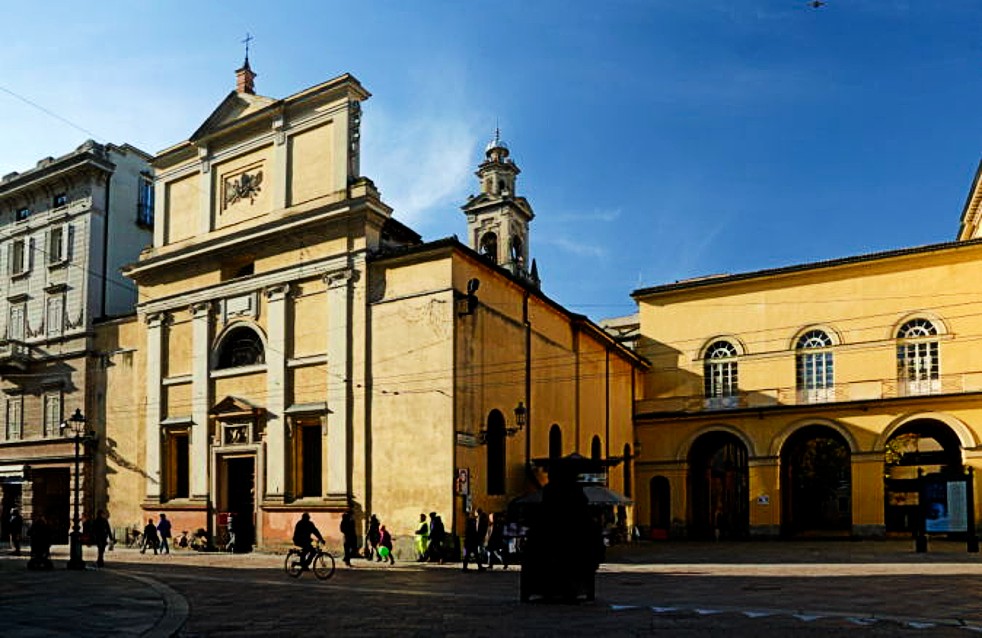
He had to overcome the resistance of his parents, especially his father, who perhaps wished for that only son, the ambition of everything that had been denied to himself in his life. But Berthold’s vocation, despite its simplicity, was stronger than his father’s ambitions and the boy was thus able to change the shoemaker’s shop for the Parma Church of St Alexander, near which there was a Monastery of Benedictine Nuns. Bishop Bernard of Parma commissioned him to serve as a Sexton and Guard the Relics of St Alexander in the Church of the Benedictine Nuns.
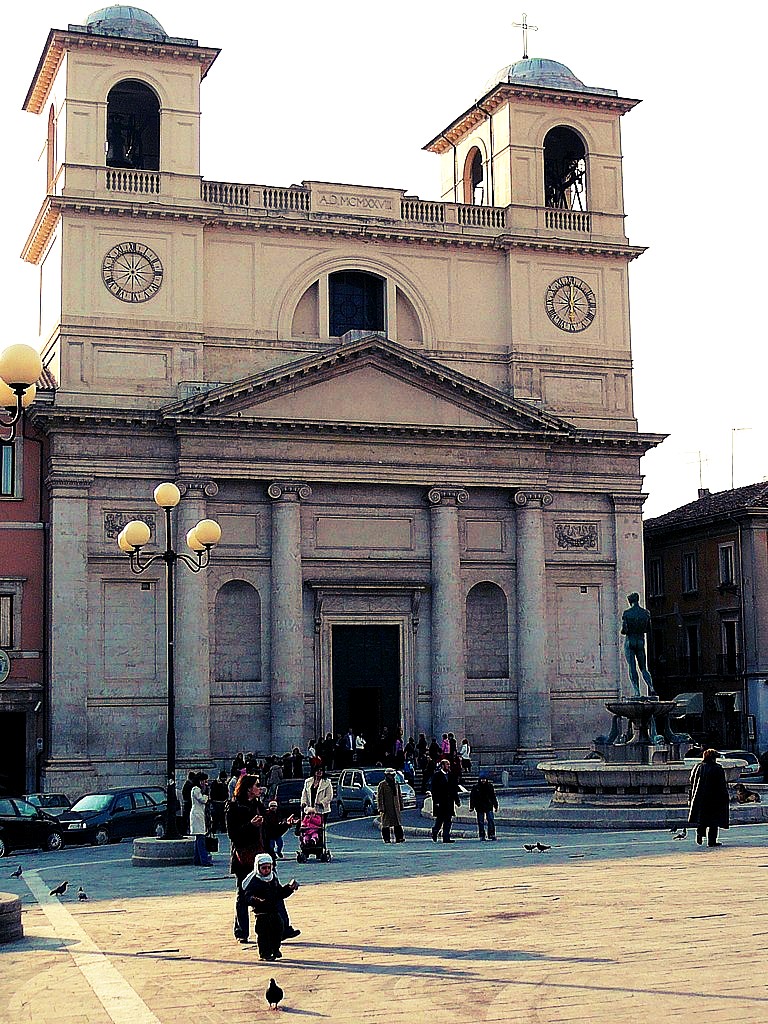
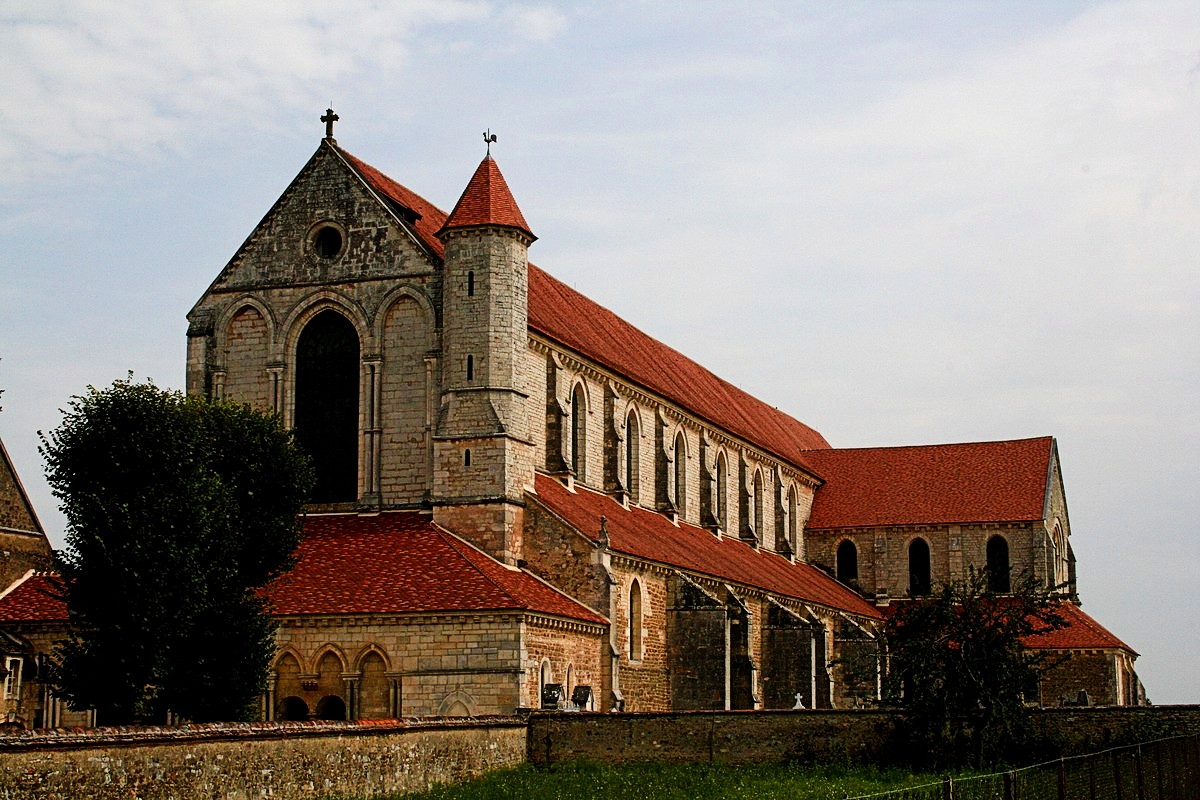
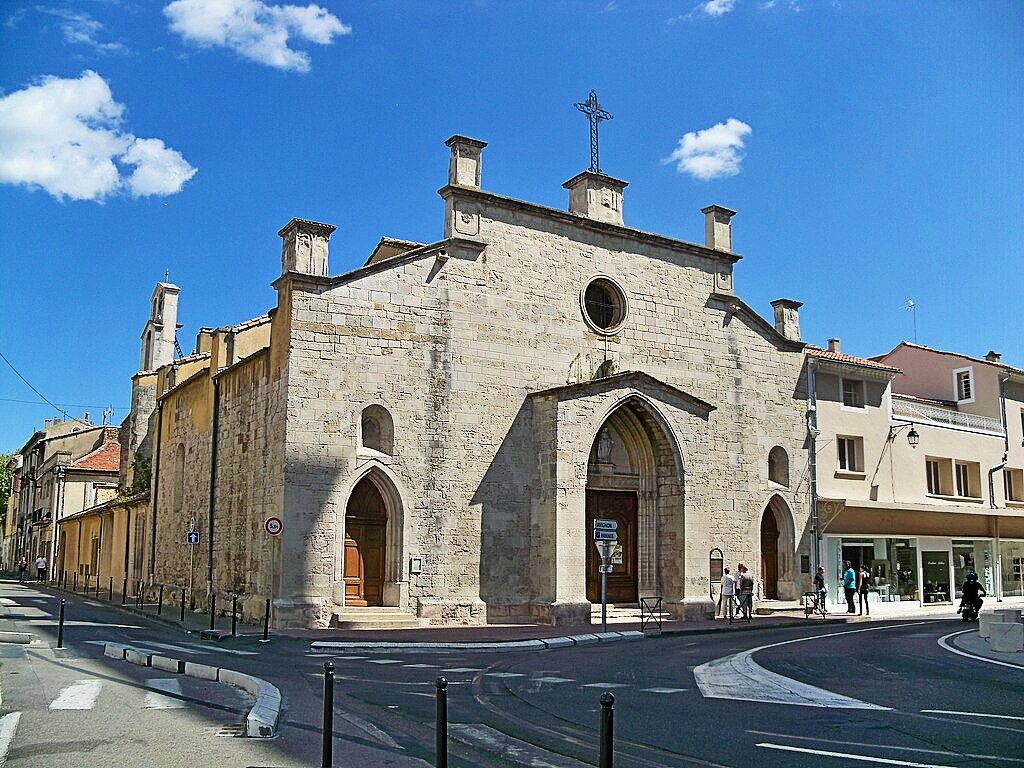
A more comprehensive image of the Church of St Alexander in Parma, showing the Bell Tower and the Convent at the back and side
In the history of religious Orders, Berthold is thus considered a precursor of those Lay Brothers, called Regular Oblates, who later became a normal occurrence – and still are – in Benedictine Abbeys and Monasteries. His duties, in the Church of St Alexander, were those of a Sacristan – a Sacristan who was part of the community and lived its Rule with great zeal.
He lived at the base of the Bell Tower and was awake before dawn, to pray in front of the Altar, after having prepared everything for the first Masses. He wore sackcloth and every Friday he flagellated himself. Always obedient, humble and serene, the Nuns even pointed him out as a model, to the young Novices.
St Alexander’s Church in Parma
With the permission of the Superior, he undertook a pilgrimage to Rome and then to France, where he visited the tomb of St Anthony Abbot, where miracles were attributed to our Saint. And humble, touching miracles were also attributed to him after his return to Parma, where he died still young, while praying, greeted by an insistent flock of bells.
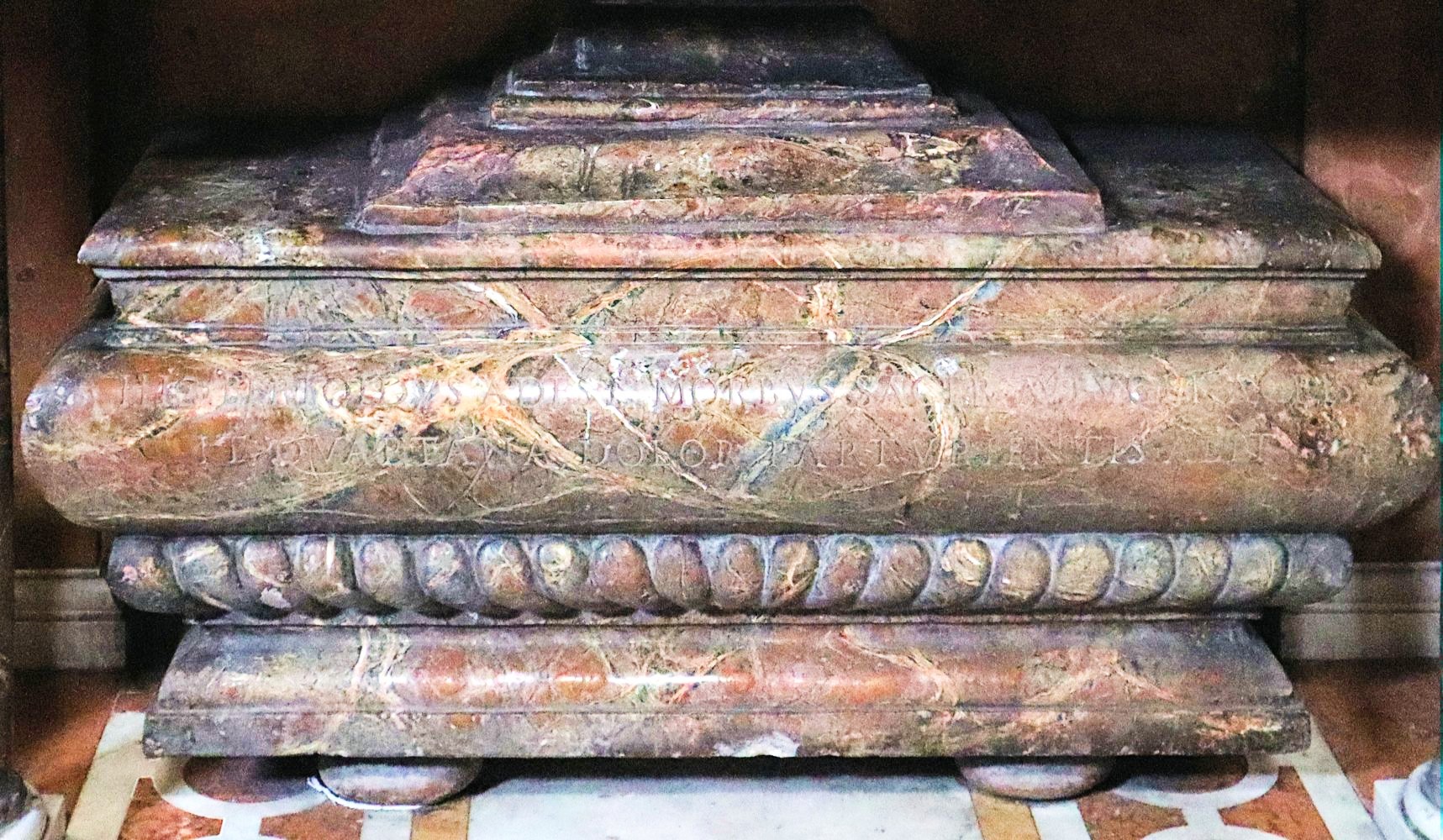
Dear beloved Berthold was buried at his Convent Church of St Alexander, where his Relics still now reside.
Saint Ursula and Companions: (Died c238) Virgin Martyrs This Amazing Story: https://anastpaul.com/2022/10/21/saint-of-the-day-21-october-saint-ursula-and-companions-died-c-238-virgin-martyr/ There are other Saints closely associated with Ursula and her story – travelling companions who were Martyred with her. They are: Antonia of Cologne Cesarius of Cologne Cyriacus of Cologne Daria Fiolanus of Lucca Ignatius of Cologne James of Antioch Mauritius of Cologne Pontius of Cologne Sulpitius of Ravenna Vincent of Cologne Travelling companion, but escaped the massacre: Cunera Led by a dove to the lost tomb of St Ursula: Cunibert of Cologne.
St Agatho the Hermit St Asterius of Périgord St Asterius of Rome St Berthold of Parma OSB (c1072-c1106) Lay Brother or “Regular Oblate” St Celina of Meaux St Cilinia St Condedus St Domnolus of Pouilly St Finian Munnu St Gebizo St Hilarion of Moglena St Hugh of Ambronay St Letizia St Maurontus of Marseilles St Malchus of Syria
Thought for the Day – 20 October – Meditations with Antonio Cardinal Bacci (1881-1971)
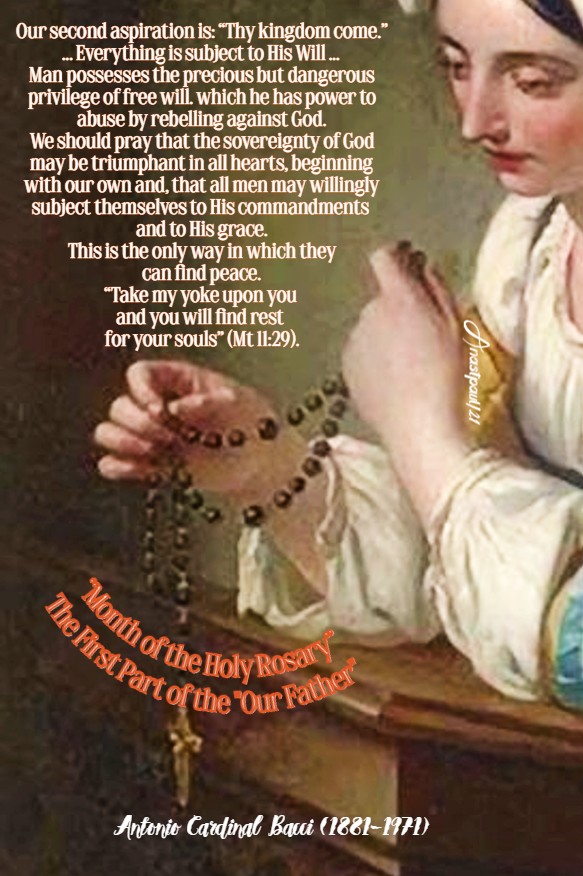
“Month of the Holy Rosary” The First Part of the “Our Father”
“Our second aspiration is: “Thy kingdom come.” It is true, that God reigns over Heaven, earth and the infernal regions. Everything is subject to His Will – the sun, the stars, the birds of the air, the fishes of the sea and the tiniest insects carry out His commands. Even the demons of Hell, who He has condemned to eternal punishment, are obedient to His Will. But what about the human race?
Man possesses the precious but dangerous privilege of free will which he has power to abuse by rebelling against God. We should pray that the sovereignty of God may be triumphant in all hearts, beginning with our own and, that all men may willingly subject themselves to His commandments and to His grace. This is the only way in which they can find peace. “Take my yoke upon you and you will find rest for your souls” (Mt 11:29).
We should pray, moreover, for the Church, which is the Kingdom of God upon earth. We should pray for her peaceful victory over her enemies, who persecute her and impede her work for the salvation of souls. We should love the Church even as we love Jesus Christ, for the Church is His handiwork and the fruit of His Precious Blood.”
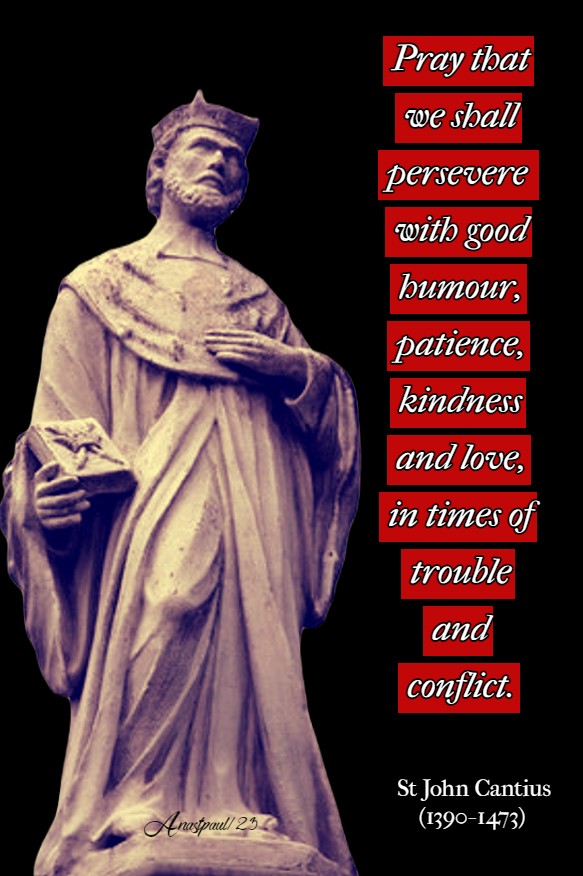
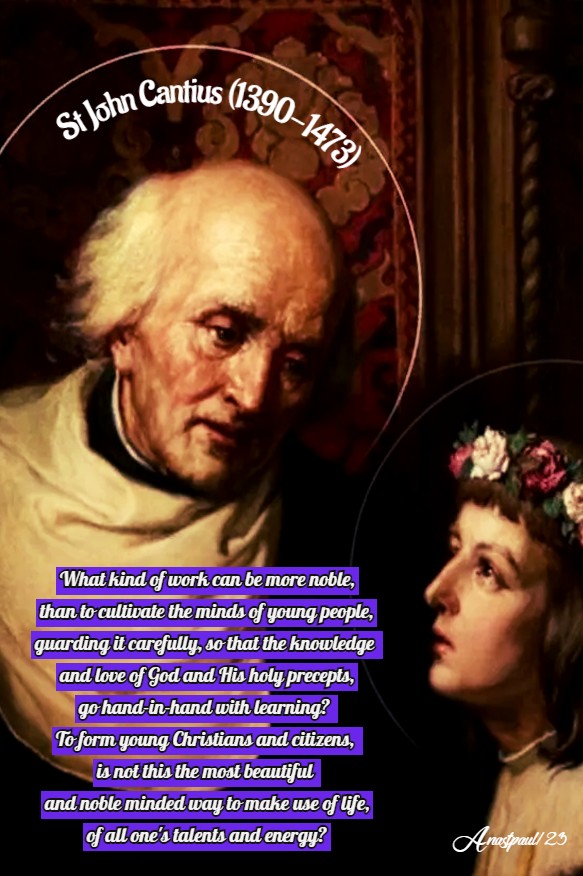
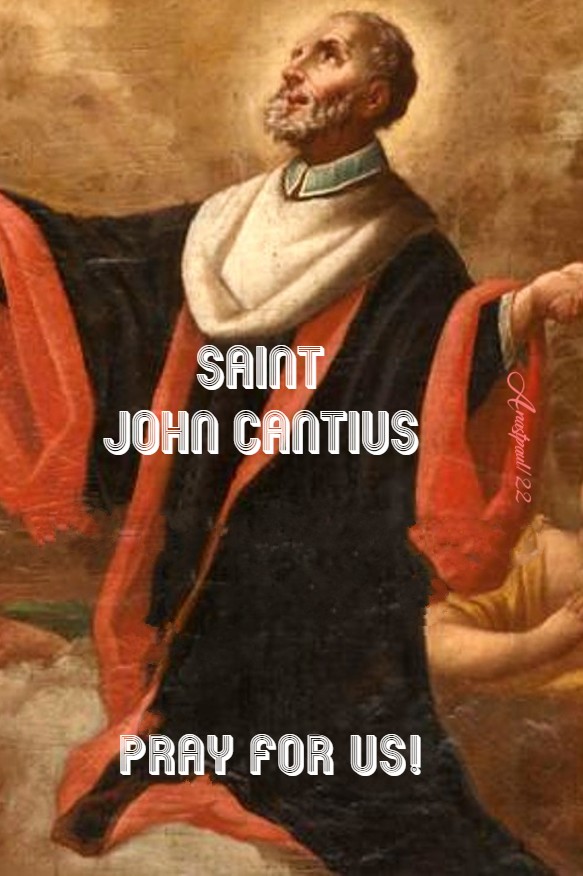
Quote/s of the Day – 20 October – St John Cantius (1390-1473) Confessor
“Pray that we shalll persevere with good humour, patience, kindness and love, in times of trouble and conflict.”
“What kind of work can be more noble, than to cultivate the minds of young people, guarding it carefully, so that the knowledge and love of God and His holy precepts, go hand-in-hand with learning? To form young Christians and citizens, is not this the most beautiful and noble minded way to make use of life, of all one’s talents and energy?”
One Minute Reflection – 20 October – “The Month of the Most Holy Rosary and of the Angels” – St John Cantius (1390-1473) Confessor – James 2:12-17, Luke 12:35-40 – Scripture search here: https://www.drbo.org/
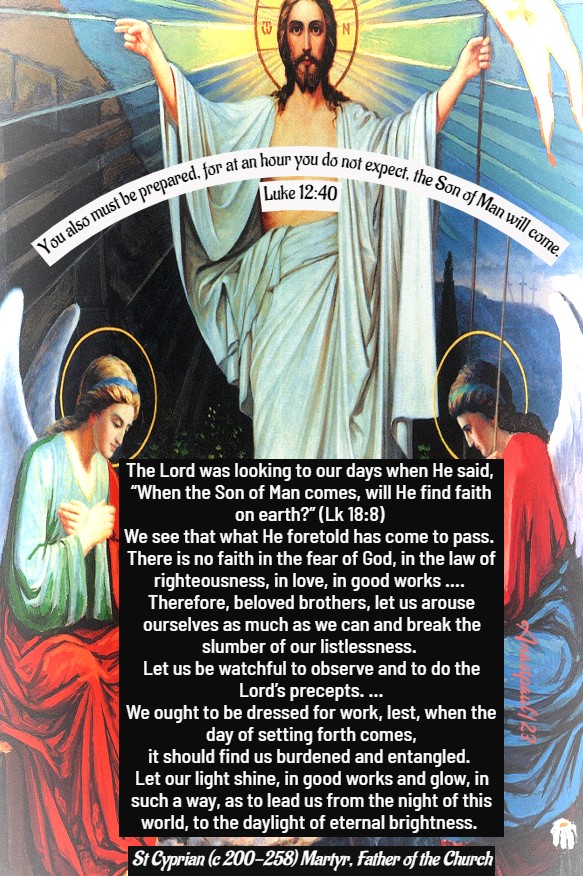
“You also must be prepared, for at an hour you do not expect, the Son of Man will come.” – Luke 12:40
REFLECTION – “The Lord was looking to our days when He said, “When the Son of Man comes, will He find faith on earth?” (Lk 18:8) We see that what He foretold has come to pass. There is no faith in the fear of God, in the law of righteousness, in love, in good works …. That which our conscience would fear if it believed, it does not fear because it does not believe at all. If it believed, it would also take heed and if it took heed, it would be saved.
Therefore ,beloved brothers, let us arouse ourselves as much as we can and break the slumber of our listlessness. Let us be watchful to observe and to do the Lord’s precepts. Let us be like He Himself, has bidden us to be, saying, “Gird your loins and light your lamps and be like servants who await their master’s return from a wedding, ready to open immediately, when He comes and knocks. Blessed are those servants, whom the Master finds vigilant on His arrival“.
Let us always wait with solicitude and caution for the sudden coming of the Lord, so that when he knocks, our faith maybe on the watch and receive from the Lord, the reward of our vigilance. If these commands be observed, if these warnings and precepts be kept, we will not be overtaken in slumber, by the deceit of the devil. But we shall reign with Christ in His Kingdom, as servants on the watch.” – St Cyprian (c 200-258) Bishop of Carthage and Martyr, Father of the Church (Treatise on the unity of the Church, 26-27).
PRAYER – Grant, we beseech Thee, Almighty God, that by following the example of blessed John, Thy Confessor, we may advance in a knowledge of holiness and, by showing pity for others, obtain Thou forgiveness through his merits. Through Jesus Christ, Thy Son our Lord, Who lives and reigns with Thee, in the unity of the Holy Ghost, God, world without end. Amen (Collect).
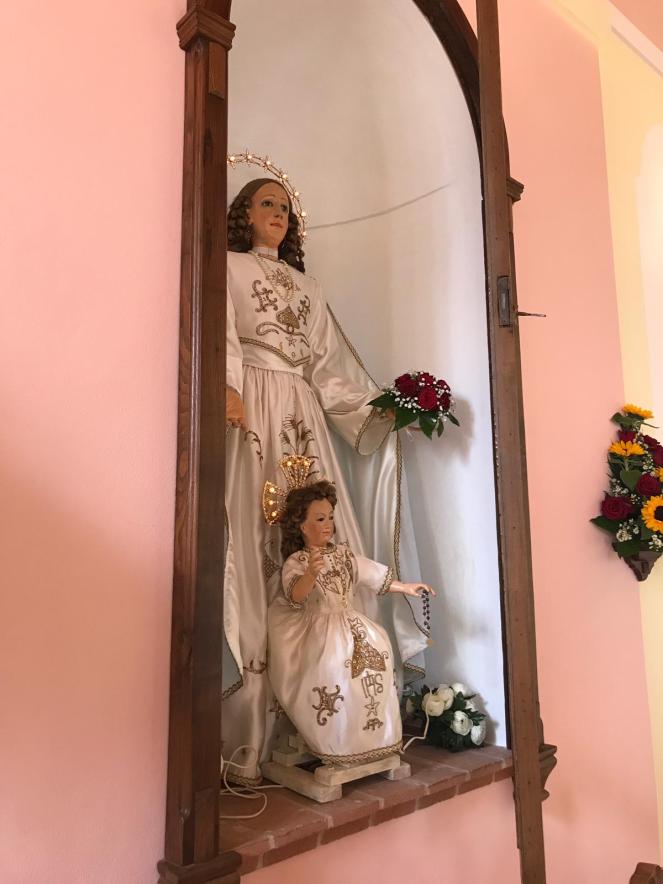
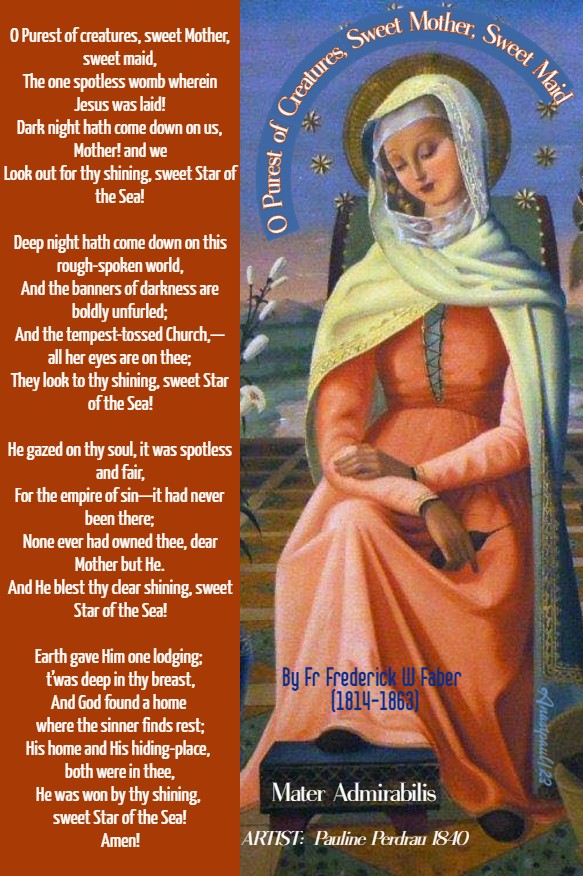
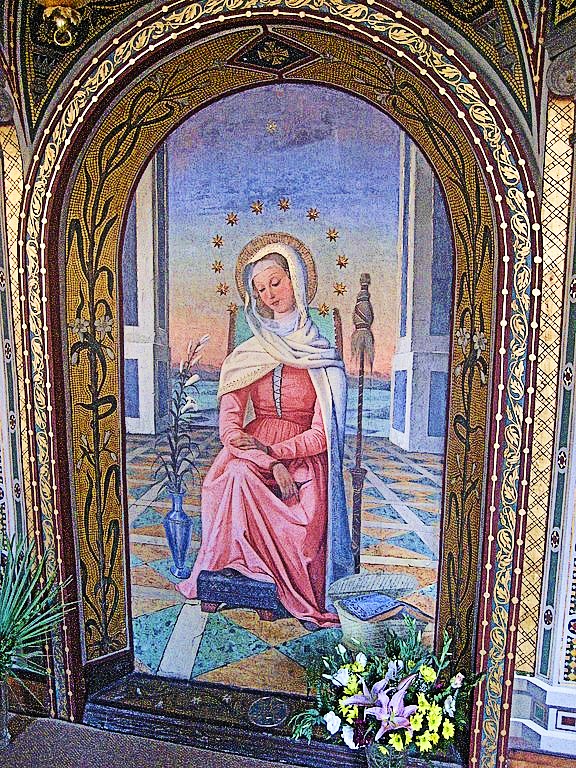
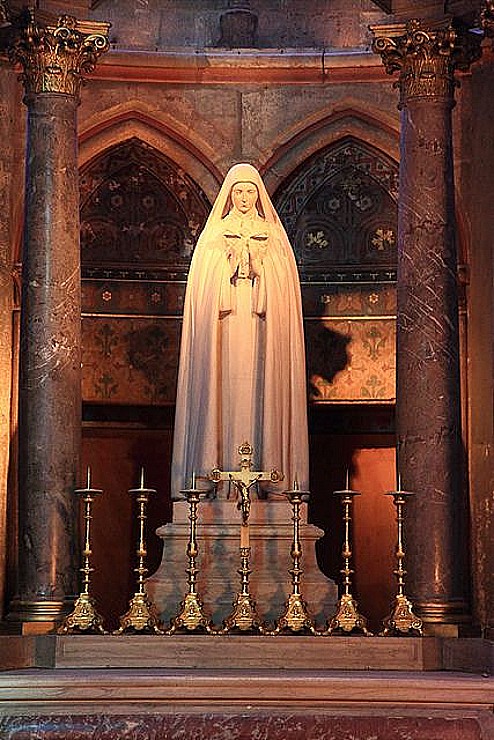
Our Morning Offering – 20 October – “The Month of the Most Holy Rosary and of the Angels” – Feast of Mater Admirabilis / Mother Most Admirable
O Purest of Creatures, Sweet Mother, Sweet Maid By Fr Frederick W Faber C.Orat. (1814-1863)
O Purest of creatures, sweet Mother, sweet maid, The one spotless womb wherein Jesus was laid! Dark night hath come down on us, Mother! and we Look out for thy shining, sweet Star of the Sea!
Deep night hath come down on this rough-spoken world, And the banners of darkness are boldly unfurled; And the tempest-tossed Church,— all her eyes are on thee; They look to thy shining, sweet Star of the Sea!
He gazed on thy soul, it was spotless and fair, For the empire of sin—it had never been there; None ever had owned thee, dear Mother but He. And He blest thy clear shining, sweet Star of the Sea!
Earth gave Him one lodging; t’was deep in thy breast, And God found a home where the sinner finds rest; His home and His hiding-place, both were in thee, He was won by thy shining, sweet Star of the Sea!
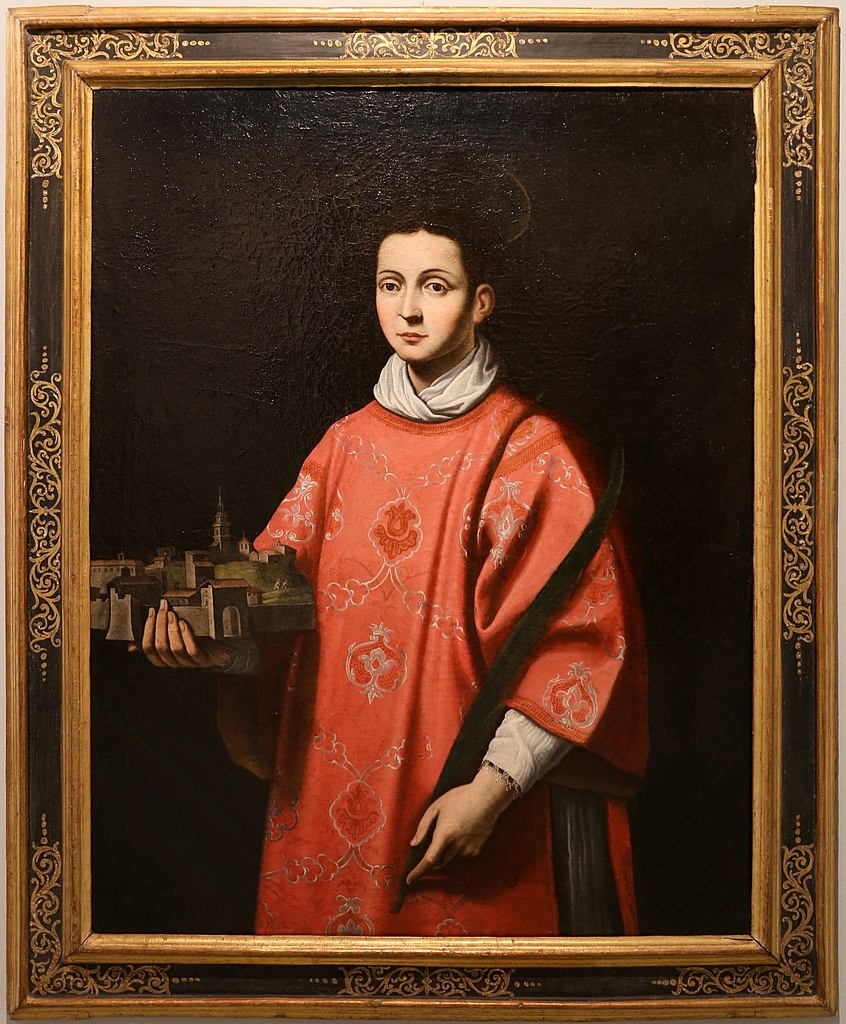
Saint of the Day – 20 October – Saint Maximus of Aquila (c228-c250) Deacon Martyr. Born in c228 in Aveia, Italy and died by being cast off a cliff in Aveia, Italy in c250. Also known as – Maximus of Aveia, Maximus of Naples, Massimo… Additional Memorial – 10 June on which date he is celebrated by a Festival in Aquila (translation of Relics). Maximus is the Main Patron of both the City and Archdiocese of Aquila, L’Aquila and of Penne – Italy.
The Roman Martyrology reads: “At Aveia, near Aquila in Abruzzo, Italy, the birthday of blessed Maximus, Deacon and Martyr, who, through the desire of suffering, presented himself to the persecutors who sought him. After answering with great constancy, he was racked and tortured, then beaten with rods and finally, he died by being precipitated from an elevated place.”
Giulio Cesare Bedeschini, San Massimo, before 1613, from the Archbishopric of L’Aquila.
Maximus was born in the ancient City of Aveia (surrounding L’Aquila) in the first half of the 3rd Century (c228). It seems that he was born into a Christian family as demonstrated by his status as an aspirant to the Priesthood, the Relics of his father, also Maximus and his deposition before the Prefect of Aveia.
During the persecution of Decius which lasted from October 249 to November 251, he was Martyred. From a ‘Passio,’ we know that after various questions from the Governor of the City and the answers of loyalty to Jesus Christ, he was stretched out on the rack and tortured for a long time. The long torture was of no use, however. To dissuade him, the Governor even promised him his daughter, Cesaria, as a bride. The exasperated persecutor ordered Maximus to be thrown from the highest peak, which was called Temple Circle and Tower. Perhaps it was due to this Martyrdom that the City of Aveia (today Fossa) became a Bishopric.
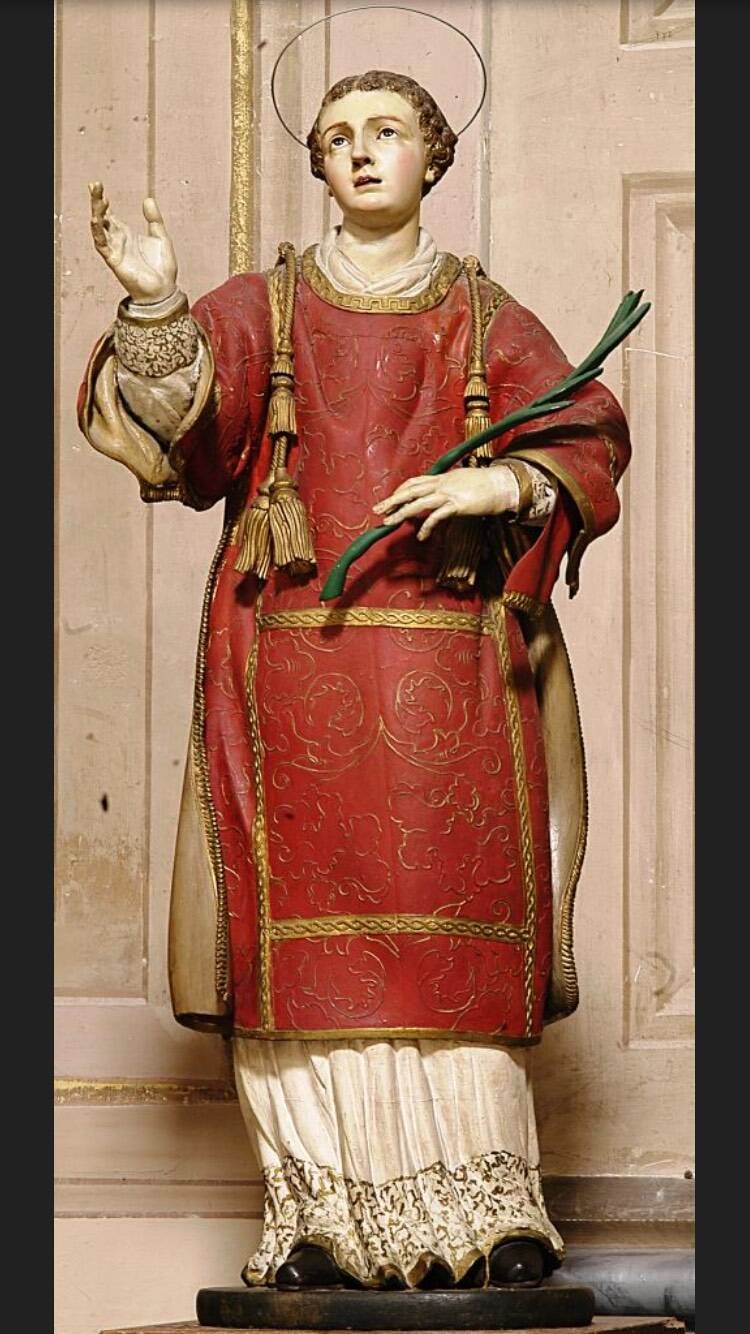
Statue of St Maximus of the Cathedral in L’Aquila (1153)
Upon the destruction of Aveia, during an invasion, Maximus’ Relics were taken to a nearby City “City of St Maximus” and, it was here that on 10 June 956, Emperor Otto I the Great and Pope John XII came to venerate the Relics of our Saint. In 1256 the See and the Relics were moved to the newly built City of L’Aquila and were placed in the new Cathedral there which was also dedicated to him.
Note from the local Daily News of L’Auila on some of the Festival Celebrations: Saturday 10 June, at 11am, Holy Chapter Mass at the Church of the Anime Sante, presided over by Canon Sergio Maggioni , Archdeacon of the L’Aquila Chapter, while in the evening, at 9.45pm, the musical event “Galileo Queen Tribute band & DJ set Lorenzo Baglioni” in Piazza San Basilio, with a food and drink area from 7pm organised by Anbra brewery and Bivacco.
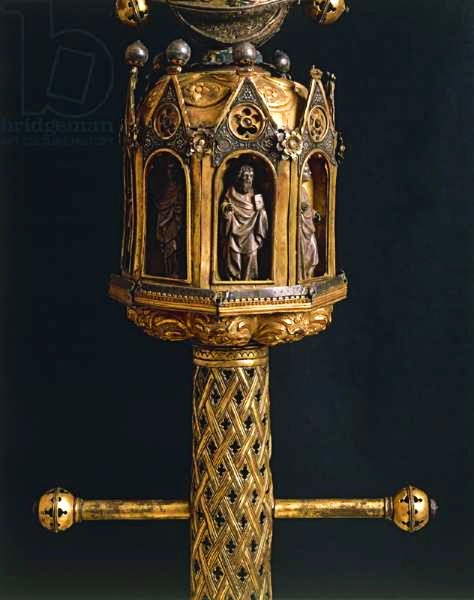
This is the St Maximus’ Processional Cross, in silver, enamel and copper. by Nicola Gallucci da Guardiagrele (1385-1462).
Blessed James Strepar OFM (c 1340-1409) Archbishop of Halicz, Poland from 1392 until his death Religious Priest of the Order of Friars Minor, Missionary. St Pius X proclaimed Blessed James, along with St Anthony of Padua, the Patrons of the Conventual Franciscan Order of Krakow Province. He was given the title of “Protector of the Kingdom, Defender and Guardian of the Homeland,” for his exceptional merits, including civil ones. Such was he considered by all. He was Canonised by by Pope Pius VI on 11 September 1791. His body is incorrupt. His Life: https://anastpaul.com/2020/10/20/saint-of-the-day-20-october-blessed-james-strepar-ofm-c-1340-1409/
St Leopardo of Osimo St Lucas Alonso Gorda St Martha of Cologne + Virgin Martyr St Maximus of Aquila (c228-c250) Deacon Martyr St Orora St Saula of Cologne + Virgin Martyr St Sindulphus of Rheims St Usthazanes St Vitalis of Salzburg
Thought for the Day – 19 October – Meditations with Antonio Cardinal Bacci (1881-1971)
“Month of the Holy Rosary” The “Our Father”
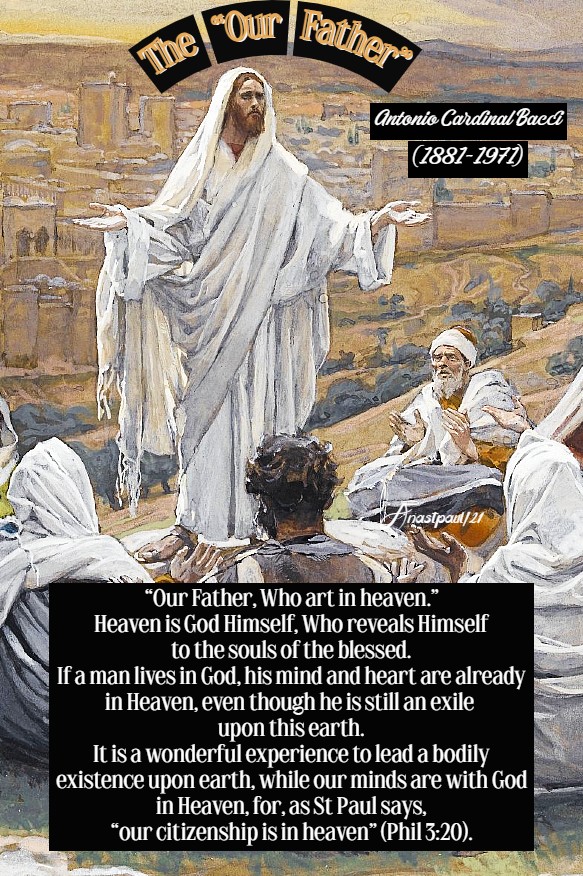
“Our Father, Who art in heaven.” Heaven is God Himself, Who reveals Himself to the souls of the blessed. If a man lives in God, his mind and heart are already in Heaven, even though he is still an exile upon this earth. It is a wonderful experience to lead a bodily existence upon earth, while our minds are with God in Heaven, for, as St Paul says, “our citizenship is in heaven” (Phil 3:20). As we are aware, God is everywhere, in Heaven and on earth. When we invoke our Father, Who is in Heaven, however, we manifest our faith in Him and in His generosity, whereby, He reveals Himself in all His glory to the blessed and shows His mercy to us poor exiles, when we come to Him. In the first words of the Pater Noster, we express, not only our faith but, also our hope of being happy with God for all eternity.”
Quote/s of the Day – 19 October – St Peter of Alcantara OFM (1499-1562) Confessor
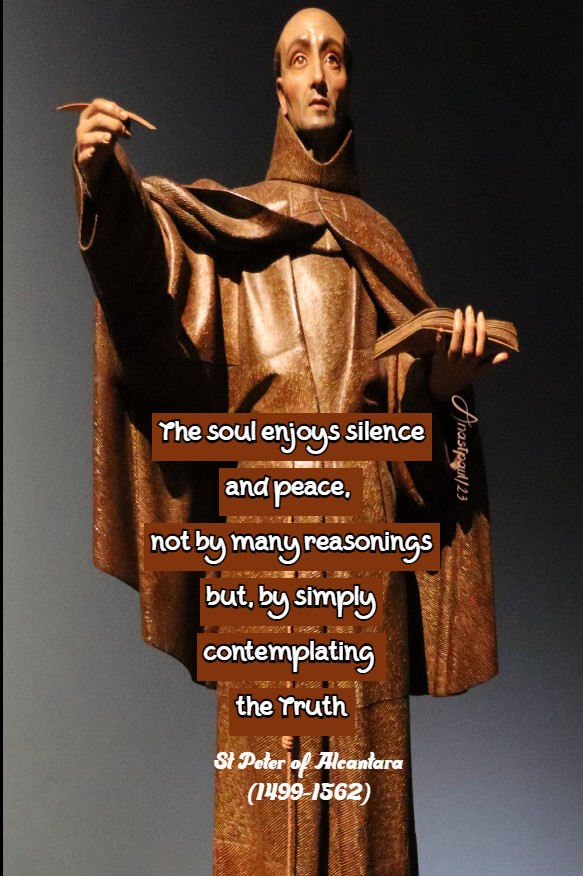
“The soul enjoys silence and peace, not by many reasonings but, by simply contemplating the Truth.”
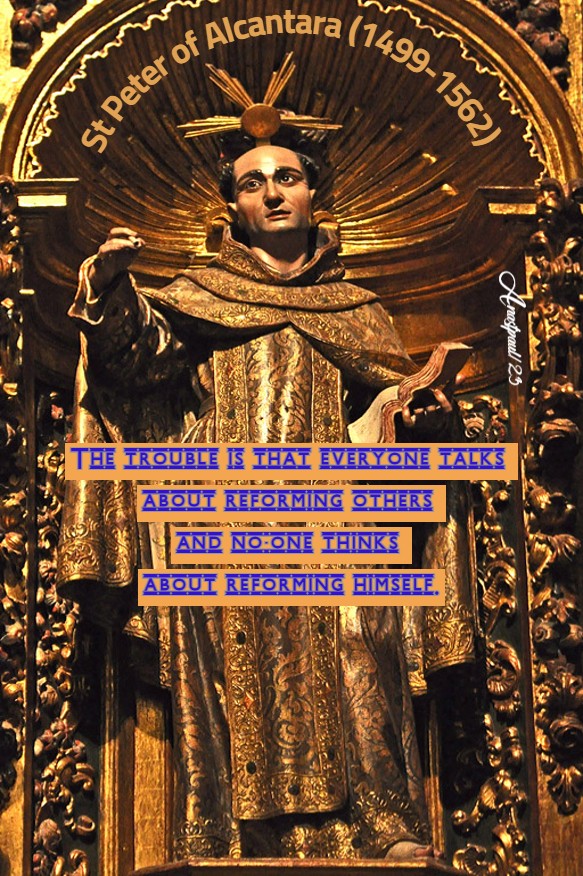
“The trouble, is that everyone talks about reforming others and no-one thinks about reforming himself.”
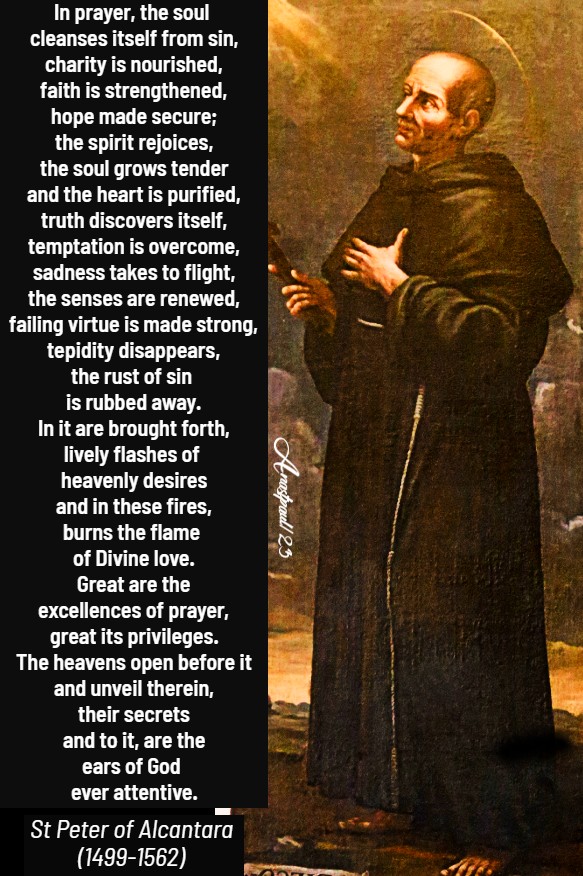
“In prayer, the soul cleanses itself from sin, charity is nourished, faith is strengthened, hope made secure; the spirit rejoices, the soul grows tender and the heart is purified, truth discovers itself, temptation is overcome, sadness takes to flight, the senses are renewed, failing virtue is made strong, tepidity disappears, the rust of sin is rubbed away. In it are brought forth, lively flashes of heavenly desires and in these fires, burns the flame of Divine love. Great are the excellences of prayer, great its privileges. The heavens open before it and unveil therein, their secrets and to it, are theears of God ever attentive.”
One Minute Reflection – 19 October – “The Month of the Most Holy Rosary and of the Angels” St Peter of Alcantara OFM (1499-1562) Confessor – Philippians 3:7-12, Luke 12:32-34 – Scripture search here: https://www.drbo.org/
“I press on, hoping that I may lay hold of that, for which Christ Jesus, has laid hold of me.” – Philippians 3:12
REFLECTION – “Our beloved Saviour assures us, in many places, of His Holy Scriptures that He is constantly caring for and keeping watch over us that He carries and, will Himself, always carry us in His breast, His Heart, His inner being. Nor is He content to say just once, or twice, that He will carry us in this way but, He asserts and reasserts it, as many as five times, in the same place.
Furthermore, He assures us that even if a mother were to be found, who would go as far, as to forget the child she had borne in her womb, yet, He will never forget us that He has written us on His hands, so as to have us always under His eyes; that whoever touches us, touches the apple of His eye; that we should never be anxious, about what we need to live and to clothe ourselves, that He knows well, we need these things and takes care of them for us; that He has numbered the hairs on our head and not one of them will perish that His Father loves us as He loves Him and that, He loves us as His Father loves Him that He wills that we should be where He is that is to say, that we should be at rest with Him, in the breast and Heart of His Father.” – St John Eudes (1601-1680) Priest, Founder, Apostle of the Two Holy Hearts (The Kingdom of Jesus II:30).
PRAYER – O God, Who graciously made blessed Peter, Thy Confessor, glorious by the gift of remarkable penance and sublime contemplation, grant, we beseech Thee, that, by the merit of his prayers, we may the more easily understand the things of Heaven by curbing our passions. Through Jesus Christ, Thy Son our Lord, Who lives and reigns with Thee, in the unity of the Holy Ghost, God, world without end. Amen (Collect).
Our Morning Offering – 19 October – “The Month of the Most Holy Rosary and of the Angels” – St Peter of Alcantara OFM (1499-1562) Confessor
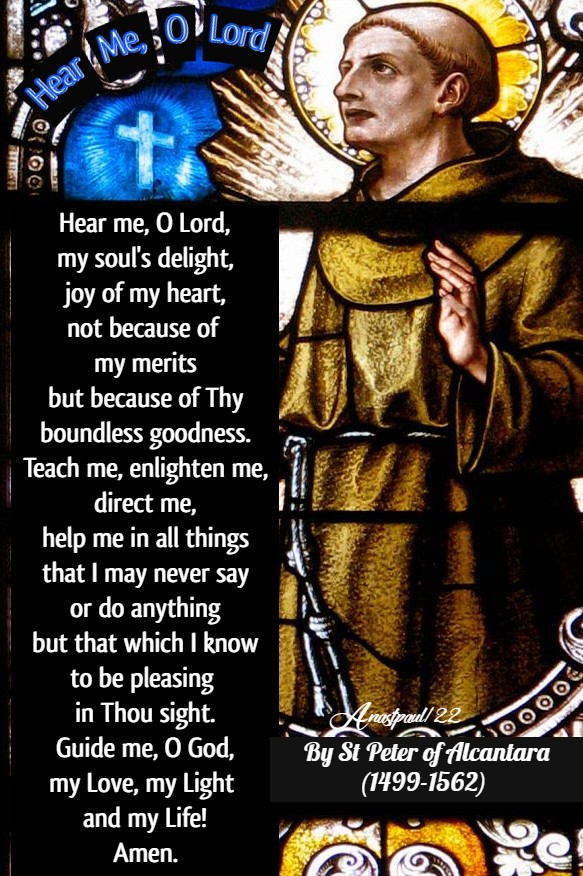
Hear Me, O Lord By St Peter of Alcantara (1499-1562)
Hear me, O Lord, my soul’s delight, joy of my heart, not because of my merits but because of Thy boundless goodness. Teach me, enlighten me, direct me, help me in all things that I may never say or do anything but that which I know to be pleasing in Thou sight. Guide me, O God, my Love, my Light and my Life! Amen.
Saint of the Day – 19 October – Saint Varus and Six Companions (Died c307) Martyrs, Soldier. Died in c307 by being tortured and then hanged from a tree on 19 October 307 in Kemet, Upper Egypt. Also known as – Uaros.
The Roman Martyrology reads: “In Egypt, St Varus, Solder under the Emperor Maximinus. He used to visit and comfort seven saintly Monks, detained in prison, when one of them happening to die, he wished to take his place and having suffered cruel afflictions, with them, he obtained the Palm of Martyrdom.”
At the time of Emperor Maximian Valerius (c250-c310), the soldier Varus took an interest in the fate of six Hermit Monkss in Egypt, who had been imprisoned due to the ongoing persecution of Christians.
It seems that initially, there were seven Hermits but one of them died upon arrest, or according to other sources, he died during harsh imprisonment. It is known, however, that Varus, who went to comfort them, declared himself a Christian and expressed the desire to replace the seventh deceased hermit. For this reason, he was immediately condemned to be flagellated and then torn to pieces with hooks, it was around 307.
The next day, it was the turn of the six Hermits, whose names are unknown. After having refused to make sacrifices to the gods, they were subjected to various torments, in particular, to a long and bloody flagellation which caused their death. Another source says that after the flagellation, they were led outside the City to be beheaded.
The cult of Saint Varus and the six Hermits remained unknown in the West and their names were absent in the various medieval Martyrologies. However, they were inserted on 19 October in the Roman Martyrology, compiled in the 16th Century.
The body of the Soldier Varus, was collected by a pious woman named Cleopatra, also a Saint, who buried him in a safe place at her home. Once the persecution passed, she left for her home country of Palestine, secretly taking the Relics of the Martyr with her, for which she had a Church built at Mount Thabor. In that same place, Cleopatra had her son, buried, who had died shortly after arriving in Palestine and arranged to be buried there herself.
St Altinus St Aquilinus of Evreux St Asterius of Ostia St Beronicus of Antioch St Desiderius of Longoret St Ednoth St Ethbin St Eusterius of Salerno St Frideswide St Laura of Cordoba St Lucius of Rome St Lupus of Soissons St Pelagia of Antioch
Thought for the Day – 18 October – Meditations with Antonio Cardinal Bacci (1881-1971)
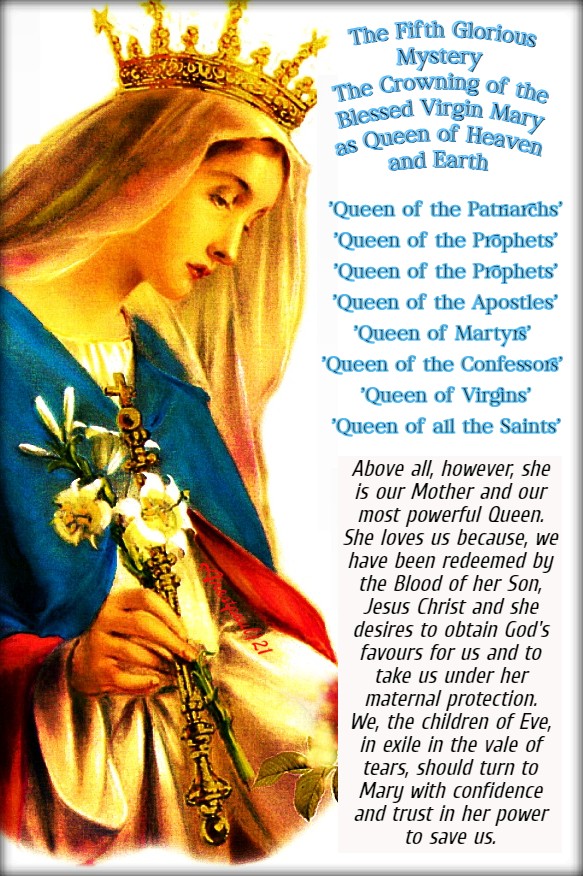
“Month of the Holy Rosary” The Fifth Glorious Mystery The Crowning of the Blessed Virgin Mary as Queen of Heaven and Earth
“Mary is also styled, ‘Queen of the Patriarchs‘ because, it was through her, that they came to possess the object of their desires, the divine Redeemer, Who released them from Limbo and brought them to Heaven. She is ‘Queen of the Prophets‘ because, their prophecies were realised through her. She is ‘Queen of the Apostles‘ whom she assisted and encouraged after the departure of her divine Son. She is the ‘Queen of Martyrs‘ because, her maternal heart was pierced by a sword of sorrow. She is ‘Queen of the Confessors‘ because, nobody else was capable of so deep and lively a profession of the Faith. She is ‘Queen of Virgins‘ because, her virginal purity was crowned by the supreme dignity of Mother of God. She is ‘Queen, moreover, of all the Saints‘, for no other human creature could ever surpass, or even dream of the summit of holiness, to which she attained. Above all, however, she is our Mother and our most powerful Queen. She loves us because, we have been redeemed by the Blood of her Son, Jesus Christ and she desires to obtain God’s favours for us and to take us under her maternal protection.
We, the children of Eve, in exile in the vale of tears, should turn to Mary with confidence and trust in her power to save us.”
Quote/s of the Day – 18 October – The Feast of St Luke, the Evangelist – 2 Corinthians 8:16-24, Luke 10:1-9 – Scripture search here: https://www.drbo.org/
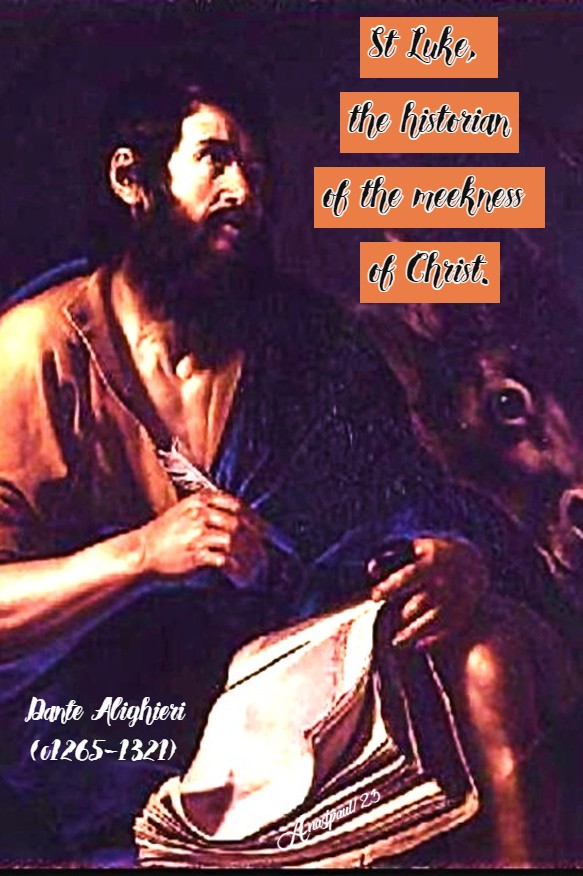
“St Luke, the historian of the meekness of Christ.”
Dante Alighieri (c1265-1321)
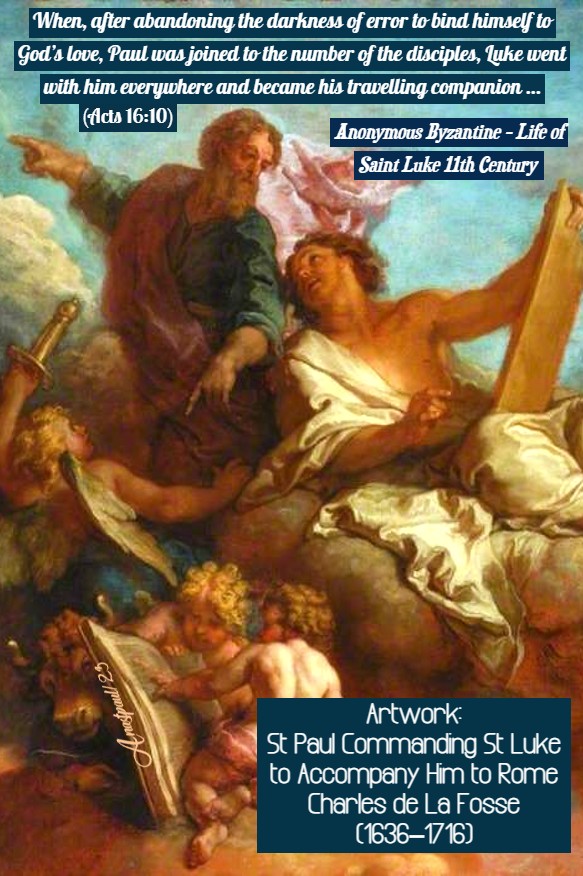
“When, after abandoning the darkness of error to bind himself to God’s love, Paul was joined to the number of the disciples, Luke went with him everywhere and became his travelling companion … ” (Acts 16:10)
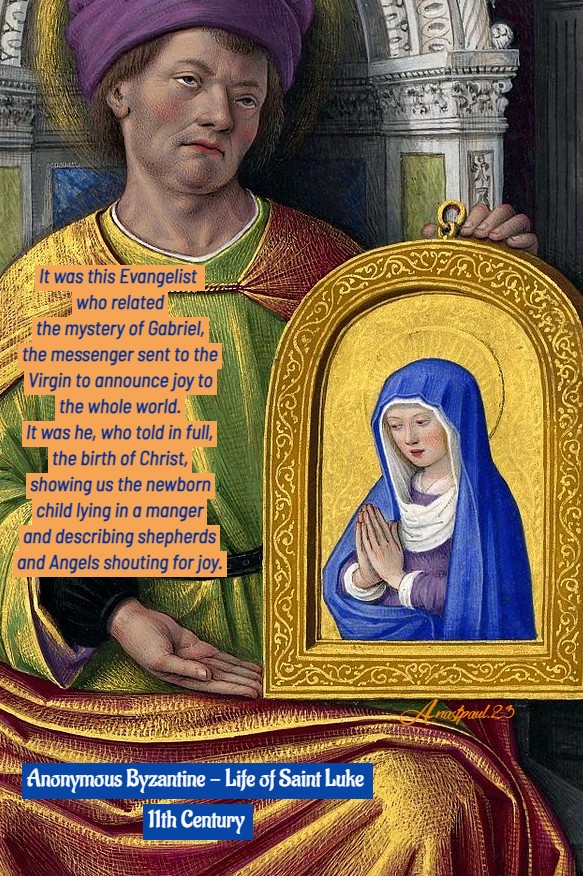
“It was this Evangelist who related the mystery of Gabriel, the messenger sent to the Virgin to announce joy to the whole world. It was he, who told in full, the birth of Christ, showing us the newborn child lying in a manger and describing shepherds and Angels shouting for joy.”
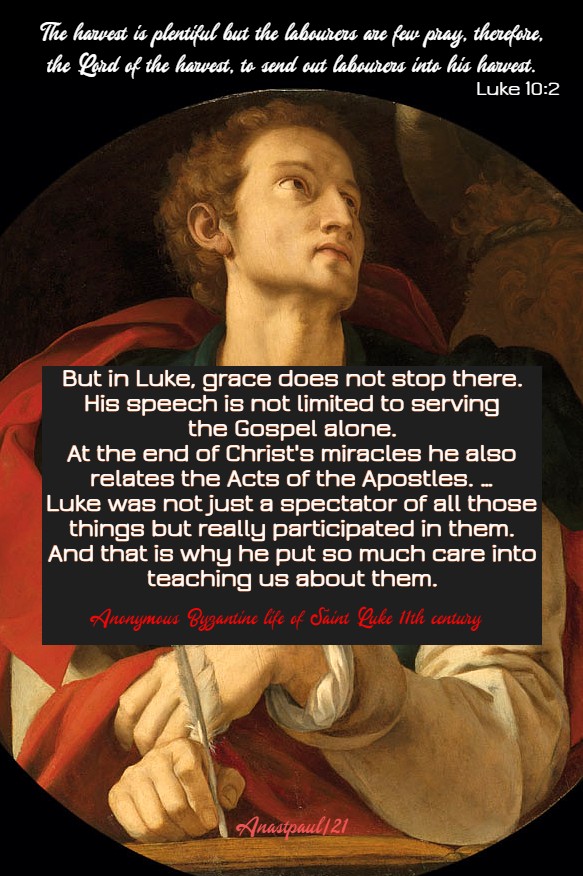
“The harvest indeed is great but the labourers are few. Pray ye, therefore, the Lord of the harvest that He send labourers into His harvest.” Luke 10:2
“But in Luke, grace does not stop there. His speech is not limited to serving the Gospel alone. At the end of Christ’s miracles he also relates the Acts of the Apostles. … Luke was not just a spectator of all those things but really participated in them. And that is why he put so much care into teaching us about them.”
Anonymous Byzantine – Life of Saint Luke 11th Century
One Minute Reflection – 18 October – “The Month of the Most Holy Rosary and of the Angels” – The Feast of St Luke, the Evangelist – 2 Corinthians 8:16-24, Luke 10:1-9 – Scripture search here: https://www.drbo.org/
“The harvest indeed is great but the labourers are few.” – Luke 10:2
REFLECTION – “All the farmer’s work naturally leads towards the harvest. So how could Christ call a ‘harvest’ a work that was still in its initial stages? Idolatry reigned over all the earth .… Everywhere there was fornication, adultery, debauchery, greed, theft, wars . … The earth was filled with so many evils! No seed had yet been sown there. The thorns, thistles and weeds which covered the ground, had not yet been pulled up. The ground had not yet been ploughed, no furrow had yet been drawn.
So how could Jesus say, that the harvest was abundant? … The Apostles were probably distressed and frustrated: “How are we going to be able to say anything, to stand upright before so many people? How can we, the Eleven, correct all the inhabitants of the earth? Shall we, who are so ignorant, be able to approach scholars; shall we, who are so stripped of everything, be able to meet armed men; shall we, who are subordinates, be able to approach people in authority? We know only one language – shall we be able to argue with the barbarians, who speak foreign languages? Who will bear with us, if they do not even understand our language?”
Jesus did not want such reasoning to discourage them. So He called the Gospel a ‘harvest.‘ It is as if, He told them: “Everything is prepared, all the preparations have been made. I am sending you out to harvest the ripe grain. You shall be able to sow and reap, on the same day!” When the farmer leaves his home to go out and gather the harvest, he is brimming over with joy and shining with happiness. He thinks neither of the suffering, nor the difficulties he might encounter . … Christ says, lend Me your tongue and you shall see the ripe grain going into the King’s granaries. And so, He then sends them out, telling them: “I am with you always, until the end of the world.” (Mt 28:20).” – St John Chrysostom (347-407) Father and Doctor of the Church (Homily on the abundant harvest, 10, 2-3)
PRAYER – O Lord, we beseech Thee, that Luke, Thy holy Evangelist, who for the honour of Thy Name bore continuously in his body the suffering of the Cross, may intercede on our behalf. Through the same Jesus Christ, Thy Son our Lord, Who lives and reigns with Thee, in the unity of the Holy Ghost, God, world without end. Amen (Collect).
Our Morning Offering – 18 October – The Feast of St Luke, the Evangelist
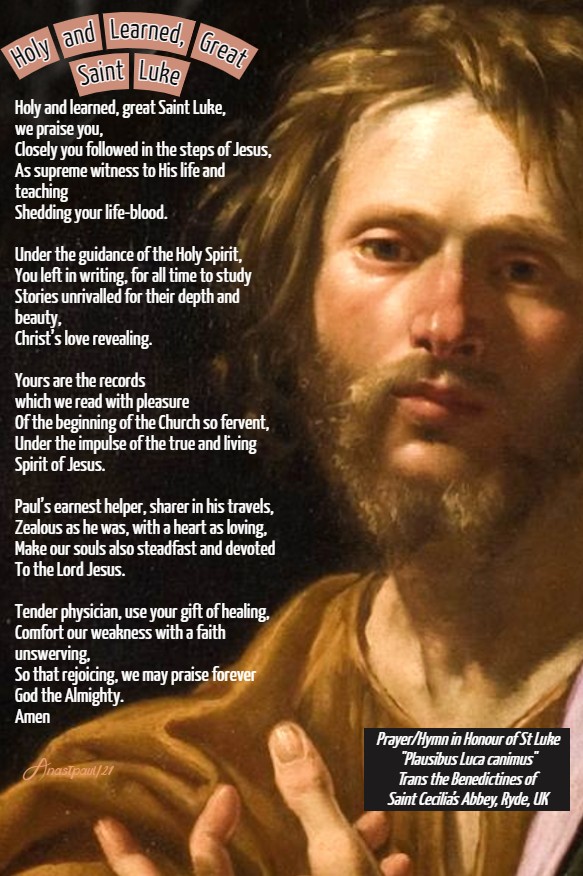
Holy and Learned, Great Saint Luke Prayer/Hymn in Honour of St Luke “Plausibus Luca canimus” Trans the Benedictines of Saint Cecilia’s Abbey, Ryde, UK
Holy and learned, great Saint Luke, we praise you, Closely you followed in the steps of Jesus, As supreme witness to His life and teaching Shedding your life-blood.
Under the guidance of the Holy Spirit, You left in writing, for all time to study Stories unrivalled for their depth and beauty, Christ’s love revealing.
Yours are the records which we read with pleasure Of the beginning of the Church so fervent, Under the impulse of the true and living Spirit of Jesus.
Paul’s earnest helper, sharer in his travels, Zealous as he was, with a heart as loving, Make our souls also steadfast and devoted To the Lord Jesus.
Tender physician, use your gift of healing, Comfort our weakness with a faith unswerving, So that rejoicing, we may praise forever God the Almighty. Amen
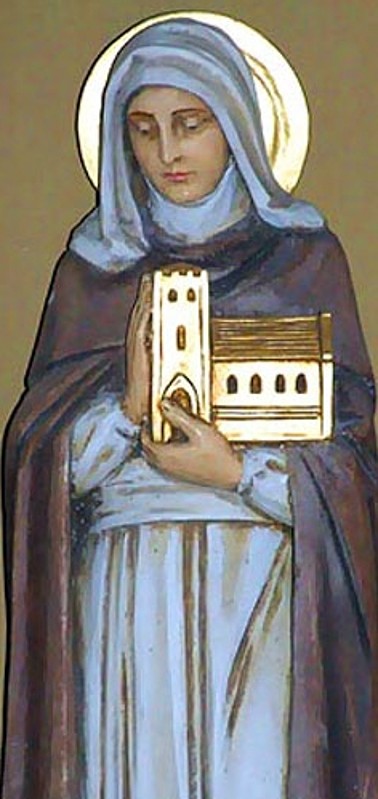
Saint of the Day – 18 October – Saint Gwen of Talgarth (463-c492) Widow, mother, founder of a Church in Talgarth. Born in 463 and died in c492 murdered by pagan Saxons at Talgarth, Wales. Also known as – Wenna (Cornish), Gwen of Tagarth, Gwen of Teirbron, Wite, Blanche, Candida, Genuissa, Wenna, Wenn. The name ‘Gwen’ means ‘white, pure, holy’ hence the derivatives of her name most meaning ‘white.’ (The name stands alone, i.e. it is not necessarily a short form of Gwendolyne and other versions of this name.) Her story, however. is greatly confused with another Saint of the same name.
Gwen is said to have been one of the many daughters of the famous, semi-legendary Saint King Brychan of Brycheiniog (Brecknock) (5th Century), King of the Christian Kingdom of Brecknock in south Wales. She was thus the sister of Saint Cledwyn (Clydwyn) and a number of other Saints. She is on both the older and later lists of Brychan’s children.
In the Life of St Brychan, she is unmarried but other sources list her as the wife of Llyr Merini and mother of Caradog Freichfras. She founded the Church at Talgarth in Brecknockshire. She is said to have been the Queen of Elmet, a Kingdom centered in Loidis, nortbern England (Leeds) and was a widow when, according to the various recprds, she was “killed by the heathen Saxons” around the year 492 in Talgarth. She was buried at Talgarth. Her memorial day is 18 October.
Another Saint of the same name who also lived at the same time is celebrated on the same day, namely Saint Gwen of Cornwall, who was the sister of Saint Non of Wales and thus the aunt of Saint David , the Patron Saint of Wales. She was married to Saint Selyf, King of Cornwall and it is claimed that she was the mother of Saint Cybi of Holyhead and, according to one version, also Saint Cadfan. Clodfaith, an alleged daughter of Brychan, is also said to have been a Saint in Talgarth as well as in Emlyn. Browne Willis and others have a Gwendeline in Talgarth but the real dedication is to our St Gwen.
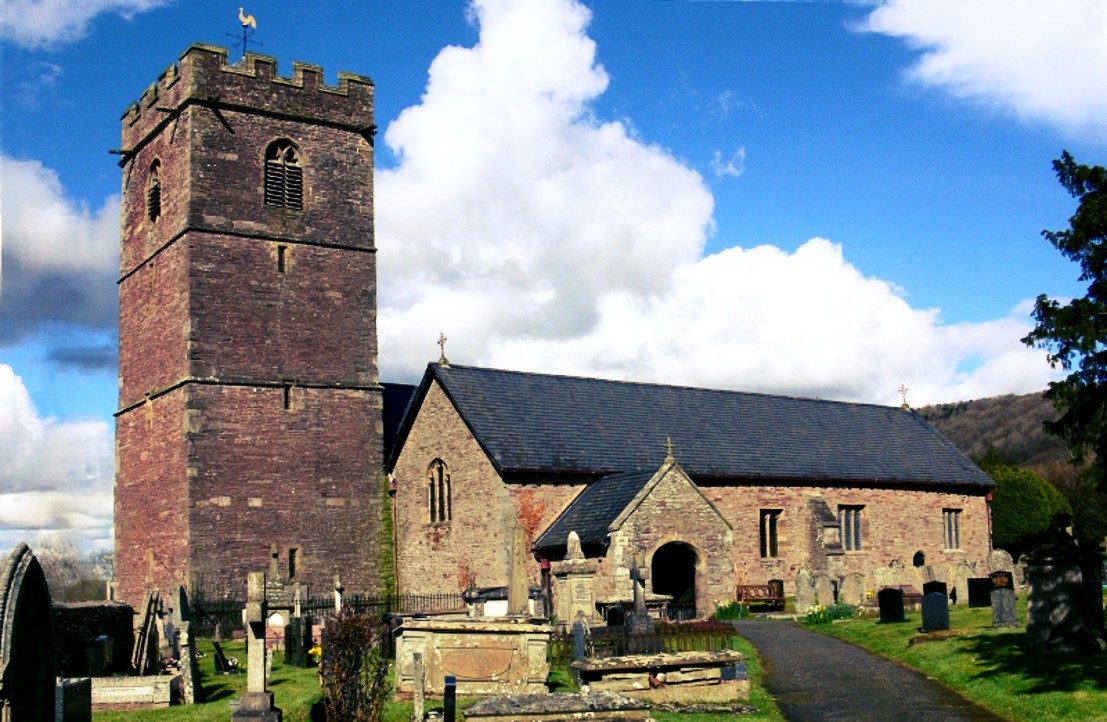
The medieval St Gwendoline’s Church, Talgarth, is said to occupy the site where St Gwen was buried.
St Asclepiades of Antioch St Athenodorus (Died c269) Bishop Martyr the brother of St Gregory Thaumaturgus. St Brothen Bl Burchard I St Cadwaladr of Brittany Bl Domenico of Perpignano St Eutychius of Pozzuoli St Gwen St Gwen of Talgarth (463-c492) Widow St Gwendoline
Bl Margherita Tornielli St Monon of Nassogne St Proculus of Pozzuoli Bl Theobald of Narbonna St Tryphonia of Rome
Martyrs of Africa – 9 Saints: A group of Christians Martryed together in Africa. The only details that have survived are the names – Beresus, Dasius, Faustinus, Leucius, Lucius, Martialis, Victoricus, Victrix and Viktor. They were Martyred in c300 in Africa.
Thought for the Day – 17 October – Meditations with Antonio Cardinal Bacci (1881-1971)
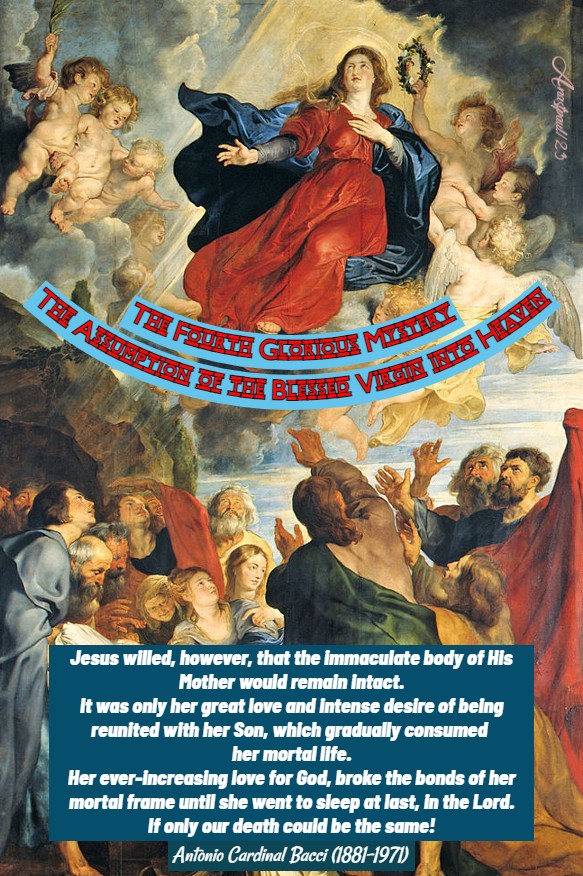
“Month of the Holy Rosary” The Fourth Glorious Mystery The Assumption of the Blessed Virgin into Heaven
“The fourth Book of Kings tells us, that the prophet Elias was brought up into Heaven in a fiery chariot without having first endured the pains and humiliations of death (Cf 4 Kings 2:11). Why did God not do likewise in the case of the Blessed Virgin, commanding His Angels to bear her to Heaven before death struck her innocent body? As St Paul says, it was sin which caused death to enter the world. From the moment of her conception, Mary was free from the slightest taint of sin, for she was immaculate and full of grace. Nevertheless, according to the most widely held tradition, Mary chose to die, even as her divine Son had willed to die. Jesus “was offered because it was his own will” (Isa 53:7). The same is true in Mary’s case, with only this difference. Jesus died a cruel death after the most hideous tortures in the midst of a blaspheming and hate-ridden mob. Nothing like this happened to Mary, although she is called the Queen of Martyrs because of the sword which pierced her soul at the sight of her divine Son, dying in such agony.
Jesus willed, however, that the immaculate body of His Mother would remain intact. It was only her great love and intense desire of being reunited with her Son, which gradually consumed her mortal life. Her ever-increasing love for God, broke the bonds of her mortal frame until she went to sleep at last, in the Lord.
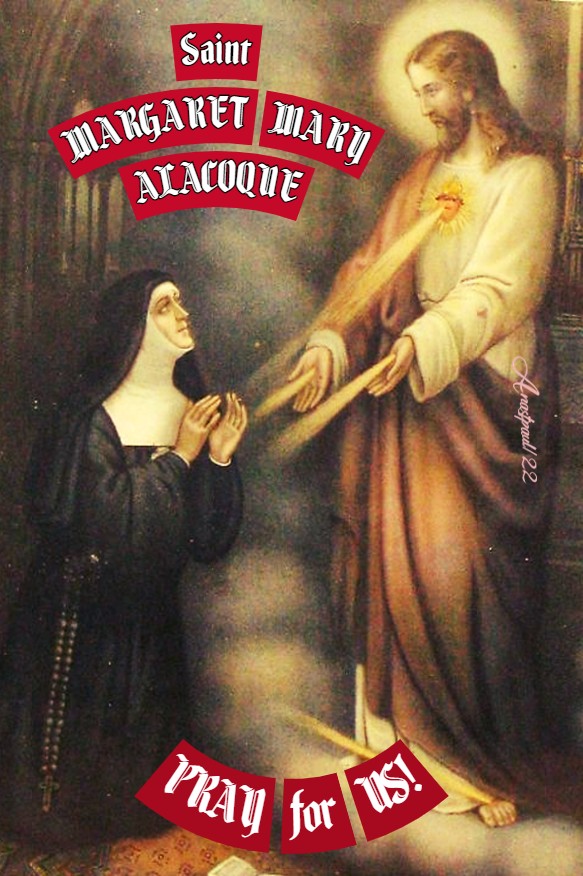
Quote/s of the Day – 17 October – St Margaret Mary Alacoque (1647-1690) Virgin
“Let us begin, in earnest, to work out our salvation, for no-one will do it for us, since, even He Himself, Who made us, without ourselves, will not save us, without ourselves!”
“Keep your heart in peace and let nothing trouble you, not even your faults. You must humble yourself and amend them peacefully, without being discouraged or cast down, for God’s dwelling, is in peace.”
“Let every knee bend before Thee, O greatness of my God, so supremely humbled in the Sacred Host. May every heart love Thee, every spirit adore Thee and every will be subject to Thee!”
In Thy Divine Heart By St Margaret Mary Alacoque (1647-1690) Visionary of the Sacred Heart
Lord Jesus, let my heart never rest until it finds Thee, Who are its source, its love and its happiness. By the wound in Thy Heart pardon the sins I have committed, whether out of weakness, or out of evil desires. Place my weak heart in Thy own Divine Heart, continually under Thy protection and guidance, so that I may persevere in doing good and in fleeing evil, until my last breath. Amen
One Minute Reflection – 17 October – “The Month of the Most Holy Rosary and of the Angels” – St Margaret Mary Alacoque (1647-1690) Virgin – Ephesians 3:8-9, 14-19, Matthew 11:25-30 – Scripture search here: https://www.drbo.org/
“Thou hast hid these things from the wise and prudent and revealed them to the little ones.” – Matthew 11:25
REFLECTION – “When more obscure Mysteries are presented to your timid nature by your faith, Christian soul, take courage and say [like Mary], “How shall this be done …?” (Lk 1:34), not in a controversial spirit but with the love of a disciple. Let your questioning be your prayer, your love, your piety, your humble desire – not seeking to plumb the depths of God’s majesty but looking for salvation, in the healing acts of the God, Who saves us. …
No-one “knows a man’s thoughts, except the spirit of the man which is in him; so also, no-one comprehends the thoughts of God, except the Spirit of God” (1 Cor 2:11). Hasten then to be a sharer in the Holy Spirit. He is present when He is called upon; nor could He be called upon, if He were not present. When, on being called upon, He comes, it is with the abundance of the blessings of God. He is the flowing of “the river which gives joy to God’s city” (Ps 45:5). And if, when He comes, He finds you humble and still and respecting the Words of God, He will rest upon you (Lk 1:35) and He will reveal to you, what God the Father withdraws from the wise and prudent of this world and those things, will begin to dawn upon you which Wisdom (1 Cor 1:24) could say to the disciples when on this earth but which they were unable to bear, until the Spirit of Truth came, Who was to teach them all Truth (Jn 16:12-13).” – William of Saint-Thierry O.Cist. (c1075-c1148) Cistercian Monk, Mystic, Theologian, Writer (The Mirror of Faith 6).
PRAYER – O Lord Jesus Christ, Who wondrously revealed the unsearchable riches of Thy Heart to blessed Margaret Mary, the Virgin, grant us, by her merits and through imitating her, to love Thee, in all things and above all things, so that we may be found worthy to possess a lasting dwelling place in Thou Heart itself. Through the same Jesus Christ, Thy Son our Lord, Who lives and reigns with Thee, in the unity of the Holy Ghost, God, world without end. Amen (Collect).
Our Morning Offering – 17 October – St Margaret Mary Alacoque (1647-1690) Virgin
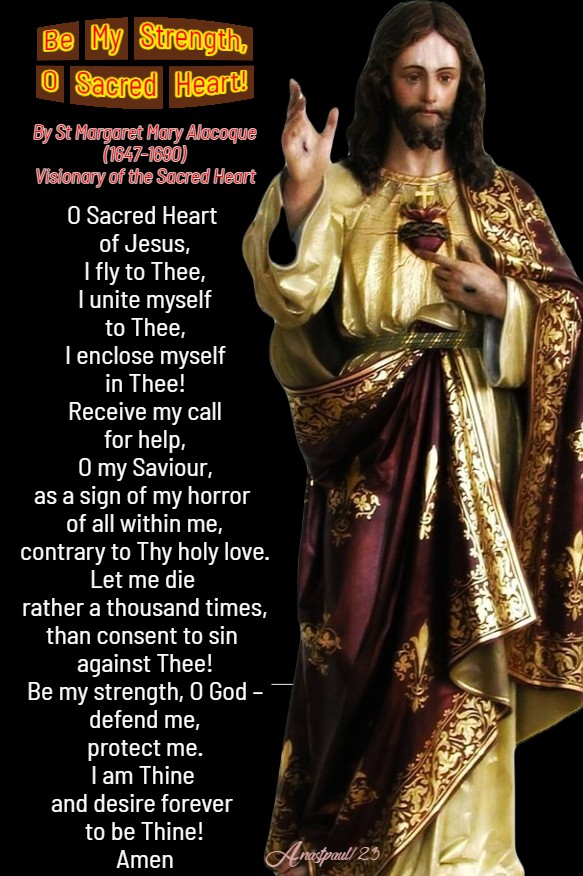
Be My Strength, O Sacred Heart! By St Margaret Mary Alacoque (1647-1690) Visionary of the Sacred Heart
O Sacred Heart of Jesus, I fly to Thee, I unite myself to Thee, I enclose myself in Thee! Receive my call for help, O my Saviour, as a sign of my horror, of all within me contrary to Thy holy love. Let me die rather a thousand times, than consent to sin against Thee! Be my strength, O God – defend me, protect me. I am Thine and desire forever to be Thine! Amen
Saint of the Day – 17 October – Saint Florentinus of Orange (Died c526) Bishop of Orange in in Vaucluse, France now in the Diocese of Avignon, between c527-524, Miracle-worker. Born on an unknown date in Tours, France and died in c526 in Orange, Provence, France of natural causes. Also known as – Florent, Florentius, Fiorenzo, Florence, Florencio. Patronages – Fiorenzuola d’Arda, in Italy and Orange.
The Roman Martyrology reads: “At Orange, in France, St Florentinus, Bishop, who died leaving a reputation for many virtues.”
Florentinus was born in the 5th Century and received monastic training. He was undoubtedly Abbot of the Clastre Monastery in a suburb of Orange (on the site of the current Convent of the Nativity).
He was elected Bishop of this City after the year 500. He continued the restoration of the Diocese, damaged by incessant barbarian invasions and the reconstruction of its Churches.
In 509 the City was taken by the Ostrogoths and its inhabitants deported with their Bishop to Fidentia near Piacenza in Italy. But this captivity was short-lived, thanks to the intervention of BishopSt Caesarius of Arles (470-542) with King Theodoric.
In 517, Florentinus was present at the Council of Epaone (Albon) against Arianism and at the Councils of Lyon and Arles of 524. He died before 527.
The people of Orange have always preserved the memory of his holiness and his pastoral zeal, his goodness, his self-sacrifice and his charity, as have the people of Fiorenzuola d’Arda, in Italy, who chose him as their Patron in recognition of his benefits. This relates to the miracle worked there during his pilgrimage to Rome, when he stopped in Fiorenzuola d’Arda, where he performed the extraordinary miracle of bringing a deceased child back to life
Florentinus’ Relics are shared between the Cathedral of Avignon and that of Puy and between the Churches of Fiorenzuola, Laussonne (Haute-Loire) and Saint-Florent d’Orange, where he is venerated as one of the protectors of the City and the former Diocese.
St Ethelbert of Eastry St Ethelred of Eastry St Florentinus of Orange (Died c526) Bishop Bl Gilbert the Theologian St Heron of Antioch Bl Jacques Burin St John the Short/Dwarf St Louthiern St Mamelta of Persia St Nothelm of Canterbury St Richard Gwyn St Rudolph of Gubbio St Rufus of Rome St Serafino of Montegranaro St Solina of Chartres St Victor of Capua St Zosimus of Rome
Martyrs of Nicomedia – 3 Saints: A group of Christians Martyred in the persecutions of Diocletian. The only details about them that have survived are their names – Alexander, Marianus and Victor. 303 in Nicomedia (in modern Turkey).
Martyrs of Valenciennes -5 Beati: A group of Ursuline nuns Martyred in the persecutions of the French Revolution. Hyacinthe-Augustine-Gabrielle Bourla Jeanne-Reine Prin Louise-Joseph Vanot Marie-Geneviève-Joseph Ducrez Marie-Madeleine-Joseph Déjardins
Martyrs of Volitani: A group of Martyrs who were praised by Saint Augustine of Hippo. In Volitani, proconsular Africa (in modern Tunisia).



















 AnaStpaul
You must be logged in to post a comment.