Saint of the Day – 7 January – Saint Lucian of Antioch (Died 312) Confessor, Priest, Martyr, Teacher, Theologian, Writer, Founder of the renowned School of Antioch. Born in Samosata. Syria in the 2nd Century and died after many tortures by the sword in 312 at Nicomedia, Bithynia (modern Izmid, Turkey). Also known as – Lucian of Drepana, Lucian of Nicomedië, Lucian of Nicomedia, Lucian the Martyr, Lucian of Samosata, Luciano… Lucianus… Lucian means ‘the shining one‘ (Latin).
The Roman Martyrology reads: “The birthday of the blessed Lucian. a Priest of the Church of Antioch and Martyr, who was distinguished for his learning and eloquence. He suffered at Nicomedia for the confession of Christ, in the persecution of Galerius Maximian and was buried at Helenopolis, in Bithynia. His praises have been proclaimed by St John Chrysostom.”
Fresco in the Cathedral in Segni. Italy
Lucian came from a respected family, was educated in Edessa – today’s Sanlıurfa – and then worked as a Priest and teacher in Antioch – today’s Antakya/Hatay. He founded the famous Antiochene school – it used literal, grammatical-historical explanations to interpret Scripture which was in contrast to the allegorical interpretation of the Scriptures taught in Alexandria and, therefore, had a reputation for rationalism.
After the condemnation of Bishop Paul of Samosata in 268 and his teaching that Jesus Christ was a normal human being, Lucian, although not subscribing to this view, also found himself increasingly in opposition to the official teaching and soon no longer belonged to the community in Antioch. Arius, the founder of Arianism , was then one of Lucian’s students, whose followers initially called themselves Syllukianists after Lucian – (meaning: “like-minded with Lucian”).
It seems Lucian corrected his errors and in 285 made peace with the Church and was re-admitted into full communion with the community of Antioch
Lucian was in Nicomedia (today Izmid in Turkey), when Emperor Diocletian’s persecutions broke out and he was imprisoned there for nine years. Twice he was interrogated, when he defended himself ably and refused to deny Christ. In the winter of 311/312 Lucian was brought before Emperor Maximinus Daza, where he presumably suffered Martyrdom after making a profession of his faith. His speech before the Emperor has been preserved but its authenticity is disputed. He was either starved to death, or more likely, killed by sword in 312. His body was taken to Drepanum, which was nearby. Emperor Constantine renamed it Helenopolis in memory of his mother – today’s Hersek -.
According to St Jerome’s testimony, a summary of the Sacred Scriptures published by Lucian was used for a long time, from Constantinople – today’s Istanbul – to Antioch. A surviving creed written by Lucian, according to which Jesus Christ was not Consubstantial but only Consubstantial with God, was also widespread. Lucian’s life story, written in the middle of the 4th Century, comes from Arian representatives.
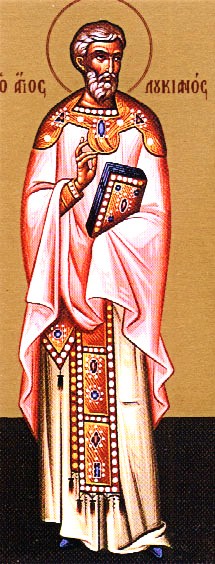
A Greek Icon of St Lucian
Lucian’s grave in Drepanon – today’s Hersek – was first venerated by the followers of Arianism but by the end of the 4th Century, Lucian was included in the Church’s list of Saints.
St John Chrysostom gave him an Eulogy, St Eusebius of Caesarea praised him as a Priest of the community in Antioch who was excellent in all his conduct and as a very excellent man in every respect, of a strict way of life and well versed in the Sacred sciences . St Helena had a Church built in his honour in Antioch which was probably Consecrated on 15 October. In the Russian Orthodox Church, Lucian is incorrectly referred to as a Bishop because of his importance.
Canonisation: – As early as the end of the 4th Century, Lucian was included in the list of Saints despite his earlier critical relationship with the official Church.
Bl Albert of Siena St Aldric of Le Mans Bl Ambrose Fernandez St Anastasius of Sens St Brannock of Braunton St Candida of Greece St Cedd St Clerus of Antioch St Crispin I of Pavia St Cronan Beg St Emilian of Saujon St Felix of Heraclea St Giuliano of Gozzano (c350-c391) Deacon, Missionary St Januarius of Heraclea St Julian of Cagliari St Kentigerna St Lucian of Antioch (Died 312) Confessor, Priest, Martyr
St Pallada of Greece St Polyeuctus of Melitene St Reinhold of Cologne St Spolicostus of Greece St Theodore of Egypt St Tillo of Solignac
St Valentine of Passau (Died 475) Bishop in Passau in the Rhaetia region, Switzerland, an area in the border region of modern Italy, Austria and Switzerland, Monk, Abbot, Missionary, Hermit, Miracle-worker. Died on 7 January 475 at Mais, Tyrol, Austria of natural causes. Patronages – against convulsions, against cramps/stomach pain, against epilepsy, against gout, against plague/epidemics, against demonic possession, of cattle diseases, of pilgrims, poor people, City and Diocese of Passau. Biography: https://anastpaul.com/2023/01/07/saint-of-the-day-7january-st-valentine-of-passau-died-475-bishop/
St Virginia of Ste-Verge Bl Wittikund of Westphalia
Thought for the Day – 6 January – The Spiritual Combat (1589) – Dom Lorenzo Scupoli OSM (c1530-1610)
“None shall be crowned who has not fought well.” 2 Tim 2: 5
Introduction I: Of the Essence of Christian Perfection – Of the Struggle Requisite for its Attainment – And of the Four Things Needful in this Conflict
Of the Struggle Requisite for its Attainment
“You see, then, very clearly that, as I have said, the spiritual life consists not in these things. It consists in nothing else but: the knowledge of the goodness and the greatness of God and of our nothingness and inclination to all evil; in the love of Him and the hatred of ourselves; in subjection, not to Him alone but for love of Him, to all His creatures; in entire renunciation of all will of our own and absolute resignation to all His divine pleasure; and furthermore, willing anddoing all this purely for the glory of God and solely to please Him and because He so wills and merits thus to be loved and served.
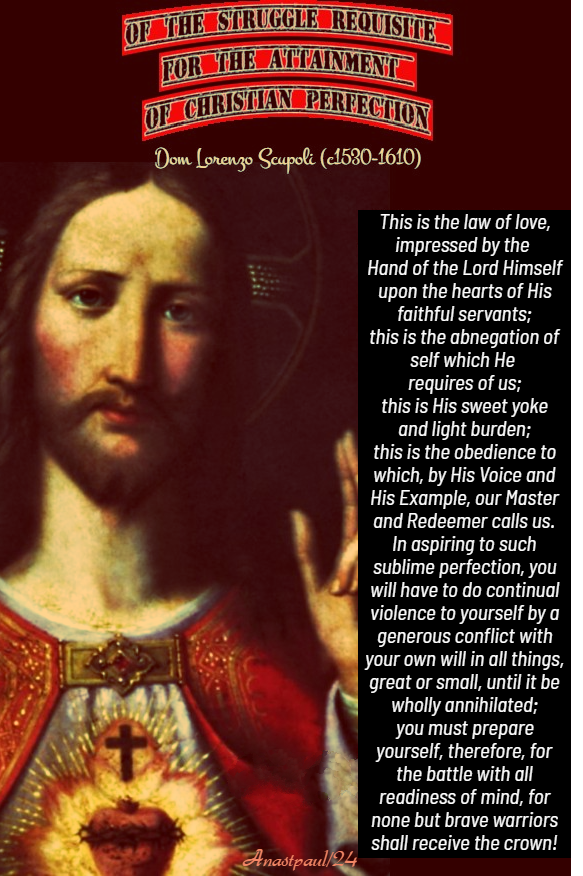
This is the law of love, impressed by the Hand of the Lord Himself upon the hearts of His faithful servants; this is the abnegation of self which He requires of us; this is His sweet yoke and light burden; this is the obedience to which, by His Voice and His Example, our Master and Redeemer calls us.
In aspiring to such sublime perfection, you will have to do continual violence to yourself by a generous conflict with your own will in all things, great or small, until it be wholly annihilated; you must prepare yourself, therefore, for the battle with all readiness of mind, for none but brave warriors shall receive the crown!
This is indeed the most difficult of all struggles — for while we strive against self, self is striving against us and, therefore, is the victory here most glorious and precious in the sight of God! For if you will set yourself to trample down and exterminate all your unruly appetites, desires and wishes, even in the smallest and most inconsiderable matters, you will render a greater and more acceptable service to God, than if you should discipline yourself to blood, fast more rigorously than hermits or anchorites of old, or convert millions of souls and yet, voluntarily leave even one of these evils alive within you. For although the conversion of souls is no doubt more precious to the Lord than the mortification of a fancy, nevertheless, nothing should, in your sight, be of greater account than to will and to do that very thing which the Lord specially demands and requires of you. And He will infallibly be better pleased that you should watch and labour to mortify your passions, than if, consciously and willfully, leaving but one alive within you, you should serve Him in some other matter of greater importance in itself.”
Quote/s of the Day – 6 January – The Epiphany of the Lord
Chalk the Door – Epiphany House Blessing 20 C+M+B 24
“Christus mansionem benedicat” Peace be to this house and to all who dwell herein. From the east came the Magi to Bethlehem to adore the Lord – “and opening their treasures they offered precious gifts – Gold for the Great King, Incense for the True God and Myrrh to symbolise His Burial.”
The equation is written to be the first two digits of the year, followed by the initials C, M and B, followed by the last two digits of the year. Each portion is split by plus signs (being the Sign of the Cross). For this year, the equation would be written as “20 + C + M + B + 24” The chalking holds two meanings. The C, M and B, refer to the traditional names of the Magi: Caspar, Melchior and Balthasar. The letters also stand for the Latin phrase “Christus Mansionem Benedicat” which means “May Christ Bless this House” The plus signs represents the Cross and the 20 and 24 simply refer to the year.
“Three gifts they bring, three gifts they bear away, For Incense, Myrrh and Gold, Faith, Hope and Love And with their gifts, the givers’ hearts do stay, Their mind from Christ, no parting can remove, His humble state, His stall, His poor retinue They fancy more than all their rich revenue.”
St Robert Southwell SJ (1561-1595) Priest and Martyr
(Excerpt from the Poem “The Epiphany”)
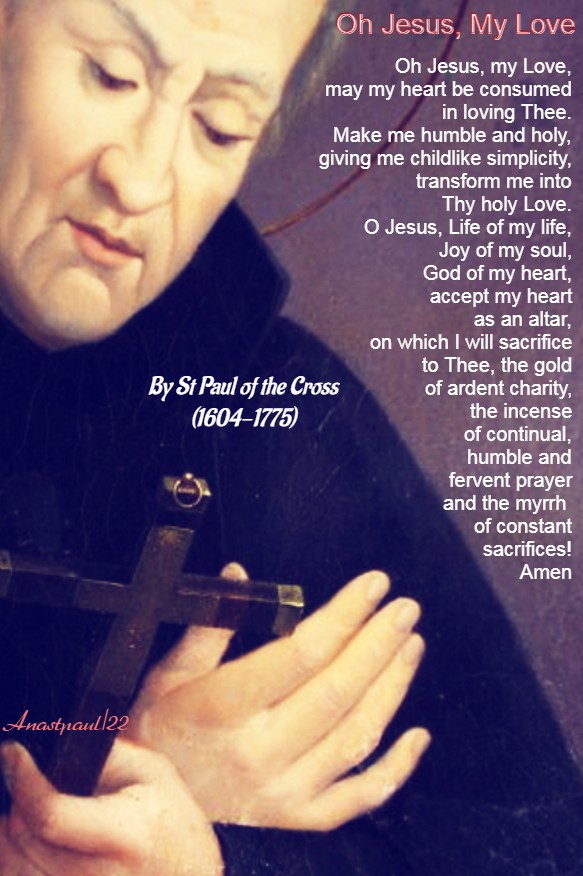
Oh Jesus, My Love By St Paul of the Cross (1604-1775)
Oh Jesus, my Love, may my heart be consumed in loving Thee. Make me humble and holy, giving me childlike simplicity, transform me into Thy holy Love. O Jesus, Life of my life, Joy of my soul, God of my heart, accept my heart as an altar, on which I will sacrifice to Thee, the gold of ardent charity, the incense of continual, humble and fervent prayer and the myrrh of constant sacrifices! Amen
Epiphany Prayer
“Give me, therefore, I pray Thee, this gold, this incense and this myrrh. Give me the gold of Thy holy love, give me the spirit of holy prayer, give me the desire and strength to mortify myself in everything that displeases Thee. I am resolved to obey Thee and to love Thee but Thou knowest my weakness, oh, give me the grace to be faithful to Thee!”
St Alphonsus Liguori (1696-1787) Most Zealous Doctor of the Church
One Minute Reflection – 6 January – The Epiphany of the Lord – Isaias 60:1-6, Matthew 2:1-12 – Scripture search here: https://www.drbo.org/
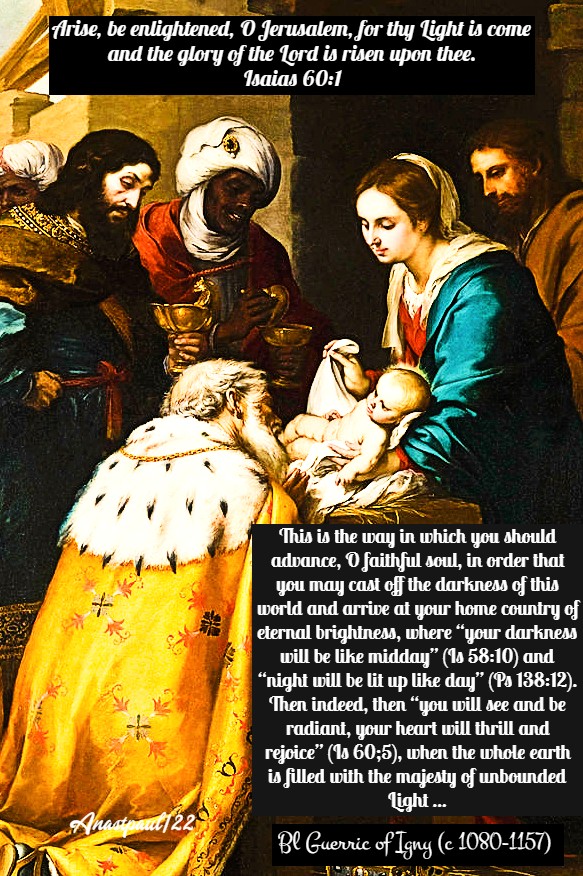
“Arise, be enlightened, O Jerusalem, for thy Light is come and the glory of the Lord is risen upon thee.” – Isaias 60:1
REFLECTION – “ … In virtue of it this day also, you are sanctified by the enlightening of the Church. Thanks be to Thee, true Light, Thou that “enlighten every man coming into this world” (Jn 1:9), Thou Who for this very purpose, have come into this world as a Man. …
O God, Thou Who gives Light to all nations, of Thou we will sing – “Behold the Lord will come and enlighten the eyes of His servants” (cf. Jude 14). Behold, Thou hast come, my Light: “Enlighten my eyes that I may never fall asleep in death” (Ps 12:[12],4)… Thou has come, O Light of the faithful and behold Thou has granted us today, to rejoice at the enlightening of faith that is, of our lamp. Grant us also to rejoice always at the enlightening of the darkness that remains in us…
This is the way in which you should advance, O faithful soul, in order that you may cast off the darkness of this world and arrive at your home country of eternal brightness, where “your darkness will be like midday” (Is 58:10) and “night will be lit up like day” (Ps 138:12). Then indeed, then “you will see and be radiant, your heart will thrill and rejoice” (Is 60;5), when the whole earth is filled with the majesty of unbounded Light and “His glory is seen in you” (Is 60;2)… “Come and let us walk in the Light of the Lord!” (Is 2:5); as “children of light” let us walk “from brightness to brightness, as led by the Lord Who is Spirit“ (2 Cor 3:18).” – Bl Guerric of Igny (c 1080-1157) Cistercian Abbot (3rd sermon for Epiphany SC 166).
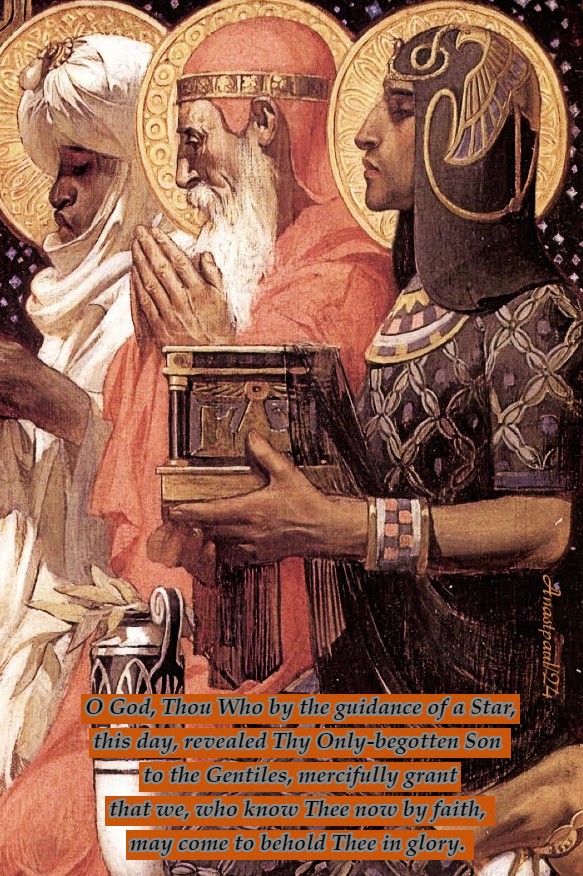
PRAYER – O God, Thou Who by the guidance of a star this day revealed Thy Only-begotten Son to the Gentiles, mercifully grant that we, who know Thee now by faith, may come to behold Thee in glory. Through the same Jesus Christ, Thy Son our Lord, Who lives and reigns with Thee, in the unity of the Holy Ghost, God, world without end. Amen (Collect).
Saints of the Day – 6 January – Saint Caspar, Saint Melchior and Saint Balthasar, (1st Century) otherwise known as the Three Wise Men/Kings or the Magi – they were all Martyrs. Patronages – against epilepsy/of epileptics, against thunder, furriers, motorists, pilgrims, playing card manufacturers, sawmill workers, travellers, travelling merchants, Cologne, Germany, Saxony. Additional Memorials – 23 July (translation of Relics); 24 July (Cologne, Germany where their Relics lie).
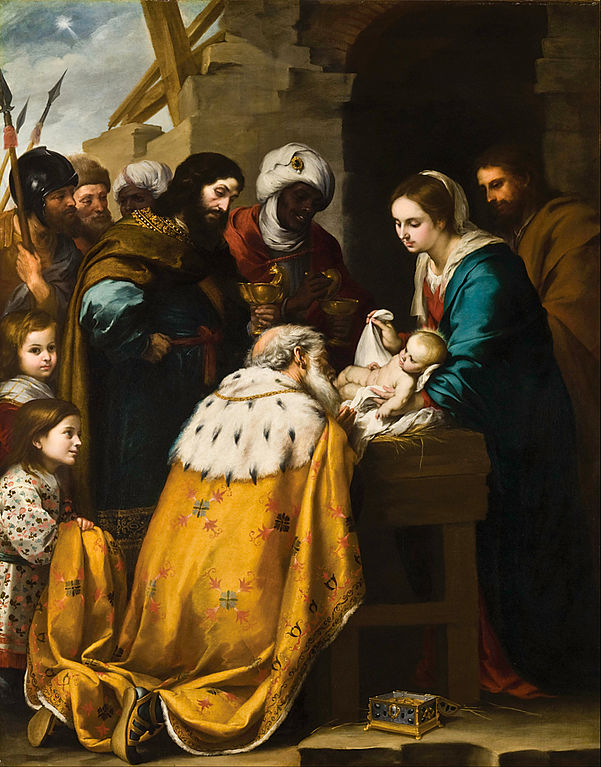
“And entering into the house, they found the child with Mary His Mother and falling down they adored Him and opening their treasures, they offered Him gifts; gold, frankincense and myrrh.” – Matthew 2:11
The Three Kings brought Jesus Gold — to show that He was a King; Frankincense to honour Him as God and Myrrh to greet Him as man. These Kings first saw the Star which led them to Bethlehem, on the previous 25 March — the day and at the moment, on which Jesus was conceived in the womb of the Blessed Virgin Mary by the power of the Holy Ghost.
It took the Magi nine months and twelve days to reach Bethlehem, guided by the Star. The Star left them when they were in Jerusalem. But it shone again after the Kings left Jerusalem and led them to the cave of Bethlehem.
Our Lady let each of the Kings hold Jesus in his arms. They were given some of His baby clothes to bring back to the East by way of Relics. The Kings returned to the East, to Persia and later were Baptised there by Saint Thomas the Apostle, in the year 40.
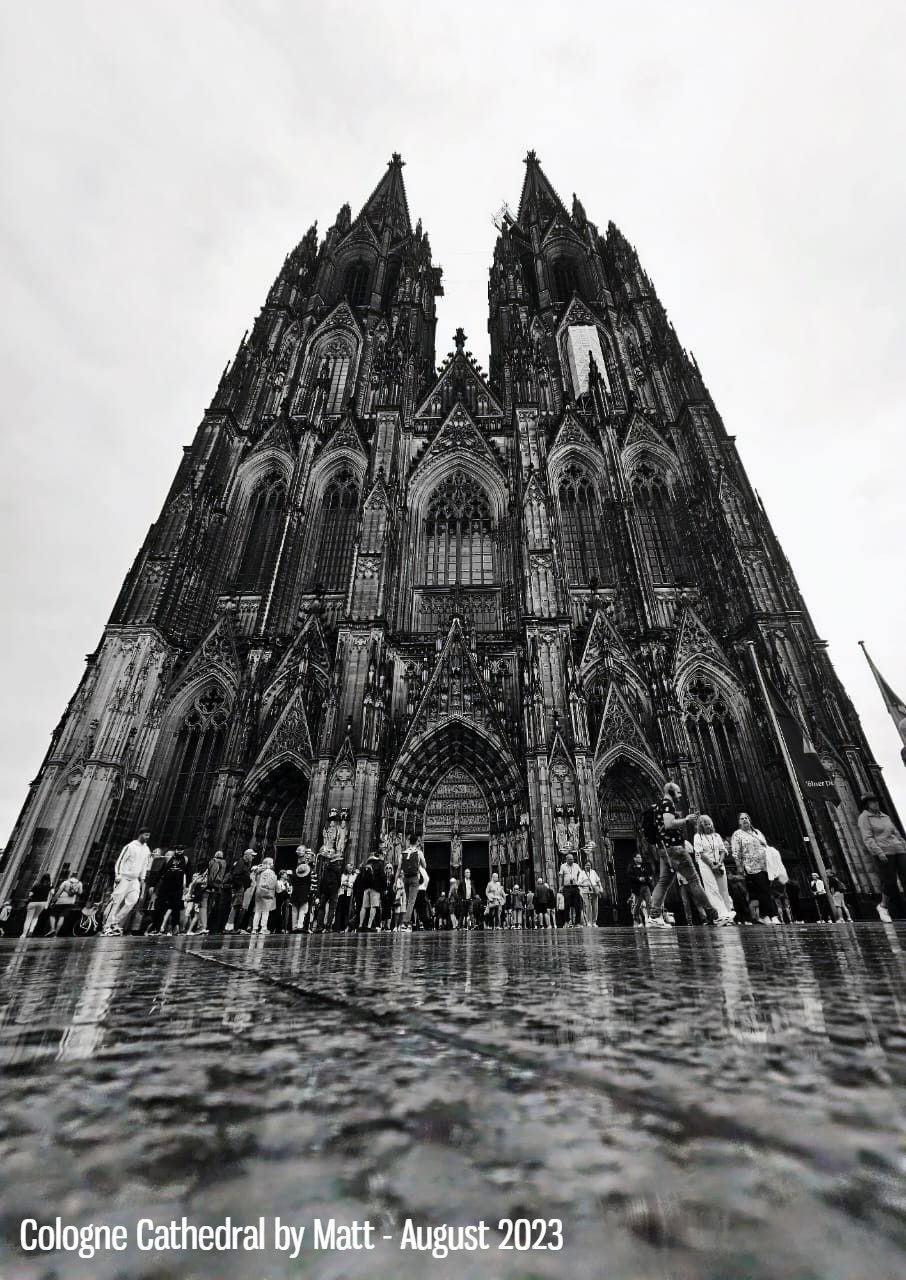
All three of the Kings were Martyred for the Catholic Faith. Their names are now and should always be called, Saint Caspar, Saint Melchior and Saint Balthasar. The bodies of Saint Gaspar, Saint Melchior and Saint Balthasar were first brought to Constantinople and then to Milan and in the 12th Century they were placed in the Cathedral of Cologne, in Germany, where they are venerated with much love by the Catholics of all the world.
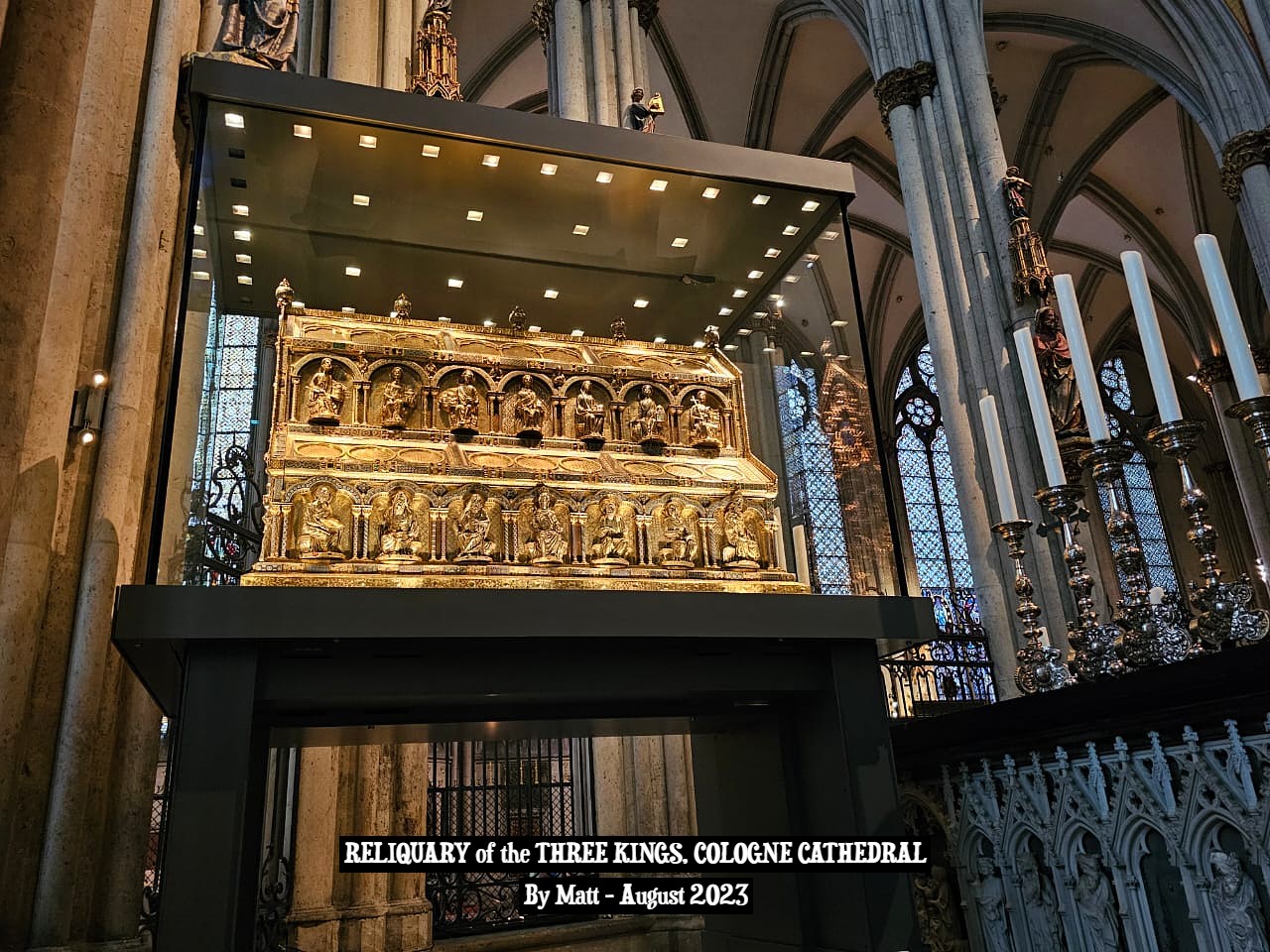
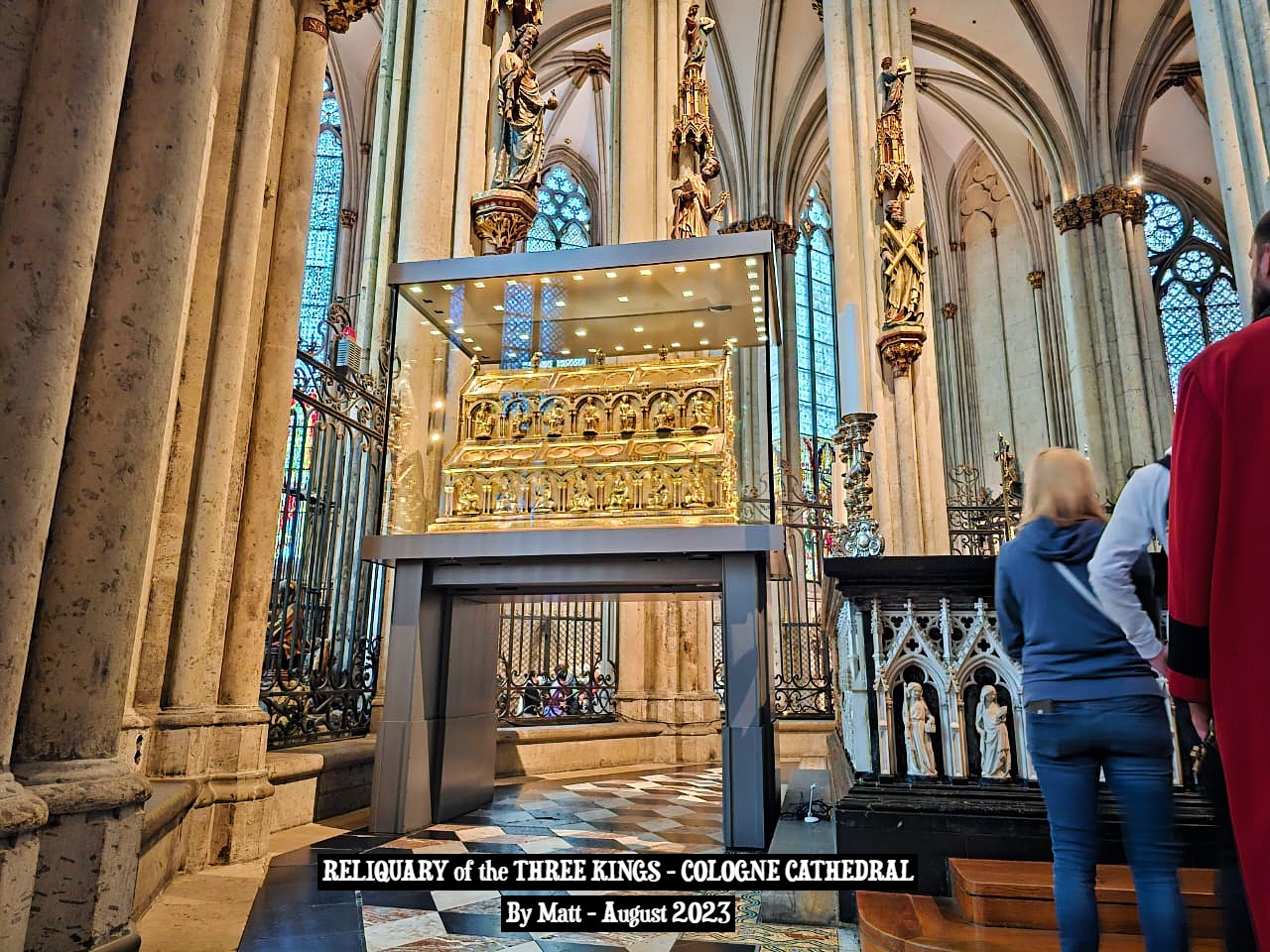
Around the year 1200, the Cologne Cathedral Chapter commissioned the creation of this Golden Shrine to house the bones of the Magi.
These Relics which were brought from Milan to Cologne in 1164 by ArchbishopRainald of Dassel, remain there to this day.
The precious Reliquary is decorated with gems, intaglios and cameos. The sides of the Shrine feature images of the Prophets and the Apostles, seated beneath rows of arches while the front-facing end, depicts three manifestations of Christ; the adoration of the Magi on the left, the Baptism in the Jordan on the right and the Last Judgement – above.
For centuries, pilgrims have come from all over Europe and the world, to venerate the Relics in the Shrine.
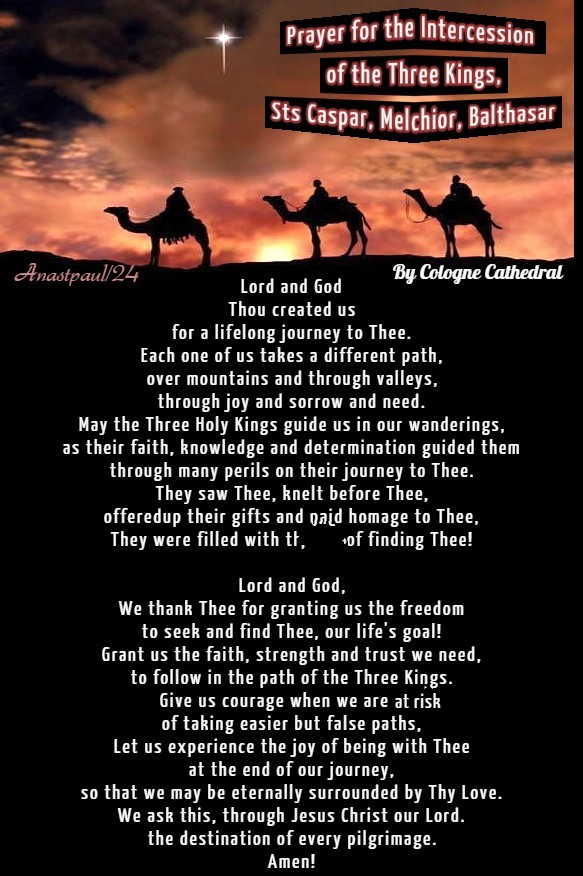
Prayer for the Intercession of the Three Kings, Saint Caspar, Saint Melchior and Saint Balthasar (By Cologne Cathedral)
Lord and God Thou created us for a lifelong journey to Thee. Each one of us takes a different path, over mountains and through valleys, through joy and sorrow and need. May the Three Holy Kings guide us in our wanderings, as their faith, knowledge and determination guided them through many perils on their journey to Thee. They saw Thee, knelt before Thee, offered up their gifts and paid homage to Thee, They were filled with the joy of finding Thee!
Lord and God, We thank Thee for granting us the freedom to seek and find Thee, our life’s goal! Grant us the faith, strength and trust we need, to follow in the path of the Three Kings. Give us courage when we are at risk of taking easier but false paths, Let us experience the joy of being with Thee at the end of our journey, so that we may be eternally surrounded by Thy Love. We ask this, through Jesus Christ our Lord. the destination of every pilgrimage. Amen!
(An Imprimatur has been granted for this publication – Cologne Cathedral)
The Epiphany of the Lord Epiphany celebrates the visit of the three Kings or iMagi (Wise Men) to the Christ Child, signifying the extension of salvation to the Gentiles. The date of Epiphany, one of the oldest Christian Feasts, is 6 January, the 12th day after Christmas. However, in some countries, the celebration of Epiphany is transferred to the Sunday which falls between 2 January and 8 January (inclusive). Greece, Ireland, Italy and Poland continue to observe Epiphany on 6 January as do some Dioceses throughout the world. Because Epiphany is one of the most important Feasts, it is a Holy Day of Obligation.
St Charles of Sezze OFM (1613-1670) Stigmatist, Friar, of the Friars Minor, Mystic, Writer, Advisor. His Beatification was celebrated in 1882 while Pope Pius XII approved his Canonisation in 1958 but the Pope died before he could Canonise the Friar so his successor, Pope John XXIII did so on 12 April 1959. His body is incorrupt. About St Charles: https://anastpaul.wordpress.com/2018/01/06/saint-of-the-day-6-january-st-charles-of-sezze-o-f-m-1613-1670/
St Demetrius of Philadelphia St Diman Dubh of Connor St Edeyrn St Eigrad St Erminold of Prüfening
St Julian of Antinoë St Julius Bl Luc of Roucy Bl Macarius the Scot St Macra of Rheims St Merinus St Nilammon of Geris (Died c404) Hermit St Petran of Landévennec
St Pia of Quedlinburg St Pompejanus Bl Raymond de Blanes St Schotin St Wiltrudis of Bergen
Martyrs in Africa: Unknown number of Christian men and women who were Martyred in the persecutions of Septimus Severus. They were burned to death c 210.
Martyrs of Sirmium – 8 Saints: A group of Christians Martyred together for their faith. The only surviving details are the names of eight of them – Anastasius VIII, Florianus, Florus, Jucundus, Peter, Ratites, Tatia and Tilis. They were martyred in the 4th century at Syrmium, Pannonia (modern Sremska Mitrovica, Vojvodina, Serbia).
Twelve Apostles – Saints of Ireland: Twelve 6th Century Irish Monks who studied under Saint Finian at Clonard Abbey and then spread the Faith throughout Ireland. Each has his own commemoration but on this day, they and their good works are considered and celebrated together. Although Saint Finian is sometimes included, most ancient writers list them as –
Thought for the Day – 5 January – The Spiritual Combat (1589) – Dom Lorenzo Scupoli OSM (c1530-1610)
“None shall be crowned who has not fought well.” 2 Tim 2: 5
Introduction I: Of the Essence of Christian Perfection – Of the Struggle Requisite for its Attainment – And of the Four Things Needful in this Conflict
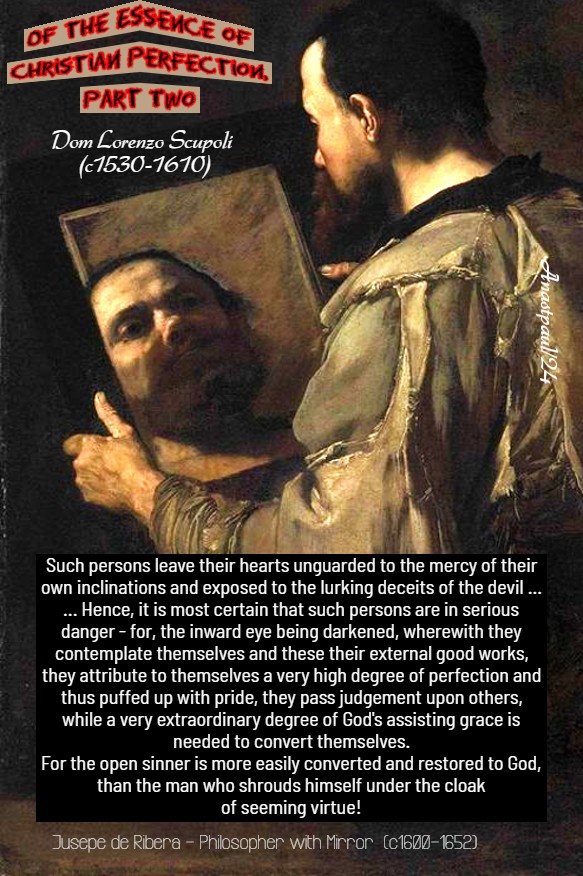
Of the Essence of Christian Perfection, Part Two:
“ Such persons leave their hearts unguarded to the mercy of their own inclinations and exposed to the lurking deceits of the devil, who, seeing them out of the direct road, not only lets them continue these exercises, with satisfaction but leads them, in their own vain imagination, to expound on the delights of paradise and to fancy themselves to be borne aloft amidst the Angelic Choir and to feel God within them. Sometimes, they find themselves absorbed in high, or mysterious and ecstatic meditations and, forgetful of the world and of all that it contains, they believe themselves to be caught up to the Third Heaven.
But the life and conversation of such persons, prove the depth of the delusion in which they are held and their great distance from the perfection after which we are inquiring; for in all things, great and small, they desire to be preferred and placed above others; they are wedded to their own opinion and obstinate in their own will and blind to their own faults, they are busy and diligent observers and critics of the deeds and words of others. But touch only with a finger their point of honour, a certain vain estimation in which they hold themselves and would have others to hold them, interrupt their devotions and they are disturbed and offended beyond measure.
And if, to bring them back to the true knowledge of themselves and of the way of perfection, Almighty God should send them sickness, or sorrow, or persecution (that touchstone of His servants’ loyalty which never befalls them without His permission or command), then, is the unstable foundation of their spiritual edifice discovered and its interior laid bare, all corroded and defaced by pride …
Hence, it is most certain that such persons are in serious danger – for, the inward eye being darkened, wherewith they contemplate themselves and these their external good works, they attribute to themselves a very high degree of perfection and thus puffed up with pride, they pass judgement upon others, while a very extraordinary degree of God’s assisting grace is needed to convert themselves. For the open sinner is more easily converted and restored to God, than the man who shrouds himself under the cloak of seeming virtue!”
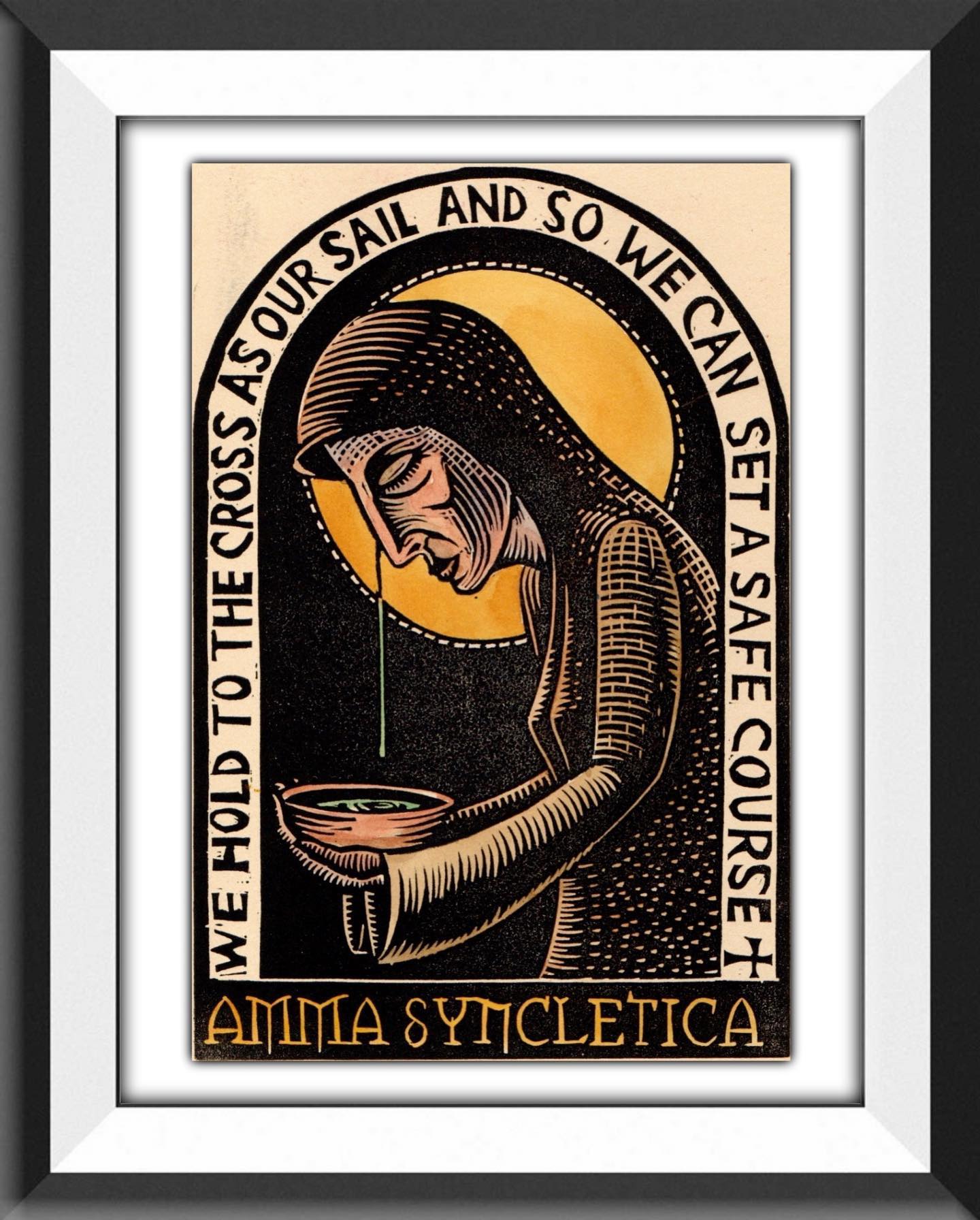
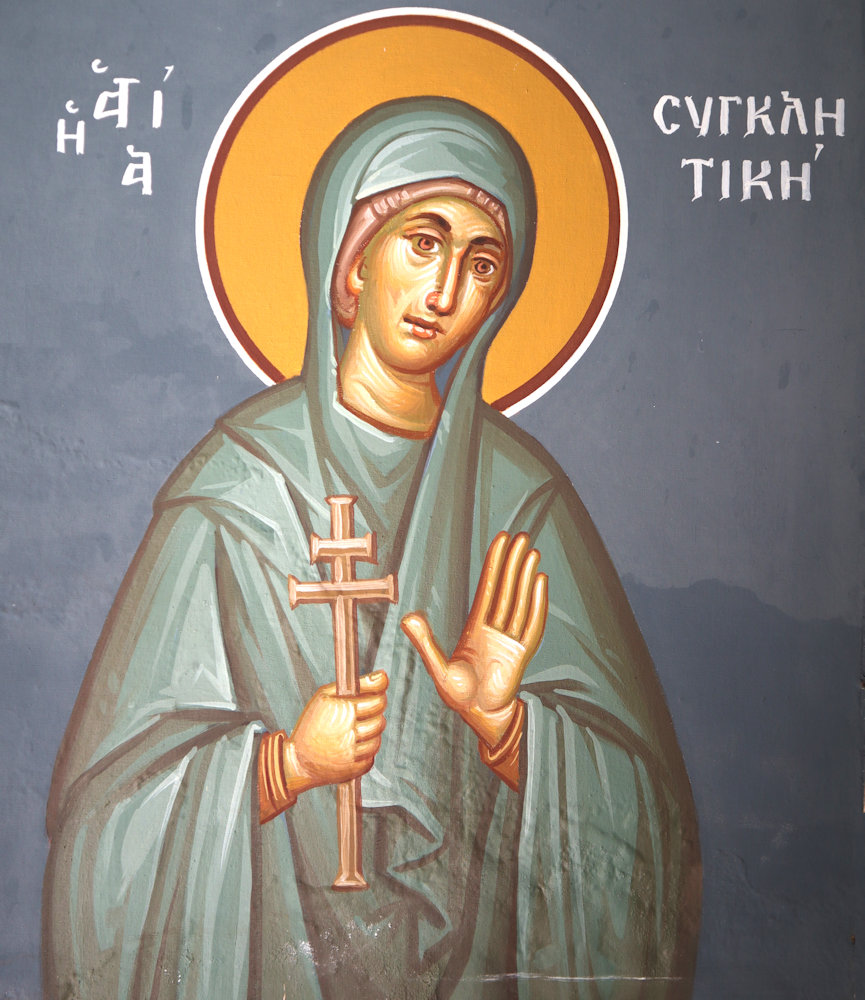
Quote/s of the Day – 5 January – The Memorial of Saint Syncletica (c320-c400) Virgin, Anchorite, Mystic, Spiritual Guide, Abbess in the Sketic Desert?
“We hold to the Cross as our sail and so we can set a safe course.”
Some sisters asked St Syncletica: ‘What do we have to do to be saved?‘ She heaved a sigh, wept bitterly and then said:
“We all know what we must do to be saved but because of our negligence, we can lose our salvation. Above all and more and more, we should do everything we can to keep the commandment of the Lord – ‘You shall love the Lord your God with all your heart, with all your soul, with all your mind and your neighbour as yourself’ (Mt 22:37). So salvation lies in this double love.”
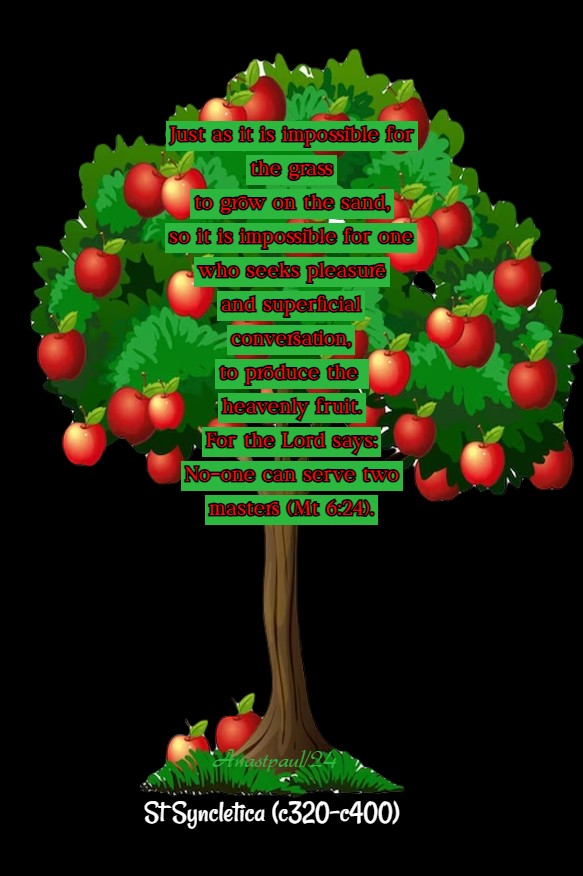
“Just as it is impossible for the grass to grow on the sand, so it is impossible for one who seeks pleasure and superficial conversation, to produce the heavenly fruit. For the Lord says: No-one can serve two masters (Mt 6:24).”
“The more progress the competitors make, the stronger the opponents they fight against …”
(Compiled by Abbot em. Dr Emmeram Kränkl OSB Benedictine Abbey Schäftlarn – for the Katholische SonntagsZeitung).
One Minute Reflection – 5 January – “The Month of the Most Holy Name of Jesus and of the Holy Family”– Vigil of the Epiphany – Galatians 4:1-7, Matthew 2:19-23 – Scripture search here: https://www.drbo.org/
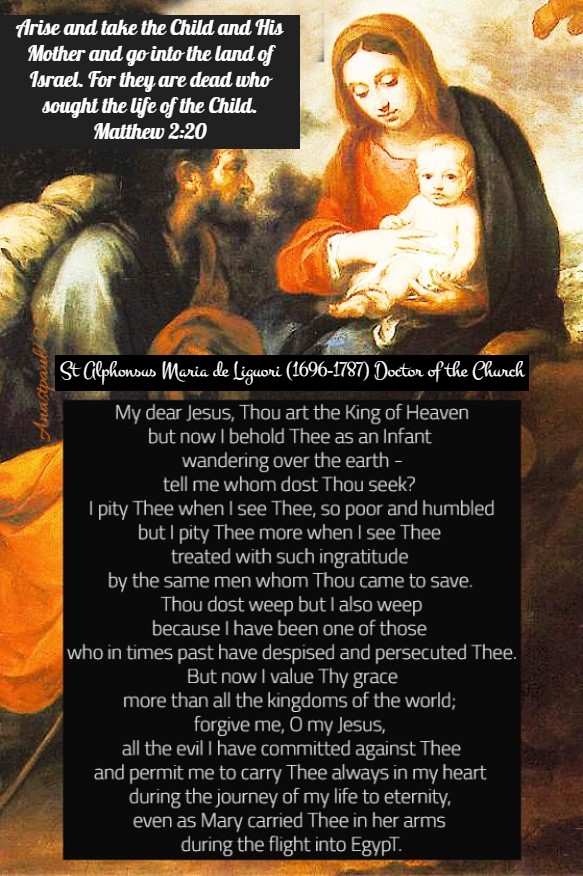
“Arise and take the Child and His Mother and go into the land of Israel. For they are dead who sought the life of the Child.” – Matthew 2:20
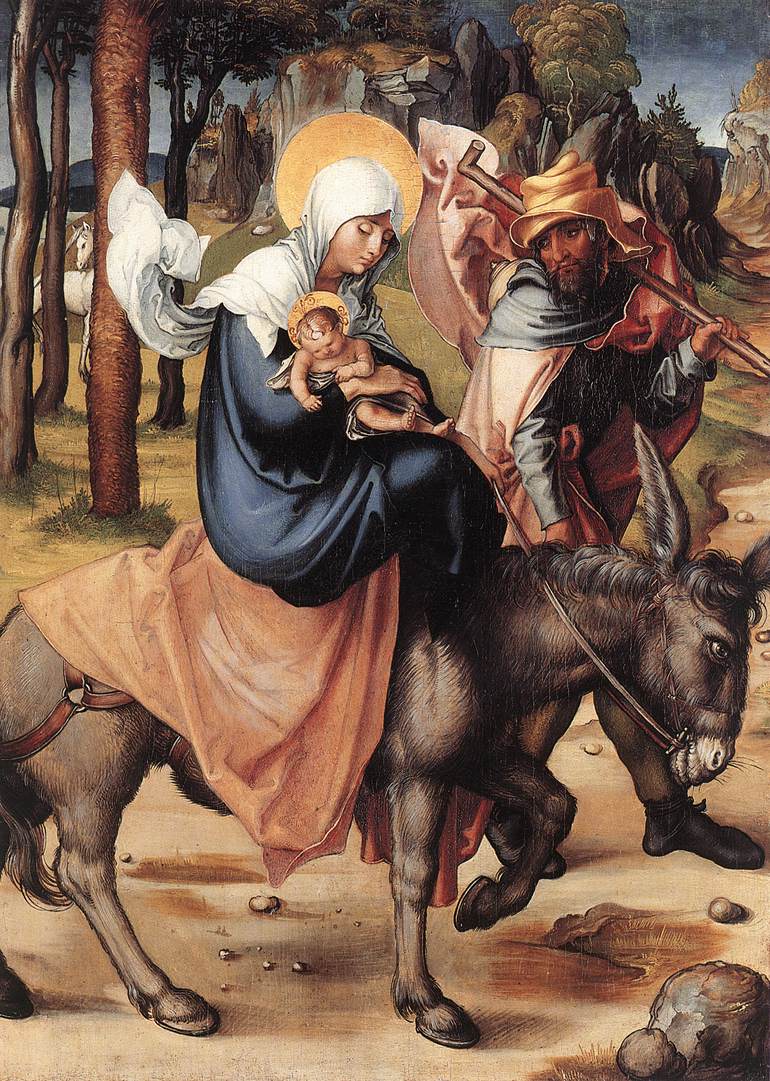
REFLECTION – “My dear Jesus, Thou art the King of Heaven but now I behold Thee as an Infant wandering over the earth – tell me, whom dost Thou seek? I pity Thee when I see Thee, so poor and humbled but I pity Thee more when I see Thee treated with such ingratitude by the same men whom Thou came to save. Thou dost weep but I also weep because I have been one of those, who in times past, have despised and persecuted Thee. But now I value Thy grace more than all the kingdoms of the world; forgive me, O my Jesus, all the evil I have committed against Thee and permit me to carry Thee always in my heart during the journey of my life to eternity, even as Mary carried Thee in her arms during the flight into [and return from] Egypt.” – St Alphonsus Maria de Liguori (1696-1787) Doctor of the Church”
PRAYER – O Almighty and everlasting God, do Thou order all our actions in conformity with Thy good pleasure that through the name of Thy well-beloved Son, we may worthily abound in all good works. Through the same Jesus Christ, Thy Son our Lord, Who lives and reigns with Thee, in the unity of the Holy Ghost, God, world without end. Amen (Collect).
Our Morning Offering – 5 January – “The Month of the Most Holy Name of Jesus and of the Holy Family” – The Vigil of the Epiphany of Our Lord
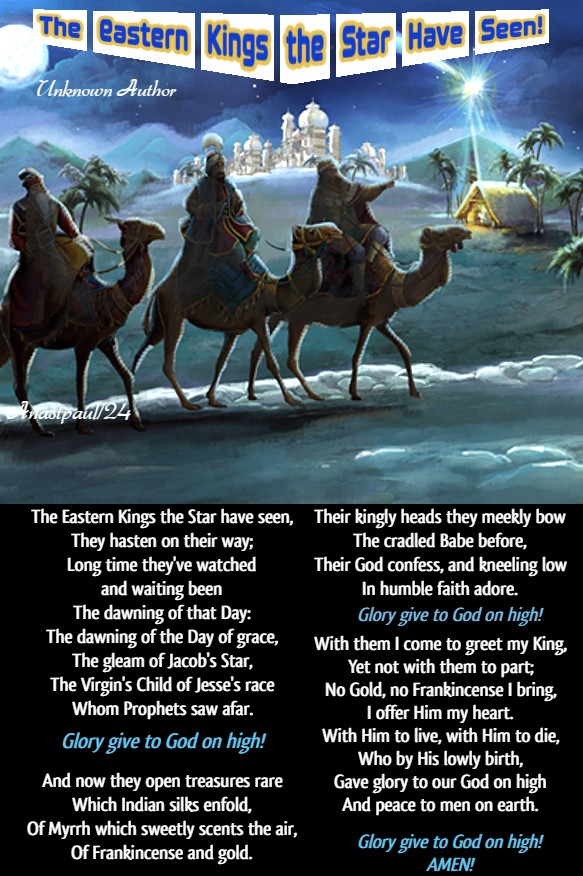
The Eastern Kings the Star Have Seen! Unknown Author
The Eastern Kings the Star have seen, They hasten on their way; Long time they’ve watched and waiting been The dawning of that Day: The dawning of the Day of grace, The gleam of Jacob’s Star, The Virgin’s Child of Jesse’s race Whom Prophets saw afar.
Glory give to God on high!
And now they open treasures rare Which Indian silks enfold, Of Myrrh which sweetly scents the air, Of Frankincense and gold. Their kingly heads they meekly bow The cradled Babe before, Their God confess, and kneeling low In humble faith adore.
Glory give to God on high!
With them I come to greet my King, Yet not with them to part; No Gold, no Frankincense I bring, I offer Him my heart. With Him to live, with Him to die, Who by His lowly birth, Gave glory to our God on high And peace to men on earth.
Saint of the Day – 5 January –S aint Syncletica (c320-c400) Virgin, Anchorite, Mystic, Spiritual Guide, Abbess in the Sketic Desert? Name means: “the chosen one” (From the Greek). Syncletica was born around 320 in Alexandria in Egypt and died there of natural causes in around 400. Patronages – against bodily ills, against loss of parents, against temptations, of the ill, of single laywomen. Also known as – Sincletica.
The Roman Martyrology reads: “St Syncletica, whose noble deeds have been recorded by St Athanasius.”
According to tradition, Syncletica came from a rich and pious family and is reputed to have been very beautiful. From childhood, however, Syncletica was drawn to a life of holiness and piety. She rejected several marriage proposals for she wished to lead a virtuous life devoted to her heavenly Spouse alone.
After the death of her parents, she distributed her inheritance to the poor and with her younger blind sister, Syncletica abandoned the life of the City withdrawing into a cave as a Recluse. Her holy life soon gained the attention of locals and, gradually, many women joined her to live as her disciples in Christ, teaching them the ascetic way of life.
She was mystically gifted. At the end of their lives, the tempter asked God for permission to test them – just as he had done with Job. Syncletica was tormented by many sufferings but despite her old age, she remained steadfast in her faith and asceticism until she died at the age of 84.
About 40 sayings have been preserved of and about Syncletica. Her life story probably dates to the 5th Century.
We are exposed to many temptations in life. Syncletica advises how we should deal with them:
“The devil’s snares are common. If he cannot dissuade the soul through poverty, then he brings wealth as a lure. If he cannot do anything through disgrace, then he withholds praise and honour from her. If he has to accept defeat through health, he makes the body sick. If he cannot deceive with his desires, then he tries to bring about a change through unwanted efforts. He brings about certain very serious illnesses if he is allowed to, in order to darken the love of God in those who become faint-hearted. Then the body is worn out by the most violent fever and is harassed by unbearable thirst. If you, as a sinner, have to endure this, then remember the coming punishment and the eternal fire and the torments inflicted by the Judge and do not be discouraged because of the present. Rejoice that God has visited you, and have that sweet word on your tongue – God has chastened me but has not delivered me to death (Psalm 117:18). You were like iron but with fire you burnt away the rust but if you, as a righteous person, fall into sickness, you will progress from greatness to greaterness. You are gold but through fire you become even more proven.
An Angel has been appointed to you for the flesh (2 Corinthians 12:7). Be happy! See who you have become like! For you were worthy of the lot of St Paul . … In such exercises let us form our souls. Because we see the enemy before our eyes!” (Compiled by Abbot em. Dr Emmeram Kränkl OSB Benedictine Abbey Schäftlarn – for the Katholische SonntagsZeitung).
Fresco in the Chapel at St Thodosios’ Tomb in the Monastery of Agiou Theodosiou tou Neou near Agia Triada near Argos
Bl Alacrinus of Casamari St Apollinaris Syncletica St Cera of Kilkeary Bl Convoyon of Redon St Deogratias of Carthage (Died 457) Bishop St Dorotheus the Younger
St Kiara St Lomer of Corbion Bl Marcelina Darowska Bl Paula of Tuscany Bl Pietro Bonilli St Simeon Stylites St Syncletica (c320-c400) Virgin, Anchorite, Mystic St Talida of Antinoë
Martyrs of Africa – 14 Saints: A group of Christians Martyred together in Africa, date unknown, exact location unknown. We know nothing more than their names – Acutus, Anastasia, Candidus, Coelifloria, Felix, Honorius, Januaria, Jucundus, Lucianus, Marcus, Petrus, Secundus, Severus and Telesphorus.
Martyrs of Sais: A group of Christians Martyred for their faith but about whom no details have survived. They were Martyred by drowning near Sais, Egypt.
Martyrs of Upper Egypt: There were many Martyrs who suffered in the persecutions of Diocletian in the Thebaid region. Though we know these atrocities occurred, to the point that witnesses claim the torturers and executioners were exhausted by the work, we do not know the names of the saints and we honour them as a group. Many were beheaded and or burned alive in 303 in Upper Egypt.
Thought for the Day – 4 January – The Spiritual Combat (1589) – Dom Lorenzo Scupoli OSM (c1530-1610)
“None shall be crowned who has not fought well.” – 2 Tim 2: 5
Introduction I: Of the Essence of Christian Perfection – Of the Struggle Requisite for its Attainment – And of the Four Things Needful in this Conflict
Of the Essence of Christian Perfection, Part One:
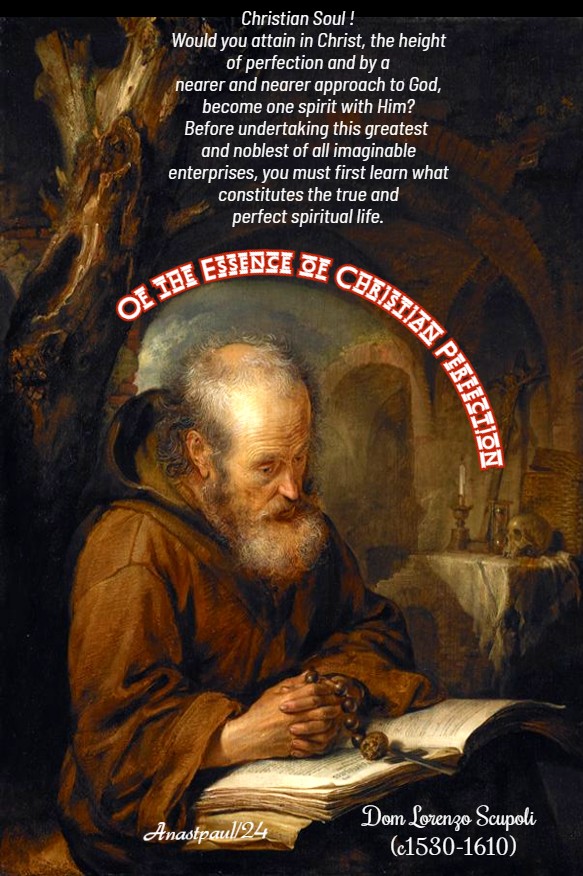
“Christian Soul ! Would you attain in Christ, the height of perfection and by a nearer and nearer approach to God, become one spirit with Him? Before undertaking this greatest and noblest of all imaginable enterprises, you must first learn what constitutes the true and perfect spiritual life. For many have made it to consist exclusively in austerities, maceration of the flesh, hair-shirts, disciplines, long vigils and fasts and other like bodily hardships and penances. Others, especially women, fancy they have made great progress therein, if they say many vocal prayers, hear many Masses and long Offices, frequent many Churches, receive many Communions. Others (and those sometimes among cloistered religious) are persuaded that perfection depends wholly upon punctual attendance in choir, upon silence, solitude and regularity. …
But it is not so indeed; for as some of these are means to acquire grace, others, fruits of grace, they cannot be held to constitute Christian perfection and the true life of grace. They are unquestionably most powerful means, in the hands of those who use them well and discreetly, of acquiring grace in order to gain strength and vigour against their own sinfulness and weakness, to defend themselves against our common enemies, to supply all those spiritual aids so necessary to all the servants of God and especially to beginners in the spiritual life.
But these external works, although all most holy in themselves, may yet, by the fault of those who use them, as the foundation of their spiritual building, prove a more fatal occasion of ruin than open sins!”
Quote/s of the Day – 4 January – “The Month of the Most Holy Name of Jesus and of the Holy Family” – Octave of the Holy Innocents
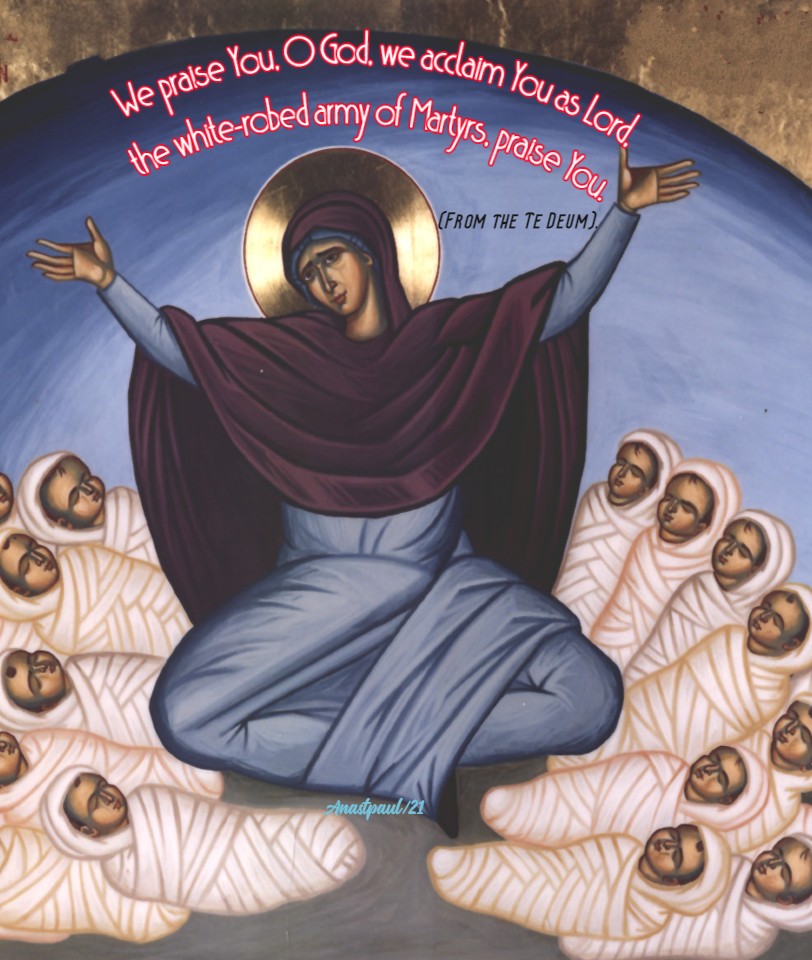
“They could not yet speak but already, they are confessing Christ. Their little bodies are, as yet, unable to engage in combat but already, they are carrying off the Palm of Victory.”
St Quodvultdeus (Died c 453) Bishop at Carthage
“These then, whom Herod’s cruelty tore as sucklings from their mothers’ bosom, are justly hailed as “Infant Martyr Flowers”- they were the Church’s first blossoms, matured by the frost of persecution, during the cold winter of unbelief.”
St Augustine (354-430) Father & Doctor of the Church
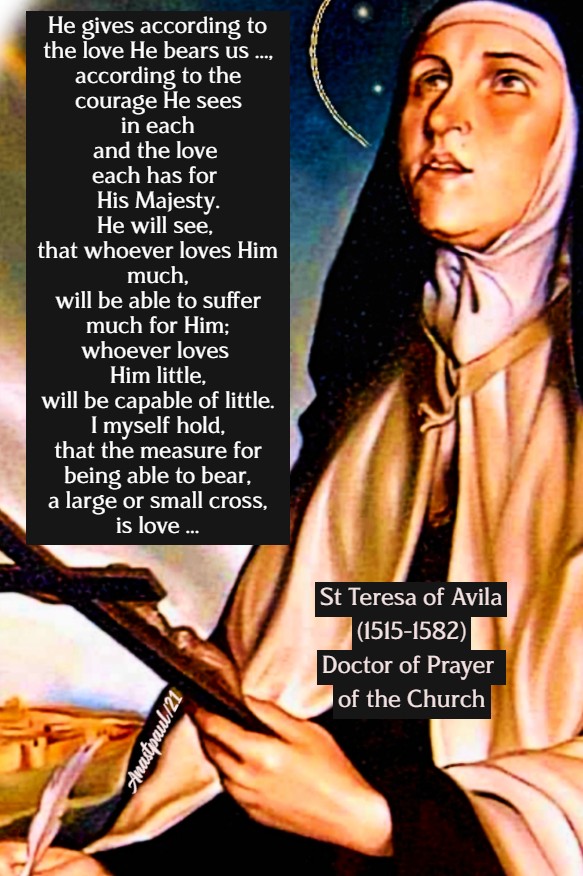
“He gives according to the love He bears us …, according to the courage He sees in each and the love each has for His Majesty. He will see, that whoever loves Him much, will be able to suffer much for Him; whoever loves Him little, will be capable of little. I myself hold, that the measure for being able to bear, a large or small cross, is love …”
St Teresa of Avila (1515-1582) Doctor of Prayer of the Church
One Minute Reflection – 4 January – “The Month of the Most Holy Name of Jesus and of the Holy Family”– Octave of the Holy Innocents – Apocalypse 14:1-5; Matthew 2:13-18 – Scripture search here: https://www.drbo.org/
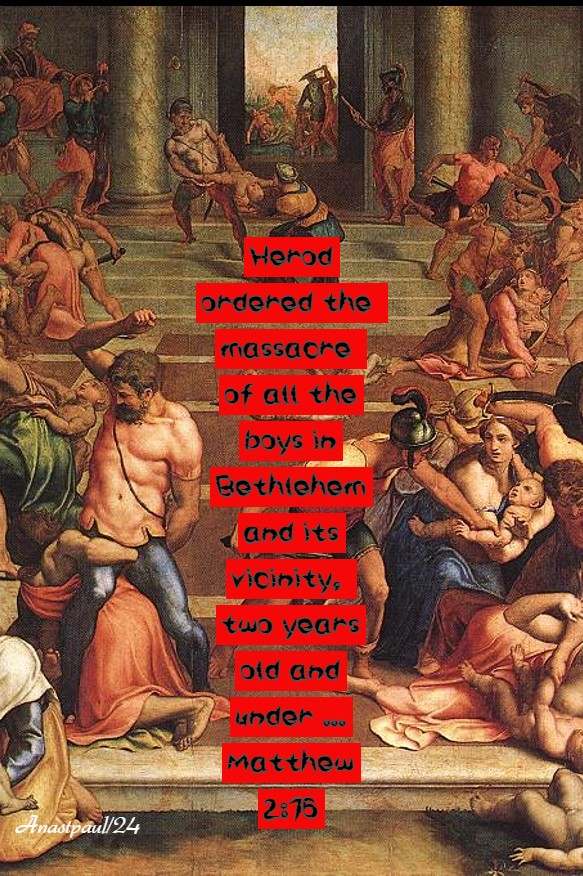
“When Herod realised that he had been deceived by the Magi, he became furious. He ordered the massacre of all the boys in Bethlehem and its vicinity, two years old and under, in accordance with the time he had ascertained from the Magi.” – Matthew 2:16
REFLECTION – “Where does this jealousy lead?… The crime committed today shows us. Fear of a rival to his earthly kingdom fills Herod with anxiety, he plots to suppress “the newborn King” (Mt 2:2), the Eternal King; he fights against his Creator and puts innocent children to death … As for those children, what fault had they committed? Their tongues were dumb, their eyes had seen nothing, their ears heard nothing, their hands done nothing. They accepted death who had not known life! … Christ reads the future and knows the secrets of the heart, He weighs our thoughts and probes our intentions (cf. Ps 138[139]): why did He forsake them? … Why did the newborn heavenly King abandon these companions in innocence, forget the sentinels watching around His crib, to such an extent that the foe, who wanted to get at the King, ravaged His whole army?
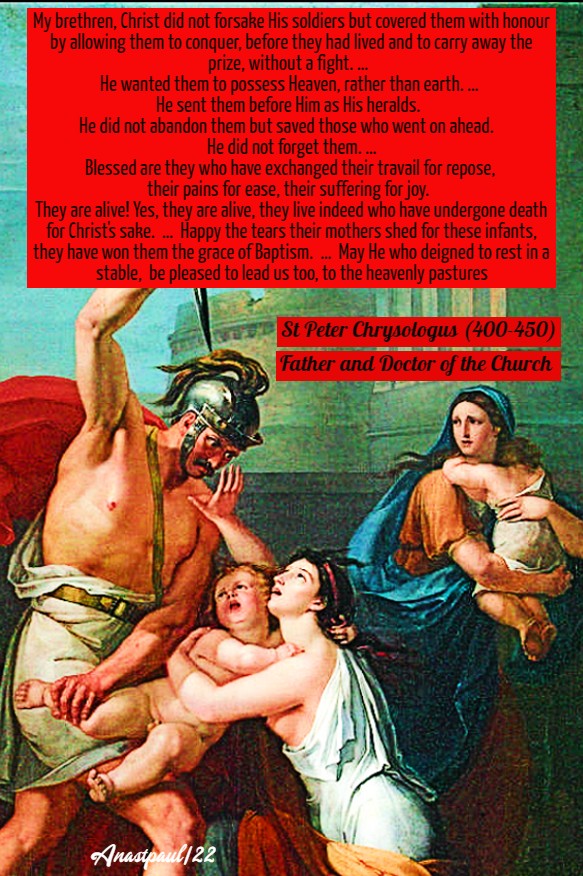
My brethren, Christ did not forsake His soldiers but covered them with honour, by allowing them to conquer, before they had lived and to carry away the prize, without a fight. … He wanted them to possess Heaven, rather than earth. … He sent them before Him as His heralds. He did not abandon them but saved those who went on ahead. He did not forget them. …
Blessed are they who have exchanged their travail for repose, their pains for ease, their suffering for joy. They are alive! Yes, they are alive, they live indeed who have undergone death for Christ’s sake. … Happy the tears their mothers shed for these infants, they have won them the grace of Baptism. … May He who deigned to rest in a stable, be pleased to lead us too, to the heavenly pastures.”– St Peter Chrysologus (400-450) Bishop of Ravenna, Father and Doctor of the Church (Sermon 152 PL 52, 604).
PRAYER – O God, Whose praise the Innocents, Thy Martyrs, this day proclaimed, not by speaking but by dying, put to death in us all the wickedness of sin, so that Thy faith which our tongue professes, may be proclaimed also by our life.Through Jesus Christ, Thy Son our Lord, Who lives and reigns with Thee, in the unity of the Holy Ghost, God, world without end. Amen (Collect).
Our Morning Offering – 4 January – “The Month of the Most Holy Name of Jesus and of the Holy Family” –
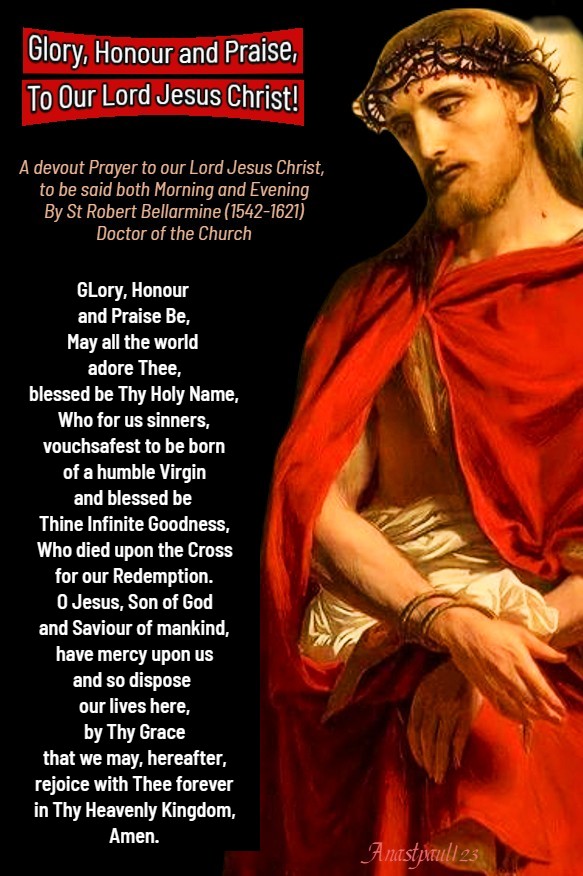
Glory, Honour and Praise, To Our Lord Jesus Christ! A devout Prayer to our Lord Jesus Christ, to be said both Morning and Evening By St Robert Bellarmine (1542-1621) Doctor of the Church (From His “A Brief Christian Doctrine”)
GLory, Honour and Praise Be, May all the world adore Thee, blessed be Thy Holy Name, Who for us sinners, vouchsafest to be born of a humble Virgin and blessed be Thine Infinite Goodness, Who died upon the Cross for our Redemption. O Jesus, Son of God and Saviour of mankind, have mercy upon us and so dispose our lives here, by Thy Grace that we may, hereafter, rejoice with Thee forever in Thy Heavenly Kingdom, Amen.
Saint of the Day – 4 January – Saint Rigobert of Rheims (Died c743) Archbishop of Rheims, a Benedictine Monk and later Abbot of the Abbaye Saint-Pierre d’Orbais who subsequently succeeded Saint Rieul as the Bishop of Rheims in 695. Born in the late 6th Century in Ribemont southeast of Saint-Quentin and north of Rheims, in the present-day Aisne in Picardy, in northern France and died on 4 January c743 in Gernicourt, in the Aisne in France. Patronage – against toothache. Also known as – Gobert, Rigobertus, Robert. Additional Memorial – 14 June (translation of Relics). the name Rigobert – means: “the rich, shiny one” (From Old High German).
Rigobert was the son of Constantine of an old Ripuarian family, the first Lord (Châtelain) of Ribemont and of the House of Portian. We do not know his mother’s name, only that she was a Frank from the territory of Porçain at the mouth of the river Somme. Noticing that their son had a strong inclination towards piety, the parents sent him to the Monastery of Orbais in the Champagne-Ardenne region of northeastern France which had been founded in 680 by their nephew, Saint Bishop Regulus of Rheims . There, Rigobert received his first education in the Monastery school.
It was in this academy that he learned the science of the Saints and he was formed for the exercise of the most heroic virtues. When he reached the prescribed age, he took his vows as a Benedictine Monk. He observed the Rule of Saint Benedict so accurately that he, still very young, could be an example even to older Monks. He prayed incessantly and never spoke unnecessarily and he combined an extraordinary prudence and wisdom with great kindness, so that he easily won the hearts of those with whom he conversed. During this time he was Ordained to the Priesthood and his good qualities led to him being entrusted with ever greater tasks and he eventually ascended to the leadership of the Monastery of Orbais as the Abbot, an Office he retained until 695.
He was very close to the head of the Royal House, Pipin of Herstal and under his protection, the young Priest quickly made a career. Rigobert Baptised Pipin’s illegitimate son with his concubine Alpaida, Charles Martell (689-741), the later powerful Frankish Chancellor (716 -741), the actual ruler of the Franks (other sources say that he was Charles Martell’s Godfather at Baptism).
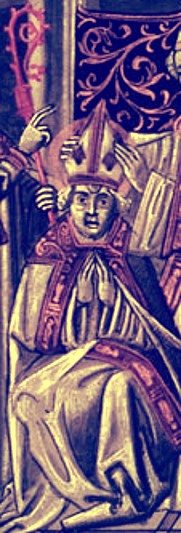
In 695, Rigobert was named the 27th Bishop of Rheims after Saint Regulus, who was his cousin. By virtue of his Office as the Bishop of Rheims, he anointed the Kings. Through wise decrees and strict justice, he brought the Diocese into a very good condition.
Pipin of Herstal ruled the Frankish Kingdom as Chancellor in the Palace during the reigns of Clovis IV, Kildebert III and Dagobert III, all of whom were Kings of the entire Frankish Kingdom. He was a close friend of the Bishop. One day he came to a country house in the village of Gernicourt near Rheims, to go hunting. With his usual courtesy, Rigobert sent him some refreshments and he came to greet the Bishop.
Pipin, wishing to repay this generosity with a substantial donation, so he urged the Bishop to tell him what he desired for himself and for his Church, assuring him that it would be the most significant proof of friendship he could give him. To satisfy the Duke, the Bishop asked about the house where he was then which was not of great value but entirely to his taste. Pipin gave him the house and said that besides this he gave him as much land as he could walk about during his afternoon rest. The Bishop accepted the gift and immediately drew up the boundaries by walking around this house. Everyone soon saw that in asking for this place, the Bishop had no intention of getting rich because as soon as he became the owner of the property, he gave it to his Church to be part of Diocesan assets and income used for the Bishop’s maintenance.
Rigobert’s most important program was to reform the Clergy. To this end he re-established the rules of his predecessors as regards the discipline of the Clergy and he restored the Chapter of the Cathedral, one of the best ordered then in the Frankish Kingdom.
Little is otherwise known about Rigobert’s time as Bishop but he is said to have lived in a room above the City gate. When he was in his room, he used to pray by a window overlooking the City’s Basilica Saint-Remi. But wanting access to a closer Church to pray, he had a passage excavated through the tower of a Church that was next to the City gate, thus gaining easy access via a ladder.
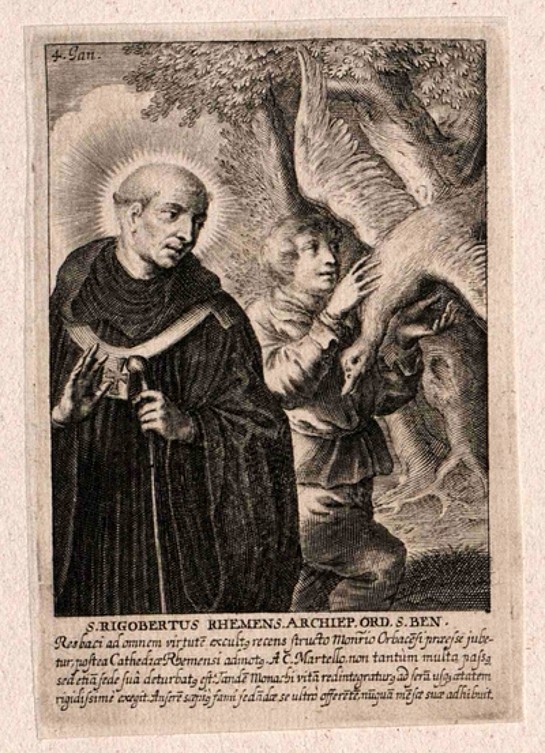
Once he had been given a live goose to take home and make dinner out of. Rigobert placed the bird in the arms of a servant who followed him. Along the way, while Rigobert was reciting the Office prayers, the bird tore itself free and flew away. The boy, grieved deeply over this accident but Rigobert comforted him and exhorted him to trust in God. When Rigobert resumed his prayers, the goose flew back to them. Thereafter, the Bishop kept the bird as a pet. The goose used to go with him to the Church, where it patiently waited outside while Rigobert celebrated Mass at an Altar dedicated to the Virgin Mary. – which Altar, he received in his exile after requesting it from the usurper bishop.
Rigobert’s zeal for the temporal part of God’s house was nothing compared to that which he had for the spiritual part. He was another Paul, who in his extensive charity cared for all believers. He was everything to them all and this conduct was admired by all and it was one of the chief reasons why Pipin was so strongly convinced of the extraordinary merits of this great man. He wanted his son Charles Martell to become a child of God through his service and he entrusted his son to him for education, in the hope that one day he would succeed in gaining the same respect and devotion for the Bishop which he himself had. But the father’s good intentions were not fulfilled by the son and he, whom the father had honoured was later persecuted by the son.
When Pipin died the King replaced him with a man named Raginfrid causing Charles Martell to arm himself in anger believing the position of Chancellor should have been his as son of Pipin. In the decisive phase, Rigobert hesitated to side with Charles Martell and wanted to remain neutral. He remained faithful to the King as his legitimate senior and although he had very great obligations to Pipin, as he had Baptised and raised his son, he preferred to heed his conscience.
When KCharles Martell appeared at the gates of Rheims under the pretence of saying his prayers in the Church of Notre-Dame, Rigobert refused him entry, telling him that since he and his steward were fighting the government of Austrasia, he would not open the City’s gates for other than the one whom heaven declared victorious. Charles Martell was so offended that he decided to get rid of the troublesome Bishop.
After a victorious battle in the power struggle, Charles Martell deposed the King and Rigobert as Bishop of Rheims without any Ecclesiastical judgment and on his own authority appointed his replacement. Rigobert was exiled to Gascony – there he spent the first part of his exile, waiting for the storm to subside, or whether his banishment would last for life. But later he went to the Monastery at Orbais not far from Rheims, where he resumed the monastic life.
To Rigobert it was a great suffering to see that his people had to endure a wolf instead of a true shepherd but apart from that, he found great joy in being relieved of a burden which had always seemed formidable. After various machinations of the usurper bishop Milo to attract Rigobert back to Rheims by uncanonical means, Rigobert refusing his offers finally returned to live on his country estate at Gernicourt which he had received from Pipin. There he lived poor, lonely and hated by the state’s leadership but highly respected by his people. He often visited the Blessed Virgin in her holy house and confided his troubles to her and he asked her for the grace to suffer without complaint until he died. From there, he entered the Churches of Saint-Maurice and Saint-Remy and other places of devotion in the City, especially where the Relics of holy Martyrs were kept.
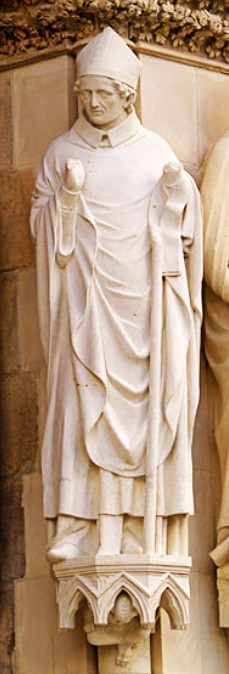
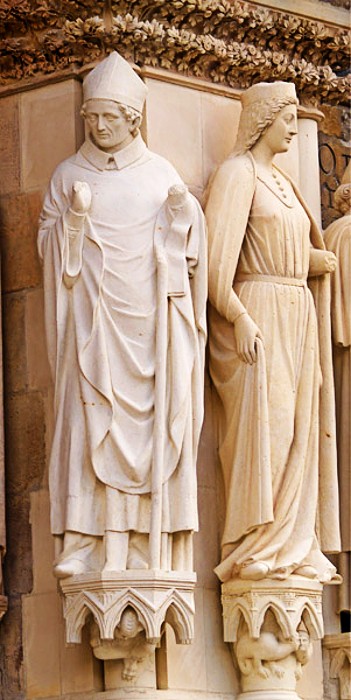
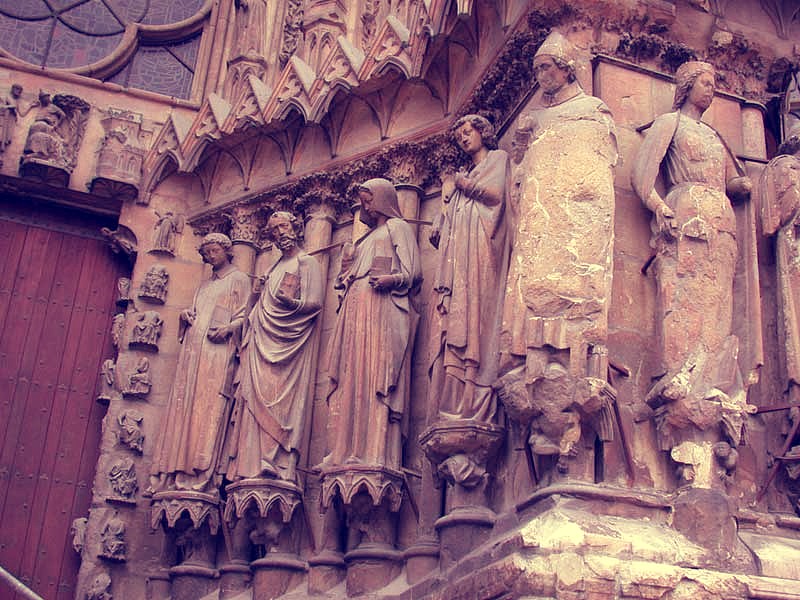
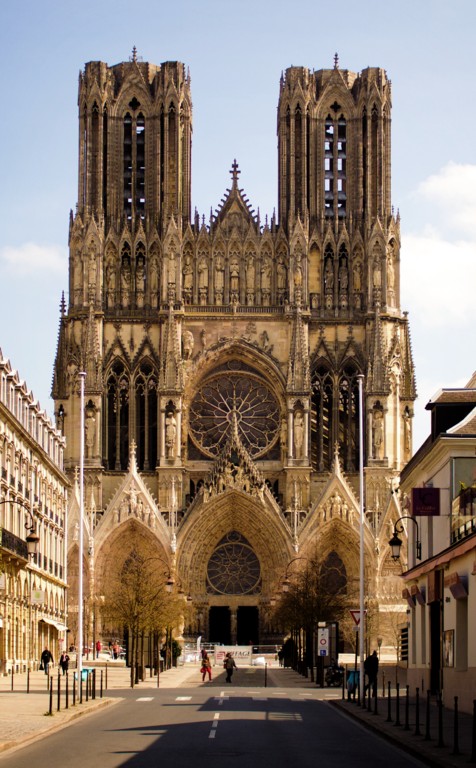
St Rigobert on the corner on the facade of Rheims Cathedral
Rigobert spent the day in these exercises of piety before returning in the evening to his solitude, until our Lord, who had purified him through a long series of trials, drew him home to crown his patience. The various sources do not agree on what year he died, one says 773, others 749 or 745 but a larger number say, with greater probability that he died on 4 January 743. The Episcopal list in Rheims says that he died in 733.
Bishop Rigobert was given a grand funeral with great honours. All the Priests and people of Rheims were present at the funeral, and his remains were buried in the Church of Saint-Pierre at Gernicourt which he himself had founded, to the right of the High Altar. Many miracles soon happened there, such as three lame people being healed, a blind woman regaining her sight there and several other sick people coming home in perfect health. Several times during the night a light was seen on his grave and at the same time, singing could be heard, so magnificent that it was easy to understand that they were performed by the Angels. An Monk who had an inflammation in his cheek, sent a candle to burn before the holy Bishop’s Relics and he immediately recovered and found himself able to go and pay his respects to the mighty physician. Our Saint is especially invoked against toothache.
In 896, after many translations, St Rigobert’s Relics finally were sent to the new Church of Saint-Denis outside the City, where they were kept and venerated until The French Revolution. Parts of the Relics later came to Paris.
St Angela of Foligno TOSF (1248-1309) known as the “Mistress of Theologians” – Wife, Mother, Widow, Religious, Mystic, Writer, Third Order Franciscan, Foundress of a religious community, which refused to become an enclosed religious order, so that it might continue her vision of caring for those in need. It is still active today. About St Angela: https://anastpaul.com/2020/01/04/saint-of-the-day-4-january-saint-angela-of-foligno-tosf-1248-1309/
St Celsus of Trier Bl Chiara de Ugarte St Chroman St Dafrosa of Acquapendente
St Ferreolus of Uzès St Gaius of Moesia
St Gregory of Langres (Died 539) Bishop of Langres and Dijon, Count and Governor, Father of 2 Sons and Widower, before being appointed as the Bishop of Langres, Ascetic, Miracle-worker. Great-grandfather of St Gregory of Tours. He ordered the translation of the Relics of Saint Benignus and built the Church and the Abbey of Saint-Benignus of Dijon. Biography: https://anastpaul.com/2023/01/04/saint-of-the-day-4-january-saint-gregory-of-langres-died-539-bishop/
St Hermes of Moesia St Libentius of Hamburg Bl Louis de Halles St Mavilus of Adrumetum St Neophytos St Neopista of Rome St Oringa of the Cross Bl Palumbus of Subiaco
Martyrs of Africa – 7 Saints: A group of Christians Martyred together in the persecutions of the Arian Vandal king Hunneric. Saint Bede wrote about them. – Aquilinus, Eugene, Geminus, Marcian, Quintus, Theodotus and Tryphon. In 484 in North Africa.
Martyrs of Rome – 3 Saints: Three Christians Martyred together in the persecutions of Julian the Apostate for refusing to renounce Christianity as ordered. – Benedicta, Priscillianus and Priscus. In 362 in Rome, Italy.
Thought for the Day – 3 January – Meditations with Antonio Cardinal Bacci (1881-1971)
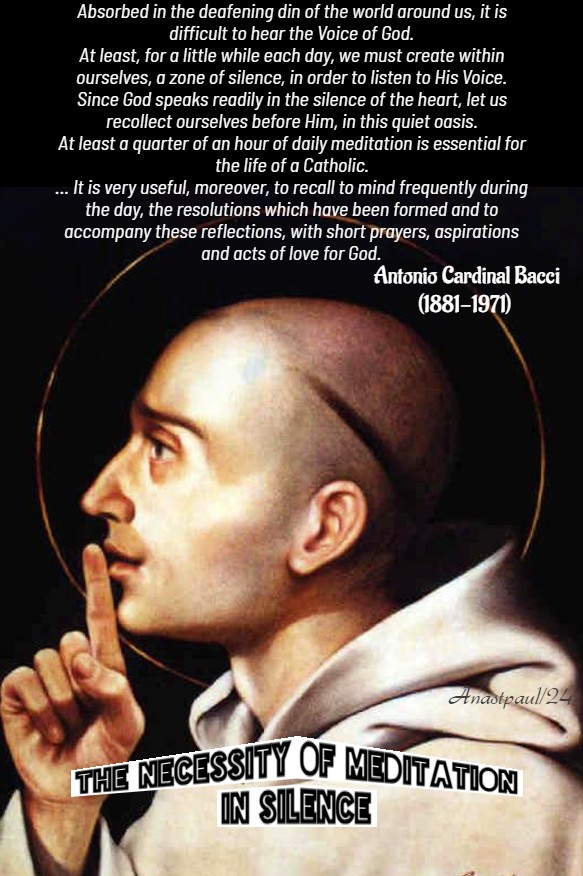
The Necessity of Meditation in Silence
“With desolation all the land made desolate because, there is none that considereth in the heart” (Jer 12:11).
Very often the world is plunged in the desolation of evil because, there is nobody who will speak with God, in the silence of his heart and try to regulate his life according to His holy commandments. It is in a particularly outstanding way today, that the heresies of actionism and externalism, dominate the great mass of mankind. To act, to rush, to arrive … above all, to arrive! But to arrive where? In this frantic, frenzied and tumultuous race, which good people are often found competing, two very sure things are forgotten, namely, that we shall finally arrive at death and, that from death, we shall pass onto eternity. The whole course of our lives, therefore, should be directed towards this end. But, if we are to keep this end in view, prudent reflection is essential, especially meditation, made with the assistance of the Divine light, on the eternal truths.
Absorbed in the deafening din of the world around us, it is difficult to hear the Voice of God. At least, for a little while each day, we must create, within ourselves, a zone of silence, in order to listen to His Voice. Since God speaks readily in the silence of the heart, let us recollect ourselves before Him, in this quiet oasis. At least a quarter of an hour of daily meditation is essential for the life of a Catholic. This should be the diving-board for all the actions of day, if we wish these to be correct and productive of good.
It is very useful, moreover, to recall to mind frequently during the day, the resolutions which have been formed and to accompany these reflections, with short prayers, aspirations and acts of love for God.”
Quote/s of the Day – 3 January – Help for those New Year Resolutions
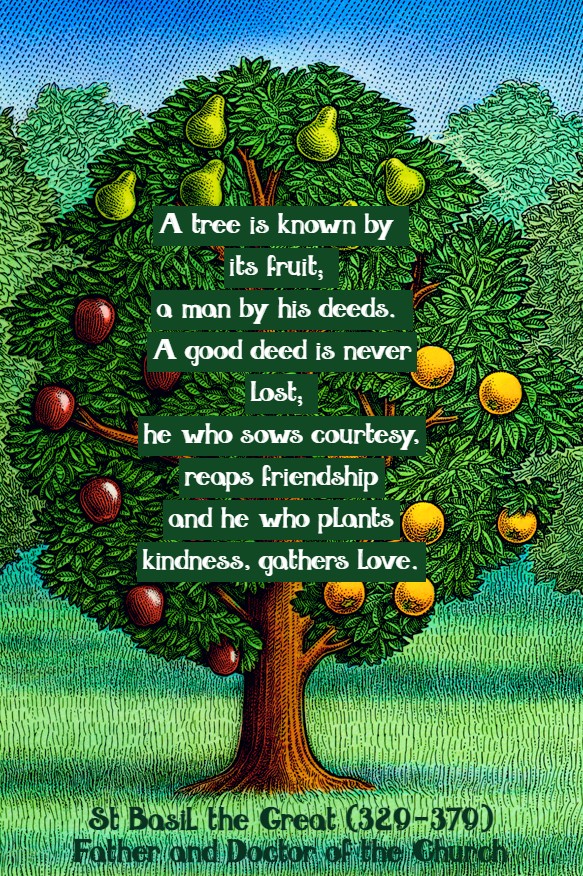
“A tree is known by its fruit, a man by his deeds. A good deed is never lost, he who sows courtesy, reaps friendship and he who plants kindness, gathers love.”
St Basil the Great (329-379) Father and Doctor of the Church
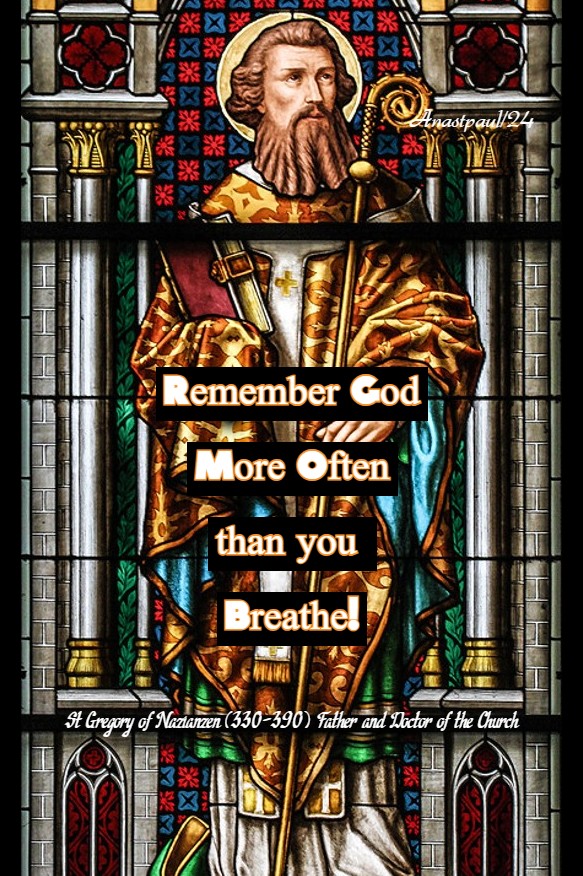
“Remember God more often than you breathe!”
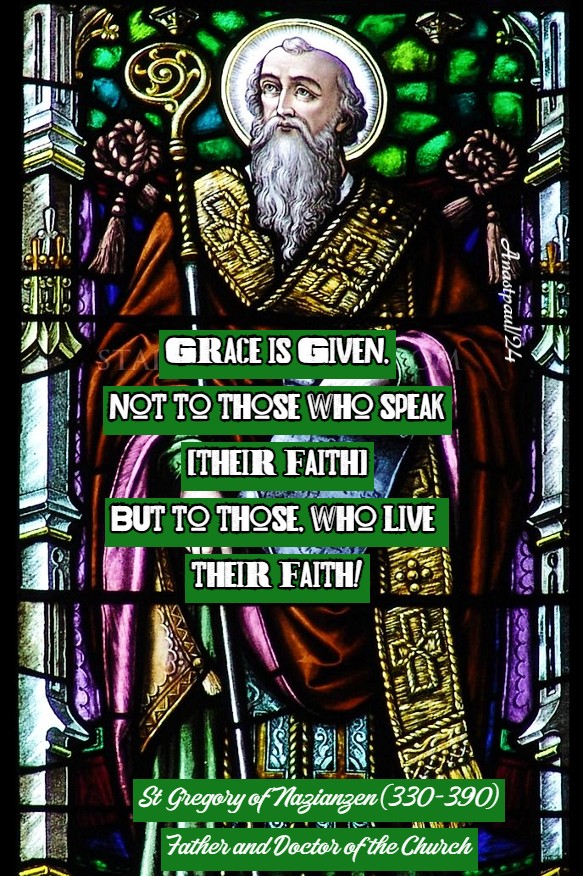
“Grace is given, not to those who speak [their faith] but to those, who live their faith!”
St Gregory of Nazianzen (330-390) Father and Doctor of the Church
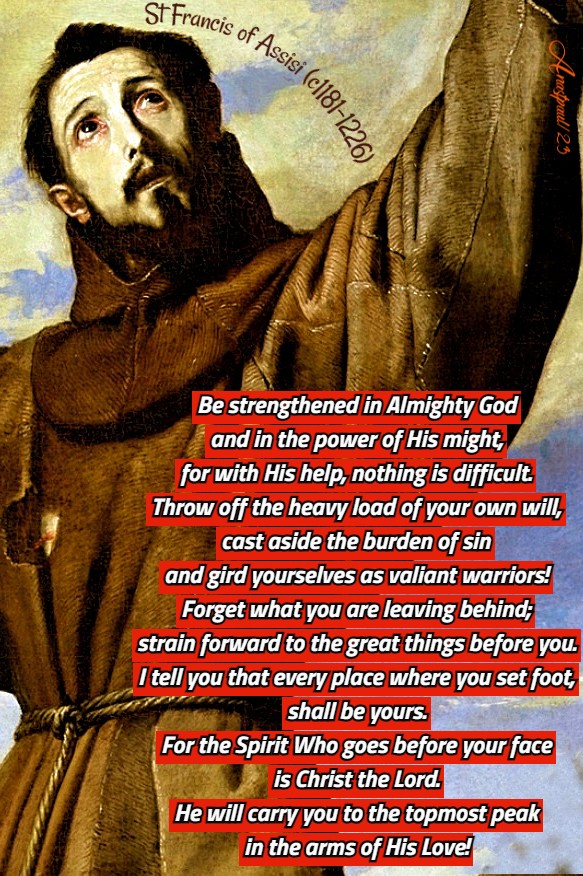
“Be strengthened in Almighty God and in the power of His might, for with His help, nothing is difficult. Throw off the heavy load of your own will, cast aside the burden of sin and gird yourselves as valiant warriors! Forget what you are leaving behind; strain forward to the great things before you. I tell you that every place where you set foot, shall be yours. For the Spirit, Who goes before your face is Christ the Lord. He will carry you to the topmost peak in the arms of His Love.”
One Minute Reflection – 3 January – “The Month of the Most Holy Name of Jesus and of the Holy Family”– Octave Day of St John, Apostle – Ecclesiasticus 15:1-6; John 21:19-24 – Scripture search here: https://www.drbo.org/
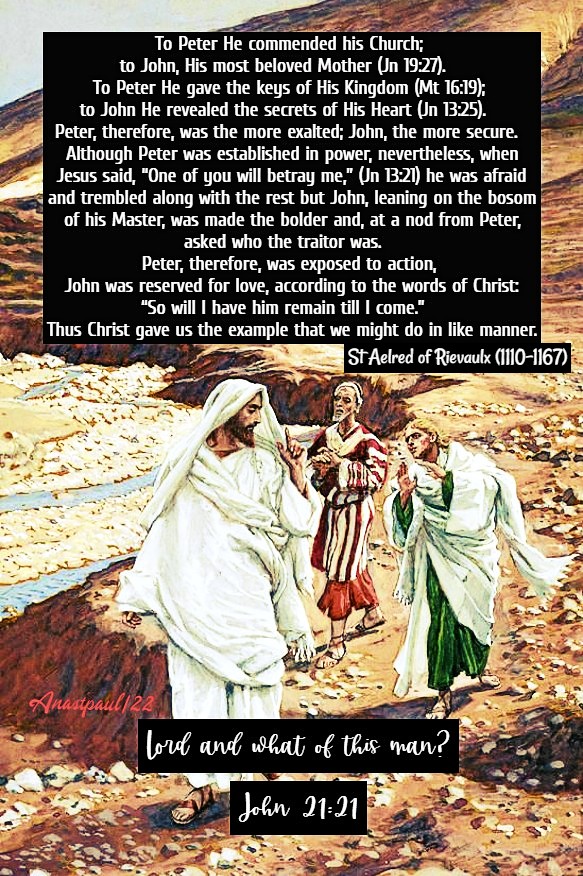
“Peter saw following them, the disciple whom Jesus loved, the one who, at the supper, had leaned back upon His breast … Peter, therefore, seeing him, said to Jesus, Lord and what of this man?” – John 21:20-21
REFLECTION – “There are some persons who think they are not loved because they cannot be promoted and who allege that they are despised, if they are not entrusted with responsibilities and offices. We know that as a result of this type of thinking, no small discord has sprung up, among those who were considered friends, so that estrangement followed upon indignation and railings upon estrangement …
Let no-one say that he is held in contempt, for the reason that he is not promoted, since the Lord Jesus preferred Peter to John in this respect; nor did He, on that account, lessen His affection for John because He had given Peter the leadership. To Peter He commended His Church; to John, His most beloved Mother (Jn 19:27). To Peter He gave the keys of His Kingdom (Mt 16:19);to John He revealed the secrets of His Heart (Jn 13:25). Peter, therefore, was the more exalted; John, the more secure.Although Peter was established in power, nevertheless, when Jesus said, “One of you will betray Me,” (Jn 13:21) he was afraid and trembled along with the rest but John, leaning on the bosom of his Master, was made the bolder and, at a nod from Peter, asked who the traitor was. Peter, therefore, was exposed to action, John was reserved for love, according to the words of Christ: “So will I have him remain until I come.” Thus Christ gave us the example that we might do in like manner.” – St Aelred of Rievaulx (1110-1167) Cistercian Monk (Spiritual Friendship, III, 115, 117).
PRAYER – O Lord, graciously shed light upon Thy Church, so that, enlightened by the teachings of blessed John, Thy Apostle and Evangelist, she may gain YThy everlasting rewards.Through Jesus Christ, Thy Son our Lord, Who lives and reigns with Thee, in the unity of the Holy Ghost, God, world without end. Amen (Collect).
Our Morning Offering – 3 January – “The Month of the Most Holy Name of Jesus and of the Holy Family”
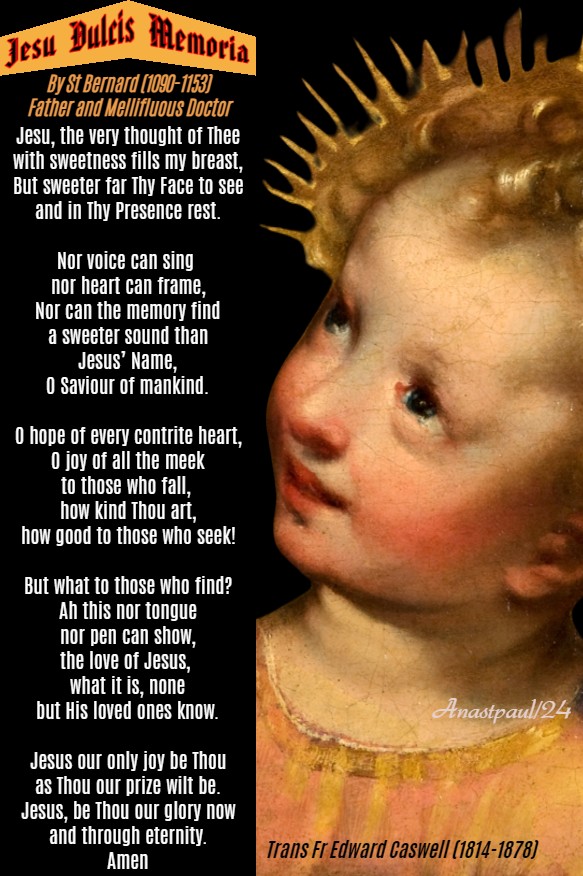
Jesu Dulcis Memoria By St Bernard (1090-1153) Father and Mellifluous Doctor Trans Fr Edward Caswell C.Orat. (1814-1878)
Jesu, the very thought of Thee with sweetness fills my breast, But sweeter far Thy Face to see and in Thy Presence rest.
Nor voice can sing nor heart can frame, Nor can the memory find a sweeter sound than Jesus’ Name, O Saviour of mankind.
O hope of every contrite heart, O joy of all the meek to those who fall, how kind Thou art, how good to those who seek!
But what to those who find? Ah this nor tongue nor pen can show, the love of Jesus, what it is, none but His loved ones know.
Jesus our only joy be Thou as Thou our prize wilt be. Jesus, be Thou our glory now and through eternity. Amen
Jesu, Dulcis Memoria is a celebrated 12th Century prayer/hymn by St Bernard of Clairvaux (1090-1153) Doctor Mellifluous. The entire Hymn has some 42 to 53 stanzas. Parts of this Hymn are used for the Feast of the Holy Name of Jesus.
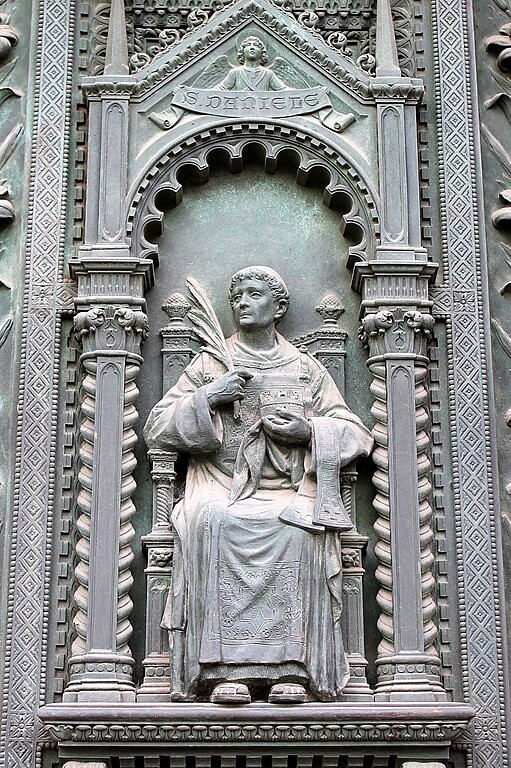
Saint of the Day – 3 January – Saint Daniel of Padua (Died 168) Deacon Martyr, Missionary, Evangeliser. Born in Italy, tradition says that he was originally a Jew but was converted by Saint Prosdocimus (Died c100), the first Bishop of Padua, who he assisted in evangelising north-eastern Italy. He was Ordained a Deacon and helped the Bishop preach the Gospel. Patronages – of lost articles, the blind and of eye diseases, prisoners, women whose husbands are away from home at war and he is considered the Patron Saint of Treviso and is also one of four Patron Saints of Padua, along with Saints Anthony of Padua, Prosdocimus and Justina of Padua. Also known as – Daniele, Danilo. Additional Memorial – 17 February on some calenders.
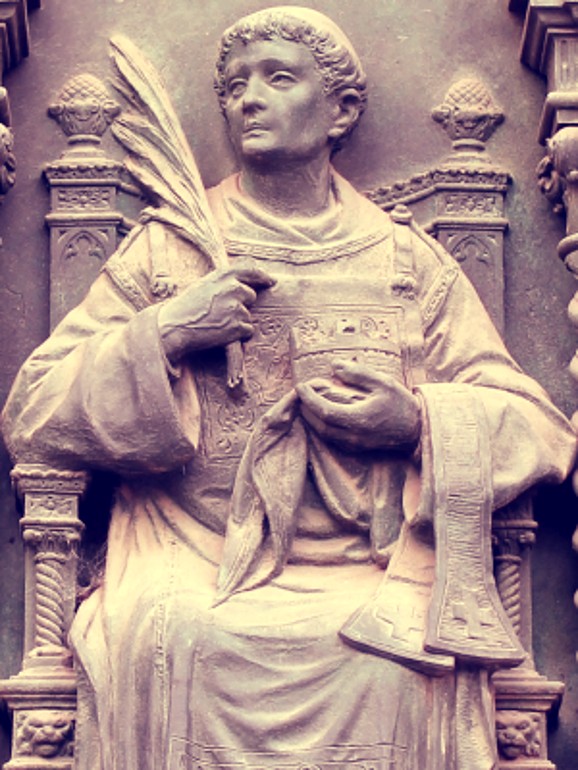
Bronze sculpture detail of Daniel of Padua on the doors of the Basilica of St Anthony
According to tradition, Daniel was Martyred in the year 168 under Emperor Marcus Aurelius (161-180), nailed to a table. However, it is more likely that he died in the early 4th Century in the persecutions under the Emperor Diocletian (284-305). The Roman Martyrology gives no further information.
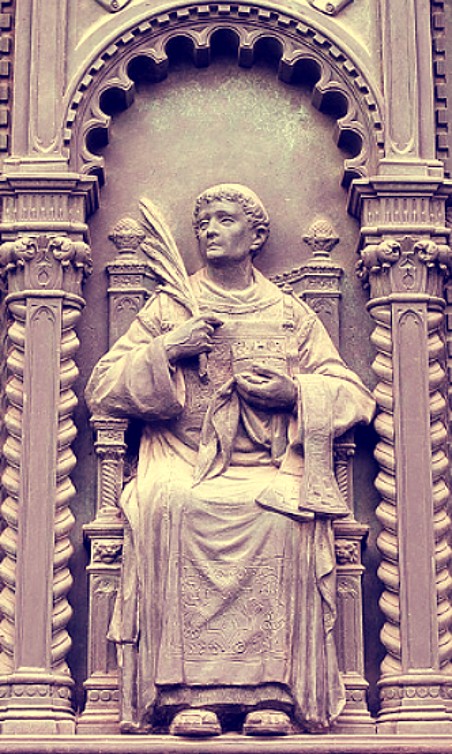
Bronze sculpture of Daniel of Padua on the doors of the Basilica of St Anthony
The traditions about Daniel were forgotten but his remains were discovered many Centuries later. According to the legend, the core of which seems certain, the Martyr appeared to a blind man in Tuscia and invited him to receive the grace of sight in the oratory of St Prosdocimus in Padua, where Daniel’s tomb lay, completely ignored. The miraculous cure was followed by a diligent search, which led to the discovery of a marble sarcophagus. The Martyr lay there, as on the day he was killed. The body, lying on a wooden slab and covered with a slab of marble, had been pierced by many long nails. An inscription said: “Hic corpus Danielis martyris et levitae quiescit – This is the body of Daniel, Martyr and Deacon.”
Bronze sculpture of Daniel of Padua on the doors of the Basilica of St Anthony
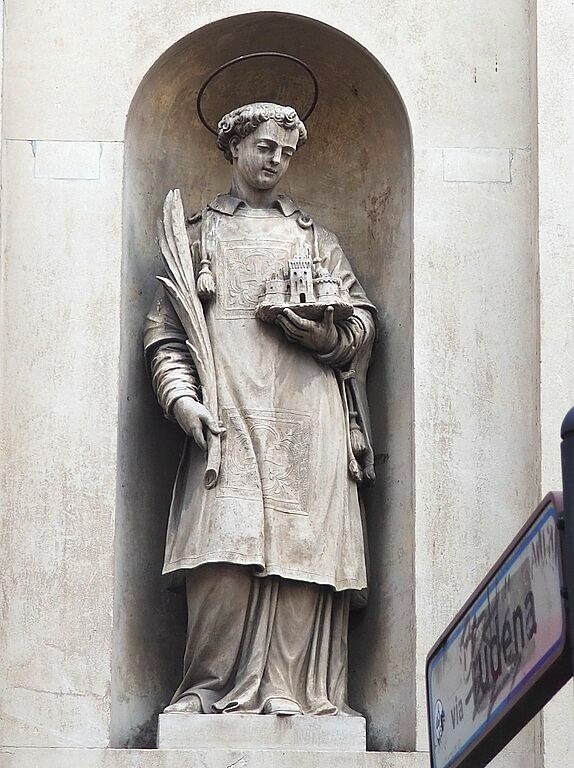
Bishop Uldericus was present at the first identification and, on 3 January 1076 he had the sarcophagus solemnly processed into the new Cathedral of Santa Maria within the City walls. To appease the opposition of the Monks of Santa Justina and the local population of the place, he built a Chapel dedicated to St Daniel on the site where the Parish Church of the same name now stands – the Statue depicted below is situate on the facade. The Martyr’s remains lay under the High Altar in the Cathedral until in 1592 when they were moved to the crypt in the new Cathedral.
In 1953, the sarcophagus was placed in another Chapel and then Daniel’s original sarcophagus was freed from the marble and bronze which had hidden it. It was the same one in which the Martyr had been found, an old Roman sarcophagus of Carrara marble which had had the old pagan decoration removed, probably at the time it was discovered.
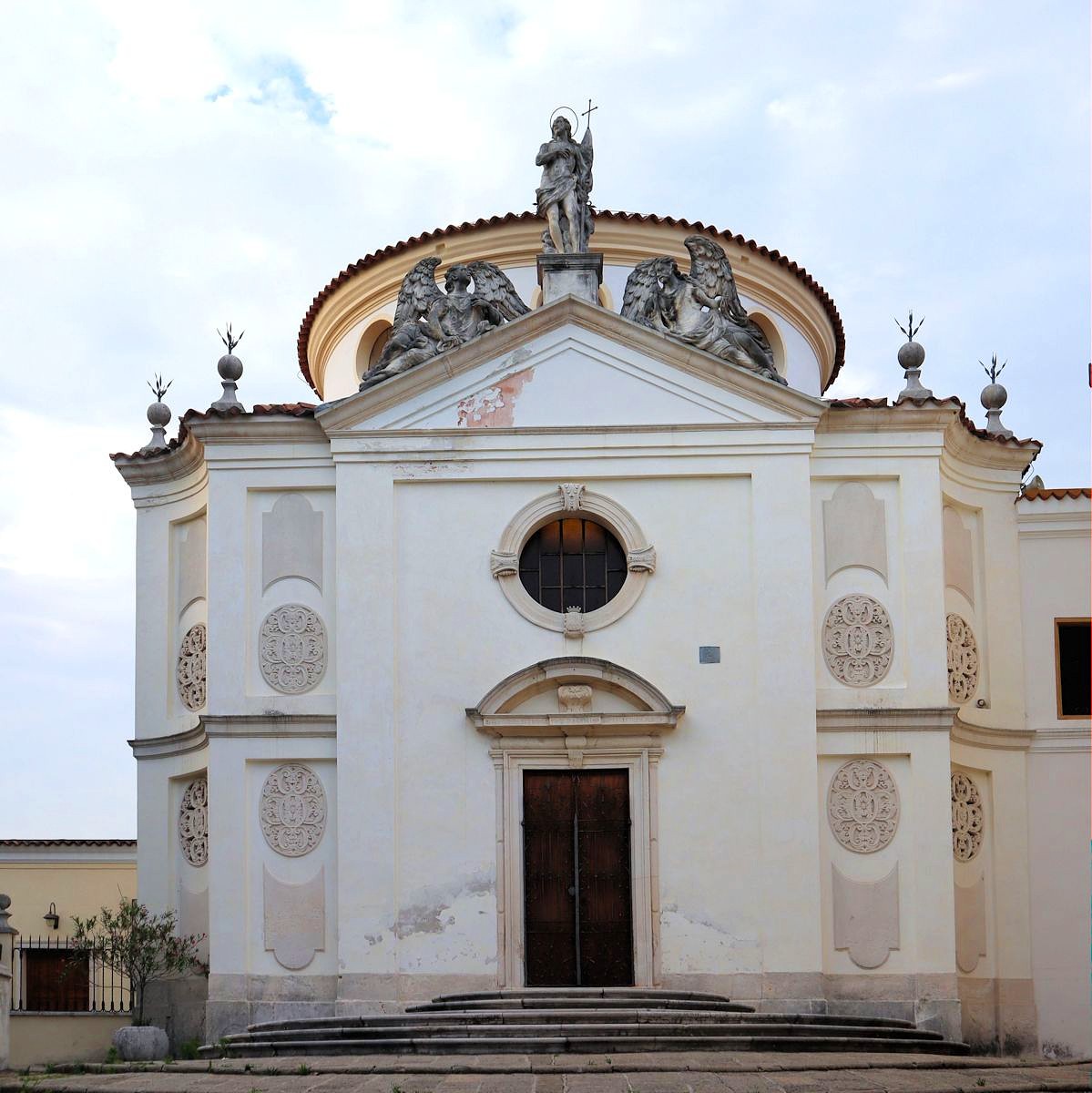
Church of the Monastery of St Daniel in Monte near Abano Terme
Daniel is celebrated in the Diocese of Padua, as a Patron Saint, on 3 January the date of the first translation. This day is also in the general Roman Martyrology, while the day in the edition for the Regular Canons was 17 February.
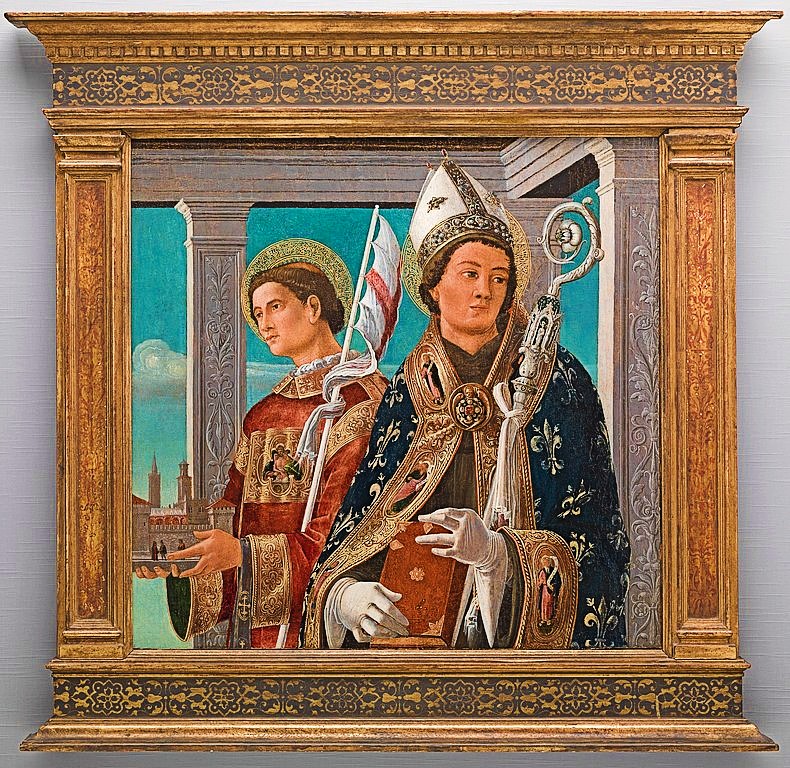
Daniel is depicted in art as a Deacon wearing a Dalmatic, holding a towel and wash basin. He is also often depicted with a Church or City model and a banner. He is invoked by wives with men away at war. He is also invoked in cases of imprisonment, the blind and eye disorders and lost articles.
Jacopo da Montagnana – Saints Daniel of Padua and Louis of Toulouse
St Florentius of Vienne St Florentius of Vienne the Martyr St Gordius of Cappadocia St Imbenia (Died c300) Virgin, Martyr St Lucian of Lentini St Melorius St Peter of Palestine
St Peter Balsam St Primus of Cyzicus St Salvator of Belluno St Theogenes of Cyzicus St Theonas St Theopemptus of Nicomedia St WenogStl William Vives St Zosimus of Cilicia
Martyrs of Africa – 12 Saints: A group of Christians Martyred together in Africa, date unknown, exact location unknown. We know nothing more than their names – Acuta, Candidus, Constantius, Eugenia, Firmus, Hilarinus, Lucida, Martial, Poenica, Possessor, Rogatianus and Statutianus.
Martyrs of Tomi – 7 Saints: A group of Christians Martyred together, date unknown. We know nothing more than their names – Claudon, Diogenius, Eugene, Eugentus, Pinna, Rhodes and Rhodo. They were martyred at Tomi, Exinius Pontus, Moesia (modern Constanta, Romania).
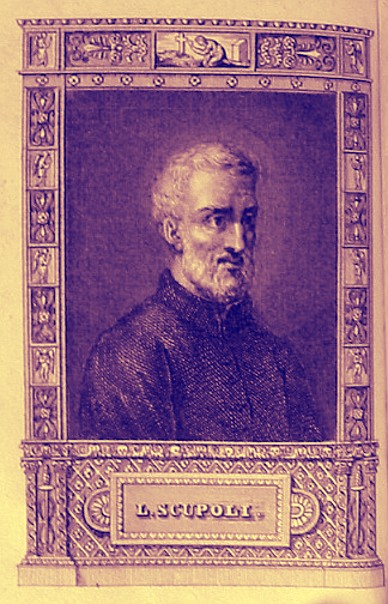
Thought for the Day – 2 January – The Spiritual Combat (1589) – Dom (Fr) Lorenzo Scupoli OSM (c1530-1610)
For those times when our old Friend and Spiritual Guide, Antonio Cardinal Bacci’s works have been exhausted, we will start exploring the renowned Spiritual Combat. The intention is not to re-publish the book in its entirety but just to highlight areas of great value to most of us living in the world. Today, I am posting the short introduction to the book.
Preface
“None shall be crowned who has not fought well.” - 2 Tim 2: 5
“The Spiritual Combat is known as one of the greatest classics in Ascetic Theology, along with the Imitation of Christ. In both cases, the Authors are shrouded in mystery. Several 17th Century editions were published under the name of the Spanish Benedictine, John of Castanzia. Some writers of the Society of Jesus have ascribed the book to the Jesuit, Achilles Gagliardi but most critics, however, consider Fr Lorenzo Scupoli (born Francesco) as the Author of this famous Treatise.
The first known edition was published in Venice in 1589 and contained but 24 Chapters, later editions appeared with more Chapters, so it is possible that the Theatines, or another Religious Order may have been part of the composition, [although this is doubtful, for the style remains the same throughout].
Whatever may be the truth of the problem of the Author, doubt of the actual one or ones, can take nothing away from the value and efficacy of this “golden book” as St Francis de Sales called it. It was “the favourite – the dear book” of this great master of the spiritual life, who, for 18 years, carried, in a pocket, a copy, which he had received from Fr Scupoli in Padua himself. The Saint read some pages of it everyday, entrusted to its supernatural and human wisdom, the guidance of his soul and recommended it to all under his direction.
The purpose of the work is to lead the soul to the summit of spiritual perfection by means of a constant courageous struggle against our evil natures which tend to keep us away from that goal.
The Author was a genius, the kind that can only be inspired by the grace of God and his book is a Catholic treasure and one of the greatest gifts God could have given any age! but most espeically, this benighted age which has losts its appreciation for the kind of simplicity necessary for sanctity!”
Quote/s of the Day – 2 January – “The Month of the Most Holy Name of Jesus and of the Holy Family” and the Feast of the Most Holy Name of Jesus AND of the INFANT of PRAGUE – Acts 4:8-12; Luke 2:21 – Scripture search here: https://www.drbo.org/
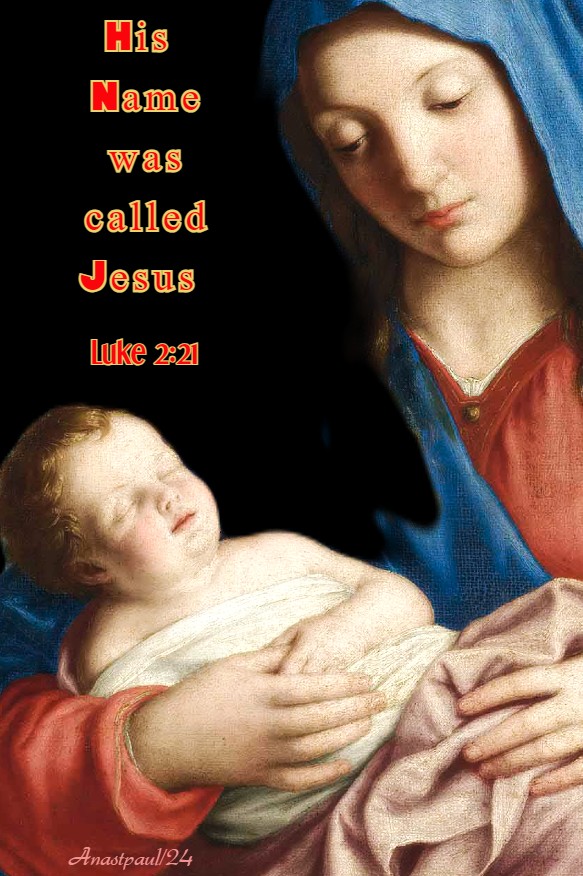
“His Name was called Jesus …”
Luke 2:21
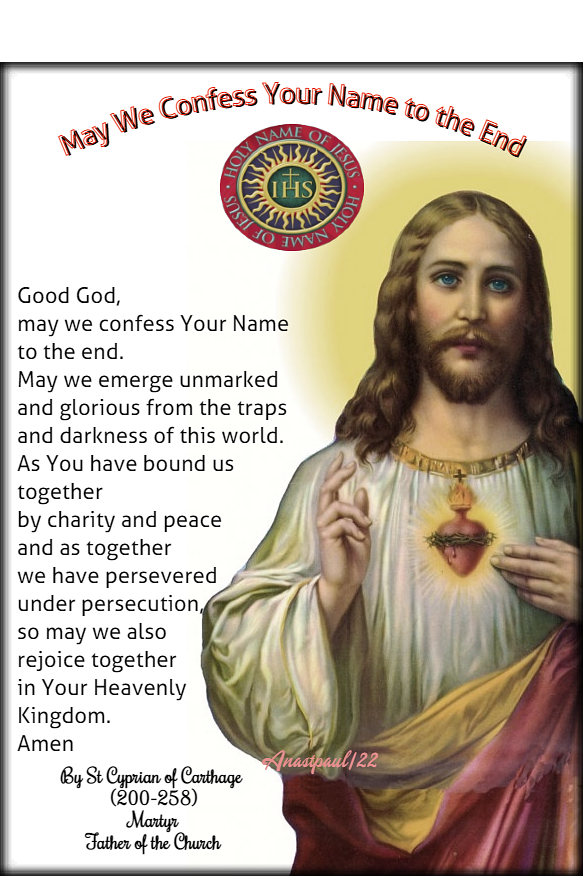
May We Confess Your Name to the End By St Cyprian of Carthage (200-258)
Good God, may we confess Your Name to the end. May we emerge unmarked and glorious from the traps and darkness of this world. As You have bound us together by charity and peace and as together we have persevered under persecution, so may we also rejoice together in Your heavenly Kingdom. Amen
St Cyprian of Carthage (c 200-258) Martyr, Bishop of Carthage, Father of the Church
“Wake up then, believer and note what is stated here: “In My Name.” That [Name] is Christ Jesus. Christ signifies King, Jesus signifies Saviour. Therefore, whatever we ask for that would hinder our salvation, we do not ask in our Saviour’s Name and yet, He is our Saviour, not only when He does what we ask but also, when He does not. When He sees us ask anything to the disadvantage of our salvation, He shows Himself our Saviour by not doing it. The physician knows whether what the sick person asks for, is to the advantage or disadvantage of his health. And [the physician] does not allow what would be harmful to him, although the sick person himself, desires it. But the physician looks to his final cure.”
St Augustine (354-430) Father and Doctor of Grace of the Church
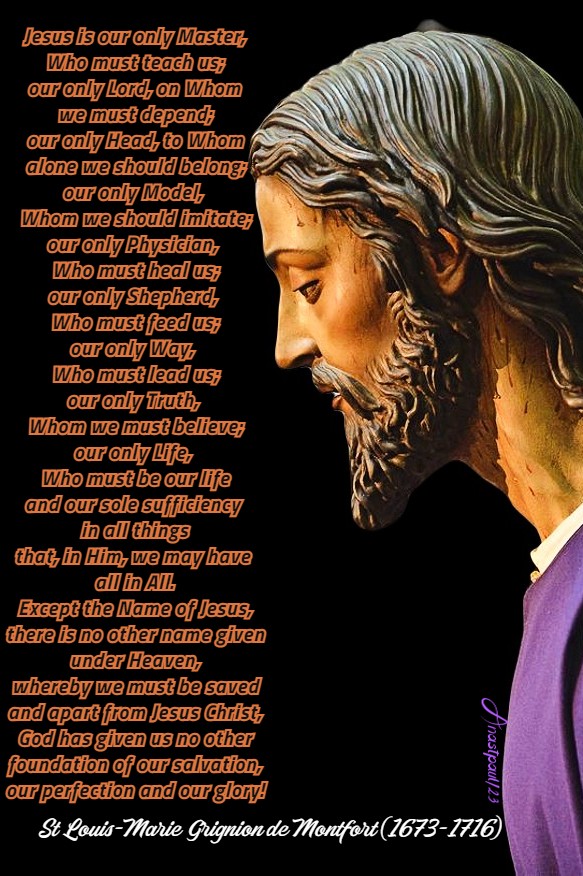
“[Jesus] is our only Master, Who must teach us; our only Lord, on Whom we must depend; our only Head, to Whom alone we should belong; our only Model, Whom we should imitate; our only Physician, Who must heal us; our only Shepherd, Who must feed us; our only Way, Who must lead us; our only Truth, Whom we must believe; our only Life, Who must be our life and our sole sufficiency in all things that, in Him, we may have all in All. Except the Name of Jesus, there is no other name given under Heaven, whereby we must be saved and apart from Jesus Christ, God has given us no other foundation of our salvation, our perfection and our glory! ”
St Louis-Marie Grignion de Montfort (1673-1716)
“Oh Most Sacred Name, Name of peace, Balsam of life, which is the centre of all the sighs, of the most fervent lovers of Jesus. The Sign of those, who truly love Jesus, is to bear Jesus imprinted in the heart and to name often and with devotion, the Most Holy Name of Jesus.”
St Leonard of Port Maurice (1676-1751)
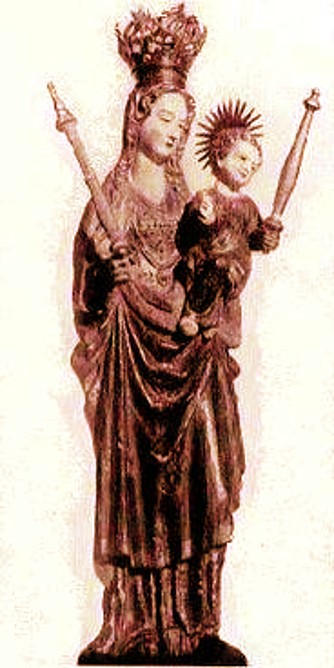
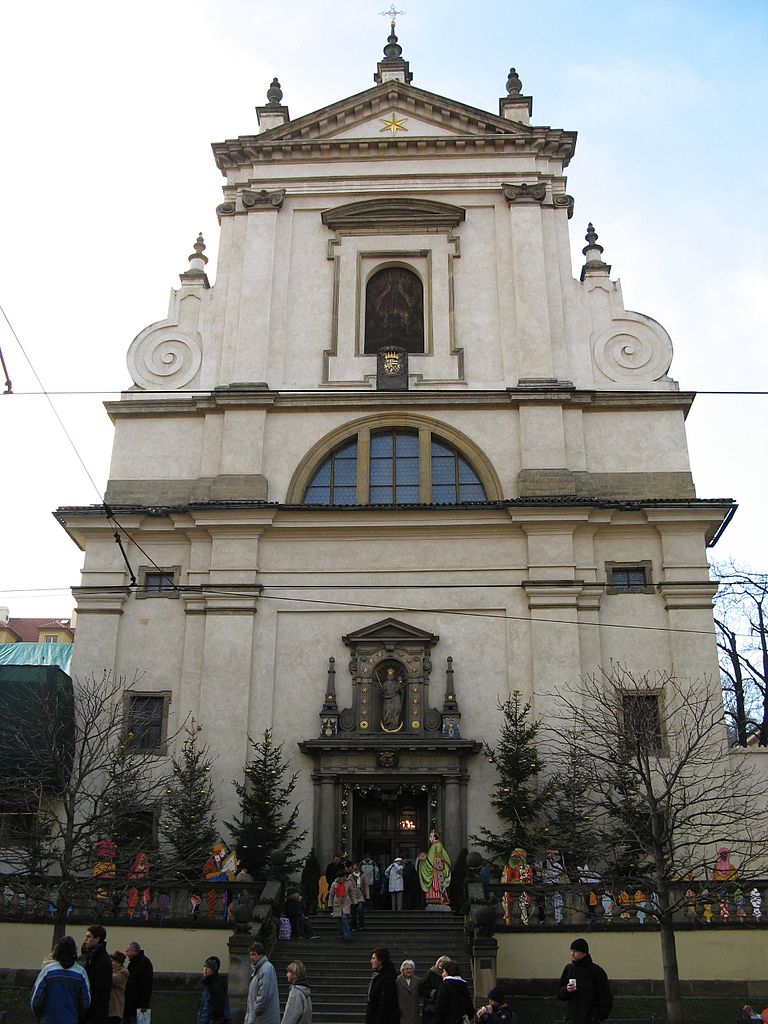
Transport yourself “in spirit” to the Church in Prague where the original Statue of the Infant still stands and let Jesus help you with your intentions!
This wonderful prayer to the Infant Jesus of Prague is known as the Prayer of Father Cyrillus, (c 1637) truly one of the first champions of the loving little Infant!
Prayer of Fr Cyrillus, to the Beloved and Miraculous Infant Jesus of Prague
Jesus, unto Thee I flee, Through Thy Mother praying Thee In my need to succour me. Truly, I believe of Thee God Thou art with strength to shield me; Full of trust, I hope of Thee Thou, Thy grace wilt give to me. All my heart I give to Thee, Therefore, do my sins repent me; From them breaking, I beseech Thee, Jesus, from their bonds to free me. Firm my purpose, is to mend me; Never more will I offend Thee. Wholly unto Thee I give me, Patiently to suffer for Thee, Thee to serve eternally. And my neighbour like to me I will love, for love of Thee. Little Jesus, I beseech Thee, In my need, to succour me, That with Joseph and Mary And the Angels, I may Thee Once enjoy eternally. Amen.
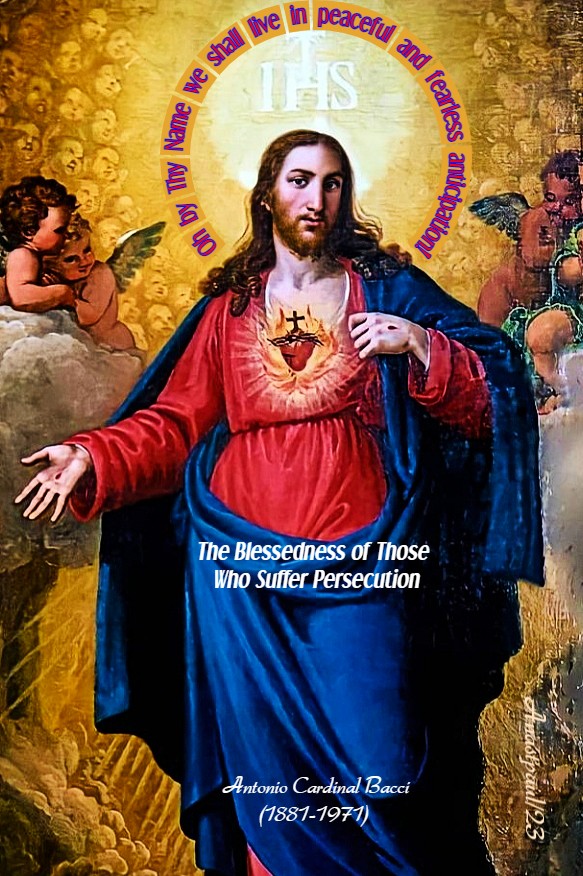
“Oh by Thy Name we shall live in peaceful and fearless anticipation!”
One Minute Reflection – 2 January – “The Month of the Most Holy Name of Jesus and of the Holy Family” and the Feast of the Most Holy Name of Jesus – Acts 4:8-12; Luke 2:21 – Scripture search here: https://www.drbo.org/
“When eight days were fulfilled for the circumcision of the Child, His Name was called Jesus, the Name given Him by the Angel, before He was conceived in the womb.” – Luke 2:21
REFLECTION – “The Child is circumcised, He is, now, not only a member of the human race, He is made, today, a member of God’s chosen People. He subjects Himself to this painful ceremony, to this symbol of one devoted to the Divine service, in order that He may fulfil all justice.
He receives, at the same time, His Name–the Name is Jesus and it means a Saviour. A Saviour! Then, He is to save us? Yes and He is to save us by His Blood. Such is the Divine appointment and He has bowed down His will to it. The Incarnate Word is upon the earth in order to offer a Sacrifice and the Sacrifice is begun today. This first shedding of the Blood of the Man-God was sufficient to the fulness and perfection of a Sacrifice but, He is come, to win the heart of the sinner and that heart, is so hard that all the streams of that Precious Blood which flow from the Cross on Calvary, will scarcely make it yield. The drops which were shed today, would have been enough to satisfy the justice of the Eternal Father but not to cure man’s miseries and the Babe’s Heart would not be satisfied to leave us uncured. He came for man’s sake and His love for man, will go to what looks like excess–He will carry out the whole meaning of His dear name–He will be our “Jesus” our Saviour!” – Abbot Dom Prosper Guéranger OSB (1805-1875) (The Circumcision of Our Lord, 1870).
PRAYER – O God, Thou Who by the fruitful virginity of blessed Mary, have bestowed upon mankind the rewards of eternal salvation, grant, we beseech Thee, that we may enjoy the intercession of her, through whom we have been found worthy to receive among us, the Author of Life, our Lord Jesus Christ Thy Son. Who lives and reigns with Thee, in the unity of the Holy Ghost, God, world without end. Amen (Collect).

































 AnaStpaul
You must be logged in to post a comment.