
Saint of the Day – 12 March – Saint Theophanes (c758-817) Abbot, Confessor, Founder of Monasteries, Defender of Sacred images, Writer and Historian. Born in Samothrace, Thrace, Greece and died there on 12 March 817 of natural causes (aged 57–59). Also known as – Theophanus of Isaurius, Teofane…
The Roman Martyrology reads today: “At Constantinople, St Theophanes, who gave up great wealth to embrace poverty in the monastic state. By Leo the Armenian, he was kept in prison for two years for the worship of holy images, then, being exiled in Samothracia, where, overwhelmed with afflictions, he breathed his last and wrought many miracles.”

Theophanes was born in Constantinople of wealthy and noble iconodule parents, being Isaac, the Governor of the Islands of the Aegean Sea and Theodora, of whose family nothing is known. His father died when Theophanes was three years old and the Byzantine Emperor, Constantine V (740–775) subsequently saw to the boy’s education and upbringing, at the Imperial Court. Theophanes would later hold several offices under Leo IV.
He was married at the age of eighteen but convinced his wife to lead a life of virginity. In 779, after the death of his father-in-law, they separated with mutual consent, to embrace the religious life. She chose a Convent on an Island near Constantinople, while he entered the Polychronius Monastery, located in the district of Sigiane on the Asian side of the Sea of Marmara. Later, he built a Monastery on his own lands, on the Island of Calonymus (now Calomio), where he acquired a high degree of skill in transcribing manuscripts.
After six years there, Theophanes returned to Sigriano, where he founded an Abbey known by the name ‘of the big settlement’ and governed it as the Abbot. In this position of leadership, he was present at the Second Council of Nicaea in 787 and signed its decrees in defence of the veneration of Icons.
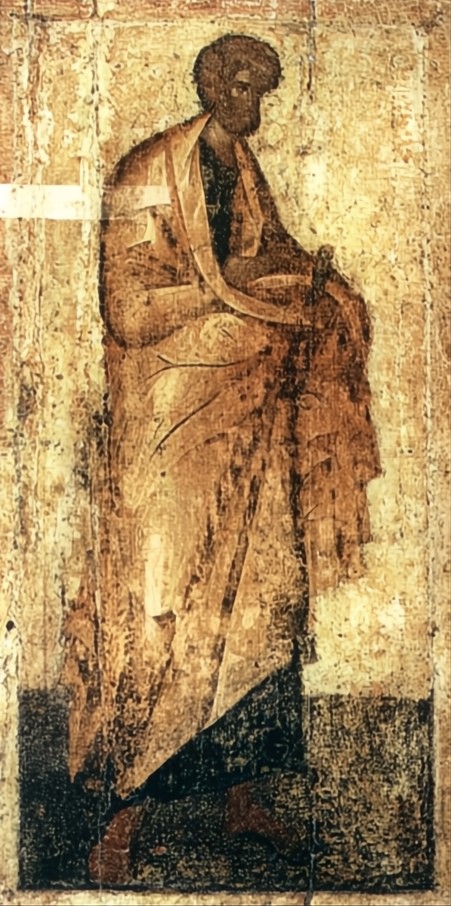
During the years 810-815, Theophanes undertook, at the urgent request of his friend, the Monk and Historian, George Syncellus, who died shortly after Theophanes acceptance, the continuation of Syncellus’ Christian History. The language used occupies a place midway between the stiff Ecclesiastical and the vernacular Greek. Theophanes’ part of the History covered events from the accession of Diocletian in 284 to 813. This part of the History is valuable for having preserved the accounts of Byzantine Ecclesiatical history, for the 7th and 8th Centuries which would otherwise have been lost.
When Emperor Leo V the Armenian (813–820) resumed his iconoclastic warfare, he ordered Theophanes brought to Constantinople. The Emperor tried in vain to induce him to condemn the veneration of icons which had been sanctioned by the second Council of Nicaea. Theophanes was cast into prison and for two years suffered cruel treatment. After his release in 817, he was banished to Samothrace, where overwhelmed with afflictions, he lived only seventeen days in his home country.
He is credited with many miracles which occurred after his death, on 12 March, the day he is commemorated in the Roman Martyrology.


 AnaStpaul
One thought on “Saint of the Day – 12 March – Saint Theophanes (c758-817) Abbot, Confessor, Defender of Icons”