Thought for the Day – 1 July – “The Feast and Month of the Most Precious Blood of Jesus” – Meditations with Antonio Cardinal Bacci (1881-1971)
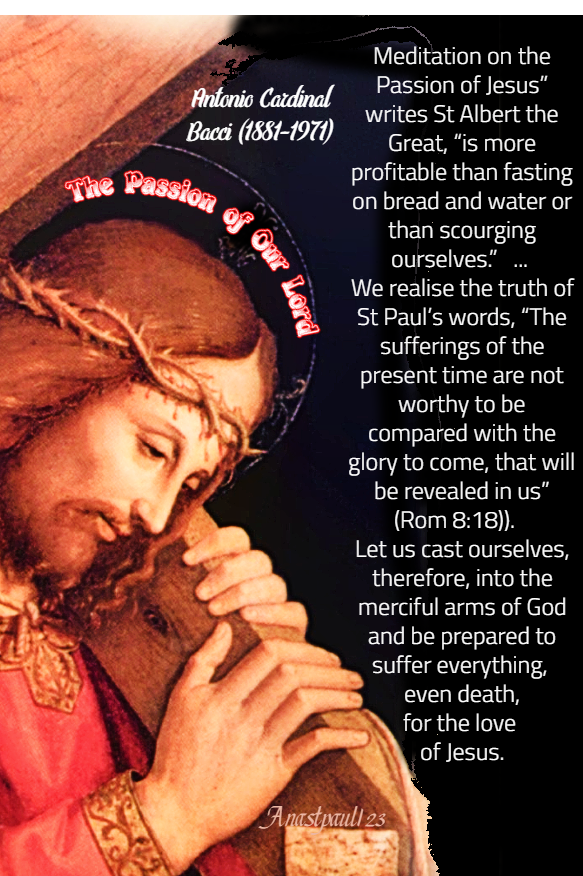
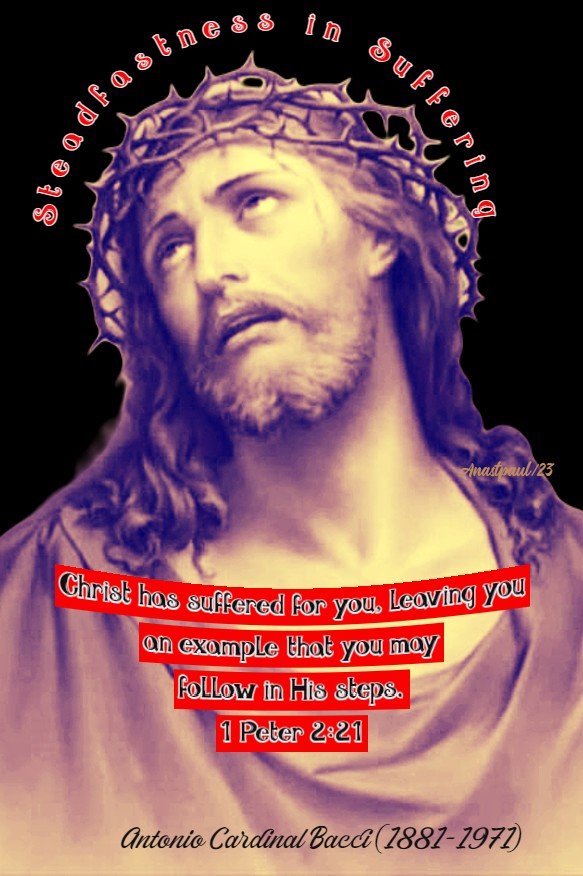
The Passion of Our Lord
“Meditation on the Passion of Jesus” writes St Albert the Great, “is more profitable than fasting on bread and water or than scourging ourselves.”
This is because, when we meditate with love and gratitude on the Passion of our Redeemer, we have the experience of being transformed and set aglow with charity. We realise the truth of St Paul’s words, “The sufferings of the present time are not worthy to be compared with the glory to come, that will be revealed in us” (Rom 8:18)).
Let us cast ourselves, therefore, into the merciful arms of God and be prepared to suffer everything, even death, for the love of Jesus.”
Quote/s of the Day – 1 July – “The Feast and Month of the Most Precious Blood of Jesus”
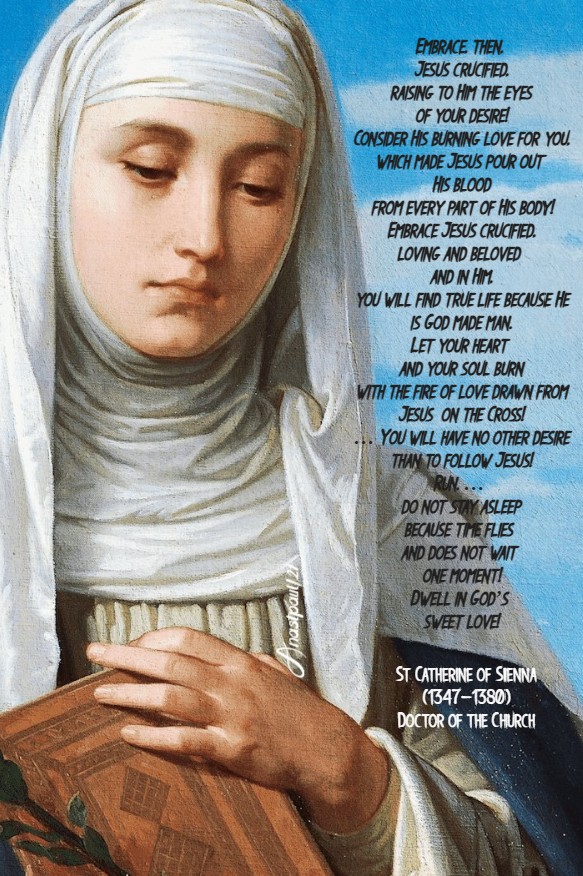
“Embrace, then, Jesus Crucified, raising to Him the eyes of your desire! Consider His burning love for you which made Jesus pour out His Blood from every part of His body! Embrace Jesus Crucified, loving and beloved and in Him, you will find true life because He is God made Man. Let your heart and your soul burn with the fire of love drawn from Jesus on the Cross! … You will have no other desire than to follow Jesus! Run, … do not stay asleep because time flies and does not wait one moment! Dwell in God’s sweet love!”
St Catherine of Sienna (1347-1380) Doctor of the Church
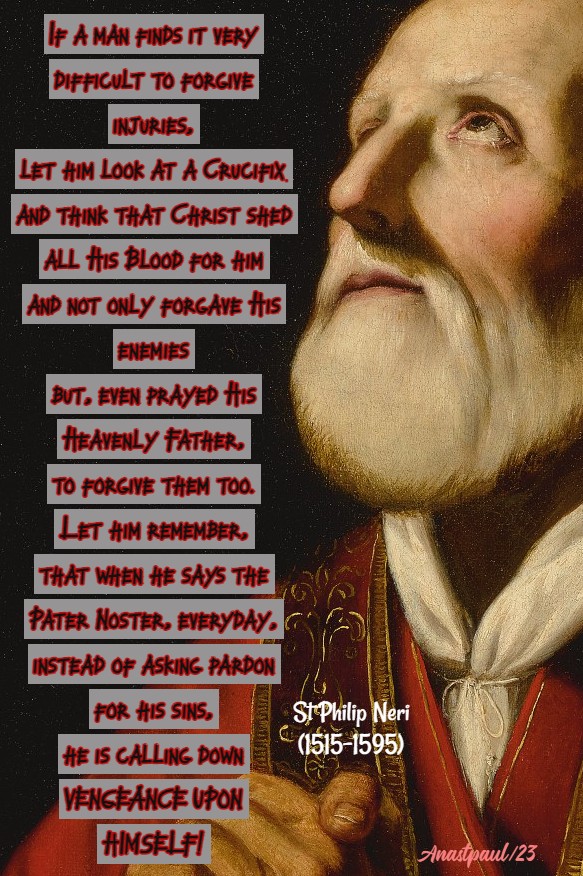
“If a man finds it very difficult to forgive injuries, let him look at a Crucifix and think that Christ shed all His Blood for him and not only forgave His enemies but, even prayed His Heavenly Father, to forgive them too. Let him remember, that when he says the Pater Noster, everyday, instead of asking pardon for his sins, he is calling down VENGEANCE UPON HIMSELF!”
St Philip Neri (1515-1595)
“The Saviour has instituted the most glorious Sacrament of the Eucharist, which truly contains His Body and His Blood, so that, whoever eats it will live forever. Therefore, those who receive it frequently, with devotion, strengthen their spiritual life and well-being, to such an extent, that it is almost impossible for them to be poisoned by any kind of evil attachment.”
(Introduction to the Devout Life, Part II, Chapter 20)
St Francis de Sales (1567-1622) Doctor of the Church
One Minute Reflection – 1 July – “The Feast and Month of the Most Precious Blood of Jesus” – Hebrews 9:11-15, John 19:30-35 – Scripture search here: https://www.drbo.org/
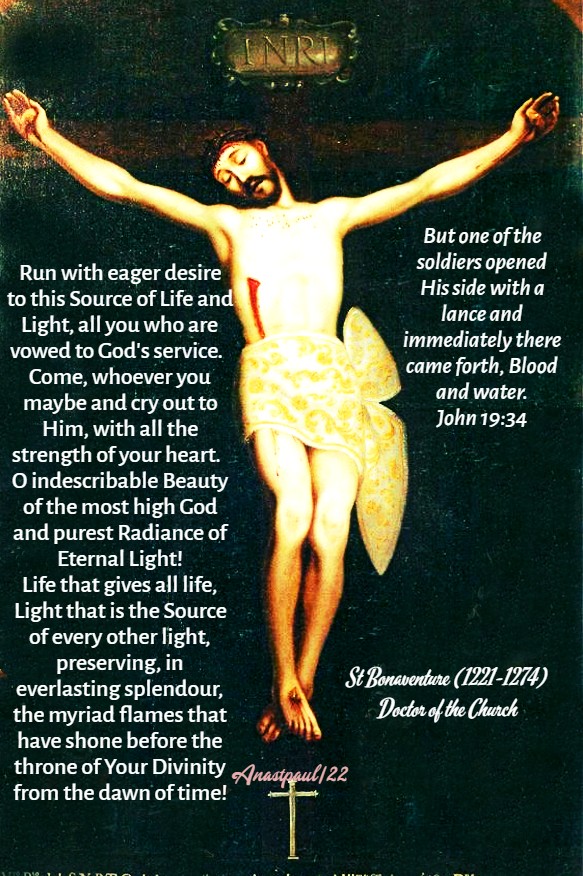
“But one of the soldiers opened His side with a lance and immediately there came forth, Blood and water.” – John 19:34
REFLECTION – “Take thought now, redeemed man and consider how great and worthy is He, Who hangs on the Cross for you… Arise, then, beloved of Christ! Imitate the dove ‘that nests in a hole in the cliff’ (Jr 48:28), keeping watch at the entrance ‘like the sparrow that finds a home’(Ps 84:4). There, like the turtledove, hide your little ones, the fruit of your chaste love. Press your lips to the Fountain, draw water from the wells of your Saviour; for this is the spring flowing out of the middle of paradise, dividing into four rivers, inundating devout hearts, watering the whole earth and making it fertile.
Run with eager desire to this Source of Life and Light, all you who are vowed to God’s service. Come, whoever you may be and cry out to Him, with all the strength of your heart. O indescribable Beauty of the most high God and purest Radiance of Eternal Light! Life that gives all life, Light that is the Source of every other light, preserving, in everlasting splendour, the myriad flames that have shone before the throne of Your Divinity from the dawn of time!
Eternal and inaccessible Fountain, clear and sweet stream, flowing from a hidden spring, unseen by mortal eye! None can fathom Your depths nor survey Your boundaries, none can measure Your breadth, nothing can sully Your purity. From You flows ‘the river which gladdens the city of God’ (Ps 46:5) and makes us cry out with joy and thanksgiving, in hymns of praise to You, for we know, by our own experience, that ‘with You is the Source of Life and in Your Light we see light’ (Ps 36:10).” – St Bonaventure (1221-1274) Doctor of the Church (The Tree of Life, 29-30, 47, – Breviary)
PRAYER – Almighty, eternal God, Who made Thine Only-begotten Son the Redeemer of the world and, willed to be reconciled by His Blood, grant us, we beseech Thee, so to worship in this Sacred rite the price of our salvation and to be so protected, by its power against the evils of the present life on earth, that we may enjoy its everlasting fruit in Heaven. Through the same Jesus Christ, Thy Son our Lord, Who lives and reigns with Thee, in the unity of the Holy Ghost, God, world without end. Amen (Collect).
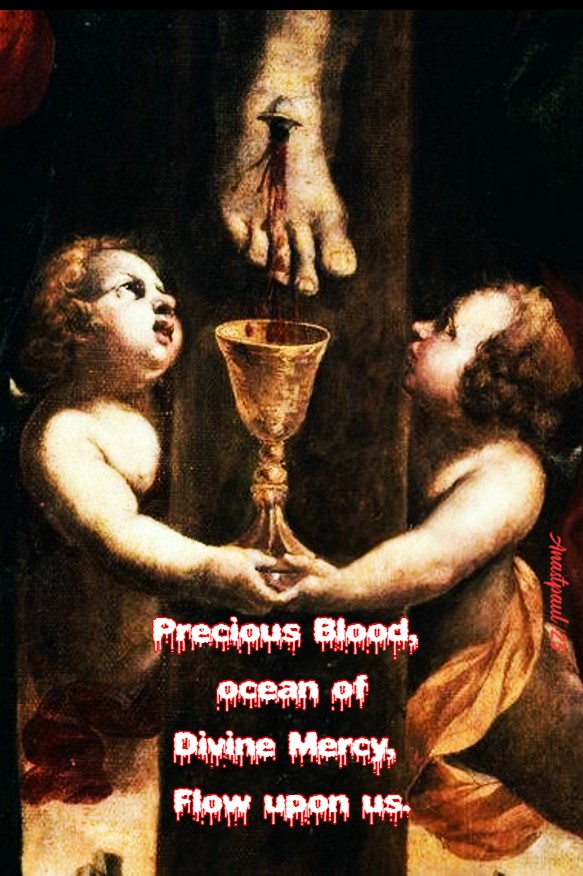
Aspiration:Precious Blood, ocean of Divine Mercy, Flow upon us.
Our Morning Offering – 1 July – “The Feast and Month of the Most Precious Blood of Jesus”
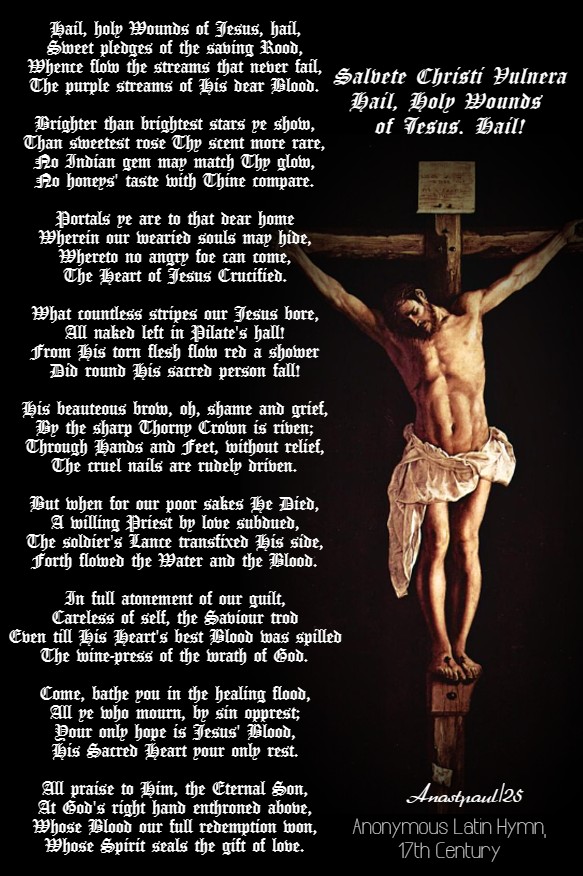
Salvete Christi vulnera Hail, Holy Wounds of Jesus, Hail! Anonymous Latin Hymn, 17th Century
Hail, holy Wounds of Jesus, hail, Sweet pledges of the saving Rood, Whence flow the streams that never fail, The purple streams of His dear Blood.
Brighter than brightest stars ye show, Than sweetest rose your scent more rare, No Indian gem may match Your glow, No honeys taste with Yours compare.
Portals ye are to that dear home Wherein our wearied souls may hide, Whereto no angry foe can come, The Heart of Jesus crucified.
What countless stripes our Jesus bore, All naked left in Pilates hall! From His torn flesh flow red a shower Did round His sacred person fall!
His beauteous brow, oh, shame and grief, By the sharp thorny crown is riven; Through hands and feet, without relief, The cruel nails are rudely driven.
But when for our poor sakes He died, A willing Priest by love subdued, The soldiers lance transfixed His side, Forth flowed the Water and the Blood.
In full atonement of our guilt, Careless of self, the Saviour trod Een till His Hearts best Blood was spilt The wine-press of the wrath of God.
Come, bathe you in the healing flood, All ye who mourn, by sin opprest; Your only hope is Jesus Blood, His Sacred Heart your only rest.
All praise to Him, the Eternal Son, At Gods right hand enthroned above, Whose Blood our full redemption won, Whose Spirit seals the gift of love.
Office Hymn at Lauds on the Feast of the Most Precious Blood. (The Hymn is also used for Lauds on the Friday after the Fourth Sunday in Lent, for the Office of the Instruments of the Passion.) Translated by – Henry Nutcombe Oxenham (1829-1888) for whom I find little information.
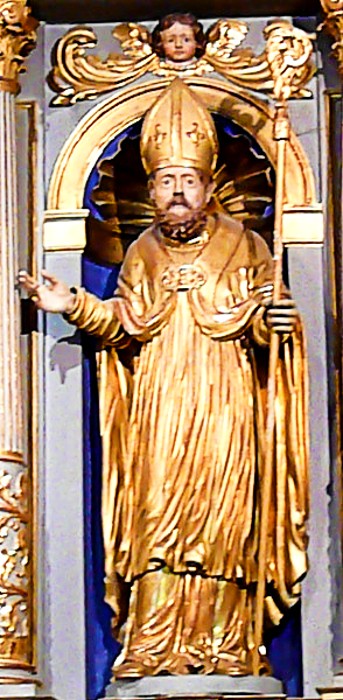
Saint of the Day – 1 July – Saint Fleuret of Estaing (Died c621) Bishop of Auvergne, France , Miracle-worker. Patronages – the blind, those with eye ailments, the lame and crippled, Estaing (modern Aveyron), France. Also known as – Fleuret of Auvergne.
The only known medieval narrative about our Saint is in the Estaing Breviary which says he was the Bishop of Auvergne, the Province north of Rouergue.
The local Abbot was returning with our Bishop from a Synod in Rome and invited him to stay in the village for a while. During this sojourn, a blind man was cured by washing his eyes in water which Fleuret had used and a lame man was enabled to walk, when the Saint gave him a piece of bread.
Local tradition summarised in literature at the Parish Church, has it that he converted the village to Christ by his preaching.
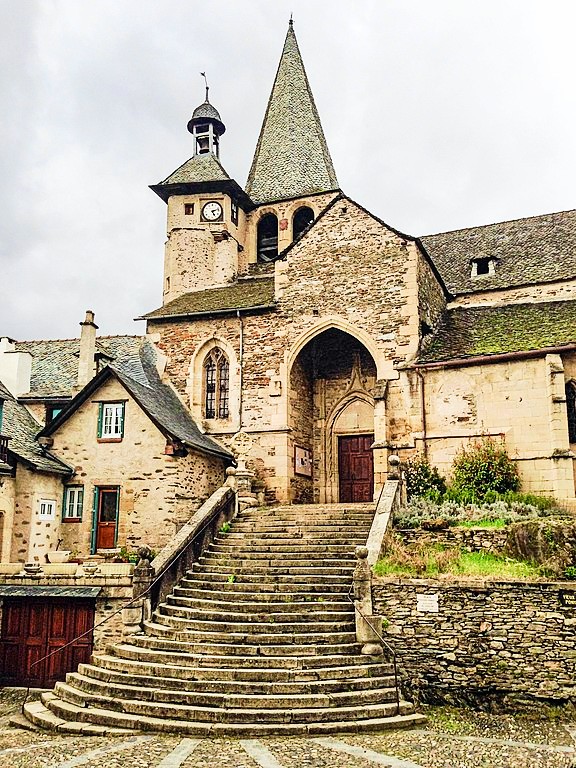
St Fleuret’s Parish Church
The people were amazed and encouraged the Bishop to extend his stay. He did,but after two weeks he took ill and died.
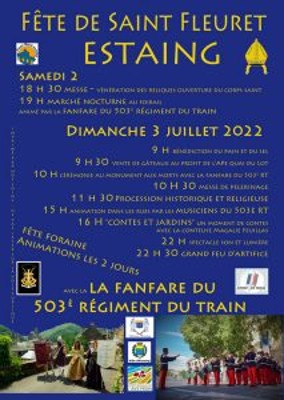
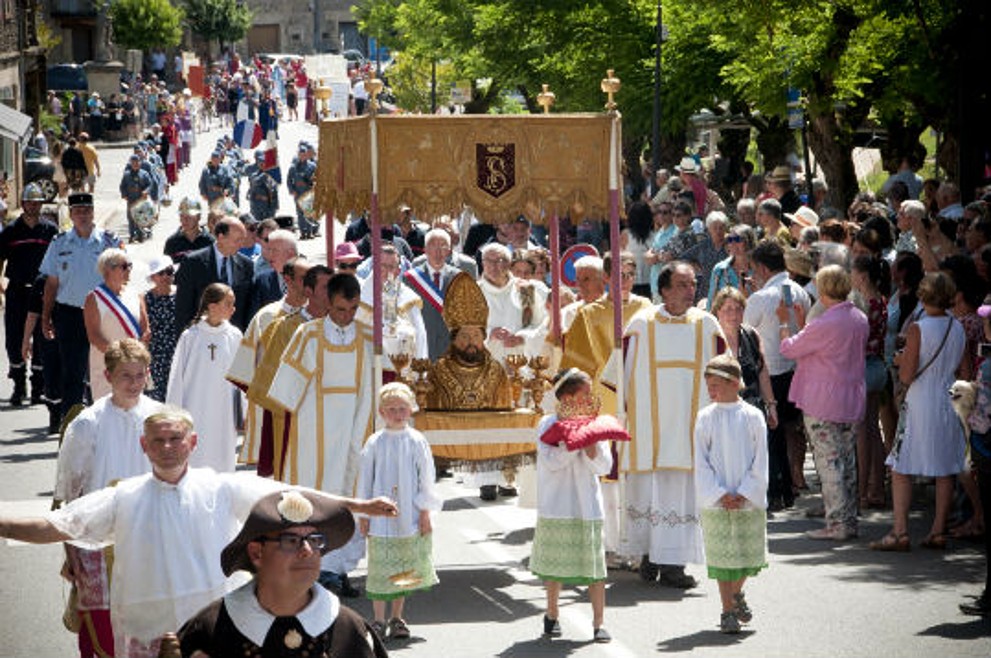
St Fleuret’s Procession in Estaing: According to tradition, St Fleuret, regional Bishop of Auvergne, stopped off at Estaing where he died in 621. St Fleuret’s cult has been attested since the 15th Century. In the 17th and 18th Centuries.
The festival was the occasion for the election of a youth king and a queen. This became more profane than religious, and was condemned by the Church. The Festival was restored in the 19th Century in the form that we now celebrate it as a symbolic, historical and religious tribute.
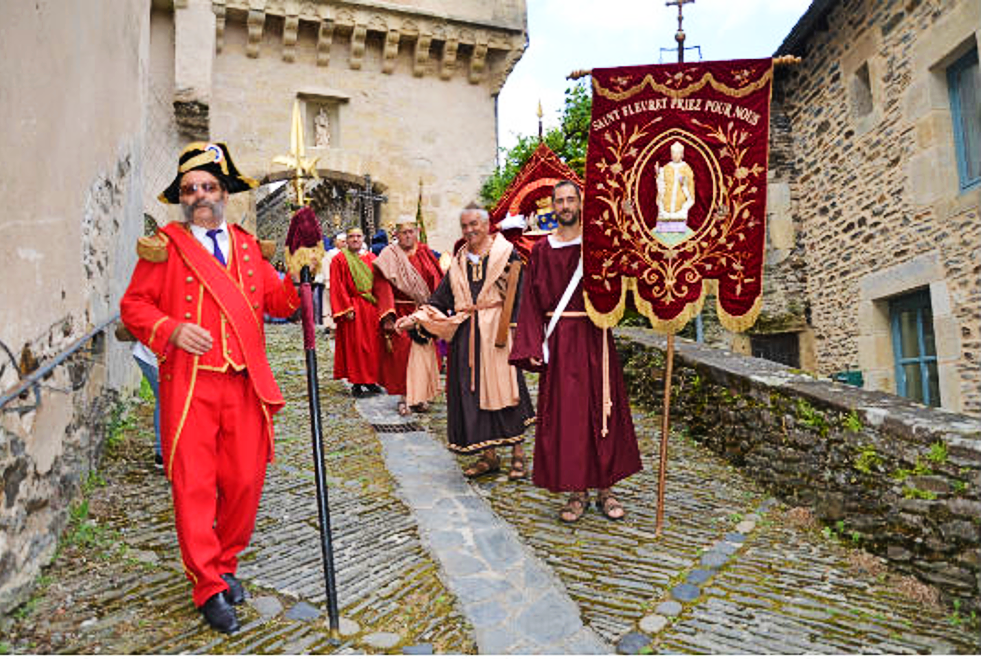
Every first Sunday of July the Procession of Saint Fleuret takes place. A parade representing Saints of Paradise, members of the Ecclesiastical hierarchy, Angels, Archangels, faithful of the old brotherhoods, pilgrims and the most illustrious characters of the Estaing family… accompanied by the clergy and the civil Officials.
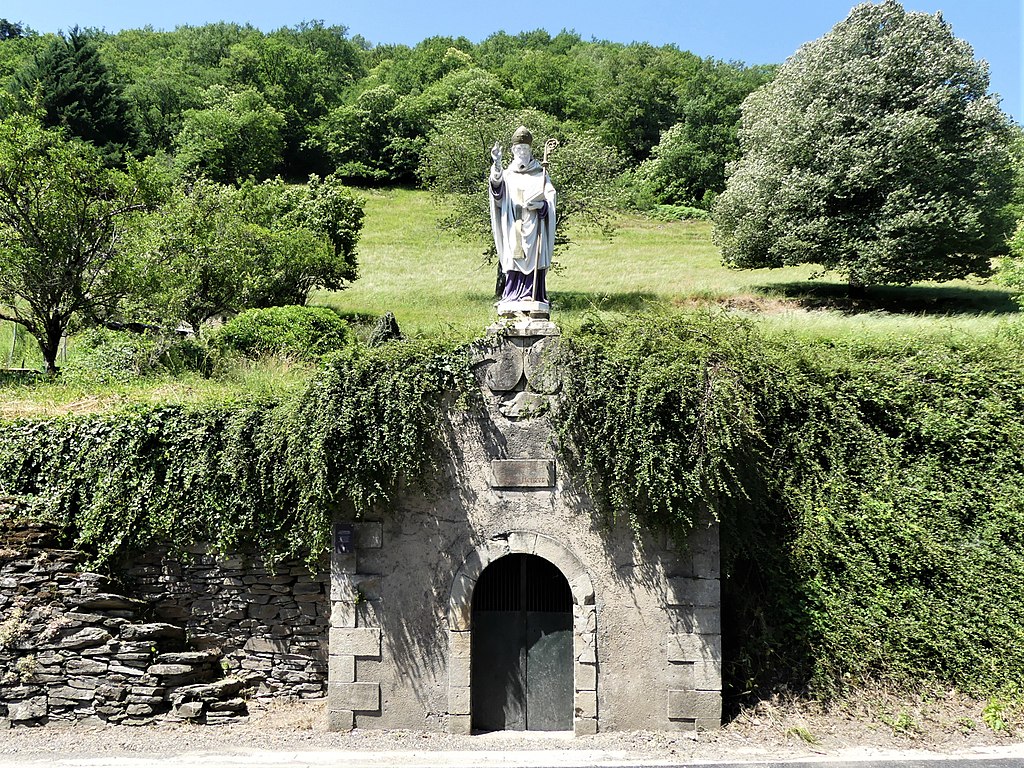
They venerate the Relics and the bust in gilded wood of St Fleuret which are carried all along the roads under the triumphal canopy and visiting St Fleuret’s miraculous spring (see below).
St Aaron of Caerleon St Aaron the Patriarch St Arnulf of Mainz St Calais of Anisole St Carilephus St Castus of Sinuessa St Cewydd St Concordius of Toledo St Cuimmein of Nendrum St Domitian of Lerins Bl Elisabeth de Vans St Eparchius of Perigord St Eutychius of Umbria St Esther the Queen Saint Fleuret (Died c621) Bishop of Auvergne, France St Gall of Clermont St Golvinus of Leon St Gwenyth of Cornwall Bl Huailu Zhang St Julius of Caerleon St Justino Orona Madrigal St Juthware St Leonorious of Brittany St Leontius of Autun St Martin of Vienne St Nicasius of Jerusalem
St Secundinus of Sinuessa St Servan of Culross St Theobald of Vicenza St Theodoric of Mont d’Or St Veep
Martyrs of Rome – 6 Saints: Six Christians who were Martyred together. No details have survived except their names – Esicius, Antonius, Processus, Marina, Serenus and Victor. They were martyred in Rome, Italy, date unknown.
Thought for the Day – 30 June – “The Last Day of Month of the Sacred Heart” – Meditations with Antonio Cardinal Bacci (1881-1971)
Devotion to the Sacred Heart
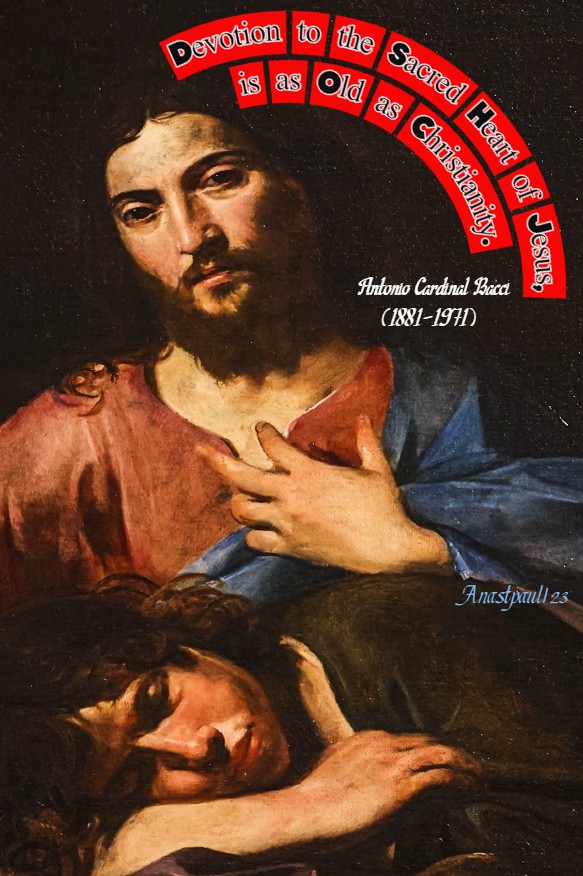
“When we consider it under it’s fundamental aspect as the cult of the love of God, rather than of the Incarnate Word, devotion to the Sacred Heart of Jesus, is as old as Christianity, even though it is only in recent centuries, that it has assumed it’s present symbolism. “He who does not love, does not know God,” says St John, “for God is love” (1 Jn 4:8). “And we have come to know,” he continues “and have believed, the love that God has in our behalf. God is love and he who abides in love, abides in God and God in him” (1 Jn 4:16). This cult of the love of God, particularly of the love of God made man, vibrates throughout the pages of the Gospel and of the writings of the Apostles, especially of St John and of St Paul.
In the works of the Fathers, there are references to the Heart of Jesus, pierced with a lance, from which flowed all the infinite graces of the Church for our redemption. We are reminded of this in the Encylical, Haurietis Aquas, published by Pope Pius XII in the year 1956. But the specific cult of the love of God, as symbolised by the Heart of Jesus, was explicitly approved by the Church after Jesus Himself appeared in the year 1674 to St Margaret Mary Alacoque and showed her His Heart on fire with love for men.”
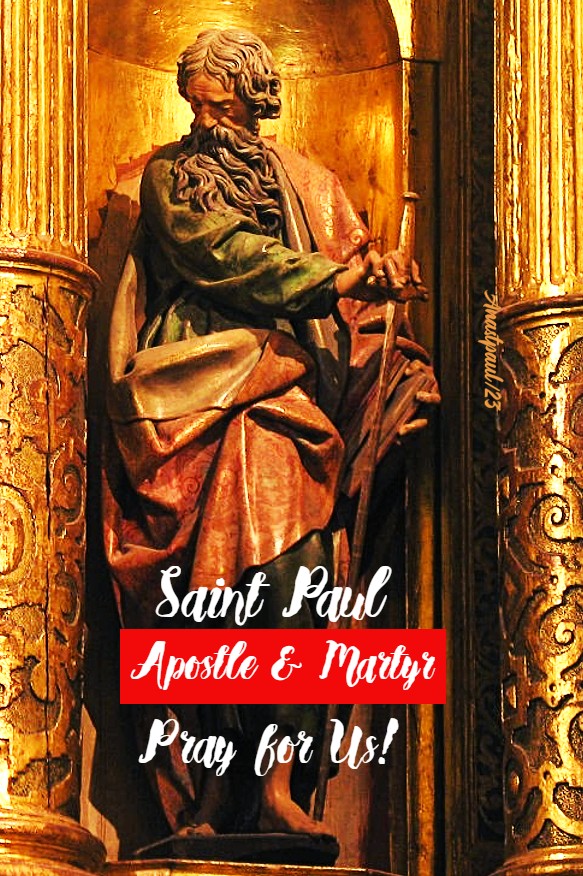
Quote of the Day – 30 June – The Commemoration of St Paul, Apostle and Martyr
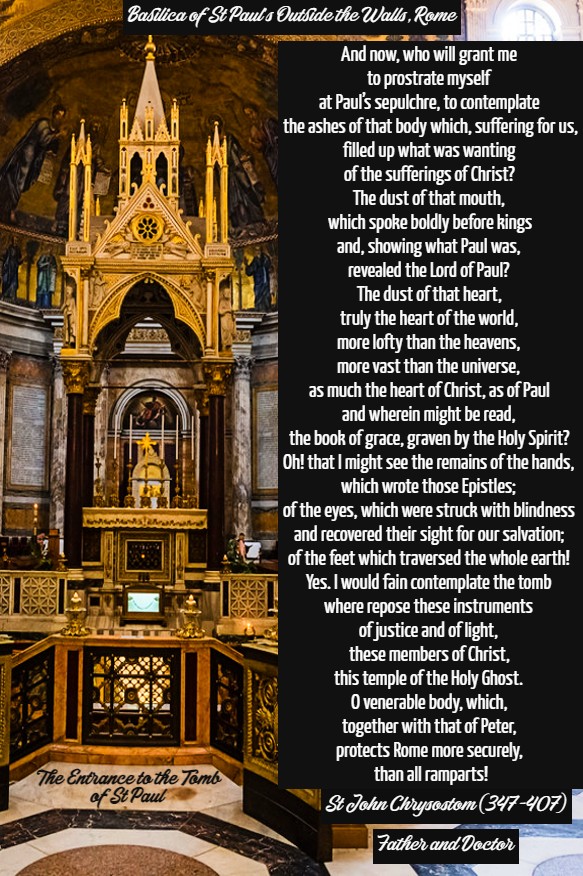
“And now, who will grant me to prostrate myself at Paul’s sepulchre, to contemplate the ashes of that body which, suffering for us, filled up what was wanting of the sufferings of Christ? The dust of that mouth, which spoke boldly before kings and, showing what Paul was, revealed the Lord of Paul? The dust of that heart, truly the heart of the world, more lofty than the heavens, more vast than the universe, as much the heart of Christ, as of Paul and wherein might be read, the book of grace, graven by the Holy Spirit? Oh! that I might see the remains of the hands, which wrote those Epistles; of the eyes, which were struck with blindness and recovered their sight for our salvation; of the feet which traversed the whole earth! Yes. I would fain contemplate the tomb where repose these instruments of justice and of light, these members of Christ, this temple of the Holy Ghost. O venerable body, which, together with that of Peter, protects Rome more securely, than all ramparts!”
One Minute Reflection – 30 June – “The Month of the Sacred Heart of Jesus” – The Commemoration of St Paul, Apostle and Martyr – Galatians 1:11-20, Matthew 10:16-22 – Scripture search here: https://www.drbo.org/
“Behold, I send you as sheep in the midst of wolves, therefore, wise as serpents and simple as doves.” – Matthew 10:16
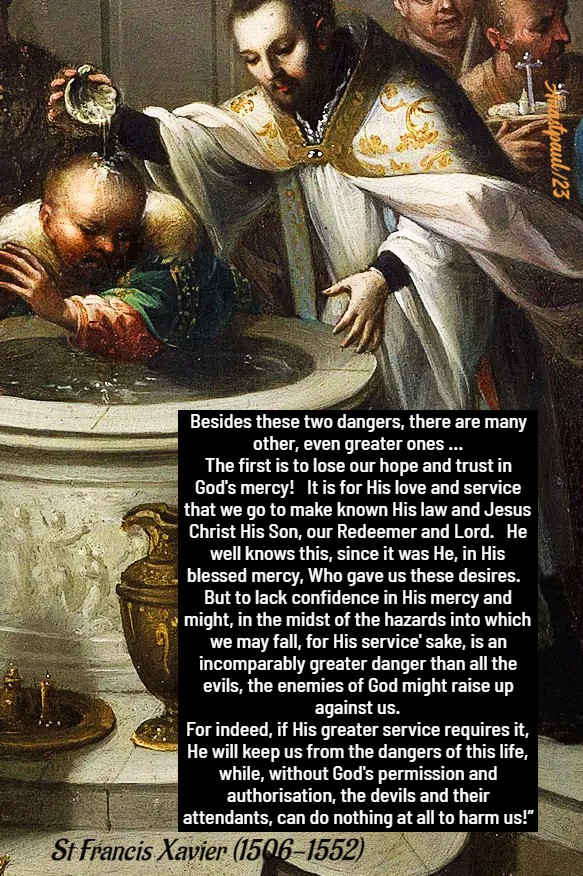
REFLECTION – “According to the people here,, we run two dangers. The first is that, after taking our money, our guide may leave us on some deserted island or throw us into the sea, so as to escape the Governor of Canton. The second is that, supposing he leads us to Canton and we come into the Governor’s presence, the latter will treat us badly or throw us into prison. For our proceeding is unheard of. Numerous decrees prevent anyone at all from gaining access to China and, it is strictly forbidden, for foreigners to make their way in, without the King’s authorisation. Besides these two dangers, there are many other, even greater ones – that the locals know nothing about. It would take a good deal of time to describe them all, however, I will not pass by without citing some of them.
The first is to lose our hope and trust in God’s mercy! It is for His love and service that we go to make known His law and Jesus Christ His Son, our Redeemer and Lord. He well knows this, since it was He, in His blessed mercy, Who gave us these desires. But to lack confidence in His mercy and might, in the midst of the hazards into which we may fall, for His service’ sake, is an incomparably greater danger than all the evils, the enemies of God might raise up against us. For indeed, if His greater service requires it, He will keep us from the dangers of this life, while, without God’s permission and authorisation, the devils and their attendants, can do nothing at all to harm us!” – St Francis Xavier (1506-1552) Jesuit Missionary (Letter 131:22 October 1552).
PRAYER – O God, Who taught vast numbers of the Gentiles by the preaching of the blessed Apostle Paul, grant we beseech Thee that, by honouring his memory, we may enjoy the benefit of his patronal intercession. Through Jesus Christ, Thy Son our Lord, Who lives and reigns with Thee, in the unity of the Holy Ghost, God, world without end. Amen (Collect).
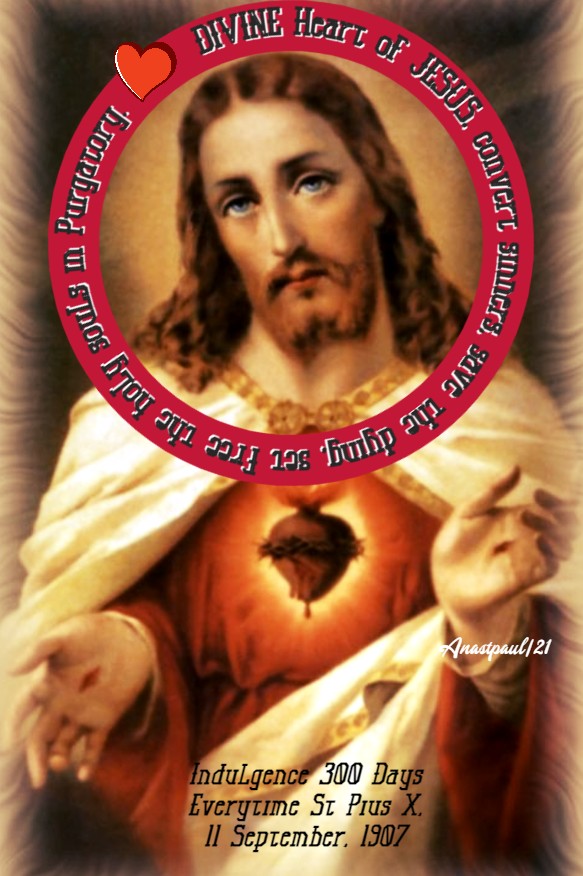
DIVINE Heart of JESUS, convert sinners, save the dying, set free the holy souls in Purgatory. Indulgence 300 Days Everytime – St Pius X, 11 September, 1907.
Our Morning Offering – 30 June – The last day of “The Month of the Sacred Heart of Jesus”
Act of Love to the Sacred Heart of Jesus By Servant of God Cardinal Rafael Merry del Val (1865-1930)
Reveal Thy Sacred Heart to me, O Jesus and show me Its attractions. Unite me to It forever. Grant that all my aspirations and all the beats of my heart, which cease, not even while I sleep, may be a testimonial to Thee, of my love for Thee and may it say to Thee – “Yes, Lord, I am all Thine” the pledge of my allegiance to Thee, rests forever in my heart and will never cease to be there. May Thou accept, the slight amount of good that I do and be graciously pleased, to repair all my wrong-doing – so that I may be able, to bless Thee, in time and in eternity. Amen
Saint of the Day – 30 June – The Commemoration of St Paul. Apostle and Martyr.
The joint commemoration of the Apostles, Peter and Paul, is one of the most ancient customs of the Roman Church, attested already in the oldest surviving Roman Liturgical Calendar, the Depositio Martyrum, written in 336. A verse of the Hymn, Apostolorum Passio, an authentic work of St Ambrose († 397) and still used in the Ambrosian liturgy, says that “the thick crowds make their way through the circuit of so great a city; the feast of the sacred Martyrs is celebrated on three streets.” These “three streets” are the via Cornelia, the main street running up to and over the Vatican hill; the via Ostiensis, where the burial and Church of St Paul are and the via Appia, on which resides the Cemetery “in Catacumbas.”
This last is the ancient Christian Cemetery now called the Catacomb of St Sebastian, The word “catacomb” was in fact originally the name of the site of this ‘Cemetery’ specifically and only later came to be used as a generic term for ancient subterranean Christian burial grounds. The Basilica over the Cemetery, now also entitled to St Sebastian, was originally known as the “Basilica Apostolorum” in memory of a tradition that the bones of Peter and Paul were kept there for a time, probably to save them from destruction in the era of persecutions. This is referred to in various ancient sources, including the Depositio Martyrum and confirmed by modern archeological research. The celebration of the feast “on three streets” would refer then to a procession to visit the site of St Peter’s burial at the Vatican that of St Paul, on the via Ostiensis and the Cemetery where their remains were once kept.
The building of which this wall is a part was constructed over the Catacomb of St Sebastian about 250 and is covered with dozens of devotional graffiti like the one seen here. “Paule ed (et) Petre, petite pro Victore – Paul and Peter, pray (lit. ‘ask’) for Victor.”
The poet Prudentius, writing in the very early 5h Century, calls the day “bifestum – a double Feast” and attests that on that day, the Pope would say a Mass at the Basilica of St Peter and then hasten to say another at St Paul’s. …
It should not be surprising, then, that at a certain point, the double Feast was divided and kept in a more manageable way as two separate Feasts. In the Gelasian Sacramentary, we find three Masses of Sts Peter and Paul assigned to 29 June – the oldest copy of the Gelasianum dates to roughly 750 but much of the material is considerably older, some of it reaching even to the days of St Leo the Great 300 years earlier. In some manuscripts, however, one of the three, “the proper Mass of St Paul” has already been assigned to 30 June. In the Gregorian Sacramentary, written roughly a Century later, we find the Feast of St Peter on 29 June and that of St Paul on the 30th – each Mass containing references to the other Apostle but they are, nevertheless, clearly distinct. Thus, by the time of Charlemagne, the “bifestum” of Prudentius had already been separated into a two day Feast.
At the traditional Mass of 29 June, the majority of the texts refer either to St Peter alone (Introit, Epistle, Alleluia, Gospel, Communion) or to Apostles generically, as in the Gradual “Thou shalt make them princes over all the earth.” The sole reference to St Paul is in the Collect, “O God, who hast consecrated this day by the martyrdom of Thy Apostles Peter and Paul, grant Thy Church to follow in all things the teaching of those through whom she first received the faith.” The Office is likewise dedicated almost entirely to St Peter.
The following day, therefore, the whole of the Liturgy is dedicated to St Paul and is not called a day within the Octave of the Apostles but rather “the Commemoration of St Paul.” The variable texts of the Mass all refer to him but a commemoration of St Peter is added to the Feast, in accordance with the tradition that the two, are never entirely separated, in the veneration paid them, by the Church. (The same is done on the Feast of St Paul’s Conversion and commemorations of Paul, are added to the Feasts of St Peter’s Chairs and Chains.) The Office is likewise dedicated entirely to St Paul; both the Mass and Office, however, make use of St Paul’s own testimony in Galatians, to the mission of the two Apostles: “For He who worked in Peter for the apostleship of the circumcision, worked in me too, among the gentiles and they knew the grace of God that was given to me.”
he Apostles Paul and Barnabas at Lystra (Acts 14, 5-18), by Jacob Jordaens, 1645
In the 1130s, a Canon of St Peter’s Basilica named Benedict, writes that it was still the custom in his time, for the Pope to keep the Feast of St Peter at the Vatican but then celebrate Vespers at the Tomb of St Paul in the great Basilica on the Ostian Way, “with all the choirs” of the City! Amen. (Liturgical Notes on the Commemoration of St Paul – GREGORY DIPIPPO).
The Preaching of St Paul at Ephesus – Eustache Le Sueur, 1649
St Adolphus of Osnabrück St Alpinian of Limoges St Alrick the Hermit Bl Ambrose de Feis Bl Anthony de Tremoulières Bl Arnulf of Villers St Austriclinian of Limoges St Basilides of Alexandria St Bertrand of Le Mans St Clotsindis of Marchiennes
Bl Elisabeth Heimburg St Emiliana of Rome St Erentrude St Eurgain St Gaius Bl Jacob Clou St Leo the Deacon St Lucina of Rome St Lucina of the Callistus Catacombs St Marcian of Pampeluna St Martial of Limoges St Ostianus St Otto of Bamberg St Peter of Asti St Petrus Li Quanhui
Blessed Raymond Lull TOSF (c 1232 – c 1315) Martyr – known as “Doctor Illuminatus,” Raymond was a Philosopher, Logician, Writer, Poet, Pioneer in computation theory, Franciscan tertiary. Within the Franciscan Order he is honoured as a Martyr. He was Beatified on 25 February 1750 by Pope Benedict XIV (cultus confirmed) and reaffirmed in 1847 by Pope Pius IX. His Life: https://anastpaul.com/2018/06/30/saint-of-the-day-30-june-blessed-raymond-lull-t-o-s-f-c-1232-c1315-martyr/
St Vihn Son Ðo Yen
Martyrs of Africa – 7 Saints: Seven Christians Martyred together. No detail about them have surived but the names – Cursicus, Gelatus, Italica, Leo, Timotheus, Zoilus, and Zoticus. Date and precise location in Africa unknown.
Thought for the Day – 29 June – Meditations with Antonio Cardinal Bacci (1881-1971)
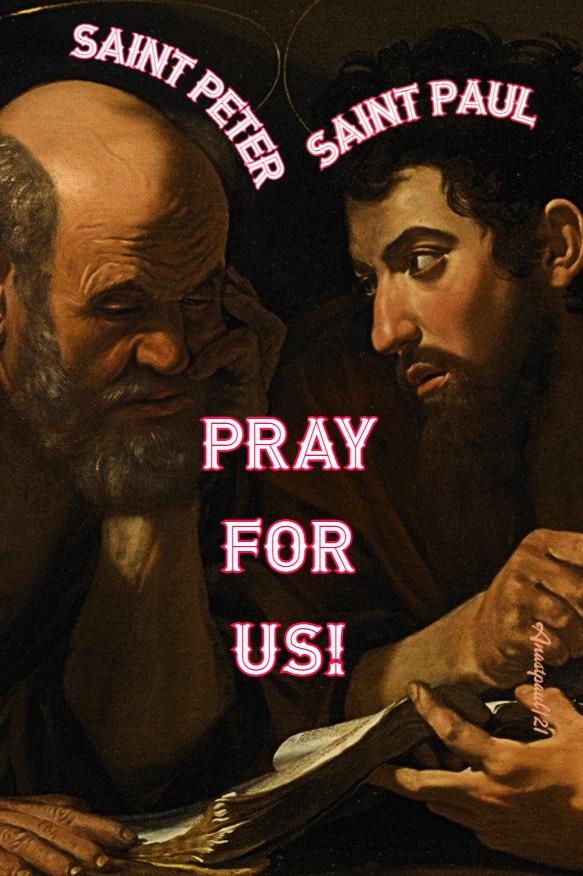
St Peter, Prince of the Apostles St Paul, the Apostle to the Gentiles
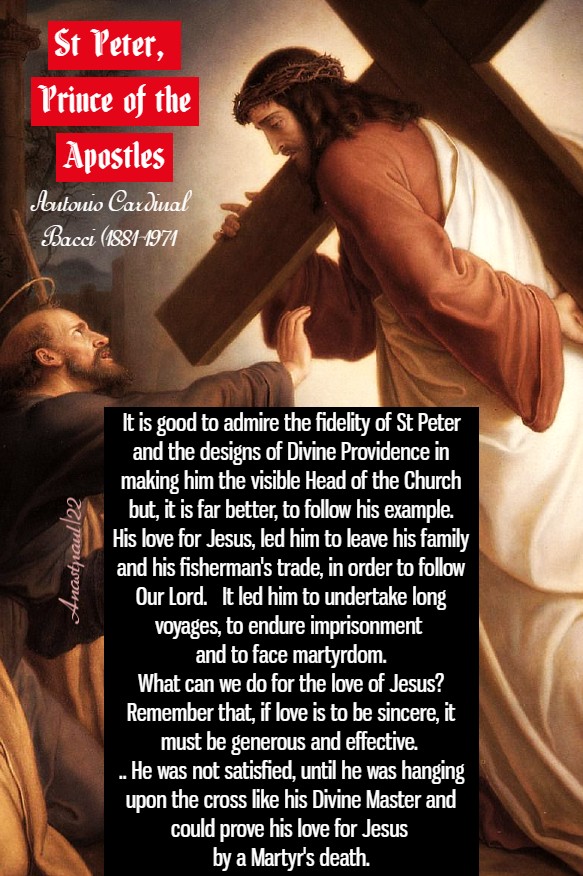
“It is good to admire the fidelity of St Peter and the designs of Divine Providence in making him the visible Head of the Church but, it is far better, to follow his example. His love for Jesus, led him to leave his family and his fisherman’s trade, in order to follow Our Lord. It led him to undertake long voyages, to endure imprisonment and to face martyrdom. What can we do for the love of Jesus? Remember that, if love is to be sincere, it must be generous and effective.
Secondly let us meditate on and imitate, the ardent and fearless faith of St Peter. He was not afraid to preach the teaching of Christ before the Sanhedrin. He was not afraid of Herod, who cast him into prison.
He was not afraid of the Roman Emperor, who caused him to be crucified. Our faith should be steadfast and lively, like his!
Finally, let us imitate Peter in his repentance. Although he loved Jesus very much and had such great faith in Him, in a moment of weakness and of imprudence, he denied Him three times. All his life, however, be wept bitterly for this sin. Whenever he heard a cock crowing, it was as if an arrow had pierced his heart. He was not satisfied, until he was hanging upon the cross like his Divine Master and could prove his love for Jesus by a Martyr’s death.”
St Paul, the Apostle to the Gentiles
We can learn many other virtues from St Paul, besides his zealous love for God and for his fellowmen. We can also learn from him, the virtues of humility and of apostolic fervour. The Apostle of the Gentiles reached such heights of sanctity, as to feel himself transformed into Christ Himself and to deserve to be taken up into the third Heaven, where he enjoyed a foretaste of eternal happiness. Nevertheless, he considered himself unworthy to be called an Apostle and he realised, that all his gifts came to him from God. “Not that we are sufficient of ourselves, to think anything as from ourselves but our sufficiency, is from God” (2 Cor 3:5). Whenever we succeed in any project, we should think on the same lines because, it is only when we are humble and depend on the grace of God, that the success of our actions will redound to the glory of our Creator. If the cancer of ambition or of self-love, should corrupt our purity of intention, our work would not be blessed by God and would not make us worthy of everlasting life. Let us repeat often: “All for You, with You and in You, my God.”
Quote/s of the Day – 29 June – Saints Peter and Paul, Apostles
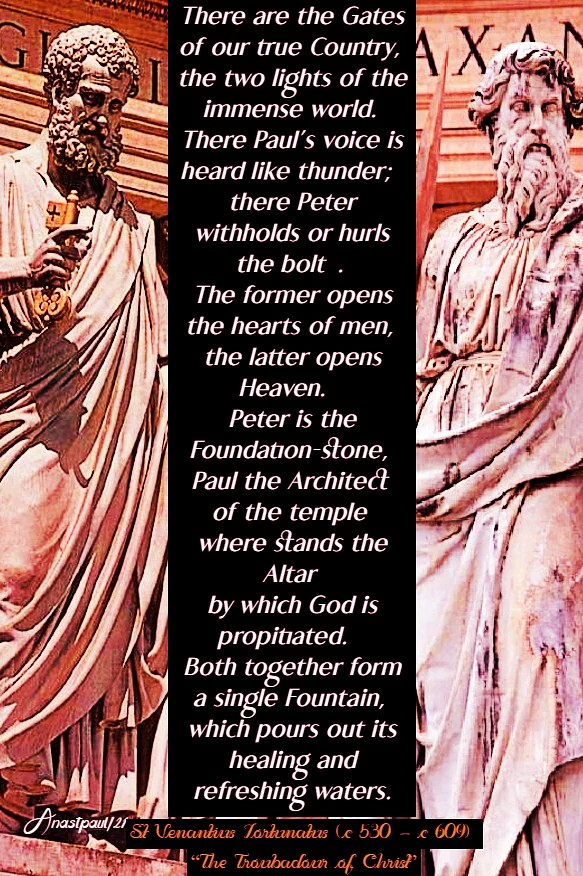
“There are the gates of our true country, the two lights of the immense world. There Paul’s voice is heard like thunder; there Peter withholds or hurls the bolt . The former opens the hearts of men, the latter opens Heaven. Peter is the Foundation-stone, Paul the Architect of the temple where stands the Altar by which God is propitiated. Both together form a single Fountain, which pours out its healing and refreshing waters.”
St Venantius Fortunatus (c 530 – c 609) “The Troubadour of Christ”
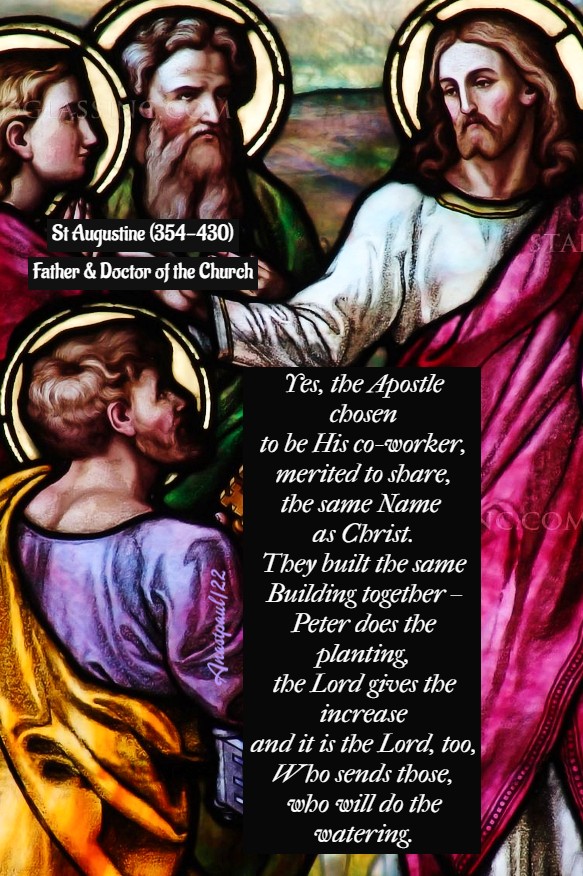
“Yes, the Apostle chosen to be His co-worker, merited to share, the same Name as Christ. They built the same Building together – Peter does the planting, the Lord gives the increase and it is the Lord, too, Who sends those, who will do the watering (cf 1 Cor 3:6f).”
St Augustine (354-430) Father & Doctor of the Church
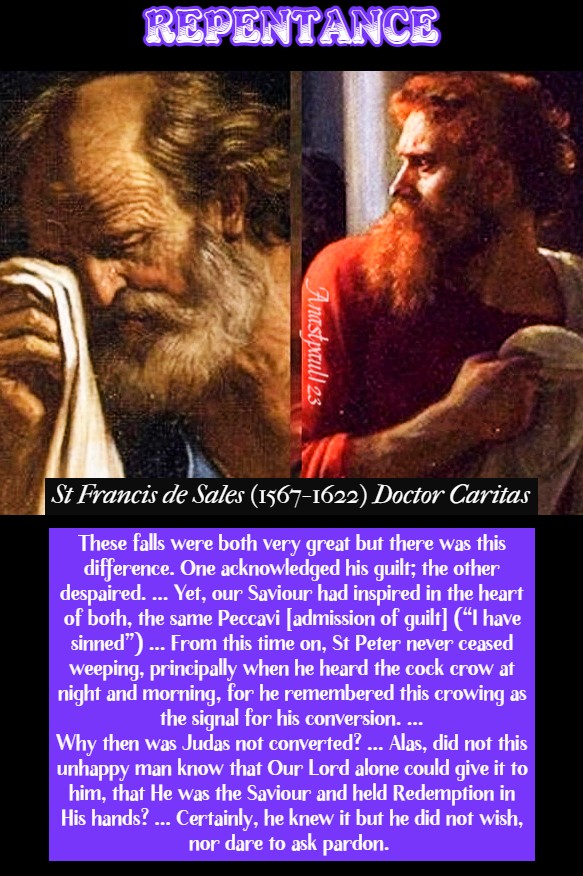
“These falls were both very great but there was this difference. One acknowledged his guilt; the other despaired. Yet, our Saviour had inspired in the heart of both, the same Peccavi [admission of guilt] (“I have sinned”) … From this time on, St Peter never ceased weeping, principally when he heard the cock crow at night and morning, for he remembered this crowing as the signal for his conversion. … Why then was Judas not converted? … Alas, did not this unhappy man know that Our Lord alone could give it to him, that He was the Saviour and held Redemption in His hands? … Certainly, he knew it but he did not wish, nor dare to ask pardon. ”
St Francis de Sales (1567-1622) Doctor Caritas
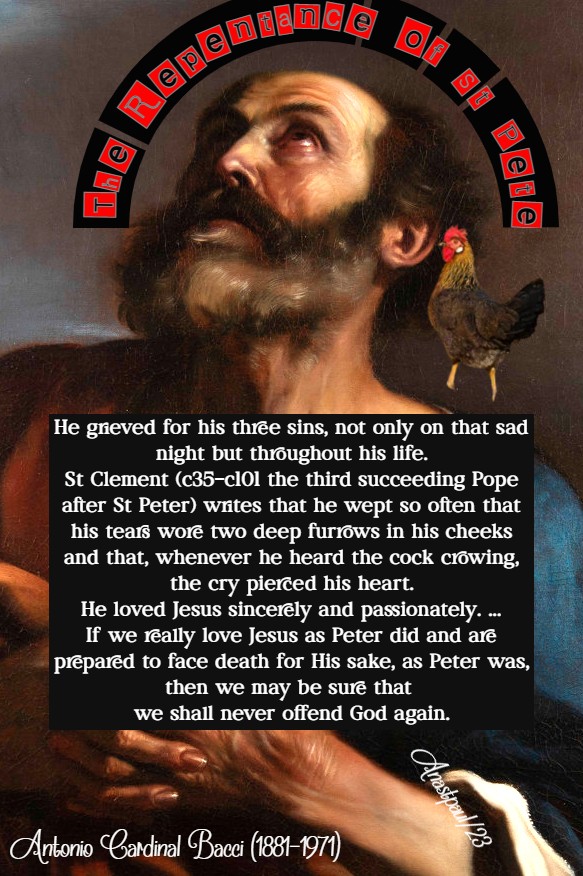
“He grieved for his three sins, not only on that sad night but throughout his life. St Clement (c35-c101 the third succeeding Pope after St Peter) writes that he wept so often that his tears wore two deep furrows in his cheeks and that, whenever he heard the cock crowing, the cry pierced his heart. He loved Jesus sincerely and passionately. If we really love Jesus as Peter did and are prepared to face death for His sake, as Peter was, then we may be sure that we shall never offend God again.”
Antonio Cardinal Bacci (1881-1971)
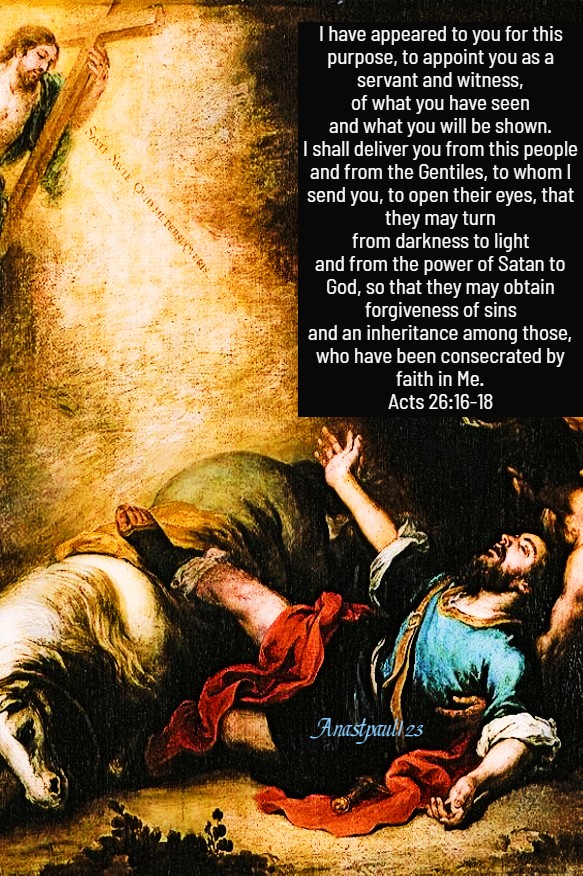
“I have appeared to you for this purpose, to appoint you as a servant and witness, of what you have seen and what you will be shown. I shall deliver you from this people and from the Gentiles, to whom I send you, to open their eyes, that they may turn from darkness to light and from the power of Satan to God, so that they may obtain forgiveness of sins and an inheritance among those, who have been consecrated by faith in Me.”
Acts 26:16-18
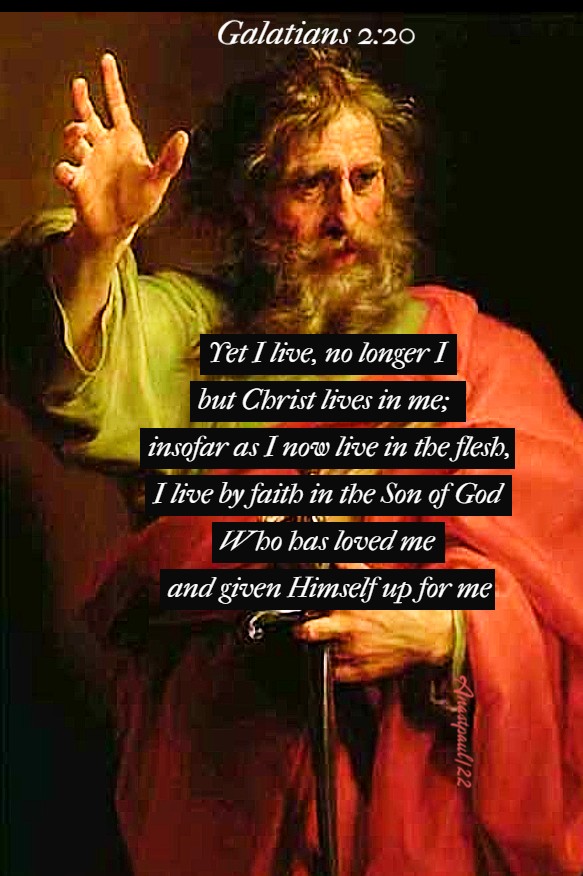
“Yet I live, no longer I but Christ lives in me; insofar as I now live in the flesh, I live by faith in the Son of God, Who has loved me and given himself up for me.”
One Minute Reflection – 29 June – “The Month of the Sacred Heart of Jesus” – Saints Peter and Paul, Apostles – Acts 12:1-11, Matthew 16:13-19 – Scripture search here: https://www.drbo.org/
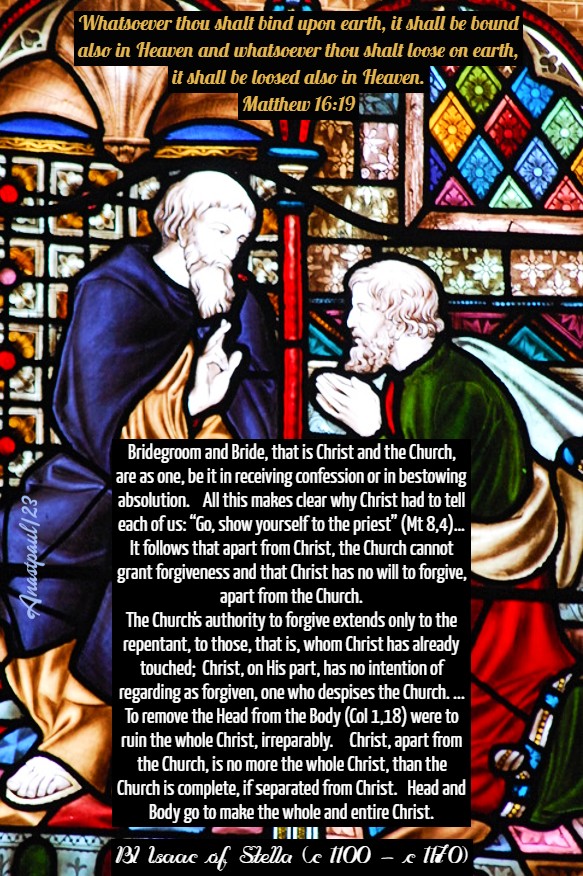
“Whatsoever thou shalt bind upon earth, it shall be bound also in Heaven and whatsoever thou shalt loose on earth, it shall be loosed also in Heaven.” – Matthew 16:19
REFLECTION – “Bridegroom and Bride, that is Christ and the Church, are as one, be it in receiving confession or in bestowing absolution. All this makes clear why Christ had to tell each of us: “Go, show yourself to the priest” (Mt 8,4)… It follows that apart from Christ, the Church cannot grant forgiveness and that Christ has no will to forgive, apart from the Church. The Church’s authority to forgive extends only to the repentant, to those, that is, whom Christ has already touched; Christ, on His part, has no intention of regarding as forgiven, one who despises the Church.
Doubtless, Christ need accept no restraints to His power of Baptising, Consecrating the Eucharist, Ordaining Priests, forgiving sins and the like but, the humble and faithful Bridegroom, prefers to confer such blessings, with the co-operation of His Bride. “What God,” then, “has joined, let no man put asunder” (Mt 19,6). “I say this is a great mystery and refers to Christ and the Church” (Eph 5,32)… To remove the Head from the Body (Col 1,18) were to ruin the whole Christ, irreparably. Christ, apart from the Church, is no more the whole Christ, than the Church is complete, if separated from Christ. Head and Body go to make the whole and entire Christ.” – Bl Isaac of Stella (c 1100 – c 1170) Cistercian Monk, Abbot, Theologian, Philosopher (Sermon 11, §11-814).
PRAYER – O God, Who made this day holy by the Martyrdom of Thy Apostles Peter and Paul, grant Thy Church to follow in all things the teaching of those from whom she first received the faith. Through Jesus Christ, Thy Son our Lord, Who lives and reigns with Thee, in the unity of the Holy Ghost, God, world without end. Amen (Collect).
ALL PRAISE, honour and glory to the Divine Heart of JESUS.Indulgenced– 50 Days, once a day. 168 Pope Leo XIII, 14 June 1901.
Our Morning Offering – 29 June – Saints Peter and Paul, Apostles
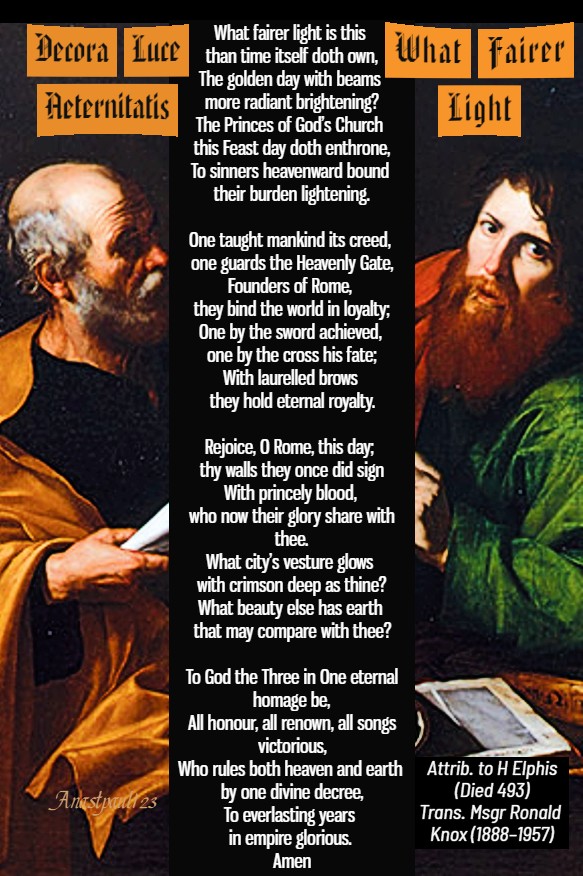
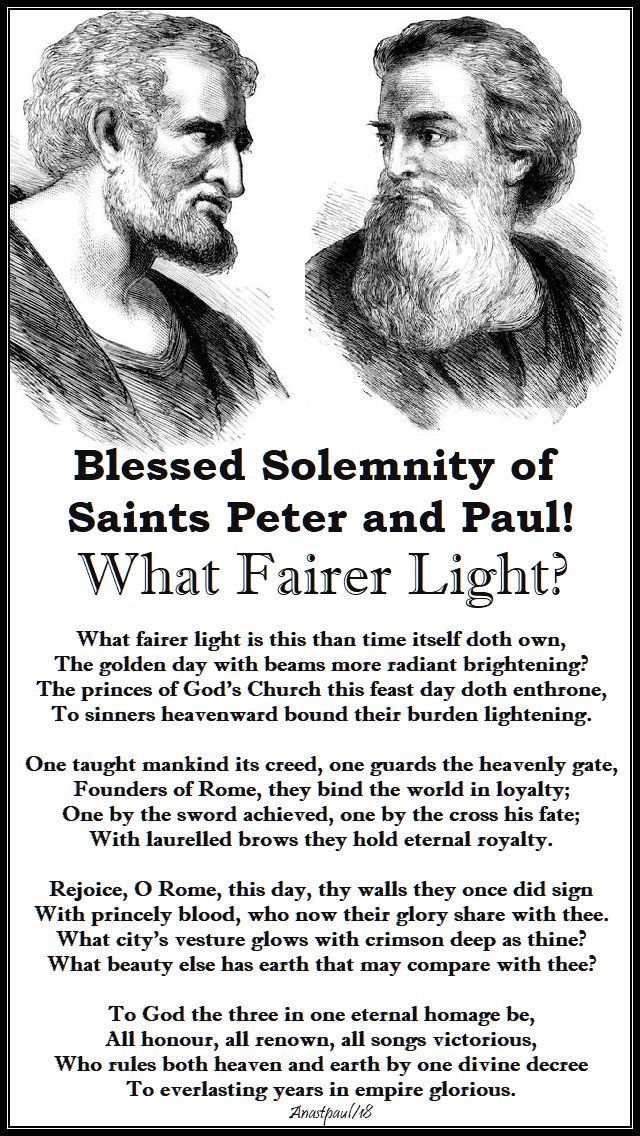
Decora Luce Aeternitatis What Fairer Light Attrib. to H Elphis (Died 493) Wife of Boethius c 477– 524) Trans. Msgr Ronald Knox (1888–1957)
What fairer light is this than time itself doth own, The golden day with beams more radiant brightening? The Princes of God’s Church this Feast day doth enthrone, To sinners heavenward bound their burden lightening.
One taught mankind its creed, one guards the Heavenly Gate, Founders of Rome, they bind the world in loyalty; One by the sword achieved, one by the cross his fate; With laurelled brows they hold eternal royalty.
Rejoice, O Rome, this day; thy walls they once did sign With princely blood, who now their glory share with thee. What city’s vesture glows with crimson deep as thine? What beauty else has earth that may compare with thee?
To God the Three in One eternal homage be, All honour, all renown, all songs victorious, Who rules both heaven and earth by one divine decree, To everlasting years in empire glorious. Amen
5th century Latin Hymn “Aurea Luce” attributed to H Elphis (Died 493), first wife of the Roman philosopher-poet Boethius (c475–c525). He would eventually be Martyred for his defence of the Faith against the Arian ruler: Theodoric. Msgr Knox, a convert from Anglicanism, was a noted Scholar, Author, Hymnist and Translator, becoming the Secretary to St Pius X. Under direction of his religious superiors, he re-translated the Latin Vulgate Bible into English from Hebrew and Greek sources. What Fairer Light is set to the tune, Decora Lux by the English Catholic Composer, Samuel Webbe (1740–1816).
In 1632, in accord with changes called for by the Council of Trent, Pope Urban VIII (1568-1644) revised the original text of Aurea Luce and divided it into two new Hymns for Lauds and Vespers: Decora Lux and Beate Pastor Petre. In the Liturgy of the Hours, What Fairer Light is used on 29 June, the Solemnity of Sts Peter and Paul, Apostles. The above is the Older version.
Saint of the Day – 29 June – St Cassius (Died 558) Bishop of Narni, Italy, from 537 to 558, the date of his deat, Miracle-worker. He was praised by St Gregory the Great and was noted for his charity. Died on 30 June 558 in Narni, Italy of natural causes. Relics enshrined in the Cathedral of Narni, Italy.
The Roman Martyrology reads: “At Narni, St Cassius, Bishop of that City of whom St Gregory the Great relates, in writing and in sermons, that Cassius permitted scarely any day of his life to pass without offering the Victim of propitiation to Almight God and he was well worthy to do so, for he distributed in alms, all he possessed and his devotion was such that abundant tears flowed from his eyes during the Holy Sacrifice. At Last, he came to Rome on the birthday of the Apostles, as was his yearly custom and after having solemnly celebrated Mass and given the Lord’s Body and the Kiss of Peace to all, he departed for Heaven, the next day at Narni”
Cassius would offer Mass daily at the Tomb of his predecessor Saint Juvenal of Narni, on whose life he tried to pattern his own. On the feast of Sts Peter and Paul, on the occasion of which every year, he used to go to Rome, after having celebrated the holy mysteries in his city and having distributed communion to all, he died.
St Gregory the Great, praising Cassius, says that he lived at the time of King Totila. Cassius adorned the Episcopal See of Narni in the time of the Gothic wars and was one of the Bishops who, in that sad period of disasters for Italy, implemented the directives of the Church in the pastoral ministry with zeal and prudence. St Gregory recounts that in the territory of Narni a sword holder of King Totila, possessed by the devil, was freed through the prayers of Cassius.
An Ambo in the Cathedral of Narni depicting the Virgin and Child and Sts Cassius and Juvenal.
In the tragic circumstances of the sack of Narni in the year 878, Cassius’ Relics were taken to the Basilica di San Frediano in Lucca with those of Saints Juvenal and Cassius’ wife Fausta. They were taken by Adalbert, Margrave of Tuscany but all of the Relics were returned to Narni two years later.
The Relics of Saint Cassius were enclosed in a restored shrine later known as the Sacello di San Cassio. The beautiful artwork below depicts The Miracle of St Cassius on the return of his Relics to Narni. Unfortunately I find no information of this miracle but one can see a father with an ill child in his arms, possibly a dead child.
St Anastasius of Bourges St Benedicta of Sens St Cassius (Died 558) Bishop of Narni, Italy St Ciwg ap Arawn St Cocha St Ilud Ferch Brychan St Judith of Niederaltaich St Marcellus of Bourges St Mary, the Mother of John Mark St Salome of Niederaltaich St Syrus of Genoa Bl William of Sann
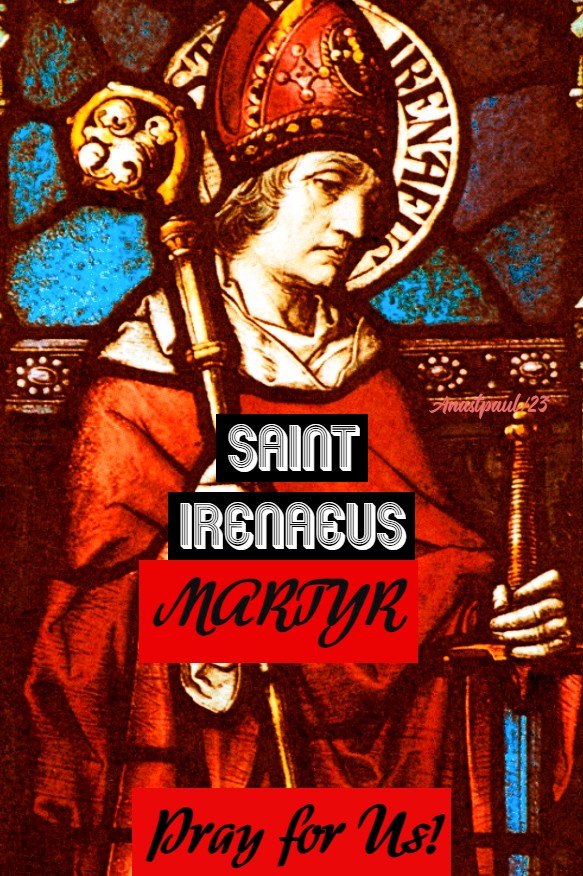
Quote/s of the Day – 28 June – St Irenaeus (c130 – c202) Bishop, Martyr
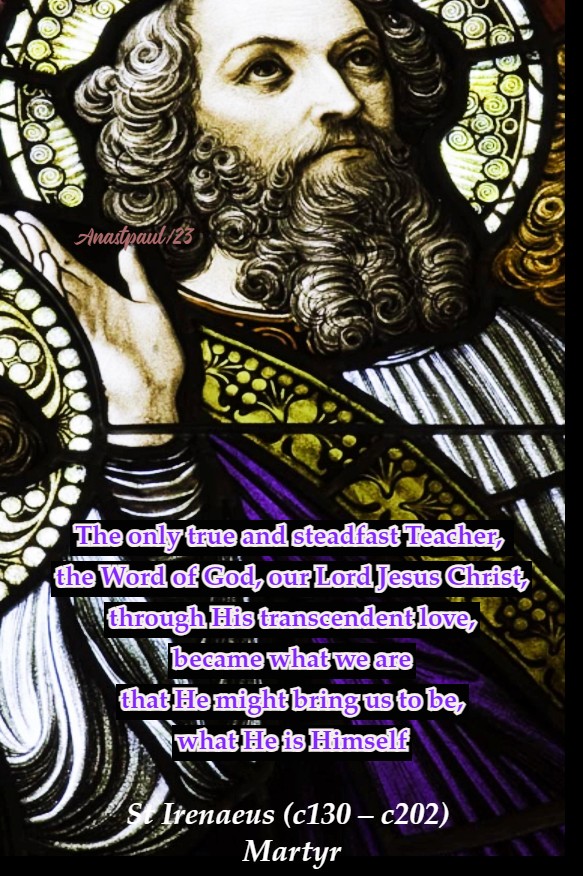
“The only true and steadfast Teacher, the Word of God, our Lord Jesus Christ, through His transcendent love, became what we are that He might bring us to be, what He is Himself.”
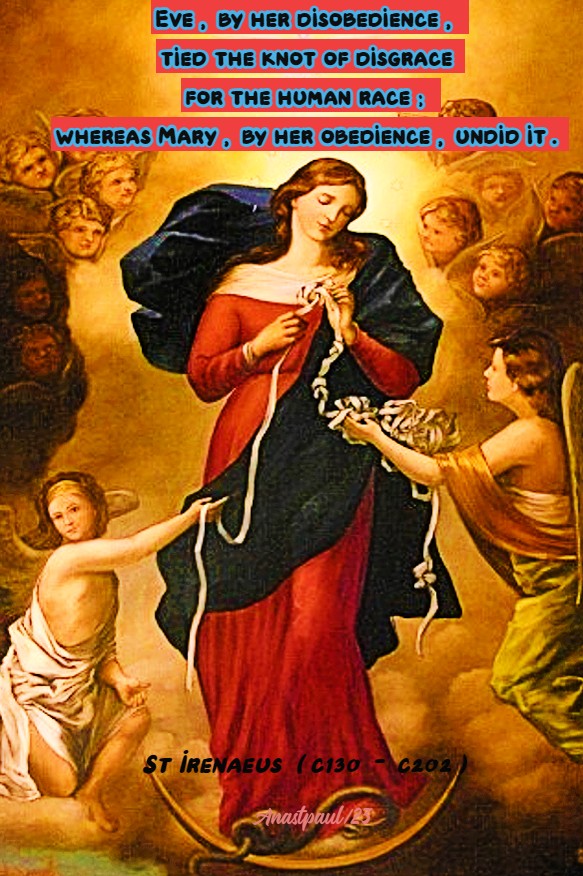
“Eve, by her disobedience, tied the knot of disgrace for the human race; whereas Mary, by her obedience, undid it.”
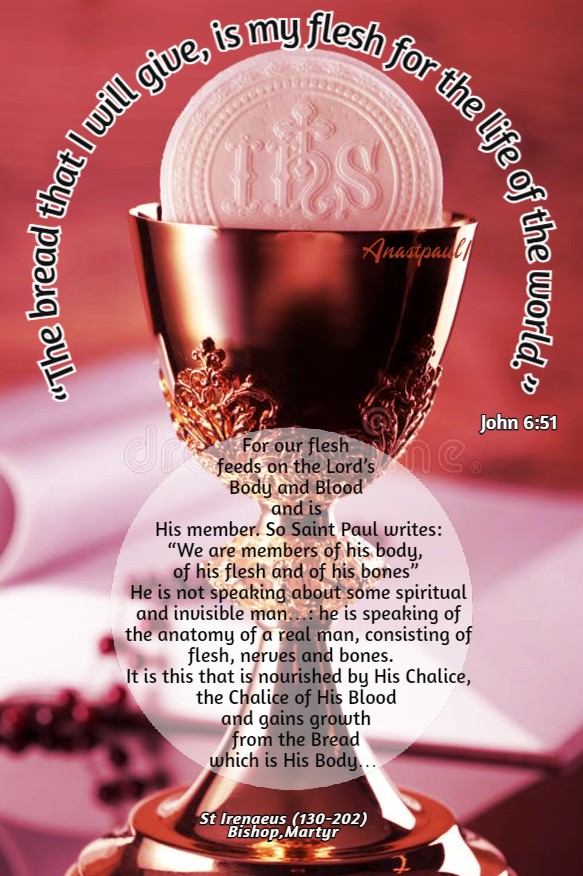
“For our flesh feeds on the Lord’s Body and Blood and is His member. So Saint Paul writes: “We are members of His body, of His flesh and of His bones” (Eph 5,30; Gn 2,23). He is not speaking about some spiritual and invisible man… he is speaking of the anatomy of a real man, consisting of flesh, nerves and bones. It is this that is nourished by His Chalice, the Chalice of His Blood and gains growth from the Bread which is His Body… ”
O Lamb of God By St Irenaeus (c130 – c202) Bishop & Martyr, Father of the Church
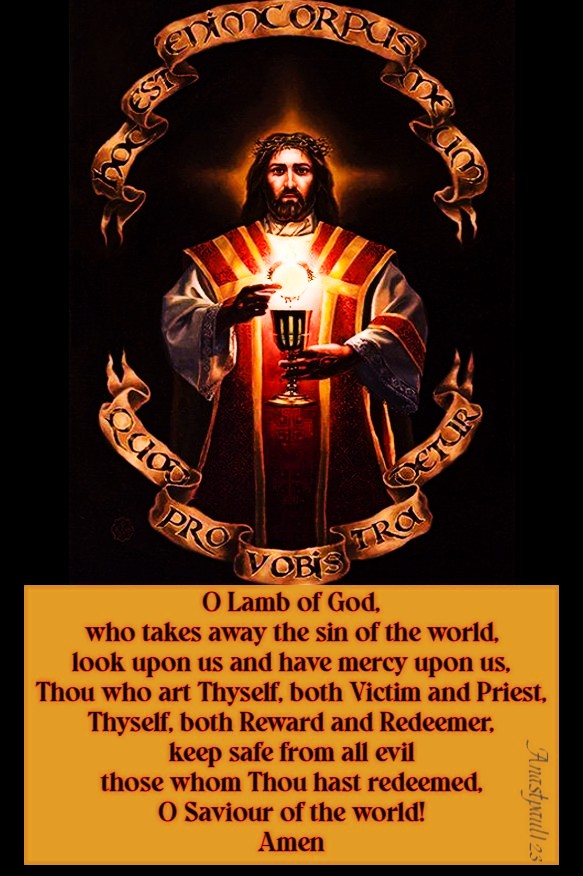
O Lamb of God, who takes away the sin of the world, look upon us and have mercy upon us, Thou who art Thyself, both Victim and Priest, Thyself, both Reward and Redeemer, keep safe from all evil those whom Thou hast redeemed, O Saviour of the world! Amen
One Minute Reflection – 28 June – “The Month of the Sacred Heart of Jesus” – St Irenaeus (c130 – c202) Bishop, Martyr – 2 Timothy 3:14-17, 4:1-5; Matthew 10:28-33 – Scripture search here: https://www.drbo.org/
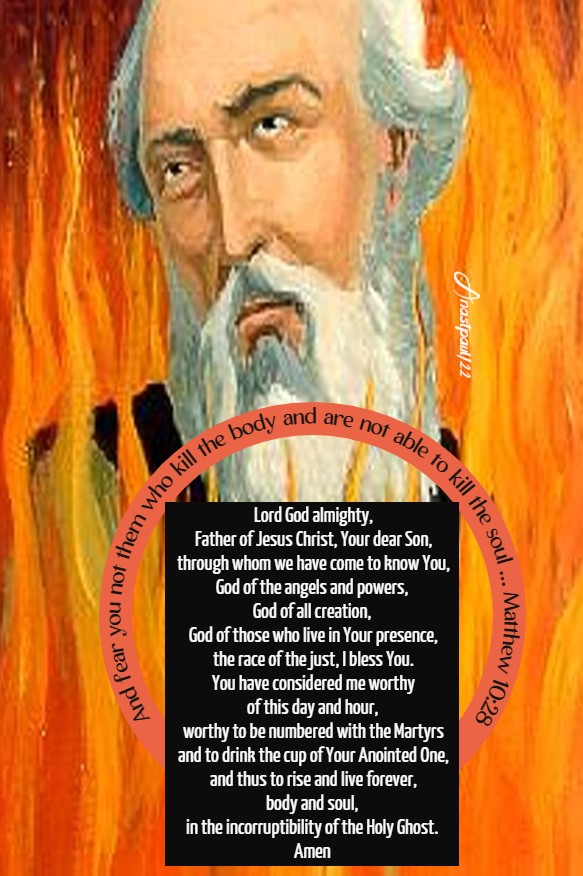
“And fear you not them who kill the body and are not able to kill the soul …” – Matthew 10:28
REFLECTION – “They did not nail Polycarp but only tied him up. And so, he was bound, putting his arms behind his back, like a noble ram taken from a large flock for sacrifice, a burnt offering acceptable to and made ready for God. Then he gazed up to Heaven and said: “O Lord God Almighty, Father of Your beloved and blessed Son Jesus Christ, through Whom we have received knowledge of You, God of the angels and the powers and of all creation, God of the whole race of the righteous who live in Your sight: I bless You, for You have thought me worthy of this day and hour, to share the cup of Your Christ, as one of Your Martyrs, to rise again to eternal life in body and soul in the immortality of the Holy Ghost. May I be taken up today into Your Presence among Your Martyrs, as a rich and acceptable sacrifice, in the manner You have prepared and have revealed and have now brought to fulfillment, for You are the God of truth… And so also I praise You for all things; I bless and glorify you through our Eternal High Priest in Heaven (Heb 4,14), in Your beloved Child, Jesus Christ, through Whom be glory to You and to Him and to the Holy Ghost, now and for the ages to come. Amen.” – Letter of the Church of Smyrna concerning the Martyrdom of Saint Polycarp (69-155) [Especially appropriate today, as St Irenaeus was a Student and Disciple of St Polycarp.]
PRAYER – O God, Who enabled blessed Irenaeus, Thy Martyr and Bishop, to overcome heresy with true doctrine and to establish peace happily in the Church, grant, we beseech Thee that Thy people may be steadfast in holy religion and give us Thy peace in our times. Through Jesus Christ, Thy Son our Lord, Who lives and reigns with Thee, in the unity of the Holy Ghost, God, world without end. Amen (Collect).
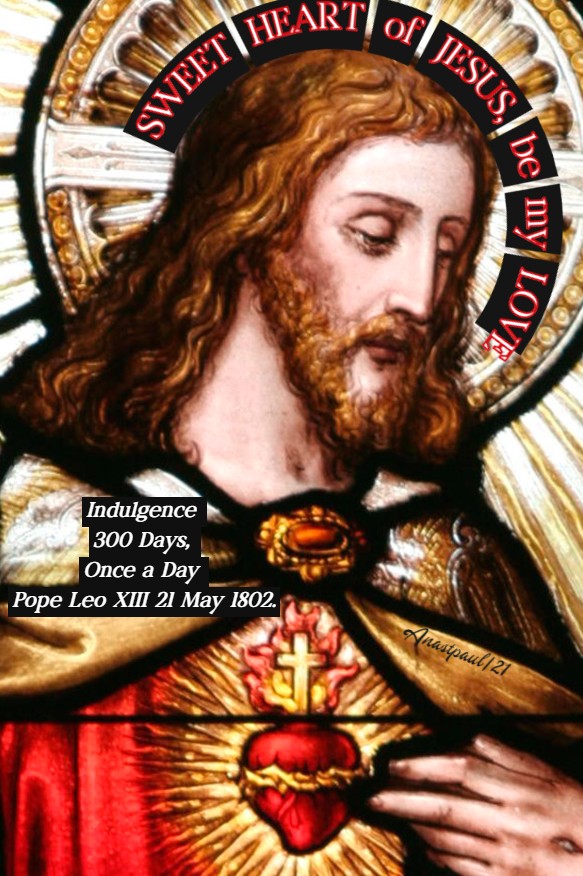
SWEET HEART of JESUS, be my LOVE. – Indulgence 300 Days, Once a Day – Pope Leo XIII 21 May 1802.
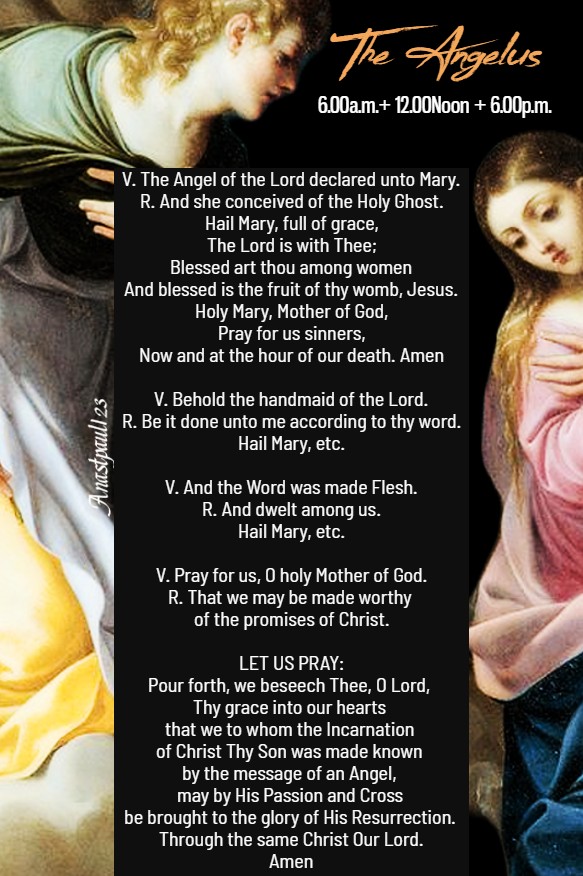
Our Morning Offering – 28 June – Angelus Domini nuntiavit Mariæ / The institution of the Angelus on 28-29 June 1456 by Pope Callistus III.
Pope Innocent XI, after the victorius battle of Vienna in 1683, requested the whole Christian world to recite the Angelus for peace. Let us renew this pious practice if we have become lax in our devotion and let us pray the Angelus, for the protection of the Church in our own times, from the many menaces, on all fronts, internally and exteriorly facing the Faith, the world and the whole existence of the Catholic Church.
The Angelus 6.00a.m. + 12.00Noon + 6.00p.m.
V. The Angel of the Lord declared unto Mary. R. And she conceived of the Holy Ghost. Hail Mary, full of grace, The Lord is with Thee; Blessed art thou among women And blessed is the fruit of thy womb, Jesus. Holy Mary, Mother of God, Pray for us sinners, Now and at the hour of our death. Amen
V. Behold the handmaid of the Lord. R. Be it done unto me according to thy word. Hail Mary, etc.
V. And the Word was made Flesh. R. And dwelt among us. Hail Mary, etc.
V. Pray for us, O holy Mother of God. R. That we may be made worthy of the promises of Christ.
LET US PRAY: Pour forth, we beseech Thee, O Lord, Thy grace into our hearts that we to whom the Incarnation of Christ Thy Son was made known by the message of an Angel, may by His Passion and Cross be brought to the glory of His Resurrection. Through the same Christ Our Lord. Amen
Saint of the Day – 28 June – St Heimerad (c970-1019) Priest, Pilgrim, Hermit, Miracle-worker. Born in c970 at Baden, Swabia, Germany and died on 28 June 1019 in Germany, of natural causes. Also known as – Eimerado, Heimrad, Haimrad or Heimo.
According to some sources Heimrad was born of a noble family but others say he was the son of a slave who was in the service of a wealthy lady who encouraged Heimerad to study to become a Priest. Heimerad was being Ordained at around 30 years of age.
Around 1006 he undertook numerous pilgrimages, to the seven pilgrimage Churches in Rome and to the Holy Land. After his return, he wanted to enter the Monastery in Memleben but was rejected and then went to the Benedictine mother Monastery in Hersfeld – today’s Bad Hersfeld – where he lived for a few years. But, he declined to take the religious vows and was, therefore, insulted, whipped and cast out by the enraged Abbot.
The ruins of the collegiate Church in Bad Hersfeld
Heimerad then settled in Kirchberg as a Hermit and was soon accused of stealing from the Chapel and was again expelled. Heimerad then worked nearby (this period is mentioned in an extant sermon dated 1012). But, even from here he was chased out of town by the local Priest because he had reproached the Priest’s housekeeper, for her unvirtuous way of life and the Priest recognised this as an attack on himself.
He asked Bishop Meinwerk in Paderborn for accommodation but he was turned away because of his unkempt appearance, called the devil and whipped. As a holy fool, he continued to endure shame and ridicule, finally he found a place on the Hasunger Berg near Kassel and, together with his servant, took over the care of the St Michael’s Chapel there. Bishop Meinwerk visited him there and asked his forgiveness for his harshness.
At first Heimerad was mocked and scorned even there but with the passage of time he came to be revered as a saint and his advice was sought by the great – the Count Dodiko von Warburg and the Empress Kunigundebecame protectors and spiritual disciples of our Saint. Heimerad became the guardian of Christianity in the Franconian-Saxon border region, which had only recently been Christianised. His holiness attracted many followers to join the Monastery.
Numerous miracles and anecdotes have been handed down from this time. One day, while climbing the mountain, Hemmo, a friend of Heimerad’s, recognised the devil who was smashing the trees on the mountain with a large boulder. Hemmo crossed himself and boldly continued the climb, for Heimerad had foreseen this attack and warned Hemmo not to fear but to cross himself.
Heimerad died as the mountain’s guardian, well respected and loved by the people, the nobles and the Bishops and Priests of the surrounding area.
Two years after Heimerad’s death, Archbishop Eribo of Mainz built a Church on the site of his Hermitage which served as the nucleus of Hasungen Abbey, founded in 1074. Pilgrimages to his grave reached their high point in the second half of the 11th Century, when Hasungen ranked as the most visited place of pilgrimage in Germany.
Around 1076, Heimerad’s life story was written by the Monk Ekkebert on behalf of Abbot Hartwig of Hersfeld The Hasunger Berg quickly became one of the most visited German pilgrimage site. But the Monastery was dissolved during the Reformation in 1527.
There have been many ‘Lives’ written about Heimerad and his fascinating and often misunderstood, earthly pilgrimage. In 2019, on the occasion of the 1000th anniversary of St Heimerad’s death, Stefan Blanz published a collection of contributions entitled “The Holy Heimerad – Priest. Pilgrim. Pauper of Christ.” The authors devote themselves to testimonies of veneration from the 11th Century to the present day.
Bl Almus of Balmerino St Argymirus of Córdoba St Attilio of Trino St Austell of Cornwall St Benignus of Utrecht St Crummine Bl Damian of Campania St Egilo St Heimerad (c970-1019) Priest, Pilgrim, Hermit St Lupercio St Papias the Martyr
Martyrs of Africa – 27 Saints: 27 Christians Martyred together. The only details about them to survive are the names – Afesius, Alexander, Amfamon, Apollonius, Arion, Capitolinus, Capitulinus, Crescens, Dionusius, Dioscorus, Elafa, Eunuchus, Fabian, Felix, Fisocius, Gurdinus, Hinus, Meleus, Nica, Nisia, Pannus, Panubrius, Plebrius, Pleosus, Theoma, Tubonus and Venustus. Unknown location in Africa, date unknown.
Martyrs of Alexandria – 8 Saints: A group of spiritual students of Origen who were Martyred together in the persecutions of emperor Septimius Severus – Heraclides, Heron, Marcella, Plutarch, Potamiaena the Elder, Rhais, Serenus and Serenus. They were burned to death c206 in Alexandria, Egypt.
Quote/s of the Day – 27 June – Feast of Our Mother of Perpetual Succour (Help)
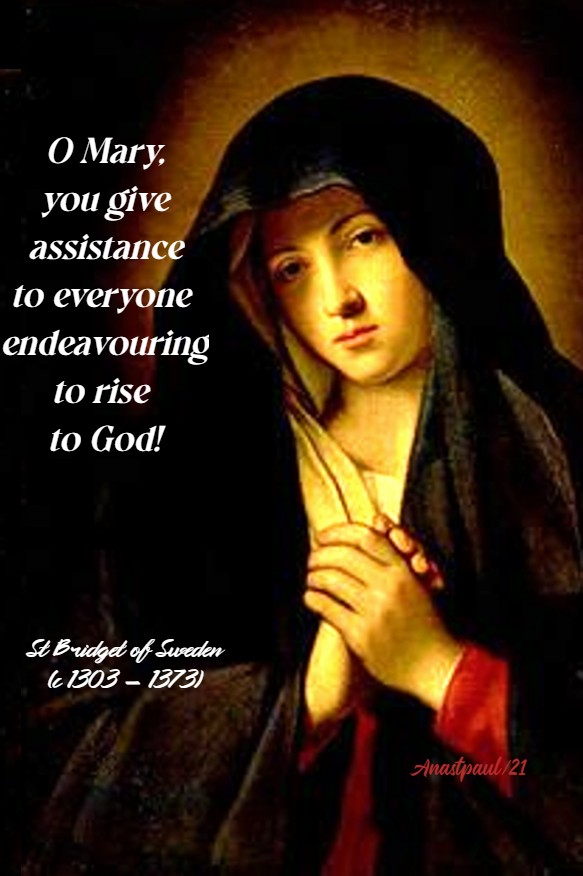
“O Mary, you give assistance to everyone endeavouring to rise to God!”
St Bridget of Sweden (c 1303 – 1373)
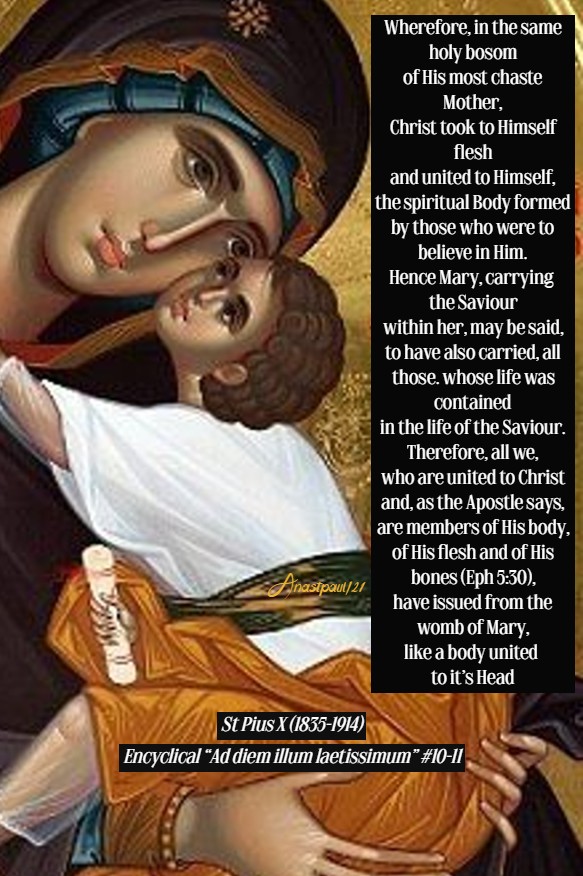
“Wherefore, in the same holy bosom of His most chaste Mother, Christ took to Himself flesh and united to Himself, the spiritual Body formed by those who were to believe in Him. Hence Mary, carrying the Saviour within her, may be said, to have also carried, all those. whose life was contained in the life of the Saviour. Therefore, all we, who are united to Christ and, as the Apostle says, are members of His body, of His flesh and of His bones (Eph 5:30), have issued from the womb of Mary, like a body united to it’s Head.”
St Pius X (1835-1914) Pope from 1903 to 1914 Encyclical “Ad diem illum laetissimum” #10-11
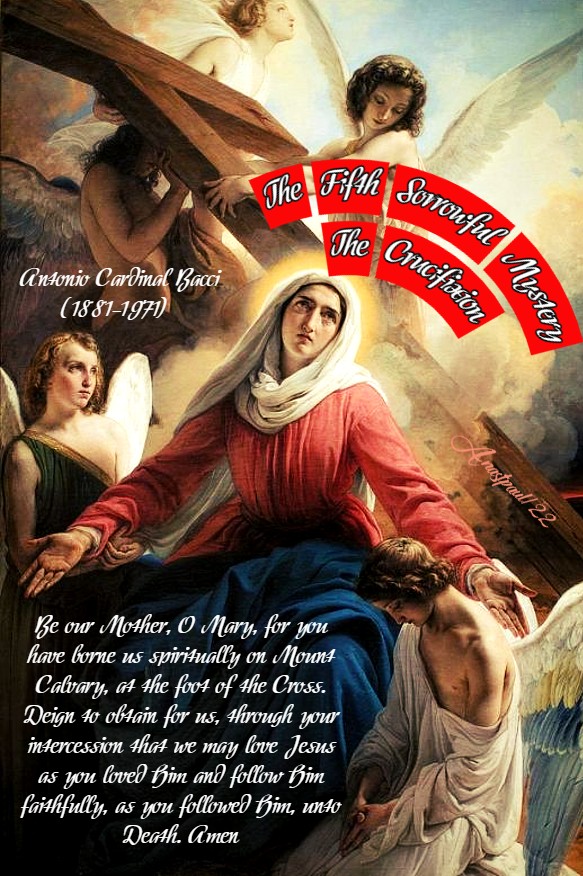
“Be our Mother, O Mary, for you have borne us spiritually on Mount Calvary, at the foot of the Cross. Deign to obtain for us, through your intercession that we may love Jesus as you loved Him and follow Him faithfully, as you followed Him, unto Death. Amen.”
Antonio Cardinal Bacci (1881-1971)
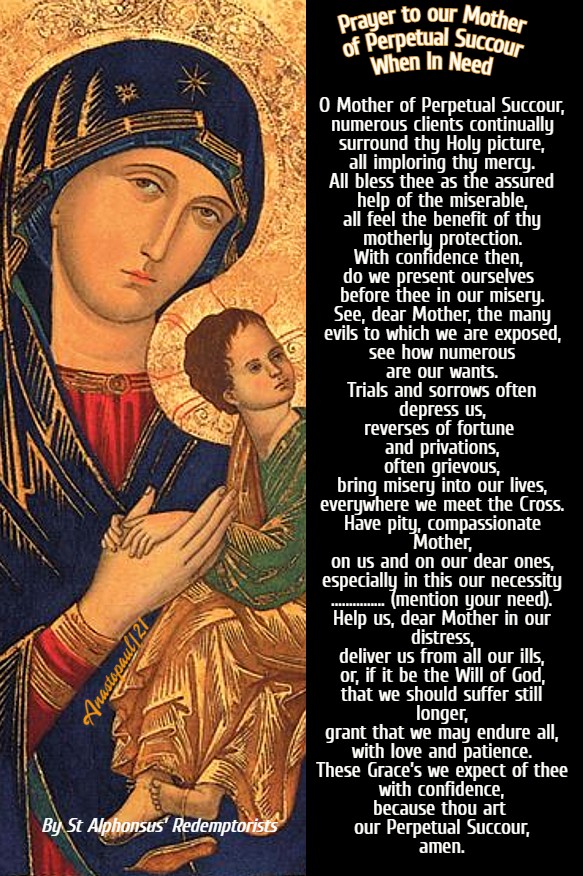
Prayer to Our Mother of Perpetual Succour, When In Urgent Need By St Alphonsus’ Redemptorists
O Mother of Perpetual Succour, numerous clients continually surround thy Holy picture, all imploring thy mercy. All bless thee as the assured help of the miserable, all feel the benefit of thy motherly protection. With confidence then, do we present ourselves before thee in our misery. See, dear Mother, the many evils to which we are exposed, see how numerous are our wants. Trials and sorrows often depress us, reverses of fortune and privations, often grievous, bring misery into our lives, everywhere we meet the Cross. Have pity, compassionate Mother, on us and on our dear ones, especially in this our necessity …………… (mention your need). Help us, dear Mother in our distress, deliver us from all our ills, or, if it be the Will of God, that we should suffer still longer, grant that we may endure all, with love and patience. These Grace’s we expect of thee with confidence, because thou art our Perpetual Succour, amen.
One Minute Reflection – 27 June – “The Month of the Sacred Heart of Jesus” and Feast of Our Mother of Perpetual Succour, Within the Octave of St John – Isaias 49:1-3, 5-7, Luke 1:57-68 – Scripture search here: https://www.drbo.org/
“Immediately his mouth was opened, his tongue freed and he spoke blessing God.” – Luke 1:64
REFLECTION – “When John, his son was born, among his neighbours there was concern about what name he should be given. Writing tablets were offered to his father, so that he himself could put down the name that he had decided upon, so that he might express, in writing, what he could not, in speech. Then, in a wonderful manner, when he had taken the tablets in order to begin writing, his tongue was loosened, the written word gave way to speech and he did not write “John” but spoke it. Consider, then, the merit of the holy Baptist: he gave his father back his voice, he restored the faculty of speech to the priest. Consider, I say, his merit – John unloosed the mouth that the Angel had bound. What Gabriel had closed, the little child unlocked. When John is born, the father suddenly becomes a prophet or priest, speech attains its use, love receives an offspring, the office recognises the priest.” – – St Maximus of Turin (Died c 420) Bishop of Turin, Father (Sermon 6) St Maximus’ Feast Day today.
PRAYER – God our Father, Thou opens the gates of the Kingdom of Heaven to those who are born again of water and the Holy Ghost. Increase the grace Thou hast given, so that the people who have been purified from all sin, may not forfeit the promised blessing of Thy love. Grant that we may ever keep Thy Son, the Lord Jesus Christ, before our eyes and do all in Him and through Him and for Him and may the prayers of our Mother of Perpetual Succour ever guide and bear us in her care! We make our pray through Christ, our Lord,who livest and reignest with Thee and the Holy Ghost, one God forever, amen. (Collect).
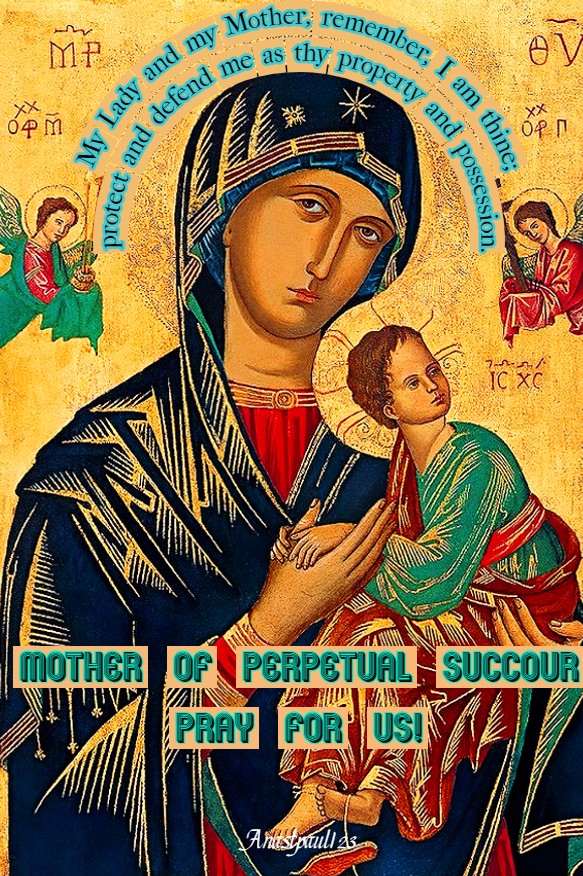
Ejaculation:My Lady and my Mother, remember, I am thine; protect and defend me as thy property and possession.
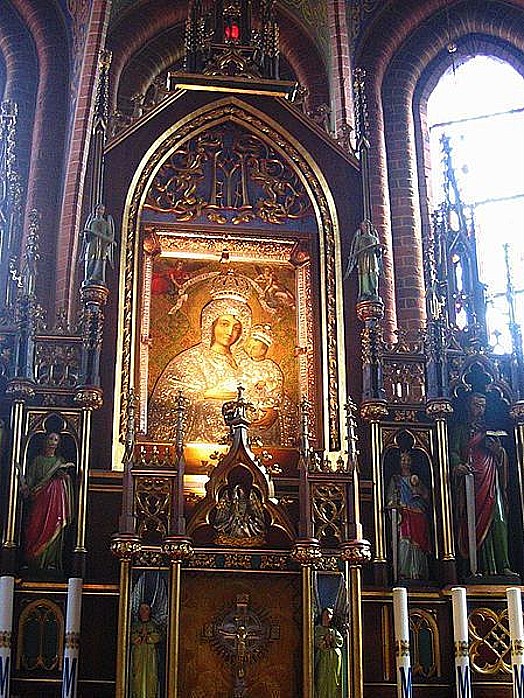
Our Morning Offering – 27 June – Feast of Our Mother of Perpetual Succour
Prayer to Our Mother of Perpetual Succour
O Holy Virgin Mother Mary! Thy sweet name, “Mother of Perpetual Succour,” inspires me with unlimited confidence. I beg of thee to help me at all times and in all places; in my temptations, after my falls, in all my difficulties, in all the miseries of this life but above all, at the hour of my death. May I always have recourse to thee, for I am sure that if I invoke thee faithfully, thou wilt be faithful in helping me. Obtain for me, then, the grace to pray to thee with the confidence of a child, in order that I may secure thy perpetual help and final perseverance. Bless me, O tender Mother and pray for me, now and at the hour of my death. Amen.
Saint of the Day – 27 June – St Crescens of Galatia (Died c100) Bishop Martyr, Apostle of St Paul. Crescens is traditionally considered one of the 72 disciples sent out by Jesus in Luke 10. He was a missionary in Galatia and became a companion to and a disciple of St Paul. The name ‘Crescens’ means ‘increasing.’ Additional Memorial – 29 December (translation of Relics).
The Roman Martyrology reads today: “In Galatia, St Crescens, disciple of the blessed Apostle St Paul. In passing through Gaul, he converted many to the Faith by his preaching. Returning to the people for whom especially, he had been Consecrated Bishop, he maintained, to the end of his life, the Galatians in the service of the Lord and finally, consumated his Martyrdom under Trajan.”
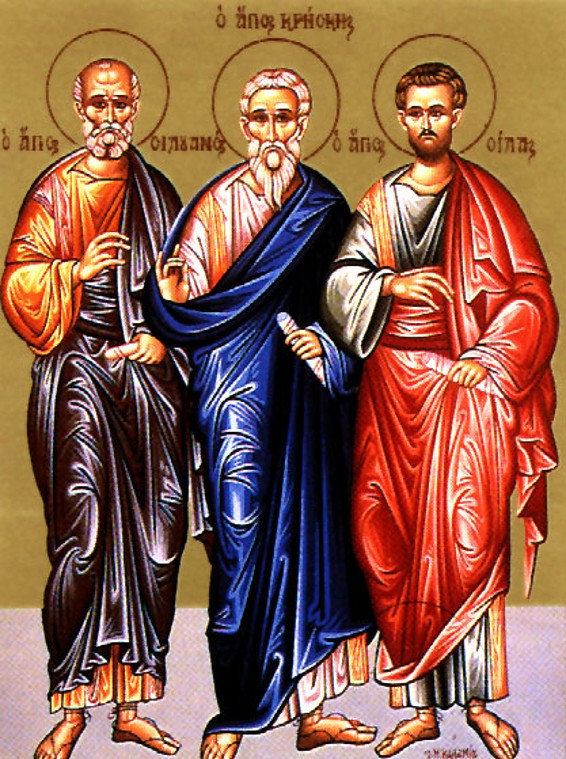
Icon of the St Crescens (centre), with Saints Silvanus and Silas traditionally of the Seventy two.
Crescens, a companion of Paul during his second Roman captivity, appears once in the New Testament, where he is mentioned as having left the Apostle to go into Galatia: “Make haste to come to me,” Paul writes to Timothy, “for Demas hath left me, loving this world and is gone to Thessalonica, Crescens into Galatia, Titus into Dalmatia” (2 Timothy 4:8–10).
All commentators agree in ranking Crescens with Titus rather than with Demas and in seeing here, therefore, a reference to a missionary journey into Galatia. This term, in New Testament times, might mean either Gaul or the Roman Province of Galatia in Asia Minor, where Paul had laboured so much and its use here, has been interpreted in both senses. In the other passages where it occurs in the New Testament, however, it denotes Galatiain Asia Minor and most probably it would be so understood here by Timothy, especially, as the other regions mentioned are likewise to the east of Rome. Moreover, Paul might easily have a reason for sending a disciple to visit his old Churches in Galatia, while Fenlon notes that there is no proof that he had an active interest in Gaul.
Later traditions, on the other hand, locate him as Bishop of Vienne in Gaul, also at Mainz on the Rhine. But the earliest known traditions of Gaul itself, record nothing of this disciple of the Apostle, as a Founder of their Church and the belief is thought to have arisen later, from the desire of an Apostolic origin.
The claims of Vienne have been most strongly urged but they are based upon the mistaken identification of its first Bishop, Crescens, who lived in the Third Century.
As little can be said for Mainz. The reading of certain manuscripts which have ‘Gallia’ instead of ‘Galatia’ has also been advanced in favour of Gaul but the traditional reading is supported, by the great mass of manuscript evidence.
Crescens is mentioned as one of the seventy two disciples of Christ by Pseudo-Dorotheus. His Martyrdom in Galatia, under Trajan, is commemorated on 27 June.
St Adeodato of Naples St Aedh McLugack St Anectus of Caesarea St Arialdus of Milan St Arianell of Wales
Blessed Benvenutus of Gubbio OFM ) (Died 1232) Lay brother of the Order of the Friars Minor of St Francis, ex-Soldier, Apostle of the sick and of lepers. Benvenutus was graced with an ardent and mystical devotion to the Blessed Eucharist and to the Mother of God. So ardent was his faith and contemplation that he was seen to hold the Divine Infant in his arms. Biography: https://anastpaul.com/2021/06/27/saint-of-the-day-27-june-blessed-benvenutus-of-gubbio-ofm-died-1232/
St Brogan St Crescens of Galatia (Died c100) Bishop Martyr, Apostle of St Paul St Crescentius of Mainz Bl Daniel of Schönau Bl Davanzato of Poggibonsi St Desideratus of Gourdon St Dimman St Felix of Rome St Ferdinand of Aragon St Gudene of Carthage Bl Hemma of Gurk St Joanna the Myrrhbearer St John of Chinon

























 AnaStpaul
You must be logged in to post a comment.