Thought for the Day – 26 March – Meditations with Antonio Cardinal Bacci (1881-1971)
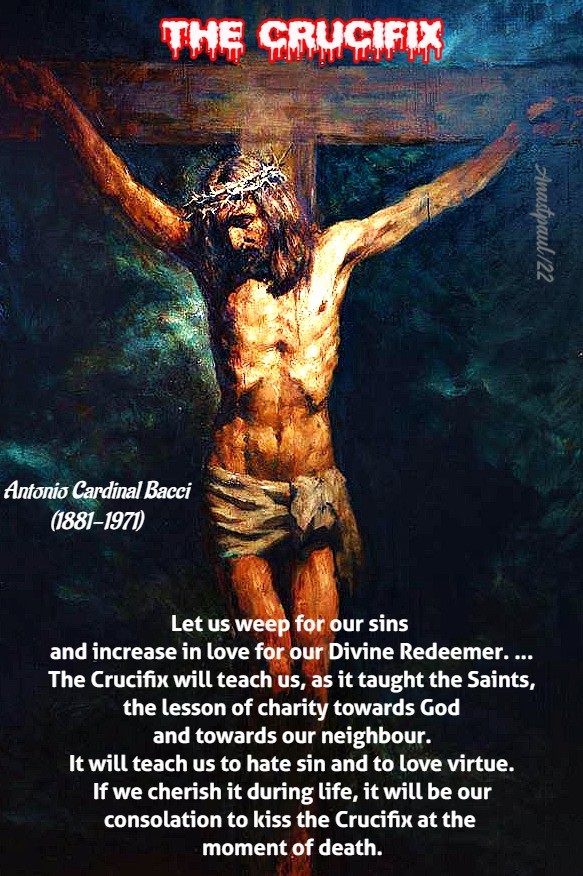
THE CRUCIFIX
“Let us weep for our sins and increase in love for our Divine Redeemer. When we are oppressed by the weight of our own cross, we shall look at the Crucifix and find comfort. When we are tempted, we shall grasp the Crucifix and turn away with horror from thoughts of sin and ingratitude.
The Crucifix will teach us, as it taught the Saints, the lesson of charity towards God and towards our neighbour. It will teach us to hate sin and to love virtue. If we cherish it during life, it will be our consolation to kiss the Crucifix at the moment of death.”
Our Lenten Journey with St Francis de Sales – 26 March – Passion Sunday – Hebrews 9:11-15, John 8:46-59 – Scripture search here: https://www.drbo.org/
“… By means of His death, … they, who have been called, may receive the eternal inheritance, according to the promise, in Christ Jesus our Lord.” Hebrews 9:15
“Amen, amen, I say to you, if anyone keep My word, he will never see death.” John 8:51
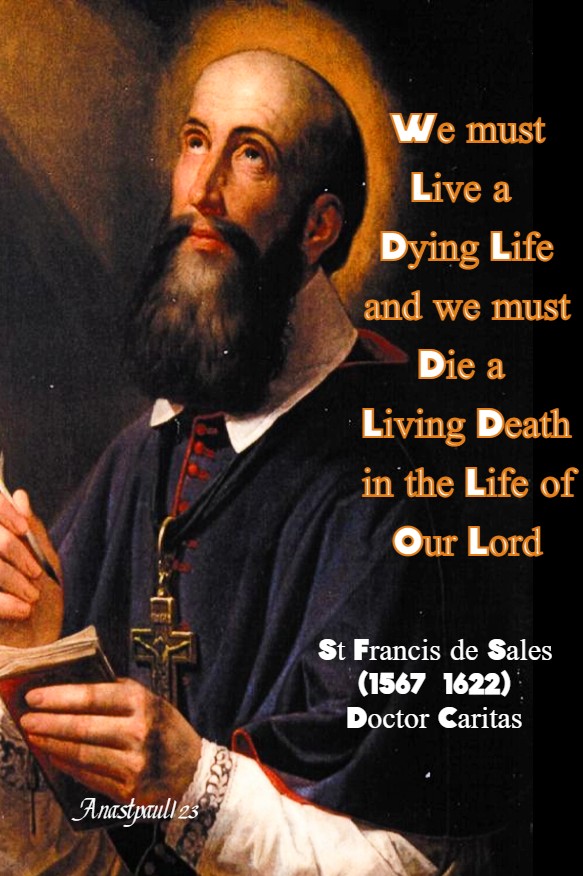
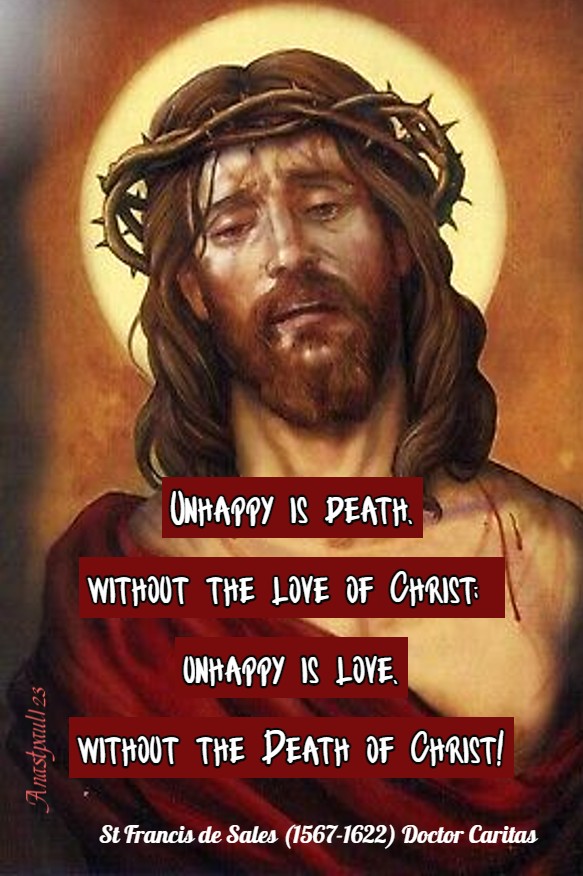
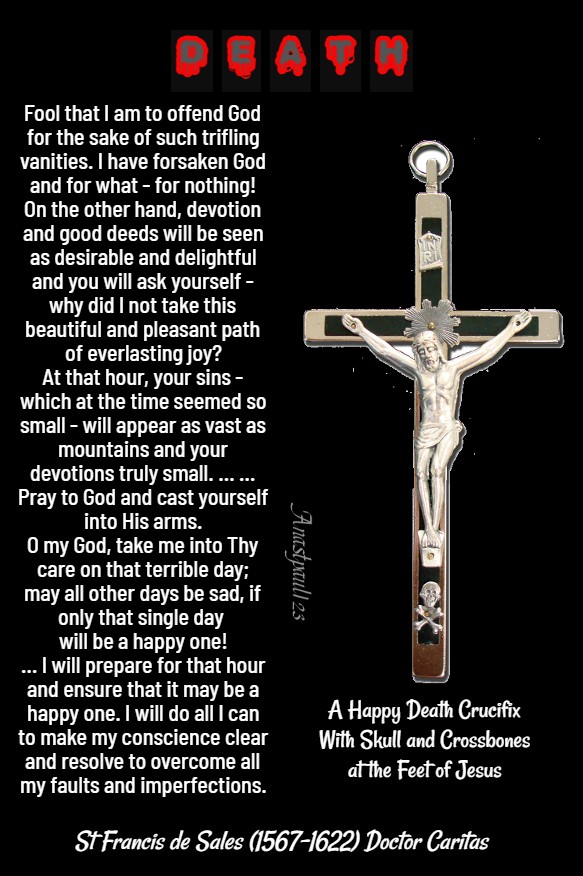
DEATH St Francis de Sales (1567-1622) Doctor Caritas
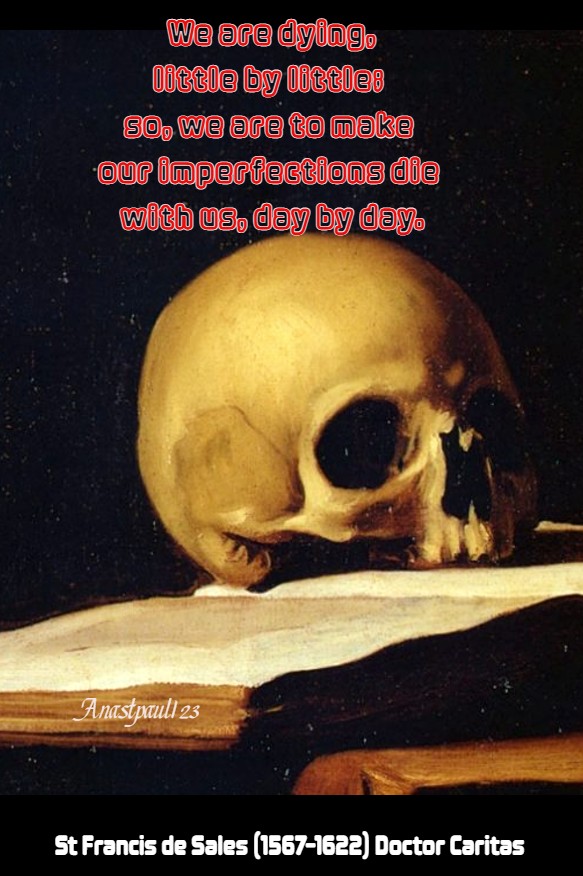
“CONSIDER THE UNCERTAINTY of the day of your death. One day, my soul, you must depart from this body. When will it be? In winter or summer? In town or country? At home or afar? During the day or the night? With or without warning? As a result of illness of accident? Shall I have a chance to go to Confession? Shall I be assisted by a Priest? Will I be prepared? Unhappily, I know the answer to none of these things. Only one thing is certain – that I shall die and sooner than I imagine.”
Consider that then, the world will come to an end, as far as you are concerned. You will have no more part in it. It will turn upside down before your eyes, for worldly joys and pleasures and the things you loved in vain, will turn into empty dreams and shadows. Fool that I am to offend God for the sake of such trifling vanities. I have forsaken God and for what – for nothing! On the other hand, devotion and good deeds will be seen as desirable and delightful and you will ask yourself – why did I not take this beautiful and pleasant path of everlasting joy? At that hour, your sins – which at the time seemed so small – willappear as vast as mountains and your devotions truly small. …
Pray to God and cast yourself into His arms. O my God, take me into Thy care on that terrible day; may all other days be sad, if only that single day will be a happy one! Thank God for inspiring these resolutions and offer them to Him, imploring Him to grant you the grace of a Happy Death, through the merits of His Son and through the intercession of the Blessed Virgin Mary and all the Saints. Carry with you always a small Happy Death Crucifix, properly blessed, to obtain a Plenary Indulgence at the hour of death and meditate upon it often.” – (Introduction to the Devout Life – Excerpt from The Fifth Meditation on Death).
WHAT IS A HAPPY DEATH CRUCIFIX? A Crucifix which displays the “Skull and Crossbones” preferably at the Feet of Jesus. “The skull and bones have many symbolic meanings. All Catholics are encouraged to meditate on the “Four Last Things – Death and Judgement, Heaven and Hell” so that they will live in a state of grace and prepare themselves for Heaven. The skull is a great reminder of human mortality. Jesus Christ was Crucified on Golgotha – “the place of the skull,” There is a tradition that Christ, the New Adam, Who conquered sin and death, was Crucified on the gravesite of the first man, Adam, who brought sin and death into the world through his disobedience to God. The skull is a symbol of Adam’s grave. Most important of all, the skull and bones are placed beneath Jesus’ Feet, to show that He triumphed over death and sin on our behalf.”
One Minute Reflection – 26 March – Passion Sunday – Hebrews 9:11-15, John 8:46-59 – Scripture search here: https://www.drbo.org/
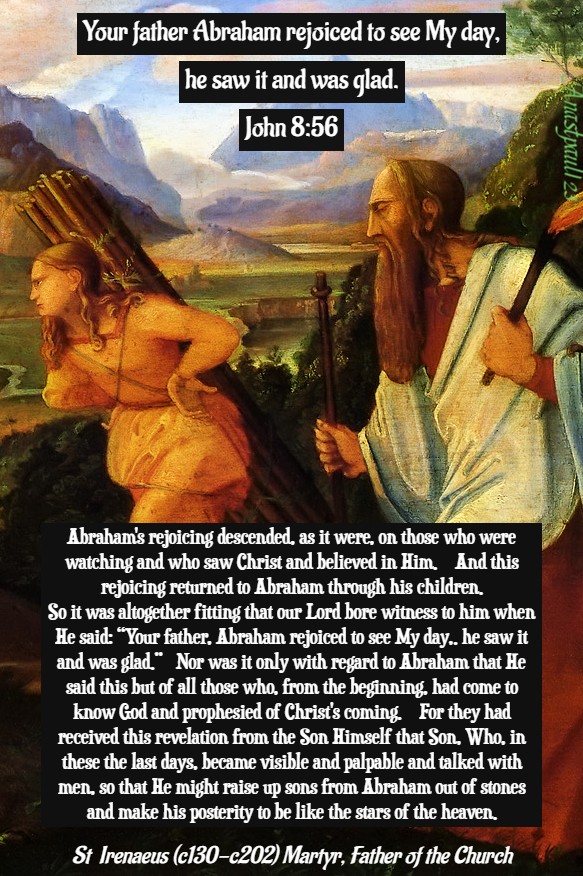
“Your father Abraham rejoiced to see My day, he saw it and was glad.” – John 8:56
REFLECTION – “Since Abraham was a Prophet he saw the day of the Lord’s coming in the Spirit, as also the designs of His Passion, through which, both he and all those like him, who believed in God, would be saved. And he was seized with great joy. Thus, the Lord was not unknown to Abraham, since he longed to see His day… He longed to see His day, so that he, too, might clasp Christ to himself and having seen Him prophetically in the Spirit, he rejoiced.
That is why Simeon, who was of his descendants, fulfilled the Patriarch’s joy and said: “Now, Master, Thou may let Thy servant go in peace, according to Thy Word, for my eyes have seen Thy salvation, which Thou prepared in sight of all peoples”… And Elizabeth said : “My soul proclaims the greatness of the Lord, my spirit rejoices in God my Saviour.” Abraham’s rejoicing descended, as it were, on those who were watching and who saw Christ and believed in Him. And this rejoicing returned to Abraham through his children.
So it was altogether fitting that our Lord bore witness to him when He said: “Your father, Abraham rejoiced to see My day,. he saw it and was glad.” Nor was it only with regard to Abraham that He said this but of all those who, from the beginning, had come to know God and prophesied of Christ’s coming. For they had received this revelation from the Son Himself that Son, Who, in these the last days, became visible and palpable and talked with men, so that He might raise up sons from Abraham out of stones and make his posterity to be like the stars of the heaven.” – St Irenaeus (c130-c202) Martyr, Father of the Church, Bishop of Lyons, Theologian (Against the heresies IV, 5-7).
PRAYER – Look graciously upon Thy household, Almighty God, we beseech Thee that by Thy grace, we may be governed in body and by Thy protection, safeguarded in mind. Through Jesus Christ, Thy Son our Lord, Who lives and reigns with Thee, in the unity of the Holy Ghost, God, world without end.Amen (Collect).
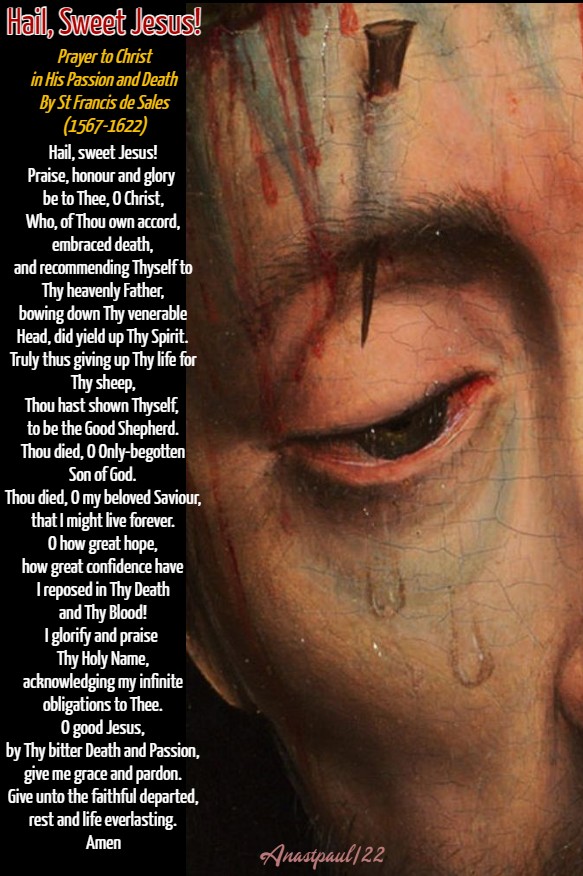
Hail, Sweet Jesus! Prayer to Christ in His Passion and Death By St Francis de Sales (1567-1622) Doctor Caritas
Hail, sweet Jesus! Praise, honour and glory be to Thee, O Christ, Who, of Thou own accord, embraced death, and recommending Thyself to Thy heavenly Father, bowing down Thy venerable Head, did yield up Thy Spirit. Truly thus giving up Thy life for Thy sheep, Thou hast shown Thyself, to be the Good Shepherd. Thou died, O Only-begotten Son of God. Thou died, O my beloved Saviour, that I might live forever. O how great hope, how great confidence have I reposed in Thy Death and Thy Blood! I glorify and praise Thy Holy Name, acknowledging my infinite obligations to Thee. O good Jesus, by Thy bitter Death and Passion, give me grace and pardon. Give unto the faithful departed, rest and life everlasting. Amen.
Saint of the Day – 26 March – St Barontius of Pistoia (Died c725) Monk, Hermit. Barontius was a French nobleman who had been a Courtier at the Court of King Thierry II. Also known as – Barontus, Baronce, Baronto, Baronzio. Barontius
With his son, he had became a Monk at Saint-Pierre de Longoret in the Diocese of Bourges, now the Monastery of Saint-Cyran-du-Jambot.
In around 678, Barontius received a vision of Heaven and hell, in which demons clawed and kicked at him. Accompanied by the Archangel St Raphael, Barontius journeyed through the four levels of Heaven, although he continued to be tormented by the demons, who aimed to pull him down to hell.
He met many he had known, including fellow Monks from Longoreto. St Raphael asked another Angel to bring Saint Peter to them, so that St Peter may evaluate Barontius.
The demons brought their evidence against Barontius, repeating all the sins which Barontius had committed, including those which he had completely forgotten. However, the demons became so annoying that St Peter smacked them with his keys, sending them away. St Peter then decided to send Barontius back to earth via hell, where he saw all of the souls in torment. before returning to earth. When he recovered, he wrote an account of his vision — a large manuscript known as Visio Baronti Monachi Longoretensis.
This vision led to Barontius’ decision to become a Hermit in Italy and he established himself near Pistoia with Desiderius, also a former Monk. They lived an austere, prayerful life and were joined by many disciples.
Barontius died around 725. Both he and Desiderius ‘ names appear in the Martyrologium Romanum as Saints, for celebration today.
St Braulio (590-651) Bishop of Saragossa, Spain, Monk, Confessor, Reformer, Scholar, Advisor, Writer, eloquent Preacher, Apostle of Charity. Saint Braulio was friend and disciple to Saint Isidore of Seville (560-636) Doctor of the Church ) and a prolific writer of letters, hymns, martyrologies, hagiographies and history. He fought against heresy and provided both strength and encouragement in the faith to his congregation. Biography: https://anastpaul.wordpress.com/2018/03/26/saint-of-the-day-26-march-braulio-590-651/
St Desiderius of Pistoia St Eutychius of Alexandria St Felicitas of Padua St Felix of Trier (c 386–c 399) Bishop St Garbhan St Govan
St Ludger (c 742-809) Bishop, Missionary, Founder, Abbot, Writer. Following in the footsteps of the English missionary St Boniface, St Ludger, who was a native Netherlander, brought the faith to the people of Frisia in Holland and the Saxons of north-west Germany. He founded the Werden Abbey and was the first Bishop of Münster in Westphalia, Germany. About St Ludger: https://anastpaul.com/2019/03/26/saint-of-the-day-26-march-st-ludger-c-742-809/
St Maxima the Martyr St Mochelloc of Kilmallock St Montanus the Martyr St Sabino of Anatolia St Sincheall of Killeigh St Wereka
Martyrs of Rome – 5 Saints: A group of Christians Martyred together. The only details to survive are the names – Cassian, Jovinus, Marcian, Peter and Thecla. Rome, Italy, date unknown.
Thought for the Day – 25 March – Meditations with Antonio Cardinal Bacci (1881-1971)
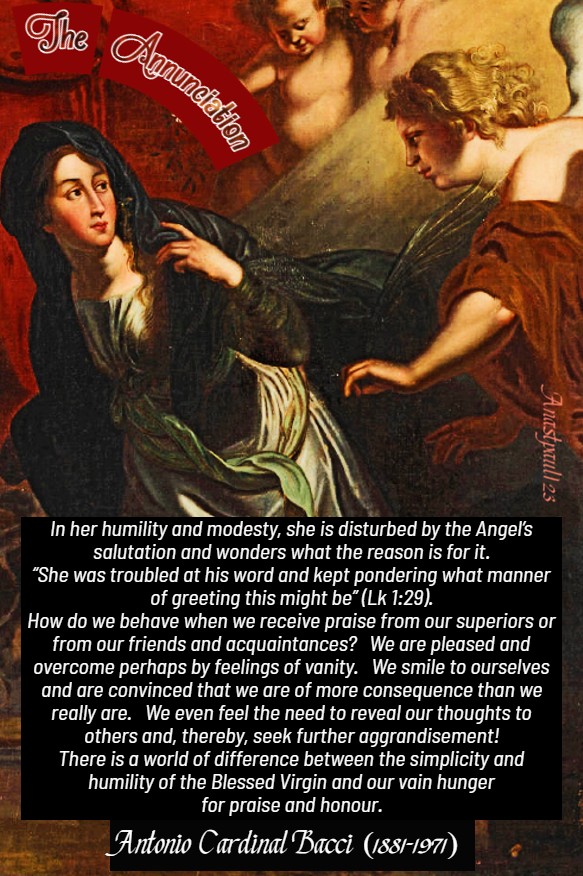
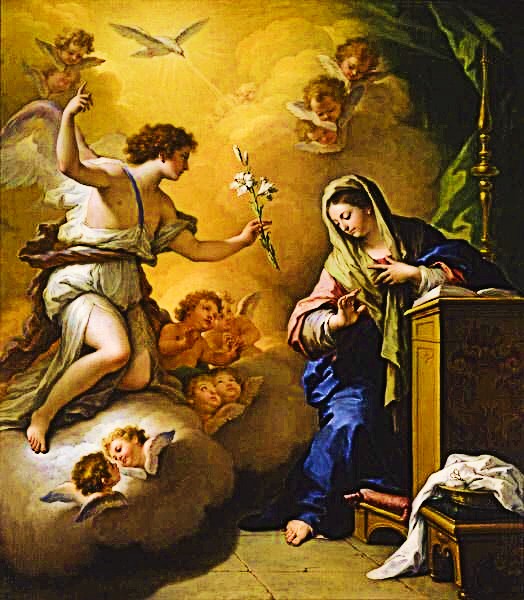
The Annunciation
“Consider Mary’s reaction to the reverence and praise with which the Angel greets her. Is she carried away by delight and exaltation at this solemn moment? Nothing of the sort! In her humility and modesty, she is disturbed by the Angel’s salutation and wonders what the reason is for it. “She was troubled at his word and kept pondering what manner of greeting this might be” (Lk 1:29).
How do we behave when we receive praise from our superiors or from our friends and acquaintances? We are pleased and overcome perhaps by feelings of vanity. We smile to ourselves and are convinced that we are of more consequence than we really are. We even feel the need to reveal our thoughts to others and, thereby, seek further aggrandisement! There is a world of difference between the simplicity and humility of the Blessed Virgin and our vain hunger for praise and honour.”
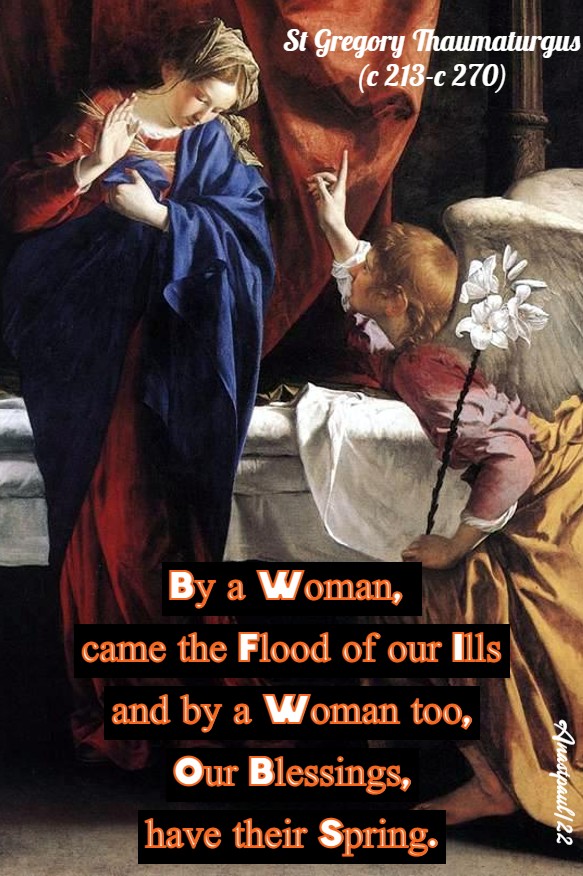
Quote/s of the Day – 25 March – The Annunciation of the Blessed Virgin Mary – Isaias 7:10-15, Luke 1:26-38 – Scripture search here: https://www.drbo.org/
“ By a woman, came the flood of our ills and by a woman too, our blessings, have their spring.”
St Gregory Thaumaturgus (c213-c270) “the Wonder-Worker,” Bishop, Confessor
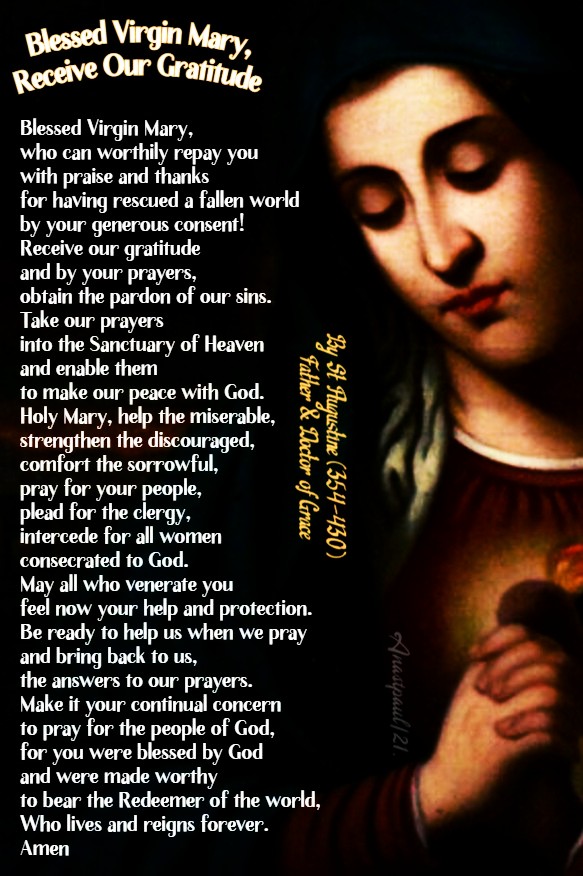
Blessed Virgin Mary, Receive Our Gratitude! By St Augustine (354-430) Father & Doctor of Grace
Blessed Virgin Mary, who can worthily repay you with praise and thanks for having rescued a fallen world by your generous consent! Receive our gratitude and by your prayers, obtain the pardon of our sins. Take our prayers into the Sanctuary of Heaven and enable them to make our peace with God. Holy Mary, help the miserable, strengthen the discouraged, comfort the sorrowful, pray for your people, plead for the clergy, intercede for all women consecrated to God. May all who venerate you feel now your help and protection. Be ready to help us when we pray and bring back to us, the answers to our prayers. Make it your continual concern to pray for the people of God, for you were blessed by God and were made worthy to bear the Redeemer of the world, Who lives and reigns forever. Amen
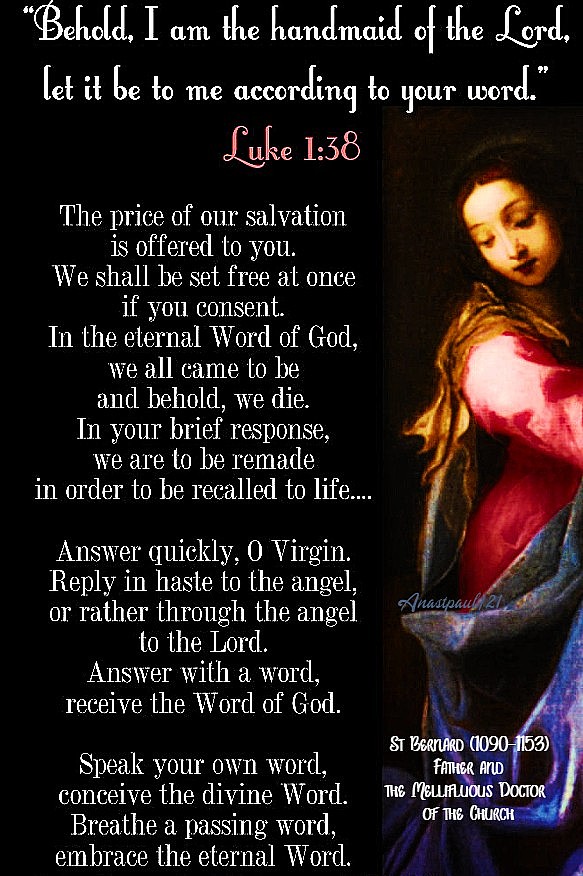
“And Mary said, ‘Behold, I am the handmaid of the Lord. May it be to me according to your word.’”
Luke 1:38
“The price of our salvation is offered to you. We shall be set free at once, if you consent. In the eternal Word of God, we all came to be and behold, we die. In your brief response, we are to be remade. in order to be recalled to life.
… Answer quickly, O Virgin. Reply in haste to the Angel, or rather, through the Angel to the Lord. Answer with a word, receive the Word of God. Speak your own word, conceive the Divine Word. Breathe a passing word, embrace the Eternal Word!”
St Bernard of Clairvaux (1090-1153) The Last Father and the Mellifluous Doctor
Our Lenten Journey with St Francis de Sales – 25 March – The Annunciation of the Blessed Virgin Mary – Isaias 7:10-15, Luke 1:26-38 – Scripture search here: https://www.drbo.org/
“Hail, full of grace, the Lord is with thee, blessed art thou amongst women!” Luke 1:28
“And Mary said to the Angel: How shall this be done as I know not man?” Luke 1:34
CHASTITY and HUMILITY St Francis de Sales (1567-1622) Doctor Caritas
“VIRGINITY AND ABSOLUTE CHASTITY, is an angelic virtue but, although it belongs, more especially to Angels than to men, yet the purity of Our Lady infinitely surpassed that of the Angels, having three great perfections above theirs, even that of the Cherubim and Seraphim…that of the Angels is sterile and can produce no fruit. On the contrary, that of our glorious Mistress was not only fruitful because she produced, for us, this sweet Fruit of Life, Our Lord and Master but, in the second place, she has begotten many virgins. It is it in imitation of her, as we have said, that virgins have vowed their virginity …
But she was not only virgin par excellence above all others, Angels as well as men – she was also more humble than all others. This was manifest excellently on the day of the Annunciation. She then made the greatest act of humility that was ever made, or ever will be made, by a pure creature; for seeing herself exalted by the Angel, who saluted her, saying she was full of grace and that she would conceive a Son Who would be both God and Man…Our Lady, being reassured by the Angel and having learned what God willed to do with her and in her, made this supreme act of humility, saying: “I am the servant of the Lord. Let it be done to me as you say.” She saw herself raised to the highest dignity that ever was or will be, for although it should please God to create anew many worlds, He could never make a pure creature be greater than the Mother of God.
Our Lady humbled herself and acknowledged herself unworthy of being raised to the high dignity of Mother of God, therefore, she was made to be His Mother, for she had no sooner uttered the protestation of her littleness, than, having abandoned herself to Him, by an act of incomparable charity, she became the Mother of the Most High, Who is the Saviour of our souls!” (Sermon on 25 March 1621at a religious Profession).
One Minute Reflection – 25 March – Feast of the Annunciation of the Blessed Virgin Mary – Isaias 7:10-15, Luke 1:26-38 – Scripture search here: https://www.drbo.org/
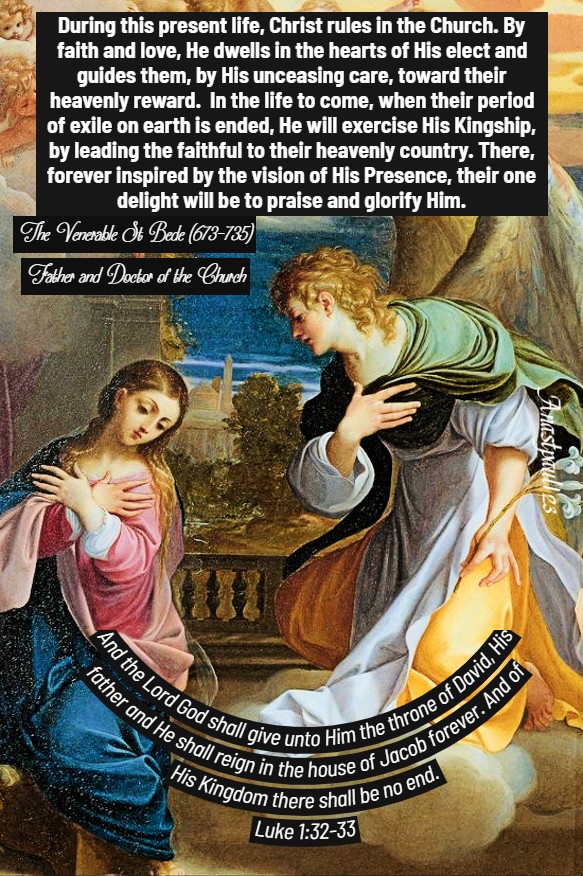
“And the Lord God shall give unto Him the throne of David, His father and He shall reign in the house of Jacob forever. And of His Kingdom there shall be no end.” – Luke 1:32-33
REFLECTION – “The Angel Gabriel was sent from God to a city of Galilee named Nazareth, to a virgin betrothed to a man whose name was Joseph of the house of David and the virgin’s name was Mary.” What is said of the house of David applies, not only to Joseph but also to Mary. It was a precept of the law that each man should marry a wife from his own tribe and kindred. Saint Paul also bears testimony to this, when he writes to Timothy: “Remember Jesus Christ, risen from the dead, descended from David, as preached in my Gospel” (2 Tm 2:8) …
“He will be great and will be called the Son of the Most High and the Lord God will give Him the throne of His father David.” The Angel refers to ,the kingdom of the Israelite nation, as the throne of David because in his time, by the Lord’s command and assistance, David governed it with a spirit of faithful service … As David had once ruled the people with temporal authority, so Christ would now lead them to the eternal Kingdom by His spiritual grace …
“He will reign over the house of Jacob forever”. The house of Jacob here refers to the Universal Church which, through its faith in and witness to Christ, shares the heritage of the Patriarchs. This may apply either to those who are physical descendants of the patriarchal families, or to those, who come from gentile nations and are reborn in Christ, by the waters of Baptism. In this house, Christ shall reign forever, and “of his Kingdom there will be no end.” During this present life, Christ rules in the Church. By faith and love, He dwells in the hearts of His elect and guides them, by His unceasing care, toward their heavenly reward. In the life to come, when their period of exile on earth is ended, He will exercise His Kingship, by leading the faithful to their heavenly country. There, forever inspired by the vision of His Presence, their one delight will be to praise and glorify Him.” – The Venerable St Bede (673-735) Monk, Father and Doctor of the Church (Sermons for Advent No 3).
PRAYER – O God, Who, by the message of an Angel, willed Thy Word to take flesh in the womb of the Blessed Virgin Mary, grant that we, Thy suppliants, who believe her to be truly the Mother of God, may be assisted by her intercession with Thee. Through the same Jesus Christ, Thy Son our Lord, Who lives and reigns with Thee, in the unity of the Holy Ghost, God, world without end. Amen (Collect).
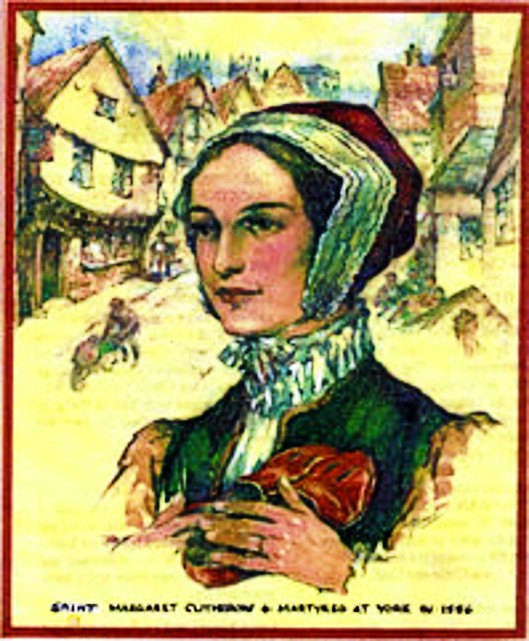
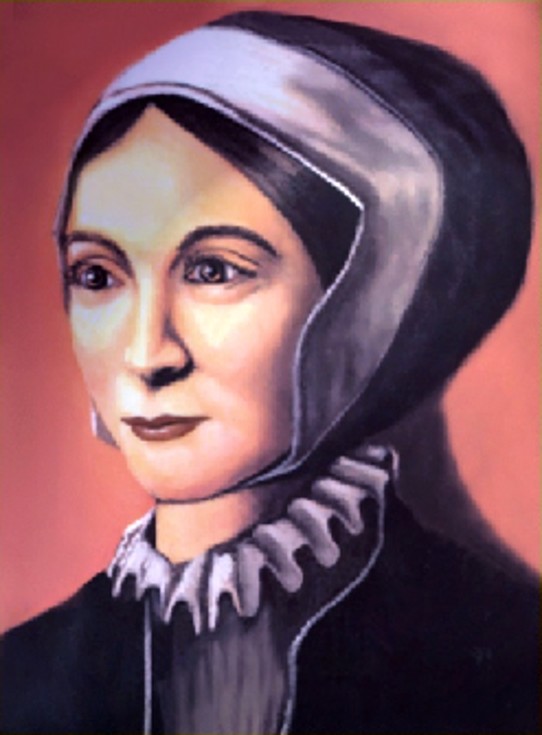
Saint of the Day – 25 March – Blessed Margaret Clitherow (1556-1586) “The Pearl of York”Martyr, Married Laywoman and Mother of 3. Her 2 sons became Priests and her daughter a Nun. She was Beatified on 15 December 1929 by Pope Pius XI and Canonised with the 40 Martyrs of England and Wales. Born in 1556 at York, England as Margaret Middleton and died by being crushed to death, on Good Friday, 25 March 1586 at their home, No 10-11 The Shambles,York. Also known as – Margaret Clitheroe, Margaret Middleton, Margarita, Margherita, Marguerite. “The Pearl of York.” Patronages – the Catholic Women’s League, business-women, converts, Martyrs, Co-Patron of the English Latin Mass Society which organises an annual pilgrimage to her Shrine in York . Additional Memorial – 4 May with the 40 Martyrs.
Margaret was born in 1556, one of five children of Thomas and Jane Middleton. Her father was a respected businessman, a wax-chandler and Sheriff of York, who died when Margaret was fourteen years old.
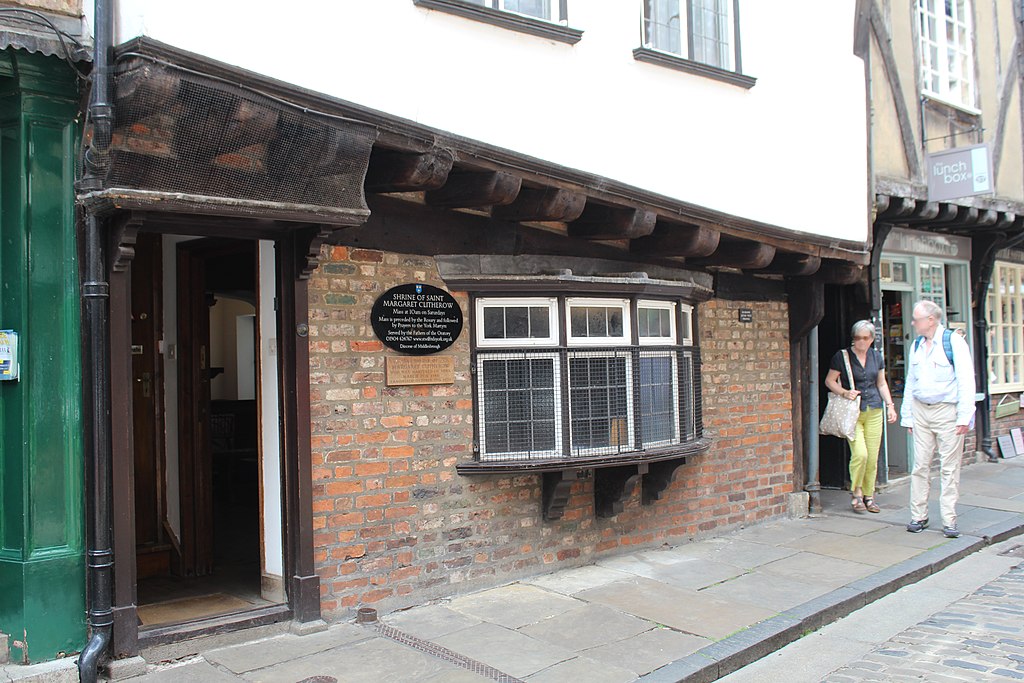
In 1571, she married John Clitherow, a wealthy butcher and a chamberlain of the City and bore him three children. The family lived at today’s renowned tourist destination, “The Shambles” – their business was Nos 35–36, which is now St Margaret’s Shrine..
Margaret converted to Catholicism in 1574. Although her husband, John belonged to the Established Church, he was supportive of his wife and of his brother William, who was a Catholic Priest. He paid the fines Margaret received for not attending the heretical church services. She was first imprisoned in 1577 for failing to attend and two further incarcerations at York Castle followed. Her third child, William, was born in prison!
Margaret risked her life by harbouring and maintaining Priests which was made a capital offence. She provided two chambers, one adjoining her house and, with her house under surveillance, she rented a house some distance away, where she kept Priests hidden and Mass was celebrated throughout the time of the most violent and virulent persecution. Her home became one of the most important hiding places for fugitive Priests in the north of England. Local tradition holds that she also housed her clerical guests in The Black Swan at Peasholme Green, where the Queen’s agents were also lodged!
The Black SDwan
She sent her older son, Henry, to the English College, relocated to Rheims, to train for the Priesthood. Her husband was summoned by the authorities to explain why his oldest son had gone abroad and in March 1586, the Clitherow house was searched. A frightened boy revealed the location of the Priest hole.
Margaret was arrested and called before the York Assizes for the crime of harbouring Catholic Priests. She refused to plead, thereby preventing a trial that would entail her three children being made to testify and being subjected to torture. She was sentenced to death. Although pregnant with her fourth child, she was executed on Lady Day, 1586, (which also happened to be Good Friday that year) in the Toll Booth at Ouse Bridge, by being crushed to death by her own door, the standard inducement to force a plea. Upon hearing the sentence, Margaret exclaimed – “God be thanked, I am not worthy of so good a death as this.”
Before her execution, Margaret was asked to confess her crimes. Instead she confessed, Our Lord Jesus Christ by saying: “I die for the love of my Lord Jesu.” The two Sergeants who should have carried out the execution hired four desperate beggars to do it instead. She was stripped and had a handkerchief tied across her face, then laid across a sharp rock the size of a man’s fist, the door from her own house was put on top of her and loaded with an immense weight of rocks and stones, so that the sharp rock would break her back. Her death occurred within fifteen minutes but her body was left for six hours before the weight was removed.
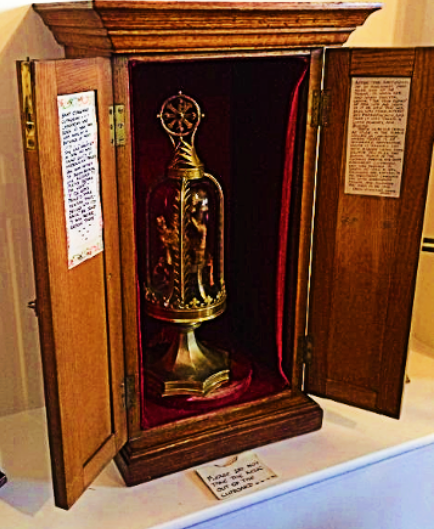
A relic, of her hand, is housed in the Bar Convent in York.
Margaret’s Shrine is at 35–36 The Shambles. John Clitherow had his butcher’s shop at No 35. My family and I have been able to visit this Shrine a few times, taking some of our visitors to venerate St Margaret.
St Dula the Slave Bl Everard of Nellenburg Bl Herman of Zahringen St Hermenland St Humbert of Pelagius Bl James Bird St Kennocha of Fife
St Lucia Filippini (1672-1732) Religious Sister, Founder of the Religious Teachers Filippini for whom she founded countless schools all over Italy, she concentrated too on raising her students to continue the work within their families in order to strengthen familt life and the role and dignity of woman. On 22 June 1930, Lucia Filippini was declared a Saint of the Church by Pope Pius XI and her Statue was given the last available niche in the Basilica of Saint Peter in Rome. Her statue can be seen in the first upper niche from the main entrance on the left (south) side of the nave of St Peter’s. Biography: https://anastpaul.com/2022/03/25/saint-of-the-day-25-march-st-lucia-filippini-1672-1732/
St Margaret Clitherow (1556-1586) Martyr, Married Laywoman and Mother of 3. Her 2 sons became Priests and her daughter a Nun. She is one of the Forty Martyrs of England and Wales. She was Beatified on 15 December 1929 by Pope Pius XI. St Matrona of Barcelona St Matrona of Thessaloniki St Mona of Milan St Ndre Zadeja St Nicodemus of Mammola (c900-990) Monk, Abbot, Hermit St Pelagius of Laodicea Bl Placido Riccardi OSB (1844-1915) Priest, Benedictine Monk. Beatified on 5 December 1954 by Pope Pius XII. St Procopius St Quirinus of Rome Bl Tommaso of Costacciaro
262 Martyrs of Rome: A group 262 Christians Martyred together in Rome. We know nothing else about them, not even their names.
Thought for the Day – 24 March – Meditations with Antonio Cardinal Bacci (1881-1971)
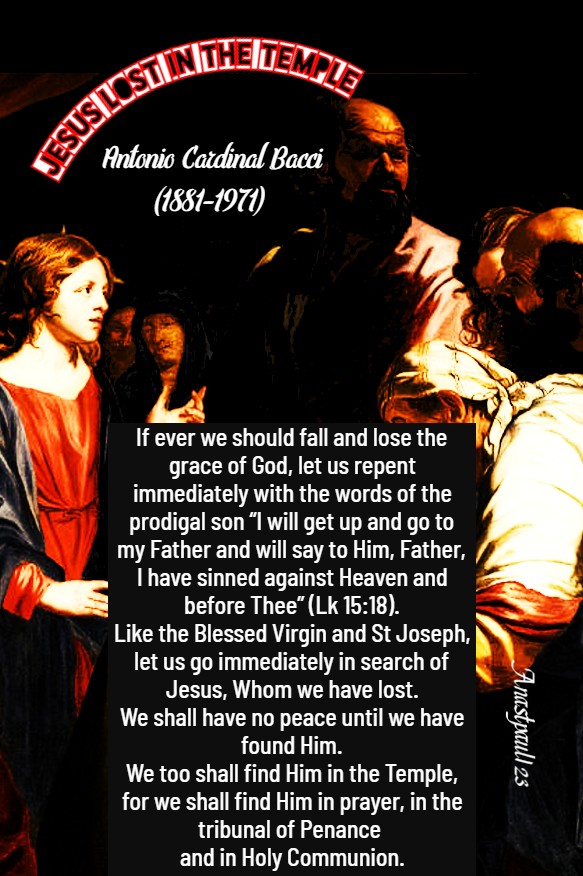
Jesus Lost in the Temple
“Now, let us reflect on the anguish of Mary and Joseph over the loss of Jesus. They had no peace as long as they could not find Him. They set out immediately on the difficult return journey to Jerusalem and searched anxiously for three days. They did not rest until they had found Him at last.
Unfortunately, we too lose Jesus whenever we commit sin. Our Lord dwells in our souls by His grace but, if we sin seriously, the devil takes possession. We know well that the devil is a cunning tyrant. He entices us by every means in his power, to give free play to our passions and then leaves us in a state of bitterness and remorse. Sometimes he oppresses us to the point of desperation.
If ever we should fall and lose the grace of God, let us repent immediately with the words of the prodigal son “I will get up and go to my Father and will say to Him, Father, I have sinned against Heaven and before Thee” (Lk 15:18). Like the Blessed Virgin and St Joseph, let us go immediately in search of Jesus, Whom we have lost. We shall have no peace until we have found Him. We too shall find Him in the Temple, for we shall find Him in prayer, in the tribunal of Penance and in Holy Communion.”
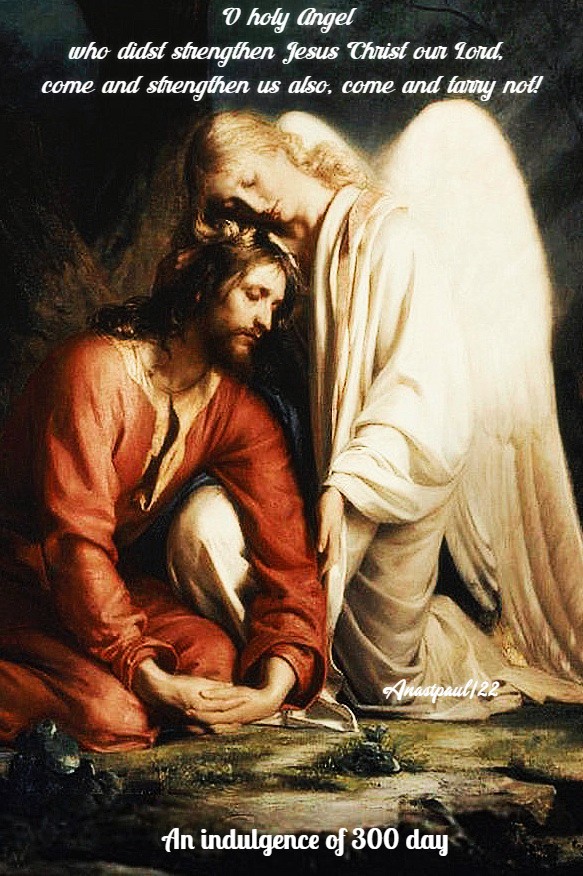
Quote/s of the Day – 24 March – Friday of the Fourth Week in Lent and the Feast of St Gabriel the Archangel
“O holy Angel who didst strengthen Jesus Christ our Lord, come and strengthen us also, come and tarry not!”
An indulgence of 300 day
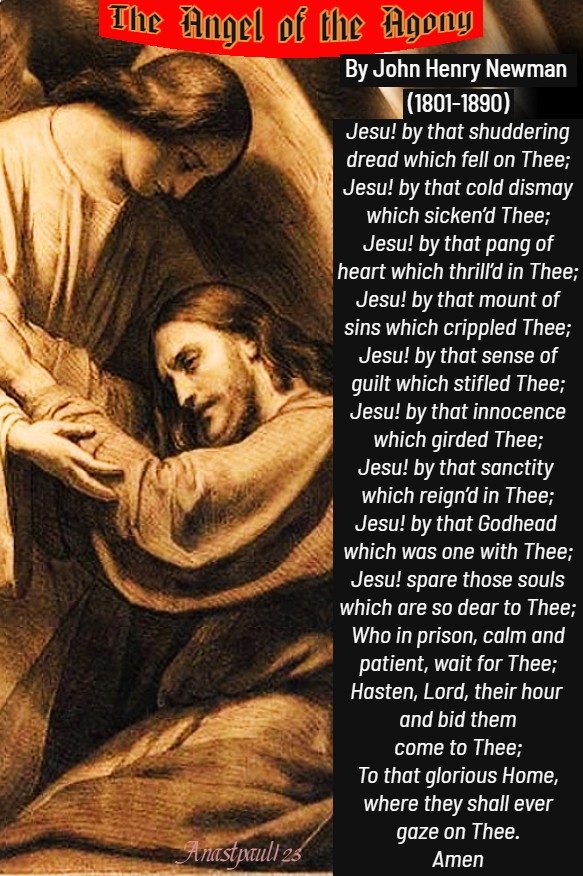
The Angel of the Agony John Henry Newman (1801-1890)
Jesu! by that shuddering dread which fell on Thee; Jesu! by that cold dismay which sicken’d Thee; Jesu! by that pang of heart which thrill’d in Thee; Jesu! by that mount of sins which crippled Thee; Jesu! by that sense of guilt which stifled Thee; Jesu! by that innocence which girded Thee; Jesu! by that sanctity which reign’d in Thee; Jesu! by that Godhead which was one with Thee; Jesu! spare those souls which are so dear to Thee; Who in prison, calm and patient, wait for Thee; Hasten, Lord, their hour and bid them come to Thee; To that glorious Home, where they shall ever gaze on Thee. Amen
Our Lenten Journey with St Francis de Sales – 24 March – Friday of the Fourth Week in Lent and the Feast of St Gabriel the Archangel – Daniel 9:21-26, Luke 1:26-38 – Scripture search here: https://www.drbo.org/
“He hath given His Angels charge over thee, to keep thee in all thy ways.” Psalm 90:11
“At that time, the Angel Gabriel was sent from God to a town of Galilee called Nazareth, to a virgin betrothed to a man named Joseph, of the house of David, and the virgin’s name was Mary.” Luke 1:26-27
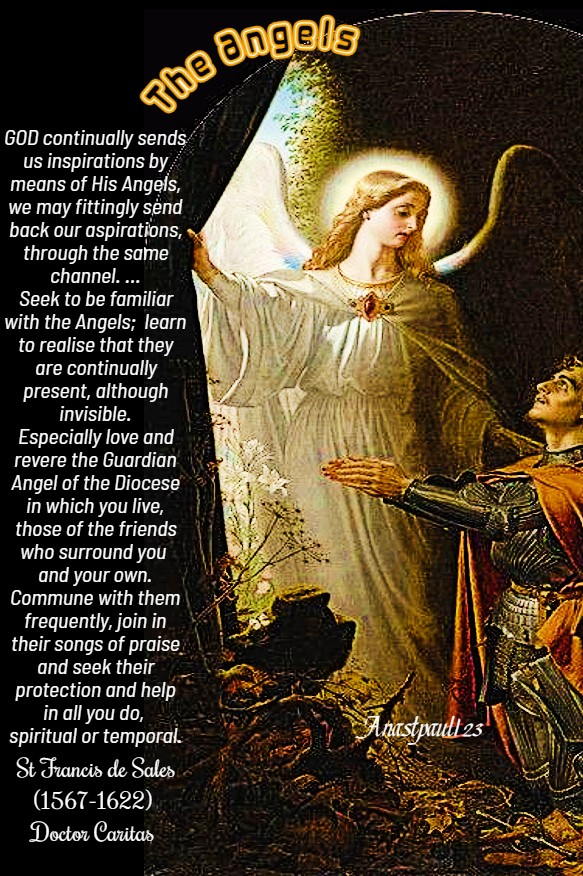
THE ANGELS St Francis de Sales (1567-1622) Doctor Caritas
“INASMUCH AS GOD continually sends us inspirations by means of His Angels, we may fittingly send back our aspirations, through the same channel. … Seek to be familiar with the Angels; learn to realise that they are continually present, although invisible. Especially love and revere the Guardian Angel of the Diocese in which you live, those of the friends who surround you and your own. Commune with them frequently, join in their songs of praise and seek their protection and help in all you do, spiritual or temporal.
That pious man Peter Faber, the first companion of Saint Ignatius and the first Priest, first preacher and first theological teacher of the Company of the Jesuits, who was a native of our Diocese, (the French region of Savoy) once, passing through this country on his way from Germany, (where he had been labouring for God’s Glory) told, how great comfort he had found, as he went among places infested with heresy, in communing with the Guardian Angels thereof, whose help had often preserved him from danger and softened hearts to receive the Faith. He spoke with such earnestness that a lady, who, when quite young, heard him, was so impressed that she repeated his words to me only four years ago, sixty years after their utterance! with the utmost feeling.” – (Introduction to the Devout Life – PART II. Containing sundry counsels).
One Minute Reflection – 24 March – “The Month of the St Joseph” – Friday of the Fourth Week in Lent and the Feast of St Gabriel the Archangel – Daniel 9:21-26, Luke 1:26-38 – Scripture search here: https://www.drbo.org/
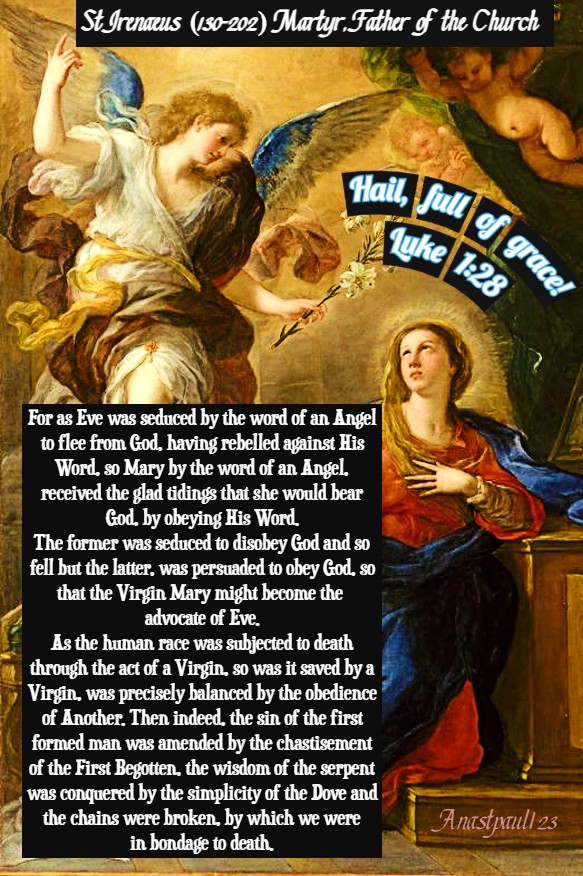
“Hail, full of grace!” – Luke 1:28
REFLECTION – “So the Lord now manifestly came to His own. Born by His own created order that He Himself bears, He by His obedience on the tree, renewed and reversed what was done by disobedience, in connection with a tree.
The power of that seduction, by which the virgin Eve, already betrothed to a man, had been wickedly seduced, was broken when the Angel in truth brought good tidings to the Virgin Mary, who already, by her betrothal belonged to a man. For as Eve was seduced by the word of an Angel to flee from God, having rebelled against His Word, so Mary by the word of an Angel, received the glad tidings that she would bear God, by obeying His Word.
The former was seduced to disobey God and so fell but the latter, was persuaded to obey God, so that the Virgin Mary might become the advocate of Eve.
As the human race was subjected to death through the act of a Virgin, so was it saved by a Virgin, was precisely balanced by the obedience of Another. Then indeed, the sin of the first formed man was amended by the chastisement of the First Begotten, the wisdom of the serpent was conquered by the simplicity of the Dove and the chains were broken, by which we were in bondage to death.” – St Irenaeus (130-202) Bishop of Lyons, Martyr, Father of the Church (Against Heresies, 5)
PRAYER – O God, Who, out of all the Angels, chose the Archangel Gabriel to announce the Mystery of Thy Incarnation, mercifully grant that we who keep his feast on earth, may have him as our patron in Heaven.Through the same Jesus Christ, Thy Son our Lord, Who lives and reigns with Thee, in the unity of the Holy Ghost, God, world without end. Amen (Collect).
Our Morning Offering – 24 March – Feast of the Most Precious Blood for the Friday after Laetare Sunday
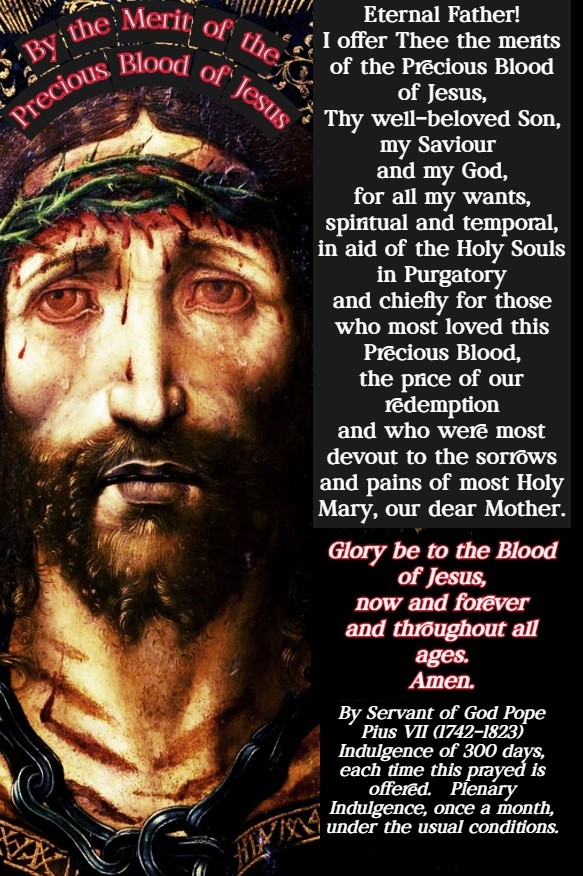
By the Merit of the Precious Blood of Jesus By Servant of God Pope Pius VII (1742-1823) Papacy from 1800 to 1823 Indulgenced Act of Oblation to Our Father
Eternal Father! I offer Thee the merit of the Precious Blood of Jesus, Thy well-beloved Son, my Saviour and my God, for all my wants, spiritual and temporal, in aid of the Holy Souls in Purgatory and chiefly for those who most loved this Precious Blood, the price of our redemption and who were most devout to the sorrows and pains of most Holy Mary, our dear Mother.
Glory be to the Blood of Jesus, now and forever and throughout all ages. Amen.
Indulgence of 300 days, each time this prayed is offered 22 September 1817 with a Plenary Indulgence, once a month, under the usual conditions.
Note of Interest:On 15 August 1811 – the Feast of the Assumption – it is recorded that the Pope celebrated Mass and was said to have entered a trance and began to levitate in a manner that drew him to the Altar. This particular episode aroused great wonder and awe among attendants, which included the French soldiers guarding him, who were awestruck at what had occurred and left records of it.
Saint of the Day – 24 March – St Aldemar the Wise OSB (985-c1080) Priest, Abbot, founder of many Monasteries, Miracle-worker. Born in 985 in Capua, Italy and died in c1080 in Bucchianico, Italy of natural causes. Patronage – of the Town of Bucchianico, Italy. Also known as – Aldemar of Capua, Aldemar of Bucchhianico, Aldemaro, Aldemario.
As a boy, Aldemar was sent to the famous Monastery founded by St Benedict, Monte Cassino. He grew in his studies and became known as “Aldemar the Wise.” As a youth he became a Monk at Monte Cassino and was Ordained Deacon.
Because of his learning and insight, a Princess, named Aloara of Capua (died 992), of a nearby region asked Aldemar to lead a new Monastery, that of the Capuan Monastery of San Lorenzo, which she had founded. He accepted and was given permission to take on the role. Here he was Ordained to the Priesthood and ruled as the Abbot.
In the course of his duties it became clear that he had been given the gift of working miracles. The wonders he worked attracted much attention, however, so his Abbot recalled him to Monte Cassino.
The Princess took offence at this and a dispute arose. Aldemar decided to escape to a different town to live with three religious brothers. One of the brothers came to dislike him and even tried to murder Aldemar.
The brother intended to shoot Aldemar with a crossbow but mishandled the weapon and wounded himself in the arm. The injury worsened until Aldemar prayed for the brother, and he was cured.
After this, Aldemar left the Convent and went first to San Liberatore and then to Farafiliorumpetri, where he built the Monastery of Santa Eufemia . Later he founded other monasteries in the region of Chieti and in Piceno. Aldemar directed all of these communities.
After his death his body was translated to Bucchianico, in the Church of Saint Urban, where it rests today and where he is venerated as the Patron Saint of the Town.
Friday of the Fourth Week in Lent – FAST AND ABSTINENCE
FEAST OF THE MOST PRECIOUS BLOOD OF JESUS is a Feast for the Fridays of Lent, which has been in the General Roman Calendar from 1849 to 1969 with the same Office as that of the Solemnity of the Precious Blood in July.. HERE: https://anastpaul.com/2022/07/10/the-solemnity-of-the-most-precious-blood-of-of-our-lord-jesus-christ-and-the-litany/ For many Diocese, there were two days to which the Office of the Precious Blood was assigned, the Office for both being the same. The reason was that the Office was at first granted only to the Fathers of the Most Precious Blood. Later, as one of the Offices of the Fridays of Lent, it was assigned to the Friday after the Fourth Sunday in Lent (Laetare Sunday) in some Diocese, including, by decision of the Fourth Provincial Council of Baltimore (1840), those in the United States.
The Solemnity in July is again the same Office and both Feasts (during Lent and in July) are kept in some Diocese. On 10 August of the same year, (1849) Pope Pius IX officially included the Feast of the Most Precious Blood of Our Lord Jesus Christ in the General Roman Calendar, for celebration on the first Sunday in July, that is the first Sunday after 30 June, which is the anniversary of the liberation of the City of Rome from the insurgents.
In reducing the number of Feasts fixed for Sundays, Pope Pius X assigned the date of 1 July to this Feast. In 1933, Pope Pius XI raised the Feast to the rank of Double of the 1st Class to mark the 1,900th anniversary of the Passion of Our Lord Jesus Christ.
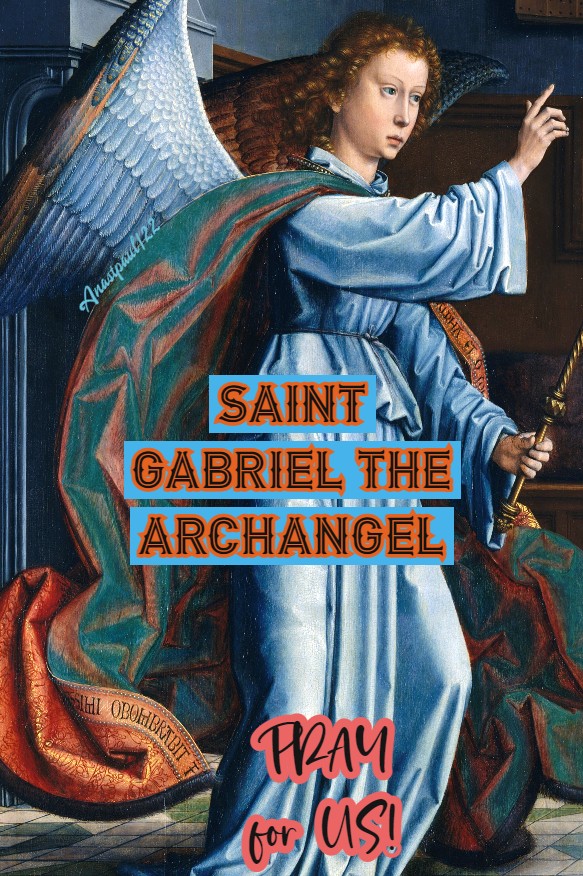
The Archangel Saint Gabriel The Feast of Saint Gabriel was included by Pope Benedict XV in the General Roman Calendar in 1921, for celebration on 24 March. The Archangel Saint Gabriel whose name means “the Power of God. ” He appeared to the prophet Daniel (Dan 8:16; 9:21), to the priest Zachary to announce the forthcoming birth of Saint John the Baptist (Luke 1:11, 19) and to the Blessed Virgin Mary to announce the birth of Our Saviour (Luke 1:26.). St Gabriel! https://anastpaul.com/2022/03/24/saint-of-the-day-24-march-the-archangel-saint-gabriel/
St Agapitus of Synnada St Aldemar the Wise OSB (985-c1080) Priest, Abbot St Bernulf of Mondov Bl Bertha de’Alberti of Cavriglia Bl Bertrada of Laon Bl Brian O’Carolan St Caimin of Lough Derg St Cairlon of Cashel
St Latinus of Brescia St Macartan of Clogher St Mark of Rome St Pigmenius of Rome St Romulus of North Africa St Secundus of North Africa St Seleucus of Syria St Severo of Catania St Timothy of Rome
Martyrs of Africa – 9 Saints: A group of Christians murdered for their faith in Africa, date unknown. The only details about their that survive are the names – Aprilis, Autus, Catula, Coliondola, Joseph, Rogatus, Salitor, Saturninus and Victorinus. .
Martyrs of Caesarea – 6 Saints: A group of Christians Martyred together in the persecutions of Diocletian. We know little else but six of their names – Agapius, Alexander, Dionysius, Pausis, Romulus and Timolaus. They were martyred by beheading in 303 at Caesarea, Palestine.
Thought for the Day – 23 March – Meditations with Antonio Cardinal Bacci (1881-1971)
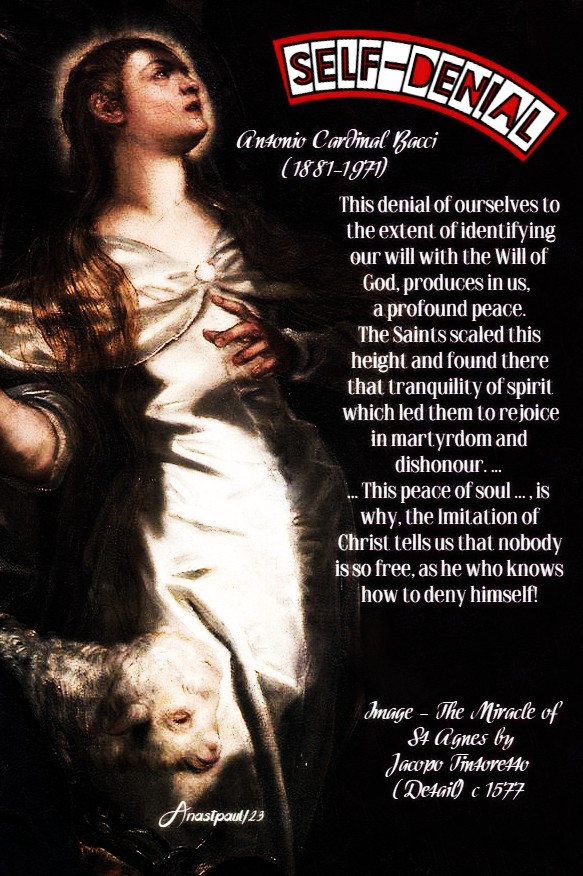
Self-Denial
“This denial of ourselves to the extent of identifying our will with the Will of God, produces in us, a profound peace. The Saints scaled this height and found there that tranquility of spirit which led them to rejoice in martyrdom and dishonour.
It was this peace of soul which made the dying St Aloysius Gonzaga smile and say: “I am happy to be going.” It was this which enabled the saintly, Cardinal Fisher, when he was going to the scaffold, to behold a light which does not fail and say: “Commit to the Lord your way … He will make justice dawn for you like the light (Ps 36:5-6). This too, is why, the Imitation of Christ tells us that nobody is so free, as he who knows how to deny himself!””
Quote/s of the Day – 23 March – Thursday of the Fourth Week in Lent – 4 Kings 4:25-38, Luke 7:11-16 – Scripture search here: https://www.drbo.or
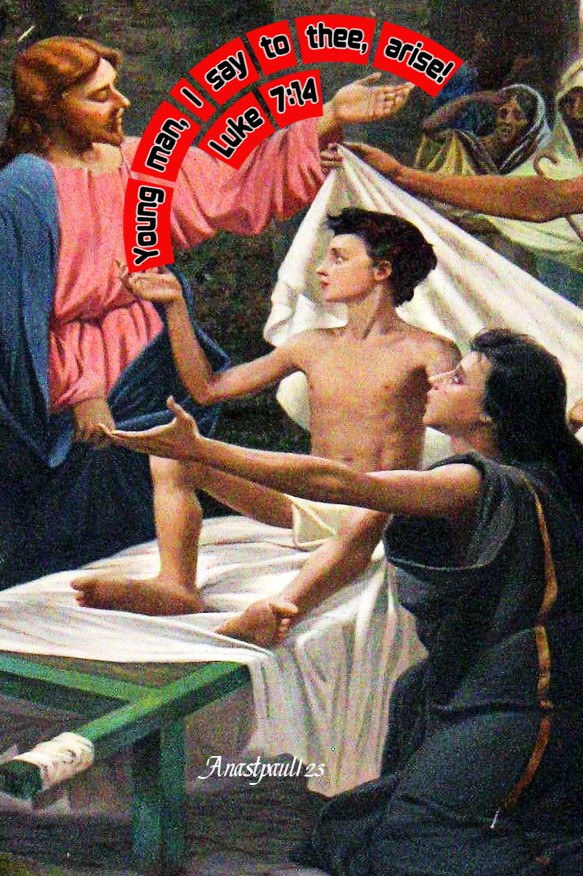
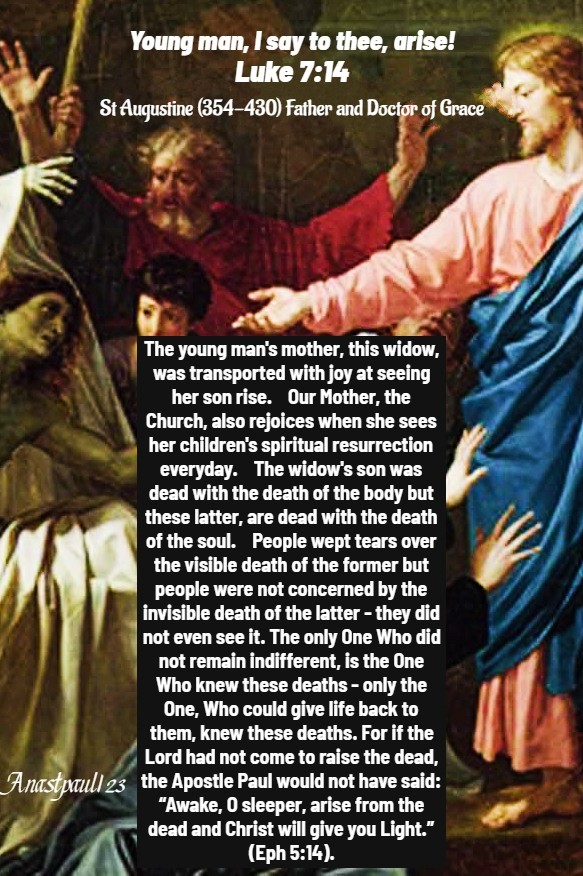
“Young man, I say to thee, arise!”
Luke 7:14
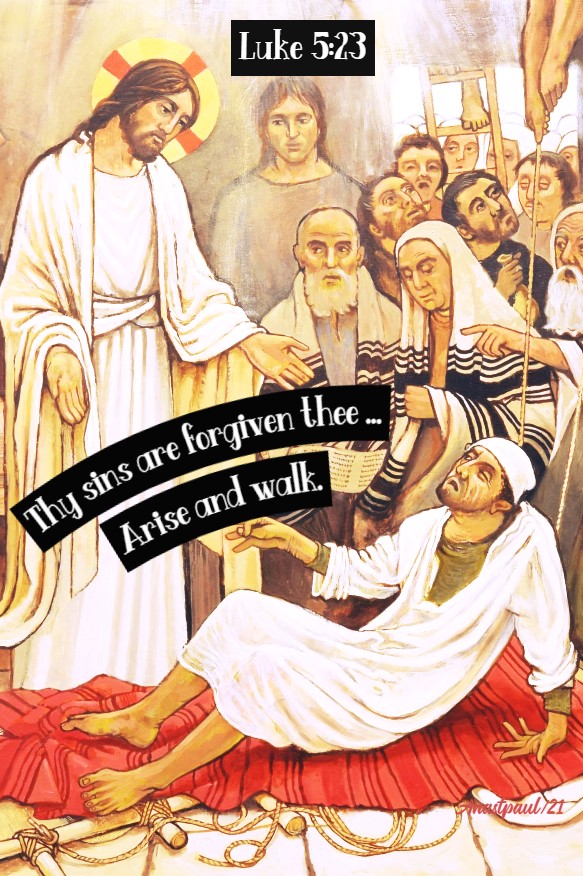
“Thy sins are forgiven thee … Arise and walk.”
Luke 5:23
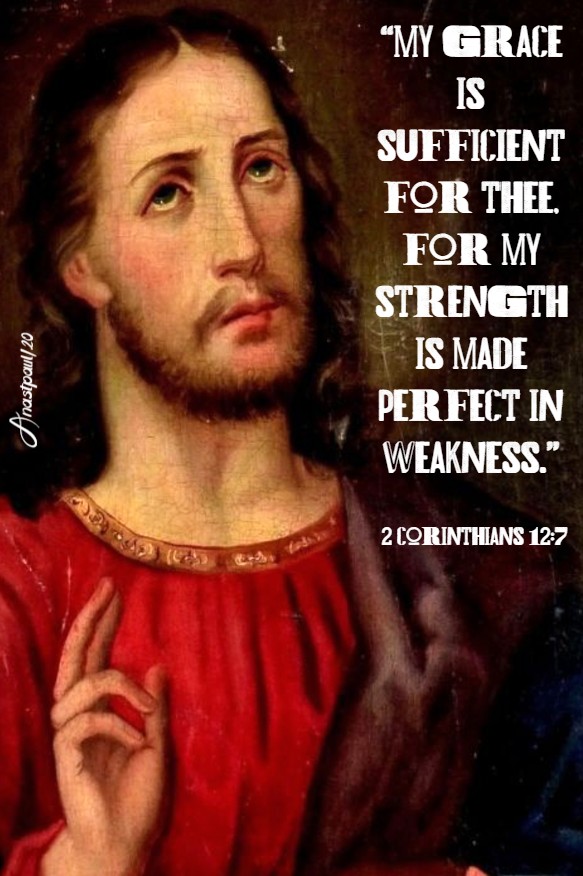
“My grace is sufficient for thee, for My strength is made perfect in weakness. Therefore, I will boast all the more gladly about my weaknesses, so that Christ’s power may rest on me.”
2 Corinthians 12:7
“O my brethren, if only we wanted to, if only we all wanted to perceive our soul’s paralysis in all its depth! Then we would see that it is lying on a stretcher of sins, deprived of strength. Christ’s action within us, would be a source of light and we would understand that each day He sees our lack of faith, harmful as it is, that He draws us towards healing remedies and sharply presses our rebellious wills. “My son” He says, “your sins are forgiven you.”
St Peter Chrysologus (c 400-450) “Golden Words” Father & Doctor of the Church
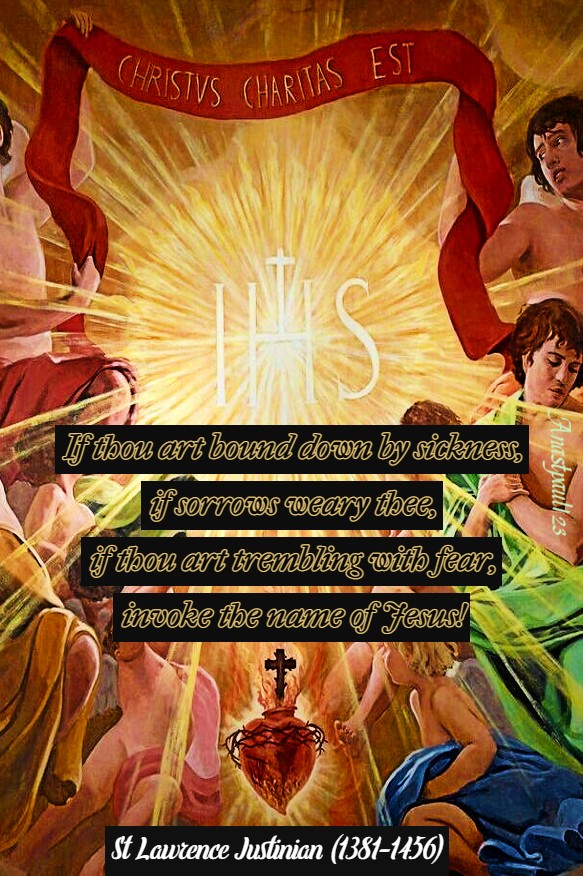
“If thou art bound down by sickness, if sorrows weary thee, if thou art trembling with fear, invoke the name of Jesus!”
St Lawrence Justinian (1381-1456)
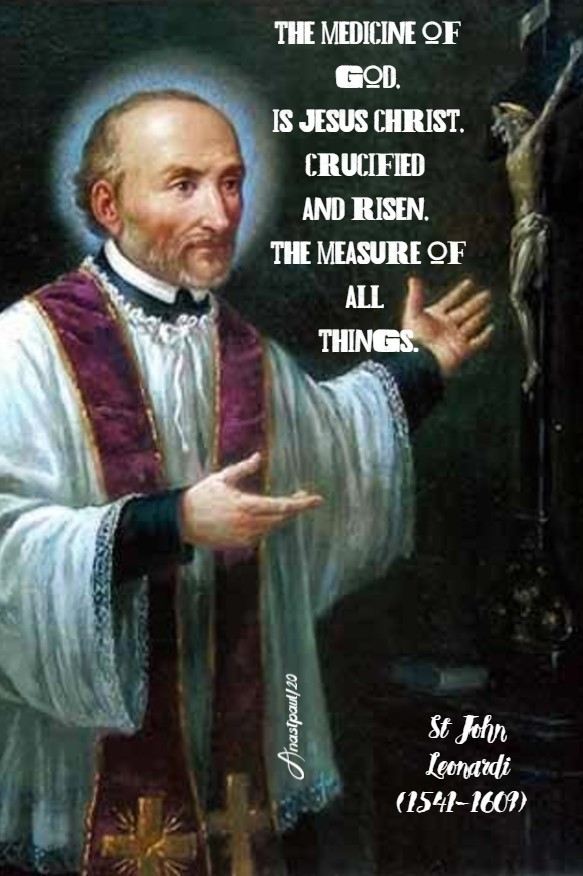
“The medicine of God, is Jesus Christ, Crucified and Risen, the measure of all things.”
St John Leonardi (1541-1609) Confessor, Priest, Founder
Our Lenten Journey with St Francis de Sales – 23 March – Thursday of the Fourth Week in Lent – 4 Kings 4:25-38, Luke 7:11-16 – Scripture search here: https://www.drbo.org/
“Come to Me, all ye who are weary …” Matthew 11:28
“Young man, I say to thee, arise!” Luke 7:14
THE DIVINE PHYSICIAN St Francis de Sales (1567-1622) Doctor Caritas
“Our Lord, the great and excellent Physician of our infirmities, announced everywhere, before coming into this world, both His arrival and the maladies He would cure; sometimes by His prophets. …”
What wonder then if, in the Gospel, we find Him surrounded by the sick, by sinners and by publicans! O vain and foolish murmuring of the Hebrews, when they said: “This man receiveth sinners.” Whom would you wish Him to receive? Is it not the honour of a Physician to be sought for by the sick and so much the more, as their maladies are considered incurable? …
Thus, how were the poor Prodigal and the unfortunate Absalom received by their fathers? And, otherwise, what would become of us, for all have sinned? Every man is a liar, that is to say, a sinner. If we say that we are without sin, we deceived ourselves. Return to the Lord, and forsake your injustice, for His Mercy is great towards those who are converted to Him. Why is He called Saviour, unless in order to save? …
But, oh, miserable that we are! We are often called and we only turn a deaf ear. “I have called and you have not heard,” says God. We are drawn and we obstinately resist Him. He complains, saying: “All the day long have I stretched out My hands to this incredulous and rebellious people! ”…
Let us then depart, let us depart from Egypt, let us approach Our Lord, let us make provision of good works; let the feet of our affections be bare, let us clothe ourselves with innocence, let us not be satisfied with crying for mercy, let us go forth from Egypt, let us delay no longer. The hour is come to arise from sleep, since we know that He receives sinners; the Angels await our repentance, the Saints pray for it!” – (Consoling Thoughts on God and Providence).
One Minute Reflection – 23 March – “The Month of the St Joseph” – Thursday of the Fourth Week in Lent – 4 Kings 4:25-38, Luke 7:11-16 – Scripture search here: https://www.drbo.org/
“Young man, I say to thee, arise!” – Luke 7:14
REFLECTION – “Let no-one who is Christian doubt that even now, dead people rise. Certainly, every human being has eyes, by which he can see dead people rising, in the way this widow’s son, whom we just heard about in the Gospel, arose. But not everyone can see people who are spiritually dead rise. For that, it is necessary to have already risen interiorly. It is greater to raise someone, who is to live forever than to raise someone, who will have to die again.
The young man’s mother, this widow, was transported with joy at seeing her son rise. Our Mother, the Church, also rejoices when she sees her children’s spiritual resurrection everyday. The widow’s son was dead with the death of the body but these latter, are dead with the death of the soul. People wept tears over the visible death of the former but people were not concerned by the invisible death of the latter – they did not even see it. The only One Who did not remain indifferent, is the One Who knew these deaths – only the One, Who could give life back to them, knew these deaths. For if the Lord had not come to raise the dead, the Apostle Paul would not have said: “Awake, O sleeper, arise from the dead and Christ will give you Light.” (Eph 5:14).” –St Augstine (354-430) Father and Doctor of Grace (Sermon 98).
PRAYER – Grant, we beseech Thee, Almighty God, that we who are chastising the flesh by fasting, may rejoice in this holy practice and thus, with earthly passions subdued, we may the more readily direct our thoughts to Heavenly things. Through the same Jesus Christ, Thy Son our Lord, Who lives and reigns with Thee, in the unity of the Holy Ghost, God, world without end. Amen (Collect).
Our Morning Offering – 23 March – Thursday of the Fourth Week in Lent – “The Month of the St Joseph”
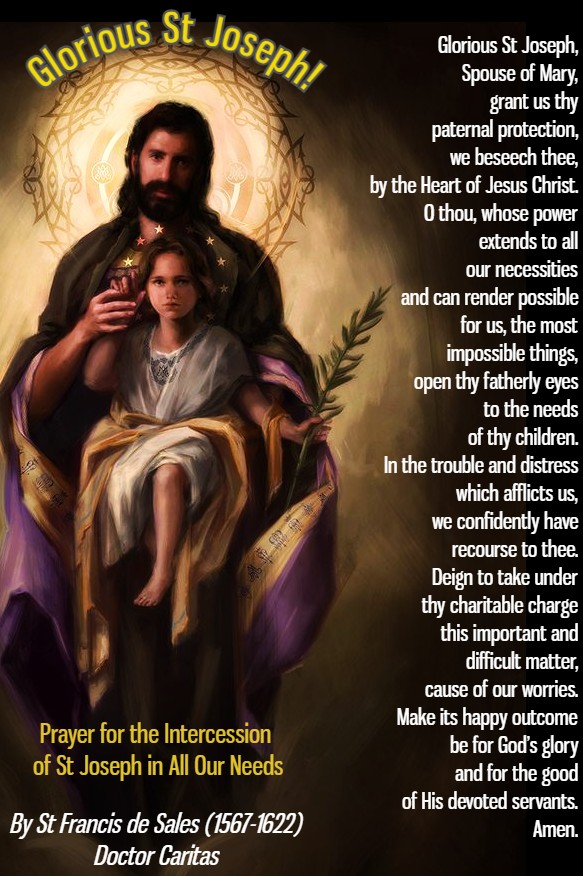
Glorious St Joseph! Prayer for the Intercession of St Joseph in All Our Needs By St Francis de Sales (1567-1622) Doctor Caritas
Glorious St Joseph, Spouse of Mary, grant us thy paternal protection, we beseech thee, by the Heart of Jesus Christ. O thou, whose power extends to all our necessities and can render possible for us, the most impossible things, open thy fatherly eyes to the needs of thy children. In the trouble and distress which afflicts us, we confidently have recourse to thee. Deign to take under thy charitable charge this important and difficult matter, cause of our worries. Make its happy outcome be for God’s glory and for the good of His devoted servants. Amen.
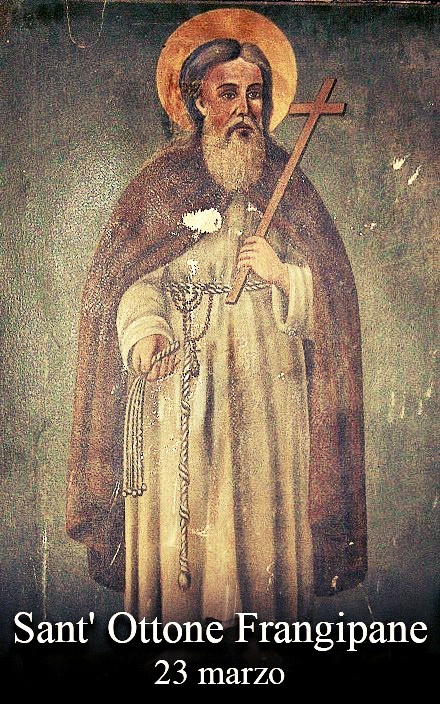
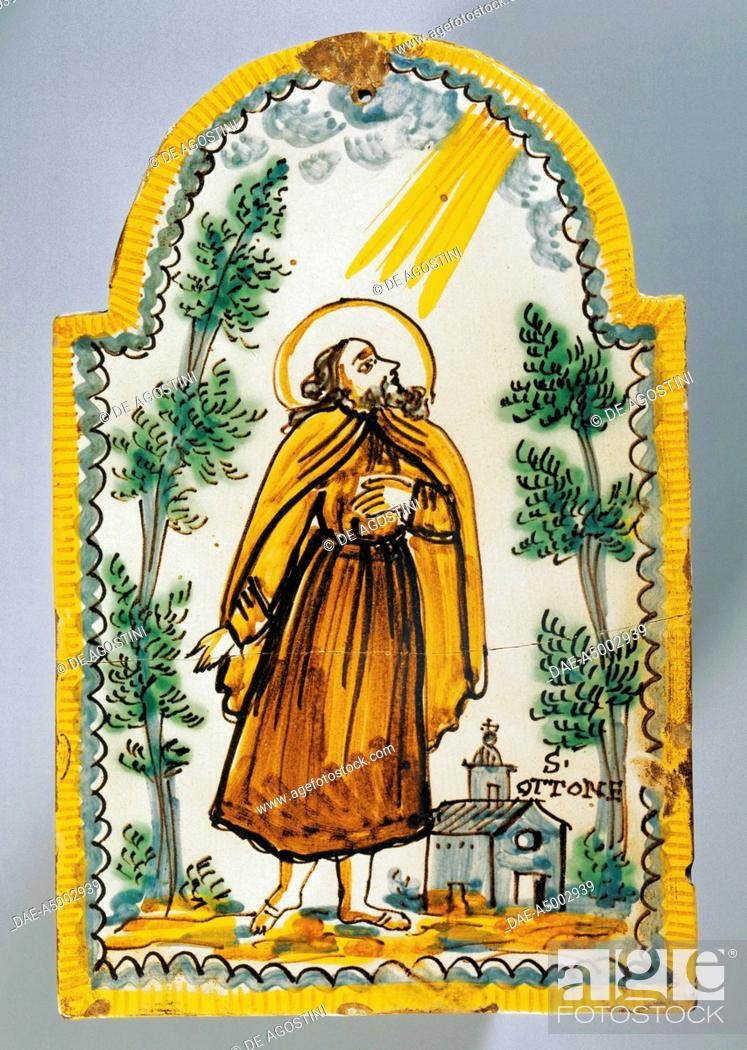
Saint of the Day – 23 March – St Ottone Frangipane (1040-1127) Layman, military Knight, Pilgrim, Ascetic, Hermit, Miracle-worker both during life and after his death. Founder of a Pilgrim’s Hospice in Ariano which later became a huge Hospital. Born in 1040 in Rome, Italy and died on 23 March 1127 in Ariano Irpino, Italy of natural causes. Patronages – the City of Ariano Irpino, Italy, the Diocese of Ariano Irpino-Lacedonia, Castelbottaccio, Italy. Also known as – Oddone, Oto, Otto.
According to the Arianesi tradition, Ottone was born in Rome, and was a member of the noble Frangipane family, a powerful baronial family occupying a prominent position in Rome. Around 1058 when Ottone was a young Knight of around 18 years, he had to leave his home on a military campaigns in defence of the Pope. In one of these campaigns,
Ottone was captured and put in chains in a cell in a tower, from which he escaped after beseeching the intercession of the Patron Saint of the imprisoned, Saint Leonard of Noblac, who appeared to him during the night and released him from his chains.
Ottonhe returned to Rome before he went on pilgrimages of thanksgiving to many Shrines in different regions across Italy.
That pilgrimage lasted about 50 years! Traditions state that at that time he wore the Benedictine habit, although he did not take the vows of a Monk and lived for some time in the Abbey of the Blessed Trinity of Cava, dedicating himself to prayer and manual labour. He later visited St William of Vercelli in Montevergine Monastery, spending time there and becoming the spiritual disciple and student of St William.
In around 1110, after the long pilgrimage, the Saint settled in Ariano. At this time the City was a place of transit for the pilgrims travelling from Naples and Benevento towards Bari, where they would take ship for the Holy Land. Ottone dedicated himself to their help and to accommodate them, he founded the Hospice of San Giacomo (Saint James).
Here Ottone worked for three years in a Hospice for pilgrims setting an example of charity, until he decided to retire to lead a life of solitary prayer about a kilometer away from the City and the Hospice near to the Church of San Pietro Apostolo, today called San Pietro dei Reclusiis
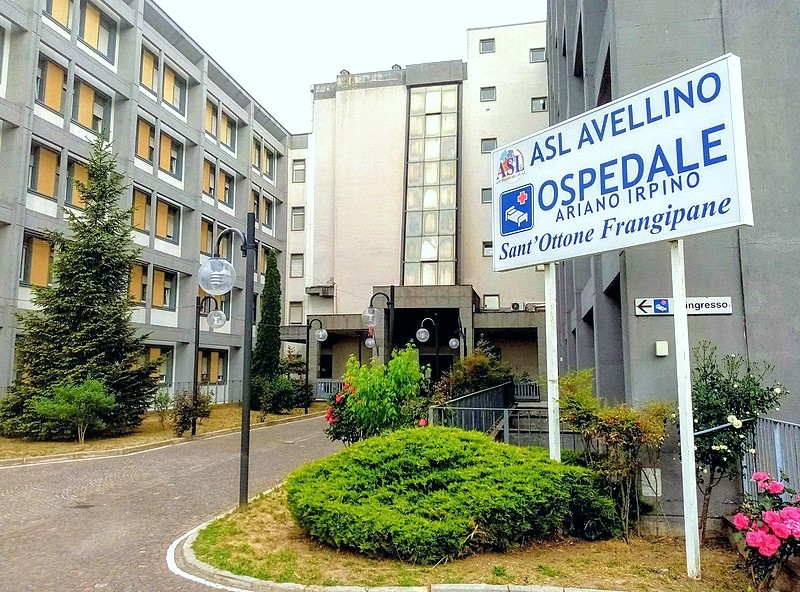
The little Hospice today is this Hospital of St Ottone Frangipane
Attached to the Church he built a small cell and there he isolated himself. He performed many miracles in the place, increased his austerities, prolonged his prayer vigils, lessened the food and increased the penances. Next to the small cell he dug a grave, as a reminder of death, as a warning to lead a holy life. After ten years of this life, he died.
The Arianesi solemnly transported his body to the Cathedral, where the Bishop had him buried with honour. The cult seems to have started right away and many miracles have been attributed to St Ottone over the centuries. In around 1220, Ottone’s Relics body was transferred to Benevento to avoid desecration in Saracen raids.
The most important miracle recorded of Ottone took place in around 1180, when the Saracens of Lucera, who were besieging Ariano were struck down by a rain of stones, by the intercession of the Saint, who appeared among the clouds. To commemorate this miraculous event, the Arianesi built the Church of Santa Maria della Ferma.
Among others who received miracles by the intercession of Ottone, was Saint Elzéar of Sabran, who became Count of Ariano and is now venerated as its joint Patron Saint.
Particularly noted is the vow made by the Arianesi in 1528 – Ariano was gripped by the plague and the inhabitants turned to Saint Ottone to be freed of it. The Saint saved the City and its faithful people, not then only but on other occasions, his intercession released the Arianesi from epidemics. St Ottone pray for us all, we beseech thee!
In art, St Ottone’s attributes are the monastic habit, a sword and a scourge.
Bl Álvaro del Portillo Díez de Sollano St Benedict of Campagna St Crescentius of Carthage St Ethelwald of Farne St Felix the Martyr St Felix of Monte Cassino St Fergus of Duleek St Fidelis the Martyr St Frumentius of Hadrumetum St Gwinear
Daughters of Feradhach: They are mentioned in early calendars and martyrologies but no information about them has survived.
Martyrs of Caesarea – 5 Saints: A group of five Christians who protested public games which were dedicated to pagan gods. Martyred in the persecutions Julian the Apostate. The only details we know about them are their names – Aquila, Domitius, Eparchius, Pelagia and Theodosia. They were martyred in 361 in Caesarea, Palestine.
Thought for the Day – 22 March – Meditations with Antonio Cardinal Bacci (1881-1971)
The Presence of God
“A man who lives always in the Presence of God. cannot sin. When we find ourselves in the presence of a high-ranking worldly personality, do we dare to behave any other way but correctly and respectfuly? How should we dare then to behave in any other fashion, in the Presence of the Infinite Majesty of God, our Creator and Redeemer, Who will one day also be our Judge?! Could He not, in a single instant, snap the thread of our mortal life and call us before His judgement-seat, even while we are in the act of offending Him?!
Let us remember St Paul’s stern warning: “It is a fearful thing to fall into the hands of the living God” (Heb 10-:31). Let us remain always in the Presence of God and we shall be at peace and strong in His grace.”
Quote/s of the Day – 22 March – Wednesday of the Fourth Week in Lent and the Memorial of St Catherine of Genoa (1447-1510)
“We must not wish anything other than what happens from moment to moment, all the while, however, exercising ourselves in goodness.”
“And when I hear it said, that God is good and He will pardon us and then see, that men cease not from evil-doing, oh, how it grieves me! The Infinite Goodness with which God communicates with us, sinners as we are, should constantly make us love and serve Him better but we, on the contrary, instead of seeing in His Goodness an obligation to please Him, convert it into an excuse for sin, which will, of a certainty, lead in the end, to our deeper condemnation.”
“I see clearly with the interior eye, that the sweet God loves, with a pure love, the creature that He has created and has a HATRED for nothing but SIN, which is more opposed to Him, than can be thought or imagined.”




























 AnaStpaul
You must be logged in to post a comment.