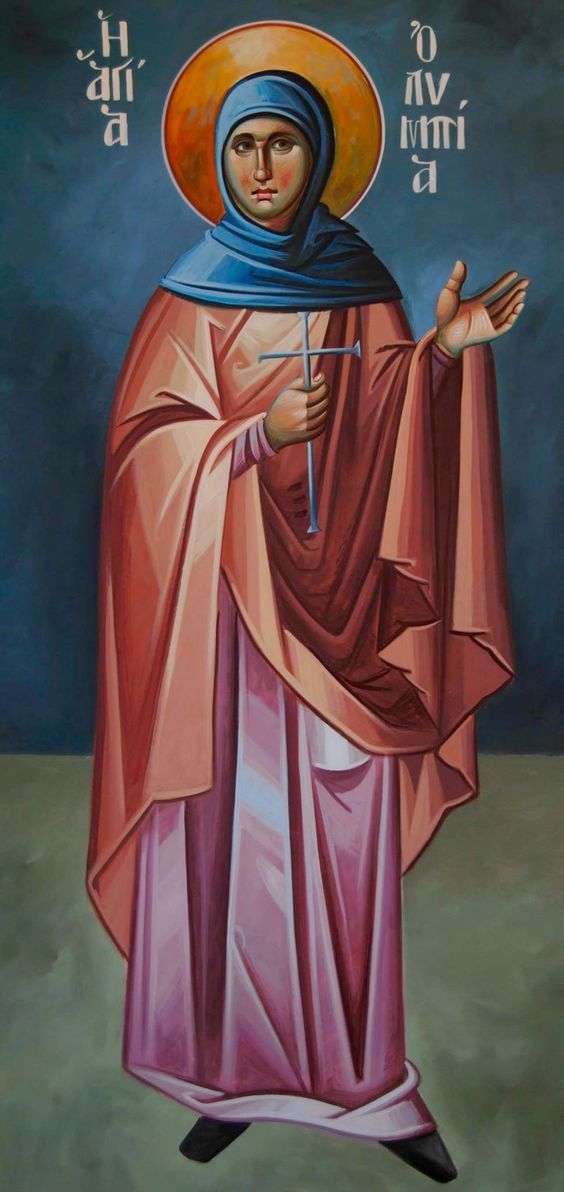
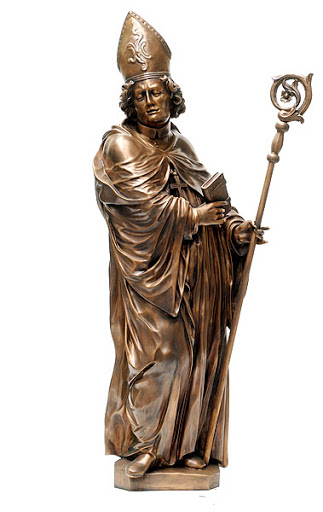
Quote/s of the Day – 3 December – St Francis Xavier SJ (1506-1552) Confessor
“Would to God that these men who laboUr so much in gaining knowledge, would give as much thought to the account, they must one day give to God, of the use they have made of their learning and of the talents entrusted to them!”
“Tell the students to give up their small ambitions and come eastward to preach the Gospel of Christ.”
One Minute Reflection – 3 December – “The Month of the Divine Infancy and the Immaculate Conception of the Blessed Virgin Mary” – St Francis Xavier SJ (1506-1552) Confessor – Romans 10:10-18, Mark 16:15-18 – Scripture search here: https://www.drbo.org/
“And these signs shall follow them who believe: In My Name they shall cast out devils. They shall speak with new tongues. They shall take up serpents and, if they shall drink any deadly thing, it shall not hurt them. They shall lay their hand upon the sick and they shall recover.” – Mark 16:17-18
REFLECTION – “The Lord said to the Eleven: “And these signs shall follow them who believe: In My Name they shall cast out devils. They shall speak with new tongues. They shall take up serpents and, if they shall drink any deadly thing, it shall not hurt them. They shall lay their hand upon the sick and they shall recover.” In the primitive Church all the signs the Lord lists here, were fulfilled to the letter, not only by the Apostles but, many other of the Saints. The Gentiles would not have abandoned the worship of idols if the Gospel preaching had not been confirmed with so many signs and wonders. Indeed, did not the disciples preach “a Crucified Christ, a stumbling block to Jews and foolishness to Gentiles,” according to Saint Paul’s saying? (1 Cor 1:23) …
As for us, from now, on signs and wonders are no longer needed, it is enough for us to read or hear an account of those which have happened. For we believe in the Gospel, we believe in the Scriptures which relate them. And yet, signs still take place daily and, if we would mark them well, we would acknowledge that they have far more worth than the concrete miracles of former times.
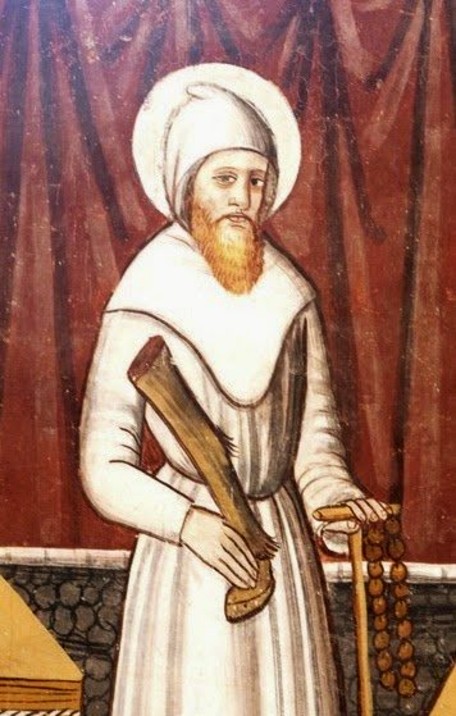
Every day Priests administer Baptism and call to conversion – is not this to cast out demons? Every day they speak a new language when they explain holy Scripture by replacing the old letter with the newness of its spiritual sense. They put serpents to flight, when they free sinners’ hearts from their attachment to evil with gentle exhortation … They cure the sick, when they reconcile weak souls to God with their prayers. Such are the signs the Lord had promised his Saints – it is these they accomplish even today!” – St Bruno of Segni O.Cart. (c1030 -1101) Cistercian Bishop (Commentary on Saint Mark’s Gospel).
PRAYER – O God, Thou Who were pleased to gather into Thy Church the peoples of the Indies by the preaching and miracles of blessed Francis, mercifully grant that we, who honour his glorious merits, may also imitate the example of his virtues. Through Jesus Christ, Thy Son our Lord, Who lives and reigns with Thee, in the unity of the Holy Ghost, God, world without end. Amen (Collect).
Our Morning Offering – 3 December – St Francis Xavier SJ (1506-1552) Confessor
I Love Thee, God, I Love Thee By St Francis Xavier (1506-1552) Translated by Gerard Manley Hopkins SJ (1844-1889)
I love Thee, God, I love Thee— Not out of hope for Heaven for me Nor fearing not to love and be in the everlasting burning. Thou, my Jesus, after me Didst reach Thine arms out dying, For my sake suffered nails and lance, Mocked and marred countenance, Sorrows passing number, Sweat and care and cumber, Yea and death and this for me, And Thou could see me sinning. Then I, why should not I love Thee, Jesu so much in love with me? Not for Heaven’s sake, not to be Out of hell by loving Thee, Not for any gains I see, But just the way that Thou didst me I do love and will love Thee. What must I love Thee, Lord, for then? For being my King and God. Amen
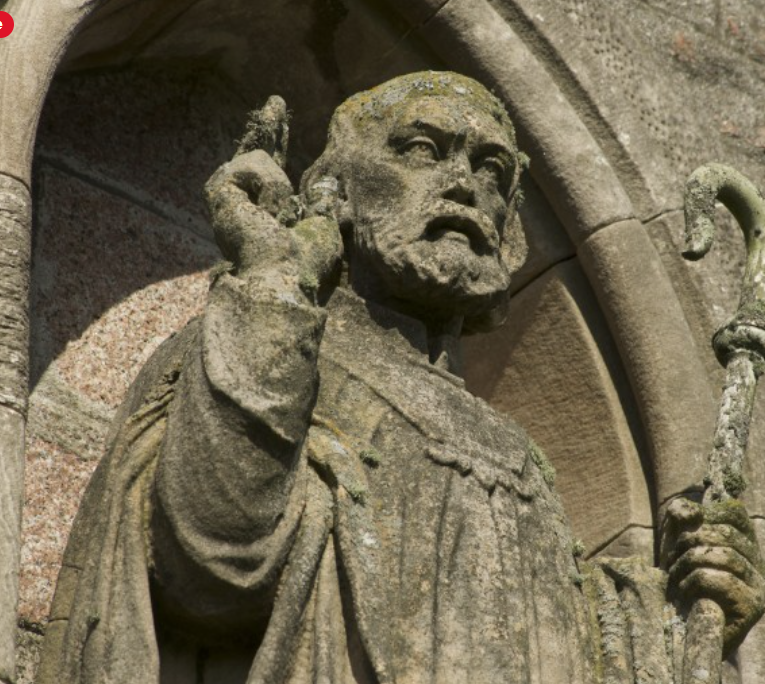
Saint of the Day – 3 December – St Abbo of Auxerre (Died c860) Bishop, Monk and Abbot. Died ion 3 December n c860 of natural causes. Also known as – Abbone, Abbon.
In some records Abbo appears as the Bishop of Auzerre in the 35th place, in others in36th. He governed the Diocese in the second half of the 9th Century. In the list of Bishops, of the “Liber Episcopalis” in which brief biographical notes and chronological data have been provided, Abbo appears after Saint Eribaldus, who was his brother and before the blessed Christian.
There is little information about him. Abbo embraced religious life from a young age by entering the Benedictine Monastery of Saint Jerome in Auxerre. In that Monastery he also held the office of Abbot for two years.
In the year 857 he was elected as the Bishop of Auxerre, succeeding his brother Saint Eribaldus. He participated in two Councils – that of Metz on 28 May 859 and that of Savonnièrres on 14 June of the same year.
His government of the Diocese was only around three years long He retired from the Office prior to his death and already in the acts of the Synod of Thusey which took place in October 860, there is the signature of his successor, the blessed Christian.
Saint Abbo died on 3 December 860. At the recognition of his Relics,, made in the 17th Century, his body was found almost intact. At this time it is mentioned that his Feast Day was celebrated on 3 December. (Source: Mauro Bonato, https://www.santiebeati.it).
St Abbo of Auxerre (Died c860) Bishop St Abran St Agapius St Agricola of Pannonia St Anthemius of Poitiers St Attalia of Strasbourg Bl Bernard of Toulouse OP Martyr
St Ethernan St Hilaria the Martyr St Jason the Martyr St John of Africa St Lucius, King St Lucy the Chaste St Magina of Africa St Mamas St Marcos García Rodríguez St Maurus the Martyr
St Seleucus St Stephen of Africa St Theodore of Alexandria St Theodulus of Edessa St Veranus Zephaniah the Prophet
Martyrs of Nicomedia: Christians Martyred together in the persecutions of Diocletian – Ambicus, Julius and Victor. c 303 in Nicomedia, Bithynia (modern Izmit, Turkey).
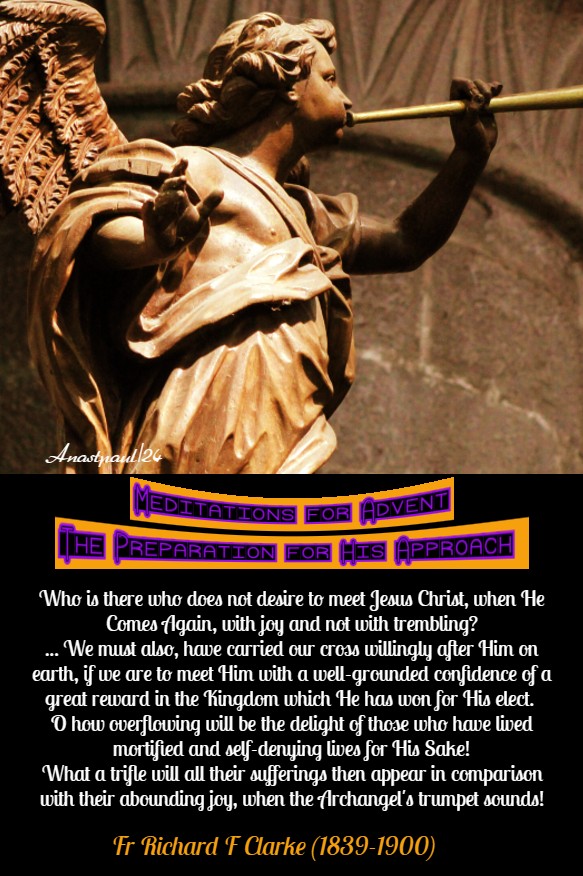
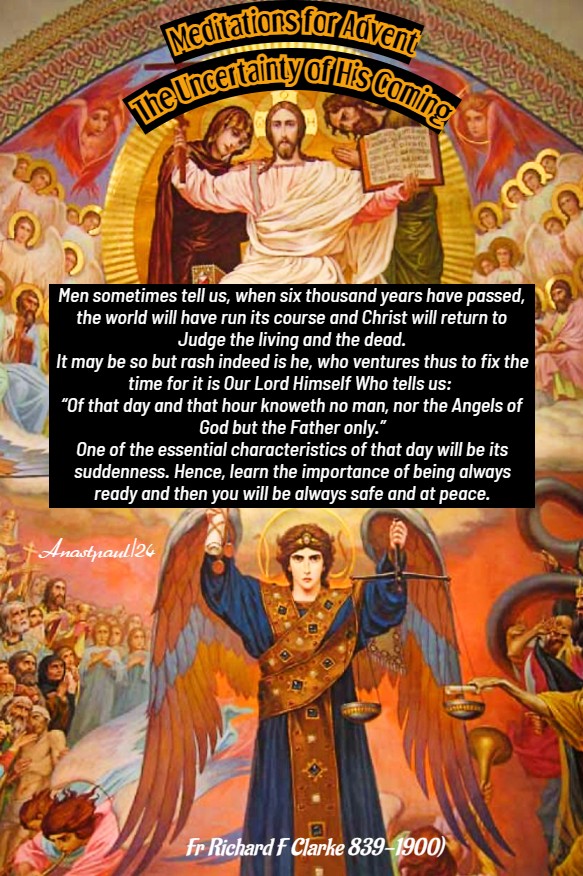
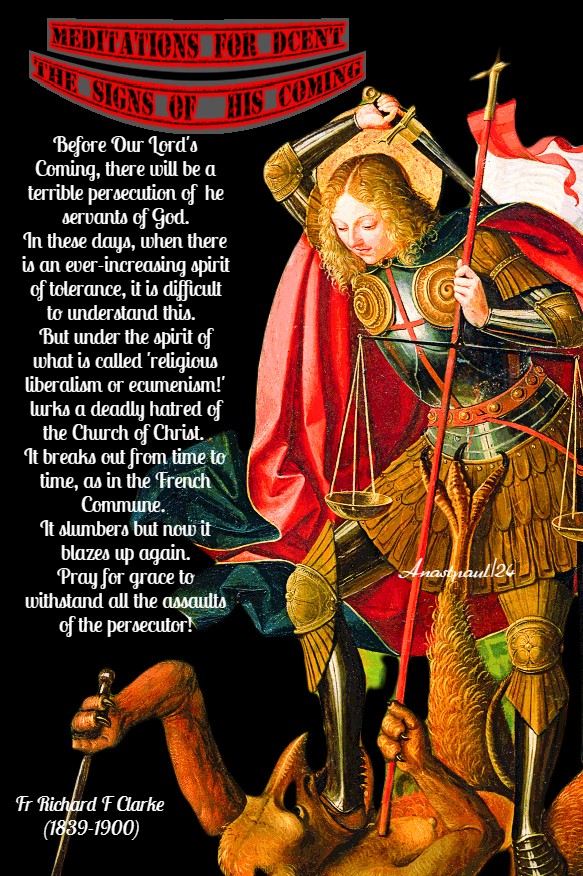
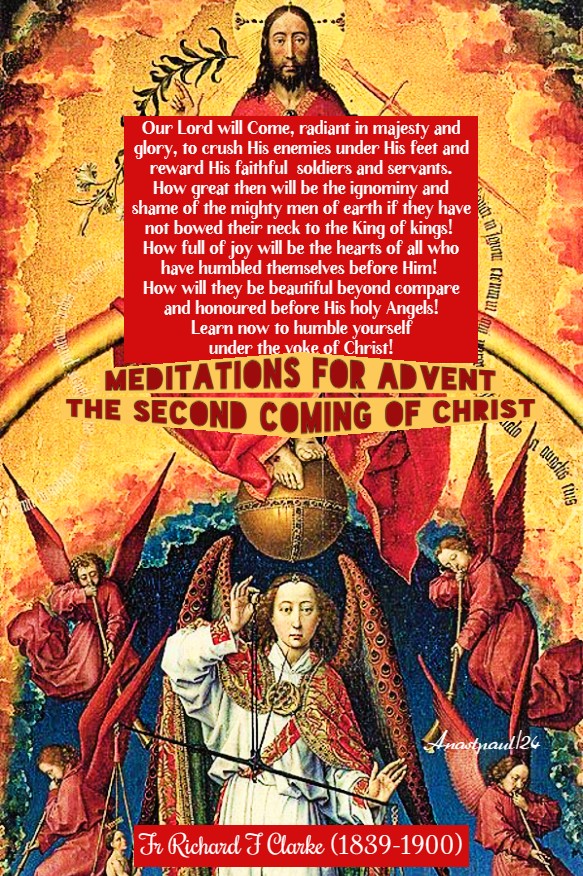
Thought for the Day – 2 December – Meditations with Fr Richard Frederick Clarke SJ (1839-1900)
Meditations for Advent From “The Devout Year” By Fr Richard Frederick Clarke SJ (1839-1900)
The Divine Decree .
“+1. What brought Christ down from Heaven? It was man’s sin. From all eternity the Blessed Trinity, looking forward to the fall of man, had decreed that the Eternal Word should clothe Himself with human flesh and should be born into the world, in order to repair the evil which man had wrought. Thus God, in His Mercy provides a remedy for all the sins and follies of men, even before they are committed. We do the harm and God undoes it. Has He not often thus averted from me, the consequences due to my evil deeds?
+2. In what garb was the Son of God to clothe Himself when He became Man? In one which should give us some idea of the evil He came to undo. He, the Eternal Son, co-equal with the Father, took the form of a servant, was born of a despised race, of humble parents, in poverty and humility and contempt. All this should impress on us how sin has deserved all these and every other evil imaginable besides. If these were the results of sin on the spotless Lamb of God, what must they be on sinful, feeble man?
+3. The Divine Decree did not stop at this First Coming of the Son of God. There is to be a Second Advent , one in which He will appear in human form indeed, yet now, no longer in lowliness and humiliation but clothed with all the brightness and glory which His Divine Nature can impart to His Sacred Humanity. In this Second Coming, He is to come and receive the reward which He has earned for His Human Nature and, for all those who had faithfully served Him. He is to come and reign. He is to crush all His enemies under His feet. Look forward to that glorious day and pray that you may share the glory of the Son of God!”
Quote/s of the Day – 2 December – St Bibiana (Died c 361) Virgin Martyr – Sirach 51:13-17; Matthew 13:44-52 – Scripture search here: https://www.drbo.org/
“Jesus said in parables: The Kingdom of Heaven is like unto a treasure, hidden in a field. … Again, the Kingdom of Heaven is like unto a merchant seeking good pearls. ”
Matthew 13:44, 45
“Do you possess a pearl? Then you know your wealth, it is clenched in the palm of your hand, no-one is aware of your fortune. So it is with the Gospel, if you embrace it with faith, if it remains enclosed in your heart, what a treasure you have You alone know it is there. Unbelievers, who know neither what it is, nor what value it has, have no idea of your incredible wealth!”
St John Chrysostom (347-407) Father and Doctor of the Church
“Let us draw near to the Heart of our most sweet Lord Jesus and we shall be glad and rejoice in it. How good and how sweet it is to dwell in this Heart! This is the hidden treasure, the pearl of great price which we discover, O Jesus, when we dig in the field of Thy Body (cf Mt 13:44). Who, then, would cast aside this Pearl? Far from it! For It, I will give away all my goods and offer in exchange, all my concerns and affections. I will lay down all my cares in the Heart of Jesus, it is He Who will suffice for me and Who will, without fail, supply all I need to live on!”
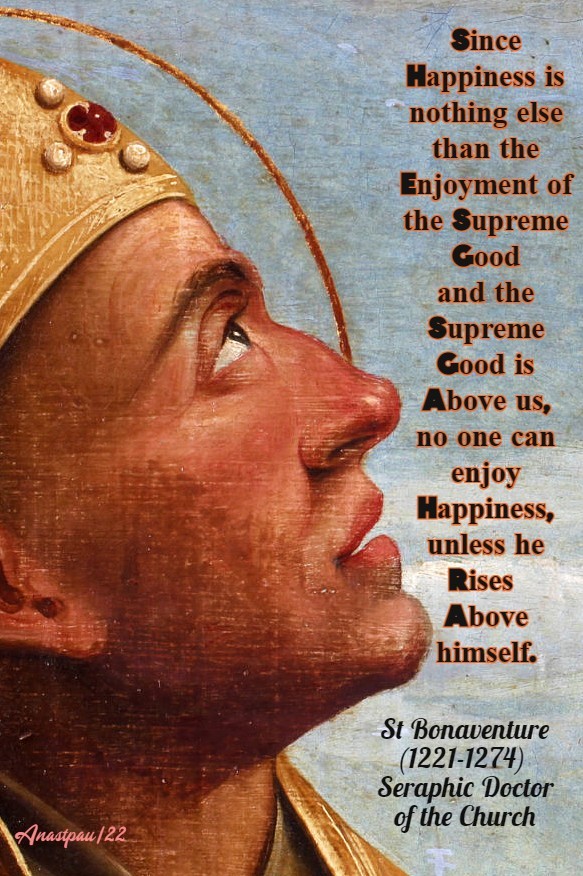
St Bonaventure (1221-1274) [Attrib] Seraphic Doctor of the Church
“It is above all, the Gospel which supports me during my prayer. There, I find all which my poor little soul needs. There, I always discover new lights, hidden and mysterious meaning. … Just when I need it, I discover lights which I had not seen before.”
One Minute Reflection – 2 December – “The Month of the Divine Infancy and the Immaculate Conception of the Blessed Virgin Mary” – St Bibiana (Died c 361) Virgin Martyr – Sirach 51:13-17; Matthew 13:44-52 – Scripture search here: https://www.drbo.org/
“Jesus said in parables: The Kingdom of Heaven is like unto a treasure, hidden in a field. … Again, the Kingdom of Heaven is like unto a merchant seeking good pearls. ”- Matthew 13:44 and 45
REFLECTION – “The two parables of the treasure and the pearl, both teach us the same thing – we should prefer the Gospel before all earthly treasures. … However, there is something even more praiseworthy than this – we should delight to give it preference, joyfully, unhesitatingly. Let us never forget this, to abandon all else, so as to follow God, is to gain more, than one loses. The preaching of the Gospel is hidden in this world like a hidden treasure, a treasure without price.
To gain this treasure … two conditions are required – the forsaking of this world’s goods and a firm determination. For, it is a question “of a merchant searching for fine pearls, when he finds a pearl of great price, he goes and sells all that he has and buys it.” This one pearl is Truth and Truth is One, it is not divided. Do you possess a pearl? Then you know your wealth, it is clenched in the palm of your hand, no-one is aware of your fortune.
So it is with the Gospel, if you embrace it with faith, if it remains enclosed in your heart, what a treasure you have You alone know it is there. Unbelievers, who know neither what it is, nor what value it has, have no idea of your incredible wealth!” – St John Chrysostom (347-407) Bishop of Constantinople, Father and Doctor of the Church (Homilies on Saint Matthew’s Gospel No 47:2).
PRAYER – O God, giver of all good gifts, Thou Who in Thy servant, Bibiana, joined the flower of virginity with the palm of Martyrdom, by her intercession unite our hearts to Thee in charity, so that, saved from all dangers, we may obtain the rewards of eternal life. Through the same Jesus Christ, Thy Son our Lord, Who lives and reigns with Thee, in the unity of the Holy Ghost, God, world without end. Amen (Collect).
Our Morning Offering – 2 December – “The Month of the Divine Infancy and the Immaculate Conception of the Blessed Virgin Mary”
An Act of Thanksgiving By St Gertrude the Great (1256-1302) (Excerpt from her Revelations)
May my soul bless Thee, O Lord God my Creator, may my soul bless Thee! From the very core of my being, may all Thy merciful gifts sing Thy praise. Thy generous care, for Thy daughter, has been rich in mercy; indeed, it has been immeasurable and as far as I am able, I give Thee thanks. I praise and glorify, Thy great patience which bore with me. I offer Thee, most loving Father, all the sufferings of Thine Beloved Son, from that first Infant cry as He lay on the hay in the manger, until that final movement, when, bowing His Head, with a mighty Voice, Christ gave up His Spirit. I think, as I make this offering, of all that He underwent, His needs as a Babe, His dependence as a young Child, the hardships of Youth and the trials of early Manhood. To atone for all my neglect, I offer, most loving Father, all that Thine Only-begotten Son did during His Life, whether in thought, word or deed. And now, as an act of thanksgiving, I praise and worship Thee Father, in deepest humility, for Thy most loving kindness and mercy. Amen
Saint of the Day – 2 December – Saint Nonnus of Edessa (Died late 5th Century) Bishop, Deacon and Monk. St Nonnus attended the Council of Chalcedon in 451 and tbere his fame and his preaching became renowned most especially due to the conversion of St Pelagis. Also known as – Nennos, Ninos, Nono, Nonnos.
The Roman Martyrology reads today: “At Edessa, St Nonnus, Bishop, by whose prayers the penitent Pelagia, was converted to Christ.”
Pelagia among her courtesans, as Saint Nonnus prays for her
The Vita of St Pelagia states that Nonnus was “a perfect Monk” from Tabenna in Egypt who, “by reason of his virtuous life” became the Bishop of Edessa in Syria, converting “all its nhabitants” and Baptising 30 000 locals. The Monks of Ramsgate place his See at Edessa.
As Nonnus addressed a Church Council in Antioch, the town’s most famous courtesan Margarita (Pearl or Pelaia) passed by. Observing her beauty, Nonnus chastised the members of the assembly for taking less care of their souls than she did of her body. She appeared at his next Sunday sermon and Nonnus’ sermon on hell prompted her to repent.] She wrote him a letter and was permitted to see him with witnesses who were convinced of her sincerity. Nonnus heard her Confession and Baptided her with her birth name Pelagia.
After being pursued by the devil for a few days, she donated the property from her former employment to the Church and lived with the Deaconess Romana, before departing for Jerusalem to disguise herself as a male Hermit under the name Pelagius.
St Robert of Matallana O.Cist. (Died 1185) Abbot St Silvanus
Greek Martyrs of Rome – 9 Saints: Several Greek Christians Martyred in the persecutions of Valerian – Adria, Aurelia, Eusebius, Hippolytus, Marcellus, Mary Martana, Maximus, Neon and Paulina. They were martyred by various means between 254 and 259 in Rome, Italy and are buried in the Callistus catacombs, Rome.
Martyrs of Africa – 4 Saints: Four Christians Martyred in Africa in the persecutions of Arian Vandals – Januarius, Securus, Severus and Victorinus.
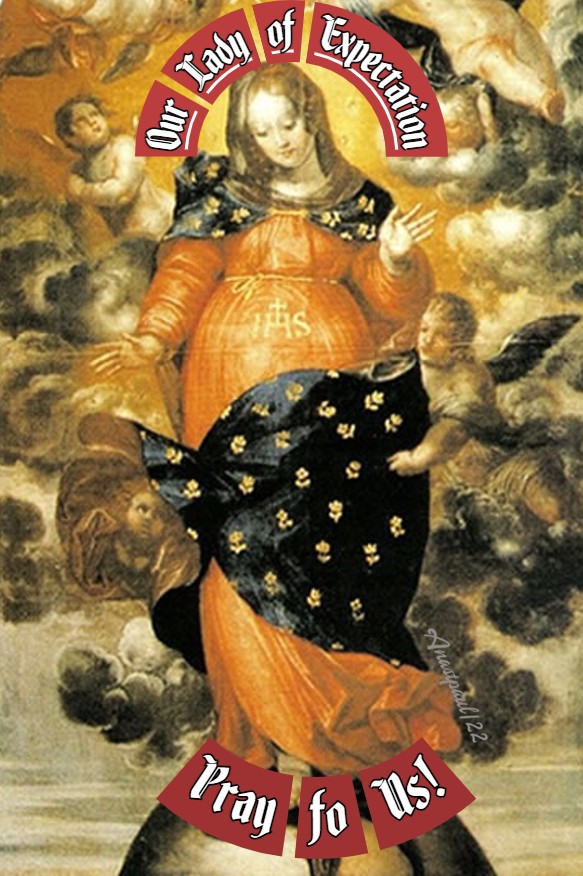
DECEMBER: The Month of Devotion to The DIVINE INFANCY and The IMMACULATE CONCEPTION of the BLESSED VIRGIN MARY
The observance of Divine Infancy Month recalls the first Christmas more than 2,000 years ago when Jesus humbled Himself and became Completely Human, while remaining Completely Divine. The Blessed Virgin Mary was chosen to be the glorious Tabernacle of the Son of God. Therefore, in the first moment of her existence, God, called her into being that she might assume the exalted dignity of the Mother of His Son and, therefore, granted her the singular privilege of exemption from Original Sin.
Look to Our Lady – she is already waiting at the crib, desiring to teach us to make our hearts a pleasant crib for the Christ Child to dwell in.
Cultivate a spirit of prayer and attentiveness to His Presence as the Divine Infant by adopting Aspirations suitable to the season, such as:
Divine Infant King Jesus, come down into our hearts! Lord Jesus, through Thy Infant cries in the manger, when Thou was born for me; through Thy tears, when Thou died for me on the Cross; throughThy love, as Thou do live for me in the Tabernacle, have mercy upon me and save me. Amen!
Thought for the Day – 1 December – Meditations with Fr Richard Frederick Clarke SJ (1839-1900)
Meditations for Advent From “The Devout Year” By Fr Richard Frederick Clarke SJ (1839-1900)
What is Advent?
+I. Advent is the season when we are taught to look forward, both to the First Coming of Our Lord into the world at Christmas-time and also, to His Second Coming at the end of time, to judge the living and the dead . His First Coming was to seek and to save that which was lost. His Second Coming will be, to gather His elect into the Celestial Paradise and, to trample all His enemies under His feet. Shall I, on that day, be regarded by Him as a friend or as an enemy? Is my present life one of devotion to Him and union with Him, or one of selfishness, pride, impatience of the yoke of Christ?
+2. Of all the miracles in the world, never was there one to be compared to His Coming on earth in the form of a man. It was a miracle so entirely above and beyond our reason that, unless we knew it by faith, to be a fact, we should be inclined to pronounce it impossible. That the Infinite God should take the form of a creature! that the Eternal Word should be clad in a body formed of the dust of the earth! that He should, of His Own accord leave the highest heaven for a life of suffering and a death of agony! Nothing but the power of God could work such a wonder as this!
+3. Yet, we know that it is a fact . “For us men and for our salvation He came down from heaven.” He yearned after us with a Divine Love. Willingly , joyfully, almost eagerly, He stripped Himself of all His glory. “He humbled Himself and became obedient unto death.” Who, after this, can refuse to believe that He loved us and still loves us fondly, tenderly? Who can refuse to love Him in return and, to show this love by a loyal obedience to all He asks of us?
Quote/s of the Day – 1 December – “The Month of the Divine Infancy and the Immaculate Conception of the Blessed Virgin Mary” – The First Sunday of Advent
“Open wide your door to the One who comes. Open your soul, throw open the depths of your heart to see the riches of simplicity, the treasures of peace, the sweetness of grace. Open your heart and run to meet the Sun of Eternal Light Who illuminates all men.”
St Ambrose (340-397) Father and Doctor of the Church
“And the Lord God shall give unto Him the throne of David, His father and He shall reign in the house of Jacob forever. And of His Kingdom there shall be no end.”
Luke 1:32-33
“What is said of the House of David applies, not only to Joseph but also to Mary. It was a precept of the law that each man should marry a wife from his own tribe and kindred.”
St Bede the Venerable (673-735) Father and Doctor of the Church
“The day will come when this Child will no longer be offered in the Temple, nor in Simeon’s arms but outside the City in the arms of the Cross. The day will come when He will not be redeemed by the blood of a sacrifice but redeem others , with His own Blood. …” That will be the evening sacrifice; this is the morning sacrifice; this one is the happiest but that one is the most complete; for this one was offered at the time of birth and that one will be offered in the fullness of time,..”
St Bernard (1091-1153) Mellifluous Doctor of the Church
One Minute Reflection – 1 December – “The Month of the Divine Infancy and the Immaculate Conception of the Blessed Virgin Mary” – The First Sunday of Advent – Romans 13:11-14; Luke 21:25-33 – Scripture search here: https://www.drbo.org/
“Look at the fig tree and all the trees, when they produce their fruit you know that summer is near. So too, when you see these things happening, know that the Kingdom of God is near.” – Luke 21:29-31
REFLECTION – “Look at the fig tree and all the trees, when they produce their fruit you know that summer is near. So too, when you see these things happening, know that the Kingdom of God is near.” He means that just as the coming of summer is recognised by the fruit on the trees, so is the nearness of the Kingdom of God recognised by the destruction of the world. These words show that the fruit of the world is destruction – it increases only to fall, it produces, only to destroy by its disasters whatever it produces. The Kingdom of God is aptly compared to summer because, it is then that the clouds of our sorrow pass away and the days of life shine with the brightness of the Eternal Sun. …
“Heaven and earth will pass away but My words will not pass away.” Nothing among material realities is more lasting than the heavens and the earth and nothing among realities, passes away, as quickly as an utterance. … Therefore, the Lord declares: “Heaven and earth will pass away but My words will not pass away.” He means: “Nothing that is lasting in your world lasts for eternity without change and everything that in Me, is perceived as passing away, is kept firm, without passing away. My utterance, which passes away, expresses thoughts that endure without change.” …
Therefore, my friends, do not love what you see cannot long exist. Keep in mind the Apostle John’s precept, in which he counsels us not “to love the world or the things in the world because, if anyone loves the world, the love of the Father is not in him” (1 Jn 2:15). – St Gregory the Great (540-604) Pope, Father and Doctor of the Church (Sermons on the Gospels No 1 )
PRAYER – O God, Who, by the message of an Angel, willed to take flesh in the womb of the Blessed Virgin Mary, grant we, Thou suppliants, who believe her to be truly the Mother of God, maybe aided by her intercession with Thee. Through the same Jesus Christ, Thy Son our Lord, Who lives and reigns with Thee, in the unity of the Holy Ghost, God, world without end. Amen (Collect).
Our Morning Offering – 1 December – “The Month of the Divine Infancy and the Immaculate Conception of the Blessed Virgin Mary” – The First Sunday of Advent
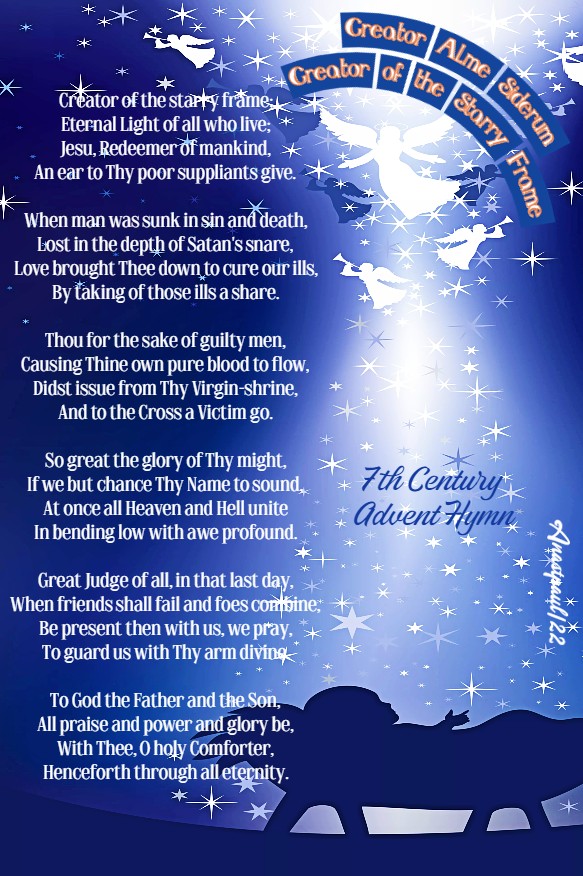
O Come, O come, Emmanuel
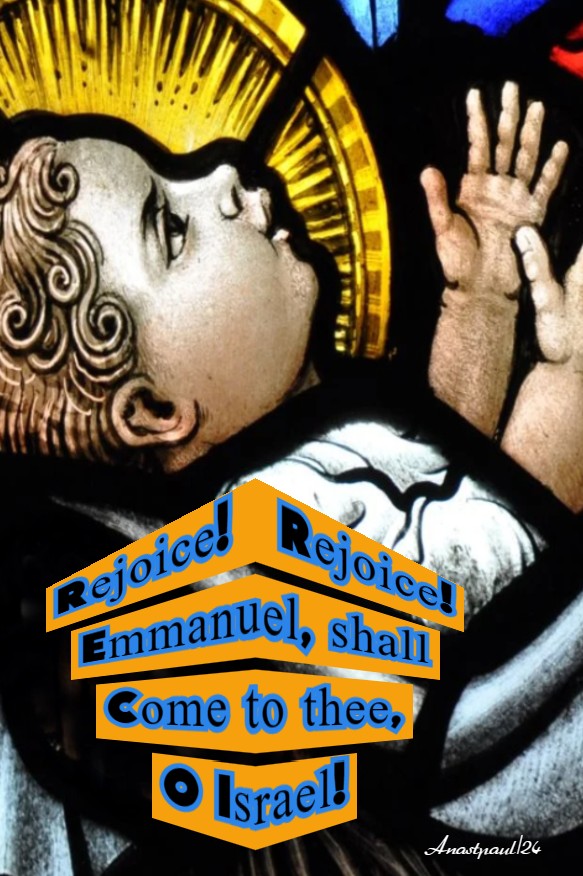
O Come, O come, Emmanuel And ransom captive Israel, That mourns in lonely exile here Until the Son of God appear. Refrain: Rejoice! Rejoice! Emmanuel Shall come to thee, O Israel!
O come, Thou Wisdom, from on high And order all things far and nigh, To us the path of knowledge show And teach us in her ways to go. Refrain
O come, o come, Thou Lord of might, Who to Thy tribes on Sinai’s height In ancient times did give the law, In cloud and majesty and awe. Refrain
O come, Thou Rod of Jesse’s stem, From ev’ry foe deliver them That trust Thy mighty power to save And give them vict’ry o’er the grave. Refrain
O come, Thou Key of David, come And open wide our heav’nly home, Make safe the way that leads on high, That we no more have cause to sigh. Refrain
O come, Thou Dayspring from on high And cheer us by Thy drawing nigh. Disperse the gloomy clouds of night And death’s dark shadow put to flight. Refrain
O come, Desire of nations, bind In one the hearts of all mankind. Bid every strife and quarrel cease And fill the world with heaven’s peace. Refrain
The favourite O Come, O Come Emmanuel carol was originally written in Latin text in the 12th Century. The author of the words and composer to the music of O Come, O Come Emmanuel is unknown. It is, however, believed that the melody was of French origin and added to the text a hundred years later. The Latin was translated into English by John Mason Neale in 1851.
Saint of the Day – 1 December – Saint Castritian of Milan (3rd Century) Bishop, constructer of the first and many more Churches in Milan. Also known as – Castritianus, Castritiano.
The Roman Martyrology reads today: “At Milan, St Castritian, the Bishop, who was eminent for virtues and the practice of pious and religious deeds in very troubled times for the Church.”
Castritian He was the third bishop of Milan in the first decades of the 3rd Century. According to the Datiana Historia of the 11th Century, his election, however, would have taken place much earlier, after eleven years of Episcopal vacancy, due to the persecution of Domitian.
Castritian would have governed the Milanese Church for forty-one years. The holy Bishop is attributed with the construction of the first Church of Milan, located in the area of the current St Ambrose Basilica and, furthermore, the construction of the Basilica Porziana, in the area of the current Basilica of St Vittore al Corpo and of the Basilica St Fausta which would be the current Chapel of St Vittore in Ciel d’Oro, near the Basilica of St Ambrose.
From the same 11th Century source, we discover that, having died on 1 December, Castritian was buried in the Cemetery, located along the Via Romana (which corresponds to the current Corso Roma). The ancient Milanese catalogues contrast with this report which, although agreeing on the date of Castritian’s death, says that he was buried in the Basilica of St John within the City walls. From this disagreement, the inference is drawn, according to which, the Relics of our Saint were translated in a later period from the Cemetery along the Via Romana to the Church of St John in Conca. This Church, desecrated in 1810, and was subsequently almost completely demolished. Sadly, all trace of St Castritian’s Relics has been lost.
St Agericus of Verdun St Agnofleta St Alexander Briant St Ambon of Rome St Ananias of Arbela St Ansanus the Baptizer Bl Antony Bonfadini St Candida of Rome St Candres of Maestricht St Cassian of Rome St Castritian of Milan (3rd Century) Bishop Bl Christian of Perugia St Constantine of Javron St Declan St Didorus St Domnolus of Le Mans
St Latinus of Rome St Leontius of Fréjus St Lucius of Rome St Marianus St Marina of Rome St Martinus St Nahum the Prophet St Natalia of Nicomedia St Olympiades St Proculus of Narni St Resignatus of Maastricht Bl Richard Langley St Rogatus of Rome St Simon of Cyrene St Superatus of Rome St Ursicinus of Brescia
Martyrs of Oxford University: A joint commemoration of all the men who studied at one of the colleges of Oxford University and who were later Martyred for their loyalty to the Catholic Church during the official persecutions in the Protestant Reformation in England under Elizabeth I. They are: Blessed Edward James • Blessed Edward Powell • Blessed Edward Stransham • Blessed George Napper • Blessed George Nichols • Blessed Hugh More • Blessed Humphrey Pritchard • Blessed James Bell • Blessed James Fenn • Blessed John Bodey • Blessed John Cornelius • Blessed John Forest • Blessed John Ingram • Blessed John Mason • Blessed John Munden • Blessed John Shert • Blessed John Slade • Blessed John Storey • Blessed Lawrence Richardson • Blessed Mark Barkworth • Blessed Richard Bere • Blessed Richard Rolle de Hampole • Blessed Richard Sergeant • Blessed Richard Thirkeld • Blessed Richard Yaxley • Blessed Robert Anderton • Blessed Robert Nutter • Blessed Robert Widmerpool • Blessed Stephen Rowsham • Blessed Thomas Belson • Blessed Thomas Cottam • Blessed Thomas Pilcher • Blessed Thomas Plumtree • Blessed Thomas Reynolds • Blessed William Filby • Blessed William Hart • Blessed William Hartley • Saint Alexander Briant • Saint Cuthbert Mayne • Saint Edmund Campion • Saint John Boste • Saint John of Bridlington • Saint John Roberts • Saint Ralph Sherwin • Saint Thomas Garnet • Saint Thomas More.
The St Andrew’s Christmas Novena The Christmas Anticipation Prayer
The Novena is not actually addressed to Saint Andrew but to God Himself, asking Him to grant our request in honour of the birth of His Son at Christmas. You can say the prayer all 15 times, all at once; or divide up the recitation as necessary (perhaps five times at each meal). We say ours after the Family Rosary each day, with each member saying it a number of times to total 15.
Prayed as a family, the Saint Andrew Christmas Novena is a very good way to help focus the attention of your family and children on the Advent season. nd the reason for the festivities to come.
This lovely Christmas Anticipatory Prayer, although the Author is Unknown, is traditionally believed to have originated in Ireland in the early 1900s or even before. I know, I myself, in my childhood, prayed this both at home and in my Irish Convent School.
Pray 15 Times each day, until Christmas Day
Hail and blessed be the hour and moment, in which the Son of God was born, of the most pure Virgin Mary, at midnight, in Bethlehem, in the piercing cold. In that hour vouchsafe, I beseech Thee, O my God, to hear my prayer and grant my desires, ………………… [here mention your request] through the merits of Our Saviour, Jesus Christ and of His Blessed Mother. Amen
Thought for the Day – 30 November – Meditations with Antonio Cardinal Bacci (1881-1971)
How to Remain Aware of the Presence of God
“The third way of remaining attentive to the Presence of God is to contemplate Him living in ourselves. While it is true that God is present everywhere, He dwells in a special manner in the human soul which is the masterpiece of creation!
When our souls are adorned with His grace, His delight in us is unbounded. “I will dwell and move among them. I will be their God and they shall be My people” (2 Cor 6:16). “Do you not know that you are the temple of God and that the Spirit of God dwells in you” (1 Cor 3:16).
God dwells among us, therefore and lives in us as in so many temples. We should recognise His Presence and listen to His Voice, furthermore, we should adore Him, love Him and pray to Him. Then, we can sincerely claim to belong entirely to Him.”
Quote/s of the Day – 30 November – The Feast of St Andrew, Apostle of Christ
“Indeed Andrew’s eagerness, his zeal in wanting to immediately spread such a good news, supposes a soul who was longing to see the accomplishment of the many prophecies concerning Christ. It is a mark of brotherly kindness, of loving kinship, of genuine goodwill, to hasten to stretch out a helping hand to one another in spiritual matters. … “We have found the Messiah” he says – not any messiah but “The Messiah,” the One Christ they were awaiting.”
St John Chrysostom (347-407) Father and Doctor of the Church
“What determines that the gifts of God dwells in us, is the measure of each one’s faith. Because, it is to the extent that we believe that the enthusiasm to act is given us. And so, those who act, reveal the measure of their faith proportionate to their action, they receive their measure of grace according to what they have believed. …”
St Maximus the Confessor (c580-662) Father of the Church
One Minute Reflection – 30 November – The Feast of St Andrew, Apostle of Christ – Readings: Romans 10: 9-18; Matthew 4: 18-22 – Scripture search here: https://www.drbo.org/
“At once they left their nets and followed Him.” – Matthew 4:20
REFLECTION – “Andrew was the first of the Apostles to acknowledge the Lord as his teacher. … He abandoned John the Baptist’s teaching to attend the school of Christ. … He sought the true Light in the shining of the lamp (Jn 5:35). Beneath its dampened glow he prepared himself for Christ’s splendour. … Teacher though he was, John the Baptist became servant and herald of the Christ, Who stood before him: “Behold,” he said, “the Lamb of God who takes away the sin of the world” (Jn 1:29). Behold Him Who delivers us from death; behold Him Who destroys sin. As for me, I was sent, not as the bridegroom but as the one who accompanies Him (Jn 3:29). I came as servant, not as lord.”
Struck by these words, Andrew left his former teacher and hurried towards the One he was announcing. … He hurried towards our Lord, his longing manifesting itself in his bearing … drawing John the Evangelist with him. Both abandon the lamp and make their way towards the Sun. Andrew is the first plant in the Garden of Apostles, it is he who opens the door to Christ’s teaching, the first to gather fruit in the field the Prophets had tilled. … He was the first to recognise Him, of Whom Moses said: “A prophet like me, will the Lord your God raise up for you; to Him you shall listen” (Dt 18:15). … He recognised the One, Whom the Prophets foretold and brought Peter, his brother, to Him. He showed Peter the treasure which as yet, he did not know: “We have found the Christ (Jn 1:41) the One we have been longing for. We were waiting for His coming: now come and experience His Presence.” … Andrew leads his brother to Christ … – it was his first miracle!” – Basil of Seleucia (Died c468) Archbishop.
PRAYER – We humbly pray Thy majesty, O Lord, that, as blessed Andrew was a preacher and ruler in Thy Church, so he may always intercede for us with Thee. Through Jesus Christ, Thy Son our Lord, Who lives and reigns with Thee, in the unity of the Holy Ghost, God, world without end. Amen (Collect).
Our Morning Offering – 30 November – Feast of St Andrew Apostle and Martyr
Exsultet Orbis! Let the World Rejoice! Unknown Author
Now let the earth with joy resound, And Heaven the chant re-echo round; Nor Heaven nor earth too high can raise The great Apostles’ glorious praise.
O ye who, throned in glory dread, Shall judge the living and the dead, Lights of the world forever more! To you the suppliant prayer we pour.
Ye close the Sacred Gates on high. At your command apart they fly. O loose for us the guilty chain We strive to break and strive in vain.
Sickness and health your voice obey, At your command they go or stay. From sin’s disease our souls restore; In good confirm us more and more.
So when the world is at its end. And Christ to Judgment shall descend, May we be called, those joys to see Prepared from all eternity.
Praise to the Father, with the Son, And Holy Spirit, Three in One; As ever was in ages past And so shall be while ages last. Amen
(Roman Breviary for the Common of Apostles) An Office Hymn that was traditionally prescribed for Vespers and Lauds on the Feasts of Apostles and Evangelists outside Easter time. The Hymn is found as early as the tenth century in a hymnal of Moissac Abbey.
Saint of the Day – 30 November – St Constantius of Rome (Died c418) Priest Confessor, Defender of the Faith against the heresy of Pelagianism (often called the seed of Calvinism).
The Roman Martyrology reads today: “At Rome, St Constantius, Confessor, who strongly opposed the Pelagian Heretics and by enduring many injuries from them, gained a place among holy Confessors.”
Constantius was a Priest in Rome. In defending the Faith, he suffered greatly under his opponents, the Pelagians but he was not martyred as some believe.
Today, 31 years ago, 30 November 1993, the late Bishop Daniel L Dolan was Consecrated as a Bishop. Remembering this zealous and loving Shepherd and praying for his eternal rest.
St Abraham of Persia St Anders of Slagelse Bl Andrew of Antioch Bl Arnold of Gemblours
St Castulus of Rome (c288) Martyr, married to Saint Irene of Rome (the woman who assisted St Sebastian after he had been wounded by the Imperial archers) and father of 2 children, Military Officer and he was the Chamberlain (or officer, valet) of Emperor Diocletian. His Feast day was moved to 26 March in 1969. His Life and Death: https://anastpaul.com/2021/03/26/saint-of-the-day-26-march-saint-castulus-of-rome-died-c-288-martyr/ St Constantius of Rome St Crider of Cornwall
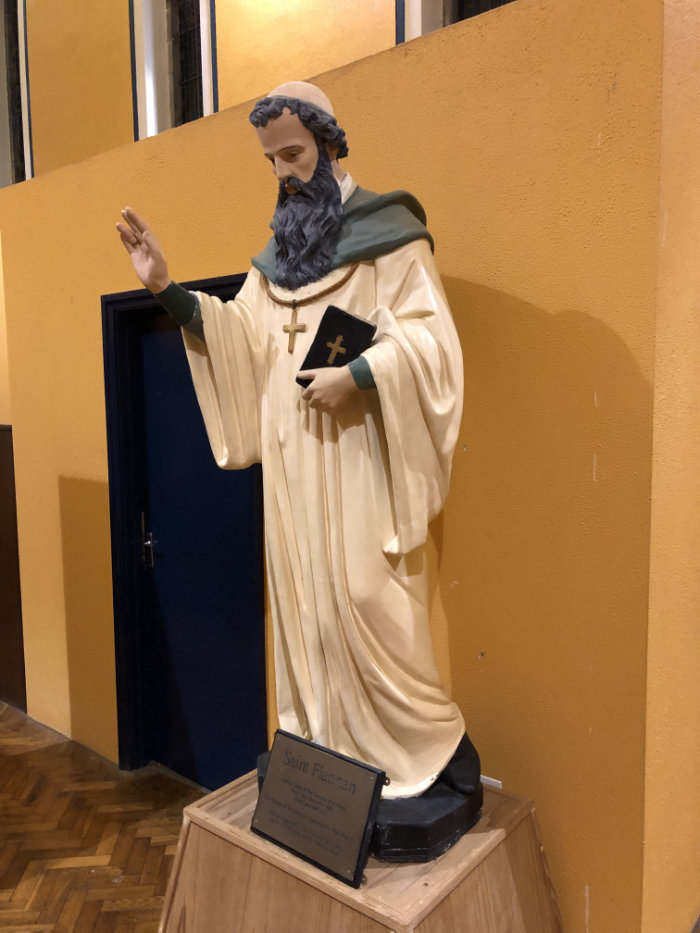
St Constantius of Rome (Died c418) Priest Confessor,
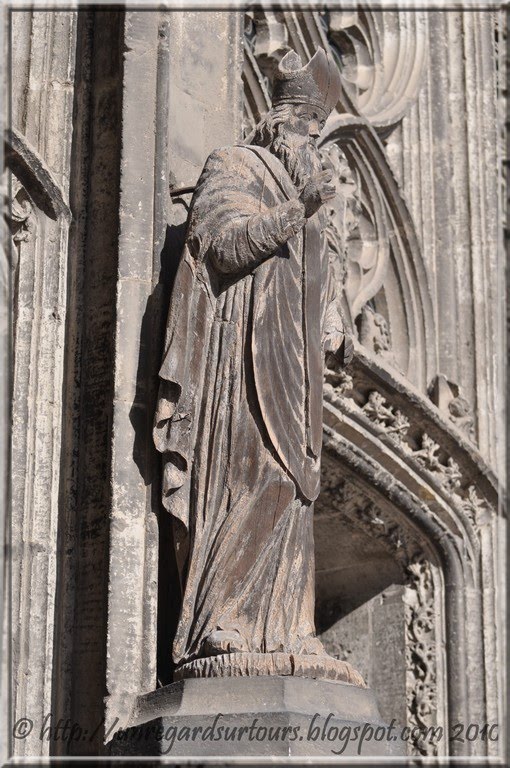
Bl Joscius Roseus St Justina of Constantinople St Mahanes the Persian St Maura of Constantinople St Merola of Antioch St Mirocles of Milan St Sapor St Simeon of Persia St Trojan St Tudwal of Tréguier Bl William de Paulo Zosimus the Wonder Worker
Martyrs of Saxony – 6 Saints: Missionaries who worked with Saint Willehad of Bremen. Martyrs. – Attroban, Benjamin, Emmingen, Folkard, Gerwald and Grisold. They were martyred on 30 November 782 at River Weser, Lawer Saxony, Germany.
Thought for the Day – 29 November – Meditations with Antonio Cardinal Bacci (1881-1971)
How to Remain Aware of the Presence of God
“Another way of increasing our sense of the Presence of God, is to perceive Him in all His creatures. St Therese of the Child Jesus loved to contemplate the image of her Creator in the flowers of the fields and in the stars of the firmament.
God has created all things for our benefit and He is Present in all things. He sees what use we make of them and can judge whether we employ them to honour Him, Who is our beginning and our end. The ray of Divine Beauty,which shines in every created thing, should attract us towards its Creator and cause us to adore and serve Him. Whenever we meet a learned and holy person, moreover, the reflection of God’s Power and Goodness, is even more compelling. “Learn to love the Creator in the creature,” says St Augustine, “lest the thing which He has made should grip you and you shuld lose Him by Whom you also were created” (In Ps 19),
In other words, let us learn to see the Creator in all His creatures so that these may not enslave us but cause us to love Him, Who is our highest Good.”
Quote/s of the Day – 29 November – Quote/s of the Day – 29 November – Vigil of the Feast of St Andrew – Romans 13:11-14, Luke 21:25-33 – Scripture search here: https://www.drbo.org/
“Let us walk becomingly, as in the day, not in revelry and drunkenness, not in debauchery and wantonness, not in strife and jealousy. But put on the Lord Jesus Christ.”
Romans 13:13-14
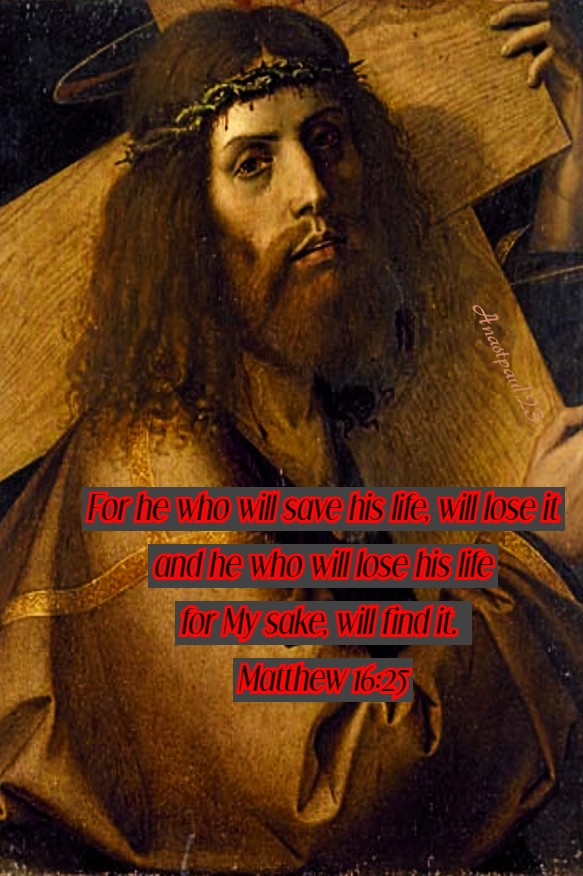
“And bearing His own Cross, He went forth to the place which is called Calvary but in Hebrew Golgotha.”
John 19:17
“That is why all the faithful who love God and their neighbour, truly drink the Cup of the Lord’s Love even though, they may not drink the cup of His Bodily Suffering. And becoming inebriated from it, they put to death, whatever in their nature is rooted in earth. They clothe themselves with the Lord Jesus Christ and do not indulge fleshly desires. They do not fix their gaze on visible things but contemplate things, which the eye cannot see. Thus they drink the Lord’s Cup by preserving the holy bond of love – without it, even if a man should deliver his body to be burned, he gains nothing. But the gift of love enables us to become, in reality, what we celebrate as Mystery in the Sacrifice.”
St Fulgentius of Ruspe (c462–533) Bishop, Father
“By the Cross, death was slain and Adam was restored to life. The Cross is the glory of all the Apostles, the Crown of the Martyrs, the Sanctification of the Saints. By the Cross, we put on Christ and cast aside our former self. By the Cross we, the sheep of Christ, have been gathered into one flock, destined for the Sheepfold of Heaven.”
St Theodore the Studite (759-826)
“… How can anyone put on Jesus Christ and imitate His example, if he does not study this Jesus, Who must inspire and perfect our faith? He must run the race to which he is challenged, the glorious race in which, he overcomes the enemy of the human family and follows the Way of the Cross. Under the lordly banner of that Cross, he will attain eternal life.”
One Minute Reflection – 29 November – “The Month of the Holy Souls in Purgatory” – The Vigil of St Andrew Apostle –Romans 13:11-14, Luke 21:25-33 – Scripture search here: https://www.drbo.org/
“But put on the Lord Jesus Christ.” – Romans 13:14
REFLECTION – “Put on the Lord Jesus Christ and make no provision for the flesh and its desires, so that you may be clothed with the Life of Him, Whom you have put on in this Sacrament. You have all been clothed with Christ by your Baptism in Him. There is neither Jew nor Greek, there is neither slave nor freeman, there is neither male nor female, you are all one in Christ Jesus.
Such is the power of this Sacrament: it is a Sacrament of new life which begins here and now, with the forgiveness of all past sins and will be brought to completion, in the resurrection of the dead. You have been buried with Christ by Baptism into death, in order that, as Christ has risen from the dead, you also may walk in newness of life.
You are walking now by faith, still on pilgrimage in a mortal body away from the Lord but He, to Whom your steps are directed, is Himself the sure and certain Way for you – Jesus Christ, Who, for our sake became man. For all who fear Him, He has stored up abundant happiness which He will reveal to those who hope in Him, bringing it to completion, when we have attained the reality which, even now, we possess, in hope.
This is the octave day of your new birth. Today is fulfilled in you, the sign of faith that was prefigured in the Old Testament by the circumcision of the flesh, on the eighth day after birth. When the Lord rose from the dead, He put off the mortality of the flesh; His Risen Body was still the same Body but it was no longer subject to death. By His Resurrection, He consecrated Sunday, or the Lord’s Day. Though the third after His Passion, this day is the eighth after the Sabbath and thus also, the first day of the week.
And so, your own hope of resurrection, though not yet realised, is sure and certain because you have received the Sacrament or sign of this reality and have been given the pledge of the Spirit. If, then, you have risen with Christ, seek the things which are above, where Christ is seated at the Right Hand of God. Set your hearts on heavenly things, not the things that are on earth. For you have died and your life is hidden with Christ in God. When Christ, your Life, appears, then you too will appear with Him in glory.” – St Augustine (354-430) Father and Doctor of Grace (An excerpt from: Sermon 8 – On the Paschal Octave).
PRAYER – Grant, we beseech Thee, O Lord God, unto all Thy servants that they may remain continually in the enjoyment of soundness, both of mind and body and by the glorious intercession of the Blessed Mary, always a Virgin, may be delivered from present sadness and enter into the joy of Thine eternal gladness.Through Jesus Christ, Thy Son our Lord, Who lives and reigns with Thee, in the unity of the Holy Ghost, God, world without end. Amen (Collect).
Our Morning Offering –29 November – “The Month of the Holy Souls in Purgatory”
Prayer for the Holy Souls in Purgatory By St Ignatius of Antioch (c 35-c 108) Apostolic Father of the Church
Receive in tranquility and peace, O Lord, the souls of Thy servants, who have departed this present life to come to Thee. Grant them rest and place them in the habitations of Light, the abodes of blessed spirits. Give them the life that will not age, good things that will not pass away, delights that have no end, through Jesus Christ our Lord. Amen.
Saint of the Day – 29 November – Saint Saturninus of Toulouse (Died c257) Bishop Martyr. The 1st Bishop of Touylouse, France, Born in Patras, Greece and died by being cast from a high building. Patronage – of Toulouse. Also known as – Cernín, Sadurní, Sadurninho, Sarnin, Satordi, Saturdi, Saturnin, Saturnino, Serenín, Sernin, Zernin. Additional Memorial – 30 October (translation of Relics).
The Roman Martyrology reads today: “At Toulouse, in the time of Decius, the holy Bishop Saturninus, who was confined by the pagans in the capitol of that City and, from the highest part of the building, precipitated down the stairs. By which fall, having his head crushed, his brains dashed and his whole boty mangled, he rendered his worthy soul to our Lord.”
Saturninus was one of the “Apostles to the Gauls” and was sent to Toulouse by Pope Fabian. The Pope sent seven Bishops from Rome to Gaul, to preach the Gospel – St Gatien to Tours, St Trophimus to Arles, St Paul to Narbonne, St Saturninus to Toulouse, St Denis to Paris, St Austromoine to Clermont and St.Martial to Limoges.
Saturninus was the 1st Bishop of Toulouse. St Gregory of Tours chronicled his work as historical records. The Martyrology gave a genealogy for Saturninus; the son of Aegeus, King of Achaea, by his wife Cassandra, who herself, was the daughter of Ptolemy, King of the Ninevites.
Legend associated with Saturninus state, “He was given for his companion Papulus, later to become St Papulus the Martyr,” It also states that besides Papulus, he also had St Honestus (yesterday’s Saint of the Day) as a Disciple, whom he later sent off to evangelise in Spain..
That which we remember today, describes his Martyrdom which differs from that which is stated in the Roman Martyrology (see above 1916). To reach the Christian Church, Saturninus had to pass before the governing capital building of Toulouse, where there was an altar and, according to the Acts, the pagan priests ascribed the silence of their oracles to the frequent presence of Saturninus. One day they seized him and on his unshakeable refusal to sacrifice to the images, they condemned him to be tied by the feet to a bull, which dragged him about the town until the rope broke. Two Christian women piously gathered up the remains and buried them in a deep ditch to prevent porofanation by the pagans.
The Martyrdom of St Saturninus
A Church called the Taur (bull) was built where the bull stopped his rampage. St Saturninus’ Relics are now enshrined at the Toulouse Basilica, seemingly having survived the Revolution.
You must be logged in to post a comment.