One Minute Reflection – 12 January – The Memorialsof St Aelred of Rievaulx (1110-1167) and St Marguerite Bourgeoys (1620-1700)
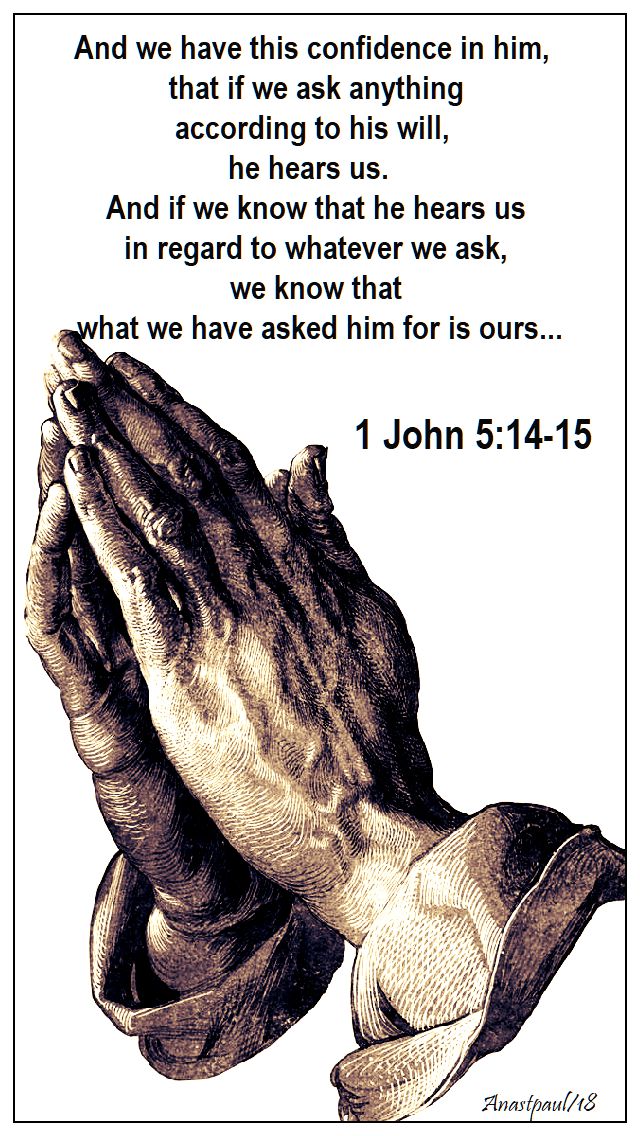
And we have this confidence in him, that if we ask anything according to his will, he hears us. And if we know that he hears us in regard to whatever we ask, we know that what we have asked him for is ours…1 John 5:14-15
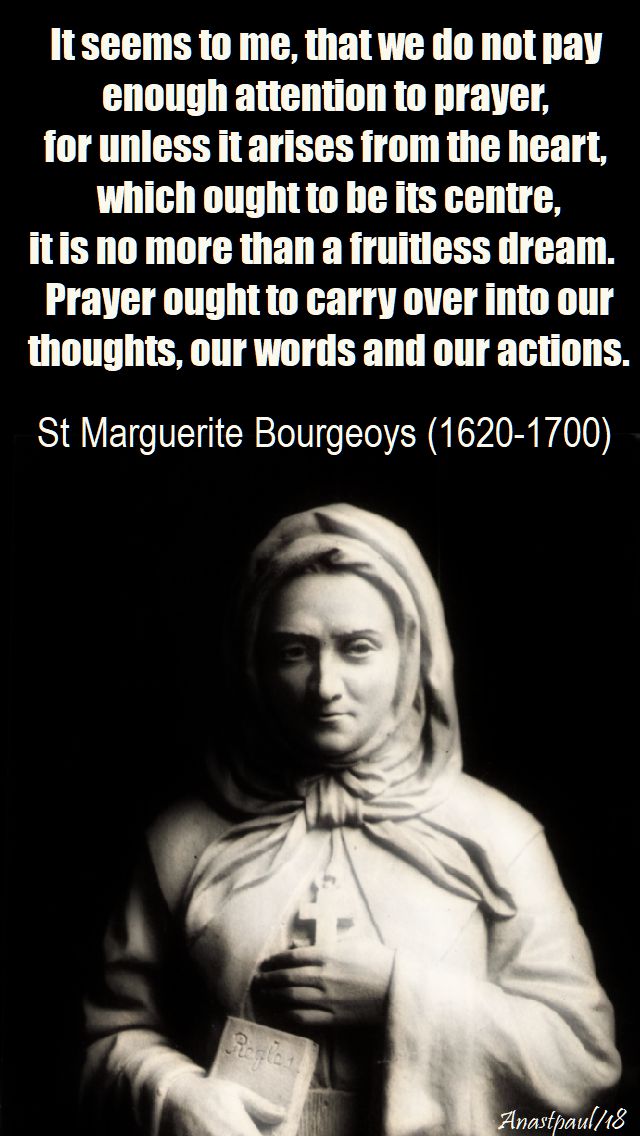
REFLECTION – “It seems to me, that we do not pay enough attention to prayer, for unless it arises from the heart, which ought to be its centre, it is no more than a fruitless dream. Prayer ought to carry over into our thoughts, our words and our actions…..It is true that all I have ever desired most deeply and what I still most ardently wish, is that the great precept of the love of God, above all things and of the neighbour as oneself, be written in every heart.”… St Marguerite Bourgeoys (1620-1700)
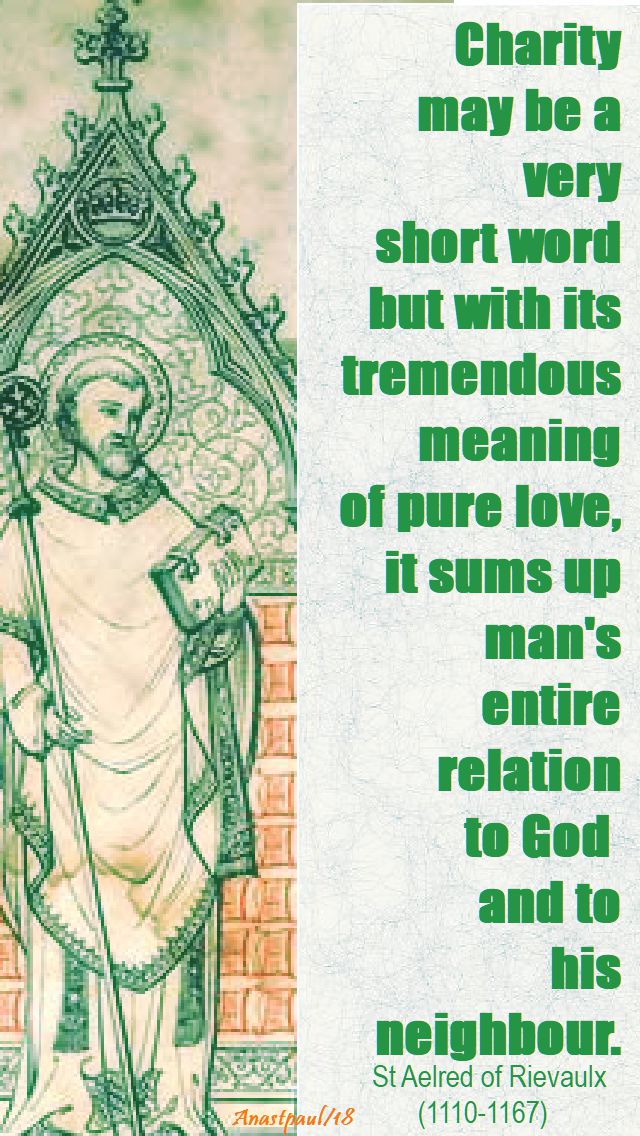
“Charity may be a very short word but with its tremendous meaning of pure love, it sums up man’s entire relation to God and to his neighbour.”…St Aelred of Rievaulx (1110-1167)
PRAYER – Loving Father, grant me the grace to strive after perfect love. Help me to bring forth frequent acts of love towards my neighbour, which flow from You, the summit of my prayer and the teacher of all that is good and in this, to grow each day in love for You and for all your creatures….St Aelred of Rievaulx (1110-1167), St Marguerite Bourgeoys Pray for us, amen.
Quote/s of the Day – 11 January – Speaking of Worry
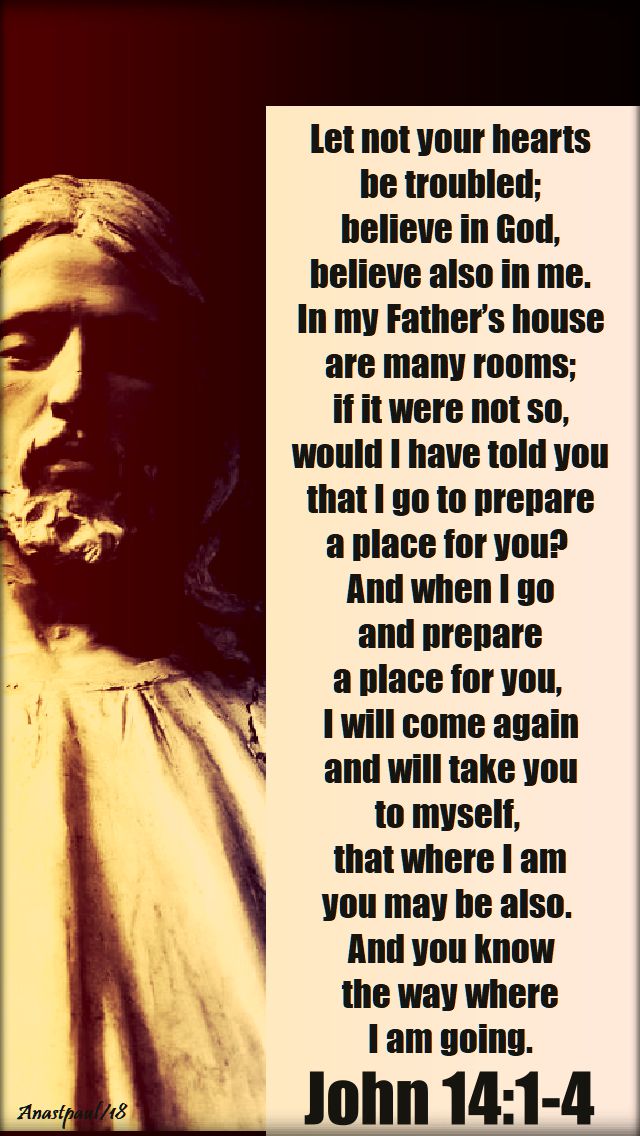
“Let not your hearts be troubled; believe in God, believe also in me. In my Father’s house are many rooms; if it were not so, would I have told you that I go to prepare a place for you? And when I go and prepare a place for you, I will come again and will take you to myself, that where I am you may be also. And you know the way where I am going.”
John 14:1-4
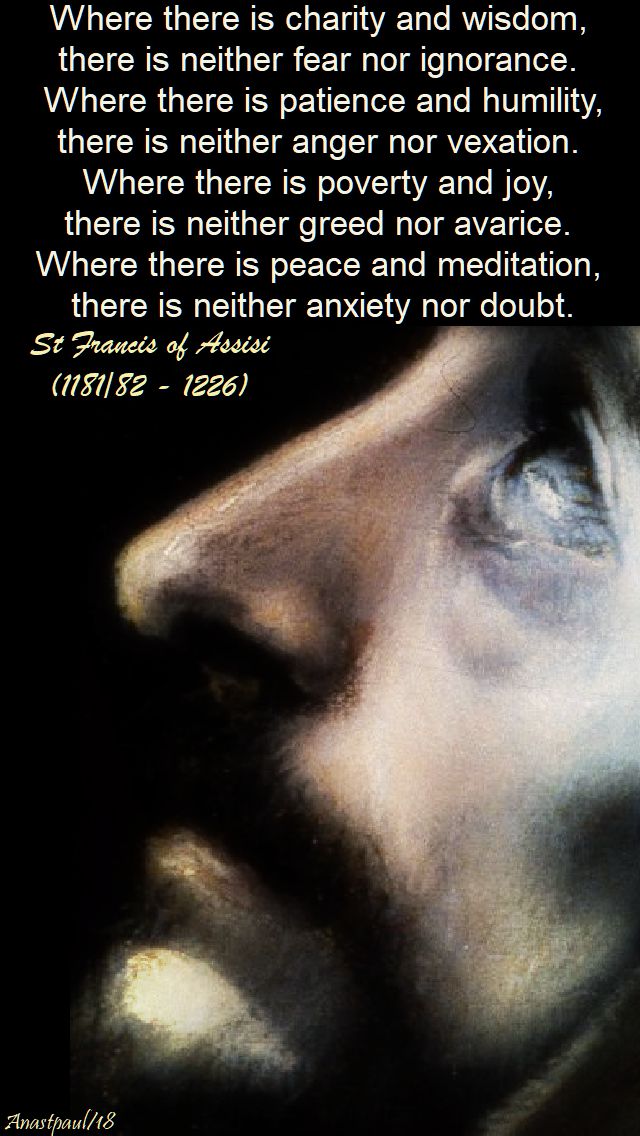
“Where there is charity and wisdom, there is neither fear nor ignorance. Where there is patience and humility, there is neither anger nor vexation. Where there is poverty and joy, there is neither greed nor avarice. Where there is peace and meditation, there is neither anxiety nor doubt.”
St Francis of Assisi (1181/82 – 1226)
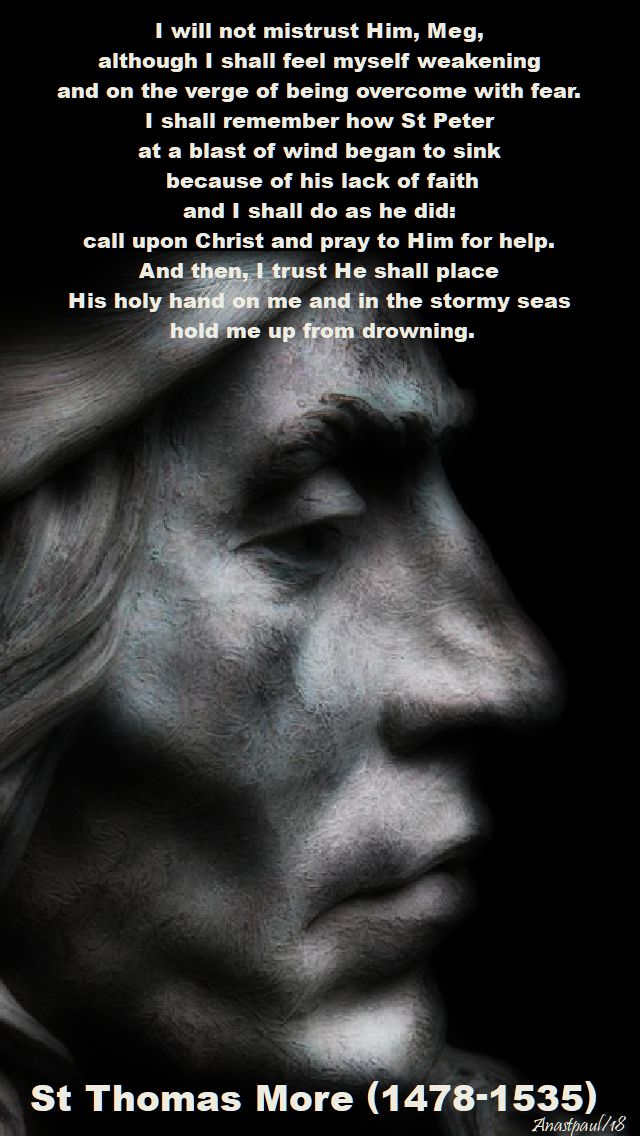
“I will not mistrust Him, Meg, although I shall feel myself weakening and on the verge of being overcome with fear. I shall remember how St Peter, at a blast of wind began to sink because of his lack of faith and I shall do as he did: call upon Christ and pray to Him for help. And then, I trust He shall place His holy hand on me and in the stormy seas, hold me up from drowning.”
St Thomas More (1478-1535) (Letter to his daughter, Meg, from his prison cell.)
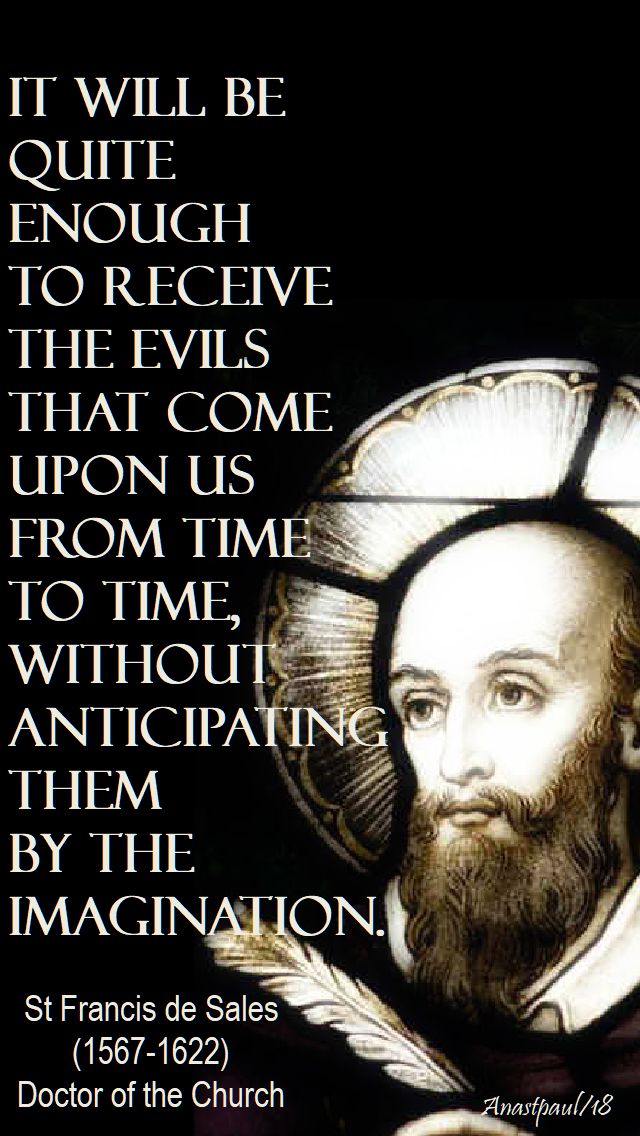
“It will be quite enough to receive the evils that come upon us from time to time, without anticipating them by the imagination.”
St Francis de Sales (1567-1622) Doctor of the Church
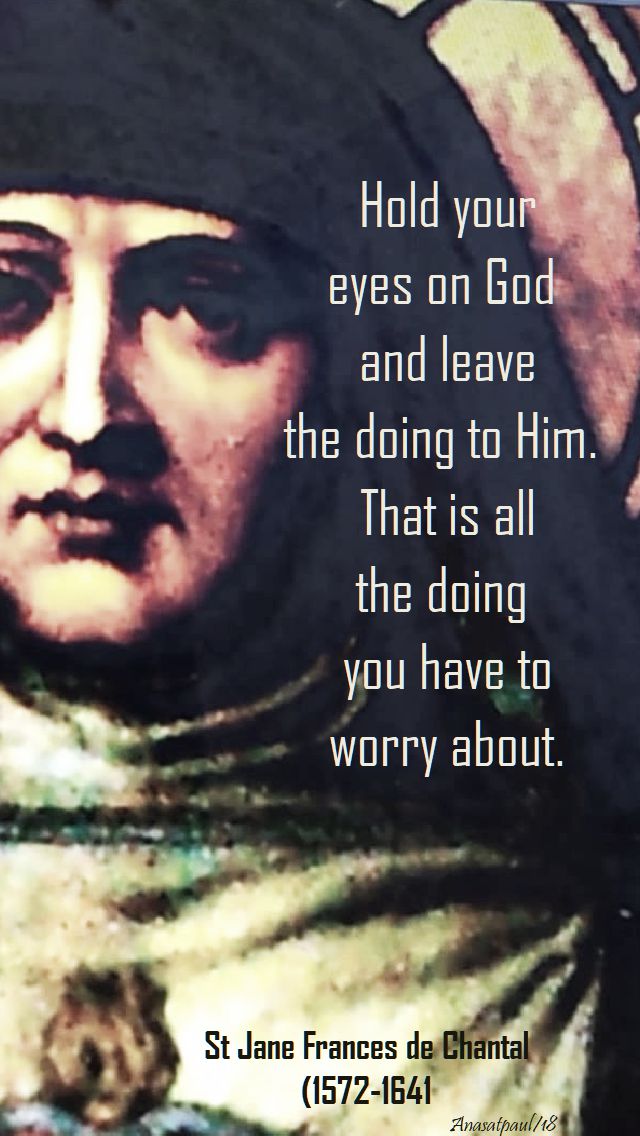
“Hold your eyes on God and leave the doing to Him. That is all the doing you have to worry about.”
St Jane Frances de Chantal (1572-1641)
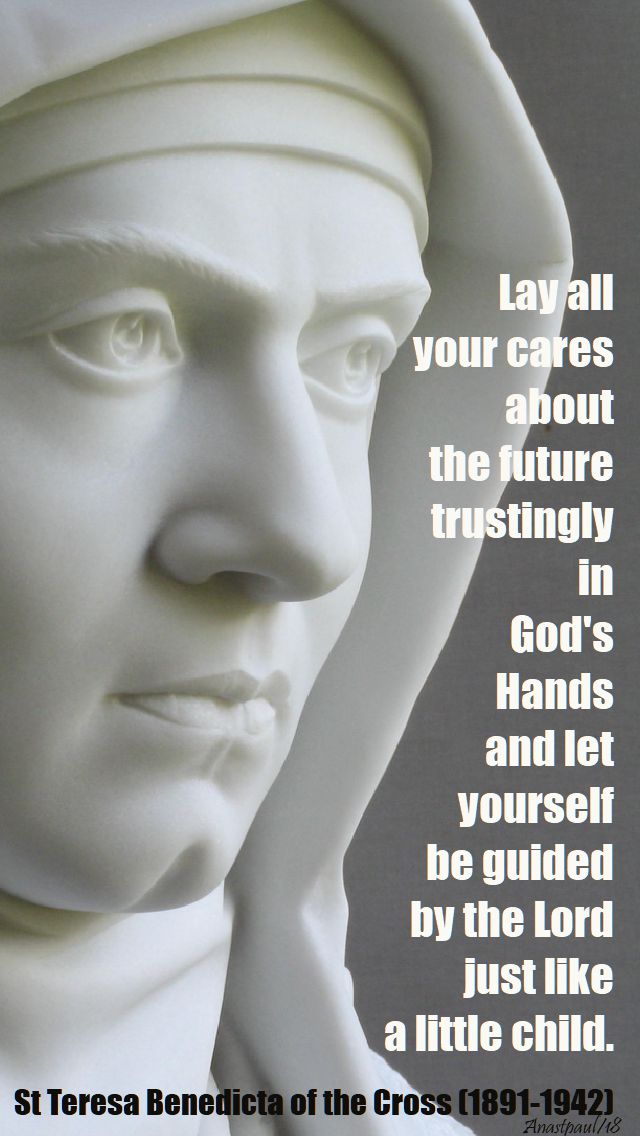
“Lay all your cares about the future trustingly in God’s Hands and let yourself be guided by the Lord just like a little child.”
St Teresa Benedicta of the Cross (1891-1942)
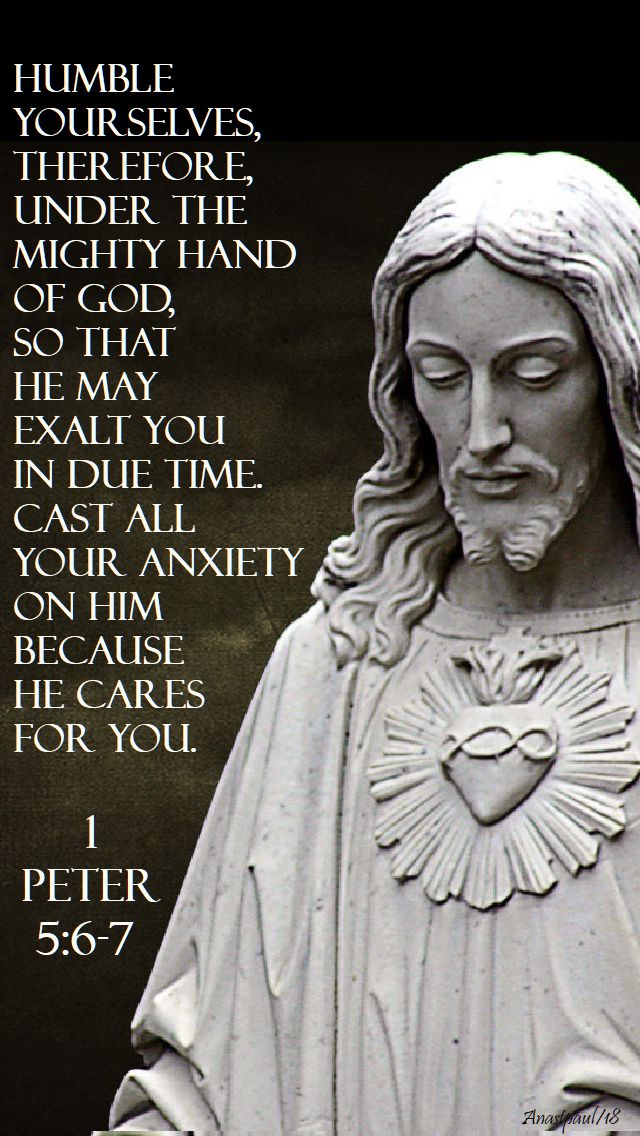
“Humble yourselves therefore, under the mighty hand of God, so that he may exalt you in due time. Cast all your anxiety on him because he cares for you.”
1 Peter 5:6-7
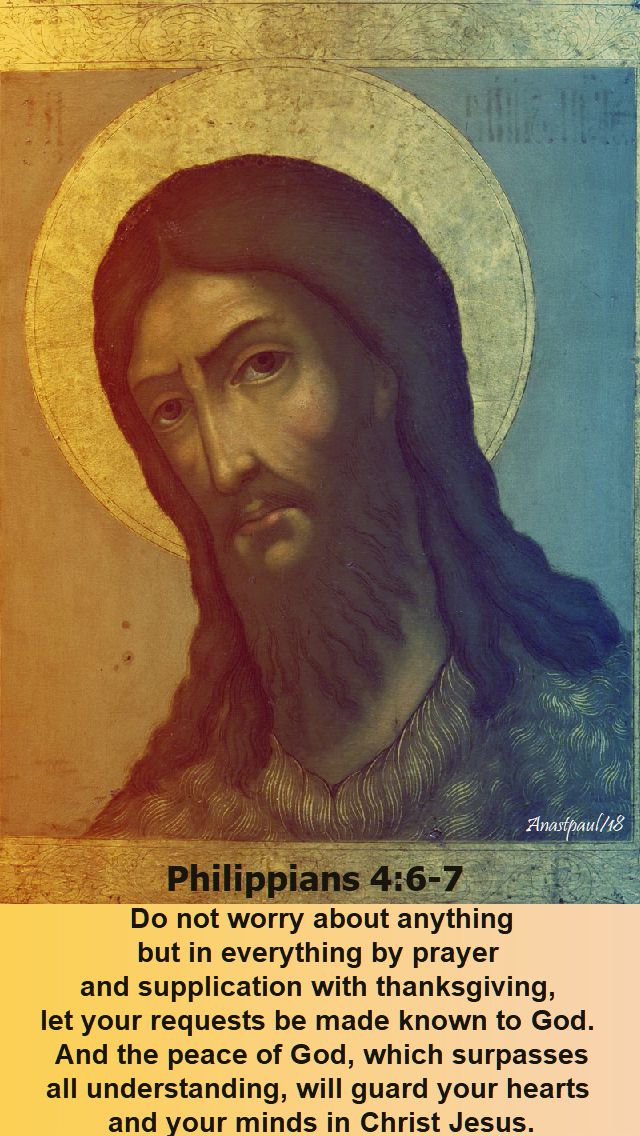
“Do not worry about anything but in everything by prayer and supplication with thanksgiving, let your requests be made known to God. And the peace of God, which surpasses all understanding, will guard your hearts and your minds in Christ Jesus.”
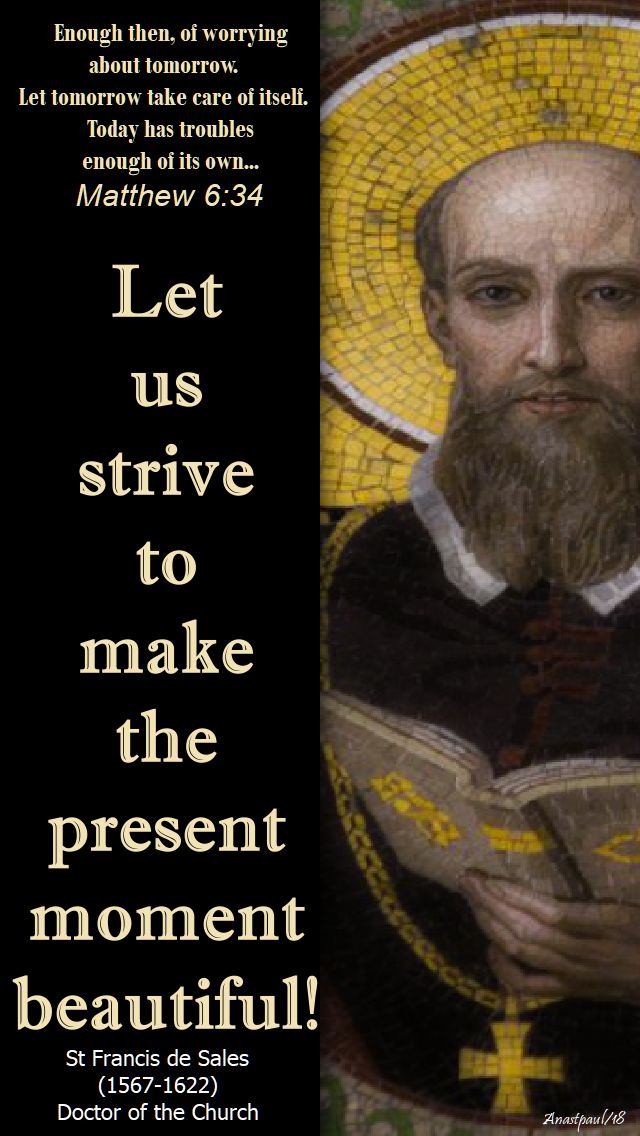
Enough then, of worrying about tomorrow. Let tomorrow take care of itself. Today has troubles enough of its own….Matthew 6:34
REFLECTION – “Let us strive to make the present moment beautiful!”…St Francis de Sales (1567-1622) Doctor of the Church
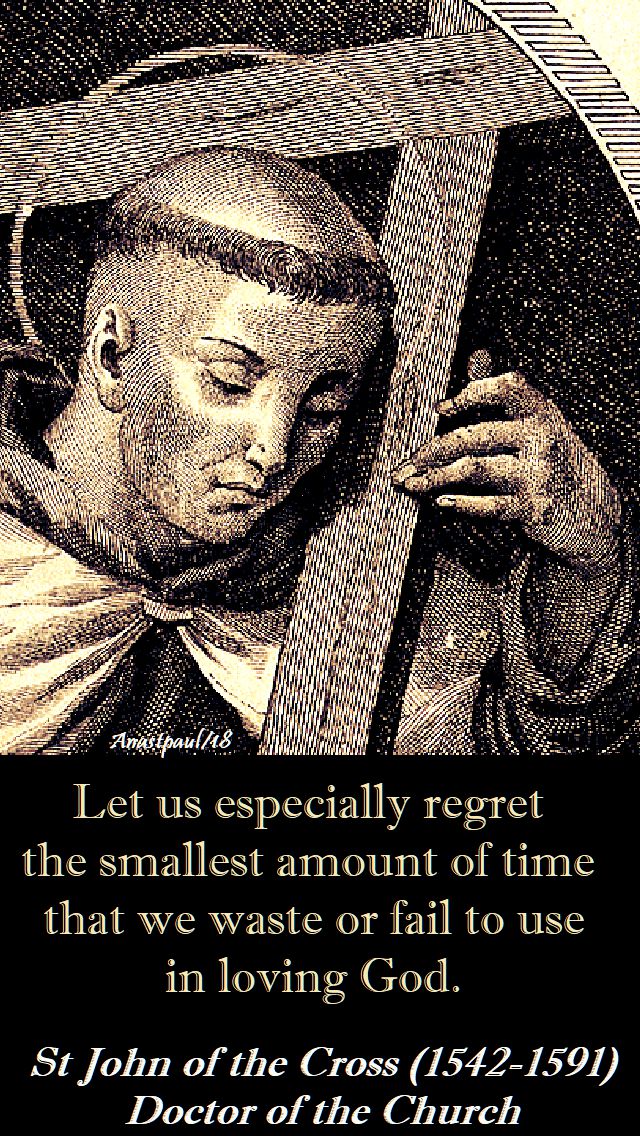
“Let us especially regret the smallest amount of time that we waste or fail to use in loving God.”..St John of the Cross (1542-1591) Doctor of the Church
PRAYER – Lord God, help me to remember that yesterday is gone forever and tomorrow may never come. Let me live in the present and strive to do Your will. Let me abandon myself to Your divine guidance and Your providence in all things. Amen
Quote/s of the Day – 10 January – Speaking of Persecution
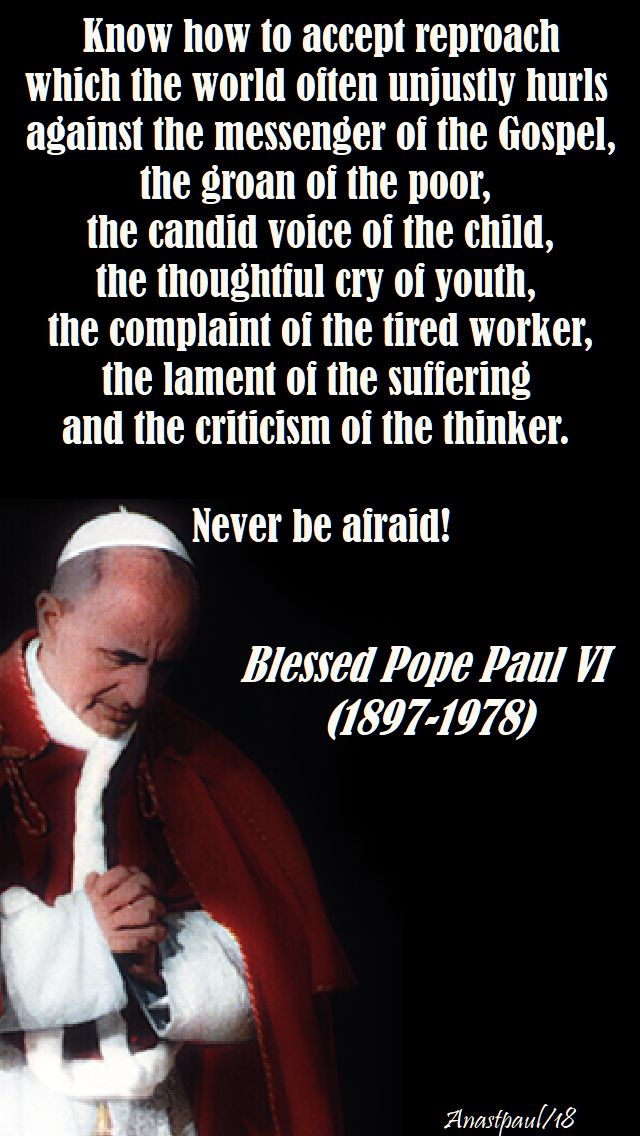
“Know how to accept reproach which the world often unjustly hurls against the messenger of the Gospel, the groan of the poor, the candid voice of the child, the thoughtful cry of youth, the complaint of the tired worker, the lament of the suffering and the criticism of the thinker. Never be afraid.”
Blessed Pope Paul VI (1897-1978) -1975
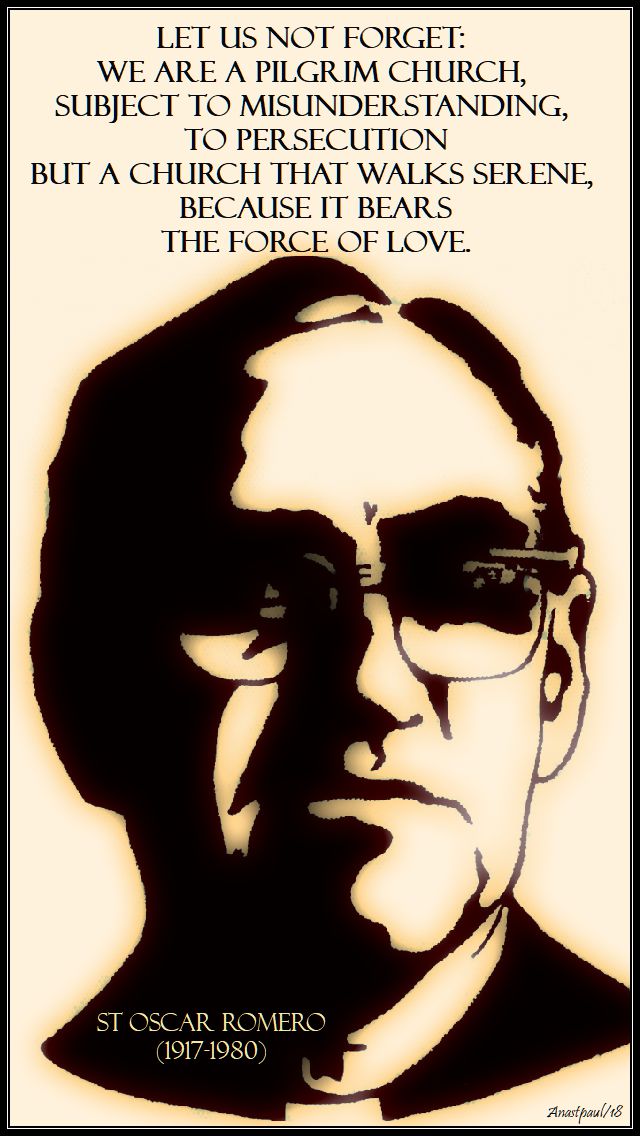
“Let us not forget: we are a pilgrim church, subject to misunderstanding, to persecution but a church that walks serene, because it bears the force of love.”
St Oscar Romero (1917-1980) The Violence of Love
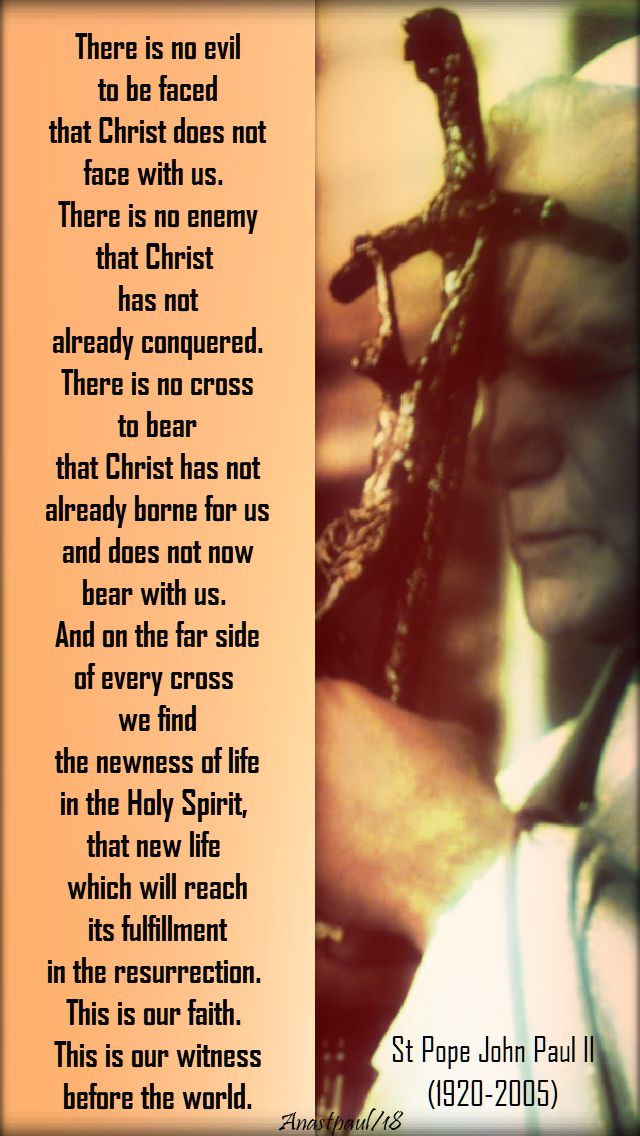
“There is no evil to be faced that Christ does not face with us. There is no enemy that Christ has not already conquered. There is no cross to bear that Christ has not already borne for us and does not now bear with us. And on the far side of every cross we find the newness of life in the Holy Spirit, that new life which will reach its fulfillment in the resurrection. This is our faith. This is our witness before the world.”
One Minute Reflection – 10 January – The Month of the Most Holy Name
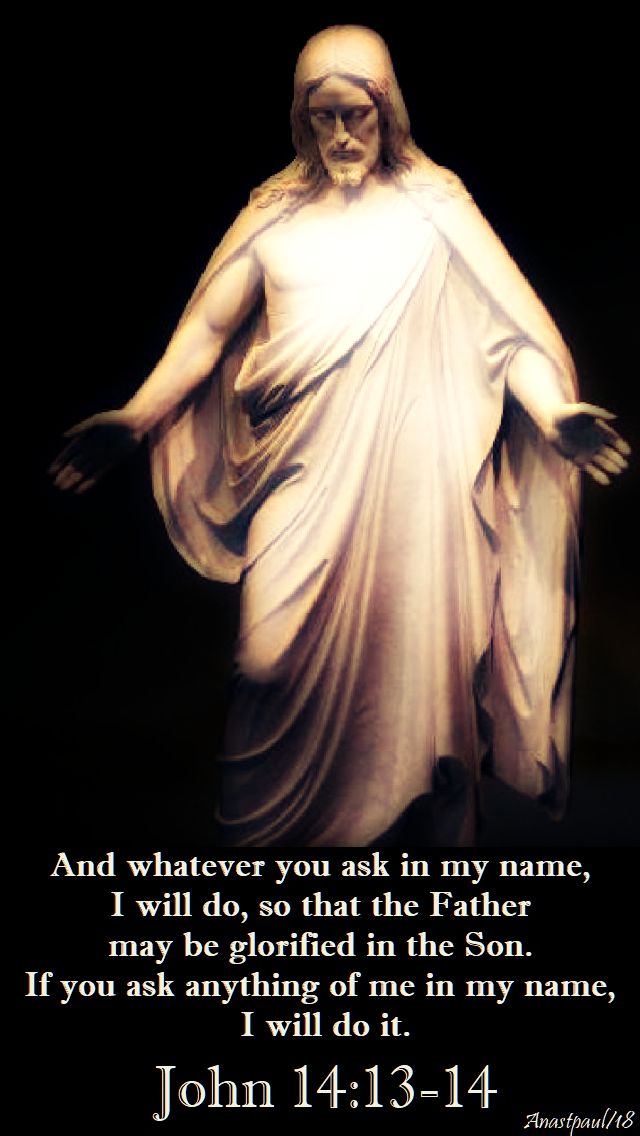
And whatever you ask in my name, I will do, so that the Father may be glorified in the Son. If you ask anything of me in my name, I will do it…John 14:13-14
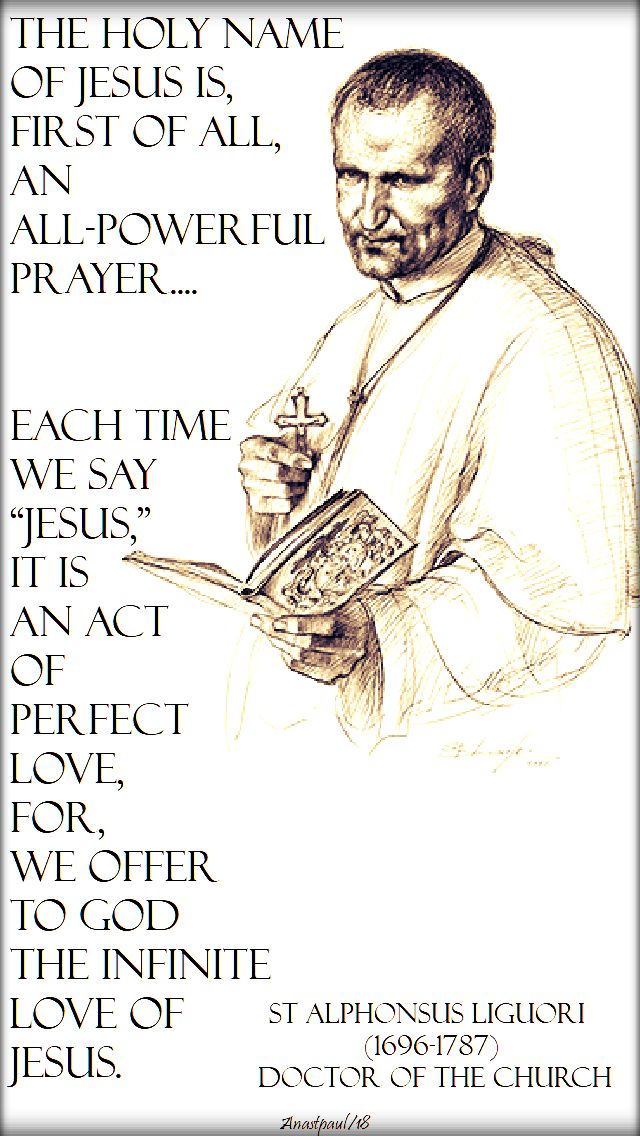
REFLECTION – The Holy Name of Jesus is, first of all, an all-powerful prayer. Our Lord Himself solemnly promises, that whatever we ask the Father in His Name, we shall receive. God never fails to keep His word. Each time we say “Jesus,” it is an act of perfect love, for, we offer to God, the infinite love of Jesus………….St Alphonsus Liguori (1696-1787) Doctor of the Church
PRAYER – Lord God, grant me the courage to confess my faith in the Name above all names and proclaim each moment the Holy Name of Your Son, thus giving You honour and glory. Jesus Name above all Names, be my standard and my beacon! Amen
Quote/s of the Day – 9 January – “Speaking of Conversion”
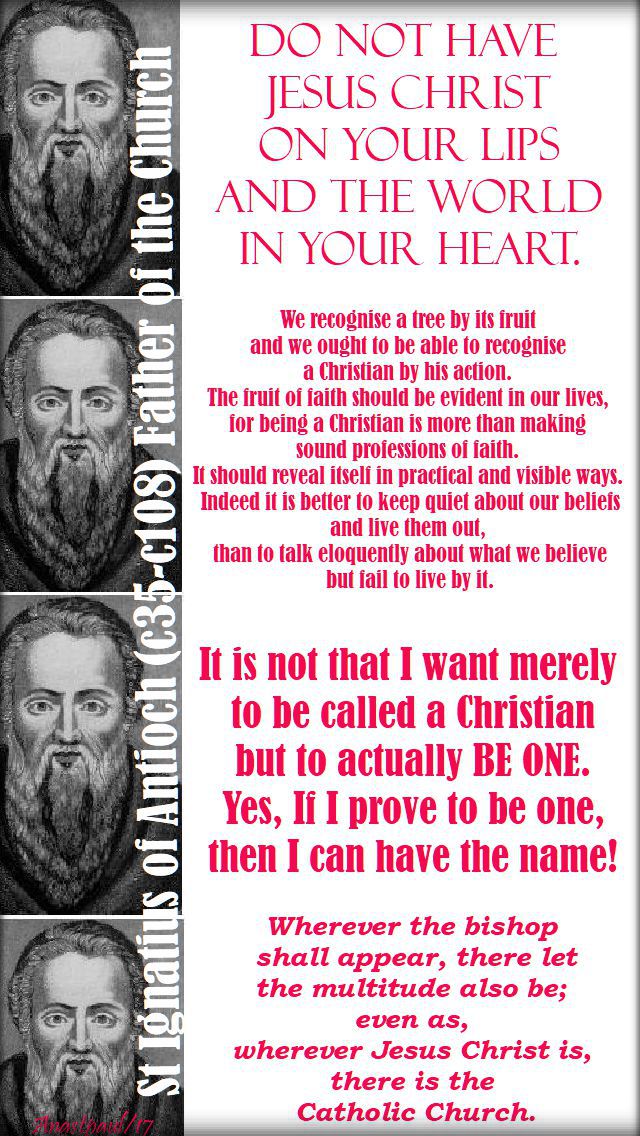
“Do not have Jesus Christ on your lips and the world in your heart.”
“We recognise a tree by its fruit and we ought to be able to recognise a Christian by his action. The fruit of faith should be evident in our lives, for being a Christian is more than making sound professions of faith. It should reveal itself in practical and visible ways. Indeed it is better to keep quiet about our beliefs and live them out, than to talk eloquently about what we believe but fail to live by it.”
“It is not that I want merely to be called a Christian but to actually BE ONE. Yes, If I prove to be one, then I can have the name!”
“Wherever the bishop shall appear, there let the multitude also be; even as, wherever Jesus Christ is, there is the Catholic Church.”
St Ignatius of Antioch (37-105) Bishop & Martyr
“God loves each of us as if there were only one of us.”
St Augustine (354-430) Father & Doctor of the Church
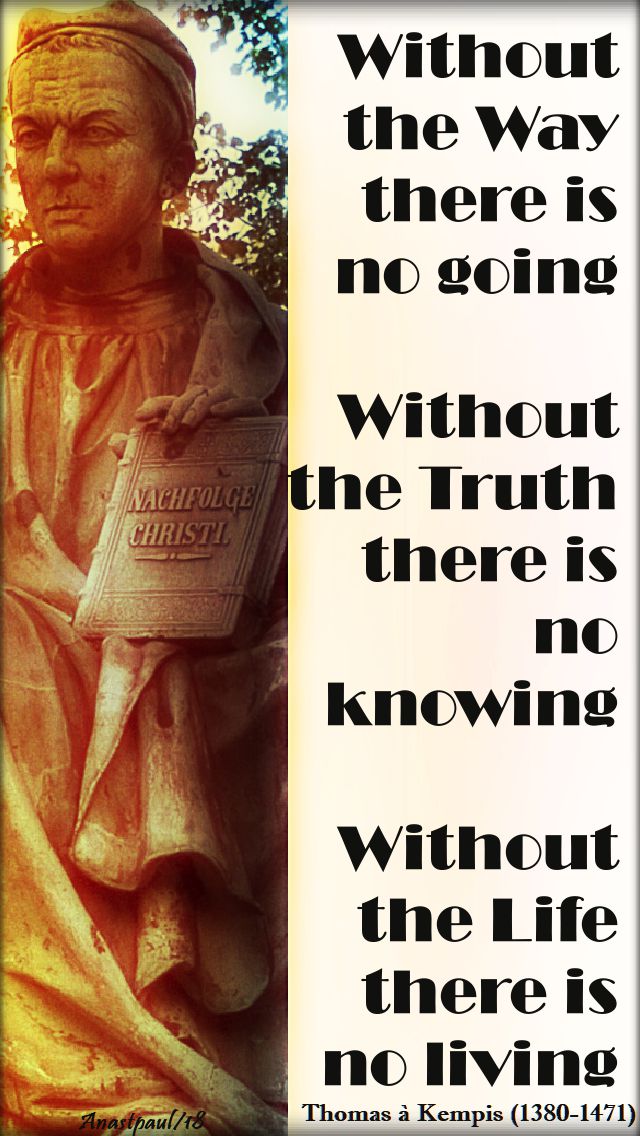
“Without the Way, there is no going, Without the Truth, there is no knowing, Without the Life, there is no living.”
Thomas à Kempis (1380-1471) The Imitation of Christ
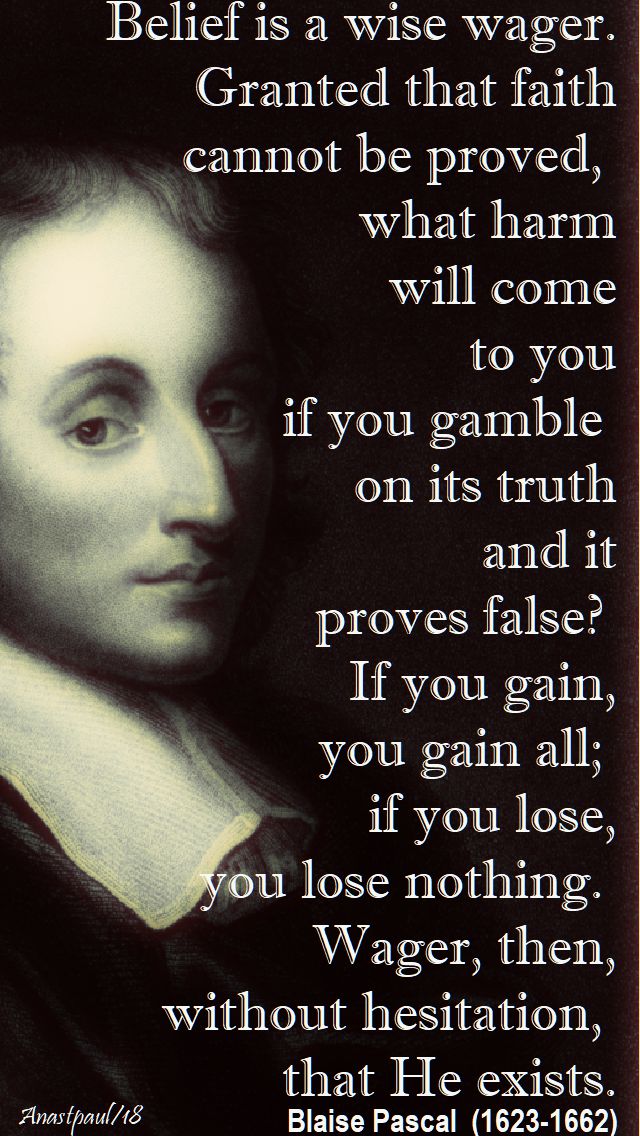
“Belief is a wise wager. Granted that faith cannot be proved, what harm will come to you if you gamble on its truth and it proves false? If you gain, you gain all; if you lose, you lose nothing. Wager, then, without hesitation, that He exists.“
Blaise Pascal (1623-1662)
French mathematician, physicist, inventor, writer and Catholic theologian
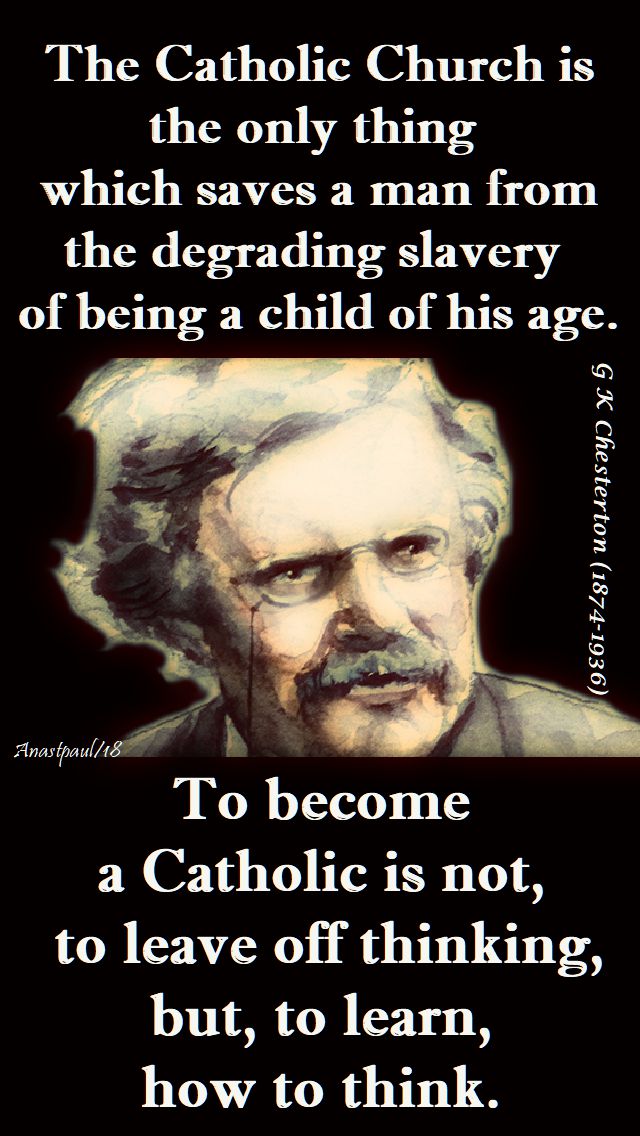
“The Catholic Church is the only thing which saves a man from the degrading slavery of being a child of his age”
“To become a Catholic is not to leave off thinking but to learn how to think.”
G K Chesterton (1874-1936)
“Holiness cannot be bought. Neither can it be earned by human strength. No, “the simple holiness of all Christians, ours – the kind we are called to every day, can only be attained with the help of four essential elements: courage, hope, grace and conversion.”
Quote/s of the Day – 8 January – The Feast of the Baptism of the Lord
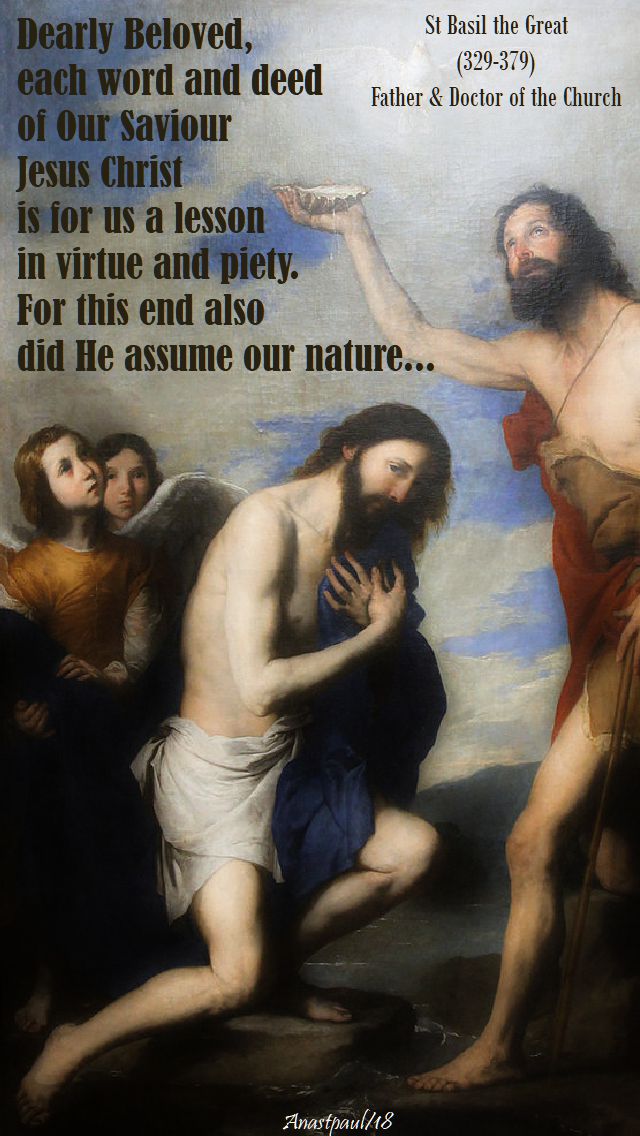
“Dearly Beloved, each word and deed of Our Saviour Jesus Christ is for us a lesson in virtue and piety. For this end also did He assumed our nature, so that every man and every woman, contemplating as in a picture the practice of all virtue and piety, might strive with all their hearts to imitate His example. For this He bore our body, so that as far as we could, we might repeat within us, the manner of His life. And so, therefore, when you hear mention of some word or deed of His, take care not to receive it simply as something that incidentally happened but raise your mind upwards towards the sublimity of what He is teaching and strive to see what has been mystically handed down to us”
St Basil the Great (329-379) Father & Doctor of the Church
“Today let us do honour to Christ’s baptism and celebrate this feast in holiness. Be cleansed entirely and continue to be cleansed. Nothing gives such pleasure to God as the conversion and salvation of men, for whom His every word and every revelation exist. He wants you to become a living force for all mankind, lights shining in the world. You are to be radiant lights as you stand beside Christ, the great light, bathed in the glory of Him who is the light of heaven. You are to enjoy more and more, the pure and dazzling light of the Trinity, as now you have received – though not in its fullness – a ray of its splendour, proceeding from the one God, in Christ Jesus our Lord, to whom be glory and power for ever and ever. Amen”
St Gregory of Nazianzen (330-390)
Father & Doctor of the Church – from a sermon on the Feast of the Baptism of the Lord
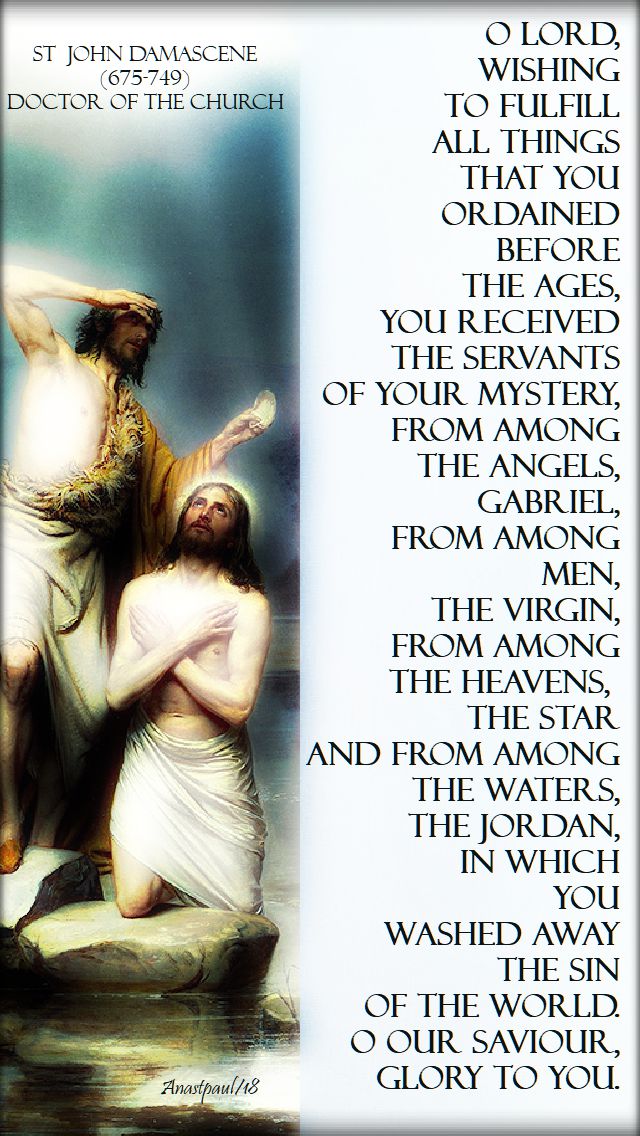
“O Lord, wishing to fulfill all things that You ordained before the ages, You received the servants of Your mystery, from among the Angels, Gabriel, from among Men, the Virgin, from among the Heavens, the Star and from among the Waters, the Jordan, in which You washed away the sin of the world, O our Saviour, glory to You.”
Sunday Reflection – 7 January 2018 – The Feast of Epiphany
Each Sunday towards the end of Mass, we come to the altar rail, receive Holy Communion, return to our seats and sit or kneel quietly for a while in contemplation. But in these quiet moments after we have received Communion, what prayers do we offer up? Perhaps we don’t pray at all but in those quiet moments our thoughts turn to other things, like Sunday lunch or a planned visit to visit the grandchildren after Mass.
I recently came across this wonderful article, written by a priest. He writes:
“A few years ago it became evident to me that my prayers after distributing Holy Communion to my congregation were wholly inadequate. As I sat on my seat on the altar I was finding it extremely difficult to express into words, what this moment meant to me. Looking through my book collection I read all the prayers I could get my hands on but none seemed to be what I was looking for, so I gave up in frustration. However, each day I would pray to Mary our Blessed Mother asking her to teach me how to express my innermost feelings to the Lord. Sometime later I was preaching a retreat to a group of nuns when one of the elderly nuns came to visit me and said she felt she had a problem concerning her prayers after receiving Holy Communion. Feeling I had at last found a kindred spirit, I asked her what she usually prayed and she replied, ‘I don’t pray anything, I just sit in silence and allow Him to love me and to teach me to love Him.’ At that moment I realised that Mary had indeed answered my prayers.
“I just sit in silence and allow Him to love me and to teach me to love Him.”
What a simple, but moving description of what this moment means to us all.
“Above all, let us pray Him to draw us to Him and to give us faith. When we feel that His mysteries are too severe for us and occasion us to doubt, let us earnestly wait on Him for the gift of humility and love. Those who love and who are humble will apprehend them, carnal minds do not seek the and proud minds are offended at them but while love desires them, humility sustains them.
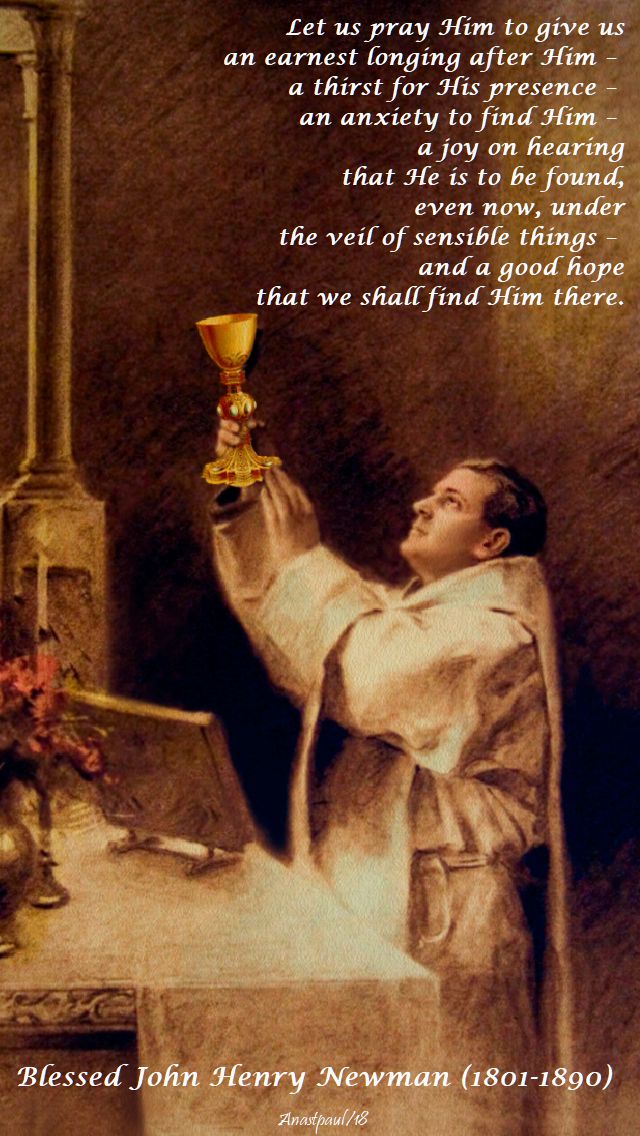
Let us pray Him to give us an earnest longing after Him – a thirst for His presence – an anxiety to find Him – a joy on hearing that He is to be found, even now, under the veil of sensible things – and a good hope that we shall find Him there.
Blessed indeed are they who have not seen and yet have believed. They have their reward in believing, they enjoy the contemplation of a mysterious blessing, which does not even enter into the thoughts of other men and while they are more blessed than others, in the gift vouchsafed to them, they have the additional privilege of knowing that they are vouchsafed it.”….Blessed John Henry Newman (1801-1890) – Parochial & Plain Sermons, Vol. VI, no. 11
Quote/s of the Day – 7 January – The Solemnity of the Epiphany of Our Lord Jesus Christ
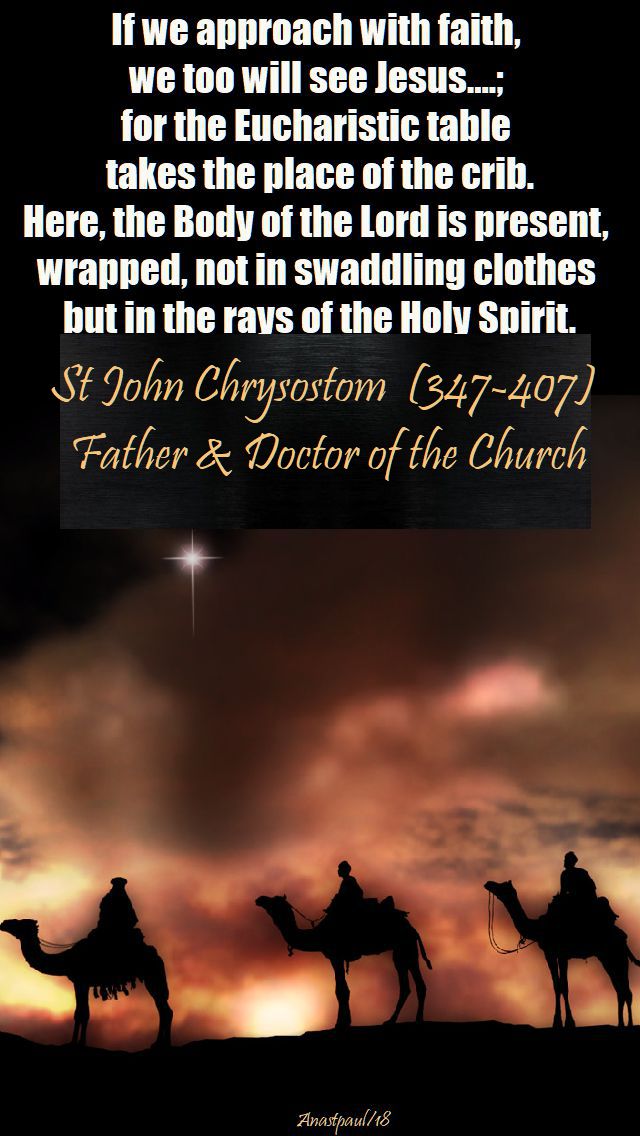
“If we approach with faith, we too will see Jesus….; for the Eucharistic table takes the place of the crib. Here the Body of the Lord is present, wrapped not in swaddling clothes but in the rays of the Holy Spirit.”
St John Chrysostom (347-407) Father & Doctor of the Church
“Truth, by which the world is held together, has sprung from the earth, in order to be carried in a woman’s arms.”
St Augustine (354-430) Father & Doctor of the Church
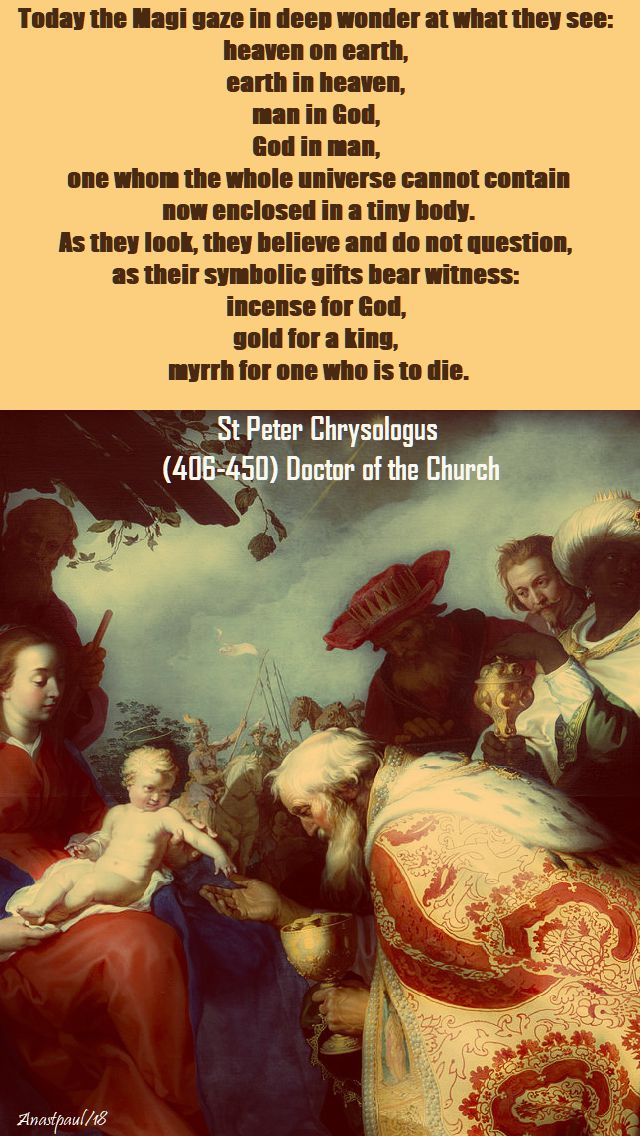
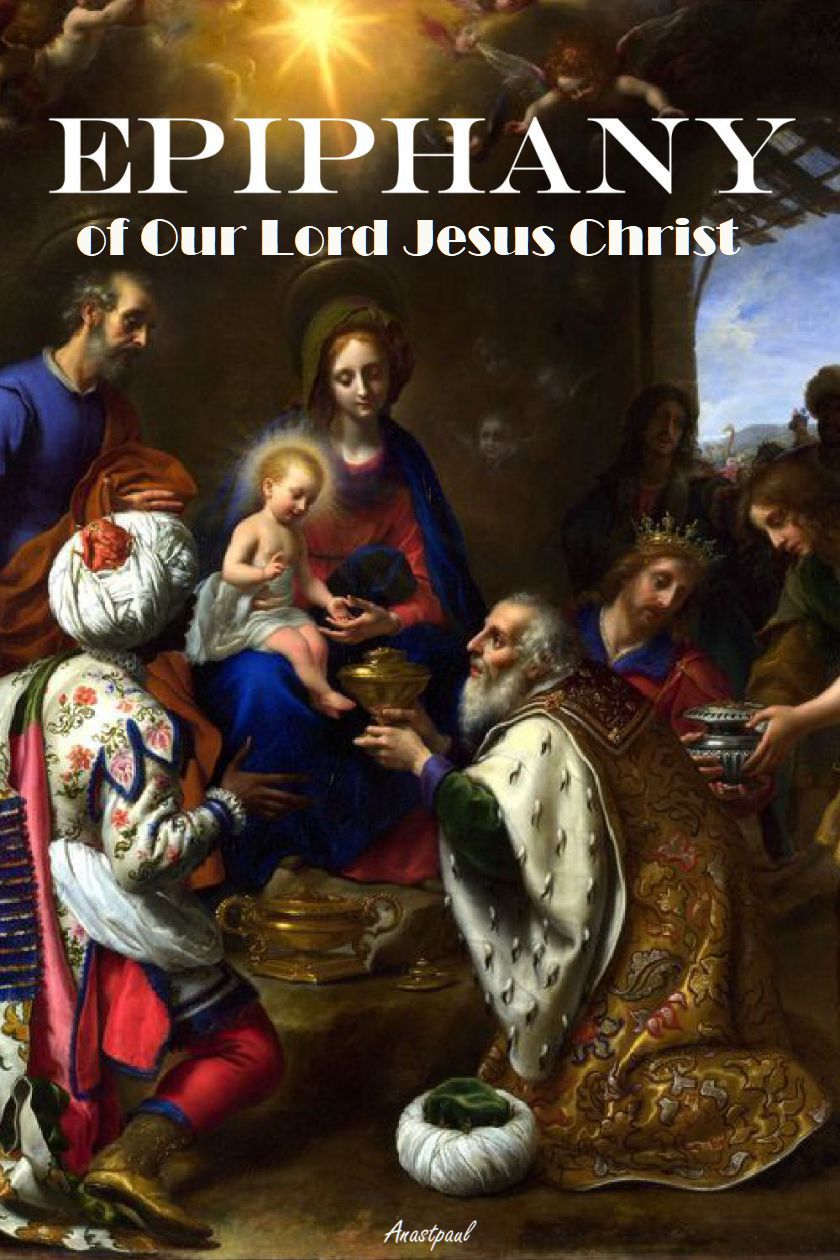
“Today the Magi gaze in deep wonder at what they see: heaven on earth, earth in heaven, man in God, God in man, one whom the whole universe cannot contain now enclosed in a tiny body. As they look, they believe and do not question, as their symbolic gifts bear witness: incense for God, gold for a king, myrrh for one who is to die.”
St Peter Chrysologus (406-450) Doctor of the Church
“What are you doing, O Magi? Do you adore a little Babe, in a wretched hovel, wrapped in miserable rags? Can this Child be truly God? … Are you become foolish, O Wise Men … Yes, these Wise Men have become fools that they may be wise!”
St Bernard of Clairvaux (1090-1153) Doctor of the Church
“It is no magic formula He brings because He knows that the salvation He offers must pass through human hearts. What does He first do? He laughs and cries and sleeps defenceless, as a baby, though He is God incarnate. And He does this, so that we may fall in love with Him, so that we may learn to take Him in our arms….”
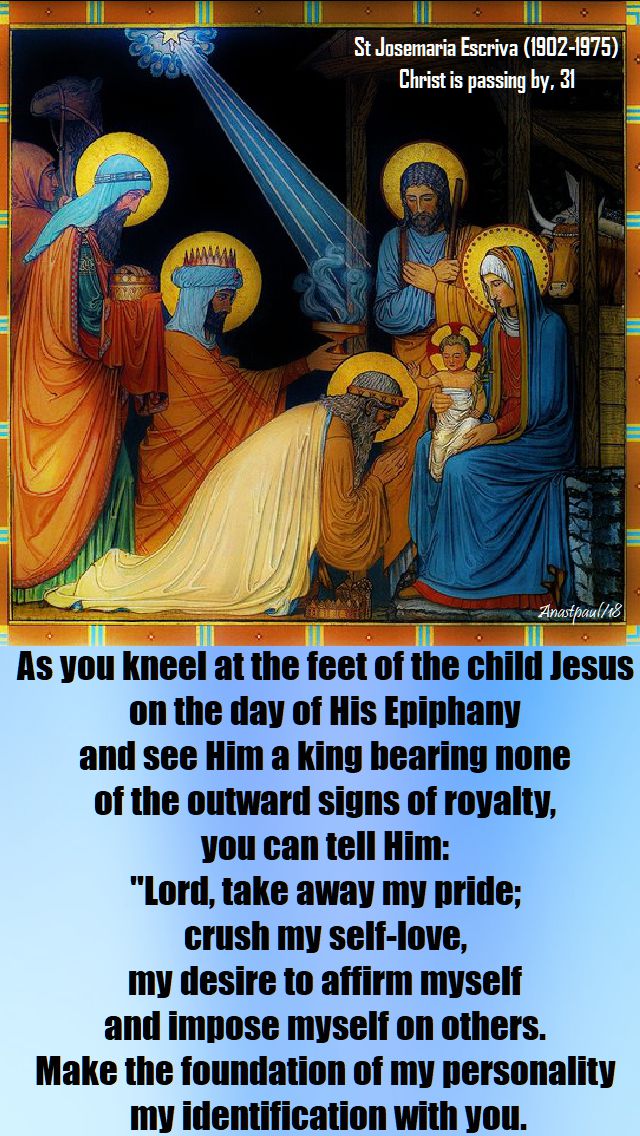
“As you kneel at the feet of the child Jesus on the day of His Epiphany and see Him a king bearing none of the outward signs of royalty, you can tell Him: “Lord, take away my pride; crush my self-love, my desire to affirm myself and impose myself on others. Make the foundation of my personality my identification with you.”
St Josemaria Escriva (1902-1975)
Christ is passing by, 31
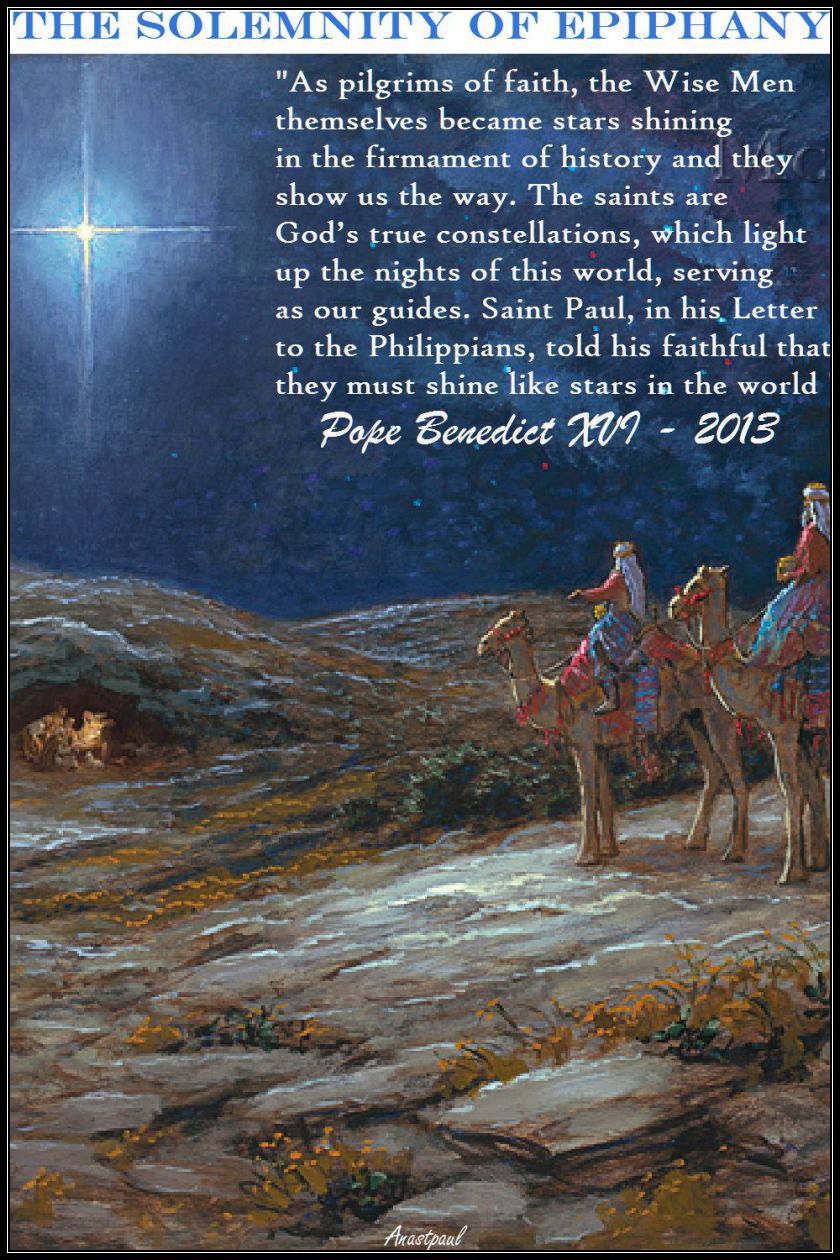
“As pilgrims of faith, the Wise Men themselves became stars shining in the firmament of history and they show us the way. The saints are God’s true constellations, which light up the nights of this world, serving as our guides. Saint Paul, in his Letter to the Philippians, told his faithful that they must shine like stars in the world.”
Extract from the Homily of His Holiness Benedict XVI
Vatican Basilica, Sunday, 6 January 2013
One Minute Reflection – 7 January – The Solemnity of the Epiphany of Our Lord Jesus Christ
…..and on entering the house they saw the child with Mary his mother. They prostrated themselves and did him homage... Matthew 2:11
REFLECTION – “For by gold the power of a king is signified, by frankincense the honour of God, by myrrh the burial of the body and accordingly they offer Him, gold as King, frankincense as God, myrrh as Man.”…St John Chrysostom (347-407) Father & Doctor of the Church
PRAYER – Lord, God, teach us to see the living presence of Your Divine Son in the Eucharist. Make our faith so vivid that we will gladly come to encounter Jesus in every Mass. May we follow in faith and trust, Your bright Light, which shines forever on our paths. Holy Christ Child, intercede for us, amen.
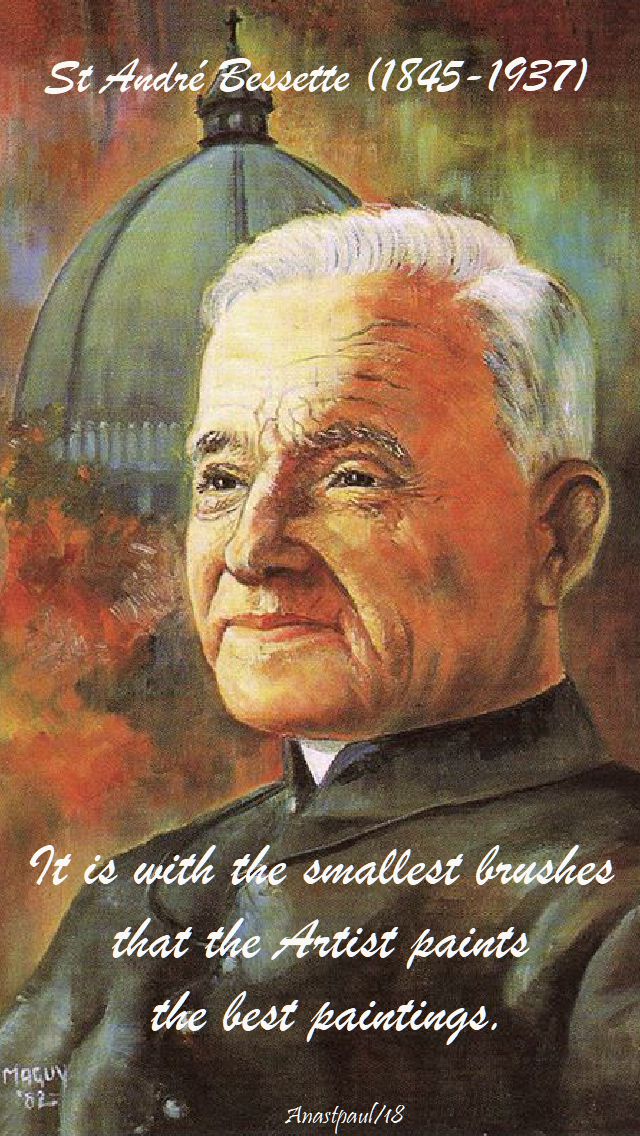
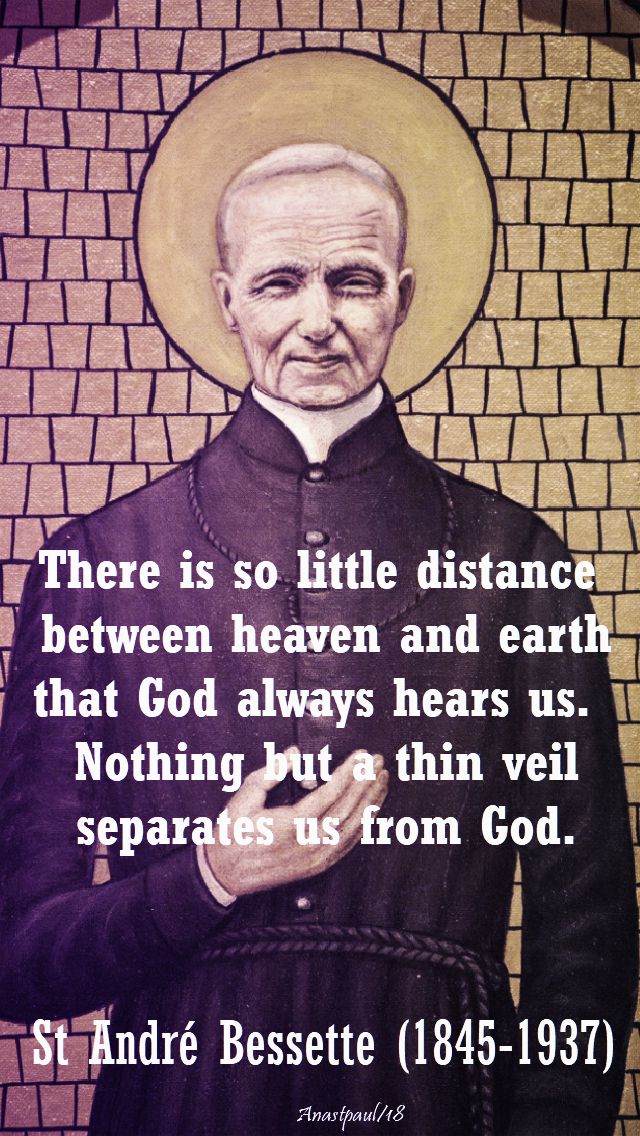
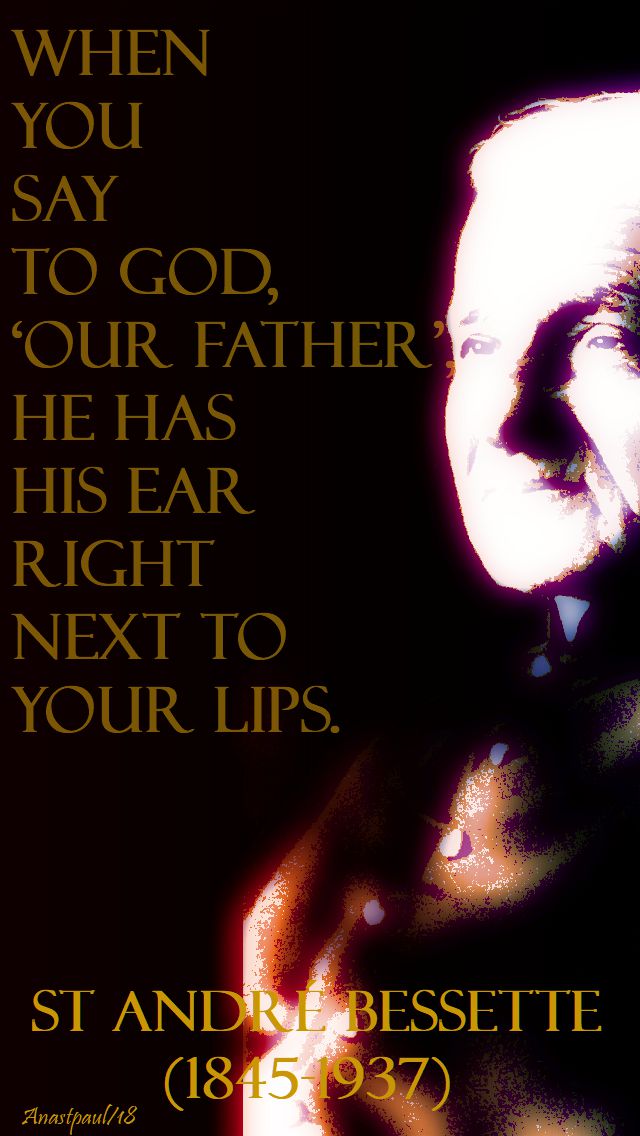
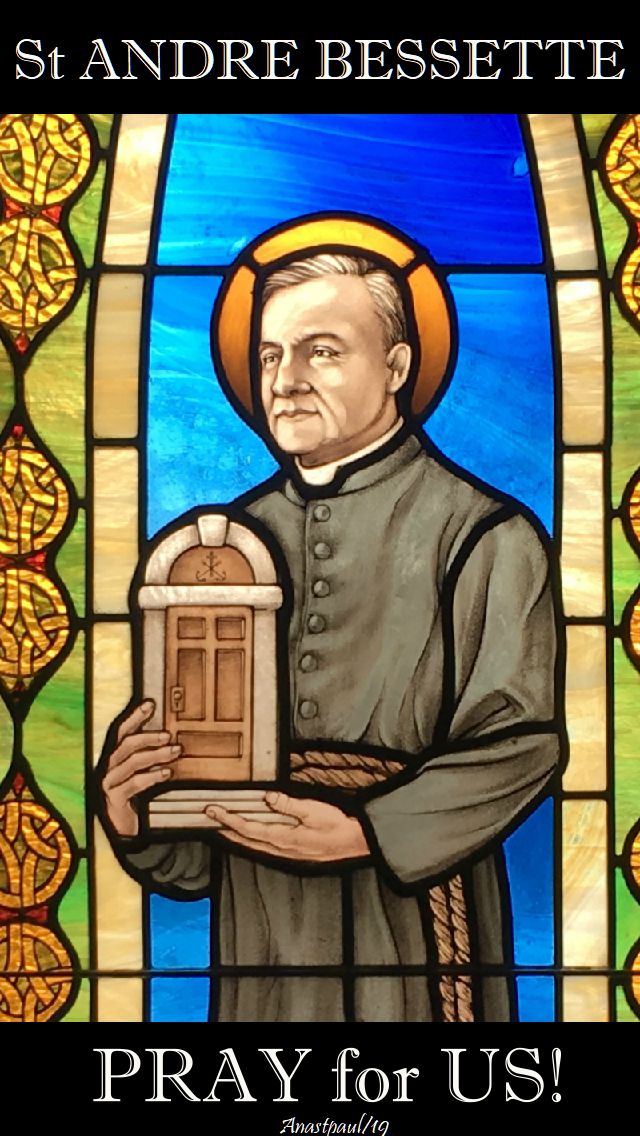
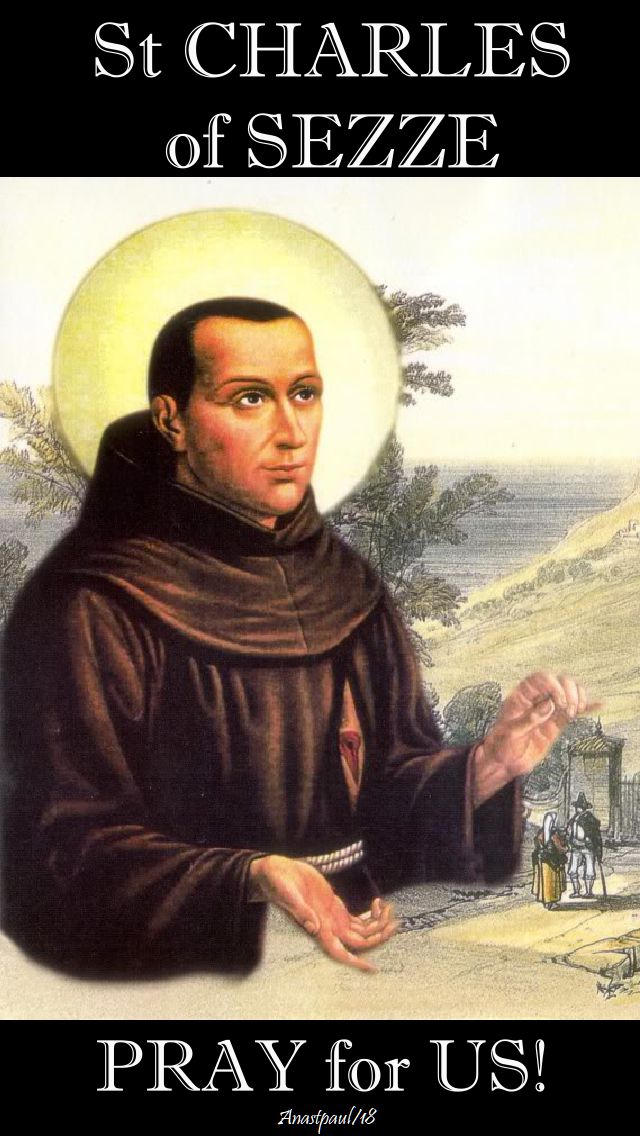
One Minute Reflection – 6 January – The Memorial of Sts André Bessette C.S.C. (1845-1937) and St Charles of Sezze O.F.M. (1613-1670)
When Joseph awoke, he did as the angel of the Lord had commanded him and took his wife into his home…..Matthew 1:24
REFLECTION – “When you invoke St Joseph, you don’t have to say much.
Say, “if you were in my place, St Joseph, what would you do? Well, pray for this on my behalf.”……..St André Bessette
PRAYER – Heavenly Father, You constantly provide us with examples of holy life. St André Bessette and St Charles of Sezze were both wonderful examples of service, as was St André’s hero, the Foster Father of Your Divine Son, St Joseph. May they be intercessors and examples to me, to give to You my all. St André Bessette, St Charles of Sezze and St Joseph. Pray for us, amen!
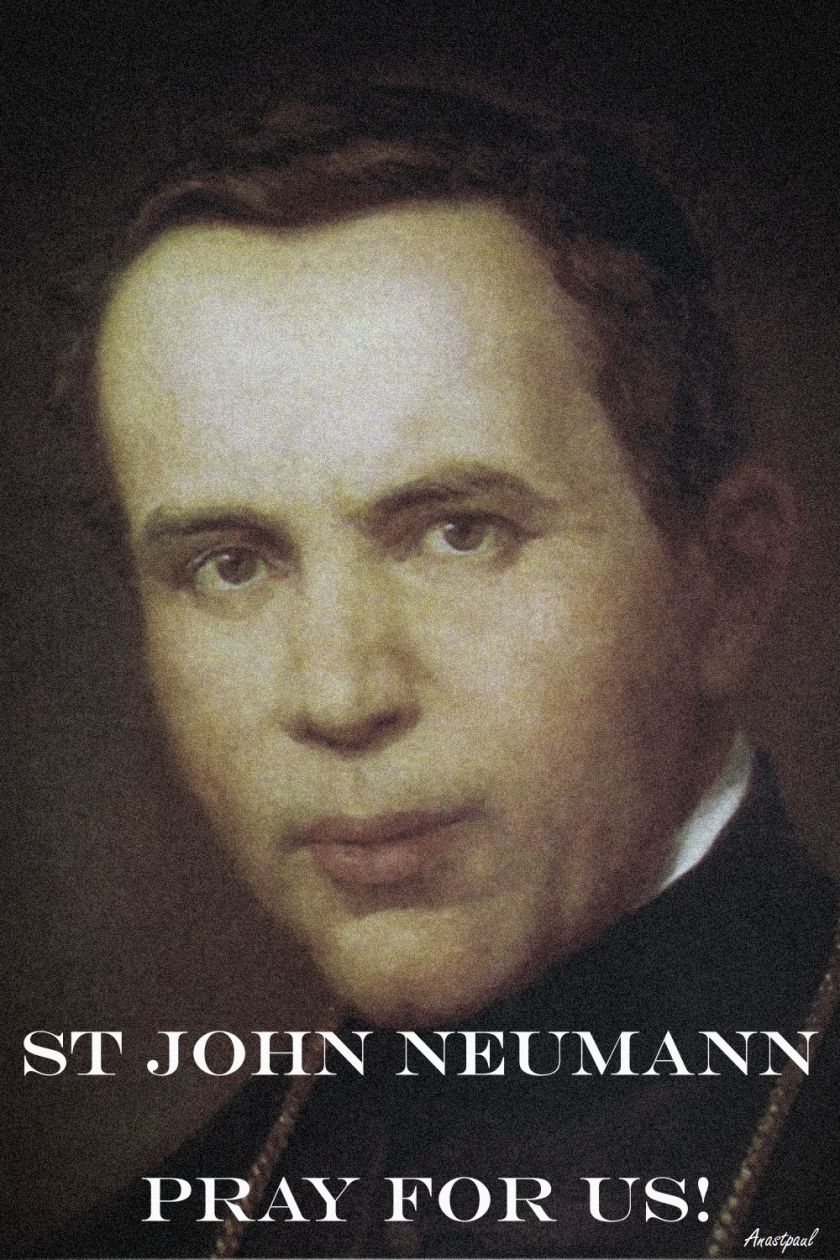
Thought for the Day – 5 January – The Memorial of St John Neumann (1811-1860) – An Adorer of the Blessed Sacrament
St John Nepomucene Neumann (1811–1860), Bishop of Philadelphia from 1852–1860, was graced with an intense devotion to Our Lord in the Sacrament of the Most Holy Eucharist. His personal experience as a boy in Bohemia (modern Czech Republic), then as a priest in the United States and finally as a Redemptorist — a spiritual son of the incomparable Saint Alphonsus Liguori (1696-1787) (Founder of the Redemptorists and Doctor of the Church) — impelled him to promote prolonged prayer before the Blessed Sacrament exposed in the monstrance. No sooner had he become bishop of Philadelphia than he sought to introduce the Quarant’ Ore, or Forty Hours Devotion, already practised for three hundred years in Europe.
The good priests of Philadelphia were, for the most part, opposed to the introduction of the Forty Hours Devotion, fearing that, given the prevailing climate of violent anti-Catholicism nurtured by the Know Nothing Movement, it might exacerbate hostilities against the Church and even expose the Most Holy Sacrament to profanation.
Bishop Neumann had very nearly renounced his project when, overcome by exhaustion late one night, he fell asleep while writing at his desk. A burning candle ignited the papers lying before him. He awoke to smoke rising from the incinerated papers. One document alone remained unscathed; it was the letter he had written to propose the Forty Hours Devotion. Bishop Neumann fell to his knees to give thanks for having been preserved from harm and, as he did so, he experienced a kind of locution. God spoke to him inwardly saying, “As the flames are burning here without consuming or injuring this writing, so shall I pour out My grace in the Blessed Sacrament without prejudice to My honour. Therefore, do not fear profanation and do not hesitate any longer to carry out your designs for My glory.”
Convinced by this sign, Bishop Neumann overrode the objections of his clergy and initiated the celebration of the Forty Hours at the First Diocesan Synod of Philadelphia in April 1853. The Church chosen for the first Forty Hours was that of Saint Philip Neri. It was the latter saint who had, in fact, introduced the Quarant’ Ore to the city of Rome. Bishop Neumann astonished — and edified — his clergy and faithful by spending the greater part of the three days on his knees before the Blessed Sacrament in Saint Philip Neri Church. There was no anti-Catholic backlash. Great crowds of the faithful came, by day and by night, to adore Our Lord exposed to their gaze in the Sacrament of the Altar.
Bishop Neumann carried out his original inspiration by organising the Forty Hours Devotion in the entire diocese of Philadelphia in such a way that each parish would celebrate it in turn during the course of the year. He edited a booklet to facilitate the worthy celebration of the Quarant’ Ore and secured indulgences for the faithful who would participate in the devotion. So successful was the Forty Hours in the diocese of Philadelphia that it spread from there to other dioceses of the United States. In 1866 at the Plenary Council of Baltimore the Forty Hours Devotion was ratified for the whole country.
One of the conclusions of the 2005 Vatican Synod on the Eucharist was the recommendation that the Forty Hours Devotion be reinvigorated and reintroduced everywhere in the Church. This, of course, is fully consonant with the repeated exhortations to Eucharistic adoration of St Pope John Paul II and Pope Benedict XVI.
Saints John and Alphonsus
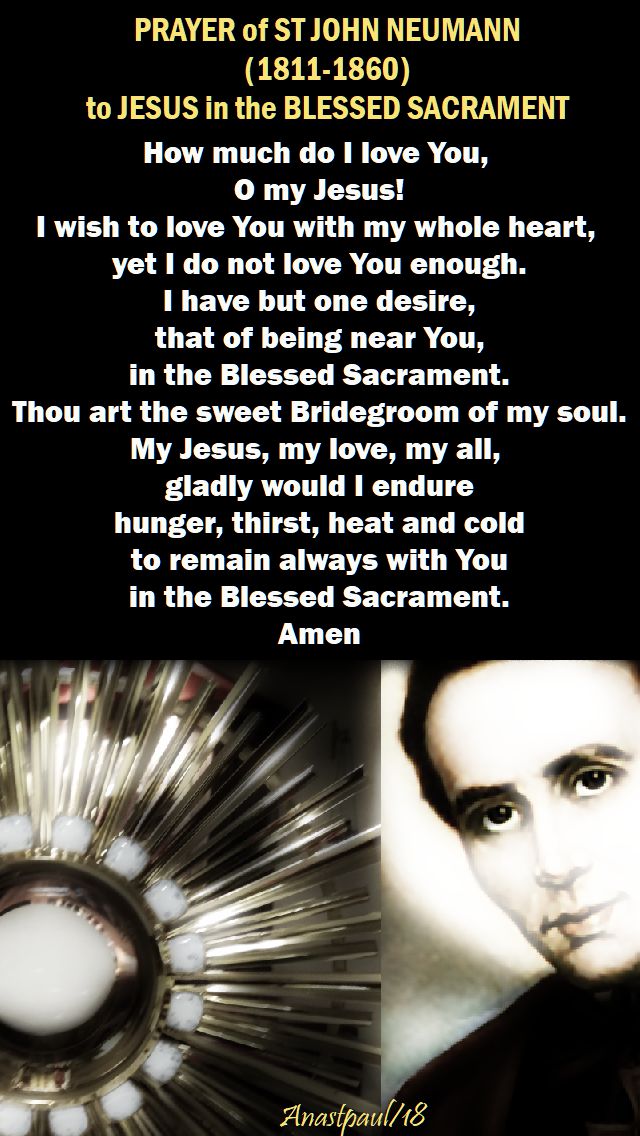
Saint John Neumann left, among his personal writings, a prayer that, by its language and tenderness, is reminiscent of the outpourings of his spiritual father, Saint Alphonse Liguori, in the presence of the Blessed Sacrament. It reveals something of the soul of Bishop Neumann:
How much do I love You, O my Jesus! I wish to love You with my whole heart, yet I do not love You enough. I have but one desire, that of being near You, in the Blessed Sacrament. Thou art the sweet Bridegroom of my soul. My Jesus, my love, my all, gladly would I endure hunger, thirst, heat and cold to remain always with You in the Blessed Sacrament. Amen
ST JOHN NEUMANN, PRAY FOR THE GROWTH OF EUCHARISTIC ADORATION, PRAY FOR HOLY MOTHER CHURCH, PRAY FOR US ALL!
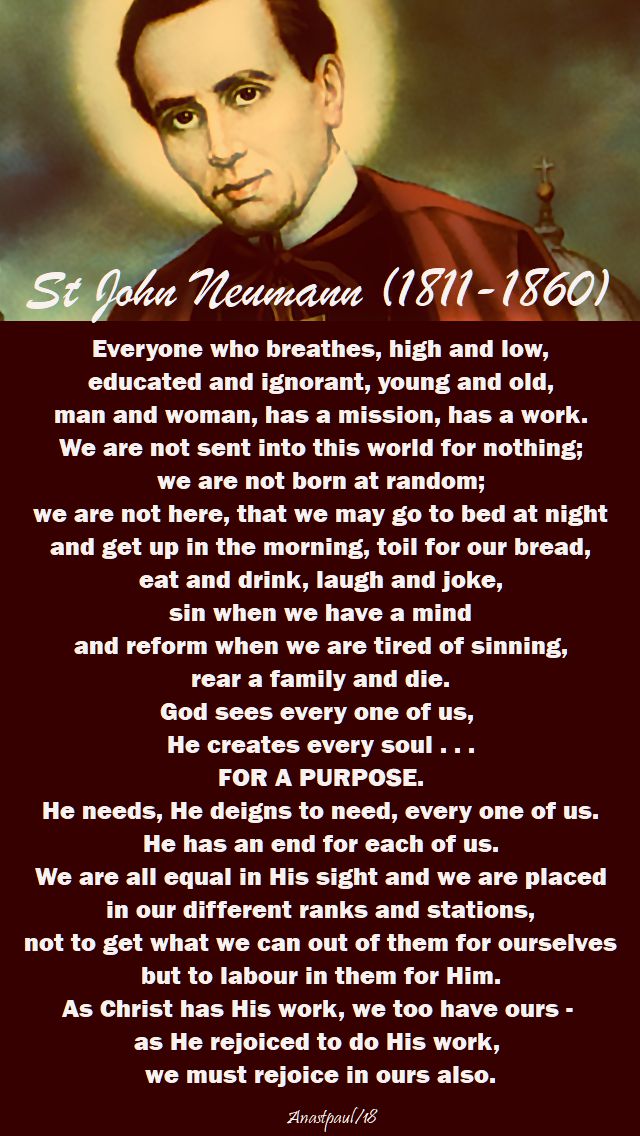
Quote of the Day – 5 January – The Memorial of St John Neumann (1811-1860)
“Everyone who breathes, high and low, educated and ignorant, young and old, man and woman, has a mission, has a work. We are not sent into this world for nothing; we are not born at random; we are not here, that we may go to bed at night and get up in the morning, toil for our bread, eat and drink, laugh and joke, sin when we have a mind and reform when we are tired of sinning, rear a family and die. God sees every one of us, He creates every soul . . . FOR A PURPOSE. He needs, He deigns to need, every one of us. He has an end for each of us. We are all equal in His sight and we are placed in our different ranks and stations, not to get what we can out of them for ourselves but to labour in them for Him. As Christ has His work, we too have ours – as He rejoiced to do His work, we must rejoice in ours also.”
One Minute Reflection – 5 January – The Memorial of St John Neumann (1811-1860)
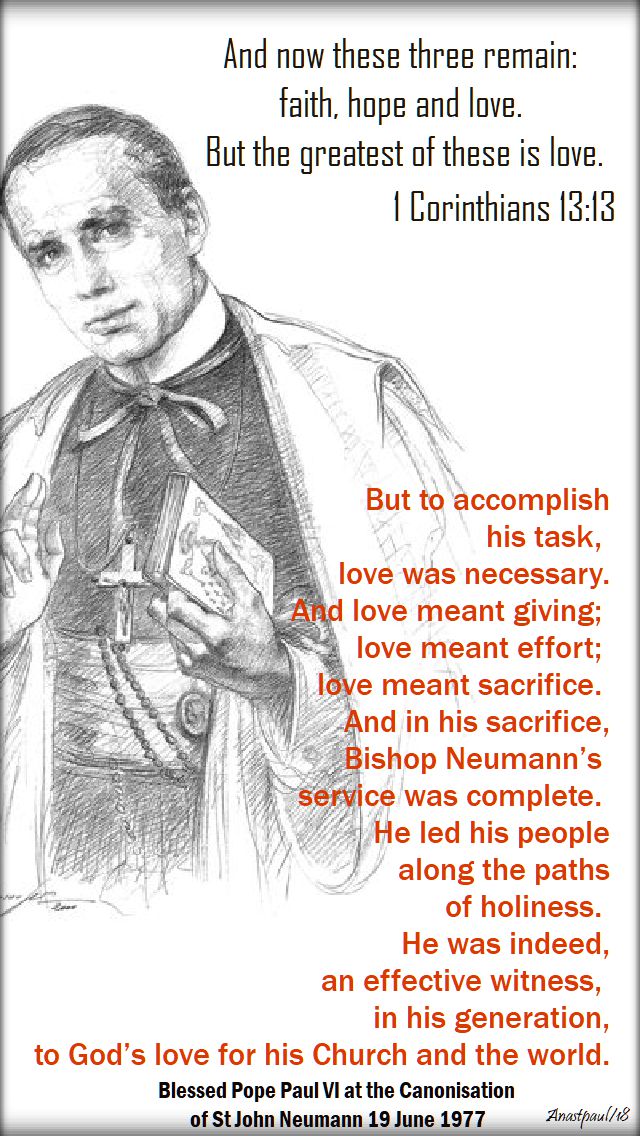
And now these three remain: faith, hope and love. But the greatest of these is love….1 Corinthians 13:13
REFLECTION – “But to accomplish his task, love was necessary. And love meant giving; love meant effort; love meant sacrifice. And in his sacrifice, Bishop Neumann’s service was complete. He led his people along the paths of holiness. He was indeed an effective witness, in his generation, to God’s love for His Church and the world.”…Blessed Pope Paul VI at the Canonisation of St John Neumann 19 June 1977
PRAYER – Holy Father, You brought St John Neumann to the new world to show Your ways and lead all to You. By Your grace, may we all learn to live such zealous and loving lives! Grant Lord that St John Neumann, by the living power of his example and by the intercession of his prayers, may assist us and intercede to help us, today and forever. We make our prayer through our Lord Jesus Christ, in union with the Holy Spirit, one God forever, amen.
Saint of the Day – 5 January – St John Nepomucene Neumann CSsR (1811-1860) Bishop, Religious, Founder, Preacher, Writer, Founder of Schools and builder of Churches. St John was born on 28 March 1811 at Prachititz, Bohemia (Czech Republic) – 5 January 1860 of a stroke at 13th and Vine Streets, Bishop of Philadephia, Pennsylvania, USA. His body is incorrupt. St John Neumann is the first United States Bishop (and to date the only male citizen) to be Canonised. While Bishop of Philadelphia, Neumann founded the first Catholic Diocesan school system in the United States as well as building 50 Churches and starting on a Cathedral, before his death. https://www.youtube.com/watch?v=V9OcOcnZ0CI
John was the third of six children to a German Father and Czech mother. He showed great talent in school and by the time he was 24, he had mastered six languages. It was his desire to become a priest, so in 1831, he entered the diocesan seminary in Budweis, and continued his studies at the Charles Ferdinand University in Prague.
St John Neumann’s home town in the Czech Republic, Prachititz,
He was looking forward to being ordained in 1835 when the bishop decided there would be no more ordinations as there were more than enough priests in Bohemia. John wrote to bishops all over Europe but the story was denied on each request. Nevertheless, John was not discouraged from his vocation and continued to search for a diocese that would take him. He had learned English by working in a factory with English-speaking workers so he wrote to the bishops in America. Finally, he emigrated to the United States, where the bishop of New York ordained him in 1836.
He spent 4 years ministering to German immigrants and Native Americans in the Buffalo-Rochester area. He was one of 36 priests that were attending to more than 200,000 Catholics and his parish in western New York was vast, stretching from Lake Ontario to Pennsylvania. His church was very meagre, not even having a floor and he spent much of his time travelling from town to town through rugged wilderness to visit his flock. His work was very solitary and he felt drawn to a community. He was accepted into the Redemptorist Congregation in 1840 and began his novitiate in Pittsburgh. Two years later, he took his vows. By this time, he spoke eight languages. His religious superiors in Europe were impressed with his holiness and hard work, so the appointed him vicar of all the Redemptorists in America. He was devoted to the education of African-American children and became an American citizen.
John was surprised by his appointment as bishop of Philadelphia in 1852. His new responsibilities were heavy, as the diocese of Philadelphia was geographically very large and there were many languages spoken among the immigrants under his care. One of his major accomplishments was to organise the first diocesan Catholic school system. He worked tirelessly, founding a Congregation of religious sisters to teach in the diocesan schools and during his tenure as bishop, the population of his diocese doubled. He increased the number of Catholic schools in his diocese from two to over 200.
Neumann lived very simply and frugally. On one visit to Germany, he came back to the house he was staying in soaked by rain. His hosts suggested he change his shoes but John replied, “The only way I could change my shoes is by putting the left one on the right foot and the right one on the left foot. This is the only pair I own.” When he was given a new set of vestments as a gift, he would frequently give them to the most recently ordained priest in the diocese.
He was also a humble man, once being picked up by a parish priest from a rural area and riding to town on the back of a manure cart. John jokingly exclaimed, “Have you ever seen such an entourage for a bishop!” He was disheartened by constant conflict with religiously and racially prejudiced people in his diocese. There was a strong anti-Catholic movement which had a strong presence in the area and there were even anti-Catholic riots and arson of religious buildings. Neumann wrote to Rome asking to be replaced as bishop but Pope Pius IX insisted that he continue. In 1854, he travelled to Rome and was present at St. Peter’s Basilica on December 8, along with 53 cardinals, 139 other bishops and thousands of priests and laypersons, when Pope Pius IX solemnly defined, the dogma of the Immaculate Conception of the Blessed Virgin Mary.
His strenuous work load caught up with him and at the age of 48, he collapsed on the street and died on 5 January 1860. He was declared venerable by Pope Benedict XV in 1921 and beatified by Pope Paul VI during the Second Vatican Council on 13 October 1963. Pope Paul VI also canonised him on 19 June 1977. His incorrupt body currently lays in a glass sarcophagus for public veneration in Saint Peter’s Church in Philadelphia.
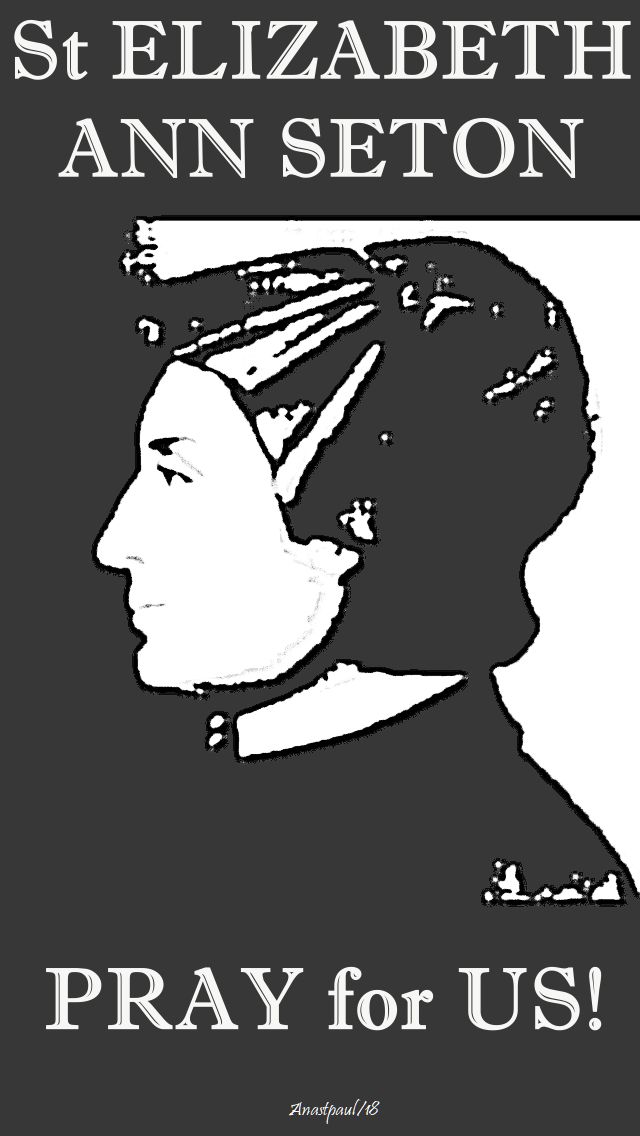
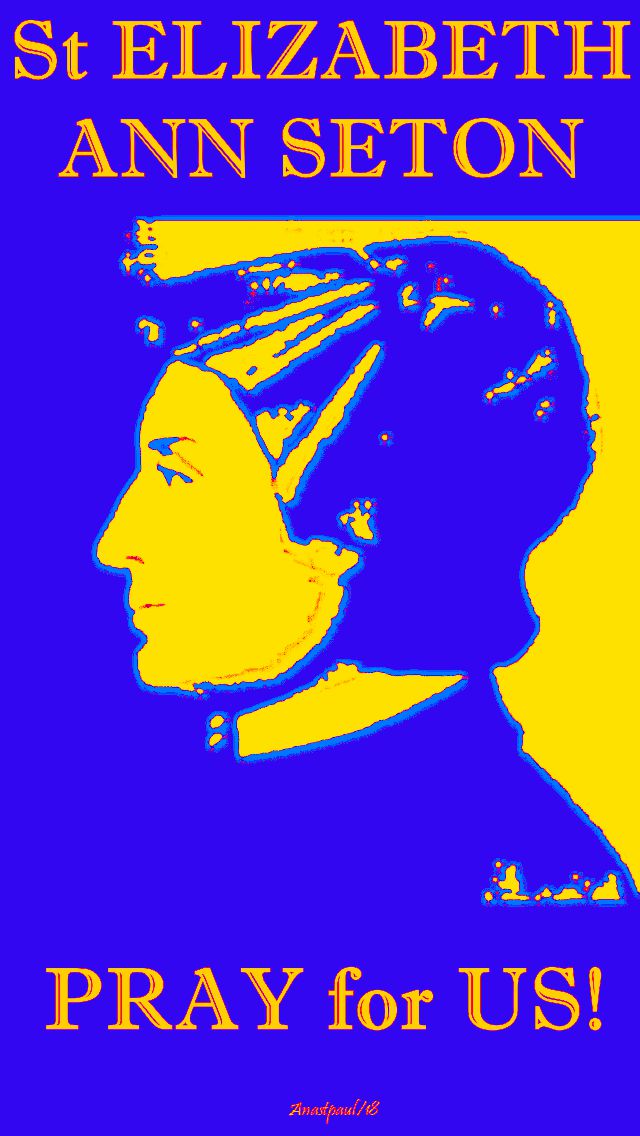
Thought for the Day – 4 January – The Memorial of St Elizabeth Ann Seton (1774-1821) “What is a Saint?”
Excerpt from HOMILY OF THE HOLY FATHER BLESSED PAUL VI – 14 September 1975, on the Canonisation of St Elizabeth Ann Seton
Elizabeth Ann Seton is a Saint! We rejoice and we are deeply moved that our apostolic ministry authorises us to make this solemn declaration before all of you here present, before the holy Catholic Church, before our other Christian brethren in the world, before the entire American people and before all humanity. Elizabeth Ann Bayley Seton is a Saint!
She is the first daughter of the United States of America to be glorified with this incomparable attribute! But what do we mean when we say: «She is a Saint»? We all have some idea of the meaning of this highest title; but it is still difficult for us to make an exact analysis of it. Being a Saint means being perfect, with a perfection that attains the highest level that a human being can reach. A Saint is a human creature fully conformed to the will of God. A Saint is a person in whom all sin-the principle of death-is cancelled out and replaced by the living splendour of divine grace. The analysis of the concept of sanctity brings us to recognise in a soul the mingling of two elements that are entirely different but which come together to produce a single effect: SANCTITY. One of these elements is the human and moral element, raised to the degree of heroism: heroic virtues are always required by the Church for the recognition of a person’s sanctity. The second element is the mystical element, which express the measure and form of divine action in the person chosen by God to realise in herself-always in an original way-the image of Christ (Cfr. Rom. 8, 29).
The Church has made this study of the life, that is, the interior and exterior history, of Elizabeth Ann Seton. And the Church has exulted with admiration and jo, and has today heard her own charism of truth poured out in the exclamation that we send up to God and announce to the world: she is a Saint!
May the dynamism and authenticity of her life be an example in our day-and for generations to come-of what women can and must accomplish, in the fulfilment of their role, for the good of humanity.
St Elizabeth Ann Seton – Pray for us that we may all travel safely this path of sanctity and join you in Heaven in the halls of Sanctity!
Quote/s of the Day – 4 January – The Memorial of St Elizabeth Ann Seton (1774-1821)
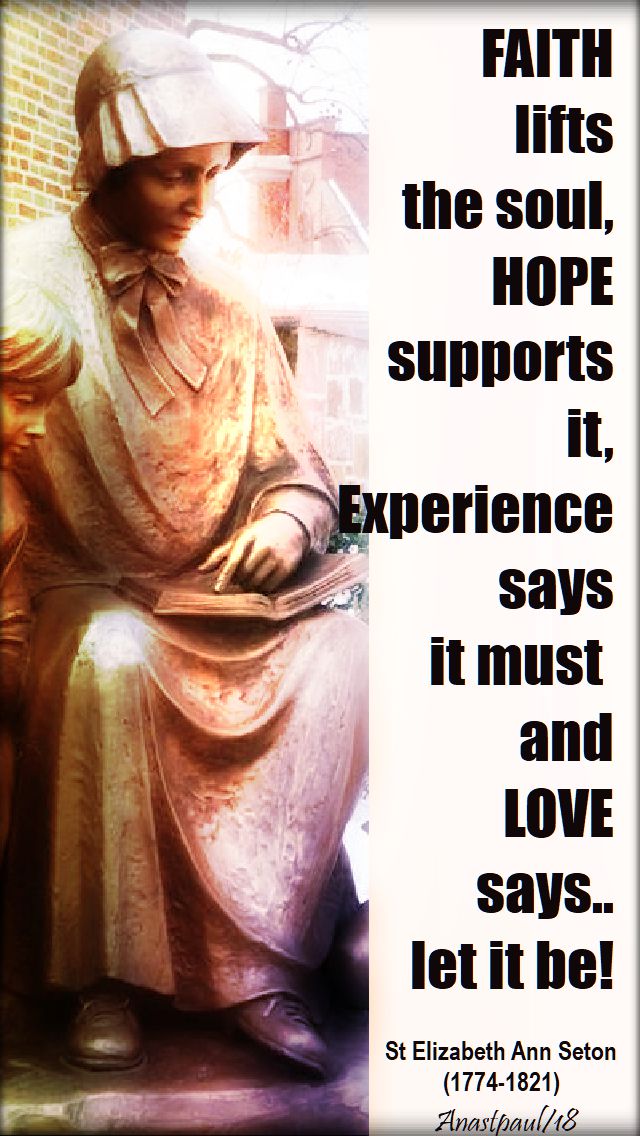
“Faith lifts the soul, Hope supports it, Experience says it must and Love says…let it be!”
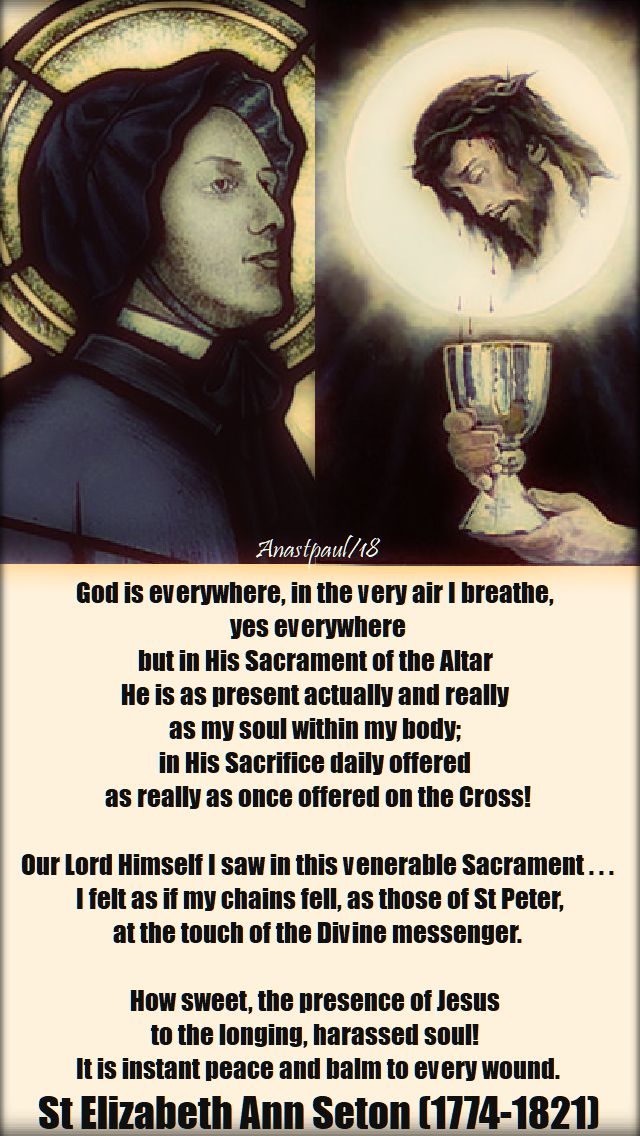
“God is everywhere, in the very air I breathe, yes everywhere but in His Sacrament of the Altar He is as present actually and really as my soul within my body; in His Sacrifice daily offered as really as once offered on the Cross!”
“Our Lord Himself I saw in this venerable Sacrament . . . I felt as if my chains fell, as those of St Peter, at the touch of the Divine messenger.”
“How sweet, the presence of Jesus to the longing, harassed soul! It is instant peace and balm to every wound.”
“We must pray without ceasing, in every occurrence and employment of our lives – that prayer which is rather a habit of lifting up the heart to God as in a constant communication with Him.”
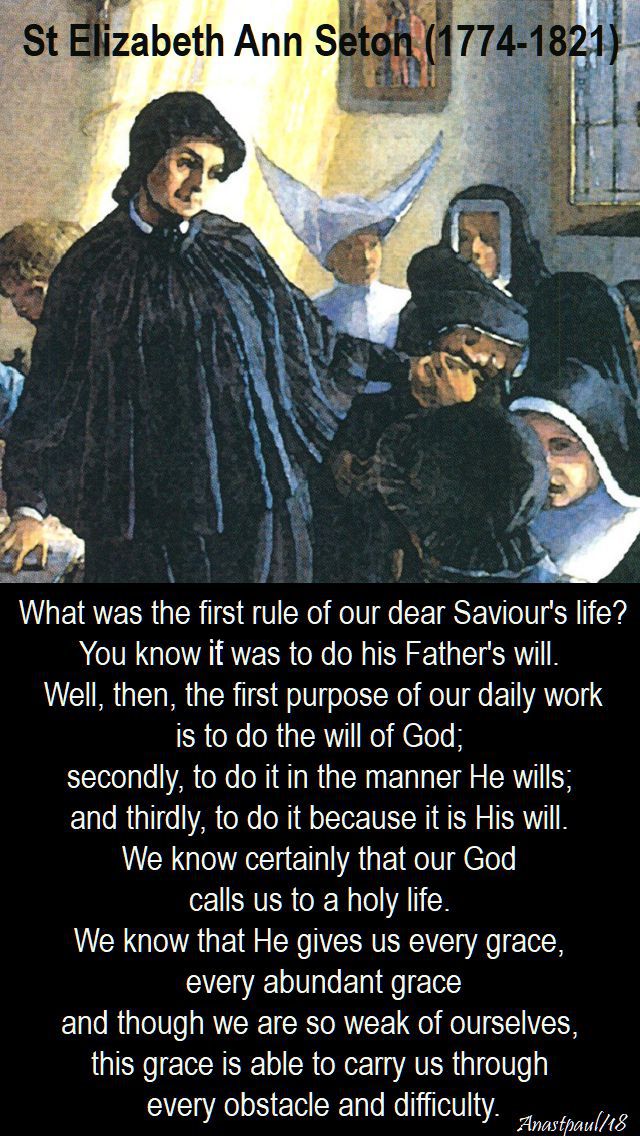
“What was the first rule of our dear Saviour’s life? You know it was to do his Father’s will. Well, then, the first purpose of our daily work is to do the will of God; secondly, to do it in the manner He wills; and thirdly, to do it because it is His will. We know certainly that our God calls us to a holy life. We know that He gives us every grace, every abundant grace and though we are so weak of ourselves, this grace is able to carry us through every obstacle and difficulty.”
“Afflictions are the steps to heaven.”
“Can you expect to go to heaven for nothing? Did not our Saviour track the whole way to it with His tears and blood? And yet you stop at every little pain?”
“The gate of heaven is very low; only the humble can enter it.”
One Minute Reflection – 4 January – The Memorial of St Elizabeth Ann Seton (1774-1821)
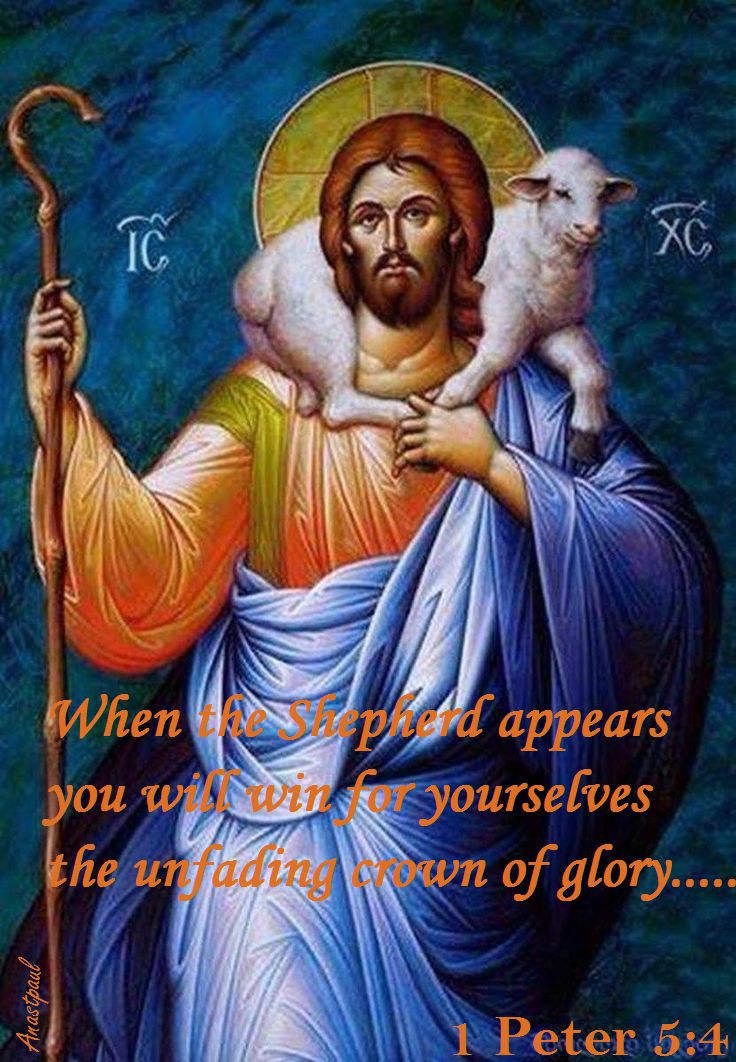
When the Shepherd appears you will win for yourselves the unfading crown of glory………1 Peter 5:4
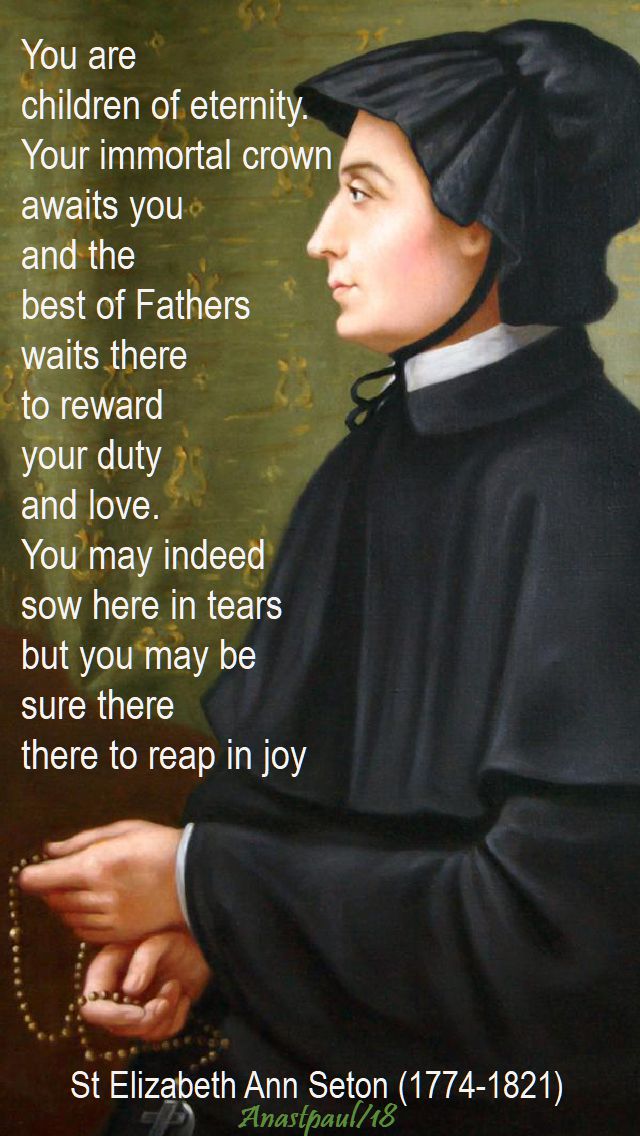
REFLECTION – “You are children of eternity. Your immortal crown awaits you and the best of Fathers waits there to reward your duty and love. You may indeed sow here in tears but you may be sure there to reap in joy.”…St Elizabeth Ann Seton (1774-1821)
PRAYER – Heavenly Father, thank You for making me a child of eternity. Help me to live each day in such a way that I may deserve to be a child of Yours forever. Grant that by the prayers of St Elizabeth Ann Seton, we may strive always to keep our eyes fixed on our eternal home and never waiver from Your commandments. Amen.
May you be Blessed today on the Memorial of the Most Holy Name of Jesus
3 January 2018
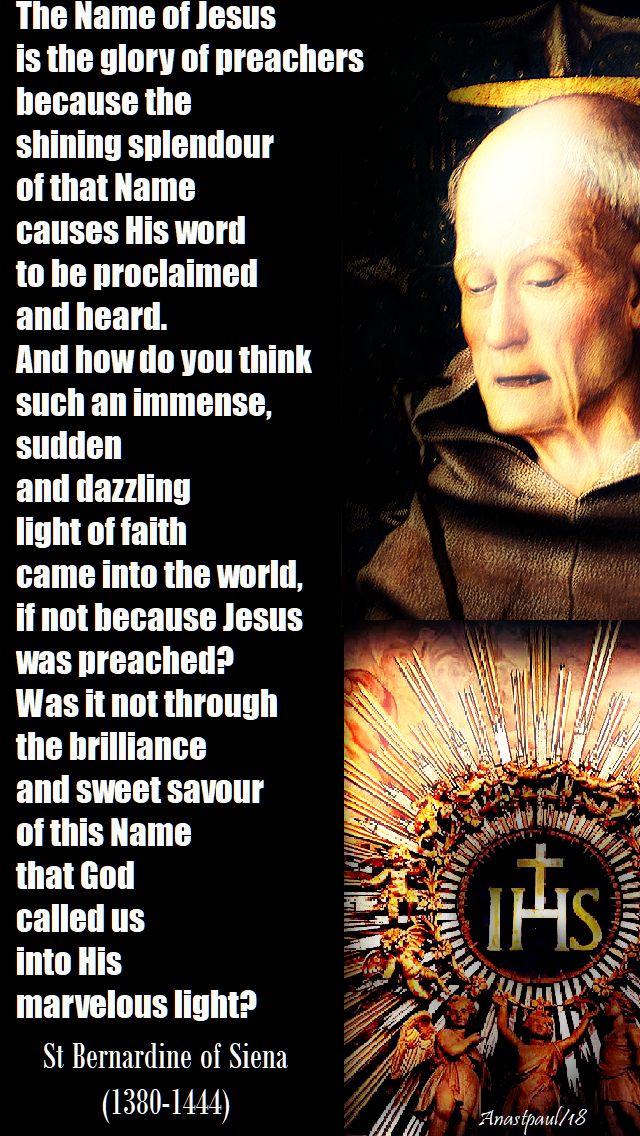
The name of Jesus is the glory of preachers
From a sermon by Saint Bernardine of Siena, priest (Sermo 49, De glorioso Nomine Iesu Christi, cap 2: Opera omnia, 4. 505-506) – Prepared by the Spiritual Theology Department of the Pontifical University of the Holy Cross
“The name of Jesus is the glory of preachers because the shining splendour of that name causes His word to be proclaimed and heard. And how do you think such an immense, sudden and dazzling light of faith came into the world, if not because Jesus was preached? Was it not through the brilliance and sweet savour of this name that God called us into His marvelous light? When we have been enlightened and in that same light behold the light of heaven, rightly may the apostle Paul say to us: Once you were darkness, but now you are light in the Lord; walk as children of light.
So this name must be proclaimed, that it may shine out and never be suppressed. But it must not be preached by someone with sullied mind or unclean lipsbut stored up and poured out from a chosen vessel. That is why our Lord said of Saint Paul: He is a chosen instrument of mine, the vessel of my choice, to carry my name before the Gentiles and kings and the sons of Israel. In this chosen vessel there was to be a drink more pleasing than earth ever knew, offered to all mankind for a price they could pay, so that they would be drawn to taste of it. Poured into other chosen vessels, it would grow and radiate splendour. For our Lord said: He is to Carry my name.
When a fire is lit to clear a field, it burns off all the dry and useless weeds and thorns. When the sun rises and darkness is dispelled, robbers, night-prowlers and burglars hide away. So when Paul’s voice was raised to preach the Gospel to the nations, like a great clap of thunder in the sky, his preaching was a blazing fire carrying all before it. It was the sun rising in full glory. Infidelity was consumed by it, false beliefs fled away and the truth appeared like a great candle lighting the whole world with its brilliant flame.
By word of mouth, by letters, by miracles and by the example of his own life, Saint Paul bore the name of Jesus wherever he went. He praised the name of Jesus at all times but never more than when bearing witness to his faith. Moreover, the Apostle did indeed carry this name before the Gentiles and kings and the sons of Israel as a light to enlighten all nations. And this was his cry wherever he journeyed: The night is passing away, the day is at hand. Let us then cast off the works of darkness and put on the armour of light; let us conduct ourselves honourably as in the day. Paul himself showed forth the burning and shining light set upon a candlestick, everywhere proclaiming Jesus, and Him crucified.
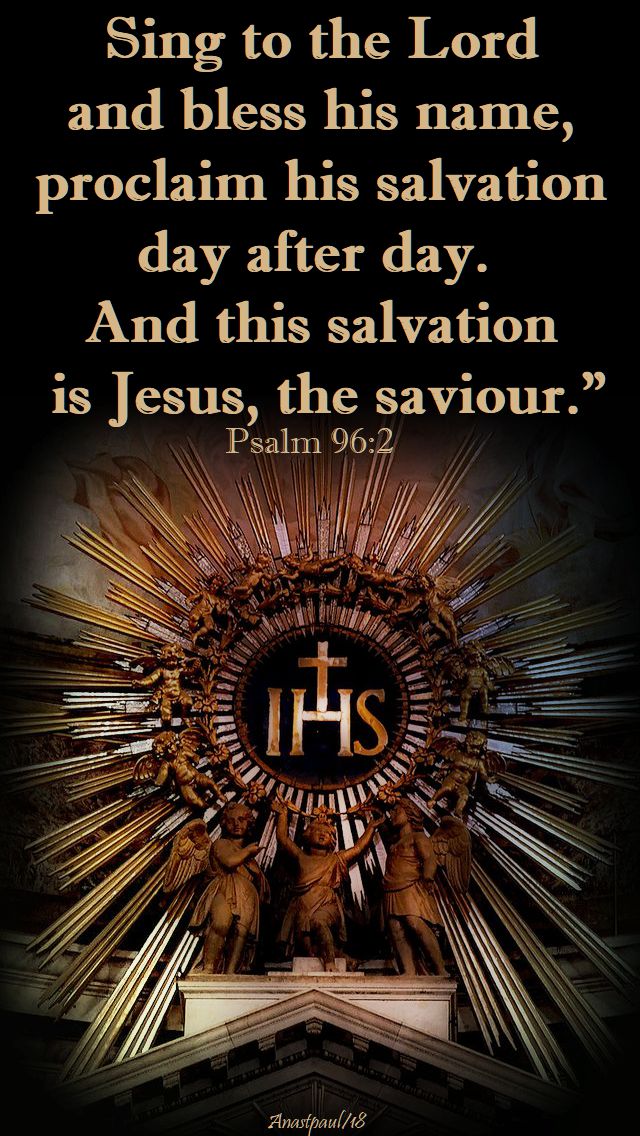
And so the Church, the bride of Christ strengthened by his testimony, rejoices with the psalmist, singing: 0 God, from my youth you have taught me, and I still proclaim your wondrous deeds. The psalmist exhorts her to do this, as he says, Sing to the Lord and bless his name, proclaim his salvation day after day. And this salvation is Jesus, her saviour.” (Psalm 96:2)
Prayer
Father,
you gave St Bernardine a special love
for the holy name of Jesus.
By the help of his prayers,
may we always be alive with the spirit of Your love.
We ask this through our Lord Jesus Christ, Your Son,
who lives and reigns with You and the Holy Spirit,
one God, for ever and ever.
Quote/s of the Day – 3 January – The Most Holy Name of Jesus
“Are you troubled? Think but of Jesus – speak but the name of Jesus, the clouds disperse and peace descends anew from heaven. Have you fallen into sin? So that you fear death? ..invoke the name of Jesus and you will soon feel life returning. No obduracy of the soul, no weakness, no coldness of heart can resist this holy name – there is no heart which will not soften and open in tears at this holy name.”
St Bernard of Clairvaux – (1090-1153) – Doctor of the Church
“The Name of Jesus is the glory of preachers because the shining splendour of that Name causes His word to be proclaimed and heard. And how do you think such an immense, sudden and dazzling light of faith came into the world, if not because Jesus was preached? Was it not through the brilliance and sweet savour of this Name that God called us into His marvelous light?”
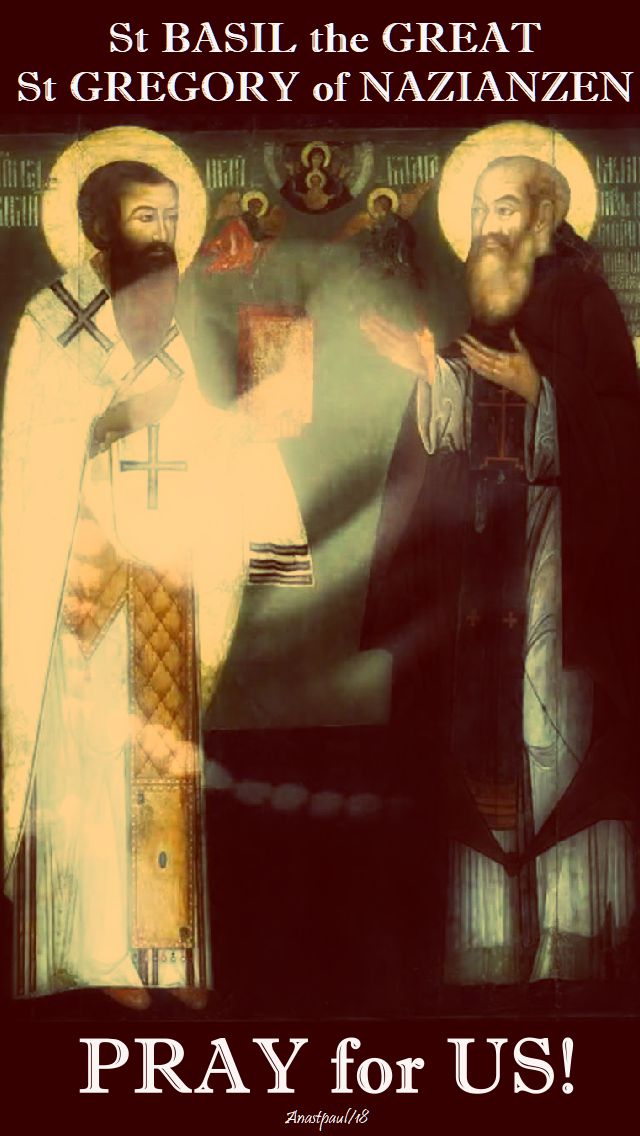
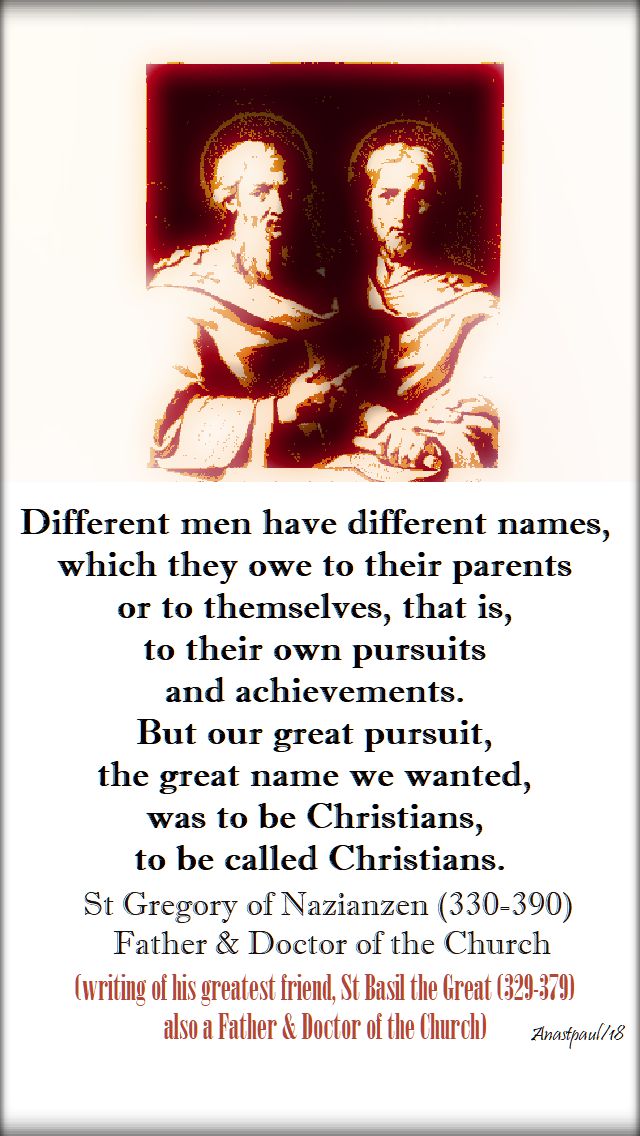
Thought for the Day – 2 January – The Memorial of St Basil the Great (329-379) and St Gregory of Nazianzen (330-390) Fathers & Doctors of the Church – On Friendship “We seemed to be two bodies with a single spirit.”
St Gregory of Nazianzen
On 2 January the Roman Catholic Church honours the memory of two friends from an area of what is now Turkey that was called Cappadocia. These men began their friendship while away at school and later became bishops who were the backbone of Catholic Orthodoxy during a period of doctrinal struggle and confusion. Gregory presided over the 2nd ecumenical council, held at Constantinople, whose great achievement was the completion of the Nicene-Constantinopolitan Creed that the Catholic Church recites each Sunday and the definition of the divinity of the Holy Spirit. These Cappadocian Fathers, both Fathers and Doctors of the Church, proved to be some of the most influential Christian teachers of all time, honoured by both East and West, Eastern Orthodox and Roman Catholic. Gregory here shares some memories of their friendship.
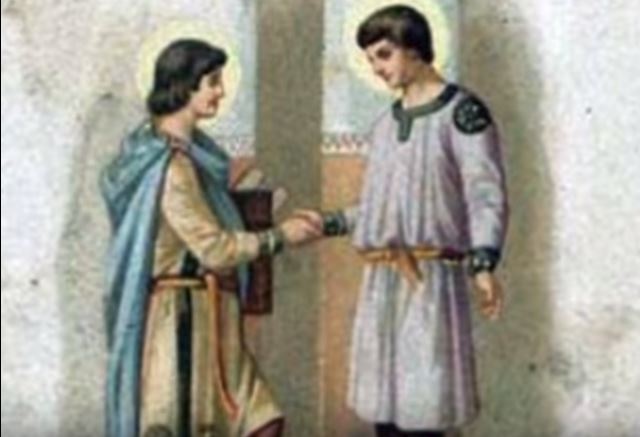
“Basil and I were both in Athens. We had come, like streams of a river, from the same source in our native land, had separated from each other in pursuit of learning and were now united again as if by plan, for God so arranged it.
I was not alone at that time in my regard for my friend, the great Basil. I knew his irreproachable conduct and the maturity and wisdom of his conversation. I sought to persuade others, to whom he was less well known, to have the same regard for him. Many fell immediately under his spell, for they had already heard of him by reputation and hearsay.
What was the outcome? Almost alone of those who had come to Athens to study he was exempted from the customary ceremonies of initiation for he was held in higher honour than his status as a first-year student seemed to warrant.
Such was the prelude to our friendship, the kindling of that flame that was to bind us together. In this way we began to feel affection for each other. When, in the course of time, we acknowledged our friendship and recognised that our ambition was a life of true wisdom, we became everything to each other: we shared the same lodging, the same table, the same desires the same goal. Our love for each other grew daily warmer and deeper.
The same hope inspired us – the pursuit of learning. This is an ambition especially subject to envy. Yet between us there was no envy. On the contrary, we made capital out of our rivalry. Our rivalry consisted, not in seeking the first place for oneself but in yielding it to the other, for we each looked on the other’s success as his own.
We seemed to be two bodies with a single spirit. Though we cannot believe those who claim that everything is contained in everything, yet you must believe that in our case each of us was in the other and with the other.
Our single object and ambition was virtue and a life of hope in the blessings that are to come; we wanted to withdraw from this world before we departed from it. With this end in view we ordered our lives and all our actions. We followed the guidance of God’s law and spurred each other on to virtue. If it is not too boastful to say, we found in each other a standard and rule for discerning right from wrong.
Different men have different names, which they owe to their parents or to themselves, that is, to their own pursuits and achievements. But our great pursuit, the great name we wanted, was to be Christians, to be called Christians.”
Learning of these two great Doctors of the Church, St Basil the Great and St Gregory of Nazianzen and their lifelong friendship, their collaboration, most especially against the battle against Arianism, cannot help but call to our minds a similar and immensely brilliant collaboration and personal friendship, which yielded endless fruit for the life of the Church.
Sts Basil and Gregory Pray for us! St John Paul, Pray for us! Beloved Papa Benedict continue to keep us all in your prayers. Pray that our friendships may be as Godly as yours was!
Quote/s of the Day – 2 January – The Memorial of St Basil the Great (329-379) and St Gregory of Nazianzen (330-390) Fathers & Doctors of the Church
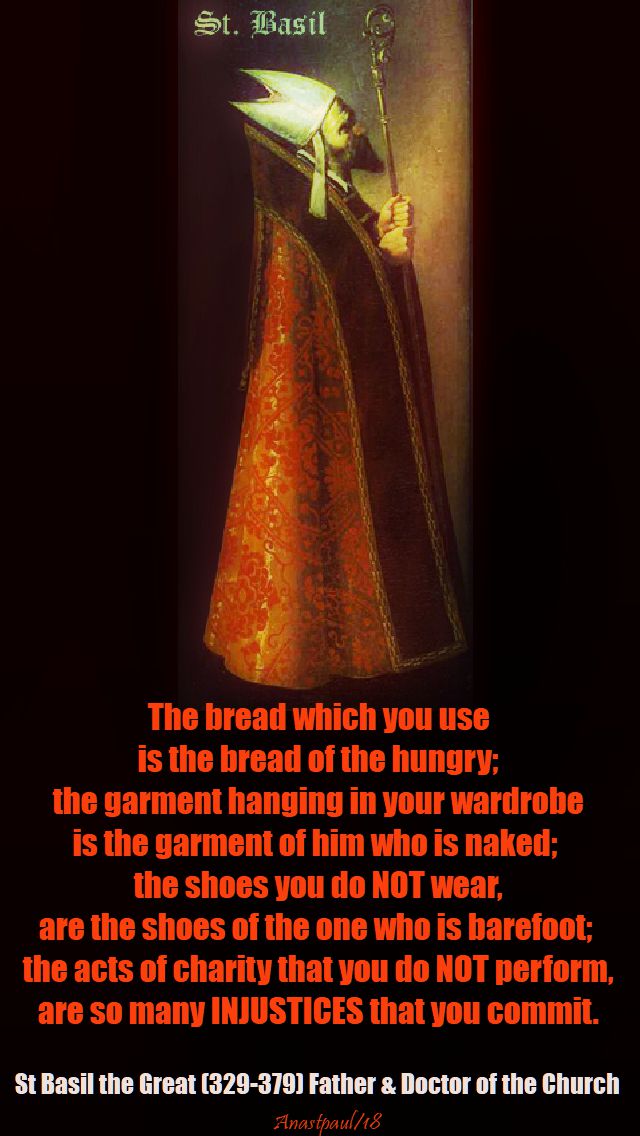
“The bread which you use is the bread of the hungry; the garment hanging in your wardrobe is the garment of him who is naked; the shoes you do NOT wear, are the shoes of the one who is barefoot; the acts of charity that you do NOT perform, are so many INJUSTICES that you commit.”
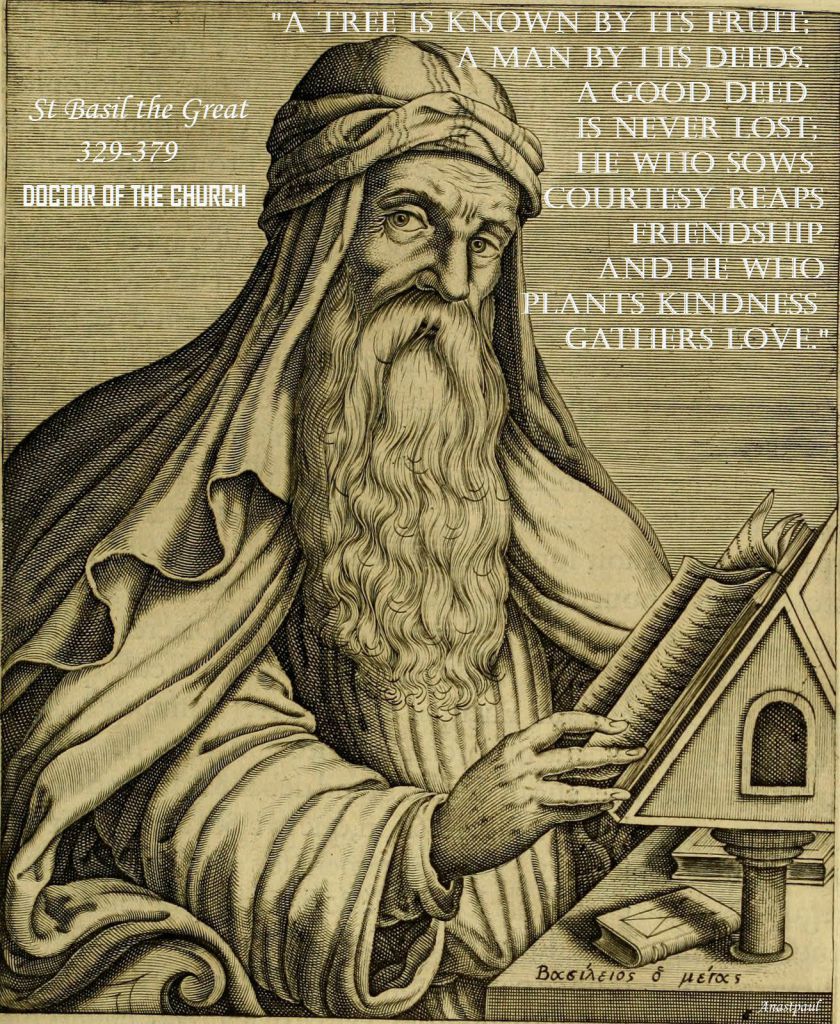
“A tree is known by its fruit; a man by his deeds. A good deed is never lost; he who sows courtesy reaps friendship and he who plants kindness gathers love.”
St Basil the Great (329-379) Father & Doctor of the Church
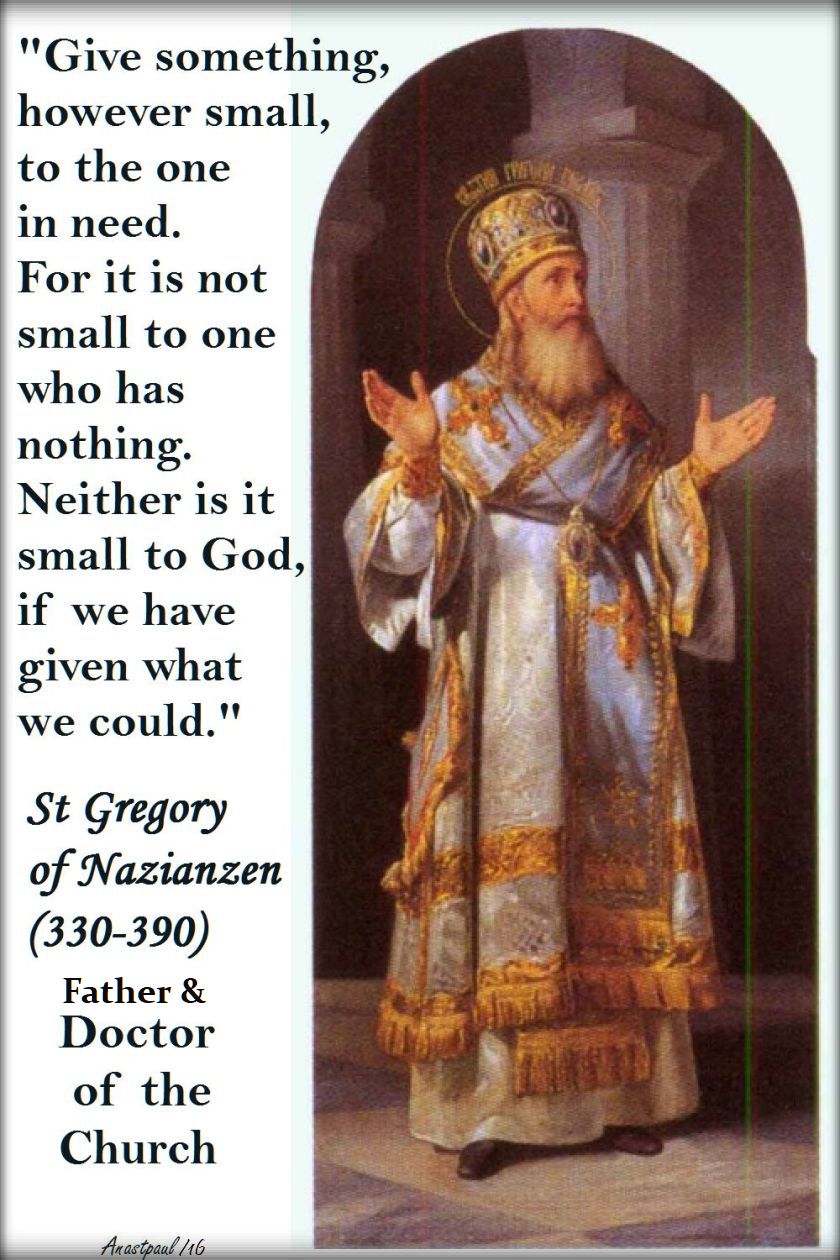
“Give something, however small, to the one in need. For it is not small to one who has nothing. Neither is it small to God, if we have given what we could.”
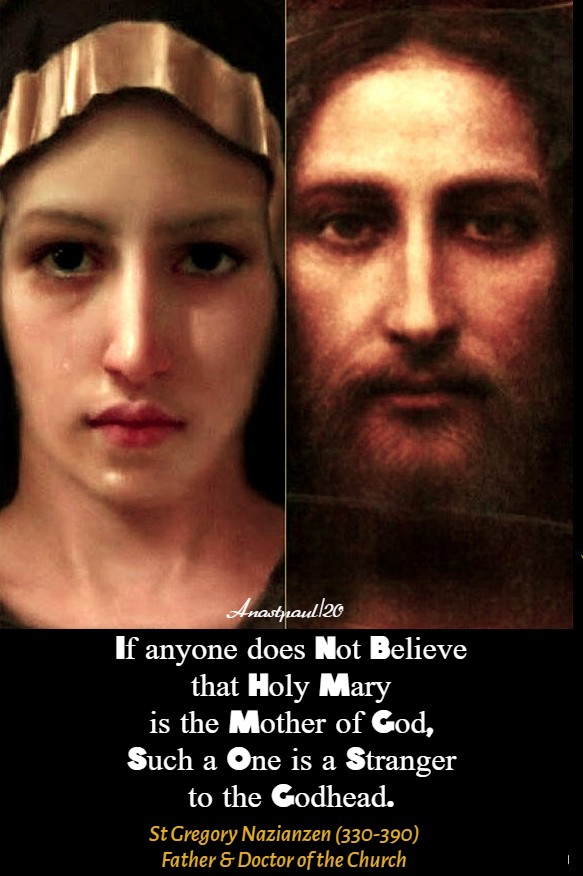
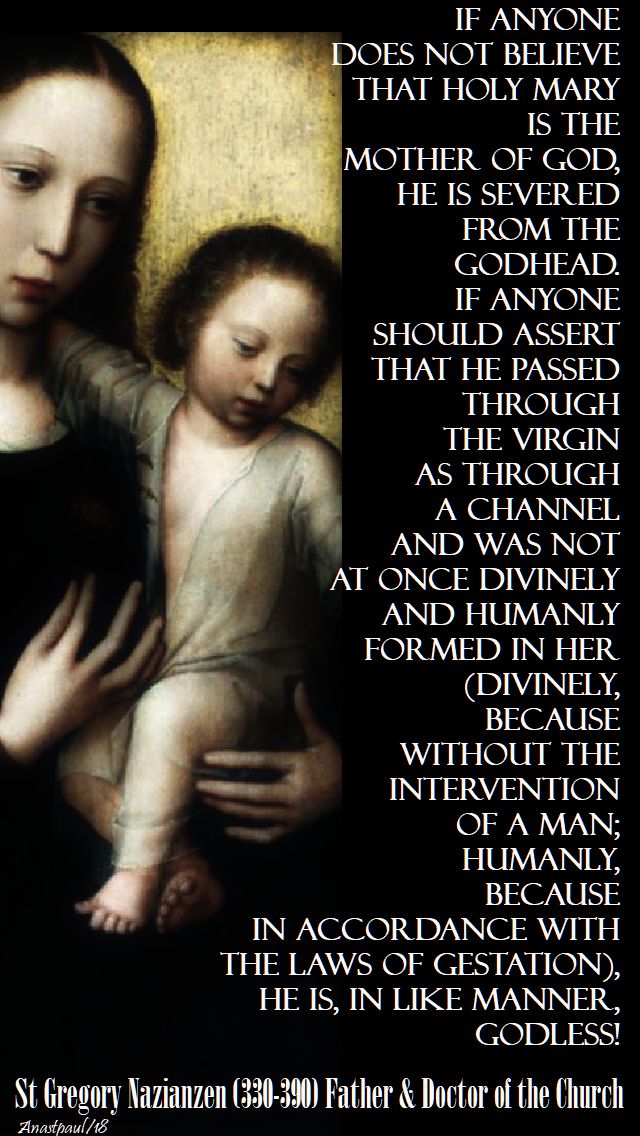
“If anyone does not believe that Holy Mary is the Mother of God, such a one is a stranger to the Godhead.”
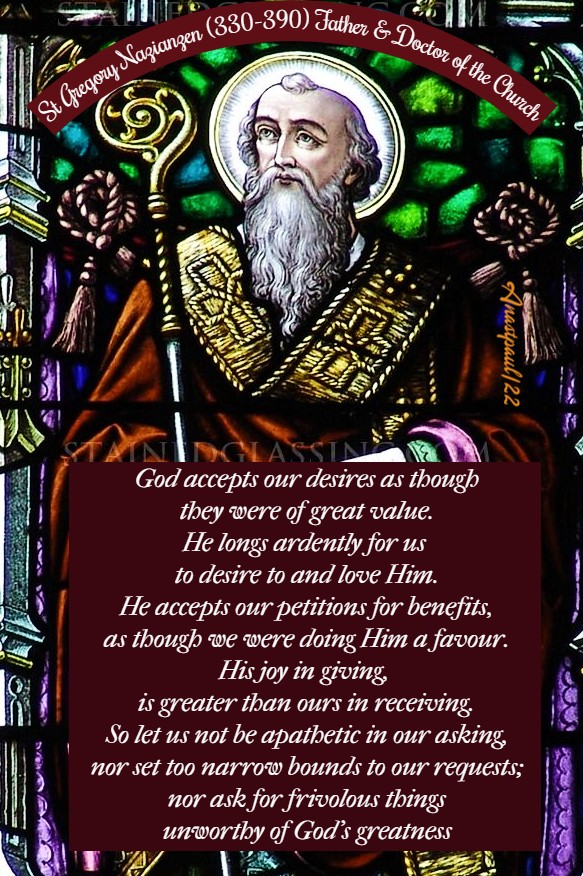
“God accepts our desires as though they were of great value. He longs ardently for us to desire to and love Him. He accepts our petitions for benefits, as though we were doing Him a favour. His joy in giving, is greater than ours in receiving. So let us not be apathetic in our asking, nor set too narrow bounds to our requests; nor ask for frivolous things unworthy of God’s greatness.”
St Gregory Nazianzen (330-390) Father & Doctor of the Church
One Minute Reflection – 2 January – The Memorial of St Basil the Great (329-379) and St Gregory of Nazianzen (330-390) Fathers & Doctors of the Church
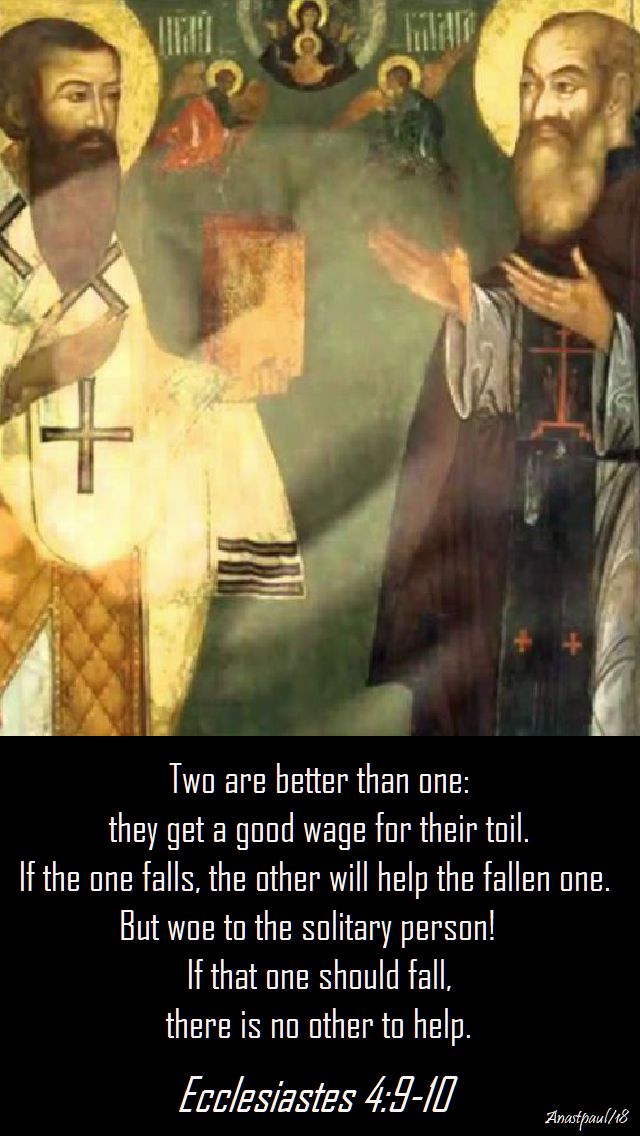
Two are better than one: they get a good wage for their toil. If the one falls, the other will help the fallen one. But woe to the solitary person! If that one should fall, there is no other to help…Ecclesiastes 4:9-10
REFLECTION – “Different men have different names, which they owe to their parents or to themselves, that is, to their own pursuits and achievements. But our great pursuit, the great name we wanted, was to be Christians, to be called Christians.”…St Gregory of Nazianzen (330-390) (from his writings on his friendship with St Basil).
PRAYER – God our Father, You enriched Your Church and gave examples for us to follow in the life and teachings of Sts Basil and Gregory. Grant that, learning Your truth with humility, we may practise it in faith and love. Sts Basil and Gregory, pray for our beloved Church, pray for all Catholic Christians, amen.
Saint/s of the Day – 2 January – St Basil the Great (329-379) and St Gregory of Nazianzen (330-390) Fathers and Doctors of the Church – two bodies one spirit!
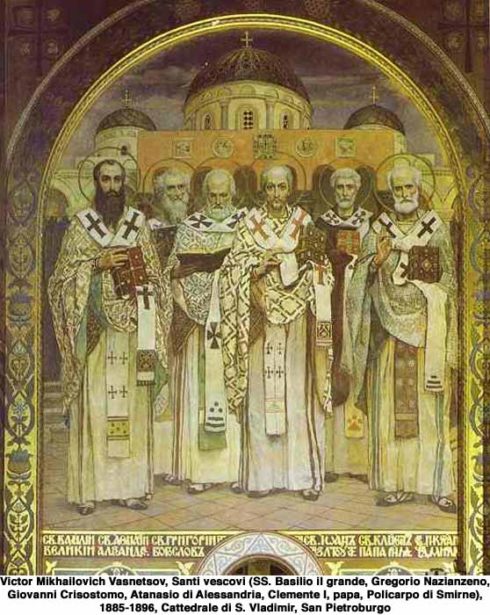
L to R: St. Basil, St. Gregory of Nazianzus, St. John Chrysostom, Painting (Icon) by Viktor Vasnetsov
St Basil was born in 329 at Caesarea, Asia Minor (modern Turkey) and he died on 1 January 379 at Caesarea, Asia Minor (modern Turkey) of natural causes. He is known as the Father of Eastern Monasticism, was a Monk, Bishop, Confessor, Theologian, Reformer, Apostle of Charity, Lawyer, Teacher, Writer and Doctor of the Church. Patronages – Russia, Cappadocia, Hospital administrators, Reformers, Monks, Education, Exorcism, Liturgists.
St Gregory was born in 330 at Arianzus, Cappadocia, Asia Minor and he died on 25 January 390 of natural causes. He is known as “The Theologian” was a Monk, Bishop, Confessor, Theologian (because of his outstanding teaching and eloquence), Orator, Rhetorician, Philosopher, Writer, Poet, Reformer and Doctor of the Church. Patronages – • for harvests• poets.
St Basil the Great, was born of a noble Christian family at Caesarea in Cappadocia in 330. His was a pious family – his mother, father and four of his nine siblings were canonised, including Saint Gregory of Nyssa. He was the Grandson of Saint Macrina the Elder. As a youth Basil was noted for organising famine relief and for working in the kitchens himself, quite unusual for a young noble. He studied in Constantinople and Athens with his friend Saint Gregory Nazianus. He then ran a school of oratory and law in Caesarea. Basil was so successful, so sought after as a speaker, that he was tempted by pride. His life changed radically after he encountered Eustathius of Sebaste, a charismatic bishop and ascetic. Abandoning his legal and teaching career, Basil devoted his life to God. A letter described his spiritual awakening: “I had wasted much time on follies and spent nearly all of my youth in vain labors, and devotion to the teachings of a wisdom that God had made foolish. Suddenly, I awoke as out of a deep sleep. I beheld the wonderful light of the Gospel truth and I recognised the nothingness of the wisdom of the princes of this world.”
He sold all that he had, gave away the money and became a priest and monk together with his best friend St Gregory of Nazianzen.
He founded monasteries and drew up rules for monks living in the desert; he is considered as key to the founding of eastern monasticism as Saint Benedict of Nursia was to the west. He became the Bishop and Archbishop of Caesarea. Conducted Mass and preached to the crowds twice each day. He fought Arianism and assisted St Gregory at the council of Constantinople, which completed the Nicene Creed. He is considered a Father of the Church and is one of the original four Doctors of the Eastern Church.
[#Beginning of Shooting Data Section]Nikon D2002009/12/18 16:07:37.9JPEG (8-bit) NormalImage Size: Large (2592 x 3872)ColorLens: 55-200mm F/4-5.6 GFocal Length: 155mmExposure Mode: Aperture PriorityMetering Mode: Multi-Pattern1/3 sec – F/14Exposure Comp.: +1.3 EVSensitivity: ISO 160Optimize Image: NormalWhite Balance: Direct sunlightAF Mode: AF-CFlash Sync Mode: Flash Mode: Auto Flash Comp: Color Mode: Mode I (sRGB)Tone Comp.: AutoHue Adjustment: 0°Saturation: AutoSharpening: AutoImage Comment: Long Exposure NR: OffHigh ISO NR: Off[#End of Shooting Data Section]
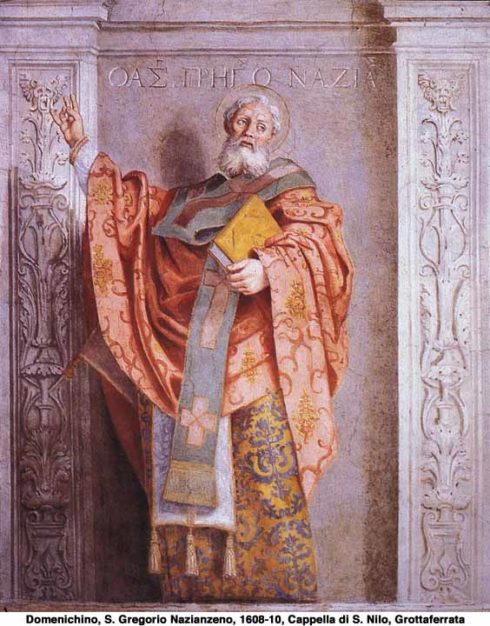
St Gregory of Nazianzen was the best friend of St Basil the Great. After studying together in Athens, they returned to their native Cappadocia (now Eastern Turkey) to serve the Lord. It was during the time of the Arian heresy which contested the full divinity of Christ and orthodox bishops were sorely needed who could teach the true doctrine of the Church with clarity and depth. Gregory, who admirably met these requirements, was made the bishop of the small town of Nazianzen but later was elevated to the highest ecclesiastical see after Rome, becoming the Patriarch of Constantinople. As such, he presided over the First Ecumenical Council of Constantinople in 381 which completed the creed that we commonly call the Nicene Creed, recited in Sunday worship by Catholics and Orthodox Christians.
St Gregory’s teaching was so profound and accurate that he is one of the few teachers in the history of the Church known as “the theologian.”
Basil and Gregory were defining figures as the early Church which sought to figure out just how to describe Jesus as fully human and fully divine. They helped the Church articulate this mystery and refute persistent strains of thought that would emphasise one aspect of Jesus’ nature over another. Both were largely responsible for safeguarding the faith that has guided the Church for thousands of years. Their doctrinal contributions are codified in the Nicene Creed we recite at Mass.
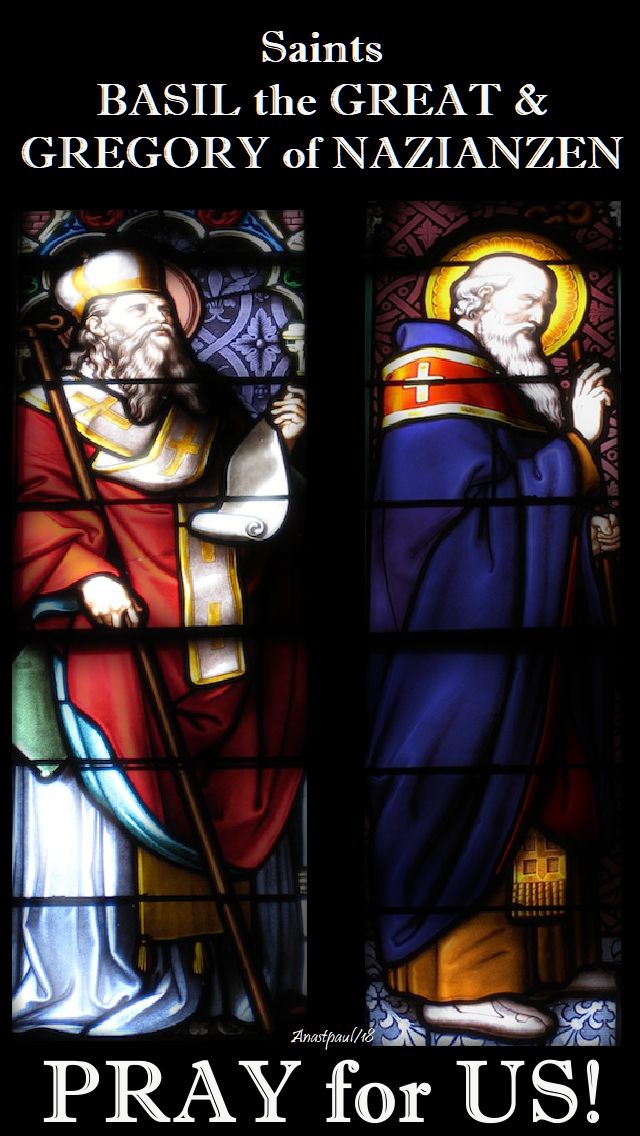
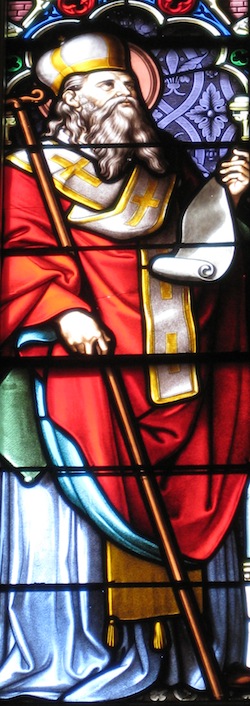
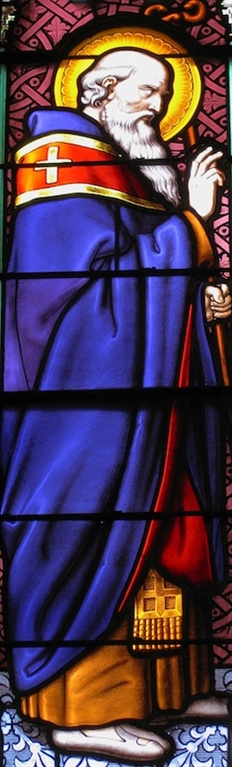
Both Basil and Gregory were declared doctors of the Church, a title given to 36 saints who are known for elucidating the faith by their words or example. Their relics rest in the reliquary chapel in the Basilica, and their images are captured in stained glass windows there.
Sts. Basil the Great and Gregory Nazianzen, friends and scholars who defended the faith, pray for us!
Quote/s of the Day – 1 January 2018 – The Solemnity of Mary, Mother of God and the Octave Day of the Nativity of Our Lord
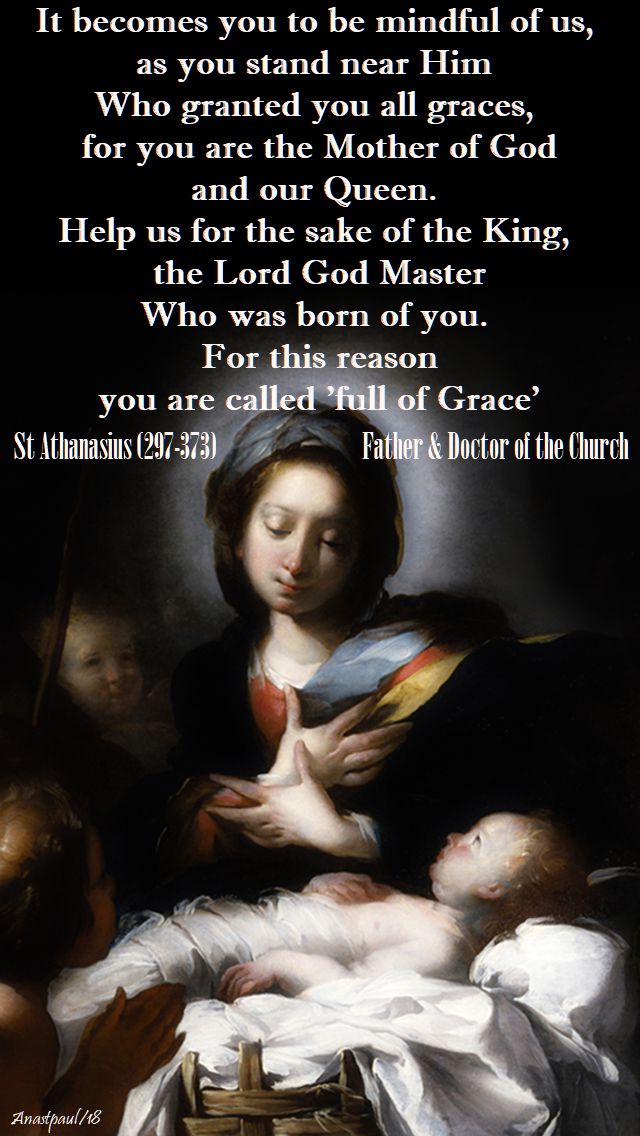
“It becomes you to be mindful of us, as you stand near Him Who granted you all graces, for you are the Mother of God and our Queen. Help us for the sake of the King, the Lord God Master Who was born of you. For this reason you are called ‘full of Grace’…”
St Athanasius (297-373) Father & Doctor of the Church
“If anyone does not believe that Holy Mary is the Mother of God, he is severed from the Godhead. If anyone should assert that He passed through the Virgin as through a channel and was not at once divinely and humanly formed in her (divinely, because without the intervention of a man; humanly, because in accordance with the laws of gestation), he is in like manner godless.”
St Gregory Nazianzen (330-390) Father & Doctor of the Church
“What the Catholic faith believes about Mary is based on what it believes about Christ and what it teaches about Mary, illumines in turn, its faith in Christ”
One Minute Reflection – 1 January 2018 – The Solemnity of Mary, Mother of God, the Octave Day of the Nativity of Our Lord and the first day of the Month of the Most Holy Name of Jesus
But Mary kept all these things, pondering them in her heart.…Luke 2:19
REFLECTIONS – “Today’s liturgy celebrates the solemnity of the Mother of God.
Mary is the one who was chosen to be Mother of the Redeemer, sharing intimately in his mission.
In the light of Christmas, the mystery of her divine motherhood is illumined.
Mary, Mother of Jesus who was born in the Bethlehem cave,
is also the Mother of every man and woman who comes into the world.
How is it possible not to commend to her the year that is beginning,
to implore a time of serenity and peace for all humanity?
On the day when this new year begins under the blessed gaze of the Mother of God,
let us invoke the gift of peace for each one and all.”…St Pope John Paul – 1997
PRAYER – God, our Father, since You gave mankind a saviour through blessed Mary, virgin and mother, grant that we may feel the power of her intercession when she pleads for us with Jesus Christ, Your Son, the author of life, who lives and reigns with You and the Holy Spirit, God forever and ever, amen.
Quote of the Day – 31 December – Feast of the Holy Family and the Seventh Day of the Octave
“God, to Whom Angels submit themselves and Who Principalities and Powers obey, was subject to Mary; and not only to Mary but Joseph too, for Mary’s sake [….]. God obeyed a human creature; this is humility without precedent. A human creature commands God! it is sublime beyond measure.“
Quote/s of the Day – 29 December – Fifth Day of the Octave and the Memorial of St Thomas a Becket
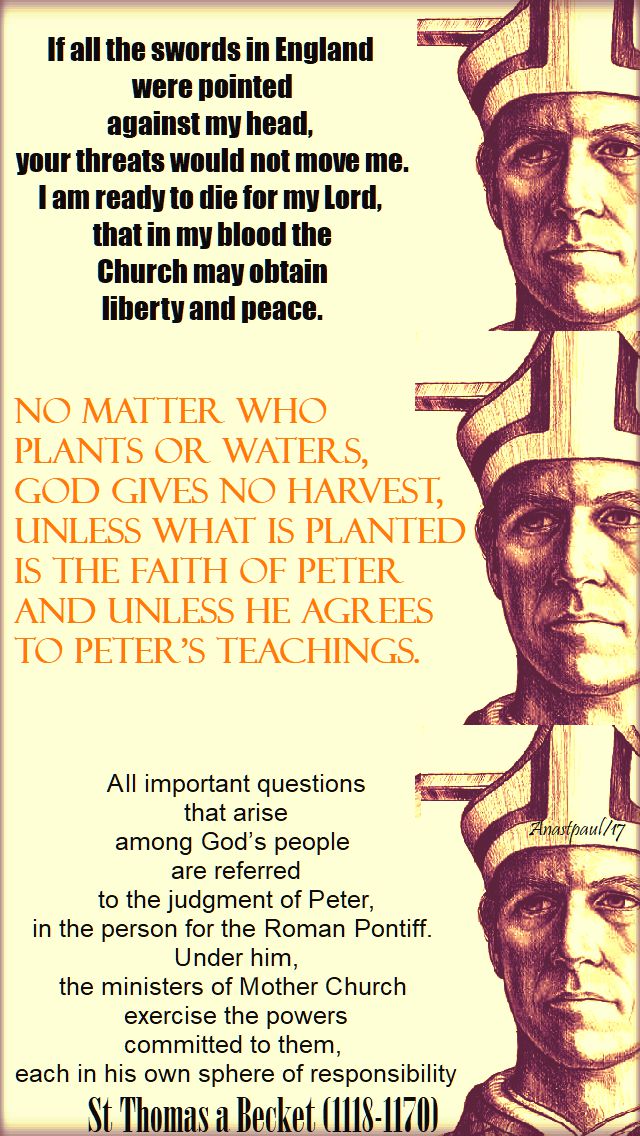
“If all the swords in England were pointed against my head, your threats would not move me. I am ready to die for my Lord, that in my blood the Church may obtain liberty and peace.”
“Many are needed to plant and water what has been planted now, that the faith has spread so far and there are so many people… No matter who plants or waters, God gives no harvest, unless what is planted is the faith of Peter and unless he agrees to Peter’s teachings.”
“All important questions that arise among God’s people are referred to the judgment of Peter, in the person for the Roman Pontiff. Under him the ministers of Mother Church exercise the powers committed to them, each in his own sphere of responsibility.”
“Hereafter, I want you to tell me, candidly and in secret, what people are saying about me. And if you see anything in me, that you regard as a fault, feel free to tell me in private. For from now on, people will talk about me but not to me. It is dangerous for men in power, if no-one dares to tell them, when they go wrong.” (St Thomas to a friend on his ordination)
One Minute Reflection – 29 December – Fifth Day of the Octave and the Memorial of St Thomas a Becket
I have fought the good fight, I have finished the course, I have kept the faith. From now on a merited crown awaits me….2 Timothy 4:7
REFLECTION – “Remember then how our fathers worked out their salvation; remember the sufferings through which the Church has grown and the storms the ship of Peter has weathered because it has Christ on board. Remember how the crown was attained by those whose sufferings gave new radiance to their faith. The whole company of saints bears witness to the unfailing truth, that without real effort no-one wins the crown.”……….St Thomas a Becket (1118-1170)
PRAYER – Almighty God, you enable st Thomas a Becket to lay down his life with undaunted spirit for the rights of Your Church. May his prayer help us to deny ourselves for Christ in this life and so find our true life in heaven. Through our Lord Jesus Christ, in union with the Holy Spirit, one God forever and ever, amen.























![[#Beginning of Shooting Data Section]Nikon D2002009/12/18 16:07:37.9JPEG (8-bit) NormalImage Size: Large (2592 x 3872)ColorLens: 55-200mm F/4-5.6 GFocal Length: 155mmExposure Mode: Aperture PriorityMetering Mode: Multi-Pattern1/3 sec - F/14Exposure Comp.: +1.3 EVSensitivity: ISO 160Optimize Image: NormalWhite Balance: Direct sunlightAF Mode: AF-CFlash Sync Mode: Flash Mode: Auto Flash Comp: Color Mode: Mode I (sRGB)Tone Comp.: AutoHue Adjustment: 0°Saturation: AutoSharpening: AutoImage Comment: Long Exposure NR: OffHigh ISO NR: Off[#End of Shooting Data Section]](https://i0.wp.com/anastpaul.com/wp-content/uploads/2018/01/basil-and-gregory-1.jpg?w=263&h=392&ssl=1 "basil and gregory (1)")








 AnaStpaul
You must be logged in to post a comment.