
Quote of the Day – 3 July – Feast of St Thomas Apostle
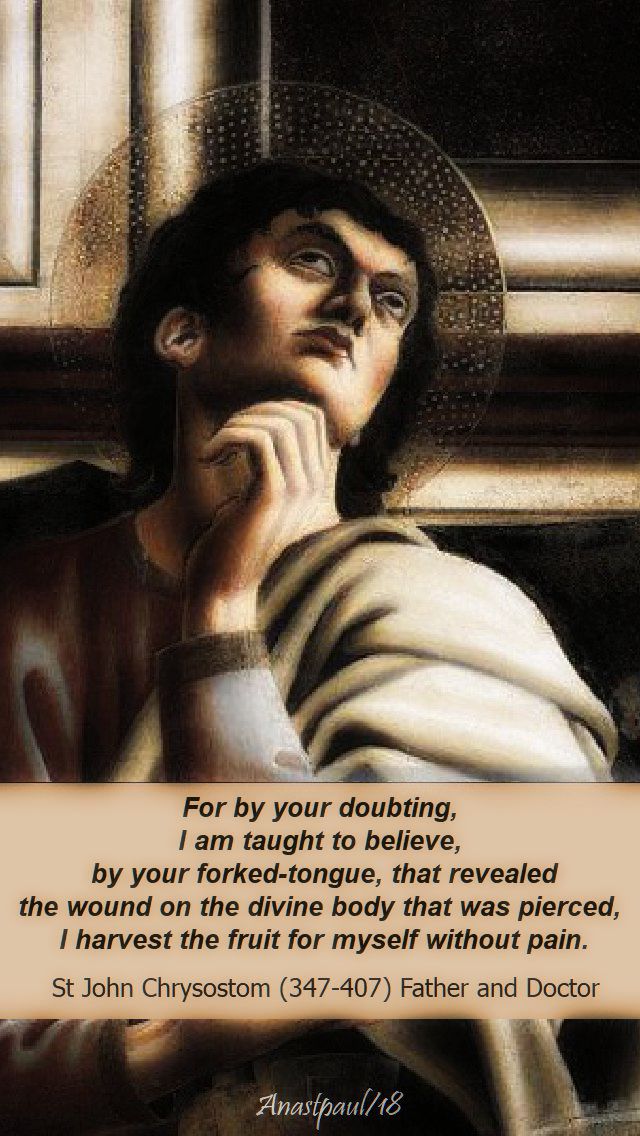
“For by your doubting, I am taught to believe,
by your forked-tongue, that revealed the wound
on the divine body that was pierced,
I harvest the fruit for myself without pain.”
Quote of the Day – 3 July – Feast of St Thomas Apostle
“For by your doubting, I am taught to believe,
by your forked-tongue, that revealed the wound
on the divine body that was pierced,
I harvest the fruit for myself without pain.”
One Minute Reflection – 3 July – Feast of St Thomas Apostle – Today’s Gospel: John 20:24-29.
Thomas, called Didymus, one of the Twelve, was not with them when Jesus came.
So the other disciples said to him, “We have seen the Lord.” But he said to them, “Unless I see the mark of the nails in his hands and put my finger into the nailmarks and put my hand into his side, I will not believe.”...John 20:24-25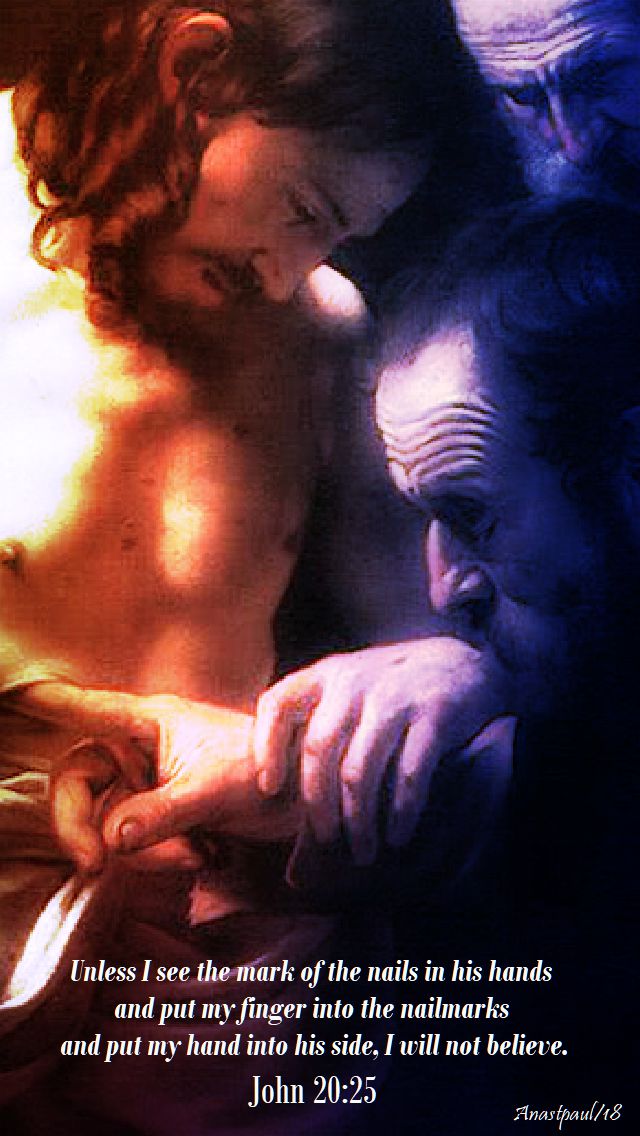
REFLECTION – “This was, therefore, a work of divine providence, that the separation of the disciple, would become a harbinger of increasing safety and surety. For if Thomas had not been absent, he would not have doubted; and, if he would not have doubted, he would not have sought strangely; and, if he would not have sought, he would not have felt; and, if he would not have felt, he would not have been convinced of the Lord and God; and, if he did not call Him Lord and God, then neither would we have been taught to hymn Him thus. For Thomas, by not being present, has led us towards the truth and later, became more confirmed regarding the faith.”… St John Chrysostom (347-407) Father and Doctor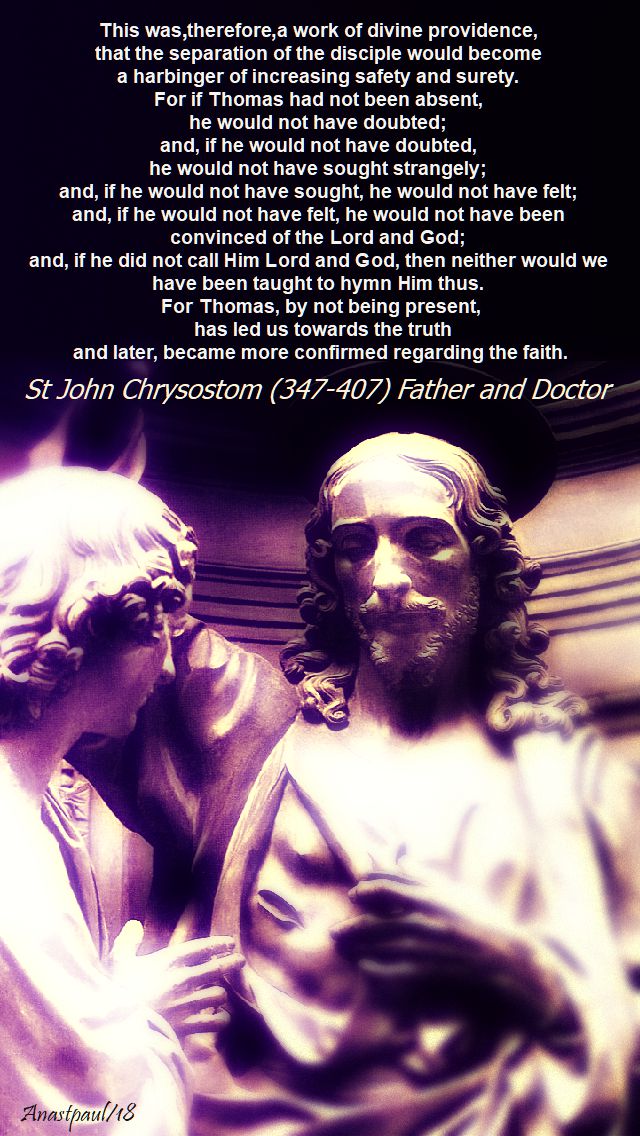
PRAYER – Father, let our celebration on the feast of Saint Thomas the Apostle, be the source of his unfailing help and protection. Fill us with Your life-giving grace through our faith in Your Son, Jesus the Christ, whom Thomas acknowledged to be his Lord and his God. We make our prayer, through our Lord Jesus in union with the Holy Spirit, one God with You, forever and ever, amen.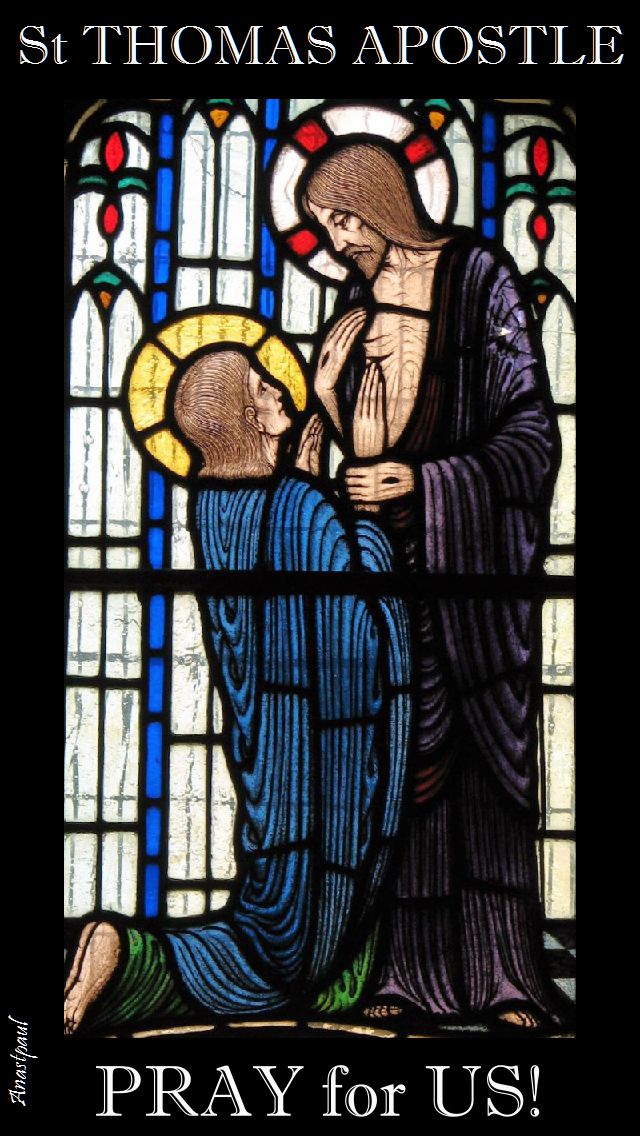
One Minute Reflection – 2 July – Monday of the Thirteenth Week, Year B – Today’s Gospel: Matthew 8:18-22 and the Memorial of Blessed Peter of Luxembourg (1369-1387)
Jesus answered him, “Foxes have dens and birds of the sky have nests, but the Son of Man has nowhere to rest his head.”…Matthew 8:20
REFLECTION – “Hence the blessed apostle Peter, when he was going up to the temple and was asked for alms by a lame man, said, “I have neither silver nor gold but what I do have I give you: in the name of Jesus Christ the Nazarene, rise and walk” (Acts 3:6)… And Peter, that poor man, who did not have anything to give him who asked for alms, bestowed so great a gift of divine grace that, not content with setting one man upright on his feet, he healed those many thousands of believers in their hearts by giving them faith.”…St Pope Leo the Great (400-461) Father & Doctor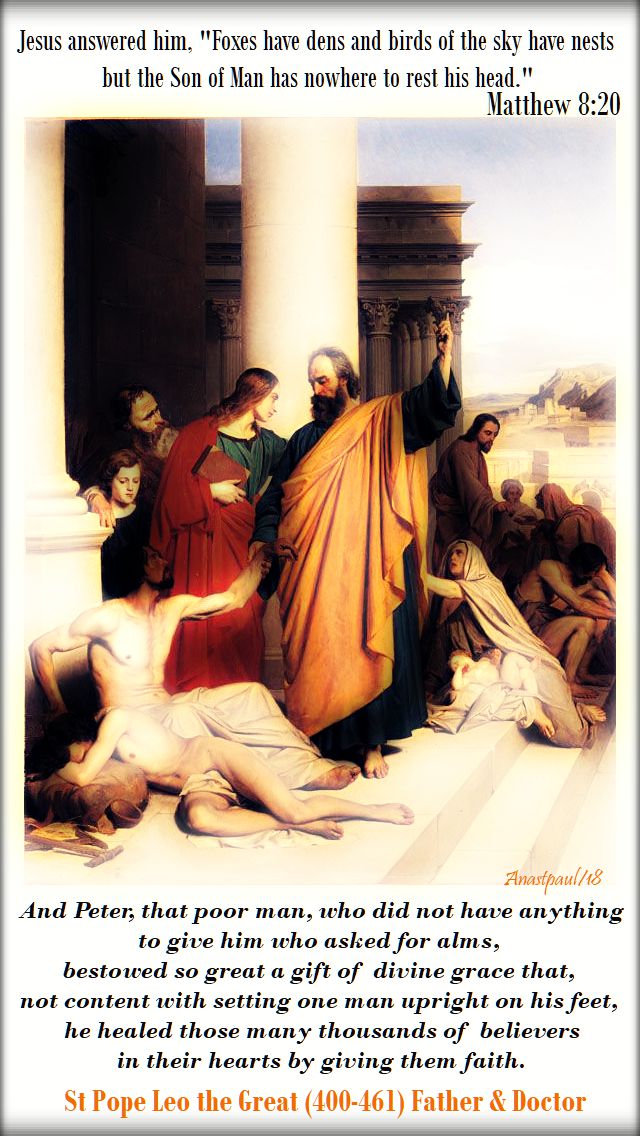
PRAYER – Lord God, be the beginning and the end of all that we are and do and say. Prompt our actions with Your grace, may Your light be our only way, may Your commands be our only need and complete all, with Your all-powerful help. Blessed Peter of Luxembourg, who was the rich young man made poor, pray for us! We make our prayer through Christ our Lord in the unity of the Holy Spirit, one God with You, forever and ever, amen.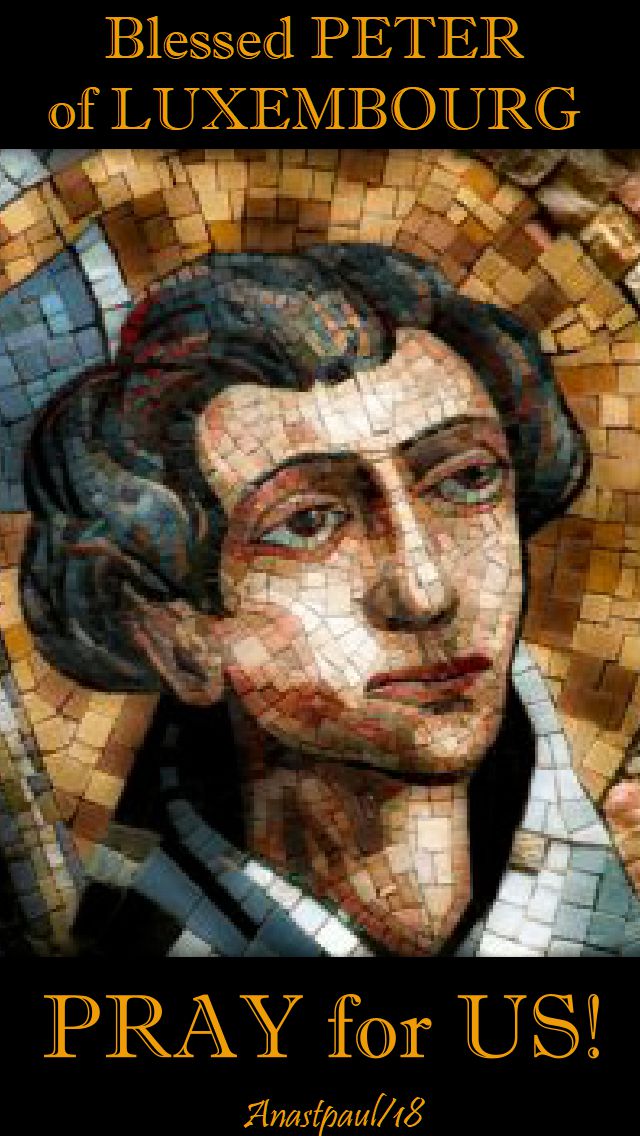
One Minute Reflection – 1 July – The Thirteenth Sunday in Ordinary Time, Year B – Today’s Gospel Mark 5:21-43
“I say to you, arise!”...Mark 5:41
REFLECTION – “Then He entered the room where the child was and, taking the child by the hand, said to her: ‘Talitha koum’. The girl arose immediately and walked around.’ Let us desire Jesus to touch us and at once we too will walk. Whether we are paralysed or whether we commit wrongful deeds, we find ourselves unable to walk. Perhaps we are lying on the bed of our sins as if on a real bed. No sooner will Jesus touch us than we shall at once be healed.”…St Jerome (347-420) Father & Doctor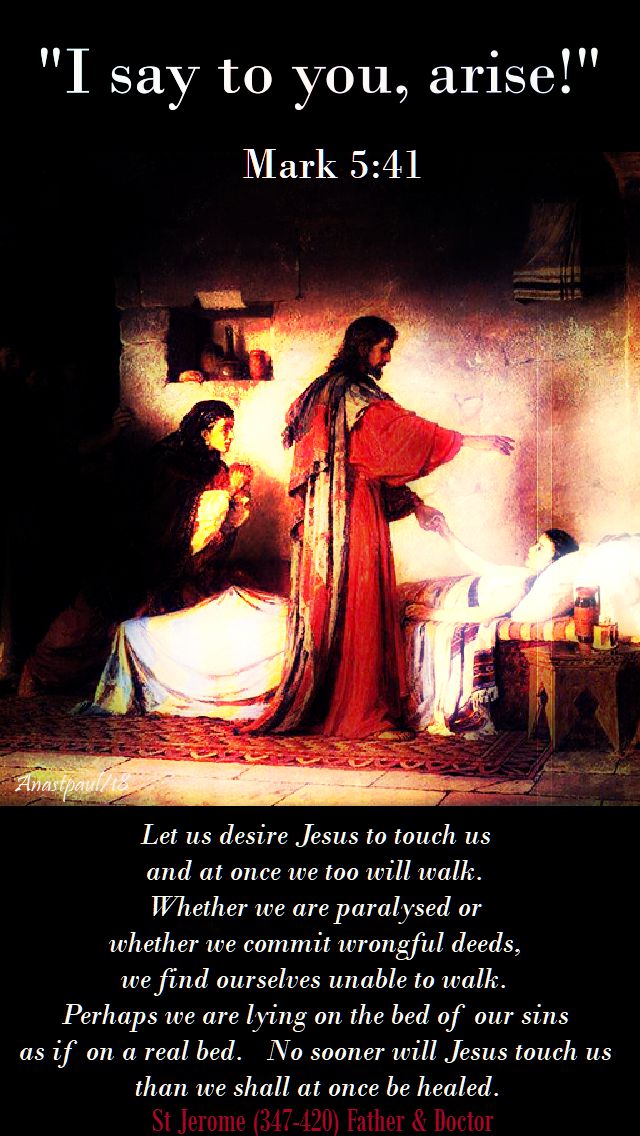
PRAYER – “By Your grace, Lord, touch our hands, we who are lying down; raise us up from the bed of our sins; cause us to walk. When we have walked, give the command that we should be given something to eat. Lying down, we cannot walk and, if we are not upright, we cannot receive the body of Christ, to whom be glory, with the Father and the Holy Spirit, for endless ages. Amen”…St Jerome (347-420) Father & Doctor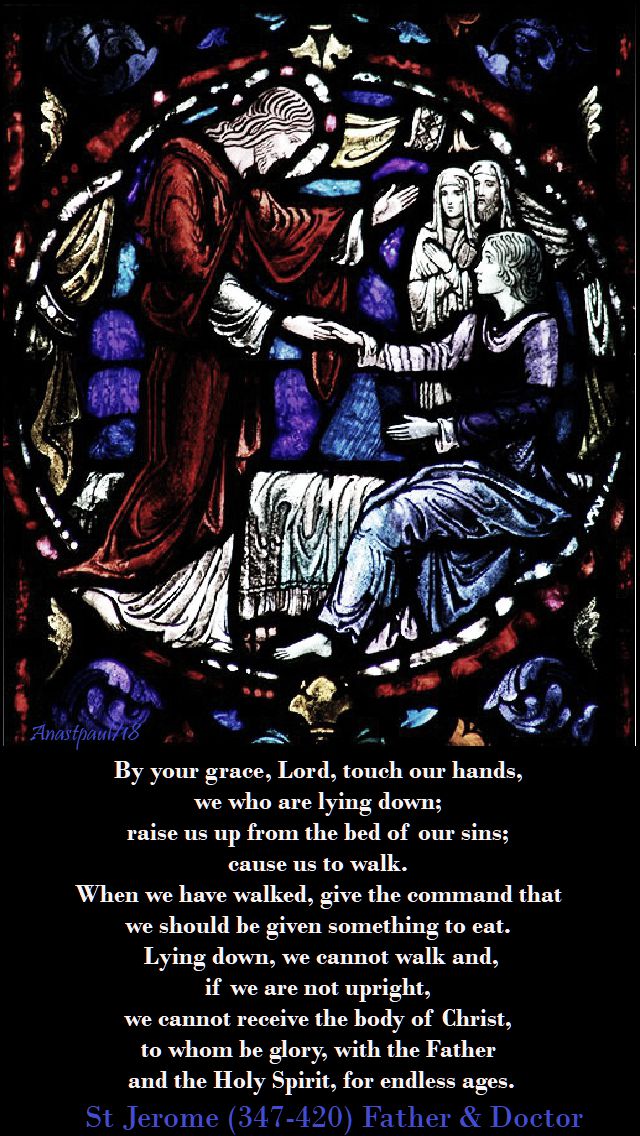
One Minute Reflection – 30 June – Saturday of the Twelth Week in Ordinary Time, Year B – Today’s Gospel Matthew 8:5-17 – The Memorial of The First Holy Martyrs of the Church of Rome & Blessed Raymond Lull T.O.S.F. (c 1232 – c1315) Martyr
“I say to you, many will come, from the east and the west and will recline with Abraham, Isaac and Jacob, at the banquet in the kingdom of heaven.”…Matthew 8:11
REFLECTION – “And the saints who preceded us are also waiting for us, slow and lazy as we are. Their joy is not perfect so long as there is reason to weep over our sins. The apostle testifies to this for me when he says: “Without us, they were not to be made perfect.” (Heb 11:40) So see: Abraham is waiting. Isaac, Jacob and all the prophets are waiting for us to possess perfect beatitude with us… If you are holy, you will have joy when you leave this life but that joy will only be complete when not one of the members of the Body we are all to form together is missing anymore. You will also wait for others in the same way as you were awaited. Now if you who are only one member cannot have perfect joy if another member is absent, how much more our Lord and Saviour, who is both the author and the head of the entire Body… Then we will have come to the maturity of which the apostle Paul said: “The life I live now is not my own; Christ is living in me.” (Gal 2:20) Then our pontiff will drink the new wine in the new heaven, on the new earth, in the new human person, with the new human persons, with those who sing the new song.”…Origen (c185-253)
PRAYER – Grant us Lord, a true knowledge of salvation, so that freed from fear and from the power of our foes, we may serve You faithfully, all the days of our life and attain the light and joy of our heavenly home. By the blood of the Martyrs and the glory of the Communion of Saints, strengthen us with their faith and endurance. We make our prayer through Christ our Lord, in unity with You and the Holy Spirit, one God, amen.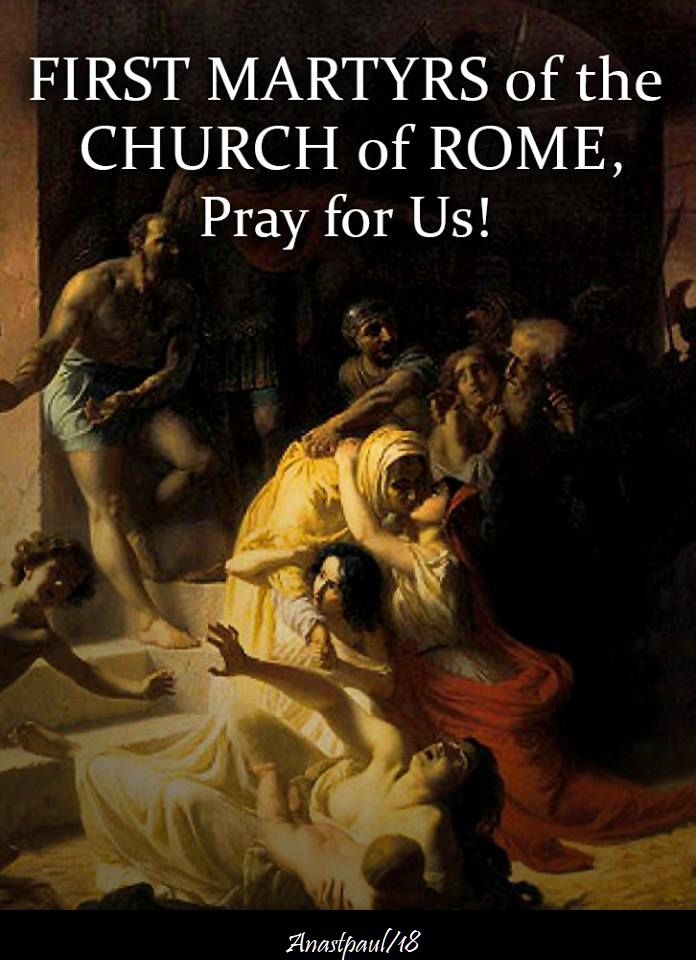

Quote/s of the Day – 29 June – The Solemnity of Saints Peter and Paul
“Their sound has gone out into all the earth
and their words to the ends of the world”

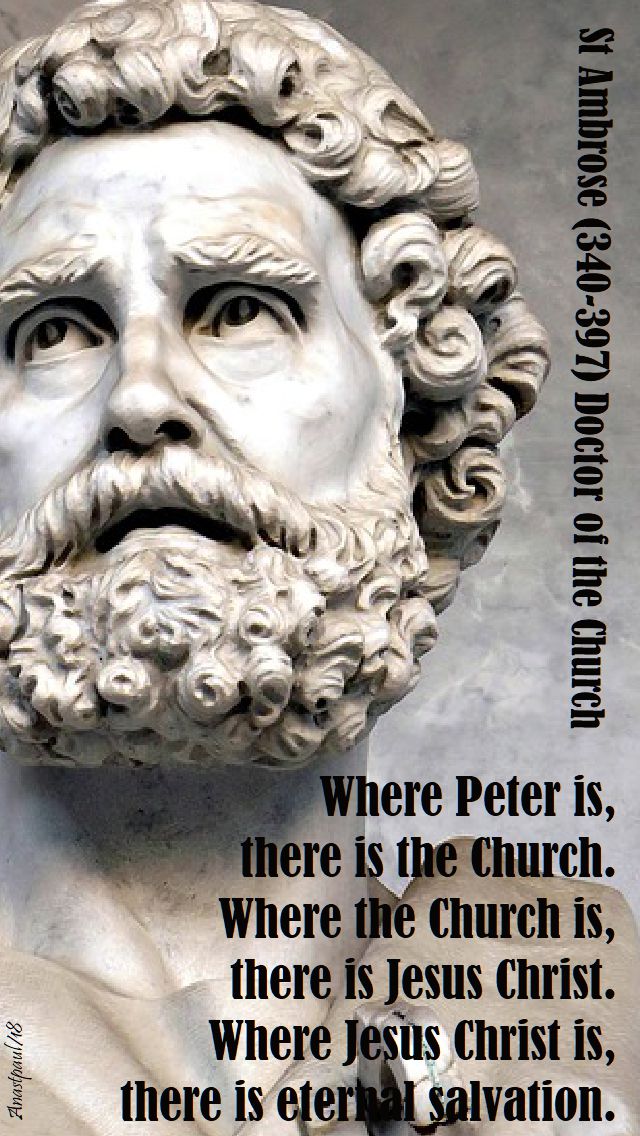
“Where Peter is,
there is the Church.
Where the Church is,
there is Jesus Christ.
Where Jesus Christ is,
there is eternal salvation.”

“There is one day for the passion of two apostles.
But these two also were as one;
although they suffered on different days, they were as one.
Peter went first, Paul followed.
We are celebrating a feast day, consecrated for us by the blood of the apostles.
Let us love their faith, their lives, their labours,
their sufferings, their confession of faith, their preaching.”

“There must be general rejoicing, dearly beloved,
over this holy company whom God has appointed
for our example in patience and for our confirmation in faith.
But we must glory even more in the excellence of their fathers,
Peter and Paul, whom the grace of God has raised
to such a height among all the members of the Church
that He has set them like twin lights
of eyes in that Body whose head is Christ.”

Today the Lord repeats to me, to you…: Follow Me!
Waste no time in questioning or in useless chattering;
do not dwell on secondary things but look to what is essential and follow Me.
Follow Me without regard for the difficulties.
Follow Me in preaching the Gospel.
Follow Me by the witness of a life shaped by the grace you received in baptism….. and holy orders.
Follow Me by speaking of Me, to those with whom you live, day after day,
in your work, your conversations and among your friends.
Follow Me by proclaiming the Gospel to all, especially to the least among us,
so that no one will fail to hear the word of life,
which sets us free from every fear
and enables us to trust in the faithfulness of God.
Follow Me!

Wishing you all a Holy and Blessed Solemnity of Saints Peter and Paul

This day has been consecrated for us by the Martyrdom of the blessed apostles Peter and Paul. It is not some obscure martyrs we are talking about. “Their sound has gone out into all the earth and their words to the ends of the world” (Psalm 19). These martyrs had seen what they proclaimed, they pursued justice by confessing the truth, by dying for the truth.

The blessed Peter, the first of the Apostles, the ardent lover of Christ, who was found worthy to hear, “And I say to you, that you are Peter” (Matthew 16:13-20). He himself, you see, had just said, “You are the Christ, the Son of the living God.” Christ said to him, “And I say to you that you are Peter, and upon this rock I will build my Church.” Upon this rock I will build the faith you have just confessed. Upon your words, “You are the Christ, the Son of the living God,” I will build My Church, because you are Peter. Peter comes from petra, meaning a rock. Peter, “Rocky”, from “rock” not “rock” from “Rocky”. Peter comes from the word for a rock in exactly the same way as the name Christian comes from Christ.
Before His passion the Lord Jesus, as you know, chose those disciples of His whom He called apostles. Among these it was only Peter who almost everywhere, was given the privilege of representing the whole Church. It was in the person of the whole Church, which he alone represented, that he was privileged to hear, “To you will I give the keys of the kingdom of heaven.” After all, it is not just one man that received these keys but the Church in its unity. So this is the reason for Peter’s acknowledged pre-eminence, that he stood for the Church’s universality and unity, when he was told, “To you I am entrusting,” what has in fact been entrusted to all. To show you that it is the Church which has received the keys of the kingdom of heaven, listen to what the Lord says in another place to all His apostles: “Receive the Holy Spirit” and immediately afterwards, “Whose sins you forgive, they will be forgiven them; whose sins you retain, they will be retained” (John 20:22-23).
Quite rightly, too, did the Lord after His resurrection entrust His sheep to Peter to be fed (Jn. 21: 15-19). It is not, you see, that he alone among the disciples was fit to feed the Lord’s sheep but when Christ speaks to one man, unity is being commended to us. And He first speaks to Peter, because Peter is the first among the apostles. Do not be sad, Apostle. Answer once, answer again, answer a third time. Let confession conquer three times with love, because self-assurance was conquered three times by fear. What you had bound three times must be loosed three times. Loose through love what you had bound through fear. And for all that, the Lord once and again, and a third time, entrusted His sheep to Peter.


There is one day for the passion of two apostles. But these two also were as one; although they suffered on different days, they were as one. Peter went first, Paul followed.
We are celebrating a feast day, consecrated for us by the blood of the apostles. Let us love their faith, their lives, their labours, their sufferings, their confession of faith, their preaching.
O God, who on the Solemnity of the Apostles Peter and Paul
give us the noble and holy joy of this day,
grant, we pray, that Your Church
may in all things follow the teaching
of those through whom she received
the beginnings of right religion.
Through our Lord Jesus Christ, Your Son,
who lives and reigns with You in the unity of the Holy Spirit,
one God, forever and ever.
Amen

Thought for the Day – 28 June – The Memorial of St Irenaeus of Lyons (c 135 – c 202) Father of the Church
172 Through the centuries, in so many languages, cultures, peoples and nations, the Church has constantly confessed this one faith, received from the one Lord, transmitted by one Baptism and grounded in the conviction, that all people have only one God and Father. St Irenaeus of Lyons, a witness of this faith, declared:
173 “Indeed, the Church, though scattered throughout the whole world, even to the ends of the earth, having received the faith from the apostles and their disciples. . . guards [this preaching and faith] with care, as dwelling in but a single house and similarly believes as if having but one soul and a single heart and preaches, teaches and hands on this faith with a unanimous voice, as if possessing only one mouth.”
174 “For though languages differ throughout the world, the content of the Tradition is one and the same. The Churches established in Germany have no other faith or Tradition, nor do those of the Iberians, nor those of the Celts, nor those of the East, of Egypt, of Libya, nor those established at the centre of the world. . .” The Church’s message “is true and solid, in which one and the same way of salvation appears throughout the whole world.”
175 “We guard with care the faith that we have received from the Church, for without ceasing, under the action of God’s Spirit, this deposit of great price, as if in an excellent vessel, is constantly being renewed and causes the very vessel that contains it to be renewed.”
“The Spirit of wisdom and understanding, the Spirit of counsel and strength, the Spirit of knowledge and the fear of God came down upon the Lord and the Lord in turn gave this Spirit to His Church, sending the Advocate from heaven into all the world into which, according to His own words, the devil too had been cast down like lightning. If we are not to be scorched and made unfruitful, we need the dew of God. Since we have our accuser, we need an Advocate as well.
And so the Lord in His pity for man, who had fallen into the hands of brigands, having Himself bound up his wounds and left for his care two coins, bearing the royal image, entrusted him to the Holy Spirit. Now, through the Spirit, the image and inscription of the Father and the Son have been given to us and it is our duty to use the coin committed to our charge and make it yield a rich profit for the Lord.”

Quote/s of the Day – 28 June – The Memorial of St Irenaeus of Lyons (c 135 – c 202) Father of the Church
“Our way of thinking,
is attuned to the Eucharist
and the Eucharist in turn,
confirms our way of thinking.”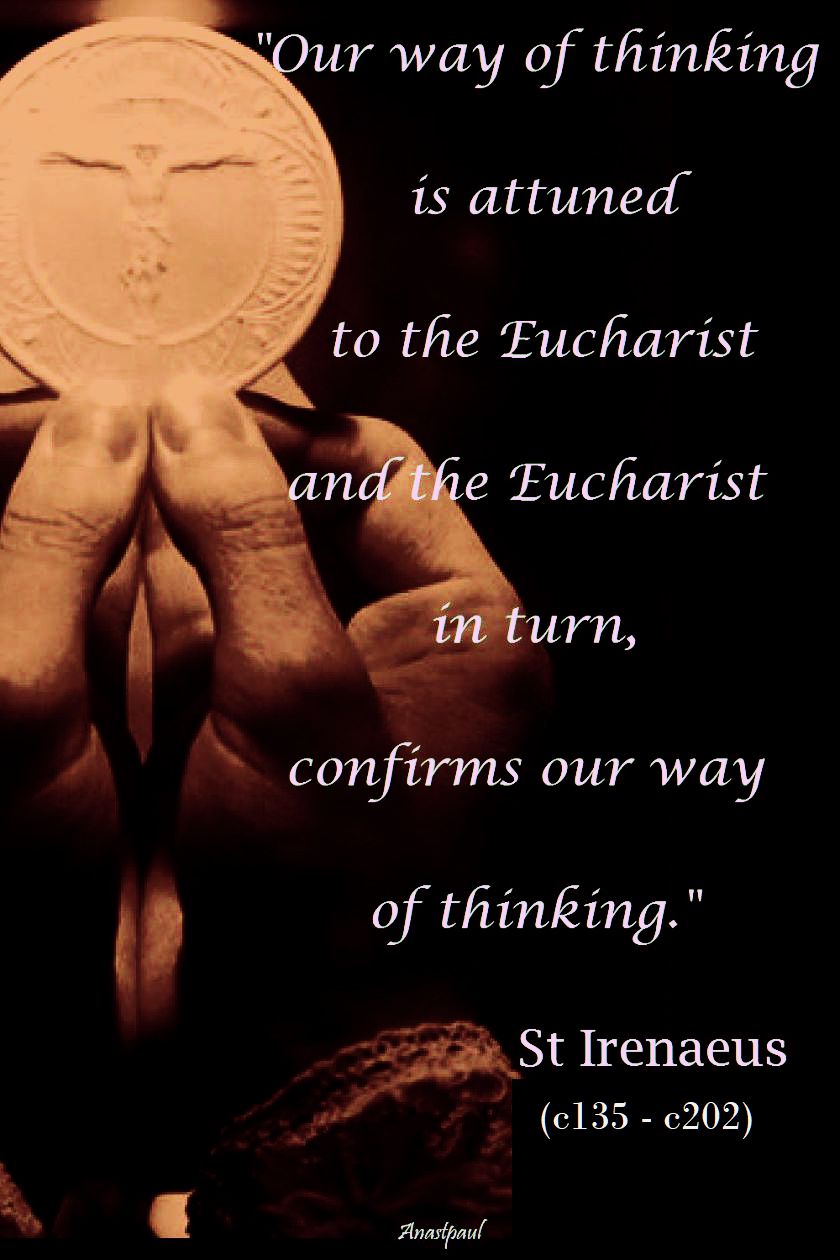
“Jesus Christ, in His infinite love,
has become what we are,
in order that He may make us
entirely what He is.”
“It is not you that shapes God.
It is God that shapes you.
If then you are the work of God
await the Hand of the artist who does
all things in due season.
Offer Him your heart,
soft and tractable
and keep the form in which the artist
has fashioned you.
Let the clay be moist
lest you go hard
and lose the imprint of His Fingers.”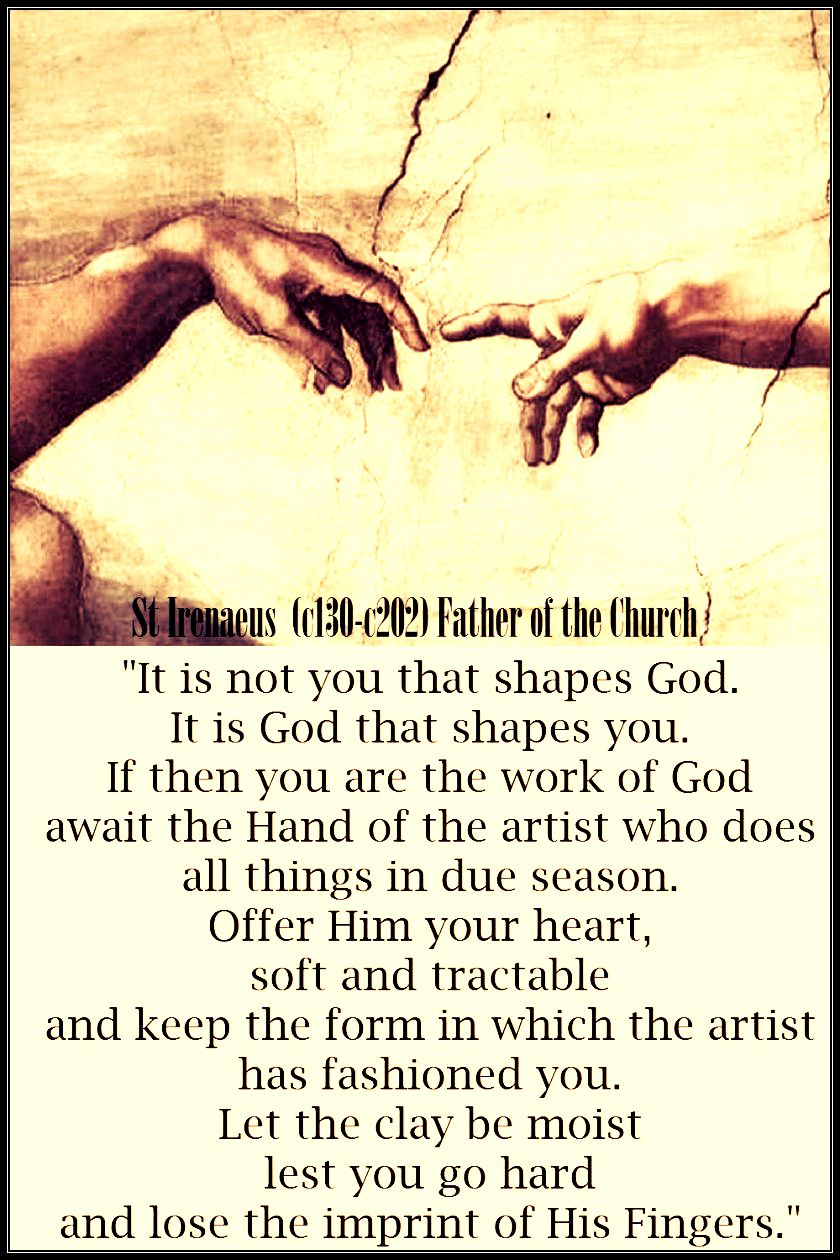
“As long as anyone has the means
of doing good to his neighbours
and does not do so,
he shall be reckoned a stranger
to the love of the Lord.”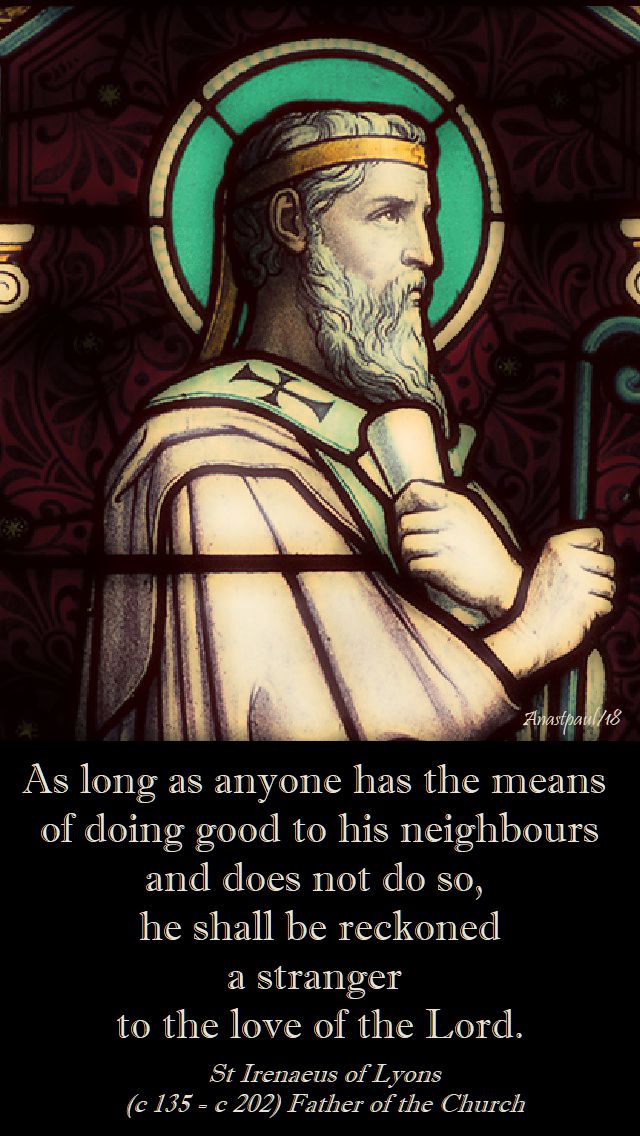
The business of the Christian
is nothing else but to be
ever preparing for death.
“The universal Church, that is, the faithful everywhere, must be in agreement with this Church because of her outstanding superiority.”
“Being obedient she (Mary)
became the cause of salvation for herself
and for the whole human race.
The knot of Eve’s disobedience was untied
by Mary’s obedience:
what the virgin Eve bound through her disbelief,
Mary loosened by her faith.”

One Minute Reflection – 28 June – The Memorial of St Irenaeus of Lyons (c 135 – c 202) Father of the Church – Today’s Readings: 2 Kings 24:8-17, Psalm 79:1-5, 8-9, Matthew 7:21-29
Help us, O God of our salvation, for the glory of thy name; deliver us and forgive our sins, for thy name’s sake!…Psalm 79(78):9
REFLECTION – “For this is why the Word became man and the Son of God became the Son of man – so that man, by entering into communion with the Word and thus receiving divine sonship, might become a son of God.”… St Irenaeus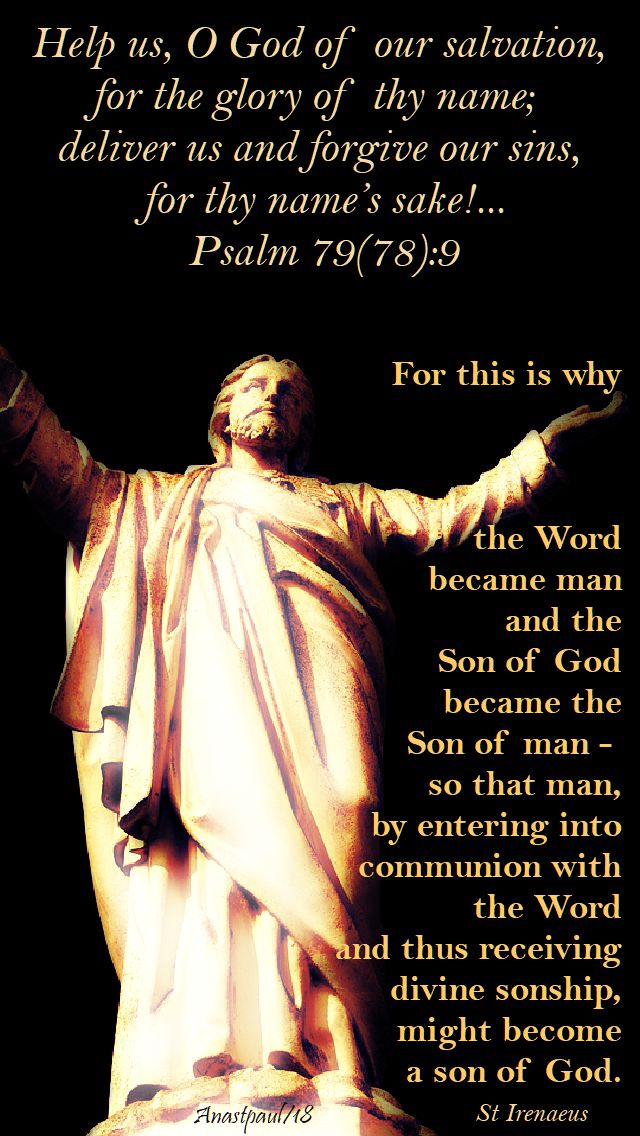
PRAYER – Grant us Lord, a true knowledge of salvation, so that, freed from fear and from the power of our foes, we may serve You faithfully, according to Your Word, all the days of our life. Grant that by the prayers of St Irenaeus, we may always work for the truth, for unity and for love and peace. We make our prayer through our Lord Jesus Christ, in the unity of the Holy Spirit, one God with You, forever, amen.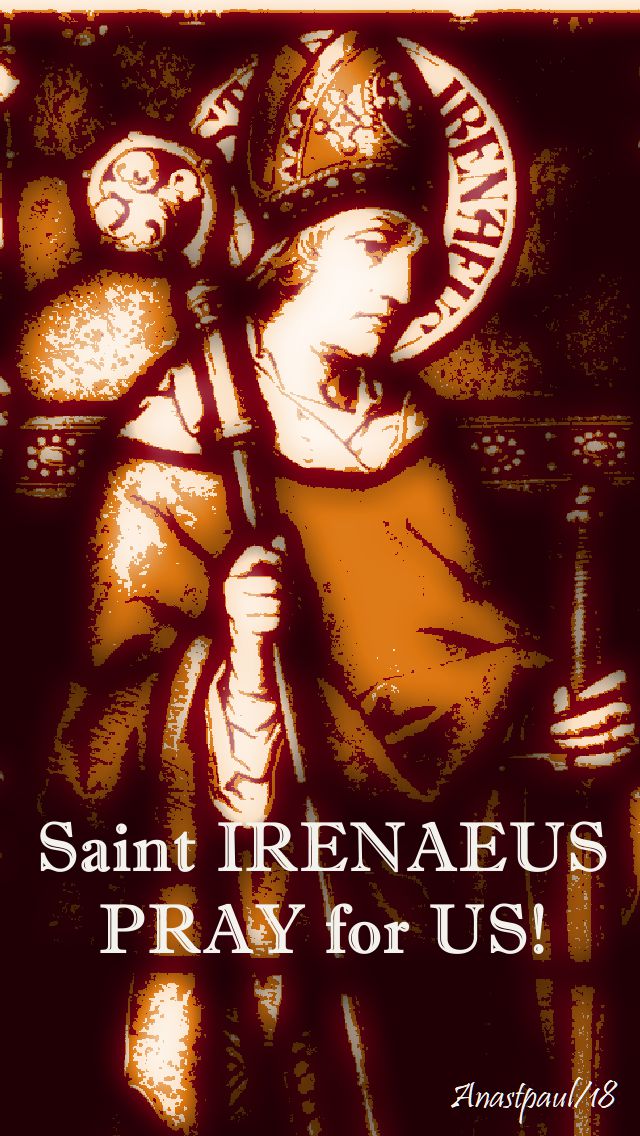
Our Morning Offering – 28 June – The Memorial of St Irenaeus of Lyons (c 135 – c 202) Father of the Church
O Lamb of God
By St Irenaeus
O Lamb of God,
who takes away the sin of the world,
look upon us and have mercy upon us;
You who art Yourself, both victim and Priest,
Yourself, both Reward and Redeemer,
keep safe from all evil
those whom You have redeemed,
O Saviour of the world.
Amen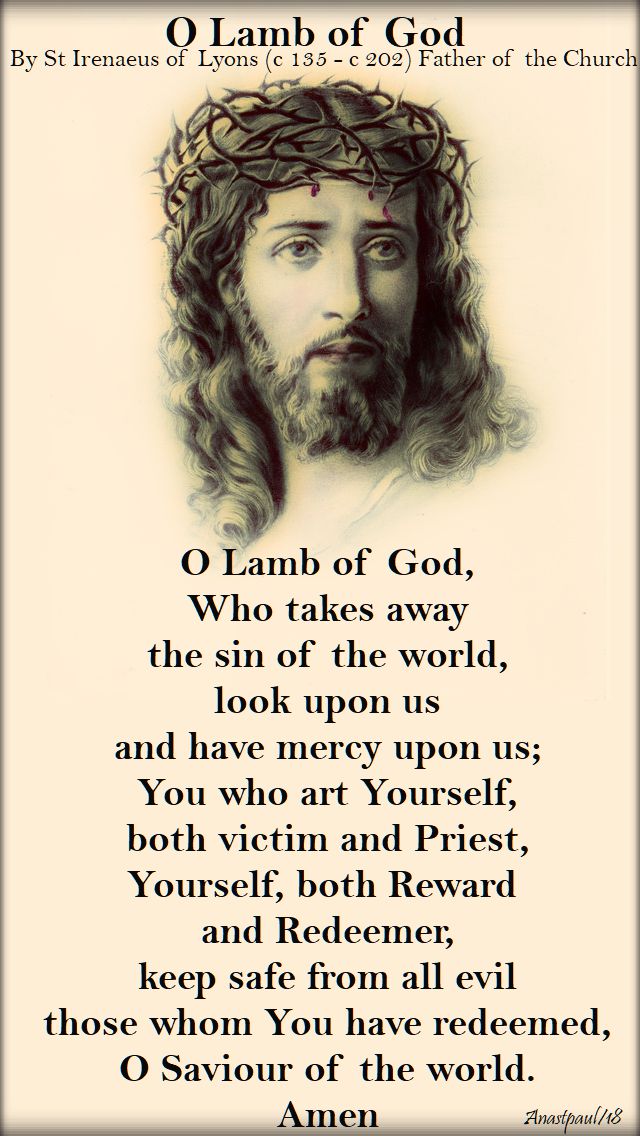
Saint of the Day – 28 June – St Irenaeus of Lyons (c 135 – c 202) Father of the Church, Bishop, Theologian, Writer, Confessor, Defender of the Faith, Apologist. St Irenaeus was born in c130 in Smyrna, Asia Minor (modern Izmir, Turkey) and is presumed to have been martyred in c 202 in Lyons, France.
In the Catechesis on the prominent figures of the early Church, today we come to the eminent personality of St Irenaeus of Lyons. The biographical information on him comes from his own testimony, handed down to us by Eusebius in his fifth book on Church History.
Irenaeus was, in all probability, born in Smyrna (today, Izmir in Turkey) in about 135-140, where in his youth, he attended the school of Bishop Polycarp, a disciple in his turn of the Apostle John. We do not know when he moved from Asia Minor to Gaul but his move must have coincided with the first development of the Christian community in Lyons, here, in 177, we find Irenaeus listed in the college of presbyters. In that very year, he was sent to Rome, bearing a letter from the community in Lyons, to Pope Eleutherius. His mission to Rome saved Irenaeus from the persecution of Marcus Aurelius which took a toll of at least 48 martyrs, including the 90-year old Bishop Pontinus of Lyons, who died from ill-treatment in prison. Thus, on his return, Irenaeus was appointed Bishop of the city. The new Pastor devoted himself without reserve to his episcopal ministry which ended in about 202-203, perhaps with martyrdom.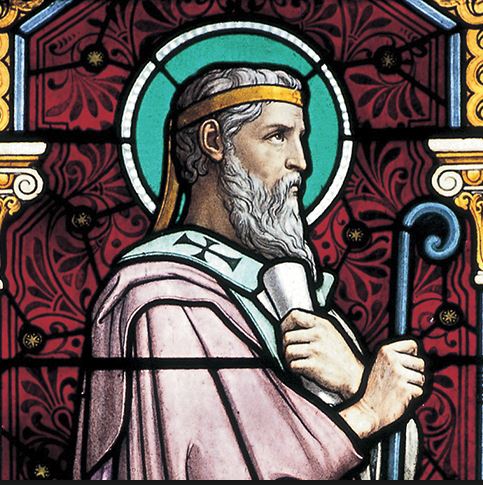
Irenaeus was first and foremost a man of faith and a Pastor. Like a good Pastor, he had a good sense of proportion, a wealth of doctrine and missionary enthusiasm. As a writer, he pursued a twofold aim, to defend true doctrine from the attacks of heretics and to explain the truth of the faith clearly. His two extant works – the five books of The Detection and Overthrow of the False Gnosis and Demonstration of the Apostolic Teaching (which can also be called the oldest “catechism of Christian doctrine”) – exactly corresponded with these aims. In short, Irenaeus can be defined as the champion in the fight against heresies.
The second-century Church was threatened by the so-called Gnosis, a doctrine which affirmed that the faith taught in the Church was merely a symbolism for the simple who were unable to grasp difficult concepts, instead, the initiates, the intellectuals – Gnostics, they were called – claimed to understand what was behind these symbols and thus formed an elitist and intellectualist Christianity. Obviously, this intellectual Christianity became increasingly fragmented, splitting into different currents with ideas that were often bizarre and extravagant, yet attractive to many. One element these different currents had in common was “dualism” – they denied faith in the one God and Father of all, Creator and Saviour of man and of the world. To explain evil in the world, they affirmed the existence, besides the Good God, of a negative principle. This negative principle was supposed to have produced material things, matter.
Firmly rooted in the biblical doctrine of creation, Irenaeus refuted the Gnostic dualism and pessimism which debased corporeal realities. He decisively claimed the original holiness of matter, of the body, of the flesh no less than of the spirit. But his work went far beyond the confutation of heresy, in fact, one can say, that he emerges as the first great Church theologian who created systematic theology, he himself speaks of the system of theology, that is, of the internal coherence of all faith. At the heart of his doctrine is the question of the “rule of faith” and its transmission. For Irenaeus, the “rule of faith” coincided in practice with the Apostles’ Creed, which gives us the key for interpreting the Gospel, for interpreting the Creed in light of the Gospel. The Creed, which is a sort of Gospel synthesis, helps us understand what it means and how we should read the Gospel itself.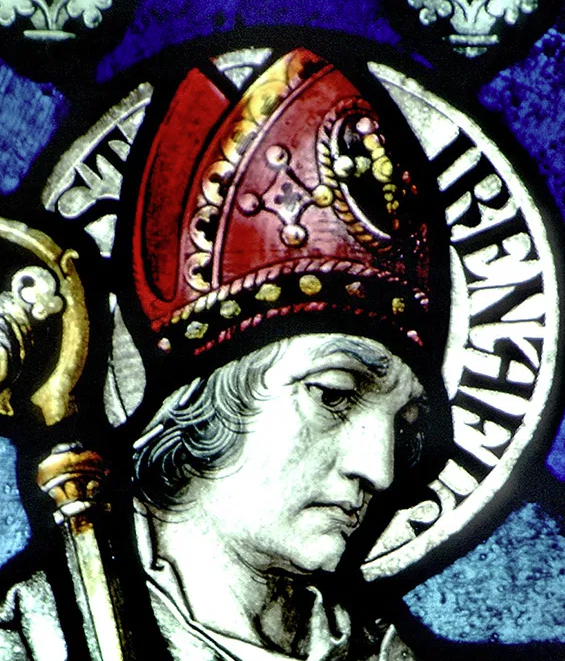
In fact, the Gospel preached by Irenaeus is the one he was taught by Polycarp, Bishop of Smyrna, and Polycarp’s Gospel dates back to the Apostle John, whose disciple Polycarp was.
The true teaching, therefore, is not that invented by intellectuals which goes beyond the Church’s simple faith. The true Gospel is the one imparted by the Bishops who received it in an uninterrupted line from the Apostles. They taught nothing except this simple faith, which is also the true depth of God’s revelation. Thus, Irenaeus tells us, there is no secret doctrine concealed in the Church’s common Creed. There is no superior Christianity for intellectuals. The faith publicly confessed by the Church is the common faith of all. This faith alone is apostolic, it is handed down from the Apostles, that is, from Jesus and from God. In adhering to this faith, publicly transmitted by the Apostles to their successors, Christians must observe what their Bishops say and must give special consideration to the teaching of the Church of Rome, pre-eminent and very ancient. It is because of her antiquity that this Church has the greatest apostolicity; in fact, she originated in Peter and Paul, pillars of the Apostolic College. All Churches must agree with the Church of Rome, recognising in her the measure of the true Apostolic Tradition, the Church’s one common faith.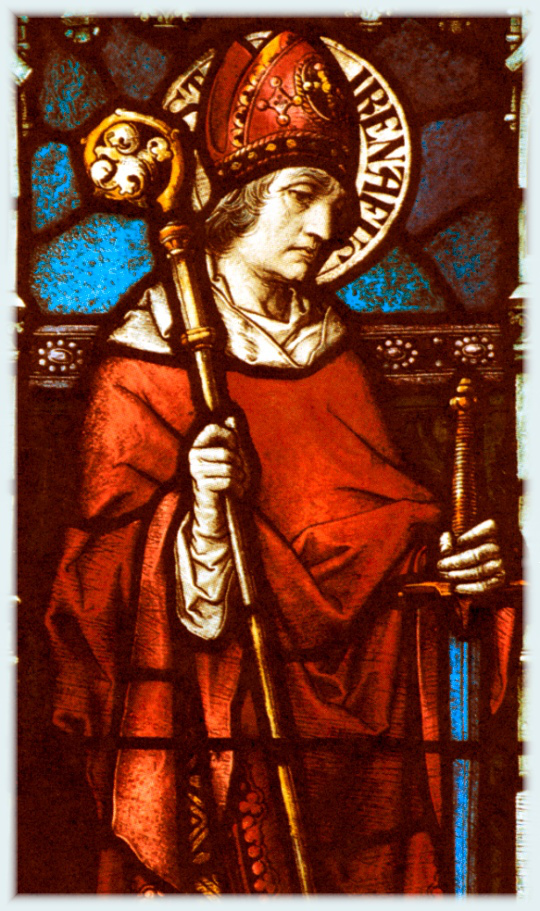
With these arguments, summed up very briefly here, Irenaeus refuted the claims of these Gnostics, these intellectuals, from the start. First of all, they possessed no truth superior to that of the ordinary faith, because what they said was not of apostolic origin, it was invented by them. Secondly, truth and salvation are not the privilege or monopoly of the few but are available to all through the preaching of the Successors of the Apostles, especially of the Bishop of Rome. In particular – once again disputing the “secret” character of the Gnostic tradition and noting its multiple and contradictory results – Irenaeus was concerned to describe the genuine concept of the Apostolic Tradition which we can sum up here in three points.
a) Apostolic Tradition is “public”, not private or secret. Irenaeus did not doubt that the content of the faith transmitted by the Church is that received from the Apostles and from Jesus, the Son of God. There is no other teaching than this. Therefore, for anyone who wishes to know true doctrine, it suffices to know “the Tradition passed down by the Apostles and the faith proclaimed to men” – a tradition and faith that “have come down to us through the succession of Bishops” (Adversus Haereses, 3, 3, 3-4). Hence, the succession of Bishops, the personal principle and Apostolic Tradition, the doctrinal principle, coincide.
b) Apostolic Tradition is “one”. Indeed, whereas Gnosticism was divided into multiple sects, Church Tradition is one in its fundamental content, which – as we have seen – Irenaeus calls precisely regula fidei or veritatis – and thus, because it is one, it creates unity through the peoples, through the different cultures, through the different peoples; it is a common content like the truth, despite the diversity of languages and cultures. A very precious saying of St Irenaeus is found in his book Adversus Haereses: “The Church, though dispersed throughout the world… having received [this faith from the Apostles]… as if occupying but one house, carefully preserves it. She also believes these points [of doctrine] just as if she had but one soul and one and the same heart and she proclaims them and teaches them and hands them down with perfect harmony, as if she possessed only one mouth. For, although the languages of the world are dissimilar, yet the import of the tradition is one and the same. For the Churches which have been planted in Germany do not believe or hand down anything different, nor do those in Spain, nor those in Gaul, nor those in the East, nor those in Egypt, nor those in Libya, nor those which have been established in the central regions of the world” (1, 10, 1-2). Already at that time – we are in the year 200 – it was possible to perceive the Church’s universality, her catholicity and the unifying power of the truth that unites these very different realities, from Germany, to Spain, to Italy, to Egypt, to Libya, in the common truth revealed to us by Christ.
c) Lastly, the Apostolic Tradition, as he says in the Greek language in which he wrote his book, is “pneumatic”, in other words, spiritual, guided by the Holy Spirit, in Greek, the word for “spirit” is “pneuma”. Indeed, it is not a question of a transmission entrusted to the ability of more or less learned people but to God’s Spirit, who guarantees fidelity to the transmission of the faith.
This is the “life” of the Church, what makes the Church ever young and fresh, fruitful with multiple charisms.
For Irenaeus, Church and Spirit were inseparable: “This faith”, we read again in the third book of Adversus Haereses, “which, having been received from the Church, we do preserve and which always, by the Spirit of God, renewing its youth as if it were some precious deposit in an excellent vessel, causes the vessel itself containing it, to renew its youth also…. For where the Church is, there is the Spirit of God and where the Spirit of God is, there is the Church and every kind of grace” (3, 24, 1).
As can be seen, Irenaeus did not stop at defining the concept of Tradition. His tradition, uninterrupted Tradition, is not traditionalism, because this Tradition is always enlivened from within by the Holy Spirit, who makes it live anew, causes it to be interpreted and understood in the vitality of the Church. Adhering to her teaching, the Church should transmit the faith in such a way that it must be what it appears, that is, “public”, “one”, “pneumatic”, “spiritual”. Starting with each one of these characteristics, a fruitful discernment can be made of the authentic transmission of the faith in the today of the Church.
More generally, in Irenaeus’ teaching, the dignity of man, body and soul, is firmly anchored in divine creation, in the image of Christ and in the Spirit’s permanent work of sanctification. This doctrine is like a “high road” in order to discern together with all people of good will, the object and boundaries of the dialogue of values and to give an ever new impetus to the Church’s missionary action, to the force of the truth, which is the source of all true values in the world.
Quote/s of the Day – 27 June – The Memorial of St Cyril of Alexandria (376-444) Father and Doctor
“He who receives Communion
is made holy and divinised in soul and body
in the same way that water, set over a fire, becomes boiling…
Communion works like yeast that has been mixed into dough
so that it leavens the whole mass;
…Just as by melting two candles together,
you get one piece of wax,
so, I think, one who receives the Flesh and Blood of Jesus
is fused together with Him by this Communion
and the soul finds that he is in Christ and Christ is in him.”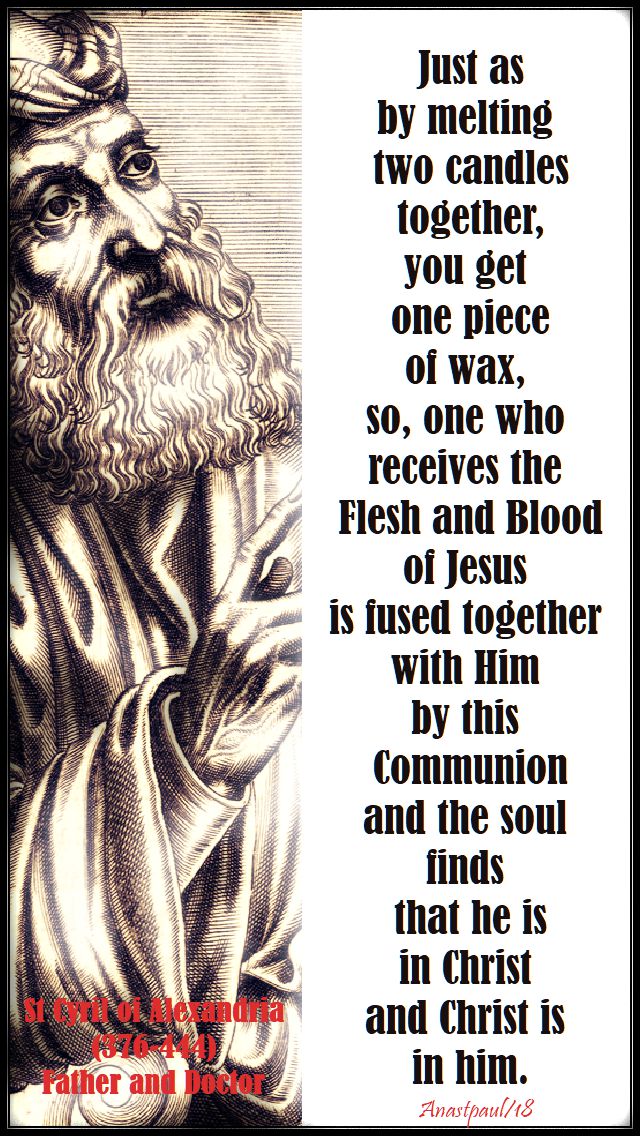
“If the poison of pride is swelling up in you,
turn to the Eucharist and that Bread,
Which is your God humbling and disguising Himself,
will teach you humility.
If the fever of selfish greed rages in you,
feed on this Bread and you will learn generosity.
If the cold wind of coveting withers you,
hasten to the Bread of Angels and charity
will come to blossom in your heart.
If you feel the itch of intemperance,
nourish yourself with the Flesh and Blood of Christ,
Who practiced heroic self-control during His earthly life
and you will become temperate.
If you are lazy and sluggish about spiritual things,
strengthen yourself with this heavenly Food
and you will grow fervent.
Lastly, if you feel scorched by the fever of impurity,
go to the banquet of the Angels
and the spotless Flesh of Christ,
will make you pure and chaste.”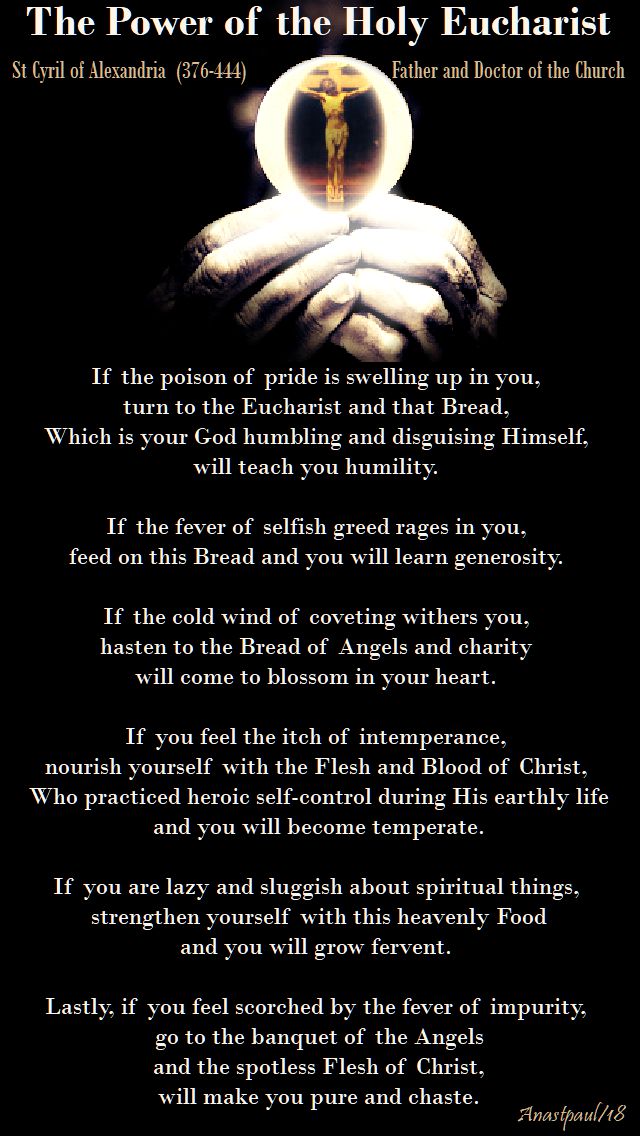
“Our Saviour went to the wedding feast
to make holy the origins of human life.”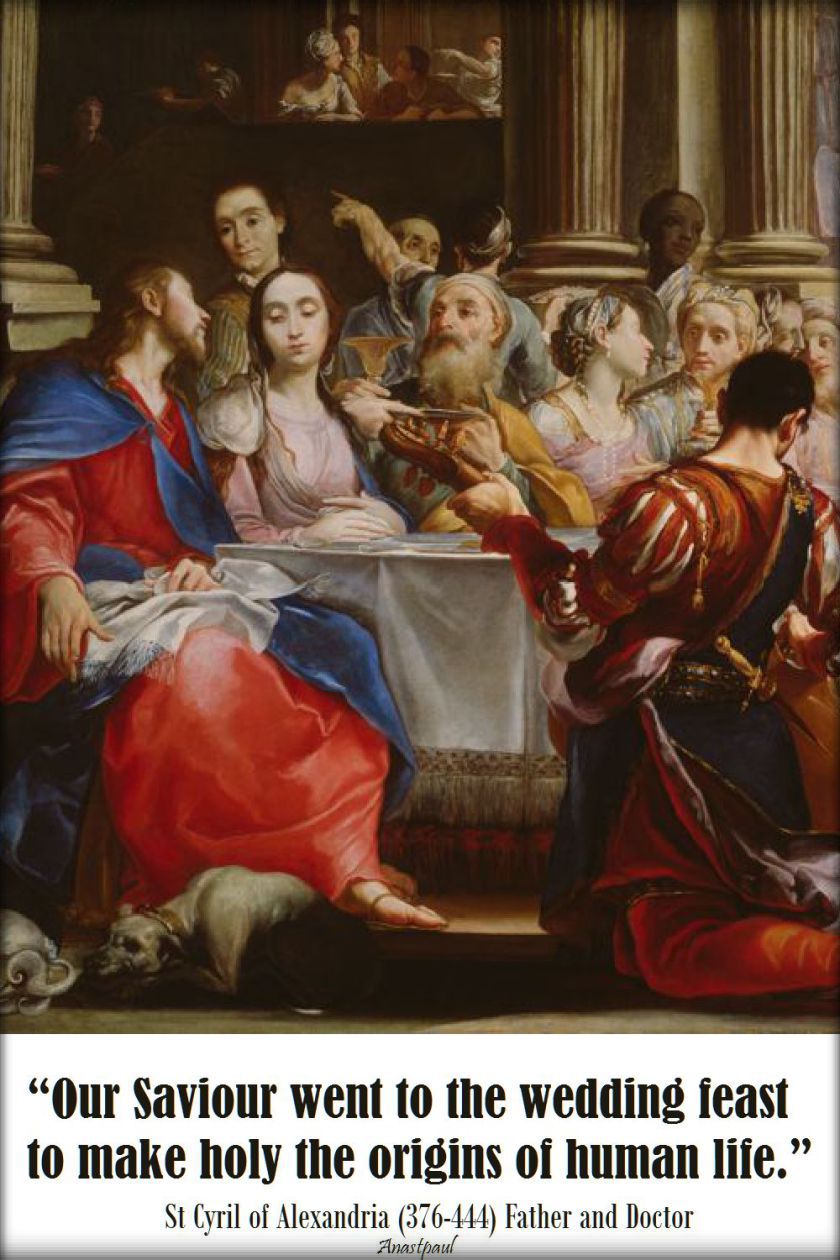
“From Christ and in Christ,
we have been reborn through the Spirit,
in order to bear the fruit of life,
not the fruit of our old, sinful life
but the fruit of a new life founded upon
our faith in Him and our love for Him.
Like branches growing from a vine,
we now draw our life from Christ
and we cling to His holy commandment,
in order to preserve this life.”
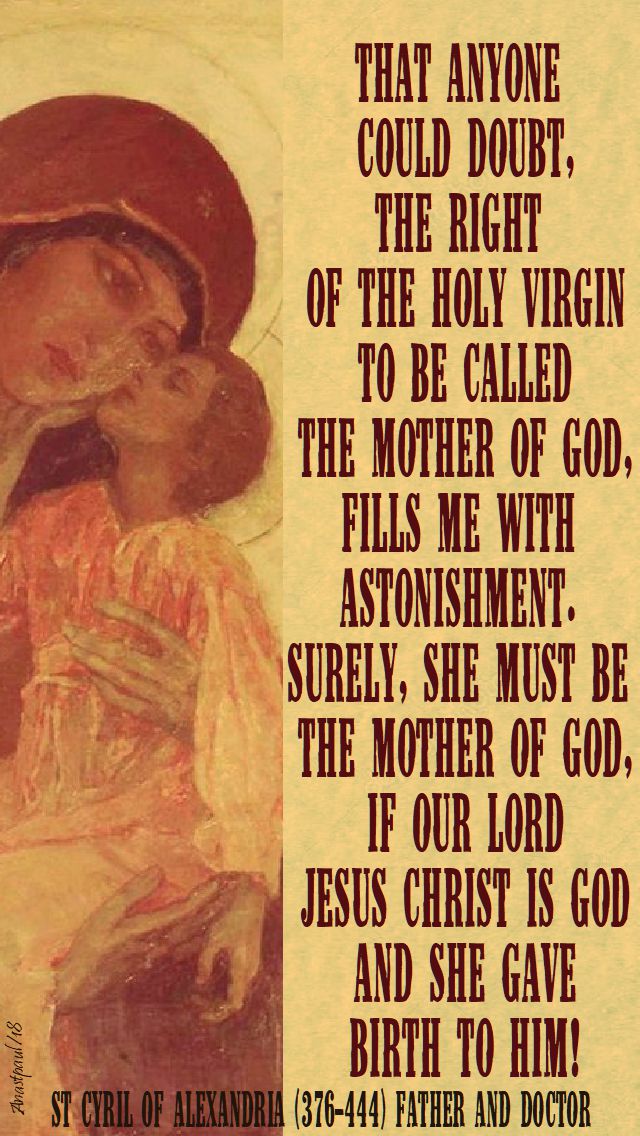
“That anyone could doubt, the right
of the holy Virgin to be called the Mother of God,
fills me with astonishment.
Surely, she must be the Mother of God,
if our Lord Jesus Christ is God
and she gave birth to Him!”
Our Morning Offering – 27 June – The Memorial of St Cyril of Alexandria (376-444) and the Feast of Our Lady of Perpetual Succour and the Mother of God of Gietrzwald, Poland
Hail, Mother of God
By St Cyril of Alexandria (376-444) Father & Doctor of the Church
Hail, Mother and Virgin,
eternal Temple of the Godhead,
Venerable Treasure of Creation,
crown of virginity,
support of the true faith,
on which the Church is founded, throughout the world.
Mother of God,
who contained the infinite God
under your heart,
whom no space can contain.
Through you, the most Holy Trinity, is revealed,
adored and glorified,
demons are vanquished,
Satan cast down from heaven into hell
and our fallen nature again assumed into heaven.
Through you, the human race,
held captive in the bonds of idolatry,
arrives at the knowledge of Truth.
What more shall I say of you?
Hail, through whom kings rule,
through whom the Only-Begotten Son of God
has become the Star of Light
to those sitting in darkness
and in the shadow of death.
Amen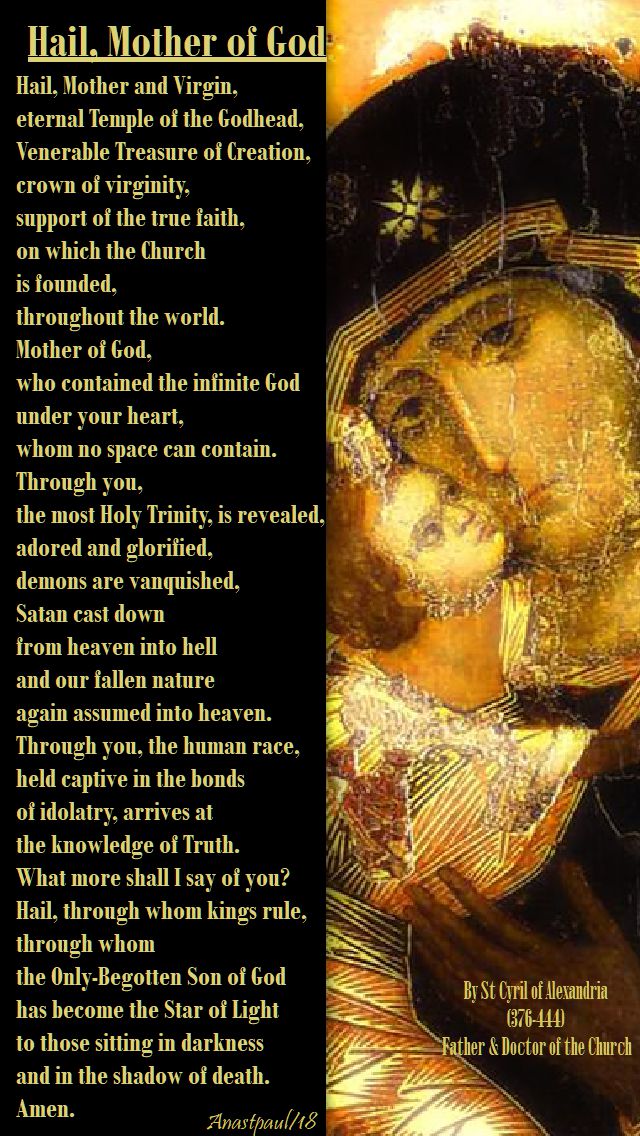
Saint of the Day – 27 June – St Cyril of Alexandria (376-444) Father and Doctor of the Church – “The Pillar of Faith” & “Seal of all the Fathers” – Doctor Incarnationis (Doctor of the Incarnation) – Patronage – Alexandria, Egypt.
Today too, continuing our journey following the traces left by the Fathers of the Church, we meet an important figure: St Cyril of Alexandria. Linked to the Christological controversy which led to the Council of Ephesus in 431 and the last important representative of the Alexandrian tradition in the Greek Orient, Cyril was later defined as “the guardian of exactitude” – to be understood as guardian of the true faith – and even the “seal of the Fathers”. These ancient descriptions express clearly a characteristic feature of Cyril: the Bishop of Alexandria’s constant reference to earlier ecclesiastical authors (including, in particular, Athanasius), for the purpose of showing the continuity with tradition of theology itself. He deliberately, explicitly inserted himself into the Church’s tradition, which he recognised as guaranteeing continuity with the Apostles and with Christ himself. Venerated as a Saint in both East and West, in 1882 St Cyril was proclaimed a Doctor of the Church by Pope Leo XIII, who at the same time also attributed this title to another important exponent of Greek Patristics, St Cyril of Jerusalem (315-387). Thus are revealed the attention and love for the Eastern Christian traditions of this Pope, who later also chose to proclaim St John Damascene (675-749) a Doctor of the Church, thereby showing that both the Eastern and Western traditions express the doctrine of Christ’s one Church.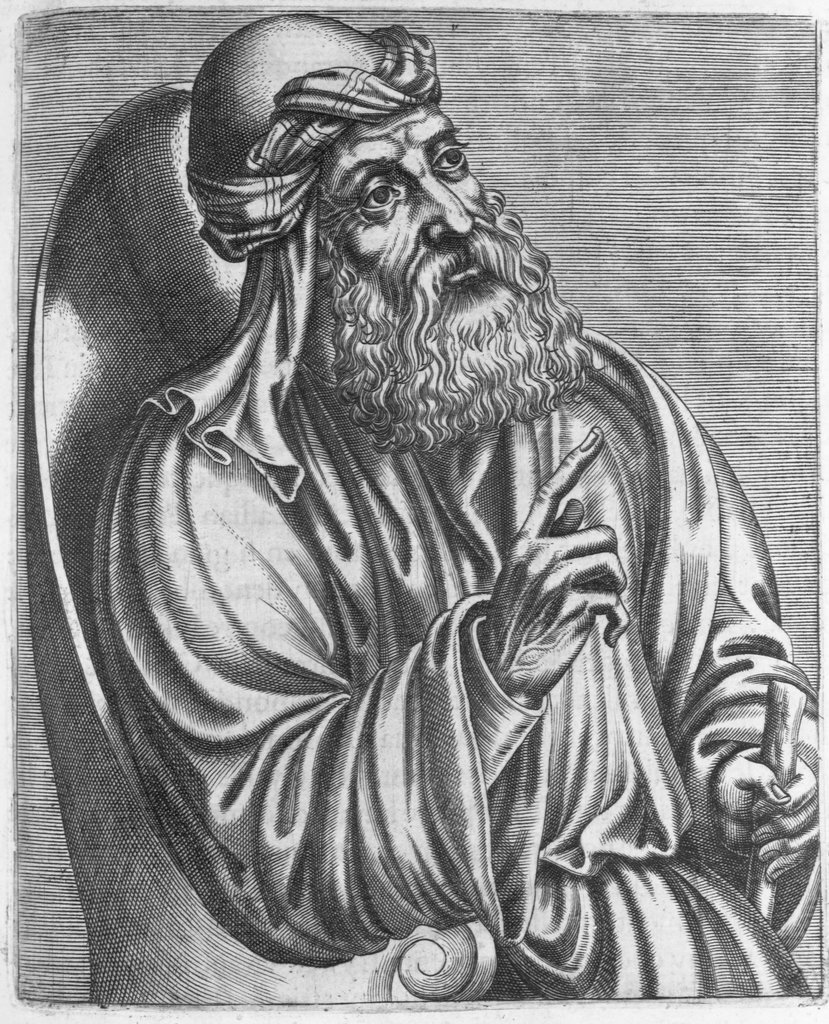
We have almost no information on Cyril’s life prior to his election to the important See of Alexandria. He was a nephew of Theophilus, who had governed the Diocese of Alexandria as Bishop since 385 AD with a prestigious and iron hand. It is likely that Cyril was born in this Egyptian metropolis between 370 and 380 A.D., was initiated into ecclesiastical life while he was still very young and received a good education, both culturally and theologically. In 403, he went to Constantinople in the retinue of his powerful uncle. It was here that he took part in the so-called “Synod of the Oak” which deposed the Bishop of the city, John (later known as “Chrysostom”) and thereby marked the triumph of the Alexandrian See over its traditional rival, the See of Constantinople, where the Emperor resided. Upon his uncle Theophilus’ death, the still young Cyril was elected in 412 as Bishop of the influential Church of Alexandria, which he governed energetically for 32 years, always seeking to affirm her primacy throughout the East, strong also because of her traditional bonds with Rome.
Two or three years later, in 417 or 418, the Bishop of Alexandria showed himself to be realistic in mending the broken communion with Constantinople, which had lasted by then since 406 as a consequence of Chrysostom’s deposition. But the old conflict with the Constantinople See flared up again about 10 years later, when in 428 Nestorius was elected, a severe and authoritarian monk trained in Antioch. The new Bishop of Constantinople, in fact, soon provoked opposition because he preferred to use as Mary’s title in his preaching “Mother of Christ” (Christotòkos) instead of “Mother of God” (Theotòkos), already very dear to popular devotion. One reason for Bishop Nestorius’ decision was his adherence to the Antiochean type of Christology, which, to safeguard the importance of Christ’s humanity, ended by affirming the division of the Divinity. Hence, the union between God and man in Christ could no longer be true, so naturally it was no longer possible to speak of the “Mother of God”.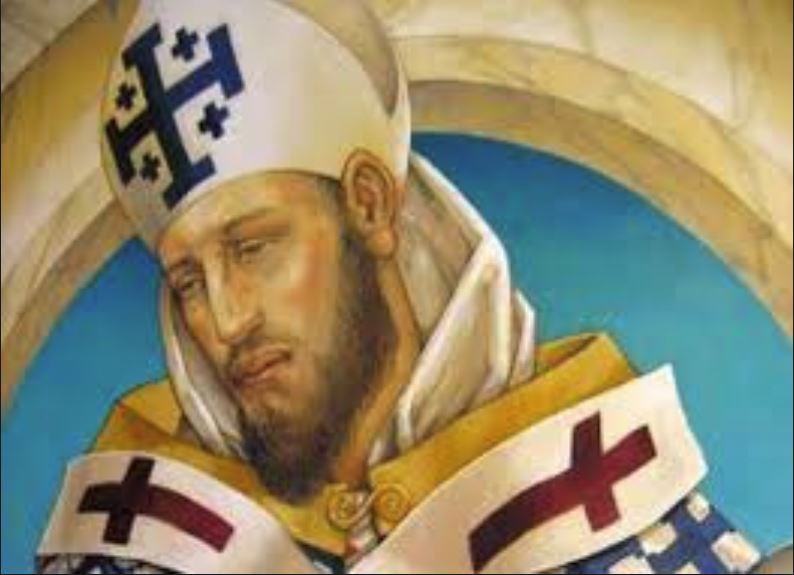
The reaction of Cyril – at that time the greatest exponent of Alexandrian Christology, who intended on the other hand to stress the unity of Christ’s person – was almost immediate, and from 429 he left no stone unturned, even addressing several letters to Nestorius himself. In the second of Cyril’s letters to Nestorius (PG 77, 44-49), written in February 430, we read a clear affirmation of the duty of Pastors to preserve the faith of the People of God. This was his criterion, moreover, still valid today: the faith of the People of God is an expression of tradition, it is a guarantee of sound doctrine. This is what he wrote to Nestorius: “It is essential to explain the teaching and interpretation of the faith to the people in the most irreproachable way and to remember that those who cause scandal, even to only one of the little ones, who believe in Christ, will be subjected to an unbearable punishment”.
In the same letter to Nestorius – a letter which later, in 451, was to be approved by the Council of Chalcedon, the Fourth Ecumenical Council – Cyril described his Christological faith clearly: “Thus, we affirm that the natures are different that are united in one true unity but from both, has come only one Christ and Son, not because, due to their unity, the difference in their natures has been eliminated but rather, because divinity and humanity, reunited in an ineffable and indescribable union, have produced for us one Lord and Christ and Son”. And this is important – true humanity and true divinity are really united in only one Person, Our Lord Jesus Christ. Therefore, the Bishop of Alexandria continued: “We will profess only one Christ and Lord, not in the sense that we worship the man together with the Logos, in order not to suggest the idea of separation by saying “together’ but in the sense that we worship only one and the same, because He is not extraneous to the Logos, His body, with which He also sits at His Father’s side, not as if “two sons” are sitting beside Him but only one, united with His own flesh”.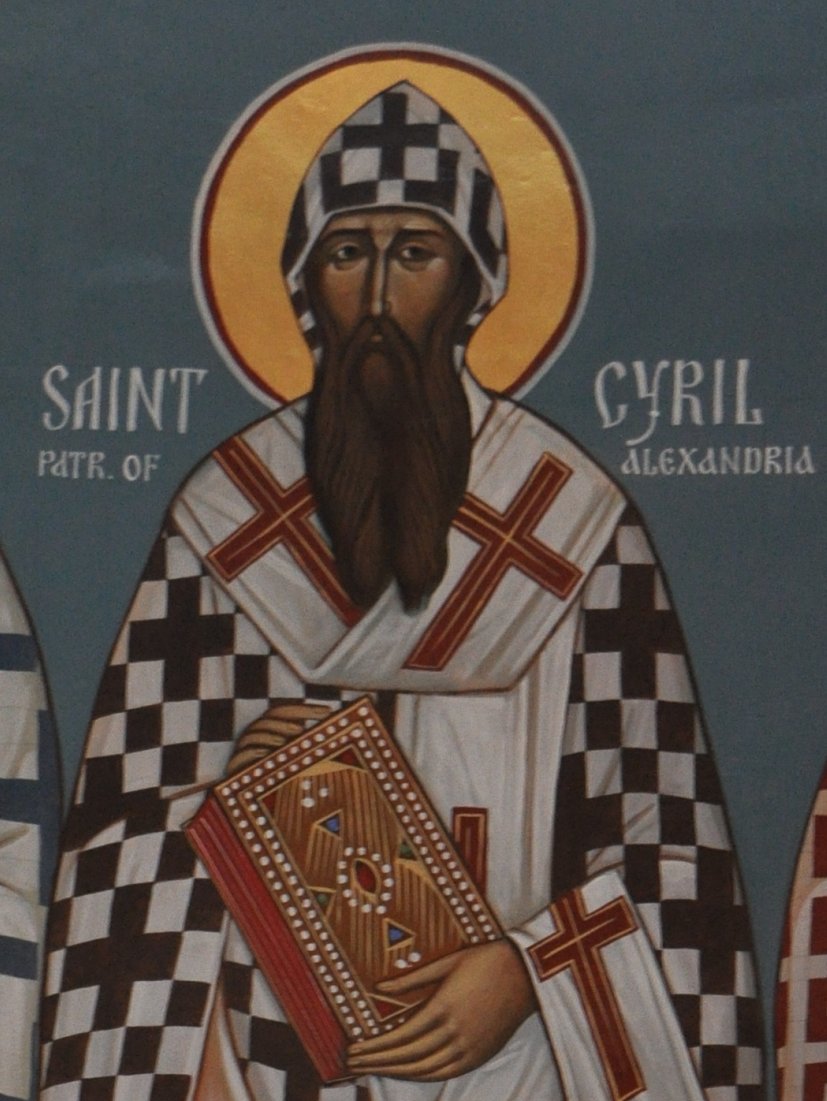
And soon the Bishop of Alexandria, thanks to shrewd alliances, obtained the repeated condemnation of Nestorius, by the See of Rome, consequently with a series of 12 anathemas which he himself composed and finally, by the Council held in Ephesus in 431, the Third Ecumenical Council. The assembly which went on with alternating and turbulent events, ended with the first great triumph of devotion to Mary and with the exile of the Bishop of Constantinople, who had been reluctant to recognise the Blessed Virgin’s right to the title of “Mother of God” because of an erroneous Christology that brought division to Christ Himself. After thus prevailing against his rival and his doctrine, by 433 Cyril was nevertheless already able to achieve a theological formula of compromise and reconciliation with the Antiocheans. This is also significant, on the one hand, is the clarity of the doctrine of faith but in addition, on the other, the intense search for unity and reconciliation. In the following years he devoted himself in every possible way to defending and explaining his theological stance, until his death on 27 June 444.
Cyril’s writings – truly numerous and already widely disseminated in various Latin and Eastern translations in his own lifetime, attested to by their instant success – are of the utmost importance for the history of Christianity. His commentaries on many of the New and Old Testament Books are important, including those on the entire Pentateuch, Isaiah, the Psalms and the Gospels of John and Luke. Also important are his many doctrinal works, in which the defence of the Trinitarian faith against the Arian and Nestorian theses recurs. The basis of Cyril’s teaching is the ecclesiastical tradition and in particular, as I mentioned, the writings of Athanasius, his great Predecessor in the See of Alexandria. Among Cyril’s other writings, the books Against Julian deserve mention. They were the last great response to the anti-Christian controversies, probably dictated by the Bishop of Alexandria in the last years of his life to respond to the work Against the Galileans, composed many years earlier in 363 by the Emperor known as the “Apostate” for having abandoned the Christianity in which he was raised.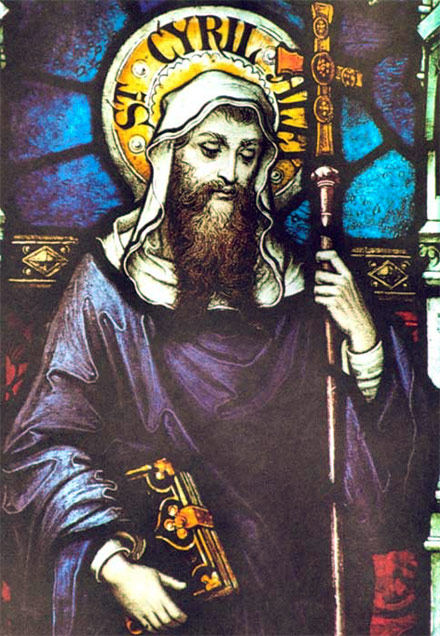
The Christian faith is first and foremost the encounter with Jesus, “a Person, which gives life a new horizon” (Deus Caritas Est, n. 1). St Cyril of Alexandria was an unflagging, staunch witness of Jesus Christ, the Incarnate Word of God, emphasising above all his unity, as he repeats in 433 in his first letter (PG 77, 228-237) to Bishop Succensus: “Only one is the Son, only one the Lord Jesus Christ, both before the Incarnation and after the Incarnation. Indeed, the Logos born of God the Father was not one Son and the one born of the Blessed Virgin another but we believe, that the very One who was born before the ages, was also born according to the flesh and of a woman”. Over and above its doctrinal meaning, this assertion shows that faith in Jesus the Logos born of the Father is firmly rooted in history because, as St Cyril affirms, this same Jesus came in time with His birth from Mary, the Theotò-kos and in accordance with His promise will always be with us.
And this is important – God is eternal, He is born of a woman and He stays with us every day. In this trust we live, in this trust we find the way for our life…. Pope Benedict XVI
For more on St Cyril here : https://anastpaul.wordpress.com/2017/06/27/saint-of-the-day-27-june-st-cyril-of-alexandria-doctor-father-of-the-church-the-pillar-of-faith-seal-of-all-the-fathers-doctor-incarnationis-doctor-of-the-incarnation/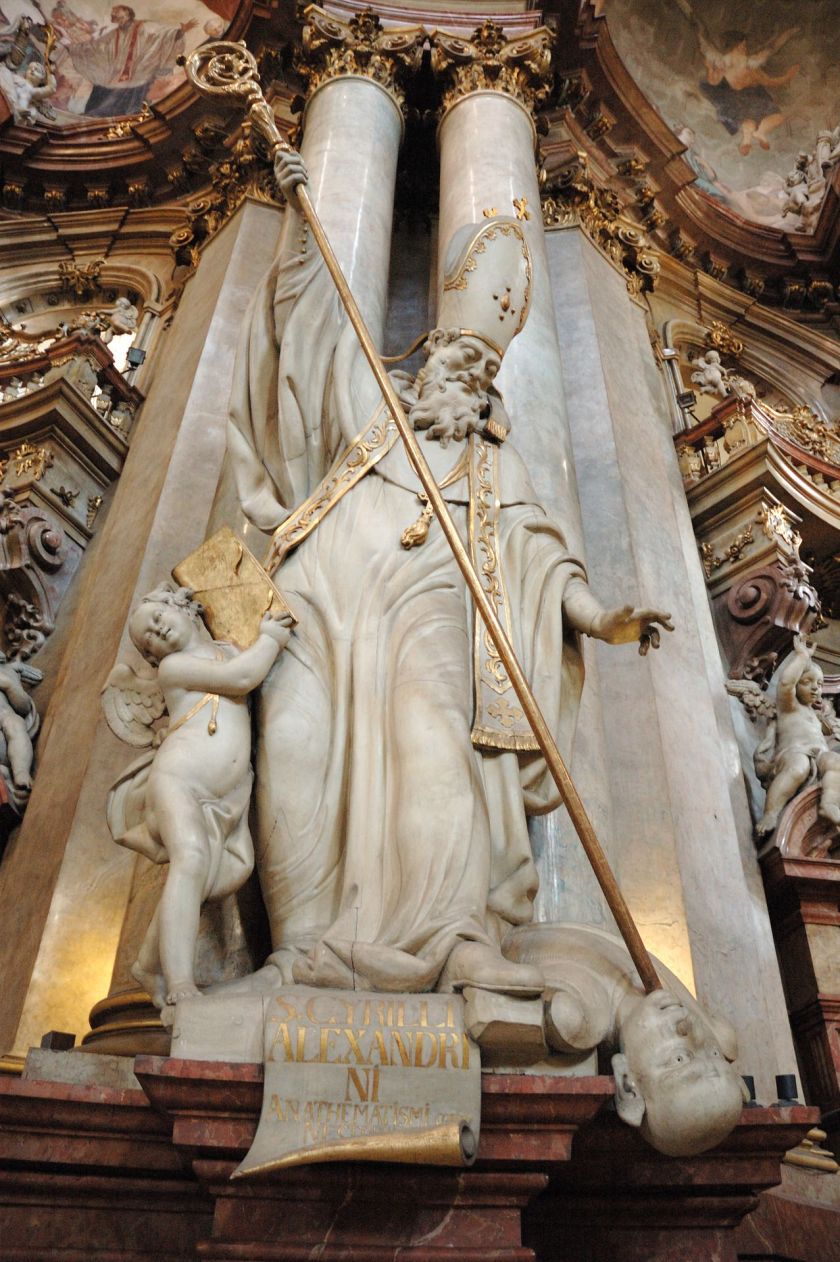
Quote/s of the Day 25 June – The Memorial of St Maximus of Turin (? – c 420)
“At Christmas He was born a man;
today He is reborn sacramentally.
Then He was born from the Virgin;
today He is born in mystery.
When He was born a man,
His mother Mary held Him close to her heart;
when He is born in mystery,
God the Father embraces Him
with His voice when he says:
This is my beloved Son,
in whom I am well pleased: listen to Him.
The mother caresses the tender baby on her lap;
the Father serves His Son by His loving testimony.
The mother holds the child for the Magi to adore;
the Father reveals that His Son
is to be worshiped by all the nations.”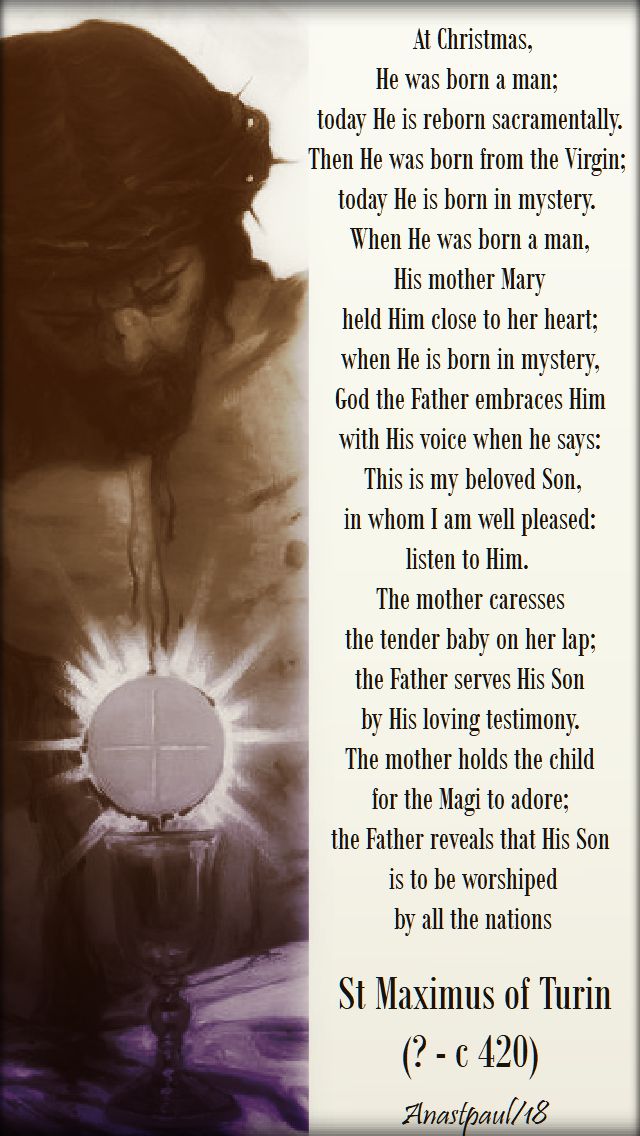
“The light of Christ
is an endless day
that knows no night.”

Saint of the Day – 25 June – St Maximus of Turin (? – c 420) Father of the Church, Bishop, Writer, Theologian – known as Massimo – date of birth unknown – his date of death is also not certain. St Maximus is believed to have been a native of Rhaetia (modern day Northern Italy). Patron of Turin, Italy. St Maximus attended the synod of Milan where northern Italian bishops accepted the letter of Pope Leo I which set forth the orthodox doctrine of the Incarnation. He also attended the the Synod of Rome in 465. He was a prolific and inspirational Theological writer with 118 homilies, 116 sermons and 6 treatises surviving.
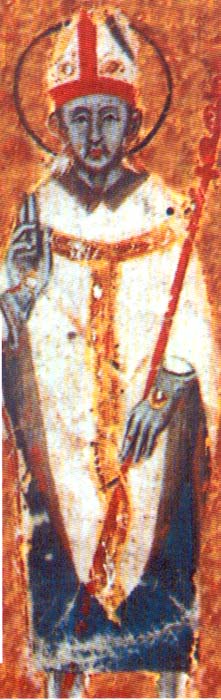
“Between the end of the fourth century and the beginning of the fifth, another Father of the Church after St Ambrose made a great contribution to the spread and consolidation of Christianity in Northern Italy – St Maximus, whom we come across in 398 as Bishop of Turin, a year after St Ambrose’s death. Very little is known about him, in compensation, we have inherited a collection of about 116 of his Sermons. It is possible to perceive in them the Bishop’s profound and vital bond with his city, which attests to an evident point of contact between the episcopal ministry of Ambrose and that of Maximus.
At that time serious tensions were disturbing orderly civil coexistence. In this context, as pastor and teacher, Maximus succeeded in obtaining the Christian people’s support. The city was threatened by various groups of barbarians. They entered by the Eastern passes, which went as far as the Western Alps. Turin was therefore permanently garrisoned by troops and at critical moments became a refuge for the populations fleeing from the countryside and urban centres where there was no protection. Maximus’ interventions in the face of this situation testify to his commitment to respond to the civil degradation and disintegration. Although it is still difficult to determine the social composition of those for whom the Sermons were intended, it would seem that Maximus’ preaching – to avoid the risk of vagueness – was specifically addressed to a chosen nucleus of the Christian community of Turin, consisting of rich landowners who had property in the Turinese countryside and a house in the city. This was a clear-sighted pastoral decision by the Bishop, who saw this type of preaching as the most effective way to preserve and strengthen his own ties with the people.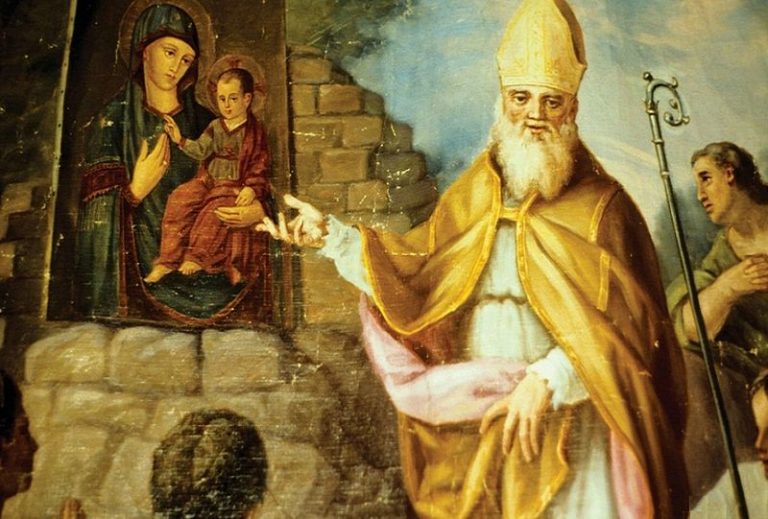
To illustrate this view of Maximus’ ministry in his city, I would like to point out for example Sermons 17 and 18, dedicated to an ever timely topic: wealth and poverty in Christian communities. In this context too, the city was fraught with serious tensions. Riches were accumulated and hidden. “No one thinks about the needs of others”, the Bishop remarked bitterly in his 17th Sermon. “In fact, not only do many Christians not share their own possessions but they also rob others of theirs. Not only, I say, do they not bring the money they collect to the feet of the apostles but in addition, they drag from priests’ feet, their own brethren who are seeking help”. And he concluded: “In our cities there are many guests or pilgrims. Do what you have promised”, adhering to faith, “so that what was said to Ananias will not be said to you as well: “You have not lied to men but to God'” (Sermon 17, 2-3).
In the next Sermon, the 18th, Maximus condemns the recurring forms of exploitation of others’ misfortunes. “Tell me, Christian”, the Bishop reprimands his faithful, “tell me why you snatched the booty abandoned by the plunderers? Why did you take home “ill-gotten gains’ as you yourself think, torn apart and contaminated?”. “But perhaps”, he continues, “you say you have purchased them and thereby believe you are avoiding the accusation of avarice. However, this is not the way to equate purchasing with selling. “It is a good thing to make purchases but that means what is sold freely in times of peace, not goods looted during the sack of a city… So act as a Christian and a citizen who purchases in order to repay” (Sermon 18: 3). Without being too obvious, Maximus thus managed to preach a profound relationship between a Christian’s and a citizen’s duties. In his eyes, living a Christian life also meant assuming civil commitments. Vice-versa, every Christian who, “despite being able to live by his own work, seizes the booty of others with the ferocity of wild beasts”; who “tricks his neighbour, who tries every day to nibble away at the boundaries of others, to gain possession of their produce, does not compare to a fox biting off the heads of chickens but rather to a wolf savaging pigs.” (Sermon 41, 4).
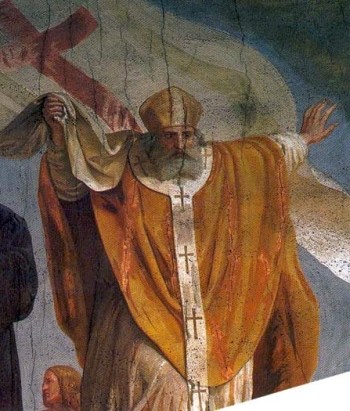
In comparison with the cautious, defensive attitude that Ambrose adopted to justify his famous project of redeeming prisoners of war, the historical changes that occurred in the relationship between the Bishop and the municipal institutions are clearly evident. By now sustained through legislation that invited Christians to redeem prisoners, Maximus, with the collapse of the civil authority of the Roman Empire, felt fully authorised in this regard to exercise true control over the city. This control was to become increasingly extensive and effective until it replaced the irresponsible evasion of the magistrates and civil institutions. In this context, Maximus not only strove to rekindle in the faithful the traditional love for their hometown but he also proclaimed the precise duty to pay taxes, however burdensome and unpleasant they might appear (cf. Sermon 26, 2). In short, the tone and substance of the Sermons imply an increased awareness of the Bishop’s political responsibility in the specific historical circumstances. He was “the lookout tower” posted in the city. Whoever could these watchmen be, Maximus wonders in Sermon 92, “other than the most blessed Bishops set on a lofty rock of wisdom, so to speak, to defend the peoples and to warn them about the evils approaching in the distance?”. And in Sermon 89 the Bishop of Turin describes his tasks to his faithful, making a unique comparison between the Bishop’s function and the function of bees: “Like the bee”, he said, Bishops “observe bodily chastity, they offer the food of heavenly life using the sting of the law. They are pure in sanctifying, gentle in restoring and severe in punishing”. With these words, St Maximus described the task of the Bishop in his time.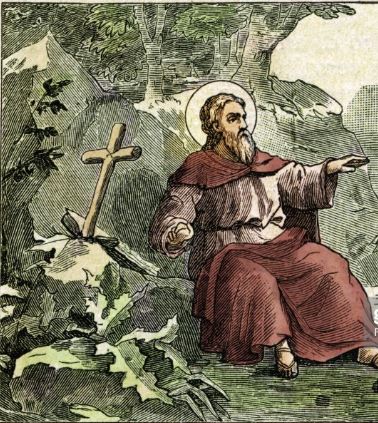
In short, historical and literary analysis show an increasing awareness of the political responsibility of the ecclesiastical authority in a context in which it continued de facto to replace the civil authority.
Indeed, the ministry of the Bishop of Northwest Italy, starting with Eusebius who dwelled in his Vercelli “like a monk” to Maximus of Turin, positioned “like a sentinel” on the highest rock in the city, developed along these lines. It is obvious that the contemporary historical, cultural and social context is profoundly different. Today’s context is rather the context outlined by my venerable Predecessor, Pope John Paul II, in the Post-Synodal Apostolic Exhortation Ecclesia in Europa, in which he offers an articulate analysis of the challenges and signs of hope for the Church in Europe today (nn. 6-22). In any case, on the basis of the changed conditions, the believer’s duties to his city and his homeland still remain effective. The combination of the commitments of the “honest citizen” with those of the “good Christian” has not in fact disappeared.
In conclusion, to highlight one of the most important aspects of the unity of Christian life, I would like to recall the words of the Pastoral Constitution Gaudium et Spes: consistency between faith and conduct, between Gospel and culture. The Council exhorts the faithful “to perform their duties faithfully in the spirit of the Gospel. It is a mistake to think that because we have here no lasting city, but seek the city which is to come, we are entitled to shirk our earthly responsibilities; this is to forget that by our faith we are bound all the more to fulfil these responsibilities according to the vocation of each one” (n. 43).
In following the Magisterium of St Maximus and of many other Fathers, let us make our own, the Council’s desire, that the faithful may be increasingly anxious to “carry out their earthly activity in such a way as to integrate human, domestic, professional, scientific and technical enterprises with religious values, under whose supreme direction all things are ordered to the glory of God” (ibid.) and thus for humanity’s good.”…Pope Benedict XVI, General Audience, Wednesday, 31 October 2007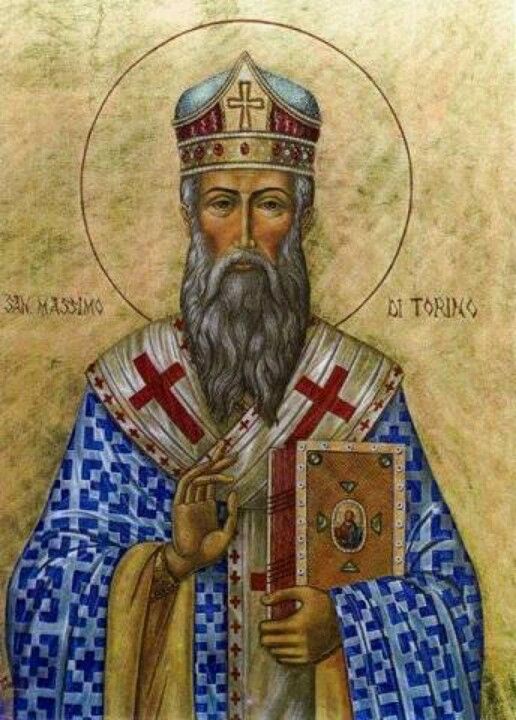
Thought for the Day – 24 June – The Solemnity of the Nativity of St John the Baptist, B
John challenges us Christians to the fundamental attitude of Christianity—total dependence on the Father, in Christ. Except for the Mother of God, no one had a higher function in the unfolding of salvation. Yet the least in the kingdom, Jesus said, is greater than he, for the pure gift that the Father gives. The attractiveness as well as the austerity of John, his fierce courage in denouncing evil—all stem from his fundamental and total placing of his life within the will of God.
The Benedictus, below, is prayed every morning in the Breviary and so, the Church remembers this “forerunner of Jesus” at the beginning of every day. The opening words of this Canticle are the source of its Latin title, “Blessed be the Lord, the God of Israel”.
What does it mean for Catholics, that we sing this song about John the Baptists at the start of every new day? After having been “silenced” by sleep throughout the night, God opens our mouths and one of the first things we do, is to sing this blessing of God, whose dawn breaks forth to shine on us and guide our way to peace.
In the Benedictus, we join ourselves to the mission of St John the Baptist, who came to prepare a way for the Lord by being a witness of God’s salvation, living a simple and penitential life and calling others to do the same. Our work each day, then, is to use our voice – like Zechariah and his son – and the witness of our lives, to make God’s presence known wherever we go and to whom whomever we encounter.
Ant. The mouth of Zechariah was opened and he spoke this prophecy: Blessed be the Lord, the God of Israel.
The Benedictus – Canticle of Zechariah
Luke 1:68-79
The Messiah and His forerunner
Blessed be the Lord, the God of Israel;
He has visited His people and redeemed them.
He has raised up for us a mighty saviour,
in the house of David, His servant,
as He promised by the lips of holy men,
those who were His prophets of old.
A Saviour who would free us from our foes,
from the hands of all who us.
So His love for our fathers is fulfilled
and His holy covenant remembered.
He swore to our father Abraham, our father, to grant us,
that free from fear and saved from the hands of our foes.
we might worship Him in justice and holiness
all the days of our lives, in His Presence.
As for you, little child,
you shall be called the prophet of God, the Most High.
You shall go ahead of the Lord
to prepare His ways before Him,
to make known to His people their salvation,
through forgiveness of all their sins,
the loving kindness of the heart of our God,
who visits us like the dawn from on high.
He will give light to those in darkness,
those who dwell in the shadow of death,
and to guide us into the way of peace.
Glory to the Father, and to the Son,
and to the Holy Spirit:
as it was in the beginning, is now,
and will be for ever. Amen
Ant. The mouth of Zechariah was opened and he spoke this prophecy: Blessed be the Lord, the God of Israel.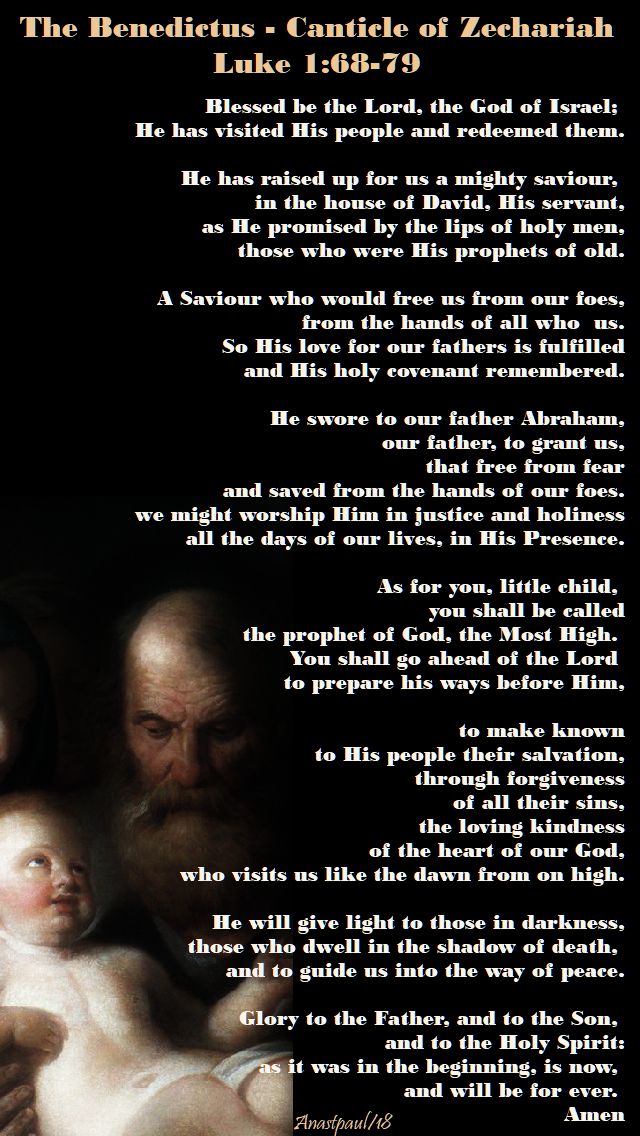
Our Morning Offering – 24 June – The Solemnity of the Nativity of St John the Baptist
Prayer Before Holy Communion
By St John Chrysostom (347-407) Father & Doctor of the Church
O Lord, my God,
I am not worthy,
that You should come into my soul
but I am glad that You will come to me,
because in Your loving kindness,
You desire to dwell in me.
You ask me to open the door of my soul,
which You alone have created,
so that You may enter into it,
with Your loving kindness
and dispel the darkness of my mind.
I believe that You will do this
for You did not turn away Mary Magdalene
when she approached You in tears.
Neither did You withhold forgiveness
from the tax collector,
who repented of his sins,
or from the good thief,
who asked to be received into Your kingdom.
Indeed, You numbered as Your friends
all who came to You with repentant hearts.
O God, You alone are blessed always,
now and forever.
Amen
Quote/s of the Day – 20 June – Wednesday Eleventh Week of Ord Time Year B – Today’s Gospel Matthew 6:1-6.16-18
“God resists the proud
but gives grace to the humble”
“Humility is the foundation of all the other virtues,
hence, in the soul in which this virtue does not exist,
there cannot be any other virtue,
except in mere appearance.”
“It was pride that changed angels into devils;
it is humility that makes men as angels.”
“As patience leads to peace
and study to science,
so are humiliations,
the path that leads to humility.”
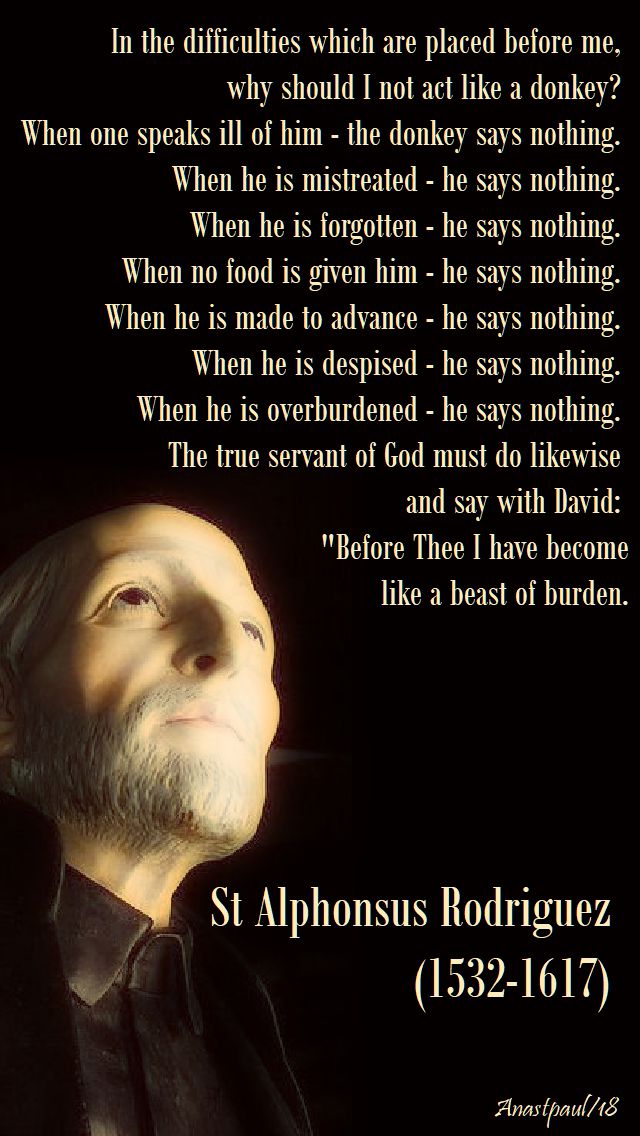
“In the difficulties which are placed before me,
why should I not act like a donkey?
When one speaks ill of him – the donkey says nothing.
When he is mistreated – he says nothing.
When he is forgotten – he says nothing.
When no food is given him – he says nothing.
When he is made to advance – he says nothing.
When he is despised – he says nothing.
When he is overburdened – he says nothing.
The true servant of God must do likewise
and say with David:
“Before Thee I have become like a beast of burden.”
“True humility
scarcely ever
utters words
of humility.”
“Humility consists
in not esteeming ourselves above other men
and in not seeking
to be esteemed above them.”
“Humility makes our lives
acceptable to God,
meekness makes us
acceptable to men.”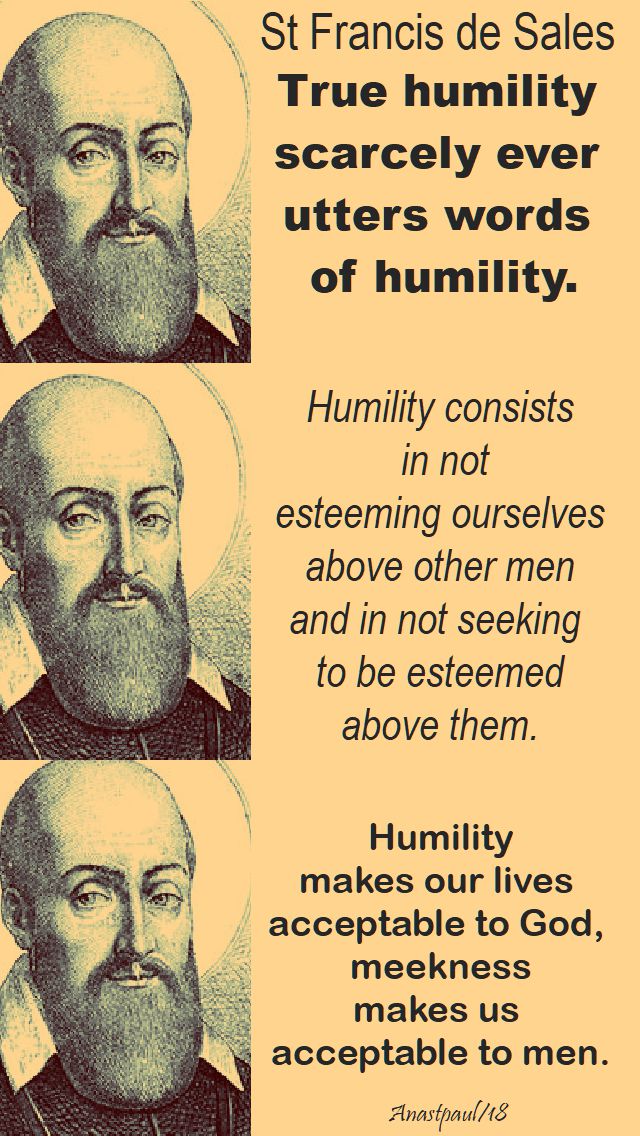
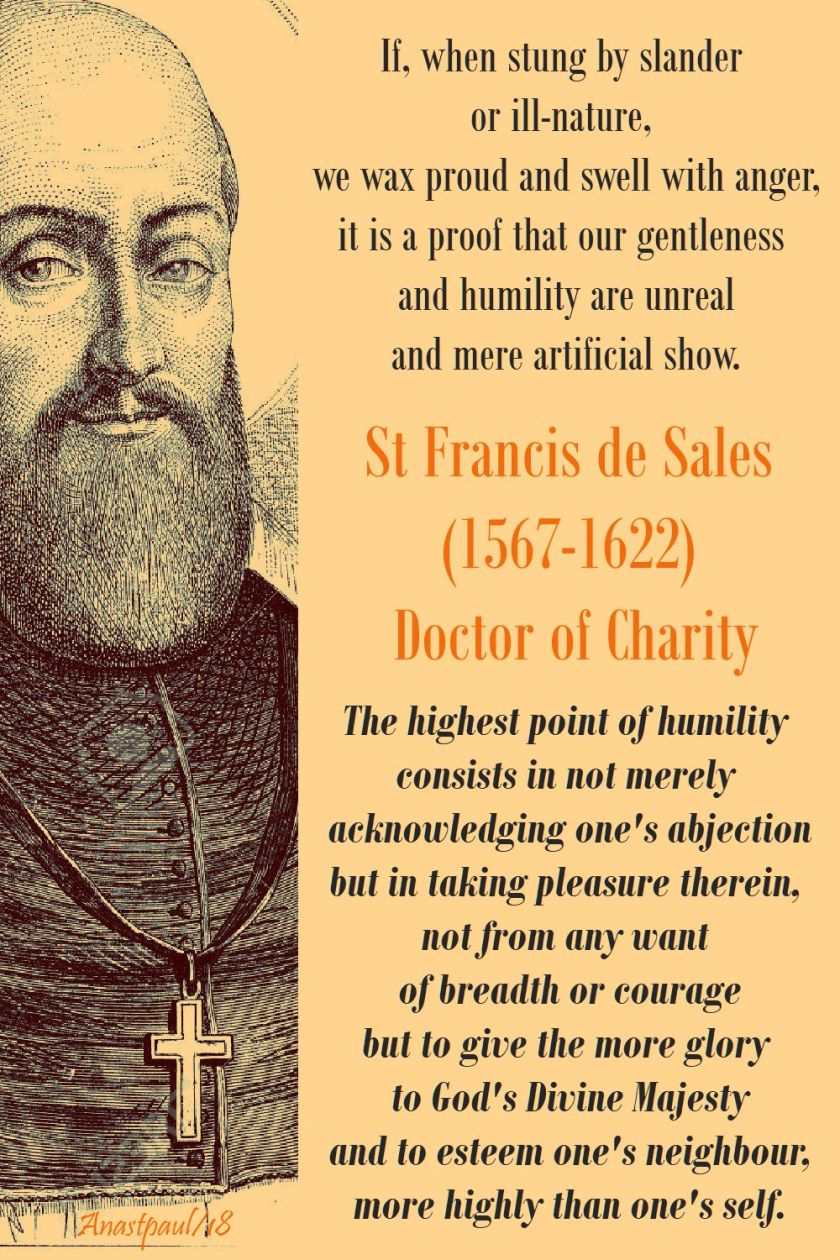
“If, when stung by slander or ill-nature,
we wax proud and swell with anger,
it is a proof that our gentleness
and humility are unreal
and mere artificial show.”
“The highest point of humility
consists in not merely acknowledging one’s abjection
but in taking pleasure therein,
not from any want of breadth or courage
but to give the more glory to God’s Divine Majesty
and to esteem one’s neighbour,
more highly than one’s self.”
“The truly humble
reject all praise for themselves
and refer it all to God.”

One Minute Reflection – 20 June – Wednesday Eleventh Week of Ord Time Year B – Today’s Gospel Matthew 6:1-6.16-18
Jesus said to his disciples: ” “Beware of practicing your piety before men in order to be seen by them; for then you will have no reward from your Father who is in heaven.”…Matthew 6:1
REFLECTION – “Jesus says, “When you pray, go into your chamber.” Now, what are these chambers but the heart signified in the Psalm where it is said: “The things you say in your hearts, be sorry for in your room.” He then continues: “And closing the doors, pray in secret to our Father.” Our entering the room is not enough if the door is left open to the importunate, for external things enter brazenly in through this door and lay hold on our interior affections. Temporal and visible penetrate through this door, that is, one of the senses, they enter our thoughts and by a swarm of fancies noisily disturb us while engaged in prayer. Therefore, the door must be closed; that is to say, the bodily sense must be resisted, so that a wholly spiritual prayer may be offered to the Father. For this prayer is formed in the depths of the heart where a man prays in secret to the Father. “And your Father, who sees in secret, will reward you…”
The Lord does not admonish us to pray but teaches us how to pray, just as the preceding passage does not admonish us to give alms but tells us what our intention ought to be when we are giving them. This is due to the fact that He demands the purity of heart that one can only obtain by a continuous and undivided striving for eternal life through no other motive than a pure love of wisdom…St Augustine (354-430), Father & Doctor of the Church – Commentary on the Sermon on the Mount, Bk. II, 3, 11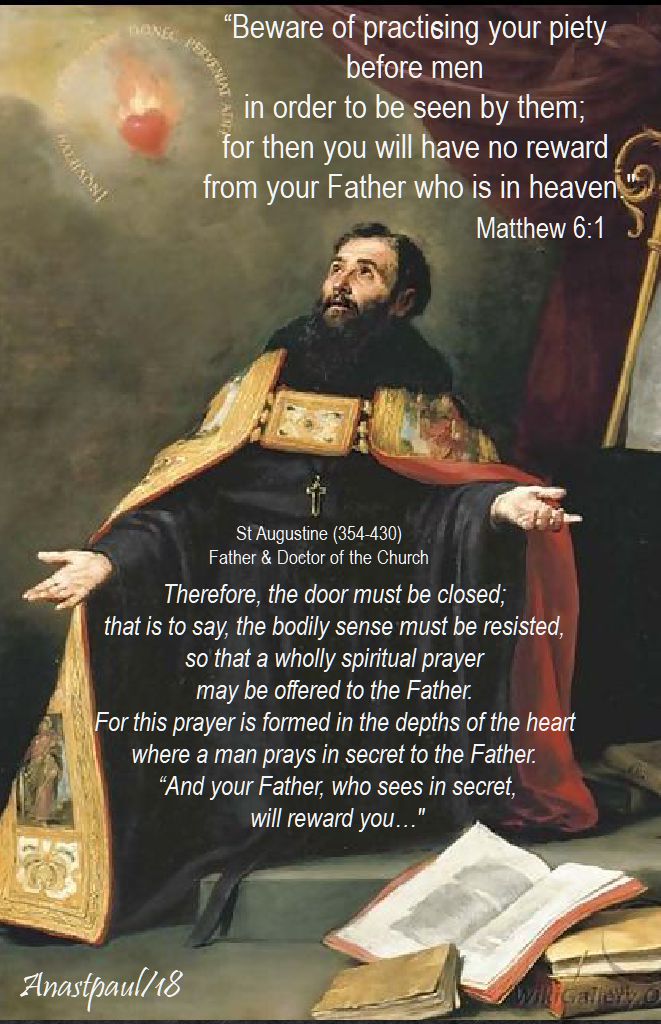
PRAYER – Lord God, in Your wisdom, You created us, by Your providence You rule us, penetrate our inmost being with Your light, so that our way of life may always be one of faithful service to You, as we follow the way of Your Son. Holy Mother, guide us as you guided Your Son. Through Christ our Lord, with the Holy Spirit, one God, amen.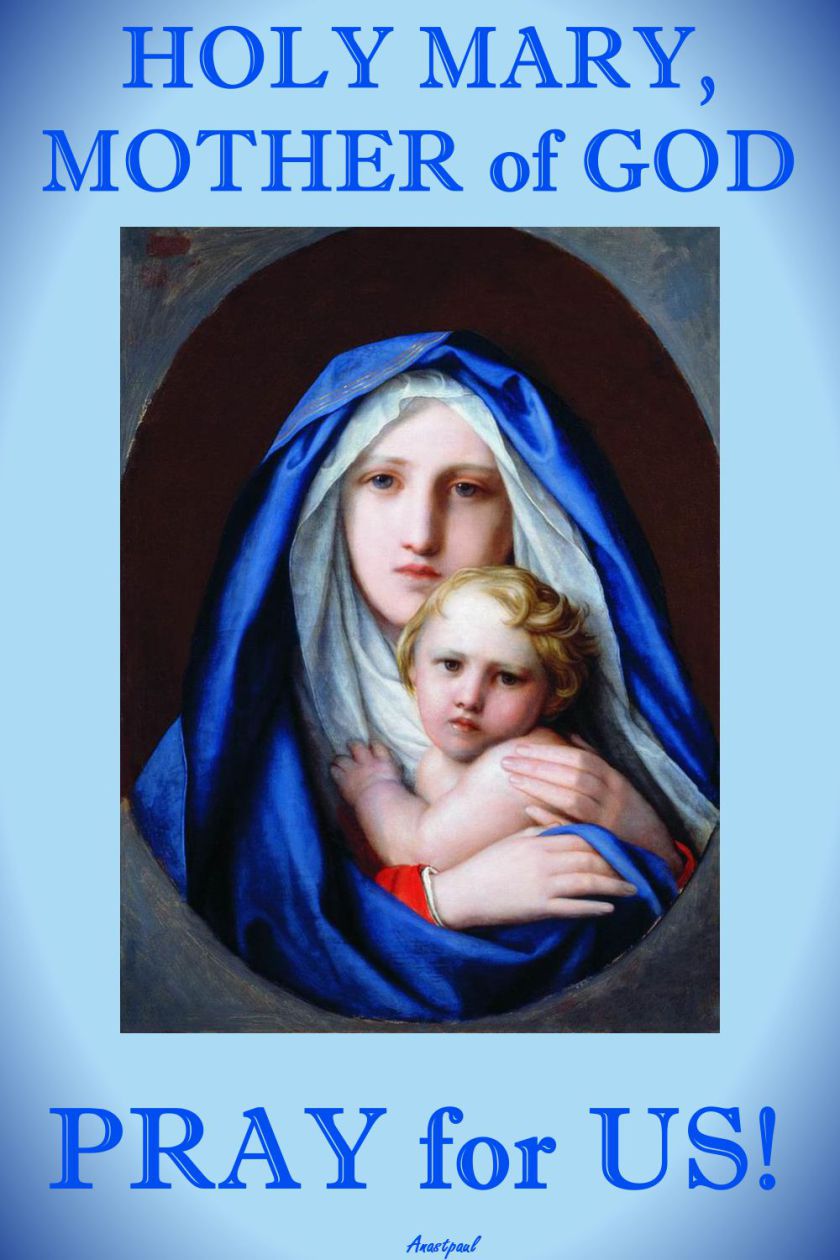
Quote of the Day – 18 June – Monday of the Eleventh Week in Ordinary Time, Year B – Today’s Gospel Matthew 5:38-42
“You don’t love in your enemies
what they are
but what you would have them become,
by your prayers!”

One Minute Reflection – 14 June – Thursday of the Tenth Week of Ordinary Time, Year B – Today’s Gospel Matthew 5:20-26.
Therefore, if you bring your gift to the altar and there recall that your brother has anything against you, leave your gift there at the altar, go first and be reconciled with your brother and then come and offer your gift...Matthew 5:23-24
REFLECTION – “The Church does not exist for us to remain divided when we come to it but rather so that our divisions might be nullified. That is what the assembly means. Thus if we have come for the Eucharist, let us not do anything in contradiction to the Eucharist, let us not hurt our brother. You have come to give thanks for the kindnesses you have received, therefore, do not separate yourself from your neighbour.
Christ offered his body to everyone without distinction when he said: “Take and eat, all of you.” Why do you not admit everyone to your own table? … You are remembering Christ and you disdain someone who is poor? … You are taking part in this divine meal; you should be the most compassionate of all people. You have drunk the Lord’s blood and you do not acknowledge your brother? But even if you have ignored him until now, at this table you must acknowledge him. We must all be in the Church as in one common house, we form only one body. We have only one baptism, one single table, one single source, as well as one single Father.”…St John Chrysostom (345-407), Father & Doctor of the Church (Homilies on the 1st Letter to the Corinthians, no 27 -cf Eph 4:5; 1 Cor 10:17 )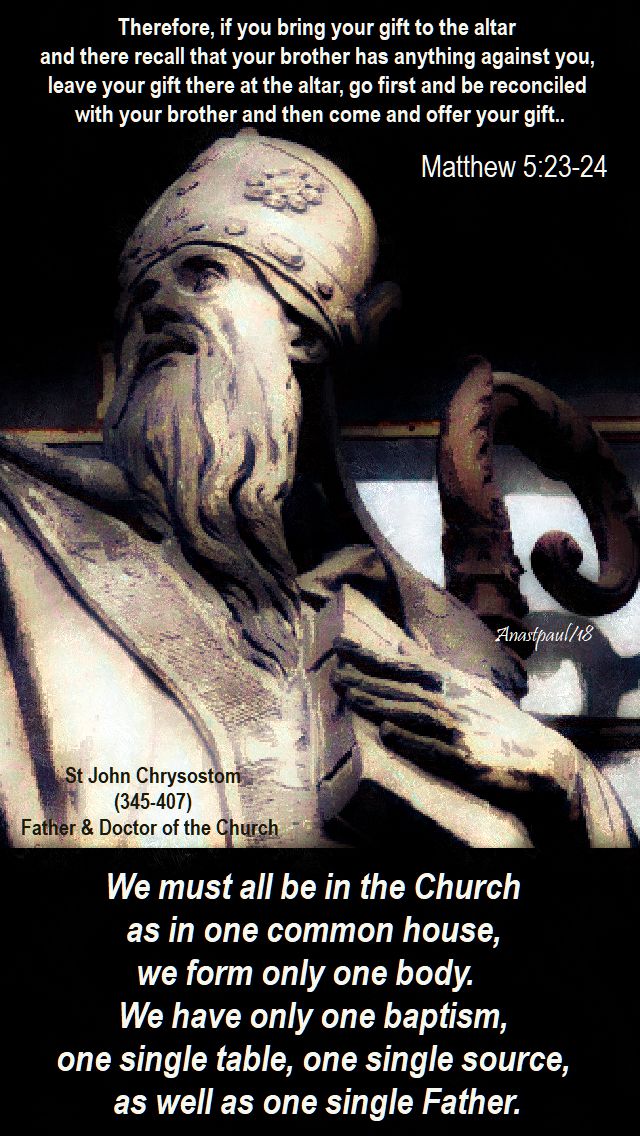
PRAYER – Lord God, true light and creator of light, grant that faithfully following the instructions of Your Son and pondering all that is holy, we may ever live in the splendour of Your presence. By the gifts of the Holy Spirit, may we always be light to our neighbour. Mary, Mother of Love and our loving mother, by your prayers, may we grow in charity and love. We make our prayer through Christ, our Lord amen.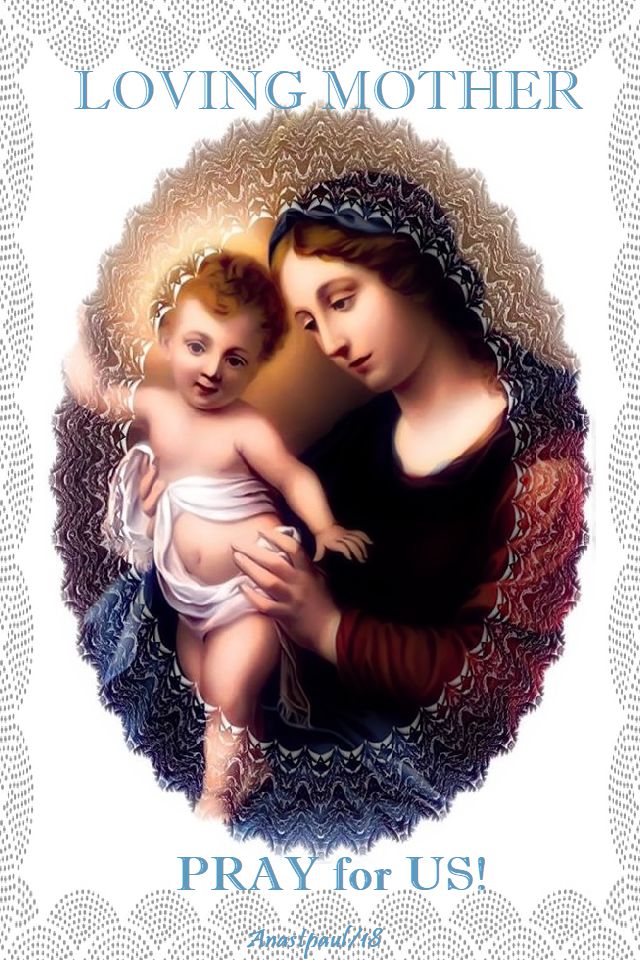
Quote/s of the Day – 11 June – Memorial of St Barnabas, Apostle
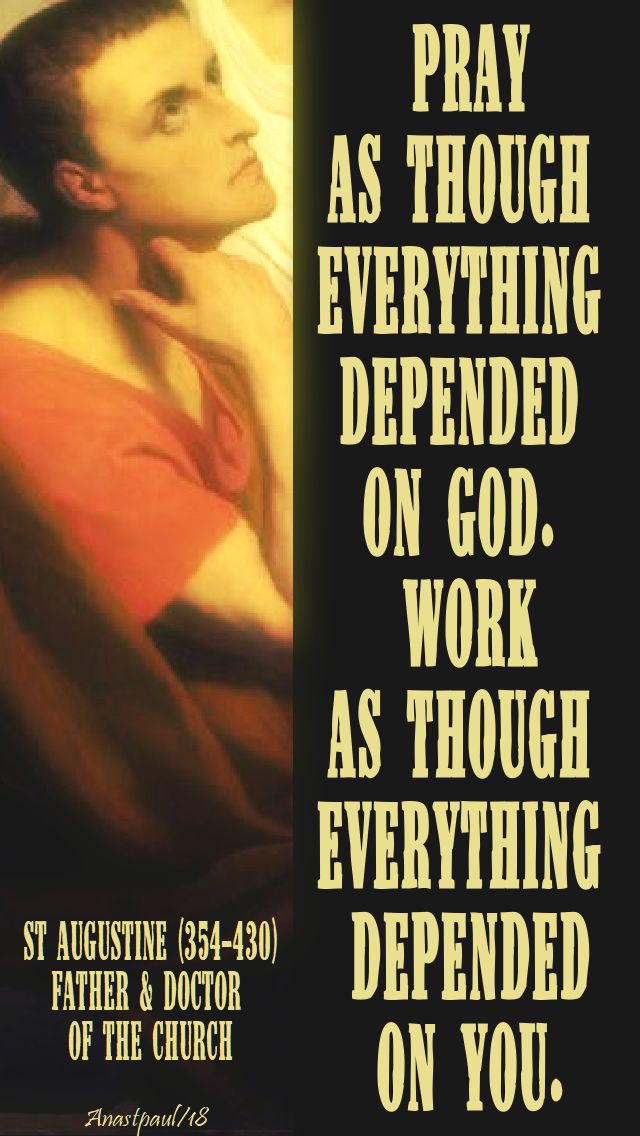
“Pray as though everything depended on God.
Work as though everything depended on you.”
“Teach us to give
and not to count the cost.”
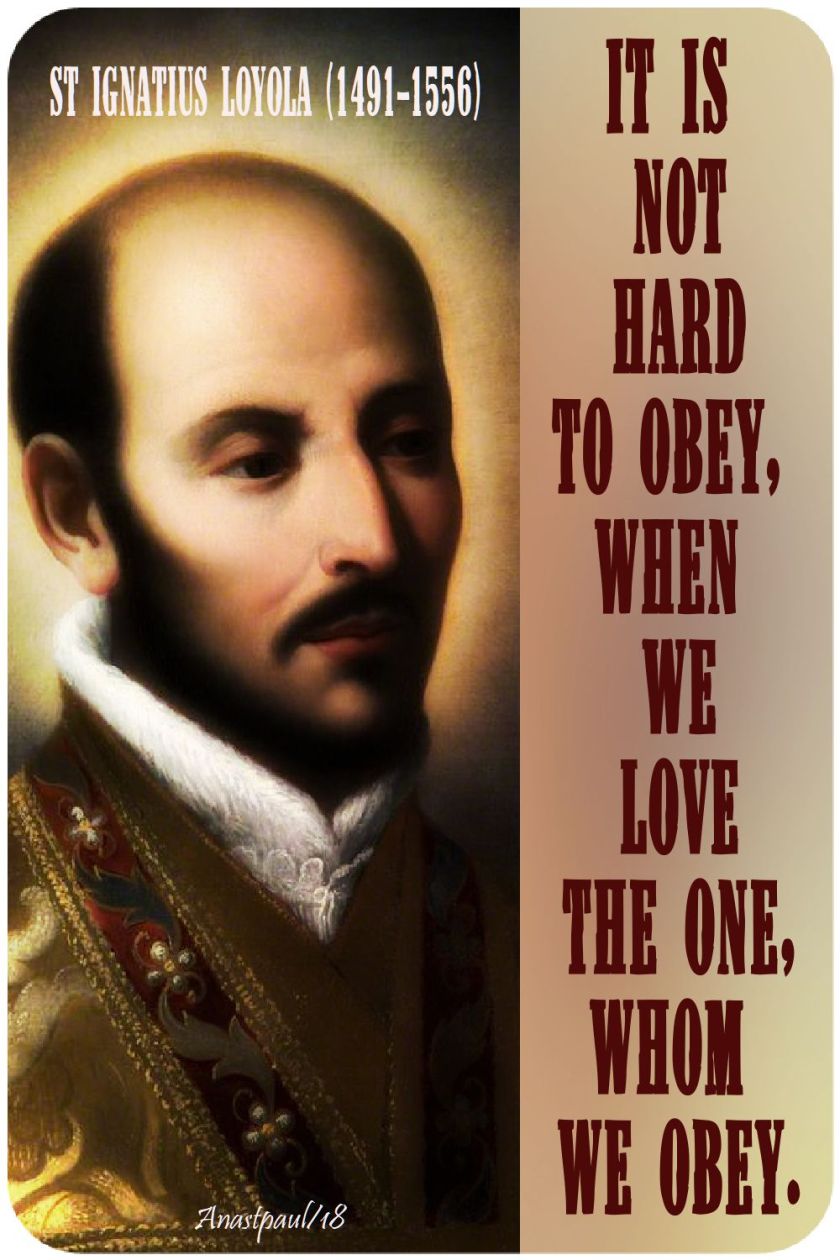
“It is not hard to obey
when we love the one,
whom we obey.”
“Let us begin in earnest to work out our salvation,
for no one will do it for us, since even He Himself,
Who made us without ourselves,
will not save us without ourselves.”

“You cannot be half a saint;
you must be a whole saint
or no saint at all.”

One Minute Reflection – 11 June – Memorial of St Barnabas, Apostle – Today’s First Reading Acts of the Apostles 11:21b-26.13:1-3.
News of this came to the ears of the church in Jerusalem and they sent Barnabas to Antioch. When he came and saw the grace of God, he was glad and he exhorted them all, to remain faithful to the Lord, with steadfast purpose; for he was a good man, full of the Holy Spirit and of faith. And a large company was added to the Lord...Acts 11:22-24
REFLECTION – “While we cannot see God, there is something we can do, to open a way, for the eye of our understanding to come to Him. It is certain that we can see now in His servants, one whom we can in no way see in Himself. When we see them doing astonishing things, we can be sure that God dwells in their hearts… None of us can look directly at the rising sun by gazing at its orb. Our eyes are repelled as they strain to see its rays. But we look at mountains bathed in sunlight and see that it has risen. Because we cannot see the Sun of righteousness (Mal 3,20) Himself, let us see the mountains bathed in His brightness, I mean the holy apostles. They shine with virtues and gleam with miracles… The power of His divinity, is in itself, like the sun in the sky; in human beings it is like the sun shining on earth…”…St Pope Gregory the Great (c 540-604), Father & Doctor of the Church (Homilies on the Gospel, no 30)
PRAYER – O God, who decreed that Saint Barnabas, a man filled with faith and the Holy Spirit, should be set apart to convert the nations, grant that the Gospel of Christ, which he strenuously preached, may be faithfully proclaimed by word and by deed. We pray you Lord, that by the intercession of St Barnabas, we too may grow in faith and love and live to glorify Your kingdom. Through our Lord Jesus Christ, Your Son, who lives and reigns with you in the unity of the Holy Spirit, one God, forever and ever. Amen.
Our Morning Offering – 11 June – Memorial of St Barnabas, Apostle
Steer the Ship of my Life, Lord
By St Basil the Great (329-379)
Steer the ship of my life, Lord,
to Your quiet harbour,
where I can be safe from
the storms of sin and conflict.
Show me the course I should take.
Renew in me the gift of discernment,
so that I can see the right direction
in which I should go.
And give me the strength
and the courage to choose the right course,
even when the sea is rough
and the waves are high,
knowing that through enduring
hardship and danger in Your name
we shall find comfort and peace.
Amen
Quote of the Day – 10 June -Tenth Sunday of the Year B
“If we approach with faith, we too will see Jesus…
for the Eucharistic table takes the place of the crib.
Here, the Body of the Lord is present,
wrapped not in swaddling clothes,
but in the rays of the Holy Spirit.”

One Minute Reflection – 9 June – The Memorial of St Ephrem (306-373) Father & Doctor of the Church
…Show(ing) yourself as a model of good deeds in every respect, with integrity in your teaching, dignity and sound speech that cannot be criticised, so that the opponent will be put to shame, without anything bad to say about us…Titus 2:7-8
REFLECTION – “Anyone who wants to be an example to others, must first examine himself.”…St Ephrem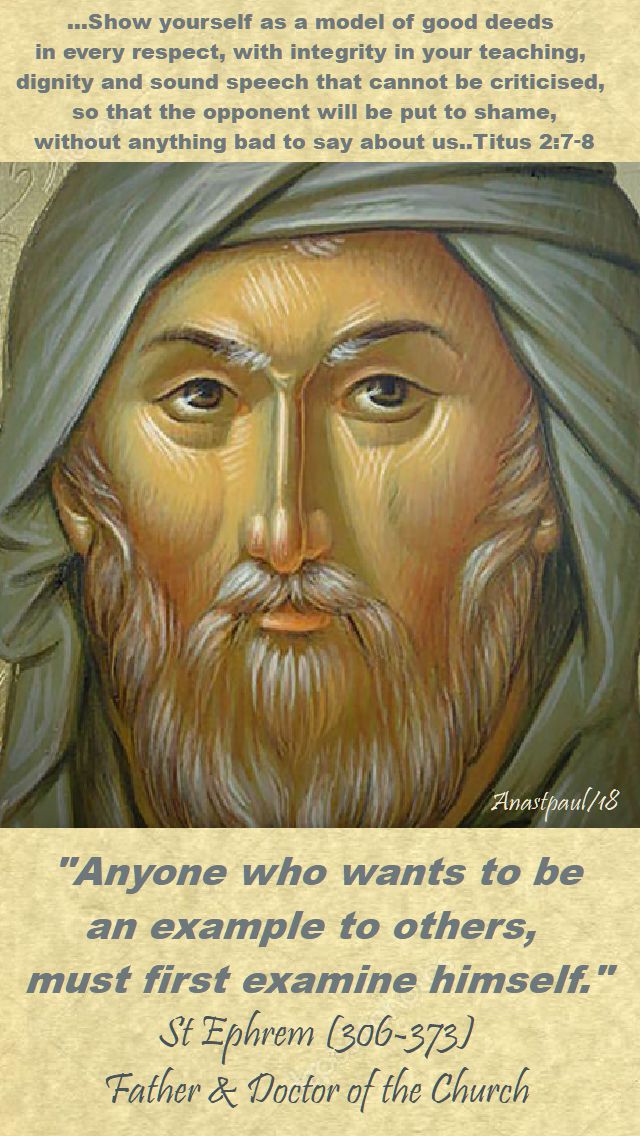
PRAYER – O Lord and Master of my life, take from me the spirit of sloth, meddling, lust of power and idle talk. But give rather the spirit of chastity, humility, patience and love to Thy servant. Yea, O Lord and King, grant me to see my own sins and not to judge my brother; for Thou art blessed unto ages of ages. Amen….Prayer of St Ephrem of whom we ask, please pray for us!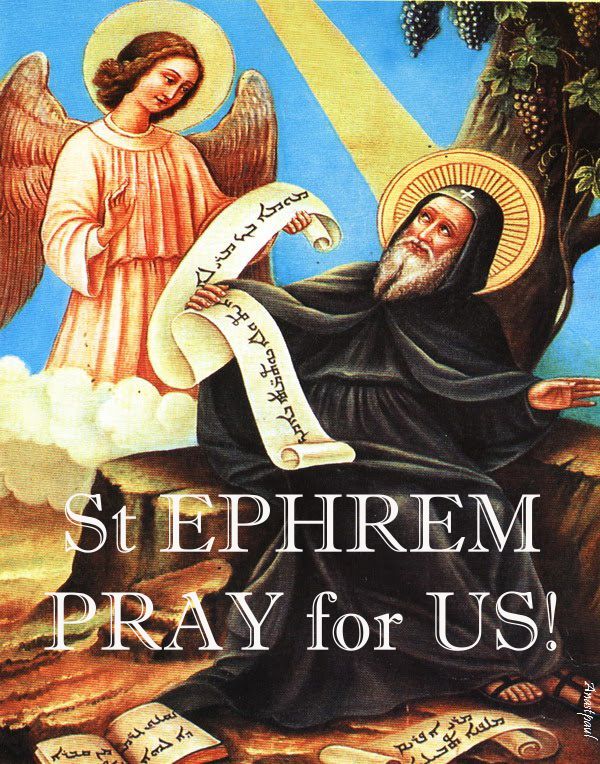
Thought for the Day — 8 June – The Solemnity of The Most Sacred Heart of Jesus and The World Day for the Sanctification of Priests
The World Day for the Sanctification of Priests 2002 takes its inspiration from the theme of John Paul II’s Letters to Priests for Holy Thursday 2000, 2001, and 2002. Below is an excerpt from the Congregation of the Clergy to all our Priests all over the world.
“These are really the ones who are in charge of spiritual travail and responsible for the birth which comes through baptism. Through them we put on Christ and are buried in union with the Son of God and become members, obedient to our blessed Head (cf. Rom 6,1; Gal 3,27). For that reason they should not only be more justly feared than rulers and kings but also, be more honoured, than our parents. For our parents generated us of blood and the will of the flesh (cf. Jn 1,13) but the priests are the authors of our birth from God, even that blessed regeneration which is true freedom and adopted sonship according to grace” (cf. St John Chrysostom, De sacerdotio, III, 6, PG 48, 643-644).
“Our altar of gold is the Heart of Christ. We must enter into the Holy of Holies, which is this same Heart of Jesus and gather up the riches of His love” (St Anthony of Padua).
“If the Jewish High priest carried the names of the twelve tribes of Israel written on his shoulders and on his breast, how much more Christ, our High Priest, carries our names written on His Heart” (St John of Avila).
“The Priesthood is the love of the heart of Jesus” (CCC, n. 1589—St John Vianney, quoted in B. Nodet, Jean-Marie Vianney, Curé d’Ars, 100).
“The priest is not a priest for himself. He does not give absolution to himself. He does not administer the sacraments to himself. He does not exist for himself, he exists for you” (Curé of Ars: Monnin II 453).
“Today everything which concerns the Sacred Heart of Jesus has become familiar and doubly dear to me. My life seems destined to be spent in the light shining from the tabernacle and it is to the Heart of Jesus that I must look for a solution to all my troubles. I feel I would be ready to shed my blood for the cause of the Sacred Heart. My fondest wish is to be able to do something for that precious object of my love.
“At times the thought of my arrogance, of my unbelievable self-love and of my great unworthiness alarms and dismays me and robs me of my courage but I soon find reason for comfort, in the words spoken by Jesus to Blessed Margaret Mary Alacoque: ‘I have chosen you to reveal the marvels of my heart, because you are such an abyss of ignorance and insufficiency’.
“Ah! I wish to serve the Sacred Heart of Jesus, today and always. I want my devotion to His Heart to be the measure of all my spiritual progress. I desire to do everything in intimate union with the Sacred Heart of Jesus in the Blessed Sacrament.
“My greatest joy will be to seek and find comfort only in that Heart which is the source of all consolation. I am determined to give myself no peace until I can truly say, I am absorbed into the Heart of Jesus” (Bl. John XXIII, Journal of a Soul, [“During the retreat in preparation for the ordination to the diaconate, 9-18 December 1903”], pp. 208-209, New English Library: London, 1966).
O Jesus, eternal High Priest, who, in an incomparable love for men,
allowed Catholic priesthood to issue from Your Sacred Heart,
deign to continue to pour out on Your priest,
the life-giving streams of Infinite Love.
Live in them, transform them into Yourself;
Render them by Your grace instruments of Your Mercy;
Act in them and through them
and grant that they may perform in Your Name
and by the strength of Your Spirit,
the works which You Yourself
accomplished for the salvation of this world.
Divine Redeemer of souls,
see how great is the multitude of those,
who still sleep in the darkness of error;
count the number of those unfaithful sheep,
who are walking on the edge of an abyss;
consider the crowds of the poor, the hungry,
the ignorant and the weak,
who are groaning in their state of abandonment.
Return to us again, dear Sacred Heart of Jesus,
live again in very truth in them;
act through them and pass again through this world
teaching, pardoning, consoling, offering sacrifice,
renewing the Bonds of Love
between the Heart of God and the hearts of men.
We pray through the intercession
of Mary, Mother of all hearts.
Amen
One Minute Reflection – 7 June – Thursday of the Ninth Week of Ordinary Time, Year B – Today’s Gospel Mark 12:28-34.
Jesus replied, “The first is this: ‘Hear, O Israel! The Lord our God is Lord alone!
You shall love the Lord your God with all your heart, with all your soul, with all your mind and with all your strength.’
The second is this: ‘You shall love your neighbour as yourself.’ There is no other commandment greater than these.” …Mark 12:29-31
REFLECTION – “We cannot truly love God without loving our neighbour, nor can we truly love our neighbour, without loving God. This is why… the Holy Spirit was given a second time to the disciples. First it was given by the Lord, while He was still dwelling on earth and later, while He was watching over us in heaven (Jn 20:22; Acts 2). He was given to us on earth, that we may love our neighbours, from heaven that we may love God. Why first on earth and later from heaven, except for the reason, given us openly by John: “How can anyone who does not love his brother whom he sees, love God whom he does not see?” So let us love our neighbours, my friends, let us love the one who is near us, so that we may be able to attain the love of the one, who is above us.”…St Gregory the Great (c 540-604), Pope, Doctor of the Church (Homilies on the Gospel, no 30)
PRAYER – Lord Almighty God, You sanctify Your Church, by the gifts of the Holy Spirit. Fulfil in us the words of Your Son that our love for You and Your children may be come to perfection. Grant that by the prayers of St Anthony Mary Gianelli, who served You through his neighbour, with love and zeal, we too may attain our heavenly home. Through Christ our Lord, in union with You and the Holy Spirit, one God, amen.


You must be logged in to post a comment.