Posted in CATHOLIC DEVOTIONS of the Month, DOCTORS of the Church, FATHERS of the Church, MORNING Prayers, PURGATORY, QUOTES of the SAINTS, The HOLY SOULS

Quote/s of the Day 2 November – The Solemnity of All Souls

Quote/s of the Day 2 November – The Solemnity of All Souls

St James the Apostle gives a method of avoiding or lessening our stay in Purgatory.
He says:  “He who saves a soul saves his own and satisfies for a multitude of sins.”  (James 1:20)james 1 20 - he who saves a soul saves his own - 2 nov 2017 

“Let us help and commemorate them.   If Job’s sons were purified by their father’s sacrifice (Job 1:5), why would we doubt that our offerings for the dead bring them some consolation?   Let us not hesitate to help those who have died and to offer our prayers for them”.

St John Chrysostom (347-407) Doctor of the Church – (Homilies on 1 Corinthians 41:5 [A.D. 392]let us help and commemorate them - st john chrysostum - 2 nov 2017

“But by the prayers of the Holy Church and by the salvific sacrifice and by the alms which are given for their spirits, there is no doubt that the dead are aided, that the Lord might deal more mercifully with them than their sins would deserve.            The whole Church observes this practice which was handed down by the Fathers: that it prays for those who have died in the communion of the Body and Blood of Christ, when they are commemorated in their own place in the sacrifice itself;   and the sacrifice is offered also in memory of them, on their behalf.    If, then, works of mercy are celebrated for the sake of those who are being remembered, who would hesitate to recommend them, on whose behalf prayers to God are not offered in vain?   It is not at all to be doubted that such prayers are of profit to the dead;   but for such of them as lived before their death in a way that makes it possible for these things to be useful to them after death”.

St Augustine (354-430) Doctor of the Church (The City of God 21:13 [A.D. 419]the whole church - st augustine - 2 nov 2017

“I would go so far as to say that if there was not purgatory, then we would have to invent it, for who would dare say of himself that he was able to stand directly before God.    And yet we don’t want to be, to use an image from scripture, ‘a pot that turned out wrong’, that has to be thrown away;   we want to be able to be put right.   Purgatory basically means that God can put the pieces back together again. That He can cleanse us in such a way that we are able to be with Him and can stand there in the fullness of life.   Purgatory strips off from one person what is unbearable and from another the inability to bear certain things, so that in each of them a pure heart is revealed and we can see that we all belong together in one enormous symphony of being.”
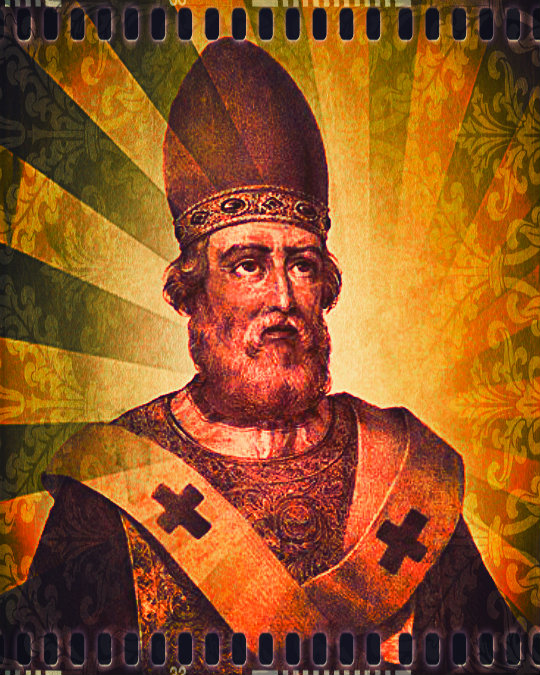
Pope Benedict XVIi would go so far as to say - pope benedict XVI - 2 nov 2017

“If today we are remembering
these brothers and sisters of
ours who lived before us and are
now in heaven, they are there
because they were washed in the
Blood of Christ, that is our hope
and this hope does not disappoint.
If we live our lives with the Lord,
he will never disappoint us.”

Pope Francisif today we are remembering - pope francis

Posted in CONFESSION/PENANCE, DOCTORS of the Church, FATHERS of the Church, MORNING Prayers, PRACTISING CATHOLIC, QUOTES of the SAINTS

Quote/s of the Day on Confession – 25 October

Quote/s of the Day on Confession – 25 October

“The confession of evil works, 
is the first beginning of good works.
You do the truth
and come to the light.”

St Augustine (354-430) Doctor & Father of the Churchthe confession of evil - st augustine - 25 oct 2017

“A man is repaired in an instant by Divine grace.”

“One who has confessed and received absolution,
will be less punished in Purgatory than one
who has gone no further than contrition.”

St Thomas Aquinas (1225-1274) Doctor of the Churcha man is repaired - st thomas aquinas - 25 oct 2017

“Are you scorched, are you burnt to the very core,
by the heat of concupiscence? Even so, poor sufferers!
You must not lose courage; there is a cool fountain
ready to refresh you and heal all your wounds;
not indeed the first font, which gave you the life you have lost;
but the second Baptism, the divine Sacrament of Penance,
which can restore you to grace and purity!”

Prosper Louis Pascal Guéranger O.S.B. (1805-1875)are you scorched - abbot gueranger - 25 oct 2017

“Confession is stronger than an exorcism!”

Fr Gabriele Amorth, SSP (1925-2016) – Chief Exorcist/Romeconfession is stronger - fr armorth - 25 oct 2017


Posted in DOCTORS of the Church, FATHERS of the Church, QUOTES of the SAINTS, SAINT of the DAY

Saint of the Day – 21 October – St Hilarion of Gaza (c 291-371)

Saint of the Day – 21 October – St Hilarion of Gaza (c 291-371) Hermit and Miracle-Worker.

St Hilarion spent most of his life in the desert according to the example of Anthony the Great.

Shortly after St Hilarion’s death, St Jerome wrote about the life of this hermit who had introduced monasticism into Palestine.   Jerome told of Hilarion’s lifelong pursuit of solitude, where he could encounter God in prayer.

Hilarion was born in Thabatha, south of Gaza in Syria Palaestina of pagan parents. He successfully studied rhetoric with a Grammarian in Alexandria.   It seems that he was converted to Christianity in Alexandria.   After that, he shunned the pleasures of his day—theatre, circus and arena—and spent his time attending church.   According to St Jerome, he was a thin and delicate youth of fragile health.

After hearing of Saint Anthony, whose name (according to St.erome), “was in the mouth of all the races of Egypt” Hilarion, at the age of fifteen, went to live with him in the desert for two months.   As Anthony’s hermitage was busy with visitors seeking cures for diseases or demonic affliction, Hilarion returned home along with some monks.   At Thabatha, his parents having died in the meantime, he gave his inheritance to his brothers and the poor and left for the wilderness.Hilarion_the_Great_(Menologion_of_Basil_II)

St Jerome wrote about the divine irony of the fame that denied it to him because his miracles attracted so many people. In this brief excerpt, Jerome describes Hilarion’s faith and a typical miracle:

Once . . . when he was eighteen years old, brigands tried to find him at night.   Either they believed that he had something to steal or they thought he would scorn them if they didn’t intimidate him. . . . From evening till dawn, they hunted in every direction but couldn’t find him.   In the broad daylight, however, they came upon him and apparently as a joke asked him:  “What would you do if robbers attacked you?”   He answered:   “A naked person does not fear robbers.”   “You could be killed.”   “I could,” he said.   “But I am not afraid of robbers because I am ready to die.”   Admiring his faith, they confessed their folly of the night before and their blindness and promised to reform their lives…

A woman of Eleutheropolis, despised by her husband of fifteen years because of her sterility, . . . was the first who dared to intrude upon blessed Hilarion’s solitude.   While he was still unaware of her approach, she suddenly threw herself at his knees saying:  “Forgive my boldness. . . ., he asked her why she had come and why she was weeping.   When he learned the cause of her grief, raising his eyes to heaven, he commanded her to have faith and to believe.   He followed her departure with tears.   When a year had gone by, he saw her with her son.

Like Anthony, Hilarion took only a little food once a day at sunset.   When tempted sexually, he ate even less.  “I’ll see to it, you jackass,” he said, “that you shall not kick.”  He never bathed nor changed his tunic until it wore out.   He said, “It is idle to expect cleanliness in a hair shirt.”   Jerome relates that even though Hilarion suffered extreme dryness of spirit, he persevered in prayer and cured many people of sickness and demon possession.   The parade of petitioners and would-be disciples drove Hilarion to retire to more remote locations.   But they followed him everywhere.   First he visited Anthony’s retreat in Egypt.   Then he withdrew to Sicily, later to Dalmatia and finally to Cyprus. He died there in 371.hilarion monastery

Posted in FATHERS of the Church, MORNING Prayers, QUOTES of the SAINTS, SAINT of the DAY

Quote/s of the Day – 17 October – The Memorial of St Ignatius of Antioch (c 35-c 107) Father of the Church

Quote/s of the Day – 17 October – The Memorial of St Ignatius of Antioch (c 35-c 107) Father of the Church

“Do not have Jesus Christ on your lips
and the world in your heart.”

“We recognise a tree by its fruit
and we ought to be able to recognise
a Christian by his action.
The fruit of faith should be evident in our lives,
for being a Christian is more than making
sound professions of faith.
It should reveal itself in practical and visible ways.
Indeed it is better to keep quiet about our beliefs
and live them out,
than to talk eloquently about what we believe
but fail to live by it.”

“It is not that I want merely
to be called a Christian
but to actually BE ONE.
Yes, If I prove to be one,
then I can have the name!”

“Wherever the bishop shall appear,
there let the multitude also be;
even as, wherever Jesus Christ is,
there is the Catholic Church.”do not have - st ignatius of antioch - 17 oct 2017

“He who died in place of us,
is the one object of my quest.
He who rose for our sakes
is my one desire.”

“My dear Jesus, my Saviour,
is so deeply written in my heart,
that I feel confident,
that if my heart were to be cut open
and chopped to pieces,
the name of Jesus would be found
written on every piece.”

he who died - st ignatius of antioch 17 oct 2017

“Christianity is greatest when it is hated by the world.”CHRISITIANITY IS GREATEST - 17 OCT 2017

St Ignatius of Antioch (c35-c108) Father of the Church

Posted in FATHERS of the Church, MORNING Prayers, QUOTES of the SAINTS, SAINT of the DAY, The WORD

One Minute Reflection – 17 October – The Memorial of St Ignatius of Antioch (c35-c108) Father of the Church

One Minute Reflection – 17 October – The Memorial of St Ignatius of Antioch (c35-c108) Father of the Church

Live according to what you have learned and accepted…. Philippians 4:9Philippians 4-9

REFLECTION – “Christianity is not a matter of persuading people of particular ideas but of inviting them to share in the greatness of Christ. So pray that I may never fall into the trap of impressing people with clever speech but instead I may learn to speak with humility, desiring only to impress people with Christ Himself.”…St Ignatius of Antiochchristianity is not a matter - st ignatius of antioch - 17 oct 2017

PRAYER – Heavenly Father, grant that I may believe what I have learned, never presuming to know better than the teachings of Holy Mother Church and that I may put into practice what I believe. Let my commitment be like unto the Martyr, St Ignatius of Antioch, who went with joy to his horrific death, for the faith in Christ, Your Son, one God with You and the Holy Spirit. St Ignatius, pray for us, amen.st ignatius of antioch pray for us - 17 oct 2017

Posted in Against SORE THROATS, COUGHS, WHOOPING COUGH,, FATHERS of the Church, SAINT of the DAY

Saint of the Day – 17 October – St Ignatius of Antioch (c 35 – c 108) Martyr,Bishop, Martyr, Apostolic Father of the Church

Saint of the Day – 17 October – St Ignatius of Antioch (c 35 – c 108) Bishop, Martyr, Apostolic  Father of the Church – Bishop of Antioch, Theologian, Teacher, Writer.  He was Martyred by being thrown to wild animals c 108 at Rome, Italy.   His Relics are at Saint Peter’s Basilica, Rome with his major Shrine being at the Basilica of San Clemente in Rome.   Patronages -• against throat diseases• the Church in eastern Mediterranean• the Church in North Africa.   Canonised pre-congregation by John The Apostle (mentioned in later writings of the Church.)   En route to Rome, where he met his Martyrdom, Ignatius wrote a series of letters. (Read them here: https://www.catholicculture.org/culture/library/view.cfm?id=3836).HEADER - ST IGNATIUS

This correspondence now forms a central part of the later collection known as the Apostolic Fathers.   His letters also serve as an example of early Christian theology. Important topics they address include ecclesiology, the sacraments and the role of bishops.   In speaking of the authority of the church, he was the first to use the phrase “catholic church” in writing.   He wrote in this regard:  See that you all follow the bishop, even as Jesus Christ does the Father, and the presbytery as you would the apostles;   and reverence the deacons, as being the institution of God.   Let no man do anything connected with the Church without the bishop.   Let that be deemed a proper Eucharist, which is administered either by the bishop, or by one to whom he has entrusted it.   Wherever the bishop shall appear, there let the multitude of the people also be;   even as wherever Jesus Christ is, there is the Catholic Church. —Letter to the Smyrnaeans, Ch 8

His sentiments before his approaching martyrdom are summed in his word in the Communion antiphon,  “I am the wheat of Christ, ground by the teeth of beasts to become pure bread.”   

The sixth letter was to Polycarp, bishop of Smyrna, who was later martyred for the faith. The final letter begs the Christians in Rome not to try to stop his martyrdom. “The only thing I ask of you is to allow me to offer the libation of my blood to God. I am the wheat of the Lord; may I be ground by the teeth of the beasts to become the immaculate bread of Christ.”

SOD-1017-SaintIgnatiusofAntioch-790x480
Detail | Saint Ignatius with Madonna and Child | Lorenzo Lotto

Ignatius bravely met the lions in the Circus Maximus.

basilica-san-clementebasilica-di-san-clementebasilica-san-clemente-ceilingpope st. clement tomb i

In the Martyrology we read: “At Rome, the holy bishop and martyr Ignatius. He was the second successor to the apostle Peter in the see of Antioch. In the persecution of Trajan he was condemned to the wild beasts and sent in chains to Rome.   There, by the emperor’s order, he was subjected to most cruel tortures in the presence of the Senate and then thrown to the lions.   Torn to pieces by their teeth, he became a victim for Christ.”

The bishop and martyr Ignatius occupies a foremost place among the heroes of Christian antiquity.   His final journey from Antioch to Rome was like a nuptial procession and a Way of the Cross.   For the letters he wrote along the way resemble seven stations of the Cross;   they may also be called seven nuptial hymns overflowing with the saint’s intense love for Christ Jesus and his longing to be united with Him.   These letters are seven most precious jewels in the heirloom bequeathed to us by the Church of sub-apostolic times.

The year of St Ignatius’ death is unknown but scholars place it at c 108;   perhaps it occurred during the victory festivities in which the Emperor Trajan sacrificed the lives of 10,000 gladiators and 11,000 wild beasts for the amusement of the bloodthirsty populace. The scene of his glorious triumph and martyrdom was most likely the Circus Maximus;   that mammoth structure, glittering with gold and marble, had then been just completed.

“From Syria to Rome I must do battle with beasts on land and sea. For day and night I am chained to ten leopards, that is, the soldiers who guard me and grow more ferocious the better they are treated. Their mistreatment is good instruction for me, yet am I still far from justified. Oh, that I may meet the wild beasts now kept in readiness for me. I shall implore them to give me death promptly and to hasten my departure. I shall invite them to devour me so that they will not leave my body unharmed as already has happened to other witnesses. If they refuse to pounce upon me, I shall impel them to eat me. My little children, forgive me these words. Surely I know what is good for me. From things visible I no longer desire anything; I want to find Jesus. Fire and cross, wild beasts, broken bones, lacerated members, a body wholly crushed, and Satan’s every torment, let them all overwhelm me, if only I reach Christ.”

ignatius-of-antioch

The saint, now condemned to fight the wild beasts, burned with desire for martyrdom. On hearing the roar of the lions he cried out:   “I am a kernel of wheat for Christ. I must be ground by the teeth of beasts to be found bread (of Christ) wholly pure”.

St Ignatius is also the first Father of the Church who wrote about Mary.   He defended the veracity of the humanity of Christ against the docetists by affirming that Jesus pertained to the line of David because he was born of Mary.   Jesus was conceived by Mary – He came from her – and this conception was virginal and pertains to the most hidden mysteries in the silence of God.   mary and jesus with raisins

The Final Prayer of St Ignatius of Antioch

I am the wheat of God,
and am ground by the teeth of the wild beasts,
that I may be found the pure bread of God.
I long after the Lord,
the Son of the true God and Father, Jesus Christ.
Him I seek, who died for us and rose again.
I am eager to die for the sake of Christ.
My love has been crucified,
and there is no fire in me that loves anything.
But there is living water springing up in me,
and it says to me inwardly:
“Come to the Father.”the final prayer of st ignatius of antioch - 17 oct 2017

Posted in DOCTORS of the Church, FATHERS of the Church, MORNING Prayers, QUOTES of the SAINTS, QUOTES on SUFFERING, SAINT of the DAY, The WORD

One Minute Reflection – 13 October – The Memorial of St Gerald of Aurillac

One Minute Reflection – 13 October – The Memorial of St Gerald of Aurillac

I will rather boast most gladly of my weaknesses, in order that the power of Christ may dwell with me.
Therefore, I am content with weaknesses, insults, hardships, persecutions and difficulties, for the sake of Christ;  for when I am weak, then I am strong….2 Cor 12:9-102 cor 12 - 9,10

REFLECTION – “Trials and tribulations offer us a chance to make reparation for our past faults and sins.
On such occasions the Lord comes to us like a physician to heal the wounds left by our sins.  Tribulation is the divine medicine.”…St Augustine of Hippo (354-430)trials and tribulations-staugustine-13 oct 2017

PRAYER – Almighty Father, let Your light so penetrate our minds, that walking by Your commandments, we may always follow You, our leader and our Guide in the path of Him who suffered and died for our love.   St Gerald of Aurillac, you consecrated yourself and gave up your riches to the poor to follow the way of the Lord, please pray for us.  Through Jesus Christ, our Lord in union with the Holy Spirit, one God forever and ever. Amenst gerald of aurillac pray for us - 13 oct 2017

Posted in DOCTORS of the Church, FATHERS of the Church, MORNING Prayers, SAINT of the DAY

Thought for the Day – 30 September The Memorial of St Jerome (347-419) Father and Doctor of the Church

Thought for the Day – 30 September The Memorial of St Jerome (347-419) Father and Doctor of the Church

This is a saint of explosive likes and dislikes, of tremendous zeal and passion.

As a young man, he made friendships which lasted a lifetime but his thunderous invectives against his enemies, against heretics and critics are just as famous.    Thus, he is seen to be the most ‘human’ of saints but still (and this is of huge encouragement to us) one of the most powerful forces for good in the entire history of the Church.

He was, as someone has said, no admirer of moderation whether in virtue or against evil.
He was swift to anger but also swift to feel remorse, even more severe on his own shortcomings than on those of others.
The mortifications he inflicted on himself are legend – even a tiny bit of these would do us well in tempering our own sins.

I, personally, feel less worried about my leanings to explosive anger when I look at Jerome for he is an example to us of learning control, of fighting evil, of doing penance but also of growing in sanctity, of loving the Church and the Holy Scriptures and thus becoming master of tendencies to lose control!

St Jerome, please pray for us!

st jerome pray for us 2.

Posted in DOCTORS of the Church, FATHERS of the Church, MORNING Prayers, QUOTES of the SAINTS, SAINT of the DAY

Quote/s of the Day – 30 September – The Memorial of St Jerome (347-419) Father and Doctor

Quote/s of the Day – 30 September
The Memorial of St Jerome (347-419) Father and Doctor

“What Jerome is ignorant of,
no man has ever known.”

St Augustine of Hippowhat jerome is ignorant of - st augustine - 30 sept 2017

“Every day we are changing,
every day we are dying
and yet we fancy ourselves eternal.”every day we are changing - st jerome - 30 sept 2017

“It is our part to seek,
His to grant what we ask;
ours to make a beginning,
His to bring it to completion;
ours to offer what we can,
His to finish what we cannot.”it is our part to seek - st jerome - 30 sept 2017

“If Christ did not want to dismiss the Jews
without food in the desert for fear,
that they would collapse on the way,
it was to teach us that it is dangerous to try
to get to heaven without the Bread of Heaven.”

“Without doubt, the Lord grants all favours
which are asked of Him in Mass,
provided they be fitting for us.”if christ did not want to dismiss the jews - st jerome - 30 sept 2017

“To be a Christian is a great thing,
not merely to seem one.
And somehow or other, those please the world most,
who please Christ the least…
Christians are made, not born.”to be a christian - st jerome - 30 sept 2017

“If a soul is not clothed with the teachings of the Church.
he cannot merit to have Jesus seated in him.”if a soul is not clothed - st jerome - 30 sept 2017

“Good, better, best.
Never let it rest.
‘Til your good is better
and your better is best.”good better best - st jerome - 30 sept 2017

St Jerome (347-419)

Posted in DOCTORS of the Church, FATHERS of the Church, MORNING Prayers, PRAYERS of the SAINTS, SAINT of the DAY

Our Morning Offering – 30 September – Memorial of St Jerome (347-419) Father and Doctor

Our Morning Offering – 30 September – Memorial of St Jerome (347-419) Father and Doctor

O Lord, show Your mercy to me
By St Jerome 

O Lord, show Your mercy to me
and gladden my heart.
I am like the man on the way to Jericho
who was overtaken by robbers,
wounded and left for dead.
O Good Samaritan,
come to my aid.
I am like the sheep that went astray.
O Good Shepherd,
seek me out and bring me home
in accord with Your will.
Let me dwell in Your house
all the days of my life
and praise You for ever and ever
with those who are there. Ameno lord, show your mercy to me - st jerome - 30 sept 2017

Posted in DOCTORS of the Church, FATHERS of the Church, MORNING Prayers, QUOTES of the SAINTS, SAINT of the DAY, The WORD

One Minute Reflection – 30 September – The Memorial of St Jerome (347-419) Father and Doctor

One Minute Reflection – 30 September – The Memorial of St Jerome (347-419) Father and Doctor

In your fight against sin, you have not yet resisted to the point of shedding blood…..Hebrews 12:4

REFLECTION – “Martyrdom does not consist only in dying for one’s faith.
Martyrdom also consists, in serving God, with love and purity of heart,
every day of one’s life.”…St Jeromemartyrdom does not - st jerome - 30 sept 2017

PRAYER – Dear and Holy God, let me offer You all my daily struggles against sin and evil.
Grant me the strength to resist even to the shedding of blood, if it should be required of me.
Sustain me ever more with Your word and help me to find in it, the source of life.
St Jerome Pray for us. Amenst jerome pray for us - 30 sept 2017

Posted in DOCTORS of the Church, FATHERS of the Church, Of Catholic Education, Students, Schools, Colleges etc, PATRONAGE - LIBRARIES/LIBRARIANS/ARCHIVISTS, QUOTES of the SAINTS, SAINT of the DAY

Saint of the Day – 30 September – St Jerome (347-419) Father and Doctor of the Church

Saint of the Day – 30 September – St Jerome (347-419) Father and Doctor of the Church – Priest, Confessor, Theologian, Historian, Hermit, Mystic – born Eusebius Hieronymus Sophronius also known as Girolamo, Hieronymus, Jerom and the Man of the Bible – (347 at Strido, Dalmatia – 419 of natural causes).  His body was interred in Bethlehem and his relics are now enshrined at the Basilica of Saint Mary Major in Rome, Italy.   Patronages – Archeologist, archivists, Scripture scholars, librarians and libraries, schoolchildren; students, translators, Saint-Jérôme, Québec, City of, Saint-Jérôme, Québec, Diocese of, Taos Indian Pueblo.   Attributes – • cardinal’s hat, often on the ground or behind him, indicating that he turned his back on the pomp of ecclesiastical life• lion, referring to the lion who befriended him after he pulled a thorn from the creature’s paw• man beating himself in the chest with a stone• aged monk in desert• aged monk with Bible• aged monk writing • old man with a lion• skull• hourglass.

CRASH-COURSE-JEROME

St Jerome was a man of extremes.   He lived to age 91 even though he undertook extreme penances.   Jerome had a fierce temper but an equally intense love of Christ.   This brilliant saint was born in Eastern Europe around 345. His Christian family sent him to Rome at age 12 for a good education.   He studied there until he was 20.   Then he and his friends lived in a small monastery for three years, until the group dissolved.   Jerome set out for Palestine but when he reached Antioch, he fell seriously ill. He dreamed one night that he was taken before the judgment seat of God and condemned for being a heretic.   This dream made a deep impression on him.

He is best known for his translation of the Bible into Latin mainly from the Hebrew (the translation that became known as the Vulgate) and his commentaries on the Gospels.  His list of writings is extensive.   Jerome was strong willed.   His writings, especially those opposing what he considered heresy, were sometimes explosive.   His temperament helped him do difficult tasks but it also made him enemies.   Jerome was named a Doctor of the Church for the Vulgate, his commentaries on Scripture, his writings on monastic life and his belief that during a controversy on theological opinions, the See of Rome was where the matter should be settled.

In order to be able to do such work, Jerome prepared himself well.   He was a master of Latin, Greek, Hebrew and Chaldaic.   He began his studies at his birthplace, Stridon in Dalmatia.   After his preliminary education, he went to Rome, the center of learning at that time and thence to Trier, Germany, where the scholar was very much in evidence. He spent several years in each place, always trying to find the very best teachers. He once served as private secretary to Pope Damasus.

Skilled in the study of languages and exegesis, he laboured for more than 20 years to translate most of the Bible into the Latin language.   Jerome’s edition, the Vulgate, is arguably the most influential translation of the Bible.   During the Council of Trent (1545–1563), the Vulgate was affirmed as the official text of the Church.  He is still considered the Church’s greatest Doctor of Scriptures.

He conferred this praise upon St. Augustine:  “As I have done, you applied all your energy to make the enemies of the Church your personal enemies.”   This eulogy is consistent with the counsel of St. Augustine:  “You must hate the evil, but love the one who errs.”

Regarding St. Jerome the Roman Breviary says:  “He pummeled the heretics with his most harsh writings.” 

St Jerome was orthodox in his theology and was a defender of historic Christianity. However, his greatest contributions to the faith came in terms of biblical studies and translation.

  1. Jerome insisted that Bible translations should come from the languages Scripture was originally written in.   For example, instead of relying on the popular Greek translation of the Hebrew Scriptures of the time (the Septuagint), Jerome utilized ancient Hebrew copies that he considered more reliable.
  2. Jerome believed that Christians should be well grounded in and possess a good knowledge of Scripture.   In his commentary on Isaiah, Jerome stated: “Ignorance of Scripture is ignorance of Christ.”
  3. Jerome modeled and advocated the Christian ascetic and scholarly life.   The life of a monk seems well suited for a Bible translator.

After these preparatory studies, he traveled extensively in Palestine, marking each spot of Christ’s life with an outpouring of devotion.   Mystic that he was, he spent five years in the desert of Chalcis so that he might give himself up to prayer, penance and study. Finally, he settled in Bethlehem, where he lived in the cave believed to have been the birthplace of Christ.   Jerome died in Bethlehem and the remains of his body now lie buried in the Basilica of St Mary Major in Rome.

“When the Latin Fathers are represented in a group, Saint Jerome is sometimes in a cardinal’s dress and hat,
although cardinals were not known until three centuries later than his time but as the other Fathers held exalted positions in the Church
and were represented in ecclesiastical costumes and as Saint Jerome held a dignified office in the court of Pope Dalmasius,
it seemed fitting to picture him as a cardinal.
The Venetian painters frequently represented him in a full scarlet robe, with a hood thrown over the head. When thus habited, his symbol was a church in his hand, emblematic of his importance to the universal Church.

Saint Jerome is also seen as a penitent, or again, with a book and pen, attended by a lion.
As a penitent, he is a wretched old man, scantily clothed, with a bald head and neglected beard, a most unattractive figure.

When he is represented as translating the Scriptures, he is in a cell or a cave, clothed in a sombre coloured robe and is writing, or gazing upward for inspiration. In a few instances, an angel is dictating to him. – from Saints in Art, by Clara Irskine Clement

Posted in DOCTORS of the Church, FATHERS of the Church, SAINT of the DAY

Memorials of the Saints – 30 September

St Jerome (Memorial) (347-419) Father and Doctor

St Amatus of Nusco
St Antoninus of Piacenza
St Castus of Piacenza
St Colman of Clontibret
Bl Conrad of Urach
St Desiderius of Piacenza
St Enghenedl of Anglesey
St Eusebia of Marseilles
Bl Frederick Albert
St Honoratus of Canterbury
St Ismidone of Die
Bl ean-Nicolas Cordier
St Laurus
St Leopardus the Slave
Bl Ludwik Gietyngier
St Midan of Anglesey
St Simon of Crépy
St Ursus the Theban
St Victor the Theban

Martyrs of Valsery Abbey: An unknown number of Premonstratensian monks at the Abbey of Notre-Dame de Valsery, Picardie, France who were martyred by Calvinists. They were martyred in 1567 at Valsery, Pircardy, France

Posted in ArchAngels and Angels, DOCTORS of the Church, FATHERS of the Church, FEASTS and SOLEMNITIES, MORNING Prayers, QUOTES of the SAINTS, SAINT of the DAY

Quote of the Day – 29 September – – The Feast of Sts Michael, Gabriel and Raphael

Quote of the Day – 29 September – – The Feast of Sts Michael, Gabriel and Raphael

St Gregory the Great teaches us about the Archangels and why they are distinct from angels.

You should be aware that the word “angel” denotes a function rather than a nature.
Those holy spirits of heaven have indeed always been spirits.
They can only be called angels when they deliver some message.

ANGELS & ARCHANGELS
Moreover, those who deliver messages of lesser importance are called angels;  and those who proclaim messages of supreme importance are called archangels.   And so it was that not merely an angel but the archangel Gabriel was sent to the Virgin Mary.   It was only fitting that the highest angel should come to announce the greatest of all messages.you should be aware - st gregory the great - 29 sept 2017

Some angels are given proper names to denote the service they are empowered to perform.   In that holy city, where perfect knowledge flows from the vision of almighty God, those who have no names may easily be known.   But personal names are assigned to some, not because they could not be known without them but rather to denote their ministry when they came among us.   Thus, Michael means “Who is like God”  Gabriel is “The Strength of God” and Raphael is “God’s Remedy.”

ST MICHAEL
Whenever some act of wondrous power must be performed, Michael is sent, so that his action and his name may make it clear that no one can do what God does by his superior power.   So also our ancient foe desired in his pride to be like God, saying:  I will ascend into heaven;  I will exalt my throne above the stars of heaven;  I will be like the Most High.   He will be allowed to remain in power until the end of the world when he will be destroyed in the final punishment.   Then, he will fight with the archangel Michael, as we are told by John:   A battle was fought with Michael the archangel.

GABRIEL & RAPHAEL
So too Gabriel, who is called God’s strength, was sent to Mary.   He came to announce the One who appeared as a humble man to quell the cosmic powers.   Thus God’s strength announced the coming of the Lord of the heavenly powers, mighty in battle.   [Luke 1:11-38]

Raphael means, as I have said, God’s remedy, for when he touched Tobit’s eyes in order to cure him, he banished the darkness of his blindness.   Thus, since he is to heal, he is rightly called God’s remedy.

This post on the archangels is an excerpt from a homily on the Gospels (Hom. 32, 8-9: PL 76, 1250-1251) by St Gregory the Great is used in the Roman Catholic Office of Readings for the Feast of the Archangels Michael, Gabriel and Raphael today.

Posted in FATHERS of the Church, MORNING Prayers, QUOTES of the SAINTS

Quote/s of the Day – 28 September

Quote/s of the Day – 28 September

“Repentance raises the fallen,
mourning knocks at the gate of Heaven
and holy humility opens it.”repentance raises the fallen - st john climacus - 28 sept st wenceslaus memorial

“Repentance is the renewal of baptism.
Repentance is a contract with God for a second life.
A penitent is a buyer of humility.
Repentance is constant distrust of bodily comfort.
Repentance is self-condemning reflection and carefree self-care.
Repentance is the daughter of hope and the renunciation of despair.
A penitent is an undisgraced convict.
Repentance is reconciliation with the Lord by the practice
of good deeds contrary to the sins.
Repentance is purification of conscience.
Repentance is the voluntary endurance of all afflictions.
A penitent is the inflicter of his own punishments.
Repentance is a mighty persecution of the stomach
and a striking of the soul into vigorous awareness.”

St John Climacus – “The Ladder of Divine Ascent”repentance is - st john climacus on the memorial of st wenceslaus - 28 sept 2017

Posted in DOCTORS of the Church, FATHERS of the Church, MORNING Prayers, QUOTES of the SAINTS, SAINT of the DAY, The WORD

One Minute Reflection – 28 September – The Memorial of St Wenceslaus

One Minute Reflection – 28 September – The Memorial of St Wenceslaus

There will …be more joy in heaven over one repentant sinner
than over ninety-nine righteous who have no need to repent.…Luke 15:7

REFLECTION – “Nothing makes God happier than a person’s amendment of life,
conversion and salvation.
This is why He sent His only Son to this earth.”…St Gregory Nazianzen (330-390) Doctor of the Churchnothing makes god happier - st gregory nazianzen - doctor - 28 sept feast of st wenceslaus

PRAYER – Holy God, help me to amend my life constantly and be sincerely converted to You.   Let me seek Your interests rather than my own and be ever more closely united with You.
St Wenceslaus, who was assassinated by his own brother but who, by his holiness opened his brother’s eyes to repentance, please pray for us, that we may always seek the forgiveness of God. Amen

st wenceslaus pray for us

Posted in DOCTORS of the Church, FATHERS of the Church, MORNING Prayers, QUOTES of the SAINTS, SAINT of the DAY, The HOLY CROSS

Quote/s of the Day – 25 September

Quote/s of the Day – 25 September

As they were looking on,
so we too gaze on His wounds as He hangs.
We see His blood as he dies.
We see the price
offered by the Redeemer,
touch the scars of His Resurrection.
He bows His head,
as if to kiss you.
His heart is made bare open,
as it were, in love to you.
His arms are extended
that He may embrace you.
His whole body is displayed
for your redemption.
Ponder how great these things are.
Let all this be rightly weighed in your mind:
as He was once fixed to the Cross
in every part of His body for you,
so He may now be fixed
in every part of your soul.

St Augustine (354-430) Father & Doctor

as they were looking on - st augustine - 25 sept 2017

There is no evil to be faced,
that Christ does not face with us.
There is no enemy, that Christ
has not already conquered.
There is no cross to bear,
that Christ has not already borne for us
and does not now bear with us.
And on the far side of every cross we find
the newness of life in the Holy Spirit,
that new life, which will reach its fulfillment,
in the Resurrection.
This is our faith.
This is our witness before the world.there is no evil to be faced - st john paul - 25 sept 2017

St John Paul (1920-2005)

Posted in DOCTORS of the Church, FATHERS of the Church, FEASTS and SOLEMNITIES, MORNING Prayers, QUOTES of the SAINTS, SAINT of the DAY, The APOSTLES & EVANGELISTS

Quote/s of the Day – 21 September – The Feast of St Matthew, Apostle and Evangelist

Quote/s of the Day – 21 September – The Feast of St Matthew, Apostle and Evangelist

“On hearing Christ’s voice, we open the door to receive Him,
as it were, when we freely assent to His promptings
and when we give ourselves over to doing what must be done.
Christ, since He dwells in the hearts of His chosen ones
through the grace of His love, enters so that He might eat with us
and we with Him. He ever refreshes us by the light of His presence
insofar as we progress in our devotion to and longing for the things of heaven.
He Himself is delighted by such a pleasing banquet.”

St Bede the Venerable (673-735) Doctor of the Churchon hearing christ's voice - st bede the venerable - 21 sept 2017

“That gaze overtook him completely, it changed his life.
We say he was converted. He Changed his life.
As soon as he felt that gaze in his heart, he got up and followed Him.
This is true: Jesus’ gaze always lifts us up.
It is a look that always lifts us up and never leaves you in your place,
never lets us down, never humiliates. It invites you to get up –
a look that brings you to grow, to move forward, that encourages you,
because the One who looks upon you loves you.
The gaze makes you feel that He loves you.
This gives the courage to follow Him: ‘and he got up and followed Him.'”

Pope Francis 21 September 2013that gaze overtook him completely-pope francis

Posted in DOCTORS of the Church, FATHERS of the Church, FEASTS and SOLEMNITIES, MORNING Prayers, QUOTES of the SAINTS, SAINT of the DAY, The WORD

One Minute Reflection – 21 September – The Feast of St Matthew, Apostle and Evangelist

One Minute Reflection – 21 September – The Feast of St Matthew, Apostle and Evangelist

“Jesus saw a man called Matthew sitting at the tax office, and he said to him: Follow me.“…
Matthew 9:9

REFLECTION – “Jesus saw Matthew, not merely in the usual sense, but more significantly with His merciful understanding of men.”
He saw the tax collector and, because He saw him through the eyes of mercy and chose him, He said to him: “Follow me.”
This following meant imitating the pattern of His life – not just walking after Him.
Saint John tells us: “Whoever says he abides in Christ ought to walk in the same way in which he walked.”
“And he rose and followed him.”
There is no reason for surprise that the tax collector abandoned earthly wealth as soon as the Lord commanded him.
Nor should one be amazed that neglecting his wealth, he joined a band of men whose leader had, on Matthew’s assessment, no riches at all. Our Lord summoned Matthew by speaking to him in words.
By an invisible, interior impulse flooding his mind with the light of grace, He instructed him to walk in his footsteps.
In this way Matthew could understand that Christ, who was summoning him away from earthly possessions, had incorruptible treasures of heaven in His gift.” – from a homily by St Bede the Venerable (673-735) Doctor of the Churchour lord summoned matthew by speaking - st bede - 21 sept 2017

PRAYER – Lord, You showed Your great mercy to Matthew the tax-gatherer,by calling him to become Your Apostle,supported by his prayer and example, may we always answer Your call and live in close union with You.
We make our prayer, in union with God our Father and the Holy Spirit, one God forever and ever.   St Matthew, Apostle of Christ, pray for us, amen.st matthew - pray for us - 21 sept 2017

Posted in FATHERS of the Church, MARIAN PRAYERS, MORNING Prayers, PRAYERS of the SAINTS, The BLESSED VIRGIN MARY

Our Morning Offerings – 16 September

Our Morning Offerings – 16 September

MARY, LET ME LOVE YOUR JESUS

By St ILDEPHONSUS OF SPAIN – 677

Virgin Mary, hear my prayer:
through the Holy Spirit
you became the Mother of Jesus;
from the Holy Spirit may I too have Jesus.
Through the Holy Spirit your flesh conceived Jesus;
through the same Spirit may my soul receive Jesus.
Through the Holy Spirit you were able to know Jesus,
to possess Jesus,
and to bring Him into the world.
Through the Holy Spirit may I too come to know your Jesus.
Imbued with the Spirit,
Mary, you could say:
“I am the handmaid of the Lord,
be it done unto me according to your word”;
in the Holy Spirit,
lowly as I am,
let me proclaim the great truths about Jesus.
In the Spirit you now adore Jesus as Lord
and look on Him as Son;
in the same spirit,
Mary, let me love your Jesus. Amen

MARY LET ME LOVE YOUR JESUS - ST ILDEPHONSUS

Posted in BREVIARY Prayers, CATHOLIC-PRAYERS OF THE CHURCH, FATHERS of the Church, MORNING Prayers, SAINT of the DAY, The APOSTLES & EVANGELISTS, The WORD

St John Chrysostom and St Paul – 13 September the Memorial of St John Chrysostum (347-407) of the “Golden Mouth”

St John Chrysostom and St Paul – 13 September the Memorial of St John Chrysostum (347-407) of the “Golden Mouth”

St John Chrysostom and St Paul
John Chrysostom here gives eloquent praise to the passionate love of Christ that drove St. Paul to face persecution and hardship with joy and leave behind the honours and benefits of the world.   It is read each year on January 25, the Feast of the Conversion of St. Paul, persecutor turned apostle.st PAUL!!!

Paul, more than anyone else, has shown us what man really is and in what our nobility consists and of what virtue this particular animal is capable.   Each day he aimed ever higher;  each day he rose up with greater ardour and faced with new eagerness the dangers that threatened him.  He summed up his attitude in the words:  “I forget what is behind me and push on to what lies ahead.”   When he saw death imminent, he bade others share his joy:  “Rejoice and be glad with me!”  And when danger, injustice and abuse threatened, he said:  “I am content with weakness, mistreatment and persecution.”   These he called the weapons of righteousness, thus telling us that he derived immense profit from them.

Thus, amid the traps set for him by his enemies, with exultant heart he turned their every attack into a victory for himself;  constantly beaten, abused and cursed, he boasted of it as though he were celebrating a triumphal procession and taking trophies home, and offered thanks to God for it all:  “Thanks be to God who is always victorious in us!”   This is why he was far more eager for the shameful abuse that his zeal in preaching brought upon him than we are for the most pleasing honours, more eager for death than we are for life, for poverty than we are for wealth;   he yearned for toil far more than others yearn for rest after toil.   The one thing he feared, indeed dreaded, was to offend God;   nothing else could sway him.   Therefore, the only thing he really wanted was always to please God.

The most important thing of all to him, however, was that he knew himself to be loved by Christ.   Enjoying this love, he considered himself happier than anyone else;   were he without it, it would be no satisfaction to be the friend of principalities and powers.   He preferred to be thus loved and be the least of all, or even to be among the damned, than to be without that love and be among the great and honoured.

To be separated from that love was, in his eyes, the greatest and most extraordinary of torments  the pain of that loss would alone have been hell and endless, unbearable torture.   So too, in being loved by Christ he thought of himself as possessing life, the world, the angels, present and future, the kingdom, the promise and countless blessings. Apart from that love nothing saddened or delighted him;  for nothing earthly did he regard as bitter or sweet.

Paul set no store by the things that fill our visible world, any more than a man sets value on the withered grass of the field.   As for tyrannical rulers or the people enraged against him, he paid them no more heed than gnats.   Death itself and pain and whatever torments might come were but child’s play to him, provided that thereby he might bear some burden for the sake of Christ.

This excerpt from a homily preached by St. John Chrysostom around c 400 in praise of St. Paul (Hom. 2 de laudibus sancti Pauli: PG 50, 477-480) is used in the Roman Office of Readings for the Feast of the Conversion of Saint Paul on January 25 with the biblical reading taken from Galatians 1, the story of Paul’s Conversion on the road to Damascus.st john chrysostom pray for us.3ST PAUL PRAY FOR US

Posted in DOCTORS of the Church, FATHERS of the Church, MORNING Prayers, QUOTES of the SAINTS, SAINT of the DAY

Thought for the Day – 13 September – 13 September – St John Chrysostom (347-407) Doctor – “John of the Golden Mouth”

Thought for the Day – 13 September – 13 September – St John Chrysostom (347-407) Doctor – “John of the Golden Mouth”

What I find interesting is that some people in the Church think Pope Francis is a liberal who is over concerned with social justice issues.   Some of these same people would then hold Chrysostom in high regard, especially being a Doctor of the Church.   Both of these sons of the Church share much in common.

Chrysostom had just as much concern about the relationship of the bishops and priests to the laity as Pope Francis does.   Each showing concern over the laity being treated with respect and dignity, Chrysostom asked,  “How should the church be governed?   Should the patriarchs act like emperors, issuing decrees…Should bishops see themselves as local governors, demanding unquestioning submission of the people?”   Pope Francis has told priests they must be “shepherds living with the smell of the sheep.”   Chrysostom reminded those in authority that they are not rulers but preachers and pastors.  He also stressed that “each individual is answerable not to a priest, bishop, or patriarch but to God.”

Pope Francis has caused quite a stir regarding some of his statements about finances; frankly Chrysostom would not disagree with him.  Actually, I have found Chrysostom to be even more frank then Pope Francis.   He does not mince words when saying, “Lift up and stretch out your hands, not to heaven, but to the poor…if you lift up your hands in prayer without sharing with the poor, it is worth nothing.”   And Pope Francis twice quoted Chrysostom in Evangelii Gaudium, he said, “Ethics — a non-ideological ethics — would make it possible to bring about balance and a more humane social order. With this in mind, I encourage financial experts and political leaders to ponder the words of one of the sages of antiquity: ‘Not to share one’s wealth with the poor is to steal from them and to take away their livelihood.  It is not our own goods which we hold, but theirs.’”   The second quote expressed that we need look at money in a different way, basically through the eyes of Christ.

Both men have a great concern for the poor.   Chrysostom even said if we wish to honour Christ’s body we must first clothe and feed him in our brother. Then, with what we have left, adorn the altar with gold chalices.   He believed “feeding the hungry is a greater work than raising the dead.”   Pope Francis has urged us to not waste food, that throwing it away is like stealing from the poor.   He has also warned us to not, “become starched Christians, those over-educated Christians who speak of theological matters as they calmly sip their tea. No!”   Like Chrysostom, Pope Francis wants us to go out and “care for the flesh of Christ” to seek Him out in the poor.

With great pastoral care they each speak about everyday sins we all need to combat. They do not hesitate to speak out against the pharisaical behavior of keeping rules and laws while not loving our neighbour.   Chrysostom asks us, “For what does it profit if we abstain from fish and fowl and yet bite and devour our brothers and sisters?” Pope Francis tells us we are murdering Christians when we speak badly of them with others.   Reminding us, “There is no such thing as innocent slander.”

I am sure most of us occasionally have moments of “elder brother syndrome.” (Luke 11:32)   We can benefit from a reminder from both men that the Church is a hospital where anyone seeking God can come to be healed.   Chrysostom said the Church is “not a courtroom, for souls. She does not condemn on behalf of sins but grants remission of sins.”

Pope Francis sees the Church as a field hospital after battle.   Saying it is “useless to ask a seriously injured person if he has high cholesterol and about the level of his blood sugars! You have to heal his wounds. Then we can talk about everything else.”   Of course, we are all wounded sinners needing the medicine of the sacraments.   Chrysostom reminds us to not be ashamed when we repent but to have a change of heart and seek God’s love and mercy.   Mercy is a favourite topic of Pope Francis, “there is no limit to the divine mercy, which is offered to everyone…The Lord is always ready to roll away the tombstone of our sins, which separate us from Him, the light of the living.”

These are a few examples showing the similarities between both men.   I believe this shows how Chrysostom’s words are relevant for us today and that there’s nothing novel about Pope Francis’s approach.   Both men challenge us, make us uncomfortable and do not seek to please men with their words but lead them to truth.   The fact that they have so many similar things to say is ultimately a testament of the timelessness of the gospel message itself.   And proof that God is with us and working through his shepherds.”

St John Chrysostom, Pray for the Church, Pray for Pope Francis, Pray for us all!st john chrysostom pray for us.2

(JESSICA ARCHULETA)

Posted in DOCTORS of the Church, EUCHARISTIC Adoration, FATHERS of the Church, MORNING Prayers, QUOTES of the SAINTS, SAINT of the DAY, The HOLY EUCHARIST / The HOLY MASS

Quote/s of the Day- 13 September – The Memorial of St John Chrysostom (347-407) Doctor – “John of the Golden Mouth”

Quote/s of the Day – 13 September –  St John Chrysostom (347-407) Doctor – “John of the Golden Mouth”

“When you are before the altar where Christ reposes,
you ought no longer to think that you are amongst men;
but believe that there are troops of angels
and archangels standing by you and trembling with respect
before the sovereign Master of Heaven and earth.
Therefore, when you are in church, be there in silence,
fear and veneration.”when you are before the altar - st john chrysostom

“It is not man that causes the things offered to become
the Body and Blood of Christ but He who was crucified for us,
Christ Himself. The priest, in the role of Christ,
pronounces these words, but their Power and Grace are God’s.
This is my body, He says. This word transforms the things offered.”it is not man that causes - st john chrysostom

“Let us, then, come back from that table like lions breathing out fire,
thus becoming terrifying to the Devil and remaining mindful of our Head
and of the love He has shown for us. . .
This Blood, when worthily received, drives away demons and puts them
at a distance from us, and even summons to us angels and the Lord of angels. . .
This Blood, poured out in abundance, has washed the whole world clean. . .
This is the price of the world;  by it Christ purchased the Church. . .
This thought will check in us unruly passions.
How long, in truth, shall we be attached to present things?
How long shall we remain asleep?
How long shall we not take thought for our own salvation?
Let us remember what privileges God has bestowed on us,
let us give thanks,
let us glorify Him,
not only by faith but also by our very works.”let us then come from that table - st john chrysostom

“Let the mouth also fast from disgraceful speeches and railings.
For what does it profit if we abstain from fish and fowl
and yet bite and devour our brothers and sisters?
The evil speaker eats the flesh of his brother
and bites the body of his neighbour!”

St John Chrysostom (347-407) Father & Doctor – “John of the Golden Mouth”let the mouth also fast from disgraceful-st john chrysostom

Posted in DOCTORS of the Church, FATHERS of the Church, MORNING Prayers, QUOTES of the SAINTS, SAINT of the DAY, The WORD

One Minute Reflection – 13 September – St John Chrysostom (347-407) Doctor – “John of the Golden Mouth”

One Minute Reflection – 13 September – St John Chrysostom (347-407) Doctor – “John of the Golden Mouth”

It is (Christ) who is head of the body, the Church….Colossians 1:18

REFLECTION – “Never separate yourself from the Church.
No institution has the power of the Church.
The Church is your hope.
The Church is your salvation.
The Church is your refuge.”..St John Chrysostomnever separate yourself from the church - st john chrysostom

PRAYER – Lord God, strength of those who hope in You, by Your will, St John Chrysostom became renowned in the Church for his astounding eloquence and his forbearance in persecution. Grant that we may be enriched by his teaching and encouraged by the example of his unconquerable fortitude. St John of the Golden Mouth, pray for us, amen.st john chrysostom pray for us

Posted in DOCTORS of the Church, FATHERS of the Church, MORNING Prayers, PRAYERS of the SAINTS, SAINT of the DAY

Our Morning Offering – 13 September – The Memorial of St John Chrysostum (347-407) Father and Doctor of the Church

Our Morning Offering – 13 September (347-407) Father and Doctor of the Church

Prayer of St John Chrysostom

O Lord, my God,
I am not worthy
that You should come into my soul,
but I am glad that You have come to me
because in Your loving kindness
You desire to dwell in me.
You ask me to open the door of my soul,
which You alone have created,
so that You may enter into it
with Your loving kindness
and dispel the darkness of my mind.
I believe that You will do this
for You did not turn away Mary Magdalene
when she approached You in tears.
Neither did you withhold forgiveness
from the tax collector
who repented of his sins
or from the good thief
who asked to be received into Your kingdom.
Indeed, You numbered as Your friends
all who came to You with repentant hearts.
O God, You alone are blessed always,
now and forever. Amenprayer of st john chrysostom

Posted in All THEOLOGIANS, Moral Theologians, CONFESSORS, DOCTORS of the Church, EPILEPSY, FATHERS of the Church, PATRONAGE - WRITERS, PRINTERS, PUBLISHERS, EDITORS, etc, PREACHERS, QUOTES of the SAINTS, SAINT of the DAY

Saint of the Day – 13 September – St John Chrysostom (347-407) Father and Doctor of the Church “Golden Mouthed”

Saint of the Day – 13 September – St John Chrysostom (347-407) Father and Doctor of the Church – “Golden Mouthed” – (c 347 at Antioch, Asia Minor – 407 of natural causes) Bishop, Confessor, Father and Doctor, Preacher, Orator, Writer, Theologian,  Name Meaning – • God is gracious; gift of God (John), • golden-mouthed (Chrysostom). Patronages – • epileptics; against epilepsy• Constantinople; Istanbul, Turkey• lecturers, preachers, speakers, orators (proclaimed on 8 July 1908 by St Pope Pius X). St John Chrysostom was the Archbishop of Constantinople and is an important Early Church Father. He is known for his preaching and public speaking, his denunciation of abuse of authority by both ecclesiastical and political leaders, the Divine Liturgy of Saint John Chrysostom and his ascetic sensibilities.  Chrysostom was among the most prolific authors in the early Christian Church, exceeded only by St Augustine in the quantity of his surviving writings.

st john chrysostom 2

John was born in Antioch in 349 to Greek parents from Syria.   John’s father died soon after his birth and he was raised by his mother.   He was baptised in 368 or 373 and tonsured as a reader.   As a result of his mother’s influential connections in the city, John began his education under the pagan teacher Libanius.   From Libanius, John acquired the skills for a career in rhetoric, as well as a love of the Greek language and literature.  As he grew older, however, John became more deeply committed to Christianity and went on to study theology under Diodore of Tarsus, founder of the re-constituted School of Antioch.

John lived in extreme asceticism and became a hermit in about 375;  he spent the next two years continually standing, scarcely sleeping and committing the Bible to memory. As a consequence of these practices, his stomach and kidneys were permanently damaged and poor health forced him to return to Antioch.

Diaconate and service in Antioch:
John was ordained as a deacon in 381 by Saint Meletius of Antioch who was not then in communion with Alexandria and Rome.   After the death of Meletius, John separated himself from the followers of Meletius, without joining Paulinus, the rival of Meletius for the bishopric of Antioch. But after the death of Paulinus he was ordained a presbyter (priest) in 386 by Evagrius, the successor of Paulinus.

In Antioch, over the course of twelve years (386–397), John gained popularity because of the eloquence of his public speaking at the Golden Church, Antioch’s cathedral, especially his insightful expositions of Bible passages and moral teaching.  The most valuable of his works from this period are his Homilies on various books of the Bible.   He emphasised charitable giving and was concerned with the spiritual and temporal needs of the poor.   He spoke against abuse of wealth and personal property:

“Do you wish to honour the body of Christ? Do not ignore him when he is naked. Do not pay him homage in the temple clad in silk, only then to neglect him outside where he is cold and ill-clad. He who said: “This is my body” is the same who said: “You saw me hungry and you gave me no food”, and “Whatever you did to the least of my brothers you did also to me”… What good is it if the Eucharistic table is overloaded with golden chalices when your brother is dying of hunger? Start by satisfying his hunger and then with what is left you may adorn the altar as well.”

His straightforward understanding of the Scriptures – in contrast to the Alexandrian tendency towards allegorical interpretation – meant that the themes of his talks were practical, explaining the Bible’s application to everyday life.   Such straightforward preaching helped Chrysostom to garner popular support.   He founded a series of hospitals in Constantinople to care for the poor.

Archbishop of Constantinople:
In the autumn of 397, John was appointed Archbishop of Constantinople, after having been nominated without his knowledge.   He had to leave Antioch in secret due to fears that the departure of such a popular figure would cause civil unrest.   During his time as Archbishop he adamantly refused to host lavish social gatherings, which made him popular with the common people but unpopular with wealthy citizens and the clergy.   His reforms of the clergy were also unpopular.   He told visiting regional preachers to return to the churches they were meant to be serving—without any payout.

His time in Constantinople was more tumultuous than his time in Antioch.   Theophilus, the Patriarch of Alexandria, wanted to bring Constantinople under his sway and opposed John’s appointment to Constantinople.   Theophilus had disciplined four Egyptian monks (known as “the Tall Brothers”) over their support of Origen’s teachings.   They fled to John and were welcomed by him.   Theophilus therefore accused John of being too partial to the teaching of Origen.   He made another enemy in Aelia Eudoxia, wife of Emperor Arcadius, who assumed that John’s denunciations of extravagance in feminine dress were aimed at herself.   Eudoxia, Theophilus and other of his enemies held a synod in 403 (the Synod of the Oak) to charge John, in which his connection to Origen was used against him.   It resulted in his deposition and banishment.   He was called back by Arcadius almost immediately, as the people became “tumultuous” over his departure, even threatening to burn the royal palace.   There was an earthquake the night of his arrest, which Eudoxia took for a sign of God’s anger, prompting her to ask Arcadius for John’s reinstatement.

Peace was short-lived. A silver statue of Eudoxia was erected in the Augustaion, near his cathedral.   John denounced the dedication ceremonies as pagan and spoke against the Empress in harsh terms:  “Again Herodias raves; again she is troubled; she dances again; and again desires to receive John’s head in a charger”, an allusion to the events surrounding the death of John the Baptist.   Once again he was banished, this time to the Caucasus in Abkhazia.

Exile and death:
Faced with exile, John Chrysostom wrote an appeal for help to three churchmen:  Pope Innocent I, Venerius the Bishop of Milan and the third to Chromatius, the Bishop of Aquileia.   In 1872, church historian William Stephens wrote:

“The Patriarch of the Eastern Rome appeals to the great bishops of the West, as the champions of an ecclesiastical discipline which he confesses himself unable to enforce, or to see any prospect of establishing.   No jealousy is entertained of the Patriarch of the Old Rome by the Patriarch of the New Rome.  The interference of Innocent is courted, a certain primacy is accorded him but at the same time he is not addressed as a supreme arbitrator;  assistance and sympathy are solicited from him as from an elder brother, and two other prelates of Italy are joint recipients with him of the appeal.”

Pope Innocent I protested John’s banishment from Constantinople to the town of Cucusus in Cappadocia, but to no avail.  Innocent sent a delegation to intercede on behalf of John in 405.   It was led by Gaudentius of Brescia; Gaudentius and his companions, two bishops, encountered many difficulties and never reached their goal of entering Constantinople.

John wrote letters which still held great influence in Constantinople.   As a result of this, he was further exiled from Cucusus (where he stayed from 404 to 407) to Pitiunt (Pityus) (in modern Abkhazia) where his tomb is a shrine for pilgrims.   He never reached this destination, as he died at Comana Pontica on 14 September 407 during the journey.   His last words are said to have been “Glory be to God for all things”.

Veneration and canonisation:
John came to be venerated as a saint soon after his death.  Almost immediately after, an anonymous supporter of John (known as pseudo-Martyrius) wrote a funeral oration to reclaim John as a symbol of Christian orthodoxy.   But three decades later, some of his adherents in Constantinople remained in schism.   Saint Proclus, Patriarch of Constantinople (434–446), hoping to bring about the reconciliation of the Johannites, preached a homily praising his predecessor in the Church of Hagia Sophia.   He said, “O John, your life was filled with sorrow but your death was glorious.   Your grave is blessed and reward is great, by the grace and mercy of our Lord Jesus Christ O graced one, having conquered the bounds of time and place!   Love has conquered space, unforgetting memory has annihilated the limits and place does not hinder the miracles of the saint.”

Posted in DOCTORS of the Church, FATHERS of the Church, SAINT of the DAY

Memorials of the Saints – 13 September

St John Chrysostom (Memorial) – https://www.youtube.com/watch?v=a53YGJHmwXc
Dedication of the Basilicas of Jerusalem:  Commemoration of the dedications of the basilicas built on Mount Calvary and the Church of the Holy Sepulchre in Jerusalem.

St Aigulf
St Amatus
St Amatus of Sion
St Barsenorius
Bl Claude Dumonet
St Columbinus of Lure
St Emiliano of Valence
St Evantius of Autun
Bl Gertrude Prosperi
St Gordian of Pontus
Bl Hedwig of Hreford
St Julian of Ankyra
St Ligorius
St Litorius of Tours
St Macrobius
St Marcellinus of Carthage
Bl María López de Rivas Martínez
St Maurilius of Angers
St Nectarius of Autun
St Philip of Rome
St Venerius of Tino

Martyrs of Ireland:
• Blessed Edward Stapleton
• Blessed Elizabeth Kearney
• Blessed James Saul
• Blessed Margaret of Cashel
• Blessed Richard Barry
• Blessed Richard Butler
• Blessed Theobald Stapleton
• Blessed Thomas Morrissey
• Blessed William Boyton

Martyred in the Spanish Civil War including the Martyrs of Pozo de Cantavieja – 11 beati:
• Blessed Bienvenido Villalón Acebrón
• Blessed Emilio Antequera Lupiáñez
• Blessed Florencio Arnáiz Cejudo
• Blessed Francisco Rodríguez Martínez
• Blessed Joaquín Gisbert Aguilera
• Blessed José Álvarez-Benavides de La Torre
• Blessed José Cano García
• Blessed José Román García González
• Blessed Juan Capel Segura
• Blessed Juan Ibáñez Martín
• Blessed Luis Eduardo López Gascón
• Blessed Manuel Alvarez y Alvarez
• Blessed Manuel Martínez Giménez
• Blessed Pío Navarro Moreno
• Blessed Ramiro Argüelles Hevia
• Blessed Sabino Ayastuy Errasti
• Blessed Teófilo Montes Calvo

Posted in DOCTORS of the Church, FATHERS of the Church, FEASTS and SOLEMNITIES, MARIAN QUOTES, MORNING Prayers, QUOTES of the SAINTS, The BLESSED VIRGIN MARY

Quote of the Day – The Feast of the Nativity of the Blessed Virgin Mary

Quote of the Day – The Feast of the Nativity of the Blessed Virgin Mary

“She is the flower of the field
from whom bloomed
the precious lily of the valley.”

St Augustine (354-430) Father & Doctorshe is the flower of the field - st augustine

Posted in DOCTORS of the Church, FATHERS of the Church, PRAYERS of the SAINTS, The MOST HOLY & BLESSED TRINITY

Our Morning Offering – 7 September

Our Morning Offering – 7 September

Prayer for Perseverance in Truth
By St HILARY OF POITIERS – (315-368) Father and Doctor

Father, keep us from vain strife of words.
Grant to us constant profession of the Truth!
Preserve us in a true and undefiled faith
so that we may hold fast to that
which we professed when we were baptised
in the Name of the Father, Son and Holy Spirit,
that we may have You for our Father,
that we may abide in Your Son
and in the fellowship of the Holy Spirit.
Through Jesus Christ, Our Lord.
Amen.

This prayer is an excerpt from a sermon ‘On the Trinity’ by Saint Hilary of Poitiers, a bishop and early Church Father of the fourth century and Doctor of the Church, who struggled valiantly against the Arian heresy, defending the divinity of Christ and the doctrine of the Trinity.

prayer for perseverance in truth - st hilary of poitiers

Posted in DEVOTIO, FATHERS of the Church, MORNING Prayers, SAINT of the DAY

Thought for the Day – 3 September – The Memnorial of St Pope Gregory the Great (540-604) – Father & Doctor of the Church

Thought for the Day – 3 September – The Memnorial of St Pope Gregory the Great (540-604) – Father & Doctor of the Church

By his writings, St Gregory is one of the Four Fathers of the Latin Church and the influence of his writings dominated the Middle Ages. His Pastoral Care, became the pastoral manual of later centuies and his Moralia laid the foundation for medieval spirtuality.
In his thirteen years as Pope, this “servant of the servants of God”, crowded in a lifetime.
He died in 604, sick and worn out, still dictating letters on his deathbed.   He was buried at St Peter’s and his epitaph called him “the great consul of God.”

St Gregory shows the critical importance of leadership and the fantastic things that a good leader can accomplish.   He influenced every aspect of religious life and is with good reason called “the Great”.
His life shows how important one man’s witness can be.

We are “one man” too – the tiny bit we do might seem inconsequential – but God works in mysterious ways and His Hand covers all the earth – our tiny bit could well be spread by that Hand!

St Gregory the Great, Servant of the Servants, pray for us!st pope gregory pray for us 2