Posted in FEASTS and SOLEMNITIES, franciscan OFM, SAINT of the DAY

The Solemnity of the Epiphany of the Lord and Memorials of the Saints – 6 January

The Solemnity of the Epiphany of the Lord – Epiphany celebrates the visit of the three kings or wise men to the Christ Child, signifying the extension of salvation to the Gentiles. The date of Epiphany, one of the oldest Christian feasts, is 6 January the 12th day after Christmas. However, in most countries, the celebration of Epiphany is transferred to the Sunday that falls between January 2 and January 8 (inclusive). Greece, Ireland, Italy and Poland continue to observe Epiphany on 6 January as do some dioceses in Germany.
Because Epiphany is one of the most important Christian feasts, it is a Holy Day of Obligation in most countries.

Epiphany 2018:
https://anastpaul.wordpress.com/2018/01/07/the-solemnity-of-the-epiphany-of-our-lord-jesus-christ-7-january-god-reveals-himself-to-us/
Epiphany 2019:
https://anastpaul.com/2019/01/06/the-solemnity-of-the-epiphany-of-the-lord-6-january/

St Andre Bessette CSC (1845-1937) (7 January in Canada)

St Andrew Corsini
St Antoninus
St Basillisa of Antinoë
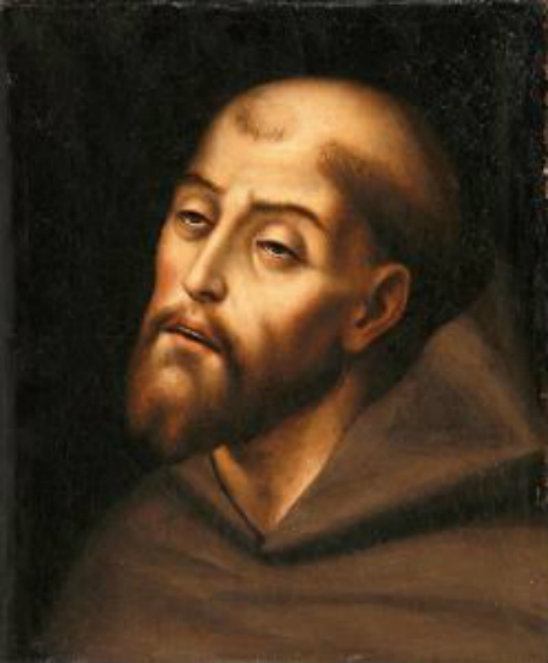
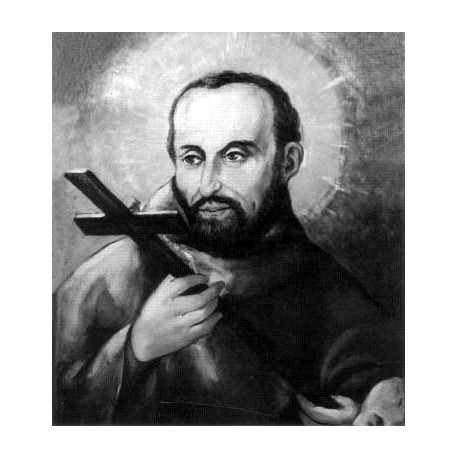
St Charles of Sezze OFM (1613-1670)

About St Charles:

https://anastpaul.wordpress.com/2018/01/06/saint-of-the-day-6-january-st-charles-of-sezze-o-f-m-1613-1670/

St Demetrius of Philadelphia
St Diman Dubh of Connor
St Edeyrn
St Eigrad
St Erminold of Prüfening
St Felix of Nantes
Bl Frederick of Saint-Vanne
Bl Gertrud of Traunkirchen
Bl Gertrude van Oosten
St Guarinus of Sion
St Guy of Auxerre
St Honorius
St Hywyn of Aberdaron
St John de Ribera
St Julian of Antinoë
St Julius
Bl Luc of Roucy
Bl Macarius the Scot
St Macra of Rheims
St Merinus
St Nilammon of Geris
St St Petran of Landévennec
St Peter of Canterbury
Bl Peter Thomas
St Pia of Quedlinburg
St Pompejanus
St Rafaela Porras y Ayllón
Bl Raymond de Blanes
Bl Rita Amada de Jesus
St Schotin
St Wiltrudis of Bergen

Martyrs in Africa: Unknown number of Christian men and women who were martyred in the persecutions of Septimus Severus. They were burned to death c 210.

Martyrs of Sirmium – 8 saints: A group of Christians martyred together for their faith. The only surviving details are the names of eight of them – Anastasius VIII, Florianus, Florus, Jucundus, Peter, Ratites, Tatia and Tilis. They were martyred in the 4th century at Syrmium, Pannonia (modern Sremska Mitrovica, Vojvodina, Serbia).

Twelve Apostles Saints of Ireland: Twelve 6th century Irish monks who studied under Saint Finian at Clonard Abbey and then spread the faith throughout Ireland. Each has his own commemoration but on this day they and their good work are considered and celebrated together. Though Saint Finian is sometimes included, most ancient writers list them as –
• Brendan of Birr
• Brendan the Navigator
• Columba of Iona
• Columba of Terryglass
• Keiran of Saighir
• Kieran of Clonmacnois
• Canice of Aghaboe
• Lasserian of Leighlin
• Mobhí of Glasnevin
• Ninnidh the Saintly of Loch Erne
• Ruadh´n of Lorrha
• Senan of Iniscathay

Posted in franciscan OFM, SAINT of the DAY

Saint of the Day – 4 January – Saint Angela of Foligno TOSF (1248-1309)

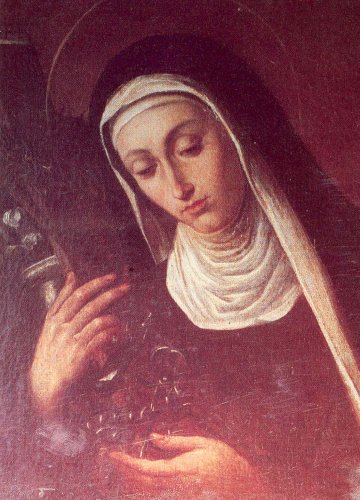
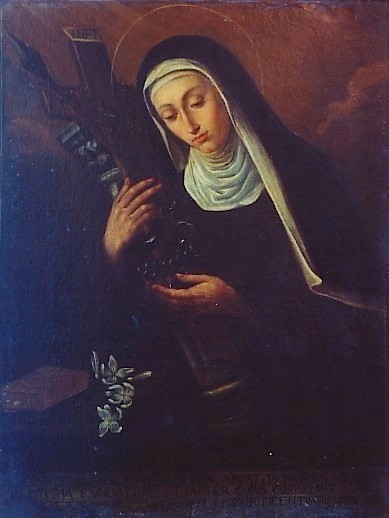
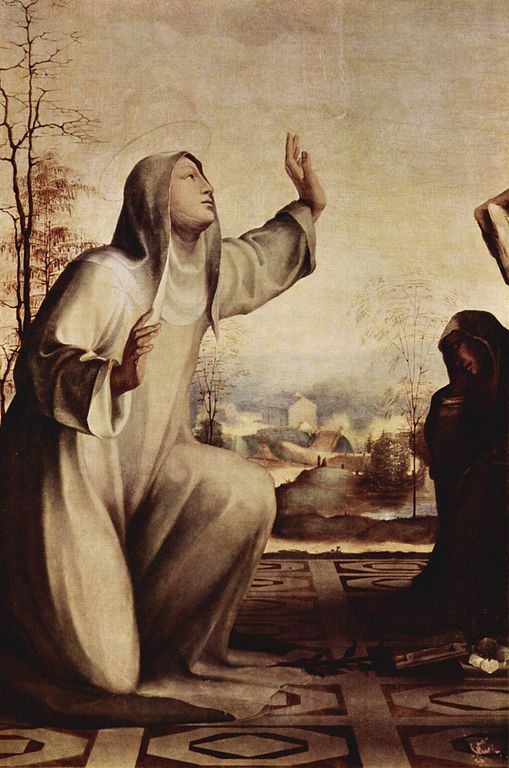
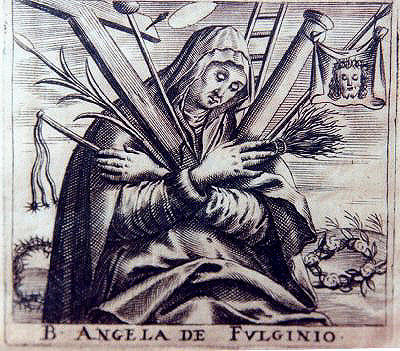
Saint of the Day – 4 January – Saint Angela of Foligno TOSF (1248-1309) known as the “Mistress of Theologians” – Wife, Mother, Widow, Religious, Mystic, Writer, Third Order Franciscan, Foundress of a religious community, which refused to become an enclosed religious order, so that it might continue her vision of caring for those in need.   It is still active.  Patronages – against sexual temptation, against temptations, assistance with the death of children, people ridiculed for their piety, widows.509px st angela foligno-Domenico_Beccafumi_026.jpg

Angela’s birth date, which is not known with certainty, is often listed as 1248.   She was born into a wealthy family at Foligno, in Umbria.   Married, perhaps at an early age, she had several children.   Angela reports that she loved the world and its pleasures.   Around the age of 40, she reportedly had a vision of St Francis and recognised the emptiness of her life.   From that time, she began to lead a life devoted to higher perfection.

Angela of Foligno is a model for people who want to simplify their lifestyle. As a young adult she reveled in luxury and sensuality. She married a rich man of Foligno, Italy, and used his wealth to indulge herself in possessions. And her impetuous temperament nudged her into sinful behaviour.

However in 1285, Angela experienced a surprising conversion.  st Angela_of_Foligno_1One day she wept bitterly and confessed a serious sin to a friar, who absolved her.   Then she embarked on a life of prayer and penance.   Over the next six years, step-by-step she divested herself of her attachments to people and things.
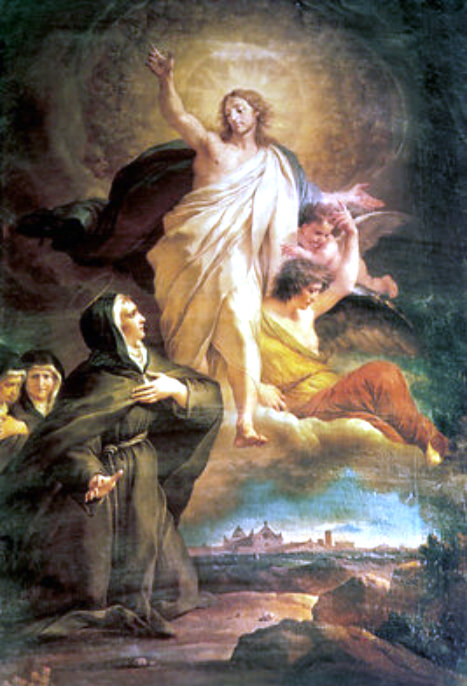
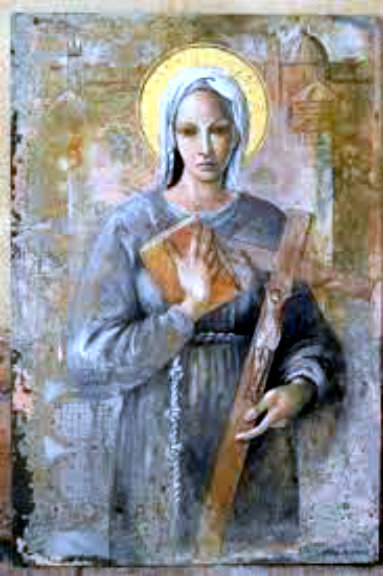
In 1288 her mother, husband and sons died of a plague.   As a widow, Angela was free to concentrate on her pursuit of holiness  . She modelled herself on St Francis of Assisi and joined the Franciscan Third Order in 1291.   Like Francis, Angela expected to meet Christ in the poor.   For instance, on Holy Thursday, 1292, she and a companion went to care for lepers at the hospital in Foligno.   After they had washed a man who was badly decomposed, they drank some of the bathwater.   The experience so moved Angela that she says all the way home she felt “as if we had received Holy Communion.”

Angela of Foligno was a visionary who, like St Catherine of Siena, regularly fell into  trances.   From 1292 to 1296 she dictated her revelations to Brother Arnold, her confessor.   Angela recorded 30 steps of her tortured spiritual journey, which always seemed to blend awareness and absence of God, certitude and doubt and joy and agony.st angela-of-foligno.jpg

A small band of disciples gathered around the saint.   She led them wisely, instructing them in basic Christian living.   This excerpt from her Instructions, advocates prayer and meditation on Scripture:

“No-one can be saved without divine light.   Divine light causes us to begin and to make progress and it leads us to the summit of perfection.   Therefore, if you want to begin and to receive this divine light, pray.   If you have begun to make progress, pray.   And if you have reached the summit of perfection and want to be super-illumined so as to remain in that state, pray.   If you want faith, pray.   If you want hope, pray.   If you want charity, pray.   If you want poverty, pray.   If you want obedience, pray.   If you want chastity, pray. If you want humility, pray.   If you want meekness, pray.   If you want fortitude, pray.   If you want any virtue, pray.”

And pray in this fashion – always reading the Book of Life, that is, the life of the God-man, Jesus Christ, whose life consisted of poverty, pain, contempt and true obedience.st angela of foligno.jpg

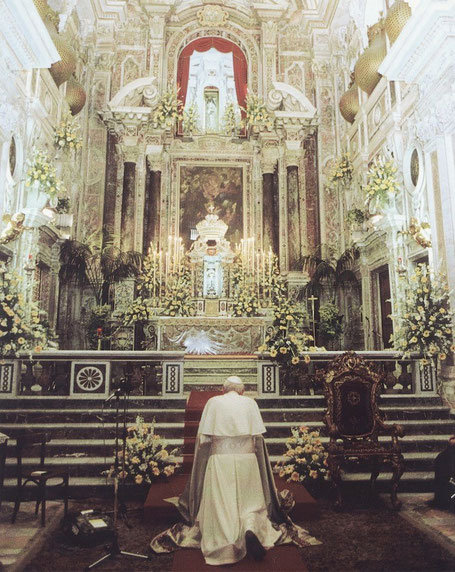
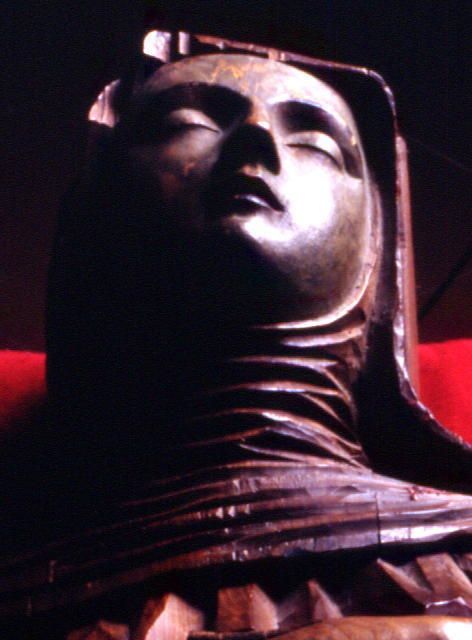
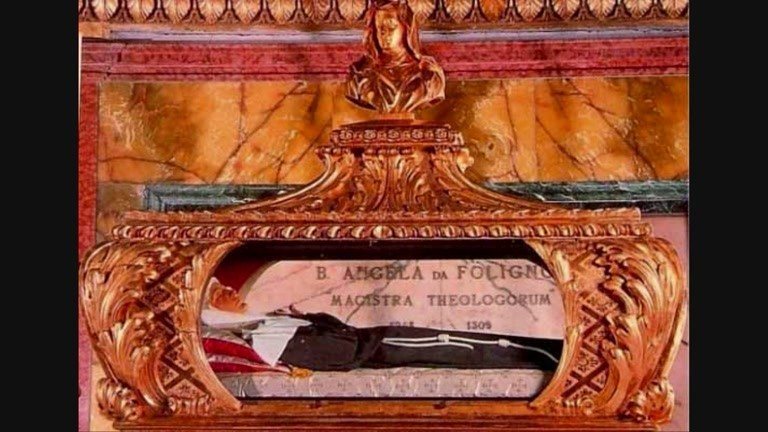
At Christmas, 1308, Angela told her companions she would die shortly.   A few days later Christ appeared to her, promising to come personally to take her to heaven.   She died in her sleep on 3 January 1309, surrounded by her community.   Her remains repose in the Church of St Francis at Foligno and many miracles have been recorded there.shrine st angela foligno.jpg

Considered a “great medieval mystic,” Angela is said to have received mystical revelations, which she dictated to a scribe in the late 13th century.   These accounts are contained in a compilation of two works, her Book of Visions and Instructions.

Pope Clement XI approved the veneration paid to her over the centuries in his Beatification of her on 11 July 1701 and Pope Francis extended the veneration to all the Church on 9 October 2013, declaring her a saint by equipollent Canonisation, recognising the validity of the long-standing veneration of her.

Her feast day is celebrated by the Third Order of Saint Francis, both Secular and Regular, on 4 January (7 January in the United States).   Although the community she founded was not recognised as a religious institute until the 20th-century, she is honoured as a religious.st angela foligno statue.jpg

Posted in CATHOLIC-PRAYERS OF THE CHURCH, FEASTS and SOLEMNITIES, franciscan OFM, PAPAL SERMONS, PRACTISING CATHOLIC, PRAYERS for VARIOUS NEEDS, PRAYERS of the CHURCH, THE HOLY FAMILY - FAMILIAE SANCTAE

Thought for the Day – 29 December – Bless Your Children!

Thought for the Day – 29 December – Feast of the Holy Family of Jesus, Mary and Joseph and the Fifth Day of the Christmas Octave

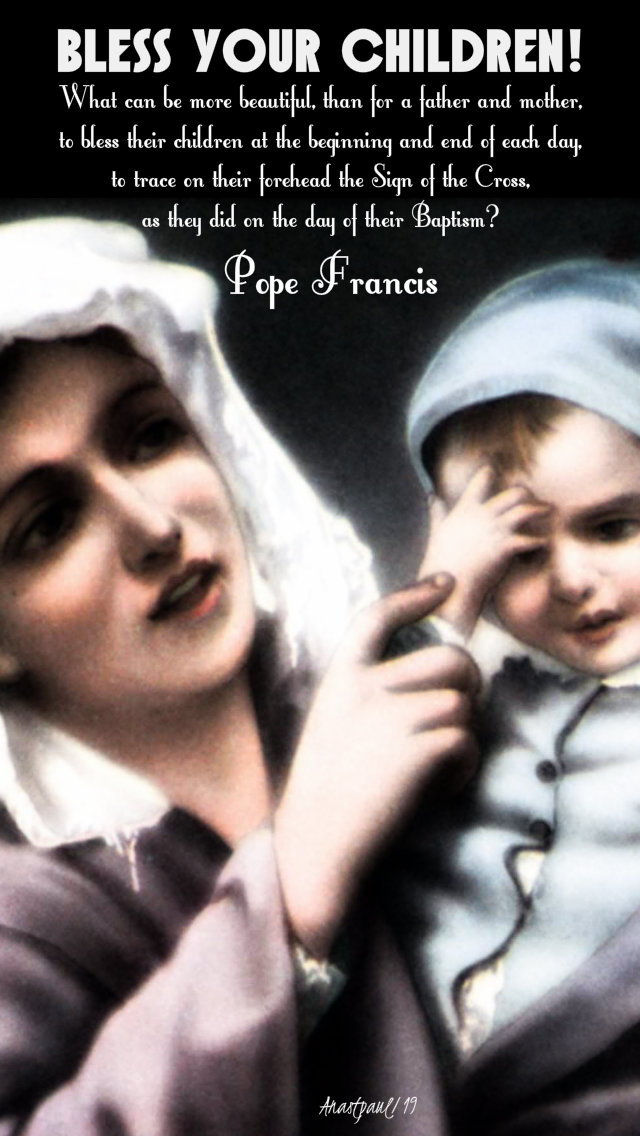
I am most grateful for my upbringing in a truly Catholic family, not one exit was made by the children without a blessing by our parents.   This is such an important and vital element in our daily lives as Catholic families.   And you too, parents, as you exit and enter your homes, bless yourselves with the Sign of the Cross – have a Holy Water Font at your doors – habits are formed by action – start today!bless your children - pope francis - 29 dec 2019.jpg

Bless Your Children
Pope Francis

Feast of the Holy Family of Jesus, Mary and Joseph
27 December 2015

“How important it is for our families to journey together towards a single goal!   We know that we have a road to travel together, a road along which we encounter difficulties but also enjoy moments of joy and consolation.   And on this pilgrimage of life we also share in moments of prayer.

What can be more beautiful, than for a father and mother, to bless their children at the beginning and end of each day, to trace on their forehead the Sign of the Cross, as they did on the day of their Baptism?   Is this not the simplest prayer which parents can offer for their children?   To bless them, that is, to entrust them to the Lord, just like Elkanah and Anna, Joseph and Mary, so that He can be their protection and support throughout the day.

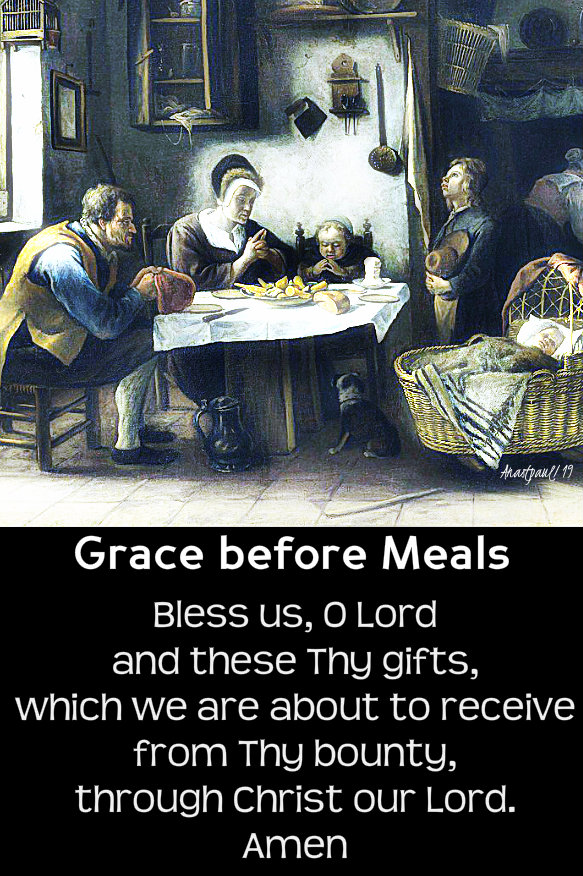
In the same way, it is important for families to join in a brief prayer before meals, in order to thank the Lord for these gifts and to learn how to share what we have received with those in greater need.   These are all little gestures, yet they point to the great formative role played by the family in the pilgrimage of everyday life.”

grace before meals - 29 dec 2019 - holy family feast .jpg

The Grace before Meals

Bless us, O Lord
and these Thy gifts,
which we are about to receive
from Thy bounty,
through Christ our Lord.
Amen

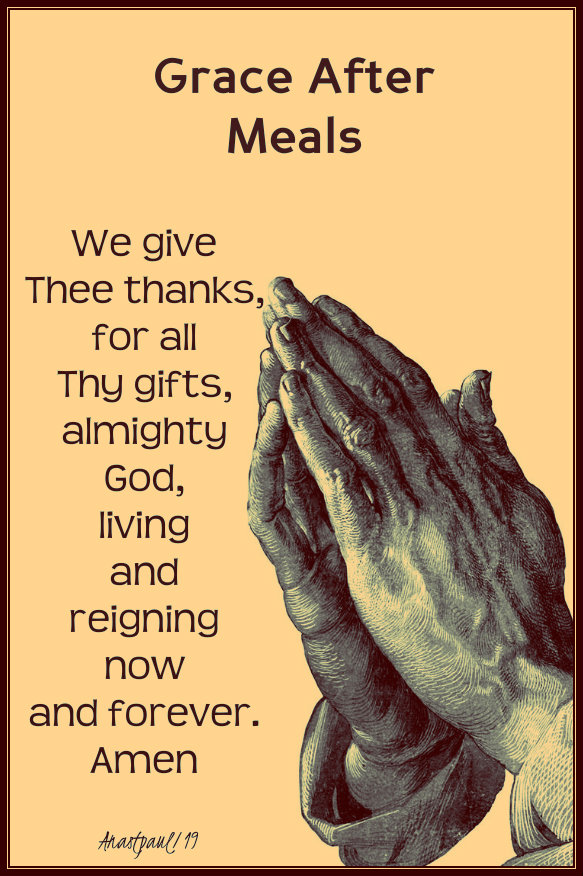
grace after meals - 29 dec 2019 - holy family feast.jpg

The Grace After Meals

We give Thee thanks,
Almighty God,
for all Thy gifts,
almighty God,
living and reigning
now and forever.
Amen

I learnt this Capuchin Grace Before a Meal from Fr Raneiro Cantalamessa, the Preacher to the Papal Household:

Lord, bless this food
that we are about to receive
from Your bounty.
Help us to provide
for those who do not have any
and make us partakers one day
in Your heavenly banquet,
through Christ, our Lord,
amen.

Posted in franciscan OFM, SAINT of the DAY

Saint of the Day – 23 December – Blessed Nicolás Factor-Estaña OFM (1520-1583)

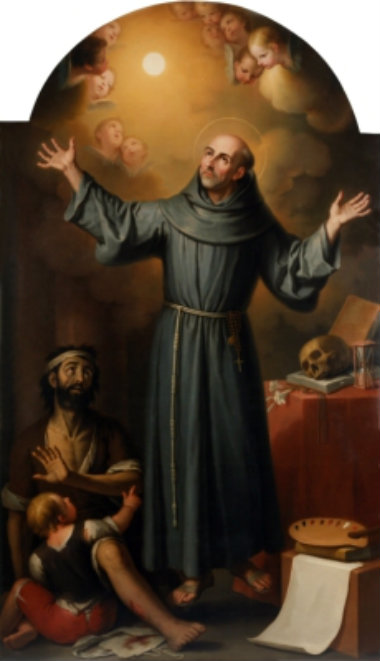
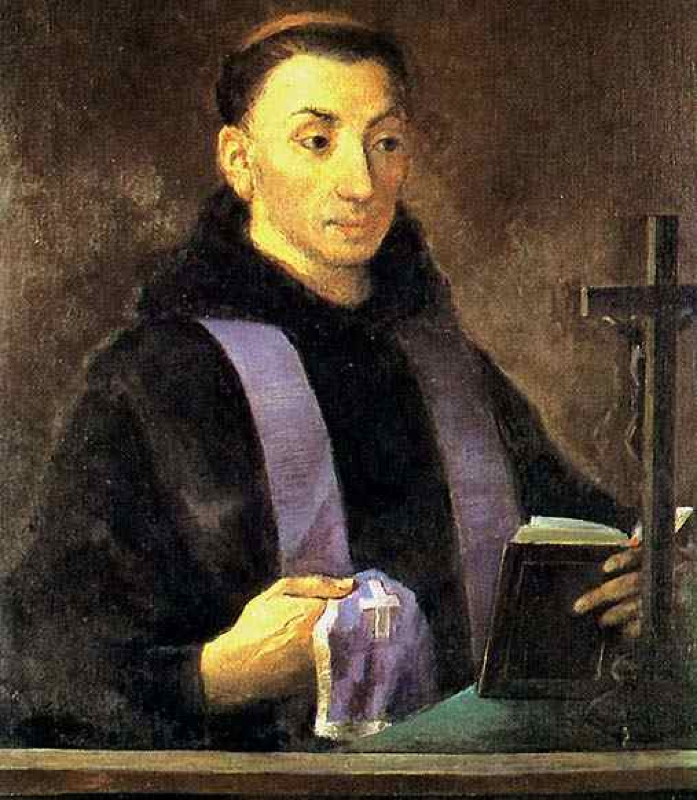
Saint of the Day – 23 December – Blessed Nicolás Factor-Estaña OFM (1520-1583) commonly known as Nicolas Factor – Franciscan Priest, Painter, Preacher, Ascestic, Spiritual Director – born in 1520 in Valencia, Spain and died in 1583 of natural causes. His body is incorrupt.st nicholas FactorNicolau.jpg

Nicolás Factor was born in Valencia in Spain on 29 June 1520 as one of five children to a poor tailor.

In his childhood he fasted three times a week and donated all of his untouched food to the poor and also tended to the ill, including lepers.   His Moorish maid was so affected by this love that she learnt about the faith and converted to Roman Catholicism.

His father wanted him to follow his career as a tailor but Nicolas wanted to become a priest and a religious.

He entered the Order of Friars Minor on 30 November 1537 and was sometime later ordained as a priest, where he developed his talents as a painter via a range of devotional images.

Although Nicolas wanted be sent to missionary lands, he was instead sent to preach across his own region and became much sought-after, his homilies teaching and converting many.   He was known for undergoing rather severe self-mortifications before he gave each sermon.img-st-Nicholas-Factor.jpg

He also served as the spiritual director of the Santa Clara convent in Madrid at the request of the Princess of Portugal, Joan of Habsburg.   In April 1582 he relocated to the Santa Caterina convent in Onda and that November moved to another convent in Barcelona.

Blessed Nicolas died after a period of illness on 23 December 1583 after having just returned to Valencia.  st nicholas Factor sml.jpgIn 1586 his remains were exhumed for King Philip II – who wished to view them and his body was found to be incorrupt.
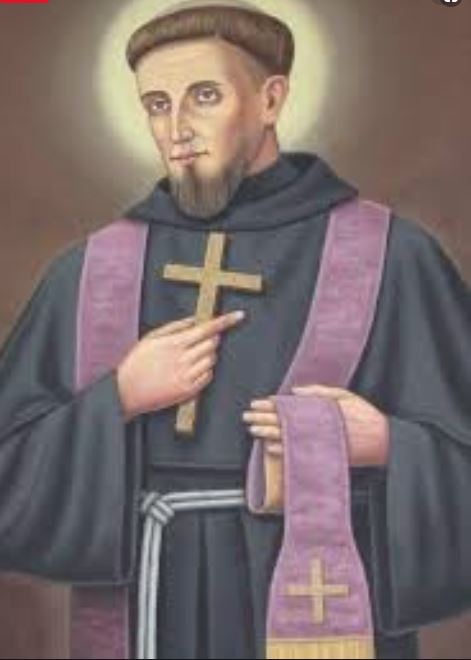
Pope Pius VI Beatified Blessed Nicolas on 27 August 1786.   The Beatification process saw three friends of Blessed Nicolas summoned to provide witness testimonies and the tribunal called upon Saint Pascal Baylon OFM, Saint Louis Betrand OP and Saint Juan de Ribera (whom Factor served as his Archbishop).

Posted in franciscan OFM, SAINT of the DAY

Memorials of the Saints – 23 December

St John of Kanty/Cantius (1390-1473) (Optional Memorial)
Full Biography:
https://anastpaul.wordpress.com/2017/12/23/saint-of-the-day-23-december-st-john-of-kanty-cantius-1390-1473/

AND more:
https://anastpaul.com/2018/12/23/saint-of-the-day-23-december-st-john-of-kanty-1390-1473-patron-of-poland-and-lithuania/

St Besa of Egypt
Bl Bincema
St Dagobert II of Austrasia
Bl Epifanio Gómez Alvaro
St Frithbert of Hexham
Bl Hartmann of Brixen
Bl Herman of Scheda
Bl James Aymerich
St John Cirita
St John Stone
St Joseph Cho Yun-ho
St Mardonius of Rome
St Mazota of Abernethy
St Migdonius of Rome
Blessed Nicolás Factor-Estaña OFM (1520-1583)
St Servulus of Rome
St Thorlac Thorhallsson
St Victoria
St Vintila of Orensee

Martyred Dominicans of Santander – (9 beati) – Martyred in the Spanish Civil War:
• Blessed Bernardino Irurzun Otermín
• Blessed Eleuterio Marne Mansilla
• Blessed Eliseo Miguel Lagro
• Blessed Enrique Cañal Gómez
• Blessed Enrique Izquierdo Palacios
• Blessed Epifanio Gómez Alvaro
• Blessed José María García Tabar
• Blessed Manuel Gutiérrez Ceballos
• Blessed Miguel Rodríguez González
• Blessed Pedro Luís y Luís

Martyrs of Crete – (10 saints): A group of ten Christians who died in the persecutions of Decius. They were –
• Agathopus
• Basilides
• Cleomenes
• Eunician
• Euporus
• Evaristus
• Gelasius
• Saturninus
• Theodulus
• Zeticus
They were martyred in 250 on the island of Crete

Posted in CATHOLIC DEVOTIONS of the Month, franciscan OFM, MARIAN PRAYERS, MARIAN QUOTES, MARIAN REFLECTIONS, MARIAN TITLES, NOVENAS, PRAYERS of the SAINTS, QUOTES of the SAINTS, The HOLY GHOST, The IMMACULATE CONCEPTION

Novena in Preparation for the Solemnity of the Immaculate Conception Day Two – 2 December

Novena in Preparation for the Solemnity of the Immaculate Conception
Day Two – 2 December

By St Maximillian Kolbe OFM (1894-1941) Martyr

OPENING PRAYER

How fair you are, 0 Mary!
The original stain is not in you.
You are the boast of Jerusalem,
You are the joy of Israel.
You are the pride of our people.
You are the advocate of sinners.
0 Mary!
You are the wisest of virgins.
You are the kindest of mothers.
Pray for us.
Intercede for us with our Lord Jesus Christ.
Holy Virgin, you were spotless
from the very moment of your conception.
Because you bore His Son, pray to the Father for us.
Through the spotless conception of the Virgin, 0 God,
You made ready a dwelling place worthy of Your Son.
In anticipation of Your Son’s death,
You preserved her from every stain.
Please purify us by her intercession,
so that we might find our way to You.
We ask this through Christ our lord.
Amen

Daily Readings and Meditations for each day of the Novena are given here, followed by two closing Novena Prayers for each day.

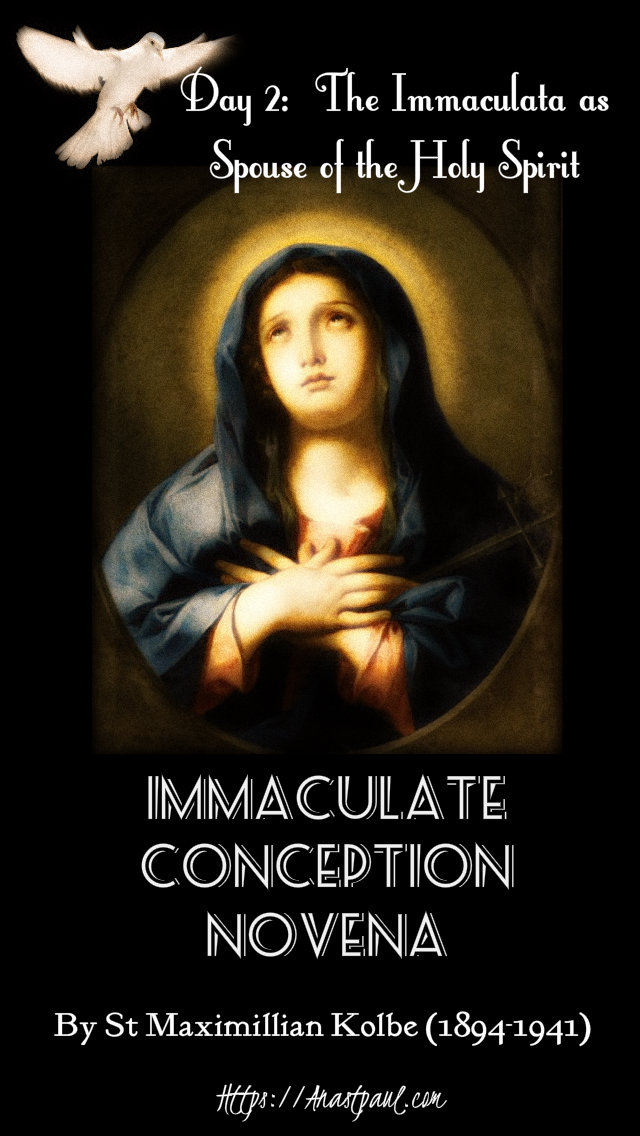
Day 2:   The Immaculata as Spouse of the Holy Spiritday 2 imm conception novena 2 dec 2019.jpg

Reading:
United to the Holy Spirit as His Spouse, the Immaculata is one with God in an incomparably more perfect way than can be predicated of any other creature.  What sort of union is this?   It is above all an interior union, a union of her essence with the “essence” of the Holy Spirit.   The Holy Spirit dwells in her, lives in her.   This was true from the first instant of her existence.   It was always true, it will always be true.

In what does this life of the Spirit in Mary consist?   He himself is uncreated Love in her, the Love of the Father and of the Son, the Love by which God loves Himself, the very love of the most Holy Trinity.   He is a fruitful love, a “Conception.”   Among creatures made in God’s image the union brought about by married love is the most intimate of all (cf. Mt 19:6).   In a much more precise, more interior, more essential manner, the Holy Spirit lives in the soul of the Immaculata, in the depths of her very being.   He makes her fruitful, from the very first instant of her existence, all during her life and for all eternity (“Sketches for a book,” 17 February 1941).

Meditation:
To grow in daily awareness of the Holy Spirit’s presence within us is a constant challenge that God gives to each and all of us.   May the Immaculata’s perfect life in the Holy Spirit, cause a sharpening, of our own attentiveness, to His presence at the core of our inner selves.

Closing prayers:

Novena Prayer to the Immaculata

I greet you, ever-blessed Virgin,
Mother of God throne of grace,
miracle of almighty power!
I greet you, sanctuary of the most Holy Trinity
and Queen of the universe,
Mother of mercy and refuge of sinners!
Most loving Mother,
attracted by your beauty and sweetness
and by your tender compassion,
I confidently turn to you
and beg of you, to obtain for me of your dear Son
the favour I request in this novena
………………………… (here mention you request).
Obtain for me also, Queen of Heaven,
the most lively contrition for my many sins
and the grace to imitate closely,
those virtues which you practised so faithfully,
especially humility, purity and obedience.
Above all I beg you to be my mother
and protectress,
to receive me into the number of your devoted children
and to guide me from your high throne of glory.
Do not reject my petitions, Mother of mercy!
Have pity on me and do not abandon me
during life or at the moment of my death.

Daughter of the Eternal Father,
Mother of the Eternal Son,
Spouse of the Holy Spirit,
Temple of the adorable Trinity,
pray for me.
Immaculate and tender Heart of Mary,
refuge of the needy and hope of sinners,
filled with the most lively respect, love and gratitude,
I devote myself forever to your service
and I offer you my heart,
with all that I am and all that belongs to me.
Accept this offering,
sweet Queen of Heaven and earth
and obtain for me of your dear Son, Jesus Christ,
the favours I ask, through your intercession in this novena.
Obtain for me also a tender, generous, constant love of God,
perfect submission to His adorable will,
the true spirit of a Christian
and the grace of final perseverance.
Amen

Closing Prayer of Identification with the Immaculata

O Immaculate Conception, Mary, my Mother,
live in me, act in me, speak in and through me.
Think your thoughts in my mind,
love through my heart.
Give me your own dispositions and feelings.
Teach, lead and guide me to Jesus.
Correct, enlighten and expand my entire personality and life.
Replace me with yourself.
Incline me to constant adoration and thanksgiving,
pray in and through me.
Let me live in you
and keep me in this union always.
Amen

Posted in franciscan OFM, SAINT of the DAY

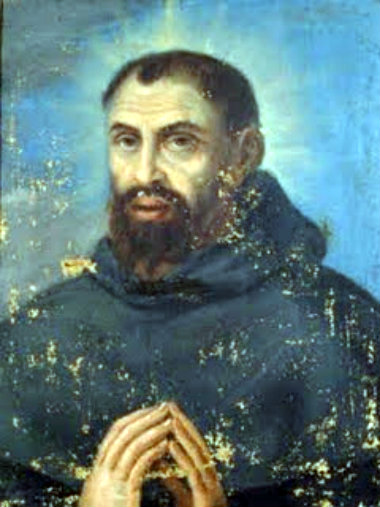
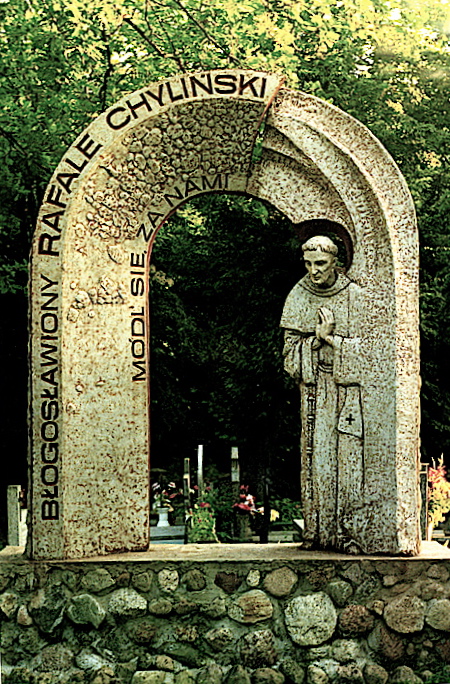
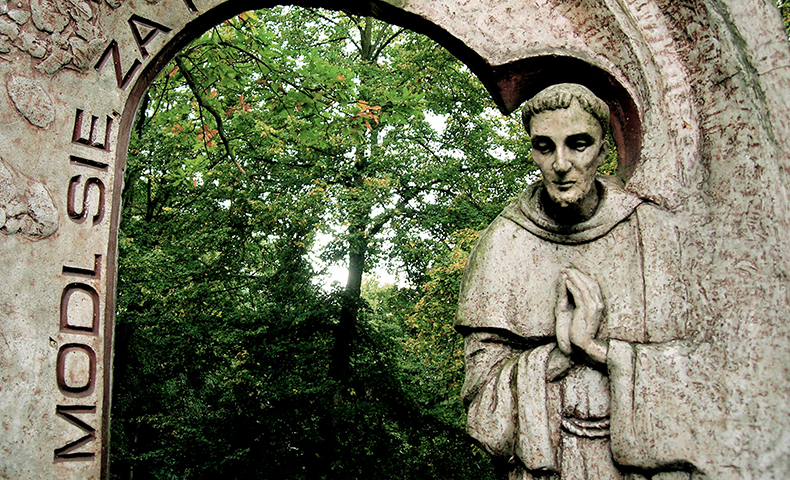
Saint of the Day – 2 December – Blessed Rafal Chylinski OFM Conv. (1694-1741)

Saint of the Day – 2 December – Blessed Rafal Chylinski OFM Conv. (1694-1741) aged 47 Franciscan Priest, Preacher, Apostle of Charity, Musician – born on 8 January 1694 at Buk, Poznan, Poland as Melchior Chylinski and died on 2 December 1741 at Lagiewniki, Lodzkie, Poland.bl rafal chylinski 2.jpg

Blessed Rafal was born near Buk in the Poznan region of Poland,   He showed early signs of religious devotion, so much so, that his family members nicknamed him “the little monk.”    After completing his studies at the Jesuit college in Poznan, Melchior joined the cavalry and was promoted to officer rank within three years.

In 1715, against the please of his military comrades, Melchior joined the Conventual Franciscans in Krakow.   Receiving the name Rafal, he was ordained two years later. After pastoral assignments in nine cities, he came to Lagiewniki, where he spent the last 13 years of his life, except for 20 months ministering to flood and epidemic victims in Warsaw.   In all these places, Rafal was known for his simple and candid sermons, for his generosity, as well as for his ministry in the confessional.   People of all levels of society were drawn to the self-sacrificing way he lived out his religious profession and priestly ministry.bl rafal chylinski snip.JPG

Rafal played the harp, lute and mandolin to accompany liturgical hymns.   In Lagiewniki he distributed food, supplies and clothing to the poor.   After his death, the Conventual church in that city became a place of pilgrimage for people throughout Poland.   He was Beatified in Warsaw in 1991 by St Pope John II after approval of a miracle.

His shrine is still a place of pilgrimage and prayer.

The sermons preached by Rafal were powerfully reinforced by the living sermon of his life.   The Sacrament of Reconciliation can help us bring our daily choices into harmony with our words about Jesus’ influence in our lives.bl rafal chylinski 3.jpg

May Blessed Rafal reminds us that everyone of us, even though we are sinners, has been called to love and to holiness. – St Pope John Paul IIŁódź-bł._Rafal_Chyliński_cm._ŁagiewnickiSOD-1202-BlessedRafalChylinski-790x480

Posted in franciscan OFM, MARIAN TITLES, SAINT of the DAY

Feast of Our Lady of Liesse and Memorials of the Saints – 2 December

Our Lady of Liesse/Our Lady, Cause of our Joy:  2 December – An ancient statue of the Madonna and Child.   It was brought from Egypt to France during the Crusades by three Knights of Malta who had been briefly captured by Saracens.   It was enshrined at Liesse, diocese of Soissons.   The original statue was destroyed during the French Revolution. A duplicate was installed and crowned in 1857.   Patronage – Diocese of Soissons, France.

St Athanasius of the Caves
St Avitas of Rouen
St Bibiana (4th century died c 361) Martyr
Biography here:
https://anastpaul.wordpress.com/2016/12/02/saint-of-the-day-2-december/

St Chromatius of Aquileia
St Evasius of Brescia
Bl Francisco del Valle Villar
St Habakkuk the Prophet
Bl Ivan Sleziuk
Bl John Amero
Bl John van Ruysbroeck (c 1293-1382)
About Blessed Jan:
https://anastpaul.com/2018/12/02/saint-of-the-day-2-december-blessed-john-van-ruysbroeck/
St Lupus of Verona
Bl Maria Angela Astorch
St Nonnus of Edessa
St Oderisius de Marsi
St Pimenio in Rome
St Pontian
Bl Rafal Chylinski OFM Conv (1694-1741)

Bl Robert of Matallana
St Silvanus
St Pope Silverio

Greek Martyrs of Rome – (9 saints): Several Greek Christians martyred in the persecutions of Valerian – Adria, Aurelia, Eusebius, Hippolytus, Marcellus, Mary Martana, Maximus, Neon and Paulina. They were martyred by various means between 254 and 259 in Rome, Italy and are buried in the Callistus catacombs, Rome.

Martyrs of Africa – (4 saints): Four Christians martyred in Africa in the persecutions of Arian Vandals – Januarius, Securus, Severus and Victorinus.

Posted in franciscan OFM, MARIAN TITLES, SAINT of the DAY

Our Lady of Beauraing and Memorials of the Saints – 29 November

All Saints of the Seraphic Order (Franciscan):   the Church celebrates the many Franciscan saints who followed in the footsteps of St Francis. It is a special day for all Franciscans to celebrate the feast of ‘All the Saints of the Seraphic Order.’all saints of the Franciscan order - 29 nov

St Francis of Assisi prayed the following prayer:
“O Lord Jesus Christ, two favours I beg of You before I die.   The first is that I may, as far as it is possible, feel in my soul and in my body the suffering in which You, O gentle Jesus, sustained in Your bitter passion.   And the second favour is that I, as far as it is possible, may receive in my heart that excessive charity by which You, the Son of God, were inflamed and which actuated You willingly to suffer so much for us sinners.”
In response to his earnest prayer, the Lord appeared in the form of a seraph, or a six-winged angel (They are usually considered the highest order of angelic beings, immediately above the Cherubim and their special duty is to love God).
Then Jesus bestowed on St Francis the wounds of His suffering.   St Francis had been marked with the love of Christ, the stigmata.   St Francis died two years later in 1226, leaving the world the Franciscan Order, which became synonymous with the Seraphic Order.   To this day, seraph wings and seraphs are symbolic of the Franciscan Order.
The final Rule of life for Franciscan friars was also approved on this day in 1223.   To commemorate this and all the saintly examples produced in the Franciscan Order, on this day all the saints of the Seraphic order are remembered at Franciscan churches.

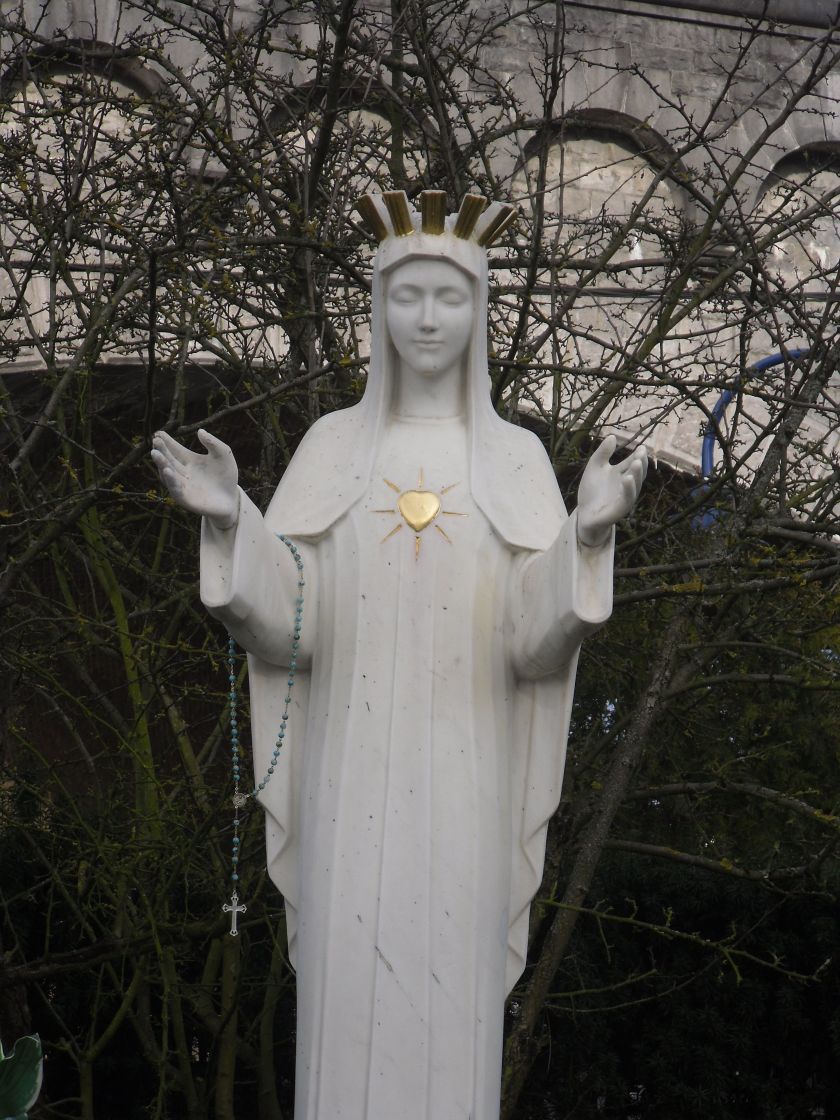
Our Lady of Beauraing/Our Lady of the Golden Heart:
Appeared multiple occasions between 29 November 1932 and 3 January 1933 On 2 February 1943, Bishop Andre Marie Charue authorised public devotion to Our Lady of Beauraing.   On 2 July 1949 the Bishop declared that the Queen of Heaven had truly appeared to the children.   Pilgrims flock to the small town of Beauraing, province of Namur (Belgium) and many cures are claimed.   She is celebrated under this title on 29 November.our lady of beauraing belgium - of the golden heart - 29 nov.jpg

Bl Alfredo Simón Colomina
Bl Bernardo Francisco de Hoyos Seña SJ (1711-1735)
St Blaise of Veroli
St Brendan of Birr
St Demetrius of Veroli
Bl Denis of the Nativity
Bl Edward Burden
St Francesco Antonio Fasani OFM Conv (1681 – 1742)
His story:
https://anastpaul.com/2018/11/29/saint-of-the-day-29-november-st-francesco-antonio-fasani-1681-1742-29-november/

Bl Frederick of Ratisbon
Bl George Errington
St Hardoin of Brittany
St Illuminata of Todi
St James of Saroug
Bl Jutta of Heiligenthal
St Paphnutius of Heracleopolis
St Paramon
St Philomenus of Ancyra
St Radbod of Utrecht
Bl Redemptorus of the Cross
St Sadwen of Wales
St Saturninus of Rome
St Saturninus of Toulouse
St Sisinius of Rome
St Walderic of Murrhardt
Bl William Gibson
Bl William Knight

Posted in franciscan OFM, ONE Minute REFLECTION, SAINT of the DAY, The LAST THINGS, The WORD

One Minute Reflection – 28 November – ‘…Let us lift up our heads.’

One Minute Reflection – 28 November – Thursday of the Thirty Fourth week in Ordinary Time, Year C, Gospel: Luke 21:20–28

“Now when these things begin to take place, look up and raise your heads, because your redemption is drawing near.”…Luke 21:28now-when-these-things-begin-to-take-place-luke-21-28-29nov2018 and 28 nov 2019.jpg

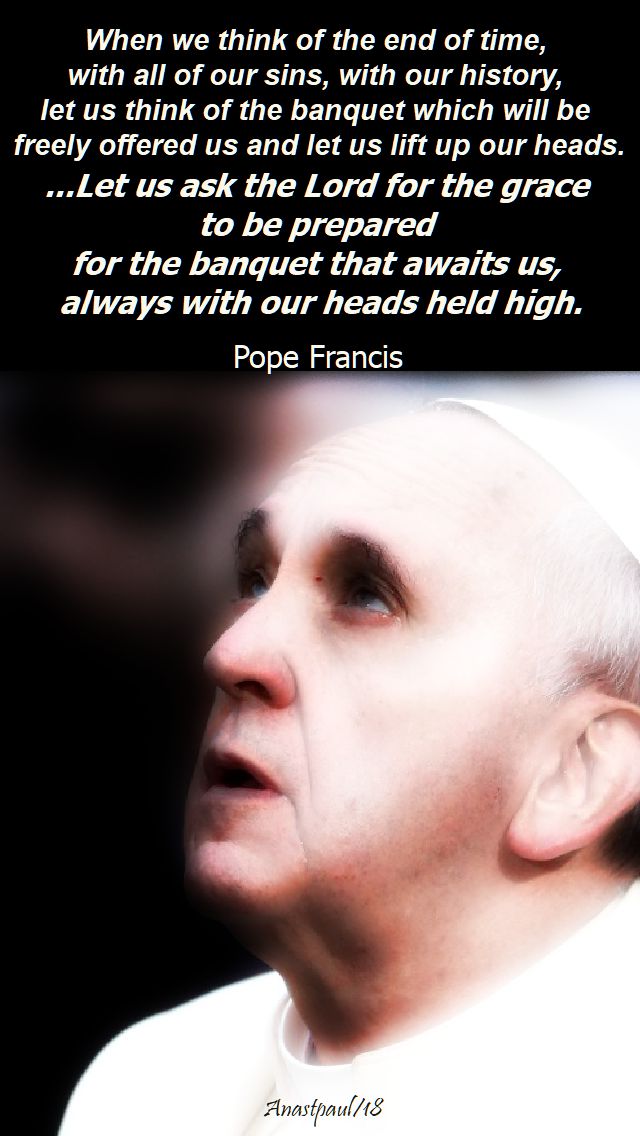
REFLECTION – “When we think of the end of time, with all of our sins, with our history, let us think of the banquet which will be freely offered us and let us lift up our heads.  Do not give way to depression.  Hope! Reality is ugly.   There are many, many people, cities and people, so many people who are suffering;  many wars, so much hatred, so much envy, so much spiritual worldliness and so much corruption.   Yes, it’s true!   All of this will fall!
Let us ask the Lord for the grace to be prepared for the banquet that awaits us, always with our heads held high.”…Pope Francis – Santa Marta, 27 November 2014when-we-think-of-the-end-of-times-pope-francis-29-nov-2018 and 28 nov 2018.jpg

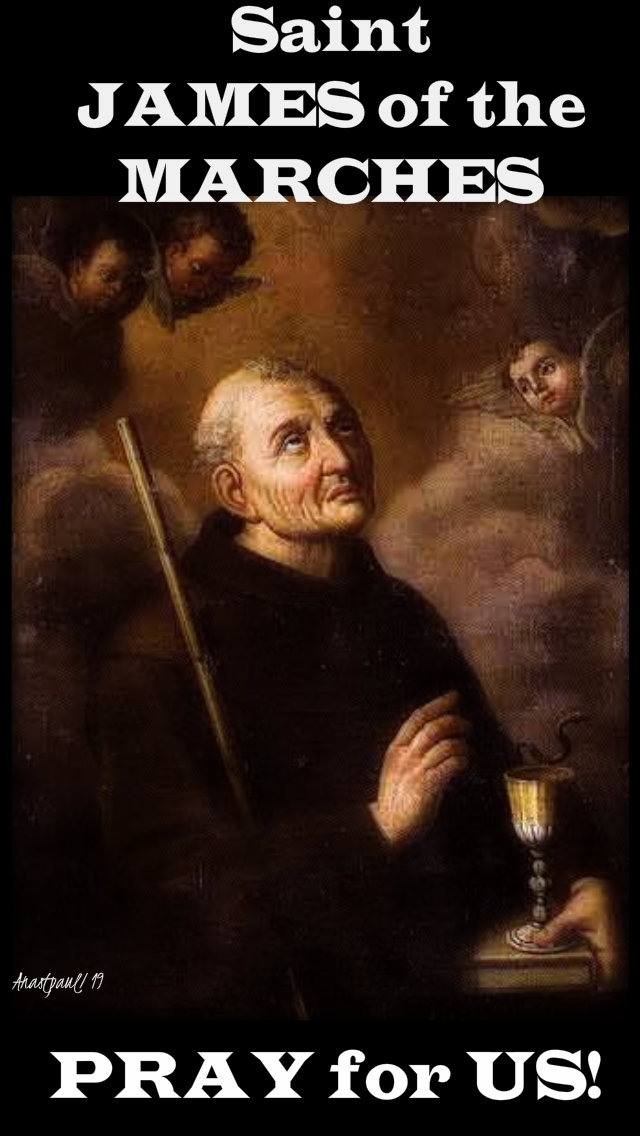
PRAYER – Lord God, creator of all Light and creator of all good, grant that we may look up to You always and know that by Your Light and your goodness we are safe in this world of corruption.   May the Light of our Lord Jesus, make the path He has set out bright and clear and may the prayers of St James of the Marches be a help in our struggle.   Lead us, Lord, in Your kindness and mercy to the banquet which awaits us.  We make our prayer through Christ our Lord, with the Holy Spirit, God forever, amen.st james of the marches pray for us 28 nov 2019.jpg

Posted in franciscan OFM, Our MORNING Offering, PRAYERS of the SAINTS, SAINT of the DAY

Our Morning Offering – 28 November – Beloved and Most Holy Word of God

Our Morning Offering – 28 November – The Memorial of St James of the Marches OFM Conv (1391-1476)

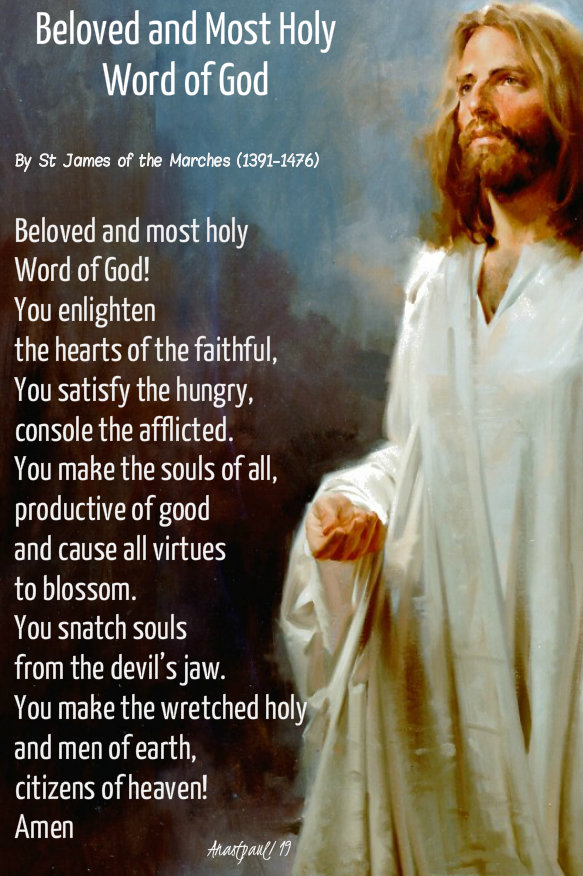
Beloved and Most Holy
Word of God
By St James of the Marches (1391-1476)

Beloved and most holy Word of God!
You enlighten the hearts of the faithful,
You satisfy the hungry,
console the afflicted.
You make the souls of all,
productive of good
and cause all virtues to blossom.
You snatch souls
from the devil’s jaw.
You make the wretched holy
and men of earth,
citizens of heaven!
Amenbeloved and most holy word of god by st jjames of the marches - 28 nov 2019.jpg

Posted in franciscan OFM, SAINT of the DAY

Saint of the Day – 28 November – Saint James of the Marches OFM (1391-1476)

Saint of the Day – 28 November – Saint James of the Marches OFM Conv. (1391-1476) Franciscan Priest, brilliant Preacher, Penitent, Reformer, Writer, Papal legate, Inquisitor, founder of several monasteries in Bohemia, Hungary and Austria – born on 1 September 1391 at Monteprandone, March of Ancona, Italy as Domenico meaning “of the Lord” (from Latin, Dominus) Gangala and died on 28 November 1476 at Naples, Italy.    Patronages – Monteprandone, co-patron of Naples, Italy, of children. His body is incorrupt.Saint James of the Marches

Domenico was born into an extremely poor family at Montebrandone (in the Marche of Ancona), in central Italy along the Adriatic Sea.   Unfortunately, his cruel father abused him and James left home as a boy.   He placed himself under the care of his uncle, a priest.   Through the generosity of his uncle, Domenico was educated in nearby towns of Ascoli and Offida.

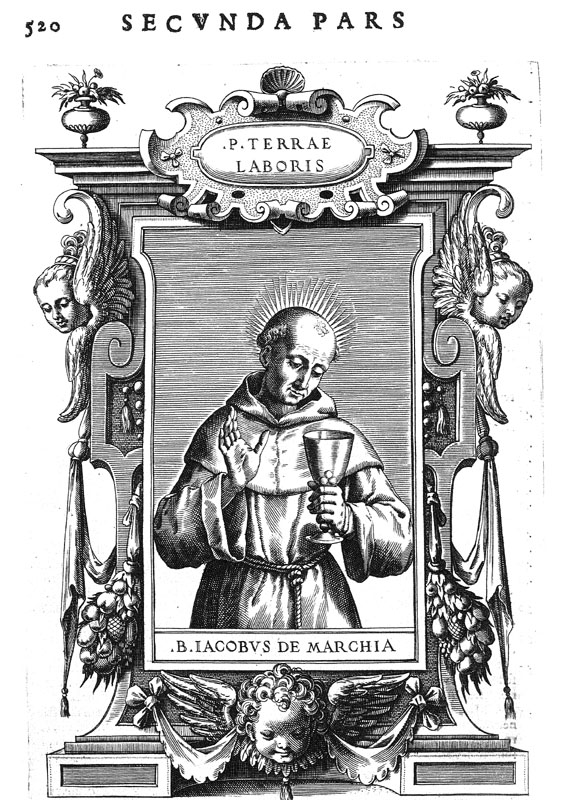
At the University of Perugia he took the degree of Doctor of Canon and Civil Law.   He began his career in Florence as tutor in a noble family and as judge.   On one occasion, while travelling to Assisi for his work, he went to pray in the church of the Portiuncula, St Mary of the Angels.   Inspired by the friars he witnessed there and by the example of St Francis, Domenico decided to enter the Franciscan Order.   In 1416, at 23 years of age, he became a novice, taking the religious name of James.P. 0520 - James, of the Marches, Saint

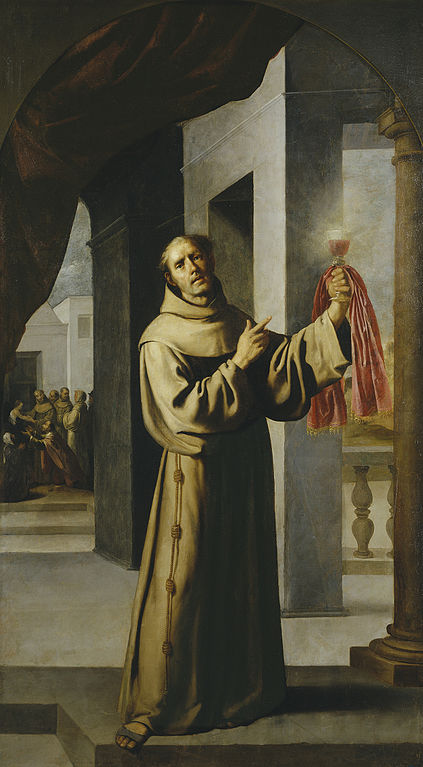
Studying under Saint Bernardino of Siena (1380-1444), James was widely recognised for his oratory, delivering both forceful and effective sermons and converting thousands of souls.   Ordained at age twenty seven, James was sent on mission with Saint John Capistrano (1603-1663), travelling throughout Italy, German, Bohemia, Poland, and Hungary.Francisco_de_Zurbaran_James_of_the_Marches

Noting his orthodoxy, Pope Saint Martin V appointed him inquisitor to root out heretical sects that were growing in power throughout Italy.   He continued his travels, preaching, working against heresy and attempting to reconcile various branches of the Franciscan Order.   He attended the Council of Florence in 1438, working diligently to reconcile the Eastern and Latin Churches, with little success.st james of the marches - maybe murillo

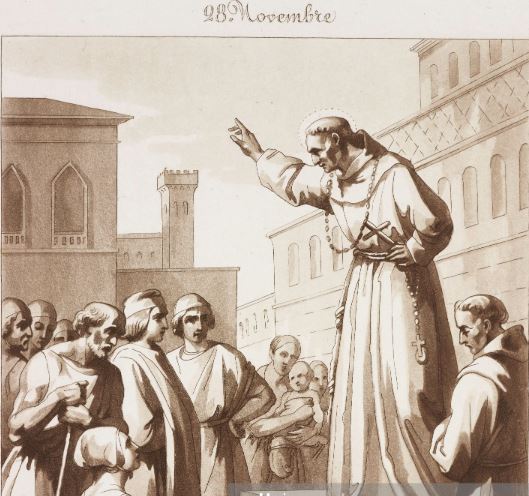
Elected Bishop of Milan, James humbly declined the position, preferring to continue his itinerant lifestyle, travelling, preaching and confirming the truth of Church doctrine. Saint James preached every day for 40 years, beginning on the date of his ordination and ending on the date of his death.   He preached a message of penance, which he also put into practice.   James slept only three hours each evening and fasted nine months of the year.   Thinly dressed, always in the same tattered brown robe, he always wore underneath his habit either a rough hair shirt or an iron coat of mail armed with short sharp spikes.and susceptible to illness, Saint James ate little, giving all he had to the needy.   As he grew older and his health began to observably fail, Pope Martin V ordered him to eat regularly, as a public service, so that he could continue his ministry. Charitable, Saint James instituted several montes pietatis, (literally, “mountains of money”) which provided low-interest loans to all who needed them.st james of the marches preaching snip getty

James took his vows seriously.   Due to his promise of poverty, he travelled on foot everywhere he went.   He pulled a small wagon by hand, which contained all his possessions – a bible, a prayer book, some theological works, liturgical vestments and vessels.   He personally hand-copied most of the few books he owned and he wore just his threadbare habit. He took the practice of obedience very seriously, as well.   In fact, on one occasion, he received an order from his superior to go abroad while lifting a cup to his mouth to drink.   He immediately set it down and left without drinking, as he was afraid of losing the merit of obedience by the least delay.james-of-the-marches-a7841781-3ceb-45df-b994-bd90440be75-resize-750

Under Pope Callistus III, in 1455, he was appointed an arbiter on the questions at issue between the Conventuals and Observants.   His decision was published 2 February 1456 in a papal bull, which pleased neither part.

In 1462, James became the subject of the Inquisition.   In a sermon, he preached his theological opinion on the Blood of Christ, stating that the blood shed during Christ’s passion was not hypostatically united to the divinity of Christ during the three days of his burial.   The case was controversial, and James was summoned to appear before the Dominican inquisitor, which he refused. Eventually, James appealed to the Holy See, after which a silence was imposed upon both the Dominican inquisitors and the Franciscans.   No decision was ever reached.james-of-the-marches-1fa8bce8-3dd2-4cc3-aca9-b83ca1ad580-resize-750

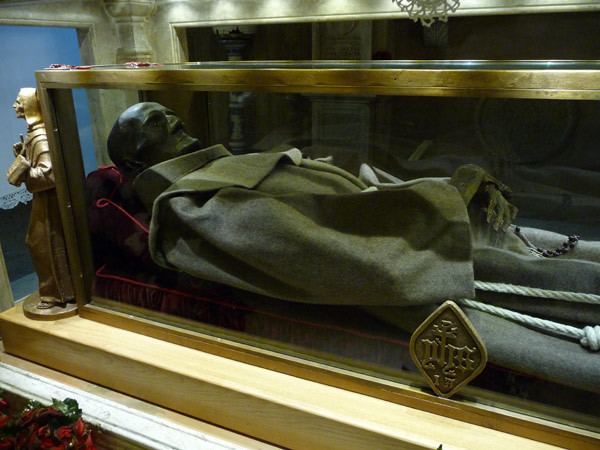
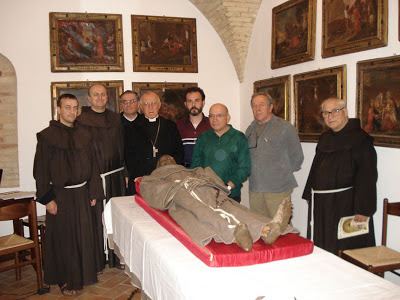
Saint James spent the last three years of his life at Naples and died there on 28 November 1476.   His funeral was attended by the Pope, the king of Naples, the royal court, many clergy and countless laypersons.   James’s body remained in the Franciscan church of Santa Maria la Nova in Naples for over five centuries until 2001 when it was finally transferred to his birthplace of Monteprandone.   There his incorrupt body remains exposed for the faithful to venerate.  james-of-the-marches-6fd911fe-4bd5-4671-aff9-a8788304c99-resize-750james-of-the-marches-b2fab1e5-fd2d-41dd-9fde-63d49dc729f-resize-750

Pope Urban VIII Beatified him on 12 August 1624, and St James of the Marches was Canonised on 10 December 1726 by Pope Benedict XIII.st james of the marches snip two

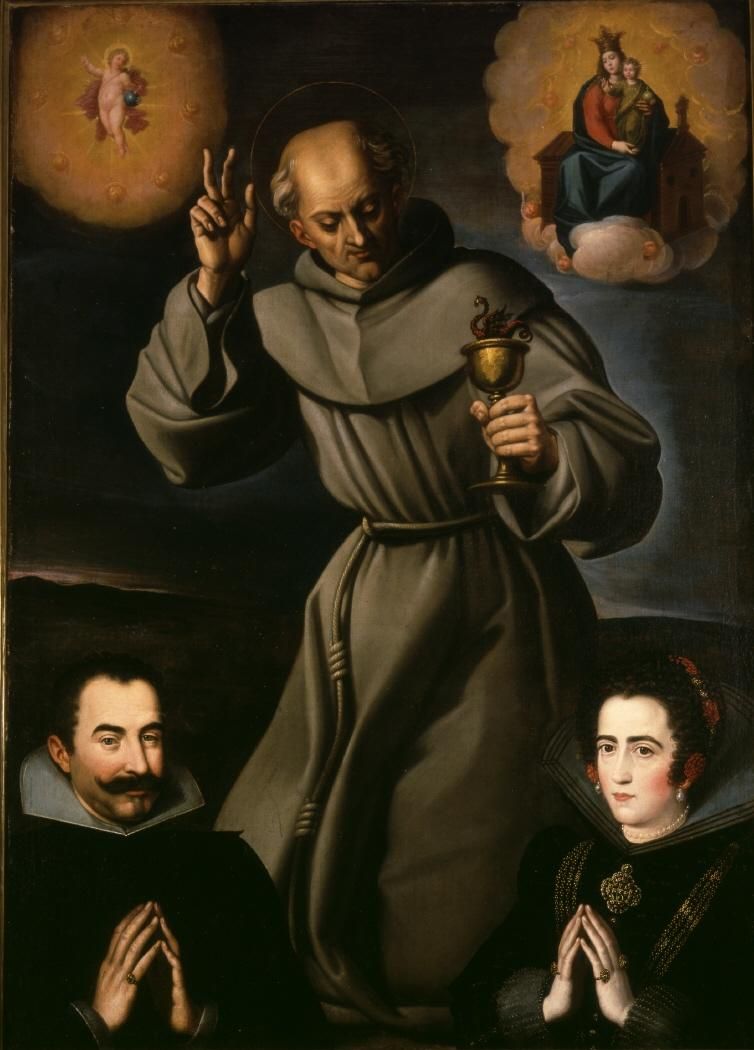
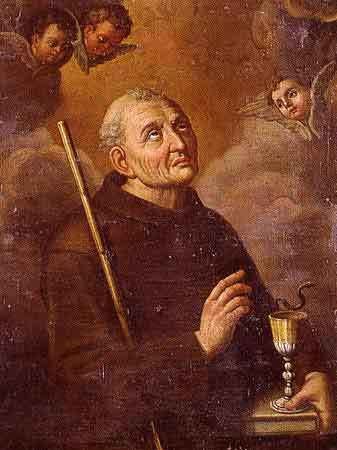
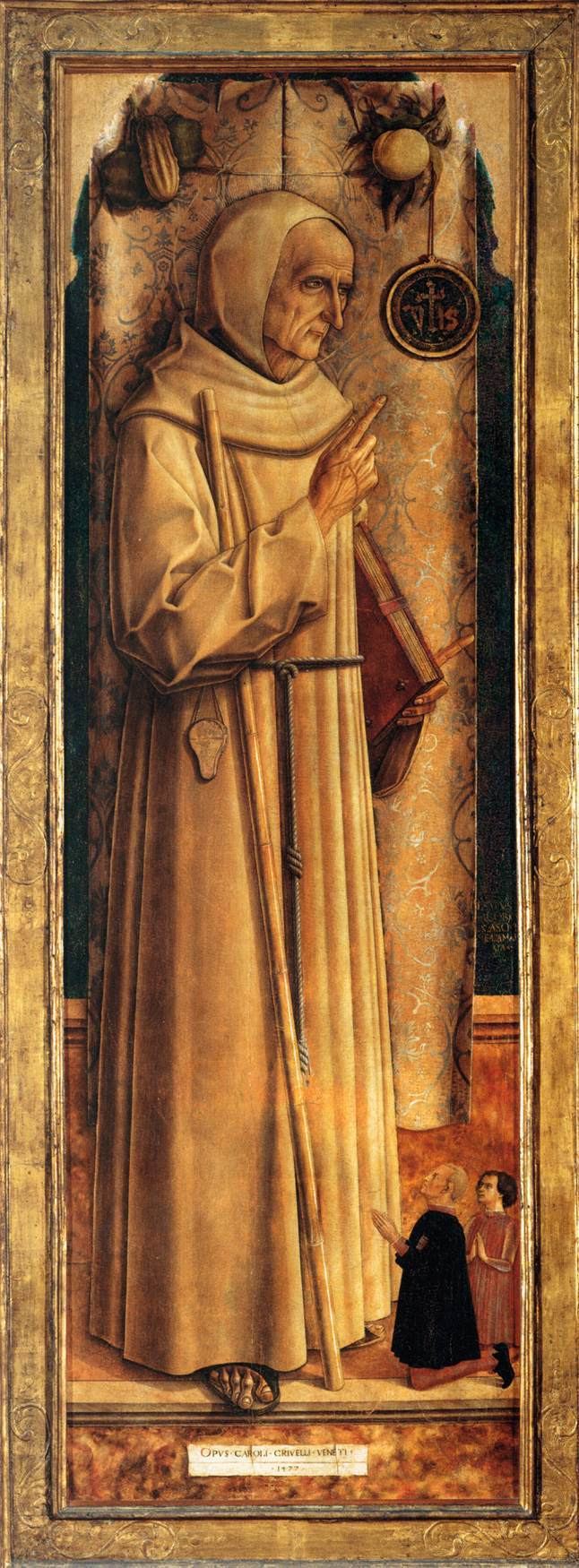
He is generally represented as a Franciscan holding a chalice and a veil.   His emblem is a chalice from which a snake is escaping – an allusion to the endeavours of certain heretics to poison him.   Numerous miracles have been reported through his intercession, both while he lived and subsequent to his death.james-of-the-marches-0d48f6af-a17b-4ab5-893c-0f5320e3d8d-resize-750

Posted in franciscan OFM, MARIAN TITLES, SAINT of the DAY

Feast of Our Lady of Kibeho and Memorials of the Saints – 28 November

Our Lady of Kibeho:  is the name given to Marian apparitions concerning several adolescents, in the 1980s in Kibeho, south-western Rwanda.   The apparitions communicated various messages to the schoolchildren, including an apocalyptic vision of Rwanda descending into violence and hatred.   The visions may be regarded as an ominous foreshadowing of the Rwandan Genocide, and particularly the second Kibeho Massacre in 1995.   The school where the visions occurred became a place of slaughter during the Genocide as dozens of children were shot and hacked to death by Hutu terrorists.
In 2001, the local bishop of the Catholic Church officially recognised the visions of three schoolchildren as authentic.   The feast day of Our Lady of Kibeho is today, 28 November, the anniversary of the initial apparition to Alphonsine Mumureke in 1981.   The Marian sanctuary at Kibeho was named “Shrine of Our Lady of Sorrows” in 1992. The first stone was laid on 28 November 1992.   In a 2003 agreement between the local ordinary and the Society of the Catholic Apostolate (Pallotines), the rectorate of the Shrine of Our Lady of Kibeho is entrusted to the Pallotine Fathers. The rector is appointed by the local bishop and the Regional Pallottine Rector.our-lady-of-kibeho.jpg

St Anrê Tran Van Trông
Bl Calimerius of Montechiaro
St Catherine Labouré DC (1806-1876) Incorrupt
St Catherine’s Story:

Saint of the Day – 28 November – St Catherine Labouré DC (1806-1876)

St Fionnchu of Bangor
St Hilary of Dijon
St Hippolytus of Saint Claude
St Honestus of Nimes
St Irenarcus
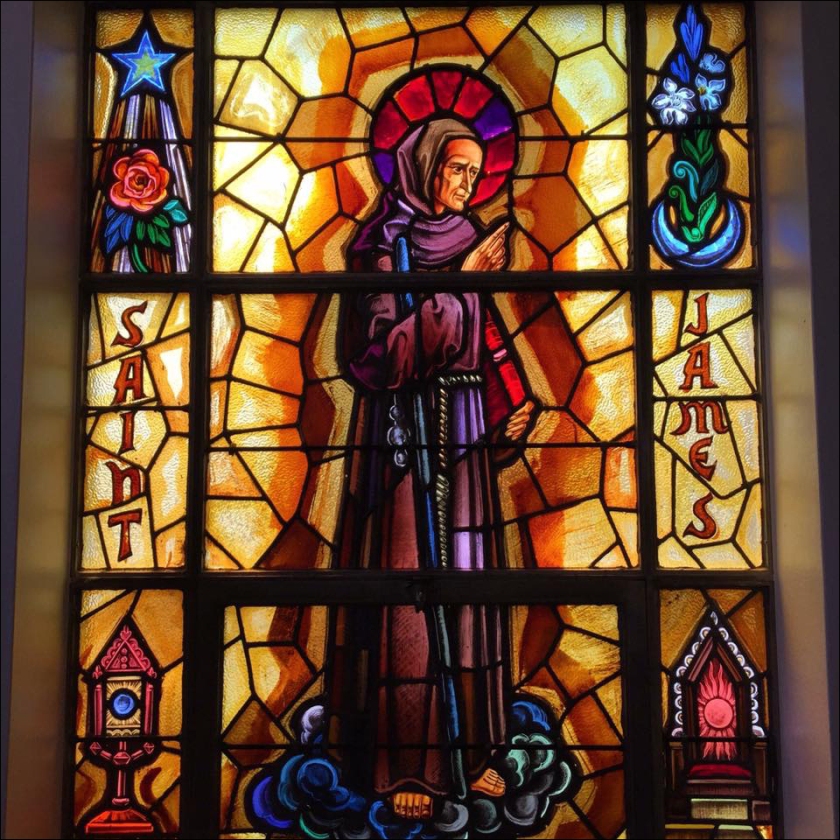
St James of the Marches OFM (1391-1476) Incorrupt

Bl James Thompson
St Papius
St Quieta of Dijon
St Rufus
St Simeon the Logothete
St Sosthenes of Colophon
St Stephen the Younger
Bl Theodora of Rossano

Martyrs of Constantinople – 8 saints: A group of over 300 Christians martyred during the persecutions of the Iconoclast emperors. We have a lot of information on Saint Stephen the Younger, but for the others we have nothing but seven of their names – Andrew, Auxentius, Basil, Gregor, John, Peter and Stefan. They were
scourged, stoned and/or dragged to death through the streets of Constantinople in 764.

Martyrs of North Africa – 13 saints: A group of thirteen clerics killed or exiled in the persecutions of Arian Vandals in North Africa – Crescens, Crescentian, Cresconius, Eustace, Felix, Florentian, Habetdeum, Hortulanus, Mansuetus, Papinianus, Quodvultdeus, Urban and Valerian.

Martyrs of Tiberiopolis – 14 saints: A group of fourteen Christian laymen, deacons, priests and bishops who were martyred together in the persecutions of Julian the Apostate – Basil, Chariton, Comasios, Daniel, Etymasius, Hierotheos, John, Nicephorus, Peter, Sergius, Socrates, Theodore, Thomas and Timothy.
361 at Tiberiopolis, Phyrgia (in modern Turkey)

Martyred in the Spanish Civil War – Martyred Augustinians of Madrid – 12 beati; Martyred Hospitallers of Madrid – 15 beati; Oblate Martyrs – 23 beati.
• Blessed Ángel Francisco Bocos Hernández
• Blessed Ángel Sastre Corporales
• Blessed Antonio Hilario Delgado Vílchez
• Blessed Antonio Meléndez Sánchez
• Blessed Avelino Rodríguez Alonso
• Blessed Balbino Villaroel y Villaroel
• Blessed Benito Alcalde González
• Blessed Bernardino Álvarez Melcón
• Blessed Cándido Castán San José
• Blessed Cecilio Vega Domínguez
• Blessed Clemente Díez Sahagún
• Blessed Clemente Rodríguez Tejerina
• Blessed Daniel Gómez Lucas
• Blessed Eduardo Bautista Jiménez
• Blessed Eleuterio Prado Villaroel
• Blessed Francisco Esteban Lacal
• Blessed Francisco Polvorinos Gómez
• Blessed Gregorio Escobar García
• Blessed Isidoro Martínez Izquierdo
• Blessed José Guerra Andrés
• Blessed José Mora Velasco
• Blessed José Peque Iglesias
• Blessed José Prieto Fuentes
• Blessed José Ruiz Cuesta
• Blessed José Vega Riaño
• Blessed Juan Alcalde y Alcalde
• Blessed Juan Antonio Pérez Mayo
• Blessed Juan Baldajos Pérez
• Blessed Juan Herrero Arroyo
• Blessed Juan Jesús Adradas Gonzalo
• Blessed Juan José Caballero Rodríguez
• Blessed Juan María Múgica Goiburu
• Blessed Juan Pedro del Cotillo Fernández
• Blessed Julián Plazaola Artola
• Blessed Justo Fernández González
• Blessed Justo Gil Pardo
• Blessed Justo González Lorente
• Blessed Lucinio Ruiz Valtierra
• Blessed Luis Campos Górriz
• Blessed Manuel álvarez Rego
• Blessed Manuel Gutiérrez Martín
• Blessed Marcelino Sánchez Fernández
• Blessed Marcos Pérez Andrés
• Blessed Pascual Aláez Medina
• Blessed Pedro de Alcántara Bernalte Calzado
• Blessed Pedro María Alcalde Negredo
• Blessed Vicente Andrés Llop Gaya
• Blessed Publio Rodríguez Moslares
• Blessed Ramiro Frías García
• Blessed Sabino Rodrigo Fierro
• Blessed Samuel Pajares García
• Blessed Senén García González
• Blessed Serviliano Riaño Herrero
• Blessed Vicente Blanco Guadilla

Posted in franciscan OFM, MARIAN DEVOTIONS, MARIAN TITLES, MIRACLES, SAINT of the DAY

Memorials of Our Lady of the Miraculous Medal and of the Saints – 27 November

Memorial of Our Lady of the Miraculous Medal/The Medal of the Immaculate Conception (the correct title is the latter) :
27 November is the Feast of Our Lady of the Miraculous Medal and is celebrated by it’s own Mass in Some Places.
The Miraculous Medal is a devotion to the Virgin Mary called the “Miraculous” Medal for the many miracles associated with those that wear it.   It is one of my favourite medals to wear.our-lady-of-the-mm.jpg
The Miraculous Medal came to the world through an Apparition of the Virgin Mary to Catherine Labouré in Paris, France in 1830.   In Mary’s second apparition, she asked that “a medal should be struck in this image.   The people wearing it, will receive my indulgence and those who piously say this short prayer will enjoy my very special protection”.
Two of the most famous conversions due to the miraculous medal was that of Fr Alphonse Ratisbonne NDS (1814-1884), an anti-Catholic Jewish banker and Claude Newman (1923-1944).
Fr Alphonse Ratisbonne received a vision of Our Lady of the Miraculous Medal. After his conversion, he became a priest and worked for the conversion of the Jewish people.

St Acacius of Sebaste
St Acharius of Noyon
St Apollinaris of Monte Cassino
St Barlaam
Bl Bernardine of Fossa
St Bilhild of Altmünster
Bl Bronislao Kostkowski
St Eusician
St Facundus
St Fergus the Pict
St Gallgo of Wales
St Gregory of Sinai
St Gulstan
St Hirenarchus of Sebaste
St James Intercisus
St John Angeloptes
St John of Pavia
St Josaphat
Bl José Pérez González
Bl Juan Antonio de Bengoa Larriñaga
St Laverius
St Leonard of Port Maurice OFM (1676-1751)
About St Leonard:
https://anastpaul.com/2018/11/27/saint-of-the-day-27-november-st-leonard-of-port-maurice-ofm-1676-1751/

St Maximus of Reiz
St Primitivus of Sahagun
St Secundinus of Ireland
St Severinus the Hermit
St Siffred of Carpentras
St Valerian of Aquileia
St Virgilius of Salzburg (c 700-784)

Martyrs of Antioch – (3 saints): A group of Christians martyred together for their faith. Little information has survived except for their names – Auxilius, Basileus and Saturninus.

Martyrs of Nagasaki – (11 beati): A group of eleven Christians martyred together for their faith during a period of official persecution in Japan. They are:
• Blessed Alexius Nakamura
• Blessed Antonius Kimura
• Blessed Bartholomaeus Seki
• Blessed Ioannes Iwanaga
• Blessed Ioannes Motoyama
• Blessed Leo Nakanishi
• Blessed Matthias Kozasa
• Blessed Matthias Nakano
• Blessed Michaël Takeshita
• Blessed Romanus Motoyama Myotaro
• Blessed Thomas Koteda Kyumi
They were martyred on 27 November 1619 in Nagasaki, Japan and Beatified on 7 May 1867 by Pope Pius IX.

Martyred in the Spanish Civil War:
• Blessed Bartolomé Gelabert Pericás
• Blessed Eduardo Camps Vasallo
• Blessed José Pérez González
• Blessed Juan Antonio de Bengoa Larriñaga
• Blessed Miguel Aguado Camarillo
• Blessed Pedro Armendáriz Zabaleta

Posted in franciscan OFM, SAINT of the DAY

Saint of the Day – 25 November – Blessed Elisabeth Achler TOR (1386-1420)

Saint of the Day – 25 November – Blessed Elisabeth Achler TOR (1386-1420) known as ” Blessed Elisabeth the Good” and Elizabeth of Reute, Betha, Elsbeth – Franciscan Tertiary Sister, Mystic, Stigmatist, Apostle of the Holy Eucharist, prayer and charity, gifted with the charism of prophecy – born on 25 November 1386 at Waldsee, Wurttemberg, Swabia, Germany and died on 25 November 1420 at Reute, Germany of natural causes.  Patronage – Swabia, Germany.header bl elisabeth_von_Reute.jpg

Elisabeth was born on 25 November 1386 to Hans and Anna Achler in Waldsee in the region of Upper Swabia (a historic and linguistic region in Germany).   She was raised in a pious home, hearing the Gospels explained to her by her mother in the form of stories, where she developed a strong devotion to the Passion of Christ.

She became a member of the Third Order of St Francis at the age of fourteen.   Seeking to further her spiritual growth, she took as her confessor the provost of the local Canonry of St Peter in Waldsee, Dom Konrad Kügelin (1366-1428).   Under his guidance, she and several other Franciscan tertiaries sought to follow a more intense experience of their Franciscan vocation.   To this end, they acquired a house in Reute on the outskirts of Waldsee in 1403.

This community was a proto-monastery of the Order, as tertiaries of the mendicant orders had not yet been allowed to profess vows.   Elisabeth threw herself into a life of prayer and service, working in the cloister kitchen and in the garden, where she would spend long hours in prayer.bl elisabeth achler

She was known for her hospitality to visitors to the little monastery, especially for her concern for the poor who came to the gate to beg.   Her love of the Blessed Sacrament was so great that she lived the last twelve years of her life subsisting solely on the consecrated hosts. bl elisabeth achler the good statue beautiful

Her head showed the marks of the crown of thorns worn by Christ and her body the marks of Christ’s scourging.   Although the Stigmata only occasionally appeared on her hands, she always felt its pain.   She was credited with the gift of prophecy foretelling the election of Pope Martin V and the end of the Great Western Schism.    She died on her birthday in 1420.

She was buried in the parish church of Reute.   A biography of her was written by Kügelin, her confessor and sent to the Bishop of Konstanz.   However, popular veneration for Elisabeth occurred only after 1623, when her tomb was opened by the then-provost of Waldsee.bl elisabeth achler with relic

Miracles were attributed to her, which were compiled into a formal document by a contemporary canon, Heinrich Scheffler (d. 1635).   Pope Clement XIII officially approved her cultus on 19 June 1766.

Her major shrine is at the Convent of the Franciscan Sisters of Reute, Bad Waldsee, Germany where her feast is celebrated today.bl elisabeth the good Gute_Beth_Waldsee_Kornhausmuseum

Posted in franciscan OFM, SAINT of the DAY

Memorials of the Saints – 25 November

St Catherine of Alexandria (Died c 305) Martyr (Optional Memorial)
St Catherine’s Life:
https://anastpaul.com/2018/11/25/saint-of-the-day-25-november-st-catherine-of-alexandria-died-c-305/

Bl Adalbert of Caramaico
St Alanus of Lavaur
St Audentius of Milan
St Bernold of Ottobeuren
Bl Conrad of Heisterbach
Bl Ekbert of Muensterschwarzach
Bl Elisabeth Achler TOR (1386-1420)
St Erasmus of Antioch
Bl Garcia of Arlanza
Bl Guido of Casauria
St Imma of Wurzburg
Bl Jacinto Serrano López
St Jucunda of Reggio Aemilia
Bl Maria Corsini Beltrame Quattrocchi
St Mercurius of Caesarea
St Moses of Rome
Bl Santiago Meseguer Burillo

Martyrs of Africa – (13 saints): A group of 13 Christians murdered together for their faith in Africa, date unknown. The only details to have survived are their names – Claudian, Cyprian, Donatus, Felix, Januarius, Julian, Lucian, Marcian, Martialis, Peter, Quirianus, Victor and Vitalis.

Posted in franciscan OFM, SAINT of the DAY

The 33rd Sunday, Third World Day of the Poor and Memorials of the Saints – 17 November

The Thirty Third Sunday in Ordinary Time, Year C +2019

The Third World Day of the Poor +2019

St Elizabeth of Hungary TOSF (1207-1231) (Memorial)
About St Elizabeth:
https://anastpaul.wordpress.com/2017/11/17/saint-of-the-day-st-elizabeth-of-hungary-1207-1231-t-o-s-f/

St Acisclus
St Aignan of Orléans
St Alphaeus of Palestine
St Eugene of Florence
St Eusebio Roldán Vielva
St Florinus of Remüs
St Giacinto Ansalone
St Gregory of Tours
St Gregory Thaumaturgus (c 213-c 270) Bishop
St Gregory’s life:

Saint of the Day – 17 November – St Gregory Thaumaturgus “the Wonder-Worker” (c 213-c 270)


St Hilda of Whitby (c 614–680)

St Hugh of Noara
St Josefa Gironés Arteta
St Juan de Castillo-Rodriguez
St Laverius
St Lazarus Zographos
St Lorenza Díaz Bolaños
St Namasius of Vienne
Bl Salomea of Galicia
Bl Sébastien-Loup Hunot
St Thomas Hioji Nishi Rokuzaemon
St Victoria of Cordoba
Bl Yosafat Kotsylovsky
St Zacchaeus of Palestine

Jesuit Martyrs of Paraguay – 3 saints

Martyred in the Spanish Civil War:
• Blessed Eusebio Roldán Vielva
• Blessed Josefa Gironés Arteta
• Blessed Lorenza Díaz Bolaños

Posted in franciscan OFM, SAINT of the DAY, VATICAN Resources

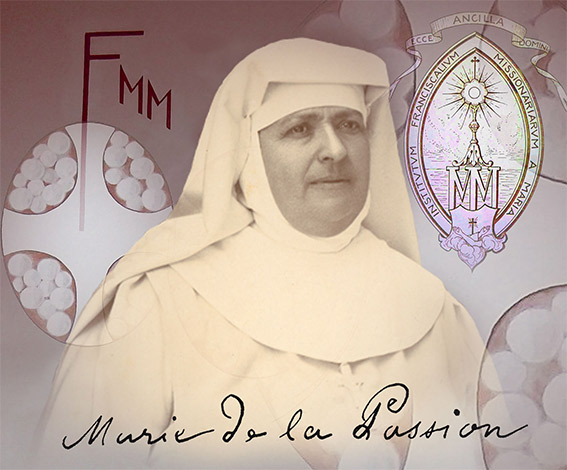
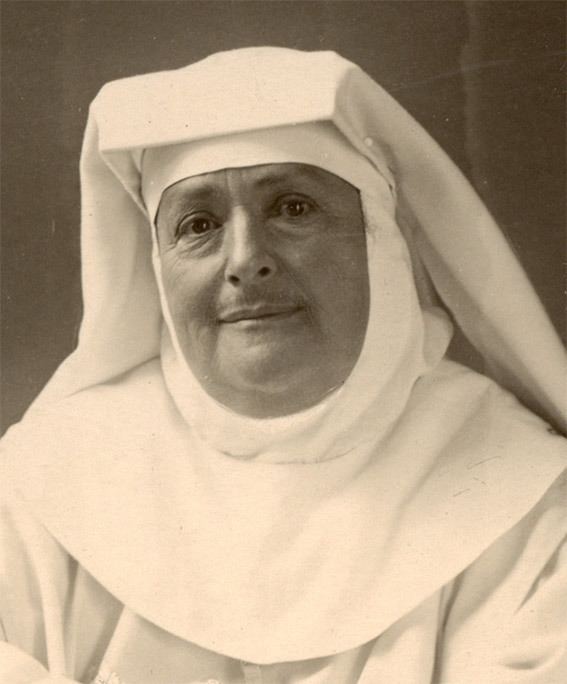
Saint of the Day – 15 November – Blessed Mary of the Passion (1839-1904)

Saint of the Day – 15 November – Blessed Mary of the Passion (1839-1904) Religious, Foundress of the Franciscan Missionaries of Mary, Missionary – born as Hélène-Marie-Philippine de Chappotin de Neuville on 21 May 1839 in Nantes, Loire-Atlantique, France and died on 15 November 1904 in San Remo, Imperia, Italy of natural causes. Patron of the Order she founded.   The Franciscan Missionaries of Mary were founded in British India in 1877 and is currently one of the largest religious institutes in the Church.bl marie passion-fundo2

Born on 21 May 1839 in Nantes, France, into a noble Christian family, Hélène Marie Philippine de Chappotin de Neuville, in religion Mary of the Passion, showed from childhood eminent natural gifts and a deep faith.

In April 1856, during a retreat, she first experienced a call from God to a life of total consecration.   The unforeseen death of her mother delayed its realisation.   In December 1860, with the consent of the Bishop of Nantes, she entered the Poor Clares whose ideal of the simplicity and poverty of Saint Francis attracted her.

On 23rd January 1861, while still a postulant, she had a profound experience of God who invited her to offer herself as a victim for the Church and the Pope.   This experience marked her for life.   A short time after, having become seriously ill, she had to leave the monastery.   When she was well again, her confessor directed her towards the Society of Marie Reparatrice.   She entered with them in 1864 and on the following 15 August, in Toulouse, she received the religious habit with the name of Mary of the Passion.bl mary of passion and jesus.jpg

In March 1865, while still a novice, she was sent to India, to the Apostolic Vicariate of Madurai, confided to the Society of Jesus.   The Reparatrice sisters there had the task of formation of sisters of an autonomous congregation as well as being involved in other apostolic activities  . It was there, that she pronounced her temporary vows on 3 May 1866.

Because of her gifts and virtues, she was nominated local superior and then, in July 1867, she was named provincial superior of the three convents of the Reparatrice.   Under her guidance, the works of the apostolate developed, peace which had been somewhat disturbed by tensions which were already existing in the mission, was re-established and fervour and regularity flourished again in the communities.

In 1874, a new house was founded in Ootacamund in the Vicariate of Coimbatore, confided to the Paris Foreign Mission Society.   However, in Madurai the dissensions became exacerbated to such an extent that, in 1876 some religious, among them Mary of the Passion, were driven to leave the Society of Marie Reparatrice, reuniting, at Ootacamund under the jurisdiction of the Vicar Apostolic of Coimbatore, Monsignor Joseph Bardou MEP.

In November 1876, Mary of the Passion went to Rome to regularise the situation of the twenty separated sisters and, on 6 January 1877, obtained the authorisation from Pius IX to found a new Institute which was to be specifically missionary and was to be called the Missionaries of Mary.Mary.Passion-World.jpg

On the suggestion of the Congregation of Propaganda Fide, Mary of the Passion opened a novitiate in Saint-Brieuc in France, where very soon numerous vocations came along.   In April 1880 and in June 1882, the Servant of God went to Rome to resolve the difficulties which were threatening to hinder the stability and growth of the young Institute.   This latter journey, on June 1882, marked an important stage in her life, in fact, she was authorised to open a house in Rome and, through providential circumstances, she rediscovered the Franciscan direction which God had indicated to her twenty-two years previously.   On 4 October 1882, in the Church of the Aracoeli, she was received into the Third Order of Saint Francis and thus began her relationship with the Servant of God, Fr Bernardin de Portogruaro, Minister General, who with paternal solicitude would support her in her trials.

In March 1883, due to latent opposition, Mary of the Passion was deposed from her office of Superior of the Institute.   However, after an inquiry ordered by Pope Leo XIII, her innocence was fully acknowledged and at the Chapter of July 1884 she was re-elected.

The Institute of the Missionaries of Mary then began to develop rapidly.   On 12 August 1885 the Laudatory Decree and that of affiliation to the Order of Friars Minor were issued.   The Constitutions were approved ad experimentum on 17 July 1890 and definitively on 11 May 1896.   Missionaries were sent regularly to the most perilous and distant places overcoming all obstacles and boundaries.

The zeal of the Foundress knew no bounds in responding to the calls of the poor and the abandoned.   She was particularly interested in the promotion of women and the social question – with intelligence and discretion, she offered collaboration to the pioneers who were working in these spheres, which they appreciated very much.bl Maria Passion .jpg

Her intense activity drew its dynamism from contemplation of the great mysteries of faith.   For Mary of the Passion, all led back to the Unity-Trinity of God Truth-Love, who communicates Himself to us through the paschal mystery of Christ.   It was in union with these mysteries that, in an ecclesial and missionary dimension, she lived her vocation of offering.   Jesus in the Eucharist was for her, “the great missionary” and Mary, in the responsibility of her role, traced out for her, the path of unconditional donation to the work of God.   Thus she opened her Institute to the horizons of universal mission, accomplished in Francis of Assisi’s evangelical spirit of simplicity, poverty and charity .

She took great care, not only of the external organisation of the works but above all of the spiritual formation of the religious.   Gifted with an extraordinary capacity for work, she found time to compose numerous writings on formation, whilst by frequent correspondence, she followed her missionaries dispersed throughout the world, relentlessly calling them to a life of holiness.   In 1900 her Institute received the seal of blood through the martyrdom of seven Franciscan Missionaries of Mary, who were Beatified in 1946 and Canonised during the Great Jubilee of the year 2000.   To be the spiritual mother of these missionaries who had known how to live to the shedding of their blood, the ideal proposed by her, was for Mary of the Passion, both a great sorrow, a great joy and a time of great emotion.mary-of-the-passion--750

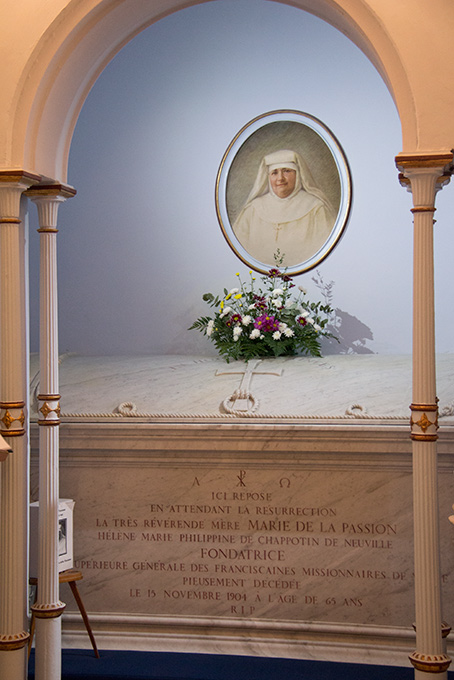
Worn out by the fatigue of incessant journeys and daily labour, Mary of the Passion, after a brief illness, died peacefully in San Remo on 15 November 1904, leaving more than 2,000 religious and eighty-six houses scattered about the four continents.   Her mortal remains repose in a private oratory of the General House of the Institute of the Franciscan Missionaries of Mary in Rome.bl mary of the passion shrine

bl mary of the passion shrine 2

In February 1918, in San Remo, the Informative Process was opened for the Cause of Beatification and Canonisation.   In 1941, the Decree on the writings was promulgated and, during the following years, numerous postulatory letters were addressed to the Holy See from all parts of the world in favour of the Cause of the Servant of God.   After the Consultors had voted unanimously in its favour, the Decree for the Introduction of the Cause was published on 19 January 1979, with the approbation of His Holiness St John Paul II.   On 28 June 1999 the Sovereign Pontiff St John Paul II solemnly promulgated the Decree on the heroicity of the virtues of Mother Mary of the Passion

On 5 March 2002, the healing of a religious, suffering from “pulmonary and vertebral TBC, Pott’s Disease”, was recognised as a miracle granted by God, through the intercession of the Venerable Mary of the Passion.   On 23 April 2002, in the presence of the Sovereign Pontiff St John Paul II, the Decree opening the path for the Beatification of the Venerable Servant of God was promulgated. … Vatican.va

Bl Mary was Beatified 10 October 2002, Vatican City, by St Pope John Paul II.mary-of-the-passion-beatification750

Posted in DOCTORS of the Church, DOMINICAN OP, EUCHARISTIC Adoration, franciscan OFM, MARIAN QUOTES, MATER DOLOROSA - Mother of SORROWS, QUOTES of the SAINTS, SAINT of the DAY, The BLESSED VIRGIN MARY, The HOLY CROSS, The HOLY EUCHARIST / The HOLY MASS, The PASSION

Quote/s of the Day – 15 November – St Albert and Bl Mary of the Passion

Quote/s of the Day – 15 November – The Memorial of St Albert the Great OP (1200-1280) Doctor of the Church and of Bl Mary of the Passion FMM (1839-1904)

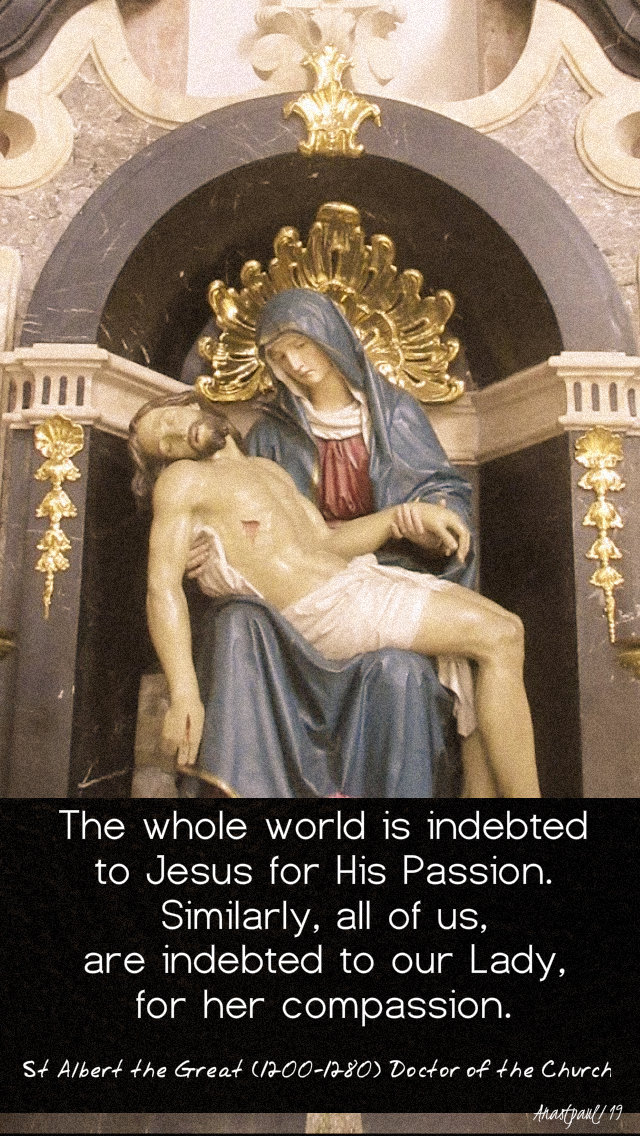
“The whole world is indebted
to Jesus for His Passion.
Similarly, all of us,
are indebted to our Lady,
for her compassion.”

St Albert the Great (1200-1280)the whole world is indebted to jesus - st albert the great mary's compassion 15 nov 2019.jpg

More from St Albert here:
https://anastpaul.com/2018/11/15/quote-s-of-the-day-15-november-the-memorial-of-st-albert-the-great-1200-1280-doctor-universalis-universal-doctor/

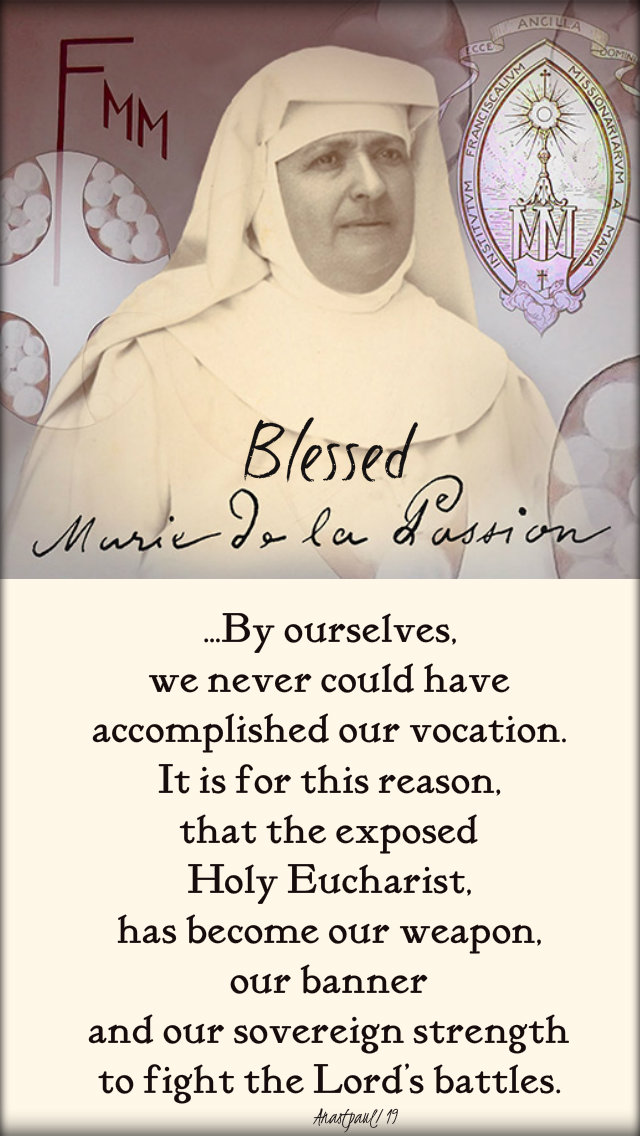
“…By ourselves,
we never could have
accomplished our vocation.
It is for this reason,
that the exposed Holy Eucharist,
has become our weapon,
our banner
and our sovereign strength
to fight the Lord’s battles.”by ourselves we never could've - bl mary of the passion 15 nov 2019

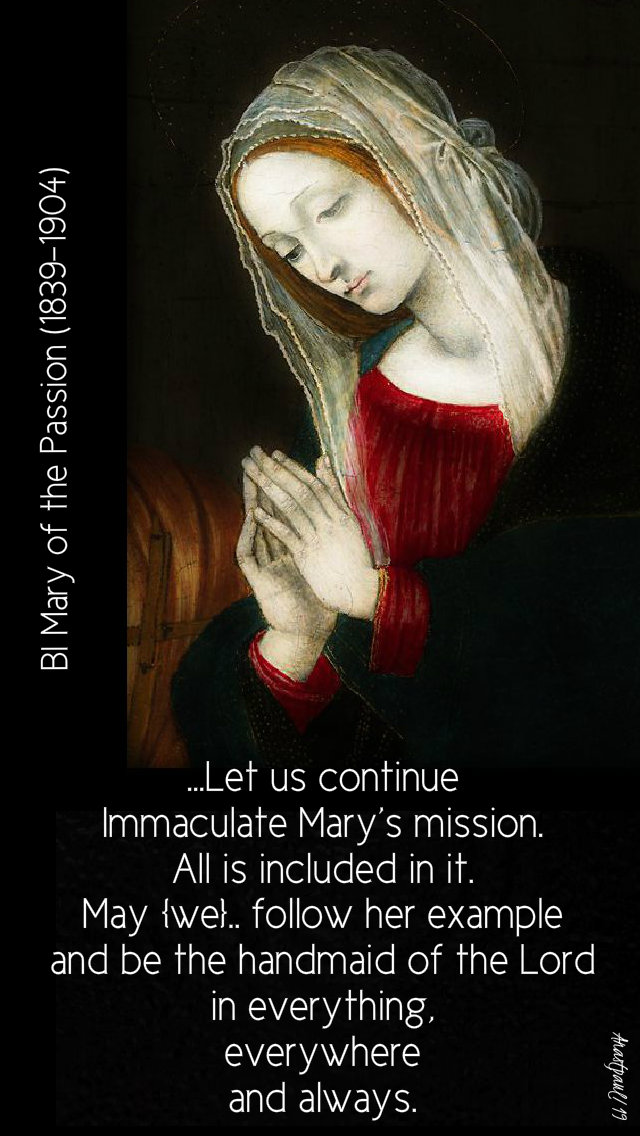
“…Let us continue
Immaculate Mary’s mission.
All is included in it.
May [we].. follow her example
and be the handmaid of the Lord
in everything,
everywhere
and always.”

Bl Mary of the Passion (1839-1904)let us continue imm mary's mission - bl mary of the passion 15 nov 2019

Posted in CARMELITES, CHRIST, the WAY,TRUTH,LIFE, franciscan OFM, GOD is LOVE, PRAYER WARRIORS, PRAYERS of the SAINTS, QUOTES of the SAINTS, QUOTES on HEAVEN, QUOTES on JOY, QUOTES on LOVE, SACRAMENTS, SAINT of the DAY, The HOLY EUCHARIST / The HOLY MASS, The MOST HOLY & BLESSED TRINITY

Quote/s of the Day – 8 November – United to You

Quote/s of the Day – 8 November – The Memorial of Blessed John Duns Scotus OFM (c 1265-1308) and St Elizabeth of the Trinity O.Carm (1880-1906)

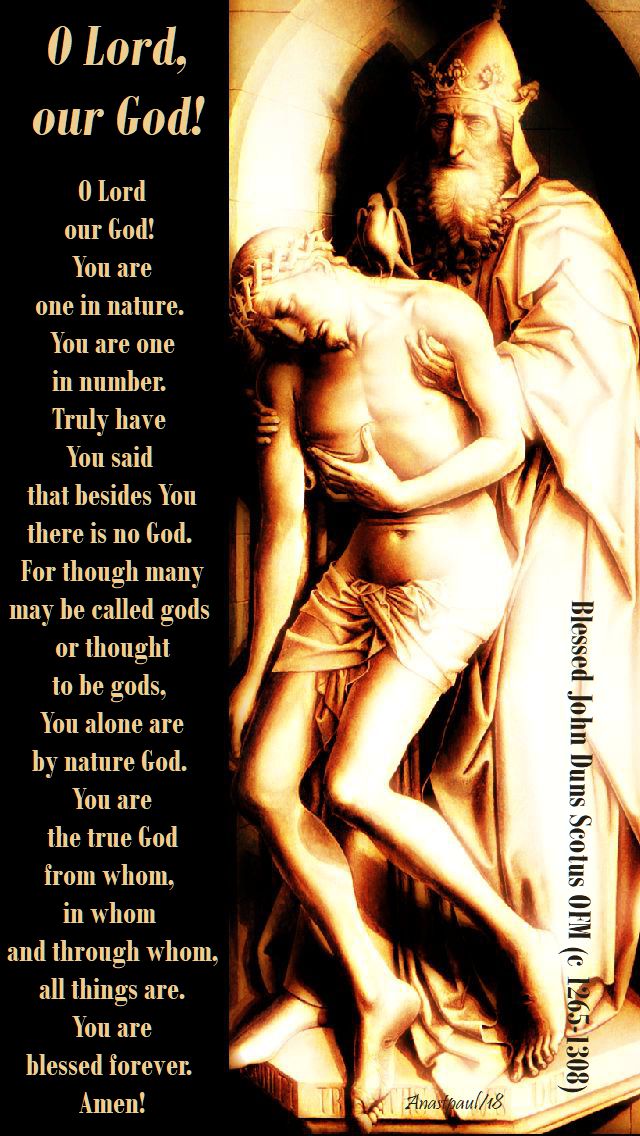
O Lord our God!
You are one in nature.
You are one in number.
Truly have You said
that besides You there is no God.
For though many may be called gods
or thought to be gods,
You alone are by nature God.
You are the true God from whom,
in whom
and through whom,
all things are,
You are blessed forever.
Amen!

Blessed John Duns Scotus (c 1265-1308)o-lord-our-god-bl-john-duns-scotus-8-nov-2018 and 2019.jpg

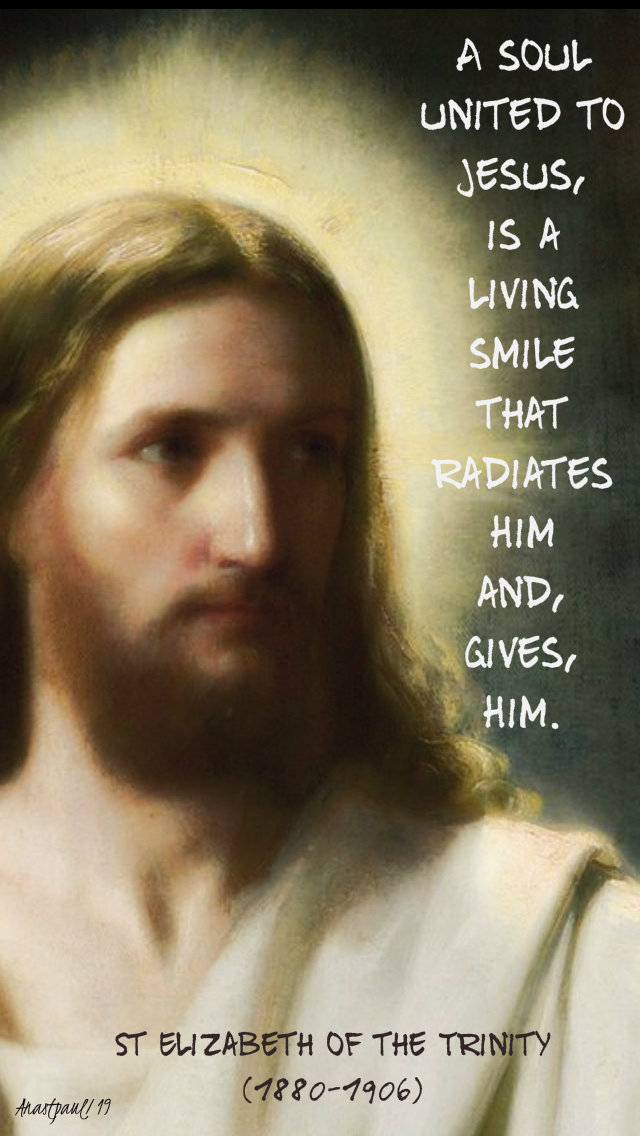
“A soul united to Jesus,
is a living
smile
that radiates Him
and,
gives Him.”a sol united to jesus is a living smile that radiates him and gives him - st elizabeth of the trinity 8 nov 2019

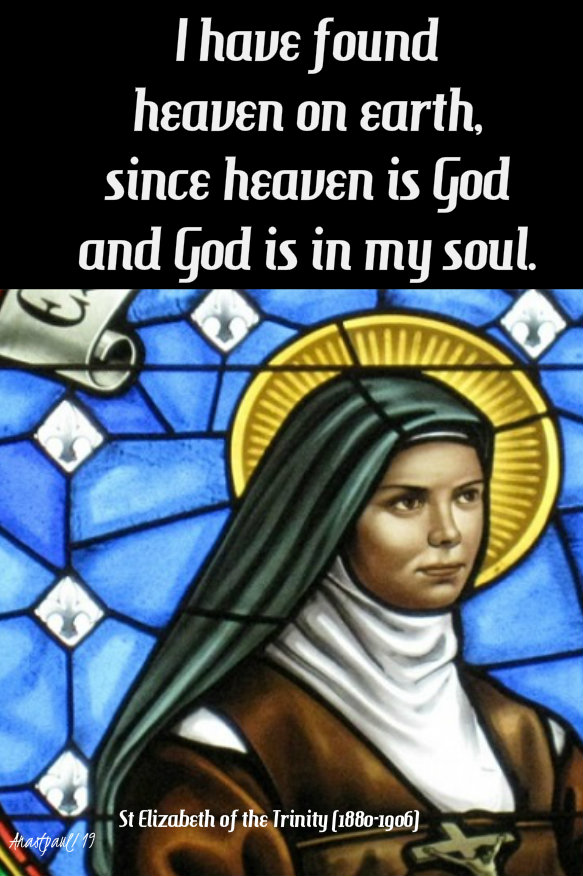
“I have found
heaven on earth,
since heaven is God
and God is in my soul.”

St Elizabeth of the Trinity (1880-1906)i have found heaven on earth - st elizabeth of the trinity 8 nov 2019

Posted in CARMELITES, franciscan OFM, SAINT of the DAY

Memorials of the Saints – 8 November

St Adeodatus I, Pope
St Clair of Tours
St Cybi of Caenarvon
St Drouet
Blessed John Duns Scotus OFM (c 1265-1308)
Blessed John Duns Life:
https://anastpaul.com/2018/11/08/saint-of-the-day-8-november-blessed-john-duns-scotus-ofm-c-1265-1308/
St Elizabeth of the Trinity O.Carm
Biography:
https://anastpaul.com/2017/11/08/saint-of-the-day-8-november-st-elizabeth-of-the-trinity-o-c-d-1880-1906/
 

St Gervadius
St Giuse Nguyen Ðình Nghi
St Godfrey of Amiens OSB  (1066–1115)
St Gregory of Einsiedeln
St John Baptist Con
Bl Maria Crucified Satellico
St Martinô Tho
St Martinô Ta Ðuc Thinh
St Maurus of Verdun
St Moroc of Scotland
St Phaolô Nguyen Ngân
St Tysilio of Wales
St Willehad of Bremen
St Wiomad of Trèves

All Deceased Dominicans

All Saints of Wales

All Saints of the Diocese of Evry:   A regional memorial of all the saints and beati of the calendar who have a connection to the Diocese of Evry-Corbeil-Essonnes, France.
• Blessed Isabella of France, founded the Longchamp monastery
• Blessed Nicolas Gaudreau, pastor of Vert-le-Petit
• Blessed Pierre Bonse, pastor of Massy
• Our Lady of Good Guard, patron saint of the diocese, venerated in Longpont-sur-Orge, France
• Saint Corbinian, born in Saint-Germain-lès-Arpajon
• Saint Denis of Paris, evangelizer of part of Essonne and revered ni Longpont-sur-Orge
• Saint Eloi, who lived in Chilly-Mazarin
• Saint Germain of Paris
• Saint William of Bourges, son of Count Baldwin IV of Corbeil
• Saint William of Aebelholt, pastor of Brunoy
• Saint Wulfran of Sens, born in Milly-la-Forêt
• Blessed Nativelle, vicar of Longjumeau
• Blessed René Le Bris, pastor of Bris-sous-Forges
• Saint Spire of Bayeux, whose relics are in Corbeil in the cathedral that bears his name
All Saints of Wales

Augustinian Martyrs of Spain

Four Crowned Martyrs:   Saint Castorus, Saint Claudius, Saint Nicostratus, and Saint Simpronian. Skilled stone carvers in the 3rd century quarries. Martyred when they refused to carve an idol of Aesculapius for Diocletian. They were drowned in the River Sava in 305. Patronages – • against fever• cattle• sculptors• stone masons, stonecutters.

Martyred in the Spanish Civil War
• BlessedAntolín Pablos Villanueva
• BlessedLaureano Pérez Carrascal
• BlessedManuel Sanz Domínguez
• BlessedMaximino Serrano Sáiz

Posted in DOMINICAN OP, franciscan OFM, SAINT of the DAY

Memorials of the Saints – 30 October

St Angelo of Acri OFM Cap (1669-1739)
The Story of St Angelo:
https://anastpaul.com/2018/10/30/saint-of-the-day-30-october-st-angelo-of-acri-ofm-cap/

St Arilda
St Asterius of Amasea
Bl Benvenuta Bojani OP (1254-1292)
St Egelnoth the Good
St Eutropia of North Africa
St Gerard of Potenza
St Germanus of Capua
St Herbert of Tours
Bl Jean-Michel Langevin
Bl John Slade
St Lucanus of Lagny
St Marcellus the Centurion
St Marcian of Syracuse
St Maximus of Cumae
St Nanterius of Saint-Mihiel
Bl Oleksa Zarytsky (1912-1963) Martyr
Bl Raymond of Cardona
St Saturninus of Cagliari
St Serapion of Antioch
St Talarica of Scotland
Bl Terrence Albert O’Brien
St Theonestus of Philippi
St Zenobia of Aegea
St Zenobius of Aegea

Martyrs in Africa: A group of 100 to 200 Christians murdered in the early persecutions, and about whom we know nothing except that they died for their faith.

Posted in DIVINE Mercy, Goodness, Patience, DOCTORS of the Church, FATHERS of the Church, franciscan OFM, ONE Minute REFLECTION, QUOTES of the SAINTS, QUOTES on CONVERSION, QUOTES on REPENTANCE, SAINT of the DAY, The WORD

One Minute Reflection – 26 October – The fruitless tree

One Minute Reflection – 26 October – Saturday of the Twenty Ninth week in Ordinary Time, Year C, Gospel:  Luke 13:1-9 and the Memorial of Blessed Bonaventura of Potenza OFM Conv (1651-1711)

And he said to the vinedresser, ‘Lo, these three years I have come seeking fruit on this fig tree and I find none. Cut it down, why should it use up the ground?’…Luke 13:7

REFLECTION – “The Lord also has something very fitting to say about a fruitless tree, “Look, it is now three years that I have been coming to it.   Finding no fruit on it, I will cut it down, to stop it blocking up my field.”   The gardener intercedes.   This tree is the human race.   The Lord visited this tree in the time of the patriarchs, as if for the first year.   He visited it in the time of the law and the prophets, as if for the second year.   Here we are now, with the gospel the third year has dawned.   Now it is as though it should have been cut down but the Merciful One intercedes with the Merciful One.   He wanted to show how merciful He was and so He stood up to Himself with a plea for mercy.   “Let us leave it,” he says, “this year too.   Let us dig a ditch around it.”   Manure is a sign of humility. “Let us apply a load of manure, perhaps it may bear fruit.”   Since it does bear fruit in one part and in another part does not bear fruit, its Lord will come and divide it.   What does that mean, “divide it”?   There are good people and bad people now in one company, as though constituting one body.” … St Augustine (354-430) Father & Doctor (Sermon 254)luke-13-7-and-he-said-to-the-vinedresser-ST AUGUASTINE - 26 OCT 2019 THE LORD ALSO .jpg

PRAYER – Come to help us in our weakness, God of mercy, forgive the sins of Your people and as nothing we can do is worthy in Your sight, save us through the intercession of the Mother of our Lord, Jesus Christ.   May the prayers of all your saints and we entreat Your servant, Blessed Bonaventura of Potenza to add his prayers on our behalf.   We make our prayer through Jesus with the Holy Spirit, God forever, amen.bl bonaventura of potenza pray for us 26 oct 2019

Posted in franciscan OFM, SAINT of the DAY

Saint of the Day – 26 October – Blessed Bonaventura of Potenza OFM Conv (1651-1711)

Saint of the Day – 26 October – Blessed Bonaventura of Potenza OFM Conv (1651-1711) Priest and Religious of the Order of Friars Minor Conventual, Miracle-worker, blessed with the gift of prophecy – born on 4 January 1651 of Potenza, Naples, Italy as born Carlo Antonio Gerardo Lavanga and died on 26 October 1711 in Ravello, Italy of gangrene while singing a psalm during a religious ecstasy.BL BONAVENTURE OF POTENZA

Bonaventura was born of poor but virtuous parents in Potenza in the kingdom of Naples. A pious priest gave the boy instructions in Latin.   At the age of 15, Bonaventura received the Franciscan habit among the Conventuals.   After his profession, he resumed his studies with great ardour but his zeal for perfection was less ardent.

His superiors sent him to Amalfi, where he lived eight years under the guidance of an eminent director of sauls.   This spiritual director trained his pupil above all in humility, self-abnegation and obedience and Bonaventura achieved a high degree of perfection in these virtues.

One day Bonaventure told his master that the key to the sacristy was lost.   “Well,” said his master with a smile, “then you will have to look for it in the well, get a rod and fish it out.”   Promptly Bonaventura went to the well and with rod and line fished for the key.   It was not long before he actually drew it out.   God rewarded him in a miraculous manner for his blind obedience.Blessed-Bonaventure-of-Potenza-Conventual-Franciscan

As a priest he laboured with remarkable success.   His words, conduct, prayer and mortification combined to produce blessed results.   His simple sermons made a deep impression on all hearts.   At times, a single word of hi,s was enough to move the most hardened sinner to contrition.

At various times he was appointed guardian of a convent but his humble pleas were always successful in changing the mind of his superiors.   Obedience at length compelled him to accept the position of novice master.   In this office he sought to inculcate in his pupils, above all, the practice of humility and obedience.

When an epidemic broke out among the townsfolk, Bonaventura at once sacrificed himself.   Fearless of contracting the disease, he hastened from end-to-end of the town, rendering every possible service to the stricken, even the lowliest and administering the sacraments to them.   He cured many miraculously, he multiplied their insufficient provisions by his blessing and he foretold future events.bonaventura-de-potenza-45-01.2.jpg

After Bonaventura had been a shining model of virtue among his brethren for 45 years, he felt that his last hour was at hand.   While the community gathered about his bed during the administration of the last sacraments, the dying man in touching words begged pardon of his superior and the community for his many faults and infractions of the rule, as he called them.

Deeply moved, the superior handed him the crucifix and amid abundant tears, the servant of God kissed the feet of the Saviour and then died peacefully on 26 October 1711.   Pope Pius VI Beatified him in 1775.

Bishop Orazio Soricelli, Archbishop of Amalfi-Cava de ‘Tirreni , called a special jubilee year dedicated to the Blessed Bonaventura da Potenza in his archdiocese.   The jubilee year opened on 26 October 2011, the third centenary of the death of the Blessed.Bonaventura_da_Potenza

Posted in franciscan OFM, SAINT of the DAY

Memorials of the Saints – 26 October

St Adalgott of Einsiedeln
St St Alanus of Quimper
Albinus of Buraburg
St Alfred the Great
St Alorus of Quimper
St Amandus of Strasburg
St Amandus of Worms
St Aneurin
St Aptonius of Angouleme
St Arnold of Queralt
St Bean of Mortlach
St Bernard de Figuerols
Bl Bonaventura of Potenza OFM Conv (1651-1711)
St Cedd
Bl Celina Chludzinska
St Cuthbert of Canterbury
Bl Damian dei Fulcheri
St Eadfrid
St Eata of Hexham
St Pope Evaristus – (c 44 – c 107) Martyr
Biography:
https://anastpaul.com/2018/10/26/saint-of-the-day-26-october-st-pope-evaristus-c-44-c-108/
St Felicissimus of Carthage
St Fulk of Piacenza
St Gaudiosus of Salerno
St Gibitrudis
St Gwinoc
St Humbert
St Lucian
St Marcian
St Quadragesimus of Policastro
St Rogatian of Carthage
St Rusticus of Narbonne
St Sigibald of Metz

Martyrs of Nicomedia – 5 saints

Posted in FEASTS and SOLEMNITIES, franciscan OFM, REDEMPTORISTS CSSR, SAINT of the DAY, The MOST HOLY REDEEMER, Our SAVIOUR

Feast of the Most Holy Redeemer and Memorials of the Saints – 23 October

Feast of the Most Holy Redeemer

St John of Capistrano OFM “The Soldier Saint” (1386-1456) (Optional Memorial)
St John’s Story here:
https://anastpaul.wordpress.com/2017/10/23/saint-of-the-day-23-october-st-john-capistrano-ofm-1386-1456-the-soldier-saint/

St Allucio of Campugliano
Bl Anne-Joseph Leroux
St Amo of Toul
St Arethas of Negran
Bl Arnold Reche FSC (1838-1890)
About Blessed Arnold:

Saint of the Day – 23 October – Blessed Arnold Rèche FSC (1838-1890)

St Benedict of Sebaste
St Clether
St Domitius
St Elfleda
St Ethelfleda
St Gratien of Amiens
St Henry of Cologne
St Ignatius of Constantinople
Bl John Angelo Porro
Bl John Buoni
St John of Syracuse
Oda of Aquitaine
St Phaolô Tong Viet Buong
St Romanus of Rouen
Bl Severinus Boethius
St Severinus of Cologne
Syra of Faremoutiers
St Theodoret of Antioch
Bl Thomas Thwing
St Verus of Salerno

Martyrs of Cadiz – 2 saints
Germanus
Servandus
Martyrs of Hadrianopolis – 2 saints
Dorotheus
Severus
Martyrs of Nicaea – 3 saints
Euerotas
Socrates
Theodota

Martyrs of Valenciennes – 6 beati: A group of Urusuline and Briggittine nuns murdered together in the anti-Christian excesses of the French Revolution. They were guillotined on 23 October 1794 in Valenciennes, Nord, France and Beatified on 13 June 1920 by Pope Benedict XV.
• Anne-Joseph Leroux
• Clotilde-Joseph Paillot
• Jeanne-Louise Barré
• Marie-Augustine Erraux
• Marie-Liévine Lacroix
• Marie-Marguerite-Joseph Leroux

Martyred in the Spanish Civil War including Martyrs of Manzanares (7 beati):
• Agapit Gorgues Manresa
• Agustín Nogal Tobar
• Andrés Navarro Sierra
• César Elexgaray Otazua
• Cristóbal González Carcedo
• Dorinda Sotelo Rodríguez
• Eduardo Valverde Rodríguez
• Felipe Basauri Altube
• José María Fernández Sánchez
• Juan Nuñez Orcajo
• Leonardo Olivera Buera
• Manuel Navarro Martínez
• Roque Guillén Garcés
• Toribia Marticorena Sola

Posted in franciscan OFM, MYSTICS, SAINT of the DAY

Saint of the Day – 6 October – Saint Mary Frances of the Five Wounds TOSF (1715-1791)

Saint of the Day – 6 October – Saint Mary Frances of the Five Wounds TOSF (1715-1791) – Virgin, Third Order Franciscan, Mystic, Stigmatist, Apostle of Charity, born Anna Maria Gallo on 25 March 1715 at Naples, Italy and died on 6 October 1791 at Naples, Italy of natural causes.   Patronages – Quartieri Spagnoli of Naples (co-patronof the Gallo World Family Foundation, expectant mothers, women seeking to have children.st mary Francesca5p

She was born the daughter of Francesco Gallo and Barbara Basinsin, in the Quartieri Spagnoli (Spanish Quarter) of Naples, a red-light district of the city, still known for its high crime.   According to tradition, another saint, the Jesuit, Francis de Geronimo (1642-1716), predicted her future sanctity while she was still an infant.   Her family was of the middle class but her father, a weaver of gold lace, was a very violent man, who regularly abused his family physically, often severely.

When Gallo was sixteen, her father attempted to force her into a marriage with a young man of means, who was seeking her hand.   She refused and asked to join the Franciscan Third Order, through which she could live out a religious life in the family home.   The friars of Naples were part of the reform of St Peter of Alcantara and they and the tertiaries under their rul,e were known for the strictness of their lives.   Through the intervention of a friar, Father Theophilus, permission to enter the Order was eventually granted by her father.

Gallo was received into the Order on 8 September 1731 and began wearing the religious habit of the Order, which was an uncommon practice during that time. She also adopted the use of the religious name she took upon being received into the Order, out of her devotion to the Blessed Mother, St Francis of Assisi and the Passion of Christ.    She continued to live in the family home to serve God as a consecrated virgin, as was customary in those days.St Mary Francis of the Five Wounds of Jesus 1

She took as her spiritual director, the Franciscan friar, St John Joseph of the Cross OFM  (1654–1739), while her confessor was the Barnabite priest, Francis Xavier Bianchi and she began to be known among her neighbours for her work of charity, helping the poor of the sector.   She was a person of deep prayer, often spending long hours in meditation.

In 1753 she joined with another Franciscan tertiary, known only as Maria Felice and they moved into a small palace owned by a priest, Giovanni Pessiri, who became their spiritual director.   The two women occupied the second floor, sleeping on the floor and the priest the floor above.   She is said to have received the wounds of the stigmata while living there and suffered patiently many physical afflictions and spiritual trials.   She would wear gloves to cover the marks on her hands, while she did her work.   She is also said to have had visions of Saint Raphael the Archangel, who healed her of several afflictions.img-Saint-Mary-Frances-of-the-Five-Wounds-of-Jesus

Mary Frances was buried in the Franciscan Church of Santa Lucia al Monte in Naples, which she attended during her life.   This church also contains the tomb of John Joseph, now also declared a saint.

Mary Frances was declared Venerable by Pope Pius VII, on 18 May 1803.   She was Beatified by Pope Gregory XVI on 12 November 1843 and Canonised by Pope Pius IX on 29 June 1867.

Santa_Maria_Francesca_of_the_Five_Stigmata_-_Santa_Chiara_-_Naples_-_Italy_2015
Statue in Santa Chiara, Naples

Devotion to Mary Frances has long continued to be strong in the neighbourhood where she lived and of which she is the patron saint.   The residents credit her intercession with the little damage the sector endured during World War II, when over 100 bombs were dropped on it.   Her home has been preserved as a chapel and museum.

Pope Pius IX, who Canonised Mary Frances, declared her to be a patroness of expectant mothers and of women having difficulty conceiving.   She is also the patroness of the Gallo World Family Foundation, which was founded to promote the development of Judeo-Christian values, for the betterment of the world, by members of the Gallo family scattered worldwide.Saint Mary Frances of the Five Wounds statue

On 6 October 2001, her remains were transferred from the Church of Santa Lucia to the house where she had spent the last half of her life.   It is now the Shrine of St Mary Frances of the Five Wounds.

It is still a common practice for expectant mothers to go there to be blessed with her relic.   Many votive offerings from mothers who credit her with their successful deliveries are displayed in the sanctuary.St Mary Francis of the Five Wounds of Jesus

Posted in franciscan OFM, QUOTES of the SAINTS, QUOTES on ALMS, QUOTES on CHARITY, QUOTES on CHASTITY, QUOTES on DISCIPLESHIP, QUOTES on FAITH, QUOTES on HEAVEN, QUOTES on HOPE, QUOTES on HUMILITY, QUOTES on LOVE, QUOTES on PRAYER, QUOTES on PURITY, QUOTES on SACRIFICE, SAINT of the DAY

Thought for the Day – 4 October – St Francis to All the Faithful

Thought for the Day – 4 October – The Memorial of St Francis of Assisi OFM (1181/2–1226)

We must be Simple, Humble and Pure

Saint Francis of Assisi
Religious

An excerpt from his Letter Written to All the Faithful

It was through His archangel, Saint Gabriel, that the Father above, made known to the holy and glorious Virgin Mary, that the worthy, holy and glorious Word of the Father would come from heaven and take from her womb, the real flesh of our human frailty. Though He was wealthy beyond reckoning, He still willingly chose to be poor, with His blessed mother.   And shortly before His passion, He celebrated the Passover with His disciples.   Then He prayed to His Father saying – Father, if it be possible, let this cup be taken from me.

Nevertheless, He reposed His will in the will of His Father.   The Father willed that His blessed and glorious Son, whom He gave to us and who was born for us, should, through His own blood, offer Himself as a sacrificial victim on the altar of the cross.   This was to be done not for Himself, through whom all things were made but for our sins.   It was intended to leave us an example of how to follow in His footsteps.   And He desires all of us to be saved through Him and to receive Him with pure heart and chaste body.

O how happy and blessed are those who love the Lord and do as the Lord Himself said, in the gospel – You shall love the Lord your God with your whole heart and your whole soul and your neighbour as yourself.   Therefore, let us love God and adore Him with pure heart and mind.   This is His particular desire when He says – True worshippers adore the Father in spirit and truth.   For all who adore Him must do so in the spirit of truth.   Let us also direct to Him our praises and prayers saying – Our Father, who art in heaven, since we must always pray and never grow slack.

Furthermore, let us produce worthy fruits of penance.   Let us also love our neighbours as ourselves.   Let us have charity and humility.   Let us give alms because these cleanse our souls from the stains of sin.   Men lose all the material things they leave behind them in this world but they carry with them, the reward of their charity and the alms they give.   For these, they will receive from the Lord, the reward and recompense they deserve.   We must not be wise and prudent according to the flesh.   Rast-francis-pray for us - 4-oct-2018.jpgther we must be simple, humble and pure.   We should never desire to be over others.   Instead, we ought to be servants who are submissive to every human being for God’s sake.   The Spirit of the Lord will rest on all who live in this way and persevere in it to the end.   He will permanently dwell in them.   They will be the Father’s children who do His work.   They are the spouses, brothers and mothers of our Lord Jesus Christ.

St Francis of Assisi, Pray for Us!

Posted in franciscan OFM, ON the SAINTS, POETRY, QUOTES of the SAINTS, SAINT of the DAY

Quote of the Day – 4 October – The Angel to Gerontius

Quote of the Day – 4 October – The Memorial of St Francis of Assisi OFM (1181/2–1226)

The Angel to Gerontius

“There was a mortal, who is now above
In the mid-glory – he, when near to die,
Was given communion with the Crucified –
Such, that the Master’s very wounds were stamp’d
Upon his flesh and, from the agony
Which thrill’d through body and soul in that embrace
Learn, that the flame of the Everlasting Love
Doth burn, ere it transform ….”

From the Dream of Gerontius
Blessed John Henry Newman (1801-1890)

Some Quotes of St Francis here:
https://anastpaul.com/2018/10/04/quote-s-of-the-day-4-october-the-memorial-of-st-francis-of-assisi-1181-2-1226/the angel to gerontius from the dram of gerontius bl john henry newman on st francis 4 oct 2019.jpg

Posted in franciscan OFM, ON the SAINTS, ONE Minute REFLECTION, QUOTES of the SAINTS, QUOTES on CONVERSION, SAINT of the DAY, The WORD

One Minute Reflection – 4 October – ‘Listening to the Word’

One Minute Reflection – 4 October – Friday of the Twenty-sixth week in Ordinary Time, Year C Gospel: Luke 10:13-16 – The Memorial of St Francis of Assisi OFM (1181/2–1226)

“He who hears you, hears me and he who rejects you,
rejects me and he who rejects me, rejects him who sent me.”…Luke 10:16luke 10 16 he who hears you hears me - 4 oct 2019.jpg

REFLECTION – “The truth is that St Francis really did have an extremely intimate relationship with Jesus and with the word of God, that he wanted to pursue sine glossa – just as it is, in all its radicality and truth.   It is also true, that initially he did not intend to create an Order with the necessary canonical forms.   Rather he simply wanted, through the word of God and the presence of the Lord, to renew the People of God, to call them back to listening to the word and to literal obedience to Christ.”…Pope Benedict XVI – Catechesis on St Francis – General Audience, 27 January 2010he, francis, simply wanted - pope benedict 4 oct 2019.jpg

“Remember that when you leave this earth, you can take with you nothing that you have received—only what you have given – a full heart, enriched by honest service, love, sacrifice and courage.”….St Francis of Assisiremember-that-when-you-leave-st-francis-4-oct-2017 and 2018 and 2019.jpg

PRAYER – Lord God, You made St Francis of Assisi, Christ-like in his poverty and humility, his gentleness and charity, his love and courage. Help us to walk in his ways that, with joy and love, we may follow Christ Your Son and be united with You. May the intercession of St Francis, be an assistance on our journey. Through Christ our Lord, with the Holy Spirit, one God forever, amen.st francis of assisi - pray for us - 17 sept 2018.jpg