Thought for the Day – 2 June – “Month of the Sacred Heart” – Meditations with Antonio Cardinal Bacci (1881-1971)
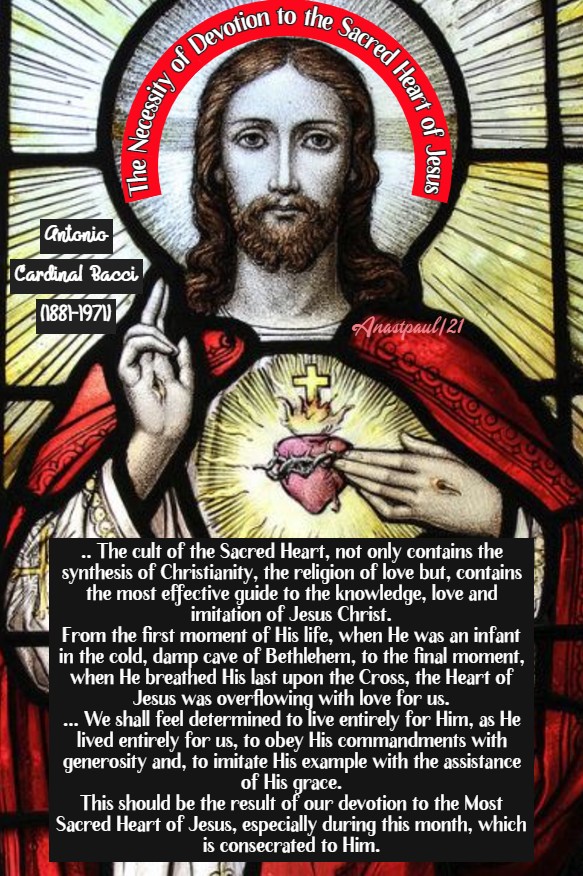
The Necessity of Devotion to the Sacred Heart of Jesus
“It is necessary to develop and meditate on these words of Pius XI, (see Part One) from which, it is clear, that the cult of the Sacred Heart, not only contains the synthesis of Christianity, the religion of love but, contains the most effective guide to the knowledge, love and imitation of Jesus Christ. From the first moment of His life, when He was an infant in the cold, damp cave of Bethlehem, to the final moment, when He breathed His last upon the Cross, the Heart of Jesus was overflowing with love for us. We can learn from this, to know our Divine Saviour better, so that appreciating more fully His infinite love for us, we shall feel an upsurge of gratitude and, of love. We shall feel determined to live entirely for Him, as He lived entirely for us, to obey His commandments with generosity and, to imitate His example with the assistance of His grace. This should be the result of our devotion to the Most Sacred Heart of Jesus, especially during this month, which is consecrated to Him.
O my Jesus, You Who are Love itself, enkindle in my heart the divine fire which consumed and transformed the Saints!”
Thought for the Day – 1 June – “Month of the Sacred Heart” – Meditations with Antonio Cardinal Bacci (1881-1971)
Devotion to the Sacred Heart
“When we consider it under it’s fundamental aspect as the cult of the love of God, rather than of the Incarnate Word, devotion to the Sacred Heart of Jesus, is as old as Christianity, even though it is only in recent centuries, that it has assumed it’s present symbolism. “He who does not love, does not know God,” says St John, “for God is love” (1 Jn 4:8). “And we have come to know,” he continues “and have believed, the love that God has in our behalf. God is love and he who abides in love, abides in God and God in him” (1 Jn 4:16). This cult of the love of God, particularly of the love of God made man, vibrates throughout the pages of the Gospel and of the writings of the Apostles, especially of St John and of St Paul.
In the works of the Fathers, there are references to the Heart of Jesus, pierced with a lance, from which flowed all the infinite graces of the Church for our redemption. We are reminded of this in the Encylical, Haurietis Aquas, published by Pope Pius XII in the year 1956. But the specific cult of the love of God, as symbolised by the Heart of Jesus, was explicitly approved by the Church after Jesus Himself appeared in the year 1674 to St Margaret Mary Alacoque and showed her His Heart on fire with love for men.”
Quote/s of the Day – 22 May – “Mary’s Month” – Readings: Acts 28:16-20, 30-31, Psalm 11:4-5, 7, John 21:20-25
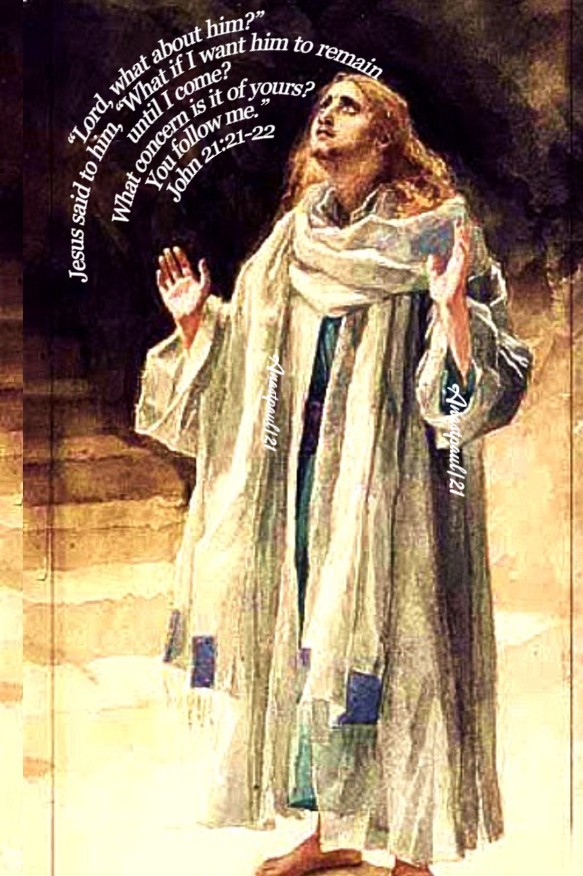
“Lord, what about him?” Jesus said to him, “What if I want him to remain until I come? What concern is it of yours? You follow me.”
John 21:21-22
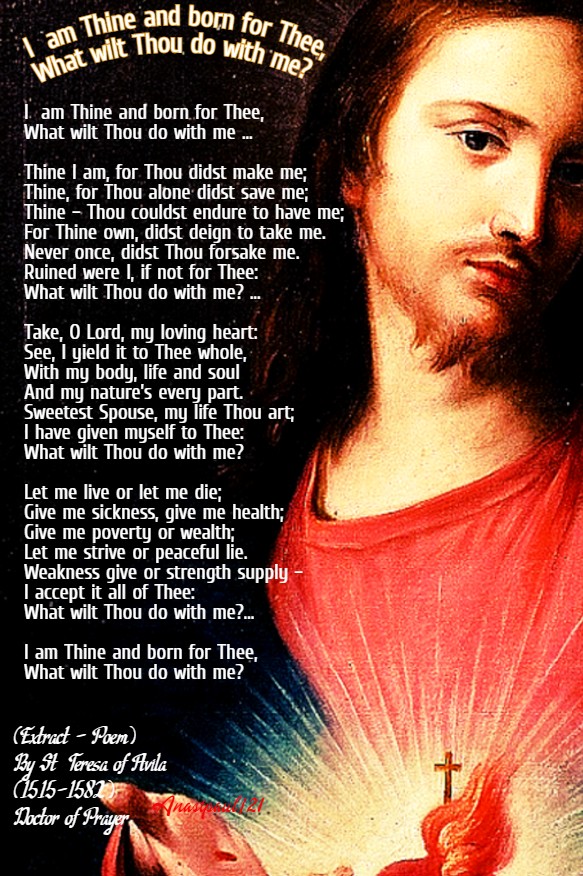
“I am Thine and born for Thee, What wilt Thou do with me?
Sovereign Lord, upon Thy throne, Endless Wisdom, One and whole, Goodness that dost feed my soul, Good and great, One God alone, As I sing my love for Thee. What wilt Thou do with me?
Thine I am, for Thou didst make me; Thine, for Thou alone didst save me; Thine – Thou couldst endure to have me; For Thine own, didst deign to take me. Never once, didst Thou forsake me. Ruined were I, if not for Thee: What wilt Thou do with me?
What, O good and loving Lord, What wilt Thou have this creature do? This Thy slave, a sinner too, Waiting till she hears Thy word? With Thy will in close accord, Sweetest Love, I come to Thee: What wilt Thou do with me?
Take, O Lord, my loving heart: See, I yield it to Thee whole, With my body, life and soul And my nature’s every part. Sweetest Spouse, my life Thou art; I have given myself to Thee: What wilt Thou do with me?
Let me live or let me die; Give me sickness, give me health; Give me poverty or wealth; Let me strive or peaceful lie. Weakness give or strength supply – I accept it all of Thee: What wilt Thou do with me?…
I am Thine and born for Thee, What wilt Thou do with me?”
Poem – I am Yours, for You I was born – “Vuestra Soy, para Vos nací ” (trans. E.Allison Peers)
St Teresa of Avila (1515-1582) Doctor of Prayer of the Church
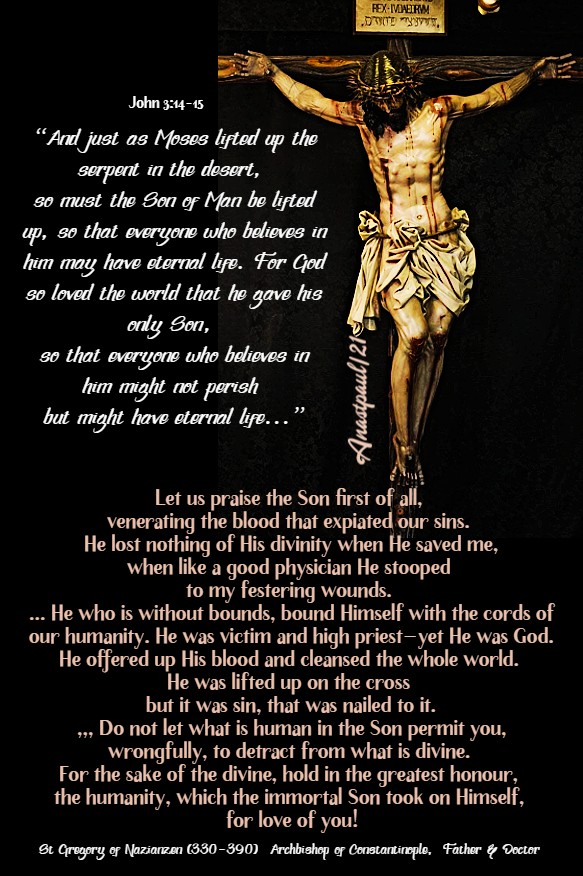
“And just as Moses lifted up the serpent in the desert, so must the Son of Man be lifted up, so that everyone who believes in him may have eternal life. For God so loved the world that he gave his only Son, so that everyone who believes in him might not perish but might have eternal life…” – John 3:14-15
REFLECTION – “Let us praise the Son first of all, venerating the blood that expiated our sins. He lost nothing of His divinity when He saved me, when like a good physician He stooped to my festering wounds. He was a mortal man but He was also God. He was of the race of David but Adam’s creator. He who has no body clothed Himself with flesh. He had a mother who, nonetheless, was a virgin. He who is without bounds, bound Himself with the cords of our humanity. He was victim and high priest—yet He was God. He offered up His blood and cleansed the whole world. He was lifted up on the cross but it was sin, that was nailed to it. He became as one, among the dead but He rose from the dead, raising to life also many who had died before Him. On the one hand, there was the poverty of His humanity, on the other, the riches of His divinity. Do not let what is human in the Son permit you, wrongfully, to detract from what is divine. For the sake of the divine, hold in the greatest honour, the humanity, which the immortal Son took on Himself, for love of you!” – St Gregory of Nazianzen (330-390) Archbishop of Constantinople, Father & Doctor – Poem 2
PRAYER – “All-powerful God, Benefactor and Creator of the universe, hearken to my groaning in my peril. Deliver me from fear and anguish, free me, by the strength of Your might, You who can do all… O Lord Christ, cut the threads of my net with the sword of Your triumphant Cross, with the weapon of life. This net encompasses me on every side, holding me captive so as to bring me to my death. Guide to their rest, my tottering and unsteady steps, heal the stifling fever of my heart.” – St Gregory of Narek (c 951-c 1010) Doctor of the Church – Book of prayers, no 40 (Excerpt)
Thought for the Day – 12 March – Meditations with Antonio Cardinal Bacci (1881-1971)
The Love of God
“God’s law is founded on love. We read in the Gospel how the Pharisees asked Jesus which was the greatest commandment of the Law. Jesus replied: “Thou shalt love the Lord thy God with thy whole heart and with thy whole soul and with thy whole mind. This is the greatest and the first commandment. And the second is like it. Thou shalt love thy neighbour as thyself. On these two commandments depend the whole Law and the Prophets” (Mt 22:37-40).
If a man wants to know if he is living a good Christian life, therefore, all he has to do is ask himself if he loves God above everything and his neighbour as himself. If he lacks this love, he is not a true Christian – everything else is insignificant, if not useless. “Love God,” says St Augustine “and do what you will.” Why so? Because, if anyone loves God sincerely, he does not offend Him. Moreover, he serves Him diligently and promotes His honour and glory by every means in his power. Nor does he find it very difficult to do this. Love gives wings to his feet and pours enthusiasm and fervour into his heart. “He who loves does not feel tired,” says St Augustine. “Where there is love,” adds St Bernard, “there is no weariness but a gentle pleasure instead.”
Thought for the Day – 6 March – Meditations with Antonio Cardinal Bacci (1881-1971)
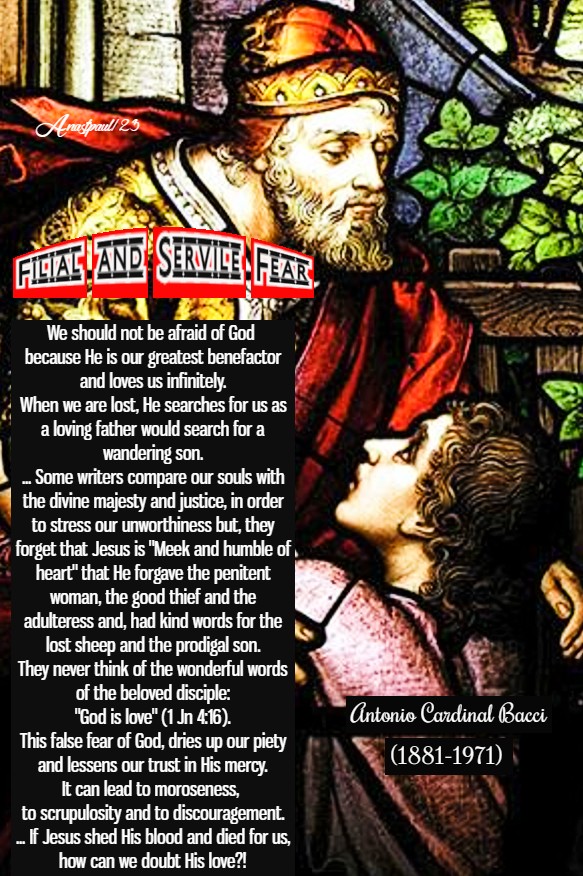
Filial and Servile Fear
“We should not be afraid of God because He is our greatest benefactor and loves us infinitely. When we are lost, He searches for us as a loving father would search for a wandering son. Because they think only of the majesty and justice of God, some people keep themselves at a distance from Him, as Adam did, after he had sinned. They forget that the Lord told Adam, the sinner, of the coming of the pardoning Redeemer (Gen 3:9). Bossuet truly observes, that “after the curse which came upon men through sin, there has always remained in their hearts, a certain dread of the supernatural, which prevents them from approaching God with confidence.” Jansenism increased this fear, emphasising the justice and majesty of God, rather, than the infinite love of Jesus and the beauty of His teaching.
Some writers compare our souls with the divine majesty and justice, in order to stress our unworthiness but, they forget, that Jesus is “Meek and humble of heart,” that He forgave the penitent woman, the good thief and the adulteress and, had kind words for the lost sheep and the prodigal son. They never think of the wonderful words of the beloved disciple: “God is love” (1 Jn 4:16).
This false fear of God, dries up our piety and lessens our trust in His mercy. It can lead to moroseness, to scrupulosity and to discouragement.
We should avoid this excessive fear which separates us from God. Even though we are sinful and unworthy, we should remember, that God is our loving Father, Who is always ready to help us and to grant us forgiveness. We should recall, moreover, that out of love for us, He did not spare His own Son, (Cf Rom 8:32) but gave Him to us for our redemption. If Jesus shed His blood and died for us, how can we doubt His love?”
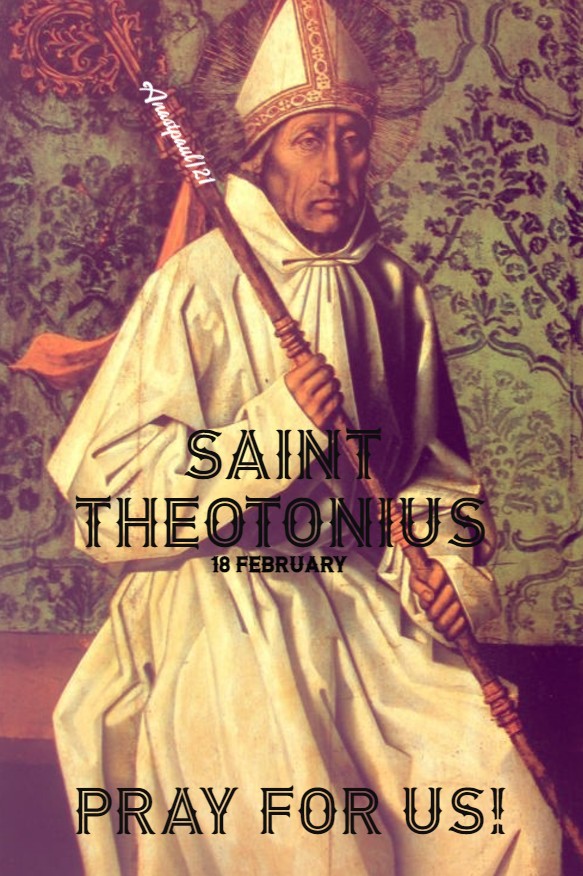
One Minute Reflection – 18 February – Thursday after Ash Wednesday, Readings Deuteronomy 30:15-20, Psalms 1:1-2, 3, 4, and 6, Luke 9:22-25 and the Memorial of St Theotinius (1082-1162) The First Saint of Portugal
“Whoever wishes to come after me must deny himself, take up his cross and follow me” – Luke 9:23
REFLECTION – “What joy to live in the Cross of Christ! Who could complain of suffering? Only the insensate man who does not adore the Passion of Christ, the Cross of Christ, the Heart of Christ, can in his own griefs, give way to despair… How good it is to live united with the Cross of Christ. Christ Jesus… teach me that truth, which consists in rejoicing in scorn, injury, degradation; teach me to suffer with that humble, silent joy of the saints; teach me to be gentle towards those who don’t love me or who despise me; teach me that truth, which from the mound of Calvary You reveal to the whole world. But I know: a very gentle voice within me explains it all; I feel something in me which comes from You and which I don’t know how to put into words; so much mystery is revealed that man cannot apprehend it. I, Lord, in my way, do understand it. It is love. In that is everything. I know it, Lord, nothing more is needed, nothing more, it is love! Who shall describe the love of Christ? Let men, creatures and all things, keep silent, so that we may hear in the stillness, the whisperings of love, meek, patient, immense, infinite, which from the Cross, Jesus offers us with His arms open. The world, mad, doesn’t listen.” – St Raphael Arnaiz Baron (1911-1938) a Spanish Trappist Monk – Spiritual writings 07/04/1938
PRAYER – God of mercy, teach us to live as You have ordained. Help us to follow Your commandments with courage and steadfast devotion. Let our Saviour be our Master, help us to learn from Him, the ways of prayer in silence, the ways of love. Fill us with the fire of the Holy Spirit, that we may learn. Grant blessed Trinity, that by the prayers of St Theotonius, we may grow in holiness. Through Jesus our Lord, in unity with the Holy Spirit, one God forever. Amen
Quote/s of the Day – 14 February – Readings: Leviticus 13:1-2, 44-46, Psalms 32:1-2, 5, 11, 1 Corinthians 10:31-11:1, Mark 1:40-45
LENTEN THOUGHTS
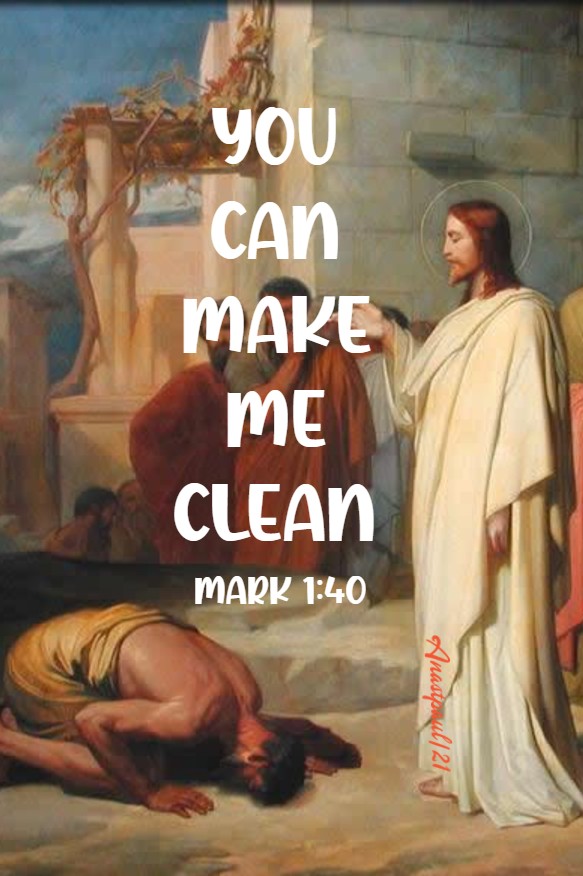
“You can make me clean”
Mark 1:40
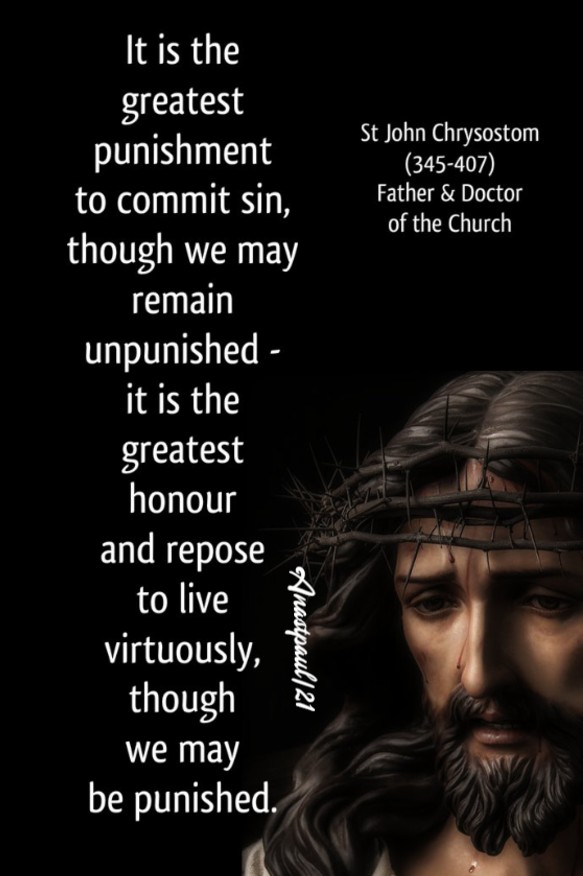
“It is the greatest punishment to commit sin, though we may remain unpunished – it is the greatest honour and repose to live virtuously, though we may be punished.”
St John Chrysostom (345-407) Father & Doctor of the Church
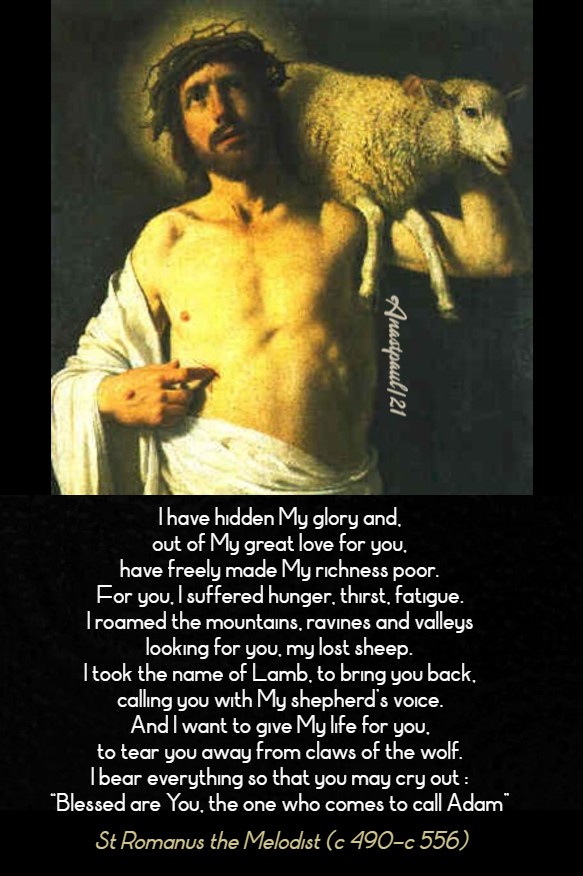
“I have hidden My glory and, out of My great love for you, have freely made My richness poor. For you, I suffered hunger, thirst, fatigue. I roamed the mountains, ravines and valleys looking for you, my lost sheep. I took the name of Lamb, to bring you back, calling you with My shepherd’s voice. And I want to give My life for you, to tear you away from claws of the wolf. I bear everything so that you may cry out : “Blessed are You, the one who comes to call Adam.”
St Romanus the Melodist (c 490-c 556)
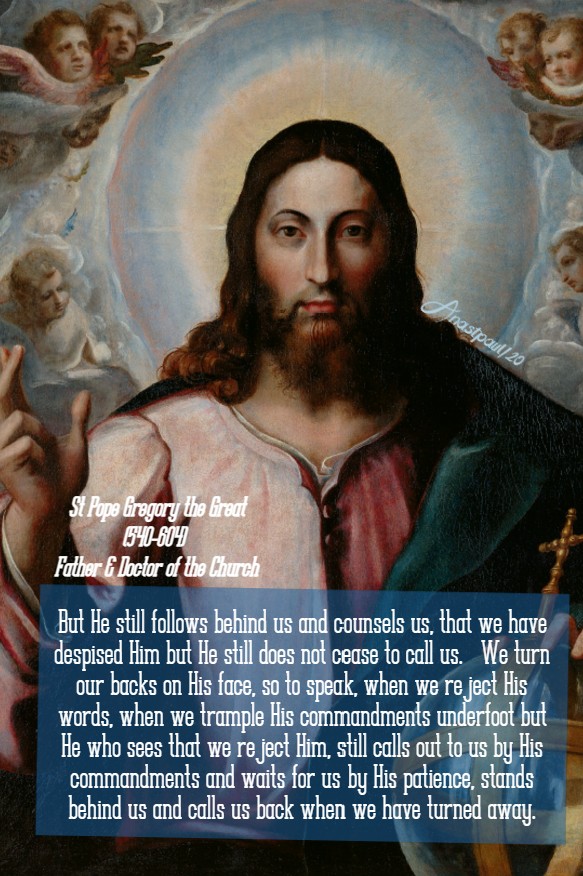
“But He still follows behind us and counsels us, that we have despised Him but He still does not cease to call us. We turn our backs on His face, so to speak, when we reject His words, when we trample His commandments underfoot but He who sees that we reject Him, still calls out to us by His commandments and waits for us by His patience, stands behind us and calls us back when we have turned away.”
St Pope Gregory the Great (540-604) Father & Doctor of the Church
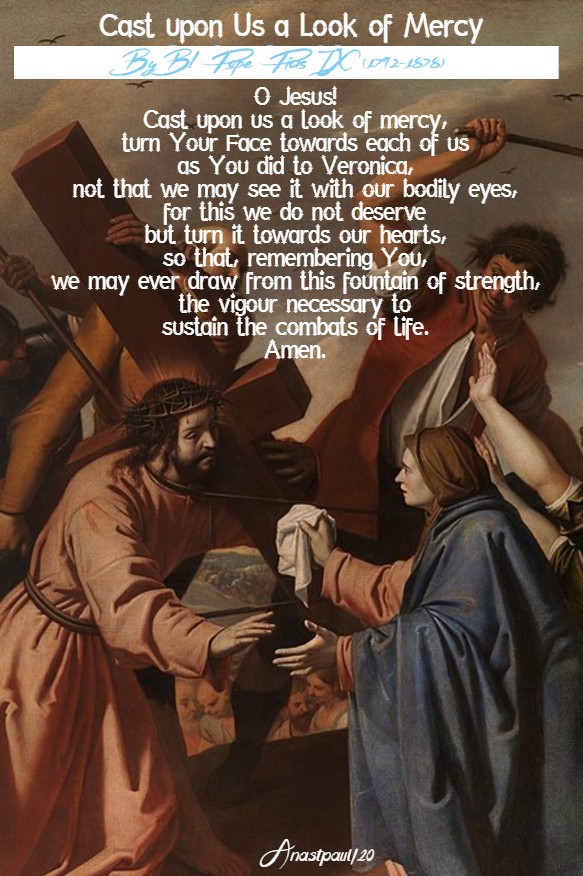
Cast Upon Us a Look of Mercy By Blessed Pope Pius IX (1792-1878)
O Jesus! Cast upon us a look of mercy, turn Your Face towards each of us as You did to Veronica, not that we may see it with our bodily eyes, for this we do not deserve but turn it towards our hearts, so that, remembering You, we may ever draw from this fountain of strength, the vigour necessary to sustain the combats of life. Amen
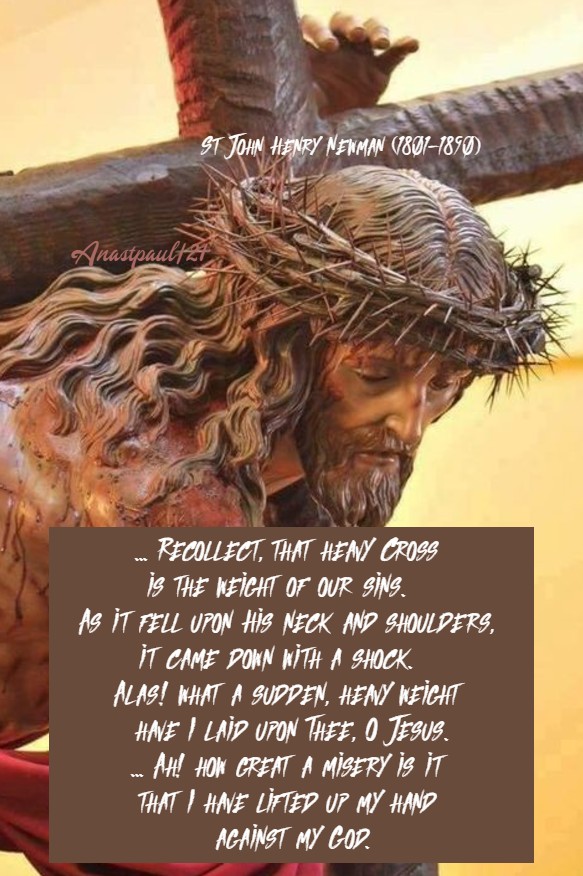
“… Recollect, that heavy Cross is the weight of our sins. As it fell upon His neck and shoulders, it came down with a shock. Alas! what a sudden, heavy weight have I laid upon Thee, O Jesus. … Ah! how great a misery is it that I have lifted up my hand against my God.”
One Minute Reflection – 15 January – Friday of the First week in Ordinary Time, Readings: Hebrews 4:1-5, 11, Psalms 78: 3 and 4, 6-7, 8, Mark 2:1-12and the Feast of Our Lady of Banneux/Our Lady of the Poor (1933) and St Maurus OSB (c 512-584)
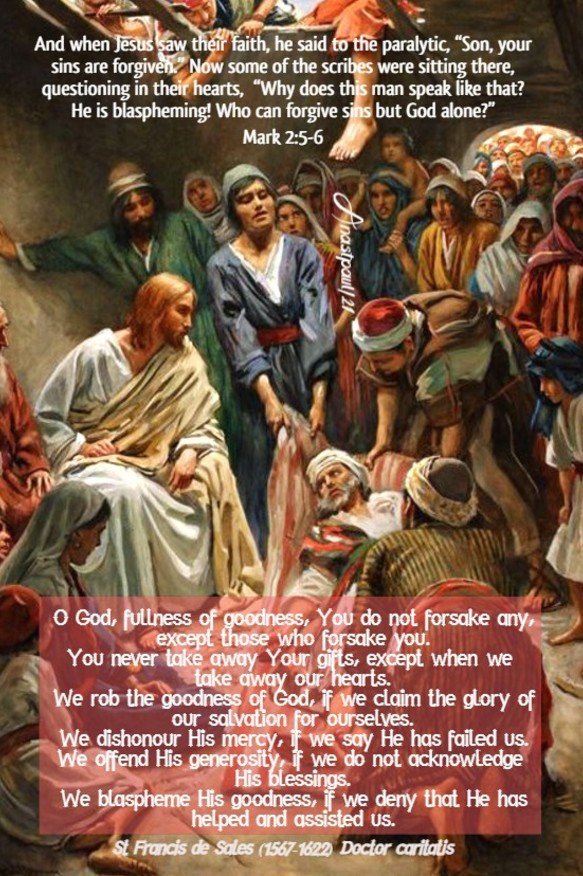
And when Jesus saw their faith, he said to the paralytic, “Son, your sins are forgiven.” Now some of the scribes were sitting there, questioning in their hearts, “Why does this man speak like that? He is blaspheming! Who can forgive sins but God alone?”– Mark 2:5-6
REFLECTION – “O God, fullness of goodness, You do not forsake any, except those who forsake you. You never take away Your gifts, except when we take away our hearts. We rob the goodness of God, if we claim the glory of our salvation for ourselves. We dishonour His mercy, if we say He has failed us. We offend His generosity, if we do not acknowledge His blessings. We blaspheme His goodness, if we deny that He has helped and assisted us. In short, O God, cry loud and clear into our ears: “your destruction comes from you, O Israel. In me alone is found your help” (Hos 13:9). – St Francis de Sales (1567-1622) Doctor Caritatis – Treatise on the Love of God, Ch 9
PRAYER – Lord God, You hold out the light of Your Word to those who do not know You. Strengthen in our hearts, the faith You have given us, so that no trials may quench the fire Your Spirit has kindled within us. Grant us the grace of approaching You in sorrow and repentance, so that we may hear Your Word, “your sins are forgiven you, go and sin no more.” May the prayers of Our Blessed Lady of Banneux and St Marus, grant us eyes to see and ears to hear and strength to hear and obey You. Through Christ, our Lord, with the Holy Spirit, God now and forever, amen.
Our Morning Offering – 30 December – The Sixth Day of the Octave of Christmas
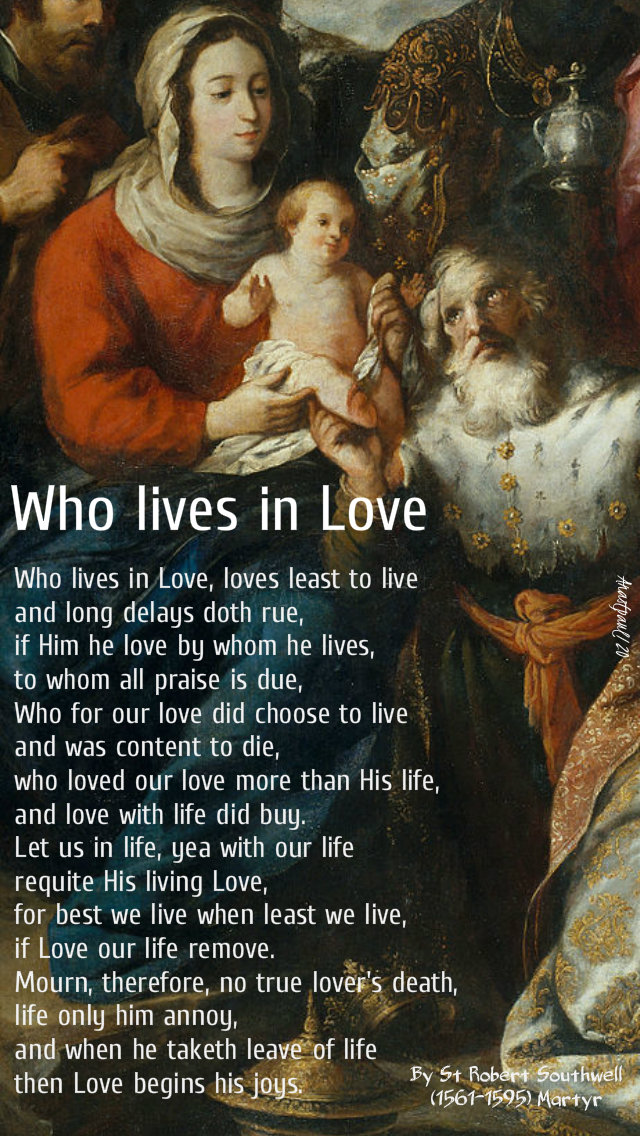
Who lives in Love By St Robert Southwell SJ (1561-1595) Martyr
Who lives in Love, loves least to live and long delays doth rue, if Him he love by whom he lives, to whom all praise is due, Who for our love did choose to live and was content to die, who loved our love more than His life, and love with life did buy. Let us in life, yea with our life requite His living love, for best we live when least we live, if Love our life remove. Mourn, therefore, no true lover’s death, life only him annoy, and when he taketh leave of life then Love begins his joys.
Thought for the Day – 18 December – Meditations with Antonio Cardinal Bacci (1881-1971)
Preparation for the Nativity
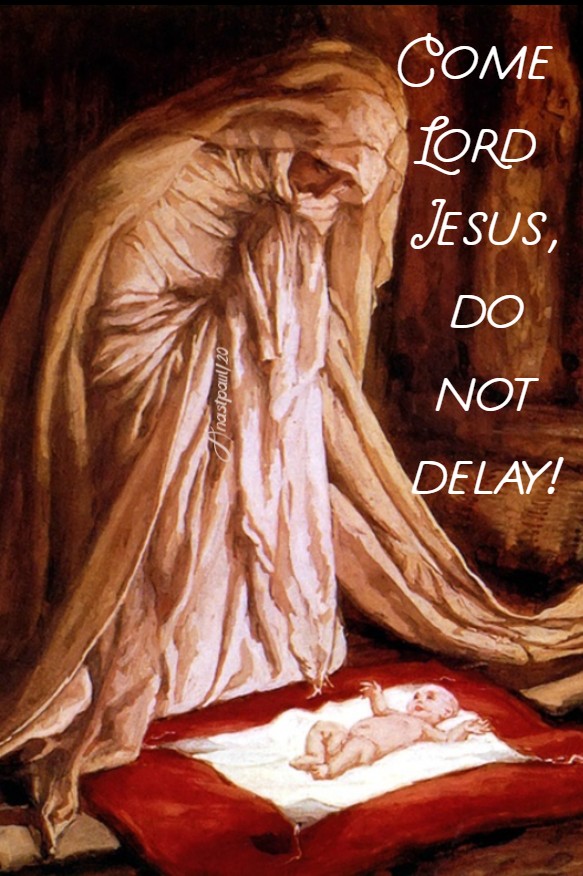
“The Birth of Our Lord is the most wonderful and most moving mystery of divine omnipotence and goodness. At first thought, the idea of the infinite God becoming man, would seem impossible. Between God and man, there is a vast abyss. Why should God have bridged this gap and assumed our poor mortal nature, becoming like us in everything but sin, while still remaining God? It is a hard question for the human mind to answer. There is only one reply, however. The immensity of God’s power and justice is equalled, by the immensity of His love. It was simply because God loved us infinitely that He took pity on us, lost as we were in sin. He assumed a human body and became man and, He suffered and died for us, so that we might love and obey Him more easily and follow in the way of goodness.
To our poor intellects, God seems not only immense and infinite but also, very remote. For this reason, God determined to come closer to us, so that He became as one of us. He was a tiny infant, crying in a manger; then, He was a lovable young boy Who spoke words of eternal wisdom among the doctors in the Temple; then, He was a prophet Who traversed the countryside of Palestine, teaching and working miracles; finally, He died a martyr’s death on the Cross in the cause of truth and goodness. Reflecting on this mystery of infinite love, let us adore and love Him.”
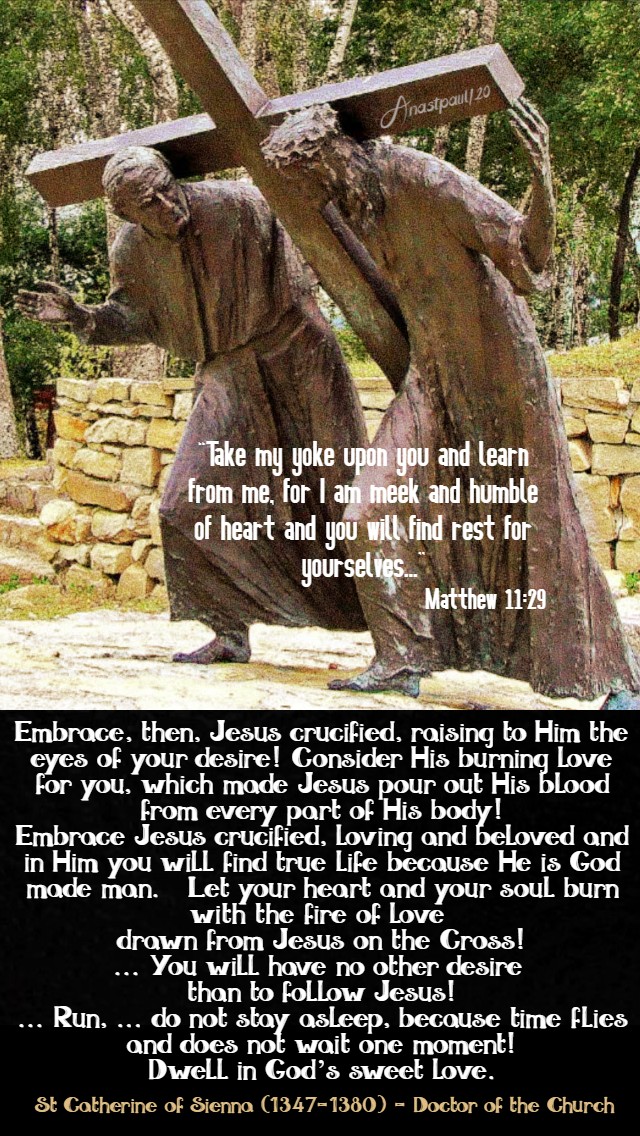
“Take my yoke upon you and learn from me, for I am meek and humble of heart and you will find rest for yourselves…” … Matthew 11:29
REFLECTION – “Dearest sister in Jesus. I, Catherine, servant of the servants of Jesus, write to you in His Precious Blood, wishing only that you feed yourself with God’s love and nourish yourself with it, as at a mother’s breast. Nobody, in fact, can live without this milk! Who possesses God’s love, finds so much joy that every bitterness transforms itself into sweetness and that every great weight becomes light. One must not be astonished because living in charity you live in God – “God is love and he who abides in love, abides in God and God abides in him”(1 John 4:16) Thus, living in God, you can have no bitterness because God is delight, gentleness and never-ending joy! This is why God’s friends are always happy! Even if we are sick, poor, grieved, troubled, persecuted, we are always joyful. … We do not seek joy elsewhere than in Jesus and we avoid any glory which is not that of the Cross. Embrace, then, Jesus crucified, raising to Him the eyes of your desire! Consider His burning love for you, which made Jesus pour out His blood from every part of His body! Embrace Jesus crucified, loving and beloved and in Him you will find true life because He is God made man. Let your heart and your soul burn with the fire of love drawn from Jesus on the Cross! You must, then, become love, looking at God’s love who loved you so much not because He had any obligation towards you but out of pure gift, urged only by His ineffable love. You will have no other desire than to follow Jesus! As if you were drunken with Love, it will no longer matter whether you are alone or in company – do not think about many things but only about finding Jesus and following Him! Run, Bartolomea, do not stay asleep, because time flies and does not wait one moment! Dwell in God’s sweet love. Sweet Jesus, Jesus love.” … St Catherine of Sienna (1347-1380) – Doctor of the Church – From the “Letters” (letter no. 165 to Bartolomea, wife of Salviato of Lucca).
Prayer – Almighty and merciful God, let neither our daily work nor the cares of this life, prevent us from hastening to meet Your Son. Lord, make straight the winding ways within us. Draw us to repent! Enlighten us with Your wisdom and lead us into His company, that we may love Him and do homage to Him. Amen
Thought for the Day – 6 December – Meditations with Antonio Cardinal Bacci (1881-1971)
The Glory of God
“The whole of creation manifests the glory of God. The grass of the field, the trees of the forest, the insects and birds of the air, the creatures on the earth and in the sea, the stars in the sky – they all speak to us of the power and beauty of the Creator.
You also were created by and for God, Who is the beginning and end of all things. In all thoughts, actions and affections, therefore, you should seek the glory of God. God, indeed, has no need of your small contribution to enhance His glory. His glory is complete and perfect in Himself, in Heaven and in Hell. God does not need you but, you need God. It is your strict obligation, not only to proclaim the glory of God but, also, to work for its triumph in yourself and in all things.
The man who loves God above all things seeks only His glory. The man who loves himself more than he loves God, however, seeks his own petty, worldly glorification and strays away from the main road of life which should lead him towards God.
Holiness consists in love – not earthly love, of course, but supernatural love.”
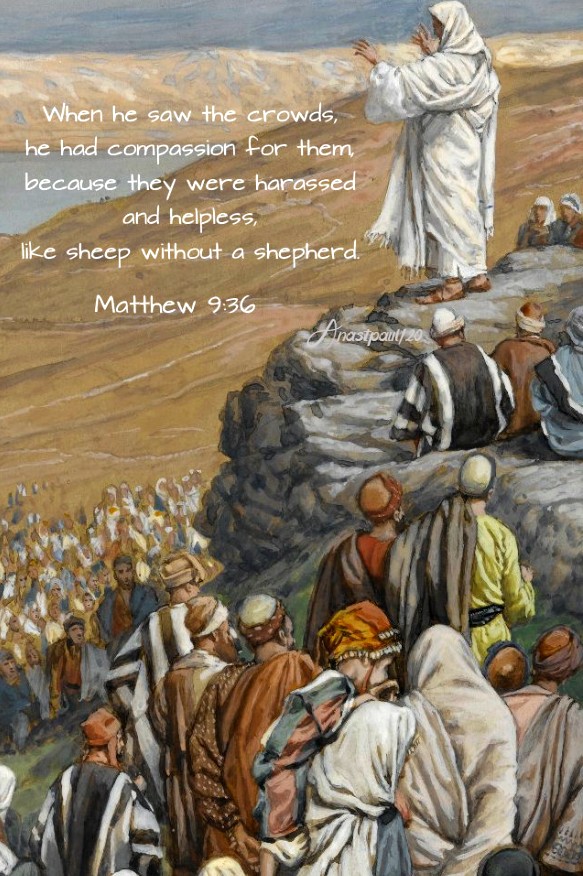
When he saw the crowds, he had compassion for them, because they were harassed and helpless, like sheep without a shepherd. … Matthew 9:36
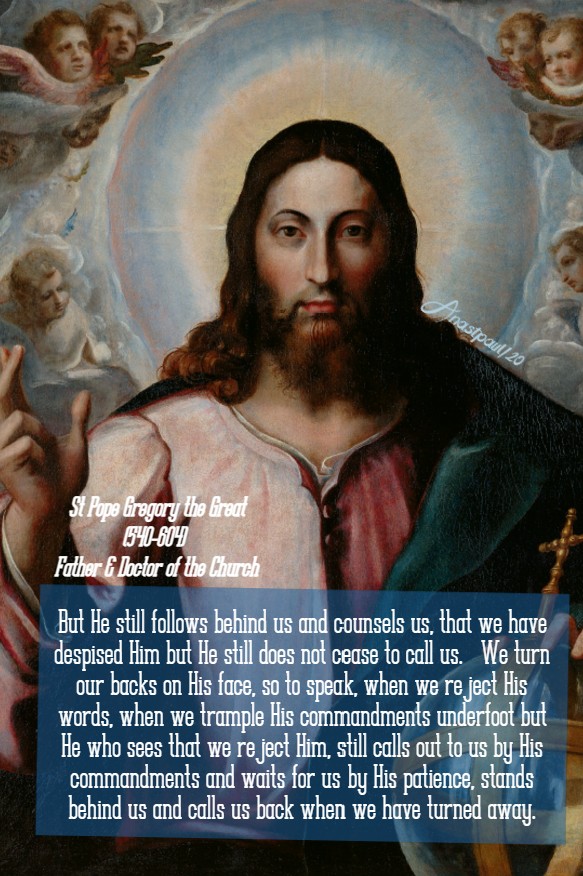
REFLECTION – “A person is counselled to his face, so to speak, when he is created for righteousness and receives the precepts of rectitude. When he despises these precepts, it is as if he is turning his back to his Creator’s face. But He still follows behind us and counsels us, that we have despised Him but He still does not cease to call us. We turn our backs on His face, so to speak, when we reject His words, when we trample His commandments underfoot but He who sees that we reject Him, still calls out to us by His commandments and waits for us by His patience, stands behind us and calls us back when we have turned away.” … St Pope Gregory the Great (540-604) Father & Doctor of the Church – Forty Gospel Homilies, 34
PRAYER – Lord, to free man from his sinful state, You sent Your only Son into this world. Grant to us, who in faith and love, wait for His coming, Your gift of grace and the reward of true freedom. Be born in us O Lord! We ask our most pure Virgin Mary to guide us in her ways. We make our prayer through Christ our Lord, with the Holy Spirit, God forever, amen.
Quote/s of the Day – 1 November – The Solemnity of All Saints
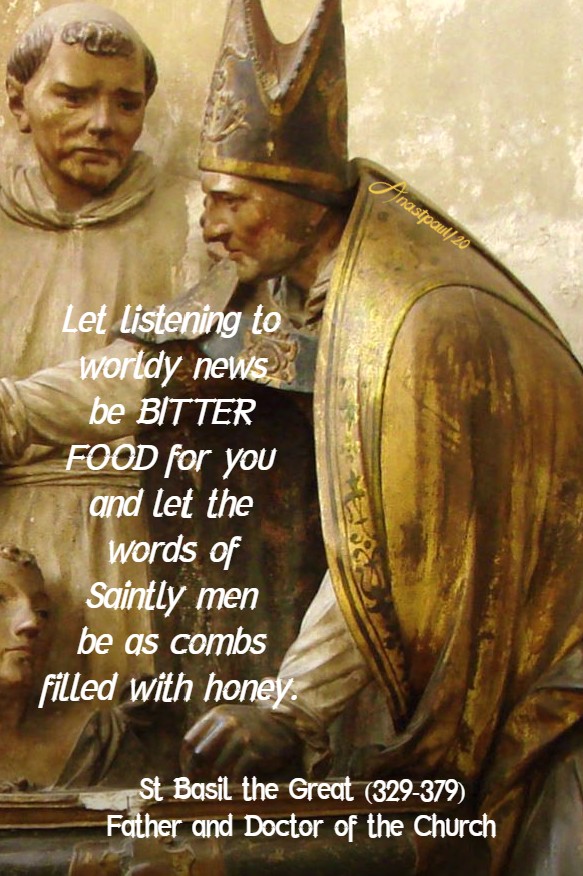
“Let listening to worldly news be BITTER FOOD for you and let the words of Saintly men be as combs filled with honey.”
St Basil the Great (329-379) Father and Doctor of the Church
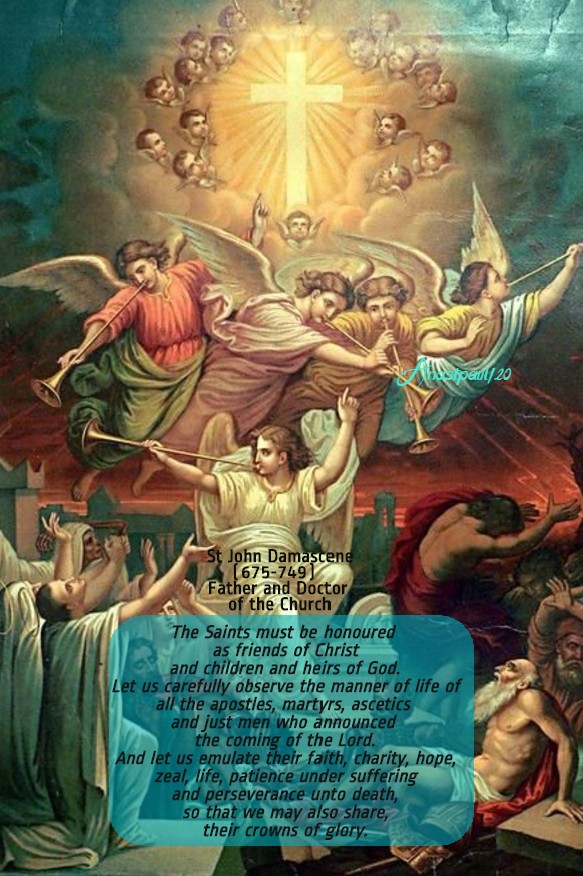
“The Saints must be honoured as friends of Christ and children and heirs of God. Let us carefully observe the manner of life of all the apostles, martyrs, ascetics and just men who announced the coming of the Lord. And let us emulate their faith, charity, hope, zeal, life, patience under suffering and perseverance unto death, so that we may also share, their crowns of glory.”
St John Damascene (675-749) Father and Doctor of the Church
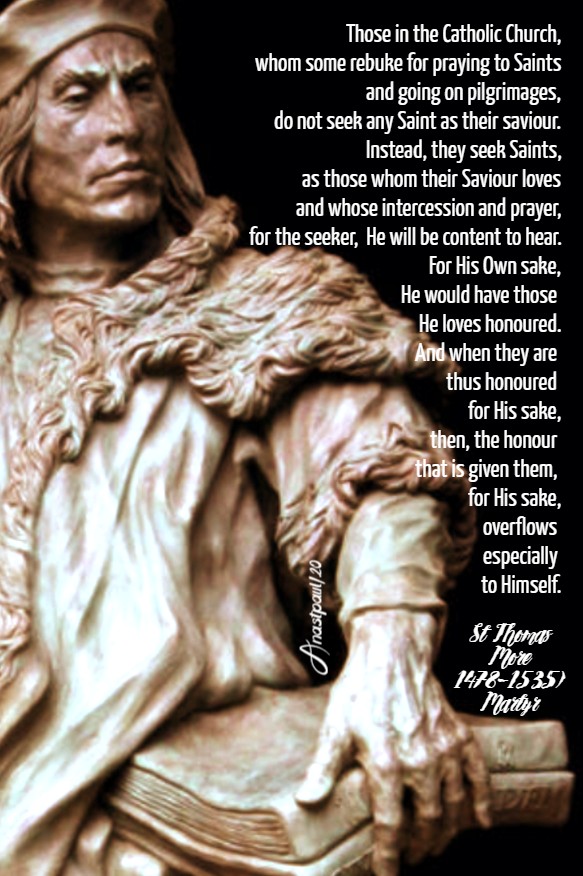
“Those in the Catholic Church, whom some rebuke for praying to Saints and going on pilgrimages, do not seek any Saint as their saviour. Instead, they seek Saints, as those whom their Saviour loves and whose intercession and prayer, for the seeker, He will be content to hear. For His Own sake, He would have those He loves honoured. And when they are thus honoured for His sake, then, the honour that is given them, for His sake, overflows especially to Himself.”
St Thomas More 1478-1535) Martyr
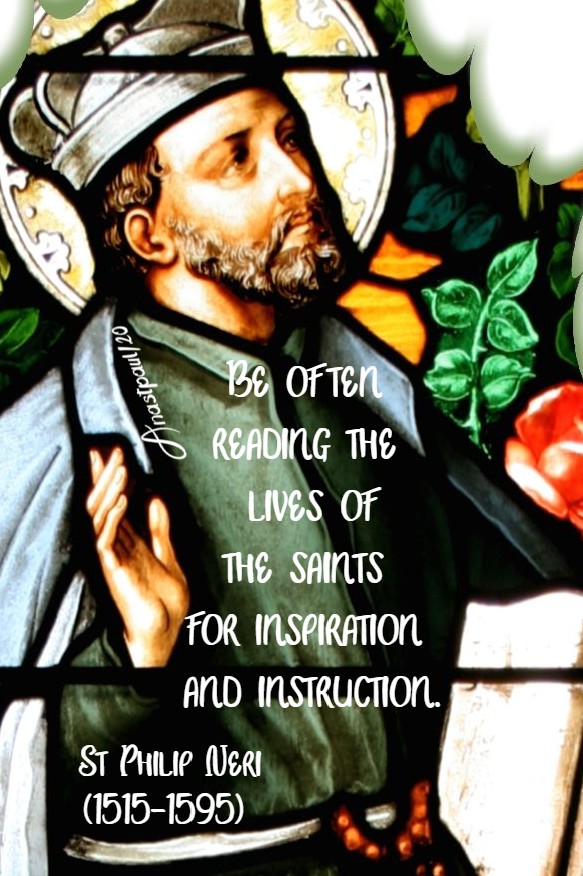
“Be often reading the lives of the saints for inspiration and instruction.”
St Philip Neri (1515-1595)
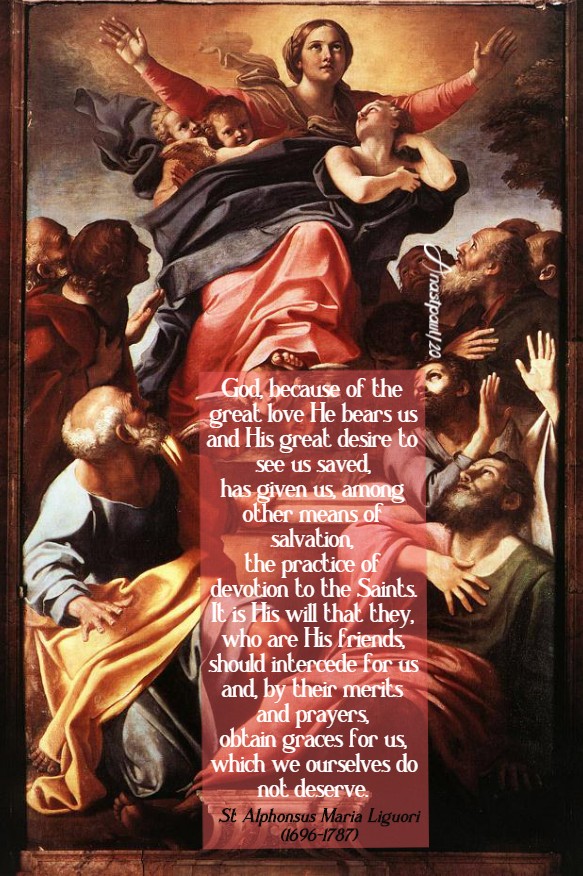
“God, because of the great love He bears us and His great desire to see us saved, has given us, among other means of salvation, the practice of devotion to the Saints. It is His will that they, who are His friends, should intercede for us and, by their merits and prayers, obtain graces for us, which we ourselves do not deserve.”
St Alphonsus Maria Liguori (1696-1787) Most Zealous Doctor
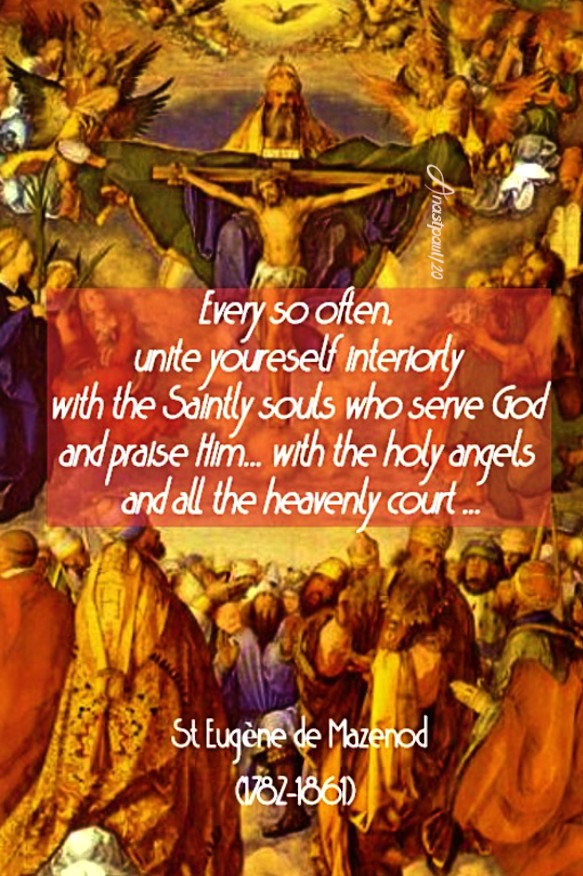
“Every so often, unite oneself interiorly with the Saintly souls who serve God and praise Him… with the holy angels and all the heavenly court …”
Quote/s of the Day – 30 October – Making our way to Life
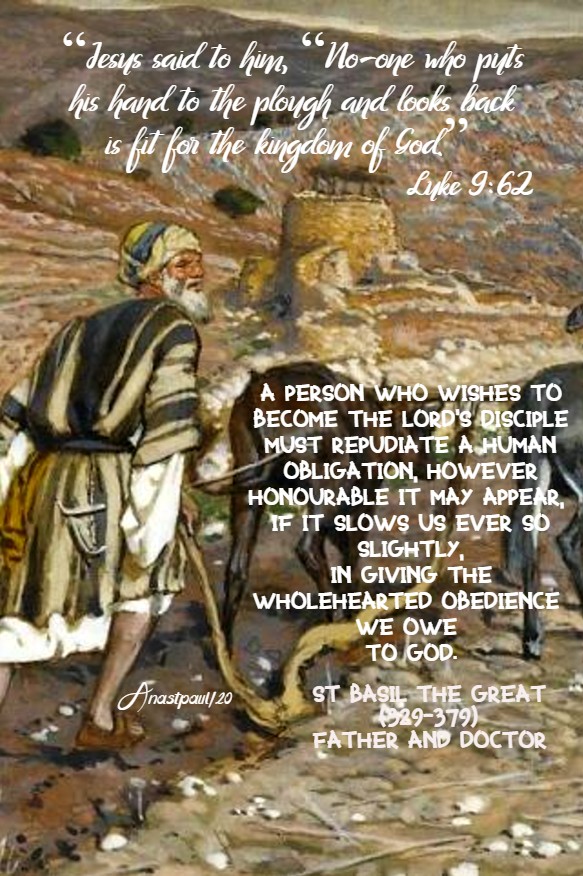
“A person who wishes to become the Lord’s disciple must repudiate a human obligation, however honourable it may appear, if it slows us, ever so slightly, in giving the wholehearted obedience we owe to God.”
St Basil the Great (329-379)
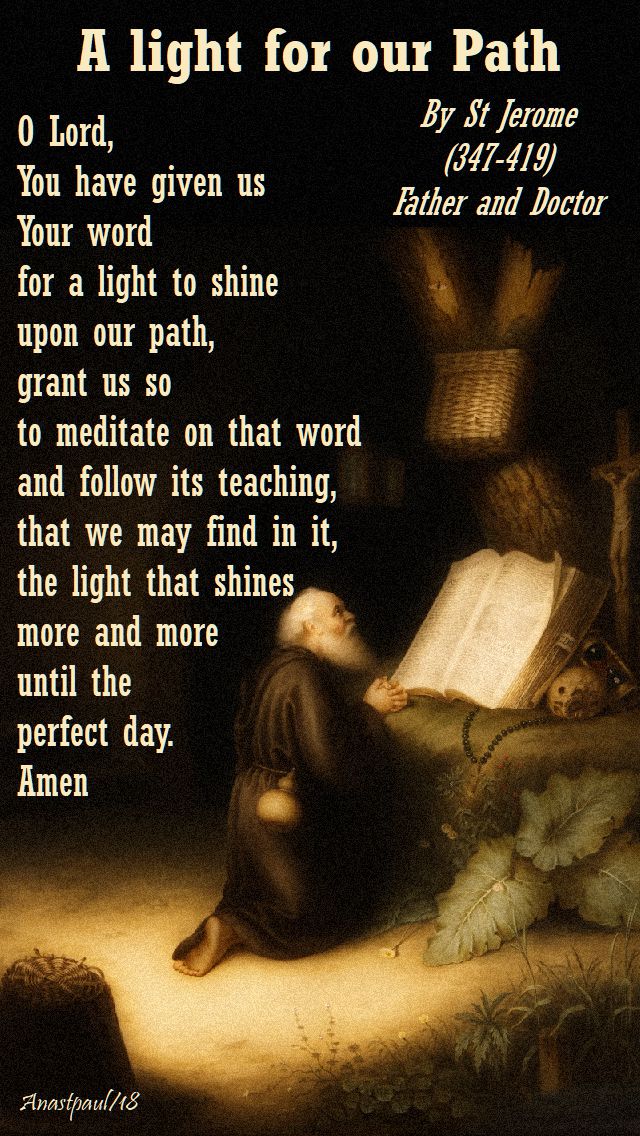
O Lord, You have given us Your word for a light to shine upon our path, grant us so to meditate on that word and follow its teaching, that we may find in it, the light that shines more and more until the perfect day. Amen
St Jerome (343-420) “The Man of the Bible” Father and Doctor of the Church
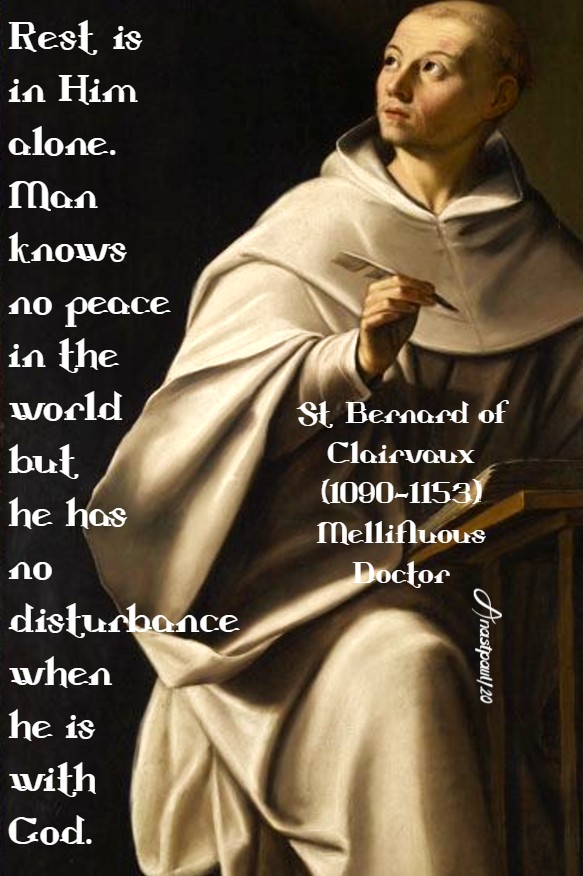
“Rest is in Him alone. Man knows no peace in the world but he has no disturbance when he is with God.”
St Bernard of Clairvaux (1090-1153) Mellifluous Doctor
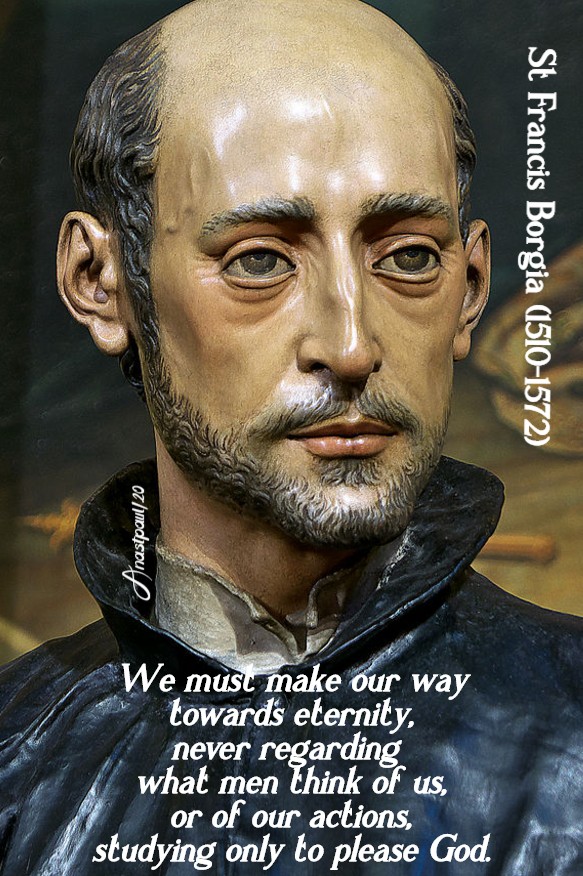
“We must make our way towards eternity, never regarding what men think of us, or of our actions, studying only to please God.”
St Francis Borgia (1510-1572)
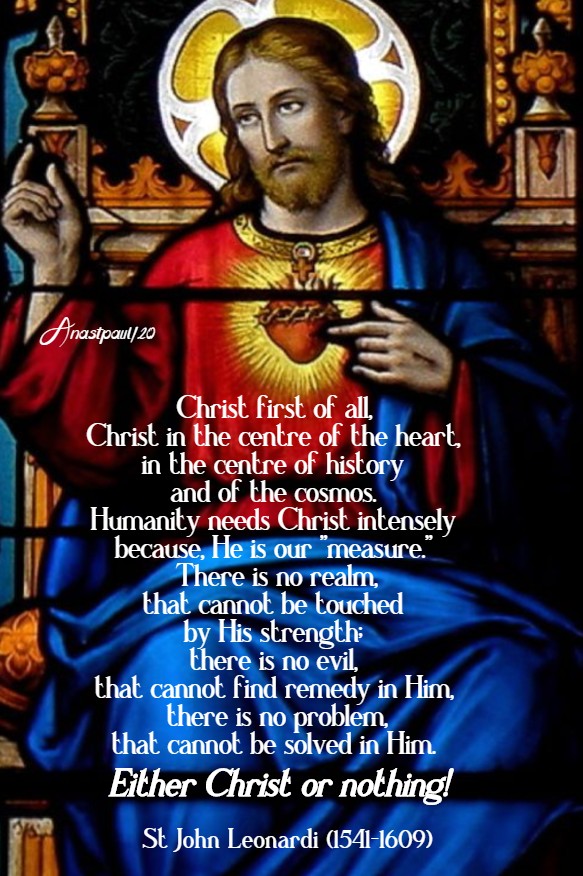
“Christ first of all, Christ in the centre of the heart, in the centre of history and of the cosmos. Humanity needs Christ intensely because, He is our “measure.” There is no realm, that cannot be touched by His strength; there is no evil, that cannot find remedy in Him, there is no problem, that cannot be solved in Him. Either Christ or nothing!”
St John Leonardi (1541-1609)
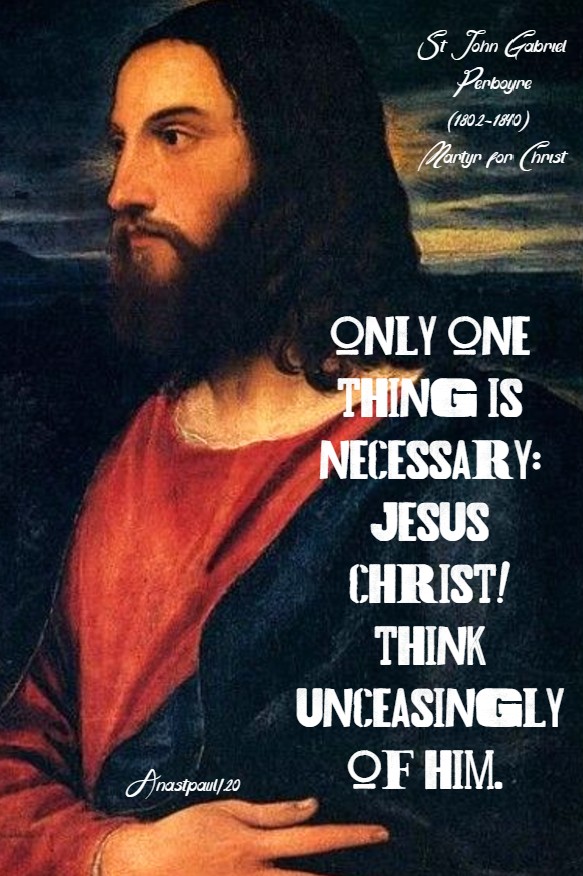
“Only one thing is necessary: Jesus Christ! Think unceasingly of Him. ”
St John Gabriel Perboyre CM (1802-1840) Martyr for Christ
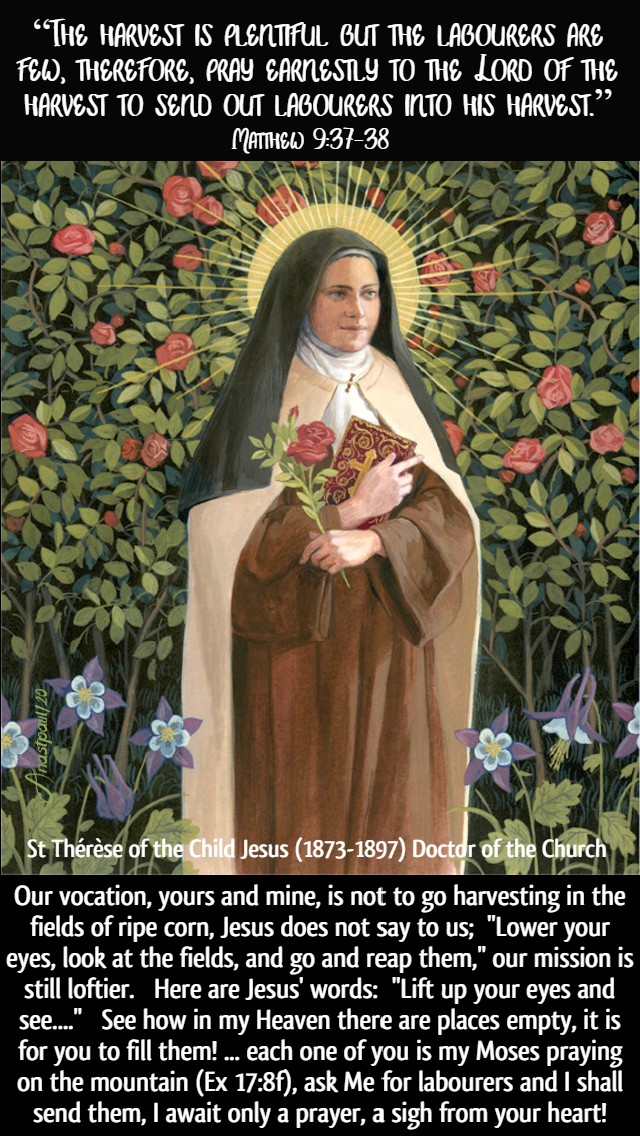
“Our vocation, yours and mine, is not to go harvesting in the fields of ripe corn, Jesus does not say to us; “Lower your eyes, look at the fields and go and reap them,” our mission is still loftier. Here are Jesus’ words: “Lift up your eyes and see….” See how in My Heaven there are places empty, it is for you to fill them! … each one of you is my Moses praying on the mountain (Ex 17:8f), ask Me for labourers and I shall send them, I await only a prayer, a sigh from your heart!”
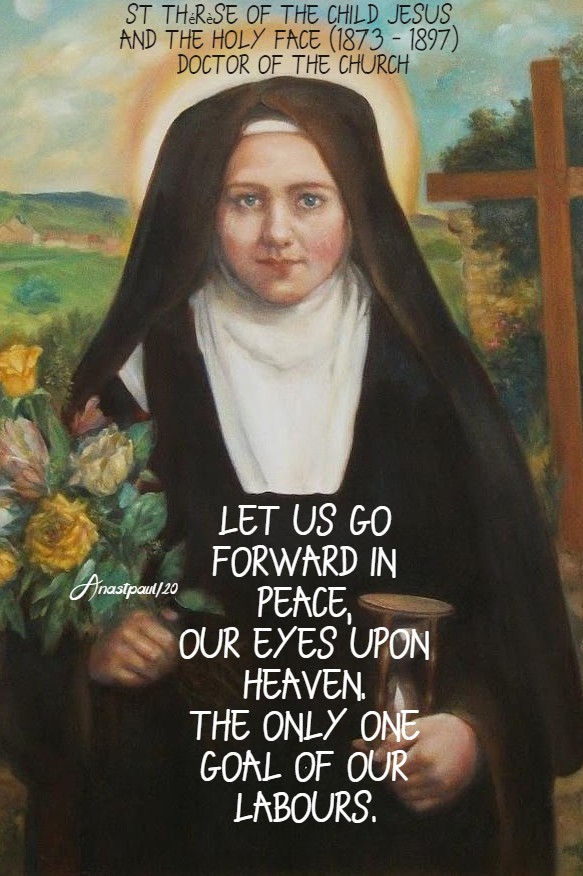
“Let us go forward in peace, our eyes upon heaven. the only one goal of our labours.”
St Thérèse of the Child Jesus and the Holy Face (1873 – 1897) Doctor of the Church
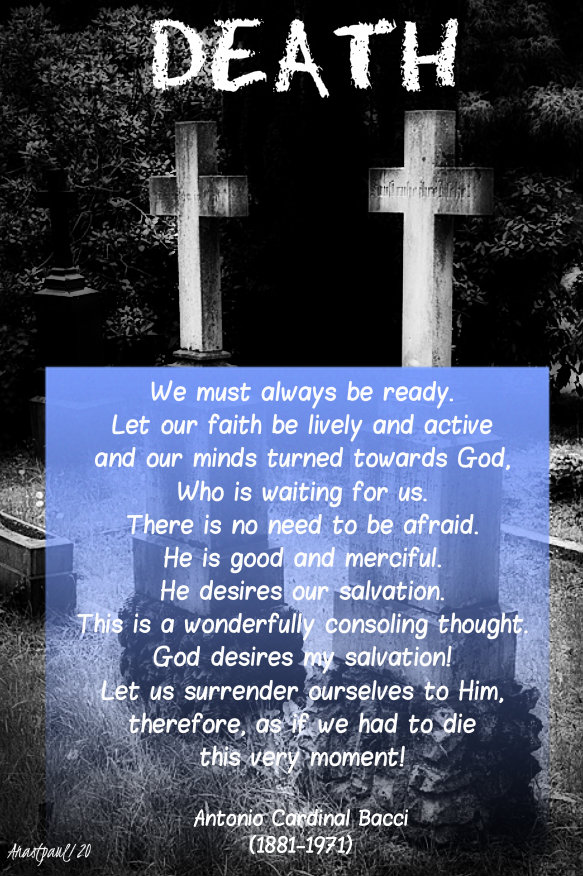
“We must always be ready. Let our faith be lively and active and our minds turned towards God, Who is waiting for us. There is no need to be afraid. He is good and merciful. He desires our salvation. This is a wonderfully consoling thought. God desires my salvation! Let us surrender ourselves to Him, therefore, as if we had to die this very moment!”
One Minute Reflection – 29 October – Thursday of the Thirtieth week in Ordinary Time, Ephesians 6:10-20, Psalms 144:1, 2, 9-10, Luke 13:31-35 and the Memorial of Blessed Chiara “Luce” Badano (1971 –1990)
“How often would I have gathered your children together, as a hen gathers her brood under her wings and you were not willing!” – Luke 13:34
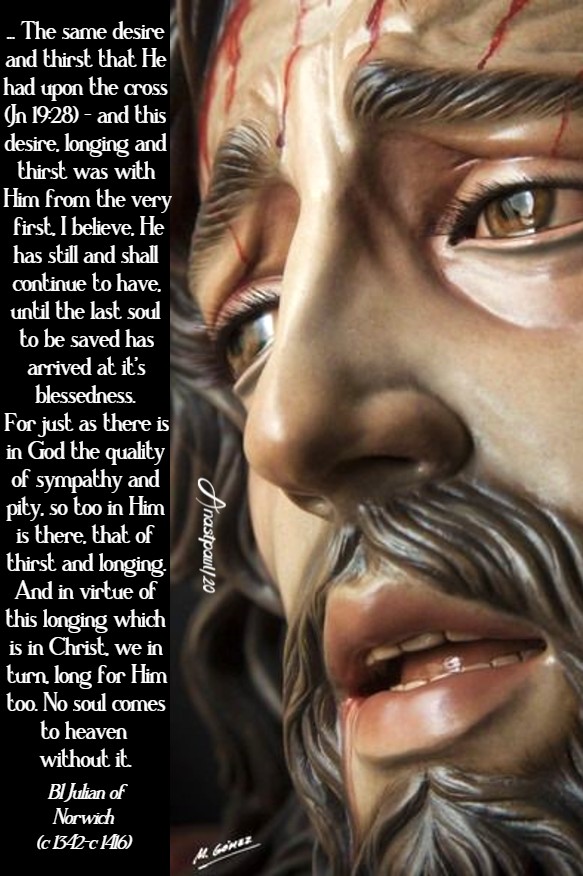
REFLECTION – “Thus shall the spiritual thirst of Christ be quenched. This is His thirst – His love and longing for us that goes on enduring until we see the Day of Judgement. For of us who are to be saved and be Christ’s joy and bliss, some are alive now, while others- are ‘yet unborn and so, it will go on until that Day. His thirst and loving longing, is to have us all, integrated in Himself, to His great enjoyment. At least, so I see it (…) Because He is God, He is ‘supreme blessedness and never has been nor ever shall be other. His eternal blessedness can neither be increased nor diminished (…) Because He is human – this too is known by the creed and by the revelations – it was shown, that He, though God, suffered pain, passion, and death, for love of us and to bring us to blessedness (…) Since Christ is our Head, He must be both glorious and impassable. But since He is also the Body, in which all His members are joined (Eph 1:23), He is not yet fully either of these. Therefore, the same desire and thirst that He had upon the cross (Jn 19:28) – and this desire, longing and thirst was with Him from the very first, I believe He has still and shall continue to have, until the last soul to be saved has arrived at it’s blessedness. For just as there is in God the quality of sympathy and pity, so too in Him is there, that of thirst and longing. And in virtue of this longing which is in Christ, we in turn, long for Him too. No soul comes to heaven without it. This quality of longing and thirst springs from God’s eternal goodness just as pity does (…) and, this thirst will persist in Him, as long as we are in need, drawing us up, to His blessedness.” – Blessed Julian of Norwich (c 1342-c 1416) (aged 73–74) Anchorite, Mystic (Revelations of divine love, ch. 31)
PRAYER – Shed Your clear light on our hearts, Lord, so that walking continually in the way of Your commandments, we may never be deceived or misled. May Your loving Heart draw us more and more to Itself, so that Your love may be ours. Grant that the prayers of Blessed Chiara Badano, who always held Your Light up for others to see by, give us strength. Through Jesus Christ, with the Holy Spirit, God forever, amen.
Quote/s of the Day – 13 October – Tuesday of the Twenty-eighth week in Ordinary Time, Readings: Ephesians 5:21-33,Psalms 128:1-2, 3,4-5, Luke 13:18-21
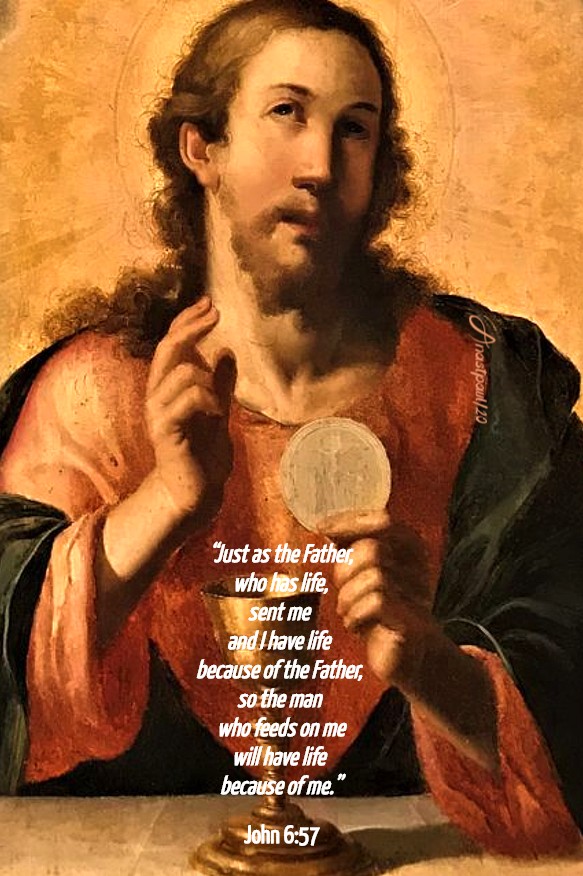
“Just as the Father who has life sent me and I have life because of the Father, so the man who feeds on me will have life because of me.”
John 6:57
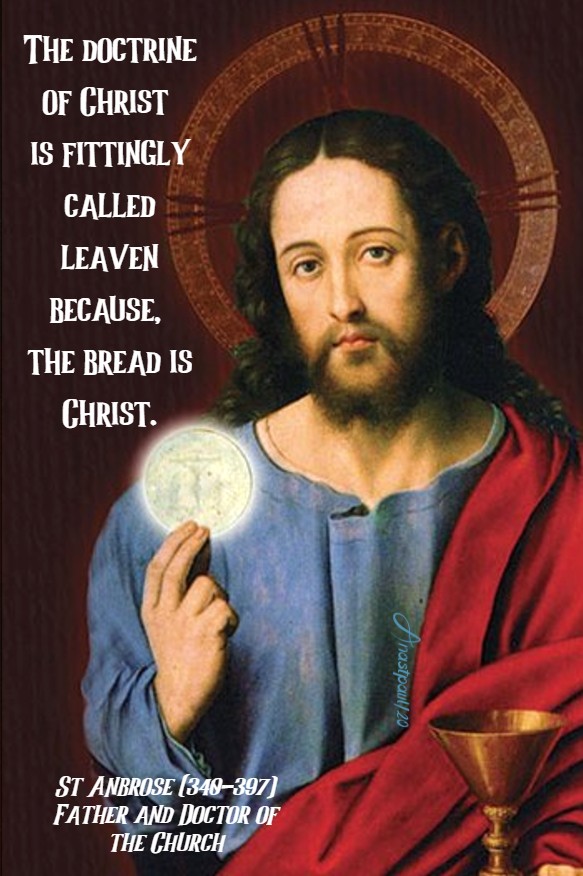
“The doctrine of Christ is fittingly called leaven because, the bread is Christ.”
St Anbrose (340-397) Father and Doctor of the Church
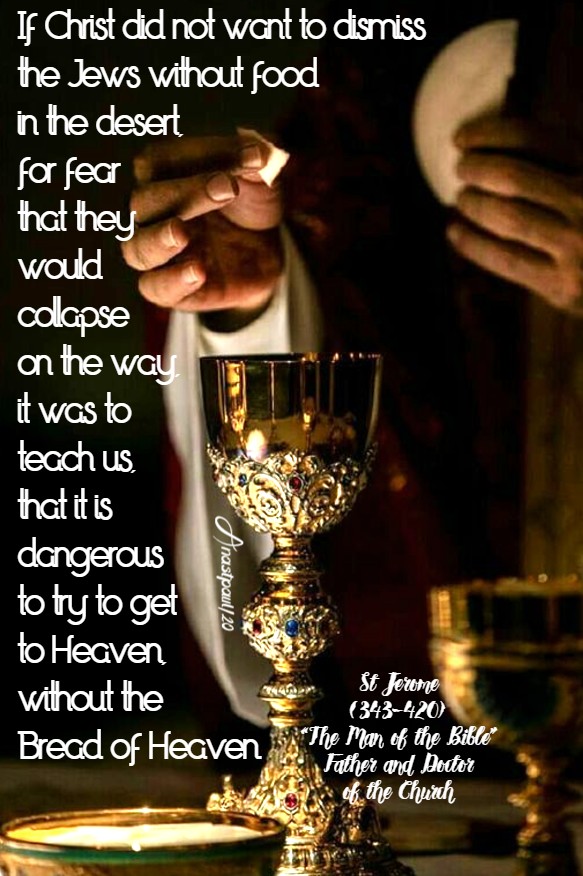
“If Christ did not want to dismiss the Jews without food in the desert, for fear that they would collapse on the way, it was to teach us, that it is dangerous to try to get to Heaven, without the Bread of Heaven.”
St Jerome (343-420) Father and Doctor of the Church
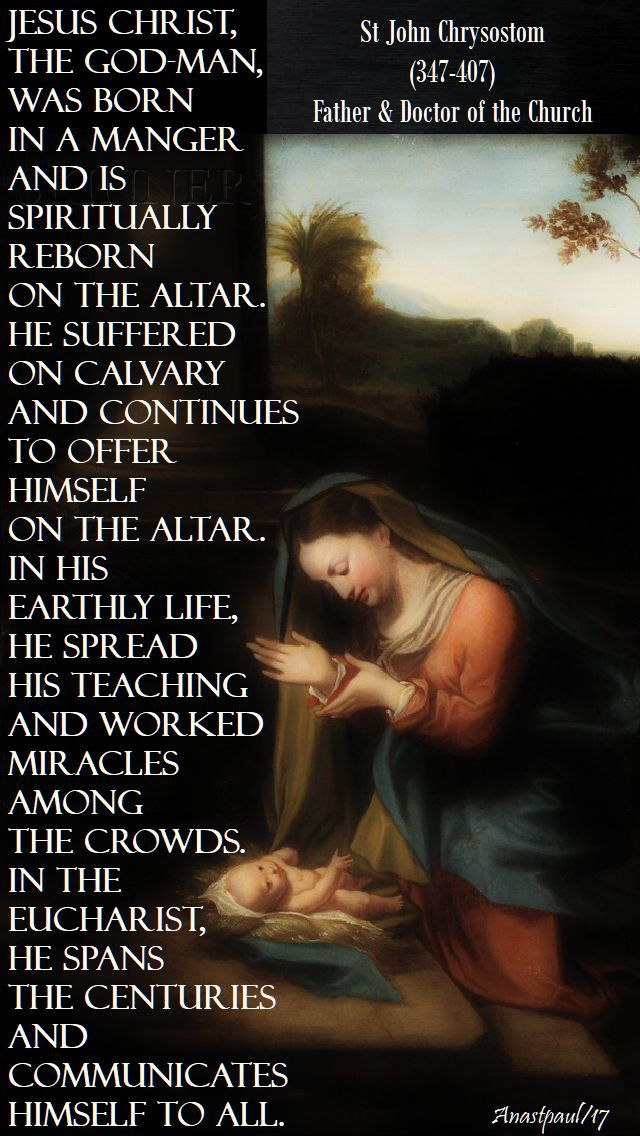
“Jesus Christ, the God-Man, was born in a manger and is spiritually reborn on the altar. He suffered on Calvary and continues to offer Himself on the altar. In His earthly life, He spread His teaching and worked miracles among the crowds. In the Eucharist, He spans the centuries and communicates Himself to all.”
St John Chrysostom (347-407) Father and Doctor
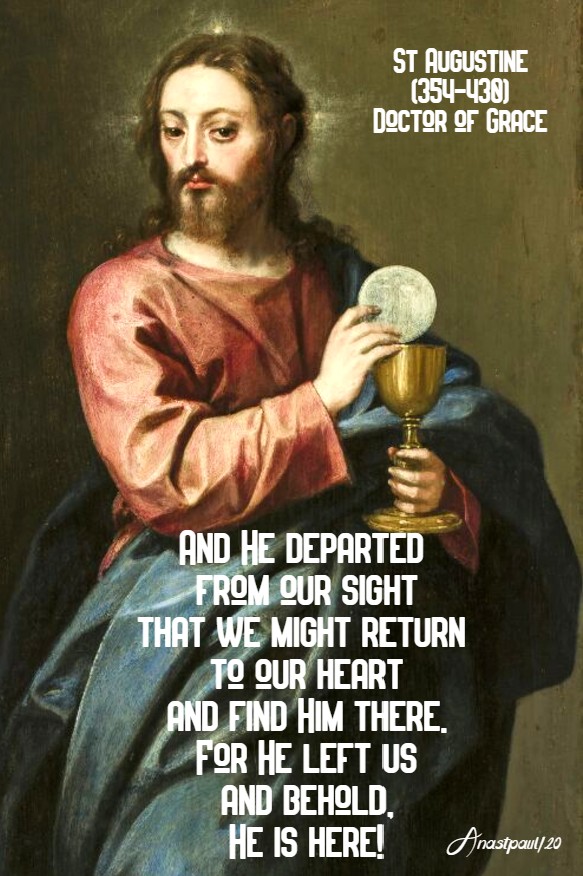
“And He departed from our sight that we might return to our heart and find Him there. For He left us and behold, He is here!”
St Augustine (354-430) Father and Doctor of Grace
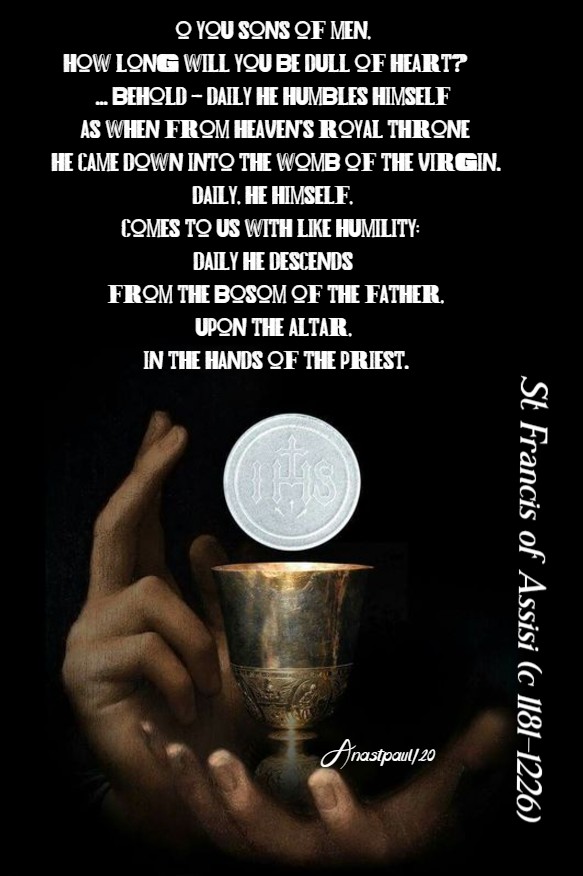
“O you sons of men, how long will you be dull of heart? … Behold – daily He humbles Himself as when from heaven’s royal throne He came down into the womb of the Virgin. Daily, He Himself, comes to us with like humility; daily He descends from the bosom of the Father, upon the altar, in the hands of the priest.”
St Francis of Assisi (c 1181–1226)
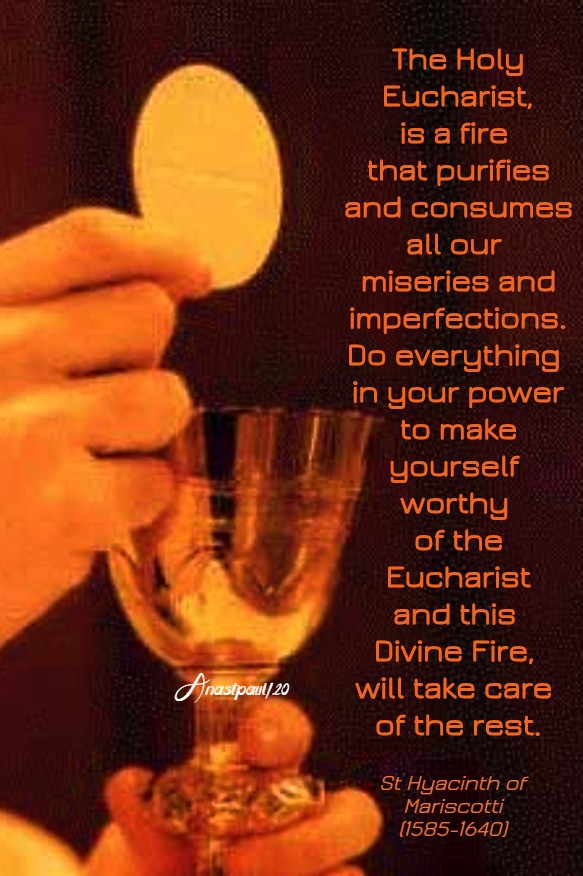
“The Holy Eucharist, is a fire that purifies and consumes all our miseries and imperfections. Do everything in your power to make yourself worthy of the Eucharist and this Divine Fire, will take care of the rest.”
Quote/s of the Day – 25 October – Thirtieth Sunday in Ordinary Time, Readings: Exodus 22:20-26, Psalms 18:2-3, 3-4,47, 51, 1 Thessalonians 1:5-10, Matthew 22:34-40
“You shall love the Lord your God with all your heart and with all your soul and with all your mind. And the second is like it: You shall love your neighbour as yourself.”
Matthew 22:36,39
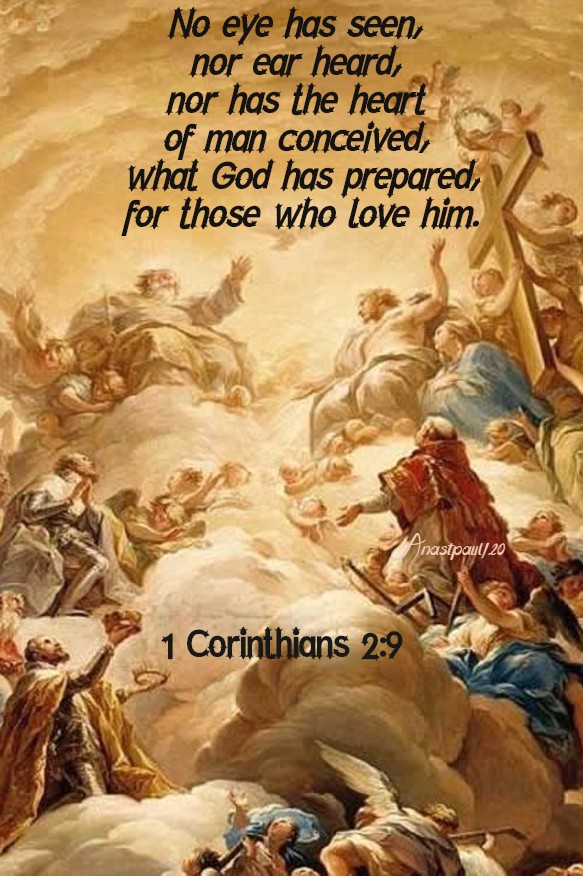
“No eye has seen, nor ear heard, nor has the heart of man conceived, what God has prepared, for those who love him.”
1 Corinthians 2:9
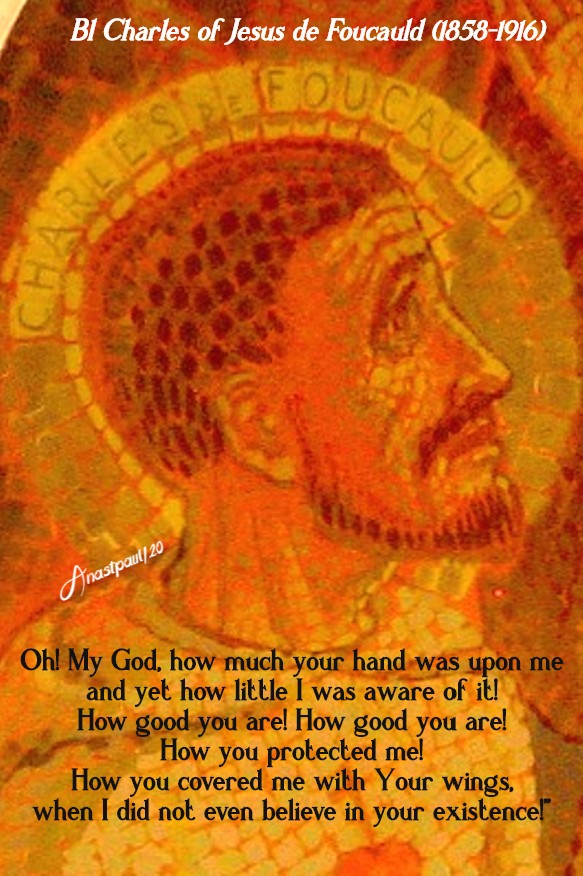
“Oh! My God, how much your hand was upon me and yet how little I was aware of it! How good you are! How good you are! How you protected me! How you covered me with Your wings, when I did not even believe in your existence!”
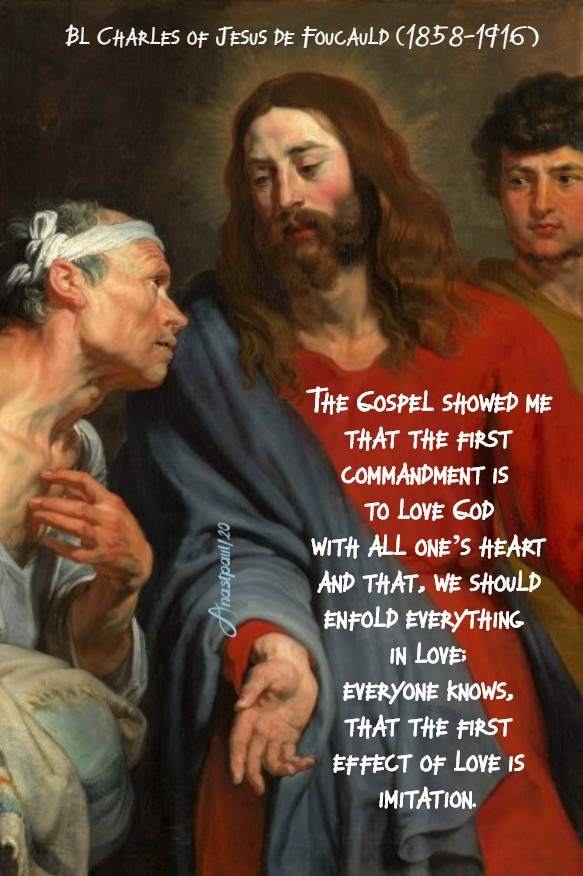
“The Gospel showed me that the first commandment is to love God with all one’s heart and that, we should enfold everything in love; everyone knows, that the first effect of love is imitation.”
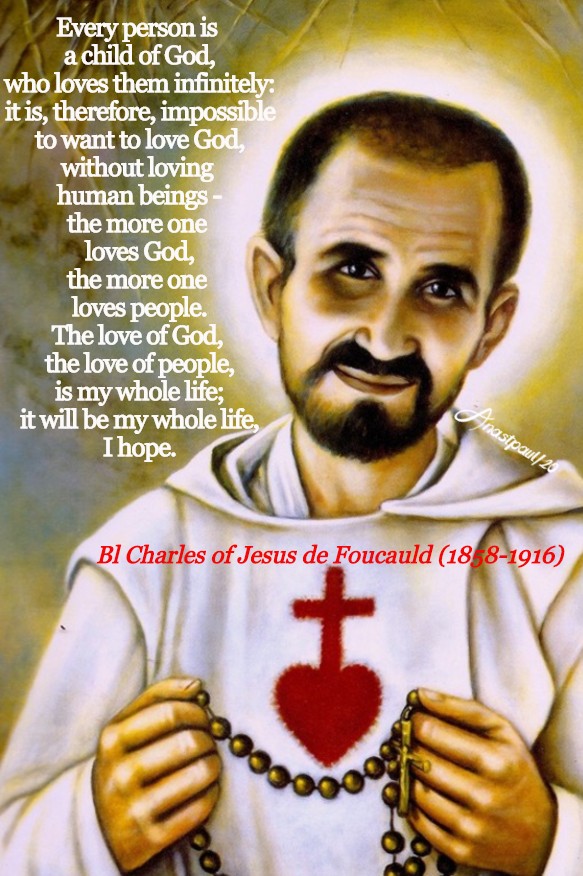
“Every person is a child of God, who loves them infinitely: it is, therefore, impossible to want to love God, without loving human beings – the more one loves God, the more one loves people. The love of God, the love of people, is my whole life; it will be my whole life, I hope.”
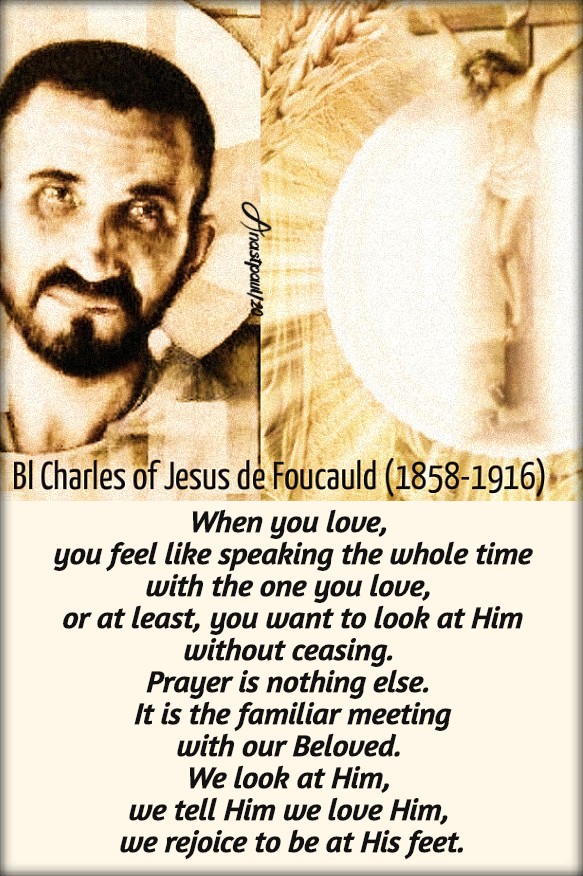
“When you love, you feel like speaking the whole time with the one you love, or at least, you want to look at Him without ceasing. Prayer is nothing else. It is the familiar meeting with our Beloved. We look at Him, we tell Him we love Him, we rejoice to be at His feet.”
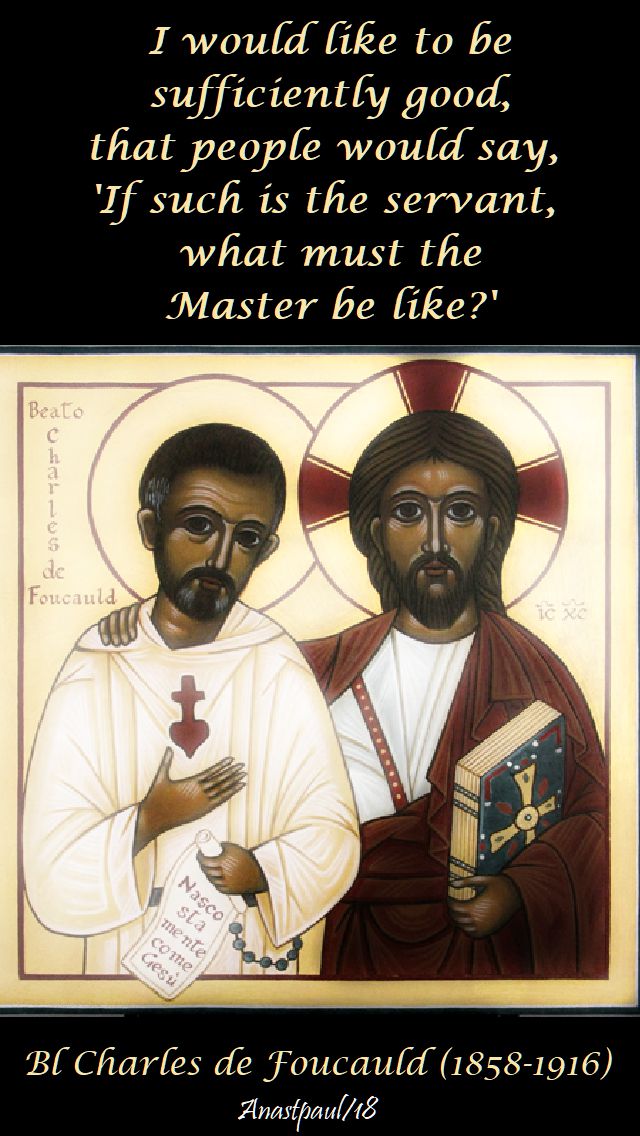
“I would like to be sufficiently good that people would say: ‘If such is the servant, what must the Master be like.’”
Quote/s of the Day – 23 October – Feast of the Most Holy Redeemer
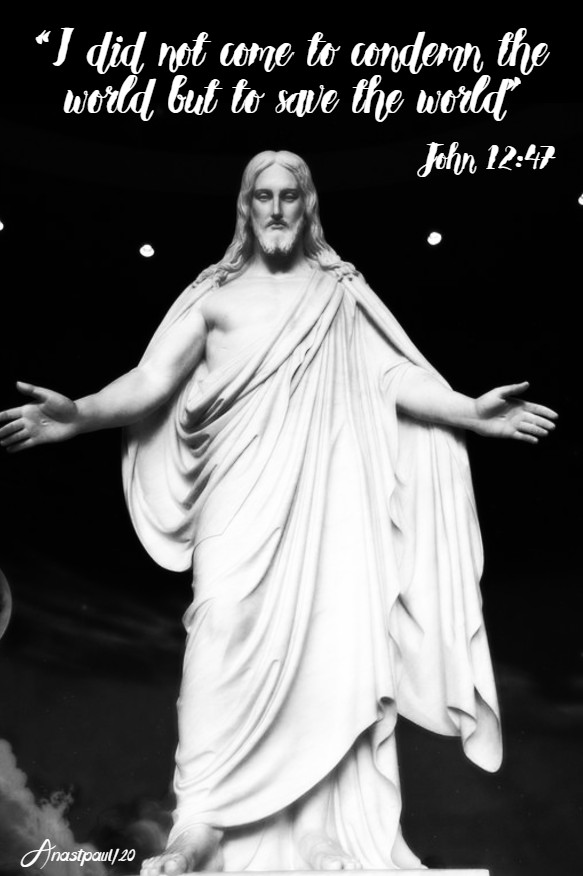
“I did not come to condemn the world but to save the world.”
John 12:47
“Come along then, every human family, full of sin as you are and receive the forgiveness of your sins. For I Myself, am your forgiveness, I am the Passover of salvation, the Lamb slain for your sakes, your redemption, life and resurrection; I am your Light, your Salvation and your King. It is I, who lead you to the heights of heaven, I, who will raise you up; it is I, who will bring you to see the Father who is from all eternity; it is I, who will raise you up by My all-powerful Hand.”
St Melito of Sardis (Died c 180) Bishop, Apologist
Paschal Homily
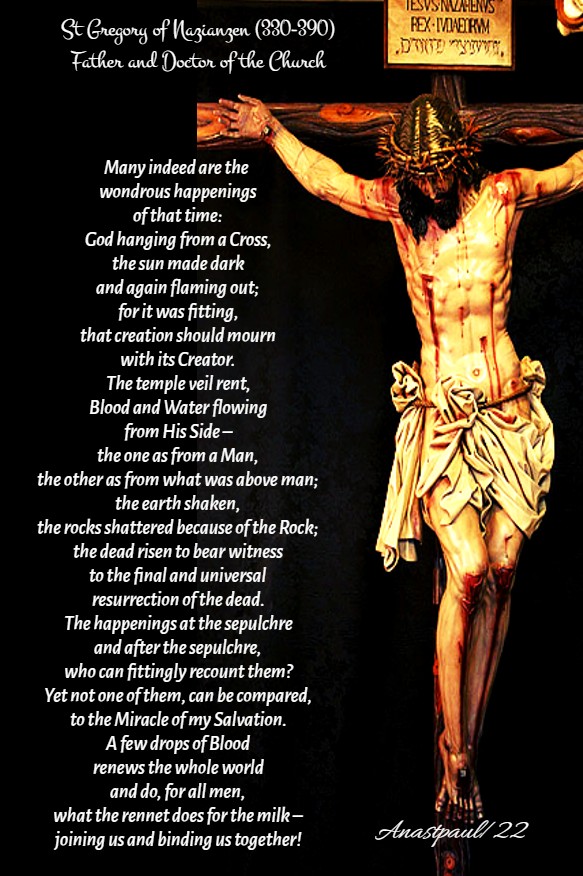
“Many indeed are the wondrous happenings of that time: God hanging from a Cross, the sun made dark and again flaming out; for it was fitting, that creation should mourn with its Creator. The temple veil rent, Blood and Water flowing from His Side – the one as from a Man, the other as from what was above man; the earth shaken, the rocks shattered because of the Rock; the dead risen to bear witness to the final and universal resurrection of the dead. The happenings at the sepulchre and after the sepulchre, who can fittingly recount them? Yet not one of them, can be compared, to the Miracle of my Salvation. A few drops of Blood renews the whole world and do, for all men, what the rennet does for the milk – joining us and binding us together!”
St Gregory of Nazianzen (330-390) Father and Doctor of the Church
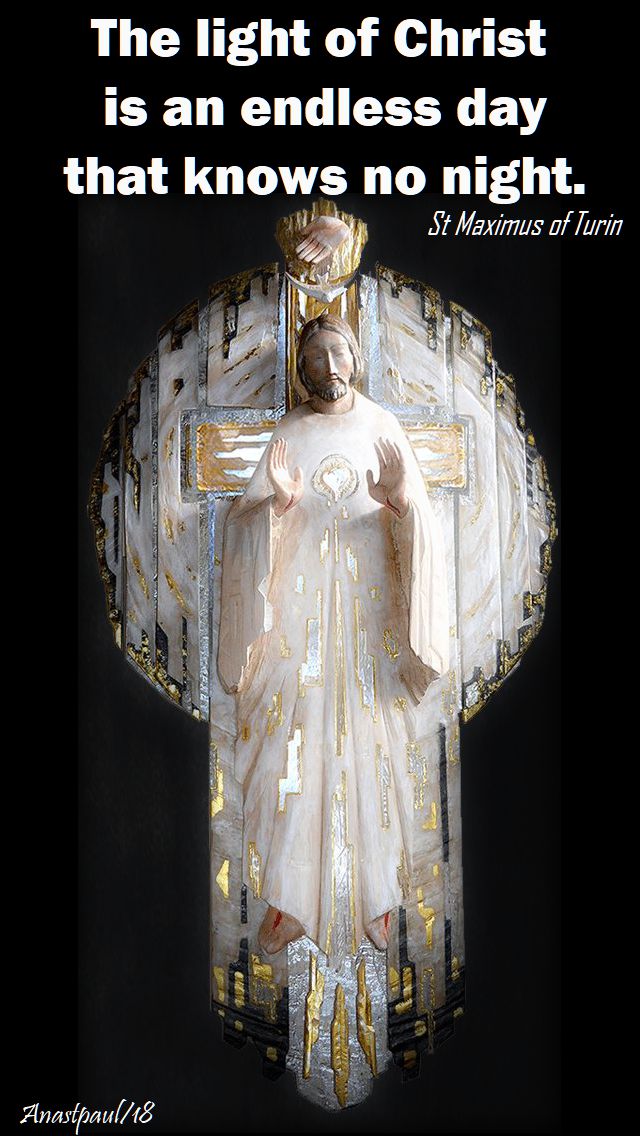
“The light of Christ is an endless day that knows no night.”
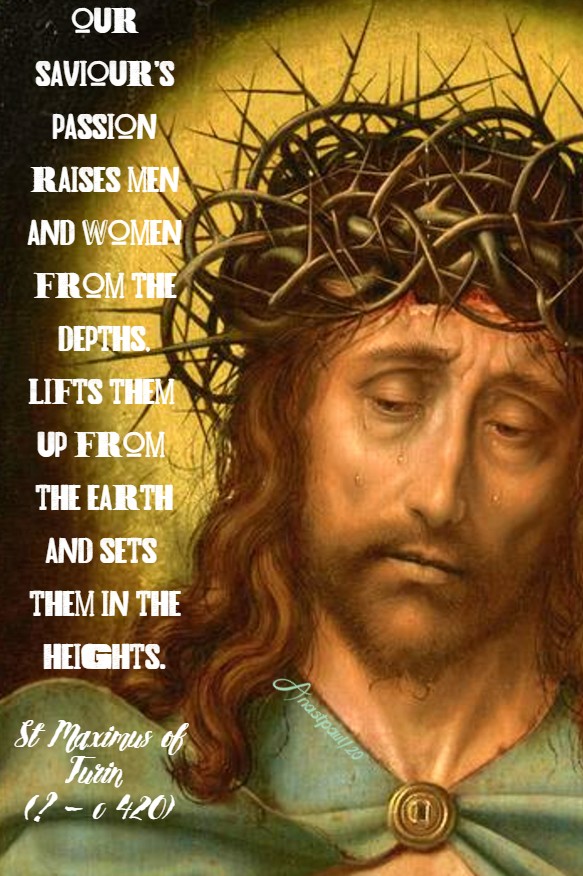
“Our Saviour’s passion raises men and women from the depths, lifts them up from the earth and sets them in the heights.”
St Maximus of Turin (? – c 420)
“As they were looking on, so we too gaze on His wounds as He hangs. We see His blood as He dies. We see the price offered by the Redeemer, touch the scars of His Resurrection. He bows His head, as if to kiss you. His heart is made bare open, as it were, in love to you. His arms are extended, that He may embrace you. His whole body is displayed for your redemption. Ponder how great these things are. Let all this be rightly weighed in your mind – as He was once fixed to the cross, in every part of His body for you, so He may now be fixed in every part of your soul.”
St Augustine (354-430) Father and Doctor of Grace
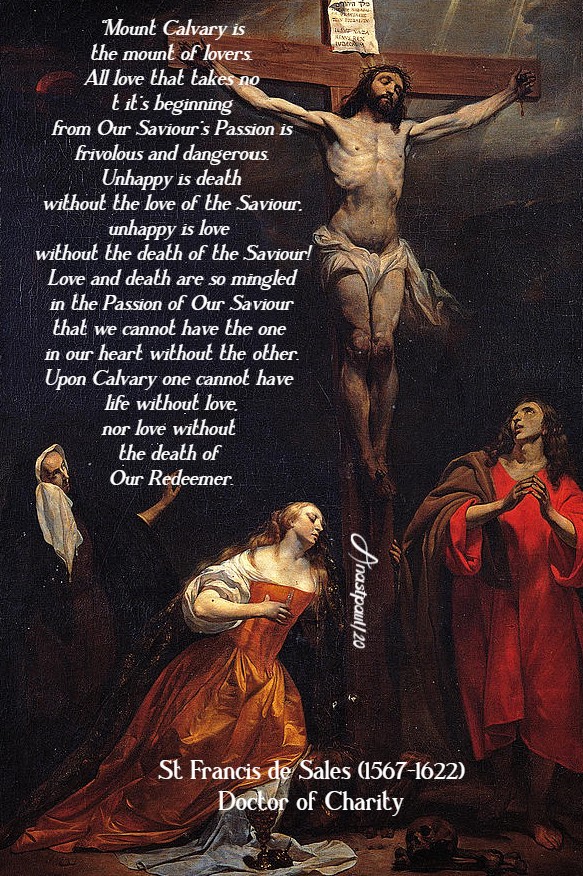
“Mount Calvary is the mount of lovers. All love that takes not it’s beginning from Our Saviour’s Passion is frivolous and dangerous. Unhappy is death without the love of the Saviour, unhappy is love without the death of the Saviour! Love and death are so mingled in the Passion of Our Saviour that we cannot have the one in our heart without the other. Upon Calvary one cannot have life without love, nor love without the death of Our Redeemer.”
St Francis de Sales (1567-1622) Doctor of Charity
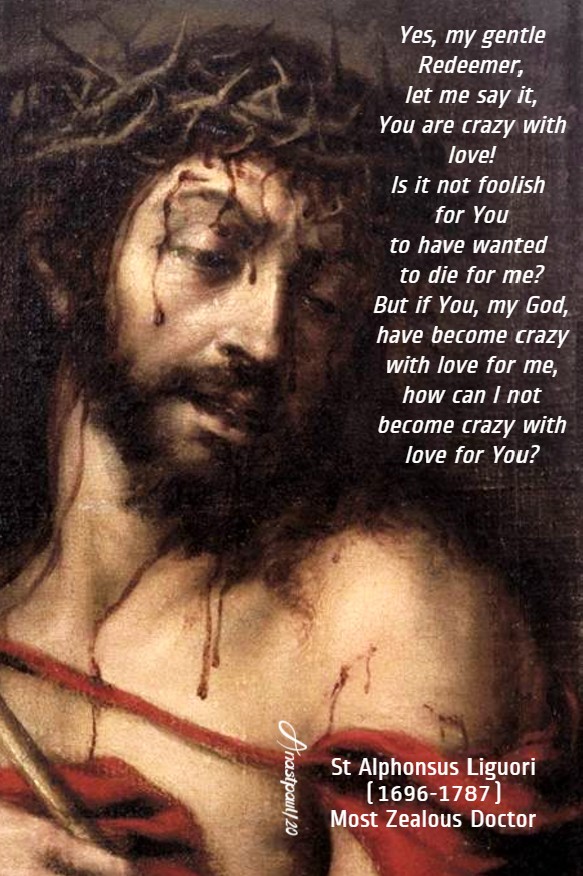
“Yes, my gentle Redeemer, let me say it, You are crazy with love! Is it not foolish for You to have wanted to die for me? But if You, my God, have become crazy with love for me, how can I not become crazy with love for You?”
St Alphonsus Liguori (1696-1787) Most Zealous Doctor
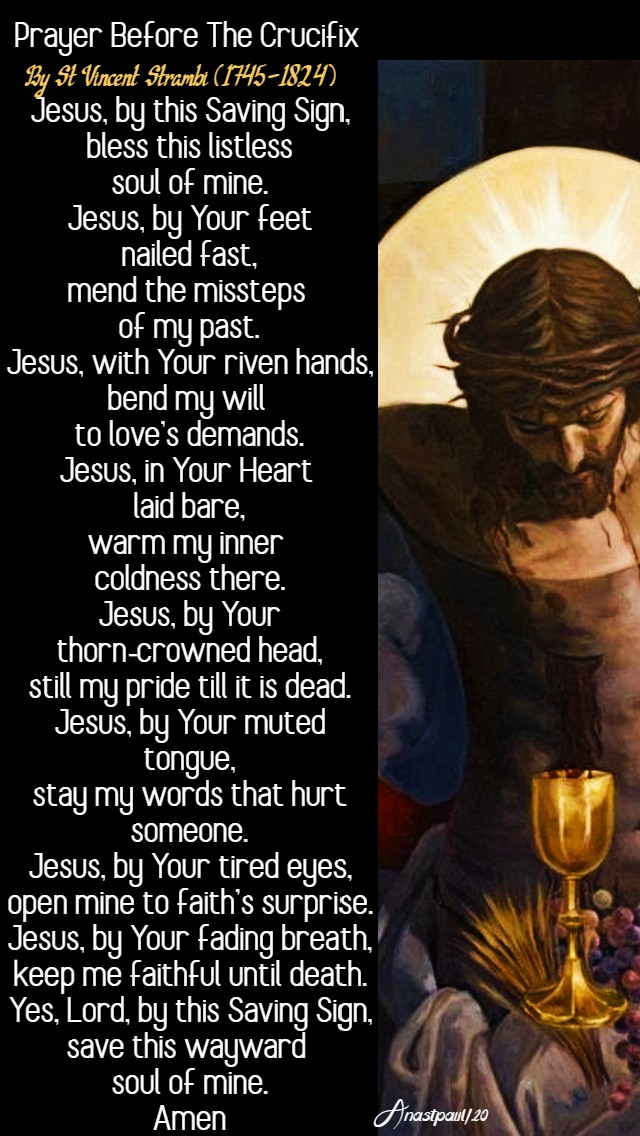
Prayer Before The Crucifix – The Holy Sacrifice of the Mass By St Vincent Strambi (1745-1824)
Jesus, by this Saving Sign, bless this listless soul of mine. Jesus, by Your feet nailed fast, mend the missteps of my past. Jesus, with Your riven hands, bend my will to love’s demands. Jesus, in Your Heart laid bare, warm my inner coldness there. Jesus, by Your thorn-crowned head, still my pride till it is dead. Jesus, by Your muted tongue, stay my words that hurt someone. Jesus, by Your tired eyes, open mine to faith’s surprise. Jesus, by Your fading breath, keep me faithful until death. Yes, Lord, by this Saving Sign, save this wayward soul of mine. Amen
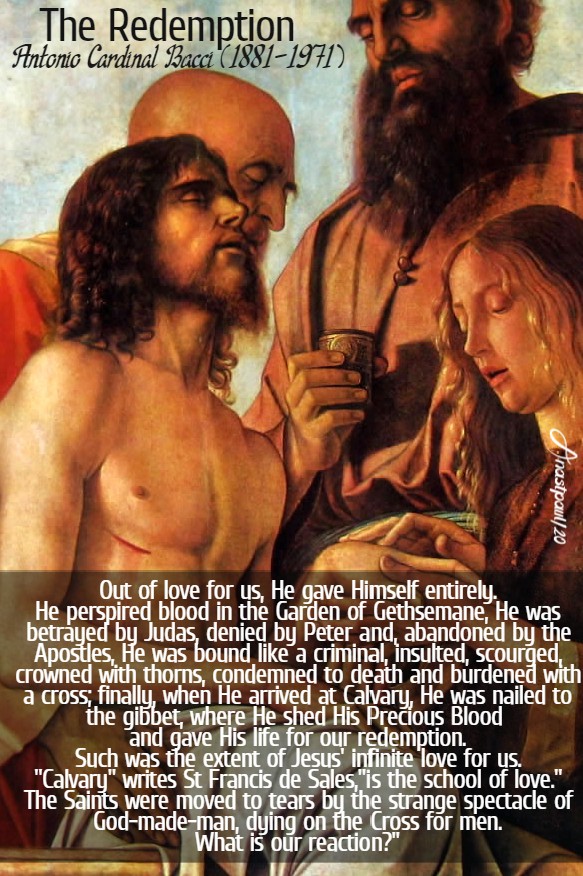
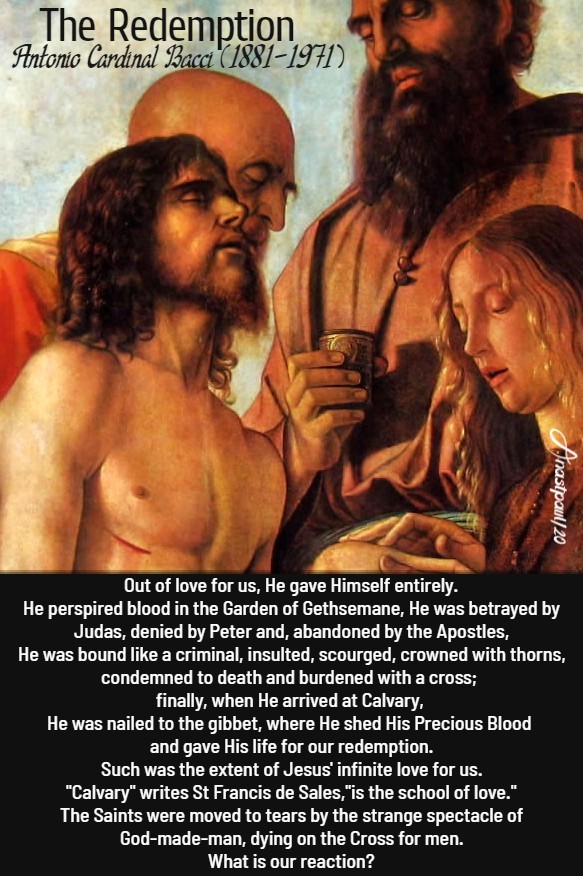
“He perspired blood in the Garden of Gethsemane, He was betrayed by Judas, denied by Peter and, abandoned by the Apostles, He was bound like a criminal, insulted, scourged, crowned with thorns, condemned to death and burdened with a cross; finally, when He arrived at Calvary, He was nailed to the gibbet, where He shed His Precious Blood and gave His life for our redemption. Such was the extent of Jesus’ infinite love for us. “Calvary” writes St Francis de Sales,“is the school of love.” The Saints were moved to tears by the strange spectacle of God-made-man, dying on the Cross for men. What is our reaction?”
Thought for the Day – 20 October – Meditations with Antonio Cardinal Bacci (1881-1971)
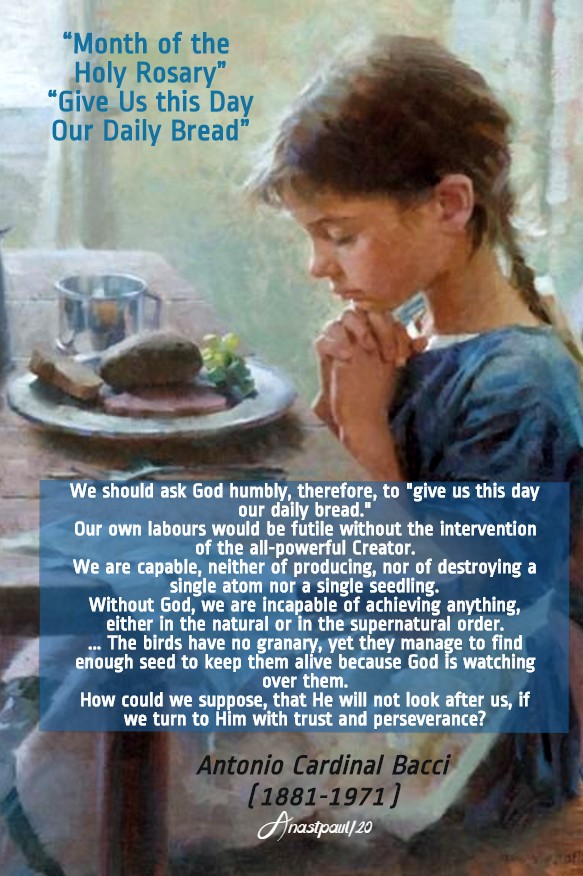
“Month of the Holy Rosary” “Give Us this Day Our Daily Bread”
“In the second part of the Lord’s Prayer, we ask the universal Father, on behalf of ourselves and of our brethren, for all things necessary for soul and body. Since we have already paid homage to God, our Creator and our Redeemer and, have prayed for the triumph of His kingdom and for the accomplishment of His will in Heaven and on earth, Our Lord does not forbid us to think now of ourselves and to pray for our own needs. “Give us this day our daily bread,” we ask, intending to pray, both for our spiritual and material requirements.
We should not delude ourselves into imagining that it is we who produce the fruits of the earth. A grain of wheat dies beneath the soil but God has infused into it, a mysterious force as a result of which, in dying, it generates new life.
The moisture of the soil, the warmth of the air and the light of the sun combine to develop this mysterious life-force, which produces the green stalk and then the flaxen ear of corn which provides us with bread. It is God Who has given this vital power to this tiny seed, as well as to all the other seeds of the soil. It is He Who has endowed the soil with the nutritive elements from which the seeds draw life and it is He, Who sends the dew, the rain and the sunshine, which cause the flowers to blossom and the plants to bear fruit.
We should ask God humbly, therefore, to “give us this day our daily bread.” Our own labours would be futile without the intervention of the all-powerful Creator. We are capable, neither of producing, nor of destroying a single atom nor a single seedling. Without God, we are incapable of achieving anything, either inthe natural or in the supernatural order. Therefore, we must ask Him to provide us with what we need. He is supremely good and loves us very much. His Providence will not leave us in want, even if we are often obliged to work hard in co-operation with Him to procure the necessaries of life. The birds have no granary, yet they manage to find enough seed to keep them alive because God is watching over them. How could we suppose, that He will not look after us, if we turn to Him with trust and perseverance?”
Thought for the Day – 18 September – Meditations with Antonio Cardinal Bacci (1881-1971)
Filial and Servile Fear
“We should not be afraid of God because He is our greatest benefactor and loves us infinitely. When we are lost, He searches for us as a loving father would search for a wandering son. Because they think only of the majesty and justice of God, some people keep themselves at a distance from Him, as Adam did, after he had sinned. They forget that the Lord told Adam, the sinner, of the coming of the pardoning Redeemer (Gen 3:9). Bossuet truly observes, that “after the curse which came upon men through sin, there has always remained, in their hearts, a certain dread of the supernatural, which prevents them from approaching God with confidence.” Jansenism increased this fear, emphasising the justice and majesty of God, rather, than the infinite love of Jesus and the beauty of His teaching.
Some writers compare our souls with the divine majesty and justice, in order to stress our unworthiness but, they forget, that Jesus is “Meek and humble of heart,” that He forgave the penitent woman, the good thief and the adulteress and, had kind words for the lost sheep and the prodigal son. They never think of the wonderful words of the beloved disciple: “God is love” (1 Jn 4:16).
This false fear of God, dries up our piety and lessens our trust in His mercy. It can lead to moroseness, to scrupulosity and to discouragement.
We should avoid this excessive fear which separates us from God. Even though we are sinful and unworthy, we should remember, that God is our loving Father, Who is always ready to help us and to grant us forgiveness. We should recall, moreover, that out of love for us, He did not spare His own Son, (Cf Rom 8:32) but gave Him to us for our redemption. If Jesus shed His blood and died for us, how can we doubt His love?!“
Thought for the Day – 17 September – Meditations with Antonio Cardinal Bacci (1881-1971)
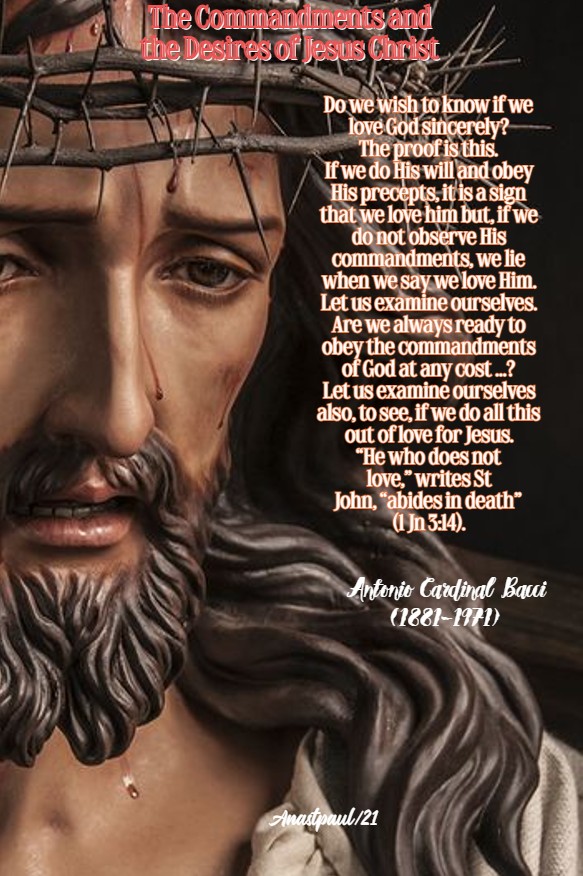
The Commandments and the Desires of Jesus Christ
“Sanctity consists, in doing the will of God, in all things. We can become perfect by doing His will, from the motive of love alone. “He who has my commandments and keeps them,” said Jesus, “he it is who loves me. But he who loves me, will be loved by my Father and I will love him and manifest myself to him. If anyone love me, he will keep my word and my Father will love him and we will come to him and make our abode with him” (Jn 14:21-23).
Do we wish to know if we love God sincerely? The proof is this. If we do His will and obey His precepts, it is a sign that we love him but, if we do not observe His commandments, we lie when we say we love Him. We must, therefore, show our love, by observing in all things, the commandments of God. He gave us these commandments our of love for us, so that, by observing them, we should be saved and should be happy with Him. Even as He has given them out of love, we should observe them out of love, for He is our supreme and only good. Just as Jesus lovingly did the will of His heavenly Father, from Bethlehem to Nazareth, from Nazareth to Calvary and from Calvary to Heaven, so we should follow in His footsteps, by doing the adorable will of God in all the circumstances of our lives, both joyful and sorrowful. But, we must obey the divine will out of love, that is, because we love God whole-heartedly and above all created things.
Everything is easy to him who loves. “When we love him who gives us orders,” says St Francis de Sales, “even the hardest of actions becomes easy.”
Let us examine ourselves. Are we always ready to obey the commandments of God at any cost and would we die rather than offend Him? Let us examine ourselves also, to see, if we do all this out of love for Jesus. “He who does not love,” writes St John, “abides in death” (1 Jn 3:14).”
Quote/s of the Day – 17 September – The Memorial of St Robert Bellarmine SJ (1542-1621) Doctor of the Church
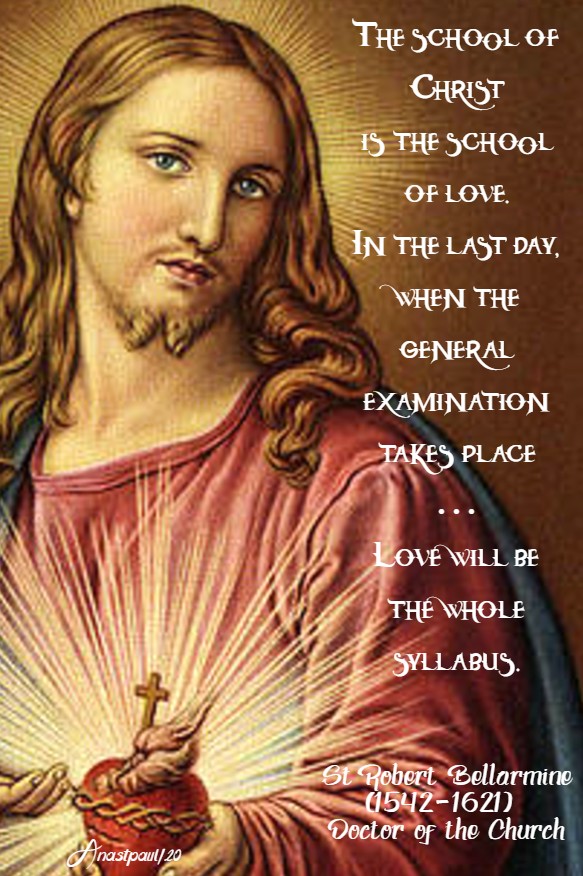
“The school of Christ is the school of love. In the last day, when the general examination takes place … Love will be the whole syllabus.”
“What is easier, sweeter, more pleasant, than to love goodness, beauty and love, the fullness of which, YOU ARE, O Lord, my God?”
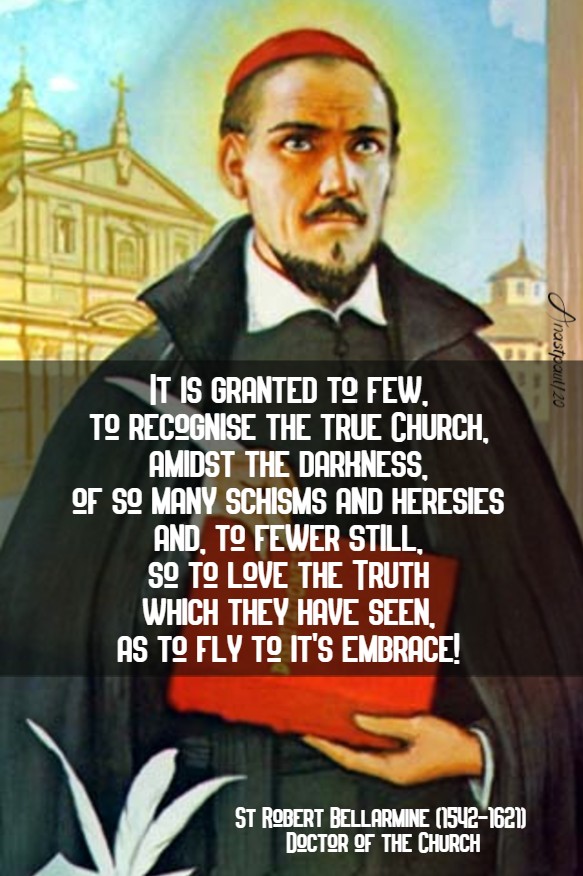
“It is granted to few, to recognise the true Church, amidst the darkness, of so many schisms and heresies and, to fewer still, so to love the Truth which they have seen, as to fly to it’s embrace!”
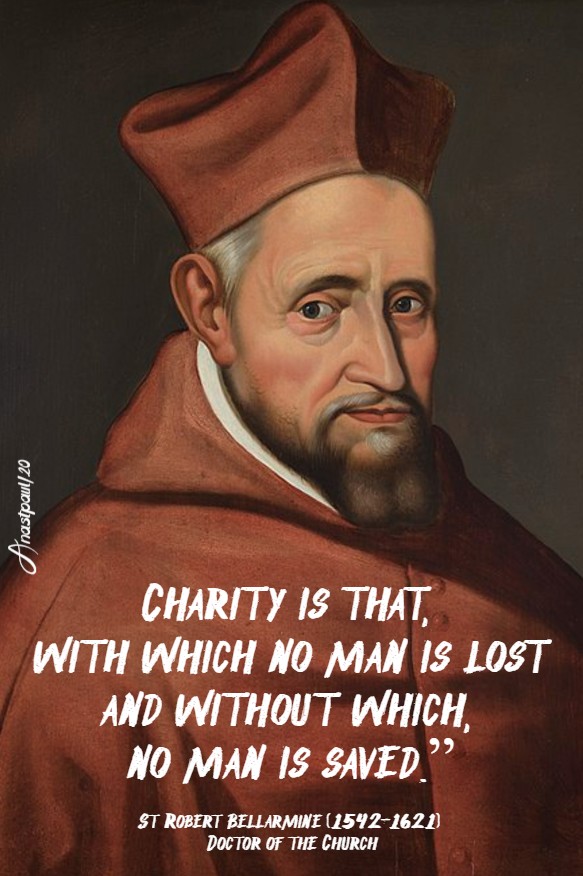
“Charity is that, with which no man is lost and without which, no man is saved.”
“It seems unbelievable that a man should perish in whose favour Christ said to His Mother: ‘Behold thy son’, provided that he has not turned a deaf ear to the words, which Christ addressed to him: ‘Behold thy Mother.’”
St Robert Bellarmine (1542-1621) Doctor of the Church
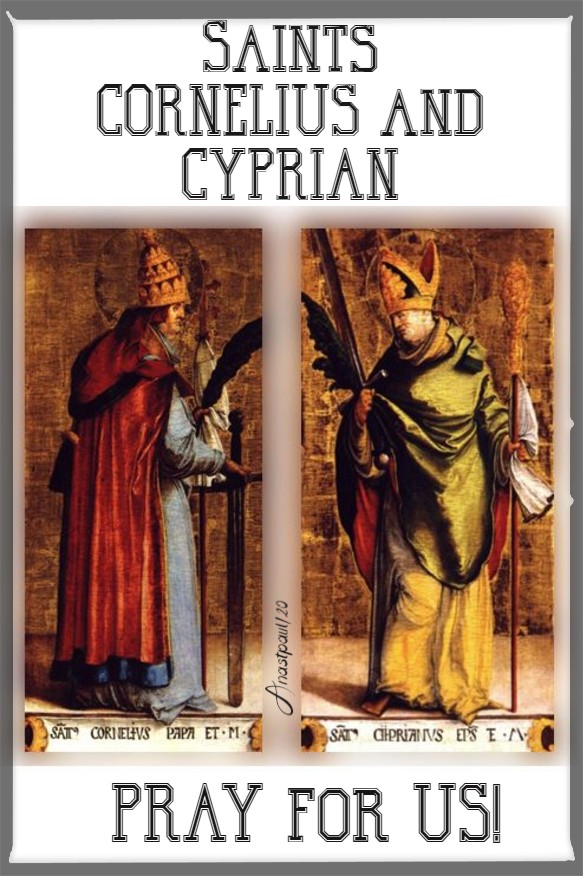
One Minute Reflection – 16 September – Wednesday of the Twenty Fourth week in Ordinary Time, Readings: 1 Corinthians 12:31–13:13, Psalms 33:2-3, 4-5, 12 and 22, Luke 7:31-35 and the Memorial of Sts Cornelius & Cyprian
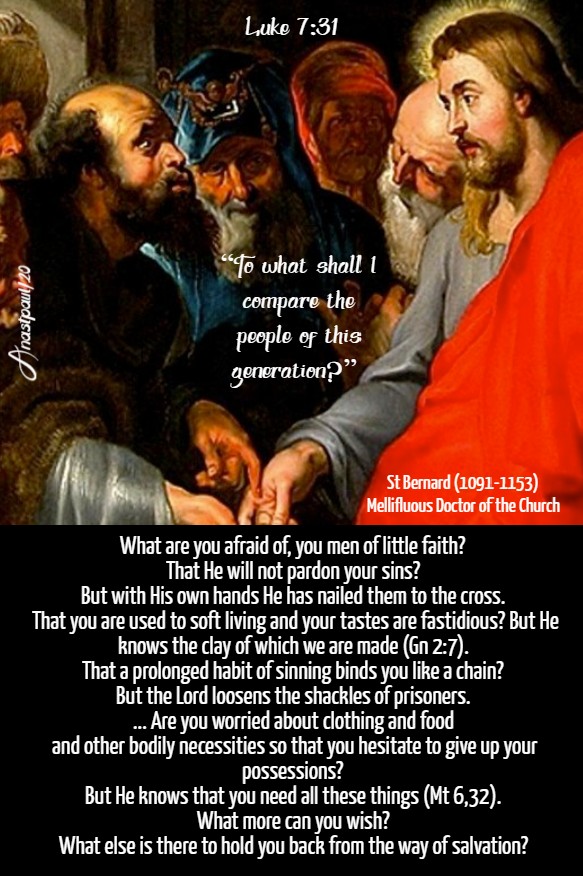
“To what shall I compare the people of this generation?” … Luke 7:31
REFLECTION – “The apostle Paul says that there are some, who have no knowledge of God (1 Co 15:34). My opinion is that all those who lack knowledge of God, are those, who refuse to turn to Him. I am certain, that they refuse because they imagine this kindly disposed God, to be harsh and severe, this merciful God to be callous and inflexible, this lovable God to be cruel and oppressive. So it is, that wickedness plays false to itself, setting up for itself an image that does not represent God as He truly is.
What are you afraid of, you men of little faith? That He will not pardon your sins? But with His own hands He has nailed them to the cross. That you are used to soft living and your tastes are fastidious? But He knows the clay of which we are made (Gn 2:7). That a prolonged habit of sinning binds you like a chain? But the Lord loosens the shackles of prisoners. Or perhaps that angered by the enormity and frequency of your sins, He is slow to extend a helping hand? But where sin abounded, grace became superabundant (Rom 5,20). Are you worried about clothing and food and other bodily necessities so that you hesitate to give up your possessions? But He knows that you need all these things (Mt 6,32). What more can you wish? What else is there to hold you back from the way of salvation? This is what I say – you do not know God, yet you will not believe our words. I should like you to believe those whom experience has taught.” … St Bernard (1091-1153) Mellifluous Doctor of the Church – Commentary on the Song of Songs, Sermon 38
PRAYER – Look upon us Lord, Creator and Ruler of the whole world, give us the grace to serve You with all our hearts, to take up our cross and follow You, that we may come to know the power of Your love and the forgiveness which You give and You teach. Grant that by the intercession of Sts Cornelius and Cyprian, we may attain the glory of Your kingdom and see You face to face. We make our prayer through Christ our Lord with the Holy Spirit, one God forever, amen.
Thought for the Day – 13 September – Meditations with Antonio Cardinal Bacci (1881-1971)
The Redemption
“The Incarnation of God, was sufficient to have saved us. It would have been enough for God made man, to have offered Himself to God, for our redemption in a single act of love. Every act of Jesus, the God-Man, had infinite value and was, therefore, sufficient to be offered to the Father as an infinite satisfaction for all our sins.
But, if Jesus had desired to show more clearly His great love for us, He could have offered Hi sufferings as a child in the cold cave at Bethlehem, when He lay whimpering on a wretched straw bed. He could have offered the sorrow of His exile in Egypt, He could have offered a single drop of His Precious Blood , during the ceremony of the circumcision. He could have offered the difficulties and privations of His simple working life at Nazareth, or the fatiguing exertions of His apostolic journeys. All these, would have been more than enough to have made amends to the divine Father for all the sins of humanity, to have ransomed us from the devil and to have restored to us, God’s grace and love. But in God, everything is infinite. His love has no limit. “Thou shalt love the Lord thy God, with thy whole heart,” He as commanded men “and with thy whole soul and with thy whole strength and with they whole mind and thy neighbour as thyself.” He, Himself, did infinitely more than this, however, Jesus was not satisfied merely to love us, His brothers by adoption, as He loved Himself but, He wished to love us “more than He loved Himself. Greater love than this no-one has,” He said, “that one lay down his life for his friends” (1 Jn 15:13). This was what he Himself did. Sinful though we are, He called us friends. “You are my friends” (Jn 15:14). Out of love for us, He gave Himself entirely. He perspired blood in the Garden of Gethsemane, He was betrayed by Judas, denied by Peter and, abandoned by the Apostles, He was bound like a criminal, insulted, scourged, crowned with thorns, condemned to death and burdened with a cross; finally, when He arrived at Calvary, He was nailed to the gibbet, where He shed His Precious Blood and gave His life for our redemption. Such was the extent of Jesus’ infinite love for us.
“Calvary” writes St Francis de Sales,“is the school of love.” The Saints were moved to tears by the strange spectacle of God-made-man, dying on the Cross for men. What is our reaction?“
Thought for the Day – 11 September – Meditations with Antonio Cardinal Bacci (1881-1971)
The Incarnation
“By means of the Incarnation, God comes to man so that man may return to God. God created man by an act of love to display and to diffuse, His infinite goodness. But this relationship of love was disrupted by sin. Love became fear, on the part of man and it became justice, on the part of God.
The love of God is infinite, however and cannot decrease. No sooner had man fallen, than God promised our first parents, that He Himself, would come to save them. As soon as man had lost the white robe of grace, the Lord mercifully promised that He would come to restore it. But how? He could have sent an Angel to lead erring man back to the fold and to teach him the way of virtue, which leads to Heaven. That would have been a great act of love and mercy. But, an Angel is a finite being, whereas, the love of God has no limit. For this reason, He was not satisfied to send an Angel.
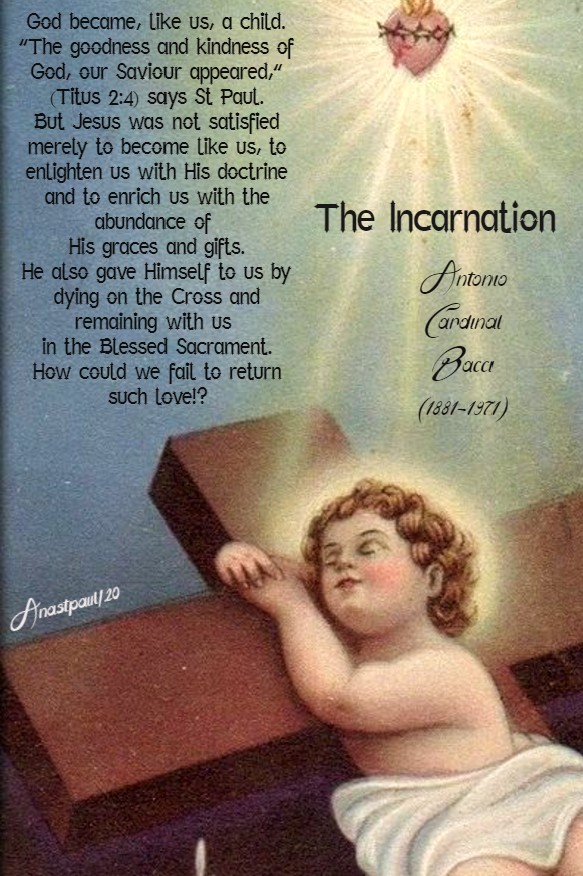
We can see, furthermore, another explanation of the great mystery of the Incarnation. God infinitely loved man, who was the work of His omnipotence. Precisely because He loved him, He wished to be loved by him in return. But because the spirit of man is united to matter, he does not see God, except through the works of His creation. He sees Him, as it were, “through a mirror in an obscure manner,” (1 Cor 13:12) and not face-to-face. He does not love God, therefore, as he would if he could see Him in all His beauty. He would need to see Him and to know Him better, before he could love Him more. So God made Himself small by becoming man. “Human wisdom often asks,” writes Bossuet, “why God came on earth.” To this I reply: “He came to be lobed by men.“ “God was great,” writes St Bernard, “so great as to demand to be adored. Now He has become small, so that He may be better loved.” God became, like us, a child. “The goodness and kindness of God, our Saviour appeared,” (Titus 2:4) says St Paul. But Jesus was not satisfied merely to become like us, to enlighten us with His doctrine and to enrich us with the abundance of His graces and gifts. He also gave Himself to us by dying on the Cross and remaining with us in the Blessed Sacrament. How could we fail to return such love!?“
Thought for the Day – 10 September – Meditations with Antonio Cardinal Bacci (1881-1971)
The Creation
“God is infinitely perfect in Himself and has, therefore, no need of creatures of His eternal happiness. He knows Himself fully and this act of knowing, is not transient but substantial and eternal. It is the perfct image of His own Essence, the Word which expressed His Divine Infinity.
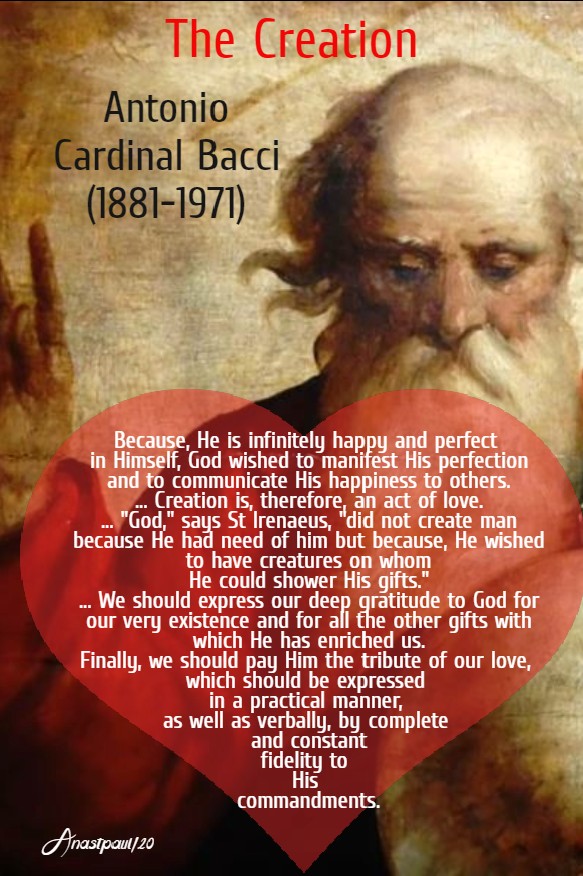
Knowing Himself in the infinite depths of His truth, beauty and goodness, God naturally loves Himself. This love, also substantial and external, is the Holy Spirit, Who proceeds, not only from the Father but also from the Word, since God loves Himself because He knows Himself perfectly. The happiness of God, as St Gregory Nazianzen writes, is not a solitary state of beatitude. He has within Himself, the Word, His consubstantial Son, in Whom is reflected the perfection of His nature and to Whom, He repeats from eternity: “You are my son; this day I have begotten you” (Ps 2:7). Moreover, in an act equally substantial and infinite, He pours forth His love, the Holy Spirit. Because, He is infinitely happy and perfect in Himself, God wished to manifest His perfection and to communicate His happiness to others. According to St Thomas Aquinas, the only reason why God has created, is to manifest His glory and to share His happiness. Creation is, therefore, an act of love. “I have loved thee with an everlasting love, therefore, have I drawn thee, taking pity on thee” (Jer 31:3). “God,” says St Irenaeus, “did not create man because He had need of him but because, He wished to have creatures on whom He could shower His gifts.” That is why Sacred Scripture tells us that “the Lord has made everything for His own ends” (Prov 16:4).
Turning over these reflections in our minds, we should make an act of profound humility before God and acknowledge that we are nothing without Him. We should express our deep gratitude to God for our very existence and for all the other gifts with which He has enriched us.
Finally, we should pay Him the tribute of our love, which should be expressed in a practical manner, as well as verbally, by complete and constant fidelity to His commandments.”
Our Morning Offering – 10 September – Thursday of the Twenty Third week in Ordinary Time, Readings: 1 Corinthians 8:1b-7, 11-13, Psalms 139:1-3, 13-14, 23-24, Luke 6:27-38
“If you love those who love you, what benefit is that to you? For even sinners love those who love them.”… Luke 6:32
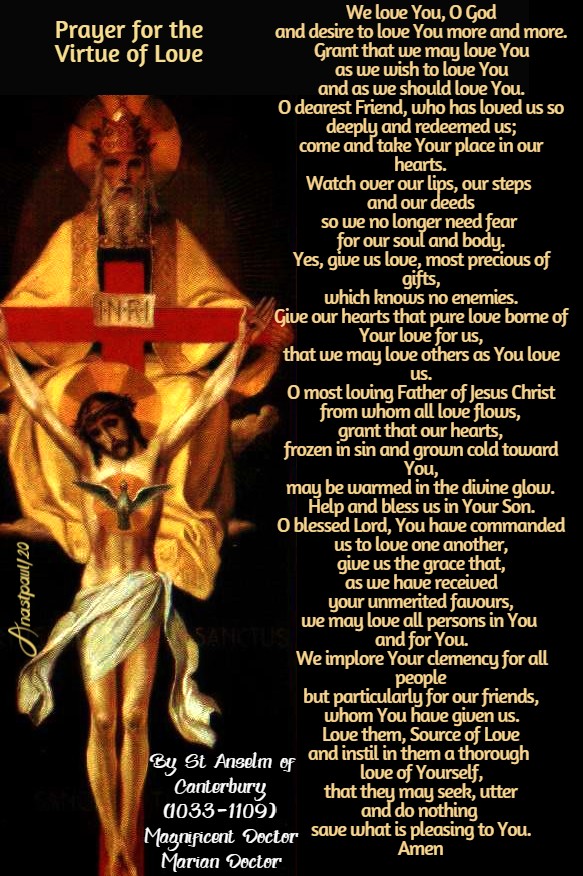
Prayer for the Virtue of Love By St Anselm of Canterbury (1033-1109) Doctor magnificus (Magnificent Doctor); Doctor Marianus (Marian Doctor)
We love You, O God and desire to love You more and more. Grant that we may love You as we wish to love You and as we should love You. O dearest Friend, who has loved us so deeply and redeemed us; come and take Your place in our hearts. Watch over our lips, our steps and our deeds so we no longer need fear for our soul and body. Yes, give us love, most precious of gifts, which knows no enemies. Give our hearts that pure love borne of Your love for us, that we may love others as You love us. O most loving Father of Jesus Christ from whom all love flows, grant that our hearts, frozen in sin and grown cold toward You, may be warmed in the divine glow. Help and bless us in Your Son. O blessed Lord, You have commanded us to love one another, give us the grace that, as we have received your unmerited favours, we may love all persons in You and for You. We implore Your clemency for all people but particularly for our friends, whom You have given us. Love them, Source of Love and instil in them a thorough love of Yourself, that they may seek, utter and do nothing save what is pleasing to You. Amen
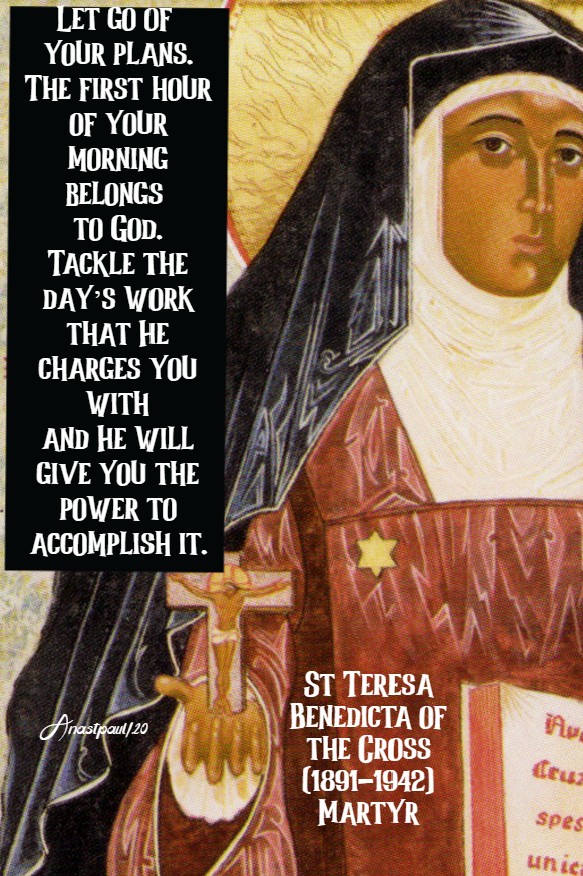
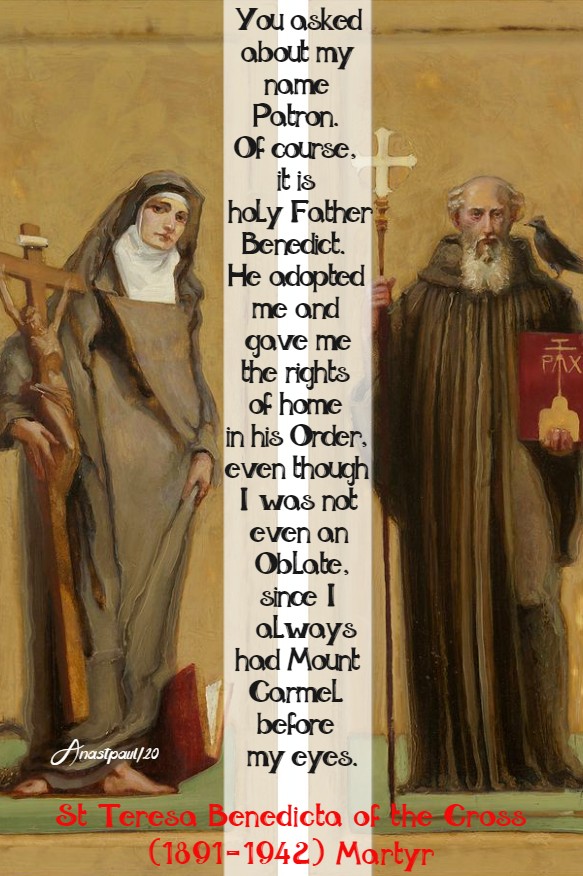
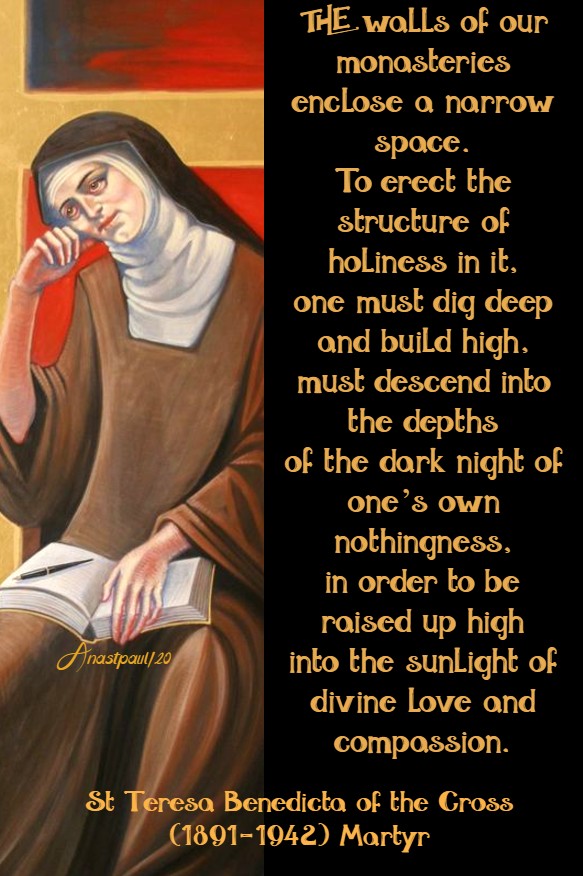
Quote/s of the Day – 9 August – The Memorial of St Teresa Benedicta of the Cross/Edith Stein (1891-1942) Martyr
“Let go of your plans. The first hour of your morning belongs to God. Tackle the day’s work that He charges you with and He will give you the power to accomplish it.”
“You asked about my name-patron. Of course, it is holy Father Benedict. He adopted me and gave me the rights of home in his Order, even though I was not even an Oblate, since I always had Mount Carmel before my eyes.”
“The walls of our monasteries enclose a narrow space. To erect the structure of holiness in it, one must dig deep and build high, must descend into the depths of the dark night of one’s own nothingness, in order to be raised up high into the sunlight of divine love and compassion.”
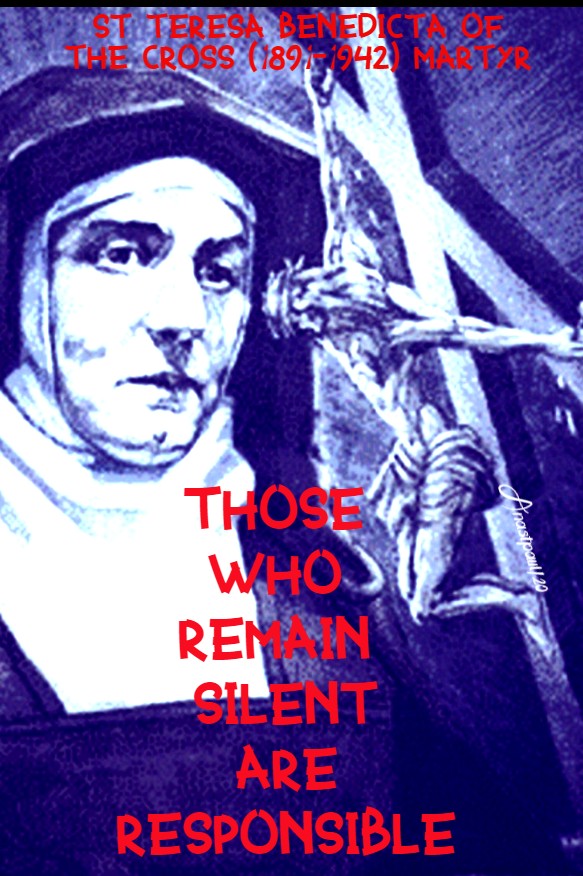
“Those who remain silent are responsible.”
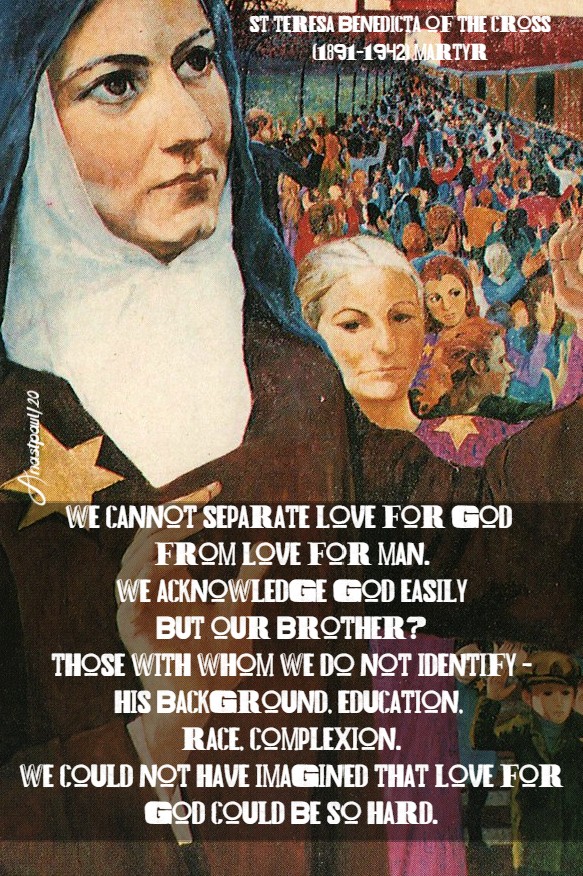
“We cannot separate love for God from love for man. We acknowledge God easily but our brother? Those with whom we do not identify – his background, education, race, complexion. We could not have imagined that love for God could be so hard.”
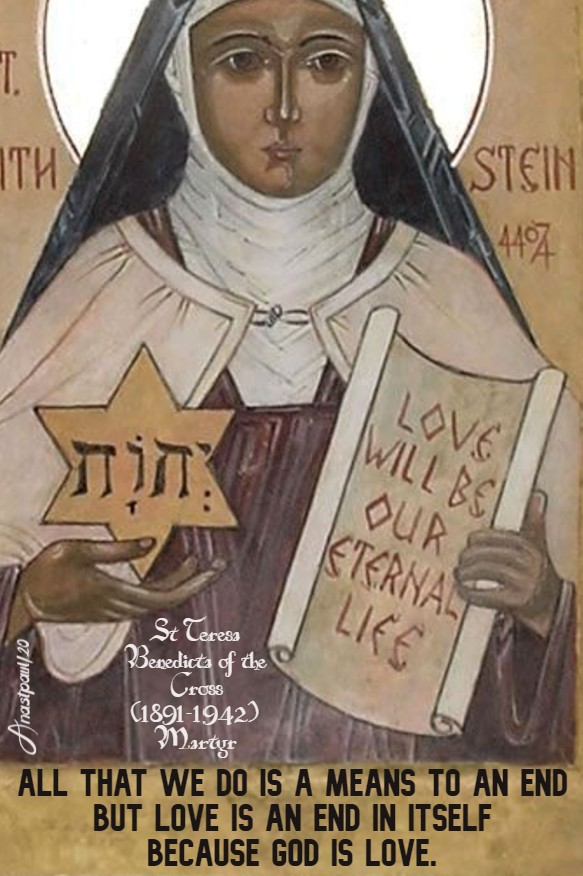
“All that we do is a means to an end but love is an end in itself because God is love.”
















 AnaStpaul
You must be logged in to post a comment.