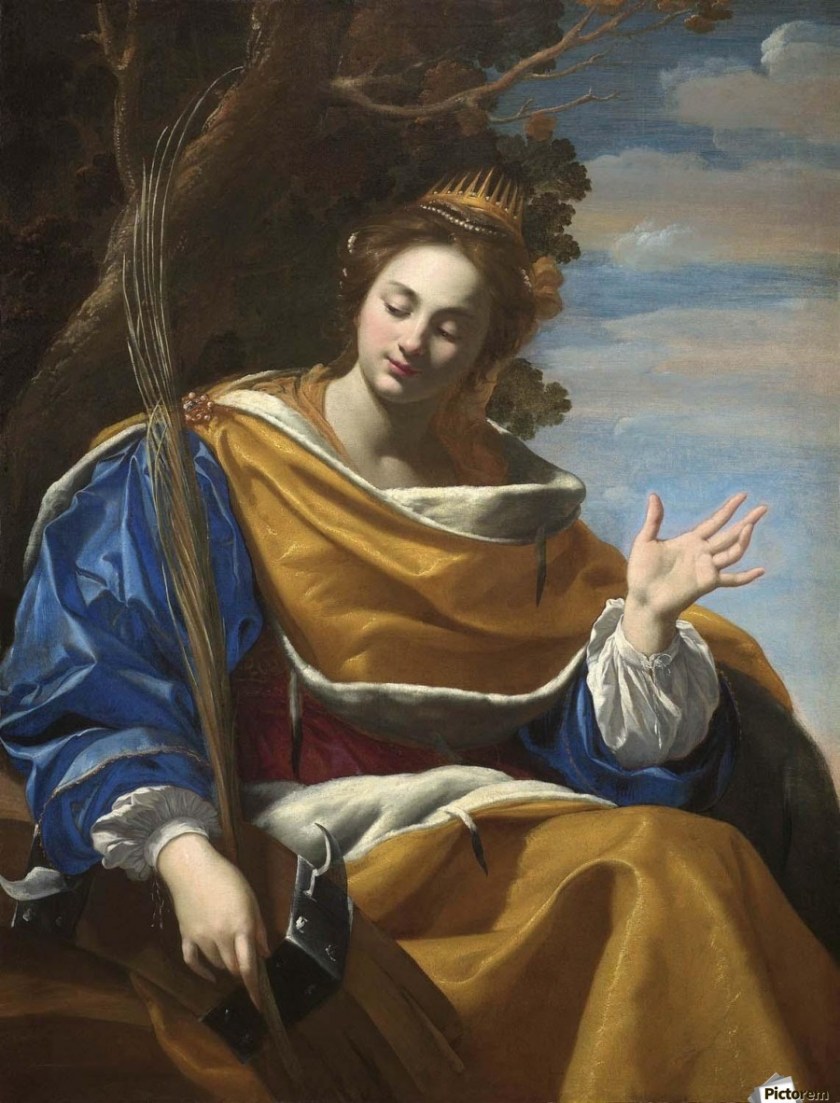
Saint of the Day – 25 November – St Catherine of Alexandria (Died c 305) Virgin and Martyr, Philosopher – One of the Fourteen Holy Helpers – Patronages: unmarried girls and women, apologists, craftsmen who work with a wheel (potters, spinners), archivists, dying people, educators, jurists, knife sharpeners, lawyers, librarians, libraries, mechanics, millers, milliners, hat-makers, nurses, philosophers, preachers, schoolchildren, secretaries, stenographers, students, tanners, theologians, haberdashers, wheelwrights, 6 Universities worldwide, 12 Cities, 2 Diocese. It is important to note that whilst much of St Catherine’s history is regarded as apocryphal (by historians), St Catherine, like many of the early Martyrs, did exist though the details and circumstances of her life are probably partly unknown.
According to the traditional narrative, Catherine was the daughter of Constus, the governor of Egyptian Alexandria during the reign of the emperor Maximian (286–305). From a young age, she devoted herself to study. A vision of the Madonna and Child persuaded her to become a Christian. When the persecutions began under Maxentius, she went to the emperor and rebuked him for his cruelty. The emperor summoned 50 of the best pagan philosophers and orators to dispute with her, hoping that they would refute her pro-Christian arguments but Catherine won the debate. Several of her adversaries, conquered by her eloquence, declared themselves Christians and were at once put to death.
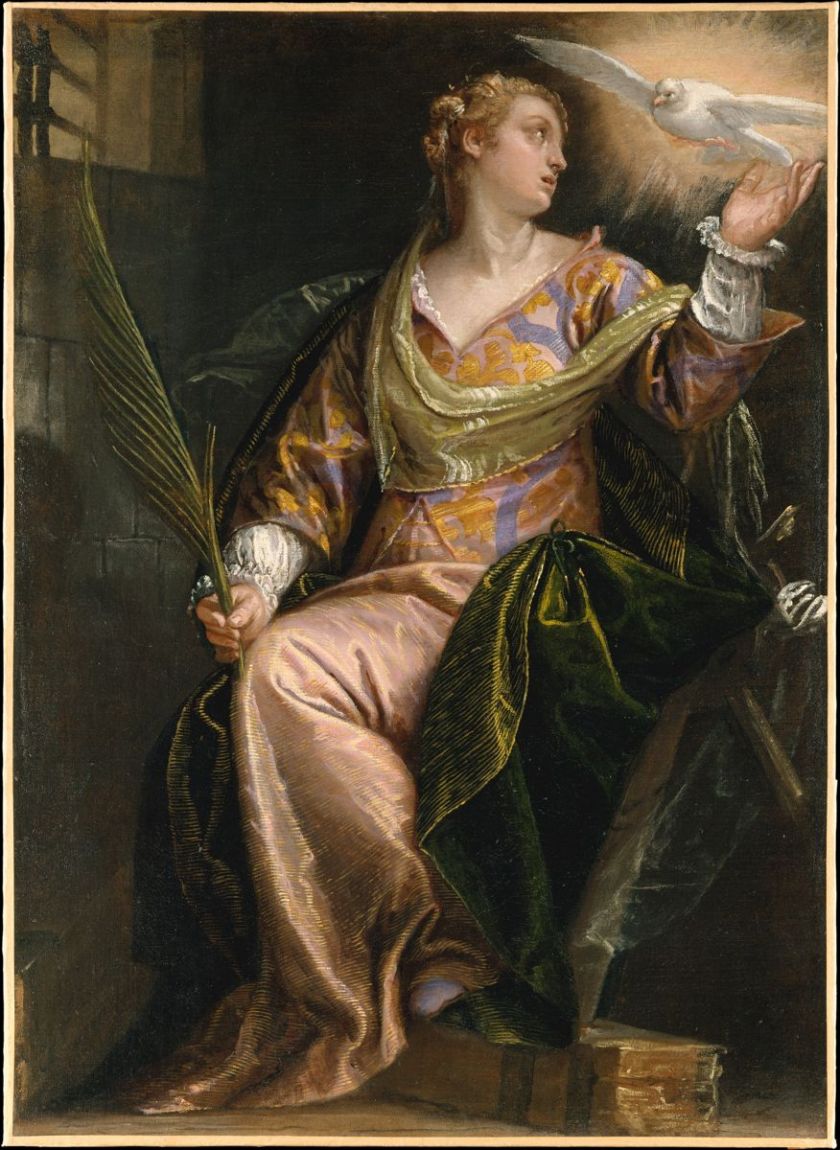
Catherine was then scourged and imprisoned. She was scourged so cruelly and for so long, that her whole body was covered with wounds, from which the blood flowed in streams. The spectators wept with pity but Catherine, strengthened by God, stood with her eyes raised to heaven, without giving a sign of suffering or fear. He ordered her to be imprisoned without food, so she would starve to death. During the confinement, angels tended her wounds with salve. Catherine was fed daily by a dove from Heaven and Christ also visited her, encouraging her to fight bravely and promised her the crown of everlasting glory.
During her imprisonment, over 200 people came to see her, including Maxentius’ wife, Valeria Maximilla – all converted to Christianity and were subsequently martyred. Twelve days later, when the dungeon was opened, a bright light and fragrant perfume filled it and Catherine came forth even more radiant and beautiful.
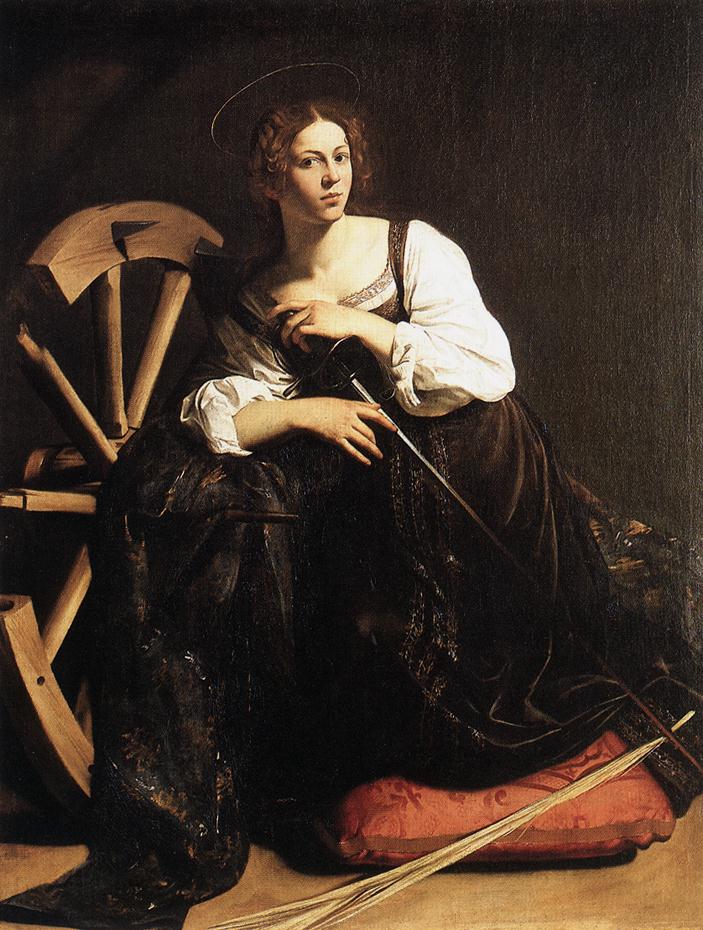
Upon the failure of Maxentius to make Catherine yield by way of torture, he tried to win the beautiful and wise princess over by proposing marriage. The saint refused, declaring that her spouse was Jesus Christ, to whom she had consecrated her virginity. The furious emperor condemned Catherine to death on a spiked breaking wheel but, at her touch, it shattered. Maxentius ordered her to be beheaded. Catherine herself ordered the execution to commence. A milk-like substance rather than blood flowed from her neck.
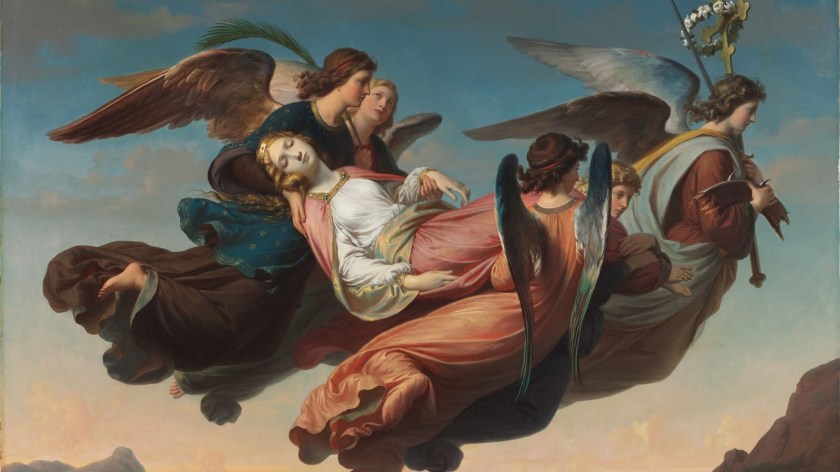
Angels transported her body to the highest mountain (now called Mount Saint Catherine) next to Mount Sinai, where God gave His Law. In 850, her incorrupt body was discovered by monks from the Sinai Monastery. The monks found on the surface of the granite on which her body lay, an impression of the form of her body. Her hair still growing and a constant stream of the most heavenly fragranced healing oil issuing from her body. This oil produced countless miracles.
Saint Catherine was one of the most important saints in the religious culture of the late Middle Ages and arguably considered the most important of the virgin martyrs, a group including Saint Agnes, Margaret of Antioch, Saint Barbara, Saint Lucy, Valerie of Limoges and many others. Her power as an intercessor was renowned and firmly established in most versions of her hagiography, in which she specifically entreats Christ at the moment of her death to answer the prayers of those who remember her martyrdom and invoke her name.
The pyrotechnic Catherine wheel, from which sparks fly off in all directions, took its name from the saint’s wheel of martyrdom.
Saint of the Day – 10 November – St Andrew Avellino CR (1521 – 1608) Theatine Priest (Cong of the Clerics Regular of Divine Providence founded by St Cajetan 1480-1547), Canon and Civil Lawyer, Reformer, Founder of many new Theatine houses, Preacher, Spiritual Advisor, Confessor – born in 1521 at Castronuovo, Sicily as Lorenzo (called Lancelotto by his mother) and died on 10 November 1608 at Naples, Italy of a stroke. Patronages – against apoplexy or strokes, against sudden death, for a holy death, Badolato, Naples, Sicily, Italy.
After a holy youth devoted to serious studies of philosophy and the humanities in Venice, Lancelot Avellino was ordained priest by the bishop of Naples. He was assigned to the chaplaincy of a community of nuns, sadly in need of reform, his intrepid courage and perseverance finally overcame many difficulties and regular observance was restored in the monastery. Certain irritated libertines, however, decided to do away with him and, waiting for him when he was about to leave a church, felled him with three sword thrusts. He lost much blood but his wounds healed perfectly without leaving any trace. The viceroy of Naples was ready to employ all his authority to punish the authors of this sacrilege but the holy priest, not desiring the death of sinners but rather their conversion and their salvation, declined to pursue them. One of them, however, died soon afterwards, assassinated by a man who wished to avenge a dishonour to his house.
He was still practising law, which he had studied in Naples, one day a slight untruth escaped him in the defence of a client and he conceived such regret for his fault that he vowed to practice law no longer. In 1556, at the age of thirty-six, he entered the Theatine Order, taking the name of Andrew out of love for the cross. After a pilgrimage to Rome to the tombs of the Apostles, he returned to Naples and was named master of novices in his Community.
After holding this office for ten years, he was elected superior. His zeal for strict religious discipline and for the purity of the clergy, as well as his deep humility and sincere piety, induced the General of his Order to entrust him with the foundation of two new Theatine houses, one at Milan and the other at Piacenza. By his efforts, many more Theatine houses rose up in various dioceses of Italy. As superior of some of these new foundations, he was so successful in converting sinners and heretics by his prudence in the direction of souls and by his eloquent preaching that numerous disciples thronged around him, eager to be under his spiritual guidance. One of the most noteworthy of his disciples was Lorenzo Scupoli, the author of The Spiritual Combat. St Charles Borromeo was an intimate friend of Avellino and sought his advice in the most important affairs of the Church. He also requested Avellino to establish a new Theatine house in Milan.
Though indefatigable in preaching, hearing confessions and visiting the sick, Avellino still had time to write some ascetical works. His letters were published in 1731 at Naples in two volumes and his other ascetical works were published three years later in five volumes.
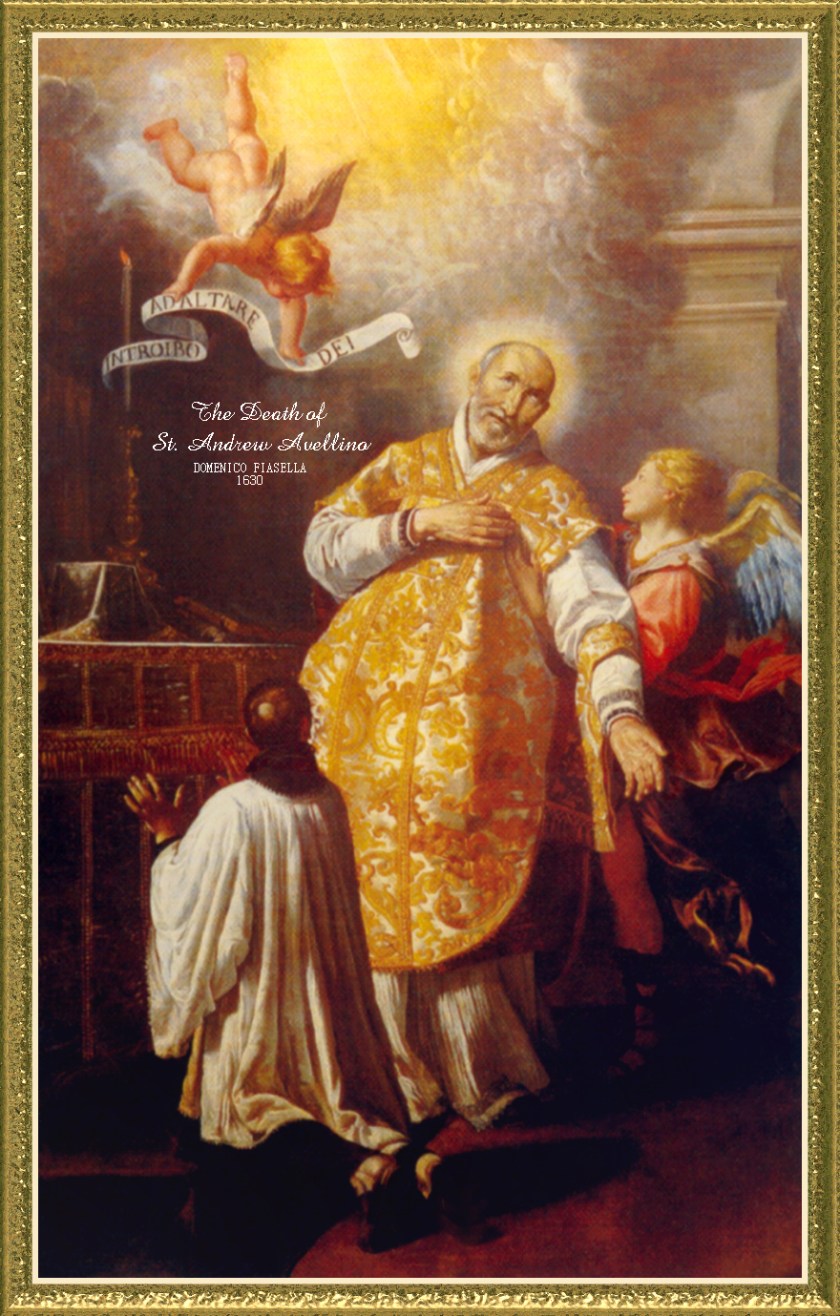
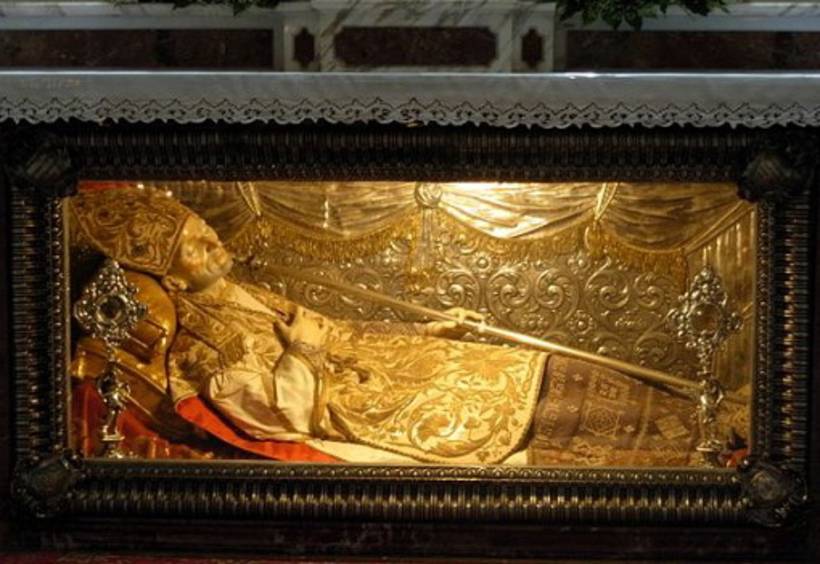
On 10 November 1608, when beginning the Holy Sacrifice of the Mass, he was stricken with apoplexy and, after receiving the Holy Viaticum, died at the age of 88. In 1624, only 16 years after his death, he was Beatified by Pope Urban VIII and in 1712 was Canonised by Pope Clement XI. His remains lie buried in the Church of St Paul at Naples.
Body of St Andrew Avellino at the Theatine Church of St Paul in Naples
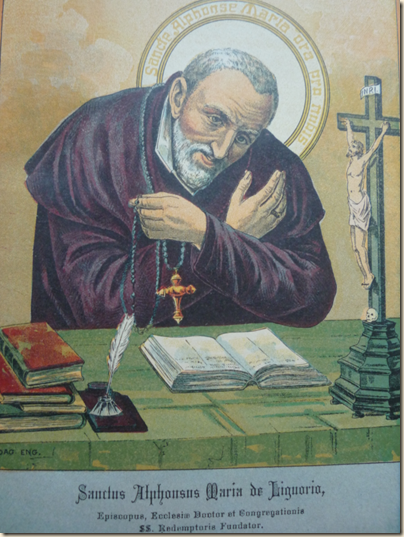
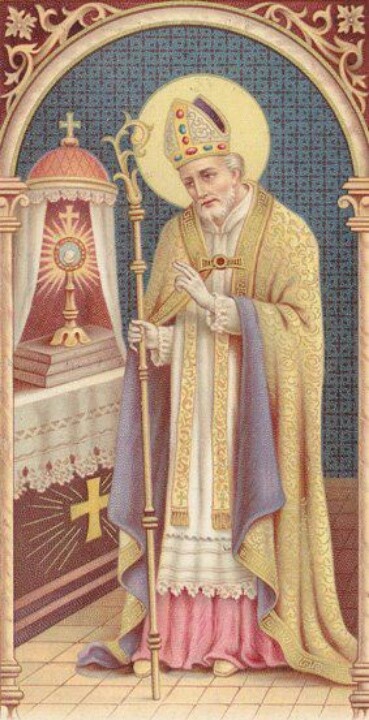
Saint of the Day – 1 August – St Alphonsus Maria de Liguori C.Ss.R. (1696-1787) – Confessor, Bishop, Doctor of the Church, Founder of the Redemptorists, Spiritual Writer, Composer, Musician, Artist, Poet, Lawyer, Scholastic Philosopher and Theologian. Patronages – against arthritis, against scrupulosity, of Confessors (given on 26 February 1950 by Pope Pius XII), final perseverance, moral theologians, moralists (1950 by Pope Pius XII), scrupulous people, vocations, Diocese of Acerra, Italy, Diocese of Agrigento, Italy,l Pagani, Italy, Sant’Agata de’ Goti, Italy.
The Roman Martyrology states of St Alphonsus today: “At Nocera-de-Pagani, Saint Alphonsus Maria de Liguori, Bishop of St Agatha of the Goths and Founder of the Congregation of the Most Holy Redeemer (the Redemptorists), distinguished by his zeal for the salvation of souls, by his writings, his preaching and his example.
He was inscribed on the Calendar of the Saints by Pope Gregory XVI in the year 1839, the 52nd after his happy death and , in 1871, was declared Doctor of the Universal Church by Pius IX, according to a decree of the Sacred Congregation of Rites.“
St Alphonsus was born of noble parents, near Naples, in 1696. His spiritual training was entrusted to the Fathers of the Oratory in that city and from his boyhood Alphonsus was known as a most devout Brother of the Little Oratory. At the early age of sixteen he was made doctor in law and he threw himself into this career with ardour and success.
A mistake, by which he lost an important cause, showed him the vanity of human fame and determined him to labour only for the glory of God. He entered the priesthood, devoting himself to the most neglected souls and to carry on this work he founded later the missionary Congregation of the Most Holy Redeemer, The Redemptorists.
At the age of sixty-six he became Bishop of St Agatha and undertook the reform of his diocese with the zeal of a Saint. He made a vow never to lose time and, though his life was spent in prayer and work, he composed a vast number of books, filled with such science, unction and wisdom that he has been declared one of the Doctors of the Church.
St Alphonsus wrote his first book at the age of forty-nine and in his eighty-third year had published about 100 volumes, when his director forbade him to write more. Very many of these books were written in the half-hours snatched from his labours as missionary, religious superior and Bishop, or in the midst of continual bodily and mental sufferings. With his left hand he would hold a piece of marble against his aching head while his right hand wrote.
Yet he counted no time wasted which was spent in charity. He did not refuse to hold a long correspondence with a simple soldier who asked his advice, or to play the harpsichord while he taught his novices to sing spiritual canticles. He lived in evil times, and met with many persecutions and disappointments.
For his last seven years he was prevented by constant sickness from offering the Adorable Sacrifice but he received Holy Communion daily and his love for Jesus Christ and his trust in Mary’s prayers sustained him to the end.
He died in 1787, in his ninety-first year.
For lots more details on St Alphonsus here: https://anastpaul.wordpress.com/2017/08/01/saint-of-the-day-1-august-st-alphonsus-maria-de-liguori-c-ss-r-doctor-of-the-church/
Saint of the Day – 11 July – St Benedict of Nursia OSB (c 480-547) Patron of Europe and Founder of Western Monasticism. Some of his many Patronages – of Europe, Against Poison, Against Witchcraft, Agriculture, Cavers, Civil Engineers, Coppersmiths, Dying People, Farmers, Fevers, Inflammatory Diseases, Kidney Disease, Monks, Religious Orders, Schoolchildren, Temptations.
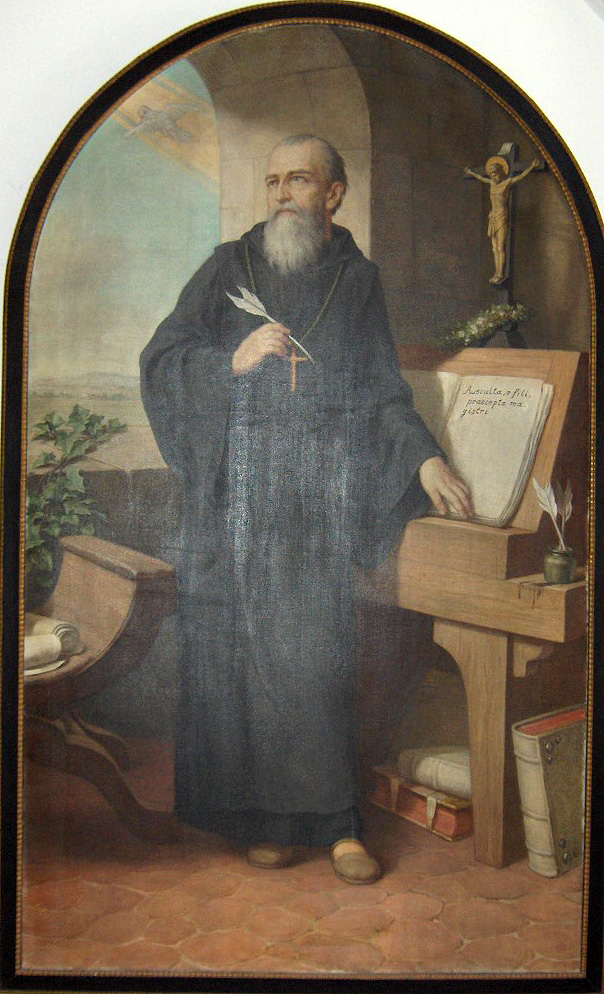
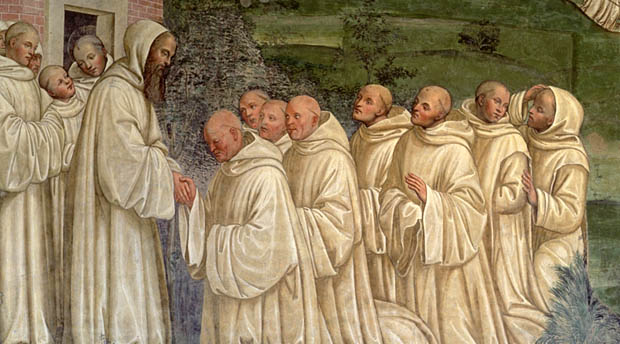
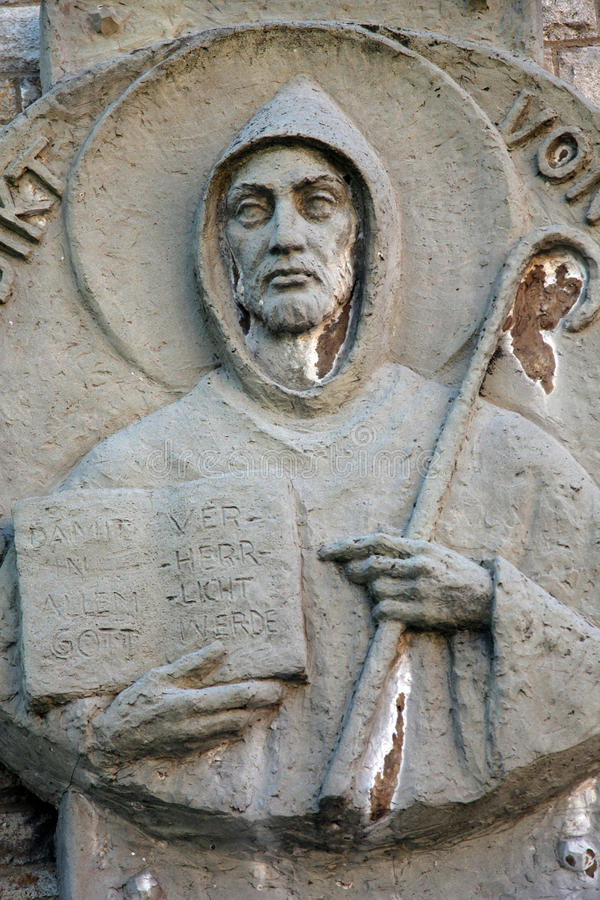
St Benedict founded twelve communities for monks about 40 miles east of Rome, before moving to Monte Cassino, in the mountains of southern Italy. St Benedict’s main achievement is his “Rule”, containing precepts for his monks. The unique spirit of balance, moderation and reasonableness influences it and this persuaded most religious communities founded throughout Middle Ages, to adopt it. As a result, the Rule of St Benedict became one of the most influential religious rules in western Christendom. For this reason, Benedict is often called the “founder” of western Christian Monasticism.
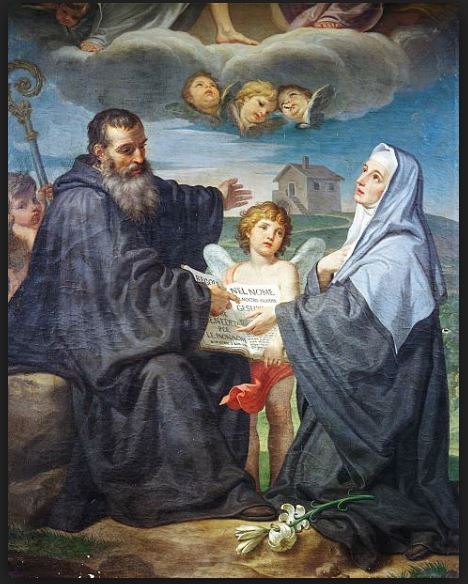
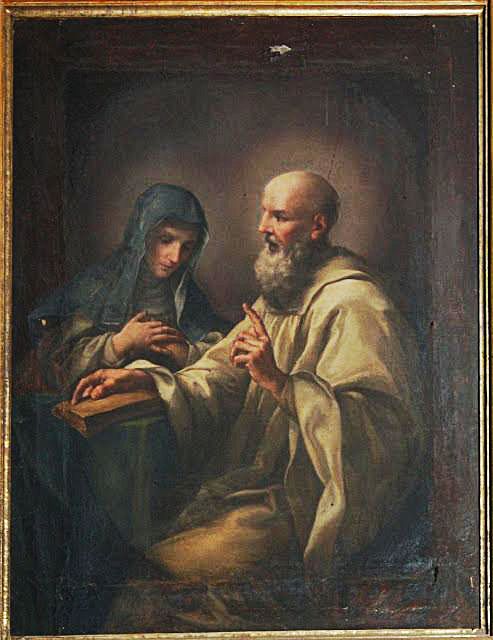
St Benedict is the twin brother of St Scholastica and is considered patron of many things. He was born in Nursia, Italy and educated in Rome.
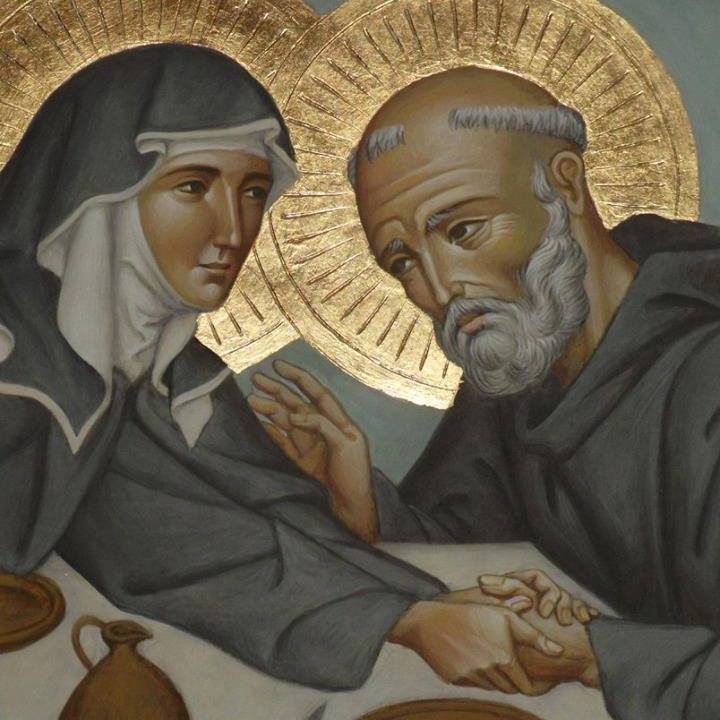
St Benedict and hisd twin sister, St Scholastica
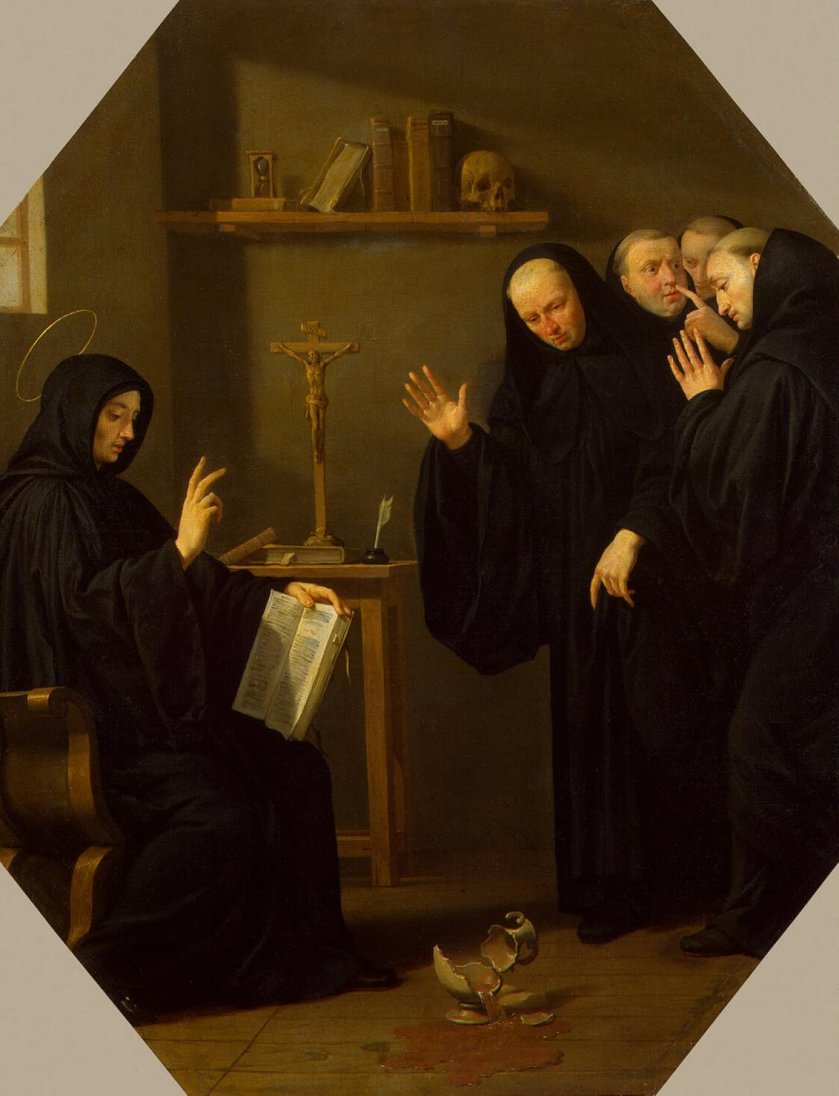
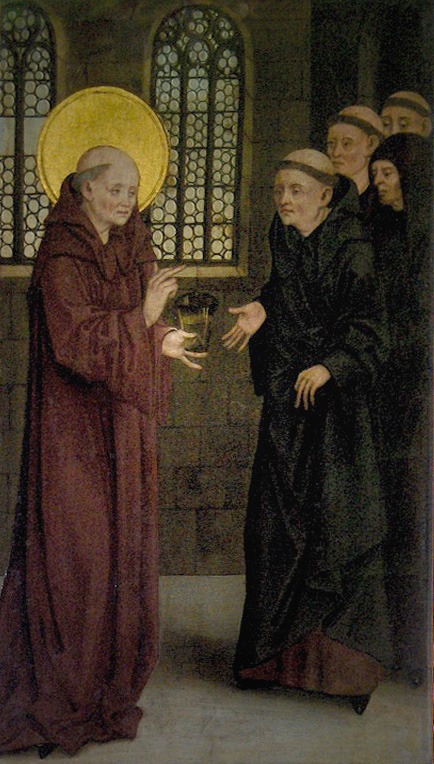
He was repelled by the vices of the city and around 500, fled to Enfide – thirty miles away. He decided to live the life of a hermit and lived in a cave for three years. Despite Benedict’s desire for solitude, his holiness became known and he was asked to be the Abbot by a community of monks at Vicovaro. He accepted but when the monks resisted his strict rule and tried to poison him, he returned to Subiaco and became a centre of spirituality and learning.
St Benedict and the Cup of Poison
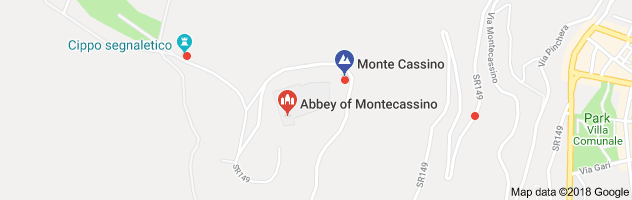
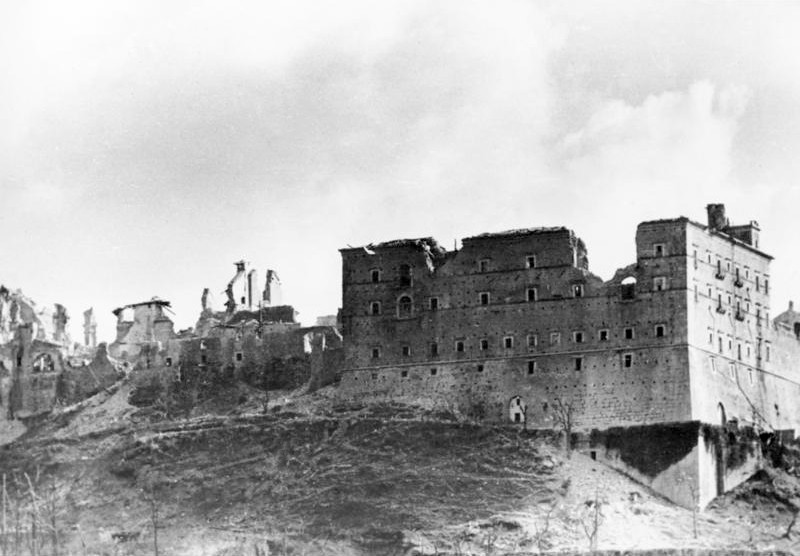
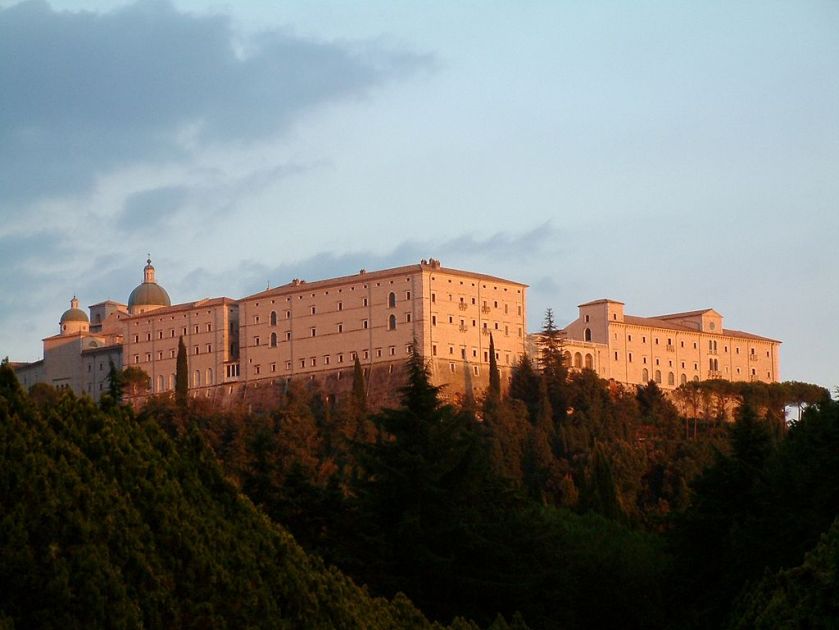
He eventually moved back to Monte Cassino and destroyed a temple to Apollo on its crest and brought the people of the neighbouring area back to Christianity. In 530 he began to build the monastery that was to be the birthplace of western monasticism.
Monte Cassino in ruins after Allied bombing in February 1944.Rebuilt Abbey
Soon, disciples again flocked to him as his reputation for holiness, wisdom and miracles spread far and wide. It wasn’t long and he organised his monks into a single monastic community and wrote his official Rule, prescribing common sense, a life of moderate asceticism, prayer, study, work and community under one superior. It stressed obedience, stability, zeal and had the Divine Office as the centre of monastic life. While ruling his monks, most of whom – including Benedict, were not ordained, he counselled rulers and Popes and ministered to the poor and destitute. He died at Monte Cassino on 21 March 547 and was named patron protector of Europe by Pope Paul VI in 1964. The Universal Church celebrates his feast day today.
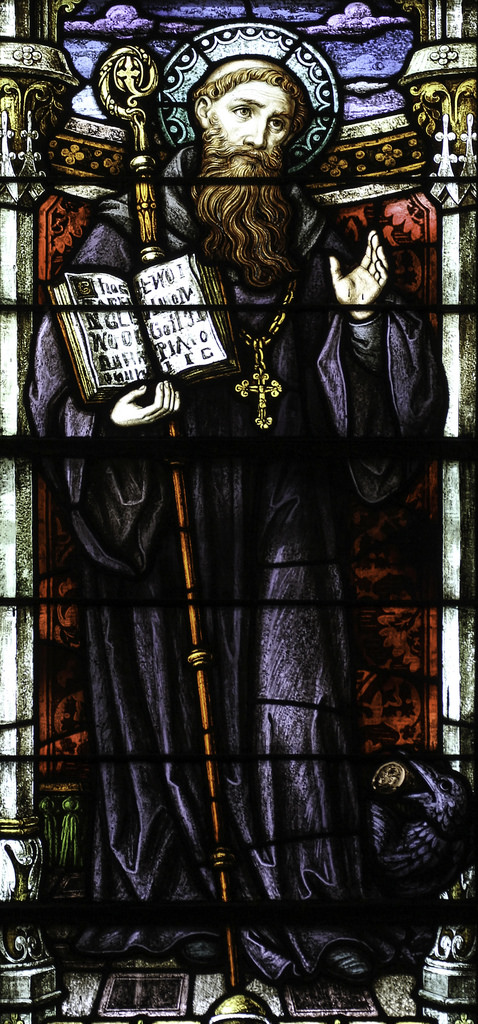
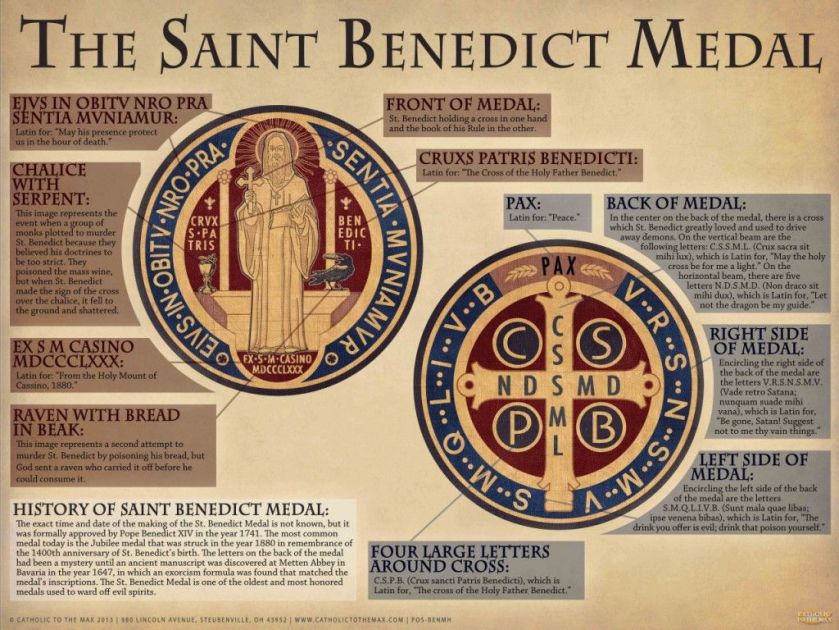
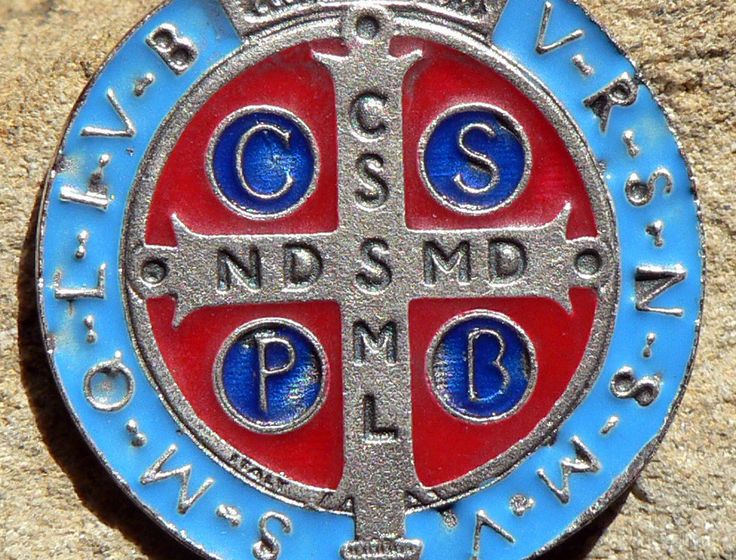
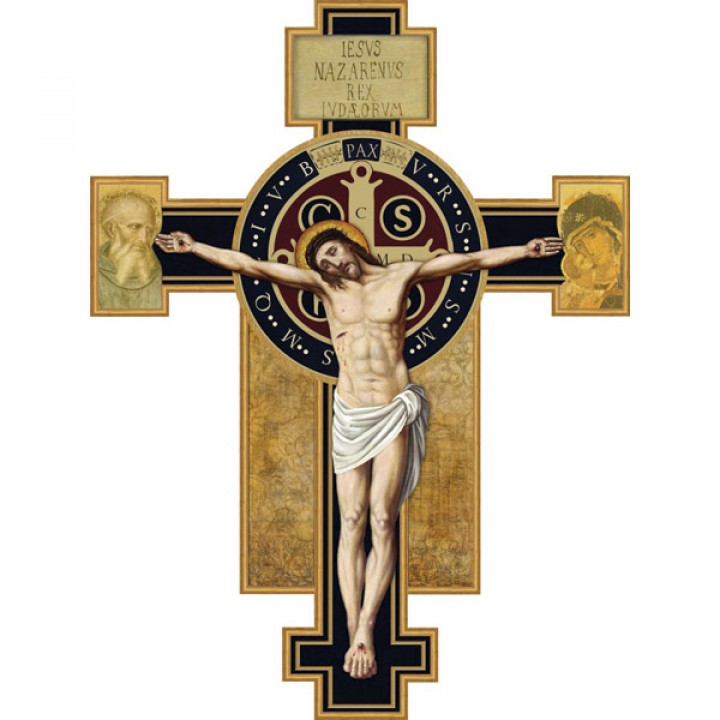
The St Benedict medal is very popular among Christians to this day and are hung above doors and windows, for protection against evil. It is believed that evil cannot enter your house if you protect every opening with a St Benedict medal and Crucifix. The medal has an image of St Benedict, holding the Holy Rule in his left hand and a cross in his right. There is a raven on one side of him, with a cup on the other side. Around the medal’s outer margin are the words “Eius in obitu nostro praesentia muniamur” – “May we, at our death, be fortified by His presence”. The other side of the medal has a cross with the initials CSSML on the vertical bar which signify “Crux Sacra Sit Mihi Lux”“May the Holy Cross be my light” and on the horizontal bar are the initials NDSMD which stand for “Non Draco Sit Mihi Dux”“Let not the dragon be my overlord”. The initials CSPB stand for “Crux Sancti Patris Benedicti”“The Cross of the Holy Father Benedict” and are located on the interior angles of the cross. Either the inscription “PAX” Peace or the Christogram “HIS” may be found at the top of the cross in most cases. Around the medal’s margin on this side are the initials VRSNSMV which stand for “Vade Retro Satana, Nonquam Suade Mihi Vana” ”Begone Satan, do not suggest to me thy vanities” then a space followed by the initials SMQLIVB which signify “Sunt Mala Quae Libas, Ipse Venena Bibas”“Evil are the things thou profferest, drink thou thy own poison”.
The Medal of St Benedict can serve as a constant reminder of the need for us to take up our cross daily and “follow the true King, Christ our Lord,” and thus learn “to share in his heavenly kingdom,” as St. Benedict urges us in the Prologue of his Rule.
More on St Benedict, his Rule and the Medal here: https://anastpaul.wordpress.com/2017/07/11/saint-of-the-day-11-july-st-benedict-of-nursia-o-s-b-abbot-patron-of-europe-patronus-europae/
Saint of the Day – 9 April – St Liborius of Le Mans (early 4th Century – 397) Bishop, Confessor, Reformer, Evangeliser and Shepherd of souls, Builder of Churches and Monasteries. Patronages – abdominal pains, against urinary tract diseases, kidney stones or gall stones, against colic, against fever/general illness, of a Holy death, Archdiocese of Paderborn, Germany, City of Paderborn, Germany, Paderborn Cathedral.
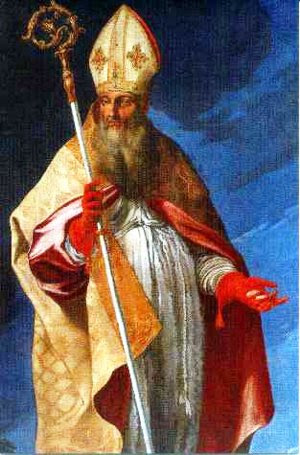
St Liborius was born of an illustrious family of Gaul (a region in the Roman Empire which extended to the area on the west bank of the Rhine river of the present day Germany) and became Bishop of Le Mans, France. He was a trusty companion and great friend to St Marinus (Martin of Tours). They were both bishops, neighbours in office. St Liborius was bishop for about 49 years and ordained 217 priests, 186 deacons and 93 sub deacons and other churchmen.
Much of the ministerial life of Bishop Liborius covered the second half of the 4th century. By this time, the Roman Empire ended its persecution of Christianity with Emperor Constantine the Great’s Edict of Milan in the year 313. Freed from persecution, the Christian faith was now free to grow. However, during this time, foreign tribes roamed the land. There was chaos and misery. Bishop Liborius’ Episcopal area had been Christian for some time but heathen Druids were still active and through their mysterious pagan rites were able to influence the people. So, Bishop Liborius built many churches and celebrated the Eucharist with piety and dignity. The well-trained priests in his diocese finally triumphed over the Druids. Nowadays, we would call the works of Bishop Liborius and his clergy at the time as primary evangelisation.
In the year, 836 A.D., (9th century), the relics of Saint Liborius were brought from Le Mans, France, to Paderborn, Germany. At this time, relics of the saints were well guarded and venerated in churches and dioceses which had them. The willingness of the diocese of Le Mans to handover the relics of St Liborius to the diocese of Paderborn was a true act of charity. The event forged a long lasting friendship between the sister cities of Le Mans and Paderborn; it has existed for over 1,000 years to this day.
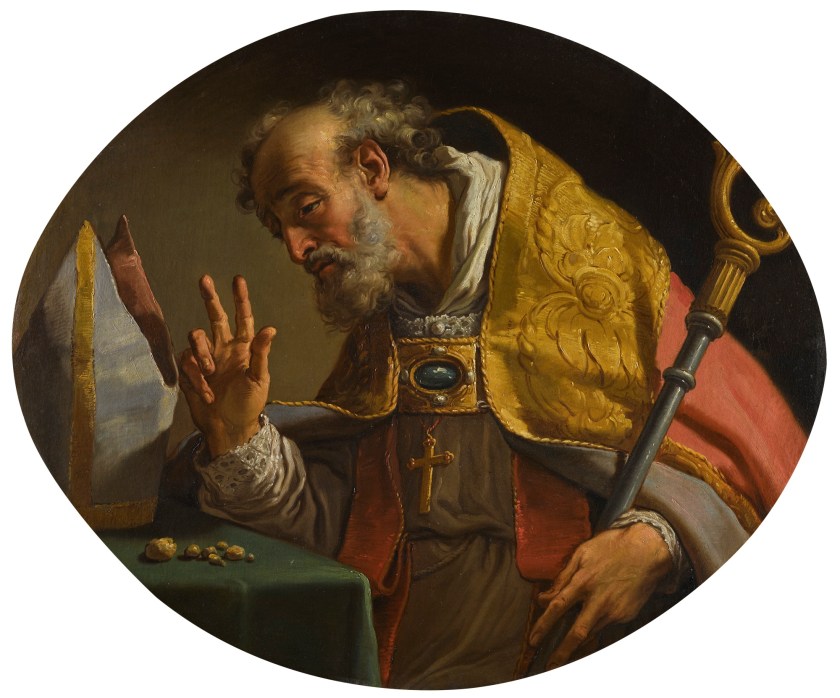
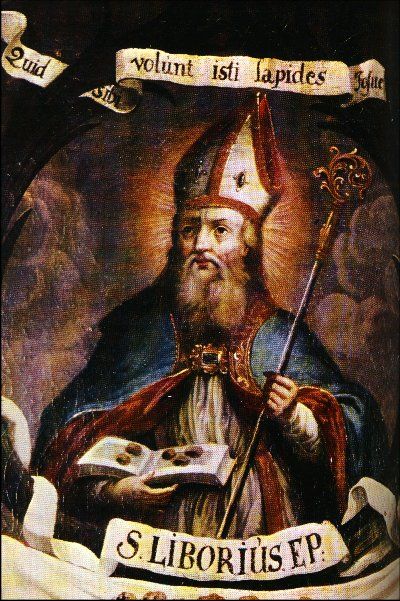
Since St Liborius died in the arms of his friend St Martin of Tours, he is looked to as a patron of a good death. Since the century he is prayed to for assistance against that gallstones that are caused by the water of the limestone area; the first account of a healing of this kind concerns the cure of Archbishop Werner von Eppstein, who came on pilgrimage to the saint’s shrine in 1267. This is the origin of the saint’s attribute of three stones placed on a copy of the Bible. In the same period he became the patron of the cathedral and the archdiocese, rather than the Blessed Virgin Mary and Saint Kilian, who were previously in first place. And he is often cited as a patron of peace and understanding among peoples. He is invoked against colic, fever, and gallstones.
As well as being shown as a bishop carrying small stones on a book, Saint Liborious is also shown with the attribute of a peacock because of a legend that, when his body was brought to Paderborn, a peacock guided the bearers.
The popularity of the saint in Paderborn is shown in the week-long yearly festival known as “Libori”, that begins on the Saturday after his local 23 July feast day but his universal memorial is today, 9 April. Today, many parishes across the world are named after this great man and Saint, as their patron.
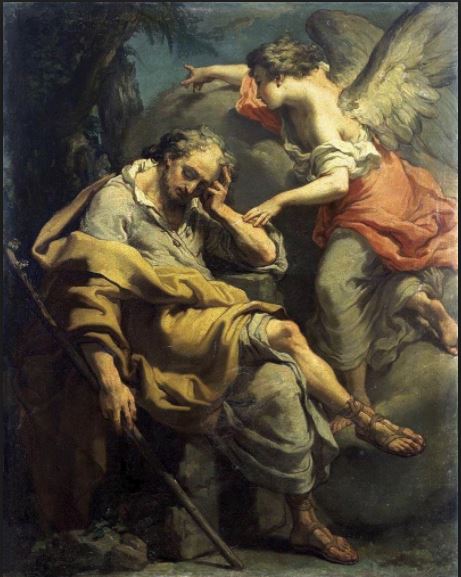
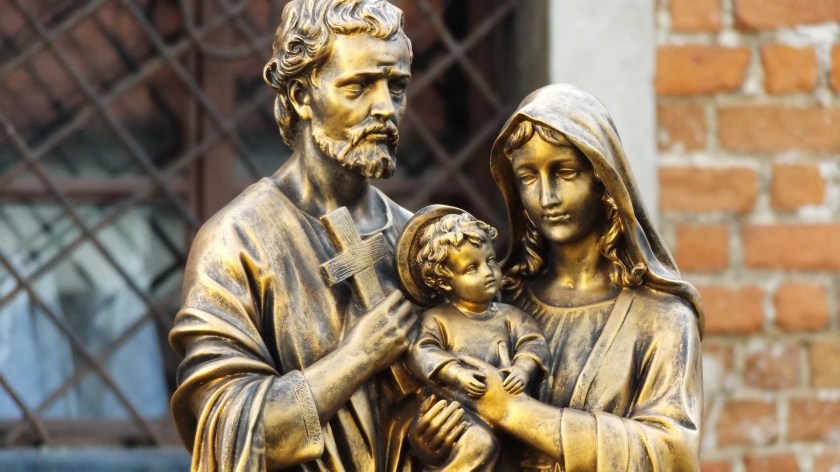
Saint of the Day – 19 March – The Solemnity of St Joseph, Spouse of the Most Blessed Virgin Mary, Mother of God and Patron of the Universal Church. The name ‘Joseph’ means “whom the Lord adds”. Patronages • against doubt and hesitation • accountants • all the legal professions • bursars • cabinetmakers • carpenters • cemetery workers • children • civil engineers • confectioners • craftsmen • the dying • teachers • emigrants • exiles • expectant mothers • families • fathers • furniture makers • grave diggers • happy death • holy death • house hunters • immigrants • joiners • labourers • married couples • orphans • against Communism • pioneers • pregnant women • social justice • teachers • travellers • the unborn • wheelwrights • workers • workers • Catholic Church • Oblates of Saint Joseph • for protection of the Church • Universal Church • Vatican II • Americas • Austria • Belgium • Bohemia • Canada • China • Croatian people • Korea • Mexico • New France • New World • Peru • Philippines • Vatican City • VietNam • Canadian Armed Forces • Papal States • 46 dioceses • 26 cities • states and regions.
St Joseph is invoked as patron for many causes. He is the patron of the Universal Church. He is the patron of the dying because Jesus and Mary were at his death-bed. He is also the patron of fathers, of carpenters and of social justice. Many religious orders and communities are placed under his patronage.
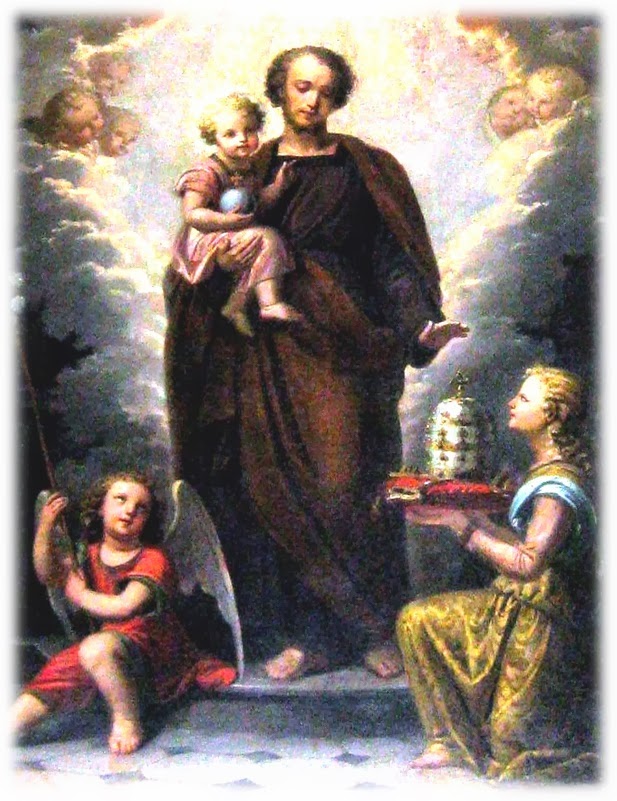
St Joseph, the spouse of the Blessed Virgin Mary and the foster-father of Jesus, was probably born in Bethlehem and probably died in Nazareth. His important mission in God’s plan of salvation was “to legally insert Jesus Christ into the line of David from whom, according to the prophets, the Messiah would be born, and to act as his father and guardian” (Directory on Popular Piety and the Liturgy). Most of our information about St. Joseph comes from the opening two chapters of St Matthew’s Gospel. No words of his are recorded in the Gospels; he was the “silent” man. We find no devotion to St Joseph in the early Church. It was the will of God that the Virgin Birth of Our Lord be first firmly impressed upon the minds of the faithful. He was later venerated by the great saints of the Middle Ages. Pius IX (1870) declared him patron and protector of the universal family of the Church.
Unknown artist, 19th century, Italian
St Joseph was an ordinary manual labourer although descended from the royal house of David. In the designs of Providence he was destined to become the spouse of the Mother of God. His high privilege is expressed in a single phrase, “Foster-father of Jesus.” About him Sacred Scripture has little more to say than that he was a just man-an expression which indicates how faithfully he fulfilled his high trust of protecting and guarding God’s greatest treasures upon earth, Jesus and Mary.
The darkest hours of his life may well have been those when he first learned of Mary’s pregnancy; but precisely in this time of trial Joseph showed himself great. His suffering, which likewise formed a part of the work of the redemption, was not without great providential import: Joseph was to be, for all times, the trustworthy witness of the Messiah’s virgin birth. After this, he modestly retires into the background of holy Scripture.
Of St Joseph’s death the Bible tells us nothing. There are indications, however, that he died before the beginning of Christ’s public life. His was the most beautiful death that one could have, in the arms of Jesus and Mary. Humbly and unknown, he passed his years at Nazareth, silent and almost forgotten he remained in the background through centuries of Church history. Only in more recent times has he been accorded greater honour. Liturgical veneration of St Joseph began in the fifteenth century, fostered by Sts Brigid of Sweden and Bernadine of Siena. St Teresa of Avila, too, did much to further his cult.
At present there are two major feasts in his honour. Today 19 our veneration is directed to him personally and to his part in the work of redemption and is his main Feast and a Solemnity in the Universal Church, while on 1 May we honour him as the patron of workmen throughout the world and as our guide in the difficult matter of establishing equitable norms regarding obligations and rights in the social order….Excerpted from The Church’s Year of Grace, Pius Parsch
COLLECT PRAYER
Grant, we pray, almighty God, that by Saint Joseph’s intercession Your Church may constantly watch over the unfolding of the mysteries of human salvation, whose beginnings You entrusted to his faithful care. Through our Lord Jesus Christ, your Son, who lives and reigns with you in the unity of the Holy Spirit, one God, for ever and ever.
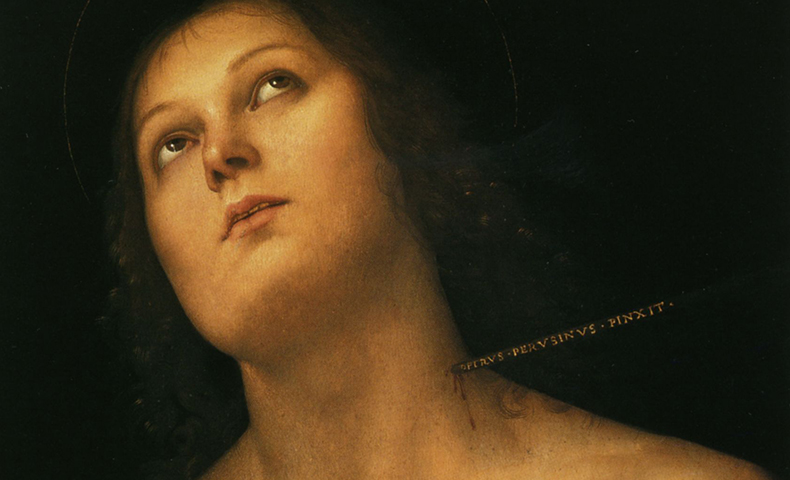
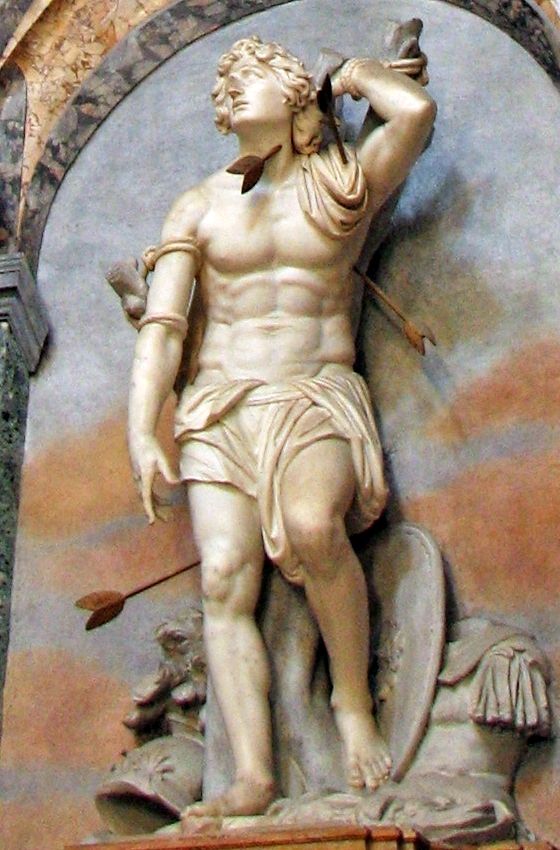
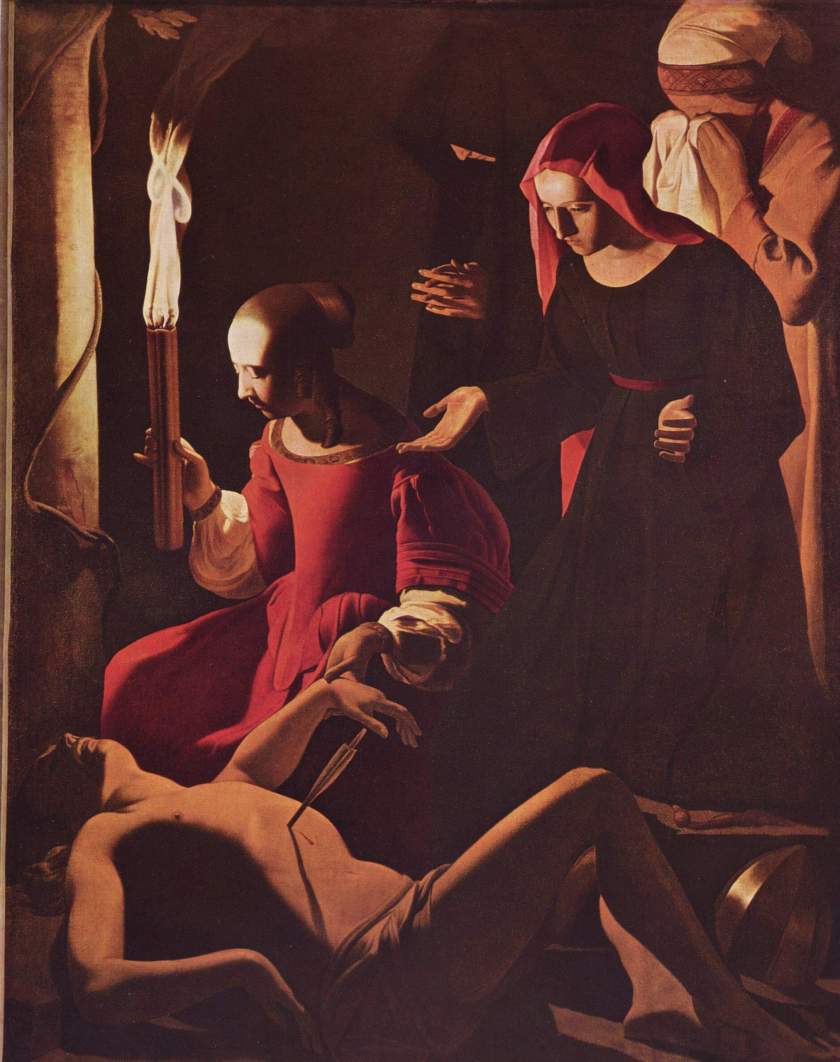
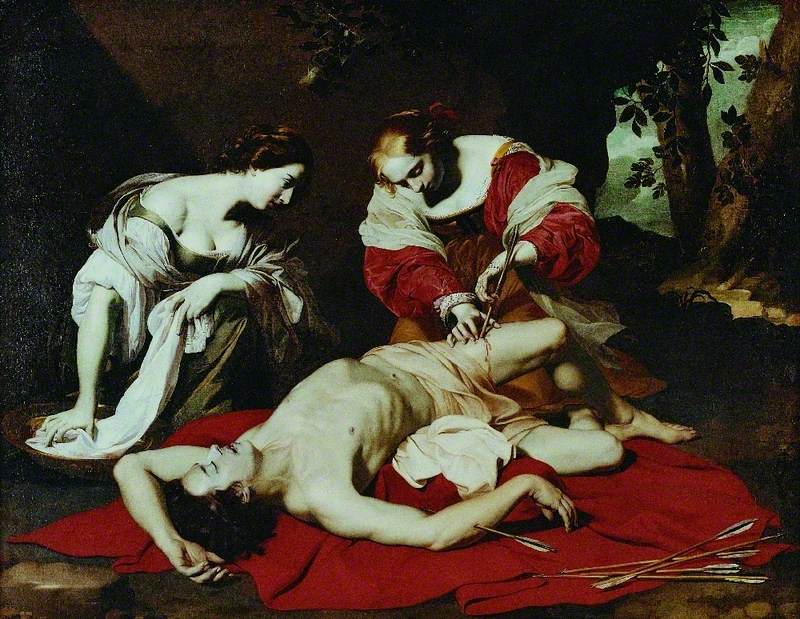
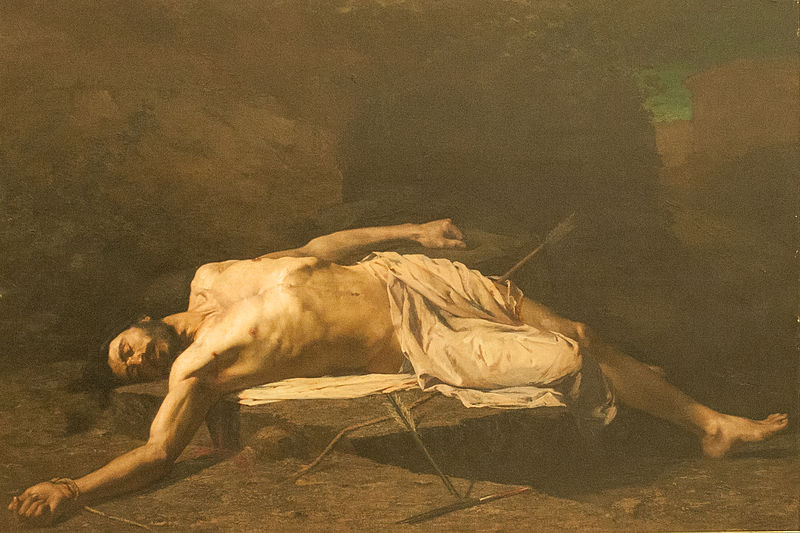
Saint of the Day – 20 January – St Sebastian Martyr, Roman Soldier. He was born in Milan and was Martyred in c 288. Patronages – against cattle disease, against plague/epidemics and the victims, dying people, against enemies of religion, archers, armourers,arrowsmiths, athletes, bookbinders, fletchers, gardeners, gunsmiths, hardware stores,ironmongers, lace makers, lace workers, lead workers, masons, police officers, racquet makers, soldiers, stone masons, stonecutters, Pontifical Swiss Guards, Bacolod, Philippines, Diocese of, Tarlac, Philippines, Diocese of, 22 Cities. St Sebastian was Martyred during the Roman Emperor Diocletian’s persecution of Christians. He is commonly depicted in art and literature tied to a post or tree and shot through with arrows. Despite this being the most common artistic depiction of Sebastian, he was rescued and healed by St Irene of Rome. Shortly afterwards he went to Diocletian to warn him about his sins and as a result, was clubbed to death. The details of Saint Sebastian’s Martyrdom were first spoken of by the 4th Century Bishop, the beloved and revered Doctor of the Church St Ambrose in his sermon (number 22) on Psalm 118. St Ambrose stated that Sebastian came from Milan and that he was already venerated there at that time.
Although there is no doubt that there was a Roman martyr named Sebastian and that devotion to him dates back to the fourth century, the earliest surviving life of the saint was written a century or more after his death. According to this story Sebastian was a Praetorian, a member of an elite troop of soldiers who served as the emperor’s bodyguard. When Emperor Diocletian began his persecution of the Church, Sebastian used his status to visit Christians in prison. This was dangerous business and it was not long before he was denounced to the emperor.
Enraged that one of his own bodyguards was a Christian, Diocletian ordered the Praetorians to take Sebastian back to their camp and shoot him to death with arrows. After performing this deadly evil on their former comrade, the Praetorians assumed that Sebastian was dead. So did everyone else who heard of his martyrdom.
After sunset a Christian woman named Irene crept into the Praetorians’ camp to retrieve the body and give it a Christian burial. As Irene and her serving woman cut Sebastian down, they heard him groan. Incredibly, he was still alive.
Instead of carrying him to the catacombs for burial, Irene brought Sebastian back to her house where she and her servant nursed him. As soon as his strength returned, Sebastian went off to confront Diocletian. He found the emperor on the steps of the imperial palace. Furious that his former bodyguard was still alive, Diocletian demanded of his entourage, “Did I not sentence this man to be shot to death with arrows?” But Sebastian answered for the emperor’s courtiers. He had been made a target for archers, “But the Lord kept me alive so I could return and rebuke you for treating the servants of Christ so cruelly.”
This time the emperor took no chances, he ordered his guard to beat Sebastian to death there on the palace steps, while he watched.
Once he was certain that Sebastian truly was dead, Diocletian had the martyr’s body dumped into the Cloaca Maxima, Rome’s main sewer. Nonetheless, Christians recovered it and buried Sebastian in a catacomb known ever since as San Sebastiano.
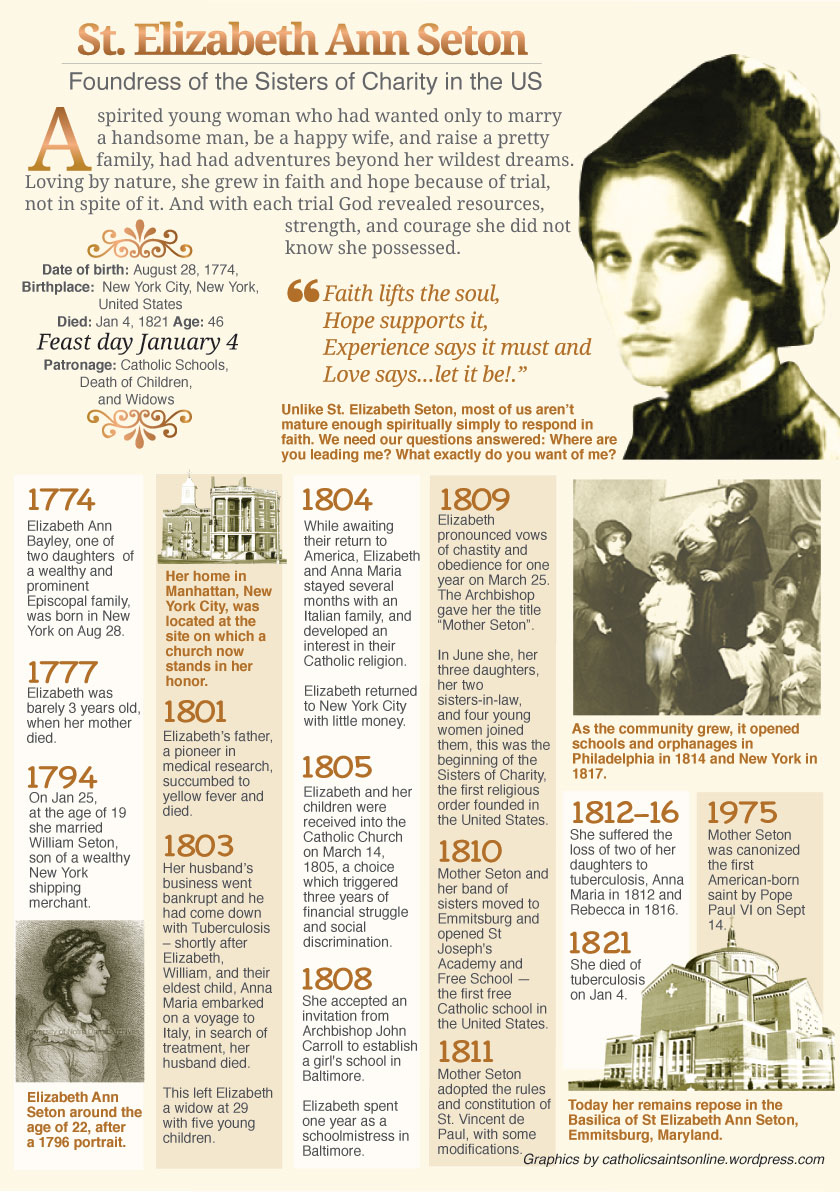
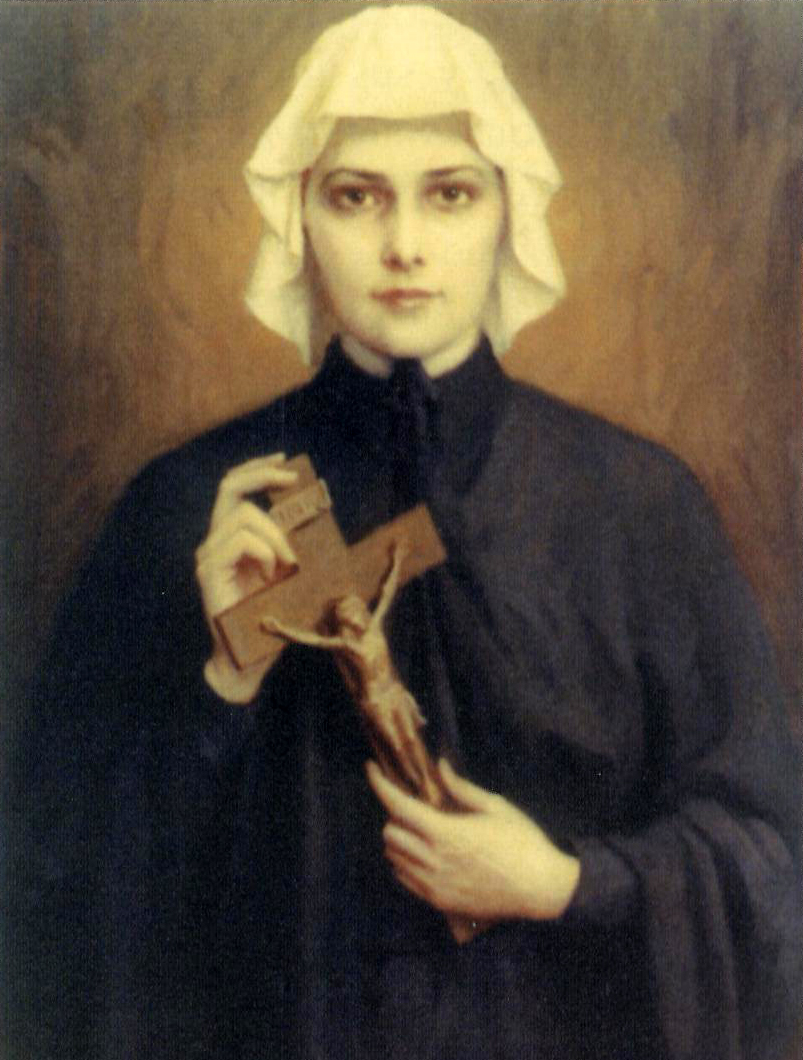
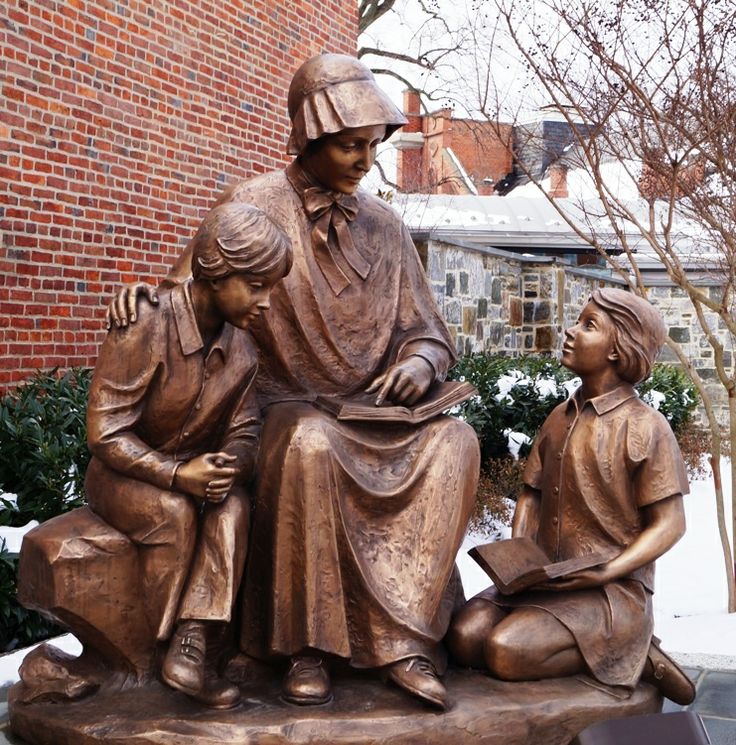
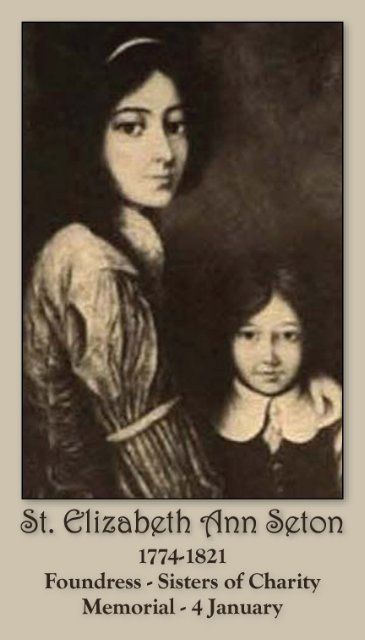
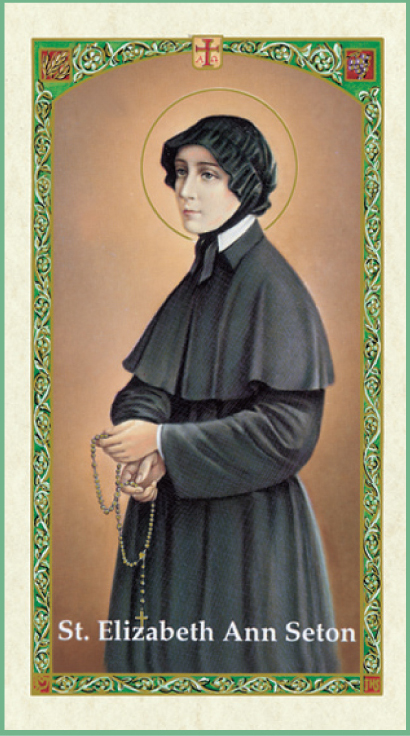
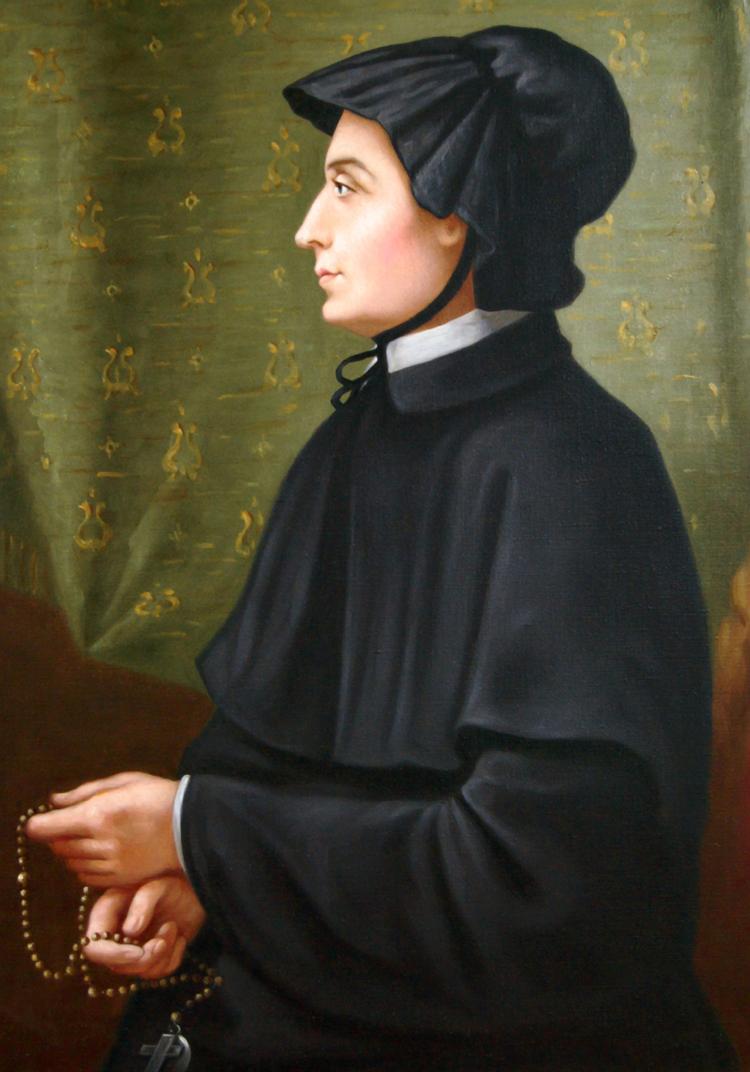
Saint of the Day – 4 January – St Elizabeth Ann Seton (1774-1821) (also known as Mother Seton) Widow and Mother, Religious, Foundress, Teacher, first native-born citizen of the United States to be Canonised on 14 September 1975 by Pope Paul VI. She was born on 28 August 1774 in New York City, New York, USA as Elizabeth Ann Bayley – 4 January 1821 in Emmitsburg, Maryland of natural causes. Patronages – • against in-law problems• against the death of children• against the death of parents• Apostleship of the Sea (two of her sons worked on the sea)• opposition of Church authorities• people ridiculed for their piety• Shreveport, Louisiana, Diocese of• widows. She established the first Catholic girls’ school in the nation in Emmitsburg, Maryland, where she also founded the first American congregation of religious sisters, the Sisters of Charity.
Mother Seton is one of the keystones of the American Catholic Church. She founded the first American religious community for women, the Sisters of Charity. She opened the first American parish school and established the first American Catholic orphanage. All this she did in the span of 46 years while raising her five children.
Elizabeth Ann Bayley Seton is a true daughter of the American Revolution, born August 28, 1774, just two years before the Declaration of Independence. By birth and marriage, she was linked to the first families of New York and enjoyed the fruits of high society. Reared a staunch Episcopalian, she learned the value of prayer, Scripture and a nightly examination of conscience. Her father, Dr Richard Bayley, did not have much use for churches but was a great humanitarian, teaching his daughter to love and serve others.
The early deaths of her mother in 1777 and her baby sister in 1778 gave Elizabeth a feel for eternity and the temporariness of the pilgrim life on earth . Far from being brooding and sullen, she faced each new “holocaust,” as she put it, with hopeful cheerfulness. At 19, Elizabeth was the belle of New York and married a handsome, wealthy businessman, William Magee Seton. They had five children before his business failed and he died of tuberculosis. At 30, Elizabeth was widowed, penniless, with five small children to support.
While in Italy with her dying husband, Elizabeth witnessed Catholicity in action through family friends. Three basic points led her to become a Catholic: belief in the Real Presence, devotion to the Blessed Mother and conviction that the Catholic Church led back to the apostles and to Christ. Many of her family and friends rejected her when she became a Catholic in March 1805.
To support her children, she opened a school in Baltimore. From the beginning, her group followed the lines of a religious community, which was officially founded in 1809.
The thousand or more letters of Mother Seton reveal the development of her spiritual life from ordinary goodness to heroic sanctity. She suffered great trials of sickness, misunderstanding, the death of loved ones (her husband and two young daughters) and the heartache of a wayward son. She died 4 January 1821 and became the first American-born citizen to be beatified (1963) and then canonised (1975). She is buried in Emmitsburg, Maryland.
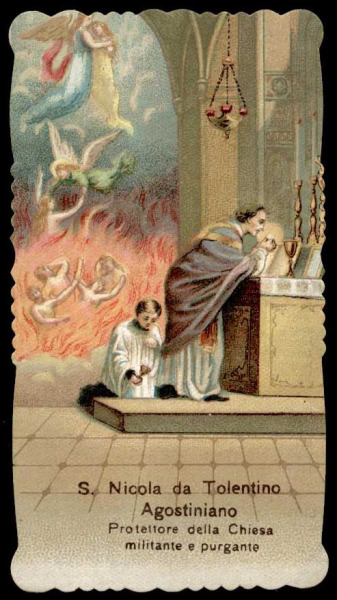
Saint of the Day – 10 September – St Nicholas of Tolentino OSA (1245-1305)- known as The Patron of Holy Souls, Priest, Augustinian Friar Monk, Confessor, Mystic, Preacher. Born in 1245 at Sant’Angelo, March of Ancona, Diocese of Fermo, Italy and died on 10 September 1305 at Tolentino, Italy following a long illness. His Relics were re-discovered at Tolentino in 1926. In previous times his Relics were known to exude blood when the Church was in danger. He was Canonised on 5 June (Pentecost) 1446 by Pope Eugene IV – over 300 miracles were recognised by the Congregation. Patronages – animals, babies (reported to have raised more than 100 children from the dead), sailors, dying people, sick animals, the Holy Souls in Purgatory, 4 Cities, 3 Diocese. Attributes – Augustinian holding a bird on a plate in the right hand and a crucifix on the other hand; holding a basket of bread, giving bread to a sick person; holding a lily or a crucifix garlanded with lilies; with a star above him or on his breast.
St Nicholas was born in 1245 in Sant’Angelo. He was named after St Nicholas of Myra, at whose Shrine his parents prayed to have a child. Nicholas became a Monk at 18 and seven years later, he was Ordained a Priest. He gained a reputation as a Preacher and a Confessor. In c 1274, he was sent to Tolentino, near his birthplace where he lived the rest of his lif. Nicholas was primarily a shepherd to his flock. He ministered to the poor and the criminal. He is said to have cured the sick with bread over which he had prayed to Mary, the mother of God. He gained a reputation as a wonder-worker.
On account of his kind and gentle manner his superiors entrusted him with the daily feeding of the poor at the monastery gates but at times he was so free with the friary’s provisions that the procurator begged the superior to check his generosity. Once, when weak after a long fast, he received a vision of the Blessed Virgin Mary and Saint Augustine who told him to eat some bread marked with cross and dipped in water. Upon doing so he was immediately stronger. He started distributing these rolls to the ailing, while praying to Mary, often curing the sufferers; this is the origin of the Augustinian custom of blessing and distributing Saint Nicholas Bread. When working wonders or healing people, he always asked those he helped to “Say nothing of this”, explaining that he was just God’s instrument.
During his life, Nicholas is said to have received visions, including images of Purgatory, which friends ascribed to his lengthy fasts. Prayer for the souls in purgatory was the outstanding characteristic of his spirituality. Because of this Nicholas was proclaimed patron of the souls in Purgatory in 1884 by Leo XIII. Towards the end of his life he became ill, suffering greatly, but still continued the mortifications that had been part of his holy life. Nicholas died on 10 September 1305.
Miracles:
There are many tales and legends which relate to Nicholas. One says the devil once beat him with a stick, which was then displayed for years in his church. In another, Nicholas, a vegetarian, was served a roasted fowl, for which he made the sign of the cross and it flew out a window. Nine passengers on a ship going down at sea once asked Nicholas’ aid and he appeared in the sky, wearing the black Augustinian habit, radiating golden light, holding a lily in his left hand, and with his right hand, he quelled the storm. An apparition of the saint, it is said, once saved the burning palace of the Doge of Venice by throwing a piece of blessed bread on the flames. He was also reported to have resurrected over one hundred dead children, including several who had drowned together.
According to the Peruvian chronicler Antonio de la Calancha, it was St. Nicholas of Tolentino who made possible a permanent Spanish settlement in the rigorous, high-altitude climate of Potosí, Bolivia. e reported that all children born to Spanish colonists there died in childbirth or soon thereafter, until a father dedicated his unborn child to St Nicholas of Tolentino (whose own parents, after all, had required saintly intervention to have a child). The colonist’s son, born on Christmas Eve, 1598, survived to healthy adulthood and many later parents followed the example of naming their sons Nicolás.
Veneration:
Nicholas was Canonised by Pope Eugene IV (also an Augustinian) in 1446. He was the first Augustinian to be Canonised. At his Canonisation, Nicholas was credited with three hundred miracles, including three resurrections.
The remains of St Nicholas are preserved at the Shrine of Saint Nicholas in the Basilica di San Nicola da Tolentino in the city of Tolentino, province of Macerata in Marche, Italy.
He is particularly invoked as an advocate for the souls in Purgatory, especially during Lent and the month of November. In many Augustinian churches, there are weekly devotions to St Nicholas on behalf of the suffering souls. November 2, All Souls’ Day, holds special significance for the devotees of St. Nicholas of Tolentino.
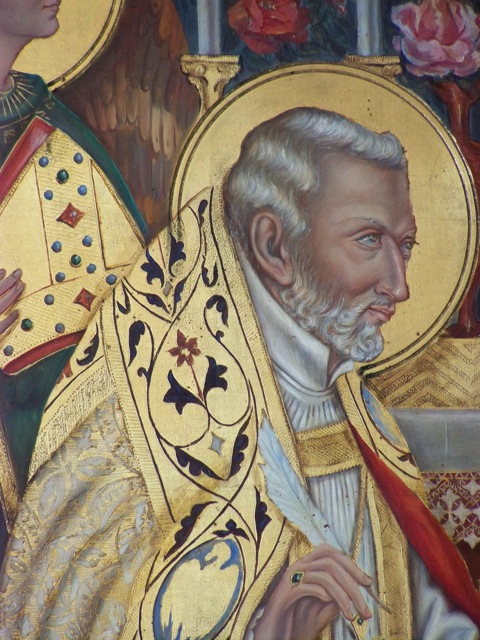
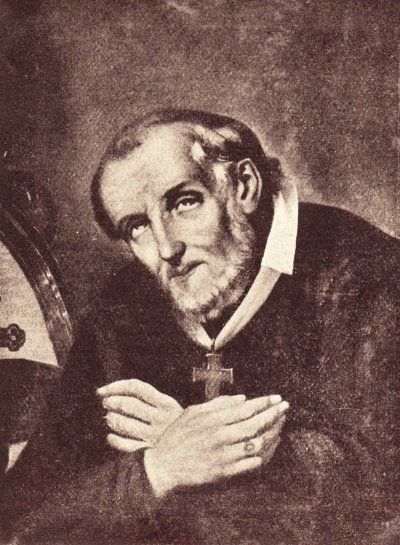
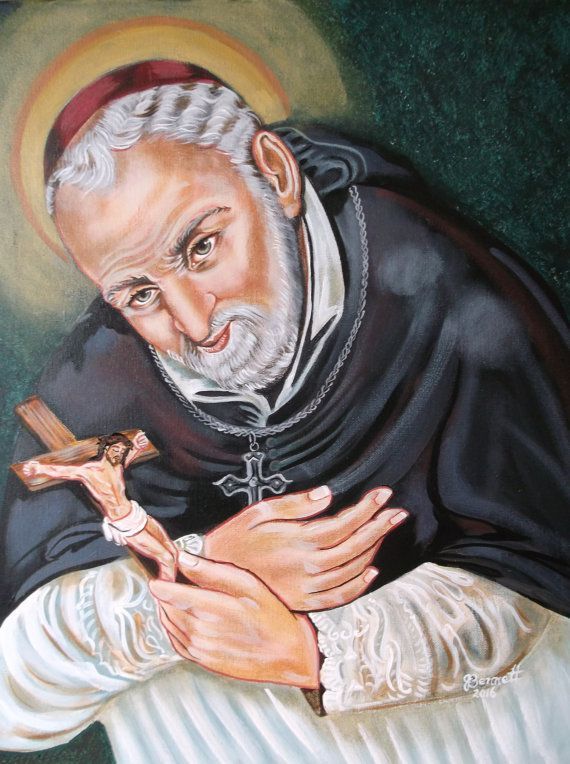
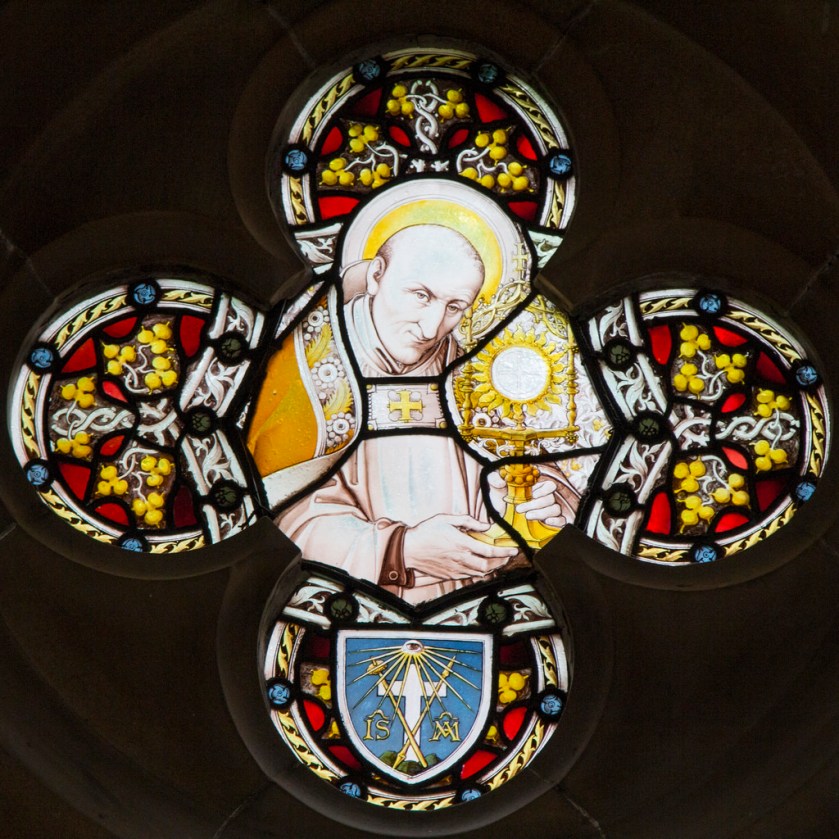
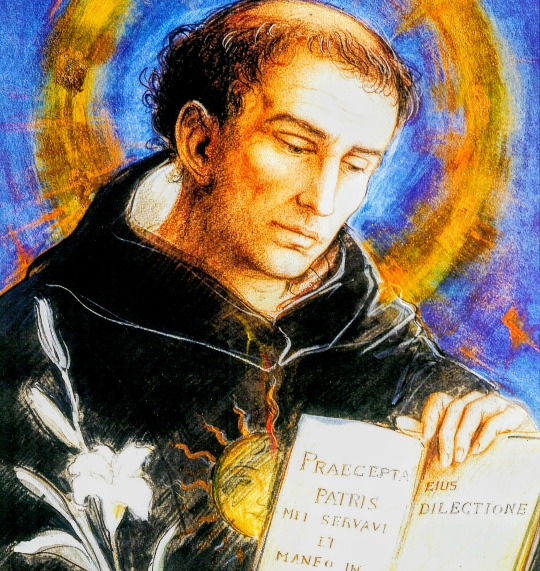
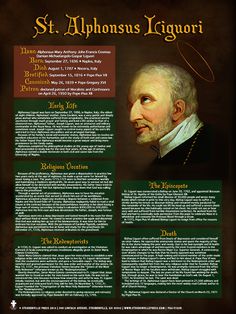
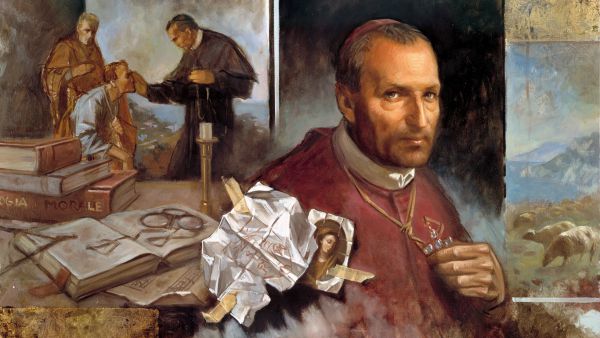
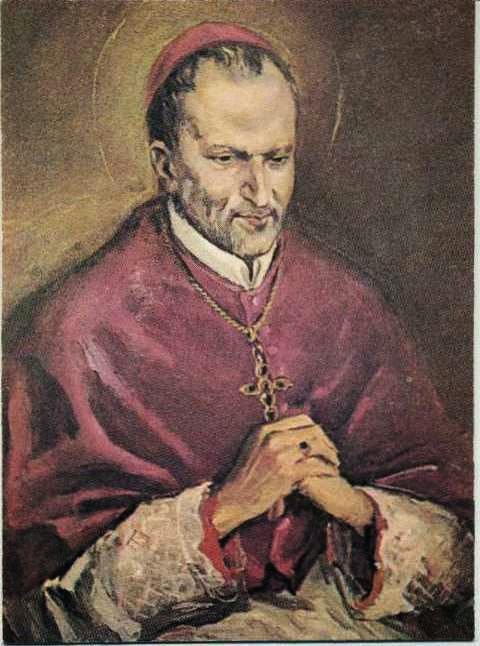
Saint of the Day – 2 August – St Alphonsus Maria de Liguori C.Ss.R. – Doctor of the Church-Bishop, Confessor, Founder, Spiritual Writer, Composer, Musician, Artist, Poet, Lawyer, Scholastic Philosopher and Theologian. Born on 27 September 1696 at Marianelli near Naples, Italy and died on 1 August 1787 at Nocera, Italy of natural causes. He was Canonised on 26 May 1839 by Pope Gregory XVI and declared Doctor of the Church by Pope Pius IX in 1871. He founded the Congregation of the Most Holy Redeemer (the Redemptorists). In 1762 he was appointed Bishop of Sant’Agata dei Goti. Patronages – against arthritis, against scrupulosity, of Confessors (given on 26 February 1950 by Pope Pius XII), final perseverance, moral theologians, moralists (1950 by Pope Pius XII), scrupulous people, vocations, Diocese of Acerra, Italy, Diocese of Agrigento, Italy,l Pagani, Italy, Sant’Agata de’ Goti, Italy. Attributes – chaplet, praying with a monstrance in his hands, pen, quill, crucifix, writing, bishop with his chin on his chest (due to his arthritis).
St Alphonsus learned to ride and fence but was never a good shot because of poor eyesight. Myopia and chronic asthma precluded a military career so his father had him educated for the legal profession. He was taught by tutors before entering the University of Naples, where he graduated with doctorates in civil and canon law at 16. He remarked later that he was so small at the time that he was almost buried in his doctor’s gown and that all the spectators laughed. When he was 18, like many other nobles, he joined the Confraternity of Our Lady of Mercy with whom he assisted in the care of the sick at the hospital for “incurables”.
He became a successful lawyer. He was thinking of leaving the profession and wrote to someone, “My friend, our profession is too full of difficulties and dangers; we lead an unhappy life and run risk of dying an unhappy death”. At 27, after having lost an important case, the first he had lost in eight years of practicing law, he made a firm resolution to leave the profession of law. Moreover, he heard an interior voice saying: “Leave the world, and give yourself to me.”
In 1723, he decided to offer himself as a novice to the Oratory of St. Philip Neri with the intention of becoming a priest. His father opposed the plan but after two months (and with his Oratorian confessor’s permission), he and his father compromised: he would study for the priesthood but not as an Oratorian and live at home. He was ordained on 21 December 1726, at 30. He lived his first years as a priest with the homeless and the marginalised youth of Naples. He became very popular because of his plain and simple preaching. He said: “I have never preached a sermon which the poorest old woman in the congregation could not understand”. He founded the Evening Chapels, which were managed by the young people themselves. The chapels were centres of prayer and piety, preaching, community, social activities and education. At the time of his death, there were 72, with over 10,000 active participants. His sermons were very effective at converting those who had been alienated from their faith.
Liguori suffered from scruples much of his adult life and felt guilty about the most minor issues relating to sin. Moreover, the saint viewed scruples as a blessing at times and wrote: “Scruples are useful in the beginning of conversion…. they cleanse the soul and at the same time make it careful”.
In 1729, Alphonsus left his family home and took up residence in the Chinese Institute in Naples. It was there that he began his missionary experience in the interior regions of the Kingdom of Naples, where he found people who were much poorer and more abandoned than any of the street children in Naples. In 1731, while he was ministering to earthquake victims in the town of Foggia, Alphonsus claimed to have had a vision of the Virgin Mother in the appearance of a young girl of 13 or 14, wearing a white veil.
Congregation of the Most Holy Redeemer (The Rdemptorists) – On 9 November 1732, he founded the Congregation of the Most Holy Redeemer, when Sister Maria Celeste Crostarosa told him that it had been revealed to her that he was the one that God had chosen to found the congregation. He founded the congregation with the charism of preaching popular missions in the city and the countryside. Its goal was to teach and preach in the slums of cities and other poor places. They also fought Jansenism, a heresy that supported a very strict morality: “the penitents should be treated as souls to be saved rather than as criminals to be punished”. He is said never to have refused absolution to a penitent.
A gifted musician and composer, he wrote many popular hymns and taught them to the people in parish missions. In 1732, while he was staying at the Convent of the Consolation, one of his order’s houses in the small city of Deliceto in the province of Foggia in Southeastern Italy, Liguori wrote the Italian carol “Tu scendi dalle stelle” (“From Starry Skies Descending”) in the musical style of a pastorale. The version with Italian lyrics was based on his original song written in Neapolitan, which began Quanno nascette Ninno (When the child was born). As it was traditionally associated with the zampogna, or large-format Italian bagpipe, it became known as Canzone d’i zampognari the (“Carol of the Bagpipers”).
Bishop Alphonsus was consecrated Bishop of Sant’Agata dei Goti in 1762. He tried to refuse the appointment by using his age and infirmities as arguments against his consecration. He wrote sermons, books and articles to encourage devotion to the Blessed Sacrament and the Blessed Virgin Mary. He first addressed ecclesiastical abuses in the diocese, reformed the seminary and spiritually rehabilitated the clergy and faithful. He suspended those priests who celebrated Mass in less than 15 minutes and sold his carriage and episcopal ring to give the money to the poor. In the last years of his life, he suffered a painful sickness and a bitter persecution from his fellow priests, who dismissed him from the Congregation that he had founded.
Death In 1775, he was allowed to retire from his office and went to live in the Redemptorist community in Pagani, Italy, where he died.
Veneration and legacy He was beatified on 15 September 1816 by Pope Pius VII and canonized on 26 May 1839 by Pope Gregory XVI.
In 1949, the Redemptorists founded the Alphonsian Academy for the advanced study of Catholic moral theology. He was named the patron of confessors and moral theologians by Pope Pius XII on 26 April 1950, who subsequently wrote of him in the encyclical Haurietis aquas.
Moral theology Alphonsus’ greatest contribution to the Church was in the area of moral theology. His masterpiece was The Moral Theology (1748), which was approved by the Pope himself and was born of Alphonsus’ pastoral experience, his ability to respond to the practical questions posed by the faithful and his contact with their everyday problems. He opposed sterile legalism and strict rigoururism. According to him, those were paths closed to the Gospel because “such rigour has never been taught nor practiced by the Church”. His system of moral theology is noted for its prudence, avoiding both laxism and excessive rigour. Since its publication it has remained in Latin, often in 10 volumes or in the combined 4-volume version of Gaudé. It saw only recently its first publication in translation, in an English translation made by Ryan Grant and published in 2017 by Mediatrix Press. The English translation of the work is projected to be around 5 volumes.
Mariology His Mariology, though mainly pastoral in nature, rediscovered, integrated and defended that of St Augustine of Hippo, St Ambrose of Milan and other fathers; it represented an intellectual defence of Mariology in the 18th century, the Age of Enlightenment, against the rationalism to which his often flaming Marian enthusiasm contrasted:
The Glories of Mary Marian Devotion Prayers to the Divine Mother Spiritual Songs The True Spouse of Jesus Christ
Other works Great Means of Salvation and of Perfection The Way of Salvation and of Perfection The Way of the Cross, Preparation for Death, The Incarnation, Birth and Infancy of Jesus Christ The Holy Eucharist Victories of the Martyrs
Saint of the Day – 15 May – Isidore the Farmer (c 1070 -1130) – Layman, Confessor, Farm Worker and Apostle of Charity – Patronages – against against the death of children, of agricultural workers, farm workers, farmers, field hands, husbandmen, ranchers, day labourers, for rain, livestock, rural communities, United States National Rural Life Conference, Diocese of Digos, Philippines, Diocese of Malaybalay, Philippines, 24 Cities. His body is incorrupt.
St. Isidore, the Farmer, was born in Madrid, Spain, about the year 1110. He came from a poor and humble family. From childhood he worked as a farm hand on the De Vargas estate. He was very prayerful and particularly devoted to the Mass and the Holy Eucharist. He loved the good earth, he was honest in his work and careful in his farming practices. It is said that domestic beasts and birds showed their attachment to him because he was gentle and kind to them. Master De Vargas watched Isidore at plowing and he saw two angels as his helpers. Hence, the saying arose, “St. Isidore plowing with angels does the work of three farmers.”
Isidore married a sweet and pious maid-servant by the name of Maria. They had only one son who died in youth. Both were most charitable and ever willing to help neighbours in distress and the poor in the city slums.
St. Isidore died on May 15, 1170 (the Spanish feast day), his saintly wife, a little later. He was canonised on March 22, 1622. The earthly remains of the holy couple are found over the main altar of the cathedral in Madrid, Spain. S. Maria was not officially canonised but is honoured as a saint throughout Spanish countries. Her head (cabeza) is carried in solemn processions during times of drought. By a special decree of the Sacred Congregation of Rites, dated February 22, 1947, St. Isidore was constituted as the special protector of the National Catholic Rural Life Conference and American farmers.
How beautiful and appropriate for the Catholic farm family to be devoted to this simple and saintly couple, who like farmers everywhere are “partners with God,” in furnishing to the world food, fiber and shelter.
In the morning before going to work, Isidore would usually attend Mass at one of the churches in Madrid. One day, his fellow farm workers complained to their master that Isidore was always late for work in the morning. Upon investigation, so runs the legend, the master found Isidore at prayer whilst an angel was doing the ploughing for him.
On another occasion, his master saw an angel ploughing on either side of him, so that Isidore’s work was equal to that of three of his fellow field workers. Isidore is also said to have brought back to life his master’s deceased daughter and to have caused a fountain of fresh water to burst from the dry earth to quench his master’s thirst.
One snowy day, when going to the mill with corn to be ground, he passed a flock of wood-pigeons scratching vainly for food on the hard surface of the frosty ground. Taking pity on the poor animals, he poured half of his sack of precious wheat upon the ground for the birds, despite the mocking of witnesses. When he reached the mill, however, the bag was full, and the wheat, when it was ground, produced double the expected amount of flour.
Isidore’s wife, Maria, always kept a pot of stew on the fireplace in their humble home as Isidore would often bring home anyone who was hungry. One day he brought home more hungry people than usual. After she served many of them, Maria told him that there simply was no more stew in the pot. He insisted that she check the pot again and she was able to spoon out enough stew to feed them all.
He is said to have appeared to Alfonso VIII of Castile and to have shown him the hidden path by which he surprised the Moors and gained the victory of Las Navas de Tolosa, in 1212. When King Philip III of Spain was cured of a deadly disease after touching the relics of the saint, the king replaced the old reliquary with a costly silver one and instigated the process of his beatification. Throughout history, other members of the royal family would seek curative powers from the saint.
The number of miracles attributed to him has been counted as 438. The only original source of hagiography on him is a fourteenth century codex called Códice de Juan Diácono which relates five of his miracles: 1. The pigeons and the grain. 2. The angels ploughing. 3. The saving of his donkey, through prayer, from a wolf attack. 4. The account of his wife’s pot of food. 5. A similar account of his feeding the brotherhood. The codex also attests to the incorruptible state of his body, stating it was exhumed 40 years after his death.
Isidore was beatified in Rome on 2 May 1619, by Pope Paul V. He was canoniSed nearly three years later by Pope Gregory XV, along with Saints Ignatius of Loyola, Francis Xavier, Teresa of Ávila and Philip Neri, on 12 March 1622.
In 1696, his relics were moved to the Royal Alcazar of Madrid to intervene on behalf of the health of Charles II of Spain. While there, the King’s locksmith pulled a tooth from the body and gave it to the monarch, who slept with it under his pillow until his death. This was not the first, nor the last time his body was allegedly mutilated out of religious fervour. For example, it was reported one of the ladies in the court of Isabella I of Castile bit off one of his toes.
In 1760, his body was brought to the Royal Palace of Madrid during the illness of Maria Amalia of Saxony.
In 1769, Charles III of Spain had the remains of Saint Isidore and his wife Maria relocated to the San Isidro Church, Madrid. The sepulchre has nine locks and only the King of Spain has the master key. The opening of the sepulchre must be performed by the Archbishop of Madrid and authorized by the King himself. Consequently, it has not been opened since 1985.
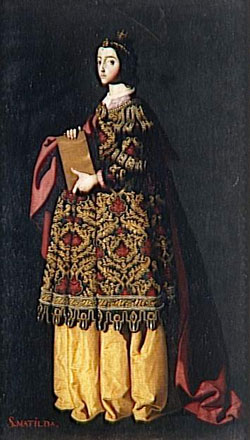
Saint of the Day – 14 March – St Matilda of Saxony (c 894-968) – Queen, Apostle of Prayer and Almsgiving, Foundress – Patronages – of death of children, disappointing children, falsely accused people, large families, people ridiculed for their piety, queens, second marriages, widows. Medieval chroniclers like Liutprand of Cremona and Thietmar of Merseburg celebrated Matilda for her devotion to prayer and almsgiving. Her first biographer depicted her leaving her husband’s side in the middle of the night and sneaking off to church to pray. St. Matilda founded many religious institutions, including the canonry of Quedlinburg, which became a center of ecclesiastical and secular life in Germany under the rule of the Ottonian dynasty. She also founded the convents of St. Wigbert in Quedlinburg, in Pöhlde, Enger, and Nordhausen, likely the source of at least one of her vitae.
Born in Saxony, Mathilda was the daughter of Thierri, a prince of considerable importance. From an early age, Mathilda demonstrated great piety and love for the Lord and was raised by her pious grandmother, Maud, the abbess of Enford, in the cloister. There, as she grew up, she practiced daily prayer and penance and learned a love of labour and spiritual reading. Mathilda would have been more than content to spend her life dedicated to religious pursuits. However, her father arranged her marriage to Henry, the son of the Duke of Saxony. Within seven years, Henry found himself the King of Germany, and Mathilda, the queen.
King Henry demonstrated through his actions that he was a God-fearing and pious spouse. His equity and courage won him the respect of his subjects and he encouraged and financed Mathilda’s longing to live a life of charitable service to others. While Henry ruled his kingdom, Mathilda devoted herself to penance and spent her days visiting the poor and sick, offering them consolation and comfort. She also founded schools to provide education to all, visited incarcerated prisoners and worked for the conversion of souls. Overall, her life was relatively a simple one, despite her royalty, with her primary focus on daily prayer.
After seventeen years, Henry died of apoplexy, and Mathilda, looking to the Lord, gave up her royal vestments and jewels, laying them on the alter of the Lord. Divesting herself of her title, she stepped aside for her children, with the eldest, Otho, becoming king. Henry became Duke of Bavaria and the youngest, Bruno, the Archbishop of Cologne.
However, all was not smooth prior to the coronation, with Henry contesting his brother’s rightful place as heir. Mathilda, for her part, always partial to Henry, sided with him, her words creating significant discord between the brothers. Eventually, the brothers reconciled, but turned against their mother, stripping her of her dowry,and accusing her publicly of mismanaging the royal funds in service to her charities. Saint Mathilda accepted the punishment gracefully, recognising her sinfulness in siding with one son above another, repenting and offering herself wholly to the Lord in reparation.
The persecution and suffering of Mathilda was long and cruel but she patiently bore this all, until her son reconciled with her. Her dowry restored, Mathilda was allowed to move back into the royal court. However, instead, she chose to live in the Benedictine monastery of Quedlinbourg, using her funds to serve the poor and extend the religious communities in the region dedicated to charity. he founded five monasteries, and built many churches.
Saint Mathilda grew ill and realized that death was upon her. In the presence of her community at the monastery, she made a public confession, donned sackcloth and covered herself with ashes. She further received last sacraments from William, Archbishop of Mayence, her nephew. Her body remains at Quedlinburg, where she is buried beside her husband. She is venerated there today.
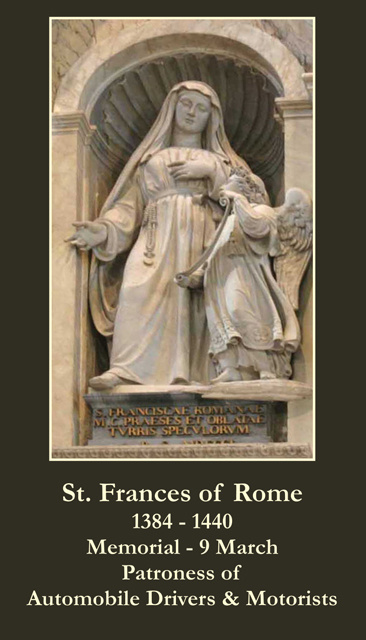
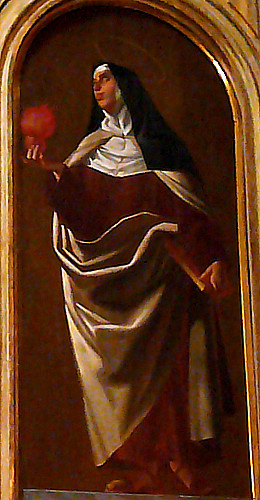
Saint of the Day – 9 March – St Frances of Rome Obl.S.B. (1384-1440) Wife, Mother, Mystic, Organiser of charitable services and a Benedictine Oblate who founded a religious community of Oblates, who share a common life without religious vows – Patronages – against plague/epidemics, of automobile drivers (given in 1951), aviators, taxi drivers, death of children, the laity, motorcyclists, motorists, people ridiculed for their piety, Roman housewives, widows, women, Rome, Italy.
Frances was born in 1384 in Rome to a wealthy and aristocratic couple, Paolo Bussa and Iacobella dei Roffredeschi, in the up-and-coming district of Parione and christened in the nearby Church of St Agnes on the famed Piazza Navona. When she was eleven years old, she wanted to be a nun but, at about the age of twelve, her parents forced her to marry Lorenzo Ponziani, commander of the papal troops of Rome and member of an extremely wealthy family. Although the marriage had been arranged, it was a happy one, lasting for forty years, partly because Lorenzo admired his wife and partly because he was frequently away at war.
With her sister-in-law Vannozza, Frances visited the poor and took care of the sick, inspiring other wealthy women of the city to do the same. Soon after her marriage, Frances fell seriously ill. Her husband called a man in who dabbled in magic but Frances drove him away and later recounted to Vannozza that St Alexis had appeared to her and cured her.
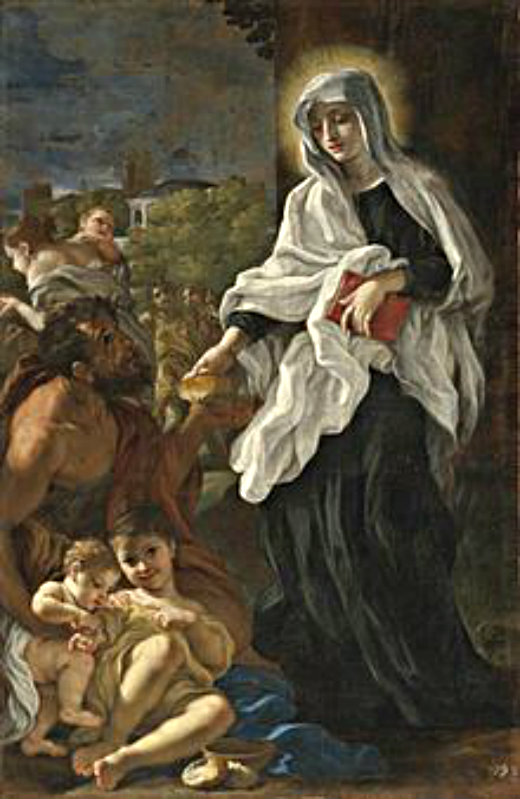
When her mother-in-law died, Frances became mistress of the household. During a time of flood and famine, she turned part of the family’s country estate into a hospital and distributed food and clothing to the poor. According to one account, her father-in-law was so angry that he took away from her the keys to the supply rooms but gave them back when he saw that the corn bin and wine barrel were replenished after Frances finished praying.
St Frances of Rome Giving Alms by Baciccio
During the wars between the pope in Rome and various anti-popes in the Western Schism of the Church, Lorenzo served the former. According to one story, their son, Battista, was to be delivered as a hostage to the commander of the Neapolitan troops. Obeying this order on the command of her spiritual director, Frances brought the boy to the Campidoglio. On the way, she stopped in the Church of the Aracoeli located there and entrusted the life of her son to the Blessed Mother. When they arrived at the appointed site, the soldiers went to put her son on a horse to transport him off to captivity. The horse, however, refused to move, despite heavy whipping. The superstitious soldiers saw the hand of God in this and returned the boy to his mother.
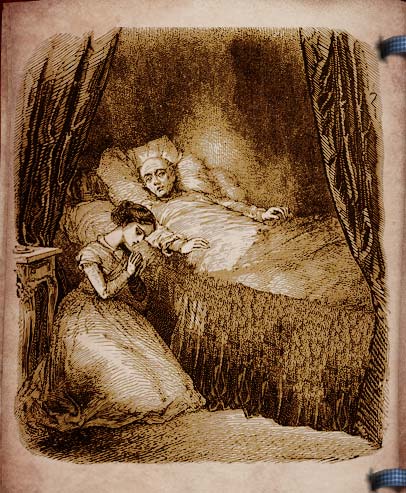
During a period of forced exile, much of Lorenzo’s property and possessions were destroyed. In the course of one occupation of Rome by Neapolitan forces in the early part of the century, he was wounded so severely that he never fully recovered. Frances nursed him throughout the rest of his life.
Frances experienced other sorrows in the course of her marriage with Lorenzo Ponziani. They lost two children to the plague. Chaos ruled the city in that period of neglect by the pope and the ongoing warfare between him and the various forces competing for power on the Italian peninsula devastated the city. The city of Rome was largely in ruins—wolves were known to enter the streets. Frances again opened her home as a hospital and drove her wagon through the countryside to collect wood for fire and herbs for medicine. It is said she had the gift of healing, and more than sixty cases were attested to during the Canonisation proceedings.
According to the Catholic Encyclopedia, “With her husband’s consent St Frances practised continence and advanced in a life of contemplation.
Her visions often assumed the form of drama enacted for her by heavenly personages. She had the gift of miracles and ecstasy, as well as the bodily vision of her guardian angel, had revelations concerning Purgatory and Hell and foretold the ending of the Western Schism. She could read the secrets of consciences and detect plots of diabolical origin. She was remarkable for her humility and detachment, her obedience and patience”.
On August 15, 1425, the feast of the Assumption of Mary, she founded the Olivetan Oblates of Mary, a confraternity of pious women, under the authority of the Olivetan monks of the Abbey of Santa Maria Nova in Rome but neither cloistered nor bound by formal vows, so they could follow her pattern of combining a life of prayer with answering the needs of their society.
In March 1433, she founded a monastery at Tor de’ Specchi, near the Campidoglio, in order to allow for a common life by those members of the confraternity who felt so called. This monastery remains the only house of the Institute. On 4 July of that same year, they received the approval of Pope Eugene IV as a religious congregation of oblates with private religious vows. The community later became known simply as the Oblates of St. Frances of Rome.
Frances herself remained in her own home, nursing her husband for the last seven years of his life from wounds he had received in battle. When he died in 1436, she moved into the monastery and became the superior. She died in 1440 and was buried in Santa Maria Nova.
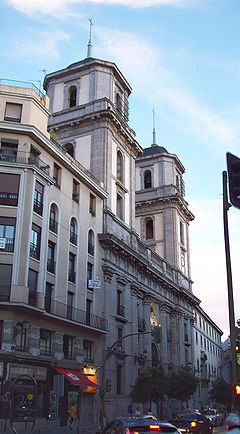
On 9 May 1608, she was Canonised by Pope Paul V and in the following decades a diligent search was made for her remains, which had been hidden due to the troubled times in which she lived. Her body was found incorrupt some months after her death. Her grave was identified on 2 April 1638, (but this time only the bones remained) and her remains were reburied in the Church of Santa Maria Nova on 9 March 1649, which since then has been her feast day. Again, in 1869, her body was exhumed and has since then been displayed in a glass coffin for the veneration of the faithful. The Church of Santa Maria Nova is now usually referred to as the Church of St Frances.
In 1925, Pope Pius XI declared her the patron saint of automobile drivers because of a legend that an angel used to light the road before her with a lantern when she travelled, keeping her safe from hazards. Within the Benedictine Order, she is also honoured as a patron saint of all oblates.
Saint of the Day – 8 March – St John of God OH (1495-1550) – aged 55 – Founder of the Brothers Hospitallers of Saint John of God, a worldwide Catholic religious institute dedicated to the care of the poor, sick, and those suffering from mental disorders. Patronages – against alcoholism and of alcoholics, against bodily ills of all sickness and of the sick, bookbinders, booksellers, publishers and printers, of the dying, firefighters, heart patients, hospitals (proclaimed on 22 June 1886 by Pope Leo XIII), hospital workers, nurses (proclaimed in 1930 by Pope Pius XI),Tultepec, Mexico
Born as João Duarte Cidade on 8 March 1495 of a noble but now impoverished family. As a 16th-century Spanish soldier, John gave up religion and led a wild life. When he left the military at age 40, he became a shepherd. John decided to make a radical conversion—to go to Muslim North Africa and free Christian slaves. He saw himself dying as a martyr. His confessor helped John settle on a more prudent plan: to open a religious bookstore in Granada, Spain. He successfully managed this project. It was during this period of his life that St John had a vision of the Infant Jesus, Who bestowed upon him the name by which he was later known, John of God, also directing him to go to Granada. He then settled in that city, where he worked disseminating books, using the recent movable type printing press of Johannes Gutenberg to provide people with works of chivalry and devotional literature.
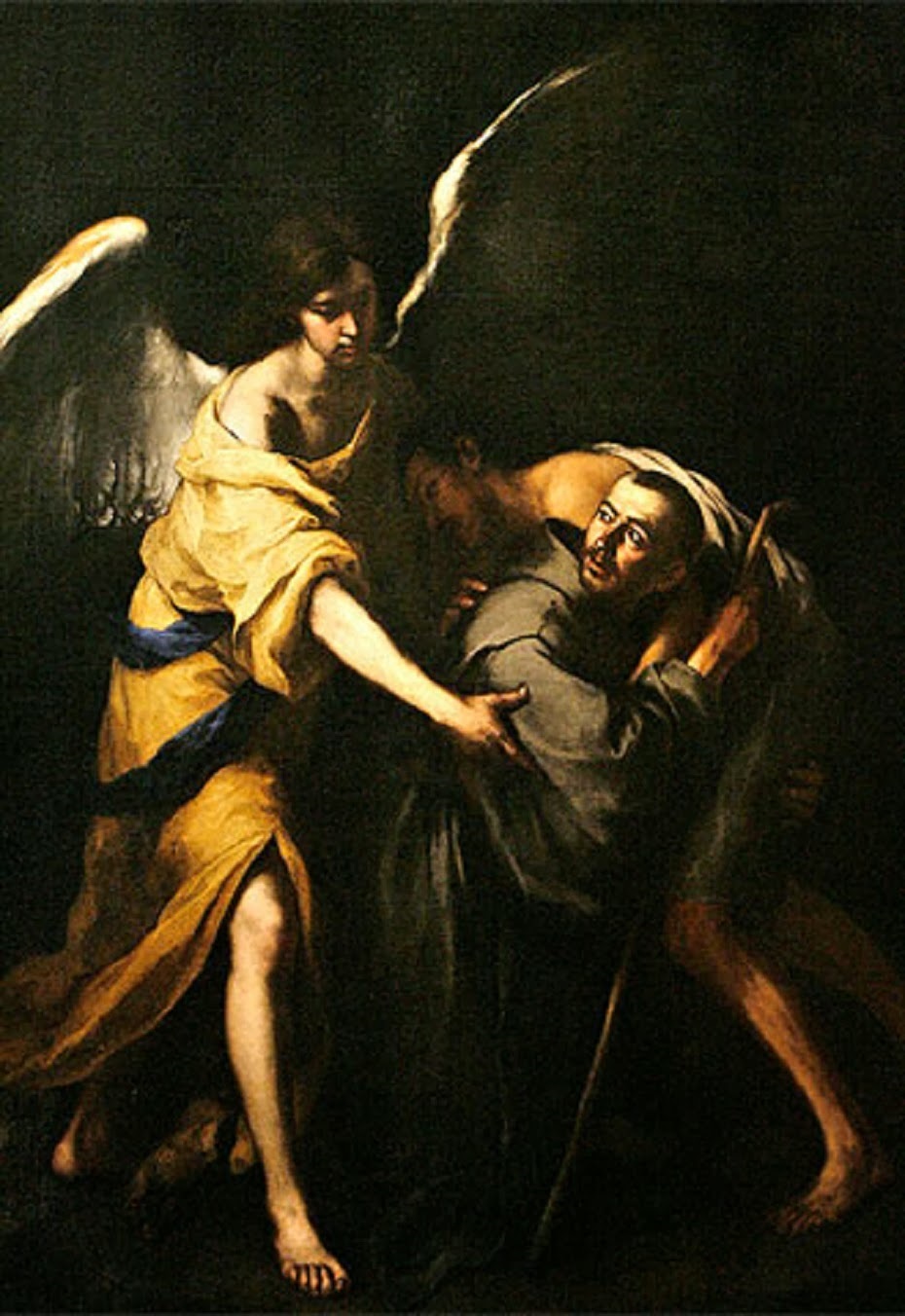
Saint John of God by Murillo (1672)
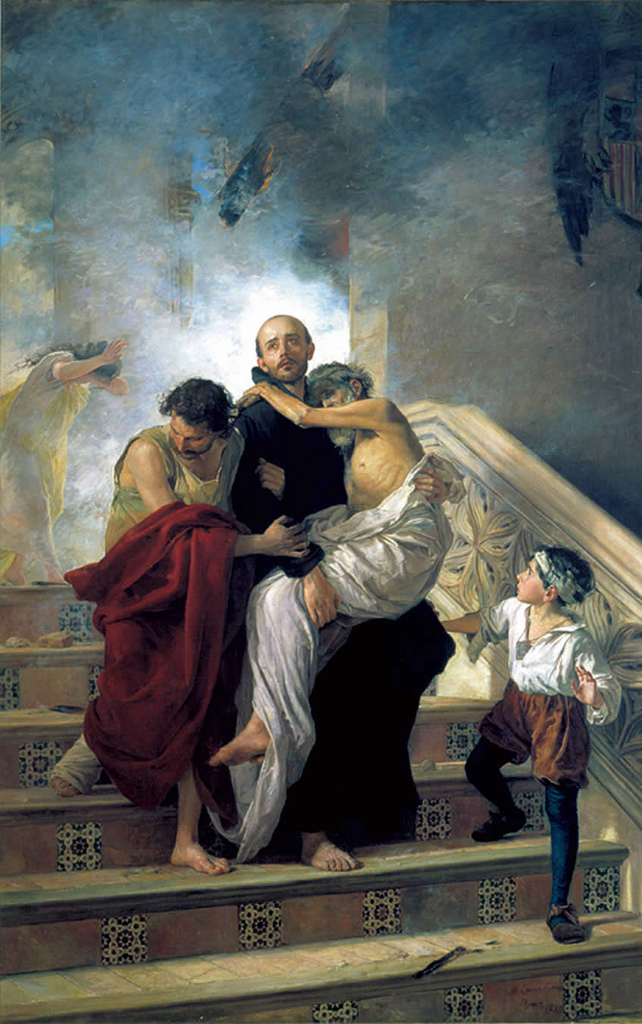
St John of God saving the Sick from a Fire at the Royal Hospital in 1549 by Manuel Gómez-Moreno González (1880)
At first, John begged for money to support those in need but soon people volunteered to help. John led a life of total giving and constant prayer. He found work for unemployed people. When the archbishop called John to his office because people complained that John kept immoral women in his hospital, he was silenced by John’s humility. John fell on his knees, saying, “I know of no bad person in my hospital except myself, who am unworthy to eat the bread of the poor.” John soon had a flourishing hospital. His helpers formed a community called the Brothers Hospitallers.
John of God died from pneumonia contracted while saving a drowning man. When John realised he was dying, he went over all the accounts, revised the rules and timetable and appointed a new leader. He died kneeling before the altar in his hospital chapel. John is the patron of hospitals.
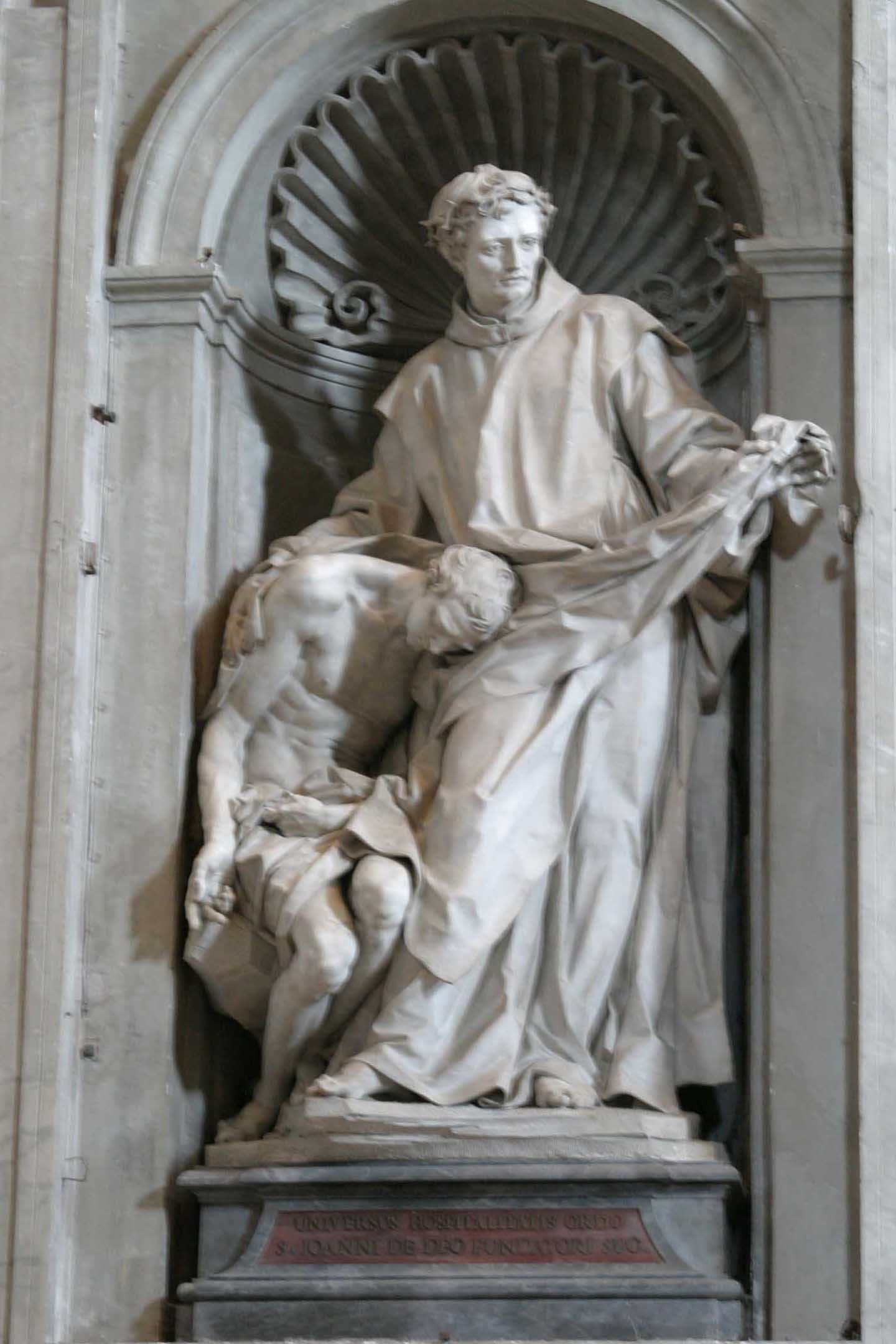
Founder Statue at the Vatican
The first biography of John of God was written by Francisco de Castro, the chaplain at John of God’s hospital in Granada, Spain. He drew from his personal knowledge of John as a young man and also used material gathered from eyewitnesses and contemporaries of his subject. It was published at the express wish of the Archbishop of Granada, who gave financial backing to its publication. Castro began writing in 1579, twenty-nine years after John of God’s death but he did not live to see it published, for he died soon after completing the work. His mother, Catalina de Castro, had the book published in 1585.
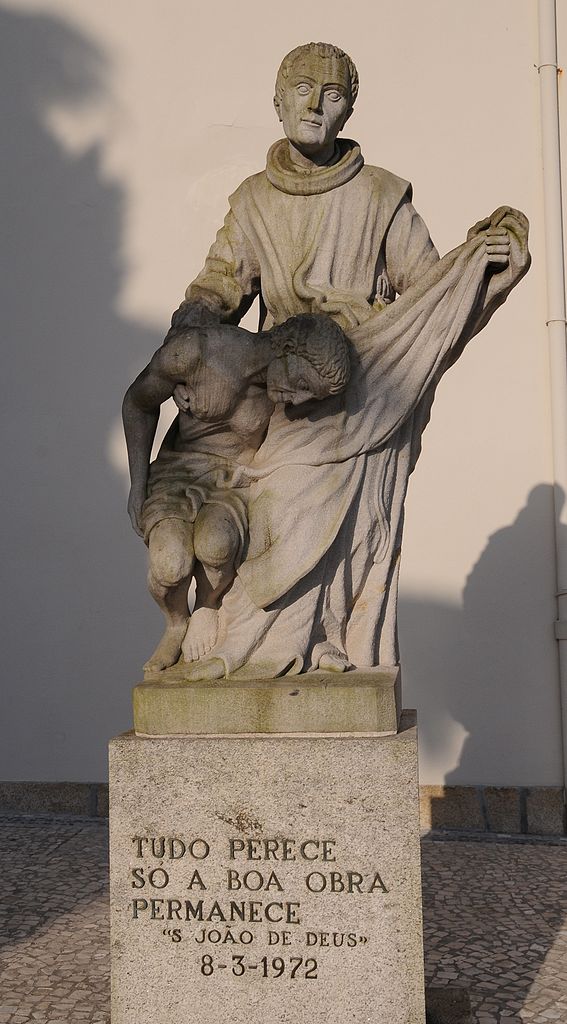
Statue of St John of God at the Church of Vilar de Frades, Barcelos, Portugal. The inscription reads: All things pass, only good works last.
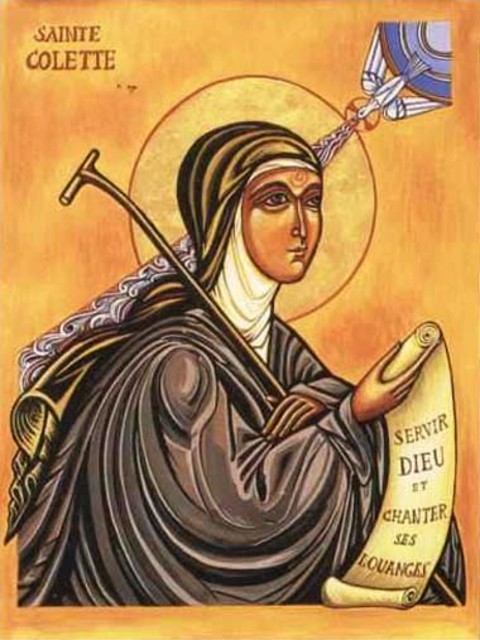
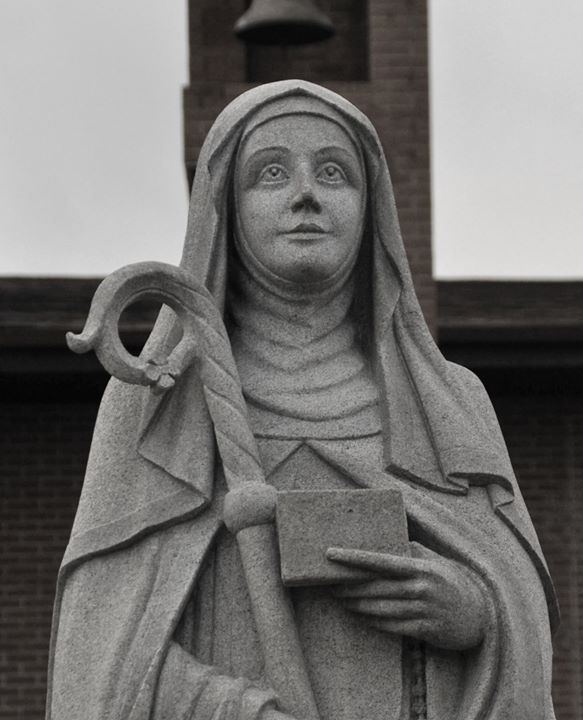
Saint of the Day – 6 March – St Colette PCC. (1381-1447) -aged 66, Abbess and Foundress of the Colettine Poor Clares, a reform branch of the Order of Saint Clare, better known as the Poor Clares. Patronages – against eye disorders, against fever, against headaches, against infertility, against the death of parents, of women seeking to conceive, expectant mothers and sick children, craftsmen, Poor Clares, servants, Corbie, France, Ghent, Belgium.
She was born Nicole Boellet (or Boylet) in the village of Corbie, in the Picardy region of France, on 13 January 1381, to Robert Boellet, a poor carpenter at the noted Benedictine Abbey of Corbie and to his wife, Marguerite Moyon. Her contemporary biographers say that her parents had grown old without having children, before praying to Saint Nicholas for help in having a child. Their prayers were answered when, at the age of 60, Marguerite gave birth to a daughter. Out of gratitude, they named the baby after the saint to whom they credited the miracle of her birth. She was affectionately called Nicolette by her parents, which soon came to be shorted to Colette, by which name she is known.
After her parents died in 1399, Colette joined the Beguines, she was seventeen but found their manner of life unchallenging. She received the habit of the Third Order of St. Francis in 1402 and became a hermit under the direction of the Abbot of Corbie, living near the abbey church.
Renewing religious institutions is not easy. We would expect a person chosen to reform convents and monasteries to be formidable. Maybe even physically tall, overbearing, and somewhat threatening. God, however, doesn’t seem to agree. For example, in the fifteenth century he selected St. Colette, a young woman the opposite of these characteristics, to call Franciscans to strict observance of the rules of St. Clare and St. Francis.
Not that Colette was unimpressive. She was a beautiful woman whose radiant inner strength attracted people. However, her spirituality, her commitment to God, and her heart for souls, not her physical qualities, suited her for her reforming mission.
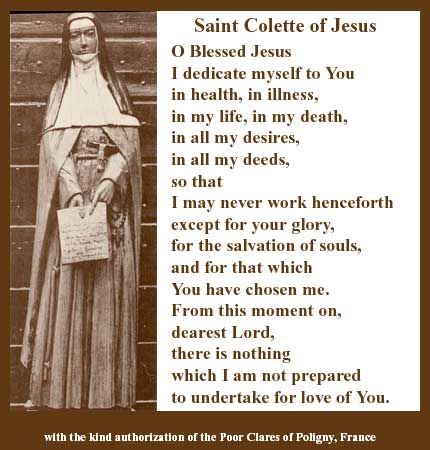
St. Francis appeared to her in a vision and charged her to restore the Poor Clares to their original austerity. When Friar Henry de Beaume came in 1406 to conform her mission, Colette had the door of her hut torn down, a sign that her solitude was over and her work begun. And she then prayed her commitment:
“I dedicate myself in health, in illness, in my life, in my death, in all my desires, in all my deeds so that I may never work henceforth except for your glory, for the salvation of souls, and towards the reform for which you have chosen me. From this moment on, dearest Lord, there is nothing which I am not prepared to undertake for love of you.”
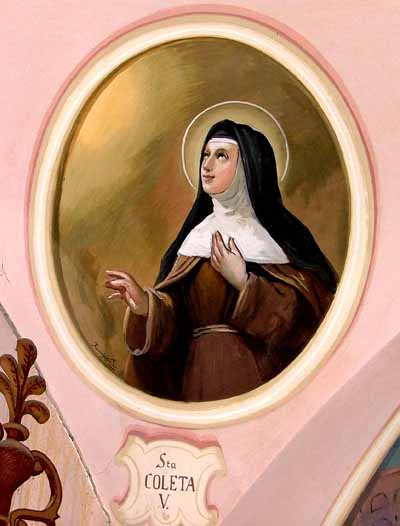
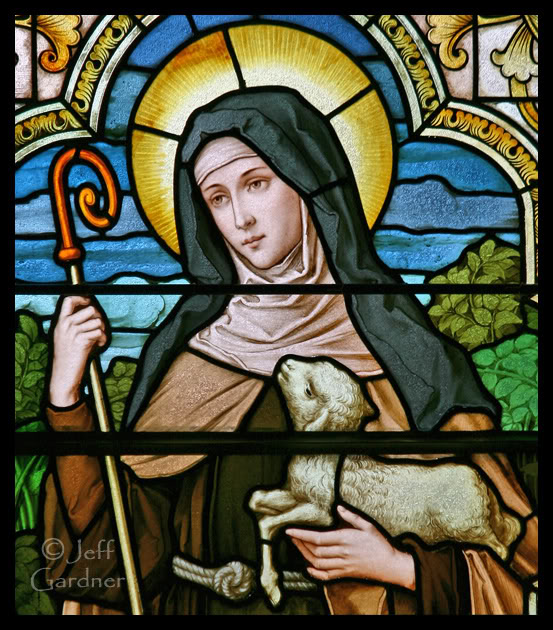
St Colette
Colette’s first reports to reform convents met vigorous opposition. Then she sought the approval of the Avignon pope, Benedict XIII, who professed her as a Poor Clare and put her in charge of all convents she would reform. He also appointed Henry de Beaume to assist her. Thus equipped, she launched her reform in 1410 with the Poor Clares at Besancon. Before her death in 1447, the saint had founded or renewed seventeen convents and several friaries throughout France, Savoy, Burgundy, and Spain.
Like Francis and Clare, Colette devoted herself to Christ crucified, spending every Friday meditating on the passion. She is said to have miraculously received a piece of the cross, which she gave to St.Vincent Ferrer when he came to visit her.
St. Joan of Arc once passed by Colette’s convent in Moulins but there is no evidence that the two met. Like Joan, Colette was a visionary. Once, for instance, she saw souls falling from grace in great numbers, like flakes in a snowstorm. Afterward she prayed daily for the conversion of sinners. She personally brought many strays back to Christ and helped them unravel their sinful patterns. At age sixty-six, Colette foretold her death, received the sacrament of the sick and died at her convent in Ghent, Flanders.
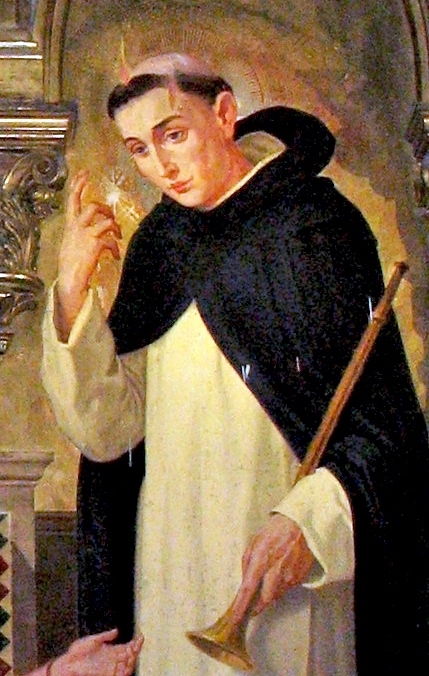
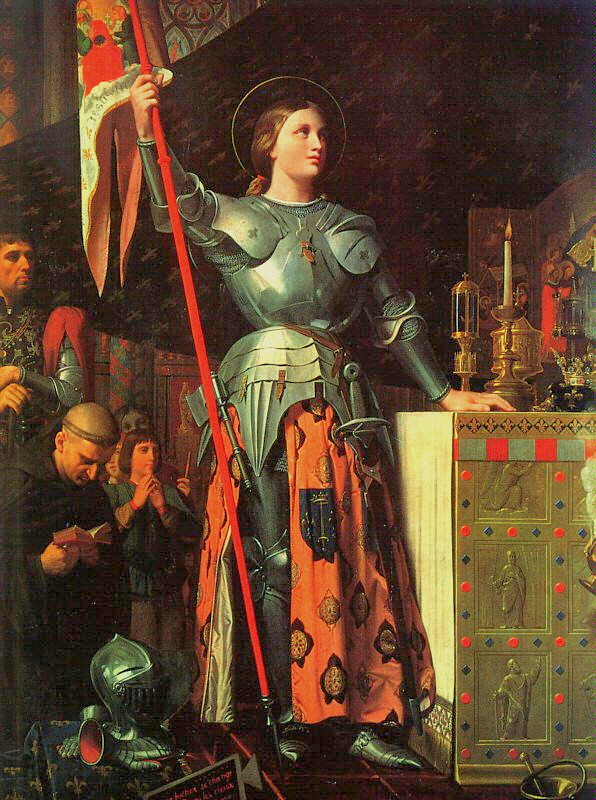
St Vincent FerrerSt Joan of ArcSt ColetteSt Colette
Miracles Helping a mother in childbirth While traveling to Nice to meet Pope Benedict, Colette stayed at the home of a friend. His wife was in labour at that time with their third child and was having major difficulties in he childbirth, leaving her in danger of death. Colette immediately went to the local church to pray for her. The mother gave birth successfully and survived the ordeal. She credited Colette’s prayers for this. The child born, a girl named Pierinne, later entered a monastery founded by Colette. She would become Colette’s secretary and biographer.
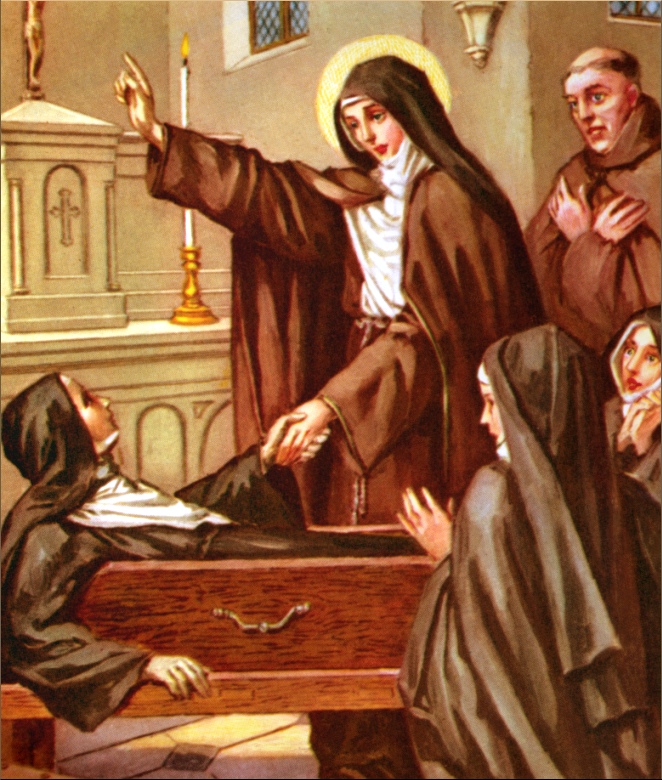
Saving a sick child After the pope had authorised Colette to establish a regimen of strict poverty in the Poor Clare monasteries of France, she started with that of Besançon. The local populace was suspicious of her reform, with its total reliance on them for the sustenance of the monastery. One incident helped turn this around. According to legend, a local peasant woman gave birth to a stillborn child. In desperation, out of fear for the child’s soul, the father took the baby to the local parish priest for baptism. Seeing that the child was already dead, the priest refused to baptise the body. When the man became insistent, out of frustration, the priest told him to go to the nuns, which he did immediately. When he arrived at the monastery, Mother Colette was made aware of his situation by the portress. Her response was to take off the veil given to her by the Pope, when he gave her the habit of the Second Order and told the portress to have the father wrap the child’s body in it and for him to return to the priest. By the time he arrived at the parish church with his small bundle, the child was conscious and crying. The priest immediately baptised the baby.
Colette was beatified 23 January 1740, by Pope Clement XII and was canonized 24 May 1807 by Pope Pius VII.
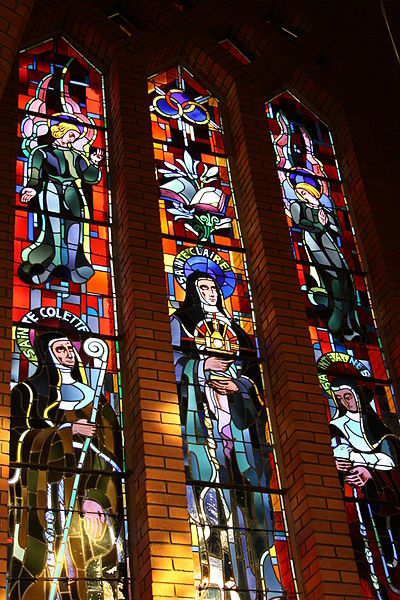
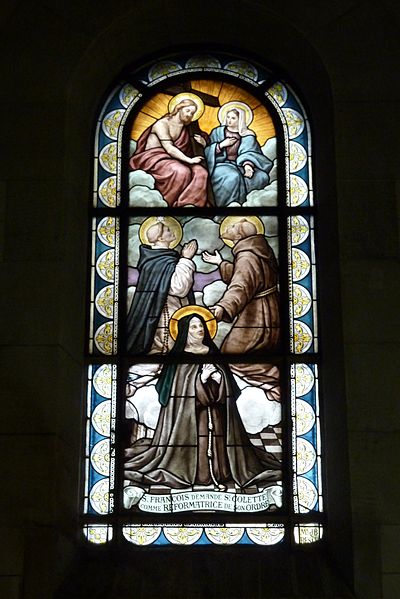
Stained glass window in a Franciscan chapel Paris, FranceStained glass window in Our Lady of the Rosary Church Saint-Ouen, France


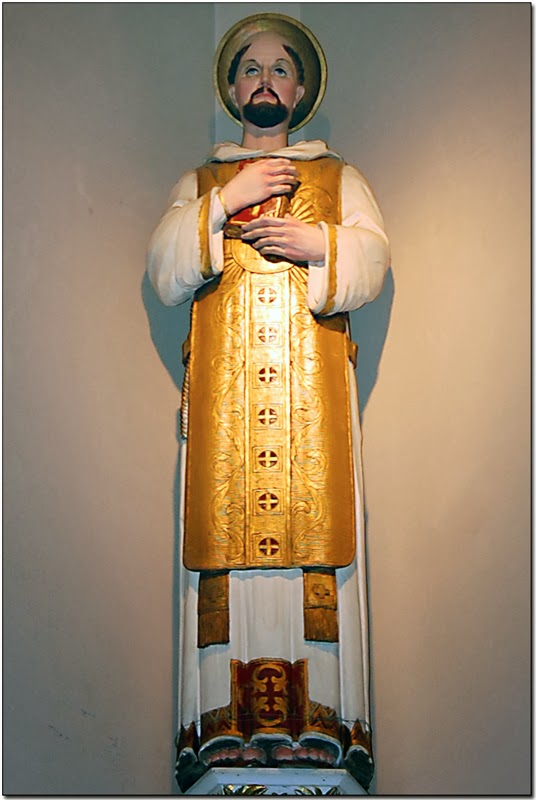


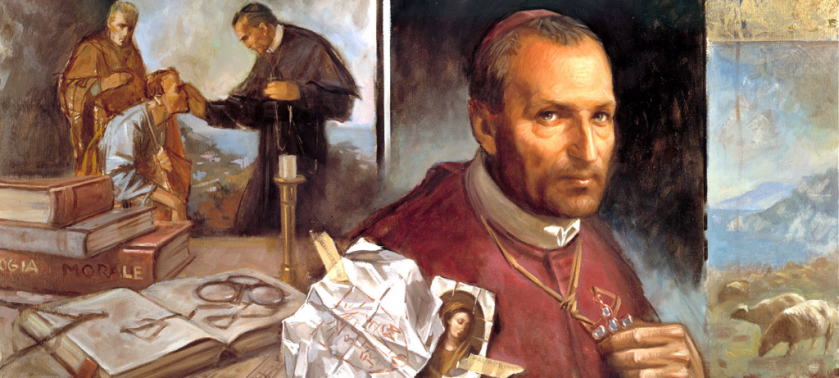
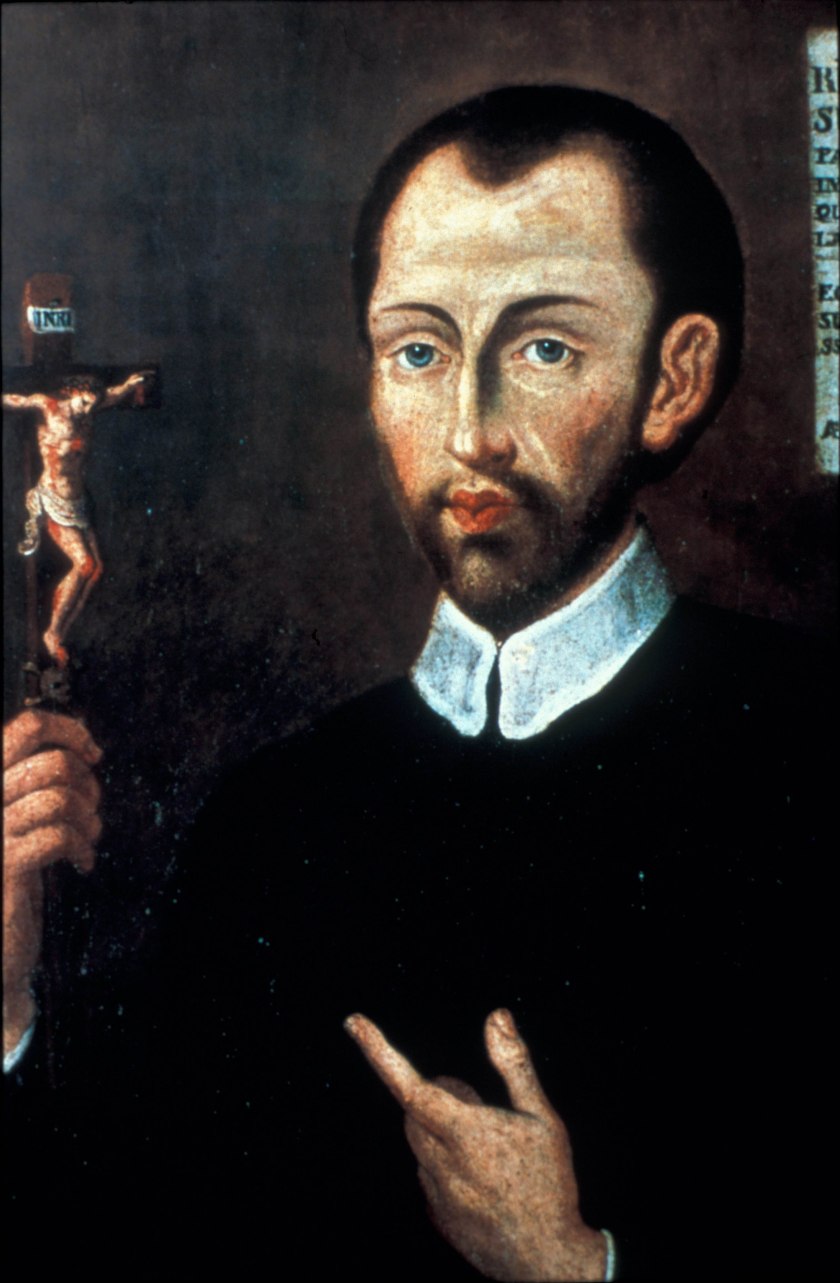
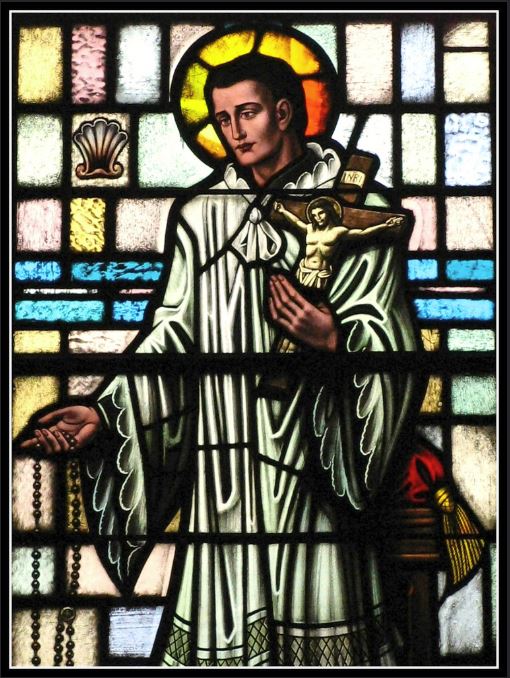























 On 9 May 1608, she was Canonised by Pope Paul V and in the following decades a diligent search was made for her remains, which had been hidden due to the troubled times in which she lived. Her body was found incorrupt some months after her death. Her grave was identified on 2 April 1638, (but this time only the bones remained) and her remains were reburied in the Church of Santa Maria Nova on 9 March 1649, which since then has been her feast day. Again, in 1869, her body was exhumed and has since then been displayed in a glass coffin for the veneration of the faithful. The Church of Santa Maria Nova is now usually referred to as the Church of St Frances.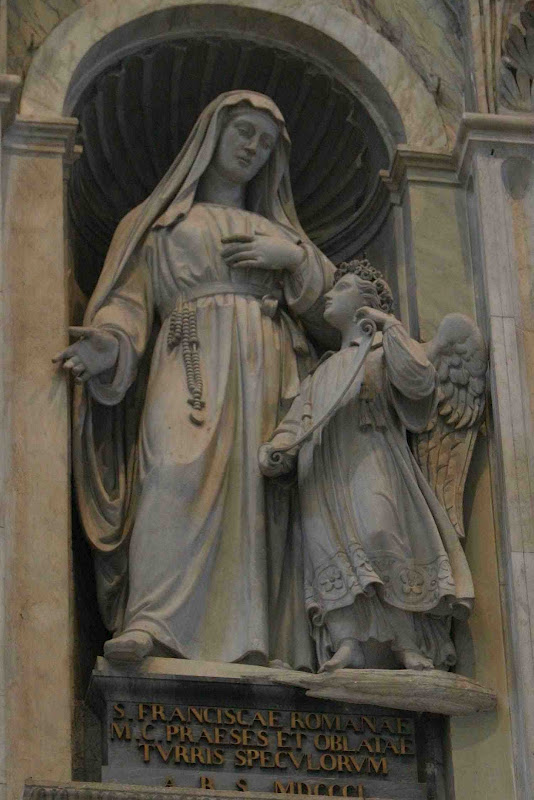
 AnaStpaul
You must be logged in to post a comment.