Posted in franciscan OFM, INCORRUPTIBLES, SAINT of the DAY

Saint of the Day – 29 February – Blessed Antonia of Florence OSC (1401-1472) Widow

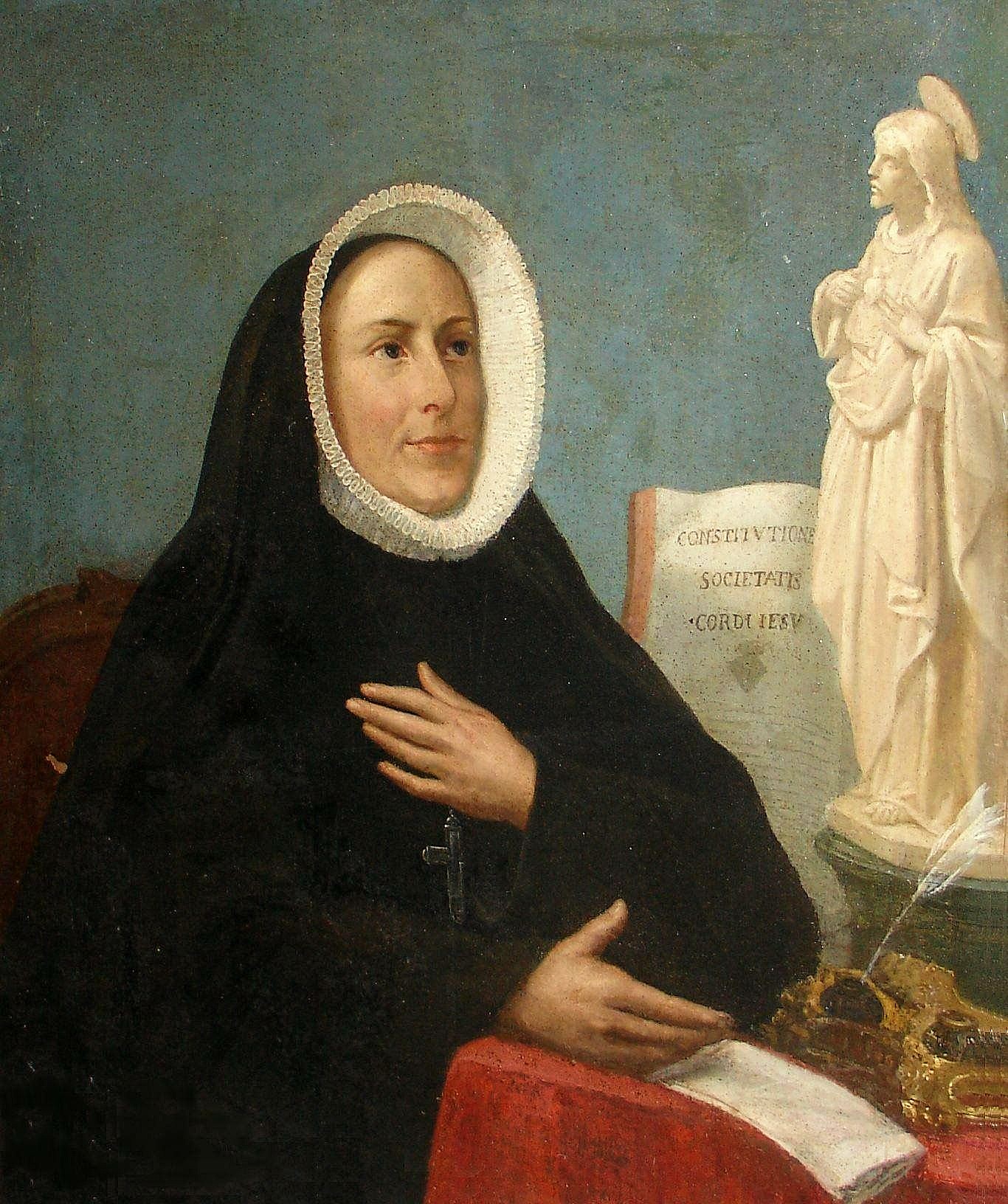
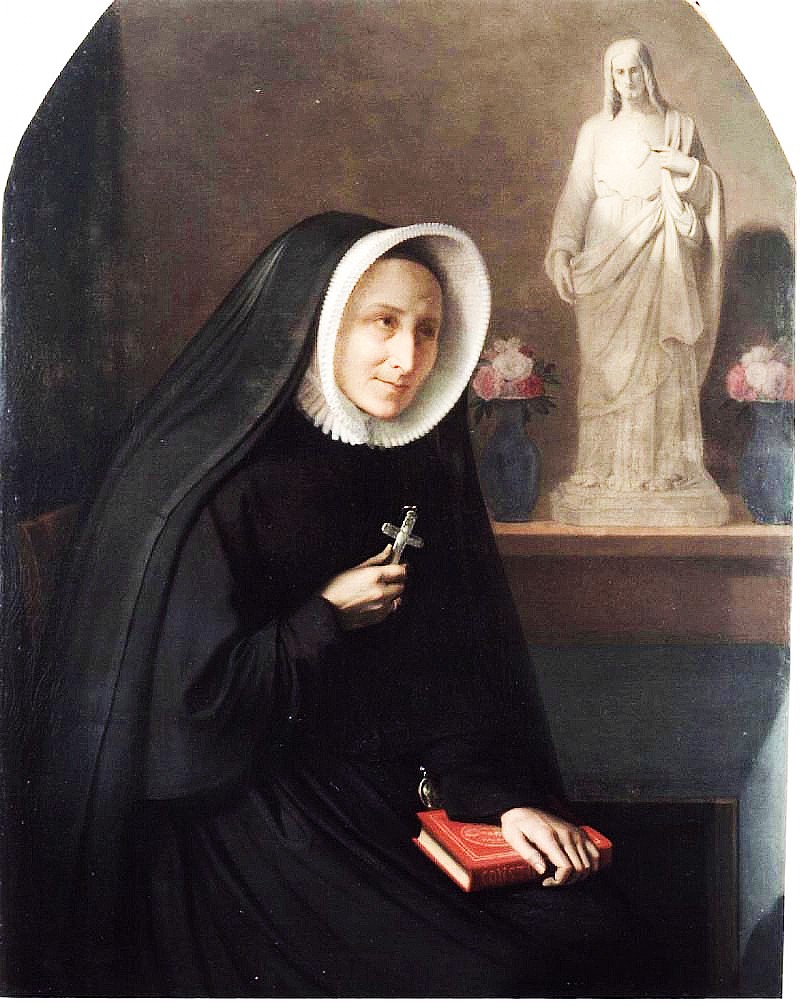
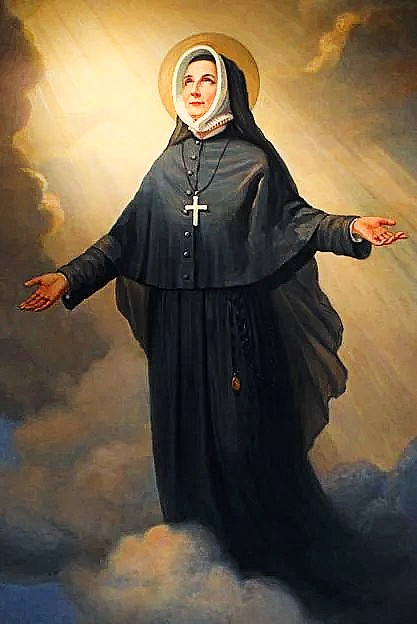
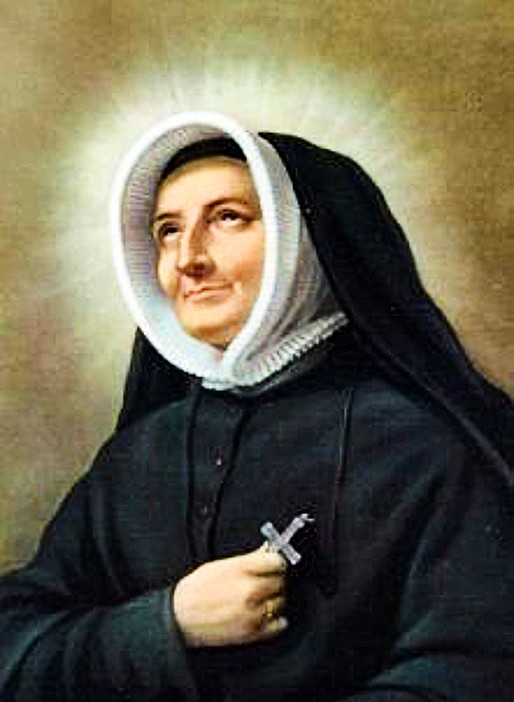
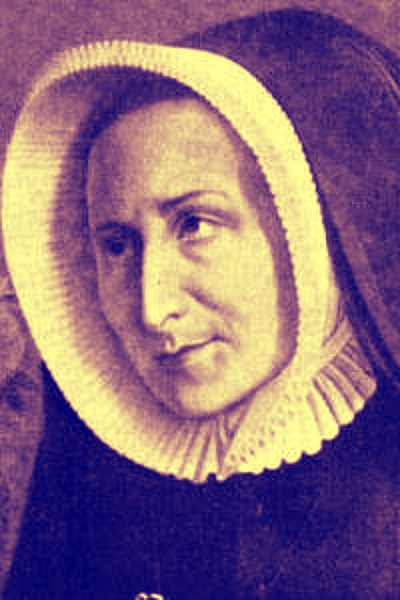
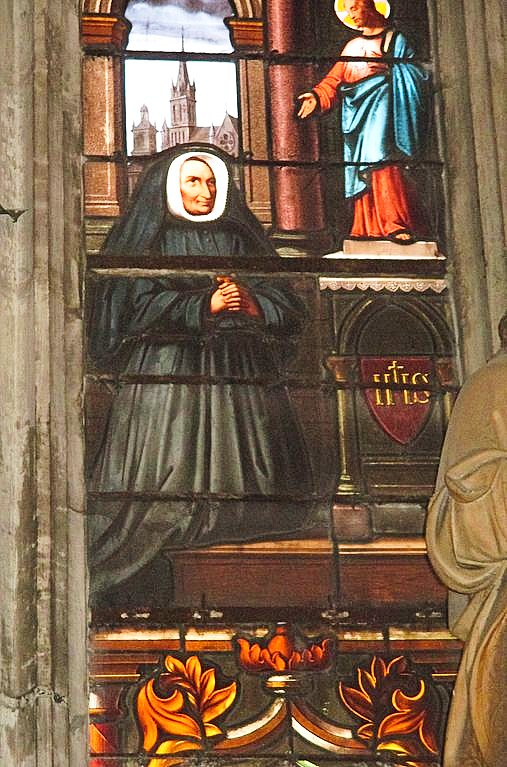
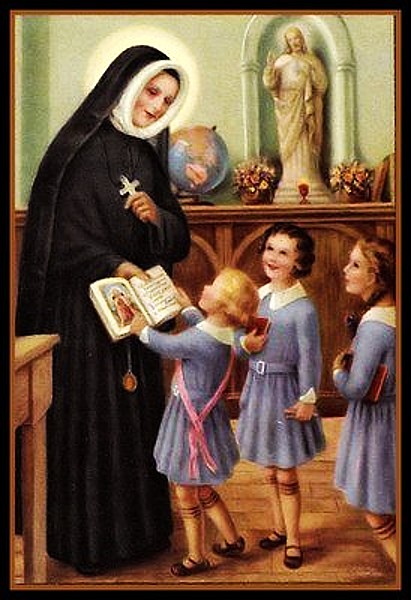
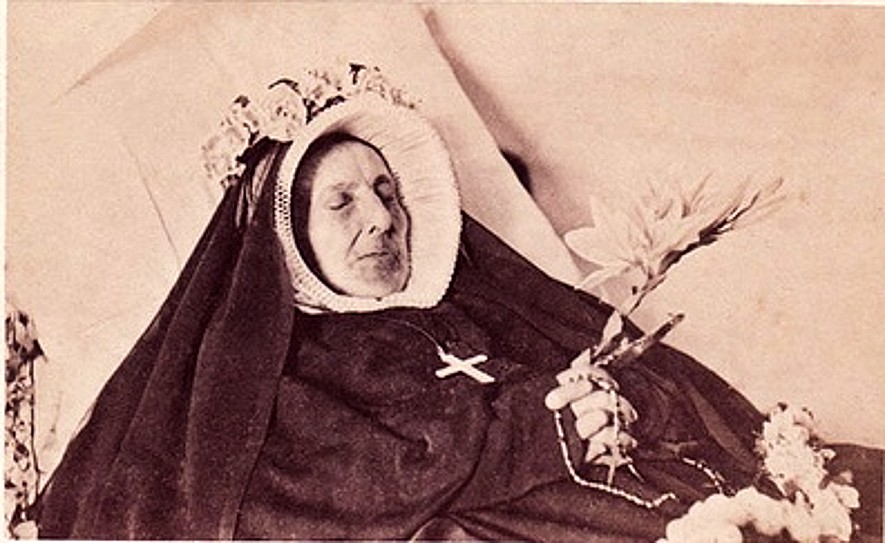
Saint of the Day – 29 February – Blessed Antonia of Florence OSC (1401-1472) Widow, Abbess of the Monastery of Corpus Christi in L’Aquila. Born in 1401 in Florence, Italy and died on 29 February 1472 in her Convent at Aquila, Italy of natural causes, her Feast Day is, therefore, celebrated on 28 February in non-Leap years. Her body is incorrupt. Antonia was Beatified in 1847 by Pope Pius IX.
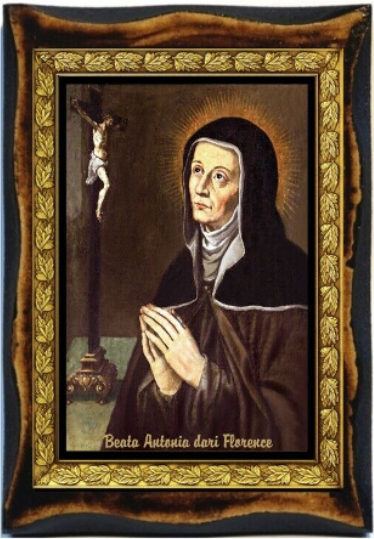
Blessed Antonia of Florence was born of a noble family in Florence, Italy, in 1401. She entered the married state at a very early age, in compliance with the wish of her parents. She and her husband had one child, a son. When her husband died in 1428, she allowed nothing to induce her to contract a second marriage but resolved to withdraw from the world and live only for God and the salvation of her soul.

These were the years in which Saint Bernardino of Siena, with some companions, spread the Observance movement and the return of an original “Franciscanism” in many Italian cities. Most of the sermons were given in the square, the churches were unable to contain the crowds that punctually flocked. Brother Bernardino preached in Santa Croce in Florence from 8 March to 3 May 1425. Antonia, listening to him, responded yes, without conditions, to God’s call. She had known the experience of married life, she was a mother, but the Lord gave a turning point to her life. Four years later, once family matters were settled, she entered

In 1429, after ensuring the comfort and care of her son, she entered the Convent of Tertiaries which Blessed Angelina had ounded at Florence. Here she so distinguished herself by virtue and wisdom that after a few years, the Superiors called her to Foligno to preside as Superior of the Convent there.
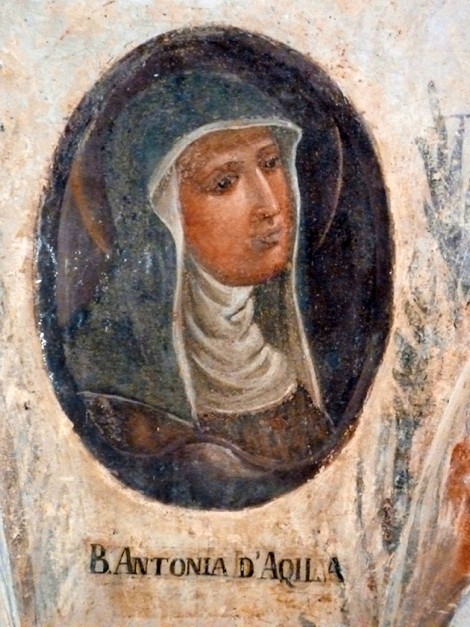
A fresco of Blessed Antonia – c1500

Although, in her humility, she found it difficult to accept the advancement, she was happy to carry out the appointment under the guidance of Blessed Angelina, who, as Superior General of the several Convents she had founded, dwelt at Foligno. Antonia so availed herself of the opportunity to profit by the holy example and the good counsel of the Foundress that she could be honoured as an example of how a Superior. should conduct herself and her responsibilities.

In consequence, after a few years, Blessed Antonia of Florence was sent to establish a Convent in Aquila. There, under her maternal direction, a veritable sanctuary of holiness budded forth, the fame of which brought joy to that City and the entire vicinity.

Although the religious community zealously served God according to the rule of the Third Order, it did not satisfy Blessed Antonia in her yearning for personal perfection. She felt strongly drawn to a stricter life, to more perfect poverty and to more complete renunciation of the world, as practiced in the Order of St Clare.
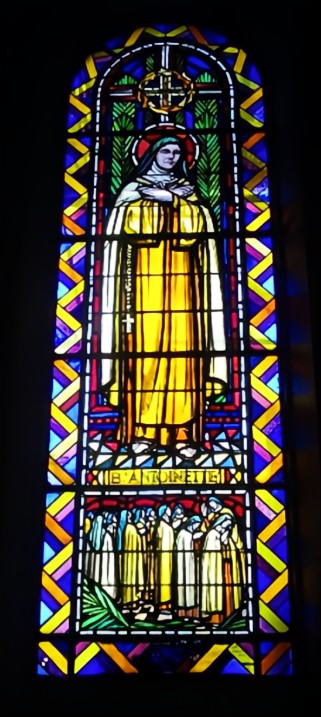
At a visitation she communicated her desire to her spiritual Coinfessor, St John of Capistrano OFM (1386-1456). He approved it and, at his suggestion and with the sanction of the Holy Father, in 1447, a new Convent of the Poor Clares was founded at Aquila which ,Antonia with twelve consecrated virgins, entered. She was appointed Superior and Abbess but, while she occupied the highest place, she always strove to find the last. The lowliest tasks, worn clothes, the most disagreeable occupations she assigned to herself, while she shunned all honour and distinction. In all she did and said, there shone forth the most sincere humility.

Just as pronounced was the patience with which she bore the burdens of her position, the weakness of all her subjects, the many importunities of her relatives and finally, the sufferings of a lingering illness.

While she was extraordinarily severe with herself, she possessed truly motherly concern for her Sisters. They, in turn, clung to her with filial love and, when after seven years of administration, she was relieved of the burden, she was still considered, by the sisters, as their mother and model.

God distinguished His faithful servant with special graces. Her prayer amounted to perfect contemplation of heavenly things, the ardour of her devotion sometimes causing her to be raised aloft bodily. Once a glowing sphere was seen suspended over her head.

Blessed Antonia of Florence reached the age of seventy-one years and died on 29 February 1472, addressing words of comfort and holy exhortation to her sorrowing fellow Sister, who were gathered around her.

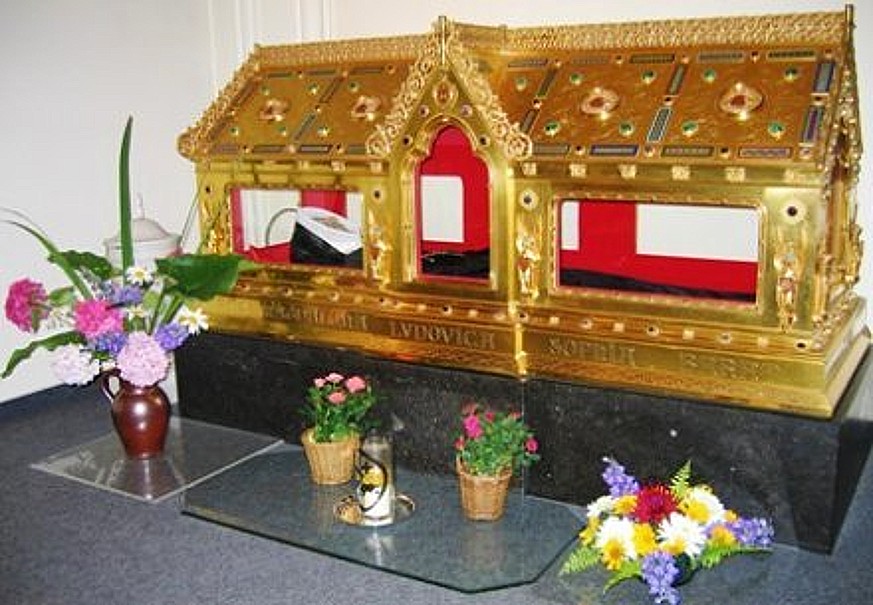
Numerous miracles occurred at her tomb and her body is a constant miracle, for, up to the present time, it is preserved wholly incorrupt and is of an extraordinary freshness and beauty which is emphasised by the open eyes. The uninterrupted veneration which began with the day of her death received the sanction of Pope Pius IX.
Posted in INCORRUPTIBLES, SAINT of the DAY

Thursday of the Second Week in Lent and a few Leap Year Feast Days – 29 February

29 February – A Leap Year
The Saints below would be celebrated on 28 February if not a Leap Year:

Blessed Antonia of Florence OSC (1401-1472) Widow, Abbess, Mystic. Her body is Incorrupt,

Posted in INCORRUPTIBLES, JESUIT SJ, MARIAN TITLES, SAINT of the DAY

Our Lady of Avesnières, Laval, France (11th Century), Our Lady of Grace, or Our Lady of the Bowed Head, Rome (1610), St Romuald (c 951-1027) Abbot and Memorials of the Saints – 7 February

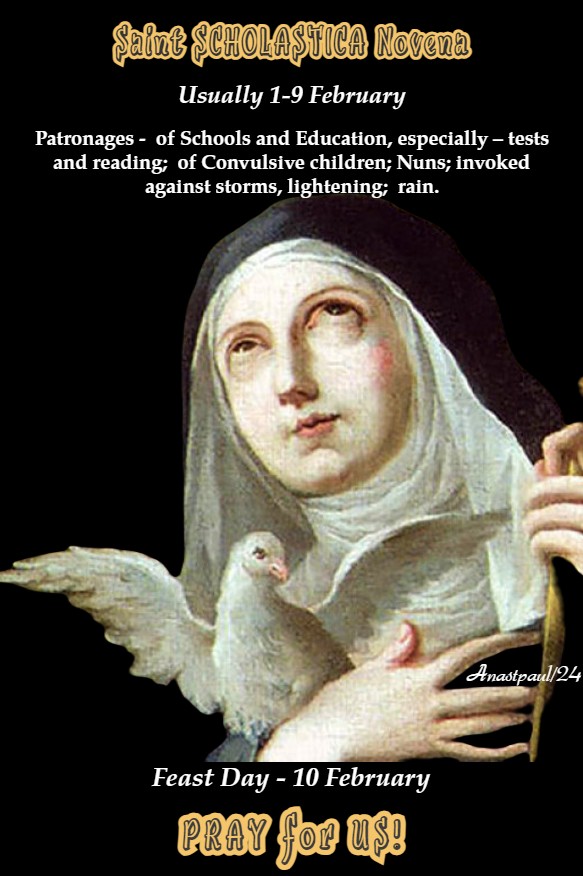
St Scholastica Novena – THE SEVENTH DAYA:
CLICK THE LINK BELOW:
St Schola
stica Novena

St Adaucus of Phrygia
St Amulwinus of Lobbes
St Anatolius of Cahors
Bl Anselmo Polanco
Bl Anthony of Stroncone

St Augulus
St Chrysolius of Armenia
St Fidelis of Merida
Blessed Jacques Salès SJ (1556-1593) + Priest Martyr
St John of Triora
St Juliana of Bologna

St Luke the Younger

St Maximus of Nola
St Meldon of Péronne
St Moses the Hermit Bishop
St Parthenius of Lampsacus

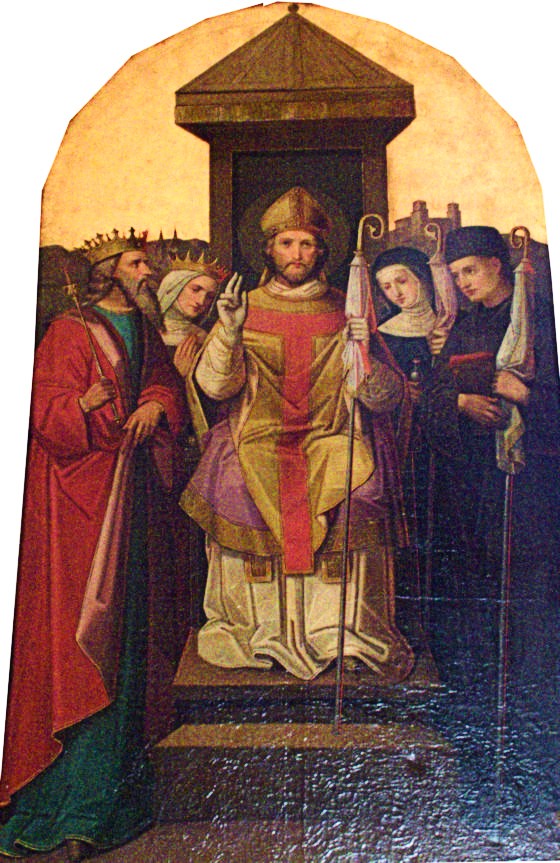
Left to right – St Willibald, St Wuna, St Richard, St Walburga, St Winnibald

Bl Rizziero of Muccia
St Theodore (Died Early 4th Century) Martyr, Soldier

St Tressan of Mareuil
Blessed William Saultemouche SJ (1555-1593) + Martyr, Jesuit Lay Brother

Posted in franciscan OFM, INCORRUPTIBLES, MARIAN TITLES, SAINT of the DAY

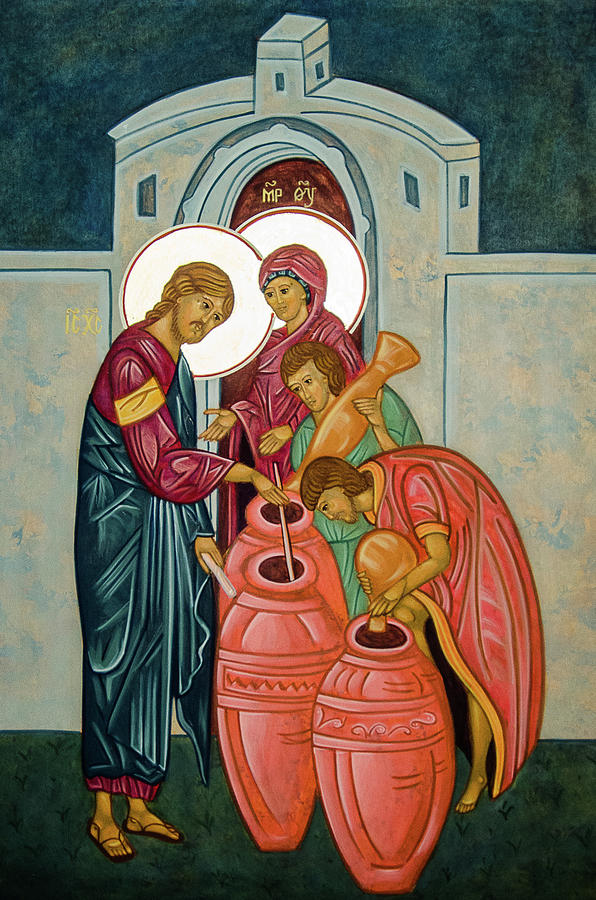
The Epiphany of the Lord, Nostra Signora di Cana / Our Lady of Cana and Memorials of the Saints – 6 January

The Epiphany of the Lord
Epiphany celebrates the visit of the three Kings or iMagi (Wise Men) to the Christ Child, signifying the extension of salvation to the Gentiles.
The date of Epiphany, one of the oldest Christian Feasts, is 6 January, the 12th day after Christmas.
However, in some countries, the celebration of Epiphany is transferred to the Sunday which falls between 2 January and 8 January (inclusive). Greece, Ireland, Italy and Poland continue to observe Epiphany on 6 January as do some Dioceses throughout the world.
Because Epiphany is one of the most important Feasts, it is a Holy Day of Obligation.

The Epiphany:
https://anastpaul.wordpress.com/2018/01/07/the-solemnity-of-the-epiphany-of-our-lord-jesus-christ-7-january-god-reveals-himself-to-us/
AND:
https://anastpaul.com/2019/01/06/the-solemnity-of-the-epiphany-of-the-lord-6-january/

Saint Caspar, Saint Melchior and Saint Balthasar (1st Century)

Nostra Signora di Cana / Our Lady of Cana – 6 January:
HERE:

https://anastpaul.com/2022/01/06/the-solemnity-of-the-epiphany-of-the-lord-nostra-signora-di-cana-our-lady-of-cana-and-memorials-of-the-saints-6-january/

St Antoninus
St Basillisa of Antinoe

St Demetrius of Philadelphia
St Diman Dubh of Connor
St Edeyrn
St Eigrad
St Erminold of Prüfening

Bl Frederick of Saint-Vanne
Bl Gertrud of Traunkirchen
Bl Gertrude van Oosten
St Guarinus of Sion
St Guy of Auxerre
St Honorius
St Hywyn of Aberdaron

St Julian of Antinoë
St Julius
Bl Luc of Roucy
Bl Macarius the Scot
St Macra of Rheims
St Merinus
St Nilammon of Geris (Died c404) Hermit
St Petran of Landévennec

St Pia of Quedlinburg
St Pompejanus
Bl Raymond de Blanes
St Schotin
St Wiltrudis of Bergen

Brendan of Birr (Died c 573) Monk, known as “Prophet of Ireland,” Founder of the Monastery at Birr in Central Ireland.
https://anastpaul.com/2021/11/29/saint-of-the-day-29-november-saint-brendan-of-birr-died-c-573/
Brendan the Navigator (c 484–c 577) Priest, Abbot, Founder of many Monasteries.
https://anastpaul.com/2019/05/16/saint-of-the-day-16-may-st-brendan-the-navigator-c-484-c-577/
Columba of Iona (521-597) Apostle of the Picts, Apostle to Scotland, Abbot, Missionary, Evangelist, Poet, Scholar and Writer.
https://anastpaul.com/2020/06/09/saint-of-the-day-9-june-saint-columba-of-iona-521-597-apostle-of-the-picts-apostle-to-scotland/
Columba of Terryglass (Died 552) Abbot, Founder of Monasteries, Miracle-worker.
https://anastpaul.com/2023/12/12/saint-of-the-day-12-december-saint-columba-of-terryglass-died-552-abbot-one-of-the-twelve-apostles-of-ireland/
Keiran of Saighir (Died c 530) Bishop
https://anastpaul.com/2022/03/05/saint-of-the-day-5-march-saint-kieran-died-c-530/
Kieran of Clonmacnois / the Younger (c516-c550) Priest, Monk, Abbot, Teacher.
https://anastpaul.com/2021/09/09/saint-of-the-day-9-september-saint-kieran-the-younger-c-516-c-550/
Canice of Aghaboe
Lasserian of Leighlin
Mobhí of Glasnevin
Ninnidh the Saintly of Loch Erne
Ruadh´n of Lorrha
Senan of Iniscathay

Posted in franciscan OFM, INCORRUPTIBLES, SAINT of the DAY

St Catherine Labouré and all the Saints for 28 November

Bl Calimerius of Montechiaro
St Fionnchu of Bangor

St Hilary of Dijon
St Hippolytus of Saint Claude
St Honestus of Nimes
St Irenarcus

St Papius
St Quieta of Dijon
St Rufus
St Simeon the Logothete
St Sosthenes (1st Century) Bishop, Martyr, Jewish Ruler in Corinth, Converted by St Paul.
St Stephen the Younger
Bl Theodora of Rossano

Posted in AUGUSTINIANS OSA, franciscan OFM, INCORRUPTIBLES, MARIAN TITLES, SAINT of the DAY

Dedication of The Archbasilica of the Most Holy Saviour, Santa Maria la Real de la Almudena / Our Lady of Almudena, Spain (712) and Memorials of the Saints – 9 November

Dedication of The Archbasilica of the Most Holy Saviour and of Saints John the Baptist and John the Evangelist in the Lateran:
HERE:

https://anastpaul.com/2021/11/09/feast-of-the-dedication-of-the-archbasilica-of-the-most-holy-saviour-and-of-saints-john-the-baptist-and-john-the-evangelist-in-the-lateran-santa-maria-la-real-de-la-almudena-our-lady-of-almudena/
AND:
https://anastpaul.wordpress.com/2017/11/09/feast-of-the-dedication-of-the-basilica-of-saint-john-lateran-9-november/
AND:
https://anastpaul.com/2018/11/09/feast-of-the-dedication-of-st-john-lateran-9-november/

St Agrippinus of Naples
St Alexander of Salonica
St Aurelius of Riditio
St Benignus of Armagh (Died 467) Bishop, Disciple of and Successor to St Patrick

St Eustolia

Blessed George Napper (1550-1610) Priest Martyr Beatified by Pope Pius XI on 15 December 1929

Bl Helen of Hungary
St Jane of Segna

St Pabo
St Sopatra
St Theodore Stratelates
St Ursinus of Bourges
St Vitonus of Verdun

Posted in INCORRUPTIBLES, SAINT of the DAY

Saint of the Day – 23 September – Blessed Elena Duglioli (1472-1520) Widow

Saint of the Day – 23 September – Blessed Elena Duglioli (1472-1520) Widow Born in 1472 at Bologna, Italy and died on 23 September 1520 of natural cause, aged 48. Also known as – Elena Duglioli Dall’Olio, Hélène, Helen of Bologna. Elena was Beatified on 26 March 1828 by Pope Leo XII. Her body is incorrupt.

Unfortunately we have scant information on Elena’s life. Elena Duglioli was born in Bologna in 1472 to the aristocrats Notary Silverio Duglioli and Pentisilea Boccaferri.

During her childhood and adolescence, she desired to become a professed religious and decided to enter the Poor Clare Convent of Corpus Domini, Bologna. Her parents, however, wished her to marry and to obey and please them, she agreed to marry the much older Senator Benedetto dall’Olio.

The marriage took place in 1487 when she was 15 years old to the 40 year old Senator. Elena who greatly desired to Consecrate her virginity to God was able to bring Benedetto to agree to maintain total chastity in their marriage (this information is unconfirmed, hence her title remains ‘Widow’). The marriage proved happy and successful with both husband and wife living in admirable union and in complete harmony. Benedetto died after they had been together for 30 years.

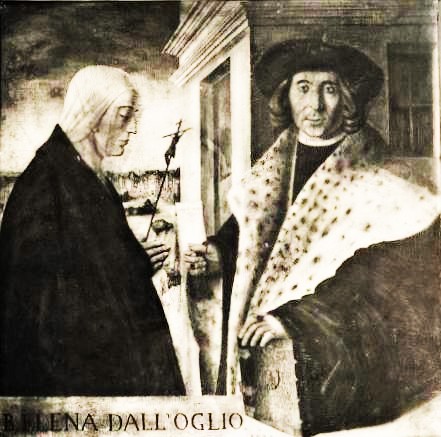
Bl Elena with her husband Benedetto

Having become a widow, she devoted herself to pious works with even greater zeal.

Elena bore a particular devotion to Saint Cecilia and the Papal Legate to Bologna – Cardinal Francesco Alidosi – gave her a knucklebone Relic of St Cecilia. Her devotion to the Saint led her to commission the construction of a Church where the Artist, Raphael, would paint an image of the Saint Cecilia.

Elena died on 23 September 1520. Her incorrupt remains are housed in the Church of San Giovanni in Monte.

The Beatification received official confirmation on 26 March 1828 once Pope Leo XII approved her local cultus. Prospero Lorenzo Lambertini – the future Pope Benedict XIV – spoke in favour of Elena’s Beatification.

Posted in INCORRUPTIBLES, SAINT of the DAY

Saint of the Day – 7 July – Saint Ethelburga of Faremoutier (Died 664) Virgin, Abbess

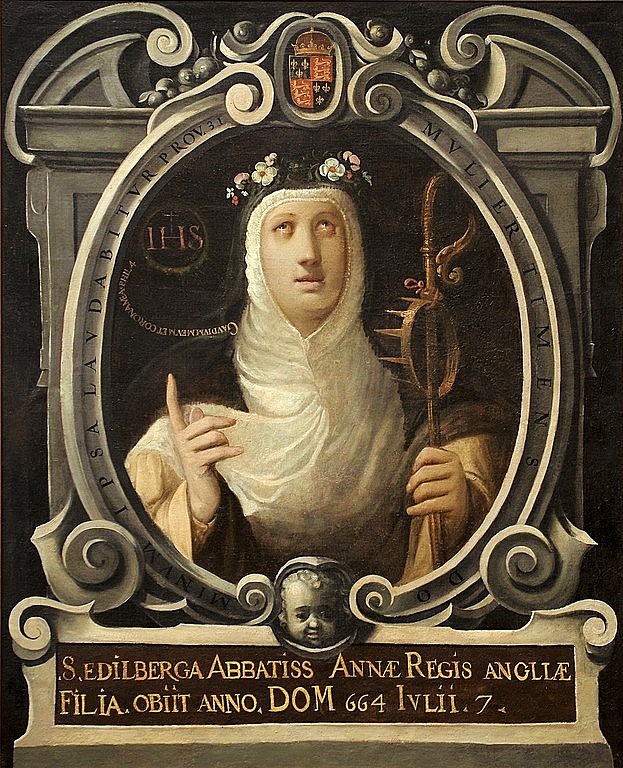
Saint of the Day – 7 July – Saint Ethelburga of Faremoutier (Died 664) Virgin, Abbess, Princess Born in the Kingdom of East Anglia and died in 664 at Faremoutier, France of natural causes. When her body was exhumed seven years after her death, it was found incorrupt. Also known as – Aubierge, Cdilburh, Edelburga, Edilberga, Edilburga, Etelburg.

Ethelburga was one of the daughters of King Anna of East Anglia. Her sisters were St Withburga, St Saethryth, who was Abbess of Faremoutiers Abbey in Brie, France, St Seaxburh and St Æthelthryth who wereboth Abbesses of Ely, Cambridge, England.

During her childhood, Ethelburga lived in a French Convent under the direction of Saint Burgundofara, a home she would have for the rest of her life. St Burgundofara’s life here – https://anastpaul.com/2022/12/07/saint-of-the-day-7-december-st-burgundofara-c-595-c-643-virgin/

She was known throughout the community for her adherence to the Rule of the Order. In the mid-seventh Century, Ethelburga was chosento be the Abbess. She ruled with wisdom and justice until her death.

As Abbess, Ethelburga began work on a Church in honour of the Twelve Apostles which was left unfinished at her death in 664. At her request, she was buried in the Church. After seven years a decision was made to move her Relics to the nearby Church of Saint Stephen and her body was found to be incorrupt.

Posted in INCORRUPTIBLES, MARIAN TITLES, SAINT of the DAY

Within the Octave of Sts Peter and Paul, Our Lady of Mount Athos, Greece , 8th cent, St Anthony Mary Zaccaria and Memorials of the Saints – 5 July

Within the Octave of Sts Peter and Paul

Our Lady of Mount Athos, Great Lavra, Greece , 8th cent. – 5 July:
HERE:

https://anastpaul.com/2021/07/05/our-lady-of-mount-athos-great-lavra-greece-8th-century-and-memorials-of-the-saints-5-july/

St Anthony Mary Zaccaria CRSP (1502-1539) Confessor, Priest, Founder, Philosopher, Doctor of Medicine/Physician, Renewal of the Forty Hours’ Adoration Devotion, Preacher, Administrator, one of the early leader of the Counter Reformation. Founder of the The Clerics Regular of St Paul (the Barnabites), the First Order Named after St Paul, Apostle. and the Angelic Sisters of St Paul.
His body is incorrupt.
Biography:

https://anastpaul.com/2018/07/05/saint-of-the-day-5-july-st-anthony-mary-zaccaria-c-r-s-p-1502-1539/
AND:
https://anastpaul.com/2019/07/05/saint-of-the-day-5-july-st-anthony-mary-zaccaria-crsp-1502-1539/

St Agatho of Sicily
St Athanasius the Athonite
St Athanasius of Jerusalem
St Cast
St Cyprille of Libya
St Cyrilla of Cyrene
St Domèce
St Domitius of Phrygia
St Edana of West Ireland

Blessed Elias of Bourdeilles OFM (c 1407-1484) Archbishop of Tours and Cardinal, Defender of the Church against the State and a political prisoner because of it, devout son of St Francis of Assisi, living a life of poverty and caring for the poor.
Biography:

https://anastpaul.com/2021/07/05/saint-of-the-day-5-july-blessed-elias-of-bourdeilles-ofm-c-1423-1484/

St Erfyl
St Fragan
St Grace of Cornwall
St Gwen
St Marinus of Tomi
St Mars of Nantes
St Marthe
St Modwenna (9th Century)Irish Princess, Nun, Founder
St Numerian of Treves
St Philomena of San Severino
St Probus of Cornwall
St Rosa Chen Aijieh
St Sedolpha of Tomi
St Stephen of Reggio
St Teresia Chen Qingjieh
St Theodotus of Tomi
St Thomas of Terreti
St Triphina of Brittany
St Triphina of Sicily
St Zoe of Rome

Posted in AUGUSTINIANS OSA, CARMELITES, INCORRUPTIBLES, MARIAN TITLES, SAINT of the DAY

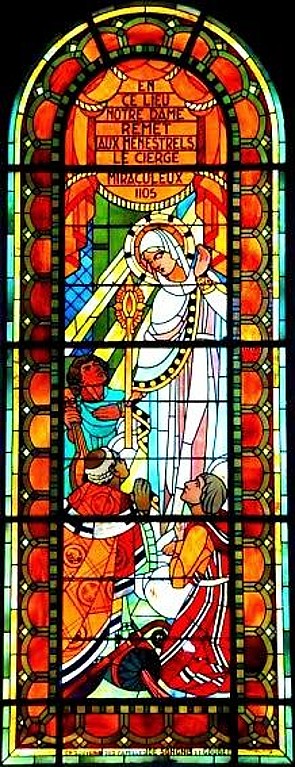
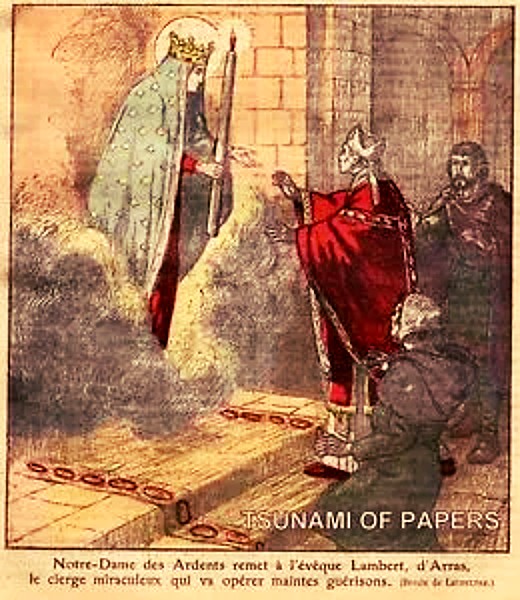
,Pentecost Monday, Notre-Dame des Ardents / Our Lady of Ardents, Arras, France (1095) and Memorials of the Saints – 29 May

Pentecost Monday

Notre-Dame des Ardents / Our Lady of Ardents, Arras, France (1095) – 29 May:
HERE:

https://anastpaul.com/2022/05/29/sunday-within-the-octave-of-ascension-notre-dame-des-ardents-our-lady-of-ardents-arras-france-1095-and-memorials-of-the-saints-29-may/

St Maria Magdalena de’ Pazzi O.Carm (1566-1607) Carmelite Nun and Mystic, Ecstatic, she bi-located and was the intercessor of many miracles, Stigmatist. She was Beatified in 1626 by Pope Urban VIII. At her Canonisation in 1668, her body was declared miraculously incorrupt. Her Feast day is today 29 May but was moved in 1969 to 25 May.
Biography:

https://anastpaul.com/2020/05/25/saint-of-the-day-25-may-saint-maria-magdalena-de-pazzi-o-carm-1566-1607/

St Bona of Pisa OSA (1156-1207) Virgin, Augustinian Tertiary, Pilgrim, Mystic.
St Conon the Elder
St Conon the Younger
St Daganus
St Eleutherius of Rocca d’Arce
St Felix of Atares
St Gerald of Mâcon
Bl Gerardesca of Pisa
Bl Giles Dalmasia
St Hesychius of Antioch
St John de Atarés

St Maximinus of Trier (Died c 346) the Sixth Bishop of Trier and Confessor, Defender of the True Faith, Miracle-worker.
About St Maximinus:

https://anastpaul.com/2022/05/29/saint-of-the-day-29-may-st-maximinus-of-trier-died-c-346-confessor-defender-of-the-true-faith/

St Maximus of Verona
St Restitutus of Rome
Bl Richard Thirkeld
St Theodosia of Caesarea and Companions
St Votus of Atares

Martyrs of Toulouse: A group of eleven Dominicans, Franciscans, Benedictines, clergy and lay brothers who worked with the Inquisition in southern France to oppose the Albigensian heresy. Basing their operations in a farmhouse outside Avignonet, France, he and his brother missioners worked against heresy. Murdered by Albigensian heretics while singing the Te Deum on the eve of Ascension. They were beaten to death on the night of 28 to 29 May 1242 in the church of Avignonet, Toulouse, France and Beatified on 1 September 1866 by Pope Pius IX (cultus confirmation).

  • Adhemar
  • Bernard of Roquefort
  • Bernard of Toulouse
  • Fortanerio
  • Garcia d’Aure
  • Pietro d’Arnaud
  • Raymond Carbonius
  • Raymond di Cortisan
  • Stephen Saint-Thibery
  • William Arnaud
  • the Prior of Avignonet whose name unfortunately has not come down to us.
    The Church in which they died was placed under interdict as punishment to the locals for the offence. Shortly after the interdict was finally lifted, a large statue of the Blessed Virgin Mary was found on the doorstep. Neither the sculptor nor the patron was ever discovered, nor who delivered it or how. The people took it as a sign that they were forgiven but that they should never forget and should renew their devotion to Our Lady. They referred to the image as “Our Lady of Miracles.”
    There is a ceremony in the Church on the night of the 28th May, the Anniversary of the Martyrdom. Called “The Ceremony of the Vow” Parishioners would gather in the Church, kneel with lit candles and process across the Church on their knees, all the while praying for the souls of the heretics who had murdered the Martyrs.

Martyrs of Trentino: Three missionaries to the Tyrol region of Austria, sent by Saint Ambrose and welcomed by Saint Vigilius of Trent. All were Martyred – Alexander, Martyrius and Sisinius. They were born in Cappadocia and died in 397 in Austria.

Posted in DOMINICAN OP, FEASTS and SOLEMNITIES, INCORRUPTIBLES, MYSTICS, SAINT of the DAY

Pentecost Sunday, Alleluia! St Augustine of Canterbury and Memorials of the Saints – 28 May

Pentecost Sunday, Alleluia!
https://anastpaul.com/2022/06/05/pentecost-sunday-5-june/
AND:
https://anastpaul.com/2018/05/20/the-solemnity-of-pentecost-20-may/

St Augustine of Canterbury (Died c 605) He is consideredthe Founder of the English Church and “The Apostle to the English.” He is the first Archbishop of Canterbury, Confessor, Missionary, Father of the Church.
For the life of St Augustine here:

https://anastpaul.wordpress.com/2017/05/27/saint-of-the-day-27-may-st-augustine-of-canterbury/

St Accidia
Bl Albert of Csanád
St Caraunus of Chartres
St Caraunus the Deacon
St Crescens of Rome
St Dioscorides of Rome
St Eoghan the Sage
St Gemiliano of Cagliari

St Germanus of Paris (c 490-576) Bishop, Monk, Teacher, Reformer, Writer, “Father of the Poor.”
Biography:

https://anastpaul.com/2018/05/28/saint-of-the-day-28-may-st-germanus-of-paris-c-496-576-father-of-the-poor/

Bl Heliconis of Thessalonica
St Helladius of Rome
St Herculaneum of Piegaro
Bl John Shert
St Justus of Urgell

Blessed Lanfranc OSB (c 1005-1089) Archbishop of Canterbury, Benedictine Abbot, celebrated Jurist, Scholar, Professor, Spiritual Writer, Reformer, Negotiator.
His Life:

https://anastpaul.com/2020/05/28/saint-of-the-day-28-may-2020-blessed-lanfranc-of-canterbury-osb-c-1005-1089/

St Luciano of Cagliari

Blessed Margaret Plantagenet Pole (1473-1541) Martyr, Laywoman, Countess. Margaret was declared Blessed, with many of the rest of the English Martyrs, by Pope Leo XIII, on 29 December,1886.
Her Life and Death:

https://anastpaul.com/2022/05/28/saint-of-the-day-28-may-blessed-margaret-pole-1473-1541-martyr/

Blessed Maria Bartolomea Bagnesi OP (1514-1577) Virgin, Third Order Dominican, Mystic, Ecstatic, with the gift of levitation. Her body is incorrupt.
Her Life Story:

https://anastpaul.com/2017/05/28/saint-of-the-day-28-may-blessed-maria-bartholomew-bagnesi-t-o-s-d/

Bl Mary of the Nativity
St Moel-Odhran of Iona
St Paulus of Rome
St Phaolô Hanh
St Podius of Florence
Bl Robert Johnson
St Senator of Milan
Bl Thomas Ford
St Ubaldesca Taccini
St William of Gellone (755-812) Monk

Martyrs of Palestine: A group of early 5th century Monks in Palestine who were Martyred by invading Arabs.

Martyrs of Sardinia – 6 Saints: A group of early Christians for whom a Church on Sardinia is dedicated; they were probably Martyrs but no information about them has survived except the names Aemilian, Aemilius, Emilius, Felix, Lucian and Priamus. Patrons of the Diocese of Alghero-Bosa, Italy.

Posted in INCORRUPTIBLES, SAINT of the DAY

Saint of the Day – 26 May – Blessed Francis Patrizi of Siena OSM (1266-1328) Priest

Saint of the Day – 26 May – Blessed Francis Patrizi of Siena OSM (1266-1328) Priest of the Order of the Servites “the Servants of Mary,” known as a Peacemaker and Mediator, Patronage – of Reconciliation. Born in 1266 in Siena, Italy and died on 26 May 1328 in Siena, Italy of natural causes. Also known as – Francisco Patrizi, Francis of Siena, Francesco… Francis was Beatified on 11 September 1743 by Pope Benedict XIV. His body is incorrupt.

The Roman Martyrology reads today: “In Siena, blessed Francesco Patrizi, Priest of the Order of the Servants of Mary, who dedicated himself with admirable zeal to preaching, to the direction of souls and to the ministry of penance.

Francis was born in Siena of a noble family. After listening to a moving sermon delivered by Blessed Ambrose Sansedoni, whose eloquence was the final inspiration for Francis to enter the religious life. However, he had first to care for and discharge all his duties to his blind mother. After her death, now aged twenty two, he asked to join the “Servants of Mary” in homage to the Madonna to whom he was very devoted.

The decision was made with some hesitation, as the longing for a solitary life always lived within him. The period in which he entered among the Servants of Mary was the one in which the decree of the Second Council of Lyons (1274), was incumbent on the Order, decreeing its extinction but the passionate work of the Prior General St Philip Benizi, obtained a Bull from Pope Honorius IV, which authorised some Convents, including that of Siena, to receive new members.

Among these, Francis entered and t Philip Benizi himself received Francis into the Servites and here he became the brother Friar of Blessed Joachim Piccolomini in 1272 and St Pellegrine Laziosi in around 1290. Three years after the novitiate, Francis was Ordained a Priest, his work was directed especially towards the poor and dispossessed – in this work, he did not hesitate to present himself to the nobles of the time to ask for donations for the needy.

Francis became an excellent preacher and the Spiritual director of many, from the lowly to those in positions of power. Francis distinguished himself by his holiness and his remarkable ability to solve crises of various kinds through his personal mediation. Proof of the affection shown to him by the souls he guided, can be read in a will dated 1309 of a certain Grace, who appoints him Executor, after having made donations, both to him, for his charitable works and to the Convent of the Servites of Siena.

His biographer, Brother Cristoforo da Parma, describes him as rather corpulent, dedicated to voluntary sacrifices to defend his chastity, completely absorbed in his love for the Virgin, saying up to 500 Hail Marys per day and very busy hearing Confessions of the queues which constantly sought his spiritual assistance.

He died at the age of 62 on 26 May 1328 and his incorrupt body is venerated under the Altar of the Seven Holy Founders, opposite that of Blessed Joachim, in the Basilica of the Servites in ​​Siena.
Pope Benedict XIV confirmed his cult on 11 September 1743, his Feast is celebrated in Siena on the Sunday after the Ascension and in the Order of the Servants of Mary on 12 May. He is variously depicted in 15th-Century frescoes. Forty years after his death, five lilies grew out of his mouth, each flower representing the letter of the Holy Name “Maria.”

Bl Francis’ incorrupt body under the Altar in the Basilica of the Servites in ​​Siena
Posted in DOCTORS of the Church, DOMINICAN OP, franciscan OFM, INCORRUPTIBLES, JESUIT SJ, MARIAN TITLES, SAINT of the DAY, Ven Servant of God John A Hardon

La Moreneta / Our Lady of Montserrat, Spain (718) St Peter Canisius, St Turibius of Mogrovejo and Memorials of these and more, most interesting Saints – 27 April

St Peter Canisius SJ (1521-1597) – The Known as “The Hammer of Protestantism,” “Second Apostle of Germany” – Confessor, Doctor of the Church, Dutch Priest of the Society of Jesus, Reformer, Teacher, Writer, Apostle of Charity. Patronages – Catholic Press, Germany, Catechists. The restoration of the Catholic Church in Germany after the Protestant Reformation is largely attributed to the work there of the Society of Jesus, which he led.
Peter Canisius was the first publisher, the first author, the first editor of the Society of Jesus. By now, Jesuits have followed in his footsteps to the tune of having published in 400 years, thousands of books. From the time of Canisius, and his name is first in the bibliography of Jesuit writers, from Peter Canisius to the end of the l9th century, that is to 1900, there are about twenty volumes of bibliography, each volume about two inches thick, stands about eighteen inches high, filled just with authors and titles, thousands and thousands and thousands, no other religious institute in the Church publishes as much as members of the Society. It was all started by Peter Canisius.” (Ven Servan of God Fr John A Hardon SJ)
His Feast day is 27 April (General Roman Calendar, 1926–1969.

Biography:
https://anastpaul.com/2017/12/21/saint-of-the-day-21-december-st-peter-canisius-s-j-1521-1397-doctor-of-the-church/
AND:
https://anastpaul.com/2018/12/21/saint-of-the-day-21-december-st-peter-canisius-s-j-1521-1397-the-second-apostle-of-germany-doctor-of-the-church/

St Turibius of Mogrovejo (1538-1606) ArchBishop of Lima, Peru, Confessor, Lawyer, Missionary, Preacher, Reformer, Professor,
His Feast Day is today. It was moved to 23 March in 1969.
This wonderful Spanish Saint:

https://anastpaul.com/2018/03/23/saint-of-the-day-23-march-st-turibius-of-mogrovejo-1538-1606/

La Moreneta / Our Lady of Montserrat, Spain (718) – 27 April:
HERE:

https://anastpaul.com/2021/04/27/la-moreneta-our-lady-of-montserrat-spain-718-and-memorials-of-the-saints-27-april/

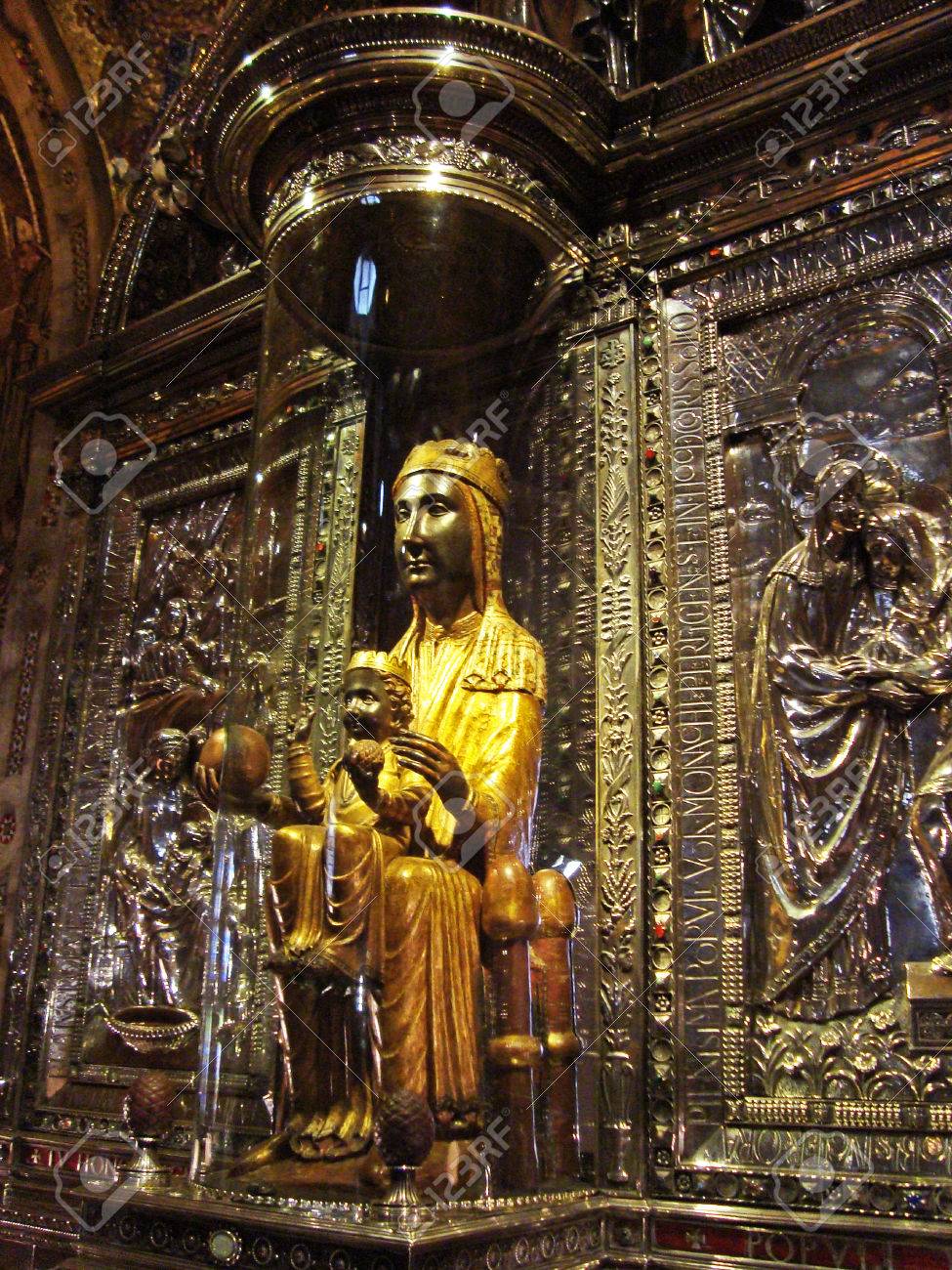
Our lady of Montserrat, patroness of Catalonia. The statue of the black Madonna is in the Church of Santa Maria de Montserrat Abbey, Catalonia, Spain. Photographed from 21.07.2015.

St Adelelmus of Le Mans
St Asicus of Elphin
St Castor of Tarsus
St Enoder
St Floribert of Liege

Blessed Jakov Varingez OFM (c 1400–1496) Croatian professed religious of the Order of Friars Minor, Apostle of charity, Mystic with a great devotion to the Cross of Christ, Marian devotee, he was noted as a miracle worker and levitated. He was Beatified on 29 December 1700 by Pope Clement XIH. His body is incorrupt.
His Life:

https://anastpaul.com/2019/04/27/saint-of-the-day-27-april-blessed-jakov-varingez-ofm-c-1400-1496/

St John of Kathara (c770-c835) Priest, Abbot
St Liberalis of Treviso
St Maughold

Blessed Osanna of Cattaro OP (1493-1565) Virgin, Mystic and Anchoress, Tertiary of the Order of St Dominic, spiritual guide. Her cultus was confirmed on 27 December 1927 by Pope Pius XI and he officially Beatified her in 1934.
Blessed Osanna’s Life:

https://anastpaul.com/2021/04/27/saint-of-the-day-27-april-blessed-osanna-of-cattaro-op-1493-1565-v/

St Peter Armengol OdeM (c 1238-1304) “The Martyr who Wasn’t,” “The Unconquerable Martyr of Jesus Christ,” “The Gangster Saint,”Spanish Priest of the Mercedarian Friars, Penitent, Mystic. Beatified on 28 March 1686, by Pope Innocent XI and Canonised on 8 April 1687, by the same Pope. His body was incorrupt until it was destroyed during the horrors of the Spanish Civil War.
A Miraculous Life:

https://anastpaul.com/2022/04/27/saint-of-the-day-27-april-saint-peter-armengol-odem-c-1238-1304-the-martyr-who-wasnt/

St Pollio of Cybalae
St Simeon of Jerusalem
St Stephen of Tarsus
St Tertullian of Bologna
St Theophilus of Brescia
St Winewald of Beverley

St Zita of Lucca (1212-1272) Virgin, Laywoman, Apostle of the Poor. – Her reputation was such that Dante in the Inferno referred to the City of Luccam, her birthplace and home, as “Santa Zita.” P atronages – housewives, butlers, housemaid, domestic servants (proclaimed by Pope Pius XII), housemaid, lost keys, maids, manservants, people ridiculed for their piety, rape victims, servants, servers, single laywomen, waiters, Lucca, Italy. Her body is incorrupt.
Biography:.

https://anastpaul.wordpress.com/2017/04/27/saint-of-the-day-27-april-st-zita-of-lucca/

Martyrs of Nicomedia: A group of Christians murdered together for their faith. In most cases all we have are their names – Dioscurus, Evanthia, Felicia, Felix, Germana, Germelina, Johannes, Julius, Laetissima, Nikeforus, Papias, Serapion and Victorinus. They died at Nicomedia, Bithynia, Asia Minor (modern Izmit, Turkey).

Posted in franciscan OFM, INCORRUPTIBLES, SAINT of the DAY

Saint of the Day – 3 April – St Benedict of Palermo OFM (1526-1589) Lay Friar

Saint of the Day – 3 April – St Benedict of Palermo OFM (1526-1589) Lay Friar of the Order of Friars Minor of the Observance, Confessor, spiritual counsellor, Apostle of the poor and needy, graced with the gift of healing the sick. Born as Benedetto Manasseri in1526 in San Fratello, Messina, Sicily and died on 4 April 1589 (aged 62–63) in Palermo, Sicily of natural causes. Patronages – African missions and Missionaries to Africa, Black Catholic Americans, African Americans, black people, Palermo, San Fratello. Also known as – Benedict the Moor, Benedict the Black, Benedict the African, Benedetto. His body is incorrupt. Additional Memorial – 4 April. St Benedict’s gifts for prayer, his love for the Blessed Virgin and the Infant Jesus and the wisdom displayed in his guidance of souls, earned him, a reputation for holiness, throughout Sicily.   Following the example of St Francis, Benedict kept seven 40-day fasts throughout the year. He also slept only a few hours each night.

Benedict was born to Cristoforo and Diana Manasseri, Africans, who were taken as slaves in the early 16th Century to San Fratello, a small town near Messina, Sicily. They were given Italian names and later converted to Christianity.

Benedict’s parents were granted freedom for their son before his birth because of their “loyal service.” Like most peasants, Benedict did not attend any school and was illiterate. During his youth, he worked as a shepherd and was quick to give what he had earned to the poor.

When he was 21 years old, he was publicly insulted for the colour. of his skin His forbearance and silence was noted by the leader of an independent group of hermits on nearby Monte Pellegrino, who followed the Rule for Hermit life written by St Francis of Assisi.

Benedict was invited to join that community and shortly thereafter, he gave up all his earthly possessions and joined them. He served as the cook for the community and at the age of twenty-eight succeeded Jerome Lanze as the Superior of the group.

In 1564 Pope Pius IV disbanded independent communities of hermits, ordering them to attach themselves to an established religious Order, in this case, the Order of Friars Minor. As soon as Benedict was professed as an official Friar of the Franciscans, he was assigned to Palermo to the Franciscan Friary of St Mary of Jesus. He started there as the cook,but, showing the degree of his advancement in the spiritual life, he was soon appointed as the Master of Novices and later, as Guardian of the community, although he was a lay brother rather than a Priest and was illiterate.

Benedict accepted the promotion and successfully helped the Convent adopt a stricter version of the Franciscan Rule of life. He was widely respected for his deep, intuitive understanding of theology and Scripture and was often sought for counselling. He also had a reputation as a healer of the sick. Combined, these characteristics continued to draw many visitors to him. As he enjoyed cooking, he returned to kitchen duty in his later years.

Benedict died at the age of around 63 on the very day and hour which he had predicted. At the entrance of his cell in the Franciscan Friary of St Mary of Jesus, there is a plaque with the inscription: “Benedict was quickly invited to join that community, and shortly thereafter he gave up all his earthly possessions and joined them. He served as the cook for the community and at the age of twenty-eight succeeded Jerome Lanze as leader of the group.[3]

In 1564 Pope Pius IV disbanded independent communities of hermits, ordering them to attach themselves to an established religious Order, in this case, the Order of Friars Minor. Once a friar of the Order, Benedict was assigned to Palermo to the Franciscan Friary of St. Mary of Jesus. He started at the friary as a cook, but, showing the degree of his advancement in the spiritual life, he was soon appointed as the master of novices, and later as Guardian of the community, although he was a lay brother rather than a priest, and was illiterate.

Benedict accepted the promotion, and successfully helped the order adopt a stricter version of the Franciscan Rule of life. He was widely respected for his deep, intuitive understanding of theology and Scripture, and was often sought for counseling. He also had a reputation as a healer of the sick. Combined, these characteristics continued to draw many visitors to him. As he enjoyed cooking, he returned to kitchen duty in his later years.

Benedict died at the age of around 63 on the very day and hour which he had predicted. At the entrance of his cell in the Franciscan Friary of St Mary of Jesus, there is a plaque with the inscription: “This is the cell where Saint Benedict lived” with the dates of his birth and death – 1526 and 1589.

Upon his death, King Philip III of Spain ordered the construction of a magnificent tomb to house his remains, in the Friary Church. He was Beatified by Pope Benedict XIV in 1743 and Canonised in 1807 by Pope Pius VII. His body was found incorrupt during the Canonisation process.

Benedict is remembered for his patience and understanding when confronted with racial prejudice and taunts. He was declared a Patron Saint of Catholic African Americans, along with the Dominican lay brother, St Martin de Porres. In the United States, at least seven historically Black Catholic Parishes bear his name.

Posted in franciscan OFM, INCORRUPTIBLES, SAINT of the DAY

Saint of the Day – 18 March – Saint Salvator of Horta OFM (1520-1567) Lay Brother

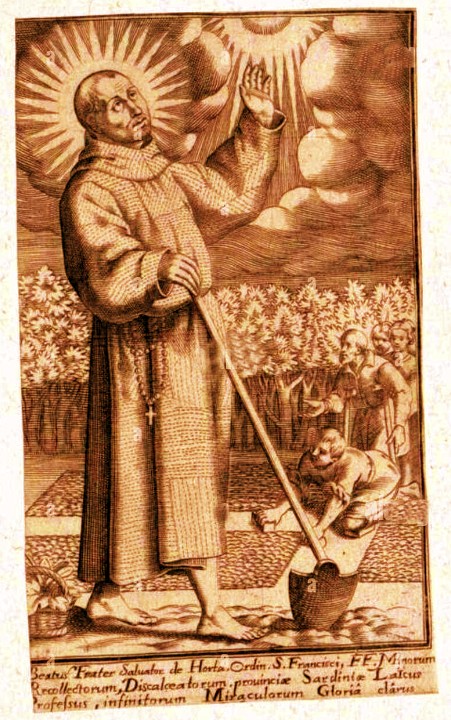
Saint of the Day – 18 March – Saint Salvator of Horta OFM (1520-1567) Lay Brother of Friars Minor, Cook, Porter and Quester of alms, Miracle-worker.Born in 1520 at Santa Columba, Gerona, Spain and died on 18 March 1567 at the Friary at Cagliari, Sardinia, Italy of natural causes, aged just 46. Also known as – Salvador, Salvatore. Additional Memorial – 17 April (Friars Minor). Canonised on 17 April 1938 by Pope Pius XI. His body is incorrupt.

In the Sixteenth Century when the Faith, especially in Germany, was so mightily shaken by the so-called reformers, when the Sign of the Cross was abolished as a superstitious practice, Almighty God permitted this very Sign of the Cross to shine with special power and radiance, in order to strengthen the Faith in another country. This was Spain and it was through the great Miracle-orker of the Sixteenth Century, St Salvator of Horta.

Salvator was born of poor parents in the year 1520. Orphaned when still quite young, he tended cattle and was later sent as an apprentice to a shoemaker in Barcelona. His devout heart, however, was constantly prompting him to consecrate himself to God; so, when he was twenty years old, he entered the Franciscan Order as a lay brother. He distinguished himself among his brethren by rigorous mortification, profound humility and extraordinary simplicity.

Almighty God, who chooses the lowly to make known the wonders of His power, manifested His power in Salvator at the very beginning of his religious life.

He was sent to assist the brother in the kitchen and one day, when the cook was ill, Salvator had to undertake the entire round of duties alone. When it was close to the noon hour, the Father Guardian went to the kitchen to see what Brother Salvator had prepared. He found the kitchen locked. After looking for Salvator for a considerable time, he finally found him kneeling before the Blessed Sacrament, deeply absorbed in prayer.

Statue (after 1606) by Michelangelo Naccherino (Florence 1550-Naples 1622) – Santa Maria di Montecalvario or della Mercede Church in Naples

He had been there since early morning without being aware of it. The Superior reproved him severely and Salvator acknowledged his guilt amid many tears, begging for a severe penance. How astonished, however, were both men when they arrived at the kitchen and found all the food ready to be served – the angels had substituted for Salvator! How beautiful!

After pronouncing his vows, Salvator was sent to the Convent at Tortosa. Although he was assigned in turn to the duties of cook, porter and quester of alms, he was ,nevertheless, continually recollected and intimately united with God.

While gathering alms, Salvator often came upon sick people for whom his prayers were requested. He would make the Sign of the Cross over them and immediately they were healed. News of this fact soon spread abroad and may sick were brought to the Convent. All were restored to health through the Sign of the Cross which Brother Salvator made over them.

The concourse of sick people, however, finally became so great that it disturbed the good order in the Convent. So the Superiors sent Brother Salvator to the nearby Convent of Horta, where he spent the greater part of his religious life, hence his surname “of Horta.”

Although the transfer was made in perfect secrecy and no one had been informed of it, the sick presented themselves at the Convent at Horta already in the first days after his arrival there and their number increased daily. The deaf, the blind, the dumb, the lame, the epileptic, came; the paralytic, the dropsical, those afflicted with fevers and sufferers of every type were brought to him on beds, so that Brother Salvator might restore their health.

Usually there were as many as two thousand a week, sometimes that many in one day and once, on the Feast of the Annunciation of the Blessed Virgin, as many as six thousand made their appearance!

One time the Grand Inquisitor, a renowned theologian, whose duty it was to guard the purity of the Faith, came in order to learn whether anything occurred there that savoured of superstition. Without giving any indication of his rank, he took his station at a corner of the Church were the sick were expecting the healing hand of Brother Salvator.

When the good religious arrived, Saint Salvator of Horta had the sick make way for him as he passed through their ranks till he reached the Grand Inquisitor. There he reverently kissed the latter’s hand and begged him to come to the upper Church, where he could watch the entire proceedings. Astonished at finding himself recognised, the Inquisitor was already assured of the power from on high which held sway there. Nevertheless, he followed the brother.

Salvator began, as usual, to admonish the sick to examine their conscience and to receive the Sacraments of Penance and of the Holy Eucharist worthily. Then he blessed them with the Sign of the Cross while he called upon the Blessed Trinity and imposed on them a few prayers in honour of the Immaculate Conception of the Blessed Virgin Mary, to whose intercession he ascribed all the cures. The sufferers were then all suddenly cured, except, as Salvator had foretold, those who were not sincere in their conversion.

St Salvator and the Grand Inquisitor by Esteban Murillo

In order to test the humility of the brother and to preserve him in it, his Superiors frequently imposed heavy trials but he always remained an obedient, humble and contented religious. A prominent gentleman once warned Salvator that he should be on guard against pride and presumption. The good brother answered:

“I always think of myself as a sack full of straw; the sack is indifferent as to whether it lies in a stable or is brought into a magnificent room.”

The last two years of Sa;vator’s life were spent on the Island of Sardinia and there he died in the Convent of Cagliari on 18 March 1567. Innumerable miracles occurred also at his grave. The uninterrupted devotion to the Saint was confirmed on 29 January 1711 by Pope Clement XI. Saint Salvator of Horta was CanoniSed by Pope Pius XI in 1938.

Death of Saint Salvator of Horta
Viceregal Museum of Zinacantepec, Mexico

His remains were originally interred at the Church of St Mary of Jesus attached to the Friary where he died, in Cagliari, Sardinia. In 1606 it had been decided to open his grave to provide his heart as a Relic for the Franciscan community. When his tomb was opened, his body was found to be still intact and in perfect condition, bearing no signs at all of any corruption.

Thus, when the Church of St Mary of Jesus was demolished in 1718, his remains were interred first at another Church of the Order in the City, then finally, in 1758, they were entombed in a glass coffin under the Main Altar of the Church of St Rosalie in the City. This remains his Shrine, where his remains can be venerated.

Posted in franciscan OFM, INCORRUPTIBLES, SAINT of the DAY

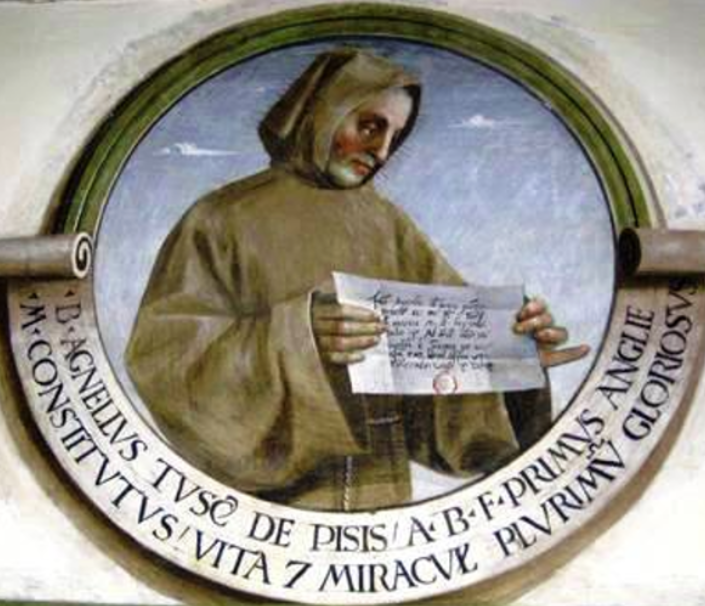
Saint of the Day – 13 March – Blessed Agnellus of Pisa OFM (c1195-1236) Priest

Saint of the Day – 13 March – Blessed Agnellus of Pisa OFM (c1195-1236) Priest, Frair of the Order of Friars Minor, received into the Franciscans Order by Saint Francis himself., Missionary. Agnellus was the Founder of the Order in England and its First Minister Provincial. Born in c.1195 in Pisa, Italy and died on 7 May 1236 at Oxford, England of dysentery. Additional Memorials – 7 May (Franciscan) and 10 September (English Franciscans). His body was incorrupt but was destroyed during the persecutions by Henry VIII.

Agnellus was descended from an ancient noble family at Pisa. The government of the Parisian Province of the Order was entrusted to him. Later, the holy Founder sent him to England with eight companions. Here Agnellus found it possible to establish several Convents of his Order and to unite them into a Province. Due to his zeal and to his virtuous life, many young men, some from the most prominent families in England, took the Habit of the Poor Man of Assisi.

In order to provide the young clerics with a thorough education, he established a school of theology at Oxford. Meanwhile, however, he infused into them a desire for perfection and a holy fidelity to the Rule of the Order, in all of which, he led them by his own good example.

His humility was so profound that ,under no circumstances could be be prevailed upon to receive Holy Orders. Finally, however, he yielded in obedience to the General Chapter.

A great part of his time was devoted to meditation. At holy Mass and in choir, he was so overcome with interior affections that he was frequently found weeping.

Agnellus died the death of the saints in the year 1232, when he was but thirty-eight years old. His grave and the Church which he had established in Oxford in which he was buried, were destroyed during the persecution of the Catholics in the reign of Henry VIII. Pope Leo XIII solemnly confirmed the uninterrupted veneration that had been accorded to Blessed Agnellus of Pisa.

In honour of his great influence in the establishment of the University. Agnellus’ incorrupt body was preserved with great veneration at Oxford up to the dissolution of the religious houses, when the Friary and Church were destroyed. In 2014, the Conventual Franciscans re-established a Friary again in Oxford, formally dedicating and naming it the Blessed Agnellus of Pisa Friary.

Blessed Agnellus of Pisa knew that while the ambitious are always ill at ease, as to whether or not, they will be properly esteemed, or whether their dignity will be duly acknowledged, the humble live in continual peace of soul. They do not wait for approval and do not fear ill success. Their will is directed solely to the honour of God. They ehope for a reward from Him alone.

The Blessed Agnellus Frairy at Oxford today
Posted in INCORRUPTIBLES, MARIAN TITLES, SAINT of the DAY

Saturday of the Second Week in Lent, Nossa Senhora das Florestas,/ Our Lady of the Forests, Portugal (12th Century) and Memorials of the Saints – 11 March

Saturday of the Second Week in Lent – FAST

Nossa Senhora das Florestas,/ Our Lady of the Forests, Porto, Portugal (12th Century) – 11 March:
HERE:

https://anastpaul.com/2021/03/11/our-lady-of-the-forests-porto-portugal-12th-century-and-memorials-of-the-saints-11-march/

St Aengus the Culdee
St Alberta of Agen
St Amunia
St Aurea of San Millán (1043-1070) Spanish Nun and Anchorite

St Benedict Crispus of Milan (Died 725) Archbishop of Milan from c 685 until his death. A poem written about ten years after his death, De laudibus Mediolani- In Praise of Milan, praises him and remembers his veneration by the entire land and informs us that he was buried in the Basilica of Saint Ambrose.
His Life:

https://anastpaul.com/2020/03/11/saint-of-the-day-11-march-saint-benedict-crispus-of-milan-died-725/

St Candidus the Martyr
St Constantine II
St Constantine of Carthage

St Eulogius of Córdoba (Died 857) Priest and Martyr, Writer, Poet, Theologian, Teacher.
Biography:

https://anastpaul.com/2019/03/11/saint-of-the-day-11-march-st-eulogius-died-857-priest-and-martyr/

St Firmian the Abbot
St Firmus the Martyr
St Gorgonius the Martyr
St Heraclius of Carthage

Blessed John Baptist Righi of Fabriano OFM (1469–1539) Priest, Confessor, Friar of the Friars Minor, Ascetic, Ecstatic, renowned Preacher, Peace-maker, Hermit. Blessed John was Beatified by Pope Leo XIII in 1903. His body is incorrupt.
About Blessed John:

https://anastpaul.com/2022/03/11/saint-of-the-day-11-march-blessed-john-baptist-righi-of-fabriano-ofm-1469-1539/

St Peter the Spaniard
St Pionius
St Piperion the Martyr
St Rosina of Wenglingen
St Sophronius of Jerusalem
St Thalus the Martyr
St Trophimus the Martyr
St Vigilius of Auxerre
St Vincent of Leon

St Vindician of Cambrai (c 632-c 712) Bishop of Arras-Cambrai, Belgium. He was a spiritual follower of Saint Eligius (588- 660) (Saint Eloi).
His Life:

https://anastpaul.com/2021/03/11/saint-of-the-day-11-march-saint-vindician-of-cambrai-c-632-c-712-bishop/

St Zosimus of Carthage

Martyrs of Antioch: A group of Christians Martyred together by Emperor Maximian Galerius. Martyred in c 300 in Antioch, Syria.

Posted in INCORRUPTIBLES, SAINT of the DAY

Saint of the Day – 24 February – Blessed Marco De’ Marconi OSH (1480-1510) “The Glory of Mantua,

Saint of the Day – 24 February – Blessed Marco De’ Marconi OSH (1480-1510) known as “The Glory of Mantua,” Hermit Monk of the Order of the Hermits of Saint Jerome (The Hieronymites) a common name for several congregations of Hermit Monks living according to the Rule of Saint Augustine, although the principle role of their lives is the great Hermit and biblical scholar St Jerome, Father and Doctor of the Church. Marco was gifted with the charism of prophecy and of miracles. Born in 1480 in Mantua, Italy and died on 24 February 1510 in Mantua, Italy of natural causes. His Body is incorrupt. Blessed Mark was Beatified on 2 March 1906 by Pope Pius X.

Marco was the son of poor and simple parents, Hewas born in1480 at Milliarino near Mantua. From early youth he was endowed with a deep sense of piety and gave signs of extraordinary sanctity. At this time, there was in Mantua, a community of the Poor Hermits of St Jerome, who had been founded by the Tertiary Blessed Peter of Pisa. In other Cities of Italy there were similar communities of Hermits; and all of them observed the Rule of the Third Order of St Francis until the year 1568, when they adopted that of St Augustine. Marco entered the Hermitage of St Matthew at Mantua when he was still quite young.

From the very beginning of his religious life, Marco won the admiration of the other Hermits by the cheerfulness and promptness with which he carried out all the spiritual exercises, those which were ordinary, as well as the most difficult. His one desire was to become as perfect an imitator of Christ as possible. Marco possessed the gift of prophecy and of miracles. The people revered him as a saint and considered themselves fortunate if they could touch the hem of his garment.

Living continuously n the presence of God provided Marco with special light, by which he also learned to know himself better day by day. Just as, when the sun’s beams penetrate a room, we can more plainly see all the particles of dust in the air, which would otherwise be invisible and which we had not realised were there, so will the remembrance of an all-holy God Who beholds us, reveal the stains and defects in our hearts, of which we should not otherwise have been aware.

Marco was only thirty when he died on 24 February 1510. His incorrupt body is venerated in the Cathedral, and he is called “The Glory of Mantua.

His remain were initially buried at the Church of His Monastery in Mantua but when, in the mid-17th Century, this Monastery was destroyed in war, his Relics were moved to a new Monastery and Church, also in Mantua. Later, in the late 18th Century, the Church and Monastery were suppressed and the Relics were briefly hidden. Finally, his body was enshrined in the Cathedral in Mantua, where it is still venerated.

The cult of Blessed Marvo which continued through the Centuries, was finally approved by St Pope Pius X on 2 March 1906. Blessed Marco Marconi may also be counted as one of the glories of the Third Order of St Francis.

Prayer of the Church:
We beseech Thee, O Lord,
through Thy loving kindness,
ever guard Thy household
that it maybe freed from all adversities
by Thy protection and in good deeds,
maybe devoted to Thy Name.
Through Christ Our Lord,
in the unity of the Holy Ghose,
God forever and ever.
amen.

Posted in Against EPIDEMICS, INCORRUPTIBLES, JESUIT SJ, MISSIONS, MISSIONARIES, SAILORS, MARINERS, NAVIGATORS, SAINT of the DAY

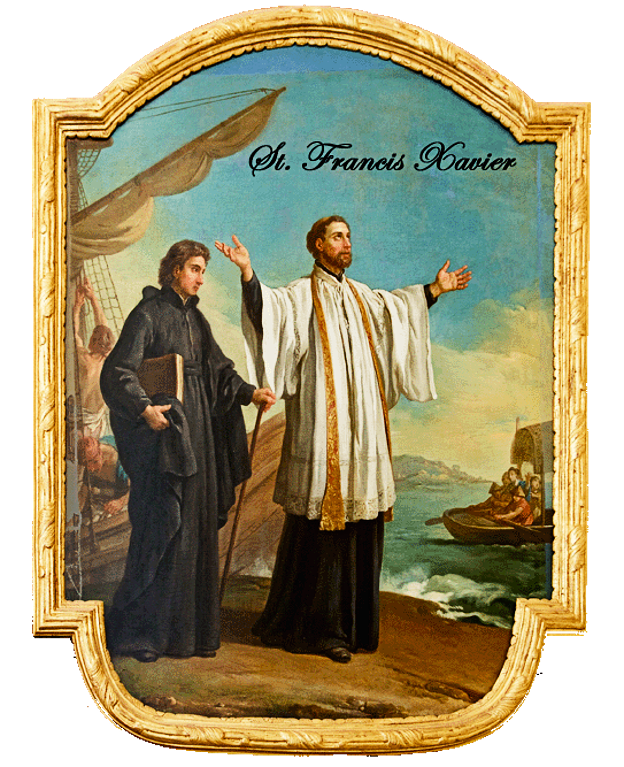
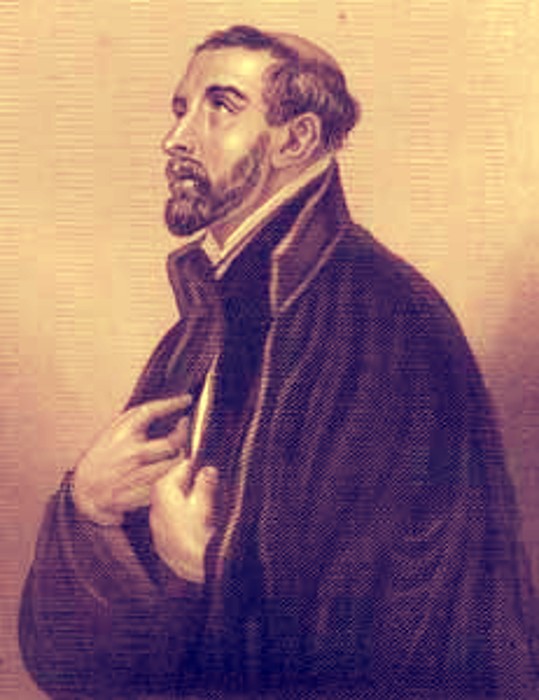
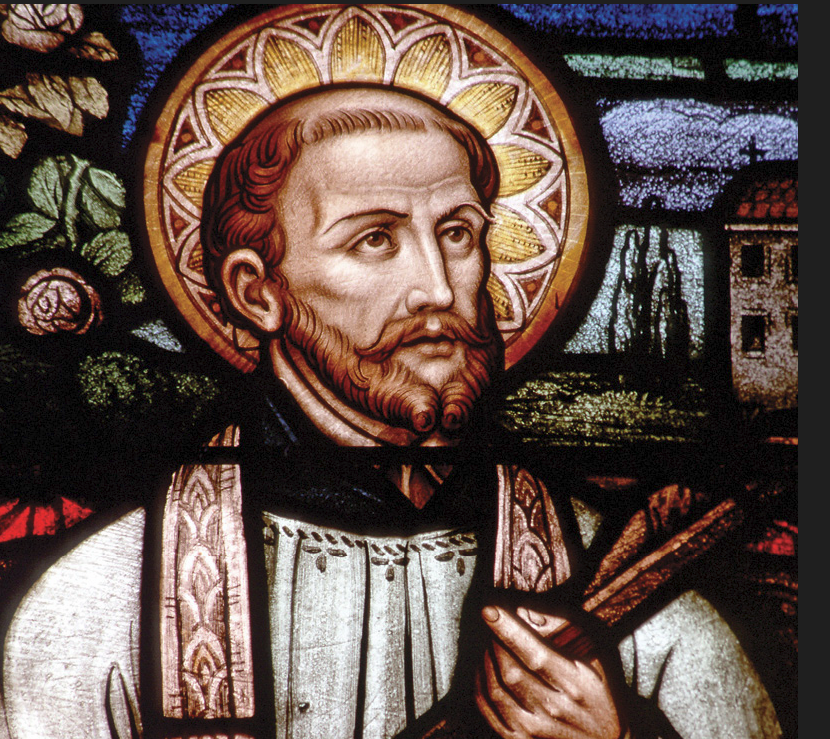
Saint of the Day – 3 December – St Francis Xavier SJ (1506-1552) Confessor

Saint of the Day – 3 December – St Francis Xavier SJ (1506-1552) Confessor, Priest, Missionary, Miracle-worker, co-Founder with St Ignatius Loyola (1491-1556) and St Peter Faber (1506-1546) of the Society of Jesus. One of the Greatest Missionaries since St Paul. St Francis was Canonised on 12 March 1622 by Pope Gregory XV. His body is incorrupt.

St Francis Xavier
By Fr Francis Xavier Weninger SJ (1805-1888)
Part One -(His early years, before departing for the Indies).

St Francis Xavier,–the great Apostle of the Indies, as he is called in the Bull of his Canonisation–the celebrated Thaumaturgus of the 16th Century, the irreproachable witness of the truth of our holy religion, the ornament of the Society of Jesus and of the entire Catholic Church–was of Royal lineage and was born of illustrious parents, at the Castle of Xavier, in the Kingdom of Navarre.

Having passed his childhood there, he was sent to the University of Paris, to study the liberal arts, for which he evinced an especial inclination. He applied himself so diligently and made so much progress that he was not only created. Doctor of Philosophy but also appointed to instruct others in that science. All his aim was to gain honours and to become great in the eyes of the world. His father intended to recall him home after some years but his sister, who was Prioress in the Convent of the Poor Clares at Gandia and had the reputation of being a Saint, knew, by Divine inspiration, the great work for which her brother was destined by the Almighty and persuaded her father not to insist on his return, saying, in a prophetic manner that Francis was chosen to become the apostle of many nations.

Whilst Xavier was teaching at Paris, St Ignatius came to the same City to finish his studies. Knowing, by Divine inspiration, how much good Francis, who was so highly gifted by the Almighty, would be able to do for the salvation of souls, he sought the friendship of the young Professor and gradually showed him the emptiness, of all temporal greatness and drew him from his eagerness to obtain worldly honours, by repeating the earnest words of Christ: “What will it profit a man if he gain the whole world and lose his own soul!” These words of our Saviour, coming from the lips of a St Ignatius, so deeply pierced the heart of Xavier and made so indelible an impression that he became entirely converted.

Taking St Ignatius as his guide, he followed his precepts and after having most fervently gone through the “Spiritual Exercises,” he resolved to devote himself, with Ignatius, to the greater glory of God.

On the Feast of the Assumption of the Blessed Virgin, in the year 1534, Ignatius, St Francis and five others, made a vow in the Church of Montmartre at Paris, to consecrate their lives to the salvation of souls. Soon after, St Francis, by the order of St Ignatius, went with some of these zealous men to Italy.

At the very beginning of this journey, which was to be performed on foot, St Francis gave a striking proof of the ardour of his spirit. Before his conversion, he had been a great lover of dancing and gymnastic exercises and, so greatly excelled in them that he had taken great pride in these accomplishments. To punish this vanity, he tied his arms and ankles so tightly with small knotted cords, that he could not make the least motion without pain. After the first day’s march, his pains became so intense that he fainted away and was forced to reveal the cause. The cords had cut so deeply into the flesh that they could hardly be seen. The surgeon who was called, declared that a painful operation was necessary to cut the cords out of the flesh.St Francis and his companions, not wishing to be delayed on their way, prayed for aid from on High and, on the following morning they found, not only the cords broken but all the wounds entirely healed. Having given due thanks to the Almighty for this miracle, they continued their journey.

At Venice, St Francis spent two months in the hospital, nursing the sick most tenderly. While there, it happened that he found, among the sick, one who was suffering from a loathsome ulcer. St Francis felt a natural repugnance to approach the poor patient, but, recollecting the maxim of St. Ignatius, “Conquer thyself,” he unhesitatingly went to the sick, embraced him kindly and putting his lips to the ulcer, cleansed it of all offensive matter. As a reward for so heroic a victory over self, God restored the sick man’s health and took from St Francis all repugnance to the most hideous forms of disease.

Two months after this, he was Ordained Priest and said his first Holy Mass, amid a flood of tears, after having prepared himself for it, by forty days of solitude, many prayers, austere fasting and other penances.

At Rome, whither he was called by St Ignatius, he preached for a time with great success. It was at this period that John III., King of Portugal, requested the Pope to send him six of the disciples of St Ignatius, for the Indies. St Ignatius, on account of the small number of his followers, gave only two, Simon Rodriguez and Nicholas Bobadilla but, as the latter fell ill just before the time appointed for setting out, St Francis Xavier., whom Heaven had selected for this mission, was sent in his stead.

No tongue can tell the joy with which the Saint received this news, which fulfilled that which had been shown him, years before, in a mysterious dream. It had appeared to him, in his sleep that he had a negro on his shoulders, whom he was obliged to carry and that he was so fatigued, as to sink to the ground under his burden. He then awoke and found himself in truth, covered with perspiration and extremely tired.

He was soon prepared for his journey from Rome to Lisbon, whence he was to sail for the Indies and having received, from St Ignatius, valuable instructions and from the Vicar of Christ, the Papal Blessing, with the powers of an Apostolic Nuncio, he set out with his companion, Rodriguez, carrying nothing with him but the Crucifix on his breast, his Breviary under his arm and his staff in his hand.

At the holy house of Loretto, where he stopped on his way, he commended his important mission to his divine Mother, and begged, with childlike trust, for her motherly assistance. Feeling in his heart that his prayer had been heard, he was greatly comforted, on leaving this blessed spot. To be continued …

Posted in DOMINICAN OP, INCORRUPTIBLES, SAINT of the DAY

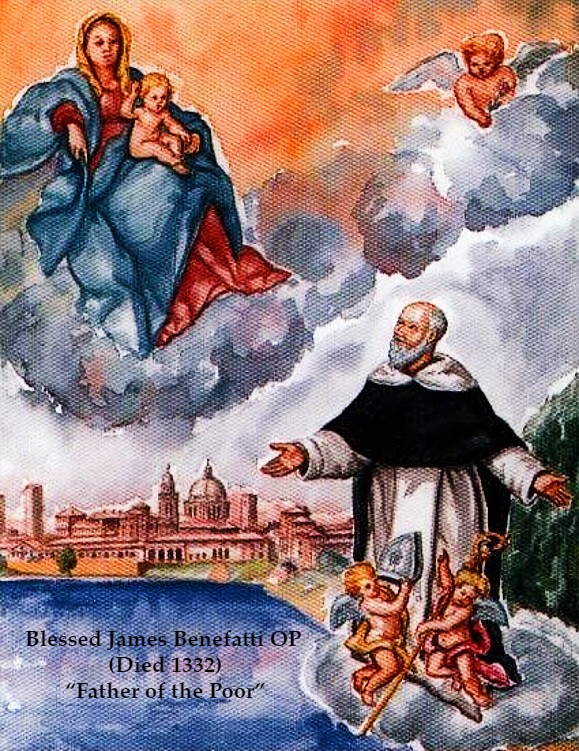
Saint of the Day – 19 November – Blessed James Benefatti OP (Died 1332) “Father of the Poor

Saint of the Day – 19 November – Blessed James Benefatti OP (Died 1332) “Father of the Poor” Bishop of Mantua, Priest and Friar of the Order of Preachers, Papal Legate in the service of Pope Benedict XI and of Pope John XXII, Apostle of the poor. Born in the late 13th century at Mantua, Italy and died on 19 November 1332 at Mantua, Italy of natural causes. Also known as – James Benefatti, James of Mantua, “Father of the Poor.” Beatified in 1859by Pope Pius IX. His body is incorrupt.

Janes was born in Mantua and also died there, on 19 November 1332. He was both a Doctor of Theology and a Priest. In 1290 James entered the Dominican Convent in his hometown. There he became the friend and brother Friar of Nicholas Boccasino, who later became Pope Benedict XI. Under Pope Denedict XI, James held several important offices, including Papal Legate. And, in the course of his service to the Pope, he also served as Papal Legate for Pope John XXII.

In 1303 James was Consecrated as the Bishop of Mantua (some resources say he was Consecrated in 1304). There, Bishop James was known for his devotion to the poor, earning him the name “Father of the Poor.”

As Bishop, James rebuilt the Cathedral and refurbished Churches in his Diocese. He also actively fought against the hatred and division which plagued the City at that time. After his death, James was credited with many remarkable miracles that occurred and people began to call him Blessed James in gratefulness for his intercession.

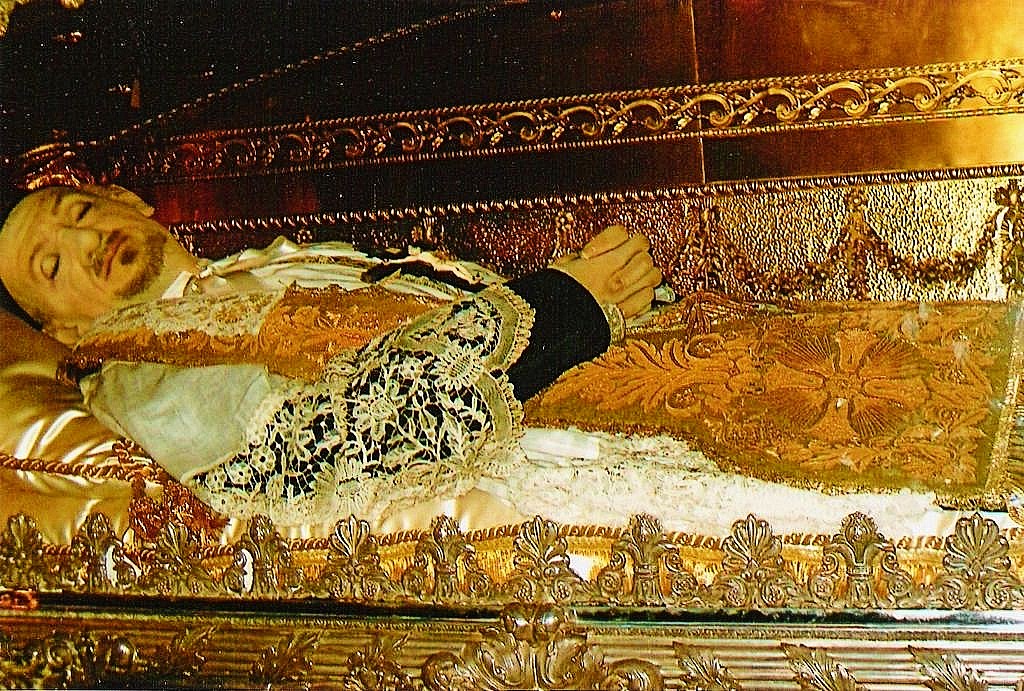
Nearly 150 years after his death, in 1480, when repairs were being made to the Church were he was buried, an accident opened his tomb and people were startled to find his body completely incorrupt. Again, in 1604, the same phenomenon occurred.

Blessed James’ cult was confirmed in 1859 by Pope Pius IX.
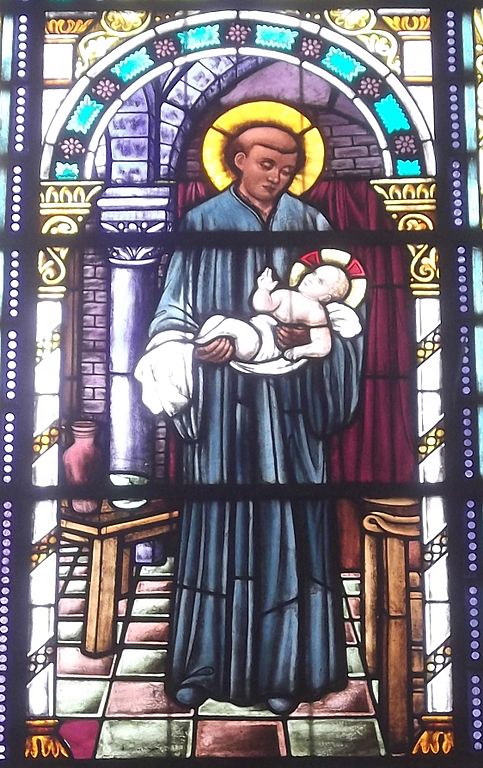
Prayer

Eternal God,
You established Blessed James as a model for Your flock
and made him renowned for his zeal for peace
and for his mercy towards Your people.
By his prayers and example,
may we be united in the Truth of Your Word
and ever ardent in Your divine love.
We ask this through our Lord Jesus Christ,
You Son, Who lives and reigns with You
and the Holy Spirit,
one God, forever and ever.
Amen.

Posted in CHARITABLE SOCIETIES, INCORRUPTIBLES, SAINT of the DAY

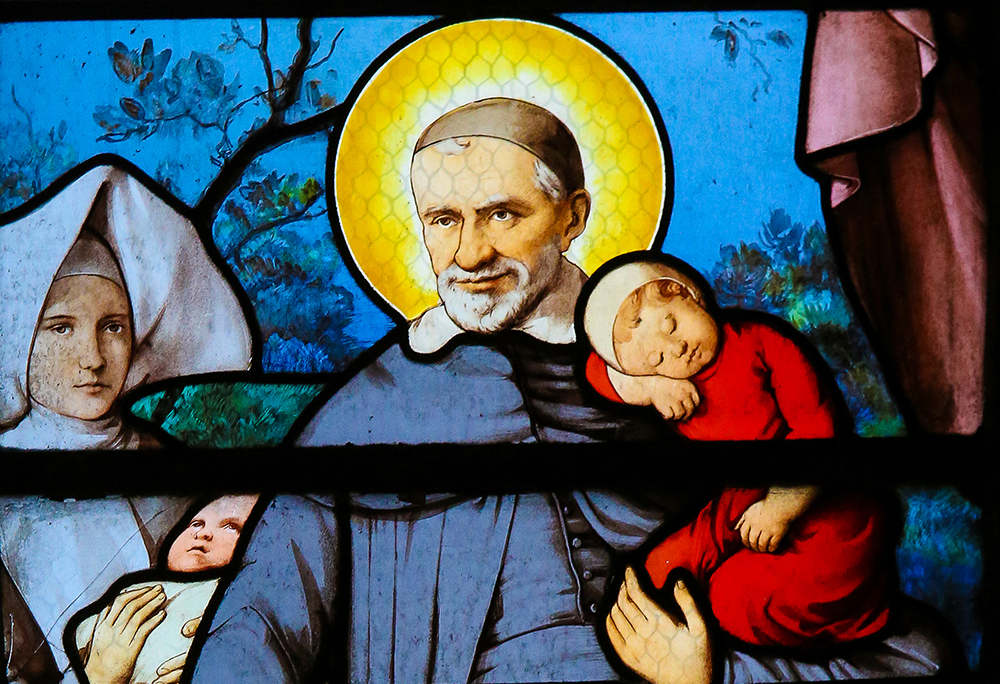
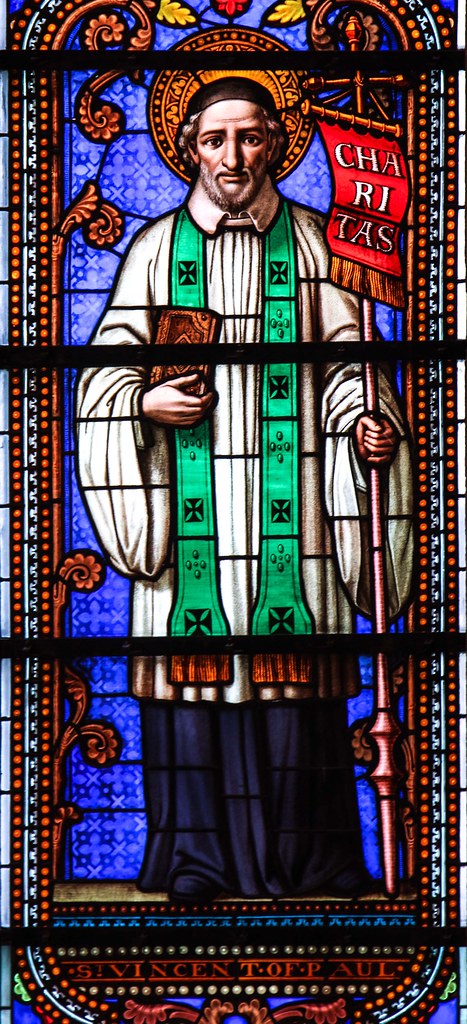
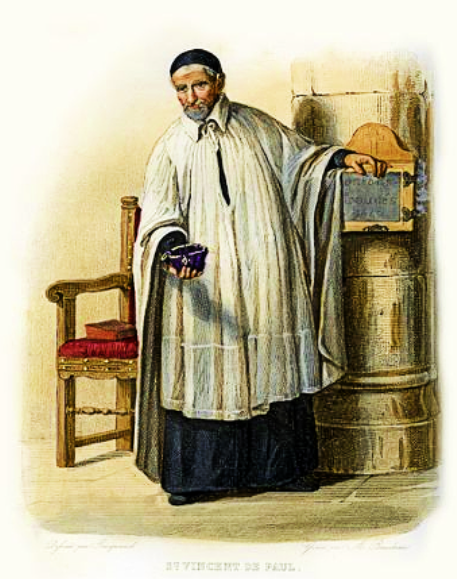
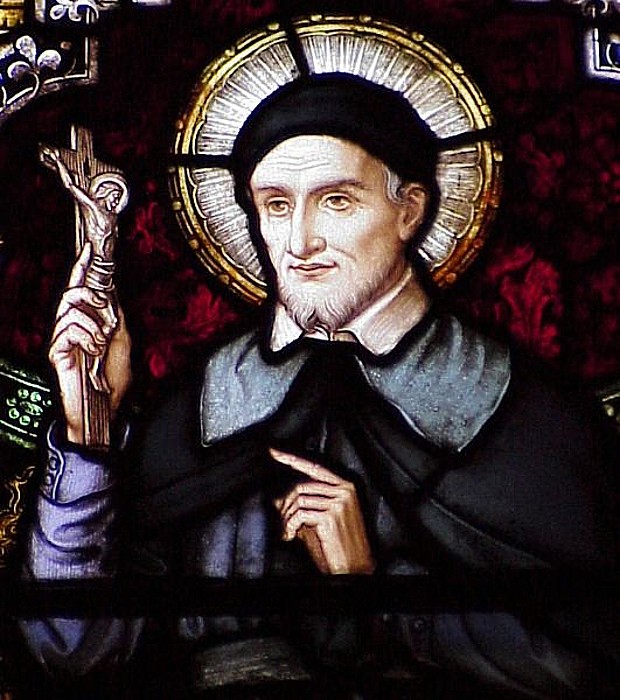
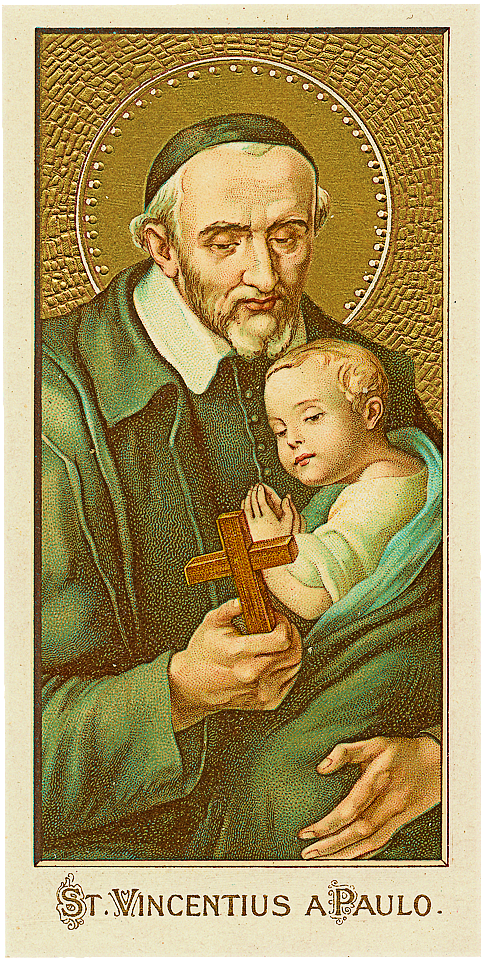
Saint of the Day – 19 July – St Vincent de Paul (1581-1660) “Holy Hero of Divine Charity”

Saint of the Day – 19 July – St Vincent de Paul (1581-1660) Confessor. “Holy Hero of Divine Charity.”
The Roman Martyrology states of him today: “St Vincent de Paul, Confessor, who slept in the Lord on 27 September, Leo XIII declared the Heavenly Patron before the Thron of God, of all Charitable Organisations throughout the Catholic world, owing in any manner, their origin to him.”
Vincent’s body was exhumed in 1712, 53 years after his death. The written account of an eyewitness states that “the eyes and nose alone showed some decay“. However, when it was exhumed again during the Canonisation in 1737, it was found to have decomposed due to an underground flood . His bones have been encased in a waxen figure which is displayed in a glass Reliquary in the Chapel of the headquarters of the Vincentian fathers in Paris,

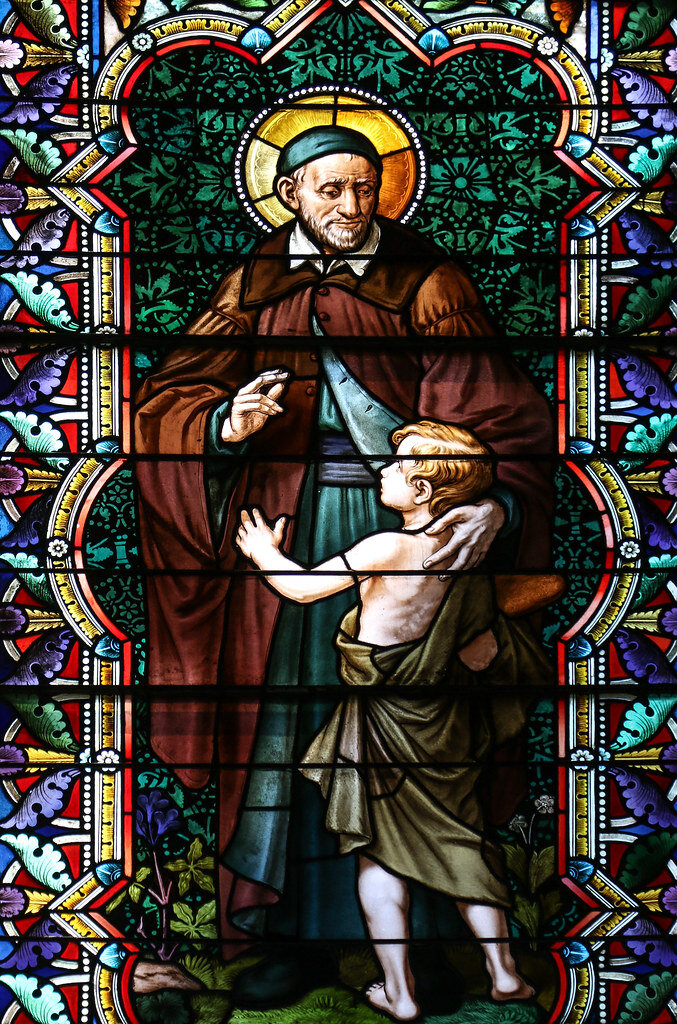
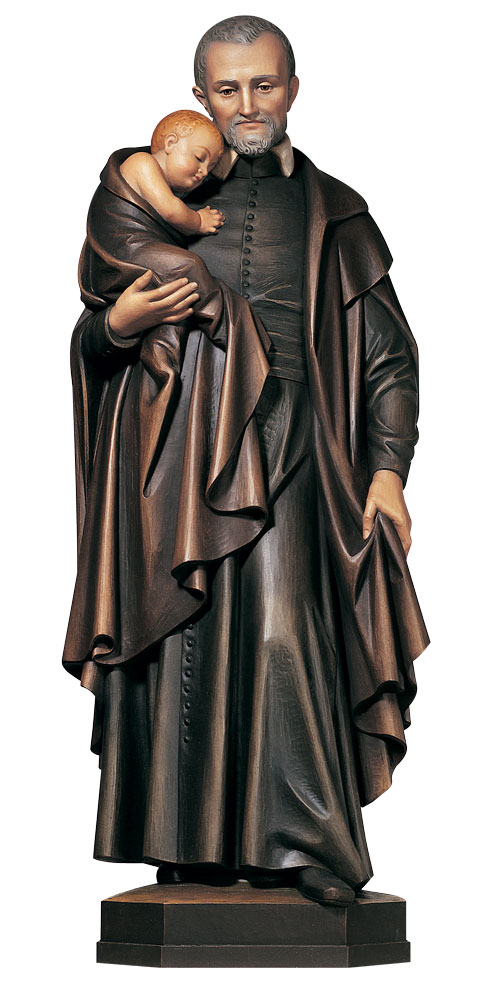
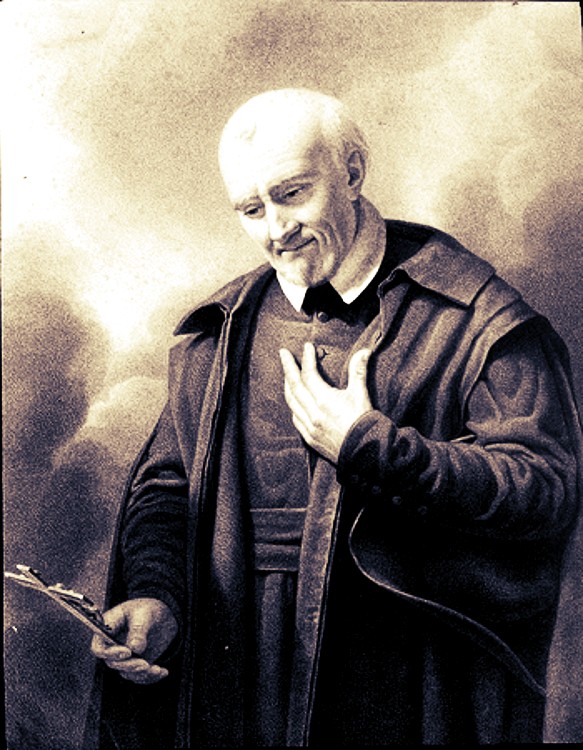
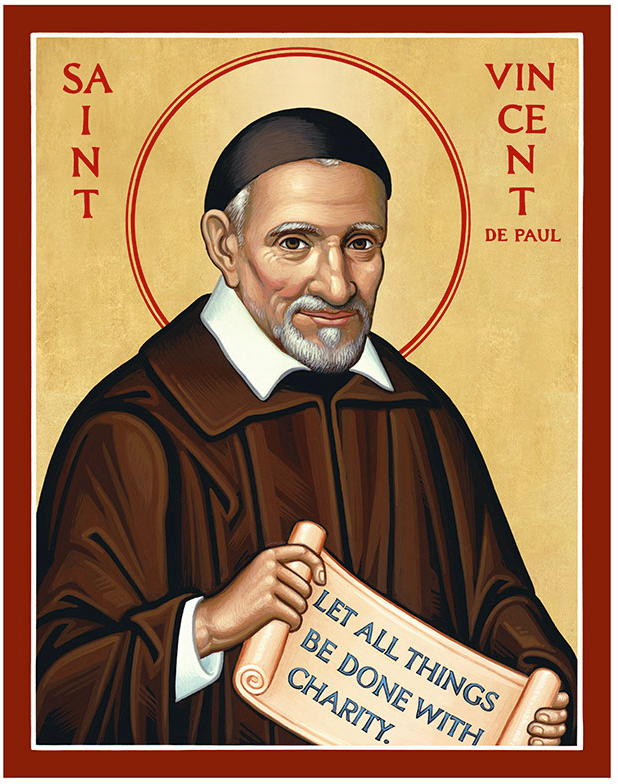
St Vincent de Paul (1581-1660)
Confessor, Founder of the Congregation of the Mission (Vincentians) and Co-Founder of the Sisters of Charity, is an outstanding example of great love for the poor and unfortunate and the Celestial Patron of all Catholic Charitable Societies. (added by Pope Leo XIII).

By Fr Francis Xavier Weninger SJ (1805-1888)

Vincent de Paul, a Frenchman, was born at Pouy, not far from Dax, in Gascony and from his boyhood, was remarkable for his exceeding charity towards the poor. From the care of his father’s flocks, he was sent to study letters. He learned the humanities at Dax and Theology first at Toulouse, then at Saragossa. Having been Ordained Priest and having taken a Degree in Theology, he fell into the hands of the Turks and was led captive by them, into Africa. But being sold into slavery, he won his owner (an apostate) back to Christ. By the help of the Mother of God, therefore, Vincent and his owner hurried away from the shores of the barbarians. Then Vincent undertook a journey to Rome, to visit the thresholds of the Apostles.

Having returned to France, he governed, in a most saintly manner, first, the Parish of Clichy and then, that of Chatillon. He was appointed by the King as Principal Chaplain of the French galleys and showed marvellous zeal in striving for the salvation of both the drivers and the rowers. The holy Francis de Sales, appointed him Superior of the Nuns of the Visitation, whom he ruled for nearly forty years, with so great prudence that he amply justified the opinion of their most holy Founder, who confessed that he knew no worthier Priest than Vincent.

To the preaching of the Gospel unto the poor, especially to the country people, he devoted himself unweariedly, until he was disabled by old age. To this apostolic work he obligated both himself and the members of the Congregation, which he specially founded under the name of Secular Priests of the Mission, by a perpetual vow confirmed by the Holy See. And how greatly he laboured for bettering the discipline of the clergy, is attested by the Seminaries erected for senior clerics, by the frequency of sacred conferences among the Priests and by the religious exercises preparatory to the Sacrament of Holy Orders; for which purposes, as well as that of giving pious retreats for laymen, he desired that the Houses of his Institute, should be freely opened. Moreover, for the extension of faith and piety, he sent evangelical labourers, not only into the Provinces of France but also into Italy, Poland, Scotland, Ireland and even to Barbary and to the Indies.

And at the death of Louis XIII, whom he had attended and exhorted on his deathbed, Vincent himself was summoned by the Queen, Anne of Austria, mother of Louis XIV and made a member of the young King’s Council of Conscience. In this position, he most zealously urged that only the more worthy men should be placed in authority over the Churches and Monasteries; that civil discords, single combats, slowly-spreading false doctrines, which he both perceived and dreaded, should be ended; and that due obedience should be rendered by all, to the apostolic decisions.

There was no kind of misfortune which he did not, with fatherly tenderness, endeavour to relieve . The faithful groaning beneath the Turkish yoke, infants which had been abandoned, wayward youths, maidens exposed to danger, Nuns driven from their Convents, fallen women, convicts condemned to the galleys, infirm strangers, disabled workmen and even lunatics and beggars without number, all these he received and devoutly assisted with resources and in hospices, which have lasted to this day. When Lorraine, Champagne, Picardy and other Provinces were devastated by plague, famine and war, he relieved their necessities with an open hand. He founded many societies for seeking out and alleviating the lot of the wretched, among them, a celebrated association of matrons, widely spread under the name of Sisters of Charity. He likewise promoted the foundation of the Daughters of the Cross, of Providence and of St Genevieve, for the education of the weaker sex.

Amid these and other most important affairs, he was ever intent upon God, affable to everyone and always true to himself, simple, upright, lowly and ever shrank from honours, riches and luxuries. He was heard to say that in nothing was there any pleasure for him, except in Christ Jesus, Whom he desired to imitate in all things.

At length, worn out with bodily pains, labours and old age, on 27 September in the year of salvation 1660 and, in the eighty-fifth year of age, at Paris, in the House of St Lazare, which is the Motherhouse of the Congregation the Mission, he calmly fell asleep.

Since he became illustrious for virtues, merits and miracles, Clement XII placed him among the Saints, assigning 19 July as his annual feast. And Leo XIII, at the earnest request of many Bishops, claimed and appointed this notable hero of divine charity, who has deserved so exceedingly well, of every class of men, the special Patron before God, of all the Charitable Societies existing in the entire Catholic world and in any way soever, emanating from his foundation.

Posted in INCORRUPTIBLES, SAINT of the DAY

Saint of the Day – 14 July – Blessed Boniface of Canterbury O.Cart. (c 1207-1270)

Saint of the Day – 14 July – PATRONAGES – Blessed Boniface of Canterbury O.Cart. (c 1207-1270) Carthusian Monk and Prior, the forty sixth Archbishop of Canterbury. Reformer, Mediator. Born in c 1207 near Sainte-Hélòne-du-Luc in the Savoy region of modern France and died on 18 July 1270 at the Sainte-Hélòne des Milliere Castle in Hautecombe, Savoy, France of natural causes. Also known as – Boniface of Savoy. Beatified on 7 September 1838 by Pope Gregory XVI. His body is incorrupt.

Born to the nobility as a member of the Ducal House of Savoy. Boniface was the eleventh child of Count Thomas of Savoy and the brother of Queen Beatrix of Savoy, as well as the Uncle of Queen Eleanor of England.

Boniface became a Carthusian Monk at the Grande Chartreuse at a very young age. As a young man he was appointed as the Prior of the Carthusian Monastery in Natua, France.

In 1233, as a Sub-Deacon, he was elected Bishop of Belley in Burgundy and, in 1241, Boniface administered the Diocese of Valence, as well. In 1245, Boniface was chosen as the forty sixth Archbishop of Canterbury, England by Pope Innocent IV. In the same year, he attended the Council of Lyon.

As the Archbishop, Boniface revised the Court, eliminated unnecessary offices in the Archdiocese and worked to solve the fiscal problems of the nearly bankrupt Diocese. Boniface exerted diplomacy and mediation in order to reduce the Royal interference in the Church’s internal affairs and the control of Eccleasiastical appointments.

Boniface proceeded to implement reforms in a number of the Monasteries in his Diocese but many refused to recognise him or permit his visits. Some of the disputes actually led to violence and he was forced to excommunicate some Clerics in order to implement compliance. Others, however, welcomed his reform efforts, and were impressed with his personal piety, his charity, and his simple lifestyle.

In 1258 he was chosen the leader of a group of the King‘s Counsellors who represented the interests of the English Barons against the King. In May 1261 he called a Council at Lambeth Castle which led to declarations explaining that the Church had the right to oppose worldly forces and interventions. However, Pope Urban IV needed the support of King Henry and refused to ratify these Decrees.

Boniface went into voluntary exile in France from 1262 to 1266, administering his Archdiocese as best he could, from across the Channel and continued to oppose Henry’s unilateral appointments to Ecclesiastical offices and his taxation of Church property. But he sided with the King on other matters, especially when the Barons resorted to civil war. On the triumph of the King’s party in 1265, he returned to England, arriving there in May 1266.

Boniface even briefly served as Regent of England and accompanied the King on diplomatic expediations to France.

Boniface died while trying to settle family business and end feuds between family factions. Later English historians complained of his excessive involvement in worldly politics and his family affairs but. in France, he was far more appreciated by those who knew his true holiness and zeal for the Church of Christ.

Boniface was buried with his family in the Cistercian Abbey of Hautecombe in Savoy. In his will, he left legacies to all the houses of the Franciscans and Dominicans in the Diocese of Canterbury. His will had differing provisions for his burial depending on whether he died in England, France, or near the Alps.

After his death, Boniface’s tomb was the center of a cult, and when the tomb was opened in 1580, his body was found to be perfectly preserved

A very unclear image of St Boniface’s Tomb
Posted in DOCTORS of the Church, INCORRUPTIBLES, MARIAN TITLES, SAINT of the DAY

Mare de Déu de Canòlich / Mother of God of Canòlich, Canòlich, Spain, (1223) and Memorials of the Saints – 14 July

Mare de Déu de Canòlich / Mother of God of Canòlich, Canòlich, Sant Julià de Lòria, Andorra, Spain (1223) – 14 July and 4th Saturda\y of May:
HERE:

https://anastpaul.com/2021/07/14/mare-de-deu-de-canolich-mother-of-god-of-canolich-canolich-sant-julia-de-loria-andorra-spain-1223-and-memorials-of-the-saints-14-july/

St Bonaventure of Bagnoregio OFM (1221-1274) – Seraphic Doctor of the Church, Confessor, Friar of the Friars Minor Order of St Francis, Bishop, Cardinal, Theologian, Philosopher, Writer, Mystic, Preacher, Teacher. One of the eaqrly Biographers of St Francis.(Memorial)
St Bonaventure!

https://anastpaul.com/2018/07/15/saint-of-the-day-15-july-st-bonaventure-o-f-m-1221-1274-doctor-of-the-church/
AND:
https://anastpaul.com/2017/07/15/saint-of-the-day-15-july-st-bonaventure-seraphic-doctor/

Blessed Angelina di Marsciano
Blessed Boniface of Canterbury O.Cart. (c 1207-1270) Carthusian Monk and Prior, Archbishop of Canterbury. Beatified on 7 September 1838 by Pope Gregory XVI. His body is incorrupt.

St Colman of Killeroran
St Cyrus of Carthage
St Deusdedit of Canterbury
St Donatus of Africa

St Francisco Solano y Jiménez OFM (1549 – 1610) Priest , Spanish Friar of the Order of Friars Minor, Missionary, Musician, Preacher, Miracle worker, Apostle of the Blessed Sacrament, the Holy Virgin Mother and of Prayer, Polyglot – “The Wonder Worker of Whe New World.” Canonised on 27 December 1726 by Pope Benedict XIII.
A wonderful Saint:

https://anastpaul.com/2020/07/14/saint-of-the-day-14-july-saint-francisco-solano-ofm-1549-1610-the-wonder-worker-of-the-new-world/

Blessed Gaspar de Bono OM (1530– 1604) Spanish Priest, Friar of the Order of Minims, Vicar Provincial of the Order. He was noted for his particular devotion to the Passion of Christ, carrying his Crucifix everywhere as a means of evangelisation and to be able to constantly immerse himself in his Saviour’s sufferings.
His Loving Life:

https://anastpaul.com/2021/07/14/saint-of-the-day-14-july-blessed-gaspar-de-bono-om-1530-1604/

Bl Giorgio of Lauria
Bl Hroznata of Bohemia
Bl Humberto of Romans
St Idus of Ath Fadha
St Just
St Justus of Rome
St Liebert
St Marciano of Frigento
St Marchelm
Bl Michael Ghebre
St Optatian of Brescia
St Papias of Africa
Bl Richard Langhorne
Bl Toscana of Verona
St Ulric of Zell
St Vincent Madelgaire

Posted in INCORRUPTIBLES, MARIAN TITLES, SAINT of the DAY

Our Lady of the Taper of Cardigan (1100s) and Memorials of the Saints – 15 June

Our Lady of the Taper of Cardigan (1100s) – 15 June:
HERE:

https://anastpaul.com/2021/06/15/our-lady-of-the-taper-of-cardigan-1100s-and-memorials-of-the-saints-15-june/

St Vitus (c 290-c 303) – Martyr, One of the Fourteen Holy Helpers. Died aged 12-13 years of age. Patronages – against animal attacks, against dog bites, against epilepsy; epileptics, against lightning, against over-sleeping, against rheumatic chorea or Saint Vitus Dance, against snake bites, against storms, against wild beasts, of actors, comedians, dancers, dogs, Bohemia, Czech Republic, Serbia, 17 cities.
His very short life:
https://anastpaul.co
m/2017/06/15/saint-of-the-day-15-june-st-vitus/

St Vitus Cathedral, Prague, Czech Republic:
https://anastpaul.com/2017/06/15/celebrating-st-vitus-memorial-and-the-cathedral-in-his-honour-in-prague-czech-republic-the-country-for-which-he-is-a-patron-art-dei-series-2/

St Abraham of Saint-Cyriacus
St Achaicus of Corinth
St Barbara Cui Lianshi
St Benildis of Córdoba

St Bernard of Montjoux/Menthon CRSA (c 1020-1081) “Apostle of the Alps” Priest, Founder of a patrol that cleared robbers from the mountains and he established hospices for travellers and pilgrims. The large dogs, trained to search for lost victims in the mountains, are named for him. Patronages – Alpinists, Alps (proclaimed by Pope Pius XI on 20 August 1923), Campiglia Cervo, Italy, mountain climbers (proclaimed by Pope Pius XI on 20 August 1923), mountaineers, skiers, travellers in the mountains (proclaimed by Pope Pius XI on 20 August 1923).
Biography:

https://anastpaul.com/2018/06/15/saint-of-the-day-15-june-st-bernard-of-menthon-c-r-s-a-c-1020-1081-apostle-of-the-alps/

St Constantine of Beauvais
St Domitian of Lobbes
St Edburgh of Winchester
St Eigil
St Eutropia of Palmyra
St Fortunatus of Corinth

St Germaine Cousin (1579–1601) Incorrupt- French Laywoman, Penitent, Apostle of Charity, Miracle-worker. Patronages – abandoned people, abuse victims, child abuse victims, against poverty, disabled and handicapped, people, girls from rural areas, illness, impoverishment, loss of parents, shepherdesses, people disfigured by disease, physical therapists.
Her Holy Life:

https://anastpaul.com/2020/06/15/saint-of-the-day-15-june-saint-germaine-cousin-1579-1601/
https://youtu.be/NGY4xQp1FeE?list=PL5_ax08Z6UX_IS_p0gFisSs5wlM63KKL2

St Hadelinus of Lobbes
St Hesychius of Durostorum
St Hilarion of Espalion
St Isfrid of Ratzeburg O.Praem (c 1115-1204) Bishop, Confessor
Bl Juan Rodriguez
St Julius of Durostorum
St Landelin of Crespin
St Leonides of Palmyra
St Libya of Palmyra
St Lotharius of Séez
St Melan of Viviers
St Orsisius
Bl Pedro da Teruel
Bl Peter Snow
St Pierre de Cervis

Blessed Pietro Nolasco Perra OdeM (1574-1606) Priest of the Order of the Blessed Virgin Mary of Mercy (the Mercedarian Friars), Missionary.
https://anastpaul.com/2021/06/15/saint-of-the-day-15-june-blessed-pietro-nolasco-perra-odem-1574-1606/

Bl Ralph Grimston
St Tatian of Cilicia
Bl Thomas Scryven
St Trillo of Wales
St Vaughen of Ireland

St Vouga of Lesneven

Martyr of Lucania – 11 Saints: Eleven Christians Martyred together. We known nothing else about them but the names – Anteon, Candidus, Cantianilla, Cantianus, Chrysogonus, Jocundus, Nivitus, Protus, Quintianus, Silvius, Theodolus in Lucania (modern Basilicata), Italy, date unknown.

Posted in CARMELITES, INCORRUPTIBLES, MARIAN TITLES, SAINT of the DAY

Sunday within the Octave of Ascension, Notre-Dame des Ardents / Our Lady of Ardents, Arras, France (1095) and Memorials of the Saints – 29 May

Sunday within the Octave of Ascension

Notre-Dame des Ardents / Our Lady of Ardents, Arras, France (1095) – 29 May:

The Abbot Orsini wrote: “A wax candle is kept in the Cathedral of Arras, which is held to have been brought thither by Our Lady, in the year 1095.

Our Lady of Ardents, or Notre-Dame des Ardents d’Arras in French, is a small, charming red brick Church in the lower part of Town in Arras.. It was built in the beautiful style unique to the twelfth Century, in order to celebrate the appearance of the Blessed Virgin and to commemorate the miraculous assistance, she gave to the people then living in the region.
According to Tradition, there was a terrible epidemic that was given the name ‘the hellfire’ that ravaged the countryside in that year of 1105 and all men felt, that they were in the clutches of the specter of Death. The Evil of Ardent, the disease caused a kind of gangrene in the limbs and the strange sickness, caused terrible suffering in all parts of the body and laid low, both men and women and even their children, throughout the whole of the region.

There were, at that time, two minstrels, one named Itier, who lived in Brabant and the other, named Norman, who lived in the Chateau de Saint-Pol. They had vowed a mortal hatred, as Norman had killed Itier’s brother.
One night they both had the same dream – the Virgin Mary, dressed in white, appeared to them and told them to go to the Cathedral. Norman, who was closer, arrived first. As he entered the Cathedral he saw all the patients who had taken refuge there. He found the Bishop and told him of the apparition but Bishop Lambert thought that Norman was mocking him and sent him away. Itier arrived the following day and also spoke to the Bishop. When the Bishop told Itier that someone named Norman had come to tell him of the same vision, Itier asked where he was because he intended to kill him on the field, to avenge his brother’s death. Bishop Lambert then understood, that the Blessed Virgin had sent the two men to be reconciled. The Bishop spoke to each separately and then put them in each other’s presence and asked them to give each other, the kiss of peace and then spend the night in prayer, inside the Cathedral.

It was Pentecost Sunday, 28 May 1105, at about three o’clock in the morning, when the Virgin Mary appeared to the two minstrels in the Cathedral. Norman and Itier witnessed a sudden light as the Blessed Virgin descended from the height of the nave, carrying a lighted candle in her hands. She gave the men the candle intended for the healing of the sick and explained to them, what they must do. A few drops of the wax that fell from the candle were to be mingled with water, giving it miraculous properties the people would then drink this water.

All who believed were healed. The two minstrels, now brothers, distributed the miraculous water and the epidemic ceased. There were many prodigies of healing that went on for hundreds of years, especially with wounds, inflammations and ulcers. All of this shows how reconciliation and prayer, are pleasing to God and can precipitate great miracles, as well as ending or preventing wars. The Bishop of Arras wanted to build a Church worthy of Our Lady of Ardents and to receive the relic of the Holy Candle. The Church was consecrated in 1876 just before the definitive establishment of the Third Republic.

The Reliquary of the Holy Candle

This relic, the Holy Candle, can still be seen today. On the eve of Corpus Christi and the four following days, the Holy Candle was lit and shown to the people. It has not diminished!
The reliquary of the Holy Candle is a masterpiece of art, which preserves the relic of the Holy Candle. The content of the reliquary has been the object of veneration and every year, it is presented to pilgrims, during the time period which runs between Ascension Thursday and Pentecost.

St Maria Magdalena de’ Pazzi O.Carm (1566-1607) Carmelite Nun and Mystic, Ecstatic, she bi-located and was the intercessor of many miracles, Stigmatist. She was Beatified in 1626 by Pope Urban VIII. At her Canonisation in 1668, her body was declared miraculously incorrupt. Her Feast day was moved in 1969 to 25 May.
Biography:

https://anastpaul.com/2020/05/25/saint-of-the-day-25-may-saint-maria-magdalena-de-pazzi-o-carm-1566-1607/

St Bona of Pisa
St Conon the Elder
St Conon the Younger
St Daganus
St Eleutherius of Rocca d’Arce
St Felix of Atares
St Gerald of Mâcon
Bl Gerardesca of Pisa
Bl Giles Dalmasia
St Hesychius of Antioch
St John de Atarés

St Maximinus of Trier (Died c 346) Bishop and Confessor
St Maximus of Verona
St Restitutus of Rome
Bl Richard Thirkeld
St Theodosia of Caesarea and Companions
St Votus of Atares
St William of Cellone

Martyrs of Toulouse: A group of eleven Dominicans, Franciscans, Benedictines, clergy and lay brothers who worked with the Inquisition in southern France to oppose the Albigensian heresy. Basing their operations in a farmhouse outside Avignonet, France, he and his brother missioners worked against heresy. Murdered by Albigensian heretics while singing the Te Deum on the eve of Ascension. They were beaten to death on the night of 28 to 29 May 1242 in the church of Avignonet, Toulouse, France and Beatified on 1 September 1866 by Pope Pius IX (cultus confirmation).
• Adhemar
• Bernard of Roquefort
• Bernard of Toulouse
• Fortanerio
• Garcia d’Aure
• Pietro d’Arnaud
• Raymond Carbonius
• Raymond di Cortisan
• Stephen Saint-Thibery
• William Arnaud
• the Prior of Avignonet whose name unfortunately has not come down to us.
The Church in which they died was placed under interdict as punishment to the locals for the offense. Shortly after the interdict was finally lifted, a large statue of the Blessed Virgin Mary was found on the door step of church. Neither the sculptor nor the patron was ever discovered, nor who delivered it or how. The people took it as a sign that they were forgiven, but that they should never forget, and should renew their devotion to Our Lady. They referred to the image as “Our Lady of Miracles.”
Until recently there was a ceremony in the church on the night of the 28th to 29th of May, the anniversary of the martyrdom. Called “The Ceremony of the Vow”, parishioners would gather in the church, kneel with lit candles, and process across the Church on their knees, all the while praying for the souls of the heretics who had murdered the Martyrs.

Martyrs of Trentino: Three missionaries to the Tyrol region of Austria, sent by Saint Ambrose and welcomed by Saint Vigilius of Trent. All were Martyred – Alexander, Martyrius and Sisinius. They were born in Cappadocia and died in 397 in Austria.

Posted in INCORRUPTIBLES, SAINT of the DAY, TEACHERS, LECTURERS, INSTRUCTORS

Saint of the Day – 25 May – St Madeleine Sophie Barat RSCJ (1779-1865) V

Saint of the Day – 25 May – St Madeleine Sophie Barat RSCJ (1779-1865) Virgin, Religious, Foundress of the Religious of the Sacred Heart of Jesus, a worldwide religious institute of Teachers. Born on 12 December 1779 at Joigny, France and died on Ascension Thursday, 25 May 1865, aged 85 at Paris, France of natural causes. Patronage – Teachers. Her body is incorupt.

She was a delicate little girl, spoilt, bubbling over with life and intelligence. Born during the night of 13 December 1779 in the little Burgundian town of Joigny in the glimmer from a neighbour’s burning house, she was premature and so frail that she was Baptised at dawn. She was the third child in a family of craftsmen, barrel-makers and vine-growers, who lived comfortably enough, in a small house in the rue du Puits-Chardon (today, 11 rue Davier). When she was seven, she became the pupil of her brother Louis, eleven years her senior. He was teaching in the local college until he was old enough to be able to be Ordained Priest. Under his austere direction, she made astonishing progress in all her subjects, both secular and religious, yet she regretted hardly having time to play with friends her own age, even at the time of the grape harvest and traditional holiday in the country of vineyards! Her family’s Jansenistic severity, might have crushed and destroyed her liveliness but, fortunately, she kept her spontaneous vivacity and joyful character.

During the Revolution, Sophie was a courageous adolescent. She, who so loved study had to work as a seamstress and became an excellent embroidress. She had to be the link between her father, a good workman but illiterate and her mother, more refined, sensitive and cultured. Above all, she had to sustain the courage of her family when her brother was made prisoner by the revolutionaries and only escaped the guillotine by the intervention of providence. It was then that Sophie discovered devotion to the Sacred Heart and now, she put all her trust in the love of Christ.

Still very young, she gave proof of resolve and generosity, when her brother, liberated by the fall of Robespierre, asked her to come to Paris to continue her education. Certainly it cost her dearly to tear herself away from her mother’s tenderness but she was resolved to give herself entirely to God. The Revolution had closed all the Convents and her brother’s offer ,opened to her a way of renunciation and generosity. For five years she lived in Paris, a life of prayer and study, giving herself to catechising the children of the Marais quartier.

In 1800 her brother introduced her to Fr Varin who was trying to establish a congregation of religious women, founded on the spirituality of the Heart of Christ and vowed to education. She had wanted to enter Carmel but the appeal of Fr Varin made her reflect. The exceptional culture she had acquired, the needs of a society that was gradually coming out of the revolutionary torments and which lacked guidelines, were these not signs of the Will of God for her?

On 21 November 1800, in Paris, she made her first religious commitment. A year later, a first community was established at Amiens, of which she was soon named Superior. While for political reasons, the Congregation could only take the name of Society of the Sacred Heart in 1815. II spread gradually, to Grenoble, then to Poitiers where the first noviciate was opened. She was named Superior General at the age of twenty-six. Henceforward, Madeleine Sophie’s life merged with that of the Society of the Sacred Heart, which she governed. She crossed France and Europe, going wherever she was asked to found Boarding Schools. And she insisted on opening a free school, or sometimes an orphanage, alongside each one, to which poor girls came flocking, since at that time, there were no communal schools.

This long religious life from 1800 to 1865 was filled with prayer, work and suffering but also with deep joy.

First, prayer, intense and prolonged for seven hours, day and night sometimes. Faith in the Love of God, manifested in the Heart of Jesus, was so important for her, that what counted was to respond to this Love by adoration and making it known and loved by all, throughout the world.

This prayer animated her immense work and her entire life. To bring up children and young people one must first love them, seek to understand them, respect their budding personality, instruct them in awakening their faculties, exercising their judgement, affirming their will and developing in them, the sense of responsibility. It was in that spirit that she formed the Religious of the Sacred Heart to be Teachers. Her task was varied. She had to open schools, to negotiate with religious and civil authorities, buy or rent property, construct or adapt buildings. She also had to send groups of religious to various places, at a time when these had to assume almost single-handedly, all the tasks of teaching, administration and material work.

Once she had established Convents, she had to visit them. But journeys at that time, by coach hired with much trouble, were long, difficult and sometimes dangerous. There was also, a large correspondence to maintain, so as to keep in touch, advise and encourage. She opened 122 Convents. Several disappeared, suppressed as a result of war, persecution by hostile regimes or simply because, certain foundations had not been wise.

At her death in 1865, 89 of them were flourishing. Thousands of young people were being educated there, by 3,500 religious. These houses were dispersed throughout 16 countries of Europe, Africa, North and South America. In 1818, she had sent St Philippine Duchesne to the United States, where she opened the first schools in very hard conditions and in great poverty.

These results that might make one think of a triumphant development, should not create an illusion – they were only obtained in the midst of great trials and at the price of suffering,: long and repeated illnesses, epidemics which ravaged entire regions, decimating religious and pupils alike. 1350 Religious of the Sacred Heart died before their foundress. Political troubles, revolutions and persecutions, chased the religious from Northern Italy and Switzerland. Mother Barat was also faced with contradictions and even calumnies against herself and her work, dissensions at the interior of the Congregation, as a result of misunderstandings and incomprehension. Twice, from 1809 to 1815 and from 1839 to 1843, crises put in peril the very existence of the Society of the Sacred Heart. Madeleine Sophie rose above them all with her usual weapons – silence, humility and the prayer which united her ever more closely to Jesus Christ. From Him she drew an unshakeable hope and full forgiveness for those who made her suffer.

What can one say of the joys, which, on the other hand lightened her life – her union with God, the approbation and support of the Church, to which she was so deeply attached, the esteem and affection which responded to her loving devotedness, for she had a truly exceptional gift of communion with others and friendship.. She welcomed everyone in the same way – Ecclesiastical dignitaries, Princesses, men distinguished by their culture or their power, workmen, religious, pupils and their parents. She showed so much interest, such a quality of listening and sympathy that one left her conscious of having been understood and comforted. Her preferences were for the poor and the deprived, for whom she always had time, help and delicate attention.

In her old age, the only relaxation she allowed herself, was to see the Junior School of the Rue de Varenne, brought to see her by their mistress. They came across the garden to the Mother House, Boulevard des Invalides and sat round her under a great cedar tree, whence ensued joyous exchanges. Saint Madeleine Sophie listened to them, asked them questions, answered their questions and passed round sweets. It was mutual joy; for the children knew well who loved them.

Saint Madeleine Sophie died in Paris on 25 May, 1865. Ascension Day. She was buried in the cemetery at Conflans. In 1904, when the French Sisters were expelled by the Combes laws, her body was transferred to the Sacred Heart at Jette, Brussels. Since her Beatification in 1908 by St Pius X, her well-preserved body has been exposed in a Shrine. She was Canonised n 24 May 1908 by Pope Pius XI

Since 20 May 1998, her Shrine has been at 31 rue de l’Abondance 1210 Brussels. You can go there to pray to Saint Madeleine Sophie.

Today nearly 4,000 religious try to follow her example and continue her work. All over the world, thousands of pupils, former pupils and all sorts of people, benefit, often without knowing it,, from her influence, her holiness and her love. St Madelein Sophie Barrat, pray for our children, pray for us all! Thanks be to God, amen.

Founder Statue at St Peter’s
Posted in CONFESSION/PENANCE, INCORRUPTIBLES

Saint of the Day – 16 May – St John Nepomucene (c 1345–1393) Priest, Martyr – “The First Martyr of the Seal of Confession.”

Saint of the Day – 16 May – St John Nepomucene (c 1345–1393) Priest, Martyr, Confessor and almoner.to the Queen of Bohemia – “The First Martyr of the Seal of Confession.” Born in c1345 in Nepomuk, Bohemia and died on 20 March 1393 (aged 47–48) at Prague . St John’s tongue is incorrupt and is kept in the Cathedral of St Vitus in Prague, Czech Republic. Patronages – Bohemia. – which includes the greater Czechoslovakia, Moravia and parts of Austria before various divisions; protection against slander, restoration of the good name of those slandered, help in confessing sins, for the protection of Priests and the Seal of Confession, San Juan, Batangas, Malibay, Pasay; Alfonso, Cavite; Moalboal, Cebu; San Remigio, Cebu; Cabiao; Spanish Navy. Also known as – John of Nepomuk, Nepomuc, Ioannes Nepomucenus, Johannes Nepomuk.

The Roman Martyrology states of him today: “At Prague in Bohemia, St John Nepomucene, a Canon of the Metropolitan Church, who, being tempted in vain to betray the secret of Confession, was cast into the river Moldaw and thus won the Palm of Martyrdom.”

Saint John Nepomucene, Priest and Martyr
By Fr Francis Xavier Weninger SJ (1805-1888) (Excerpt)

John, whom, in our time, God has honoured with many miracles, received his surname from Nepomuc, a small town two miles from Prague, where he was born. His parents were plain people and had lived many years without issue. After having made a vow, however, in honour of the Blessed Virgin, whose miraculous picture is kept in a Cistercian Convent not far from Nepomuc, John was born to them. At the time of his birth, several stars were seen which floated down from heaven and rested upon the house of his parents. This event was interpreted and admired, as a prophecy of his future holiness. In his infancy, he fell dangerously ill but recovered after his parents had consecrated him to God, in the above-named place of pilgrimage.

As he grew, his greatest delight was to assist the Priests at Mass and he passed the whole forenoon in that sacred occupation, in the Cistercian Church. In his studies he made such rapid progress that he became Doctor of Divinity and Canon Law. After being Ordained Priest, he retired, for one month from all intercourse with men and prepared himself, by prayers, penances and purifying his soul, for his first Holy Mass. Soon after, he was commissioned to preach at Prague in the Church of our Lady, in the suburb and he did this with such eminent success, that the Archbishop raised him to the dignity of Canon and Preacher of the Cathedral, which functions he discharged until his death.

Wencelaus, at that period King of Bohemia, attended his sermons frequently, with his whole Court and esteemed the Saint highly. He offered him the See of Leimeritz and afterwards, the rich provostship of Wissherad but John refused both, hoping to do more good by preaching. Queen Jane, the wife of Wencelaus chose him for her Confessor and Almoner. The king, neglecting the affairs of the land, became, meanwhile, more and more, a slave to debauchery and drunkenness and added to the scandal which this gave to his people, by acts of the most unheard of cruelty. Not able to alter his conduct, either by exhortations or entreaties, the pious Queen, at last became silent, and endeavoured by prayer and other virtuous exercises, to inspire her husband with better thoughts and the fear of God. She frequently received the Holy Sacraments in order to give more power to her prayers and to be strengthened in patience. The wicked King regarded her frequent Confessions with mistrusting eyes, even suspecting that the Queen might have been as faithless to him, as he had been to her.

Hence, the desire to know what the Queen confessed was awakened in him and calling John into his presence, he, after long circumlocution and giving some feigned reasons, informed him of his wish, promising him all possible favours and honours. The Saint was at first stunned at so sacrilegious a demand and then explained to the King, the greatness of the crime, which a Priest would commit, if he revealed the least thing which had been told him, under the Seal of Confession, adding, that he would much rather die than become guilty of so terrible a crime.

The King dissimulated his anger at this reply, resolving to wait for another opportunity. He had not to wait long, for when, with unprecedented cruelty he had commanded that a cook, who had sent to the Royal table, a capon badly roasted, should be himself roasted alive on a spit and no-one dared to disobey the tyrant. Sohn, however, went to him and endeavoured to dissuade him from such barbarity. But instead of listening to the Saint, he gave orders to cast him into a dark, horrible dungeon and left him there a day without any food. After this, he sent the jailer to him with a message that he could save his life only by fulfilling the king’s desire. The Saint well understood the message and replied that he remained firm in what he had already said to the King. Wencelaus then determined to have recourse to kindness. He had the Saint liberated and informed, that he repented of his harshness and begged his pardon, at the same time requesting him to appear the following day at the Royal table, as a token of complete reconciliation. The Saint complied with the behest and appeared but no sooner had the King arisen from the table, than he repeated his godless desire, pressing the holy man, at first with great promises and then with cruel menaces. Seeing that neither the one nor the other were respected by John, he commanded that he should be again dragged to the dungeon and stretched upon the rack. To add to his suffering, he was, at the same time, burned with torches. The brave Martyr raised his eyes to Heaven and only repeated frequently the sacred names of Jesus and Mary. When he had been long tortured, the King, who was present, left and John was once more set at liberty.

He informed nobody of what had happened to him but as soon as his wounds were healed, he discharged his functions as he had hitherto done. As it was, however, revealed to him in a vision, that his silence would cost him his life, he bade farewell to his hearers on the Sunday before Ascension. His text was, “A little while and you shall not see me.” In this sermon he predicted the evils which would soon fall upon Bohemia, in consequence of new heresies and exhorted all to repentance and to constancy in the Catholic faith.

On the day before the festival of the Ascension, he made a pilgrimage to Bunzel where the miraculous image of the Blessed Virgin was honoured. Arriving there, he fervently recommended his approaching death-agony to the divine Mother. At evening, he returned to Prague. The King, leaning out of the window of his palace, saw him. Having given orders to bring the Saint before him, he addressed him with these shameless words: “Listen, parson! Thou wilt have to die, if thou dost not immediately tell me what the Queen confessed to thee. I vow to God, that thou shalt drink water!” The Saint repeated fearlessly his former words: “I will rather die a thousand times.” Hardly had this passed his lips, when the King commanded the holy man to be dragged into the adjoining apartment and kept there. As soon as night had come, he was led to the bridge that unites the old and new portions of Prague, and from thence cast into the Moldaw, in the year 1383.

Heaven did not allow this crime to be concealed for one single hour. An uncommonly bright light in the form of many stars was seen, which seemed to float upon the water and accompanying the holy body, remaining with it. All the people came running towards the river but could not explain the prodigy. The King himself was called by the Queen to witness the scene and looked at it in fear and trembling. When the next day dawned, the waters of the river were divided into two parts and in the midst was seen, lying on the sand, with a sweet smile upon his face, the body of the Saint. The Canons brought it, at first into the nearest Church but soon after, transferred it with imposing solemnities to the Cathedral.

From that day, date the honours which were paid to the Saint and which God approved by numberless miracles which were wrought at his tomb.

After the expiration of more than 300 years, the holy body was exhumed and the tongue of the Saint was found fresh without a sign of corruption. When, six years later, this tongue was shown to a deputation, sent by the Pope to verify the report, it suddenly swelled up before the eyes of all present and changed from dark red to purple, as though it were still, imbued with life.

The tomb and reliquary of St John, containing the incorrupt tongue
St Vitus Cathedral

Remarkable is the fact, that everyone who approached the tomb of the Saint, irreverently was sure to be punished with some public derision. Many examples of recent date have verified this.

In conclusion, it is to be remarked, that the intercession of Saint John Nepomuceno, may be requested with great benefit by those whose good name has been tarnished, or who are in danger of a public disgrace, as also by those who feel difficulties in confessing their sins. In our times this glorious Saint has become particularly renowned, not only on account of the incorruption of his tongue and the many miracles which have taken place at his shrine but also, on account of the many graces and benefits which the Almighty has bestowed upon those, throughout the whole Christian world, who with confidence ask his intercession. Many books are filled with the relation of these facts.

Posted in INCORRUPTIBLES, SAINT of the DAY

Saint of the Day – 14 May – St Maria Domenica Mazzarello FMA (1837-1881)

Saint of the Day – 14 May – St Maria Domenica Mazzarello FMA (1837-1881) Virgin, Religious Sister and Founder with St John Bosco of the Daughters of Mary Help of Christians. They were founded to work alongside Saint John Bosco and his Salesians of Don Bosco, in his teaching projects in Turin. They continue to be a teaching Order worldwide and are now called the Salesian Sisters of St John Bosco. Born
on 9 May 1837 at Mornese, Acqui, Italy and died on 14 May 1881, aged 44, in Nizza Monferrato, Asti, Italy of natural causes. Also known as – Mary Dominic Mazzarello.

Maria was born in Mornese, in what is now the Province of Alessandria, northern Italy, to a peasant family who worked in a vineyard. She was the eldest of ten children of Joseph and Maddalena Calcagno Mazzarelli. When she was fifteen she joined the Association of the Daughters of Mary Immaculate, known for there charitable works and run by the Parish Priest, Father, Domenico Pestarino – this Apostolate was a precursor to the founding of the Salesian Sisters.

When she was 23 years old, a typhoid epidemic hit Mornese causing the death of many villagers. Soon, her uncle and aunt were taken ill and Maria volunteered to care for them and their many children. After a week they recovered, however, when Maria returned home, she also became ill with typhoid. Due to the illness, she received the last rites. She recovered, but the illness left her weak. The strength which had formerly sustained her, in her work in the fields, was no more. Maria was now thin and frail; a shell of her formerly robust self.

She took an apprenticeship as a seamstress in the town and worked diligently at the craft. Like St John Bosco, the skills which she learned in her youth, she was able to pass onto those who would come after her. One day, Maria was walking in her village and was suddenly astounded to see before her, a vision of a large building with a courtyard and many girls playing and laughing. A voice said to her, “I entrust them to you.

The education of girls was a particular need in the nineteenth century and Maria decided to devote herself to this work. Hosts of farm girls , or serving girls, factory workers and street vending girls, filled the streets of the city and all of them were at risk to juvenile prostitution. She wished to educate them and teach them a trade, to save them from the dangers of street life. She persuaded some of her girl friends to join her in this project. Fifteen young women now comprised the Daughters of Mary Immaculate. Fr Pestarino busied himself with training them in the spiritual life and managed to secure a place for some of them to live in community, thus was the beginning of religious life in Mornese. The Daughters took in a few young girls and housed them, schooling them in the faith and handing down to them, their knowledge of dress aking, tailoring and general sewing skills.

John Bosco was told of the Daughters by Fr Pestarino, who himself was training as a Salesian of Don Bosco, under the Saint. Considering his vision of the young girls, Bosco decided to meet with them. He went to Mornese with his boy band under the guise of raising funds for his Oratory but his true intention was to investigate the possibility of founding a female counterpart of the male Salesian religious Order,.

In 1867, after meeting with them and receiving the Daughters’ enthusiastic response to his proposal, St John drew up their first rule of life. A source of the community’s good spirit, sense of humour, optimism and charity, Maria Mazzarello was the natural choice for the first Superior. Eventually obedience won out and she was the first Mother of the young community at age thirty.

After many formation, struggles, the well-intentioned but misdirected advice of others, and difficulties with the townspeople (whose school for boys which they had raised money for and built, st John transferred to the Daughters, for their work). The day of their profession arrived. The fifteen young women, led by Maria, professed their vows as religious women in the presence of the Bishop of Acqui, their spiritual father St John and Fr Pestarino. The date was 31 July 1872, the birthday of this new religious family.

Collegio, the first community of the Daughters of Mary Help of Christians.

At age thirty-five, donned in a habit, she was now Sister Maria Mazzarello. As the feminine branch of the Salesian religious family, the Daughters sought to do for girls what the Priests and Brothers were doing in Turin for boys.

After being elected Mother General of the Salesian Sisters, Maria Mazzarello felt that it was important that she and the other Sisters, have a good understanding of how to read and write; it was a skill which many of them had never had the opportunity to acquire and which training she now organised. Her dedication to her Sisters was not limited to their intellectual development alone. In every way, she was an attentive mother, which is why to this day, she is still fondly referred to as “Mother Mazzarello” by the Salesian Family.

The first Missionary Sisters set out for Uruguay in 1877. Mother Mazzarello accompanied them to their port of call in Genoa, and then took a boat to France, so that she could visit the SIsters who had already established themselves there.

In Marseilles their ship had to be repaired and all of the passengers were forced to disembark while it was dry docked. Although the Sisters had been told that lodging had been prepared for them, there was a mix-up and they were left without stranded.. Mother Mazzarello was not one to let events such as this discourage her, so she took the sheets that they had brought with them, stuffed them with straw and made makeshift beds for all of them. After a miserable night of sleep, they all awoke but Mother Mazzarello could not get up. A fever was ravaging her body and she was in terrible pain. The next morning,, more out of a concern for her already exhausted companions, she was able to get up, see the Missionaries off and then journey with her remaining Sisters to their house and orphanage in St.Cyr.

Once in St Cyr ,she fainted and was confined to bed for forty days.. The diagnosis was pleurisy. Eventually she returned to Italy, even though the doctor told her not to travel. She said that she wanted to die in her own community. She made her return journey in stages, she was painfully aware of her delicate condition. Fortunately. on one of her stops St John was near and they were able to meet for the last time.

In early April, Maria returned to Mornese. Her native air strengthened her and since she felt stronger she insisted on keeping the community schedule and doing her usual work. Unfortunately, it was too much for her and she relapsed. Near the end of April it seemed that death was approaching. Finally, in the pre-dawn hours of 14 May 1881, Mother Mazzarello began her death agony. After receiving the last rites she turned her attention to those around her and weakly whispered, “Good-bye. I am going now. I will see you in Heaven.” Shortly after she died at the age of forty-four.

Maria was Beatified on 20 November 1938 and Canonised on 24 June 1951. Her incorrupt body is venerated in the Basilica of Our Lady Help of Christians, in Turin, Italy, which is the Mother Basilica of the Salesians, built by St John Bosco. A Church in southeast Rome bears her name, Santa Maria Domenica Mazzarello – the Statue below resides there..

Posted in DOMINICAN OP, INCORRUPTIBLES, MARIAN TITLES, SAINT of the DAY

Madonna della Consolazione / Our Lady of Consolation, or Mary, Consoler of the Afflicted (1436), Madonna di Pinè, Montagnaga, Trento, Italy / Our Lady of Pinè, Montagnaga (1729),and Memorials of the Saints – 14 May

Madonna della Consolazione / Our Lady of Consolation, or Mary, Consoler of the Afflicted (from the Latin Consolatrix Afflictorum) (1436) – This Marian Title is celebrated on many different Feast Days, depending on your country. Today, 14 May, is her Feast Day in the USA.:
HERE:

https://anastpaul.com/2021/09/04/madonna-della-consolazione-our-lady-of-consolation-or-mary-consoler-of-the-afflicted-1436-and-memorials-of-the-saints-4-september/

Madonna di Pinè, Montagnaga, Trento, Italy / Our Lady of Pinè, Montagnaga (1729) – Commemorated 14 May:
HERE:

https://anastpaul.com/2021/05/14/feast-of-st-matthias-apostle-madonna-di-pine-montagnaga-trento-italy-our-lady-of-pine-montagnaga-1729-and-memorials-of-the-saints-14-may/

St Ampelio (Died c 428) Hermit, Miracle-worker. His body is incorrupt and is the only image we have of him.
His Life:

https://anastpaul.com/2021/05/14/saint-f-the-day-14-may-saint-ampelio-died-c-428/

St Boniface of Ferentino
St Boniface of Tarsus
St Corona the Martyr
St Costanzo of Capri
St Costanzo of Vercelli
Bl Diego of Narbonne
St Dyfan
St Engelmer
St Erembert of Toulouse
St Felice of Aquileia
St Fortunatus of Aquileia
St Gal of Clermont-Ferrand

Blessed Giles of Santarem OP (1185-1265) Friar of the Order of Preachers, Confessor, Penitent
About Bl Giles:

https://anastpaul.com/2020/05/14/saint-of-the-day-14-may-blessed-giles-of-santarem-op-1185-1265/

St Henedina of Sardinia
St Justa of Sardinia
St Justina of Sardinia
St Maria Domenica Mazzarello FMA (1837-1881) Virgin, Religious Sister and Founder with St John Bosco of the Daughters of Mary Help of Christians. They were founded to work alongside Saint John Bosco and his Salesians of Don Bosco in his teaching projects in Turin. They continue to be a teaching Order worldwide and are now called the Salesian Sisters of St John Bosco. Her Body is incorrupt.

St Michel Garicoïts (1797-1863) “An Apostle of the Love of God,” Priest, Founder of the Congregation of the Sacred Heart of Jesus of Bétharram, Defender of the Faith, Confessor, Teacher, Preacher, ardent devotee pf the Holy Eucharist and the Sacred Heart.
Biography:

https://anastpaul.com/2019/05/14/saint-of-the-day-14-may-saint-michel-garicoits-1797-1863/

St Pons of Pradleves
St Pontius of Cimiez
St Tuto of Regensburg
St Victor the Martyr

Martyrs of Seoul – 5 Beata: A group of lay people Nartyred together in the apostolic vicariate of Korea.
• Petrus Choe Pil-je
• Lucia Yun Un-hye
• Candida Jeong Bok-hye
• Thaddeus Jeong In-hyeok
• Carolus Jeong Cheol-sang
14 May 1801 at the Small West Gate, Seoul, South Korea

Posted in INCORRUPTIBLES, MARIAN TITLES, SAINT of the DAY, St JOSEPH, The APOSTLES & EVANGELISTS

St Philip the Apostle, St James the Lesser Apostle, St Joseph the Worker, Spouse of the Blessed Virgin Mary, Maria Santissima di Giubino, Siciliy / Madonna of Giubino, Sicily (1655) and Memorials of the Saints – 1 May

St James the Lesser Apostle (Feast)
St Philip the Apostle (Feast)
Sts James and Philip:

https://anastpaul.wordpress.com/2018/05/03/3-may-feast-of-sts-philip-and-james-apostles-and-martyrs/

St Joseph the Worker, Spouse of the Blessed Virgin Mary
About this Memorial, which was established by Pope Pius XII in 1955:

https://anastpaul.wordpress.com/2018/05/01/memorial-of-st-joseph-the-worker-1-may/
AND here:
https://anastpaul.wordpress.com/2017/05/01/saint-of-the-day-1-may-st-joseph-the-worker/

Maria Santissima di Giubino, Siciliy / Madonna of Giubino, Sicily (1655) – 1 May:
HERE:

https://anastpaul.com/2021/05/01/madonna-of-giubino-sicily-1655-and-memorials-of-the-saints-1-may/

St Aceolus of Amiens
St Acius of Amiens
St Aldebrandus of Fossombrone
St Amator of Auxerre
St Ambrose of Ferentino
St Andeolus of Smyrna
Bl Arigius of Gap
St Arnold of Hiltensweiler
St Asaph of Llanelwy
St Augustine Schöffler

St Benedict of Szkalka OSB (Died 1012) Monk and Hermit

St Bertha of Avenay
St Bertha of Kent
St Brieuc of Brittany (c 420-c 510)Welsh Bishop Monk and Missionary to Brittany.
St Ceallach of Killala
St Cominus of Catania
Evermarus of Rousson
Bl Felim O’Hara
St Grata of Bergamo
St Isidora of Egypt
St Jeremiah the Prophet
St John-Louis Bonnard
Bl Klymentii Sheptytskyi
St Marculf
St Orentius of Auch
St Orentius of Loret
St Patientia of Loret

St Peregrine Laziosi OSM (1260-1345) The “Angel of Good Counsel,” Priest of the Servite Order (The Order of Servants of Mary), Apostle of the poor and the sick, Miracle-worker, Spiritual Advisor.  Patronages – against cancer, against breast cancer, against open sores, against skin diseases, AIDS patients, sick people, Diocese of Forli-Bertinoro, Italy, City of Forli, Italy.   St Peregrine’s body is Incorrupt.
Beautiful St Peregrine:

https://anastpaul.com/2020/05/01/saint-of-the-day-1-may-saint-peregrine-laziosi-osm-1260-1345-today-is-the-675th-anniversary-of-his-death/

Bl Petronilla of Moncel

St Richard Pampuri OH (1897-1930) aged 33 – Italian Religious of the Hospitallers of St John of God, Medical Doctor, Founder of the Band of Pius X (a Youth movement) which he dedicated to the medical care of poor people, Third Order Franciscan. He was an outstanding lover of the Holy Eucharist in Adoration and an avid Marian devotee, as well as living out his short but faith-filled life in total charity to all the needy and poor.
Biography:

https://anastpaul.com/2019/05/01/saint-of-the-day-1-may-saint-richard-pampuri-oh-1897-1930/

St Romanus of Baghdad

St Sigismund of Burgundy (Died 524) King of the Burgundians and Martyr, Reforemer, Penitent, Apostle of the needy and the poor.
His Life and Death:

https://anastpaul.com/2021/05/01/saint-of-the-day-1-may-st-sigismund-of-burgundy-died-524-king-and-martyr/

St Theodard of Narbonne
St Thorette
St Torquatus of Guadix
Blessed Vivald of Gimignano

Martyrs of Amiens:
Aceolus
Acius

Martyrs of Loret:
Orentius
Patientia

Martyrs of Vietnam:
Augustine Schöffler
John-Louis Bonnard