Quote/s of the Day – 15 February – The Memorial of St Claude de la Colombiere SJ (1641-1682) “Apostle of the Sacred Heart”
“He promises to be [our] strength, in proportion to the trust which [we] place in Him.”
“… Make use of Our Lord as an armour which covers [us] all about, by means of which [we] shall resist every device of [our] enemies. You shall then be my Strength, O my God! You shall be my Guide, my Director, my Counsellor, my Patience, my Knowledge, my Peace, my Justice and my Prudence.”
“[Prayer] is the one means for our purification, the one way to union with God, the one channel by which God may unite Himself with us, that He may do anything with us, for His glory. To obtain the virtues of an apostle, we must pray; to make them of use to our neighbour, we must pray; to prevent our losing them, while we use them in His service, we must pray. The counsel, or rather the commandment: Pray always, seems to me extremely sweet and by no means impossible. It secures the practice of the presence of God …”
St Claude de la Colombiere (1641-1682) “Apostle of the Sacred Heart”
One Minute Reflection – 15 February – Readings: Genesis 4:1-15, 25, Psalms 50:1 and 8,16-17, 20-21, Mark 8:11-13 and the Memorial of St Claude de la Colombiere SJ (1641-1682) “Apostle of the Sacred Heart”
And he sighed deeply in his spirit and said, “Why does this generation seek a sign?” – Mark 8:12
REFLECTION – “Admire God’s wonderful work, come out of your sleep. Are you only going to admire extraordinary miracles? But are they any greater than those that daily take place before your eyes? Are people astonished because our Lord Jesus Christ satisfied several thousand persons with five loaves (Mt 14,19f) and are not surprised that a few seeds are enough to cover the ground with abundant harvests? They are filled with wonder when they see our Saviour change water into wine (Jn 2,19); isn’t it the same thing when rain goes through the roots of the vine? The author of both these miracles is the same…
Our Lord worked miracles and yet many despised him… They said to themselves : ‘The works are divine but, as for Him, he is only a man.’ Therefore, you see two things: divine works on the one hand and a Man on the other. If those divine works can only be carried out by God, could it not be because God is hidden in this Man? Yes. Be very attentive to what you see and believe what you do not see. He who calls on you to believe, has not abandoned you to yourself, even if He asks you to believe what you cannot see, He has not left you without anything to see, to help you believe what is unseen. Isn’t creation itself a faint sign, a faint manifestation of the Creator? In addition, look at Him who comes into the world and works miracles. You were unable to see God but you were able to see a Man – therefore God became Man, so that what you see and what you believe, should be but One!” – St Augustine (354-430) Bishop of Hippo (North Africa), Father and Doctor of the Church – Sermon 126, 4-5
PRAYER – Almighty Lord and God, protect us by Your power throughout the course of this day, even as You have enabled us to begin it. Your grace is all that we need, to see the loving kindness of Your Son, our Lord Jesus in all we see and do and think. Do not let us turn aside from His path but by the faith You have granted us, let us find meaning in all, which is the sign of Your glory. Do not let us turn aside to sin and may the intercession of St Claude de la Colombiere (1641-1682), grant us courage and peace. Through Jesus Christ, our Saviour, with the Holy Spirit, God now and forever, amen.
Saint of the Day – 15 February – Blessed Angelus de Scarpetti OSA (Died c 1306) Religious of the Order of the Hermits of St Augustine, Missionary, miracle-worker. Born at Borgo San Sepolcro modern Sansepolcro, Italy and died in 1306 at Borgo San Sepolcro modern Sansepolcro, Italy. Also known as – Angelo de Scarpetti, Angelus of Sansepolcro, Angelo of Borgo San Sepolcro
Angelus was born into the Scarpetti family in Sansepolcro, Italy, in the first half of the thirteenth century. He entered the convent in his city of the Hermits of St John the Good in approximately 1254. In 1256 the convent passed to the new Order of the Hermit Friars of St Augustine. There he became a fellow-student with Saint Nicholas of Tolentino.
He was sent to England as a Missionary but we have little information of his time there.
His reputation for sanctity was endowed by some miraculous episodes that occurred during his lifetime, including the resurrection of an innocent man who was condemned to death. Angelus had made a formal request for the innocent man’s pardon but it was refused and the man was executed. However, by Angelus’ fervent entreaties to the only Judge, the man was raised to life.
Since the sixteenth century, Augustinian writers have noted his profound humility, unflinching charity and his spotless purity of spirit and body. All of these gained him, among his countrymen, renown as a man acceptable to God, who God made full of supernatural gifts.
Angelus died in Sansepolcro in 1306. In 1905 the local Diocese began the process for his Beatification, which reached a successful conclusion in 1922.
His body is currently kept in a carved, gilt wooden casket that is decorated with scenes from his life and is kept under the main altar of the Church of Sant’Agostino in Sansepolcro.
Angelus was Beatified on 27 July 1921 by Pope Benedict XV.
Notre-Dame de Paris / Our Lady of Paris, France (522) – 15 February:
There does not seem to be a great deal of information about Our Lady of Paris; it is an ancient title and can be traced well back before the 12th Century, when the Cathedral of Notre Dame de Paris (Our Lady of Paris) was begun. Some authorities say that veneration of the Blessed Virgin in Paris can be traced to the first apostles of the city. Since Saint Paul was in Gaul (France) during his travels, it may be assumed that this veneration dates to the first century of the Christian era. And, if Mary was venerated in Paris at that early date, it is possible that she was, even then, known as Our Lady of Paris. Briefly, as long as Christian minds can remember, Paris was consecrated to the Virgin Mary, whom the inhabitants always venerated. It is known that Our Lady of Paris was a Church first built by King Childebert in the year 522. About the year 1257, the King, Saint Louis IX assisted in the construction of a larger Church carried on in the same place, on the foundations which King Philip Augustus had laid in the year 1191. The older Church built by King Childebert, which had been dedicated to the Blessed Virgin, had became too ruinous to be repaired, so Maurice, Bishop of Paris, decided to rebuild it and, at the same time, adorn Paris with a Cathedral that would outshine all those which had hitherto been built anywhere.
Plans were drawn up during the reign of King Louis VII and work had actually begun on Notre Dame de Paris, Notre Dame Cathedral, in 1162. The cornerstone was laid in the presence of Pope Alexander III. Notre Dame is a huge Gothic Cathedral on the Ile de la Cite, with beautiful flying buttresses to support the tremendous height of the walls and are adorned with stylish gargoyles. It is home to a reliquary which contains Christ’s Crown of Thorns. By the beginning of the fourteenth century, perhaps 1345, the Cathedral was finished, virtually as it stands today. Sometime during the building of the Cathedral, a statue of Our Lady was fashioned and installed in place. As was typical, the Cathedral was desecrated during the French Revolution and many of the religious artifacts were lost to future generations, although the incredible stained glass windows were not destroyed, including the three spectacular “rose window” that can still be seen today.
A smoke detector first alerted building staff to a fire beneath the roof at 6:18 pm on 15 April 2019, f Notre-Dame de Paris. By the time it was extinguished, the building’s spire collapsed and most of its roof had been destroyed and its upper walls severely damaged. Extensive damage to the interior was prevented by its stone vaulted ceiling, which largely contained the burning roof as it collapsed.
The restoration in early 2020
Many works of art and religious relics were moved to safety early in the emergency but others suffered some smoke damage and some exterior art was damaged or destroyed. The Cathedral’s altar, two pipe organs, and its three 13th-century rose windows suffered little to no damage.
The Nave before the fireThe Nave after the fire
Three emergency workers were injured. French President, Emmanuel Macron, said that the Cathedral would be restored by 2024 and launched a fundraising campaign which brought in pledges of over €1 billion as of 22 April 2019. A complete restoration could require twenty years or more. On 25 December 2019, the Cathedral did not host ChristmasMass for the first time since 1803.
Martyrs of Passae: Castulus Lucius Magnus Saturninus
Martyrs of Prague – 14 beati – Franciscan Friars Minor martyred together by a mob led by Lutherans – • Blessed Antonín of Prague • Blessed Bartolomeo Dalmasoni • Blessed Bedrich Bachstein • Blessed Christoffel Zelt • Blessed Didak Jan • Blessed Emmanuel of Prague • Blessed Gaspare Daverio • Blessed Giovanni Bodeo • Blessed Girolamo degli Arese • Blessed Jakob of Prague • Blessed Jan of Prague • Blessed Juan Martínez • Blessed Klemens of Prague • BlessedSimon of Prague They were martyred on • Shrove Tuesday 15 February 1611 at the Church of Our Lady of the Snows in Prague, Czech Republic • body dumped nearby but given Christian burial on 19 February 1611 in the monastery • re-interred in the side chapel of the church in 1616. Beatified 13 October 2012 by Pope Benedict XVI
Martyrs of Sweden: Sigfrid Sunaman Unaman Winaman
Martyred in the Spanish Civil War: Bl Pere Vallmitjana Abarca
REFLECTION – “You must never fail to trust in God, nor despair of His mercy. I should not like you to doubt, or despair of becoming better. For even if the devil were able to throw you down, from the heights of virtue, to the depths of wickedness, how much more, can God recall you to the summit of goodness. And, not just bring you back to the state you were in before your fall but He can make you much happier, than you seemed to be before. Do not lose heart, I beg you and do not close your eyes to the hope of good, for fear that what happens to people, who don’t love God, should happen to you. For it is not, the great number of one’s sins, that leads the soul to despair but disdain for God. As the Wise man says: “It is the characteristic of the impious to despair of salvation and hold it in contempt since they have fallen into the pit of sin” (cf. Prv 18,3 Vg).
Therefore, every thought that takes our hope away, follows on from a lack of faith, like a heavy stone around our neck, it forces us to be always looking downwards, to the earth and doesn’t allow us to raise our eyes to the Lord. But those with a brave heart and enlightened mind, know how to release their necks from this horrid weight. “Behold, as the eyes of servants are on the hand of their masters, as the eyes of a maid are on the hands of her mistress, so our eyes are on the Lord our God till he have pity on us” (Ps 123,2). – St Rabanus Maurus OSB (776-856) Archbishop, Monk, Abbot,Theologian, Poet – Three books dedicated to Bonosus, Bk 3, 4
PRAYER – To those who love You, Lord, You promise to come with Your Son and make Your home within them. If You will, You can make us clean, come then with Your purifying grace and make our hearts a place where You can dwell. May the prayers of intercession of Saints Cyril and Methodius, help us to reach our everlasting home with You. Through Christ our Lord, with the Holy Spirit, God now and forever, amen.
Saint of the Day – 14 February – Saint Antoninus of Sorrento OSB (c 555-625) Abbot, Hermit, miracle-worker – born in c 555 in Campagna, Italy and died in 625 in Sorrento, Naples of natural causes. Patronages – Campagna and Sorento. Also known as – Antoninus of Campagna, Antoninus Cacciottolo, Antony the Abbot, Antonino, Anthony of Sorrento.
Antoninus was born at Campagna. He left his native town to become a monk at Monte Cassino. During that time, Italy was suffering from barbarian invasions and Antoninus was forced to leave this Monastery. Monte Cassino had been plundered by the Lombards and the Monks escaped to Rome to seek protection from Pope Pelagius II. Antoninus, however, headed for Campagna where he ended up at Castellammare di Stabia. Here Saint Catellus was the Bishop. Catellus, wishing to become a hermit, gave up his office as Bishop and entrusted Antoninus with the task of serving as the town’s Bishop. Catellus withdrew to Monte Aureo.
The desire to remain a Hermit himself, led Antoninus to convince Catellus to return to his see. Antoninus retired to Monte Aureo himself and lived in a natural grotto. However, Catellus again decided to withdraw to this mountain and dedicate himself only sporadically to the cares of his Diocese.
An apparition of Saint Michael is said to have convinced the two to construct the stone Church now known as Monte San Angelo. Subsequently, Catellus was accused of witchcraft by a Priest named Tibeius (Tibeio) of Stabia and was held captive at Rome until the new Pope released him. Catellus returned to Stabia and dedicated himself to expanding the church that he had helped found.
Inhabitants of Sorrento, meanwhile, convinced Antoninus to settle at Sorrento. Antoninus became an Abbot of the Benedictine Monastery of San Agrippino, succeeding Boniface in this capacity.
A miracle attributed to Saint Antoninus states that he saved a young child from a whale after it had been swallowed up by this sea creature. The Sorrentini erected a Crypt and Basilica in honour of Antoninus. He saved the City from many dangers – a Moorish naval invasion; the revolt of the Sorrento leader Giovanni Grillo against Spanish domination; demonic possession; bubonic plague and cholera.
If you ask anyone from Sorrento what is celebrated on 14 February, do not be surprised at the answer! Forget Valentine’s Day, on this day all around the town of Sorrento, people celebrate the death of the Patron Saint of Sorrento, St Anthoninus Abbot, which occurred on the 14th of February, in 265.
Words are not enough to describe how much this local feast is truly felt! The celebration is preceded by a Novena beginning on 5 February with the tolling of Church bells, that advise the people of Sorrento, that the feast is soon to be and as a result, also the coming of spring.
On the eve of the feast, from the early morning hours, the prodigious silver statue of the Saint is exposed on the high altar of the Basilica of Sant’Antonino, ready to accommodate the flow of faithful who celebrate the entrance of the Saint to eternal life.
During the festival the statue is carried by sailors from Marina Piccola on their shoulders, throughout the main streets of Sorrento, by the Archbishop and by the civil and military authorities.
After the statue is brought around town, it is then carried to the Basilica where the Archbishop celebrates the Eucharist. The Basilica is indeed the true focus of the celebration, where locals come and “greet” the patron.
“Not inside, not outside the walls,” these were the last words of St Anthoninus about his burial and this explains the exact location of the Basilica which houses the mortal remains of the Saint, which is situated amongst the ancient town walls of Sorrento.
The most visited part of the Church is the Crypt, more commonly known as Succorpo, which houses the remains of St Anthoninus. It occupies the entire left side of the building and is placed at a lower level, accessible by two staircases. Once down below in the Crypt, the first thing that attracts the eye is the Altar, placed at the centre of theCrypt, around which a path leads the devotees to pay homage to the Saint.
Behind the same Altar, an oil lamp with silver foil is touched and followed by reciting prayers. This is nothing more than a story of a miracle healing of a Bishop of Sorrento. The Bishop was riding a mule and then thrown off and, therefore, fractured his leg. During that night, the Bishop dreamed about Sain tAntoninus taking an oil vial that had been blessed by the the Virgin Mary. The Bishop woke up with a cured leg.
The silver statue itself was a miracle – it seems that during the invasion of the Turks (1558) it was stolen and Sorrento, not having enough money to make another, had to accept the fact of it’s loss. It was on that occasion, that St Anthoninus appeared in flesh and blood to the sculptor, who reproduced him from his own image!
Sixth Sunday in Ordinary Time +2021 Quinquagesima Sunday (Traditional Calendar) +2021 – From Latin quinquagesimus meaning “fiftieth,” therefore, this is the period of fifty days before Easter. It begins with the Sunday before Ash Wednesday, called Dominica in Quinquagesima or Esto Mihi from the beginning of the Introit of the Mass; it is a Sunday of the second class and the colour the Mass and Office is violet.
Notre-Dame de Bourbourg /Our Lady of Bourbourg, Flanders (1383) – 14 February:
Jean Froissart, born in the 1330s, was a man devoted to literature. His famous Chronicles was aimed at a knightly and aristocratic audience and was devoted to “the honourable enterprises, noble adventures and deeds of arms, performed in the wars between England and France…to the end that brave men taking example from them may be encouraged in their well-doing.” His history is one of the most important sources for the first half of the Hundred Years’ War, and certain events of the era, such as the battles of Crecy and Poitiers and the English Peasant Revolt of 1381. He was also an eyewitness to the miracles of Our Lady of Bourbourg that occurred in the year 1383. “When the king of France came before Bourbourg there were never seen such fine men at arms nor such numbers as he had with him. The lords and their men were all drawn up, and eager for the attack. Those who had reconnoitred the place, said it could not hold out long. The Bretons, Burgundians, Normans, Germans and others, who knew there was much wealth in the place, which, if taken by storm, would probably fall to their share, began to skirmish with the infantry at the barriers, without waiting for orders from the constable or marshals of the army. This skirmish increased so much that the French set fire to the town by means of fire-arrows and cannons, so that such a flame and smoke came from the houses of Bourbourg as might have been seen forty leagues off. Many gallant deeds were done and the assailants leaped cheerfully into the mud of the ditches above the knees when they engaged with the English at the palisade and barriers. The garrison defended themselves handsomely, indeed, they had need of their exertions, for they knew not on which side to turn themselves. They were attacked on all part and the houses of the town were blazing with fire, which more confounded the English than anything else. This, however, did not throw them off their guard, nor cause them to quit their posts. Sir Matthew Redman and Sir Nicholas Drayton, with their men, in the centre of the town, endeavoured to check the progress of the fire but it was such a dry season, that the smallest spark set the houses in flames. It is certain, that if the attack had begun earlier, or had not the night come on soon, the town must have been taken by storm but the approach of night put an end to it. On the attack ceasing, the French retired to their quarters, to attend the sick and bury the dead. They said that on the morrow they would renew the attac, and it should be irresistible. The English were employed in repairing the palisades which had been broken, in putting all things in a good state and in extinguishing the fires in the town. They were in a most perilous situation, being surrounded on all sides, without means of escaping by flight. The Duke of Brittany, who was on the opposite side of the town to the King, entered into negotiations with the English, aware of the peril they were in. He advised them to surrender the town, on their lives and fortunes being spared. This they were very willing to do and they entreated the Duke, through love of God and in honour of his gentility, to undertake the business. The King of France replied, that, in God’s name, he would willingly agree to a treaty. The English had been much renowned for gallantry and deeds of arms and it was settled that the English should depart from Bourbourg and Gravelines and carry away with them as much of their wealth as they could. Several of the Bretons, French, Normans and Burgundians were much vexed at this treaty, for they thought of partaking of the spoils but the King and his council had ordered it otherwise. The whole of Tuesday they employed in shoeing their horses and in packing up all their wealth, of which they had much and in making preparations for their departure. On the Wednesday morning they loaded their baggage-horses and began their march, passing through the army with passports from the King. The Bretons were much exasperated when they saw them so loaded, waiting at Calais for a favourable wind to return to England. The King of France and all the lords of his army, with their attendants, entered Bourbourg on Thursday morning. The Bretons began to plunder it, without exception, even the Church of St John. In that Church a pillager stood upon an Altar with the intent of forcing out a precious stone that was in the crown of an image of Our Lady. As he reached to steal the stone, the image suddenly turned about and the pillager in his fright, fell from the Altar and was instantly struck dead. This is a certain truth, for many persons were witnesses of it. Shortly afterwards, another pillager came with a similar intent of robbing the image but all the bells began a peal without anyone touching them, for no-one could have rung them, the bell-ropes being drawn up and fastened. On account of these miracles, the Church was visited by large crowds. The King made a handsome present to the Church, as did all the lords, so that the amount of their gifts was upwards of three thousand francs.” __
Martyrs of Terni: Three Christians who gave proper burial to Saint Valentine of Terni. Martyred in the persecutions of Aurelius. 273 in Terni, Italy – Apollonius, Ephebus, Proculus.
Martyrs of Alexandria: A group of Christians murdered in various ways for their faith in Alexandria, Egypt. We know the names and a few details about 16 of them – Agatho, Agatone, Ammonio, Ammonius, Antonius, Bassiano, Bassianus, Cirione, Cyrio, Dionysius, Dionysius, Lucio, Moses, Moses, Proto and Tonione.
“And if I send them away hungry to their homes, they will faint on the way. And some of them have come from far away.” – Mark 8:3
REFLECTION – “Lord Jesus, how well I know You have no wish to allow these people here with me, to remain hungry but to feed them, with the food You distribute, and so, strengthened with Your food, they will have no fear of collapsing from hunger. I know, too, that You have no wish to send us away hungry, either… As You have said – You do not want them to collapse on the way, meaning to collapse in the byways of this life, before reaching the end of the road, before coming to the Father and understanding that You come from the Father…
Our Lord takes pity, then, so that none may collapse along the way… Just as He makes it rain on the just as well as the unjust (Mt 5,45) so He feeds the just, as well as the unjust. Was it not thanks to the strength of the food, that the holy prophet Elijah, when he was collapsing on the way, was able to walk for forty days? (1Kgs 19,8). It was an angel who gave that food to him but, in your case, it is Christ Himself who feeds you. If you preserve the food you have received, in this way, then you will walk, not forty days and forty nights… but for forty years, from your departure from the borders of Egypt to your arrival in the land of plenty, the land where milk and honey flow (Ex 3,8)…
And so Christ shares out the foodstuffs and, there is no question, He wants to give it to all. He withholds it from no-one, for He provides for everyone. Nevertheless, when He breaks the loaves and gives them to the disciples, unless you hold out your hands to receive your portion, you will collapse along the way… This bread that Jesus breaks, is the mystery of the Word of God, it increases as it is distributed. With only a few words Jesus has provided abundant nourishment for all peoples. He has given us His words as bread and, while we are tasting them, they increase in our mouths… Even as the crowds are eating, the pieces increase and become more numerous to such an extent that, in the end, the leftovers are even more plentiful than the loaves that were shared.” – St Ambrose (340-397) Father and Doctor of the Church – Commentary on the Gospel of Saint Luke, VI, 73-88
PRAYER – Lord support us as we pray, protect us day and night. Grant us the grace of total trust and teach us to hear Your Voice and do Your Will. By Your Word You teach and lead us and Your Word, we share with all. May Your food always strengthen us for the journey that we may reach the end of the road in Heaven. May the prayers of Blessed Jordan of Saxony, help us and strengthen us that we may grow in worthiness to receive Your grace. Through our Lord Jesus Christ in the unity of the Holy Spirit, one God forever, amen.
Our Morning Offering – 13 February – The Memorial of Blessed Jordan of Saxony OP (1190-1237) and a blessed Marian Saturday
It was Jordan who initiated the custom of singing the Salve Regina in procession each night after Compline, to ask Our Lady’s protection of the brothers against temptations from the devil. This is a custom still practised by Dominicans throughout the world and by our community each night.
Salve Regina Hail Holy Queen By Blessed Herman the Cripple of Reichenau(1013–1054)
Hail, holy Queen, Mother of Mercy, Hail our life, our sweetness and our hope. To thee do we cry, Poor banished children of Eve; To thee do we send up our sighs, Mourning and weeping in this valley of tears. Turn then, most gracious advocate, Thine eyes of mercy toward us; And after this our exile, Show unto us the blessed fruit of thy womb, Jesus.
This line, below, by St Bernard of Clairvaux (1090-1153) Doctor of the Church
O clement, O loving, O sweet Virgin Mary.
℣ Pray for us, O holy Mother of God, ℟ that we may be made worthy of the promises of Christ.
Let us pray: Almighty, everlasting God, who by the co-operation of the Holy Spirit didst prepare the body and soul of the glorious Virgin-Mother Mary to become a dwelling-place fit for Thy Son, grant that as we rejoice in her commemoration, so by her fervent intercession, we may be delivered from present evils and from everlasting death. Through the same Christ our Lord. Amen
Saint of the Day – 13 February – Saint Fulcran of Lodève (Died 1006) Bishop of Lodève, Reformer, especially within the clergy and religious orders, builder of many Churches, Convents and Hospitals, apostle of the poor and needy, miracle-worker. Unknown birth date – died on 13 February 1006 of natural causes. Patronage – co-Patron of the Diocese of Lodève.
According to the biography which Bernard Guidonis, Bishop of Lodève, who died in 1331, has left us, his saintly predecessor, Fulcran came of a distinguished family. From his youth led a pure and holy life and consecrated himself at an early age to the service of the Church and became a Priest.
When in 949, Theoderich, Bishop of Lodève, died, Fulcran, notwithstanding his unwillingness, was chosen as his successor and was Consecrated by the Archbishop of Narbonne on 4 February of the same year.
He was untiring in his efforts to conserve the moral life within his Diocese, especially among the clergy and the religious orders. He rebuilt many Churches and Convents, among them the Cathedral dedicated to St Genesius and the Church of the Holy Redeemer with the Benedictine Monastery attached to it.
The poor and the sick were the objects of his special care; for their support he founded Hospitals and endowed others, already existing.
St Fulcran in Lodève Cathedral
The following anecdote from his Vita is worthy of mention:
A Bishop of Gaul had fallen away from the Faith and had accepted Jewish teachings. When the news reached Fulcran, he exclaimed in an excess of zeal: “This bishop should be burned!” Shortly afterwards the renegade prelate was actually seized by his incensed flock and delivered up to death by fire. Fulcran was then filled with remorse that by his utterance he should have been the cause of the apostate’s death and, after doing severe penance, he made a pilgrimage to Rome, there to receive absolution for his supposed guilt.
After his death he was buried in the Cathedral of Lodève which was renamed after and dedicated to him and honoured as a saint. His body, which had been preserved intact, was burned by the Huguenots in 1572 and only a few particles of his remains were saved.
The City of Lodève celebrates the Fête de St Fulcran every year for a week, during which there are many festivities and liturgical celebrations amongst other events.
Mother of Mercy, Notre-Dame de Pellevoisin / Our Lady of Pellevoisin, France (1876) – 13 February: Pellevoisin is a little village not far from Tours in France. In 1876, a young woman, Estelle Faguette, lay dying from tuberculosis, at the aged of 33 – only five hours to live in the opinion of the doctors. With childlike faith, Estelle composed a letter to the Blessed Virgin Mary in which she asked for a cure. The letter was laid at the feet of a Statue of the Virgin in Montbel, the summer chateau of the Rochefoucaulds, about 3 km from Pellevoisin.
And, on the 13th of February, when all were expecting her death, Our Lady appeared near the sickbed. This occurred on three successive nights and then, as Our Lady had promised, the sick woman was instantly cured on a Saturday. During the visits, Our Lady of Pellevoisin frequently spoke to Estelle, her theme being that which she so often has expressed during the past hundred years:
“I am all-merciful and have great influence over my Son. What distresses me most is the lack of respect for my Son. Publish my glory.”
For some months after her miraculous cure, Estelle continued to live quietly at Pellevoisin. She was at a loss to find the means of fulfilling the mission entrusted to her by Our Lady. Her heavenly visitor, however, was watching over her and Estelle was to see her again and receive more minute instructions as to what was required of her. On the feast of Our Lady’s Visitation in the same year, 1876, as Estelle was praying in her room, she was granted another vision. Our Lady, robed in white and wearing on her breast a white scapular with the image of the Sacred Heart of Jesus, appeared to her favoured friend. This was the first of a series of wonderful visions enjoyed by Estelle, ten in all. Again and again Mary pointed to the great need for penance and expiation – a return to God. During one of these apparitions, Our Lady of Pellevoisin, taking her white scapular in her hand, held it before Estelle saying,
“I love this devotion.”
Immediately Estelle knew that her life’s work was to propagate devotion to the Sacred Heart by means of a scapular modeled on Mary’s. On her last appearance, December 8th, Our Lady commanded Estelle to approach her Bishop and give him a copy of the new scapular.
“Tell him to help you with all his power and that nothing would be more agreeable to me, than to see this badge on each one of my children, in reparation for the outrages that my Son suffers in the Sacrament of His Love. See, the graces I pour upon those who wear it with confidence and who help to make it known.”
The Prelate in question, the Archbishop of Bourges, Mnsgr de La Tour d’Auvergne, gave Estelle a favourable hearing and immediately set up a commission to investigate the whole matter. The result of all this was the establishment at Pellevoisin in 1894 by Pope Leo XIII of an Archconfraternity under the title of Mother of Mercy, Our Lady of Pellevoisin. The membership of this Confraternity has gone on increasing year after year, while Pellevoisin itself has become a centre of pilgrimages for thousands of Mary’s friends. Estelle lived her quiet and peaceful life at Pellevoisin, neither desiring nor receiving any personal credit. She died in 1929. Her miraculous cure was recognised in 1983 by Monsignor Paul Vignancour. Although no formal approval has been granted acknowledging the authenticity of the events at Pellevoisi, either by the local bishop at Bourges or by the Holy See, numerous acts of secondary level of approval, including recognition of Mary’s scapular request, have been granted. Pope Leo XIII, by a Motu Proprio, granted indulgences to encourage the pilgrimage to Pellevoisin on 20 December 1892, and on 4 April 1900, The Congregation of Rites issued a decree granting approval to the Scapular of the Sacred Heart.
St Julian of Lyon St Lucinus of Angers St Marice St Martinian the Hermit St Maura of Ravenna St Modomnoc St Paulus Lio Hanzuo St Peter I of Vercelli St Phaolô Lê Van Loc St Stephen of Lyons St Stephen of Rieti
Saint of the Day – 12 February – Saint Meletius of Antioch (Died 381) Bishop of Antioch from 360 until his death in 381, Confessor, Defender of the true Faith against heresies – born in the early 4th century Melitene, Lower Armenia (modern Malatya, Turkey) and died in 381 at Constantinople (modern Istanbul, Turkey) of natural causes. Meletius asceticism was remarkable in view of his great private wealth. He was opposed by a rival bishop named Paulinus and his episcopate was dominated by the schism, usually called the Meletian schism. As a result, he was exiled from Antioch in 361–362, 365–366 and 371–378. One of his last acts was to preside over the First Council of Constantinople in 381.
Meletius of Antioch is an important early Christian Saint, who became Bishop of one of the largest and most ancient congregations of Christianity—the Syrian city of Antioch.
Meletius was born at Melitene in Armenia in the first half of the fourth century. He was born into a distinguished and wealthy family, leading him to seek a distinguished ecclesial office in the Church. Meletius was appointed the Bishop of the Christian City of Sebaste.
During the fourth century, debates over the divinity of Christ raged throughout Eastern and Western Christianity. Antioch was, for a long time, a stronghold of orthodox Christianity, where Christians believed in Christ’s two natures—divine and human—united in the one person of Jesus.
Meletius resisted both the rise of Arianism and the Eastern emperor, Constantius II, who supported the Arian Christians. During these bickerings, the important Christian city of Antioch was being pulled between many different Bishops. The people of Antioch were divided between these heretical Bishops vying for the See. Finally, they appointed Meletius, who was an orthodox Christian but who focused mostly on the moral Christian life and living a life of Christian charity. The divided people of Antioch admired their saintly Bishop and adhered to his example.
Meletius became known as a hero among the faithful in Antioch, for uniting the church that had been divided by heresies. The good Bishop Meletius Consecrated as a Deacon, one of Antioch’s most famous Bishops, the great St John Chrysostom. John Chrysostom later praised him in one of his homilies, eulogising him for his great wisdom and his calm and holy leadership.
Meletius died soon after the opening of the First Council of Constantinople and the Emperor Theodosius, who had received him with special distinction, ordered his body to be carried to Antioch and buried with the honours of a saint. The Meletian schism, however, did not end immediately with his death. In spite of the advice of Gregory Nazianzus, Paulinus was not recognised as the sole bishop and Flavian was consecrated as Meletius’ successor.
Madonna del Pilerio, Italy (12th Century) – 12 February: is the Patron of the City of Cosenza and of the Archdiocese of Cosenza-Bisignano, Italy. The Madonna del Pilerio is depicted in an icon dating back to the twelfth century that is found since 1607 in the Chapel built specifically within the Cathedral of Cosenza , commissioned by Msgr Giovani Battista Costanzo ( 1591 – 1617 ). On 10 May 1981, the Cathedral of Cosenza was raised to the Shrine of Our Lady of Pilerio by the Archbishop Msgr Dino Trabalzini. The patronal feast of Cosenza is not celebrated on 8 September, the Feast of Our Lady of Pilerio and date to which the Nativity of the Virgin is recognised but 12 February, to remember the devastating earthquake that hit Calabria on that date, in 1854.
Official Prayer to the Madonna del Pilerio
Virgin of Pilerio, Mother of the Church, You are for us Support, Help and Hope. We thank you and bless you but above all we love you. You are our tender Mother, given to us by Christ on the Cross. Listen to your children’s prayer. Do not let us ever turn away from you. Strengthen our faith in us, sustain hope, revive charity. May you praise the Father, the Son and the Holy Spirit forever and ever. Amen O Madonna del Pilerio, our glorious Patron, pray for us.
St Modestus of Alexandria St Modestus of Carthage St Modestus the Deacon Bl Nicholas of Hungary St Sedulius Bl Thomas of Foligno — Martyrs of Albitina – 46 saints: During the persecutions of Diocletian, troops were sent to the churches of Abitina, North Africa on a Sunday morning; they rounded up everyone who had arrived for Mass and took them all to Carthage for interrogation by pro-consul Anulinus. The 46 who proclaimed their Christianity were executed. We know some of their names and stories. They were tortured to death in 304 in prison at Albitina, North Africa.
Martyred in England: Bl George Haydock Bl James Fenn Bl John Nutter Bl John Munden Bl Thomas Hemeford
Martyred in the Spanish Civil War: Josep Gassol Montseny
Saint of the Day – 11 February – Saint Lazarus of Milan (Died 449) Archbishop of Milan from 438 to 449.
We have almost no information about the life and episcopate of St Lazarus, though his name means “he who is assisted by God.” He probably studied in Milan and is reported to have been of stern appearance. A late tradition, with little historical basis, associates Lazarus with the Milan’s family of the Beccardi. It is believed that he resisted the Manichaeans, in the footsteps of St Pope Leo the Great.
St Lazarus became Bishop of Milan in 438. The times were volatile and troublesome, for the Goths were ravaging Italy and were masters of Milan but although Lazarus had much to suffer at their hands, he ruled his flock prudently and faithfully.
St Magnus Felix Ennodius (c 473-521), the Bishop of Pavia and Rhetorician and Poet (Feast day – 17 July), includes him in a list of twelve holy Bishops of Milan, of whom St Ambrose was the first and most eminent.
Lazarus is chiefly remembered in connextion with the Rogationtide litanies which, it is believed, he was the first to introduce. To invoke the protection of God at that distressful period, he ordered a three days’ fast with processions, litanies and visits to various Churches from the Monday to the Wednesday within the Octave of the Ascension. Afterwards, it is believed that St Mamertus introduced these litanies into the Diocese of Vienne and changed the date to the three days before Ascension day. The first Council of Orleans (511) ordered that this observance should be general throughout France and it spread quickly to England and elsewhere.
Later still, Archbishop Stephen Nardini and St Charles Borromeo did much to encourage and establish this custom in Milan, which continues to the present day. The word rogation comes from the Latin verb rogare, meaning “to ask,” which reflects the beseeching of God for the appeasement of His anger and for protection from calamities.
Lazarus died on 14 March in the year 449, after having been the Archbishop of Milan for eleven years but his Feast is kept on today, 11 February because Saints’ days are not celebrated during Lent, in the Diocese of Milan which, as is well known, follows its own Ambrosian rite.
In 1858, there lived in the village of Lourdes, a little peasant girl, Bernadette Soubirous, 14 years old, uneducated, simple, poor, good. On 11 February, she was sent with two more girls to collect wood. They walked to the Rock of Massabielle, where the two companions crossed a mountain stream; while Bernadette was removing her shoes to follow them, she became conscious of a ravishing beautiful Lady, standing in the hollow of the rock, looking at her. Bernadette fell involuntarily upon her knees, gazing enraptured at the lovely Lady, who smiled lovingly at Bernadette and then disappeared. The mysterious Lady from heaven appeared in all, eighteen times to the little girl and among other things told her to drink the water from a mysterious fountain which was not yet observed. Bernadette scratched in the sand at a spot indicated and water began to trickle through the earth; after a few days there gushed forth every day 27,000 gallons of pure, clear spring water and this water flows still.
Bernadette was asked by Our Lady of Lourdes, who always showed her a sweet heavenly courtesy, to request the Priest to have a Church built on the spot, that processions should be made to the grotto, that people should drink of the water. The main emphasis of her message was that the faithful should visit the grotto in order to do penance for their sins and for those of the whole world. In answer to Bernadette’s inquiry, “Who are you?” the Lady answered, “I am the Immaculate Conception.”
The apparitions appeared for the last time on 16 July 1858. Bernadette never again had the supreme privilege of seeing and visiting with Our Lady. Later, Bernadette became a nun at Nevers and there spent the rest of her life. Through her, “Lourdes was destined to become a focus of faith and mercy; thousands of souls were to flock thither to increase their piety, to borrow new energy and resolution. Suffering and charity were to join hands under the eyes of the Divine Mother. Miracles were to be never-ceasing.” Four years after, the Bishop declared, upon an exhaustive and scrupulous investigation, to the faithful, that they are “justified in believing the reality of the apparitions.” In 1873, a Basilica was built on top of the rock and in 1883 another Church was built below and in front of the rock. From 1867 when records began to be kept until 1908, about 5,000,000 pilgrims had visited the grotto; now about 1,000,000 people visit Lourdes every year. Although Our Lady never at any time promised that pilgrims who visited the grotto would be healed of their physical ills, remarkable cures began at once and have continued ever since. Many of them are of such a character that they can be ascribed only to supernatural power.
There is no doubt that the cures are miraculous because every possible natural cause has been proved false. There is no chemical composition in the water to make it have curative properties. It has been claimed that the cures might be due to suggestion but Bernheim, head of the famous school of Nancy, says that although suggestion has a chance of success in certain functional diseases, it requires the co-operation of time. Suggestion cures slowly and progressively, while complete cures at Lourdes are instantaneous, the supreme Life Giver Himself is responsible for the many cures witnessed at this shrine of the Immaculate Conception and He chose a simple peasant to reveal to the world the love He bears all mankind, as the adopted children of His Blessed Mother. Bernadette died in 1879 at the age of 35 and was later Canonised. The body of the blessed Saint can still be seen in its glass coffin, intact and incorrupt, looking as its photographs show, like a young woman asleep. The chair at which she prayed, the altar where she received her First Holy Communion, the bed in which she slept, the room in which she lived – all can be seen at Lourdes. Lourdes is one of the greatest Marian shrines in the world. Here, praying to Our Lady of Lourdes, one may obtain refreshment, courage, energy and inspiration to continue the age-old struggle of the great Catholic Faith against the forces of darkness and disintegration. This great shrine, all its miracles and the streams of grace that are poured into the world through Our Lady of Lourdes, were made possible, through the faithfulness and the sanctity of a little peasant girl. Amen Our Lady of Lourdes, pray for us, St Bernadette, pray for us!
St Calocerus of Ravenna St Castrensis of Capua St Dativus the Senator Bl Elizabeth Salviati St Etchen of Clonfad St Eutropius of Adrianopolis St Felix the Senator St Gobnata St Pope Gregory II (669-731) About “The Defender of Icons” https://anastpaul.com/2020/02/11/saint-of-the-day-11-february-saint-pope-gregory-ii-669-731-defender-of-icons/ Bl Gaudencia Benavides Herrero St Helwisa St Jonas of Muchon St Lazarus of Milan (Died 449) Bishop
St Lucius of Adrianople St Pope Paschal I St Pedro de Jesús Maldonado-Lucero St Saturninus of Africa St Secundus of Puglia St Severinus of Agaunum St Soter of Rome St Theodora the Empress Bl Tobias Francisco Borrás Román — Guardians of the Holy Scriptures: Also known as – • Anonymous Martyrs in Africa • Martyrs of Africa • Martyrs of Numidia • Martyrs of the Holy Books A large number of Christians tortured and murdered in Numidia (part of modern Algeria) during the persecutions of Diocletian, but whose names and individual stories have not survived. They were ordered to surrender their sacred books to be burned. They refused. Martyrs. c 303 in Numidia.
Martyrs of Africa – 5 saints: A group of five Christians who were martyred together; we know nothing else but the names of four of them – Cyriacus, Oecominius, Peleonicus and Zoticus.
And he said,“What comes out of a man is what defiles a man. For from within, out of the heart of man, come evil thoughts, fornication, theft, murder, adultery, coveting, wickedness, deceit, licentiousness, envy, slander, pride, foolishness. All these evil things come from within and they defile a man.” – Mark 7:20-23
REFLECTION – “It is a terrible misfortune, when there is not to be found, one really interior soul among all those at the head of important Catholic projects. Then, it seems, as though the supernatural had undergone an eclipse and the power of God, were in chains! And the saints teach us that, when this happens, a whole nation may fall into a decline and Providence will seem to have given evil men a free hand, to do all the harm they desire! Make no mistake, there is a sort of instinct by which souls, without clearly defining what it is they sense, are aware of this radiation of the supernatural. What else would bring the sinner, of his own accord, to cast himself at the feet of the Priest and ask pardon, recognising God Himself in His representative? … “John, indeed, did no sign.” (Jn 10:41) Without working a single miracle, St John the Baptist attracted great crowds. St John Vianney, had a voice so weak, that it could not reach most of those in the crowd that surged around him. But, if people could hardly hear him, they saw him; they saw a living monstrance of God and the mere sight of him overwhelmed those who were there and, converted them!” – Dom Jean-Baptiste Chautard OCSO (1858-1935) – The Soul of the Apostolate, Part 4, C
PRAYER – God our Saviour, through the grace of Baptism, You made us children of light. Hear our prayer, that we may always walk in that light and work for truth, as Your witnesses before men. May our hearts be purified by You grace and may our hands and lips speak with sincere words of love. May the prayers of St Scholastica and St Benedict, help us in this, our exile. We make our prayer, through Christ our Lord with the Holy Spirit, God forever, amen.
Saint of the Day – 10 February – Saint Austrebertha of Pavilly OSB (630–704) Benedictine Nun and Abbess of Pavilly, France, miracle-worker. Born in 630 at Therouanne, Artois, France and died in 704 at Pavilly, Normandy, France. Patronage – Barentin, France. Also known as Austreberta, Eustreberta, Eustreverte.
Austrebertha was the daughter of Saint Framechildis and the Count Palatine Badefrid, she was born about 630 in Thérouanne, Pas-de-Calais. She refused to be part of an arranged marriage and in around 656 entered the Port-le-Grand Monastery in Ponthieu . She received the veil from Saint Omer before founding another Monastery in Marconne in Artois in the house of her parents. She later established a Monastery at Pavilly.
Although not well known outside of Upper Normandy, Austreberthe performed miracles during her lifetime. Once the water of a spring appeared near a Chapel and gave rise to a river that had healing properties for the disabled and lame.
Her most well-known miracle is that of the wolf. Austreberthe and her nuns used to wash the sacristy cloths of the Abbey of Jumieges a few leagues distant from Pavilly. A donkey used to carry the linen from one Monastery to another. One day, while looking for the donkey, she came across a wolf. The wolf admitted to killing the donkey and begged for forgiveness. Austrebertha reprimanded the wolf but forgave him and commanded that he carry the laundry himself, a task that the wolf performed for the rest of its life.
At the place of the death of the donkey a Chapel was erected in the seventh century, then, when it fell into ruin, a simple stone cross replaced it. It, in turn, was later replaced by an oak, in which was placed a statue of the Virgin.
The miracle of the wolf is depicted in the stained glass window of the Chapel in the village of Sainte-Austreberthe.
There is a Chapel in an open field, in Saint-Denis-le-Ferment, in the Eure where a pilgrimage takes place on Whit Monday. Some of her relics are said to have been brought to Canterbury by the Normans.
Austrebertha died in 704 at Pavilly at the aged of 74.
The two towns named Sainte-Austreberthe refer to her.
Nostra Signora delle Colombe / Our Lady of the Doves (Bologna, Italy) – 10 February:
While the Pilgrim Virgin Statue was touring Europe, three snow-white doves came unexpectedly as the procession passed through a tiny village. No-one could be identified as their owner and they did not seem to be lost. They settled at the feet of the Madonna – soft, white doves, at home with Mary. Day by day, as the pilgrimage drew near its destination of Bologna, Italy, the doves stayed on. They left the Statue only for short flights and never all at once. No minute passed that at least one of them was not at Our Lady’s feet. When the procession neared the Cathedral where the Statue was to be enthroned, conjecture was made about the possible action of the doves. Eager eyes watched them as strong arms carried the Madonna to her pedestal in the Sanctuary. Softly, the doves hovered over, undisturbed by the noisy devotion of the crowd of Latin enthusiasts for Our Lady. When the Statue was finally set firmly and left free to them once more, the doves returned to their resting place, as before, at the feet of Mary. High Mass began at once. Through all the singing and incensing and preaching, the birds remained, watchful but not alarmed. Only as the Mass reached its climax at the Consecration did they stir. Then, as if by instinct, they left the Statue and flew to the Altar. Upon the high Crucifix they perched for the rest of the Mass. Then, at the “Ite Missa est,” with one accord they flew from the Church and vanished. The doves of Mary had escorted her, Our Lady of the Doves, to the palace of the King. Earthly royalty selects eagles for insignia. Mary, Queen of Peace and Mother of the Prince of Peace, selects doves. This type of incident has occurred several times, at a variety of different locations, in recent history.
Bl Louise Bessay de la Voûte Bl Louise Poirier épouse Barré Bl Marie-Anne Hacher du Bois Bl Marie-Louise du Verdier de la Sorinière Bl Mikel Beltoja Bl Paganus Bl Paul of Wallachia Bl Pierre Frémond St Porfirio St Prothadius of Besançon St Salvius of Albelda St Silvanus of Terracina St Soteris the Martyr St Troiano of Saintes St Trumwin of Whitby St William the Hermit (Died 1157) About St William: https://anastpaul.com/2020/02/10/saint-of-the-day-10-february-saint-william-the-hermit-died-1157/
Martyred Soldiers in Rome: A group of ten Christian soldiers who were martyred together for their faith. We know little more about them but four of their names – Amantius, Hyacinth, Irenaeus and Zoticus. • 120 at Rome, Italy. They were buried on the Via Lavicana outside RomeAmantius, Hyacinth, Irenaeus, Zoticus.
“This people honours me with their lips but their hearts are far from me” … Mark 7:6
REFLECTION – “WE MUST not rely too much upon ourselves, for grace and understanding are often lacking in us. We have but little inborn light and this we quickly lose through negligence. Often we are not aware that we are so blind in heart. Meanwhile, we do wrong and then do worse in excusing it. At times, we are moved by passion and we think it zeal. We take others to task for small mistakes and overlook greater ones in ourselves. We are quick enough to feel and brood over the things we suffer from others but we think nothing of how much others suffer from us. If a man would weigh his own deeds fully and rightly, he would find little cause to pass severe judgement on others. The interior man, puts the care of himself before all other concerns and he who attends to himself carefully, does not find it hard to hold his tongue about others. You will never be devout of heart unless you are thus silent about the affairs of others and pay particular attention to yourself. If you attend wholly to God and yourself, you will be little disturbed by what you see about you. … You will sweetly repose if your heart does not rebuke you. Rejoice at nothing but only your good deeds. Bad men have never a true joy, nor feel inner peace, for “there is no peace for the wicked” (Is 57:21). … He is easily calmed and contented whose conscience is clean. Praise makes you not more holy, nor insult more worthless. What you are you are, what God knows of you, is all that can be said for you. If you will only look at what you truly are, you will not care what men say of you. “Man looks at the appearance but God looks at the heart” (1 Sam 16:7). – Thomas`a Kempis – The Imitation of Christ – Book II, ch. 5-6
PRAYER – Almighty Lord and God, protect us by your power throughout the course of this day, do not let us turn aside to any sin, purify our conscience and let our every thought, wod and dedd aim at doing only what is pleasing in Your sight. May the intercession of our Holy Mother and all the saints, be a strength and a comfort. Through Jesus, our compassionate and loving Redeemer, with the Holy Spirit, one God with You forever, amen.
Saint of the Day – 9 February – Saint Sabinus of Canosa (c 461–566) Bishop, Confessor, Benedictine Monk, Papal Legate, miracle-worker, graced with the charism of prophecy, Defender of the Faith against heretics, friend of Saint Benedict of Nursia, builder of Churches and Monasteries, following the Benedictine discipline of Ora et labora. Born in c 461 in Italy and died on 9 February 556. Patronages – Atripalda, Canosa Italy, Torremaggiore and Furci and Bari, Italy, protector against poisoning. At some point Sabinus went blind but records do not reveal exactly when this occurred, nor is it revealed in the Dialogues of St Gregory. Additional Memorial – 14 September in Atripalda. Roman Martyrology: “At Canossa in Apulia, St Sabinus, Bishop and Confessor.”
Saint Pope Gregory tells that he was endowed with the spirit of prophecy and the power of miracles. After he had become blind, when a cup of poison was offered to him by a servant who was bribed, he knew it by divine instinct. He, however, declared that God would punish the one who had bribed the servant and, making the Sign of the Cross, he drank the poison without anxiety and without harmful effect.”
Sabinus was a friend of Saint Benedict, whom he visited at Montecassino and to whom, as recorded by St Gregory the Great, he once expressed his preoccupations on the incursions of the Ostrogoth King Totila into the Italian peninsula. According to the hagiographic legend, he succeeded in saving Canosa from the threat of the latter. In fact, the Dialogues of Pope Gregory I (Book III, Chapter 5) also contains a second anecdote relating to “Sabinus, Bishop of Canosa.” Totila, King of the Goths, who was sceptical about the prophetic powers of the blind St Sabinus, visited and had dinner with him. He handed him a glass of wine, in place of the cupbearer. “Then the man of God taking the cup but not seeing him that did deliver it, said: ‘Blessed be that hand.’ At which words, the King very merrily blushed because, albeit he was taken, yet he had found that gift in the man of God which before he desired to know.” Totila was so impressed that he renounced his pillaging.
In 531, under the Papacy of Boniface II, he participated in the Roman Synod. Sabinus was sent twice as a Papal Envoy to Constantinople, in 525, by Pope John I and in 536 to accompany Pope Agapitus I, (who lost his life on the journey,) to defend the true faith against the Monophysite heresy.
St Sabinus died after 52 years of dedicated service in the Episcopate.
Bishop Angelarius rescued the relics of St Sabinus from Canos Cathedral and took them to Bari when Canosa was destroyed by Saracens in 844. It is not clear how some of them came to be venerated in San Giovenale, Orvieto. The Cappella di San Sabino, to the left of the apse of this Church, was built at the end of the 13th century on what might have been the site of a free-standing Oratory of St Sabinus. This Church itself is referred to as Sts Giovenale and Sabinus in a document of 1314.
Cathedral of St Sabinus in Canosa
The Cathedral of St Sabinus in Bari
A reliquary (1340) by Ugolino di Vieri for the skull of St Sabinus of Canosa (see below) was displayed in this Chapel until 1845, when it was sold to the Museo dell’ Opera del Duomo. The rest of the saints’ relics are said to rest under its high altar.
Week long festivities are celebrated each year in Atripalda prior to the Feast Day of our Saint, where St Sabinus’ memory is celebrated on 14 September.
Notre-Dame-des-Cloches /Our Lady of the Bells, Cathedral of Saintes, France – 9 February:
“Saintes” is the English translation for the French word meaning female saints. There is a great deal of history to the Poitou-Charentes region of western France where the town of Saintes is located. The town of Saintes was originally a thriving settlement in ancient Gaul located along the Charente River. The town became known as Mediolanum Santonum once conquered by the Romans under Julius Caesar, and the remains of the triumphal arch of Germanicus and a large amphitheatre can still be seen there today. The town takes its name, Saintes, due to a fascinating legend that many still piously believe. According to this tradition, Mary Salome and Mary Jacob, accompanied by other disciples of Jesus Christ, were forced to flee the Holy Land about the year 45. They left, taking a boat with no sail and were miraculously transported across the Mediterranean Sea, making land near the place which became known as Saintes Maries de la Mer. Long before the arrival of the saints, indeed, since prehistoric times, Saintes Maries de la Mer (Saint Mary’s of the Sea) had been considered a holy place. This tradition was carried on by the Celts and then the Romans. It is recorded that St Eutropius was a Bishop there in the 3rd century and, that the first Cathedral was reconstructed by no less a personage than Charlemagne.
Norman invaders twice burned the town during the 9th century. Richard the Lionheart took refuge there against his father and King Saint Louis IX defeated the English on the plains before the town. The Cathedral of Saint Peter, built in the 12th century, was severely damaged by the Huguenots in the year 1568. Its bishopric was ended in 1790 due to the oppression of the French Revolution. The Church is now reduced to being only an historical monument. It is recorded, though, that one year long ago, on the octave day of the Purification, the bells in the Cathedral of Saintes, France, rang out most sweetly of themselves. The sacristans, having run to the Church, saw what appeared to be several unknown men holding lighted tapers and melodiously chanting hymns in honour of the Blessed Virgin, Our Lady of the Bells, who was venerated in a Chapel of this Cathedral. Approaching softly, they – the men who had run to the church – begged the last of these men carrying lighted candles, to give them one in proof of the miracle they had witnessed. The light-bearers graciously complied. This taper, or candle, in remembrance of Our Lady of the Bells, is said to be preserved in that Cathedral up to this day.
St Nebridius of Egara St Nicephorus of Antioch St Poëmus of Membressa St Primus the Deacon St Raynald of Nocera St Romanus the Wonder Worker St Ronan of Lismore St Sabino of Abellinum St Sabinus of Canosa (c 461–566) Bishop St Teilo of Llandaff — Martyrs of Alexandria: An unknown number of Christians who were massacred in church in 4th century Alexandria, Egypt by Arian heretics for adhering to the orthodox faith.
Martyrs of Membressa: A group of 44 Christians martyred together. We know little else about them some names – • Ammon • Didymus • Emilian • Lassa • Poemus They were martyred in Membressa in Africa.
Quote/s of the Day – 8 February – The Memorial of St Jerome Emiliani (1486–1537)
“For God, … does not work in those who refuse to place all their confidence and hope in Him alone. But He does impart the fullness of His love upon those who possess a deep faith and hope; for them He does great things.”
“With your patience you will save your soul.”
(Letter 3 #1)
“Therefore, having done what you could, the Lord will be satisfied with you because for Him, who is the most benign, goodwill compensates for the lack of success.”
(Letter 5 #4)
“…If I do not speak the truth, I become a slave of the father of lies and become a member of this father of lies.”
One Minute Reflection – 10 February – Monday of the Fifth Week of Ordinary Time, Readings: Genesis 1:1-19, Psalms 104:1-2, 5-6, 10 and 12, 24 and 35, Mark 6:53-56 and the Memorial of St Jerome Emiliani (1486–1537)
And wherever he came, in villages, cities, or countryside, they laid the sick in the marketplaces and implored him, that they might touch, even the fringe of his garment. And as many as touched it, were made well. – Mark 6:56
REFLECTION – “Let us set before our interior consideration, someone gravely wounded who is about to breathe his last. … Now, the soul’s wound is sin, of which Scripture speaks in these terms: “Wound and welt and gaping gash, not drained or bandaged or eased with salve” (Is 1:6). Oh you who are wounded, recognise your Physician within you and show him the wounds of your sins. May He understand your heart’s groaning who already knows its secret thoughts. May your tears move Him. Go as far as a little shamelessness in your beseeching (cf. Lk 11:8). Bring forth deep sighs to Him, without ceasing, from the depth of your heart. May your grief reach Him so that He may say to you also : “The Lord has pardoned your sin” (2 Sam 12:13). Cry out with David, who said: “Have mercy on me, O God, in … the greatness of your compassion” (Ps 50[51]:3). It is as though one were to say: “I am in great danger because of an enormous wound, that no doctor can cure, unless the all-powerful Physician comes to help me.” For this all-powerful Physician, nothing is incurable. He heals without charge, with one word He restores to health. I would have despaired of my wound were it not that I placed my trust in the Almighty.” – St Pope Gregory the Great (c 540-604) Father and Doctor of the Church – Commentary on Psalm 50[51]
PRAYER– Father of mercy, You chose St Jerome Emiliani to be a father to orphans in their need. Grant that through his prayer, we may keep faithfully the spirit of sonship, by which we are not only called but really are Your children. Help us to imitate his love and faith, manifesting by our commitment to Your commandments, our true faith. May we seek your grace in temptation and seek ever to avoid the occasions of sin and if we should fall, to run to You in grief and beg Your forgiveness. We make our prayer through Jesus, our Lord in the unity of the Holy Spirit, God forever, amen.
Saint of the Day – 8 February – Blessed Pietro Igneus OSB Vall. (c 1020 – 1089) Cardinal Bishop of Albano, Reformer – particularly against simony, Papal Legate and peace-maker. Born in c 1020 in Italy and died on 11 November 1089 of natural causes. Roman Martyrology: In Albano in Lazio, Blessed Peter, called Igneus because he passed unharmed in the fire, Monk of Vallombrosa and later Bishop of Albano, who devoted himself tirelessly to the renewal of ecclesiastical discipline.
Pietro was born to a noble family probably in Florence, although no documentation has been received that would allow us to reconstruct his first years of life. He was a relative to St John Gualbert (c 985-1073), the Founder of the Vallombrosians branch of the Benedictines and the Uncle of St Bernardo degli Uberti, Cardinal Bishop of Parma and Abbot, also a Vallombrosian Monk. He had at least one sibling.
Becoming a Monk in the Vallombrosana Congregation in 1018, he was a close follower of John Gualbert and adhered to the Gregorian Reform.
The most renowned event of his life, was the famous ordeal, which took place in 1068 near Badia a Settimo, near Florence. The episode was part of the fight against the simoniacal investiture of a Bishop of Florence, a certain Pietro Mezzabarba. The investigation was conducted by Pietro and by John Gualbert and defended by St Peter Damian among others. The controversy caused a great deal of distress in the Vallombrosan Monastery which to Bishop Mezzabardba, was like a thorn in the side of his control over the city of Florence.
The episode caused a great sensation among the faithful of the time. Pietro, to demonstrate the reliability of the theses supported by John Gualberto, which documented the simony of Mezzabarba, voluntarily submitted to the “Judgement of God,” walking on an expanse of burning coals and remaining miraculously unscathed. For this reason he was called Igneus which means “fire-tried” and was immediately made the object of a popular devotion. This triumph of the Monks, led to a confession on the part of the erring Bishop. Following the sensational episode, Pope Alexander II accepted the theses of the Vallombrosans and deposed the Bishop. Mezzabarba subsequently repented and retired to a Monastery, spending the rest of his life in penance and spiritual recollection.
Bl Pietro Igneus walks on the fire – Marco Palmezzano
In 1068 he was sent by his Abbot, John Gualbert, to direct the Abbey of San Salvatore near Fucecchio, at the express request of the Cadolingi counts, who had financially helped the construction of the Abbey. While remaining in Fucecchio for a few years, in 1072 Pope Alexander II raised him to the office of Bishop of Albano but he always kept the title of Abbot of San Salvatore in Fucecchio.
Pietro attended the October 1072 Consecration of the Church of Santi Donato e Nicola in Albano, while he himself, Consecrated the Church of San Miniatis in Rubbicana on 7 February 1077.
He co-operated with Pope Gregory VII to repress simony and reform church discipline. Gregory VII entrusted him with several important missions – in 1079 he served as a Papal Legate in the German kingdom with the Bishop of Padua, to mediate between the Emperor Henry IV and Rudolf of Swabia. Upon the renewal of the excommunication against the Emperor at Salerno in 1084, he was designated – at Pope Gregory VII’s behest – as one of the two legates sent to France for the promulgation of the sentence. He is mentioned in the Papal Bull of Pope Urban II, on 8 July 1089 and is attested for the last time, in the Papal Curia in September 1089.
Pietro served as a Co-Consecrator for the episcopal Consecration of the new Pope Victor III in 1087. He participated in the conclaves held in 1086 and in 1088.
He died on 11 November 1089, most probably in Albano. His body was brought back to Vallombrosa and buried in the Abbey.
Blessed Pietro was Beatified on 4 March 1673 by Pope Clement X.
Abbey of Notre-Dame du Lys / Our Lady of the Lily, Melun, France (13th Century) – 8 February:
The Royal Abbey of Notre-Dame du Lys / Our Lady of the Lys – The Abbot Orsini wrote: “This Abbey of Cistercian nuns was founded by Queen Blanche, Mother of King Saint Louis.”
The former Royal Abbey Notre-Dame du Lys, or Our Lady of the Lily, now in ruins, was once a Cistercian Abbey for nuns founded by Queen Blanche of Castile and her son, King Saint Louis IX, in 1244. The ruins are located along the centre of the Town of Dammarie-les-Lys, four kilometers downstream from Melun, in the south of the Seine-et-Marne. The town takes its name from the Chapel, meaning ‘the oratory of the Virgin next to the Abbey of Lys.’ Looted and converted into cattle pens during the French Revolution, the Abbey was then sold as a romantic ruin in 1797. The remains of the Abbey were made an historic monument on 30 December 1930. From 1226 to 1248, during the early years of the reign of St Louis IX, that is to say, the period immediately preceding the foundation of the Abbey of the Lys, many Cistercian Monasteries were founded and several Churches dedicated. The foundation of an Abbey like Our Lady of Lys, is very burdensome financially, requiring a significant capital contribution. Land must be purchased for the Monastery, buildings constructed sufficient for life and maintenance of a number of religious and of course a Church. On24 October 1227, the Consecration and Dedication of the magnificent Abbey Church that the Cistercians built in Longpont took place. The same year saw the creation of the Abbeys of the Treasury of Notre-Dame and Royaumont, as well as, the attachment of the Convent Panthémont to the order of Cîteaux. In 1236, Queen Blanche of Castile, had laid the foundations of Notre-Dame-La-Royale, Maubuisson, near Pontoise, so Saint Louis, therefore, assumed all expenses involved in the foundation of the new Abbey but left his mother in charge of the work. ‘Our Lady of the Lily’ would be the new house for Cistercian nuns outside Melun, a town which Blanche loved. The name was one they had agreed upon for the new Convent, a Convent where there would be prayers perpetually offered to God, for the sake of the Crusade that King Louis would soon embark upon. The Queen of France, Blanche of Castile, wife of King Louis VIII ‘the Lion’ and mother of King Saint Louis IX, died there on 27 November, 1252. There is a list of Abbesses of Our Lady of Lys beginning with Vienna Alix, Countess of Macon and the last Countess of Vienna, who died there on 23 August 1258. She had been widowed, when her husband died fighting in the Holy Land in 1234. The last Abbess was Jeanne Foissy, who was forced to leave by the revolutionaries on 3 March 1791. Blanche of Castile withdrew to Melun towards the end of her life, where she died in 1252, while her son Saint Louis was on a crusade with his wife Marguerite. She was buried at the Abbey of Maubuisson but her heart was later transported to the Abbey of Lys.
St Cointha of Alexandria St St Cuthman St Cyriacus of Rome St Dionysus of Armenia St Elfleda of Whitby St Emilian of Armenia Blessed Maria Esperanza de Jesus (1893-1983) About Bl Maria: https://anastpaul.com/2020/02/08/saint-of-the-day-8-february-blessed-maria-esperanza-de-jesus-1893-1983/ St Giacuto St Gisela St Honoratus of Milan St Invenzio of Pavia St Isaias Boner St Jacoba Bl Josephina Gabriella Bonino St Kigwe St Lucius of Rome St Meingold St Mlada of Prague St Nicetius of Besançon St Oncho of Clonmore St Paul of Rome St Paul of Verdun Blessed Pietro Igneus OSB Vall. (c 1020 – 1089) Cardinal Bishop St Sebastian of Armenia St Stephen of Muret — Martyrs of Constantinople: Community of 5th century monks at the monastery of Saint Dius at Constantinople. Imprisoned and martyred for loyalty to the Vatican during the Acacian Schism. 485 in Constantinople.
Martyrs of Persia: An unknown number of Christians murdered in early 6th-century Persia. Legend says that so many miracles occurred through the intercession of these martyrs that the king decreed an end to the persecution of Christians.
Quote/s of the Day – 7 February – The Memorial of Blessed Mary of Providence HHS (1825-1871) and the Holy Souls in Purgatory
“Let us help and commemorate them. If Job’s sons were purified by their father’s sacrifice (Job 1:5), why would we doubt that our offerings for the dead bring them some consolation? Let us not hesitate to help those who have died and to offer our prayers for them.”
St John Chrysostom (347-407) Father and Doctor of the Church
“One of the holiest works, one of the best exercises of piety, which we can practice in this world, is to offer sacrifices, alms and prayer for the dead.”
St Augustine (354-430) Father and Doctor of Grace
“If it were but known how great is the power of the good Souls in Purgatory with the Heart of God and if we knew all the graces we can obtain through their intercession, they would not be so much forgotten. We must, therefore, pray much for them, that they may pray much for us.”
St John Vianney (1786-1859)
Blessed Mary of Providence HHS (1825-1871), friend of St John Vianney, was the Founder of Society of the Helpers of the Holy Souls their objective is assisting theHoly Ssouls in Purgatory through their service to the needy of the world. She said:
“If one of our friends was imprisoned in a house on fire, how we should rush to her help. Then think how we should try to deliver the Souls in Purgatory.”
Saint of the Day – 7 February – Blessed Mary of Providence HHS (1825-1871) Religious Nun and Founder of the Society of the Helpers of the Holy Souls on 19 January 1856, with the objective of assisting the Souls in Purgatory through their service to the needy of the world, friend of St John Vianney. Born as Eugénie Smet on 25 March 1825 at Lille, France and died on 7 February 1871 at Paris, France of breast cancer at the age of 45.
Eugénie Smet was born on 25 March 1825, the third of six children of Henri Édouard Joseph and Marie Pauline Joseph Taverne Smet in Lille, in the north of France. She was educated at the Convent of the Sacred Heart in Lille, where she demonstrated a particular devotion to the Guardian Angels. Eugénie was a bright, lively child who was deeply in love with her faith from a young age.
She was filled with great concern for the souls in Purgatory since the image of the suffering in Purgatory smote her heart.
Slowly, she began to minister to the poor around her in her small French village of Loos. She asked her father for permission to take the fallen fruit from his orchard and give it to the hungry of the village.
The Catholic Church, formerly very influential in France before the revolutions, had become a remnant of its former self. The Church was rebuilding itself by reaching out to the poor and offering material, charitable assistance. Eugénie threw herself into this work of charity and into the sacramental life of the Church. She began to attend Mass daily and dedicated her life to God.
Interestingly, her greatest efforts of aid were directed to the poor who were not physically present in France. She assisted the Bishop in raising money for missions in China and she was convinced that the Holy Souls in Purgatory were in great need of prayers.
Eugénie felt the call to create a religious order that would dedicate itself solely to praying for these poor suffering souls. As she was praying with her head bowed down before our Blessed Lord in the Sacrament of His Love, the idea of an association of prayers and good works on behalf of the dead was rising distinctly before her eyes. But then, came the doubt – was it God who was inspiring her with thought or was it the result of her own fancy? In unhesitating faith she determined to ask Our Blessed Lord, by some unmistakable sign, to give a token of His Will. If you want me to begin this work my Lord, make at least one of my friends, think of something and let her speak to me about it as soon as I come out of Church. She slowly descended the long flight of steps of the Church to the village square, anxiously thinking over the prayer she had made. Her heart sank within her when she reached the bottom of the stairs and no-one had spoken to her. But just at that moment a young girl at her own age, a great dear friend of hers, came forward and said,
“Dear Eugenie, I am so glad to have met you. During Benediction I had an inspiration. I thought of offering to join you, in doing everything we can, during November, for the Souls in Purgatory. Have you indeed had that thought?”
As Eugénie prayed and sought the necessary permissions to create her order, she received great encouragement from St John Vianney, which she took as a sign to continue. Eugénie met with Abbé Largentier, a Priest in Paris who had started a small community dedicated to praying for Souls in Purgatory.
Eugénie was hopeful Abbé Largentier could help her begin a religious order of sisters to pray for Souls in Purgatory but Abbé Largentier insisted, that Eugénie’s order could only succeed by starting a school. Eugénie was dissatisfied with this and she prayed for direction. In 1856, she found a house in Paris that and she persuaded the owner to let the house to her, despite having no liquid assets. On 27 December 1857, Eugénie, with five of her first companions, pronounced her first religious vows. A Jesuit was appointed Chaplain and the Rule of St Ignatius was adapted. The congregation was dedicated to Our Lady of Providence and Eugénie took the name Mary of Providence and she became the Superior of the Community, The Helpers of the Holy Souls. The Helpers began to go out into the suffering community around them and prayed with and cared for the men and women in the inner City of Paris, who suffered from alcoholism, abandonment, and great physical and mental duress. The Helpers offered up their charity work for the Souls in Purgatory, thus hoping to alleviate two forms of suffering at once. Their rule was formally accepted in 1859.
Eugénie’s Order was bursting with new vocations and she opened several other houses. In 1867, a brave cohort of thirty sisters traveled to China to begin a house of Helpers there.
Eugénie died on 7 February 1871, in Paris. She is buried in the Montparnasse cemetery. Bl Mary of Providence, was Beatified in Rome on 26 May 1957 by Venerable Pope Pius XII. Her movement has spread throughout the world – now in 24 countries and continues to minister to the Souls in the Body of Christ—both those on earth and those who have departed this world.
Pope Pius XII summarised, in a homily, the essence of the message left by Sister Mary of Providence:
“Whoever acts thus, in a manner devoid of all personal interest and selfishness and consecrates himself to the universal work of redemption, will know, like Mary of Providence, the suffering and the travail but also, the invincible security, of those who are established on the strength of God Himself and await with humble confidence, the hour of endless triumph:
In Thee, O Lord, I have hoped, let me never be put to confusion (Psalm 70: 1).“
Fifth Sunday in Ordinary Time +2021 Sexagesima Sunday (Traditional Calendar) +2021
Sexagesima Sunday is the second Sunday before the start of Lent, which makes it the eighth Sunday before Easter. Traditionally, it was the second of the three Sundays (Septuagesima is the first and Quinquagesima is the third) of preparation for Lent. Sexagesima literally means “sixtieth,” though it falls only 56 days before Easter.
Nostra Signora delle Grazie, o Nostra Signora del Capo chino / Our Lady of Grace, or Our Lady of the Bowed Head, Rome (1610) – 7 February:
Among the many miraculous images of the Mother of God through which she deigns to grant her favours, there is one in the Monastery Church of the Carmelites in Vienna, entitled the Mother of Grace, or Our Lady of Grace, also known also as Our Lady of the Bowed Head. In 1610 a Carmelite, Dominic of Jesus-Mary, found, among the votaries of an old altar, in the Monastery Church of Maria della Scala in Rome an oil painting of the Mother of God, dust-covered and somewhat torn, which grieved him. Taking it into his hands, he shook the dust off it and kneeling down venerated it with great devotion. He had the picture renovated and placed it on the shelf in his cell, where he made it the object of his love and supplications, in favour of those, who came to him in their necessities and afflictions. One night while he was praying fervently before the picture, he noticed that some dust had settled on it. Having nothing but his course woollen handkerchief, he dusted it with that and apologised, “O pure and holiest Virgin, nothing in the whole world is worthy of touching your holy face but since I have nothing but this coarse handkerchief, deign to accept my goodwill.” To his great surprise, the face of the Mother of God appeared to take on life and smiling sweetly at him, she bowed her head, which, thereafter, remained inclined. Fearing he was under an illusion, Dominic became troubled but Mary assured him that his requests would be heard – he could ask of her with full confidence any favour he might desire. He fell upon his knees and offered himself entirely to the service of Jesus and Mary and asked for the deliverance of one of is benefactor’s souls in purgatory. Mary told him to offer several Masses and other good works – a short time after, when he was again praying before the image, Mary appeared to him bearing the soul of his benefactor to Heaven. Dominic begged that all who venerated Mary in this image of Our Lady of Grace might obtain all they requested. In reply the Virgin gave him this assurance:
“All those who devoutly venerate me in this picture and take refuge to me will have their request granted and I will obtain for them, many graces but especially, will I hear their prayers for the relief and deliverance of the Souls in Purgatory.” Dominic soon after placed the image into the church of Maria Della Scala so that more devotees of Mary could venerate it. Many wonderful favours were and are obtained by those who honoured and invoked Mary here. Reproductions were made of Our Lady of Grace and sent to different parts of the world. After the death of Dominic the original painting was lent to Prince Maximilian of Bavaria. He gave it to the discalced Carmelites in Munich in 1631; they gave it to Emperor Ferdinand II of Austria and his wife Eleanore. After Ferdinand’s death, Eleanore entered the Carmelite convent in Vienna and took the picture with her. During the succeeding years the image was transferred to various places. Today, it is in the Monastery Church of Vienna. On 27 September 1931, it was solemnly crowned by Pope Pius XI – the 300th anniversary of arrival in Vienna.
One Minute Reflection – 8 February – Saturday of the Fourth Week of Ordinary Time Readings: Hebrews 13:15-17, 20-21, Psalms 23:1-3, 3-4, 5, 6, Mark 6:30-34 and the Memorial of Saint Amand of Maastricht (c 584-c 679) Bishop
“Come away by yourselves to a deserted place and rest awhile” … Mark 6:31
REFLECTION – “If you wish to come and find Me, seek me aside. As Mark says: “Come away by yourselves to a deserted place and rest awhile. People were coming and going in great numbers and they had no opportunity even to eat.” (Mk 6:31). Alas, such are the passions of the flesh and the turmoil of thoughts coming and going in our hearts that we have no time to eat the food of everlasting sweetness, nor perceive the taste of interior contemplation. That is why our Lord says: “Come away” from the noisy crowd “to a deserted place,” to solitude of mind and heart, “and rest awhile.”For truly, as the book of Revelation says: “There will be silence in heaven for about half an hour” (Rv 8:1); and in the Psalm: “Who will give me wings like a dove that I might fly away and find rest” (Ps 54[55]:7 LXX). But let us listen to what the prophet Hosea says: “I will seduce her and lead her into the wilderness and I will speak to her heart” (cf. Hos 2:16 Vg). These three expressions: seduce, lead into the wilderness, speak to her heart, represent the three stages of the spiritual life – the beginning, development and perfection. The Lord seduces the beginner when He enlightens him with His grace so that he may grow and progress from virtue to virtue. Then he leads him aside from the din of the vices and disordered thoughts, into peace of spirit. Finally, once guided to perfection, God speaks to his heart. Then the soul experiences the sweetness of divine inspiration and can surrender totally to joy of spirit. What depth of devotion, of wonderment and happiness in his heart! By devotion, he is raised above himself, through wonder, he is led above himself, through happiness, he is transported out of himself.” … St Anthony of Padua (1195-1231) Doctor of the Church – Sermon for the feast of Saint John the Evangelist
PRAYER – All-powerful, eternal God, splendour of true light and never-ending day, let our striving for Your kingdom not fall short through selfishness or fear, may the universe be alive with the Spirit and our homes be the pledge of the world redeemed. May our hearts be eternally longing for that time alone with You, our one true Love. May our worldly duties be such that they never impede our progress in devotion and may the intercession of our Holy Mother, St Amand and all the saints, be a strength and a comfort. Through Jesus, our compassionate and loving Redeemer, with the Holy Spirit, one God with You forever, amen.
Saint of the Day – 6 February – Saint Amand of Maastricht (c584-c679) Bishop of Tongeren-Maastricht and one of the great Missionaries of Flanders (Belgium), Monk, Abbot, Papal Missionary, Advisor, Miracle-worker, Founder of numerous Monasteries which became known for their hospitality to pilgrims. Born c584 at Poitou, France and died in c679 in the Monastery at Elnone-en-Pevele (modern Saint-Amand-les-Eaux), France. Patronages – against diseases of cattle, against fever, against paralysis, against rheumatism, against seizures against skin diseases, against vision problems, Boy Scouts, bar staff, barkeepers, bartenders, brewers, grocers, hotel keepers, innkeepers, merchants, pharmacists, druggists, vinegar makers, vine growers, vintners, wine merchants, 4 Cities. Also known as the Apostle of Belgium, Apostle of Flanders, Amand of Elnone, Amand of France, Amandus, Amantius, Amatius.
The chief source of details of his life is the Vita Sancti Amandi, an eighth-century text attributed to Beaudemond. The vita was expanded by Philippe, Abbot of Aumône. According to this biography, Amand was born in Lower Poitou. He was of noble birth but at the age of twenty, he became a monk, against the wishes of his family. His father threatened to disinherit him if he did not return home but our Saint chose rather to ensure his riches in the heavenly kingdom. From there Amandus went to Bourges and became a pupil of Bishop Austregisilus. There he lived in solitude in a cell for fifteen years, living on no more than bread and water.
Amand’s fervent disciple, St Humbert of Maroilles (died c 682), was of a noble family and trained as a Monk in Laon. However, upon the death of his parents, he returned to his estates to settle some inheritance issues and found fine food, servants and various conveniences, sufficiently distracting, that he gave up any thought of the monastic life, until one day Amand took him on a pilgrimage to Rome. Humbert became his disciple and companion.
After the pilgrimage to Rome, Amand was made a Missionary Bishop in France in 628, without a fixed Diocese. At the request of Clotaire II, he evangelised the pagan inhabitants of Ghent, later extending his field of operations to all of Flanders. Initially, he had little success, suffering persecution and undergoing great hardships. However, after performing a miracle (bringing back to life a hanged criminal), the attitude of the people changed and he made many converts. He founded a Monastery at Elnon where he served as Abbot for four years. He returned to France in 630.
Amand was a close friend of St Adalbard of Ostrevent (died c 652), whom he advised on the founding Marchiennes Abbey. Amand angered Dagobert I by attempting to have the King amend his life. In spite of the intervention of Saint Acarius, Amand was expelled from the kingdom and went to Gascony.
Later Dagobert asked him to return and tutor the heir to the throne. Amand however declined. In 633, Amand founded two Monasteries in Ghent; one at Blandinberg and the other named for St Bavo, who gave his estate for its foundation. His next missionary task was among the Slavic people of the Danube valley in present-day Slovakia but this was unsuccessful. Amand went to Rome and reported to the Pope. While returning to France, Amand calmed a storm at sea. In 639, he built an Abbey near Tournay.
From 647 till 650, Amand briefly served as Bishop of Maastricht. The Pope gave him some advice on how to deal with disobedient clerics and warned him about the Monothelite heresy, at that time prevalent in the East. Amand was commissioned by the Pope to organise Church Councils, in Neustria and Austrasia, in order to pass on the various decrees from Rome. The Bishops asked Amand to report and transmit the proceedings of the Church Councils to the Pope. He resigned the See of Maastricht to St Remaclus, to resume his missionary work.
Around this time, Amand established contact with the family of Pepin of Landen and helped St Gertrude of Nivelles OSB (died 659) and her mother, St Itta (died 652), establish the famous Monastery of Nivelles. Amand was now 70 years old but at this time, the inhabitants of the Basque country asked him to return to their country to evangelise, although 30 years earlier he had preached there in vain. Returning home, he founded several more Monasteries in present-day Belgium, with the help of King Dagobert.
Amand died in Elnone Abbey (later Saint-Amand Abbey, in Saint-Amand-les-Eaux, near Tournai) at the age of ninety. The Vita of St Aldegonde recounts, that on the day of his death, St Aldegonde was shown a vision of the great Missionary Saint, ascending to heaven. This account did much to further the cult of Amand.
Elnone Abbey (later Saint-Amand Abbey)
St Amand was known for his hospitality and is, therefore, the Patron Saint of all who produce beer, brewers, innkeepers and bartenders. He is also the Patron of vine growers, vintners and merchants. St Amand is greatly venerated in Belgium, in particular.

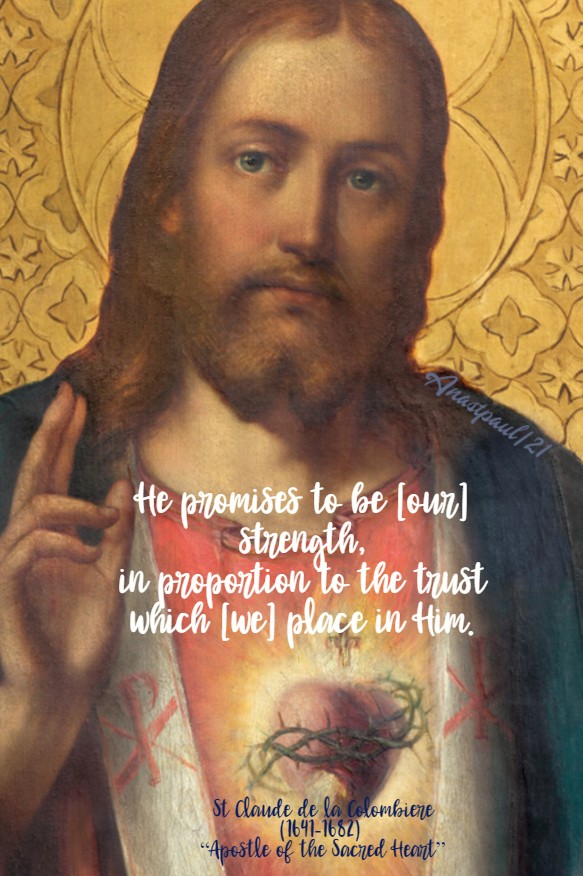
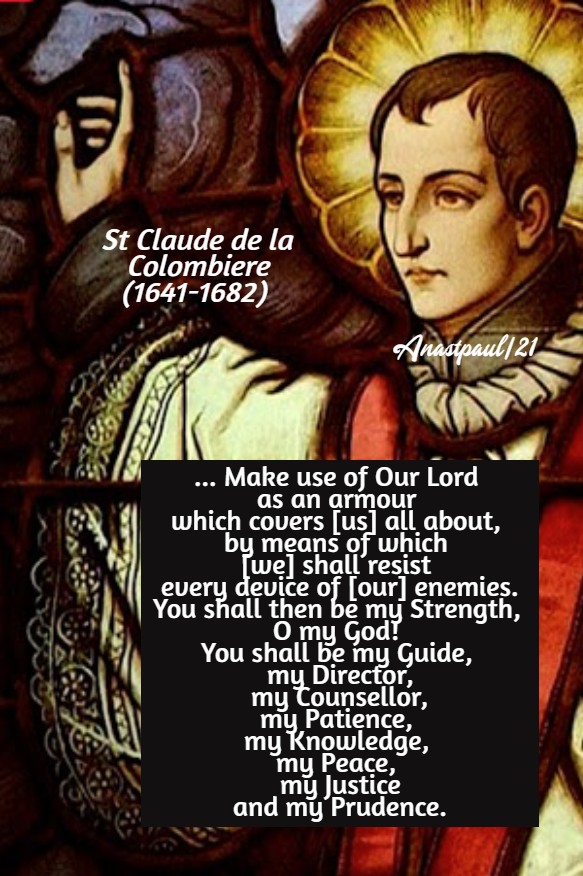

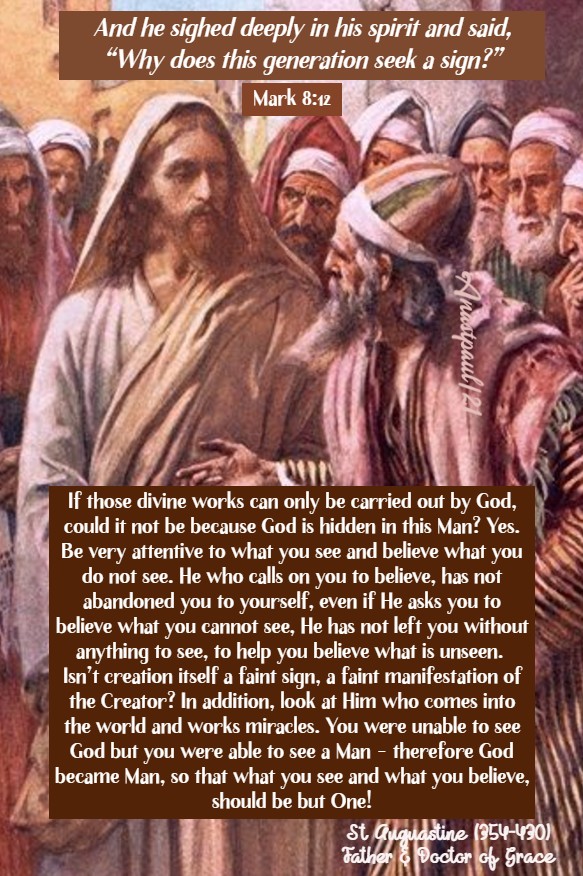

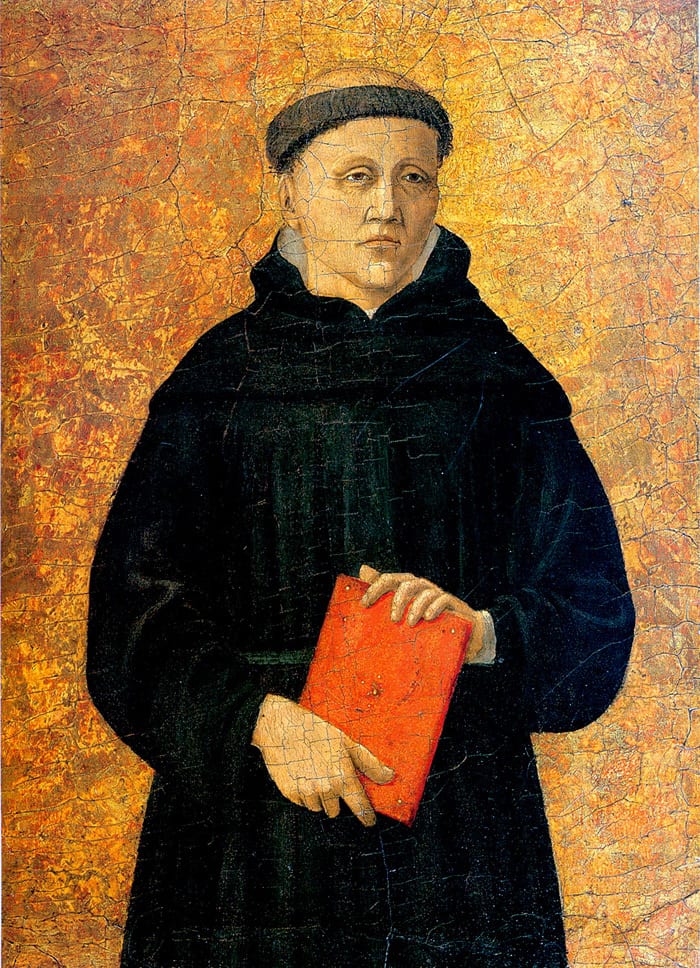
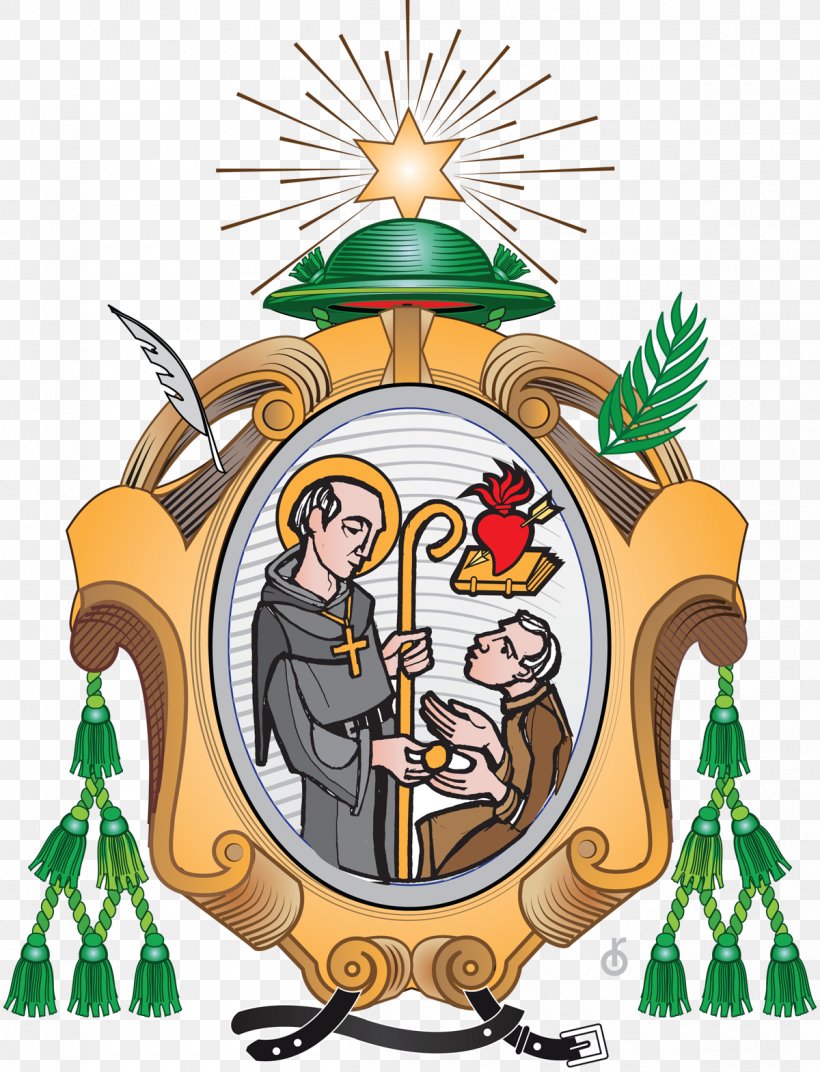
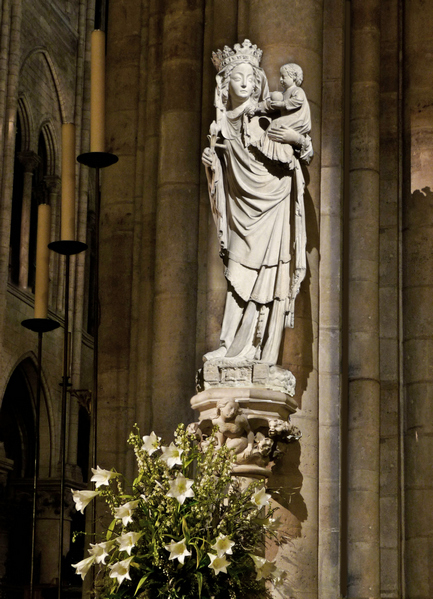
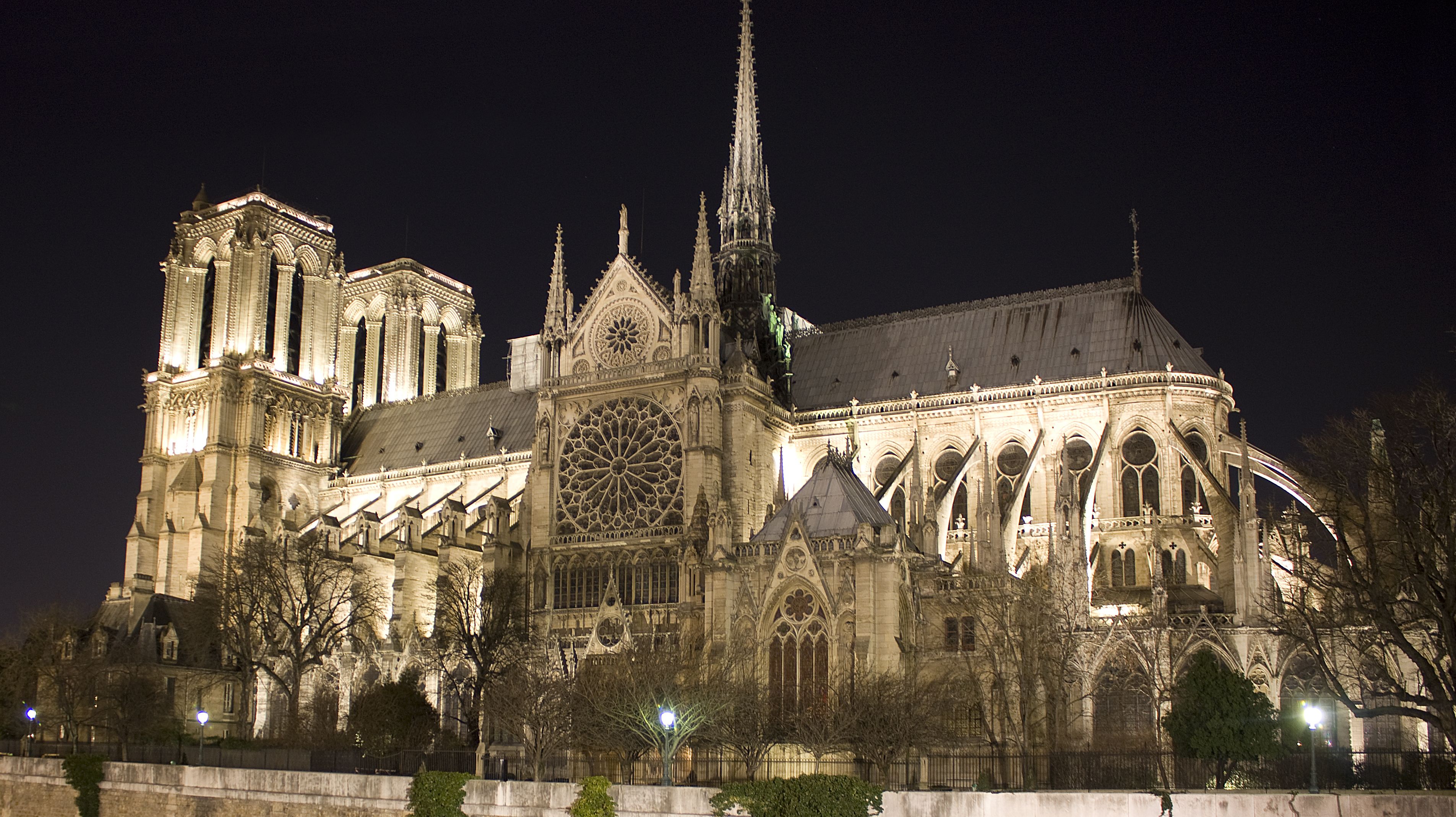
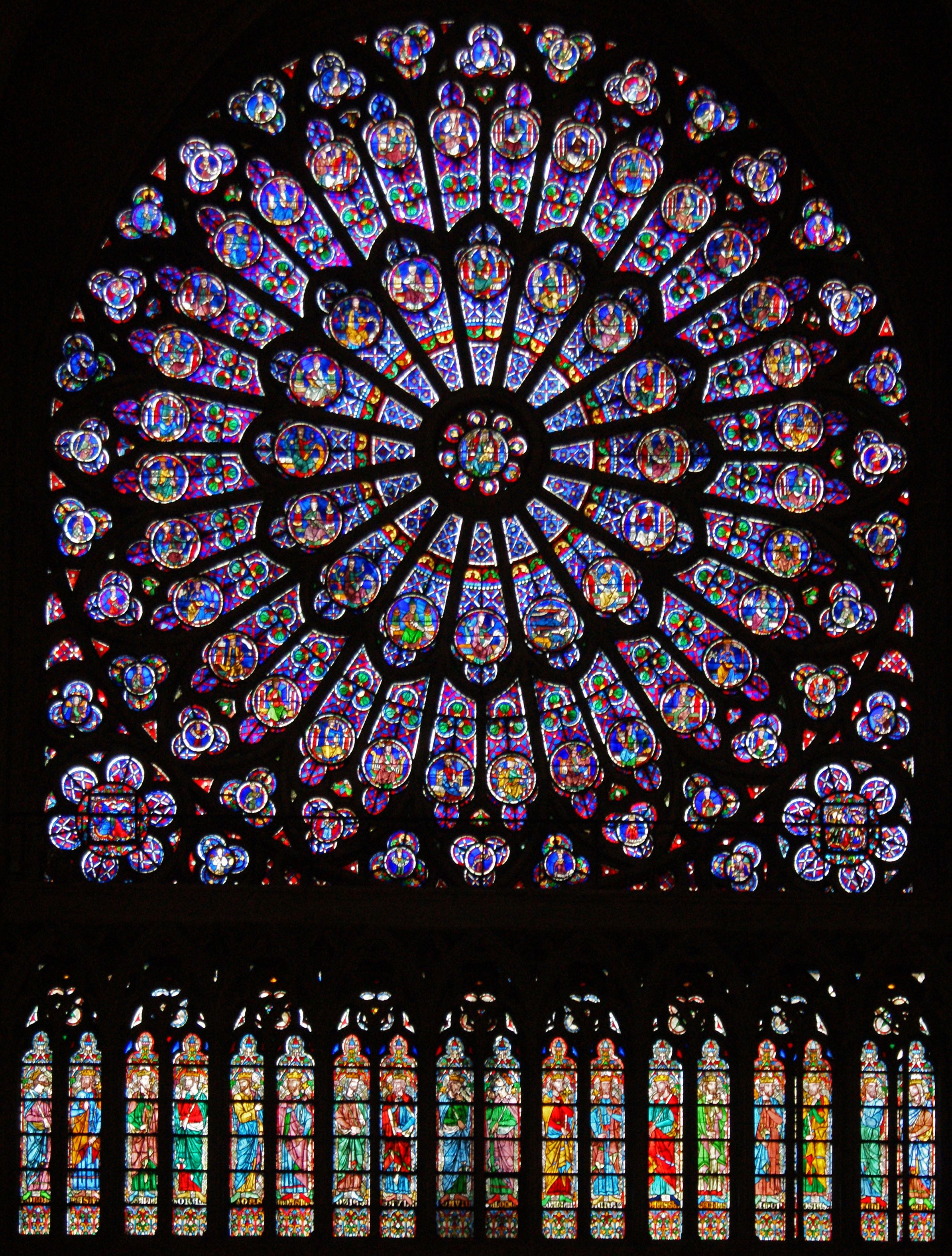

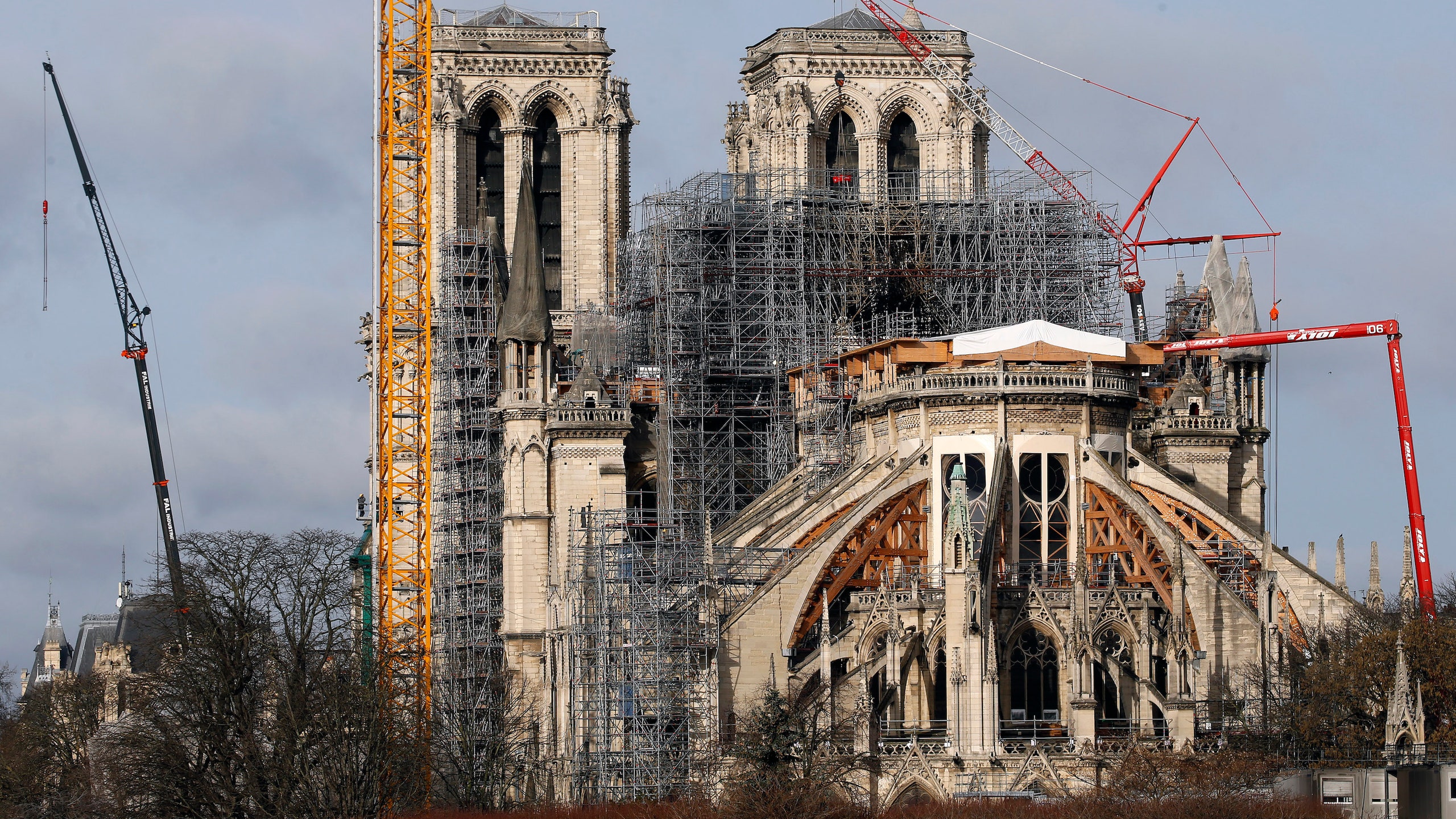


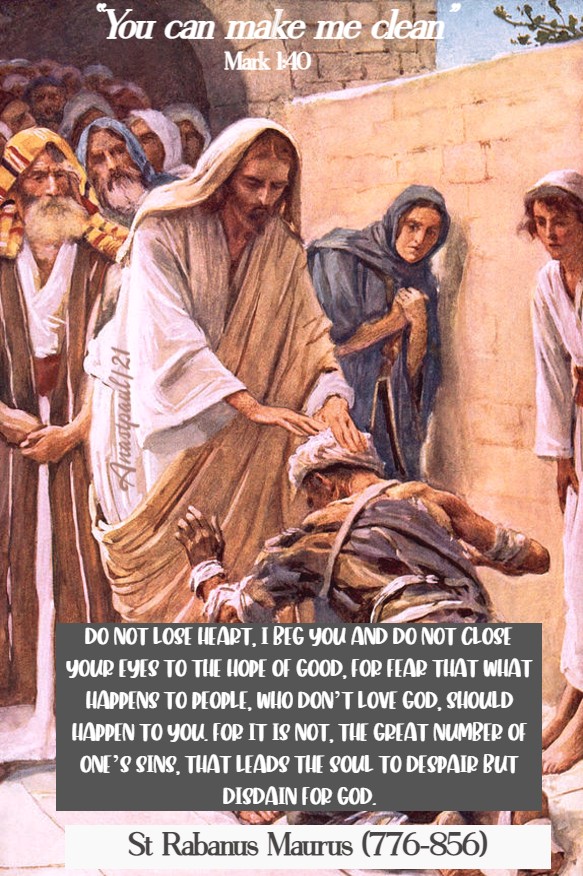
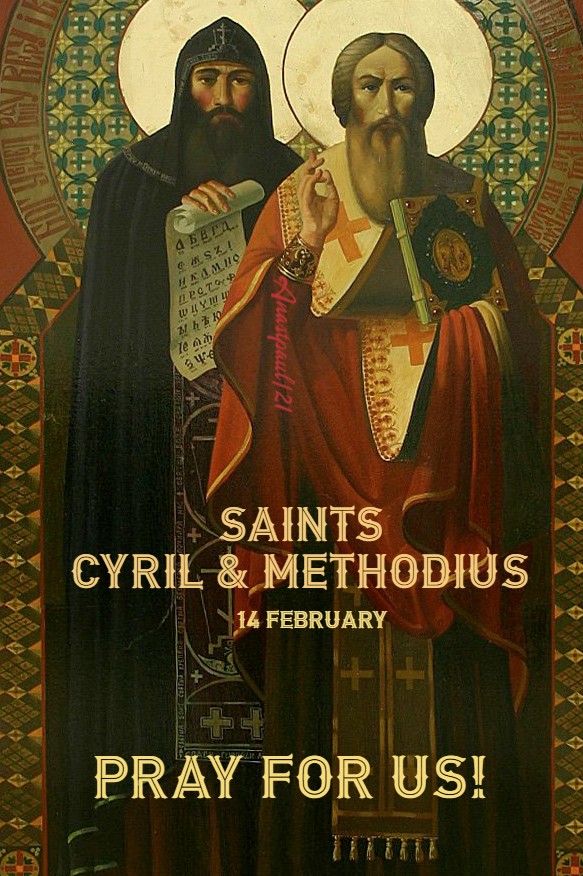
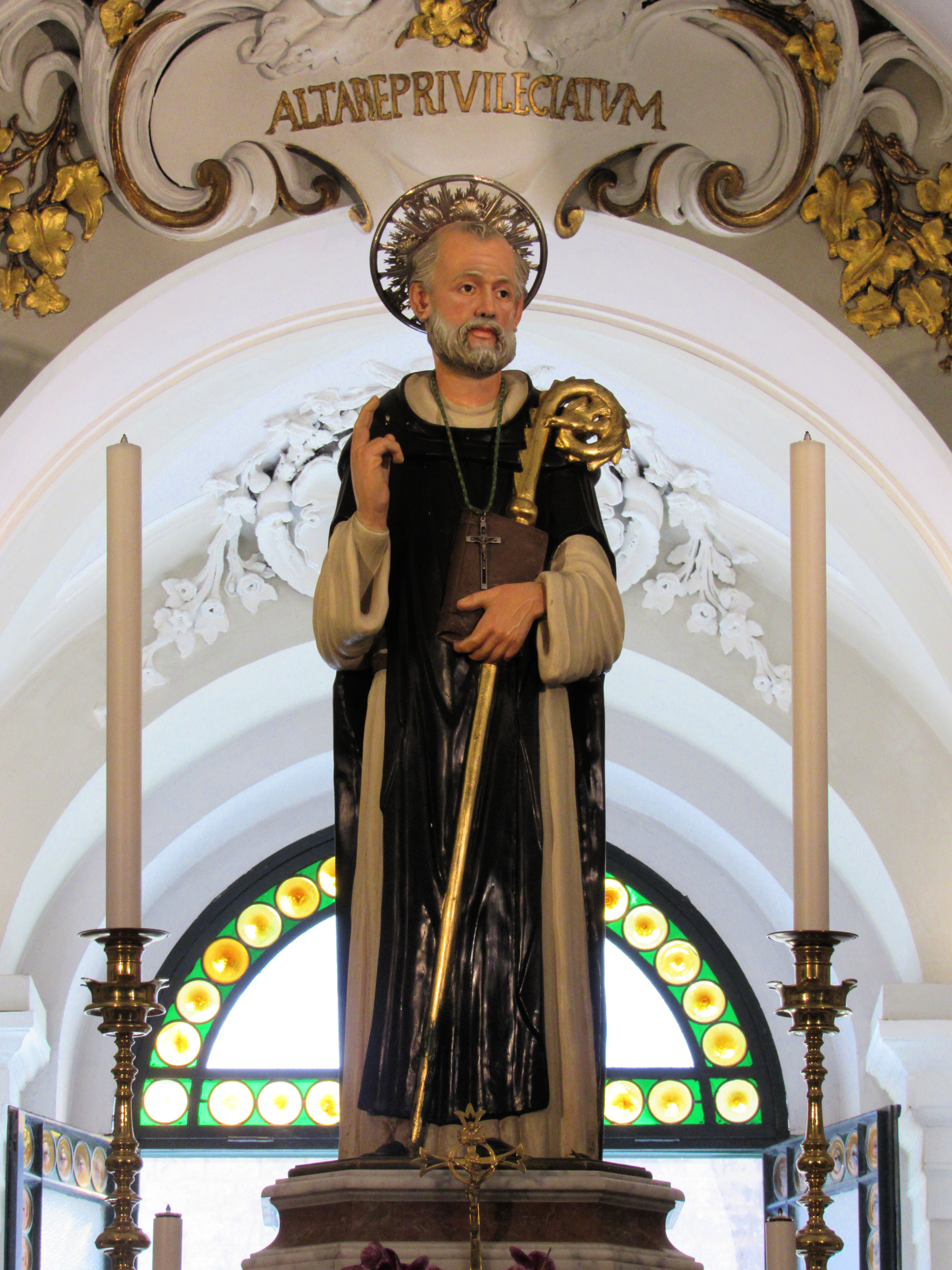
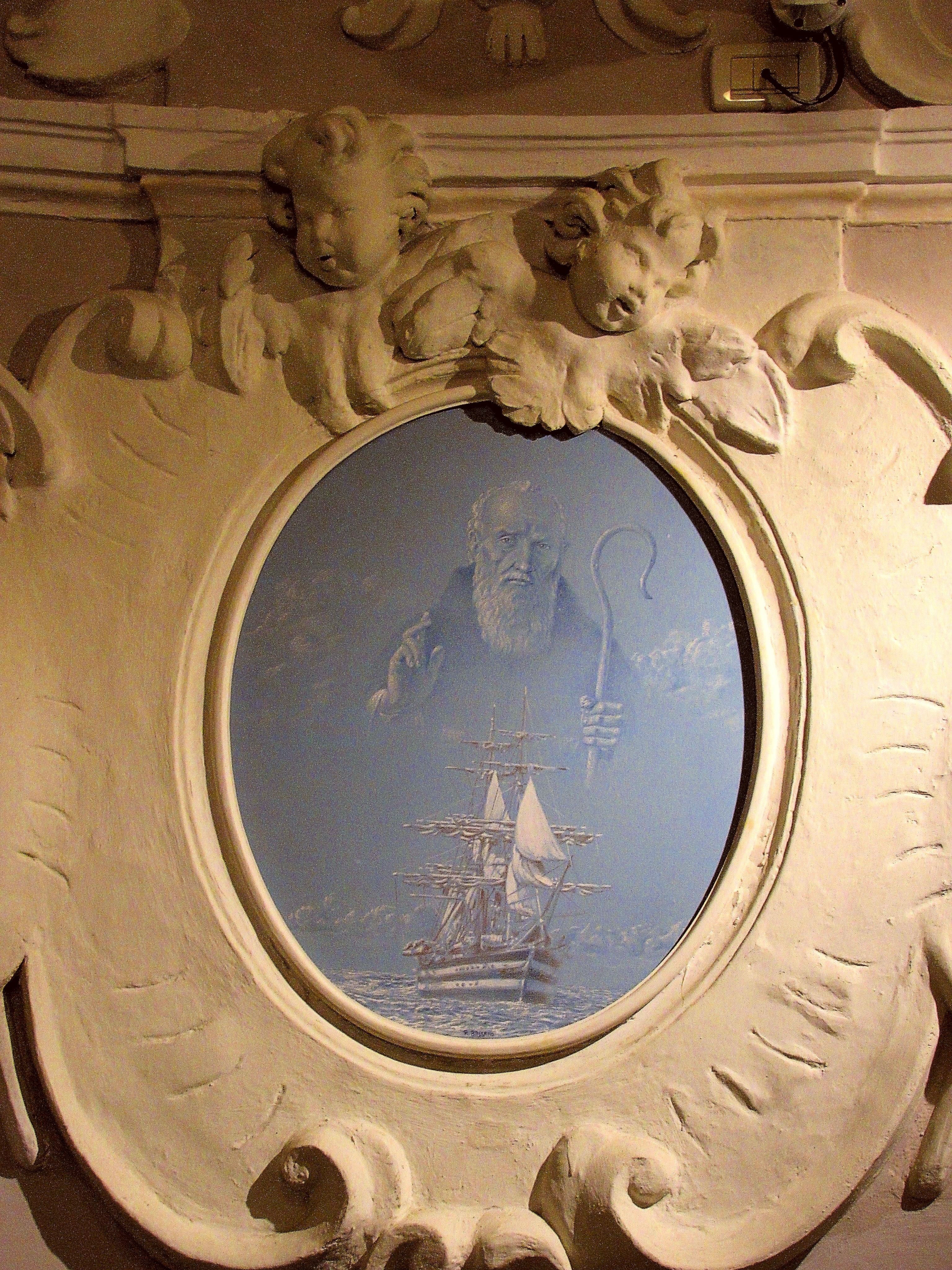


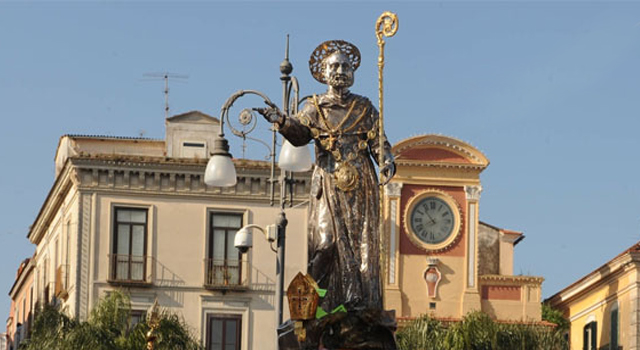


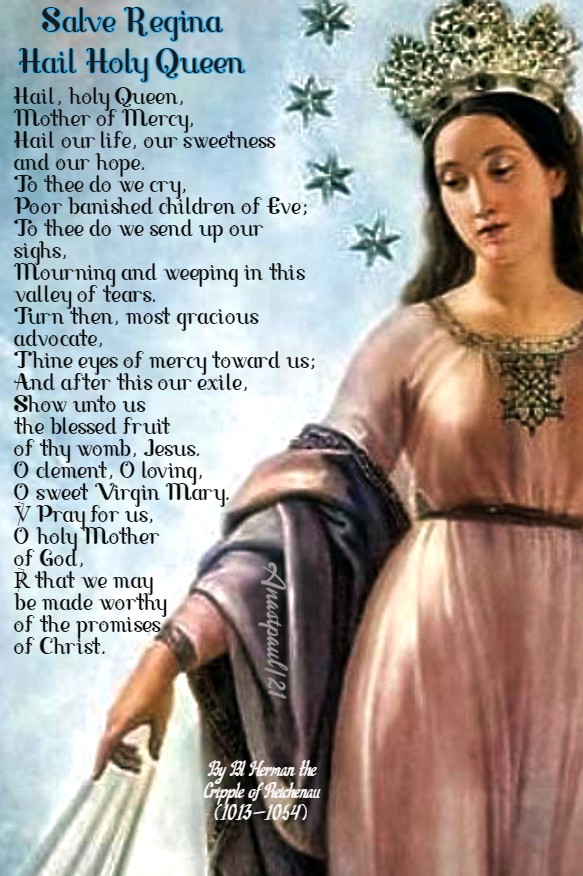
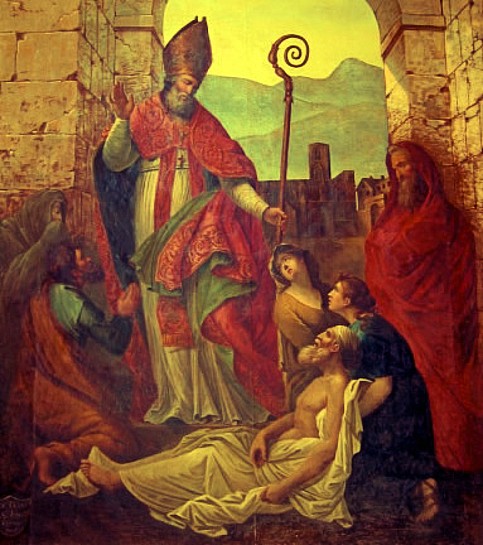
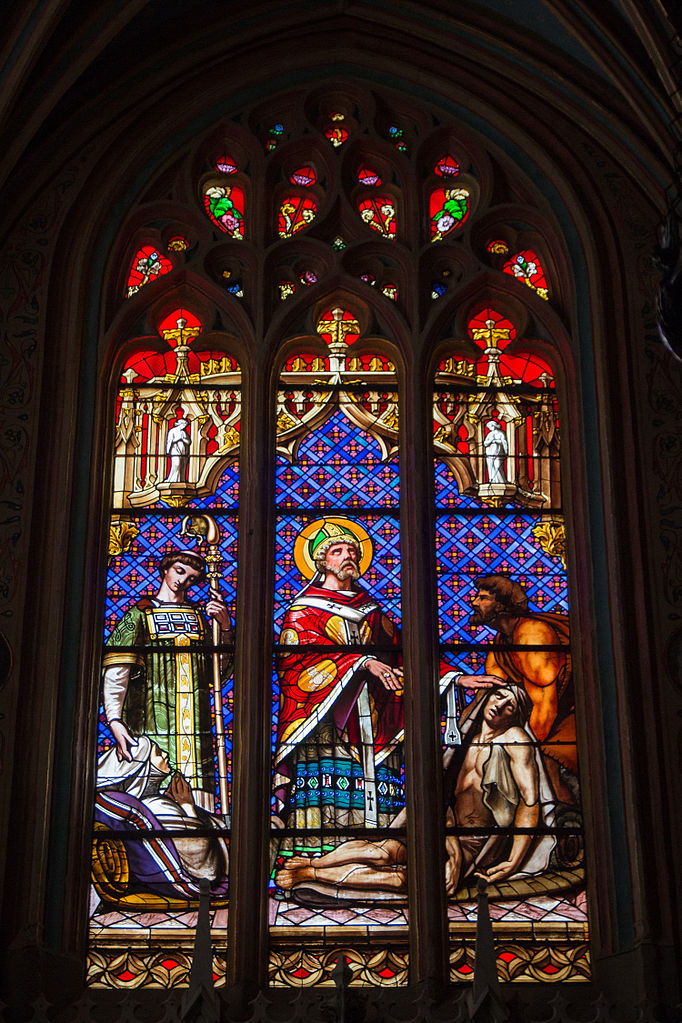
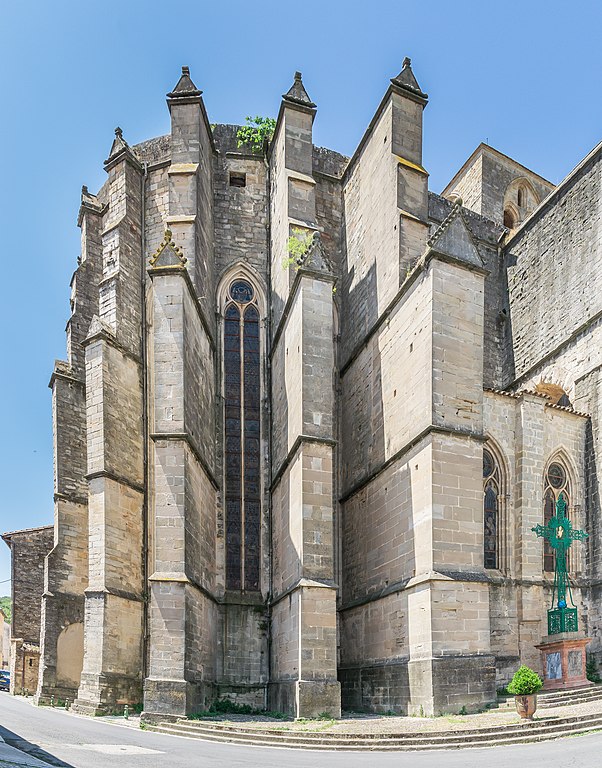

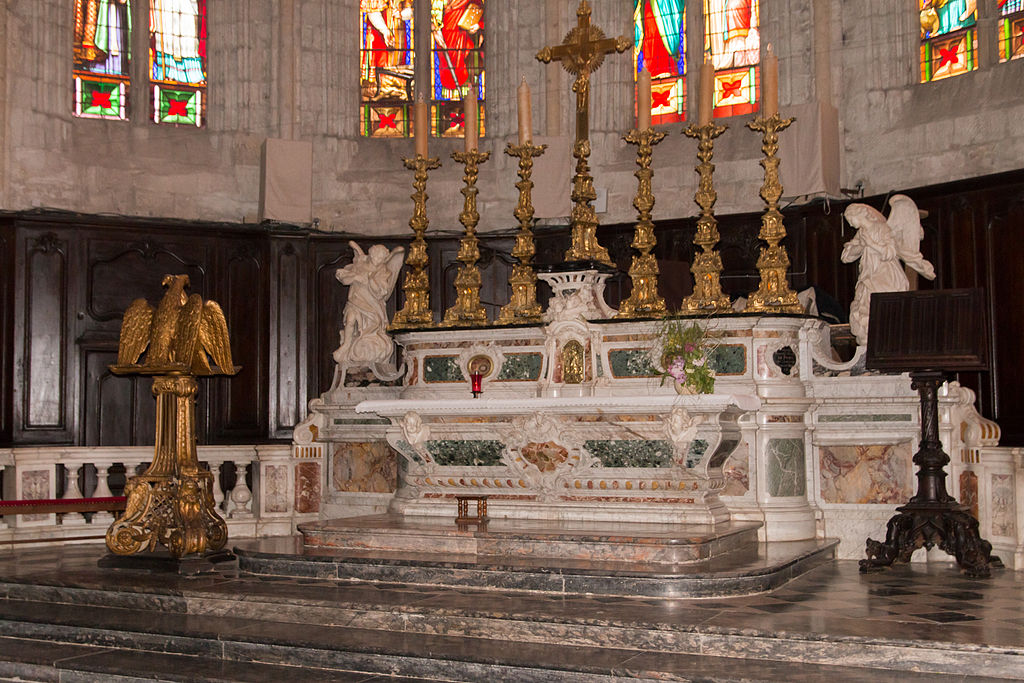
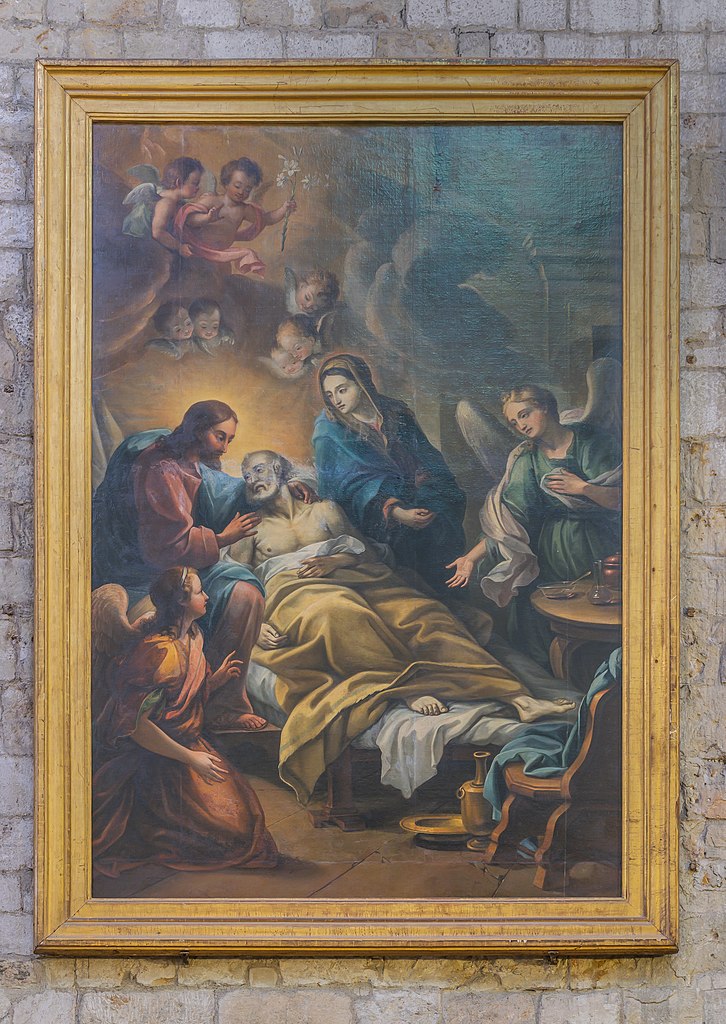
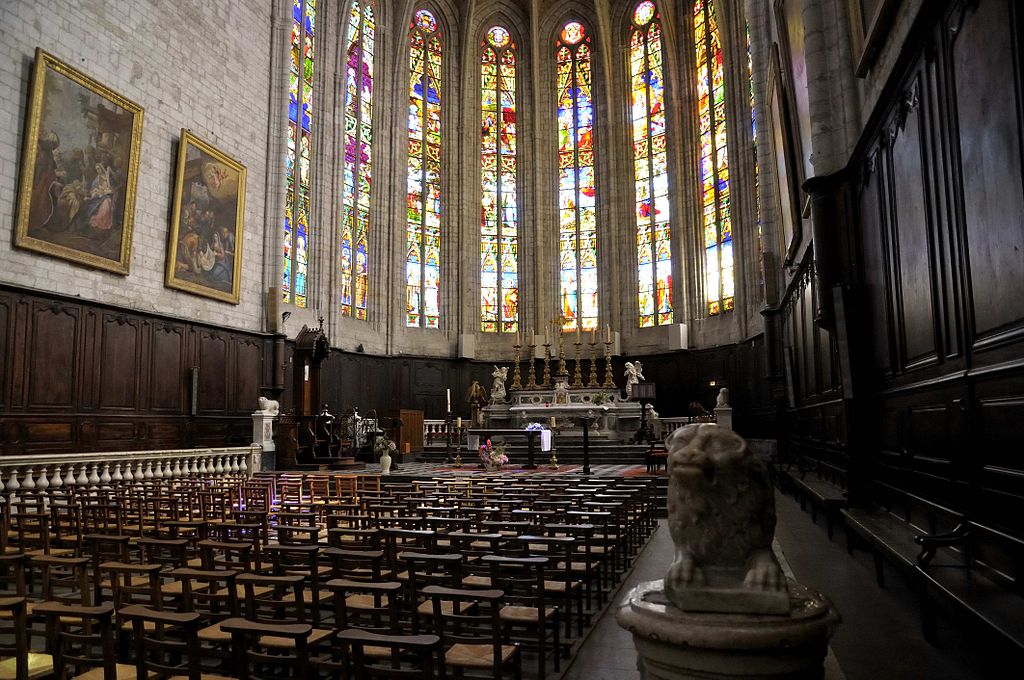
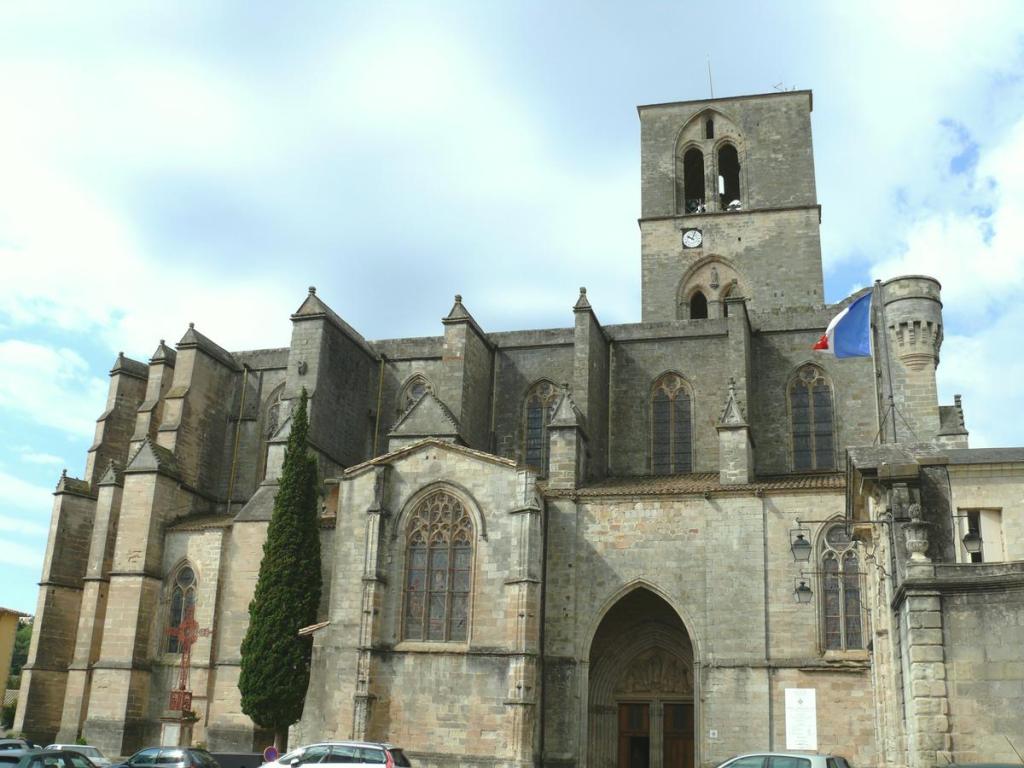

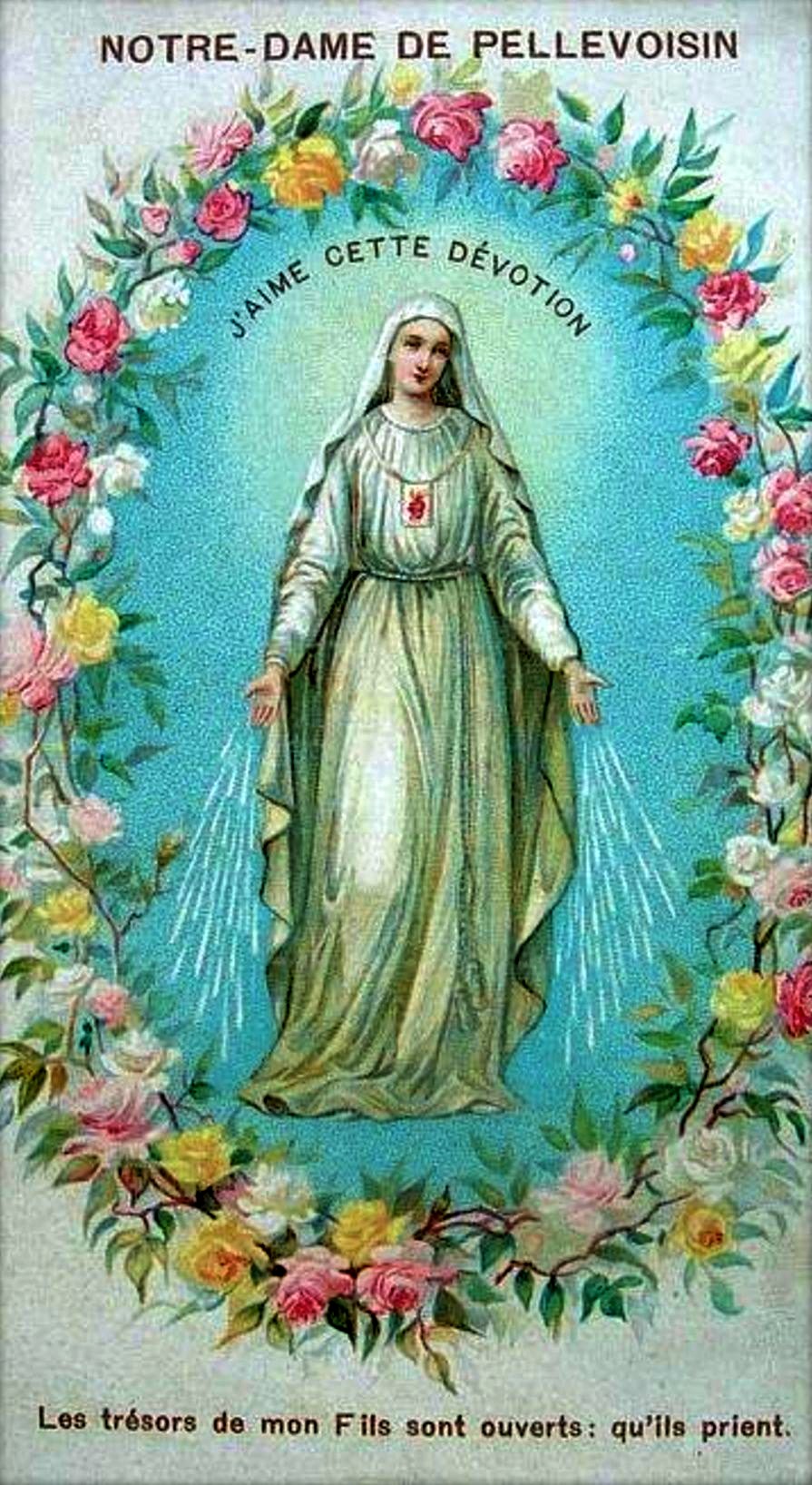
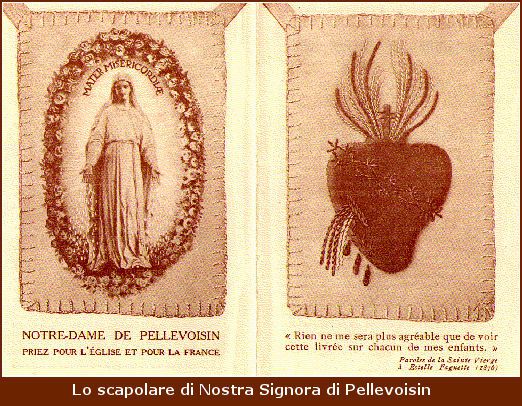
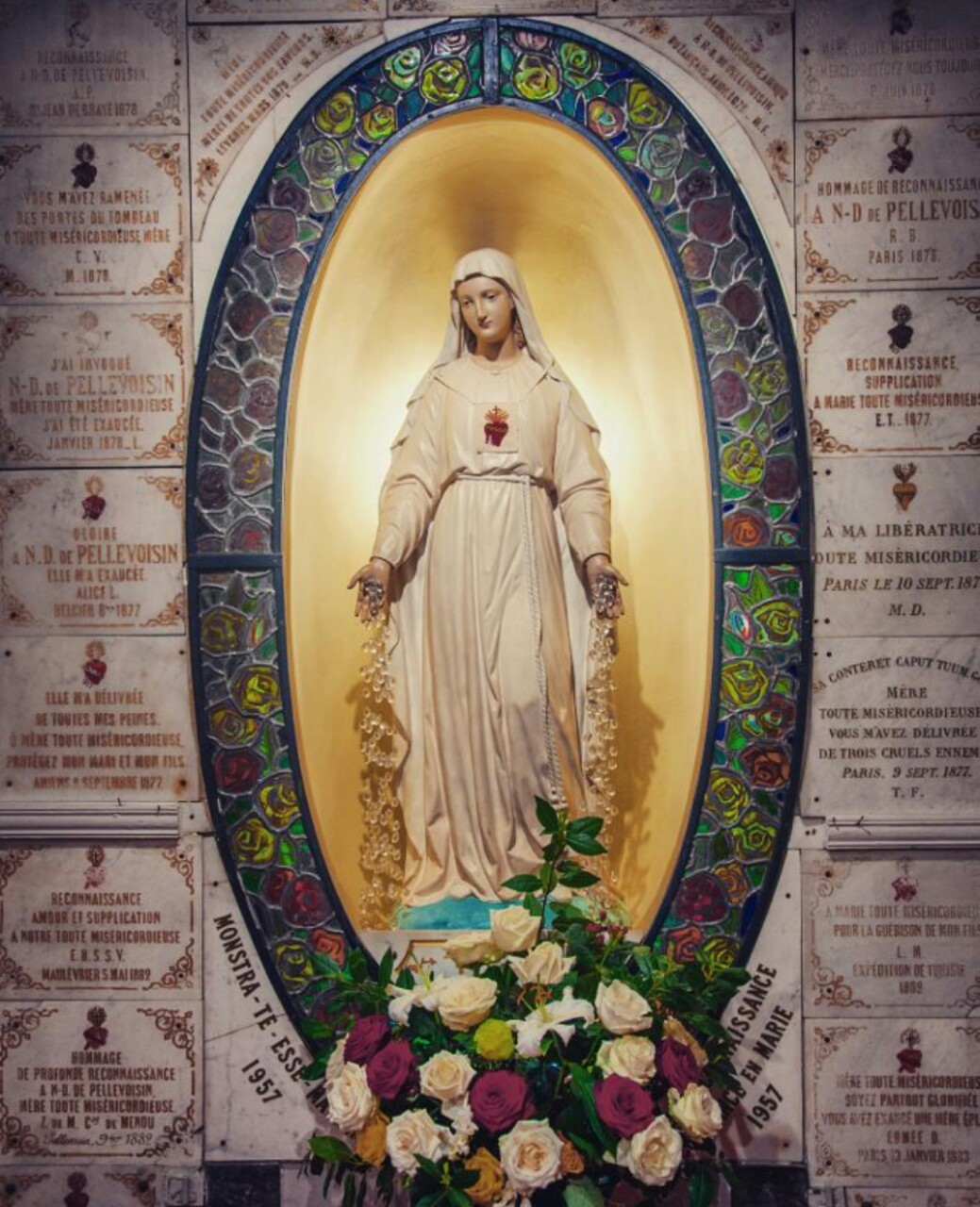
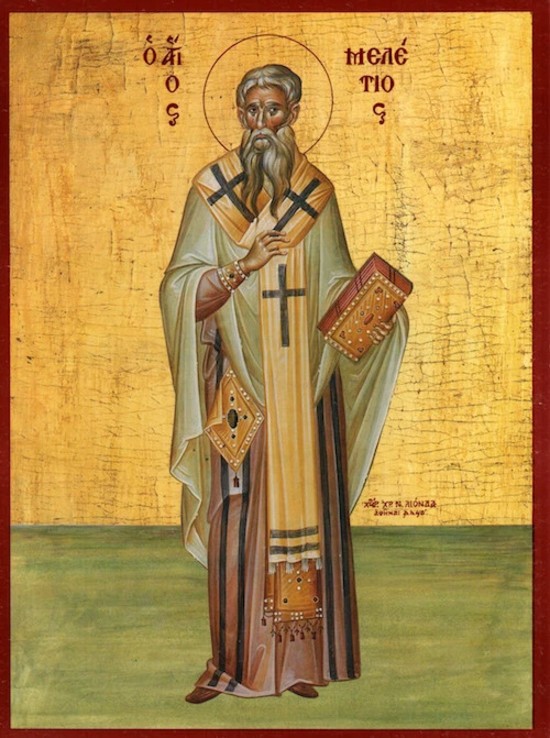
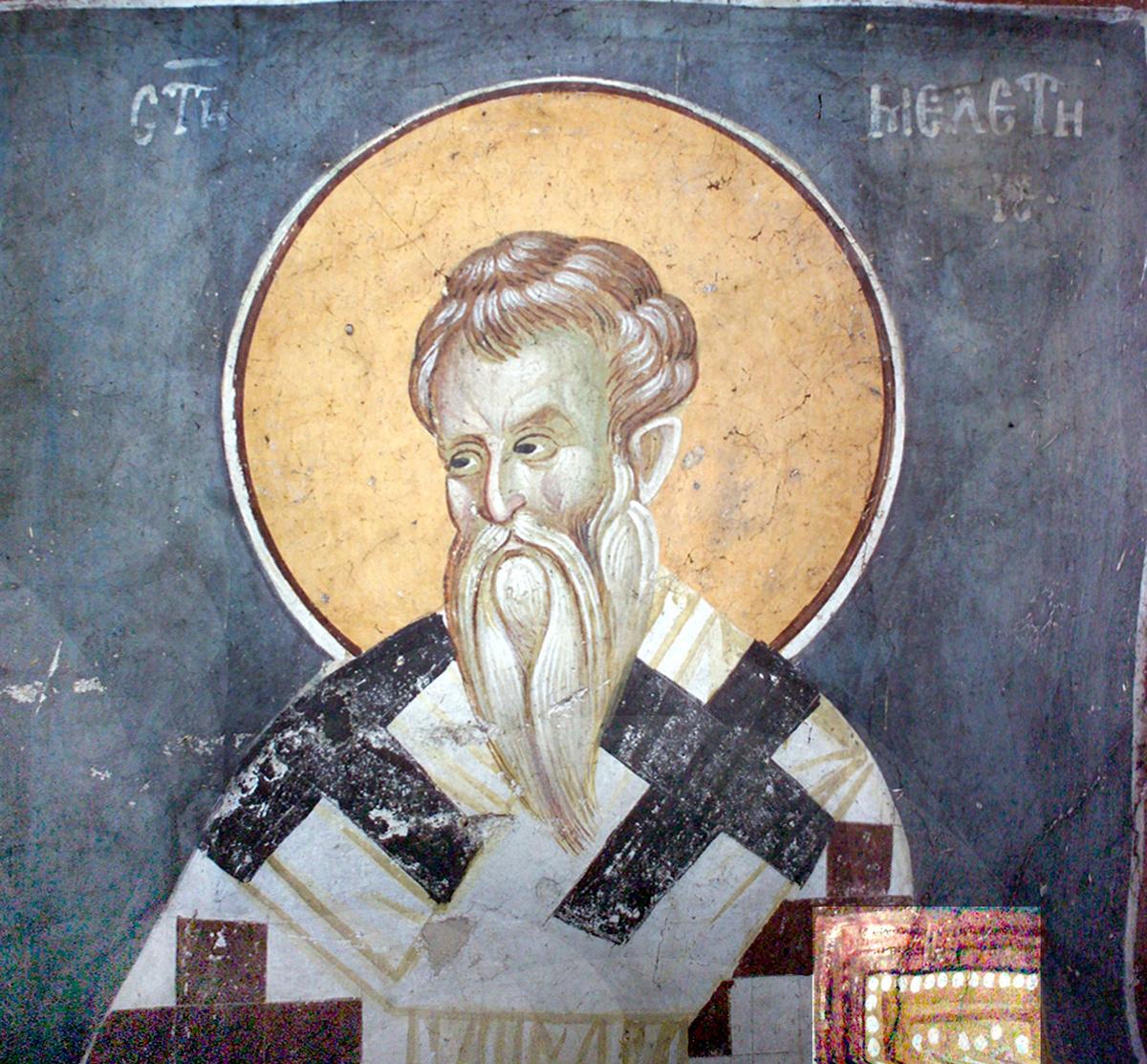
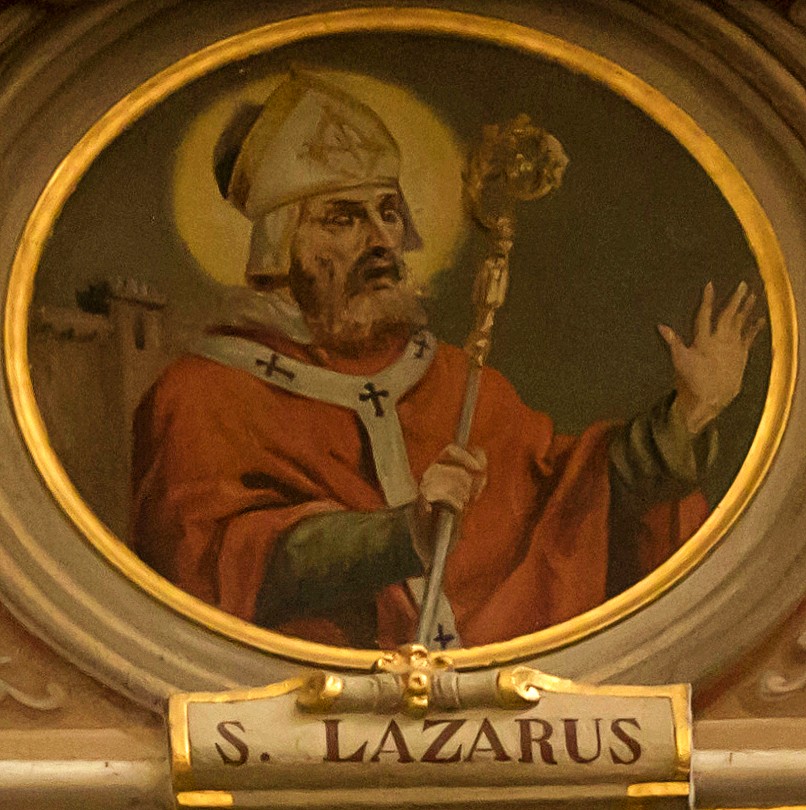

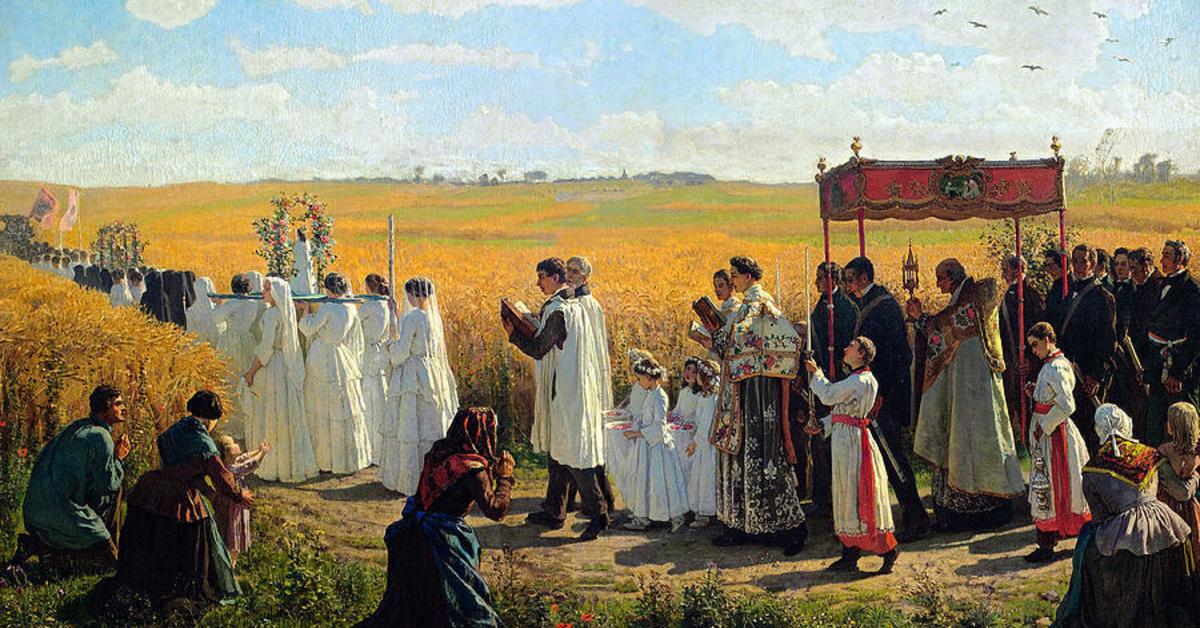

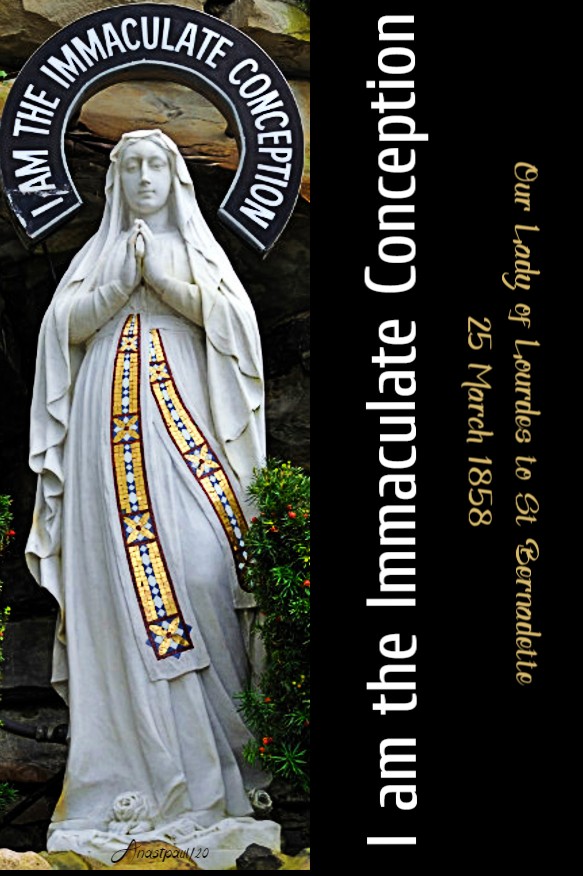
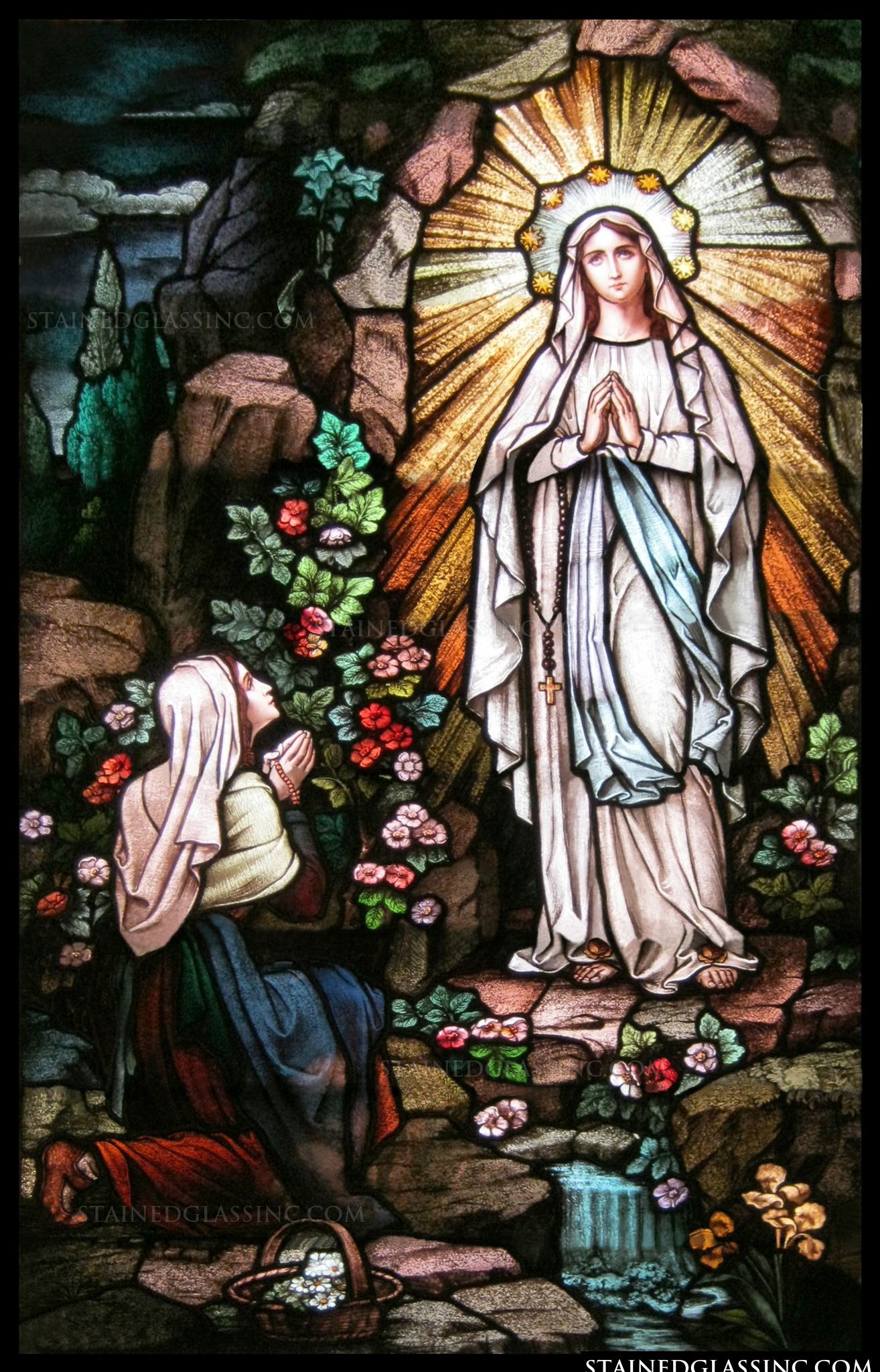
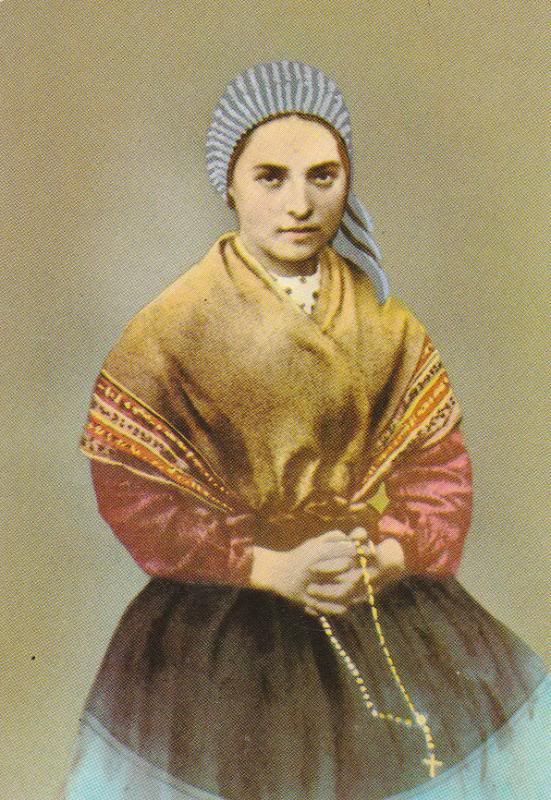
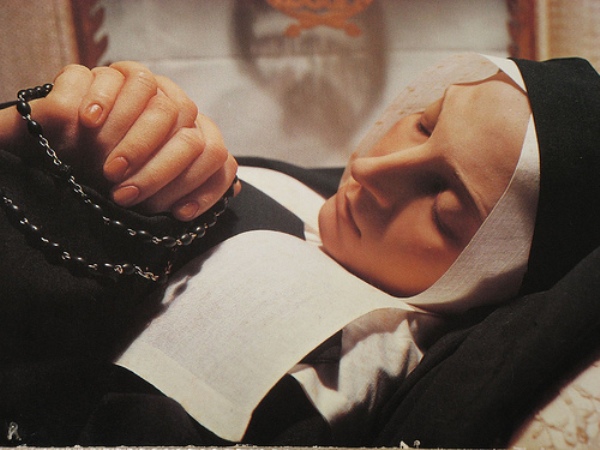
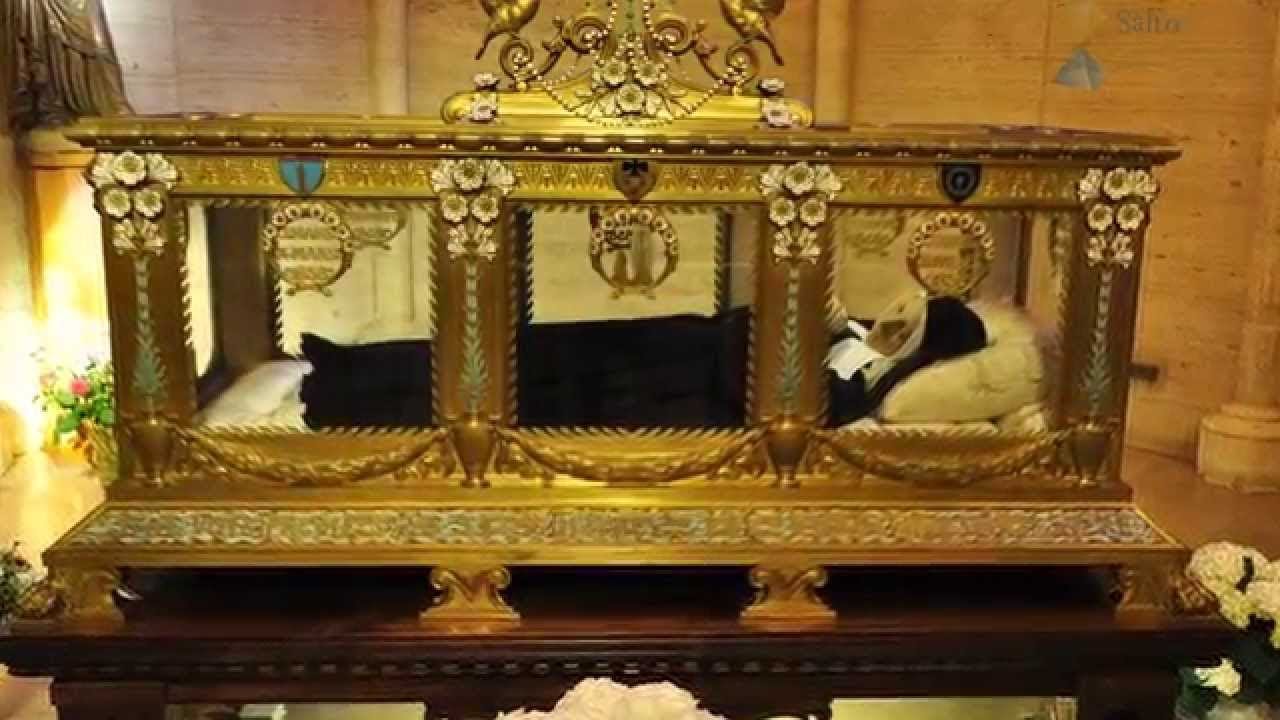

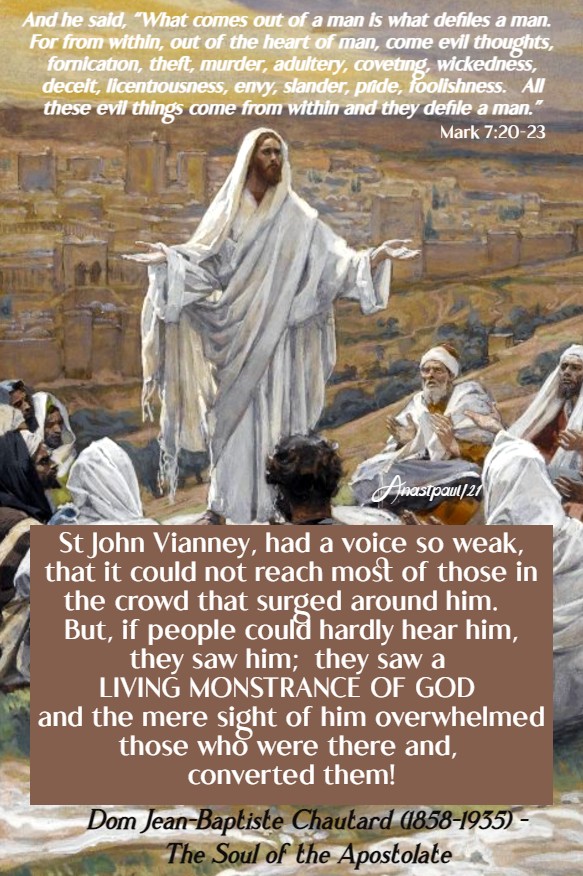
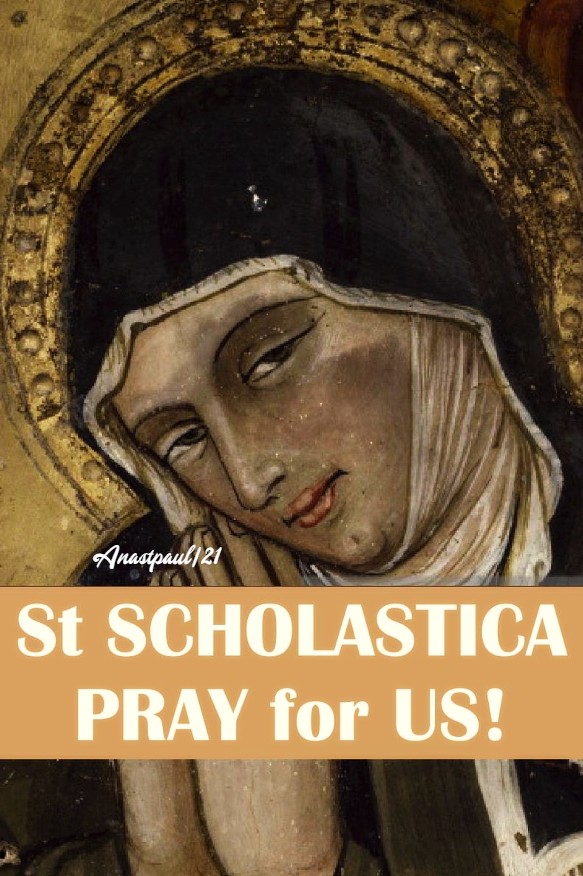
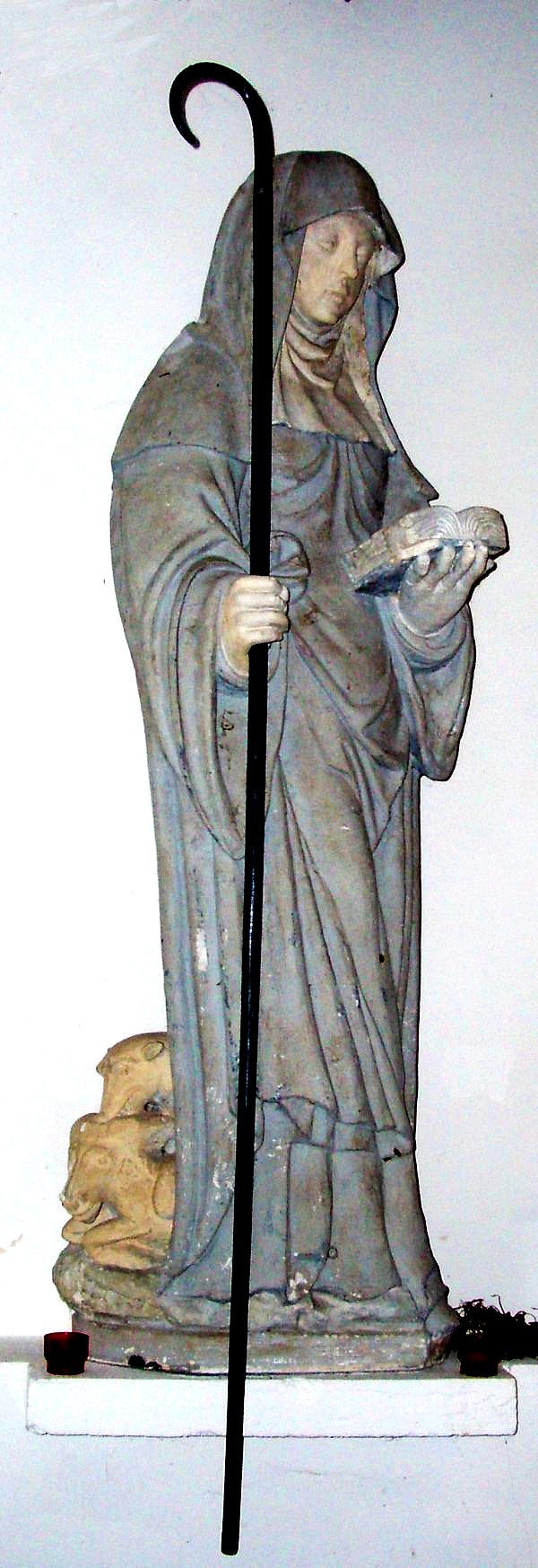
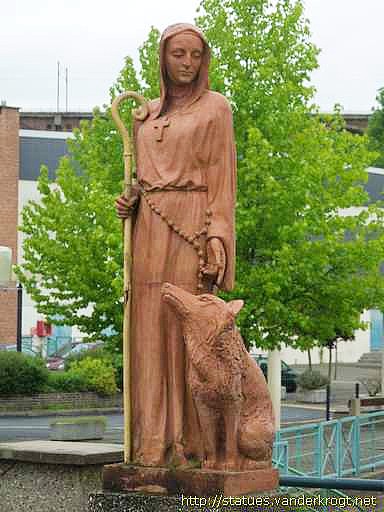
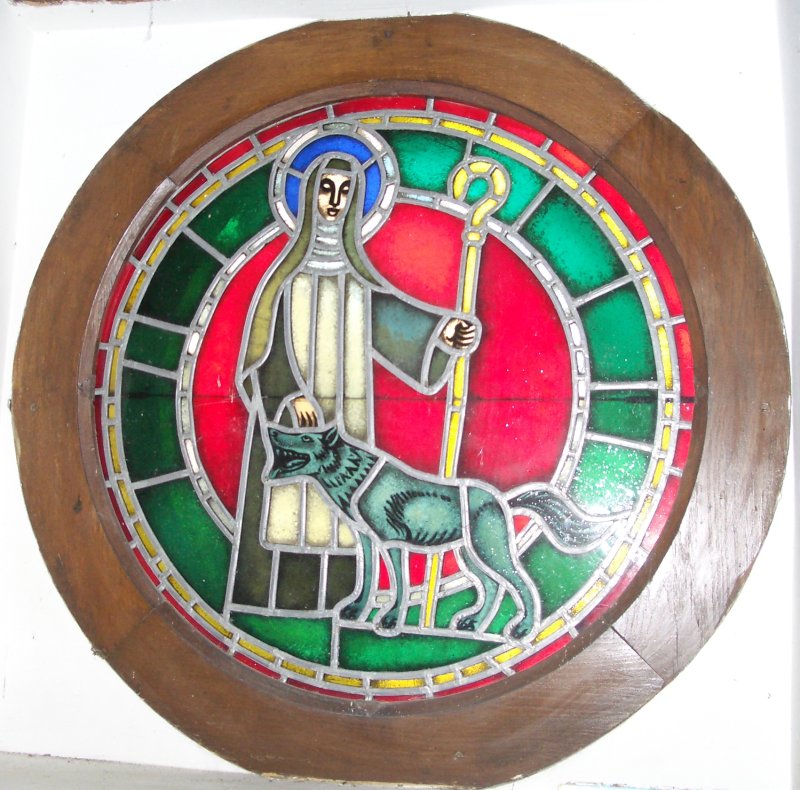


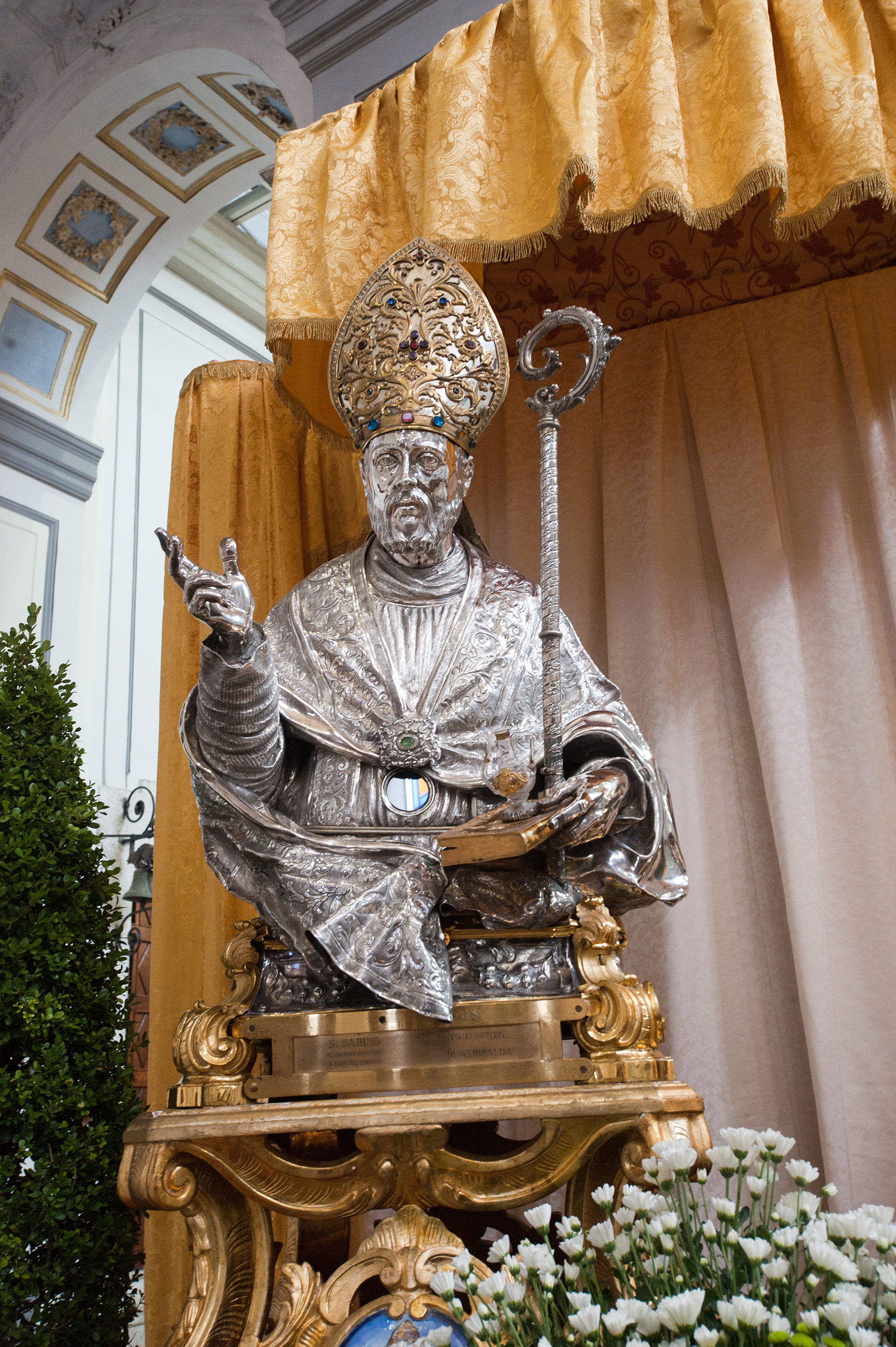
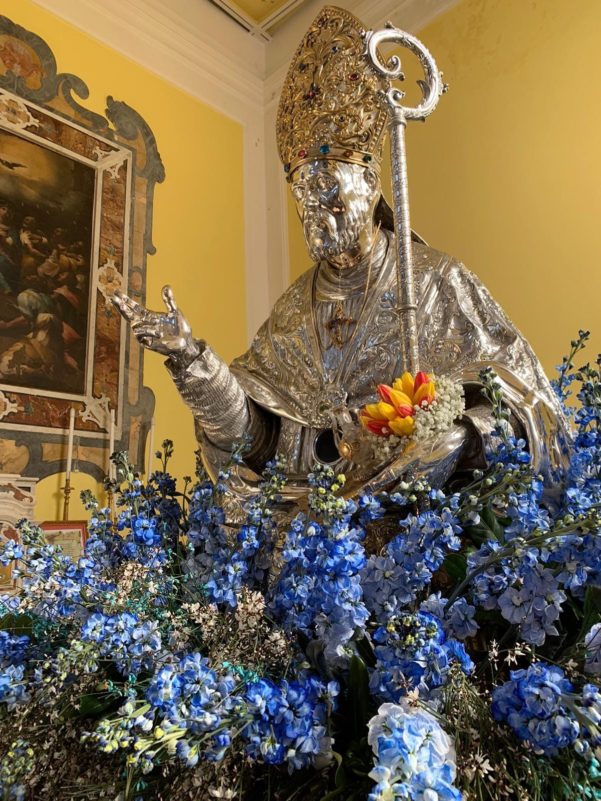
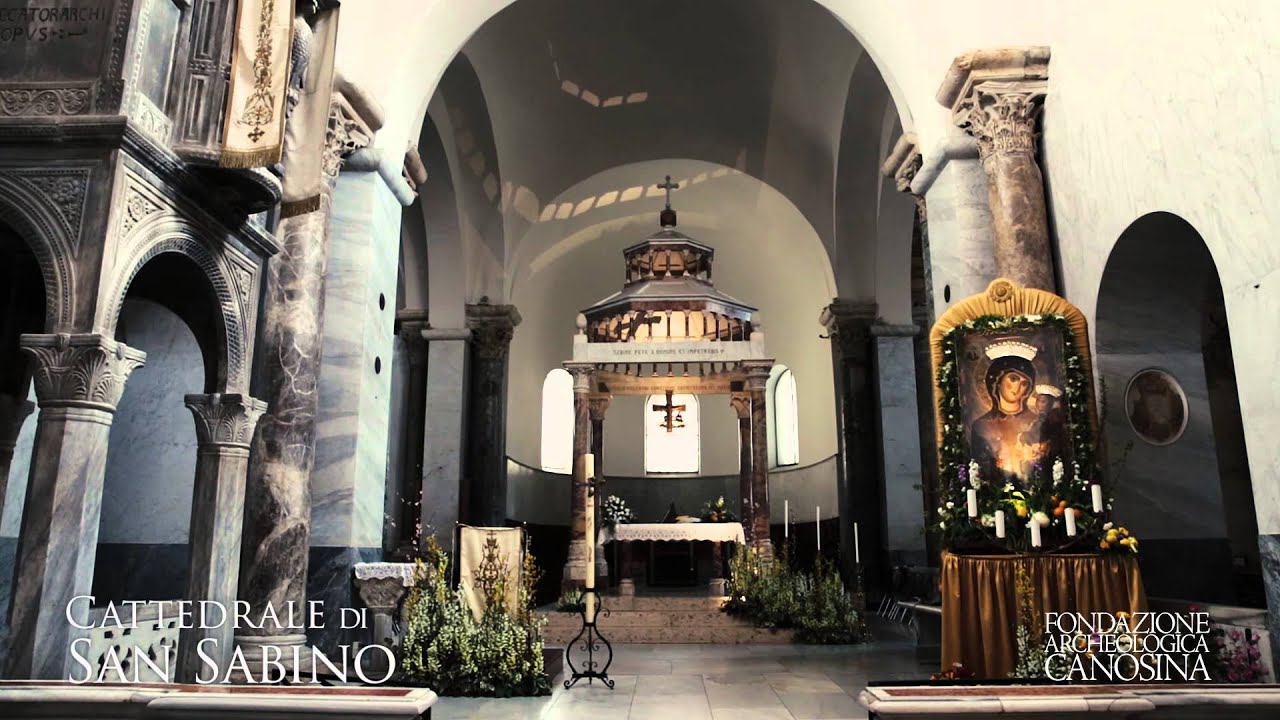

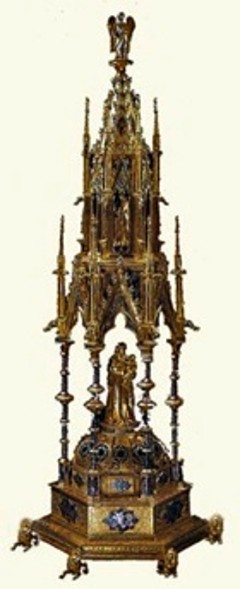
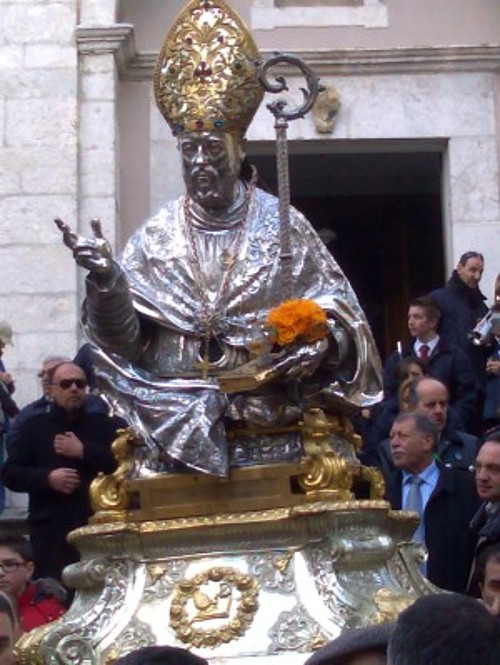
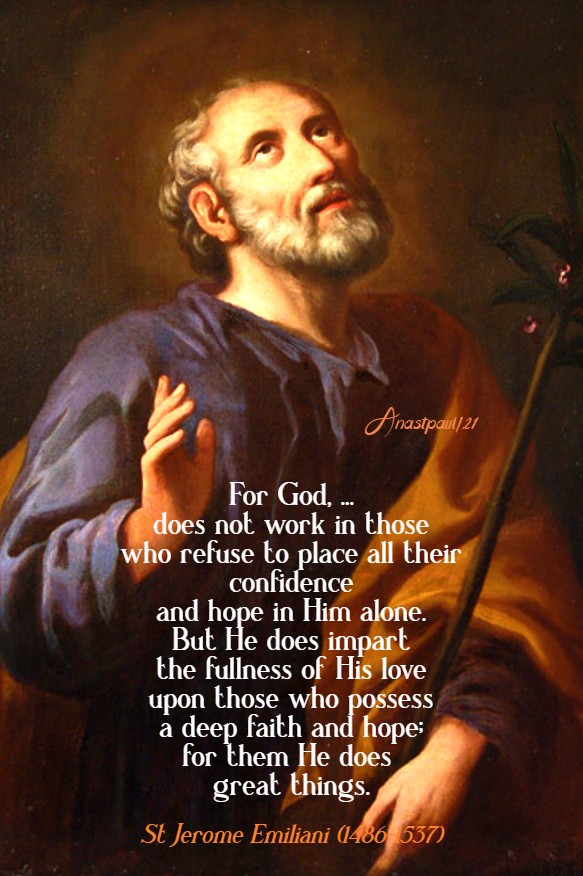

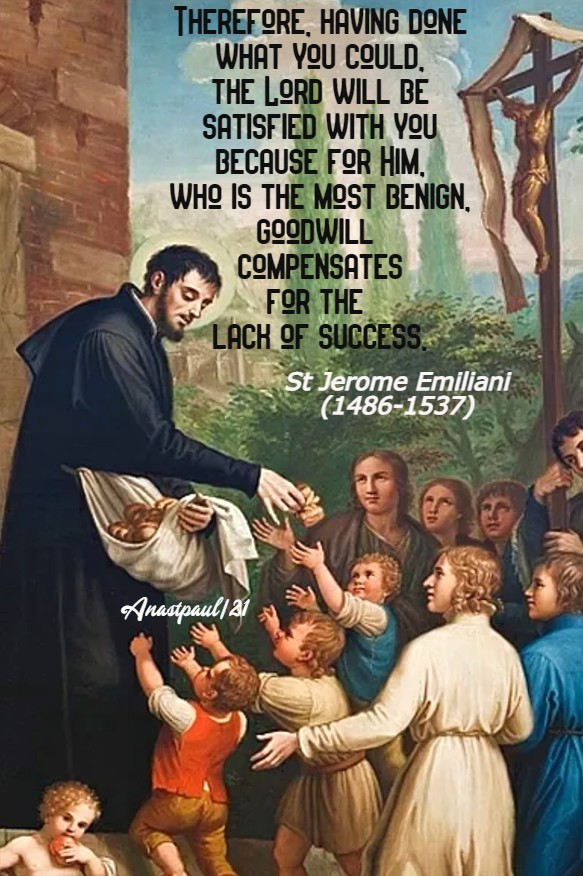

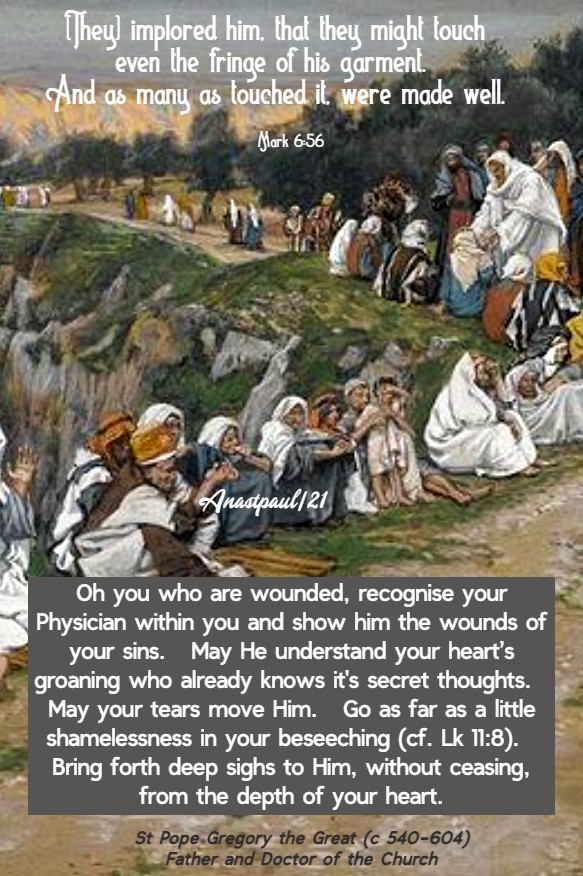
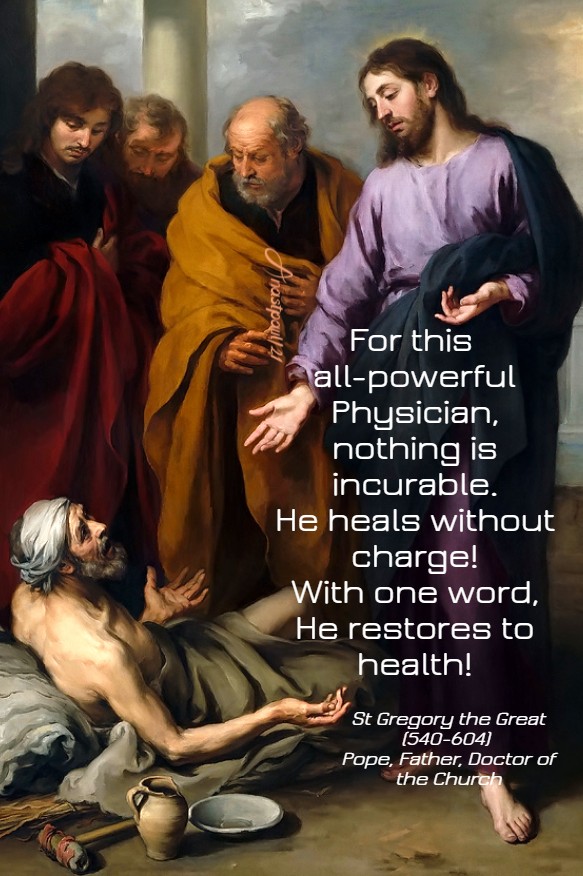
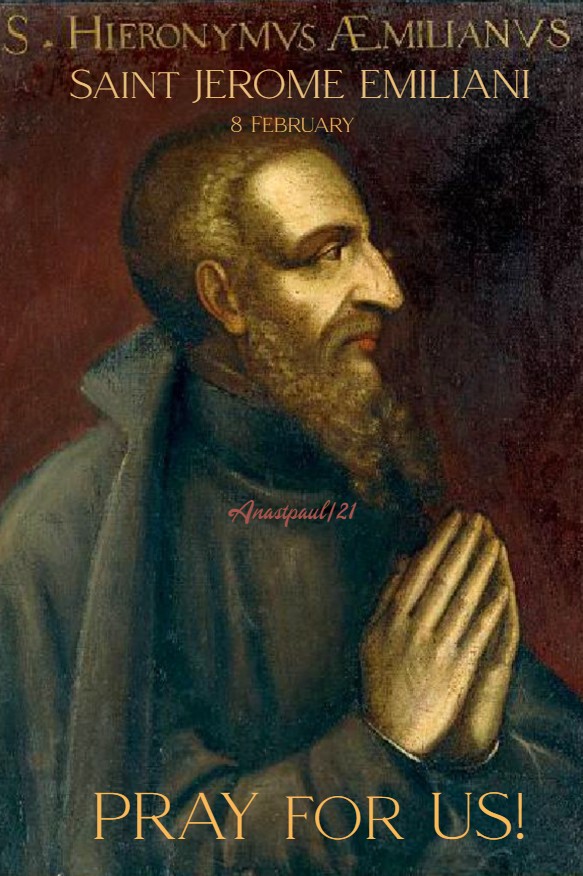
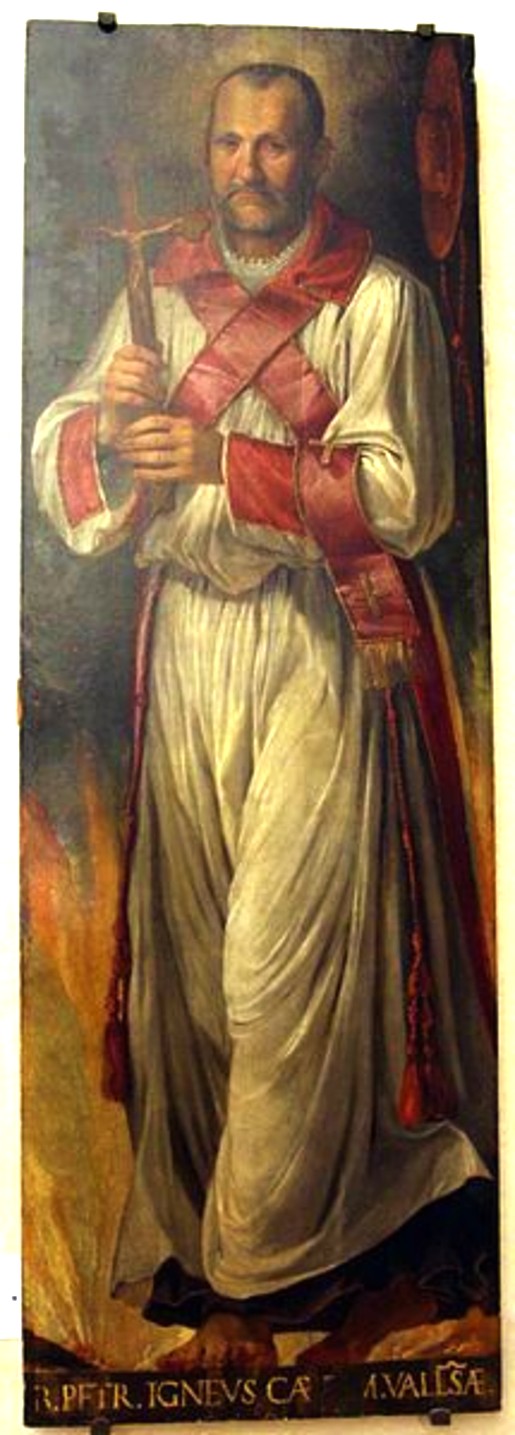
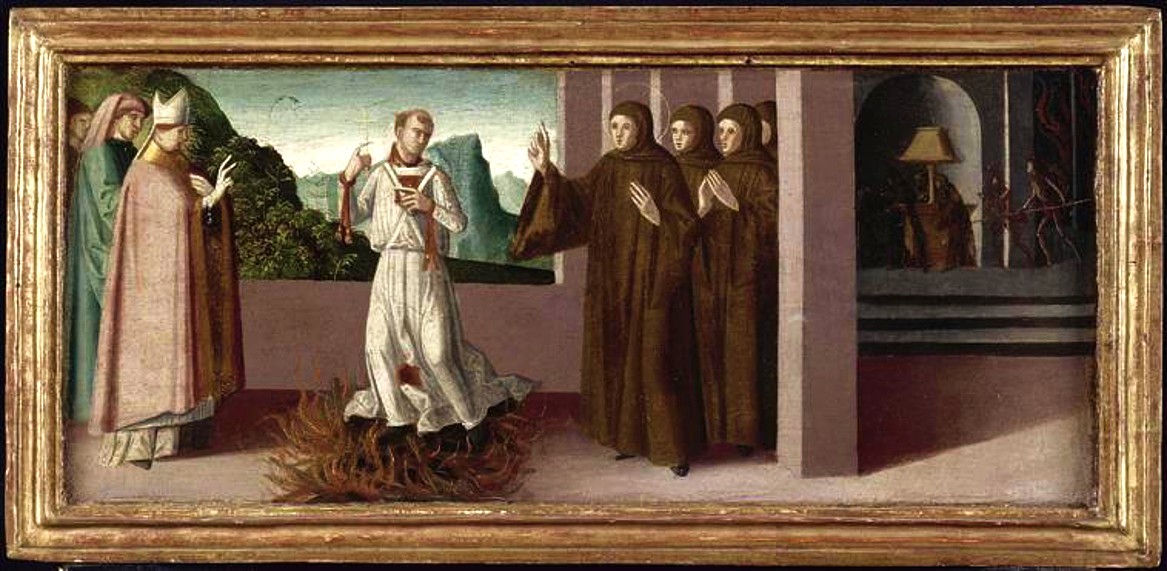
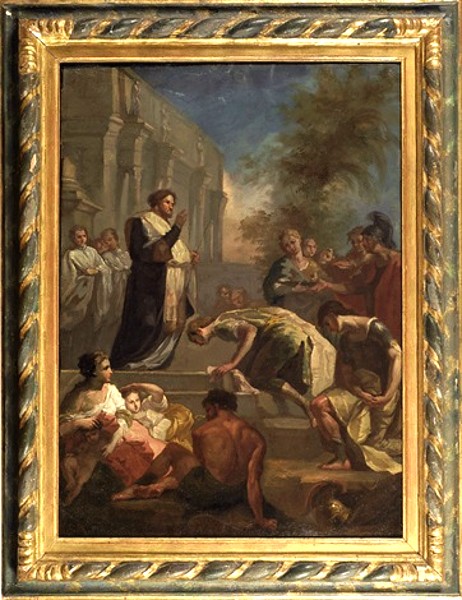
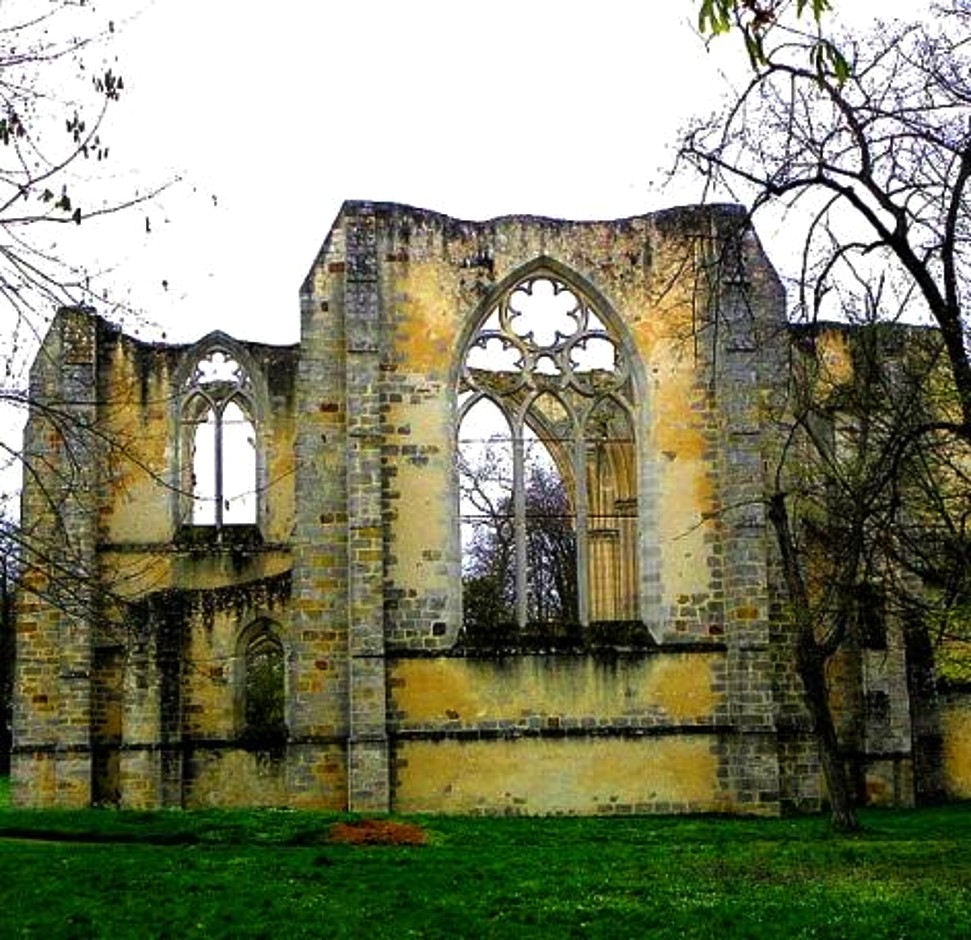
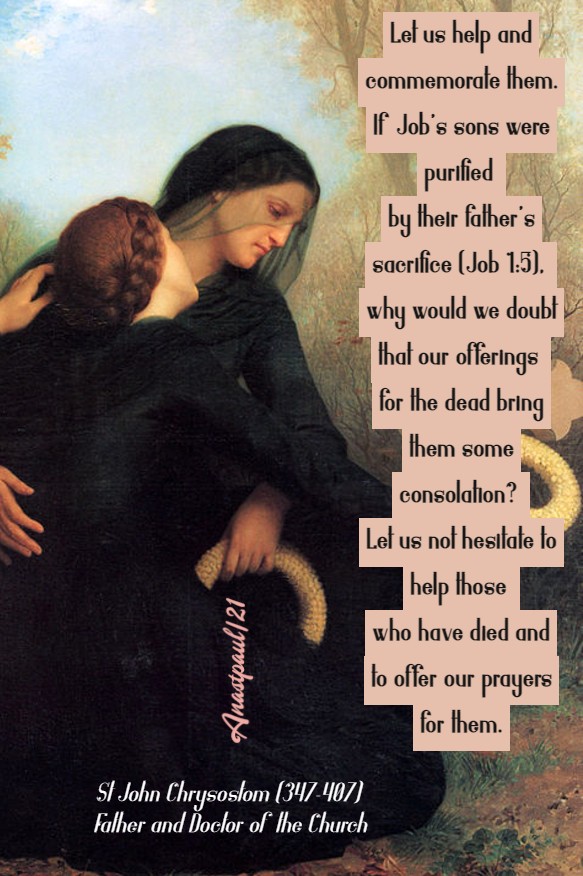
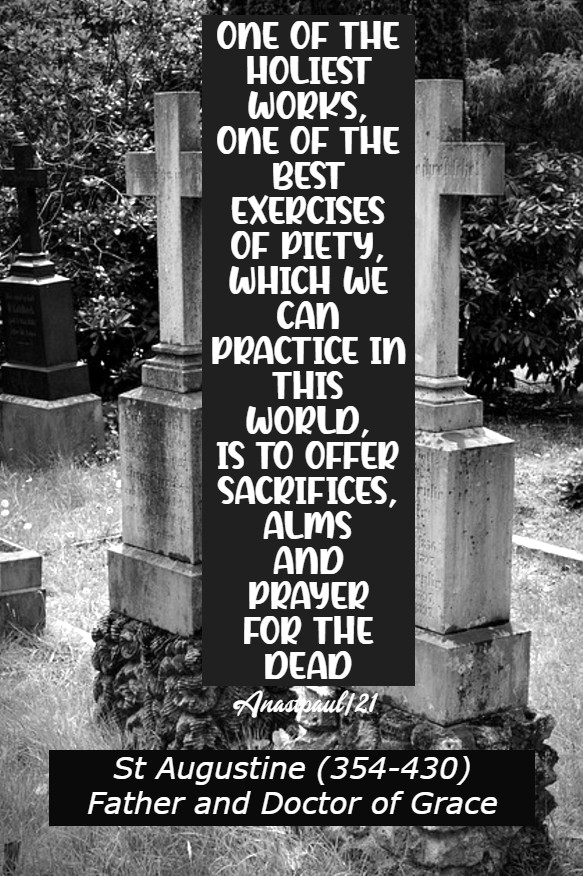
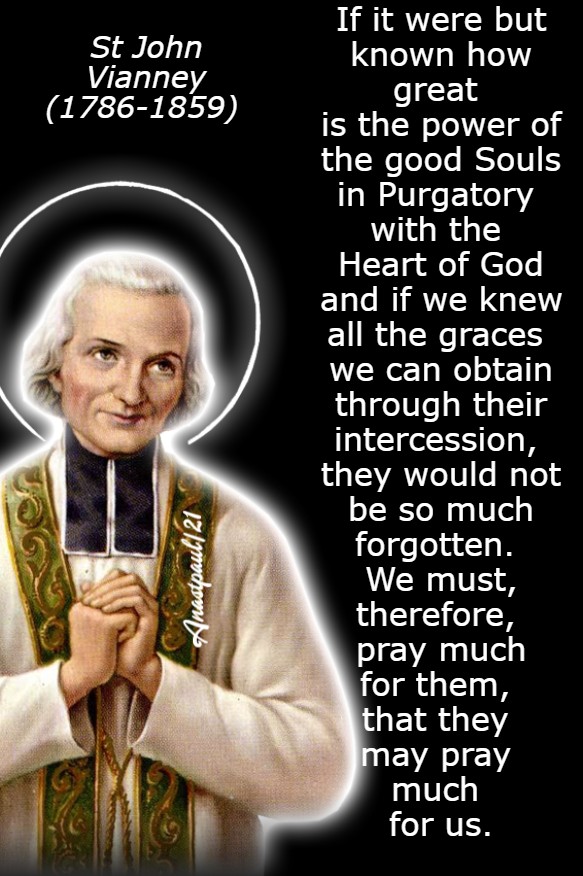
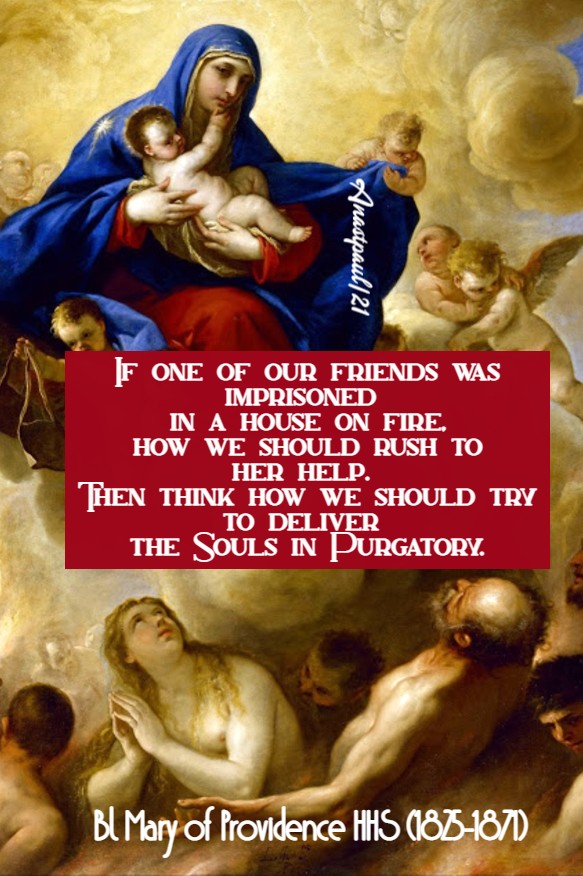
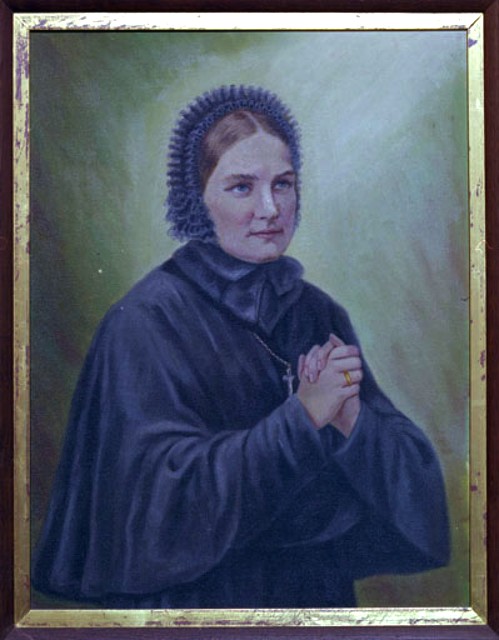
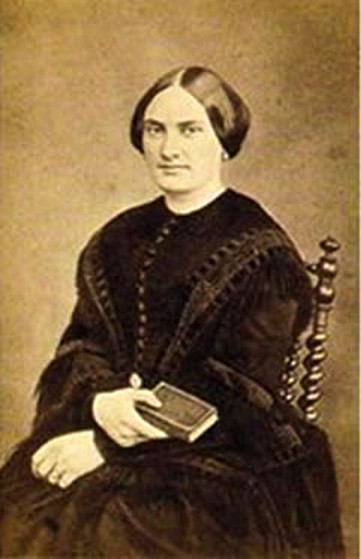
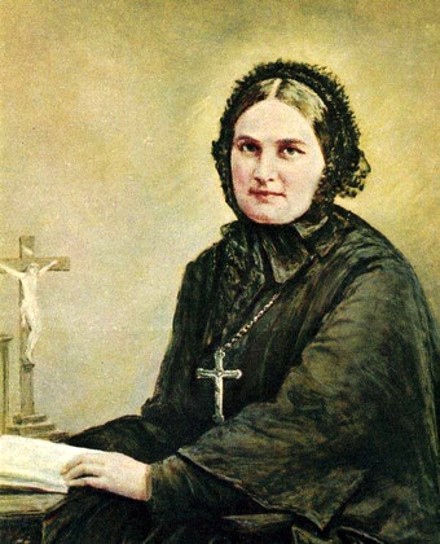

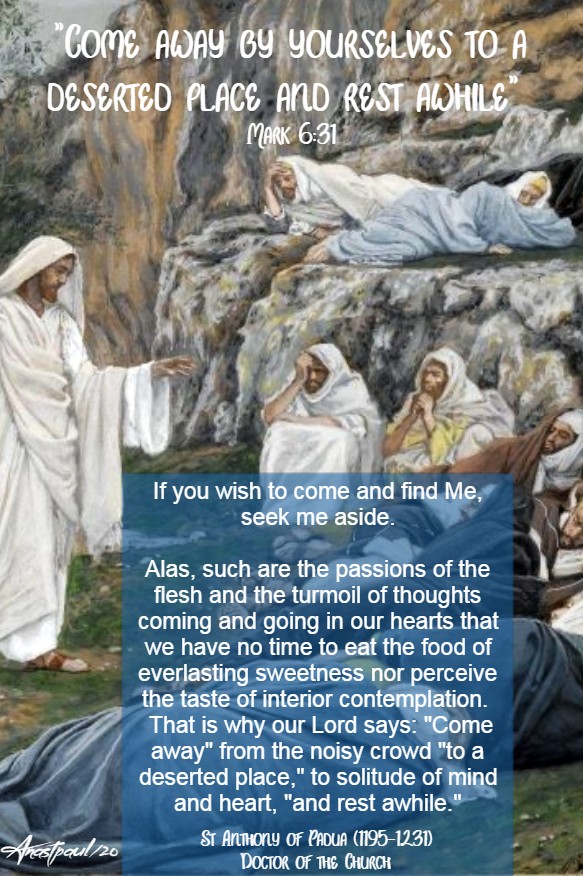

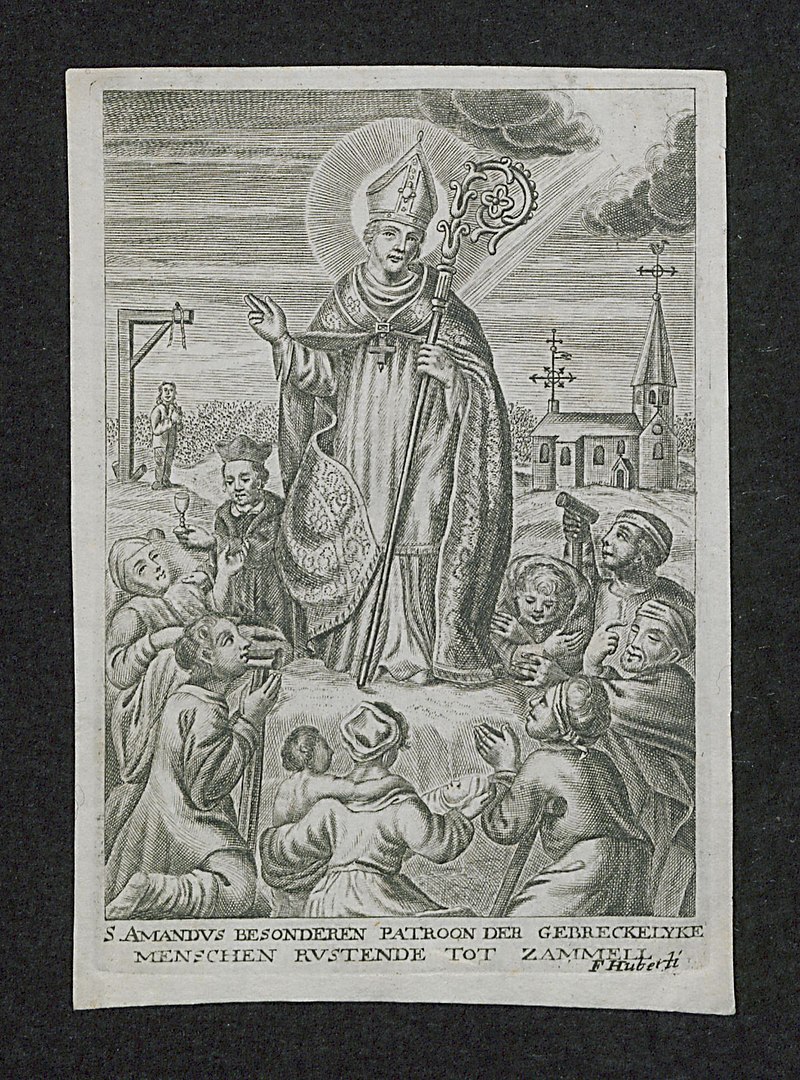
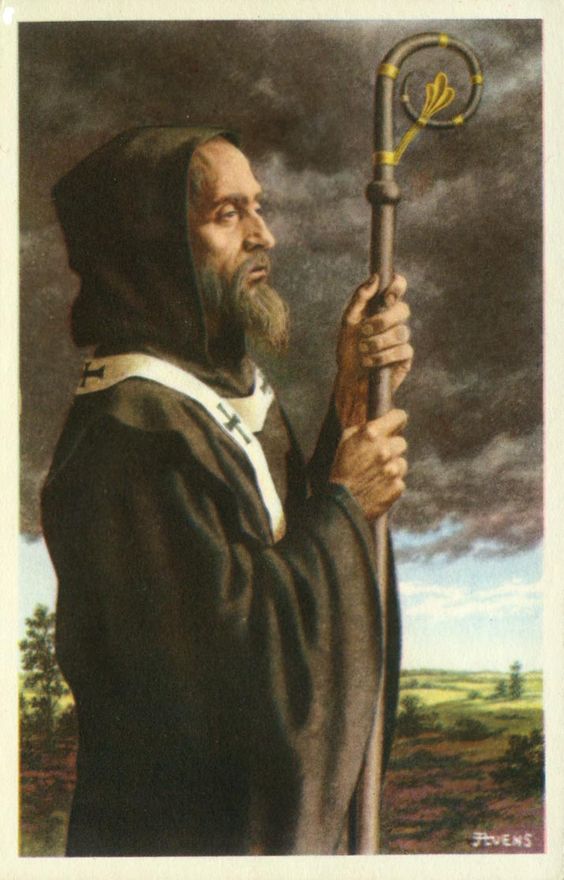

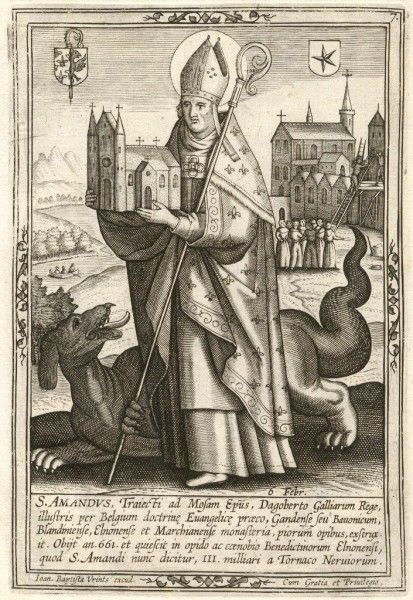

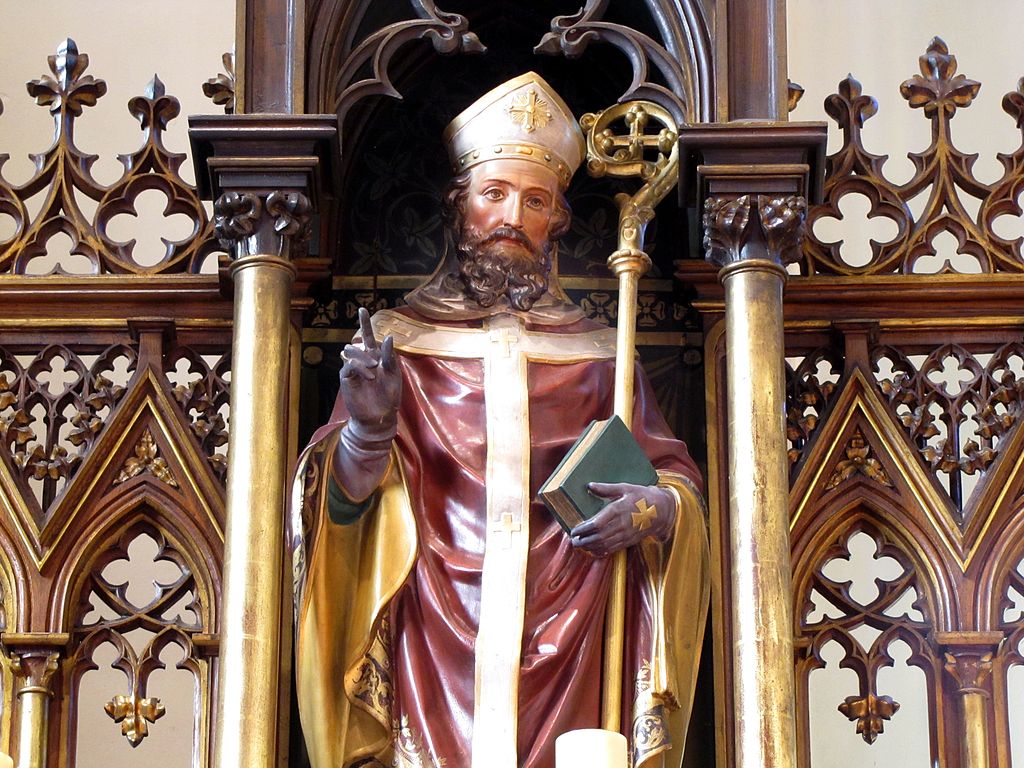
 AnaStpaul
You must be logged in to post a comment.