Santa Maria Della Pace / Our Lady of Peace in the Church of Our Lady of Peace, Rome (also called Our Lady of Miracles) (1483) – 6 May:
The Abbot Orsini wrote: “It is related ,that in the year 1483, a man who had lost his money by gaming, after blaspheming at this picture, gave it four stabs with a dagger and that it bled so copiously, that the miracle was at once divulged all over the City. This picture is still preserved in the Church of Our Lady of Peace, where it is to be seen at the high Altar, framed in marble.”
The present cCurch of Our Lady of Peace, or Santa Maria Della Pace, in Rome, Italy, is still standing. It was built by Pope Sixtus IV after the City of Rome had been under siege by the Duke of Calabria. The Pope had made a vow ,that he would build a new Church in Rome in honour of Our Lady , if peace would somehow be re-established between his Papal States and the Cities of Florence, Milan and Naples. Construction actually started in 1482 as an act of thanksgiving to the Blessed Virgin but the work was not completed until the time of Pope Innocent VIII (1432-1492) who was Pope from 1484 until his death. According to various traditions, the particular site for the Church was chosen because of an incident, in which a drunken soldier had stabbed a statue of the Madonna in the breast, at which the figure had started bleeding as if it were alive. There is also another legend that perhaps a stone was thrown at the image of Our Lady of Miracles, that currently hangs over the high Altar in the Church of Our Lady of Peace, which subsequently started bleeding. In any event, the Church was in fact built, on the foundations of an earlier Church, known as Saint Andrea de Aquarizariis. The venerated painting of Our Lady of Miracles depicts the Blessed Virgin holding the Divine Child. It currently hangs over the high Altar at the Church, which was specifically designed by Carlo Maderno to display and enshrine the famous painting.
The now famous image was once believed to have been venerated in the portico of St Andrew’s of the Watercarriers. There is also another famous fresco inside the Church known as the Four Sibyls, which was painted by Raphael in the year 1514.
Bl Anthony Middleton Bl Bartolomeo Pucci-Franceschi St Benedicta of Rome St Colman Mac Ui Cluasigh of Cork St Colman of Loch Eichin St Dominic Savio St Edbert of Lindisfarne Bl Edward Jones St Evodius of Antioch
St Marianus of Lambesa Bl Peter de Tornamira St Petronax of Monte Cassino St Protogenes of Syria Bl Prudence Castori St Theodotus of Kyrenia St Venerius of Milan St Venustus of Africa St Venustus of Milan Bl William Tandi
Saint of the Day – 5 May – Feast of the Conversion of St Augustine (354-430) Bishop, Father and Doctor of Grace. Born on 13 November 354 at Tagaste, Numidia, North Africa (Souk-Ahras, Algeria) as Aurelius Augustinus Hipponensis and died on 28 August 430 at Hippo, North Africa, which date is his primary Feast day. The Augustinians celebrated today’s memorial on 24 April. St Augustine is the Patron of against sore eyes, against vermin, brewers, printers, theologians, 7 Dioceses, 7 Cities
The Roman Martyrology states of today’s memorial: “In Milan, the Conversion of St Augustine, Bishop and Doctor of the Church, whom the blessed Bishop St Ambrose instructed in the Catholic Faith and baptised on this day.”
The story of a soul’s journey to God is what we celebrate today in the feast of the Conversion of Saint Augustine. Or, perhaps, we might also say, the story of God’s tireless pursuit of His beloved and the attentiveness and openness of that soul at last to God’s love. Conversion, or the turning to God, is a movement that is possible for us at every moment of our journey – not simply once and forever but continually and ever more deeply.
During the Easter Vigil, on the night between 4 and 5 April 387, Augustine was baptised by Bishop Ambrose in the Cathedral of Milan ,together with his son, Adeodatus and a small group of friends, including the ‘brother of (his) heart,’ Alypius. Thus was brought to its happy end, the long and tiring journey of Augustine’s conversion to the Catholic faith. Augustine himself records, in Book 8 of the Confessions, the climactic moment in which he surrendered to God’s grace and was relieved of the doubts and fears, which had so long kept him imprisoned.
Baptism of St Augustine
How many things came together now, in one moment, to bring him freedom: – the story of a visiting countryman, the song of a young child, repeating Tolle Lege, Tolle Lege – Take up, read. Take up, read, moving him to pick up St Paul’s Letter to the Romans, to find there, the response to his heart’s longing.
“I found myself weeping in the bitter sorrow of my heart. And suddenly I heard a voice from a nearby house, a child’s voice, boy or girl I do not know – but it was sort of a sing song that repeated over and over again. ‘Take and read, take and read.’ Wiping away my tears I took this as a divine command and opened the Scriptures and in silence read the passage on which my eyes first fell – ‘Not in rioting and drunkenness, not in debauchery and impurity, not in contention and envy but put on the Lord Jesus…’”
“How sweet did it suddenly become to me to be free of the sweets of folly -things that I once feared to lose, it was now joy to put away. You cast them forth from me, You the true and highest sweetness, You cast them forth and in their stead, You entered in, sweeter than every pleasure…” (Conf. 9, 1).
Certainly the story of Augustine’s conversion, numbers among the most well-known and most significant of all of Christian history – well-known, through Augustine’s own recording of it in his Confessions; significant, not only for the impact which his life of faith – as Monk, Bishop and Theologian – has had on the Catholic Church ever since but also, on the many men and women of every period, whose own personal lives have been altered by reading it and then hastening to go on and read and read and read the words of love of St Augustine!
Let us now thank God for the great light that shines out from St Augustine’s wisdom and humility and pray the Lord to give to us all, day after day, the conversion we need to lead us toward true life. And we ask our beloved Father and Doctor of Grace, St Augustine, to not forget us in his supplications and intercessions. as he gazes on the Face of God. Amen.
Nuestra Señora de Europa / Our Lady of Europe, Gibraltar (1492) – 5 May:
Together with Saint Bernard of Clairvaux, Our Lady is the Catholic patron Saint of Gibraltar and as such, protector of the whole of Europe.
In thanksgiving for the reconquest of Spain by Christian forces in 1492, the Catholics of Gibraltar converted a mosque into the Shrine of Nuestra Señora de Europa. Beneath a lighthouse tower, Our Lady presided over the Straits, its mariners and the continent of Europe for over two centuries. But in 1704, the British captured Gibraltar and pillaged the Shrine. They mutilated the wooden statue of the Virgin and Child and threw it over the cliff. A fisherman found the floating pieces and took them to Father Juan Romero de Figueroa at the Church on Main Street (now the Catholic Cathedral of St Mary the Crowned), who carried them to Spain for safekeeping, while the Church of Our Lady of Europe served as a British guardroom.
There across the bay in Algeciras, the Capillita de Europa housing the repaired Statue became a focus of devotion. A replica was placed in Gibraltar’s Cathedral.
In 1864, the Bishop attended the First Vatican Council, where he interested Blessed Pope Pius IX in building a new Shrine to Our Lady of Europe. Two years later,, the new Church was completed. The Vicar Apostolic John Baptist Scandella arranged for the original Statue to be returned to Gibraltar from Algeciras, where a replica replaced it.
This is the replica Statue
But military occupation during two World Wars left the Shrine in such disrepair, that in 1960 it was torn down for construction of the Old People’s Home. In 1961, the Government of Gibraltar returned the original Chapel, the former mosque, to the Catholic Church. In 1962, it was renovated and reopened as the Shrine of Our Lady of Europe, where the Statue was reinstalled on 17 October 1961. In 1979 Pope John Paul II proclaimed the Most Blessed Virgin Mary, Principal Patroness of the Diocese of Gibraltar under this title.
The feast of Our Lady of Europe was celebrated on 30 May until 1980, when the Vatican authorised its transfer to 5 May, then celebrated as Europe Day in honour of the Council of Europe’s founding on 5 May 1949.
St Pope Pius V OP (1504-1573) (optional memorial) changed in 1969 this feast which had been celebrated on this day of his birth into Heaven since 1713. Bishop of Rome, Ruler of the Papal States, Pope of the Council of Trent, the Counter-Reformation, the Battle of Lepanto, the Holy Rosary and the Pope who declared St Thomas Aquinas as a Doctor of the Church (Optional Memorial) The Roman Martyrology states of St Pius V today: “At Rome, Pope St Pius V, of the Order of Preachers, who laboured zealously and successfully for the re-establishment of Ecclesiastical discipline, the extirpation of heresies, the destruction of the enemies of the Christian name and, governed the Catholic Church by holy laws and the example of a saintly lfe.” His Life: https://anastpaul.com/2019/04/30/saint-of-the-day-saint-pope-pius-v-1504-1572/ Lepanto by G K Chesterton: https://anastpaul.com/2019/04/30/lepanto-30-april/
St Crescentiana St Echa of Crayke St Eulogius of Edessa St Euthymius of Alexandria St Geruntius of Milan St Godehard of Hildesheim Bl Grzegorz Boleslaw Frackowiak St Hilary of Arles St Hydroc St Irenaeus of Thessalonica St Irenes of Thessalonica Bl John Haile St Jovinian of Auxerre St Jutta Kulmsee St Leo of Africo St Maurontius of Douai St Maximus of Jerusalem St Nectarius of Vienne St Nicetas of Vienne
Saint of the Day – 4 May – Blessed Ladislas of Gielniów OFM Cap (c 1440-1505) “The Apostle of Lithuania,” Priest of the Order of Friars Minor Capuchin, zealous and tireless Evangelist, renowned Preacher, Poet and Hymnist, disciple of St Bernardine of Siena and his Apostolate of the Most Holy Name of Jesus and a devotee of the Passio of Christ. Ladislas served his Order in various capacities which included both a Doorkeeper and as its Provincial. He travelled across Poland to evangelise and was a noted preacher. Born in c 1440 in Gniezno, Poland and died on 4 May 1505 of natural causes. Patronages – Lithuania (chosen in August 1753), Poland (chosen in August 1753)m Galicia (eastern Europe), Warsaw, Poland (chosen in August 1753). He is also known as – “The Apostle of Lithuania,” Lithuanian Apostle,” Wladyslaw of Gielniów.
The Roman Martyrology states of him: “In Warsaw in Poland, Blessed Ladislaus of Gielniów, Priest of the Order of Minors, who preached the Passion of the Lord with extraordinary zeal and celebrated it with pious hymns.”
He worked to build up the fledgling Order in Poland and Lithuania, often in the face of resistance from the larger and more established Conventual Franciscans, with their considerably more relaxed way of religious life. The Observants’ very rigorous asceticism and strict interpretation of Franciscan poverty, constantly threatened to open old wounds among the followers of St. Francis and public controversies, between the two groups, often broke out in the fifteenth century.
Blessed Ladislas was born in the Polish City of Gielniow. He attended the University of Warsaw and then entered the City Convent of the Franciscan Friars Minor reformed by St John of Capestrano.
Within a few years ,he was elected Provincial Superior of the Order, a position he held for a long time, promoting the revision of the constitutions, which were then approved by the General Chapter of the Order, which was held in Urbino in 1498.
He carefully selected the most suitable Friars to send to Lithuania for the evangelisation of that Country. However, he reminded them of the greater importance to be attributed to personal holiness, which must always be placed before the proclamation of the Gospel to others. This initiative succeeded in reconciling several schismatics with the Church and also obtained the conversion of numerous pagans,
Ladislas was an ardent and eloquent preacher, He was much sought after and appreciated by the people. His homilies, as the Martyrologium Romanum also recalls, used to emphasise, in a particular way, the salvific value intrinsic to the Passion of Christ. Below is one of his devotional Hymns on the Passion:
Jesus, Judas sold away, for just wretched money God the Father gave His Son, for our souls’ salvation Jesus at the paschal feast, gave out His own body, soothed His sad Apostles’ grief, with His very life blood.
To the garden Jesus went, with His friends, His loved ones Thrice His Father he implored, on behalf of sinners Bloody sweat out from Him poured, in His heavy struggle O my soul, so very loved, look on Him, who loves you so.
He was the author of various hymns on this theme, intended for singing in Vespers. It was precisely religious song and poetry, in fact, that would become Ladislas’s most lasting legacy to Polish religious culture. He is the first major Polish Poet known by name, to write sometimes in the vernacular, rather than exclusively in the learned language of Latin.
His songs and verse represent well, his own piety, as well as those of his Order. Frequently, they illustrate the popular orientation of both. For instance, the simple poverty of Christ and Mary ,is sometimes stressed, in a gentle and colourful way, which, nonetheless, puts across the Gospel story’s emotional weight. Consider these verses from his vernacular song on the Nativity:
A town not large called Bethlehem Around that time had many guests, There Joseph with his new-found bride Arrived, his Mary great with child.
Because these two possessed no wealth No welcome could they find in town, So to a stable off they went, And there they dwelt in poverty.
The purest Virgin Mary thus To Jesus Christ the Lord gave birth. At midnight, God Himself was born, And all the universe rejoiced.
And when the Babe began to cry, Upon bare earth itself He lay Before Him there, His Mother knelt And so to her small Child gave praise.
‘Wa, wa, wa, wa,’ the baby cried, Lamenting all our human sins, His mom then took Him up from earth, And wrapped Him up in swaddling bands.
Because the stable was too tight, A manger into crib she made. No nursemaid there was found with her, To come to that poor Mother’s aid.
Some, lying, have been known to claim (And thus that Mother they insult!) That serving maids abounded there And gave that Mother lots of help.
When in 1498 Poland found itself having to face an invasion by the Tartars and Turks, an army of 70,000 men in all, Ladislas led a prayer crusade to invoke divine intervention. Tradition attributes the consequent extraordinary floods of the Dnepr and Prut rivers to this, which blocked the foreign invaders. This particular intercession, increased his reputation as a great man of prayer.
He strongly upheld the Bernadine mission of preaching to the laity and poor in accessible, moving and often colourful and even entertaining sermons, although always with forceful appeal to keep and live the Christian faith in all its rigour.
It is also reported that, during the last Good Friday of his life, while he was meditating, he levitated into the air, assuming the position of Christ on the Cross. When he returned to the ground, he collapsed and was confined to his bed. He remained bed-ridden until his death on 4 May 1505 a few weeks later.
Ladislas was Beatified in 1586 by Pope Sixtus V and on 11 February 1750, Pope Benedict XIV his cult received official confirmation.
His relics are interred in the Chapel of Blesed Ladislas in Warsaw, see below.
Notre-Dame de Gray, Gray, Haute-Saône, Franche-Comté, France / Our Lady of Gray (1400s) – 4 May
By the 1200s, a cruciform oak tree had become a place of devotion in the Flemish Town of Scherpenheuvel.(Montaigu in French) In the early 1400s, the Shrine became famous after a Statue of the Virgin placed on the tree, fell down and could not be moved from the spot.
The copy of the orginal Statue, made in 1613
But Protestants destroyed the Sanctuary in 1568 and in 1604 the tree was cut down. In 1613, a poor widow, Jeanne Bonnet, made a pilgrimage to Montaigu at the age of 70. She brought a piece of the sacred oak home to Salins-les-Bains in eastern France, where sculptor Jean Brange, carved a Statue of the Virgin from it, copying the Belgian original from the description.
From 1616 until the French Revolution, this Statue presided over a long series of miracles at the Capuchin Monastery in the Town of Gray, 37 miles away. When the revolutionaries expelled the Monks and pillaged the Monastery, a family hid the holy image until it could be safely installed in the Basilica at Gray.
In thanksgiving for the end of the 1849 cholera epidemic, Cardinal Mathieu, Archbishop of Besançon, gave the Shrine a silver Statue covered in gold and jewels, which he dedicated on 4 May 1851, at a ceremony attended by 92 Priests, throngs of the faithful, artillery salvos and the ringing of all the bells in Town. Afterwards, the Parish celebrated the feast of Our Lady of Gray with a procession every 4 May.
The new Statue dating from 1849
St Albian of Albée Bl Angela Bartolomea dei Ranzi Bl Angela Isabella dei Ranzi St Antonia of Constantinople St Antonina of Nicaea St Antonia of Nicomedia St Antonius of Rocher St Arbeo of Freising St Augustine Webster St Cunegund of Regensburg St Curcodomus of Auxerre St Cyriacus of Ancona St Enéour St Ethelred of Bardney St Florian of Lorch Bl Hilsindis
St Judas Cyriacus Blessed Ladislas of Gielniów OFM Cap (c 1440-1505) Priest St Luca da Toro Bl Margareta Kratz Bl Michal Giedroyc St Nepotian of Altino Bl Paolino Bigazzini St Paulinus of Cologne St Paulinus of Senigallia St Pelagia of Tarsus St Porphyrius of Camerino Rino St Richard Reynolds St Robert Lawrence St Silvanus of Gaza
— Carthusian Martyrs: A group of Carthusian monks who were hanged, drawn and quartered between 19 June 1535 and 20 September 1537 for refusing to acknowledge the English royalty as head of the Church: • Blessed Humphrey Middlemore • Blessed James Walworth • Blessed John Davy • Blessed John Rochester • Blessed Richard Bere • Blessed Robert Salt • Blessed Sebastian Newdigate • Blessed Thomas Green • Blessed Thomas Johnson • Blessed Thomas Redyng • Blessed Thomas Scryven • Blessed Walter Pierson • Blessed William Exmew • Blessed William Greenwood • Blessed William Horne • Saint Augustine Webster • Saint John Houghton • Saint Robert Lawrence
Martyrs of Cirta: Also known as • Martyrs of Cirtha • Martyrs of Tzirta A group of clergy and laity martyred together in Cirta, Numidia (in modern Tunisia) in the persecutions of Valerian. They were – Agapius, Antonia, Emilian, Secundinus and Tertula, along with a woman and her twin children whose names have not come down to us.
Martyrs of England: 85 English, Scottish and Welsh Catholics who were martyred during the persecutions by Protestants in the 16th and 17th centuries. They are commemorated together on 22 November. • Blessed Alexander Blake • Blessed Alexander Crow • Blessed Antony Page • Blessed Arthur Bell • Blessed Charles Meehan • Blessed Christopher Robinson • Blessed Christopher Wharton • Blessed Edmund Duke • Blessed Edmund Sykes • Blessed Edward Bamber • Blessed Edward Burden • Blessed Edward Osbaldeston • Blessed Edward Thwing • Blessed Francis Ingleby • Blessed George Beesley • Blessed George Douglas • Blessed George Errington • Blessed George Haydock • Blessed George Nichols • Blessed Henry Heath • Blessed Henry Webley • Blessed Hugh Taylor • Blessed Humphrey Pritchard • Blessed John Adams • Blessed John Bretton • Blessed John Fingley • Blessed John Hambley • Blessed John Hogg • Blessed John Lowe • Blessed John Norton • Blessed John Sandys • Blessed John Sugar • Blessed John Talbot • Blessed John Thules • Blessed John Woodcock • Blessed Joseph Lambton • Blessed Marmaduke Bowes • Blessed Matthew Flathers • Blessed Montfort Scott • Blessed Nicholas Garlick • Blessed Nicholas Horner • Blessed Nicholas Postgate • Blessed Nicholas Woodfen • Blessed Peter Snow • Blessed Ralph Grimston • Blessed Richard Flower • Blessed Richard Hill • Blessed Richard Holiday • Blessed Richard Sergeant • Blessed Richard Simpson • Blessed Richard Yaxley • Blessed Robert Bickerdike • Blessed Robert Dibdale • Blessed Robert Drury • Blessed Robert Grissold • Blessed Robert Hardesty • Blessed Robert Ludlam • Blessed Robert Middleton • Blessed Robert Nutter • Blessed Robert Sutton • Blessed Robert Sutton • Blessed Robert Thorpe • Blessed Roger Cadwallador • Blessed Roger Filcock • Blessed Roger Wrenno • Blessed Stephen Rowsham • Blessed Thomas Atkinson • Blessed Thomas Belson • Blessed Thomas Bullaker • Blessed Thomas Hunt • Blessed Thomas Palaser • Blessed Thomas Pilcher • Blessed Thomas Pormort • Blessed Thomas Sprott • Blessed Thomas Watkinson • Blessed Thomas Whitaker • Blessed Thurstan Hunt • Blessed William Carter • Blessed William Davies • Blessed William Gibson • Blessed William Knight • Blessed William Lampley • Blessed William Pike • Blessed William Southerne • Blessed William Spenser • Blessed William Thomson • They were Beatified on 22 November 1987 by Pope John Paul II.
Martyrs of Novellara: A bishop and several his flock who were martyred together in the persecutions of Diocletian and whose relics were kept and enshrined together. We know nothing else about them but the names – Apollo, Bono, Cassiano, Castoro, Damiano, Dionisio, Leonida, Lucilla, Poliano, Tecla, Teodora and Vespasiano. They were Martyred on 26 March 303. Their relics were enshrined in the parish of Saint Stephen in Novellara, Italy in 1603.
One Minute Reflection – 3 May – “Mary’s Month” – Monday of the Fifth Week of Easter, Readings: First: First Corinthians 15: 1-8; Psalm: Psalms 19: 2-3, 4-5; Gospel: John 14: 6-14 and the Feast of Sts Philip and James Apostles and Martyrs
“Jesus said to him, “Have I been with you for so long a time and you still do not know me, Philip? Whoever has seen me has seen the Father. How can you say, ‘Show us the Father’? …” -John 14:9
REFLECTION – “In the Church, I know of only one image, that is, the image of the unseen God. God has said about this image, “Let us make man [humankind] in our image.” Of this image it is written that Christ is the “effulgence of the glory and impress of His hypostasis.” In that image, I perceive the Father, as the Lord Jesus Himself has said, “The one who has seen me has seen the Father.” For this image is not separated from the Father, which indeed, has taught me the unity of the Trinity, saying, “I and the Father are one” and again, “All things whatever the Father has are mine.” [In this image, also perceive] the Holy Spirit, seeing that the Spirit is Christ’s and has received of Christ, as it is written, “He shall receive of mine and shall announce it to you.” – St Ambrose (340-397) Bishop of Milan, Father and one of the original four Doctors of the Latin Church( – Sermon Against Auxentius, 32)
PRAYER – Lord God, each year You grant us the blessing of celebrating with joy, the feast day of Your Apostles and Martyrs Saints Philip and James. Make us partners with them by their prayers, in the Passion and Resurrection of Your only-begotten Son, so that we may come, with them, to the eternal vision of Your glory. We make our prayer through Jesus Christ, our Lord in the unity of the Holy Spirit, one God now and forever, amen.
Saint of the Day – 3 May – Saint Ansfrid of Utrecht (c 940-1010) Bishop, Count of Huy and the sword-bearer and Knight for Otto I, Holy Roman Emperor. He became Bishop of Utrecht in 995. He appears to have been the son or grandson of Lambert, a nobleman of the Maasgau, the area where he later founded the Abbeys of Thorn and Heiligenberg and to have been related to various important contemporaries including the royal family. Born in c 940 in the Brabant region of the Netherlands and died on 3 May 1010 in Amersfoort, Netherlands of natural causes. Patronage – Amersfoort. He is also known as Ansfridus, Ansfried, Ansfrido.
The young Knight St Ansfrid in the Abbey Church of Heiligenberg
The principal source of information regarding Ansfrid is the De diversitatem temporum by the Benedictine Albert of Metz, written around 1022.
Ansfrid had the same name as a paternal uncle, Ansfrid the elder, a Count who held 15 counties. The young Ansfrid studied secular and clerical subjects under another paternal uncle, Robert, Archbishop of Trier, before attending the Cathedral school at Cologne.
In 961, Otto I took Ansfrid into his personal service and made him his swordbearer. When Otto was in Rome the following year to be crowned Holy Roman Emperor, he directed Ansfrid to keep close at hand ,with the sword as a precaution against any unforeseen eventualities.
Because of his Christian commitment, he was highly respected and an important Knight of the Emperor’s circle, holding rich possessions along the Meuse, in Brabant and Gelderland. Possibly all or some of his counties were inherited from his paternal uncle of the same name. As Count, he had considerable success in suppressing piracy and armed robbery. In 985, Otto III granted Ansfrid the right to mint coins at Medemblik, on the north-south shipping route through the Vlie, as well as, the income from tolls and tax collecting.
He was married to Heresuint or Hilsondis. They had one child, Benedicta. He founded a Romanesque Abbey Church on his wife’s estate at Thorn under the patronage of St Michael. The Abbey itself had a double cloister that housed both man and women religious. Ansfrid planned it as a place of retirement for himself and his family after he left public service. His wife was to be the first Abbess but she died on her way there and Benedicta, their daughter, took her place.
sT Ansfrid and Hilsondis. Stained glass windows in the Abbey of Thorn
After his wife’s death, Ansfrid desired to retire and become a Monk. However, in 995, Emperor Otto III and Bishop Notker of Liège persuaded the reluctant Ansfrid to assume the then vacant Aee of Utrecht. Ansfrid objected that as he had borne weapons as a Knight, he was unworthy of the office but the Emperor prevailed. The elderly Count laid down his sword on the Altar of St Mary in Aachen and was Ordained Priest and Consecratedas the eighteenth Bishop of Utrecht, in the same ceremony. Bishop Ansfrid never took a commission in the royal army, in contrast to Notger and the Bishop of Cologne.
In 1006 Bishop Ansfrid founded the Abbey of Heiligenberg, also under the patronage of St Michael. Toward the end of his life he became increasingly weakened through fasting and retired there as a Monk, caring for the sick, although almost blind himself.
Upon his death, during the funeral, the faithful of Heiligenberg took possession of his body, while the people of Utrecht were extinguishing a not coincidental fire. The Abbess of Thorn mediated and Ansfrid was buried in the Cathedral of Saint Martin in Utrecht.
St Ansfrid, fine bronze of the fountain “Li bassinia” in Huy
Virgen de la Carrasca, Bordón, Teruel, Aragón, Spain (1212) – 3 May:
Commemorated on First Monday of May
In 1212, a herder found an image of the Virgin in a holm oak (carrasca) in the rocky countryside of Aragón in Spaon. There are several stories about what happened then, all of them ending with a Shrine in Bordón. Templars carried the Statue to Castellote, 12 miles north but the next day the image was back in the oak, the Virgin made those carrying her to Castellote keep turning toward Bordón and springs arose at each turn.
Original Statue
In the place where it was found, a hermitage was built to house it, which would later be replaced by the building that today is the Parish Church of Bordón, built in 1306 by the Templar Order (The Order was dissolved by Pope Clement V in 1312 ).
Although its exterior hardly stands out, its interior is magical and fascinating, a place full of mystery. In one of the Chapels inside, the Templar novices who previously made a pilgrimage on foot from Castellote, capital of the Templar Commandery, performed initiation rites to become Knights of the Order.
In the 18th century, the interior of the Church was covered with marvellous frescoes, which have been recently restored. Unfortunately, the venerated carving of the Black Virgin of the Carrasca was lost during the Civil War, along with another very famous Romanesque carving with a reputation for miraculously calming storms, the Virgin of the Spider, only a series of photographs being preserved, which allowed the making a replica.
Replica Statue
On the first Monday in May, the faithful from the three towns to the south—Tronchón, Olocau del Rey and Mirambel—conduct a processional pilgrimage to the Virgin de la Carrasca. They have done this “from time immemorial,” according to a document of 1390 in the Parish archives of Tronchón.
St Adalsindis of Bèze Bl Adam of Cantalupo in Sabina St Ahmed the Calligrapher St Aldwine of Peartney St Pope Alexander I St Alexander of Constantinople Bl Alexander of Foigny St Alexander of Rome Bl Alexander Vincioli St Ansfrid of Utrecht (c 940-1010) Bishop St Antonina of Constantinople St Diodorus the Deacon
St Ethelwin of Lindsey St Eventius of Rome St Fumac St Gabriel Gowdel St Juvenal of Narni Bl Maria Leonia Paradis St Maura of Antinoe St Peter of Argos St Philip of Zell Bl Ramon Oromí Sullà St Rhodopianus the Deacon St Scannal of Cell-Coleraine Bl Sostenaeus
Quote/s of the Day – 2 May – “Mary’s Month” – and the Memorial of St Athanasius (297-373) Father & Doctor of the Church
“If we follow Christ closely we shall be allowed, even on this earth, to stand, as it were, on the threshold of the heavenly Jerusalem and enjoy the contemplation, pf that everlasting feast, like the blessed Apostles, who, in following the Saviour as their leader, showed and still show, the way to obtain the same gift from God. They said – See, we have left all things and followed You. We too follow the Lord and we keep His feast by deeds rather than by words.”
“He cries out, saying: See, I am with you all the days of this age. He is Himself the shepherd, the high priest, the way and the door, and has become all things at once for us.”
“Mary, Mother of Grace, it becomes you to be mindful of us, as you stand near Him who granted you all graces, for you are the Mother of God and our Queen. Help us for the sake of the King, the Lord God and Master, Who was born of you.”
One Minute Reflection – 2 May – The Fifth Sunday of Easter, Readings: Acts 9:26-31, Psalm: Psalms 22: 26-27, 28, 30, 31-32 (26a), Second: First John 3: 18-24, Gospel: John 15: 1-8 and the Memorial of St Athanasius (297-373)
“I am the vine, you the branches; he that abides in me and I in him, the same bears much fruit; for without me you can do nothing.” – John 15:5
REFLECTION – “I must warn each of you about His vine – for who has never cut back everything that is superfluous in himself ,to the point of thinking that there is nothing more to cut?
Believe me, what has been cut, grows back; the vices that have been chased away return and we see tendencies that had gone to sleep, waking up again. It is, therefore, not enough to cut one’s vine once; rather, we have to do it again and often and if possible, even without ceasing. For if you are sincere, you ceaselessly find in yourself ,something to cut…
Virtue cannot grow among the vices; for virtue to develop, we must prevent the vices from increasing. So suppress what is superfluous; then the necessary will be able to spring up.
For us, Brothers, it is always the time for cutting, it is always necessary. For I am sure that we have already left winter behind us, we have left behind the fear without love, which introduces us all to wisdom but which doesn’t let anyone grow in perfection. When love comes, it chases away that fear just as the summer chases away the winter… So may the winter rains stop, that is say, the tears of anguish that arise because of the memory of your sins and the fear of judgement… If “the winter is over” and “the rain has topped” (Song 2:11)… the sweetness of the spring of spiritual grace shows us, that the time has come to cut our vine. What else is there for us to do other than to become entirely committed to this work?” – St Bernard (1091-1153) Mellifluous Doctor of the Church – Sermon 58 on the Song of Songs
PRAYER – Holy God and Father, help us to discern through prayer and meditation what You truly want of us. Then enable us to offer it to You and indeed, to offer ourselves and all we have and all we are, to You. When You bring us sufferings to mould us closer and make us more like You, help us to accept them and offer them back to You. Following Your divine Son, let us pick up those crosses in peace and love. Our Lady Holy Mother of Our Lord and our own, pray for us! St Athanasius, pray for us. Through Christ our Lord, with the Holy Spirit, God now and forever, amen.
Saint of the Day – 2 May – Saint St Zoe of Pamphylia (Died 127) Martyr, Laywoman, Wife and Mother. The Roman Martyrology states of her and her family: “The holy mMartyrs , Exuperius and Zoe, his wife, with their sons, Cyriacus and Theodolus, who suffered under the Emperior Adrian.”
Zoe was married to Saint Exuperius. They had 2 sons, Saint Cyriacus and Saint Theodulus.
They were slaves, and were owned by a rich devout worshipper of the ancient Roman gods in Atalia, Pamphylia. One of Zoe’s duties was to tend the house dogs and prevent them from biting visitors. She rarely saw her husband as he worked the fields, a distance from the house.
Since she worked near a roadway, she gave of her own meagre rations to those even poorer than herself. One pagan feast day, the slaves were given meat to sacrifice to an idol. They refused and the entire family was tortured and murdered.
Nuestra Señora de Oviedo / Our Lady of Oviedo, Spain (711) – 2 May:
The Abbot Orsini wrote: “Our Lady of Oviedo, Spain, where they possess some of the Blessed Virgin’s hair.”
The Cathedral of Oviedo was founded in 781 AD, and enlarged by Alfonso the Chaste, who made Oviedo the Capital of the Kingdom of Asturias. The Chapel was once called the Sancta Ovetensis, owing to the quantity and quality of relics contained in the Camara Santa (Holy Chamber).
There is in the City of Oviedo a Holy Chest that contains many and varied relics. It rests in the Town where King Alfonso II, the Chaste, built a Shrine to house it and there it can be seen even today as it was well over a millennium ago. Like the Arc of the Covenant, or the Holy Grail, it is a singular thing the like of which is almost utterly unknown in the entire history of mankind.
This Holy Chest is made of oak and was skillfully constructed without the use of any nails. It measures roughly four feet by three feet by two feet and has been venerated, by faithful Catholics, since apostolic times. Indeed, it is believed to have been fashioned by devoted disciples of the twelve Apostles. Many men and woman throughout history have given their entire lives in service to the holy relics contained therein, or to save the chest from pagans who sought its destruction. The chest originated in the Holy City of Jerusalem. When the Persain’s attacked and conquered Jerusalem in 614, many priceless relics from the region were gathered and placed in it for protection, as the Persians sought relics to destroy them. The chest was taken for safekeeping to a small community of Catholiacs in Alexandria, Egypt. A short time later, Alexandria was also sacked by the Muslims and the chest was taken across the Mediterranean Sea to Spain, where St Isidore kept it in Seville. Upon St. Isidore’s death, the chest was transferred to the City of Toledo, which was then becoming an important centre in Spain. When the wave of Muslim aggression reached even Toledo in 711, the Holy Chest was taken to the Asturias and hidden in a well in Pelayo’s mountain. The chest has a lock and key but by the time of the eleventh century it had not been opened for hundreds of years. The last time it was known to have been opened was when it was done by a living saint, St Ildephonsus, for in it he had placed a chasuble that the Mother of God herself had given him during an apparition. By the year 1030, the exact contents of the Holy Chest were no longer known. Bishop Ponce of Oviedo and with him many clerics, determined to examine the chest to unlock its secrets. As soon as the lid was raised only the slightest bit, “there burst forth so stupendous a light that the terrified clerics, some of them stricken blind, dropped the lid and fled, leaving the mystery unsolved.” After Mass, on Friday, 13 March 1075, the key was again placed in the lock. On this occasion, God was pleased to reveal the contents of the Holy Chest. The chest contained the Sudarium, mentioned by St John the Evangelist in his Gospel, as the cloth that covered the face of Christ, after the crucifixion. On it can be seen the bloodstains of Our Lord that evidence his passion and death. It alone is a treasure without reckoning… The chest also contained a piece of the True Cross of Our Lord, a small stone of the sepulcher in which He was buried, some of the cloths in which He was wrapped in the manger, several thorns from the Crucifixion, a piece of the earth of Mount Olivet touched by His feet when He ascended into heaven, one of the thirty coins given to Judas, a lock of the Blessed Mother’s hair, the chasuble given by the Virgin Mary to Saint Ildephonsus, a chest of gold and precious stones containing the forehead of St John the Baptist and his hair and a host of other relics from many saints and prophets, including St Stephen, the first martyr, St Mary Magdalene, St Peter the Apostle, St Vincent and the rod of Moses which parted the Red Sea and the manna supplied from heaven during the Exodus from Egypt, and many other priceless relics.
King Alfonso VI commissioned a silversmith to sheath the Holy Chest in gilded silver, adorning it with figures of Our Lord and His angels and saints. It can still be seen even today.”
Cathedral of Oviedo
There are numerous Marian images, in their different invocations, which can be seen in the Cathedral of Oviedo. The month of May dedicated to the Virgin inspires a tour of different chapels and altarpieces in which the Immaculate, Virgin Asuntas are preserved, also affectionate Mothers with a Child in their arms, without forgetting the suffering Mothers of the Piedades and ,of course ,the Virgin from Covadonga, our Santina. In the Chapel of Santa María del Rey Casto a small Altarpiece houses one of the most precious Marian images of the Cathedral of Oviedo and which, perhaps, due to its modest size, goes unnoticed. The Altarpiece of Our Lady of Light . This Altarpiece was donated in 1552 by Gutierre González de Cienfuegos, magistrate of Medina del Campo and Salamanca and was placed in the retrochoir of the Cathedral, where it served as an Altar.
Bl Bernard of Seville St Bertinus the Younger Bl Boleslas Strzelecki Bl Conrad of Seldenbüren St Cyriacus of Pamphylia St Eugenius of Africa St Exsuperius of Pamphylia St Felix of Seville St Fiorenzo of Algeria St Gennys of Cornwall St Germanus of Normandy (Died c 460) St Gluvias St Guistano of Sardinia
St Joseph Luu Bl Juan de Verdegallo St Longinus of Africa St Neachtain of Cill-Uinche St Theodulus of Pamphylia St Ultan of Péronne St Vindemialis of Africa St Waldebert of Luxeuil
Bl William Tirry St Zoe of Pamphylia (Died 127) Martyr, Laywoman — Martyrs of Alexandria – 4 saints: A group of Christians marytred together in the persecutions of Diocletian. We know little more than their names – Celestine, Germanus, Neopolus and Saturninus. 304 in Alexandria, Egyp
Saint of the Day – 1 May – St Sigismund of Burgundy (Died 524) King and Martyr. King of the Burgundians from 516 until his death, Reforemer, Penitent, apostle of the needy and the poor. Patronages – Czech Republic, Monarchs, Germanic peoples, bibliophiles, Monasteries.
The Roman Martyrology states of him today: “At Siom, i Switzerland, Saint Sigismund, King of the Burgundians, who was drowned in a well and afterwards became renowned for miracles.”
Sigismund succeeded his father Gundobad asKking of the Burgundians in 516. At the time, Burgundy was perhaps the most powerful of all the kingdoms of Gaul – not least because of its strong links with the Byzantine court – and both the Franks and the Ostrogoths were keen to limit Burgundian power.
Sigismund soon established his reputation as a statesman and lawmaker by issuing (in 517) a legal compendium, the Lex Gundobada (more properly known as the Liber Constitutionum). He was equally enthusiastic about reforming the Church and, in the same year, he convened a Council of Burgundiam Bishops with a view to establishing ecclesiastical discipline and dismantling the infrastructure of the Arian Church in Burgundy.
Gundobad had been an Arian, though he seems to have contemplated conversion to Catholicism,and Sigismund converted by 515 – thanks in large part to his association with the Catholic Bishop of Vienne, St Avitus (a poet and man of letters who remained a beacon of classical civilisation in a barbarian world), with whom he maintained a correspondence.
Shortly after his conversion, Sigismund founded the Monastery of St Maurice at Agaune, where he instituted the practice of the laus perennis, according to which (as happened in other royal monasteries in the Germanic world) groups of Monks would chant the psalms in relays in an unceasing round of praise (the sixth century equivalent of perpetual adoration).
In spite of such positive beginnings, Sigismund’s relationship with his Bishops deteriorated. Much more seriously, in 522 his second wife persuaded him that Sigistrix, his son by his deceased first wife, was plotting against him with the intention of killing him and taking control not only of Burgundy but also of Italy.
In a fit of uncontrolled rage, Sigismund had Sigistrix strangled. Once his anger had subsided, he was appalled at the enormity of his crime and retired to St Maurice to do penance, devoting himself to the poor in whose service he distributed part of his wealth.
Whatever he undertook by way of reparation, however, seemed wholly inadequate in view of the horrific nature of the murder of his own son and Sigismund came to believe, that only by suffering some equivalent calamity, could he atone for his sin.
Such a calamity duly occurred when Burgundy was attacked by Chlodomer, the King of Orleans, together with his brothers Childebert and Chlothar (the three brothers were the sons of the Frankish King Clovis whose father had been murdered by Sigismund’s father Gundobad). Sigismund escaped, disguising himself as a monk and hiding in a cell at Agaune, but was captured and taken to Orleans as a prisoner where he was executed (524), by being thrown down a well.
His bones having been recovered, a shrine developed at Agaune and he was soon recognised as a Martyr, though strictly speaking he did not die for his faith, as the motives for his assassination had to do with politics and blood-feuds, rather than with Arian persecution of Catholics.
St Sigismund: Fresco by Piero della Francesca
In fact, he is best remembered not primarily as a Martyr (for all that he endured death in a spirit of faith and courage) but as one of the great penitents – as a man whose profound repentance, culiminating in a death, which at some level he seems to have sought (at least in prayer) by way of atonement for his gravest of crimes, was rightly perceived not only by his contemporaries but also by subsequent generations as a paradigm of a particular kind of Christian sanctity.
A bust of St Sigismund n Plock
His body was kept honourably at Agaune, until it was removed to the Cathedral of Prague by the Emperor Charles IV. His tomb has been venerated for centuries and has been famous for many miracles. He became a Patron of the Czech Republic, see his Statue on Charles Bridge in Prague, below.
Maria Santissima di Giubino, Siciliy / Madonna of Giubino, Sicily (1655) – 1 May:
The Church of the Madonna of Giubino was built in 1721 to house a miraculous marble-relief icon of the Madonna. (A copy of the relief is housed in the Church of St Joseph in Brooklyn, New York, giving testimony to the large emigrant community of Calatafimesi who lived in Brooklyn in the early 20th century). The Church of Maria Santissima di Giubino is dedicated to the Patroness of the Town. It has a single nave, with an elegant barrel vault decorated with frescoes and ornamental motifs. Inside there are some important works – the painting with the Assumption, Our Lady with Angels and Saints dated 1617, the Altarpiece of All Saints, an 18th-century wooden organ and a 15th-century marble alto-rilievo representing Madonna of Giubino with the Infant Jesus. In 1655 an invasion of grasshoppers was destroying all the crops in the countryside of Calatafimi. The people, assembled in a Church, decided that, after putting all the names of the Saints who had an aAtar in Town inside a ballot box, they would choose as a Patron that one whose name had been drawn. After they invoked the Holy Ghost, it was chosen the name of Maria Santissima di Giubino by lots. The central part of the triptych with the image of the Virgin was soon taken out from the wall in the country Church of Giubino and taken in procession: with prayer and Holy Mass and thereafter, Calatafimi was free from grasshoppers.
Maria Santissima di Giubino was elected Patroness of the Town (25 April 1655) and the bas-relief of the Virgin of Giubino was then placed on the high Altar of the new Church, designed by Giovanni Biagio Amico (the same planner of the Church of Santissimo Crocifisso) in 1721. In 1931 the triptych was recomposed in the Town Sanctuary and restored.
St Aceolus of Amiens St Acius of Amiens St Aldebrandus of Fossombrone St Amator of Auxerre St Ambrose of Ferentino St Andeolus of Smyrna Bl Arigius of Gap St Arnold of Hiltensweiler St Asaph of Llanelwy St Augustine Schöffler St Benedict of Szkalka OSB (Died 1012) Monk and Hermit St Bertha of Avenay St Bertha of Kent St Brieuc of Brittany St Ceallach of Killala St Cominus of Catania Evermarus of Rousson Bl Felim O’Hara St Grata of Bergamo St Isidora of Egypt St Jeremiah the Prophet St John-Louis Bonnard Bl Klymentii Sheptytskyi St Marculf St Orentius of Auch St Orentius of Loret St Patientia of Loret
St Romanus of Baghdad St Sigismund of Burgundy (Died 524) King and Martyr St Theodard of Narbonne St Thorette St Torquatus of Guadix Blessed Vivald of Gimignano
Martyrs of Amiens: Aceolus Acius
Martyrs of Loret: Orentius Patientia
Martyrs of Vietnam: Augustine Schöffler John-Louis Bonnard
Saint of the Day – 30 April – Blessed Benedict Passionei of Urbino OFM Cap (1560– 1625) Priest of the Order of the Friars Minor of St Francis, Capuchin, Missionary, apostle of the poor, renowned preacher, doctor of civil and canon law. Born on 13 September 1560 in Urbino, Duchy of Urbino, Papal States (part of modern Italy) as Marco Passionei and died on 30 April 1625 in Fossombrone, Pesaro-Urbino, Italy of complications following surgery. Also known as – Benedetto da Urbino, Benito of Urbino. Marco Passionei. Patronage – Missionaries.
It is most striking today, to see a scion of one of the richest and noblest families of Umbria give himself to strenuous manual work in various Friaries. He was sensitive to the poor and full of compassion for them, without distinction. He wanted to preach only in insignificant little towns. He abounded in piety and devotion, poverty and penance, humility and simplicity. He was indeed a ‘classic’ Capuchin friar.
Marco was born into the noble family of the Passioneis in the duchy of Urbino. He was baptised Marco in 1560. He was orphaned by the age of seven and was put into the care of tutors with his ten brothers and sisters. He received the Doctor of Law at the University of Perugia and then rejoined his family, now living at Fossombrone. He made friends with the Capuchin brother questors and was attracted by their charism. Because of his poor health this was opposed by the local superior but, after waiting a year, the newly elected Provincial allowed him to join in 1584. Named Benedict he soon found his place among the preachers and joined St Lawrence of Brindisi in his missionary work in Bohemia. He thrived on it especially when preaching to the poor. He died in Fossombrone in 1625 and was Beatified by Blessed Pius IX on 15 January 1867.
Nearly all the information we have for the life of Blessed Benedict derives from a manuscript biography compiled by Brother Ludovico da Rocca Contrada (†1654) immediately after Benedetto’s death. This biography is the one and only actual contemporary witness and was used in the processes necessary for his Beatification. It is has an enormous documentary value thanks to its reliability and the seriousness of the information gathered, from the most direct sources, whom the author often consulted personally. And the author was, moreover, guardian of the Friary of San Giovanni Battista in Fossombrone. He was present for the happenings at the end of his holy confrere’s life and was present at his deathbed. Therefore, his account is very detailed in its telling of Benedetto’s final sickness and death and of the uninhibited expressions of popular piety regarding Benedetto’s body.
Born on 13 November 1560 in the duchy of Urbino, he was the seventh of the eleven children in the noble family of Domenico Passionei and Maddalena Cibo. He was orphaned while still young and led his life in Cagli where he did his first study at home. At seventeen he then went to Perugia and onto Padua for higher studies. On 28 May 1582, at just twenty two years, he received a degree in Civil and Church law. His career began in the Roman court of Cardinal Pier Girolamo Albani. He found this disagreeable.
Marco Passionei returned to the Marches and settled in Fossombrone where his family had meanwhile taken up residence. He was nourishing a secret call of the spirit and longed for the humble and austere life of the Capuchins. Above Metauro the Capuchins had built a devout hermitage. However, it was not easy for him to get permission both from the family and from the friars until the new provincial minister, Giacomo da Pietrarubbia who, according to the wish of the chapter, admitted him to the novitiate of San Cristina in Fano. His fragile health made his novitiate year difficult. In fact, after a few months, he became ill to the point that his superiors had him leave Fano to go to the friary in Fossombrone. After three months it was considered to send him home but his indomitable will won out in the end. He said that he had been clothed in the habit to live and to die as a Capuchin: “If they had sent him out from one door he would have come back in again through another.” He entrusted himself to prayer and obtained the grace of healing. And so he was able to make his religious profession at the end of May 1585, much to the consolation of the poor who, on the occasion, benefitted economically. He continued his religious formation in Ancona. By 1590 he was already a Priest, a humble preacher, in various Friaries such as Fano and Ostra.
In 1600 the General Minister, Girolamo da Castelferretti, included him in the mission band led by Saint Lorenzo da Brindisi to spread the Order in Bohemia and reinforce there the Catholic faith. Although he had not asked to go he was ready to leave immediately. Exemplary and capable men were needed and the General Minister, also from the Marches, knew him well and considered him suitable for the difficult undertaking. Benedetto confided his difficulties to a letter. However he was very obedient under the guidance of Lorenzo da Brindisi. He had to endure many injuries from heretics who hated him. At the end of the triennium (1602) he was called back to the province where he travelled around various Friaries as preacher, superior and as a simple Friar. He also went questing, both in the city and in the countryside. He said, “It is better to carry the weight of bread rather than sins.” He was so humble, and loved silence so much, that he seemed naïve and uneducated. When he was guardian in the friary in Pesaro the duke of Urbino went to visit him. Accustomed to help in the kitchen after lunch, Benedetto let the illustrious visitor wait until he had finished washing the dishes.
His devotion was carefully organised around night and daylight hours of prayer which extended beyond the pious exercises of the fraternity. As all his biographers relate, he used to begin his day with one or two hours of prayer in the Church before the community recitation of matins. After the office he returned to his cell to rest for half an hour. Then he would be in the church again where he prayed the rosary on his knees. After the rosary he did the discipline and then immersed himself in mental prayer until dawn. He never tired of prayer. Each day he recited the Office of the Blessed Virgin Mary, as well as the seven penitential psalms, the Office of the Holy Spirit and of the Holy Cross, many decades of the rosary and Our Fathers. He spent most of his time in spiritual reading, making the Stations of the Cross, visiting the tabernacle and the Our Lady altar. Frail, emaciated and weak he seemed to derive his strength from prayer. If sometimes he arrived late to meditation, he would turn the hour glass the recoup the time for prayer. In this he was very exacting, even with the others. As superior he never dispensed the Friars from the two hours of mental prayer each day. Even when he was not in the Friary he maintained his strict and austere style.
For his preaching he said he preferred the towns that had a public clock that struck the hours day and night. In this way he was able to organise his practices of prayer and penance as he did in the friary. He was enamoured of the Crucifix, the Passion, the Eucharist and the Blessed Virgin who he affectionately called “mamma.” He invented many gestures of love, such as an hour of prostration on the ground, his “prayer in the garden” with his arms open and face down on the floor. His continuous meditation on the Passion filled his heart with an intense contrition which urged him to go often to confession, as often as three times a week. His confessors however did not see sufficient matter for absolution.
Austere and heroic in his bodily penance he never gave into himself in anything. He was emaciated and weak in appearance, with hunger pangs and kidney stones that prostrated him. His first biographer noted that “he seemed to suck in his breath through his teeth, as they say. But as for his spiritual exercises he seemed like a man of steel.” Always on his feet in his frequent preaching, he had to drag himself along with annoying wounds on his legs. He had to undergo fifteen hernia operations. But he never stopped. He always started up again with courage.
He did not like big cities. If, rarely, he had to preach in Pesaro (1612), and in Urbino and Genoa (1619), he preferred those remote, humble and “little places” hardly mentioned on the general maps. More than once he took on the task of building or restoring churches, as in Barchi and Castelleone. He did not write his talks. He confined himself to brief schemas on scraps of paper. His preaching came from the heart, like a humble exhortation for the humble, but nonetheless all was the word of God, able to move and convert. He preached his last Lent in Saccorvaro.
The journey was all on foot and he had to stop in Urbania due to starvation. After about ten sermons in Saccorvaro he had to stop. He was taken to Urbino and then to Fossombrone. He had to undergo yet another hernia operation which this time brought him to the end of his life. He had a crucifix placed on a little table. He kept his gaze fixed on it, his spirit focused there. If anyone blocked his view he immediately gestured that they should move. He remained silent in this way as if he were resting quietly, so much so that the Friars barely realised when his life faded like a gently quenched candle on 30 April 1625 in the light of the Passion which he wanted read to him. He was nearly sixty five years old, and had lived forty one years of religious life with immense love and joy.
Prayer
Holy Father, the depth of Your love for us, revealed in the Cross of Jesus, transformed Benedict into a warm and loving minister of your Gospel. May we experience Your love and be eager to share it with others. Through our Lord Jesus Christ, Your Son, who lives and reigns with You and the Holy Spirit, God, for ver and ever. Amen
Onze Liewe-Vrouw van Afrika / Heilige Maria van Afrika / Notre Dame d’Afrique / Our Lady of Africa , Algiers (1876) (Feast) – 30 April:
North Africa, the land of Saints Monica, Augustine, among others, as part of Roman Empire began to become Christian in the 3rd century under Emperor Constantine. It remained Christian until the Arab invasions in later centuries. The French re-established themselves early in the 19th century. The first Bishop, Bishop Dupuch, found it impossible to build a Church because the local population was hostile to the French. He went back to France for assistance. The Sodality of Our Lady in Lyon offered the Bishop a bronze statue of the Immaculate Conception ,with the understanding, that she would be the Protectress of both the Mohammedans and the natives. It was brought from France in 1840 and was entrusted to the Cistercian Monks of Staueli. Later, Cardinal Lavigiers, Founder of the White Sisters, enshrined it in the new Basilica at Algiers, where in 1876 the image was crowned. This bronze statue, very dark in colour, is known as Onze Liewe-Vrouw van Afrika / Heilige Maria van Afrika / Our Lady of Africa. Pilgrims began to come to venerate the image where the lame, the blind and the crippled were miraculously cured and sailors came also, to beg for protection of their long and perilous voyages.
The Basilica of Our Lady of Africa, or Notre Dame d’Afrique, was eventually built, and is situated on a height overlooking the Bay of Algiers. It took fourteen years to construct in an attractive Neo-Byzantine style and was consecrated in the year 1872.
The Statue venerated in Algiers today, is this same bronze image, very dark in colour but with European features. The walls of the basilica are now covered with votive offerings testifying to the assistance the faithful have received from the Mother of Mercy.
At this and other North African Shrines the veneration given to Mary by Mohammedans is very marked. The full name of Cardinal Lavigiers’ congregation of White Sisters is Missionary Sisters of Our Lady of Africa. There is an indulgenced prayer to Mary under that title for the conversion of the Africans on the apse: Notre Dame d’Afrique priez pour nous et pour les Musulmans (Our Lady of Africa, pray for us and for the Muslims.)
This feast commemorates the crowning of the Algiers statue.
St Pope Pius V (1504-1572) Bishop of Rome, Ruler of the Papal States, Pope of the Council of Trent, the Counter-Reformation, the Battle of Lepanto, the Holy Rosary and the Pope who declared St Thomas Aquinas as a Doctor of the Church (Optional Memorial) Wonderful blessed St Pius V: https://anastpaul.com/2019/04/30/saint-of-the-day-saint-pope-pius-v-1504-1572/
St Adjutor of Vernon St Aimo of Savigny St Amator of Córdoba St Aphrodisius of Alexandria Blessed Benedict Passionei of Urbino OFM Cap (1560– 1625) Priest St Cynwl St Dedë Plani St Diodoro of Aphrodisias St Donatus of Euraea
St Lawrence of Novara St Louis of Córdoba St Mariano of Acerenza St Maximus of Ephesus St Mercurialis of Forlì St Peter of Córdoba St Pomponius of Naples St Quirinus of Rome St Rodopiano of Aphrodisias St Sophia of Fermo St Swithbert the Younger Bl Ventura of Spello Bl William Southerne
Quote/s of the Day – 29 April – The Memorial of St Catherine of Siena (1347-1380) Doctor of the Church
“Speak the truth in a million voices. It is silence that kills!”
“Be strong and kill yourself with the sword of hate and love, then you will not hear the insults and abuse. which the enemies of the Church throw at you. Your eyes will not see anything, which seems impossible, or the sufferings, which may follow but only the light of faith and in that light , everything is possible and remember , God never lays greater burdens on us than we can bear.”
“You are rewarded, not according to your work, or your time but according to the measure of your love.”
St Catherine of Siena (1347-1380) Doctor of the Church
Our Morning Offering – 29 April – Thursday of the Fourth Week of Easter and the Memorial of St Catherine of Siena (1347-1380) Doctor of the Church
O God of Truth and Love By St Catherine of Siena (1347-1380)
O omnipotent Father, God of truth, God of love permit me to enter into the cell of self-knowledge. I admit, that of myself, I am nothing but that all being and goodness in me comes solely from You. Show me my faults, that I may detest them, and thus I shall flee from self-love and find myself clothed again in the nuptial robe of divine charity, which I must have, in order to be admitted to the nuptials of life eternal. Amen
Saint of the Day – 29 April – St Hugh of Cluny (1024-1109) St Hugh the Great, Priest, Abbot of Cluny from 1049 until his death., Founder-builder of numerous Monasteries, Convents , Hospitals and the biggest Church in Europe (the Abbey Church at C luny) prior to the building of St Peter’s, Apostle of the poor, the sick, the marginalised by the feudal system, Ecclesiastical Reformer, holy father to his Monks and servant to all who needed him,. He was one of the most influential leaders of the monastic orders from the Middle Ages. Born on 13 May 1024 at Semur-en-Brionnais, Brionnais (now Saône-et-Loire), in the Diocese of Autun, France as Hugues de Semur and died on 28 April 1109 at Cluny Monastery, Brionnais (now Saône-et-Loire), France. Patronage – aganst fever, bodily ills. Also known as Hugh of Semur.
Saint Hugh was a Prince related to the Sovereign House of the Dukes of Burgundy and received his education under the tutelage of his pious mother and by the solicitude of Hugh, Bishop of Auxerre, his great-uncle. From his infancy he was given to prayer and meditation and his life was remarkably innocent and holy.
One day, hearing an account of the wonderful sanctity of the Monks of Cluny under Saint Odilo, he was so moved, that he set out at that moment and going there, he humbly begged the monastic habit. After a rigid novitiate, he made his profession in 1039, at the age of sixteen years. His extraordinary virtue, especially his admirable humility, obedience, charity, sweetness, prudence and zeal, gained him the respect of the entire community.
At the death of Saint Odilo in 1049, though Saint Hugh was only twenty-five years old, he succeeded to the government of that great Abbey, which he continued for sixty-two years. During those years, the role of Cluny was immense. From it came four very illustrious Popes, including Pope Urban II and Pope Pascal II, both disciples of Saint Hugh.
The King of Castille, Alphonsus VI, owed his deliverance from an imprisonment to the prayers and intervention of Saint Hugh. A Count of Macon entered the Monastery with thirty knights and a great many servants, while the Countess, his wife, retired to a convent founded by Saint Hugh. Donations of large terrains were made to this Abbey, permitting innumerable foundations. Abbot Hugh built the third Abbey Church at Cluny, the largest structure in Europe for many centuries.
Pope Urban II gave Saint Hugh the right to wear pontifical ornaments for the solemn feast days.
For the Monks under his care, Hugh was a model of fatherly forethought, of devotion to discipline and prayer and of unhesitating obedience to the Holy See. In furtherance of the great objects of his order, the service of God and personal sanctification, he strove to impart the utmost possible splendour and solemnity to the liturgical services at Cluny. Some of his liturgical ordinances, such as the singing of the Veni Creator at Tierce on Pentecost Sunday (subsequently also within the octave), have since been extended to the entire Roman Church. He began the magnificent church at Cluny — now unfortunately entirely disappeared — which was, until the erection of St Peter’s at Rome, the largest Church in Christendom, and was esteemed the finest example of the Romancsque style in France.
Hugh gave the first impulse to the introduction of the strict cloister into the Convents of nuns, prescribing it first for that of Marcigny, of which his sister became first prioress in 106 and where his mother also took the veil. Renowned for his charity towards the suffering poor, he built a hospital for lepers, where he himself performed the most menial duties. It is impossible to trace here the effect which his granting of personal and civic freedom to the bondsmen and colonists feudatory to Cluny and the fostering of tradesmen’s guilds — the nuclei from which most of the modern Cities of Europe sprang — have had on civilisation.
In the case of comparatively few of our Saints has the decision of their own and subsequent ages, been so unanimous, as in that of St.Hugh. Living in an age of misrepresentation and abuse, when the Church had to contend with far greater domestic and external inimical forces ,than those marshalled by the so-called Reformation, not a single voice was raised against his character — for we disregard the criticism of the French Bishop, who in the heat of a quarrel, pronounced hasty words, afterwards to be recalled and who, was subsequently one of Hugh’s panegyrists.
In one of his letters Pope Gregory declares that he confidently expects the success of ecclesiastical reform in France through God’s mercy and the instrumentality of Hugh, “whom no imprecation, no applause or favours, no personal motives can divert from the path of rectitude” (Gregorii VII Registr., IV, 22). In the “Life of Bishop Arnulf of Soissons,” Arnulf says of Hugh: “Most pure in thought and deed, he is the promoter and perfect guardian of monastic discipline and the regular life, the unfailing support of the true religious and of men of probity, the vigorous champion and defender of the Holy Church” (Mabillon, op. cit. infra, saec. VI, pars II, P. 532). And of his closing years Bishop Bruno of Segni writes: “Now aged and burdened with years, reverenced by all and loved by all, he still governs that venerable Monastery with the same consummate wisdom — a man in all things most laudable, difficult of comparison,and of wonderful sanctity” (Muratori, “Rerum Ital. script.”, III, pt. ii, 347).
Emperors and Kings vied with the sovereign Pontiffs in bestowing on Hugh marks of their veneration and esteem. Henry the Black, in a letter which has come down to us, addresses Hugh as his “very dear father, worthy of every respect,”,declares that he owes his own return to health and the happy birth of his child to the Abbot’s prayers and urges him to come to the Court at Cologne the following Easter to stand sponsor for this son (the future Henry IV).
Hugh was chosen by the Kings and Princes of the various Christian Kingdoms of Spain as arbiter to decide the question of succession. When Robert II of Burgundy refused to attend the Council of Autun (1065), at which his presence was necessary, Hugh was sent to summon the Duke and remonstrated with him, so eloquently, in the interests of peace that Robert accompanied the Abbot unresistingly to the Council, became reconciled with those who had put his son to death and promised to respect ,thenceforth, the property of the Church.
William the Conqueror of England, shortly after the Battle of Hastings (1066), made rich presents to Cluny and begged to be admitted a confrater of the Abbey like the Spanish Kings. St Anselm of Canterbury, was one of the many Bishops, who consulted Hugh in their difficulties and trials and, on three occasions — once during his exile from England — visited the Abbot at Cluny.
Cluny Abbey
In the spring of 1109, Hugh, worn out with years and labours and feeling his end approaching, asked for the Last Sacraments, summoned around him his spiritual children and, having given each the kiss of peace, dismissed them with the greeting: Benedicite. Then, asking to be conveyed to the Chapel of our Blessed Lady, he laid himself in sackcloth and ashes before her Altar and thus breathed forth his soul to his Creator on the evening of Easter Monday (28 April).
His tomb in the Abbey Church was soon the scene of miracles,and to it Pope Gelasius I made a pilgrimage in 1119, dying at Cluny on 20 January. Elected at the Monastery on 2 February, Callistus II began immediately the process of Canonisation, and, on 6 January, 1120, declared Hugh a saint, appointing 29 April his feast-day.
In honour of St.Hugh ,the Abbot of Cluny was ,henceforth, accorded the title and dignity of a cardinal. At the instance of Honorius III the translation of the Saint’s remains took place on 23 May 1220 but, during the uprising of the Huguenots (1575), the remains and the costly Shrine disappeared with the exception of a few relics.
St Hugh of Cluny in the Refectory of the Carthusians, 1633 St Hugh on the right
Abbots of Cluny: A feast that recognises the great and saintly early abbots of Cluny Abbey: • Saint Aymardus of Cluny • Saint Berno of Cluny • Saint Hugh of Cluny • Saint Mayeul • Saint Odilo of Cluny • Saint Odo of Cluny • Saint Peter the Venerable
— St Antonius Kim Song-u St Ava of Denain St Daniel of Gerona St Dichu St Endellion of Tregony St Fiachan of Lismore St Hugh of Cluny (1024-1109) St Hugh the Great, Priest, Abbot
Bl Robert Gruthuysen St Senan of Wales St Severus of Naples St Theoger St Torpes of Pisa St Tychicus St Wilfrid the Younger — Martyrs of Cirta: A group of clergy and laity martyred together in Cirta, Numidia (in modern Tunisia) in the persecutions of Valerian. They were – Agapius, Antonia, Emilian, Secundinus and Tertula, along with a woman and her twin children whose names have not come down to us.
Martyrs of Corfu: A gang of thieves who converted while in prison, brought to the faith by Saint Jason and Saint Sosipater who were had been imprisoned for evangelizing. When the gang announced their new faith, they were martyred together. They were – Euphrasius, Faustianus, Insischolus, Januarius, Mammius, Marsalius and Saturninus. They were boiled in oil and pitch in the 2nd century on the Island of Corcyra (modern Corfu, Greece. Also known as: • Martyrs of Corcyra • Seven Holy Thieves • Seven Holy Robbers • Seven Robber Saints
One Minute Reflection – 28 April – Wednesday of the Fourth week of Easter, Readings: Acts 12:24–13:5, Psalm 67:2-3, 5-6, 8, John 12:44-50 and the Memorial of St Louis Marie Grignion de Montfort (1673-1716)
“I am come as light into the world, that whosoever believes in me, may not remain in darkness..” – John 12:46
REFLECTION – “The humility with which Christ “emptied himself, assuming the condition of a servant” (Phil 2:7) is our light. His denial of the world’s glory, He who chose to be born in a stable rather than a palace and to undergo a shameful death on the cross, is light for us. Owing to this humility, we can know just how detestable is the sin of a creature of clay (Gn 2:7), a wretched man of no worth, when he puffs himself up, vaunts himself and refuses to obey, while we see the infinite God, humiliated, despised and delivered up to men.
A light for us, too, is the meekness with which He bore hunger, thirst and cold, insults, blows and wounding, when “like a lamb led to the slaughter and like a sheep before its shearers, he did not open his mouth” (Is 53:7). Indeed, in view of this meekness, we see how pointless anger is, as also threats. Then we consent to suffer and do not serve Christ out of habit. Thanks to this, we learn to pay heed to all that is asked of us, weeping for our sins in submission and silence and patiently bearing the sufferings that come our way. For Christ bore His torments with such great meekness and patience, not for sins He had not committed but for those of others.
From now on, dearest brethren, ponder over all the virtues Christ taught us by the example of His life, that He recommends to us through His preaching and. gives us the strength to imitate, by the aid of His grace.” – Lanspergius the Carthusian (1489-1539) Monk, theologian – Sermon 5
PRAYER – Lord God, life of those who believe in You, glory of the humble and happiness of the Saints, listen kindly to our prayer. We long for what You promises, fill us from Your abundance, give us true faith and obedience. May the Blessed Virgin, Mother of Your Son, be our constant recourse. and may her cliet and Yours, St Louis Marie de Montfort, pray for us all. Through Our Lord, Jesus with the Holy Spirit, God forever, amen.
Acts 12: 24 — 13: 5a 24 But the word of the Lord increased and multiplied. 25 And Barnabas and Saul returned from Jerusalem, having fulfilled their ministry, taking with them John, who was surnamed Mark. 13:1 Now there were in the church which was at Antioch, prophets and doctors, among whom was Barnabas and Simon who was called Niger and Lucius of Cyrene and Manahen, who was the foster brother of Herod the tetrarch, and Saul. 2 And as they were ministering to the Lord and fasting, the Holy Ghost said to them: Separate me Saul and Barnabas, for the work whereunto I have taken them. 3 Then they, fasting and praying and imposing their hands upon them, sent them away. 4 So they being sent by the Holy Ghost, went to Seleucia and from thence they sailed to Cyprus. 5 And when they were come to Salamina, they preached the word of God in the synagogues of the Jews.
Gospel: John 12: 44-50 44 But Jesus cried and said: He that believes in me, does not believe in me but in him that sent me. 45 And he that sees me, sees him that sent me. 46 I am come as light into the worl, that whosoever believes in me, may not remain in darkness. 47 And if any man hears my words and keeps them not, I do not judge him: for I came not to judge the world but to save the world. 48 He that despises me and receives not my words, has one that judges him; the word that I have spoken, the same shall judge him in the last day. 49 For I have not spoken of myself but of the Father who sent me, he gave me commandments what I should say and what I should speak. 50 And I know that his commandment is life everlasting. The things, therefore, that I speak, even as the Father said unto me, so do I speak.
Our Morning Offering – 28 April – Wednesday of the Fourth Week of Easte and the Memorial of St Louis Marie Grignion de Montfort (1673-1716)
Morning Offering By St Louis Marie Grignion de Montfort (1673-1716)
My God, just as I wish to love nothing more than You, so I wish to live, only for You. I offer You all my thoughts, all my words, all my actions and all my sufferings of this day; please bestow Your holy blessing, upon them all. Amen
Saint of the Day – 28 April – Saint Vitalis of Ravenna (Died c 171) – Martyr, Husband and Father , Confessor. Died in c 171 in Ravenna by being buried alive. Patronage – Ravenna, Italy and Thibodeaux, Louisiana. Also known as St Vitalis of Milan,
The Roman Martyrology states of him today: “At Ravenna, the birthday of St Vitalis, Martyr, father of the Saint Gervasius and Protasius. When he had taken up and reverently buried the body of blessed Ursicinus, he was arrested by the ex-consul Paulinus and after being racked and thrown nto a deep pit, was overwhelmed with earth and stones and by this kind of martyrdom, went to Christ.”
Saint Vitalis was a first century Christian citizen of Milan, a consular knight (miles consularis) in the time of Nero who got into trouble when he publicly exhorted a Christian to stand firm under torture. He was the father of the twin brothers and future Martyrs, Saints Gervasius and Protasius. He is the principal Patron of Ravenna, where he was martyred.
As an important military figure, St Vitalis is shown on an impressive white horse in the picture above. St.Valeria stands at his side, dressed as a distinguished matron of the 16th century.
Divine providence had conducted him to that city, where he saw come before the tribunal there, a Christian Physician named Ursicinus, who had been tortured and who then was condemned to lose his head for his faith. Suddenly the captive grew terrified at the thought of death and seemed ready to yield. Vitalis was extremely moved by this spectacle. He knew his double obligation to prefer the glory of God and the eternal salvation of his neighbour to his own corporal life; he, therefore, boldly and successfully encouraged Ursicinus to triumph over death, saying, “Ursicinus, you who cured others would want to drive into your soul the dagger of eternal death? Do not lose the crown the Lord has prepared for you!” Ursicinus was touched and deeply strengthened – he knelt down in prayer and then asked the executioner to strike him. After his martyrdom, Saint Vitalis carried away his body and respectfully interred it.
Saint Vitalis now resigned his post as judiciary and consular assistant to Paulinus, who had been absent on the occasion of the sentence of Ursicinus.Paulinus had his former assistant apprehended,and after having him tortured, commanded that if he refused to sacrifice to the gods, he be buried alive, which sentence was carried out.
St Vitalis on St Peter’s Colonnade
Afterwards, his wife, Valeria, as she was on her way from Ravenna to Milan, was beaten by peasants because she refused to join them in an idolatrous festival and riot. She died two days later in Milan and is also honoured as a Martyr . Their twin sons, Saint. Gervasius and Protasius, sold their heritage and for ten years before their own martyrdom, lived a penitential life of prayer.
We are not all called to the sacrifice of martyrdom; but we are all bound to make our lives a continuing sacrifice of ourselves to God,and to perform every action ,in this spirit of sacrifice. Thus we shall both live and die to God, perfectly resigned to His holy will in all He ordains or permits.
These relics were eclaimed from the Catacombs and are believed to be the body of St Vitalis. They now rest at his Basilca in Ravenna.
The 6th century Basilica of San Vitalis is dedicated to St Vitalis. The mosaic of him, first image above, is one of the many famous mosaics in this most important surviving example of early Christian Byzantine art and Architecture. It is one of eight structures in Ravenna inscribed on the UNESCO World Heritage List. Its foundational inscription describes the Church as a Basilica, though its centrally-planned design is not typical of the Basilica form. The Vatican has designated the building a “basilica,”,an honorific title bestowed on exceptional Church buildings of historic and ecclesial importance.
The Apse Mosaic at San Vitale
St Vitalis left, on the Colonnade at St Peter’s Basilica
Nuestra Señora del / Our Lady of Quito, Ecuador (1534) – 28 April:
This miraculous image of Our Lady of Quito currently in the Capital City of Ecuador ,is said to date from the first Spanish settlement there in the year 1534. At the very least, it has certainly been venerated there for a long time and is popularly called ,by the people of Quito, Our Lady of the Earthquake. The painting represents the Sorrowful Mother and in the early years of the twentieth century, devotion to Mary under the title of Our Lady of Quito was introduced into England ,by the Servite Friars in London. Saint Pius X accorded them an indulgence for those who should pray before her picture, and the devotion was greatly promoted in England by the Sisters of the Holy Child Jesus, Mother Cornelia Connelly’s congregation. The original image at Quito was solemnly crowned in 1918. On 20 April 1906, thirty-six boys attending the boarding school of the Jesuit Fathers at Quito, Ecuador, together with Father Andrew Roesch, witnessed a miracle of this famous picture of Our Lady. While in the refectory they all saw the Blessed Mother slowly open and shut her eyes. The same miracle occurred no less than seven times after that, in favour of the boys at the school but this time, in the Chapel to which the picture had been taken.
Ecclesiastical authorities soon investigated these incidents and finally concluded by ordering the picture to be transferred, in procession from the college to the Church of the Jesuit Fathers. Once at the Church, the miracle was repeated several times before large crowds and many, many conversions took place because of these miracles. At one time, the wonder continued for three consecutive days. At Riobamba, before a faithful reproduction of Our Lady of Quito, the same wonder was seen by more than 20 persons, including the president of the City. In Quito this picture is known as the Dolorosa del Colegio.
A Conceptionist Sister, named Mother Mariana de Jesús Torres received Marian apparitions under this title from 2 February 1594 to 2 February 1634. In 1611, the local Bishop gave his approval to the apparitions.
Mother Mariana de Jesús Torres
Our Lady appeared to Mother Mariana and predicted many things about our own times. This following, is part of what she told her. We can see for ourselves how it relates directly to our own time. “…. I make it known to you, that from the end of the 19th century and shortly after the middle of the 20th century…. the passions will erupt and there will be a total corruption of customs (morals)…. “They will focus principally on the children, in order to sustain this general corruption. Woe to the children of these times! It will be difficult to receive the Sacrament of Baptism and also, that of Confirmation… “As for the Sacrament of Matrimony… it will be attacked and deeply profaned… The Catholic spirit will rapidly decay; the precious light of the Faith will gradually be extinguished… Added to this, will be the effects of secular education, which will be one reason for the dearth of priestly and religious vocations. “The Sacrament of Holy Orders will be ridiculed, oppressed and despised… The Devil will try to persecute the ministers of the Lord in every possible way; he will labour with cruel and subtle astuteness, to deviate them from the spirit of their vocation and will corrupt many of them. These depraved priests, who will scandalise the Christian people, will make the hatred of bad Catholics and the enemies of the Roman Catholic and Apostolic Church ,fall upon all priests… “Further, in these unhappy times, there will be unbridled luxury, which will ensnare the rest ,into sin and conquer innumerable frivolous souls, who will be lost. Innocence will almost no longer be found in children, nor modesty in women. In this supreme moment of need of the Church, the one who should speak will fall silent.” In a subsequent apparition, Our Lady told Mother Mariana that these apparitions were not to become generally known until the twentieth century.
On 8 December 1634, the apparition predicted that Papal Infallibility “will be declared a Dogma of the Faith by the same Pope chosen to proclaim the Dogma of the Mystery of My Immaculate Conception.” In 1854, Blessed Pope Pius IX defined the Dogma of the Immaculate Conception and in 1870, he declared the Dogma of Papal Infallibility as defined by the First Vatican Council.
Mother Mariana died on 16 January 1635, shortly after the last apparition. When her tomb was reopened in 1906, her body was found to be perfectly incorrupt, after nearly 300 years in an ordinary, unprotected, wooden coffin. The Archdiocese of Quito opened her cause for Canonisation in 1986 and finished the Diocesan stage of the process ,in 1997.
Saint of the Day – 27 April – Blessed Osanna of Cattaro OP (1493-1565) Virgin, Mystic, Anchoress., Tertiary of the Order of St Dominic, spiritual guide. Born on 25 November 1493 at Kumano, Montenegro as Catherine Cosie and died on 27 April 1565 in Kotor, Montenegro of natural causes, aged 71. Patronage – Kotor, Montenegro. Also known as – Catherine Cosie, Catherine Kosic, Catherine of Montenegro, Hosanna of Kotor, Ossana of Cattaro, Ozana Kotorska, “Teacher of Mysticism,” “Angel of Peace,” “Virgin Reconciler”and “Trumpet of the Holy Spirit.” Her Body is incorrupt.
Over the course of her life, the people of Kotor came to call her “the trumpet of the Holy Spirit” and the “teacher of mysticism.” People from all walks of life came to her for advice and she interceded particularly ,for peace in the town and among feuding families. Therefore, she was also called “the Virgin Reconciler” and the “Angel of Peace.”
The life of this Blessed has a very special charm. Born in 1493 to very humble Orthodox parents in Kebeza, during the heart of the Greek schism, she was given the name of Catherine at her baptism.
This little shepherdess, enraptured by the beauty of the magnificent views of her Montenegro, she fell in love with the Creator of so many wonders and, with unusual ardour, sheasked Him to show Himself to her. And there, in the solitude of the mountains, Jesus appeared to her first, a tender child and then Crucified, imprinting an indelible seal on her virgin heart.
When she was a little older, she was placed in Kotor as a servant in the family of a Senator, an excellent Catholic. Here, she was able to educate herself in the true faith and to receive the Sacraments. Having known the Dominicans, at the age of twenty-two, she made a heroic decision: -to become a recluse forever, taking up the habit and the Rule of the Third Order of St Dominic.
And so, walled up in a cell next to the Church of St Paolo, run by the Dominicans, she lived in the contemplation of the pains of Jesus and in the complete immolation of herself. She was also a teacher of holiness to countless souls but above all she was the guardian angel of Kotor. Although she lived alone, there was nothing selfish about Osanna’s spirituality. A group of her Dominican sisters, who considered her their leader, consulted her frequently and sought her prayers. A convent of sisters founded at Cattaro, regarded her as their foundress,because of her spiritual guidance and prayers, although she never saw the place. When the City was attacked by the Turks, the people ran to her for help and they credited their deliverance to her prayers. Another time, her prayers saved them from the plague.
She died on 27 April 1565. Her body rests in the Church of Santa Maria in Kotor.
The incorrupt body of Osanna was kept in the Church of St Paul until 1807, when the French Army converted the church into a warehouse. Her body was then brought to the Church of St Mary. The people of Kotor venerated her as a saint. In 1905, the process for her Beatification began in Kotor and was successfully completed in Rome. On 21 December 1927, Pope Pius XI approved her cultus, invoking its intercession for Christian unity and in 1934, he formally Beatified her.
La Moreneta / Our Lady of Montserrat, Spain (718) – 27 April:
The one and only “Lady of Spain,” is a black Madonna who reigns from the lofty heights of Montserrat. The Virgin smiles down from her place of honour above the main Altar of the Basilica of Montserrat.
Our lady of Montserrat, patroness of Catalonia. The statue of the black Madonna is in the Church of Santa Maria de Montserrat Abbey, Catalonia, Spain. Photographed from 21.07.2015.
La Moreneta means the “Little Black One.” The Statue is four feet high and made of wood, blackened from the smoke of innumerable candles which have burned before her through the ages. Our Lady of Moreneta is seated upon a chair and holds her Divine Child who has a fir apple in His left hand. Our Queen is clothed in a golden mantle, a tunic and a veil of diverse colours; the Infant wears a simple tunic and He and His Mother wear matching wooden crowns. The miraculous Statue reposes upon a gleaming throne of marble, and over all, the sunlight diffuses a gleaming glow.
The origin of the Statue and the manner in which it first came to a lowly grotto in the mountainside is not known but is told by an uninterrupted folklore describing its descent from heaven. The legends date from the ninth century when it is believed the hermits who dwelt in caves, kept watch over a tiny Chapel known as Santa Maria de Montserrat. Reliable documents have it that a great monastic centre was founded among the same cliffs in the eleventh century and that a small black Statue of the Madonna drew the Kings of Aragon, the Monarchs of Spain, Emperor Charles V, Saints and celebrities, as well as common folks to the difficult mountain. Here arduous pilgrimages terminated, and here wondrous miracles were wrought.
As the fame of La Moreneta spread, her original Chapel underwent many transformations before the Basilica was constructed in the sixteenth century. Now the first Chapel is called the “Holy grotto” and is decorated within with marble, fine tapestries, and two altars; one to Saint Scholastica, the other to Saint Benedict so that Mass can be said on feast-days and other special occasions. Montserrat, or “Saw-tooth Mountain,” which Our Lady chose for her shrine is believed to have an intrinsic holiness. Its highest peak bears the name. Tradition says this is the place the devil took Christ after His forty days fast; there is possibility of this being true. Legend further says it was the sight of the Holy Grail in Wagner’s opera “Parsifal.” The mountain of the shrine is 4,070 feet high, multicolored and interspersed with lush patches of tropic vegetation.
St Adelelmus of Le Mans St Asicus of Elphin St Castor of Tarsus St Enoder St Floribert of Liege
St Noël Tenaud Blessed Osanna of Cattaro OP (1493-1565) Virgin, Mystic and Anchoress Bl Peter Armengol St Pollio of Cybalae St Simeon of Jerusalem St Stephen of Tarsus St Tertullian of Bologna St Theophilus of Brescia St Winewald of Beverley
St Zita of Lucca (1212-1272) Laywoman – Her reputation was such that Dante in the Inferno referred to the city of Luccam her birthplace ad home, as “Santa Zita” Biography:. https://anastpaul.wordpress.com/2017/04/27/saint-of-the-day-27-april-st-zita-of-lucca/ — Martyrs of Nicomedia: A group of Christians murdered together for their faith. In most cases all we have are their names – Dioscurus, Evanthia, Felicia, Felix, Germana, Germelina, Johannes, Julius, Laetissima, Nikeforus, Papias, Serapion and Victorinus. They died at Nicomedia, Bithynia, Asia Minor (modern Izmit, Turkey).
Saint of the Day – 26 April – Saint Peter of Braga (Died c 60) Martyr, the first Bishop of Braga, Portugal between the years 45 and 60. Born as Pedro de Rates on an unknown date and he died in c 60 in norther Portugal. Patronage – Braga. Also known as Peter of Rates and Pedro di Braga.
The Roman Martyrology states: “At Braga, Portugal, St Peter, Martyr, the first Bishop of that City.”
Tradition says he was ordered to preach the Christian faith by Saint James the Greater and that Peter of Rates was martyred while attempting to convert the locals to the Christian faith in northern Portugal. The ancient Breviary of Braga (Breviarium Bracarense) and the Breviary of Evora hold that Peter was a disciple of Saint James and preached at Braga.
The document holds that Saint James, one of the Apostles of Christ, visited the northwest of the Iberian Peninsula in the year 44. One of the places he visited was Serra de Rates, in the current municipality of Póvoa de Varzim, Portugal.
During his visit, the Apostle Ordained and Consecrated the local Peter of Braga as the first Bishop of Braga.
It is believed that Saint Peter was beheaded while converting the local pagans to the Christian faith.
Statue of St Peter at the Rates Monastery
Centuries later, around the 9th century, the discovery of Peter’s body was attributed to Saint Felix the Hermit, a fisherman of Villa Mendo, an ancient Roman villa that existed until the early years of the Kingdom of Portugal and rediscovered in the 20th century under the sand dunes of Rio Alto in Estela, also in Póvoa de Varzim.
Felix had left home and settled in the biggest hill of the area, which is today known as São Félix Hill. Regularly, Saint Félix observed a light in the darkness of the night from the hill. One day, curious about the light’s origins, Felix came upon the body of Saint Peter. On that spot, the Romanesque Monastery of Rates was built and the relics kept there until 1552; in that year the body was transferred to Braga Cathedral, where it is still kept.
Tomb of St Peter
In the civil parishes of Balasar and Rates in Póvoa de Varzim, there are two fountains that the population believes are miraculous because they were used by this saint.
In the 18th century, there are descriptions that Saint Peter of Braga was beheaded while drinking the waters of the fountain in Balasar. The faithful believes that two indentations on the fountain are impressions from the saint’s knees. At the fountain of Rates, a stone is believed to cure in cases of sterility. Due to that belief, on 26 April every year, the feast day of Saint Peter, the pregnant women and female animals do not go to work.
Our Lady of Genazzano (1467) / Our Lady of Good Counsel (Memorial) – 26 April:
George Kastrioti Skanderbeg (1405–1467), also known as Iskander, or by his more colourful title, the Dragon of Albania. He was a great warrior and leader of the people of Albania who fought against the expansion of the Ottoman Empire into his Kingdom. An invincible opponent of Islam, the reason for his successes, was no secret – he “loved the sanctuary of Mary with a devoted, enthusiastic love and Mary in return, not only made him a model of Christian perfection but also gave him, an invincible power, which preserved not only Albania but also Christendom during his reign.” There was at this time, a miraculous painting located in the town of Scutari, which was the Capital City of Albania. Our Lady of Scutari, now known as Our Lady of Good Counsel and Our Lady of Genazzano, is an image of Our Lady holding her Divine Son which had been painted on a thin sheet of plaster by an unknown hand. This portrait, reputed to date from the time of the Apostles of Christ, was greatly venerated and beloved by the faithful Albanian people. It was Our Lady of Scutari who had consoled and preserved Iskander through all his trials. After his victories, Iskander went to kneel before the image of Our Lady of Scutari, thanking and publicly praising her for his success. “He was a hero formed in the same school as all those who derive their strength from their devotion to the Blessed Virgin. Like a new Saint Fernando III, King of Castile, Scanderbeg was, under the guidance of Mary, as gentle in peace as he was terrible in war. The good Christian Prince was often seen at her feet to beg the protection of his Lady in his greatest afflictions.” Pope Nicholas V called Iskander “the champion and shield of Christendom,” which was true, although it was the Blessed Virgin Mary who protected her champion and granted him his victories. The Prince and unvanquished warrior, whose strength of soul gave his compatriots fortitude to throw off their lethargy, courage to rise up against the oppressive infidels, daring to despise death and thus expel them from their country, moved his subjects not only by example but also by his unbreakable faith, his ardent charity and his unshakable hope. Scanderbeg was God’s sword against the enemies of the holy Catholic Faith, the impregnable defensive wall protecting His realm. At the end of his life, physically exhausted from his labours, Iskander sensed that his death was near. He went one last time to visit Our Lady of Scutari at her Shrine and then retired to the City of Lesh to die. There he won a final battle against the Turks before he laid down and gave up his soul to God. He had ended his life heroically as a powerful defender of the Catholic faith and of Christendom. Shortly after Iskander’s death, the Ottoman army invaded Albania again. Without their invincible champion, it was only a matter of time before the Capital was taken. The Blessed Virgin revealed to two pious men that her image would not be desecrated and told them to prepare themselves for a long journey to follow the fresco when it left Albania. The picture then moved away from the wall, seemingly of its own accord and floated into the air. As the pair followed the image of Jesus and Mary, it was hidden in a cloud and went out over the waters of the Adriatic sea. Full of confidence in Our Lady, the men stepped upon the water, which miraculously supported them and so they continued to follow the image until they made land along the coast of Italy. At that point they lost sight of the cloud. It was not long before they learned where the image had gone. The cloud was seen again by the people of Genazzano, when they looked up into the sky to find the source of the heavenly music, that suddenly reached their ears. They watched dumbfounded as the little cloud descended and came to rest where it can still be seen today, floating before a wall of the Church of the Mother of Good Counsel in Genazzano. The image indeed floats before the wall, for it is not attached or supported in any way.
A hundred years later Pope Paul III had the picture studied and authenticated; Innocent IX had it crowned; many other Popes have granted favours to the Shrine. As late as 1936 a commission formed to study the picture, reported, if struck a slight blow, it reacts as if it were hollow; if set in motion, it oscillates visibly. Pope Leo XIII raised the Sanctuary to the dignity of a Basilica and had the invocation, “Mother of Good Counsel” added to the Litany of Loretto. Blessed Pope Pius IX had a great devotion to Our Lady under this title – he offered his first Mass before its image; in 1864 he made a pilgrimage to Genazzano to have counsel of her who is “Seat of Wisdom.” He kept her image in his study and fostered a cult to Mary under this title; thus he exemplified the filial confidence of all true sons of Mary.*
Our Lady of Good Counsel by Pasquale Sarullo, 19th century.
The Augustinian Order contributed to the spread of this devotion internationally. In 1753, Pope Benedict XIV established the Pious Union of Our Lady of Good Counsel. Leo XIII, who was himself a member of the pious union, was deeply attached to this devotion.
Among her noted clients have been St Aloysius Gonzaga, St Alphonsus Liguori, St John Bosco and Blessed Stephen Bellesini.
There have been numerous miracles at the shrine where Mary took refuge after the death of her champion in Albania. Through this image of Our Lady of Genazzano and throughout many long ages, she has been caring for her children on earth. As the Mother of God, she has the ability to truly help us. Indeed, it is her ardent desire to support us and counsel us in our need. Pope Leo XIII instructed us to “follow her counsels!” and, like so many saints and Catholic heroes, we would profit greatly if we did so!
Bl Alda of Siena St Antoninus of Rome St Basileus of Amasea St Clarence of Venice St Claudius of Rome
Saint of the Day – 25 April – St Anianus of Alexandria (Died c 86) 2nd Bishop of Alexandria, Consecrated by St Mark the Evangelist and succeeding him, disciple of St Mark. He was Ordained by Saint Mark and was also the first convert Mark won for Christ in the region, in c 48. Also known as – Anian, Annianus. Patronage – cobblers.
The Roman Martyrology states of him today: “At Alexandria, the Bishop St Anianus, disciple of the blessed Mark and his successor in the episcopate. With a great renown for virtue, he rested in the Lord.”
Relief of St. Mark and Anianus by Pietro Lombardo, 1478
As St Mark was entering Rakotis, a suburb of Alexandria, the strap of his sandal broke. He found a cobbler, St Anianus, to repair it. While he was working on the sandal, the awl slipped in Anianus’ hand, piercing it. Anianus cried ‘“Heis ho Theos” (“God is one”) in response to the pain. Mark took the opportunity to preach the Gospel of Christ to him, at the same time, miraculously healing Anianus of his wound.
St Mark heals St Anianus’ hand
The Healing of Anianus by Cima da Conegliano
St Mark was invited to Anianus’s house, where he taught Anianus’ family the Gospel and baptised them all. A large number of natives of the area were quickly converted by St Mark and his followers, causing those citizens, who did not convert, to feel obliged to defend their local gods against the new faith
The Baptism of Anianus (along with two others, probably his sons) by St Mark
St Mark, the outsider, decided it might be best if he were to leave the area for a while. He Ordained Anianus and Consecrated hm as Bishop in his absence. He also Ordained three Presbyters and seven Deacons at the same time, charging the group with zealously watching over the Church.
St Mark Ordains St Anianus
St Mark was gone for a period of two years, during which time, he is said to have gone to Rome, Aquileia and the Pentapolis, preaching, performing miracles,and winning converts to Christianity at each location.
On St Mark’s return, he found that the Church in Alexandria had grown significantly and, that they were able to build a Shurch for themselves at Bucolia, on the shore of the eastern harbour of Alexandria.
Following the Martyrdom of Mark, Anianus became the Bishop of the Church in Alexandria. He would remain in that capacity for over seventeen years. During that time, the number of Christians in the area grew immensely and Anianus Ordained new Priests and Deacons for the growing Church. The extent of the evangelisation they performed is unknown, although it has been thought by some, that it was done at least somewhat covertly, given the hostility the pagan population demonstrated to the new faith.
Anianus died in bed of natural causes and was buried next to St Mark at the Church in Baucalis.

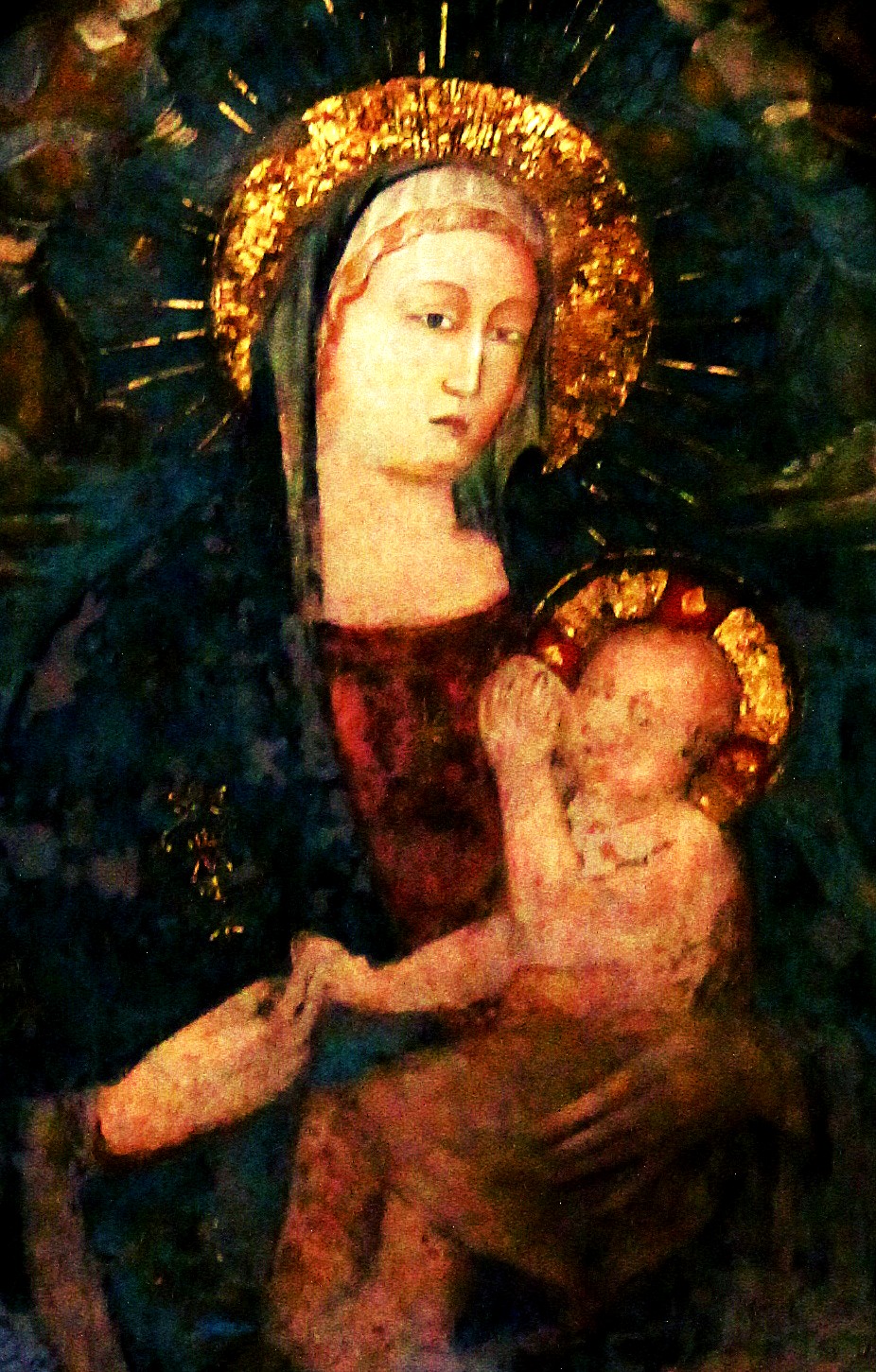

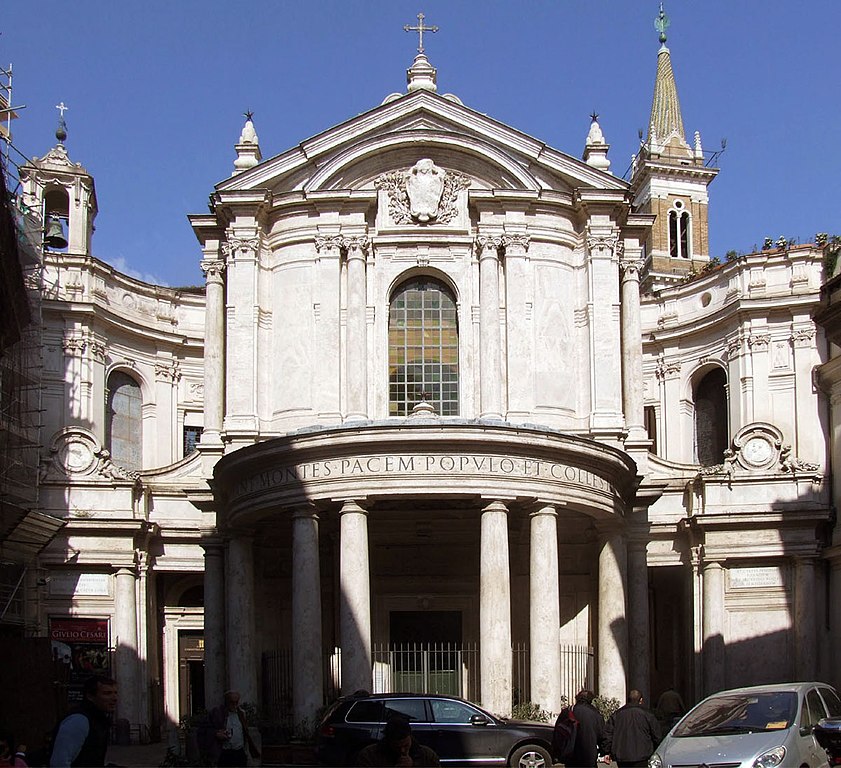

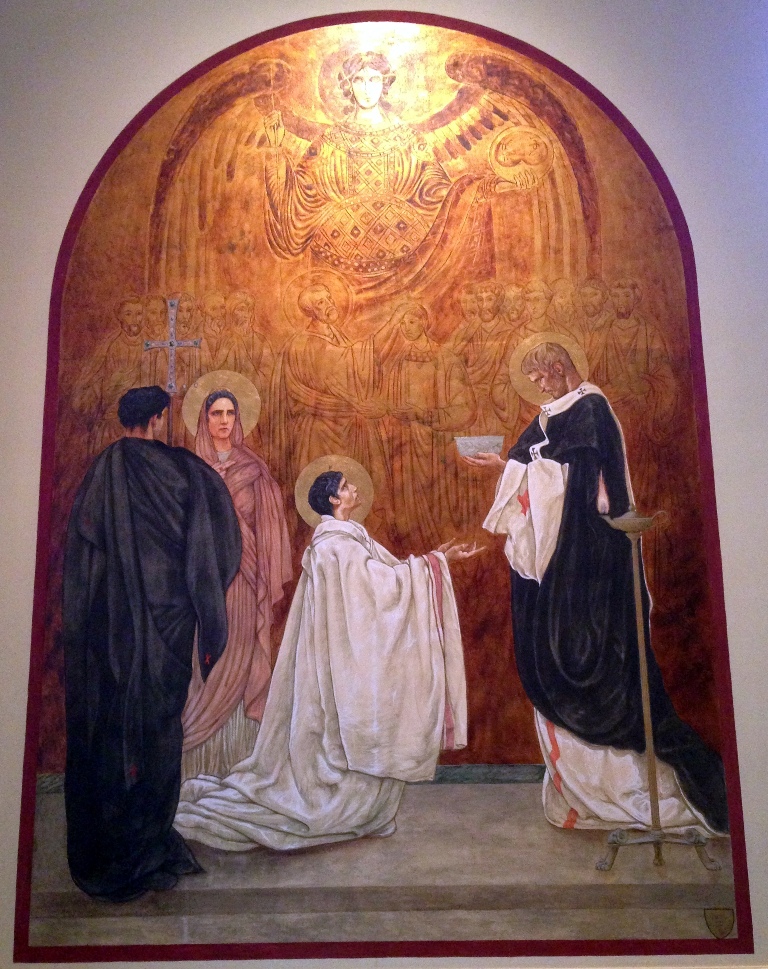
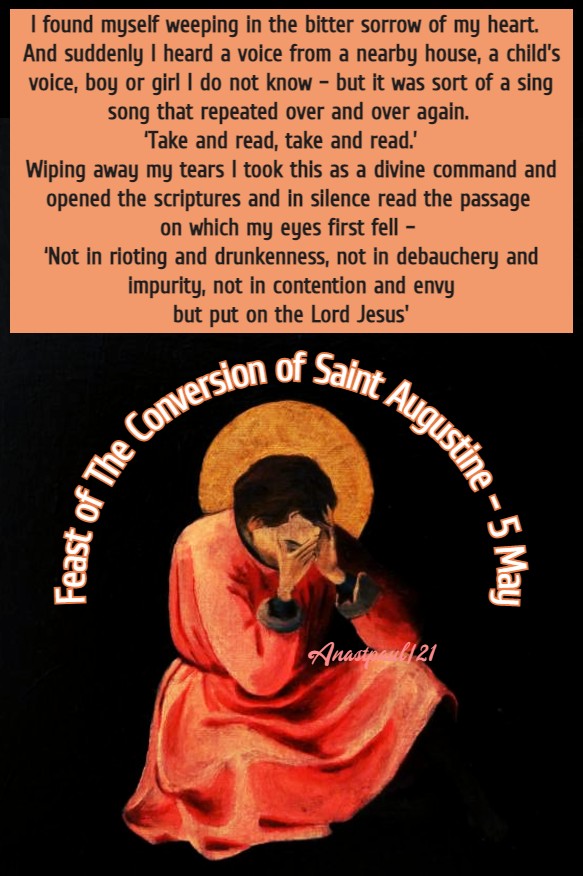

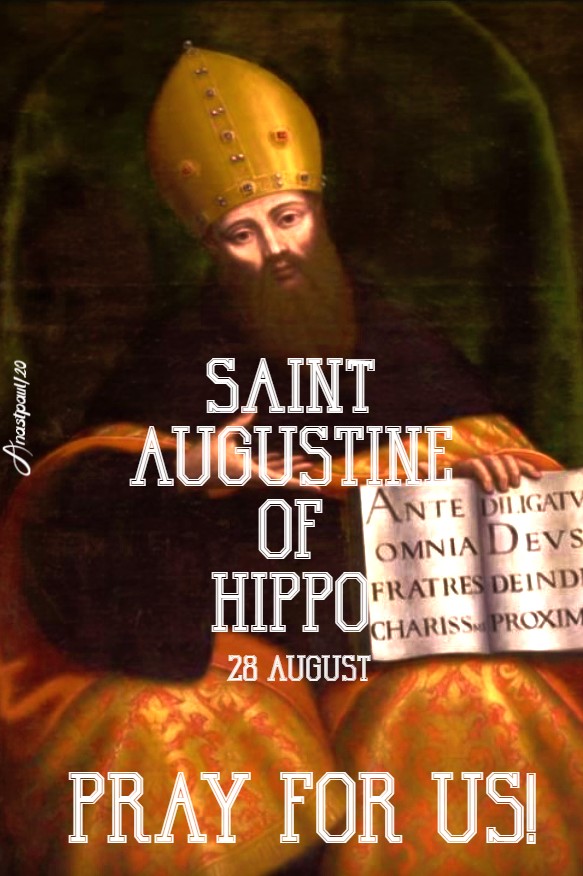
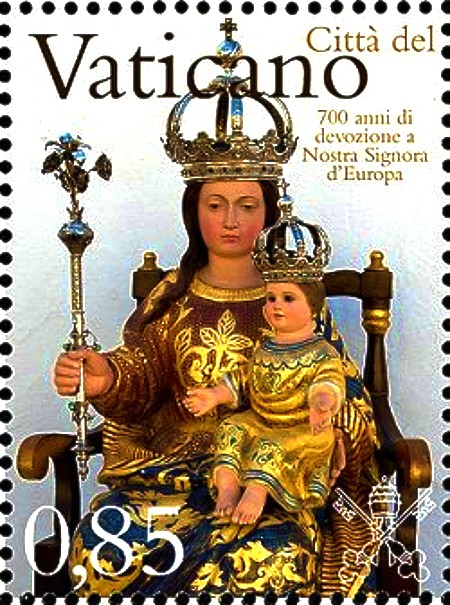

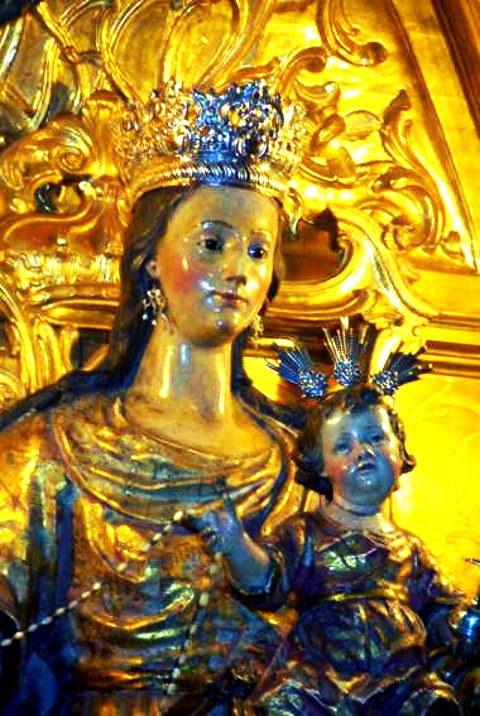

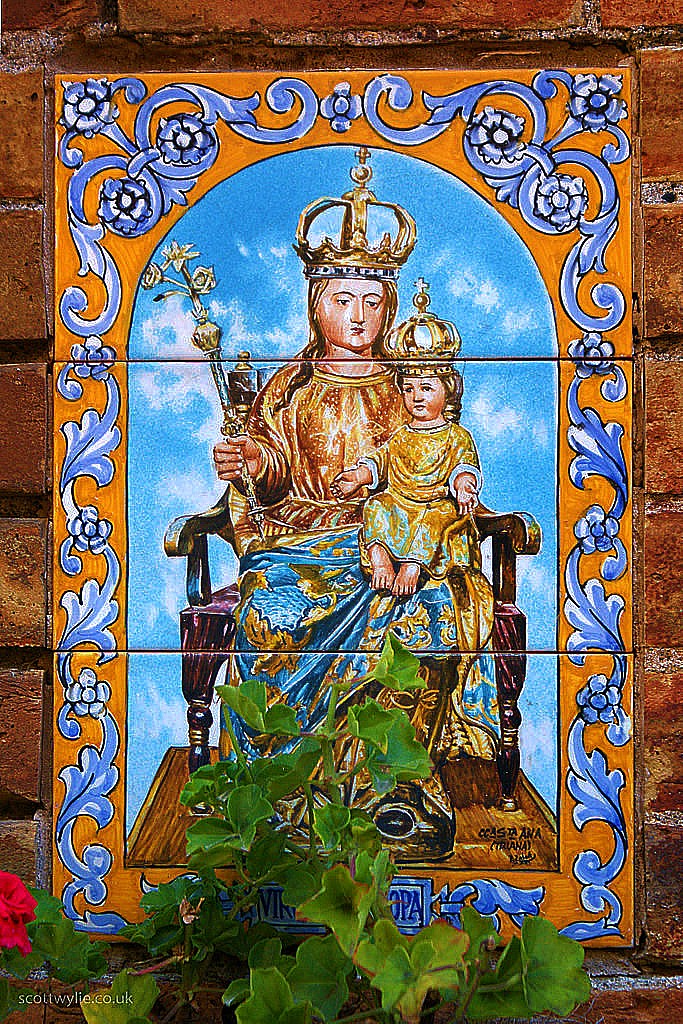


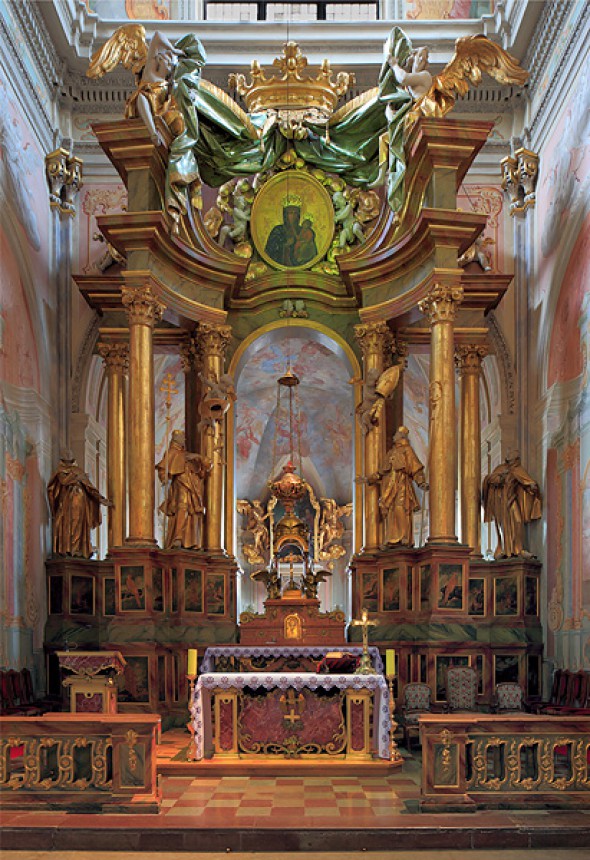
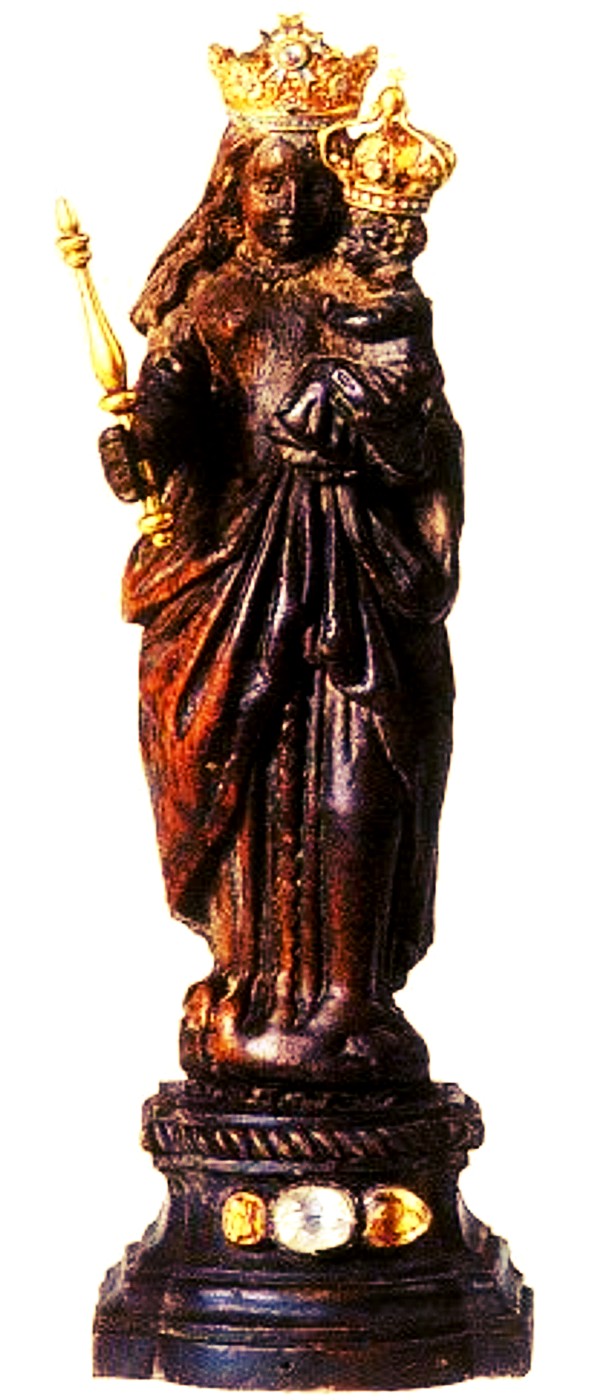

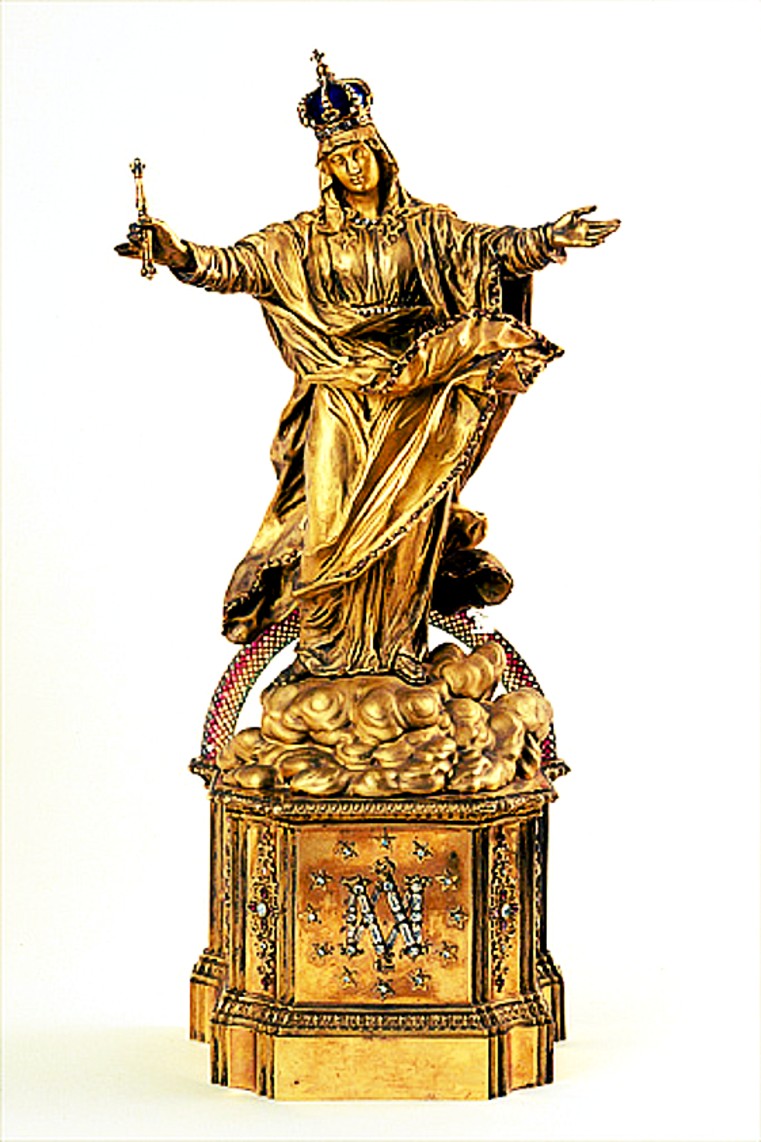


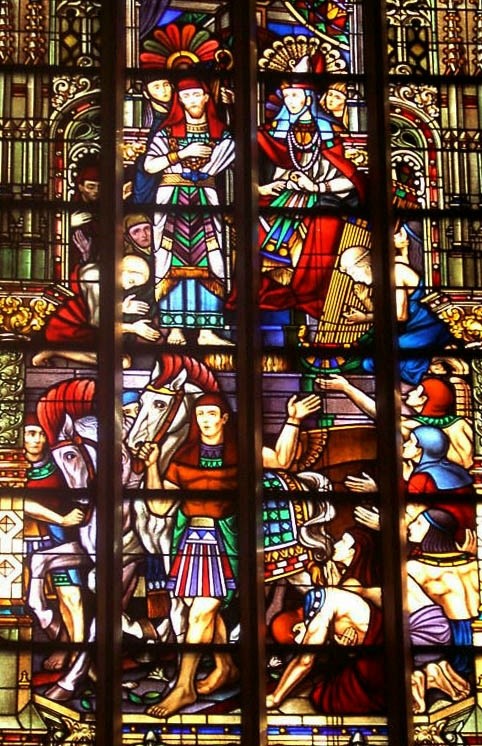
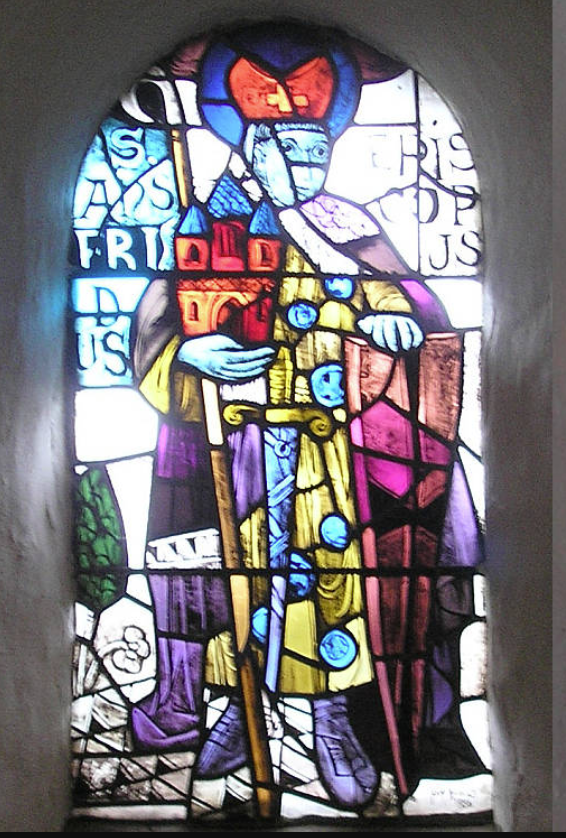
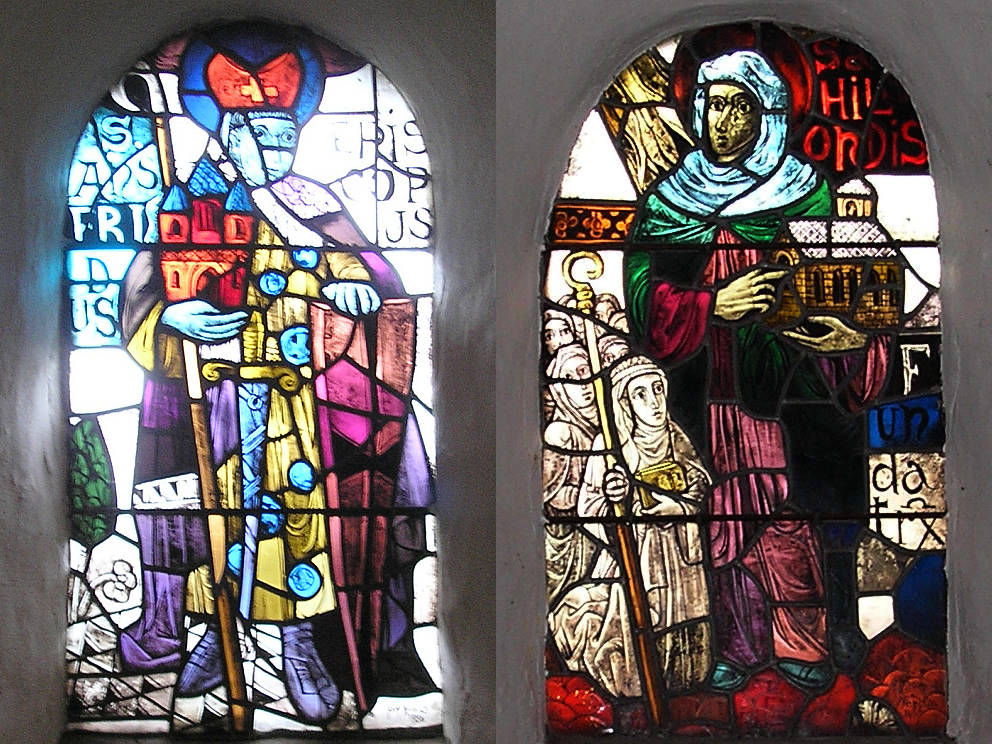

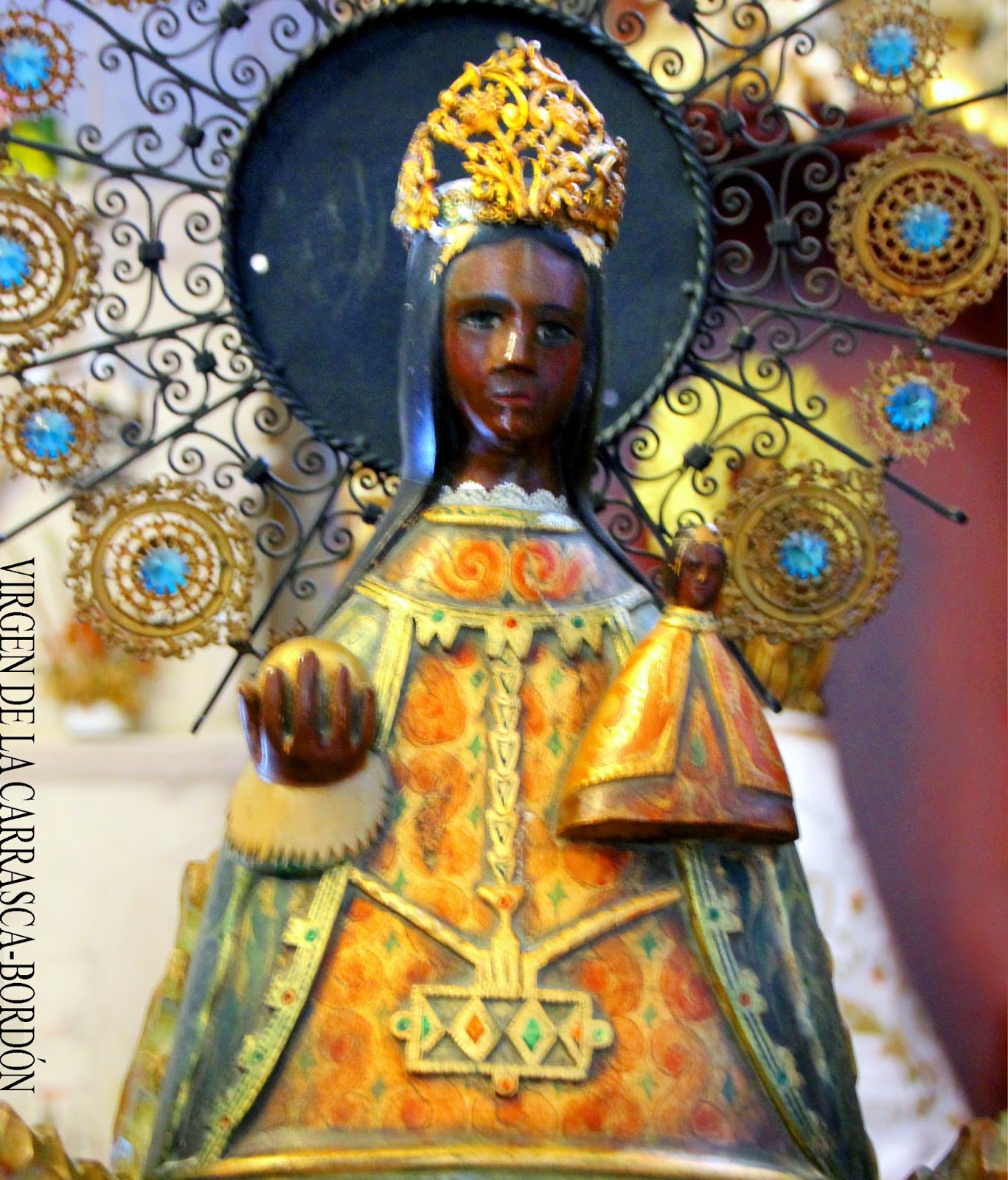
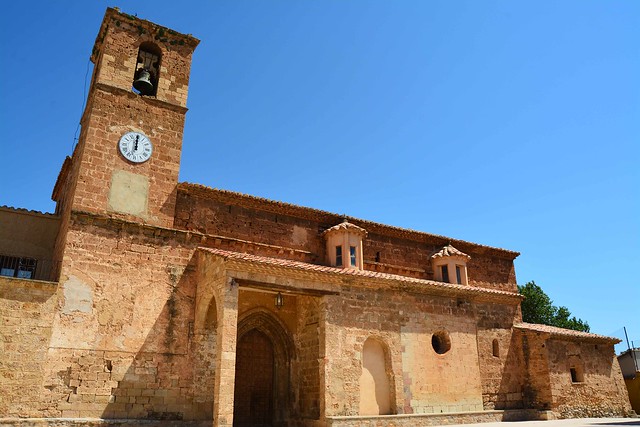


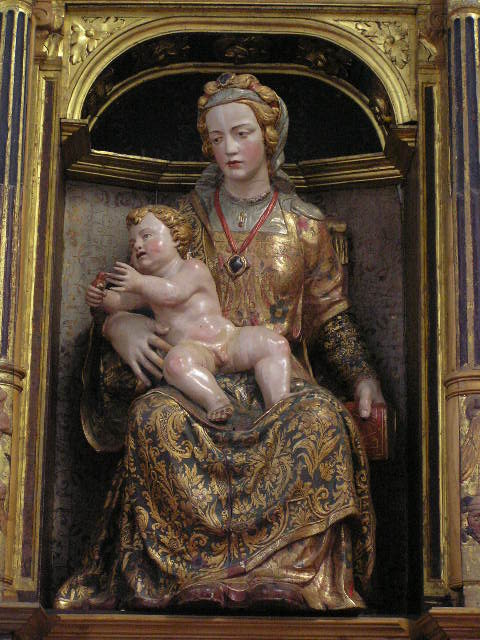
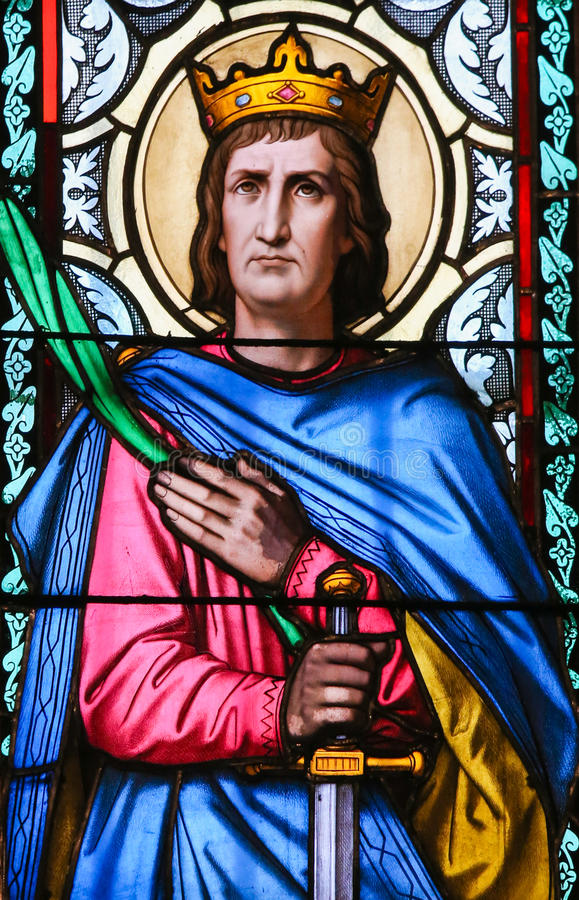
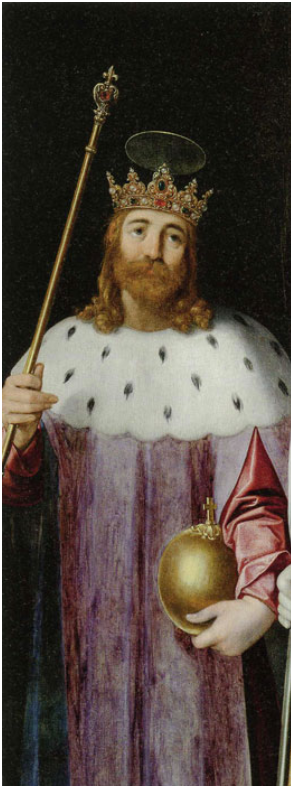
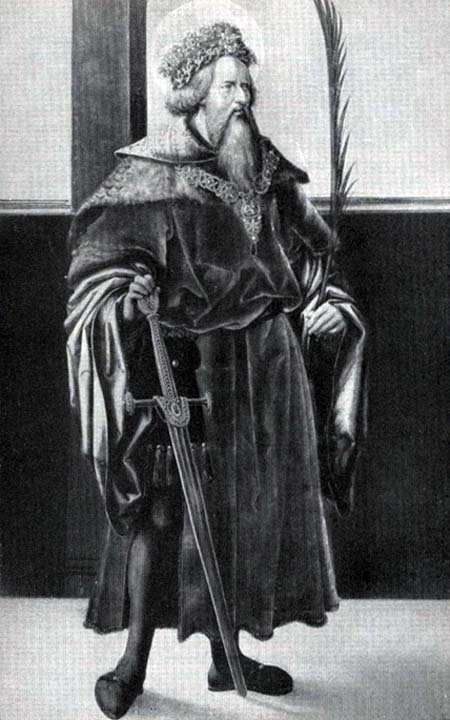
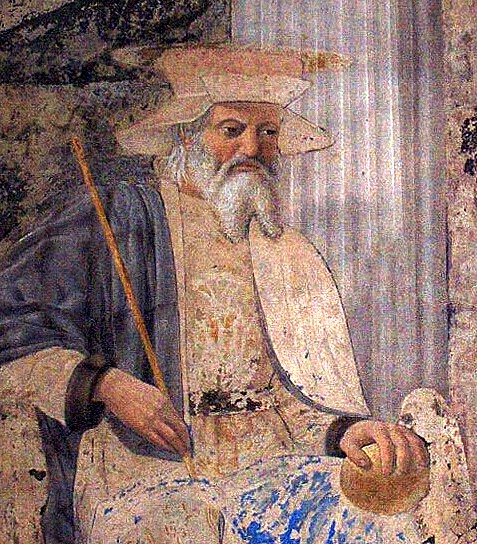
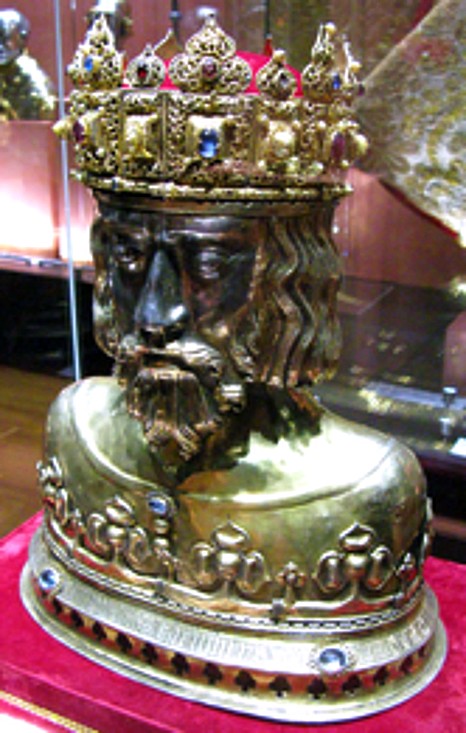

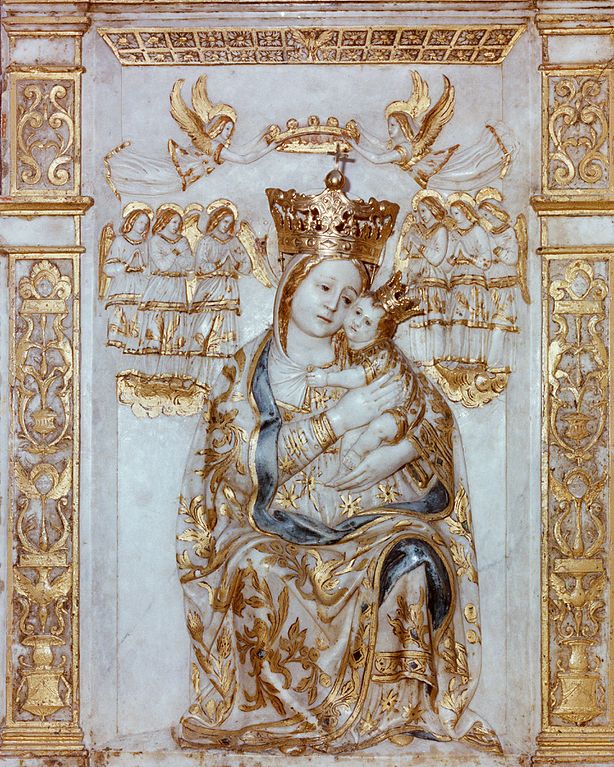
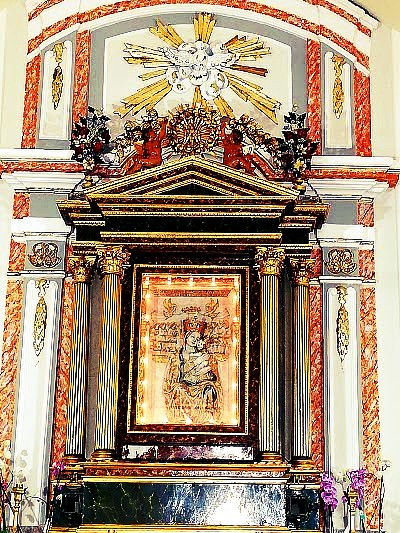
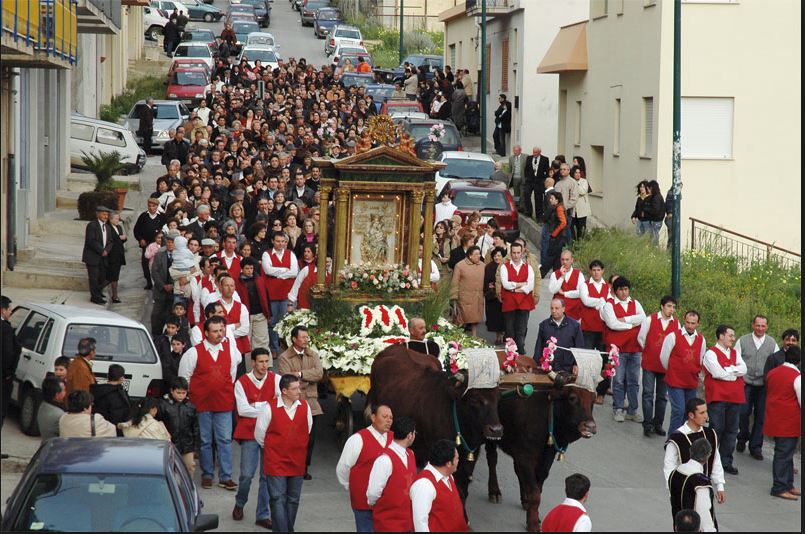

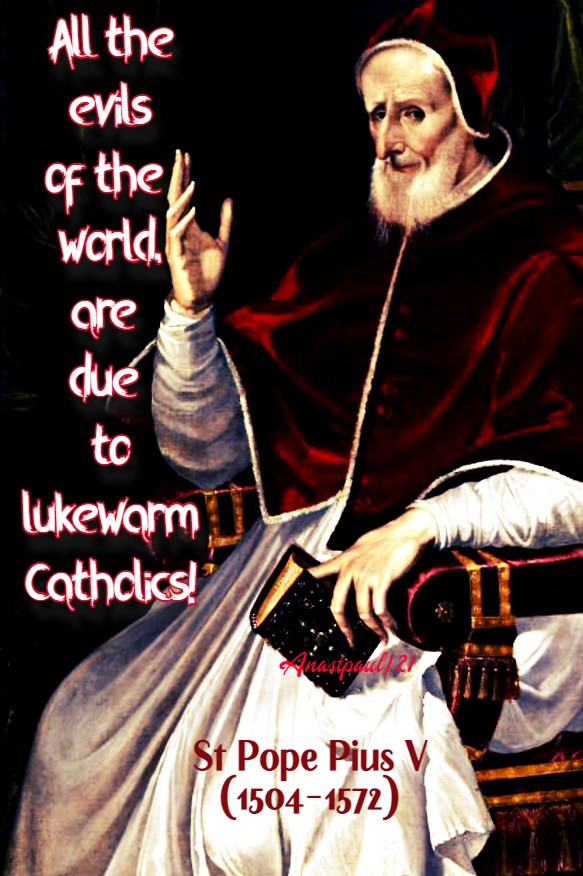
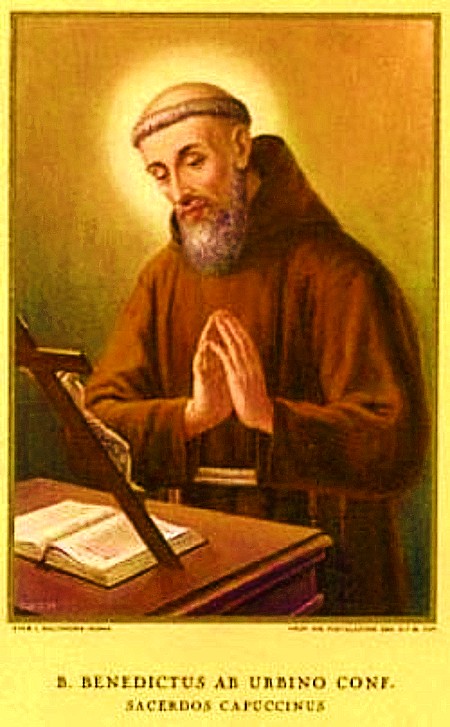
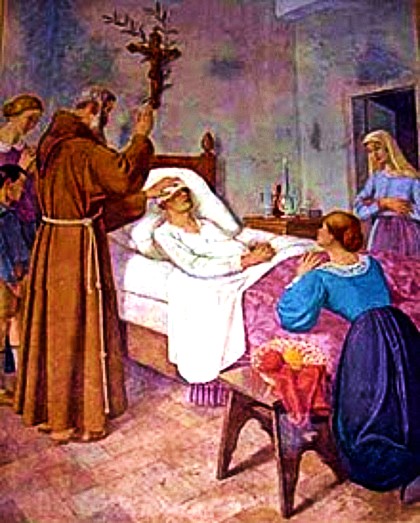

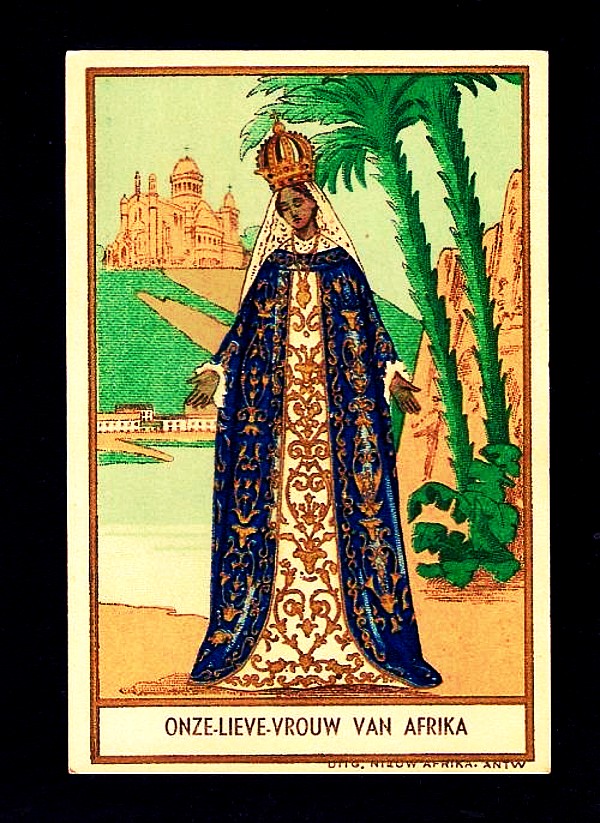
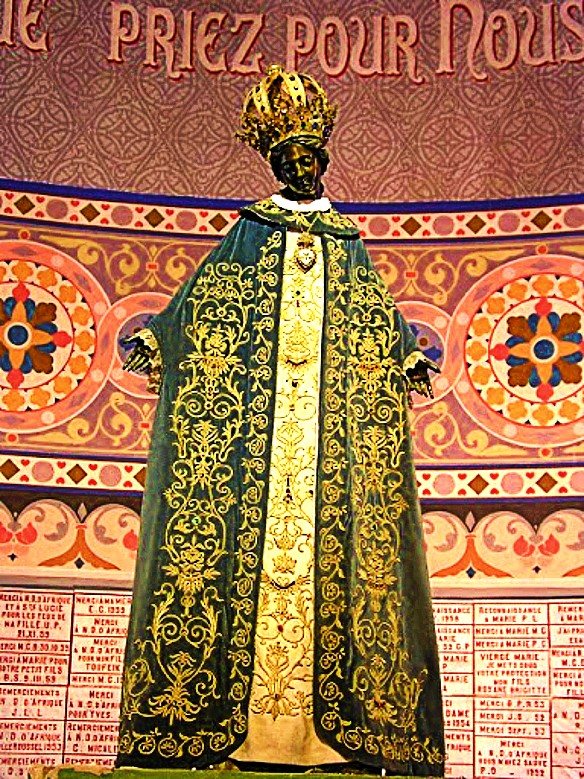


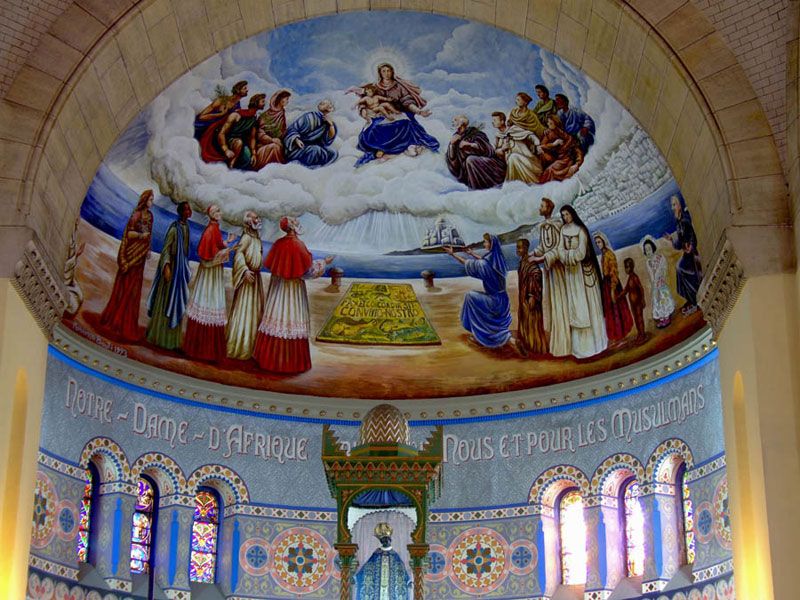


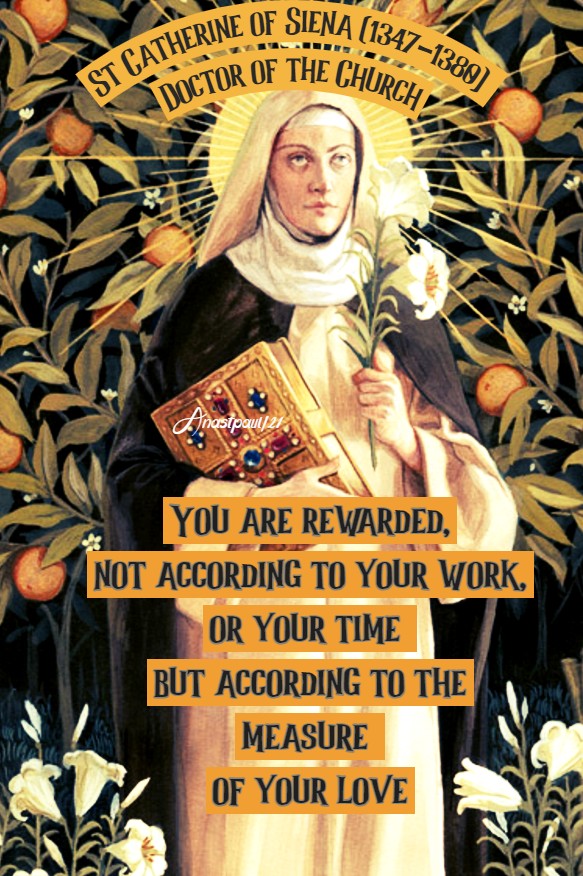
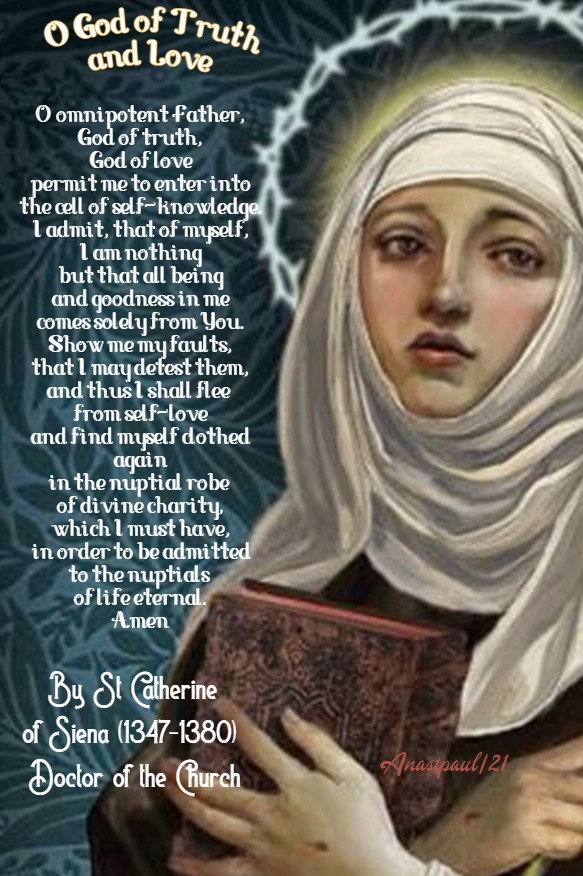
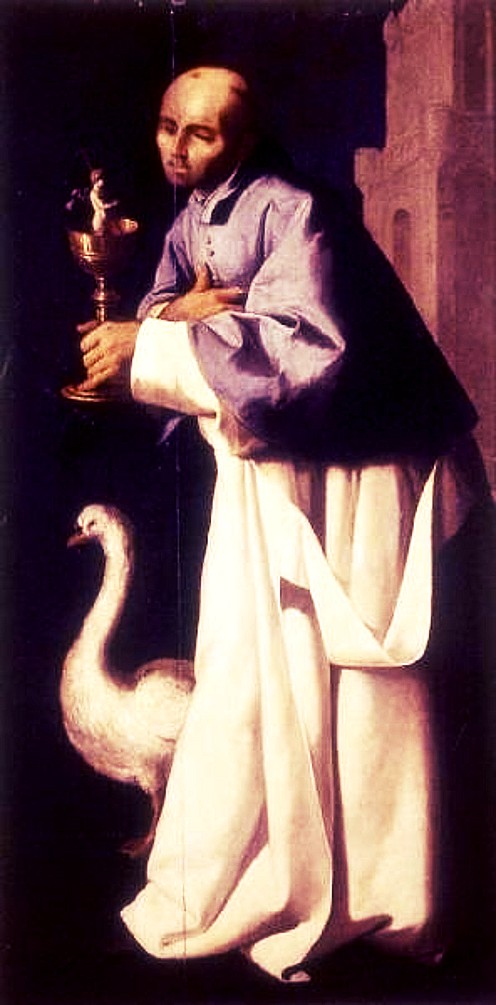
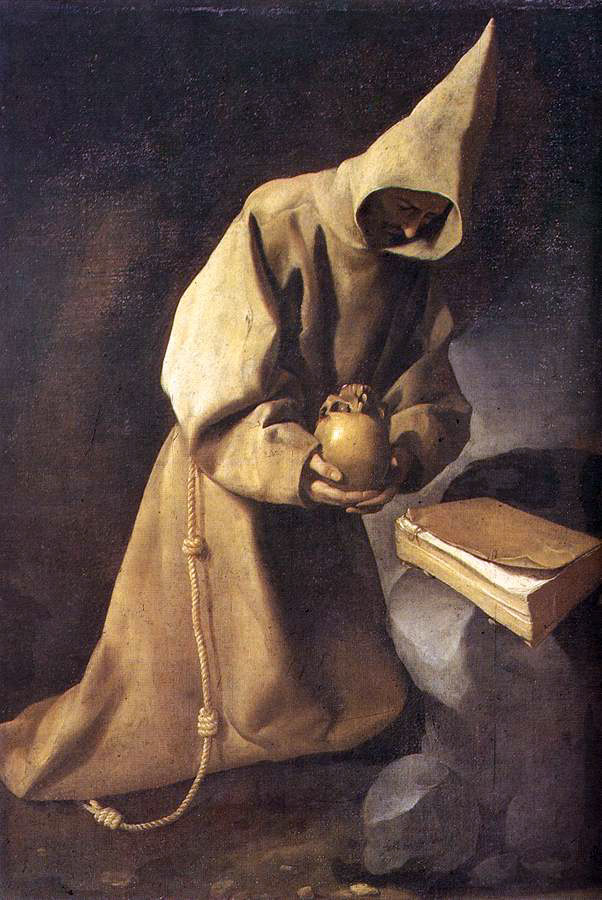
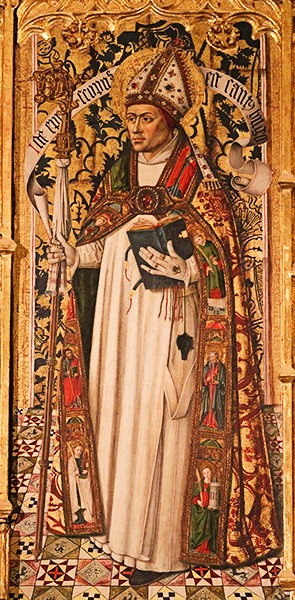
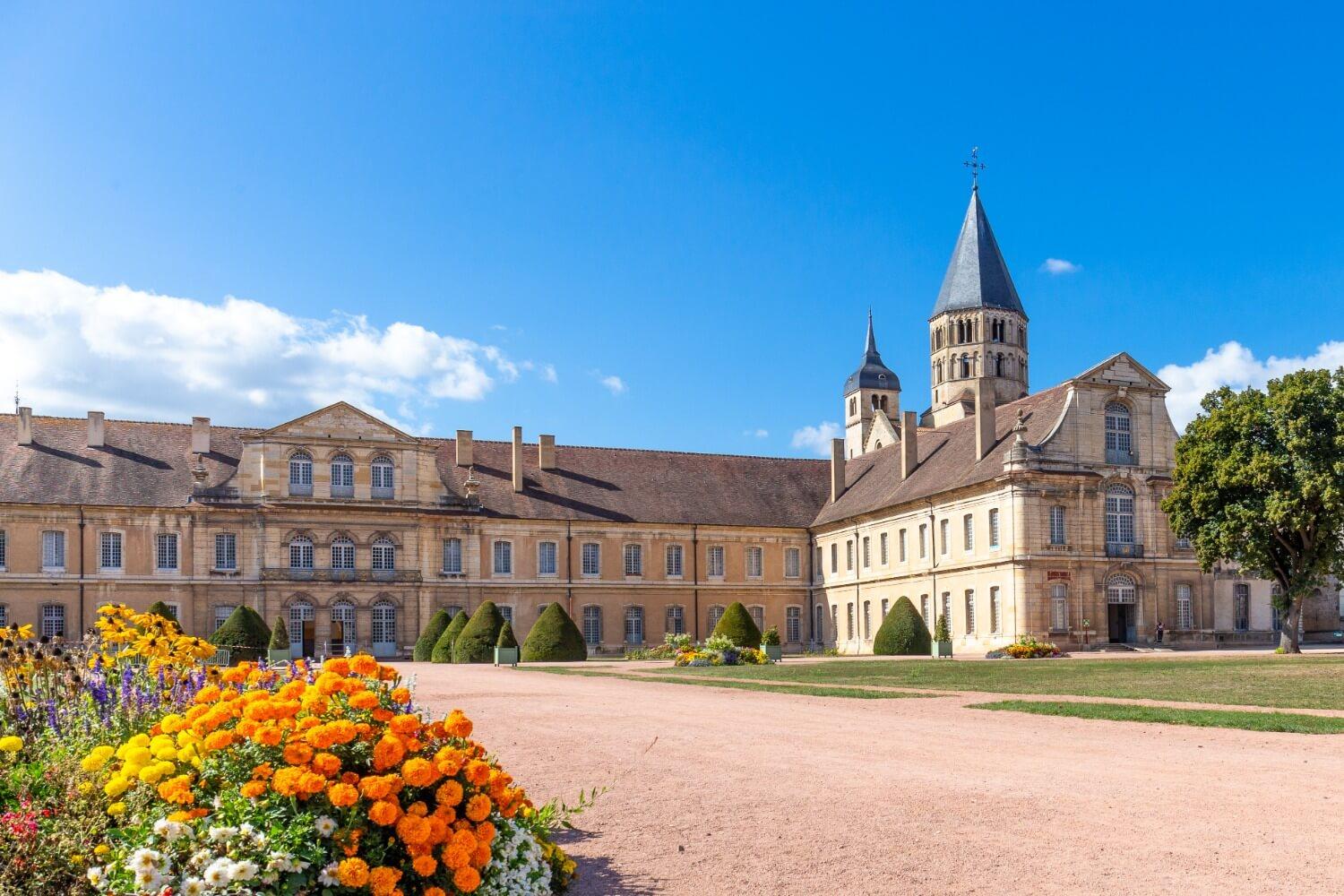
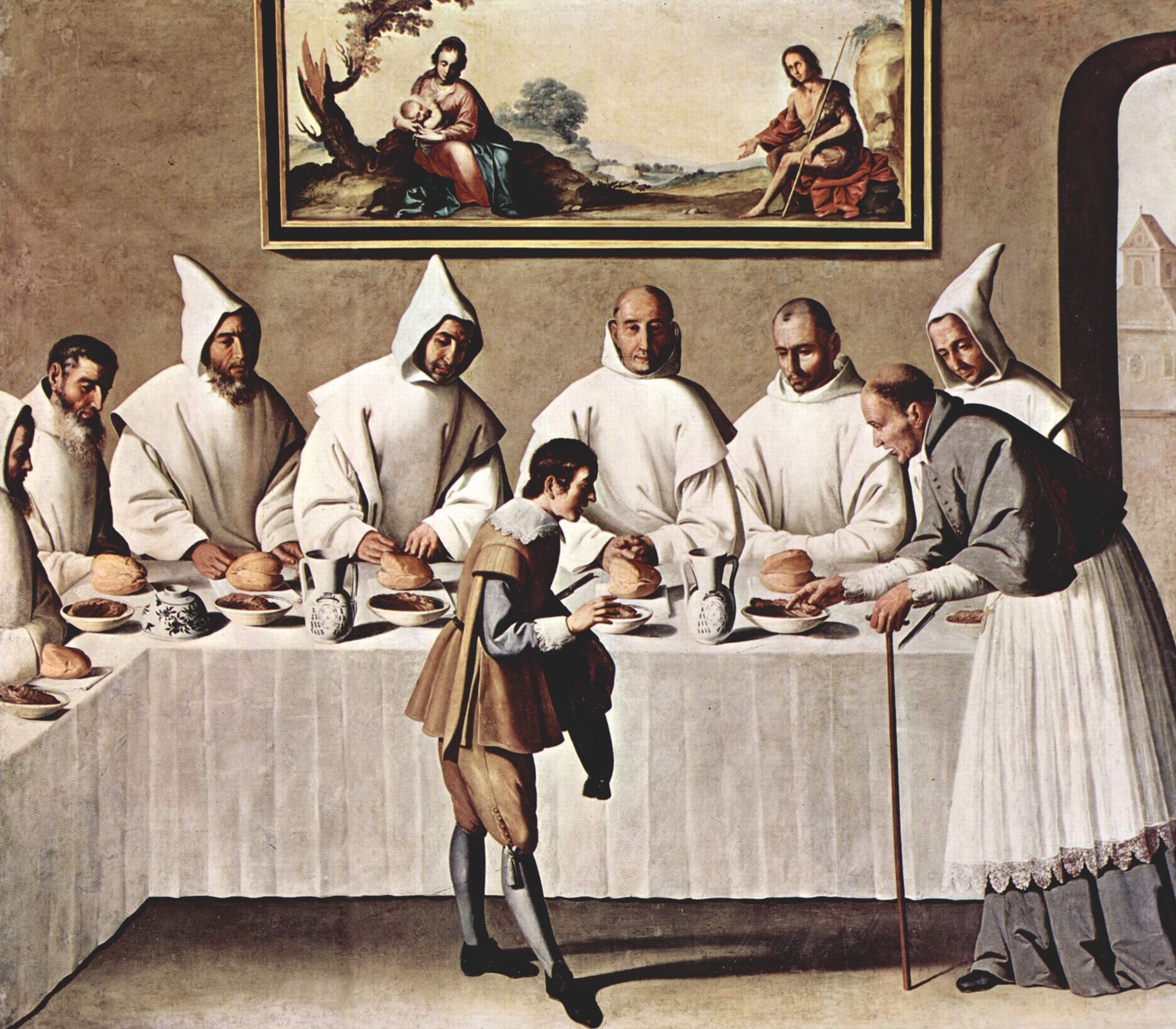
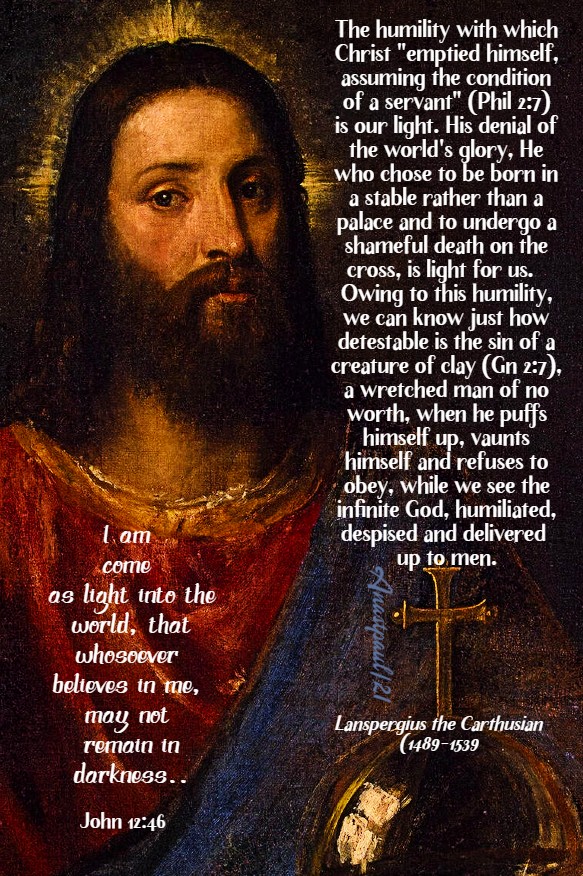
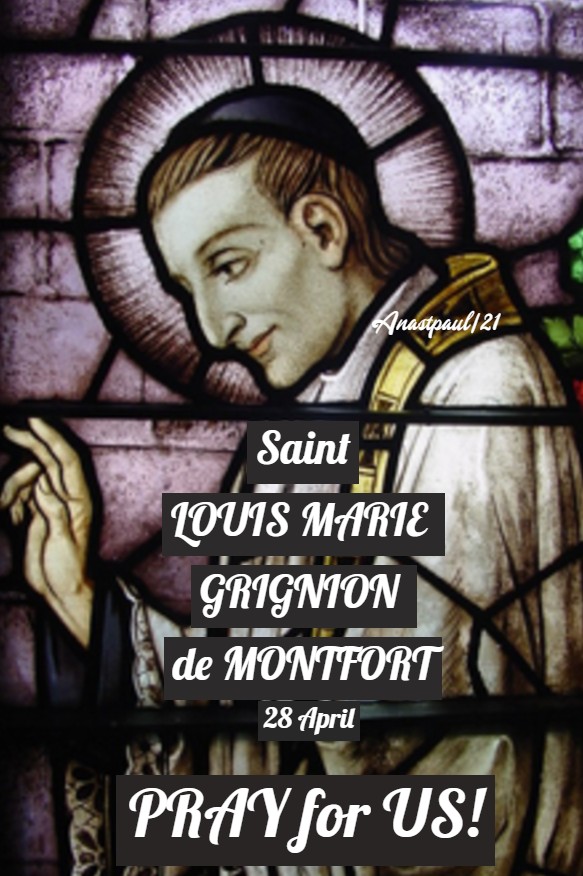
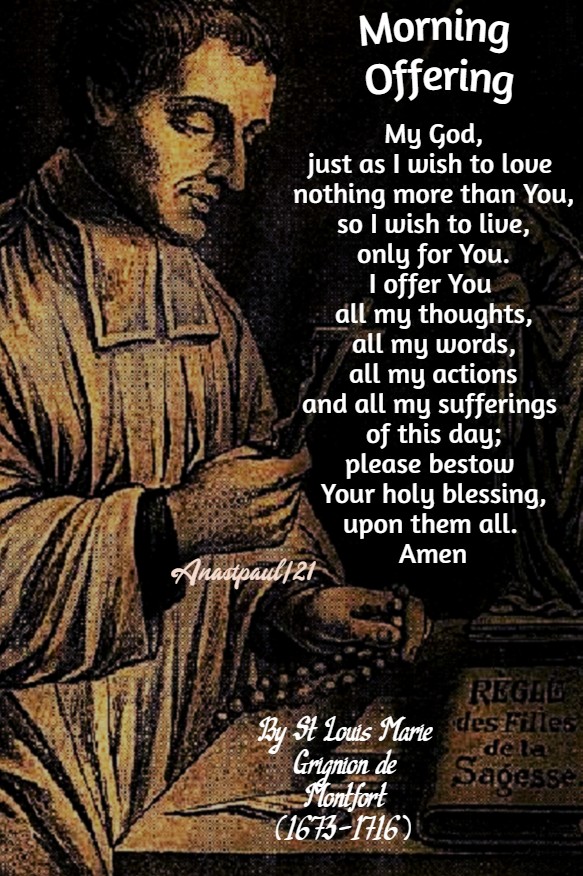
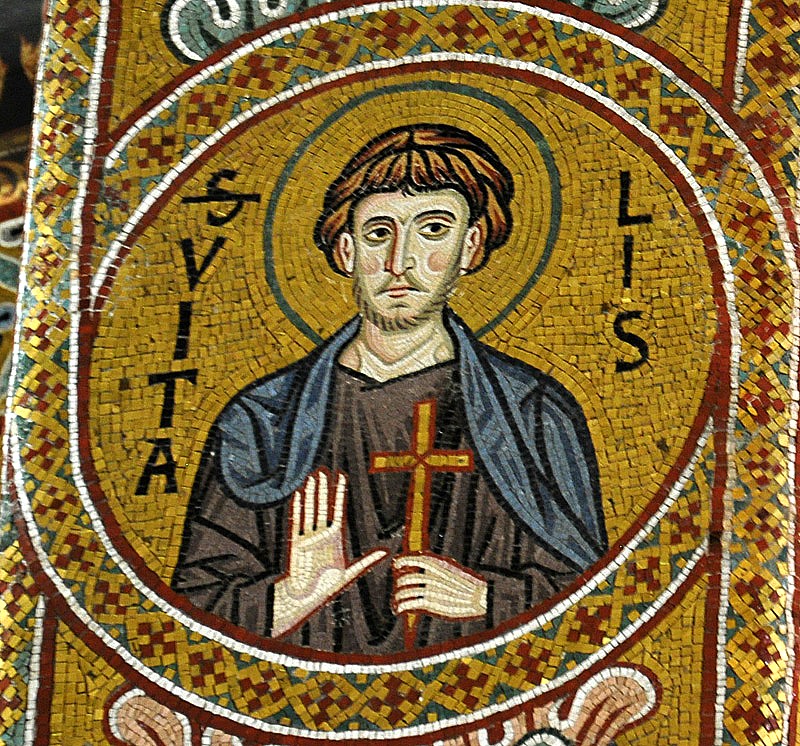
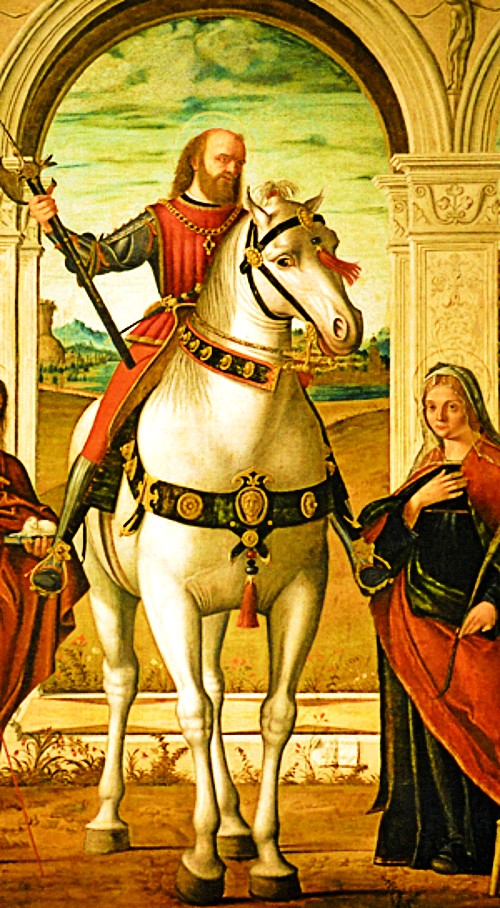
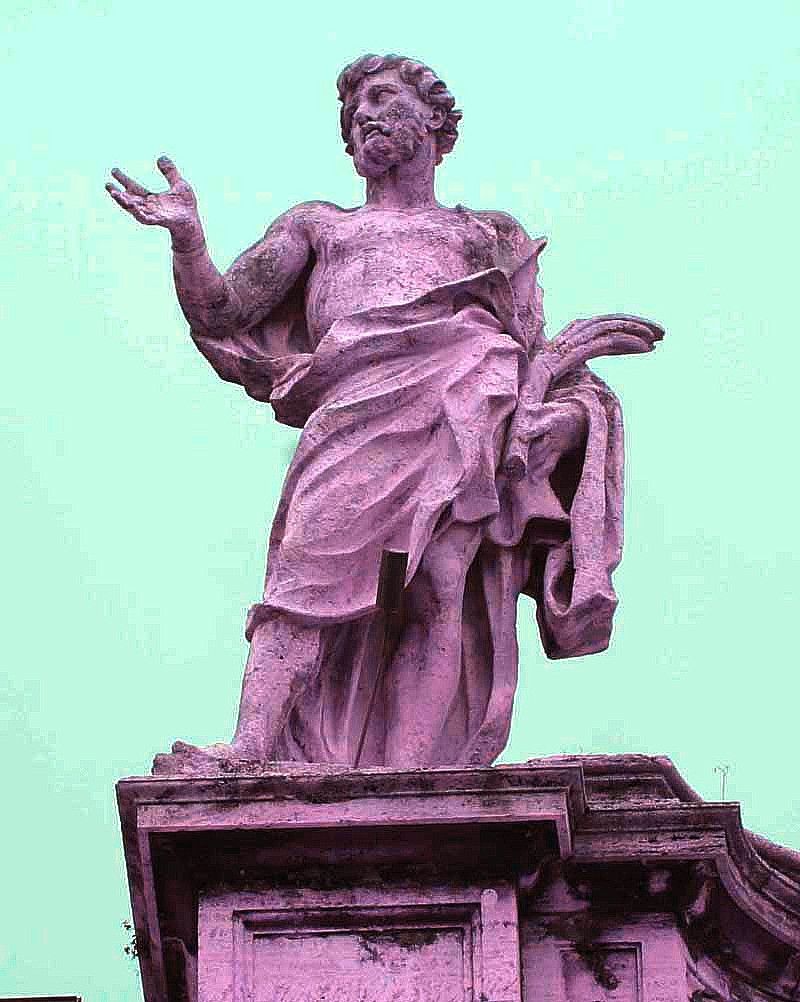
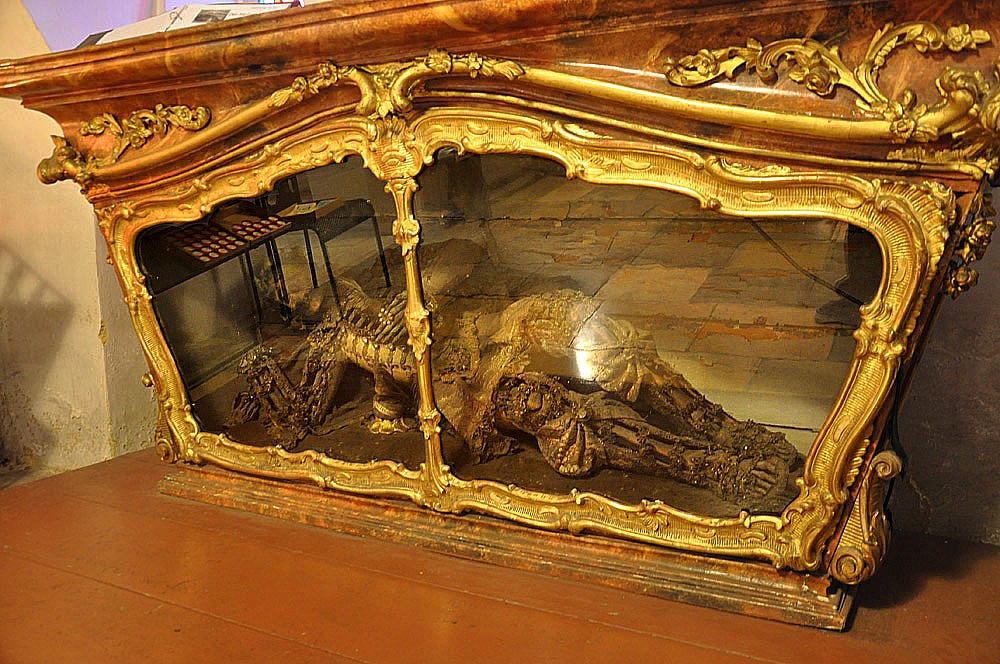
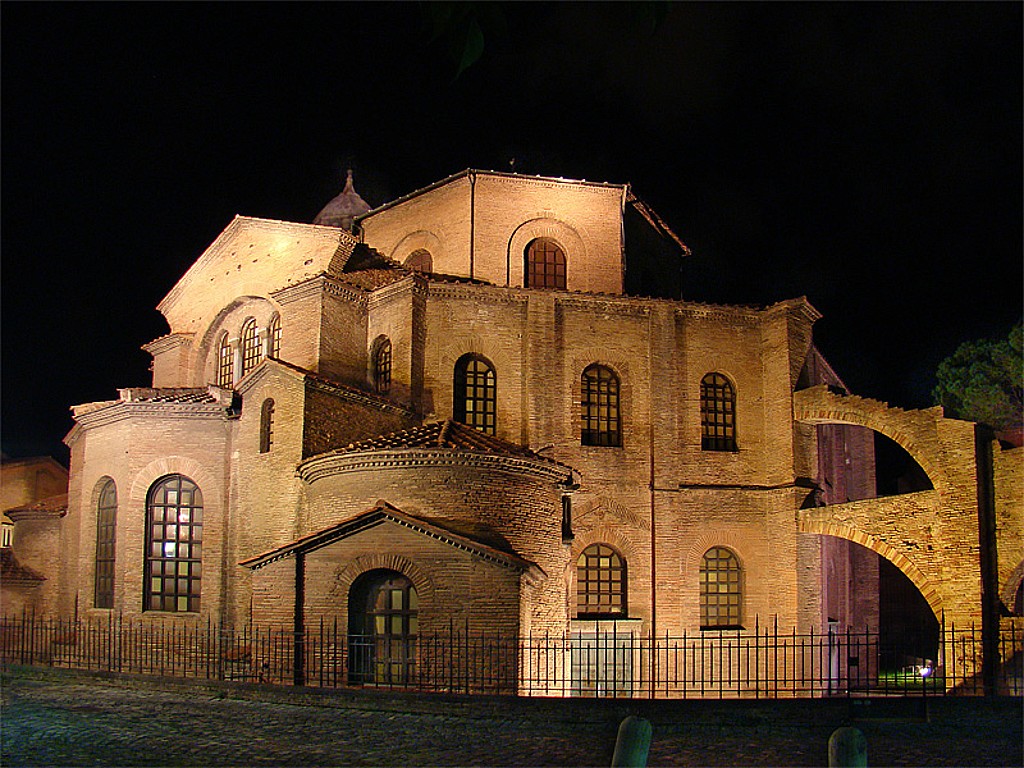
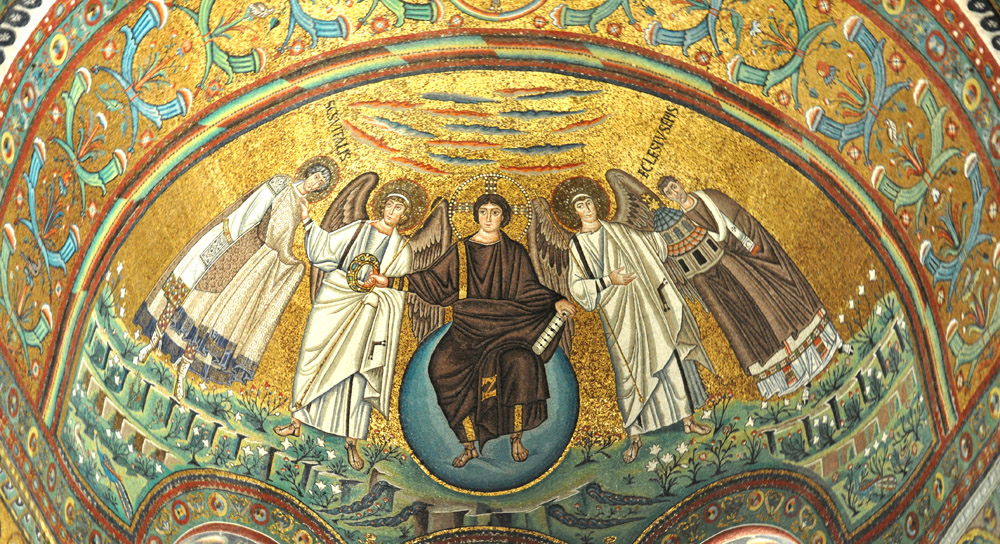

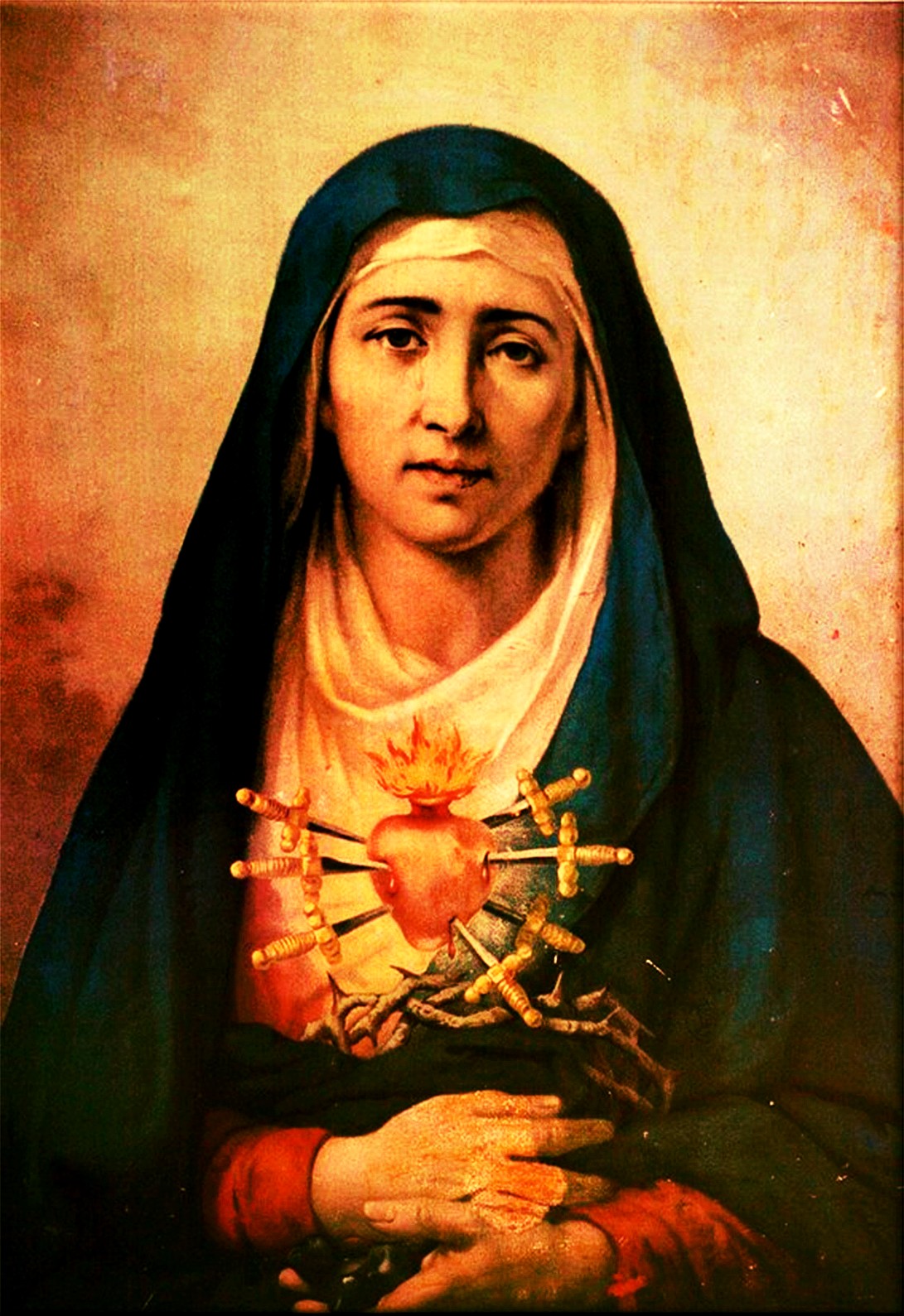
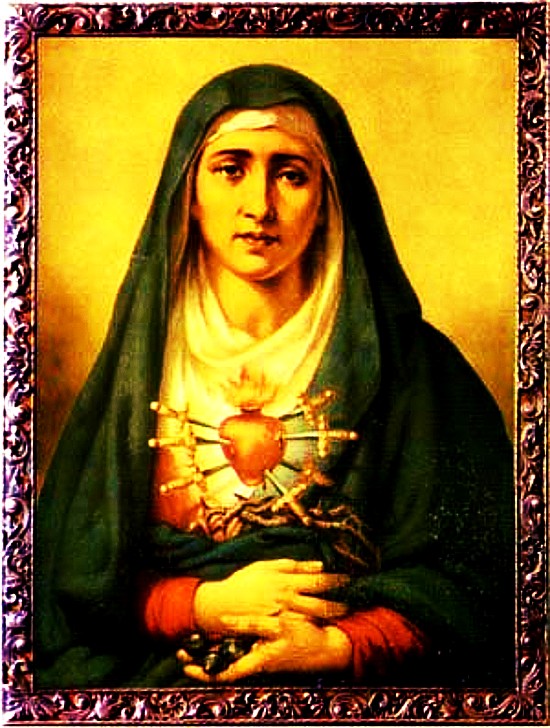
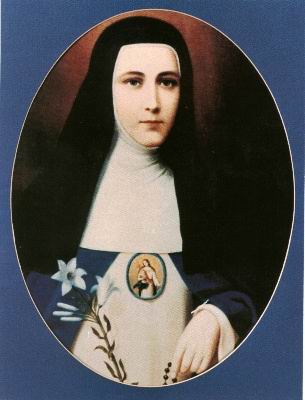
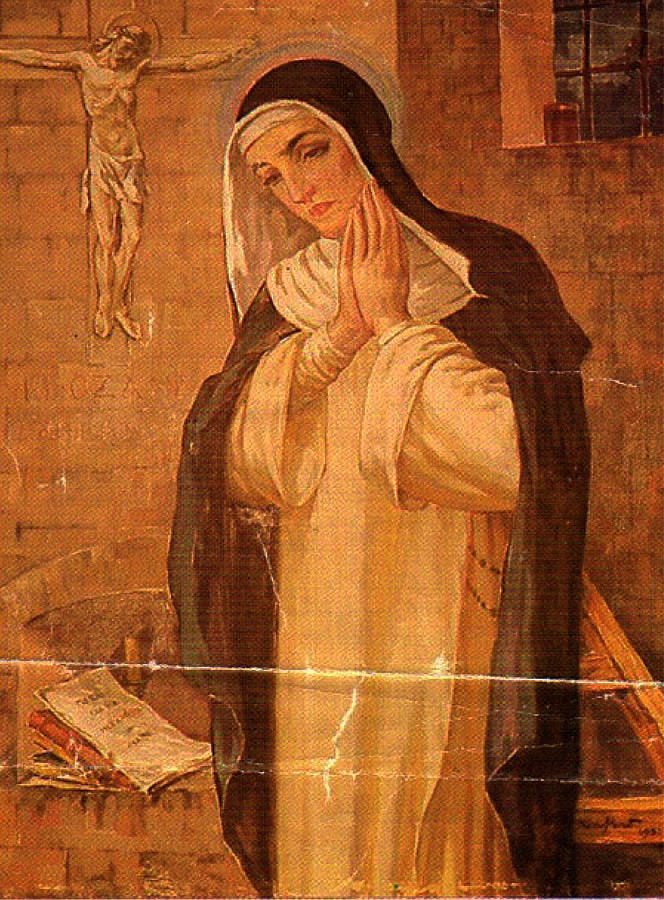
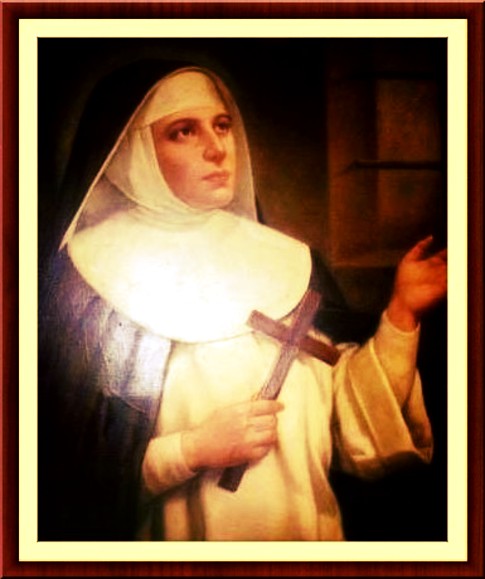

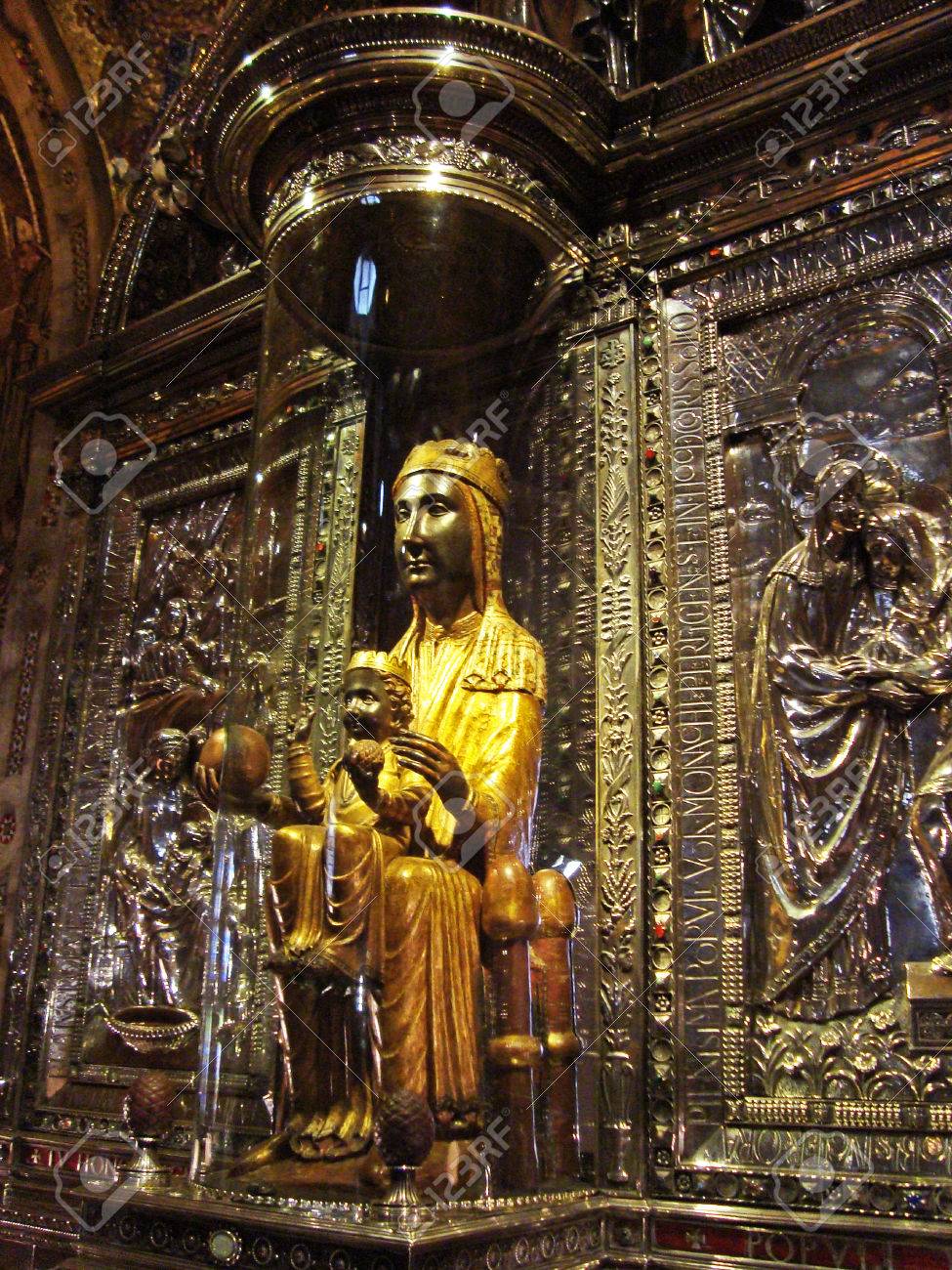


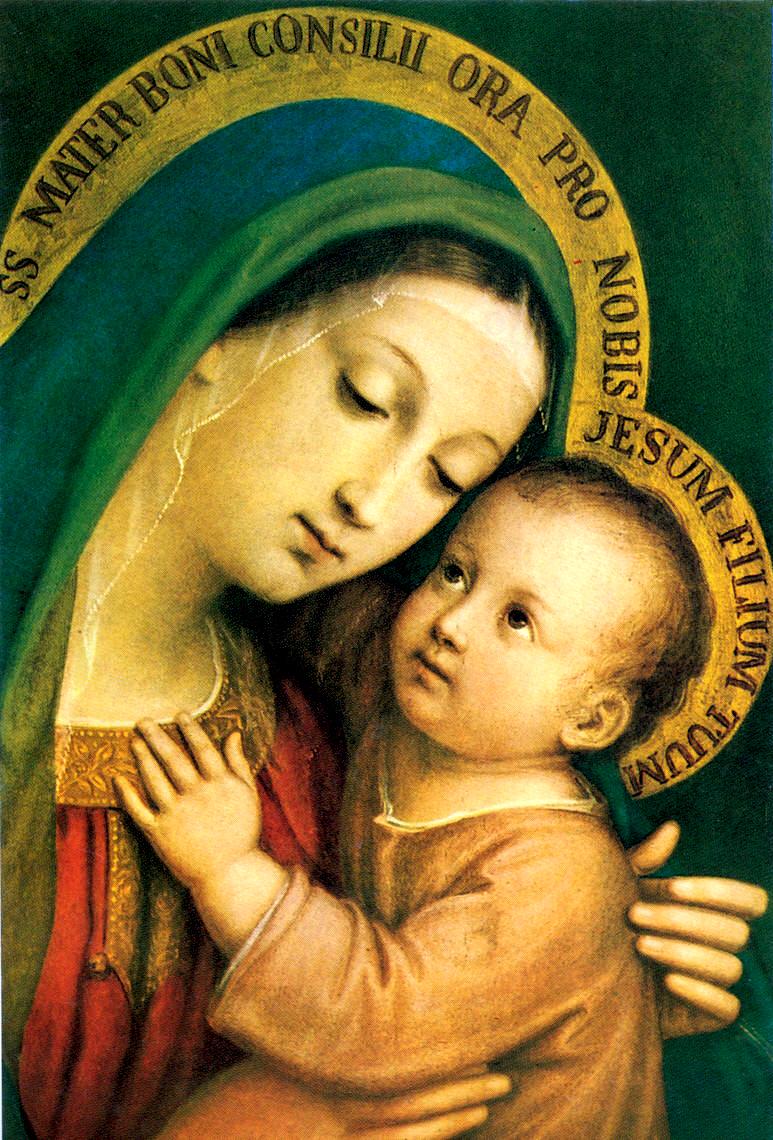


You must be logged in to post a comment.