Quote/s of the Day – 31 January – The Memorial of St John Bosco (1815-1888)
“Whatever you do, think of the Glory of God as your main goal.”
“Health is God’s great gift and we must spend it, entirely for Him. Our eyes should see only for God, our feet walk only for Him, our hands labour for Him alone; in short, our entire body should serve God while we still have the time. Then, when He shall take our health and we shall near our last day, our conscience will not reproach us for having misused it.”
“Be good! This will make your angel happy. When sorrows and misfortunes, physical or spiritual, afflict you, turn to your Guardian Angel, with strong trust and he will help you.”
“The power of evil men, lives, on the cowardice of the good!”
The Translation of the Relics of Saint Mark, the Evangelist – 31 December
The story of how Saint Mark’s relics eventually came to Venice is a remarkable one and it has been the subject of various works of art throughout the centuries. Tintoretto’s Translation of the Body of Saint Mark, a stark, dramatic painting that has the eerie feel of a photo negative, may be one of the most recognisable. Painted between 1562 and 1566 for the Scuola Grande di San Marco, the work is part of the permanent collection of the Accademia Galleries in Venice. Tintoretto himself is portrayed within the work, as the bearded man beside the camel.
Tintoretto’s Translation of the Body of Saint Mark
A companion painting, Discovery of the Body of Saint Mark, is located at the Brera Gallery in Milan.
Tintoretto’s Discovery of the Body of Saint Mark
The glittering mosaics that adorn the exterior of Saint Mark’s Basilica also tell the story, in tessellated form, of the translation of Saint Mark’s relics. For example, the mosaic located above the left doorway (the Door of Saint Alypius) of the west facade depicts Saint Mark’s body being carried into the basilica. The mosaic, known as the Deposition mosaic, is the oldest exterior mosaic on the Basilica and dates to 1260-1270.
According to legend, Saint Mark’s body was taken from Alexandria, Egypt, in 828. Two Venetian merchants travelling in Alexandria, obtained the relics of Saint Mark from Priests at the church of Saint Mark, where the saint’s body was interred. The Priests feared Saint Mark’s relics might be damaged or destroyed by the Saracens during the persecution of the Catholic community in Alexandria. Promising to safeguard the Saint’s relics, the merchants convinced the Priests to allow them to return to Venice with the body of Saint Mark. “The body of Saint Mark was taken out of the sarcophagus and unwrapped from its silk shroud, the relic being substituted by another and less eminent Saint. It was then placed in a chest and taken on board the Venetian ship, the merchants first ensuring, that the Saint’s remains were covered by a layer of pork and cabbage. When the Muslim officials asked to inspect the chest, they cried out ‘Kanzir, kanzir’ (Oh horror) at the sight and smell of the pork. . . . Thus the Evangelist was safely conveyed to Venice but not before a number of miracles eased his passage across the Mediterranean.”
The cargo investigated
Saint Mark’s body was initially kept in a Chapel at the Doge’s palace, a Chapel originally dedicated to Saint Theodore, until a more suitable Church could be built. Begun in 829, the year after the translation of Saint Mark’s relics, the first Church of Saint Mark was completed in 832. This Church was destroyed in 976 during a rebellion against Doge Pietro Candiano IV. And so St Mark’s Basilica was built to house the remains. Unfortunately, two hundred years later, the unthinkable happened, the authorities forgot where they had put them. Various excuses have emerged, all rather contradictory; there had been a fire, there was building work at the Basilica, the people who knew the location died suddenly without passing on the secret. All of Venice despaired but St Mark himself came to the rescue – his arm suddenly appeared from a pillar, no doubt accompanied by a shout of ‘I’m over here!’ The Basilica was completed in 1063 but was only Consecrated in 1094 now that St Mark was found.
Paolo Veneziano: The discovery of the relics of St Mark’s Basilica
In 1835, Giacomo Monico, Patriarch of Venice, exhumed the body of Saint Mark from the Crypt beneath the Basilica and placed it in the high Altar. Before then, the Saint’s body had apparently last been seen in the 12th century, dressed in ecclesiastical robes, when it was placed on display for five months for public veneration.
In 1075, the Doge passed a law requiring all returning ships to bring back something precious to decorate the Basilica, accounting for the more than 500 columns of rare marble, porphyry, alabaster and jasper brought back from the East. The interior is clad with 4,240 square meters of gold mosaics, mostly from the 12th and 13th centuries.
Between 1500 and 1750, some of the old sections were replaced by “modern” mosaics designed by artists including Titian and Tintoretto. The presence of St Mark, the mosaics, golden altar, beautiful chapels and treasury make St Mark’s one of Italy’s best-loved Churches.
Saint Mark’s simple, marble Sarcophagus can only be viewed from behind the high Altar. The exterior of the Sarcophagus is well lit and a short inscription applied to the stone in metallic letters read: “SALUTAT VOS . . . MARCUS FILIUS MEUS.” This inscription was followed by a citation in much smaller letters below the word “MEUS.” The citation read “1 Petri 5.13,” the source of the abbreviated quote on the tomb. The front of the Sarcophagus proclaims “CORPUS DIVI MARCI EVANGELISTAE” (Body of the Divine Mark, Evangelist). Red roses are often placed on top of the Sarcophagus.
Fourth Sunday in Ordinary Time +2020 Septuagesima Sunday (Traditional Calendar): The word Septuagesima is Latin for “seventieth.” It is both the name of the liturgical season and the name of the Sunday. Septuagesima Sunday marks the beginning of the shortest liturgical season. This season is seventeen (17) days long and includes the three Sundays before Ash Wednesday. The length of the season never changes but the start date is dependent on the movable date of Easter, which can fall between 22 March-25 April. Septuagesima Sunday can be as early as 18 January. The Septuagesima season helps the faithful ease into Lent. It is a gradual preparation for the serious time of penance and sorrow; to remind the sinner of the grievousness of his errors and to exhort him to penance. Liturgically it looks very much like Lent. The Gloria and Alleluia are omitted, the tone becomes penitential with the Priest wearing purple vestments. The main difference is that there are no fasting requirements.
Apparition of Our Lady to Saint Angela de Foligno (1285) – 31 January: Angela of Foligno was born in 1248 of a prominent family in Foligno, three leagues from Assisi. As a young woman and also as a wife and mother, she lived only for the world and its vain pleasures. But the grace of God intended to make of her, a vessel of election, for the comfort and salvation of many. A ray of the divine mercy touched her soul and so strongly affected her, as to bring about a conversion. At the command of her confessor, Angela of Foligno committed to writing the manner of her conversion in eighteen spiritual steps. “Enlightened by grace,” Blessed Angela of Foligno wrote in this account. “I realised my sinfulness; I was seized with a great fear of being damned and I shed a flood of tears. I went to confession to be relieved of my sins but through shame I concealed the most grievous ones but still I went to Communion. Now my conscience tortured me day and night. I called upon St Francis for help and, moved by an inner impulse, I went into a church where a Franciscan Father was then preaching.” (It is reported that in the year 1285 she had a vision of both the Blessed Virgin Mary and Saint Francis of Assisi, who called her to penance.) “I gathered courage to confess all my sins to him and I did this immediately after the sermon. With zeal and perseverance, I performed the penance he imposed but my heart continued to be full of bitterness and shame. I recognised that the divine mercy has saved me from hell, hence I resolved to do rigorous penance; nothing seemed too difficult for me because I felt I belonged in hell. I called upon the saints and especially upon the Blessed Virgin, to intercede with God for me.
It appeared to me now as if they had compassion on me and I felt the fire of divine love enkindled within me, so that I could pray as I never prayed before. I had also received a special grace to contemplate the Cross in which Christ had suffered so much for my sins. Sorrow, love and the desire to sacrifice everything for Him filled my soul.”
About this time God harkened to the earnest desire of the penitent – her mother died, then her husband and soon afterwards, all her children. These tragic events were very painful to her but she made the sacrifice with resignation to the will of God. Being freed from these ties, she dispossessed herself of all her temporal goods with the consent of her confessor, a Franciscan friar named Arnoldo, so that being poor herself, she might walk in the footsteps of her poor Saviour. It was to Arnoldo that she dictated her account of her conversion, now known as the ‘Memoriale,’ or the ‘Book of Visions and Instructions.’ She also entered the Third Order of St Francis and presently found herself the superior and guide of other,s who followed in her path. Many women joined her, even to the point of taking the three vows. She encouraged them in works of charity, in nursing the sick and in going personally from door to door to beg for the needs of the poor. Meanwhile, Angela became still more immersed in the contemplation of the Passion of Christ and she chose the Sorrowful Mother and the faithful disciple John as her patrons. The sight of the wounds which her Lord suffered for her sins, urged her to the practice of still greater austerities. Once Our Lord showed her that His Heart is a safe refuge in all the storms of life. She was soon to be in need of such a refuge. God permitted her to be afflicted with severe temptations. The most horrible and loathsome representations distressed her soul. The fire of concupiscence raged so furiously that she said: “I would rather have beheld myself surrounded with flames and permitted myself to be continually roasted, than to endure such things.” Still, she called out to God, “Glory be to Thee, O Lord! Thy cross is my resting place.” These painful trials lasted over two years but then, the purified and tried servant of the Lord, was filled with great consolation. She obtained a marvellous insight into divine things and was very frequently found in ecstasy. For a time she had the stigmata and for many years Holy Communion was her only food, until at last, completely purified, she entered into the eternal joy of the Supreme Good on 4 January 1310. Pope Innocent XII approved the continual devotion paid to her at her tomb in Foligno, where many miracles were attributed to her. He Beatified her in 1693. Her Canonisation was an equipollent Canonisation in 2013. Blessed Angela of Foligno said, “To know oneself and to know God, that is the perfection of man; without this knowledge, visions and the greatest gifts are of no account.” St Angela’s Biography here: https://anastpaul.com/2020/01/04/saint-of-the-day-4-january-saint-angela-of-foligno-tosf-1248-1309/
The Translation of the Relics of Saint Mark, the Evangelist
St Abraham of Abela Bl Adamnan of Coldingham St Aedan of Ferns St Aiden St Athanasius of Modon St Bobinus of Troyes St Eusebius of Saint Gall St Francesco Saverio Maria Bianchi/Francis Xavier Bianchi CRSP (1743-1815) “Apostle of Naples” About St Francesco: https://anastpaul.com/2020/01/31/saint-of-the-day-31-january-saint-francis-xavier-bianchi-crsp-1743-1815-apostle-of-naples/ St Geminian of Modena Bl John Angelus St Julius of Novara Bl Louise degli Albertoni Bl Luigi Talamoni St Madoes St Marcella Bl Maria Cristina di Savoia St Martin Manuel St Nicetas of Novgorod St Tryphaena of Cyzicus St Tysul St Ulphia of Amiens St Waldo of Evreux St Wilgils —
Martyrs of Corinth – 14 saints: A group of Christians tortured and martyred together in Corinth, Greece in the persecutions of Decius. We know nothing about them except some names – Anectus, Claudius, Codratus, Crescens, Cyprian, Diodorus, Dionysius, Nicephorus, Papias, Paul, Serapion, Theodora, Victor and Victorinus.
Martyrs of Canope: Athanasia Cyrus the Physician Eudoxia John the Physician Theoctista Theodotia Martyred in Alexandria, Egypt Cyriacus Metranus Saturninus Tarskius Thyrsus Victor Zoticus
Martyred in Alexandria, Egypt: Cyriacus Metranus Saturninus Tarskius Thyrsus Victor Zoticus
Martyred in the Spanish Civil War: José Acosta Alemán Juan José Martínez Romero Pedro José Rodríguez Cabrera
Martyrs of Korea: Thousands of people were murdered in the anti-Catholic persecutions in Korea. • Saint Agatha Kwon Chin-i • Saint Agatha Yi Kyong-I • Saint Augustinus Park Chong-Won • Saint Magdalena Son So-Byok • Saint Maria Yi In-Dok • Saint Petrus Hong Pyong-Ju
One Minute Reflection – 30 January – Saturday of the Third week in Ordinary Time, Readings: Hebrews 11:1-2, 8-19, Luke 1:69-70, 71-72,73-75, Mark 4:35-41 and the Memorial of Saint Bathilde (c 626–680) Queen
“And the wind ceased and there was a great calm.” – Mark 4:39
REFLECTION – “Your heart is imperilled, your heart is taking a battering. On hearing yourself insulted, you long to retaliate but, the joy of revenge, brings with it another kind of misfortune – shipwreck. Why is this? Because Christ is asleep in you. What do I mean? I mean you have forgotten His presence. Rouse Him, then; remember Him, let Him keep watch within you, pay heed to Him. … You have forgotten that when Christ was being crucified He said: “Father, forgive them, for they know not what they do” (Lk 23:34). Christ, the sleeper in your heart, had no desire for vengeance in His.
Rouse Him, then, call Him to mind. (To remember Him, is to recall His words; to remember Him, is to recall His commands.) Then, when He is awake within you, you will ask yourself, “Whatever kind of wretch am I to be thirsting for revenge? … He who said, ‘Give and it shall be given you; forgive and you will be forgiven,’ would indeed decline to acknowledge me. So I will curb my anger and restore peace to my heart.” Now all is calm again. Christ has rebuked the sea. … This is the moment to awaken Christ and let Him remind you of those words: “Who can this be? Even the winds and the sea obey him” Who is this whom the sea obeys? “It is he to whom the sea belongs, for he made it” (Ps 95[94]:5); “all things were made through him” (Jn 1:3).
Try, then, to be more like the wind and the sea – obey the God who made you. The sea obeys Christ’s command and are you going to turn a deaf ear to it? … Words, actions, schemes, what are all these but a constant huffing and puffing, a refusal to be still at Christ’s command? When your heart is in a troubled state, do not let the waves overwhelm you.
If, since we are only human, the driving wind should stir up in us a tumult of emotions, let us not despair but awaken Christ, so that we may sail in quiet waters and reach at last our heavenly homeland.” – St Augustine (354-430), Bishop of Hippo, Father and Doctor of Grace – Sermon 63
PRAYER – Waken us holy Lord, to Your presence in us, with us, now and forever. Open our eyes to see Your presence and our ears to hear Your voice. Teach us that You are always with us and Your presence is all we need to survive the storms and the winds of this world. For You, just You, are our rock and our foundation, our ship and our harbour. Grant that the prayers of St Bathilde and all Your saints may serve to remind us of Your love and power. Through Christ our Lord, with the Holy Spirit, God forever, amen.
Saint of the Day – 30 January – Saint Bathilde (c 626–680) Queen, Regent, Widow and Mother, Religious, Apostle of the poor and of slaves, Social Reformer, pioneer in the abolition of Slavery, founder of Monasteries. Born in c 630 in England and died on 30 January 680 of natural causes. Other forms of her name are Bathilidis, Bathild, Batilda, Bathchilde and Bauteur.Patronage – children, the sick, all bodily illness, widows
An Anglo-Saxon by birth, Bathilde was captured in 641 by Danish raiders and sold to Erchinoald, the Chief Officer of the Palace of Clovis II, King of the Franks. She quickly gained favour, for she had charm, beauty and a graceful and gentle nature. She also won the affection of her fellow-servants, for she would do them many kindnesses such as cleaning their shoes and mending their clothes and her bright and attractive disposition endeared her to them all.
The Officer, impressed by her fine qualities, wished to make her his wife but Bathilde, alarmed at the prospect, both by reason of her modesty and of her humble status, disguised herself in old and ragged clothes and hid herself away among the lower servants of the palace and he, not finding her in her usual place and thinking she had fled, married another woman.
Her next suitor, however, was none other than the King himself, for when she had discarded her old clothes and appeared again in her place, he noticed her grace and beauty and declared his love for her. Thus in 649, the 19-year-old slave girl Bathilde became Queen of France, amidst the applause of the Court and the Kingdom. She bore Clovis three sons – Clotaire III, Childeric II and Theodoric III–all of whom became Kings. On the death of Clovis (c 655-657), she was appointed Regent in the name of her eldest son, who was only five and ruled capably for eight years with Saint Eligius (feast day 1 December) as her Advisor.
St Eligius blessing St Bathilde
She made a wonderful Queen and ruled wisely. Unlike many who rise suddenly to high place and fortune, she never forgot that she had been a slave and did all within her power to relieve those in captivity. We are told that “Queen Bathilde was the holiest and most devout of women; her pious munificence knew no bounds; remembering her own bondage, she set apart vast sums for the redemption of captives.” She helped promote Christianity by supporting the zeal of Saint Owen (feast day, 24 August), Saint Leodegar (feast day 2 October 2) and many other Bishops.
St Bathilde at the deathbed of St Eligius
At that time, the poorer inhabitants of France, were often obliged to sell their children as slaves, to meet the crushing taxes imposed upon them. Bathilde reduced this taxation, forbade the purchase of Christian slaves and the sale of French subjects and declared, that any slave who set foot in France, would from that moment be free. Thus, this enlightened women earned the love of her people and was a pioneer in the abolition of slavery.
She also founded many Abbeys, such as Corbie, Saint-Denis and Chelles, which became civilised settlements in wild and remote areas, inhabited only by prowling wolves and other wild beasts. Under her guidance forests and waste land were reclaimed, cornland and pasture took their place and agriculture flourished. She built hospitals and sold her jewellery to supply the needy.
After her children were well established in their respective territories, Childeric IV in Austrasia and Thierry in Burgundy, she returned to her wish for a secluded life and retired to her own Royal Abbey of Chelles, near Paris, where she served the other nuns with humility and obeyed the Abbess like the least of the sisters. On entering the Abbey she laid down the insignia of royalty and desired to be the lowest in rank among the sisters. It was her pleasure to take her position after the novices and to serve the poor and infirm with her own hands. Prayer and manual toil occupied her time, nor did she wish any allusion made to the grandeur of her past position. In this manner she passed fifteen years of retirement. At the beginning of the year 680 she had a presentiment of the approach of death and made religious preparation for it.
She died at the Abbey of Chelles, near Paris, before she had reached her 50th birthday. Death touched her with a gentle hand; as she died, she said she saw a ladder reaching from the Altar to heaven and up this she climbed, in the company of angels.
Bathilde was buried in the Abbey of Chelles and was Canonised by Pope Nicholas I (820-867) Papacy 858-867.
Nostra Signora della Rosa / Our Lady of the Rose (Lucca, Italy) – 30 January:
History shows, that the rose is the favourite flower of Our Lady herself, the Madonna of the Rose. In her apparition at Guadeloupe, she made use of roses as a sign of her presence and even arranged them, with her own beautiful hands, in the tilma of Juan Diego. At La Salette she wore a profusion of roses in three garlands and had tiny roses around the rim of her slippers. She brought beautiful roses with her at Lourdes, Pontmain, Pellevoisin, Beauraing and Banneaux. To Sister Josefa Menendez she showed her immaculate heart encircled with little white roses. Truly, she could be called the Madonna of the Rose. In the City of Damascus, very familiar to Mary, hundreds of men and women earn their living by working with roses, from which they distil rosewater and extract attar and syrup of rose. These people carry the scent of roses with them, wherever they go. This is a lesson for us – let us become so saturated with the virtues of Mary, the Madonna of the Rose, that we carry their fragrance and attract other souls to our Divine Lord, through His Mother, the Mystical Rose, the Madonna of the Rose. Among the many feasts of Our Lady we find mentioned in an old Latin chronicle: “30 January, Our Lady of the Rose, at Lucca in Italy. Three roses were found in January in the arms of the Statue of Our Lady there.” Cardinal Newman says “Mary is the most beautiful flower ever seen in the spiritual world. It is by the power of God’s grace that from this barren and desolate earth there ever sprung up at all flowers of holiness and glory and Mary is the Queen of them all. She is the Queen of spiritual flowers and, therefore, is called the Rose, for the rose is called, of all flower, the most beautiful. But, moreover, she is the Mystical or Hidden Rose, for mystical means hidden.” In the stately college of King’s Chapel, in Cambridge, England, one of the most renowned universities, built by Henry VIII in memory of his father, there can be discerned, hidden in one of the Tudor rose-bosses on the walls, a small head of Our Lady which somehow escaped observation, at the despoliation of images at the Protestant Deformation. Brother John, a clever carver, was hired to carve all of the roses; knowing of the King’s quarrel with the Pope, he secretly carved a tiny head of Mary, half-hidden within the rose petals in the upper tier of decorations, saying, “There you remain, Our Lady of the Rose, even if wicked men try to drive you and your Son from this Church.” His words came true, when the place was stripped of every trace of Faith, the diminutive head of the Mother of God still remained. But a rose has thorns and so had the Mystical Rose – the sharpest for herself alone; so she could have compassion on our infirmities. Never did the breathE of evil spoil the splendour of this Mystical Rose; never did God’s lovely flower, the Madonna of the Rose, cease to give forth the sweet perfume of love and praise. “Mystical Rose, thou hast been hailed to shed they fragrance sweet, to flood our desert with thy perfume rare. We beg thee, daily kneeling at thy feet, let fall thy petals for our repose, shower upon us thy aroma, O thou Mystical Rose.”
St Felix IV, Pope Bl Francis Taylor Bl Haberilla St Hippolytus of Antioch St Hyacintha of Mariscotti Bl Margaret Ball Bl Maria Bolognesi St Martina of Rome St Matthias of Jerusalem St Mutien Marie Wiaux St Paul Ho Hyob St Philippian of Africa St Savina of Milan Blessed Sebastian Valfrè CO (1629-1710) His Life: https://anastpaul.com/2020/01/30/saint-of-the-day-30-january-blessed-sebastian-valfre-co-1629-1710-apostle-of-turin/ St Theophilus the Younger St Tôma Khuông St Tudclyd Bl Zygmunt Pisarski
Our Morning Offering – 29 January – The Memorial of St Dallan Forgaill (c 530- 598) Martyr, Monk, Reformer, Poet
Be Thou My Vision By St Dallan Forgaill (c 530- 598)
Be Thou my vision, O Lord of my heart; Naught be all else to me, save that Thou art. Thou my best thought by day or by night, Waking or sleeping, Thy presence my light.
Be Thou my wisdom and Thou my true Word; I ever with Thee and Thou with me, Lord. Thou my great Father, I Thy true son; Thou in me dwelling and I with Thee one.
Be Thou my battle-shield, sword for my fight, Be Thou my dignity, Thou my delight. Thou my soul’s shelter, Thou my high tower. Raise Thou me heavenward, O Power of my power.
Riches I heed not, nor man’s empty praise, Thou mine inheritance, now and always. Thou and Thou only, first in my heart, High King of heaven, my Treasure Thou art.
High King of heaven, my victory won, May I reach heaven’s joys, O bright heaven’s Son, Heart of my heart, whatever befall Still be my vision, O ruler of all.
Saint of the Day – 29 January – Saint Sulpicius I (Died 591) Bishop of Bourges. Often called Sulpitius Severus, the Severe, therefore, he is wrongly identified with St Sulpicius Severus(c 363–c 425) , the historian of Saint Martin of Tours and with St Sulpicius II (Died 647), remembered on 17 January and also a Bishop of the Diocese of Bourges – https://anastpaul.com/2021/01/17/saint-of-the-day-17-january-saint-sulpicius-of-bourges-died-c-647/.
St Sulpicius was raised to the See of Bourges in 584.
He was, says St Gregory of Tours, a man of high birth, one of the first senators of Gaul, of great oratorical talent and expert in the art of poetical rhythms.
The See of Bourges having become vacant with the death of Bishop St Remigius, several candidates offered gifts to King Gontran to secure the assistance of his favour. But the latter rejected all these simoniacal gifts, to favour the election of Sulpitius.
He was elected, given Holy orders and consecrated Bishop. Shortly afterwards, he held a Council in Auvergne, to adjust the dispute which had arisen between two of his suffragans, Innocentius, Bishop of Rodez and Ursicinus, Bishop of Cahors, with regard to Parishes for which they contended. The Council decided that the Bishop of Cahors should retain the contested Parishes, which the Bishop of Rodez had not proved that he or his predecessors had long possessed.
Sulpitius assisted at a Council of Mâcon in 585.
He died in 591, his feast being inserted in the Roman Martyrology on 29 January.
Notre-Dame-de-Chatillion / Our Lady of Chatillion-sur- Seine, France (1130) – 29 January:
St Bernard is said, to have had a great devotion to Our Lady of Chatillion-sur-Seine because of a miracle which was wrought by the Blessed Virgin Mary in his favour. Bernard, the third of a family of seven children, was educated with particular care as while yet unborn, a devout man had foretold his great destiny. At the age of nine he was sent to a famous school in France at Chatillion-sur-Seine, kept by the secular priests of Saint Vorles. He was an intelligent student, greatly devoted to the Blessed Virgin. He later wrote several books about the Holy Mother of God and, it is thought by many, that no-one speaks as sublimely of the Queen of Heaven, as he does. Mary appeared to Bernard as he wrote and inspired him with heavenly words and wisdom. The most hardened sinners, heretics and agnostics, Mary brought to him and she proved a bulwark to his efforts to lead men to her and to Christ, her Divine Son.
Early in his adult life Saint Bernard became very ill, so ill, that he was preparing himself for death. Feeling useless and barren, his infirmity and the attendant pains he experienced, increased to such a degree, that Bernard asked two of his brethren to go to the Church and beg for heavenly relief from God. The Blessed Virgin Mary herself soon appeared to St Bernard, entering his cell attended by St Lawrence and St Benedict. All three approached Saint Bernard and touched the parts of his body where the pain was the most severe, bringing immediate relief. St Bernard had also been troubled with an intense flow of saliva, which would not cease and that trouble was also immediately ended.
The Saint was not completely cured, however and, although he did not die, it was yet some time before his health was completely restored to him. St Bernard used the time well, producing his first treatise on humility and pride and “his light began to shine as the morning sun.” The former Abbey of Notre-Dame de Châtillon (Sancta Maria de Castellione) was an Abbey located in Châtillon-sur-Seine, in the north of Burgundy, in the Côte-d’or department. This Abbey of regular canons of Saint Augustine, was founded in 1136 under the inspiration of Bernard of Clairvaux. The Abbey survived until the year 1793 (yes, once again a victim of the enlightenment of the French Revolution). Now, only the conventual buildings and the Abbey Church remain.
Quote/s of the Day – 28 January – The Memorial of St Thomas Aquinas (1225-1274) Doctor of the Church
St Thomas speaks on the Holy Eucharist
“O precious and wonderful banquet that brings us salvation and contains all sweetness!”
“O how unspeakable is this Sacrament which sets our affections ablaze with charity. … It is the fulfillment of Christ’s Mystical Body.”
“The Eucharist is the Sacrament of Love. It signifies Love, It produces love. The Eucharist is the consummation of the whole spiritual life.”
“The proper effect of the Eucharist is the transformation of man into God.”
“As Christ’s Passion does not produce it’s effect on those who do not hold Him as they should, so also, those do not attain heaven through this Sacrament, who receive Him unworthily. Accordingly, Augustine writes: “The Sacrament is one thing, it’s virtue another. Many receive from the altar and, receiving it, are dead. Eat, therefore, heavenly bread, carry innocence to the altar.” So it is not surprising, that those who do not keep a pure heart, fail to gain the effect of the Sacrament.”
Adoro te Devote Trans. Fr Gerard Manley Hopkins SJ (1844-1889)
Godhead here in hiding, whom I do adore, Masked by these bare shadows, shape and nothing more, See, Lord, at Thy service low lies here a heart Lost, all lost in wonder at the God Thou art.
Seeing, touching, tasting are in Thee deceived – How says trusty hearing? that shall be believed, What God’s Son has told me, take for truth I do, Truth Himself speaks truly or there’s nothing true.
On the cross Thy godhead made no sign to men, Here Thy very manhood steals from human ken – Both are my confession, both are my belief, And I pray the prayer of the dying thief.
I am not like Thomas, wounds I cannot see, But can plainly call Thee Lord and God as he, Let me to a deeper faith daily nearer move, Daily make me harder hope and dearer love.
O Thou our reminder of Christ crucified, Living Bread, the life of us for whom He died, Lend this life to me then – feed and feast my mind, There be Thou the sweetness man was meant to find.
Bring the tender tale true of the Pelican, Bathe me, Jesu Lord, in what Thy bosom ran— Blood whereof a single drop has power to win All the world forgiveness of its world of sin.
Jesu, whom I look at shrouded here below, I beseech Thee send me what I thirst for so, Some day to gaze on Thee face to face in light And be blest forever with Thy glory’s sight. Amen
One Minute Reflection – 28 January – Thursday of the Third week in Ordinary Time, Readings: Hebrews 10:19-25, Psalms 24:1-2, 3-4, 5-6, Mark 4:21-25 and the Memorial of St Thomas Aquinas OP (1225-1274) and Blessed Julian Maunoir SJ (1606-1683)
“For to the one who has, more will be given and from the one who has not, even what he has will be taken away.” – Mark 4:25
REFLECTION – “Blessed is the servant who attributes every good to the Lord God, for he who holds back something for himself, hides within himself, the money of his Lord God (Mt 25:18) and that which he thought he had, shall be taken away from him (Mt 25:18.28; Lk 8:18).
Blessed is the servant who esteems himself, no better when he is praised and exalted by people, than when he is considered worthless, simple and despicable; for what a man is before God, that he is and nothing more. …
Blessed is that religious, who takes no pleasure and joy except in the most holy words and deeds of the Lord and with these, leads people to the love of God in joy and gladness … Blessed is the servant who, when he speaks, does not reveal everything about himself in the hope of receiving a reward and, who is not quick to speak but wisely weighs what he should say and how he should reply. Woe to that religious, who does not keep in his heart, the good things the Lord reveals to him and who does not manifest them to others, by his actions but, rather seeks to make such good things known by his words. He, thereby, receives his reward while those who listen to him, carry away but little fruit. …
Blessed is that servant who stores up in heaven (Mt 6,20) the good things which the Lord has revealed to him and does not desire to reveal them to others, in the hope of profiting thereby. For the Most High will manifest his deeds to whomever he wishes. Blessed is the servant who keeps the secrets of the Lord in his heart.” – St Francis of Assisi (c 1181–1226) Founder of the Friars Minor – Admonitions, 19-22.28
PRAYER – Lord, our God, since it was by Your gift that St Thomas became so great a Saint and theologian, give us grace to understand his teaching and follow his way of life. May his great love for Jesus Crucified and His pure adoration of the Blessed Sacrament, be our guide to follow in Your Son’s footsteps and take up our cross and follow Him. Grant that by the prayers of St Thomas, we may grow in love and sanctity, amen.
Our Morning Offering – 28 January – The Memorial of St Thomas Aquinas (1225-1274) Doctor of the Church
O Merciful God By St Thomas Aquinas (1225-1274) Doctor Angelicus Doctor Communis
O merciful God, grant that I may ever perfectly do Your Will in all things. Let it be my ambition to work only for Your honour and glory. Let me rejoice in nothing but that leads to You, nor grieve for anything, that leads away from You. May all passing things be as nothing in my eyes and may all that is Yours be dear to me and You, my God, dear above them all. May all joy be meaningless without You and may I desire nothing apart from You. May all labour and toil delight me when it is for You. Make me, O Lord, obedient without complaint, poor without regret, patient without murmur, humble without pretense, joyous without frivolity, and truthful without disguise. Amen
Saint of the Day – 28 January – Blessed Julian Maunoir SJ (1606-1683) Priest “The Apostle of Brittany,” “The Good Father of Brittany,” Missionary, Founder of the “Breton Missionaries” Apostolate. Born on 1 October 1606 at Saint-Georges-de-Reitembault, France and died on 8pm on 28 January 1683 at Plévin, France of natural causes. Also known as Julien. Additional Memorial – 2 July (Jesuits). Patronage – Brittany, France.
Julian was born in the tiny hamlet of Saint-George-de-Reintembault in 1606 and then studied at the Jesuit college in Rennes, where his teachers spoke often about the Jesuit Missionaries in China, Japan and Canada.
After he entered the Jesuits in 1625, he had several classmates who did become Missionaries and Saints and Martyrs, to foreign lands — including Saints Isaac Jogues and Gabriel Lalemant. But Maunoir’s path veered toward the people of Brittany after he learned to preach in the difficult Breton language during his period of formation. He is considered a noted orthographer of the Breton language, having completed a Breton grammar. He continued to preach in the hamlets of Brittany until he went to Tours to begin his theological studies, prior to Ordination.
The decision not to go to the foreign missions became clear, after he almost died when an infection in his arm became gangrenous. Maunoir was at the point of death, when he made a vow to devote his life to preaching to the Bretons if his health was restored. His rapid recovery showed God’s will and he was Ordained in 1637.
After finishing his studies, he returned to Quimper where he met Fr Michael Le Nobletz, an itinerant Missionary of Lower Brittany, who had retired because of ill health. The young Jesuit decided to follow the methods that Le Nobletz had used among the poor hardworking peasants and fisherman, the forgotten people of the peninsula and he was found to be uniquely suited for the difficult task of evangelising these impoverished people of Brittany in Northern France.
Accompanied by Father Pierre Bernard, Fr Julian visited cities and towns of the mainland as well as many offshore islands, some of which had not been visited by a Priest in many years. The two men gave missions that usually lasted four to five weeks and attempted to establish a good foundation in Christian doctrine. They used charts as visual aids showing the life of Christ, the seven deadly sins and key points of theology. They also used hymns that they had learned from Fr Nobletz but Maunoir also composed many new ones which the people learned during the missions. His methods managed to instil a deep spiritual meaning to what had sometimes become pious customs.
These missions were very successful. During the 43 years that Fr Maunoir travelled around Brittany, he gave approximately 400 missions. Often several Parishes came together for one mission, with up from 10,000 to 30,000 people taking part. The Parish Priests helped hear Confessions and teach Catechism and some of them asked permission of their Bishops to continue in the work with their Jesuit mentor. By 1683 there were almost 1,000 “Breton Missionaries” who carried on the work.
As he got older, Father Julian had to reduce the number of missions he gave. He was on his way to start a mission when he sensed that death was near. His Jesuit companions helped him to Plévin where he took to bed and contracted pneumonia. When he died several weeks later, the people demanded that he be buried in the Parish church there despite the Bishop’s desire that he be buried in the Quimper Cathedral. There is however a window in the Cathedral entitled “The Presentation of Fr Julian Maunoir to Monseigneur du Louët by Fr Michel Le Nobletz.”
The Presentation of Fr Julian Maunoir to Monseigneur du Louët by Fr Michel Le Nobletz.
Cathédrale Saint-Corentin de Quimper
On 20 May 1951 the Good Father Julian, Apostle of Brittany, was Beatified by Pope Pius XII.
St Aemilian of Trebi St Agatha Lin Bl Amadeus of Lausanne St Antimus of Brantôme St Archebran Bl Bartolomé Aiutamicristo St Brigid of Picardy St Callinicus St Cannera of Inis Cathaig Bl Charlemagne (a decree of Canonisation was issued by the anti-pope Paschal III but this was never ratified by valid authority.) St Constantly St Flavian of Civita Vecchia St Glastian of Kinglassie Bl James the Almsgiver St James the Hermit St Jerome Lu St John of Reomay St Joseph Freinademetz SVD (1852-1908) St Joseph’s Life: https://anastpaul.com/2020/01/28/saint-of-the-day-28-january-saint-joseph-freinademetz-svd-1852-1908-fu-shenfu-lucky-priest/
Blessed Julian Maunoir SJ (1606-1683) Priest “The Apostle of Brittany” St Julian of Cuenca St Lawrence Wang St Leucius of Apollonia Bl María Luisa Montesinos Orduña St Maura of Picardy Bl Mosè Tovini Bl Odo of Beauvais Bl Olympia Bida St Palladius of Antioch St Paulinus of Aquileia Bl Peter Won Si-jang St Richard of Vaucelles St Thyrsus of Apollonia — Martyrs of Alexandria: A group of 4th-century parishioners in Alexandria, Egypt. During the celebration of Mass one day an Arian officer named Syrianus led a troop of soldiers into their church and proceded to murder all the orthodox Christians in the place. 356 in Alexandria, Egypt.
Grant Us This Day, O Lord By St Thomas Aquinas (1225-1274) Doctor Angelicus Doctor Communis
Grant us this day, O Lord a vigilant heart, that no alien thought can lure away from Thee, a pure heart. that no unworthy love can soil, an upright heart, that no crooked intentions can lead astray. And give us Lord, understanding to know Thee, zeal to seek Thee, wisdom to find Thee and a hope, that will one day take hold of Thee. Amen
Saint of the Day – 27 January – Blessed Manfredo Settala (12th Century-1217) Priest and Hermit, known as “The Hermit of Monte San Giorgio,” miracle-worker – born in the latter 12th century in Milan, Italy and died on 27 January 1217 in Riva San Vitale, Lombardy, Italy of natural causes. Patronage – Riva San Vitale. His body is incorrupt.
Manfredo belonged to the ancient Milanese Settala family and was born at the end of the 12th century.
He was Ordained and became the Parish Priest of Cuasso in the Diocese of Milan near the south-western branch of Lake Lugano.
Manfredo felt a deep call to the hermit life and after gaining permission, he left pastoral care and withdrew to the heights of San Giorgio, the solitary mountain wedged between the southern arms of the Ceresio, where he led a life of solitude, prayer and contemplation of the Divine Mysteries.
Attracted by the fame of his holiness, many faithful of the surrounding regions, flocked to him, begging for advice and intercession for their illnesses both spiritual and bodily. The holy hermit exhorted them to make pilgrimages to the tomb of St Gerardo, who had recently died in Monza (6 June 1207). Once the pious pilgrimage was done devoutly, the disease suddenly disappeared and the people of Olgiate, with unanimous decision raised in the village, in honour of St Gerardo a beautiful Church, which later became a destination for devotion and pilgrimages and which, in 1938 was restored and embellished. The people of Olgiate, every year, process to the tomb of the saint, in memory of the miracles.
Manfredo’s historiography, based on ancient traditions and respectable documents, is full of wonders attributed to the intercession of the holy hermit. It is certain, that the blessed died on 27 January 1217. It is reported the miraculous sound of the bells of the neighbouring villages at the hour of his death and the choice of the place of burial, claimed by many of the area’s Churches – left to the whim of the oxen yoked to the hearse.
Settala’s body was buried in the Church of Riva San Vitale, at the foot of Mount San Giorgio. In 1387, by order of the Bishop of Como, Beltramo da Brossano, the body of the Blessed was placed in a marble tomb at the foot of the Altar, so that in the future, all the faithful Christians may be given greater devotion and reverence to the memory of Blessed Manfredo.
In 1633, the body was placed in a precious urn and given the place of honour under high altar, where it is currently venerated and where various Parishes in the region, on separate Sundays, meet on a annual pilgrimages.
On the walls of the Baptistry, there are two beautiful paintings by Giovanni Battista Bagutti (1774-1823) of Rovio, depicting the passage of the blessed into mountain of solitude and his transport from San Giorgio to the Church of Riva. The liturgical feast is celebrated on 27 January, which in Riva, is considered a public holiday; while on the following Sunday, a procession and Holy Mass, is celebrated, with large numbers of pilgrims attending. The streets are decorated for devotion to the blessed, is still very much alive in the region.
One of Bl Manfredo’s most famous miracles was the transformation of stones into bread during a period of famine. On the eve of his feast, it is still customary, to distribute blessed bread to all families.
Notre-Dame-de-Vie / Our Lady of Life, Provence, France – 27 January:
The town of Mougins is really an ancient village located in the south of France. Only a short drive from Cannes, it is completely surrounded by dense forests and there are a variety of tall pines and other trees growing amidst the town’s buildings. Like so many other places in Europe, the village was once also surrounded by a stone wall set with strong towers, though most of those walls have long since fallen down. Many of the charming older residences, however, are still in use, opposite newer dwellings. It was sometime during the 11th century, when a local nobleman gave the hill, which overlooks the village, to the Monks to Saint Honorat, who cared for the local populace until the time of the French Revolution. The Monks built a Chapel on the hill known as Saint Marie, though very little of that original structure still remains. The Chapel of Our Lady of Life, or Notre Dame de Vie in French, was built in 1646 and stands upon the former site of that much earlier Church.
The Altar of Our Lady of Life in the new Church
If one were to visit the hermitage of Notre Dame de Vie, Our Lady of Life, they would find it situated on a beautiful site still overlooking the village, set in a long meadow bordered by two rows of giant cypresses. There is a natural peace and quietude, that seems to invade the soul at this place, which was once a site of many miracles. The name of the first Chapel was changed from Saint Mary to Notre Dame de Vie, Our Lady of Life, when it was discovered that one could find a heavenly respite there. Notre Dame de Vie soon became famous throughout the area as a special sanctuary of grace, for if still-born babies were brought there, they would be miraculously brought back to life long enough to be Baptised during the Mass. “At the present day, the chapel has fallen to ruin and a stone cross broken in half, rises alone amid the ruins but underneath these ruins there are subterraneous vaults and a stone altar, still tells where they still come to lay those little children whom death had smitten on the threshold of life and, who have been unable to receive the sacred sign which would have made them like unto the angels.” “No sooner are they laid upon this stone, says the mountaineer who serves as a guide to the traveller in this dark crypt, than their eyes open again, a slight breathing escapes from their little lips closed by death, the water of Baptism flows upon their foreheads and then, they fall asleep again, to ascend to heaven.” “By digging a little into the ground, the remains of these poor little flowers of humanity, which withered at the icy breath of death in the first hour of their morning, are found round about the altar dedicated to the Blessed Virgin, who raises up the little children to life, that they may go to Jesus Christ; that ignorant, but exalted tenderness of feeling which came to beg the miracle of Mary, interred them beneath her wing, that she might not forget them!“ “Let incredulity be indignant at this superstition of the heart; tender and pious souls will find in it, only a motive for gentle commiseration. No doubt, more than one mother has been deceived in thinking that she saw the cold lips of her child become reanimated with her kisses to receive the sacred water but. whoever should dare to advance that Mary cannot perform miracles as great when she pleases, would be, to say the truth, a bold mortal.” (*from Life of the Blessed Virgin Mary, with the History of Devotion to Her, by Mathieu Orsini, translated from the French.) The Chapel is home to an ancient statue in polychrome wood of the Virgin and Child. It is piously believed, that through this image, the Blessed Virgin has often restored to life children who had died without Baptism. In 1730 the practice was prohibited for unknown reasons. There is a tomb in an adjacent enclosure that contains the remains of the tiny bodies of those who were Baptised and have passed to paradise.
St Gilduin Bl Gonzalo Diaz di Amarante St Henry de Osso y Cervello St John Maria Muzeyi Bl John of Warneton St Julian of Le Mans St Julian of Sora St Lupus of Châlons Blessed Manfredo Settala (12 Century-1217) Priest and Hermit “The Hermit of Monte San Giorgio” St Marius of Bodon Bl Michael Pini St Natalis of Ulster St Paul Josef Nardini Bl Rosalie du Verdier de la Sorinière St Theodoric of Orléans St Pope Vitalian — Martyrs of North Africa – 30 saints: A group of 30 Christians martyred together by Arian Vandals. The only details to have survived are four of their names – Datius, Julian, Reatrus and Vincent. c 500 in North Africa.
One Minute Reflection – 26 January – Tuesday of the Third Week in Ordinary Time, Readings: 2 Timothy 1:1-8 or Titus 1:1-5, Psalms 96:1-2, 2-3, 7-8, 10, Mark 3:31-35 and The Memorial of Sts Timothy and Titus – Bishops and Disciples and Companions of the Apostle Paul
“Here are my mother and my brethren! Whoever does the will of God, is my brother and sister and mother.”…Mark 3:34-35
REFLECTION – “He did not treat us as our sins deserved. For we are now sons of God. How do we show this? The only Son of God died for us, so that He might not remain alone. He who died as the only Son, did not want to remain as the only Son. For the only Son of God made many sons of God. He bought brothers for Himself by His blood, He made them welcome by being rejected, He ransomed them by being sold, He honoured them by being dishonoured, He gave them life by being put to death.” – St Augustine (354-430) Father and Doctor of Grace – An excerpt from his Sermon 171
PRAYER – Almighty God, You endowed Saints Timothy and Titus with power to preach Your Word. Grant that, living a life of integrity and holiness in this world, reaching out to teach the Gospel both by our lives and our words, we may, through their prayers, come to our true home in heaven. Through our Lord Jesus Christ, in union with the Holy Spirit, one God forever, amen.
Saint of the Day – 26 January – Saint Paula of Rome (347-404) Widow, Foundress- early Desert Mother, Foundress of the Order of St Jerome (the Hieronymites), life-long friend and associate of St Jerome. Born on 5 May 347 at Rome, Italy and died in 404 at Bethlehem, of natural causes. Also known as Paula the Widow, Paulina, Pauline. Patronages – widows and Co-Patron with St Jerome of the Order of Saint Jerome.
sts Paula, Eustochium and Jerome
Paula was a member of one of the richest senatorial families which claimed descent from Agamemnon. Paula was the daughter of Blesilla and Rogatus, from the great clan of the Furii Camilli.At the age of 16, Paula was married to the nobleman Toxotius, with whom she had four daughters, Blaesilla, Paulina, Eustochium, and Rufina and a son who was named after his father.
Paula was very virtuous as a married woman and with her husband, they became icons of Rome by their example. However, Paula had her flaws, particularly that of a certain love of worldly life, which was difficult to avoid due to her high social position. Information about Paula’s early life is recorded by Saint Jerome. In his Letter 108, he states that she had led a luxurious life and held a great status. She dressed in silks and had been carried about the city by her eunuch slaves. At first, Paula did not realise this secret tendency of her heart but the death of her husband, which occurred when she was 33 years old, opened her eyes. Through the influence of Saint Marcella and her group, Paula became an enthusiastic member of this semi-monastic group of women. In 382, she met Saint Jerome, who had come to Rome with Saint Epiphanius and Bishop St Paulinus of Antioch.
Blesila, the eldest daughter of Paula, died suddenly, which caused the pious widow immense suffering. Saint Jerome, who had just returned from Bethlehem, wrote her a letter of consolation, but, nevertheless, he rebuked her therein, for the excessive grief she manifested without thinking that her daughter had gone to receive the heavenly prize. Paulina, her second daughter, was married to Pamaquio and died seven years before her mother. Saint Eustochium , her third daughter, was her inseparable companion. Rufina died while still young. Toxotius, at first not a Christian but baptised in 385, married Laeta, daughter of the pagan priest Albinus. Of this marriage was born Paula the Younger, who in eventually joined Eustochium in the Holy Land and in 420 closed the eyes of St Jerome. These are the names which recur frequently in the letters of St Jerome, where they are inseparable from that of Paula.
Sts Eustochum and Paula
A year after the death of her husband, Paula pursued a pilgrimage to tour all of the holy sites, travelling with large entourages of both men and women including her daughter Eustochium and Jerome himself. Paula could undertake this voyage, due to her widow status, which left her a significant fortune allowing her exemption from remarriage. Additionally, having had a male heir and two married daughters provided supplementary financial insurance. Her travels are documented by Jerome in his later writing addressed to Eustochium which discusses how Paula participated in the environments they toured. He discusses that Paula exemplified an intimate and emotional connection with the sights, experiencing visual vividness of biblical events at each locale. Concluding her journey, Paula decided to remain in Bethlehem to develop a Monastery and spiritual retreat with Jerome.
Sts Paula and Eustachium depart for the Holy Land Artist – Giuseppe Bottani
Once settled in Bethlehem, Paula and Jerome built a double Monastery including one for Paula and her Nuns and another for Jerome and his Monks. The addition of a roadside hostel was also constructed to serve as an economic source to fund the Monasteries. This development took three years to complete and was primarily sourced by Paula who, during this time of construction, lived at another double Monastery called Mount Olives.
It is in Jerome’s writing’s, in a letter to Eustochium, that provide the most insight on Paula’s life during her years of service at the Monastery. She is noted as maintaining her ascetic devotion through intensive studies of the Old and New Testaments, often under the guidance of Jerome. With this, she also practiced a strict fasting regimen, abstinence and pursued a penitent lifestyle “to preserve a singular attachment to God” as stated by Jerome. While practising this life of isolation, Paula still continued to interact with local clergy and Bishops and maintained devout attention to teaching the nuns under her care. Jerome’s letter from 404, moreover, indicates Saint Paula’s first-hand connection with relics from Christ’s passion, “she was shown the pillar of the church which supports the colonnade and which was stained with the Lord’s blood. He is said to have been tied to it when he was scourged.”
Jerome made explicit in his letter how Paula, through these practices, became a recognised figure in the Christian community. At one point, while travelling to Nitria, she was earnestly received by renowned Monks from Egypt and once her death arrived on 26 January 404, her funeral was noted as having a significant portion of the Palestine population arrive in her honour. A year after her passing, Paula was recognised by the Church as a Saint, with feast day on 26 January.
St Jerome grieved over her death but knowing how innocently she had lived, he was sure she was already in Paradise. “O dear Saint Paula,” he prayed, “help me now by your prayers and do not forget me, who taught you to live for God and Heaven. Your faith and your piety, have already placed you in the bosom of God and I know, He cannot now refuse to hear you. Oh, then, my child, pray, pray for me.”
Paula helped Jerome in his translation of the Bible from Hebrew and Greek into Latin. The work was done at her suggestion and she provided the reference works necessary for the undertaking. Being versed in Hebrew, she edited Jerome’s manuscripts. She and her daughter Eustochium copied the work for circulation.
An anecdote told of Jerome, of twelfth-century origin, tells that Roman clergy hostile to Jerome planned to have him expelled from the city by planting a woman’s robe next to his bed. When Jerome awoke in the middle of the night to attend the service of matins, he absentmindedly put on the female robes. He was thus accused of having had a woman in his bed. This story acknowledges, while at the same time discrediting as a malicious slander, Jerome’s relationship with women, such as he is presumed to have had with Paula.
Palladius, a contemporary of Jerome, believed that Paula was hindered by Jerome: “For though she was able to surpass all, having great abilities, he hindered her by his jealousy, having induced her to serve his own plan.”
When Jerome died in early 420, he was buried beneath the north aisle of the Church of the Nativity, near the graves of Paula and Eustochium and tradition tells us that St Paula the Younger attended him in his last hours and when he lost his speech, she made the Sign of the Cross on his lips.
Nuestra Señora de Atocha / Our Lady of Atocha/Our Lady of Long Fields, Madrid, Spain (1261) – 26 January:
For a long time part of Madrid was nothing but a field of matreeds (tules) particularly in the district of Atocha. Here is a Shrine to Our Lady of Atocha, a Spanish contraction for “Theotokos”, meaning “Mother of God,” or a simplification of “Antiocha” which, in the 12th Century under this title, was already ancient and beloved. Today the Statue stands in a business centre, a dark little Madonna with an enigmatic smile on her face. Nobody knows where she came from but everyone, from gold-braided officers, to the ragged street urchins, pay her the most polite respect and give her most unqualified love. Our Lady of Atocha was in Madrid when there was only a field of reeds and a hermitage. The Moor and the Moslem came – they respected her and left her alone. When Toledo was sacked in 1170, she remained there calm and accessible, watching over her children. In 1525 Charles V brought her his bride and asked her blessing upon their marriage; Don Juan of Austria, departing for the Battle of Lepanto, knelt at her feet and pledged his sword to her; after his victory, he sent in thanksgiving, his sword to her along with the captured Moorish banners. Despite all these trappings of the high and wealthy, she still remains Our Lady of all the people, beloved of kings and farmers, such as St Isidore. Our Lady of Atocha is Madrid’s royal shrine: there is not a Spaniard of public importance for a thousand years who would not kneel to ask her help. Her gowns are made from the bridal gowns of queens; yet no shrine better demonstrates how little it matters where we rank in the world, or what we do for a living. One of her supplicants asks her for victory for his armies, one for rain for his thirsty fields; Our Lady of Atocha answers all, impartially and lovingly.
Artist – Juan Antonio Salvador Carmona
In the year 1554 the Spanish Missionaries brought Our Lady of Atocha to Mexico with them. She was brought to a sanctuary called The Santuario De Plateros, which is a Church about 30 minutes from the small town of Fresnillo. There were many miracles that occurred after the arrival of the famous statue. After the first miracle was reported, the Infant of Atocha was separated from the rest of the statue. He was seated instead by Himself in a splendid crystal niche on the main altar, and He can still be seen there today. In His left hand He holds a jug, which for centuries was used by pilgrims to carry their liquids for drinking. In His right hand is a small basket of food. The face of the Infant is dark and bright. He has long curls and wears a small hat trimmed with gold and feathers on the side. His clothing is velvet, with exquisite embroidering and has the initials JHS. Finally, on his feet he wears solid gold sandals. The Holy Infant is so small and attractive He is like a magnet to everyone. He is actually a figure of admiration to the faithful. He grants them the favours they ask for and gives grace instantly. He usually works during the night visiting the sick and the poor, therefore, He is also known as The Night Walking Infant of Atocha. It is not unusual to see HIs little chair empty while He is out on a mission. In the morning when He returns the sisters dust off His sandals after His all night journeys. Pilgrimages are daily occurrences at the Santuario De Plateros. Thousands of pilgrims go to the Santuario on their knees, singing and praying. The pilgrims come for miles away on foot carrying flowers. The children come also and the little infants are carried in the mother’s shawl. It is impossible to count the testimonials that cover the walls. Pictures, wheel chairs, crutches, braids of hair, have been brought in by those who received miraculous cures. All testimonials are framed with a picture of The Little Infant of Atocha, a picture of the moment of the miracle and they also indicate time, date and place.
St Alphonsus of Astorga St Ansurius of Orense St Athanasius of Sorrento St Conan of Iona Bl Eystein Erlandsön Bl José Gabriel del Rosario Brochero Bl Marie de la Dive veuve du Verdier de la Sorinière Bl Michaël Kozal St Paula of Rome (347-404) Widow, Foundress St Theofrid of Corbie St Theogenes of Hippo St Tortgith of Barking — Martyred Family of Constantinople: Saint Mary and Saint Xenophon were married and the parents of Saint John and Saint Arcadius. Theirs was a wealthy family of Senatorial rank in 5th century imperial Constantinople, but were known as a Christians who lived simple lives. To give their sons a good education, Xenophon and Mary sent them to university in Beirut, Phoenicia. However, their ship wrecked, there was no communication from them, and the couple assumed, naturally, that the young men had died at sea. In reality, John and Arcadius had survived and decided that instead of continuing to Beirut, they were going to follow a calling to religious life and became monks, eventually living in a monastery in Jerusalem. Years later, Mary and Xenophon made a pilgrimage to Jerusalem – where they encountered their sons. Grateful to have their family re-united and taking it as a sign, Xenophon and Mary gave up their positions in society in Constantinople, and lived the rest of their lives as a monk and anchoress in Jerusalem. A few years later, the entire family was martyred together. They were martyred in 5th century Jerusalem. St Xenophon St Mary St John St Arcadius
Saint of the Day – 24 January – Blessed Antonio Migliorati OSA (1355-1450) Priest and Friar of the Order of St Augustine, missionary Preacher, Confessor, Mystc, Sacristan of the Augustinian Church in Tolentino, Italy, the Church that housed the tomb of Saint Nicholas, noted for his zeal for the faith, his devotion to the poor. Also known as Antonio of Amandola. Born on 17 January 1355 in Amandola, Ascoli Piceno, Italy and died on 25 January 1450 in the Saint Augustine Monastery of Amandola, Ascoli Piceno, Italy of natural causes, aged 95. Additional Memorial – 29 January (Augustinians). Patronage – Amandola. His body is incorrupt.
Antonio was born on 17 January, 1355 the son of Simpliciano and Giovanna Migliorati, a farmer, whose family had little wealth but great faith. Antonia was Baptised on the day of birth. The various biographers are in agreement, in describing the first influence of the parents on the child. The names of Jesus and Mary were the first placed on the lips and heart of the child and he cultivated them with tender devotion throughout his life. The learning of the first prayers and the love of prayer, the acceptance of sacrifice and the hardness of life, the devotion to the Passion of Jesus and the sufferings of his Mother, the appreciation of the values of the spirit, were things that the little Antonio began to learn very early.
Antonio soon began to frequent the nearby Church of Sts Vincenzo and Anastasio and to spend time there in prayer. He had discovered contact with God and this was one of the determining factors of his life. He attended school at the Benedictine Monastery in his town, where he became a favoured and much-loved student. In fact, he had been adopted by the entire town, he was everyone’s son, everyone’s assistant, everyone’s favourite child, eveyone’s comfort.
Inspired by the life and work of St Nicola of Tolentino (1254-1305), Antonio, wishing to imitate St Nicholas’ virtues, joined the Augustinians of his native town, where he was Ordained a Priest. He lived about twelve years in the convent of Tolentino, after which he was for some time in Bari.
In 1400 he returned to his hometown of Amandola. His return was meant to be humble and hidden but, as he approached, a festive and spontaneous ringing from the various towers enveloped the city. He had left about fifteen years earlier, the joy and affection with which he was received home was well imaginable. He didn’t get upset. He was already accustomed to supporting the enthusiasm of his admirers with modesty and humility. Antonio once again became everyone’s comfort and defence. He spent many hours in the confessional, which was increasingly in demand, as his fame spread from land to land; real conversions came out, real comfort, real joy. There is no doubt that many also went there, for more practical and more material reasons but many too went with the hope that Antonio would cure their ills. Antonio blessed, prayed and cured but he knew how to take advantage of everything, to lift hearts to a more spiritual level.
Antonio rushed from the confessional to the homes of the needy and from these, with a hurried step, to the Convent, when the bell called the Monks to prayer and other community commitments. Wherever he was, in fact, when he heard the bell, he rushed to the call of that life he had chosen and sincerely loved. This love for the community was a constant feature, even after his death. In fact, it is said that several times the Friars heard his voice in the choir when the body was now buried under the door of the sacristy and that, if the person in charge forgot or delayed to ring the choir bell, it rang by itself, almost touched by the hands of Antonio.
He also worked to rebuild the old Augustinian Monastery and to build a new Church which was originally named for Saint Augustine of Hippo, but after his death was renamed in honour of Blessed Antonio himself, who led it, for many of his remaining 50 years there.
The death of Blessed Antonio has been handed down to us with an abundance of details. There is no mention of disease. He went out like a candle, of mere old age. He was 95 years old and had just begun the year 1450. Three years earlier he had had the great joy of the Canonisation of his dear St Nicholas, which had aroused so much joy in the world. He had received from the Celestial Mother, the revelation that his death was approaching and he communicated this to his confreres to help him with prayer.
A few days passed thus. When he felt that the end was imminent, he called all the Friars to his cell and, with humility and sincerity, asked that, if he had given some bad example or some sorrow, for the love of God and His Most Holy Mother, they would grant him their pardon. Then he confessed and received Communion with supreme devotion as Viaticum for eternity and Extreme Unction.
Finally, with full clarity of mind, always surrounded by his confreres, he turned to Fr Prior, who was Fr Giambattista Stazzi and asked to express his last wish. The Prior agreed, pledging to satisfy him whatever he asked. Then the dying man asked that his body be buried in the bare earth in front of the choir door; the religious, going to pray, would have passed over it and would have always remember him to the mercy of the Lord.
It was 25 January 1450.
The veneration that he had aroused in life, through humility, a spirit of obedience and mortification and a singular apostolic zeal, did not diminish with death. Already during his life, Antonio was considered a saint but the cult exploded immediately after his death and expanded in the lands near Amandola and throughout the Piceno area and then, through his Augustinian brothers, throughout the world. Antonio was invoked in every need. More and more frequent and numerous groups began to flock to his tomb. Among them there were often the miraculous ones who came to give thanks.
And so a very interesting custom began immediately – a book was created that was called the “Book of Miracles,” in which the most notable miracles were gradually recorded by dictation of the miraculous ones and written most often by the public notary. The book goes back to 1756 and records sudden healings of the crippled, paralysed, blind, epileptic, plagued, deliveries from grave misfortunes and even resurrections of the dead. The manuscript book was kept under the urn. It is from this book above all, that the 155 miracles examined for the Beatification of Anthony were deduced.
In 1453 his body, was discovered to be incorrupt when it was removed from the common sepulcher of the friars, was placed in a wooden ark on an Altar which was named after him, while the wonders (even the resurrection of the dead) multiplied. By 1460, his memorial was a civic holiday in Amandola, Italy
In 1641 it was placed in a wooden sarcophagus, worked by Domenico Malpiedi, which in 1897 was replaced by the marble one, which can now be seen in the recently built Chapel. In 1798 the revolutionary soldiers extracted from the sarcophagus and vilified the body of Antonio. A gold crown was placed on his head in 1899. His incorrupt body is still on display in the same church.
Since his death, the people of Amandola have venerated him and celebrated his “dies natalis.” On 11 July 1759 Pope Clement XIII ascribed Antonio in the number of blessed, recognising his cult “ab immemorabili,” and on 20 April 1890 Pope Leo XIII granted a plenary indulgence to visitors to his sanctuary.
PRAYER TO BLESSED ANTONIO (composed by Archbishop Norberto Perini of Fermo)
We come to You, O Lord, full of gratitude and filial confidence because You are rich in graces and ready to forgive. In the name of Blessed Anthony, Your faithful servant and our protector, we ask You to bless our country; to make families prosper by preserving prayer, peace, mutual love; to make young people docile, job-loving, honest; to give bread to the poor who suffer so much; to instill serenity and patience in the sick so that their pain becomes a means of purification for all; to comfort our elders; to assist the dying with Your grace so that, having overcome the last trials, they come to enjoy You in Your paradise. O Blessed Anthony, we all honour you and invoke your intercession with the Lord, so that He may allow us to always live your faith and to imitate your example made up of few words and many good works. Amen
St Agape the Martyr St Agileus of Carthage St Amarinus of Clermont St Ananias of Damascus Blessed Antonio Migliorati OSA (1355-1450) Priest Bl Antoni Swiadek St Apollo of Heliopolis St Artemas of Pozzuoli St Auxentius of Epirus St Bretannion of Tomi St Donatus the Martyr St Dwynwen St Emilia Fernández Rodríguez de Cortés St Eochod of Galloway St Joel of Pulsano St Juventinus of Antioch Bl Manuel Domingo y Sol St Maximinus of Antioch St Palaemon St Poppo of Stavelot (977-1048) Biography: https://anastpaul.com/2020/01/25/saint-of-the-day-25-january-saint-poppo-of-stavelot-977-1048/ St Praejectus of Clermont St Publius of Zeugma St Racho of Autun St Sabinus the Martyr
Quote/s of the Day – 24 January – The Memorial of St Francis de Sales (1567-1622) Doctor of the Church
“Faith is like a bright ray of sunlight. It enables us to see God in all things, as well as, all things in God.”
“He who trusts in God can do all things.”
“Man is the perfection of the Universe. The spirit is the perfection of man. Love is the perfection of the spirit and charity, that of love. Therefore, the love of God is the end, the perfection of the Universe.”
“Our business is to love what we have. He wills our vocation as it is. Let us love that and not trifle away our time hankering after other people’s vocations.”
“Every moment comes to us, pregnant with a command from God, only to pass on and plunge into eternity, there to remain forever, what we have made of it!”
“By giving yourself to God, you not only receive Himself in exchange but, eternal life as well!”
St Francis de Sales (1567-1622) Doctor Caritatis “The Gentle Christ of Geneva” “The Gentleman Saint”
Saint of the Day – 24 January – Saint Felician of Foligno (c 158-c 250) Bishop and Martyr, Confessor – born in c 158 in Foligno, Italy and died in c 250 just outside the City of Foligno as the result of his tortures and scourgings. Felician was one of the first Christian Bishops of northern Italy. Patronage – Foligno.
Felician was born in present-day Foligno, of a Christian family, around 158. He was the spiritual student of Pope Eleuterus and evangelised in Foligno, Spello, Bevagna, Assisi, Perugia, Norcia, Plestia, Trevi and Spoleto.
In c 204 he was Consecrated as the Bishop of Foligno by Pope Victor I. St Felician was the first Bishop to receive the Pallium as a symbol of his office.
He ordained St Valentine of Rome as a Priest. His Episcopate lasted for more than 50 years. he was one of the first Christian Bishops of northern Italy.
He was arrested at an advanced age (he was in his nineties) for refusing to sacrifice to the Roman gods during the persecutions of Decius.
Martyrdom of St Felician
He was tortured and scourged and died outside Foligno while being conveyed to Rome for his execution.
Sculpture of St Felician in Foligno Cathedral
A Church (now a Cathedral) was built over his grave at Foligno. His relics were transferred to Metz on 4 October 970. In 965 some relics were translated to Minden in Germany; Felician was thus erroneously considered a bishop of that German city (and he had a separate feast day of 20 October), an error that entered the Roman Martyrology. Some of his relics were later returned to Foligno in 1673-4.
Foligno Cathedral
Foligno Cathedral preserves a statue of the saint, of silver and bronze.
Third Sunday in Ordinary Time +2021 Third Sunday after Epiphany (Traditional Calendar) +2021
St Francis de Sales (1567-1622)– Doctor of the Church: Doctor caritatis (Doctor of Charity) “The Gentle Christ of Geneva” and the “Gentleman Saint” – (Memorial)
St Anicet Hryciuk St Artemius of Clermont St Bartlomiej Osypiuk Bertrand of Saint Quentin St Daniel Karmasz St Exuperantius of Cingoli St Felician of Foligno (c 158-c 250) Bishop and Martyr St Filip Geryluk Bl Francesc de Paula Colomer Prísas St Guasacht St Ignacy Franczuk Bl John Grove St Julian Sabas the Elder St Luigj Prendushi St Macedonius Kritophagos Bl Marcolino of Forli Bl Marie Poussepin Blessed Paola Gambara Costa TOSF (1463-1515) His Life: https://anastpaul.com/2020/01/24/saint-of-the-day-24-january-blessed-paola-gambara-costa-tosf-1463-1515/ St Projectus St Sabinian of Troyes St Suranus of Sora St Thyrsus Bl William Ireland — Martyrs of Asia Minor – 4 saints: A group of Christians martyred together for their faith. The only details to survive are four of their names – Eugene, Mardonius, Metellus and Musonius. They were burned at the stake in Asia Minor.
Martyrs of Podlasie – 13 beati: Podlasie is an area in modern eastern Poland that, in the 18th-century, was governed by the Russian Empire. Russian sovereigns sought to bring all Eastern-rite Catholics into the Orthodox Church. Catherine II suppressed the Greek Catholic church in Ukraine in 1784. Nicholas I did the same in Belarus and Lithuania in 1839. Alexander II did the same in the Byzantine-rite Eparchy of Chelm in 1874 and officially suppressed the Eparchy in 1875. The bishop and the priests who refused to join the Orthodox Church were deported to Siberia or imprisoned. The laity, left on their own, had to defend their Church, their liturgy, and their union with Rome. On 24 January 1874 soldiers entered the village of Pratulin to transfer the parish to Orthodox control. Many of the faithful gathered to defend their parish and church. The soldiers tried to disperse the people, but failed. Their commander tried to bribe the parishioners to abandon Rome but failed. He threatened them with assorted punishments but this failed to move them. Deciding that a show of force was needed, the commander ordered his troops to fire on the unarmed, hymn-singing laymen. Thirteen of the faithful died, most married men with families, ordinary men with great faith. We know almost nothing about their lives outside of this incident. Their families were not allowed to honour them or participate in the funerals and the authorities hoped they would be forgotten. Their names are: • Anicet Hryciuk • Bartlomiej Osypiuk • Daniel Karmasz • Filip Geryluk • Ignacy Franczuk • Jan Andrzejuk • Konstanty Bojko • Konstanty Lukaszuk • Lukasz Bojko • Maksym Hawryluk • Michal Wawryszuk • Onufry Wasyluk • Wincenty Lewoniuk Martyrdom: • shot on 14 January 1874 by Russian soldiers in Podlasie, Poland • buried nearby without rites by those soldiers Beatified 6 October 1996 by Pope John Paul II
Martyrs of Antioch: Babylas Epolonius Prilidian Urban
Quote/s of the Day – 23 January – “Month of the Most Holy Name of Jesus” and The Memorial of Blessed Henry Suso OP (1295-1366)
“Faith in Jesus and in the power of His Holy Name is the greatest spiritual force in the world today. It is a source of joy and inspiration in our youth; of strength in our manhood, when only His Holy Name and His grace, can enable us to overcome temptation; of hope, consolation and confidence at the hour of our death, when more than ever before, we realise, that the meaning of Jesus is ‘Lord, the Saviour.’ We should bow in reverence to His Name and submission to His Holy Will.”
“Suffering is the ancient law of love; there is no quest without pain; there is no lover who is not also a martyr.”
“Remember, that you will derive strength by reflecting, that the saints yearn for you to join their ranks; desire to see you fight bravely and, that you behave like true knights in your encounters with the same adversities which they had to conquer. That breath-taking joy is theirs and your eternal reward for having endured a few years of temporal pain. Every drop of earthly bitterness will be changed into an ocean of heavenly sweetness!”
“I have often repented of having spoken. I have never repented of silence.”
“Let each look to himself and see what God wants of him and attend to this, leaving all else alone.”
One Minute Reflection – 23 January – Saturday of the Second week in Ordinary Time, Readings: Hebrews 9: 2-3, 11-14, Psalms 47:2-3, 6-7, 8-9, Mark 3: 20-21 and the Memorial of St John the Almoner (Died c 620)
“For a tabernacle was constructed, the outer one, in which were the lampstand, the table and the bread of offering, this is called the Holy Place…” Hebrews 9:2
REFLECTION – “Each one of us can build a tabernacle for God, in himself. For if, as some before us have said, this tabernacle represents a figure of the whole world and if, each individual can have an image of the world in oneself, why should not each individual, be able to fulfil the form of the tabernacle in oneself? . . . For that part within you, which is most valuable of all, can act the part of priest—the part which some call the first principle of the heart, others the rational sense or the substance of the mind, or whatever other name, one wishes to give to that part of us, which makes us capable of receiving God.” – Origen of Alexandria (c 185-253) Priest, Theologian, Exegist, Writer, Apologist, Father – Homilies on Exodus, 9
PRAYER – Lord God, true light and creator of light, grant us the grace to see clearly by the light who is Light, Your only Son. Lead us in His path and send us Your Spirit. Grant us the strength to grow in holiness so that our struggle against the powers of darkness may we a victory over temptation. May the intercession of the extraordinary charity of St John the Almoner, help us to obtain such charity in purity of heart. We make our prayer through Christ our Lord, in the unity of the Holy Spirit, God for all eternity, amen.
Our Morning Offering – 23 January – The Memorial of St Ildephonsus (c 607-670) and a Marian Saturday
Let Me Love Your Jesus By St Ildephonsus (c 607-670)
Virgin Mary, hear my prayer, through the Holy Spirit, you became the Mother of Jesus, from the Holy Spirit, may I too have Jesus. Through the Holy Spirit, your flesh conceived Jesus, through the same Spirit, may my soul receive Jesus. Through the Holy Spirit, you were able to know Jesus, to possess Jesus and to bring Him into the world. Through the Holy Spirit, may I too come to know your Jesus. Imbued with the Spirit, Mary, you could say “I am the handmaid of the Lord, be it done unto me according to your word,” in the Holy Spirit, lowly as I am, let me proclaim the great truths about Jesus. In the Spirit, you now adore Jesus as Lord and look on Him as Son, in the same Spirit, Mary, let me love your Jesus. Amen
Saint of the Day – 23 January – St John the Almoner (Died c 620) Bishop of Alexandria, Widower, Confessor, Apostle of the poor, Reformer – both within the Church and within the civic structures – born in c 552 at Amathus, Cyprus and died in c 620 in Cyprus of natural causes. Patronages – Egypt and Cyprus. Also known as John the Almsgiver, John the Merciful, John V of Alexandria, John Eleymon and Johannes Eleemon. St John’s hagiography was written by his contemporary Bishop, Leontios of Neapolis at the instruction of their Archbishop.
John the Almoner, second half of the 15th century, Warsaw National Museum
John was born at Amathus as the son of Epiphanius, Governor of Cyprus and was of noble descent. In early life he was married and had children but his wife and children soon died, after which he entered religious life. He gave away all he possessed and became known throughout the East as the Almoner.
On the death of the Patriarch Theodore, the Alexandrians besought Emperor Phocas to appoint John his successor, which was accordingly done. One of the first steps he took was to make a list of several thousand needy persons, whom he took under his especial care. He always referred to the poor as his “lords and masters” because of their mighty influence at the Court of the Most High. He assisted people of every class who were in need. In his youth John had had a vision of a beautiful maiden with a garland of olives on her head, who said that she was Compassion, the eldest daughter of the Great King. This had evidently made a deep impression on John’s heart and soul and, now that he had the opportunity of exercising benevolence on a large scale, he soon became widely known all over the East for his liberality towards the poor.
He was a reformer who attacked simony and fought heresy by means of improvements in religious education. He also reorganised the system of weights and measures for the sake of the poor and decried and managed to cease the practice of corruption among the civic officials. He increased the number of Churches in Alexandria from seven to seventy.
The apostolate of St Vitalis of Gaza, a Monk who worked among the prostitutes of the city, was a noteworthy episode of John’s reign. The Bishop was considered to have behaved with wisdom for not punishing this Monk who was notorious for visiting the seedy part of town, his intentions of course, being viciously misread and his judgement was vindicated only after the death of Vitalis when the story of the Monk’s mission of mercy became known. St Vitalis’ life here: https://anastpaul.com/2018/01/11/saint-of-the-day-11-january-st-vitalis-of-gaza-died-c-625/
John he visited the hospitals three times every week and he freed a great many slaves. He is said to have devoted the entire revenues of his see to the alleviation of those in need.
Titian, Saint John the Almsgiver, 1545-50
Many of the works of John are legendary as is the following – a rich man presented him with a magnificent bed covering; he accepted it for one night but then sold it and disposed of the money in alms. The rich man “bought back” the article and again presented it to John, with the same result. This was repeated several times but John drily remarked: “We will see who tires first.”
An instance of his piety was that he caused his own grave to be dug but only partly so and appointed a servant to come before him on all state occasions and say “My Lord, your tomb is unfinished, pray give orders for its completion, for you know not the hour when death may seize you.”
When the Sassanachs sacked Jerusalem in 614, John sent large supplies of food, wine and money to the fleeing Christians. But eventually the Persians occupied Alexandria and John himself, in his old age, was forced to flee to his native country, where he died.
From Cyprus his body was moved to Constantinople, then in 1249 to Venice, where there is a Church dedicated to him, the Chiesa di San Giovanni Elemosinario, although his relics are preserved in another Church, San Giovanni in Bragora, in a separate Chapel.
Saint John the Almoner at the Church of San Giovanni in Bragora, Venice
Another relic of his was sent by Sultan Bayezid II in 1489 to King Matthias Corvinus of Hungary. It was placed in the private Royal Chapel in Buda Castle, which was dedicated to him. Now his body lies in the St John the Almoner Chapel in St Martin’s Cathedral in Bratislava, Slovakia.

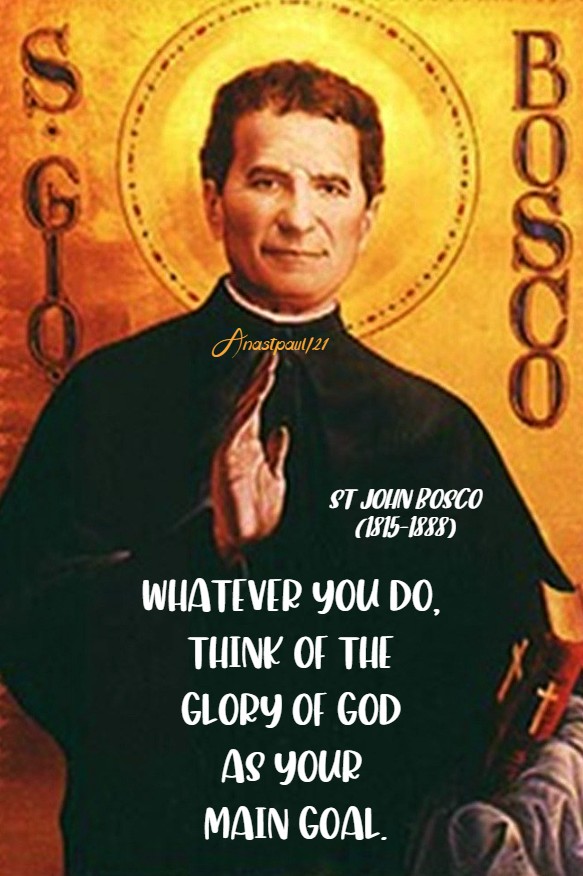
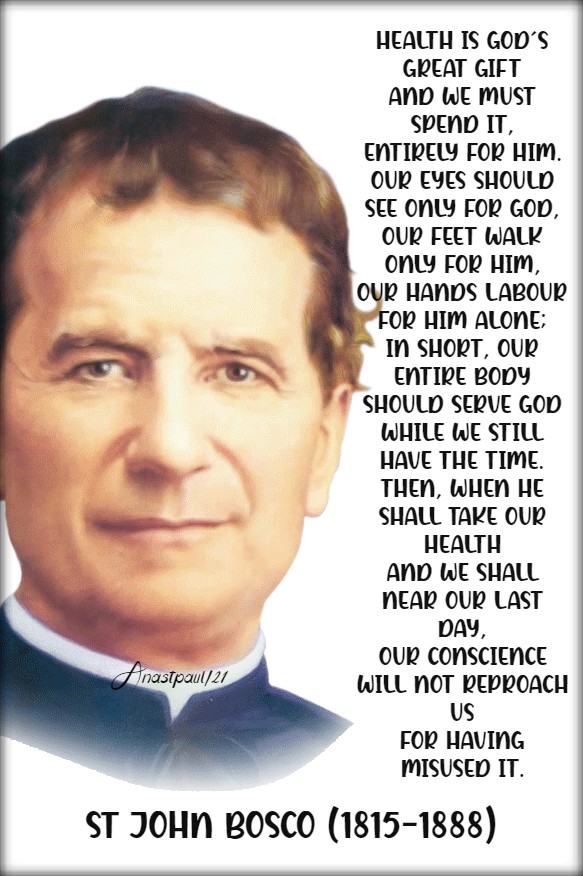
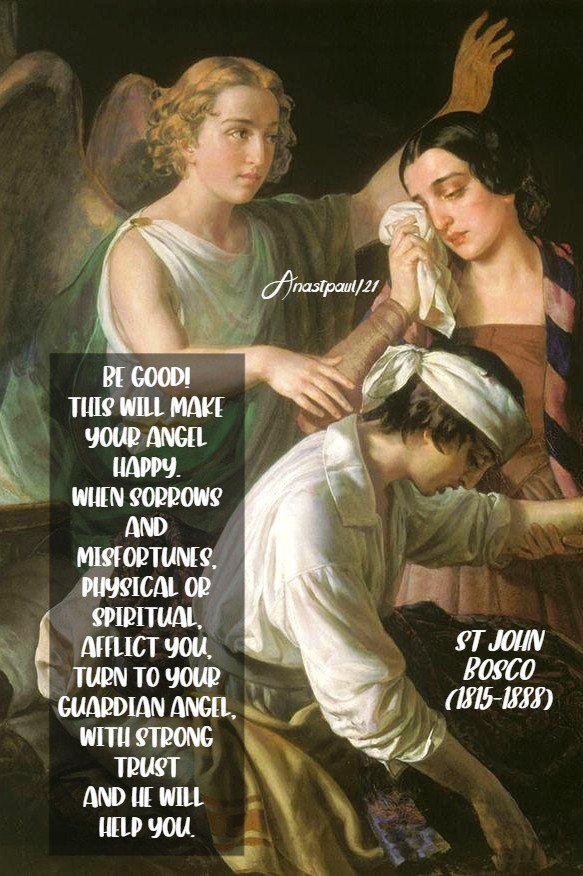
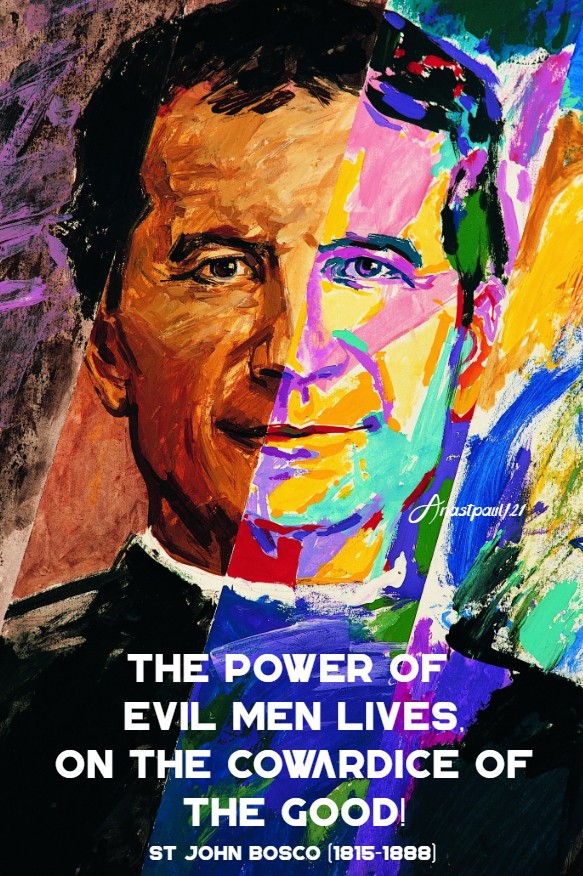
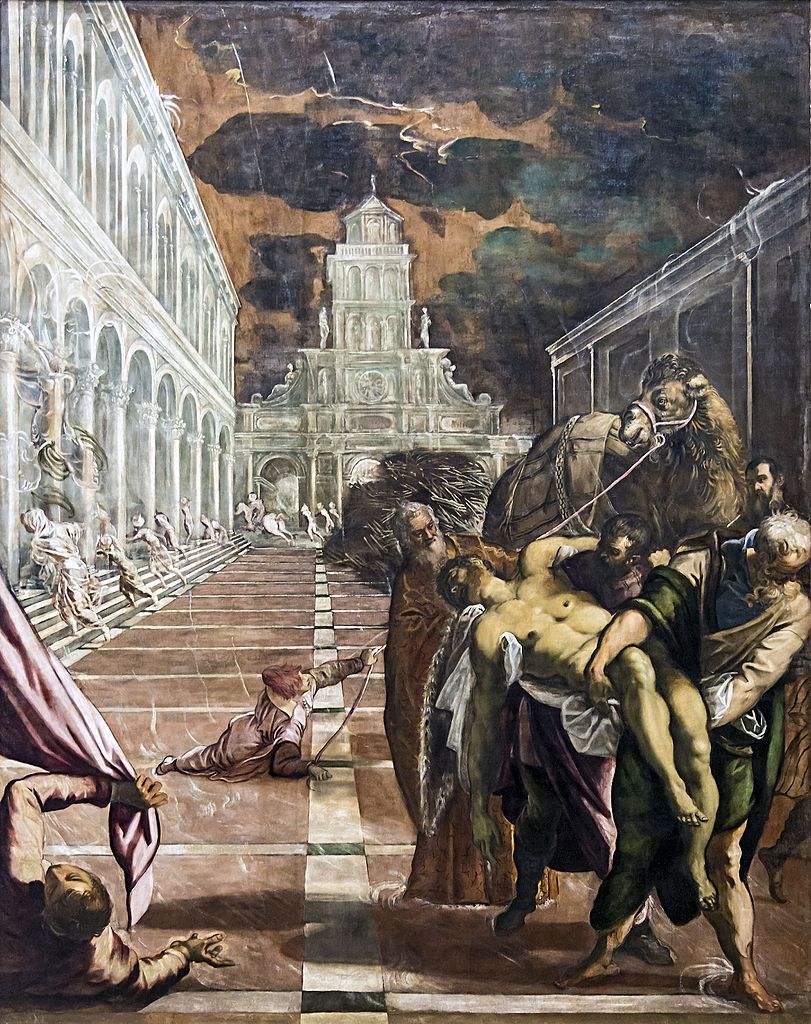

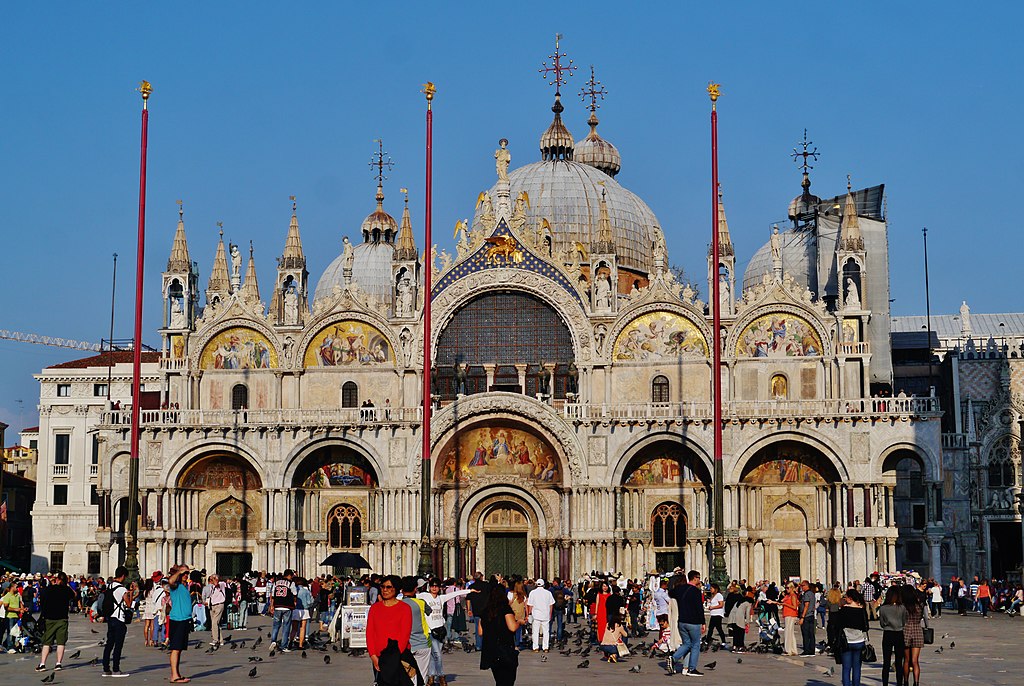
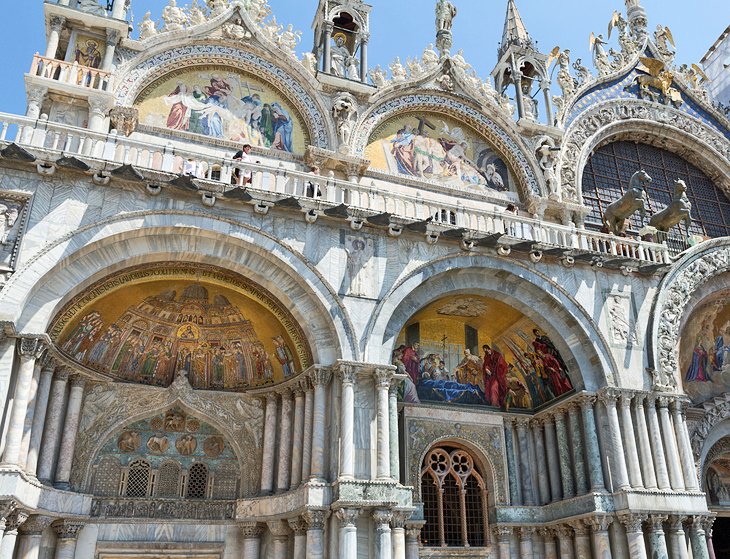


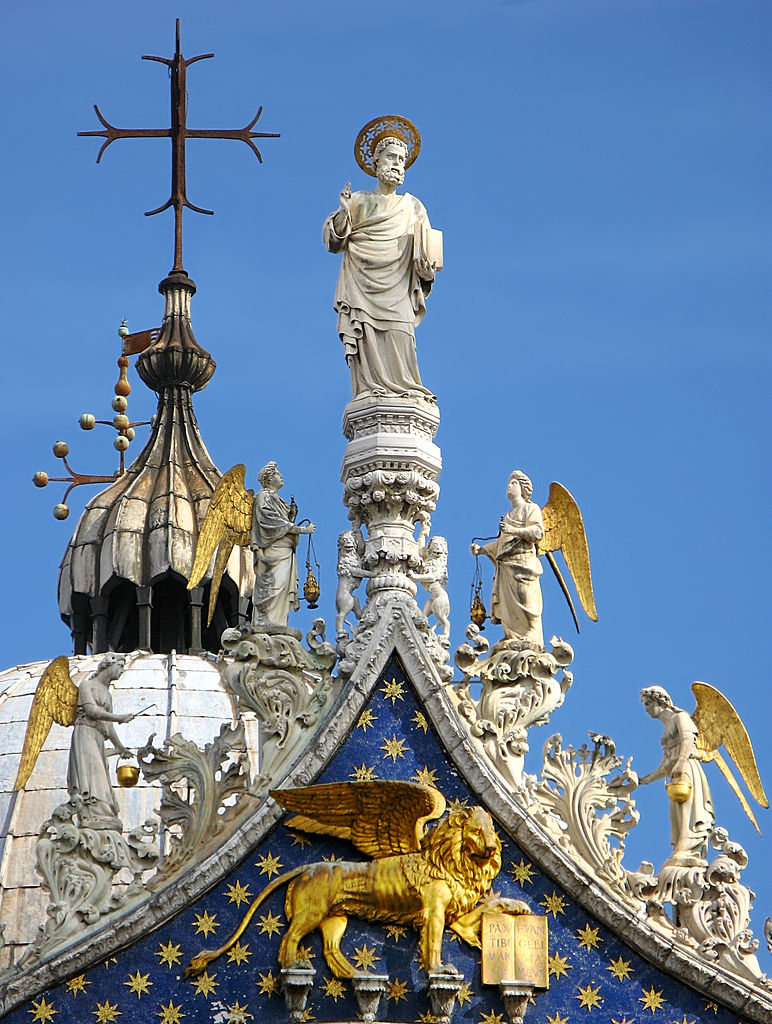
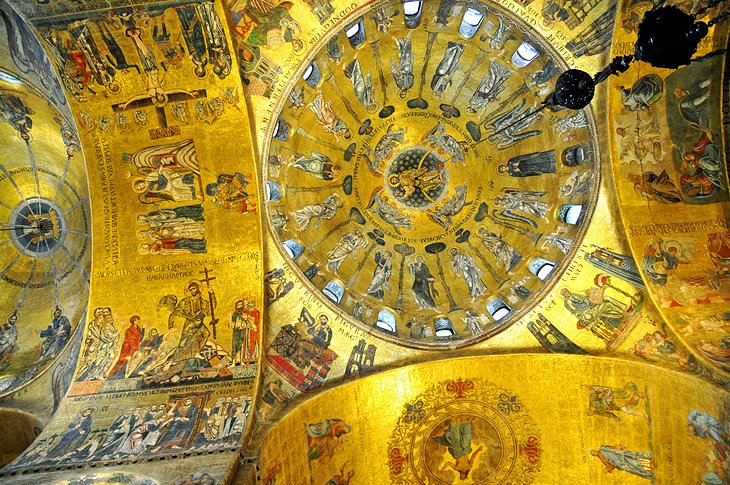
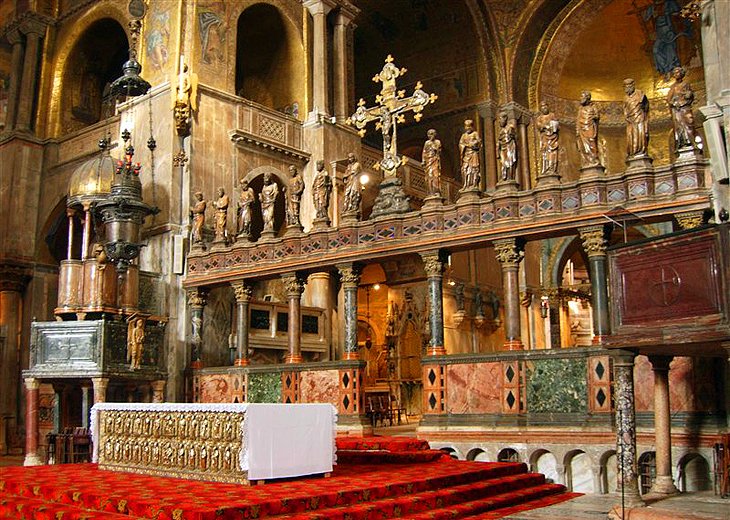

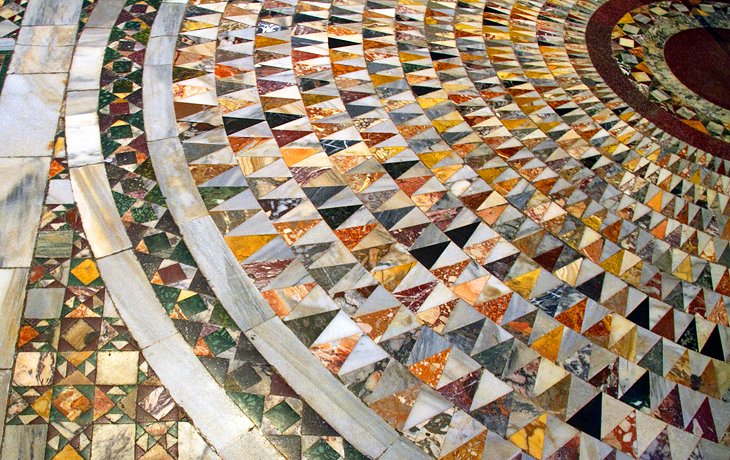
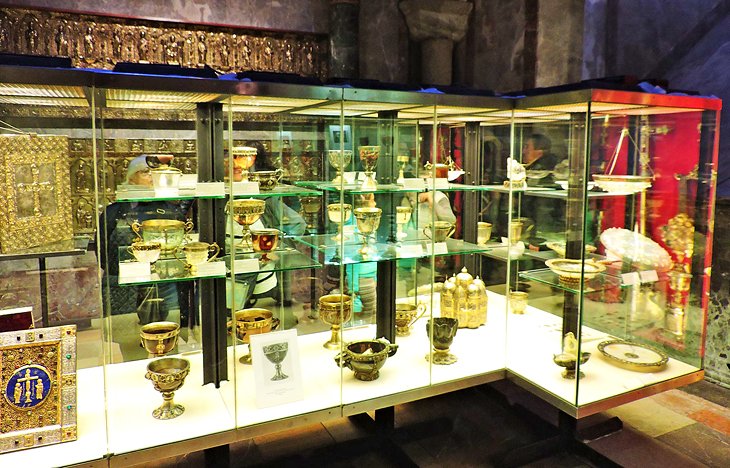

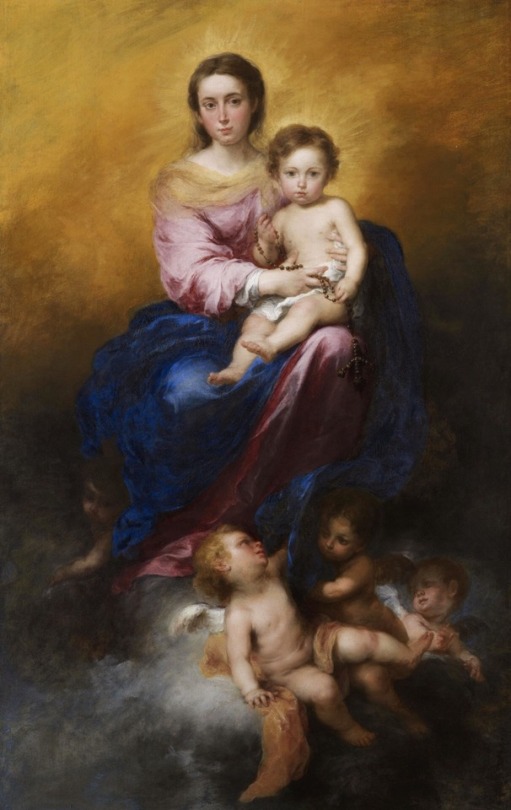
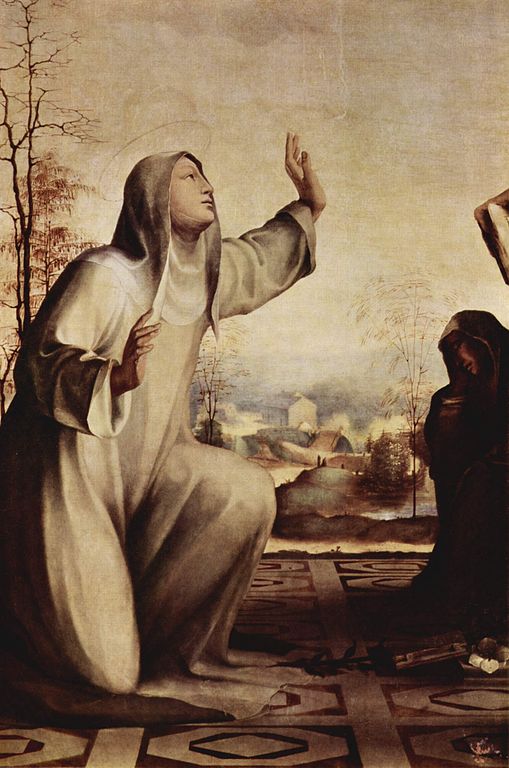
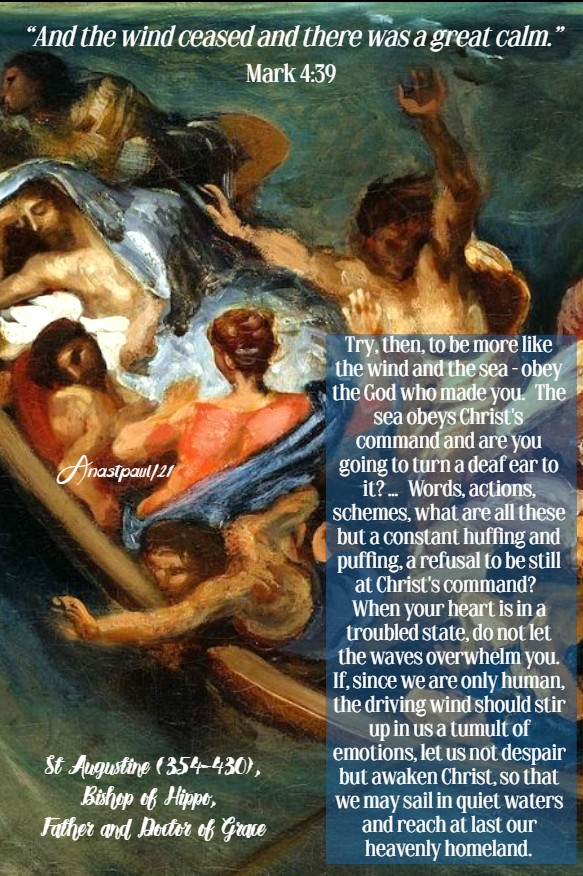
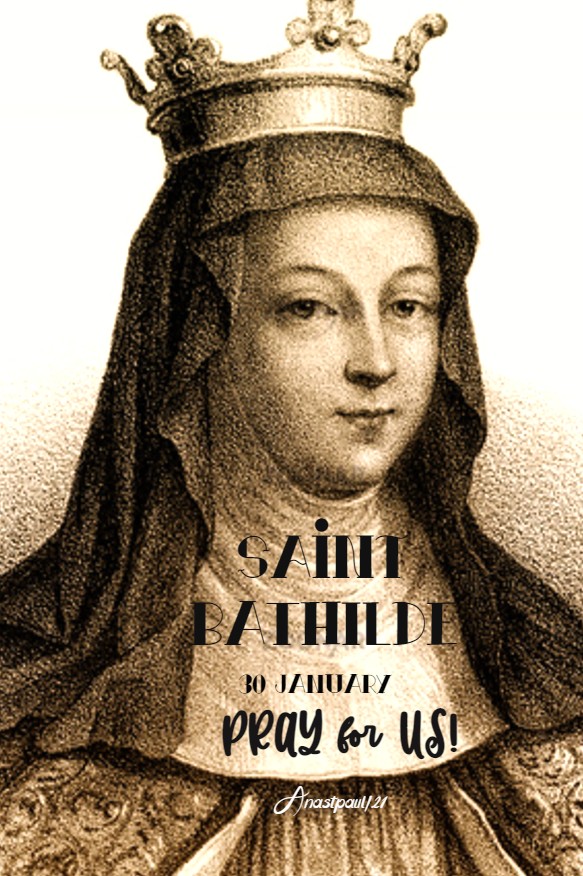
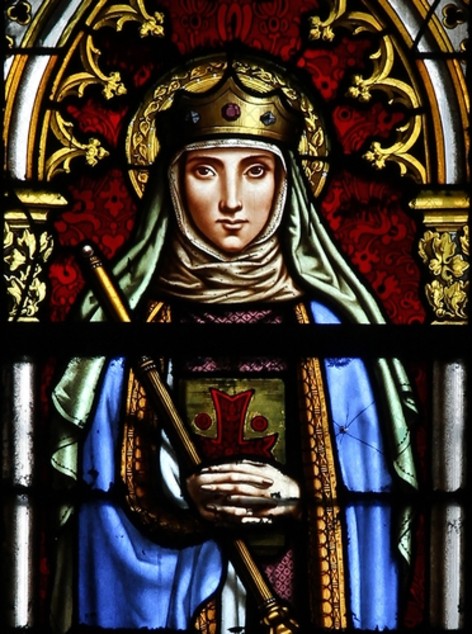
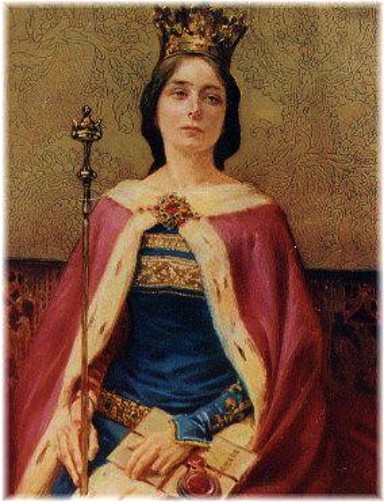
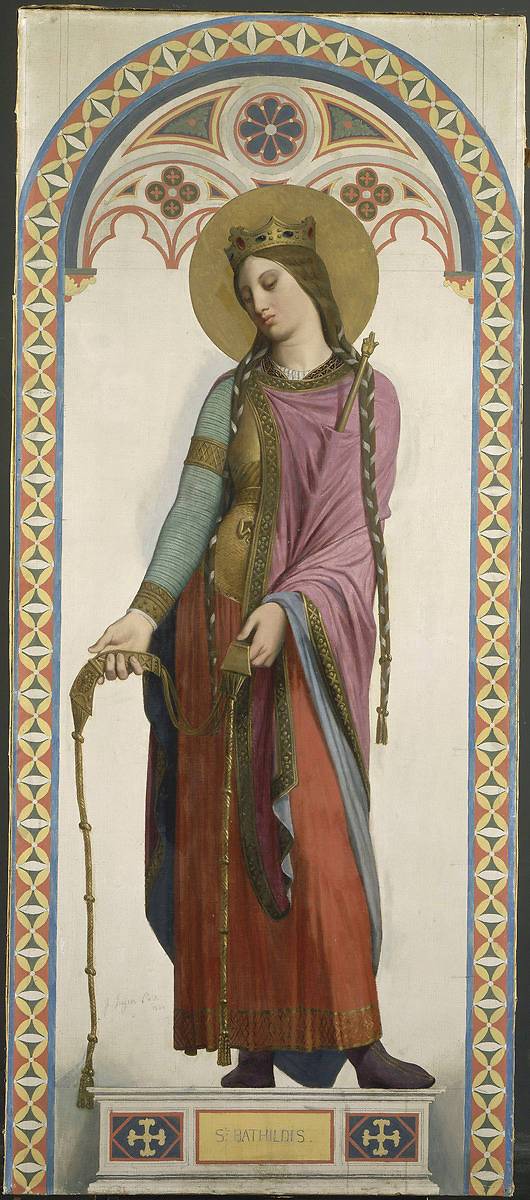
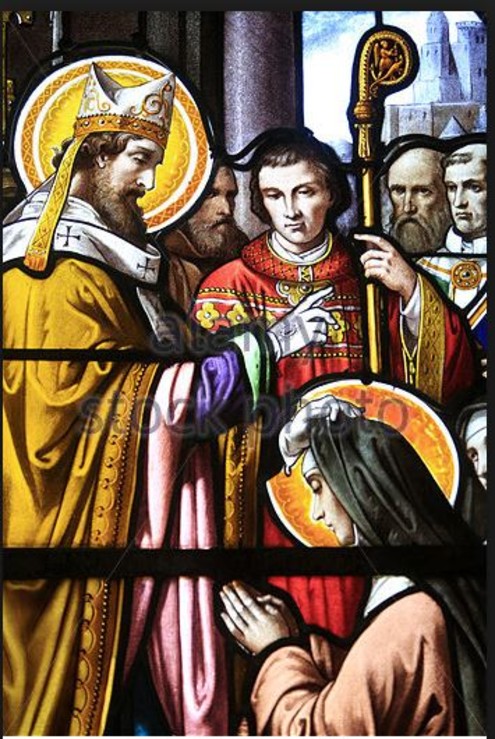
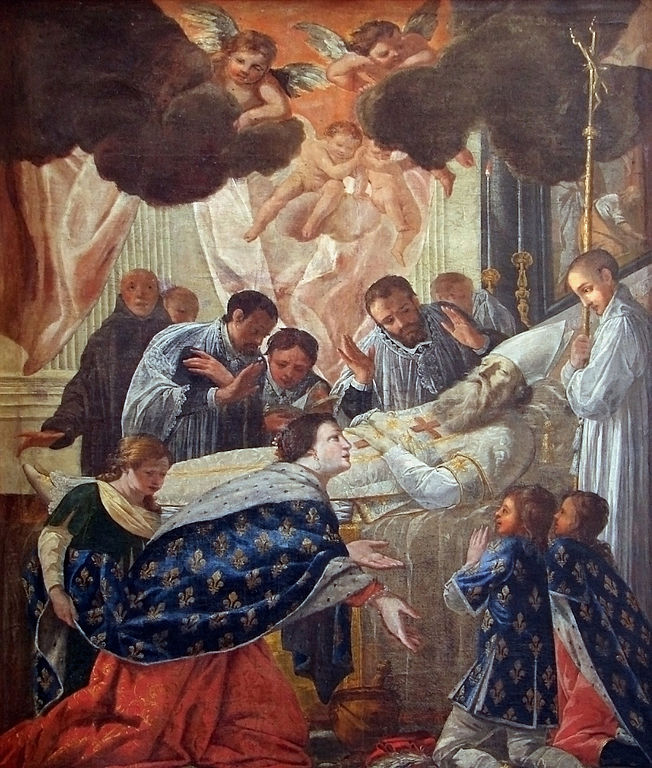
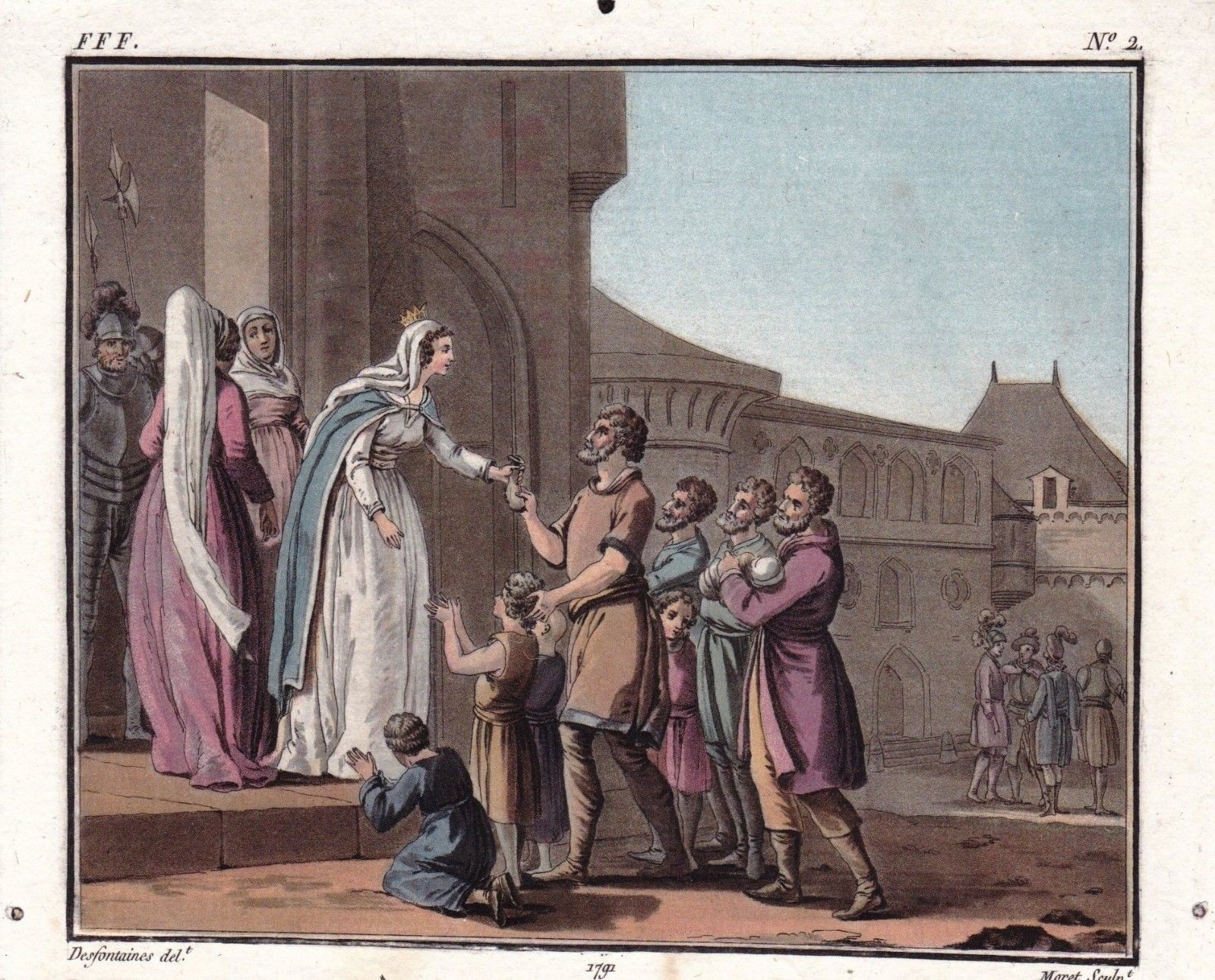
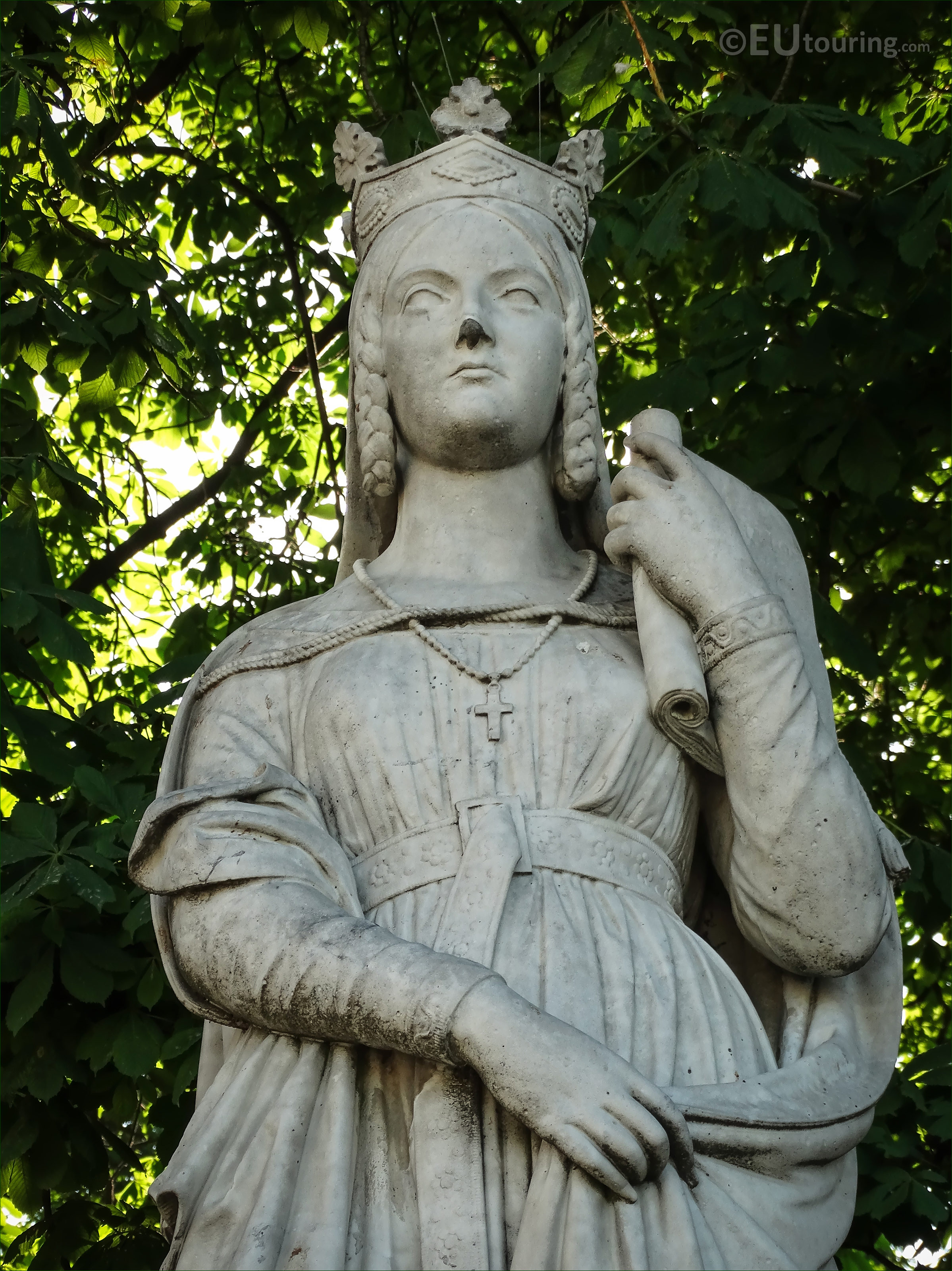
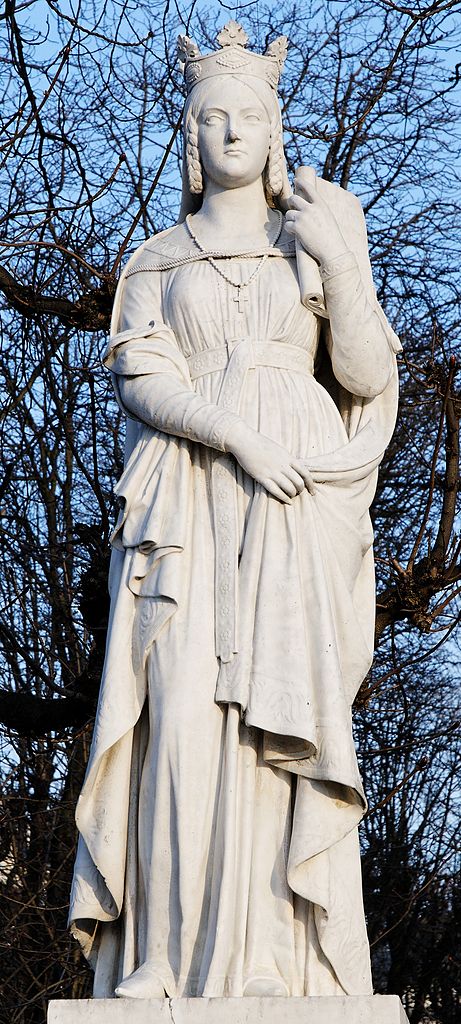
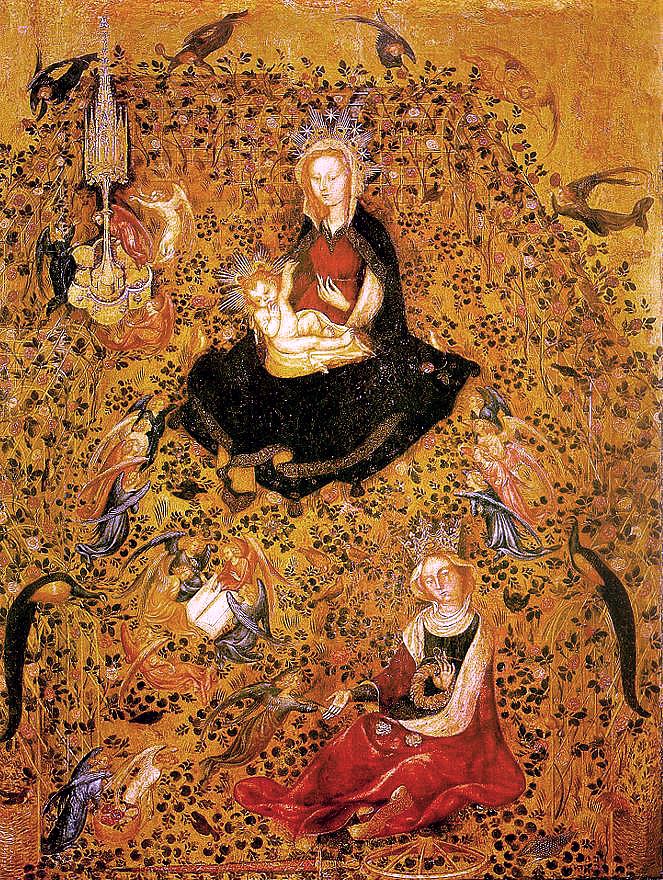


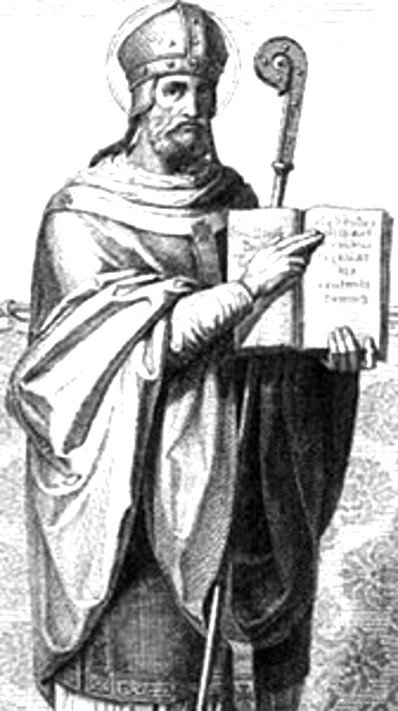
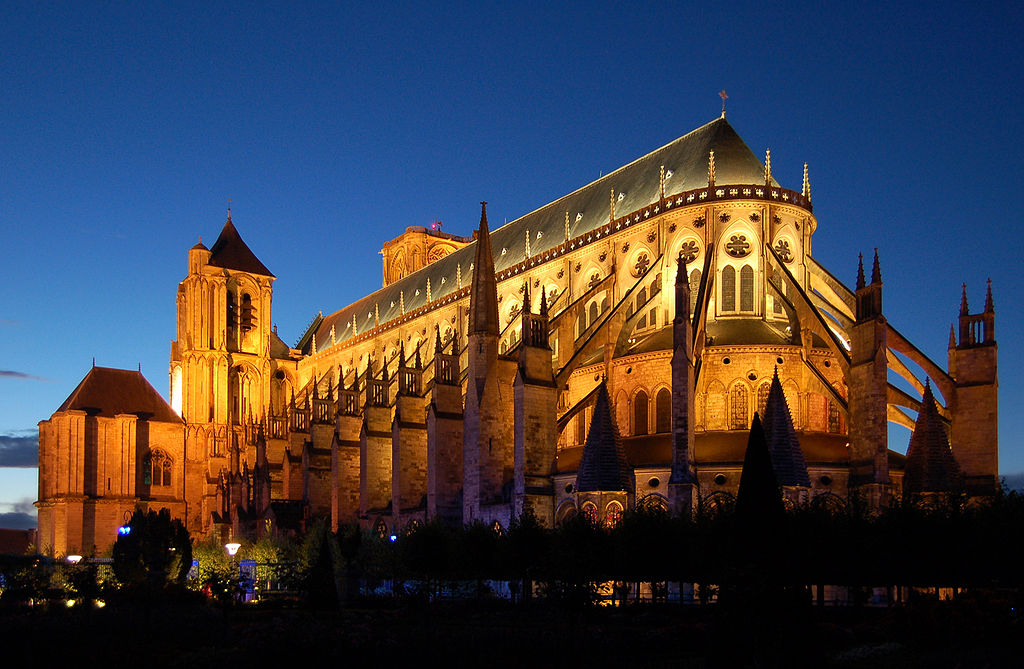


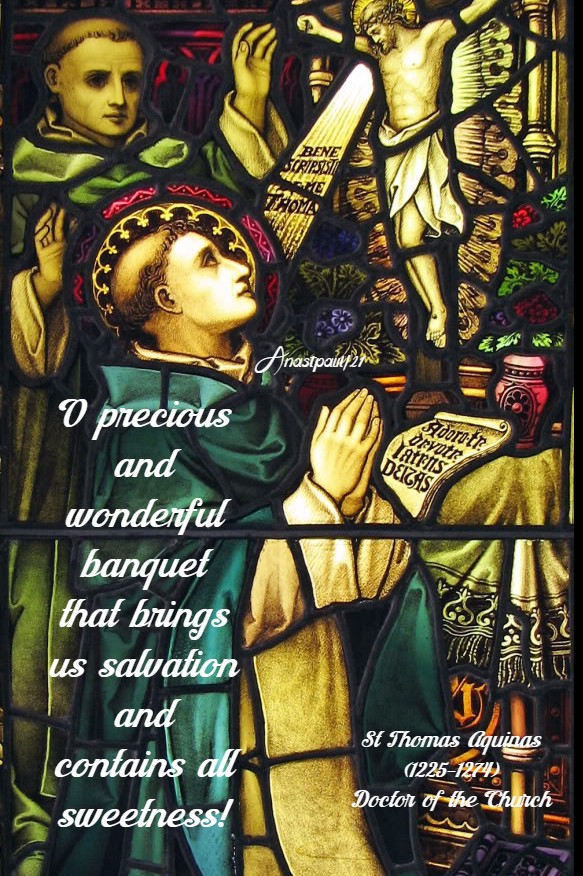
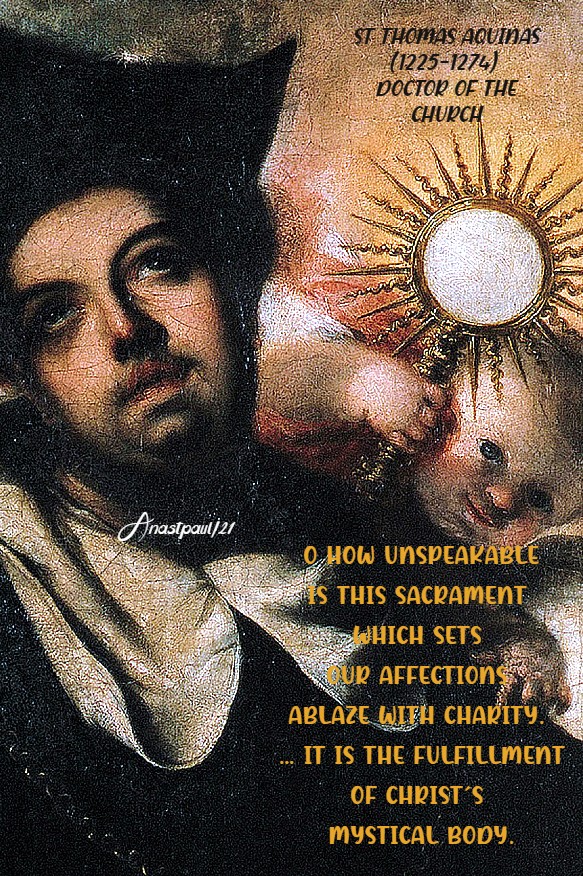
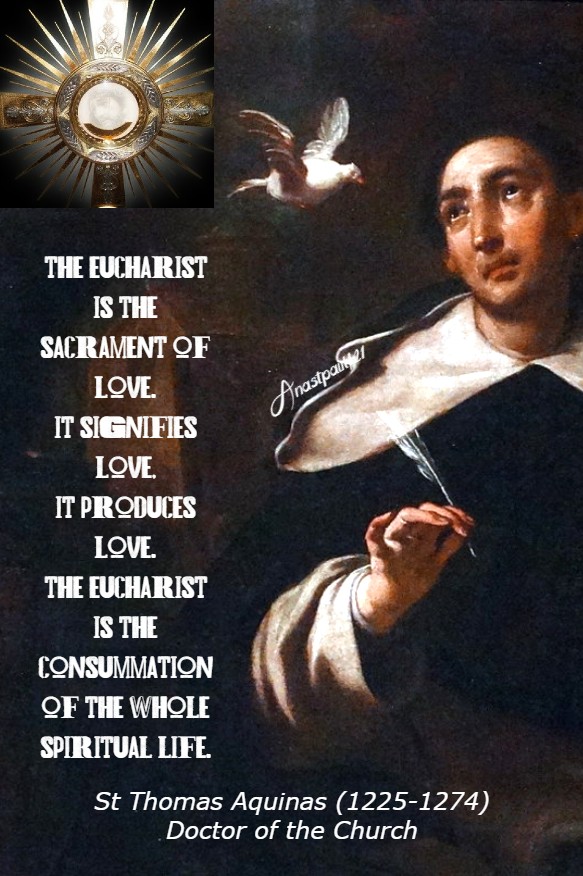
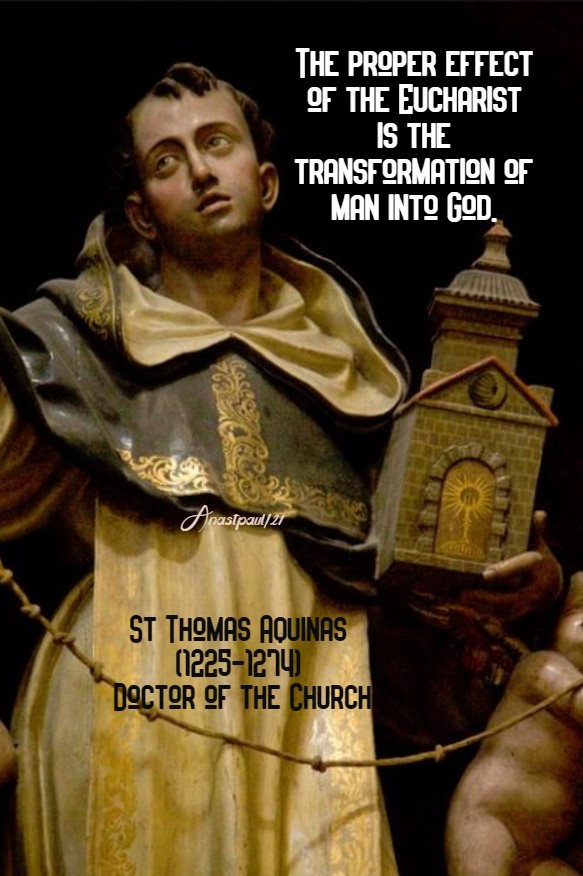
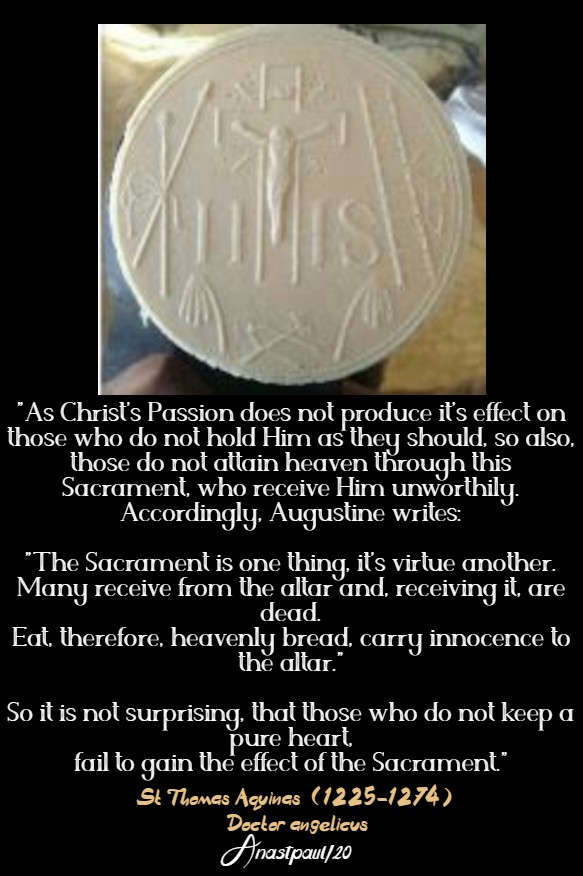
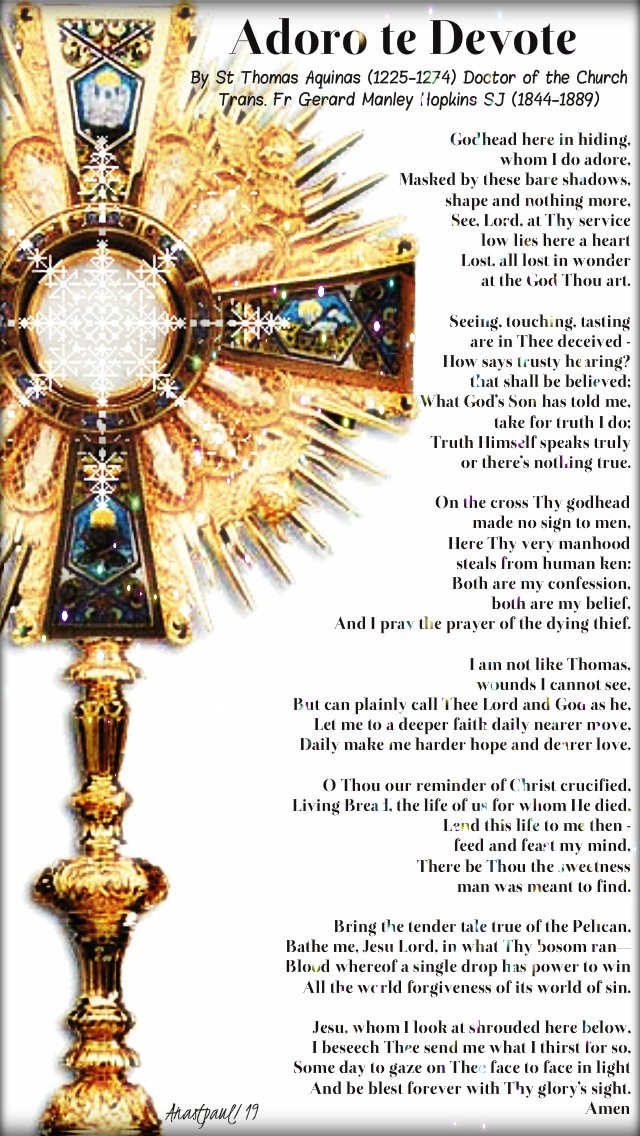
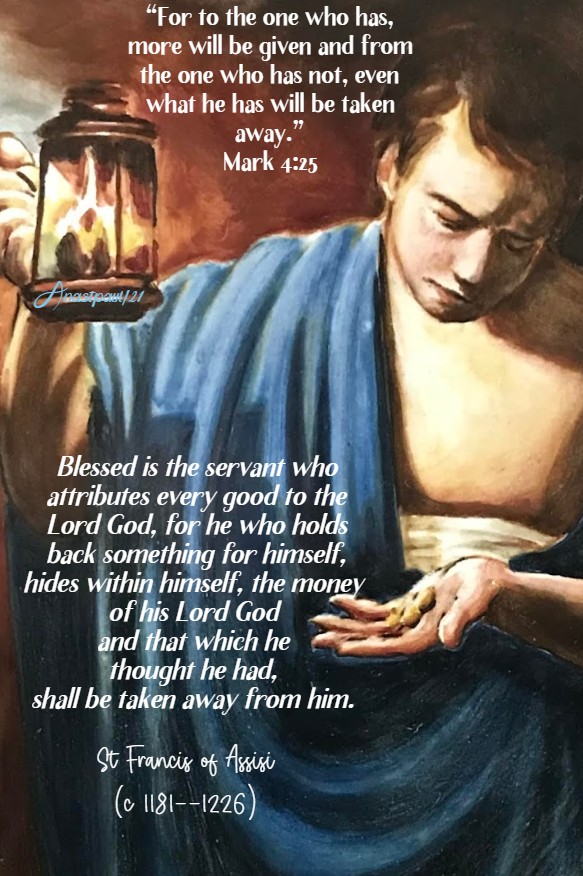
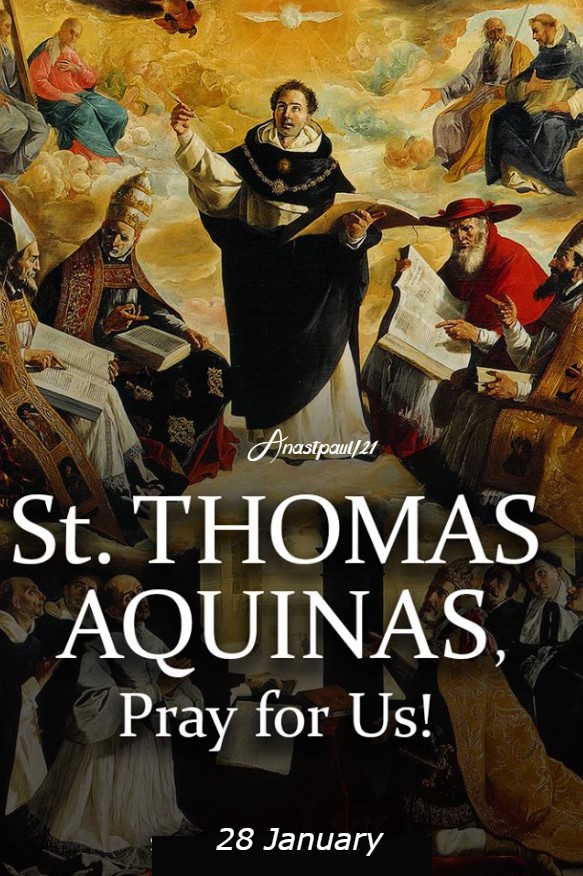
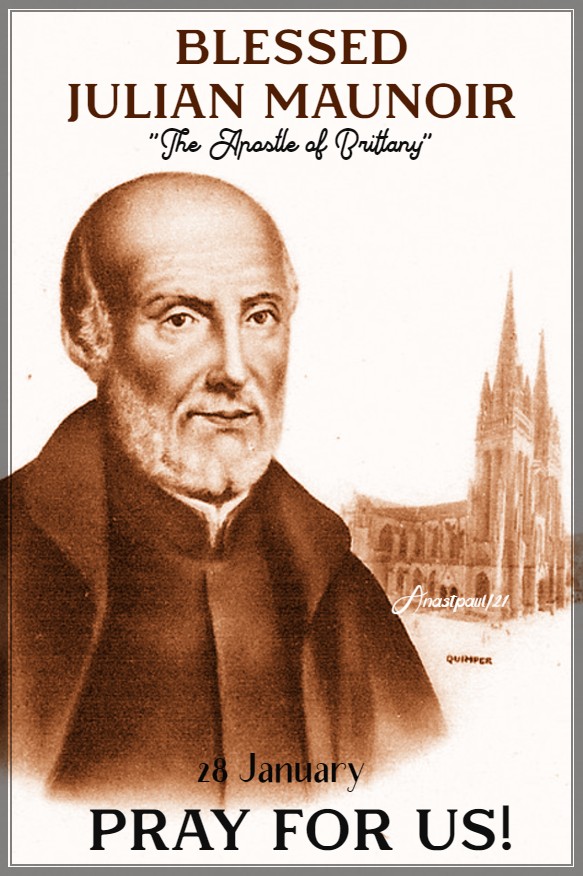

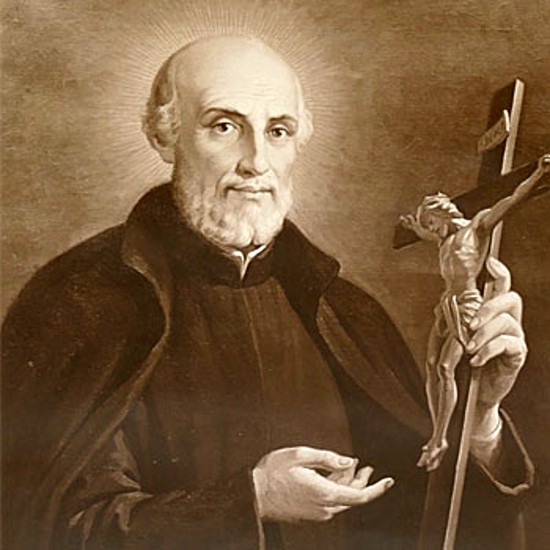
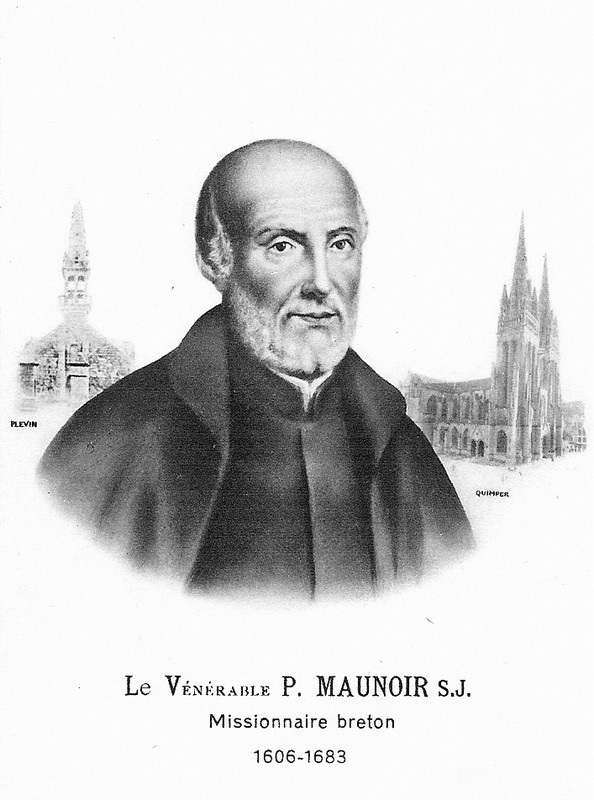

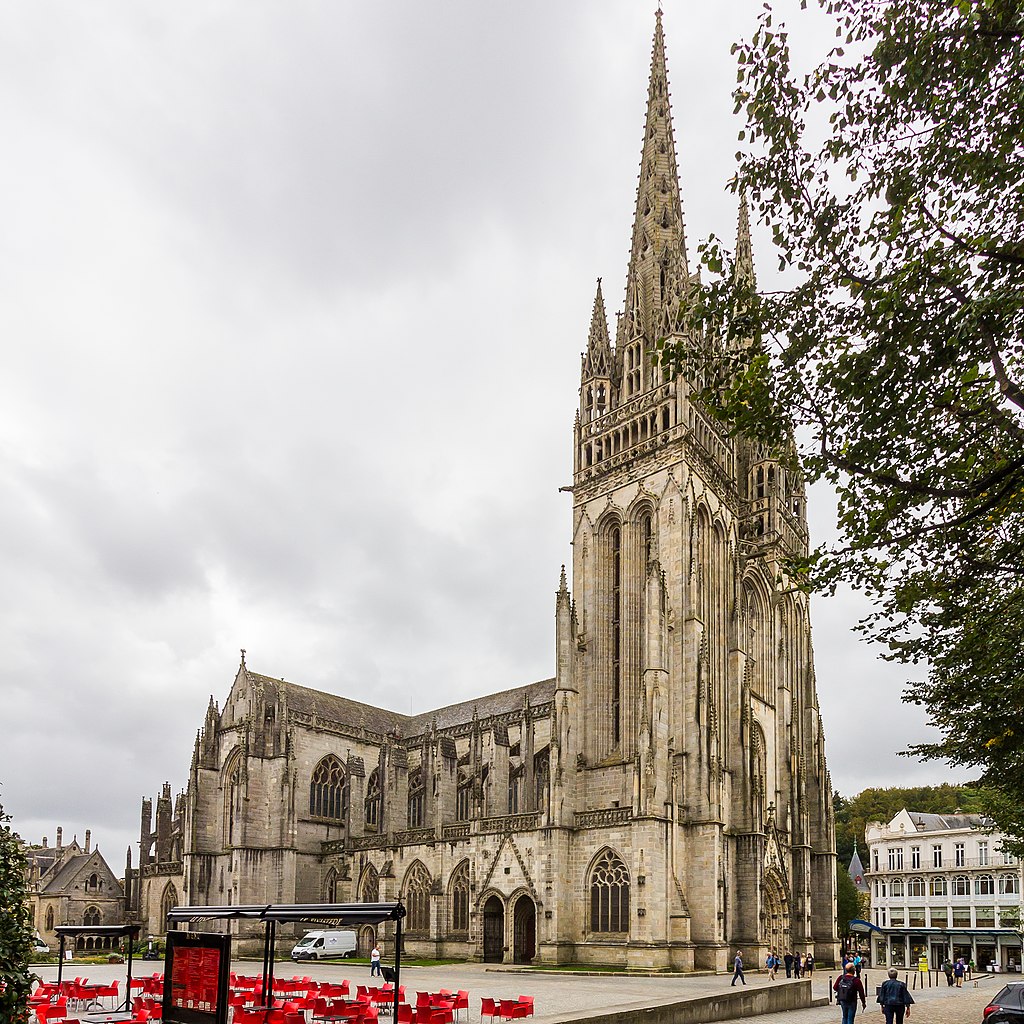
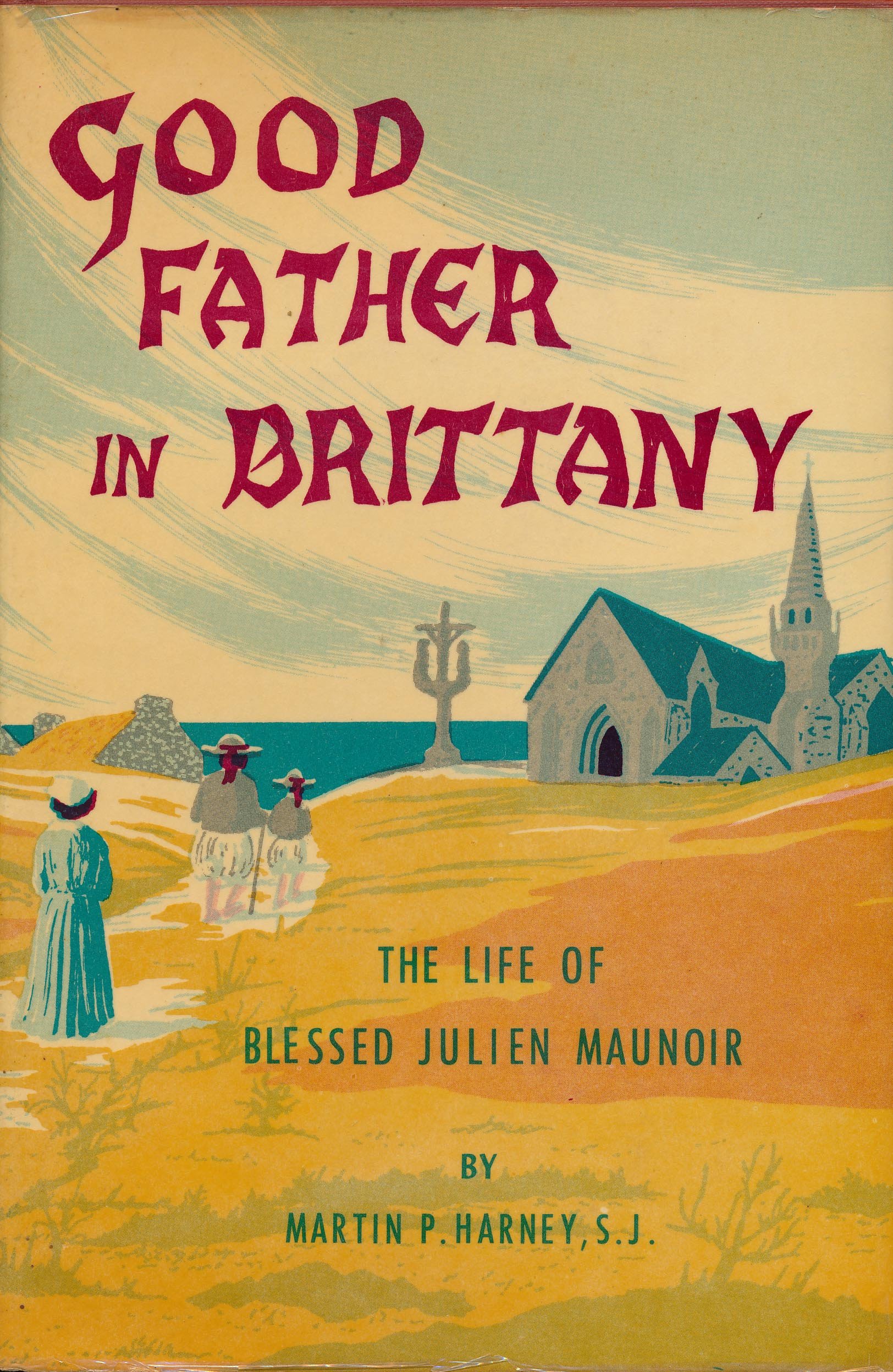

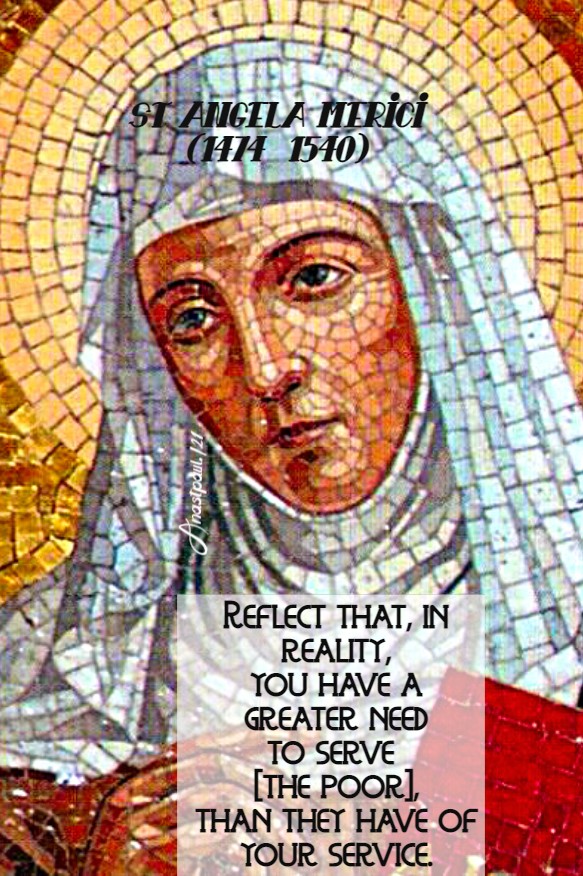
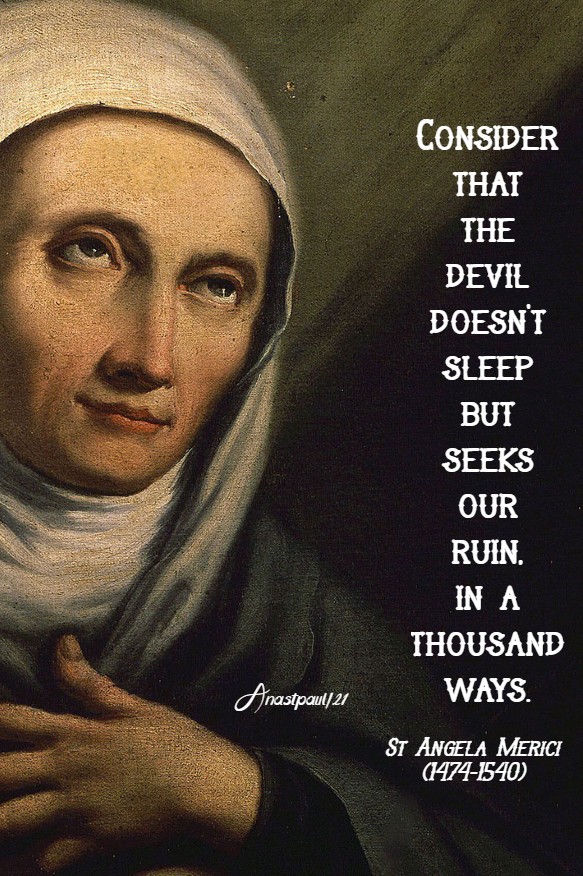
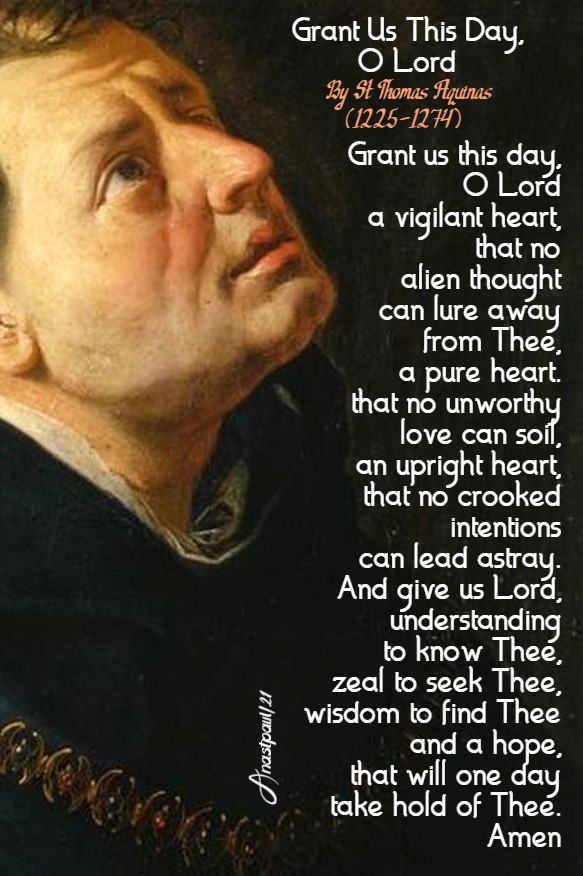

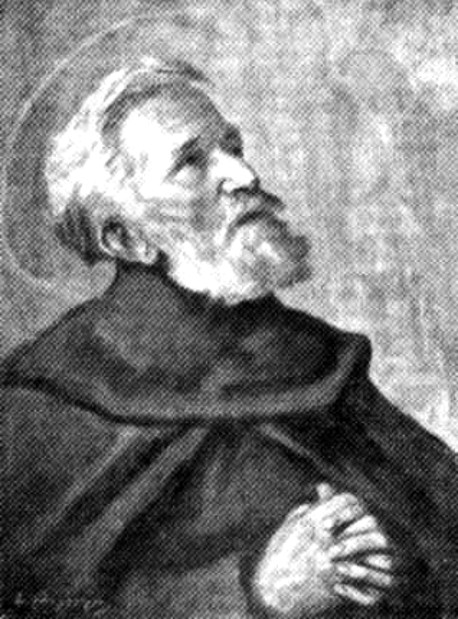
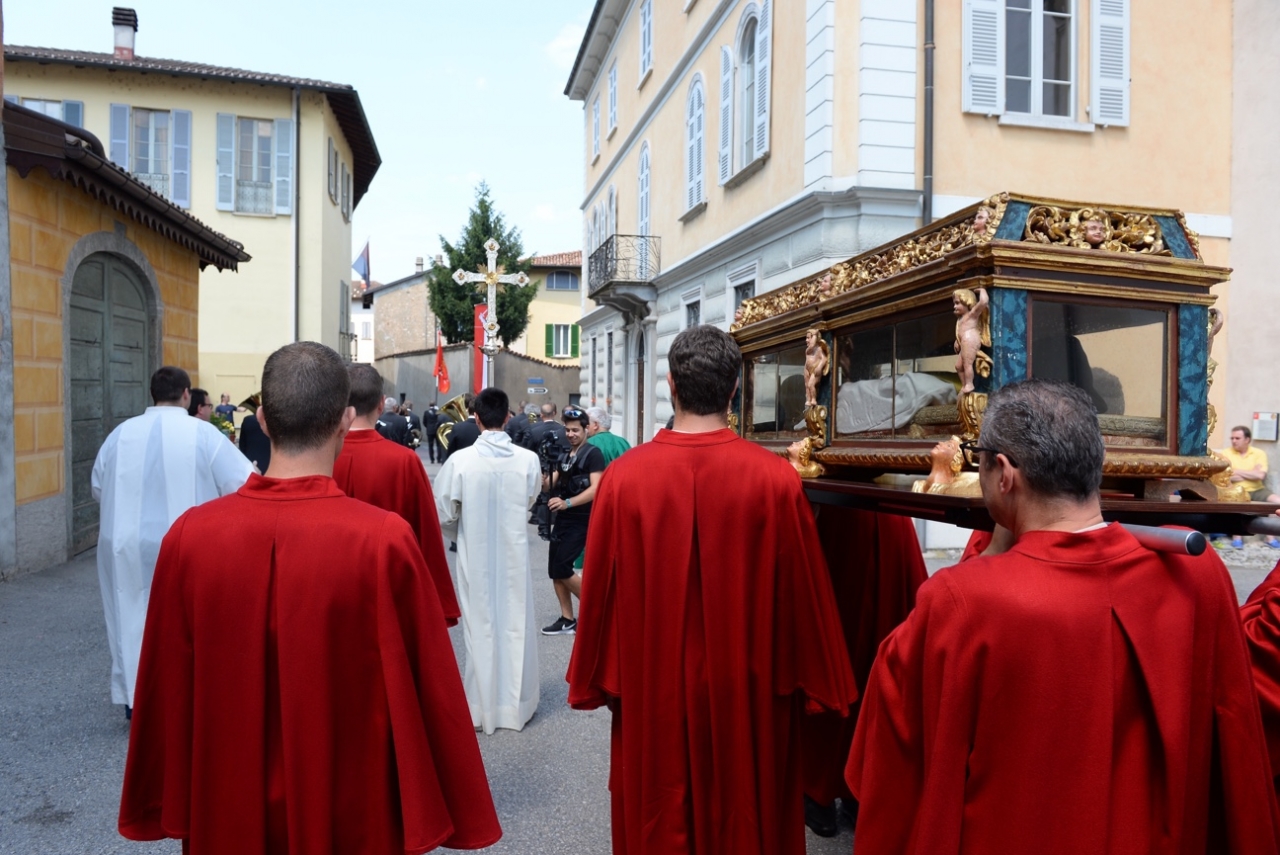

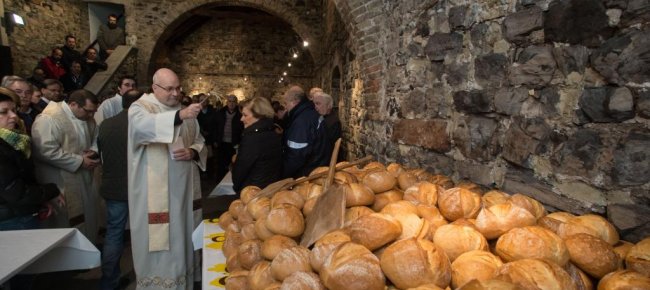

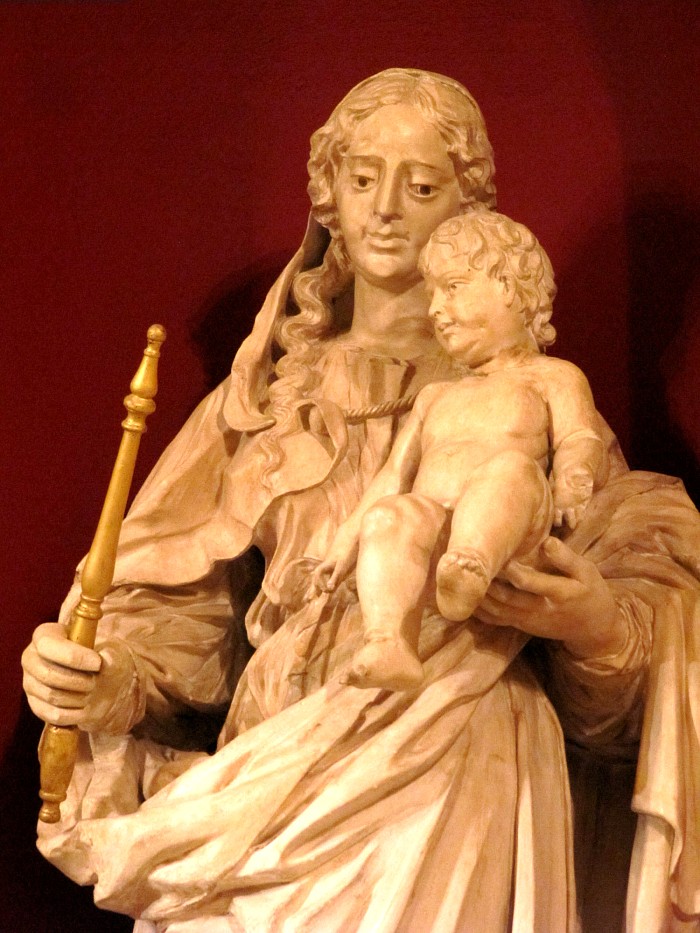
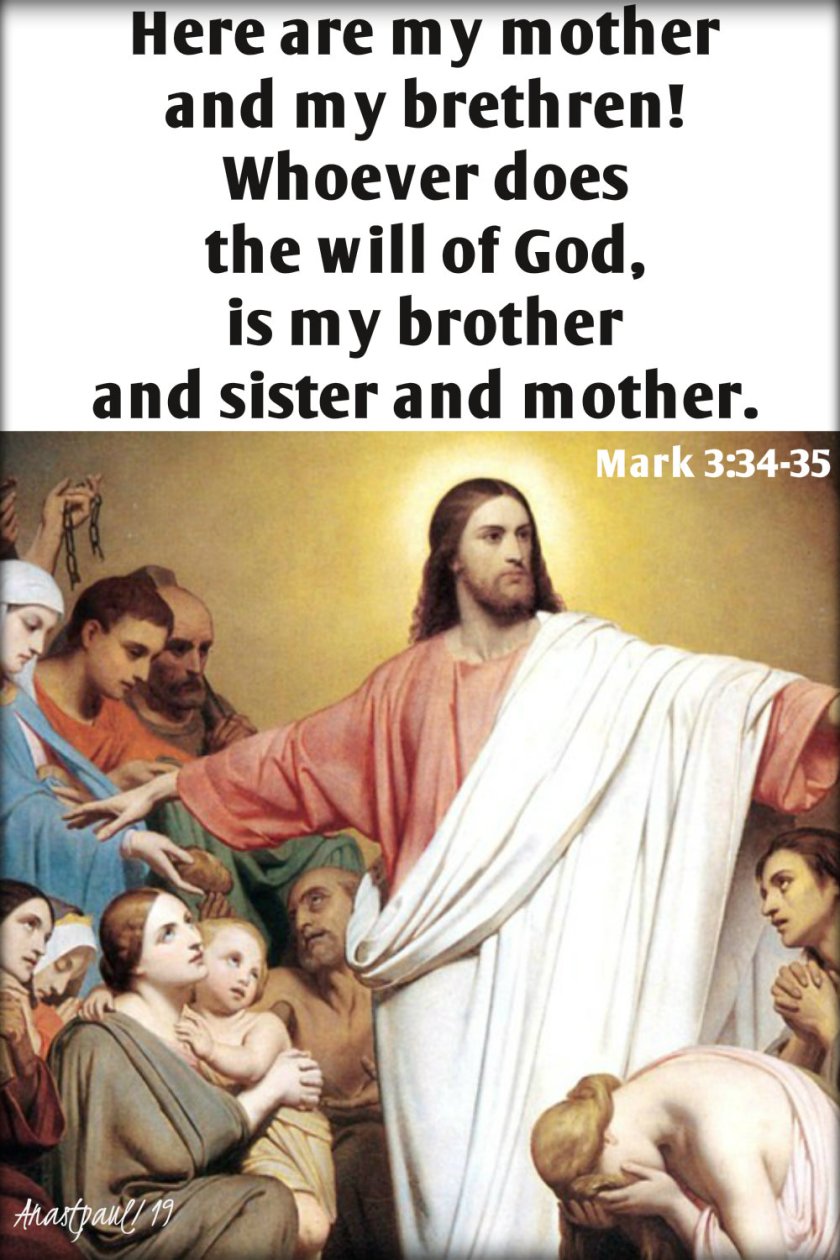


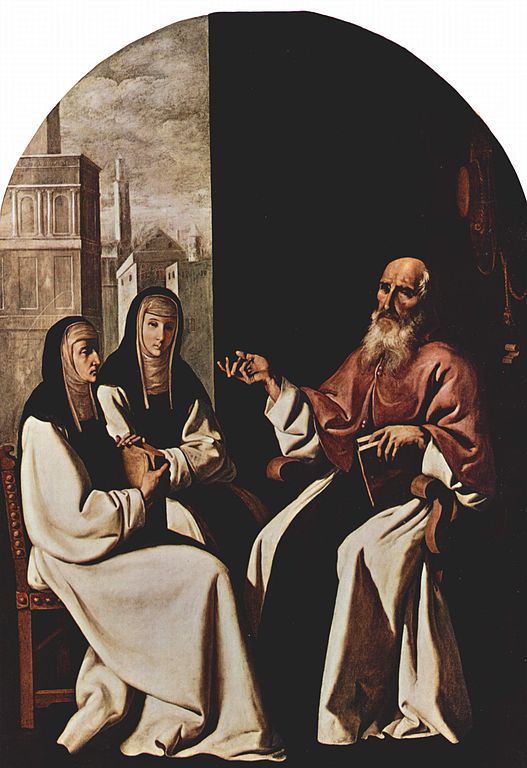
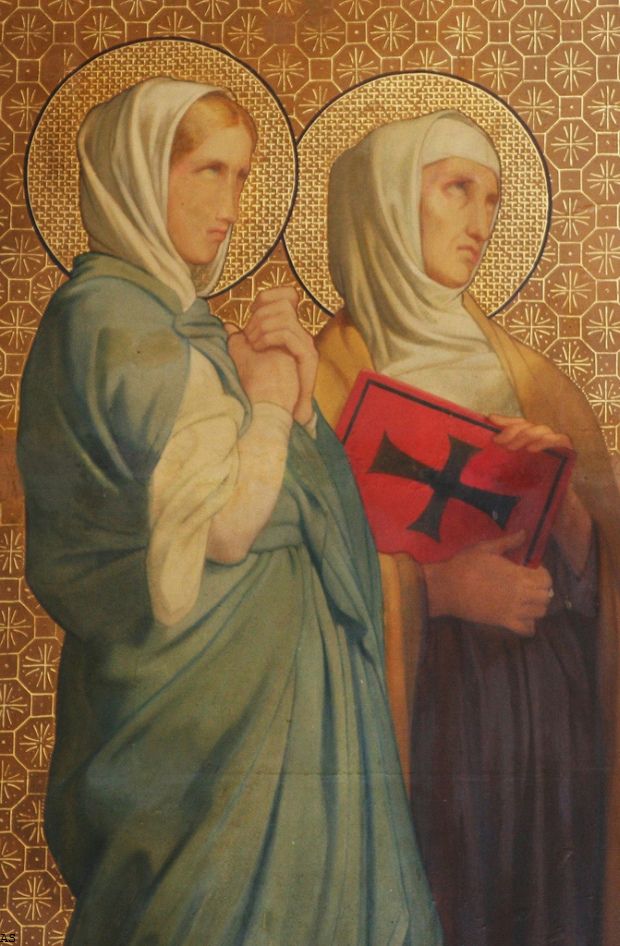
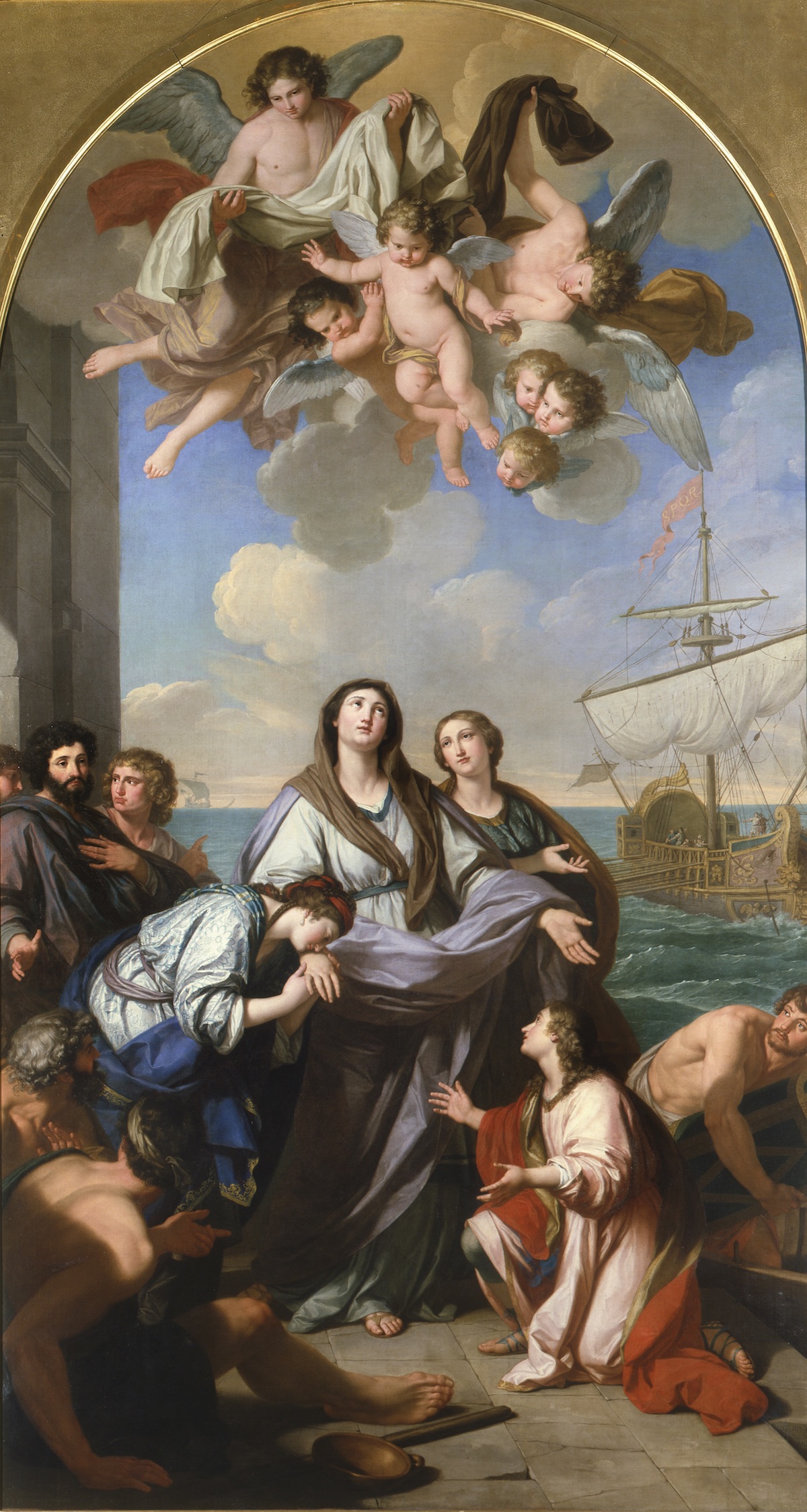

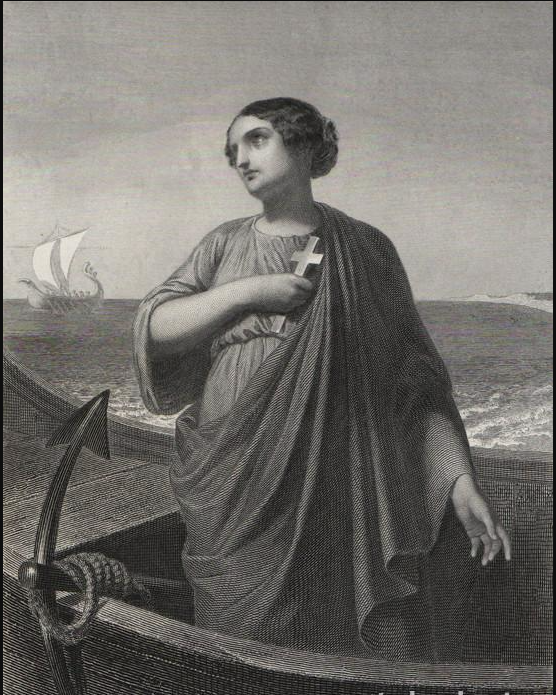
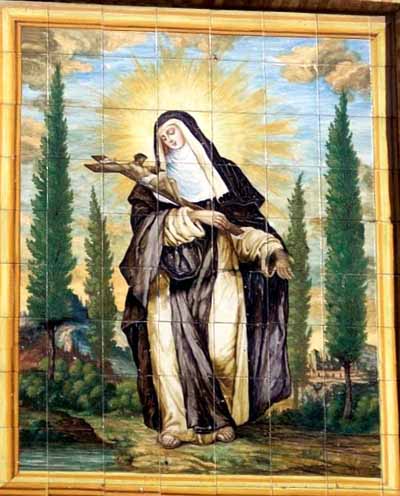


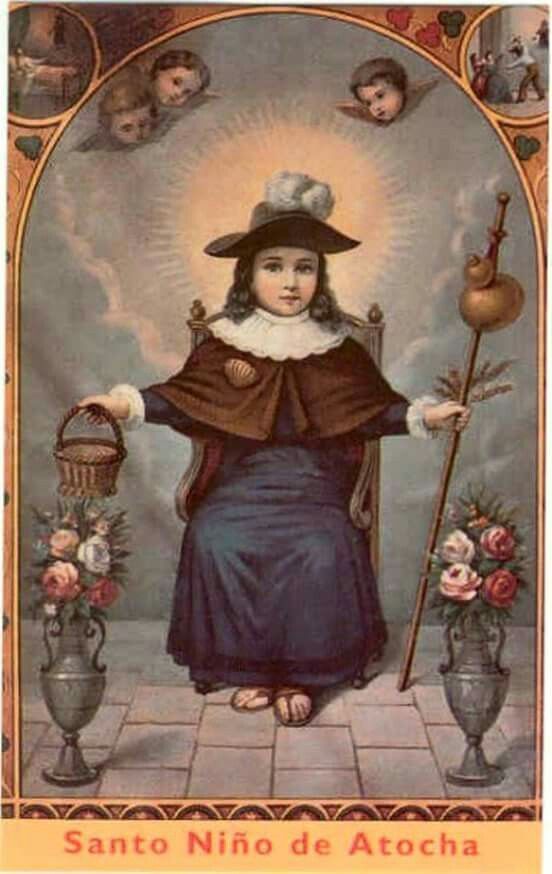
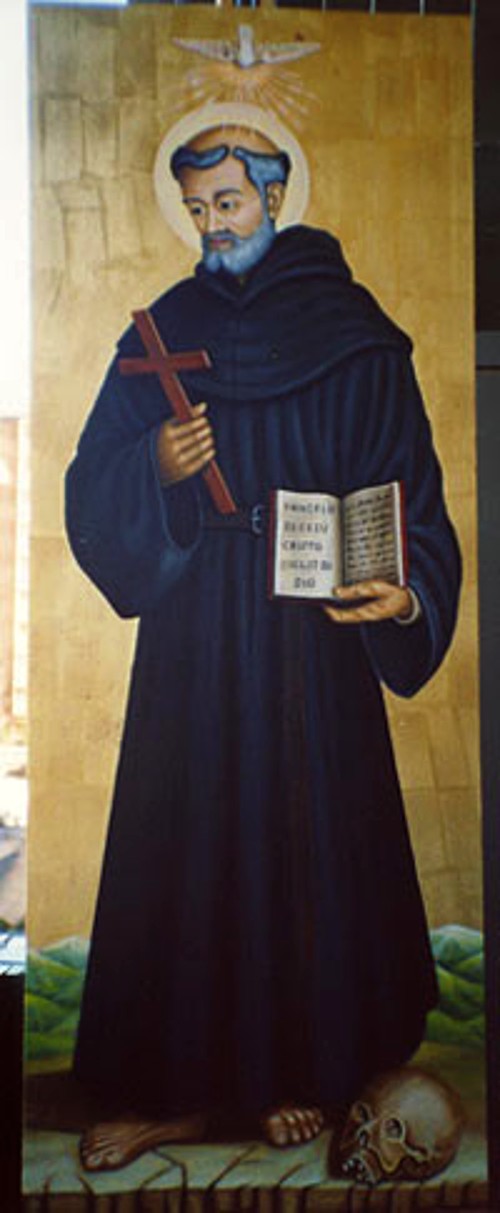
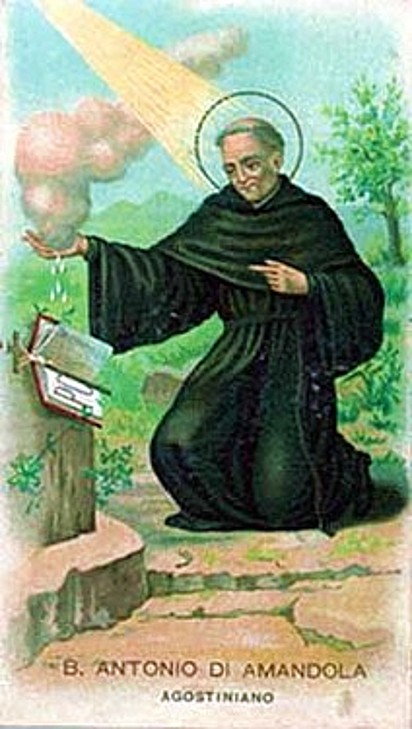
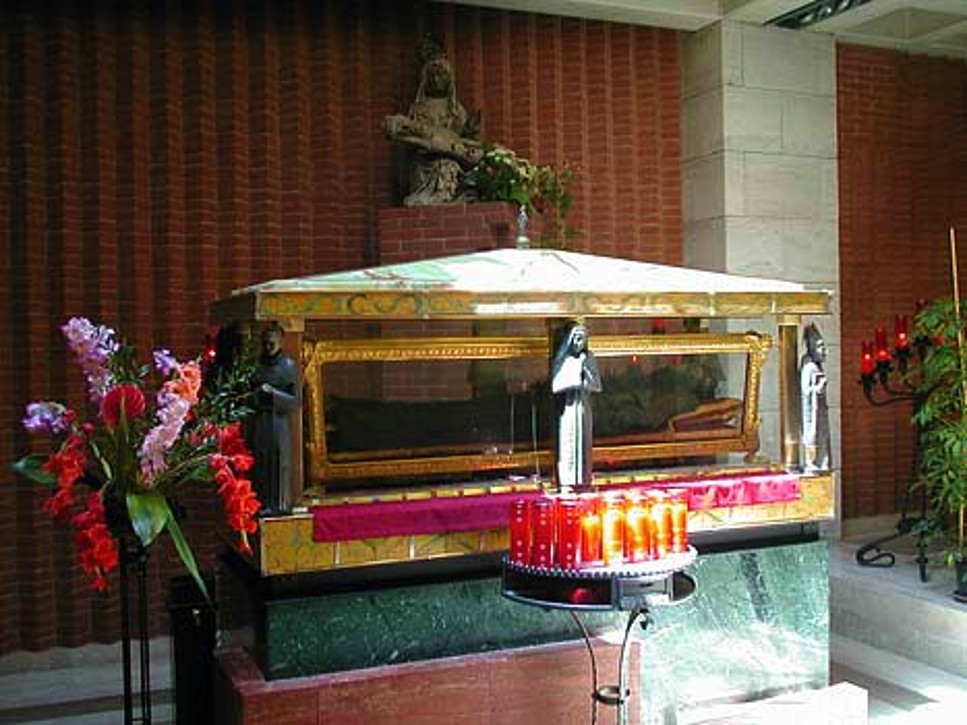

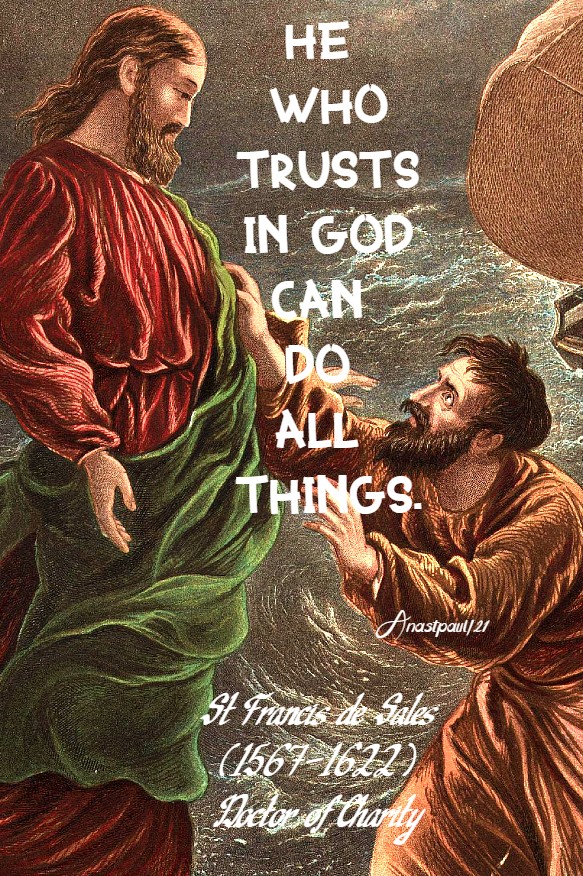
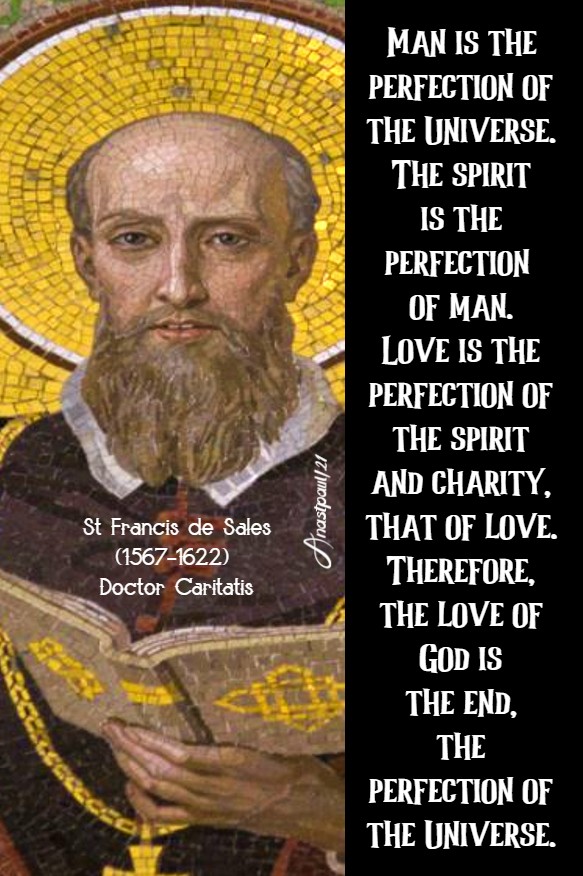
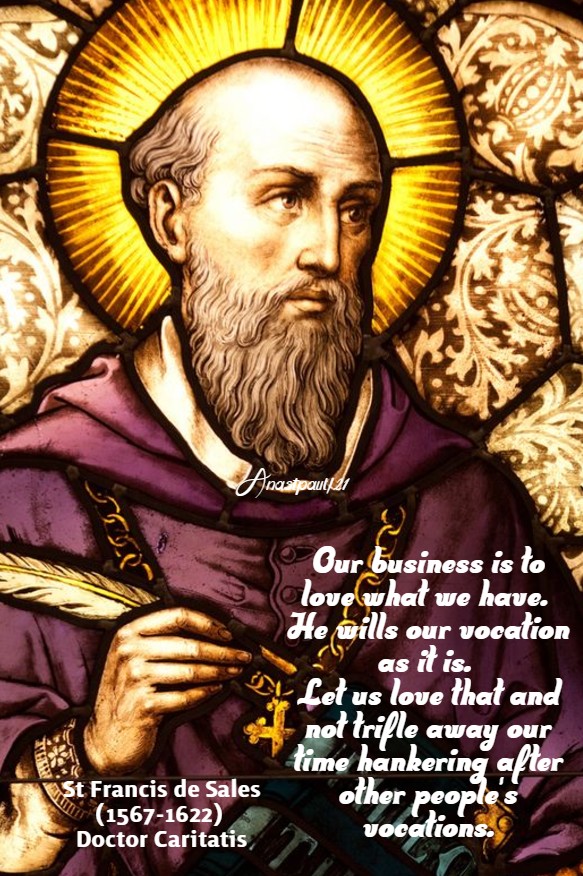
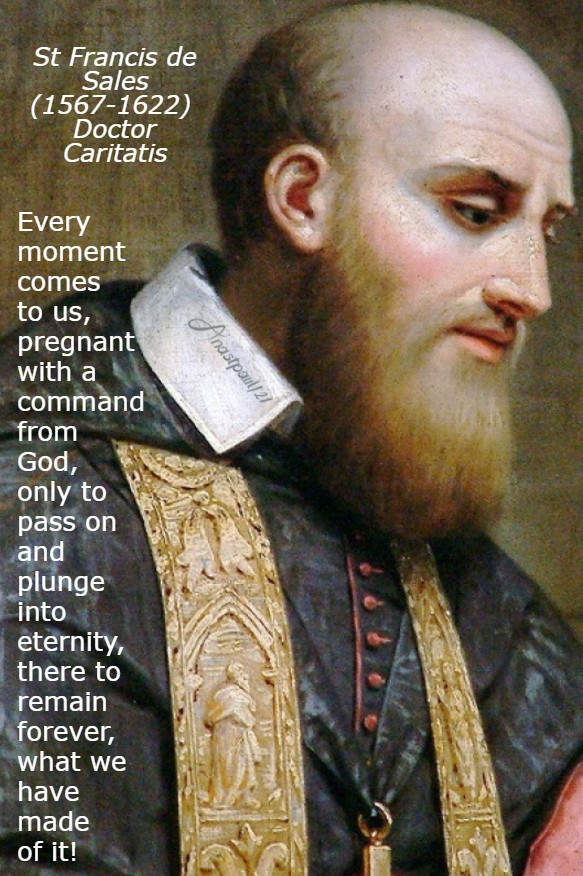
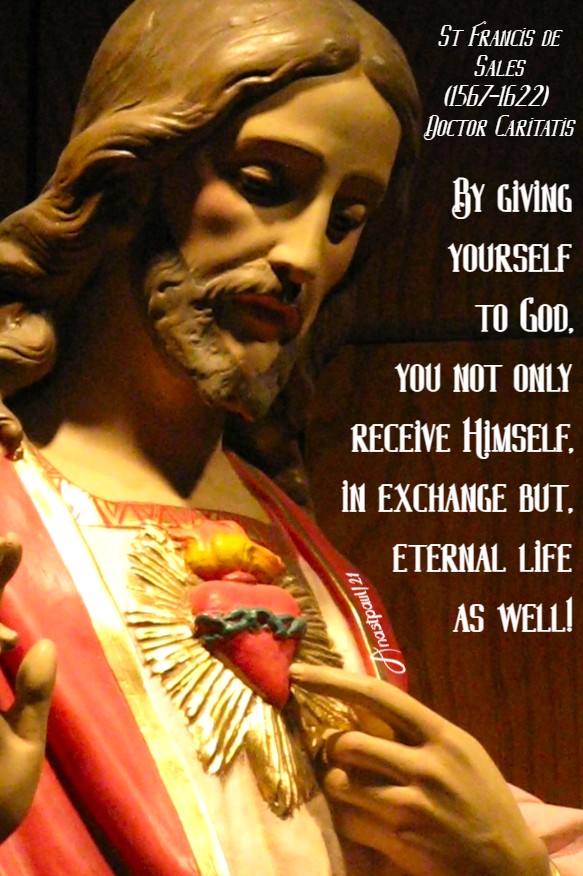
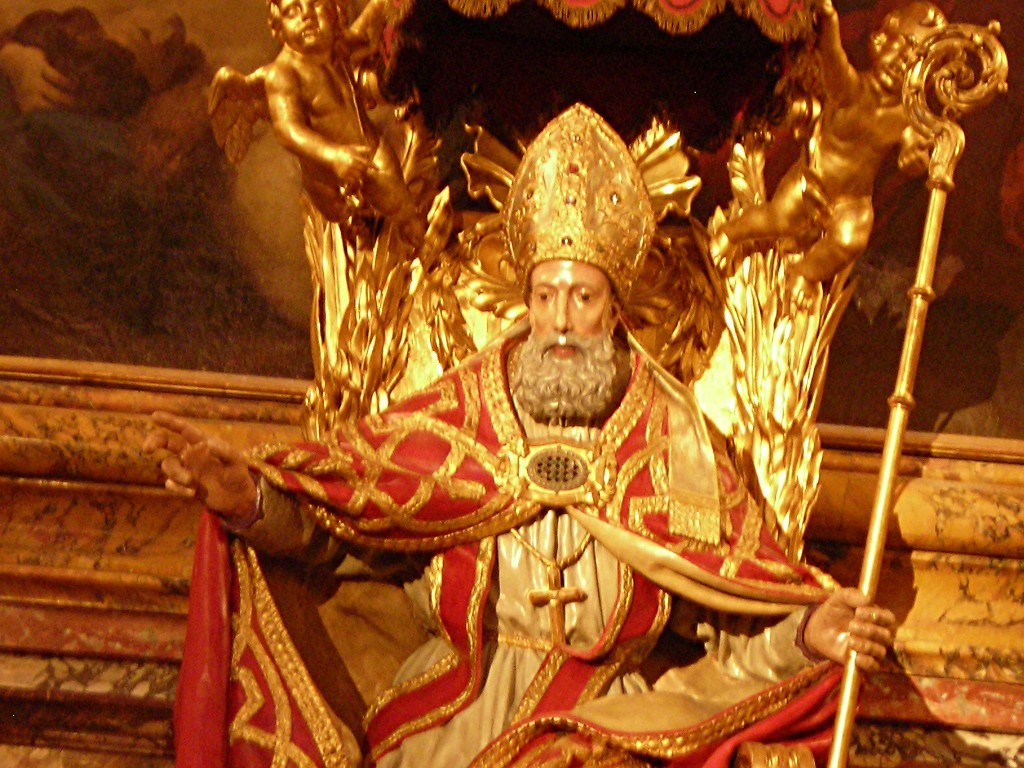
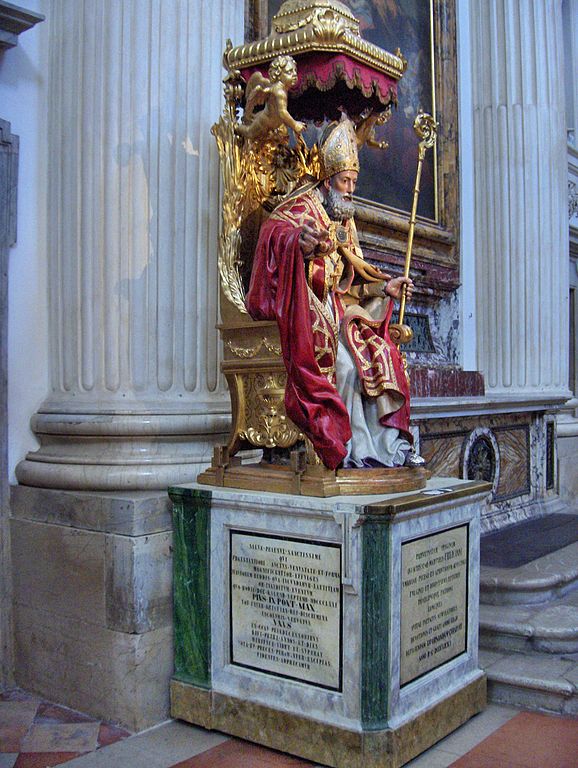
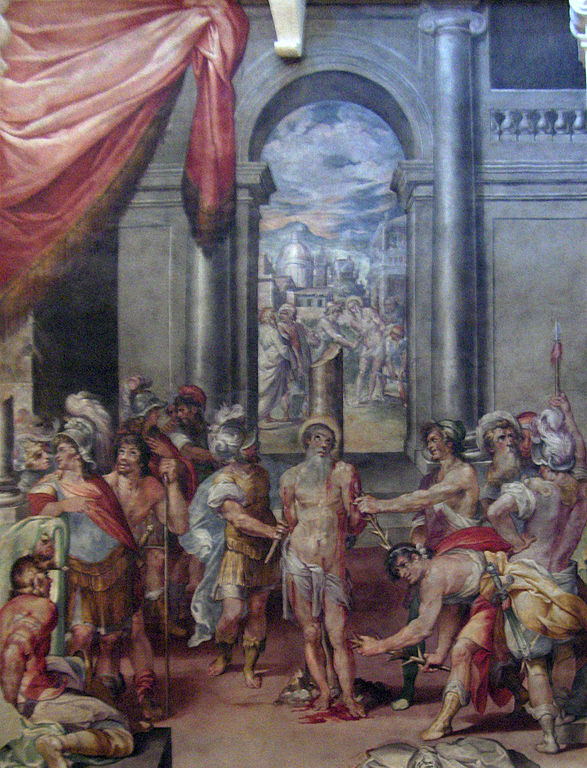
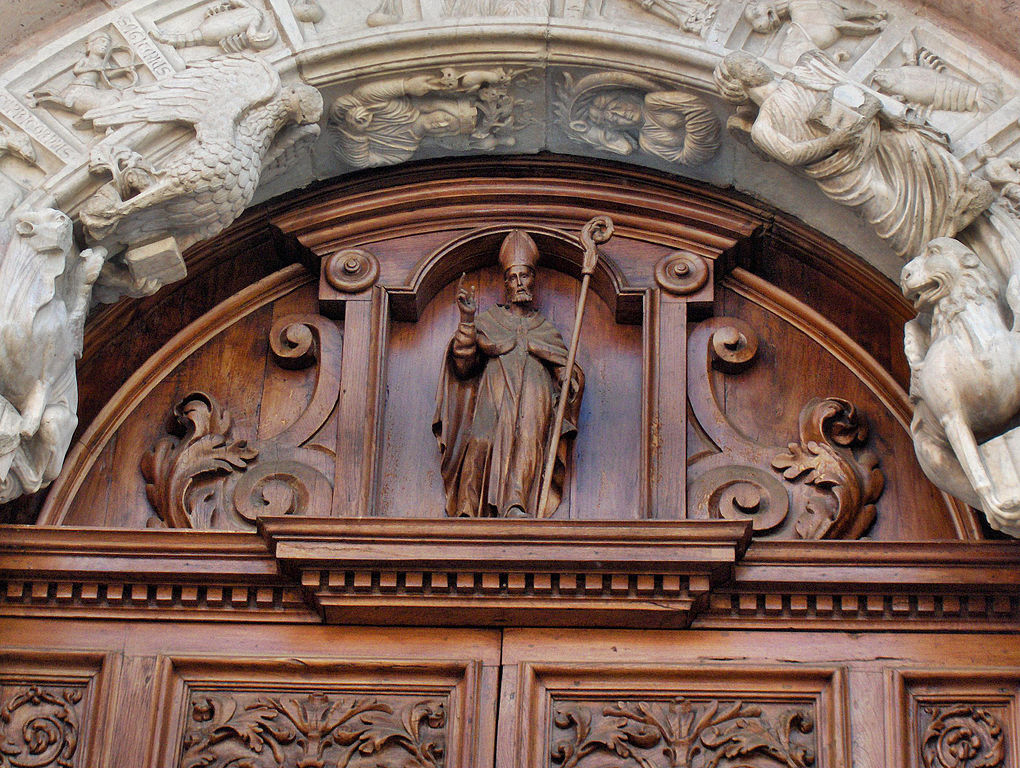
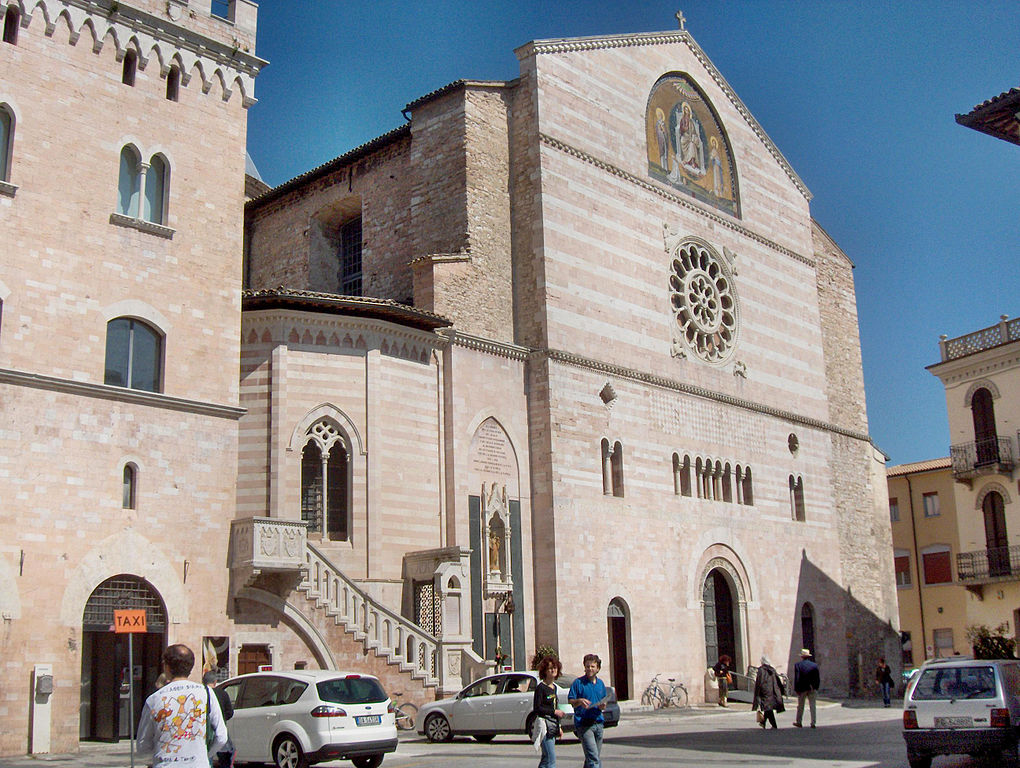

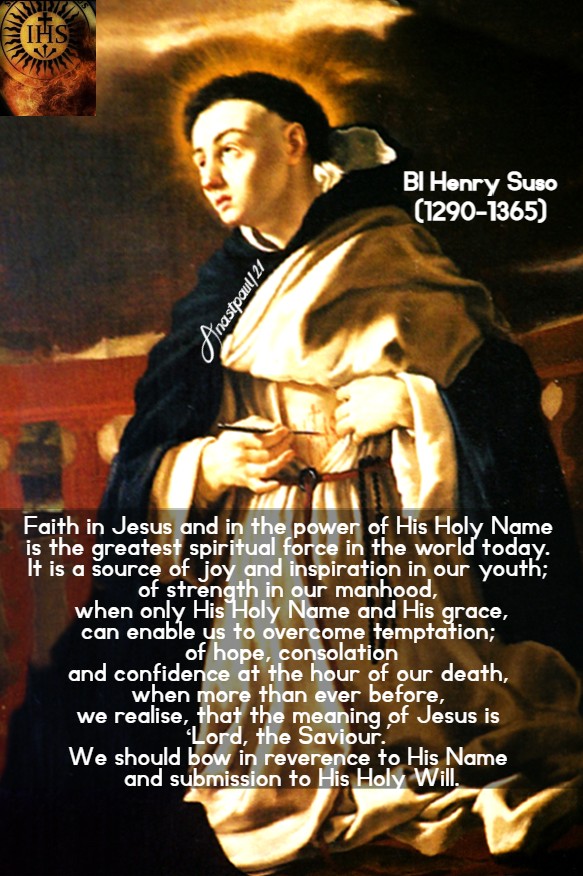
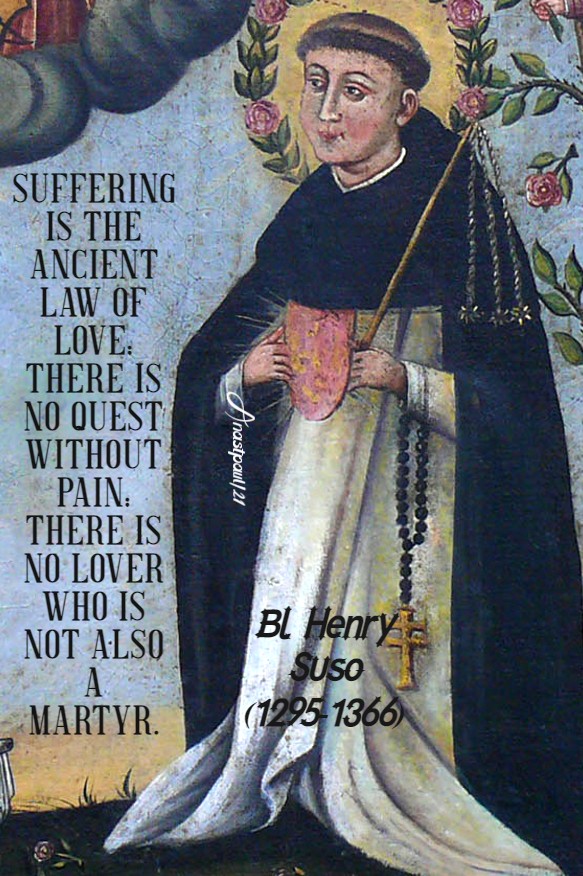

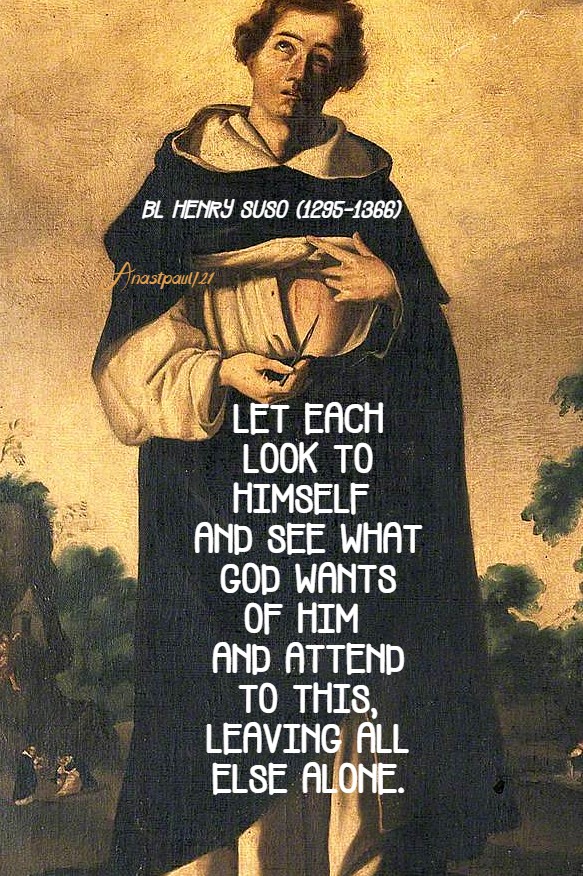
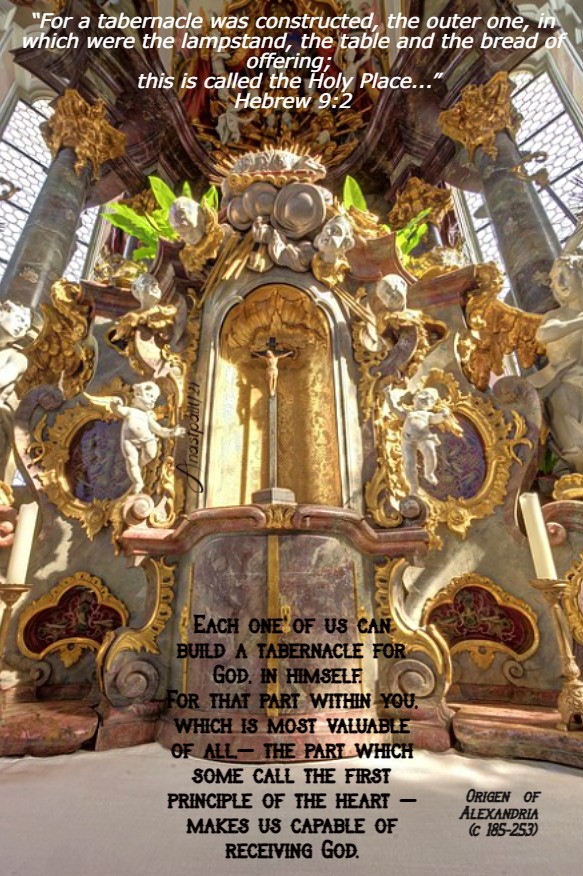

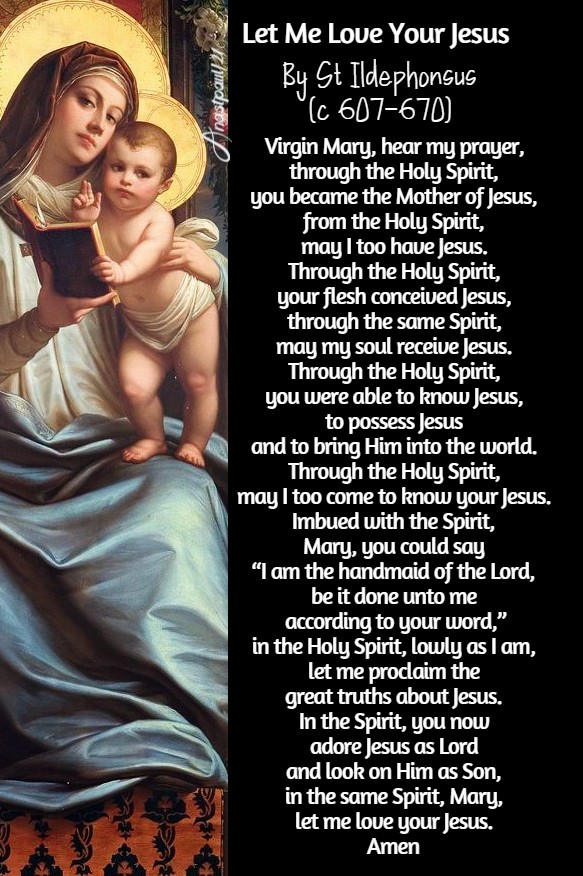

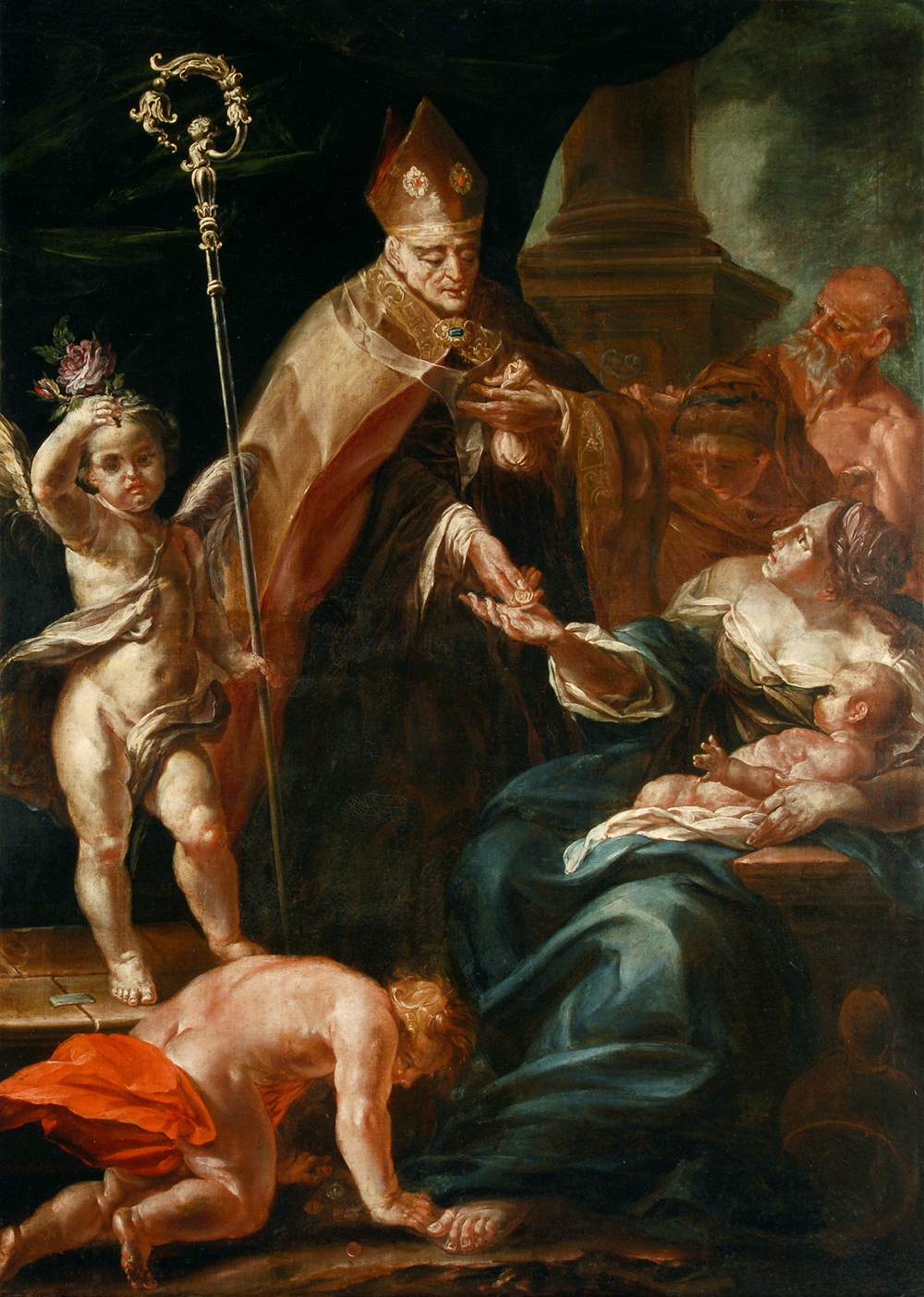
 AnaStpaul
You must be logged in to post a comment.