Saint of the Day – 30 March – Blessed Amadeus of Savoy (1435-1472) IXth Duke of Savoy, nicknamed “the Happy,” was the Duke of Savoy, from 1465 to 1472, apostle of the poor and ill, a pious, humble and gentle ruler. Born on 1 February 1435 in Thonon-les-Bains, France and died on 30 March 1472 at Vercelli, Italy of natural causes, aged 37. Amadeus was a particular protector of Franciscan Friars and endowed other religious houses, as well as homes for the care of the poor and suffering. Patronage – the Royal House of Piedmont.
Amadeus was the son of Duke Louis I of Savoy. He was born in 1435 in Thonon, Savoy and betrothed as an infant to Princess Yolanda, the daughter of Charles VII of France. They were married in 1451 and Amadeus succeeded his father as Duke of Savoy. They had 10 children, one whom, Blessed Louise of Savoy (1461-1503) , the 5th child, became a nun of the Franciscan Second Order, the Poor Clares, after being widowed at a young age, when her husband, the Prince of Chalon, died when she was 27 years of age. As she had no children, the young widow then determined to follow her calling as a nun, refusing many offers of marriage. She used her vast wealth to meet many needs of the poor and entered the Monastery of the Poor Clare nuns in Orbe, now part of modern Switzerland. In the cloister, she showed herself to be a model of humility and obedience, preserving nothing of her royal origins. Louise died at the age of forty-two. She was Beatified by Pope Gregory XVI in 1839. Her Feast is observed on the date of her death, 24 July.
Duke Amadeus proved to be a wise and fair ruler who strived for peace and was known for his compassion and generosity to the poor. On one occasion when a visiting Ambassador proudly honoured himself to Amadeus by speaking of all the fine hunting dogs that his Monarch possessed, the Duke replied by pointing to a terrace filled with tables, at which the hungry were being fed. “These,” he said, “are my packs and my hunting dogs. It is with the help of these poor people that I chase after virtue and hunt for the kingdom of heaven.”
Duke Amadeus was a lifelong victim of epilepsy. Around 1471, his seizures became so incapacitating, that he entrusted the rule of his Duchy to his wife Yolanda. His subjects became discontented and started a revolution, imprisoning the Duke. Only the intervention of King Louis XI of France, his brother-in-law, secured his release.
Amadeus was also an avid collector of manuscripts, adding over sixty items to the Ducal library started by his great-grandfather, Amadeus VIII.
Duke Amadeus IX of Savoy died on 30 March 1472 at the age of 37.
A painting of Amadeus, (see below) created in 1474, was housed in the Dominican Church in Turin and acquired a miraculous reputation. In 1612 a brief text was published in the same City, by Girolamo Cordieri, Canon of the Cathedral chapter of Mondovi, extolling the holy Amadeus. Cordieri was later appointed theologian to Charles Emmanuel I, Duke of Savoy. Also that year, a Canon from Vercelli published a compendium of miracles attributed to the intercession of Amadeus IX. The cultus and cause of Amadeus, was actively promoted by Charles Emanuel’s son, Prince Maurice of Savoy, Cardinal of VercelLI.
Portrait of Amadeus IX. Fresco in San Domenico, Turin
In 1613, a Vita of Amadeus was composed by Fr Pietro-Francisco Malletta. Six years later, the Duke of Savoy issued nine-florin coins depicting Amadeus IX on one side. These appear to have been used as religious medals, particularly in the Chablais, where they were distributed by St Francis de Sales.
Amadeus IX was Beatified on 3 March 1677 by Pope Innocent XI.
Re-establishment of Chapel of Our Lady, Boulogne-sur-mer, by Bishop Dormy – Basilica of Notre-Dame de Boulogne-sur-mer: – 30 March:
The Basilica of Our Lady of Boulogne, also known as the Basilica of Our Lady of the Immaculate Conception, is a minor Basilica in Boulogne-Sur-Mer in northern France. The Basilica is a prominent landmark of the city and was built upon the medieval Cathedral of the same name.
It was in the year 633 that an unmanned boat was seen carrying a luminous Statue of the Blessed Virgin Mary into the estuary at Boulogne. Saint Omer, (also known as Audomare) was the Bishop and the Statue was carried to the Church where miracles soon began to occur. This Statue, known as Notre-Dame de la Mer (Our Lady of the Sea) became a popular object of pilgrimage between the 13th and 16th centuries. In about 1100 a new Church was constructed at the site that underwent many changes over the centuries, including the addition of a choir. It was in this Church that King Edward II was married to Isabella of France. The Church flourished until the advent of the French Revolution, with its liberal principles that overthrew the Catholic Nonarchy, instigated violence, turmoil and anarchy, destroyed the men who set it in motion and, eventually, culminated not in liberty, fraternity and equality among Frenchmen but instead in a cruel dictatorship under Napoleon. The Church of Notre-Dame of Boulogne was seized and worship was prohibited. The structure was used as a military warehouse until it was sold to traders from outside the City, who began demolishing the Church in stages. Finally, in 1793, the miraculous Statue of Our Lady of the Sea was burned, leaving only a small portion of the hand. Only the Crypt of the medieval structure survived and this is the longest Crypt in France. (There is a wonderful article regarding the Basilica and especially, the Crypt here: https://thegoodlifefrance.com/the-crypt-of-notre-dame-cathedral-boulogne-sur-mer/ )
A local Priest, Benoit Haffreingue, vowed to rebuild the Cathedral. He was a self-taught architect, with a strong desire to restore the honour of Our Lady of the Sea and return the Bishop to their City. He led a campaign to garner the support he would need for the work and by his enthusiasm, the public rallied to support the project. Once work was begun, Fr Haffreingue discovered a huge Crypt about 128 meters long. It had been there unknown for centuries, perhaps having been filled in during the time of the siege of Boulogne in 1544 by King Henry VIII of England. The Romanesque style columns were crafted in the 11th century. There were also the foundations of a Roman temple dedicated to Mars and cannonballs used during the 1544 siege. See the Crypt below. The fact that Fr Haffreingue was self-taught, may be the reason that the nave’s slender arches collapsed in the year 1921. During the time the repairs were being made, the whole structure was reinforced with concrete, which many feel made it possible to survive the bombing the City received, during World War II.
__ Blessed Amadeus of Savoy (1435-1472) IXth Duke of Savoy St Clinius of Pontecorvo St Cronan Mochua St Damiano St Domnino of Thessalonica St Fergus of Downpatrick St Irene of Rome Bl Joachim of Fiore St John Climacus (c 525-606) Biography: https://anastpaul.com/2019/03/30/saint-of-the-day-st-john-climacus-c-525-606/
St Julio Álvarez Mendoza St Leonard Murialdo St Ludovico of Casoria St Mamertinus of Auxerre St Marie-Nicolas-Antoine Daveluy MEP (1818-1866) Bishop Martyr His Life and Death: https://anastpaul.com/2020/03/30/saint-of-the-day-30-march-saint-marie-nicolas-antoine-daveluy-mep-1818-1866-bishop-martyr/ Bl Maria Restituta Kafka St Osburga of Coventry St Pastor of Orléans St Patto of Werden St Quirinus the Jailer St Regulus of Scotland St Regulus of Senlis St Secundus of Asti St Tola St Zozimus of Syracuse — Martyrs of Constantinople: ourth-century Christians who were exiled, branded on the forehead, imprisoned, tortured, impoverished and murdered during the multi-year persecutions of the Arian Emperor Constantius. They were martyred between 351 and 359 in Constantinople.
Martyrs of Korea: Marie-Nicolas-Antoine Daveluy Iosephus Chang Chu-gi Lucas Hwang Sok-tu Martin-Luc Huin Pierre Aumaître
Saint of the Day – 29 March – Saint Gladys (Sixth Century) Queen and Hermit, Mother and widow. Patronages – Newport and Gelligaer in Wales. Also known as Gwladys, Gwaladys, Gladusa, Gwladus, Claudia.
Princess Gladys was the eldest – and best attested – daughter of the saintly Irish immigrant, King St Brychan of Brechnock, Wales. With her countless brothers and sisters, she was raised at the Royal & Christian Court at Talgarth, where she grew into a beautiful young woman. Before long, she came to the notice of some of the most eligible bachelors around, particularly Brechnock’s menacing neighbour, King Gwynllyw Farfog (the Bearded).
Gwynllyw sent envoys to King Brychan requesting the hand of his daughter in marriage, but the holy man sent them away. Gwynllyw was a rough pagan warrior King, quite unsuitable for his delicate offspring. The King of Gwynllwg, however, was not so easily put off and decided he would take his prize by force. With three hundred men to help him, he made a daring raid on Brycheiniog and made off with Princess Gladys. Her father, King Brychan pursued him but the two were accosted by their High-King, Arthur. Struck by the lady’s beauty, Arthur was, at first, tempted to take her for himself but his fellows persuaded him to support Gwynllyw’s cause and Brychan was eventually brought round.
Gladys reigned with her husband as a pious and wise monarch, tempering his, often rash, behaviour and slowly converting him. They became the parents of Saint Cadog known as “the Wise” as well as, Eigion, Cyfyw, Cynidr, Maches & Glywys. Cadog – if not all the children – was raised as a Christian by St Tathyw, probably at his mother’s insistence and later helped to convert his father to Christianity.
Saints Cadog, Gwynllyw and Gladys
Gwynllwg desired to abandon his life of violence and seek forgiveness for his sins. A vision led him to found a hermitage on what is now Stow Hill in Newport, South Wales. Gladys accompanied Gwynllyw into an austere life of a hermit and for a while they lived together there, fasting or on a vegetarian diet and bathing in the cold waters of the river but moved apart to avoid temptation. Gladys then founded a separate hermitage at Pencarn, where, upon her husband’s death, she lived and late, at the Capel Wladus in Gelligaer. Here, she was buried and a Celtic cross slab found there is thought to be her memorial. It can now be seen in Gelligaer parish Church.
Since her death, she has been revered as a Saint. Her feast day is the same as her husband’S, 29th March.
Apparition of Our Lady to St Bonitus (7th Century) – 29 March:
The Abbot Orsini wrote: “Apparition of Our Lady to Saint Bonet, Bishop of Clermont, in Auvergne, whom she ordered to say Mass one night when he had remained in the Church to pray. The Saint, leaning against a pillar as if to hide himself, the stone became soft and made the place for him, which is seen to this day. But the Blessed Virgin, having obliged him to officiate, the ceremony being finished, she left him the Chasuble which had been brought him by angels to celebrate in. The heavenly present is still to be seen at Clermont, where it is preserved with great care.”
Saint Bonitus, or Saint Bonet, was the Bishop of Clermont in Auvergne, serving for ten years. He was known to be greatly devoted to the Blessed Virgin Mary. According to tradition, he actually saw the Blessed Virgin Mary while he was praying by himself in Church. On that day he was interrupted from his prayers when he heard angelic voices singing in heavenly harmonies. He lifted his head to see a multitude of Angels entering the Church, their light filling the entire area. With them were many of the Saints, who processed along behind the angels. They were followed by the Queen of Heaven, who was seated upon a magnificent throne that was held aloft by the Seraphim. When the heavenly procession stopped before the main Altar, Saint Bonitus heard some of the Saints ask who was to say Mass. The Blessed Virgin herself turn to Saint Bonitus and said:
“Here is Bonitus, my faithful servant and excellent Bishop. He is worthy of fulfilling this holy function.”
Some of the blessed Saints then detached themselves from the others and approached the holy Bishop, who was startled and trembling as they raised him to his feet. Taking him by the hand, they accompanied him to the choir where they clothed him in a Chasuble of marvellous workmanship, which the Blessed Virgin had brought for him. The Saints and Angels assisted the Bishop as Acolytes. When the Mass was ended, the Blessed Virgin, the Saints and Angels left the Bishop alone again. Two years later, Saint Bonitus retired and went to the Abbey of Manlieu, where he remained until he died in the year 710. The Chasub,e that was the gift of the Blessed Virgin, was kept at Clermont until the year 1793, when it was burned with many other sacred relics by the broad minded insurrectionists of the French Revolution. __ St Acacia of Antioch St Archmimus of Africa St Armogastes of Africa St Barachasius Blessed Bertold of Mount Carmel (Died 1195) His Life: https://anastpaul.com/2020/03/29/saint-of-the-day-29-march-blessed-bertold-of-mount-carmel-died-1195/ St Constantine of Monte Cassino St Eustachio of Naples St Firminus of Viviers St Gladys (Sixth Century) Queen and Hermit St Gwynllyw Bl Hugh of Vaucelles Bl John Hambley St Jonas of Hubaham St Lasar St Ludolf of Ratzeburg O.Praem. (Died 1250) Martyr Biography: https://anastpaul.com/2019/03/29/saint-of-the-day-29-march-st-ludolf-of-ratzeburg-o-praem-died-1250-martyr/ St Mark of Arethusa St Masculas of Africa St Pastor of Nicomedia St Saturus of Africa St Simplicius of Monte Cassino St Victorinus of Nicomedia St William Tempier
Saint of the Day – 28 March – Blessed Antonio Patrizi OSA (c 1280-1311) Priest, Friar of the Order of St Augustine, Prior, Hermit. Born in c 1280 in Siena, Italy and died in c 1311 in Monticiano, Italy. His body is incorrupt.
Anthonio Patrizi was born in Siena sometime in the thirteenth century, although the exact date and year are not known. He was the son of Pietro and Ginerva Patrizi of the prominent house of Patrizi with its origins from Rome.
In 1287 he was entrusted to the Order of Preachers for his studies. On one particular Christmas Eve night, in the Basilica di San Domenico, he was inspired to visit the hospital of Santa Maria della Scala on Christmas day, where he met Pietro de’ Piccolomini who suggested that the two both go to enroll in the Order of Saint Augustine at Leccet. They accordingly proceeded to Leccet, leaving the following day, 26 December and were immediately admitted into the novitiate.
Antonio joined the Order of St Augustine in Lecceto and lived as a Hermit in the Monastery of Lecceto, renowned for its emphasis on contemplative life and the holiness of many of its members. It was here that other well known Friars such as Clement of Osimo, Agostino Novello and William Flete also lived at various times. He was appointed at one point as the Prior of his Lecceto Convent.
Anonio died sometime just after midnight on 23 April 1311 at the Convent of Monticiano, where he was spending the night, while on a visit to his Florentine friend Pietro da Collegonzi.
In the book A Brief Life of Some Hermit Friars by the Anonymous Florentine, the story of Anthonio’s death is recounted. It tells of how, on the night on which he died, assistants of an elderly and gravely ill couple who lived nearby, were looking out a window of the sick couple’s house, which faced the Monastery. They saw coming from the Monastery a brilliant light that appeared to touch the sky. At first they thought that the Monastery was burning but as they watched, they saw that it was not a fire but that there must be, in the Monastery, someone whose holiness touched the heavens. The sick couple also came to the window, saw the light and began to pray, asking that this unknown holy person would heal them of their illness. Immediately they were restored to health. They went to the Monastery, told the Friars what had happened and asked to see the holy man. The Friars went to the room of their guest and discovered that Anthonio had died.
Antonio’s remains were interred in a grave where it was said to have caused lilies to grow during the wintertime. His incorrupt remains were later transferred to the local church of Santi Pietro e Paolo – later renamed in his honour – and were transferred on two more occasions in 1616 and 1700.
Antonio received formal Beatification from Pope Pius VII on 1 March 1804 after the latter ratified the Antonio’s local ‘cultus’ – or popular devotion – that had endured from his death.
Nuestra Senora de Castelbruedo / Our Lady of Castelbruedo, Catalonia, Spain – 28 March:
The Abbot Orsini wrote of this feast day: “It is related, that every year, on the day of the Annunciation, three lights were seen of a blue colour, which shone through the glass windows of this Church at Olion in Catalonia, lighted the lamps and wax candles and immediately disappeared.”
There is a legend that at Olion, in Catalonia, Spain, Our Lady was once venerated under the title of Our Lady of Castelbruedo, or Nuestra Senora de Castelbruedo. The lamps and the wax candles of the Church were likewise lit by invisible hands on the Solemniy of the Annunciation and all disappeared three days after the feast, on the twenty-eighth of March. Despite all subsequent investigations, the lights and their extinguishing, could not be accounted for but it was universally believed, that all this was all to honour Our Lady and the great feast of the announcement of Our Lord’s incarnation. The Church at Olion referred to by the good Abbot, must be one that was once located in Oliana, Spain and not Olion, as it appears. For there is no longer any such City in Spain. Oliana is in Catalonia and is a very small municipality of a few hundred inhabitants in the Sergre valley just below the Oliana reservoir. There is no Catholic Church there any longer, however and the only Church anywhere nearby, is the Church of St Clement near Coll de Nargo, which appears to be about 6 miles away. It dates from the 11th century but looks as if it is little more than an abandoned structure in our day. The region is popular now with those involved in rock-climbing. I can find no further information about this site. If anyone has any information on this Marian title, please forward it to me for inclusion on this website and for the edification of all Catholics. __ St Alkelda of Middleham Blessed Antonio Patrizi OSA (c 1280-1311) Priest St Castor of Tarsus Bl Christopher Wharton Blessed Conon of Naso (1139-1236) His Life: https://anastpaul.com/2020/03/28/saint-of-the-day-28-march-blessed-conon-of-naso-1139-1236/ St Cyril the Deacon Bl Dedë Maçaj St Donal O’NeylaC St Dorotheus of Tarsus St Gundelindis of Niedermünster St Guntramnus St Hesychius of Jerusalem St Hilarion of Pelecete Bl Jean-Baptiste Malo Bl Jeanne Marie de Maille St Proterius of Alexandria Bl Renée-Marie Feillatreau épouse Dumont St Rogatus the Martyr St Successus the Martyr St Tutilo of Saint-Gall Blessed Venturino of Bergamo OP (1304-1346) Biography: https://anastpaul.com/2019/03/28/saint-of-the-day-28-march-blessed-venturino-of-bergamo-op-1304-1346/
Saint of the Day – 27 March – Blessed Pellegrino of Falerone OFM (Died 1233) Lay Brother of the First Order of St Francis of Assisi. He died in 1233 at the Convent of St Severino in the Marches, Italy of natural causes.
Peregrino of Falerone was a fellow student at Bologna University of Blessed Rizziero of Muccia (Died 1235) and like him, the scion of a noble family. Peregrino was the son of Roger, the wealthy Lord of Falerone.
When, after a sermon preached by St Francis at Bolobna, both these young men abandoned their studies and asked him for the religious habit, becoming amongst the first followers of St Francis, who said to Peregrino:
“You, my son, will serve God in the humble vocation of a lay brother and you should apply yourself to practice humility, in a special way.”
For the young nobleman who, until now, had studied philosophy and jurisprudence with great success, it was a great trial that the vocation of a lay brother should be assigned to him. But Peregrino gave proof, that he possessed true nobility of soul and that he valued the lowest place in Christ’s service, higher than all the honours of the world.
Joyfully he received the habit as a lay brother and strove, above all, to lay a firm foundation in humility. On this secure foundation he then built up all the other virtues in a high degree. At some point, he made a pilgrimage to the Holy Land to visit and follow the steps of our Saviour.
One of the first disciples of St Francis, did not hesitate to assert, that Brother Peregrino was one of the most perfect religious in the whole world.
Peregrino was Beatified on 31 July 1821 by Pope Pius VII.
Apparition of Our Lord to Our Lady, as soon as He was risen – 27 March:
There is nothing in Scripture that says Jesus appeared to His Mother after His resurrection. Not everything that occurred is recorded in Scripture (Jn. 21:25), therefore, just because it is not recorded does not mean it did not happen.
Pious belief has long held, that Jesus must have appeared to His Mother before anyone else. The popular belief of why it was not recorded in Scripture, is that the other appearances of Jesus, were written and publicised as proof of the risen Christ, whereas His appearance to His Mother, was a private and personal appearance, born of a deep communion of love.
Pious belief has also noted the absence of Jesus’ mother on Easter morning. Why did she not go to the tomb? Why was Jesus already missing? When news of Jesus’ Resurrection spread amongst His followers, why did Jesus’ Mother not follow them to the tomb? Pious belief has reasoned, that Jesus must have appeared to His Mother immediately following His Resurrection. Indeed, it is legitimate to think, that the Mother was probably the first person to whom the risen Jesus appeared. Could not Mary’s absence from the group of women, who went to the tomb at dawn, (cf. Mk 16:1; Mt 28:1) indicate that she had already seen her Son Jesus?
Out of interest, all these great masterpieces of the Catholic faith shown here were painted at least 500 years plus ago – this first apparition of Our Risen Lord to His Mother, has always been believed!
St Matthew of Beauvais St Macedo of Illyria St Panacea de’Muzzi of Quarona Blessed Pellegrino of Falerone OFM (Died 1233) Lay Franciscn Brother Bl Peter Jo Yong-sam St Philetus St Romulus the Abbot St Rupert of Salzburg (c 660–710) Biography of St Rupert: https://anastpaul.com/2019/03/27/saint-of-the-day-st-rupert-of-salzburg-c-660-710/ St Suairlech of Fore St Theoprepius — Martyrs of Bardiaboch: A group of Christians who were arrested, tortured and executed together for their faith during the persecutions of Persian king Shapur II. Martyrs. – Abibus, Helias, Lazarus, Mares, Maruthas, Narses, Sabas, Sembeeth and Zanitas. 27 March 326 at Bardiaboch, Persia.
Saint of the Day – 26 March – Saint Castulus of Rome (Died c 288) Martyr, married to Saint Irene of Rome (the woman who assisted St Sebastian after he had been wounded by the Imperial archers), Military Officer and he was the Chamberlain (or officer, valet) of Emperor Diocletian. Martyred in c in 288 on the Via Labicana outside Rome near the Colosseum. Patronages – against blood poisoning, against drowning, against skin diseases and rashes, against fever, against horse theft, against lightning, against storms, against wildfire, cowherds, farmers, shepherds, Hallertau, Germany, Moosburg an der Isar, Germany.
The Roman Martyrology states: “At Rome, on the Labicana road, St Castulus, Martyr, Chamberlain in the Palace of the Emperor. For harbourig Christians, he was three times suspended by the hands, three times cited before the Tribunals and as he persevered in the confession of the Lord, he was thrown into a pit, overwhelmed with a mass of sand and thus obtained the crown of martyrdom.”
Castulus was a convert to the Christian religion. He sheltered Christians in his home and arranged for religious services, unbelievably, inside Emperor Diocletian’s Palace. Among those he sheltered, were the Saints and Marytrs, Mark and Marcellian. He is one of the saints associated with the life and martyrdom of Saint Sebastian.
With his friend Saint Tiburtius, he converted many men and woman to Christianity and brought them to Pope Saint Caius to be baptised. He was betrayed by an apostate named Torquatus and taken before Fabian, prefect of the City.
He was tortured and executed by being buried alive in a sand pit on the Via Labicana. According to traditional sources, his wife, Irene subsequently buried the body of the martyred Saint Sebastian. She was later be martyred herself, it is thought also in c 288.
A Church is dedicated to him in Rome, built on the site of his martyrdom and has existed, from at least the seventh century.
Castulus was venerated in Bavaria after relics of his were taken to Moosburg. Duke Heinrich der Löwe started the construction of the Castulus Cathedral in 1171.
In 1604, relics were also brought to Landshut, Germany. His relics still rest in Landshut’s Church of St Martin’s and in the Church of St Castulus, Prague.
Notre-Dame de Soissons / Our Lady of Soissons, France (1128) In the Abbey, one of Our Lady’s slippers is kept – 26 March:
In the year 1128, a Plague afflicted the City of Soissons. For six consecutive days the victims went to the Shrine of Our Lady and called out to her for help. The Blessed Virgin Mary appeared to them, accompanied by heavenly hosts of Angels. Immediately the people, who witnessed the miracle and believed, were cured. The Bishop asked all who were cured to celebrate a Novena of thanksgiving and to kiss the slipper of the Holy Virgin kept in the Church.
A rustic , a servant of one of the Knights of Soissons, a man named Boso, came to the Church for the festival which was to follow the Novena. While his companions gave gifts and talked of the slipper of Our Lady, he gave nothing and scoffed at the idea, muttering, “You are very foolish to believe this to be the Virgin’s slipper. It would have rotted long ago.” At these words Boso’s blasphemous mouth was drawn toward his ear with such sharp pain that his eyes seemed to slip out of his head. A tumour appeared and covered his face, making it unfit for human use. Roaring and writhing, he threw himself before the Altar of Mary, begging for help, as he had offended the Mother of God and he knew there was no-one else who could heal him. The Abbess, a woman named Mathilda, took the slipper and made the Sign of the Cross over the victim. Immediately he began to heal. The punished scoffer repented and gave himself up to the service of the Church of Soissons. Many – the lame, the blind, the deaf, the dumb, the paralytics, were healed at the Shrine. The Abbey was once the largest in France, famous for its rich collection of relics, including the “Lady Slipper” but all that remains today of the Abbey is a ruined wall with two arches, as the rest was methodically razed by the eager hands of the devotees of the French Revolution.
Martyrs of Rome – 5 saints: A group of Christians martyred together. The only details to survive are the names – Cassian, Jovinus, Marcian, Peter and Thecla. Rome, Italy, date unknown.
Saint of the Day – 25 March – Saint Dismas “The Good Thief” the first Saint – crucified alongside Jesus Christ in 33. Patronages – condemned prisoners, all prisoners, dying people, funeral directors, penitents, penitent criminals, prison chaplains, prisoners, prisons, reformed thieves, undertakers, Przemysl, Poland, Archdiocese of, Merizo, Guam. Also known as The Penitent Thief, The Good Thief on the Cross, Demas, Desmas, Dimas, Dysmas, Rach, Titus, Zoatham.
The Roman Martyrology, on the 25th of March, makes mention of the Good Thief, who, according to tradition, is called Dismas, in the following words:
“At Jerusalem, on this day, is the Feast of the Good Thief, who acknowledged Christ on the Cross and from Him, deserved to hear the words: ‘This day shalt thou be with Me in Paradise.“
The sudden change and conversion, for Dismas from a sinner, became a penitent and Saint, has been rightly attributed to the prayers of our Blessed Lady. Mary, say the holy Fathers, who had obtained the soul of the malefactor, as a recompense of her sorrows and the price of her compassion.
Saint Peter Damien assures us, that Mary prayed for the thief who was on the right side of the Cross, on which side she also stood and exhorted him, to hope in Jesus and to do penance.
Saint Anselm, in a treatise on the youth of Jesus, relates the following incident about the early years of Saint Dismas, which he says is a pious legend:
“Dismas was living in a forest on the confines of Egypt, when Mary went thither with the Child Jesus, to escape the rage of Herod. He was a highwayman and the son of the chief of a band of robbers. One day, as he lay in ambush, he saw a man, a young woman and a little Child approaching, from whom he rightly expected no opposition. Therefore, he went towards them, with his comrades, with the intention to ill-treat them. But he was at once so charmed with the supernatural beauty and grace which shone on the countenance of Jesus, that instead of doing them harm, he gave them hospitality in the cave which he inhabited and made ready for them, everything of which they stood in need. Mary was grateful for the tenderness and care, which the robber bestowed on her Beloved Son and warmly thanking him, she assured him that he would be rewarded before his death. This promise was fulfilled later, when Dismas was crucified with the Saviour of the World and obtained the grace of repentance in his last hour, openly confessing Jesus Christ’s Divinity. When the Apostles had fled, he had the happiness of receiving the first fruits of the Redeemer’s Sacrifice and soon after, entered the Heavenly Kingdom with his Saviour.”
Dismas is considered the Patron of penitents and is especially invoked for the conversion of hardened and obstinate criminals and sinners.
The Church has indeed sanctioned the veneration given to this Saint, with a most beautiful Office, in his honour.
A tradition, which has come down from the apostolic ages, tells us that the great mystery of the Incarnation, was achieved on the twenty-fifth day of March. It was at the hour of midnight, when the most holy Virgin was alone and absorbed in prayer, that the Archangel Gabriel appeared before her and asked her, in the name of the Blessed Trinity, to consent to become the Mother of God. Let us assist, in spirit, at this wonderful interview between the angel and the Virgin: and, at the same time, let us think of that other interview which took place between Eve and the serpent. A holy Bishop and Martyr of the second century, Saint Irenaeus, who had received the tradition from the very disciples of the Apostles, shows us that Nazareth, is the counterpart of Eden.
In the garden of delights there is a virgin and an angel and a conversation takes place-between them. At Nazareth a virgin is also addressed by an angel and she answers him but the angel of the earthly paradise, is a spirit of darkness and he of Nazareth, is a spirit of light. In both instances, it is the angel that has the first word. ‘Why,’ said the serpent to Eve, ‘hath God commanded you, that you should not eat of every tree of paradise?’ His question implies impatience and a solicitation to evil, he has contempt for the frail creature to whom he addresses it but he hates the image of God, which is upon her.
See, on the other hand, the angel of light; see with what composure and peacefulness he approaches the Virgin of Nazareth, the new Eve and how respectfully he bows himself down before her: ‘Hail, full of grace! The Lord is with thee! Blessed art thou among women!’ Such language is evidently of heaven, none but an angel could speak thus to Mary.
Scarcely has the wicked spirit finished speaking than Eve casts a longing look at the forbidden fruit, she is impatient to enjoy the independence it is to bring her. She rashly stretches forth her hand, she plucks the fruit, she eats it and death takes possession of her: death of the soul, for sin extinguishes the light of life; and death of the body, which being separated from the source of immortality, becomes an object of shame and horror and finally, crumbles into dust.
But let us turn away our eyes from this sad spectacle and fix them on Nazareth. Mary has heard the angel’s explanation of the mystery, the will of heaven is made known to her and how grand an honour it is to bring upon her! She, the humble maid of Nazareth, is to have the ineffable happiness of becoming the Mother of God and yet, the treasure of her virginity is to be left to her! Mary bows down before this sovereign will and says to the heavenly messenger: ‘Behold the handmaid of the Lord, be it done unto me, according to thy word.’
Thus, as the great St Irenaeus and so many of the holy fathers remark, the obedience of the second Eve, repaired the disobedience of the first, for no sooner does the Virgin of Nazareth speak her fiat, ‘be it done,’ than the eternal Son of God (who, according to the divine decree, awaited this word) is present, by the operation of the Holy Ghost, in the chaste womb of Mary and there, He begins His human life. A Virgin is a Mother and Mother of God and it is this Virgin’s consenting to the divine will, that has made her conceive by the power of the Holy Ghost. This sublime mystery puts between the eternal Word and a mere woman, the relations of Son and Mother, it gives to the almighty God, a means whereby He may, in a manner worthy of His majesty, triumph over satan, who hitherto seemed to have prevailed against the divine plan.
Never was there a more entire or humiliating defeat than that which this day befell satan. The frail creature, over whom he had so easily triumphed at the beginning of the world, now rises and crushes his proud head. Eve conquers in Mary. God would not choose man for the instrument of His vengeance, the humiliation of satan would not have been great enough and, therefore, she who was the first prey of hell, the first victim of the tempter, is selected to give battle to the enemy. The result of so glorious a triumph is, that Mary is to be superior not only to the rebel angels but to the whole human race, yea, to all the angels of heaven. Seated on her exalted throne, she, the Mother of God, is to be the Queen of all creation. Satan, in the depths of the abyss, will eternally bewail his having dared to direct his first attack against the woman, for God has now so gloriously avenged her and, in heaven, the very Cherubim and Seraphim reverently look up to Mary and deem themselves honoured, when she smiles upon them, or employs them in the execution of any of her wishes, for she is the Mother of their God.
Therefore is it that we, the children of Adam, who have been snatched by Mary’s obedience from the power of hell, solemnise this day of the Annunciation. Well may we say of Mary, those words of Debbora, when she sang her song of victory over the enemies of God’s people: ‘The valiant men ceased and rested in Israel, until Debbora arose, a mother arose in Israel. The Lord chose new wars and He Himself, overthrew the gates of the enemies.’ Let us also refer to the holy Mother of Jesus, these words of Judith, who by her victory over the enemy was another type of Mary: ‘Praise ye the Lord our God, who hath not forsaken them that hope in Him. And by me, His handmaid, He hath fulfilled His mercy, which He promised to the house of Israel and He hath killed the enemy of His people, by my hand this night. . . . The almighty Lord hath struck him and hath delivered him into the hands of a woman and hath slain him.’
Our Lady of Betania: The name Betania means Bethany in Spanish. It was originally given this name by Maria Esperanza and was the site of their farm, in Venezuela. Apparitions of the Blessed Virgin Mary were reported and eventually a small Chapel was built there and the faithful began to gather, especially on Feast Days but throughout the year.
St Alfwold of Sherborne St Barontius of Pistoia St Desiderius of Pistoia St Dismas (Crucified with Jesus) “The Good Thief”
Bl Everard of Nellenburg Bl Herman of Zahringen St Hermenland St Humbert of Pelagius Bl James Bird Bl Josaphata Mykhailyna Hordashevska St Kennocha of Fife St Lucia Filippini St Marie-Alphonsine/Mariam Sultaneh Danil Ghattas (1843-1927) About St Marie-Alphonusine: https://anastpaul.com/2020/03/25/saint-of-the-day-25-march-st-marie-alphonsine-danil-ghattas-1843-1927/ St Matrona of Barcelona St Matrona of Thessaloniki St Mona of Milan St Ndre Zadeja Bl Pawel Januszewski St Pelagius of Laodicea Bl Placido Riccardi St Procopius St Quirinus of Rome Bl Tommaso of Costacciaro — 262 Martyrs of Rome: A group 262 Christians martyred together in Rome. We know nothing else about them, not even their names.
Saint of the Day – 24 March – Blessed John dal Bastone OSB Silv. (c 1200-1290) Priest, Monk. Born Giovanni Bonello Botegoni on 24 March c 1200 in Paterno, Fabriano, Italy, died 24 March 1290 in Fabriano, at the age of 90 years. Also known as Giovanni Bonello Botegoni, John Bottegoni, John of the Staff, John of the Club.
John was born into a wealthy farming family. His father Bonello and mother Superla, had five children and John was the youngest. Because of his studious nature, his parents sent him to Bologna to study Humanities. There, he became afflicted with a purulent sore on the side of one of his hip bones. On his way home, he rode on a donkey, which made his thigh on the afflicted side, painful too. Thereafter, he was crippled for the rest of his life and was forced to walk with a staff, for this he was sometimes called John of the Staff.
John became attracted to the fame and sanctity of the venerable Saint Sylvester Gozzolini (1177 – 26 November 1267), who was the Founder of the Order of the Sylvestrine Congregation, and went to meet him for spiritual direction. In 1230 he was admitted to the Congregation and adopted the monastic life. He lived for 60 years in a small cell of the Hermitage of Montefano. He became renowned for his love of humble solitude, for prudence and for his counsel. After this long period, Sylvester raised him to the Priesthood.
During all these years, John’s body was racked with pain but, he nevertheless, continued to live a life of asceticism. He lived in extreme poverty and had no possessions beyond those of his basic needs. His fellow Monks confidently sought his advice in their difficulties and doubts. He continued to preach and offer solace to all who sought his counsel.
After Sylvester died in 1267, John’s illness became more severe and he was taken to a hospital at Fabriano, where he died. His body was laid in the Church of St Benedict in Fabriano.
Tomb in the Crypt of Blessed John dal Bastone at the Cloister Church of St Benedict, Fabriano
On 29 Aug 1772, he was Beatified by Pope Clement XIV. On 27 October 1872, in the centenary year of his Beatification, the first Foundation stone was laid for a Church in his honour in Pelawatte, Battaramulla, Sri Lanka. The Church was completed in 1881. It was originally administered by the Silvestrines but in 1972 it was entrusted to the Franciscans.
In 2006, the Sri Lanka Post issued a stamp commemorating the 125th Anniversary of the Church, which is the only one in the world, to be dedicated to Blessed John dal Bastone.
Notre-Dame de L’épine Fleurie / Our Lady of the Flowering Thorn, France – 24 March:
From the infancy of the Church, images of our Blessed Lady have been in use among the faithful to enkindle and keep alive in their hearts a tender devotion to the Mother of God. When the barbarians overran the Roman Empire, the Christians, fearful of profanation, hid these paintings and Statues of the Blessed Virgin, in the most secret recesses of caves and forests. The Huns and vandals spared neither age nor sex and when the tumult of war had subsided, oftentimes, few or none remained to withdraw those images from their hiding places and they rested, until the providence of God, allowed them to be discovered and often, in a miraculous manner. “Our Lady of the Flowering Thorn” was one of these and the marvellous circumstances of the discovery, are thus related by a chronicler of the olden time:
“On the western side of the Jura, France, there once stood an old baronial residence. Its noble owner had heard the voice of St Bernard calling through the length and breadth of the land, to the rescue of Jerusalem and of the Holy Sepulchre. He had listened to the thrilling words, “Hail to thee, holy City, City of the Son of God, chosen and sanctified to be the source of salvation to man. Sovereign of nations, capital of empires, metropolis of patriarchs, mother of prophets and apostles, hail to thee.” The infidel had taken possession of her, and Christendom rose to the rescue. Who has not heard of what the world calls the fatal ending of St Bernard’s crusade! Yet surely not fatal to those devoted souls, whom the love of God inspired to fight for the land where Jesus suffered and died for them and who fell on the battlefield, to rise and grasp the crown of glory. Among those heroes of the Cross fell the Lord of our castle on the Jura, leaving a widow to mourn her loss while she rejoiced in his gain. “Sorrowful, yet always rejoicing.” Their names have been lost in the lapse of ages, he is only remembered as the crusader, she as the saint. It was on one of those days when winter, about to leave the earth, seems to cast himself into the bosom of spring, that our saint was walking along the avenue of her castle, her mind full of pious meditation. She had reached the termination of the avenue, when her eye was attracted toward a thorny bush, and there she saw an arbutus laden with the richest blossoms of spring. She hastened towards it, doubtful whether the flakes of snow had not deceived her but no, she found it crowned with a multitude of little white stars shaded with crimson rays and she carefully broke off a branch to hang up in her oratory, over an image of the Blessed Virgin which she had venerated from childhood. She joyfully returned towards the castle, carrying her innocent offering. Whether this little tribute was really agreeable to the Mother of Jesus, or whether it was only that pleasure, which the heart feels at the slightest effusion of tenderness, towards a beloved object, the soul of the lady was that evening filled with the most ineffable sweetness. She promised herself a great deal of pleasure in going every day to gather a fresh garland to adorn the statue of her Mother Mary, and she was faithful to her resolution. Now it happened that one day, being very busy in relieving the wants of the poor who came to her for alms and kind words, she could not go to gather her garland before the shades of evening had covered the earth and as she approached the thicket, an uneasy feeling came over her, occasioned by the increasing darkness. S he was thinking that it would be difficult to gather the flowers, when a calm clear light seemed to overspread the bushes. Startled at the sight, and fearing that robbers might be lurking there, she paused for a moment, but remembering she had never once omitted to bring her offering, she boldly ventured forward, though it was with a trembling hand she plucked the branch, that seemed as if it bent towards her. During that night and all the next day, the lady reflected on what she had seen, without being able to account for it and her heart, being penetrated with the mystery, she went the following evening to the thicket, accompanied by a faithful servant and her old Chaplain. The soft light was seen as they approached, becoming every instant brighter and more vivid. They stopped and fell upon their knees, for it seemed to them, that this light came from heaven . Then the good old Priest arose and moved with reverential steps toward the thicket, chanting a hymn of the Church; he put aside the branches which appeared to open of their own accord, and there, a little image of the Blessed Virgin, rudely carved by unskilled though pious hands, was descried in the midst of the bushes and it was from this Statue that the light emanated. “Hail Mary, full of grace,” said the Priest, kneeling before the image, “and at that moment a melodious murmur was heard through the surrounding woods, as if the chant had been taken up by the choirs of angels.” He then recited those admirable litanies in which faith speaks the language of the most sublime ecstasy and after repeated acts of veneration, he took the Statue in his hands to carry it to the castle, where it would rest in a sanctuary more worthy of it. The lady and her servant followed with hands joined and bowed heads, repeating the responses of the solemn litany. It is needless to tell of the elegance and rich decorations of the niche where the holy image was placed, surrounded with blazing lights and rich perfumes, while the lady and her household knelt in prayer until morning advanced—but lo! when the beams of the orb of day arose upon the earth, the image was nowhere to be seen. Why had the heavenly Virgin deserted the widowed saint? What new dwelling had she chosen? The blessed Mother of the lowly Jesus had preferred the modest shelter of her flowery thorns, to the splendour of a worldly dwelling; she had returned to the freshness of the woods, to taste the peace of solitude and the sweet exultations of the flowers. All the inhabitants of the castle proceeded at evening to the wood and found it more resplendent than ever. They knelt in respectful silence. “Queen of angels, Queen of all saints,” said the Chaplain, “it is here thou art pleased to dwell, be it as thou wilt.” And soon a Chapel was raised on the spot, embellished with all the architectural beauties those ages of faith and poetic sentiment could inspire. The rich adorned it with gifts, and kings lavished it with jewels and gold. The renown of the miracles wrought there, drew large crowds of pilgrims and ere long, a convent reared its head, of which the saint became the superior. She died full of years and good works and our Lady of the Flowering Thorn received her pure soul and carried her in her maternal arms to the blissful bowers of paradise, where thornless flowers bloom forever, around the Throne of God. Still, each spring, till Time is no more, the thorn trees bloom and white petals testify to those who will listen, to the tale that no scientist would believe, the story of Our Lady of the Flowering Thorn. If you wish to check on the details, you might go yourself to the forgotten valley, near the highest peak of the Jura and walk among the ruins there. As you kneel on the grassy stone that once formed the arch above the Chapel window, say a prayer to Our Lady for the one from whom I heard the tale, for me and for all lovers and devotees of Mary. Amen.”
The 29th “Day of Missionary Martyrs” + 2021 “In Love and Alive” A day of prayer and fasting in memory of the missionary Martyrs of the Faith.
St Pigmenius of Rome St Romulus of North Africa St Secundus of North Africa St Seleucus of Syria St Severo of Catania St Timothy of Rome — Martyrs of Africa – 9 saints: A group of Christians murdered for their faith in Africa, date unknown. The only details about their that survive are the names – Aprilis, Autus, Catula, Coliondola, Joseph, Rogatus, Salitor, Saturninus and Victorinus. .
Martyrs of Caesarea – 6 saints: A group of Christians martyred together in the persecutions of Diocletian. We know little else but six of their names – Agapius, Alexander, Dionysius, Pausis, Romulus and Timolaus. They were martyred by beheading in 303 at Caesarea, Palestine.
Saint of the Day – 23 March – Saint Walter of Pontoise OSB (c 1030-c 1099) A very reluctant Abbot, Reformer, would-be hermit. Born in c 1030 in Andainville, Picardy, France and died on Good Friday, 8 April 1099 of natural causes. Patronages – against job-related stress, prisoners, prisoners of war, vintners, Pontoise, France.
Walter had been a Professor of philosophy and rhetoric before deciding to join the Benedictine Abbey of Rebais-en-Brie to retreat from the world and the temptations success had brought him.
When the Cross Benedictine Abbey in Pontoise was founded, Walter was chosen as its first Abbot. By custom, the Abbot placed his hand under the king’s hand during the installation. Instead, Walter placed his hand over the hand of King Philip I and told him: “It is from God, not from your majesty, that I accept the charge of this church.”
Walter soon decided that embracing the Office of Abbot sid not leave him enough time for solitude and prayer, so he secretly left the Abbey and went to the Benedictine Abbey at Cluny, where St Hugh was the Abbot.
When the Monks at Pontoise learned where he was, they forced him to return, so he often moved into a cell for days at a time. Eventually, he fled again, this time to an island in the Loire River. The Monks brought him back again after a pilgrim told them where he was.
Walter hadn’t given up his dream to live as a simple Monk, so he went to Rome to appeal to Pope Gregory VII and resign his position as Abbot. However, Pope Gregory dashed Walter’s plans, telling him to go back to the Abbey and use his God-given talents for the best of his fellow Monks. This order seemed to change everything and Walter never again tried to escape.
Not that he led a quiet life. as the Abbot. For after his visit to Pope Gregory, he campaigned against the abuses and corruptions of his fellow Benedictines and denounced clerical abuses, especially among secular Priests, whom he criticised for lack of discipline and for simony. They responded by having him beaten and imprisoned. That didn’t stop Walter who, at a 1092 Church Council in Paris, defended a Vatican decree banning the faithful from going to Masses offered by Priests, living with a concubine.
Walter continued living as simple life as possible and being faithful to his administrative and pastoral functions as the Abbot. But, to find his own solace, he often spent the night in prayer before the Tabernacle in Church.
Shortly before his death on Good Friday, he built the Convent of Our Lady at Bertaucourt for Nuns.
Walter was buried in the Abbey at Pontoise. Numerous miracles were reported at his tomb. His remains were stolen during the French Revolution. Most were not recovered.
He was Canonised by Hugh de Boves, the Archbishop of Rouen in 1153 and was one of the last Saints in Western Europe, to have been Canonised by an authority, other than the Pope.
Walter is the Patron of prisoners because while he was a novice, he once took pity on an inmate at the Monastery prison and helped the prisoner to escape.
Madonna della Vittoria di Lepanto / Our Lady of Victory of Lepanto and Hungary, (1716) – 23 March:
The Battle of Lepanto was a naval engagement that took place between the ships of the Catholic Holy League under Don Juan of Austria and the navy of the Ottoman Empire under Ali Pasha, supported by a large fleet of corsairs. The Ottoman Empire was far too powerful for any one Christian kingdom to stand against it and, although all of Western Europe was threatened, only Spain, the Papal States, the Duchy of Savoy, the Republic of Venice, the Republic of Genoa and the Knights of Saint John, took a stand against them. Altogether they still had only 212 ships against no less than 278 ships. For hundreds of years the Ottoman Empire had been making advances into Europe, while also making lightning raids along the coastlines to pillage and take slaves. They intended to eventually overwhelm all of Europe and at that time, Catholics stood almost alone against them, as no Protestant force would do anything to oppose the invasion. The advantage in this contest went strongly to the Turks and so, Pope Pius V implored all of Christendom, to pray the Rosary to the Blessed Virgin Mary, to obtain her intercession before the throne of God, for their victory. Admiral Andrea Doria sailed to meet the Turks with an image of the Blessed Virgin prominently displayed in his flagship’s state room. The Venetian forces on Cyprus, had been under siege by the Turks, during the time that the Catholic forces were preparing to meet them. On 1 August they surrendered, after being assured, that they could leave the island unopposed. The Ottoman commander broke his solemn oath, however, taking the Venetians captive and flaying their captain while he was yet alive. Once he had completed this unspeakable torture, the captain’s dead body was hung from a spar on Mustafa’s flagship alongside the heads of all the Venetian commanders. This was the type of barbarism the Catholic forces sailed to oppose. The engagement took place on the 7th of October 1571, only 6 years after the Knights of Saint John defeated a powerful Ottoman army at Malta. Don Juan of Austria encouraged his men by telling them that “There is no paradise for cowards.” If they should lose the engagement, the Mediterranean Sea would be opened up to assist future Ottoman invasions. Victory would mean at least a brief reprieve. The Ottoman Turks had not lost any significant naval engagements in the memory of any living man, yet they were defeated. It was widely recognised, that the battle was won through the power of Mary, Our Lady of Victory. The Turks had come up like fire from the East, plundering, raping, enslaving, threatening to master the whole of Christendom but had been defeated at Lepanto through the power of the Rosary. The Turks had lost nearly 9 of every 10 ships and 30,000 men went to a watery grave. The Holy League lost only 17 galleys and 7,500 men. Many historians rank Lepanto as the most decisive naval engagement since the Battle of Actium in 31 BC, proving to the Christians, that the Turks could be beaten. Although the Turks soon rebuilt their fleet, many of their best soldiers and sailors were already dead at Malta and Lepanto and they could not be easily replaced.
This feast also celebrates another Christian victory, as in 1716, Mary, Queen of Victory, was chosen to protect her children again, at Petenwardein. This battle was fought on 5 August 1716, between the Austrian army of Prince Eugene and the Turks at Peterwardein in Hungary and, it was also won through the power of Mary Most Holy. To help equip the Christian army against the Turks, Pope Clement XI emptied the Papal treasury. The two armies met on the morning of the feast of Our Lady of the Snows; the Christian army was outnumbered ten to three; the enemy had the advantage of position but the Christian strength lay in the right of their cause and in Mary, who watched over them. The battle was long but, behind the lines in the Churches of Europe, Catholics prayed – their prayers were heard. That evening the sun set on a free Hungary. Mary’s men had won the day; Mary’s banner floated victoriously over a Christian land. The news filled the Christian world with joy but nowhere more than at Rome. In thanksgiving to the Mother of God for her help, glorious, solemn, pontifical ceremonies of gratitude were held in the Basilica of Saint Mary Major. After Lepanto, Pius V instituted the feast of the Holy Rosary in Rome and Clement XI extended it to the whole world. Today, other more sinister errors eat at the heart of Christian culture. Against the errors of our time, we must appeal to Mary; she is our Advocate, our Queen of Victories and of Peace. For her and for her blessed Son, we struggle and in her powerful intercession with the Prince of Peace, we place our trust. We struggle today to preserve our birthright as sons of God.
St Theodolus of Antioch St Victorian of Hadrumetum St Walter of Pontoise OSB (c 1030-c 1099) A very reluctant Abbot — Daughters of Feradhach: They are mentioned in early calendars and martyrologies, but no information about them has survived.
Martyrs of Caesarea – 5 saints: A group of five Christians who protested public games which were dedicated to pagan gods. Martyred in the persecutions Julian the Apostate. The only details we know about them are their names – Aquila, Domitius, Eparchius, Pelagia and Theodosia. They were martyred in 361 in Caesarea, Palestine.
Saint of the Day – 22 March – Saint Benevenuto Scotivoli of Osimo (c 1188-1282) Bishop of Osimo from 13 March 1264-his death on 22 March 1282, Reformer, apostle of the poor. Born in c 1188 in Ancona, Italy and died on 22 March 1282 in Osimo, Italy of natural causes. Patronage – Osimo, City and Diocese, Italy.
Benevenuto was born in Ancona of the noble Scotivoli family in around 1188. He studied theology and law in Bologna under the guidance of Silvestro Gussolino, Canon of Osimo. There he was a great friend of St Silvestro Abate of Osima. After his studies he was Ordained to Holy Orders. He was then appointed Papal Chaplain and, before 1262, Archdeacon of Ancona.
Benevenuto was highly esteemed by Pope Urban IV and was sent by him to Osimo with the aim of restoring order and peace in the City, which had passed a period of turbulence and rebellion and for this reason had also lost the Bishopric. On 1 August 1263 he became administrator of the Diocese of Osimo and by his reforms, he fulfilled his Papal mission. Now Benevenuto decided to fulfil his great desire and wear the Franciscan habit. Prior to entering the Friary, in preparing himself, he distributed all his possessions to the poor.
But his plans were to be thwarted for having re-established the Bishopric of Osima, Pope Urban IV, on 13 March 1264, entrusted its government to Benvenuto, who in 1267 was also commissioned to hold the civil government of the March of Ancona. In this period he Ordained St Nicholas of Tolentino.
Benvenuto was a great reformer – with a provision dated 15 January 1270, in fact, he forbade the monastery of St Fiorenzo di Posciavalle, of which he had been appointed administrator, to alienate its assets; in a Synod held on 7 February 1273, he also forbade the sale of ecclesiastical properties and in 1274, finally, he implemented the reform of the chapter of his Cathedral and defended the rights of his Diocese over the City of Cingoli.
In his pastoral care of his Diocese, he was both energetic and magnanimous in forgiveness. He gave all he had and ate little in order to give the rest to the poor. He also had to suffer persecution from some Monks who were unwilling to accept his fight against abuse.
Benvenuto died on 22 March 1282 and was succeeded by Berardo, elected by Pope Martin IV on 18 January 1283. He was buried in the Cathedral Church of Osimo, in a noble mausoleum prepared by the clergy and the people.In July 1590, his relics were translated to the Crypt of the same Cathedral.
Many miracles took place aat his tomb and the cult rendered to him, by the faithful, was already mentioned in the Statutes of Osimo of 1308, while indulgences are said to have been granted by Pope Eugene IV in 1432.
Benvenuto, was Canonised in 1284 by Pope Martin IV and he was declared the patron of the City of Osimo in 1755, his feast, in the Diocese of Osimo and Cingoli, Franciscan Order, is the day of his entry into heaven, today, 22 March.
Inspection of his tomb revealed a dark capuche sewn to a lambskin and it led to the biographer Jean Baldi, asserting that Scotivoli was a Franciscan which became an accepted proposition. But in 1765 the Osimo Priest Pannelli, contended that he was not a member of the Friars Minor, although he lived many of the St Francis’ rules. The Saint is still recognised on the Franciscan calendar.
Roman martyrology: “In Osimo in the Marches, St Benvenuto Scotivoli, Bishop, who, appointed there by Pope Urban IV, promoted peace among the citizens and, in the spirit of the Friars Minor, wanted to die on the bare earth.”
Notre-Dame-de-Citeaux / Our Lady of Citeaux, France built by St Robert (1098) – 22 March:
The Abbot Orsini wrote: “On Palm Sunday, in the year 1098, Saint Robert, Abbot of Moleme, retired with twenty-one of his Monks to the Diocese of Chalops-sur-Saone, where he built, in honour of Our Lady, the celebrated Monastery of Citeaux, the head house of the order.”
The Notre-Dame de Citeaux Abbey is the first Abbey of the Order of Citeaux, or the Cistercian Order. The original Abbey dates back to 1098, where in the Duchy of Burgundy, Robert of Molesme, Abbot of the Abbey of Our Lady of Molesme, founded the Church. Constructed in the Gothic style, which was current in the 11th century, it was dedicated to Mary, Mother of God and placed under the protection of the Dukes of Burgundy. Having left the Abbey of Our Lady of Molesme, a small group of twenty-one Monks, led by Robert of Molesme, went to Citeaux to apply the Gregorian reform and live in the spirit of prayer and poverty of the rule of St. Benedict. The low country was a land sparsely populated, well forested but also an unwelcoming and hostile place. The beginning was very difficult, for what was required to develop the land was beyond what they possessed. The disciples of Robert suffered from extreme poverty but Pope Pascal II, in the year 1100, gave his protection to the new Monastery and the Duke of Burgundy provided the Monks with what they needed for construction and supplied funding for food and the overall maintenance of the religious.
Our Lady and St Robert
Difficulties with the water supply at the original site required Aubry, successor of Robert after 1099, to settle the new community two kilometers further south. New buildings were constructed, including a Chapel, which was built of stone and dedicated to Our Lady. After the death of Abbot Aubry in 1109, Stephen was elected as the third Abbot. He faced great problems, for their voluntary poverty appeared so strict, that they had a reputation for too much austerity and there were few vocations. The community was shrinking and some appeared at the gates of despair because they feared to have no successors. Depending directly on the Papal States by pontifical right, the Cistercian Order was officially approved in 1119 by Pope Calixte II, with the purpose that it spread and enforce the Gregorian reform throughout the Christian West. The Abbey of Citeaux, thus became the founding mother of more than two thousand Monasteries from the Kingdom of France and throughout the Christian West to Transylvania in the East, during the 12th century. The Abbey of Citeaux, whose founding was so difficult, became a major spiritual center which profoundly influenced the spiritual, economic and social life of men in the Middle Ages. It was from this place, that new Cistercian Abbeys sprung up all over Europe for the benefit of all mankind. The Christian West returned to a more rigorous respect for the rule of St Benedict and none of this, is to even begin to mention, the influence of the great Saint and Monk, Bernard of Clairvaux (1090-1153). The famous Saint Bernard actually left Citeaux to found his Monastery at Clairvaux in the year 1115. The Monastery at Citeaux suffered pillaging several times throughout the Hundred Year’s War and the Monks were often forced to take refuge elsewhere during those perilous times. It was not until the 16th century, that the community once again numbered over 200 Monks but then, with the Wars of Religion, the number of Monks began to decrease again. Finally, in 1791, the Abbey was struck by the French Revolution. The property was illegally seized and sold as national property by the government. In 1898, twenty Cistercians returned to occupy the Abbey, although the Church had been completely destroyed. Still, it is one of the few sites that has regained at least something of its spiritual tradition. The Church has been rebuilt and there are currently about 30 brothers living there. The Abbey of Citeaux was classified as an historical monument in 1978.
Saint of the Day – 21 March – Saint Serapion the Scolastic (Died c 354-370) Bishop of Thmuis, near Diospolis in the Nile delta of Egypt, Monk and Hermit, Confessor, brilliant Scholar of great learning, theologian, writer, a companion to St Anthony, the Desert Father and a close friend of St Athanasius and gave support to him against the heretic Arians in Egypt, for which action he was exiled. Died in c 365-370 of natural causes while in exile in Egypt. Also known as Serapion of Thmuis, Serapion the Scholar.
The surname of the Scholastic, which was given him, is a proof of the reputation which he acquired, by his penetrating genius and by his extensive learning, both sacred and profane. He presided for some time in the catechetical school of Alexandria but, to apply himself more perfectly to the science of the saints, to which he had always consecrated himself, his studies and his other actions, he retired into the desert and became a bright light in the monastic state.
Saint Athanasius assures us, in his life of Saint Antony, that in the visits which Serapion paid to that illustrious Father of Hermits, Saint Antony often spoke of things which passed in Egypt at a distance, of which he had gained supernatural knowledge. St Athanasius tells too, that St Anthony bequeathed after his death, one of his tunics of hair to Serpaion.
Serapion was drawn out of his retreat, to be placed in the Episcopal See of Thmuis, a famous City of Lower Egypt, near Diospolis. The name in the Egyptian tongue signified ‘a goat,’ which animal, as St Jerome informs us, was anciently worshipped there.
Serapion was closely linked with St Athanasius in the defence of the Catholic faith—for which he was banished by the Emperor Constantius; whence Saint Jerome styles him as confessor. Certain persons, who confessed God, the Son consubstantial with the Father, denied the divinity of the Holy Ghost. This error was no sooner broached but our saint strenuously opposed it and informed Saint Athanasius of this new inconsistent blasphemy and that zealous defender of the adorable mystery of the Trinity, the fundamental article of the Christian faith, wrote against this rising monster.
The four letters which Athanasius wrote to Serapion, in 359, when in exile, were the first express confutation of the Macedonian heresy that were published. Serapion, though separated from Athanasius, continued the fight, to great advantage, against both the Arians and Macedonians.
He also compiled an excellent book against the Manichees, in which he shows that our bodies may be made the instruments of good and that our souls may be perverted by sin; that there is no creature of which a good use may not be made and that both just and wicked men, are often changed, the former by falling into sin, the latter by becoming virtuous. It is, therefore, a self-contradiction to pretend with the Manichees that our souls are the work of God but our bodies of the devil, or the evil principle.
Saint Serapion wrote several learned letters and a treatise on the Titles of the Psalms, quoted by Saint Jerome, which are now lost. He was also the author of a series of writings on the Doctrine of the Divinity of the Holy Spirit (addressed to the Emperor).
At his request, Saint Athanasius composed several of his works against the Arians and so great was his opinion of our saint, that he desired him to correct, or add to them what he thought wanting.
Socrates relates that Saint Serapion gave an precis of his own life and an abridged rule of Christian perfection in very few words, which he would often repeat, saying: “The mind is purified by spiritual knowledge, (or by holy meditation and prayer,) the spiritual passions of the soul by charity, and the irregular appetites by abstinence and penance.”
Serapion died in his banishment and is commemorated on this day in the Roman Martyrology, which states of him: “At Alexandria, the blessed Serapion, anchorite and Bishop of Thmuis, a man of great virtue, who, being forced into exile by the enraged Arians, went to heaven.”
Passion Sunday or the Fifth Suday of Lent +2021 __ Onze-Lieve-Vrouw van Bruges / Our Lady of Bruges, Flanders (1150), where a lock of Our Lady’s hair is preserved – 21 March:
At a Shrine in Flanders, dedicated to Mary, it is reported that a lock of Our Lady’s hair is preserved, given by a Syrian Bishop, named Mocca. This Shrine is likewise said to have its famous relic of the Holy Blood, which is the centre of much pilgrimage. The precious relic was brought from Palestine by Thierry of Alsace on his return from the second crusade. From 1150 this relic has been venerated with much devotion. The annual pilgrimage attended by the nobility in their quaint robes takes place on the Monday following the first Sunday in May. Not only the Flemish nobility take part, but also thousands of pilgrims from all over Christendom. Every Friday the relic is less solemnly exposed for the veneration of the Faithful. As mentioned above, the Shrine is dedicated to Mary, for it was she who gave her own blood to her Divine Son, the God-Man. As at all the Marian Shrines, miracles take place through the intercession of the Mother of God. The present Gothic Cathedral of Notre-Dame in Bruges was built in 1225 and is famous for its 400 foot tall brick tower. Inside, however, is where the real treasures are kept. Among those relics already mentioned, there is also a Madonna of Bruges, a marble sculpture of the Blessed Virgin and the Divine Child sculpted by Michelangelo.
The features of the Blessed Virgin depicted in the Madonna of Bruges are very similar in appearance to the famous Pieta, which Michelangelo was said to have completed just prior to this sculpture. It is the only one of his works that left Italy during Michelangelo’s lifetime and was purchased and brought to Bruges by a wealthy merchant. In 1794 the inhabitants of Bruges were forced by the French Revolutionaries to ship the Madonna of Bruges to Paris. It was fortunate that the Statue was not destroyed, as so many Catholic works of art were during the French Revolution. TheSstatue did not remain long in Paris, as it was returned to Bruges after the defeat of Emperor Napoleon. It was taken again in 1944 when the German’s retreated from Belgium, but it was discovered two years later in Germany and returned once again to Bruges. As a precaution, after a bomb was set before the Statue of the Pieta in Saint Peter’s Basilica in 1972, the Madonna of Bruges was placed behind bulletproof glass, so that the public can now only admire the sculpture from several feet away.
Bl Thomas Pilcher Bl William Pike — Martyrs of Alexandria: A large but unknown number of Catholics massacred in several churches during Good Friday services in Alexandria, Egypt by Arian heretics during the persecutions of Constantius and Philagrio. They were martyred on Good Friday in 342 in Alexandria, Egypt.
Saint of the Day – 20 March – Saint Wulfram of Sens (c 640-c 703) Archbishop of Sens and Confessor, Missionary, miracle-worker. Born in c 640 in France and died on 20 March c 703 at Fontenelle, France of natural causes. Patronages – Abbeville, France, against the dangers of the sea/of sailors, childbirth and young children. Also known as Wulfram of Fontenelle, Offran, Oufran, Suffrain, Vuilfran, Vulfran, Vulfranno, Vulphran, Wilfranus, Wolfram, Wolframus, Wolfran, Wulframnus, Wulfran, Wulfrann, Wulfrannus. Additional Memorials – 15 October (translation of relics) and 8 November as one of the Saints of the Diocese of Evry.
Wulfran’s life was recorded eleven years after he died by the Monk Jonas of Fontenelle. However, there seems to be little consensus about the precise dates of most events, whether during his life or after hs death.
Wulfran’s father was an Officer in the armies of Dagobert, a powerful King of the Franks. The Saint spent some years in the Court of King Clotaire III and his mother, Saint Bathildes but he occupied his heart only with God, despising worldly greatness as empty and dangerous and daily advancing in virtue. He renounced the world and received Sacred Orders; his estate he bestowed on the Abbey of Fontenelle, or Saint Wandrille, in Normandy. He was nonetheless called to the Court, where he served until his father died. Then, because the Archbishop of Sens had recently died in 682, he was chosen to replace him, by the common consent of the clergy and people of that City.
He governed that Diocese for two and a half years, with great zeal and sanctity. It was a tender compassion for the blindness of the idolaters of Friesland and the example of the zealous English preachers in those parts, which moved him then to resign his Bishopric, with proper advice and after a retreat at Fontenelle, to enter Friesland as a poor missionary Priest.
On the voyage by water, the Deacon who served him at the Altar, accidentally dropped the paten into the sea. Saint Wulfran told him to place his hand where it had fallen on the waves and it came up to him by a miracle. For long years that paten was conserved in the Monastery of Saint Wandrille. On this mission wULFRAM baptized great multitudes, among them a son of their King, Radbod and drew the people away from the barbarous custom of sacrificing human beings to idols.
The custom was that pagan people, including children, were sacrificed to the local gods having been selected by a form of lottery. Wulfram, having remonstrated with Radbod on the subject, was told that the King was unable to change the custom but Wulfram was invited to save them if he could. The saint then waded into the sea, to save two children who had been tied to posts and left to drown as the tide rose. The turning point came, with the rescue of a young man, Ovon, who had been chosen by lot, to be sacrificed by hanging. Wulfram begged King Radbod to stop the killing but the people were outraged at the sacrilege proposed. In the end, they agreed that Wulfram’s God could have a chance to save Ovon’s life and if he did, Wulfram and his God could rescue him. Ovon was hanged and left for a few of hours, while Wulfram prayed. When the Frisians decided to leave Ovon for dead, the rope broke, Ovon fell and was still alive. Ovon became Wulfram’s devoted servant, his disciple, a Monk and then a Priest at Fontenelle Abbey. The faith of the missionaries (and their power to work miracles) frightened and awed the pagan people, who were Baptised and turned away from paganism.
Even Radbod seemed ready for conversion but just before his Baptism, he asked where his ancestors were. Wulfram told him that idolaters went to Hell. Rather than be apart from his ancestors, he chose to stay as he was.
Wulfran finally retired to Fontenelle, where he died in c 703. The Saint’s year of death is sometimes given as 720 but his interred body is said to have been moved in 704. Regardless of the exact year, St Wulfram’s feast day is kept on 20 March. He was buried in St Paul’s Chapel in the Abbey but in 704, his relics were translated to the Church. The body was again moved in 1058, this time to the collegiate Church of Our Lady in Abbeville, which was then re-dedicated in Wulfram’s name. The translation of his body to Abbeville is commemorated on 15 October.
The Square of the Church of Saint Wulfram in Abbeville, Eugène Boudin, 1884
At about this time or later, perhaps when his body was again moved, this time to Rouen, his arm was taken as a relic to Croyland Abbey, Lincolnshire. The interest in him there, may have arisen from Ingulph, the Zbbot being a former Monk of Fontenelle. After the building at Crowland was damaged by fire, there was no longer a suitable place for keeping the relic, so it went to Grantham for safe-keeping. For two or three hundred years, it was kept in the Crypt Chapel below the Lady Chapel, where the pilgrims helped to wear the hollow, now to be seen in stone step before the Altar. Later, towards 1350, the arm went to the specially added Chapel above the north porch. At some stage in the long process of the English Reformation, this relic was lost.
A hagiographical account of his miracles was produced at the Abbey of Saint Wandrille before 1066. Among the miracles are two pertaining to childbirth and children. In one, Wulfram is credited with the miraculous delivery of a stillborn baby, the mother having commenced labour on 20 January (the feast day of Saint Sebastian). A week after Easter, prayers to Wulfram caused her belly to split open so the dead child could be delivered, after which, the wound healed as if it had never been, leaving only a “token of the cut.”
In the other, Wulfram is credited with the safe passage of an accidentally swallowed clothespin, which left the body of a two-year-old boy, after three days, without having injured it: “Is it not miraculous how through all the twists of the boy’s intestines, as if through fine small round tubes, the copper sharp object, now going up high, now going down low, could travel without getting stuck anywhere or causing wounds and so at last through Nature’s lower parts, find a way out all in one piece?”
St Wulfram statue at his Church in Grantham, Lincolnshire.
Our Lady of Calevourt, near Brussels, Belgium (1454) – 20 March:
The Abbot Mathieu Orsini wrote: “Our Lady of Calevoirt, at Uckelen, near Brussels. This image began to work miracles in the year 1454, which led to the determination to build a magnificent Chapel in honour of Our Blessed Lady, in the year 1623, which the Infanta of Spain, Isabella Clara Eugenia, devoutly visited in the same year.”
The image of Our Lady is known under various titles, due to the fact, that Mary gives aid, even miraculous aid, when called upon for help. Our Lady of Calevourt is perhaps better known as Our Lady of Good Success, or Our Lady of Aberdeen. We are told that during the Protestant “Reformation,” the figure was taken to Flanders and hidden away by a Catholic family to protect it from profanation. In due course, it fell into the hands of Protestants but this family, received numerous graces and blessing,s which they attributed to the presence of the holy image in their house. They were reconciled to the Church as a result. In 1623 a Spanish captain was given the Statue, with instructions to place it into the hands of Archduchess Isabella. The arrival of the Statue in Brussels is related under several incidents. The same day the ship arrived, the Infanta Isabella won a battle against the Hollanders. The Princess sent the Statue back to Brussles, providing the necessary funds for a Sanctuary she intended to be called Our Lady of Aberdeen. The townspeople greeted the Statue enthusiastically with a procession and placed it in the Chapel but when the victory became known, the name of the Sanctuary was changed and dedicated instead to Our Lady of Good Success. From that time on, Mary travelled from place to place but always her image was saved. During the Terrors of the French Revolution, the Statue was given to an English Catholic who kept it safe until 1805, when it was restored to Belgium. A few years later, the Protestants forced the image to be transferred to a Parish Church in Finistere, where the image now reigns peacefully over her beloved people. The Statue of the Blessed Mother stands with her Divine Child reclining on her right arm, His feet supported by the lift hand of His Mother.
__ Bl Ambrose Sansedoni of Siena Anastasius XVI Archippus of Colossi St Benignus of Flay St Cathcan of Rath-derthaighe St Clement of Ireland St Cuthbert of Lindisfarne Bl Francis Palau y Quer St Guillermo de Peñacorada St Herbert of Derwenwater Bl Hippolytus Galantini Bl Jeanne Veron Bl John Baptist Spagnuolo St John Nepomucene St John Sergius St Jósef Bilczewski (1860-1923) Biography: https://anastpaul.com/2019/03/20/saint-of-the-day-20-march-st-josef-bilczewski-1860-1923/
St Nicetas of Apollonias St Remigius of Strasbourg St Tertricus of Langres St Urbitius of Metz St Wulfram of Sens (c 640-c 703) Bishop — Martyrs of Amisus – 8 saints: A group of Christian women martyred together in the persecutions of Diocletian. The only details we have are eight of their names – Alexandra, Caldia, Derphuta, Euphemia, Euphrasia, Juliana, Matrona and Theodosia. They were burned to death c 300 in Amisus, Paphlagonia (modern Samsun, Turkey).
Martyrs of Rome – 9+ saints: A group of Christians martyred together in the persecutions of Nero. We know nothing else about them but the names Anatolius, Cyriaca, Joseph, Parasceve, Photis, Photius, Sebastian and Victor.
Martyrs of San Saba – 20 saints: Twenty monks who were martyred together in their monastery by invading Saracens. They were martyred in 797 when they were burned inside the San Sabas monastery in Palestine.
Martyrs of Syria – 3+ saints: A group of Christians who were martyred together in Syria. We know nothing else about them but the names Cyril, Eugene and Paul.
Saint of the Day – 19 March – Blessed Isnard de Chiampo OP (Died 1244) Priest of the Order of Preachers, known as the “Apostle of Pavia,” Confessor, miracle-worker, Founder of Convents. Isnard had a profound devotion to the Mother of God. He perpetually preached her protection over the faithful. In every way he propagated love and veneration for her.Born at Chiampo, Diocese of Vicenza, Italy and died on 19 March 1244 of natural causes. Patronage – Chiampo, City and Diocese. Additional Memorial – 22 March in Chiampo. He is also known as Isnardo, Isnard of Vicenza, the “Apostle of Pavia.”
Blessed Isnard is another very distinguished and saintly first disciple of Saint Dominic. Of Isnard’s life up to the time he entered the Order, practically nothing is known with certainty. Chiampo, a small town not far from Vicenza, Italy, was most likely the place of his birth; yet there are those who give the latter city this honor. Some think he was born of poor parents and spent his youth in poverty. Others suggest that he belonged to a wealthy family by the name of Isnardi, which has been long extinct.
It is beyond doubt that the future wonder-worker received the habit in Bologna, from Saint Dominic himself, in 1219; for this is a point on which nearly all the early authors are in accord. This truth seems certainly to prove that he was a student at the university there and far advanced in his studies, At that time only such applicants were accepted; and this fact is a strong proof that his parents were well-to-do, for only the sons of this kind were given a higher education. Without exception, the writers tell us of his singular purity of heart and religious disposition. His mind had been carefully guarded against the evils of the day and in Bologna, he proved faithful to the lessons of his earlier youth. Association with the holy man from Caleruega, St Domiic, quickened his efforts for holiness of life and the salvation of souls.
For ten years after he entered the Order of Saint Dominic, we have no positive knowledge of where Isnard made his home. Yet the indications are that he spent this time between Bologna and Milan. In which case, of course, he labored energetically in those parts of Italy. Although a quite corpulent man, we are told, he was endowed with extraordinary energy and was very gracious in action, as well as, in word. St Eustorgio, Milan, was most likely his Convent for the greater part of this decade.
In more than one of our sketches but especially in that of Saint Peter of Verona, we have seen how the Albigenses and kindred sects overran northern Italy at that date. Milan was one of the centres of Dominican activity against them and it was from Milan that the Convent of the Order in Pavia was founded. The City was also a stronghold of Frederic II, whose Ghibellines, always opposed to the Holy See, constantly persecuted those who favoured the authority of the Church. When, in 1230, zealous Rodobald Cipolla became Bishop of Pavia, he found religion in a sad plight in his Diocese and began at once to seek means for a reformation.
Blessed Isnard’s reputation for holiness of life, zeal, eloquence, power over the souls of others and fearlessness, was broadcast. Most likely he had already preached in the Diocese of Pavia — perhaps many times; for the Friars Preacher of Milan, carried their work in every direction. Possibly, too, he and Bishop Cipolla, himself an energetic character, had become friends at a prior date. Anyway, one of the new Prelate’s first steps for the spiritual betterment of his flock was to invite Isnard from Milan, that he might establish a house of the Order at Pavia. This was in 1231 and before the close of the year, we find the Fathers actively engaged in their apostolate under the leadership of the man of God, Isnard.
The Convent, which the Bishop generously helped to erect, stood in the little village of Ticino, a short distance outside the walls of Pavia and was given the name of Saint Mary of Nazareth. Throughout Italy the Friars Preacher were known as an effective aid to the hierarchy against the evils of the day. Thus Bishop Cipolla felt that, at least under Isnard, they would be an immense help to him in putting an end to the inroads of the enemy and ,in freeing his Diocese from the many ills in which it was enmeshed. He had not long to wait before he saw that his choice of assistants, was no mistake.
However, the task proved difficult, trying and full of danger. On the one hand, the faithful, through long bad associations, had become so cold, careless and wayward in the practice of their religious duties, that it was difficult to arouse them to a sense of their obligations.
Isnard’ssuccess began with the poor and the labouring classes. For these, he had a special love. He gathered them around him at the conventual Church, instructed them in their religion and inspired them with a love of its practice. Although he met with much opposition at first, it was not long before he had completely changed their lives. Reports of the good thus effected, soon spread near and far. Meanwhile, he and his confrères preached throughout the City of Pavia and its environments — in Churches, public squares, market places, or wherever they could find a space large enough for an audience. Gradually the wealthier Guelfs and even not a few of the Ghibellines, began to harken to the call of grace and to receive the Sacraments.
Among the little band of missioners, Isnard shone with special brilliance for his saintliness, zeal and eloquence. The influence which he soon began to wield over the people, caused the leaders of the heretics to single him out for their hatred. They mocked and ridiculed him, publicly spurned him, laughed at his corpulent figure, defamed him, threatened him, did everything in their power either to bring him into disrepute or to make him desist from his tireless apostolate. All was in vain. His sermons were incessant. He challenged his enemies wherever he met them. If they undertook to answer him, his inexorable logic put them to shame, or reduced them to silence. Never was he known to be ill natured, or to lose his patience, yet he showed the fire of divine love that glowed within his breast.
No doubt as much to demonstrate the holiness of His faithful servant as for the benefit of those to whom he preached, God blessed Isnard with the gift of miracles. The early writers mention many wrought by him both before and after his death. These, quite naturally, quickened and strengthened the faith of the Catholics. They also gradually undermined the influence and broke the spirit of the heretics, many of whom were brought into the Church. By the time of the holy man’s death, the Diocese of Pavia was free from attacks by Albigenses, Catharists, and similar sects. They bad gone to other parts, been converted, or held their peace. No-one could be found who would profess their principles. It was a glorious apostolate brought to a successful termination.
Despite the turbulence and the anti-ecclesiastical spirit of the day, the holy Friar Preacher from Chiampo, effected untold good even among this class of citizens. Documents which have escaped the ravages of time show that some, who deferred conversion until on their deathbeds, made him the instrument of their restitution. Others entrusted him with their charity and benefactions. Historians call him an “Apostle of Pavia,” and largely attribute the preservation of the faith in the City, to his zeal.
Another proof of the respect and confidence which Isnard enjoyed among all classes, as well as of his reputation abroad, is found in the incident which we have now to tell. From early times the Diocese of Tours, France, possessed landed estates in and around Pavia. Because of the political disturbances and the Ghibelline spirit, the Canons of the Tours Cathedral, found it impossible to collect their rents. In this dilemma, they appointed our saint their agent; for they felt that he was the only man in northern Italy, who either could obtain their dues for them, or would dare undertake the task. This was in 1240, the year after the historic excommunication of Frederic 11 by Gregory IX. The affair shows bow wisely Isnard steered his course, how all venerated him at home and how well his courage and prudence, were known even in France.
Like a number of the early disciples of Saint Dominic whose lives we have outlined, the apostle and reformer of Pavia did not feel that he had done his all for the benefit of religion until he established a community of Dominican Sisters. These he placed in the immediate vicinity of his own Convent, that he might the better look after their spiritual welfare. Their house bore the same name as that of the fathers — Saint Mary of Nazareth.The dowries of many of these sisters indicate that he founded them, in part, so that wealthy worldly dames, whom he had converted, might have a place in which they could more completely give themselves to the service of God.When, some years after our blessed’s death, the fathers moved into the city proper, the original Saint Mary of Nazareth was turned over to the sisters.
Isnard laboured zealously on, almost to the very last breathe. At least the Lives of the Brethren (Vitae Fratrum) say his final sickness was a matter of only a few days. The manuscript annals, or chronicles, of the old Friar-Preacher convent at Pavia, tell us that he surrendered his pure soul to God on 19 March 1244. He knew that the end was near, prepared for it and died as holily as he had lived.
We have no account of the funeral of the man of God. Yet the great love and admiration in which he was held justify one, in the belief, that the Pavians attended it in immense numbers. Perhaps the sad event plunged the City in no less grief, than his own community. He was buried in the Church of Saint Mary of Nazareth, where his tomb became, at once, a place of pilgrimage for the City and Province of Pavia. Not a few miracles were wrought in answer to prayers to him. The name, Isnard, was often given to children at their Baptism.
In 1850 portions of his relies were given to Chiampo and Vicenza. Old paintings of him here and there, which represented him as a saint, also helped the cause. In 1907 the Diocesan authorities of Pavia, approved of his cult and requested the Holy See to accept their decision. Pope Benedict XV, after a thorough investigation, Beatufied Isnard on 12 March 1919 and granted his Office and Mass to the Friars Preacher and the Diocese of Pavia with 22 March appointed as his feast day in Pavia.
Isnard, is the last of the original disciples of Dominic to be accorded the honours of the altar.
Solemnity of St Joseph, Spouse of the Blessed Virgin Mary – 19 March:
“All the unmarried men gathered in the temple and prayed to the Lord conjointly with the Priests, in order to be governed by the Holy Spirit in what they were about to do. The Most High spoke to the heart of the High Priest, inspiring him to place into the hands of each one of the young men, a dry stick, with the command that each ask his Majesty with a lively faith, to single out the one, whom He had chosen as the spouse of Mary. And as the sweet odour of her virtue and nobility, the fame of her beauty, her possessions and her modesty and her position as being the firstborn in her family, was known to all of them, each one coveted the happiness of meriting her as a spouse. Among them all, only the humble and most upright Joseph, thought himself unworthy of such a great blessing and remembering the vow of chastity, which he had made and resolving anew its perpetual observance, he resigned himself to God’s will, leaving it all to His disposal and being filled at the same time, with a veneration and esteem greater than that of any of the others, for the most noble maiden Mary. While they were thus engaged in prayer, the staff which Joseph held was seen to blossom and at the same time, a dove of purest white and resplendent with admirable light, was seen to descend and rest upon the head of the saint, while, in the interior of his heart, God spoke:
“Joseph, my servant, Mary shall be thy Spouse; accept Her with attentive reverence, for She is acceptable in my eyes, just and most pure in soul and body and thou, shalt do all that She shall say to Thee.”
At this manifestation and token from heaven, the Priests declared Saint Joseph as the Spouse selected by God Himself for the maiden Mary. Calling Her forth for her espousal, the chosen one issued forth like the sun, more resplendent than the moon, and She entered into the presence of all, with a countenance more beautiful than that of an angel, incomparable in the charm of her beauty, nobility and grace and the Priests espoused Her to the most chaste and holy of man, Saint Joseph.”
*From The City of God by Ven. Mary of Jesus of Agreda OIC (1602-1665) (a Franciscan abbess and spiritual writer, known especially for her extensive correspondence with King Philip IV of Spain and reports of her bilocation between Spain and its colonies in New Spain. She was a noted mystic of her era. A member of the Order of the Immaculate Conception, also known as Conceptionists, Mary of Jesus wrote 14 books, including a series of revelations about the life of the Blessed Virgin Mary. Ven Mary of Jesus’ body is incorrupt. Less than ten years after her death, Mary of Jesus was declared Venerable by Pope Clement X, in honour of her “heroic life of virtue.” Although the process of beatification was opened in 1673, it has not as yet been completed.)
St Adrian of Maastricht St Alkmund of Northumbria St Amantius of Wintershoven Bl Andrea Gallerani St Apollonius of Braga St Auxilius of Ireland Bl Clement of Dunblane St Colocer of Saint-Brieuc St Corbasius of Quimperlé St Cuthbert of Brittany St Gemus Blessed Isnard de Chiampo OP (Died 1244) Priest, known as the “Apostle of Pavia” Bl Jan Turchan St John the Syrian of Pinna St Lactali of Freshford St Landoald of Maastricht St Leontinus of Braga St Leontinus of Saintes Blessed Marcel Callo (1921-1945) Martyr Biography: https://anastpaul.com/2019/03/19/saint-of-the-day-19-march-blessed-marcel-callo-1921-1945-aged-23-martyr/
Bl Mark of Montegallo St Pancharius of Nicomedia Blessed Sibyllina Biscossi OP (1287-1367) Her Life: https://anastpaul.com/2020/03/19/saint-of-the-day-19-march-blessed-sibyllina-biscossi-op-1287-1367/ — Martyrs of Sorrento: A group of three sisters and a brother who were martyred together. We have little more than their names – Mark, Quartilla, Quintilla and Quintius. They were martyred in Sorrento, Italy, date unknown. Mark Quartilla Quintilla Quintius
Martyred in the Spanish Civil War • Blessed Alberto Linares de La Pinta • Blessed Jaume Trilla Lastra
Saint of the Day – 18 March – Saint Alexander of Jerusalem (Died 251) Bishop of Cappadocia and Martyr – martyred in 251 at Ceasarea. Also known as Alexander of Cappadocia.
During the late second century, Alexander studied at the Christian school of Alexandria under the instruction of St Pantaenus (known as “the Philosopher”) (died c 200) and St Clement of Alexandria. He was a friend and pupil alongside Origen, the Christian theologian who composed the seminal work of Christian Neo-Platonism.
It was Alexander who permitted Origen, despite being a layman, to speak in the Churches. For this concession he was taken to task but he defended himself, by examples of other permissions, of the same kind, given even to Origen himself elsewhere, although then quite young. When Alexander became a Bishop, he ordained Origen to the Priesthood.
Alexander eventually became Bishop of Cappadocia. After seven years of imprisonment under the persecution of Severus, Alexander sought to continue his journey of faith. He travelled to Jerusalem where he created an extensive theological library, for which he is much praised and eventually, became the Auxiliary Bishop.
While Alexander achieved several high positions in the Church, he maintained his gentleness of character, expressed most in his homilies. In contrast to his warm demeanour, his faith was strong, unwavering and he was willing to endure torture and death in the name of that faith.
Finally, in spite of his years, he, with several other Bishops, was carried off a prisoner to Caesarea and as the historians say, “The glory of his white hairs and great sanctity formed a double crown for him in captivity.” His vita states that he suffered many tortures but survived them all. When the wild beasts were brought to devour him, some licked his feet and others their impression on the sand of the arena.
When the wild beasts did not attack him, Decius sent Alexander to a Caesarean prison. He died there in 251.
Eusebius of Caesarea has preserved some of writings and letters.
Nostra Signora della Misericordia/Our Lady of Mercy, Patron of Savona, Italy (1536) – 18 March:
About seven kilometers from the centre of Savona stands the Sanctuary of Our Lady of Mercy, built following the apparition of the Virgin Mary to the farmer Antonio Botta, on 18 March 1536.
During the apparition, the Madonna dressed in white and wrapped in a dazzling light, told Antonio to go to his confessor and ask him to announce to the people, a fast for three Saturdays and a procession to the site where she appeared, to honour God and His Mother. She then asked him to return on the fourth Saturday.
On the fourth Saturday after the event, corresponding to 8 April 1536 and on the eve of Palm Sunday, Antonio Botta returned to the place of the apparition. There the Virgin appeared to him again, asking for three more fast Saturdays and a new procession of the people, especially the disciplinary Confraternities, praising their work and recommending that they announce to everyone, repentance of their vices and sins, to live the Creed and then she disappeared after saying: “Mercy, my son, not justice.”
This teaching of the Madonna was accepted with faith and dedication by the City of Savona, which was going through a difficult period, after the defeat suffered in 1528 by the Republic of Genoa.
Since then, on 18 March of each year, to commemorate the event of the apparition, a procession led by the Bishop is made, with the Confraternities of the Diocese and the faithful, departing from the Cathedral square of Savona and arriving at the Sanctuary of Our Lady of Mercy which was built to honour the apparitions to Antonio Botta.
The construction of the architectural complex of the Sanctuary was started in the same year in which the Marian apparition took place, i.e. in 1536. The whole today includes the Basilica with the square, the Pallavicino and Tursi palaces, the large late-sixteenth-century palace of the New Hospice and other buildings. The Basilica collects masterpieces by prestigious artists, such as Gian Lorenzo Bernini, Orazio Borgianni, Bernardo Castello, Domenichino and is also a very honoured place of worship.
Since the Confraternities are remembered and praised in the message to Blessed Botta, this place of worship was proclaimed National Shrine of the Confraternities of Italy, on March 18, 2009, by the Bishop of the Diocese of Savona-Noli.
Pope Pius VII was exiled to Savona by Napoleon from 1809-1812. During those years, he vowed that if he were released, he would crown the Statue of Our Lady of Mercy. The Pope was released and kept his promise, placing a royal diadem on the Statue on 10 May 1815.
__ St Cyril of Jerusalem (c 313-386) (Optional Memorial) Father and Doctor of the Church Biography: https://anastpaul.com/2017/03/18/saint-of-the-day-18-march-st-cyril-of-jerusalem/ — Bl Aimée-Adèle le Bouteiller St Alexander of Jerusalem (Died 251) Bishop and Martyr St Anselm of Lucca the Younger (1036-1086) About this St Anselm: https://anastpaul.com/2020/03/18/saint-of-the-day-18-march-saint-anselm-of-lucca-the-younger-1036-1086/ St Braulio of Saragossa Bl Celestine of the Mother of God Bl Christian O’Conarchy St Edward the Martyr St Egbert of Ripon St Eucarpius of Nicomedia St Felix of Gerona St Finan of Aberdeen St Frigidian of Lucca Bl John Thules St Leobard of Tours St Narcissus of Gerona Bl Roger Wrenno St Salvator of Horta St Trophimus of Nicomedia — Martyrs of Nicomedia – Commemorates the Christians who were martyred anonymously, either singly and in small groups, by local pagans in the area of Nicomedia prior to the year 300 and who may have been over-looked in the waves of Diocletian persecutions that resulted in the deaths of thousands.
“The dead will hear the voice of the Son of God” – John 5:25
REFLECTION – “[Christ speaks:] I became useless to those who knew Me not, because I shall hide Myself, from those who possessed Me not. And I will be with those who love Me. All my persecutors have died and they, who trusted in Me, sought Me because I am living! I arose and am with them and will speak by their mouths. For they have rejected those who persecute them and I threw over them, the yoke of My love. Like the arm of the bridegroom over the bride (cf Sg 2,6), so is My yoke over those who know Me. And as the bridal feast is spread out by the bridal pair’s home, So is My love, by those who believe in Me.
I was not rejected, although I was considered to be so and I did not perish, although they thought it of Me. Sheol saw Me and was shattered and Death ejected Me and many with Me. I have been vinegar and bitterness to it and I went down with iMt as far as its depth. Death was released because it was not able to endure My Face.
And I made a congregation of living, among his dead (1P 3,19; 4,6); and I spoke with them, by living lips; in order that My word may not fail. And those who had died ran toward Me and they cried out and said, “Son of God, have pity on us. And deal with us according to Your kindness and bring us out from the chains of darkness. And open for us, the door by which we may go forth to You, for we perceive, that our death does not approach You. May we also be saved with You because You are our Saviour.”
Then I heard their voice and placed their faith in My heart. And I placed My Name upon their forehead (Rv 14,1) because they are free and they are Mine.” – Odes of Solomon (Hebrew Christian text from the beginning of the 2nd century) N° 42
PRAYER – Lord God, You crown the merits of the saints and pardon sinners, when they repent. Forgive us our sins, now that we come before You, humbly confessing our guilt. Take our hand and lead us to our heavenly home. May St Patrick Your Saint, pray for us amidst the strife, he kew so well. Through Christ our Lord and Redeemer, with the Holy Spirit, God now and for all eternity, amen.
Our Morning Offering – 17 March – Wednesday of the Fourth Week of Ordinary Times and the Memorial of St Patrick (c 385-461)
Excerpt of the Lorica St Patrick (c 385-461)
I arise today Through God’s strength, to pilot me; God’s might, to uphold me, God’s wisdom, to guide me, God’s eye, to look before me, God’s ear, to hear me, God’s word, to speak for me, God’s hand, to guard me, God’s way, to lie before me, God’s shield, to protect me, God’s hosts, to save me From snares of the devil, From temptations of vices, From everyone who desires me ill, Afar and anear, Alone or in a mulitude. I arise today Through a mighty strength, the invocation of the Trinity, Through a belief in the Threeness, Through a confession of the Oneness Of the Creator of creation, Amen
Saint of the Day – 17 March – Blessed Conrad of Bavaria O. Cist (c 1105-1126 or 1154) Cistercian Monk, Hermit, pilgrim, miracle-worker, Canon and Civil Lawyer. Born in c 1105 Veitsburg, Baden-Württemberg (in modern Germany) and died in either 1126 or 1154 at the Santa Maria ad Cryptam, a Benedictine Monastery in Molfetta, near Modugno, Italy of natural causes. Patronage – City and Diocese of Molfetta. Blessed Conrad has 3 Feast days – the liturgical feast falls on 9 February, the day of the translation. The day of his birth into Heaven is commemorated on 17 March. The transfer of the relics to the new Cathedral, is celebrated on the second Sunday of July. He is also known as Conrad di Baviera, Conrad of Clairvaux, Conrad of Molfetta, Conrad the Confessor, Corrado, Konrad.
There are different versions of the life of Conrad. The common elements are these below:
Conrad was born in Ravensburg, in Swabia, around 1105, son of the noble Henry IX of Welf known as the Black and Wulfilde of Saxony. Henry became Duke of Bavaria in 1120, succeeding his brother Guelph V. He was succeeded in 1126 by his first-born Henry X the Superb, while the second-born Guelph VI became Duke of Spoleto. The daughters Giuditta, Matilde and Wulfilde entered into important marriages and from Giuditta, Corrado’s elder sister, the Emperor Federico Barbarossa was born. Among the ancestors of Conrad we must include St Conrad of Constance (c 900-975).
Conrad, being the youngest son, he was educated in literary studies and was initiated by his parents to an Ecclesiastical career near Cologne with the intention of making him succeed Archbishop Federico, his paternal cousin. During this period, the young man adorned himself with such virtues as to be considered worthy of the highest honour, arousing admiration among the clergy and the people. He educated himself in higher studies and in ecclesiastical discipline, in Canon and Civil law in Cologne. But his soul was fervently listening to the preaching of Arnoldo, Cistercian Abbot of Morimond. He understood that his vocation was monastic and, in breach of the expectations of the family, he abandoned the honours of his own rank to embrace, while still a teenager, the severe rule of the Cistercian Order at Morimond.
Shortly after Arnoldo started an expedition to the Holy Land for the foundation of a Monastery, involving the Monks of Morimond and arousing the disapproval of St Bernard of Clairvaux, Master of the Order, who was convinced, that in that period, soldiers rather than Monks were needed in Palestine . In two epistles, one sent to the Canon Brunone of the counts of Berg and Altena and the other, sent to Pope Callixtus II, he sought support to prevent the expedition, since among the Monks involved, there was Conrad, the noble young man dragged away. from Cologne a few years ago with great scandal.
According to sources which favour a death in 1126, at the beginning of 1125, Arnoldo died suddenly and the enterprise failed. But Conrad continued the pilgrimage alone, attracted by the mystical charm of the land of Jesus. He crossed the Alps and, having reached Puglia, visited the Sanctuaries of St Michael Michele the Archangel and St Nicholas of Bari, obligatory stops for pilgrims heading to Palestine.
However, exhausted by the journey undertaken with makeshift means, he fell ill before embarking, and found refuge in the Benedictine community of St Maria in the countryside of Modugno, in the Diocese of Bari.
Conrad lived the last months of his short life in a cave adjacent to the Chapel, as a Hermit, praying, fasting and sleeping on the bare rock. He aroused great admiration in the locals, who immediately began to resort to his intercession.
He probably died in the winter between 1125 and 1126, just over twenty years old. Tradition fixes the day of death as 17 March. His body was interred in the Chapel of St Maria and the tomb became a pilgrimage destination.
Those in favour of a death in 1154, add extra years spent either as a Monk at Clairvaux or as a Hermit either in the Holy Land or IN the grotto at Modugno. According to some, Conrad accompanied King Conrad to the Holy Land in 1147 on the Second Crusade, returning in the same year but after some time in Clairvaux travelled back to the Holy Land in 1151 with Bernard’s permission to live as a Hermit; his return to Europe, is dated to 1153, caused by the news that Bernard had fallen ill.
His local cultus was confirmed on 7 April 1832 by his Beatification by Pope Gregory XVI .Nevertheless, he is commonly referred to as aSsaint. In the Cistercian Order his Feast is celebrated on 9 February. The Feast of Conrad is celebrated annually in Molfetta by a procession that carries the skull of the saint in a silver reliquary round the town.
Several times Blessed Conrad has manifested his powerful intercession. For example, in periods of drought, carrying the relic of his skull in procession often resulted in rain.
Famous is an episode of 1529 when, as the City was attacked by surprise at night, by the French troops of Count Caracciolo, the citizens felt called in their sleep by a warrior who was warning them of the imminent danger. They, having reached the walls, saw, surrounded by light, the Madonna of the Martyrs, Blessed Corrado, in whom they recognised the mysterious warrior and St Nicholas. The French army, terrified, fled.
Molfetta was immune through his intercession from many epidemics, including the plague of 1657 and out of gratitude, silver was collected to have a bust sculpted in which to keep his skull. Blessed Conrad has also been credited with the power to calm storms, floods and earthquakes. With the displacement of the episcopal seat, on 10 July 1785 the relics were transferred to the new Cathedral and the Old Cathedral, previously dedicated to the Assumption, was re-dedicated to him. In 1834 his own Mass was approved in Molefetta.
Since 1893 the body is kept in a silver and crystal Reliquary, moved in 1981 to the Chapel of Sts Peter and Paul of the Cathedral. In a safe there is the silver bust containing the skull and the reliquary of the third cervical vertebra, once brought to the bedside of the dying. Fragments of the bones are kept in the various Churches of the city. In Modugno tthe right thumb are preserved in the Cathedral and a bone fragment at the Sanctuary of St Maria ad Cryptam.
For centuries it was believed that Conrad died at an old age and, as such, he was represented with a white beard, cape and staff as a pilgrim. The sackcloth and skull often appear, symbols of self-mortification, and crown and sceptre abandoned on the ground, a sign of noble origins.
Our Lady, Queen of Ireland, or the Madonna of Ireland (1697) – 17 March:
During the difficult times of Oliver Cromwell, one of the bishops who was forced to leave Ireland, was Bishop Lynch, Bishop of Clonfert. He travelled about Europe and finally came to Hungary in 1654. He was kindly received by Bishop John Pusky, Bishop of Gyer and eventually became auxiliary Bishop of the Diocese of Gyer. Ten years later Bishop Lynch planned to return to his native land. Almighty God prevented this; during his dying hours he gave to the Bishop of Gyer, his only material treasure – the picture of the Madonna of Ireland. Soon after, as a memory of the Irish Bishop, the painting of Our Lady was hung on the wall of the Cathedral at Gyer. Years passed. On the Feast of Saint Patrick, while large numbers of the faithful were present in the Cathedral, an awe-inspiring event took place. A bloody sweat was observed to come over the figure of the Blessed Lady in the picture. Drops of blood fell onto the Infant Jesus; as the bleeding continued for three hours. Linen towels, which are still retained under glass at her Shrine, were used to wipe the blood from the blood-perspiring face. In the archives of the Cathedral of Gyer, there is a document written in 1697 on parchment, relating this event. It is signed, not only by the clergy and the laity who were present at the Mass but by the mayor and the councilmen, by the governor, Lutheran and Calvanist preachers, a Rabbi – over one hundred signatures represent eye-witnesses to the miracle. In 1874, Pope Pius IX granted a plenary indulgence on the feasts of Saint Patrick and the Assumption, before which Feasts public novenas are held. Below is the Shrine in Gyer Cathedral.
In 1913 Archbishop Schrembs of Toledo, visited Gyer in Hungary. He saw the beautiful painting and was deeply moved when told of the wonderful event. He requested a copy for the many Irish Catholics in his Diocese who would be happy to learn the history and to possess the picture of Our Lady of Ireland. The copy was placed face to face with the original and then given to Bishop Schrembs. On 23 August 1914, Archbishop Schrembs dedicated the new St Stephen’s Church in Toledo, Ohio. The Hungarian people had paid about 2/3 of the expenses of the building. The Bishop presented the Madonna to this church, saying:
“I am convinced that the picture will be treasured in a Hungarian Church just as much as it would be in an Irish one.”
Both Hungarians and Irish were thrilled. The image depicts Mary crowned as Queen, Our Lady of Ireland, and before her, lying on several circular pillows, is the Infant, also crowned as the Little King and covered with royal robes. __ St Patrick (c 386-461) (Optional Memorial) About dearly loved St Patrick: https://anastpaul.wordpress.com/2017/03/17/saint-of-the-day-17-march-st-patrick/
Martyrs of Alexandria – Also known as Martyrs of Serapis: An unknown number of Christians who were martyred together by a mob of worshippers of the Graeco-Egyptian sun god Serapis. They were Martyred in c 392 in Alexandria, Egypt.


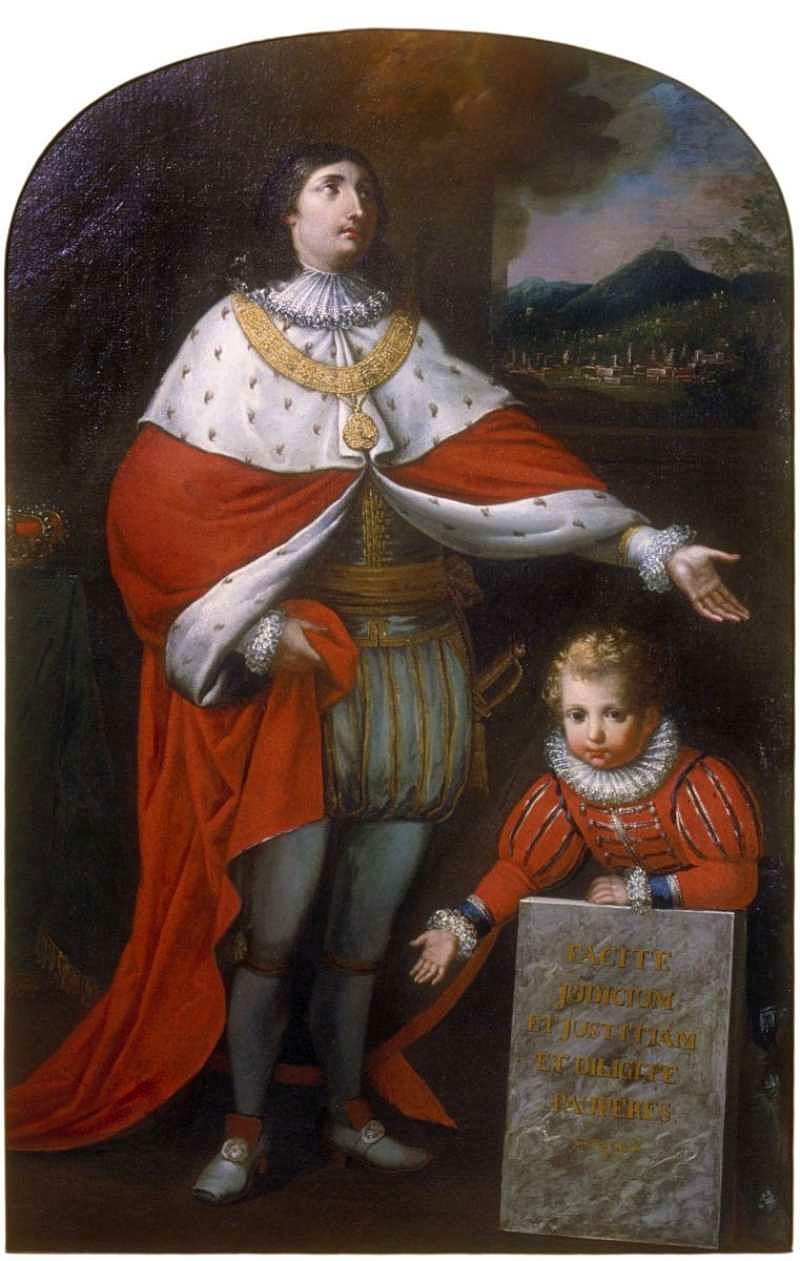

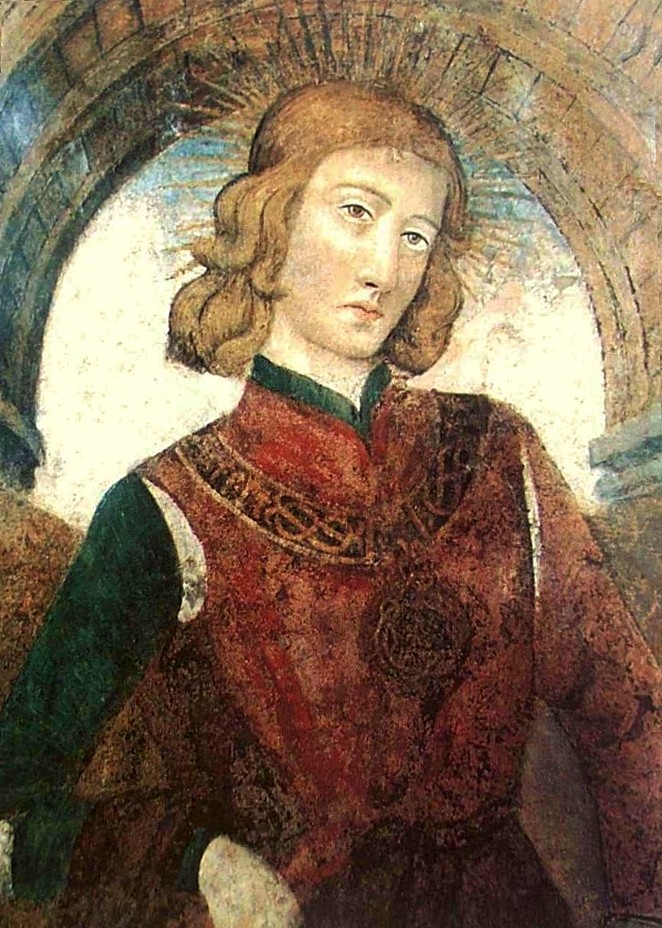

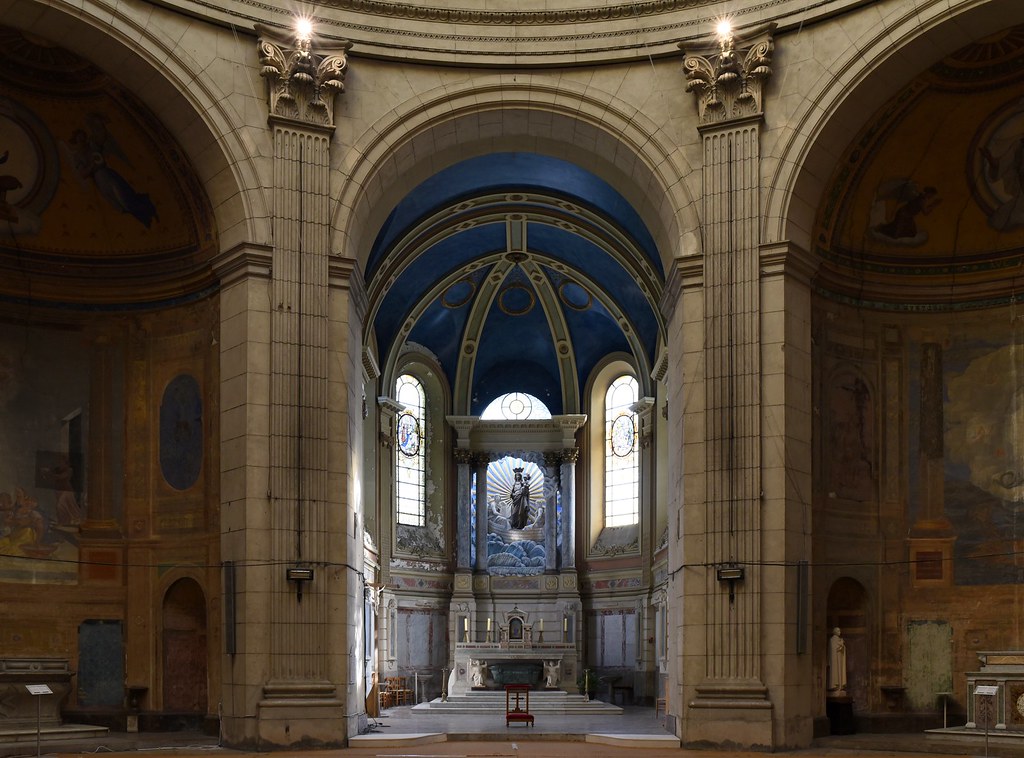

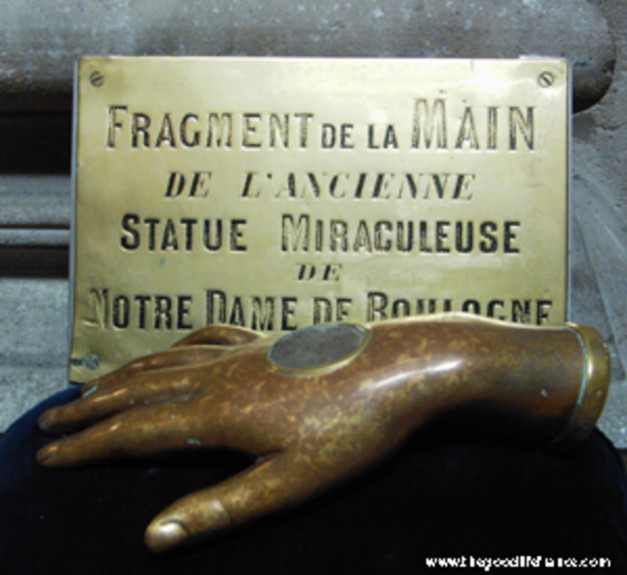

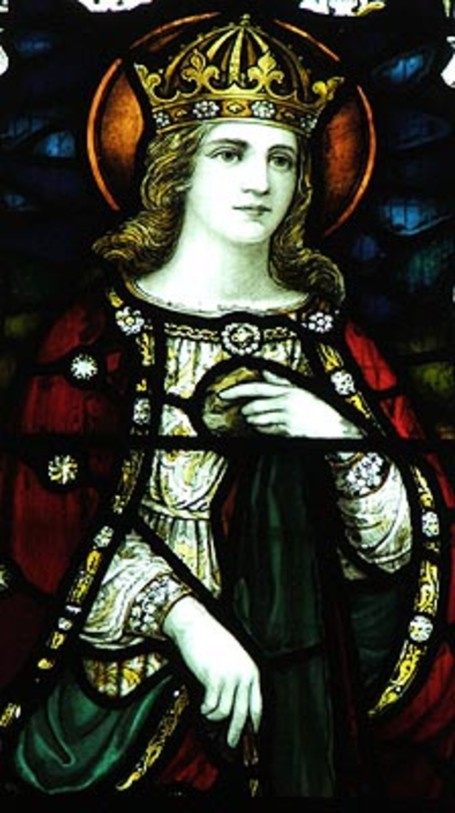

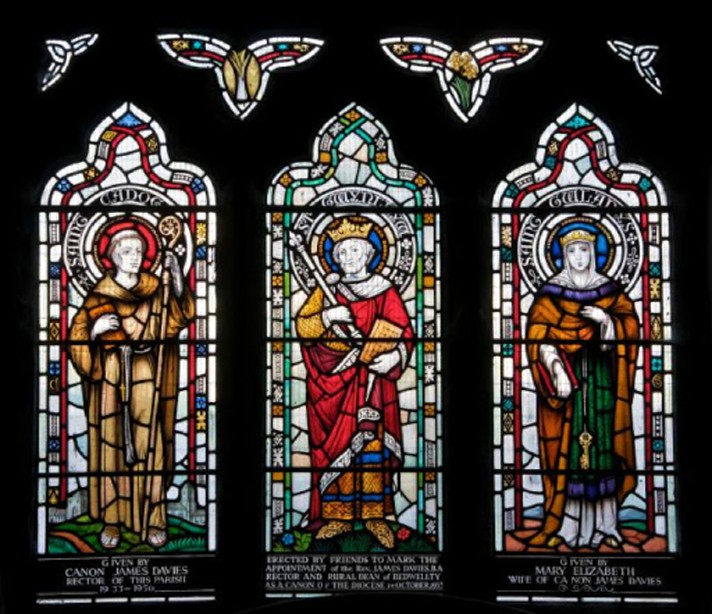

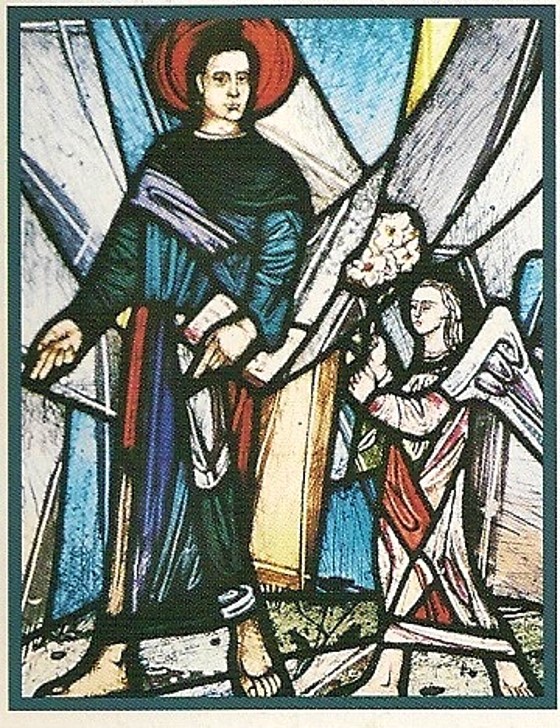
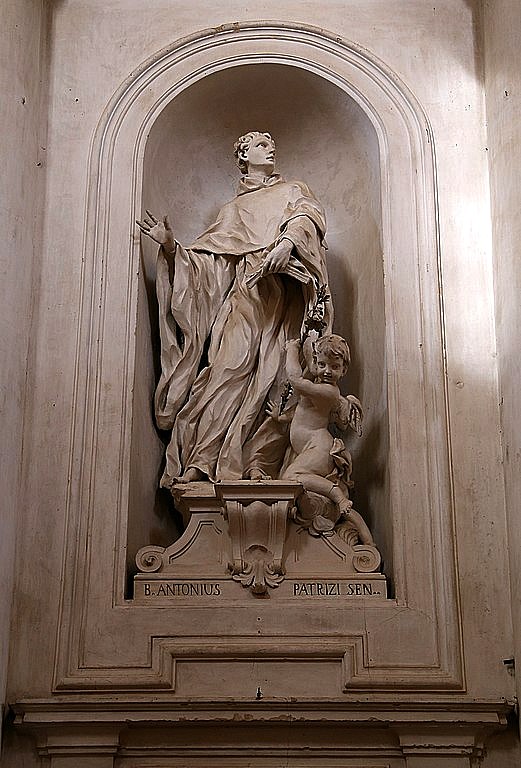
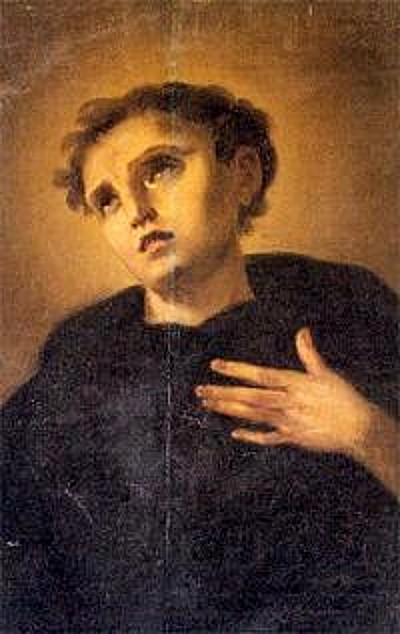

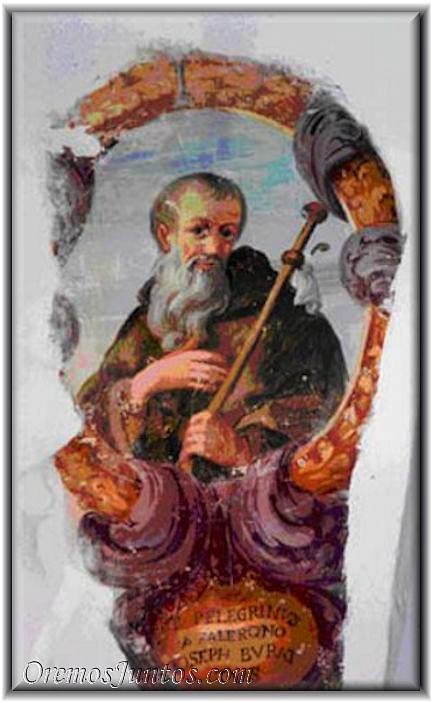
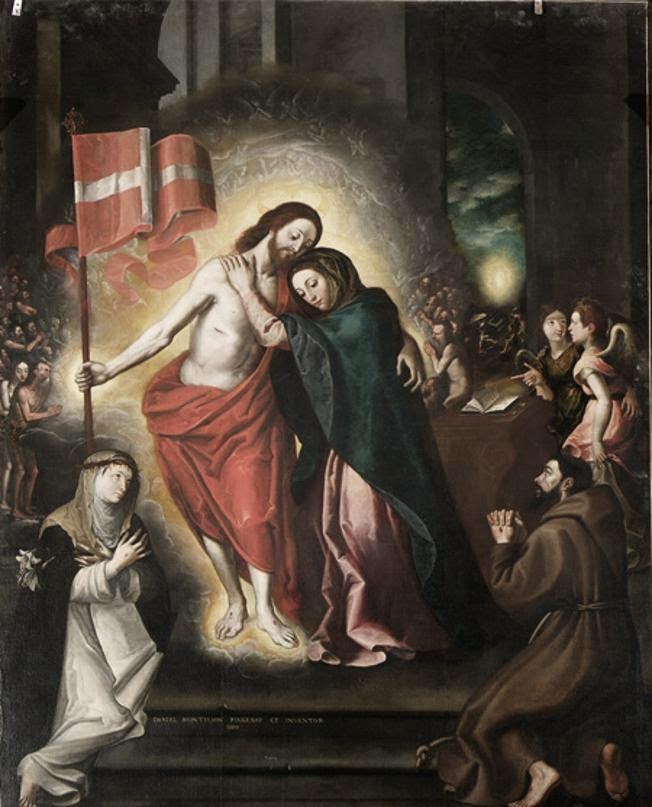
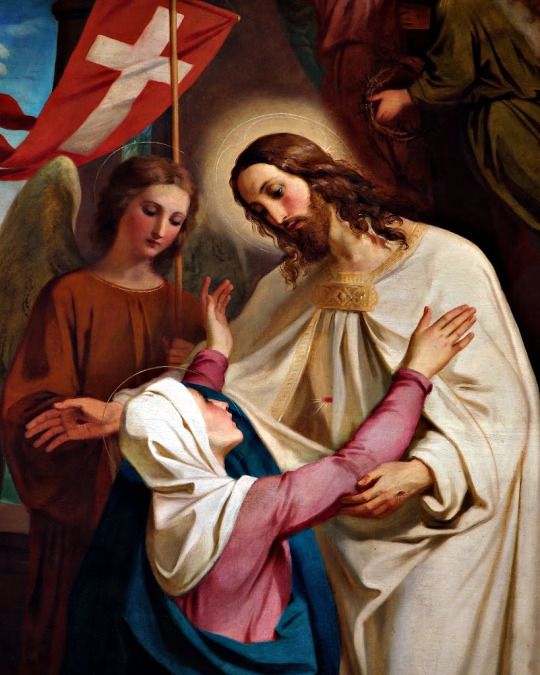
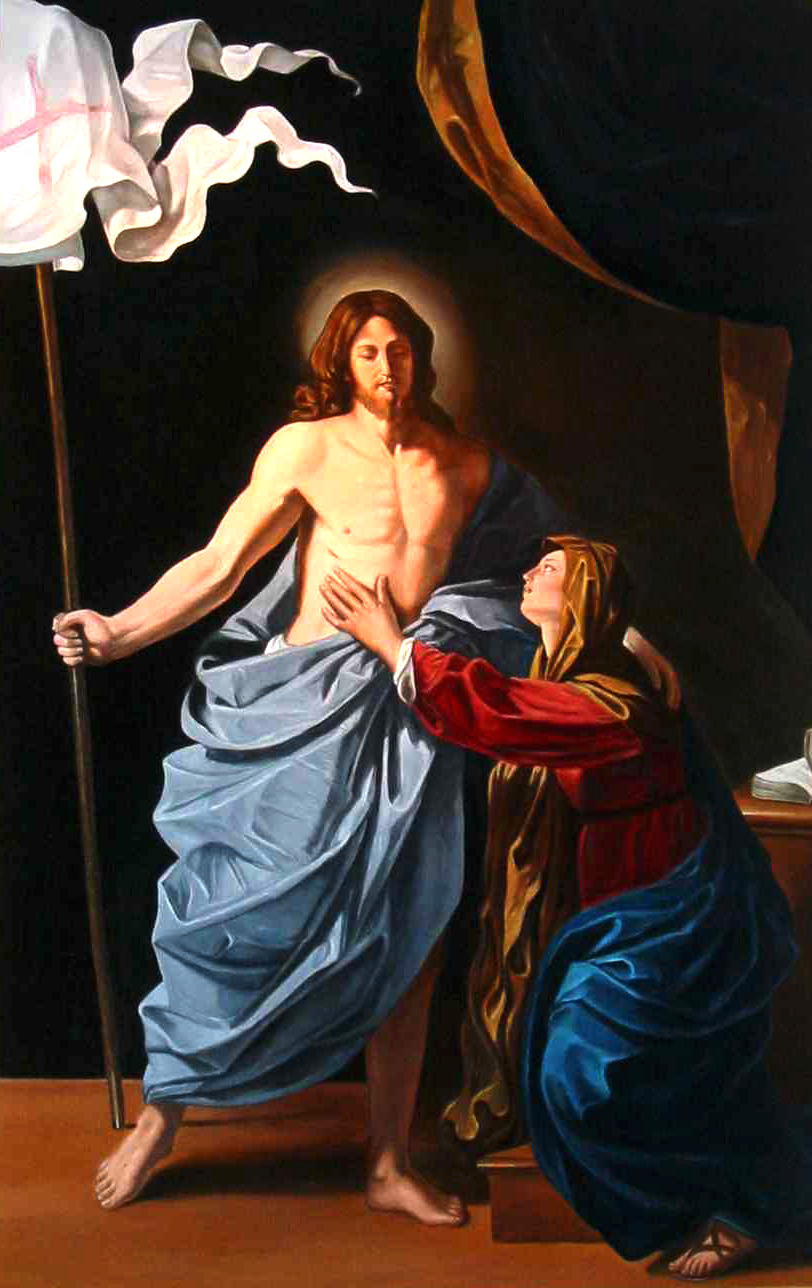
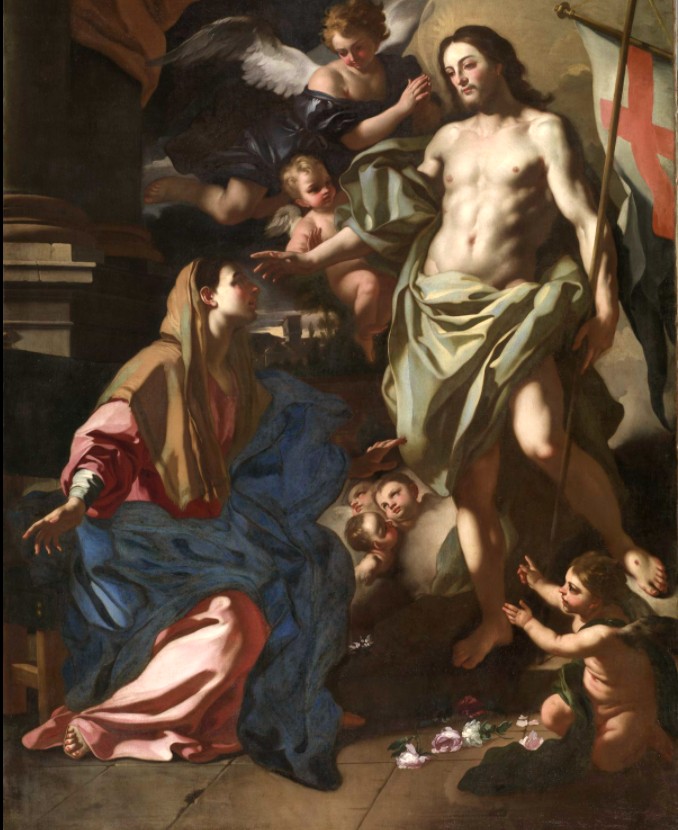
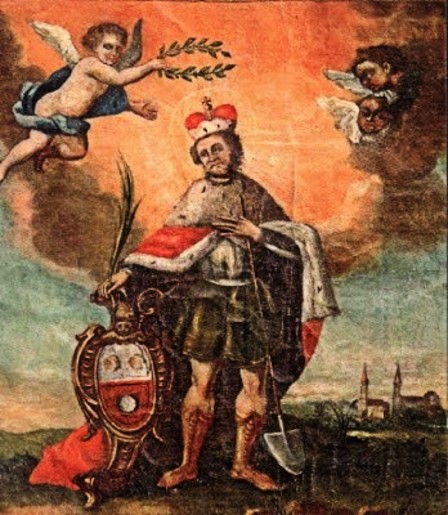

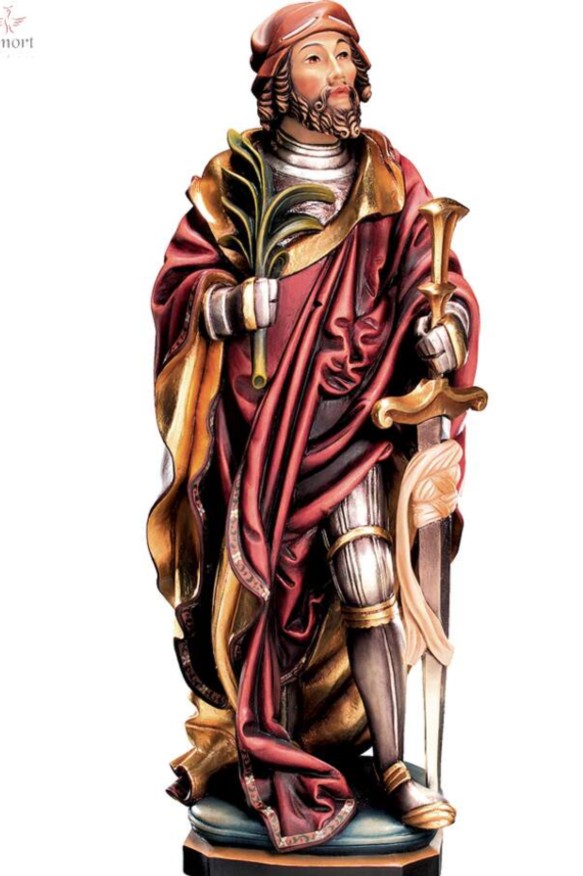
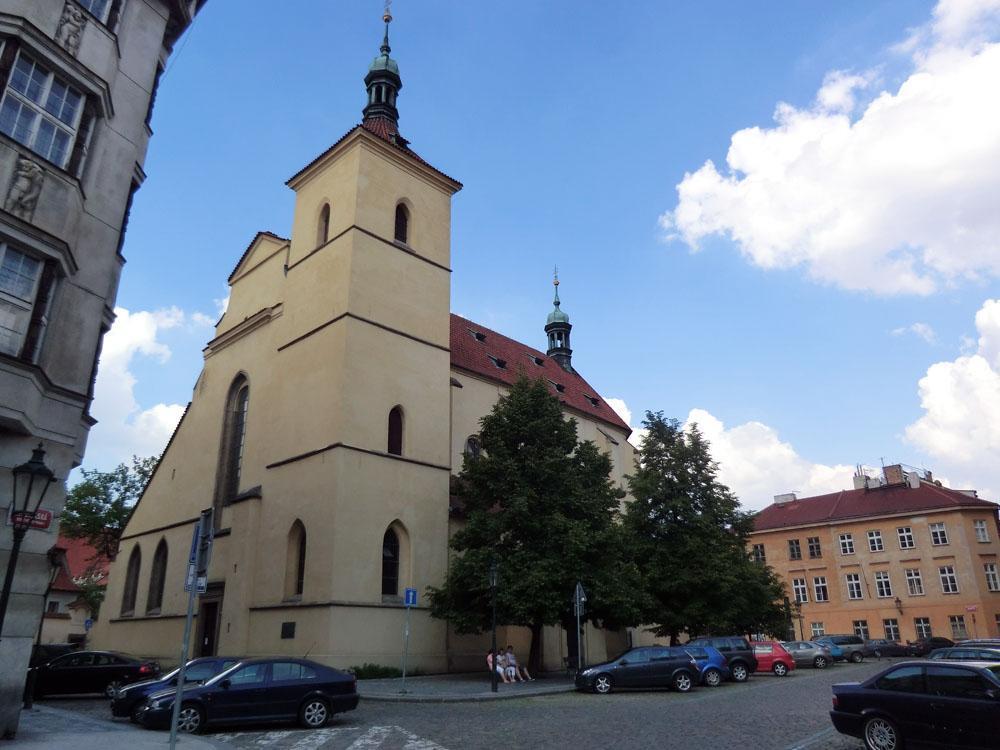


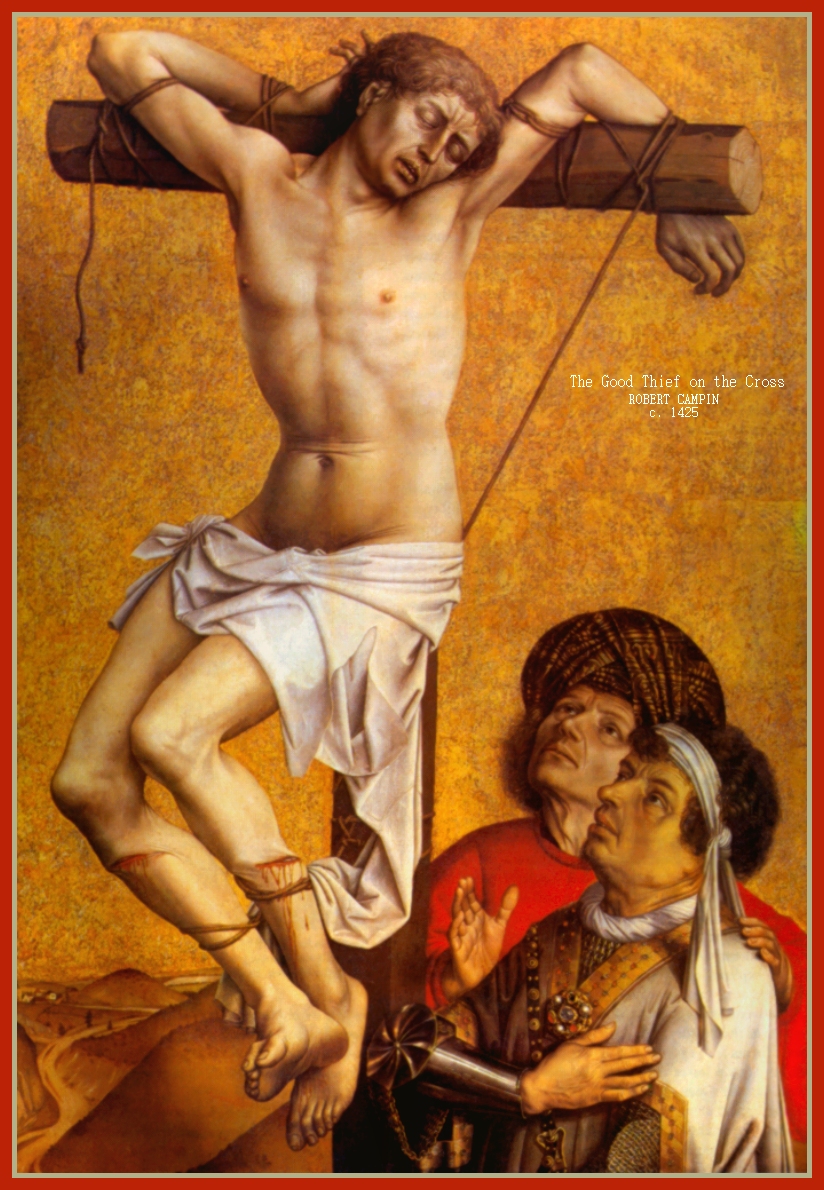
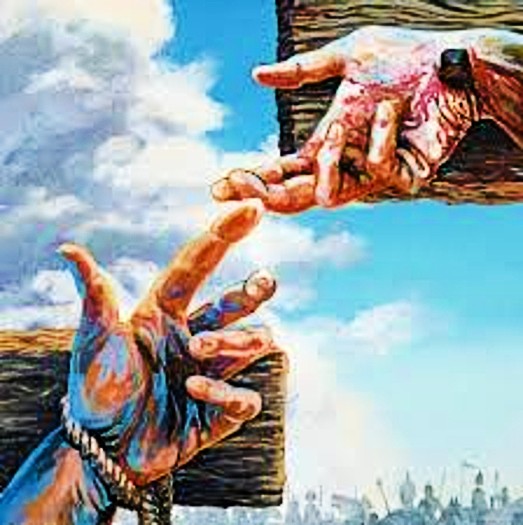
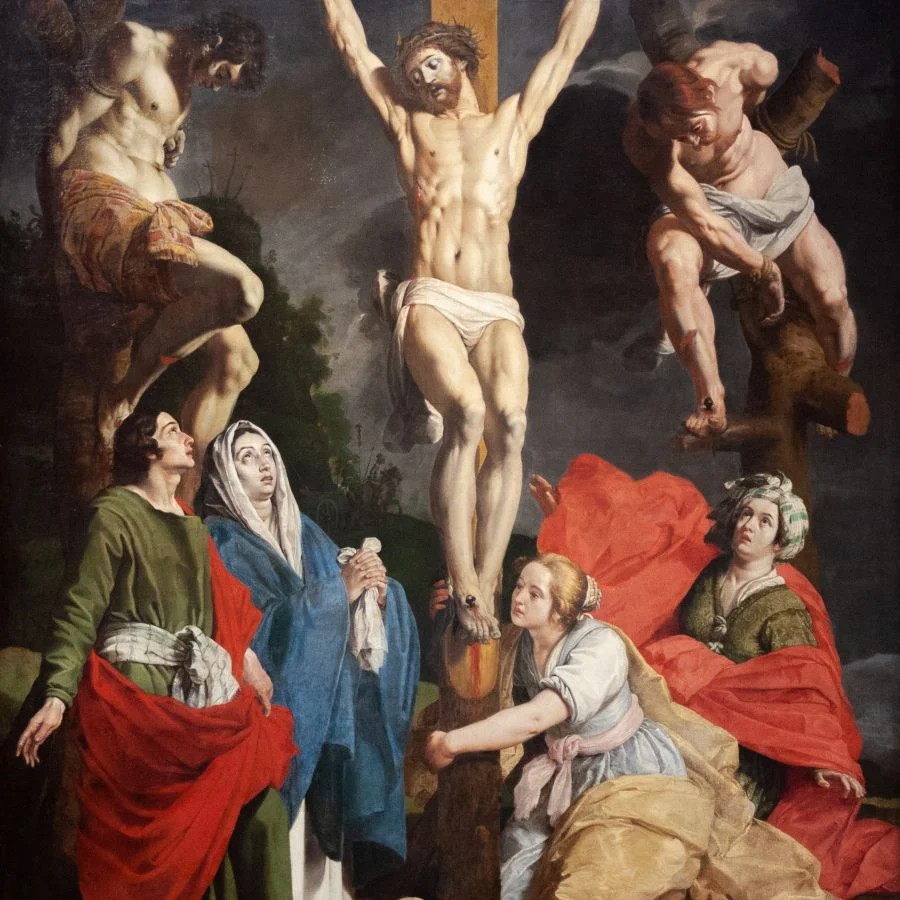
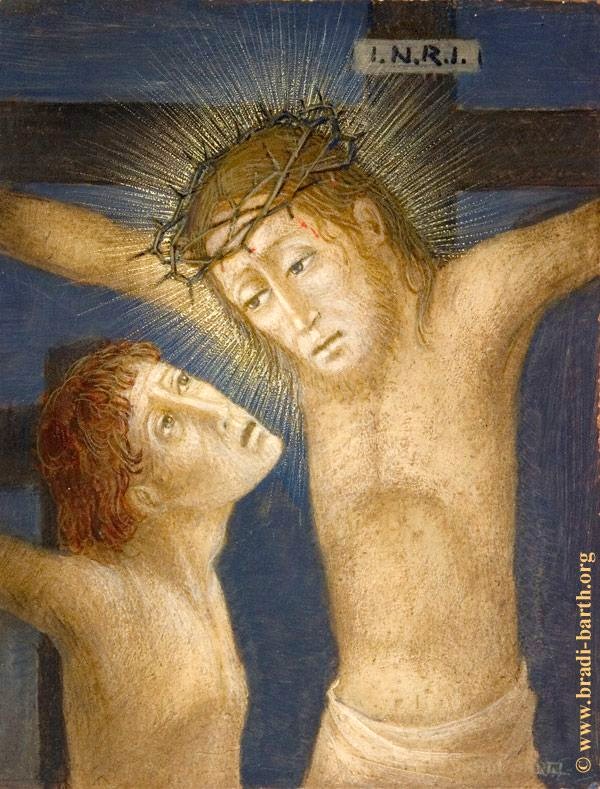

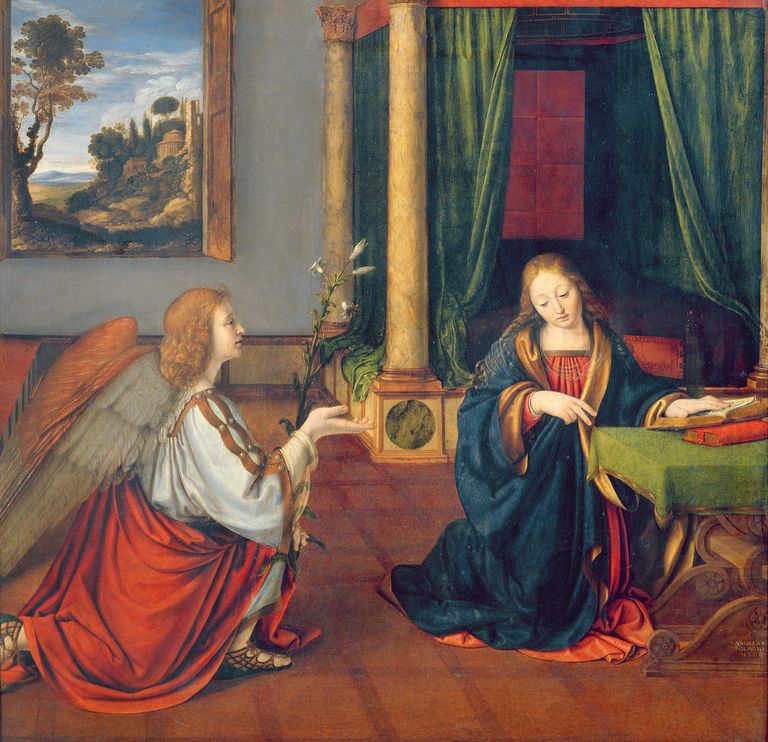
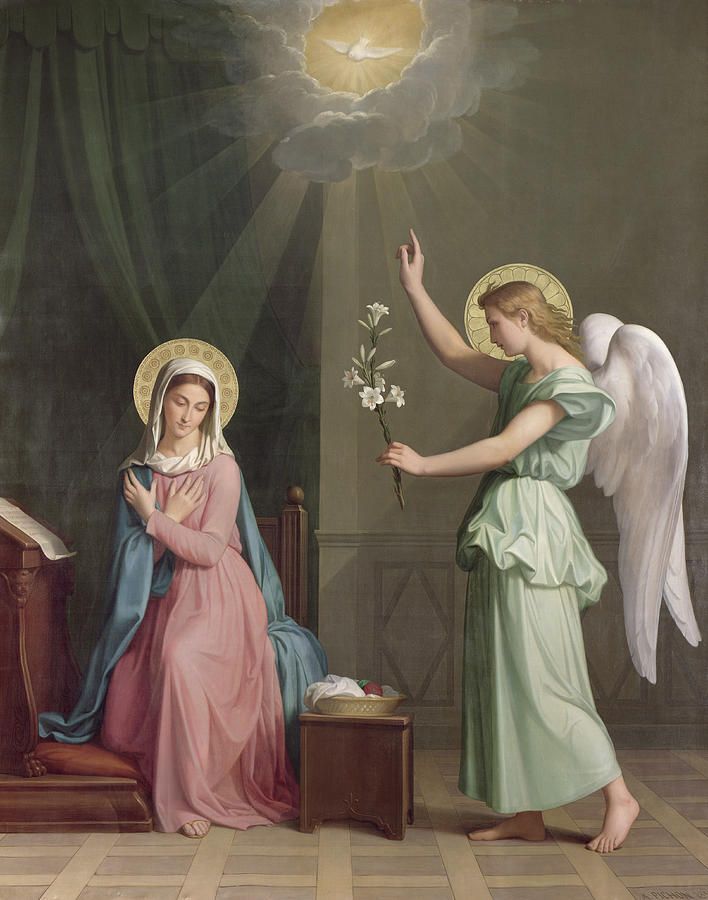
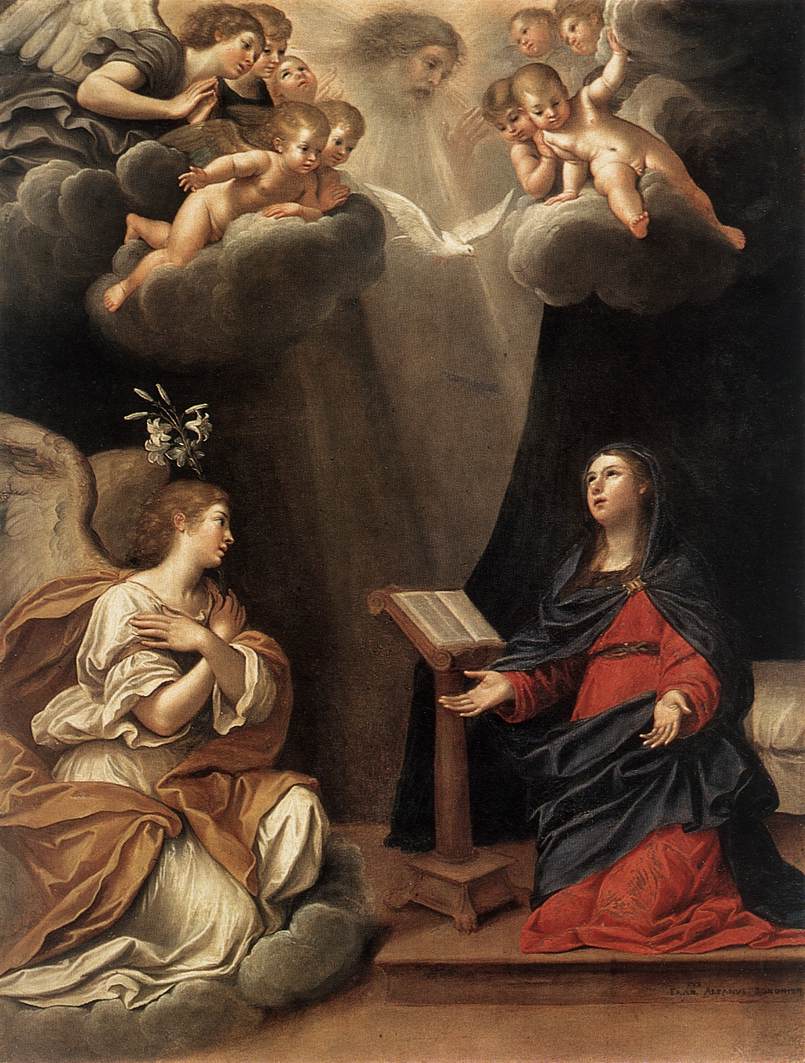

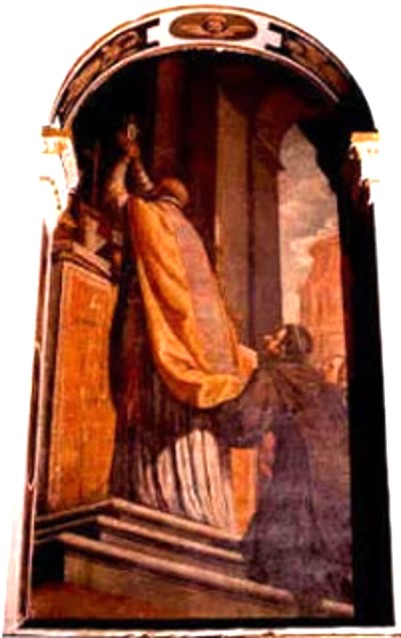
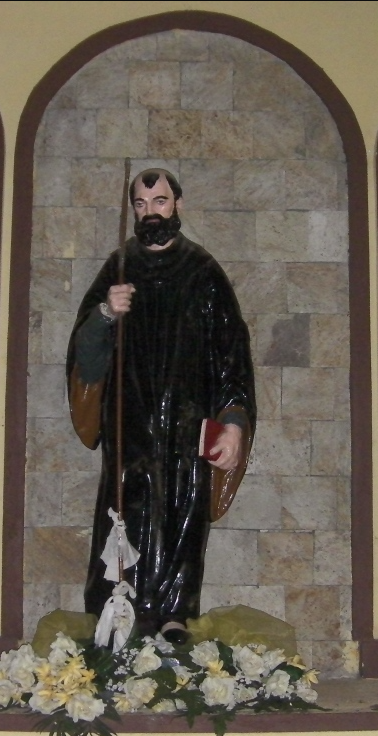

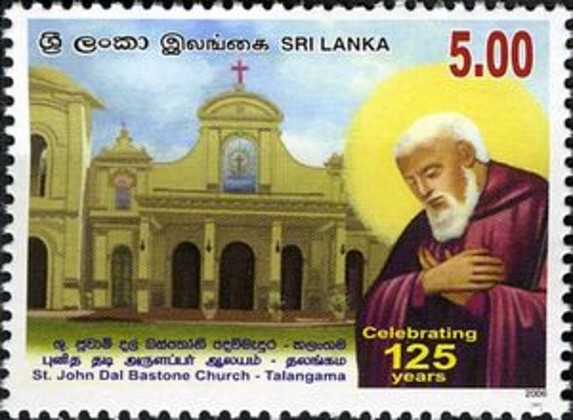

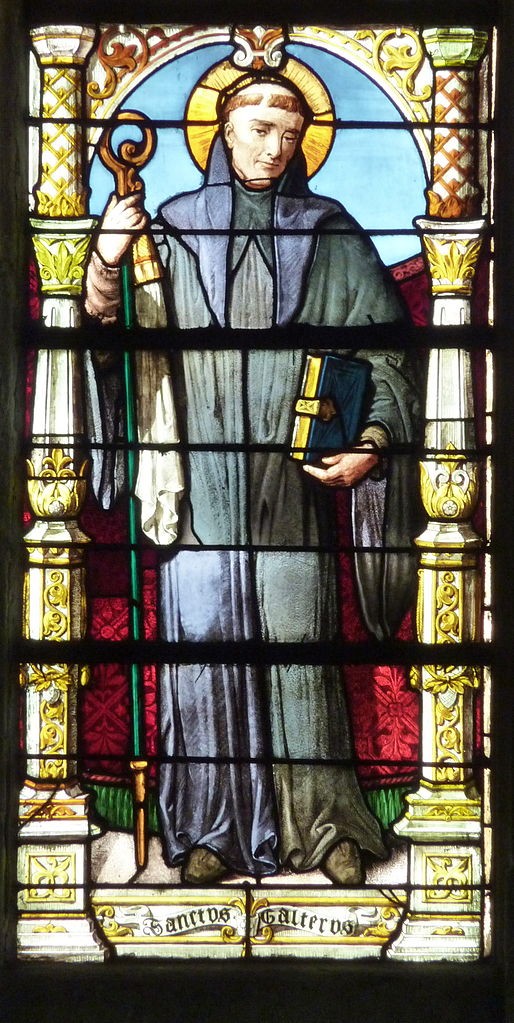
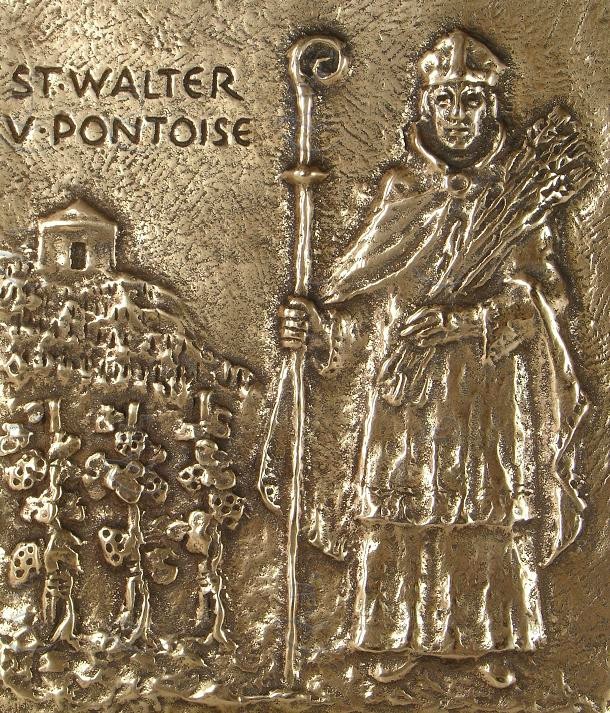
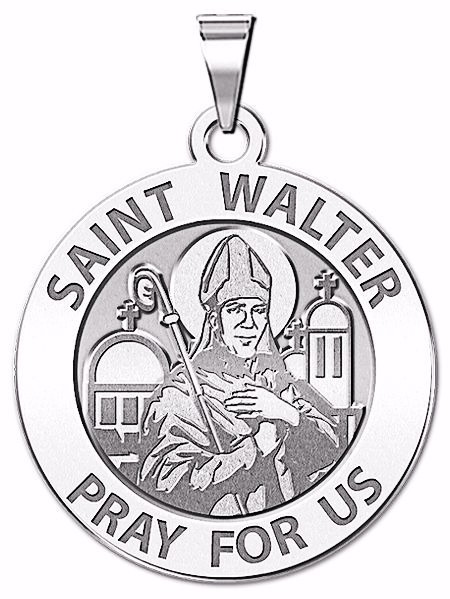
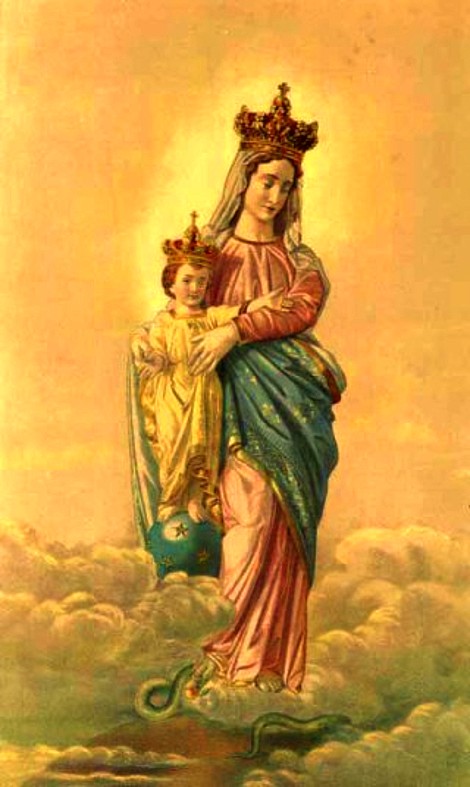
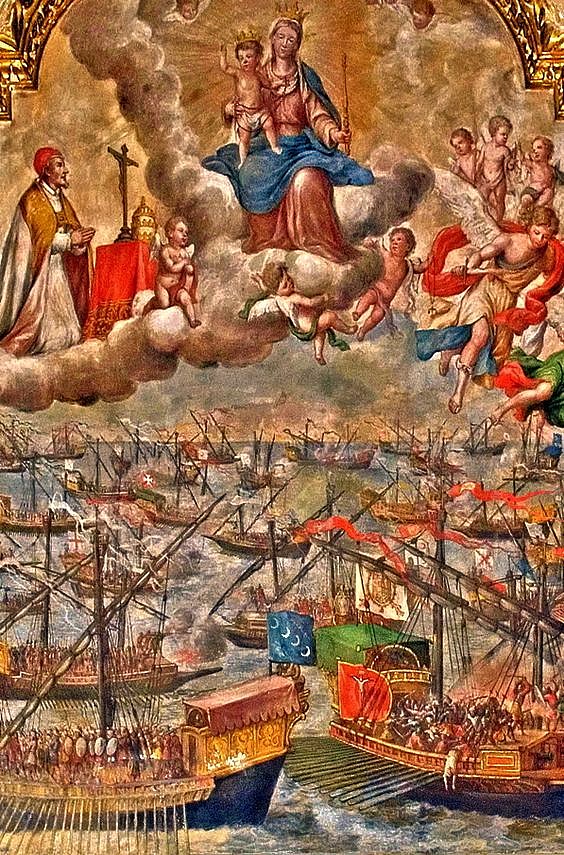
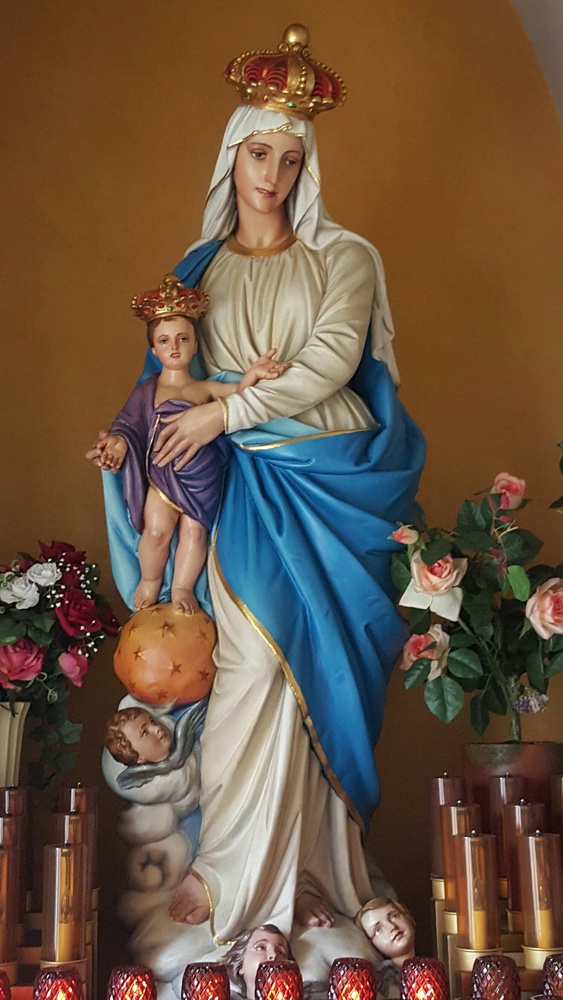


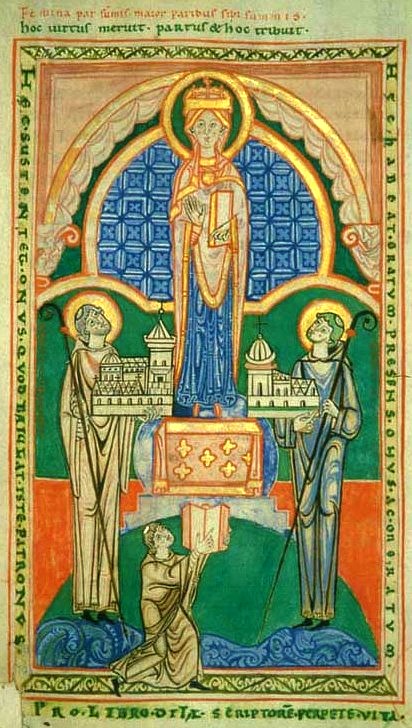
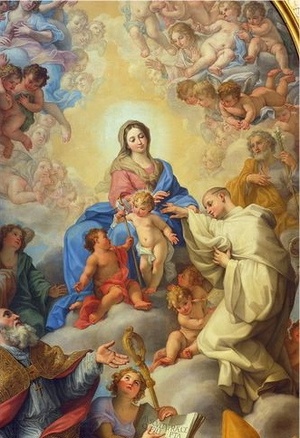
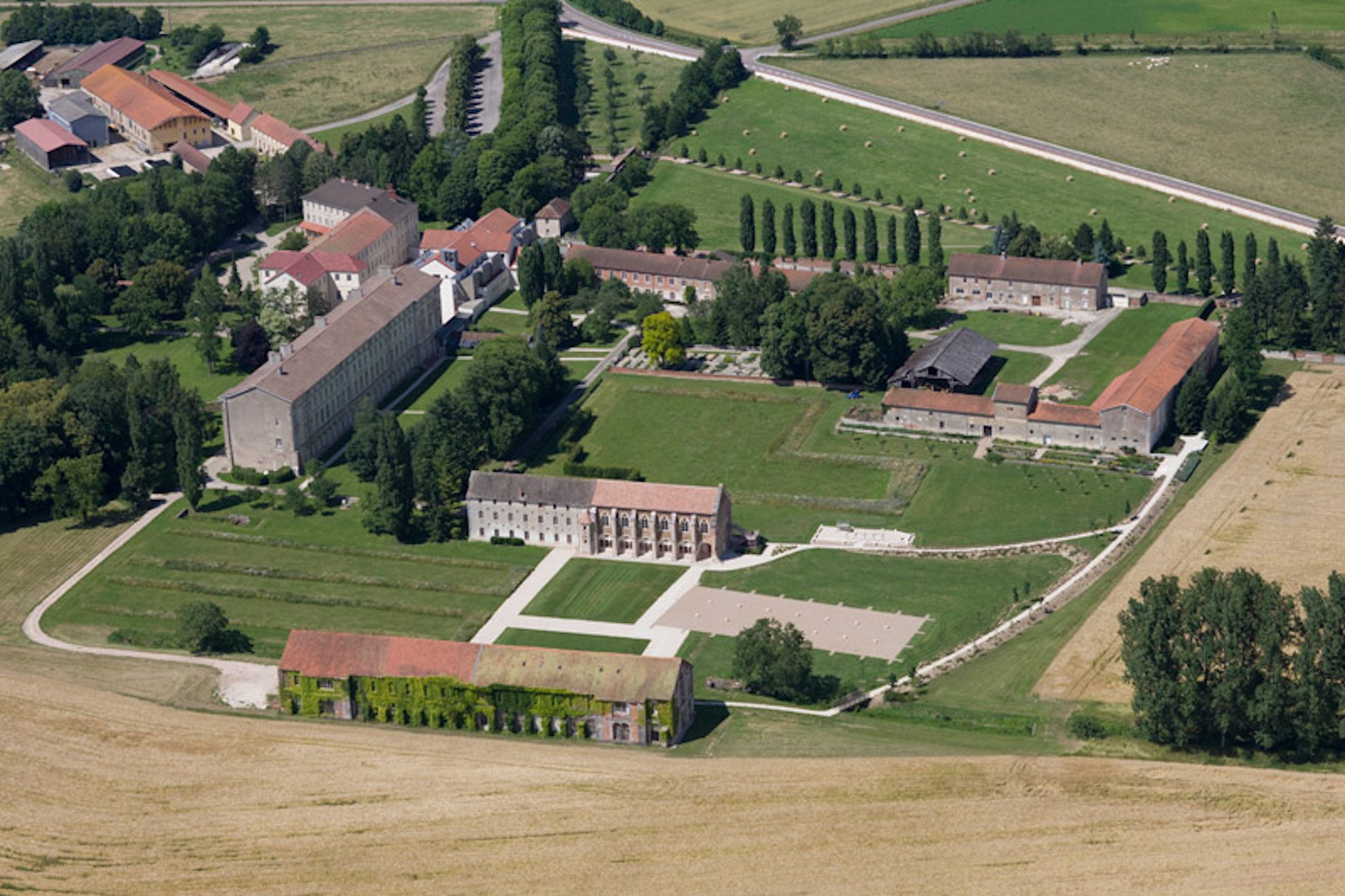


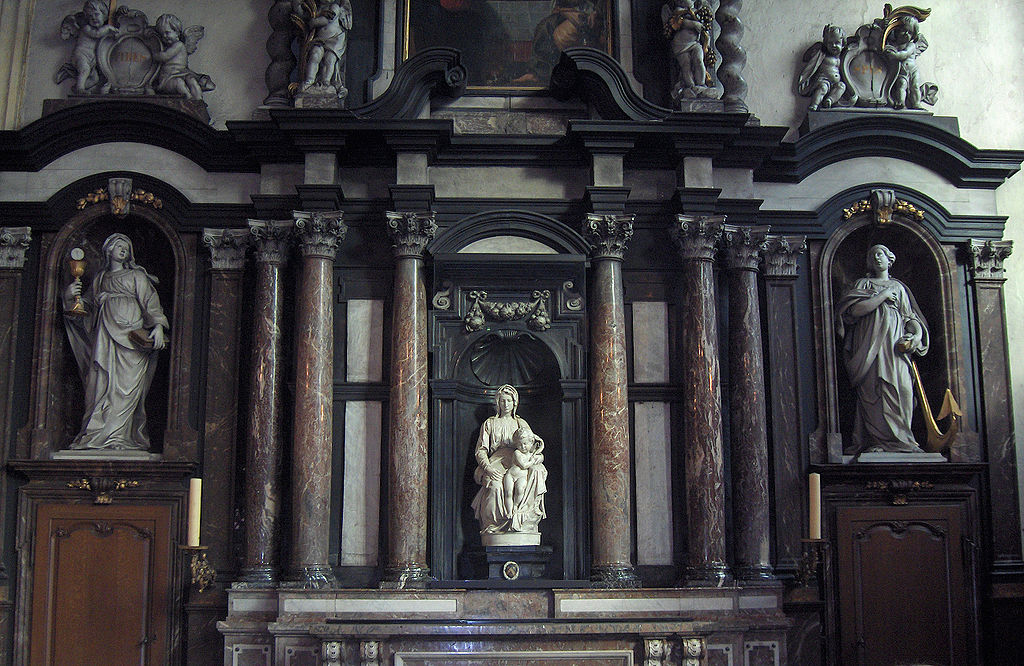
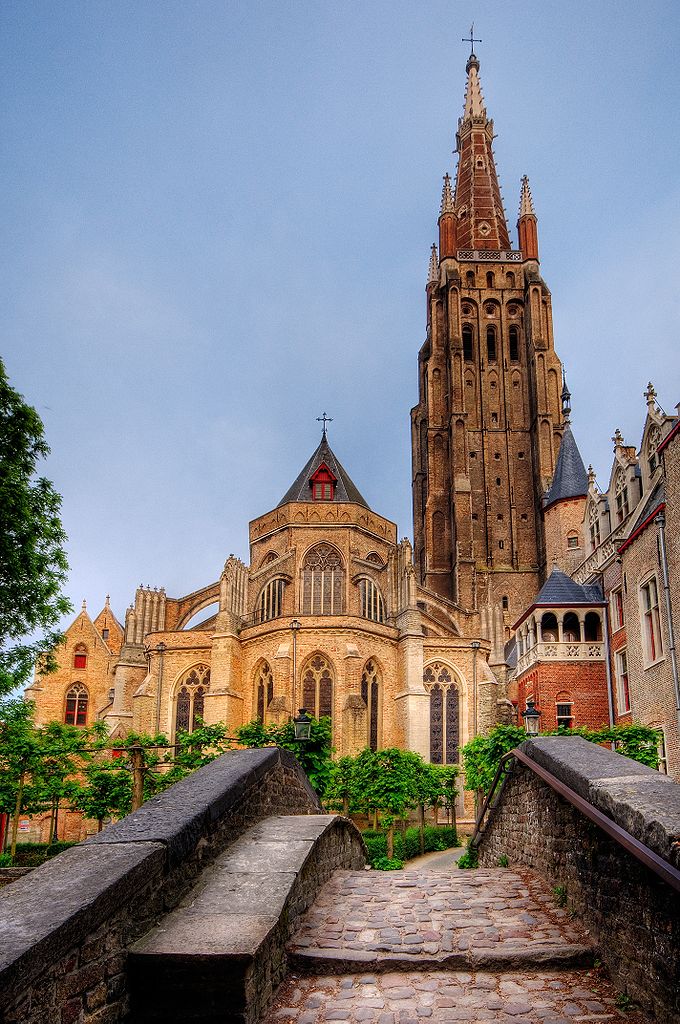
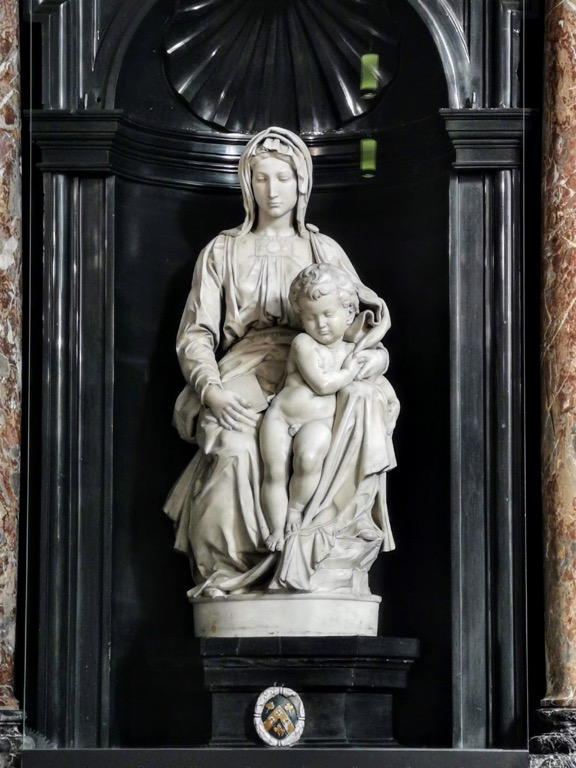
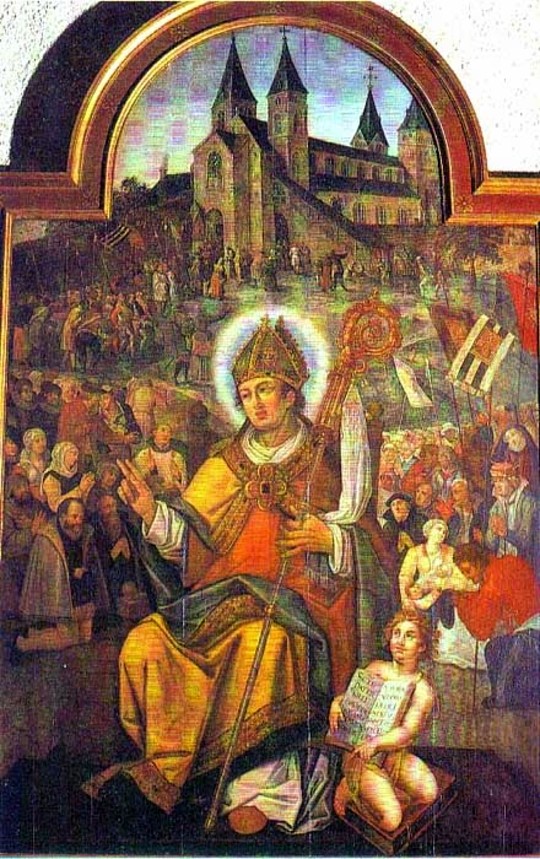
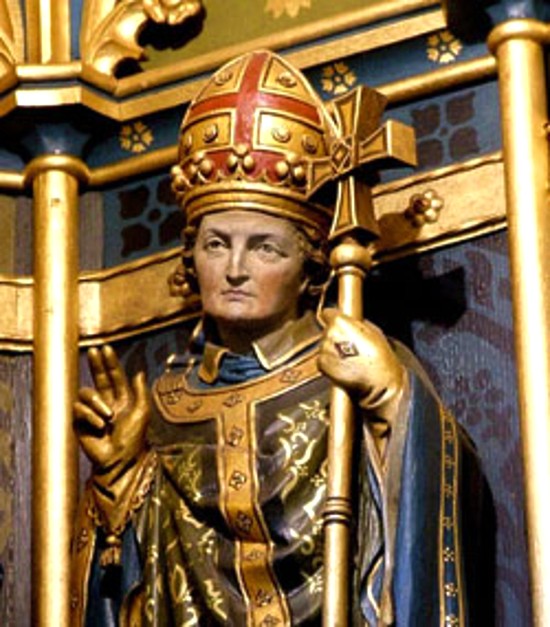
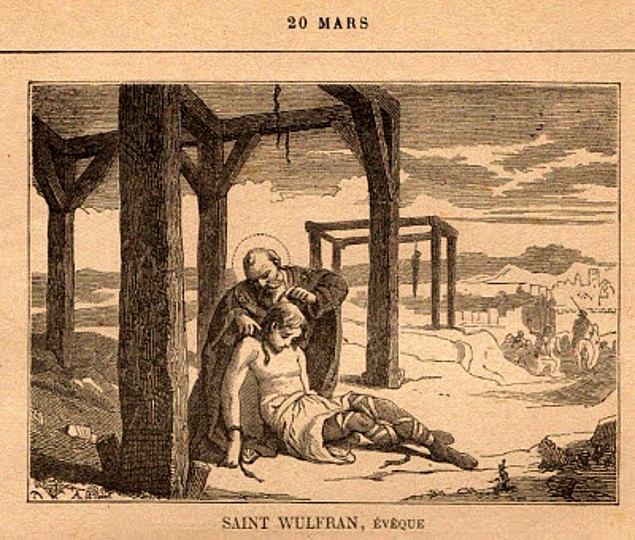
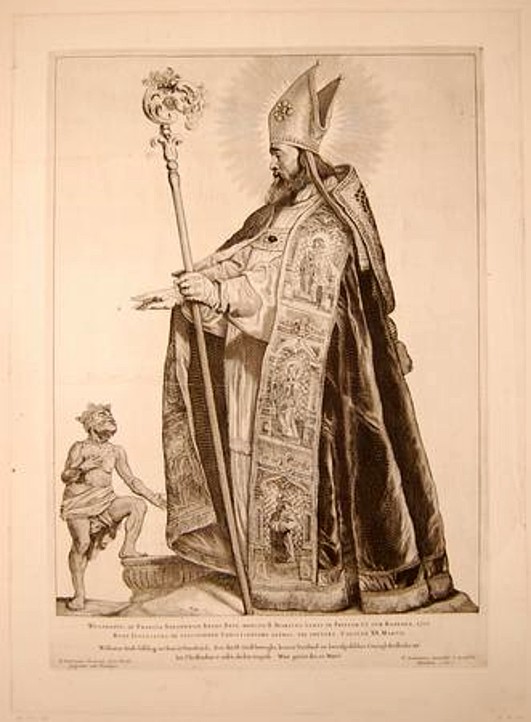
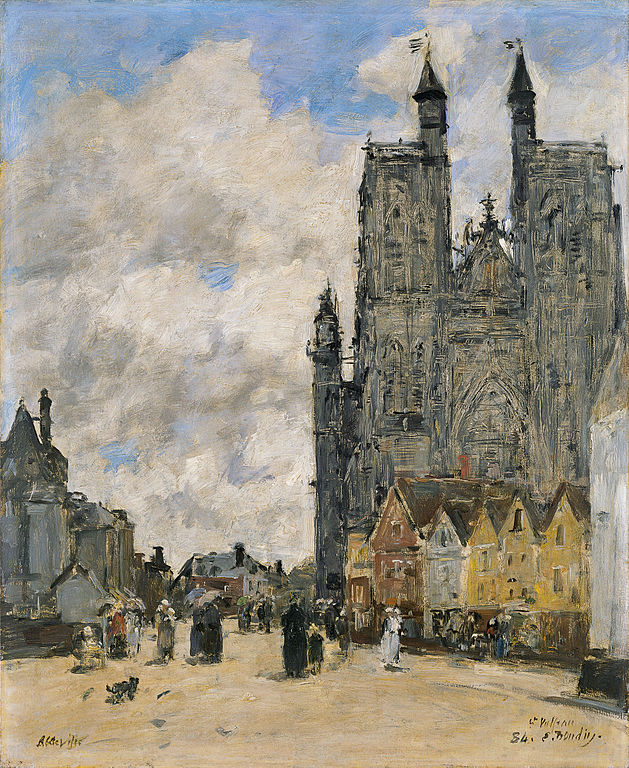
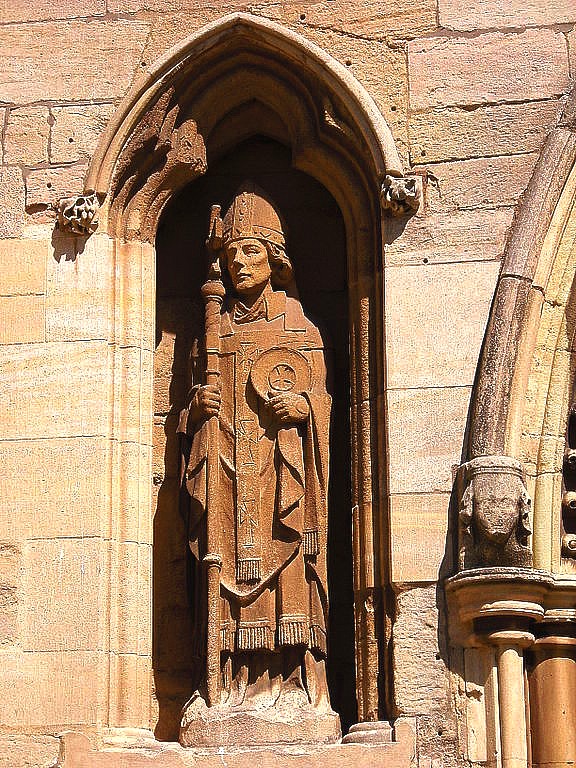

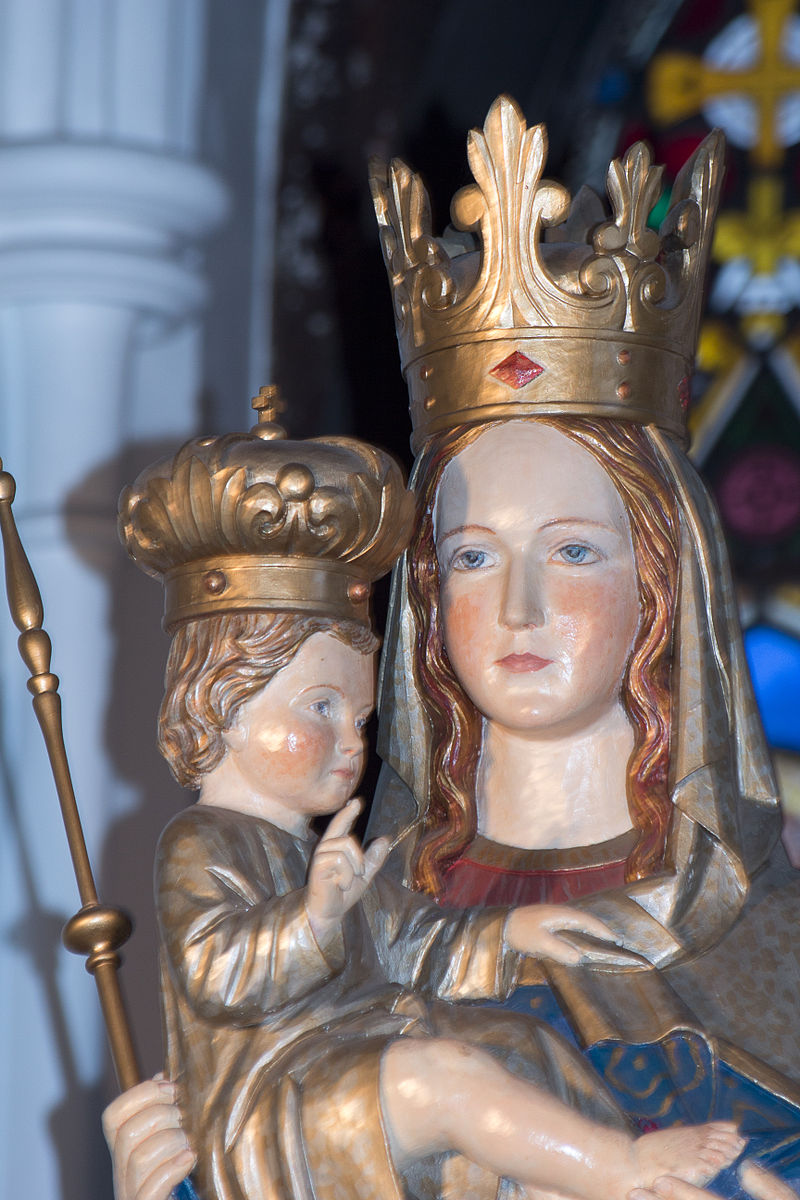
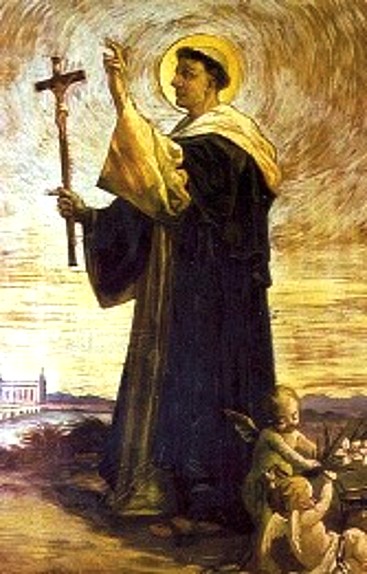


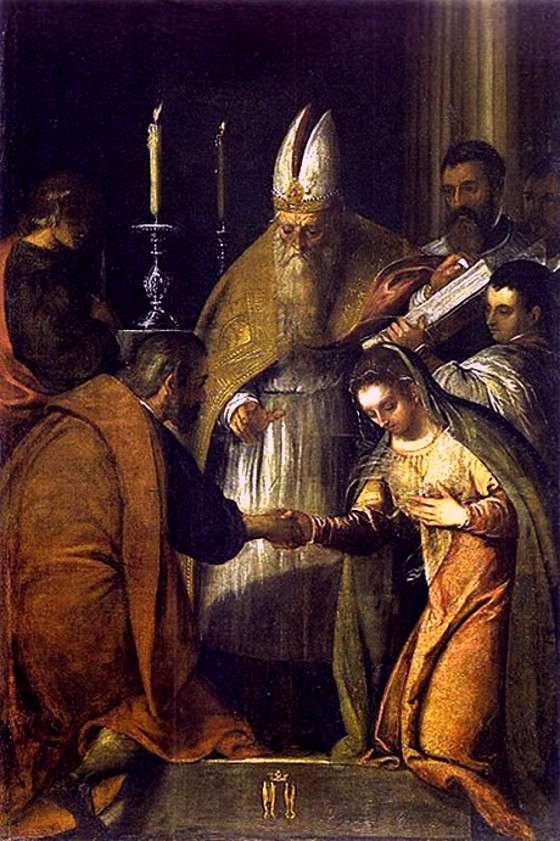


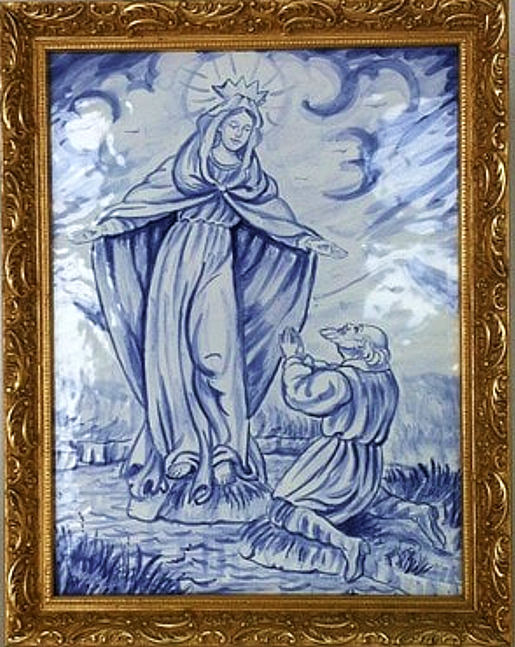
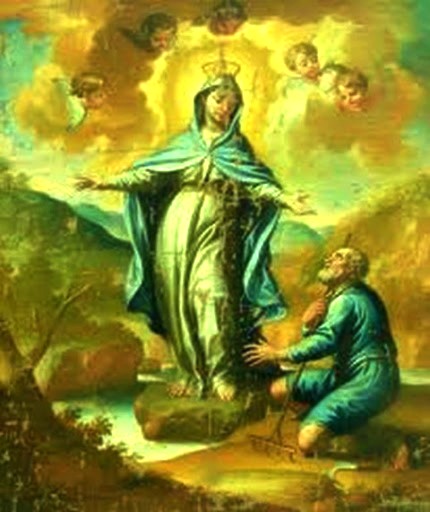
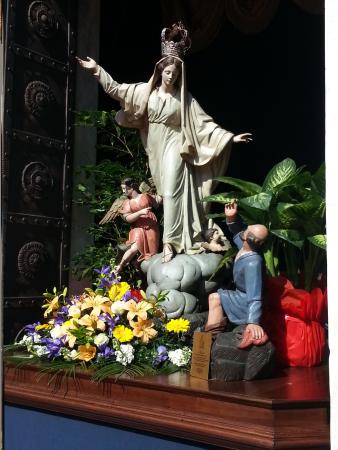
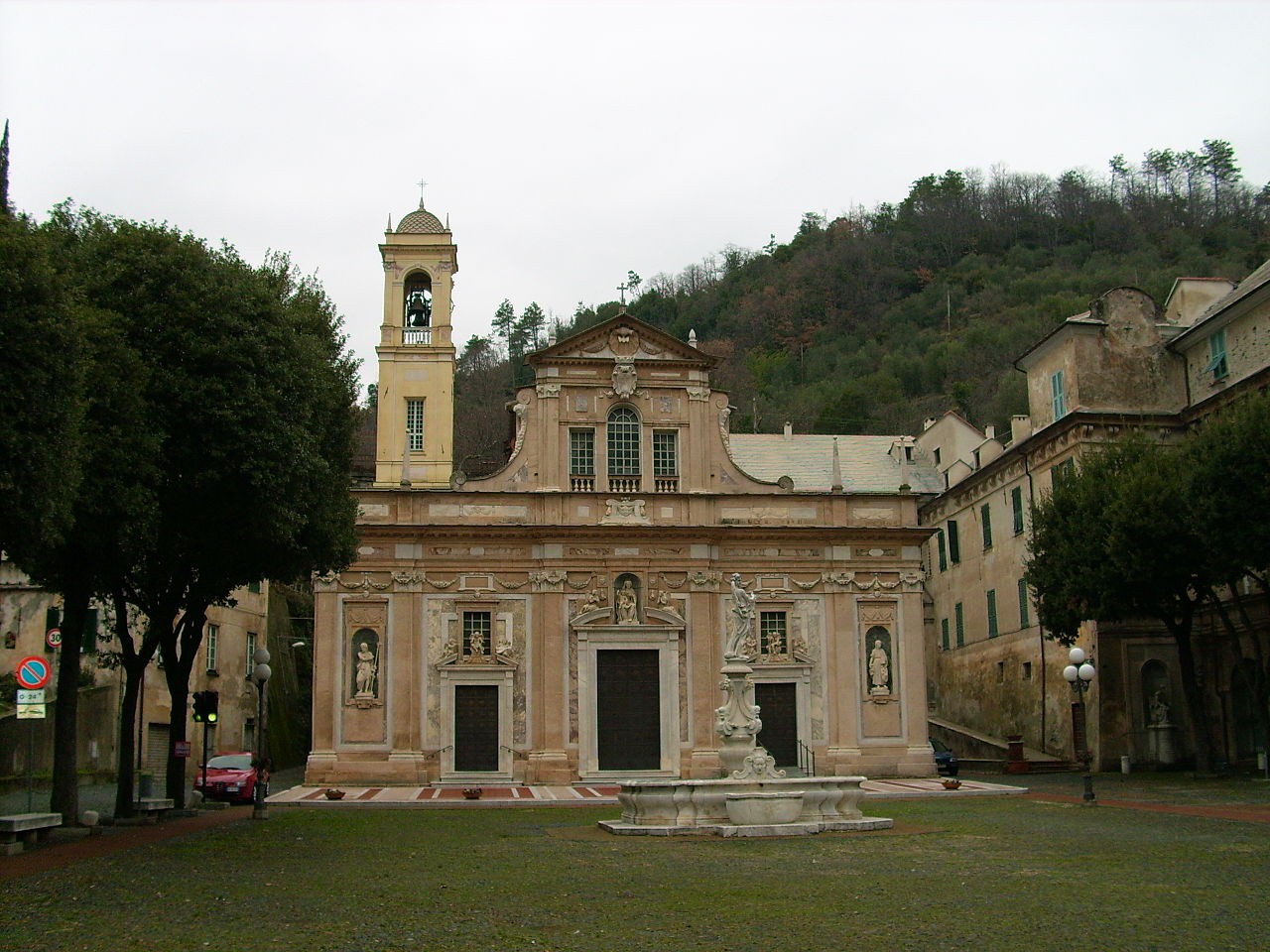
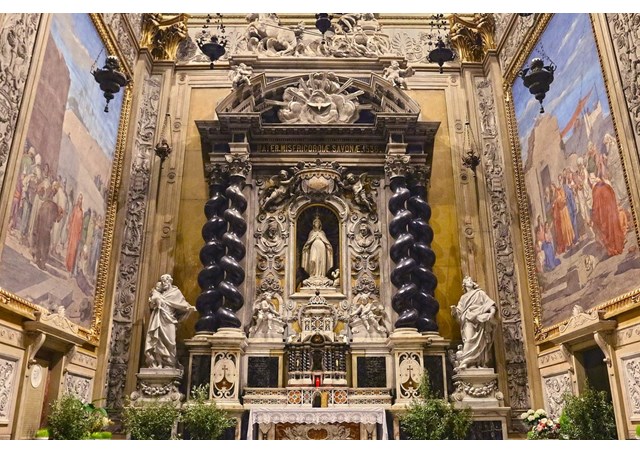
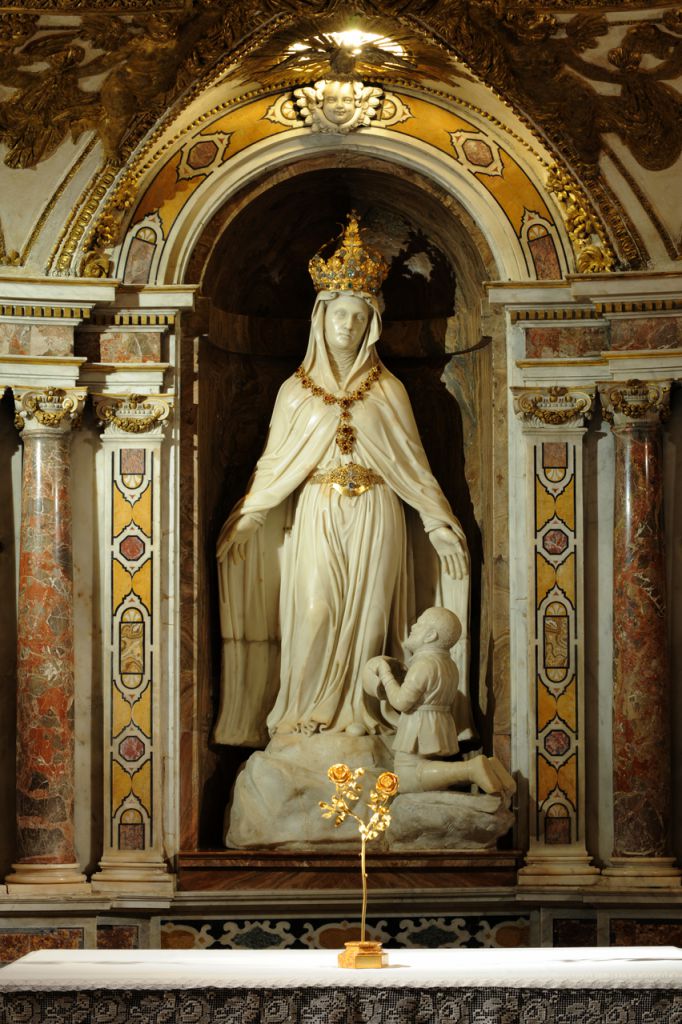
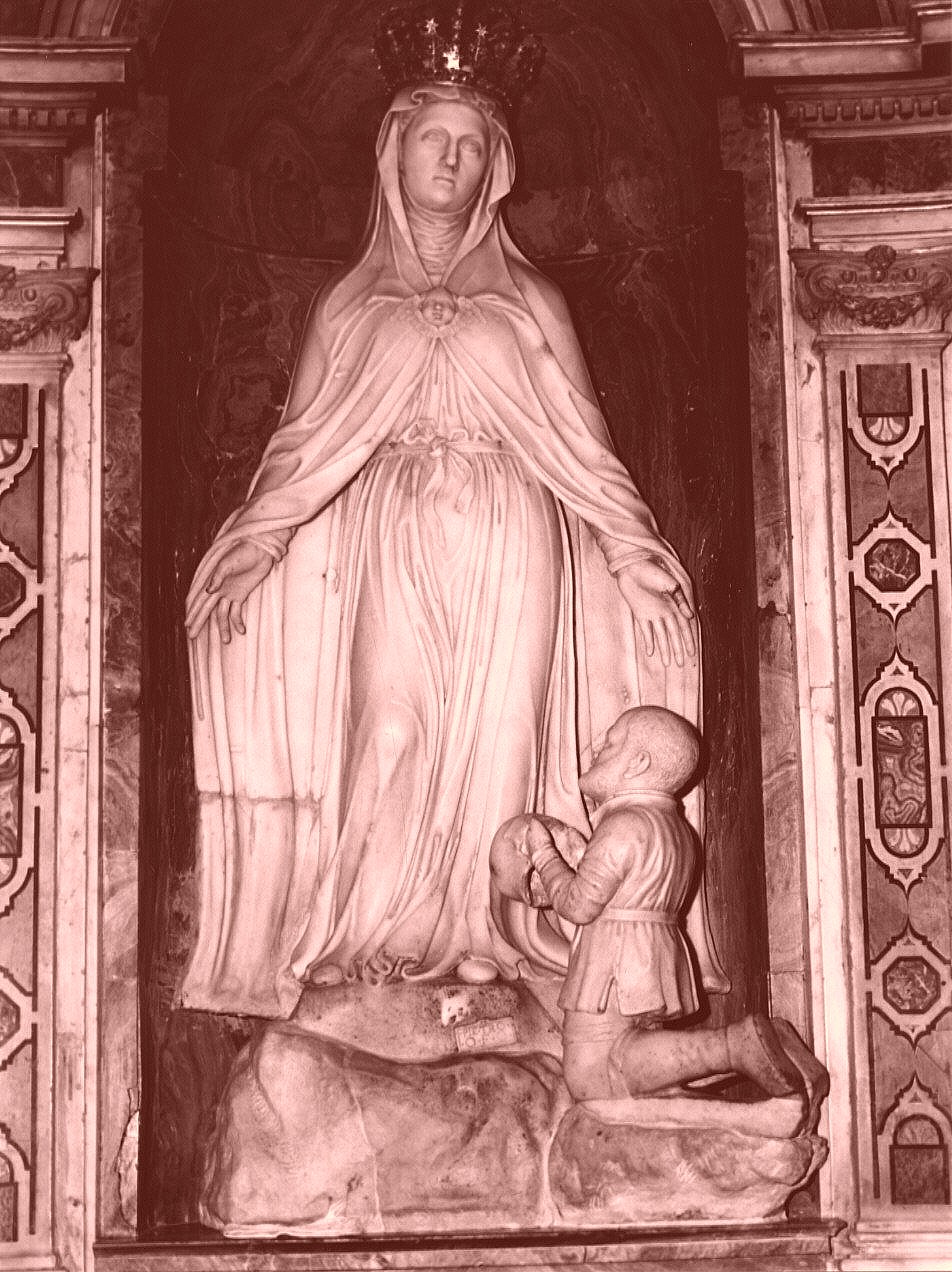

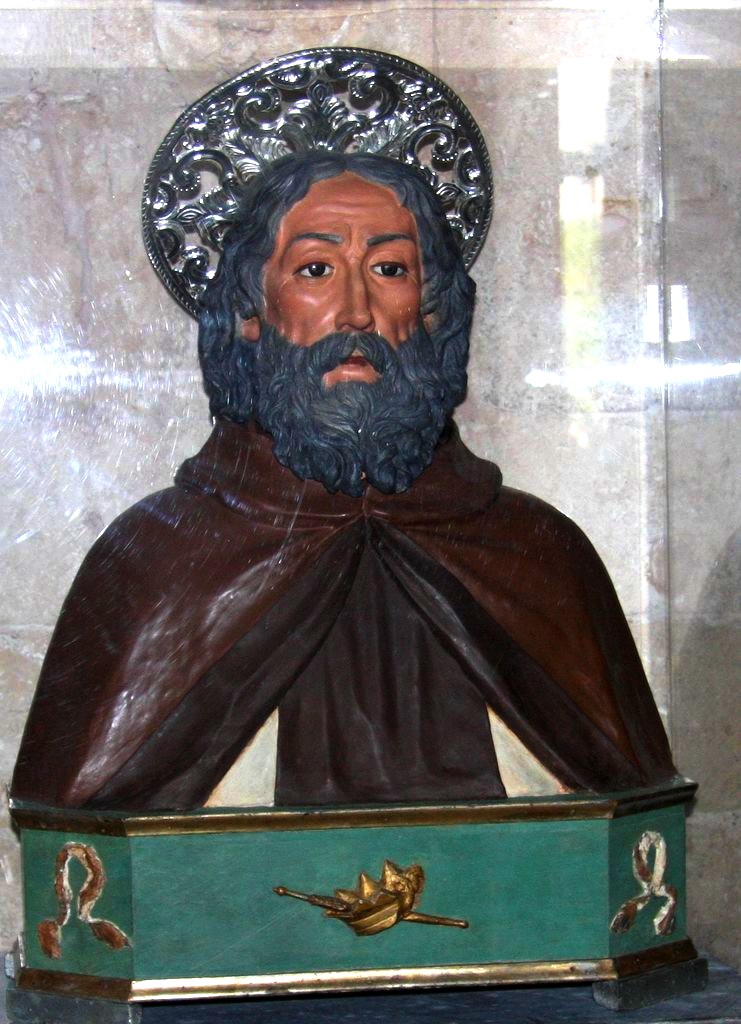

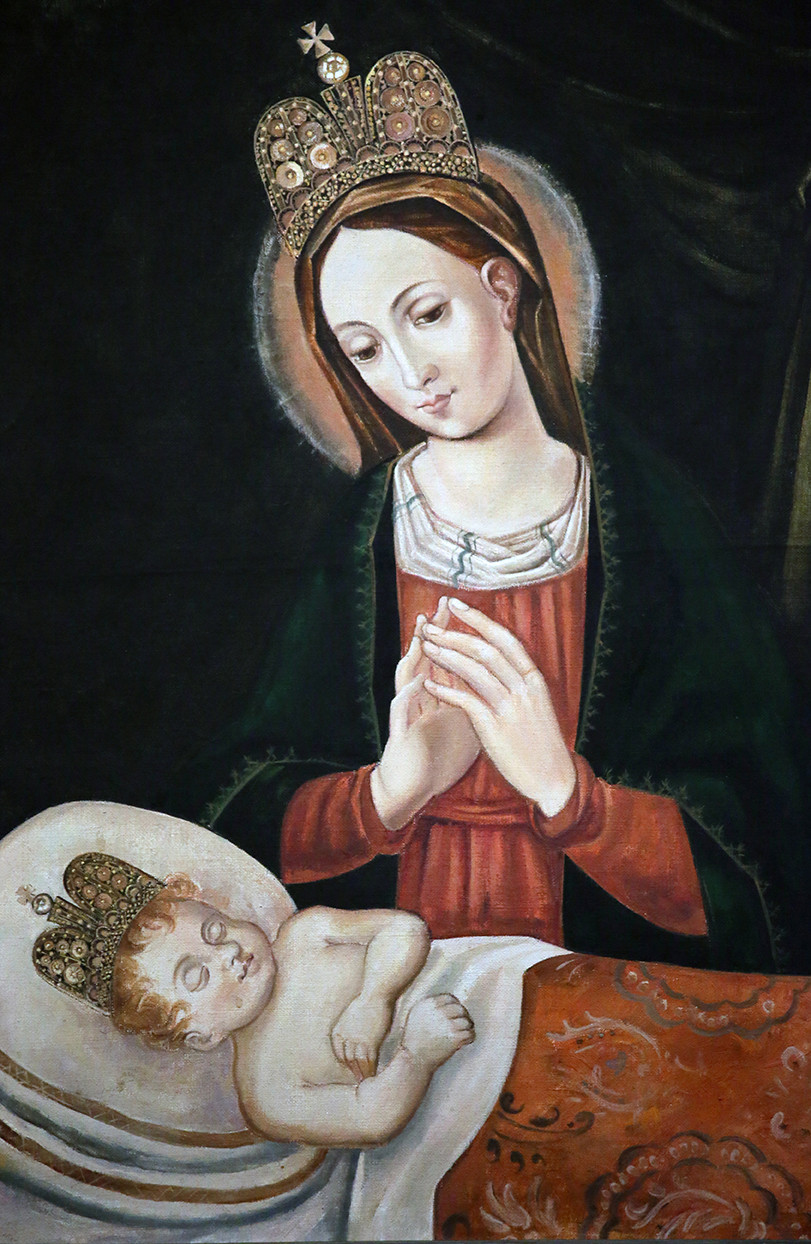
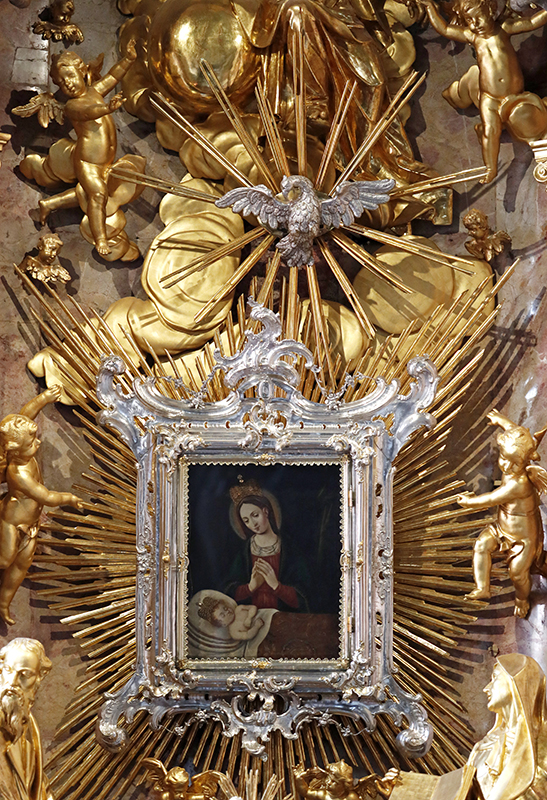
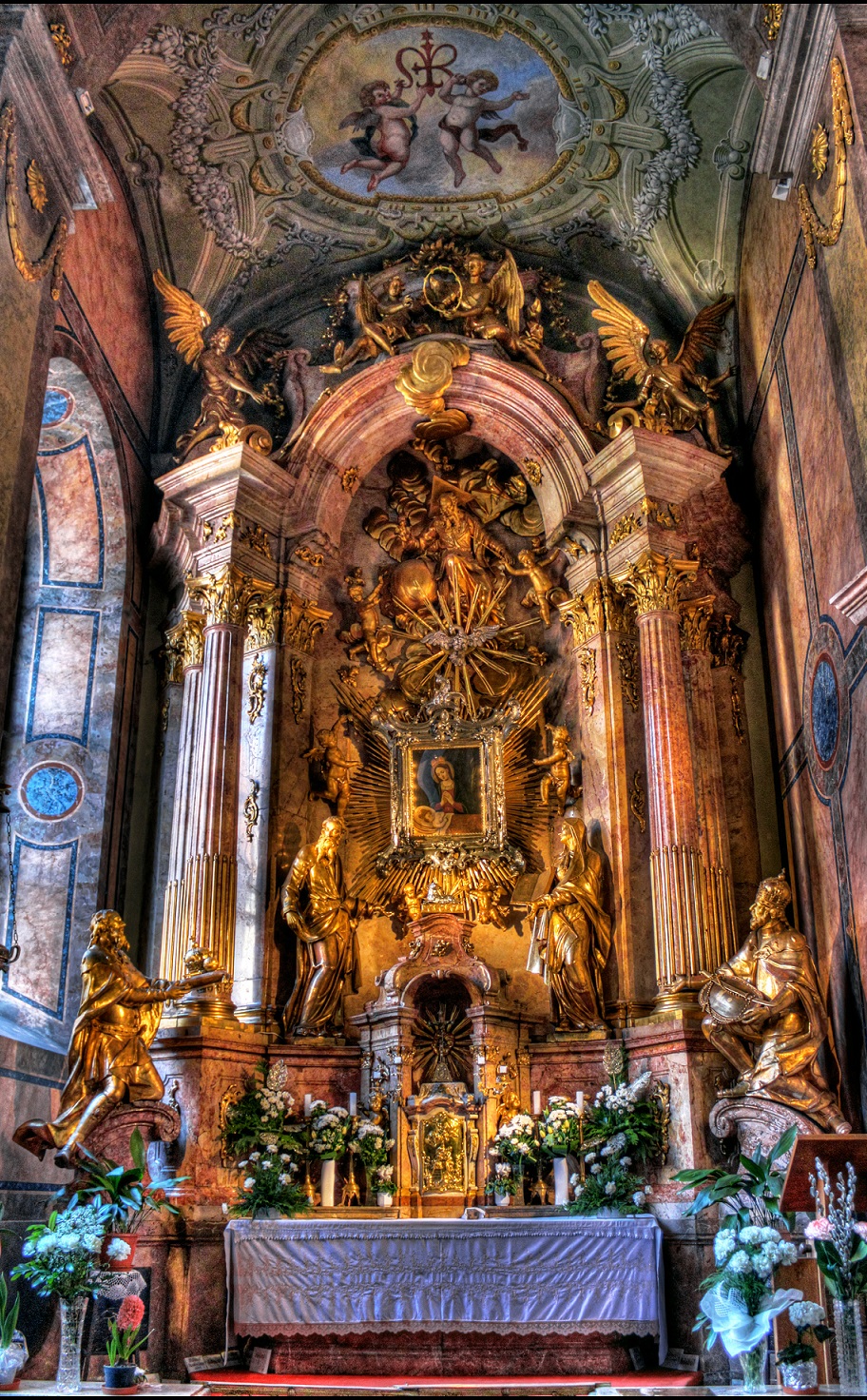


You must be logged in to post a comment.