Saint of the Day – 16 March – Saint Finian Lobhar, surnamed “the Luminous Leper” (Died c 560) Bishop, Confessor, Abbot, Founder of Monasteries, mystic, miracle-worker. Born at Bregia, Leinster, Ireland and died in c 560 at Clonmore, Ireland of natural causes. He is also known as Finian Lobur, Finian the Leper, Finnian…, Fintan…
St Finian was born of an illustrious family. He received the surname of Lobhar, or “the Leper,” from the circumstance of his being afflicted with the leprosy, or with some similar scrofulous disorder, during many years of his life.
When grown to be a boy, Finian was educated by a senior, named Brendan, the Saint, to whom he had been brought. By him, the child was instructed in the Christian doctrine and in a knowledge of Sacred Scripture and holy literature. Having received his course of training, with the master’s permission, Finian set out for the south of Ireland, to which part his mother belonged. There, he found the Bishop, called Fathlad, who honourably received him and finding that Finian was remarkable for his sanctity and gravity of demeanour, it was deemed right to promote our saint to Holy Orders.
We are even told, he attained to the Episcopal rank. He was Consecrated by Bishop Fathlad and soon his virtues and miracles, rendered him very renowned. He had frequent angelic visions and colloquies with the heavenly messenger, so that he was thus consoled and comforted.
One day, a certain woman came to him and brought with her a small boy, who, from the time of his birth, was blind, mute and a leper. For this afflicted creature, Finian prayed to the Almighty but received for answer, that he must bear the leprosy himself, if he willed the child to be healed. Finian cheerfully accepted that condition, when, like holy Job, he was covered with ulcers from the sole of his foot even to the top of his head. At the same time, the boy was healed and the saint bore his infirmity, not only with patience, but even with joy.
Finian sat reading one day by the edge of a lake, into which his book accidently fell and it sank to the bottom. The water was so deep, no-one could recover it, however, after an hour’s immersion, it came to the surface, in the presence of many persons there assembled. What was even more wonderful, on being restored to the saint, it seemed to have undergone no damage. There Finian built a Basilica and he established a cemetery, where miracles were wrought, in favour of some sick persons, during his life and after his death. It is believed that the famous Abbey of Innis-fallen, which stood in an island of that name, in the great and beautiful lake of Lough-Lane in the county of Kerry, was situate in this lake and was founded by our Saint.
He founded a second Monastery, called Ardfinnan, he built in Tipperary and a third at Cluainmore Madoc, in Leinster, where he was buried.
St Finian died on 2 February but, says Colgan, who wrote his Vita, his festival is kept on 16 March at all the above-mentioned places.
Our Lady of the Fountain, Constantinople (460) – 16 March:
The Abbot Orsini wrote: “Our Lady of the Fountain, at Constantinople, built, by the Emperor Leo, in the year 460, in thanksgiving for the Blessed Virgin’s having appeared to him on the margin of a spring, to which he was charitably leading a blind man, when he was no more than a common soldier and foretold to him, that he would become the emperor.”
Emperor Leo I, also known as Leo I the Thracian, Leo the Great, and even to some, Leo the Butcher, was the Emperor of the Byzantine Empir,e from the year 457 until 474. Leo had begun with a career in the military, eventually rising to the rank of tribune in 457. When the Emperor then reigning died, Leo was acclaimed the new Emperor. It is interesting to note, that he is a Saint in the Orthodox Church. In a certain manner, the Shrine of Our Lady of the Fountain still exists. Instead of the title the Abbot had given it, the Shrine is now known as, the Mother of God of the Life-Giving Spring. the story surrounding it is as follows. the man who would later become Emperor Leo I of the Byzantine Empire, was a good and pious man long before he became Emperor. One day in his travels, he had come upon a blind man, who, being tormented with thirst, begged Leo to find water to quench his thirst. Feeling compassion for this man, Leo went in search of a source of water but found none. As he was about to cease his search, he heard a voice telling him: “Leo, you do not need to tire yourself for there is water nearby.” Leo looked again but still found no water. Then he heard the voice again, this time telling him: “Emperor Leo, enter into the deepest part of the woods and you will find a lake; draw some cloudy water from it with your hands and give it to the blind man to quench his thirst, then anoint his darkened eyes with the clay and you will immediately know who I am, for I have dwelt in this place for a long time. Build a Church here that all who come here, will find answers to their petitions.” Leo found the lake and did as he was instructed. As soon as the blind man’s eyes were anointed, he received his sight. Leo became Emperor a short time later and built a large and beautiful Church in honour of the Blessed Virgin at that place, just outside the Golden Gate near the Seven Towers district. Many miracles began to occur there, including resurrections from the dead, through the intercession of the Mother of God. When this Church was damaged by earthquakes, it was rebuilt by subsequent Emperors who also experienced miraculous cures and the answer to their petitions.
In the year 1453, the Church was razed to the ground when Constantinople fell to the Turks. The material that remained was taken to be used to construct the mosque of the Sultan Beyazid. Even then, people continued to come to the place seeking relief, for the spring remained intact beneath the ruins. The Shrine had twenty-five steps going down to it, and a window in the roof above from which it received a little light. In 1821 the Shrine was destroyed during the Greek War of Independence. In 1833 the Sultan Mahmud allowed the Orthodox Christians to rebuild the Shrine. Later, on the night of 6 September 1955, the Turks killed the Abbot, who was hung and the Shrine was desecrated and burned to the ground. The Shrine has since been restored yet again but appears nothing like it once had in the distant past. Still, it is said, that the water from the spring continues to have miraculous properties.
Procession of Our Lady of the Fountain, 1959
__ St Abban of Kill-Abban St Abraham Kidunaia St Agapitus of Ravenna St Aninus of Syria St Benedicta of Assisi St Dionysius of Aquileia St Dentlin of Hainault Bl Eriberto of Namur St Eusebia of Hamage St Felix of Aquileia St Finian Lobhar, surnamed “the Luminous Leper” (Died c 560) Bishop, Abbot
“Unless you see signs and wonders you will not believe.” … John 4:48
REFLECTION – “Unless you people see signs and wonders, you will not believe!” The royal official seems not to believe that Jesus has the power to raise the dead. “Come down before my son dies!” He seems to believe that Jesus does not know how serious his child’s illness is. That is why Jesus reproaches him, to show him that miracles are done, above all, in order to win and heal souls. Thus, Jesus heals the father, who is no less spiritually ill, than the son, who is physically ill and He does so, in order to teach us, that we must be attached to Him, not because of miracles but because of His teaching, which the miracles confirm. For He does not work miracles for those who believe but for those who do not believe …
When the man returned home, “he and his whole household became believers.” People who had neither seen nor heard Jesus … believed in Him. What teaching can we draw from this? We must believe in Him without demanding miracles; we must not demand of God that He prove His power. In our own day, how many people show greater love of God, when their children or wife have received some sort of relief in their illness. But even if our wishes are not heard, we must persevere, just as much, in thanksgiving and praise. Let us remain attached to God in adversity, as much as, in prosperity.” – St John Chrysostom (347-407) Bishop of Constantinople, Doctor of the Church – Homilies on the Gospel of Saint John, no. 35
PRAYER – Teach us Holy Father to do Your will! Grant us Your guiding hand and Your grace, that we may trust You in all things. Strengthen us by Your grace and give us a heart willing to live by the love of Your Son, who so loved the world that He gave Himself up to death for our sake. For if we love as He loved, nothing will lead us from You. Grant that the prayers of St Pope Zachary, may intercede in our necessities. We make our prayer through the Christ, our Lord, one God with You and the Holy Spirit, now and for all eternity, amen.
Saint of the Day – 15 March – Saint Pope Zachary (Died 752) – Papal Ascension 5 December 741- 752, abolitionist of slavery, apostle of the poor, Diplomat, Administrator of great renown, peace-maker. Born at Calabria, Italy of Greek ancestry and died on 22 March 752 of natural causes. He was the last Pope of the Byzantine Papacy. Zachary built the original Church of Santa Maria sopra Minerva, near the Pantheon and restored the decaying Lateran Palace, moving the Relic of the head of Saint George to the Church of San Giorgio al Velabro, he forbade the traffic of slaves in Rome, negotiated peace with the Lombards and sanctioned Pepin the Short’s usurpation of the Frankish throne from Childeric III. Zachary is regarded as a capable administrator and a skilful and subtle diplomat in a dangerous time. He is also known as Zacharias. The Roman Martyr ology states: – “At Rome, the birthday of St Zachary, who governed the Church of God with great vigilance and was renowned for his merits, rested in peace.”
Nothing is known of Zachary’s his early life, except that he was the son of a Greek, Polychronius of Calabria. He was most probably a Deacon of the Roman Church and as such, signed the Decrees of the Roman Council of 732. He was selected to succeed Gregory III as Pope on 5 December 741.
His Pontificate was marked by charity for the Clergy and poor of Rome but especially, by vigorous diplomatic relations with the Lombards, the Byzantine Empire and the Franks. Under Zachary’s predecessor, Gregory III, the Papacy had continually suffered the depredations of the Lombard King Liutprand. In line with his new political orientation, Zachary repudiated the alliance of the Papacy with the Duke of Spoleto against Liutprand and, instead, personally met with the King on two occasions, persuading him to return the four Cities he had taken from the Duchy of Rome and to desist from attacking Ravenna. Thus he achieved peace with the Lombards.
In accord with his desire to maintain friendly relations with Byzantium, Zachary immediately dispatched envoys to the Church of Constantinople and to the iconoclastic Emperor Constantine of Copronymos, to inform them of his election and to exhort the Emperor to restore the use of sacred images. His envoys shrewdly withheld their letters from the usurper Artabasdus, who at that time, had seized Constantine’s throne while he campaigned against the Saracens. They finally presented their letters in November 743, after the rightful Emperor had regained his throne and he replied with a gift to Rome of two large estates in South Italy.
Zachary’s close association with the Frankish Church began immediately, as he received St Boniface’s renewed expressions of loyalty and submission to the Chair of Peter and, confirmed for him, the establishment of the Bishoprics of Würzburg, Buraburg and Erfurt. Zachary corresponded with Archbishop Boniface of Mainz, counseling him about dealing with disreputable prelates such as Milo, Bishop of Reims and Trier. “As for Milo and his like, who are doing great injury to the Church of God, preach in season and out of season, according to the word of the Apostle, that they cease from their evil ways.” He also confirmed Boniface as a Papal Legate to a Frankish Council in 742. Until his death Zachary corresponded with Boniface and the Frankish Bishops and rulers, fostering ecclesiastical and moral discipline and extending papal jurisdiction among the Franks. Again in 745, Zachary held a Council at Rome, in which he confirmed the condemnation for heresy, of Aldebert and Clement, previously condemned by a Frankish Council under Boniface. When Pepin took the throne, he inaugurated a new era in Church-State relations, when he obtained the support of Zachary for the deposition of Childeric and for his own Coronation (751).
History has remembered Zachary for his part in creating the Carolingian-Papal alliance. In his own time, he was noted for his Greek translation of the Dialogues of Pope Gregory I the Great.
Notre Dame de Sous-Terre/ Our Lady of the Underground, Chartres, France (911) – 15 March:
The Abbot Orsini wrote: “In the year 911, the City of Chartres was miraculously delivered from the siege laid to it by Rollo or Raoul, Duke of the Normans; for as he was on the point of taking the City, Gaucelin, the forty-seventh Bishop of Chartres, mounted on the top of the ramparts, holding a relic of Our Lady as an ensign, which struck such terror in the camp, that all retreated in disorder; in memory of this fact, the meadows of the gate of Drouaise, are called, to this day, the meadows of the fugitives (des Recules).”
The Statue is kept in the Crypt of Chartres Cathedral, hence the name.
Due to the circumstances of its geographic location, the City of Chartres was subject to Viking raids during the 9th and 10th centuries. In the year 858, the City was sacked and burned. Early in the 10th century, a Viking chieftain (later known as Normans, having founded Normandy) named Rollo came to power and he led an army of a few thousand Vikings, against Chartres in the spring of the year 911. Chartres was surrounded by a strong wall, which held the Vikings in check, so the Vikings were forced to lay siege to the City, his men spoiling the surrounding countryside as the days progressed. Eventually Duke Robert and Duke Richard, assembled an army south of Chartres to oppose the fierce Vikings. The relieving force was made up, mainly of Burgundians and Franks and they hoped they were strong enough to attack and drive off the Vikings, as the inhabitants of Chartres continued to resist. They finally attacked the Vikings on 20 July 20 911, before the walls of Chartres. When the Franks and Burgundians advanced, Rollo had his army drawn up in a concave pattern which pressed hard against the centre of the opposing army. Huge, berserk Vikings smote the French line and Duke Richard, under great pressure, began to slowly give ground, which would mean the collapse of his army. Rollo was fighting valiantly, certain he was about to vanquish his enemy, when suddenly Bishop Gaucelin, who led the defence of Chartres, sallied forth from the gates of Chartres surrounded by the steel clad defenders of the City. Unmistakable in his Episcopal mitre, holding aloft the Tunic of the Blessed Virgin Mary, a Relic then kept at Chartres, the defenders of the city fell upon the Vikings with sword and spear. The Vikings, caught between the enemy forces, retreated in defeat.
Dudo, the Norman historian of Saint Quentin, wrote:
“Rollo, mighty and powerful and vigorous and most fierce in arms, do not feel ashamed if you now are considered a runaway. No Frankish or Burgundian assembly, of manifold nations and host,s puts you to flight, fells you, but the nourishing Tunic of the Virgin Mother of God and likewise amulets and relics and the reverend Cross Which the Reverend Prelate carries in his worthy hands.”
In Chartres amongst the famous windows is the one below, honouring Our Lady of the Underground who saved the City in 911.
St Eoghan of Concullen St Eusebius II Bl Francis of Fermo Blessed Jan Adalbert Balicki (1869-1948) About Blessed Jan: https://anastpaul.com/2019/03/15/saint-of-the-day-blessed-jan-adalbert-balicki-1869-1948/ St Leocritia of Córdoba St Longinus the Centurian Bl Ludovico de la Pena St Mancius of Evora St Matrona of Capua St Matrona of Thessaloniki St Menignus of Parium Bl Monaldus of Ancona St Nicander of Alexandria St Peter Pasquale St Pío Conde y Conde St Sisebuto St Speciosus St Vicenta of Coria Bl Walter of Quesnoy Bl William Hart St Pope Zachary (Died 752) – Papal Ascension 5 December 741- 752
Fourth Sunday of Lent (Laetare Sunday) +2021 __ Notre Dame de la Breche, Our Lady of the Breach, Chartres, France (1568) – 14 March:
The Abbot Orsini wrote: “Our Lady de la Breche, at Chartres, where a procession takes place every year, in thanksgiving for Our Lady’s having delivered the City, when besieged by heretics, in the year 1568. It was during this siege that the image of Our Lady, placed upon the Drouaise gate, could not be injured by the cannon and musket balls, which the besiegers fired at it and the marks of which, are still seen at two or three inches from the image.”
“I shall place enmity between thee and the Woman. She shall crush thy head…” is indeed verified at the Shrine of la Breche. The procession mentioned by the good Abbot was a custom that took place annually in commemoration of the miracle, until the time of the French Revolution. The Mayor, or on occasion some other important personage, who happened to be the guest of the town, at the time, traditionally lit the first candle before the Shrine of the Blessed Virgin Mary, Our Lady de la Breche. Thereafter, the procession began, winding its way from the Cathedral down the steep curves of the Rue Muret towards the Porte Drouaise. Those who took part, could read the inscription engraved on the ramparts, which recorded the events of the siege in Latin, for the instruction and example of posterity. Pursuing their way up the Rue de la Breche, the procession would next arrive at the Chapel of Notre-Dame-de-la-Breche. Inside, there was a Statue of the Blessed Virgin which stood on the keystone of the old Chapel that was erected in 1599, in memory of this even, and near the site of the famous breach. About the Altar, are there were numerous cannon-balls of stone, which were relics of the siege. Entering the large annex on the right, the visitor would see a still more curious relic of the siege – the fourteenth or fifteenth-century Statue of Notre-Dame-de-la-Breche, whose name was graven on the keystone, mentioned above. And, if he should inquire, how that name was earned, he would be told, that this was the very Statue which had been set over the Porte Drouaise and, by a miraculous intervention, had saved the Town.
The contemporary chronicler, Duparc, informs us that for all that the men of the Huguenot army were esteemed the greatest soldiers in Europe, yet they miraculously blinded by a manifest miracle. And the miracle was in this way. The defenders of Chartres, placed the Statue above the gate of Drouaise against which, the enemy fired many cannon shots but without being able to ever hit it. And to demonstrate how many shots were fired at the gate, on which was the said image, the bridge of that gate was broken and cut in two by the cannon-balls and all round the image, up to a few inches of it, the marks of many bullets may still be seen. Through it all, the Statue remained whole and intact; in spite of the efforts of the enemy to destroy it, but it was never struck by a single shot.
The siege of Chartres
I know well, Duparc adds, that the heretics and some others, will scoff at this but Herod also mocked at Christ, when he beheld Him. There is another, even more wonderful story told by historians. As the Huguenots approached a breach in the walls they had made, on 9 March, a “grand lady” stood before them, carrying a child in her arms. Rather than trying to avoid the woman and child, they turned their guns directly on her. Having decided to attack her with murderous intent, they became enraged to see that although they fired dozens of rounds, they seemed to be missing their target, for the woman and child remained before them, standing silently in the breach. Screaming foul threats, the Huguenots fired, reloaded, and fired again but the woman seemed to be catching their bullets and collecting them in her apron. The Catholics recognised that it was the Mother of God herself, holding Our Lord in her arms and that they had personally taken up the defence of the City. The enemy raged and fired at them to no effect. Encouraged to see what they could never have even dared to hope for, the ecclesiastics and women began to pray anew, as the men picked up their weapons and returned to the fight, vigorously repelling the invaders. The Huguenots were forced to retreat full of spite and confusion, for they had counted on looting the City and the Church, whose treasury was one of the richest in Christendom. The Prince of Conde had sold, in advance, much of the treasure he expected to plunder from the Cathedral, to which the Canon Souchet said he would never deliver, for the glorious Virgin defended the City, which she recognised as her own, against the hate of those heretical fanatics who showed such malice for her Son. Mothers in particular come to invoke the Virgin of the Breach and also the Virgin of the door Drouaise, for the protection of their sons, exposed to the perils of war. The Chapel mentioned above, was destroyed during the French Revolution. The first stone of the new Chapel was laid by M Lecomte, General Vicar, on 7 April 1843.
St Maximilian Bl Pauline of Thuringia St Peter of Africa St Philip of Turin St Talmach Bl Thomas Vives — 47 Martyrs of Rome – Forty-seven people who were baptised into the faith in Rome, Italy by Saint Peter the Apostle, and were later martyred together during the persecutions of Nero. Martyred c.67 in Rome, Italy
Martyrs of Valeria – Two monks martyred by Lombards in Valeria, Italy who were never identified. After the monks were dead, their killers could still hear them singing psalms. They were hanged on a tree in Valeria, Italy.
Quote of the Day – 13 March – Saturday of the Third Week of Lent and The Memorial of St Leander (c 534-c 600)
As we pray the Nicene Creed every Sunday, we might reflect on the fact that, this same prayer is being prayed by every Catholic during Mass, throughout the world. Saint Leander introduced its recitation as a means of uniting the faithful. Let’s pray that the recitation, may enhance that unity among Catholics today- each time you pray it, pray in your heart “let them be one.”
The Nicene Creed
I believe in one God, the Father almighty, maker of heaven and earth, of all things visible and invisible.
I believe in one Lord Jesus Christ, the Only Begotten Son of God, born of the Father before all ages. God from God, Light from Light, true God from true God, begotten, not made, consubstantial with the Father, through Him all things were made. For us men and for our salvation, He came down from heaven
and by the Holy Spirit was incarnate of the Virgin Mary, and became man.
For our sake He was crucified under Pontius Pilate, He suffered death and was buried and rose again on the third day in accordance with the Scriptures. He ascended into heaven and is seated at the right hand of the Father. He will come again in glory to judge the living and the dead and His kingdom will have no end.
I believe in the Holy Spirit, the Lord, the giver of life, who proceeds from the Father and the Son, who with the Father and the Son is adored and glorified, who has spoken through the prophets.
I believe in One, Holy, Catholic and Apostolic Church. I confess one Baptism for the forgiveness of sins and I look forward to the resurrection of the dead and the life of the world to come. Amen
Saint of the Day – 13 March – Saint Roderick (Died 857) Priest and Martyr of Córdoba. Born as Rodrigo in 9th century southern Spain and died by beheading in 857 in Cordoba, Spain. He is also known as Rodriguez, Rudericus, Roderic, Ruderic. The Roman Martyrology lists him, together with Solomon, under the Latin name of Rudericus in the list for today.
Roderick was a Priest from Cordoba, in Andalusia, a region that had been part of the kingdom of the Visigoths of Spain.
St Roderick by Murillo
He found himself in a not uncommon situation in that territory, then under Arab rule – one of his brothers had remained a Christian and the other had become a Muslim. And he, Roderick, would die at the hands of the Arabs, so that he is usually depicted with the vestments of a Priest and with the palm of the Martyrs.
But, it is not a question of the uusal form of persecution in this case. At the time, the region saw Muslims, Christians and Jews co-exist quite peacefully. Roderick became the victim of family and fraternal disagreements and violence.
The Muslim brother reproached the third brother for his “obstinacy” in remaining a Christian. Roderick tried to make peace between the two but without success.
One day, in fact, Roderick found the two in a physical battle with each other. When he tried to divide them, as is often the case, they both turned on him and began beating him. He collapsed unconscious under their blows. At that point, the Muslim brother took him away on a cart – he seemed dead – and to the amazed people, he gave a lying explanation – he said that Rodrigo was seriously ill and that, feeling death close, he too became a Muslim.
The rumour spread but Roderick, upon his recovery, was unaware of this slander. Healed, he returned to Cordoba in his priestly garb and his brother-accuser, dragged him to the Muslim judge saying – “This one had become a follower of Islam and now he has returned to Christianity, he has betrayed our faith.” This accusation would be regarded as apostasy under Sharia law and would incur the death penalty!
The judge tried to help Roderick save himself, even suggesting a declaration of fidelity to Islam, which would set him free immediately, without asking him for specific commitments on the practice of the Muslim faith. But Roderick maintained his loyalty and refused to deny Christ and His Church, instead, choosing rather to die. We presume he denied the lies told by his brother but there is no account of this. The reluctant judge, then sentenced him to death, at the insistence of that brother. Fratricide, more than persecution.
Roderick was then put to death with another Christian named Solomon, convicted for the same reason. Thrown into the Guadalquivir river, the bodies were recovered by the Christians, who buried Roderick in the Basilica of San Genesio, near Cordova and Solomon, in the nearby Church of Saints Cosmas and Damian.
For both, holiness was proclaimed immediately, from below. The festival has been celebrated since 1581, today, 13 March.
St Roderick’s Convent and Hospital in Cabra, established in the 16th century, bears his name.
“The Salus Populi Romani” / Our Lady of the Empress, Rome (593) – 13 March:
The Abbot Orsini wrote: “A tradition records that this image spoke to Saint Gregory the Great, in the year 593.”
Salus Populi Romani means literally health or salvation, or Protectress, of the Roman People. The title of Salus Populi Romani reverts to Emperor Constantine the Great and the Edict of Milan when, after Christians were no longer persecuted, the phrase became another of many Marian titles for the Blessed Virgin Mary, Mother of God. The icon Salus Populi Romani, or Our Lady of the Empress, is one of many images believed to have been painted by Saint Luke. When the Blessed Virgin lived with St John, after her Son had ascended into heave, she had few personal belongings but among them was a table built by Christ Himself when He was working in the carpenter shop with his foster father, the good Saint Joseph. Saint Luke, yielding to the repeated requests of pious virgins, painted a portrait of Mary using the tabletop as his canvas. As the portrait was being painted, Saint Luke listened carefully as the Queen of Heaven spoke of her Son’s life, facts that Saint Luke recorded in what became his Gospel. The image is surprisingly large, being five feet high by three and 3/4 but if one considers that a tabletop was used, then this size seems appropriate. Modern examiners admit the painting was made on a thick cedar board. The Virgin Mary holds a map in her right hand, which is an imperial symbol meant to depict the bearer as “Queen,” or in Roman times, “Empress.” The icon came to Rome from Crete in 590 when Pope Gregory the Great was the Holy Father and according to tradition, he went out upon the Tiber in his own vessel to greet the icon. Three years later, Pope Gregory I had the icon carried throughout Rome in solemn procession, as all prayed to the Mother of God for an end to the Black Plague that had been devastating the people of Rome. Pope Gregory’s predecessor, Pope Pelagius, had himself died of the same plague. When the icon of Salus Populi Romani, with the prayerful entourage following alongside the Tiber River, neared Hadrian’s Mausoleum, a choir of angels could suddenly be heard singing the joyous Resurrection hymn as Pope Saint Gregory looked up to see the heavens open. Then, just above Hadrian’s Mausoleum, an angel believed to be Saint Michael appeared. He was holding a sword of vengeance over the City and above him, the Pope saw the Blessed Virgin, seated upon a throne above the angels.
“Regina coeli, laetare, alleluia; Quia quem meruisti portare, alleluia; Resurrexit sicut dixit, alleluia.”
“Queen of Heaven, rejoice, alleluia; for he whom thou didst merit to bear, alleluia; has risen as He said, alleluia; pray for us to God, alleluia.”
The scent of a heavenly perfume filled the air and without hesitation, the holy Pontiff concluded the Regina Coeli:
“Ora pro nobis Deum, alleluia! Gaude et laetare, Virgo Maria, alleluia! Quia surrexit Dominus vere, alleluia. “Ora pro nobis Deum, alleluia.”
Pray for us to God, alleluia! Rejoice and be glad, O Virgin Mary, alleluia! For the Lord has truly risen, alleluia!
At that, the Pope, St Gregory, watched as Saint Michael sheathed his sword. To the great relief of the people of Rome, the Black Plague was ended, at that moment. Since the year 1613, the icon Salus Populi Romani has been kept in the Altar Sanctuary of the Cappella Paolina that was created for it, known in English as the Lady Chapel. The Basilica of Saint Mary Major, where it can be seen. St Mary Major is one of the four ancient Churches of Rome and the Marian Shrine is under the special patronage of the Popes.
St Mochoemoc St Nicephorus of Constantinople Bl Peter II of La Cava St Pientius of Poitiers St Ramirus of Leon St Roderick of Córdoba.(Died 857) Priest and Martyr St Sabinus of Egypt St Sancha of Portugal — Martyrs of Cordoba: Roderick, Salomon,
Martyrs of Nicaea: Arabia Horres Marcus Nymphora Theodora Theusitas Martyrs of Nicomedia Eufrasia Macedonius Modesta Patricia Urpasian
“You shall love the Lord your God with all your heart” – Mark 12:30
REFLECTION – “The great ones of the earth glorify themselves in possessing kingdoms and wealth. Jesus Christ finds all His happiness in ruling over our hearts. This is the sovereignty He desires and, that He decided to conquer, with His death on the cross: “Upon his shoulder dominion rests” (Is 9:5). Many interpreters understand, by these words, … the Cross our divine Redeemer bore on His shoulders. “This heavenly king,” Cornelius à Lapide remarks, “is a completely different master to the devil. The latter loads heavy burdens onto his slaves’ shoulders. Jesus, to the contrary, takes the full weight of His lordship on Himself, He embraces the Cross and wants to die on it, so as to reign over our hearts.” And Tertullian says that, whereas earthly monarchs “carry a sceptre in their hands and wear a crown on their heads as emblems of their power, Jesus Christ bore the Cross on His shoulders. And the Cross was the Throne, to which He ascended to establish His kingdom of love” … Let us then hasten to dedicate all our heart’s love to this God who, to win it, has sacrificed His blood, His life, His whole self. “If you knew the gift of God,” said Jesus to the Samaritan woman, “and who it is who says to you: ‘Give me to drink’” (Jn 4:10). That is to say: if you only knew how great is the grace you receive from God … Oh, if the soul only understood what an extraordinary grace God bestows on it, when He begs for its love in the words: “You shall love the Lord your God ….” Would not a subject who heard his lord say : “Love me” not be entranced? And could God not succeed in winning our hearts when He asks us for it with such great sweetness: “My son, give me your heart?” (Prv 23:26). However, God does not want this heart by halves, He wants the whole of it, without reserve. His commandment is: “You shall love the Lord your God with ALL your heart.” – – St Alphonsus Maria de Liguori (1696-1787) Bishop and Most Zealous Doctor of the Church – 6th Discourse for the Octave of Christmas
PRAYER – Lord Almighty God, You sanctify Your Church, by the gifts of the Holy Spirit. Fulfil in us the words of Your Son that our love for You and Your children may be come to perfection. Grant that by the prayers of St Seraphina, we too may attain our heavenly home. Through Christ our Lord, in union with You and the Holy Spirit, one God, amen.
Saint of the Day – 12 March – Saint Seraphina (1238-1253) Virgin. Born as Fina dei Ciardi , in 1238 at San Geminiano, Tuscany, Italy and died on 12 March 1253 of natural causes, aged 15. PATRONAGES– crippled, paralysed and disabled people, spinners. Also known as Fina, Serafina. Saint Seraphina is celebrated in San Gimignano on both 12 March, the anniversary of her death and the first Sunday in August.
Fina dei Ciardi was born in San Gimignano in 1238. The Daughter of Cambio Ciardi and Imperiera, a declined noble family, she lived all her existence in a humble house located in the historic centre of the famous “city of beautiful towers” (today the small road on which her house stands takes her name). There is little record of the first ten years of her life and what information is available comes from legends narrated after her death. Some accounts note Seraphina’s strong devotion to the Virgin Mary and that she went out, only to hear Mass. She was also said to be extraordinarily kind.
In 1248, Seraphina’s life was changed by a serious illness, which began, progressively, to paralyse her (probably a form of tuberculous osteomyelitis). Her deep faith relieved her pain. She refused a bed and chose instead, to lie on a wooden pallet. According to her legend, during her long illness, her body became attached to the wood of the table, with worms and rats feeding on her rotting flesh. During her illness, she lost her father and later her mother died after a fall. In spite of her misfortunes and poverty, she thanked God and expressed a desire that her soul might separate from the body, in order to meet Jesus Christ.
In her reading, St Seraphina had heard of the great sufferings of St Gregory the Great and he became her special Patron. She prayed to him, drew strength from the sufferings that he had to endure and prayed, that he would obtain for her, the patience she needed to bear her own sufferings. She was now so weak and helpless, that it was clear to everyone she could not live very long.
Seraphina’s immense devotion was an example to all the citizens of San Gimignano, who frequently visited her. Visitors were surprised to receive words of encouragement from a desperately ill young girl who was resigned to the will of God. On 4 March 1253, after five years of sickness and pain, her nurses Beldia and Bonaventura, were waiting for her to die. Suddenly, Saint Gregory the Great appeared in Seraphina’s room and predicted, that she would die on the 12th of March .Seraphina died on the predicted date at the age of 15.
Miracles attributed to Seraphina are mentioned in stories, paintings, poems and in notary documents. The most important miracle of her life, was her vision of Saint Gregory, also because she died on Saint Gregory’s Feast day (12 March) as he predicted.
When Seraphina’s body was removed from the pallet that was her deathbed, onlookers saw white violets bloom from the wood and smelt a fresh, floral fragrance throughout her house. The violets grew on the walls of San Gimignano and still grow there today. For this reason, the townspeople call them “The Saint Seraphina violets.” The young girl’s body was brought to the Church and during the transfer, the crowd proclaimed “The Saint is dead!”
For several days, pilgrims went to the Church to venerate Seraphina’s remains and in the same period, there were many evidences of her intercessionary power. One was her nurse Beldia. The woman had a paralysed hand for the labour in supporting Fina’s head during her sickness. While she was near the body, the dead young girl cured Beldia’s hand. Legends say that, at the exact moment of Seraphina’s passing away, all the bells of San Gimignano rang without anyone touching them.
Domenico Ghirlandaio’s Funeral of St Seraphina, details below *-*
Many sick people who visited her grave during the following years were cured and some of these became some of Seraphina’s most fervent devotees.
Another legend tells that during a walk with two of her friends she heard another young girl, Smeralda, crying. Smeralda had broken a pitcher given her to fill with water from well. While she was entertained by other children, she forgot the pitcher on the ground which unfortunately rolled down and broke. Seraphina told her to arrange the pieces and put them under the water and the pitcher became whole and full of water.
Another anecdote about Seraphina’s miracles is the one of Cambio di Rustico, the Ciardi family’s neighbour. On one anniversary of Seraphina’s death, when the townsfolk had a holiday to remember her, Cambio went to cut wood and hurt his leg. Suffering, he asked forgiveness of Saint Seraphina and was very sorry for not having respected her memorial. His cut then miraculously disappeared.
Saint Fina is celebrated in San Gimignano on two separated days. Her first feast is on 12 March – the anniversary of her death – which has been a statutory holiday in the town since 1481. The second feast on the first Sunday of August, commemorates her miraculous intercession for the cessation of two incidents of the Plague, which had ravaged the town in 1479 and 1631.
On both days, her relics are carried in procession in order to bless the town. Her example of devotion has been handed down by the people of San Gimignano through her veneration, despite not being formally canonised by the Church. So, as written in some paintings dedicated to her, it would be correct to call her Blessed Fina. In fact, the official Patron saint of her town, is still Saint Gimignano.
The most important memorial produced in the memory of Saint Fina is the hospital which took her name and was built in 1255, thanks to donations given at her tomb. The hospital gave hospitality to old and poor people and pilgrims too. It became in the following century one of the best in Tuscany. In the hospital’s Chapel, the original oak wood table where Saint Seraphina lay for five years is preserved.
*A Shrine dedicated to Saint Seraphina is a Chapel (designed by Giuliano da Maiano in 1468 and consecrated in 1488) located inside the Church of San Gimignano where, inside theAaltar (built by the brother Benedetto da Maiano), her bones are kept. On the left and right walls of the Chapel there are two frescoes painted by Domenico Ghirlandaio – one shows the vision of Saint Gregory; the other shows the funeral where the violets in blossom on the towers are represented. We also see an angel ringing the bells, Beldia’s cured hand and the self-portrait of the painter and his brother-in-law Mainardi, who painted the Chapel’s ceiling. On the altar there is a bust with Saint Seraphina ’s relics inside.*
View of the Chapel
Inside the Civic Museum of San Gimignano there is a wood tabernacle (by Lorenzo di Niccolò 1402) depicting Saint Seraphina with the town on her lap, an icon of St Gregory and some of her anecdotes. Another image of Fina is in the nearby Sant’Agostino Church, painted by Benozzo Gozzoli. Other artists depicting the Saint’s life were Piero del Pollaiolo and Pier Francesco Fiorentino. In others small Churches in the countryside, further paintings of the Saint reside.
Notre-Dames-des-Miracles / Our Lady of Miracles, St Maur des Fosses, France (1328) – 12 March;
The Abbot Orsini wrote: “Our Lady of Miracles, in the cloister of Saint Maur des Fosses, near Paris. It is said that this image was found made, when the sculptor, named Rumold, was going to work at it in 1328.”
Saint-Maur-des-Fosses is a city that may be considered to be a suburb of Paris, France. There is a miraculous Statue of the Blessed Virgin, Our Lady of Miracles, located in the Church of Saint Nicholas in the city. The Town owes its name to an Abbey that was founded by Queen Nanthild in the year 638 at Les Fosses, which means ‘the moats’ in French. The Abbey was called Sanctus Petrus Fossatensis and was dedicated to the Blessed Virgin Mary, as well as saints Peter and Paul. When the Monks of the Abbey of Saint-Maur de Glanfeuil in western France fled from the Vikings in the year 868, Holy Roman Emperor, King Charles the Bald, asked them to settle at Sanctus Petrus Fossatensis. They did so, bringing with them their relic of Saint Maurus and introducing the rule of Saint Benedict to France in the 6th century. The Abbey, located in a loop of the Marne just before it joined the Seine, became an important pilgrimage site when the relics of Saint Maurus were found to be effective in curing those who suffered from gout and epilepsy. Due to this sudden popularity and, in recognition of it, the name of the Abbey was changed to, Saint-Maur-des-Fosses, or St Maurus of the Moats. In the drought year of 1137, all of Western Europe was without rain. The Monks of the Abbey led a procession of the relics of St. Maurus and, at the conclusion of Mass, there was a violent thunderstorm which brought rain to the region. As should not be surprising, the Abbey was seized during the French Revolution by the enthusiastic proponents of liberty, equality, and brotherhood. Anything of value was looted and the property then sold to speculators. After they were stripped of everything of value, the buildings that remained were demolished and the material used in other building projects, so that today nothing remains but a few vestiges that were collected for display in a museum. Fortunately, the Statue of Our Lady of Miracles miraculously survived. The Statue had been venerated since 1328 because of the miraculous circumstances of its creation and was saved by a locksmith named Hazar. It is now kept at the Church of Saint Nicholas (see below) in Saint Maur-des-Fosses.
St Maximilian of Thebeste St Mura McFeredach St Paul Aurelian St Peter the Deacon St Seraphina (1238-1253) Virgin St Theophanes the Chronographer — Martyrs of Nicomedia – 8 saints: Eleven Christians who were martyred in succession in a single incident during the persecutions of Diocletian. First there were the eight imprisoned Christians, Domna, Esmaragdus, Eugene, Hilary, Mardonius, Maximus, Mígdonus and Peter, about whom we know little more than their names. Each day for eight days one of them would be strangled to death in view of the others so that they would spend the night in dread, not knowing if they were next. Peter was the chamberlain or butler in the palace of Diocletian. When he was overheard complaining about this cruelty, he was exposed as a Christian, arrested, tortured and executed by having the flesh torn from his bones, salt and vinegar poured on the wounds and then being roasted to death over a slow fire. Gorgonio was an army officer and member of the staff in the house of emperor Diocletian, Doroteo was a staff clerk. They were each exposed as Christians when they were overhead objecting to the torture and murder of Peter. This led to their own arrest, torture and executions. Died in 303 in Nicomedia, Bithynia (in modern Turkey) Additional Memorial – 28 December as part of the 20,000 Martyrs of Nicomedia.
Saint of the Day – 11 March – Saint Vindician of Cambrai (c 632-c 712) Bishop of Arras-Cambrai. He was a spiritual follower of Saint Eligius (588- 660) (Saint Eloi). Born in c 632 at Bullecourt, France and died in c 712 at Brussels, Belgium of natural causes. St Vindician was a dedicated prelate who visited his Parishes and promoted Monasticism. He also courageously opposed the actions of the Frankish king Thierry III ( 670-687) and his Mayor of the palace, Ebroin, in executing Bishop St Leodegarius of Autun and he secured reparations for the sin from the ruler,
We have no artworks of St Vindician – this is an unknown Bishop Saint
Vindician’s birthplace is given as Bullecourt, near Bapaume. This is the birthplace indicated in the documents dating much later than the Saint’s death but which claim to reproduce an ancient local tradition. Nothing is known of his early years.
On the death of St Aubert, Bishop of Cambrai-Arras (about 668), Vindician was elected his successor. Legend has crept into the history of the holy bishop, but the following facts may be regarded as certain.
In 673 Vindician supervised the translation of the body of St Maxellende to Caudri. In the same year, he Consecrated the Monastery of Honnecourt sur l’Escaut, which was given in 685 to St Bertin. In 675 he signed a charter of donation in favour of the Abbey at Maroilles, rendered illustrious by St Humbert. In the same year, he Consecrated the Church at Hasnon.
In 681, he claimed for his Diocese, the honour of possessing the body of St Léger, the unfortunate victim of the political strife which was then filling Neustria with blood but he did not succeed, the remains of St Léger being confided to Ansoald, the Bishop of Poitiers. His predecessor, St Aubert, had founded the Monastery of St Vaast, the building of which he had been unable to complete, therefore, Vindician ensured that the construction was completed, apparently in 682 and placed it under the protection of King Thierry III, who conferred numerous gifts on the Monastery.
In 685 a certain Abbot Hatta was placed at its head by Vindicianus. In the following year the latter dedicated the Church at Hamaye and acted at the exhumation of the bodies of Sts Eusebia and Gertrude, who had been Abbesses of the Monastery of that name.
He spent his final years at St Vaast Monastery, Arras, which Vindician had completed and an institution that King Thierry supported. Vindician died while on a visit to Brussels, Belgium.
The events of his life after this date (686) are unknown. He was buried at Mont-St-Eloi. The region was ravaged by the Normans in the ninth century and on more than one occasion the relics of the Saint were in danger, until in 1030 Bishop Gerard I of Cambrai had his body removed to the episcopal City. After having been at Douai and Arras, the relics were returned to Mont-St-Eloi in 1453. After still further translations, especially in 1598 and 1601, the body was finally placed in the Cathedral at Arras, which is dedicated to Our Lady and to St Vaast. The Cathedral was badly damaged during World War II but it seems, St Vindician’s relics were safely re-instated after the restoration.
His successor on that See about 695 was St. Abelbert.
Nossa Senhora das Florestas,/Our Lady of the Forests, Porto, Portugal (12th Century) – 11 March:
The Abbot Orsini wrote: “This image was found again in a forest, where it had been hidden by Queen Matilda, wife of Alphonsus I.”
In searching for information about this title of the Blessed Virgin Mary, I could find no specific reference to Our Lady of the Forests. There are a great number of Catholic Churches and Cathedrals in Porto, Portugal but none of them, seem to speak of an image once known as Our Lady of the Forests. Porto, Portugal, is a City second only to Lisbon in size. Checking with the Diocese, there does not appear to be a Church by the name of Our Lady of the Forests and I could find no mention of such an image. Alphonsus I was the first King of Portugal. His wife, Queen Matilda, better known as Mafalda of Savoy (1125-1158), married him in the year 1146. She was the daughter of Amadeus III of Savoy, Count of the Holy Roman German Empire and her sister was Blessed Umberto. Matilda died young, long before Alphonsus was King – yet her life still had great significance. Alphonsus I was almost constantly at war with the Moors of Andalusia and Portugal did not become formally recognised as an independent Kingdom, until 1179, when Alphonsus I was recognised as King by the Pope. Perhaps there was a crisis during these years of upheaval, when Queen Matilda was forced to hide, in a forest, with a cherished image of the Blessed Virgin Mary, and although this seems not unlikely, I can find no story relating to such an event. Although little is known of Queen Matilda, it is believed that she built a small Abbey Chapel in honour of the Blessed Virgin on the outskirts of Fatima, in a place called the Rock of Fatima. There was also an attached Monastery at this site, that was built by the Cistercians, although nothing remains of that Monastery now and its foundations have become the floor for the Parish Church at Fatima. Built in the 18th century, it was originally called Our Lady of the Rosary. One of Queen Matilda’s descendants was Blessed Margaret of Savoy, who founded a Convent for women. On 16 October 1454, Blessed Margaret was present, when her dying cousin, Sister Filipina, spoke aloud the names of the Saints who came to assist her on her way to heaven. Sister Filipina revealed during that last ecstasy, that in the future, there would be terrible wars and that there would be a monster who would rise in the East as a scourge of all mankind. He would eventually be slain by Our Lady of the Holy Rosary of Fatima. She said: “The Most Holy Virgin will speak about very grave future events, for Satan will wage a terrible war. But he will lose because the Most Holy Virgin Mother of God and of the Most Holy Rosary of Fatima, more terrible than an army in battle array, will defeat him forever.” After saying this, Sister Filipina died in the arms of the holy Foundress, Blessed Margaret. The documents attesting to these events surfaced in the year 2000 but keep in mind. that this revelation was nearly 500 years before the Marian apparitions of Our Lady of Fatima at the Cova da Ira!
St Firmian the Abbot St Firmus the Martyr St Gorgonius the Martyr St Heraclius of Carthage Bl John Kearney Bl John Righi of Fabriano St Marcus Chong Ui-Bae St Peter the Spaniard St Pionius St Piperion the Martyr St Rosina of Wenglingen St Sophronius of Jerusalem St Thalus the Martyr Bl Thomas Atkinson St Trophimus the Martyr St Vigilius of Auxerre St Vincent of Leon St Vindician of Cambrai (c 632-c 712) Bishop St Zosimus of Carthage — Martyrs of Antioch: A group of Christians martyred together by Emperor Maximian Galerius. Martyred in c 300 in Antioch, Syria.
“I have come, not to abolish but to fulfil.” … Matthew 5:17
REFLECTION – “In Him the promise made through the shadows of prophecy stands revealed, along with the full meaning of the precepts of the law. He is the one who teaches the truth of prophecy through His presence and makes obedience to the commandments possible, through grace. In the preaching of the holy Gospel all should receive a strengthening of their faith. No-one should be ashamed of the Cross of Christ, through which the world has been redeemed. No-one should fear to suffer for the sake of justice, no-one should lose confidence in the reward that has been promised. The way to rest is through toil, the way to life is through death. Christ has taken on Himself the whole weakness of our lowly human nature. If then we are steadfast in our faith in Him and in our love for Him, we win the victory that He has won, we receive what He has promised. When it comes to obeying the commandments or enduring adversity, the words uttered by the Father should always echo in our ears – “This is my Son, the beloved, in whom I am well pleased, listen to Him.” … St Pope Leo the Great (400-461) – An excerpt from Sermo 51
PRAYER – Shed your clear light on our hearts, Lord, so that walking continually in the way of Your commandments, we may never be deceived or misled. May your Angels and the FortyHoly Martyrs of Sebaste, pray for us. May the Mother of Our God and our Mother, be at our side and guide our way. We make our prayer through our Lord Jesus Christ in the unity of the Holy Spirit, one God forever and ever, amen.
Saints of the Day – 10 March – The Forty Martyrs of Sebaste, Armenia (Died 320). The Forty Martyrs were a group of Roman soldiers in the Legio XII Fulminata (Armed with Lightning) whose martyrdom in 320, for the Christian faith, is recounted in the Roman Martyrology. The Forty Martyr are also honoured on 9 March, particularly in the Eastern Church but the Roman Martyrology places them today, on 10 March.
They were killed near the City of Sebaste, in Lesser Armenia (present-day Sivas in Turkey), victims of the persecutions of Licinius, who after 316, persecuted the Christians of the East. The earliest account of their existence and martyrdom is given by Bishop Basil of Caesarea, that is, St Basil the Great (329-379) in a homily he delivered on their feast day. The Feast of the Forty Martyrs is thus older than Basil himself, who eulogised them, fifty or sixty years after their deaths.
As St Basil tells the story – forty soldiers who had openly confessed themselves Christians were condemned by the prefect to be exposed naked upon a frozen pond near Sebaste on a bitterly cold night, that they might freeze to death.
Among the confessors, one yielded and, leaving his companions, sought the warm baths near the lake which had been prepared for any who might prove inconstant. Upon immersion into the cauldron, the one who yielded went into shock and immediately died. So this lone soldier died, deprived of both earthly and heavenly life.
One of the guards, Aglaius, was set to keep watch over the Martyrs and beheld a supernatural brilliance in the form of halos over their heads, overshadowing them. He at once proclaimed himself a Christian, threw off his garments and joined the remaining thirty-nine. Thus the number of forty remained complete.
At daybreak, the stiffened bodies of the confessors, which still showed signs of life, were burned and the remains cast into a river. Christians, however, collected the precious remains as best they could and the relics were distributed throughout many cities. In this way, veneration of the Forty Martyrs became widespread and numerous Churches were erected in their honour. But in Sebaste itself, a 40-domed Cathedral was built. The Cathedral of Sebastia stood for nearly 1,000 years, until the invasion of Tamerlane and the Mongols at the end of the 14th century. However, the “Forty Martyrs Cathedral” name has survived to this day.
A Church was built at Caesarea, in Cappadocia and it was in this Church, that St Basil delivered his homily. St Gregory of Nyssa was especially devoted to the Forty Martyrs – two discourses in praise of them, preached by him in the Church dedicated to them, are still preserved and upon the death of his parents, he laid them to rest beside the relics of the confessors. St Ephrem the Syrian has also eulogised the Forty Martyrs. Sozomen,a Roman Lawyer and Historian, who was an eye-witness, has left an interesting account of the finding of the relics in Constantinople, in the Shrine of Saint Thyrsus built by Caesarius, through the instrumentality of Empress Pulcheria.
The cult of the Forty Martyrs is widespread all over in the Eastern Church. The Forty Saints Monastery in Sarandë, modern day Albania, which gave its name in Greek to the City itself, was built in the 6th century and was an important pilgrimage site. The Churches of St Sophia in Ohrid (modern-day North Macedonia) and Kiev (Ukraine) contain their depictions, datable to the 11th and 12th centuries, respectively. A number of auxiliary Chapels were dedicated to the Forty and there are several instances, when an entire Church is dedicated to them – for example Xeropotamou Monastery on Mount Athos and the 13th-century Holy Forty Martyrs Church, in Bulgaria. a Church of the 40 saints located in Constantinople.. In Syria, the Armenian Cathedral of Aleppo and the Greek Orthodox Cathedral of Homs are dedicated to the Forty Martyrs.
Ivory relief icon from Constantinople, 10th century
The feast day of the Forty Martyrs falls is intentionally placed that it will fall during Lent. There is an intentional play on the number forty being both the number of Martyrs and the days in the fast. Their feast also falls during Lent so that the endurance of the Martyrs will serve as an example to the faithful to persevere to the end. in order to attain heavenly reward..
A prayer mentioning the Forty Holy Martyrs of Sebaste is also placed in the Orthodox Wedding Service (referred to as a “crowning”) to remind the bride and groom that spiritual crowns await them in Heaven also if they remain as faithful to Christ as these saints of long ago.
Special devotion to the Forty Martyrs of Sebaste was introduced at an early date into the West. Bishop St Gaudentius of Brescia (died about 410 or 427) received particles of the ashes of the Martyrs during a voyage in the East and placed them, with other relics, in the altar of the Basilica which he had erected, at the Consecration of which, he delivered a discourse, still extant.
The Church of Santa Maria Antiqua in the Roman Forum, built in the fifth century, contains a Chapel, built like the Church itself, on the ancient site and Consecrated to the Forty Martyrs. A sixth or seventh-century mural there depicts their martyrdom. The names of the confessors, as we find them also in later sources, were formerly inscribed on this fresco. There is a beautiful Chapel of the Forty Martyrs in the Church of the Holy Sepulchre in Jerusalem.
Chapel of the Forty Martyrs in the Church of the Holy Sepulchre, Jerusalem.
Acts of these Martyrs, written subsequently, in Greek, Syriac and Latin, are yet extant, also a “Testament” of the Forty Martyrs.
Santa Maria della Querce /Our Lady of the Oak, Tuscany, Italy (1467) – 10 March:
The Abbot Orsini wrote: “Our Lady of the Vine, Tuscany, Italy. A fine Church, located near Viterbo, occupied at present by Dominicans.” The city of Viterbo is located at the foot of Mount Cimino in the province of Rome. Viterbo itself currently has 34 separate Parishes, with 8 religious houses for men and 18 houses for sisters. I can find no reference to Our Lady of the Vine, or Madonna della Vito, anywhere in the entire region of Tuscany. I found two references to Dominican convents. The first was Our Lady of the Oak, or Madonna della Quercia, which also has a Dominican convent attached. The second was Santa Maria dei Gradi, of which only the Church still remains. It was one of the earliest Dominican convents, although it is now used mainly as a retreat house. The Heavenly Mother, like all mothers, does not discriminate between children, for her help is for everyone. We now continue with Our Lady of the Oak, which is almost surely the place referred to be the good Abbot as Our Lady of the Vine. At one time in Viterbo there was a certain man named Mastro Baptist Magnano Iuzzante, who was a very God-fearing devotee of the glorious Virgin Mary. He hired a painter named Monetto in the year 1417 to paint an image on a tile of the most glorious Virgin Mary, holding her Son in her arms. Mastro Baptist then lovingly laid the tile on an oak tree that stood at the edge of his vineyard, near the road leading to Bagnaia and along which robbers often awaited to attack unwary travellers. The image remained there for about 50 years under cover of the oak’s branches and after a while, only a few women who passed by ever stopped to say a prayer and to admire the beauty of a natural tabernacle that a wild vine, which had embraced the oak, had created.
During this period a hermit of Siena, Pier Domenico Alberti, whose hermitage was at the foot of Palanzana, went around the countryside and the nearby towns of Viterbo, saying, “Among Bagnaia and Viterbo there is a treasure.” Many people, driven by greed, started digging there but found nothing and asked for an explanation from the hermit. Domenico then brought them under the oak tree chosen by the Virgin and pointed to the real treasure, the Madonna. He told them of the day he had decided to take away the sacred image to his hermitage and of how it had returned to the oak. Dominico was not alone in this experience. A devout woman named Bartolomea often walked past the oak tree and stopped each time to pray to the Blessed Virgin. One day she also decided to take the tile to her home. After saying her evening prayers, Bartolomea went to bed but woke up in the morning to find the image missing. She at first thought that her family had taken it to place it somewhere else but upon learning that this was not so, she ran to the oak tree and saw what she had already guessed – the tile had miraculously returned to its place amid the tendrils of the vine. Bartolomea tried again but always the sacred image returned to the tree. At first she did not say anything to anyone, to avoid being regarded as lying or insane. Then, in 1467, during the month of August, the whole region was struck by the greatest scourge of those times: the plague. Everywhere there were the bodies of the dead lying in the deserted streets and there was everywhere, great weeping and mourning. Some then remembered the image painted on the humble tile, and, as if driven by an inexplicable force, went to kneel beneath the oak. Nicholas of Tuccia, an historian, said that on one day 30,000 people were there to beg for mercy. A few days later the plague ceased and then 40,000 of the faithful came back to thank the Virgin Mary. The people of Viterbo were headed by their Bishop Pietro Gennari and there were many, from other regions. In early September of the same year another extraordinary event happened. A good knight of Viterbo had many enemies, as will often happen to a follower of Christ. One day he was surprised by his enemies outside the walls of Viterbo. Alone and unarmed and having no way to deal with the mortal danger, he fled into the nearby woods. Fatigued and desperate to reach his destination, the knight heard the cries of the enemy draw nearer and nearer. Eventually he arrived at the oak with the sacred image of Mary, where he fell at her feet with great faith and embraced the trunk of the tree, putting his life into the hands of his Heavenly Mother. The knight’s enemies reached the oak but were surprised that they could no longer see the knight. They began to look behind every tree and bush but not one could see him since he had disappeared before their very eyes. Failing to find him after a long time spent in searching, they gave up in disgust. Then the knight, after thanking the Virgin Mary, returned to Viterbo and told everyone what had happened. Bartolomea heard his tale and encouraged by his words, she described the miracles to which she had been a witness. They told everyone what had happened to them with so much enthusiasm and devotion. The stories spread like wildfire and many people, coming from the most diverse regions of Italy, flocked to the feet of the oak to implore help from the Blessed Virgin.
It was decided to build an Altar and then a Chapel of planks before Pope Paul II gave the necessary permission to build a small Church in 1467. Many Popes and Saints have been devotees of the image, including St Charles Borromeo, St Paul of the Cross, St Ignatius Loyola, Saint Crispin of Viterbo and St Maximilian Kolbe, among many others. On 20 January 1944, during the bombing of Viterbo, a squadron of 12 bombers headed for the oak but upon arriving at their destination, inexplicably veered to the right and the bombs dropped, did not destroying anything outside of the Church, which was empty. The remains of the bombs, 3 large chunks, are kept behind the Altar of the Madonna. In 1986, Pope John Paul II proclaimed Our Lady of the Oak, Patroness of the new Diocese of Viterbo, formed from the union of those of Viterbo, Tuscania, Montefiascone, Acquapendente and Bagnoregio. Even today the Virgin protects her devotees and the devotion to the Blessed Virgin of the Oak is very strong. Every year on the second Sunday of September, the faithful commemorate the “Benefits from the Sacred Image of Our Lady of the Oak.” Many cities and towns, with their brotherhoods, participate in the procession of thanksgiving, called the “Covenant of Love “ The Mayor of Viterbo, on behalf of all participants, renews the Consecration made of old by the whole region, back in 1467.
__ St Alexander of Apema St Anastasia the Patrician St Andrew of Strumi St Attalas of Bobbio St Blanchard of Nesle-la-Réposte St Caius of Apema St Cordratus of Nicomedië St Droctoveus of Paris Bl Elias del Socorro Nieves St Emilian of Lagny St Failbhe the Little St Gustav the Hermit St Himelin Bl Jean-Marie Joseph Lataste St John Ogilvie SJ (1579-1615 died aged 36) MARTYR Biography: https://anastpaul.wordpress.com/2017/03/10/saint-of-the-day-10-march-st-john-ogilvie/ St John Ogilvie, his Rosary and the Baron: https://anastpaul.wordpress.com/2017/03/10/st-john- ogilvie-sj-10-march/
Forty Martyrs of Sebaste, Armenia (Died 320) – Forty Christian soldiers of the Thunderstruck Legion of the Imperial Roman army who were tortured and murdered for their faith during the persecutions of Emperor Licinius. They were exposed naked on a frozen pond to freeze to death at Sebaste, Armenia in 320 and their bodies afterward were burned.
One Minute Reflection – 9 March – Tuesday of the Third week of Lent, Readings: Daniel 3:25, 34-43, Psalms 25:4-5, 6 and 7, 8 and 9, Matthew 18:21-35 and the Memorial of St Frances of Rome (1384-1440)
“Should you not have had pity on your fellow servant, as I had pity on you?” …Matthew 18:33
REFLECTION – “What is human mercy like? It makes you concerned for the hardship of the poor. What is divine mercy like? It forgives sinners… In this world God is cold and hungry in all the poor, as He Himself said (Mt 25:40)… What sort of people are we? When God gives, we want to receive, when He asks, we refuse to give? When a poor man is hungry, Christ is in need, as He said Himself: “I was hungry and you gave me no food” (v. 42). Take care not to despise the hardship of the poor, if you would hope, without fear, to have your sins forgiven… What He receives on earth He returns in heaven. I put you this question, dearly beloved – what is it you want, what is it you are looking for, when you come to Church? What indeed if not mercy? Show mercy on earth and you will receive mercy in heaven. A poor man is begging from you and you are begging from God, he asks for a scrap, you ask for eternal life… And so, when you come to Church, give whatever alms you can to the poo,r in accordance with your means.” – St Caesarius of Arles (470-543) Sermon 25
PRAYER – Infinite Lord, help me to serve You always in accord with Your holy will. Show us how to make You our Lord and our All. St Frances of Rome, you showed us all the way of holiness within the confines of our lives, always seeking to do the will of God and serve all His children, most especially those in need but remaining always true to the vows of your marriage. Please pray for us all, amen.
Saint of the Day – 9 March – Saint Bosa of York OSB (Died c 705) Fourth Bishop of York, Benedictine Monk, ecclesiastical reformer St Bosa was highly regarded by the Venerable St Bede who praised his humility and sanctity.
A window in York Minster showing various Bishops, one of whom is St Bosa.
Nothing is known of the birth or early life of Bosa. Bosa was a Northumbrian, educated at Whitby Abbey under the Abbess St Hilda. He subsequently joined the Monastery as a Monk and became one of five men educated at Whitby who went on to become Bishops. The other four were Oftfor, Ætla, St John of Beverley, and St Wilfrid II.
In 678, after Wilfrid was removed from the Bishopric of York and banished from Northumbria, the Diocese of York was divided into three. Bosa was appointed to the now greatly reduced Diocese of York, which included the sub-kingdom of Deira, thanks to the support of King Ecgfrith of Northumbria and St Theodore of Tarsus, the Archbishop of Canterbury.
Bosa was Consecrated in his Cathedral at York in 678 by Theodore but Wilfrid declared that he was unable to work with Bosa because he did not consider him to be a member of the Catholic Church. Bosa’s episcopate lasted nine years but with Wilfrid back in favour, in 687, Bosa was removed just as his predecessor had been. He returned to York in 691, after Wilfrid was once again expelled. While Bishop, Bosa introduced a communal life for the clergy of the Cathedral and set up a continuous liturgy in the Cathedral.
York Minster
The date of Bosa’s death is unknown; he was still alive in 704 but must have died before 706, when his successor was named. His successor at York was St John of Beverley, the Bishop of Hexham. A contemporary writer, the Venerable St Bede, praised Bosa as a man of “singular merit and sanctity.” St Bede also praised Bosa’s humility. Bosa was also responsible for the early education of St Acca, later Bishop of Hexham, who grew up in his household.
Bosa appears as a saint in an 8th-century liturgical calendar of York, the only sign that he was venerated as a saint before the Norman Conquest of England. The 16th-century English antiquary John Leland included Bosa in his list of saint’s resting places in England, giving it as York.
Notre-Dame de Savigny /Our Lady of Savigny, France (1112) – 9 March:
The Abbot Orsini wrote: “Foundation of Savigny, in the Diocese of Avranches, in Normandy, in honour of the Blessed Virgin, about the year 1112, by the blessed Vitalis, hermit, who was its first Abbot.” About the year 1112, in the Diocese of Avranches, the Blessed Vitalis (Vital de Mortain) established the foundation of the Abbey of Savigny (Abbaye de Savigny) in honour of the Blessed Mother. This day commemorates the event. The Abbey was founded near the village of Savigny-le-Vieux in the north of France and Blessed Vitalis became the first Abbot. It was initially Benedictine but soon was given over to Cistercian Monks. Within only thirty years it had over thirty daughter houses. Initially, Vitalis had gone into the forest of Savigny to become a hermit. His fame for sanctity, however, drew disciples to him. These disciples needed shelter from the elements and soon Vitalis found those crude structures had become a kind of Monastery requiring a rule of life. When the Lord of Fougeres granted the land to Vital, the Monastery was founded, and the hermit became the reluctant Abbot. In 1119 Pope Celestine II took the Abbey under his protection. Serlo, also known as Serlon, was the third Abbot of Savigny. During his period of office, one of the monks was known to have a deep and tender devotion to the Blessed Mother and while he was saying Mass in honour of Our Lady, he beheld the Virgin’s hand making the Sign of the Cross over the Chalice at the consecration of the wine. At the same time, a deliciously sweet odour surrounded the Monk. Thereafter, as often as he recalled this, he was refreshed by the sweetness of the scent which had encompassed him at the time. Mary’s presence was frequently experienced at this Shrine, particularly during the Holy Sacrifice of the Mass and numerous miracles were wrought, prayers answered and graces bestowed for the asking. During the 16th century the Abbey was pillaged and burned by Calvinists but it was not until the French Revolution that the Abbey was reduced to a pile of ruins.
Unlike the Abbey, the Church Our Lady of Savigny, still stands. According to an inscription on one of the capitals in the choir, the Church was dedicated to our Lady in 1128 and it is believed, that there is no Church in the district, that is older. It was restored in the year 1869 and serves the surrounding areas to this day..
Quote/s of the Day – 8 March – Monday of the Third week of Lent, Readings: 2 Kings 5:1-15, Psalm 42:2-3; 43:3-4, Luke 4:24-30 and the Memorial of St John of God (1495-1550)
“Love the poor tenderly, regarding them as your masters and yourselves as their servants.”
“For just as water extinguishes a fire, just so does charity blot out our sins.”
One Minute Reflection – 8 March – Monday of the Third week of Lent, Readings: 2 Kings 5:1-15,Psalms 42:2, 3; 43:3, 4, Luke 4:24-30 and the Memorial fo St John of God (1495-1550) and Blessed Vincent Kadlubek O.Cist (c 1160-1223)
“There were many widows in Israel in the days of Elijah, when the heavens were shut up three years and six months and a great famine came over all the land. Elijah was sent to none of them but only to Zarephath, in the land of Sidon, to a woman who was a widow.” – Luke 4:25-26
REFLECTION – “The poor widow had gone out to look for two blocks of wood to bake some brea,: it is at this time that Elijah meets her. This woman is the symbol of the Church because a cross is made of two pieces of wood, the woman, who was destined to die, searches for something by which to live eternally. There is a hidden mystery in this … Elijah tells her: “Go, feed me first with your poverty and you will not run out of your goods.” What a blessed poverty! If the widow received here on earth such retribution, what a reward may she hope to receive in the life to come!
I insist on this point – let us not expect to harvest the fruit of our sowing now, at the time we sow. Here on earth, we sow with difficulty what will be the harvest of our good works but only later on, will we gather the fruits of this with joy, according to what is said: “Those who go forth weeping, carrying sacks of seed, will return with cries of joy, carrying their bundled sheaves” (Ps 125:6). Actually Elijah’s act towards this woman was not her reward, but only a symbol of it. For if this widow would have been rewarded here on earth for having fed the man of God, what a miserable sowing, what a poor crop! She received just a temporal good – a jar of flour that did not empty and a jug of oil that did not run dry, until the day the Lord watered the earth with His rain. This sign that was given to her by God, for a few days was, therefore, the symbol of the future life where our reward could not be lessened. Our flour will be God himself! As the flour of this woman did not run out in these days, we will not be deprived of God for all the rest of eternity … Sow with faith and your harvest will surely come; it will come later on but when it will come, you will reap it endlessly.” – St Augustine (354-430) Bishop of Hippo, Father, Doctor of the Church – Sermon 11, 2-3
PRAYER – Lord our God, make us love You above all things and all our fellow-men, with a love that is worthy of You. May we look to Your Divine Son in love and imitation. Grant we pray, that by the prayers of the St John of God and Bl Vincent Kadlubek we too may be granted the grace to follow Your only Son, no matter our sufferings. We make our prayer, through Christ our Lord, in the unity of the Holy Spirit, one God, forever amen.
Saint of the Day – 8 March – Blessed Vincent Kadlubek O.Cist (c 1160-1223) Bishop, Cistercian Monk, noted Historian, prolific Writer and renowned Precher. His Episcopal mission was to reform the Diocesan Priests and to re-invigorate the faithful. Born in 1160 as Wincenty at Karnow, Duchy of Sandomir, Poland and died on 8 March 1223 at Jedrzejow, Poland of natural causes. Patronages – Writers, Sandomierz, Diocese of Kielce, Jędrzejów. He is also known as – Vincent Kadlubo, Vincent Kadlubko, Vincent of Cracow, Wincenty Kadlubek.
Wincenty Kadlubek was born of noble family about the year 1160 at Karnow, in the Duchy of Sandomir in Poland. He studied at the Cathedral school in Kraków. It was while at the latter that he studied under Mateusz Cholewa. It was the latter’s patronage that allowed Vincent to be sent abroad for further studies. He was sent to France and Bolgona in Italy, where met the future Pope Innocent III when the two were students and he also encountered John of Salisbury, the historian and poet. He received Priestly Ordination in 1189 and became Canon and Dean of Cathedral School of Krakow. A document dated 1212 bears his signature as “Praepositus Sandomirensis of the quondam,” namely the Provost of the Cathedral of Sandomir.
On the death of Bishop Fulk of Krakow on 11 September 1207, the chapter voted in favour of the election of Vincent. Pope Innocent III confirmed the decision in a papal bull on 28 March 1208 and Vincent received his Episcopal Consecration from the Archbishop of Gniezno, two months later. Innocent III’s bull referred to Vincent’s wisdom as the motivation for his selection, while referring to him as a “master and preacher.”
Vincent set out to reform the Diocesan Priests to ensure their holiness, while also seeking to invigorate the faithful to active participationthe life of the Church. He also supported the construction of Monasteries in the Diocese. He Consecrated Saint Florian’s Basilica and was said to have once been the Chaplain to Casimir II the Just.
The Bishop was noted for his linguistic skills, for his charismatic preaching and for his expertise in Canon law as well as for his renowned rhetoric abilities. He knew of the natural sciences as well, since he had studied them while in Paris and Bologna. But it was while in Europe that he started reading the life and works of Saint Bernard of Clairvaux and became enthralled with the charism of the Cistercians, to whom he granted attention as Bishop.
In 1214, thanks to the providential intervention of Bishop Vincent, a long-running dispute about the possession of Galicia was resolved. In 1215 he participated in the Fourth Council of the Lateran.
In 1218 he resigned from his Diocese, which Pope Honorius III accepted and entered the Cistercian Monastery in Jędrzejów. He became the first Pole to join the Cistercians.
Vincent died on 8 March 1223 and his remains were buried before the high altar of the Monastery Church. His remains were exhumed on 26 April 1633 with his pallium found intact though his remains had become skeletal. Measurements were taken and it was surmised that he was of “fair height.” His remains were moved to a new location before the high altar on the following 16 August. Kadłubek’s remains were again exhumed and reinterred in mid-1765 and some were moved to Sandomierz in 1845 for veneration. Other parts to his remains were moved in 1903 to Wawel and placed in a silver urn.
Relics at the Monastery Church in Jędrzejów
In 1682, the King Jan III Sobieski petitioned for his Beatification and a similar petition was made in 1699 by the General Chapter of the Order of Citeaux, though it was not until 18 February 1764, under pressure from Wojciech Ziemicki, Abbot of Jedrzejow, that Pope Clement XIII granted confirmation of cult as “Blessed” although he is popularly known as ‘Saint’ in Poland.
Finally worthy of note that the works of Blessed Wincenty Kadlubek composed as the first Polish journalist: “Chronica seu originale et principum Regum Poloniae” in four volumes. The first three are in the form of dialogue between the Archbishop of Gnesen John (1148-65) and Matthew Bishop of Krakow (1145-65). The first is legendary, the second is based on a chronicle of a Gallo, the third and fourth summarize the experience of the author. The period in which the work saw the light does not find the experts agree: it was commissioned by King Casimir, or when Leszek Vincent was already a bishop, while others, he devoted himself to it now imprisoned in the monastery.
Some of Blessed Vincent’s writings had a huge impact on the Polish political doctrine of the 14th and 15th centuries. Some suggest that his most well-known book “Chronicles of the Kings and Princes of Poland” was written at the request of Prince Casimir II others suggest that it at the request of Prince Leszek while Blessed Vincent was a Bishop; still others claim that it was not written until after his retirement.
Nossa Senhora das Virtudes / Our Lady of Virtues, Lisbon, Portugal (15th Century) – 8 March:
The Church of the Monastery of Our Lady of Virtues, or Nossa Senhora das Virtudes, until recently was nothing more than a ruin, located north of Lisbon. A small Church was constructed in 2009 and further work is planned. The site is now protected because of its historical importance but for no other reason, as pilgrimages and devotion to the Blessed Virgin declined from the 19th century until the 21st century, when there remained almost no memory of the glory that once was here. According to tradition, the origin of the Church of Our Lady of Virtues, relates to the appearance of Our Lady to a keeper of cows back in the early fifteenth century. The apparition gave rise to a pilgrimage to the site, as well as the later construction of a primitive Chapel, presumably made of wood and other perishable materials. A short time later, due to the growing importance of the site and the devotion of the faithful, King Duarte commanded that a Franciscan Monastery be built, that would be attached to the Chapel. Following upon the construction of the Monastery, a hospital was also soon built and subsequently inns and other businesses supporting the thriving community that grew up around the Chapel. Pilgrimages to the Shrine became widespread throughout the remainder of the fifteenth century. Of unquestionable importance throughout the Middle Ages, the more recent centuries have seen the abandonment of pilgrimages to the Shrine, as well as the decay of the buildings and the eventual abandonment of the site by the Franciscans. At the beginning of the 1990’s, when excavations were made at the Monastery, all that remained was ruins. Despite the fact that the Monastery was almost completely destroyed, there are still some structural remains located on the north side of the Church and most of these structures are assumed to still be buried beneath the earth. This is believed because the Church of Our Lady of Virtues itself, was partially buried before the archaeological work revealed it.
St Apollonius of Antinoë St Arianus of Alexandria St Beoadh of Ardcarne St Duthus of Ross St Felix of Burgundy St Humphrey of Prüm St Jon Helgi Ogmundarson St Litifredus of Pavia St Philemon of Antinoë St Pontius of Carthage St Provinus of Como St Quintilis of Nicomedia St Rhian St Senan of Scattery St Stephen of Obazine St Theophylact of Nicomedia St Theoticus of Alexandria St Veremundus of Irache Blessed Vincent Kadlubek O.Cist (c 1160-1223) Bishop — Martyrs of North Africa – 9 saints – A bishop and some of his flock who were martyred together in North Africa. The only details that have survived are nine of the names – Beata, Cyril, Felicitas, Felix, Herenia, Mamillus, Rogatus, Silvanus, Urban.
Saint of the Day – 7 March – Saint Siméon-François Berneux MEP (1814-1866) Bishop, Martyr, Missionary of the Paris Foreign Missions Society, Professor and Spiritual Director at the Mans seminary. Born on 14 May 1814 in Château-du-Loir, Sarthe, France and died by being tortured, blinded by having quicklime thrown in his eyes and then beheaded on 7 March 1866 on a beach beside the Han River in Sae-nam-teo, Seoul, South Korea. St Siméon-François is also venerated along with the rest of the 103 Korean Martyrs on 20 September.
Siméon-François was born to a poor and pious family. He felt a call to the Priesthood at the age ten and in 1831 at the age of seventeen, he entered the Seminary in Mans, France. Due to health problems, he had to leave the Seminary for two years, during which time he worked as a tutor. Finally he was Ordained a Diocesan Priest on 20 May 1837. Initially, Father Berneux served as a Professor and Spiritual Director at the Mans seminary which specifically trained Priests for the Missions.
In 1839 Siméon joined the Paris Foreign Missions Society and left for the Asian missions on 13 January 1840. He arrived first in Manila, Philippines before being assigned to the Tonkin region of modern Vietnam on 17 January 1841.
He began his work near a small Convent outside the town of Moi-yen, learning the Annam language. But he was barely started, when he was arrested on Holy Saturday 1841 during one of the periodic anti–Christian persecutions, Siméon and a brother Priest were dragged from place to place, ordered to renounce Christianity, ordered to convince lay people to renounce the faith and when their persecutors finally realised that the 2 Priests would not co-operate, they were sentenced to death on 8 October 1842.
However, before the sentence could be officially approved, a French official learned of their imprisonment and on 7 March 1843, had them released. Father Berneux was sent to the Chinese province of Manchuria where he continued his missionary work for the next ten years, sometimes in Singapore or Macao.
On 5 August 1854 he was chosen the fourth Vicar Apostolic of Korea by Pope Pius IX and arrived there with some fellow Missionaries in early 1856. For administrative reasons, he was also appointed Titular Bishop of Capsa and was Consecrated on 27 December 1954.
He learned Korean and then, as Bishop, spent time on the road visiting rural Christians, started a Seminary in Pae-ron, founded several schools and started a printing house that published Catholic works in Korean.
Thousands were Baptised during his time as Bishop but a palace coup in 1864 and threats of Russian invasion, led to a resurgence in anti-Western, anti–Christian nationalism and official persecution of the Church.
Bishop Berneux was arrested on 23 February 1866. He was taken to the capital and from 3 to 7 March he was repeatedly beaten and interrogated under torture until the bones in his legs were shattered. As he was dragged to his death, Bishop Siméon preached to the people who had come out to witness the execution and to remind his fellow sufferers, that they died for the glory of the Kingdom of God, imitating their Redeemer.
The interrogation of Bishop Siméon
The deaths of Berneux and other Catholic Missionaries in Korea, was followed by a French punitive expedition which only served to reinforce the Korean policy of isolationism.
The Korean Martyrs were Canonised on 6 May 1984.
St Siméon-François relics were brought to Berlin in 2001 and are held in the Institute of St Philipp Neri in Berlin, Germany.
Nossa Senhora da Estrela / Our Lady of the Star, Villa Vicosa, Portugal (1050) – 7 March:
In the year 1050 there were two Benedictine Monks who lived in the convent of Monte Cassino. They decided to go on pilgrimage, teaching and catechising all those they met along the way. One night they found themselves wandering on the coast of Normandy, France, near a place called Grand Champ. Tired and sleepy, they decided to spend the night on the beach under the stars. Father Rogerio slept on the cool sand and the other Monk found himself a place to rest in a small boat nearby. As the night went on, the tide came up and the little boat was gently drawn out onto the sea. Without realising it, the Monk was going on an adventure in which he would not awaken until he was just off the coast of England. In Salisbury, England, everyone was amazed to see the Monk in the little boat, convinced that it was a miracle that he had crossed the French Sea in a small boast and lived to see the shores of England. Soon, the Monk was made Bishop and his period in office was marvellous to the people because he was a humble man of prayer, who sacrificed everything for God. The Monk who had stayed on the beach, Father Rogerio, knew nothing of what had happened to his friend. All he knew was that he and the boat had disappeared and, giving his concerns into the hands of God, he determined to continue on his journey alone. One night not long afterward, Father Rogerio went to sleep and had a dream that would change his life forever. In his dream he saw a great star fall from the sky, burning all the bushes and trees and heard a voice that said: “Our Lady wants a Church built in this place.” When he awoke, Father Rogerio looked about himself. He was not injured but this indeed was the place he had seen in his dream, for everything around him was burned. Father understood that Our Lady really did desire that he should build a Church there in her honour. He also felt in his heart, the desire to give Mary the title of “Our Lady of the Star” because of the star he had seen in his dream. Due to the poverty of those who inhabited that region, Father Rogerio was only able to build a small Altar and a tiny Chapel which would be the seed of the great Abbey of Our Lady of the Star of Monteburgo. One day an immense Chapel would be built, sheltering not only the Church but a very large convent as well. King William, who was the Duke of Normandy and he who had conquered England, learning of the Shrine of Our Lady of the Star, sent his private doctor to visit the little Chapel to find out for himself how it had all come about. Upon arriving there, the doctor discovered that he was the brother of the Monk Rogerio! He listened to his brother’s account of how he had been separated from his friend and then told about his dream. The doctor believed everything at once and to Father Rogerio’s surprise, the doctor knew the Monk who had crossed the channel in a small boat and informed his brother, that his lost friend had become the Bishop of Salisbury! The two brothers excitedly thanked Our Lady for providing this reunion. The Bishop of Salisbury, our former friend of the Monk Rogerio, asked King William to help his brother in the faith, for they were both blessed by Our Lady on their pilgrimage. William the Conqueror, with a glad heart, donated to Father Rogerio the entire region of Monteburg, along with the resources to build a great Church and an Abbey there that became a great seminary. The work was finished by the son of King William, King Henry. He, taking the throne, continued the work until its completion. The Abbey of Our Lady of the Star was, for many centuries, a centre of the Church for the whole region. Dark centuries ensued and the Church and Abbey suffered a decline until in 1842, the Vicar General of Coutances took possession of what was by that time little more than an enclosure of ruins. He turned it over to the Brothers of Mercy, a new order meant to promote Catholic education. The Abbey Church was rebuilt but as time went on, the Brothers of Mercy also left and all is now used as part of an agricultural school. As for Our Lady of the Star, it is a story almost completely forgotten, even to Catholics.
Prayer to Our Lady of the Star
“O, Our Lady of the Star, to you our gaze turns and our childlike hearts. You are the Morning Star, that announces the arrival of the day. You are the Evening Star, that shines in our night. You are the Star of the Sea, who sends us her son Jesus, the eternal Light of the world. Through the darkness and storms of life, in the hour of doubt or of temptation, in the revolt, be our clarity and our peace. Be our hope and our purity, be our sweetness and our strength, O Lady of the Star. May our gaze and our hearts forever rest on you. O Lady of the Star, Pray for us. Amen”
St Ardo of Aniane St Deifer of Bodfari St Drausinus of Soissons St Enodoch St Esterwine of Wearmouth St Eubulus of Caesarea St Gaudiosus of Brescia Bl Henry of Austria Blessed Leonid Feodorov (1879-1935) Martyr His Life and Death: https://anastpaul.com/2019/03/07/saint-of-the-day-7-march-blessed-leonid-feodorov-1879-1935-martyr/ St Paul of Prusa St Paul the Simple St Reinhard of Reinhausen Bl William of Assisi — Martyrs of Carthage – 4 saints: A catechist and three students martyred together for teaching and learning the faith. We know little more than their names – Revocatus, Saturninus, Saturus and Secundulus. Mauled by wild beasts and beheaded 7 March 203 at Carthage, North Africa
Martyrs of Korea St Siméon-François Berneux MEP (1814-1866) Bishop, Martyr St Bernard-Louis Beaulieu St Ioannes Baptista Nam Chong-Sam St Pierre-Henri Dorie St Simon-Marie-Just Ranfer de Bretenières
Martyrs of Laos Bl Luc Sy Bl Maisam Pho Inpèng Martyrs of Tyburn Bl German Gardiner Bl John Ireland Bl John Larke
Saint of the Day – 6 March – Blessed Sylvester of Assisi OFM (Died 1240) Priest, Franciscan Frria. One of the first 4 followers of St Francis of Assisi and was the first Priest in the Franciscan Order.
Sylvester was a member of one of the noblest and wealthiest families of the City of Assisi, the Uncle of St Clare Of Assisi.
When St Francis embarked on his campaign to “rebuild My church” Sylvester sold Francis stones which were to be used to rebuild the little Church of St Damiano. When, a short while later, he saw Francis and Blessed Bernard of Quintavalle distributing Bernard’s wealth to the poor, Sylvester complained that he had been poorly paid for the stones and asked for more money.
Though Francis obliged, the handful of money he gave Sylvester later caused him to regret this spirit of greed he found in himself, his conscience rebuked him and he was filled with guilt. He sold all of his goods and gave the money to the poor and began a life of penance. Sylvester was Ordained a Priest and became a Canon of the Cathedral of San Rufino in Assisi.
Thereafter, he joined St Francis. Sylvester became a holy and prayerful man and a favourite of Francis. He was known in the Order for his strict observance of the life of poverty and contemplation. Together with his cousin, Clare, he later prayed for enlightenment to discern the will of God for Francis, when Francis sought advice on how he should best serve God. Should he go out to preach rather than by devoting himself solely to prayer?
The cave at the Eremo delle Carceri, near Assisi, where Blessed Sylvester spent long periods in solitary prayer
Sylvester often accompanied Francis during his preaching tours. Once, in the city of Arezzo, it was claimed by the residents, that Sylvester’s preaching and prayers brought peace to the City, which was falling prey to hatred and violence amongst its citizens. In another City where civil war was raging, Sylvester was commanded by Francis to drive the devils out. At the City gate Sylvester cried out: “In the name of almighty God and by virtue of the command of His servant Francis, depart from here, all you evil spirits.” The devils departed and peace returned to the City.
St Bonaventure, in a special way, mentions the visions which Sylvester had concerning Francis.
Sylvester died in Assisi in 1240, surviving Francis by 14 year. He is one of Francis’ four original companions who are buried near his tomb in the Basilica of St Francis in Assisi.
Nossa Senhora da Nazaré/Our Lady of Nazareth, Pierre Noire, Portugal, (1150) – 6 March:
The Abbot Orsini wrote: “This image was honoured at Nazareth in the time of the Apostles, if we may believe a writing which was found, by a hunter, attached to this image, in the year 1150.”
The Shrine of Our Lady of Nazareth, known in Portugal as Nossa Senhora da Nazare, is found in the village of Nazare on the Atlantic coast in Portugal. Indeed, the village is named after this miraculous statue of the Blessed Mother and the Christ Child, that was brought to the area many centuries ago. According to tradition, this miraculous image was carved by the hands of Saint Joseph, the foster-father of Christ, while in the very presence of the Infant Jesus and the Mother of God. Later, the faces and hands of the images were painted by Saint Luke the Evangelist. This remarkable image is still preserved in a Church where it can be viewed by anyone and the story surrounding it is a fascinating one. It is known that the statue of Our Lady of Nazareth came from the Holy Land where it was one of the oldest images ever venerated by Christians. It was saved from destruction at the hands of the iconoclasts sometime early in the 5th century by a Monk named Ciriaco, who gave the statue to Saint Jerome. Saint Jerome later gave it to Saint Augustine in Africa, to protect the statue by removing it from the Holy Land. Saint Augustine then gave it into the safekeeping of the Monastery of Cauliniana, near Merida, a Monastery on the Iberian Peninsula. When the Arabs invaded the Iberian Peninsula in the year 711, King Roderic met them with his Visigothic army at the battle of Guadalete, where he was soundly defeated. It is a fact of history, that the body of Roderic was never found upon the field of battle, although his horse was found and it is often assumed by historians, that Roderic died that day when he lost his kingdom. According to this legend, however, Roderic was not killed but survived the battle and disguised himself as a beggar as he travelled north. Alone and unknown, he made his way to the Monastery of Cauliniana where he sought shelter for the night. Going to Confession, he, of necessity, revealed his true identity to the friar, Frei Romano. As it turned out, the Monks were preparing to leave the Monastery in advance of the Arabs and so Frei Romano asked the King if he could accompany him in his travels. Roderic agreed and the friar took with him the statue of Our Lady of Nazareth and the relics of Saint Bras and Saint Bartholomew. They travelled together until they arrived at a place later named Monte de Saint Bartolomeu in November of the year 714. They made for themselves a hermitage with the friar living in a small cave at the edge of a cliff that overlooked the sea. He placed the image in a niche among the stones upon a pedestal of simple rocks. Roderic went a little ways off by himself to a hill where he also began to live the life of a hermit. After a year, though, King Roderic left the hermitage and nothing else is said of him in this legend. One wonders if he ever learned of his kinsman Pelayo, who had retreated into the mountains and continued to heroically defy the invaders. Before his death, Frei Romano hid the image in his small cave, where it remained undisturbed for some centuries until it was discovered by shepherds, who came there to venerate the statue. Inside that little, ancient sanctuary they had found the renowned and sacred image of Our Lady of Nazareth. Carved of wood, it was unlike any other statue of the Madonna they had ever seen, for it depicts the Blessed Virgin breastfeeding her Divine Child while seated upon a simple bench. When miracles began to frequently occur, it became a major pilgrimage site. Then, in the early morning of 14 September in the year 1182, the Mayor of Porto de Mos, Dom Fuas Roupinho, was hunting on his land when he observed a deer. Chasing it up a steep slope on horseback that misty morning, the fog became heavier all of a sudden. The deer, later suspected to be the devil in the guise of a deer, jumped off the edge of the hilltop into the empty void. Despite his efforts to stop his horse, the spirited mount was determined to follow after the deer. Helpless to save himself, the rider suddenly recognised that he was near the sacred grotto where he would often come to pray. Fuas Roupinho cried out to the Blessed Virgin, praying aloud: “Our Lady, Help Me!”
The horse stopped immediately, as if he were digging his hooves into the rocky cliff above the void. Suspended in an unnatural manner at the edge of the cliff, Fuas Rouphinho knew the drop to be over 100 meters and surely would mean his death if he had fallen. He was then able to back slowly away from the edge, looking down to see the evidence of the impossible and unimaginable – for there in the hard stone was the imprint of one of his horse’s hooves. One of those marks can still be seen in the native rock. Faus Rouphinho dismounted and went to the grotto to pray and give thanks, subsequently causing a chapel ‘Capela da Memoria,’ or ‘The Chapel of Remembrance,’ to be built very near the spot where his life had been miraculously saved. When the masons he had hired took apart the primitive altar in the cave, they found an ivory box of sorts that contained the relics of Saint Bras and Saint Bartholomew. There was also an ancient scroll that they carefully removed. Opening the scroll, they found that it explained the history of the statue of the Blessed Virgin Mary and her Divine Child, now known as Our Lady of Nazareth, as outlined above. The church Santuario de Nossa Senhora da Nazare was later built on the hilltop overlooking Nazare by King Ferdinand I of Portugal in the year 1377. Its construction was necessary due to the large number of pilgrims who continued to come to venerate the image.
Over the years it was often rebuilt, or had additions made, especially in the 17th, 18th and 19th centuries. The profusely decorated and gilded apse displays the statue of Nossa Senhora da Nazare in a lighted niche above the main altar, flanked by twisted columns. The first King of Portugal, Don Afonso Henriques, as well as the chief nobles of his court, were among the early pilgrims to the shrine. Many notable figures came to visit Our Lady of Nazareth throughout history, including Vasco de Gama, who came as a pilgrim before setting out for India and Pedro Alvares Cabral, who later discovered Brazil. St Francis Xavier, the Apostle of the East, went on pilgrimage to Our Lady of Nazareth before later leaving for Goa.
A close-up of the little Statue in it’s niche above the Altar – at Christmas, see the little trees.
According to a plaque placed in the Chapel in 1623, the image was carved by Saint Joseph in Galilee when Jesus was a baby. Some decades later St Luke the Evangelist painted the faces and hands of the images. It remained in Nazareth until brought by the Greek Monk Ciriaco to the Iberian Peninsula. It is believed to be one of the oldest images venerated by Christians.
Nossa Senhora de Nazaré in its Sanctuary of the Portuguese village of Nazaré.
St Cyriacus of Trier St Cyril of Constantinople St Evagrius of Constantinople St Fridolin Vandreren of Säckingen Bl Guillermo Giraldi St Heliodorus the Martyr Bl Jordan of Pisa St Julian of Toledo St Kyneburga of Castor St Kyneswide of Castor St Marcian of Tortona Bl Ollegarius of Tarragona St Patrick of Malaga St Sananus Blessed Sylvester of Assisi OFM (Died 1240) Priest
St Tibba of Castor St Venustus of Milan — Martyrs of Amorium – 42 saints – Also known as Martyrs of Syria and Martyrs of Samarra A group of 42 Christian senior officials in the Byzantine empire who were captured by forces of the Abbasid Caliphate when the Muslim forces overran the city of Amorium, Phrygia in 838 and massacred or enslaved its population. The men were imprisoned in Samarra, the seat of the Caliphate, for seven years. Initially thought to be held for ransom due to their high position in the empire, all attempts to buy their freedom were declined. The Caliph repeatedly ordered them to convert to Islam and sent Islamic scholars to the prison to convince them; they refused until the Muslims finally gave up and killed them. Martyrs. We know the names and a little about seven of them: • Aetios • Bassoes • Constantine • Constantine Baboutzikos • Kallistos • Theodore Krateros • Theophilos but details about the rest have disappeared over time. However, a lack of information did not stop several legendary and increasingly over-blown “Acts” to be written for years afterward. One of the first biographers, a monk name Euodios, presented the entire affair as a judgement by God on the empire for its official policy of Iconoclasm. Deaths: • beheaded on 6 March 845 in Samarra (in modern Iraq) on the banks of the Euphrates river by Ethiopian slaves • the bodies were thrown into the river, but later recovered by local Christians and given proper burial.
Saint of the Day – 5 March – Saint Piran (Died 480) Abbot, Hermit, Missionary, miracle-worker. Died on 5 March 480 of natural causes. Patronages – Cornwall, England, miners, Piran, Slovenia, tin miners, tinners. He is also known as Pyran, Peranus, Peran.
Piran’s family origins are obscure; tradition says he was born in Ireland but spent his youth in south Wales where he founded a Church in Cardiff. He received religious schooling at the Monastery of Saint Cadog at Llancarfon, where he met Saint Finnian of Clonard. The two returned together to Ireland where Finnian founded six Monasteries, including his most famous one at Clonard. Piran lived there before visiting Saint Enda on Aran Island and then Saint Senan on Scattery Island. He founded his own community at Clonmacnoise, known as “Ireland’s University.”
Cornish legend says Piran was captured in his middle years by pagan Irish, jealous of his miraculous powers, especially his ability to cure many illnesses. They tied a millstone around his neck and threw him off a cliff into the sea during a storm. As Piran hit the water the storm abated and the millstone bobbed to the surface like a cork. On his stone raft, Piran sailed for Cornwall, landed at Perran Beach, built a small Chapel on Penhale Sands and made his first converts – a badger, a fox and a bear. He lived there for years as a Hermit, working miracles for the locals.
Piran founded Churches at Perran-Uthno and Perran-Arworthal, a Chapel at Tintagel and a holy-well called the “Venton-Barren” at Probus. He made trips to Brittany, France, where he worked with Saint Cai. Arthurian tradition from Geoffrey of Monmouth, says he was Chaplain to King Arthur as well as being appointed as the Archbishop of York after Saint Samson was exiled by Saxon invasions, though it is doubtful he ever took up his See.
Piran’s Patronage of Cornwall derives from his popularity with the Cornish tin-miners. Legend says that Piran discovered tin in Cornwall when he used a large black rock to build a fireplace and found that the heat made a trickle of pure white metal ooze from the stone. He shared this discovery with the locals, providing the Cornish with a lucrative living. The people were so delighted that they held a sumptuous feast where the wine flowed like water. Piran was fond of the odd tipple, resulting in the Cornish phrase “As drunk as a Perraner.” The trickle of white metal upon a black background remains as the White Cross of Saint Piran on the Cornish National flag.
Piran died at his little Hermitage near the beach. His relics were a great draw to pilgrims but, due to being inundation by the sands, they were moved inland to the Parish Church of Perran-Zabulo, built to house them.
St Piran’s tiny Hermitage
St Piran’s Day is popular in Cornwall and the term ‘Perrantide’ has been coined to describe the week prior to this day. The largest St Piran’s Day event is the pilgrimage across the dunes to St Piran’s Cross which hundreds of people attend, generally dressed in black, white and gold, and carrying the Cornish Flag and a Crucifix.
There are many Churches and even towns and villages decicated to St Piran in both Cornwall and Brittany.
Notre-Dame-de-Bon-Secours/Our Lady of Good Help, Montreal, Canada (1657) – 5 March:
This is the original Statue brought to the Chapel by St Marguerite Bourgeoys and which survived the fire intact, which though destroyed the entire Chapel, It is tiny, only 17cm tall.
Dedicated to Our Lady of Good Help, Notre-Dame-de-Bon-Secours, has been for 350 years the Sanctuary for seamen leaving Montreal for the seven seas. A wooden Chapel was built in 1657, replaced in 1675 by a building whose foundations serve the present Church which was erected in 1771.
Over the entrance is an inscribed message: “If the love of Mary is graven in your heart, forget not a prayer in passing.”
Our Lady of Good Help is a beautiful little Church, with fine paintings. On the walls are mosaics of St Marguerite Bourgeoys, who inspired the first Chapel and of Maisonneuve, Founder of Montreal, said to have felled the first oak for the Chapel. A narrow stairway, lined with pilgrims’ acknowledgments, leads to an aerial Chapel set in the roof. Here is a facsimile of the Santa Casa, the house of the Virgin carried by angels from Nazareth to Loreto. Saint Marguerite Bourgeoys was the Founder of the Congregation of Notre Dame. When she returned from France in 1673 she brought back with her a wooden statue of Our Lady of Good Help. It can still be seen in the reliquary on the gospel side of the altar, for when the Church burned in 1754, the statue was saved from the fire. This is not to say that someone took the statue from the Church, for after the fire had ravaged the original Chapel, the statue was found uninjured among the smouldering embers that remained. The mortal remains of Saint Marguerite Bourgeoys were interred in the Sanctuary of the Church in the year 2005, the 350th anniversary of Notre-Dame-de-Bon-Secours. She rests now at the feet of the statue she herself had brought from France. In 1849 the Bishop of Montreal placed a statue of the Blessed Virgin, Star of the Sea, atop the tower facing the harbour. For this reason, the Chapel is also known as the Sailor’s Church. There are votive offerings, carved ships, models of sailing ships suspended from the vault of the Chapel in thanksgiving to the Blessed Virgin for her assistance in their safe return from the sea.
St Adrian of Caesarea St Caron St Carthach the Elder Bl Christopher Macassoli of Vigevano St Clement of Santa Lucia St Colman of Armagh St Conon of Pamphylia Bl Conrad Scheuber St Eusebius of Cremona St Eusebius the Martyr St Gerasimus Bl Giovanna Irrizaldi Bl Ion Costist St John Joseph of the Cross OFM (1654-1734) – Priest Biography: https://anastpaul.com/2019/03/05/saint-of-the-day-5-march-st-john-joseph-of-the-cross-ofm-1654-1734/ St Kieran Bl Lazër Shantoja St Lucius I, Pope St Mark the Ascetic St Oliva of Brescia St Phocas of Antioch St Piran (Died 480) Abbot
Bl Roger Bl Romeo of Limoges St Theophilus of Caesarea St Virgilius of Arles



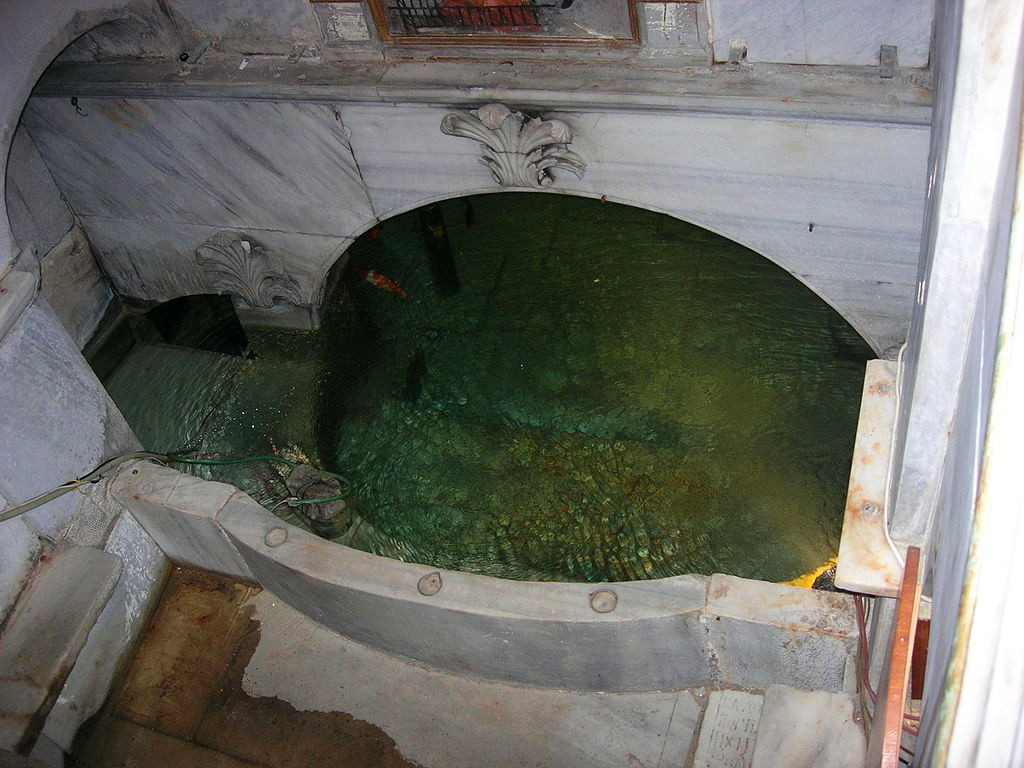

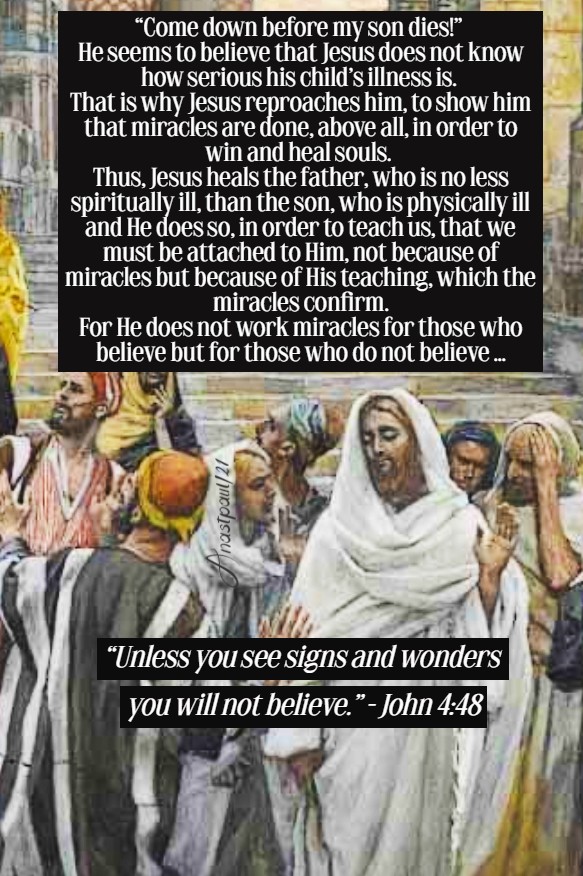
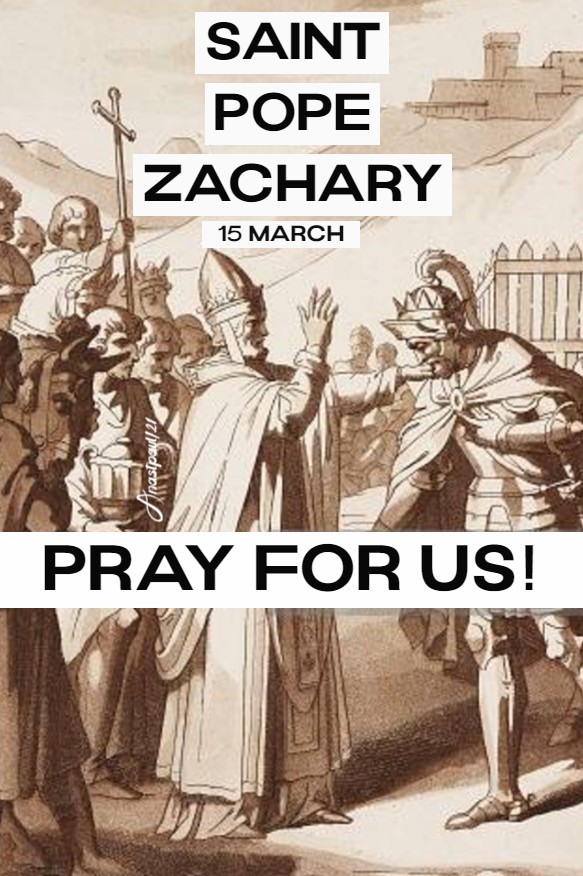
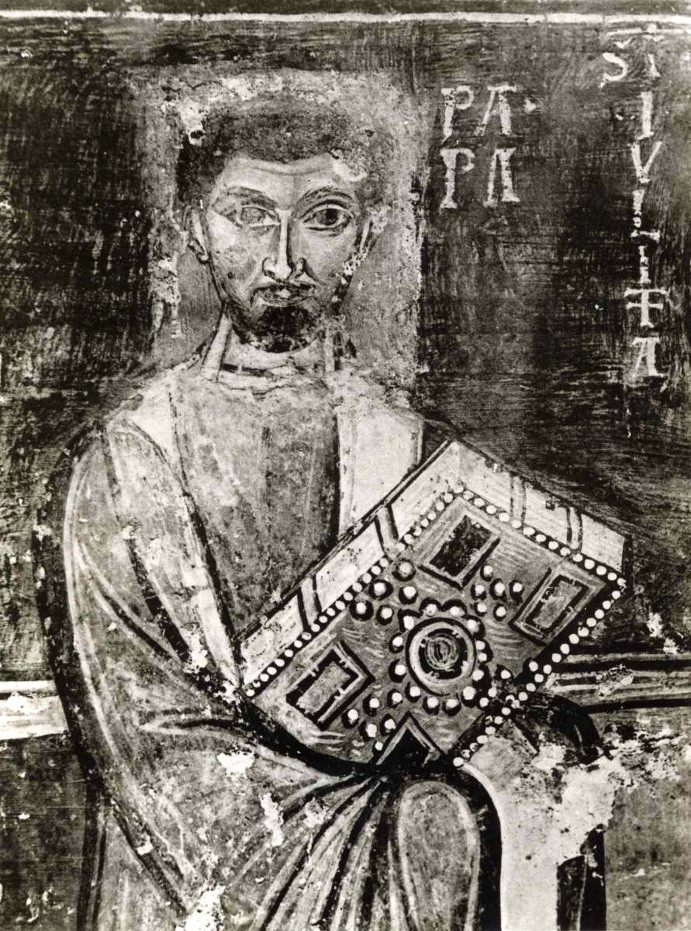
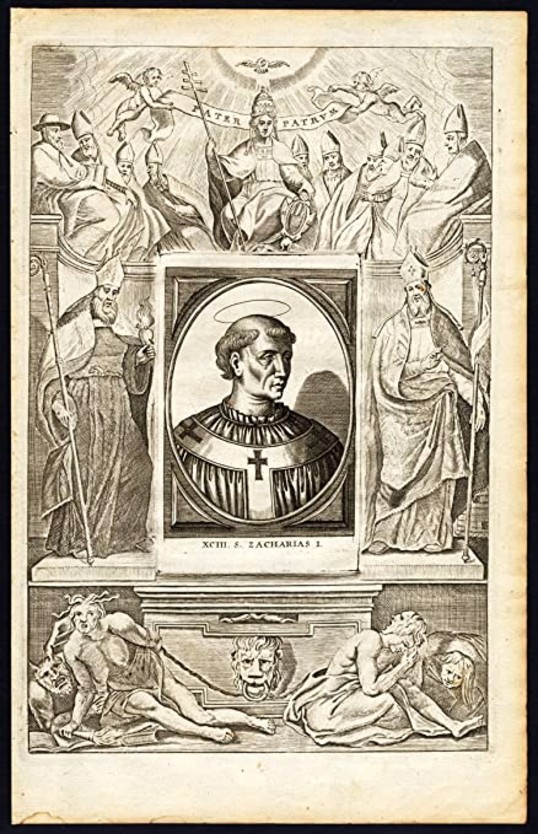


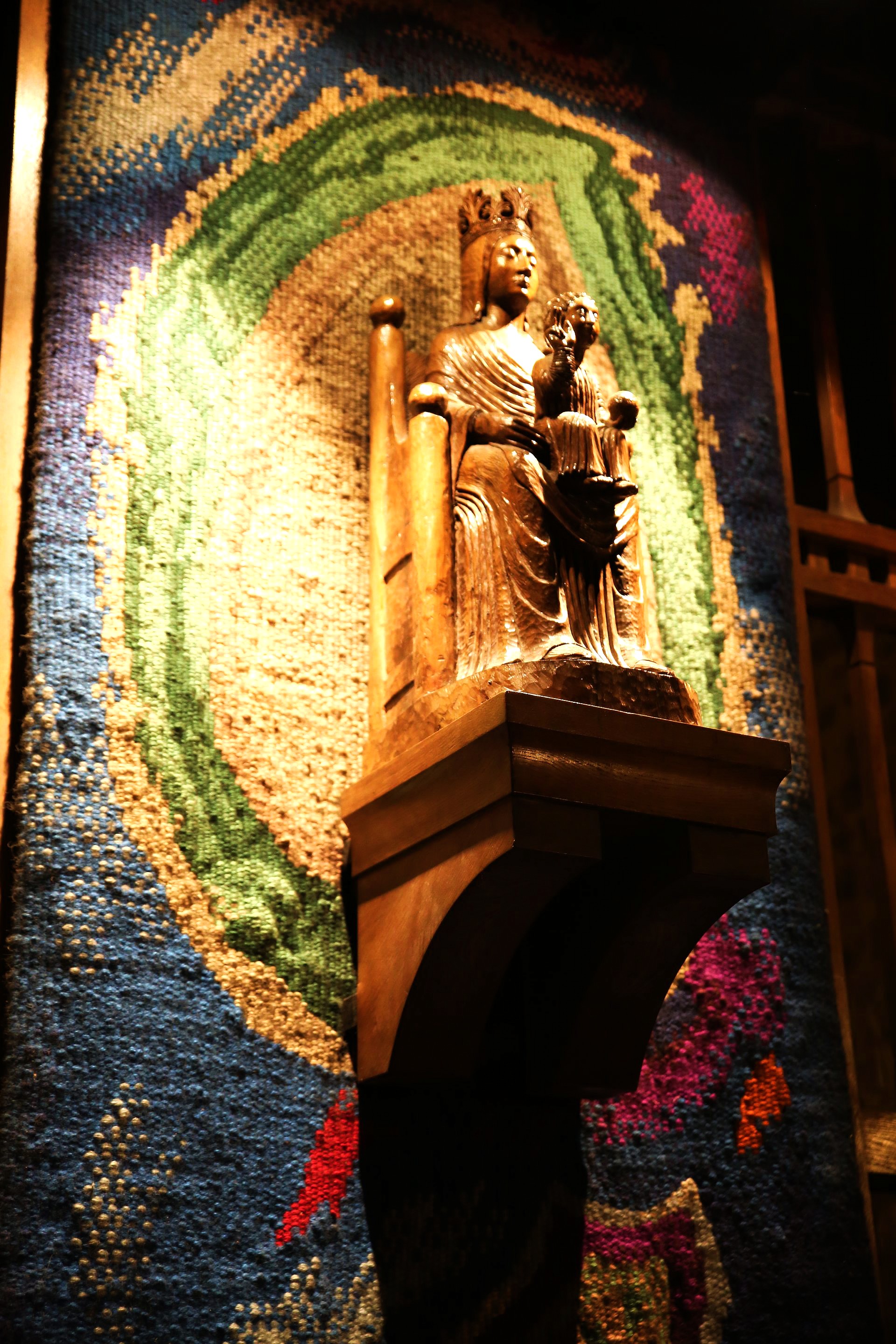
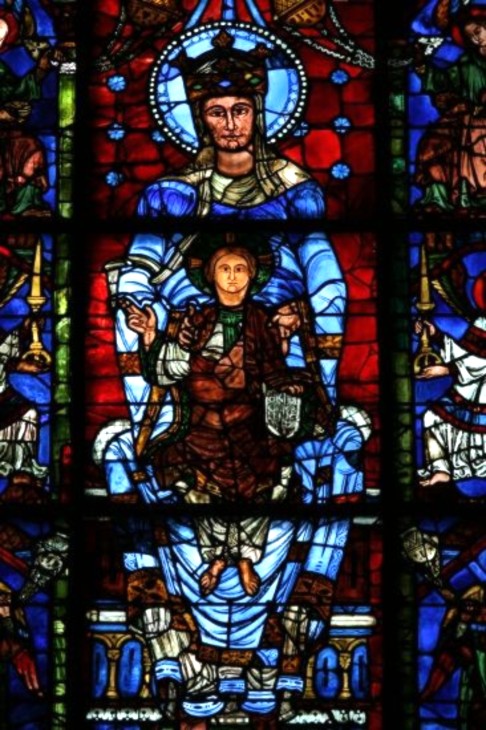
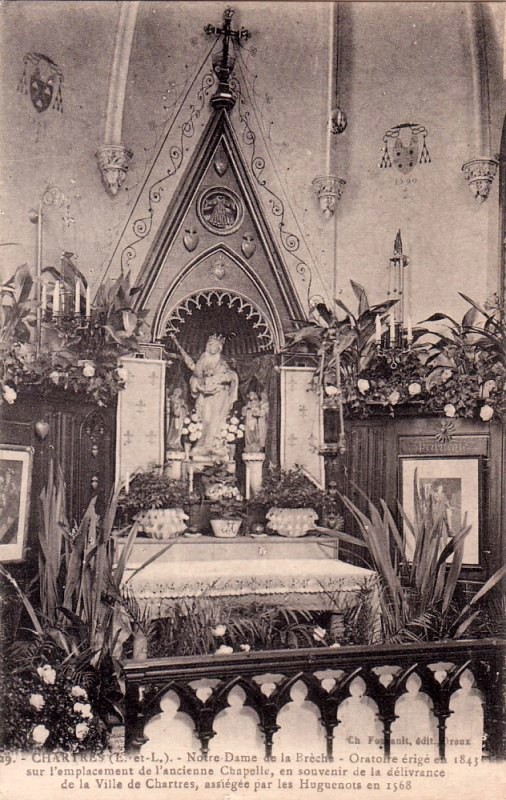
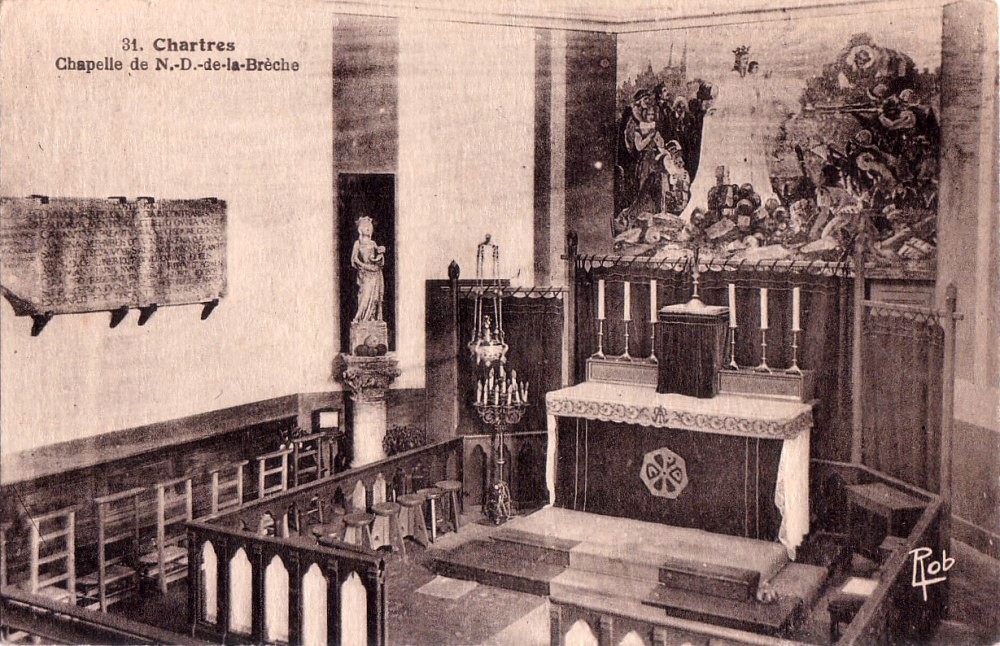

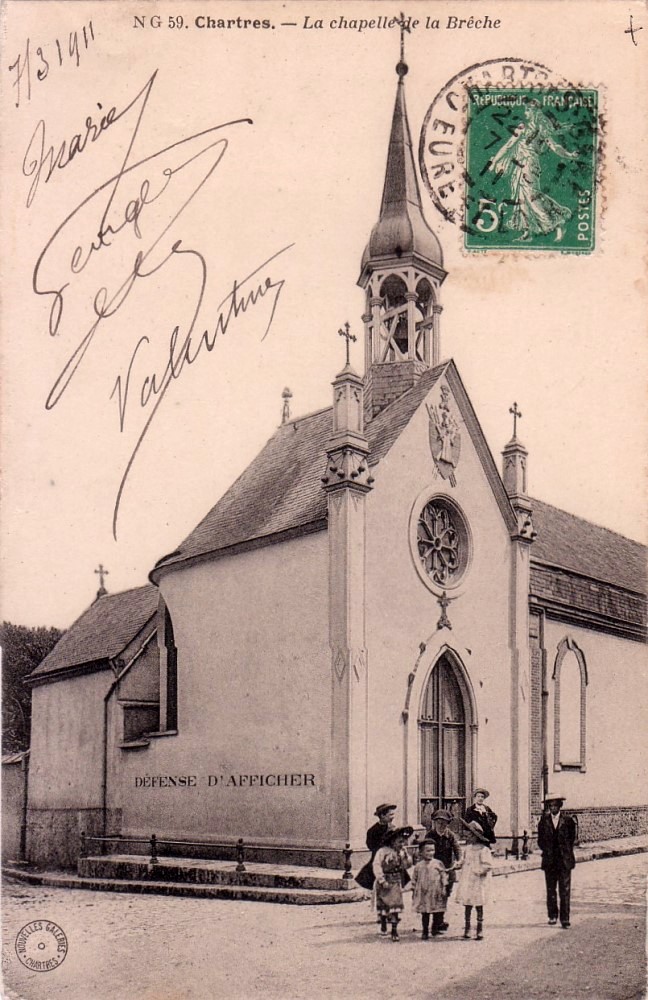
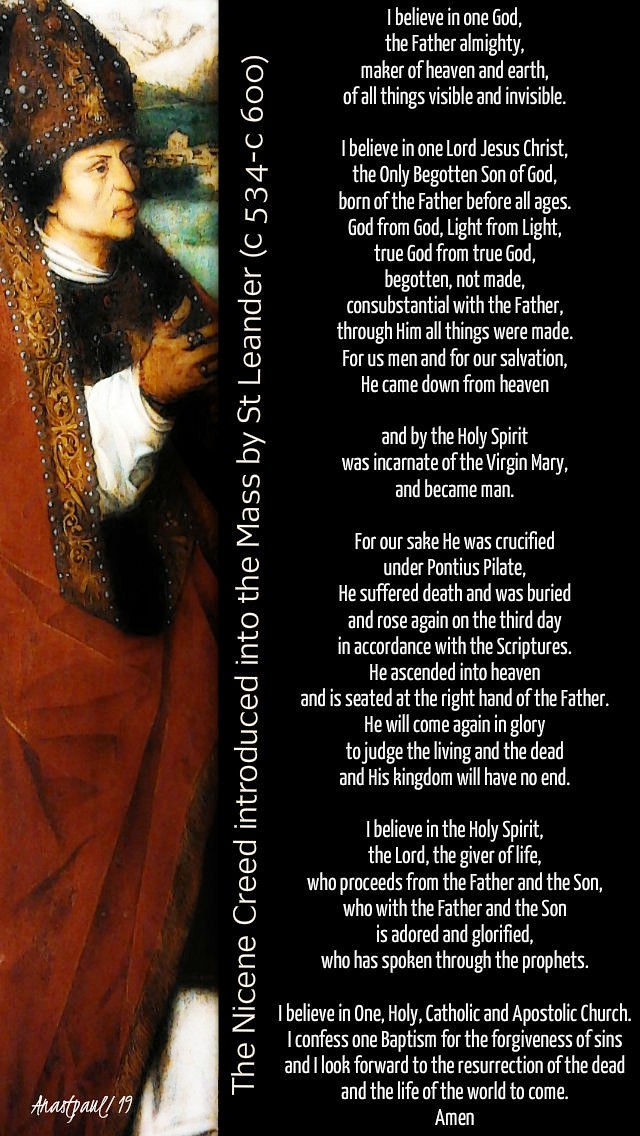

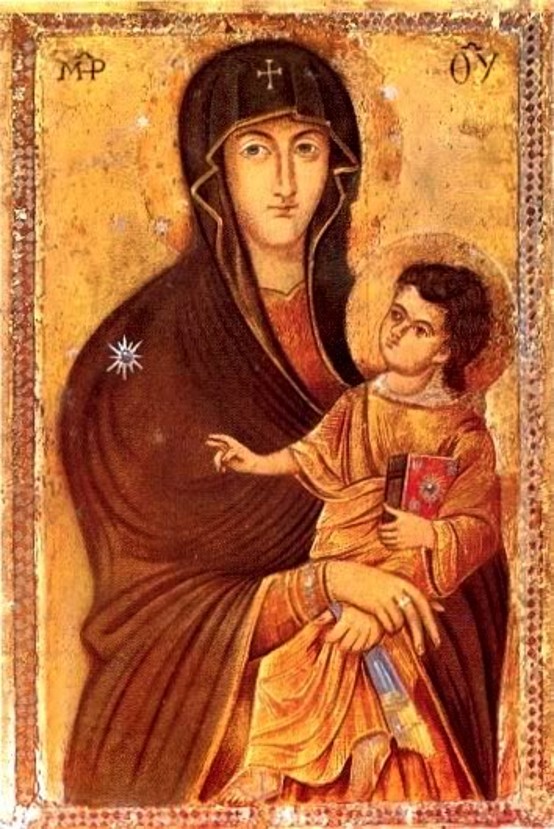


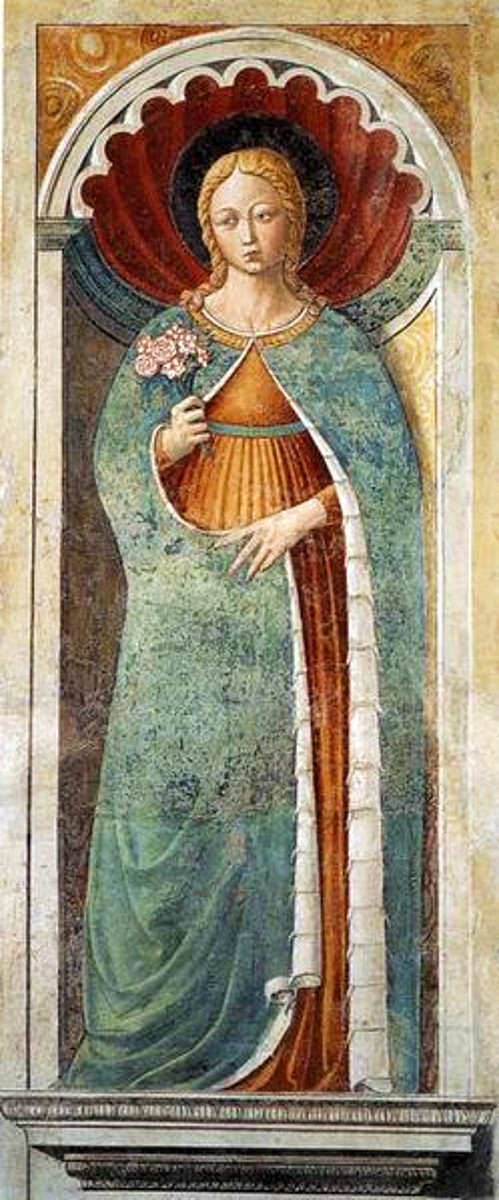
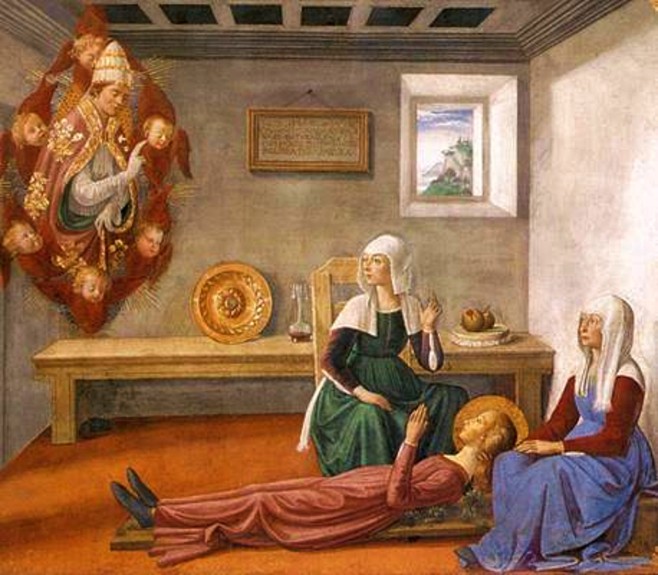
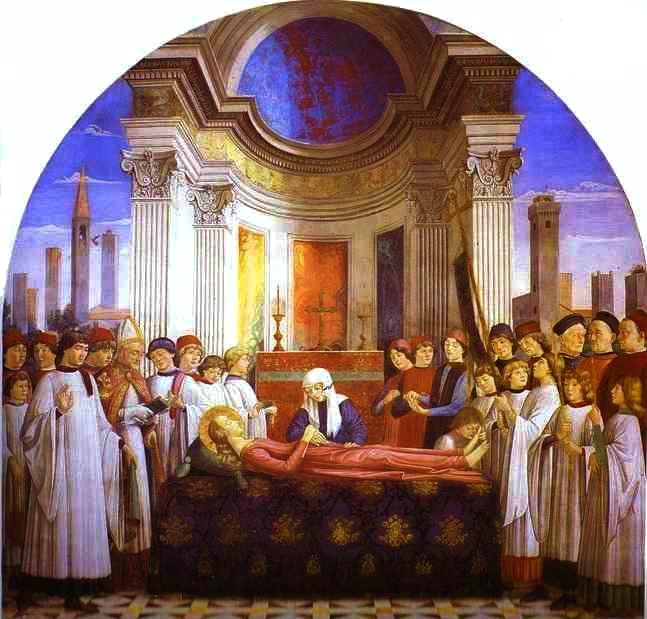
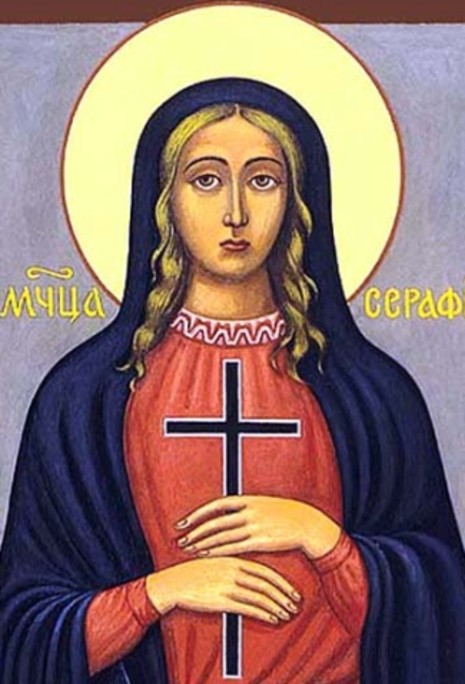

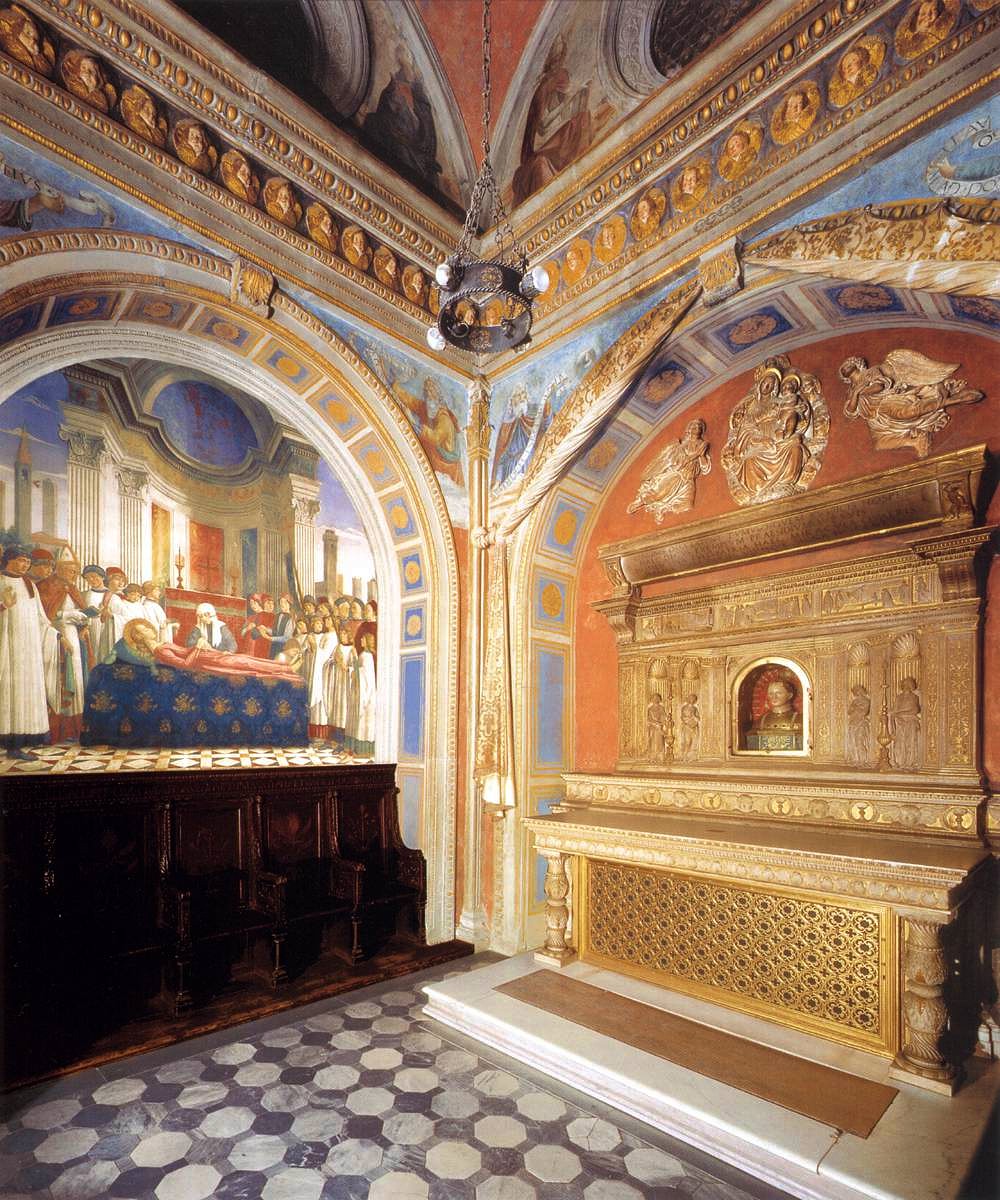


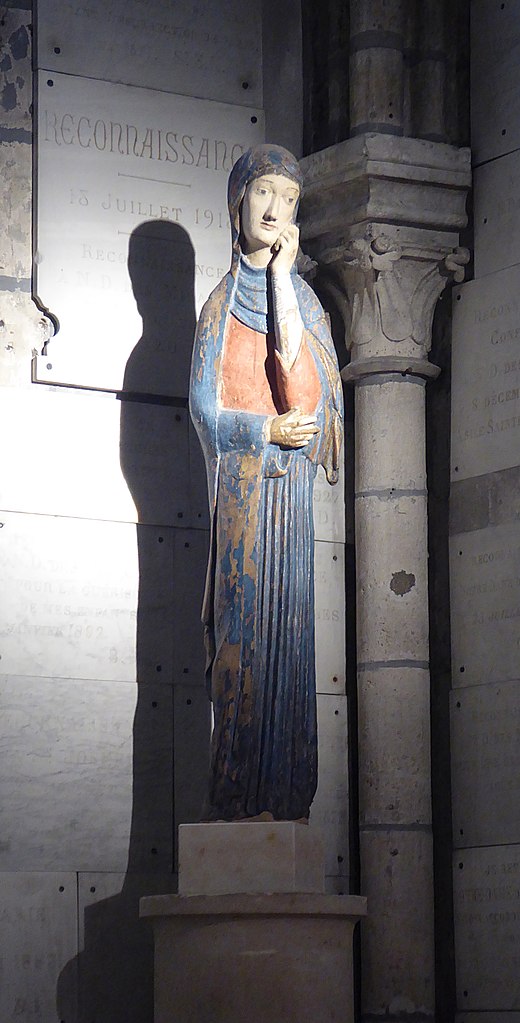


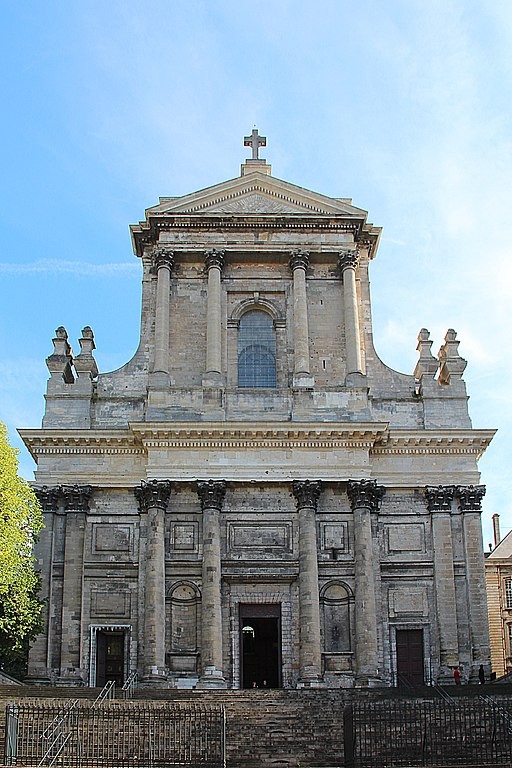
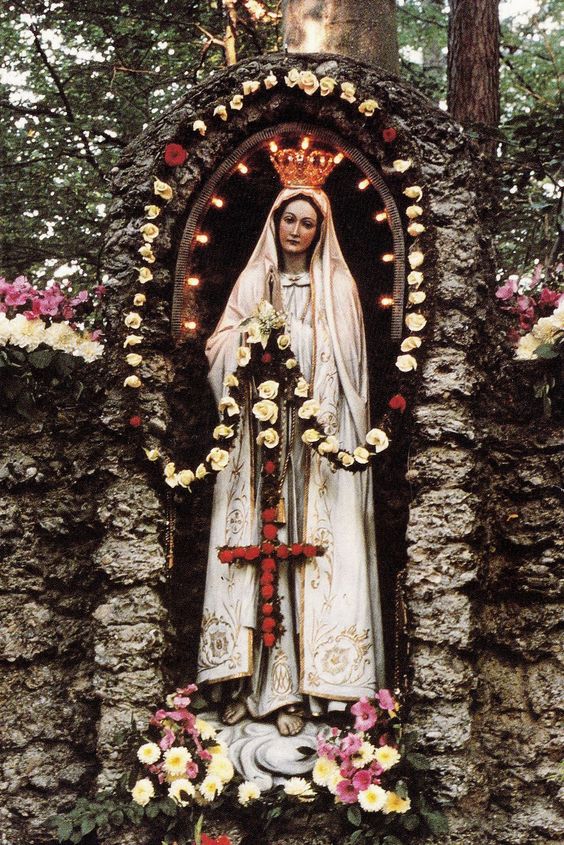
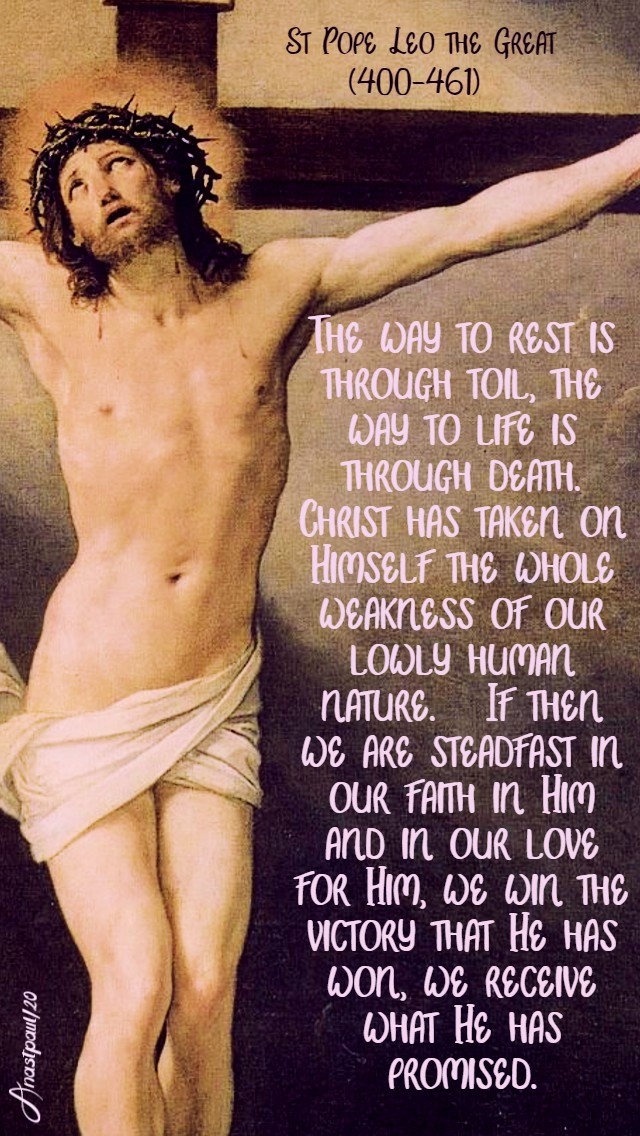
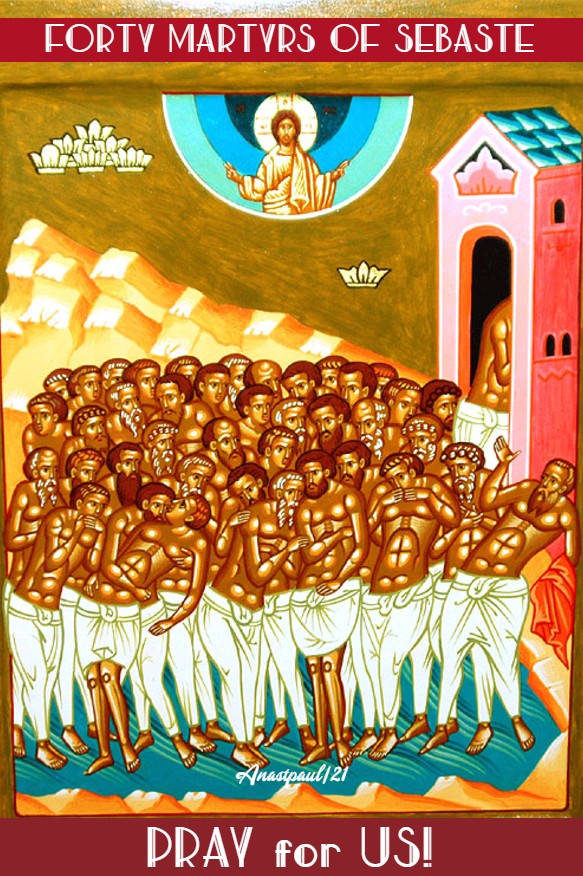
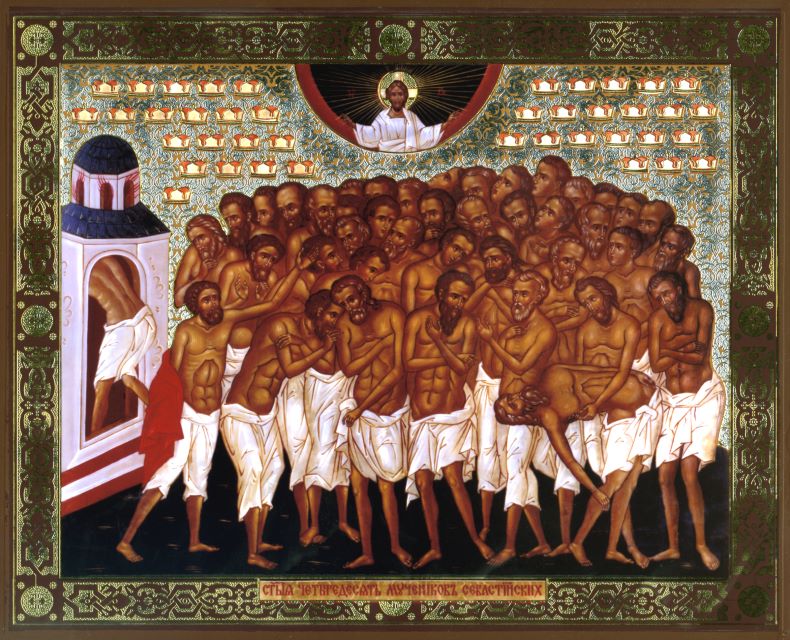

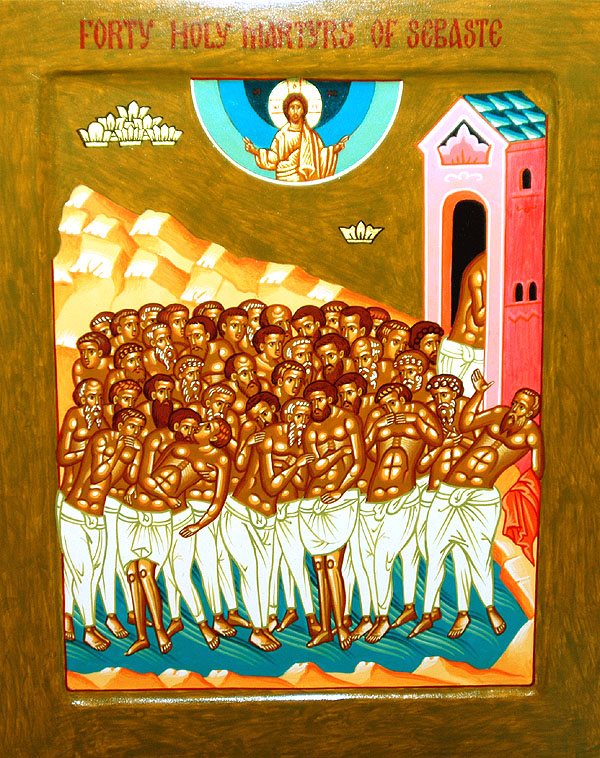
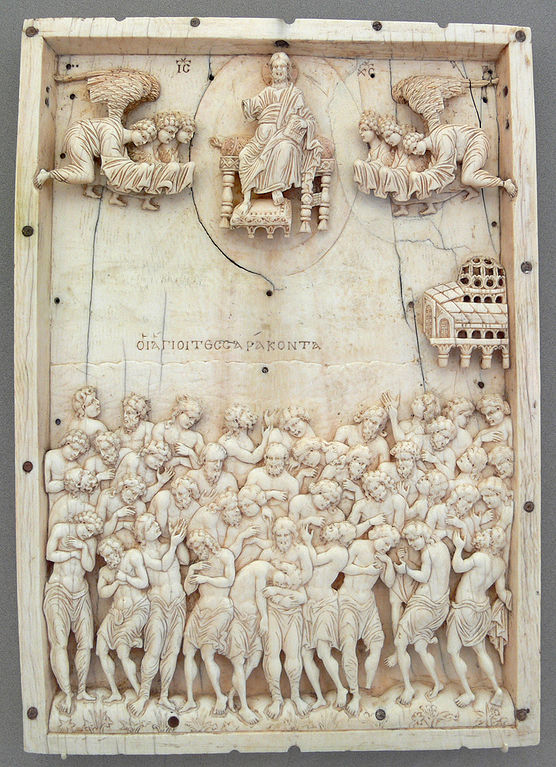

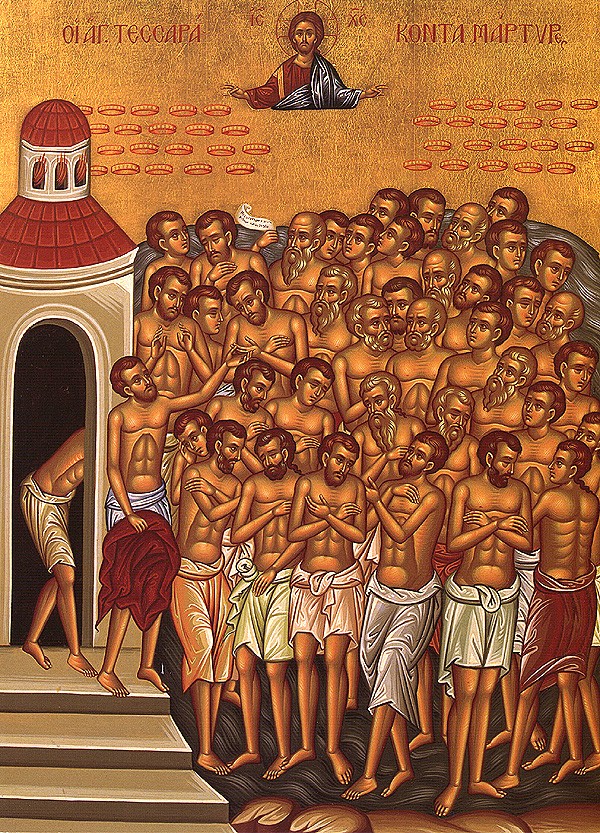
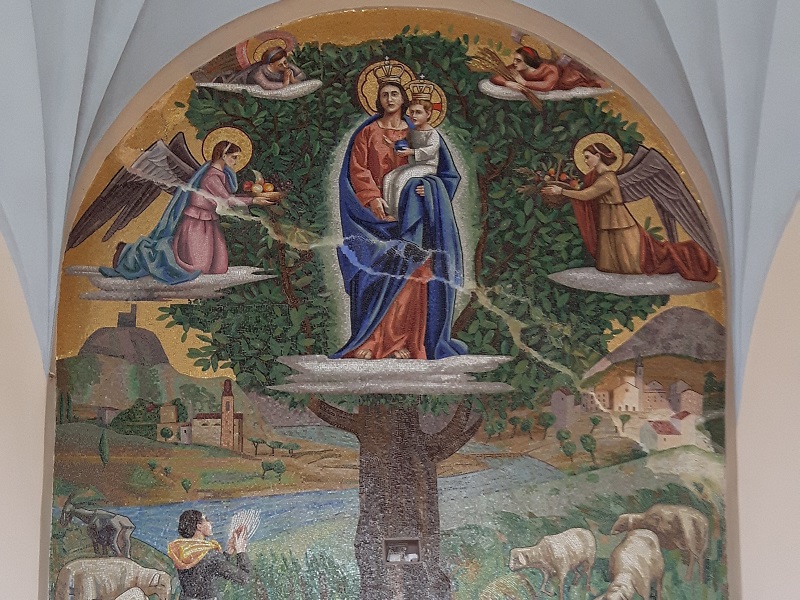
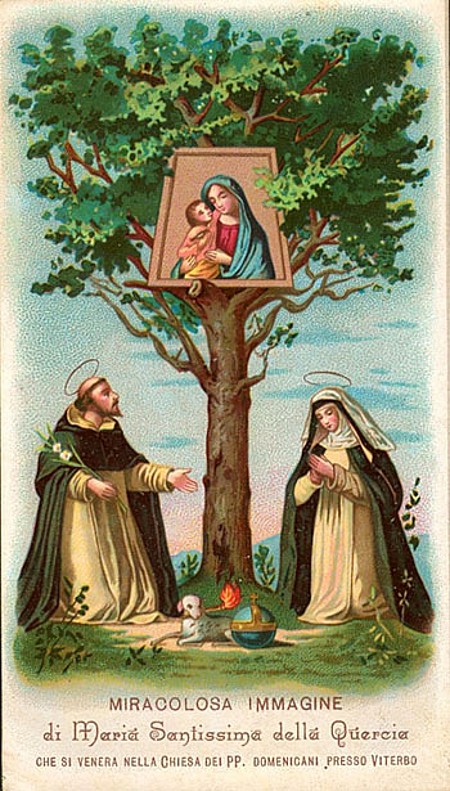
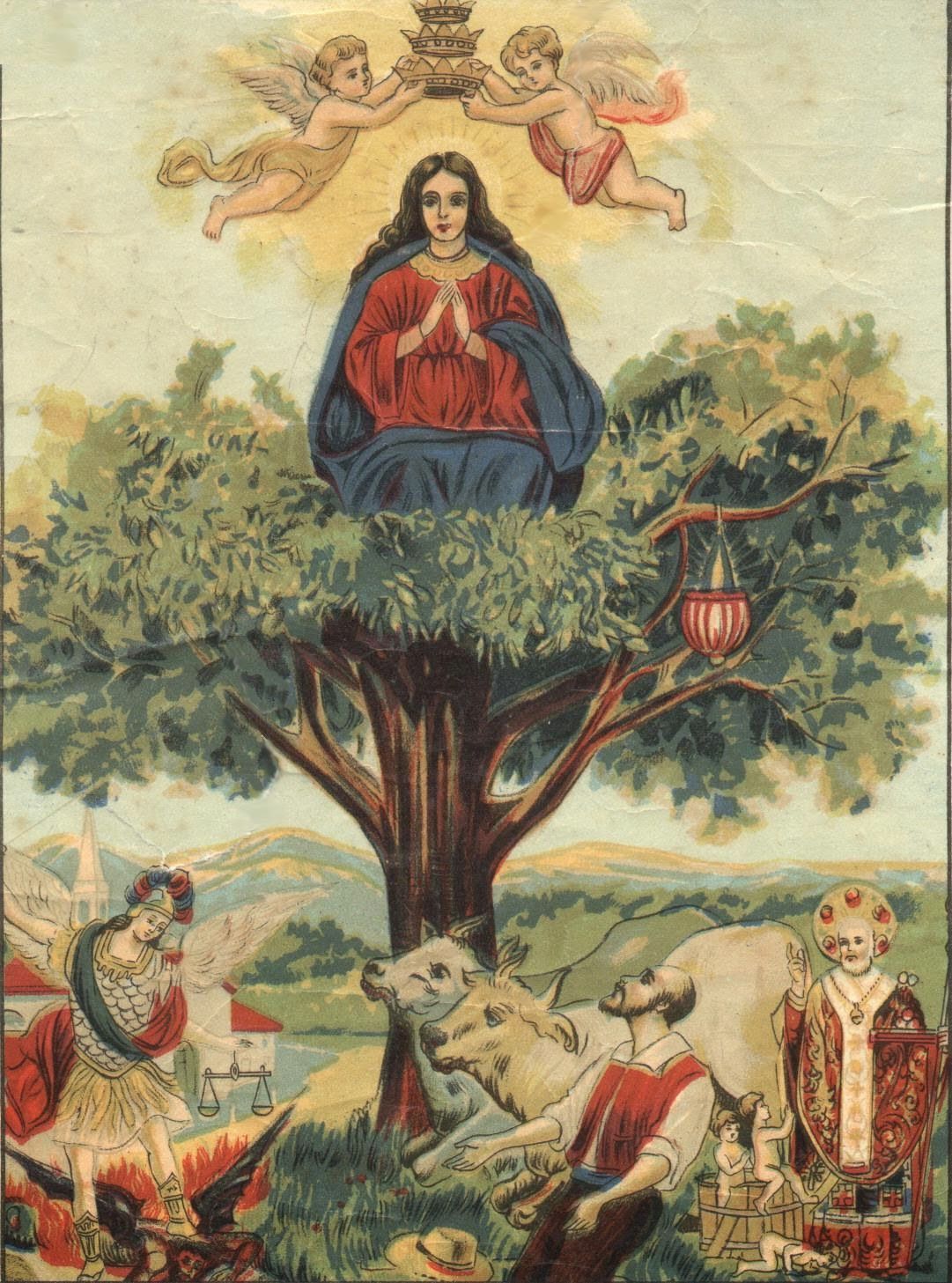
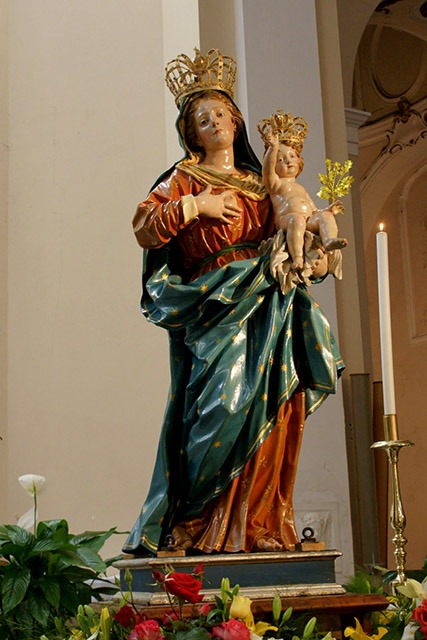


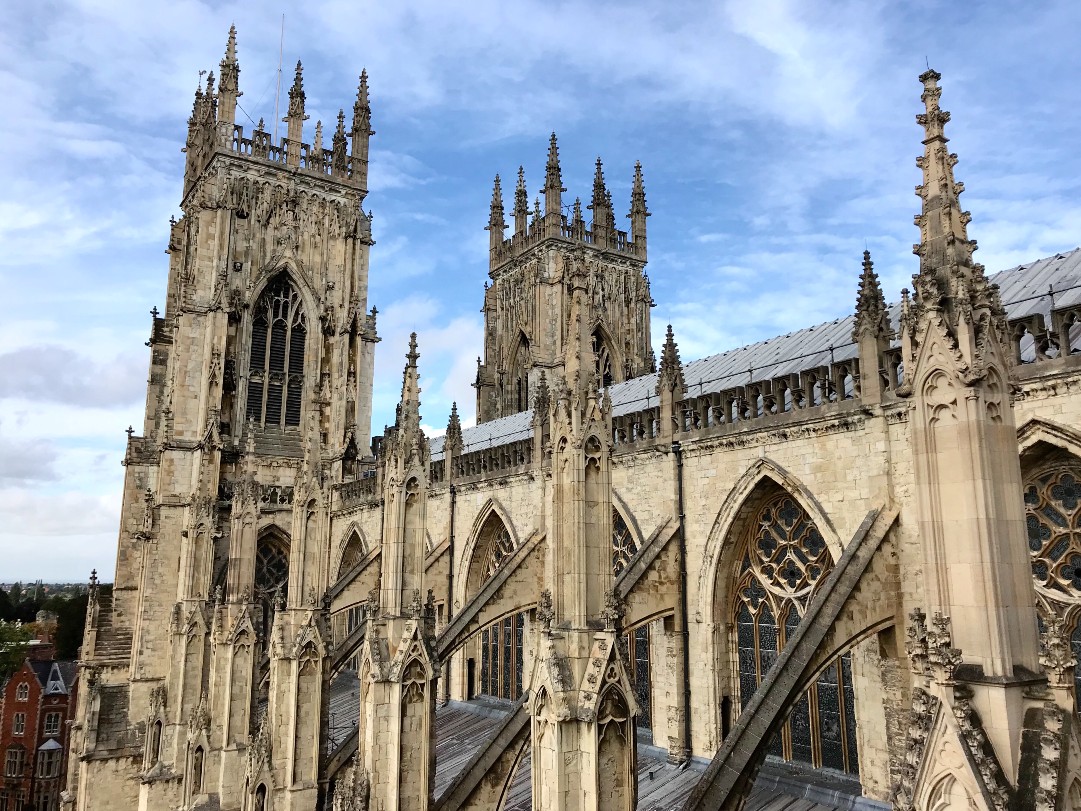


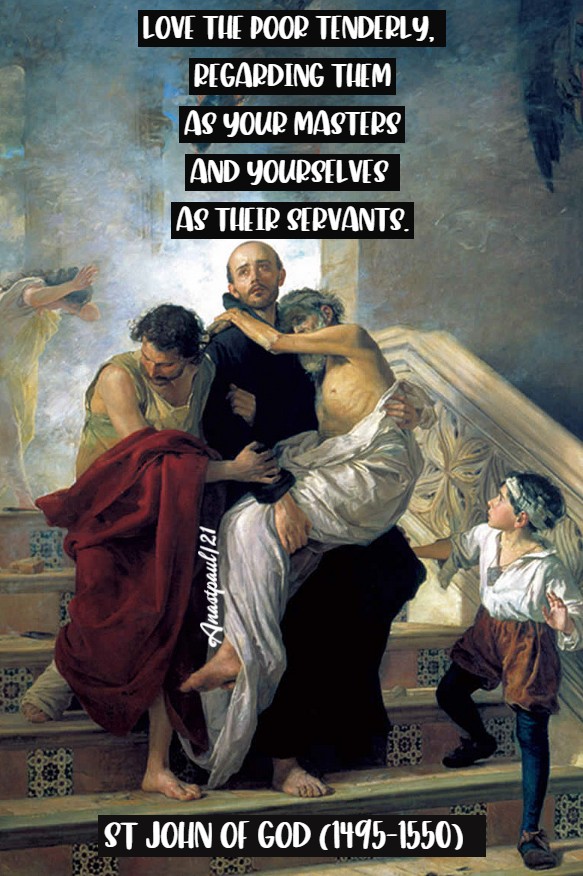

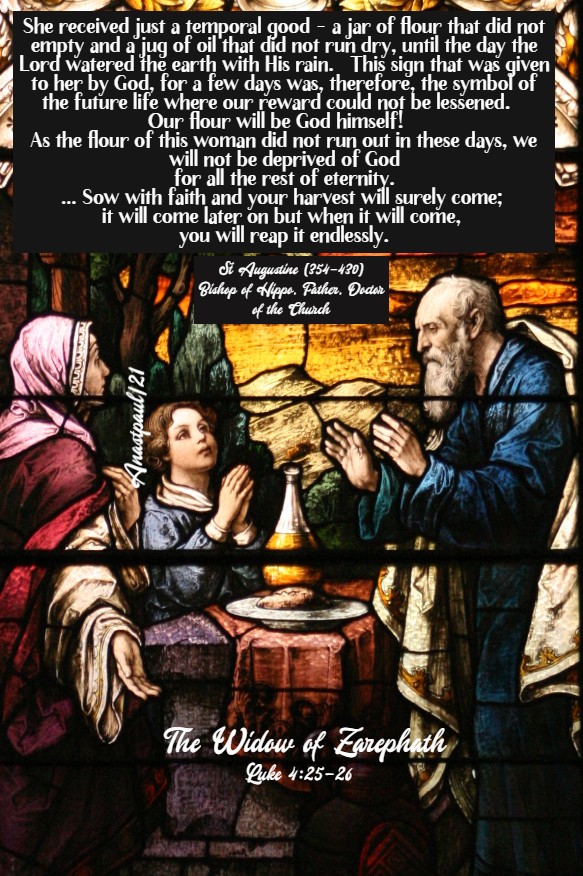
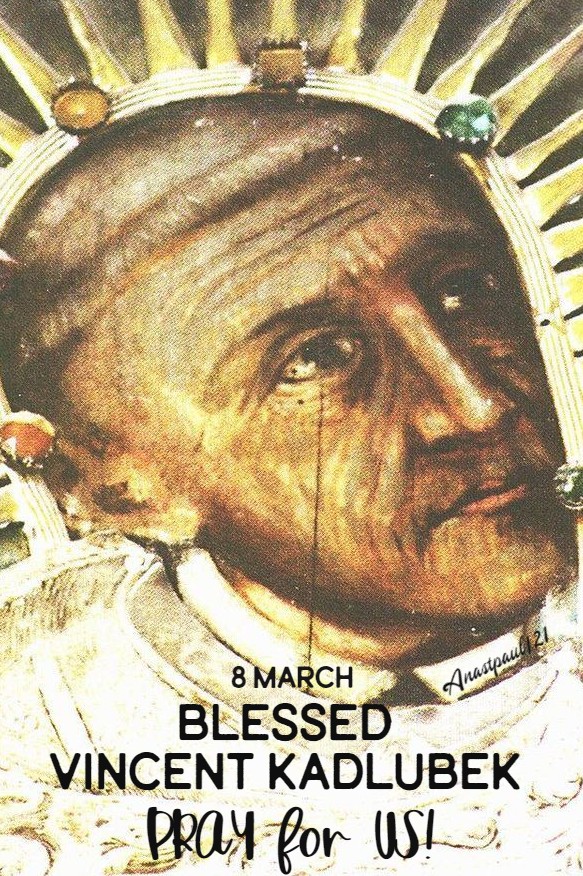
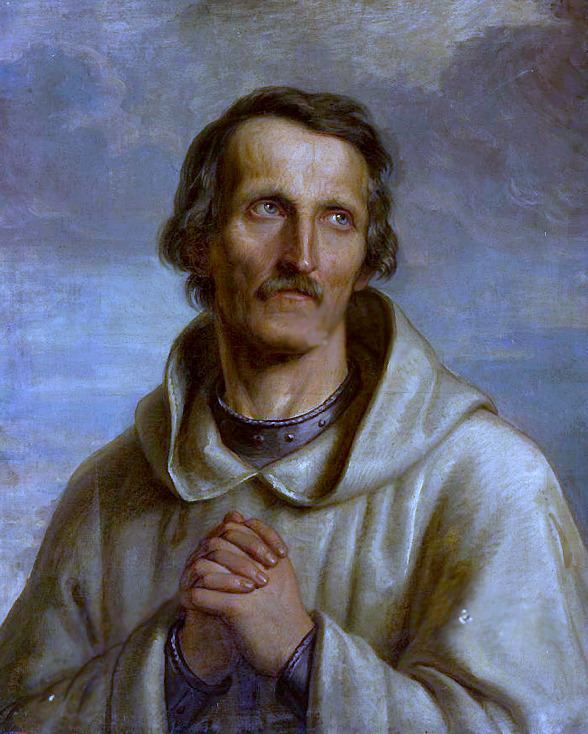

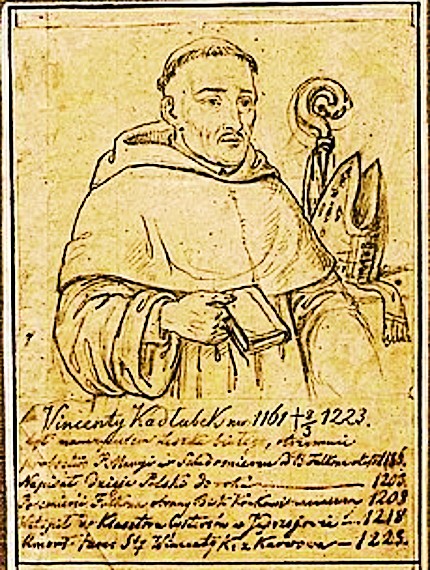
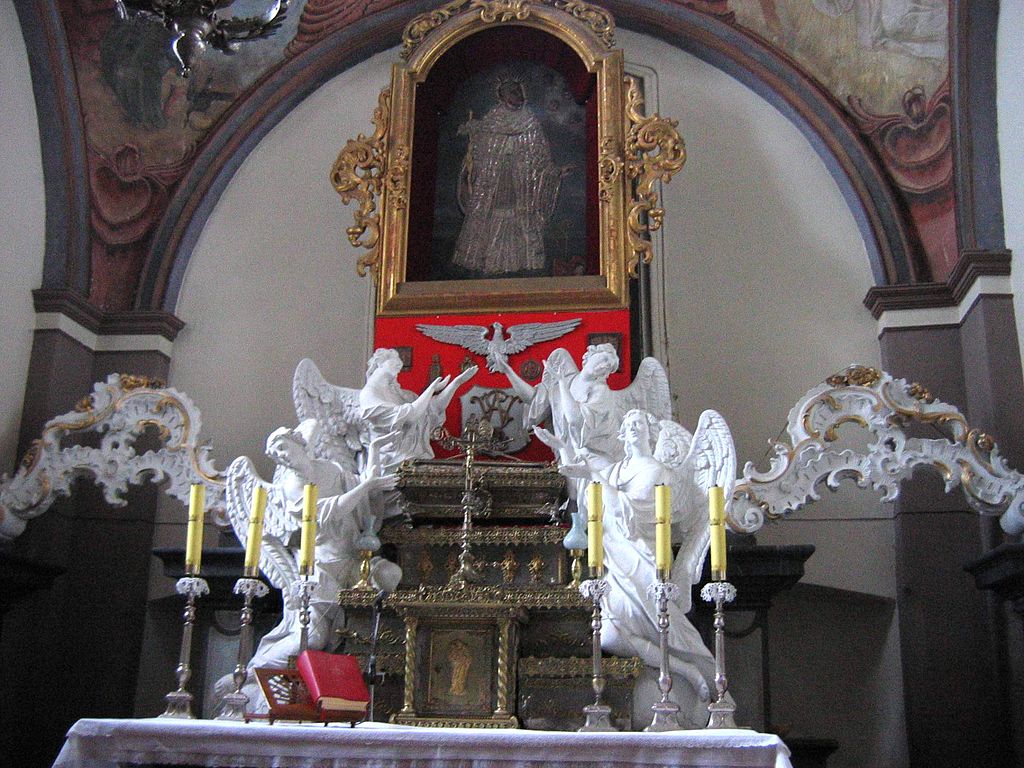
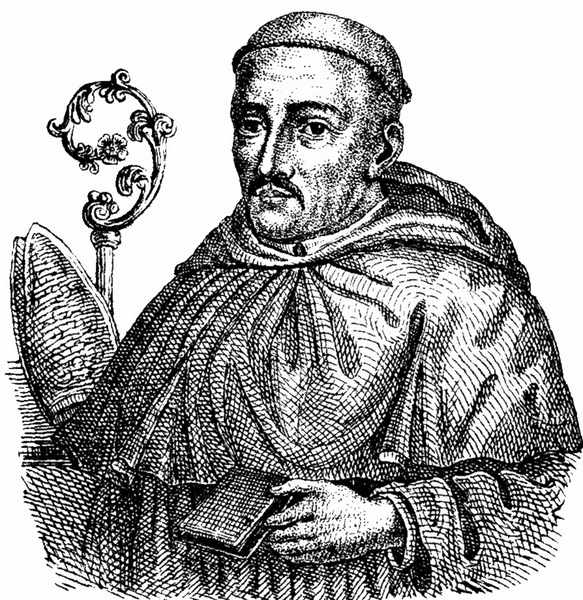
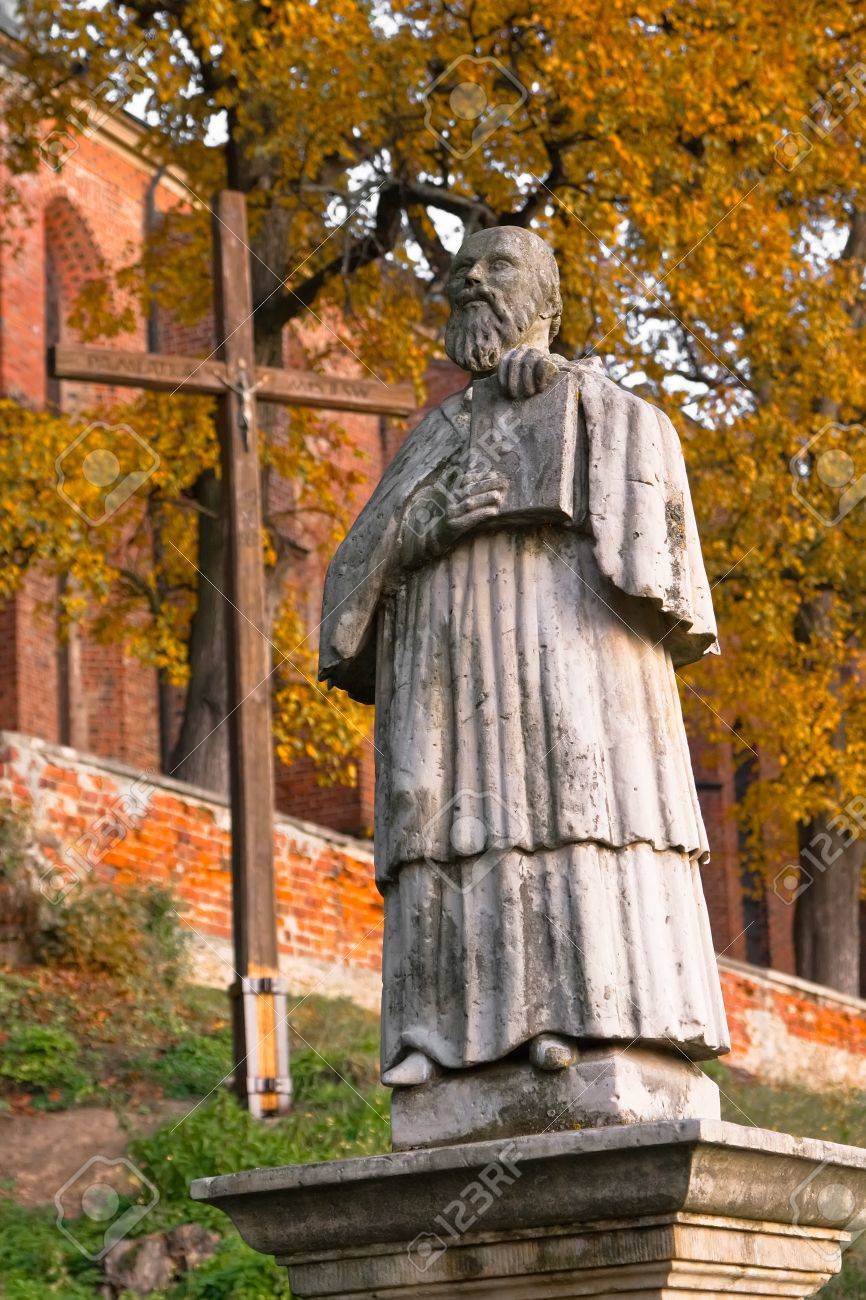
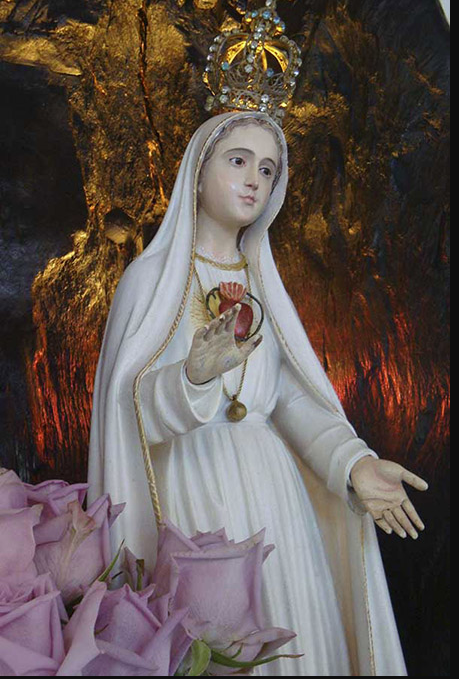
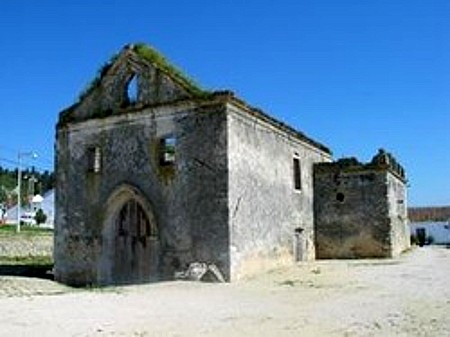
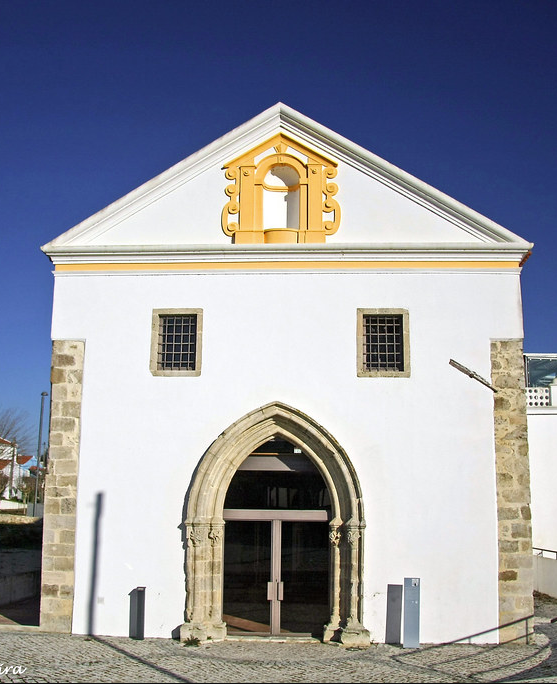


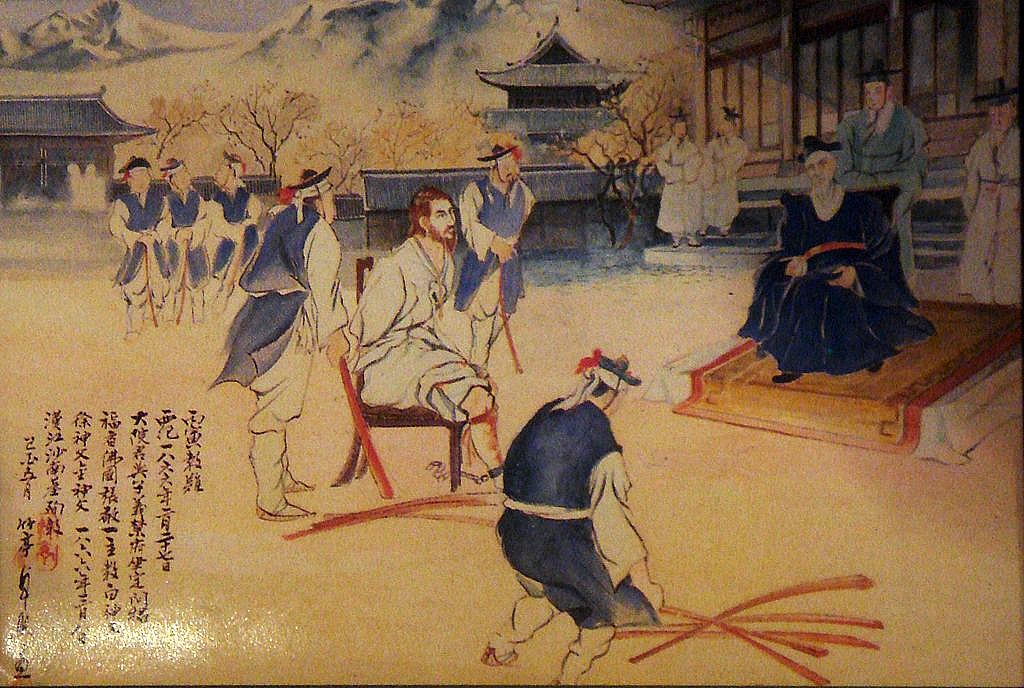

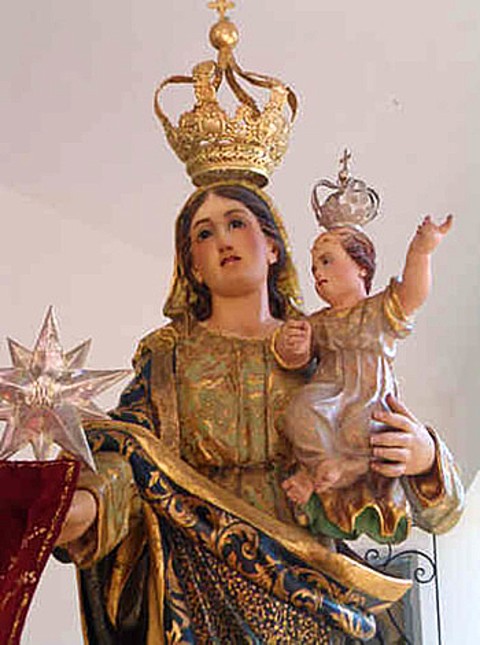
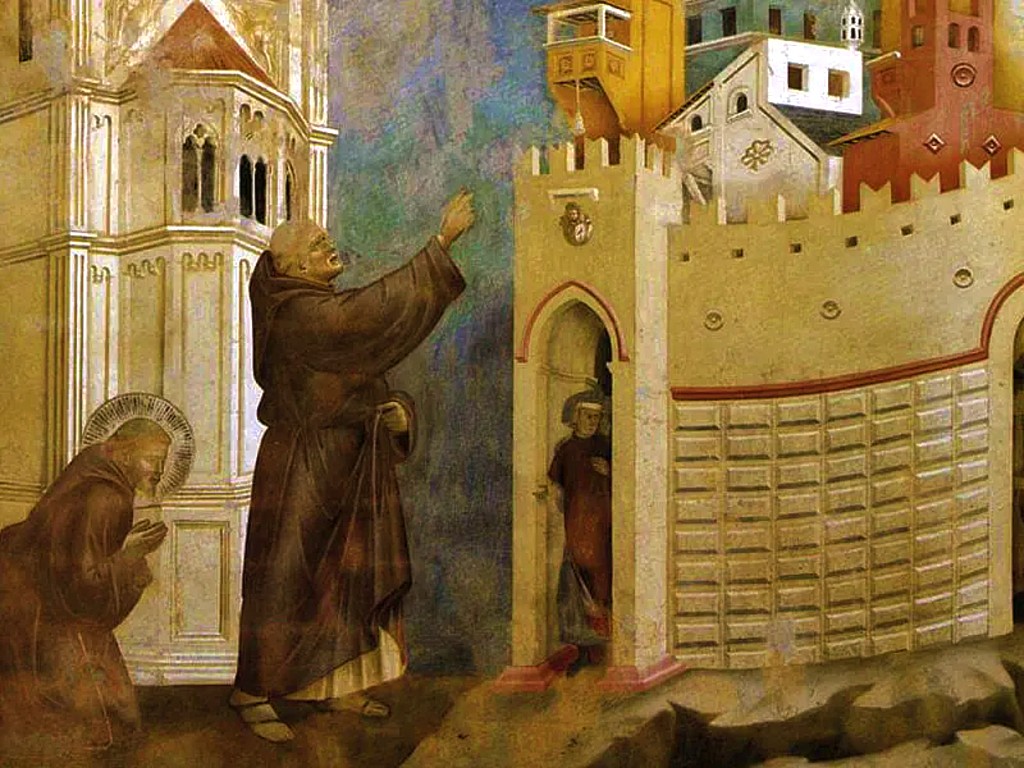
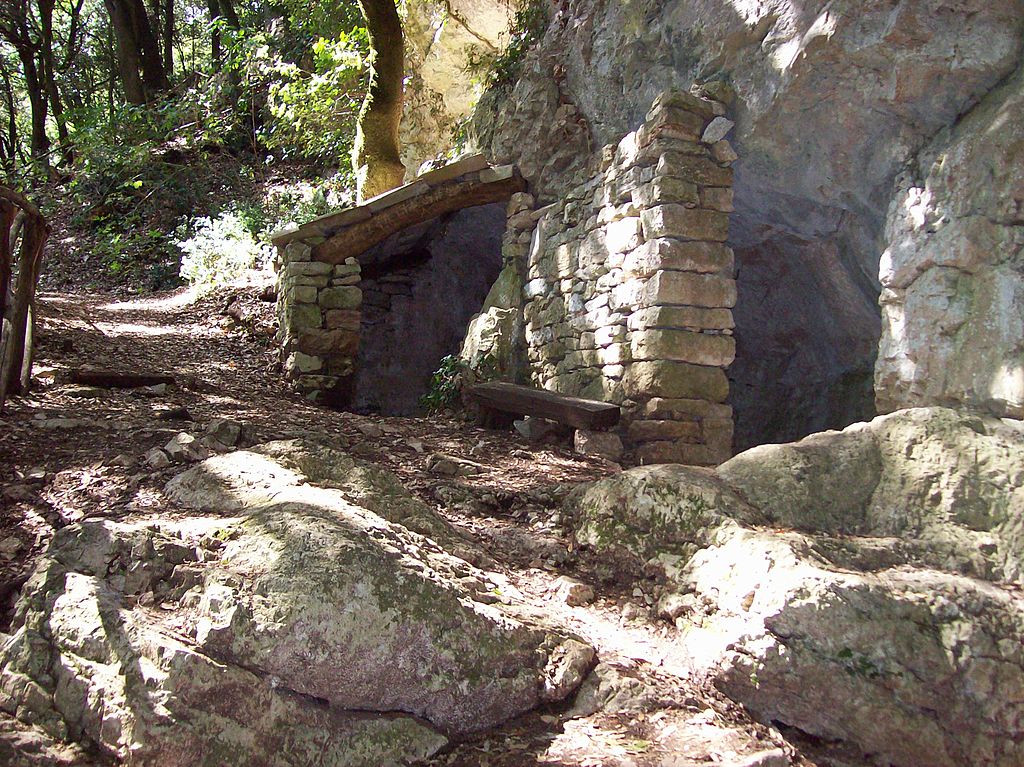
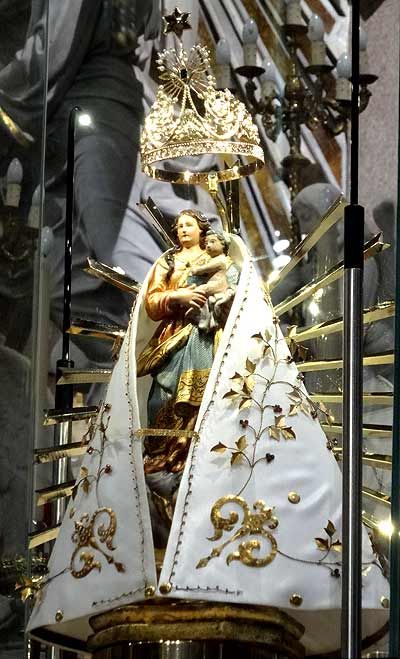


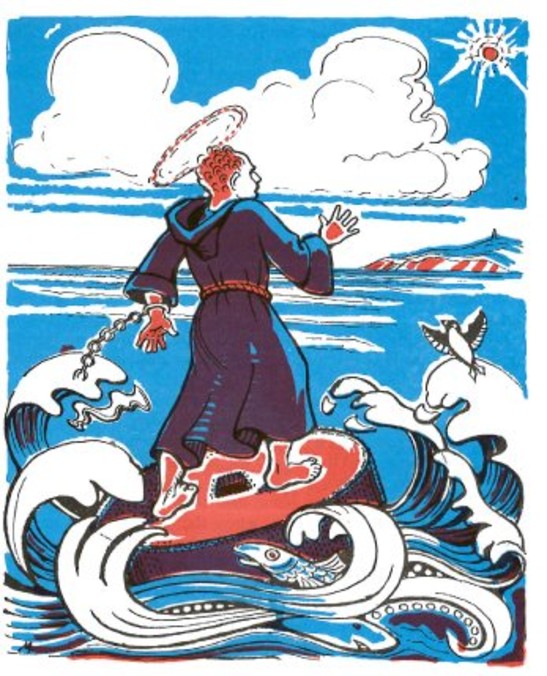


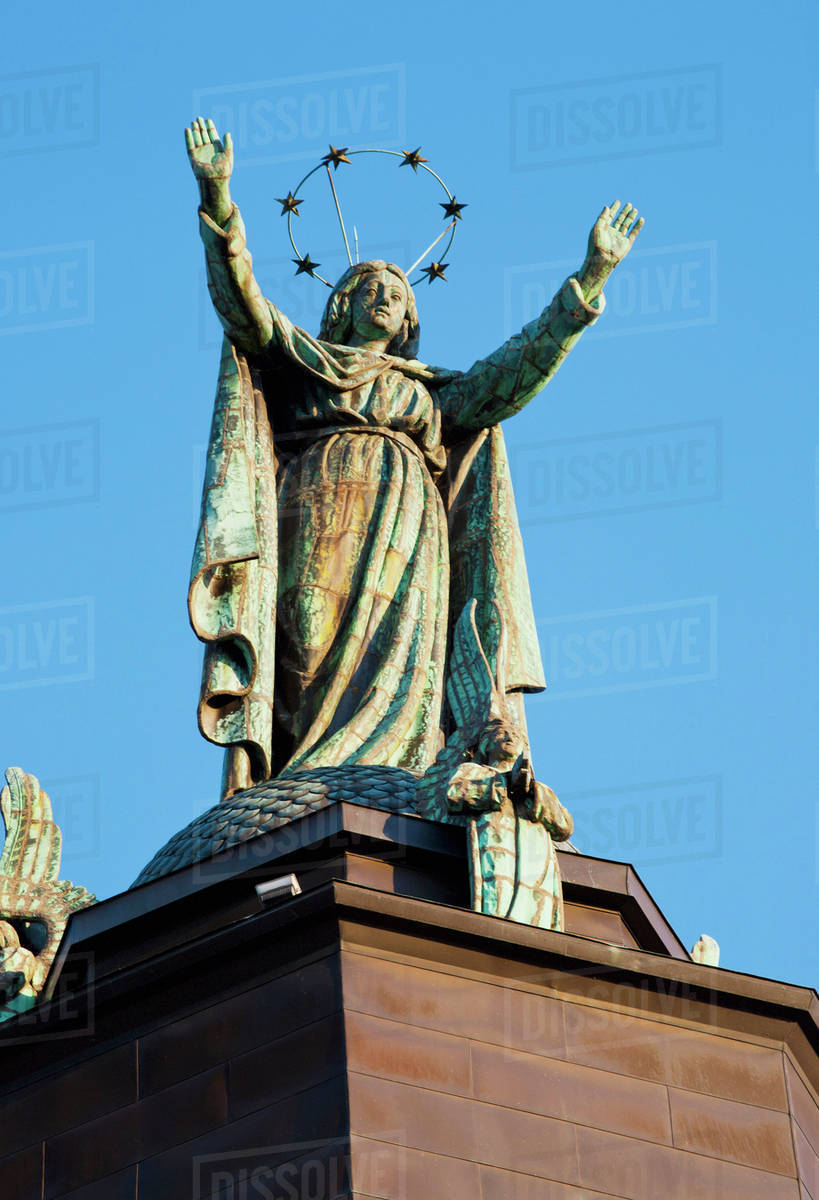


You must be logged in to post a comment.