One Minute Reflection –4 March – Thursday of the Second week of Lent, Readings Jeremiah 17:5-10, Psalms 1: 1-2, 3, and 6, Luke 16: 19-31 and the Memorial of St Casimir- (1458-1484)
The poor man died and was carried by the angels to Abraham’s bosom. The rich man also died and was buried and in Hades, being in torment, he lifted up his eyes and saw Abraham far off and Lazarus in his bosom. … Luke 16:22-23
REFLECTION – By St Nerses Chnorhali (1102-1173) Armenian Bishop – Jesus, Only Son of the Father, 624 f.
Like the rich man who loved a life of pleasure I, too, have loved pleasures that pass away With this animal body of mine, In the pleasures of that fool.
And from so many and such great blessings That You have so freely given me I have not paid back the tenth From Your own gifts.
But, out of everything under my roof, Gathered from earth and sky and sea, I believed Your numberless blessings To be my own possession.
Nothing of these have I given to the poor, Nor set anything aside for his needs: Neither food for the hungry Nor covering for the naked body,
Neither shelter for the homeless Nor abode for the foreign guest, Nor visit to the sick Nor even concern for the prisoner (cf. Mt 25:31 f.).
I was not saddened for the sorrow Of the one cast down by his burdens, Nor shared the joy of the joyful But burned with jealousy against him.
All of them were another Lazarus, (…) They lay outside at my gate; … Yet I, deaf to their appeal, Never gave them the crumbs from my table. …
The dogs of your Law outside Comforted them, at least with their tongues; Yet I, who listened to Your commandment, Wounded the one who bore Your likeness with my tongue (Mt 25:45). (…)
Yet only grant me repentance here below That I may make reparation for my sins, … That these tears may extinguish the blazing furnace With its burning flames. …
And, instead of acting like the merciless, Set merciful compassion within me, That, by showing mercy to the poor, I may obtain Your mercy.
PRAYER – Dear and Holy God, let us offer You all our daily struggles against sin and evil. Grant us the strength to resist all forms of idolatry, to seek only You and never to allow the material goods of this world to seduce us. Sustain us ever more with Your word and help us to find in it, the source of life. Grant that by the intercession of St Casimir we may grow in charity us during our life on earth. Grant this, through our Lord Jesus Christ, Your Son, in union with the Holy Spirit, one God forever and ever. Amen
Saint of the Day – 4 March – Blessed Placida Viel SSC (1815—1877) Virgin, Religious Sister of the Sisters of the Christian Schools of Mercy, which focused on the education of girls. Born Eulalie-Victoire Jacqueline Viel on 26 September 1815 at Quettehou, Normandy, France and died on 4 March 1877 at Saint-Sauveur-le-Vicomte, France of natural causes. She is also known as Eulalie Victoire Jacqueline Viel, Eulalie-Victoire Viel, Placide Viel .
Vittoria Eulalia Giacomina Vicl, the future second Superior General of the Sisters of the Christian Schools of Mercy, was born in 1815 in the village of Val-Vacher in Normandy. Vittoria was the eighth of eleven children, (she was baptised just moments after her birth). Her family, formerly wealthy and respected throughout Quettehou, eventually degraded to the status of a small farmer. Vittoria, between five and twelve years of age, attended a girls’ school, then studied sewing for a year. She, therefore, received minimal education, which, however, being very devout, she was able to enrich by attending Catechism courses at the Parish of the town, where later she also taught. She made her First Communion before the mandated age because the Parish Priest believed she was mature and devout enough. At eighteen she was a tall, generous and cheerful girl but very shy.
Her father’s cousin, Maria, always considered as Vittoria’s Aunt, was first a disciple and then one of the first companions of St Marie-Madeline Postel (1756-1846) (16 July), of whose small community she had also been treasurer. Sr Marie-Madeline invited Vittoria to visit the group that had recently settled in Saint-Sauveur-le-Vicomte. Vittoria was immediately fascinated by the Superior and conceived the desire to share the extremely poor but obviously happy life of the nuns. In May 1833 she left home to join the community. She was greatly saddened by the separation from her father but was also overjoyed at her vocation.
In 1833, when Vittoria arrived, she found a community made up of fourteen professed and nine novices who lived in extreme poverty. She also found a saint of about eighty, from whom she absorbed her virtues, her knowledge and her charity. The postulant embraced her new life with great enthusiasm and received the novice habit in 1835 along with ten other young women and was given the name of Placida. She worked as an assistant cook until 1838, the year in which she made her Profession and in which she began a long series of ever new tasks.
Firstly, the Superior sent her back to school so that she could improve her level of education. The course of studies was supposed to last two years but Sr Placida completed it within three months and after obtaining her Diploma she even became a teacher at the college, was appointed head of the novices and also a councillor. Maria soon understood that the Mother Superior had decided to prepare that young girl for the highest responsibilities and her attempts to guide her niece towards the strictest religious observance turned into evident hostility. The Aunt did nothing but point out and underline Placida’s faults and seemed to want her to be removed from the Monastery of Saint-Sauveur-le-Vicomte. The Mother Superior, however, was adamant and even appointed Placida Assistant Superior and gave her the task of founding a new Convent.
One day, while the Bishop was expressing his concern for the future, to the elderly Foundress, Placida passed by and Mary Magdalene said: “It will be that twenty-four-year-old nun who will succeed me. God will tell you how to do it.” He then ordered Placida to go to Paris and raise the necessary funds to restore the Church. He told her to go to the Queen and the most important Ministers of the Government and to collect what was still needed, begging from door to door. For four years Placida carried out this task, committing herself and accepting the refusals, disdain and profound solitude, with a great spirit of obedience, humility and sacrifice.
In May 1846 she was recalled to Saint-Sauveur-le-Vicomte because the Superior was dying. St Mary Magdalene Postel died on 16 July 1846 . The General Chapter for the election of the new Superior was held in September of the same year and all but two votes were in favour of Placida, who felt completely unworthy and apologised on her knees. While her Aunt and the Chaplain, were of the opinion that the role of Superior belonged to the Aunt, the Bishop was adamant and validated the votes . A very strange period followed. Placida submitted to the Chapter her need to complete the task entrusted to her for the raising of funds and suggested that she postpone her taking Office for a year and keep only some functions in the interim. The Chapter agreed and entrusted the daily leadership of the community to her Aunt. However, that situation lasted ten years, years in which the Mother Superior, Placida, extended the range of her travels outside of Paris, always moving on foot and often spending the night outdoors.
She kept in correspondence with the members of the community and gave instructions for the assignment of tasks but her short stays at the Convent were rather sad. Maria had taken possession of the Superior’s rooms, while Placida was relegated to an attic; the Aunt humiliated the young Superior in front of the whole community, gave her orders, opened her post, made decisions together with the Chaplain and instructed her on what she should do.
Why was all this possible? Had Placida abdicated her role? Shouldn’t she have taken some more vigorous action towards Maria? In the end, her great sufferings paid off; forcing the Aunt into submission would have jeopardised the already fragile balance of the congregation, which the true Mother Superior knew she had to avoid at all costs.
Shortly after the Consecration of the Abbey Church, which had been completed with the vast funds Placida had raised, Maria died. Placida ran the Community for thirty more years and received Papal approval for the order in 1859 from Pope Pius IX. Her tenure as Mother Superior saw Sisters in the Order increase from 150 to more than 1000, as well as seeing an increase in the number of Convents. Placida’s ambition was to do for the students, the same, that St John the Baptist de La Salle had done for the boys.
Placida died on 4 March 1877 at Saint-Sauveur-le-Vicomte after having been organising relief during the Franco-Prussian War. Placida was Beatified 6 May 1951 by Pope Pius XII.
The Roman Martyrology states – “In the Monastery of Saint-Sauveur-le-Vicomte in Normandy in France, Blessed Placida (Eulalia) Viel, virgin, who distinguished herself in leading the Congregation of the Christian Schools of Mercy with commitment and humility.”
Notre-Dame-de-la-Garde / Our Lady of the Guard , Marseille, France (1221) – 4 March:
The Statue inside the Basilica
Late one afternoon during the thirteenth century, a solitary French fisherman was fishing off the harbour of Marseille. Before he became aware of it, a terrific storm descended upon him. His boat tossed around like a shell and filled with water faster than he could bail it out. His rudder was lost. his mast snapped. Cutting himself free from the rigging with a knife, he had saved himself temporarily from certain drowning. Still, everything looked hopeless and he felt he could never get back to the harbour. The fisherman thought of the family he would never see again and cast a despairing look at the City, the huge rock standing like a sentinel or guard on the mountain which overlooked the City and harbour. Dimly through the gloom, he suddenly saw a solitary figure of a lady, dressed in white, standing firmly on the very top of the rock. She seemed to be extending her hand as if she would help him to the shelter and safety of the harbour. At once it came to him that the Lady so calmly defying the wind and rain could only be the Blessed Mother, so he prayed to her to help him. Almost immediately his boat ceased its wild tossing, righted itself and pushed by a friendly gust of wind, raced into the calm water of the harbour until it drove onto the shore at the very foot of the mountain. Stepping onto the shore, the fisherman fell to his knees and poured out his thanks to the Blessed Virgin and then hurried home to his worried family. The story of his rescue through the assistance of Our Lady, quickly spread throughout the port. It was remembered that other sailors, on numerous occasions during severe storms, had also seen the figure of the Lady on top of the rock. Always when she had appeared, the angry seas had calmed and their crafts had ridden safely into the shelter.
Soon everyone came to believe that the rock was the spot on which the Blessed Virgin, Our Lady of Guard, would appear whenever her help was desperately required. In thanksgiving to her the sailors of Marseille, in 1213-1218, erected a Chapel on top of the rock . In it they enshrined a lovely Statue of Our Lady. Around 1544, the Chapel was replaced by a large Church and the Statue transferred to it. Sometime during the French Revolution the Statue of Our Lady of Guard was destroyed but during the 1830’s a new Statue was dedicated. That Mary did not confine her help only to sailors was proved in the year 1832, when a severe epidemic of cholera struck Marseille, the people decided to appeal to Mary. Forming a procession, they climbed the mountain, removed the Statue from the Chapel, brought it down and solemnly carried it through the streets of the City. Almost immediately the epidemic waned and in a few days vanished. So they called Mary, Our Lady of Help – the sailors called her Our Lady of Mariners. Some years later, as the fame of the shrine on top of the mountain spread, more and more people made pilgrimages to venerate the Blessed Virgin. The shrine acquired still another name, a name more reflective of who Our Lady truly is for all who call upon her – Notre Dame de la Guarde – Our Lady of Guard, or Guardian.
In Marseilles today, the hill of Notre Dame de la Garde is topped by a beautiful Basilica, built in 1864, at an altitude of 550 feet. This commanding site, however, has been occupied by a Chapel since the year 1214. The interior has a multitude of sailors’ votive offerings and model ships are hung in all parts of it, as signs of thanksgiving for all the mariners who have been assisted by their heavenly mothe, the beautiful Stella Maris.. A golden statue of the Virgin and Child suitably dominates the City from its place on top of the western tower spire.
Votive replicas of ships saved at sea hang everywhere from the vaults of the Basilica
— St Adrian of May St Adrian of Nicomedia Bl Alexander Blake St Appian of Comacchio St Arcadius of Cyprus St Basinus of Trier Bl Christopher Bales St Felix of Rhuys St Gaius of Nicomedia Bl Humbert III of Savoy St Leonard of Avranches St Nestor the Martyr St Owen Bl Paolo of Brescia St Peter of Pappacarbone Blessed Placida Viel SSC (1815—1877) Virgin, Religious Sister Bl Rupert of Ottobeuren — Martyrs on the Appian Way – 900 saints – Group of 900 martyrs buried in the catacombs of Saint Callistus on the Appian Way, Rome, Italy.c260
Martyrs of Nicomedia – 20 saints – A group of 20 Christians murdered together for their faith. The only details about them to survive are three of their names – Archelaus, Cyrillos and Photius. Nicomedia, Bithynia (in modern Turkey)
Martyrs of the Crimea – 7 saints – A group of 4th century missionary bishops who evangelized in the Crimea and southern Russia, and we martyred for their work. We know little else beyond the names – Aetherius, Agathodorus, Basil, Elpidius, Ephrem, Eugene and Gapito.
Martyred by Communists: Bl Giovanni Fausti, Bl Gjelosh Lulashi, Bl Kolë Shllaku, Bl Zoltán Lajos Meszlényi
Martyred by Elizabeth I: Bl Alexander Blake, Bl Christopher Bales, Bl Nicholas Horner
Saint of the Day – 3 March – Blessed Pietro de Geremia OP (1381-1452) Dominican Priest and Friar, renowned and brilliant Preacher, miracle-worker. In addition to his many miracles and conversions of sinners, he founded the University of Catania and help establish several Dominican Monasteries. Born in 1381 at Palermo, Sicily and died on 3 March 1452 in the Convent of Santa Zita, Palermo, Sicily of natural causes. He is also known as Peter Geremia. Patronages – Palermo, Preachers.
Pietro Geremia was born in Palermo on 10 August 1399 to aristocrats. ad He studied at the Bologna college and was perceived to be an excellent law student and his own pride led him to believe this.
One night in 1422 as he meditated on his vain success and what his future would bring, a recently deceased relative knocked on his third floor window. Pietro sat upright and asked who was there. The relative told him that his constant seeking after worldly glory had caused him to be eternally lost. He warned Pietro not to repeat the fatal errors of sin and pride and thus lose his eternal salvation!
The shaken Geremia purchased an iron chain to wear in mortification and began to seriously pray for guidance in his vocation. He received a sign that he was to enter the Order of Preachers.
His enraged father came to Bologna to stop him but saw how changed Pietro was and the peace and happiness which he emanated. He began his novitiate in Fiesole and was Ordained to the Priesthood in 1424. He made his vows in 1423 and returned to Palermo in 1433, where his superiors appointed him Prior at the Convent of Santa Cita in Palermo, Sicily.
His fame as a Preacher caught the attention of St Vincent Ferrer who once visited him and the two discussed spiritual matters at great lengths. Pietro was seen as one of the finest Preachers on the island and preached in the open often because the Churches never could hold the vast number of people who flocked to hear him.
On one particular occasion there was no food for the people and he asked a fisherman for a donation but the fisherman refused him in a rude manner. So he got into a boat and rowed out to sea and made a sign to the fish who broke the nets in the water and followed him back to the shore. The fisherman apologised and so he made another sign to the fish who returned to the nets in the sea. In 1444 he was preaching on repentance in Catania, when Mount Etna erupted. The people begged him to save them and he went to the Saint Agatha Shrine and removed the Saint’s veil. He held the veil towards the flow of lava heading towards the town and the eruption and lava flow ceased.
These and countless other miracles he performed which caused him to be revered as a saint. He raised the dead to life, healed the crippled and the blind and brought obstinate sinners to the feet of God.
Pope Eugene IV (1431-47) had a great appreciation for his skills and during the Council of Florence (1431-45), which briefly reconciled the Orthodox and Catholic Churches, the Pontiff relied on Pietro to help mediate between the two sides.
He died on 3 March 1452 in the Santa Zita Convent in Palermo and was Beatified on 12 May 1784 by Pope Pius VI.
Notre-Dame des Anges de Toulouse / Our Lady of Angels of Toulouse, France (1212) – 3 March:
In the year 1212, three merchants from Angers were passing through the forest of Bondy in France, when they were set upon by robbers. After being robbed, they were bound to trees and left to their fate. Since it was a wild and lonely place, known to be the haunt of robbers, their chances of rescue were few. They prayed earnestly to God and Our Lady and, after a day and a night, angels came in visible form and released them. The men discovered a spring near the place where they had been bound, which they considered to be miraculous. They determined to set up a Shrine of Our Lady on the spot in thanksgiving for their deliverance. The first statue they put into the Shrine was only intended to be temporary, to be used until something better could be made or purchased. However, almost immediately there began a stream of miraculous cures among those who prayed before the rough little statue. In the years that followed, fervent pilgrims came in droves to the Shrine, as evidenced by the numerous drinking vessels found during archaeological excavations carried out on the site. In 1260 the little Chapel was enlarged to enclose also the spring. In 1663 the Chapel was rebuilt and redecorated and so remained until the French Revolution, when it was completely destroyed. However, after the Terror had passed, the Chapel was rebuilt in 1808. One of the many thank-offerings in the Chapel is a ship suspended above the altar, as an ex-voto from a group of sailors who were saved from shipwreck at the intercession of Our Lady. On Sunday, 9 September 2012, the Diocese of Saint-Denis celebrated the 800th anniversary of the pilgrimage to Notre-Dame-des-Anges in Clichy-sour-Bois, under the leadership of Bishop Pascal Delannoy. The pilgrimage to the small Shrine always takes place on the second Sunday of September, and is thought by some to be the second oldest pilgrimage site in France.
__ St Katharine Drexel SBS (1858-1955) (Optional Memorial) Biography: https://anastpaul.com/2017/03/03/saint-of-the-day-3-march-st-katharine-drexel/ — St Anselm of Nonantola St Arthelais of Benevento Bl Benedetto Sinigardi da Arezzo St Calupan St Camilla St Cele-Christ St Cunegundes St Foila Bl Frederick of Hallum St Gervinus Bl Innocent of Berzo Bl Jacobinus de’ Canepaci St Lamalisse St Non Blessed Pietro de Geremia OP (1381-1452) Priest Bl Pierre-René Rogue St Sacer St Teresa Eustochio Verzeri St Titian of Brescia St Winwallus of Landévennec — 40 Martyrs in North Africa – A group of Christians martyred together in North Africa, date unknown. No details have survived, but we know these names – Antonius, Artilaus, Asclipius, Astexius, Basil, Bosimus, Carissimus, Castus, Celedonius, Claudianus, Cyricus, Donata, Emeritus, Emeterius, Euticus, Felix, Fortunatus, Frunumius, Gajola, Georgius, Gorgonius, Hemeterus, Isicus, Janula, Julius, Luciola, Luciolus, Marcia, Marinus, Meterus, Nicephorus, Papias, Photius, Risinnius, Sabianus, Savinianus and Solus
Martyrs of Pontus – 3+ saints – A large group of Christians martyred together in the persecutions of Emperor Maximian Galerius and governor Ascleopiodato. We have some details on three of them – Basiliscus, Cleonicus and Eutropius. 308 in Pontus (in modern Turkey) Martyrs of Caesarea; Asterius Marinus Martyrs of Calahorra Cheledonius Emeterius
Martyrs of Gondar, Ethiopia: Bl Antonio Francesco Marzorati Bl Johannes Laurentius Weiss Bl Michele Pío Fasol
“Whoever exalts himself will be humbled and whoever humbles himself will be exalted.” … Matthew 23:12
REFLECTION – “Humility is a secret power the saints receive when they bring all their life’s ascetical practices to a successful conclusion. For indeed, this power is only bestowed on those who attain to the perfection of virtue through the strength of grace … It is the same power the blessed Apostles received in the form of fire. Our Saviour commanded them, in fact, not to leave Jerusalem until they had received the power from on high (Acts 2:3; 1:4). Here Jerusalem stands for virtue; the power is humility and the power from on high, is the Paraclete, in other words the Consoler Spirit.
Now this is exactly what Sacred Scripture had said – these mysteries are revealed to the humble (Lk 10:21). To the humble it is given to receive within themselves that Spirit of revelation that uncovers mysteries. That is why certain saints have said that humility is what brings the soul to fulfilment in divine contemplation. So let no-one start thinking they have attained complete humility because at some moment a thought of compunction came to them or because they shed a few tears …. But if someone has overcome every contrary spirit …, if he has overturned and subjected all the strongholds of the enemy and if he then feels that he has received that grace in which “the Spirit bears witness to our spirit” (Rom 8:16), in the Apostle Paul’s words, then there is the perfection of humility. Blessed are they who possess it. For they continually embrace the breast of Jesus (cf. Jn 13,25).” … St Isaac the Syrian of Nineveh (c 613-c 700) Bishop of Nineveh, Monk at Mosul – Ascetical discourses, 1st series, no 20
PRAYER – Almighty Father, look with favour on Your family and as You have given us Your Son as Master and Redeemer, grant that we may be strengthened by Your grace, to follow His teachings. May the prayers of St Chad be heard for ou needs. We make our prayer through our Lord Jesus Christ, in the unity of the Holy Spirit, one God forever, amen.
Saint of the Day – 2 March – Saint Chad (c 620-672) Bishop of Lichfield, Confessor, Abbot, Monk, known as the Apostle of Mercia. St Chad was a man of holy humility and mortification. He was an great carer of the poor and a man of zealous energy, visiting all in his massive Diocese on foot. Born in c 620 in Northumbria, England and died on 2 March 672 at Lichfield, England of natural causes after a brief illness, which is thought might have been the plague. Patronages – Birmingham, England, Archdiocese of, Lichfield, England, Diocese of. Also known as St Chad of Mercia, of Lichfield, Ceadda.
St Chad, or Ceadda, was the youngest of the four brothers – Cedd, Cynebil, Celin and Chad, all eminent Priests. Despite attempts to claim him as both a Scottish and an Irish saint, he was certainly an Angle, born of noble parents in Northumbria around 620. Bede tells us, that Chad, along with his elder brothers, was a pupil of St Aidan at his Lindisfarne school. The Bishop required the young men who studied with him, to spend much time in reading Holy Scripture and in learning, by heart, large portions of the Psalter, which they would require in their devotions. Upon the death of Aidan, in 651, the four young men went to Ireland to complete their training. The Emerald Isle was then full of men of learning and piety and Chad, there, made the acquaintance of Egbert, afterwards Abbot of Iona.
Meanwhile, Chad’s brother, Cedd, had returned to England and evangelised the East Saxons. In 658, at the request of King Aethelwald of Deira, he also established a Monastery at Lastingham in Yorkshire, standing just on the edge of the North York Moors. Though often absent, he frequently returned there from his London Diocese and, at a time of the 664 plague, he died there. Upon his death-bed, Cedd bequeathed the care of the Monastery to his brother, Chad, who was then still in Ireland.
On his return, Chad ruled the Lastingham Abbey with great care and prudence and received all who sought his hospitality with kindness and humility. However, he arrived in Northumbria during a period of religious change and political upheaval. Eventually, the heavily pro-Roman and, therefore to some factions, unpopular St Wilfred, was given the Northumbrian Bishopric which he transferred to York.
The Altar at Lastingham Abbey where St Chad and St Cedd said Mass
The following year, while St Wilfred was away, King Oswiu of Northumbria became impatient for some religious guidance in his kingdom and decided to send Chad to Kent to be Consecrated Bishop of the Northern Church. He was accompanied by the King’s Chaplain, Edhed, who was, some years afterwards, made Abbot of Ripon. However, upon their arrival in Canterbury, the two Priests found that Archbishop Deusdedit had died of the Plague. His successor, Wigheard, was journeying to Rome for his Consecration and Bishop Ithamar of Rochester was too close to death to be of any help. So they turned aside to Wessex where, at Dorchester-on-Thames, they were greeted by Bishop Wine. He was the only canonically ordained bishop available in England, yet the required ceremony demanded three. Wine therefore called upon two Welsh and/or Cornish Bishops to help him and Chad was duly Consecrated Bishop of York in Dorchester Cathedral.
Bishop Chad began, at once, to apply himself to the practice of humility, continence and study. He travelled about his new Diocese, not on horseback but after the manner of the Apostles, on foot, to preach the gospel in the towns and the open countryside, according to the example of both St Aidan and his late brother, Cedd. Wilfred returned to England in AD 666 and, finding himself, deposed, quietly retired to his Abbey at Ripon. He remained, however, an opponent of Chad who was constantly criticised for the manner of his appointment. Three years later, Theodore of Tarsus, a new Archbishop arrived in Canterbury from the Continent. Being naturally a staunch supporter of the Roman doctrine, he soon charged Chad with holding an uncanonical office. The northern prelate humbly replied that if this were true, he would willingly resign for he never thought himself worthy of the position and had only consented out of a sense of duty. Theodore was so moved, that he completed Chad’s ordination himself in the Roman manner. Though the latter still preferred to resign in favour of Wilfred and he thus retired to Lastingham. Though Chad was Bishop of York for so short a time, he left his mark on the affections of the people, for we find that at least one oratory was dedicated in his name at York Minster.
In 669, Bishop Jaruman of Mercia died and King Wulfhere asked Archbishop Theodore to send his people a new Christian leader. The primate did not wish to consecrate a fresh bishop, so he persuaded King Oswiu to release Chad from the Abbacy of Lastingham to be the new Mercian Bishop. Soon after his election, Chad set out for Repton in Derbyshire, where Diuma, the first Bishop of Mercia, had established his see. Theodore, knowing that it was Chad’s custom to travel on foot, bade him ride, whenever he had a long journey to perform. However, finding Chad unwilling to comply, the Archbishop was forced to lift him onto his horse, with his own hands and oblige him to ride.
Chad did not stay long at Repton but removed the centre of the Mercian See to Lichfield in Staffordshire. Whether this was through a desire for a more central position, or was influenced by a wish to do honour to a spot enriched with the blood of martyrs, is unknown. For Licetfield was then thought to translate as “Field of the Dead” where one thousand British Christians were said to have been butchered. Possibly also, he wished to be closer to the popular Royal Palace at Tamworth.
Chad’s new Diocese was not much less in extent than that of Northumbria. It comprised seventeen counties and stretched from the banks of the Severn to the shores of the North Sea. For the Dioceses of Worcester, Leicester, Lindsey and Hereford had still to be detached. Though such an area may be thought far beyond the power of one man to administer effectively, Chad apparently rose to the challenge. King Wulfhere gave him the land of fifty families upon which to build a Monastery, where the ancient Saxon Church still stands.
Mercia in the time of St Chad
Chad built himself a small oratory beside Stowe Pool at Lichfield. It adjoined a large well and a small Church (St Chad’s), not far from his new Cathedral. He would immerse himself in the deep well every morning and meditate in the icy waters before setting out around his Diocese to care for the needy. When time allowed, Chad was also wont to pray and read with seven or eight other brethren in his cell. If it happened that there blew a strong gust of wind, when he was reading or doing anything else, he at once called upon the Lord for mercy. If it blew stronger, he, prostrating himself, prayed more earnestly. But if it proved a violent storm of wind or rain, or of thunder and lightning, he would pray and repeat Psalms in the Church until the weather became calm. He explained to his followers that the Lord moves the air, raises the winds, darts lightning and thunders from heaven to excite the inhabitants of the earth to fear him, to dispel their pride, vanquish their boldness and to put them in mind of their future judgement.
It was to Bishop Chad’s little cell that Prince Wulfade of Mercia happened to chase a handsome deer whilst out hunting one day. Struck by the words of the pious holyman, the Prince was converted and was Baptised in the Bishop’s well. His brother, Rufine, soon followed suit. Their father, King Wulfhere, had relapsed into Paganism and was furious at his sons. Having his mind further poisoned by their enemy – a thane named Werbode – he rode out and slew them both with his own hands. Immediately stung with remorse, however, the King fell ill and was counselled by his Queen to ask Chad to give him absolution. As a penance, the saint told him to build several abbeys and, amongst the number, he completed Peterborough Minster (Cathedral), which his brother had begun. He was converted to Christianity and, often afterwards, sought the Bishop’s advice.
After a rule of two and a half years, a deadly plague began to ravage the Midlands. Many of the Lichfield brethren were felled by the disease and it was not long before Bishop Chad’s time came near. This was heralded by a heavenly audition, witnessed by Owin, a Monk of great merit who had joined Chad at Lastingham from the entourage of St Etheldreda, whilst he worked outside the Bishop’s oratory. Chad immediately called upon him to gather the brethren, then praying in the Church, around him. He encouraged them to preserve the virtue of peace amongst themselves and follow his example in all things when he had gone. He explained to Owin that his death would come to pass within seven days and so it did.
Chad died on the 2nd March 672 and was first buried in St Mary’s Church at Lichfield. Like many Cathedrals of the time, however, there were many Churches in the Episcopal complex and when the Church of St Peter was completed, his bones were translated there. Frequent miraculous cures were attested in both places.
Though Chad’s episcopate was short, it was abundantly esteemed by the warm-hearted Mercians, for thirty-one Churches are dedicated in his honour, all in the midland counties, either in or near the ancient Diocese of Lichfield. His relics were translated to the present Cathedral, when it was rebuilt by Bishop Roger, in honour of the Blessed Virgin and St Chad. There, they reposed in a beautiful shrine erected by Bishop Walter Langton in his newly-built Lady Chapel from the early 14th century until the Reformation. Some of them were saved from destruction and are now on display in Birmingham Roman Catholic Cathedral.
Chad’s emblem is a branch, perhaps this was suggested by the Gospel of St John which speaks of the fruitful branches of the vine. This was formerly read on the Feast of Chad’s Translation, which was celebrated with great pomp at Lichfield every year. However, he is most easily recognised in art through his cradling a little church with three spires, Lichfield Cathedral.
Nuestra Señora de las Apariciones / Our Lady of Apparitions, Madrid, Spain (1449) – 2 March:
The Abbot Orsini wrote: “Our Lady of Apparitions, at Madrid, so called because, in the year 1449, the Blessed Virgin appeared during eight following days to a young woman named Yves and ordered her to build a Church in her honour, on the spot where she should find a Cross planted to Our Lady.”
Cubas de la Sagra is a municipality in Spain in the Province and autonomous community of Madrid. The approved apparitions of Our Lady in 1449 that occurred there, are now almost inexplicably unknown, barely mentioned in passing, or treated as a legend in some books, if even recognised as a point on some ancient map. It is true that the hosts of Napoleon looted and destroyed the Sanctuary and Monastery built there and that, the war in 1936 did not leave one stone upon another but, the memory of what happened there in 1449 must not be forgotten, at least by Catholics! In the year 1449, Cubas was only a village with a simple Church dedicated to Saint Andrew. The population of Cubas, however, lived quite forgetful of their duties to God and their sins were so many, that it seemed even to them, that the hand of God must be hovering over the land, ready to punish them. The Chronicles speak then of a young girl of 12, named Ines, (sometimes Yves or Agnes), who was but of humble birth. Still, there was something about her that made her different from other girls her age. She fasted, confessed regularly, and prayed daily the 15 mysteries of the Rosary. Perhaps her deep faith and religiosity may explain what happened next. On Monday, 3 March 1449, Ines was tending pigs on the outskirts of town in a place called Cecilia, when at noon a woman appeared, a lady bright and beautiful dressed in cloth of gold. She was surrounded by ligh, and asked Ines what she was doing there. Ines stated that she was tending the pigs. The Lady then said that the people were no longer keeping the fasts and told Ines the necessity of fasting. The lady said that the people of Cubas must change their ways, confess and cease their debauchery and offences against God, or He would soon punish them. There would be a great pestilence that would come upon them from which many would die. Perhaps knowing the hardheartedness of the people, Ines asked if she, too, or her mother and father, would die of this pestilence. She was told only that it would be as God desired. The lady then disappeared. At first Ines did not tell anyone of the incident, for she thought no-one would believe what had happened. On Tuesday, 4 March, Ines was again tending the pigs, this time near the stream of Torrejon . At about the same time of day, at noon, just as the day before, the Lady reappeared. She asked Ines if she had told the people what she had been told to say but Ines answered that she dared not to, for she suspected that she would not be believed. The Lady then commanded Ines to warn the people and that if they did not believe, she would give her a sign. Ines asked the Lady who she was but she said she would not yet reply, before once again disappearing. Finally Ines decided to tell her father, Alfonso Martinez, who did not give any importance to the events recounted by his daughter but thought it a children’s story, a story invented in the imagination of a young girl. He told Ines to be quiet when she tried to tell anyone about the warning. On Friday, 7 March, Ines was keeping the pigs in New Prado, when the Lady reappeared again as before. She asked Ines if she had told what she had been commanded to say. Ines answered that she had told her mother and father and many others. The Lady told Ines to publish what she had said to all the people without any fear or trepidation. When Ines went home at the end of the day, she told her parents what had happened. Her father told her she was lying and to “shut up” but her mother encouraged Ines, saying, “Well, still, say it.” By Sunday, 9 March, word had spread. A Priest, Juan Gonzalez, with some other men, went to Ines’ home and talked to her parents. Afterwards, the Priest went to say Mass . Ines went out with the pigs, accompanied by her brother Juan, to a place called The Ciroleda. Ines’ father left them and went to Mass. The Ciroleda was a watery meadow that the pigs liked. Ines left her brother after a time, looking for one of the pigs that had slipped away and soon lost sight of her brother. All by herself, she knelt on the soft earth, asking the lady to return, even though she was afraid. The Lady appeared again as before, telling Ines to rise. “Lady, who are you?” Ines asked. “I am the Virgin Mary,” the lady answered and approaching Ines, took her right hand and squeezed her fingers and thumb together making some kind of a sign . She then told Ines to go to the Church and show the sign to the people as they left Mass. Ines told her brother to watch after the pigs and went to the Church, arriving just as Mass was finished. She was crying and went to kneel before the Altar of Mary. There, she told everyone what had happened. I cannot decipher what the sign was in Ines’ hand but whatever it was, the people examined her hand and many believed. The following day the Priest led the notables of the town and the faithful in a procession to the place of the last apparitions, carrying a wooden Cross. When they arrived, Ines walked forward alone with the Cross. The Virgin Mary herself took the Cross, telling Ines to have a Church built there in her honour. Th Cross was permanently placed where the Virgin, Our Lady of Apparitions, had been last seen and many miracles occurred there, including 11 people who were brought back to life . A Church was begun shortly after the apparitions of the Virgin were approved. It stood for nearly five centuries, when it was destroyed in the 1936 fire, caused during the Civil War. Many of the Nuns who were living in the Convent nearby, were martyred. In 1949 the reconstruction was completed in part by the Regiones Devastadas, who placed the current Cross in the same place where the first had been. According to tradition, Ines ended her life in the Monastery of Santa Maria de la Cruz after having children and being widowed. It is said that anyone who goes to visit the place, with faith, receives special graces and that miracles still occur there.
Bl Charles the Good St Cynibild of Laestingaeu Bl Engelmar Unzeitig St Felix of Treves St Fergna the White Bl Girolamo Carmelo di Savoia St Gistilian St Joavan of Brittany St John Maron St Jovinus the Martyr St Lorgius of Caesarea St Lucius of Caesarea St Luke Casali St Quintus the Thaumaturge St Slebhene St Troas St Willeic — Martyrs of Campania – Approximately 400 northern Italian Christians martyred for their faith by pagan Lombards. Their story was recorded by Pope Saint Gregory the Great, who reports that they people spent their final days supporting each other with prayer. c579 in Camnpania, Italy.
Martyrs of Porto Romano – 4 saints – Group of Christians martyred in the persecution of Diocletian. The only other information that survives are the names of four of them – Heraclius, Januaria, Paul and Secondilla. c305 at Porto Romano at the mouth of the River Tiber, Rome.
One Minute Reflection – 1 March – Monday of the Second week of Lent, Readings: Daniel 9:4-10, Psalms 79:8, 9, 11 and 13, Luke 6:36-38 and the Memorial of Saint Albinus of Angers (469-549) Bishop
“For the measure you give, will be the measure you get back.”… Luke 6:38
REFLECTION – “Let us give alms because these cleanse our souls from the stains of sin. Men lose all the material things – they leave behind them in this world but they carry with them the reward of their charity and the alms they give. For these they will receive from the Lord the reward and recompense they deserve.” – St Francis of Assisi (c 1181–1226)
PRAYER – We beseech Your mercy Lord, let Your Spirit come upon us in power and fill us with His gifts, to render our minds and hearts pleasing to You and make us docile and merciful as Your Son has taught us. May our Lord Jesus, Your Son, guide us and may the prayers of St Albinus of Angers assist us to engrave Your precepts in our hearts and actions. Through Jesus Christ with the Holy Spirit, God now and forever, amen.
Saint of the Day – 1 March – Saint Albinus of Angers (469-549) Bishop, Confessor, Monk, Abbot, miracle-worker. Born in 469 at Vannes, Brittany, France and died in 1 March 549 of natural causes. Patronage – invoked against pirate attacks. Also known as Aubin of Angers, Albino of Angers.
Albinus was born of an ancient and noble family in Brittany and from his childhood, was fervent in every exercise of piety. He ardently sighed after the happiness which a devout soul finds in being perfectly disengaged from all earthly things. Having embraced the monastic state at Cincillac, called afterwards Tintillant, a place somewhere near Angers, he shone a perfect model of virtue, especially of prayer, watching, universal mortification of the senses and obedience, living as if in all things he had been without any will of his own and his soul seemed so perfectly governed, by the Spirit of Christ, as to live only for Him.
In 504, at the age of thirty-five years, he was chosen Abbot and remained so for twenty-five years and thereafter, was chosen as the Bishop of Angers. He restored discipline, being inflamed with a holy zeal for the honour of God. His dignity seemed to make no alteration either in his mortifications, or in the constant recollection of his soul. Honoured by all the world, even by Kings, he was never affected with vanity. Powerful in works and miracles, he looked upon himself as the most unworthy and most unprofitable among the servants of God and had no other ambition than to appear such, in the eyes of others, as he was in those of his own humility. By his courage in maintaining the law of God and the canons of the church, he showed that true greatness of soul is founded in the most sincere humility.
At the third Council of Orleans, in 538, he procured the thirtieth Canon of the Council of Epaone to be revived, by which those are declared excommunicated who presume to contract incestuous marriages in the first or second degree of consanguinity or affinity (marriage between those closely related through blood), as well as other immoral practices. This action caused a great deal of persecution by the wealthy families of the time, who were guilty of these sins.
Many Christians of his Diocese had fallen into slavery through the invasions of the barbarians and Saint Albinus used every resource available to him for their redemption. To the graces of charity from which his people benefitted, were joined those deriving from his public miracles. He resurrected a young child and when one of his servants died during his absence, those who carried the man to his grave were unable to lower him until the Bishop arrived to give the final benediction.
One of the miracles recorded states that as St Albinus passed a prison tower in Angers he heard the cries and moans of badly treated prisoners. He entered and added his moans to those of the prisoners in his pleading for clemency. He then went to the local Magistrate and formally submitted a plea for their release but it was refused. He returned to the tower and prayed in front of it, after several hours, a landslide brought down part of the tower, the prisoners escaped, followed Albinus to the Church of Saint Maurichies, reformed their ways and became model citizens and Christians.
Albinus was a contemporary of St Bede. We owe appreciation to St Albinus for assisting St Bede in composing his “Ecclesiastical History of the English.” St Bede records this fact in the letter he sent to Albinus with a copy of the work. St Bede also spoke very highly of Albinus, stating that he was a most learned man in all the sciences and giving Albinus credit for his assistance.
He died on the 1st of March, in 549. In 556, his relics were taken up and enshrined by St Germanus of Paris and a council of Bishops, with Eutropius, the Saint’s successor, at Angers. The most considerable part still remains in the Church of the famous Abbey of St Albinus at Angers, built upon the spot where he was buried, by King Childebert, a little before his relics were enshrined.
Many Churches in France and several Monasteries and Villages, bear his name. He was honoured by many miracles, both in his lifetime and after his death. Several are related in his life written by Fortunatus, Bishop of Poitiers, who came to Angers to celebrate his festival seven years after his death, also by St Gregory of Tours. From St Gregory of Tours too, we know that the cult of St Albinus was extremely widespread, spreading to Germany, England and Poland, making Albinus one of the most popular Saints of the Middle Ages.
St Albinus, we need your intercession in our times, please pray for us!
Madonna Della Croce, “Holy Mary of the Cross,”Crema, Italy (1490) – 1 March:
There is a Sanctuary of the Madonna on the Bergamo Road, about a mile away from the city of Crema, Italy. The structure is a circular form, with four additions in the shape of a cross, which gave rise to the name: “Holy Mary of the Cross,” or Our Lady Della Croce. The Sanctuary is located in a place where, in years gone by, there stood a dense little wood called “Il Novelletto.”
In the late 15th century, a young woman named Caterina Uberti lived with her brother in the city of Crema. When she arrived at marriageable age, her brother induced her to wed one Bartolomeo Petrobelli; it was an unfortunate arrangement – Caterina was good and pious; Bartolomeo was quite the opposite, tending toward the wicked and corrupt. The marriage was unhappy for Caterina and uncomfortable for Bartolomeo – his rather crude and brutal ways shamed her, while her refined and holy life was a silent reproach to his somewhat scandalous mode of living. So, after a year of turmoil, Bartolomeo decided to kill Caterina. Having made up his mind, he lost no time in carrying out his evil design. He suggested that they journey to Bergamo and visit his parents; she agreed and in the late afternoon of 3 April 1490, they mounted their horses and set forth from the city. When they arrived at the wood about a mile from Crema, Bartolomeo left the highway and rode into the forest; Caterina was puzzled but not knowing what else to do, followed him. When they reached the middle of the wood, Bartolomeo dismounted and made Caterina get down from her horse. Then, without warning, he drew his sword, raised it and fiercely brought it down, intending to split her head with one clean cut. Instinctively she drew up her arm to ward off the savage blow, saved her head but lost her right hand – the poor severed hand hung from the stump of her arm by a strip of skin and Bartolomeo brutally tore it off and flung it to one side. He then slashed at her like a maniac until she fell to the ground in a pool of blood; thinking her dead, he leaped on his horse and fled. Caterina was not dead, nor was she afraid to die, though she felt her time was short. With all her dying heart she wished for the Last Sacraments; so she prayed to the Mother of God, who heard her prayer. A glow of light pushed back the gathering darkness and a beautiful lady approached her. Reaching down, the Lady, Our Lady Della Croce, took her by the arm and helped her rise – the blood stopped flowing and new life coursed through her mutilated body. The Lady bade Caterina follow her but Caterina asked if she might look for her lost hand. The Lady promised it would be returned to her in due time. Taking Caterina to a hut, she told her these people would help her and then vanished. The kind peasants did all they could for Caterina, and the next morning they placed her on a rude stretcher and tenderly carried her back to Crema. As they passed through the wood, one of the men found the severed hand and returned it to Caterina. They took her to the Church of St Benedetto, where the Priest, after hearing the story, anointed Caterina who died there. The story spread rapidly; some believed, others doubted that the Blessed Virgin worked such wonders. An eleven year old boy, living in Crema plagued with an unhealable abscess on a foot, begged to be taken to the wood to put his foot on the spot where the Lady appeared. His mother and a group of relatives carried him there and he was instantly cured, all abscess traces gone. Many other sick and infirm came also and were cured . The people erected a small Chapel on the spot and placed in it a plaster image of Our Lady. More favours followed; many offerings were made by the faithful and by 1500, in a few years a fitting Sanctuary to the Madonna was completed. Later a fine new statue of Mary was enshrined in the Sanctuary and in 1873, Our Lady Della Croce was crowned with a golden crown by order of the Vatican.
St Abdalong of Marseilles St Adrian of Numidia St Agapios of Vatopedi St Agnes Cao Guiying St Albinus of Angers (469-549) Bishop St Albinus of Vercelli St Amandus of Boixe St Antonina of Bithynia Bl Aurelia of Wirberg Bl Bonavita of Lugo St Bono of Cagliari Bl Christopher of Milan Bl Claudius Gabriel Faber St David of Wales (c 542-c 601) Biography: https://anastpaul.com/2017/03/01/saint-of-the-day-1-march-st-david-of-wales/ St Domnina of Syria St Domnina of Syria St Donatus of Carthage St Eudocia of Heliopolis St Felix III, Pope Bl George Biandrate Bl Giovanna Maria Bonomo Bl Gonzalo de Ubeda St Hermes of Numidia St Jared the Patriarch St Leo of Rouen St Leolucas of Corleone St Lupercus St Marnock St Monan Bl Pietro Ernandez Bl Roger Lefort St Rudesind St Seth the Patriarch St Simplicius of Bourges St Siviard St Swithbert St Venerius of Eichstätt
Martyrs of Africa – A group of 13 Christians executed together for their faith in Africa. The only details about them to survive are ten names – Abundantius, Adrastus, Agapius, Charisius, Donatilla, Donatus, Fortunus, Leo, Nicephorus and Polocronius. c290
Martyrs of Antwerp – A group of Christians martyred together, buried together and whose relics were transferred and enshrined together. We know nothing else but their names – Benignus, Donatus, Felician, Fidelis, Filemon, Herculanus, Julius, Justus, Maximus, Pelagius, Pius, Primus, Procopius and Silvius. Died in the 2nd Century in Rome. They are buried in the St Callistus Catacombs and their relics were enshirned in the Jesuit Church in Antwerp on 28 February 1600.
Martyrs of the Salarian Way – A group of 260 Christians who, for their faith, were condemned to road work on the Salarian Way in Rome, Italy during the persecutions of Claudius II. When they were no longer needed for work, they were publicly murdered in the amphitheatre. Martyrs. c269 in Rome.
Martyrs Under Alexander – A large but unspecified number of Christians martyred in the persecutions of Emperor Alexander Severus and the praefect Ulpian who saw any non-state religion to be a dangerous treason. c 219.
Saint of the Day – 28 February – Saint Pope Hilary (Died 468) Deacon then Pope, Papal aide to St Pope Leo the Great, Papal Legate, Reformer of Episcopal discipline, builder of Churches, libraries, Chapels and public works. Born in Sardinia and died on 28 February 468 in Rome of natural causes.
Hilary was the Sardinian Archdeacon of Rom, and was elected Bishop of Rome, the Pope on 17 November 461. As the Archdeacon under St Pope Leo I (the Great), he manifested immense strength in protecting the rights of the Roman See. As Pope, he continued the policies of his predecessor, Leo. He continued to strengthen Papal control over Episcopal discipline. Some of his Encyclicals were in the interests of increased discipline. A synod was to be convened yearly by the Bishop of Arles but all important matters were to be submitted to the Apostolic See. No Bishop could leave his Diocese without written permission from his Archbishop. Church property could no longer be sold, until a synod had examined the cause of the sale.
Pope Hilary gave decisions to the Churches of Spain, which sometimes tended to operate outside the Papal orbit. Before the death of Nundinarius, Bishop of Barcelona, he expressed a wish that Irenaeus might be chosen his successor, and he himself, had made Irenaeus Bishop of another See. The request was granted, and the Synod of Tarragona confirmed the nomination of Irenaeus, after which the Bishops sought the Pope’s approval. Elections and installations of new Bishops were done without his approval, making it necessary for him to exercise Episcopal Discipline. The Roman Synod of 19 November 465 was held at the Basilica of Santa Maria Maggiore, which settled the matter. It is the oldest Roman Synod whose original records have survived.
In Rome, Pope Hilary worked hard to counter the new Emperor’s 467 edict of toleration for schismatic sects. On one of the Emperor’s visits to St Peter’s Basilica, the Pope openly called him to account for his conduct, exhorting him by the grave of St Peter, to promise that he would not allow schismatic assemblies in Rome. St Hilary erected several Churches and other buildings in Rome, which he was praised for in the Liber Pontificalis. He erected two Oratories in the Baptistery of the Lateran, one in honour of St John the Baptist, the other of St John the Apostle. He also erected a Chapel of the Holy Cross in the Baptistery, Convents, Two Public Baths and Libraries near the Basilica of St Lawrence, in which he was buried.
St Abercius Bl Antonia of Florence St Augustus Chapdelaine St Caerealis St Caerealis of Alexandria St Cyra of Beroea Bl Daniel Brottier St Ermine St Gaius of Alexandria St Pope Hilary/Hilarius (Died 468) Pope from 461-468 St Justus the Potter St Llibio St Macarius the Potter St Maidoc St Marana of Beroea St Oswald of Worcester St Proterius of Alexandria St Pupulus of Alexandria St Romanus of Condat St Ruellinus of Treguier St Rufinus the Potter St Serapion of Alexandria St Sillan of Bangor Blessed Stanislaw Antoni Trojanowski OFM Conv. (1908-1942) Martyr and Religious His Life and Death: https://anastpaul.com/2018/02/28/saint-of-the-day-28-february-blessed-stanislaw-antoni-trojanowski-1908-1942-martyr/ St Theophilus the Potter Bl Villana de’Botti
Martyrs of Alexandria – A number of clerics and layman who died as martyrs of charity for ministering to the sick during a plague that ravaged Alexandria, Egypt in 261.
Martyrs of Unzen – 16 lay people martyred together in one of the periodic anti-Christian persecutions in imperial Japan – They were martyred on 28 February 1627 in Unzen, Japan and Beatified on 24 November 2008 by Pope Benedict XVI. • Alexius Sugi Shohachi • Damianus Ichiyata • Dionisius Saeki Zenka • Gaspar Kizaemon • Gaspar Nagai Sohan • Ioannes Araki Kanshichi • Ioannes Heisaku • Ioannes Kisaki Kyuhachi • Leo Nakajima Sokan • Ludovicus Saeki Kizo • Ludovicus Shinzaburo • Maria Mine • Paulus Nakajima • Paulus Uchibori Sakuemon • Thomas Kondo Hyoemon • Thomas Uzumi Shingoro
Quote/s of the Day – 27 February – The Memorial of St Gregory of Narek (950-1003) Father & Doctor of the Church and St Gabriel Francis Possenti of Our Lady of Sorrows CP (1838-1862)
“In the face of my darkness, You are light. In the face of my mortality, You are life.”
“The soul’s every movement is a reminder of God, the taking of a step, the extension of the right hand, the raising of the arm, with thanks for good works, with shame for bad, for familiar conversation and public addresses, in rational discourse, in works of success, in the fervour of virtue, day and night, we are guided by You in the useful movements for our spirit, asleep or awake … ”
Assist me by the wings of your prayers, O you who are called the Mother of the living, so that on my exit from this valley of tears I may be able to advance without torment, to the dwelling of life that has been prepared for us to lighten the end of a life burdened by my iniquity.
Healer of the sorrows of Eve, change my day of anguish into a feast of gladness. Be my Advocate, ask and supplicate. For as I believe in your inexpressible purity, so do I also believe in the good reception that is given to your word.
O you who are blessed among women, help me with your tears for I am in danger. Bend the knee to obtain my reconciliation, O Mother of God.
Be solicitous for me for I am miserable, O Tabernacle of the Most High. Hold out your hand to me as I fall, O heavenly Temple.
Glorify your Son in you, may He be pleased to operate Divinely in me the miracle of forgiveness and mercy. Handmaid and Mother of God, may your honour be exalted by me and may my salvation be manifested, through you. Amen.
St Gregory of Narek (950-1003) Father & Doctor of the Church
“I will attempt, day by day, to break my will into pieces. I want to do God’s Holy Will, not my own”
“Do not bestow your love on the world!”
“Love Mary!… She is loveable, faithful, constant. She will never let herself be outdone in love but will ever remain supreme. If you are in danger, she will hasten to free you. If you are troubled, she will console you. If you are sick, she will bring you relief. If you are in need, she will help you. She does not look to see what kind of person you have been. She simply comes to a heart that wants to love her. She comes quickly and opens her merciful heart to you, embraces you and consoles and serves you. She will even be at hand, to accompany you on the trip to eternity.”
(From a letter to his brother).
St Gabriel Francis Possenti of Our Lady of Sorrows (1838-1862)
One Minute Reflection – 27 February – Saturday of the First week of Lent, Readings:Deuteronomy 26:16-19, Psalms 119:1-2, 4-5,7-8, Matthew 5:43-48 and The Memorial of St Gabriel Francis Possenti of Our Lady of Sorrows (1838-1862)
“But I say to you, love your enemies” – Matthew 5:44
REFLECTION – “One of you will say: “I’m not able to love my enemies at all.” All through Holy Scripture God has said to you that you can and do you answer Him that, to the contrary, you can’t? Now think about it – who are we to believe? God or you? Since He who is Truth itself cannot lie, let human weakness leave off its futile excuses forthwith! He who is just, cannot demand something impossible and He who is merciful, will not condemn someone for something that person could not avoid. So why these evasions then? There is no-one who knows better, what we are capable of, than He who has given us the ability. Such numbers of men, women, children, tender young girls, have borne flames, fire, sword and the wild beasts for Christ’s sake, without flinching and we, do we say that we cannot bear the insults of unintelligent persons?…
Indeed, if only the good are to be loved, what are we to say of the action of our God, of whom it is written: “God so loved the world that he gave his only Son?”(Jn 3,16). For what good deeds are they, that the world had done, for God to love it so? Christ our Lord, found us all to be not only evil but even dead, on account of original sin and yet… “he loved us and handed himself over for us” (Eph 5,2). In so acting He loved even those who did not love Him, as the Apostle Paul also says: “Christ died for the guilty” (Rm 5,6). And in his inexpressible mercy, He gave this example to all humankind, saying: “Learn from me, for I am gentle and humble of heart” (Mt 11,29).” – St Caesarius of Arles (470-543) Bishop and Monk – Sermons to the people, no 37
PRAYER – Almighty God, to whom this world, with all it’s goodness and beauty belongs, give us grace joyfully, to begin this day for Christ Your Son, in Him and with Him and to fill it, with an active love for all Your children, even those who may not like or who do us harm. Help us to love as You do, so that we may become like You. St Gabriel Posenti, you who spread your charity abundantly in your short life and continue to do so now from Heaven, pray for us. Through Christ our Lord, with the Holy Spirit, one God, forever, amen.
Our Morning Offering – 27 February – Saturday of the First week of Lent, the Memorial of St Gabriel Francis Possenti of Our Lady of Sorrows (1838-1862) and a Marian Saturday
O Mother of Sorrows, Stand by Me in My Last Agony By St Gabriel Francis Possenti of Our Lady of Sorrows (1838-1862)
O Mother of Sorrows, by the anguish and love with which thou didst stand at the Cross of Jesus, stand by me in my last agony. To thy maternal heart I commend the last three hours of my life. Offer these hours to the Eternal Father in union with the agony of our dearest Lord, in atonement for my sins. Offer to the Eternal Father the Most Precious Blood of Jesus, mingled with your tears on Calvary, that I may obtain the grace of receiving Holy Communion with the most perfect love and contrition, before my death and that I may breathe forth my soul in the adorable Presence of Jesus. Dearest Mother, when the moment of my death has at last come, present me as your child to Jesus. Ask Him to forgive me for having offended Him, for I knew not what I did! Beg Him to receive me into His Kingdom of Glory to be united with Him forever. Amen
Saint of the Day – 27 February – St Gabriel of Our Lady of Sorrows CP (1838-1862) Passionist Religious and student preparing for the Priesthood. Born as Francisco Giuseppe Vincenzo Possenti on 1 March 1838 at Assisi, Italy and died on 27 February 1862, just before his 24th birthday, at Abruzzi, Italy of tuberculosis. Gabriel was known for his great devotion to the Sorrows of the Virgin Mary. He is also known as Francesco Possenti, Francis Possenti, Gabriel of the Blessed Virgin, Gabriel of the Sorrowful Mother, Gabriel Possenti, Gabriel Marie Possenti, Gabriele dell’Addolorata. Patronages – Students, youth, seminarians, novices, clerics, Catholic Action, Abruzzi, Italy.
Francisco Possenti was born in Assisi on 1 March 1838, the eleventh child of thirteen children, to Sante Possenti and Agnes Frisciotti. The family were then resident in the town of Assisi where Sante worked for the local government. Francisco was Baptised on the day of his birth, in the same font in which Saint Francis of Assisi and St Clare had been Baptised and he was named after St Francis.
The first year of his life was spent away from his family with a nursing woman who cared for him because his mother was unable. In 1841 Sante, his father, moved the family to Spoleto where he was appointed Magistrate. In that same year, the youngest Possenti child died at just six months old; Francis’ nine-year old sister, Adele, soon followed. Just days later, his heartbroken mother was too called to eternal life. Francis had lost his mother at just 4 years old.
Tragedy continued to plague the family during his youth. In 1846 Francis’ brother, Paul, was killed in the Italian war with Austria. Another brother, Lawrence, later took his own life. Such events, however, did not rob Francis of his spirit and cheerfulness. During his formative years, Francis attended the school of the Christian brothers and then the Jesuit college in Spoleto. He was lively, intelligent and popular at school. At sixteen, he suffered a life-threatening illness. Praying for a cure, Francis promised to become a religious. With recovery, however, Francis quickly forgot his promise. But God’s call would not be denied and Francis soon turned his heart to the Congregation of the Passionists.
Sante Possenti was less than pleased with his teenage son’s decision. Determined to show Francis the joys of a secular life of theatre and society parties, Sante continued to hope Francis would find pleasure in a social life. But the young man was not to be dissuaded. Immediately after completion of his schooling, accompanied by his brother Aloysius, a Dominican friar, Francis set out for the novitiate of the Passionists at Morrovalle. During their journey they visited several relatives who had been enlisted by Sante to encourage Francis to return to Spoleto but this was to no avail. He arrived at the novitiate on 19 September1856. In the novitiate, he cultivated a great love for Christ Crucified.
Francis received the Passionist habit on 21 September 1856, which that year, was the Feast of the Sorrowful Mother. He was given the name: Gabriel of the Sorrowful Mother. Gabriel proved an excellent student and his excellence in academic life was only outdone by the great progress he was making in his spiritual life. At the same time Gabriel began to display the first symptoms of tuberculosis. The news did not worry Gabriel who was, in fact, joyful; he had prayed for a slow death so as to be able to prepare himself spiritually. Throughout his illness he remained cheerful and kept up all his usual practices. He was a source of great edification and inspiration to his fellow students, who later, would seek to spend time with him at his deathbed. Gabriel had proved himself an exemplary religious and a perfect follower of the Passionist Rule, being especially devoted to the Virgin Mary. A year later he took his vows. His monastic life preparing for the Priesthood, made Gabriel a secluded, non-public figure. His writings reflect his close relationship with God and His mother.
These were difficult and tumultuous times in Italy. The new Italian government issued decrees closing religious Orders in certain Provinces of the Papal States. The new Passionist province of Pieta, to which Gabriel belonged, was in the centre of this chaos. By 1860, the Passionists had ceased apostolic work due to the growing threats surrounding the community. During this period, various Italian Provinces were overrun by soldiers, who robbed and terrorised the towns with little mercy.
The people of Isola would always remember him as “their Gabriel.” Struck with tuberculosis at the age of 23, Gabriel died on 27 February 1862, before his Ordination to the Priesthood. His fidelity to prayer, joyfulness of spirit and habitual mortifications, stand out in his otherwise ordinary life. Pope Benedict XV Canonised Gabriel on13 May 1920 and declared him a patron of Catholic youth. His patronage is also invoked by the Church for students, seminarians, novices and clerics. Thousands of divine favours are attributed to his intercession with Christ Crucified and the Sorrowful Mother Mary.
4.0.1
Gabriel was buried o the day of his death. His companion in the novitiate, Blessed Bernard Mary of Jesus (1831-1911), exclaimed:
“Tears come to my eyes and I am filled with shame for having been so far from the virtues which he attained, in such a short time.”
Millions of pilgrims visit St Gabriel’s Shrine in Isola del Gran Sasso d’Italia near Teramo each year, to venerate St Gabriel at his burial place and to visit the monastic house in which he lived out his final years. There is an ongoing tradition every March, when thousands of high school students, from the Abruzzo and the Marche regions of Italy, visit his Tomb 100 days before their expected graduation day and pray to him in order to achieve success in their final examinisations. Every two years, from mid-July to the beginning of October, the Italian Staurós ONLUS foundation hosts at St Gabriel’s Sanctuar,y a celebrated exposition of contemporary religious arts. With an average of 2 million visitors per year, this is one of the 15 most visited Sanctuaries in the world.
St Gabriel’s Shrine is in Isola del Gran Sasso d’Italia
Many miracles have been attributed to the Saint’s intercession; Saint Gemma Galgani proclaimed, that it was St Gabriel, who had cured her of a dangerous illness and led her to a Passionist vocation.
Nostra Signora della Luce / Our Lady of Light, Palermo, Italy, (18th Century) – 27 February:
Early in the 18th century, a Jesuit, Father John Genovesi, lived in Palermo, Italy. At the beginning of his missionary career, he placed the souls over which he would have charge, under the protection of the Blessed Mother, deciding to take with him, to each of his missions, an image of Mary. Not knowing which image of Our Lady to use, he consulted a pious visionary telling her to ask Our Lady what she desired. One day as this lady knelt in prayer, she beheld approaching her, the Queen of Heaven, surrounded by pomp, majesty and glory, surpassing anything else she had ever beheld in any of her visions. A torrent of light was shed from the body of the Virgin which was so clear, that in comparison with it, the sun seemed obscure. Yet, these rays were not painful to the sigh; but seemed rather, directed to the heart, which they instantly penetrated and filled with sweetness. A group of Seraphs hovering in the air were suspended over their Empress and held a triple crown. The virginal body was clothed in a flowing robe, whiter than the snow and more brilliant than the sun. A belt inlaid with precious stones encircled Mary’s beautiful form and from her graceful shoulders, hung a mantle of azure hue. Countless angels surrounded their Queen but, what most enchanted the contemplative soul, was the untold sweetness and grace and benignity shown in the motherly face of Mary. She radiated clemency and love. Our Lady told the pious woman, that she wished to be represented as she was now under the title of Most Holy Mother of Light, repeating the words three times. The Jesuit hired labourers to begin the work on the picture of Our Lady of Light, however, neither the pious lady, nor the priest, were able to direct it and the result was that after completion, it did not answer Our Lady’s orders. Our Lady directed the woman to look at the image and seeing the mistake, she again betook herself to prayer and asked Mary to help her. Mary appeared again, commanding the woman to supervise the work, giving directions, while Mary would aid in an invisible manner. Pleased by the finished work, Mary appeared over it and blessed it with the Sign of the Cross. This wonderful treasure is now in the City of Mexico in the Cathedral of Leon, formerly known as the Jesuit Church. The back of the picture bears the authenticity and four signatures, including that of Father Genovesi, SJ. The painting was transferred from Palermo, Sicily in 1702 and placed on the Altar in Leon in 1732. The people of Leon have an innate devotion and great tenderness toward the Mother of God. In 1849 they solemnly promised before the picture to make Our Lady of Light the patroness of Leon. This promise was confirmed by Pope Pius IX; Leo XIII authenticated the crowning of the image of Our Lady of Light in 1902.
St Abundius of Rome St Alexander of Rome St Alnoth St Anne Line St Antigonus of Rome St Baldomerus of Saint Just St Basilios of Constantinople St Comgan St Emmanuel of Cremona St Fortunatus of Rome St Gabriel of Our Lady of Sorrows/Gabriel Possenti CP (1838-1862) Passionist Religious
St Herefrith of Lindsey St Honorina St John of Gorze Bl Josep Tous Soler St Luke of Messina Bl Maria Caridad Brader Bl Mark Barkworth St Procopius of Decapolis Bl Roger Filcock St Thalilaeus Bl William Richardson — Martyrs of Alexandria: – Besas of Alexandria Cronion Eunus Julian of Alexandria
Saint of the Day – 26 February – Saint Victor the Hermit (Died 6th Century) Priest, Monk, Hermit, miracle-worker. Born in the 6th century at Troyes, France and died in the 6th-century at Saturniac (modern Saint-Vittre), Diocese of Troyes, France of natural causes. Patronage – Arcis-sur-Aube, France. Also known as Victor of Arcis, Vittre, Vitre.
Victor was born in Troyes, Champagne, France, of noble parents. He was educated under strict discipline in learning and piety. He was one of those rare creatures that was a saint from his cradle. In his youth, prayer, fasting and alms-giving were his chief delights.
After embracing the Priesthood, the love of heavenly contemplation was so alluring, that he preferred retirement to the care of souls and he dwelt as a hermit for many years in the region around Montiramy. This appears to have been God’s will for him. He lived in continual communion with God and God glorified him by many miracles but the greatest appears to be the powerful example of his life.
Saint Victor died at Saturniac, now called Saint-Vittre, in the Diocese of Troyes. ACchurch was built over his tomb but in 837 his relics were translated to the neighbouring Monastery of Montier-Ramoy, or Montirame.
Victor’s feast was celebrated by the Benedictines of Montiramy at whose request Saint Bernard wrote two pious panegyrics about Victor.
Saint Bernard wrote of him: “Now placed in heaven, he beholds God clearly, revealed to him, swallowed up in joy but not forgetting us. It is not the land of oblivion in which Victor dwells. Heaven does not harden or straiten hearts but makes them more tender and compassionate; it does not distract minds, nor alienate them from us; it does not diminish but it increases affection and charity; it augments bowels of pity. The angels, although they behold the face of their Father, visit, run and continually assist us and shall they now forget u,s who were once among us and who once suffered themselves, what they see us at present labour under? No! ‘I know the just expect me till you render to me my reward.'”
“Victor is not like that cup-bearer of Pharaoh, who could forget his fellow-captive. He has not so put on the stole of glory himself, as to lay aside his pity, or the remembrance of our misery” (Sermon, 2)
Notre-Dame des Champs / Our Lady of the Fields, Paris, France, consecrated by St Denis (250) – 26 February:
The title of Our Lady of the Fields, or Notre-Dame des Champ and the devotion to Mary as such, takes us back to the earliest days of Catholic life in France. Our Lady des Champs, at Paris, was dedicated in ancient times to Ceres. Saint Denis, to whom we owe a great deal of our traditional devotion to Mary, was the first Bishop of Paris. According to tradition he drove the demons from the Temple of Ceres, the pagan goddess of agriculture and placed therein, an image of the Madonna modelled after Saint Luke’s famous painting. The Temple was henceforth dedicated to the Blessed Virgin, whom Parisians have honoured for centuries under the title of Our Lady of the Fields. It is said that a picture of the Blessed Virgin is still to be seen there, on a small stone, a foot square, which was made after that which Saint Denis brought to France.
This house, which is a Benedictine priory, was afterwards occupied by the Carmelites, who were received there in the year 604 and founded by Catherine, Princess of Longueville. It was the first occupied by those nuns in France; the mother Ann of Jesus, the companion of Saint Teresa, was its first superior. If the Blessed Virgin were a goddess she would be a very human goddess – simple and approachable, forgetful of her privileges and of her beauty. Her constant humility adds to her charm. Saint Denis knew this well. He found her so gloriously beautiful that he gave to her the place in the temple – and in the hearts of the people – formerly held by the pagan goddess. “I am the Flower of the Fields,” the Holy Ghost has the Blessed Virgin say. A flower of the fields has a simple beauty that charms us even more because it blossoms by itself without care or cultivation. Our Saviour Himself marvelled at such a flower and of it He spoke these words of praise that have been repeated through the centuries: “See how the lilies of the field grow; they neither toil nor spin, yet I say to you that not even Solomon in all his glory was arrayed like one of these.” But lilies soon fade and roses are hardly open, before they begin to shed their petals before the wind. The beauty of Mary is less perishable; it remains ever fresh and unchanged in the valley of our exile.
Bl Adalbert of Tegernsee St Agricola of Nevers St Alexander of Alexandria St Andrew of Florence St Dionysius of Augsburg St Faustinian of Bologna St Felix St Fortunatus St Irene St Isabelle of France Bl Ottokar of Tegernsee St Paula Montal Fornés of Saint Joseph of Calasanz (1799-1889) Biography: https://anastpaul.com/2018/02/26/saint-of-the-day-26-february-st-paula-montal-fornes-de-san-jose-de-calasanz-1799-1889/ Bl Piedad de la Cruz Ortiz St Porphyrius of Gaza Bl Robert Drury St Victor the Hermit (Died 6th Century) Priest
Saint of the Day – 25 February – Blessed Sebastian of Aparicio OFM (1502-1600) “The Angel of Mexico,” Franciscan Lay brother, Confessor, Ascetic, apostle of the poor, builder of roads and bridges in Mexico and thus is honoured as the Founder of the transport and road system in Mexico. Born as Sebastiano de Aparicio y del Pardo on 20 January 1502 in La Gudiña, Orense, Spain and died on 25 February 1600 of natural causes, aged 98. Sebastian was a Spanish colonist in Mexico shortly after its conquest by Spain, who after a lifetime as a rancher and road builder, entered the Order of Friars Minor as a lay brother. He spent the next 26 years of his long life, as a beggar for the Order and died with a great reputation for holiness. Patronages – motorists, travellers, road builders and the Transport industry in Mexico. His body is incorrupt.
Sebastian was born in Spain into a peasant family in 1502,. He was a good looking young man with a reserved personality that attracted the interest of quite a few women. He was deeply religious and changed employment several times, before the age of 30, to avoid the temptations opened to him. He worked as a household servant and as a hired field hand.
Despite his illiteracy, he had absorbed the discourse on how to lead a pious and holy life that he could emulate models in hagiographic texts. According to his own account, his life was saved in a miraculous way during an outbreak of the bubonic plague in his town in 1514. Forced to isolate him from the community, his parents built a hidden shelter for him in the woods, where they left him. While lying there helpless, due to his illness, a she-wolf found the hiding spot and, poking her head into his hiding spot, sniffed and then bit and licked an infected site on his body, before running off. He began to heal from that moment.
At the age of 31, Sebastian left Spain for Mexico. He settled in the town of Puebla de los Angeles where he took employment as a field hand. However, he soon noticed a business opportunity for Puebla was an important crossroads and he noted, that the goods transported, were carried on the backs of pack animals or on the backs of the native people.
At first, Sebastian made and sold wheeled carts for the transport of goods. He then expanded into the improvement and building of roads and bridges to improve transport for goods and people. He was responsible for the building of a 460 mile road from Mexico City to Zacatecas, which took 10 years to build and was of enormous benefit to the local economy.
By the age of 50, Sebastian was a wealthy man. He lived very simply and gave his earnings to others, he bought food for the poor, made loans that he never reclaimed to poor farmers too proud to accept charity, he paid the dowries for poor brides and gave free training to Indians in skills that would assist them in earning a living. In addition, people brought him their problems and he had a reputation for his wisdom.
Sebastian became known as “The Angel of Mexico.” He retired at the age of 50 to a hacienda to raise cattle. He married at age 60 at the request of his bride’s parents. His bride was a poor girl and he agreed to the match, on condition that the couple lived as brother and sister, which they did. His wife died and he married again on the same condition. When he was 70, Sebastian’s second wife died and he himself contracted a serious illness.
Upon recovering, he decided to give everything he had to the poor and became a lay Franciscan brother. He undertook many responsibilities, including cook, sacristan, gardener and porter. He was then assigned to the large community of friars in the city of Puebla, at that time consisting of about 100 friars, most of whom, were doing their studies or were retired or recovering from illness. He was appointed to be the quaestor of the community, the one assigned to travel throughout the local community, seeking food and alms for the upkeep of the friars and those who came to them for help. The builder of Mexico’s highway system had become a beggar on it. Despite his advanced age, he felt the vigour needed for the task. This formerly rich man, loved his job and was loved by his fellow Franciscans, the townspeople and the poor that the Brothers helped. He also loved–and was loved–by animals, even the most stubborn mules and oxen would obey the Blessed, much like Saint Francis.
Though he had long suffered from a hernia, Aparicio marked his 98th birthday on the road, apparently in good health. On the following 20 February, he developed what was to be his final illness, as the hernia became entangled. He began to feel pain and nausea and, upon arrival at the friary, was immediately sent to the infirmary. It was the first time he had slept in a bed in 25 years. As his condition worsened, he became unable to swallow. His only regret was that, due to this, he was unable to receive Holy Communion. As he lay dying, he was consoled by the friars’ fulfilling his request that they bring the Blessed Sacrament to his cell.
On the evening of 25 February, Aparicio asked to be laid on the ground to meet his death, in imitation of St. Francis. He soon died in the arms of a fellow Galician, Friar Juan de San Buenaventura, with his last word being “Jesus.” When his body lay in state, the crowds that gathered were large and the miracles wrought were so numerous, that he could not be buried for several days. His habit had to be replaced repeatedly, as mourners would snip a piece of it off to keep as the relic of a saint.
The Blessed’s remains were never buried but at the request of the local people, exposed in a prominent place for veneration. His body, although darkened, has remained incorrupt and can be viewed in the Church of Saint Francis in Puebla.
Nearly 1,000 miracles were reported at his intercession, even before his death and such claims continue to this day. Pope Pius VI Beatified him on 17 May 1789.
A statue of the Blessed Sebastian outside the Franciscan Church of Puebla where his incorrupt body is preserved for veneration.
Notre-Dame-de-Grande-Puissance / Our Lady of Great Power, Quebec, Canada, (1673) – 25 February:
Our Lady of Great Power is little known in America, unless among the pupils of the Ursulines in Quebec. Generations of these, however, have dwelt within the walls of the Old Monastery during two centuries and more, since the arrival of the statue in the last years of the 17th century. In the annals of the Ursulines of the Sacred Heart at Perigueux, France, where the statue was solemnly crowned, we find the origin of the devotion. The devotion to Our Lady of Great Power began in the monastery of Issoudun. There a holy Ursuline nun, Mother Saint Peter, was inspired during her prayer to invoke Our Lady under this title. She spoke of her inspiration to her Sisters and her Superiors. The devotion was adopted with enthusiasm and very soon it was decided, that a statue be sculptured and a Chapel built, dedicated to Our Lady of Great Power; she would henceforth be chosen, as first and principal Superior of the Monastery. The feast of the dedication took place 25 February 1673 and was celebrated with great pomp, as the chronicle testifies:
“After High Mass two ecclesiastics carried the statue to the entry of the monastery where the nuns, in solemn procession, received it. It was placed on a richly decorated litter and, to the chanting of hymns, psalms and canticles, it was brought to the prepared Chapel. When the same statue was raised on its pedestal, the Superior laid the keys of the monastery, the seals and constitutions at Our Lady’s feet, begging her, in the name of the community, to accept the gift of all hearts and of the entire monastery and to allow them, to look on her as their Superior forever. Each rendered homage while hymns and canticles of thanksgiving were sung in Mary’s honour.”
Ever after, when a Superior was elected, the ceremony was renewed and is still renewed in each Ursuline community every year on a principal feast of the Blessed Virgin; though homage is rendered only every three years, after the election or nomination of Superiors. The statue of Our Lady of Great Power was carried off and profaned during the dark days of the French Revolution. It was found and returned to the monastery at Perigueux and the devotion continued fervently until 1892, when the Bishop of Perigueux, in the name of the Soverign Pontiff, placed a richly jewelled crown on the head of the Mother and the Child and ratified the numberless and signal favours obtained through Our Lady of Great Power. Through the Ursulines in Quebec, the devotion soon spread through the New World. Before the Altar in Quebec hangs the famous votive light promised to be kept burning as a token of thanks for favours granted to Mother Saint Agatha (Madeleine de Repentigny). Relatives and descendants of this holy nun have kept the lamp burning. One relative, Miss Anthon, had a new lamp made, an artistic gem, the work of the celebrated ecclesiastical goldsmith Calliat of Lyon, France.
St Adelelmo of Engelberg St Aldetrudis St Ananias of Phoenicia Bl Avertano of Lucca St Caesarius of Nanzianzen St Callistus Caravario Bl Ciriaco Maria Sancha Hervas Bl Didacus Yuki Ryosetsu St Domenico Lentini St Donatus the Martyr Saint Felix III, Pope St Gerland the Bishop St Gothard the Hermit St Herena the Martyr St Justus the Martyr St Laurentius Bai Xiaoman St Luigi Versiglia Blessed Maria Adeodata Pisani (1806-1855) Biography: https://anastpaul.com/2018/02/25/saint-of-the-day-25-february-blessed-maria-adeodata-pisani-osb-1806-1855/ St Nestor of Side St Riginos Bl Robert of Arbrissel Blessed Sebastian of Aparicio OFM (1502-1600) Franciscan Lay Brother St Tharasius St Toribio Romo González St Victor of Saint Gall St Walburga — Martyrs of Egypt – A group of Christian men who were exiled to Egypt for their faith and were eventually martyred for their faith in the persecutions of Numerian. We know little more than their names: Claudianus Dioscurus Nicephorus Papias Serapion Victor Victorinus
Saint of the Day – 24 February – Saint Ethelbert of Kent (552-616) King of Kent and Confessor. Born in 552 and died on 24 February 616 at Canterbury, England of natural causes. St Ethelbert of Kent is not to be confused with St Ethelbert, King of East Anglia, who died in 794 as a Martyr – also known as Albert or Albrigh. Also known as Ædilberct, Æthelberht, Aedilberct, Aethelberht, Aibert, Albert, Edilbertus.
Ethelbert, son of Eormenric, great-grandson of Hengist, Saxon conqueror of Britain. He was raised as a pagan worshipper of the pagan god Odin. He was the first English king to be converted to Christianity, which proved to be a crucial event in the development of English national identity. In 597, a Roman Monk St Augustine of Canterbury, arrived in Kent as leader of a group of Missionaries sent by St Pope Gregory the Great. There were Christians in Britain already and had been ever since Roman and early Celtic times, before the country was invaded from the mid-fifth century onwards by pagan English of various Germanic tribes, who in time set up small kingdoms.
Ethelbert’s wife, Bertha, was a daughter of the Merovingian Frankish king in what is now France. She was a Christian and it was a condition of the marriage that she would be free to practise her religion. Ethelbert evidently considered that an acceptable price for a close connection with the most powerful ruler in western Europe. The two had three children, including Saint Ethelburgh of Kent.
The details and dates are often uncertain but Bertha brought a Bishop with her from France as her Chaplain and presumably she had her own Christian retinue as well. For worship, she restored the ancient Church of St Martin of Tours, which dated back to Roman times.
Ethelbert had consequently been in close touch with Christianity and he soon accepted it for himself and was Baptised by St Augustine.
St Augustine instructing Ethelbert
His example led to the Baptism of 10,000 of his countrymen within a few months and he supported Augustine in his missionary work with land, finances and influence.
St Augustine baptises Ethelbert
Ethelbert now presided over the creation of a law code which gave the Roman Church a secure place in the Kingdom. St Augustine was made Archbishop of the English on the Pope’s orders and he appointed Bishops of London and Rochester before his death in 604. London was in the Kingdom of Essex, which was ruled by Ethelbert’s nephew Sebert, who had also became a Christian convert.
Bertha died in or soon after 601, it seems. Ethelbert apparently took a second wife. He was succeeded by his son Eadbald, who had reverted to paganism. He horrified the Roman clerics by marrying his father’s second wife, which was strictly against the rules, but he afterwards reverted to Christianity. In time, other pagan English Kings were impressed by the Roman Church’s positive support for strong regimes, which in turn made religious control easier. These Kings accepted the Roman Church and carried their people with them. Over centuries the process would lead to the creation of a single unified English nation.
When he died in 616, St Ethelbert was buried in the side chapel of Saint Martin in the Abbey Church of Saints Peter and Paul. His relics were later translated to Canterbury.
St Ethelbert at Canterbury Cathedral
In the Roman Martyrology, he is listed under his date of death, 24 February, with the citation: ‘King of Kent, converted by St Augustine, Bishop, the first leader of the English people to do so.’
Plague in Rome ends after Saint Pope Gregory the Great leads a procession with a painting of Our Lady by Saint Luke (591): – 24 February
The Abbot Orsini wrote: “On this day, in the year 591, St Gregory the Great, having had the picture of Our Lady, which was painted by St Luke, carried in procession, the plague ceased at Rome.”
The miseries that afflicted Rome in the year 591 were substantial. The Gothic War between the Byzantine Empire and the Goths had substantially depopulated Italy, so much so that a Germanic tribe of Lombards had entered the peninsula and established their own kingdom. They were pagans and Arians who did not respect Catholics, burning the famous Benedictine Monastery of Monte Cassino and pillaging the land at will. The instability and warfare caused famine in large regions, though Rome was still able to obtain grain by sea. Then came earthquakes and flooding to further the suffering, and from this plague Rome was not immune. The banks of the Tiber overflowed and when the waters did not recede, all of the low-lying lands became swamps that brought death and the plague. The disease struck with such rapidity that the victim would often die shortly after realising he had contracted the disease, although there were some who sickened but recovered. Our custom of saying, “God Bless you,” to someone who sneezes came about at this time, for sneezing was one of the signs that someone had contracted the disease. Even the Roman Pontiff died of the plague on 7 February 590. His successor, was Pope Saint Gregory the Great, who was both a humble and pious man. It would be an understatement to say he did not want the honour of being the next Pope but once in that position, he did everything in his power to try to save his people. He understood that the plague was a chastisement from God and encouraged the faithful to repent of their sins and pray for deliverance while he and the religious cared for the people of Rome. Finally, Saint Gregory called for a procession to take place at dawn on 24 April. On that day, the faithful first assembled in their groups throughout Rome and then walked through the streets of the City praying and singing as they approached the Church of Saint Mary Major. The plague was so potent at that time, that eighty people collapsed and died as they walked toward the meeting place. Pope Saint Gregory met them upon their arrival, joining them in prayer as he took his place with them holding aloft the miraculous image of Our Lady painted by Saint Luke the Evangelist. This image is the very famous, Salus Populi Romani (the health or salvation, of the Roman People) As the procession neared the Vatican the participants all saw Saint Michael the archangel standing upon the cupola of Hadrian’s mausoleum as he sheathed his flaming sword. It was a sign that the chastisement had come to an end and, at once, the heaviness in the air abated and the air itself seemed to freshen and clear. Indeed, at that moment the plague ended, as the faithful rejoiced and lifted up their voices to thank the Mother of God.
Regina Coeli laetare, Alleluia! (Queen of heaven, rejoice, Alleluia!)
Quia quem meruisti portare, Alleluia! (Son whom you merited to bear, Alleluia!)
Resurrexit sicut dixit, Alleluia! (He has risen as He said, Alleluia!)
One Minute Reflection – 23 February – Tuesday of the First week of Lent, Readings: Isaiah 55:10-11, Psalms 34:4-5, 6-7,16-17, 18-19, Matthew 6:7-15 and the Memorial of St Polycarp Apostolic Father, Bishop and Martyr (c 69 – c 155)and St Willigis of Mainz (940-1011)
“This is how you are to pray.” – Matthew 6:9
REFLECTION– “Regarding other ceremonies in vocal prayers and other devotions, one should not become attached to any ceremonies or modes of prayer, other than those Christ taught us. When His disciples asked Him to teach them to pray [Lk 11:1], Christ obviously, as one Who knew so well His Father’s will, would have told them, all that was necessary, in order to obtain an answer from the Eternal Father and, in fact, He only taught them those seven petitions of the Our Father, which include all our spiritual and temporal necessities and He did not teach numerous other kinds of prayers and ceremonies. At another time, rather, He told them, that in praying, they should not desire much speaking because our heavenly Father clearly knows our needs.
He only charged us with great insistence to persevere in prayer – that is, in the Our Father – teaching, in another place, that one should pray and never cease. [Lk.18:1] He did not teach us a quantity of petitions but that these seven be repeated often and with fervour and care. For in these, as I say, are embodied everything that is God’s will and all that is fitting for us. Accordingly, when His Majesty had recourse three times to the Eternal Father, all three times He prayed with the same petition of the Our Father, as the evangelists recount: “Father, if it cannot be but that I drink this chalice, may your will be done.” [Mt. 26:42]
And He taught us only two ceremonies for use in our prayers. Our prayer should be made either in the concealment of our secret chamber [Mt 6:6] where without noise and without telling anyone we can pray with a more perfect and pure heart … Or, if not in one’s chamber, in the solitary wilderness and at the best and most quiet time of night, as He did..” [Lk. 6:12] – St John of the Cross (1542-1591) – Carmelite, Doctor of the Church – The Ascent of Mount Carmel Bk.III, ch.44
PRAYER – Our Father Who art in heaven, Hallowed be Thy name. Thy kingdom come. Thy will be done, On earth as it is in heaven. Give us this day our daily bread And forgive us our trespasses As we forgive those who trespass against us And lead us not into temptation but deliver us from evil. Amen
Saint of the Day – 23 February – Saint Willigis of Mainz (c 940-1011) Archbishop of Mainz, Reformer, builder of the Cathedral of Mainz and many Churches, bridges and roads throughout his Diocese, de facto Regent of Germany during the minority of Otto III, to whom he was Guardian. Born in c 940 at Schoningen, Germany and died on 23 February 1011 of natural causes. Patronage – Wheelwrights. Also known as Willigisus, Willigus, Willegis.
Willigis was born in the Duchy of Saxony, possibly at Schöningen, the son of simple, free and pious peasants. His father worked as a wheelwright, hence his patronage and attribute – the wheel also occured in his emblem as Bishop. The able and intelligent young man received a good education and was recommended by Bishop Volkold of Meissen to the service of Emperor Otto the Great. Willigis was appointed Chancellor, an office formerly held by the Emperor’s brother Archbishop Bruno of Cologne. He served Otto throughout the last years of his reign and at the height of his power.
In 975 Emperor Otto II appointed him Archbishop of Mainz and Archchancellor for Germany. Being of humble origin, Willigis had to cope with many objections but he immediately received Pope Benedict VII confirmation of his supremacy as metropolitan Bishop.
Soon he started to build the great Cathedral of Mainz. Willigis demanded solid learning in his clergy too. He was known as a good and fluent and zealous Precher. In March 975 he received the Pallium from Pope Benedict VII. In January 976 Willigis Consecrated the first Bishop of Prague, Thietmar (Dětmar) at Brumath in Alsace, whose Diocese was put under his jurisdiction.
In his Diocese, he laboured by building bridges, constructing roads and fostering commerce. In Mainz, he initiated the construction of Cathedral and consecrated it on 29 August 1009, dedicating it in honour of St Martin of Tours but on the same day, disastrously, it was destroyed by fire. Willigis immediately gave orders for reconstruction.
Mainz Cathedral
Willigis greatly helped the restoration of the old collegiateCchurch of St Victor and built that of St Stephan. He also built Churches at Brunnen in Nassau and Seesbach. He showed great solicitude for the religious and substantially aided the Monasteries of St Ferrutius at Bleidenstadt, of Disibodenberg and of Jechaburg in Thuringia.
At the 983 Reichstag of Verona, Otto II vested him with large territories in the Rheingau region, thereby laying the foundations for the Prince-Bishopric of Mainz. Upon the Emperor’s death, Willigis as Primas Germaniae (an historical title for the the most important Bishop in the German lands).
On Christmas day in 983 he assisted at the crowning of Otto II’s his three-year-old son Otto III at Aachen. After the Dowager Empress Theophanu died in 991, Willigis became the Guardian of the minor, thus making him, together with Otto’s Grandmother, Adelaide of Italy, de facto Regent of the Empire until Otto III reached his majority in 994.
In 996 he was in the retinue of the King on his journey to Italy. Together with Otto III he pushed the election of Pope Gregory V against the resistance of the Roman nobility led by Crescentius the Younger and was present at the Consecration and at the Synod convened a few days later. In this counsel Willigis strongly urged the return of Bishop Adalbert of Prague, who, unable to bear the conflicts with the Vršovci noble family and the ruling Přemyslid dynasty, had left his Diocese for a second time, to which, after much correspondence between the Holy See and Willigis, he had once already been forced to return in 993. In 997 Pope Gregory V sent the Decrees of a synod at Pavia to Willigis, “his vicar,” for publication.
He was on friendly terms with Rome, though the Papacy was going through a difficult time. These relations were somewhat disturbed by the dispute of Willigis with Bishop Bernward of Hildesheim, about jurisdiction in the house of secular canonesses at Gandersheim Abbey. The immediate monastery established in 852 was originally situated at Brunshausen in the Diocese of Hildesheim but was transferred to nearby Gandersheim within the territorial limits of the Archdiocese of Mainz. Both Bishops claimed jurisdiction, until Pope Sylvester II finally declared in favour of Hildesheim, against Willigis’ initial resistance.
His protégé was the scholarly and just Burchard, who was appointed Bishop of Worms by Emperor Otto III in 1000. Upon the Emperor’s early death, Archbishop Willigis, on 7 June 1002, crowned the Duke of Bavaria Henry IV as King of the Romans at Mainz, after the assassination of his rival Margrave Eckard I of Meissen. Willigis presided at the 1007 Synod at Frankfurt am Main, where thirty-five Bishops signed the bull of Pope John XVIII for the erection of the Diocese of Bamberg.
Though Willigis has never been formally Canonised, Roman Catholics celebrate his feast on 23 February, the day of his death in 1011. Because the rebuilding of the Cathedral had not yet been completed, he was buried in the Church of St Stephan, which he had also built.
Nuestra Señora de la Peña / Our Lady of the Rock, Pena de Francia, near Salamanca, Spain (1434) – 23 February: The Abbot Orsini wrote: “Our Lady of Roches, near Salamanca, in Spain; an image is there venerated, which was found miraculously, in the year 434, by Simon Vela, who caused a Church to be built there.”
The Simon mentioned above by the Abbot Orsini, was actually born in the year 1401 in Paris, France. The incident that he states had occurred in the year 434 actually occurred in 1434 but that is getting ahead of our story. Simon was born on4 September 1401, in the City of Paris, France, to pious and wealthy parents. Growing up a good Catholic, Simon despised money and luxury, so that when he grew up and inherited his parents’ money and property, he recognised it for the threat to his eternal welfare that it was and gave all that he owned to the Church and to relieve the poor. Once the money was gone, he went to a Franciscan Monastery and took a position as a chamber boy. Simon naturally spent a great deal of time in prayer and was especially devoted to the Blessed Virgin Mary. Sometimes when he prayed he asked the Mother of God if there was anything he might do, that would be especially pleasing to her. On one of these occasions, he fell asleep while praying. He was suddenly awakened when he heard a voice speak to him from the empty Church: “Simon, wake up; be on the watch…From now on, your name will be Simon Vela. Go to Pena de Francia, for there you will find the Shrine of the Blessed Virgin Mary.” Simon travelled for five years over fields and mountains, searching through lonely valleys and gloomy caves, in his quest for this place called Pena de Francia but he could not even find anyone who had ever heard of the place. On the verge of giving up in frustration, he had already begun working his way back home from Spain, when the voice spoke to him from the darkness once again: “Simon, do not give up the search, do not give up what you have begun. Persevere and your labours will be recompensed.” Feeling that it was still the will of God, Simon was determined to continue the search. Simon was passing through the market square in Salamanca on his way to the Church of Santiago, when he observed two men who began shouting in a serious disagreement. Weapons flashed and one of the pair fell wounded at Simon’s feet. The other was restrained from finishing the man, by the crowd, who held him back. Unable to reach his adversary, he shouted: “Had I killed my enemy, I would have escaped to Pena de Francia where no-one, not even the king, could find me!” Simon’s heart leapt for joy when he heard this, for it was the first time he had heard the place spoken of, and now he was certain that his search would not be in vain.
THE STORY OF SIMON’S SEARCH SURROUNDS THE IMAGE OF OUR LADY OF THE ROCK
It was a short time later when Simon received a second bit of good news. He was on his way to the Church of Saint Martin when he happened upon a travelling merchant. Simon asked the man where he had come from and he answered, Pena de Francia. Thrilled to hear the name, he felt his search was nearly over but when he asked the man to take him there, he refused. He did not want to go back the way he had come, no matter how much Simon begged him. All he would do was point out the general direction. Simon went down the road from which he had seen the merchant approach, hoping he was not too far from his destination. The road led him to a villa named San Martin de Castanar, which he reached on 14 May 1434. He found a Church there and after Mass, he asked if anyone knew of a place called Pena de Francis. One man knew of it and when Simon kindly asked him to show him where it was, the man walked with him a good distance from the Church and then pointed out a hill in the far distance. That, he said, was Pena de Francia. Simon was elated, thanking God and the man for revealing to him the place that meant the end of his quest.
The place was far off but Simon went off at once, thinking the years he had spent in seeking, were nearly at an end. He gave no thought to his provisions and as the journey was long and arduous, he was far from any help when he realised how weakened his fast had made him. Suffering intense pangs of hunger, Simon did not despair, for he felt certain that God would not forsake him. He continued on his way and soon came across an abandoned pack that contained a loaf of bread and a piece of meat. Refreshed, he turned his attention to finding shelter as the night approached. Finding a suitable cave, he went inside and prayed for guidance until he dropped off into welcome slumber. Waking early in the morning, Simon began to search the area for the Shrine and quickly found that there were caves all over the hill where he had slept. He naturally became discouraged when it became apparent that it could take him weeks or even months to find what he sought and so, feeling that it was almost as if his quest had started all over again, he fell to his knees and prayed for the grace of perseverance. His prayer was quickly answered, as the now familiar voice said: “Simon, be awake: do not sleep.” Simon got up at once and continued his search, awakening with renewed enthusiasm the following morning. As he prepared to leave his cave a brilliant light struck his eyes, the source of which was a spot some distance away on a rocky hill. Trembling with joy, Simon approached the source of that light and found the Blessed Virgin Mary sitting on a golden throne with the Child Jesus in her arms. His heart overflowing with inexpressible joy, he knelt and said: “Oh, Lady, dream of my soul and inspiration of men and women! My labours are now ended. Many years have I travelled far and wide to seek you and to drink in the beauty of your eyes! Do not forsake me but be my protection.”
Our Lady answered sympathetically: “Simon, rejoice! Your constancy will be rewarded. Your dream will be realised. Your labours are now ended. Take heed and keep in your heart what I wish you to do. Dig in this spot and take what you can see and place it on the summit of this rocky hill. Build on this hill a beautiful Shrine. You are to begin it and others will come to finish it. This must come to pass as it has been the wish of my Child.” When the vision ended, Simon remained alone for some time, filled with wonder and awe. On the spot where the apparition of the Holy Virgin had appeared, Simon began the work of excavating. He had barely begun digging when he heard the same voice once again saying: “Simon, do not attempt to undertake this large of a task alone. Undertake it in the presence and with the help of two, three, or more persons.” Evidently this demand was made to ward off any suspicion about the veracity of the coming miracle, as well as Simon’s credibility. So Simon went back to San Martin de Castanar and asked five men to help him, and all of them agreed. Even though Simon told them the truth, these men believed that they were digging for hidden treasure. Simon repeated that they were after an objective worthier than merely worldly goods and that it was something their hearts would forever cherish. They dug for some time, until finally, on 19 May 1434, they removing a huge stone that was barring their way. They found beneath it, sheltered among several smaller rocks, the most coveted image of the Blessed Virgin Mary with the Divine Child in her arms, now known as Our Lady of Rocks.
THE IMAGE OF PENA DE FRANCIA,FOUND BY SIMON VELA AND HIS COMPANIONS IN 19 MAY 1434
St Alexander Akimetes St Boswell St Dositheus of Egypt St Felix of Brescia St Florentius of Seville St Giovanni Theristi (1049–1129) Monk Bl Giovannina Franchi Bl John of Hungary St Josephine Vannini (1859-1911) Bl Juan Lucas Manzanares Bl Ludwik Mzyk St Martha of Astorga St Medrald St Milburga Bl Nicolas Tabouillot St Ordonius St Polycarp of Rome Bl Rafaela Ybarra de Villalongo St Romana St Serenus the Gardener (Died 307) Martyr His story: https://anastpaul.com/2019/02/23/saint-of-the-day-23-february-st-serenus-the-gardener-died-307-martyr/ Bl Stefan Wincenty Frelichowski St Willigis of Mainz (c 940-1011) Bishop St Zebinus of Syria — Martyrs of Syrmium – 73 Christians who were martyred together in the persecutions of Diocletian. We know no details about them, and only six of their names – Antigonus, Libius, Rogatianus, Rutilus, Senerotas and Syncrotas.
Saint of the Day – 22 February – Blessed Diego Carvalho SJ (1578-1624) Jesuit Priest and Martyr, Missionary to Japan. Born in 1578 in Coimbra, Portugal and died by exposure on 22 February 1624 at Sendai, Miyagi, Japan. Patronage Japanese miners.
Diego was born in Coimbra, Portugal, in 1578. After entering the Society of Jesus in his hometown in 1594, late in 1600 he arrived, after a long voyage with sixteen other Jesuits, in Goa, India.
The following year, 1608, he set out for Macau, where he was Ordained as Priest. In 1609, he arrived in Japan, where, after learning Japanese, he was a Missionary in the Amakusa Islands, before relocating to Kyōto around 1612. After the edict of proscription of 1614, in November that year, with seventy-two other Jesuits on three Chinese junks, he was deported to Macau.
Diogo’s heart remained in Japan, however and he secretly returned in 1616. Later he relocated in the north to serve refugees fleeing persecution in the south.
Carvalho’s ministry centred on the silver miners in the districts of Oshu and Dewa. Living conditions were difficult but conversions were abundant. In December 1623 he was working in Miwake when the local prince began to persecute the Christians and ordered soldiers to kill all who refused to apostatise. When the governor of Sendai learned of Father Carvalho, he went searching for him but the Jesuit and about 60 Christians fled into a deep valley seeking to escape. Unfortunately, their tracks in the snow led the soldiers to them and Carvalho gave himself up, in an attempt to allow his people to get away. He was able to save all but 12 of his companions. Then the Christians had to march for seven days through the cold to Sendai. Two who could not keep up, were killed on the spot and the rest were barely given enough food to eat to survive their month-long imprisonment once they reached the City.
Martyrdom came for Carvalho and his companions through the cold. The Hirose River flowed near the fortress where they had been imprisoned; on its bank the soldiers dug a hole and filled it with icy water from the river. The prisoners were forced first to sit naked in the freezing water and then stand up to let the wind hit them. Their captors promised to end the torture if they would renounce Christianity. None did and the cold slowly took away their life. Carvalho was the last to die, enduring the torture long into the night before he also finally perished. The names of his companions are sadly unknown, so they could not be Beatified with him but with God they are Blessed in His Heavenly Kingdom.
The decree of Martyrdom and Beatificztion, was confirmed on 7 May 1867 by Pope Blessed Pius IX.
Notre-Dame de Rennes / Our Lady of Miracles and Virtues, Rennes, France (1357) – 22 February:
The Statue of Our Lady of Miracles and Virtues in the Lady Chapel at Saint Sauveur at Rennes
Our Lady of Rennes, in Britanny. The English, having made a mine to blow up the town, it is said that the candles in theCchapel were found miraculously lighted; the bells rung of themselves and the image of the Blessed Virgin was seen to stretch out its arms towards the middle of the Church, where the mine was, which, by that means was discovered. The people rushed to the spot and so, the plot was discovered and the entire town saved through the intervention of Our Lady of Rennes. Great was the rejoicing and deep the gratitude of the people. Known today as the Basilica of Saint Sauveur in Rennes, it is located in the heart of historic Rennes, which was once the capital of Brittany. It is situated at the termination of Saint-Sauveur Street on which its façade faces. As the original Gothic Church partially collapsed in the year 1682, the Classical style Church that can currently be seen, was constructed beginning in 1703 and consecrated in August of 1719. In the year 1793, during the French Revolution, the Church was made into a Temple of Reason and the miraculous statue of Our Lady was destroyed. It was not until 1802, after the end of the Terror, that the Church was opened again to worship. The Church was made into a minor Basilica in 1916 by Pope Benedict XV.
The Altar of Our Lady in the main body of the Basilica of Saint Sauveur at Rennes
According to popular tradition there was a famous miracle attributed to Our Lady at Rennes during the War of Succession at Brittany. As Rennes was being besieged by the invading English army under the Duke of Lancaster, the people of the city expected the English forces to mine their way under the walls into the City. On the night of 8 February 1357, the Church bells began to ring of their own accord and the candles were spontaneously lit. The Statue of Our Lady, known as Our Lady of Miracles and Virtues, pointed out a particular slab in the Church. The inhabitants of the city thus were alerted to the mine and the point of the English attack, and were able to repulse the invasion. The miracle was a popular subject for ballads, especially the troubadour Cavalier. In 1634 the miracle was officially recognised by the Bishop of Rennes, Pierre Cornulier. There are many miracles attributed to Our Lady, including the miraculous healing of Magdalene Morice in the year 1761. She had gangrene in her right foot which was instantly healed on Easter Sunday. The Statue of Our Lady of Miracles and Virtues currently displayed at the Basilica was placed there in February of 1876. In 1684 a boy of eleven left home for the City of Rennes, in hopes of enrolling at the Jesuit College of Thomas a Becket. The young Louis-Marie was an intelligent boy who was taken under the guidance of the Jesuit Priests and it was at Rennes that he began to consider a possible vocation to the Priesthood. It was here, at the Shrine of Our Lady at Rennes, that Saint Louis de Montfort made the final decision to become a Priest. Amen! We thank our Lady for giving us St Louis-Marie Grignion de Montfort!
St Maximian of Ravenna St Miguel Facerías Garcés St Mohammed Abdalla St Papias of Heirapolis St Paschasius of Vienne St Raynerius of Beaulieu St Thalassius — Martyrs of Arabia – A memorial for all the unnamed Christians martyred in the desert and mountainous areas south of the Dead Sea during the persecutions of Emperor Valerius Maximianus Galerius.
Quote/s of the Day – 21 February – First Sunday of Lent, Readings: Genesis 9:8-15, Psalms 25:4-5, 6-7,8-9, 1 Peter 3:18-22, Mark 1:12-15 and the Memorial of St Peter Damian OSB (1007-1072) Doctor of the Church and St Robert Southwell SJ (1561-1595) Priest and Martyr
“We … are under an obligation to be the light of the world by the modesty of our behaviour, the fervour of our charity, the innocence of our lives and the example of our virtues. Thus shall we be able to raise the lowered prestige of the Catholic Church and, to build up again, the ruins that others by their vices have caused. Others, by their wickedness, have branded the Catholic Faith with a mark of shame, we must strive, with all our strength, to cleanse it from its ignominy and to restore it to its pristine glory!”
St Robert Southwell SJ (1561-1595) Priest and Martyr

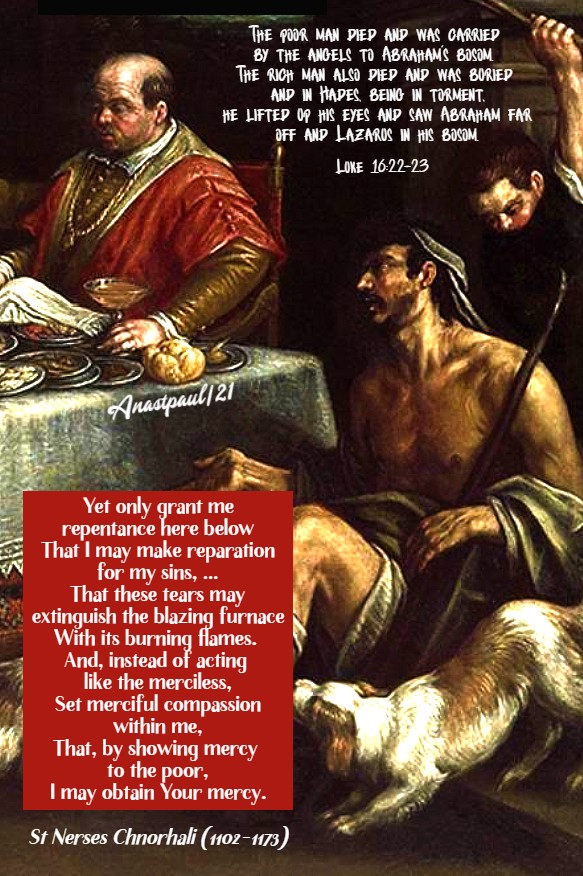


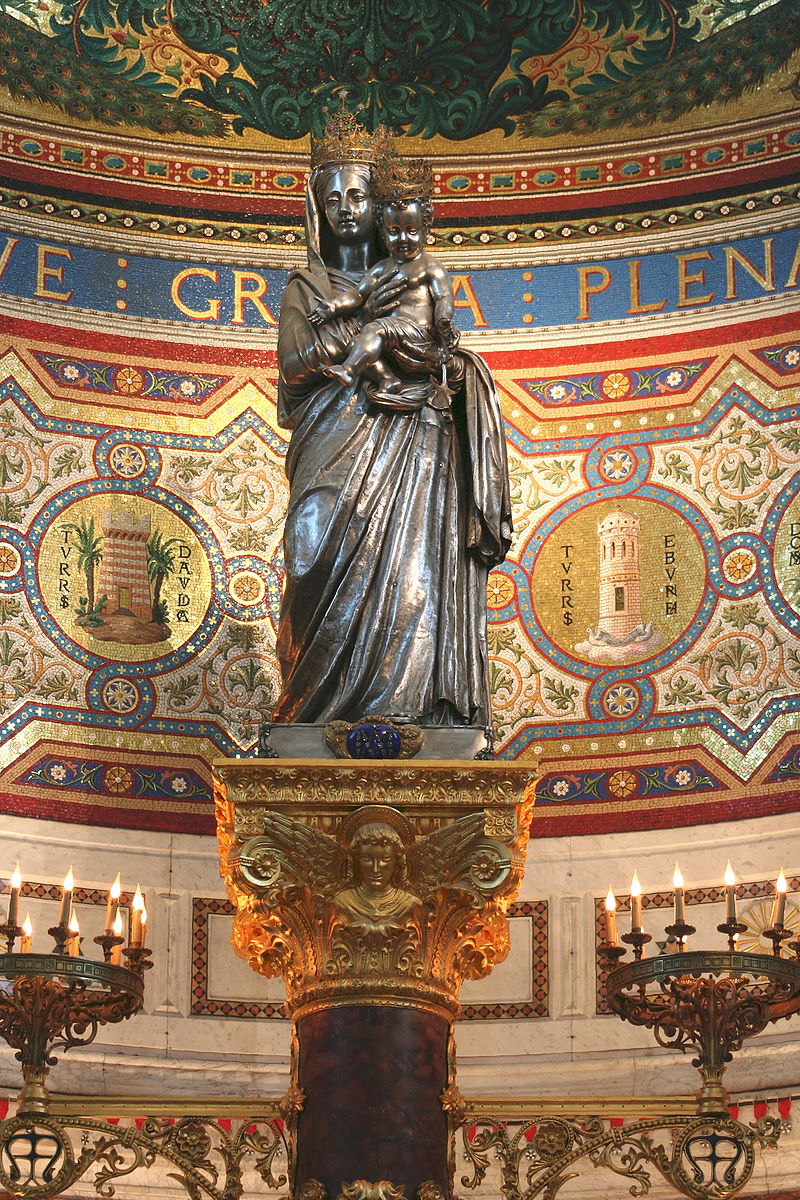
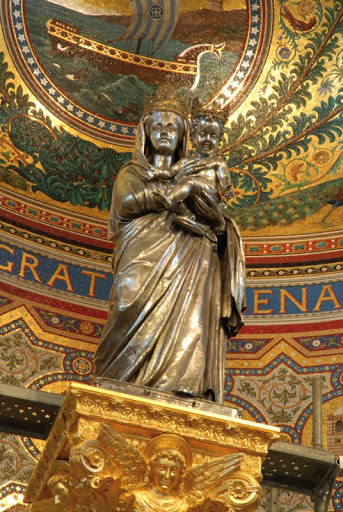
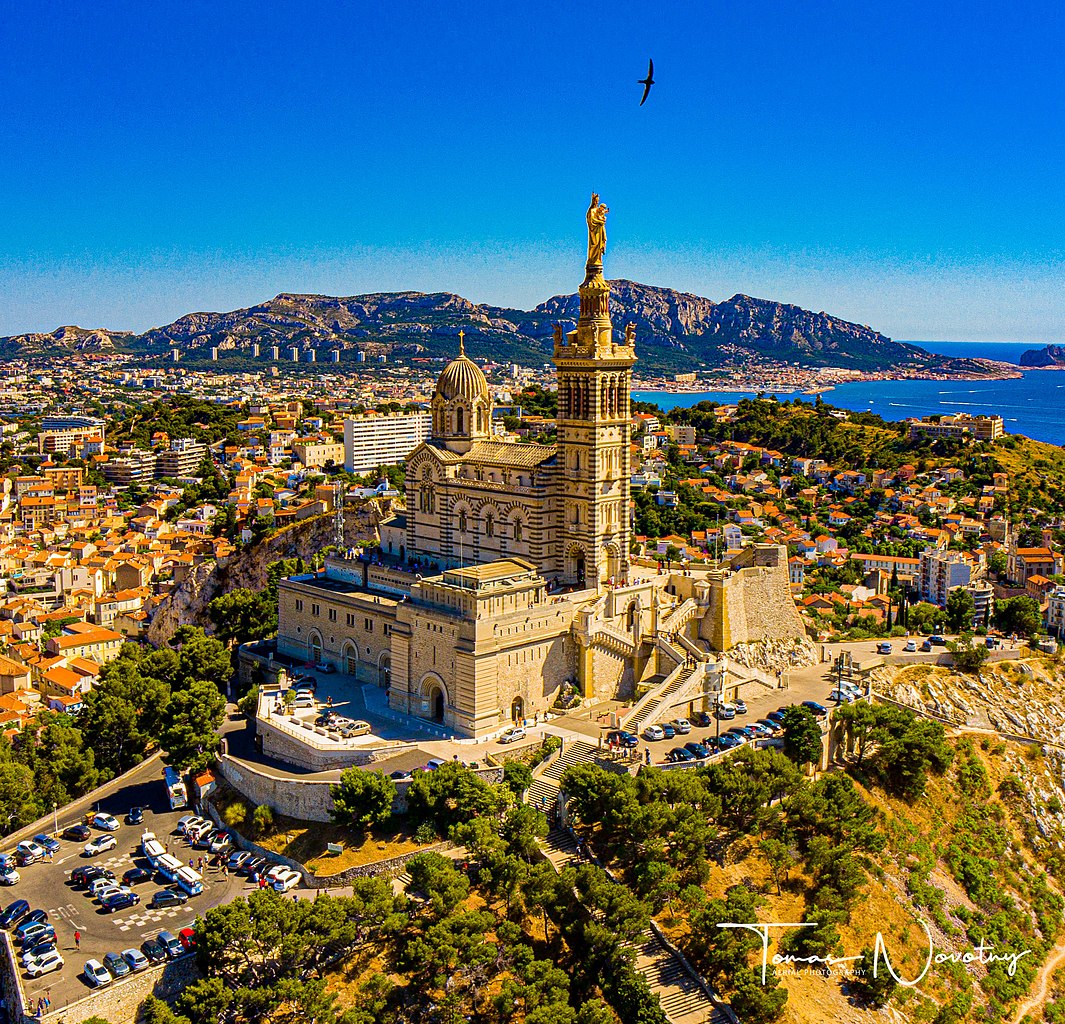
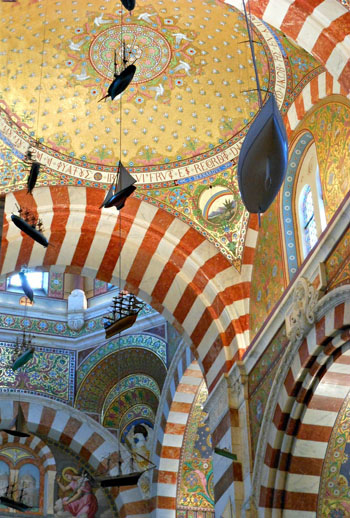


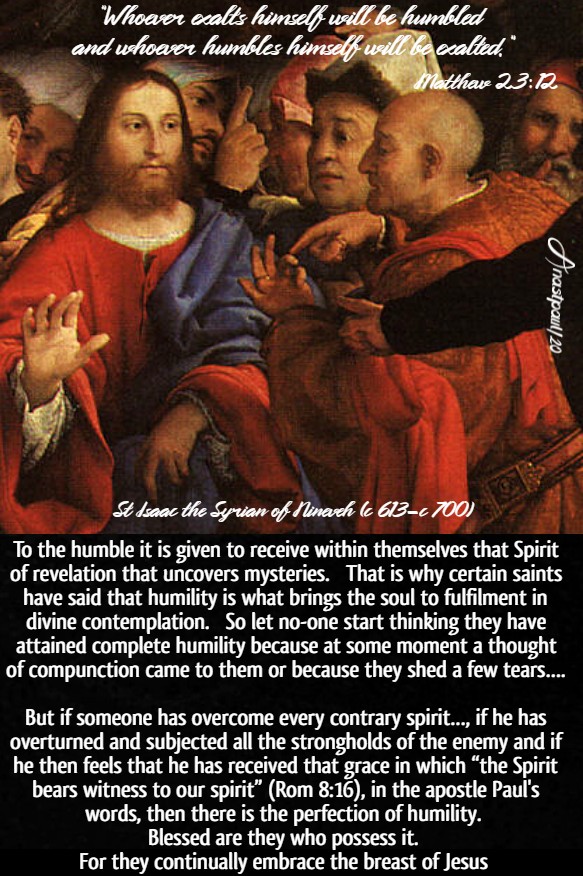
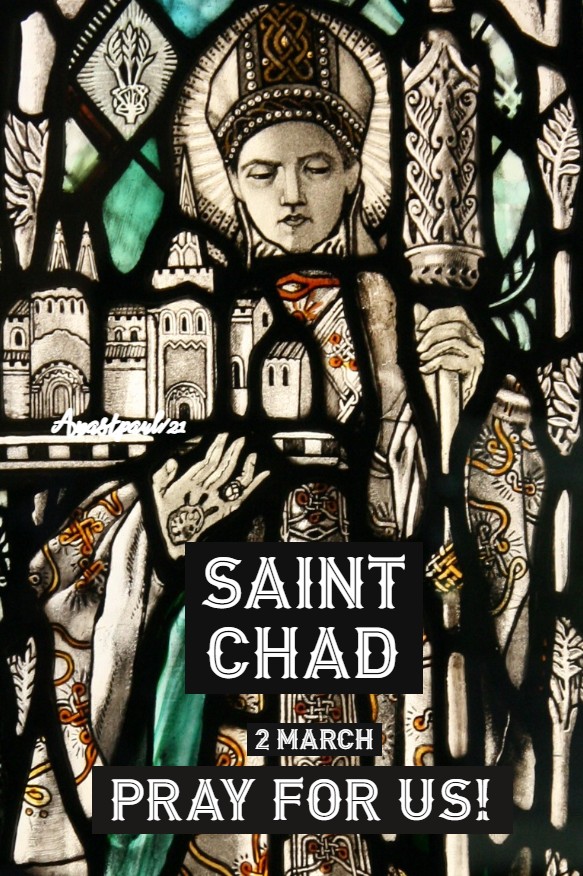


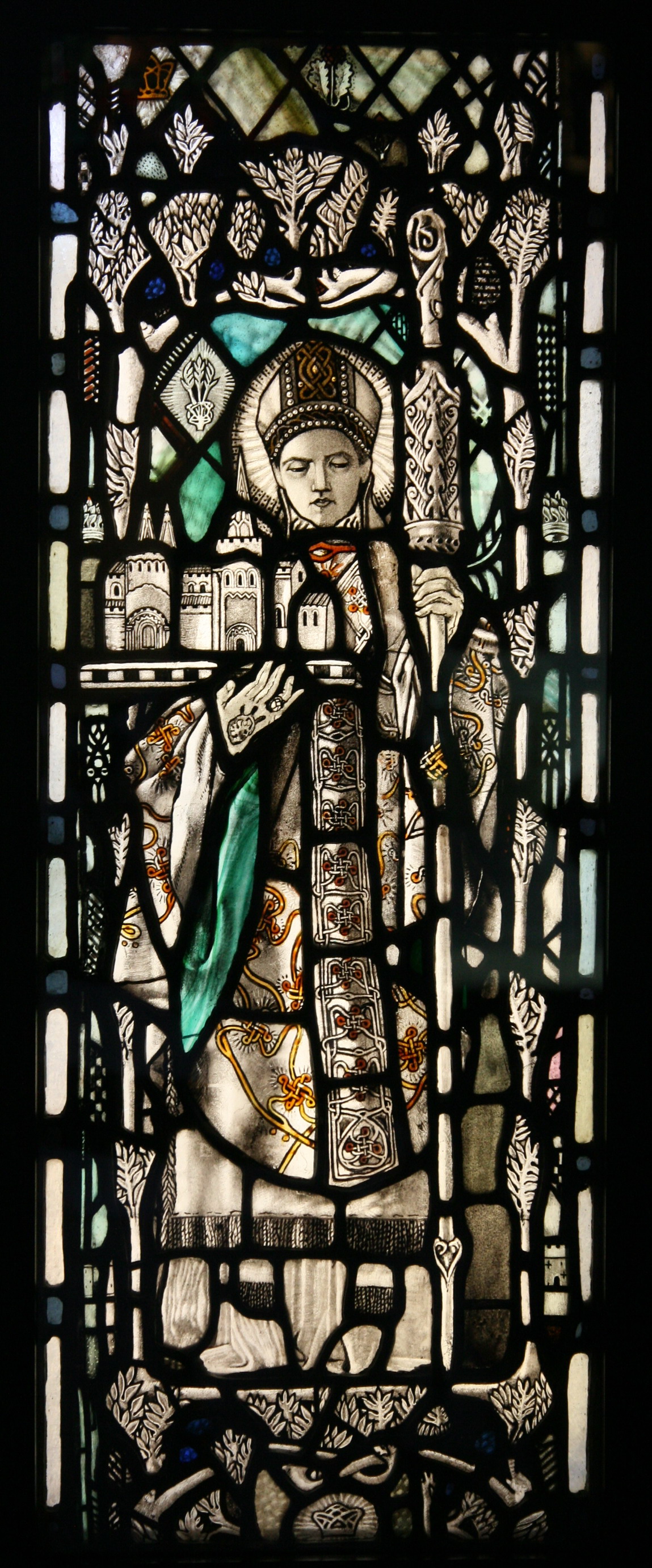
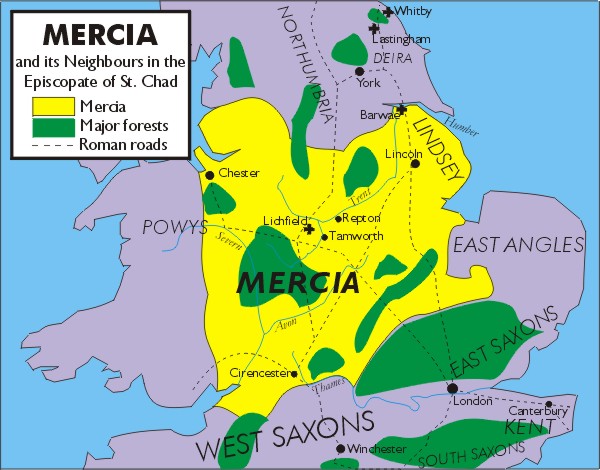
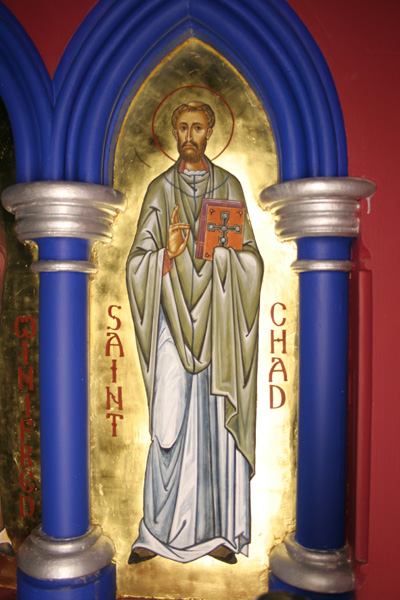

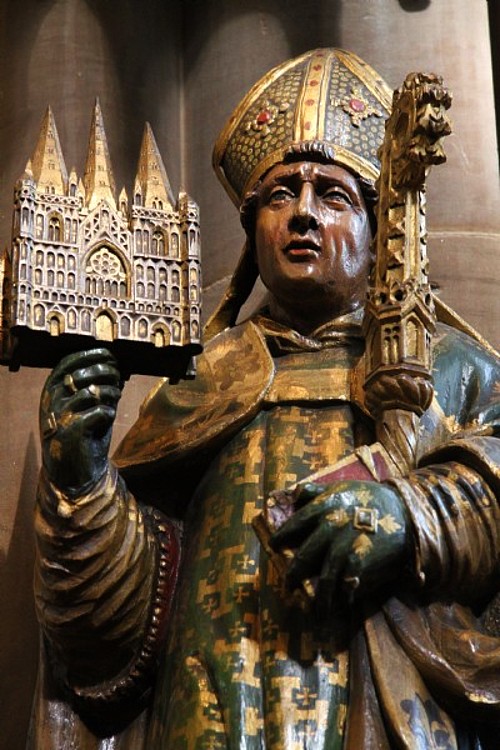

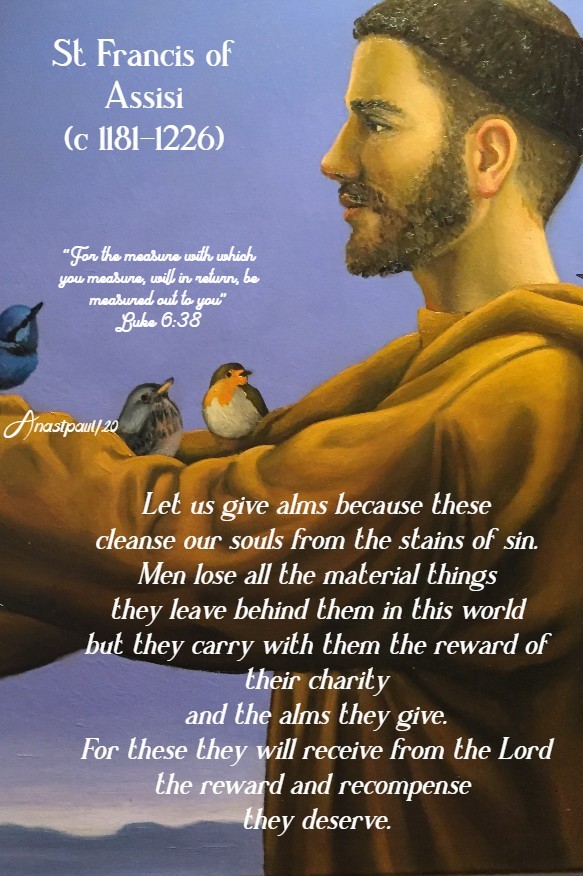
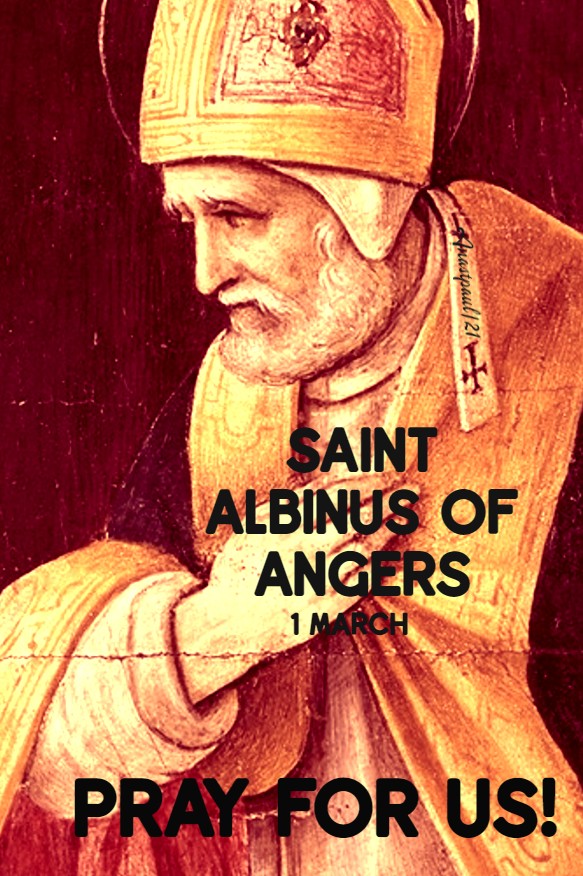
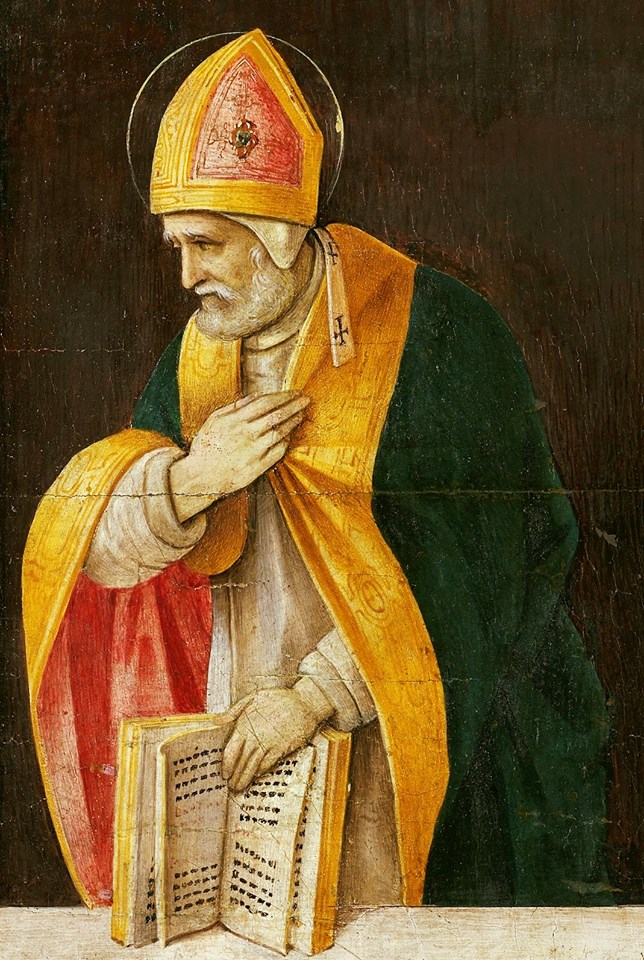
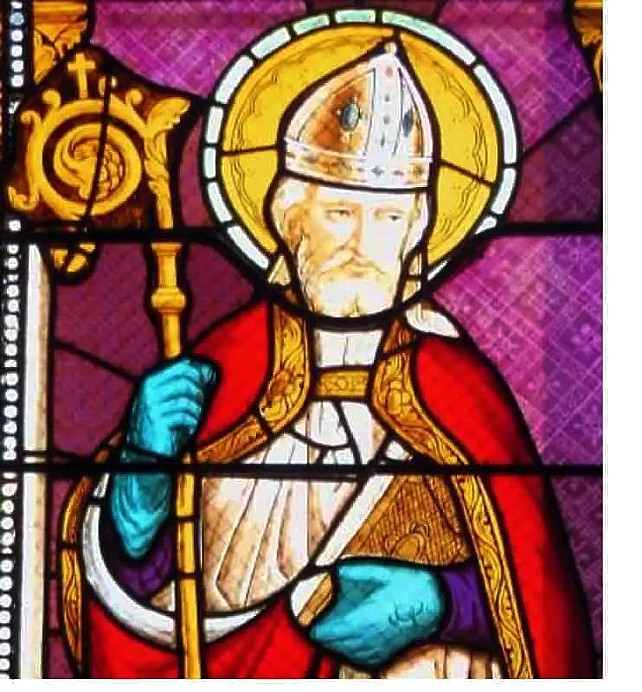


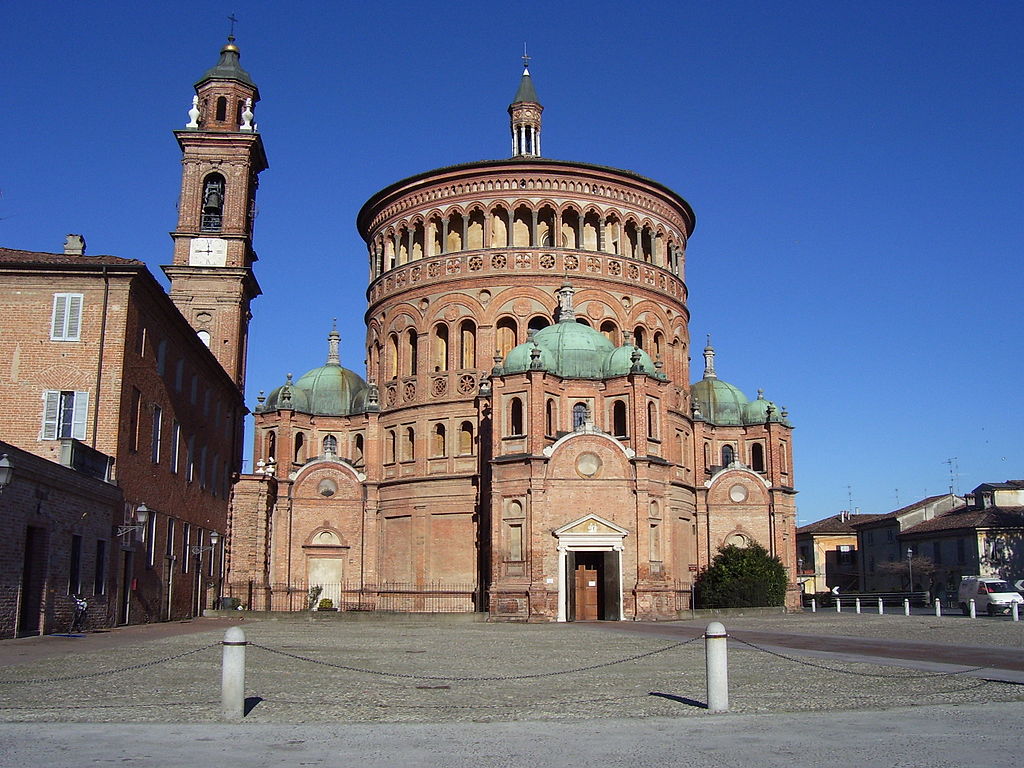

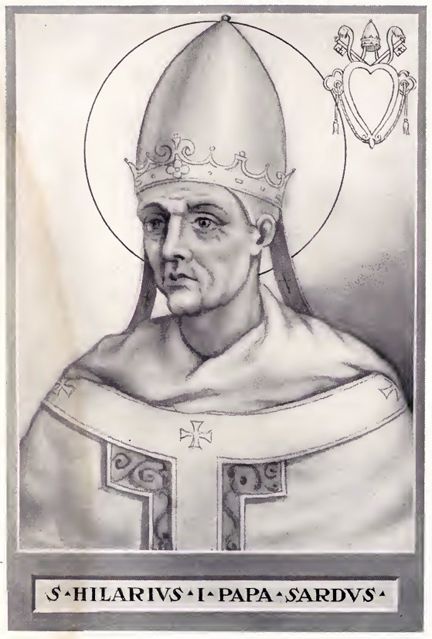
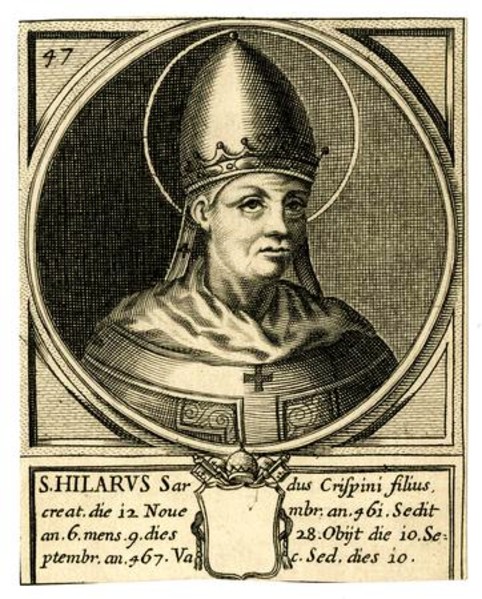

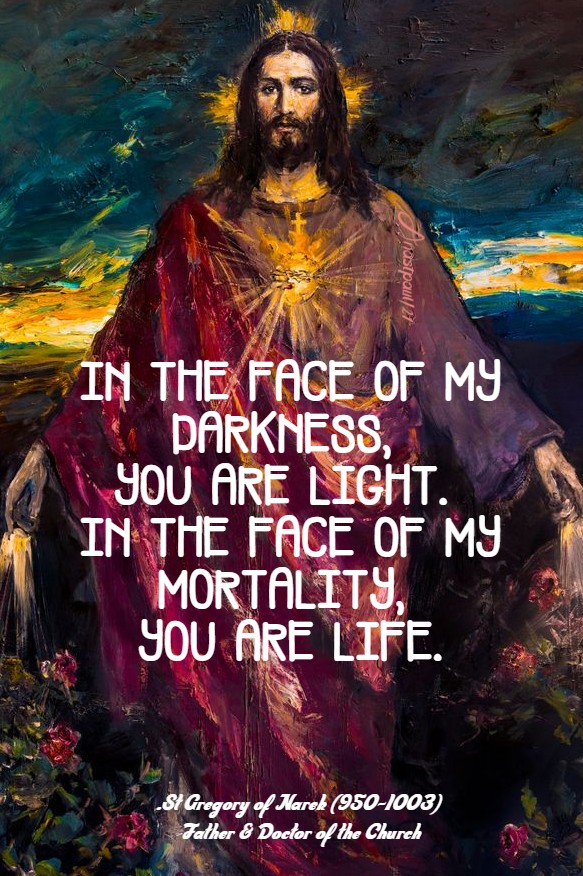
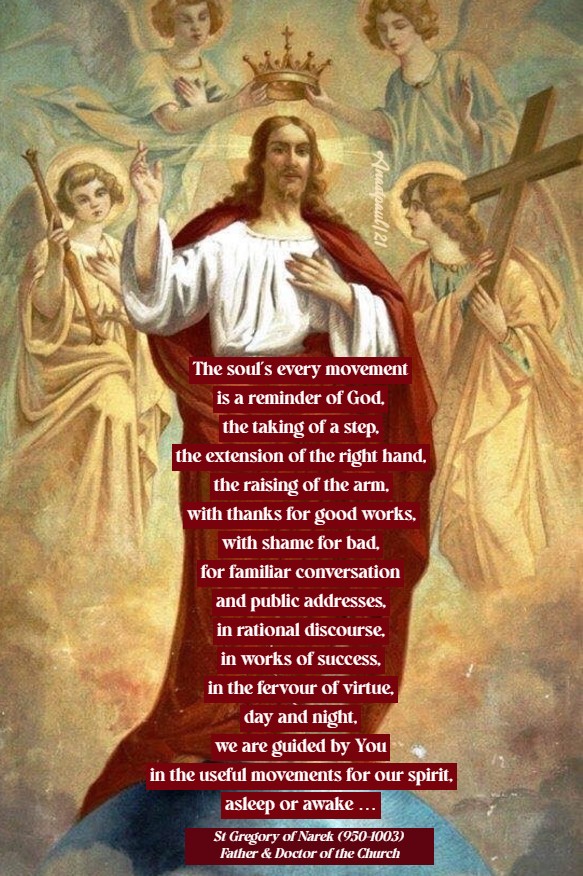


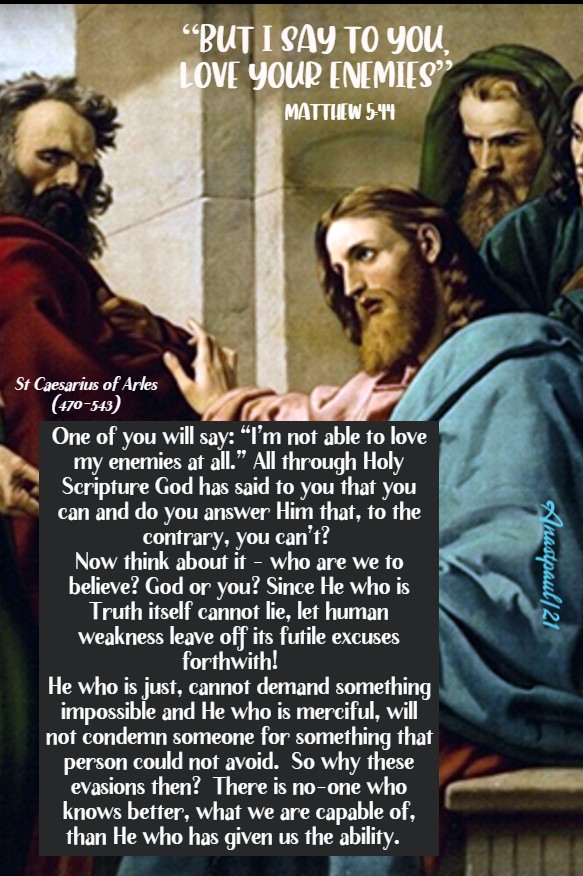
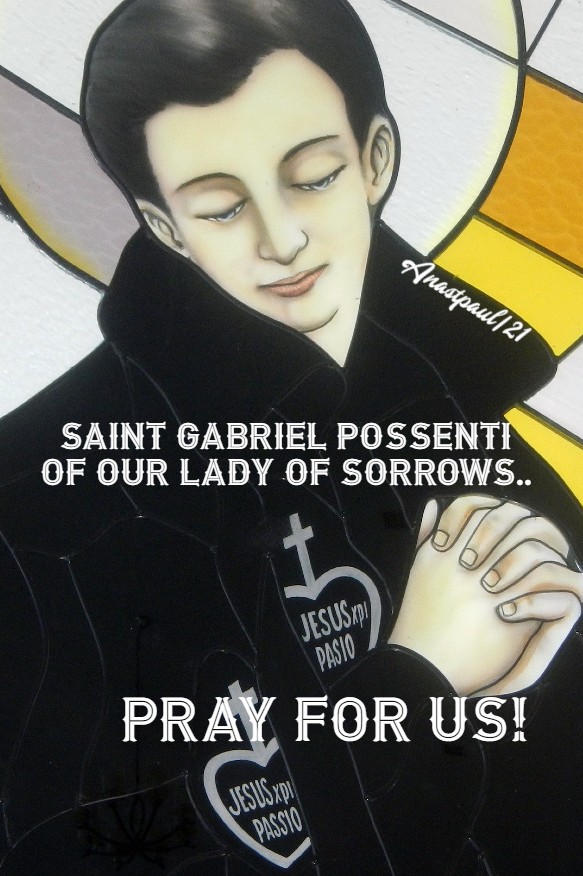
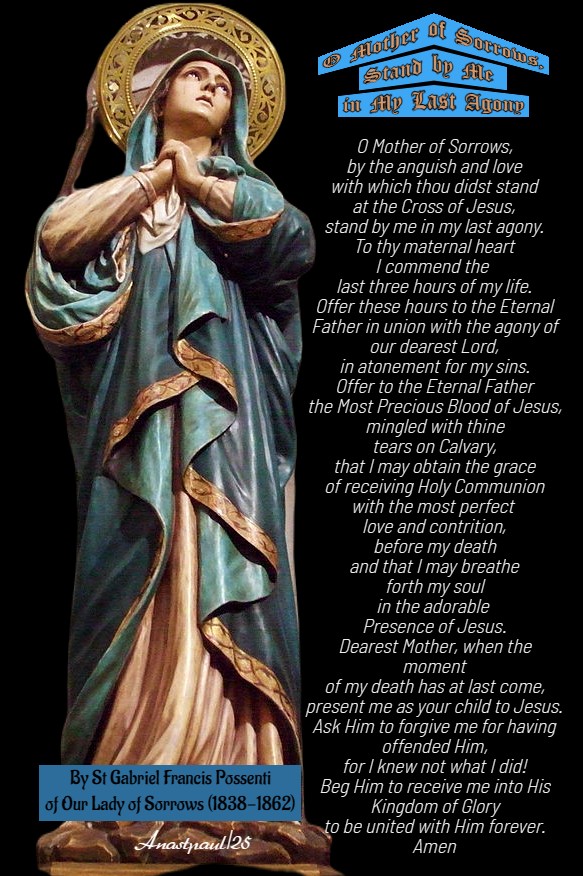

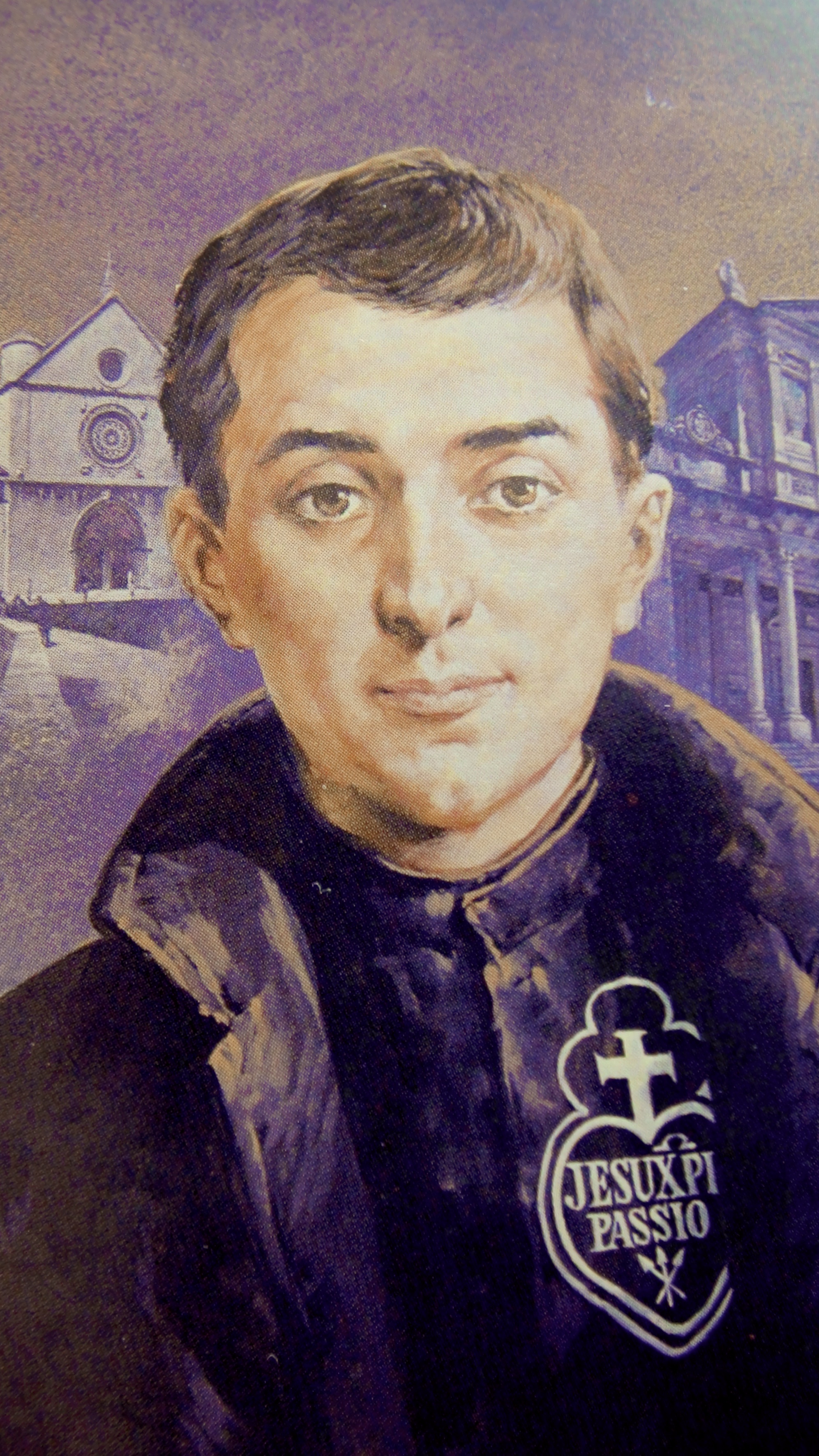
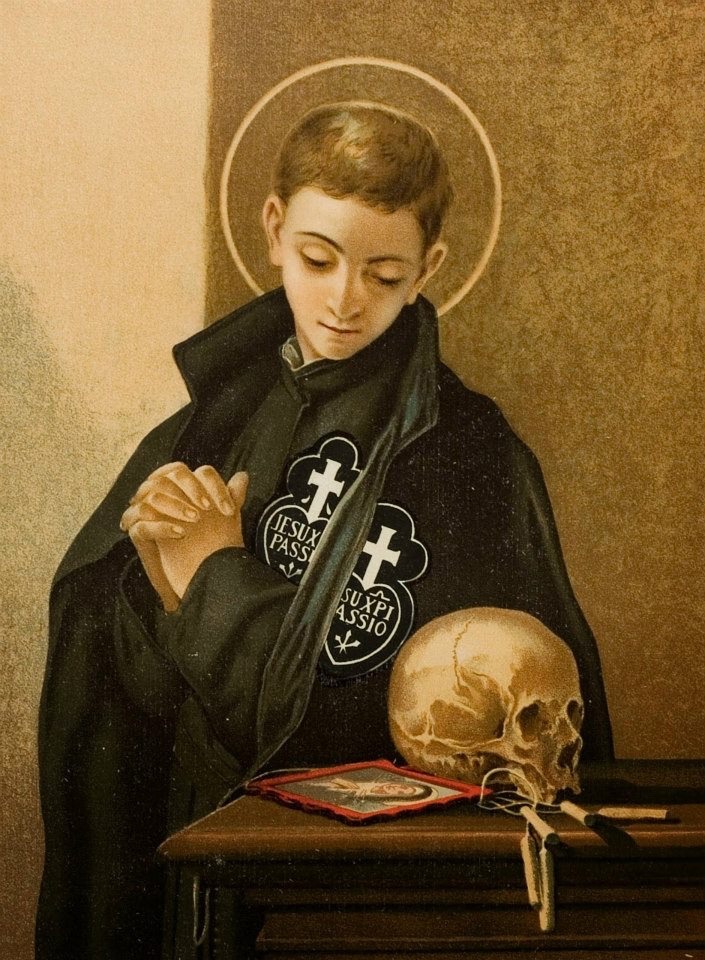


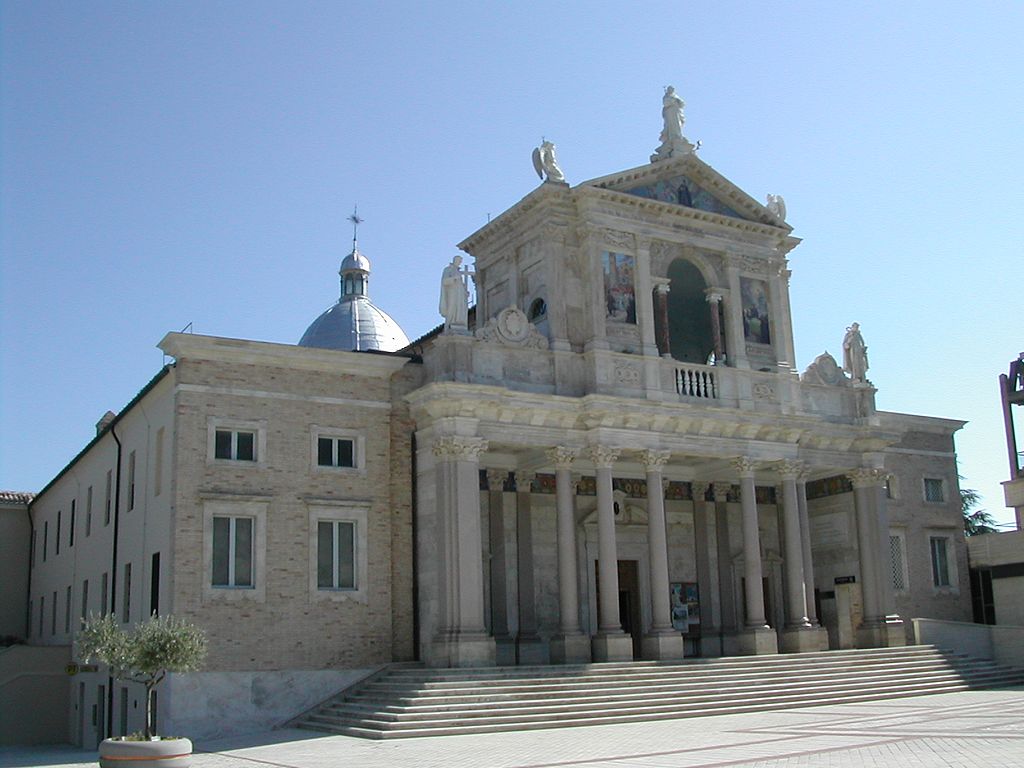
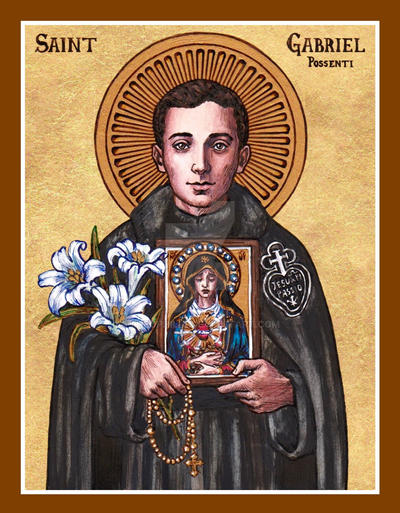
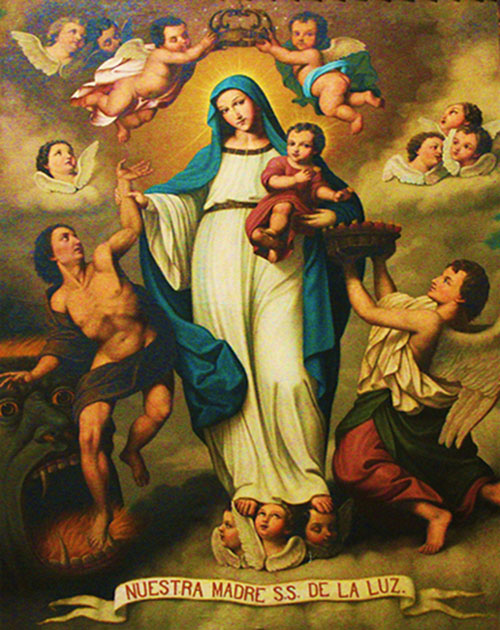
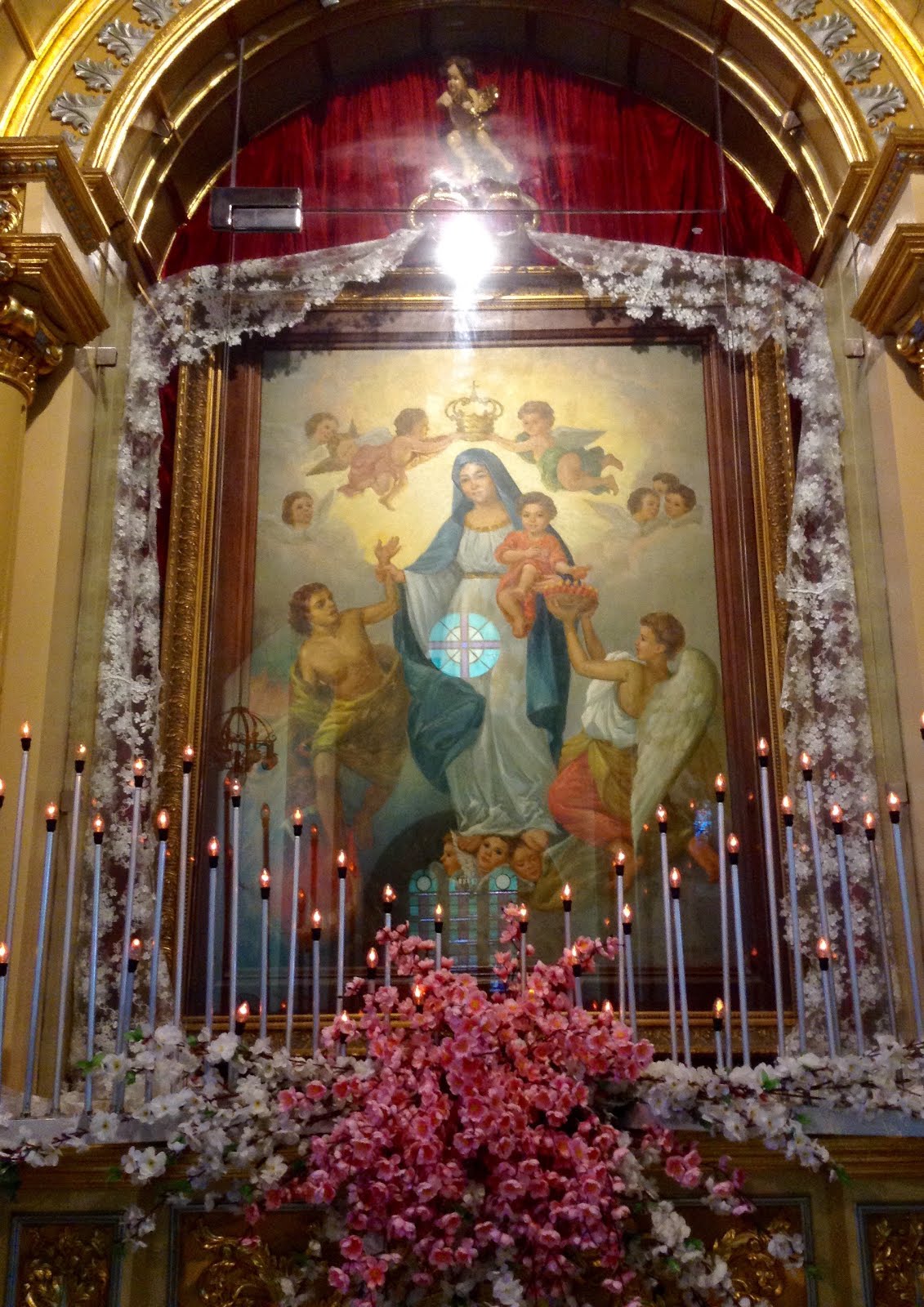
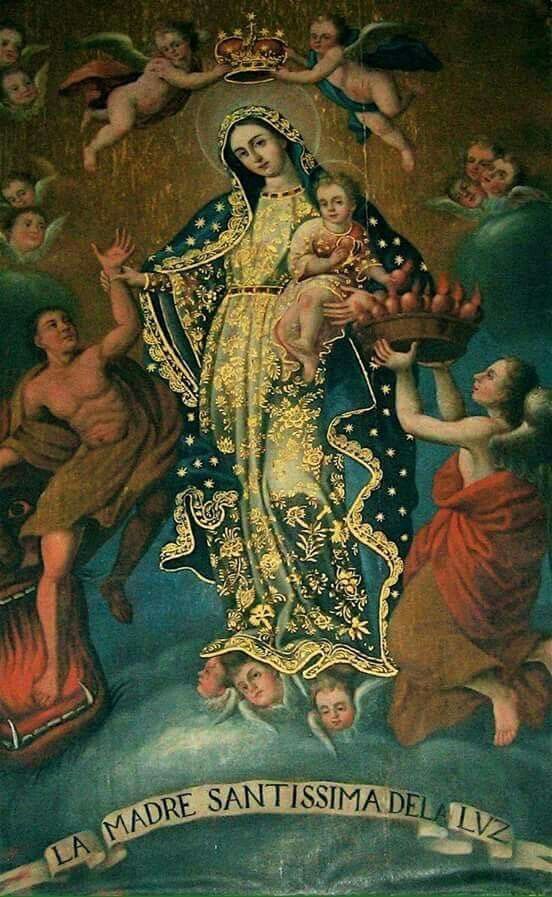
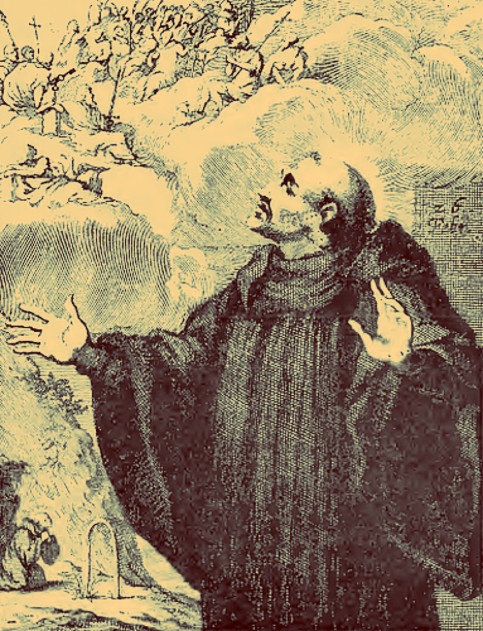
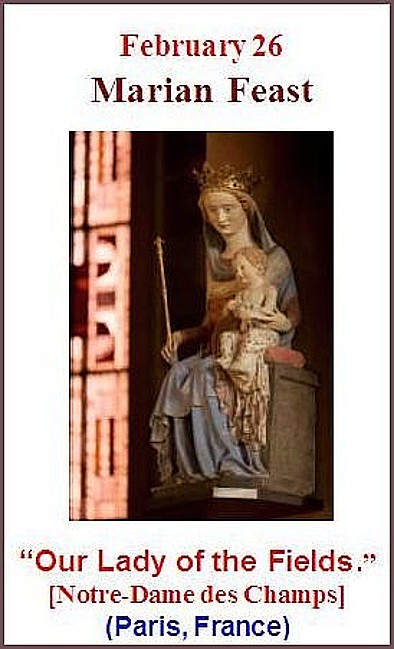
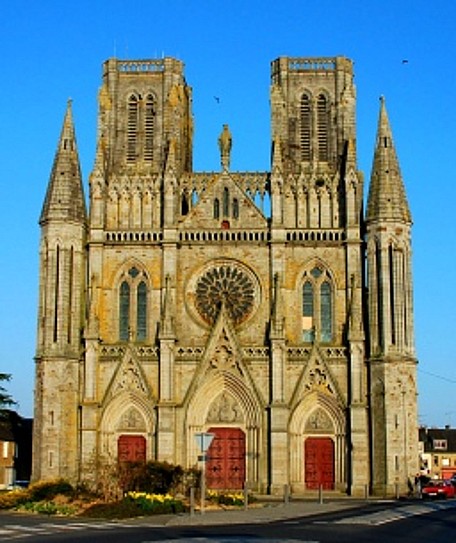
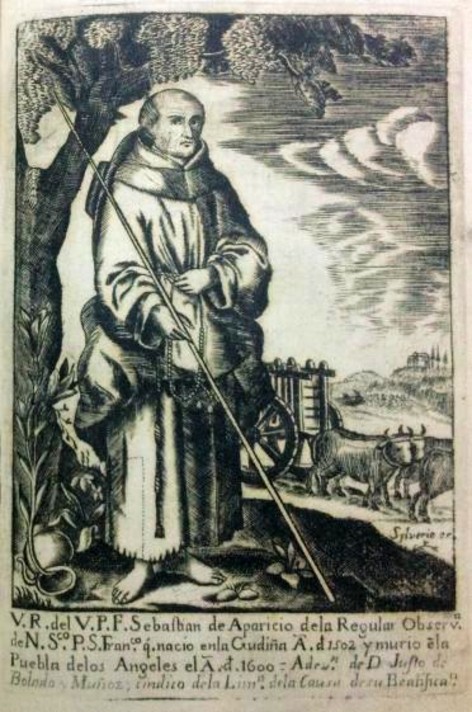
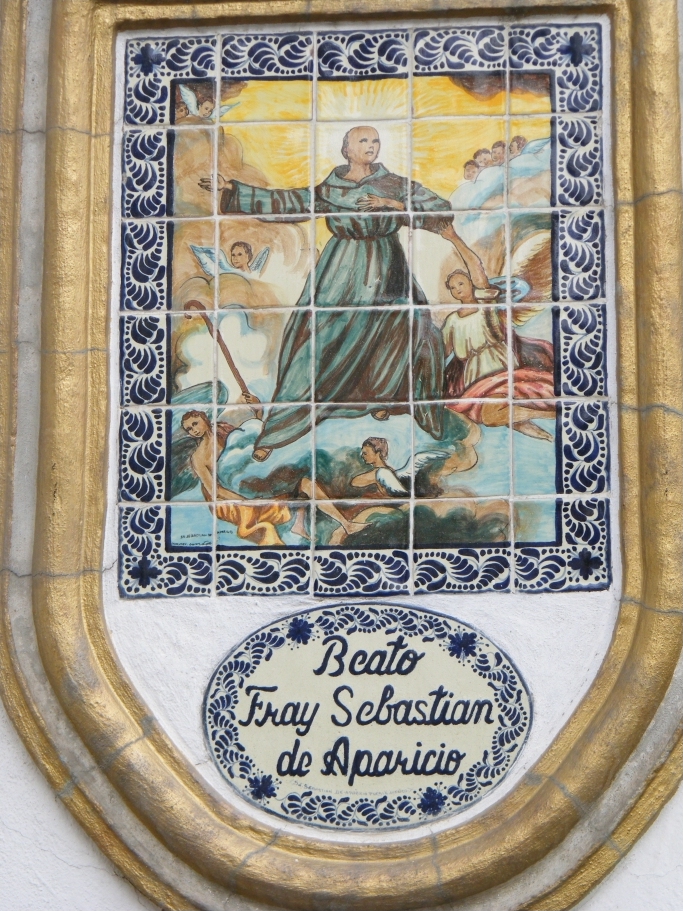
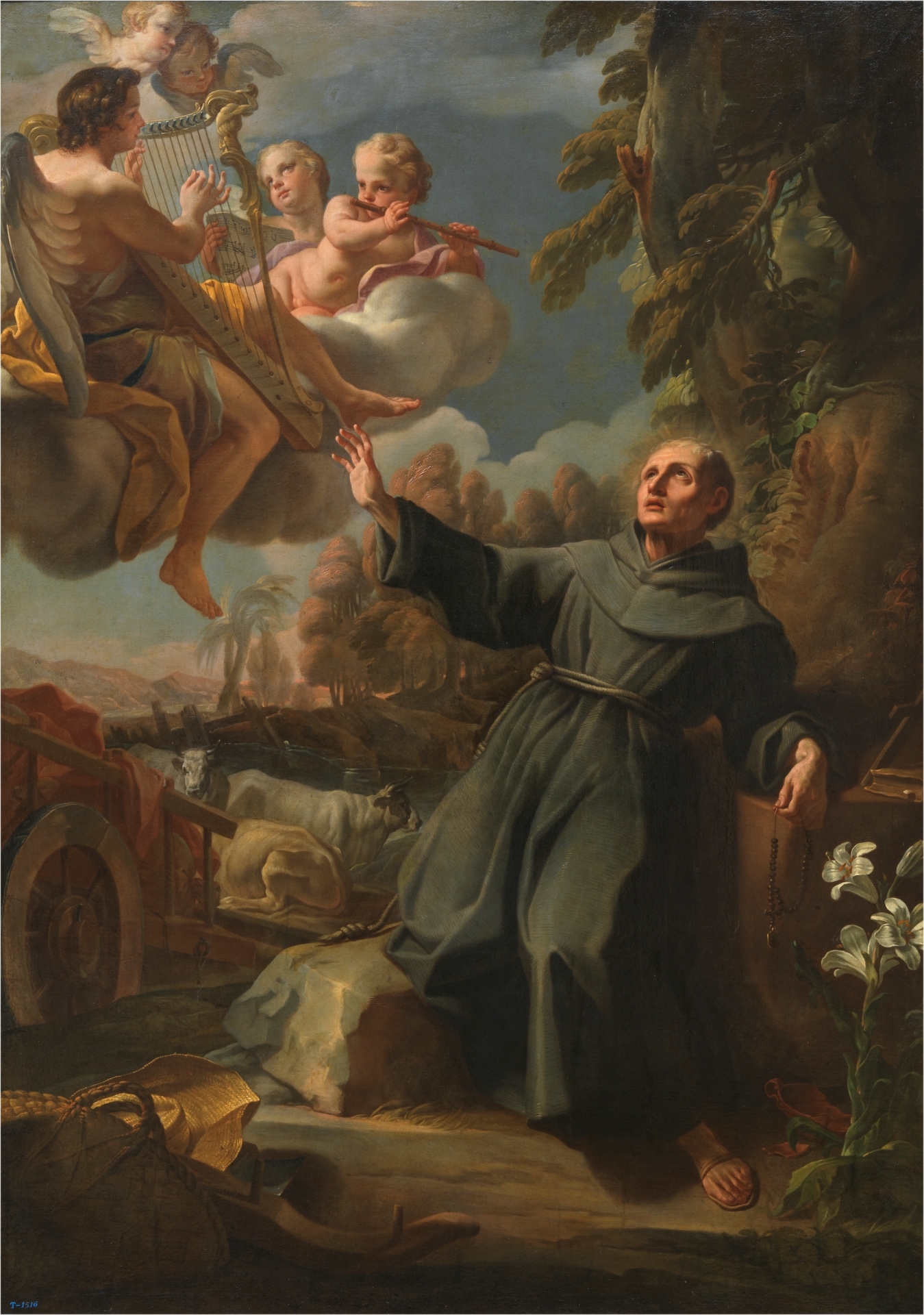
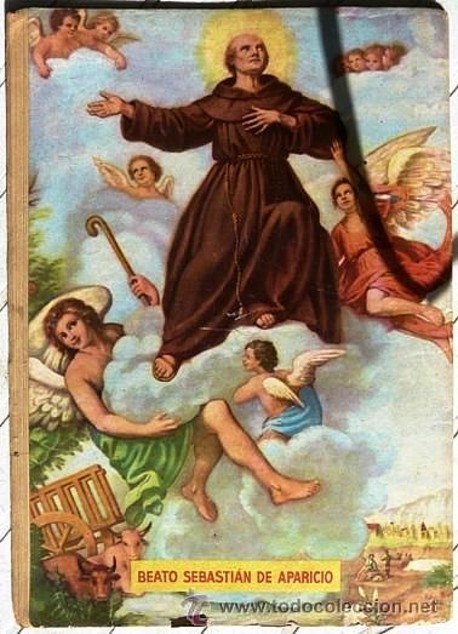
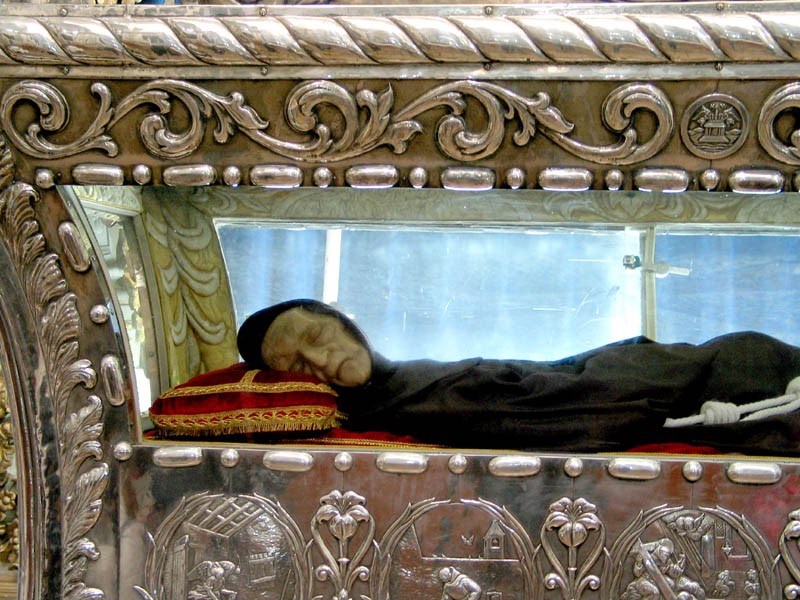
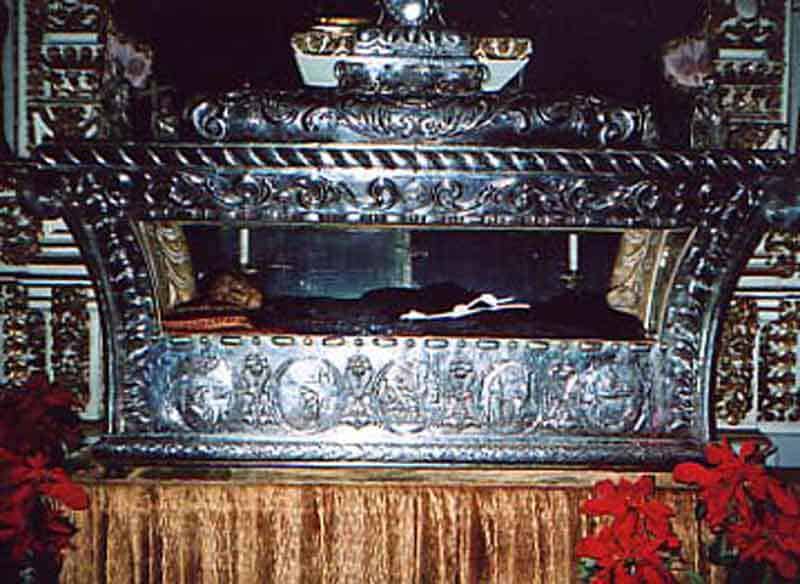
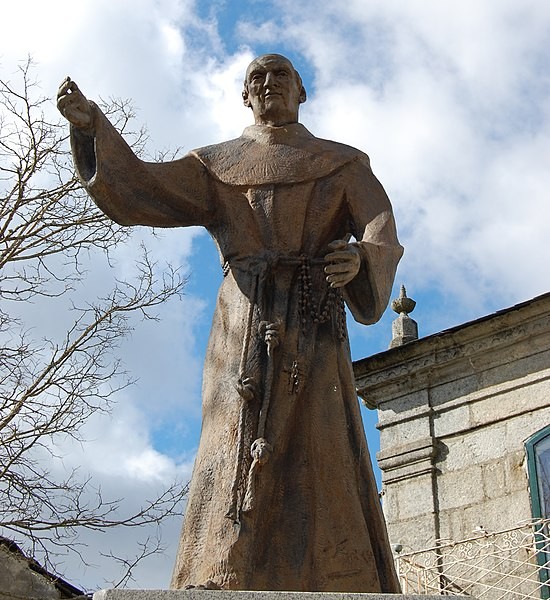
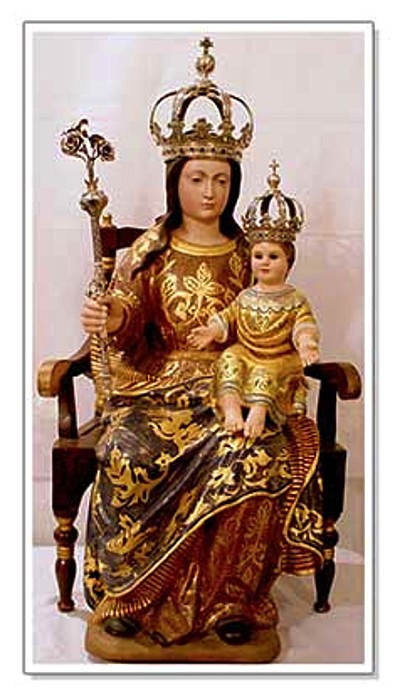
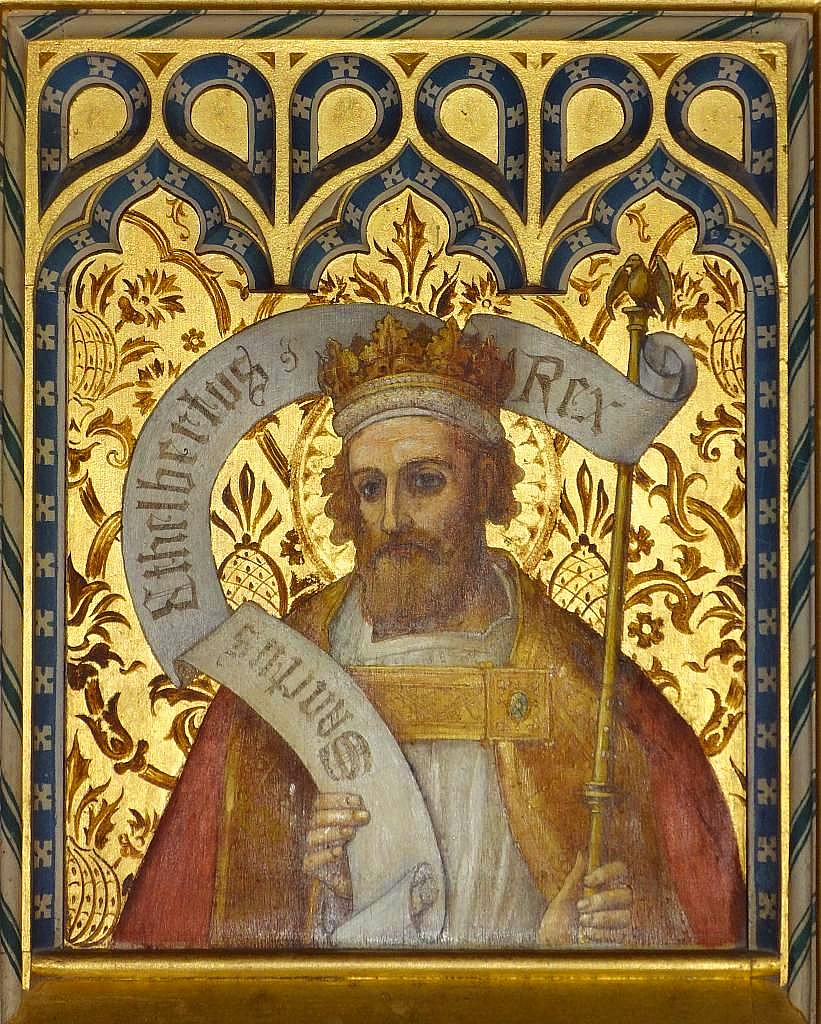
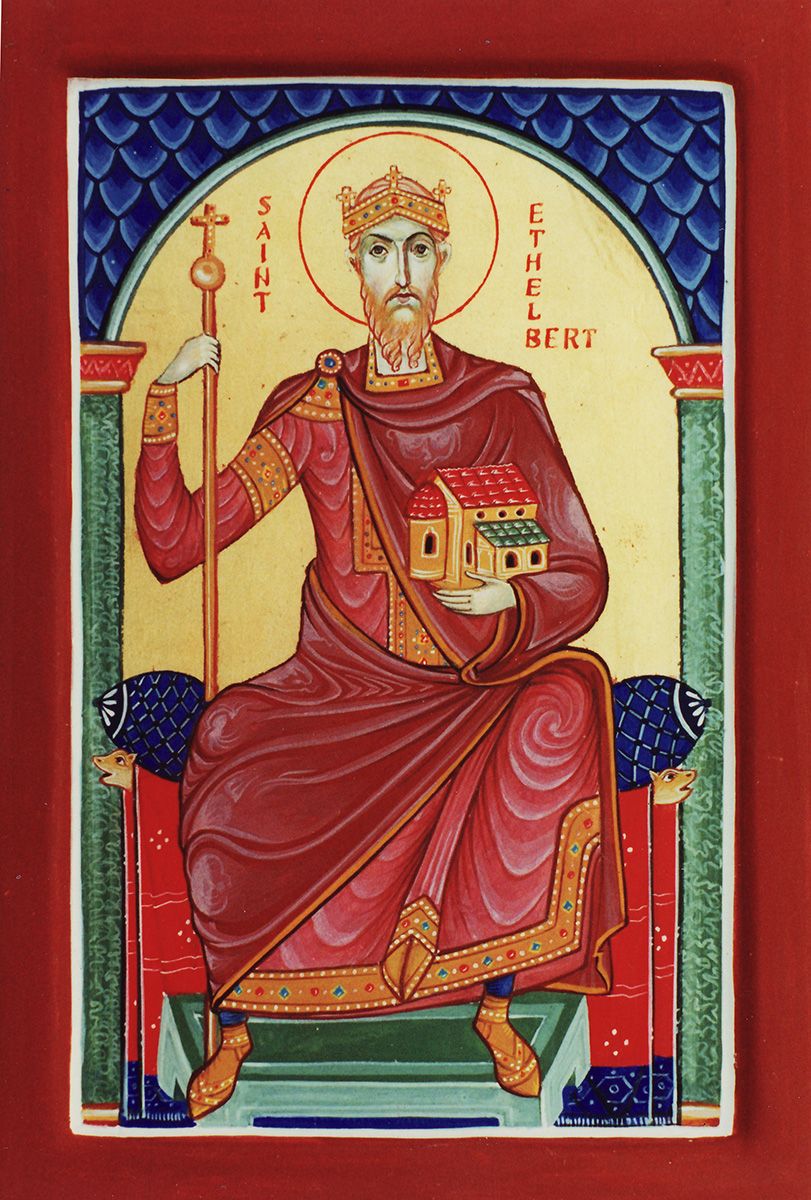
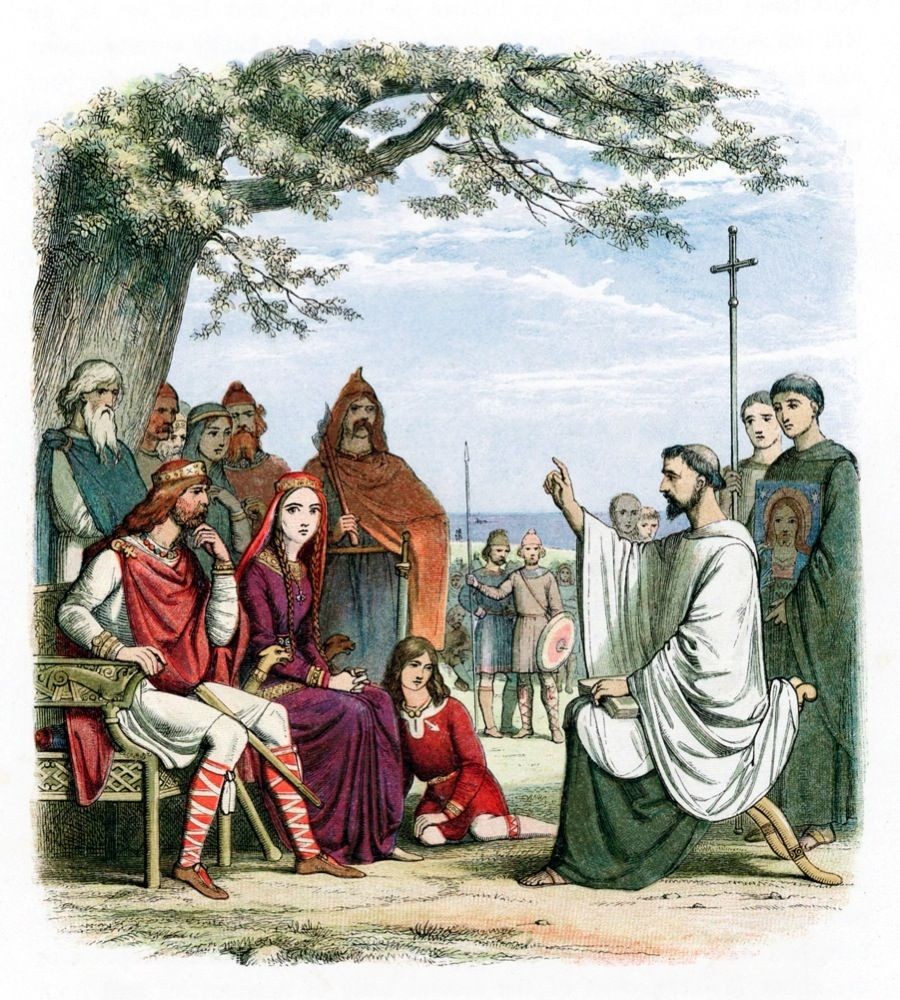
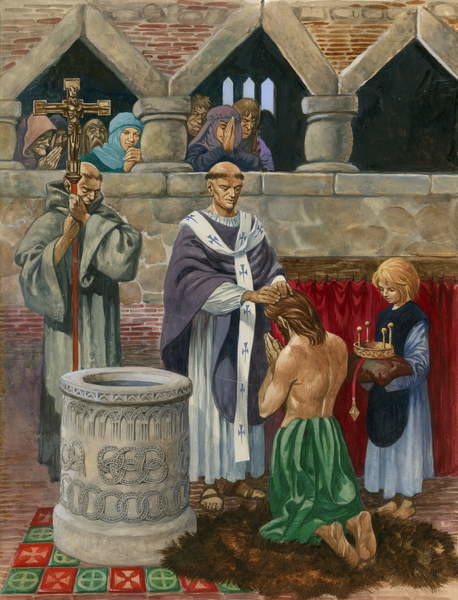
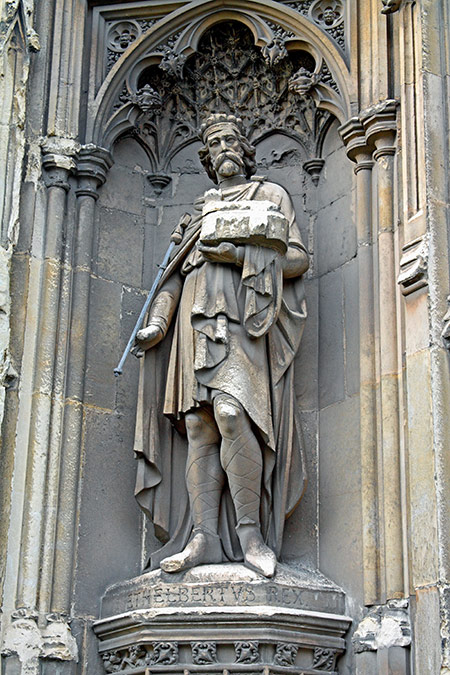
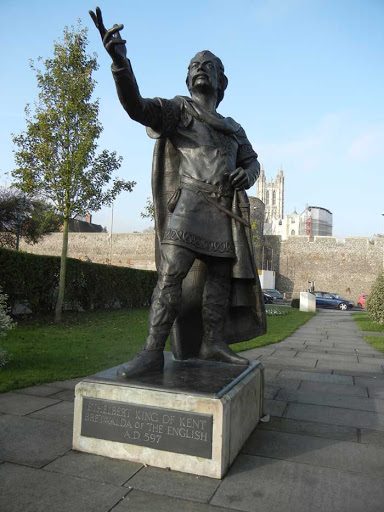
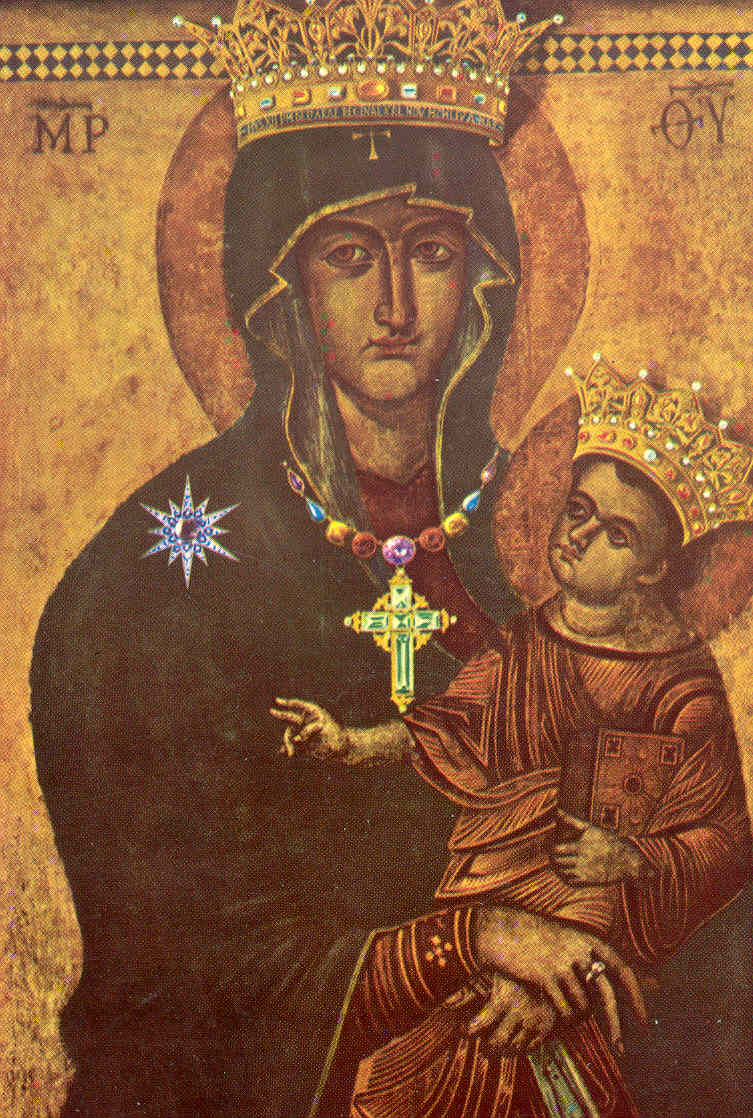
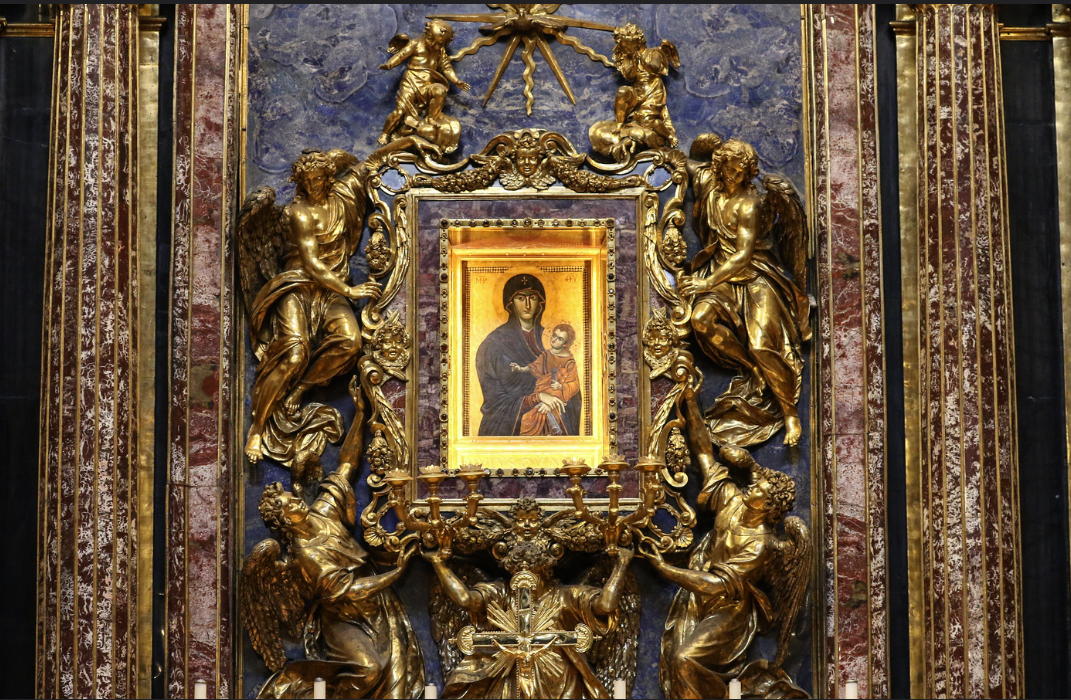
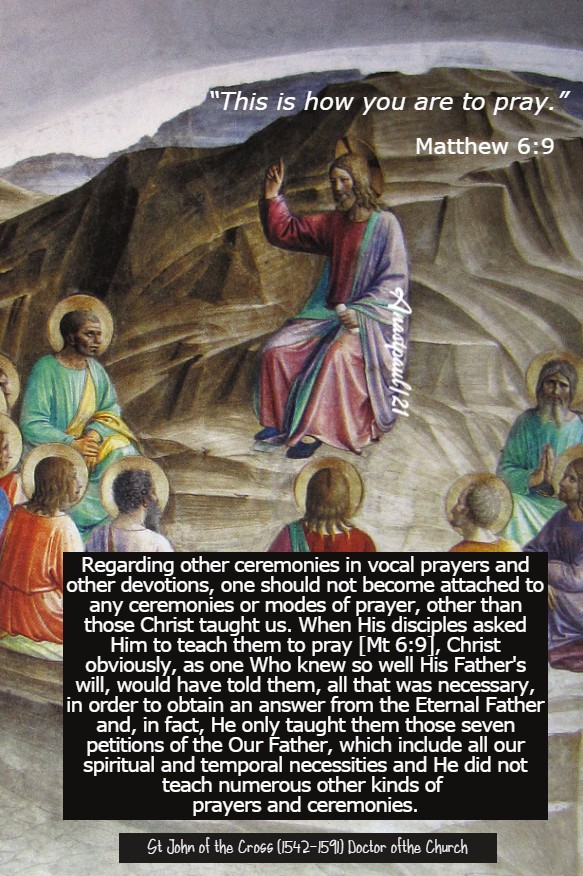
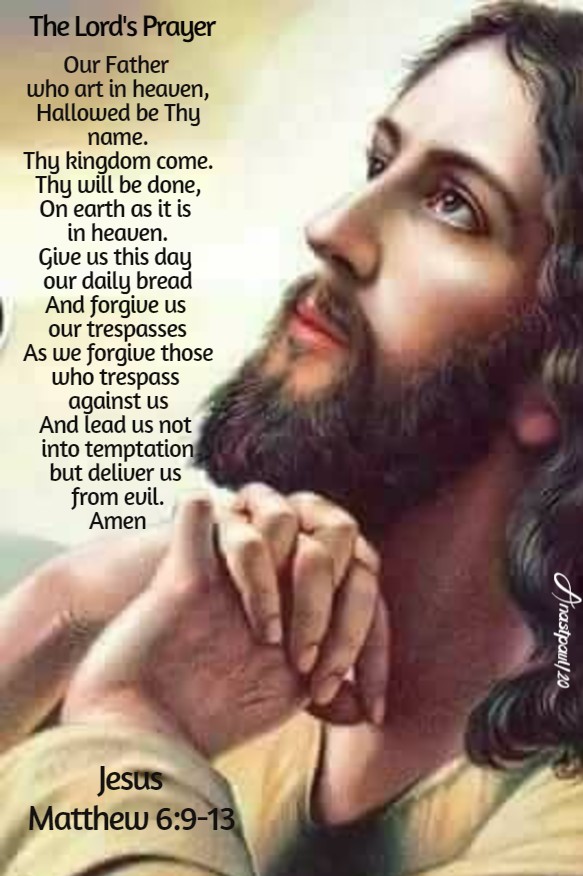
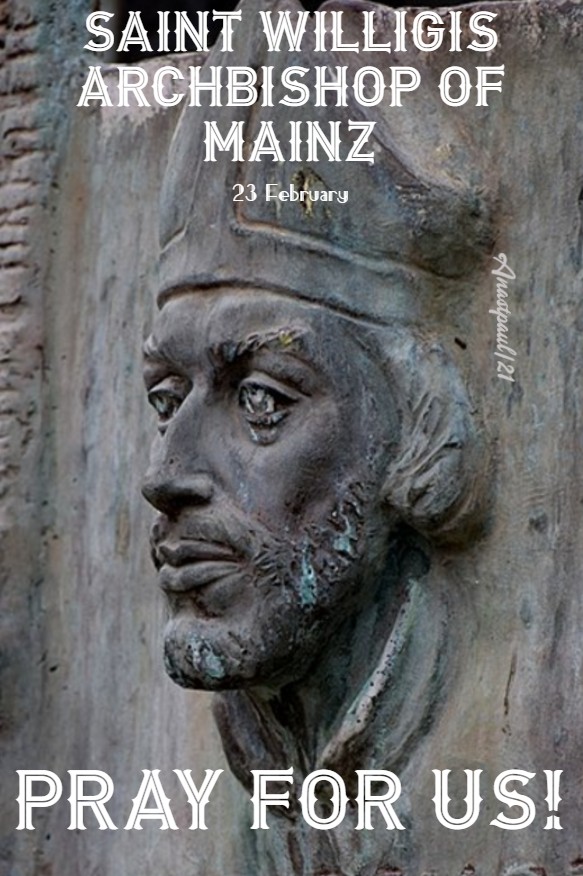


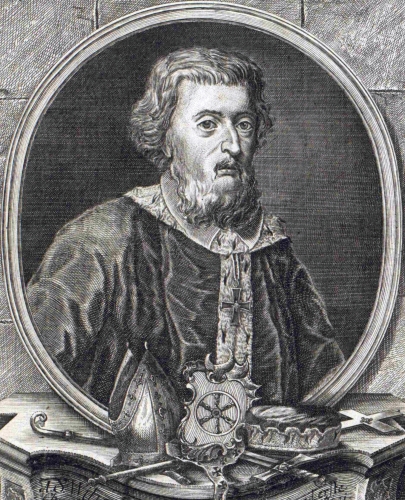


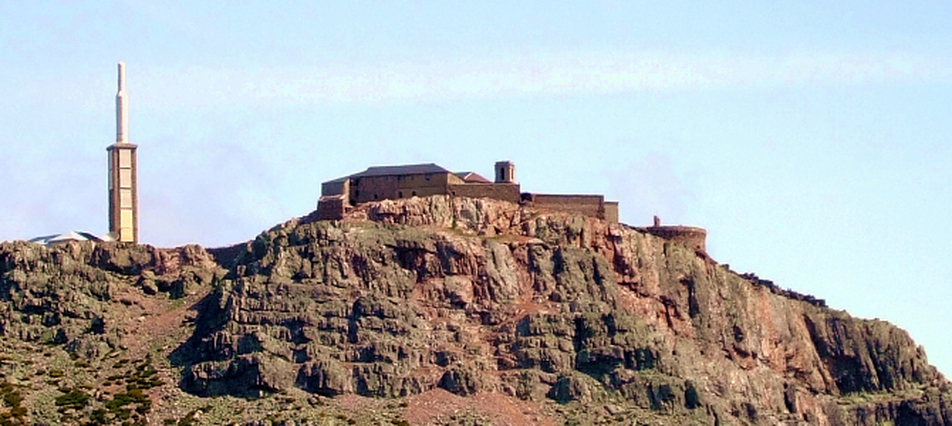
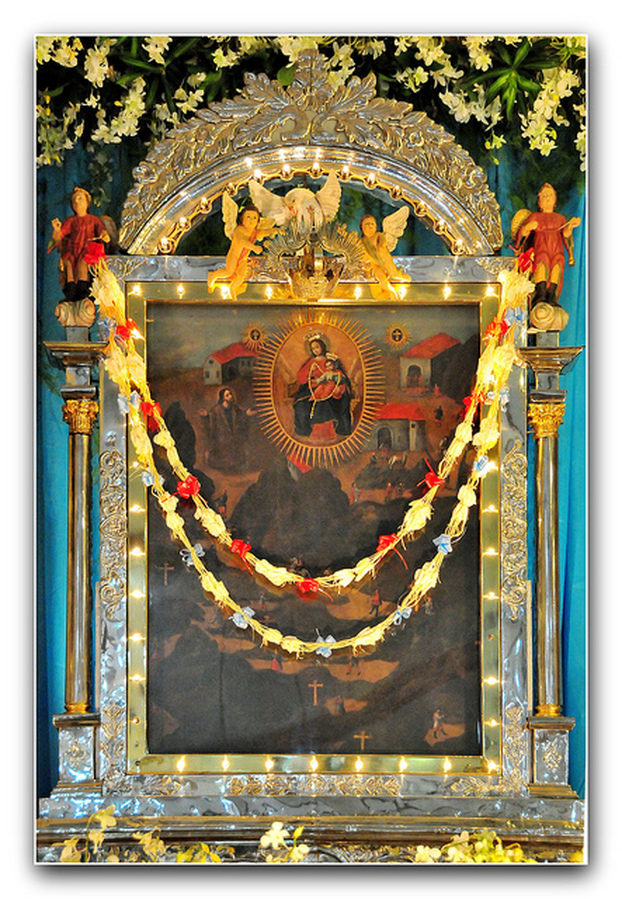

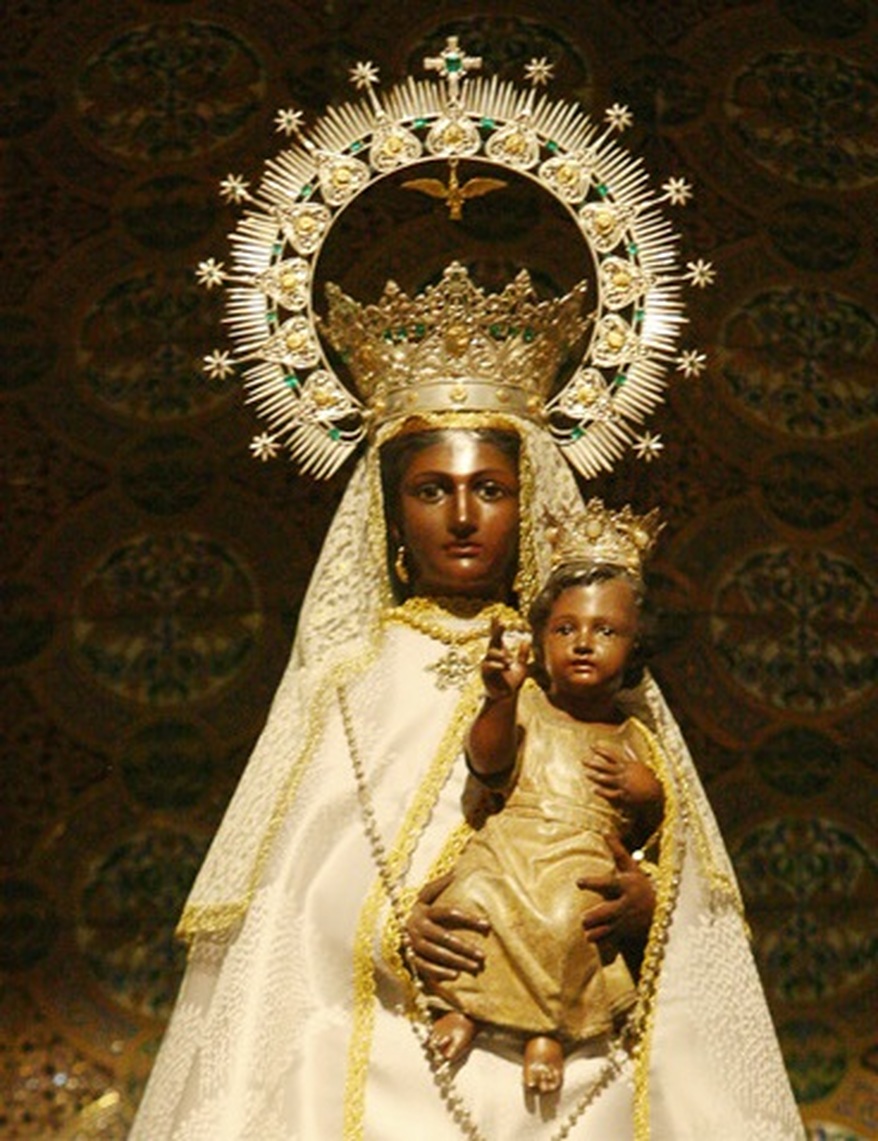
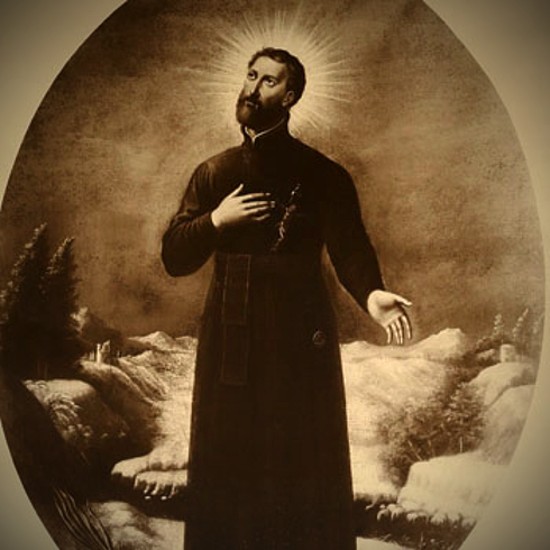

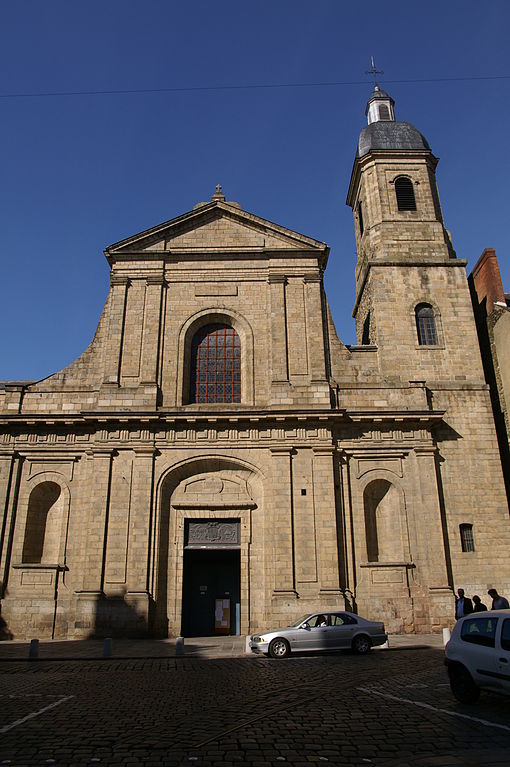



You must be logged in to post a comment.