Posted in SAINT of the DAY

Saint of the Day – 15 May – Saint Dymphna (7th Century) “The Lily of Éire” Virgin Martyr

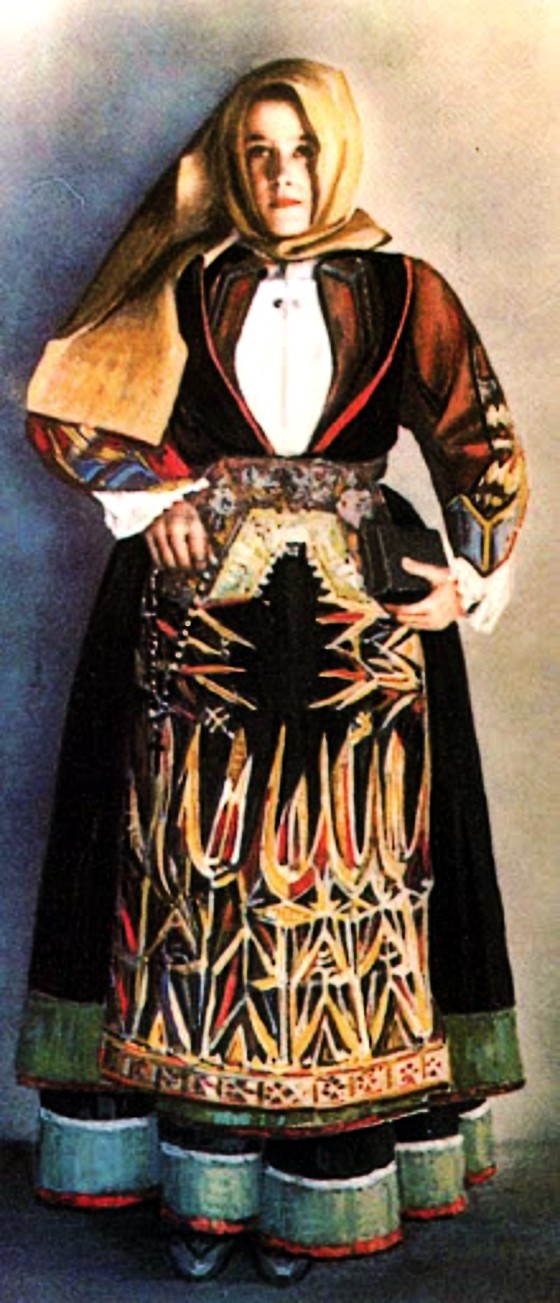
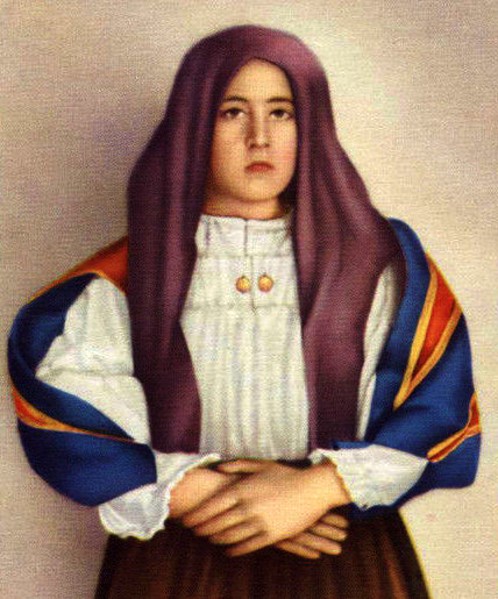
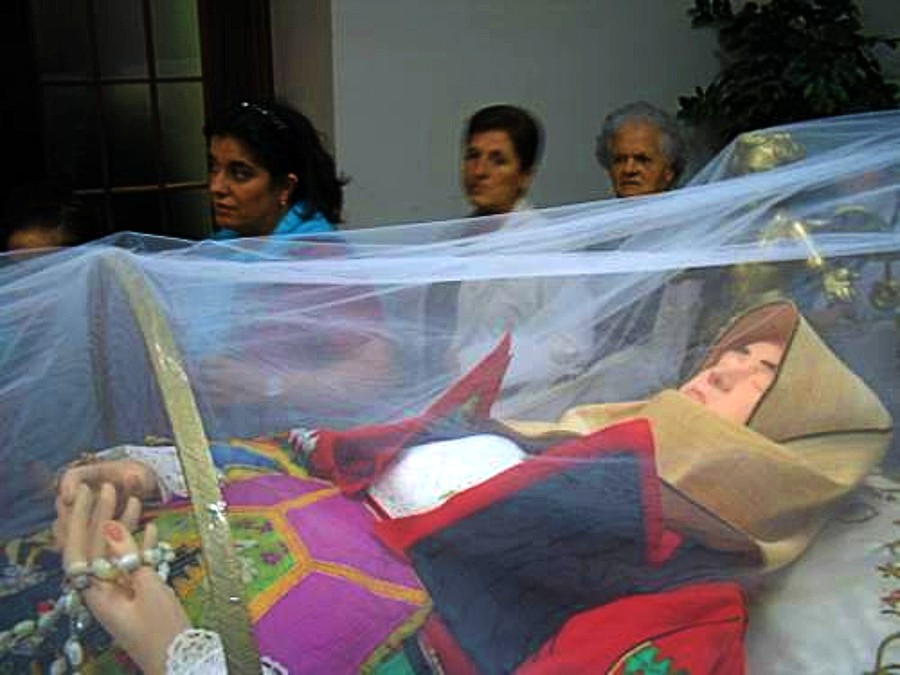
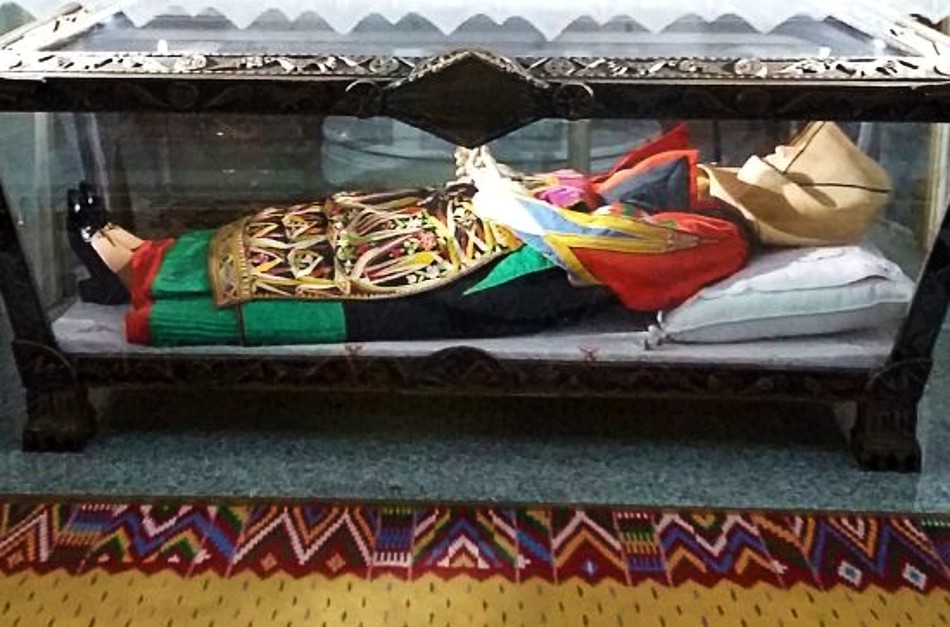
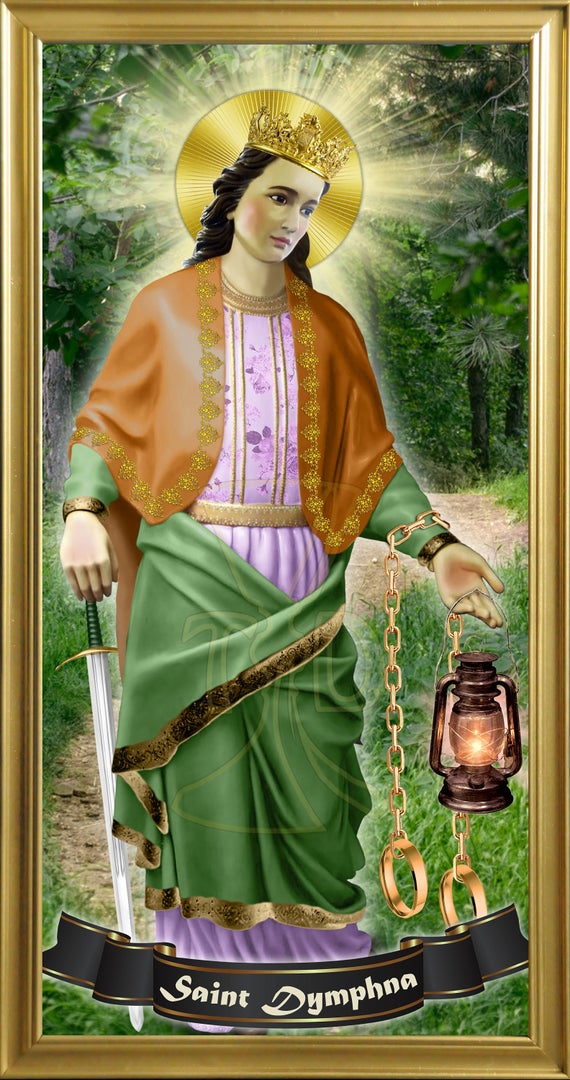
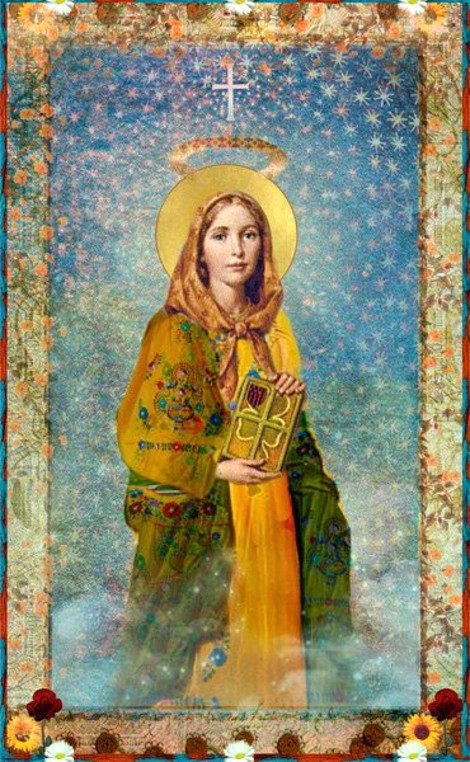
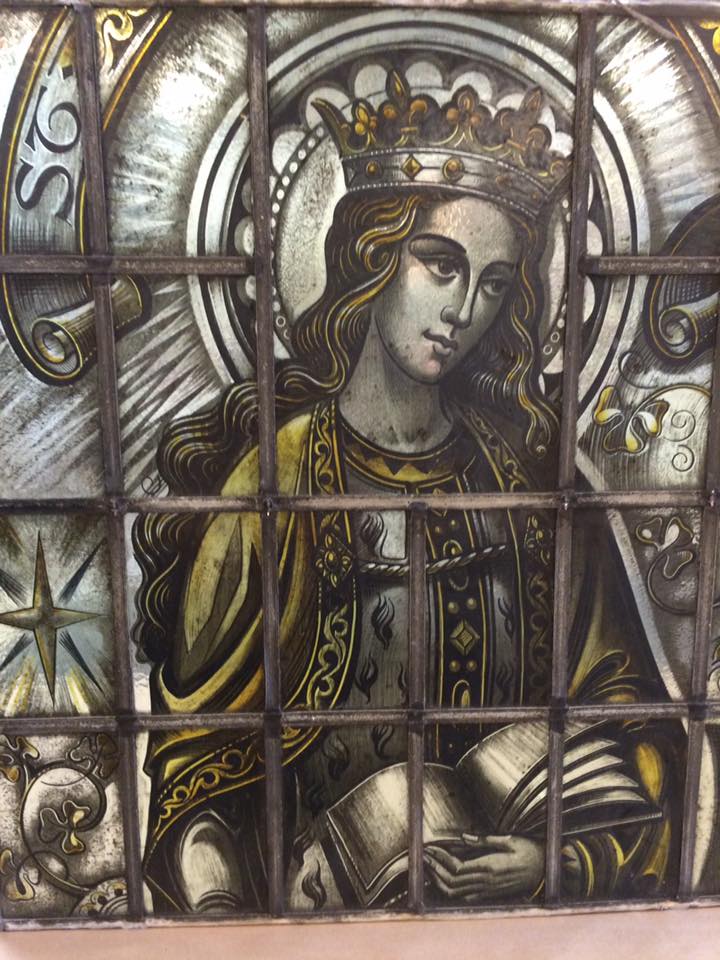
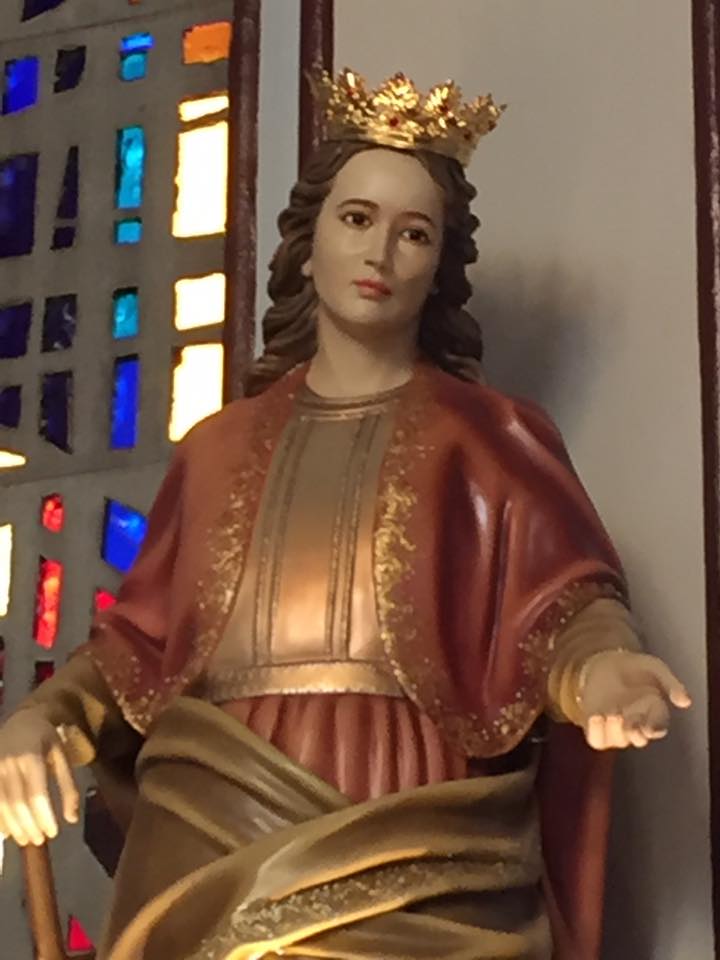
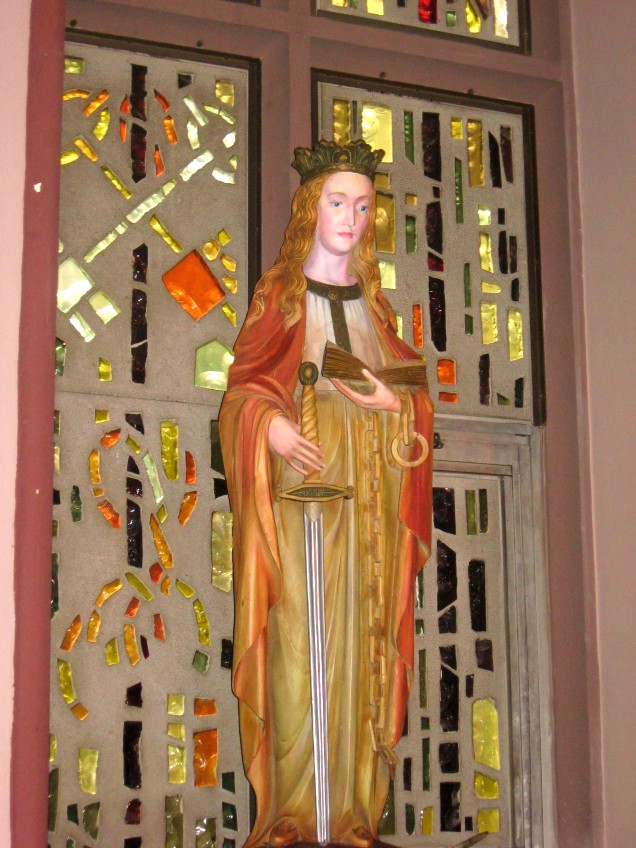
Saint of the Day – 15 May – Saint Dymphna (7th Century) “The Lily of Éire” Virgin Martyr, Princess.   Born in the 7th century in Ireland and died in Gheel in Belgium.   Patronages – runaways, mental disorders, neurological disorders, survivors of incest, survivors of sexual assault, depression, anxiety.

The story of Dymphna was first recorded in the 13th century by a canon of the Church of St. Aubert at Cambrai, France.   It was commissioned by Guiard of Laon (1238–1248), the Bishop of Cambrai.   The author expressly stated that his work was based upon a long-standing oral tradition as well as a persuasive history of miraculous cures of the mentally ill.st dymphna header

Born during the 7th century to Irish royalty, St Dymphna’s mother, the Queen, had the girl baptised and raised in the faith in secret because of her husband’s pagan beliefs. When Dymphna was only fourteen, her beloved mother died and the King went mad in his great state of grief.   He decided that he wanted to marry Dymphna, his own daughter, because she looked so much like her mother.   Dymphna, who had made a vow of virginity before God, was horrified by her father’s proposal and adamantly refused.

To escape the king’s inevitable outrage over her rejection, Dymphna fled the kingdom. She was accompanied by her Confessor, Fr Gerebran, as well as several faithful servants from her father’s court.   The group settled in Belgium in a city called Gheel near a shrine of St Martin of Tours.   While there, Dymphna used her wealth to care for the sick and poor of the region.st dymphna

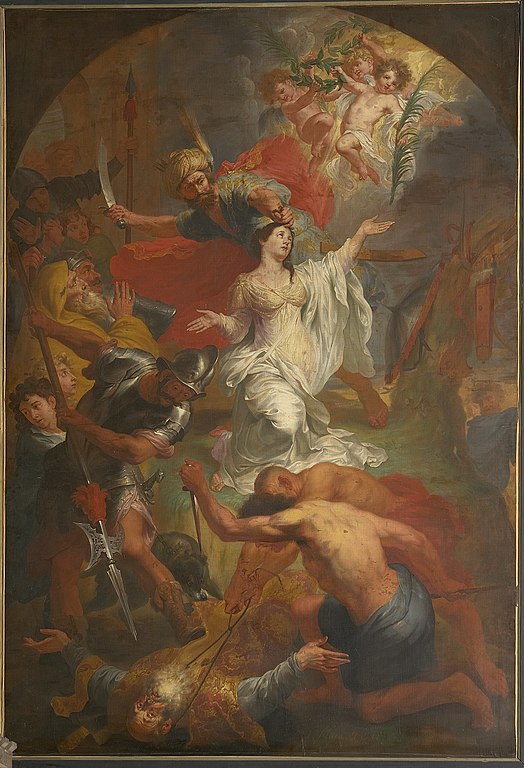
Unfortunately, her father discovered her whereabouts and he sailed to Gheel in the hopes of bringing her back with him.   Upon his arrival, the King continued his attempts to convince Dymphna to marry him, promising great wealth and esteem if she accepted his offer.   Still, she would not change her mind, staying true to her vow of virginity and refusal to enter an incestuous relationship.    In his anger, the King ordered his men to kill Fr Gerebran while he himself beheaded Dymphna.   She was only fifteen years old at the time.524px-Godfried_Maes_-_The_beheading_of_Saint_Dymphna

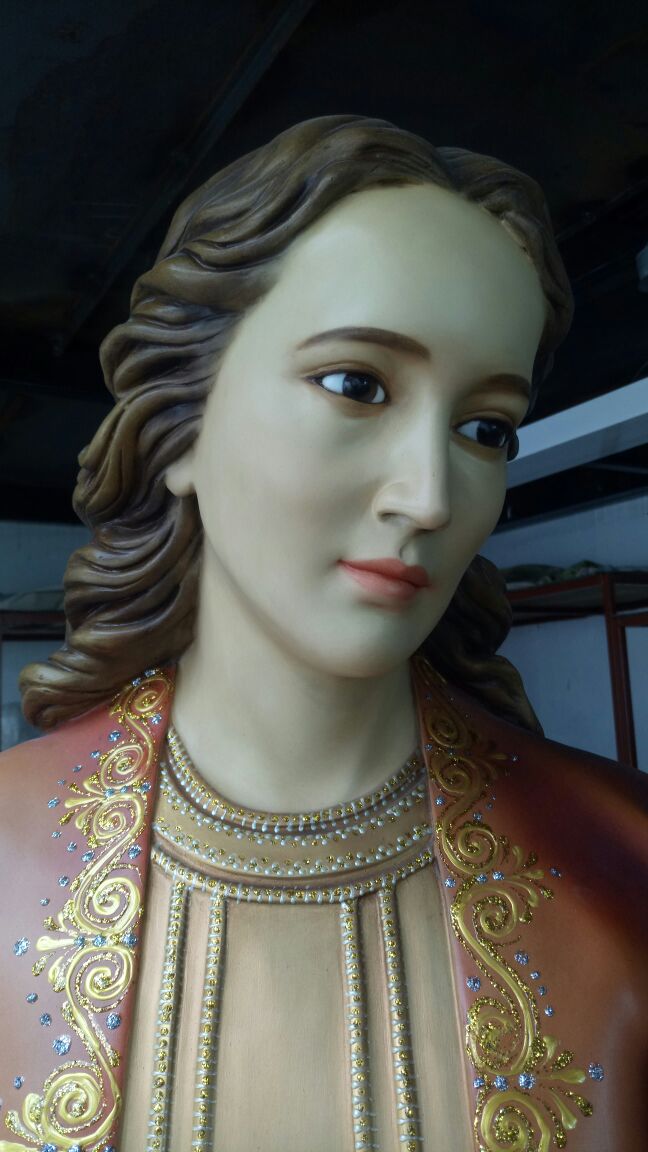
Both Dymphna and the priest, Fr Gerebran, were later named Saints and Dymphna was honoured with the crown of Martyrdom.   She was declared Patroness of those with mental problems because of the great anguish her father’s mental affliction caused.Dymphna close up statue face

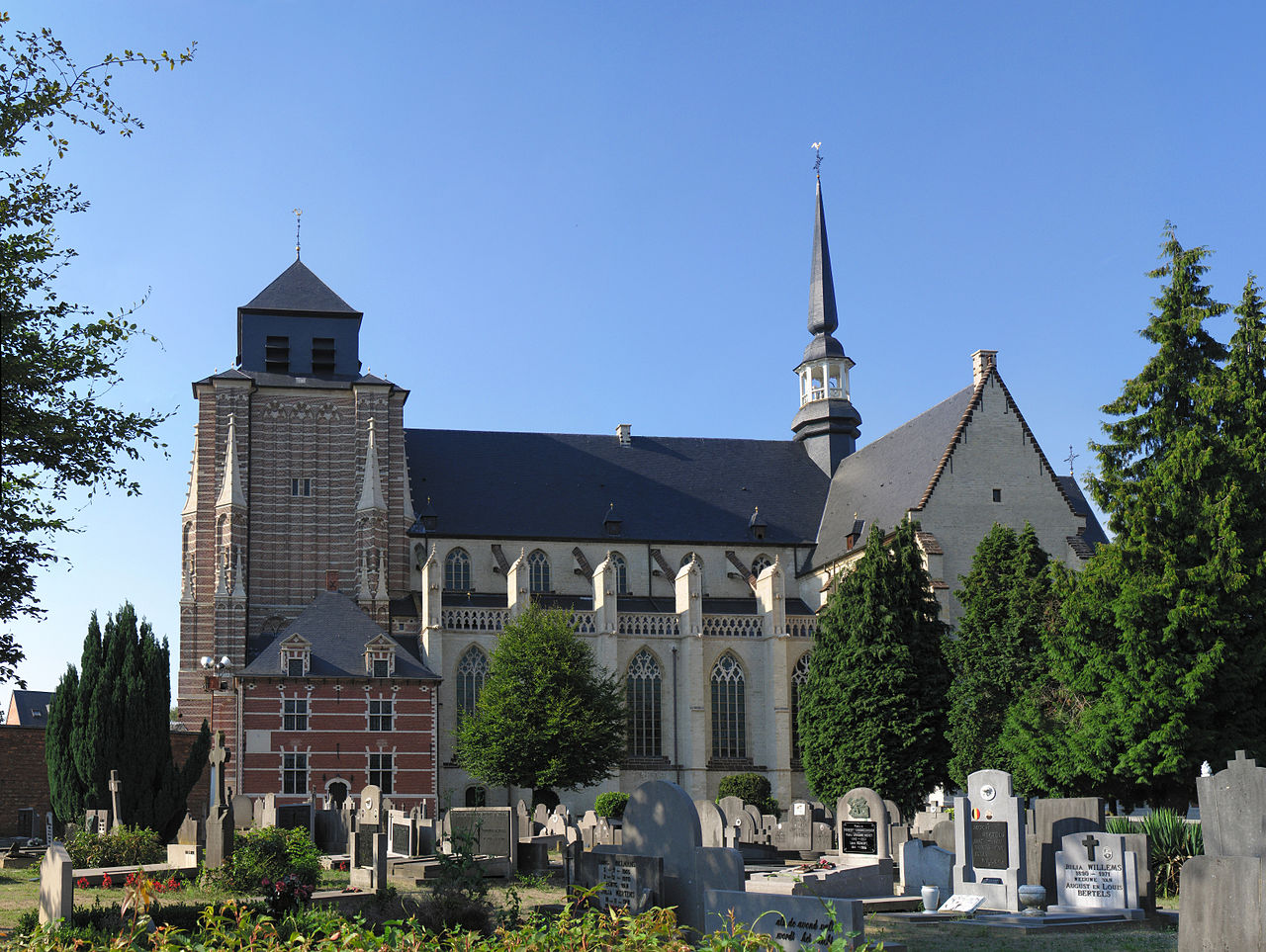
A church was built in Gheel in her name and many people suffering from mental disorders began travelling there for cures.   Soon, the church was so full that an addition was added onto it but even then it still could not contain all the visitors.   As a result, the townspeople of Gheel began accepting the mentally ill travellers into their homes.   This tradition continues to this day.

1280px-St-Dymphna_church
St Dymphna’s in Gheel

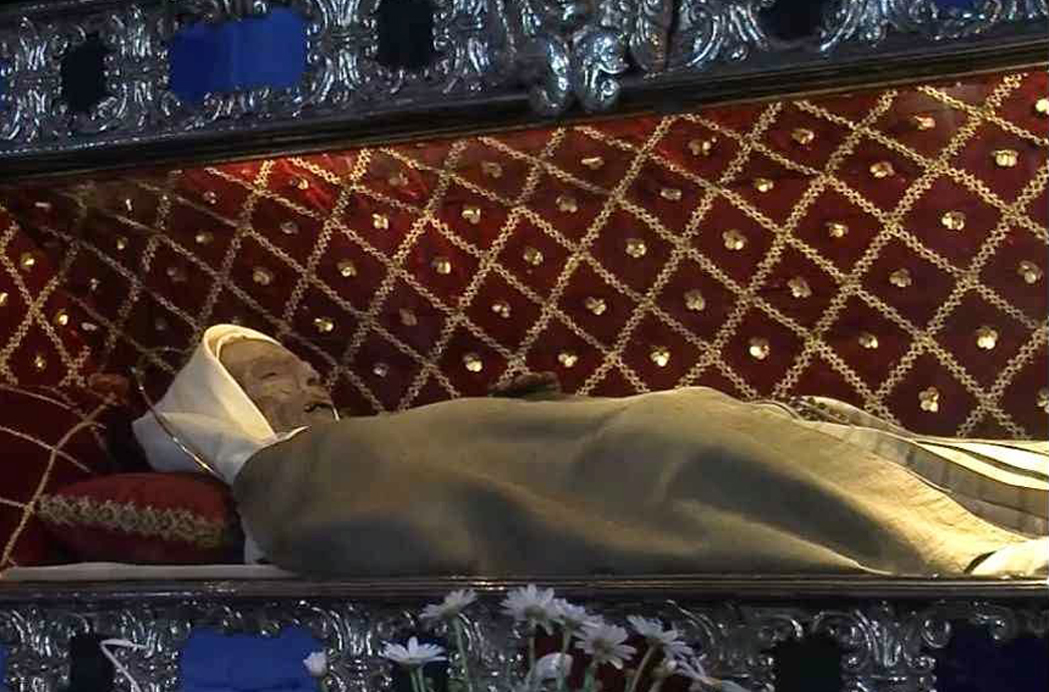
The remains of Dymphna were later put into a silver reliquary and placed in the Gheel Church. The remains of Fr Gerebran were moved to Xanten, Germany.   During the late 15th century the original St Dymphna Church in Gheel burned down.   A second “Church of St Dymphna” was then built and Consecrated in 1532.   The church still stands on the site where her body is believed to have first been buried.st dyphna glass

Good Saint Dymphna,
great wonder-worker in every affliction of mind and body,
we humbly implore your powerful intercession
with Jesus through Mary, the Health of the Sick,
in our present need.
………………………… (Mention it)
Saint Dymphna,
Martyr of purity,
Patroness of those who suffer
with nervous and mental afflictions,
beloved child of Jesus and Mary,
pray to Them for us
and obtain our requests.

(Pray one Our Father, one Hail Mary and one Glory Be.)

Saint Dymphna, Virgin and Martyr, Pray for Us!

st dymphna statue close up nat shrine

st dymphna statue 2

Posted in SAINT of the DAY, Uncategorized

Memorials of the Saints – 15 May

St Isidore the Farmer (c 1070-1619) (Optional Memorial)
About St Isidore:
https://anastpaul.wordpress.com/2017/05/15/saint-of-the-day-15-may-isidore-the-farmer/

St Achilles of Larissa
St Adiutor of Campania
St Alvardo
Bl Andrew Abellon OP (1375-1450)
Biography:
https://anastpaul.wordpress.com/2018/05/15/saint-of-the-day-15-may-blessed-andrew-abellon-o-p-1375-1450/

Bercthun of Beverley
Bertha of Bingen
St Caecilius of Granada
St Caesarea of Otranto
St Cassius of Clermont
Bl Clemente of Bressanone
St Colman Mc O’Laoighse
St Ctesiphon of Verga
Bl Diego of Valdieri
St Dymphna (7th Century) Virgin Martyr “The Lily of Éire”

St Euphrasius of Andujar (1st Century) Martyr
St Euphrasius’ Life:
https://anastpaul.com/2019/05/15/saint-of-the-day-15-may-saint-euphrasius-of-andujar-1st-century/
St Gerebernus
St Hallvard of Oslo
St Hesychius of Gibraltar
St Hilary of Galeata
St Indaletius of Urci
St Isaias
St Isidore of Chios
Bl Joan Montpeó Masip
St Maximus of Clermont
St Nicholas the Mystic
St Rupert of Bingen
St Secundus of Avila
St Simplicius of Sardinia
St Sophia of Rome
St Victorinus of Clermont
St Waldalenus of Beze

Martyrs of Maleville: 50 Mercedarian friars murdered for their faith by Huguenots. 1563 in the Mercedarian convent of Maleville in Rodez, France.

Martyrs of Persia: Three Christians who were tortured, mutilated, imprisoned, starved and finally executed together for refusing to worship the sun and fire during the persecutions of Shapur II. We know nothing else about them but their names: Bohtiso, Isaac and Simeon. They were beheaded or burned at the stake (records vary) in the late 3rd century somewhere in Persia

Martyrs of Lampsacus:
Andrew of Troas
Denysa of Troas
Paul of Troas
Peter of Lampsacus

Posted in DOMINICAN OP, SAINT of the DAY

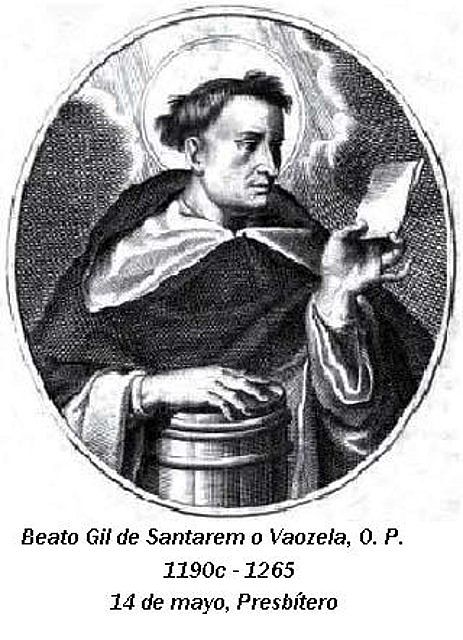
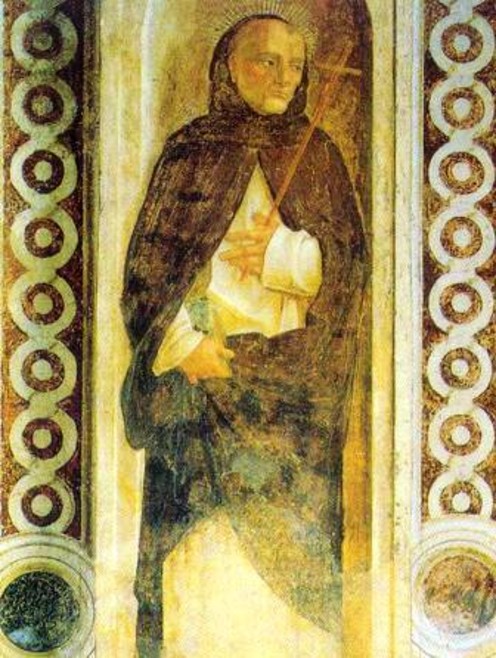
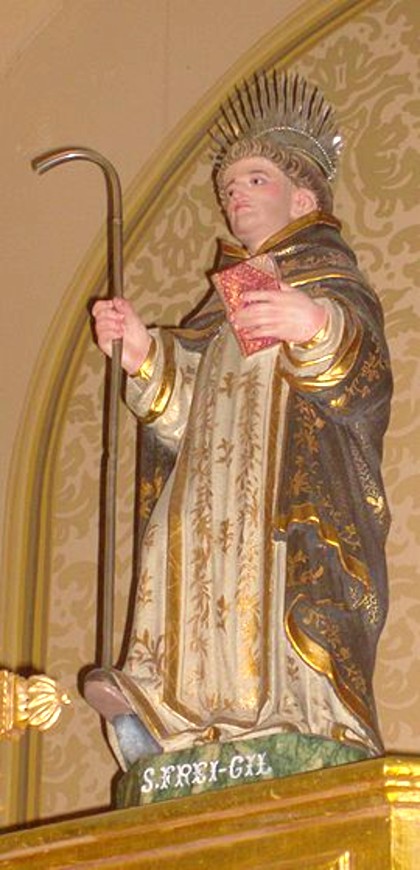
Saint of the Day – 14 May – Blessed Giles of Santarem OP (1185-1265)

Saint of the Day – 14 May – Blessed Giles of Santarem OP (1185-1265) Dominican Friar, Confessor, Penitent – born Gil Rodrigues de Valadares in 1185 at Vaozela, Portugal and died on 14 May 1265 in Santarem, Portugal of natural causes.bl giles São_Frei_Gil_(Seminário_Maior_de_Viseu)

Blessed Giles was born at Vouzella, near Coimbra, Portugal, about in 1185.   His father was the governor of Coimbra and a Counsellor of Sancho I, the king of Portugal.   Although his father wanted Giles to enter the ecclesiastical state and the King was lavish in bestowing ecclesiastical benefices on Giles, while still a child, Giles, however, wanted to study medicine.   After some time studying philosophy in Coimbra, Giles left to study medicine in Paris.

Blessed Giles was intercepted by a kindly stranger on his trip to Paris, who promised to teach him magic if he would sign his soul over to the devil in blood.   Blessed Giles, the legend continues, signed away his soul and studied magic for seven years before going to Paris where he excelled in his medical studies and was noted for many fantastic cures. However, we know that at some point Blessed Giles reformed his life and repented.bl giles of santarem

He returned to Portugal and took the Dominican habit in at a newly erected convent in Palencia in about 1224.   Shortly after arriving in Palencia, his Dominican superiors sent Blessed Giles to the Dominican convent at Scallabis, present day Santarem, Portugal. There he led a life of prayer and penance and for seven years was tormented about the compact he had entered into with the devil.   However, according to Blessed Giles’ biographer, finally Satan was compelled to surrender Giles’ soul and placed the compact he had signed before the Altar of the Blessed Virgin.bl giles of santarem faded

After this experience, Giles returned to Paris to study theology.   On his second return to Portugal, he became famous for his piety and learning.   He was twice elected provincial of the Dominican Order in Spain.

Noted for his humble service to his brethren, he died at Santarem on 14 May 1265. Blessed Giles was Beatified by Pope Benedict XIV (cultus confirmed) on 9 May 1748.bl Giles of Vouzela

Posted in SAINT of the DAY, The APOSTLES & EVANGELISTS

Feast of St Matthias the Apostle and Memorials of the Saints – 14 May

St Matthias the Apostle (Feast)
St Matthias!
https://anastpaul.wordpress.com/2018/05/14/saint-of-the-day-feast-of-st-matthias-apostle/

St Ampelio
St Boniface of Ferentino
St Boniface of Tarsus
St Carthage the Younger
St Corona the Martyr
St Costanzo of Capri
St Costanzo of Vercelli
Bl Diego of Narbonne
St Dyfan
St Engelmer
St Erembert of Toulouse
St Felice of Aquileia
St Fortunatus of Aquileia
St Gal of Clermont-Ferrand
Blessed Giles of Santarem OP (1185-1265)
St Henedina of Sardinia
St Justa of Sardinia
St Justina of Sardinia
St Maria Domenica Mazzarello
St Maximus
St Michel Garicoïts (1797-1863)
Biography:
https://anastpaul.com/2019/05/14/saint-of-the-day-14-may-saint-michel-garicoits-1797-1863/
St Pons of Pradleves
St Pontius of Cimiez
St Tuto of Regensburg
St Victor the Martyr

Martyrs of Seoul – 5 Beata: A group of lay people martyred together in the apostolic vicariate of Korea.
• Petrus Choe Pil-je
• Lucia Yun Un-hye
• Candida Jeong Bok-hye
• Thaddeus Jeong In-hyeok
• Carolus Jeong Cheol-sang
14 May 1801 at the Small West Gate, Seoul, South Korea – Beatified: 15 August 2014 by Pope Francis

Posted in CHRIST, the WAY,TRUTH,LIFE, ONE Minute REFLECTION, PAPAL ENCYLICALS, QUOTES of the SAINTS, QUOTES on DISCIPLESHIP, QUOTES on FAITH, QUOTES on THE MYSTICAL BODY, SACRAMENTS, SAINT of the DAY

One Minute Reflection – 14 May – “Without me you can do nothing”

One Minute Reflection – 14 May – “Mary’s Month” – Wednesday of the Fifth Week of Easter, Readings: Acts 15:1-6, Psalm 122:1-5, John 15:1-8 and the Memorial of Our Lady of Fatima and St André-Hubert Fournet (1752-1834)

“Without me you can do nothing” … John 15:5john 15 5 without me you can do nothing 13 may 2020

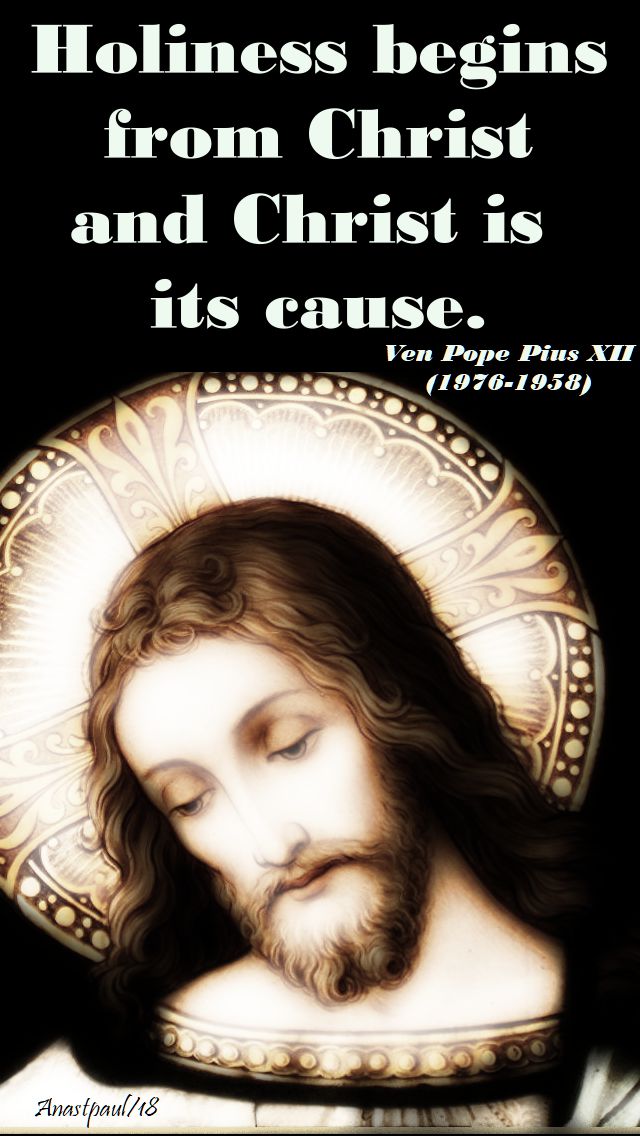
REFLECTION – “Holiness begins from Christ and Christ is its cause.   For no act, conducive to salvation, can be performed unless it proceeds from Him as from its supernatural source.   “Without me,” He says, “you can do nothing.”(Jn 15:5).   If we grieve and do penance for our sins if, with filial fear and hope, we turn again to God, it is because He is leading us.   Grace and glory flow from His inexhaustible fullness…

When the Sacraments of the Church are administered by external rite, it is He who produces their effect in souls.   He nourishes the redeemed with His own flesh and blood and thus calms the turbulent passions of the soul;  He gives increase of grace and prepares future glory for souls and bodies.

Christ our Lord wills the Church to live His own supernatural life and by His divine power permeates His whole Body and nourishes and sustains each of the members, according to the place which they occupy in the body, in the same way as the vine, nourishes and makes fruitful the branches, which are joined to it. (cf. Jn 15:4-6).” … Venerable Pius XII (1976-1958) Papacy 1939 to 1958 – Encyclical “Mystici Corporis”holiness begins from christ - pope pius XII - 29 april 2018 - 5th sun of easter

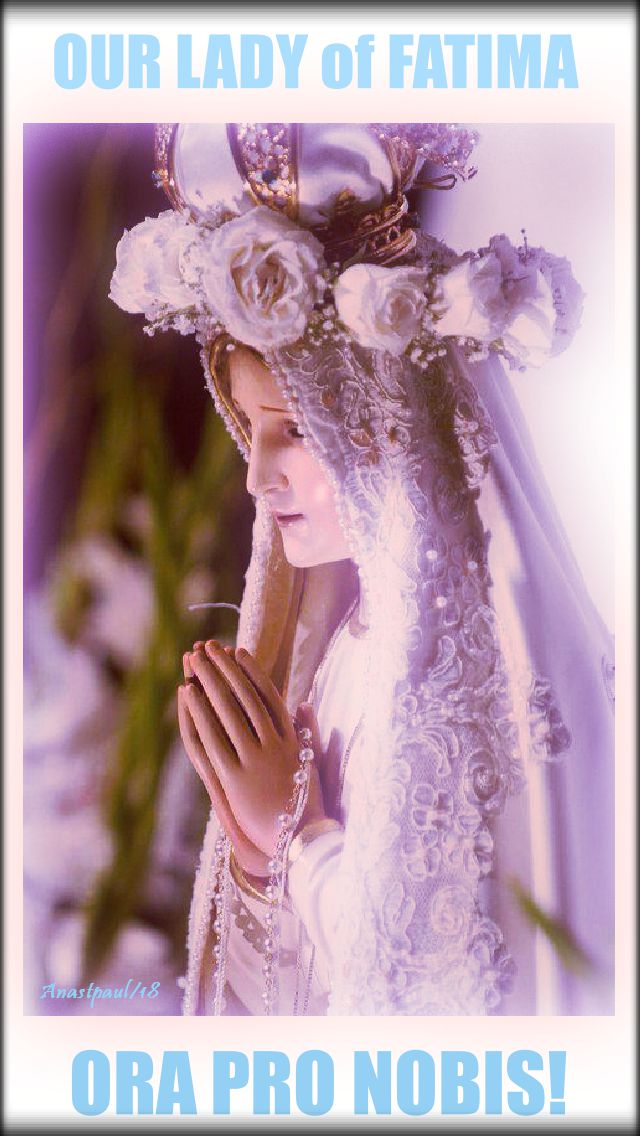
PRAYER – Holy God and Father, help us to discern through prayer and meditation what You truly want of us.   Then enable us to offer it to You and indeed, to offer ourselves and all we have and all we are, to You.   When You bring us sufferings to mould us closer and make us more like You, help us to accept them and offer them back to You.   Following Your divine Son, let us pick up those crosses in peace and love.   Our Lady of Fatima, pray for us!   St André-Hubert Fournet, pray for us.   Through Christ our Lord, with the Holy Spirit, God now and forever, amen.our lady of fatima pray for us no 2 - 13 oct 2018
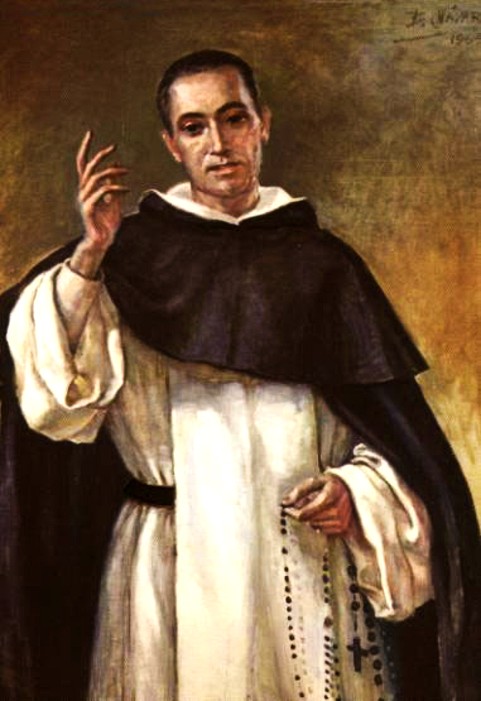
st andre hubert fournet pray for us 13 may 2020

Posted in SAINT of the DAY

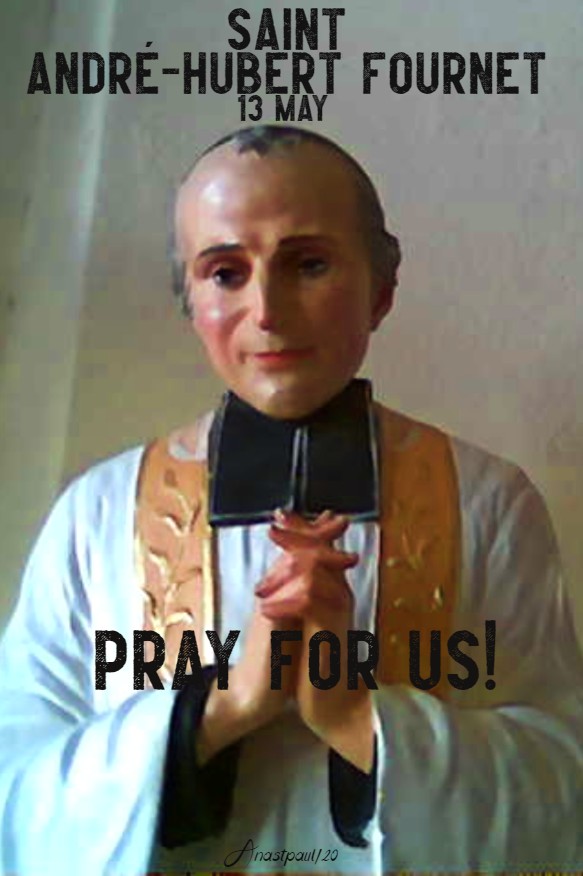
Saint of the Day – 13 May – Saint André-Hubert Fournet (1752-1834) “the Good Father”

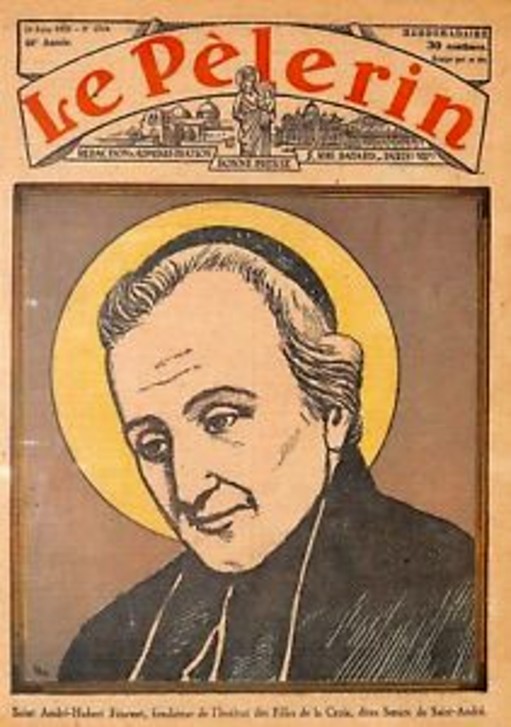
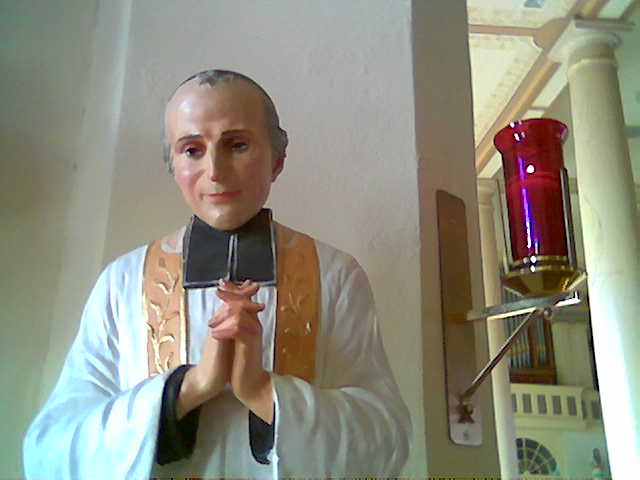
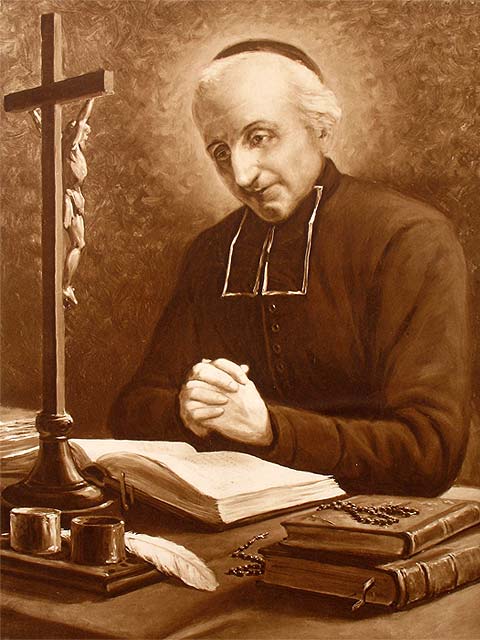
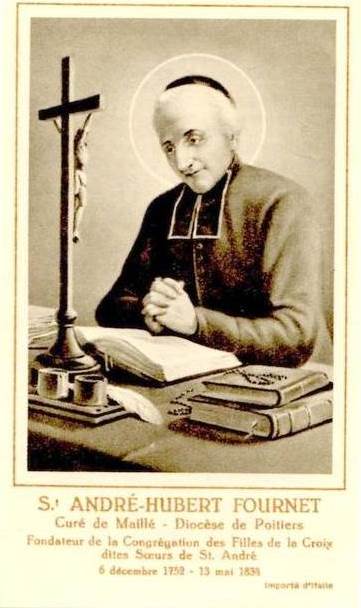
Saint of the Day – 13 May – Saint André-Hubert Fournet (1752-1834) Priest and Co-Founder with St Jeanne-Élisabeth Bichier des Ages of the Congregation of the Daughters of the Cross, Apostle of the poor, needy, children and the aged.   He is known as “the Good Father.”   Born on 6 December 1752 at Maille, France and died on 13 May 1834 at La Puye, Vienne, France of natural causes.   Patronage – the Daughters of the Cross.st andre fournet illusatration 1933

André-Hubert Fournet was born on 6 December 1752 in Vienne to Pierre Fournet and Florence Chasseloup.   He was the 9th of a family of 10 children  . He grew up surrounded by the love of his parents and siblings.   He was a carefree child, laughing, exuberant, he preferred play to work.   As a pupil at the Châtellerault Secondary School, he was loved by all his classmates for his joyful drive and frankness.   André-Hubert’s first teacher, his mother, was surprised by her child’s exuberance but she also knew his heart and his great tenderness.   “One day, my good André, you will be a priest.   You will go up to the altar and pray for your mother.”  His mother planted the idea and then she left all the space to God.   God did not seem in a hurry…  nor did André-Hubert, who wrote on the first page of one of his books:  “This book belongs to André-Hubert, a good boy, who will never be a monk or a priest.”   God works His plan in His own time…

After his classical studies, he studied law for just a year.   But his studies didn’t go well and so without consulting anyone, he joined the army.   One day, in his military uniform, he went to his uncle’s house, the priest of Saint-Pierre de Maillé.   His uncle received him coldly with the words:  “Your visit is at the wrong address!  I don’t have a nephew in the military service.”   However, there was a door which was always open to him, that of his mother’s heart.   Madame Fournet directed her son to one of his uncles, a priest in Haims, in the Vienne region.   This uncle was reserved, austere, meditative.   Haims is a harsh, isolated and lonely area of the countryside.   In this solitary environment, André-Hubert reflected and prayed.   The fruits of this period of quiet and peaceful reflection led him at 22, to enter the Seminary and become a Priest.

In 1776 he was Ordained to the Priesthood and was then sent to his own hometown, (succeeding his uncle) to become the Parish Pries to the great happiness of his mother who had her wish fulfilled.

One day, whilst awaiting some friends for lunch he prepared a table filled with food for them.   Then, there was the sound of footsteps and he happily wents to open for his guests, only to find a beggar asking for alms.   “I have no money…”   “What!  No money…” replied the poor man.   “Your table is covered with it!”   The beggar’s words were for André-Hubert, the Words of Jesus Christ.   He cried for a long time, prostrated on the flagstones of the church.   Through the beggar’s words, Jesus Christ entered his heart and completely took possession of it.   The passionate and generous, André-Hubert, had the courage to change his whole life.st andred hubert fournet glass sml

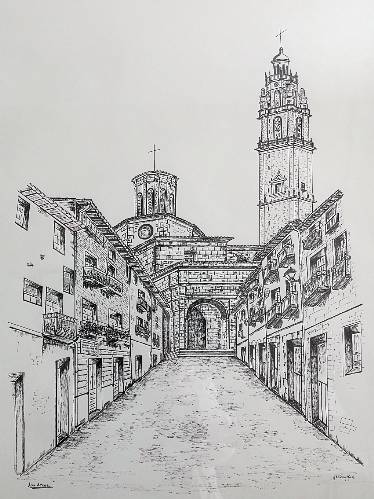
The French Revolution saw him refuse to take the oath and he continued his now illegal pastoral mission in secret.   On 6 April 1792 – on Good Friday – he was arrested for his activities.   He declined being taken to jail in a carriage and said since Jesus Christ carried His cross it,  behoved His followers to travel on foot.   He would escape and at one point assumed the place of a dead person on a bier.   But confident in Divine Providence, he decided to leave, taking the path of exile to Spain.   Spain welcomed the French priest, the fugitive.   From 1792 to 1797, André-Hubert took refuge in Los Arcos, a small town in Navarre.

Los-Arcos-redim500
Illustration of Los Arcos, Spain, Fr André-Hubert’s home for 5 years

But he misses his abandoned parishioners of Saint-Pierre de Maillé   He heard their voices.   So, he decided to return to France, alone.   In France, calm had not yet returned.   Refractory priests were still in danger.    These were very difficult times. It was still the era of catacombs!   But our Pastor is brave.   As a precaution, Fr André-Hubert celebrated the Eucharist clandestinely, sometimes in one place, sometimes in another.SaintFournet

In 1798 he met St Jeanne-Elisabeth Bichier des Ages, who had approached him for spiritual guidance.   Their first meeting was decisive.   Elisabeth became his collaborator in the founding of the Congregation of the Daughters of the Cross.   In the aftermath of the Revolution, Fr André wanted to educate children, the aged and care for the sick.   He entrusted this mission to Elisabeth, the young lady he met at Les Marsyllis.   Around Elisabeth, a small community was born.   Fr André-Hubert became the Spiritual and Apostolic leader of this new family.st André-Hubert_Fournet

In 1801 as better days dawn, Fr André-Hubert returned to Maillé and in 1802, re-established himself in his rectory.    His parish was his family.   In all their homes, he is called “the Good Father.”    He knew all his parishioners.   He loved them and is loved by them.

After 40 years of parish ministry, Good Father André retired and left Maillé to dedicate himself in his ageing years to the Congregation of the Sisters of the Cross, which had moved to in a former convent of the Fontevristes in La Puye.   Here, he interceded for many miracles – on more than one occasion, he multiplied the food for the members of the new congregation.

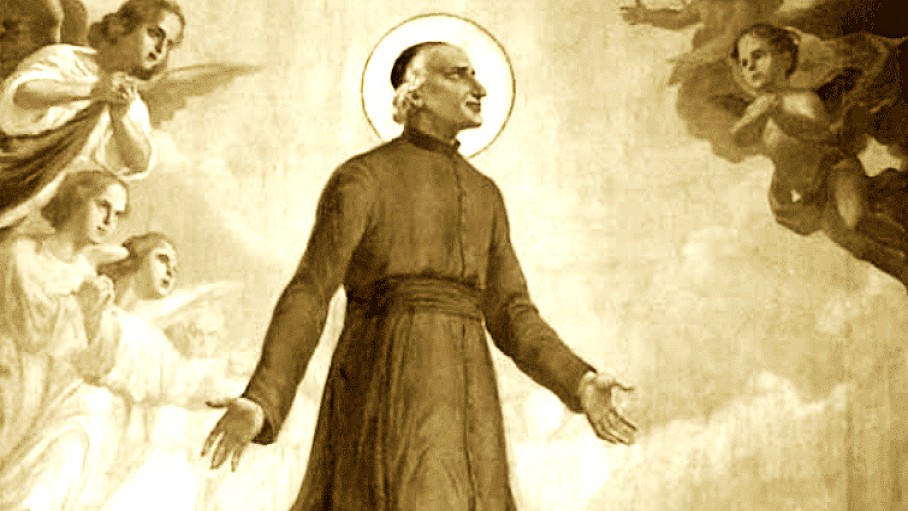
Until his old age, the Good Father kept an expression of simplicity and humility.   In the sun of God’s love, the transfiguration of his being continued in deep holiness, charity, humility and zeal.Santo André Humberto Fournet, Presbítero (2)

On 13 May 1834, aged 81, Fr André-Hubert opened his eyes to the sun without decline.

After the approval of 2 miracles, he was Beatified on 16 May 1926 by Pope Pius XI and Canonised on June 1933 by the same Pope, after a further 2 miracles.san-andres-hubert-fournet-santo-del-dia-23-de-septiembre

Posted in FEASTS and SOLEMNITIES, MARIAN TITLES, MAY - The Blessed Virgin MARY'S MONTH, SAINT of the DAY, The BLESSED VIRGIN MARY

13 May – The 103rd Anniversary of the First Apparition of Our Lady of Fatima, Feast of Our Lady of Succour of Sicily and Our Lady of the Most Blessed Sacrament and Memorials of the Saints

13 May 2020 +++ Our Lady of Fatima 103rd Anniversary of the First Apparition – Our Lady of the Holy Rosary (the name she gave herself when Lucia asked her name). (Optional Memorial)
All about Our Lady of Fatima:
https://anastpaul.wordpress.com/2017/05/13/the-centenary-of-the-apparitions-of-our-lady-of-fatima-our-lady-of-the-holy-rosary-13-may-2017/

Our Lady of Succour of Sicily:   Devotion to the Blessed Virgin Mary under this title began in Palermo, Sicily in the 14th century and has since spread throughout the Augustinians.   It began when Father Nicola Bruno, who suffered from severe and long-term pains in his side, prayed to Our Lady for healing while meditating on a painting of Mary in which she used a stick or club to chase away the dragon and protect the infant Jesus, the artist was making reference to passages in Genesis and Revelations that referred to the eternal enmity between The Woman and the serpent.   That night, Father Nicola received a vision of Mary and was healed.   The painting received the title “Our Lady of Help” and the devotion began.   Since 1804 the celebration has had its own liturgy.

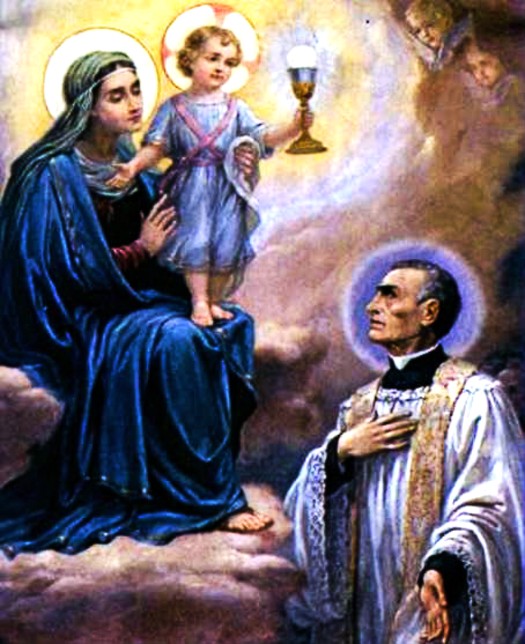
Our Lady of the Most Blessed Sacrament:   St Peter Julian Eymard (1811-1868) and Our Lady of the Blessed Sacrament.
The title of Our Lady of the Blessed Sacrament was first given to Mary by St Peter Julian Eymard in May 1868, while speaking to his novices.   A few years later he described what her statue should look like:   “The Blessed Virgin holds the Infant in her arms and He holds a chalice in one hand and a Host in the other.”   He exhorted them to invoke Mary: “Our Lady of the Blessed Sacrament, pray for us who have recourse to thee!”

The Background:
https://anastpaul.wordpress.com/2018/05/13/feast-of-our-lady-of-the-most-blessed-sacrament-13-may/st-peter-julian-eymard-and-our-lady-of-the-blessed-sacrament (1)

St Abban of Abingdon
St Agnes of Poitiers
St André-Hubert Fournet (1752-1834) “The Good Father”
St Anno of Verona
St Argentea of Cordoba
St Euthymius the Illuminator
Bl Fortis Gabrielli
Bl Gerard of Villamagna
Bl Gemma of Goriano
St Glyceria of Trajanopolis
St John the Silent
Bl Julian of Norwich (c 1342-c 1416)
Biography:
https://anastpaul.com/2019/05/13/saint-of-the-day-13-may-blessed-julian-of-norwich-c-1342-c-1416/

St Lucius of Constantinople
St Mael of Bardsey
Bl Magdalen Albrizzi
St Merewenna of Rumsey
St Mucius of Byzantium
St Natalis of Milan
St Onesimus of Soissons
St Servatus of Tongres
St Valerian of Auxerre

Martyrs of Alexandria:   A group of Catholic Christians martyred in the church of Theonas, Alexandria, Egypt by order of the Arian Emperor Valens.    Their names have not come down to us.   372 in Alexandria, Egypt.

Posted in SAINT of the DAY

Saint of the Day – 12 May – Blessed Joanna of Portugal (1452-1490)

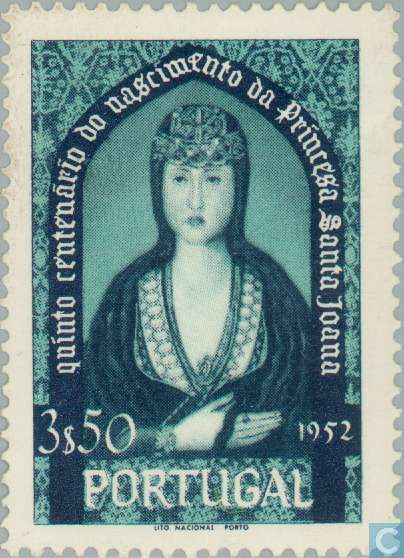
Saint of the Day – 12 May – Blessed Joanna of Portugal (1452-1490) Virgin, Princess of Portugal of the House of Aviz, daughter of King Afonso V of Portugal and his first wife Isabella of Coimbra, Penitent, Apostle of Charity, Dominican Nun.    She was born o 16 February 1452 at Lisbon and died on 12 May 1692 in Aveiro Portugal, possibly as a result of poisoning.   Patronage – Diocese of Aveiro, Portugal.  Also known as Jane, Joan, Joana.515px-bl_Joana,_Princesa_de_Portugal

Joanna, a child of many prayers, was born heiress to the throne of her father, King Afonso V, at a time when Spain and Portugal had divided the colonial wealth of the earth between them.   Her sickly brother Juan was born three years later and soon after this their mother, Queen Elizabeth of Coimbra, died.   Joanna was left to the care of a wise and pious nurse, who cultivated the child’s natural piety.   By age five, the little princess had exceeded her teacher in penitential practices.   She fasted and prayed, rose at night to take the discipline and wore a hairshirt under her glittering court apparel.

Although Joanna would not inherit the throne of Portugal while her brother was alive, a wise marriage would do much to increase her father’s power.   Accordingly, he began early to arrange for her marriage.   Joanna, whose knowledge of court intrigue was as good as his own, skilfully escaped several proposed matches.   She had treasured the desire to enter the convent but, in view of her father’s plans, her desires met with violent opposition.   She was flatly refused for a long time, finally, her father gave his reluctant consent but he withdrew it again at her brother’s insistence.

She was Regent of Portugal when her father and brother went to war against the Moors, and when they defeated the Moors in 1471, her father, in the first flush of victory, granted her request to take the veil.   Joanna and one of her ladies-in-waiting had long planned to enter the Dominican cloister of Jesus at Aveiro, which was noted for its strict observance.   But when her father finally gave consent for her to enter religion, he did not allow her to enter that Dominican convent.   She had to go to the nearby royal abbey of the Benedictines at Odivellas.   Here she was besieged by weeping and worldly relatives who had only their own interests at heart.   After two months of this mental torture, she returned to the court.

The rest of Joanna’s life is a story of obedience and trials.   Her obligations of obedience varied.   She was required to bend her will to a wavering father, who never seemed able to make a decision and abide by it;  to bishops, swayed by political causes, who forced her to sign a paper that she would never take her solemn vows and to doctors, who prescribed remedies that were worse than the maladies they tried to cure   The trials came from a jealous brother, from ambitious and interfering relatives, from illness and from cares of state.

Retrato_da_Princesa_bl_Joana_com_o_Menino_-_Joao_Baptista_Pachim
Princess Saint Joanna with the Infant Jesus, by Joao Baptista Pachim, 18th century

After 12 years of praying and hoping, Joanna finally received the Dominican habit at the Convent of Jesus at Aveiro in 1485.   Once again, she was deprived of it by an angry delegation of bishops and nobles and, at another time, her brother tore the veil from her head.   Despite the interruptions of plague, family cares and state troubles, Joanna lived an interior and penitential life.   She became an expert at spinning and weaving the fine linens for the altar and busied herself with lowly tasks for the love of God.   She used all her income to help the poor and to redeem captives.

Her special devotion was to the Crown of Thorns and, in early childhood, she had embroidered this device on her crest.   To the end of her life she was plagued by the ambition of her brother, who again and again attempted to arrange a marriage for her and continually disturbed her hard-won peace, by calling her back to the court for state business.

On one of these trips to court, Joanna was poisoned by a woman – a person she had rebuked for leading an evil life.   The princess lived several months in fearful pain, enduring all her sufferings heroically.   She died on 12 May 1490, aged 38, as it says in an old chronicle, “with the detachment of a religious and the dignity of a queen” and with the religious community around her.

She was Beatified in 1693 by Pope Innocent XI – (cultus confirmed). Although she has not been Canonised, in Portugal she is known as the Princess Saint Joanna.

O God,
in the midst of the Royal Court,
You strengthened Blessed Joanna
with purity of heart.
By her prayers,
may Your faithful
turn from the things of earth
and seek after the things of heaven.
We ask this through our Lord Jesus Christ,
Your Son, who lives and reigns with You
and the Holy Spirit,
one God, forever and ever.
Amen

General Calendar of the Order of Preachersst joanna of portugal stamp

Posted in SAINT of the DAY

Memorials of the Saints -12 May

St Achilleus of Terracina Martyr (Optional Memorial)
St Nereus of Terracina Martyr (Optional Memorial)
About:
https://anastpaul.wordpress.com/2018/05/12/saints-of-the-day-12-may-sts-nereus-and-achilleus/

St Pancras of Rome (c 289 – c 303) Martyr (Optional Memorial)
Biography:
https://anastpaul.com/2017/05/12/saint-of-the-day-st-pancras/

St Crispoldus
St Cyril of Galatz
St Dedë Malaj
St Diomma of Kildimo
St Dionysius of Asia
St Dominic de la Calzada
St Ejëll Deda
St Ephrem of Jerusalem
St Epiphanius (c 315 – 403)
His story:
https://anastpaul.com/2019/05/12/saint-of-the-day-saint-epiphanius-c-315-403-the-oracle-of-palestine/
St Erc Nasca of Tullylish
St Ethelhard of Canterbury
St Euphrosyna of Terracina
Bl Francis Patrizzi of Siena
Bl Gemma of Goriano
St Germanus of Constantinople
Bl Joanna of Portugal OP (1452-1490) Princess of Portugal
Bl Juan de Segalars
St Lucien Galan
St Modoald of Trier
St Palladius of Rome
St Philip of Agira
St Richrudis of Marchiennes
St Theodora of Terracina
St Thomas Khampheuane Inthirath

Posted in SAINT of the DAY

Saint of the Day – 11 May – Blessed Gregory Celli of Verucchio OSA (C 1225-1343)

Saint of the Day – 11 May – Blessed Gregory Celli of Verucchio OSA (C 1225-1343) Priest of the Augustinian Order, renowned Preacher, Contemplative, Hermit – born in c 1225 at Verucchio, Diocese of Rimini, Italy and died in 1343 at Franciscan monastery at Monte Carnerio, Rieti, Italy.   Patronage – against drought.Blessed-Gregory-Celli-of-Verucchio

Gregorio Celli was born in Rimini.   His father died in his childhood.   He was baptised in the church of Saint Martin in Verucchio.

Each evening his mother would set off for the local church to find her son there who remained entranced with the Gregorian Chant.   His mother’s relations – despite being devout – feared that Celli would not follow in his father’s footsteps to become a doctor of law but rather that he would consider the religious life.    And, at the age of fifteen, in 1240, he confirmed their dread and joined a Monastery in that place, of the Augustinian Rule.   He belonged to the “Hermits of Blessed John the Good” (often called the “Giamboniti”).

He travelled to the convent on a mule, for admission to commence his period of novitiate and in 1242 he had become a well-noted and regarded figure for his penances and strict adherence to the rule of Saint Augustine.   He made his solemn profession into the hands of the order’s superior Matteo de Modena.   It was Brother Matteo who later selected Celli to preach and hear confessions in the region despite the latter not being yet Ordained Priest – though he was soon Ordained as such, at the successful conclusion of his ecclesiastical studies.   It was during this period that he preached against the heresies of Catharism and he even met the famous heretic Armanno Pungilupo.

In 1256 he witnessed the Grand Union of the order.   (In 1256 these various autonomous monasteries, following the Rule of St Augustine, were banded together by the Church to form the Augustinian Order.)

In 1300 he set off for Rome to participate in the Jubilee that Pope Boniface VIII called for and he visited each of the tombs of the Apostles.   In 1300 he decided to withdraw from the active life of the Apostolate he had served for decades, in favour of a more contemplative existenc, somewhere in the hills surrounding the region he lived in.   He confided this to Agostino Novello – the general of the order – and the general embraced and encouraged him.   He lived in a cave where he spent the remainder of his life in reflection and fasting.

He died in mid-1343.   His remains are now interred in the church of Saint Augustine in Verucchio.   He is said to have lived until 1343, which would mean that he was 118 years old at the time of his death.   His remains are preserved in Verucchio.

Citizens in Rimini requested on numerous occasions that a Beatification process be opened and it was believed that Pope Innocent VI drew up a decree for the actual Beatification itself in 1357, however, this was not confirmed.    People in Rimini again began pushing for Fr Gregory’s Beatification in 1757.   The Beatification was later approved on 6 September 1769 after Pope Clement XIV issued a formal decree, which acknowledged a spontaneous and enduring local ‘cultus’ – otherwise known as popular veneration – to the late Fr Gregory.   He was Beatified on 6 September 1769, at Saint Peter’s Basilica by Pope Clement XIV (cultus confirmed).

Blessed Gregory was an authentic witness to the life of the gospel, spending the great part of his life in rigorous asceticism, penance and contemplation

God our Father,
You alone are holy.
You gave to Blessed Gregory Celli
the grace to witness to Your love
in holy penance and contemplation.
Trusting in his prayers
we ask You to help us to become
the holy people You call us to be.
Never let us be found undeserving
of the glory You have prepared for us.
Grant this through our Lord Jesus Christ,
Your Son, who lives and reigns with You
and the Holy Spirit,
one God, forever and ever.
Amen

Posted in SAINT of the DAY

Memorials of the Saints – 11 May

St Anastasius of Lérida
St Anthimus of Rome
St Bassus of Sabina
St Bertilla
St Criotan of MacReddin
Bl Diego of Saldaña
St Evellius of Pisa
St Fabius of Sabina
St Fremund of Dunstable
St Gengulphus of Burgundy
Blessed Gregory Celli of Verucchio OSA (1225-1343)
St Gualberto
St Ignatius of Laconi OFM Cap. (1701-1781)
Biography:
https://anastpaul.wordpress.com/2018/05/11/saint-of-the-day-11-may-st-ignatius-of-laconi-o-f-m-cap-1701-1781/

Bl Illuminatus
St Illuminatus of San Severino
Bl James Walworth
Bl John Rochester
St Maiulo of Hadrumetum
St Majolus of Cluny
St Mamertus (Died c 475)
His Life:
https://anastpaul.com/2019/05/11/saint-of-the-day-11-may-st-mamertus-died-c-475/
St Maximus of Sabina
St Mayeul
St Mozio of Constantinople
St Possessor of Verdun
St Principia of Rome
St Tudy
St Vincent L’Hénoret
Bl Vivaldus
St Walbert of Hainault

Martyrs of Camerino: An imperial Roman official, his wife, their children and servants, all of whom were converts and martyrs: Anastasius, Aradius, Callisto, Eufemia, Evodius, Felice, Primitiva, Theopista.

Posted in SAINT of the DAY

Saint of the Day – 10 May – Blessed Enrico Rebuschini MI (1860-1938)

Saint of the Day – 10 May – Blessed Enrico Rebuschini MI (1860-1938) Priest of the Camillians [Clerics Regular, Ministers to the Sick, also known as the “Hospitallers” the Order founded by St Camillus de Lellis’ (1550-1614)] – born on 28 April 1860 at Gravedona, Como, Italy and died on 10 May 1938 in Cremona, Italy of pneumonia.    Patronage – against depression.bl enrico rebuschini-6-526x460

Enrico was born in northern Italy, in Gravedona on the northwest shore of Lake Como, on 28 April 1860.   His father, Domenico, an administrative clerk, before becoming head tax inspector for Como province, was not in favour of religion.   He would accompany his wife to the church door but remained outside.   His mother, Sophia, a model Christian, was a native of Livorno in Tuscany.   Enrico was the second of five children.   After finishing his secondary school studies, Enrico, who because of his father’s opposition could not follow his call to religious life, enrolled at the university in Pavia to study mathematics.   A calm boy of good upbringing, he stayed only one year at the university, where anticlericalism aroused in him bitterness and disgust.

Upon his return to Como, he completed his military service with a year of volunteer work.   In his free time, he was glad to isolate himself in prayer and good reading.   A student at the Military School of Milan, he emerged from it a Reserve Second Lieutenant, esteemed by his superiors who encouraged him to make a career for himself in the army. But when he got home to his family, he opted to pursue studies in accounting, in 1882 receiving a diploma with honours.bl enrico rebuschini snip header

His sister, Dorina’s husband, who managed a silk business 45 km north of Como, welcomed him into his home and entrusted to him a job in administration.   Harmony prevailed between Enrico and the household.   Nevertheless, at the end of three years, there were signs that the young man was in trouble.   Sadness could be read in his eyes. He confided to his father that this work in industry and commerce didn’t suit him.   He was 24 years old when he wrote to his brother-in-law: “The thought of forever remaining a burden rather than being a good assistant,… the fact of knowing at the same time, that my parents will never be at peace, as long as I remain in a path that doesn’t suit my nature (and which makes me unhappy), has finally persuaded me that I have to give it up, for my Mom and Dad’s good, for your good and for mine.   I am telling you this with a painfully heavy heart.” (9 August 1884).

Enrico’s difficulties were not caused by his choice of a profession that matched his talents and inclinations but, by his persistent attraction to religious life, an attraction his father was opposed to.   Soon, despite all his efforts to accept his fate, he fell into a state of moral dejection.   He was so thin that he looked like he was recovering from illness.   At last, in the summer of 1884, after long discussions with his son, his father finally gave up, in part through the intervention of St Luigi Guanella (1842-1915)  (a priest who initiated social institutions), who had all the monasteries in Como pray for this vocation.  His life here:  https://anastpaul.com/2018/10/24/saint-of-the-day-24-october-st-luigi-guanella-1842-1915-servant-of-charity/

Three months after leaving his job, Enrico enrolled in the Gregorian University in Rome to pursue ecclesiastical studies.   There he won the esteem of his professors.   He received the Minor Orders with this distinction:  “Edifying conduct, with a very good spirit of the Church.”   Towards the end of 1885, his parents and his Aunt Magdalena came to Rome and were happy to find him pleased and calm.   Magdalena noted in her diary: “Enrico is content and at peace.   I understand how he can feel this way.   He is sure he is on the way that God has prepared for him.”Blessed-Enrico-Rebuschini

But an unexpected obstacle suddenly arose—from March 1886 to May 1887, Enrico was overcome by a profound nervous depression.   A very generous soul, with a sense of duty that never allowed half-measures, Enrico was prompted to perform excessive penances, without taking his frailty into adequate account.   He needed to eat more but he forced himself to imitate, even go beyond, the examples of mortification he saw around him and thus was brought to a state of nervous and mental exhaustion, a frequent cause of depression.   Before his time, when Saint Teresa of Avila arrived at a Carmel and found tensions and spiritual battles there, she first asked everyone to get an extra hour’s sleep! Indeed, fatigue diminishes our capacity to resist, weakens us and increases our vulnerability.   One of the weapons the devil uses in spiritual combat, is to overburden us under the appearance of good.

Enrico returned to his family.   He also made a stay in a clinic  . In Magdalena’s diary can be found the following notes  : there are “moments when the hand of God has weighed down on us and has plunged us into suffering…   What a month of silence and what suffering at this time.   May God at least put an end to this and give us back our treasure.” Eight years later, in recalling this period, Enrico would write, “I was sent to a spa. T  here God restored my health by giving me total confidence in His infinite goodness and mercy.”

In May 1887 the depression receded and Enrico fully recovered his health.   He experienced relapses but they were less prolonged and less serious.   Specific remedies for his illness did not exist at that time.   The trial was overcome by a progressively more correct understanding of God, which brought about a filial relationship based on trust. The best feature of our Blessed’s spirituality would from then on, be the consideration of the infinite ocean of mercy found in the Heart of Jesus, of the maternal tenderness of our Mother, the Most Blessed Virgin Mary, whom the Church invokes by the consoling title of Health of the Sick.

During the summer of 1887, Enrico was employed at the hospital in Como.   But shortly thereafter, he was graciously dismissed because, instead of working in his department, he spent his time in the hospital wards at the bedside of those sick who were the poorest, the neediest, the isolated, for whom he sacrificed his last dime and even his own clothes. He also made numerous visits to the poor and the sick in their homes.   His contact with these sufferings gave birth to his vocation as a Hospitaller.

In a notebook he jotted down his spiritual program, which was inspired by the ways of perfection proposed by Saint Ignatius of Loyola.   He also wrote there:  “The Most Blessed Virgin, to whom I have abandoned myself in order that she might find me a task suited to my weakness, obtained a position for me in the administrative department of the civil hospital, where I was working several hours a day.   I spent the rest of the time alone, in pious exercises..   Seeing as how I could not continue in this way and feeling called to embrace religious life, my spiritual father (when I revealed to him my attraction to the religious family of Saint Francis) suggested to me that of Saint Camillus, which seemed to him more suited to my circumstances and also because he feared for my health.   I did it without discussion—I embraced it immediately.”   Reading the life of Saint Camillus confirmed Enrico in his choice.

On 27 September 1887, Enrico Rebuschini, 27 years old, entered the Camillians in Verona.  The first attitude that he proposed to have was that of friendliness.   This most necessary virtue did not come easily to him.   He already had experience in professional work, while his companions in the novitiate were still in adolescence and loved freedom, recreation and noise, quickly turning serious thoughts into amusing puns.   He, therefore, made a point of having a positive opinion of others, in spite of their faults or irritating attitudes.

His good-naturedness attracted the esteem of his superiors who, in consideration of the studies he had already completed in Rome, had him Ordained a Priest during his novitiate, on 14 April 1889.   The bishop of Mantua, who conferred on him the sacrament of Holy Orders, was Bishop Sarto, the future St Pope Pius X, a friend of the Camillians. Enrico’s perpetual profession took place on 8 December 1891.   But Father Rebuschini was prone to relapses of nervous depression. These relapses were a consequence of his predominant fault—a perfectionist nature which led him to spiritual undertakings that did not take his nervous frailty into sufficient account.   In the years 1890-1891 he experienced another depression and suffered greatly from a spiritual trial.   Too concerned with thoughts of eternity, he was strongly tempted to believe he was damned. His appointment as Chaplain to the hospital allowed him to recover his balance and calmness by helping him to forget himself in attending to the afflictions of his neighbour. But in 1895 the beginnings of another depression could be seen.   He had been named Vice-Novice master and Professor of Theology.   However, because of a lack of self-confidence, he considered himself incapable of taking on these tasks.   A state of constant tension ensued  . His superiors had to release him from these responsibilities and, thanks to God, he quickly regained his stability.   Finally, in 1922, a long spell of difficult responsibilities and an overload of work brought about a final depression which he overcame in a few months.bl rebuschini-2-

In light of these manifestations of depression, one might be tempted to think that Father Enrico had a gloomy and wavering nature.   But it must be observed that between the attacks of 1895 and 1922, over 25 years of normal activity passed, during which he admirably took upon himself heavy responsibilities with great generosity.   Then, from 1922 until his death in 1938, for over 16 years, he more than ever showed a stable equilibrium and complete serenity.   Father Joseph Moar, who worked alongside him during the last seven years of the Blessed’s life, affirmed in the Beatification process that it was only through biographies that he had learned of the depressions Father Rebuschini had experienced.   “When I knew him, he was utterly balanced and always his same old self.   It had never occurred to me that he might have been able to suffer from depressions.”

In 1890 Father Enrico was named Chaplain for the military and civil hospitals in Verona. The clerics and religious, as well as the soldiers, considered him a saint.   His holiness was of itself the quietest that can be imagined for a chaplain.   It was not based on dazzling deeds but first and foremost, on the exemplarity of his life in the service he rendered to the sick.   In his Apostolate, he had the gift of touching the most hardened hearts.   The parish priest in Vescovato testified to this:   “On more than one occasion, I was at the bedside of a sick person with Father Enrico.   My parishioners, to whom I had been unable to administer the Sacraments back home, (the parish of Vescovato had at that time a reputation for being «difficult») often would confess and receive Communion with serenity and joy when they were at the clinic.   When I asked them how they came to this decision to receive the Sacraments, they answered that with a Priest like Father Enrico, they couldn’t resist because he had the words and the attitudes to convince them.”bl enrico rebuschini footer

Father Rebuschini’s success with souls can be explained by his union with God, especially by his pious celebration of the Holy Mass, his fervent recitation of the breviary, his Adoration of the Blessed Sacrament and his remarkable love for the Most Blessed Virgin.   His genuflections were marked with great respect.   At the elevation of the Host during the Mass, he would stop for a moment in Adoration.   The Our Father, which is prayed with the very words Jesus used, seemed to him the most moving moment of the Holy Sacrifice.

At the beginning of May 1899, Father Enrico was sent to the convent in Cremona.   The first charge entrusted to him was that of serving as Chaplain to the Camillian Sisters.  The following year his Superior also named him the Bursar of his community.   A man of interior life and prayer, Father Enrico carried out this responsibility, which was not to his liking, in order to do the will of God.   He had at his disposal neither office nor secretary.   But he could rely on the cooperation of active and intelligent Brothers.   As part of his regular routine, he had to buy various goods, fix any plumbing or electrical failures, keep the clinic’s operating room functioning, make the vegetable garden and henhouse at least marginally profitable, oversee the production of wine in the cellars and prepare the salary budgets.   But the extraordinary labours continued over the course of the years—renovating the kitchen, connecting to the city electric system, roof repairs, installation of central heating, not to mention difficulties caused by the insolvency of the bank in which the community’s modest savings were kept…

Father Rebuschini exercised the duties of Bursar for 35 years, until 1937.   But starting in 1938, his strength began to fail.   He was 78 years old.   “Father Enrico’s last days were marked by exemplary serenity and perfect abandon to Divine Providence,” a neuropsychiatrist who studied the saint’s life from a medical standpoint reported during the Beatification proceedings.   In the first days of May, having received the Sacrament of the Sick, Father Enrico asked forgiveness of everyone for the bad examples he might have given, for his imperfections, for everything that might have offended anyone.   He also asked that they pray for him, leaving to God any judgement on his life on earth.   On 9 May at 6 o’clock in the morning, Father Vanti celebrated Mass in Father Enrico’s room. At the moment of receiving Communion, the dying man stretched out his arms, received the Body of the Lord with great piety, then folded his arms and was absorbed in prayer. The supreme meeting with his beloved Lord took place on 10 May at 5:30 in the morning.  His funeral and burial were held on 12 May.bl enrico rebuschini lg

On 4 May 1997, after the approval of a miracle, St Pope John Paul, Beatified Blessed Enrico at Peter’s Square.  “His example,” said the Holy Father during the Beatification celebration, “constitutes for all believers an urgent invitation to pay attention to the sick and to those who suffer in body and spirit.”

Through the intercession of Blessed Enrico Rebuschini, let us pray for ourselves in this time of great tribulation, for our loved ones, for all those who are ill, for all those who find themselves faced with nervous weaknesses or diseases, so common in the modern world and for all your intentions.bl enrico shrine

Posted in DOCTORS of the Church, SAINT of the DAY

Fifth Sunday of Easter, Year A +2020 and Memorials of the Saints – 10 May

Fifth Sunday of Easter, Year A +2020

St John of Avila (1499-1569) “Apostle of Andalusia”– Doctor of the Church
About St John:
https://anastpaul.wordpress.com/2018/05/10/saint-of-the-day-10-may-st-john-of-avila-1499-1569-apostle-of-andalusia-known-as-father-master-avila-doctor-of-the-church/

St Joseph de Veuster (1840-1889) – St Damian of Molokai “The Martyr of Molokai”(Optional Memorial)
St Damian’s life:
https://anastpaul.wordpress.com/2017/05/10/10-may-the-memorial-of-st-damian-de-veuster-de-molokai/

Robert Louis Stevenson and St Damian: https://anastpaul.wordpress.com/2017/05/10/blessed-memorial-of-s-damian-de-veuster-de-molokai/

St Alphius of Lentini
Bl Amalarius of Metz
Bl Antonio of Norcia
St Aurelian of Limoges
Bl Beatrix d’Este the Elder
St Blanda of Rome
St Calepodius of Rome
St Catald of Taranto
St Comgall of Bangor
St Cyrinus of Lentini
St Dioscorides of Smyrna
Blessed Enrico Rebuschini MI (1860-1938) (This video shows great images of Italy).

St Epimachus of Rome
St Felix of Rome
Bl Giusto Santgelp
St Gordian the Judge
Bl Ivan Merz (1896-1928)
Biography:
https://anastpaul.com/2019/05/10/saint-of-the-day-10-may-blessed-ivan-merz-1896-1928/
Bl Nicholas Albergati
St Palmatius of Rome
St Philadelphus of Lentini
St Quartus of Capua
St Quintus of Capua
St Simplicius of Rome
St Solange of Bourges
St Thecla
Bl William of Pontnoise

Posted in CHRIST, the WAY,TRUTH,LIFE, FATHERS of the Church, ONE Minute REFLECTION, QUOTES for CHRIST, QUOTES of the SAINTS, QUOTES on GRATITUDE, QUOTES on LOVE of GOD, SAINT of the DAY, The WORD

One Minute Reflection – 9 May – “He who has seen me has seen the Father…”

One Minute Reflection – 9 May – Saturday of the Fourth Week of Easter, Readings: Acts 13:44-52, Psalm 98:1-4, John 14:7-14 and the Memorial of Bl Giovanni Benincasa of Montepulciano OSM (1375-1426)

“He who has seen me has seen the Father…”…John 14:9

REFLECTION – “Beloved, Jesus Christ is our salvation, He is the high priest through whom we present our offerings and the helper who supports us in our weakness. Through Him, our gaze penetrates the heights of heaven and we see, as in a mirror, the most holy face of God.   Through Christ, the eyes of our hearts are opened and our weak and clouded understanding, reaches up toward the light.   Through Him the Lord God willed that we should taste eternal knowledge, for Christ is the radiance of God’s glory and as much greater than the angels as the name God has given Him is superior to theirs.
… Think, my brothers, of how we first came into being, of what we were at the first moment of our existence.   Think of the dark tomb out of which our Creator brought us into His world, where He had His gifts prepared for us, even before we were born.   All this we owe to Him and for everything, we must give Him thanks.   To Him be glory forever and ever. Amen.” … St Pope Clement of Rome (c 35-99), Apostolic Father, Bishop of Rome and Martyr – An excerpt from his Letter to the Corinthiansjohn 14 9 he who has seen me has seen the father - through him our gaze - st pope clement of rome 9 may 2020

PRAYER – Since it is from You God, our Father, that redemption comes to us, Your adopted children, look with favour on the family You love, give us true freedom and to all who believe in Christ and bring us all alike to our eternal heritage.   Grant we pray, that by the prayers of Your holy angels and saints, Blessed Giovanni Benincasa and most especially our beloved Virgin Mary, Mother of Christ, we may run this race always in prayer, trusting in Your divine Son’s intercession, to attain the Glory of Your Kingdom and the Light of Your Face. Through Jesus Christ, in the union of the Holy Spirit, God with You, forever and ever, amen.

mary-mater-christi-pray-for-us-18-may-2019 and 9 may 2020

BL GIOVANNI BENINCASA PRAY FOR US 9 MAY 2020

Posted in SAINT of the DAY

Saint of the Day – 9 May – Blessed Giovanni Benincasa of Montepulciano OSM (1375-1426)

Saint of the Day – 9 May – Blessed Giovanni Benincasa of Montepulciano OSM (1375-1426) Religious Friar of the Servite Order, Hermit, Mystic, Penitent – born in 1375 at Montepulciano, Siena, Italy and died on 9 May 1426 at Monticchiello, Italy of natural causes.   Patronage – Montepulciano.bl giovanni benincasa header

Giovanni Benincasa (cousin of Caterina Benincasa birth name of St Catherine of Siena) was born in Montepulciano in 1375 and fulfilled his vocation in 1400 by professing his vows as a religious of the order of the Servants of Mary at the convent of his hometown.   He obtained permission from superiors to lead a solitary life in penance.

After a few months’ stay in the hermitage of Bagni San Filippo at Monte Amiata, he moved to Monticchiello where the Servants of Mary owned the plot of land next to the cave, in whose upper entrance he chose his hermit’s home.   Here he spent twenty years in prayer and penance doing humble work necessary and died there on 9 May 1426, aged 51,revered by all the people.BL GIOVANNI'S BENINCASA CAVE

A dispute arose between the Servite fathers who wanted to move the body into the convent and the inhabitants of Monticchiello who wanted it in their church.   The “judgement of God” was used – the coffin was hoisted on a cart pulled by white oxen, leaving them the choice.   The oxen went to Monticchiello stopping right in front of the church.   The people attributed many miracles to him and the shrine and remains of his body was long disputed.   In 1600 the Servants of Mary of Florence came forward to reclaim his relics and obtained the them, leaving to the villagers only one arm as a relic.   Countless other diatribes followed until in 1822 when the body was returned to the community of Monticchiello where it is still preserved in a valuable urn in the church of St Leonardo.

Every year the villagers go in procession to the upper entrance of the cave to pray in the place designated as “the bed of the Blessed,” where a plaque and a cross (still existing) were walled on the occasion of the fifth centenary of the death, 9 May 1926.

The most famous miracle of Blessed Benincasa is that of the “footsteps of the devil” – it is said that the saint was frequently prey to the temptations of the devil who presented himself in the classic appearance of a goat.   With his ascetic strength, Benincasa chased him away and forced him to leave, taking a leap beyond the deep abyss that overlooks the stream.   The devil left his footprints in the living rock and these are visible not far from the upper entrance.footprints of the devil bl benincasa

According to the records of the time, when Blessed Giovanni died, all the bells of Monticchiello and the nearby districts began to ring by themselves.

His Beatification received formal approval from Pope Pius VIII on 23 December 1829, after the Holy Father issued formal ratification of the late friar’s local ‘cultus’ – otherwise known as popular and enduring veneration.bl benincasa holy card

Posted in SAINT of the DAY

Memorials of the Saints – 9 May

St Banban the Wise
St Beatus of Laon
St Beatus of Lungern
St Brynoth of Scara
St Dionysius of Vienne
Bl Fortis Gabrielli
St Gerontius of Cervia
Blessed Giovanni Benincasa of Montepulciano OSM (1375-1426)
St Giuse Hien
St Gorfor of Llanover
St Gregory of Ostia
St Hermas of Rome
Isaiah the Prophet
St John of Châlon
Bl Theresa of Jesus/Karolina Gerhardinger SSND (1797-1879)
Biography:
https://anastpaul.wordpress.com/2018/05/09/saint-of-the-day-9-may-blessed-theresa-of-jesus-karolina-gerhardinger-1797-1879/

St Maria del Carmen Rendiles Martinez (1903-1977)
Biography:
https://anastpaul.com/2019/05/09/saint-of-the-day-9-may-blessed-maria-carmen-rendiles-1903-1977/
St Sanctan of Kill-da-Les
Bl Thomas Pickering
St Vincent of Montes

Martyrs of Persia:  310 Christians murdered together for their faith in Persia. No details about them have survived.

20 Mercedarian Martyrs of Riscala:  20 Mercedarian friars who were murdered by Huguenot heretics for refusing to denounce their faith. 16th century at the Santa Maria convent at Riscala, France.

Posted in CHRIST, the WAY,TRUTH,LIFE, MARIAN PRAYERS, PRAYERS of the SAINTS, QUOTES of the SAINTS, QUOTES on DISCIPLESHIP, QUOTES on FAITH, QUOTES on MISSION, QUOTES on PEACE, QUOTES on SACRIFICE, QUOTES on SANCTITY, QUOTES on SELF-DENIAL, QUOTES on SUFFERING, QUOTES on the CROSS of CHRIST, SAINT of the DAY

Quote/s of the Day – 8 May – Blessed Henri Vergès FMS (1930-1994) Martyr

Quote/s of the Day – 8 May – The Memorial of Blessed Henri Vergès FMS (1930-1994) Martyr, Marist Brothers Missionary and one of the 19 Algerian Martyrs

“… How can one express a spiritual experience?
One can only stammer.
God alone knows the windings of the way,
the path He intends for this one and for that one,
the journeying marked out by our
welcomes and refusals.”

one can only stammer - bl henri verges martyr 8 may 2020

“God has simply sent me
to sow the seed in the field chosen by Him –
thus, to sow in peace
and to leave Him
to look after the growth.
Without being surprised
by the presence of the cross,
as in the life of Jesus Himself.”

god has simply sent me - bl henri verges 8 may 2020

“Let the Peace of Christ
invade me always,
more and more intimately.
Patience, gentleness towards myself,
patience, gentleness towards all,
in particular, the young people
the Lord entrusts to me.
Virgin Mary, make me
an instrument of peace
for the world.”

Bl Henri Vergès FMS (1930-1994) Martyr

let the peace of christ invade me always - bl brother henri verges martyr 8 may 2020

Posted in "Follow Me", CHRIST, the WAY,TRUTH,LIFE, ONE Minute REFLECTION, PRACTISING CATHOLIC, PRAYERS of the SAINTS, QUOTES of the SAINTS, QUOTES on CONVERSION, QUOTES on COURAGE, QUOTES on DISCIPLESHIP, QUOTES on FAITH, QUOTES on SACRIFICE, QUOTES on SANCTITY, QUOTES on SELF-DENIAL, QUOTES on SIN, QUOTES on TRUST and complete CONFIDENCE in GOD, SAINT of the DAY, The WORD

One Minute Reflection – 8 May – ‘Hitch up your garment and be ready for action…’

One Minute Reflection – 8 May – “Mary’s Month” – Friday of the Fourth Week of Easter, Readings: Acts 13:26-33, Psalm 2:6-11, John 14:1-6 and the Memorial of Blessed Henri Vergès FMS (1930-1994) Martyr

Jesus said to him, “I am the way and the truth and the life. No-one comes to the Father except through me.” … John 14:6i am the way the truth and the life john 14 6 8 may 2020

REFLECTION – “Day by day follow God’s path, keeping Him closely attached to you by His promise.   In fact, He Himself said, through the mediation of His apostles, to all those who seek His will and His testimonies (Ps 118[119]:31 LXX), that He would be with them until the end of the world (Mt 28:20) where paths and footsteps will be unknown (cf, Ps 76:20), as the divine David said in his songs.   Yet, in an invisible way, He is present to the eyes of the mind, making Himself seen by those who have a pure heart and conversing with them.   So pursue your path ….

Take the wings of the love of God to fly like the clouds (cf. Is 60:8), raised above the obstacles of this earth.   Anoint your feet with the oil of joy (cf. Ps 44:8) and temperance. Do not hinder the Lord’s narrow way with your dragging feet.   If you are thirsty in your pusillanimity, drink the water of patience (cf. Sir 15:3), if you are hungry in your spiritual sluggishness, eat the bread that nourishes and strengthens the heart of man (cf. Ps 103[104]:15), a word of wisdom and courage.   Hitch up your garment and be ready for action, look up and don’t burden yourself with those oppressive loads which are your evil desires.   For anyone who is accomplishing the journey from earth to heaven, it is enough to diligently pursue one’s path without assuming extra weight. …

Be strong in the Lord;   go up to the mountain of God, to His holy house (Is 2:3) with Isaiah the cantor, the prophet with such a powerful voice.   Let none remain behind, none sit down;  help one another, everyone rooted in a firm charity.” … St Theodore the Studite (759-826) Monk and Theologian at Constantinople – Catechesis 11do not hinder the lord's narrow way with your dragging feet - st theodore the studite 8 may 2020

PRAYER – “[Lord God] I believe in You, increase my faith.   All my hopes are in You, secure my trust.   I love You, teach me to love You more each day… I adore You as my first beginning, I long for You as my final end. I praise You as my constant helper and call on You as my loving protector.   Guide me by Your Wisdom, correct me with Your Justice, comfort me with Your Mercy, protect me by Your Power…  Lord, enlighten my understanding, enflame my will, purify my heart, sanctify my soul.   Help me to repent of my past sins and to rise above my human weaknesses and to grow stronger as a Christian…”  (from the Universal Prayer by Pope Clement XI (1649-1721)   Mary, Mother of our Lord, pray for us!   Blessed Henri Vergès (1930-1994) Martyr, pray for us!
lord god I believe help my unbelief excerpt universal prayer pope clement - 17 may 2019

bl henri verges pray for us 8 may 2020

Posted in SAINT of the DAY

Saint of the Day – 8 May – Blessed Henri Vergès FMS (1930-1994) Martyr

Saint of the Day – 8 May – Blessed Henri Vergès FMS (1930-1994) Martyr, Religious Brother of the Order of Marist Brothers, Teacher, Missionary, one of the Nineteen Martyrs of Algeria – born on 15 July 1930 in Matemale, Pyrénées-Orientales, France and died by two shots to the head on 8 May 1994 in the Archdiocese library in Algiers, Algeria.bl henri verges

Henri was born in France in 1930 and studied from the age of twelve with the Marists Brothers, who left a great impression on this pious youth.    He entered the Marist Novitiate and where he made his perpetual vows at the age of twenty-two.   From 1958 to 1966, he was sub-master of novices at Notre-Dame de Lacabane.bl henri as a child with his mom and dad

Henri had dreamed of being a Missionary, perhaps in Latin America or Madagascar but then he was sent to Algeria – it was a bit of a shock, he had dreamed of more exotic location bu,t submitting to the will of God, off he went.   When he arrived in Algiers on 6 August 1969, he immediately began studying Arabic.   He was then 39 years old.

He was director of the Saint-Bonaventure school in Algiers from 1969 to 1976, during which time he worked in close collaboration with the parents of the pupils.   In 1976, the Catholic schools and institutions were nationalised and the Brothers returned to France. On the appeal of the Archbishop of Algiers, Br Henri remained and became a French Teacher at the state secondary school at Sour-El-Ghozlane, 120 km from Algiers.bl HenriVerges_Brasil

He lived alone for several years, forming close bonds with the Moslem pupils, parents and fellow teachers.   He led a life of intense prayer and profound dialogue with his Moslem friends.   Brother Jesus Marcos joined him in 1983.   Then, another trial was imposed on them when they lost the right to teach.   Archbishop Tessler suggested that they take on the running of a Library for senior secondary pupils, which had formerly been administered by the White Fathers, in a working class suburb of Algiers.   From 1988 to 1994, they ran this library along with Sr Paul Hélène, a French nun of the Little Sisters of the Assumption.bl verges

In addition to his ministry to young people, he was a very active member of Ribât al-Salaam, an Algerian organisation that promotes dialogue and reconciliation between Christians and Moslems.

In 1991, the Algerian Civil War broke out, in which roughly fifty thousand people were killed over the course of ten years.   Foreigners, who remained in Algeria, were threatened with death from 1993.   During this time, Br Henri’s library was filled with children and young people everyday, for whom the library was a safe place and a refuge from the chaos in the country.

Still, Br Henri applied for Algerian citizenship.   Along with the priests and other religious still in the country, they lived in close solidarity with the Algerian people, never showing fear or distress in the atmosphere of mounting tension and hostility to foreigners.

Despite the violence, Br Henri was passionately convinced of the importance of the Church and the Gospel message in Algiers, in a land more and more destabilised by fundamentalism.bl Verges_2012_AlethBerthet art

In 1991, on the centenary of the occasion of the arrival of the Brothers in Algieria, he said:

“One hundred years of travelling with the Church in Algieria, sharing her limits but also her humble liability to the call of the Lord and to the call of the people, in a patient dialogue and attentive to thanksgiving to the Holy Spirit and to Mary, in an untroubled openness to the future.
… What is in store for us in this second century, which is beginning?   God alone knows!   It is enough for us to go in faith, like Abraham who did not have much idea of where God was leading him!”

From stage to stage, he went on ….

Until on 8 May 1994 he and Sr Paul, were both gunned down in the library by the GIA, a militant Islamist group.bl henri quote from cardinal duval

He was buried in Algiers on 12 May 1994 and Beatified together with Sr Paul Hélène and 17 other Martyrs on 8 December 2018 at the Notre-Dame de Santa Cruz, Oran, Algeria by Cardinal Giovanni Angelo Becciuby on behalf of Pope Francis.prayer for bl henri

Posted in ArchAngels and Angels, MARIAN TITLES, SAINT of the DAY

Feast of Our Lady of Luján, Apparition of St Michael the Archangel at Monte Gargano and Memorials of the Saints – 8 May

Apparition of St Michael the Archangel at Monte Gargano, Italy (492)
About this Apparition:
https://anastpaul.wordpress.com/2018/05/08/saint-of-the-day-8-may-apparition-of-michael-the-archangel-at-monte-gargano-italy-492/st-michael-at-gargano

Our Lady of Luján:  The Virgin is a two feet tall terracotta statue of Our Lady. It was made in Brazil and sent to Argentina in May 1630.   Its original appearance seemed inspired by Murillo’s Immaculates.   In 1887, to preserve and protect it, the image was given a solid silver covering.   It is usually clothed with a white robe and sky blue cloak, the colours of the Argentinian flag.   Only the dark oval face with big blue eyes and the hands folded in prayer are now visible.Lujan2

St Acacius of Byzantium
Bl Aloysius Luis Rabata
St Amatus Ronconi
Bl Angelo of Massaccio
St Arsenio of Mount Scete
St Benedict II, Pope
St Boniface IV, Pope
Bl Clara Fey (1815-1894)
Her Life:
https://anastpaul.com/2019/05/08/saint-of-the-day-8-may-blessed-clara-fey-1815-1894/

St Desideratus of Bourges
Bl Domenico di San Pietro
St Gibrian
St Helladius of Auxerre
Blessed Henri Vergès FMS (1930-1994) Martyr
St Ida of Nivelles
St Martin of Saujon
St Metrone of Verona
St Odrian of Waterford
St Otger of Utrecht
St Peter of Besançon
Bl Pietro de Alos
Bl Raymond of Toulouse
Bl Teresa Demjanovich
Bl Ulrika Fransiska Nisch
St Victor Maurus
St Wiro of Utrecht

Posted in "Follow Me", CHRIST, the WAY,TRUTH,LIFE, ONE Minute REFLECTION, PRACTISING CATHOLIC, QUOTES of the SAINTS, QUOTES on CONVERSION, QUOTES on DISCIPLESHIP, QUOTES on FAITH, QUOTES on HUMILITY, QUOTES on LOVE of GOD, QUOTES on MISSION, QUOTES on OBEDIENCE, QUOTES on SACRIFICE, QUOTES on SANCTITY, QUOTES on SELF-DENIAL, QUOTES on SUFFERING, SAINT of the DAY, The WORD

One Minute Reflection -– 7 May – ‘… Choose the same things as Himself…”

One Minute Reflection -– 7 May – “Mary’s Month” – Thursday Fourth week of Easter, Readings: Acts 13:13-25, Psalm 89:2-3, 21-22, 25, 27, John 13:16-20 and the Memorial of Nlessed Alberto of Bergamo OP (1214-1279)

“A servant is not greater than his master, nor is a messenger greater than the one who sent him.” … John 13:16

REFLECTION – “Remember the wonders He has done for us (Ps 104[105]:5) in the past and those he does still. …  In response to what He has done for us let us do even more and return what we owe Him, most venerable brethren.   And what He wants from us is surely that we should fear Him, love Him with all our heart and all our mind (cf. Mt 22:37) and imitate His life in the flesh insofar as we can?

He made Himself a stranger by leaving heaven for earth so that we too might become strangers to thoughts that come from self-will.   He obeyed His father so that you too should unhesitatingly obey …. He humbled Himself even to death (cf. Phil 2:8) so that you too should share this sentiment, abasing and humbling yourselves in thought, deed, word and act.   Where is divine and true glory to be found, if not in becoming, without glory amongst men for God’s sake? …  That which is small and despised, that is what He has chosen, my Saviour and God, who put on our flesh to confound (1 Cor 1:27-28) human fame and wealth.

This is why He was born in a cave, was laid in a manger, was called the son of a carpenter, called a Nazarene.   He was clothed in one poor tunic and a single cloak;  He went by foot, suffered, was stoned by the Jews (cf. Jn 10:31), insulted, arrested, crucified, pierced with a lance, placed in the tomb, after which He rose again.   And so, He wishes to persuade us, brethren, to choose the same things as Himself before the angels, so that we may be crowned in the Kingdom of Heaven, into Christ our Lord Himself, to whom belongs glory and power, together with the Father and Holy Spirit, now and forever. Amen.” … St Theodore the Studite (759-826) Monk and Theologian at Constantinople – Catechesis 78john 13 16 a servant is not greater than his master - he made himself a stranger - st theodore studite 7 may 2020

PRAYER – Lord God, stand by us in Your saving work and stay with us in Your gifts of grace.   You have rescued us from the darkness, keep us ever in Your light.   May the ways of truth and life which Jesus Christ Your Son taught us, be our anchor and our light.   We ask that You hear the intercession of Mary, the Blessed Virgin Mother and Bl Alberto of Bergamo, whom we beseech for help as we work to reach our heavenly home.   Through Christ our Lord, with the Holy Spirit, God forever, amenIMM MARY MOTHER OF GOD PRAY FOR US 7 MAY 2020

bl alberto of bergamo pray for us 7 may 2020

Posted in DOMINICAN OP, SAINT of the DAY

Saint of the Day – 7 May – Blessed Alberto of Bergamo OP (1214-1279)

Saint of the Day – 7 May – Blessed Alberto of Bergamo OP (1214-1279) Layman, Widow, Apostle of Charity, Pilgrim, Third Order Dominican – born at Villa d’Ogna, Italy and died on 7 May 1279 in Cremona, Italy of natural causes.   Patronages – Villa d’Ogna, Compagnia dell’Arte dei Brentatori, Farmers, Labourers, Bakers.BL AlbertoBergamo

Albert “the Farmer” was a peasant farmer who followed his pious and industrious father’s example.   His father taught him many practices of penance and piety that later fructified in a saintly life.   At seven, Albert was fasting three days a week, giving the foregone food to the poor.   Working at the heavy labour of the fields, Albert learned to see God in all things and to listen for His voice in all nature.   The beauty of the earth was to him a voice that spoke only of heaven.   He grew up pure of heart, discreet and humble–to the edification of the entire village.

Albert married while still quite young.   At first his wife made no objection to the generosity and self-denial for which he was known.   When his father died, however, she made haste to criticise his every act and word and made his home almost unbearable with her shrewish scolding.   “You give too much time to prayer and to the poor!” she charged;  Albert only replied that God will return all gifts made to the poor.

In testimony to this, God miraculously restored the meal Albert had given away over his wife’s objections.   Finally, softened by Albert’s prayers, she ceased her nagging and became his rival in piety and charity.   She died soon after her conversion and Albert, being childless, he left his father’s farm to make a pilgrimage to Jerusalem and Rome.

Stopping at Cremona, Italy, at harvest time, Albert went to work in the fields.   He soon earned the name of “the diligent worker.”   His guardian angel worked beside him in the fields and, therefore, twice the work was accomplished that might be expected of one man.   Weighing in his grain at the end of the day, Albert always received twice as much in wages as the other workers did.   Though he gave this to the poor and kept nothing for himself, jealous companions determined to annoy him.   Planting pieces of iron in the field where Albert would be working the next day, they watched to see him break or dull his scythe.   Miraculously, the scythe cut through iron as it did through the grain, never suffering any harm.   In Cremona, Albert’s poverty was also a witness to a group of heretics there who boasted of their own poverty.

In all, Albert visited Rome nine times, Santiago de Compostela eight times and Jerusalem once.   He worked his way, giving to the poor every penny he could spare.   His pilgrimages were almost unbroken prayer, he walked along singing hymns and chanting Psalms, or conversing on things of God with the people he met along the way.

Appalled at the suffering of pilgrims who fell ill far from home and the penniless, Albert determined to build a hospital for their use.   This he actually accomplished by his prayers and diligent work.Beato_Alberto_da_Villa_d'Ogna

In 1256, he met the Dominicans.   Attracted by the life of Saint Dominic, Albert joined the Brothers of Penance, which later became the Order of Penance of Saint Dominic and continued his works of charity in his new state.   As a lay brother he was closely associated with the religious but lived in the world so that he was able to continue his pilgrimages.   At home, he assisted the Dominican fathers in Cremona, working happily in their garden, cultivating the medicinal herbs so necessary at the time and doing cheerfully all the work he could find that was both heavy and humble.

Falling very ill, Albert sent a neighbour for the priest but there was a long delay and a dove came bringing him Holy Viaticum.   When he died, the bells of Cremona rang of themselves and people of all classes hurried to view the precious remains.   It was planned to bury him in the common cemetery, outside the cloister, as he was a secular tertiary but no spade could be found to break the ground.   An unused tomb was discovered in the church of Saint Matthias, where he had so often prayed and he was buried there.   Many miracles were attributed to him after his death and the farmer- saint became legendary for his generosity to the poor.

Blessed Alberto was Beatified in 1748 after Pope Benedict XIV confirmed that there existed a longstanding local ‘cultus’ – or popular devotion – to the late farmer.

Posted in SAINT of the DAY, The HOLY CROSS

Apparition of the Holy Cross over Jerusalem and Memorials of the Saints – 7 May

Apparition of the Holy Cross over Jerusalem:   Commemorates the appearance on 7 May 351, Pentecost that year, of a luminous image of the Holy Cross in Jerusalem.   It stretched from Mount Golgotha to the Mount of Olives (about two miles / three kilometers), was brighter than the sun, lasted several hours and was seen by the entire city.   It led to many conversions and was reported in a letter attributed to Saint Cyril of Jerusalem.apparition of the Holy cross over Jerusalem - 7 may

St Abba
St Agostino Roscelli ( 1818–1902)
Biography:
https://anastpaul.com/2019/05/07/saint-of-the-day-7-may-st-agostino-roscelli-1818-1902/
Blessed Alberto of Bergamo OP (1214-1279)
Bl Agnellus of Pisa OFM (c 1195-1236)
Bl Antonio de Agramunt
St Augustine of Nicomedia
St Augustus of Nicomedia
St Cerenico of Spoleto
St Domitian of Huy
St Duje
St Flavia Domitilla of Terracina
St Flavius of Nicomedia
Bl Francesco Paleari
Bl Gisela of Ungarn
Bl Jan Eugeniusz Bajewski
St John of Beverley
St Juvenal of Benevento
St Maurelius of Voghenza-Ferrara
Bl Miqael of Ulompo
St Peter of Pavia
St Placid of Autun
St Quadratus of Herbipolis
St Quadratus of Nicomedia
St Rose Venerini (1656-1728)
About St Rose:
https://anastpaul.wordpress.com/2018/05/07/saint-of-the-day-7-may-st-rose-venerini-1656-1728/

St Serenicus of Hyesmes
St Serenus of Hyesmes
Bl Villanus of Gubbio

Posted in franciscan OFM, SAINT of the DAY

Saint of the Day – 6 May – Blessed Maria Catalina of Saint Rose Troiani (1813-1997)

Saint of the Day – 6 May – Blessed Maria Catalina of Saint Rose Troiani (1813-1997) Virgin, Nun, Missionary, Founder of the Franciscan Missionaries of the Immaculate Heart of Mary, Third Order Franciscan, Apostle of the poor, especially children, teacher – born on 19 January 1813 in Giuliano di Roma, Italy and died on 6 May 1887 in Cairo, Egypt of natural causes.   Patronage – the Franciscan Missionaries of the Immaculate Heart of Mary.bl María Catalina Troiani

Maria Caterina Troiani was born in Giuliano di Roma in 1813 as the third of four children.   She was born in the Napoleonic period.

She approached the Bishop of Ferentino and asked him if she could be received into a convent as a nun.   She lived and learned the Franciscan path with Saint Francis of Assisi as a guide and dedicated herself – with her fellow noviates – to education and the care of girls.

On 8 December 1829 she took the religious habit of the institute and changed her name to “Maria Teresa of Saint Rose” in honour of Saint Rose of Viterbo.

Sr Maria had a great desire for Missionary work, especially in Africa.   In 1852 the Apostolic Vicar of Egypt requested that a Franciscan institute be opened in Cairo with the aim of providing education and vocational training to poor girls.

She and four others left on 25 August 1859, first to Rome, where they met with Pope Pius IX 4 September who blessed them before their departure.   The five embarked at Civitavecchia and Father Giuseppe Modena accompanied them.   The group arrived in Malta to learn that the Apostolic Vicar of Egypt had suddenly died.   On 14 September the group entered Cairo.Beata_Caterina_Troiani_A

In 1868 various agreements between the Order of Friars Minor and the Congregation of Propaganda Fide ensured that the institution she established in Cairo was named as the Third Order Franciscan Sisters of Cairo.   It was later renamed the Franciscan Missionary Sisters of Egypt, only to be changed in 1950 to its current name.   She was it’s Mother Superior until her death.

She died in 1887 and was buried in Cairo.   Her remains were exhumed and moved to Rome on 3 November 1967.   Pope Leo XIII had held her in high esteem and wished her to be reinterred in her home country.

St Pope John Paul II Beatified her on 14 April 1985 at St Peter’s.   The cause of Canonisation continues, with a second miracle under investigation at present.

Posted in SAINT of the DAY

Memorials of the Saints – 6 May

St Acuta
Bl Anna Rosa Gattorno (1831-1900)
Biography:
https://anastpaul.wordpress.com/2018/05/06/saint-of-the-day-6-may-blessed-anna-rosa-gattorno-1831-1900/

Bl Anthony Middleton
Bl Bartolomeo Pucci-Franceschi
St Benedicta of Rome
St Colman Mac Ui Cluasigh of Cork
St Colman of Loch Eichin

St Dominic Savio
St Edbert of Lindisfarne
Bl Edward Jones
St Evodius of Antioch
St Francis-Xavier de Montmorency Laval (1623-1708)
His Life:
https://anastpaul.com/2019/05/06/saint-of-the-day-6-may-st-francis-xavier-de-montmorency-laval-francois-laval-1623-1708/
St Heliodorus
Bl Henryk Kaczorowski
St James of Numidia
St Justus of Vienne
Bl Kazimierz Gostynski
St Lucius of Cyrene
Blessed Maria Catalina of Saint Rose Troiani (1813-1997)
St Marianus of Lambesa
Bl Peter de Tornamira
St Petronax of Monte Cassino
St Protogenes of Syria
Bl Prudence Castori
St Theodotus of Kyrenia
St Venerius of Milan
St Venustus of Africa
St Venustus of Milan
Bl William Tandi

Posted in DOCTORS of the Church, FATHERS of the Church, I BELIEVE!, PRACTISING CATHOLIC, QUOTES of the SAINTS, QUOTES on CONVERSION, QUOTES on COURAGE, QUOTES on FAITH, QUOTES on PRAYER, QUOTES on SACRIFICE, QUOTES on SANCTITY, QUOTES on SELF-DENIAL, QUOTES on WILL (Reasonable or Superior), SAINT of the DAY, SOLDIERS/ARMOUR of CHRIST, The MOST HOLY & BLESSED TRINITY, The SIGN of the CROSS, The WORD

Quote/s of the Day – 5 May – “I and the Father are one.”

Quote/s of the Day – 5 May – Tuesday of the Fourth Week of Easter, Readings: Acts11:19-26, Psalm 87:1-7, John 10:22-30

“I and the Father are one.”

John 10:30

john 10 30 - i and the father are one 5 may 2020

Christians are baptised “in the name of the Father and of the Son and of the Holy Spirit” (Mt 28:30). Before receiving the sacrament, they respond to a three-part question when asked to confess the Father, the Son and the Spirit: “I do.”   “The faith of all Christians rests on the Trinity”( St Caesarius of Arles).   Christians are baptised “in the name” of the Father and of the Son and of the Holy Spirit – not “in their names,, for there is only one God, the almighty Father, His only Son and the Holy Spirit – the Most Holy Trinity.

The mystery of the Most Holy Trinity is the central mystery of Christian faith and life.   It is the mystery of God in Himself.   It is, therefore, the source of all the other mysteries of faith, the light that enlightens them.   It is the most fundamental and essential teaching in the hierarchy of the truths of faith.   The whole history of salvation is identical with the history of the way and the means, by which the one true God, Father, Son and Holy Spirit, reveals Himself to men and reconciles and unites with Himself, those who turn away from sin. …

The Trinity is a mystery of faith in the strict sense, one of the mysteries that are hidden in God, which can never be known unless they are revealed by God.   To be sure, God has left traces of His Trinitarian Being in His work of creation and in His Revelation throughout the Old Testament.   But His inmost Being, as Holy Trinity, is a mystery that is inaccessible to reason alone, or even to Israel’s faith before the Incarnation of God’s Son and the sending of the Holy Spirit.

CCC – Catechism of the Catholic Church
# 232-234, 237

the mystery of the most holy trinity is the central mystery of christian faith and life ccc232-234 5 may 2020

“Paul says:   I appeal to you by the mercy of God, to present your bodies as a sacrifice, living and holy.   The prophet said the same thing:  Sacrifice and offering you did not desire but you have prepared a body for me.
Each of us is called to be both a sacrifice to God and His priest.
Do not forfeit what divine authority confers on you.
Put on the garment of holiness, gird yourself with the belt of chastity.
Let Christ be your helmet, let the cross on your forehead be your unfailing protection.
Your breastplate, should be the knowledge of God, that He Himself has given you.
Keep burning continually, the sweet smelling incense of prayer.
Take up the sword of the Spirit.
Let your heart be an altar.
Then, with full confidence in God, present your body for sacrifice.
God desires, not death but faith;
God thirsts, not for blood but for self-surrender;
God is appeased, not by slaughter but by the offering, of your free will.”

St Peter Chrysologus (c 400-450)
Bishop, Father & Doctor of the Church
“Doctor of Homilies”

each of us is called to beoth a sacrifice to god and his priest - st peter chrysologus 5 may 2020

“…Therefore, never allow yourself to start brooding again
but always be brave and trust.
Serve your good Master with an open heart full of joy.
The right way is to see all events and all obstacles
in the spirit of faith as being in the hands of Our Lord
and to hear Him say to you, on every occasion,
as He did to the disciples
‘It is I. Do not fear. Have faith.’”

St Michael Garicoïts (1797-1863)

therefore never allow yourself to start brooding - st michel garicoits 14 may 2019

Posted in ONE Minute REFLECTION, SAINT of the DAY, The GOOD SHEPHERD, The WORD

One Minute Reflection – 5 May – ‘Father, lead me to know Jesus’

One Minute Reflection – 5 May – Tuesday of the Fourth Week of Easter, Readings: Acts11:19-26, Psalm 87:1-7, John 10:22-30 and the Memorial of St Angelus of Jerusalem O.Carm (1185-1220) Priest, Martyr

“My Father, who has given them to me, is greater than all and no-one is able to snatch them out of the Father’s hand..” … John 10:29

REFLECTION“My sheep hear my voice and I know them and they follow me and I give them eternal life and they shall never perish and no-one shall snatch them out of the Father’s hand.”   Did these sheep learn by following Jesus and then believe?   No.   “My Father, who has given them to me, is greater than all.”   It is thus the Father, who gives the sheep to the shepherd, it is the Father, who draws hearts to Jesus.

And the humble prayer that we can say as daughters and sons is:  ‘Father, draw me to Jesus, Father, lead me to know Jesus’ and the Father will send the Spirit to open our hearts and lead us to Jesus. Amen” …   Pope Francis – Santa Marta, 19 April 2016is greater than all john 18 29 - the humble prayer that we can say pope francis 5 may 2020

PRAYER – Lord God, grant Your people constant joy in the renewed vigour of their souls. They rejoice because You have restored them to the glory of Your adopted children, let them look forward gladly to the certain hope of the resurrection.   Draw us constantly to Your son, Jesus, our Lord, teach us to know Him and may the prayers of our Blessed Mother and St Angelus of Jerusalem, who so zealously fought the good fight, be of assistance to us amidst the storms of this mortal life.   We make our prayer through our Resurrected Christ, with the Holy Spirit, one God forever, amen, alleluia!

immaculate mary pray for us - 2 sept 2018

ST ANGELUS OF JERUSALEM PRAY FOR US 5 MAY 2020

Posted in CARMELITES, SAINT of the DAY

Saint of the Day – 5 May – The 800th Anniversary of the Martyrdom of Saint Angelus of Jerusalem O.Carm (1185-1220) Priest, Martyr

Saint of the Day – 5 May – Saint Angelus of Jerusalem O.Carm (1185-1220) Priest, Martyr, Hermit, Mystic, Reformer, Thaumaturge, Missionary, convert from Judaism and a professed Priest of the Order of the Brothers of the Blessed Virgin Mary of Mount Carmel – also known as St Angelus of Sicily and St Angelo.   Born in 1145 at Jerusalem and died by being stabbed to death in 1220 at Licata, Sicily, Italy.   Patronages – Palermo, Sicily, Licata and Sant’Angelo Muxaro, all in Italy.     Today is the 800th Anniversary of his death.504px-San_Ángelo,_de_Antonio_de_Pereda_y_Salgado_(Museo_del_Prado)

St Angelus was born in Jerusalem to a Jewish family.    His mother converted to Christianity and Angelo, along with his twin brother John, was Baptised and converted along with her.    His parents died while he was in his childhood and the Patriarch Nicodemus oversaw their education until the twins turned eighteen.   He and his brother John entered the Carmelites then, at the Saint Anne convent near the Golden Gate to commence their novitiate. st angelus and carmelites Cesare_gennari,_santi_carmelitani,_xvii_sec

They were well learned and already spoke Greek, Latin and Hebrew.   In 120, when he was twenty-six, Angelo was Ordained in Jerusalem and travelled throughout Palestine. Various miraculous cures were attributed to him as he travelled.   His “Acta” tells us that he sought to avoid fame and when he was becoming known for his miracles, he withdrew from society to a hermitage to avoid the pilgrims who were following him.  Angelus withdrew to a hermitage on Mount Carmel, until he was instructed by Christ in a vision, to leave Mount Carmel for Italy to preach against the Albigensians, Bulgars and other heresies.Saint_Angel_from_Jerusalem

He set off on a Genoese ship on 1 April 1219 and stopped first in Messina before heading off to Civitavecchia before he ended up in Rome to meet with the pope.   The friar preached in the Basilica of Saint John Lateran while in Rome where he met both Saint Francis of Assisi and Saint Dominic.   He foretold that Francis would receive the stigmata while Francis foretold his premature death.st angelus of jerusalem snip

From there he was a guest of the Basilians in Palermo where he was for about a month, before preaching in Agrigento for over a month before settling in Licata.   He had healed seven lepers and the ailing Archbishop of Palermo Bernardo de Castanea while in Palermo.   He settled on the Sicilian island though his fame as a wonderworker caused crowds to flock to him.   He also had success in converting some Jews though most Jews in Palermo came to despise him for this since he himself was once Jewish.St Angelo Jerusalem 3

He wanted to convert a Knight named Berenger.   Catholic tradition states that Berenger was living in incest and that Angelo convinced the knight’s companion to leave him. Berenger became enraged and arranged to have him attacked and murdered, in front of the Church of Saints Filippo and Giacomo in Licata.   He didn’t die from the attack until four days after the attack and during that time, he prayed for his assassin and asked the civil authorities to pardon him.   He showed the ultimate in forgiveness, setting an example for all those that he preached to.   He was buried at Saints Filippo and Giacomo Church.   His sepulchre at Licata quickly became a site of Pilgrimage.  Saint_Angelus_Carmelite

The Carmelites venerated him as a saint from 1456 and Pope Pius II Canonised him in 1459.   His relics were translated to a new Church in Licata, Saint Maria del Carmine.   It was through St Angelo’s intercession that the plague in the Kingdom of Naples was halted. snip st angelus of jerusalem

Posted in CARMELITES, SAINT of the DAY

Memorials of the Saints – 5 May

St Angelus of Jerusalem O.Carm (1185-1220) Priest, Martyr +2020 – The 800th Anniversary of his death

St Avertinus of Tours
Bl Benvenuto Mareni
St Britto of Trier
Blessed Caterina Cittadini (1801-1857)
Biography: https://anastpaul.com/2018/05/05/saint-of-the-day-5-may-blessed-caterina-cittadini-1801-1857/
St Crescentiana
St Echa of Crayke
St Eulogius of Edessa
St Euthymius of Alexandria
St Geruntius of Milan
St Godehard of Hildesheim
Bl Grzegorz Boleslaw Frackowiak
St Hilary of Arles
St Hydroc
St Irenaeus of Thessalonica
St Irenes of Thessalonica
Bl John Haile
St Jovinian of Auxerre
St Jutta Kulmsee
St Leo of Africo
St Maurontius of Douai
St Maximus of Jerusalem
St Nectarius of Vienne
St Nicetas of Vienne
St Nunzio/Nuntius Sulprizio (1917-1836) Aged 19
St Nunzio’s very short life:

Saint of the Day – 5 May – Saint Nunzio Sulprizio (1917-1836)

St Peregrinus of Thessalonica
St Sacerdos of Limoges
St Sacerdos of Saguntum
St Silvanus of Rome
St Theodore of Bologna
St Waldrada of Metz

Posted in "Follow Me", CHRIST, the WAY,TRUTH,LIFE, DOCTORS of the Church, ONE Minute REFLECTION, QUOTES of the SAINTS, QUOTES on CONVERSION, QUOTES on DISCIPLESHIP, SAINT of the DAY, The GOOD SHEPHERD, The WORD

One Minute Reflection– 4 May – ‘…Like Matthew, therefore, follow this most devoted shepherd…’

One Minute Reflection– 4 May – ‘Mary’s Month’ -Monday of the Fourth Week of Easter, Readings: Acts 11:1-18, Psalm 42:2-3; 43:3-4, John 10:11-18 and the Memorial of Blessed Tommaso da Olera

“I am the good shepherd.   The good shepherd lays down his life for the sheep.” … John 10:11john 10 11 - i am the good shepherd 4 may 2020

REFLECTION – “How great was this devoted shepherd’s solicitous care for the lost sheep and how great His mercy, the Good Shepherd Himself indicates with an affectionate metaphor in the parable of the shepherd and the hundredth sheep that was lost, sought with much care and finally found and joyfully brought back on His shoulders.   He openly declares the same thing in an express statement when He says: “The good shepherd gives his life for his sheep” (Jn 10:11).   In Him is truly fulfilled the prophecy: “Like a shepherd he will feed his flock” (Is 40:11).

In order to do this He endured toil, anxiety and lack of food, He travelled through towns and villages preaching the kingdom of God in the midst of many dangers and the plotting of the Pharisees and He passed the nights in watchful prayer.   Fearless of the murmuring and scandal of the Pharisees, He was affable to the publicans, saying that He had come into the world for the sake of those who are sick (Mt 9:12).   He also extended fatherly affection to the repentant, showing them the open bosom of divine mercy.

As witness to this, I call upon and summon Matthew, Zacchaeus, the sinful woman who prostrated herself at His feet and the woman taken in adultery.   Like Matthew, therefore, follow this most devoted shepherd;  like Zacchaeus receive Him with hospitality;  like the sinful woman anoint Him with ointment and wash His feet with your tears, wipe them with your hair and caress them with your kisses, so that finally, with the woman presented to Him for judgement, you may deserve to hear the sentence of forgiveness: “Has no one condemned you?  Neither will I condemn you.  Go, and sin no more” (Jn 8:10-11).” … St Bonaventure (1217-1274) Seraphic Doctor – The Tree of LifeLIKE MATTHEW THEREFORE FOLLOW THIS MOST DEVOTED SHEPHERD - ST BONAVENTURE 4 MAY 2020

PRAYER – Almighty God and Father, You have rescued Your faithful from enslavement to sin, by Your Son’s self-abasement.   You have raised up the world through His suffering. Fill us now with holy joy at His rising and triumph.   Let us hear His voice and follow Him to everlasting life.   Blessed Tommaso da Olera, you truly became a shepherd to the lowly and might, pray for us!   Our Lady Mother of our God, stay with us on our way. Through Christ our Lord, with the Holy Spirit, God now and forever, amen.
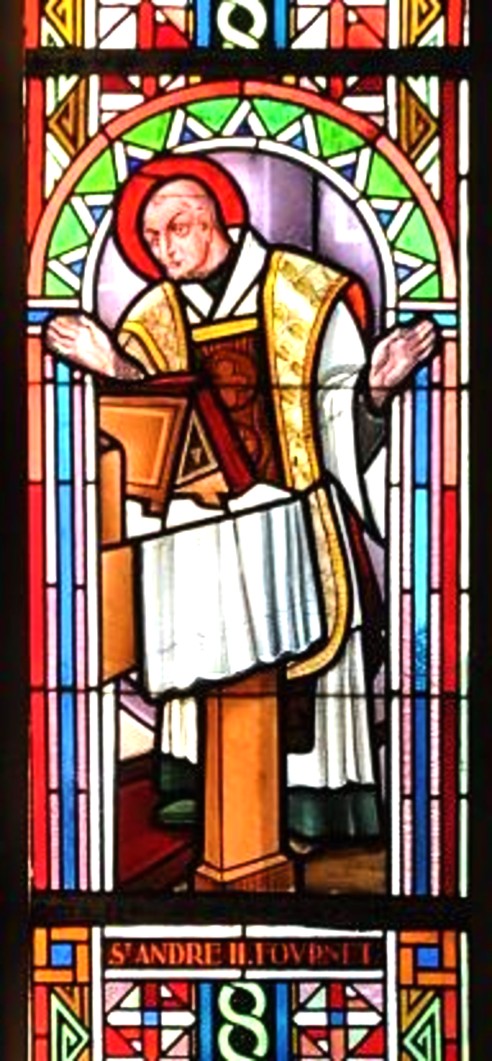
blessed virgin mary mother of god pray for us 4 may 2020

st tommaso da clero pray for us 4 may 2019