Posted in SAINT of the DAY

Saint of the Day – 26 April – St Richarius of Celles (c 560-645)

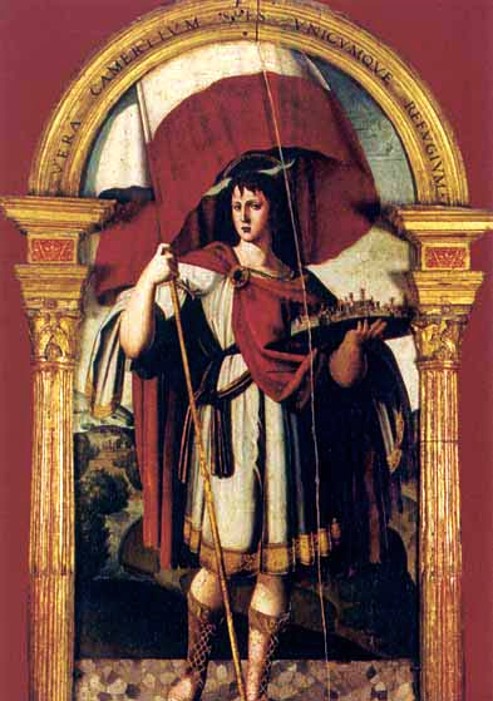
Saint of the Day – 26 April – St Richarius of Celles (c 560-645) Priest, founder of Monasteries, spiritual adviser, apostle of the poor, the sick and prisoners and finally, a Hermit – born at Centula, France and died on 26 April 645 at Foret-Moutier, France of natural causes.  In France he is known as St Riquier.   Patronages – the cities of Saint-Riquier, Centula and Saint-Riquier-en-Rivière in France.RICHARIUS-Z-CENTULE

Richarius was born a pagan in the late 6th century in the county of Ponthieu near Amiens in Picardy in the north-west of France.   According to the vita written by St Alcuin, Richarius gave shelter to two Welsh missionaries, Caidocus and Frechorius, who were treated with great hostility by the local people who blamed the strangers for crop failure.   Because he “welcomed God in the persons of the travellers… this was why he was granted God’s mercy.”

Richarius converted to Christianity under their influence.   After his conversion, he fasted on barley bread mixed with ashes and drank only water.   He was ordained a Priest and travelled to England, preaching the Gospel and curing the sick.   Travelling by donkey rather than horse, he read the psalter as he rode.

In 638, after some years in England, Richarius returned home and founded a Monastery in his hometown in Ponthieu that was named Centule (or Centula, alteration of Latin Centum Turres – hundred towers).   This monastery practised according to the Rule of Saint Columbanus.

A city developed around this Monastery, also named Centule.   In the Middle Ages it was renamed to Saint-Riquier.  Nowadays it has some 1200 inhabitants, who still refer to themselves as Centulois.   The Frankish king Dagobert I once came to visit the Monastery, and Richarius offered the king advice.   He was frank and clear in his speech to the king, speaking without fear or flattery and the king thereafter, became a benefactor of the Monastery.   Others also gave generously to Richarius’s Monastery and he was able to use the money to help lepers and the poor and to ransom prisoners held by England.450px-Saint-Riquier,_Richarius Abbaye_de_Saint-Riquier_32

Richarius eventually founded a second Monastery called Forest-Montier.   He made a shelter in the forest of Crécy, fifteen miles from his Monastery.   He lived there as a hermit with his disciple Sigobart.   On 26 April 645, he bid farewell to Sigobart and died.

His relics were first put in a coffin made of an oak trunk and then translated to the Abbey of Centula.   One hundred and fifty years later, Charlemagne built a golden shrine to enclose the relics and had the Saint-Riquier Gospels made for the shrine.   In 950 Count Arnulf I transferred the bones to Montreuil, then to the Abbey of Saint Bertin in today’s St-Omer.    In 980, Hugo Capet returned them to St-Riquier.   Above the tomb of Richarius, an Abbey was built, which was later named after him, as was the city.

515px-Saint-Riquier_23-09-2008_10-47-36 st richarius relics
Relics of Saint Richarius, kept in the Abbey Church of St Riquier

Aside from Saint-Riquier, the city of Saint-Riquier-en-Rivière in Normandy bears his name and there is one church in England St Ricarius Church, Aberford, a town the saint is supposed to have visited in 630.Sorrus_vitrail_fontaine_St_Riquier Richarius450px-Saint-Riquier,richarius_Abbaye_de_Saint-Riquier_29

Posted in MARIAN TITLES, SAINT of the DAY

The Third Sunday of Easter, Year A +2020 and Memorials of the Saints – 26 April

The Third Sunday of Easter, Year A +2020

Our Lady of Good Counsel (Memorial)
https://anastpaul.wordpress.com/2017/04/26/thought-for-the-day-26-april/

Bl Alda of Siena
St Antoninus of Rome
St Basileus of Amasea
St Clarence of Venice
St Claudius of Rome
St Pope Cletus (c 25-c 89) 3rd Bishop of Rome and Martyr
Biography:
https://anastpaul.wordpress.com/2017/04/26/saint-of-the-day-26-april-st-pope-cletus/
St Cyrinus of Rome
St Exuerantia of Troyes
Bl Gregory of Besians
Bl Juli Junyer Padern
St Lucidius of Verona
St Pope Marcellinus (Died 304) Martyr

St Paschasius Radbertus (785–865)
His life:
https://anastpaul.com/2019/04/26/saint-of-the-day-26-april-saint-paschasius-radbertus-785-865/
St Pelligrino of Foggia
St Peter of Braga
St Primitive of Gabi
St Rafael Arnáiz Barón (1911-1938)
About this memorable Saint:
https://anastpaul.wordpress.com/2018/04/26/saint-of-the-day-26-april-st-rafael-arnaiz-baron-o-c-s-o-1911-1938/

St Richarius of Celles (c 560-645)
Bl Stanislaw Kubista
St Trudpert of Munstertal
St William of Foggia
Bl Wladyslaw Goral

Posted in QUOTES of the SAINTS, QUOTES on CHARITY, QUOTES on GRACE, QUOTES on HUMAN DIGNITY, QUOTES on JUSTICE, QUOTES on LOVE, QUOTES on MERCY, QUOTES on PRAYER, QUOTES on SANCTITY, QUOTES on the CROSS of CHRIST, SAINT of the DAY, The INCARNATION

Quote/s of the Day – 25 April – St Pedro de San Jose de Betancur

Quote/s of the Day – 25 April – the Memorial St Pedro de San Jose de Betancur OFB (1626-1667) “St Francis of Assisi of the Americas” – “The Man Who was Made Charity”

Father Manuel Lobo, a Jesuit who was Brother Pedro de Betancur’s spiritual director for fifteen years, wrote:

“It was because of the great devotion he professed to the mystery of the birth of the Son of God, that, inspired from Heaven, he gave his establishment the name of Our Lady of Bethlehem.   Bethlehem means ‘house of bread’—here it was that the humble shepherds found the Son of God incarnate.
Likewise, in this new Bethlehem, the poor must find not only bread but the Lord God and, with bodily food, spiritual food for the nourishment of their souls.”

Father Manuel Lobo

fr manuel lobo - speaking of st pedro de betancur 25 april 2020

“Already in the land of his birth, as in every phase of his life, Brother Pedro was a deeply prayerful man, especially here where, at the hermitage of Calvary, he diligently sought God’s will at every moment.

Thus, he is an outstanding example for Christians today, whom he reminds, that training in holiness “calls for a Christian life distinguished above all in the art of prayer” (Novo millennio ineunte, 32).   I, therefore, renew my exhortation to all the Christian communities of Guatemala and other countries, to be authentic schools of prayer where all activity is centred on prayer.   An intensely devout life always bears abundant fruit.

the man who was made charity st pedro de betancur he is an outstanding - st john paul 25 april 2020

Brother Pedro modelled his spirituality in this way, particularly in contemplation of the mysteries of Bethlehem and of the Cross.   If, in the birth and childhood of Jesus, he immersed himself deeply in the fundamental event of the Incarnation of the Word — which led him to discover spontaneously, as it were, the face of God in man — then, in meditating on the Cross, he found the strength to practise mercy heroically with the lowliest and the most deprived.

he immersed himself - st john paul on st pedro de betancur 25 april 2020

… Pedro de Betancurt was distinguished precisely by the humble spirit and austere life with which he practised mercy.   The Apostle Paul’s recommendation went straight to his servant’s heart:  “Whatever your task, work heartily, as serving the Lord and not men” (Col 3:23).   Thus he was truly a brother to all, who lived in misfortune and gave himself with tenderness and immense love, to their salvation.   In this way, throughout his life, his deeds showed his dedication to the sick at the little hospital of Our Lady of Bethlehem, the cradle of the Bethlehemite Order.

he was truly a brother to all - st john paul on st pedro de betancur 25 april 2020

Brother Pedro is a legacy that cannot be lost.   He must be the subject of continuous gratitude;  he must be imitated with renewed purpose.   This legacy must inspire among Christians and among all citizens, the desire to transform the human community into a large family, where social, political and economic relations are worthy of man and within which, the dignity of the person is promoted through effective recognition of his inalienable rights.

I would like to conclude by recalling that devotion to the Most Blessed Virgin was always present in Brother Pedro’s life of piety and mercy.   May she also guide us so that, illuminated by the examples of ‘the man who was made charity,’ as Pedro de Betancur is known, we might come to her Son Jesus!”

St John Paul II (1920-2005)

Canonisation Homily
Guatemala City, Tuesday 30 July 2002

brother pedro - st john paul 25 april 2020

Posted in ONE Minute REFLECTION, QUOTES of the SAINTS, QUOTES on CONVERSION, QUOTES on DISCIPLESHIP, SAINT of the DAY, The APOSTLES & EVANGELISTS, The WORD

One Minute Reflection – 25 April – St Mark

One Minute Reflection – 25 April – Saturday of the Second Week of Easter, Readings: 1 Peter 5:5-14, Psalm 89(88):2-3,6-7,16-17, Mark 16:15-20 and the Memorial of St Mark the Evangelist and St Pedro de San Jose de Betancur OFB (1626-1667) “St Francis of Assisi of the Americas”

Jesus said to the Eleven, “go out to the whole world and the proclaim the gospel to all creation.”…Mark 16:15

REFLECTION“Lift up the hands which hang down and the feeble knees” (Heb 12:12; Is 35:3).   The chief points of Saint Mark’s history are these—first, that he was … taken with Saint Barnabus and Saint Paul on their first apostolic journey;  next, that after a short time he deserted them and returned to Jerusalem (Acts 15:38);  then, that after an interval, he was Saint Peter’s assistant at Rome (1 Pt 5:13) and composed his Gospel there principally from the accounts which he received from that Apostle;  lastly, that he was sent by Peter to Alexandria, in Egypt, …. here he proved himself, not merely an ordinary Christian but a most resolute and exact servant of God, founding and ruling that strictest Church of Alexandria … And the instrument of this change was, as it appears the influence of Saint Peter, a fit restorer of a timid and backsliding disciple.
The encouragement which we drive from these circumstances in St Mark’s history is, that the feeblest among us, may, through God’s grace become strong.
And the warning to be drawn from it is, to distrust ourselves and again, not to despise weak brethren, or to despair of them but to bear their burdens and help them forward if so be, we may restore them.” …
The history of Moses supplies us with an instance of a proud and rash spirit, tamed down to an extreme gentleness of deportment … “the meekest of men on earth “ (Nb 12:3).   St Mark’s history affords a specimen of the other and still rarer change, from timidity to boldness. … St Mark’s change, therefore, may be considered even more astonishing in its nature, than that of Moses.   “By faith,” he was “out of weakness made strong,” (cf. Heb 11:34).” … St John Henry Newman (1801-1890) PPS, vol 2, no 16mark 16 15 jesus said go out to the whole world - he proved himself - st john henry newman 25 april 2020

PRAYER – Almighty God, You chose the Evangelist St Mark and ennobled him with grace, to preach the Gospel.   Let his teaching so improve our lives and his prayers so support us, that we may walk faithfully in his footsteps, which are the footsteps of Christ our Lord.   We beg too for the intercession of St Pedro de San Jose de Betancur (1626-1667), Your faithful servant.   Through Jesus Christ our Lord, in union with the Holy Spirit, one God forever, amen.st-mark-pray-for-us-25-april-2018

st pedro of st joseph betancur pray for us 25 april 2020

Posted in franciscan OFM, SAINT of the DAY

Saint of the Day – 25 April – Saint Pedro de San Jose de Betancur OFB (1626-1667) c – “St Francis of Assisi of the Americas”

Saint of the Day – 25 April – Saint Pedro de San Jose de Betancur OFB (1626-1667) called “St Francis of Assisi of the Americas” and “Apostle of Guatemala,” Religious Tertiary of the Franciscan Order and Founder of the Order of Our Lady of Bethlehem “the Bethlemites” – which belongs to the Franciscan community,” Missionary, Apostle of Mercy, of the sick, of the poor, prisoners, Catechist – born as Pedro de Betancur y Gonzáles, on 16 May 1619 at Villaflores, Tenerife Island, Canary Islands, Spain and died on 25 April 1667 at Guatemala City, Guatemala of natural causes, just before his 48th birthday.   Patronages – Canary Islands, Guatemala, Central America, Catechists of Guatemala, Honorary Mayor of Municipalities in the south of Tenerife and Honorary Mayor of Antigua Guatemala, of the homeless.   Although his Feast is today, it is sometimes moved to the 24 April to accommodate the Feast of St Mark on the 25th.   In Tenerife his memory is celebrated on 29 June.   He is also known under the names of Santo Hermano Pedro ( Saint Brother Peter ) and San Pedro de Vilaflor ( Saint Peter of Vilaflor ) Peter de Betancurt.st pedro header

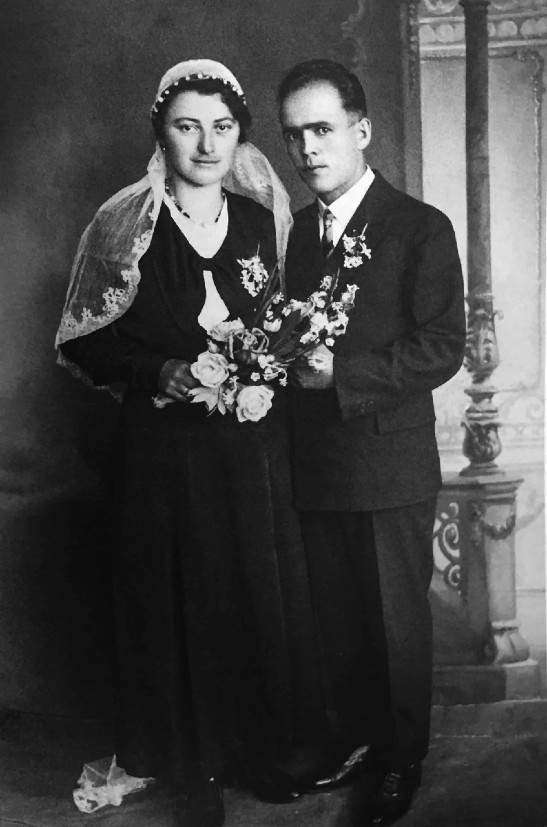
St Pedro de Betancur was born on 19 March 1626 at Chasna de Vilaflor on Tenerife in the Canary Islands.   He died on 25 April 1667 in Guatemala City, Guatemala.   His life, marked by a heroic holiness, is a shining testimony of faithfulness to the Gospel.   Pedro was a descendant of Juan de Betancurt, one of the Norman conquerors of the Canary Islands.   His immediate family, he was one of the five children, however, was very poor and he started work as the shepherd of the small family flock.   His parents raised him soundly in the faith and his contact with nature nurtured his deeply contemplative soul. As a young boy, Pedro learned to see God in everything around him.St_ Pedro de San Jose Betancur sml

When Pedro heard about the miserable living conditions of the people of the “West Indies” (present-day America), he felt called to take the Christian message to this land.   In 1650 when he was 23 years old, he left for Guatemala where a relative had already gone to become secretary of the Governor General.   His funds ran out in Havana so Pedro had to pay for his passage from that point, by working on a ship which docked at Honduras from where he walked to Guatemala City.

Pedro was now so poor that he had to stand in line for his daily bread at the Franciscan friary and it was here, that he met Friar Fernando Espino, a famous missionary, who befriended him and remained his lifelong counsellor.   He found Pedro a job in a local textile factory.   In 1653 Pedro realised his ambition to enter the local Jesuit college in the hope of becoming a priest.   He showed little aptitude for study, however, which led him to withdraw.   Here Providence once again helped him as he met Fr Manuel Lobo, SJ, who became his confessor.    San Pedro de San José Betancur-4After holding the position of Sacristan for a while in a church dedicated to the Blessed Virgin, he rented a house in a suburb of the city called Calvary and there taught reading and Catechism to poor children.
Friar Fernando invited Pedro to join the Franciscan Order as a lay brother but Pedro felt that God wanted him to remain in the world and in 1655, he joined the Third Order of St Francis.   From then on, Pedro dedicated his time to alleviating the sufferings of the less fortunate in the midst of inexpressible toil and difficulty.   He became the Apostle to African-American slaves, the Indios subjected to inhuman labour, the emigrants and abandoned children, with ever-expanding generosity and deep humility, in total abandonment to God’s will.   Inspired by the charity of Christ, he became everything to everyone  . In 1658 Pedro was given a hut which he converted into a hospital for the poor who had been discharged from the city hospital but still needed to convalesce.

It was called “Our Lady of Bethlehem.”   He also founded a hostel for the homeless, a school for poor and abandoned children and an oratory.   Pedro received help for these foundations from both the civil and religious authorities.   He begged for alms to endow the Masses celebrated by poor priests and also endowed Masses, to be celebrated in the early hours, so that the poor might not miss Mass.  st pedro betancurt

He had small chapels erected in the poor sectors, where instruction was also given to children.  Prisoners also excited Pedro’s compassion.    Every Thursday he begged for them through the city and visited them in their cells.  Every year, on 18 August, he would gather the children and sing the Seven Joys of the Franciscan Rosary in honour of the Blessed Mother, a custom still continued today in Guatemala.  The neglected souls in purgatory were also the objects of his solicitude.   He would travel the streets at night, ringing a bell and recommending these souls to be prayed for.st pedro reworked

He was joined by men and women, who became the Bethlemite Brothers and the Bethlemite Sisters and formulated a Rule that included the active apostolate of working with the poor, the sick and the less fortunate, based on a life rich in prayer, fasting and penance.   The Bethlemite Congregation was thus established.

Pedro died on 25 April 1667, at 47 years of age exhausted by labour and penance.   At the request of the Capuchin Friars he was buried in their church in Antigua, Guatemala, where, ever since, his remains are held in veneration.

1024px-2010.05.13.172409_Iglesia_San_Francisco_Antigua_Guatemala
The resting place of St Pedro in the Franciscan Church in Antigua,Guatemala
SP-teneriffa-vilaflor-kloster-altar
St Pedro’s Shrine in Tenerife, in the Sanctuary of the Santo Hermano Pedro, which is built on his birthplace in Vilaflor.
Throughout his life, the Child of Bethlehem was the focus of Pedro’s spiritual meditation.   He was always able to see in the poor the face of “the Child Jesus,” and to serve them devoutly.   He is known as the “St Francis of the Americas.” … Vatican.va

Pedro is considered the great evangelist of the Guatemala.   His dedication to the social problems of his time are comparable to that effected, centuries later, by St Mother Teresa in Calcutta, serving the most vulnerable and needy.

He is credited with introducing to the Americas, the Christmas Eve Novena ‘posadas’ procession, in which people representing Mary and Joseph, seek a night’s lodging from their neighbours.   The custom soon spread to Mexico and other Central American countries.st pedro 332

Pedro was known to work miracles also, including healing the sick.   Among other facets of his life, his defence of the Immaculate Conception stands out – two centuries before the declaration of the Dogma.   His great devotion to prayer for the Souls in Purgatory and the penance he practised, for the sins of the world.st pedro de san jose betancurt

St Pedro de Betancur was distinguished by the humble spirit and austere life with which he practised mercy.    He was Beatified on 22 June 1980, at St Peter’s Basilica, Vatican City by St Pope John Paul II and Canonised on 30 July 2002, in Guatemala City, Guatemala by St Pope John Paul II.

During his homily at the Canonisation St John Paul called Pedro the “first Tenerifean and Guatemalan saint” and he “… personifies “a heritage which must not be lost;  we should always be thankful for it and we should renew our resolve to imitate it”San Pedro de San José Betancur-5Awith st john paulst pedro betancurt headerGuatemala-394-Betancur-1-6-64_zpsbkeg0jv9 stamp

st pedro statue pic

Posted in SAINT of the DAY, The APOSTLES & EVANGELISTS

Feast of St Mark the Evangelist and Memorials of the Saints – 25 April

St Mark the Evangelist (Feast) Also known as John Mark (Born 1st century – Martyred 25 April 68 at Alexandria, Egypt) – The Winged Lion.
St Mark:
https://anastpaul.wordpress.com/2018/04/25/saint-of-the-day-25-april-st-mark-the-evangelist/

And:
https://anastpaul.wordpress.com/2017/04/25/saint-of-the-day-25-april-st-mark-the-evangelist-solemnity/

https://youtu.be/7yGskrUpw2U

St Agathopodes of Antioch
Bl Andrés Solá Molist
St Anianus of Alexandria
Bl Antonio Pérez Lários
St Callista of Syracuse
St Clarentius of Vienne
St Ermin of Lobbes
St Evodius of Syracuse
St Franca Visalta
St Giovanni Battista Piamarta FN (1841 – 1913)
Biography:
https://anastpaul.com/2019/04/25/saint-of-the-day-25-april-saint-giovanni-battista-piamarta-fn-1841-1913/

St Heribaldus of Auxerre
St Hermogenes of Syracuse
Bl José Trinidad Rangel y Montaño
St Kebius
St Macaille
St Macedonius
St Mario Borzaga
St Pasicrate of Mesia
St Paul Thoj Xyooj
St Pedro de San Jose Betancur/ St Peter of St Joseph de Betancurt OFB (1626-1667) “St Francis of Assisi of the Americas”

St Phaebadius of Agen
St Philo of Antioch
St Robert of Syracuse
Bl Robert Anderton
Stefano of Antioch
St Valenzio of Mesia
Bl William Marsden

Martyrs of Yeoju – 3 saints: Three Christian laymen martyred together in the apostolic vicariate of Korea. 25 April 1801 in Yeoju, Gyeonggi-do, South Korea
They were Beatified15 August 2014 by Pope Francis
• Ioannes Won Gyeong-do
• Marcellinus Choe Chang-ju
• Martinus Yi Jung-bae

Posted in CHRIST, the WAY,TRUTH,LIFE, CONFESSION/PENANCE, EUCHARISTIC Adoration, QUOTES of the SAINTS, QUOTES on DISCIPLESHIP, QUOTES on FAITH, QUOTES on LOVE of GOD, QUOTES on MISSION, QUOTES on REPENTANCE, QUOTES on SANCTITY, QUOTES on SIN, SAINT of the DAY, The HOLY EUCHARIST / The HOLY MASS

Quote/s of the Day – 24 April – Faith and love …

Quote/s of the Day – 24 April – Friday of the Second week of Easter and the Memorial of St Fidelis of Sigmaringen OFM.Cap (1577-1622) and St Mary Euphrasia Pelletier (1796-1868)

“O Catholic faith, how solid, how strong you are!
How deeply rooted, how firmly founded on a solid rock!
Heaven and earth will pass away but you can never pass away.
From the beginning the world opposed you
but you mightily triumphed over everything.
This is the victory that overcomes the world, our faith.
It has subjected powerful kings to the rule of Christ,
it has bound nations to His service.
What made the holy apostles and martyrs endure fierce agony
and bitter torments, except faith and especially faith in the Resurrection?
What is it that today makes true followers of Christ cast luxuries aside,
leave pleasures behind and endure difficulties and pain?
It is living faith that expresses itself through love.
It is this, that makes us put aside the goods of the present in the hope of future goods.
It is because of faith, that we exchange the present for the future.”

o-catholic-faith-st-fidelis - 24 april 2017 and 24 april 2020

“Woe to me if I should prove myself
but a half-hearted soldier
in the service of my thorn-crowned Captain.”

St Fidelis of Sigmaringen (1577-1622)

woe to me if i should prove myself - st fidelis of sigmaringen 24 april 2020

“Draw near to our Lord, thoroughly aware
of you own nothingness and you may hope
all things from His Goodness and Mercy.
Never forget that Jesus Christ is no less generous
in the Blessed Sacrament than He was
during His mortal life on earth.”

draw-near-to-our-lord-st-mary-euphrasia-24-april-2018 and 24 april 2020

“May your heart be an altar,
from which the bright flame,
of unending thanksgiving
ascends to heaven.”

may-your-heart-be-an-altar-st-mary-euphrasia-24-april-2018 and 24 april 2020

“It is human to fall
but angelic to rise again.”

St Mary Euphrasia Pelletier (1796-1868)

it is human to fall but angelic to rise again - st mary euphrasia pelletier 24 april 2020

“To the end of the longest life,
you are still a beginner.
What Christ asks of you
is not sinlessness
but diligence ….
You cannot be profitable to Him,
even with the longest life;
you can show faith
and love
in an hour!”

St John Henry Newman (1801-1890)

Parochial and Plain Sermons, v.4

to the end of the longest life you are still a beginner - st john henry newman 24 april 2020

Posted in GOUT, KNEE PROBLEMS, ARTHRITIS, etc, SAINT of the DAY

Saint of the Day – 24 April – Saint Mellitus of Canterbury (Died 624)

Saint of the Day – 24 April – Saint Mellitus of Canterbury (Died 624) Bishop of London and the Third Archbishop of Canterbury, Missionary – of noble birth it is believed he was born in Italy and died on 24 April 624 of natural causes. Patronage – against gout (he suffered from it and pilgrims to Canterbury who had it were directed to his tomb).st Mellitus HEADER

Mellitus arrived in England in 601, as part of the second wave of missionaries sent by Pope Gregory to support St Augustine (died c 604), the first Archbishop of Canterbury in his attempt to convert the Anglo-Saxons.   With him came St Justus and St Paulinus. Mellitus seems to have been the most senior of the party, since he is the addressee of the famous papal letter in which Gregory told the missionaries not to destroy the Anglo-Saxons’ pagan temples, customs and sacrifices but to replace them.

Thanks to Bede, we have a detailed account of Mellitus’ activities once he arrived in Kent and of the many trials and tribulations of the new church.

“In the year of our Lord 604, Augustine, Archbishop of Britain, consecrated two bishops, Mellitus and Justus.   Mellitus was appointed to preach in the province of the East Saxons, which is separated from Kent by the river Thames and bounded on the east by the sea.   Its capital is the city of London, which stands on the banks of the Thames and is a trading centre for many nations who visit it by land and sea.   At this time Sabert, Ethelbert’s nephew through his sister Ricula, ruled the province under the suzerainty of Ethelbert, who, as already stated, governed all the English peoples as far north as the Humber.   When this province too had received the faith through the preaching of Mellitus, King Ethelbert built a church dedicated to the holy Apostle Paul in the city of London, which he appointed as the episcopal see of Mellitus and his successors.”st mellitus sml

So far, so good for the new church, with Augustine established in Canterbury, Mellitus in London and Justus in Rochester.   The church founded for Mellitus has since been rebuilt many times over, of course but it still bears the name by which its first bishop knew it: St Paul’s.   St Augustine died in 604 and was buried at what is now St Augustine’s Abbey in Canterbury.

St Augustine's
The ruins of St Augustine’s today

“… The death of the Christian King Sabert of the East Saxons aggravated the upheaval; for when he departed for the heavenly kingdom he left three sons, all pagans, to inherit his earthly kingdom.   These were quick to profess idolatry, which they had pretended to abandon during the lifetime of their father and encouraged the people to return to the old gods.   It is told that when they saw Bishop Mellitus offering solemn Mass in church, they said with barbarous presumption:  “Why do you not offer us the white bread which you used to give to our father Saba (for so they used to call him), while you continue to give it to the people in church?”   The Bishop answered, “If you will be washed in the waters of salvation as your father was, you may share in the consecrated bread, as he did but, so long as you reject the water of life, you are quite unfit to receive the Bread of Life.”   They retorted, “We refuse to enter that font and see no need for it but we want to be strengthened with this bread.”   The bishop then carefully and repeatedly explained that this was forbidden and that no-one was admitted to receive the most holy communion without the most holy cleansing of baptism.   At last, they grew very angry, and said, “If you will not oblige us by granting such an easy request, you shall no longer remain in our kingdom.”   And they drove him into exile and ordered all his followers to leave their borders.

After his expulsion, Mellitus came to Kent to consult with his fellow-Bishops Laurence and Justus on the best course of action and, they decided, it would be better for all of them to return to their own country and serve God in freedom, rather than to remain impotently among heathens who had rejected the faith   Mellitus and Justus left first and settled in Gaul to await the outcome of events.   But the kings who had driven out the herald of truth did not remain long unpunished for their worship of demons, for they and their army fell in battle against the West Saxons.   Nevertheless, the fate of the instigators did not cause their people to abandon their evil practices, or to return to the simple faith and love to be found in Christ alone.”San_Mellito_di_Canterbury

This was a tipping-point for the new church and could have been the end of Augustine’s mission – but for a miraculous dream:

“On the very night before Laurence too was to follow Mellitus and Justus from Britain, he ordered his bed to be placed in the church of the blessed Apostles, Peter and Paul, of which we have spoken several times.   Here, after long and fervent prayers for the sadly afflicted church, he lay down and fell asleep.   At dead of night, blessed Peter, Prince of the Apostles, appeared to him and set about him for a long time with a heavy scourge, demanding with apostolic sternness why he was abandoning the flock entrusted to his care and to which of the shepherds, he would commit Christ’s sheep left among the wolves when he fled.   “Have you forgotten my example?” asked Peter. “For the sake of the little ones whom Christ entrusted to me as proof of his love, I suffered chains, blows, imprisonment and pain.   Finally, I endured death, the death of crucifixion, at the hands of unbelievers and enemies of Christ, so that at last I might be crowned with him.”   Deeply moved by the words and scourging of blessed Peter, Christ’s servant Laurence sought audience with the king [Eadbald] early next morning and removing his garment, showed him the marks of the lash.   The king was astounded and enquired who had dared to scourge so eminent a man and when he learned that it was for his own salvation that the Archbishop had suffered so severely, at the hands of Christ’s own Apostle, he was greatly alarmed.   He renounced idolatry, gave up his unlawful wife, accepted the Christian faith, and was baptised, henceforward promoting the welfare of the church with every means at his disposal.”

The king also sent to Gaul and recalled Mellitus and Justus, giving them free permission to return and set their churches in order, so, the year after they left, they returned. Justus came back to his own city of Rochester but the people of London preferred their own idolatrous priests and refused to accept Mellitus as Bishop.   And since the king’s authority in the realm was not so effective as that of his father, he was powerless to restore the Bishop to his see against the refusal and resistance of the pagans.
Bede makes it clear that the new church could do nothing without the support of the king and that where the king’s authority stopped, there was nothing the Bishops could do. Laurence died in 619 and was buried near Augustine and Mellitus, unable to return to London, succeeded him as Archbishop of Canterbury.  Bede tells us:

“Although Mellitus became crippled with the gout, his sound and ardent mind overcame his troublesome infirmity, ever reaching above earthly things to those that are heavenly in love and devotion.   Noble by birth, he was even nobler in mind.

I record one among many instances of his virtue.   One day the city of Canterbury was set on fire through carelessness and the spreading flames threatened to destroy it.   Water failed to extinguish the fir, and already a considerable area of the city was destroyed.   As the raging flames were sweeping rapidly towards his residence, the Bishop, trusting in the help of God where man’s help had failed, ordered himself to be carried into the path of its leaping and darting advance.   In the place where the flames were pressing most fiercel,y stood the church of the Four Crowned Martyrs.   Hither, the Bishop was borne by his attendants and here by his prayers this infirm man averted the danger which all the efforts of strong men had been powerless to check.   For the southerly wind, which had been spreading the flames throughout the city, suddenly veered to the north, thus saving the places that lay in their path, then it dropped altogether, so that the fires burned out and died.   Thus Mellitus, the man of God, afire with love for Him, because it had been his practice by constant prayers and teaching, to fend off storms of spiritual evil from himself and his people, was deservedly empowered to save them from material winds and flames.”st mellitus-icon

St Bede concludes:
“Having ruled the church for five years, Mellitus likewise departed to the heavenly kingdom in the reign of King Eadbald and was laid to rest with his predecessors in the same monastery church of the holy Apostle Peter on the twenty-fourth day of April, in the year of our Lord 624.”Archbishops tombs St Augustine'sDSC03472 Mellitus

That is, he was buried at what later became known as St Augustine’s Abbey, where his two predecessors and King Ethelbert were also buried.

These brick foundations above (protected by a modern canopy) are believed to be the only visible remains of Augustine’s original church.   This was where the tombs of Augustine, Laurence, Mellitus and Justus stood until the end of the eleventh century, when the Norman rebuilding of the monastery meant that their bodies had to be moved. By this time, all were regarded as the abbey’s saints (along with St Mildred of Thanet) and the translation of their bodies into the new Norman church in September 1091 was a splendid occasion, it was commemorated by a series of Lives of the early Archbishops, composed by Goscelin, which were recorded in several beautiful manuscripts.

Posted in MARIAN TITLES, SAINT of the DAY

Memorials of the Saints – 24 April

St Fidelis of Sigmaringen (1577-1622) Known as “The Poor Man’s Lawyer” (Optional Memorial)
Biography:
https://anastpaul.wordpress.com/2017/04/24/saint-of-the-day-24-april-st-fidelis-of-sigmaringen/

https://youtu.be/uAOqqMOsxyM

Our Lady of Bonaria:   Devotion to the Blessed Virgin Mary in the form of a statue of Mary and the Christ Child that was washed up at a Mercedarian monastery near Cagliari, Italy on 25 April 1370, apparently from a shipwreck the night before.   Legend says that the locals tried to open the crate it was in, but only one of the Mercedarian monks could get the it open.   Patron of Sardinia, Italy.Our Lady of Bonaria

Our Lady of Luján in Buenos Aires:  Lujan2Virgin of Luján, Patroness of Argentina, Uruguay and Paraguay.   16th-century icon of the Virgin Mary.   Tradition holds that a settler ordered the terracotta image of the Immaculate Conception in 1630 because he intended to create a shrine in her honour to help reinvigorate the Catholic faith in Santiago del Estero, his region.   After embarking from the port of Buenos Aires, the caravan carrying the image stopped at the residence of Don Rosendo Oramas, located in the present town of Zelaya.   When the caravan wanted to resume the journey, the oxen refused to move. Once the crate containing the image was removed, the animals started to move again. Given the evidence of a miracle, people believed the Virgin wished to remain there.   The image was venerated in a primitive chapel for 40 years.   Then the image was acquired by Ana de Matos and carried to Luján, where it currently resides.

St Alexander of Lyon
St Anthimos of Nicomedia
St Authairius of La Ferté
St Benedetto/Benedict Menni OH (1841-1914)
“A Heart Without Borders”
https://anastpaul.com/2019/04/24/saint-of-the-day-24-april-saint-benedict-menni-oh-1841-1914-a-heart-without-borders/
St Bova of Rheims
St Deodatus of Blois
St Diarmaid of Armagh
St Doda of Rheims
St Dyfnan of Anglesey
St Egbert of Rathemigisi
St Eusebius of Lydda
St Gregory of Elvira
St Honorius of Brescia
St Ivo of Huntingdonshire
St Leontius of Lydda
St Longinus of Lydda
St Mary Euphrasia Pelletier (1796-1868)
About St Mary Euphrasia:
https://anastpaul.wordpress.com/2018/04/24/saint-of-the-day-24-april-st-mary-euphrasia-pelletier-1796-1868/

St Mary of Cleophas
St Mary Salome
Mother of St James the Greater and St John, the Apostles of Christ.
St Mary has 2 Catholic universal Memorials – the 2nd is on 22 October – here is a post on that date:
https://anastpaul.com/2019/10/22/saint-of-the-day-22-october-saint-mary-salome-first-century-disciple-of-jesus/
St Mellitus of Canterbury (Died 624)
St Neon of Lydda
St Sabas the Goth of Rome
St Tiberio of Pinerolo
St William Firmatus

Mercedarian Martyrs of Paris: No info yet.

Posted in SAINT of the DAY

Saint of the Day – 23 April – Saint Gerard of Toul (c 935–994)

Saint of the Day – 23 April – Saint Gerard of Toul (c 935–994) Bishop of Toul, France, from 963- his death in 994 – born in c 935 at Cologne, Germany and died on 23 April 994 in Toul, France, of natural causes.   Patronages – Toul and Gérardmer, France.111 st Gérard_de_Toul_2_-_Peinture_de_la_Cathédrale_de_Toul

Gerard was born circa 935 in Cologne to the nobles Ingranne and Emma and was known for his piousness and he was educated in Cologne.   It is believed that he entered the priesthood after lightning struck his mother and killed her, which he believed to be divine judgement for his sins.   However, he had been a pious youth and it is thought that his sins could not have been very serious ones.   Upon his Ordination he became the Canon for the Cologne Cathedral.

It was at this time that Toul had great independence under its Bishops and Gerard himself, proved to be a successful and a respected leader, after he was appointed as the Bishop of Toul (3 March 963) and consecrated (the following 19 March in Trier).   The Archbishop of Cologne, St Bruno the Great, the brother of Otto I, Holy Roman Emperor, on behalf of Pope John XII – appointed him to the Toul Diocese.st gerard of toul

As Bishop, he established religious schools in the Diocese and he invited European scholars, to teach at the schools.   He rebuilt churches and the notable example to this is the Toul Cathedral which he himself consecrated in 981.   Gerard also founded a convent for nuns.   His great humility led him to avoid meeting with Emperor Otto II, who desired to have the Bishop close to him as an adviser.

640px-Cathédrale_de_Toul-Façade
Toul Cathedral

The “Vita Sancti Gerardi” states that he had the relics of both Saint Mansuetus and Saint Aprus – earlier Bishops of the Diocese – brought and placed in the church of Saint John the Baptist.   He is said to have come up with the use of “herb Gerald” (goutweed) which was used in the Middle Ages to treat gout.   Gerard also fought against secular political intervention in ecclesial matters and invited Monks from Ireland to come to his schools to teach.   His personal devotions were centred on the study of Sacred Scripture and the lives and teachings of the saints.

He died during the night on 23 April 994 and was interred in the Diocesan Cathedral of Toul in the choir loft.   His reputation for holiness was evident in his life and miracles at his tomb, were recorded after his death.   Pope Leo IX – a successor as Bishop of Toul and later Pope – Canonised him on 21 October 1050 in Rome.

576px-Cathédrale_de_Toul,_2009_(tombe_de_St_Gérard)
St Gerard’s Tomb at Toul Cathedral
Posted in SAINT of the DAY

Memorials of the Saints – 23 April

St Adalbert of Prague (c 957-997) Martyr (Optional Memorial)
About St Adalbert:
https://anastpaul.wordpress.com/2017/04/23/saint-of-the-day-23-april-st-adalbert-of-prague/

https://youtu.be/Dqz2ajDC8nY

St George (died c 303) Martyr (Optional Memorial)
St George!
https://anastpaul.wordpress.com/2018/04/23/saint-of-the-day-23-april-st-george-died-c-303-martyr/

St Achilleus of Vienne
Bl Adalbert III of Salzburg
St Felix of Vienne
St Fortunatus of Vienna
St George of San Giorio
St Gerard of Orchimont
St Gerard of Toul (c 935–994)
Bl Giles of Assisi
Bl Giles of Saumur
Bl Giorgio di Suelli
Bl Helen del Cavalanti
St Ibar of Meath
Bl Maria Gabriela Sagheddu
St Marolus of Milan
St Pusinna of Champagne
Bl Teresa Maria of the Cross (1846–1910)
Her Story:
https://anastpaul.com/2019/04/23/saint-of-the-day-23-april-blessed-teresa-maria-of-the-cross-ocd-1846-1910/

Martyrs of Africa: A group of Christians murdered for their faith in northern Africa. Little information has survived but their names. The ones we know are – Catulinus, Chorus, Faustinus, Felicis, Felix, Nabors, Plenus, Salunus, Saturninus, Silvius, Solutus, Theodora, Theodorus, Theon, Ursus, Valerius, Venustus, Victorinus, Victurus, Vitalis

Posted in franciscan OFM, SAINT of the DAY

Saint of the Day – 22 April – Blessed Francis of Fabriano OFM (1251-1322) Priest

Saint of the Day – 22 April – Blessed Francis of Fabriano OFM (1251-1322) Priest of the Order of the Friars Minor, Theologian, Spiritual Writer, renowned Preacher  – born as Francesco Venimbeni on 2 September 1251 in Fabriano, Ancona, Italy and died on 22 April 1322 of natural causes, aged 70.   Patronage – of Fabriano.Blessed-Francis-Venimbeni resized and coloured

Francis was born in the year 1251 in the city of Fabriano.   His father was a physician in that city and highly esteemed, not only because of his medical ability but still more, because of his love for the poor and afflicted and his sincere piety.   Daily, little Francis  recited the Divine Office and he was proficient in Latin before he was ten.   To the great joy of his parents, Francis gave evidence of the finest talents, an alert understanding, and a meek and devout temperament.

As a boy Blessed Francis of Fabriano had a very serious illness which brought him to death’s door.   Then the pious mother vowed to make a pilgrimage to the grave of St Francis of Assisi and at once, the illness took a turn for the better.

In Assisi the venerable Brother Angelo, one of the first associates of St Francis, saw the lovely boy and foretold to the mother, that he would later be his companion in the order. In consequence, Francis won the commitment and love of his parents more and more.

The boy’s desire for learning and his great progress were especially pleasing to his father.   When he had reached his seventeenth year, he experienced a strong impulse to consecrate himself to God in the Order of St Francis and his pious parents gave their consent.xFranciscan.gif.

In 1267, he completed his humanities and philosophical studies before Francis entered the Franciscan convent at Fabriano and there, under the excellent direction of Father Gratian, later minister general of the entire order, Blessed Francis of Fabriano was instructed in all the conventual virtues.  He applied himself to theological studies and purchased – with his father’s own funds – a handsome scale of books and other publications for the convent.  He loved to call it the “best workshop in the convent” and its catalogue contains works of the Church Fathers as well as mathematicians and preachers.   There was also works of theological and biblical commentators.   Mark of Lisbon OFM (died 1622) Franciscan Historian and the Bishop of Porto in Portugal, dubbed the friar as a “most learned man and renowned preacher.”franciscan-monks-painting-32

In order to gain the Portiuncula indulgence he went to Assisi and there, he heard from the trusted companion of St Francis, Brother Leo, who was still living, how this popular indulgence had been given and also how the Stigmata had been bestowed.   Concerning both these facts Francis later wrote a book, which still serves as evidence.

Saint-Francis-of-Assisi-panel-oil-Stigmata
The Stigmata of St Francis

Blessed Francis died on 22 April 1322 and had predicted the date of his own death.   He is buried in Fabriano.

The Beatification for the late friar was celebrated on 1 April 1755 after Pope Pius VI approved the late friar’s “cultus.”

franciscan saints
The Blessed Virgin Mary and Franciscan Saints
Posted in SAINT of the DAY

Memorials of the Saints – 22 April

St Abel McAedh
St Aceptismas of Hnaita
St Pope Agapitus I,
St Apelles of Smyrna
St Arwald
St Pope Caius I (Died 296)
Biography:
https://anastpaul.com/2019/04/22/saint-of-the-day-22-april-saint-pope-caius-i-died-613/

St Epipodius of Lyon
St Euflamia
Blessed Francis of Fabriano OFM (1251-1322)
St Helimenas
St Joseph of Persia
St Leo of Sens
St Leonidas of Alexandria
St Lucius of Laodicea
Blessed Maria Gabriella Sagheddu
St Opportuna of Montreuil
St Senorina
St Pope Soter (Died c 174)
St Pope Soter’s Life:
https://anastpaul.wordpress.com/2018/04/22/saint-of-the-day-st-pope-soter-died-c-174/

St Theodore of Sykeon (Died 613)
About St Theordore:
https://anastpaul.wordpress.com/2017/04/22/saint-of-the-day-22-april-st-theodore-of-sykeon/
St Virginio

Martyrs of Alexandria: No info yet

Martyrs of Persia: Bishops, priests, deacons and laity who were martyred in Persia and celebrated together. Several of them have their stories related in the Acta of Saints Abdon and Sennen.
• Abdiesus the Deacon
• Abrosimus
• Aceptismas of Hnaita
• Aithilahas of Persia
• Azadanes the Deacon
• Azades the Eunuch
• Bicor
• Chrysotelus of Persia
• Helimenas of Persia
• James of Persia
• Joseph of Persia
• Lucas of Persia
• Mareas
• Milles of Persia
• Mucius of Persia
• Parmenius of Persia
• Tarbula of Persia

Posted in DOCTORS of the Church, MARIAN QUOTES, QUOTES of the SAINTS, QUOTES on GRACE, QUOTES on REPENTANCE, QUOTES on SIN, QUOTES on WILL (Reasonable or Superior), SAINT of the DAY, The HOLY EUCHARIST / The HOLY MASS

Quote/s of the Day – 21 April – St Anselm

Quote/s of the Day – 21 April –  The Memorial of St Anselm ‬OSB (1033-1109)

Doctor of the Church

“God has promised pardon
to him that REPENTS
but He has NOT
promised repentance
to him that sins.”

god has promised pardon to him that repents but - st anselm 21 april 2020

“A single Mass offered
for oneself during life,
may be worth more,
than a thousand celebrated
for the same intention, after death.”

a single mass offered for oneself during life - st anselm - 21 april 2020

“Remove grace
and you have nothing,
whereby to be saved.
Remove free will
and you have nothing,
that could be saved.”

remove grace and you have nothing - st anselm 21 april 2020

“It is impossible to save one’s soul
without devotion to Mary
and without her protection.”

St Anselm (1033-1109)
Doctor of the Church

it is impossible to save one's soul with devotion to mary - st anselm 21 april 2020

Posted in DOCTORS of the Church, Our MORNING Offering, PRAYER WARRIORS, PRAYERS of the SAINTS, SAINT of the DAY

Our Morning Offering – 21 April – O Lord, Draw Near In Troubles and Perils

Our Morning Offering – 21 April – Tuesday of the Second week of Easter and the Memorial of St Anselm ‬OSB (1033-1109) Doctor of the Church

O Lord, Draw Near
In Troubles and Perils
By St Anselm ‬(1033-1109)
Doctor of the Church

O Lord,
we bring You
the troubles and perils
of peoples and nations,
the sighing of prisoners and captives,
the sorrows of the bereaved,
the needs of strangers,
the helplessness of the weak,
the tiredness of the weary,
the failing powers of the aged.
O Lord, draw near to each,
for the sake of Jesus Christ our Lord.
Amen

o lord draw near in troubles and perils - st anselm 21 april 2020

Posted in SAINT of the DAY

Saint of the Day – 21 April – Saint Román Adame Rosales (1859-1927) Priest and Martyr

Saint of the Day – 21 April – Saint Román Adame Rosales (1859-1927) Priest and Martyr of the Cristero War, St Roman had a great devotion to the Blessed Sacrament and the Blessed Virgin, Founder of the association of the “Daughters of Mary and Nocturnal Adoration,” Apostle of Catechesis and of the poor and the sick, spiritual guide, founder of many schools and Chapels – born on 27 February 1859 at Teocaltiche, Jalisco, Mexico and died by shooting by a firing squad on 21 April 1927 in a cemetery near Yahualican, Jalisco, Mexico.st roman rosales art

More than 80 years ago – between 1914 and 1934 – the Church in Mexico experienced one of the bloodiest religious persecutions in history, in which several religious gave their lives in defence of the Catholic faith.

Among these Mexican martyrs is Saint Román Adame Rosales -priest of deep humility and pastor for several years in Nochistlán, a municipality located in the Mexican state of Zacatecas, whom the Church remembers today in a special way.

The Priest was known for his catechesis, for his great devotion to the Adoration of the Blessed Sacrament – so much so, that part of his action in his parish ministry, was dedicated to the construction of chapels, so that the faithful could have the Blessed Sacrament close by.   He was also reverred for giving great efforts to the care of the sick and the education of the children, both secular and religious.

Fr Román is also remembered for his courage and perseverance in the face of any suffering or difficult situation – such as the harsh persecution that led him to remain hidden and continue to administer the sacraments clandestinely – he always said:  “Let everything be for God.”st roman rosales artwork 2

On 18 April 1927 he conducted a Lenten service at Rancho Veladones.   One of the people at the service betrayed him to a Colonel Quinones and Father Román was arrested the next day.   He was jailed at Mexticacan, Mexico, then forced to walk miles to the parish at Yhualica.   Quinones had commandeered the presbytery for his own use, he kept Fr Román tied to an outdoor post during the day, threw him into a cell at night and neglected to give him food or water.   Some local lay people offered to buy the priest’s freedom. Quinones demanded a $6,000 bribe, pocketed the money and ordered Father Román executed anyway.   On 21 April 1927 he was taken to an open grave, where he was executed by firing squad together with a soldier, Antonio Carrillo, who minutes before opposed the shooting of the priest.

The parish priest was Canonised by St Pope John Paul II on 21 May 2000, along with 25 other faithful, the majority priests, who like him gave their lives for Christ and the faith, their feast is celebrated together on 21 May.st roman adame rosales

Today the saint’s remains are venerated in Nochistlán and according to witnesses to the exhumation of his body, his heart was solidified and his Rosary was embedded in it.

relics of st roman rosales at the church of st michael the archangel in Yahualica
Relics of St Román at the Church of St Michael the Archangel

Almighty God, who gave to Your servant Saint Román Adame Rosales boldness
to confess the Name of our Saviour Jesus Christ before the rulers of this world and great love for the Blessed Sacrament and for the Blessed Virgin Mary,
grant, we pray,  that we may always be ready to give a reason for the hope that is in us
and to suffer gladly, for the sake of the Lord Jesus Christ,
who lives and reigns with You and the Holy Spirit, forever and ever.

AmenCatedral_de_la_Asunción_de_María_Santísima_(Guadalajara,_Jalisco)_-_St._Román_Adame_Rosales_statue

Posted in SAINT of the DAY

Memorials of the Saints – 21 April

St Anselm (of Canterbury) OSB (1033-1109) Doctor of the Church (Optional Memorial)
St Anselm!
https://anastpaul.com/2017/04/21/saint-of-the-day-21-april-st-anselm-of-canterbury-doctor-of-the-church/


St Abdechalas
St Anastasius I of Antioch
St Anastasius of Sinai
St Apollo of Nicomedia
St Apollonius the Apologist
St Arator of Alexandria
St Beuno Gasulsych
St Conrad of Parzham (1818-1894)
Biography:
https://anastpaul.com/2018/04/21/saint-of-the-day-21-april-st-conrad-of-parzham-ofm-cap-1818-1894/

St Crotates of Nicomedia
St Cyprian of Brescia
St Felix of Alexandria
St Fortunatus of Alexandria
St Frodulphus
St Isacius of Nicomedia
Bl John Saziari
St Maelrubba of Applecross
St Román Adame Rosales (1859-1927) Priest and Martyr of the Cristero War
St Silvius of Alexandria
St Simeon of Ctesiphon
St Vitalis of Alexandria
Bl Vitaliy Bayrak
Bl Wolbodó of Liège

Posted in BAPTISM, CATHOLIC-PRAYERS OF THE CHURCH, EASTER, ONE Minute REFLECTION, SAINT of the DAY, The WORD

One Minute Reflection – 20 April – By the power of the Spirit

One Minute Reflection – 20 April – Monday of the Second week of Easter, Readings: Acts 4:23-31, Psalm 2:1-9, John 3:1-8 and the Memorial of Blessed Chiara Bosatta (1858-1887)

Jesus answered, “Amen, amen, I say to you, no-one can enter the kingdom of God without being born of water and Spirit.” … John 3:5

REFLECTIONThe Roman Missal – Prayer for the blessing of baptismal water during the Easter Vigil

Father, You give us grace through sacramental signs,
which tell us of the wonders of Your unseen power.

In baptism we use Your gift of water,
which You have made a rich symbol
of the grace You give us in this sacrament.

At the very dawn of creation
Your Spirit breathed on the waters,
making them the wellspring of all holiness.

The waters of the great flood
You made a sign of the waters of baptism,
that make an end of sin and a new beginning of goodness.

Through the waters of the Red Sea
You led Israel out of slavery,
to be an image of God’s holy people,
set free from sin by baptism.

By the waters of the Jordan
Your Son was baptised by John
and anointed with the Spirit.

Your Son willed that water and blood
should flow from His side
as He hung upon the cross.

After His resurrection, He told his disciples,
‘Go out and teach all nations,
baptising them in the name of the Father
and of the Son and of the Holy Spirit.’

Father, look now with love upon Your Church,
and unseal for her the fountain of baptism.

By the power of the Spirit
give to the water of this font
the grace of Your Son.

You created humankind in Your own likeness:
cleanse us from sin in a new birth of innocence
by water and the Spirit.

We ask You, Father, with Your Son,
to send the Holy Spirit upon the waters of this font.

May all who are buried with Christ
in the death of baptism
rise also with Him to newness of life.john 3 5 nicodemus and jesus no-one can enter - prayer baptismal water roman missal 20 april 2020

PRAYER – Almighty God and Father, grant that Your faithful people who were buried with Your Son in baptism, may by His Resurrection and intercession at Your right hand, obtain for us eternal life.   Send Your Spirit upon Your adopted children and lead us in Your way.   Grant that by the intercession of Blessed Chiara Bosatta, our path may be straightened and glow with Your light.   Through Christ our Lord, with the Holy Spirit, God forever, amen.bl chiara bosatta pray for us 20 april 2020

Posted in SAINT of the DAY

Saint of the Day – 20 April – Blessed Chiara Bosatta DSMP (1858-1887)

Saint of the Day – 20 April – Blessed Chiara Bosatta DSMP (1858-1887) Virgin Religious, Mystic, Apostle of Charity, co-Founder alongside her sister and Saint Luigi Guanella  (1842-1915) – the Daughters of Saint Mary of Providence – born on 27 May 1858 in Pianello del Lario, Como, Italy as Dina Bosatta and died on 20 April 1887 in Pianello del Lario, Como, Italy of natural causes, aged 28.   Patronage – Daughters of Saint Mary of Providence.   Her body is incorrupt.
Blessed Chiara managed the new order of the Daughters of St Mary, in her hometown and the surrounding areas.   In her service to the poor she contracted tuberculosis which caused her death at such a young age, in 1887.bl chiara

Dina Bosatta was born in 1858 in Como to Alessandro Bosatta and Rosa Mazzocchi – her father worked as a silk manufacturer who died in 1861 when she was but a toddler.   She was the last of eleven siblings, 9 brothers and one sister, Marcellina.

She studied with the Daughters of Charity at the age of thirteen in 1871.   She decided to consecrate her life to God and made the decision to become a nun and so entered into the period of novitiate with the Canossians from 1871 to 1878.   However, after a while, she descerned that their charism was not that, of which she felt she was being called and so left that congregation to pursue her vocation elsewhere.   Despite this, she was enthralled with their charism and admired their spirit and strong dedication to their rules of life.

Dina returned to her home and joined with her sister Marcellina and the two joined the Daughters of Mary that Father Carlo Copponi had established.    Marcellina would later become the superior of the order.   The pair also worked at a hospice to tend to neglected children and older people as well as teaching children.19-B-bl chiara bosatta-web-768x1024

The sisters then co-ordinated their efforts in establishing a new religious congregation – the Daughters of Saint Mary of Providence – together with Saint Luigi Guanella.   It was at this point that she took the religious name of “Chiara.”    She was professed as a nun on 27 October 1878.

Tending to the poor bought unwanted consequences for Bosatta when she contracted tuberculosis – this disease would the the cause of her very young death.   She initially went back to her home town in an attempt to stall the illness by a change of climate but she died, not long after, on 20 April 1887.   Her Shrine rests at the Shrine of the Sacred Heart in Como.

Blessed Chiara was Beatified after the approval of a miracle by St Pope John Paul on 21 April 1991 at the Vatican.at-chiara's-deathbed

From the Sisters of the Daughters of St Mary of Providence:

“There is no doubt, that Blessed Chiara contributed with her prayers from heaven, to ensure that Fr Guanella was declared a Saint.   We know that Blessed Chiara had a crucial influence on the Founder’s journey to sainthood.   Still today, those who kneel before their urns at the Shrine of the Sacred Heart in Como, cannot but receive that holy incentive, to integrate hard-working charity, with the contemplation of the sources, from which the grace of our activity comes.
May the memory of Sr Chiara’s Beatification revive in all of us, gratitude to the Lord for our holy origins.   Faithfulness to living their spirit and putting it into practice will increase our faith and love.
Walking towards holiness together, as Fr Guanella, Sr Chiara and all the good people of God did, will reinforce communion and collaboration among the people of God.
We also want to renew our commitment of spreading the devotion to Blessed Chiara and to ask our Blessed for her intercession, so that her holiness may be proposed to the entire Christian world with her Canonisation.
St Luigi Guanella loved Sr Chiara.
In the beginning he was puzzled by her religious life-style.   He had an inspiration that Sr Chiara was a mystic and was, therefore, moved to intensely study the works of St Theresa of Avila.   From then on, he understood that Sr Chiara was a saint and a mystic. She was the “little flower” of Guanellian spirituality.
Fr Guanella wrote a biography of Blessed Chiara.   It is available at the St Louis Centre upon request.”BL CHIARA BOSSATTA

St Luigi’s Biography here:  https://anastpaul.com/2018/10/24/saint-of-the-day-24-october-st-luigi-guanella-1842-1915-servant-of-charity/

Prayer for the Intercession of Blessed Chiara Bosatta

O Jesus, Saviour of the lowly,
who made Blessed Chiara Bosatta shine
through the spirit of sacrifice,
by rendering her an untiring apostle of Your Gospel among the poor.
Teach us her total abandonment to Divine Providence,
her love of prayer,
her patience in suffering
and her spirit of dedication to the most needy.
Grant us, through her intercession,
the grace ………………………
that we ask You trustingly,
through Christ our Lord.
Amen!
Our Father … Hail Mary … Glory Be … Blessed Chiara, intercede for us!053 bl chiara bosatto ComoSCuoreInside

Posted in SAINT of the DAY

Memorials of the Saints – 20 April

St Agnes of Montepulciano OP (1268-1317)
About St Agnes:
https://anastpaul.wordpress.com/2017/04/20/saint-of-the-day-20-april-st-agnes-of-montepulciano/
St Pope Anicetus (Died c 168)
His Life:
https://anastpaul.com/2019/04/20/saint-of-the-day-20-april-st-pope-anicetus-died-c-20-april-168/

Bl Antony Page
St Caedwalla of Wessex
Bl Catwallon
Blessed Chiara Bosatta DSMP (1858-1887)
St Domninus of Digne
Bl Francis Page
Bl Gerald of Salles
Bl Harduin
Bl Hildegun of Schönau
St Hugh of Anzy-le-Duc
Bl James Bell
Bl John Finch
Bl John of Grace-Dieu
St Marcellinus – Bishop of Embrun (born in North Africa- died 374)
Biography:
https://anastpaul.wordpress.com/2018/04/20/saint-of-the-day-20-april-st-marcellinus-of-embrun-born-in-north-africa-died-374/
St Marcian of Auxerre
St Margaret of Amelia
Bl Maurice MacKenraghty
St Michel Coquelet
Bl Oda of Rivreulle
Bl Richard Sergeant
St Sara of Antioch
St Secundinus of Córdoba
St Servilian
Bl Simon Rinalducci
St Sulpicius
St Theodore Trichinas
St Theotimus of Tomi
St Vincent of Digne
St Wiho of Osnabrück
Bl William Thomson

Posted in SAINT of the DAY

Saint of the Day – 19 April – Blessed James Duckett (Died 1602) Layman Martyr

Saint of the Day – 19 April – Blessed James Duckett (Died 1602) Layman Martyr, Bookseller and Publisher – born at Gilfortrigs, Skelsmergh, Westmorland, England and died by hanging on 19 April 1602 at Tyburn, London, England. Patronages – booksellers and publishers.   Blessed James is also celebrated with the 40 Martyrs of England and Wales on 4 May.header for forty martyrs of england and wales banner

James became a bookseller and publisher in London.   Brought up a Protestant, he was converted by a book, a friend of his, Peter Mauson lent him The Foundation of the Catholic Religion while Duckett was serving his apprenticeship in London.   After reading it he became convinced of the truths of the faith and he decided to become a Catholic.   Earlier he had twice been imprisoned in Bridewell for not attending the Protestant services.   Both times, his employer interceded arranged for him to be freed, presumably paying the required bail.    However, it seems his employer was concerned for his own safety and requested James to find a job elsewhere.

He was received into the Catholic Church by an old priest named Weekes who was imprisoned in the Gatehouse at Westminster.   Two or three years later, about 1590, he married a Catholic widow but out of his twelve years of married life, nine were spent in prison for his new faith.    Their son later became a Carthusian monk and recorded much of what we know about his father.

fortyEnglishMartyrs-e1409667175548 tyburn
Tyburn – Martyrs of England and Wales including three Carthusians

He was active in propagating Catholic literature.   He was finally betrayed by Peter Bullock, a bookbinder, who in order to obtain his own release from prison, betrayed James.    Duckett’s house was searched on 4 March 1601 and he was arrested on a charge of having 25 copies of Fr Southwell’s [the Martyr St Robert Southwell (1561-1595)] books on his premises.   For this he was at once thrown into Newgate.

At the trial, Bullock testified that he had bound various Catholic books for Duckett, who admitted this but denied other false accusations in a self-possessed manner.   The jury found him not guilty but the judge, Sir John Popham, the Lord Chief Justice, browbeat the jury, which reversed its verdict and Duckett was found guilty of felony.   Despite the betrayal of Duckett, Bullock was taken to his death at Tyburn in the same cart as Duckett on 19 April 1601.martyrs of england and wales book cover

James Duckett’s son was the John Duckett who later became Prior of the English Carthusians at Nieuwpoort in Flanders.   He related that on the way to Tyburn his father was handed a cup of wine, which he drank and told his wife to drink to Peter Bullock and to forgive him.   When she declined, he chided her gently until she did.   On arrival at Tyburn Tree, James kissed and embraced Bullock, beseeching him to die in the Catholic faith, without success.execution-at-tyburn1

At the same trial, three priests, Thomas Tichborne, Robert Watkinson, and Francis Page, were condemned to death.   For some reason their execution was remanded to the following day.

James Duckett was  Beatified by Pope Pius XI on 15 December 1929.martyrs of england and wales lawrence lew

The Triptych above, with the following quote is from Fr Lawrence Lew OP:

“A tryptich in St James’ church, Spanish Place in London showing some of the martyrs who died for the Catholic faith from 1535 – 1680 and whose memory is kept collectively on 4 May.   In the centre is the triple gallows known as the ‘Tyburn Tree’.

Below is a citation from the Tudor Stuff blog.

From 1535 to 1681 Tyburn was transformed into a place of cruelty, torture and execution for men and women because of their religious belief.   It had become an act of high treason to be a Catholic priest, or to associate with Catholic priests  . It was also legal treason to refuse to accept the monarch as “the only Supreme Head on earth of the Church of England”, in the reign of King Henry VIII, from 1534 onwards under Elizabeth I, Charles I and Charles II.

Tyburn had been a place of public spectacle where crowds gathered for entertainment. The martyrs, however, brought a new spirit into the barbarities and butchery of Tyburn. This new spirit was one of joy, spontaneous humour and wholehearted forgiveness of those who had brought them to their life’s end at Tyburn.   This spirit flowed over into the crowds around the Tyburn Gallows.

“Thus”, write the nuns at Tyburn Convent, dedicated to those who died, “the holy Martyrs transformed Tyburn’s Deadly Nevergreen Tree into the Tree of Life and the Gate of Heaven, which it remains to this very day”.”

Posted in DIVINE Mercy, Goodness, Patience, EASTER, SAINT of the DAY

Low Sunday the Octave Day of Easter, the 20th Divine Mercy Sunday and Memorials of the Saints – 19 April

Low Sunday the Octave Day of Easter and the Twentieth Divine Mercy Sunday

St Alphege of Winchester (c 953–1012) ArchBishop and Martyr

About St Alphege:
https://anastpaul.wordpress.com/2017/04/19/saint-of-the-day-19-april-st-alphege/

St Apollonius the Priest
St Aristonicus of Melitene
St Crescentius of Florence
St Expeditus (Died 303)
His Story:

Saint of the Day – 19 April – St Expeditus (Died 303) Martyr


St Gaius of Melitene
St Galata of Melitene
St George of Antioch
St Gerold of Saxony
Blessed James Duckett (Died 1602) Layman Martyr
Bl Jaume Llach-Candell
St Pope Leo IX (1002-1054)
Biography:
https://anastpaul.wordpress.com/2018/04/19/saint-of-the-day-19-april-st-pope-leo-ix-1002-1954/

St Martha of Persia
Bl Ramon Llach-Candell
St Rufus of Melitene
St Vincent of Collioure

Martyrs of Carthage – 17 saints: A group of Christians martyred in the persecutions of Decius. We know little more than the names – Aristo, Basso, Credula, Donato, Ereda, Eremio, Fermo, Fortunata, Fortunio, Frutto, Julia, Mappalicus, Martial, Paul, Venusto, Victorinus and Victor. Died in the year 250 in prison in Carthage, North Africa (modern Tunis, Tunisia).

Posted in SAINT of the DAY

Saint of the Day – 18 April – Blessed Luca Passi (1789-1866) “Apostolic Missionary”

Saint of the Day – 18 April – Blessed Luca Passi (1789-1866) Priest, Founder of the Teaching Sisters of Saint Dorothy, Apostle of the poor and of education of the young unde the Papal title of “Apostolic Missionary” – born on 22 January 1789 in Bergamo, Italy and died on 18 April 1866 in Venice, Italy of natural causes, aged 77.   Patronage – the Teaching Sisters of Saint Dorothy.   Following the example of their paternal uncle, two of his brothers became Priests and Passi himself, moved to Venice in order to dedicate himself to both his preaching and educational missions.bl luca-passi

Luca was born in 1789 in Bergamo as the first of eleven children to the nobles Enrico Passi (a teacher) and Caterina Corner.   Two brothers were the priests Giuseppe Celio and Marco.   His paternal uncle was the priest Marco Celio Passi.   During his childhood, the volatile political circumstances, forced the family to relocate to a villa in Calcinate.

In 1810 he became the Director of the Confraternity of the Blessed Sacrament at Calcinate and in 1811 became the Director of the Confraternity of the Christian Doctrine.

He began his studies for the priesthood in 1811 and was ordained as such on 13 March 1813.

His brother Marco aided him in founding the Pious Society of Saint Dorothy in 1815 for the education of both children and adolescents.   This was an establishment that Pope Pius VII praised and who also encouraged that the organisation expand and spread to other towns in the region.   In 1838 he founded the Teaching Sisters of Saint Dorothy. Pope Gregory XVI granted him the title of “Apostolic Missionary.”

Blessed Luca died on 18 April 1866.   He is buried at the Motherhouse of the Institute of the Teaching Sisters of Saint Dorothy in Venice.

Pope Benedict XVI approved a miracle on 28 June 2012 and confirmed that Fr Luca could now be Beatified.   Cardinal Angelo Amato Beatified him on 13 April 2013 on behalf of Pope Francis at the Basilica of San Marco, Venice.

During the homily of the Beatification Mass of Fr Luca Passi, Cardinal Angelo Amato, prefect for the Congregation for the Causes of Saints, described the now Blessed Passi, as “a great witness to God for the young and the poor.”

Posted in SAINT of the DAY

Saturday of the Easter Octave +2020 and Memorials of the Saints – 18 April

Saturday of the Easter Octave +2020

St Agia of Hainault
St Anthia of Illyria
St Athanasia of Aegina
St Bitheus
St Calocerus of Brescia
St Cogitosus
St Corebus
St Eleuterius of Illyria
St Elpidius of Melitene
St Eusebius of Fano
St Galdinus of Milan
St Gebuinus of Lyons
St Genocus
St Hermogenes of Melitene
Bl Idesbald of Dunes
Bl James Oldo OFS (1364-1404)
Biography:
https://anastpaul.com/2019/04/18/saint-of-the-day-18-april-blessed-james-oldo-ofs-1364-1404/

https://youtu.be/YPw707ej6wg

Bl Joseph Moreau
St Laserian of Leighlin
Bl Louis Leroy
Blessed Luca Passi (1789-1866)
St Perfecto of Córdoba
St Pusicio
Bl Roman Archutowski
Bl Savina Petrilli
St Ursmar of Lobbes
St Wigbert of Augsburg

Posted in SAINT of the DAY

Saint of the Day – 17 April – Saint Donan of Eigg (Died 617) Priest and Martyr

Saint of the Day – 17 April – Saint Donan of Eigg (Died 617) Priest and Martyr, Monk, Missionary – Patronages – the Island of Eigg, an island in the Inner Hebrides where he was Martyred. He is also known as Dounan, Donnan and Donnanus.st donan sml

Saint Donan, also known as Saint Donnán of Eigg, lived from about 550 to 17 April 617. He was probably Irish in origin and probably of noble birth.  He is known for his efforts to introduce Christianity to the Picts of north west Scotland.   Very little remains of him in the written record but, he is remembered in the quite remarkable number of places named after him, across large parts of modern Scotland.   The only part of his life to have made it into the annals in any detail was his death, when he and 52 of his monks were murdered at their Monastery on the Isle of Eigg.

stdonan-450 eigg
The Isle of Eigg

Donan’s birth date of 550 is a supposition, deriving largely from a comment in a document that he was contemporary of but younger than, St Columba.   He seems to have crossed to south western Scotland early in his adult life, possibly in company with a number of followers.   His progress can then be traced by a series of places named “Kildonan”, “Kildonnan”, “Chapel Donan” and “Eilean Donan” stretching up the western seaboard of Scotland from Ayrshire and the Isle of Arran via the Western Isles to Sutherland.   Additionally, it is said, that at least eleven churches in Scotland are dedicated to St Donan.St-Donan1

It is said that Donan went to visit St Columbanus, asking him to be his anamchara or soul-friend, a spiritual director and that Columbanus refused.   This may have been because Donan was welcomed by the Picts while Columba may have had his difficulties with them.   But another story records that Columba said:   “I will not be anamchara to one, who will inherit red martyrdom along with your people.”st Donnan

It is interesting, that in the centuries during which Celtic missionaries were spreading the Christian faith across Scotland, there are very few examples of any of them coming to any harm, from those whose faiths they were trying to replace.   St Donan is the most notable exception.   He and his followers had established a Monastery on the east side of the Isle of Eigg, facing the Scottish mainland.   It is said that Donan got into a dispute with a local noblewoman over the grazing of sheep on the island.   It seems she chose to resolve the dispute by commissioning a raiding party to remove the Monks from the island in the most permanent and brutal way possible.   On 17 April 617 the raiding party arrived.   They allowed Donan to complete the liturgy before herding him and all his fifty two monks into the refectory and setting it on fire, or beheaded, depending on the source.

St Donan was Canonised on 11 July 1898 by Pope Leo XIII (cultus confirmed).

Posted in SAINT of the DAY

Friday in the Easter Octave +2020 and Memorials of the Saints – 17 April

Friday in the Easter Octave +2020

Bl Andrés Hibernón Real OFM (1534-1602)
Biography:
https://anastpaul.wordpress.com/2018/04/17/saint-of-the-day-17-april-blessed-andres-hibernon-real-o-f-m-1534-1602/

St Agia of Hainault
St Anthia of Illyria
St Athanasia of Aegina
St Bitheus
St Calocerus of Brescia
St Cogitosus
St Corebus
St Donan of Eigg (Died 617) Priest and Martyr
St Eleuterius of Illyria
St Elpidius of Melitene
St Eusebius of Fano
St Galdinus of Milan
St Gebuinus of Lyons
St Genocus
St Hermogenes of Melitene
Bl Idesbald of Dunes
Bl James Oldo
Bl Joseph Moreau
St Laserian of Leighlin
Bl Louis Leroy
Bl Luca Passi
St Perfecto of Córdoba
St Pusicio
St Robert de Turlande/Chaise-Dieu OSB (c 1000-1067)
His Life:
https://anastpaul.com/2019/04/17/saint-of-the-day-17-april-st-robert-de-chaise-dieu-osb-c-1000-1067/
Bl Roman Archutowski
Bl Savina Petrilli
St Stephen Harding O.Cist. (1050-1104) Co-Founder of the Cistercian Order
About St Stephen:
https://anastpaul.wordpress.com/2017/04/17/saint-of-the-day-17-april-st-stephen-harding/
St Ursmar of Lobbes
St Wigbert of Augsburg

Posted in EASTER, FATHERS of the Church, QUOTES of the SAINTS, QUOTES on HELL, QUOTES on REPENTANCE, QUOTES on SIN, SAINT of the DAY, The RESURRECTION, The WORD

Quote/s of the Day – 16 April – Repentance

Quote/s of the Day – 16 April – Easter Thursday, Readings: Acts 3:11-26, Psalm 8:2, 5-9, Luke 24:35-48 and the Memorial of St Benedict Joseph Labre (1748-1783)

“… And said to them,
“Thus it is written, that the Christ should suffer
and on the third day rise from the dead 
and repentance for the forgiveness of sins
should be proclaimed in his name to all nations…”

Luke 24:46-47

luke 24 46-47 thus it is written that the christ - 15 april 2020 easter thursday

“Repentance lifts a man up. 
Mourning knocks at heaven’s gate.
Holy humility opens it.”

St John Climacus (579-649)

“The Ladder of Divine Ascent” (Step 25)

repentance lifts a man up. mourning knocks at heaven's gate - st john climacus 30 march 2020

“Meditate on the horrors of Hell,
which will last for eternity
because of one easily-committed mortal sin.
Try hard to be among the few who are chosen.
Think of the eternal flames of Hell
and how few there are that are saved.”

meditate on the horrors of hell - st benedict joseph labre 16 april 2020

“The want of proper examination,
true contrition and a firm purpose of amendment,
is the cause of bad confessions
and of the ruin of souls.”

St Benedict Joseph Labre (1748-1783)
“The Beggar of Perpetual Adoration”

the want of proper examination, true contrition - st benedict joseph labre 16 april 2020

“The saints understood how great
an outrage sin is against God.
Some of them passed their lives
in weeping for their sins.
St Peter wept all his life;
he was still weeping at his death.
St Bernard used to say,
‘Lord! Lord! it is I who fastened You to the Cross!’”

St John Vianney (1786-1859)

the-saints-understood-st-john-vianney-29-jan-2018 and adpated - 16 april 2020

Posted in SAINT of the DAY

Saint of the Day – 16 April – Saint Fructuosus of Braga (Died 665)

Saint of the Day – 16 April – Saint Fructuosus of Braga (Died 665) Archbishop of Braga, Spain, Hermit, Confessor, Monk, Abbot, a great Founder of Monasteries – born in the early 7th century in Spain and died on 16 April 665 of natural causes.  Patronage – Braga.São_Frutuoso_-_Galeria_dos_Arcebispos_de_Braga

He was the son of a Duke in the region of Bierzo and at a young age accompanied his father on official trips over his estates.   After the death of his parents, Fructuosus first sought instruction from the Bishop of Palencia, studying theology in the Seminary. Fructuosus then sold his estates and distributed most of the proceeds among the poor but saved a portion to establish Monasteries.   He initially retired as a hermit to a desert in Galicia.   Many pupils gathered around him and thus originated the Monastery of Complutum in the El Bierzo region, over which he himself at first presided, later, he appointed an Abbot and again retired into the desert.   In the course of time, he founded nine other Monasteries, including one for women under the Abbess Benedicta.

We have two extant rules composed by Fructuosus – one called Complutum, the other the common rule.   Whole families embraced his rule in community refuges, which he established based on the Rule of Saint Benedict.

His relationship with the kings of his time was not always happy one.   In 652, he wrote,what was apparently a second letter, to King Recceswinth asking for the release of political prisoners held from the reign of King Chintila, some of whom had languished in prison until the reign of King Erwig.   (I can’t resist posting this image I found of King Chintila, at least it is helpful to establish the times in your minds.)

500px-Chintila,_rey_de_los_Visigodos_(Museo_del_Prado)
King Chintila

He was later present at the Eighth Council of Toledo in 653, in place of Bishop Riccimer of Dumio.   It was at this Council that Fructuosus raised the issue of political prisoners once again.   After the death of Bishop Riccimer, Fructuosus succeeded him in the See of Dumio in 654.   In 656, he undertook to plan for a voyage to the Levant.   However, according to the new laws enacted by King Chindasvinth, it was illegal to leave the kingdom without royal permission.   One of the few disciples privy to his plans had given him up to authorities and Fructuosus was subsequently arrested and imprisoned but soon released.st fructuoso de braga unknown

Bishop Fructuosus attended the Tenth Council of Toledo in December 656.   The last will and testament of the recently deceased bishop Riccimer, was disputed by those who saw his freeing of slaves and distribution of church rents to the poor was responsible for the subsequent impoverishment of that see.   The Council agreed that, by not providing compensation, Bishop Riccimer had obviated his duty and the acts of his will were rendered invalid.   They gave the job of correcting the problem to Fructuosus and commanded him to take moderation in the case of the slaves.   At the same Council, Archbishop Potamius of Braga was remanded to a monastery for licentiousness and his archdiocese was given to St Fructuosus on 1 December 656, thus he became an Archbishop.

Fructuosus dressed so poorly as to be mistaken for a slave and he even received a beating from a peasant, from which he was only saved by a miracle (according to the monastic chroniclers).   His Vita is one of the chief sources for writing the history of his age.

His innocence and virtue were no security from the shafts of envy but he overcame injuries by meekness and patience and died, laid on ashes before the altar, as he desired, on the 16th of April, 665.   His relics, which for a time were in the Cathedral of Braga, were later transferred to the Shrine of Santiago de Compostela in the year 1102.   They were returned to their original location in 1966.  Fructuosus is depicted with a stag, which was devoted to him, because he had been saved it from hunters.   Below is the story from “The Little Bollandists” by Monsignor Paul Guérin, 1882:

One day he was going through a forest, when a roe, pursued by hunters, took refuge under his cloak.     The Saint took the animal under his protection and brought it to the monastery, the grateful beast never left it’s liberator,  it followed him about all day, slept at his feet at night and never ceased to cry when he was absent.   More than once, he had it taken back to the forest but it always found the track of its deliverer’s footprints.   At last it was one day killed by a young man who disliked monks.   Fructuosus was absent for a few days and, on his return, he was surprised not to see his roe run to meet him and when he heard that it was dead, he was overcome with grief, his knees trembled and he prostrated himself on the floor of the church.   It is not related whether this was to ask God to punish the cruel man but the latter soon fell ill and sent for the Father to come to his assistance.   Fructuosus took the revenge of a noble Visigoth and Christian.   He cured the murderer of his roe and restored him to health both of soul and body.   It is related of him that, wishing to escape the homage of the people, he retired into the depth of the forest and that the jays which he had brought up in the Monastery, sought him out and betrayed the place of his retreat by the joyous chattering with which they greeted him. Fructuosus is painted with a roe and jays as his emblems.

475px-Sao_Frutuoso

Posted in SAINT of the DAY

Thursday of the Easter Octave +2020 and Memorials of the Saints -16 April 2020

Thursday of the Easter Octave +2020

Bl Arcangelo Canetoli
St Benedict Joseph Labre – Known as the Beggar of Perpetual Adoration (1748-1783)
Dearest St Benedict Joseph:
https://anastpaul.wordpress.com/2017/04/16/saint-of-the-day-16-april-st-benedict-joseph-labre/

https://youtu.be/t6hjZxNRzWY

St Bernadette of Lourdes – The Visionary of Lourdes (1844-1879)
St Bernadette!
https://anastpaul.wordpress.com/2018/04/16/saint-of-the-day-16-april-saint-bernadette-soubirous-1844-1879/

St Drogo (1105–1186)
His life:
https://anastpaul.com/2019/04/16/saint-of-the-day-16-april-saint-drogo-1105-1186/

St Elias
St Fructuosus of Braga (Died 665)

St Herveus of Tours
Bl Joachim Piccolomini
St Lambert of Saragossa
St Magnus of Orkney
St Turibius of Astorga
St Vaise
St William Gnoffi

Martyrs of Avrillé – 26 beati: – A group of lay people who were executed together for their faith during the anti-Christian persecutions of the French Revolution. They were martyred on 16 April 1794 at Avrillé, Maine-et-Loire, France.
• Blessed Anne Maugrain
• Blessed François Micheneau veuve Gillot
• Blessed François Suhard veuve Ménard
• Blessed Jean Ménard
• Blessed Jeanne Gourdon veuve Moreau
• Blessed Jeanne Leduc épouse Paquier
• Blessed Jeanne Onillon veuve Onillon
• Blessed Jeanne Thomas veuve Delaunay
• Blessed Madeleine Cady épouse Desvignes
• Blessed Madeleine Sallé épouse Havard
• Blessed Marguerite Robin
• Blessed Marie Forestier
• Blessed Marie Gingueneau veuve Coiffard
• Blessed Marie Lardeux
• Blessed Marie Piou épouse Supiot
• Blessed Marie Rechard
• Blessed Marie Roger veuve Chartier
• Blessed Marie-Genevieve Poulain de la Forestrie
• Blessed Marthe Poulain de la Forestrie
• Blessed Perrine Bourigault
• Blessed Perrine Laurent
• Blessed Perrine Pottier épouse Turpault
• Blessed Pierre Delépine
• Blessed Renée Bourgeais veuve Juret
• Blessed Renée Rigault épouse Papin
• Blessed Renée Sechet veuve Davy
16 April 1794 at Avrillé, Maine-et-Loire, France – Beatified: 19 February 1984 by Pope John Paul II at Rome, Italy

Martyrs of Corinth – 9 saints: A group of nine Christians who were tortured and martyred together in the persecutions of Decius. We know little more than three of their names – Callistus, Charisius and Leonide. They were thrown into the sea at Corinth, Greece c250

Martyrs of Saragossa: Group of eighteen martyrs murdered in 304 in Saragossa, Spain in the persecutions of Diocletian and the prefect Dacean. We know little more than the names – Apodemus, Caecilian, Caius, Crementius, Engratia, Eventius, Felix, Fronto, Gaius, Julia, Lambert, Lupercus, Martial, Optatus, Primitivus, Publius, Quintilian, Saturnius (4 men of this name), Succesus and Urban. Their graves re-discovered in 1389 in the crypt under the church of San Encrazia in Saragossa.

Posted in SAINT of the DAY

Saint of the Day – 15 April – St Paternus of Wales (c 482-c 568)

Saint of the Day – 15 April – St Paternus of Wales (c 482-c 568) Bishop, Monk, Hermit, renowned Preacher – he built a Monastery of Llanbadarn Fawr in Wales.    He died in c 568 of natural causes.   He is also known as Padern.Vannes_-_cathédrale,_vitrail_des_saints_Patern_et_Mériadec_Detail_Padarn

Paternus, was born in Brittany to devout parents named Patran and Gwen.   His father received Gwen’s permission to live as a hermit in Ireland and she brought up their son to be pious and godly.   The boy cherished the memory of his father and followed his father’s footsteps, becoming a monk and moving to Wales to become a hermit himself.

He met the great Welsh saints and humbly learned from them.   Instead of leading a solitary life, Paternus was called to found a great Monastery.   He built a Monastey in Cardiganshire that was later known as Llanabarn (Llanbadarn) Fawr, which means, “the church of the great Paternus.”   Over 120 monks joined Paternus and he became Bishop of the area.

Paternus was a bold opponent of the pagan kings of the region, never tiring of preaching in the hope of their conversion.   King Maelgun accused the saint of stealing royal treasure and Paternus proved his innocence by plunging his hand into boiling water and taking it out completely unharmed.   He was known for his preaching, charity and mortifications.