Posted in DOCTORS of the Church, ONE Minute REFLECTION, PRACTISING CATHOLIC, QUOTES of the SAINTS, QUOTES on PRAYER, QUOTES on SILENCE, SAINT of the DAY, The WORD

One Minute Reflection – 8 February – If you wish to come and find Me, seek me aside.

One Minute Reflection – 8 February – Saturday of the Fourth Week of Ordinary Tme, Year A, Readings: 1 Kings 3:4-13, Psalm 119:9-14, Mark 6:30-34 and the Memorial of Blessed Maria Esperanza de Jesus (1893-1983)

“Come away by yourselves to a deserted place and rest awhile” … Mark 6:31

REFLECTION – “If you wish to come and find Me, seek me aside.   As Mark says: “Come away by yourselves to a deserted place and rest awhile.   People were coming and going in great numbers and they had no opportunity even to eat.” (Mk 6:31).
Alas, such are the passions of the flesh and the turmoil of thoughts coming and going in our hearts that we have no time to eat the food of everlasting sweetness nor perceive the taste of interior contemplation.   That is why our Lord says: “Come away” from the noisy crowd “to a deserted place,” to solitude of mind and heart, “and rest awhile.”   For truly, as the book of Revelation says:  “There will be silence in heaven for about half an hour” (Rv 8:1); and in the Psalm:  “Who will give me wings like a dove that I might fly away and find rest” (Ps 54[55]:7 LXX).
But let us listen to what the prophet Hosea says:  “I will seduce her and lead her into the wilderness and I will speak to her heart” (cf. Hos 2:16 Vg).   These three expressions: seduce, lead into the wilderness, speak to her heart, represent the three stages of the spiritual life – the beginning, development and perfection.   The Lord seduces the beginner when He enlightens him with His grace so that he may grow and progress from virtue to virtue.   Then he leads him aside from the din of the vices and disordered thoughts into peace of spirit.   Finally, once guided to perfection, God speaks to his heart. Then the soul experiences the sweetness of divine inspiration and can surrender totally to joy of spirit.
What depth of devotion, of wonderment and happiness in his heart!   By devotion he is raised above himself, through wonder he is led above himself, through happiness he is transported out of himself.” … St Anthony of Padua (1195-1231) Doctor of the Church – Sermon for the feast of Saint John the Evangelistmark 6 31 come away by yourselves and rest - if you wish to find me seek me aside - st anthony of padua 8 feb 2020

PRAYER – All-powerful, eternal God, splendour of true light and never-ending day, let our striving for Your kingdom not fall short through selfishness or fear, may the universe be alive with the Spirit and our homes be the pledge of the world redeemed.   May our eyes see and our hearts have compassion, to all those who need us.   May the intercession of our Holy Mother, Bl Esperanza de Jesus and all the saints, be a strength and a comfort. Through Jesus, our compassionate and loving Redeemer, with the Holy Spirit, one God with You forever, amen.bl esperanza de jesus pray for us 8 feb 2020

Posted in SAINT of the DAY

Saint of the Day – 8 February – Blessed Maria Esperanza de Jesus (1893-1983)

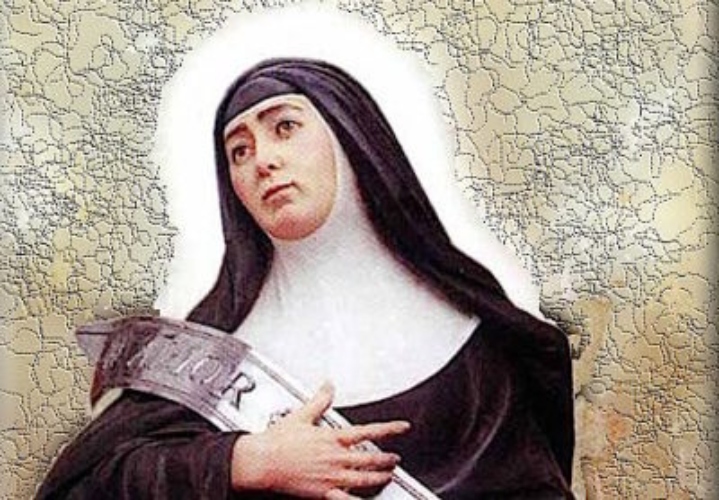
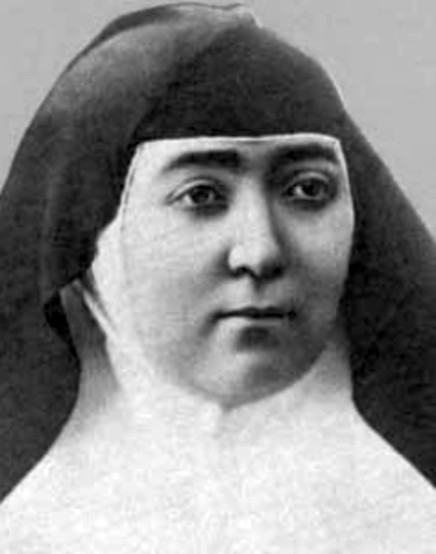
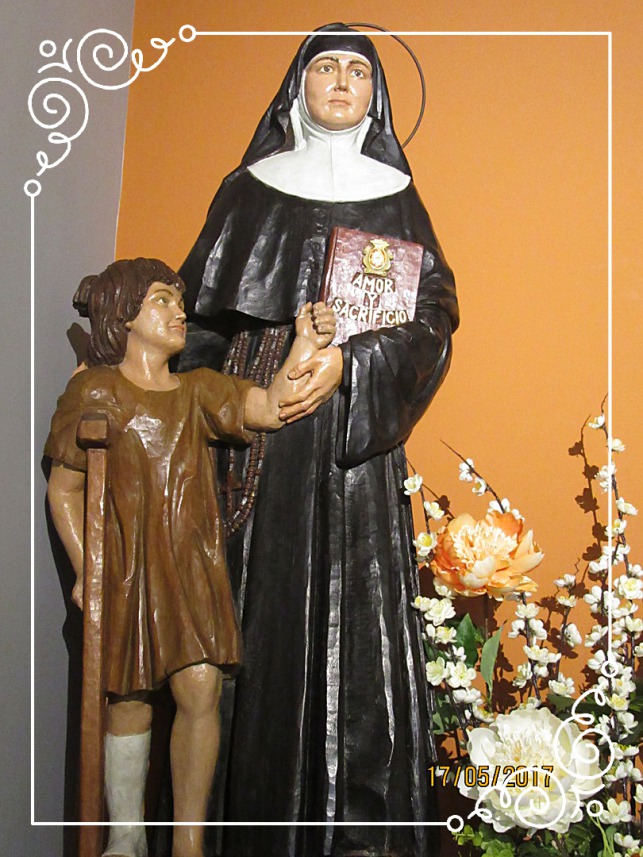
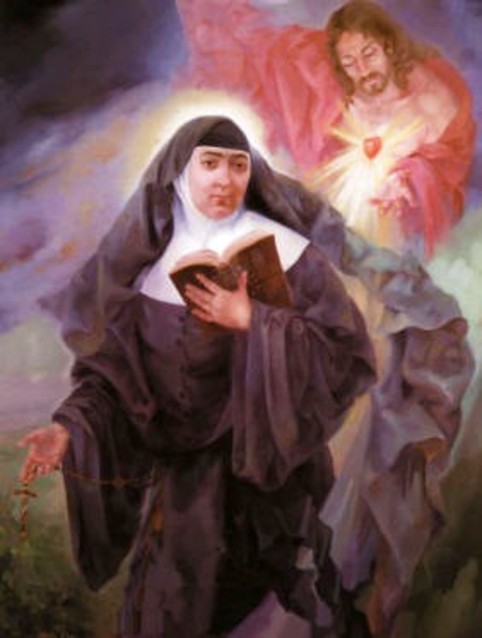
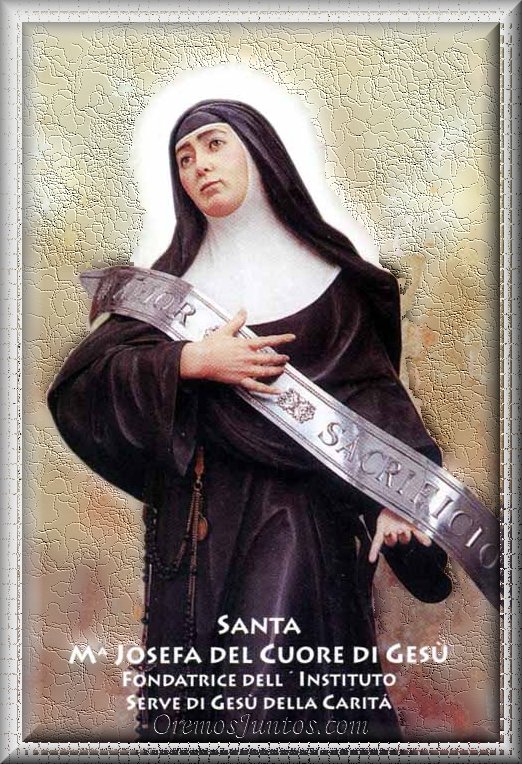
Saint of the Day – 8 February – Blessed Maria Esperanza de Jesus (1893-1983) Religious Nun and Founder of both the Handmaids of Merciful Love in 1930 and the Sons of Merciful Love in 1951.   Born as Maria Josefa Alhama y Valera on 30 September 1893 in Santomera, Murcia, Spain and died on 8 February 1983 in Collevalenza, Perugia, Italy. She took the name of “Maria, Esperanza of Jesus”  “Mary, Hope of Jesus” when she became a nun.bl esperanza and cross

Maria Josefa was born in a shed, into a humble farming family of Spain.   Her father, Jose Antonio, tried his best to work their poor piece of land despite the harsh sun and flooding that their area typically suffered.   Maria Josefa was the first of nine siblings and she was the typical mischievous little girl.   About age seven, she went to live with her parish priest and his two unmarried sisters, who raised and educated her.

At the time, children received their First Holy Communion around age twelve.   Maria Josefa, however, decided she would do otherwise.   Around age nine, she decided to “steal Jesus” and received him into her little body.   Since then, she experienced a deep closeness with the Lord in her life  . She reported at age twelve that Saint Thérèse of the Child Jesus appeared to her, saying, “I come on behalf of the Good Jesus to tell you that you have to continue what I began…”   Almighty God wanted Maria Josefa to spread devotion to His Merciful Love everywhere in the world.

Growing into maturity, Maria Josefa wanted to consecrate her life to Jesus.   She knew that Jesus is close to the poor and needy, so she went to places where people were suffering in order to discern her vocation.   On visiting a hospital once, she was disappointed and surprised by a nun who was accompanying a dying man. The nun told her, “Don’t worry; your heart will soon harden.”   Maria Josefa responded, “Before letting my heart harden, I prefer to leave.”

So, she did.   On the feast of Saint Teresa of Avila, twenty-one year old Maria Josefa left her hometown to join religious life.   She entered the Daughters of Calvary, which was later united with the Claretian Missionaries.   She received the religious name Maria Esperanza de Jesus.   Throughout her first years, she experienced many hardships, including serious illnesses.   Her spiritual directors attested to some mystical experiences during this time and she also received unexplained cures to her health ailments.

A turning point in Esperanza’s vocation happened at Christmas 1927.   She lived in a house that belonged to an Association of Catholic Ladies.   There, she prepared a meal for 400 poor and hungry people, who began filling the house.   A lady from the Association approached her:  “Who gave you permission to bring all of these filthy people here to dirty everything?”   Esperanza responded, “Ma’am, they have not come here to dirty anything but to eat, since it’s Christmas.”   But the woman said, “You would do well to not bring the poor here again.   You can do that in your own house.”   Deeply hurt, Esperanza brought herself to the Lord in prayer.   She felt Him say, “Esperanza, wherever the poor cannot enter, neither can you.   Leave this house!”   She asked, “Lord, where shall I go?”   She soon requested that she be released from her vows.bl esperanza de jesus 2

On Christmas night three years later, Mother Esperanza took new vows with a small group of women, founding the Handmaids of Merciful Love.   Their mission was to spread the Merciful Love of God through merciful work.   These women ate cabbage soup and slept on the floor, yet they opened twelve houses for children, the sick and the elderly and devoted themselves to other good works.   Over the door of each house, a sign reads, “Knock poor and be helped, knock suffering and be consoled, knock sick and be assisted, knock, orphans and find that the Handmaids of Merciful Love are mothers.”   Today, they exist in 11 countries.   Yet, at the time, the local Bishop instructed that no-one should associate with them.   They were not allowed to have the Blessed Sacrament in their houses and so walked to the local parish each day.

Mother wrote, “God is a Father of kindness who seeks by all means to give comfort, help and make his children happy.   He searches for them with untiring love as if he could not be happy without them.   The most perverse person, the most miserable and lost one, is loved tenderly by Jesus who is to him a Father and a tender Mother…”   In her diary she wrote, “He dwells within us and seeks our love tenderly, as if He could not live without us…”bl esperanza de jesus

In 1936, the Spanish Civil War broke out.   Six years after founding the Handmaids, Mother Esperanza left her home country for Rome with her closest friend, Pilar de Arratia.   The two women pleaded their cause against defamations and inflammatory language that had been directed against the Handmaids of Merciful Love.   During this extremely frustrating and trying time, Pilar was Esperanza’s dearest confidant and supporter.

Then, World War II began.   Amid the violence, the Handmaids continued and spread. They received children, hid fugitives without concern for their ideology, aided and stitched up the wounded, fed thousands and consoled countless.   People ran to the Handmaids when alarms sounded.   In 1944, Pilar died, a terrible blow for Esperanza.

Yet, she pressed on.   In 1951, she founded the Sons of Merciful Love, whose mission is to proclaim God’s Merciful Love by holiness of life and dedicating themselves with attention to Diocesan Priests.   The Brothers promote diocesan priests’ continued growth in spiritual life, attend to sick and elderly priests and collaborate with them in ministry.

Mother Esperanza relocated to the small town of Collevalenza, devoting herself to a worthy goal – that one day, the Sons of Merciful Love would include priests.   Her efforts bore fruit with Diocesan approval in 1968.   There are now religious Priests devoted to the Congregation, as well as Diocesan Priests who take vows according to the Family of Merciful Love, while remaining obedient to their own Diocese.   They serve in 11 countries.

During her time in Collevalenza, Mother Esperanza became convinced that Jesus wished her to build a sanctuary Shrine for today’s world, devoted to God’s Merciful Love.   She worked with an artist to create a crucifix which is the centre of the Sanctuary – A living Jesus, upright, eyes full of serenity and looking tenderly toward the Father to remind Him of his chosen and effective offering, “Father, forgive them.   They know not what they do.”   Over his head, the sign in three languages says, “Jesus Nazarene King of the Jews.” On His neck, a scar from the rope.   The Latin word Caritas appears over His heart.   A great white Host in the background reminds us that Jesus’ sacrifice is perpetuated in the Eucharist.   In Spanish: “The Merciful Love” is written at the foot of the Cross.   The Cross itself is raised on top of a globe (the world), which carries a royal crown and an open book, the Gospel.   On the book there is written:  “Love one another as I loved you” and on the cushion under the crown there is the following sentence:  “O Christ, you are the King of Glory” – demonstrating that Jesus Merciful Love wants to rule the world and bring His love into it.8-el-crucifijo-original bl esperanza

As Mother’s life waned with old age, she said that she felt like a flute diffusing the melody of mercy, like a handkerchief for tears, or like the doorkeeper of the Good God, who opens His arms to draw all to His fatherly heart.   She received thousands of visitors and lived at the Sanctuary of Merciful Love.   An Italian writer said that Mother received visitors with the nobility of a Spanish woman – always standing, attentively listening, raising spirits and encouraging visitors to pray to Jesus Merciful Love, promising that she would do the same.   She spent several hours each night in front of the Crucifix, making good on her promises.

Outside the Sanctuary’s entrance is a fountain where pilgrims quench the thirst of their body and spirit. Its waters come from the Sanctuary well, known as the water of Merciful Love.   It was dug at Mother’s request, 122 meters deep.   The well fills baths for the sick, and pilgrims take water home for devotional use.bl esperanza

In May of 1981, St Pope John Paul II was attacked in St Peter’s Square.   For his first visit outside the Vatican since the attempt on his life, John Paul II made a pilgrimage to the Sanctuary of Merciful Love in November because, he said, “we owe our health to God’s mercy.”   He already knew Mother Esperanza, because he had visited with her twice while he was Bishop of Krakow.

He bowed down and kissed her on the forehead.   A year earlier, he had released his encyclical on Divine Mercy, Dives in Misericordia (Rich in Mercy).   “This circumstance,” he said, “has brought me to the Sanctuary of Merciful Love.   By my presence, I want to restate in a special way the message of this encyclical. […]   Since the beginning of my ministry in the office of Saint Peter in Rome, I have considered this message as my particular task.”   He was the Pope to officially recognise and approve the Handmaids and the Sons of Merciful Love.

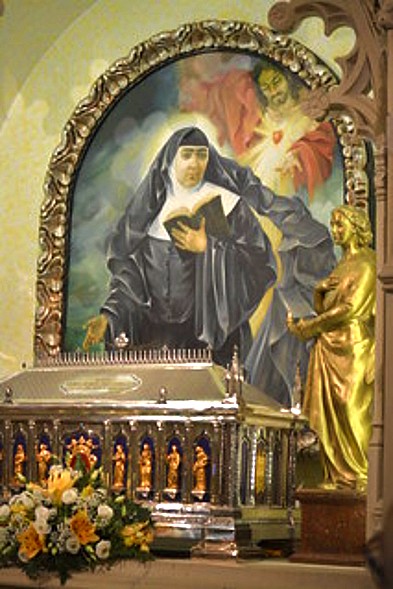
Esperanza’s body and mind declined after years of service.   On a snowy morning, 8 February 1983, she died peacefully at almost ninety years of age.   Her body rests in the crypt of the Sanctuary of Merciful Love, which itself was declared a Basilica in 1988 by St John Paul II.tomb of bl esperanza de jesus

In 1999, a miracle was obtained through Mother Esperanza’s intercession.   Francesco Maria, an infant living near Vigevano, Italy, was suffering from multiple protein intolerance.   In June, he was hospitalised.   While watching television, Francesco’s mother learned about Mother Esperanza and the water from the Sanctuary of Merciful Love.   She began giving him the water to drink on 28 June.   After five days, on the occasion of his first birthday party, Francesco was able to eat all food given to him.   A laboratory report confirmed the termination of allergic phenomena and verified the normalisation of intestinal permeability.   There was no sign that he had ever suffered the ailment.

On 31 May 2014, Pope Francis Beatified Esperanza de Jesus.   The following day, he told the pilgrims at St Peter’s Square, “May her witness help the Church to proclaim everywhere, through concrete and daily actions, the infinite mercy of our Heavenly Father toward every person.”beatification bl maria esperanza

Posted in SAINT of the DAY

FIFTH World Day of Prayer and Awareness against Trafficking in Persons under the Patronage of St Josephine Bakhita, her Memorial and that of the Saints – 8 February

St Jerome Emiliani CRS (1486–1537) (Optional Memorial)
About St Jerome:
https://anastpaul.com/2019/02/08/saint-of-the-day-8-february-st-jerome-emiliani-crs-1486-1537/

St Josephine Bakhita FDCC (1869-1947) (Optional Memorial) today is the FIFTH WORLD DAY OF PRAYER AND AWARENESS AGAINST TRAFFICKING IN PERSONS UNDER THE PATRONAGE OF ST BAKHITA

Biography:
https://anastpaul.wordpress.com/2018/02/08/saint-of-the-day-8-february-st-josephine-bakhita-1869-1947/

St Cointha of Alexandria
St St Cuthman
St Cyriacus of Rome
St Dionysus of Armenia
St Elfleda of Whitby
St Emilian of Armenia
Blessed Maria Esperanza de Jesus (1893-1983)
St Giacuto
St Gisela
St Honoratus of Milan
St Invenzio of Pavia
St Isaias Boner
St Jacoba
Bl Josephina Gabriella Bonino
St Kigwe
St Lucius of Rome
St Meingold
St Mlada of Prague
St Nicetius of Besançon
St Oncho of Clonmore
St Paul of Rome
St Paul of Verdun
Bl Peter Igneus
St Sebastian of Armenia
St Stephen of Muret

Martyrs of Constantinople: Community of 5th century monks at the monastery of Saint Dius at Constantinople. Imprisoned and martyred for loyalty to the Vatican during the Acacian Schism. 485 in Constantinople.

Martyrs of Persia: An unknown number of Christians murdered in early 6th-century Persia. Legend says that so many miracles occurred through the intercession of these martyrs that the king decreed an end to the persecution of Christians.

Posted in QUOTES of the SAINTS, QUOTES on DISCIPLESHIP, QUOTES on JOY, QUOTES on MISSION, QUOTES on the CROSS of CHRIST, QUOTES on VOCATIONS, QUOTES on WORK/LABOUR, SACRED and IMMACULATE HEARTS, SAINT of the DAY

Quote/s of the Day – 7 February – Being a Missionary

Quote/s of the Day – 7 February – The Memorial of Bl Alfredo Cremonesi PIME (1902-1953) Priest and Martyr

“If I were born a thousand times,
I would go back on mission,
a thousand times.”

if i were born a thousand times - bl alfredp cremonesi 7 feb 2020

“[Being a Missionary is]
the most wonderful work
that a man is given.”

Bl Alfredo Cremonesi (1902-1953)

being a missionary is the most wonderful work bl alfredo cremonesi 7 feb 2020

“The Crucified One made us missionaries
and it is the Crucified One again,
who must nourish in us, love for souls.”

the crucified one made us missionaries - bl paolo manna 7 feb 2020

“The well-being of souls is only in Christ.
Therefore, let the love of Jesus
be our perfection and our profession,
let us light our hearts
from the eternal flames of love
that radiate from the Sacred Heart of Jesus.”

Blessed Paolo Manna PIME (1872-1952)
“A Burning Soul”

Priest, Missionary in Burma (Myanmar),
Superior General of PIME,
Founder of the Pontifical Missionary Union

Bl Paolo Manna’s life here:  https://anastpaul.com/2019/09/15/saint-of-the-day-15-september-blessed-paolo-manna-pime-1872-1952-a-burning-soul/

the well-being of souls is only in christ bl paolo manna 7 feb 2020

Posted in DOCTORS of the Church, FATHERS of the Church, ONE Minute REFLECTION, QUOTES of the SAINTS, QUOTES on DEATH, QUOTES on ETERNAL LIFE, QUOTES on FAITH, QUOTES on HEAVEN, QUOTES on SUFFERING, SAINT of the DAY, St JOHN the BAPTIST, The WORD

One Minute Reflection – 7 February – ‘Learn to think and live like a Christian.’

One Minute Reflection – 7 February – Friday of the Fourth Week of Ordinary Time, Year A, Readings: Sirach 47:2-11 (2-13), Psalm 18:31, 47, 50-51, Mark 6:14-29 and the Memorial of Bl Alfredo Cremonesi PIME (1902-1953) Priest and Martyr

“He brought in the head on a platter and gave it to the girl.   The girl in turn gave it to her mother.” … Mark 6:28

REFLECTION – “In what way, then, was this just man harmed by this demise, this violent death, these chains, this imprisonment?   Who are those he did not set back on their feet — provided they had a penitent disposition — because of what he spoke, because of what he suffered, because of what he still proclaims in our own day — the same message he preached while he was living.   Therefore, do not say:  “Why was John allowed to die?” For what occurred was not a death but a crown, not an end but the beginning of a greater life.

Learn to think and live like a Christian.   You will not only remain unharmed by these events but will reap the greatest benefits.” … St John Chrysostom (347-407) Father & Doctor – On the Providence of God, 22.he brought in the head mark 6 28 - what occurred was not a death but a crown st john chrysostom 7 feb 2020

PRAYER –  Father of mercy, You chose Blessed Alfredo Cremonesi to be a father to orphans in their need.   Grant that through his prayer, we may keep faithfully the spirit of sonship, by which we are not only called but really are Your children.   Help us to imitate his love and faith, manifesting by our commitment to Your commandments, our true faith.   May we be filled with strength and grace as we face persecution and animosity in Your service.   We make our prayer through Jesus, our Lord in the unity of the Holy Spirit, God forever, amenbl alfredo cremonesi pray for us 7 feb 2020

Posted in SAINT of the DAY

Saint of the Day – 7 February – Blessed Alfredo Cremonesi PIME (1902-1953) Priest and Martyr

Saint of the Day – 7 February – Blessed Alfredo Cremonesi PIME (1902-1953) Priest and Martyr, Missionary of the Pontifical Institute for Foreign Missions (PIME), Writer, Poet – born on 15 May 1902 in Ripalta Guerina, Cremona, Italy and died on 7 February 1953 (aged 50) in Donokù, Taungngu, Bago, Myanmar by being shot.   Fr Alfredo fostered a great devotion to Saint Thérèse of Lisieux and to the Sacred Heart.   He practised Eucharistic Adoration each night for one hour before the Tabernacle and awoke around 4:00 am in the morning to celebrate Mass.    Patronage – Missionaries.

When he left for the missions, he knew that he would never return to the Italian mainland and spent the remainder of his life working with the Burmese people in mountain villages despite the great difficulties he faced.bl-Alfredo-Cremonesi-PIME-Missionary

Alfredo Cremonesi was born on 15 May 1902 in Ripalta Guerina in Cremona as the first of seven children to the grocer Enrico Cremonesi and Maria Rosa Scartabellati.

He was Baptised on 16 May in the local parish church, Confirmed on 4 October 1908 from the Bishop of Crema Ernesto Fontana and then made his First Communion on 1 April 1909.   His father was a devoted Christian who opposed Fascism and it was his mother who oversaw the religious education of the seven children.   It was in his childhood that he read the journal of Saint Thérèse of Lisieux and from that point fostered a deep devotion to her and like her to becoming a Missionary.   His brother Ernesto was also a devoted Christian whom the Nazis arrested and jailed in a concentration camp where he would die in 1945 before the European Theatre conflict ended.    Alfredo sent a letter to his parents upon learning this and said  “I am proud to be his brother” and that “Ernesto will be able to do more in paradise than he could have done on earth.”

His time in school was interrupted due to a severe disease and he was forced to spend most of that time confined to his bed.   His frail health since childhood led to people concluding that he would never be able to enter the missions since it would be improbable that he would be cured of his consistent ailments.   But he defied all medical knowledge and the expectation of doctors who thought he would die in a few months, overcame his disease and attributed his recovery to Saint Thérèse of Lisieux.

Upon his recuperation on 17 September 1922, he transferred to Milan to study in an institute that the Pontifical Institute for Foreign Missions ran, to prepare new missionaries.   He became known for being both impetuous and a gifted writer who published a collection of poems.

He was Ordained to the Priesthood by the PIME Bishop, Giovanni Menicatti in the San Francesco Saverio church and then in June 1925 learned that his dream to enter the missions was to take place, for he would be sent to the then-Burma.   On 19 October 1924 in San Michele and on 5 October 1925 received the Cross of the Missions from the Archbishop of Milan Eugenio Tosi.   He left Genoa for Naples and set sail from there on 16 October 1925.   His mother was devastated by his departure and maintained frequent correspondence with him.

But his new mission also proved difficult for the enthusiastic Fr Alfredo who suffered from loneliness for a brief time upon his arrival on 10 November 1925.   He worked with the Karen people in an isolated mountain village and often had to travel miles on foot between villages, to visit the people.   He was later transferred to Donokù and would remain there until the outbreak of World War II in relative peace.   Alfredo was often exhausted from his extensive walking missions and also contracted malaria.    During the 1920s he maintained correspondence with the PIME superior Blessed Paolo Manna (1872-1952) and met with Manna when he visited the Burmese missions on 19 February 1928.bl alfredo cremonesi

The outbreak of World War II saw the British-run Burma enter the conflict to the detriment of Italian missionaries who soon found themselves as enemies, due to Benito Mussolini declaring his alliance with Hitler.    Near the end of the war he was forced to live in the forest where he ate herbs in order to survive.   Fr Alfredo wrote of the trials he endured during the war in a letter dated on 20 February 1946, he refers to his lack of food and clothing (limited to what he had on) and noting that villages were abandoned.

In 1941 he avoided Japanese imprisonment in a concentration camp in India after the Japanese occupied the nation.   He lived eating herbs cooked in salt and water during this time but was discovered and caught.   In the final month of the war a Japanese officer took him and tied him up for the night before allowing him to leave in the morning where he took refuge in the woods.   Alfredo did not understand the reason for his release but attributed it to the intercession of God.

When the Second World War ended, a local one began, the First Karen War (1948-1952), between the Karen and the central government.   Against this background, he was not keen to abandon the Catholic villages because his presence was often a good deterrent to violence.

In 1950, unfortunately, two other PIME missionaries, Mario Vergara and Pietro Galastri, lost their lives.   In August of the same year Fr Alfredo was asked to leave, especially Donokù parish and took refuge in Toungoo.   For him, it was true exile, far from his Christians.   He made it back only in March 1952 and promised not to leave again. “Whatever my death, as long as it is not in exile,” he said after he went back to Donokù.   Still, exile spared him a first encounter with martyrdom.

Although “In the village where I lived, all of my belongings were looted, everything I had at home, in the church, in the school, in the convent … The work of 26 years was all lost”, nothing could prevent Alfredo from going back to his own people.   “I shan’t run away anymore, whatever happens.   At most they’ll kill me.”

On February 7, 1953, after the Burmese military operation failed to flush out Karen rebels from the region, government troops entered Donokù and accused Fr Alfredo and the villagers, of supporting the rebels.   They shot him and the village chief.   Fr Alfredo died instantly.

Right after his death, he was declared a Martyr by popular sensus fidei.   “A victim of his charity” and “a good shepherd who gave his life for his flock,” they said of him.   Some faithful were eager to deliver an envelope with some personal effects to the then Bishop of Toungoo, Msgr Lanfranconi.   On the envelope was written:  ‘Relics of the martyr Father Cremonesi to be sent to his parents’.   Of the many names his people called Fr Alfredo, “the smile of the mission” is the most beautiful.BL ALFREDO CREMONESI MARTYR Crema-_Beatificazione

Cardinal Angelo Becciu, head of the Congregation for the Causes of Saints, celebrated his Beatification by Decree of the Order of Martyrdom in Crema, Myanmar on 19 October 2019 on the eve of World Mission Sunday (20 October) and on the 95th anniversary of the first Mass celebrated by Blessed Alfredo on 19 October 1924 in San Michele Church in Cremona.

Cardinal Becciu said:

“With the testimony of his life generously offered for love of Christ, the Blessed Alfredo speaks today to this Diocese of Crema … he speaks to the missionaries … he speaks to the whole Church, noting that dying for the faith is a gift granted only to some but living the faith is a direct call to all.   Just as the theme of this World Missionary Sunday urges us: Baptised and sent.”

Posted in SAINT of the DAY

Memorials of the Saints -7 February

Bl Adalbert Nierychlewski
Blessed Alfredo Cremonesi PIME (1902-1953) Priest and Martyr
St Adaucus of Phrygia
St Amulwinus of Lobbes
St Anatolius of Cahors
Bl Anna Maria Adorni Botti
Bl Anselmo Polanco
Bl Anthony of Stroncone
St Augulus
St Chrysolius of Armenia
Bl Eugenie Smet
St Fidelis of Merida
Bl Felipe Ripoll Morata
St Giles Mary of Saint Joseph OFM (1729-1812)
St Giles Life:
https://anastpaul.com/2019/02/07/saint-of-the-day-7-february-st-giles-mary-of-st-joseph-ofm-1729-1812/

Bl Jacques Sales
St John of Triora
St Juliana of Bologna
Bl Klara Szczesna
St Lorenzo Maiorano
St Luke the Younger
St Maximus of Nola
St Meldon of Péronne
St Moses the Hermit
St Parthenius of Lampsacus
Bl Peter Verhun
Bl Pope Pius IX (1792-1878)
All about Blessed Pope Pius IX:
https://anastpaul.wordpress.com/2018/02/07/saint-of-the-day-blessed-pope-pius-ix-1792-1878/

St Richard the King
Bl Rizziero of Muccia
Bl Rosalie Rendu (1786-1856)
St Theodore Stratelates
Bl Thomas Sherwood (1551–1578) Martyr
Biography:
https://anastpaul.wordpress.com/2017/02/07/saint-of-the-day-7-february-bl-thomas-sherwood/

St Tressan of Mareuil
Bl William Saultemouche

Posted in CHRIST, the WAY,TRUTH,LIFE, franciscan OFM, Lady POVERTY, ONE Minute REFLECTION, QUOTES of the SAINTS, QUOTES on DISCIPLESHIP, QUOTES on DIVINE PROVIDENCE, QUOTES on HUMILITY, QUOTES on MISSION, QUOTES on TRUST and complete CONFIDENCE in GOD, SAINT of the DAY, The WORD

One Minute Reflection – 6 February – ‘Follow the humility and the poverty of our Lord Jesus’

One Minute Reflection – 6 February – Thursday of the Fourth Week of Ordinary Time, Year A, Readings: 1 Kings 2:1-4, 10-12, Responsorial psalm 1 Chronicles 29:10-12, Mark 6:7-13 and the Memorial of St Francesco Spinelli (1853-1913)

He charged them to take nothing for their journey...Mark 6:8

REFLECTION – The Lord commands us in the Gospel: “Watch, be on your guard against all malice and greed” (cf. Lk 12:15).   “Guard yourselves against the preoccupations of this world and the cares of this life” (cf. Mt 6:25; Lk 21:34).   Therefore, none of the brothers, wherever he may be, or wherever he goes, should in any way carry, receive, or have received either money or coins, whether for clothing or books or payment for any work-indeed, for no reason-unless it is for the evident need of the sick brothers, for we must not suppose that money or coins have any greater value than stones.   And the devil would like to blind those who desire it or consider it better than stones.   Therefore, let us who have left all things behind, take care, that we do not lose the kingdom of heaven for so little (cf. Mt 19:27; Mk 10:24.28).   And if we were to find coins in any place, let us give them no more thought than the dust which we crush with our feet, for all this is “vanity of vanities and all is vanity” (Eccl 1:2).

All the brothers should strive to follow the humility and the poverty of our Lord Jesus Christ (…).   And they must rejoice when they live among people who are considered to be of little worth and who are looked down upon, among the poor and the powerless, the sick and the lepers and the beggars by the wayside.   And when it may be necessary, let them go for alms.   And they should not be ashamed but rather, recall that our Lord Jesus Christ, the Son of the living and all-powerful God (…) was a poor man and a transient and lived on alms, He and the Blessed Virgin and His disciples.” … St Francis of Assisi (1182-1226) – Founder of the Friars Minor – Earlier Rule, §8-9he charged them to take nothing for the journey - therefore none of the brothers - st francis of assisi 6 feb 2020

PRAYER – Grant us Lord, a true knowledge of salvation so that, freed from fear and from the power of our foes, we may serve You, unhampered by any worldly ties, trusting only in Your loving and guiding hand. Help us to give our hearts, minds, bodies, our all to You, serving faithfully all the days of our life. May the prayers of St Francesco Spinelli, Your faithful servant, give us strength. We make our prayer, through our Lord Jesus with the Holy Spirit, God forever, amen.st francesco spinelli pray for us 6 feb 2020

Posted in SAINT of the DAY

Saint of the Day – 6 February – Saint Francesco Spinelli (1853-1913)

Saint of the Day – 6 February – Saint Francesco Spinelli (1853-1913) Priest, Founder of the Sisters Adorers of the Blessed Sacrament, Apostle of the Holy Eucharist, of prayer, of the poor and sick – born on 14 April 1853 in Milan and died on 6 February 1913 (aged 59) in Rivolta d’Adda, Cremona, Italy.   Patronage – the Sisters Adorers of the Blessed Sacrament.st-Francesco-Spinelli-Priest

Though born in Milan on 14 April 1853, Francesco Spinelli moved to Cremona, Italy, when he was still a child.   As a young boy, he would go with his mother to visit and help the poor and sick in his city.   His call to the priesthood was nurtured by both his mother and an uncle who was a priest.   After studying in Bergamo, he was ordained on 14 August 1875, to be a priest of that diocese.

Later that year, Fr Francesco was in Rome to celebrate the Jubilee convoked by Pope Pius IX and went to the Basilica of St Mary Major.   While there, he knelt before the crib of the Child Jesus, prayed and envisioned a group of young women who would adore Jesus in the Blessed Sacrament.   This moment inspired him to begin a new order and in 1882, he worked with Saint Geltrude Comensoli to realise this vision, working together to found the Sacramentine Sisters of Bergamo.st spinelli

After a promising start, resistance and plots against him forced Fr Francesco to leave the Diocese of Bergamo in 1889, abandoning the new order as well.   He arrived in Rivolta d’Adda dejected and without money but the Diocesan Bishop of Cremona, offered him the chance to exercise his pastoral duties there.   In 1892, Fr Francesco founded the Sister Adorers of the Blessed Sacrament, a congregation that would receive official diocesan approval in 1897.st spinelli sml

In Cremona, the Sisters continued their adoration of Christ in the Eucharist while also focusing on their work of caring for the poor.  This work was inspired by Spinelli himself, who having known the difficulties of being marginalised, was compelled by his love of the Eucharist to meet the needs of those who were suffering in the same way.

Fr Francesco died of natural causes in Rivolta d’Adda on 6 February 1913 but the Sisters continue the work that he helped to begin.   They now have many houses around the world, including in countries like Argentina and Senegal.   Though he did not live to see it, Spinelli would have found great joy in knowing that his congregation received full pontifical approval from Pope Pius XI in 1932.   Then in 1958, Cardinal Angelo Roncalli, who would become Pope John XXIII, visited Spinelli’s tomb.   In his journal, he wrote:
“Arrived in Rivolta d’Adda where I admired the general house of the Sisters Adorers founded by Venerable Francesco Spinelli at whose tomb I was glad to pray.”
This delight would be continued by another Holy Father when Fr Francesco was beatified on 21 June 1992, by St Pope John Paul II.st spinelli art

As a man who constantly looked to Jesus as the source and model of his priestly life, Fr Francesco Spinelli left behind a reputation of holiness and provided a truly prayerful example for the Sister Adorers of the Blessed Sacrament and all those he met.   Like Christ, he did all he could to serve the unhappy, the marginalised and the rejected wherever there was need and that work continues to this day.

This slideshow requires JavaScript.

He was Canonised on 14 October 2018 by Pope Francis.   The miracle related to his Canonisation concerned the Sister Adorers of the Blessed Sacrament who, whilst nursing a baby who had been seriously injured and had been declared to be past medical care, in Kinshasa in the Democratic Republic of Congo, was completely healed by their prayers and the placing of a Holy Card of St Francesco in the bed of the child.st spinelli book coverst francesco spinelli face

Posted in SAINT of the DAY

Memorials of the Saints – 6 February

St Paul Miki SJ (1564/65-1597) & Companions/Martyrs of Nagasaki – 26 saints (Memorial)
Their story:
https://anastpaul.wordpress.com/2017/02/06/saints-of-the-day-6-february-st-paul-miki-companions-26-martyrs-of-nagasaki/

St Alfonso Maria Fusco (1839-1910)
Biography:
https://anastpaul.wordpress.com/2018/02/06/saint-of-the-day-6-february-st-alfonso-maria-fusco-1839-1910/

St Amand of Maastricht (c 584-c 679)
St Amand of Moissac
St Amand of Nantes
St Andrew of Elnone
Bl Angelus of Furci
St Antholian of Auvergne
St Brinolfo Algotsson
Cassius of Auvergne
Bl Diego de Azevedo
St Dorothy of Caesarea (c 279/290-311) Martyr
The Life of St Dorothea:
https://anastpaul.com/2019/02/06/saint-of-the-day-6-february-st-dorothy-of-caesarea-died-311-virgin-martyr/

St Ethelburga of Wessex
Bl Francesca of Gubbio
St Francesco Spinelli (1853-1913)

St Gerald of Ostia
St Guarinus
St Guethenoc
St Hildegund
St Ina of Wessex
St Jacut
St Liminius of Auvergne
Bl Mary Teresa Bonzel
St Mateo Correa-Magallanes
St Maximus of Aurvergne
St Mel of Ardagh
St Melchu of Armagh
St Mun of Lough Ree
St Relindis of Eyck
St Revocata
St Saturninus
St Tanco of Werden
St Theophilus
St Theophilus the Lawyer
St Vaast of Arras
St Victorinus of Auvergne

Martyrs of Emesa:
St Luke the Deacon
St Mucius the Lector
St Silvanus of Emesa

Posted in DOCTORS of the Church, FATHERS of the Church, franciscan OFM, QUOTES of the SAINTS, QUOTES on COURAGE, QUOTES on DEATH, QUOTES on JOY, QUOTES on MARTYRDOM, SAINT of the DAY, The WORD

Quote/s of the Day – 5 February – ‘…The Lord’s cup’

Quote/s of the Day – 5 February – The Memorial of St Philip of Jesus (1572-1597) Martyr, Patron of Mexico City

“But to bear with insult,
patiently undergo humiliation,
pray for those who persecute us (Mt 5,39.44) –
that is the Lord’s cup,
that is the Lord’s feast.“

Saint Augustine (354-430) Father & Doctor of the Churchbut to bear with insult - st augustine - martyrdom-5 feb 2020 st philip of jesus

“O happy ship!
O happy galleon for Philip,
lost for my gain!
Loss—no loss for me
but the greatest of all gain!”

St Philip of Jesus (1572-1597) Martyr,

Patron of Mexico Cityo happy ship - st philip of jesus 5 feb 2020

“So everyone who acknowledges me before men,
I also will acknowledge before my Father,
who is in heaven…”

Matthew 10:32matthew-10-32-so-everyone-who-acknowledges-me-13-july-2019-and-27-nov-2019 and 5 feb 2020

Posted in ONE Minute REFLECTION, SAINT of the DAY, The WORD

One Minute Reflection – 5 February – ‘…The scandal of the Incarnation’

One Minute Reflection – 5 February – Wednesday of the Fourth week in Ordinary Time, Year A, Readings: 2 Samuel 24:2, 9-17, Psalm 32:1-2, 5-7, Mark 6:1-6 and the Memorial of St Philip of Jesus (1572-1597) Martyr

“Is not this the carpenter?”…Mark 6:3

REFLECTION – “According to the people of Nazareth, God is too great to humble Himself to speak through such a simple man!   It is the scandal of the Incarnation – the unsettling event of a God made flesh, who thinks with the mind of a man, works and acts with the hands of a man, loves with a human heart, a God who struggles, eats and sleeps like one of us.
The Son of God overturns every human framework – it is not the disciples who washed the feet of the Lord but, it is the Lord who washed the feet of the disciples (cf. Jn 13:1-20). This is a reason for scandal and incredulity, not only in that period but in all ages, even today.”…Pope Francis – Angelus, 8 July 2018mark-6-3-is-not-this-the-carpenter-the-son-of-god-overturns-pope-francis-6feb2019 and 5 feb 2020

PRAYER – Lord God, source of strength and grace, grant us eyes to see and ears to hear and hearts to love the Word of Your Son. Make us recognise Your Son in our daily lives and be generous in sharing our faith to all we meet. Grant, we pray, that the prayers of St Philip of Jesus, may help us to manifest zeal and courage. Through Jesus Christ, our Lord, in unity with the Holy Spirit, God forever, amen.st philip of jesus pray for us 5 feb 2020

Posted in franciscan OFM, SAINT of the DAY

Saint of the Day – 5 February – St Philip of Jesus (1572-1597)

Saint of the Day – 5 February – St Philip of Jesus (1572-1597) Martyr, Missionary, Discalced Friar of the Reformed Franciscans of the Province of St Didacus, founded in Mexico by St Peter Baptista, with whom he suffered martyrdom later.   He was born Felipe de las Casas in Mexico and died on 5 February 1597 aged 24-25 in Nagasaki, Japan by being bound upon a cross and then pierced to death with spears.   Patronage – Mexico City.   He became the Protomartyr and Saint of Mexico.   St Philip is also honoured on 6 February amongst the Holy Martyrs of Japan.the-martyrdom-of-saint-philip-of-jesus_unknown--18cy__08470__62508.1565900694

Philip de las Casas was born in the city of Mexico to businessman Alsonso de las Casas and his wife.   Although he was brought up piously, Philip at first showed little care for the pious teaching of his parents but at last resolved to enter the Reformed Franciscan Convent of Santa Barbara at Pueblo.

But he was not yet weaned from the world and soon left the novitiate.   Grieved at the inconstancy of his son, his father sent him to the Philippine Islands on a business errand. There, in vain Philip sought to satisfy his heart with pleasure.   But of course, he was constantly unhappy and felt that God was calling him to a religious life.   Gaining courage by prayer, he entered the Franciscan Convent of Our Lady of the Angels at Manila and persevered, taking his vows in 1594.   The richest cargo that he could have sent to Mexico would not have gratified his pious father as much as the tidings that Philip was a professed friar.st-philip-of-jesus-rlpoj-br-robert-lentz-ofm

His father, Alonso de las Casas obtained from the abbot of the Order, directions that Philip could be sent to Mexico.  He embarked in July, 1596, with other religious.   Storms drove the vessel to the coast of Japan and it was wrecked while endeavouring to enter a port.   Amid the storm Philip saw over Japan a white cross, in the shape used in that country, which after a time became blood-red and remained so for some time.   It was an omen of his coming victory.

The commander of the vessel sent our Saint and two other religious to the emperor to solicit permission to continue their voyage but they could not obtain an audience.   He then proceeded to Macao, to a house of his Order, to seek the influence of the Fathers there but the pilot of the vessel by idle boasts had excited the emperor’s fears of the Christians and the heathen ruler resolved to exterminate the Catholic missionaries.

In December, officers seized a number of the Franciscan Fathers, three Jesuits and several of their young pupils.   St Philip was one of those arrested and heard with holy joy that sentence of death had been passed on them all.   His left ear was cut off and he offered this first-fruit of his blood to God for the salvation of that heathen land.st philip of jesus traditional etching

The martyrs were taken to Nagasaki, where crosses had been erected on a high hill. When St Philip was led to that on which he was to die, he knelt down and clasped it, exclaiming:  “O happy ship!   O happy galleon for Philip, lost for my gain!   Loss—no loss for me but the greatest of all gain!”   He was bound to the cross but the structure under him gave way, so that he was strangled by the cords.   While repeating the holy name of Jesus, he was the first of the happy band to receive the death-stroke.
Miracles attested the power before God of these first martyrs of Japan.   Pope Urban VIII Beatified him with his companions, on 14 September 1627 and granted permission to say an Office and Mass in their honour and Pope Pius IX formally Canonised them on 8 June 1862.

In 1949 a Mexican film Philip of Jesus portrayed his life and death.Basílica_de_Nuestra_Señora_de_Zapopan_(Jalisco,_Mexico)_-_statue,_St._Philip_of_Jesus

There is a wonderful miracle related to St Philip’s Mother’s maid, Dominica – it is as follows:san_felipe_de_jesus
Philip’s mother, when told of his misbehaviour, would exclaim, “God make thee a saint, Felipe “  and old Dominica’s usual answer was:  ” Felipillo a saint!   He will be one when the old fig-tree grows green again.”   Now the fig-tree Dominica spoke of so often, was indeed far off from growing green, there it stood in a corner of the court, dry, dead for many years and for some reason allowed to remain in the corner it once shaded with its thick foliage.   One morning Dominica, now an aged woman, went into the court, to her amazement she saw the old dead fig-tree covered with luxuriant green foliage.   Scarcely able to believe her own eyes she called to her mistress,  “Come, come, Felipillo is a saint; the fig-tree has again become green.”   And, sure enough, months after this amazing event, news reached his native city that Felipe had received a martyr’s death in Japan in a mountain near Nagasaki city, “Mount of the Martyrs.”st philip of jesus

Posted in SAINT of the DAY

Memorials of the Saints – 5 February

St Agatha (c 231- c 251) (Memorial)
All about St Agatha:
https://anastpaul.wordpress.com/2018/02/05/saint-of-the-day-st-agatha-c-231-c-251-virgin-and-martyr/

St Adelaide of Guelders (c 970–1015)
Biography:
https://anastpaul.com/2019/02/05/saint-of-the-day-5-february-st-adelaide-of-guelders-c-970-1015/

St Agatha Hildegard of Carinthia
St Agricola of Tongres
St Albinus of Brixen
St Anthony of Athens
St Avitus of Vienne
St Bertulph
St Buo of Ireland
St Calamanda of Calaf
St Dominica of Shapwick
St Fingen of Metz
Bl Françoise Mézière
St Gabriel de Duisco
St Genuinus of Sabion
St Indract
St Isidore of Alexandria
St Jesús Méndez-Montoya
Bl John Morosini
St Kichi Franciscus
St Luca di Demenna
St Modestus of Carinthia
St Philip of Jesus (1572-1597) Martyr
Bl Primo Andrés Lanas
St Saba the Younger
St Vodoaldus of Soissons

Martyrs of Pontus: An unknown number of Christians who were tortured and martyred in assorted painful ways in the region of Pontus (in modern Turkey) during the persecutions of Maximian.

Posted in CHRIST, the WAY,TRUTH,LIFE, ONE Minute REFLECTION, QUOTES of the SAINTS, QUOTES on CONVERSION, QUOTES on FAITH, QUOTES on IGNORANCE, QUOTES on LOVE, SAINT of the DAY, The WORD

One Minute Reflection – 4 February – “The child is not dead but asleep”

One Minute Reflection – 4 February – Tuesday of the Fourth Week in Ordinary Time, Year A, Readings: 2 Samuel 18:9-10, 14, 24-25, 30–19:3, Psalm 86:1-6, Mark 5:21-43 and the Memorial of St John de Britto SJ (1647-1693) Martyr

“The child is not dead but asleep” … Mark 5:39

REFLECTION -“My dear young people, the future depends on you, the completion of this millennium and beginning of another depend on you.   So do not be passive, assume your responsibilities in every area that opens itself up to you in this world. (…)   Take up your responsibilities!   Inspired by faith in the Lord “always be ready to give an explanation to anyone who asks you for a reason for your hope” (1 Pet 3:15) (…)   What is the reason for your confidence?   Your faith, recognition and acceptance of the tremendous love God is constantly showing towards humankind.(…)   Jesus Christ, “the same today, yesterday and forever” (Heb 13:8), continues to show to all young people the same love the Gospel describes when he met up with a young man or woman.

So we can contemplate the raising of Jairus’ daughter who “was twelve years old” (…) Jairus frankly exposes his anguish to the Master, he earnestly beseeches his heart:  “My daughter is at the point of death.   Please, come lay hands on her that she may get well and live”.    “Jesus went off with him”.   The heart of Christ, which is moved before this man and his daughter’s human suffering, cannot remain heedless before our suffering.   Christ always hears us but He asks us to turn to Him with faith (…).   The Lord’s every gesture and word express this love.

I would like especially to pause over the words drawn from Jesus’ own lips:   “The child is not dead but asleep”.   These words that are so deeply illuminating, prompt me to think of the mysterious presence, of the Lord of life, in a world that appears to have succumbed to the shameless promptings of hate, violence and injustice.   Yet, no, this world of yours is not dead but sleeps.   In your hearts, dear young people, we perceive the strong beat of life and the love of God.   Youth is not dead when it is close to the Master.   Yes, when it is close to Jesus, you are all close to Jesus.   Listen to all His words, every word, each one. Young people, love Jesus, seek Jesus, meet Jesus.” … Saint John Paul II (1920-2005), Pope from 1978 to 2005 – Speech to the youth of Chile, 02/04/1987mark 5 39 the child is not dead but sleeps - listen to his words every one - st pope john paul 4 feb 2020

PRAYER – Increase in us, O Lord, the gift of faith, so that we may arise and offer our praise to You and by Your grace, yield fruit from heaven, for the glory of Your Kingdom. Lord God, may St John de Britto, who became precious in Your sight through his pure life and valiant martyrdom, plead for our forgiveness.   Through Jesus Christ, Your divine Son, in unity with the Spirit, one God forever.   St John de Britto, pray for us, amen.st john de britto pray for us 4 feb 2019

Posted in CATHOLIC-PRAYERS OF THE CHURCH, FATHERS of the Church, HYMNS, Our MORNING Offering, PRAYERS for SEASONS, PRAYERS of the CHURCH, PRAYERS of the SAINTS, SAINT of the DAY, The HOLY GHOST

Our Morning Offering – 4 February – Veni Creator Spiritus

Our Morning Offering – 4 February – Tuesday of the Fourth Week in Ordinary Time, Year A and The Memorial of Blessed Rabanus Maurus (776-856)

Veni Creator Spiritus
By Blessed Rabanus Maurus (776-856)

Come, Creator, Spirit,
come from Your bright heavenly throne,
come take possession of our souls
and make them all Your own.
You who are called the Paraclete,
best gift of God above,
the living spring,
the vital fire,
sweet christ’ning and true love. . . .
O guide our minds with Your best light,
with love our hearts inflame
and with Your strength,
which ne’er decays,
confirm our mortal frame.
Far from us drive our deadly foe,
true peace unto us bring
and through all perils lead us safe
beneath Your sacred wing.
Through You may we the Father know,
through You th’eternal Son
and You the Spirit of them both,
thrice-blessed Three in One. . . .veni-creator-spiritus-bl-rabanus-maurus-4-feb-2018 and 4 feb 2020

Posted in SAINT of the DAY

Saint of the Day – 4 February – Saint Rabanus Maurus OSB (776-856)

Saint of the Day – 4 February – Saint Rabanus Maurus OSB (776-856) Archbishop, Monk, Abbot,Theologian, Poet, Writer, Teacher, Encyclopedist – also known as Hrabanus or Rhabanus and “The Teacher of Germany” – born in 776 at Mainz, Germany and died on 4 February 856 at Winkel, Germany of natural cause.   In the most recent edition of the Roman Martyrology (Martyrologium Romanum, 2004, pp. 133), his feast is given as today and he is qualified as a Saint (‘sanctus’).bl rabaus maurus

Rabanus was born of noble parents in Mainz.   The exact date of his birth remains uncertain, but in 801 he was ordained a deacon at Benedictine Abbey of Fulda in Hesse, where he had been sent to school and had become a monk.  At the insistence of Ratgar, his abbot, he went to complete his studies at Tours.   There he studied under St Alcuin(735-804) , who in recognition of his diligence and purity gave him the surname of Maurus, after the favourite disciple of Benedict, Saint Maurus.

Returning to Fulda, in 803 he was entrusted with the principal charge of the abbey school, which, under his direction, became one of the most pre-eminent centres of scholarship and book production in Europe and sent forth many erudite and saintly pupils.   It was probably at this period that he compiled his excerpt from the grammar of Priscian, a popular textbook during the Middle Ages.   According to Alban Butler’s Lives of the Saints, Rabanus ate no meat and drank no wine.

In 814 Rabanus was ordained a priest.   Shortly afterwards, apparently on account of disagreement with Abbot Ratgar, he withdrew for a time from Fulda.   This banishment has long been understood to have occasioned a pilgrimage to Palestine, based on an allusion in his commentary on Joshua.    Rabanus returned to Fulda in 817 on the election of a new abbot, Eigil, and at Eigil’s death in 822, Rabanus himself became abbot.He handled this position efficiently and successfully but in 842 he resigned so as to have greater leisure for study and prayer, retiring to the neighbouring monastery of St Petersberg.

bl Raban-Maurus_Alcuin_Otgar
Rabanus Maurus (left) with Alcuin presents his work to Otgar of Mainz (right).   Illustration from a Fulda manuscript, c. 830–840.

In 847, he was chosen to be Archbishop of Mainz, at the age of sixty-three and the last years of his life were spent directing the affairs of his Diocese, holding provincial Synods and directing a multitude of charitable works.   During a famine, he fed three hundred poor people at his own house.   He became bedridden shortly before his death and from the moment of his death was regarded as a saint.

Blessed Rabanus composed a number of hymns, the most famous of which is the Veni Creator Spiritus.   This is a hymn to the Holy Spirit often sung at Pentecost and at ordinations.   It is known in English through many translations, including Come, Holy Ghost, our souls inspire,Come, Holy Ghost, Creator blest and Creator Spirit, by whose aid. Veni Creator Spiritus was used by Gustav Mahler as the first chorale of his eighth symphony.

One of his most popular and enduring works is a spectacular collection of poems centred on the cross, called De laudibus sanctae crucis or In honorem sanctae crucis, a set of highly sophisticated poems that present the cross (and, in the last poem, Rabanus himself kneeling before it) in word and image, even in numbers.

He was buried at the monastery of St Alban’s in Mainz but later his relics were transferred to Halle.

Posted in franciscan OFM, JESUIT SJ, SAINT of the DAY

Memorials of the Saints – 4 February

Bl Dionisio de Vilaregut
St Donatus of Fossombrone
St Eutychius of Rome
St Filoromus of Alexandria
St Firmus of Genoa
Bl Frederick of Hallum
St Gelasius of Fossombrone
St Geminus of Fossombrone
St Gilbert of Sempringham
St Isidore of Pelusium
St Jane de Valois O.Ann.M and TOSF(1464-1505)
Biography:  https://anastpaul.wordpress.com/2018/02/04/saint-of-the-day-4-february-saint-jane-of-valois-o-ann-m-1464-1505/

St John de Britto SJ (1647-1693) Martyr
Biography:
https://anastpaul.com/2019/02/04/saint-of-the-day-4-february-st-john-de-britto-sj-1647-1693-martyr/

St John of Irenopolis
Bl John Speed
St Joseph of Leonissa OFM (Cap) (1556-1612)
Biography:  https://anastpaul.wordpress.com/2017/02/04/saint-of-the-day-4-february-st-joseph-of-leonissa/

St Liephard of Cambrai
St Magnus of Fossombrone
St Modan
St Nicholas Studites
St Nithard
St Obitius
St Phileas of Alexandria
Blessed Rabanus Maurus OSB (776-856)
St Rembert
St Themoius
St Theophilus the Penitent
St Vincent of Troyes
St Vulgis of Lobbes

Jesuit Martyrs of Japan: A collective memorial of all members of the Jesuits who have died as martyrs for the faith in Japan.

Martyrs of Perga – 4 saints: A group of shepherds martyred in the persecutions of Decius. The only details we have about them are the names – Claudian, Conon, Diodorus and Papias. They were martyred in c 250 in Perga, Asia Minor (in modern Turkey).

Posted in SAINT of the DAY

Saint of the Day – 2 February – Blessed Maria Domenica Mantovani (1862-1934)

Saint of the Day – 2 February – Blessed Maria Domenica Mantovani (1862-1934) Virgin, Religious and and the co-founder of the Little Sisters of the Holy Family which she established them alongside Blessed Giuseppe Nascimbeni (1851-1922), Marian devotee, Apostle of Prayer, the poor, children and the sick.   As a nun, she received the religious name of “Maria Giuseppina of the Immaculata.”   Patronage – the Little Sisters of the Holy Family.bl maria domenica artwork 2

Born on 12 November 1862 in Castelletto di Brenzone, Italy, Maria Domenica Mantovani was the first of Giovanni and Prudenza Zamperini’s four children.   She grew up in this small farming village and attended elementary school up to the third grade.   Her intelligence, strong will and good sense made up for her incomplete education.   She learned a healthy, balanced piety from her parents and at an early age was drawn to prayer and to helping others.

In 1877, when Maria Domenica was 15 years old, Fr Giuseppe Nascimbeni arrived in Castelletto as curate of the parish.   As Maria’s spiritual director, he encouraged the young girl to play an active role in the parish by visiting the sick and teaching catechism. Fr Nascimbeni, who desired to enter into the lives of the townspeople to lead them to God, found Maria Domenica to be a zealous “collaborator”.   Her life of prayer and her love of God and others, continued to expand under the care and direction of this austere, holy priest (Beatified 17 April 1988).

On 8 December 1886, before a statue of Mary Immaculate, Maria made a private vow of perpetual virginity.   She felt that God was calling her to be consecrated to Him.   This profound love for the Virgin Mary was characteristic of Maria Domenica, who allowed herself to be guided by Mary and to follow Our Lady’s motherly example in caring for souls.bl maria domenica artwork

In 1892, Fr Nascimbeni founded the Congregation of the Little Sisters of the Holy Family with four women, to promote parish life and any activity that would help the spiritual and material well-being of people in need.   Maria Domenica assisted him in the foundation and was made Co-foundress and Superior General.   She was given the name “Mother Maria of the Immaculate” and to the sisters and townspeople she was simply known as “Mother”.

She was faithful in assimilating and putting into practice, the formation she had received from Fr Nascimbeni during the “preparatory years”, carefully passing it on to the sisters and novices who were entrusted to her care.   Mother Maria’s life of prayer was exemplary, she was noted for her complete trust in Mary Immaculate and always sought guidance for the direction of the congregation and the direction of the souls of her “daughters” at Our Lady’s feet.bl maria domenica mantovani

Mother Maria felt her own “littleness” in front of the greatness of what God was calling her to do, especially since she, after Fr Nascimbeni, became a reference point and a model for the townspeople who came to her for counsel and comfort.   With deep faith, however, she would say: “The Holy Family, for the great and mysterious project [that God is calling it to], has chosen me as its Co-foundress…, knowing that the Lord uses the least qualified, little, unknown instruments to do great works…. I am tranquil and convinced that the Institute, the work of God, will be provided for and guided by Him”.

The sisters were put under the direct care of Mother Maria in their spiritual and apostolic formation.   Their charism was one of service to the poor and needy of the villages, achieved through the religious instruction of parishioners, assisting the sick and elderly in their homes and working with children in nursery schools.bl maria domenica with families sml

Mother Maria constantly transmitted to all around her a feeling of great peace and was known for her goodness, humility and also firmness when needed.   In 1922 Fr Nascimbeni died and Mother Maria continued to guide the growing religious family with constancy, simplicity and dedication.   She herself died on 2 February 1934 in Castelletto di Brenzone.

Today the Little Sisters of the Holy Family can be found in Italy, Switzerland, Albania, Africa, Argentina, Brazil, Uruguay and Paraguay.   They are dedicated to serving children and youth, families, priests, the elderly and the disabled in parishes. … Vatican.vabls maria domenica and guiseppe nascimbenibl maria domenic statue with co-founder bl

After approval of a first miracle Mother Maria was Beatified on 27 April 2003 by St Pope John Paul II.   A second miracle is currently being investigated.Bl. Maria Mantovani

Posted in FEASTS and SOLEMNITIES, MARIAN TITLES, SAINT of the DAY

Feast of the Presentation of the Lord, World Day of Prayer for Consecrated Life, Feast of Our Lady of the Candles and Memorials of the Saints -2 February

Feast of the Presentation of the Lord:  The feast commemorates the purifying of the Blessed Virgin according to the Mosaic Law, 40 days after the birth of Christ and the presentation of the Infant Jesus in the Temple. The feast was introduced into the Eastern Empire by Emperor Justinian I and is mentioned in the Western Church in the Gelasian Sacramentary of the 7th century. Candles are blessed on that day in commemoration of the words of Holy Simeon concerning Christ “a light to the revelation of the Gentiles” (Luke 2) and a procession with lighted candles is held in the church to represent the entry of Christ, the Light of the World, into the Temple of Jerusalem. “Candlemas” is still the name in Scotland for a legal term-day on which interest and rents are payable (2 February).
Patronage
• Jaro, Philippines
• Western Visayas, Philippines

About:
https://anastpaul.wordpress.com/2018/02/02/feast-of-the-presentation-of-the-lord-2-february/

AND:
https://anastpaul.com/2019/02/02/feast-of-the-presentation-of-the-lord-in-the-temple-2-february/

Our Lady of the Candles – (formally known as Nuestra Señora de la Purificación y la Candelaria) is a Marian title and image venerated by Filipino Catholics. The image, which is enshrined on the balcony of Jaro Cathedral, is known as the patroness of Jaro District of Iloilo City and the whole of the Western Visayas.
The feast day of Our Lady of the Candles is on Candlemas (2 February) and is celebrated in Iloilo City with a Solemn Pontifical Mass presided by the Archbishop of Jaro. St Pope John Paul II personally issued a Canonical coronation towards the venerated image on 21 February 1981.our-lady-of-the-candles-original-crowned-image

World Day of Prayer for Consecrated Life – 2 February:   Begun in 1997 by St Pope John Paul II, the World Day for Consecrated Life was intended to serve three purposes:
• to praise the Lord and thank Him for the great gift of consecrated life;
• to promote a knowledge of and esteem for the consecrated life by the entire People of God;
• to allow those in consecrated life to celebrate together the marvels which the Lord has accomplished in them, to discover by a more illumined faith the rays of divine beauty, spread by the Spirit in their way of life and to acquire a more vivid consciousness of their irreplaceable mission, in the Church and in the world;
It serves an opportunity to highlight the extraordinary contributions of men and women religious, as well as a time to pray for vocations to the consecrated life.

St Adalbald of Ostrevant
St Adeloga of Kitzingen
St Agathodoros of Tyana
St Andrea Carlo Ferrari
St Apronian the Executioner
St Bruno of Ebsdorf
St Burchard of Wurzburg
St St Candidus the Martyr
St Columbanus of Ghent
St Cornelius the Centurion
St Felician the Martyr
St Feock
St Firmus of Rome
St Flosculus of Orléans
St Fortunatus the Martyr
St Hilarus the Martyr
St Jean Theophane Venard
St Jeanne de Lestonnac
St Lawrence of Canterbury
Bl Louis Alexander Alphonse Brisson
Blessed Maria Domenica Mantovani (1862-1934)
St Marquard of Hildesheim
St Mun
Bl Peter Cambiano
St Rogatus the Martyr
St Saturninus the Martyr
St Sicharia of Orleans
St Simon of Cassia Fidati
Bl Stephen Bellesini
St Theodoric of Ninden
St Victoria the Martyr

Martyrs of Ebsdorf: Members of the army of King Louis III of France under the leadership of Duke Saint Bruno of Ebsdorf. The martyrs died fighting invading pagan Norsemen, and defending the local Christian population. Four bishops, including Saint Marquard of Hildesheim and Saint Theodoric of Ninden, eleven nobles, and countless unnamed foot soldiers died repelling the invaders. They were martyred in the winter of 880 in battle at Luneberg Heath and Ebsdorf, Saxony (modern Germany).

Posted in QUOTES on ETERNAL LIFE, QUOTES on FAITH, QUOTES on FEAR, QUOTES on HEAVEN, QUOTES on SANCTITY, SAINT of the DAY

Quote/s of the Day – 1 February – Blessed Luigi Variara

Quote/s of the Day – 1 February – The Memorial of Blessed Luigi Variara SDB (1875-1923)

“Never, as in this year,
did I feel so happy to be a Salesian
and I bless the Lord
for having sent me to this leper colony
where I learned how to gain heaven.”

_never as in this year - gain heaven - bl luigi vapiara 1 feb 2020

“We have nothing to fear –
if it is a work of God,
it will last.”

Blessed Luigi Variara (1875-1923)

we have nothing to fear if it is awork of god it will last - bl luigi vapiara 1 feb 2020

Posted in DOCTORS of the Church, FATHERS of the Church, ONE Minute REFLECTION, QUOTES of the SAINTS, QUOTES on DESPAIR, QUOTES on DISCIPLESHIP, QUOTES on FAITH, QUOTES on FEAR, QUOTES on PEACE, QUOTES on the CHURCH, QUOTES on VIOLENCE, QUOTES on VIRTUE, SAINT of the DAY, The WORD

One Minute Reflection – 1 February – So awaken Christ, remember Christ, may Christ awaken in you.   Think of Him.

One Minute Reflection – 1 February – Saturday of the Third Week in Ordinary Time, Year A , Readings: 2 Sm 12:1-7A, 10-17, Psalm 51(50),12-13.14-15.16-17, Mk 4:35-41 and the Memorial of Blessed Luigi Variara SDB (1875-1923)

And a great storm of wind arose, and the waves beat into the boat so that the boat was already fillingBut he was in the stern, asleep on the cushion … Mark 4:37-38

REFLECTION – “With the Lord’s grace, I am going to talk to you about today’s gospel. With God’s help, I also want to encourage you not to let faith sleep in your hearts in the midst of the storms and swells of this world.   Without any doubt, the Lord Jesus Christ exercised His power over sleep, no less than over death and, when He was sailing on the lake, the Almighty could not succumb to sleep, if He did not want to do so.   If you think He did not have this power, it is because Christ is asleep in you.   If on the contrary, Christ is awake in you, your faith is also awake.   The apostle Paul said: “May Christ dwell in your hearts through faith.” (Eph 3:17)

So Christ’s sleep is the sign of a mystery.   The people in the boat represent the souls that go through the life of this world on the wood of the cross.   Furthermore, the boat is a figure of the Church.   Yes, truly, all the faithful are temples where God dwells and the heart of each one of them, is a boat sailing on the sea.   It cannot go down if the mind maintains good thoughts.   You have been insulted, it is the wind that is whipping you. You became angry, it is the rising tide.   Thus, when the wind is whistling and the tide is rising, the boat is in danger.   Your heart is in danger, it is shaken by the waves.   The insult aroused in you, the desire for vengeance.   And you took vengeance, thus giving way to the fault of another and you were shipwrecked.  Why?   Because Christ went to sleep in you, that is to say, you forgot Christ.   So awaken Christ, remember Christ, may Christ awaken in you.   Think of Him.” … St Augustine (354-430) Bishop of Hippo and Father & Doctor of the Church – Sermon 63, 1-3mark 37-38 and a great storm of wind arose - so christ's sleep is a mystery - st augustine 1 feb 2020 -

PRAYER – Waken us holy Lord, to Your presence in us, with us, now and forever.   Open our eyes to see Your presence and our ears to hear Your voice.   Teach us that You are always with us and Your presence is all we need to survive the storms and the winds of this world.   For You, just You, are our rock and our foundation, our ship and our harbour.   Grant that the prayers of Blessed Luigi Variara and all Your saints may serve to remind us of Your love and power.   Through Christ our Lord, with the Holy Spirit, God forever, amen.bl luigi variara 1 feb2020 pray for us

Posted in SAINT of the DAY

Saint of the Day – Blessed Blessed Luigi Variara SDB (1875-1923)

Saint of the Day – Blessed Blessed Luigi Variara SDB (1875-1923) Priest of the Salesians of Don Bosco, Founder of the Daughters of the Sacred Hearts of Jesus and Mary, of which Order he is the Patron.   Blessed Luigi Variara was born in Viarigi (Asti), Italy, on 15 January 1875 and died on 1 February 1923 in Cucuta, Colombia.   He was an apostle to the lepers in Colombia and founder of the Congregation of the Daughters of the Sacred Hearts of Jesus and Mary who ran the homes he set up for lepers.bl LuigiVariara

He was born to Pietro Variara and Livia Bussa.   When he was 12 years old he entered the Salesian Oratory in Turin, while the founder Don Bosco of the Salesian Congregation, was still alive.   Luigi had the privilege of meeting this living saint on one occasion and it was an encounter that changed his life.   John Bosco looked into the eyes of the young boy and this gaze was for Luigi a confirmation of his future Salesian vocation.   John Bosco died a month later on 31 January 1888.

In 1891 he entered the novitiate and shortly afterward he made his profession in the hands of Bl Michael Rua, Don Bosco’s first successor.   After his novitiate, Luigi did his study of philosophy at Valsalice and there he met Fr Michele Unia, the Salesian apostle of lepers of Colombia, who had come to speak to the community about his mission.   His talk won Luigi over and in 1894 he left for Colombia with Fr Unia when he returned. bl luigi variaraHere he dedicated himself to the lepers of Agua de Dios, sharing with them his passion for music and drama.   Fr Unia died shortly thereafter, leaving Luigi and three other priests in charge of the leper colony.

The three years before his priestly ordination in 1898 proved to be a time of spiritual growth and maturation for the young Luigi, who came to understand better the reality of sacrifice and self-giving in serving others and in running the risk of contagion through continual contact with lepers.

After his ordination, he exercised his duties as priest in the leper colony and with responsibility for the parish, often spending four or five hours a day in the confessional. He also continued to teach music and drama, especially concerned for the moral health of the young people of Agua de Dios.

From the first year of his priesthood, Luigi felt the need to open a leprosarium for young patients, a project that mirrored that of his predecessor, Fr Unia.   The scope of such a foundation was to educate these children in the faith, to teach them how to read and write and skill in manual labour, so that they would be saved from a life of desolation and vice.   In 1905 the “Michele Unia Youth Hostel” was opened.   On 7 May 1905 he founded the Congregation of the “Daughters of the Sacred Hearts of Jesus and Mary”, in order to provide care for the residents of the hostel. “Our goal”, he stated, “along with that of our own personal sanctification, is to care for the leperosy patients in the hostel and in serving God by offering ourselves as victims of expiation”.

He also said of the year 1905: “Never as in this year did I feel so happy to be a Salesian and I bless the Lord for having sent me to this leper colony where I learned how to gain heaven.”bl luigi luis variara b

As the Congregation was also founded with the intention of offering to women lepers the possibility to consecrate their lives to God, Fr Variara’s initiative was much criticised and misjudged by other religious institutes and even by some of his own brothers, who questioned whether this new Salesian “branch” was in accordance with the charism of their founder.   He had founded a community of “outcasts” it seemed, in the eyes of the world.20020414_bl luigi variara

Luigi, however, held firmly to God’s will and began to climb the Calvary of not being understood or accepted by those who should have been closest to him.   He received, however, the consolation and relief of knowing that he was acting out of obedience, since Fr Michael Rua, Don Bosco’s first successor stood behind him and encouraged him to continue with the foundation.

His greatest trial proved to be his transferal from Agua de Dios to Venezuela, a separation from his Congregation which cast a shadow of mystery on the foundation itself and began 18 years of misunderstandings for Luigi.   He was transferred from city to city after leaving Agua de Dios and in 1921 he was definitively moved to Táriba.   He continued, however, to keep in contact with Mother Lozano, co-foundress of the Institute.   He assured her that there was “nothing to fear – if it is a work of God, it will last.”   Luigi Variara died on 1 February 1923 in Cucuta, aged 48.bl luigi variara art

The Congregation is currently present in Colombia, Ecuador, Venezuela, Bolivia, Brazil, Mexico, Spain, Italy, Dominican Republic and Equatorial Guinea and is dedicated in the service of the poor and the sick. ... Vatican.Va

As of 2005 there have been around 382 religious of the congregation operating in a total of 71 houses.

St Pope John Paul II approved a miracle attributed to his intercession and celebrated his Beatification on 14 April 2002.   The current postulator of the cause is the Salesian Father Pierluigi Cameroni.bl luigi icon

Posted in SAINT of the DAY

Memorials of the Saints – 1 February

St Agrepe
Bl Andrew of Segni
Bl Anthony Manzoni
St Asclepiades
St Autbert of Landevenec
St Barbara Ch’oe Yong-i
Bl Benedict Daswa (1946-1990) – Martyr
The first South African Blessed:

https://anastpaul.wordpress.com/2018/02/01/saint-of-the-day-1-february-blessed-benedict-daswa-1946-1990-martyr/

St Brigid of Fiesole
St Brigid of Ireland/Kildare (c 453-523)
St Brigid’ Story:
https://anastpaul.com/2019/02/01/saint-of-the-day-st-brigid-of-ireland-kildare-c-453-523/
St Cecilius of Granada
St Cinnia of Ulster
St Clarus of Seligenstadt
Bl Conor O’Devany
St Crewenna
St Darlaugdach of Kildare
St Henry Morse
St Ioannes Yi Mun-u
St Jarlath
Bl John of the Grating
St Kinnia
Blessed Luigi Variara SDB (1875-1923)
Bl Patrick O’Lougham
St Paul of Trois-Châteaux
St Paulus Hong Yong-ju
St Raymond of Fitero
St Sabinus
St Severus of Avranches
St Severus of Ravenna
St Sigebert III of Austrasia
St Tryphon of Lampsacus
St Ursus of Aosta
St Veridiana

Martyrs of Avrillé – 47 beati: Forty-seven Christians executed together for their faith in the anti-Catholic persecution of the French Revolution.
• Anne-François de Villeneuve
• Anne Hamard
• Catherine Cottenceau
• Charlotte Davy
• François Bellanger
• François Bonneau
• François Michau
• François Pagis epouse Railleau
• Gabrielle Androuin
• Jacquine Monnier
• Jeanne Bourigault
• Jeanne Fouchard épouse Chalonneau
• Jeanne Gruget veuve Doly
• Jeanne-Marie Sailland d’Epinatz
• Louise-Aimée Dean de Luigné
• Louise-Olympe Rallier de la Tertinière veuve Déan de Luigné
• Madeleine Blond
• Madeleine Perrotin veuve Rousseau
• Madeleine Sailland d’Epinatz
• Marguerite Rivière epouse Huau
• Marie Anne Pichery épouse Delahaye
• Marie-Anne Vaillot
• Marie Cassin épouse Moreau
• Marie Fausseuse épouse Banchereau
• Marie Gallard épouse Quesson
• Marie Gasnier épouse Mercier
• Marie Grillard
• Marie-Jeanne Chauvigné épouse Rorteau
• Marie Lenée épouse Lepage de Varancé
• Marie Leroy
• Marie Leroy épouse Brevet
• Marie Roualt épouse Bouju
• Odilia Baumgarten
• Perrine Androuin
• Perrine Besson
• Perrine-Charlotte Phelippeaux épouse Sailland d’Epinatz
• Perrine Grille
• Perrine Ledoyen
• Perrine Sailland d’Epinatz
• Renée Cailleau épouse Girault
• Renée Grillard
• Renée Martin épouse Martin
• Renée Valin
• Rose Quenion
• Simone Chauvigné veuve Charbonneau
• Suzanne Androuin
• Victoire Bauduceau epouse Réveillère
They were martyred on 1 February 1794 in Avrillé, Maine-et-Loire, France and Beatified on 19 February 1984 by St Pope John Paul II at Rome, Italy.

Martyrs of Korea: Thousands of people were murdered in the anti-Catholic persecutions in Korea. Today we celebrate and honour:
• Saint Barbara Ch’oe Yong-i
• Saint Ioannes Yi Mun-u
• Saint Paulus Hong Yong-ju

Posted in PRACTISING CATHOLIC, SAINT of the DAY

Second Thought for the Day – 31 January – Never underestimate the power of the Saints to assist us on this journey home!

Second Thought for the Day – 31 January – The Memorial of Saint Francis Xavier Bianchi CRSP (1743-1815) “Apostle of Naples”

Trainer of many candidates for the altars

In 1776 he met a Franciscan Tertiary, Maria Francesca delle Cinque Piaghe (aka Anna Maria Rosa Nicoletta Gallo, Canonised in 1867), to whom supernatural gifts were attributed.   He was her Spiritual Director until her death on 6 October 1791.
Among his disciples for whom the causes of Beatification and Canonisation have been opened, in addition to the aforementioned Francesco Maria Castelli, there are Don Mariano Arciero (Beatified in 2012), Don Placido Baccher, Don Agnello Coppola and Giovanni Battista Jossa.
Don Vincenzo Romano (Canonised in 2018) and Queen Maria Clotilde of Savoy, in exile in Naples with her husband Carlo Emanuele IV, as well as many cardinals and bishops, also had spiritual relationships with him.

His style, between special gifts and cheerfulness

Father Francesco Saverio remained in his convent even when the subversive laws of 1809 suppressed his Order.   He had the gift of prophecy and visions of events distant in time and space.   Miracles and charismatic gifts increased his reputation for holiness – one of many, the arrest, with a sign of the cross, of the lava erupted by Vesuvius in 1804 and 1805.
Similar in joyfulness to Saint Philip Neri, he had mysterious tremors like him and heart palpitations during the prayer and the celebration of the Mass, which he officiated with a fervour, which amazed those who attended.   Maria Francesca delle Cinque Piaghe said: “We have two Filippo, one black and one white”, referring to similar spiritual qualities and also to the two surnames “Neri” and “Bianchi.”

Never underestimate the power of the Saints to assist us on this journey home!

St Francis Xavier Bianchi, Pray for Us!st francis xavier bianchi pray for us no 2

Posted in QUOTES of the SAINTS, SAINT of the DAY, The HOLY EUCHARIST / The HOLY MASS

Quote/s of the Day – 31 January – St Francis Xavier Bianchi

Quote/s of the Day – 31 January – Friday of the Third Week in Ordinary Time, Year A, the Memorial of Saint Francis Xavier Bianchi CRSP (1743-1815) “Apostle of Naples” and St John Bosco (1815-1888)

“When you hear, that I cannot
celebrate Mass anymore,
count me as dead.”

St Francis Xavier Bianchi

Quotes of St John Bosco:
https://anastpaul.com/2019/01/31/quote-s-of-the-day-31-january-the-memorial-of-st-john-bosco-1815-1888-2/when you hear that i cannot celebrate mass - st francis x bianchi 31 jan 2020

Posted in CHRIST, the WAY,TRUTH,LIFE, ONE Minute REFLECTION, QUOTES of the SAINTS, QUOTES on FAITH, QUOTES on SACRED SCRIPTURE, QUOTES on SANCTITY, SAINT of the DAY, The WORD

One Minute Reflection – 31 January – ‘The grain of mustard seed is the Lord’

One Minute Reflection – 31 January – Friday of the Third Week in Ordinary Time, Year A, Readings: 2 Samuel 11:1-10, 13-17, Psalm 51:3-7, 10-11, Mark 4:26-34 and the Memorial of Saint Francis Xavier Bianchi CRSP (1743-1815) “Apostle of Naples” and St John Bosco (1815-1888)

“To what shall we compare the kingdom of God, or what parable can we use for it? It is like a mustard seed…” … Mark 4:30-31

REFLECTION – “The Word of God is like a grain of mustard seed, before cultivation it looks extremely small.  But when it is cultivated in the right way, it grows so large, that the highest principles of both sensible and intelligible creation, come like birds to revive themselves in it.   For the principles – or inner essences of all things, are embraced by the Word but the Word is not embraced by anything.   Hence, the Lord has said, that whoever has faith like a grain of mustard seed, can move a mountain by a word of command (cf. Mt 17:20), that is, he can destroy the devil’s dominion over us and remove it from its foundation.

The grain of mustard seed is the Lord, who by faith is sown spiritually in the hearts of those who accept Him.   Whoever diligently cultivates the seed by practising the virtues, moves the mountain of earthbound pride and, through the power thus gained, expels the obdurate habit of sin.   In this way, the activity of the principles and qualities, or divine powers, present in the commandments, is revived as though they were birds. (…)   Those who seek the Lord should not look for him outside themselves.   On the contrary, they must seek Him, within themselves, through faith made manifest in action.

For it is written, “The word is very near to you, in your mouth and in your heart” (Rm 10:8), that is, the word of faith, Christ, being Himself, the word that is sought.” … Saint Maximus the Confessor (c 580-662) Monk and Theologian – Second Century on Theology, nos. 10-11, 35mark 4 30-31 the grain of mustard seed is the lord - st maximus 31 jan 2020 to what shall I compare

PRAYER – Almighty Father, we bless You Lord of life, through whom all living things tend.   You are the source of all, our first beginning and our end!  Grant holy Father, that we may allow the Word to enter our hearts and grow by Your grace, so that we may always live for Your glory.   May the intercession of St Francis Xavier Bianchi and St John Bosco, who consistently tended Your seed, grant us strength and zeal.   Through Jesus Christ, our Lord with the Holy Spirit, God forever, amen.Saint_Francis_Xavier_Bianchi PRAY FOR US 31 JAN 2020st john bosco pray for us 31 jan 2019

Posted in Our MORNING Offering, SAINT of the DAY, The HOLY GHOST

Our Morning Offering – 31 January – Come, O Spirit, from on High!

Our Morning Offering – 31 January – Friday of the Third Week in Ordinary Time, Year A and the Memorial of St John Bosco (1815-1888) Founder of the Society of St Francis de Sales now known as the Salesians

Come, O Spirit, from on High!
A Salesian Morning Invocation

Come, O Spirit, from on high!
Shine upon our inward eye,
Pierce the blindness of our sight!
Come, O Kinsman, to our aid.
Come with gifts that never fade,
Come and bathe us in Thy light!

Come, Consoler Spirit best,
Troubled Soul’s most welcome Guest,
Soothing hand on fevered brow!
Restful ease in toil and stress,
Cooling wind when heats oppress,
Comfort in all grief art Thou!

Light of lights in darkness shine,
Flood our hearts with light divine,
Burn within us, living Fire!
Amen!

come o spirit from on high a salesian morning invocation - 31 jan 2020 st john bosco

Posted in SAINT of the DAY

Saint of the Day – 31 January – Saint Francis Xavier Bianchi CRSP (1743-1815) “Apostle of Naples”

Saint of the Day – 31 January – Saint Francis Xavier Bianchi CRSP (1743-1815) “Apostle of Naples” – Priest of the Barnabite Order (The Clerics Regular of St Paul), Apostle of the poor, Eucharistic Adorer, Marian devotee, Ascetic and Mystic, Spiritual Director and Confessor, Professor – born as Francesco Saverio Maria Bianchi on 2 December 1743 in Arpino, Frosinone, Italy and died on 31 January 1815 in Naples, Italy of natural causes. Patronage – Naples.    St Francis gained a reputation for sanctity during his lifetime from his commitment to his students, his guidance of all who sort his spiritual direction and to the poor of Naples.Saint_Francis_Xavier_Bianchi

Francis was born in 1743 in Arpino in the Lazio region, then part of the Papal States, into a loving and pious family.   His mother taught him to care for the poor around them, giving him example by setting up a small clinic in the family home where she would nurse up to 16 needy people.   He was, nevertheless, far from a standard pious child.   He would later confess to how he would occasionally pilfer money from his parents.

He made his first studies in the Collegio dei Santi Carlo e Filippo in Arpino, run by the Regular Clerics of San Paolo, also called Barnabiti, founded in 1530 in Milan by Father Antonio Maria Zaccaria (Canonised in 1897).   What changed Bianchi’s life was a slow and steady resolve to conquer his own will.   As he grew older, he felt called to religious life.  He initially thought of entering the Society of Jesus but then he chose the Order to which his teachers belonged.   The parents, on the other hand, would have preferred to see him as a diocesan priest.    As a result, at the age of 15 he was enrolled in a minor seminary in Nola, while at the same time, he began the study of law at the University of Naples Federico II.   During this period, he came under the spiritual guidance of St Alphonsus Maria de Ligouri, the founder of the Redemptorists.

In 1757, Francis was admitted by the Barnabite Order into their novitiate in Zagarolo that same year, professing religious vows as a member of the Order the following year. He was then sent to pursue his study of philosophy and theology, first at Macerata, followed by Rome and Naples, where he was ordained a priest in 1767.   Prior to his ordination he had taught at the Barnabite college in his hometown.   He was immediately appointed the Superior of the College of Santa Maria in Cosmedin in Portanova, which office he filled for 12 years.

His superiors then assigned him to the Barnabite monastery attached to the Church of Santa Maria di Caravaggio, Naples, where he was to spend the rest of his life.   In 1778 he was appointed a professor at Regia University (now the University of Palermo), as well as a member of the Royal Academy of Science and Letters of the Pontifical Ecclesiastical Academy.   Despite his academic honours and pride of place in the Order, his fellow Barnabites also saw another side to him, as he became known among them for the deeply ascetic way of life he followed, with a deeply contemplative prayer life and for his constant concern for the poor of the cities where he lived.SFRANCESCO-SAVERIO-MARIA-BIANCHI

He became part of a circle of notable religious figures living in Naples in that era. He became the Spiritual director and Confessor of Mary Frances of the Five Wounds, a Franciscan tertiary, who lived in one of the most crime-ridden neighbourhoods of the city and is now also honoured as a saint.   In turn, he became friends and under the guidance of such figures as Placido Baccher, the Blessed Mariano Arciero, his fellow Barnabite and student, the Venerable Francesco Maria Castelli, Giovanni Battista Jossa, the Servant of God Agnello Coppola.   He was in frequent communication with the Blessed Vincent Romano as well as with King Charles Emmanuel IV of Sardinia and his niece, Princess Maria Clotilde of Savoy, then in exile in Naples.

Fr Francis’ life changed in 1800, when he fell into a state of religious ecstasy while praying before the exposed Blessed Sacrament on Pentecost of that year.   Shortly after this, he developed an illness which left his legs twisted and with open sores for the rest of his life.   During the last three years of his life, he continued to preside daily at Mass, despite the agony of having to stand.   Mostly bedridden, he used this time to deepen his spiritual life even further as well as guiding others spiritually and hearing Confessions.san_francesco

Fr Francis also begun to tremble and experiences palpitations of his heart whenever he prayed, in a manner similar to that which had been experienced by St Philip Neri two centuries earlier.   The tertiary Mary Frances commented that we have two Philip’s, one white and one black, which was a pun on the meanings of their family names in Italian.

He was still living in the Barnabite monastery of Naples when it was closed in 1809, as part of the suppression of all monasteries and religious houses under the Napoleonic Kingdom of Naples.   He was able to remain in the city, where he died in 1815.

Fr Francis was Beatified on 22 January 1893 by Pope Leo XIII, who also declared him to be the “Apostle of Naples.”   He was Canonised on 21 October 1951, by Pope Pius XII.   His remains are enshrined in the Church of Santa Maria di Caravaggio in Naples.   His feast day is celebrated on 30 January by the Barnabites (moved to avoid being in conflict with St John Bosco’s feast) but the Catholic Church in Naples celebrates today, the feast of their beloved Saint with great honour and festivities each year.relics of st francis xavier bianchirelics of st francis xavier bianchi.2JPG

Posted in SAINT of the DAY

Memorials of the Saints – 31 January

St John Bosco “Don Bosco” SDB (1815-1888) (Memorial) Founder of the Society of St Francis de Sales now known as the Salesians
All about beautiful Don Bosco:

https://anastpaul.wordpress.com/2018/01/31/saint-of-the-day-31-january-st-john-bosco-don-bosco-1815-1888-founder-of-the-salesians-and-the-daughters-of-mary-help-of-christians-and-the-association-of-salesian-cooperators/

AND:
https://anastpaul.com/2019/01/31/saint-of-the-day-st-john-bosco-don-bosco-sdb-1815-1888/

St Abraham of Abela
Bl Adamnan of Coldingham
St Aedan of Ferns
St Aiden
St Athanasius of Modon
St Bobinus of Troyes
St Eusebius of Saint Gall
St Francesco Saverio Maria Bianchi/Francis Xavier Bianchi CRSP (1743-1815) “Apostle of Naples”
St Geminian of Modena
Bl John Angelus
St Julius of Novara
Bl Louise degli Albertoni
Bl Luigi Talamoni
St Madoes
St Marcella
Bl Maria Cristina di Savoia
St Martin Manuel
St Nicetas of Novgorod
St Tryphaena of Cyzicus
St Tysul
St Ulphia of Amiens
St Waldo of Evreux
St Wilgils

Martyrs of Corinth – 14 saints: A group of Christians tortured and martyred together in Corinth, Greece in the persecutions of Decius. We know nothing about them except some names – Anectus, Claudius, Codratus, Crescens, Cyprian, Diodorus, Dionysius, Nicephorus, Papias, Paul, Serapion, Theodora, Victor and Victorinus.

Martyrs of Canope:
Athanasia
Cyrus the Physician
Eudoxia
John the Physician
Theoctista
Theodotia
Martyred in Alexandria, Egypt
Cyriacus
Metranus
Saturninus
Tarskius
Thyrsus
Victor
Zoticus

Martyred in Alexandria, Egypt:
Cyriacus
Metranus
Saturninus
Tarskius
Thyrsus
Victor
Zoticus

Martyred in the Spanish Civil War:
José Acosta Alemán
Juan José Martínez Romero
Pedro José Rodríguez Cabrera

Martyrs of Korea: Thousands of people were murdered in the anti-Catholic persecutions in Korea.
• Saint Agatha Kwon Chin-i
• Saint Agatha Yi Kyong-I
• Saint Augustinus Park Chong-Won
• Saint Magdalena Son So-Byok
• Saint Maria Yi In-Dok
• Saint Petrus Hong Pyong-Ju