
St Aengus the Culdee
St Alberta of Agen
St Alexius U Se-Yong
St Amunia
St Aurea of San Millán
St Benedict Crispus of Milan (Died 725)
St Candidus the Martyr
St Constantine II
St Constantine of Carthage
St Ðaminh Cam
St Eulogius (Died 857) Martyr
Biography:
https://anastpaul.com/2019/03/11/saint-of-the-day-11-march-st-eulogius-died-857-priest-and-martyr/
St Firmian the Abbot
St Firmus the Martyr
St Gorgonius the Martyr
St Heraclius of Carthage
Bl John Kearney
Bl John Righi of Fabriano
St Marcus Chong Ui-Bae
St Peter the Spaniard
St Pionius
St Piperion the Martyr
St Rosina of Wenglingen
St Sophronius of Jerusalem
St Thalus the Martyr
Bl Thomas Atkinson
St Trophimus the Martyr
St Vigilius of Auxerre
St Vincent of Leon
St Vindician of Cambrai
St Zosimus of Carthage
—
Martyrs of Antioch: A group of Christians martyred together by Emperor Maximian Galerius. Martyred in c 300 in Antioch, Syria.
Category: SAINT of the DAY
Quote/s of the Day – 10 March – Our pilgrimage on earth
Quote/s of the Day – 10 March – Tuesday of the Second Week of Lent and The Memorial of St Marie Eugénie de Jésus (1817-1898)
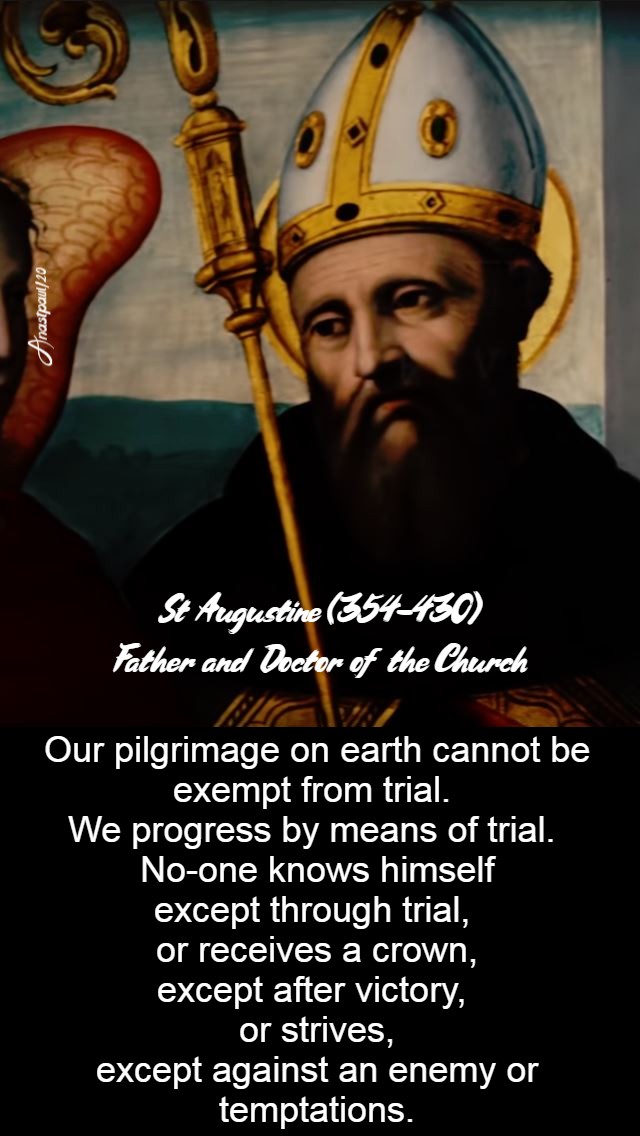
“Our pilgrimage on earth cannot be exempt from trial.
We progress by means of trial.
No-one knows himself except through trial,
or receives a crown,
except after victory,
or strives,
except against an enemy or temptations.”
St Augustine (354-430)
Father and Doctor of the Church
“Love never says
‘I have done enough.’”
St Marie Eugénie de Jésus (1817-1898)

Saint of the Day – 10 March – Saint Pope Simplicius (?- 483)
Saint of the Day – 10 March – Saint Pope Simplicius (?- 483) Papal Ascension 25 February 468 – 10 March 483. He was born in Tivoli, Italy, the son of a citizen named Castinus. Most of what is known of him personally is derived from the Liber Pontificalis. His remains are interred in Saint Peter’s Basilica, Vatican City, Rome, Italy.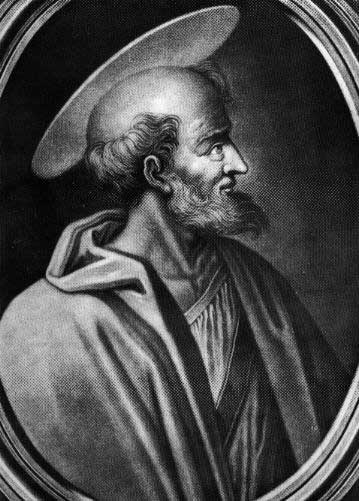
After a vacancy of 10 days following the death of Pope Hilarius, Simplicius was consecrated on 25 February 468.
The reign of Simplicius coincided with the official fall of the Western Empire, in 476. The Italian peninsula was overrun by barbarians and was in a constant state of war. Eventually, the Herulis, an East Germanic tribe who formed a kingdom around the middle Danube, joined forces with Odoacer and beat the Roman soldiers. The weak Western emperor, Romulus Augustus, was deposed. Odoacer became king of a new kingdom. Simplicius had been bishop of Rome for eight years at this point and surely was concerned over a heretic taking command of the empire, considering the ties that had developed between church and state. However, Odoacer was an organiser. He saw the way the government that had been in power had worked hand in hand with the Catholic Church and, for the most part left the Church to rule itself.
One of the early difficulties Simplicius had was the defense of the Council of Chalcedon. Simplicius probably was not even involved in this council, which was called in October, 451 by the emperor and, reluctantly, by Leo the Great. This council repudiated the Second Council of Ephesus and defined the dual nature of Christ, both divine and human. In addition, the Council of Chalcedon claimed that the Patriarchy of Constantinople was second in standing only to Rome.
Simplicius found himself on both sides of the support of the council. He supported the definition of Christ’s nature. But those against the definition, known as monophysites, had spread like wildfire throughout the Levant and Egypt, thus showing a large population arguing about the nature of the Lord. Simplicius was also opposed to the elevation of the patriarchy of Constantinople. Thus began a tearing away of the Eastern church from orthodoxy. The current Eastern emperor, Zeno, was more or
less orthodox. He was overthrown for a year in 475 by the monophysite, Bascilicus. A year later, Zeno was reinstated but this time chose to reconcile with monophysitism. This was not an easy situation for the pope. And he did not live to see the outcome.
The pope clashed with Patriarch Acacius in the jurisdictional dispute and the argument almost destroyed the legacy of Chalcedon.
Aside from this large problem, Simplicius showed himself to be an able, effective administrator. Concerned about his role as she[herd to the Western Church, Simplicius appointed Bishop Zeno of Seville as a papal vicar. He constructed several churches, at least one of which was originally a columned walkway in the city of Rome. One church is still extant, St Bibiana’s. A concern this pope had was what to do with the churches of the catacombs, which were not used the same way as they had the first few hundred years of Church history. He appointed priests to say Masses, baptise and offer the Sacrament of Penance routinely in the three primary catacomb churches – St Peter’s at the Vatican, St Paul’s and St Lawrence Outside the Walls.
A long illness led to Simplicius’ death on 10 March 483.
Pope St Simplicius is seen as one who championed orthodoxy and promoted papal supremacy.
Memorials of the Saints – 10 March
St Alexander of Apema
St Anastasia the Patrician
St Andrew of Strumi
St Attalas of Bobbio
St Blanchard of Nesle-la-Réposte
St Caius of Apema
St Cordratus of Nicomedië
St Droctoveus of Paris
Bl Elias del Socorro Nieves
St Emilian of Lagny
St Failbhe the Little
St Gustav the Hermit
St Himelin
Bl Jean-Marie Joseph Lataste
St John Ogilvie SJ (1579-1615 died aged 36) MARTYR
Biography:
https://anastpaul.wordpress.com/2017/03/10/saint-of-the-day-10-march-st-john-ogilvie/
St John Ogilvie, his Rosary and the Baron: https://anastpaul.wordpress.com/2017/03/10/st-john-
ogilvie-sj-10-march/
Bl John of Vallombrosa
St Kessog
St Macarius of Jerusalem
St Marie Eugénie de Jésus (1817-1898)
Her life:
https://anastpaul.com/2019/03/10/saint-of-the-day-10-march-st-marie-eugenie-de-jesus-1817- 1898/
St Peter of Veroli
St Rufinus of Nicomedië
St Sannudius of Bagensena
St Saturninus of Nicomedië
St Sedna of Ossory
St Silvester of Ireland
St Pope Simplicius (?- 483)
St Victor of North Africa
Bl Wirnto of Formbach
—
Anonymous Martyrs of Persia – A group of 42 Christians martyred in Persia in the 4th century.
Forty Martyrs of Armenia – Forty Christian soldiers of the Thunderstruck Legion of the Imperial Roman army who were tortured and murdered for their faith during the persecutions of Emperor Licinius. They were exposed naked on a frozen pond to freeze to death at Sebaste, Armenia in 320 and their bodies afterward were burned.
Quote of the Day – 9 March – “My name is …”
Quote of the Day – 9 March – The Memorial of St Pacian of Barcelona (c 310–391) Father of the Church.
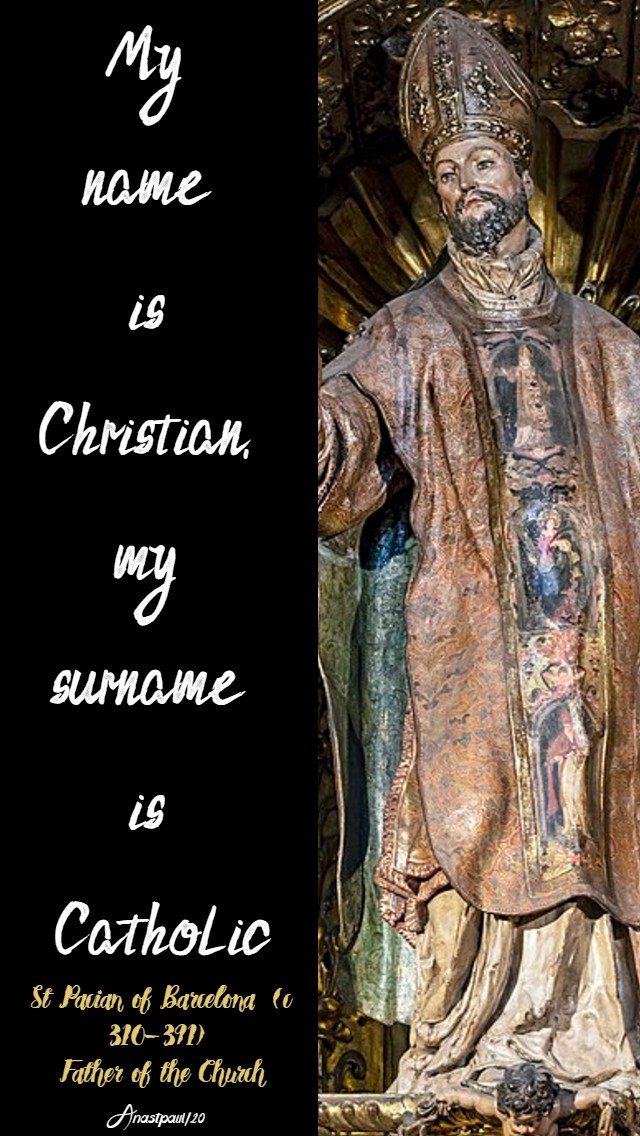
“My name is Christian, my surname is Catholic.”
St Pacian of Barcelona
One Minute Reflection – 9 March – ‘O envious one, you injure yourself…’
One Minute Reflection – 9 March – Monday of the Second Week of Lent, Year A, Readings: Daniel 9:4- 10, Psalm 79:8-9, 11, 13, Luke 6:36-38 and the Memorial of St Pacian of Barcelona (c 310–391) Father of the Church.
“Judge not and you will not be judged; condemn not and you will not be condemned; forgive and you will be forgiven; give and it will be given to you; good measure, pressed down, shaken together, running over, will be put into your lap. For the measure you give, will be the measure you get back.”...Luke 6:37-38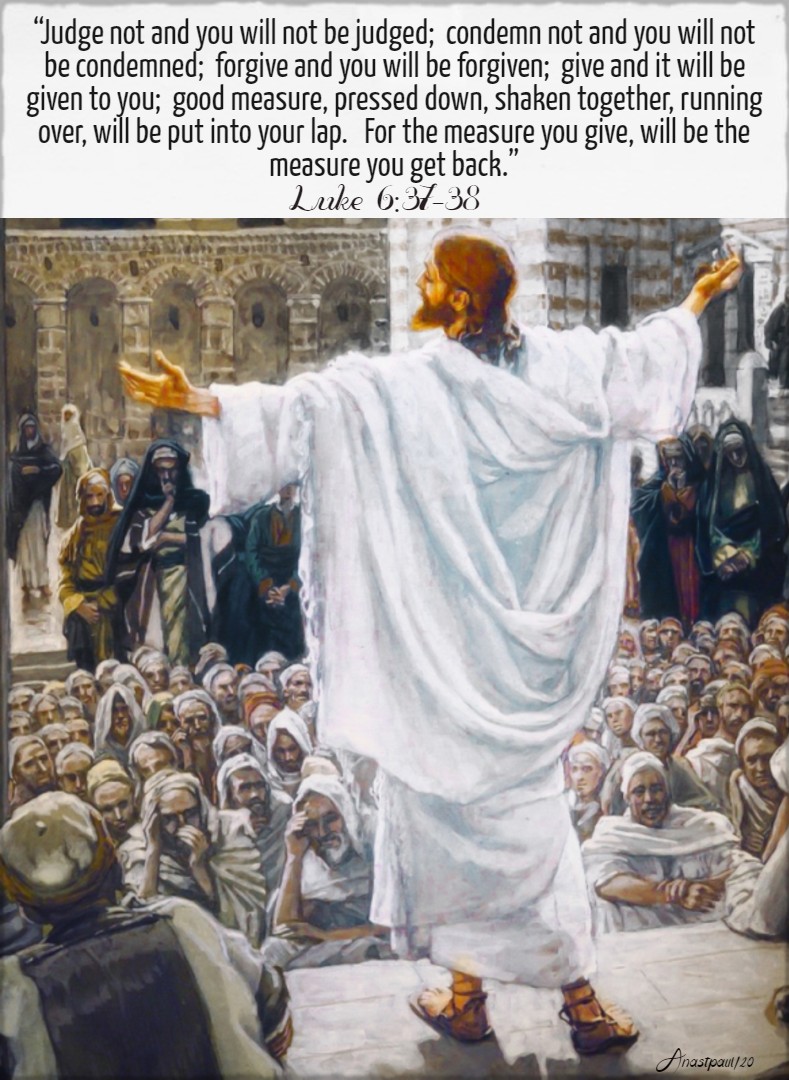
REFLECTION – “O envious one, you injure yourself more than he whom you would injure and the sword with which you wound will recoil and wound yourself. What harm did Cain do to Abel? Contrary to his intention he did him the greatest good, for he caused him to pass to a better and a blessed life and he himself was plunged into an abyss of woe. In what did Esau injure Jacob? Did not his envy prevent him from being enriched in the place in which he lived and, losing the inheritance and the blessing of his
father, did he not die a miserable death? What harm did the brothers of Joseph do to Joseph, whose envy went so far as to wish to shed his blood? Were they not driven to the last extremity and well-nigh perishing with hunger, whilst their brother reigned all through Egypt? It is ever thus, the more you envy your brother, the greater good you confer upon him. God, who sees all, takes the cause of the innocent in hand and, irritated by the injury you inflict, deigns to raise up him whom you wish to lower and will punish you to the full extent of your crime. If God usually punishes those who rejoice at the
misfortunes of their enemies, how much more will He punish those who, excited by envy, seek to do an injury to those who have never injured them?”… Saint John Chrysostom (347-407) Father & Doctor of the Church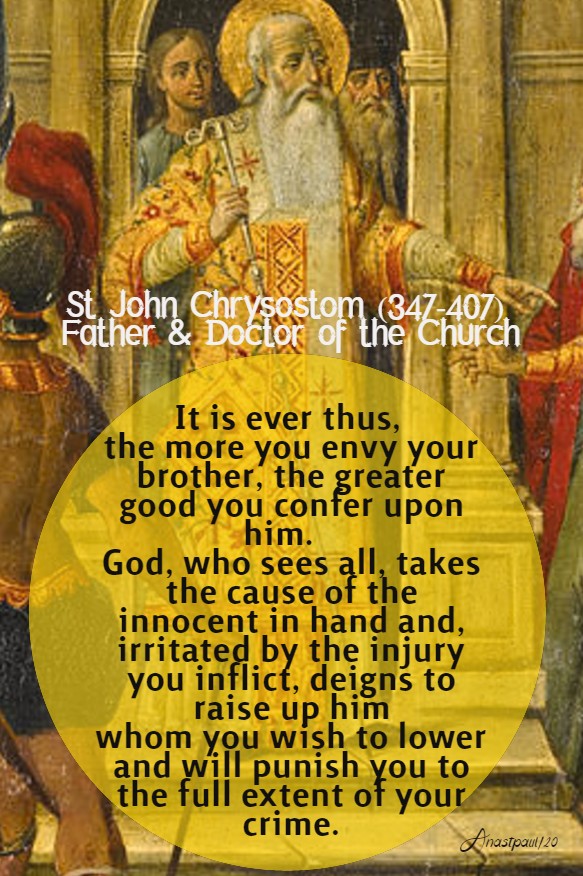
PRAYER – We beseech Your mercy Lord, let Your Spirit come upon us in power and fill us with His gifts, to render our minds and hearts pleasing to You and make us docile and merciful as Your Son has taught us. May our Lord Jesus, Your Son, guide us and may the prayers of St Pacian of Barcelona teach us Your precepts. Through Jesus Christ with the Holy Spirit, God now and forever, amen.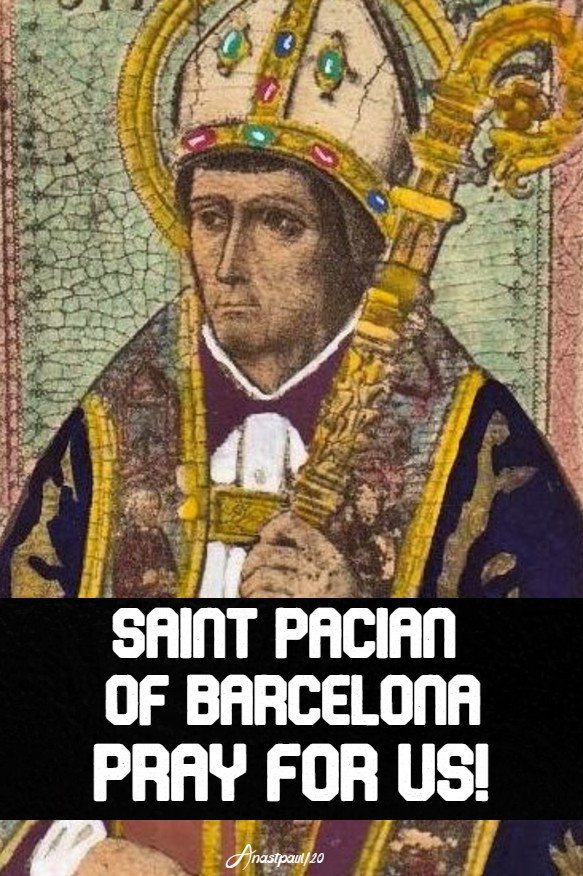
Saint of the Day – 9 March – Saint Pacian of Barcelona (c 310–391) Bishop and Father of the Church.
Saint of the Day – 9 March – Saint Pacian of Barcelona (c 310–391) Bishop and Father of the Church.
St Pacian was the Bishop of Barcelona during the fourth century. He was Bishop from about 365 to 391, succeeding Praetextatus, who had attended a church council at Sardica in 347 and who is the first recorded Bishop of Barcelona.
Considered a Father of the Church, Pacian is eulogised in St Jerome’s De viris illustribus – Catalogue of Illustrious Men, in which Jerome praises his eloquence, learning, chastity and holiness of life. St Pacian was married and had a son, Flavius Dexter, who served as high chamberlain to Theodosius I and as praetorian prefect to Honorius, the Western Roman Emperor. St Jerome did not know Pacian personally but knew Pacian’s son, to whom De Viris Illustribus is dedicated.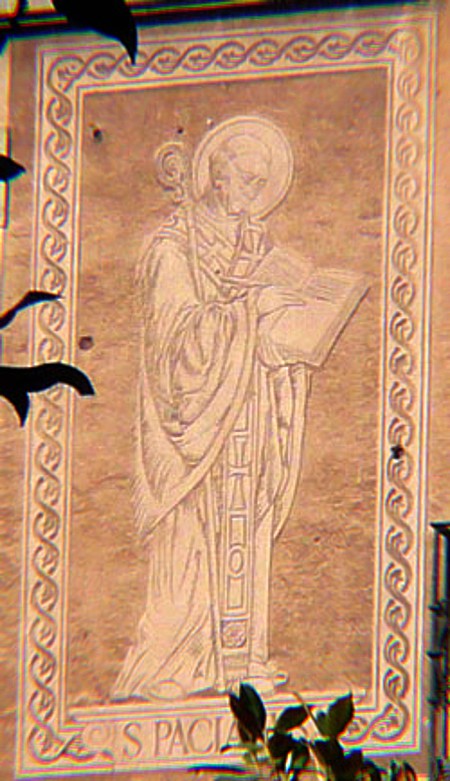
St Pacian gained fame when Barcelona became internationally recognised among the most important dioceses within the history of the universal Church. His writings – like the breviary or the divine office read by all Catholic priests – are still widely in use today.
Saint Pacian’s writings are extant only in part, in three letters and a short treatise, Paraenesis ad Poenitentiam. In his writings, he discussed ecclesiastical discipline, baptism, papal primacy and teachings on penance against Novatianism, which was then flourishing in Spain.
He is also remembered from a phrase from one of his letters – Christianus mihi nomen est, catholicus vero cognomen -“My name is Christian, my surname is Catholic.”
Inside the Barcelona Cathedral, his seat, is a baroque altarpiece by the sculptor Joan Roig from 1688, representing scenes from the lives of Saint Pacian and of Saint Ignatius of Loyola and St Francis Xavier. This splendid image of Saint Pacian presides above the altarpiece.


 At the right is a depiction of the election of Saint Pacian as bishop of Barcelon, his visit to the Pope and his burial.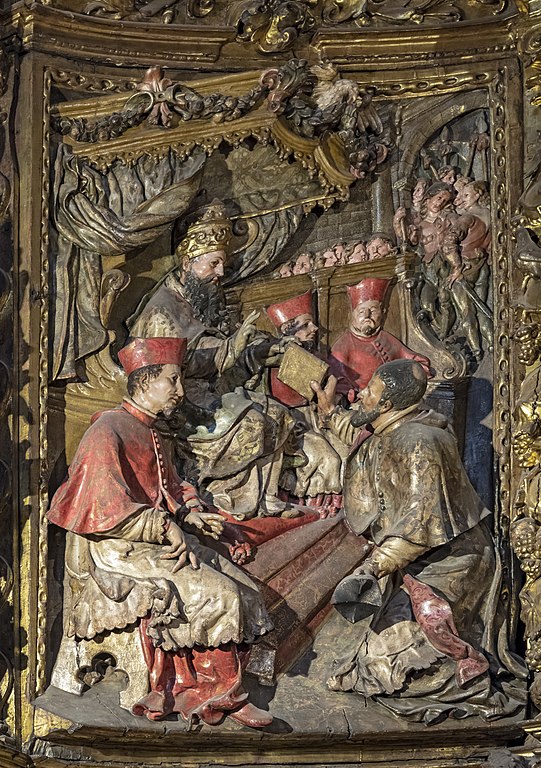
Memorials of the Saints – 9 March
St Frances of Rome Obl.S.B. (1384-1440) (Optional Memorial)
Biography:
https://anastpaul.wordpress.com/2017/03/09/saint-of-the-day-9-march-st-frances-of-rome/
St Antony of Froidemont
St Bosa of York
St Candidus
St Catherine of Bologna OSC (1413-1463)
St Catherine’s Life:
Saint of the Day – 9 March – St Catherine of Bologna OSC (1413-1463)
St Constantine of Cornwall
St Cyrion
St Mary of Seyne
St Pacian of Barcelona (c 310–391)
—
Martyrs of Korea: – Ioannes Baptista Chon Chang-un, Petrus Ch’oe Hyong
Quote of the Day – 24 February – ‘The secret of peace and happiness …’
Quote of the Day – 24 February – The Memorial of Blessed Ascensión of the Heart of Jesus OP (1868-1940)
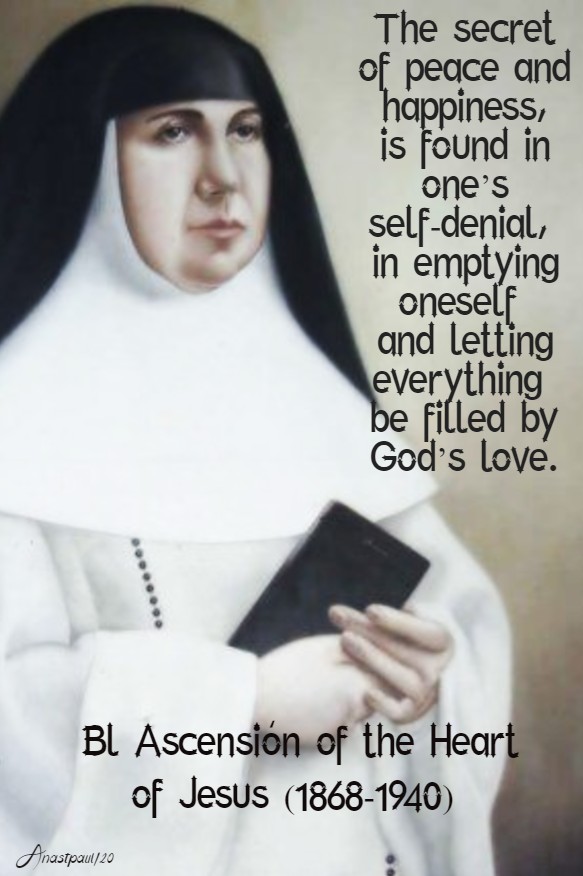
“The secret of peace and happiness,
is found in one’s self-denial,
in emptying oneself
and letting everything
be filled by God’s love.”
Blessed Ascensión of the Heart of Jesus (1868-1940)
One Minute Reflection – 24 February – “I do believe, help my unbelief!”
One Minute Reflection – 24 February – Monday of the Seventh Week of Ordinary Time, Year A, Readings: : James 3:13-18, Psalm 19:8-10, 15, Mark 9:14-29 and the Memorial of Blessed Ascensión of the Heart of Jesus OP (1868-1940)
“I do believe, help my unbelief!” … Mark 9:25
REFLECTION – “Cast off doubt from yourself and do not hesitate at all to ask God for anything, or say in yourself, “How can I ask anything from the Lord and receive it, when I have sinned so much against Him?” Do not reason thus but turn to the Lord with your whole heart and ask of Him undoubtingly and you will come to know His great mercy, that He will not desert you but will fulfil the request of your soul. For God is not like us, who hold grudges but He is forgiving and feels pity for what He has made. So cleanse your heart of all the vanities of this world, of evil and sin and ask the Lord and you will receive everything, (…) if you ask the Lord without doubting.
But if you doubt in your heart, you will receive none of your requests. For those who doubt in their relation to God are the waverers and do not get any of their requests at all. (…) For anyone who wavers, if they do not repent, can be saved only with difficulty. So cleanse your heart of wavering and clothe yourself in faith, for it is strong and trust God that you will receive all that you ask for and if ever, when you have asked the Lord for something, you are somewhat slow in receiving it, do not doubt, because you did not receive your soul’s request quickly, for surely, it is on account of some temptation or some transgression of which you are unaware, that you are slow in getting what you asked for. So do not stop making your soul’s request (…) Beware of such wavering, for it is wicked and foolish and uproots many from the faith, even those who are very faithful and strong (…) Clothe yourself in strong and powerful faith, for faith promises all things and accomplishes all things but doubt distrusts itself and fails in everything it undertakes.” … St Hermas (2nd century) The Shepherd (*SEE NOTE ON ST HERMAS BELOW).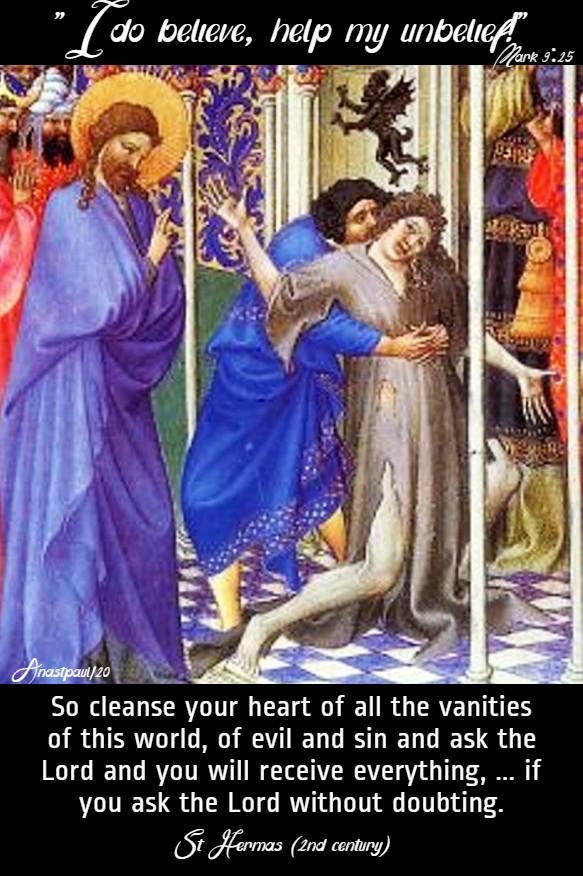
PRAYER – King of heaven and earth, Lord God, rule over our hearts and bodies this day. Sanctify us and guide our every thought, word and deed, according to the commandments of Your law. Grant us the grace of true faith and a steadfast trust, so that now and forever, Your grace may free and save us. May the prayers of all your saints and Blessed Ascension of the Heart of Jesus for her intercession, be a help to keep us ever strong in faith, hope and love. Through Christ our Lord, with the Holy Spirit, God now and for all eternity, amen.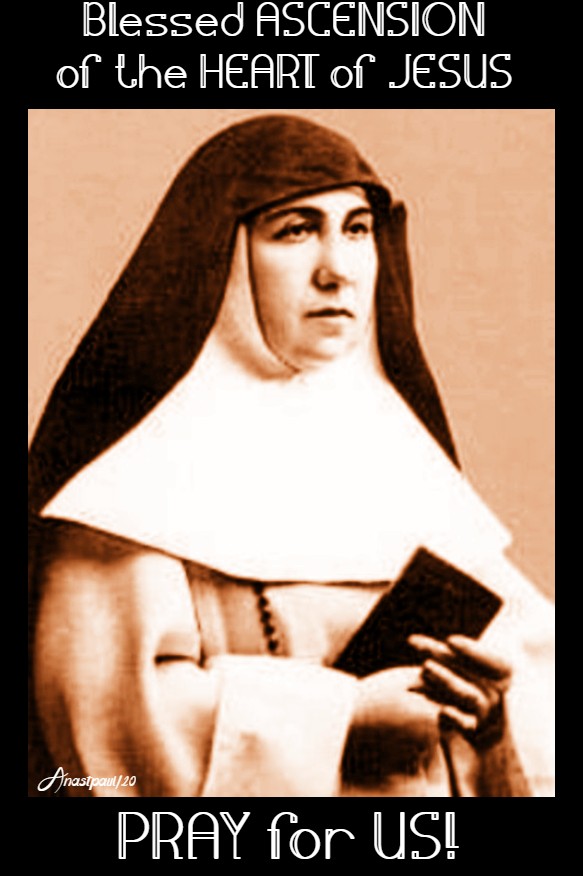
It has been written that St Hermas was one of the 72 followers mentioned in Luke 10 that Jesus sent out to preach. He was a well-to-do freedman and earnest Christian, who lived in Ancient Rome. He was the brother of Pope Pius I, Bishop of Rome about the middle of the 2nd century. Some later writers confuse him with Hermas of Dalmatia, mentioned in Romans 16:14. Hermas, the freedman, was the character and the author of the work titled The Shepherd of Hermas (or just The Shepherd), which, by some of the early Church fathers such as St Irenaeus, was sometimes classed among the canonical “Scriptures.”
Greet Asyncritus, Phlegon, Hermes, Patrobas, Hermas and the brothers who are with them. ―Romans 16:14
Saint of the Day – 24 February – Blessed Ascensión of the Heart of Jesus OP (1868-1940)
Saint of the Day – 24 February – Blessed Ascensión of the Heart of Jesus OP (1868-1940)
a Spanish Religious sister of the Order of St Dominic, Teacher, Missionary. She co-founded and was the first Prioress General of the Congregation of Dominican Missionary Sisters of the Rosary, which she helped to found in Peru. Born as Florentina Nicol y Goni on 14 March 1868 in Tafalla, Navarre, Spain and died on 24 February 1940 in Peru of natural causes. Also known as Maria Ascension Nicol y Goñi, Mother Ascension del Corazon de Jesus, Mother Ascensión Nicol Goñi, Florentina Nicol Goni. Patronage- Dominican Missionary Sisters of the Rosary.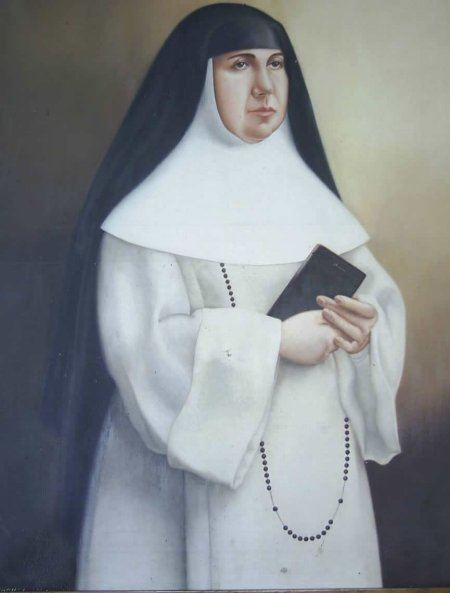
Florentina was the youngest of four children. She was educated at Saint Rose of Lima Dominican boarding school in Huesca, where she was first introduced to the religious life, which raised questions in her mind about her future. Returning home for a year to reflect on her choices, she later returned to the monastery and became a nun of the Dominican Second Order in 1885, taking the name “Maria Ascension of the Heart of Jesus”. She became a teacher at that school in 1886 and served in that capacity for the next 27 years. Under the anti-clerical laws promulgated in the early 20th century, however, in 1913 the Spanish government took over the school and expelled the Sisters.
Bl. Ascensión of the Heart of Jesus is one of the great missionaries of the last century. From her youth, she viewed life as a gift for the Lord and for her neighbour and she wanted to marry no-one except God, to whom she consecrated herself as a Dominican Missionary Sister at the monastery of St Rose in Huesca, Spain. She lived unreservedly the dynamism of charity which the Holy Spirit generates in those who are open to Him in their hearts.
The first part of her apostolate consisted of being a teacher in the school connected to the monastery. Testimonials recall her as an excellent educator, amiable and strong, understanding and exacting.
But the Lord had different plans in store for her. At age 45, he called her to become a missionary in Peru. With youthful enthusiasm and total trust in Providence, she left her Country and dedicated herself to the evangelisation of the world, beginning on the American Continent. Her work was so generous, vast and efficacious that it left a profound mark on the missionary history of the Church.
She collaborated with the Dominican Bishop, Ramon Zubieta, in founding the Dominican Missionary Sisters of the Rosary, of which she was the first Superior General. Her missionary life was rich in sacrifices, hardships and apostolic fruits. She made many apostolic trips to Peru, to Europe and she even went to China. She had the temperament of an intrepid and tireless fighter, together with a maternal tenderness that was capable of conquering hearts. Driven by charity for Christ, she showed to all, the charisms of spiritual motherhood.
Sustained by a living faith and by a fervent devotion to the Sacred Heart of Jesus and to Our Lady of the Rosary, she dedicated herself to the salvation of souls, even to the sacrifice of her very self. And she frequently urged her Daughters to do the same, saying that souls are not saved without sacrificing themselves. She inspired an ever more pure and intense charity and for this, she offered herself as a victim to the Merciful Love of God.
She also established her congregation in Spain where they were able to recruit and form many missionary vocations. The General Motherhouse of the congregation was established in Pamplona, Navarre, Spain, and became her base.
By 1938 Mother Ascension felt increasingly frail and wanted to retire to prepare herself for her final days. Nevertheless, she accepted her unanimous re-election for a third term as Prioress General at the congregation’s General Chapter of 1939. She died on 24 February 1940.
Today the congregation has 785 Sisters serving in 21 nations on five continents. It’s General Motherhouse is now in Madrid, Spain. Among its members, the congregation counts four Sisters who are considered to be martyrs for the faith, having been tortured and murdered in the former Republic of the Congo on 25 November 1964, in the course of the Simba Rebellion, after they refused to leave the patients in their hospital.
She was Beatified on 14 May 2005 by Pope Benedict XVI. The Recognition Celebration was celebrated by Cardinal Saraiva Martins in Saint Peter’s Basilica, Vatican City.
Memorials of the Saints – 24 February
St Adela of Blois
Bl Antonio Taglia
Bl Arnold of Carcassonne
St Betto of Auxerre
Bl Berta of Busano
Bl Constantius of Fabriano OP (1401-1481)
Biography:
https://anastpaul.com/2019/02/24/saint-of-the-day-24-february-blessed-constantius-of-fabriano-op-1401-1481/
St Cummian Albus of Iona
St Ethelbert of Kent
Evetius of Nicomedia
Blessed Ascensión of the Heart of Jesus/Florentina Nicol y Goñi OP (1868-1940)
Bl Ida of Hohenfels
Bl Josefa Naval Girbes
St Liudhard
Bl Lotario Arnari
Bl Marco De’ Marconi
St Modestus of Trier
St Peter the Librarian
St Praetextatus of Rouen
St Primitiva
St Sergius of Caesarea
Bl Simon of Saint Bertin
Blessed Tommaso Maria Fusco (1831-1891)
Blessed Tommaso;s life: https://anastpaul.wordpress.com/2018/02/24/saint-of-the-day-24-february-blessed-thomas-mary-fusco-and-tommaso-maria-fusco-1831-1891/
Quote of the Day – 23 February – ‘Forsake the vanity of the crowd..’ St Polycarp
Quote of the Day – 23 February – The Memorial of St Polycarp (c 69–c 155) Martyr and Apostolic Father of the Church
“Let us, therefore, forsake the vanity of the crowd
and their false teachings and turn back to the word
delivered to us from the beginning.”
St Polycarp (c 69–c 155) Martyr
and Apostolic Father of the Church

Saint of the Day – 23 February – Saint Josephine/Giuseppina Vannini (1859-1911)
Saint of the Day – 23 February – Saint Josephine/Giuseppina Vannini (1859-1911) “A woman of prayer and sacrifice” – Religious Sister and Founder together with Blessed Louis (Luigi) Tezza MI (Camillian) (1 November 1841 – 26 September 1923), of the religious congregation known as the Daughters of Saint Camillus, of which Order she is the Patron. Born as Giuditta Vannini on 7 July 1859 at Rome and died on 23 February 1911 (aged 51) in Rome of natural causes.
Giuditta Vannini was born on 7 July 1859 in Rome as the second of three children to the cook Angelo Vannini and Annunziata Papi, her two siblings were Giulia and Augusto. Her Baptism was celebrated on 8 July and she was given the Baptismal names “Giuditta Adelaide Agata.” The children were orphaned after her father died on 18 August 1863 when she was four and her mother, when she was seven (her mother remarried on 11 May 1865 but died on 6 November 1866). She was separated from her siblings when she was sent to the Torlonia orphanage at Via Sant’Onofrio in Rome under the guidance of the Vincentian Sisters until 1883. Her brother was sent to live with their maternal uncle while her sister was sent to the Sisters of Saint Joseph. Both her First Communion and Confirmation were celebrated on 19 March 1873. Vannini obtained a diploma as a kindergarten teacher but settled instead on the religious life.
Vannini entered the Vincentian Sisters on 3 March 1883 to become a professed religious and commenced her novitiate period in Siena but she was forced to leave due to ill health in 1887. Vannini had returned to Rome to recuperate and then in 1888 decided to resume her religious formation. But after she returned to Siena her health was deemed unsuitable for the rigours of the order.
It was sometime later that she would meet Luigi Tezza (in a confessional when she sought his advice) on 17 December 1891 at the end of a spiritual retreat she was attending. Bl Tezza desired the establishment of an all-female religious congregation dedicated to caring for the sick and dying and asked if Vannini would be interested in joining him. Giudetta accepted Tezza’s offer after discerning and reflecting on her vocation and the two began to form a group to serve as the basis for their congregation. The decisive moment came on 19 March 1892 when she and two companions received the scapular and the religious habit of the Camillian tertiaries and on 19 March 1893 professed her private vows as “Giuseppina”. Her perpetual religious profession was made sometime later on 8 December 1895, after she had established, with Tezza, the Daughters of Saint Camillus. She was made it’s Superior General. Her profession was made in private since her initial application for ecclesiastical approval of the order had been rejected.

She and Tezza faced difficulties, when Pope Leo XIII decided not to allow for the opening of new religious congregations added to the unjust slander directed at Tezza which led to the Cardinal Vicar of Rome Pietro Respighi sending him to Lima in Peru in 1900 to exercise his pastoral mission there – he is now called “The Apostle of Lima” so great was his work there. This new development prompted the leadership of the order to fall to Vannini alone but she would maintain correspondence with Tezza until her death. The congregation received formal approval on 21 June 1909 as an order of Diocesan right.
In 1910 she visited the order’s Italian houses and those in France before suffering from a fatal heart disease. Giuseppina died during the evening on 23 February 1911 in her bed in Rome. Her remains were interred in Rome but later relocated to the order’s Motherhouse in Grottaferrata. The congregation received the decree of praise on 25 February 1922 from Pope Pius XI and received Papal approval from Pius XI a decade later on 17 June 1931.
The plan of the co-Founder Fr Tezza, was to set up a female Congregation with the same charism of his Order which “expresses itself and is realised in the spiritual and corporal works of mercy towards the sick,” practised with a vow “even at the risk of one’s own life” as the fourth vow of the Congregation. The healing activity of Jesus for the sick occupies a very large and essential part in the Gospel and it becomes a great sign of the salvific mission of Jesus, the Messiah. Their mission is inseparably united with the Redemptive mission of Christ.
“Cure the sick, save the souls” is the motto of the Congregation. In response to this special charism the order recognises the Crucified Christ in the sick and in the person who suffers. “In this presence of Christ among the sick and in us, who serve in His name they find the basis of our spirituality.”
Therefore, the main legacy the St Josephine left her sisters, was the pure and simple physical and spiritual care of the sick, exercised at home as in hospitals, leprosariums and nursing homes, both in European rehabilitation centres and in mission countries.
In late 2005 there were 823 religious in a total of 97 houses in places in Europe such as Poland and Portugal. The congregation also operates in Latin America in countries such as Argentina and Mexico and in Africa in Benin and Burkina Faso.
Her Beatification process opened in the 1950s though its formal introduction came in the late 1970s at which point she became titled as a Servant of God, she became titled as Venerable in 1992 upon papal confirmation of her heroic virtue. St Pope John Paul II presided over Vannini’s Beatification on 16 October 1994. Pope Francis confirmed her canonisation in mid-2019 and Canonised her as a Saint in Saint Peter’s Square on 13 October 2019, together with St John Henry Newman, amongst others.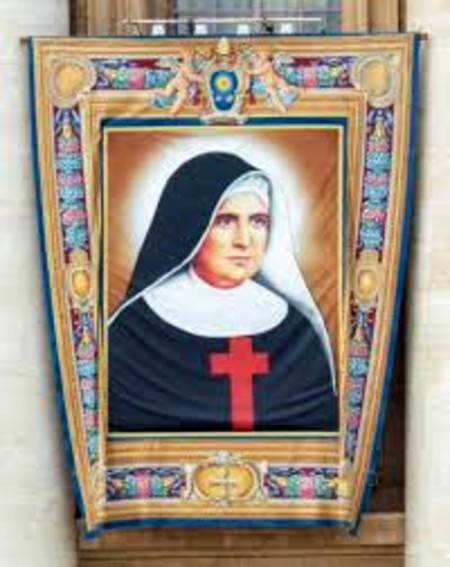

Blessed Luigi’s Story here: https://anastpaul.com/2018/09/26/saint-of-the-day-26-september-blessed-louis-tezza-m-i-1841-1923-the-apostle-of-lima/
Seventh Sunday of the Year in Ordinary Time, Year A +2020 and Memorials of the Saints – 23 February
Seventh Sunday of the Year in Ordinary Time, Year A +2020
St Polycarp of Smyrna (c 69 – c 155) Martyr (Memorial)
St Polycarp’s life and death:
https://anastpaul.wordpress.com/2018/02/23/saint-of-the-day-23-february-st-polycarp-c-69-c-155-martyr-and-father-of-the-church/
St Alexander Akimetes
St Boswell
St Dositheus of Egypt
St Felix of Brescia
St Florentius of Seville
St Giovanni Theristi
Bl Giovannina Franchi
Bl John of Hungary
St Josephine Vannini (1859-1911)
Bl Juan Lucas Manzanares
Bl Ludwik Mzyk
St Martha of Astorga
St Medrald
St Milburga
Bl Nicolas Tabouillot
St Ordonius
St Polycarp of Rome
Bl Rafaela Ybarra de Villalongo
St Romana
St Serenus the Gardener (Died 307) Martyr
His story:
https://anastpaul.com/2019/02/23/saint-of-the-day-23-february-st-serenus-the-gardener-died-307-martyr/
Bl Stefan Wincenty Frelichowski
St Willigis of Mainz
St Zebinus of Syria
—
Martyrs of Syrmium – 73 Christians who were martyred together in the persecutions of Diocletian. We know no details about them, and only six of their names – Antigonus, Libius, Rogatianus, Rutilus, Senerotas and Syncrotas.
Saint of the Day – 22 February – Blessed Émilie d’Oultremont d’Hoogvorst known as Emília Maria of Jesus (1818-1878)
Saint of the Day – 22 February – Blessed Émilie d’Oultremont d’Hoogvorst known as Emília Maria of Jesus (1818-1878) – Widow, Mother, Religious and Founder of The Sisters of Mary Reparatrix whose charism is Eucharistic Adoration combined with the evangelisation of society, especially of women. Born on 11 October 1818 in Wegimont near Liège, Belgium and died on 22 February 1878 at the home of her son Adriano in Florence, Italy of natural causes. She is Patron of the Order she founded.
Émilie d’Oultremont d’Hoogvorst was born on 11 October 1818, in Wégimont (Lieja, Belgium), into a noble family and steeped in Christian values. The young woman’s personality developed in a serene and balanced way, enriched with her extraordinary human and spiritual gifts.
Precisely during a ceremony in a palace in Rome, she took an inspiration and spoke these words: “Master, only You in my life” and thought of consecrating herself to the Lord. Marriage proposals were diverse but when she met Count Victor van der Linden, “a young man of solid virtue and exceptional piety” – as she would say – Emilia recognised that the Lord wanted to lead her along the path of marriage, which was celebrated on 19 October 1837. She lived the life of a young and happy wife, mother of four children: Adriano, Edmundo, Olímpia and Margarida. From then on, Emilia found the spiritual guides in the Jesuit Fathers, who understood and guided her on her spiritual path.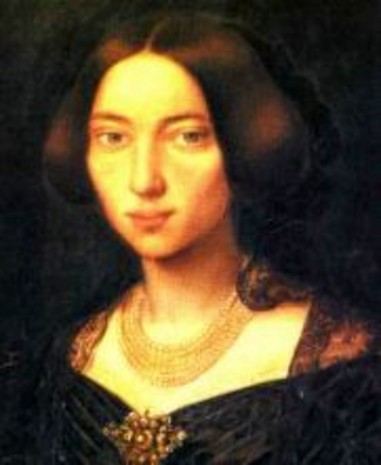
It was not ten years of marriage and her husband died of malaria. Emília lived this test with faith and courageously continued her mission as a mother and educator, she consecrated herself to God with the vow of chastity, dedicating herself even more to works of charity. She moved to Paris in order to follow the training of her children at the College of the Jesuits.
When, on 8 December 1854, Pope Pius IX proclaimed the Immaculate Conception of the Mother of God, Emilia asked Mary to inspire her to what future course was most pleasing to God.
Together with some young women of different nationalities, she began a consecrated life, in the following year. The official institution of the new Congregation of Mary Reparatrix took place on 1 May 1857, the day they were clothed in the habit. Mother Maria of Jesus (this was her religious name) and her companions, began this journey, guided by the spirit of St Ignatius Loyola.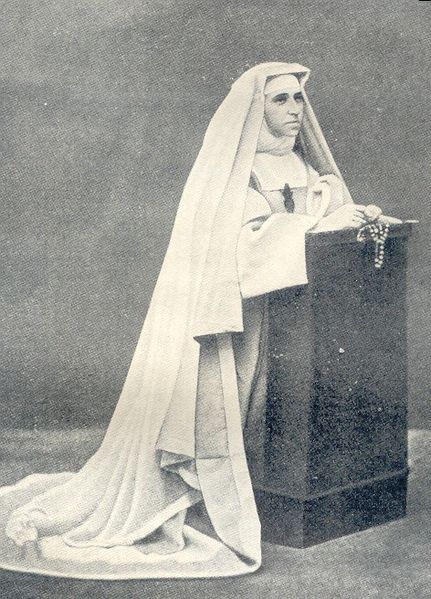
Mother Emília Maria of Jesus carefully followed the choice of her two sons in following the marriage vocation and was delighted with the decision of her daughters to follow her in religious life, in the same Congregation she had founded.
The Ignatian spirit was the soul that animated all her apostolic zeal, to the point that she took risky decisions, such as responding to the Jesuits’ call to build a house in India, after only two years of foundation. It was the definitive launch of an expansion which then grew to include several countries in Europe.
The last years of Mother Maria of Jesus were full of diverse sufferings – family grief, concern for her children, separations and difficulties within the Congregation. Suffering herself from very poor health, while on her way back to Belgium, she died at the home of her son Adriano, in Florence, on 22 February 1878. … Vatican.va
Her shrine resides n the Santa Maria della Concezione dei Cappuccini in Rome. She was buried at the church of Saint Bonaventure in Rome.
Blessed Maria of Jesus was Beatified on 12 October 1997, Saint Peter’s Square, Vatican City after the approval of the required miracle, by St Pope John Paul II, when he said:
“Through her life of prayer, she reminds us that in Eucharistic Adoration, where we drink at the source of the life that is Christ, we find the strength for our daily mission. May each one of us, whatever his state of life, learn to “listen to the voice of Christ,, “which must be the rule of our existence,” as she liked to say!”
Feast of the Chair of St Peter and Memorials of the Saints – 22 February
The Chair of Saint Peter (Feast)
About this great Feast:
https://anastpaul.wordpress.com/2018/02/22/feast-of-the-chair-of-st-peter-cathedra-petri-22-february/
St Ailius of Alexandria
St Angelus Portasole
St Aristion of Salamis
St Athanasius of Nicomedia
St Baradates of Cyrrhus
Bl Diego Carvalho
St Elwin
Blessed Émilie d’Oultremont d’Hoogvorst/Maria of Jesus (1818-1878)
St John the Saxon
St Limnaeus
St Margaret of Cortona TOSF (1247–1297)
Biography:
https://anastpaul.com/2019/02/22/saint-of-the-day-22-february-st-margaret-of-cortona-tosf-1247-1297/
St Maximian of Ravenna
St Miguel Facerías Garcés
St Mohammed Abdalla
St Papias of Heirapolis
St Paschasius of Vienne
St Raynerius of Beaulieu
St Thalassius
—
Martyrs of Arabia – A memorial for all the unnamed Christians martyred in the desert and mountainous areas south of the Dead Sea during the persecutions of Emperor Valerius Maximianus Galerius.
Quote/s of the Day – 21 February – The Burning Babe
Quote/s of the Day – 21 February – the Memorial of St Peter Damian OSB (1007-1072) Doctor of the Church and St Robert Southwell SJ (1561-1595) Priest and Martyr
The Burning Babe, by Saint Robert Southwell

As I in hoary winter’s night stood shivering in the snow,
Surprised I was with sudden heat which made my heart to glow;
And lifting up a fearful eye to view what fire was near,
A pretty babe all burning bright did in the air appear;
Who, scorchëd with excessive heat, such floods of tears did shed
As though his floods should quench his flames which with his tears were fed.
Alas, quoth he, but newly born in fiery heats I fry,
Yet none approach to warm their hearts or feel my fire but I!
My faultless breast the furnace is, the fuel wounding thorns,
Love is the fire, and sighs the smoke, the ashes shame and scorns;
The fuel justice layeth on, and mercy blows the coals,
The metal in this furnace wrought are men’s defiled souls,
For which, as now on fire I am to work them to their good,
So will I melt into a bath to wash them in my blood.
With this he vanished out of sight and swiftly shrunk away,
And straight I called unto mind that it was Christmas day.
It’s not surprising, it’s one of the great poems of the English language.
St Robert Southwell S.J. (1561-1595) Martyr, Religious Priest, Poet, Hymnodist, Writer, clandestine missionary was born in 1561 in Horsham Saint Faith, Norfolk, England and he was martyred by being hanged, drawn and quartered on 21 February 1595 (aged 33) in Tyburn, London, England. St Robert was Canonised on 25 October 1970 by Blessed Pope Paul VI.
“His poetry – we don’t know exactly when he began to write but it must have been very young because he wrote a great deal of which we have the record and by now the English speaking world knows Robert Southwell. His two outstanding poems are ‘The Burning Babe’ and ‘The Virgin Mary to Christ On The Cross.’” (Ven Fr John A Hardon SJ)
St Peter Damian quotes here:
https://anastpaul.com/2019/02/21/quote-s-of-the-day-21-february-st-peter-damian/
And some from St Robert Southwell here:
https://anastpaul.com/2018/02/21/quote-s-of-the-day-21-february-the-memorial-of-st-peter-damian-o-s-b-1007-1072-and-st-robert-southwell-s-j-1561-1595/
One Minute Reflection – 21 February – ‘carrying His cross’
One Minute Reflection – 21 February – Friday of the Sixth Week in Ordinary Time, Year A, Readings: James 2:14-24, 26, Psalm 112:1-6, Mark 8:34–9:1 and the Memorial of Blessed Noel Pinot (1747-1794) Priest and Martyr
“He summoned the crowd with his disciples and said to them, “Whoever wishes to come after me must deny himself, take up his cross and follow me.” … Mark 8:34
REFLECTION – “What does this mean, “take up a cross”? It means he will bear with whatever is troublesome and in this very act he will be following me.
When he has begun to follow me, according to My teaching and precepts, he will find many people contradicting him and standing in his way, many who not only deride but even persecute him.
Moreover, this is true, not only of pagans who are outside the church but also of those, who seem to be in it visibly but are outside of it because of the perversity of their deeds.
Although these glory, in merely the title of Christian, they continually persecute faithful Christians.
Such belong to the members of the church in the same way, that bad blood is in the body.
Therefore, if you wish to follow Christ, do not delay in carrying His cross, tolerate sinners but do not yield to them.
Do not let the false happiness of the wicked corrupt you.
You do well to despise all things for the sake of Christ, in order that you may be fit for his companionship.” … St Caesarius of Arles (470-543) – (Sermons, 159)
PRAYER – Holy Father, send Your Divine Enlightener into the hearts of all Your faithful, filling us with the strength to fulfil our mission as the followers of Your only Son, our Saviour and to take up our cross in His footsteps. Teach us and guide us, to deny ourselves for His sake. As the zealous, faithful and courageous shepherd Blessed Noel Pinot, died for love of Christ and His Church, may we and all our Priests, profit by his intercession and be strengthened in the face of all persecution. We make our prayer through our Lord Jesus, in unity with the Holy Spirit, one God forever, amen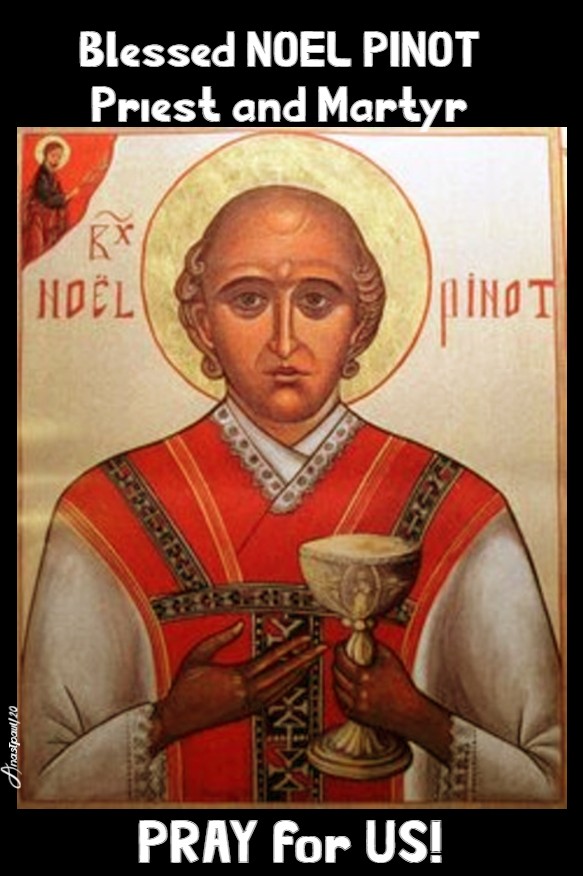
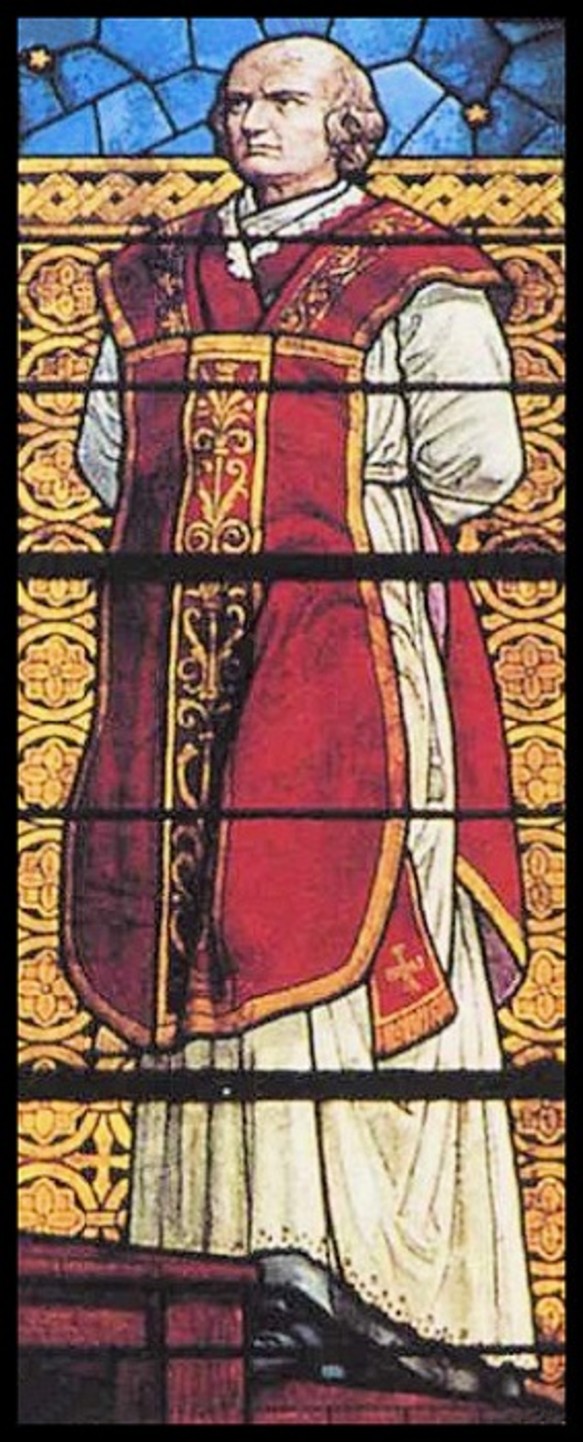
Saint of the Day – 21 February – Blessed Noel Pinot (1747-1794) Priest and Martyr
Saint of the Day – 21 February – Blessed Noel Pinot (1747-1794) Priest and Martyr – born on 19 December 1747, aged 46, at Angers, Maine-et-Loire, France and died by being guillotined on 21 February 1794 at Angers, Maine-et-Loire, France. He wore his Mass vestments to execution and died reciting the opening words of the Mass.

Born the last of sixteen children to a humble weaver, he lost his father when he was eight years old. He entered the seminary in Angers. He was Ordained a Priest on 22 December 1770.
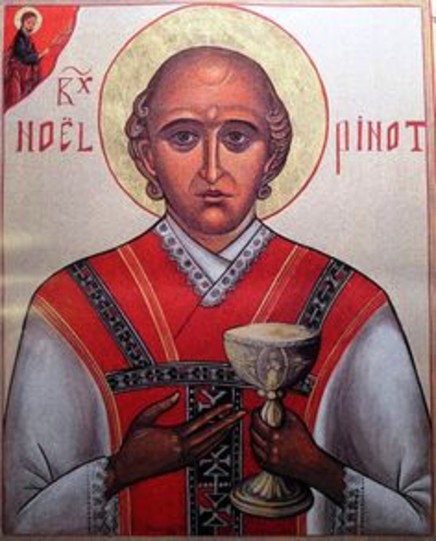
He was first appointed vicar in Bousse in 1772 and then chaplain at Angers in August 1781. In September 1789 he became pastor of Le Louroux-Béconnais commune.
During the French Revolution, he refused to take the oath of the Civil Constitution of the Clergy unlike his superior, who took the oath on Sunday, 23 January 1791 and was later a member of the Petite Église. He was accused by the revolutionary municipality of “engaging in ecclesiastical activities to oppose the law.” On Sunday 27 February he was brought before the court. Denounced, he was arrested on 5 March and sentenced to banishment by the District Court. He hid in Beaupreau. Returning to Louroux in 1793, during the war of Vendee, he went into hiding after the failure of the royalist insurgents against Nantes.

He was arrested on the night of 8 February 1794 during a clandestine Mass he celebrated at the farm where he was hiding. 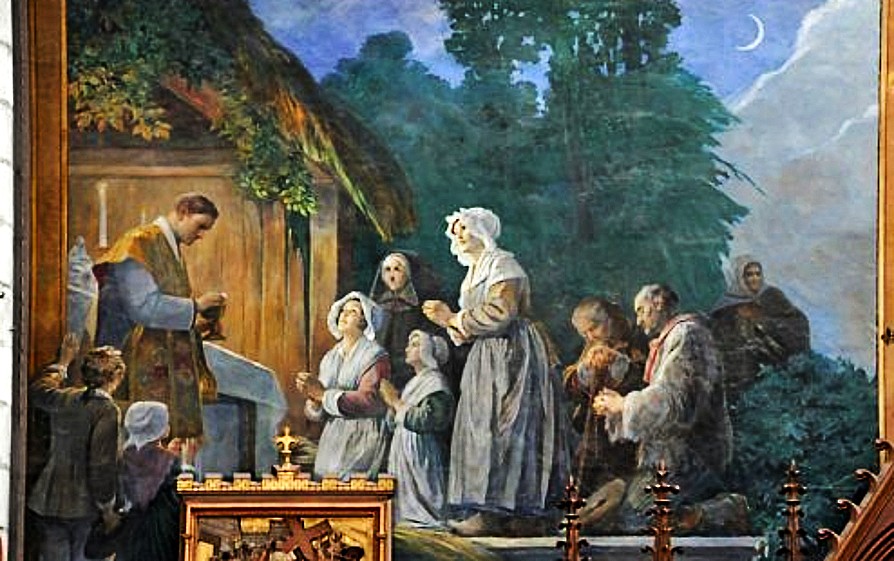
After ten days of imprisonment, the rebel was brought before the revolutionary court, which held its trials in a deconsecrated church. On this day, 21 February, the committee was presided over by Citizen Roussel. By a horrifying coincidence, this revolutionary officer was an apostate priest, who had initially taken the oath, then left the priesthood! But in Anjou, no one knew his past. After he had given the sentence, Roussel looked at the vestments displayed before the court and mockingly suggested to the prisoner: “Wouldn’t you be well pleased to go to the guillotine in your vestments?”—“Yes,” agreed the confessor of the faith without hesitation, “it would be for me a great consolation.”—“Well, then,” the other replied, “you will wear them and be executed in this get-up.” He mounted the scaffold reciting the first prayers of the mass Introibo ad altare Dei – ‘Come to the Altar of God.’
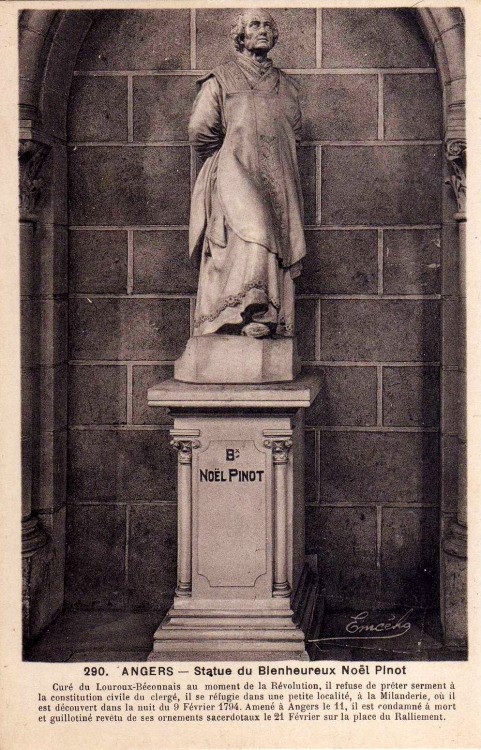
A statue at the Cathedral of Angers represents the first step of climbing the “altar of God”.
On 26 August 1864 Guillaume Angebault, bishop of Angers recommended Father Brouillet to the commission to “proceed with the canonical investigation into the life and virtues of the priest”.
He was Beatified by Pope Pius XI on 31 October 1926. Ninety-nine Martyrs d’Angers were Beatified by St Pope John Paul II on 19 February 1984.
Blessed Noël Pinot, who has been associated with the Priesthood of Jesus, Sovereign Priest, deign to show your power of intercession towards your servants.
Pray that our Priests may be enlightened and strengthened, make them, like you, invincible in the defence of the faith.
Encourage priestly and religious vocations in our parishes, pray to fill the aspirants to the Priesthood and to religious life with generous zeal.
Obtain the grace for the faithful, to know their religion better and to practice it.
May families be strengthened in the fidelity to all the duties, the docility and the respect towards their shepherd priests.
May children and youth be preserved from so many dangers which threaten their beliefs and their virtue. Thwart the plots of those who want to snatch them from the maternal womb of the Church.
Pray for the sick and infirm, that they may be strengthened.
Finally Lord, by the prayers of Blessed Noel, kindly bless and crown with success the apostolic labours of the Ministers of Christ and of all activists, with a view to restoring in dear France the reign of the Heart of Jesus.
Blessed Noel Pinot, pray for us!
Memorials of the Saints – 21 February
St Peter Damian OSB (1007-1072) Doctor of the Church (Optional Memorial)
A lot about St Peter here:
https://anastpaul.wordpress.com/2017/02/21/saint-of-the-day-21-february-st-peter-damian/
AND:
https://anastpaul.com/2019/02/21/saint-of-the-day-21-february-st-peter-damian-osb-1007-1072-doctor-of-the-church/
St Avitus II of Clermont
Bl Caterina Dominici
Bl Claudio di Portaceli
St Daniel of Persia
Bl Eleanora
St Ercongotha
St Eustathius of Antioch
St Felix of Metz
St George of Amastris
St Germanus of Granfield
St Gundebert of Sens
Blessed Noel Pinot (1747-1794) Priest and Martyr
St Paterius of Brescia
St Pepin of Landen
St Peter Mavimenus
St Randoald of Granfield
Blessed Richard Henkes
St Robert Southwell SJ (1561-1595) Martyr
St Robert’s Biography:
https://anastpaul.wordpress.com/2018/02/21/saint-of-the-day-21-february-st-robert-southwell-s-j-1561-1595-martyr/
St Severian of Scythopolis
St Severus of Syrmium
Bl Thomas Pormort
St Valerius of San Pedro de Montes
St Verda of Persia
—
Martyrs of Sicily – 79 saints – Seventy-nine Christians martyred together in the persecutions of Diocletian. They were martyred in c 303 on Sicily.
Martyrs of Hadrumetum – A group of 26 Christians martyred together by Vandals. We know little more than eight of their names – Alexander, Felix, Fortunatus, Saturninus, Secundinus, Servulus, Siricius and Verulus. c 434 at Hadrumetum (modern Sousse, Tunisia)
Martyrs Uchibori – Three Japanese laymen, all brothers, all sons of Paulus Uchibori Sakuemon, one a teenager, one only five years old and all martyred for their faith in the persecutions in Japan. 21 February 1627 in Shimabara, Nagasaki, Japan. Beatified 24 November 2008 by Pope Benedict XVI.
Antonius
Balthasar
Ignatius
Quote/s of the Day – 20 February – “You are the Christ.”
Quote/s of the Day – 20 February – Thursday of the Sixth Week in Ordinary Time, Year A, Gospel: Mark 8:27-33 and The Memorial of Sts Francisco (1908-1919) and Jacinta (1910-1920) – “The Shepherds of Fatima”
And he asked them,
“But who do you say that I am?”
Peter answered him,
“You are the Christ.”
Mark 8:29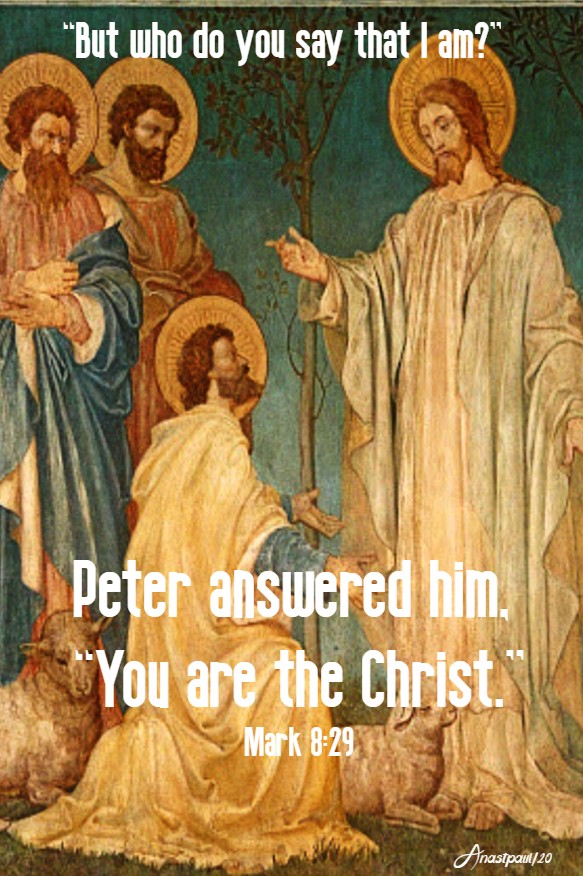
“We were burning in that light,
which is God and we were not consumed.
What is God like?
It is impossible to say.
In fact, we will never be able to tell people”
St Francisco Marto of Fatima (1908-1919)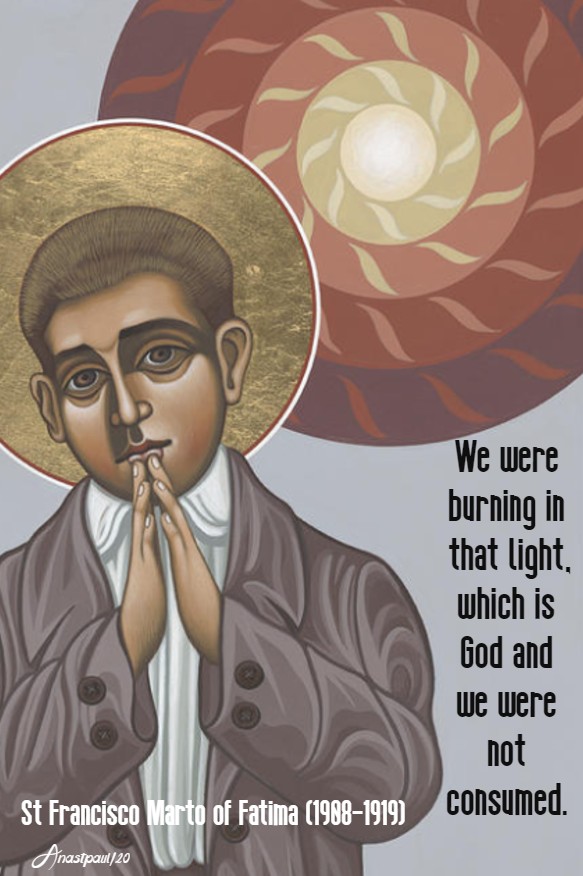
One Minute Reflection – 20 February – ‘Do not be a friend to Jesus in times of peace alone…’
One Minute Reflection – 20 February – Thursday of the Sixth Week in Ordinary Time, Year A, Readings: James 2:1-9, Psalm 34:2-7,Mark 8:27-33 and the Memorial of Saint Eucherius of Orléans (c 687-743)
“Then Peter took him aside and began to rebuke him” … Mark 8:32
REFLECTION – “We should not be ashamed of the cross of the Saviour but rather make it our glory.
“The message of the cross is a stumbling block to Jews and foolishness to Gentiles” but for us it is salvation. For those who are perishing it is foolishness but for us who are being saved it is the power of God” (cf. 1 Cor 1:18-24).
For it is no mere man who died but the Son of God, God made man.
In Moses’ days the lamb caused the destroying angel to pass over (cf. Ex 12:23) and has not “the Lamb of God who takes away the sin of the world” (Jn 1:29) set us even more free from our sins?
Not by force did He lose His life, not by might was He sacrificed but by His own will.
Hear what he said: “I have power to lay down my life and I have power to take it up again” (Jn 10:18). (…)
He came to His Passion of set will, happy in His exploit, laughing at His victory, satisfied to be saving us.
He was not ashamed of the cross because He was saving the whole earth. It was not some poor man who was suffering but God made man who entered the combat to win the prize of patience. (…)
Do not rejoice in the cross only in times of peace, preserve the same faith in times of persecution.
Do not be a friend to Jesus in times of peace alone, only to become His enemy in times of war.
You are now receiving forgiveness for your sins and the spiritual gifts lavishly bestowed by your king so, when war breaks out, fight valiantly for your king.
Jesus has been crucified for you, He who was without sin. (…)
It is not you who bestowed this grace on Him, for you first of all received it.
But you offer thanks to Him who paid the price by being crucified for you on Golgotha.” … St Cyril of Jerusalem (315-387)) – Father and Doctor of the Church – Baptismal catecheses nos. 13, 3.6.23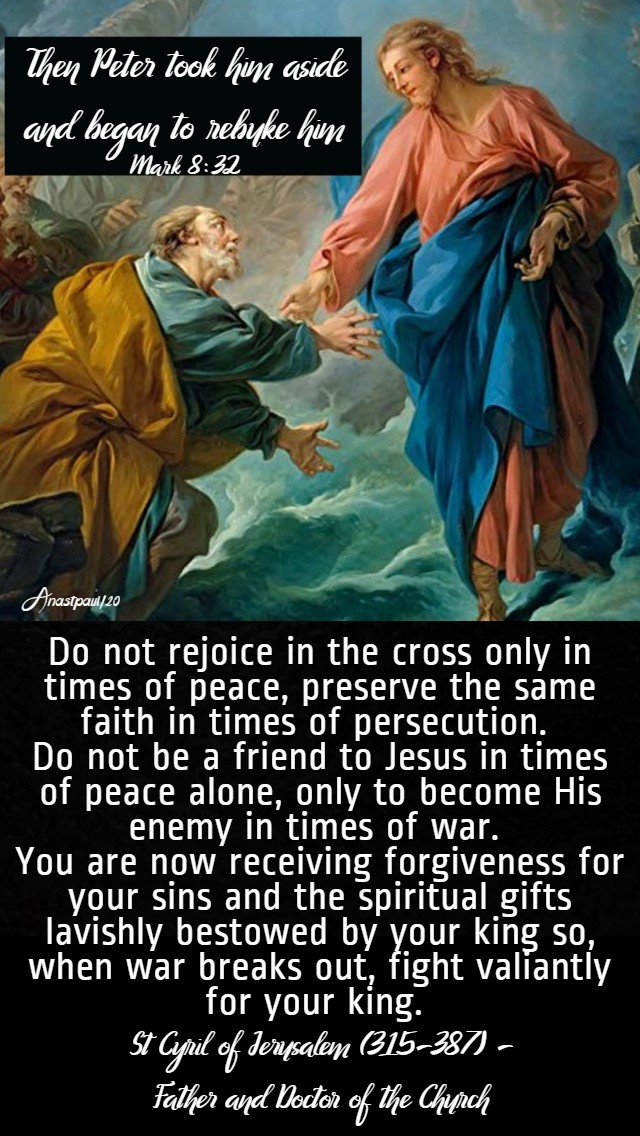
PRAYER – Lord of heaven and earth, by Your grace You have brought our hearts and mind to seek and hope in Your saving love, in Your only Son, our Lord Jesus Christ. May we, who like Peter, our father in faith, declare, ‘You are the Christ!’, remain ever in His steps, carrying the cross behind Him. We thank You for the blessing of St Eucherius of Orléans, grant that, through his intercession, we may, like him, constantly follow the Light of Christ and so rise to eternal life. We make our prayer through our Lord Jesus, in unity with the Holy Spirit, one God forever, amen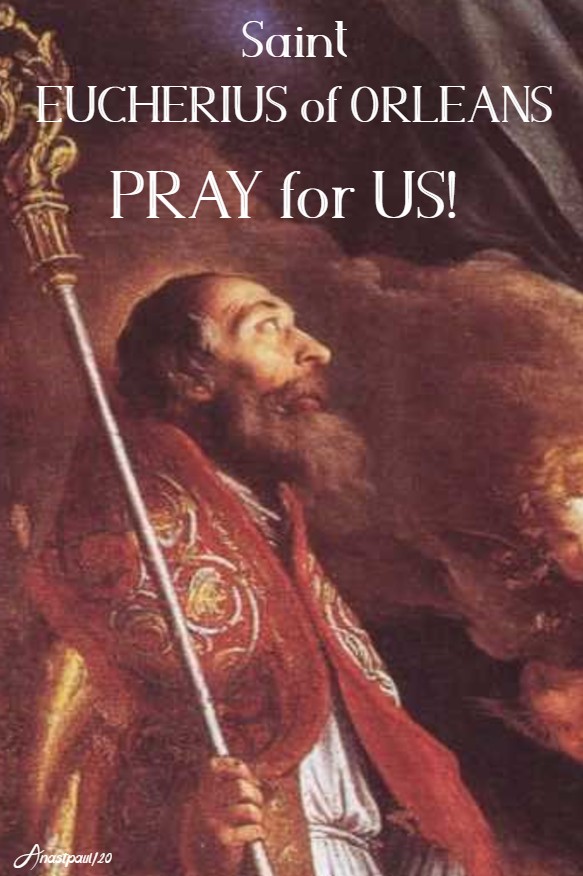
Saint of the Day – 20 February – Saint Eucherius of Orléans (c 687-743)
Saint of the Day – 20 February – Saint Eucherius of Orléans (c 687-743) Bishop Orléans, Benedictine Monk, Confessor – born at Orleans, France and died on 20 February 743 at the monastery of Sint-Tuiden in Belgium of natural causes.
St Eucherius was born in Orleans, France. He was very pious in his youth as he received a Christian upbringing and he was also highly educated.
A sentence from Paul’s first letter to the Corinthians made a big impression on him – “This world as we see it is passing away” (1 Corinthians 7:31). It made Eucherius realise that our lives on this earth are very short and that heaven and hell last forever. He decided to seek the joys of heaven by living for God alone.
In 714, St Eucherius left his rich home and entered a Benedictine abbey as a monk. There, he spent seven years in close union with God. After the death of his uncle, the bishop of Orleans, the people asked for Eucherius to take his place.
Eucherius was then only twenty-five and he was very humble. He did not want to leave his beloved abbey. With tears, he begged to be allowed to remain alone with God in the monastery. But finally, he gave in for love of obedience. Eucherius became a holy, wise bishop and did much good to his priests and people.
A powerful man Charles Martel sold some of the Church’s property to support his wars. Because Bishop Eucherius told him that was wrong, when Charles won the war, he had Eucherius taken prisoner.
He was sent away to Cologne in Germany. The people there greeted him with joy and he was given the job of distributing the governor’s alms. Later he was transferred to a fort near Liege.
But the governor in whose charge Martel had placed the Bishop was touched by Eucherius’ meekness toward his enemies. Some time later, the governor quietly released the bishop from prison and sent him to a monastery. Here, the saint spent all his time peacefully in prayer until his death in 743.

Archbishop Hincmar of Reims reported to a Council of Quierzy in 858, a vision that Bishop Eucherius of Orléans had seen during the reign of King Pepin III over a century before. While at prayer, Eucherius had been taken up and shown, among other things, the sufferings of those in hell, among whom he saw Charles Martel. When the vision ended, he called St Boniface and Fulrad, Abbot of Saint-Denis and sent to them to see whether Charles was in his tomb. When the two opened the tomb a dragon rushed out and they found the tomb’s interior blackened as though burned. These two signs were taken as evidence that the vision had been accurate and that Charles had been condemned to hell for his despoliation of Church property.
Memorials of the Saints – 20 February
St Amata of Assisi
St Bolcan of Derken
St Colgan
St Eleutherius of Tournai
St Eucherius of Orleans OSB (c 687-743)
St Falco of Maastricht
St Francisco Marto (1908-1919)
St Jacinta Marto (1910-1920)
Today (2020) is the Fourth Anniversary of their Canonisation: https://anastpaul.wordpress.com/2018/02/20/saints-of-the-day-20-february-saints-francisco-1908-1919-and-jacinta-marta-1910-1920
St Leo of Catania
St Nemesius of Cyprus
St Pothamius of Cyprus
St Serapion of Alexandria
St Silvanus of Emesa
Bl Stanislawa/Julia Rodzinska OP (1899-1945) Martyr
Biography:
https://anastpaul.com/2019/02/20/saint-of-the-day-20-february-blessed-julia-rodzinska-op-1899-1945-martyr/
St Valerius of Courserans
St Wulfric of Haselbury
St Zenobius of Antioch
One Minute Reflection – 19 February – ‘…To teach perfectly it comes from the Lord’s mouth.’
One Minute Reflection – 19 February – Wednesday of the Sixth Week in Ordinary Time, Year A, Readings: James 1:19-27, Psalm 15:2-5,Mark 8:22-26 and the Memorial of St Conrad of Piacenza TOSF (c 1290-1351)
And he took the blind man by the hand and led him out of the village….Then again he laid his hands upon his eyes; and he looked intently and was restored and saw everything clearly. And he sent him away to his home, saying, “Do not even enter the village.”...Mark 8:22,25-26
REFLECTION – “Jesus put spittle on his eyes, placed his hands on him and asked him whether he could see anything. Knowledge always comes by degrees (…). It is only after a great deal of time and a long apprenticeship that we are able to attain perfect knowledge. First the impurities are removed, blindness goes and thus light enters. The Lord’s spittle is perfect teaching – to teach perfectly it comes from the Lord’s mouth. The Lord’s spittle, which comes forth, so to speak, from His substance, is understanding, just as the word coming forth from His mouth is a cure. (…)
“I see people looking like trees and walking” – I still see the shadow but not yet the truth. The meaning of these words is – I can see something in the Law but as yet I don’t perceive the blazing light of the Gospel. (…) “Then he laid hands on his eyes a second time and he saw clearly.” He could see, I say, everything that we can see – he saw the mystery of the Trinity and he saw all the holy mysteries contained in the Gospel. (…) And we, too, see them since we believe in Christ, the true light.” … Saint Jerome (347-420) Priest, Translator of the Bible, Doctor of the Church – Homilies on Saint Mark’s Gospel, no. 8, 235
PRAYER – Heavenly Father, just as St Conrad of Pieacenza, was chosen to be a messenger of Your love and forgiveness, grant we pray, that by his prayers, we too maybe bearers of Your gracious love. We pray for the assistance of our holy Mother, during our journey to the eternal glory of the kingdom, help us to become like little children and in that new purity, shine with the Light of our Lord and Saviour. Through Jesus our Lord, with the Holy Spirit, one God forever, amen.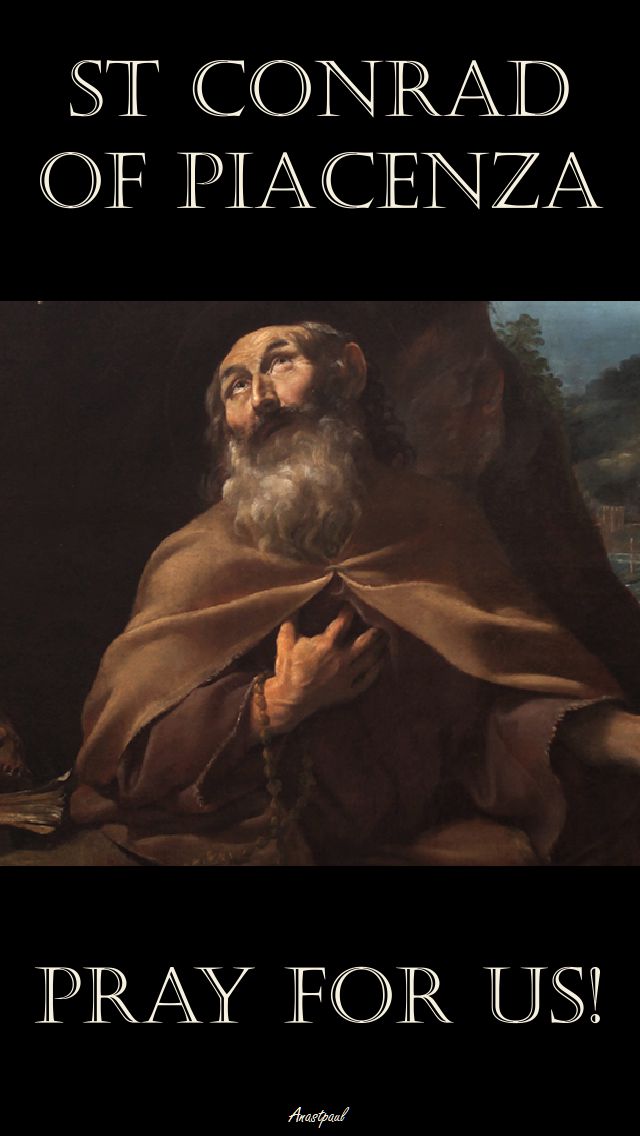
Saint of the Day – 19 February – St Conrad of Piacenza TOSF (c 1290-1351)
Saint of the Day – 19 February – St Conrad of Piacenza TOSF (c 1290-1351) Hermit, Pilgrim and Penitent, Member of the Third Order of St Francis, born Corrado Confalonieri in c 1290 at Piacenza, Italy and died on 19 February 1351 at Noto, Sicily of natural causes while kneeling before a crucifix. Patronages – cure of hernias, Calendasco and Noto. His body is incorrupt.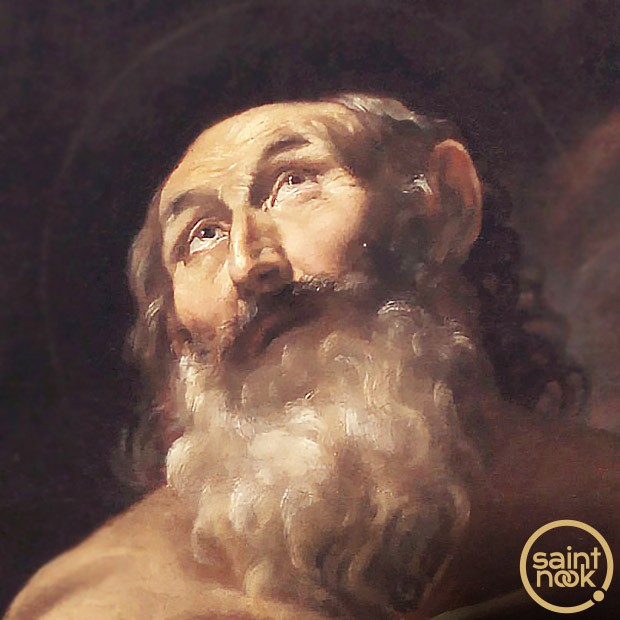
He was a member of one of the noblest families of Piacenza, in the town of Calendasco, a fiefdom of his family. The date of his birth is uncertain. He married an aristocratic young woman named Ephrosyne when he was quite young. Though pious, he led the normal way of life for a man of his station.
One day, as he was engaged in his usual pastime of hunting within his family’s domain, he ordered his attendants to set fire to some brushwood in which game had taken refuge. The prevailing wind caused the flames to spread rapidly to the surrounding fields and forest. A peasant who happened to be found near where the fire began was accused of starting the blaze and was imprisoned, tortured to confess and condemned to death. As the man was being led to execution, a remorseful Conrad publicly admitted his guilt to the Signoria of the city. As punishment and reparation for the damages he had caused, the city seized all his assets, only sparing his life due to his noble status
Thus reduced to poverty and seeking penance for his act of cowardice, Conrad and his wife saw the hand of God in this event. As a result, in 1315 they agreed to separate and Conrad retired to a hermitage near the town of Calendasco, joining a community of hermits, who were Franciscan tertiaries, while his wife became a nun of the Order of Poor Clares at their monastery in the city.
Conrad soon developed a reputation for holiness and the flow of visitors left him unable to keep the solitude he sought. He then embarked on the life of a pilgrim, going to Rome and from there to the Holy Land and Malta and, about 1340, to Palermo in Sicily, where he was directed to an isolated site in the Val di Noto. After many years of an itinerant life, he settled there in a grotto now named for him and for the rest of his life spent a most austere and penitential life of solitude, working numerous miracles and gifted with prophecy.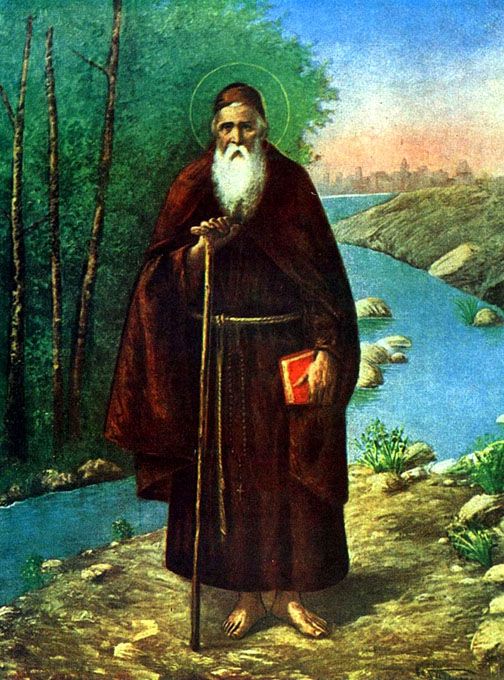
In 1343 Conrad felt called by God to serve the local people more directly and in 1343 went to the city of Netum, where he cared for the sick at the Hospital of St Martin there for the next two years. He lived in a hermitage attached to the Church of the Crucified Christ occupied by the Blessed William Buccheri, a former equerry to King Frederick III of Sicily, who had also taken up a life of solitude and prayer. Conrad would regularly return to his grotto for silent prayer. His fame was such that in 1348 the Bishop of Syracuse, Giacomo Guidone de Franchis, went to his hermitage to beg his prayers for the relief of a famine afflicting the island.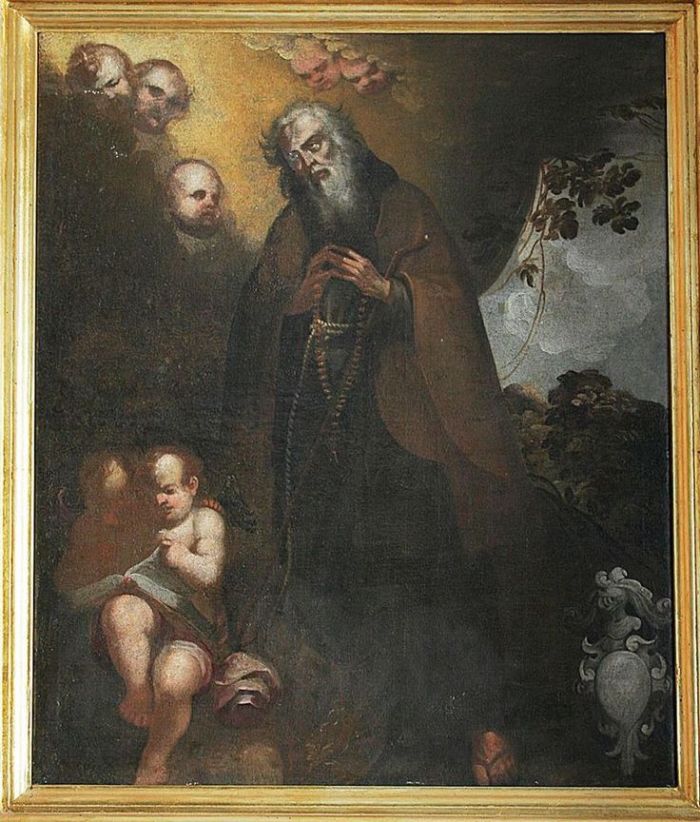
Conrad died while in prayer, kneeling before a crucifix, on 19 February 1351, the day he had predicted. At his request, his body was buried at the Church of St Nicholas, the principal one of the city. After the city was destroyed in an earthquake in the 1690s, it was transferred to the new church of the same name, built in the relocated city, now called Noto, which has since been elevated to the statues of the Cathedral of the region.
Numerous miracles have been attributed to him while he lived and subsequently at his tomb in Noto, Italy. Holy legend records, for example, that when the Bishop of Syracuse visited him, the he asked Saint Conrad if he had anything to offer guests. Conrad said he would check in his cell and returned moments later carrying newly baked bread and cakes, which the bishop accepted as a miracle. Saint Conrad was also reported to have travelled surrounded by a cloud of fluttering birds, keeping him company.
Conrad is especially invoked for the cure of hernia. This comes from miracles attributed to him. He was visited at his hermitage by a former friend and companion in arms, Antonio da Stessa, from Daverio. His friend was suffering from the pain of a hernia he had developed. Seeing the pain his old comrade was suffering, Conrad was moved to pity and prayed for him. Stessa was immediately cured of the hernia. The same outcome was accomplished for a local tailor, who suffered severely from several hernias.
The miracle for which Conrad is best known is the “Miracle of the Bread”. This developed during the aforementioned famine which afflicted Sicily as a result of a severe outbreak of the bubonic plague on the island during 1348-49. During that catastrophe, anyone who approached the hermit for help was given a loaf of bread, still warm, which, it was said, he had received from the angels.
Pope Leo X Beatified Conrad on 12 July 1515 and permitted the town of Noto to celebrate his feast day. On 30 October 1544, Pope Paul III extended permission to the whole island. On 2 June 1625, he was Canonised by Cardinal Odoardo Farnese, who was the Duke of Parma and Piacenza in a solemn ceremony at the cathedral of Piacenza, where it was declared an obligatory feast. On 12 September of that same year, permission was granted to the Franciscan Order by Pope Urban VIII for a distinct text for the Divine Office and Mass to be used for his feast, today, it is celebrated solely by the Third Order of St Francis to which he belonged. In Vietnam there is a popular devotion to Conrad.
On his feast day, the Parish Church of San Corrado in Noto commemorates him by the distribution of blessed bread.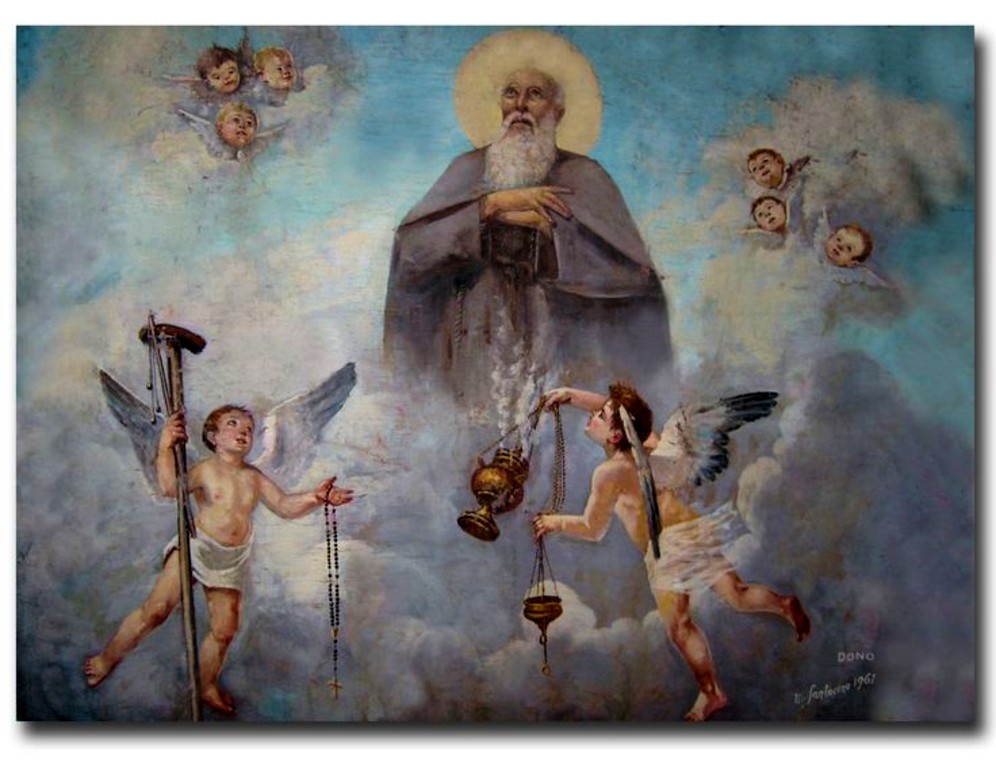
Memorials of the Saints -18 February
Bl Alvarez of Cordova
St Auxibius
St Baoithin
St Barbatus of Benevento (c 610-682)
About St Barbatus:
https://anastpaul.com/2019/02/19/saint-of-the-day-19-february-st-barbatus-of-benevento-c-610-682-apostle-of-the-south/
St Beatus
St Belina
St Boniface of Lausanne
St Conon of Alexandria
St Conrad of Piacenza TOSF (c 1290-1351)
Bl Elizabeth of Mantua
St Gabinus
St George of Lodeve
Bl John Sullivan SJ (1861-1933)
Bl Józef Zaplata
St Lucia Yi Zhenmei
St Mansuetus of Milan
St Odran
St Proclus of Bisignano
St Quodvultdeus
St Valerius of Antibes
St Zambdas of Jerusalem
Quote/s of the Day – 18 February – Saint Francis Regis Clet Martyr Missionary
Quote/s of the Day – 18 February – The Memorial of Saint Francis Regis Clet CM (1748-1820) Priest and Martyr
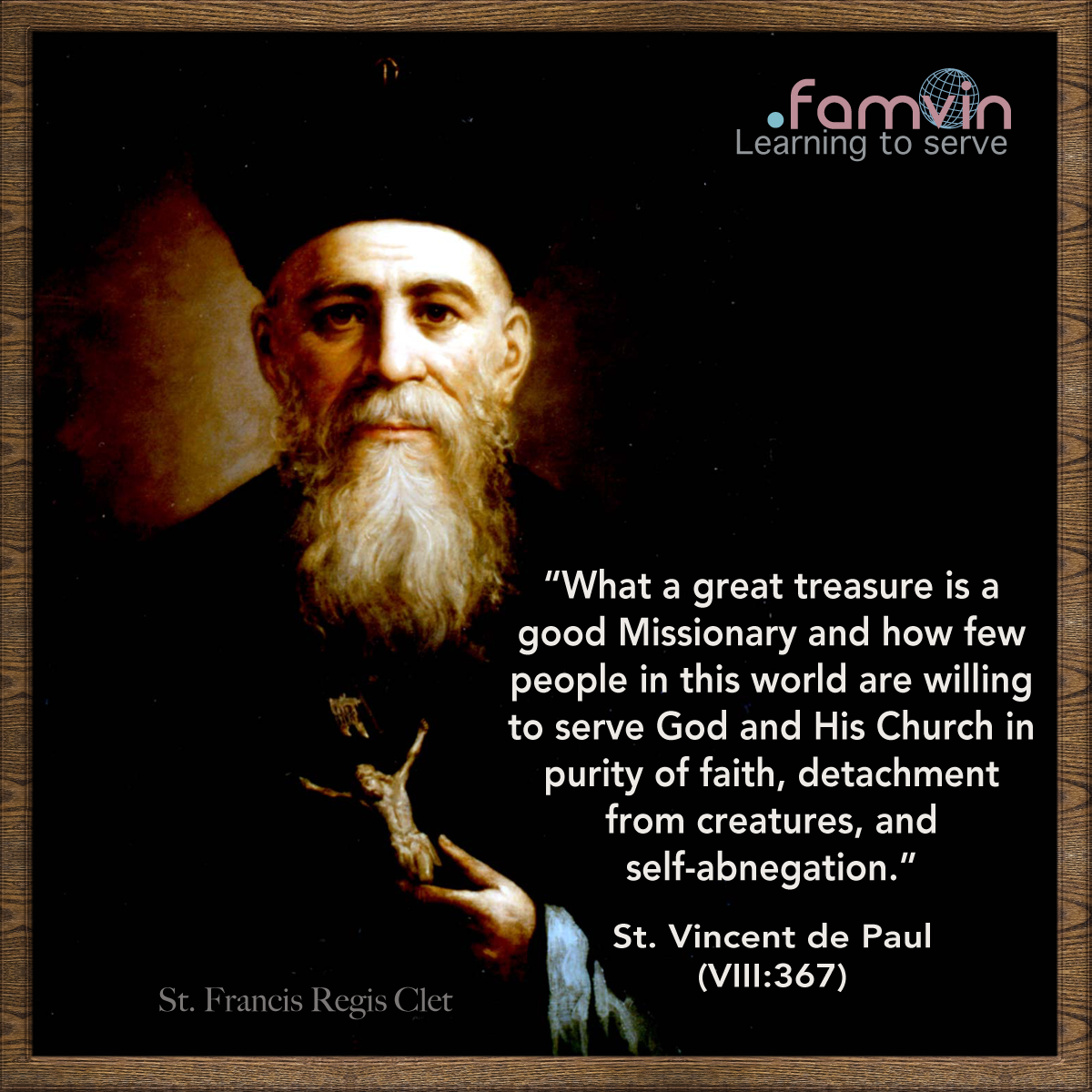
“What a great treasure is a good Missionary
and how few people in this world, are willing
to serve God and His Church in purity of faith,
detachment from creatures and self-abnegation.”
St Vincent de Paul (1581-1660)
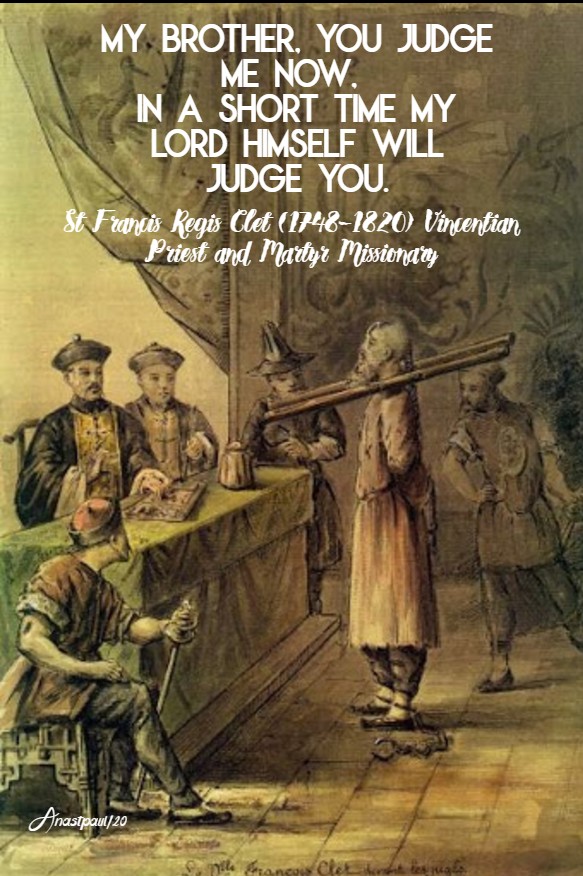
“My brother, you judge me now,
in a short time my Lord Himself will judge you.”
Saint Francis Regis Clet (1748-1820)
Vincentian Priest and Martyr Missionary
One Minute Reflection – 18 February – ‘Spiritual schizophrenia’
One Minute Reflection – 18 February – Tuesday of the Sixth Week in Ordinary Time, Year A, Readings: James 1:12-18, Psalm 94:12-15, 18-19, Mark 8:14-21 and the Memorial of Saint Francis Regis Clet CM (1748-1820) Priest and Martyr
And he cautioned them, saying, “Take heed, beware of the leaven of the Pharisees and the leaven of Herod.”…Mark 8:15
REFLECTION – “Jesus tells us to beware of the leaven of the Pharisees. That leaven is hypocrisy.
Hypocrisy is an internal division, you say one thing and do another. It is a sort of spiritual schizophrenia. Furthermore a hypocrite is a phoney – he seems good, courteous but he has a dagger behind him. A hypocrite is two-faced. He is a phoney. Jesus, speaking of these doctors of the law, affirms that they say one thing but do not do. This is another form of hypocrisy, it is existential nominalism – those who believe that, by saying things, everything is in order. No, things must be done, not just said. On the contrary, a hypocrite is a nominalist, he believes that everything is done with words. Moreover, a hypocrite is incapable of blaming himself, he never finds a smudge on himself, he blames others. Just think of the speck and the log, this is precisely how we can describe this leaven which is hypocrisy.
May the Lord give to us, to all of us, the Holy Spirit and the grace of the clarity to tell ourselves what is the leaven I grow with, which is the leaven I act with. Am I a just and transparent person or am I a hypocrite?”…Pope Francis – Santa Marta, 14 October 2016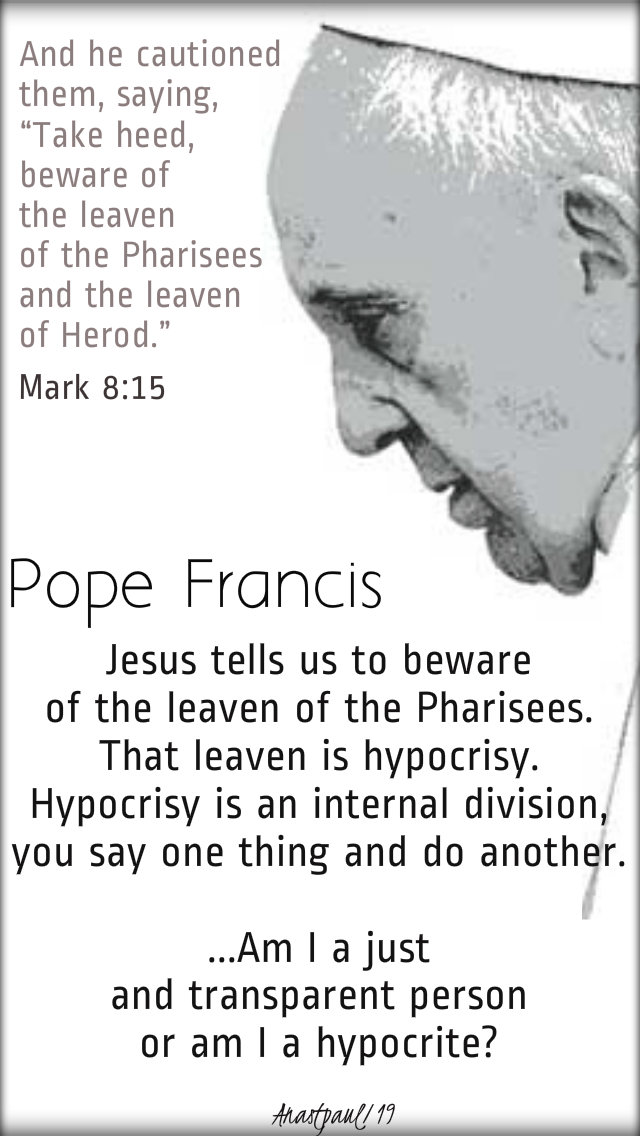
PRAYER – God of mercy, teach us to live as You have ordained. Help us to follow Your commandments with courage and steadfast devotion. Let our Saviour be our master, help us to learn from Him, the ways of prayer in silence. Fill us with the fire of the Holy Spirit, that we may learn. Grant blessed Trinity, that by the prayers of St Francis Regis Clet, we may grow in holiness. Through Jesus our Lord, in unity with the Holy Spirit, one God forever. Amen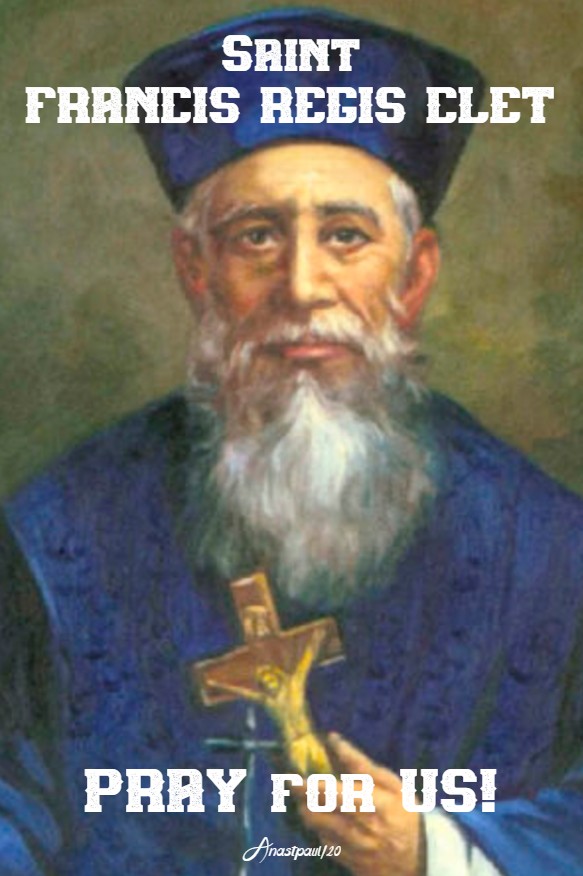
 AnaStpaul
You must be logged in to post a comment.