Our Morning Offering – 7 August – The Memorial of St Cajetan (1480-1547)
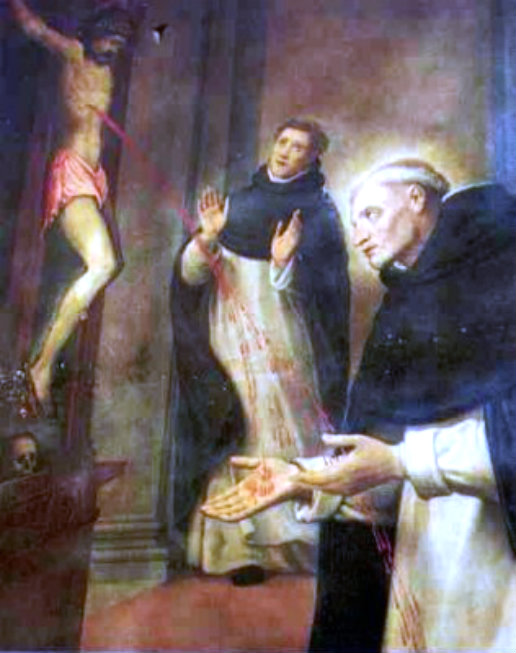
Look down, O Lord By St Cajetan (1480-1547)
Look down, O Lord, from Your sanctuary
and from the high habitation of heaven
and behold this sacred oblation
which our great High Priest,
Your holy Servant, the Lord Jesus,
immolates unto You for the sins of His brethren
and be propitious to the multitude of our iniquities.
Behold, the voice of the blood of Jesus,
our brother, cries to You from the Cross.
Graciously hear, O Lord,
be appeased, O Lord, hearken and do?
Delay not for Your own sake, my God,
because Your name is invoked upon this city
and upon Your people
and do with us according to Your mercy.
Amen
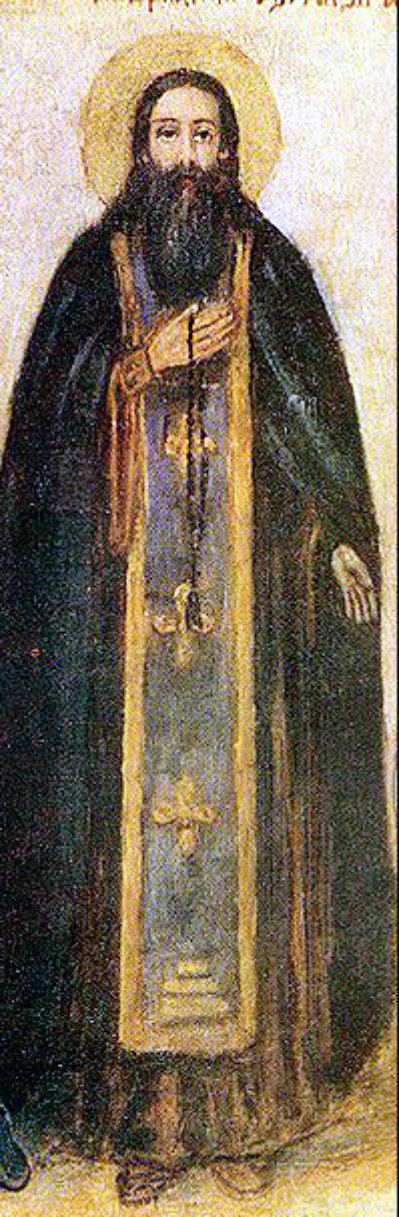
Saint of the Day – 7 August – Saint Albert of Trapani O.Carm. (c 1240-1307) – Carmelite Priest, Confessor, Preacher, Evangeliser, apostle of prayer and a devout servant of the Blessed Virgin and the Passion of Christ. He was born as Alberto degli Abati in c 1240 at Trapani, Sicily, Italy and died on 7 August 1306 at Messina, Italy of natural causes. He practised great austerities upon himself to make himself poor in the spirit of Jesus Christ and went out preaching and evangelising, he was known for working and maintaining a positive relationship with Jews as well as for his powers of healing. The saint was likewise attributed with the 1301 lifting of the siege in Messina, that could have seen hundreds die from starvation had it not been for his intervention. Patronages – Trapani, Carmelite order, Carmelite schools, Palermo Sicily.
Alberto degli Abati was born circa 1240 in Trapani, Sicily, Italy as the sole child to the nobles (of Florentine origin) Benedetto degli Abati and Giovanna Palizi. His father served as an admiral in the fleet of Frederick II of Hohensautfen. His parents – who married in 1214 – were sterile and promised that if blessed with a son he would be consecrated to the Beata Vergine Maria del Monte Carmelo. In his childhood his father had thought of arranging a marriage for him but his mother was able to remind her husband, to adhere to the vow the couple made, that he be consecrated to the Lord.
Sicily was one of the first areas of Carmelite settlement and expansion in the west. This island was an obvious choice for the Carmelites, coming west from Palestine, in which to make a foundation. Young Albert appears to have been attracted by the newcomers and entered the Order at Trapani, on the western side of the island.
After his ordination, Albert was sent to the priory at Messina, also in Sicily and this was the main centre of his life’s work. St Albert typified the new kind of Carmelite that adaptation to the west produced, a man of prayer and penance, a lover of solitude but also a man engaged in study and in the active apostolate. There were many Jews living in Sicily at this time and Albert seems to have made them a special object and been successful in making converts. He is also said to have written books, though none survive and he is regarded as patron of Carmelite studies. The order recognised his many and outstanding abilities. He attended the General Chapter at Bruges in 1297, in the capacity as Superior. However, he spent the last years of his life before his death in 1307, living in a hermitage near Messina.
He was recognised as a wonder-worker during his lifetime, miracles and cures continued to be attributed to Albert’s intercession after his death.
His cult spread quickly through the whole of the Order. The date of a translation of his relics, said to have been made in the year 1309 or 1316, is uncertain. (This latter would seem more exact). Albert was among the first Carmelite saints venerated by the Order, of which he was later considered a patron and protector. Already in 1346 there was a chapel dedicated to him, in the convent of Palermo. At various general chapters, beginning with that of 1375, his papal canonisation was proposed. In the chapter of 1411 it was said that his Proper Office was ready.
In 1457 Pope Callixtus III, by verbal consent permitted his cult, which was consequently confirmed by Pope Sixtus IV with a bull of 31 May 1476. In 1524 it was ordered that his image be found on the seal of the general chapter. Moreover, the general of the Order, Nicholas Audet, wanted an altar dedicated to him in every Carmelite church . Even earlier, the chapter of 1420 had ordered that his image with a halo should be found in all the convents of the Order. With this intense and extended cult, his abundant iconography is easily understood. In it he is represented (with or without a book), first, bearing a lily, a symbol of his victory over the senses at the beginning of his religious life or with a cruvifix and the Blessed Virgin.
In 1623 one of the gates of the city of Messina was dedicated to him. He is the patron of Trapani, of Erice, of Palermo and of Revere (Mantua). St Teresa of Jesus (1515-1582) and St Mary Magdalene de Pazzi (1566-1607) were especially devoted to him, the Bl Baptist Spagnoli (1447–1516) composed a sapphic ode in his honour. His relics are spread throughout Europe. The head of the Saint is in the Carmelite church of Trapani where he is still venerated, especially as a patron against fever. His feast day is celebrated there with great ceremony on 7 August. In the last liturgical reform the rank of feast was granted for St Albert to the Carmelites and of memorial to the Discalced of the same Order.
Let us pray.
Lord God,
you made St Albert of Trapani
a model of purity and prayer,
and a devoted servant of Our Lady.
May we practise these same virtues
and so be worthy always
to share the banquet of your grace.
We ask this through Christ our Lord.
Amen.
St Afra of Augsburg
Bl Agathangelus Nourry St Albert of Trapani O.Carm. (c 1240-1307)
Bl Cassian Vaz Lopez-Neto
St Claudia of Rome
St Donat
St Donatian of Chalons-sur-Marne
St Donatus of Arezzo
St Donatus of Besancon
Bl Edmund Bojanowski
Bl Edward Bamber
St Faustus of Milan
St Hilarinus of Ostia
St Hyperechios
Bl John Woodcock
Bl Jordan Forzatei
St Julian of Rome
St Miguel de la Mora
Bl Nicholas Postgate
St Peter of Rome
Bl Thomas Whitaker
Bl Vincent de L’Aquila
St Victricius of Rouen
—
Martyred Deacons of Rome – 6 saints: A group of deacons who were martyred with Pope Saint Sixtus II. We know nothing about them but their names and their deaths – Agapitus, Felicissimus, Januarius, Magnus, Stephen and Vincent. They were
beheaded on 6 August 258 in a cemetery on the Appian Way, Rome, Italy.
Martyrs of Como – 6 saints: A group of Christian soldiers in the imperial Roman army. Martyred in the persecutions of Maximian. We know little else but the names – Carpophorus, Cassius, Exanthus, Licinius, Secundus and Severinus. c.295 on the north side of Lake Como, near Samolaco, Italy. Their relics in the church of San Carpoforo, Como, Italy.
Martyred in the Spanish Civil War: 10 Beati
Bl Dalmacio Bellota Perez
Bl Diodorus Hernando Lopez
Bl Francisco Gargallo Gascón
Bl Luis Villanueva Montoya
Bl María del Carmen Zaragoza y Zaragoza
Bl María Rosa Adrover Martí
Bl Rafaél Severiano Rodríguez Navarro
Bl Tomás Carbonell Miquel
Saint of the Day – 6 August – Saint Pope Hormisdas (c 450-523) – Papal Ascension 514 to 523 – talented diplomat, arbitrator and negotiater, born at Frosinone, Latium (southern Italy) and died at Rome on 6 August 523 of natural causes.
One of the few popes to ever have children, Hormisdas’ actually raised his son to be a pope, Silverus (died 538).
A man of wealth, Hormisdas was born about 450 AD in Frosinone, Campagnia di Roma, Italy, in other words, the plains around the city of Rome. This would put him in the centre of continual politics and controversy his whole life. As a youth, Hormisdas married and had at least one son. He most likely had a career in law or diplomacy, since he seemed to have such talent in this field.
However, as a middle-aged man, Hormisdas was probably widowed and turned his attention to the Church. He became a deacon. A well-known figure in Rome, Hormisdas was a foremost clerical supporter of Pope Symmachus during the Laurentian Schism, a time of competing papacies. He was a notary of the 502 synod.
The day after the burial of the dead pope, Symmachus, Hormisdas was elected without notable controversy. The people of Rome were probably tired of the anger and fighting.
His first action after his election was to receive back into the Church all the adherents of the Laurentian schism, those who had not yet reconciled. The schism had lasted much too long, most likely because of a hatred directed at the person of Symmachus. Hormisdas wanted to move forward.
The second action Hormisdas took was to try to clear up the long lasting Acacian schism. This had been going on for 30 years, since 484. Some Eastern bishops had tried to take the matter into their hands by writing to Symmachus asking for an attempt at re-unification. However, Symmachus wanted the bishops to condemn Acacius and the bishops disagreed. It was time for the new pope to try.
Emperor Anastasius, succssor to Zeno, was still on the throne. He had maintained the Henoticon to the point that he was inclined toward Monophysitism, the belief that the Divine nature and the human nature of Jesus were one. This was not the teaching of Rome. Anastasius had driven three patriarchs out of their cities for their too orthodox teachings.
Discontent had been growing towards Anastasius’ inclinations. A commander of the army, Vitalian of Lower Moesia, led a revolt. He made two demands – 1. he wanted the office of distribution of grain for the troops restored to his person, a rather minor request; and 2. he wanted the decisions of the Council of Chalcedon to be recognised and full unity with Rome. Vitalian was very insistent. He got many supporters as he marched towards Constantinople with his growing army. By the time he arrived, in the late fall of 514, the emperor’s nephew, Hypatius, was waiting for him with the emperor’s army. Hypatius was defeated and Emperor Anastasius was obligated to negotiate.
Vitalian was in a position to push his agenda. He demanded that Anastasius convene a synod at Heraclea on 1 July 515, invite the pope and submit to the pope’s arbitration, the dispute about the various empty sees to restore unity. Playing a game of chance with letters to the pope, the emperor sent out two letters by two carriers. It took months for the pope to receive either and his ambassadors got to Heraclea too late for the synod.
A game of cat and mouse took up the next three years as ambassadors went back and forth, to no avail. But suddenly, Anastasiius died in July of 518 and his supporter, the Patriarch Timotheus died shortly thereafter. The new emperor, Justin I was a Chalcedonian Christian and was bound to reject the Monophysitism. Within a year, negotiations had ironed out a formula.
In March, 519, the new Patriarch John signed a confession of faith, also known as the Formula of Hormisdas, reaffirming the teachings of the Council of Chalcedon.
The first sentence of the Formula reads as follows: “The first condition of salvation is to keep the norm of the true faith and in no way to deviate from the established doctrine of the Fathers.”
Pope Hormisdas lived several years after his crowning accomplishment, dying on August 6, 523 AD. He is buried in St Peter’s Basilica. The Papal Medallion below is one of the only 56 on the main floor of St Peter’s Basilica.
Bl Gezelin of Schlebusch
St Gislain of Luxemburg
St Glisente of Brescia
Bl Goderanno
Bl Guillermo Sanz
St Hardulf of Breedon St Pope Hormisdas (c 450-523)
St James the Syrian
St Justus of Alcala
Bl Maria Francesca Rubatto
Bl Octavian of Savona
St Pastor of Alcala
St Stephen of Cardeña
Bl Tadeusz Dulny
Bl William of Altavilla
—
Martyrs of Cardeña: Two hundred Benedictine monks at the Saint Peter of Cardegna monastery, Burgos, Spain who were martyred in the 8th century by invading Saracens. They were buried by local Christians in a nearby churchyard in Burgos, Spain and Beatified in 1603 by Pope Clement VIII (cultus confirmed).
Martyred in the Spanish Civil War: 10 Beati
• Blessed Alejandro Casare Menéndez
• Blessed Andrés Soto Carrera
• Blessed José González Ramos Campos
• Blessed José María Recalde Magúregui
• Blessed Juan Silverio Pérez Ruano
• Blessed Saturnino Ortega Montealegre
Thought for the Day – 5 August – Monday of the Eighteenth week in Ordinary Time, Year C and the Memorial of Saint Oswald of Northumbria (c 604-642) Martyr and King
What is a Christian saint, if not one, who lives a life of love,
first to God and then to man?
King Oswald was a man of prayer and this must have been quite unusual among kings of his day. He used to get up very early in the morning to pray in the hour before dawn. St Bede tells us, he prayed so much that whenever he sat down, his hands naturally rested on his knees in an upturned gesture of prayer and thanksgiving. St Bede also tells us, that his last conscious thought was prayer for his soldiers, for as he fell in battle he said, “God have mercy on their souls.”
Oswald was a man of compassion. One of the best-known stories describes how one Easter, when he was about to dine with Bishop Aidan, a great crowd of the poor came begging alms. The king gave them not only the food but also the silver dish, to be broken up and distributed among them. St Aidan was so moved by this generosity, that he grasped the king’s right hand and exclaimed, “May this hand never perish!” (And Bede tells us that it didn’t, for in his day the king’s hand, which had been severed in his last battle, was preserved in Bamburgh church!)
So great was Oswald’s compassion for the sick, that even the earth on which he died, passed on its blessing in healing, so people said and not to human beings only. One day a horseman was riding near this place when his horse began to feel great pain, it rolled in agony on the ground, apparently dying, until it happened to roll over the spot where Oswald had died. Then it was immediately cured. lt’s owner told the story at the nearest inn and the people there decided to take a paralysed girl to the same spot. She was cured too. Then people began to take earth from this spot to put into water for the sick to drink. So much earth was removed that it left a pit large enough for a man to stand in, says Bede. Further, when Oswald’s niece wished to have his the remains of his body buried at Bardney Abbey in Lincolnshire, the monks there were at first reluctant to accept it, as they looked upon the Northumbrian overlords as no friends of theirs. But a light from the coffin at night persuaded them to take it in and when they washed the bones and poured away the water, they found that the ground into which it had sunk had power to heal.
Bede gives us more stories. A sick man in fear for his salvation drank water which contained a chip of the stake on which Oswald’s head had been spiked, the man got better and reformed his life. A little boy at Bardney was cured of a fever by sitting by Oswald’s tomb. Power to heal was claimed also for pieces of the cross which had been set up at his first victorious battle and moss from this cross was said to have healed a broken arm. A plague in Sussex was stopped by Oswald’s intercession and, even in distant Germany, Archbishop St Willibrord (c 658–739) – originally from Northumbria himself – recounted to St Wilfrid, tales of miracles worked by some of Oswald’s relics.
Bede finds it not surprising, in view of the devotion and compassion shown by Oswald in his life. Ordinary people of the time found it not surprising, for they thought that a good and powerful man was the same man after death but nearer to the source of goodness and power.
History can tell us of King Oswald, one of the most powerful of all the northern kings, skilful in both war and diplomacy. Such men do not find it simple to be Christian, beset as they are by all the difficult decisions and ambiguities that face any man who wields great earthly power. How much easier to be a Christian bishop than a Christian king! But Bede’s story invites us to see in Oswald more than the king – to see the saint who gave his life to God and the martyr who gave his death and, who therefore, in life or after death, could be called on with confidence by those in need.
One Minute Reflection – 5 August – Monday of the Eighteenth week in Ordinary Time, Year C, Gospel: Matthew 14:13-21 and the Memorial of the Dedication of Mary Major
“Taking the five loaves and the two fish, he looked up to heaven and blessed,, and broke and gave the loaves” … Matthew 14:19
REFLECTION – “Jesus loves us so much and wants to be close to us and looks after those who follow Him. The Lord meets the needs of mankind but wants to render each one of us, a concrete participant in His compassion.
Now let us pause on this, Jesus’ gesture of blessing: “taking the five loaves and the two fish, he looked up to heaven and blessed and broke and gave the loaves” (v. 19). As you see, they are the same signs that Jesus performed at the Last Supper and they are also the same gestures, that each priest performs when he celebrates the Holy Eucharist. The Christian community is born and reborn continually from this Eucharistic communion. Living communion with Christ is, therefore, anything but being passive and detached from daily life, on the contrary, it includes us more and more in the relationship with the men and women of our time, in order to offer them the concrete sign of mercy and of the attention of Christ.
Jesus wants to reach everyone, in order to bring God’s love to all.” … Pope Francis (General Audience, 17 August 2016)
PRAYER – Forgive the sins of Your people Lord and since of ourselves, we are unable to do what pleases You, lead us on the way of salvation in Your divine Son who lives in us and gives us life. May the prayers of Mary, His Mother help us to constantly meditate on His eternal sustenance. He is our food, our Lord Jesus Christ, who lives and reigns with You and the Holy Spirit, God forever and ever, amen.
Our Morning Offering – 5 August – Monday of the Eighteenth week in Ordinary Time, Year C and the Memorial of the Dedication of Mary Major
Maiden yet a Mother By Dante Alighieri (1265-1321) Tr Msgr Ronald A Knox (1888-1957)
Maiden yet a mother,
daughter of thy Son,
high beyond all other,
lowlier is none;
thou the consummation
planned by God’s decree,
when our lost creation
nobler rose in thee!
Thus His place prepared,
he who all things made
‘mid his creatures tarried,
in thy bosom laid;
there His love He nourished,
warmth that gave increase
to the root whence flourished
our eternal peace.
Nor alone thou hearest
When thy name we hail;
Often thou art nearest
When our voices fail;
Mirrored in thy fashion
All creation’s gird,
Mercy, might compassion
Grace thy womanhood.
Lady, let our vision
Striving heavenward, fail,
Still let thy petition
With thy Son prevail,
Unto whom all merit,
prayer and majesty,
With the Holy Spirit
And the Father be.
Maiden Yet A Mother is a translation of a poem by Durante (Dante) degli Alighieri (c 1265–1321). It is based upon the opening verses of Canto 33 of the Paradiso from his Divine Comedy in which St Bernard of Clairvaux (1090–1153) praises and prays to the Virgin Mother on behalf of Dante. It was translated from the original Italian into English by the Catholic convert, Monsignior Ronald A Knox (1888-1957). It is one of the Marian Hymns in the Breviary.
Saint of the Day – 5 August – Saint Oswald of Northumbria (c 604-642) Martyr and King, apostle of prayer and charity, diplomat – born in c 604 in Northumbria, England and was killed in battle with invading pagan Welsh and Mercian forces on 5 August 642 at Maserfield, Shropshire, England. Patronage – Zug, Switzerland.
St Oswald was the son of Ethelfrith, king of Northumbria. When Edwin seized the kingdom in 616, he fled to Scotland with his family and became a Christian at Iona. When Edwin died in 633, the royal exiles returned to Northumbria. Oswald’s brothers, Osric and Eanfrid, were killed by the tyrannical British king Cadwalla. Subsequently, Oswald, at the head of a small army (possibly with the aid of allies from the north, the Scots and/or the Picts, met Cadwallon in battle at Heavenfield, near Hexham. Before the battle, Oswald had a wooden cross erected, he knelt down, holding the cross in position until enough earth had been thrown in the hole to make it stand firm. He then prayed and asked his army to join in.
Adomnán in his Life of Saint Columba offers a longer account, which Abbot Ségéne had heard from Oswald himself. Oswald, he says, had a vision of Columba the night before the battle, in which he was told:
“Be strong and act manfully. Behold, I will be with thee. This coming night go out from your camp into battle, for the Lord has granted me that at this time, your foes shall be put to flight and Cadwallon your enemy shall be delivered into your hands and you shall return victorious after battle and reign happily.’
Oswald described his vision to his council and all agreed that they would be baptised and accept Christianity after the battle. In the battle that followed, the British were routed despite their superior numbers; Cadwallon himself was killed.
When peace was restored, he sent for a bishop to preach the Gospel. The first man who came was critical and strict and made no headway. He was soon replaced by the kindly St Aidan of Lindisfarne (c 590-651). Oswald interpreted his sermons and gave him the island of Lindisfarne for a monastery and episcopal seat near the royal residence of Bamburgh. As this was not far from 0swald’s main “palace” at Bamburgh, the king and the new bishop could work together for the conversion of the people.
Under St Oswald’s rule peace was restored in Northumbria and good relations developed with the Anglo Saxon kings. He married Cyneburga, daughter of the King of Wessex. But his reign did not last long. After only eight years St Oswald was killed by the pagan king Penda of Mercia at the battle of Maserfield. He was just 38. As he was dying, he prayed for the souls of his bodyguards who died with him. His body was dismembered and sacrificed to the god Woden in a pagan ritual.
Like all Anglo-Saxon kings Oswald was a warrior. Like other kings he expected to die on the battlefield and so indeed in the end he did. But unlike other kings, before he died Oswald had won for himself the reputation of being a saint and his death in battle against Penda the heathen king of Mercia was seen as a martyr’s death.
His remains and relics were moved many times around the country. His skull was said to have been discovered in the tomb of St Cuthbert in 1827. Many miracles were attributed to them. Seventy churches are dedicated to him in England and there are many in Portugal, Bohemia, Holland, Germany, Austria and Switzerland. St Oswald was celebrated for his heroism, his generosity and his piety.
Our Lady of Copacabana: A statue of the Blessed Virgin Mary standing four feet tall, made of plaster and maguey fibre and created by Francisco Tito Yupanqui. Except for the face and hands, it is covered in gold leaf, dressed like an Inca princess, and has jewels on neck, hands and ears. There is no record of what the image looks like under the robes, the carved hair has been covered by a wig, and the image never leaves the basilica. On 21 February 1583 it was enthroned in an adobe church on the peninsula of Copacabana, which juts into Lake Titicaca nearly 3 miles above sea level. In 1669 the viceroy of Peru added a straw basket and baton to the statue, which she still holds today. The present shrine dates from 1805. The image was crowned during the reign of Pope Pius XI, and its sanctuary was promoted to a basilica in 1949. It has been the recipient of many expensive gifts over the years, most of which were looted by civil authorities in need of quick cash.
Patronage – Bolivia, Bolivian navy.
St Abel of Rheims
St Addai
St Aggai of Edessa
Bl Arnaldo Pons
St Cantidianus
St Cantidius
St Cassian of Autun
St Casto of Teano
Bl Corrado of Laodicea
St Emidius of Ascoli Piceno
St Eusignius
St Gormeal of Ardoilen
Bl James Gerius
St Margaret the Barefooted
St Mari
St Memmius of Châlons-sur-Marne
St Nonna St Oswald of Northumbria (604-642) Martyr
St Paris of Teano
Bl Pierre-Michel Noël
St Sobel
St Theodoric of Cambrai-Arras
St Venantius of Viviers
St Viator
—
Martyrs of Fuente la Higuera: A group of Augustinian priests and clerics who were martyred together in the Spanish Civil War. 5 August 1936 in Fuente la Higuera, Valencia, Spain. They were Beatified on 28 October 2007 by Pope Benedict XVI.
10 Beati:
• Anastasio Díez García
• Ángel Pérez Santos
• Cipriano Polo García
• Emilio Camino Noval
• Felipe Barba Chamorro
• Gabino Olaso Zabala
• Luciano Ramos Villafruela
• Luis Blanco Álvarez
• Ubaldo Revilla Rodríguez
• Victor Gaitero González
Martyrs of the Salarian Way: Twenty-three Christians who were martyred together in the persecutions of Diocletian.
303 on the Salarian Way in Rome, Italy.
Martyred in the Spanish Civil War:
Bl Eduardo González Santo Domingo
Bl Jaume Codina Casellas
Bl José Trallero Lou
Bl Lluís Domingo Mariné
Bl Manuel Moreno Martínez
Bl Maximino Fernández Marinas
Bl Victor García Ceballos
Thought for the Day – 4 August – Eighteenth Sunday in Ordinary Time, Year and The Memorial of Blessed Frédéric Janssoone OFM (1838-1916) – “God’s Pedlar”, “Good Fr Frederic”
His Great Passion, Jesus of Nazareth
One of the very first things to extract from the life of Father Frederic, is his passion for Jesus of Nazareth.
His early education pointed him toward the Gospels. His formation with the Franciscans, his plans to become a missionary in the Holy Land, his writings and books all his preaching on Jesus the son of man and son of God, everything reveals to us that the Blessed Frederic is the missionary to the Holy Land par excellence. His work orients us to know Jesus in the mysteries of His humanity, His birth, His public life, His passion and Resurrection.
It is he who walked about the country of Jesus in every sense during the 14 years that he lived in the Holy Land. The Stations of the Cross which had been banned since 1621, he negotiated with the Muslim Arabs the right to preach the Stations of the Cross along the Via Dolorosa and in the arched souks of Jerusalem. He directed the construction work of the church of Saint Catherine next to the Basilica of the Nativity in Bethlehem. For this construction, he then went to beg in France and in Canada, hence his first journey in 1881.
He is a pioneer in the dispersion of the gospels in Canada. From 1893 to 1907, his Life of Our Lord Jesus Christ, a text in harmony with the Gospels, enjoyed eight printings, which represent a total of 42,000 copies “It was without a doubt the greatest publishing success in Canada” (Legare – Baillargeon, Good Father Frederic, Montreal, Pauline Ed. 1988, p. 277).
Blessed Frederic could be the patron of the seekers of meaning and truth who study the Gospels and especially the life of Jesus of Nazareth, thus the man Jesus.
Prayer for the Canonisation of Blessed Frederic Janssoone
Almighty and eternal God,
You granted to Blessed Frederic Janssoone,
son of France,
to follow the footsteps of Your Son Jesus
in the Holy Land,
and to work there for peace.
Then You led him to Canada,
to invite that nation
to be generous toward the Holy Land,
to found the Sanctuary of the Cap-de-la-Madeleine,
and to better make known
the life of Jesus of Nazareth
and His most holy Mother.
Grant us to become in turn,
true pilgrims,
and veritable missionaries of Your Church.
That we also may be equally
solid pillars of the faith in our Christian communities.
Grant us, through his intercession,
the favour that we ask…
……………………………………..
(Silent pause)
Grant this son of Saint Francis of Assisi,
to be canonised soon,
and to draw us all toward Your Son
Jesus, Our Lord.
Amen.
Quote/s of the Day – 4 August – Eighteenth Sunday in Ordinary Time, Year C, Gospel: Luke 12:13–21 and The Memorial of St John Vianney (1786-1859)
“But God said to him, ‘Fool! This night your soul is required of you and the things you have prepared, whose will they be?’ So is he who lays up treasure for himself and is not rich toward God.” … Luke 12:20-21
“Someone who works frenziedly on Sundays, thinking he is going to earn more money or get more done, is making a mistake in his calculations! Can two or three dollars ever compensate for the harm he does himself by violating the law of God? You imagine everything depends on your work but then an illness, an accident…! It takes so little: a storm, hail, frost… Do not work for food that perishes but for that which dwells in eternal life. What will you gain by having worked on Sunday? You leave the land just as it is when you depart, you do not carry anything away. Our first aim is to go to God, we are not on earth for anything but this! My brethren, we should die on Sundays and come back to life again on Mondays. Sunday belongs to God – it is His day, the Day of the Lord. He made all the days of the week and could have kept them all. He has given you six of them and has only held back the seventh for himself!”
“All our religion is but a false religion and all our virtues are mere illusions and we ourselves are only hypocrites in the sight of God, if we have not that universal charity for everyone – for the good and for the bad, for the poor and for the rich and for all those who do us harm, as much as those who do us good.”
One Minute Reflection – 4 August – Eighteenth Sunday in Ordinary Time, Year C, Gospel: Luke 12:13–21 and The Memorial of St John Vianney (1786-1859)
“But God said to him, ‘Fool! This night your soul is required of you; and the things you have prepared, whose will they be?’ So is he who lays up treasure for himself and is not rich toward God.” … Luke 12:20-21
REFLECTION – “What am I to do? I will pull down my barns and build larger ones.” Now why did that land bear so well, when it belonged to a man who would make no good use of its fertility? It was to show more clearly the forbearance of God, whose kindness extends even to such people as this. He “sends rain on both the just and the unjust, and makes the sun rise on the wicked and the good alike” (Mt 5:45)… These were God’s blessings towards this rich man – fruitful fields, a temperate climate, abundant sowing, oxen to do the work and everything needful to assure his prosperity. But what do we find in this man? A bitter disposition, hatred of other people, unwillingness to give. This is the return he made to his Benefactor.
He forgot that we all share the same nature, he felt no obligation to distribute his surplus to the needy, he paid no heed to those divine precepts: “Refuse n- one the good on which he has a claim” (Prv 3:27), “Let not kindness and fidelity leave you” (3:3), “Share your bread with the hungry” (Is 58:7). Every prophet, every wise man cried out to him these precepts, yet he turned a deaf ear. His barns were full to bursting point but still his miserly heart was not satisfied… Greed would not permit him to part with anything he possessed and yet, because he had so much, there was no place to store his latest harvest And so he was incapable of making a decision and could find no escape from his anxiety. “What am I to do?” he went on saying. Who would not pity a man so oppressed? His land yields him no profit but only sighs… he laments in the same way as the poor do. What am I to do? How can I find food and clothing?…
You who have wealth, recognise who has given you the gifts you have received. Consider yourself, who you are, what has been committed to your charge, from whom you have received it, why you have been preferred to most other people. You are the servant of the good God, a steward on behalf of your fellow servants… “What am I to do?” It would have been so easy to say – “I will feed the hungry, I will open my barns and call in all the poor… Let anyone who lacks bread come to me. You shall share, each according to need, in the good things God has given me, just as though you were drawing from a common well”. … St Basil the Great (329-379) Father and Doctor of the Church
PRAYER – O God, protector of those who hope in You, without Whom nothing has firm foundation, nothing is holy, bestow in abundance Your mercy upon us and grant that, with You as our ruler and guide, we may use the good things that pass, in such a way, as to hold fast even now to those that ever endure. Help us, by St John Vianney’s example and prayers, to win our brethren for Christ by our love and to share with them now and in eternal glory. Through our Lord Jesus Christ, Your Son,Who lives and reigns with You in the unity of the Holy Spirit, one God, forever and ever. Amen.
Our Morning Offering – 4 August – Eighteenth Sunday in Ordinary Time, Year C and The Memorial of St John Vianney (1786-1859)
St John Vianney’s prayer which is quoted in the CCC
I Love You, O My God By St John Vianney (1786-1859)
I love You,
O my God
and my only desire is to love You
until the last breath of my life.
I love You,
O my infinitely lovable God,
and I would rather die loving You,
than live without loving You.
I love You, Lord
and the only grace I ask,
is to love You eternally
My God,
if my tongue cannot say
in every moment that I love You,
I want my heart to repeat it to You
as often as I draw breath.
Amen
Saint of the Day – 4 August – Blessed Frédéric Janssoone OFM (1838-1916) – Franciscan Priest, prolific and passionate preacher, Evangeliser “God’s Pedlar”, “Good Fr Frederic”, apostle of the Passion, of the poor, of charity of Marian devotions – born on 19 November 1838, Ghyvelde, France — 4 August 1916, Montreal, Canada. Patronage – the Secular Franciscan Regional Fraternity of Eastern Canada.
The son of a prosperous and devout farming family, Frederic Janssoone was born on 19 November 1838, in Ghyveldge, in the North of France. His father died when Frederic was only nine. He attended secondary school in Hazebrouck and then Dunkirk but in 1856, he had to leave school to support his mother. He found work as an errand boy and eventually had great success as a travelling salesman. After his mother died, in 1861, he was able to complete his studies. In 1864, he entered the novitiate of the Franciscan Order of Friars Minor in Amiens. He was Ordained a priest in 1870 and was a military chaplain during the Franco-Prussian War. Afterwards, he became assistant novice director and librarian. He then became superior of the community in Bordeaux.
In 1876, he travelled to the Custody of the Holy Land. He became chaplain for the Brothers of the Christian Schools in Cairo and gave preached retreats there and in Alexandria. Between 1878 and 1888, he was assistant to the head guard of the Sacred Sites in Palestine. He helped with administration, promoted a renewal of the custom of Holy Land pilgrimages, re-established the ritual of the Way of the Cross in the streets of Jerusalem and directed construction of the Church of the Nativity in Bethlehem. He revised the set of customary regulations that had developed through the centuries between the Latins, the Greeks and the Armenians for the use and maintenance of the shrines of Bethlehem and the Holy Sepulchre.
In 1881, Father Frederic made his first trip to Canada to establish an annual collection for the Holy Places and to submit to the Bishops a plan for the Commissariat for the Holy Land in Canada. He gave preached retreats throughout Quebec – in Quebec City, Portneuf, TroisRivières, Bécancour and Cap-de-la-Madeleine. He settled in Canada for good in 1888. He lived in Trois-Rivières, where he became closely involved with the organisation and development of the pilgrimage of Our Lady of the Rosary that had been started up by Father Luc Désilets at nearby Cap-de-la-Madeleine. He promoted the
Franciscan Third Order in Quebec and New England. He created three outdoor Ways of the Cross, organised conferences and pilgrimages and gave many preached retreats. He also wrote magazine and newspaper articles, booklets, works on the Holy Land, lives of Jesus, Mary, Saint Anne, Saint Joseph, Saint Francis of Assisi, Saint Anthony of Padua and the first Franciscan born in Canada, the Venerable Brother Didace Pelletier.
Father Frederic paved the way for the re-establishment in Canada of the Order of Friars Minor, which had ceased to exist with the death of the last Recollet in 1812 Father Frederic, the former travelling salesman, had become a pedlar for God. He travelled from one parish to another in several Quebec dioceses and went door-to-door selling his works. The profit from his sales went toward the establishment of several communities of consecrated life – the Franciscan Missionaries of Mary, the Poor Clares, the Franciscans of Trois-Rivières and the Sister Adorers of the Precious Blood of Joliette.
Bl Frederic took to his bed in June 1916 physically worn out by his many exertions in his ministries and in great pain. He was admitted to the Franciscan Infirmary in Montreal, where he was diagnosed as suffering from stomach cancer. After almost two months of intense pain, he died there on the following 4 August. His body was returned to Trois-Rivières, where he was buried in the small chapel he had built attached to the friary. Next door is now a Museum dedicated to him. He was Beatified by St Pope John Paul II on 25 September 1988.
His Spirituality
As a young man, Frederic Janssoone received the rigorous humanist college education typical of his era. He developed skill in business before turning to priestly life. His upbringing left him with a sensitive conscience but he had unusual gifts for pastoral work.
He was always curious and in Paris he researched the early Franciscan mission to Canada. He was a natural pedagogue and could touch hearts and minds when he preached. He was comfortable presiding at liturgical celebrations and believed in making them resplendent as this would draw the minds of participants to God. He was among those who promoted a religious awakening in France following the Franco-Prussian War.
In Palestine, he demonstrated considerable diplomacy and skill in building churches. His devotion to the passion of Christ inspired him to re-establish the practice of praying the Way of the Cross in the streets of Jerusalem. His sincere and upright character as well as his spirit of justice and conciliation permitted him to develop the set of regulations that decreased the tensions between the Greeks, Armenians, and Latins regarding the shrines of the Holy Sepulchre and Bethlehem.
His preaching was leavened by his close observation of life and it was delivered with energy. He was never afraid to be dramatic if it could touch the hearts of his listeners. He took advantage of his first-hand knowledge of the land where Jesus and Mary had lived to illustrate his sermons. His apostolic spirit characterised his promotion of the devotion of the Way of the Cross, pilgrimages and the Franciscan Third Order. He played an important role as the initiator of a spiritual renewal based on meditation on the suffering and passion of Christ.
Father Frederic had an innate sense of publicity and used his facility for writing to add lustre to the projects that he poured himself into. As soon as he began visiting Quebec, he published newspaper articles on the Holy Land to publicise his mission. The Canadians liked his style of preaching. The Journal des Trois-Rivières wrote that he was “one of the best preachers that one could encounter.”
He was humble and objective and he expressed his apostolic ambition with the prayer, “Let me bring to you, whoever comes to me.” After he created the pilgrimage site at Our Lady of the Cape Shrine, he suggested to the Bishop that he entrust its management to the Oblates of Mary Immaculate, “because they are very humble and have simplicity ways.” His devotion to Mary was expressed in the promotion of prayer to Our Lady of the Rosary, which is at the heart of the pilgrimage to Cap-de-la-Madeleine. He founded the Annales, known today under the title NotreDame-du-Cap. His goodness and his reputation as a moving preacher earned him the nicknames “Holy Father” and “Good Father Frederic”.
It was said of Fr Frederic “the man is joyful and full of humour.” He had numerous areas of interest, going from theology to the pastoral, by way of history, geography, astronomy, botany, painting, architecture and archaeology. Tireless apostle, his love of people and preaching, his goodness, austerity, his extreme poverty, his patience and his serenity during adversity, made others compare him to St Francis of Assisi.
St Agabius of Verona
St Aristarchus of Thessalonica
St Crescentio of Rome
St Eleutherius of Bithynia
St Epiphanes of Besançon
St Euphronius of Tours
St Francesc Mercader Rendé Bl Frédéric Janssoone OFM (1838-1916) “God’s Pedlar” “Good Father Frédéric”
St Hyacinth of Rome
St Ia of Persia
St Isidore of Besançon
St Lua of Limerick
St Onofrio of Panaia
St Perpetua of Rome
St Protasius of Cologne
St Rainerio of Split
St Sithney
St Tertullinus of Rome
Bl William Horne
Saint of the Day – 3 August – Saint Waltheof of Melrose O.Cist. (c 1095-1159) Monk, Abbot, apostle of charity, mystic – born in c 1095 in England and died on 3 August 1160 of natural causes. Also known as Waldef or Waldeve. Noted for his severe, self-imposed austerities, endless kindness to the poor and a gentle hand with the brothers under his supervision. He received visions of Christ during the feasts of Christmas, Passiontide, and Easter and had visions of heaven and hell. St Waltheof was a Miracle worker who is reported to have multiplied food and miraculously healed the sick, especially the blind. Patronages – Melrose Abbey and Northamptonshire.
St Waltheof was of noble birth, (he was the son of Earl Simon of Northampton and Matilda, the great niece of William the Conqueror). He was born in England but grew up in the Scottish court, due to his mother’s second marriage after his father’s death. He could have become a court cleric but chose the monastic life, becoming an Austin canon at Nostell in Yorkshire. In 1134, he became prior of Kirkham. In 1140 he was a favourite to become Archbishop of York but King Stephen prevented this because he felt he would be too sympathetic to Scotland.
In his Life of Waltheof, Jocelin of Furness writes: “Waltheof’s face was the faithful interpreter of the inner man and gave convincing evidence of the indwelling of the Holy Spirit inhabiting his heart. It was thin but fair except where ruddy colour infused his cheeks, soft as doves. His handsome white hair was in keeping with his reverend and religious character. His appearance showed grace infusing his spirit with happiness and exultation, it expressed the fact, that the lord treasured him and induced all who saw and spoke to him to hold him in affectionate reverence.”
St Waltheof wanted to bring the Cistercians at Rievaulx and the Austins at Kirkham together but the canons objected strongly. In 1149 he became abbot of Melrose, taking over from someone who had a notorious temper. St Waltheof developed a reputation for great kindness, gentleness and humility. He went on to found monasteries at Cultram and Kinross. In 1159 he was asked to be bishop of St Andrews but he refused as he knew death was near.
Jocelin also recalls that Abbot Waltheof was prone to take a nap whilst riding his horse, ‘Brother Grizzel’. On such occasions the horse would pick his steps carefully and slowly, lest he should trip but once the abbot was awake he would gallop swiftly, overtaking other steeds. Following Waltheof’s death, the horse was distraught and simply wasted away through sadness.
It has been said that he strove so greatly for perfection, that his confessors often found him irksome.
St Waltheof was never formally canonised but a popular cult grew around him until the Reformation. He is buried at the Cistercian chapter house at Melrose Abbey.
It is recorded in the Chronicle of Melrose that:
“The tomb of our pious father, sir Waltheof, the second abbot of Melrose, was opened by Enguerrand, of good memory, the bishop of Glasgow and by four abbots called in for this purpose and his body was found entire and his vestments intact, in the twelfth year from his death, on the eleventh day before the Kalends of June [22 May]. And after the holy celebration of mass, the same bishop and the abbots whose number we have mentioned above, placed over the remains of his most holy body a new stone of polished marble. And there was great gladness, those who were present exclaiming together and saying that truly this was a man of God …”
Thought for the Day – 2 August – The Memorial of St Eusebius of Vercelli (c 283-371)
Excerpt from Pope Benedict XVI’s
Catechesis on St Eusebius, October 2007
Ambrose’s admiration for Eusebius was based, above all, on the fact that the Bishop of Vercelli governed his Diocese with the witness of his life: “With the austerity of fasting he governed his Church.” Indeed, Ambrose was also fascinated, as he himself admits, by the monastic ideal of the contemplation of God which, in the footsteps of the Prophet Elijah, Eusebius had pursued. First of all, Ambrose commented, the Bishop of Vercelli gathered his clergy in vita communis and educated its members in “the observance of the monastic rule, although they lived in the midst of the city.” The Bishop and his clergy were to share the problems of their fellow citizens and did so credibly, precisely by cultivating, at the same time, a different citizenship, that of Heaven (cf. Heb 13: 14). And thus, they really built true citizenship and true solidarity among all the citizens of Vercelli.
While Eusebius was adopting the cause of the sancta plebs of Vercelli, he lived a monk’s life in the heart of the city, opening the city to God. This trait, though, in no way diminished his exemplary pastoral dynamism. It seems among other things that he set up parishes in Vercelli for an orderly and stable ecclesial service and promoted Marian shrines for the conversion of the pagan populations in the countryside. This “monastic feature,” however, conferred a special dimension on the Bishop’s relationship with his hometown. Just like the Apostles, for whom Jesus prayed at his Last Supper, the Pastors and faithful of the Church “are of the world” (Jn 17: 11), but not “in the world”. Therefore, Pastors, Eusebius said, must urge the faithful not to consider the cities of the world as their permanent dwelling place but to seek the future city, the definitive heavenly Jerusalem. This “eschatological reserve” enables Pastors and faithful to preserve the proper scale of values without ever submitting to the fashions of the moment and the unjust claims of the current political power. The authentic scale of values – Eusebius’ whole life seems to say – does not come from emperors of the past or of today but from Jesus Christ, the perfect Man, equal to the Father in divinity, yet a man like us. In referring to this scale of values, Eusebius never tired of “warmly recommending” his faithful “to jealously guard the faith, to preserve harmony, to be assiduous in prayer”(Second Letter, op. cit.).
Dear friends, I too warmly recommend these perennial values to you, as I greet and bless you, using the very words with which the holy Bishop Eusebius concluded his Second Letter: “I address you all, my holy brothers and sisters, sons and daughters, faithful of both sexes and of every age group, so that you may… bring our greeting also to those who are outside the Church, yet deign to nourish sentiments of love for us.”
Quote/s of the Day – 3 August – Friday of the Seventeenth week in Ordinary Time, Year C and the Memorial of St Peter Faber SJ (1506-1546) and St Peter Julian Eymard SSS (1811-1868) “Apostle of the Eucharist”
“Seek grace for the smallest things, and you will find grace to accomplish, to believe in, and to hope for, the greatest things. Attend to the smallest things, examine them, think about putting them into effect, and the Lord will grant you greater.”
St Peter Faber (1506-1546)
“Eucharistic adoration is the greatest of actions. To adore is to share the life of Mary on earth when she adored the Word Incarnate in her virginal womb, when she adored Him in the Crib, on Calvary, in the divine Eucharist.”
“Eucharistic Adoration is the greatest act of holiness on earth.”
One Minute Reflection – 3 August – Friday of the Seventeenth week in Ordinary Time, Year C, Gospel: Matthew 13:54–58 and The Memorial of St Eusebius of Vercelli (c 283-371)
Is not this the carpenter’s son?…And he did not do many mighty works there, because of their unbelief.…Matthew 13:55,58
REFLECTION – “For if I do not understand the nature placed at my service, I discern Your goodness from the mere fact that it is there to serve me. I perceive that I do not even understand myself but I wonder at You all the more… You have given me intellect, life and human feeling, the source of so many joys, yet I do not begin to understand how I began to be…
So it is through failing to understand what surrounds me, that I grasp what You are and it is through perceiving what You are, that I come to adore You. That is why, in what concerns Your mysteries, my incomprehension, lessens not a bit my faith in Your omnipotence… Your eternal Son’s birth exceeds even the idea of eternity, it is prior to the times everlasting. Before any other thing that exists, He was Son proceeding from You, O God and Father. He is true God… You have never existed without Him… Before ever time was, You are the eternal Father of Your Sole Begotten One.”…St Hilary (315-368) Bishop of Poitiers, Doctor of the Church
PRAYER – “So long as I enjoy that breath of life granted to me by You, Holy Father, Almighty God, I will proclaim You as God eternal but also as Father eternal. Never will I set myself up as judge of Your almighty power and mysteries, never will I set my limited understanding before the true appreciation of Your infinity, never will I claim You to have existed beforehand without Your Wisdom, Power and Word, God the Only-Begotten, my Lord Jesus Christ. For even though human language is weak and imperfect when it speaks of You, this will not inhibit my mind, to the point of reducing my faith to silence, for lack of words, able to express the mystery of Your being…” (St Hilary) Lord God, You hold out the light of Your Word to those who do not know You. Strengthen in our hearts the faith You have given us, so that no trials may quench the fire Your Spirit kindled within us . Grant that the prayers of St Eusebius of Vercelli, may assist us to grow in love of You. Through Jesus Christ, our Lord, with the Holy Spirit, one God forever, amen.
Our Morning Offering – 2 August – The Memorial of By St Peter Julian Eymard SSS (1811-1868) “Apostle of the Eucharist”
Lord Jesus, Come and Reign! By St Peter Julian Eymard (1811-1868)
O Yes, Lord Jesus,
come and reign!
Let my body
be Your temple,
my heart,
Your throne,
my will,
Your devoted servant,
let me be Yours forever,
living only in You
and for You!
Amen
Saint of the Day – 2 August – Saint Eusebius of Vercelli (c 283-371) Bishop, Confessor, Founder of monasticism in his region – born in c 283 at Sardinia and died on 1 August 371 in Vercelli, Italy. Patronages – Congregation of the Daughters of Saint Eusebius, Berzo Demo, Italy, Piedmont, Italy, Vercelli, Italy.
Saint Eusebius was born of a noble family on the island of Sardinia, where his father is said to have died in prison for the Faith. He was brought up in Rome in the practice of piety and studied in Vercelli, a city of Piedmont. Eusebius was ordained a priest there and served the Church of Vercelli with such zeal that when the episcopal chair became vacant he was unanimously chosen, by both clergy and people, to fill it.
The holy bishop saw that the best and principal means to labour effectually for the edification and sanctification of his people, was to have a zealous clergy. Saint Ambrose assures us that he was the first bishop who in the West, united the monastic life with the clerical, living and having his clergy live almost like the monks of the East in the deserts. They shared a common life of prayer and penance, in a single residence, that of the bishop, as did the clergy of Saint Augustine in his African see. For this reason, the Canons Regular of St Augustine, honour him along with Augustine as their founder.
Saint Eusebius was very careful to instruct his flock in the maxims of the Gospel. The force of the truth which he preached, together with his example, brought many sinners to a change of life.
When a Council was held in Italy, under the influence of the Emperor Constans and the Arian heretics, with the intention of condemning Saint Athanasius (297-373), bishop of Alexandria and Doctor of the Church, St Eusebius courageously resisted the heretics. He attempted to have all present sign the Nicene Creed but the paper was torn out of his hands and his pen was broken. With St Dionysus of Milan, he refused to sign the condemnation of the bishop of Alexandria. The Emperor therefore had him banished to Scythopolis in Palestine with St Dionysus of Milan, then to Cappadocia, where St Dionysus died and finally, he was taken to the Upper Thebaid in Egypt, where he suffered grievously. The Arians of these places loaded him with outrages and treated him cruelly and St Eusebius confounded them, wherever they were.
At the death of Constans in 361, he was permitted to return to his diocese, where he continued to combat Arianism, with St Hilary of Poitiers (315-368) another Doctor of the Church. Two of his letters, written from his dungeons, are still extant, as well as a part of the Codex which is believed to be by him, have survived. One of the letters is addressed to his church, the other to the bishop of Elvira to encourage him to oppose a fallen heretic and not fear the power of princes.
Although in the middle ages he was sometimes referred to as a martyr, due primarily to two panegyrics appended to the works of Saint Ambrose, this was more to honour the sufferings he endured in standing up for his faith. Later legends of his martyrdom, have no historical basis.
The Virgin Mary in Glory with Archangel Gabriel, and Saints Eusebius of Vercelli (seated), Saint Sebastian, and Saint Roch, Sebastiano Ricci.
In a General Audience in October 2007, Pope Benedict XVI observed:
Therefore, Pastors, Eusebius said, must urge the faithful not to consider the cities of the world as their permanent dwelling place but to seek the future city, the definitive heavenly Jerusalem. This “eschatological reserve” enables Pastors and faithful, to preserve the proper scale of values, without ever submitting to the fashions of the moment and the unjust claims of the current political power. The authentic scale of values – Eusebius’ whole life seems to say – does not come from emperors of the past, or of today but from Jesus Christ….
He died in 371. His relics are in a shrine in the Cathedral of Vercelli which is dedicated to him. The Statue below is on the Colonnade at St Peter’s, in the Vatican.
Our Lady of the Angels
St Auspicius of Apt
St Betharius of Chartres
St Centolla of Burgos
St Etheldritha of Croyland
Bl Frederic Campisani
Bl Giustino Maria Russolillo
Bl Gundekar of Eichstätt
Bl Joanna of Aza
Bl John of Rieti
St Maximus of Padua
St Pedro de Osma
St Plegmund
St Rutilius
St Serenus of Marseille
St Sidwell
St Pope Stephen I
—
Martyred in the Spanish Civil War:
Bl Fernando Olmedo Reguera
Bl Miguel Amaro Rodríguez
Thought for the Day – 1 August – Thursday of the Seventeenth week in Ordinary Time, Year C and the Feast of St Peter in Chains
Homily of St Augustine
Peter alone among the Apostles was accounted worthy to hear – A – men I say to thee, that thou art Peter and upon this rock I will build my Church. Worthy indeed was he, to be the foundation-stone, the supporting pillar, the key to the kingdom, in building up the peoples into the house of God. Concerning this, the divine word says – And they laid, it says, their sick, that when Peter passed by, his shadow at the least might fall on them. If at that time the shadow of his body could give aid, how much more now can the fullness of his power? If a mere breath of air from him, as he passed by, was of such benefit to suppliants, how much more his favour now that he remains steadfast? With good reason is the iron of those Penal chains held throughout all the churches of Christ to be more precious than gold.
If the shadow of him who visited was so potent to cure, how much more the chains of him who binds? If even the mere appearance of an empty image could have the force of healing in it, how much more healthfulness should the chains, with which he suffered, whose iron weight had pressed upon his sacred members, deserve to draw forth from his body? If he was so mighty to help his suppliants before his martyrdom, how much more must he avail after his triumph?
Happy those bonds, which by touching the Apostle rendered him a Martyr and so from manacles and fetters themselves were changed into a crown! Happy chains, which brought their prisoner even unto the cross of Christ, not so much for condemnation as for consecration!
Jesus said to His disciples – Who do men say that the Son of Man is? Peter answered and said – Thou art Christ, the son of the living God. And I say to thee – that thou art Peter and upon this rock I will build my Church!
Hymn The Chains of Saint Peter
How blessed is the force of prayer!
Eager for Peter’s fate,
Thy soldiers, Herod, bound him fast,
And watch’d before the gate.
But Jesus has His soldiers, too,
They also vigils keep,
They watch to prayer, while Peter rests
In faith composed in sleep.
And Jesus other soldiers has,
Responsive to the call
Of prayer His holy angels come,
Sent by the Lord of all.
Prayer brought an angel down from heaven,
Sentries and bars are vain,
With heavenly light the prison shines,
Unlocked is Peter’s chain.
Quote/s of the Day – 1 August – Thursday of the Seventeenth week in Ordinary Time, Year C and the Memorial of St Alphonsus Liguori (1696-1787) Doctor of the Church
“Were you to ask, ‘what are the means of overcoming temptations’, I would answer: the first means is prayer, the second is prayer, the third is prayer and should you ask me a thousand times, I would repeat the same.”
“Know also that you will probably gain more by praying fifteen minutes before the Blessed Sacrament than by all the other spiritual exercises of the day. True, Our Lord hears our prayers anywhere, for He has made the promise, ‘Ask, and you shall receive,’ but He has revealed to His servants, that those who visit Him in the Blessed Sacrament will obtain a more abundant measure of grace.”
“Without prayer, we have neither light nor strength, to advance in the way which leads to God.”
“He who prays most receives most.”
“Of all devotions, that of adoring Jesus in the Blessed Sacrament is the greatest, after the sacraments, the one dearest to God and the one most helpful to us.”
St Alphonsus Liguori (1696-1787) Doctor of the Church
One Minute Reflection – 1 August – Thursday of the Seventeenth week in Ordinary Time, Year C, Gospel: Matthew 13:47–53 and the Memorial of St Alphonsus Liguori (1696-1787) Doctor of the Church
“Thus it will be at the end of the age. The angels will go out and separate the wicked from the righteous and throw them into the fiery furnace, where there will be wailing and grinding of teeth.” … Matthew 13:49-50
REFLECTION – “St Augustine and St Thomas define mortal sin to be a turning away from God – that is, the turning of one’s back upon God, leaving the Creator for the sake of the creature.
What punishment would that subject deserve who, while his king was giving him a command, contemptuously turned his back upon him to go and transgress his orders?
This is what the sinner does and this is punished in hell with the pain of loss,
that is, the loss of God, a punishment richly deserved by him who in this life turns his back upon his sovereign good.” … St Alphonsus Liguori (1696-1787) Doctor of the Church
PRAYER – Almighty God and Father, grant us this day the grace to live in Your light and follow your precepts. Desert us not in our temptations but grant us Your strength against the power of the evil one. May our deeds be ever true to Your commandments and our thoughts pleasing in Your sight. May the pattern and prayers of St Alphonsus be an inspiration on our way. Through Christ our Lord, with the Holy Spirit, God for all eternity, amen.
Our Morning Offering – 1 August – Thursday of the Seventeenth week in Ordinary Time, Year C and the Memorial of St Alphonsus Liguori (1696-1787) Doctor of the Church
Prayer of Saint Alphonsus to the Holy Spirit
You made Mary full of grace
and inflamed the hearts of the apostles
with a holy zeal.
Inflame our hearts with Your love
You are the spirit of goodness,
Give us the courage to confront evil
You are fire,
Set us ablaze with Your love
You are light,
Enlighten our minds,
that we may see what is truly important.
You are the dove,
Give us gentleness
You are a soothing breeze,
Bring calm to the storms that rage within us.
You are the tongue,
May our lips ever sing God’s praises
You are the cloud,
Shelter us under the shadow of Your protection
O Holy Spirit,
melt the frozen,
warm the chilled
and enkindle in us an earnest desire to please You.
We ask this through Christ our Lord.
Amen
1 August – The Feast of Saint Peter in Chains
The feast was originally kept in Rome, Italy to commemorate the dedication of the Church of Saint Peter on the Esquiline Hill built by Eudoxia Licinia in 442 and rebuilt by Adrian I in the 8th century. When the chains which Saint Peter had worn in prison and from which he was freed by angelic intervention were later venerated there, the feast received its present name.
The date when these chains were brought from Jerusalem is disputed – some claim they were brought in 116 by travellers sent in search of them by Saint Balbina and her father Saint Quirinus, while others think Saint Eudoxia brought them in 439. St Pope Leo the Great united them to the chains with which Saint Peter had been fettered in the Mamertine Prison, forming a chain about two yards long which is preserved in a bronze safe and guarded by a special confraternity. Patronages – diocese of Annecy, France, Donnas, Italy.
The Feast was removed from the Liturgical Calendar as a separate feast in 1962 but is celebrated together with the Feast of Sts Peter and Paul on 29 June. See the Getty image below.
ROME, ITALY – 29 JUNE 2018: The faithful carry in procession the relic of the chains of St Paul on the occasion of the Feast of Saints Peter and Paul, around the Basilica of Paul Outside the Walls on 29 June 2018 in Rome, Italy. The surviving links of the chain that held St Paul prisoner in Rome, between 61 and 63 are displayed in an illuminated theca, near the tomb of the saint inside the Basilica of St Paul Outside the Walls. St Peter’s Chains are not carried in a similar way, being permanently protected.
St Peter in Chains
by Father Francis Xavier Weninger, 1876
The Holy Church, today, celebrates a special feast in commemoration of the great benefit which God bestowed upon His people by miraculously delivering St Peter, the visible head of the church, from prison. The entire event is described in the Acts of the Apostles, by St Luke. Herod Agrippa, a son of Aristobulus, favored by the Roman Emperor Claudius, ruled over Judaea, with the title of king. To give more stability to his reign, he endeavoured to make himself beloved by the Jews, for which there was no easier way than to persecute the Christians, especially those who fearlessly proclaimed the Gospel of Christ, as did the holy Apostles. He had, therefore, apprehended and soon after beheaded, James the Great, brother of St John, which bloody deed gave the Jews great satisfaction. To increase this, Herod commanded them to seize St Peter, intending to make away with him in the same manner. His command was executed, Peter was taken prisoner, chained and locked in a narrow dungeon, which was guarded so vigilantly, that he could not escape. It was then near the Easter Festival, after which St Peter was to be beheaded. The Christians, in deep distress, were praying day and night, that the Almighty would not permit His flock to be so soon deprived of its shepherd.
There was no human power to save him but God, hearing the prayer of His people, delivered him by a miracle. On the eve of the day on which he was to be executed, God sent an Angel to set him free. Although heavily laden with chains, the holy Apostle slept peacefully, guarded by the soldiers. The Angel, who by his brightness, illumined the dungeon, struck him on the side and awakened him, saying: “Arise quickly. Gird thyself; put on thy sandals and cloak and follow me.” The Apostle, whose chains had fallen from his hands and who thought it all a dream, obeyed and followed the Angel. They passed the first and second watches without attracting their attention and reached the iron gate which led into the street. The gate opened without the aid of human hands.
After having conducted St Peter through one street, the Angel vanished and was seen no more. Not until then did the holy Apostle realise that his deliverance was not a dream but a reality. Hence he began to praise the Almighty, exclaiming: “Now I know truly that the Lord has sent his Angel and delivered me out of the hands of Herod and from all the expectation of the people of Judaea.” He proceeded immediately to the house of Mary, the mother of John Mark, where the faithful were assembled in prayer.
When he knocked at the door, a servant, named Rhode, came and asked who was there. Judging by the voice that it was Peter, she was so greatly startled with joy and astonishment, that, without opening the door, she ran back to announce the news. They all believed that she was insane but as she reiterated her words, some said that it must be his guardian Angel. Meanwhile, the Saint repeated his knocking at the door. They opened it and perceived, with amazement, their beloved shepherd safe and free from chains. Their joy on beholding him was as great as had been their grief when he was taken prisoner. Having given the sign for silence, St Peter related all that had happened to him. They all gave thanks to Divine Providence when he had ended and learned to trust in future to the heavenly power and mercy.
Among the sermons of St Chrysostom, there is one in which he asserts, that the chains by which St Peter had been bound to the ground, came into the possession of the Christians soon after his deliverance and were held by them in great honour. Eudoxia, wife of the emperor Theodosius the Younger, received them as a present from the patriarch Juvenal, when on a visit to the holy places and sent one of them to the Church at Constantinople. The other she gave to her daughter Eudoxia, who married the Emperor Valentinian III. Eudoxia showed the chain to Pope Sixtus III., who, on his part, showed her the one with which St Peter had been bound, before the Emperor Nero sentenced him to die. No sooner had the two chains been held together, than they suddenly united as if they had been but one chain and forged by the same hand. This miracle increased the veneration in which these chains were held and actuated Eudoxia to build a special church at Rome for their keeping, where they can still be seen. Many sick were healed by their touch and many possessed were delivered, among the latter was a Count of the court of the Emperor Otho, who, in the year 969, was sent to Rome to be freed from the Evil Spirit. Pope John XIII had hardly touched the count’s neck with the holy chains, when he was relieved and his torments were ended.
St Gregory the Great, writes that it was considered a great happiness to possess a few particles filed off from these chains and that many persons devoutly wore them enclosed in golden crosses and lockets around their necks. Experience has shown that the touch of these crosses or lockets has restored health to many a sick person. A nobleman, who scoffed at this and, in derision, dared to break one of these crosses, was severely chastised. He was instantly possessed by the Evil One and became so enraged that he took his own life, as St Gregory relates. St Augustine states that the iron of these precious chains is justly esteemed far above gold. Blessed are those fetters which touched the apostle and made him a martyr. “The touch of the blessed limbs of St Peter has sanctified the instruments of torture.” In another place the same Saint says: “If the shadow of St Peter possessed a healing virtue, how much greater power must the chains of his sufferings have derived from him.”
You must be logged in to post a comment.