Quote/s of the Day – 27 September – The Memorial of St Vincent de Paul C.M. (1581-1660)
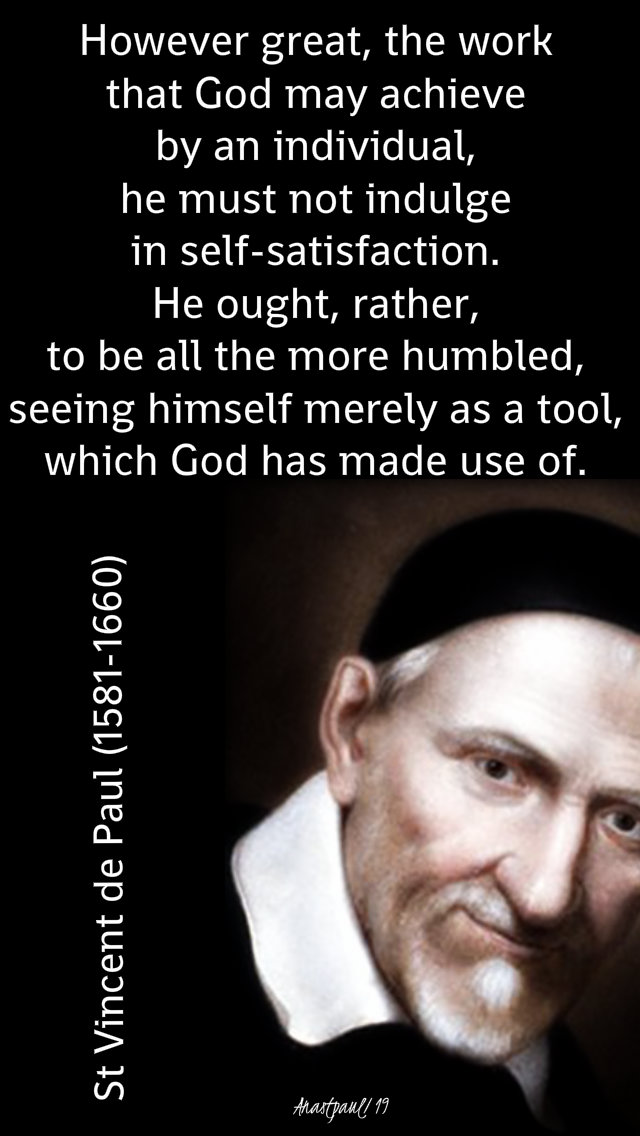
“However great, the work that God may achieve by an individual, he must not indulge in self-satisfaction. He ought, rather, to be all the more humbled, seeing himself merely as a tool, which God has made use of.”
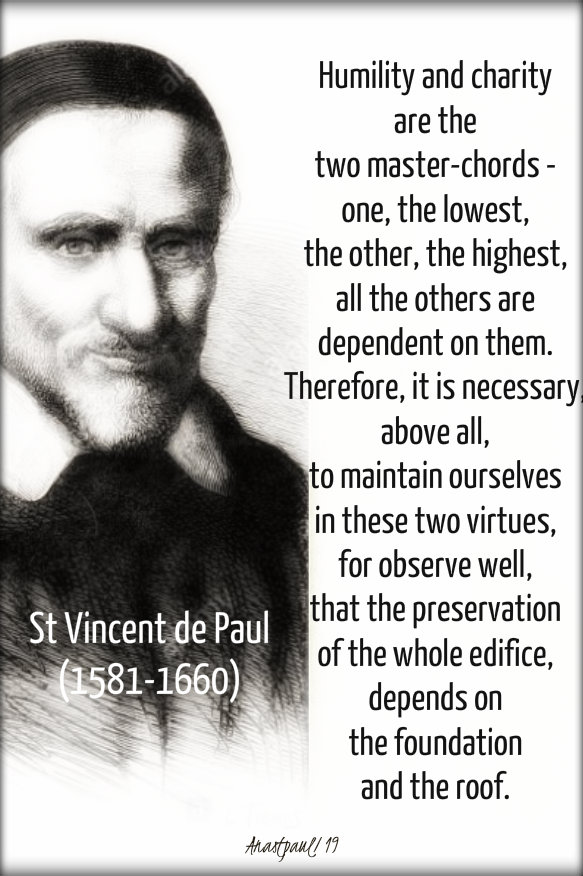
“Humility and charity are the two master-chords – one, the lowest, the other, the highest, all the others are dependent on them. Therefore, it is necessary, above all, to maintain ourselves in these two virtues, for observe well, that the preservation of the whole edifice, depends on the foundation and the roof. “
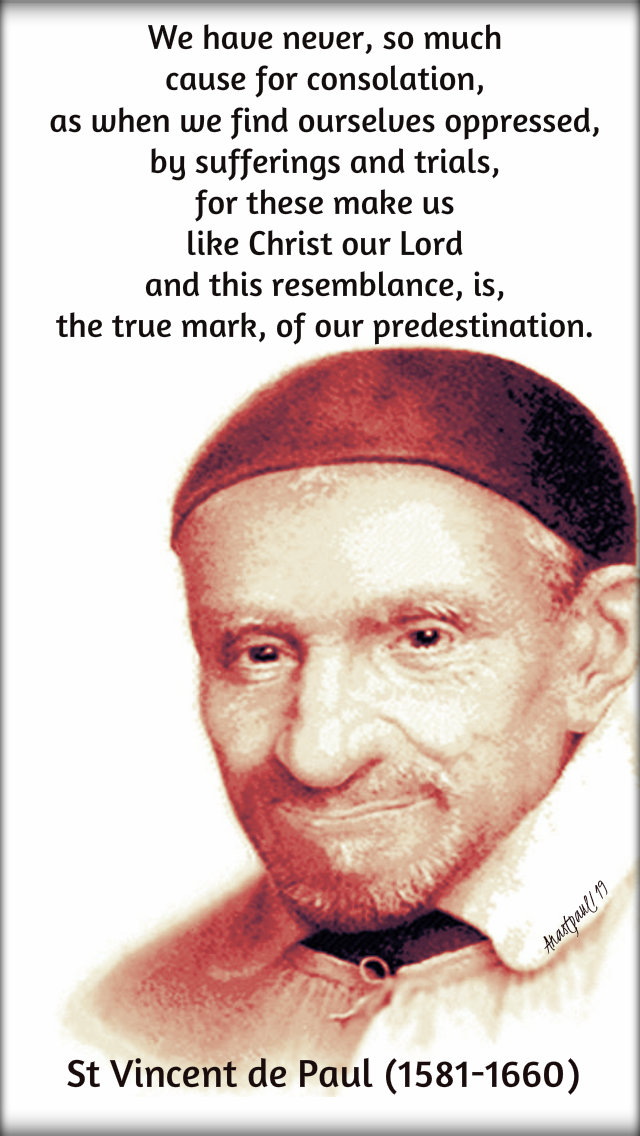
“We have never, so much cause for consolation, as when we find ourselves oppressed, by sufferings and trials, for these make us like Christ our Lord and this resemblance, is, the true mark, of our predestination.”
One Minute Reflection – 27 September – Friday of the Twenty Fifth week in Ordinary Tim, Year C, Gospel: Luke 9:18–22 and the Memorial of St Vincent de Paul (1581-1660)
“The Son of man must suffer many things and be rejected by the elders and chief priests and scribes and be killed and on the third day be raised.”... Luke 9:22
REFLECTION – “The scene found n the Gospel reading forms a climax of the Synoptic Gospels. It constitutes the watershed in Jesus’ life. To this point, in accord with the mission given Him by the Father, He has acted messianically and has aroused a sense of who He is, especially in His disciples. Because the shift that takes place in this scene is so important, Luke places it in the context of a prayer of Jesus in solitude. By asking His disciples about His identity, He takes the opportunity to reveal the core of His mission.
Yet, the people’s perception of who He is, is so imperfect, that He cannot use it as a point of departure. Peter’s statement, “you are the Messiah of God” hits the target, yet Peter’s image of the Messiah remains an Old Testament and contemporary one – the Messiah as Israel’s liberator. That is why Jesus forbids them to use the title and, more profoundly, that is why He lays out clearly, what is the true task of the Messiah – to be rejected, to die, to rise again. So that this will not be received as some sort of incomprehensible, mythological event, He immediately explains it’s implications for anyone who wishes to be His disciple – “Take up your cross daily” and “follow” the Messiah in this way.
The required faith embraces the act it includes – discipleship – but not by scheming to gain something – rather, by unconditional loss: “Whoever loses his life for my sake … ” … Cardinal Han Urs von Bathasar (1905-1988)
PRAYER – Lord God, You hold out the Light of Your Word to those who do not know You. Strengthen in our hearts, the faith You have given us and the Credo we profess, so that no trials may quench the fire Your Spirit has kindled in us. May the intercession of St Vincent de Paul, grant us the grace of following the way of the Cross, to stand beneath it with our Mother, the Mother of God, Ave Maria! We make our prayer through Jesus Christ with the Holy Spirit, one God forever, amen.
Our Morning Offering – 27 September – The Memorial of St Vincent de Paul (1581-1660)
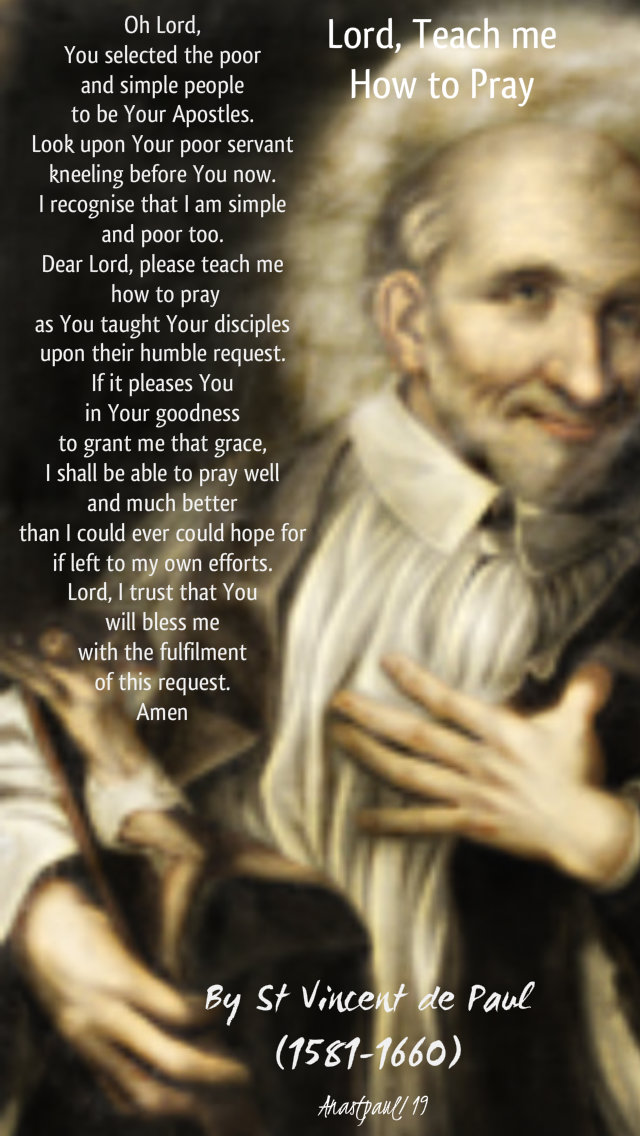
Lord, Teach me How to Pray By St Vincent de Paul
Oh Lord,
You selected the poor
and simple people to be Your Apostles.
Look upon Your poor servant
kneeling before You now.
I recognise that I am simple and poor too.
Dear Lord, please teach me how to pray
as You taught Your disciples
upon their humble request.
If it pleases You in Your goodness
to grant me that grace,
I shall be able to pray well
and much better
than I could ever could hope for
if left to my own efforts.
Lord, I trust that You will bless me
with the fulfilment of this request.
Amen
Saint of the Day – 27 September – Blessed Lorenzo of Ripafratta OP (c 1373-1456) Dominican Priest and Friar, Penitent, Vicar General, Teacher, Reformer, brilliant Preacher and Spiritual director – known as “the Ark of Science” – born in c 1373 in Ripafratta, Italy and died in 1456 in Pistoia, Tuscany, Italy of natural causes.
Lorenzo was born into a noble Italian family, who had a military history and a duty to protect the outer defences of the city of Pisa, Italy. Lorenzo, however, was drawn to the religious life, began studying for the priesthoo, and while a deacon, he joined the Dominicans at the convent of Saint Catherine in Pisa in 1396.
He worked for reform of the Dominicans and encouraged his brother friars in their studies, prayer life and devotion to the Rule. Lorenzo served as novice master, spiritual director and preacher and taught theology – his novices and students include Saint Antonius of Florence, Blessed Peter Cappuci, Blessed Fra Angelico and the artist Fra Benedetto.
In 1396, he was appointed prior, a position in which he excelled. His zeal and love for th Order led him to almost easily inspire all his fellow Dominicans to work towards the reform of the order. He was a novice and theology teacher at the convent of Cortona. Without fear of being infected, he helped the sick during the plague that struck the cities of Pistoia and Fabriano.
Because of his wisdom, the people called him the Ark of Science. He set an example to his congregation brothers and parishioners with his life of prayer, fasting, penance and devotion. He suffered a leg injury, which painfully accompanied him for the rest of his life. By the example of his silent and patient suffering – which he offered to God, the admiration and affection of the religious and the people increased. Loved by his community, he died in Pistoia, where his body is still venerated.
Father Lorenzo served for 60 years, lived a simple, ascetic life and was particularly devoted to the sacrament of Penance and Reconciliation.
He died on 27 September 1456 and was buried at the Dominican church in Pistoia. Many miracles were reported at his tomb. He was Beatified in 1851 by Pope Pius IX, via the confirmation of his cultus.
St Adheritus
St Adolphus of Cordoba
St Antonio de Torres
St Barrog the Hermit
St Bonfilius of Foligno
St Ceraunus of Paris
St Chiara of the Resurrection
St Delphine
St Deodatus of Sora
St Elzear
St Epicharis
St Fidentius of Todi
St Florentinus the Hermit
St Gaius of Milan
St Hilary the Hermit
St Hiltrude of Liessies
Bl Jean-Baptiste Laborie du Vivier
St John of Cordoba Blessed Lorenzo of Ripafratta OP (c 1373-1456)
St Marcellus of Saint Gall
St Terence of Todi
—
Martyrs of Aegea – (3 saints)
Martyred in the Spanish Civil War:
• Blessed Crescencia Valls Espí
• Blessed Herminia Martínez Amigó de Martínez
• Blessed José Fenollosa Alcaina
• Blessed Maria Carme Fradera Ferragutcasas
• Blessed Maria Magdalena Fradera Ferragutcasas
• Blessed Maria Rosa Fradera Ferragutcasas
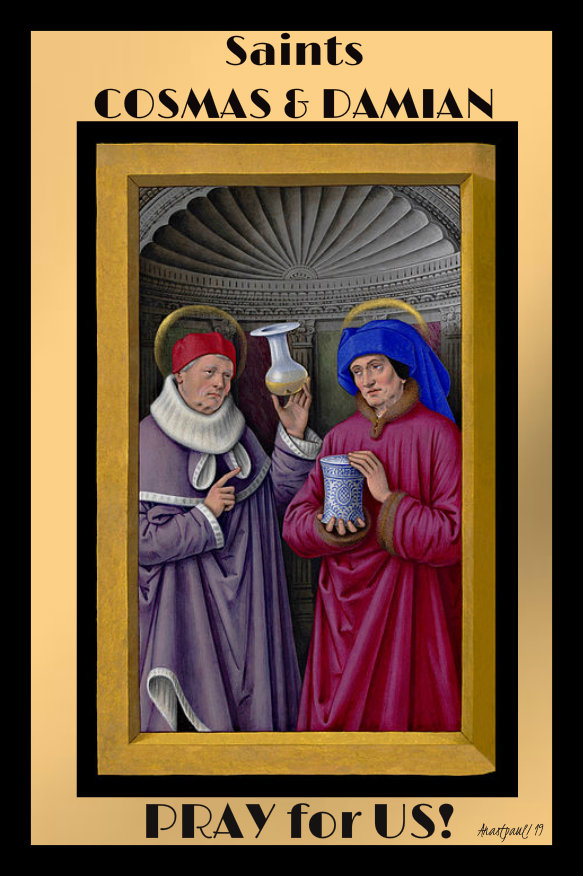
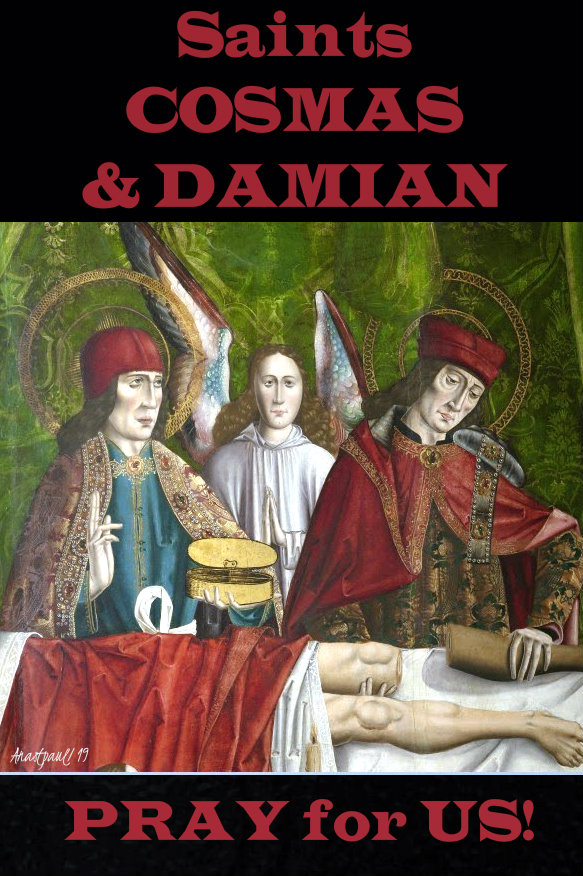
Thought for the Day – 26 September – The Memorial of Saints Cosmas and Damian (Died c 286) Martyrs
Who were Cosmas and Damian? Tradition has it that they were twin brothers, Arabs by rac, and physicians, practising their profession without claiming payment from their patients. Hence they were known as the “moneyless” or “unmercenary” physicians. The lesson formerly read at Matins has this lovely line: “Not more by their knowledge of medicine than by the power of Christ, they healed diseases which had been hopeless for others.”
Ultimately, Cosmas and Damian gave their lives in witness to the Divine Physician Christ. They were honoured first in the East and by the sixth century they had their own basilica in Rome where they were depicted in mosaics which can still be seen today.
It is no surprise that Cosmas and Damian came to be invoked as the patron saints of physicians, surgeon, and other health care givers. For this reason, I remember today, all the physicians and nurses who have cared for us in the past and who care for us now.
In some way we are, all of us, ‘moneyless’ health care givers. There is a long tradition of this — an apostolic one, in fact. Remember Saint Peter saying at the “gate which is called Beautiful” (Ac 3:2) “I have no silver or gold, but I give you what I have” (Ac 3:6). Peter then offered healing in the name of Jesus Christ of Nazareth.
The charism of healing may not given to all but the word of comfort, the word of the Lord that dispels fear and brings assurance, is something that each of us can offer. Holy Father Benedict, speaking of the cellarer of the monastery, says that, “a good word is above the highest gift” (RB 31:14). If words can wound, bringing suffering, they can also heal, bringing light and peace.
The words that bring us together, day after day for the Holy Sacrifice of the Mass — “This is my Body which will be given up for you,” and “This is the cup of my Blood” — are words of healing. They come forth from the mouth of the Divine Physician, moneyless and unmercenary who, “though he was rich, yet for your sake became poor, so that by his poverty you might become rich” (2 Cor 8:9). (Fr Mark of Silverstream Priory)
One Minute Reflection – 26 September – Thursday of the Twenty Fifth week in Ordinary Time, Year C, Gospel: Luke 9:7–9 and The Memorial of Saints Cosmas and Damian (Died c 286) Martyrs
“Who is this about whom I hear such things?” And he sought to see him. … Luke 9:9
REFLECTION – “You cannot know Jesus without having problems. You cannot know Jesus “by sitting in first class” or “in the calm”, much less “in the library.” We only come to know Jesus on the daily path of life. … knowing Him with the mind is a step in the right direction but in order to know Jesus, we need to enter into a dialogue with Him. By talking with Him, in prayer, on our knee s. If you don’t pray, if you don’t talk to Jesus, you don’t know Him. The third way to know Jesus is by following Him, by going with Him, by walking with Him, by travelling along the road of His ways. If you know Jesus with these three languages – of mind, heart and action, then you can say that you know Jesus. Therefore, in order truly to know Him, it is necessary to read what the Church tells us about Him, to speak with Him in prayer and to walk along the path of His ways with Him. This is the road and everyone has a decision to make.”
PRAYER – Holy God, through our Lord Jesus Christ Your Son in union with the Holy Spirit, with Mary Mother of the Church, St Joseph her spouse, the communion of Saints, we pray, be with us, lead us, guide us, never leave us. May we learn the ways of Your Son, may we follow them and may we constantly seek His Face in prayer and the Sacraments. Grant we pray, that by the intercession of Sts Cosmas and Damian, we may be filled with courage and joy as we follow behind Him. We make our prayer through Christ our Lord, with the Holy Spirit, God forever, amen.
Saints of the Day – 26 September – Saints Cosmas and Damian (Died c 286) Martyrs, Twin brothers and Physicians, Apostles of Charity, Evangelists – born in the 3rd century, of Arabic descent and died by being tortured, without suffering any injury and finally they were beheaded c 286 in Aegea, Cilicia (modern Ayas, Turkey). They practised their profession in the seaport of Aegeae, then in the Roman province of Syria. Patronages – surgeons, physicians, dentists, protectors of children, barbers, pharmacists, veterinarians, orphanages, day-care centres, confectioners, children in house, against hernia, against the plague, midwives, Alberobello, Italy, Ossimo, Italy.
Their charity and Christian witness won many converts to the faith and earned them a place of prominence in the Christian communities of Asia Minor. Therefore, when the Diocletian persecutions began in the latter half of the third century they were of some of the first to be sought out for execution.
Cosmas and Damian were twin brothers, born in Arabia, who went to Syria to study and practice medicine. But they were concerned about more than healing bodies. They brought their belief in Christ to those to whom they ministered. Not only that but they also served people without charging any fees. Lysias, the governor of Celicia, heard about these two brothers and he summoned them before him. When Cosmas and Damian proclaimed they were Christians, Lysias had them tortured and finally beheaded.
Cosmas and Damian miraculously transplant the black leg of the Ethiopian onto the white body of the patient.
Devotion to these two brothers grew and many cures were said to have been worked through their intercessions. Later a church in their honour was constructed over the site of their burial. When the Emperor Justinian was sick, he prayed to Saints Cosmas and Damian for a cure. Out of gratitude for receiving this favour, he enlarged the city of Cyr and its church. Numerous other churches were erected for them at Constantinople and Rome. Nine centuries later, St Francis of Assisi rebuilt the dilapidated San Damiano chapel outside Assisi.
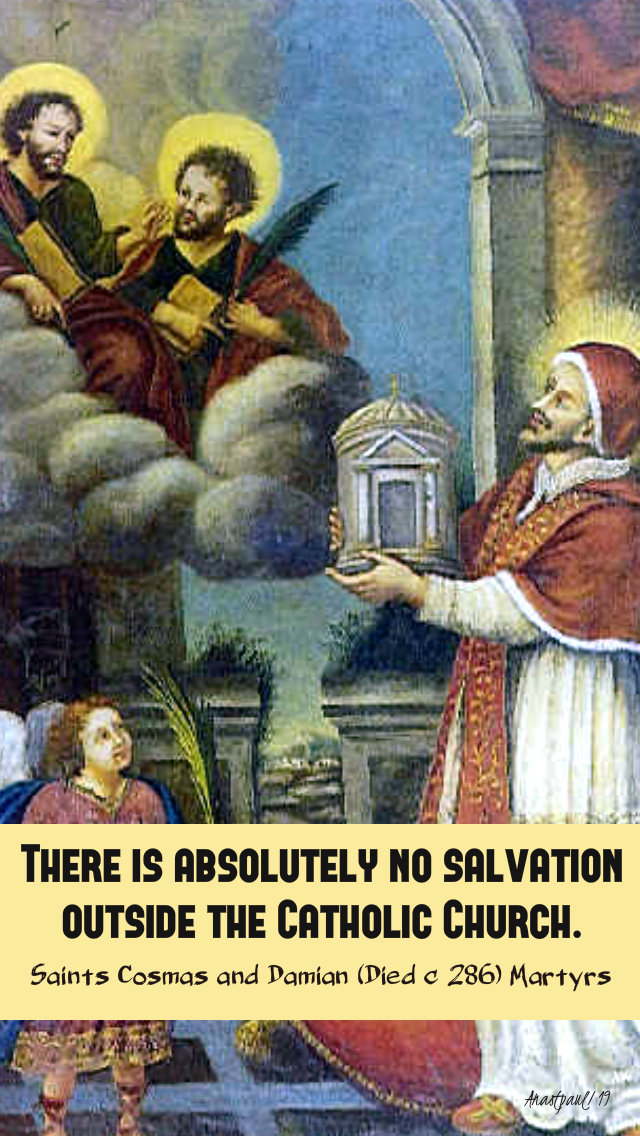
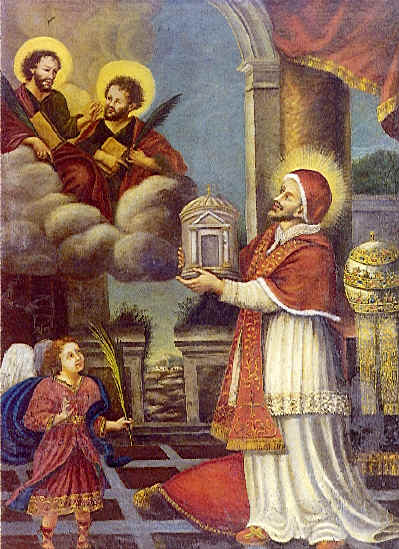
Pope Felix IV presents Saints Cosmas and Damian with the Basilica he re-dedicated to them.
The veneration of Cosmas and Damian quickly spread, accounts of their martyrdom were written by various authors such as St Andrew of Crete, Peter of Argos, Theodore II Laskaris, and a certain Maximus around 1300. The legends are preserved also in Syriac, Coptic, Georgian, Armenian and Latin.
The martyr twins are remembered in the Roman Canon of the Mass in the prayer known as the Communicantes (from the first Latin word of the prayer). They are also recalled in the Litany of the Saints and in the older form of the Roman rite, in the Collect for Thursday in the Third Week of Lent, as the station church for this day is Santi Cosma e Damiano.
If so little about these saints is actually known, why do we honour them? Part of the answer can be found in tradition. When so many believers continue to honour the memory of martyrs, year after year and all over the world, there is good reason to believe that their lives were true witnesses to the Gospel. People who live and die according to their convictions and faith, give hope to the world long after their deaths. Their lives can inspire us and encourage us to be faithful during our little trials and sorrows.
St Senator of Albano
St Vigilius of Brescia
—
Martyrs of Korea – 12 saints: Twelve lay people in the apostolic vicariate of Korea who were imprisoned, tortured and martyred together in the persecutions in Korea.
• Saint Agatha Chon Kyong-Hyob
• Saint Carolus Cho Shin-Ch’ol
• Saint Catharina Yi
• Saint Columba Kim Hyo-Im
• Saint Ignatius Kim Che-Jun
• Saint Iulitta Kim
• Saint Lucia Kim
• Saint Magdalena Cho
• Saint Magdalena Ho Kye-Im
• Saint Magdalena Pak Pong-Son
• Saint Perpetua Hong Kum-Ju
• Saint Sebastianus Nam I-Gwan
They were beheaded September 1839 in Seoul Prison, South Korea and Canonised on 6 May 1984 by St Pope John Paul II.
Martyred in the Spanish Civil War:
• Blessed Amalia Abad Casasempere de Maestre
• Blessed Andreu Felíu Bartomeu
• Blessed Antonio Cid Rodríguez
• Blessed Josefa Romero Clariana
• Blessed Manuel Legua Martí
• Blessed María Jord´ Botella
• Blessed Pau Castell´ Barber´
• Blessed Teresa Rosat Balasch
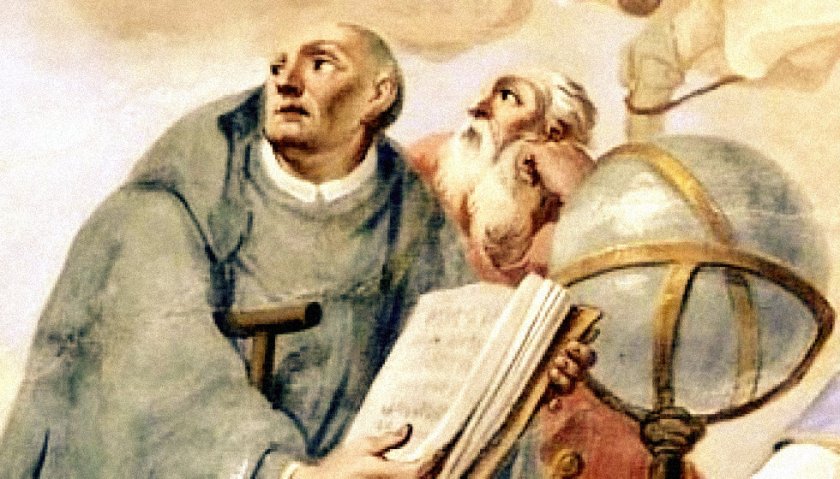
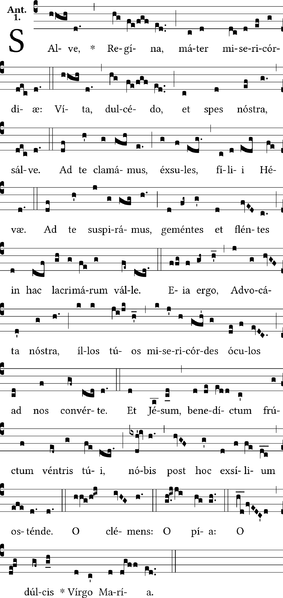
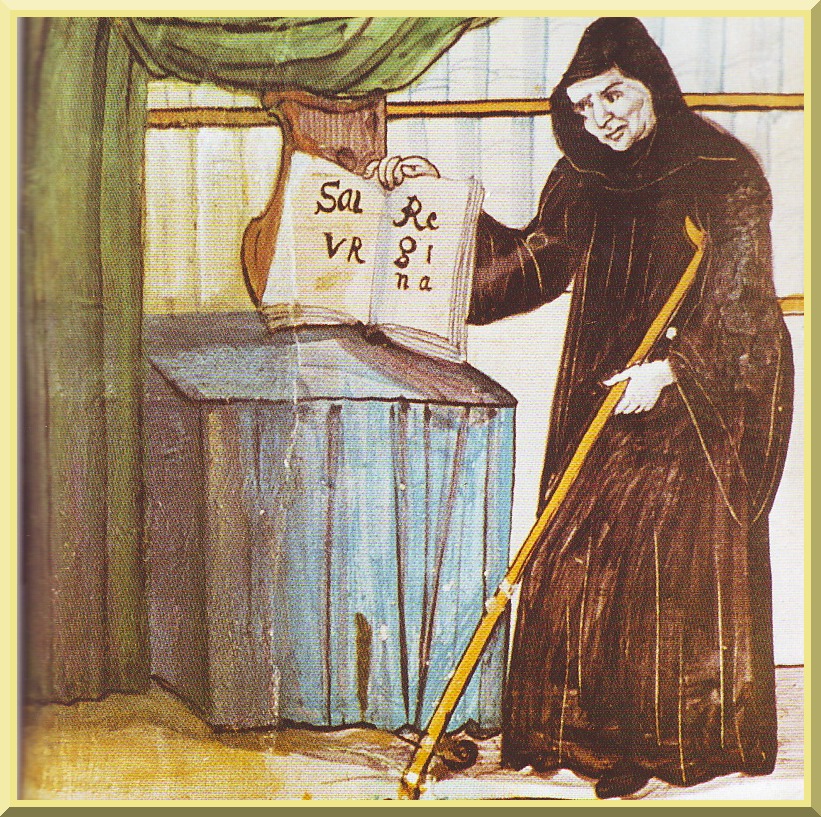
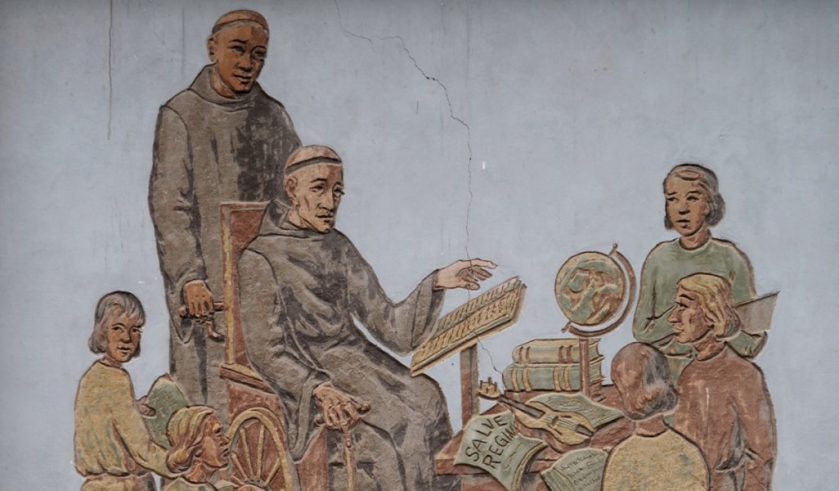
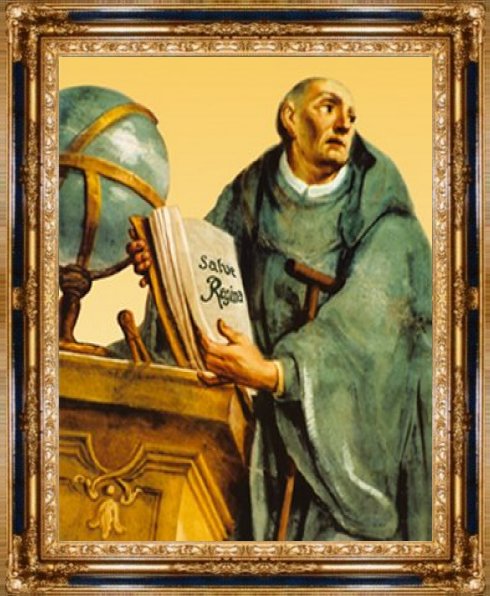
Thought for the Day – 25 September – The Memorial of Blessed Herman of Reichenau/the Cripple OSB (1013–1054) the Author of the Salve Regina
THE “SALVE, REGINA” RECEIVES AN ADDITION
In the year 1146 Saint Bernard, the illustrious doctor of the Church and abbot of Clairvaux, was travelling through Germany and by the power of his eloquence was rousing the people of that country to the necessity of entering upon another crusade, a spirited one, in order to wrest from the iron grasp of the heathens those places in Palestine that had been sanctified by the footsteps and moistened with the blood, of our holy Redeemer.
Passing from Switzerland, by way of Strasbourg, Saint Bernard sailed down the river Rhine and landed at Spire, on Christmas Eve, 1146. In a grand procession, composed of the civic societies and trades unions, with their banners waving in the air and holding lighted tapers in their hands, followed in turn by the clergy with their bishop clad in pontifical robes, Saint Bernard was conducted, amid every sign of respect from the multitudes who lined the streets of the city, to the majestic cathedral.
Here, amid the chant of the choristers and the joyful pealing of the bells, the great preacher of the holy wars was met by the Emperor Conrad and all the royal princes of the court, who tendered to their illustrious guest the welcome of their realm.
It was a scene of great magnificence as the saint crossed the threshold of the sacred edifice. Thousands had to remain outside the building, for the saint’s great reputation for sanctity and the fame of the wondrous miracles that he had wrought, as well as his renowned eloquence, had drawn vast crowds from far and near, eager to get a glimpse of his venerable person.
As the solemn procession, preceded by the cross and other standards, marched slowly up the grand aisle of the cathedral, a choir of a thousand voices chanted the hymn, “Salve, Regina,” or “Hail, holy Queen.” The lofty vaults of the sacred edifice spanning many altars ablaze with a thousand lights, the soldierly form of the emperor, the venerable mien of the holy bishops, the long files of white-robed priests, the vast crowds of admiring people, the inspiring strains of the music and all this but the expression of truly Catholic hearts, over-powered the soul of Saint Bernard with emotions of intense gratitude to God and His blessed Mother.
The altar was reached as the singers’ voices repeated the last words of the “Salve, Regina.” A profound silence ensued as the words, “Et Jesum, benedictum fructum ventris tui, nobis post hoc exilium ostende” – that is, “Show unto us the blessed fruit of thy womb, Jesus,” died away. In a moment of inspiration, and overwhelmed with the loftiest sentiments of piety towards the Blessed Virgin, the great Saint Bernard, in thrilling tones, exclaimed spontaneously, “O clemens, O pia, O dukis Virgo Maria!” that is, “O element, O loving, O sweet Virgin Mary!”
From that moment the “Salve, Regina” continued to have a new ending. The love-breathing words of Saint Bernard, the honey-tongued doctor, as holy Church styles him, were universally adopted and added, with a will by all, to the “Salve, Regina” originally composed by Blessed Herman the Cripple.
They form a beautiful and fitting ending to a beautiful apostrophe to the Mother of God. In the cathedral at Spire, every day, from that time till our day, the “Salve, Regina” is sung solemnly in memory of the events so sacred which led to the inspired composition of its present ending and in memory of the saint who uttered the beautiful words.
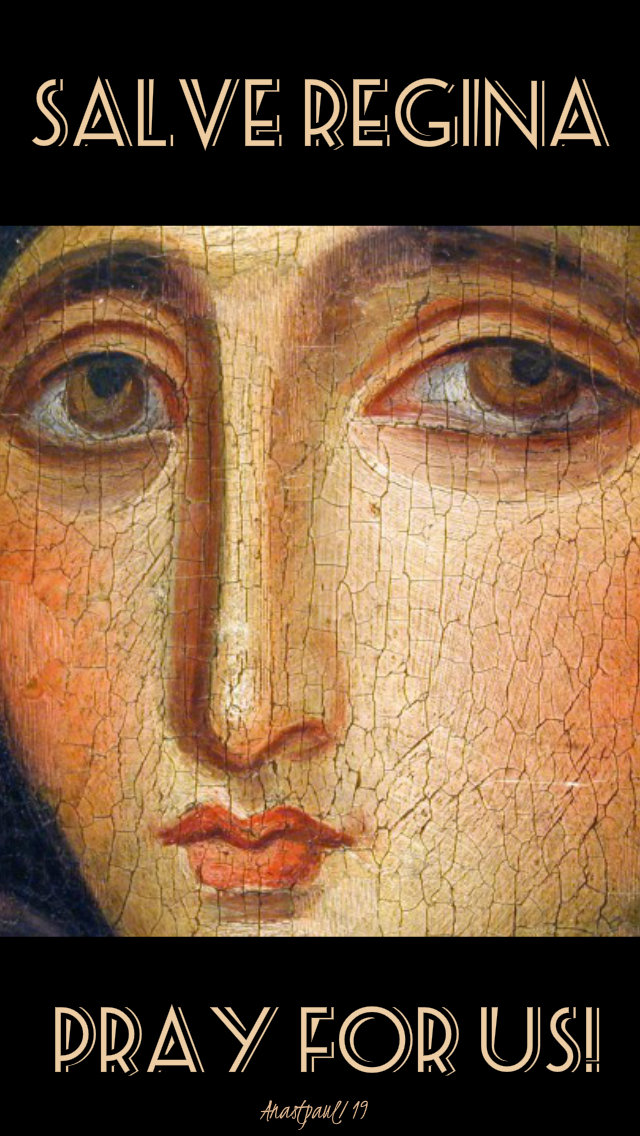
Salve Regina, Pray for us, O Holy Mother of God!
V Pray for us, O holy Mother of God,
℟ that we may be made worthy
of the promises of Christ.
Blessed Herman, Pray for Us!
St Bernard, Pray for us!
Quote/s of the Day – 25 September – The Memorial of Blessed Herman of Reichenau/the Cripple OSB (1013–1054) the Author of the Salve Regina, the Veni Sancte Spiritus and the Alma Redemptoris Mater
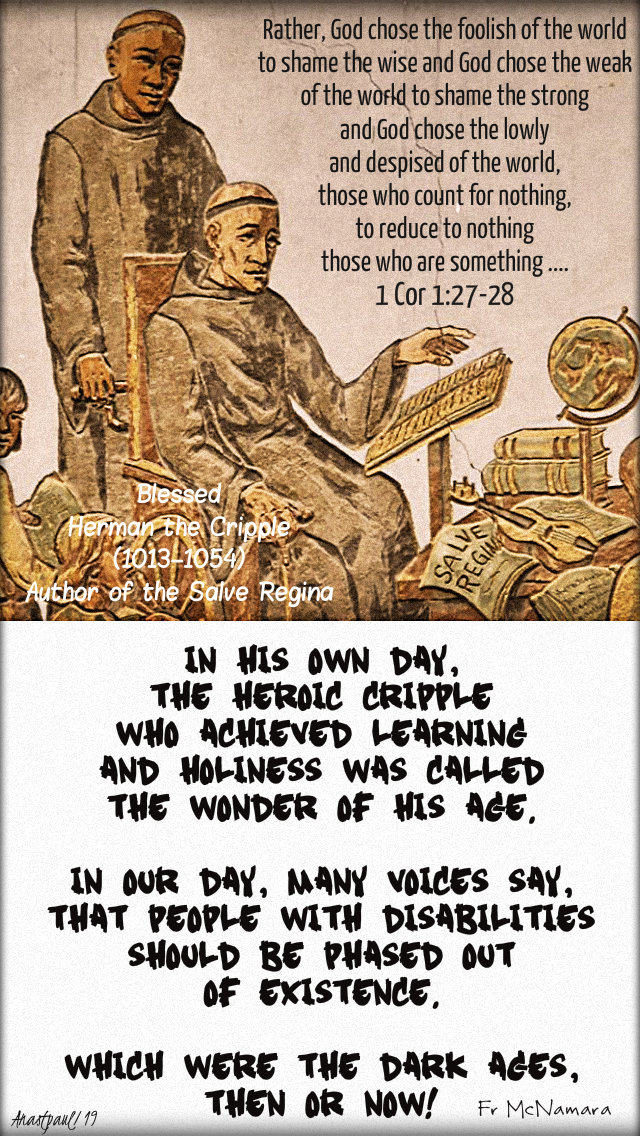
Let us thank God for Blessed Herman the Cripple. He stands as a shining light reminding us that God purposely chose what the world considers nonsense, in order to shame the wise and He chose what the world considers weak, in order to shame the powerful. He chose what the world looks down on and despises and thinks is nothing, in order to destroy what the world thinks is important.
Rather, God chose the foolish of the world, to shame the wise and God chose the weak of the world, to shame the strong and God chose the lowly and despised of the world, those who count for nothing, to reduce to nothing those who are something ….
1 Corinthians 1:27-28
“In his own day, the heroic cripple who achieved learning and holiness
was called ‘The Wonder of His Age’.
In our day, many voices say
that people with disabilities.
should be phased out of existence.
Which were the Dark Ages, then or now!” … Father McNamara
Veni Sancte Spiritus This translation was by Father Edward Caswall (1814-1878)
Holy Spirit, Lord of light,
From Thy clear celestial height
Thy pure beaming radiance give.
Come, Thou Father of the poor,
Come with treasures which endure,
Come, Thou Light of all that live.
Thou, of all consolers best,
Thou, the soul’s delightsome Guest,
Dost refreshing peace bestow.
Thou in toil art comfort sweet,
Pleasant coolness in the heat,
Solace in the midst of woe.
Light immortal, Light divine,
Visit Thou these hearts of Thine,
And our inmost being fill.
If Thou take Thy grace away,
Nothing pure in man will stay;
All his good is turned to ill.
Heal our wounds; our strength renew;
On our dryness pour Thy dew;
Wash the stains of guilt away.
Bend the stubborn heart and will;
Melt the frozen, warm the chill;
Guide the steps that go astray.
Thou, on those who evermore
Thee confess and Thee adore,
In Thy sevenfold gifts descend:
Give them comfort when they die,
Give them life with Thee on high;
Give them joys that never end.
++++++++++++++++++
Alma Redemptóris Mater, quæ pérvia cæli Porta manes, et stella maris, succúrre cadénti, Súrgere qui curat pópulo: tu quæ genuísti, Natúra miránte, tuum sanctum Genitórem Virgo prius ac postérius, Gabriélis ab ore Sumens illud Ave, peccatórum miserére.
Mother of Christ! Hear thou thy people’s cry,
Star of the deep and portal of the sky!
Mother of Him Who thee from nothing made,
Sinking we strive and call to thee for aid;
Oh, by that joy which Gabriel brought to thee,
Thou Virgin first and last, let us thy mercy see.
One Minute Reflection – 25 September – Wednesday of the Twenty-fifth week in Ordinary Time, Year C, Gospel: Luke 9:1–6 and the Memorial of Blessed Herman of Reichenau/the Cripple OSB (1013–1054) “The Wonder of his Age’
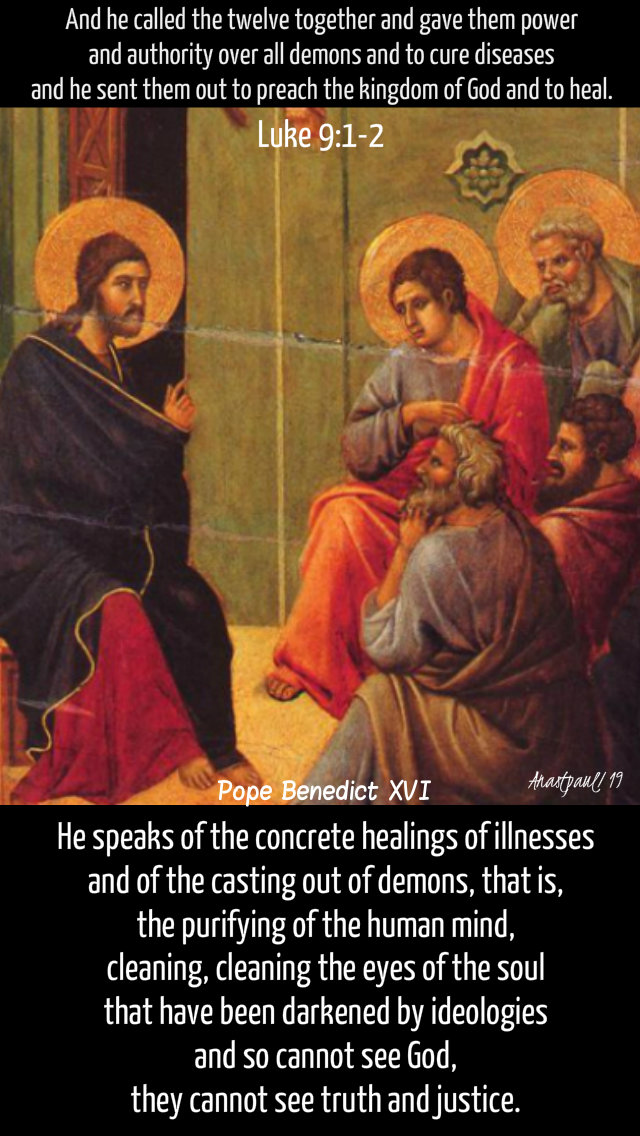
And he called the twelve together and gave them power and authority over all demons and to cure diseases and he sent them out to preach the kingdom of God and to heal. … Luke 9:1-2
REFLECTION – “The other instruction that is very important in the Gospel passage is that the Twelve cannot simply preach conversion – along with preaching there must be, according to the orders and example of Jesus, curing of the sick. Cure of the physically and spiritually sick. He speaks of the concrete healings of illnesses and of the casting out of demons, that is, the purifying of the human mind, cleaning, cleaning the eyes of the soul that have been darkened by ideologies and so cannot see God, they cannot see truth and justice. This double physical and spiritual healing is always the mandate of Christ’s disciples. So, the apostolic mission must always carry these two aspects of preaching the word of God and manifesting His goodness with gestures of charity, service and dedication.” … Pope Benedict XVI 16 July 2012
PRAYER – O God of love, You sent Your beloved Son to the world to proclaim the Good News of Salvation, to heal every illness and to cure all infirmity of body and soul. Help us to continue the mission of the merciful Christ in the service towards our neighbour, preaching the Gospel and offering our help in whatever way we can. May the example of suffering of Blessed Herman the Cripple, teach us how to love and serve You. Through his intercession, grant us the grace to go forth in love. We ask this through Jesus Christ our Lord, with the Holy Spirit, one God forever, amen.
Our Morning Offering – 25 September – Wednesday of the Twenty-fifth week in Ordinary Time, Year C and the Memorial of Blessed Herman of Reichenau/the Cripple OSB (1013–1054) the Author of the Salve Regina
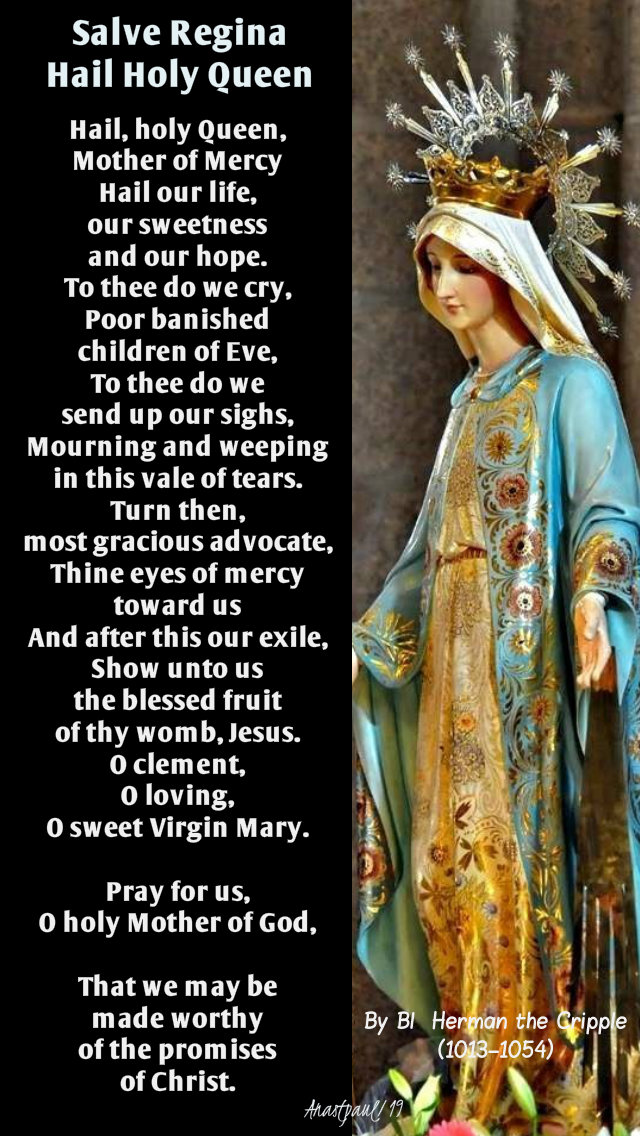
Salve Regina Hail Holy Queen By Blessed Herman the Cripple (1013–1054)
Hail, holy Queen, Mother of Mercy
Hail our life, our sweetness and our hope.
To thee do we cry,
Poor banished children of Eve,
To thee do we send up our sighs,
Mourning and weeping in this vale of tears.
Turn then, most gracious advocate,
Thine eyes of mercy toward us
And after this our exile,
Show unto us the blessed fruit of thy womb, Jesus
This line by St Bernard (1090-1153) Doctor of the Church O clement, O loving, O sweet Virgin Mary.
℣ Pray for us, O holy Mother of God,
℟ that we may be made worthy
of the promises of Christ.
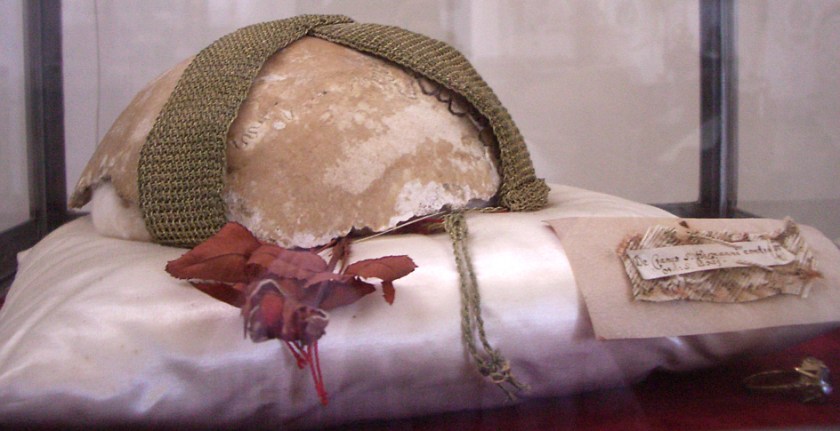
Saint of the Day – 25 September – Blessed Herman of Reichenau/the Cripple OSB (1013–1054) Benedictine Monk, Confessor, Scholar, Scientist, Writer, Hymnist, Poet, Musical Composer, Teacher – born on 18 February 1013 at Altshausen, Swabia (in modern Germany) and died on 21 September 1054 at Reichenau abbey, Germany of natural causes. Also known as Hermann Contractus, Herimanus Augiensis, Hermann von Reichenau.
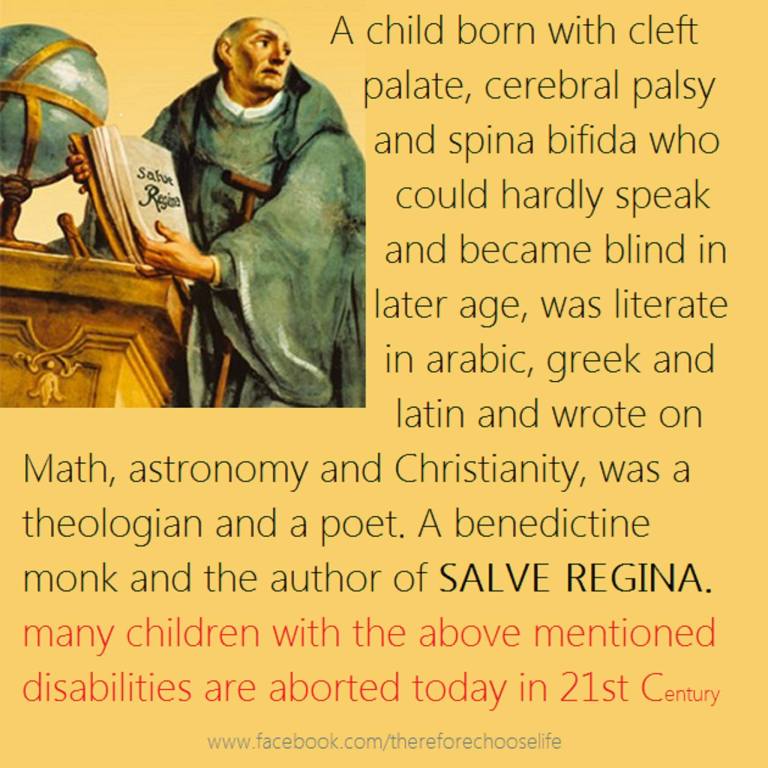
In his own day, the heroic cripple who achieved learning and holiness was called ‘The Wonder of His Age’. He composed works on history, music theory, mathematics and astronomy, as well as many hymns. Composer of the “Salve Regina” Hail Holy Queen, “Veni Sancte Spiritus” Come Holy Spirit and “Alma Redemptoris Mater” Nourishing Mother of the Redeemer. He was renowned as a religious poet and musical composer. Among his surviving works are officia for St Afra and St Wolfgang. When he went blind in later life, he began writing hymns and these have carried the Church and still do for a 1000 years in joy and glory!
Blessed Herman was the son of Count Wolverad II von Altshausen. Being a cripple (born with a cleft palate, cerebral palsy and possibly spina bifida – though today it is thought that he had amyotrophic lateral sclerosis or spinal muscular atrophy) from birth (hence the surname Contractus) he was powerless to move without assistance and it was only by the greatest effort that he was able to read and write but he was so highly gifted intellectually, that when he was but seven years of age his parents confided him to the learned Abbot Berno, on the island of Reichenau.
His great love and sincere devotion for the “Mother of the afflicted ” secured him peace of soul and even lightened his bodily sufferings. We are told, however, that he continued to pray to his beloved Mother for restoration to health and strength, if it should be pleasing to God. Pious legend informs us, that when he had prayed thus for some months, the Blessed Virgin appeared to him and offered him the choice between two gifts, namely, health or wisdom. Herman, without hesitating a moment, chose the gift of wisdom. He made a wise selection, for notwithstanding his bodily infirmities he became one of the most learned men of his time. Under the poor form of a deformed body there dwelt a noble soul, a clear and richly gifted intellect and a humble and charitable heart.
Herman spent his entire life in the monastery Reichenau as a teacher, researcher and musician. Herman was bound to a carrying chair and was completely dependent on his servants. He could only write with difficulty and one may assume that he has dictated a large part of his works. And even that might have been difficult, as his biographer writes that he could only speak with difficulty and was barely understandable. But if we are allowed to believe Berthold, his charisma, his cheerfulness and his modesty of intelligence were so impressive that everyone had to love him.
A good student of theology, he could also produce works of spiritual depth. For a readership of nuns he wrote a discourse “On the Eight Principal Vices.” It was cast in poetry and he handled the versification with great lyricism. He also knew how to give serious matters a light touch. The treatise for nuns was witty and he even began his world chronicle with a touch of self-depreciation: “Herman, the rubbish of Christ’s little ones, lagging behind the learners of philosophy more slowly than a donkey or a slug … ”
Herman was not just a music theoretician but, with that, he took on a special position – he himself created melodies – and he may be considered one of the first known composers of Gregorian chants. In contrast to the strict Gregorian chant, his music show an almost romantic melody. His “Salve Regina” is clearly the work of a master.
Herman gave instructions on how to measure the circumference of the earth at a time when there was not even clarity about the spherical shape of the earth. One of Herman’s inventions was the pillar sundial , which he called the horologium viatorum.
His iron will overcame all obstacles and it was not long before his brilliant attainments made him a shining light in the most diversified branches of learning, including, besides theology, mathematics, astronomy, music, the Latin, Greek and Arabic tongues. Students soon flocked to him from all parts, attracted not only by the fame of his scholarship but also by his monastic virtue and his lovable personality.
We are indebted to him chiefly for a chronicle of the most important events from the birth of Christ to his day. It is the earliest of the medieval universal chronicles now extant and was compiled from numerous sources, being a monument to his great industry as well as to his extraordinary erudition and strict regard for accuracy. While it is not improbable that this work was based on a previous state chronicle of Swabia, since lost (called “Chronicum Universale Suevicum”, or “Epitome Sangallensis”), it has nevertheless a significance entirely its own. But the full measure of his genius appears from the objectivity and clearness with which he wrote the history of his own time, the materials of which were accessible to him only by means of verbal tradition.
In later life he became blind and had to give up his academic writing.
He died on the island of Reichenau, Lake Constance, 21 September, 1054. He was Beatified in 1863 by Pope Pius IX.
Three of five symphonies that were written by Russian composer Galina Ustvolskaya are based on his texts.
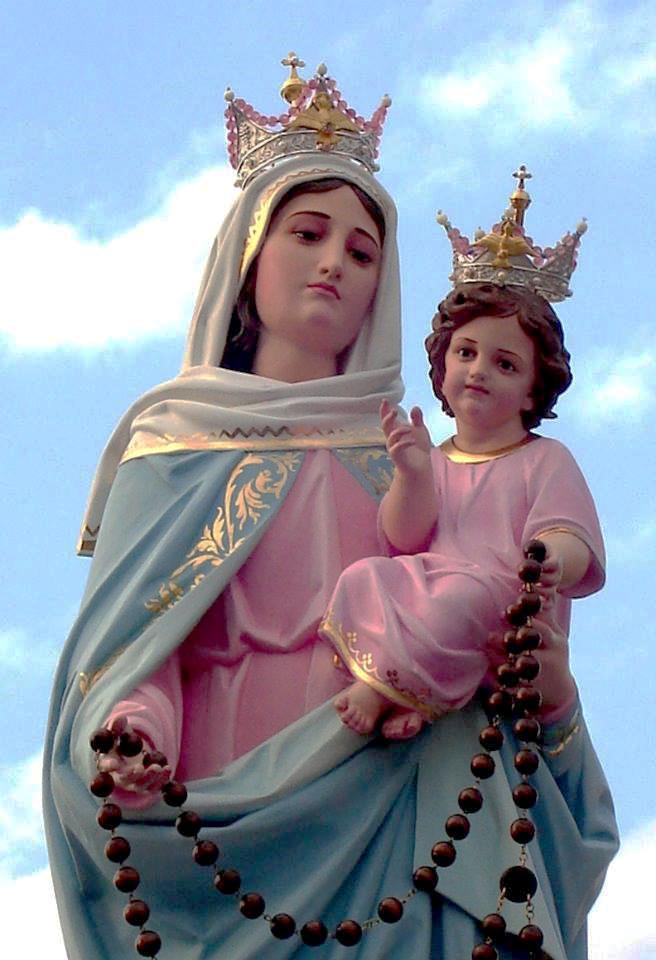
Our Lady of the Rosary of San Nicolás, Argentina – 25 September:
An ordinary housewife, a mother and grandmother who had no formal education and no knowledge of the Bible or theology claimed that she was visited by the Blessed Mother daily for a period of over 6 years. She reportedly additionally received 68 messages from Jesus Christ. Numerous healings, including the cure of a boy with a brain tumour, have been documented.
Every 25 September, the city of San Nicolás hosts hundreds of thousands of pilgrims and faithful who meet to venerate and honour the statue of Our Lady of the Rosary of St Nicholas. In 2003, on the twentieth anniversary of the first apparition of Our Lady, the second largest group ever congregated – 400,000 faithful. Pilgrims came from all the provinces of Argentina, with a group of more than 1,000 people from Buenos Aires who travelled the whole 240 km distance on foot – a distance three times greater than that from Buenos Aires to the national Basilica of Our Lady of Luján. On 25 September 2013, thirty years after the first apparition of Our Lady, 500,000 people gathered surpassing the record of 2004 when the greatest number of pilgrims visited.
In a decree signed on 22 May 2016 and made public a few days later, Héctor Cardelli, Bishop of the Diocese of San Nicolás, declared that the apparitions that took place in city of San Nicolás were supernatural in origin. The devotion is thus approved at the Diocesan level within the Catholic Church.
St Anacharius of Auxerre
St Aurelia of Macerata
St Caian of Tregaian
St Ceolfrid
St Cleopas
St Egelred of Crowland
St Ermenfridus of Luxeuil
St Finbar
St Firminus of Amiens
St Fymbert
St Herculanus the Soldier Bl Herman of Reichenau/the Cripple (1013–1054)
Martyrs of Damascus: A Christian family of six who were tortured to death in a persecution by Roman authorities. They were: Eugenia, Maximus, Paul, Rufus, Sabinian and Tatta. They were tortured to death in Damascus, Syria, date unknown.
Martyred in the Spanish Civil War:
• Blessed Jose María Bengoa Aranguren
• Blessed Josep Maria Vidal Segú
• Blessed Juan Agustín Codera Marqués
• Blessed Julio Esteve Flors
• Blessed Pedro Leoz Portillo
• Blessed Rafael Pardo Molina
• Blessed Tomás Gil de La Cal
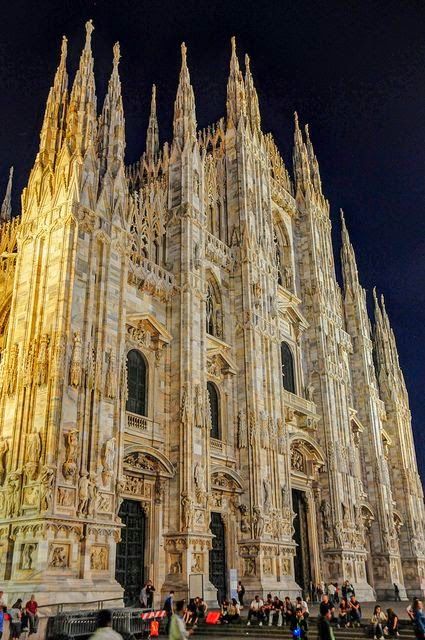
Feast of the Holy Bishops of Milan – a 1st Century Diocese!
Imagine being part of a diocese in which 37 of your past bishops are saints and some are also Doctors of the Church and Popes (and others being considered for sanctity)! The latest addition to this illustrious role-call, is beloved Saint Pope Paul VI.
Today, the Church in Milan commemorates these holy bishops.
They are:
• Blessed Alfredo Ildefonso Schuster
• Blessed Andrea Carlo Ferrari
• Pope Pius XI
• Saint Ambrose of Milan
• Saint Ampelius of Milan
• Saint Anathalon of Milan
• Saint Antoninus of Milan
• Saint Auxanus of Milan
• Saint Benedict Crispus of Milan
• Saint Benignus of Milan
• Saint Calimerius of Milan
• Saint Castritian of Milan
• Saint Charles Borromeo
• Saint Datius of Milan
• Saint Dionysius of Milan
• Saint Eugene of Milan
• Saint Eusebius of Milan
• Saint Eustorgius II of Milan
• Saint Eustorgius of Milan
• Saint Gaius of Milan
• Saint Galdinus of Milan
• Saint Geruntius of Milan
• Saint Glycerius of Milan
• Saint Honoratus of Milan
• Saint John Camillus the Good
• Saint Lazarus of Milan
• Saint Magnus of Milan
• Saint Mansuetus of Milan
• Saint Marolus of Milan
• Saint Martinian of Milan
• Saint Mirocles of Milan
• Saint Mona of Milan
• Saint Natalis of Milan
• Saint Pope Paul VI
• Saint Protasius of Milan
• Saint Senator of Milan
• Saint Simplician of Milan
• Saint Venerius of Milan
Saint of the Day – 24 September – Saint Pacificus of Severino OFM (1653-1721) Priest, Franciscan Friar, Mystic, Miracle-worker, Missionary, Superior of the Friary of San Severino and joyful sufferer for Christ – born on 1 March 1653 at San Severino, Italy and died on 24 September 1721 at San Severino, Italy of natural causes aged 68.
Pacificus was born into the impoverished Divini family on 1 March 1653, in the city of San Severino, Italy. He was one of 13 children. At age three he lost his father and his mother. Along with his siblings he was brought to the house of an uncle to be raised. The children suffered greatly there, mistreated by two servants in the household.
From infancy Pacificus had received a good religious formation from his mother, which helped him to not fall into despair and to follow the religious vocation that early attracted him. At age 17 he entered the Franciscans of Forano, where he studied and received Holy Orders on 4 June 1678, subsequently becoming Professor of Philosophy at the Monastery.
The words of Our Lord, “the harvest is great but the workers are few,” refused to leave his mind and he concluded that the world did not need doctors but apostles. He spoke about this concern to his Provincial, who directed him in 1683 to take up missionary work. For five or six years he actively preached to the people of the surrounding regions. His ideal was to convert the infidel and suffer martyrdom. But God had reserved to this hunter of souls another apostolate, that of suffering.
His feet became swollen and covered with wounds, which prevented him from walking, a condition he suffered until his death. For a while, he held the post of guardian in the Monastery and dedicated many hours to hearing confessions. However, he could no longer do so after he became deaf and could not communicate with those around him. This intensified his union with God.
The loss of this sense was not enough. Pacificus also became blind. In the last years of his life he could no longer celebrate Mass or go to the choir. And, since the worse enemies of man are his neighbours, St Pacific found some persons in his Monastery – like the sacristan and nurse – who mistreated him with words and deeds.
The Saint bore all this with an inextinguishable and firm patience. He became a model for all those who carry this cross. But “he sought for comfort and relief in God alone and was by him favoured with marvellous supernatural graces and with the gift of working miracles.” He was said to have “borne his ills with angelic patience, worked several miracles and was favoured by God with ecstasies.” He died on 24 September 1721. (Scamoni, The True Face of the Saints)
He was Beatified on 4 August 1786 by Pope Pius VI and Canonised on 26 May 1839 by Pope Gregory XVI.
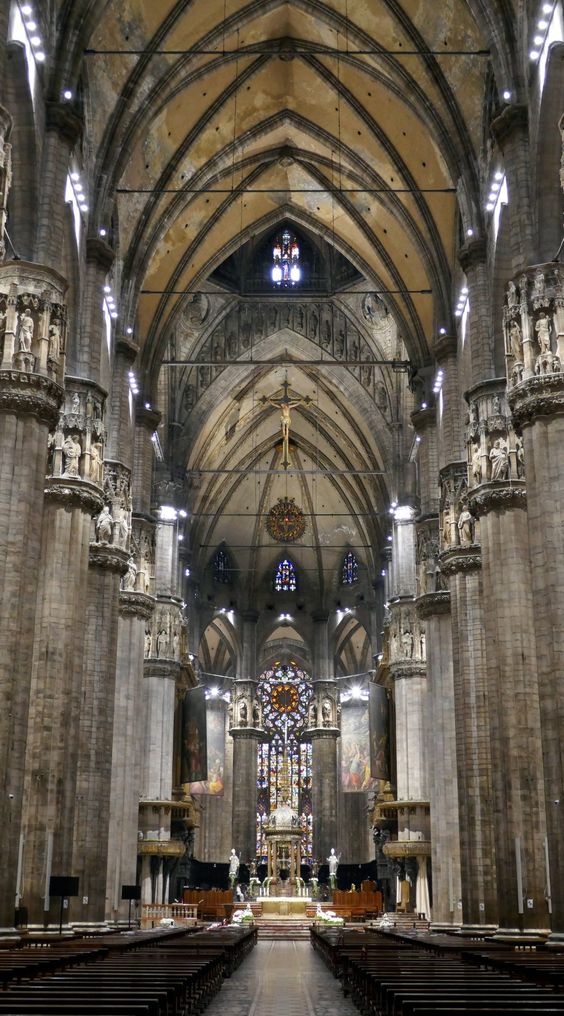
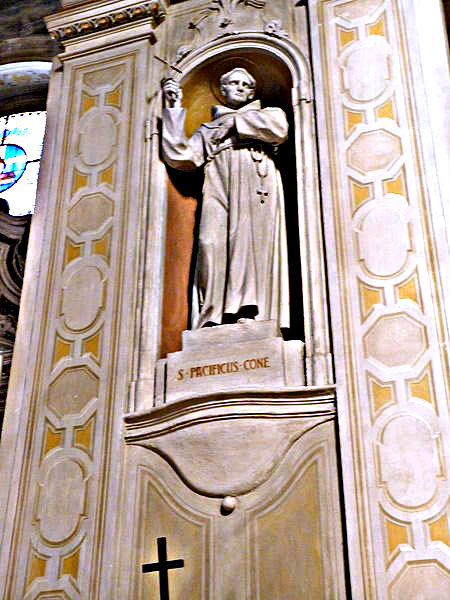
The Statue of St Pacificus in the Cathedral in his hometown of San Severino
Commemorates the foundation of the Mercedarian Order and the apparition of Our Lady of Ransom. In this appearance she carried two bags of coins for use in ransoming Christians imprisoned by Moors. On 10 August 1218, the Mercedarian Order was legally constituted at Barcelona, Spain by King James of Aragon and was approved by Pope Gregory IX on 17 January 1235. The Mercedarians celebrated their institution on the Sunday nearest to 1 August because it was on 1 August 1218 that the Blessed Virgin showed Saint Peter Nolasco the white habit of the Order. This custom was approved by the Congregation of Rites on 4 April 1615. On 22 February 1696 it was extended to the entire Latin Church and the date changed to 24 September. St Peter Nolasco (1189-1256) was the Founder of the Mercedarian Order – Memorial 28 January.
Patronages – Bahía Blanca, Argentina, archdiocese of, Barcelona, Spain, Dominican Republic.
Our Lady of Walsingham/Virgin of the Sea:
In 2012 the Personal Ordinariate of the Chair of Saint Peter for Anglicans joining the Church was given its patron as the Blessed Virgin Mary under the title Our Lady of Walsingham. Patronages – England,East Anglia, England, diocese of, Personal Ordinariate of the Chair of Saint Peter
St Chuniald
Bl Colomba Matylda Gabriel
St Coprio
St Erinhard
St Felix of Autun
St Gerard Sagredo
St Geremarus
St Gislar
St Isarnus of Toulouse
St Lupus of Lyons St Pacificus of Severino OFM (1653-1721)
St Paphnutius of Egypt
Bl Robert Hardesty
St Rusticus of Clermont
St. Rupert of Salzburg
St Terence of Persaro
St Thyrsus of Autun
St Ysarn of Saint Victor
Bl William Spenser
—
Martyrs of Chalcedon – (49 saints): Forty-nine Christian choir singers of the church in Chalcedon in Asia Minor who were martyred together in their persecutions of Diocletian in 304.
Martyred in the Spanish Civil War:
• Blessed Antonio Pancorbo López
• Blessed Esteban García y García
• Blessed José María Ferrándiz Hernández
• Blessed Juan Francisco Joya Corralero
• Blessed Luis de Erdoiza Zamalloa
• Blessed Manuel Gómez Contioso
• Blessed Melchor Rodríguez Villastrigo
• Blessed Pascual Ferrer Botella
• Blessed Rafael Rodríguez Mesa
• Blessed Santiago Arriaga Arrien
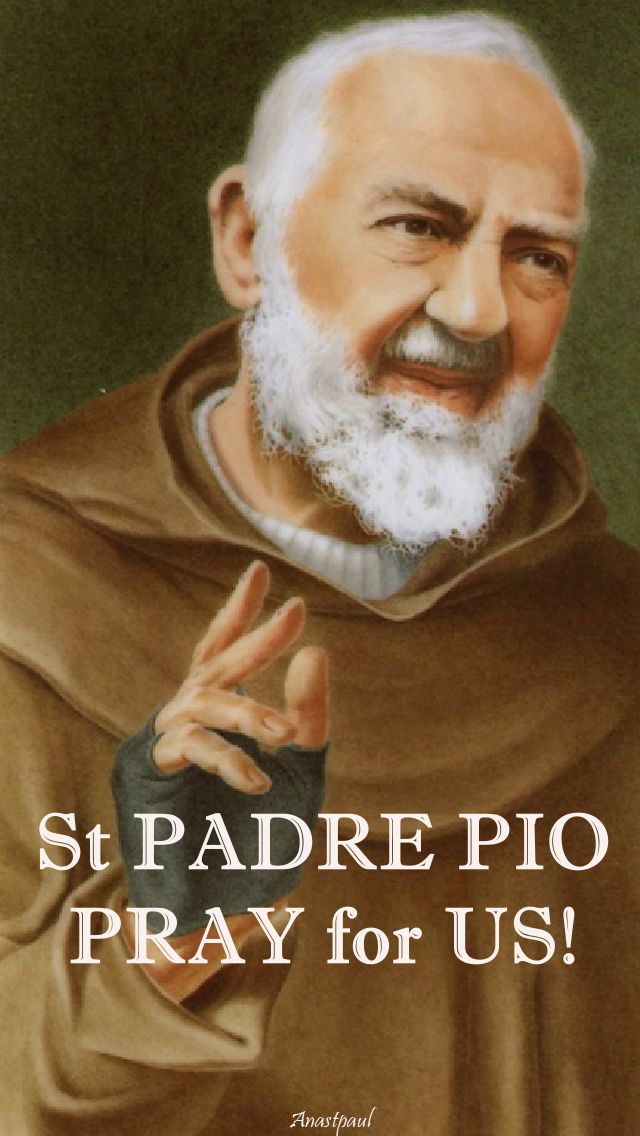
Thought for the Day – 23 September – The Memorial of St Padre Pio (1887-1968)
St Pio, the Madonna and her Holy Rosary
“For the stigmatist of the Gargano, love for the Madonna meant perpetual imitation of her, if Jesus is the way and the light that leads to the Father, Mary is the way and the light which leads to Jesus. With Mary’s help and by imitating her virtues, Padre Pio drew ever closer to Jesus, so very close as to be transformed into Him.
His imitation of Mary meant, most importantly, imitation of her humility. For him, that humility was a constant interior torment, a slow and painful agony, the anguish of not knowing whether he was corresponding to divine grace. You could read that deep humility on his face even when he was surrounded by clamorous crowds who believed in him, who trusted in his prayers and expected so many miracles from him every day. He always remained collected. His humility made it possible for him to be serene and dignified as he silently accepted mortification, slander, quarrels, humiliation and sorrow.
For him, love of the Madonna signified perpetual mortification. He implored his spiritual director to allow him to make a vow of abstinence from fruit on Wednesdays, he also asked him to suggest a means of pleasing the Blessed Mother in all things at all times.
Love of the Madonna animated Padre Pio and inspired him all the more to become an apostle. “I should like to have a voice strong enough to invite all the sinners of the world to love the Madonna.”God heard this sigh of love, he was given a voice that could be heard even when he was silent. It was a voice that touched the depths of people’s hearts and that penetrated their consciences, a voice that tormented and shook those who were dormant. It was a voice that was as terrible as the crashing of thunder in the night, yet as sweet as a caress. It was a voice that was threatening yet inviting, a voice that annihilated yet restored, that consoled and pardoned.
To all those who recommended themselves to his prayers, Padre Pio would say: “Love the Madonna. Recite the Rosary!”
One day, his guardian asked him how many rosaries he recited daily. Padre Pio answered, “Well, I have to tell my Guardian the truth, I have recited thirty-four!”For him, the rosary was a perpetual meditation on the profound mysteries of Calvary, on Jesus’s plan of salvation, on His sorrowful Mother. Padre Pio was fascinated by the Hail Mary.
…His love became an endless, ardent, faithful prayer. Who could possibly count the rosaries that he recited over the course of his marvellous life? He was the Friar of the rosary. He always carried it in his hand or on his arm as if it were a bracelet or a shield. He had other rosaries under the pillow of his bed, on the bureau in his cell. He called the rosary his weapon.
One night when he was sick in bed, he was unable to find his rosary beads, so he called Fr Onorato of San Giovanni Rotondo, saying, “Young man, get me my weapon, give me my weapon.”
The rosary was his favourite pray,r; he recited it continually. He devoured the rosary with insatiable hunger, it was the prayer that he had learned from the Virgin herself, the Virgin of Pompeii, Lourdes and Fatima, as a means of obtaining the conversion and salvation of sinners.
At certain hours, he would walk down the centre path of the friary garden, absorbed in his suffering and in his love, while the beads slipped through the fingers of his wounded hands. in his pockets he carried rosary beads, which he would give to anyone who requested a set, even today, people still hold these dear, saying, “This is a rosary which Padre Pio gave me, I treasure it with all my heart!”
Excerpted from Padre Pio: A Personal Portrait, by Fr Francesco Napolitano OFM Cap Padre Pio: A Personal Portrait is a classic introduction to one of the most intriguing saints of the twentieth century—written five years after the saint’s death by someone who worked alongside the Capuchin priest and knew him well, this account is now in print in English for the first time in more than forty years.
Quote/s of the Day – 23 September – The Memorial of St Padre Pio (1887-1968)
“Keep close to the Catholic Church at all times, for the Church alone can give you true peace, since she alone possesses Jesus, the true Prince of Peace, in the Blessed Sacrament.”
“Every Holy Mass, heard with devotion, produces in our souls marvellous effects, abundant spiritual and material graces which we, ourselves, do not know… It is easier for the earth to exist without the sun than without the Holy Sacrifice of the Mass!”
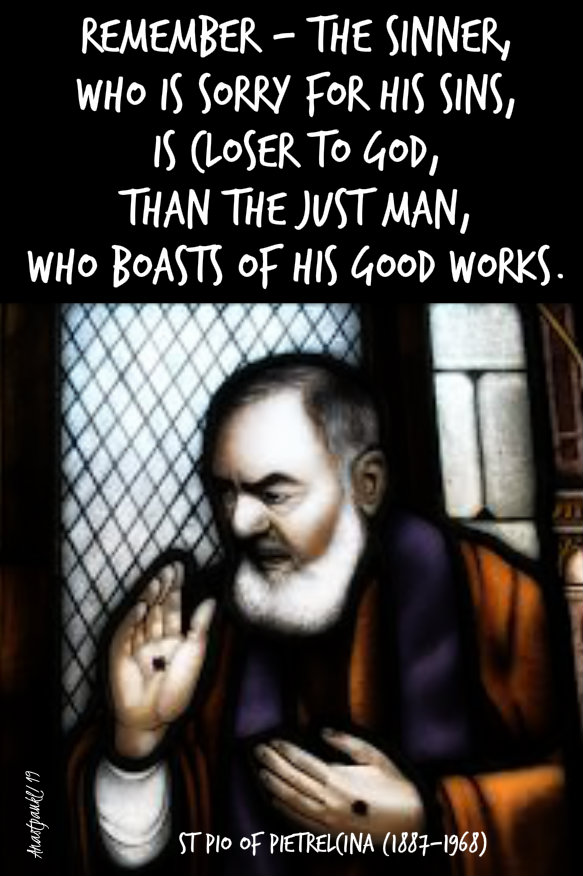
“Remember – the sinner, who is sorry for his sins, is closer to God, than the just man, who boasts of his good works.”
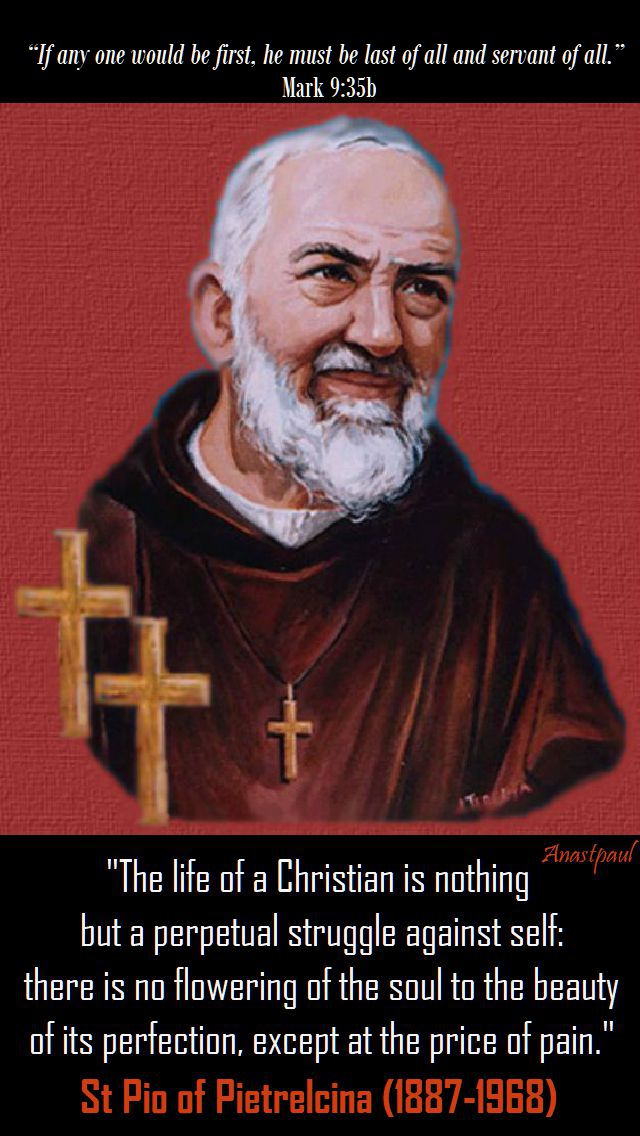
“If any one would be first, he must be last of all and servant of all.”
Mark 9:35b
“The life of a Christian is nothing but a perpetual struggle against self: there is no flowering of the soul to the beauty of its perfection, except at the price of pain.”
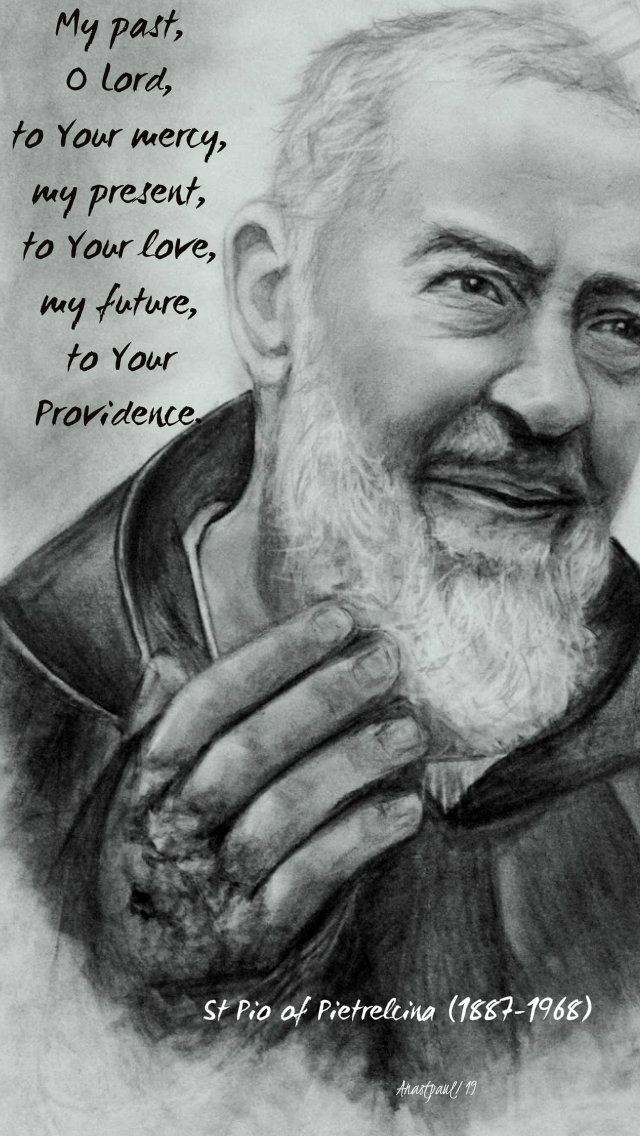
“My past, O Lord, to Your mercy, my present, to Your love, my future, to Your Providence.”
One Minute Reflection – 23 September – Monday of the Twenty Fifth Week in Ordinary Time, Year C, Gospel: Luke 8:16–18 and the Memorial of St Padre Pio (1887-1968)
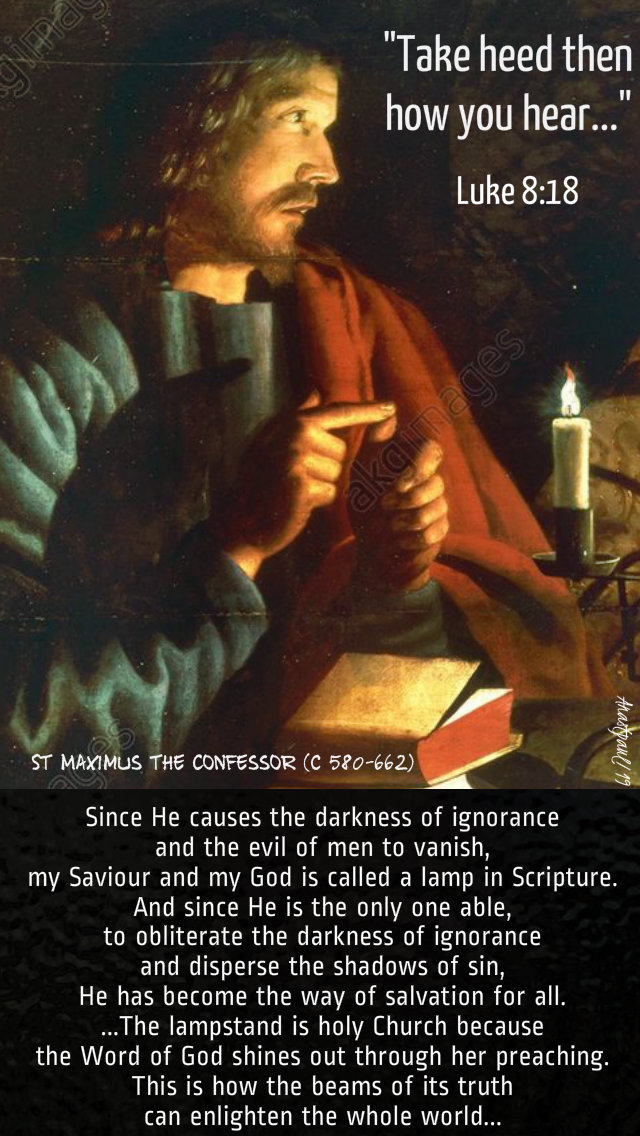
“Take heed then how you hear…” … Luke 8:18
REFLECTION – “The lamp on the lampstand is our Lord Jesus Christ, who is the Father’s true light “who enlightens everyone coming into the world” (Jn 1:9), in other words, the Father’s Wisdom and Word. having accepted our flesh, He truly became and was called, the “light of the world”. By our faith and devotion He is honoured and exalted in the Church. In this way He is made visible to all nations and shines out for “all the people in the house”, namely the whole world, as He said: “They do not light a lamp and then put it under a bushel basket, it is set on a lampstand , where it gives light to all in the house” (Mt 5:15).
As we have seen, Christ calls Himself a lamp. God by nature, He became flesh according to the plan of salvation, a light held within the flesh as if in a vase… This is what David was thinking when he said: “Your word is a lamp to my feet and a light for my path” (Ps 119[118]:105). Since He causes the darkness of ignorance and the evil of men to vanish, my Saviour and my God is called a lamp in Scripture. And since He is the only one able, to obliterate the darkness of ignorance and disperse the shadows of sin, He has become the way of salvation for all. He leads towards the Father all those who, through understanding and virtue, walk with Him along the path of the commandments as on a road of righteousness.
The lampstand is holy Church because the Word of God shines out through her preaching. This is how the beams of its truth can enlighten the whole world… On one condition, however – so long as it is not hidden under the letter of the Law. Anyone who clings to Scripture according to the letter only is living according to the flesh, he is placing the lamp under a bushel basket. But when, to the contrary, the Church is set on the lampstand, it enlightens everyone.” … Saint Maximus the Confessor (c 580-662) – Abbot and Theologian – Question 63 to Thalassius
PRAYER – Holy God, teach me gratitude for Your love, teach me faithfulness no matter what difficulties I face. Jesus, my Lord, Your Church is my guide and my understanding, help me to always be true to her, my holy mother. St Padre Pio, pray for the Church and all God’s people. We make our prayer through Jesus Christ, our Lord, with the Holy Spirit, God for all eternity, amen.
Our Morning Offering – 23 September – Twenty-fifth Sunday in Ordinary Time, Year C and the Memorial of St Padre Pio (1887-1968)
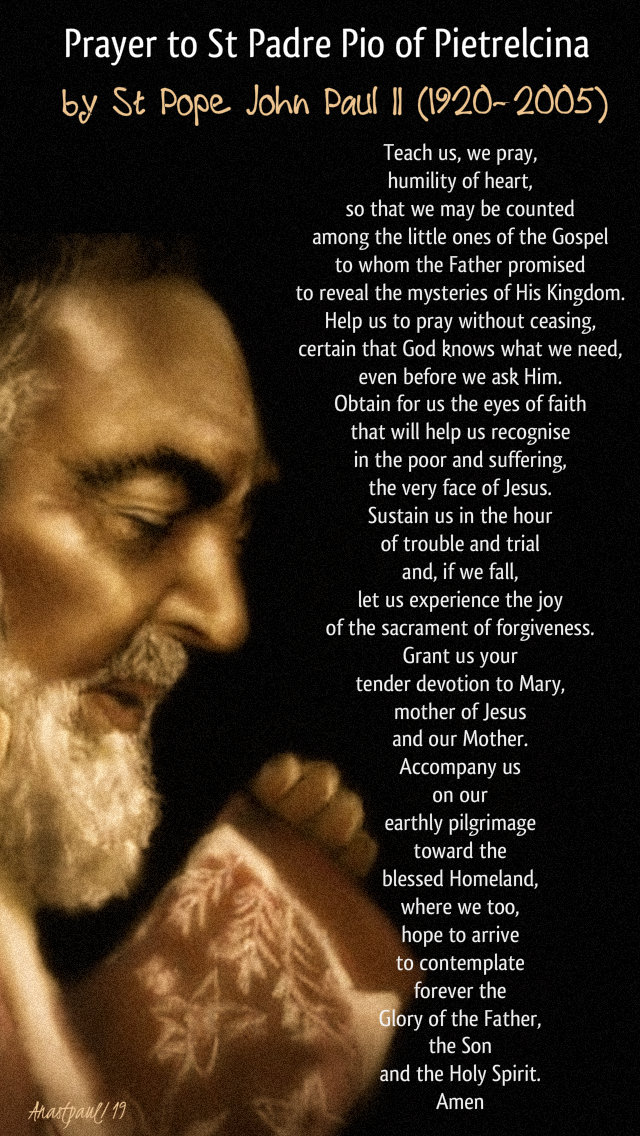
Prayer to St Padre Pio of Pietrelcina by St Pope John Paul II (1920-2005)
Teach us, we pray, humility of heart,
so that we may be counted
among the little ones of the Gospel
to whom the Father promised
to reveal the mysteries of His Kingdom.
Help us to pray without ceasing,
certain that God knows what we need,
even before we ask Him.
Obtain for us the eyes of faith
that will help us recognise in the poor and suffering,
the very face of Jesus.
Sustain us in the hour of trouble and trial
and, if we fall, let us experience the joy
of the sacrament of forgiveness.
Grant us your tender devotion to Mary,
mother of Jesus and our Mother.
Accompany us on our earthly pilgrimage
toward the blessed Homeland,
where we too, hope to arrive
to contemplate forever the
Glory of the Father, the Son
and the Holy Spirit.
Amen
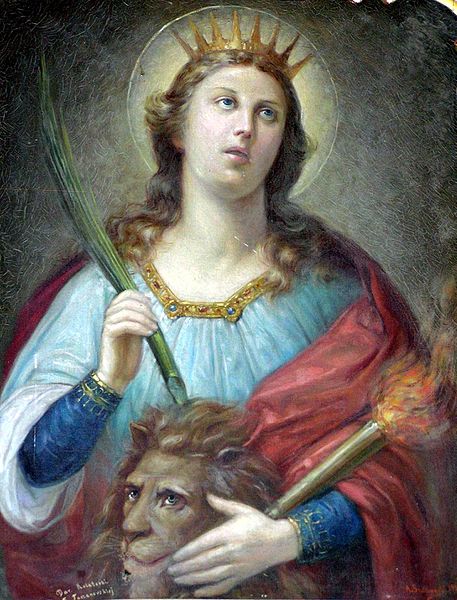
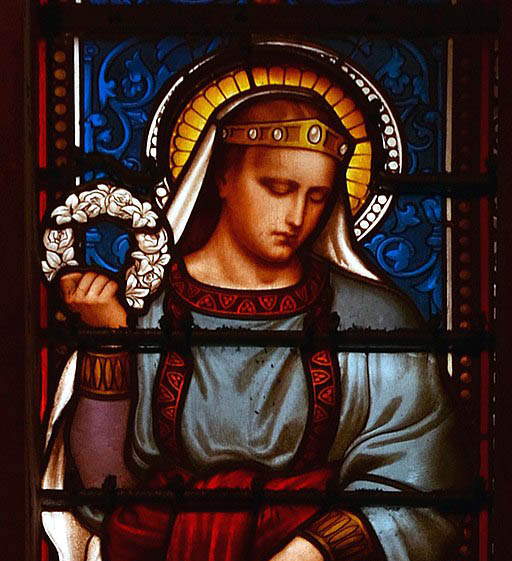
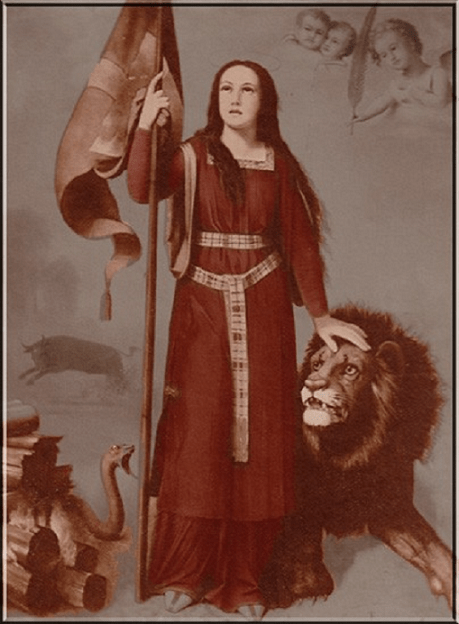
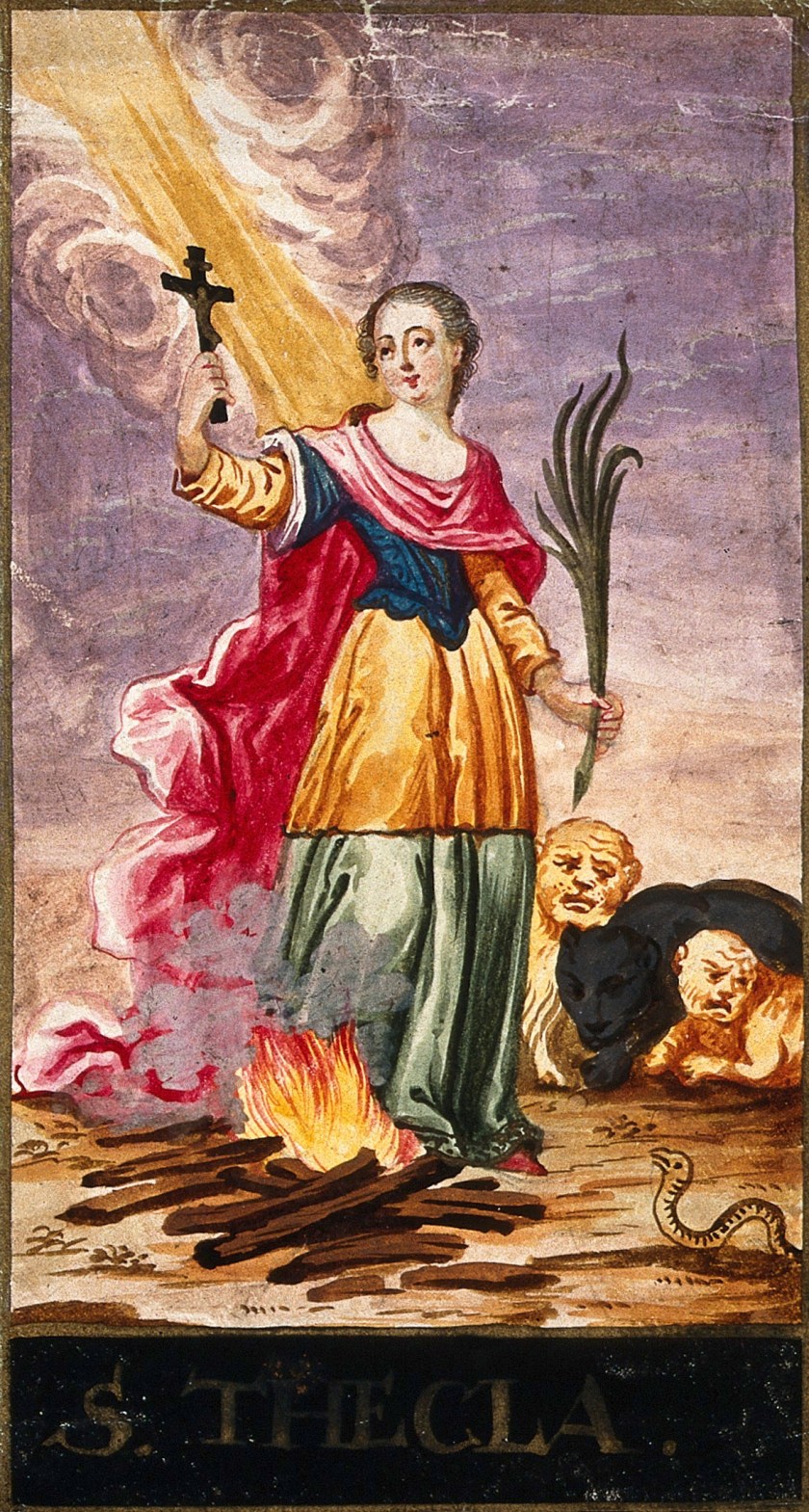
Saint of the Day – 23 September – St Thecla (1st century) Virgin and Martyr, Disciple of St Paul. Patronage – of Tarragona in Catalonia (Spain), where the cathedral has a chapel dedicated to her. Her feast day remains the town’s major local holiday.
The Acts of Paul and Thecla is a 2nd-century text (circa180) which forms part of the Acts of Paul but also circulated separately. According to the text, Thecla was a young noble virgin from Iconium who listened to Paul’s “discourse on virginity”, espoused the teachings and became estranged to both her fiancé and her mother. She sat by her window for three days, listening to St Paul and his teachings. When they witnessed this, they became concerned that Thecla would follow Paul’s demand “one must fear only one God and live in chastity” and turned to the authorities to punish both Paul and Thecla.
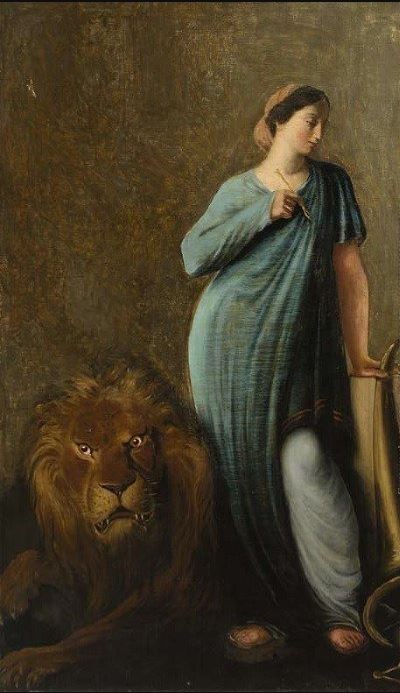
Thecla was miraculously saved from burning at the stake by the onset of a storm and travelled with Paul to Antioch of Pisidia. There, a nobleman named Alexander desired Thecla and attempted to rape her. Thecla fought him off, tearing his cloak and knocking his coronet off his head in the process. She was put on trial for assault. She was sentenced to be eaten by wild beasts but was again saved by a series of miracles, when the female beasts (lionesses in particular) protected her against her male aggressors. While in the arena, she baptised herself by throwing herself into a nearby lake full of aggressive seals.
She rejoined the Holy Apostle Paul in Myra, travelled to preach the word of God and became an icon encouraging women to imitate her by living a life of chastity and following the word of the Lord. She went to live in Seleucia Cilicia. According to some versions of the Acts, she lived in a cave there for 72 years. As she became a healer, the Hellenistic physicians in the city lost their livelihood and solicited young men to attempt to spoil her virginity at the age of 90. She called out to God and a new passage was opened in the cave and the stones closed behind her. She was able to go to Rome and lie down beside Paul’s tomb.
The Church Fathers recount a number of traditions about Thecla. St Gregory of Nyssa writes in the 4th century (Homily 14 in Cant) that she undertook the sacrifice of herself, by giving death to the flesh [Gal 5:24], practising great austerities, extinguishing in herself all earthly affections, so that nothing seemed to remain living in her but reason and spirit – the whole world seemed dead to her as she was to the world [Gal 6:14]. Macarius Magnes shortly after AD 300 wrote how the message of Christianity was “the Sword, [Matt 10:34] which cuts relations from each other [Matt:10:35], as it cut Thecla from Theocleia.” [Apocriticus ii.7]. Around AD 280, Thecla features as one of the characters in Methodius of Olympus’ Symposium, in which we learn that she was well versed in philosophy and various branches of literature, of eloquent yet modest discourse. He says that she received her instruction in divine and evangelical knowledge from Paul and was eminent for her skill in sacred science (“Logos 8”).
The martyrdom of Thecla is frequently referred to in the earliest Acts of the Martyrs. Eugenius, a martyr of Trebizond under Diocletian (284–305), couples Thecla with David and Daniel in his prayers. The exordium of the Acts of Polyeuctes [d. 259] refers to Thecla and Perpetua and there were certainly many virgin martyrs who drew their first inspiration from the same source. Eugenia of Rome in the reign of Commodus (180–192) is reported in the Acts of her martyrdom to have taken Thecla as her model.
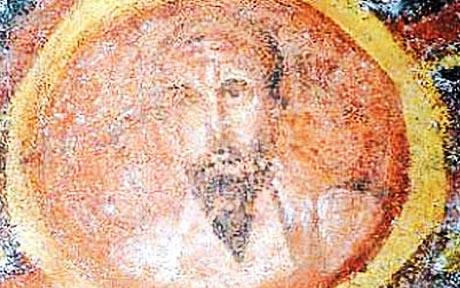
In June 2010, on a wall of the Catacomba di Santa Tecla in Rome, Vatican archaeologists of the Pontifical Commission for Sacred Archaeology, using laser technology to remove layers of clay and lime rind, discovered a frescoed portrait of St Paul the Apostle, “recognisable by his thin face and dark pointed beard…with small eyes and furrowed brow,” which they believe is the oldest image in existence of Paul, dating from the late 4th century.
__ Our Lady of Valvenecra:
The title was established at Anguiano in the province and autonomous community of La Rioja in north-central Spain, located near Nájera, where it is celebrated on 23 September. The title originated with the discovery of an image of the Blessed Mother in the Byzantine style from the ninth century in an oak. The sanctuary of Santa Maria de Valvanera was built in the Gothic style in the 10th century. The name comes from the Latin expression, Vallis Venaria (valley of the veins of water) because it lies in a valley of springs, waterfalls and streams. The church of today dates from the 15th century while preserving a tower from a Romanesque church of the 12th century. The statue of the Virgen de Valvanera stands in a niche on the high altar. The title is also known as Virgen de Valvanera and, mistakenly, as Our Lady of Valvanere; Our Lady of Vulvancre; and Our Lady of Valvencre.
This image is a replica of the original which appears to have dated from the tenth century and is preserved in the Royal Abbey shrine of Our Lady of Valvanera, or Valvanere, in Rioja, jealously guarded by Benedictine monks. The oldest documents preserved date from the thirteenth century, and tell how, according to tradition, the original image was found by a thief who later converted and became a hermit.
St Alfonso Burgos
St Adamnan of Iona
Bl Antonio of Tlaxcala
Bl Bernardina Maria Jablonska
St Cissa of Northumbria
St Constantius of Ancona
Bl Cristobal of Tlaxcala
Bl Emilie Tavernier Gamelin
Bl Francisco de Paula Victor
Bl Guy of Durnes
Bl Helen Duglioli
Bl Juan of Tlaxcala St Pope Linus (c 10 – c 76) Successor to St Peter About St Pope Linus: https://anastpaul.com/2018/09/23/saint-of-the-day-23-september-st-pope-linus-c-10-c-76-successor-to-st-peter/
St Peter Acontanto
St Polyxena St Thecla (1st century)
Bl William Way
St Xantippa
—
Martyrs of Syracuse – (4 saints): Group of Christians deported from Syracuse, Sicily by invading Saracens and sent to North Africa where they were tortured and executed for their faith. Martyrs. The names that have survived are Andrew, Antony, John and Peter. c900
Martyred in the Spanish Civil War:
• Blessed Crispulo Moyano Linares
• Blessed María Josefa del Río Messa
• Blessed Norberto Cembranos de la Verdura
• Blessed Purificación Ximénez y Ximénez
• Blessed Sofía Ximénez y Ximénez del Río
• Blessed Vicente Ballester Far
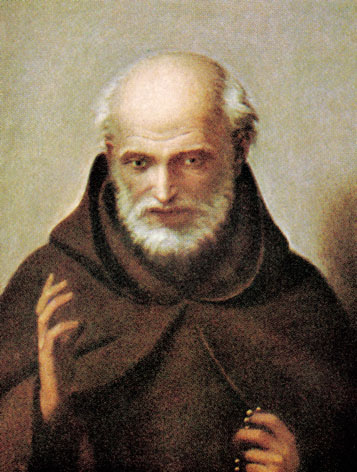
Thought for the Day – 22 September – The Twenty Fifth Sunday in Ordinary Time, Year C and The Memorial of St Ignatius of Santhia OFM Cap (1686-1770)
“Receive the Holy Spirit, whose sins you shall forgive, they are forgiven” (Jn 20, 22-23).
With these words, the Risen One bestows on the Apostles the gift of the Spirit and with it the divine power to forgive sins. The Capuchin priest Ignatius of Santhiá lived uniquely the mission of forgiving sins and of guiding men and women on the paths of evangelical perfection.
For the love of Christ and to advance more quickly in evangelical perfection he walked in the footsteps of the Poverello of Assisi.
In the Piedmont of his time, Ignatius of Santhiá was father, confessor, counsellor and teacher of many – priests, religious and lay people – who sought his wise and enlightened guidance.
Even today he continues to remind everyone of the values of poverty, simplicity and authentic Christian life.
“Come, Holy Spirit fill the hearts of your faithful and enkindle in them the fire of your love.”
The Holy Spirit radically transformed the Apostles who out of fear had locked themselves into the Upper Room, making them fervent heralds of the Gospel. Down through the ages, the Spirit continues to support the Church in her evangelising mission, raising up in every age courageous witnesses to the faith.
With the Apostles, the Blessed Virgin Mary received the gift of the Spirit (cf. Acts 1,14). With her and in communion with the new saints, let us also implore the miracle of a new Pentecost for the Church. For the humanity of our time let us ask an abundance of the gifts of the Holy Spirit.
Come Holy Spirit, enkindle the hearts of your faithful! Help us to spread the fire of your love in the world. Amen!
St Pope John Paul II – Canonisation Homily – Sunday, 19 May 2002
One Minute Reflection – 22 September – Twenty Fifth Sunday in Ordinary Time, Year C, Gospel: Luke 16:1–13 and the Memorial of St Ignatius of Santhia OFM Cap (1686-1770)
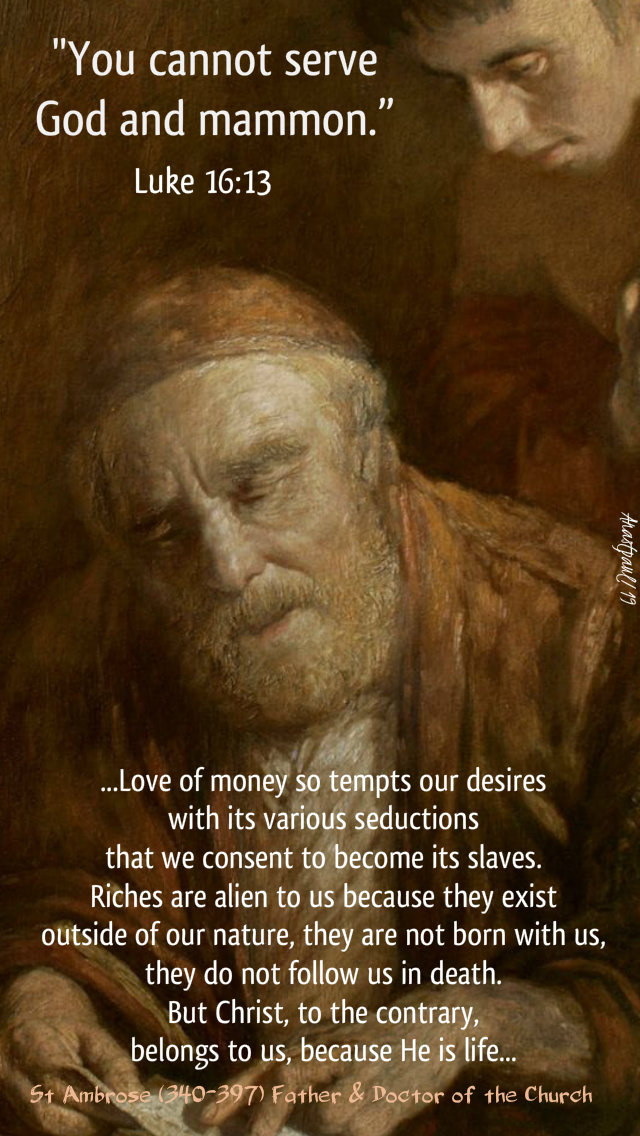
“You cannot serve God and mammon.” … Luke 16:13
REFLECTION – “A servant cannot serve two masters.” Not that there are two, there is only one Master. For even if there are some people who serve money, it has no inherent right to be a master, they themselves are the ones, who assume the yoke of this slavery. In fact, money has no rightful authority but constitutes an unjust bondage. That is why Jesus says: “Make friends for yourselves with deceitful money” so that by generosity to the poor we will win the favour of angels and saints.
The steward is not blamed. By this we learn that we are not masters but rather stewards of other people’s wealth. He was praised even though he was in the wrong because, in paying out to others in his master’s name he won support for himself. And how rightly Jesus spoke of “deceitful wealth” because love of money so tempts our desires with its various seductions that we consent to become its slaves. That is why He said: “If you are not trustworthy with what belongs to another, who will give you what is yours?” Riches are alien to us because they exist outside of our nature, they are not born with us, they do not follow us in death. But Christ, to the contrary, belongs to us because He is life… So don’t let us become slaves of exterior goods because Christ is the only one we should acknowledge as our Lord.” … Saint Ambrose (340-397) – Bishop of Milan, Father and Doctor of the Church – Commentary on Saint Luke’s Gospel, 7, 244s SC 52
PRAYER – All-powerful, eternal God, splendour of true light and never-ending day, turn our ears and hearts to Your Word, that we may hear and live by the seed You have sown. May all that grows in us, be of Your good seed and yield fruit a hundredfold. Grant Lord, we pray, that by the prayers of St Ignatius of Santhia, we may be filled with courage and love and spread Your Word by our lives. We make our prayer through Jesus, our Lord and Word, with the Holy Spirit, one God with You, forever, amen.
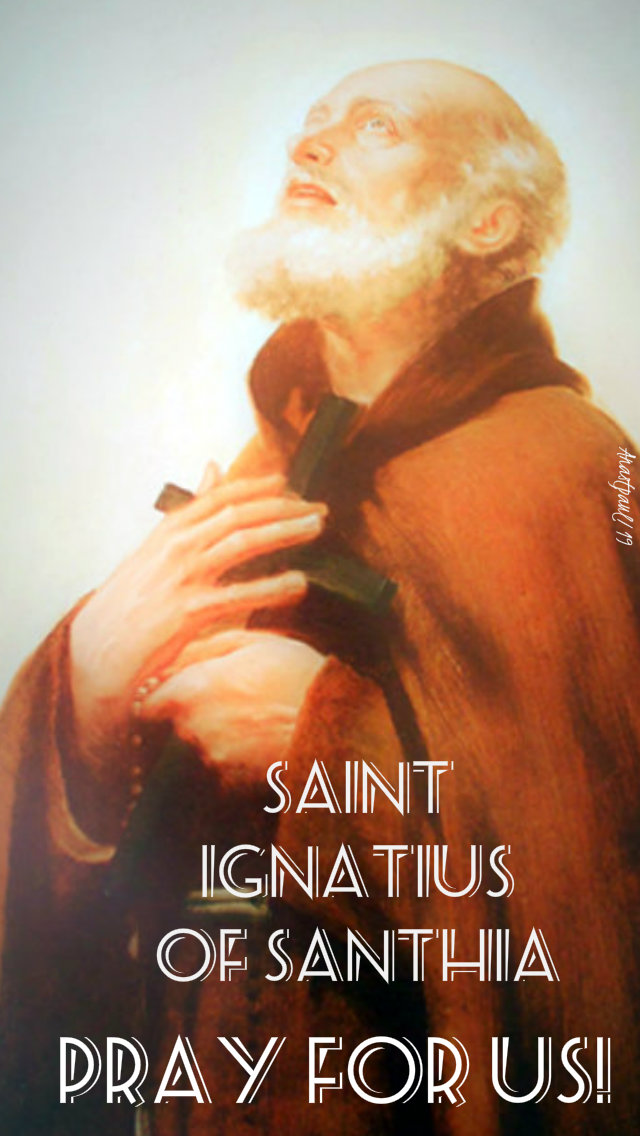
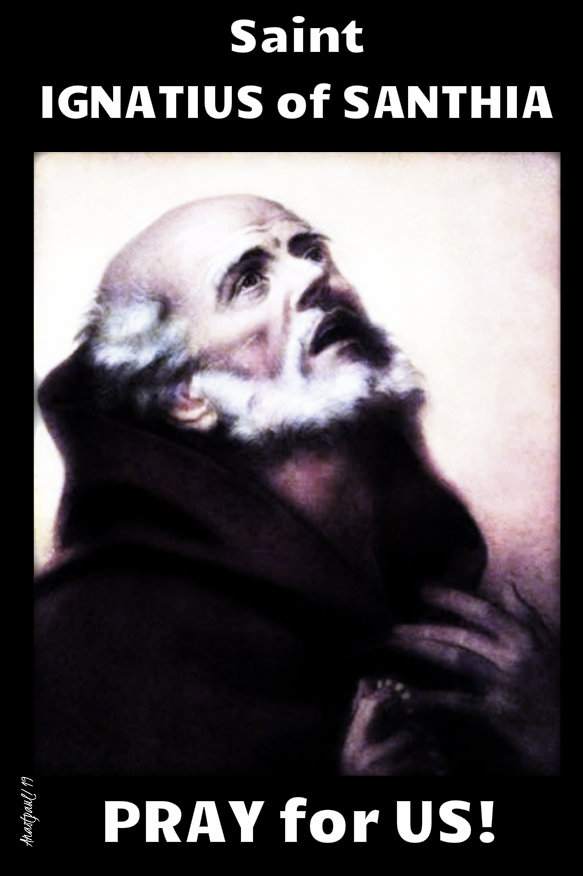
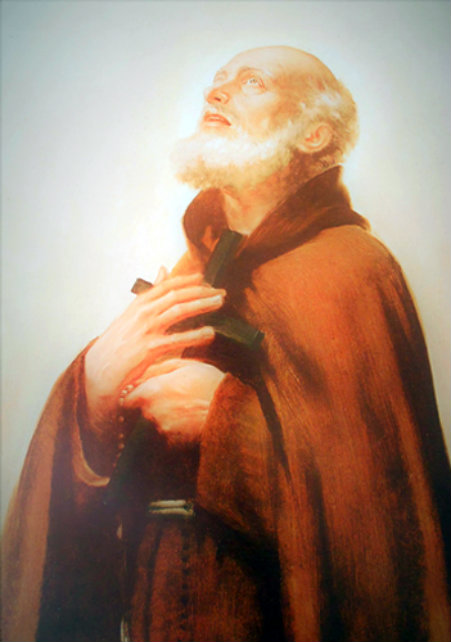
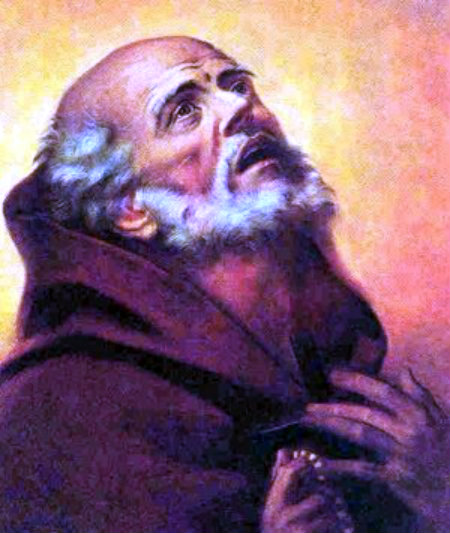
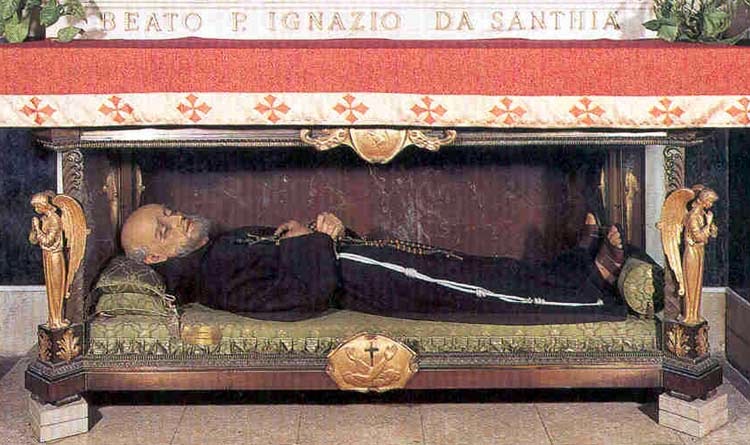
Saint of the Day – 22 September – Saint Ignatius of Santhia OFM Cap (1686-1770) Franciscan Priest and Friar, renowned Spiritual Director, servant of the Confessional, apostle of charity – known as the “Father of sinners and the lost” born Lorenzo Maurizio Belvisotti, on 5 June 1686 in Santhià, Vercelli, Italy and died on 21 September 1770 of natural causes in Turin, Italy. Patronages – Chaplains, Santhià.
St Ignatius made it his mission to help penitents in the sacrament of Reconciliation and also devoted himself to the care of the ill. He gained a strong reputation for the humble and austere nature of his life in addition to the application of the Franciscan charism in his life which served as a model for thousands.
Saint Ignatius of Santhiá was born on 5 June 1686 in Santhiá, in the Vercelli region of Northern Italy and died in Turin on 21 September 1770. He was a Capuchin priest, who was faithful to the Franciscan spirit, especially by his obedience, simplicity and humility. He was renowned for his gift of spiritual direction and concern for the spiritual growth of the faithful. He was also called the “Father of sinners and the lost” thanks to his particular ability to deal with the “spiritually sick”.
Capuchin vocation
He was baptised Lorenzo Maurizio, the fourth of six children of the upper-class Belvisotti family. He received his early education from a good priest, who inspired him and helped discern his call to enter the priesthood. In 1710 he was ordained a diocesan priest. After six years of priestly ministry, he joined the Capuchin Friars. At the time he suffered from the criticism of his family and parish who did not understand his decision. In the Capuchin Order, Ignatius finally found the inner peace he had been searching for in the simplicity of Franciscan life.
Life of obedience
On 24 May 1717, he made his religious profession and from that day he was like putty in the hands of his superiors. He began his spiritual journey being sent from one house to another in the Savoy region of Northern Italy. He was happy to be moved around out of obedience and honoured to be able to serve his brothers. He was completely at “God’s disposition”.
In 1727, Ignatius was sent to the convent in Torino-Monte, with the responsibility of prefect of the sacristy and confessor for the laity, a mission he was to fulfil for the last 24 years of his life when he returned to Turin, after serving as master of novices and chief of chaplains for the army of the Kingdom of Savoy. In this ministry he showed his fatherly concern for others and the spiritual wisdom that is learned at the foot of the Crucified One. It was not long before religious, priests, the faithful and the most hardened sinners began coming to the monastery to make their confession and to receive spiritual direction.
Special forms of service
In 1731, he was sent to the monastery of Mondovì, where he was made master of novices and vicar of the monastery. He was in charge of the novitiate for 14 years and his only desire was to make the novices entrusted to his care, true followers of Christ and obedient sons of St Francis. His teaching was founded on two pillars – divinely loving the novices and teaching by example, more than by words. He was available at all hours of the day and night for novices in need of help and he knew each one of them, making their formation his top priority. In 1744 he had to leave the novitiate and go to Turin because he suffered from a mysterious eye ailment that led to near blindness. He was partially cured so that he could return to active ministry.
In 1743-1746, war broke out in the Piedmont. This also brought with it the influx of the wounded and an epidemic. The King of Sardinia-Piedmont, Charles Emmanuel III asked the Capuchins to provide medical and spiritual care for the hospitals. Fr Ignatius was made head chaplain and offered his assistance for two years in the hospitals of Asti, Vinovo and Alessandria, offering an example of tireless activity and piety, serving and healing in a spirit of genuine evangelical love.
Spiritual director
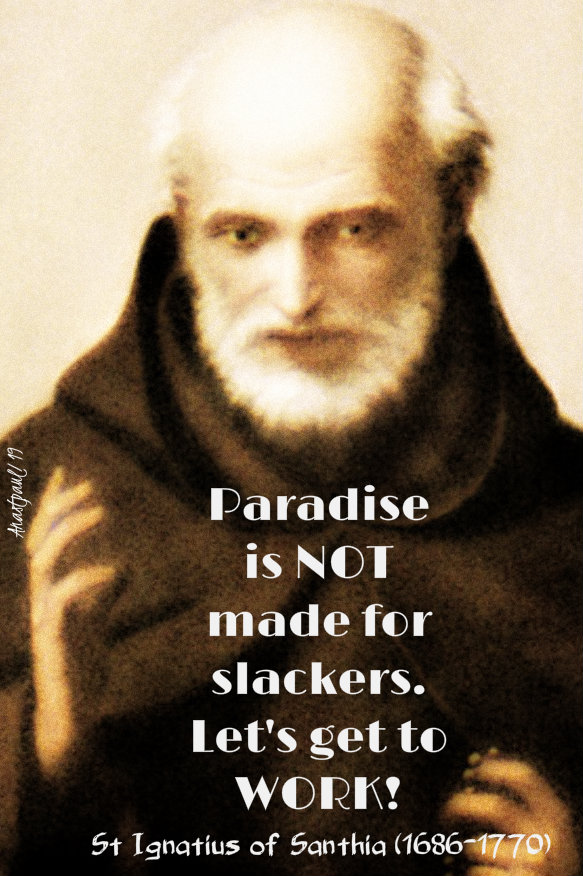
When Piedmont was at peace, he returned once more to his convent in Turin-Monte where he would remain for 24 years as spiritual director and confessor. He visited the sick and begged for money and food for the needy. The well-loved old friar died a peaceful and gracious death in Turin-Monte on 21 September 1770. He would often say: “Paradise is not made for slackers. Let’s get to work!” To all people, religious brothers and laity, he taught the way of holiness and of abandonment in God’s hands, by his example and by his words.
On 17 April 1966, St Paul VI Beatified Ignatius of Santhiá and St John Paul II, Canonised him on 19 May 2002. … Vatican.va
Twenty Fifth Sunday in Ordinary Time, Year C +2019
St Augustinus Yu Chin-Kil
St Basilia
St Digna of Rome
St Emerita of Rome
St Emmeramus
St Florentius the Venerable St Ignatius of Santhia OFM Cap (1686-1770)
St Irais
St Jonas
Bl Joseph Marchandon
St Lauto of Coutances
St Lindru of Partois
St Maurice & Co
Bl Otto of Freising
St Sadalberga
St Sanctinus of Meaux
St Silvanus of Levroux St Thomas of Villanueva/Villanova OSA (1488-1555)
About St Thomas here: https://anastpaul.wordpress.com/2017/09/22/saint-of-the-day-22-september-st-thomas-of-villanova-o-s-a/
Martyrs of the Theban Legion: Martyrs (c 287)
A Roman imperial legion of 6,600 soldiers, all of whom were Christians; they had been recruited from the area around Thebes in Upper Egypt, were led by Saint Maurice and served under Emperor Maximian Herculeus. Around the year 287, Maximian led the army across the Alps to Agaunum, an area in modern Switzerland, in order to suppress a revolt by the Bagandre in Gaul. In connection with battle, the army offered public sacrifices to the Roman gods; the Theban Legion refused to participate. For refusing orders, the Legion was decimated – one tenth of them were executed. When the remainder refused to sacrifice to the gods, they were decimated again. When the survivors still refused to sacrifice, Maximinian ordered them all killed. Martyrs.
Known members of the Legion include:
• Alexander of Bergamo
• Candidus the Theban
• Chiaffredo of Saluzzo
• Exuperius
• Fortunato
• Innocent of Agaunum
• Maurice
• Secundus the Theban
• Ursus the Theban
• Victor of Agaunum
• Victor of Xanten
• Victor the Theban
• Vitalis of Agaunum
Other profiled saints associated with the Legion include:
• Antoninus of Piacenza (martyred soldier; associated by later story tellers)
• Adventor of Turin (not a member; associated by later story tellers)
• Cassius (may have been a member)
• Florentius the Martyr (may have been a member)
• George of San Giorio (not a member; associated by later story tellers)
• Gereon (not a member, but another soldier who was martyred for refusing to make a sacrifice to Roman gods)
• Octavius of Turin (not a member; associated by later story tellers)
• Pons of Pradleves (escaped the massacre to become an evangelists in northern Italy)
• Secundus of Asti (not a member but linked due to art work)
• Solutor of Turin (not a member; associated by later story tellers)
• Tiberio of Pinerolo (may have been a member)
• Verena (wife of a member of the Legion)
They were martyred c 287 in Agaunum (modern Saint-Maurice-en-Valais, Switzerland. A basilica was built in Agaunum to enshrine the relics of the Legion. The full story: https://anastpaul.com/2018/09/22/saints-of-the-day-22-september-st-maurice-and-the-martyrs-of-the-theban-legion-martyrs-c-287/
Martyrs of Valencia, Spain – Martyred in the Spanish Civil War:
• Blessed Alfonso Lopez
• Blessed Antonio Gil-Monforte
• Blessed Antonio Sáez de Ibarra López
• Blessed Carlos Navarro Miquel
• Blessed Esteban Cobo-Sanz
• Blessed Federico Cobo-Sanz
• Blessed Félix Echevarría Gorostiaga
• Blessed Francisco Carlés González
• Blessed Francisco Vicente Edo
• Blessed Germán Gozalvo Andreu
• Blessed Josefina Moscardó Montalvá
• Blessed Luis Echevarría Gorostiaga
• Blessed María Purificación Vidal Pastor
• Blessed Miguel Zarragua Iturrízaga
• Blessed Simón Miguel Rodríguez
• Blessed Vicente Sicluna Hernández
Thought for the Day – 21 September – The Feast of St Matthew, Apostle and Evangelist- Today’s Gospel: Matthew 9:9–13
We can learn much from Matthew.
He was a man who knew quite well the power of money. He knew the comfort it could ensure, the recreation it could buy, the luxury it could provide. But he was wise enough to know what it could not do. Money could never give him that sense of peace deep inside. It could never befriend him when he was lonely or give him the strength and courage to go on, when all else seemed lost. Money could never buy him forgiveness or love.
But the love of Christ could do all this and more.
He was open enough to recognise truth when he saw Him. “And he got up and followed him” (Matthew 9:9b).


















You must be logged in to post a comment.