Today, 25 June, we celebrate the feast day of Saint William of Vercelli (1085-1142), founder of the Order of Monte Vergine, also known as the “Williamites.” Saint William lived a quiet life of solitude and contemplation, listening intently for the voice of God and following the directions he received. Through his obedience, William was taken far from home, worked many miracles and established a thriving religious community—all because he was quiet and paused to discern the Will of the Lord.
Saint William had complete trust in the Lord and in His Divine Providence. Ever faithful and contemplative, William was willing to leave his home as a youth and subsequently leave the community he had built with his own hands in service to God. Patient, humble and obedient, Saint William of Vercelli put the Lord’s work above his own desires at every moment of his life. His great devotion to Our Lady, was a source of immense comfort and trust in the holy Mother of God, who he knew would lead him to her Son. We could do well by observing Saint William’s confidence in the Divine Providence and striving to imitate him by creating quiet moments in our own lives for prayer, reflection and contemplation. It is in those moments that the Divine Plan for our own lives quietly unfolds…… if we listen.
St William of Vercelli and Monte Vergine, please pray for us!
Blessed be God the Father . who gave us a new birth to a living hope…..to an inheritance that is imperishable, undefiled and unfading, kept in heaven for you………1 Peter 1:3-4
REFLECTION – “You have within you, everything that you need to purchase the kingdom of heaven.
Joy will be purchased by your sorrow,
rest by your labour,
glory by your humiliation
and eternal life by your passing death.”………………….St Augustine
PRAYER – Loving Father,. teach me how to make every event on earth lay up treasures for me in heaven. Help me to endure sorrows, labour, humiliations, pain and death willingly so as to attain heaven with You, in unity with Your Son, Lord Jesus Christ and the Holy Spirit, one God forever and ever. St William of Vercelli, your life was a focused gift to God, pray for us that we too may join you in eternal life. Amen
Saint of the day – 25 June – St William of Vercelli OSB (1085 at Vercelli, Italy – 25 June 1142 at Guglietto, Italy of natural causes) Hermit, Abbot, Founder of the Congregation of Monte Vergine, or “Williamites,” miracle-worker, Marian devotee. Also known as William of Monte Vergine. Patronage – Irpinia, Italy. Attributes – pilgrim, usually near Santiago de Compostela, Spain, abbot near a wolf wearing a saddle, receiving an appearance by Christ, saddling a wolf that killed his donkey, wolf. His Body is incorrupt. The Statue below is the Founder Statue at St Peter’s Basilica.
St William was born to nobility in Vercelli, Italy and was orphaned at a young age when both his parents were killed. Subsequently raised by a pious family member, William matured into a contemplative young man with only one desire—to devote his life to the Lord. At the young age of 15, William left home, setting out on pilgrimage to Santiago de Compostela, Spain. As the journey was not difficult enough for him, he encircled his legs with tight iron bands, causing pain and making walking difficult, his suffering bringing him closer to God. Upon arrival, he worked many miracles including the healing of a blind man through prayer and, subsequently, felt called to journey to the Holy Land. However, soon after departing, he was set upon by thieves and following that encounter, felt the Will of God calling him to Italy.
Saint William retired to Monte Vergiliano (today known as Monte Vergine, named for Our Blessed Mother) and became a hermit. There, he spent his days in prayer, fasting and contemplation of the Lord. Especially devoted to the Blessed Virgin Mary, he began construction of a Church in her honour, mining the rocks from the mountain by hand with the assistance of a lone donkey.
As holy legend tells us, one evening, the donkey was killed and eaten by a wolf. Saint William called the wolf to him, ordering it to take the donkey’s place. The wolf, bowing in respect and realising that it had interrupted the work of God, immediately took up the task of dragging rocks from the quarry. The faithful who continue to travel on pilgrimage to Monte Vergine report that the wolf is still spotted today, visible to those who call upon the name of the Blessed Virgin.
Eventually, due to his working of more miraculous cures (none of which he sought credit for), the faithful began seeking William out on his mountain. His reputation for holiness attracted many disciples, both men and women, and he founded the Order of Mount Vergine—a religious community with strict rules of austerity. William and the nuns and monks of his order lived in peace and contemplation for some time, until the members of the order began complaining that William’s rules of poverty, fasting and penance were too extreme. There is evidence of heavenly support for the austerities of William’s rule. For example, William did not permit the order to eat meat, eggs, milk or cheese. If someone tried to violate this regulation, storm clouds would appear in the sky and the lightning would destroy the illicit foodstuff that had been brought into the monastery.
With the members of the Order growing more disgruntled, William humbly removed himself from the situation to remove controversy and ensure the future of the order. He travelled to Naples, where he served as adviser to the King Roger I and established several more monasteries.
Saint William died of natural causes at the Guglielmo monastery near Nusco, Italy, where he was buried. Church tradition holds that William predicted the date and time of his death and went to meet his Maker with peace and joy. At the time of his death, he had not yet written a Rule for his religious to govern their affairs. His successor, fearing the dissolution of a community without constitutions, placed them under the Rule of Saint Benedict. The community, which continues to exist today, now belongs to the Benedictine congregation of Subiaco and has a much venerated picture of our Lady of Constantinople, to which pilgrimages are frequently made by the faithful. While Benedictine monks generally wear black robes, the Monks who reside at Monte Vergine today continue to wear the white robes of the Williamites.
12th Sunday in Ordinary Time (2017)
Our Lady of Grace
—
St Adalbert of Egmond
St Amand of Coly
Bl Burchard of Mallersdorf
St Cyneburga of Gloucester
St Domingo Henares de Zafra Cubero
Bl Dorothy of Montau
St Eurosia of Jaca
St Febronia of Nisibis
Bl Fulgentius de Lara
St Gallicanus of Embrun
St Gallicanus of Ostia
St Gohard of Nantes
Bl Guy Maramaldi
Bl Henry Zdick
Bl John the Spaniard
St Luceias and Companions
St Maximus of Turin
St Moloc of Mortlach
St Molonachus of Lismore
St Phanxicô Ðo Van Chieu
St Prosper of Reggio
St Selyf of Cornwall
St Solomon I
St Solomon III of Bretagne
St William of Vercelli – https://www.youtube.com/watch?v=g8DVvgPMJtU
The Feast of the Immaculate Heart of Mary – 24 June 2017 – the Saturday following the Feast of the Sacred Heart
The Feast of the Immaculate Heart of Mary is a devotional name used to refer to the interior life of the Blessed Virgin Mary, her joys and sorrows, her virtues and hidden perfections and above all, her virginal love for God the Father, her maternal love for her son Jesus and her compassionate love for all persons. Two elements are essential to the devotion, Mary’s interior life and the beauties of her soul and Mary’s virginal body. According to Roman Catholic theology, soul and body are necessary to the constitution of man. It was in 1855, that the Mass of the Most Pure Heart of Mary formally became a part of the Catholic practice. Traditionally, the heart of Mary in artwork is depicted with seven wounds or swords, in homage to the seven sorrows of Mary. Also, roses or another type of flower may be wrapped around the heart.
Veneration of the Immaculate Heart of Mary generally coincides with the worship of the Most Sacred Heart of Jesus. However, there is a difference that explains the Roman Catholic devotion to the Immaculate Heart of Mary. The devotion to the Sacred Heart of Jesus is especially directed to the “Divine Heart”, as overflowing with love for humanity. In the devotion to the Immaculate Heart of Mary, on the other hand, the attraction is the love of her Immaculate Heart for Jesus and for God.
A second difference is the nature of the devotion itself. In devotion to the Most Sacred Heart of Jesus, the Roman Catholic venerates in a sense of love, responding to love. In devotion to the Immaculate Heart of Mary, love is formed from study and imitation of Mary’s yes to God as the mother of Jesus. In this devotion, love is more the result, than the “object” of the devotion; the object being rather to love God and Jesus by uniting one’s self to Mary for this purpose and by imitating her virtues, to help one achieve this.
History of the devotion to the Immaculate Heart of Mary is connected in many ways to that of the Sacred Heart of Jesus. Christians were drawn to the love and virtues of the Immaculate Heart of Mary, and this paved the devotion from the beginning. Early Christians had compassion for the Virgin Mary and the Gospels recount prophecy delivered to her at Jesus’ presentation in the temple, and that her heart would be pierced with a sword. The image of the Immaculate Heart of Mary with the pierced heart is the most popular representation. St. John’s Gospel further invites us to the attention of Mary’s heart with its depiction of Mary at the foot of the cross at Jesus’ crucifixion. St. Augustine tells us that Mary was more blessed in having born Christ in her heart, than in having conceived him in the flesh.
The Alliance of the Hearts of Jesus and Mary
The Alliance of the Hearts of Jesus and Mary is based on the historical, theological and spiritual links in Catholic devotions to the Sacred Heart of Jesus and the Immaculate Heart of Mary. The joint devotion to the hearts was first formalized in the 17th century by St. John Eudes who organized the scriptural, theological and liturgical sources relating to the devotions and obtained the approbation of the Church, prior to the visions of St. Margaret Mary Alacoque.
In the 18th and 19th centuries the devotions grew, both jointly and individually through the efforts of figures such as St. Louis de Montfort who promoted Catholic Mariology and St. Catherine Labouré’s Miraculous Medal depicting the Heart of Jesus thorn-crowned and the Heart of Mary pierced with a sword. The devotions, and the associated prayers, continued in the 20th century, e.g., in the Immaculata prayer of St. Maximillian Kolbe and in the reported messages of Our Lady of Fátima which stated that the Heart of Jesus wishes to be honored together with the Heart of Mary.
The Popes have supported the individual and joint devotions to the hearts through the centuries; in 1956 the encyclical Haurietis aquas, Pope Pius XII encouraged the joint devotion to the hearts, In 1979 the encyclical Redemptor hominis, Pope John Paul II explained the theme of unity of Mary’s Immaculate Heart with the Sacred Heart. In his Angelus address on 15th September 1985 he coined the term The Alliance of the Hearts of Jesus and Mary and in 1986 addressed the international conference on that topic held at Fátima, Portugal.
The Nativity of Saint John the Baptist (Solemnity) – https://www.youtube.com/watch?v=yXCySmXhue8
Feast of the Immaculate Heart of Mary
Madonna della Navicella
—
St Aglibert of Créteil
St Agoard of Créteil
St Alena of Brussels
St Amphibalus of Verulam
St Anastasia Guadalupe García Zavala
St Bartholomew of Farne
Bl Christopher de Albarran
St Erembert I of Kremsmünster
St Faustus of Rome and Companions
St Festus of Rome
St Germoc
St Gohardus of Nantes
Bl Henry of Auxerre/the Hagiographer
St Ivan of Bohemia
St John of Rome
St John of Tuy
St Joseph Yuan Zaide
Bl Maksymilian Binkiewicz
St Rumold
St Simplicio of Autun
Bl Theodgar of Vestervig
St Theodulphus of Lobbes
—
Martyrs of Satala: Seven Christian brothers who were soldiers in the imperial Roman army. They were kicked out of the military, exiled and eventually martyred in the persecutions of Maximian. We know little more about them than their names – Cyriacus, Firminus, Firmus, Longinus, Pharnacius, Heros and Orentius. The martyrdoms occurred in c311 at assorted locations around the Black Sea.
Friday 23 June 2017 Blessed and Holy Solemnity of the Most Sacred Heart of Jesus – (Friday after the Second Sunday after Pentecost)
The Twelve Promises of the Sacred Heart – given to St. Margaret Mary Alacoque:
1. I will give them all the graces necessary for their state of life.
2. I will give peace in their families.
3. I will console them in all their troubles.
4. They shall find in My Heart an assured refuge during life and especially at the hour of death.
5. I will pour abundant blessings on all their undertakings.
6. Sinners shall find in My Heart the source and infinite ocean of mercy.
7. Tepid souls shall become fervent.
8. Fervent souls shall speedily rise to great perfection.
9. I will bless the homes in which the image of My Sacred Heart shall be exposed and honoured.
10. I will give to priests the power to touch the most hardened hearts.
11. Those who propagate this devotion shall have their name written in My Heart, and it shall never be effaced.
12. The all-powerful love of My Heart will grant to all those who shall receive Communion on the First Friday of nine consecutive months the grace of final repentance; they shall not die under My displeasure, nor without receiving their Sacraments; My Heart shall be their assured refuge at that last hour.
“And He showed me that it was His great desire of being loved by men and of withdrawing them from the path of ruin into which Satan hurls such crowds of them, that made Him form the design of manifesting His Heart to men, with all the treasures of love, of mercy, of grace, of sanctification and salvation which It contains, in order that those who desire to render Him and procure for Him all the honour and love possible, might themselves be abundantly enriched with those Divine treasures of which this Heart is the source. He should be honoured under the figure of this Heart of flesh and Its image should be exposed … He promised me that wherever this image should be exposed with a view to showing It special honour, He would pour forth His blessings and graces. This devotion was the last effort of His love that He would grant to men in these latter ages, in order to withdraw them from the empire of Satan which He desired to destroy, and thus to introduce them into the sweet liberty of the rule of His love, which He wished to restore in the hearts of all those who should embrace this devotion.”
—St. Margaret Mary
This Act of Consecration to the Sacred Heart of Jesus was composed by St. Margaret Mary Alacoque, a 17th Century French nun and mystic, pictured above, who saw our Lord in numerous visions. She was instrumental in spreading devotion to His Sacred Heart after He conveyed His wish for her to do so. In one vision she actually saw Jesus’ Sacred Heart with flames protruding from it to show His great love for us! The burning love He showed her from His Sacred Heart certainly must have inspired her.
Clearly, our Lord wishes us to join our will to His in love for Him and each other on our earthly pilgrimage to Heaven. And what better way than to appeal to our hearts, where our most sincere feelings and desires reside.
So too with Jesus, who we must remember, as man as well as God comes to us in Communion at Mass and in Adoration before the Blessed Sacrament with His heart filled with immense love and longing for us! As our Lord said in the Gospels “I am the vine; you are the branches. Whoever abides in me and I in him, bears much fruit. For without me, you can do nothing” (John 15:5).
Jesus once told St. Margaret Mary something quite similar when He said “Without me you can do nothing, but I will never let you lack help as long as you keep your weakness and nothingness buried in My strength.”
Our Lord wishes us to approach Him for help and love in humility, even when we’re feeling most uncertain or useless. Don’t be afraid to offer up your own weaknesses and anxieties to Him! He’ll be more than happy to fill your “nothingness” with His awesomeness! And the best places are after receiving Him and in Eucharistic Adoration, where His Heart is calling you!
ACT of CONSECRATION to the MOST SACRED HEART OF JESUS by ST MARGARET MARY ALACOQUE
I (Name…………..), give and consecrate to the Sacred Heart of our Lord Jesus Christ,
my person, my life, my actions, my pains and sufferings,
so that I may be unwilling to make use of any part of my being
save to honour, love and glorify the Sacred Heart.
It is my unchanging intention to be all His
and to do all for love of Him.
I renounce at the same time with all my heart whatever can displease Him.
I, therefore, take You, O Sacred Heart,
for the only object of my love,
the protector of my life,
the pledge of my salvation,
the remedy of my weakness and inconstancy,
the atonement for the faults of my life
and the secure refuge at the hour of my death.
Be then, O Heart of goodness,
my justification before God the Father
and turn away from me the punishment of His just anger.
O Heart of love, I put my confidence in You
because I fear everything from my own sinfulness and weakness.
I hope for all things from Your mercy and generosity.
Destroy in me all that can displease or resist Your holy Will.
Let Your pure love impress You so deeply upon my heart
that I may never forget You or be separated from You.
May my name, by your loving kindness,
be written In You
because in You I desire to place all my happiness
and all my glory in living and dying in very bondage to You.
Amen
The Solemnity of Corpus Christi (Most countries today 2017)
—
St Abraham of Clermont
St Alena of Dilbeek
St Amandus of Bordeaux
St Arcontius of Brioude
St Athenogenes of Pontus
St Calogero of Sicily
St Calogerus of Fragalata
St Calogerus the Anchorite
St Colman mac Mici
St Cyriacus of Malaga
St Demetrius of Fragalata
St Edith of Aylesbury
St Elizabeth of Schonau
St Elpidius of Brioude
St Equizio of Telese
St Erasmo
St Etherius of Nicomedia
Bl Euphemia of Altenmünster
St Fortunatus the Philosopher
St Gerland of Caltagirone
St Gregory Barbarigo
St Gregory of Fragalata
St Guy of Baume
St Jerome of Vallumbrosa
St Marcellian
St Marina of Alexandria
St Marina of Bithynia
Bl Marina of Spoleto
St Mark
Bl Osanna Andreasi
St Osanna of Northumberland
St Osmanna of Jouarre
St Paula of Malaga
Bl Peter Sanchez
—
Hermits of Karden: A father (Felicio) and his two sons (Simplicio and Potentino)who became pilgrim to various European holy places and then hermits at Karden (modern Treis-Karden, Germany). (Born in Aquitaine (in modern France) Their relics transferred to places in the Eifel region of western Germany at some point prior to 930. They were canonised on 12 August 1908 by Pope Pius X (cultus confirmation)
Martyrs of Ravenna – 4 saints: A group of four Christians martyred together. We have no details but their names – Crispin, Cruciatus, Emilius and Felix. They were martyred in Ravenna, Italy, date unknown.
Martyrs of Rome – 3 saints: Three Christians martyred together . We have no details but their names – Cyriacus, Paul and Thomas. In Rome, Italy, date unknown.
Martyrs of Tripoli – 3 saints: Three imperial Roman soldiers, at last two of them recent converts, who were imprisoned, tortured and executed for their faith. Martyrs – Hypatius, Leontius and Theodulus. They were Greek born and they died c135 at Tripoli, Phoenicia (in modern Lebanon).
From his installation of showers for homeless Romans at the Vatican to his spontaneous meetings with the poor, Pope Francis has beautifully shown that the Church has a “preferential option for the poor,”. The life and work of St Albert Chmielowski, likewise, reminds us that a particular vocation of the Christian is to love the poor, marginalised, weak and those with disabilities. In today’s self-centred age, when professional success is seen as the greatest good and money is the driving force of our lives, St. Albert Chmielowski — who gave up the life of a celebrity painter to serve Christ by helping the poor — challenges us to ask if we focus too much on worldly goals and ignore life’s true meaning. “But seek first the kingdom [of God] and his righteousness,* and all these things will be given you besides.” (Matthew 6:33).
“Do not store up for yourselves
treasures on earth,
where moth and decay destroy
and thieves break in and steal.
But store up treasures in heaven,
where neither moth nor decay destroys,
nor thieves break in and steal.
For where your treasure is,
there also will your heart be.”….Matthew 6:19-21
REFLECTION – Reflecting on his own priestly vocation, Pope John Paul II wrote in 1996 that Brother Albert had played a role in its formation …..“because I found in him a real spiritual support and example in leaving behind the world of art, literature and the theater and in making the radical choice of a vocation to the charity” ………..St John Paul speaking of St Albert Chmielowski (Gift and Mystery: On the Fiftieth Anniversary of My Priestly Ordination)
PRAYER – Father of goodness, make me realise and understand that each and all of my brothers represent the face of Jesus and that He is the only way to You for us all! Help me to extend all of myself to my neighbour in loving imitation of Your Son. St Albert Chmielowski, pray for us that we too may be a light in the darkness of this world, to all who call out to us in their pain and suffering. And please pray for us! Amen
Saint of the Day – 17 June – St Albert Chmielowski T.O.S.F. (The 19th-century Polish saint who was influenced by St. Francis of Assisi later influenced Pope St. John Paul II.) (20 August 1845 at Igoalomia (Aigolonija), Poland as Adam Hilary Bernard Chmielowski – 25 December 1916 at Krakow, Poland, of natural causes). Canonised on 12 November 1989 by Pope John Paul II at Saint Peter’s Square, Rome. Professed religious of the Third Order of St Francis and the founder of both the Servants of the Poor and Sisters Servants of the Poor. Also known as: Adam Chmielowski, Adam Hilary Bernard Chmielowski, Brat Albert, Brother Albert, Brother of Our Lord, Brother of Our God, Our God’s Brother. Patronages – Painters, Servants of the Poor, Sisters Servants of the Poor, Franciscan tertiaries, Soldiers
Volunteers, Harvests, Travellers, Puławy, Diocese of Sosnowiec. Attributes – priest’s attire or Franciscan robe.
Adam Chmielowski was born into an aristocratic family in Igołomia, a village outside of Krakow, in 1845. Then, Poland formally didn’t exist – the once-mighty Polish state was partitioned between Austria, Prussia and Russia in 1772, 1773 and 1795. Yet the Polish people refused to accept this and many rebelled against the oppressors.
One such upheaval was the January Insurrection of 1863-1864, directed against the Russian Empire, in which the Poles fought bravely yet were brutally suppressed. Not yet 18, Adam took part. During one battle, a Russian grenade killed Adam’s horse and badly damaged his leg, which was amputated. Adam, however, didn’t take pity on himself; he stoically taught himself to function with a wooden limb and offered up the dismemberment to God for the cause of Polish independence.
After the uprising, Adam decided to pursue a career in painting and was accepted at the prestigious Academy of Fine Arts in Munich, where he studied with many famous Polish painters. Upon returning to Poland, Adam worked as a painter 1870-1885. In total, he produced 61 paintings. He quickly became one of the most feted Polish artists, living briefly in Warsaw and then in artsy, intellectual Krakow. Adam’s social circle consisted of the best-known Polish artists, actors and writers.
Yet Adam Chmielowski wasn’t happy with this glitzy life of celebrity. At one point, he was even hospitalized for depression. Adam remained a devout Catholic and his paintings — including his masterpiece, the unfinished Ecce Homo, which depicts the mocked Christ — often dealt with religious themes.
He knew that he needed to grow closer to God. Adam briefly thought of becoming a Jesuit but his enthusiasm fizzled after entering the novitiate. He kept asking God what he wanted of him.
Nineteenth-century Krakow was a city of social inequality. In Adam’s day, more than a fifth of its population consisted of the unemployed, who were frequently homeless. The filthy, lice-infested city homeless shelter had terrible sanitary conditions. The Church in Krakow, especially the Vincentians and other orders, aided the poor. However, this was insufficient. At this time, Adam became increasingly attracted to St. Francis of Assisi. This medieval champion of the poor’s ministry resonated with Krakow’s socioeconomic problems. Eventually, Adam welcomed the homeless into his own apartment. In 1887, Adam Chmielowski became a Third Order Franciscan and took vows at the hands of Krakow Archbishop Cardinal Albin Dunajewski, taking the name Albert. He began to call himself “Brother Albert” and wore a gray habit.
The following year, Brother Albert realized that to bring Krakow’s poor lasting change, the city’s homeless shelter would need reform. He negotiated an agreement with the city government, making him the institution’s caretaker. To finance the improvements, Brother Albert auctioned off his paintings. In addition to improving the material conditions, he banned alcohol in the shelter. He asked the poor to work (making exceptions for the elderly and those with disabilities), teaching them practical skills and lectured on the Catechism and the Gospels.
Eventually, Brother Albert founded two religious orders, the Albertine Brothers and Sisters, devoted to the poor. They set up homes for the poor, sick and elderly in 20 Polish cities. Brother Albert worked to help as many poor persons as possible until his death in 1916, amidst World War I. During that bloody conflict, he sent Albertine Brothers and Sisters to the trenches to aid war invalids. After his death, thousands of Kracovians visited his tomb, convinced that he died a saint.
Today, the Albertines run homes for the poor and sick all over the world. Visitors to Krakow can make a pilgrimage to the Albertine-run Ecce Homo Shrine, which features a museum devoted to St. Albert and the famous titular painting.
St. Albert Chmielowski greatly inspired St. John Paul II. In 1938, when Karol Wojtyła started his studies in Polish literature at the Jagiellonian University, he was a young, promising actor, playwright and poet. Yet his calling to serve God and the Church was stronger than his love for the arts. In this, he found inspiration in his fellow artist St. Albert Chmielowski.
In 1949, the young Father Karol Wojtyła wrote a play about him titled Our God’s Brother. A Kracovian urban legend had it that Brother Albert met Vladimir Lenin (who lived in Krakow after being expelled from Russia) and debated him on how to best alleviate poverty. The play features imagined dialogues between the saint and the communist revolutionary (called “the Stranger”), powerfully showing the difference between the Christian and Marxist approach: The former argues that poverty can be overcome by seeing God’s image in the individual, while the latter reduces all to class struggle and argues that the rich must be violently overthrown. After his election as pope, John Paul beatified St. Albert in 1983 and canonised him in 1989.
Maria in the Forest: Also known as:
• Holy Mary in the Forest
• Maria im Walde
The Apparitions occuredin a wooded area near Dolina, Grafenstein, Carinthia, Austria on the 17, 18 and 19 June 1849 to three young shepherdesses in which Mary appeared as the Immaculate Conception.
—
St Adolph of Utrecht
St Agrippinus of Como
St Albert Chmielowski – https://www.youtube.com/watch?v=0B-GU8YKpD8 and BROTHER ALBERT – City of Saints – https://vimeo.com/154707109
St Antidius of Besançon
Bl Arnold of Foligno
St Avitus of Perche
St Blasto of Rome
St Botolph of Ikanhoe
St Briavel of Gloucestershire
St David of Bourges
St Dignamerita of Brescia
St Diogenes of Rome
St Emily de Vialar
St Gundulphus of Bourges
St Herveus of Bretagne
St Himerius of Amelia
St Hypatius of Chalcedon
St Molling of Wexford
St Montanus of Gaeta
St Nectan of Hartland
Bl Paul Burali d’Arezzo
Bl Peter Gambacorta
St Phêrô Ða
Bl Philippe Papon
Bl Pierre-Joseph Cassant
St Prior
St Rambold of Ratisbon
Bl Ranieri Scaccero
St Theresa of Portugal
—
Martyrs of Apollonia – 7 saints: A group of Christians who fled to a cave near Apollonia, Macedonia to escape persecution for his faith, but were caught and executed. The names we know are – Basil, Ermia, Felix, Innocent, Isaurus, Jeremias and Peregrinus. They were beheaded at Apollonia, Macedonia.
Martyrs of Aquileia – 4 saints: Four Christian martyrs memorialised together. No details about them have survived, not even if they died together – Ciria, Maria, Musca and Valerian. c.100 in Aquileia, Italy.
Martyrs of Chalcedon – 3 saints: Three well-educated Christian men who were sent as ambassadors from King Baltan of Persia to the court of emperor Julian the Apostate to negotiate peace between the two states, and an end of Julian’s persecutions of Christians. Instead of negotiating, Julian imprisoned them, ordered them to make a sacrifice to pagan idols and when they refused, had them executed. Their names were Manuel, Sabel and Ismael. They were beheaded in 362 in Chalcedon (part of modern Istanbul, Turkey) and their bodies burned and no relics survive.
Martyrs of Fez – 4 beati: A group of Mercedarians sent to Fez, Morocco to ransom Christians imprisoned and enslaved by Muslims. For being openly Christian they were imprisoned, tortured, mutilated and executed. Martyrs – Egidio, John, Louis and Paul. They were martyred in Fez, Morocco.
Martyrs of Rome – 262 saints: A group of 262 Christians martyred in the persecutions of Diocletian. In c303 in Rome, Italy. They were buried on the old Via Salaria in Rome.
Martyrs of Venafro – 3 saints: Three Christian lay people, two of them imperial Roman soldiers, who were converts to Christianity and were martyred together in the persecutions of Maximian and Diocletian – Daria, Marcian and Nicander. They were beheaded c.303 in Venafro, Italy. By 313 a basilica had been built over their graves which were re-discovered in 1930. They are patrons of Venafro, Italy.
Saint of the Day – 16 June – St Lutgarde of Aywières (1182-1246 –The first known female stigmatic of the Church and one of the first promoters of devotion to the Sacred Heart – Religious, Mystric, Miracle-Worker, Stimatist, Visionary (1182 at Tongres, Limburg, Belgium – 16 June 1246 at Aywieres (modern Awirs), Belgium of natural causes, just as night office began on the Saturday night following Feast of the Holy Trinity) Her relics were transferred to Ittre, Belgium on 4 December 1796 to avoid destruction in the French Revolution. Patronages – birth, childbirth, blind people, againts blindness, disabled, handicapped of physically challenged people, Belgium, Flanders, Belgium. Attributes – • woman with Christ showing her His wounded side, blind Cistercian abbess, Cistercian nun being blinded by the Heart of Jesus, Cistercian to whom Christ extends his hand from the cross, woman in attendance when Christ shows his Heart to the Father
When Lutgarde was twelve, her parents placed her in the care of the Benedictine sisters at St. Catherine’s monastery near Liège, Belgium. The convent allowed visitors and young men came to court the beautiful young woman. Once when an ardent fellow and Lutgarde were talking, Christ appeared to her. Opening His garment, Christ showed Lutgarde the wound in His side bleeding as if recently opened and He said to her, “Do not seek any longer the caresses of unseemly love. Contemplate here what you should love and why you should love it. Here, I pledge to you are the delights of total purity, which will follow it.”When the confused young man tried to resume their conversation, Lutgarde chased him off. “Get away from me, you fodder of death,” she said, “for I have been overtaken by another lover.”
St. Lutgarde made unusually rapid progress in the spiritual life. She opened herself fully to Christ in prayer and He favoured her with an intimate experience of His presence. He gave her gifts of healing and of understanding the convent’s Latin prayers. But she asked him to take them back because both kept her from focusing on loving Him. Then the Lord said to her, “What do You want?” “I want Your heart,” she said. “No, rather it is Your heart that I want,” replied the Lord. “So be it, Lord,” said Lutgarde, “so long as Your heart’s love is mingled with mine and I have and hold my heart in You. For with You as my shield, my heart is secure for all time.”
St Lutgarde spent nine years in St. Catherine’s convent and she was elected to be Superioress of the community there. The year was 1205, when the saint was twenty-three years old. Far from being flattered or pleased by her elevation to this dignity, Lutgarde regarded it as a disaster. Indeed, it seems to have moved her to look elsewhere and to seek some other Order. She thought St. Catherine’s could provide her with sufficient opportunities for living as a contemplative as long as she was an obscure member of the community but not when she took her place at its head. While taking up her role as Superior, it was natural that her thoughts should turn to the austere Cistercian nuns, commonly known as Trappists, who had by this time, many flourishing convents in the Low Countries.
She asked the advice of a learned preacher of Liege, Jean de Lierre, who urged her to give up her post as prioress and leave the Benedictine Order for the Cistercian convent of Aywieres, (Awirs) which had recently been founded near Liege but had been transferred to a site in Brabant, near the village of Lillois. She was very reluctant to accept this particular choice because French was spoken in Brabant and she felt it would be unwise to enter a convent where she would not understand the language of her superiors or spiritual directors. Meanwhile, Christ Himself intervened and spoke the following words to her: “It is My will that you go to Aywieres, and if you do not go, I will have nothing more to do with you.” As if this were not enough, Lutgarde was also admonished by a saintly friend, who has since been venerated as St. Christine “the Admirable” who told her to go to Aywieres and so with no further possibility of doubt as to the convent of the Cistercian Order to which she was called, Lutgarde left St. Catherine’s without consulting her community and went to Aywieres.
When the nuns of St. Catherine’s discovered their loss, they were inconsolable, but it was too late to do anything about it. Lutgarde, in her turn, prayed earnestly for the peace of the community she had left and was assured by the Blessed Virgin that her prayers would be answered. Indeed, Thomas of Cantimpre ends the first book of his life of St. Lutgarde with the comment: “The indubitable effect of these prayers is to be seen even today [some fifty years later] in the community of St. Catherine’s. For this particular convent continues to grow in fervour more than ever, and to increase, at the same time, in temporal prosperity.”
Three times she fasted for periods of seven years, subsisting only on bread and liquids. The saint dedicated each fast for the Lord’s purposes: once for Lutgarde of Aywières the conversion of heretics, a second time for the salvation of sinners and a final time for Emperor Frederick II, who was threatening the church. Before her death she prophesied the latter’s demise, which occurred in 1250.
St Lutgardis is considered one of the leading mystics of the 13th century.[ A life of Lutgardis, Vita Lutgardis, was composed less than two years after her death by Thomas of Cantimpre, a Dominican friar and a theologian of some ability. Lutgardis was venerated at Aywières for centuries and her relics were exhumed in the 16th century. Works of art depicting the saint include a baroque statue of Lutgardis on the Charles Bridge by Matthias Braun in Prague and a painting by Goya.
Thomas Merton, in his biography of the Saint, reports that she had a particular devotion to St. Agnes, the Roman virgin martyr. She was one day praying to St. Agnes when “suddenly a vein near her heart burst, and through a wide open wound in her side, blood began to pour forth, soaking her robe and cowl.” She then sank to the floor and “lost her senses.” She was never known to have been wounded in this way again but it is known that she kept the scar until the end of her life. This took place when she was twenty-nine years old. Witnesses to this event were two nuns, one named Margaret, the other Lutgarde of Limmos, who washed the Saint’s clothes.
Thomas Merton also tells that on many occasions, this saintly Cistercian, in meditating on Christ’s Passion, would fall into ecstasy and sweat blood. A priest who had heard of this sweat of blood watched for an opportunity to witness it himself. One day he found her in ecstasy, leaning against a wall, her face and hands dripping with blood. Finding a pair of scissors, he managed to snip off a lock of the Saint’s hair which was wet with blood (he did so thinking to have proof of the event and also to have the lock of hair as a relic) As he stood marveling at the blood on the lock of hair, the Saint suddenly came to herself. Instantly the blood vanished; not only from her face and hands but also from the lock in his hands and also the blood that was on his hands! Thomas Merton writes “At this, the priest was so taken aback that he nearly collapsed from astonishment.”
St. Lutgarde spent four decades at Aywières entirely devoted to the heart of Christ. Five years before her death, that is, in 1241, St. Lutgarde received the revelation that she would enter heaven on the third Sunday after Pentecost, when the Gospel of the Great Marriage Feast would be sung. She died in 1246.
St Actinea of Volterra
St Aitheachan of Colpe
St Amandus of Beaumont
Bl Antoine Auriel
St Aurelian of Arles
St Aureus of Mainz
St Benno of Meissen
St Berthaldus
St Ceccardus of Luni
St Cettin of Oran
St Colman McRhoi
St Crescentius of Antioch
St Cunigunde of Rapperswil
St Curig of Wales
St Cyriacus of Iconium
St Elidan
St Felix of San Felice
St Ferreolus of Besançon
St Ferrutio of Besançon
Bl Gaspare Burgherre
St Graecina of Volterra
St Ismael of Wales
St Julitta of Iconium
St Justina of Mainz
St Lutgardis of Tongeren
St Maurus of San Felice
St Palerio of Telese
St Similian of Nantes
Bl Thomas Redyng
St Tycho of Amathus
—
Martyrs of Africa: A group of five Christians martyred together. We know nothing else but the names – Cyriacus, Diogenes, Marcia, Mica, Valeria. They were martyred in an unknown location in Africa, date unknown.
Martyrs of Làng Cóc: A group of five Christian laymen, four farmers and a doctor, from the same village in the apostolic vicariate of Central Tonkin (in modern Vietnam). During the persecutions of emperor Tu Duc, they were each ordered to stomp on a cross to show their contempt for Christianity; they each refused. Imprisoned, tortured and martyred.
• Anrê Tuong
• Ðaminh Nguyen
• Ðaminh Nguyen Ðuc Mao
• Ðaminh Nhi
• Vinh Son Tuong
The were beheaded on 16 June 1862 in Làng Cóc, Nam Ðinh, Vietnam and canonised on 19 June 1988 by Pope John Paul II.
Celebrating St Vitus’ Memorial and the Cathedral in his honour in Prague, Czech Republic, the country for which he is a Patron. The Image below is the Chapel of St Vitus within the Cathedral.
To many people, St. Vitus Cathedral is Prague Castle. While the Prague Castle complex houses many buildings, St. Vitus is the one that dominates the skyline wherever you are in city. St. Vitus Cathedral (Katedrála svatého Víta) is a Gothic masterpiece and the spiritual symbol of the Czech state.
The cathedral was commissioned by Charles IV. Construction began in 1344 on the site of an earlier 10th century rotunda. Its original builders, Matthias of Arras and later Peter Parler, constructed the chancel with a ring of chapels – St. Wenceslas Chapel, the Golden Portal and the lower section of the main steeple. However, it took almost six centuries to complete, with the final phase of construction in the period 1873-1929. Below is St Wenceslas Chapel which is decorated with frescoes and semi-precious stones. A door in the south-western corner of the chapel leads to the Crown Chamber, in which the Bohemian Coronation Jewels are stored.
As well as being the largest and most important Basilica in Prague, St. Vitus Cathedral has also overseen the coronation of Czech kings and queens. In the chancel of the cathedral, in front of the high altar, is the royal mausoleum. Below this, in the crypt, there are the royal tombs. Czech kings and queens and patron saints of the country are interred here.
The Great South Tower of the Cathedral was founded in the late 14th century and reconstructed in the 16th and 18th centuries. The tower holds the largest bell in the Czech Republic, called Zikmund, which dates from the 16th century. Visitors can climb the Great South Tower, see the bell partway up and enjoy spectacular views over the city from the top. The tower has 287 narrow, winding steps and is more than 90 metres high.
Saint of the Day – 15 June – St Vitus (c 290-c 303) – Martyr, One of the Fourteen Holy Helpers – died age 12–13 in Lucania, modern-day Basilicata, Italy). Patronages – against animal attacks, against dog bites, against epilepsy; epileptics, against lightning, against over-sleeping, against rheumatic chorea or Saint Vitus Dance, against snake bites, against storms, against wild beasts, of actors, comedians, dancers, dogs, Bohemia, Czech Republic, Serbia, 17 cities.
Saint Vitus lived during the joint reigns of two Roman Emperors. The Roman Emperor Maximian, who was Roman Emperor for the Western Empire from 286 to 305 and Diocletian (r.284-305). who mounted some of the fiercest persecutions of the early Church especially in the East of the Roman Empire. This was an extremely dangerous time to adhere to the Christian faith due to persecutions of the Roman Emperors. St Vitus was the son of a Sicilian senator named Hylas. The family adhered to the Pagan Roman Gods but at the age of twelve Vitus converted to Christianity. His father was so furious that he had his son and his associates arrested and whipped. They were released and escaped to Rome. His links with Roman nobility gained Vitus access to the royal court of the Roman Emperor Diocletian. It is said that Vitus cured the son of the Emperor of evil spirits. A sacrifice to the Roman gods was planned in thanks for the cure Vitus was unable to participate due his Christian beliefs and when this emerged he was accused of being a sorcerer and practising magic to effect the cure. He and his friends were arrested and condemned to death in the arena. Legend tells that the wild beasts and lions refused to attack Vitus and he was killed by the terrible fate of being boiled in oil.
The veneration of the martyrs spread rapidly in Southern Italy and Sicily, Pope Gregory the Great mentions a monastery dedicated to Vitus in Sicily. The veneration of St. Vitus, the chief saint of the group, also appeared very early at Rome. Pope Gelasius I (492-496) mentions a shrine dedicated to him and at Rome in the seventh century the chapel of a deaconry was dedicated to him.
In 756 AD, it is said that the relics of St. Vitus were brought to the monastery of St-Denis by Abbot Fulrad. They were later presented to Abbot Warin of Corvey in Germany, who solemnly transferred some of them to this abbey in 836. From Corvey the veneration of St Vitus spread throughout Westphalia and in the districts of eastern and northern Germany. His cult grew in Prague, Bohemia when, in 925 A.D., king Henry I of Germany presented as a gift the bones of one hand of St. Vitus to Wenceslaus, Duke of Bohemia. Since then, this relic has been a sacred treasure in the St. Vitus Cathedral in Prague.
Statue of St Vitus on Charles Bridge, Prague
Saint Vitus is one of the Fourteen Martyrs who give aid in times of trouble. He is specifically invoked against chorea, which is called St. Vitus Dance.
Nuestra Señora de Montemayor
—
St Abraham of Saint-Cyriacus
St Achaicus of Corinth
Bl Albertina Berkenbrock
St Barbara Cui Lianshi
St Benildis of Córdoba
St Constantine of Beauvais
St Domitian of Lobbes
St Edburgh of Winchester
St Eigil
St Eutropia of Palmyra
St Fortunatus of Corinth
St Germaine Cousin
St Hadelinus of Lobbes
St Hesychius of Durostorum
St Hilarion of Espalion
Bl Juan Rodriguez
St Julius of Durostorum
St Landelin of Crespin
St Leonides of Palmyra
St Libya of Palmyra
St Lotharius of Séez
St Melan of Viviers
St Orsisius
Bl Pedro da Teruel
Bl Peter Snow
St Pierre de Cervis
Bl Ralph Grimston
St Tatian of Cilicia
Bl Thomas Scryven
St Trillo of Wales
St Vaughe of Ireland
St Vitus
St Vouga of Lesneven
—
Martyr of Lucania – 11 saints: Eleven Christians martyred together. We known nothing else about them but the names – Anteon, Candidus, Cantianilla, Cantianus, Chrysogonus, Jocundus, Nivitus, Protus, Quintianus, Silvius, Theodolus in Lucania (modern Basilicata), Italy, date unknown.
Saint of the Day – 14 June – St Methodius of Constantinople – Monk and and Patriarch of Constantinople (born in the 8th century at Syracuse, Sicily – 847 of natural causes).
St. Methodius worked for unity and reconciliation in the Eastern Church and, served as the Patriarch of Constantinople for the last five years of his life.
Born in Syracuse, he first felt the call to enter religious life while in Constantinople, where he had gone to seek a position at court. He left for the island of Chinos, where he built a monastery and started a monastic community.
However, his time at the monastery was short-lived since he was summoned by the Patriarch of Constantinople to help govern the diocese and create unity after a debate broke out on the use of icons in worship. While in Rome seeking the Pope’s help, he was exiled for seven years. He returned as patriarch in 842 and continued to work for unity.
Our Lady of the Trellis
—
St Anastasius of Córdoba
St Burchard of Meissen
St Caomhán of Inisheer
St Castora Gabrielli
St Cearan the Devout
Bl Constance de Castro
St Cyprien
St Cyriacus of Zeganea
St Davnet
St Digna of Córdoba
St Dogmael of Wales
St Elgar of Bardsey
St Elisha the Prophet
St Etherius of Vienne
St Felix of Córdoba
Bl Fortunatus of Napoli
Bl Francisca de Paula de Jesus Isabel
St Gerold of Evreux
Bl Hartwig of Salzburg
St Joseph the Hymnographer
St Marcian of Syracuse
St Mark of Lucera
St Methodius of Constantinople
St Nennus of Arran
Bl Peter de Bustamante
St Protus of Aquileia
St Quintian
St Richard of Saint Vannes
St Rufinus of Soissons
St Thecla
St Theopista
St Valerius of Soissons
Bl Walter Eustace
Celebrating the Life and Miracles of St Anthony of Padua on his Memorial today 13 June
St Anthony and the Holy Eucharist
Anthony has been pictured by artists and sculptors in all kinds of ways. He is depicted with a book in his hands, with a lily or torch. He has been painted preaching to fish, holding a monstrance with the Blessed Sacrament in front of a mule or preaching in the public square or from a nut tree.
To prove to the heretics that Jesus is truly in the Blessed Sacrament, a horse was not given any food for three days. Oats were placed in front of him. The horse refused to eat the oats till he had knelt down and adored Jesus in the Holy Eucharist that St Anthony held in his hand. This took place in Rimini Italy.
St Anthony and the Child Jesus
But since the 17th century we most often find the saint shown with the child Jesus in his arm or even with the child standing on a book the saint holds. A story about Saint Anthony related in the complete edition of Butler’s Lives of the Saints (edited, revised and supplemented by Herbert Anthony Thurston, S.J., and Donald Attwater) projects back into the past a visit of Anthony to the Lord of Chatenauneuf. Anthony was praying far into the night when suddenly the room was filled with light more brilliant than the sun. Jesus then appeared to Saint Anthony under the form of a little child. Chatenauneuf, attracted by the brilliant light that filled his house, was drawn to witness the vision but promised to tell no one of it until after Anthony’s death.
Some may see a similarity and connection between this story and the story in the life of Saint Francis when he re-enacted at Greccio the story of Jesus and the Christ Child became alive in his arms. There are other accounts of appearances of the child Jesus to Francis and some companions.
These stories link Anthony with Francis in a sense of wonder and awe concerning the mystery of Christ’s incarnation. They speak of a fascination with the humility and vulnerability of Christ who emptied himself to become one like us in all things except sin. For Anthony, like Francis, poverty was a way of imitating Jesus who was born in a stable and would have no place to lay his head.
Patron of Sailors, Travelers, Fishermen
In Portugal, Italy, France and Spain, Saint Anthony is the patron saint of sailors and fishermen. According to some biographers his statue is sometimes placed in a shrine on the ship’s mast. And the sailors sometimes scold him if he doesn’t respond quickly enough to their prayers.
Not only those who travel the seas but also other travelers and vacationers pray that they may be kept safe because of Anthony’s intercession. Several stories and legends may account for associating the saint with travelers and sailors.
First, there is the very real fact of Anthony’s own travels in preaching the gospel, particularly his journey and mission to preach the gospel in Morocco, a mission cut short by severe illness. But after his recovery and return to Europe he was a man always on the go, heralding the Good News.
There is also a story of two Franciscan sisters who wished to make a pilgrimage to a shrine of our Lady but did not know the way. A young man is supposed to have volunteered to guide them. Upon their return from the pilgrimage one of the sisters announced that it was her patron saint, Anthony, who had guided them.
Still another story says that in 1647 Father Erastius Villani of Padua was returning by ship to Italy from Amsterdam. The ship with its crew and passengers was caught in a violent storm. All seemed doomed. Father Erastius encouraged everyone to pray to Saint Anthony. Then he threw some pieces of cloth that had touched a relic of Saint Anthony into the heaving seas. At once, the storm ended, the winds stopped and the sea became calm.
Teacher, Preacher
Among the Franciscans themselves and in the liturgy of his feast, Saint Anthony is celebrated as a teacher and preacher extraordinaire. He was the first teacher in the Franciscan Order, given the special approval and blessing of Saint Francis to instruct his brother Franciscans. His effectiveness as a preacher calling people back to the faith resulted in the title “Hammer of Heretics.” Just as important were his peacemaking and calls for justice.
In canonising Anthony in 1232, Pope Gregory IX spoke of him as the “Ark of the Testament” and the “Repository of Holy Scripture.” That explains why Saint Anthony is frequently pictured with a burning light or a book of the Scriptures in his hands. In 1946 Pope Pius XII officially declared Anthony a Doctor of the Universal Church. It is in Anthony’s love of the word of God and his prayerful efforts to understand and apply it to the situations of everyday life that the Church especially wants us to imitate Saint Anthony.
While noting in the prayer of his feast Anthony’s effectiveness as an intercessor, the Church wants us to learn from Anthony, the teacher, the meaning of true wisdom and what it means to become like Jesus, who humbled and emptied himself for our sakes and went about doing good.
Franciscan Father Norman Perry (1929-1999) served as editor-in-chief of St. Anthony Messenger magazine for 18 years.
St Anthony of Padua was a tireless preacher, teacher, defender of the faith. He brought many back to God by his example and words. But first he gave himself to God completely. Like all saints, he is a perfect example of turning one’s life over to Christ. God did with Anthony as God pleased — and what God pleased was a life of spiritual power and brilliance that still attracts admiration today. He whom popular devotion has nominated as finder of lost objects found himself by losing himself totally to the providence of God. Preaching was simply the overflow of his own inner life. For all of us, if God comes first and the cultivation of intimacy with Him, then everything else flows from this, as water flows from its source.
“He who is the beginning and the end,
the ruler of the angels,
made Himself obedient to human creatures.
The creator of the heavens obeys a carpenter;
the God of eternal glory listens to a poor virgin.
Has anyone ever witnessed anything comparable to this?
Let the philosopher no longer disdain from listening
to the common labourer;
the wise, to the simple;
the educated, to the illiterate;
a child of a prince, to a peasant.”
“Christians must lean on the Cross of Christ
just as travelers lean on a staff
when they begin a long journey.”
“Earthly riches are like the reed.
Its roots are sunk in the swamp
and its exterior is fair to behold –
but inside it is hollow.
If a man leans on such a reed,
it will snap off and pierce his soul.”
“Not without a long procession does the devil wish the sinner to be carried to his grave
and therefore he arranges the file after the usual manner:
Ambition carries the cross,
Detraction the incense,
Oppression the holy – or rather the cursed – water,
Hypocrisy bears the lights.
There are two chanters:
one is the Fallacious Confidence of living a long time
and he sings, Requiem aeternam – you still have abundant time;
the other is Presumption as to the Divine Mercy
and he sings, In Paradisnm le ducant angeli.
Pride celebrates the office.
Then follow Vain-Glory on the right,
Envy on the left, and, walking after,
Anger, Impatience, Insolence, Blasphemy,
Contumely, Arrogance, Lasciviousness,
Gluttony, Idle Talk, Boasting, Injury, Curiosity
and Uneasiness.
Lo! what a crowd in the conscience following him
who is dead in trespasses and sin.”
“You are the light of the world. A city built on a hill cannot be hid. No one after lighting a lamp puts it under the bushel basket, but on the lampstand, and it gives light to all in the house. In the same way, let your light shine before others, so that they may see your good works and give glory to your Father in heaven.”………….Matthew 5:15-16
REFLECTION – “Actions speak louder than words;
let your words teach and your actions speak.
We are full of words but empty of actions
and therefore are cursed by the Lord,
since He Himself cursed the fig tree
when He found no fruit but only leaves.
It is useless for a man to flaunt his knowledge
of the law if he undermines its teaching by his actions.”…….St Anthony of Padua
PRAYER – My Lord and my God, teach me the gift of silence and the gift of charity. Help me to live as I speak and to do as You say. Let my fruit be the proof of my love for You and for my neighbour. St Anthony your preaching and teaching was always accompanied by love and charity, pray for us all that we may be a light for the world, amen.
O God, send forth Your Holy Spirit By St Anthony of Padua
O God,
send forth Your Holy Spirit into my heart
that I may perceive,
into my mind that I may remember,
and into my soul that I may meditate.
Inspire me to speak with piety,
holiness, tenderness and mercy.
Teach, guide and direct my thoughts
and senses from beginning to end.
May Your grace ever help and correct me,
and may I be strengthened now
with wisdom from on high,
for the sake of Your infinite mercy. Amen
Saint of the Day – 13 June – St Anthony of Padua OFM (1195-1231) Evangelical Doctor – KNOWN AS THE Hammer of Heretics – Professor of Miracles – Wonder-Worker – Ark of the Testament – Repository of Holy Scripture (1195 at Lisbon, Portugal – 13 June 1231 of natural causes). Religious Priest and Friar of the Franciscan Order, Evangelist, Preacher, Teacher, Apostle of Charity, Apostle of the Holy Eucharist, Scriptural expert, Miracle Worker, Teacher, Confessor, Defender of the Faith. He was buried on the Tuesday following his death in the Church of Santa Maria Maggiore, Padua, Italy and legend says that all the sick who visited his new grave were healed. Also known as St Anthony of Lisbon.Patronages – against sterility, against shipwreck, against starvation, American Indians, amputees, animals – both wild and domestic, asses, mariners, elderly people, expectant mothers, for faith in the Blessed Sacrament, fishermen, for good harvests, horses, lost articles, seekers of lost articles, posted articles, oppressed people, poor people, swineherds, travel guides, travellers, Brazil, Portugal, Tigua Indians, 4 Diocese, 17 Cities.
St Anthony of Padua/Lisbon, was a Portuguese Priest and Friar of the Franciscan Order. He was born and raised by a wealthy family in Lisbon, Portugal and died in Padua, Italy. Noted by his contemporaries for his forceful preaching, expert knowledge of scripture and undying love and devotion to the poor and the sick, he was one of the most-quickly Canonised Saints in Church history. He was proclaimed a Doctor of the Church by Pope Pius XII on 16 January 1946.
St. Anthony’s Youth & Conversion
St Anthony was born in the year 1195at Lisbon (Portugal) where his father was a captain in the royal army. Already at the age of fifteen years, he had entered the Congregation of Canons Regular of St Augustine and devoted himself with great earnestness both to study and to the practice of piety in the Monastery at Coimbra (Portugal).
About that time some of the first members of the Order of Friars Minor, which St. Francis has founded in 1206 came to Coimbra. They begged from the Canons Regular a small and very poor place, from which by their evangelical poverty and simplicity they edified everyone in the region. Then in 1219 some of these friars, moved by divine inspiration, went as missionaries to preach the Gospel of Christ to the inhabitants of Morocco. There they were brutally martyred for the Faith. Some Christian merchants succeeded in recovering their remains and so brought their relics in triumph back to Coimbra. The relics of St Bernard and companions, the first martyrs of the Franciscan Order, seized St. Anthony with an intense desire to suffer martyrdom in a like manner. So moved by their heroic example he repeatedly begged and petitioned his superiors to be given leave to join the Franciscan Order. In the quiet little Franciscan convent at Coimbra he received a friendly reception and in the same year his earnest wish to be sent to the missions in Africa was fulfilled.
St Anthony’s Arrival in Italy
But God had decreed otherwise. And so, St Anthony scarcely set foot on African soil when he was seized with a grievous illness. Even after recovering from it, he was so weak that, resigning himself to the will of God, he boarded a boat back to Portugal. Unexpectedly a storm came upon them and drove the ship to the east where it found refuge on coast of Sicily. St Anthony was greeted and given shelter by the Franciscans of that island and thus came to be sent to Assisi, where the general chapter of the Order was held in May, 1221. Since he still looked weak and sickly,and gave no evidence of his scholarship, no one paid any attention to the stranger until Father Gratian, the Provincial of friars living in the region of Romagna (Italy), had compassion on him and sent him to the quiet little convent near Forli (also in Italy). There St Anthony remained nine months as chaplain to the hermits, occupied in the lowliest duties of the kitchen and convent and to his heart’s content he practiced interior as well as exterior mortification.
St Anthony, Preacher and Teacher
But the hidden jewel was soon to appear in all its brilliance. For the occasion of a ceremony of ordination some of the hermits along with St Anthony were sent to the town of Forli. Before the ceremony was to begin, however, it was announced that the priest who was to give the sermon had fallen sick. The local superior, to avert the embarrassment of the moment, quickly asked the friars in attendance to volunteer. Each excused himself, saying that he was not prepared, until finally, St Anthony was asked to give it. When he too, excused himself in a most humble manner, his superior ordered him by virtue of the vow of obedience to give the sermon. St Anthony began to speak in a very reserved manner; but soon holy animation seized him and he spoke with such eloquence, learning and unction that everybody was fairly amazed.
When St Francis was informed of the event, he gave St Anthony the mission to preach throughout Italy. At the request of the brethren, St. Anthony was later commissioned also to teach theology, “but in such a manner,” St Francis distinctly wrote, ” that the spirit of prayer be not extinguished either in yourself or in the other brethren.” St Anthony himself placed greater value in the salvation of souls than on learning. For that reason he never ceased to exercise his office as preacher despite his work of teaching.
The number of those who came to hear him was sometimes so great that no church was large enough to accommodate and so he had to preach in the open air. Frequently St. Anthony wrought veritable miracles of conversion. Deadly enemies were reconciled. Thieves and usurers made restitution. Calumniators and detractors recanted and apologised. He was so energetic in defending the truths of the Catholic Faith that many heretics returned to the Church. This occasioned the epitaph given him by Pope Gregory IX “the ark of the covenant.”
In all his labours he never forgot the admonition of his spiritual father, St Francis, that the spirit of prayer must not be extinguished. If he spent the day in teaching and heard the confession of sinners till late in the evening, then many hours of the night were spent in intimate union with God.
Once a man, at whose home St Anthony was spending the night, came upon the saint and found him holding in his arms the Child Jesus, unspeakably beautiful and surrounded with heavenly light. For this reason St. Anthony is often depicted holding the Child Jesus.
St Anthony’s Death
In 1227 St Anthony was elected Minister Provincial of the friars living in northern Italy. Thus he resumed the work of preaching. Due to his taxing labours and his austere penance, he soon felt his strength so spent that he prepared himself for death. After receiving the last sacraments he kept looking upward with a smile on his countenance. When he was asked what he saw there, he answered: “I see my Lord.”He breathed forth his soul on June 13, 1231 A. D., being only thirty six year old. Soon the children in the streets of the city of Padua were crying: “The saint is dead, Anthony is dead.” Anthony is buried in a chapel within the large basilica built to honour him, where his tongue is displayed for veneration in a large reliquary. For, when his body was exhumed thirty years after his death, it was claimed that the tongue glistened and looked as if it was still alive and moist; apparently a further claim was made that this was a sign of his gift of preaching.
Pope Gregory IX enrolled him among the saints in the very next year. At Padua, a magnificent basilica was built in his honour, his holy relics were entombed there in 1263. From the time of his death up to the present day, countless miracles have occurred through St. Anthony’s intercession, so that he is known as the Wonder-Worker. In 1946 St Anthony was declared a Doctor of the Church.
Basilica of St Anthony in Padua
Why do we ask St Anthony to help us find lost things?
St. Anthony had a book of psalms that was quite special to him. It was special because in those days before the printing press, books were rare and expensive. But it was also special because it contained many notes Anthony had made to help him in his preaching and teaching.
Late one night, a young Franciscan decided to leave the community. He’d had enough of that life, so he made plans to just sneak out in the middle of the night. He saw Anthony’s book of psalms on his way out and he snatched it up and ran. He knew that he could sell this precious book for a good deal of money.
Of course, Anthony was quite upset. He prayed that God would change the young man’s heart and bring him back to the Franciscan life. He also hoped that while God was at it, he would return Anthony’s book too. The next day, the young man returned, tired and ashamed, with Anthony’s book. He also brought back his own gifts and talents, which he decided once more to offer to the Franciscan community.
So that’s why we like to ask St Anthony to help us find lost things. He was an extraordinary man who can still help us from heaven, even in the most ordinary ways.
Our Lady of Tears
Our Lady of the Cave
—
Bl Achilleo of Alexandria
Bl Alfonso Gomez de Encinas
Bl Anthony of Ilbenstadt
St Aquilina of Syria
St Augustine Phan Viet Huy
St Aventino of Arbusto
St Damhnade
St Diodorus of Emesa
St Eulogius of Alexandria
St Fandilas of Penamelaria
St Felicula of Rome
St Fortunatus of North Africa
Bl Gerard of Clairvaux – was the brother of Saint Bernard of Clairvaux. He was a Soldier. When he was wounded in combat at the siege of Grancy, Gerard resolved to become a monk. Benedictine Cistercian monk at Citeaux. He worked with Saint Bernard at Clairvaux and became his closest confidant. Cellarer. He died in 1138 of natural causes.
St Lucian of North Africa
St Mac Nissi of Clonmacnoise
Bl Marianna Biernacka
St Maximus of Cravagliana
St Nicolas Bùi Ðuc The
St Peregrinus of Amiterno
St Rambert
St Salmodio
Bl Servatius Scharff
St Thecla
St Tryphillius of Leucosia
St Victorinus of Assisi
St Wilicarius of Vienne
There are some individuals of selfless heart who find little satisfaction in life unless they give of themselves continually and without reservation. St John of Sahagun was one such person who repeatedly divested himself of honours and privileges in order to gain the inheritance of eternal happiness. In doing so, he enriched the lives of others by his word and example as well.
A great many striking miracles have been recorded while he was alive, at his tomb following his death and remotely by the simple invocation of his name. We remember today, the legacy that St John leaves us with: a tireless and self-sacrificing call of accountability to our Christian sisters and brothers. St John never backed away from helping those in need, either through charity and self-sacrifice, or through the more difficult pointing out of areas in need of improvement in the lives of those he encountered. As members of the Mystical Body of Christ, we are called to do the same, providing support and encouragement to our brothers and sisters but also by gently illuminating the sin that creeps into our lives and the lives of others, so that we may confront and eradicate them. Not an easy task when we have to point out the error of a friend – courage dear heart – go forth and be not afraid!
“I will not leave you orphans; I will come to you.”…..John 14:18
REFLECTION – “God is as really present in the consecrated Host as He is in the glory of Heaven,”…………St Paschal Baylon
PRAYER – Jesus my Lord and God, You have come to us. You are here with us. How blessed we are and how blessed St John of Sahagun who was able to speak with You during the celebration of the Eucharist and who spent countless hours with You in holy adoration. Teach us all, that we too may learn the glory of spending time with You in loving adoration. St John of Sahagun pray for us! amen.
Saint of the Day – 11 June – Saint Juan de Sahagun OESA (1419-1479) Priest and Friar of the Order of the Augustinians, Preacher, Social Reformer, Defender of workers- born as Juan González de Castrillo on 1419 at Sahagun (Saint Fagondez), Léon, Spain and died on 11 June 1479 at Salamanca, Spain of natural causes. (However, there is a possible alternative cause of his death – he may have been poisoned by a woman whose lover, a nobleman, broke off their relationship after hearing Juan preach. For this reason, he is sometimes listed as a Martyr.) Patronages – the city of Salamanca, Spain, the Diocese of Salamanca, Candon City, Phillipines, Toledo, Spain.
Juan was a peacemaker and worker for justice in society. A sincere and humble man, he was a noted preacher, whose devotion to the Eucharist marked all aspects of his life.
St John was born in the year 1419, at Sahagún (or San Facondo) in the Province of Leon. He was the oldest of the seven children of Juan González del Castrillo and Sancha Martínez, a wealthy family of the city. He received his early education from the monks of the Royal Monastery of St. Benedict in his native city, a leading religious and educational center in the region known as the Cluny of Spain. He received the tonsure while still a youth, according to the custom of the times, after which his father procured for him the benefice of the neighbouring parish of Tornillo. He was later introduced to Alfonso de Cartagena, the Bishop of Burgos (1435–1456), who was impressed by the bright, high-spirited boy. Cartagena had him educated at his own residence, gave him several prebends, ordained him a priest in the year 1445, and made him a canon at the Cathedral of Burgos.
Possessing all of these offices simultaneously caused González many qualms of conscience, as it was contrary to the precepts of Christ. He soon resigned all, retaining only that of the Chapel of St. Agatha in a poor neighbourhood of the city, where he said Mass, preached and the faith to the poor. He then began to lead a life of strict poverty and mortification. With his bishop’s consent, Juan obtained permission to enter the University of Salamanca, where for four years he applied himself to the study of theology. During this time he exercised the ministry at the chapel of the College of St Bartholomew (in the Parish of St Sebastian) and held that position for nine years. He devoted himself to pastoral care. Owing to illness, he was obliged to undergo an operation for the removal of kidney stones. He vowed that if his life were spared, he would become a Religious.
Upon his recovery in the year 1463, Juan applied for admission to the Order of Hermits of St Augustine, at the Monastery of St Peter, from that point on, being known simply as Brother (or Friar) Juan. In the following year, on 28 August 1464, Juan made his profession of solemn vows as a member of the Order. By the command of his superiors, John gave himself wholeheartedly to the salvation of souls and with the best results, to preaching the “Word of God.” By his zeal he was able to effect the entire reformation of the city of Salamanca.
John made such progress in religious perfection that he was soon appointed master of novices, and later in the year 1471, prior of the community. He conducted the Religious under his rule more by example than by his words.
Great was St John’s devotion to the Blessed Sacrament, that at the celebration of Mass he frequently saw the Sacred Host resplendent in glory. He was gifted with a special power to penetrate the secrets of conscience, so that it was not easy to deceive him, and sinners were almost always forced to make good confessions. He was able to obtain wonderful results in doing away with enmities and feuds. In many ways, John was like a fellow Religious who lived nearly 500 years later, St Pio of Pietrelcina, who also had the uncanny ability to discern the secrets of conscience.
St John spent hours in Adoration of the Blessed Sacrament, as often as he could. While he celebrated Mass St John often enjoyed the sight of Jesus in glory, becoming enraptured in ecstasy and holding conversations with Him.
In his sermons, John preached the Word of God and scourged the crimes and vices of the day, by which the rich and noble were offended. He soon made many enemies, who went so far as to hire assassins but these, awed by the serenity and angelic sweetness of his countenance, lost courage. Some women of Salamanca, embittered by the saint’s strong sermon against extravagance in dress, openly insulted him in the streets and pelted him with stones until stopped by a patrol of guards.
Saint John was acclaimed by the people of Salamanca as a wise and prudent confessor, an effective reconciler of feuding families and a champion of the rights of workers. A contemporary, when asked about Saint John, explained: “If you ask me about the actions of Friar John, with regard to the poor and afflicted, exploited widows and children, the needy and the sick, I would have to say that he was naturally compelled to help them all in word and in deed. He was particularly interested in leading all to peace and harmony, and putting an end to hostility. Living in Salamanca, where the entire city was split into factions, he succeeded in preventing much bloodshed.”
John’s scathing words on the “sins of impurity” produced salutary effects in a certain nobleman who had been living in open concubinage but the woman swore vengeance. It was popularly believed that she had caused the saint’s death by poison (this statement is found only in later biographies). His sermons against sinful living conditions and in support of the rights and dignity of workers brought him great opposition of some local leaders. He became known as an outstanding preacher, whose style, clarity, sincerity, and integrity attracted large crowds and created many opportunities for conversion.
To the Duke of Alba, who complained of John’s stern denunciation of the sins of nobility and commoners alike form the pulpit, John replied: “It is becoming of Your Grace to know that a preacher must be prepared in his soul to speak the truth, both in denouncing and correcting shortcomings and in praising virtue, to such a point that he is willing in that cause even to face death.” Incensed, the duke hired assassins to stop Saint John’s preaching but upon recognising John’s holiness, they repented, confessing and begging forgiveness—which he freely gave. The duke later fell ill and was healed by John’s prayers, himself repenting and renouncing his former ways.
John died on 11 June 1479, in his monastery. His remains were buried in the Old Cathedral of the city. Soon after John’s death, his “cult” spread throughout Spain. The process of beatification began in 1525 under Pope Clement VII and in 1601 he was declared “Blessed” by Pope Clement VIII and Canonised on 16 October 1690 by Pope Alexander VIII.
It is said that after he died, people continued to come to him. People came from different places to the Augustinian convent of Salamanca, where he was buried, to ask the saint for favours. Among the miracles performed, several are cited, including the resurrection of a dead person, the healing of a child hit by an ox cart, the recovery of cripples …
On 1 September 1835, the remains were transferred to the main altar of the Cathedral of Salamanca, where they are currently located.
This slideshow requires JavaScript.
Below is a Poster advertising the annual Feast and Festival of St Juan in Salamanca.
Our Lady of Montalto
—
St Amphion of Nicomedia
Bl Antonia Maria Verna
Bl Antonio de Pietra
St Arsenius of Konev
St Christian O’Morgair of Clogher
St Chrodobald of Marchiennes
St Cominus
Bl Conrad of Maleville
St Cunera
St Cuniald
St Cyrinus of Antwerp
St Eskil
St Galen of Armenia
St Gaspar Bertoni
St Gerebald of Châlons-sur-Seine
St Geslar
Bl Guy Vignotelli of Cortona
St John of Sahagun
St Pope Leo III
St Lochinia of Ireland
Bl Lorenzo Maria Salvi
Bl Maria Candida Barba
Bl Mercedes Maria of Jesus
St Odulf of Utrecht
St Olympius of AEnos
St Onuphrius of Egypt
Bl Pelagia Leonti of Milazzo
St Peter of Mount Athos
St Placid of Val d’Ocre
Bl Stefan Kielman
St Ternan of Culross
St Valerius of Armenia

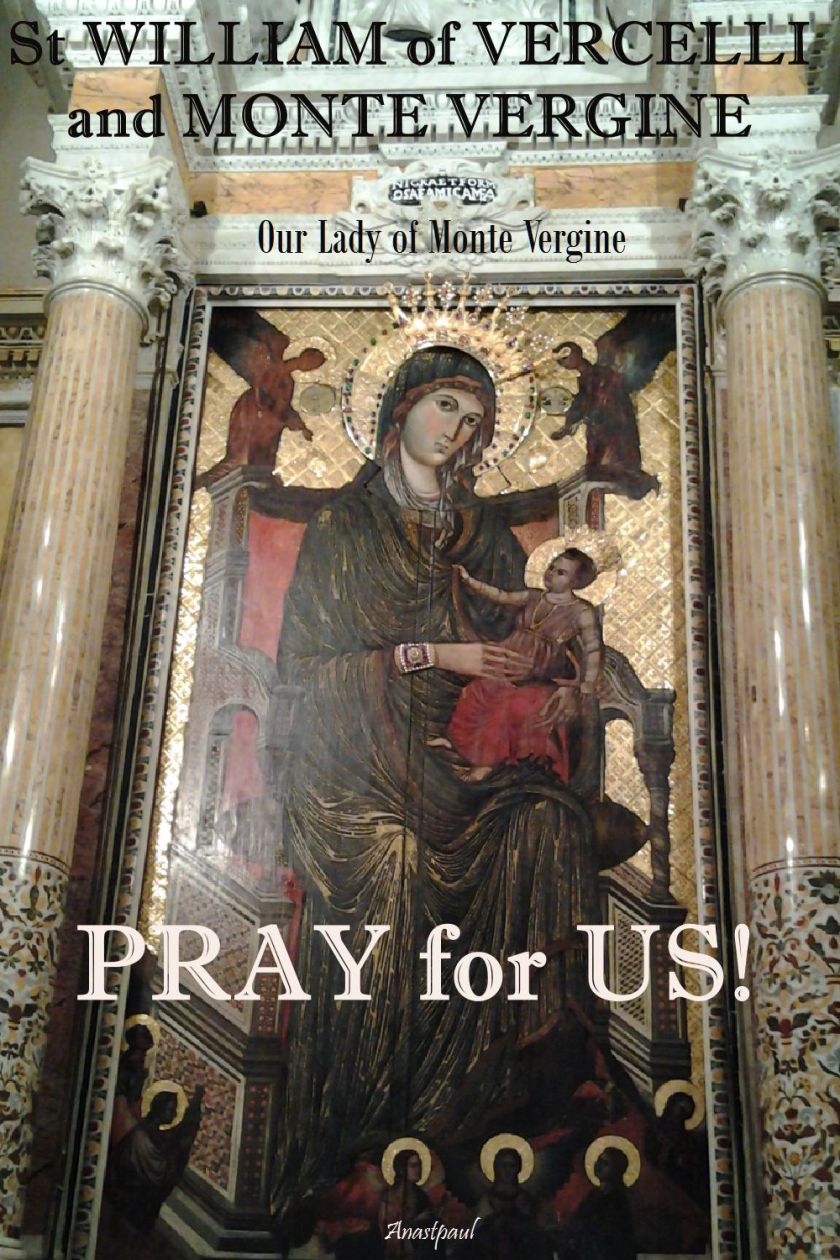

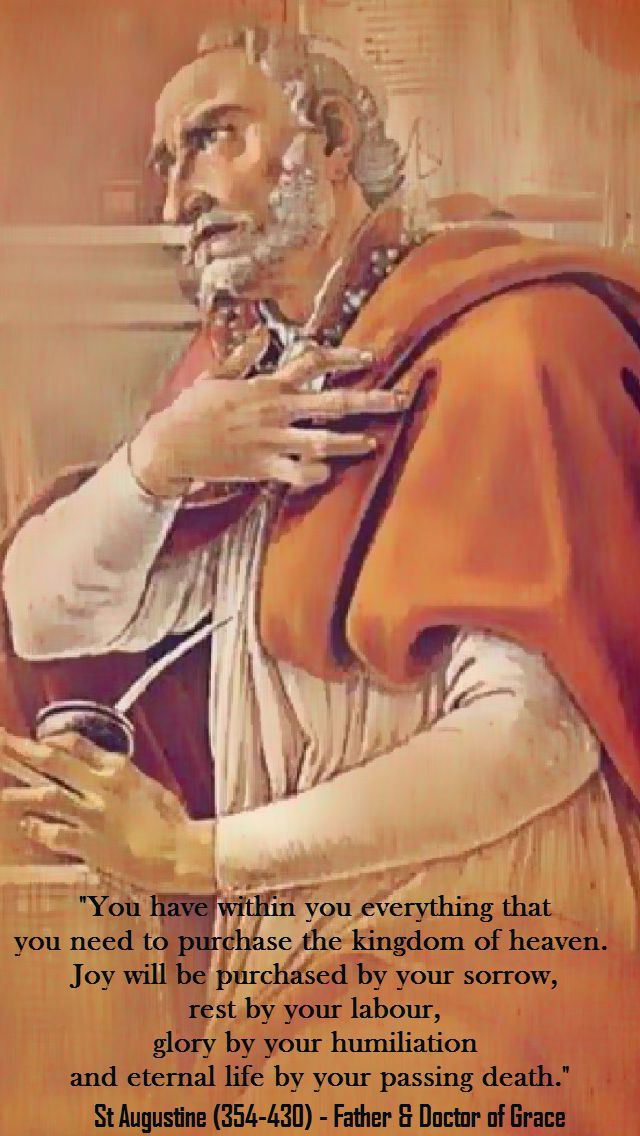
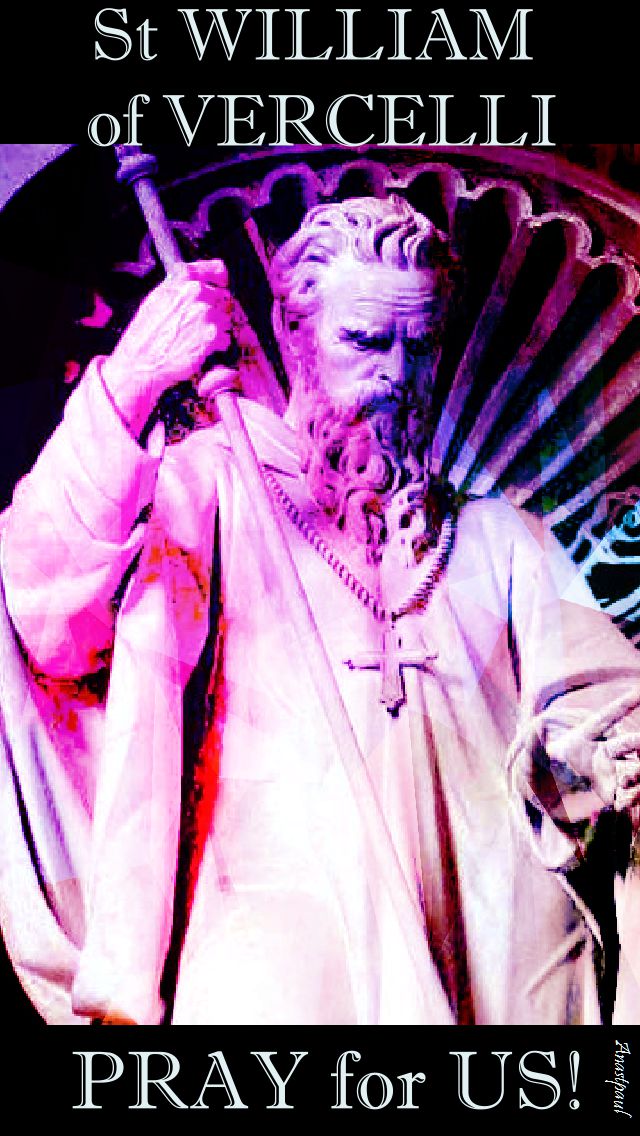
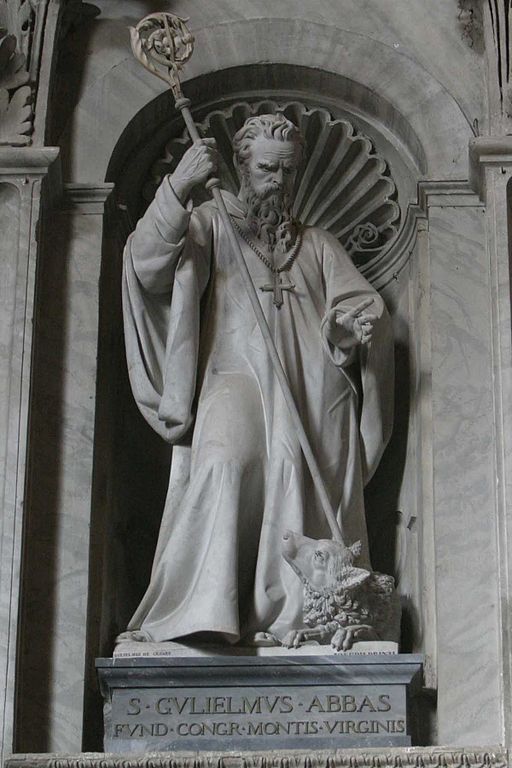


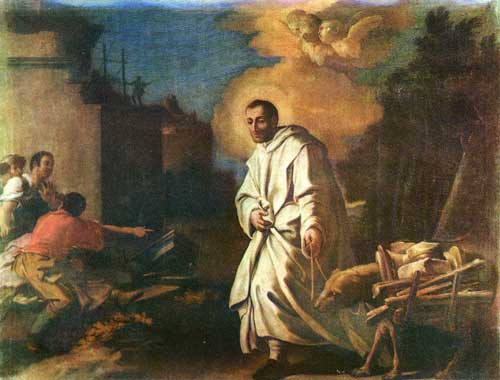


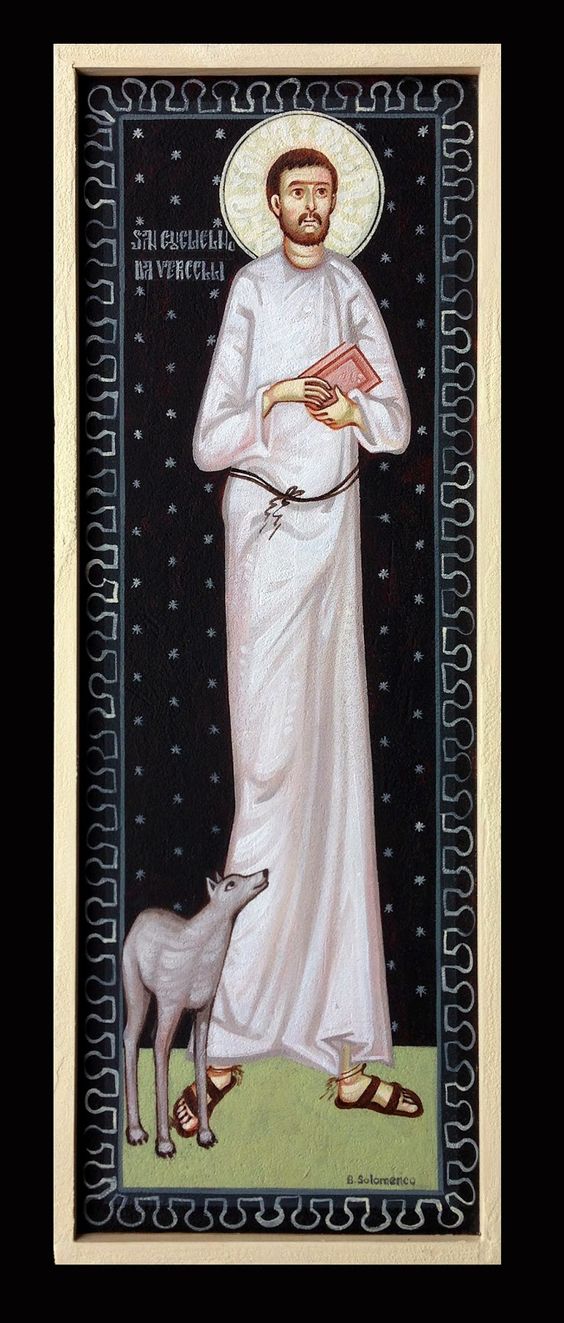


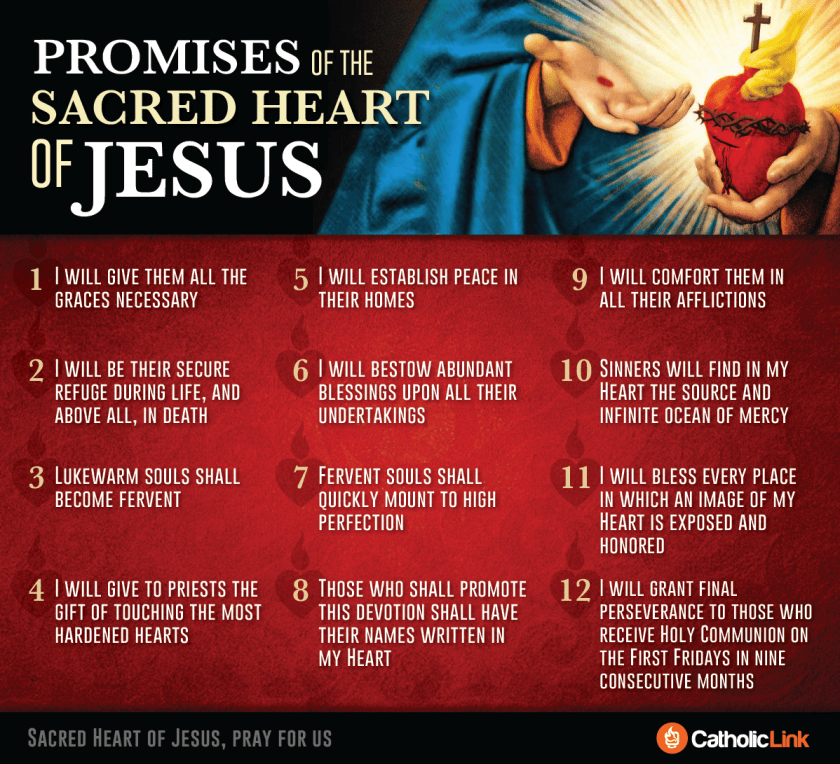
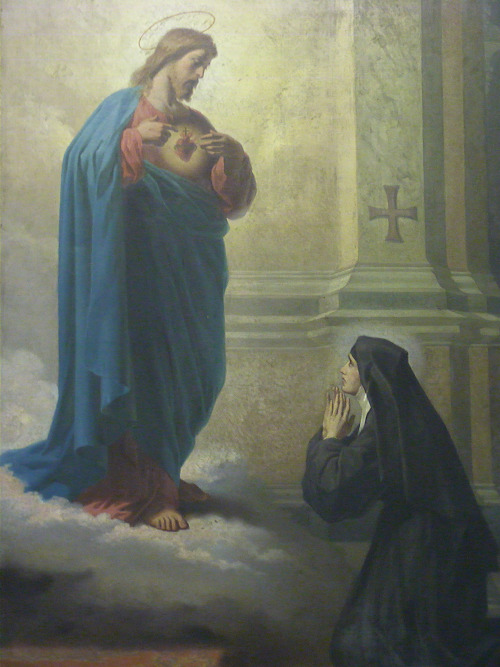
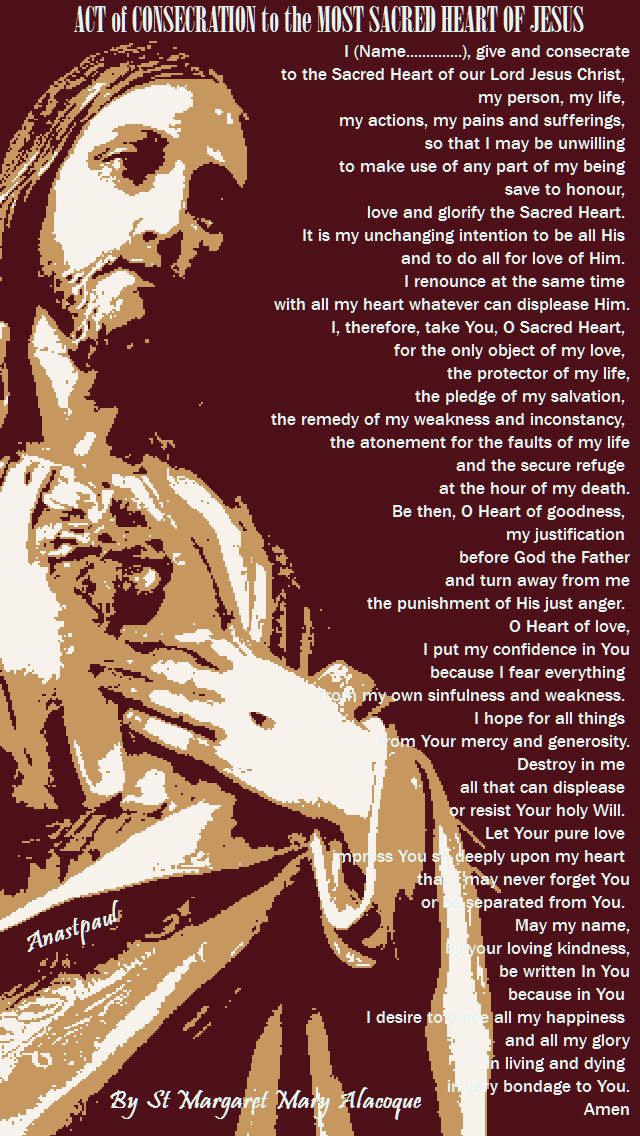

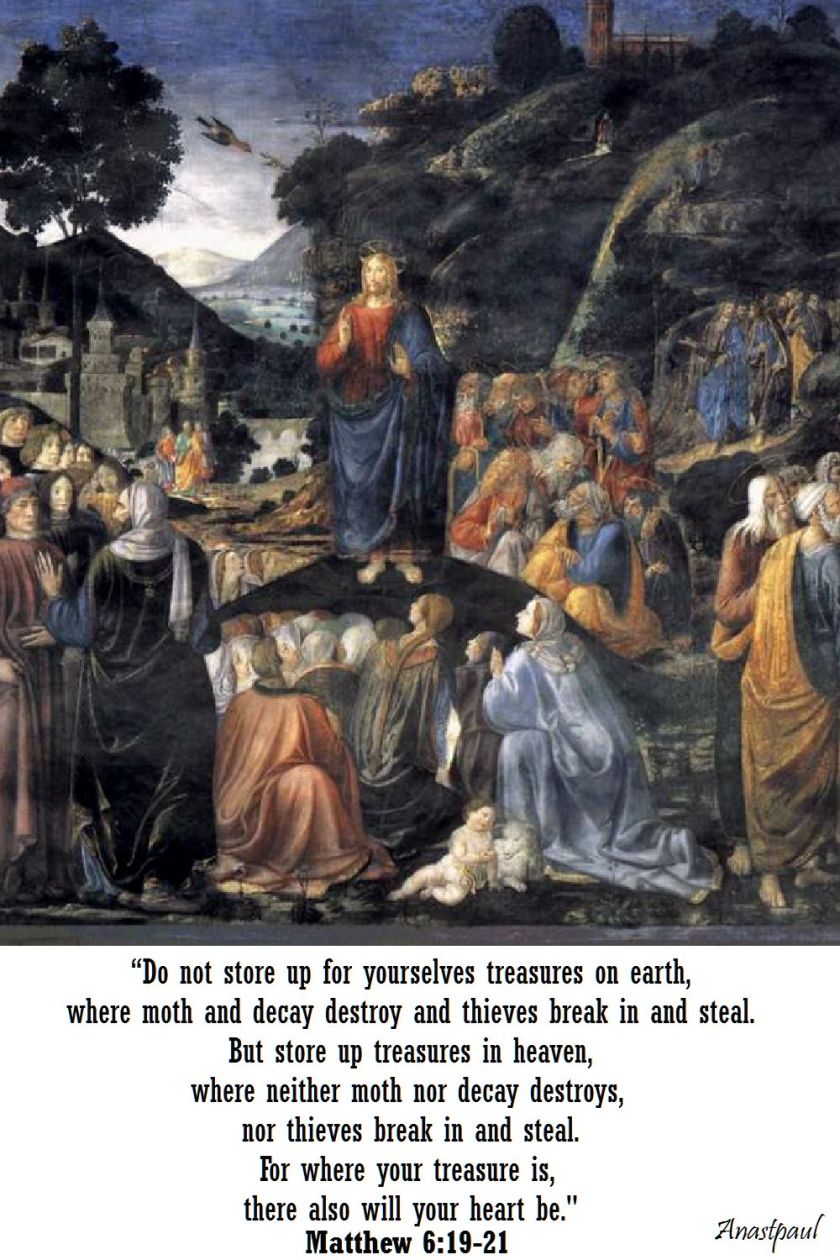

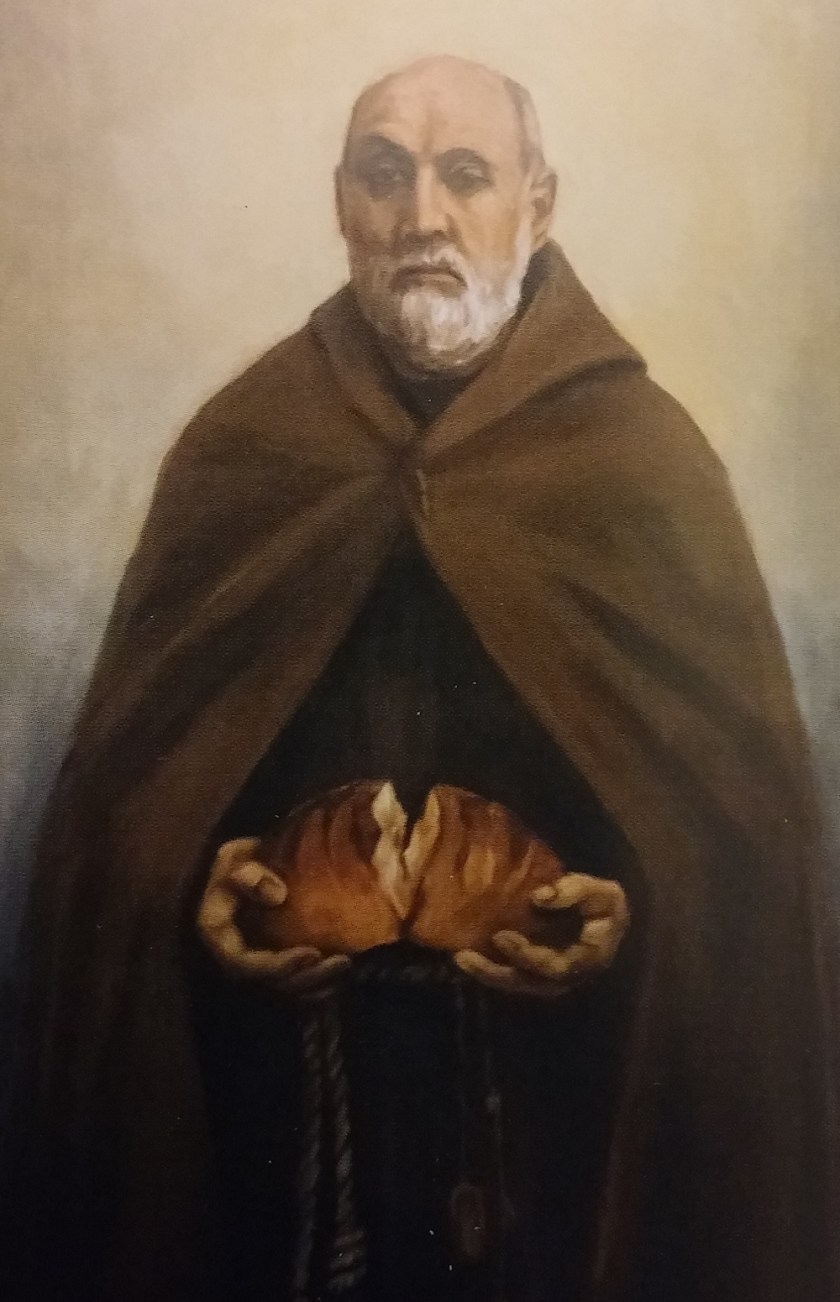
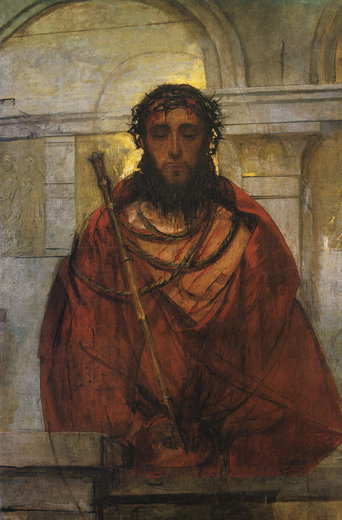


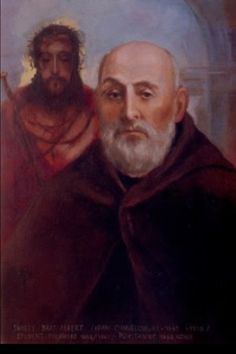


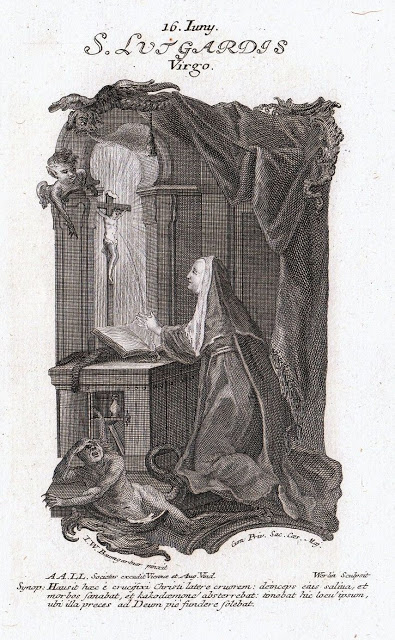


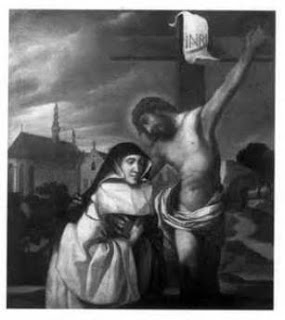
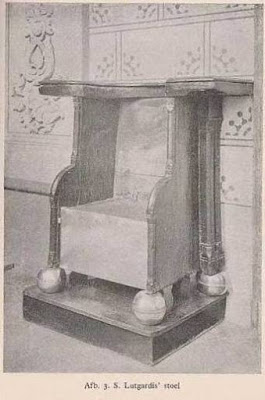
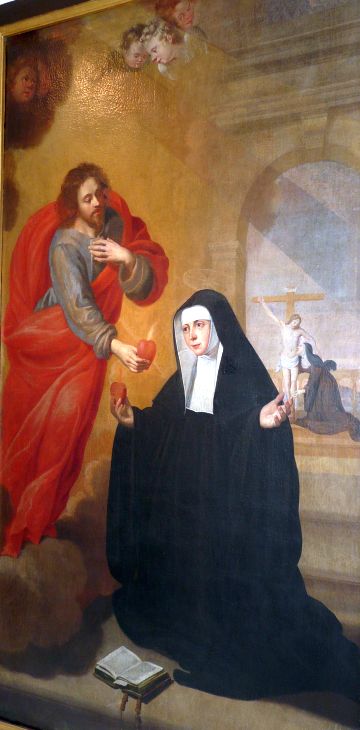
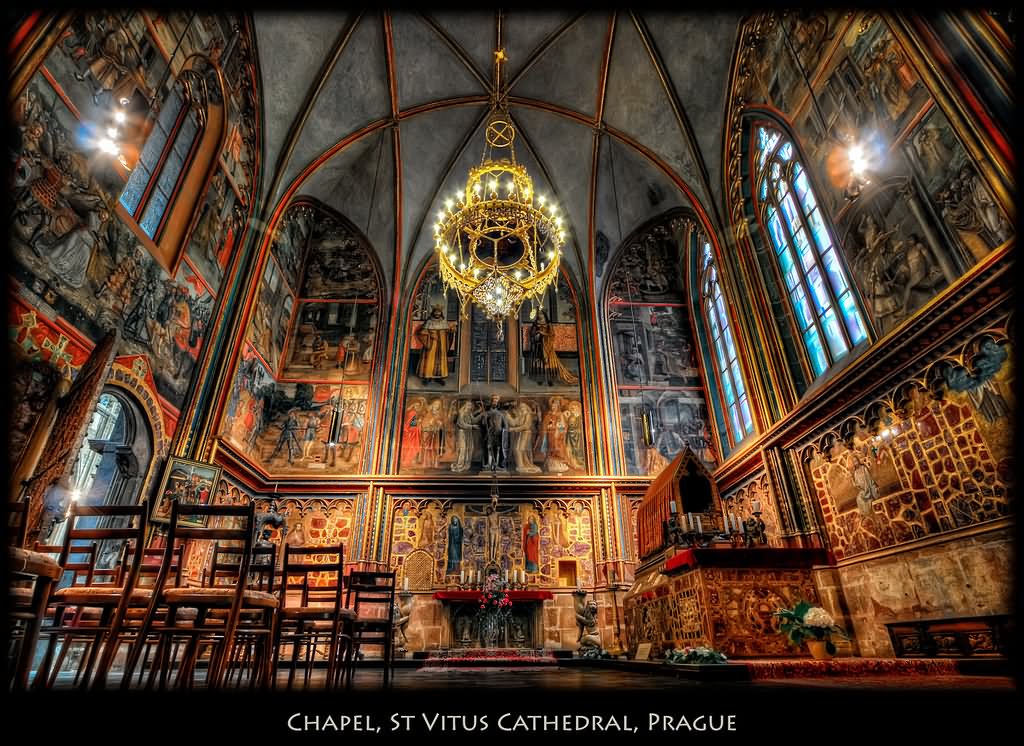
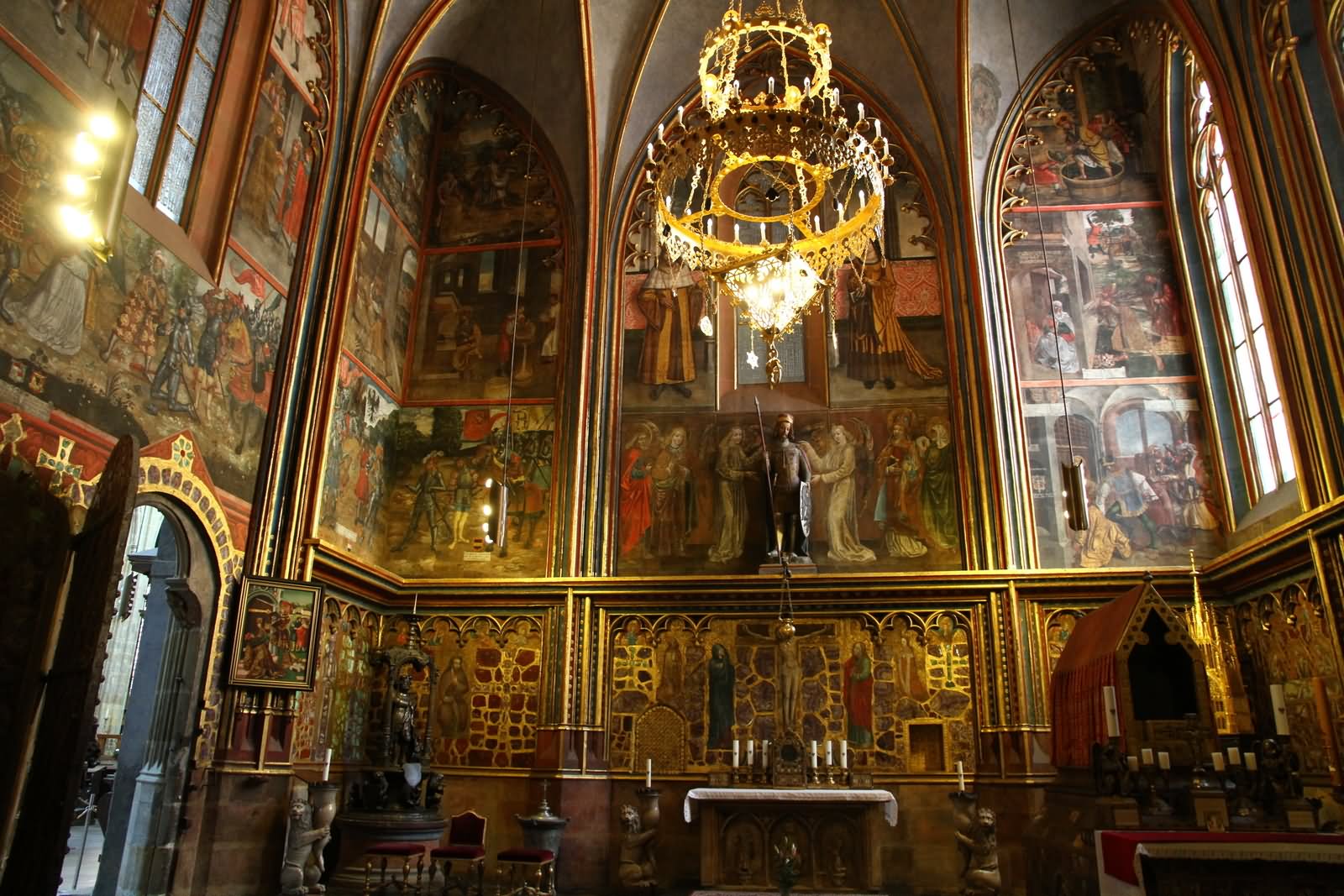


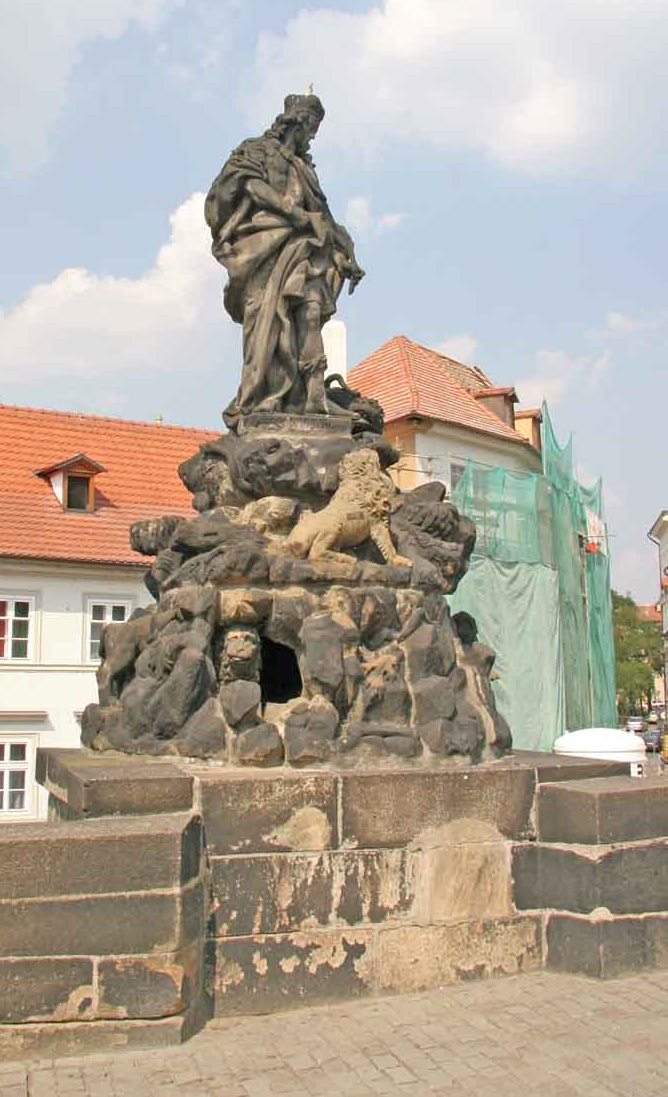
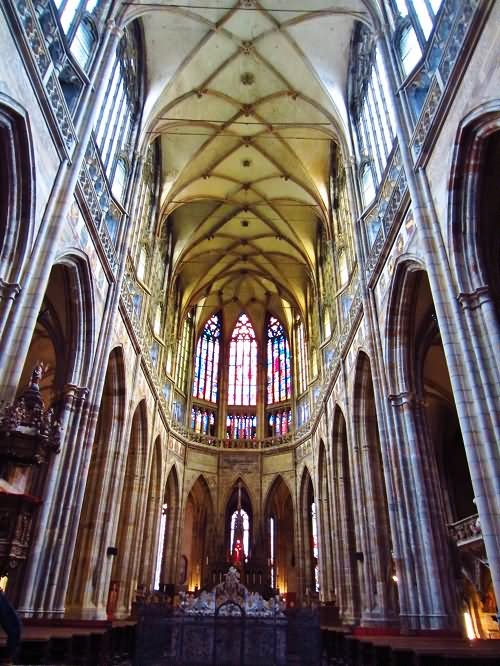

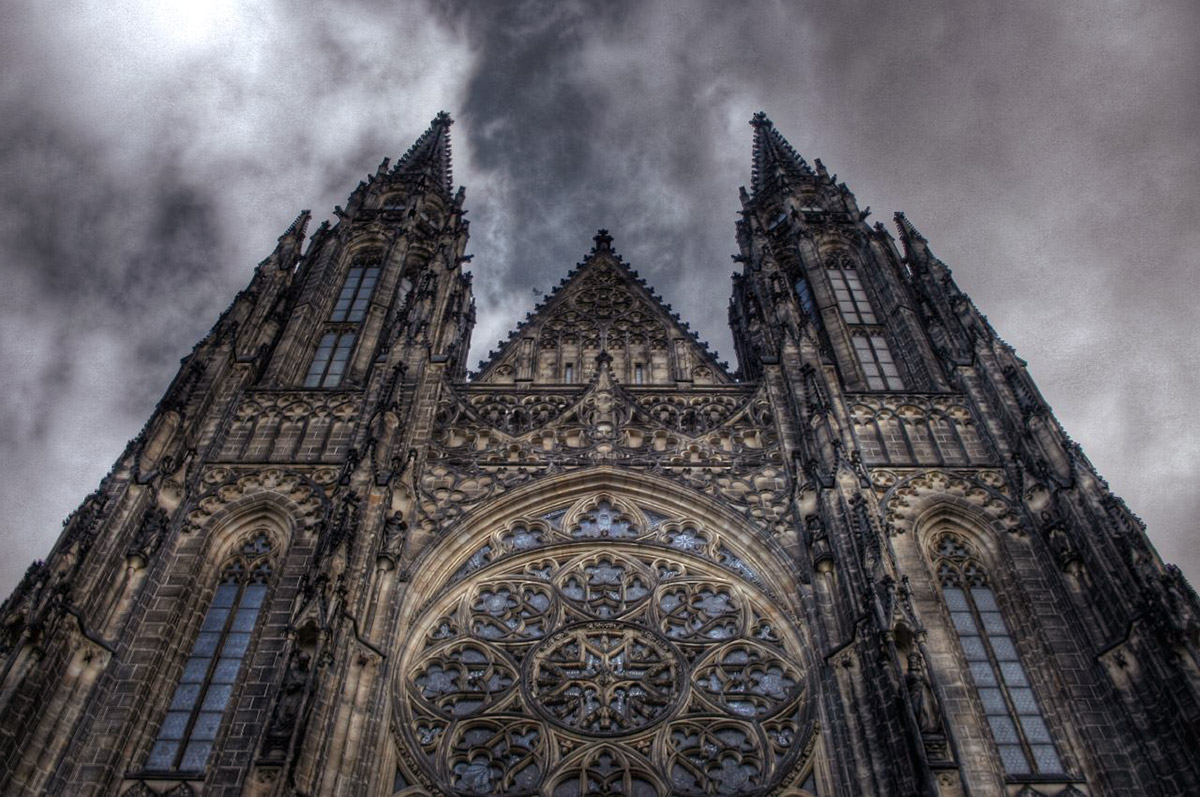
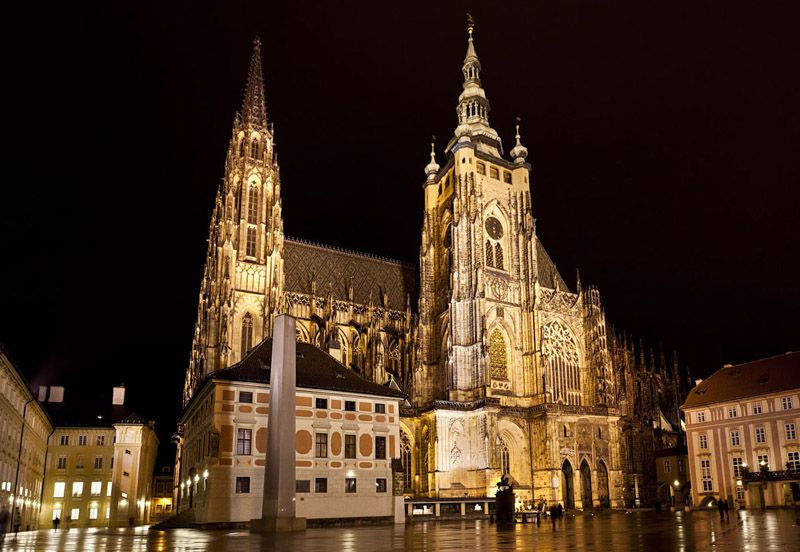


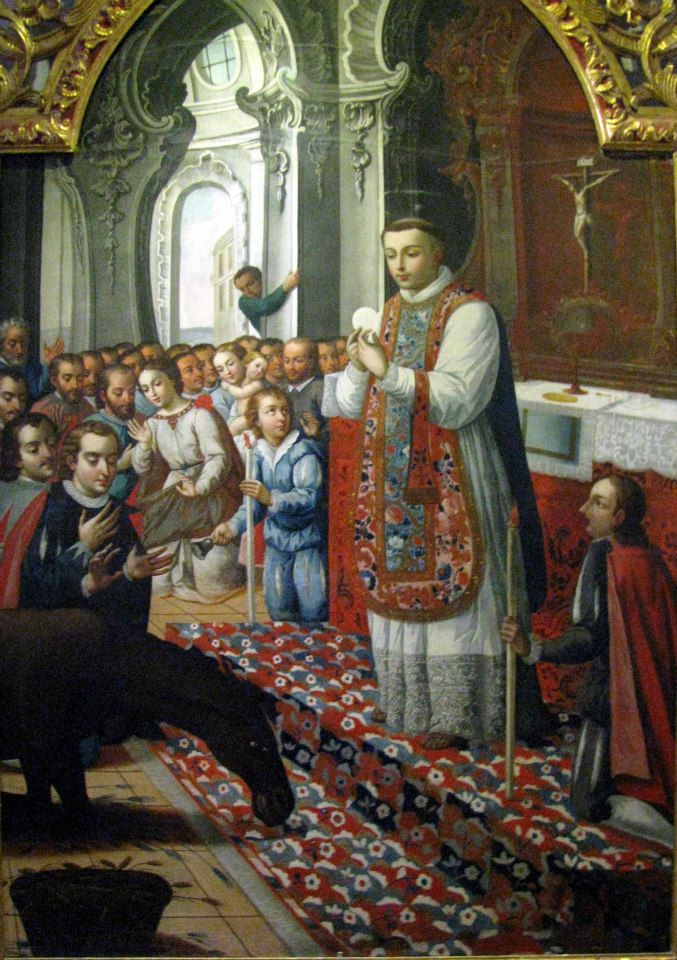
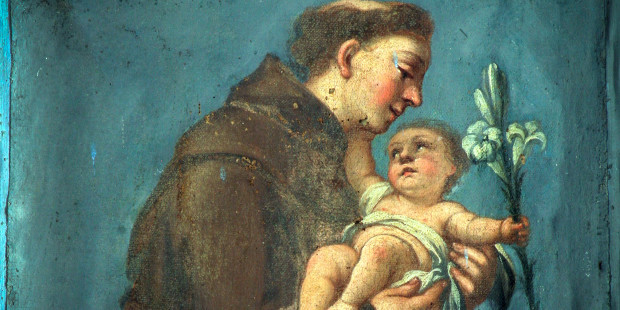
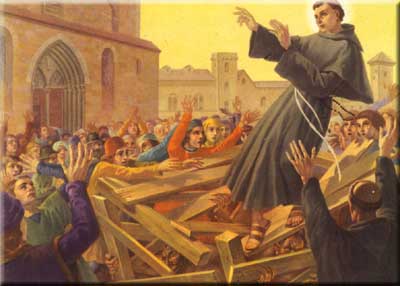
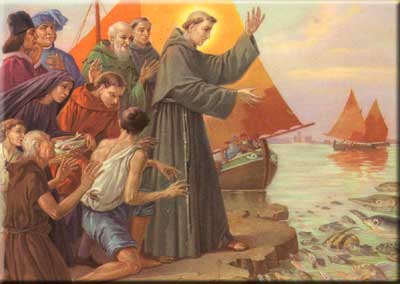
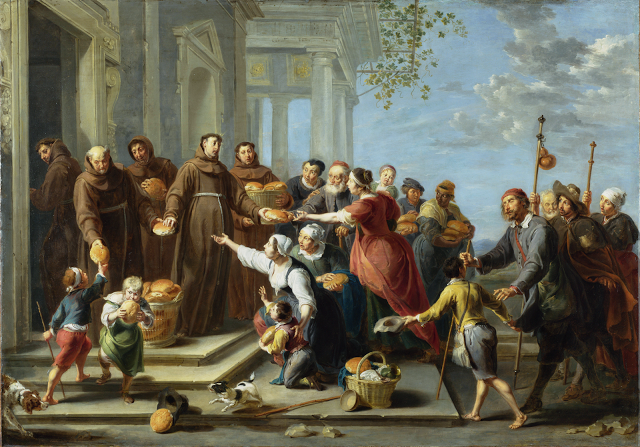
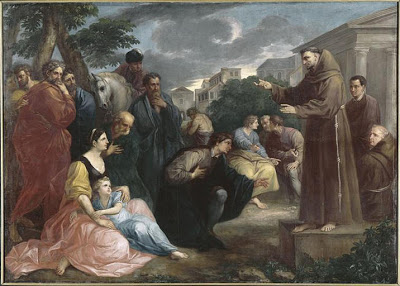
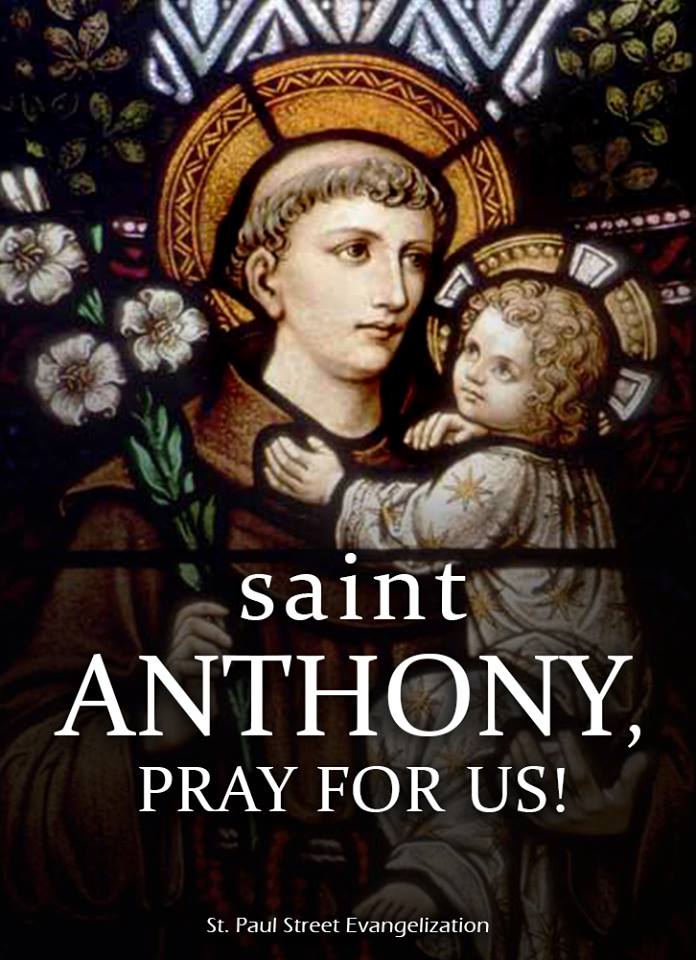
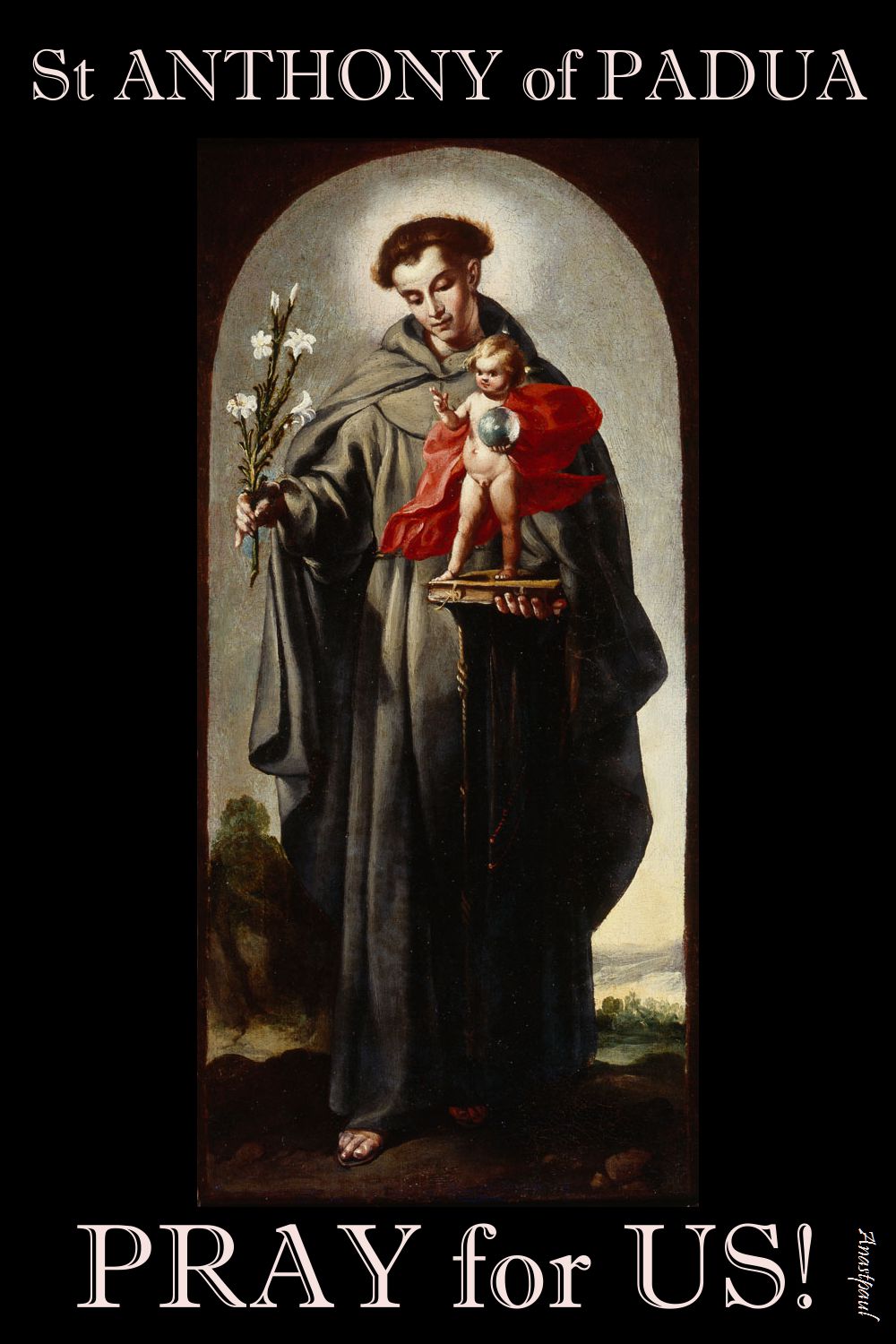
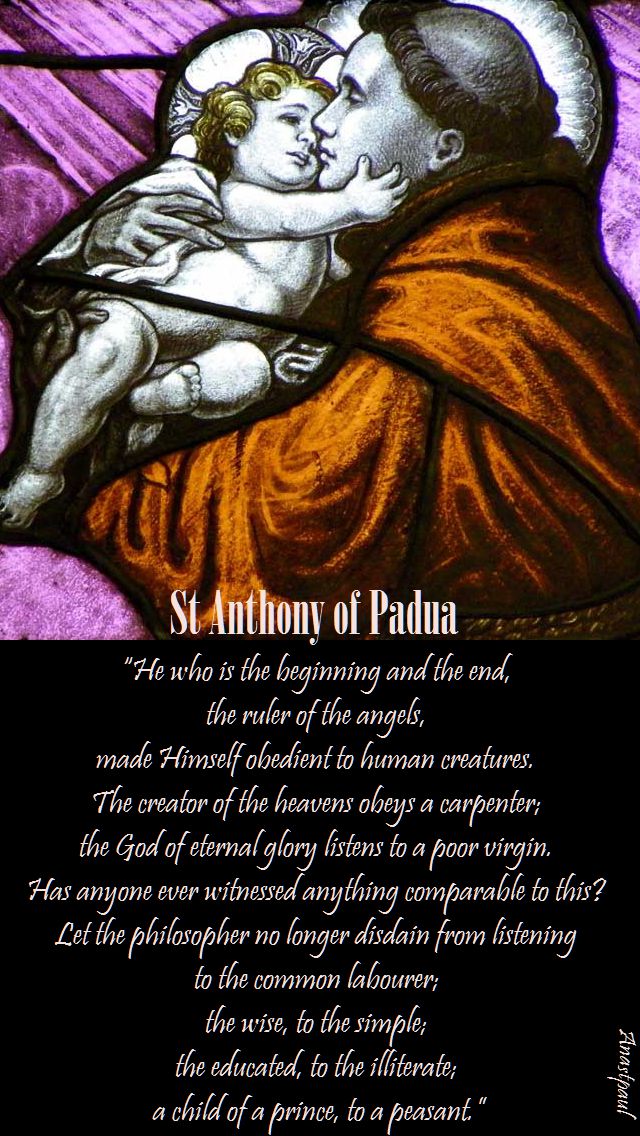
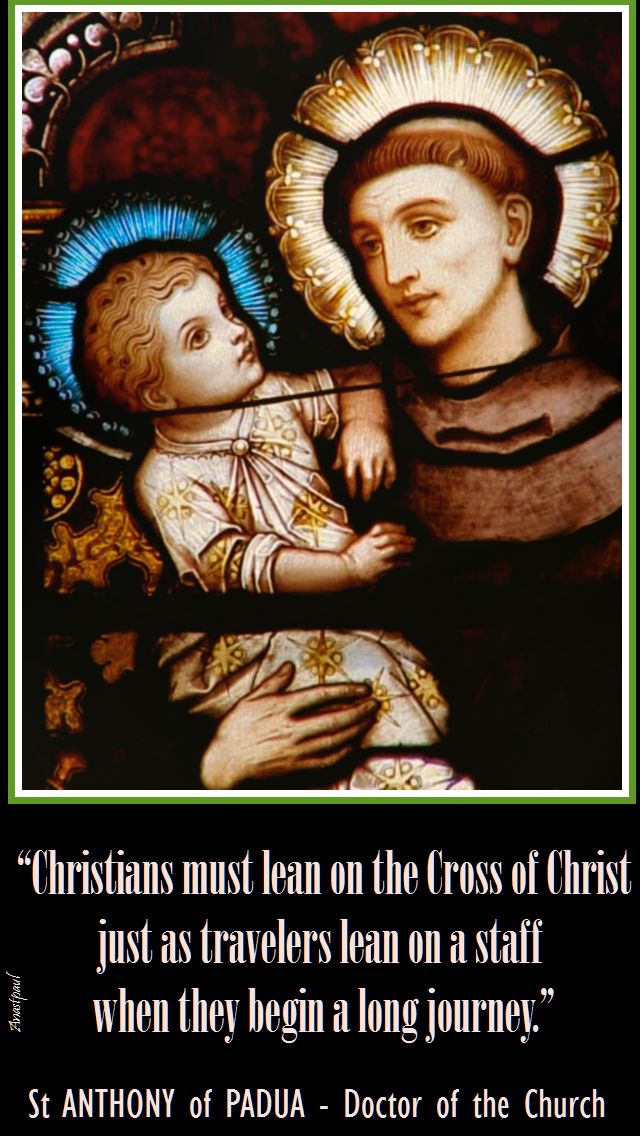
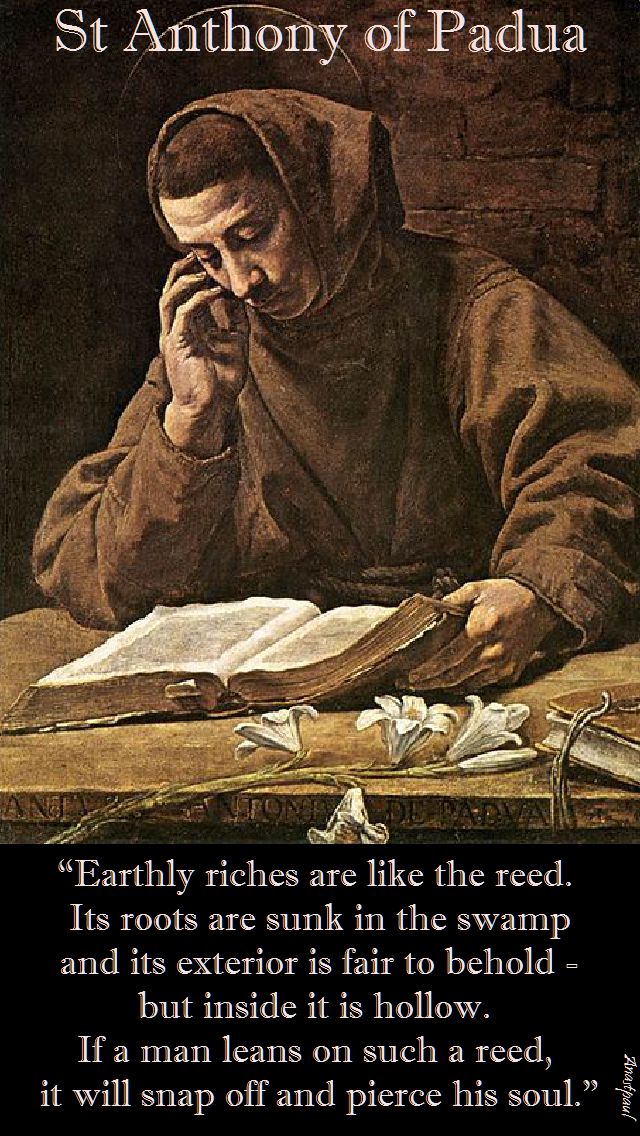
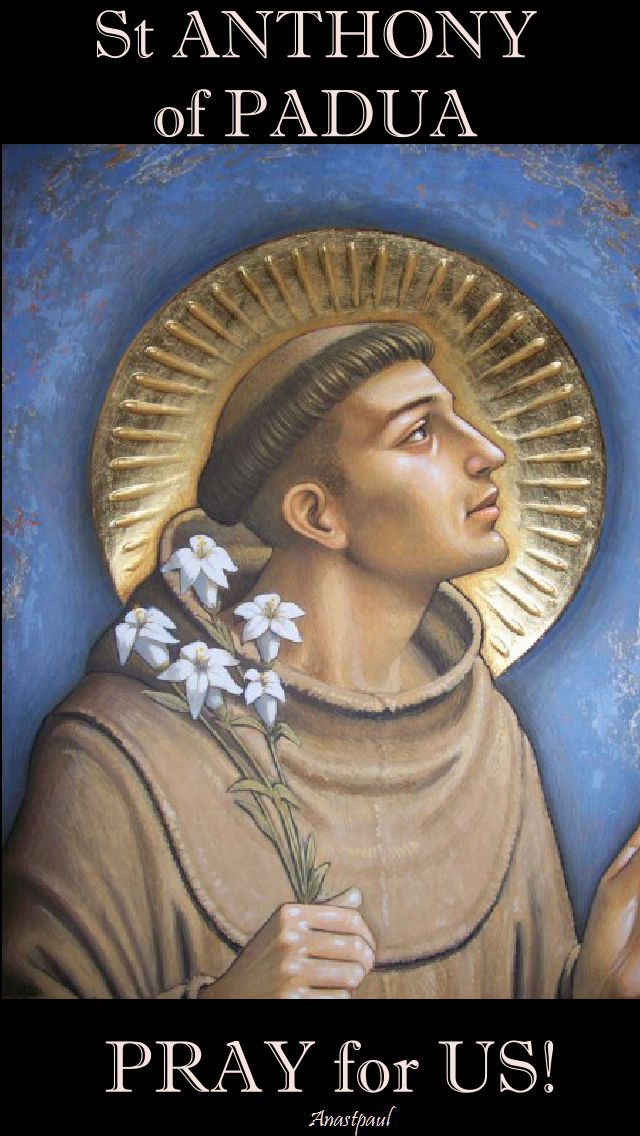
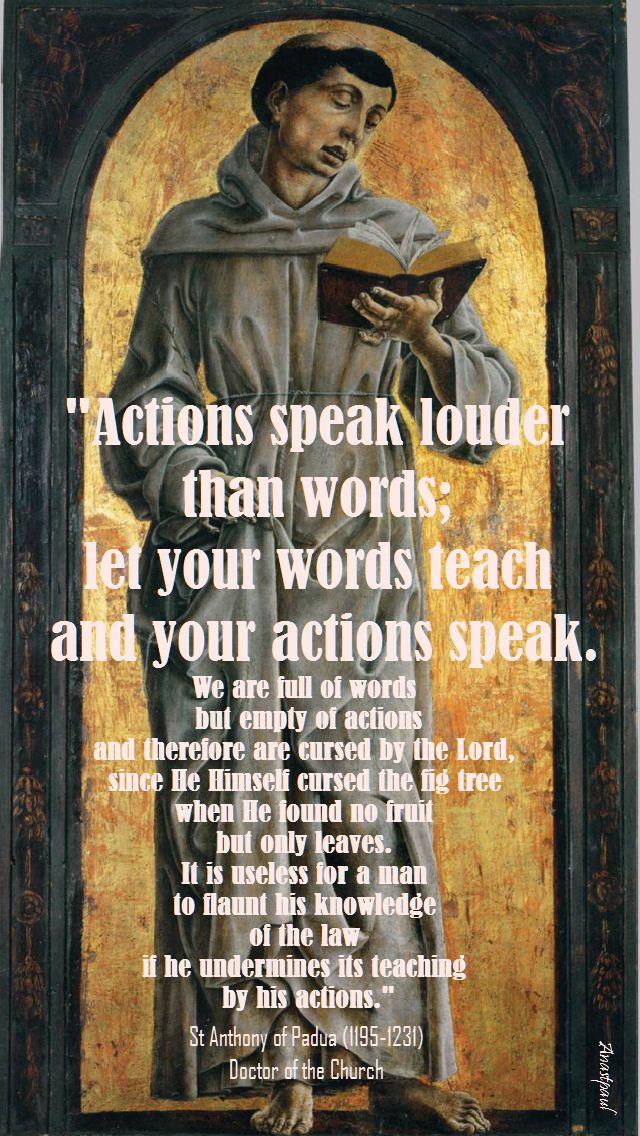


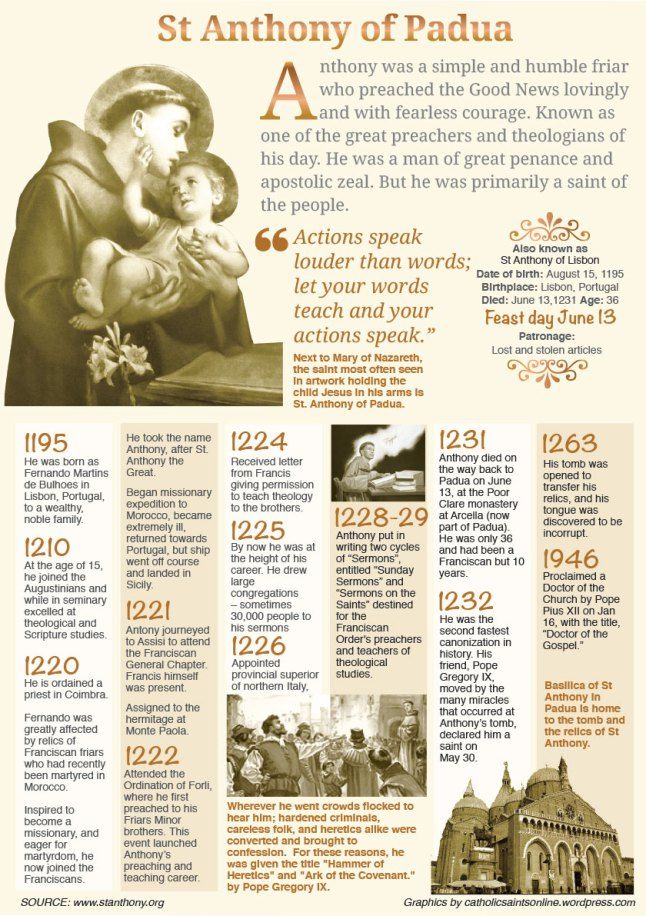
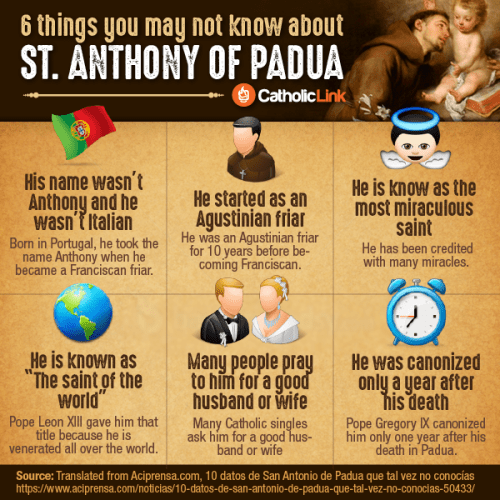
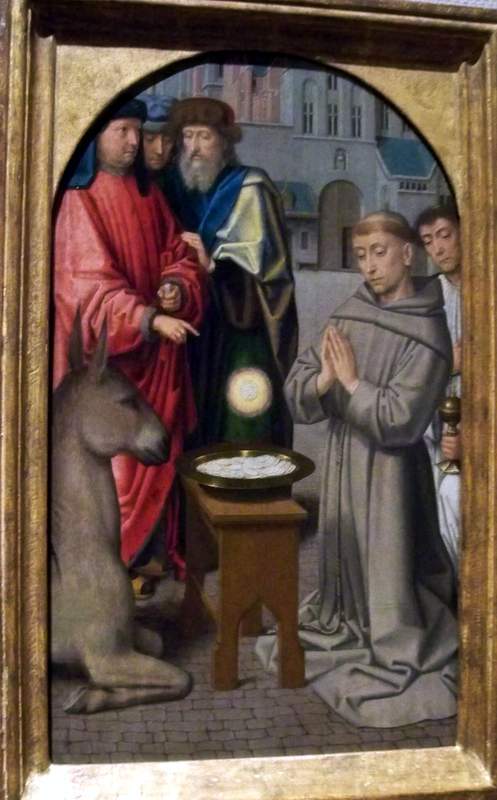
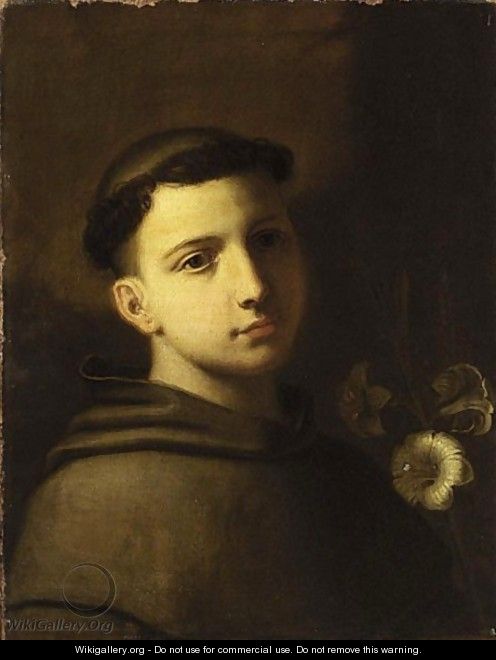
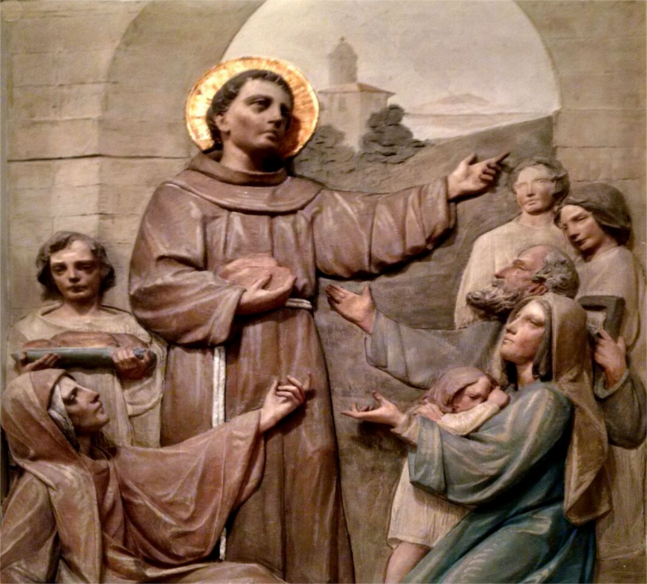
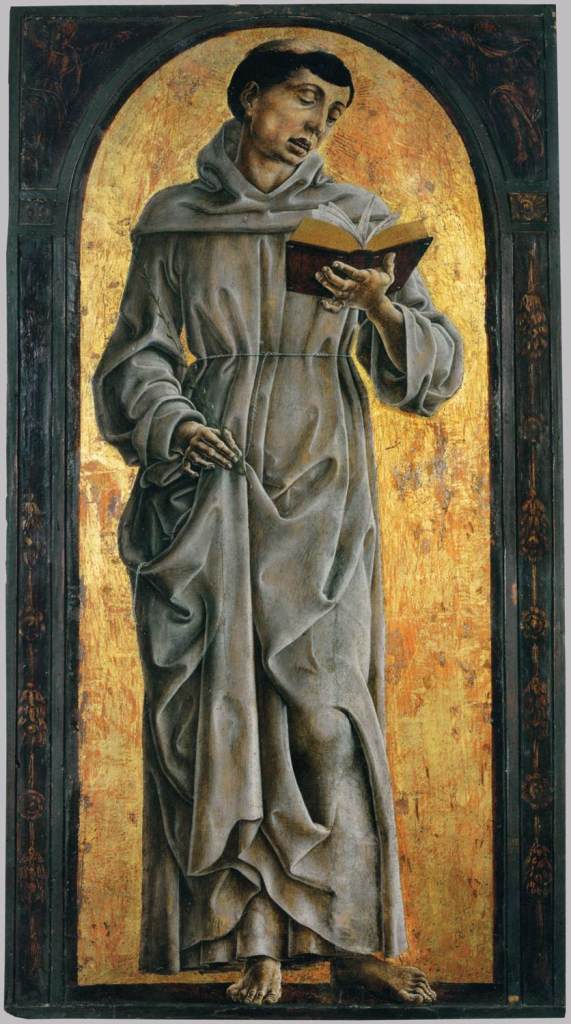
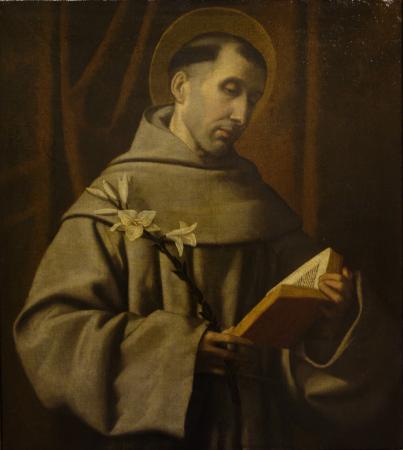
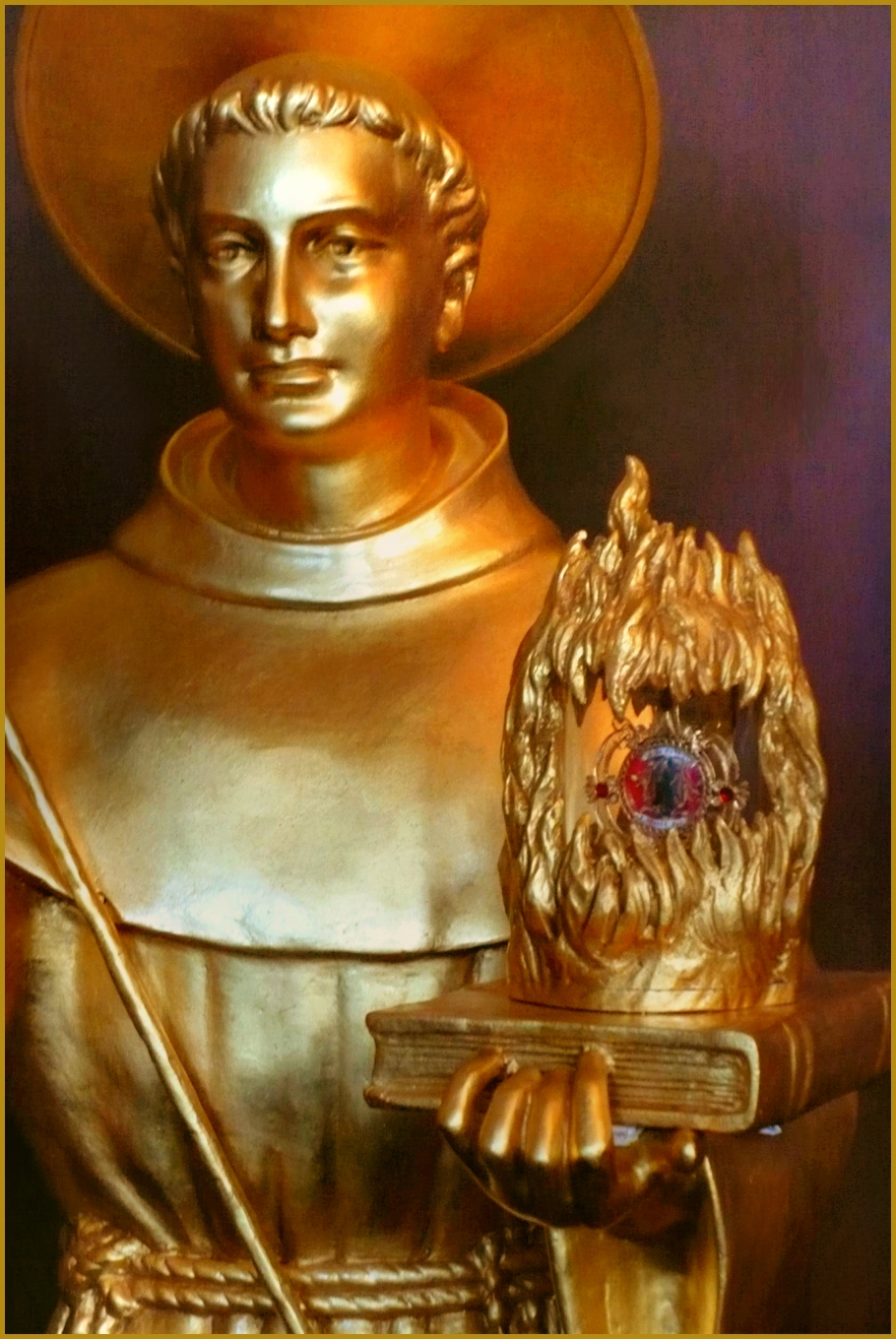
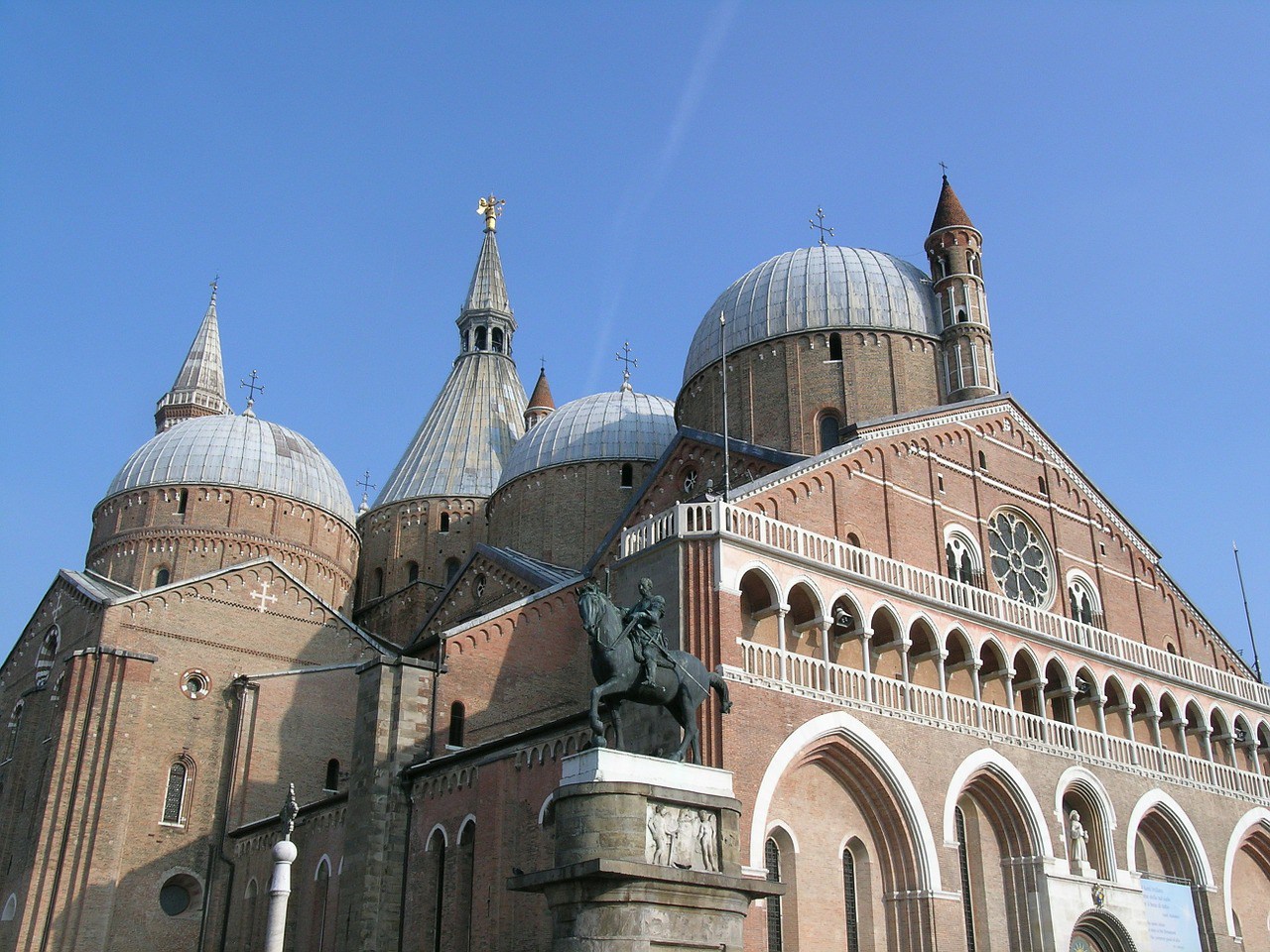

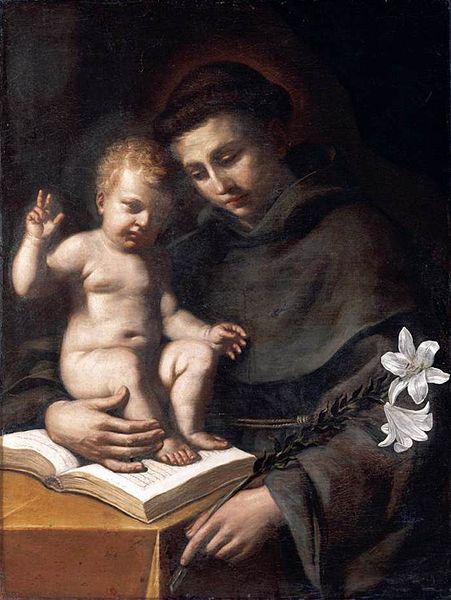
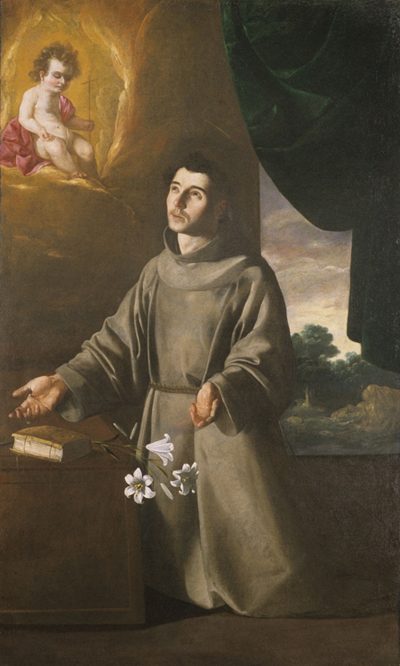
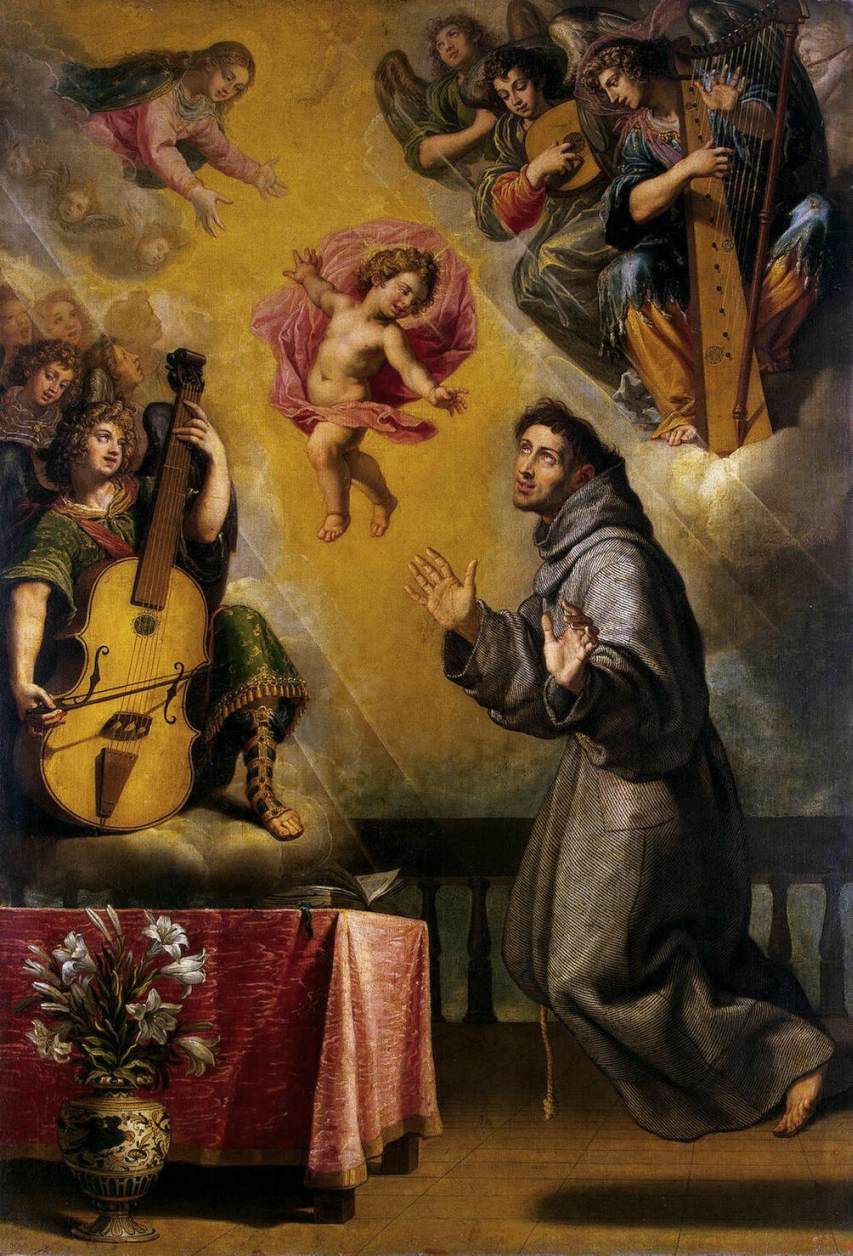
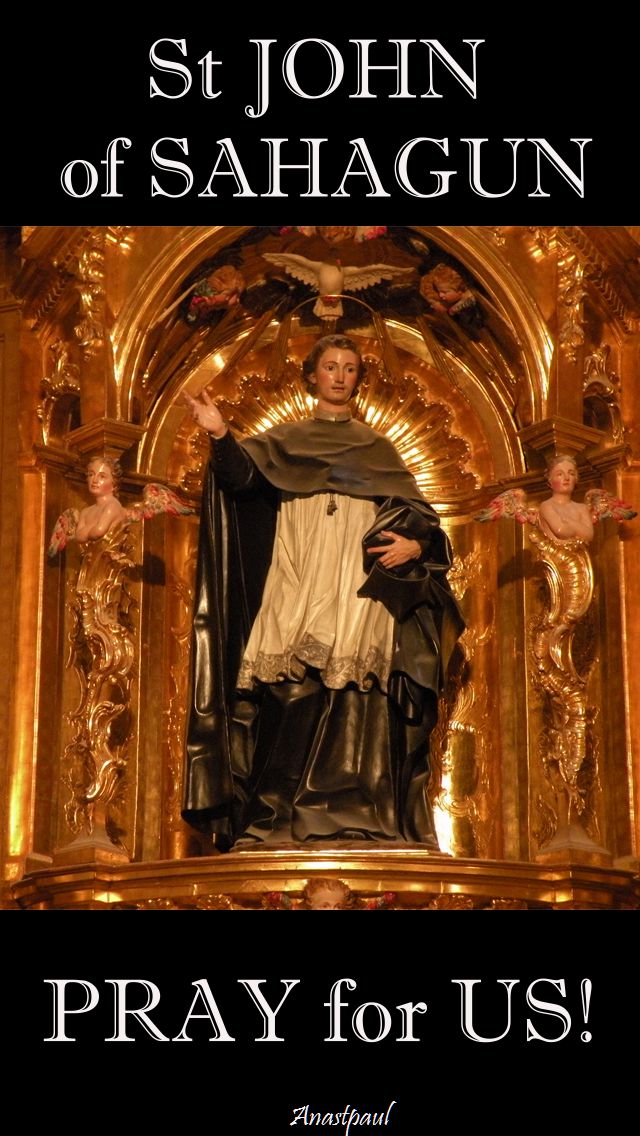
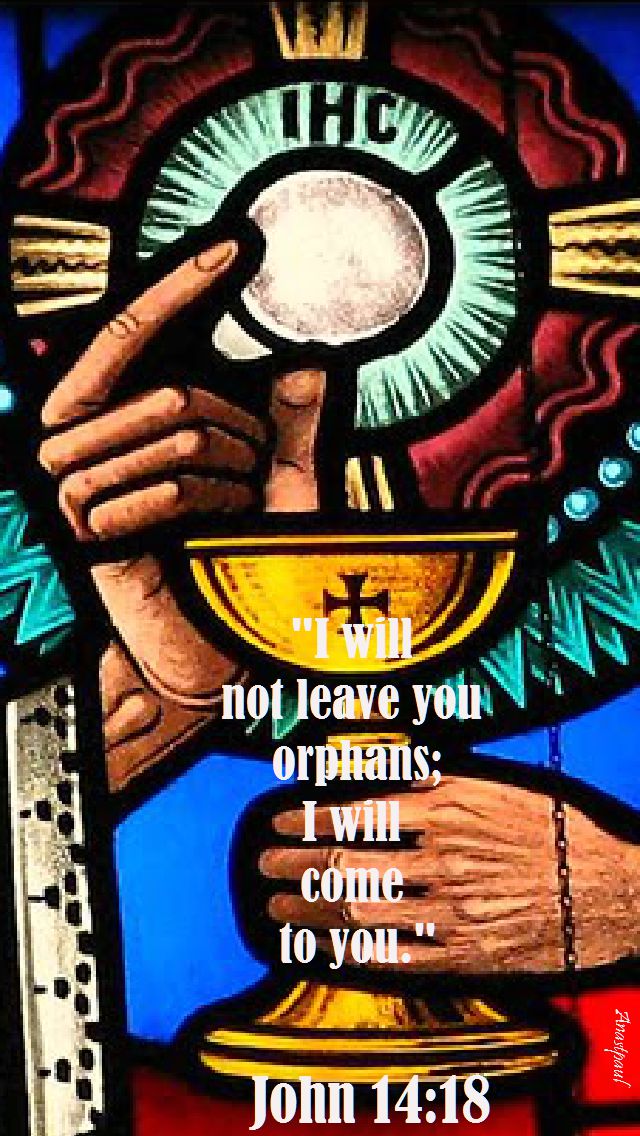
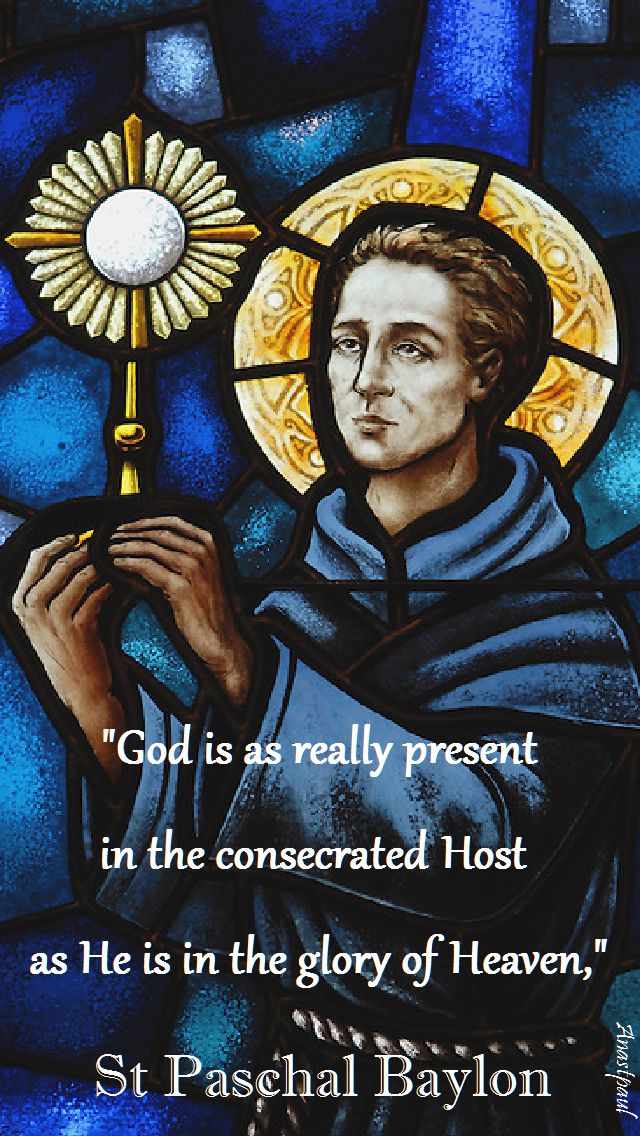
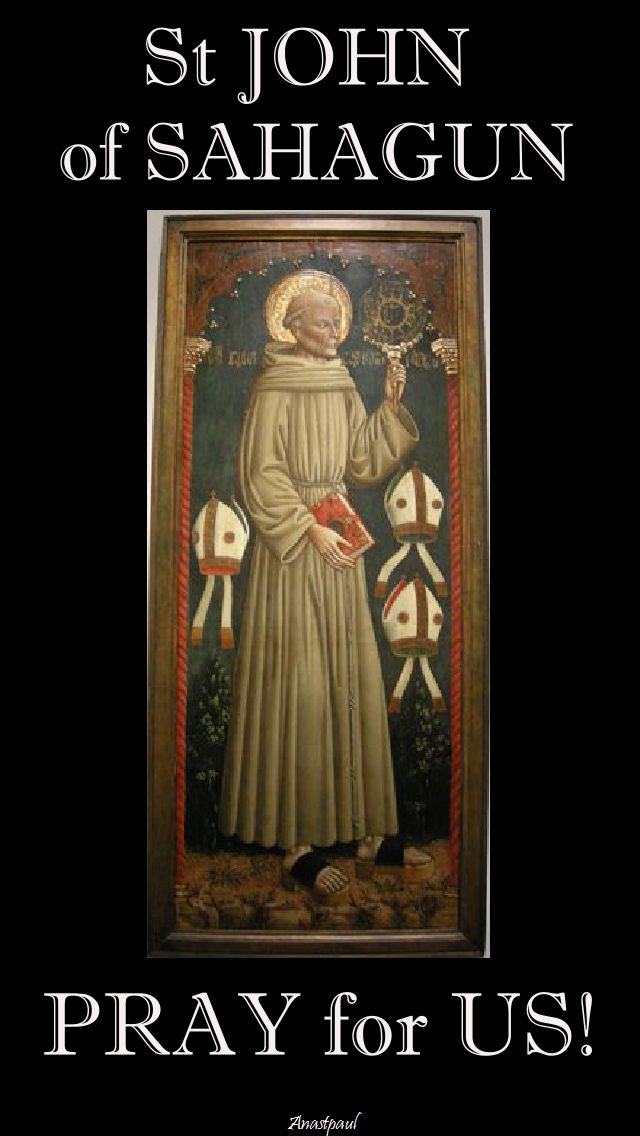
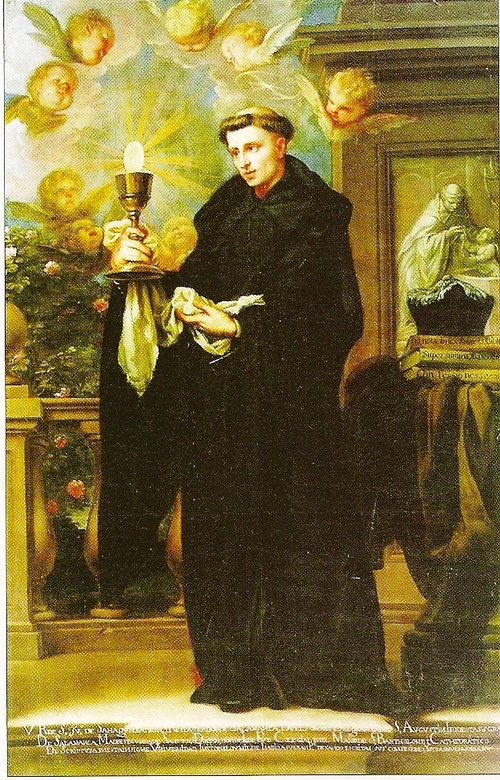
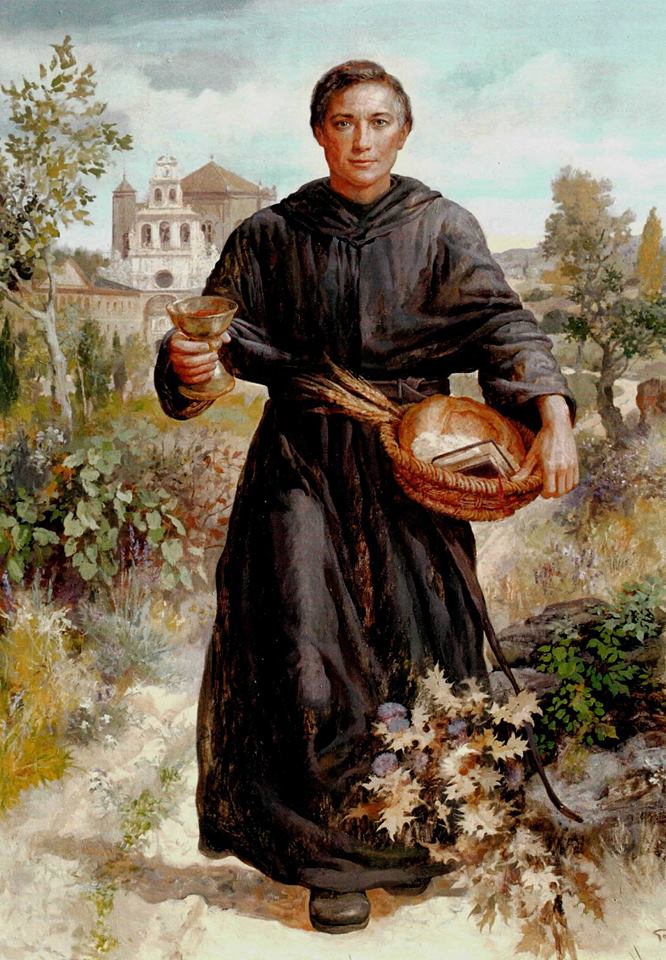
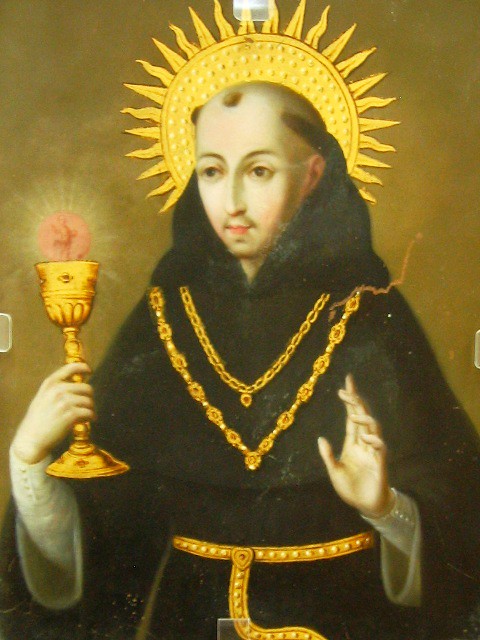
 He soon made many enemies, who went so far as to hire assassins but these, awed by the serenity and angelic sweetness of his countenance, lost courage. Some women of Salamanca, embittered by the saint’s strong sermon against extravagance in dress, openly insulted him in the streets and pelted him with stones until stopped by a patrol of guards.
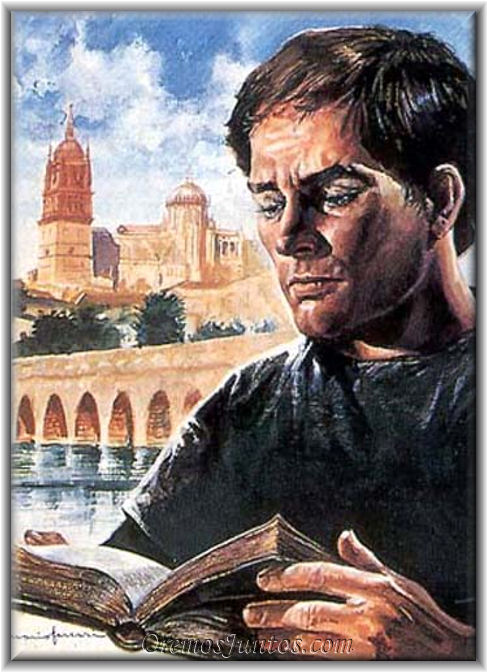


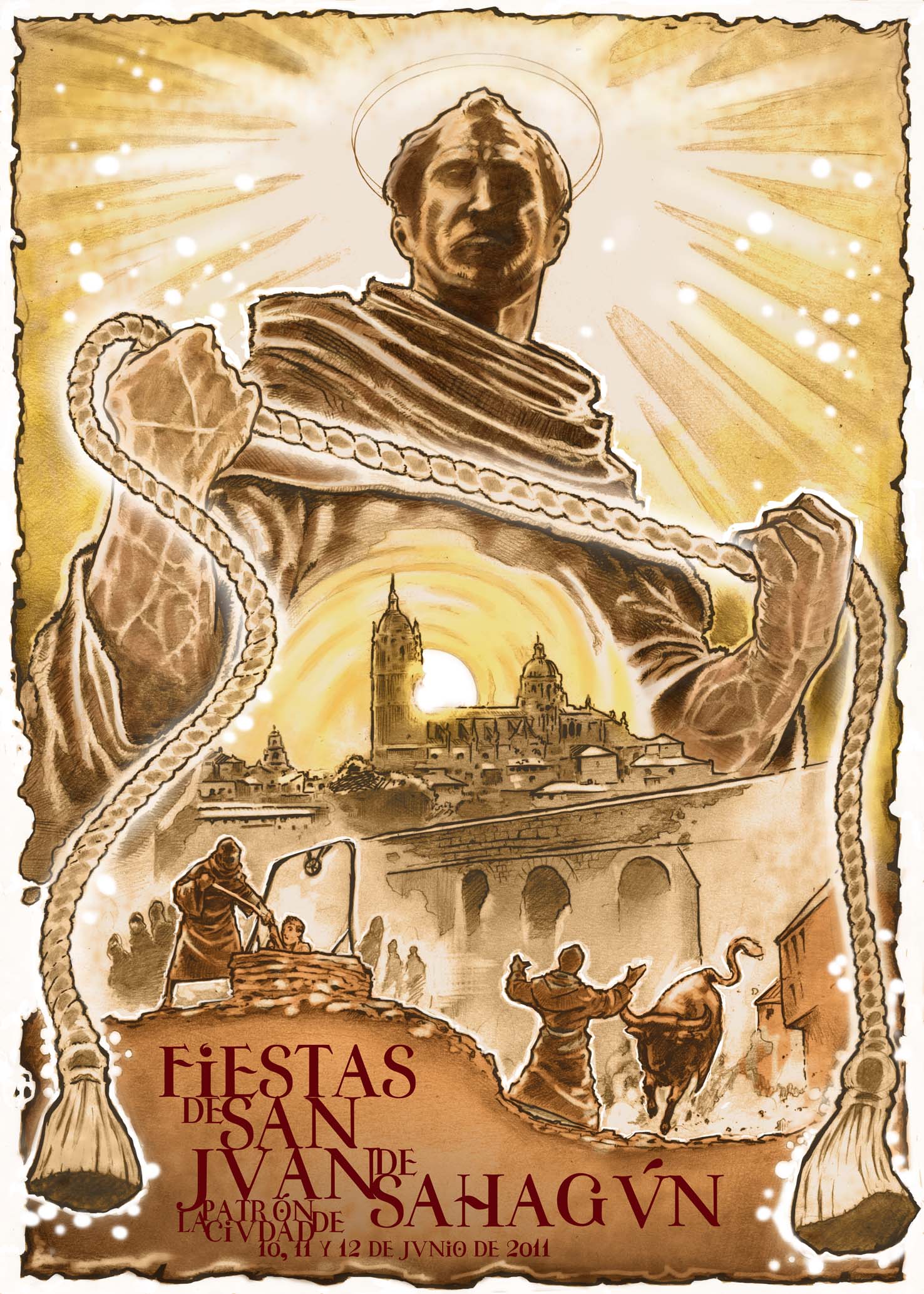


You must be logged in to post a comment.