St Timothy (Memorial)
St Titus (Memorial)
—
St Alberic of Citreaux
St Alphonsus of Astorga
St Ansurius of Orense
St Athanasius of Sorrento
St Conan of Iona
Bl Eystein Erlandsön
Bl José Gabriel del Rosario Brochero
Bl Marie de la Dive veuve du Verdier de la Sorinière
Bl Michaël Kozal
St Paula of Rome
St Robert of Molesme
St Theofrid of Corbie
St Theogenes of Hippo
St Tortgith of Barking
—
Martyred Family of Constantinople
Xenophon
Mary
John
Arcadius
Category: SAINT of the DAY
Thought for the Day – 25 January
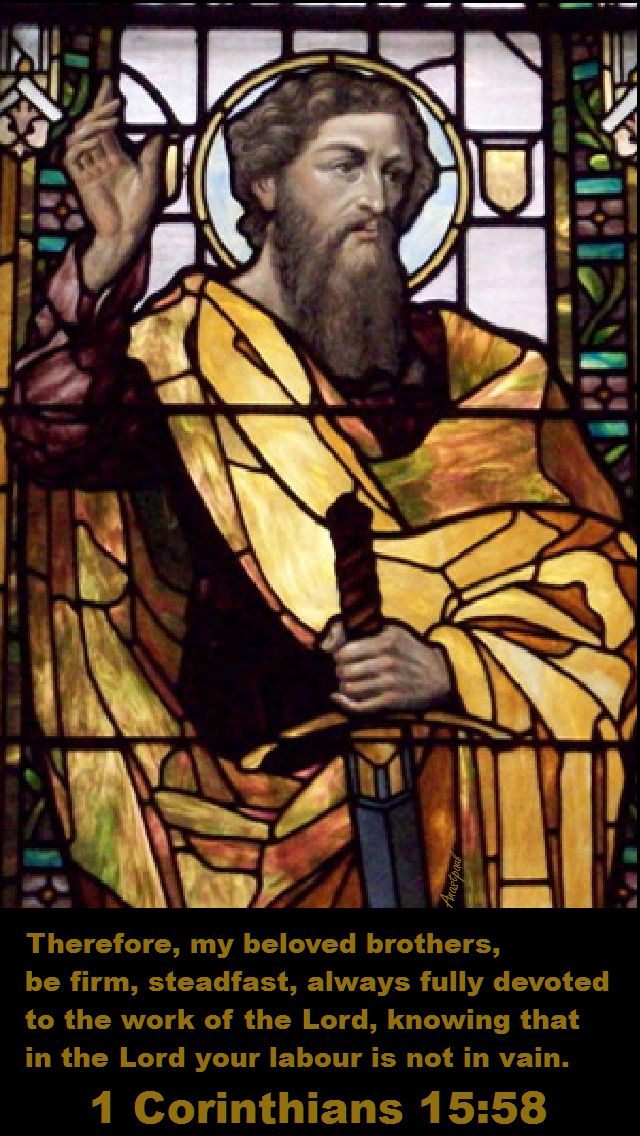
We marvel at the total conversion of the man whom we celebrate today. We marvel at his zeal, his influence, and his transparent honesty in speaking about himself: “I am the foremost of sinners but I received mercy for this reason, that in me, as the foremost, Jesus Christ might display his perfect patience for an example to those who were to believe in him for eternal life.” ( 1 Tim 1:15-16). That sums up the importance of this feast for us, who are among those who follow in Paul’s footsteps and believe in Jesus Christ for eternal life, and are still making good on our own conversion.
In the end, the same thing that converted Saul is the only thing that will convert us: the deep conviction that “Christ loves us with all the inexhaustible charity of God’s own heart.” (Christ is Passing By, no. 59) For St Paul the time came and then everything changed—he changed, the world changed. He discovered that he possessed the age-old love which the Lord had pledged to his fathers: I have loved you with a timeless love. (Jer 31:3) And “in being loved by Christ,” concludes Saint John Chrysostom, “he thought of himself as possessing life, the world, the angels, present and future, the kingdom, the promise, countless blessings.”…………Rev. John Henry Hanson, O. Praem.
Paul is undoubtedly hard to understand. His style often reflects the rabbinical style of argument of his day and often his thought skips on mountaintops while we plod below. But the bottom-line is this: the question is “what is it about” and the answer is “love”.
St Paul Pray for us!


One Minute Reflection – 25 January
Yet I live, no longer I, but Christ lives in me; insofar as I now live in the flesh, I live by faith in the Son of God who has loved me and given himself up for me………..Galatians 2:20
REFLECTION – “Paul, more than anyone else, has shown us what man really is and in what our nobility consists and of what virtue this particular animal is capable. Each day he aimed ever higher; each day he rose up with greater ardour and faced with new eagerness the dangers that threatened him. He summed up his attitude in the words: “I forget what is behind me and push on to what lies ahead……………The most important thing of all to him, however, was that he knew himself to be loved by Christ. Enjoying this love, he considered himself happier than anyone else”…….St John Chrysostum
PRAYER – O God, who instructed the whole world through the preaching of the Apostle St. Paul, grant that we who celebrate the Feast of his conversion today, may through his patronage and prayers, begin too to understand our greatest gift, that we are LOVED by You! This we ask of You through Christ our Lord. St Paul Pray for Us! Amen.


Our Morning Offering – 25 January
Saint Paul’s Prayer (Ephesians 3: 14-21)
This, then, is what I pray,
kneeling before the Father,
from whom every fatherhood,
in heaven or on earth takes its name.
In the abundance of his glory may he,
through his Spirit,
enable you to grow firm
in power with regard to your inner self
so that Christ may live
in your hearts through faith
and then, planted in love
and built on love,
with all God’s holy people
you will have the strength
to grasp the breadth and the length,
the height and the depth,
so that, knowing the love of Christ
which is beyond knowledge,
you may be filled
with the utter fullness of God.
Glory be to him whose power, working in us,
can do infinitely more
than we can ask or imagine;
glory be to him
from generation to generation
in the Church and in Christ Jesus
for ever and ever. Amen

Saints & Feasts – 25 January
Conversion of Paul the Apostle (Feast)
—
St Agape the Martyr
St Agileus of Carthage
St Amarinus of Clermont
St Ananias of Damascus
Bl Antoni Swiadek
Bl Antonio Migliorati
St Apollo of Heliopolis
Bl Archangela Girlani
St Artemas of Pozzuoli
St Auxentius of Epirus
St Bretannion of Tomi
St Donatus the Martyr
St Dwynwen
St Emilia Fernández Rodríguez de Cortés
St Eochod of Galloway
Bl Francesco Zirano
Bl Henry Suso
St Joel of Pulsano
St Juventinus of Antioch
Bl Manuel Domingo y Sol
St Maximinus of Antioch
St Palaemon
St Poppo
St Praejectus of Clermont
St Publius of Zeugma
St Racho of Autun
St Sabinus the Martyr
Bl Teresa Grillo Michel
Thought for the Day – 24 January
Holiness, St Francis taught, is for everyone – from housewife to queen, from soldier to pope. He was one of the first to open the gates of methods of holiness to all and sundry. By his time in the history of the world most could read – then as now – there is really no excuse. Much more so in our time – everything to assist on the pathway to holiness is at our fingertips. WE ARE ALL called to be and CAN BE SAINTS!
St Francis de Sales, Pray for us!

Quote/s of the Day – 24 January
“Nothing makes us so prosperous in this world
as to give alms.”
“Man is the perfection of the Universe.
The spirit is the perfection of man.
Love is the perfection of the spirit
and charity that of love.
Therefore, the love of God is the end,
the perfection of the Universe.”
“There are no galley-slaves in the royal vessel of divine love – every man works his oar voluntarily! “
“All the pains in a hundred thousand million Hells suffered with the greatest perfection possible to a human creature would have been nothing compared to the smallest sigh of Our Lord, to the smallest drop of blood that he shed for love of us.”
“Do not look forward to the changes and chances of this life in fear; rather look to them with full hope that, as they arise, God, whose you are, will deliver you out of them. He is your keeper. He has kept you hitherto. Do you but hold fast to his dear hand and he will lead you safely through all things; and, when you cannot stand, he will bear you in his arms. Do not look forward to what may happen tomorrow. Our Father will either shield you from suffering, or he will give you strength to bear it.”
“A quarrel between friends, when made up, adds a new tie to friendship.”
“Friendships begun in this world will be taken up again, never to be broken off. “
~~~ St Francis de Sales


One Minute Reflection – 24 January
Take my yoke upon your shoulders and learn from me, for I am gentle and humble of heart……….Mt 11:29-30
REFLECTION – “If there was something better than meekness, God would certainly have told us.
But He exhorts us above all to be meek and humble of heart.”………..St Francis de Sales (Saint of the Day)
PRAYER – Lord Jesus, teach me what true meekness entails. Inspire me to practise it after Your example in all circumstances of my life. St Francis de Sales, you learnt the true meaning of humility and meekness, please pray for us, amen!


Our Morning Offering – 24 January
An Act of Abandonment
by ST FRANCIS de SALES
O my God, I thank You and I praise
You for accomplishing Your holy
and all-lovable will without any regard for mine.
With my whole heart,
in spite of my heart,
do I receive this cross I feared so much!
It is the cross of Your choice,
the cross of Your love.
I venerate it;
nor for anything in the world
would I wish that it had not come,
since You willed it.
I keep it with gratitude and with joy,
as I do everything that comes from Your hand;
and I shall strive to carry it without letting it drag,
with all the respect
and all the affection which Your works deserve.
Amen.

Saint of the Day – 24 January – St Francis de Sales – Doctor of the Church
Saint of the Day – 24 January – St Francis de Sales CO, OM, OFM (Cap)- Doctor of the Church / “The Gentleman Saint” (1567-1622 aged 55) Bishop of Geneva – Patron of against deafness, authors, writers (proclaimed on 26 April 1923 by Pope Pius XI), Catholic press, confessors, deaf people, journalists (proclaimed on 26 April 1923 by Pope Pius XI), teachers, educators, Champdepraz, Aosta, Italy, 8 dioceses – Also known as “The Gentle Christ of Geneva”, Francis of Sales, Franz von Sales – His motto ‘Non-excidet’ – (no failure)

He became noted for his deep faith and his gentle approach to the religious divisions in his land resulting from the Protestant Reformation. He is known also for his writings on the topic of spiritual direction and spiritual formation, particularly the Introduction to the Devout Life and the Treatise on the Love of God.
Francis de Sales was born on 21 August 1567 in the Château de Sales into the noble Sales family of the Duchy of Savoy, in what is today Thorens-Glières, Haute-Savoie, France., the eldest of 13 children. His father was François de Sales, Lord of Boisy, Sales and Novel. His mother was Françoise de Sionnaz, the only child of prominent magistrate, Melchior de Sionnaz and a noblewoman. He was baptised Francis Bonaventura, after two great Franciscan saints. His father wanted him, the first of his six sons, to attend the best schools in preparation for a career as a magistrate. He therefore enjoyed a privileged education in the nearby town of La Roche-sur-Foron and at the age of eight, at the Capuchin college in Annecy.
From early youth, Saint Francis de Sales had a great desire to devote himself entirely to the service of God, although his father had other plans for him. With the pious Abbe Deage as his tutor, Francis was a student at the University of Paris from his fourteenth to his twentieth year; and after studying jurisprudence at the University of Padua for four more years, he was awarded the degree of Doctor of Law. Francis was also a skilled swordsman who enjoyed fencing, an expert horseman and a superb dancer. Then Francis studied at the University of Padua and received a doctorate in civil and canon law. His father wanted him to marry but Francis desired to be a priest. In 1593 he finally obtained the consent of his father to enter the sacred ministry; and since he had devoted much time to the study of theology during his student years, he was ordained a priest six months later.

Not long afterwards Saint Francis de Sales volunteered for the difficult and dangerous task of leading the people of the province of Chablais back to the fold of the Church, after the protestant reformation. Several times he miraculously escaped death at the hands of assassins. But he persevered in his heroic and patient efforts and after four years succeeded in converting a large number of Calvinists. It was here that Francis began to write and distribute a weekly essay, explaining some doctrines of faith. For two years, he and his friends had these essays printed. Francis preached with power and charm in simple, clear language. His gentleness and love drew many hearts to God. The majority of the Chablais inhabitants accepted the Catholic faith.
In 1599 he was appointed coadjutor to his bishop and in 1602 he became bishop of Geneva, a position which he filled in an exemplary manner for twenty years. When Francis was appointed bishop of Geneva, he not only wrote for and encouraged priests, but he also took an interest in the candidates for priesthood. Francis even conducted the examinations to see if the candidates were fit for this vocation. He also trained laypeople to teach catechism. Francis often gave spiritual guidance to people.
At Dijon, in 1604, Saint Francis de Sales became acquainted with St Jane de Chantal, for whom and through whom he founded the nursing and teaching order known as Visitation Nuns. He died at Lyons on December 28, 1622.

Francis de Sales and Jane Frances de Chantal, medal 1867


The body of the holy bishop was exhumed ten years after his death and was found perfectly preserved. When the body was once again exhumed at a later date, only bones and dust remained.
St Frances de Sales was beatified in 1661, and canonized in 1665. He was declared a doctor of the Church in 1877
Saints & Memorials – 24 January
St Francis de Sales (Memorial) – Doctor of the Church
Our Lady of Tears
—
St Anicet Hryciuk
St Artemius of Clermont
St Bartlomiej Osypiuk
Bertrand of Saint Quentin
St Daniel Karmasz
St Exuperantius of Cingoli
St Felician of Foligno
St Filip Geryluk
Bl Francesc de Paula Colomer Prísas
St Guasacht
St Ignacy Franczuk
Bl John Grove
St Julian Sabas the Elder
St Luigj Prendushi
St Macedonius Kritophagos
Bl Marcolino of Forli
Bl Marie Poussepin
Bl Paula Gambara Costa
St Projectus
St Sabinian of Troyes
St Suranus of Sora
St Thyrsus
Bl William Ireland
—
Martyrs of Asia Minor – 4 saints
Martyrs of Podlasie – 13 beati
Martyrs of Antioch
Babylas
Epolonius
Prilidian
Urban
Thought for the Day – 23 January
In 1888, Mother Marianne and two sisters went to Molokai to open a home for “unprotected women and girls” there. The Hawaiian government was quite hesitant to send women for this difficult assignment; they need not have worried about Mother Marianne! On Molokai she took charge of the home that Saint Damien de Veuster had established for men and boys. Mother Marianne changed life on Molokai by introducing cleanliness, pride and fun to the colony. Bright scarves and pretty dresses for the women were part of her approach.
Awarded the Royal Order of Kapiolani by the Hawaiian government and celebrated in a poem by Robert Louis Stevenson, Mother Marianne continued her work faithfully. Her sisters have attracted vocations among the Hawaiian people and still work on Molokai.
The government authorities were reluctant to allow Mother Marianne to be a mother on Molokai. Thirty years of dedication proved their fears unfounded. God grants gifts regardless of human short-sightedness and allows those gifts to flower for the sake of the kingdom.
Robert Louis Stevenson’s Poem for Saint Marianne Cope
To the Reverend Sister Marianne,
Matron of the Bishop Home, Kalaupapa.
To see the infinite pity of this place,
The mangled limb, the devastated face,
The innocent sufferers smiling at the rod,
A fool were tempted to deny his God.
He sees and shrinks; but if he look again,
Lo, beauty springing from the breasts of pain!
He marks the sisters on the painful shores,
And even a fool is silent and adores.
St Marianne Cope Pray for us!


Quote of the Day – 23 January
“Creep down into the heart of Jesus.
He alone can comfort you in your
supreme hour of sorrow.”
~~~ St Marianne Cope (Saint of the Day)

One Minute Reflection – 23 January
Do not grow slack but be fervent in spirit;
he whom you serve is the Lord………….Romans 12:11
REFLECTION – “Let us make the very best use of the precious moments and do all in our power for His dear sake and for His greater honour and glory…………I do not think of reward; I am working for God and do so cheerfully.”….St Marianne Cope (Saint of the Day)
PRAYER – Loving Father, grant me to have a true fervour in Your service. Help me to become a zealous worker for Your honour and glory, in imitation of your Son and of your holy saints. St Marianne Cope, ntercede for us all, that we may go forth unafraid to serve the most needy of our Father’s children. Please pray for us, amen!


Saint of the Day – 23 January – St Marianne Cope TOSF (1838-1918)
Saint of the Day – 23 January – St Marianne Cope TOSF (1838-1918) also known as Saint Marianne of Molokaʻi- (Born Maria Anna Barbara Koob in 1838-died 1918 aged 80) Virgin, Religious, Missionary to lepers – Patron of Lepers, outcasts, those with HIV/AIDS, Hawai’i.
St Marianne was a German-born American nun who was a member of the Sisters of St Francis of Syracuse, New York and administrator of its St. Joseph’s Hospital in the city. Known also for her charitable works, in 1883 she relocated with six other Sisters to Hawaiʻi to care for persons suffering Hansen’s Disease on the island of Molokaʻi and aid in developing the medical infrastructure in Hawaiʻi.
In November 1888, Cope moved to Kalaupapa. She cared for the dying Fr. Damien of Molokai (pictured) who was already known internationally for his work in the leper colony and began to take over his burdens. She had met him shortly after her arrival in Hawaii. When St. Damien died on 15 April 1889, the government officially gave Cope charge for the care of the boys of Kalaupapa, in addition to her existing role in caring for the female residents of the colony.

Despite direct contact with the patients over many years, Cope did not contract the disease. She died from natural causes at the age of 80. In 2005 Cope was beatified by Pope Benedict XVI and declared a saint by the same pope on October 21, 2012, along with St. Kateri Tekawitha.
Saints 23 January
St Marianne Cope
—
St Abel the Patriarch
St Agathangelus
St Amasius of Teano
St Andreas Chong Hwa-Gyong
St Aquila the Martyr
St Asclas of Antinoe
St Clement of Ancyra
St Colman of Lismore
St Dositheus of Gaza
St Emerentiana
St Eusebius of Mount Coryphe
Bl Henry Suso
St Ildephonsus
Bl Joan Font Taulat
St John the Almsgiver/the Mericiful
Bl Juan Infante
St Jurmin
St Lufthild
St St Maimbod
Bl Margaret of Ravenna
Martyrius of Valeria
St Messalina of Foligno
St Ormond of Mairé
St Parmenas the Deacon
St Severian the Martyr
Thought for the Day – 22 January
There is a certain genius that comes from the faith and we saw it in our day in St Mother Teresa. The saints tackle great and difficult things and accomplish wonders because they did NOT and do NOT depend on their OWN strength and effort. They KNOW that all things are possible with and in God – they take Him at His word – they ask for miracles and receive them! They are never disappointed – this is the genius of faith!
St Vincent Pallotti, pray for us!

One Minute Reflection – 22 January
In him who is the source of my strength, I have strength for everything…………Phil 4:13
REFLECTION – “Remember that the Christian life is one of action; not of speech and daydreams. Let there be few words and many deeds and let them be done well ………….By myself I can do nothing but in union with God, I can do all things. Out of love for God, I want to do all things”
~~~ St Vincent Pallotti (Saint of the Day)
PRAYER – God of all might, grant that I may place myself in Your hands and never despair. Let me not shrink from even the hardest of tasks – for with Your help I can do anything. St Vincent Pallotti, you who accomplished so much for the Glory of the Kingdom of God, please pray for us, amen!


Our Morning Offering – 22 January
Not the intellect, but God
Not the will, but God
Not the heart, but God
Not taste, but God
Not touch, but God
Not food and drink, but God
Not clothing but God
Not tranquillity, but God
Not the worldly goods, but God.
Not riches, but God.
Not honours, but God.
Not distinction, but God.
Not dignities, but God.
Not advancement, but God.
God in all
God always.
– Saint Vincent Pallotti (written by him before his first Holy Mass)

Saint of the Day – 22 January – St Vincent Pallotti
Saint of the Day – 22 January – St Vincent Pallotti (1795-1850) Missionary, Priest, Founder – Patron of the Pallottines and Catholic Action
St Vincent was an Italian ecclesiastic, born in Rome of a noble family. He was the founder of the Society of the Catholic Apostolate later to be known as the “Pious Society of Missions” (the Pallottines). The original name was restored in 1947. He is buried in the church of San Salvatore in Onda. He is considered the forerunner of Catholic Action.
This unpretentious man, Saint Vincent Pallotti, who out of respect for God omnipresent always went bareheaded, is one of the glories of the Catholic clergy, the pillars of the Church in troublesome times and the successful apostles of the people.
From earliest childhood he evinced tender love for the Blessed Mother of God and the decree on the heroic nature of his virtues emphasizes the following facts: “He possessed an exceptional love for poverty and penance and was therefore especially devoted to St Francis of Assisi. Because various obstacles were in the way of his entering the First Order, he desired at least to belong to the Third Order. It was his constant endeavour to imitate and venerate St Francis.”
Vincent became a Tertiary in the Franciscan church of Aracoeli on November 29, 1816. He distinguished himself not only by his piety but also by his brilliant intellect. In time he received the degrees of doctor of philosophy and of theology. He was overwhelmed with joy when on May 16, 1818, he was ordained to the holy priesthood. Then his apostolate began. With prayer and penance, with his labours in the pulpit and the confessional, with his efforts on behalf of the sick and the endangered and especially on behalf of young clerics in the Roman seminary, he did a measureless amount of good. .During the cholera plague in 1837, Pallotti constantly endangered his life in ministering to the stricken. In fact, it is well known that the saint often bi-located so as to be able to reach more souls when necessary.
To his apostolic zeal must be ascribed the foundation of the Pious Society of the Missions, also called the Pallottine Fathers. The purpose of the society was to arouse faith and charity among Catholics and to propagate these virtues among heretics and infidels. Vincent placed his organization under the protection of the Immaculate Mother of God and under perfect submission to the Holy See.
During the Christmas Season, a nativity scene that Saint Vincent made himself is put on display at the Vatican, in the Basilica’s square, before the Christmas tree. Vincent promoted the celebration of the Octave of the Epiphany as an act of unity with his Orthodox brethren who celebrated Christmas on that day.

God glorified His humble servant by the gift of miracles both during his lifetime and after his death in 1850. There was a strange and marvelous scent, a heavenly perfume, that was noted about the saints body and in his room at the time of his death. That scent lingered in the room in which he had died for a month, even through the window to the room was left open. St Vincent Pallotti was comparatively young when he was called to eternity, but in that short span he had accumulated a wealth of merits. He was beatified in 1950, and canonized in 1963.
The body of Saint Vincent Pallotti was exhumed in 1906 and 1950, and his body was found to be completely incorrupt.
Saints for 22 January
3rd Sunday of Ordinary Time (2017)
St Vincent of Saragossa (Optional Memorial)
St Vincent Pallotti (Optional Memorial)
—
St Anastasius the Persian
St Antonio della Chiesa
Bl Bernard of Vienne
St Blaesilla of Rome
St Brithwald of Ramsbury
St Caterina Volpicelli
St Dominic of Sora
Bl Esteve Santacana Armengol
St Francis Gil de Frederich de Sans
Bl Giuseppe Nascimbeni
St Guadentius of Novara
Bl Ladislao Batthyany-Strattmann
Bl Laura Vicuna
Bl Maria Mancini
St Mateo Alonso de Leciñana
St Valerius of Saragossa
St Vincent Pallotti
Bl Walter of Himmerode
Bl William Joseph Chaminade
Bl William Patenson
—
Martyrs of Puigcerda
Orontius
Victor
Vincent
Thought for the Day – 21 January
St. Agnes’s death was “a new kind of martyrdom!” (St Ambrose). She taught us adults the meaning of valor while she was still a child. Agnes hurried to the place of her execution more joyfully than a bride goes to her wedding. And she was adorned not with plaited hair, but with Christ himself. Agnes is a symbol that holiness does not depend on length of years, experience, or human effort. It is a gift God offers to all.
St Agnes, Pray for us!


Quote of the Day – 21 January
“You may stain your sword with
my blood but you will never profane
my body that I have consecrated to Christ.”
~~~ St Agnes (Saint of the Day)

One Minute Reflection – 21 January
After I have been with you all this time, you still do not know me?……….John 14:9
REFLECTION – Jesus Christ is very little known by those who claim to be His friends.
We observe them seeking in Him – not His sorrows – but their own consolation……St John of the Cross
PRAYER – Lord Jesus, let me know myself and know You. Grant me the grace to follow You in Your sorrows, accepting all the sorrows of my life for Your sake. Help me to learn from this child Martyr, Agnes, who understood so much more than I do, who joined her pain to Yours, accepting them for love of You. St Agnes, teach me and pray for us all, amen!


Our Morning Offering – 21 January
O Sweetest Lord Jesus Christ,
source of all virtues, lover of virgins,
most powerful conqueror of demons,
deign to cast Your eyes upon my weakness
and through the intercession of Mary
most blessed, Mother and Virgin
and of Your beloved spouse St. Agnes,
glorious virgin and martyr,
grant me the aid of Your heavenly grace,
in order that I may learn to despise all earthly things
and to love what is heavenly;
to oppose vice and to be proof against temptation;
to walk firmly in the path of virtue,
not to seek honours,
to shun pleasures,
to bewail my past offenses,
to keep far from the occasions of evil,
to keep free from bad habits,
to seek the company of the good
and persevere in holiness,
so that, by the assistance of Your grace,
I may deserve the crown of eternal life,
together with St. Agnes and all the saints,
forever and ever, in Your kingdom. Amen.
(Traditional)

Saint of the Day – 21 January – St Agnes of Rome
Saint of the Day – 21 January – St Agnes of Rome (c291-c304) VIRGIN and MARTYR – Patron of affianced couples, betrothed couples, bodily purity, chastity, Children of Mary, Colegio Capranica of Rome, crops, engaged couples, gardeners, Girl Scouts, girls, Manresa, Spain, rape victims, Rockville Centre, New York, diocese of, virgins
“A new kind of martyrdom!” exclaimed St. Ambrose, bishop of Milan. The assembly cheered and applauded. He was celebrating St. Agnes because she was a virgin, a martyr—and a child. She was executed at Rome in 304 during the Emperor Diocletian’s vicious persecution. Here are Ambrose’s observations on her death:
“St. Agnes is said to have suffered martyrdom at age 12. The cruelty that did not spare so young a child was hateful but the power of faith in the child was greater. Was there room for a wound in that small body? The sword could barely strike her, yet she had the inner strength to strike back. Girls of her age usually can’t even bear a parent’s angry glance. They cry at needles’ pricks as though they were wounds. Agnes, however, faced her persecutors fearlessly. When they attempted to force her to worship at the pagan altars, she stretched out her hands and made the sign of the cross over the sacrificial fires. She was not fazed by the heavy weight of the chains they wrapped around her. And she freely offered her body to the executioner’s sword.
Saint Agnes by Domenchino
The executioner used both threats and allurements to try to change her mind. He encouraged young men to beg her to marry them. But she answered, “I already have a spouse and I will not offend Him by pretending that another might please me. I will give myself only to Him who first chose me. So, executioner, what are you waiting for? Destroy this body that unwanted eyes desire.”

Agnes stood and prayed. Then she bent down her neck. The executioner trembled as though he himself had been condemned. His right hand shook and his face grew pale, but the virgin showed no fear at all.
So in one victim we have a twofold martyrdom of purity and faith, for Agnes both remained a virgin and also obtained martyrdom. Historians say that legends have embroidered the few facts we know about Agnes. But the stories are rooted in actual events and convey kernels of truth about her. These legends tell that Agnes was a beautiful and soon-to-be-marriageable young woman. Many eager young men pursued her but she rebuffed them because she had consecrated her virginity to Christ.
One spurned suitor took revenge by reporting to the authorities that Agnes was a Christian. She was brought before a judge who tried to persuade her to recant. He threatened her with fire and torture, but she did not flinch. Then he had her stripped at a brothel and urged young men to seduce her. “You may stain your sword with my blood,” she said, “but you will never profane my body that I have consecrated to Christ.” All were so stunned by her presence that only one boy tried to touch her. Legend says he was struck blind and that Agnes prayed that his sight be restored.

Exasperated and egged on by her first accuser, the governor ordered her execution. Agnes was taken to the Stadium of Domitian, where she courageously faced a nervous soldier who hacked her to death with his sword. Over the centuries the little virgin martyr became one of the most popular saints in Christian history.
Francisco de Zurbarán
Saints and Memorials for 21 January
St Agnes of Rome (Memorial)
Our Lady of Altagracia – Also known as: Our Lady of Grace – Our Lady of High Grace – Protector and Queen of the hearts of the Dominicans – Tatica from Higuey – Virgen de la Altagracia – Virgin of Altagracia
—
St Agnes of Aislinger
St Alban Bartholomew Roe
St Anastasius of Constantinople
St Aquila of Trebizond
St Brigid of Kilbride
St Candidus of Trebizond
Bl Edward Stransham
St Epiphanius of Pavia
St Eugenius of Trebizond
Bl Franciscus Bang
St Gunthildis of Biblisheim
Bl Ines de Beniganim
St John Yi Yun-on
St Lawdog
St Maccallin of Waulsort
St Meinrad of Einsiedeln
St Nicholas Woodfen
St Patroclus of Troyes
St Publius of Malta
Bl Thomas Reynolds
St Valerian of Trebizond
St Vimin of Holywood
St Zacharias the Angelic
—
Blessed Martyrs of Laval – 19 beati
Martyrs of Rome – 30 saints
Martyrs of Tarragona: Augurius, Eulogius, Fructuosus
Thought for the Day – 20 January
Many saints, like St Sebastian, are merely names in history and little is known of their lives and their deaths. But something of their example remained aglow in the memories of their contemporaries, who passed on their stories to future Christians. They are remembered for their heroic witness to Christ – that is what is treasured – they express the very substance of the faith, and their names are immortal.
St Sebastian Pray for us!
St Fabian Pray for us!


One Minute Reflection – 20 January
May the Lord….make you overflow with love for one another and for all……….1 Thes 3:12
REFLECTION – “The means for attaining perfect love is to accomplish frequent acts of love.
Fire is kindled by the wood that we cast into it and love is enkindled by acts of love.”……..St Alphonsus Liguori
PRAYER – Loving Father, grant me the grace to strive after perfect love. Help me to bring forth frequent acts of love so that I may grow in this greatest of virtues, even if, like St Sebastian, through my love for others, I should suffer and die for You. St Sebastian Pray for us, amen!


Saint/s of the Day – 20 January – Fabian & Sebastian
Fabian was a pope, and Sebastian was believed to be a soldier. Both were faithful to Christ until death. The traditional story told about Saint Sebastian is that he was an army officer who was condemned to death for his belief in Jesus. His fellow soldiers shot him with arrows. Surviving this, he was clubbed to death.
More is known about Saint Fabian (born c200-250) who was pope in 236 during unstable political times. Philip, an ambitious and ruthless man, killed Emperor Maximus and made himself emperor. Later, he regretted his behavior and changed the government policy from persecution of Christians to tolerance for them. For the first time, being a Christian was legal but peace for the Christians did not last long. Philip was killed by his lieutenant, Decius, who became the next emperor. Decius believed that his empire could be saved only if the pagan customs of ancient Rome were restored. He sent an edict that commanded the death penalty for all who would not give up their following of Christ. Pope Fabian eagerly died for the faith. Following his example, many Christians died as martyrs, though many others denied their faith in Christ.

St Sebastian (c256-287) – Captain of the Praetorian Guard, Roman Soldier and Martyr – Patron of against cattle disease, against plague, diseased cattle, dying people, plague victims, against enemies of religion, of archers, rmourers, arrowsmiths, athletes, bookbinders, letchers, gardeners, gunsmiths, hardware stores, ironmongers, lace makers, lace workers, lead workers, masonary workers, police officers, racquet makers,
soldiers, stone masons, stonecutters, Pontifical Swiss Guards, World Youth Day 2013,
Bacolod, Philippines, diocese of Tarlac, Philippines, 21 cities
St Sebastian is one of the great heroes of the early Church and has been venerated since his death during the Great Persecution of Diocletian. According to St Ambrose, he was born in Narbonne, in France but was raised in Milan. The persecution began under Decius continued under Diocletian and the days were difficult for Christians. This was in the final throes of the Roman Empire to stamp out Christianity and it failed, in fact is strengthened.

Little is known with certainty about Sebastian’s life except that he came from Milan, the fact that he was a soldier and some of the details of his martyrdom. An early account of his martyrdom is that he was shot with arrows by his fellow soldiers but recovered through the ministrations of fellow Christians, in particular St Irene. Once he regained health, Sebastian stood by a staircase where the emperor was to pass and harangued Diocletian for his cruelties against Christians. This freedom of speech and from a person whom he supposed to have been dead, greatly astonished the emperor; but, recovering from his surprise, he gave orders for his being seized and beat to death with cudgels and his body thrown into the common sewer. A pious lady, called Lucina, admonished by the martyr in a vision, got it privately removed and buried it in the catacombs at the entrance of the cemetery of Calixtus, where now stands the Basilica of St. Sebastian.

Sebastian was said to be a defense against the plague. The Golden Legend transmits the episode of a great plague that afflicted the Lombards in the time of King Gumburt, which was stopped by the erection of an altar in honour of Sebastian in the Church of Saint Peter in the Province of Pavia.
An ancient window in the Cathedral of Strasbourg shows him as a knight with a sword and shield and he has long been invoked as the patron of soldiers, with St Martin of Tours. Because of the legend of his being pierced with arrows, he is the patron of archers.
His name has always been linked with that of St Fabian, Pope and Martyr.


You must be logged in to post a comment.