Posted in EMBER DAYS, MARIAN TITLES, SAINT of the DAY

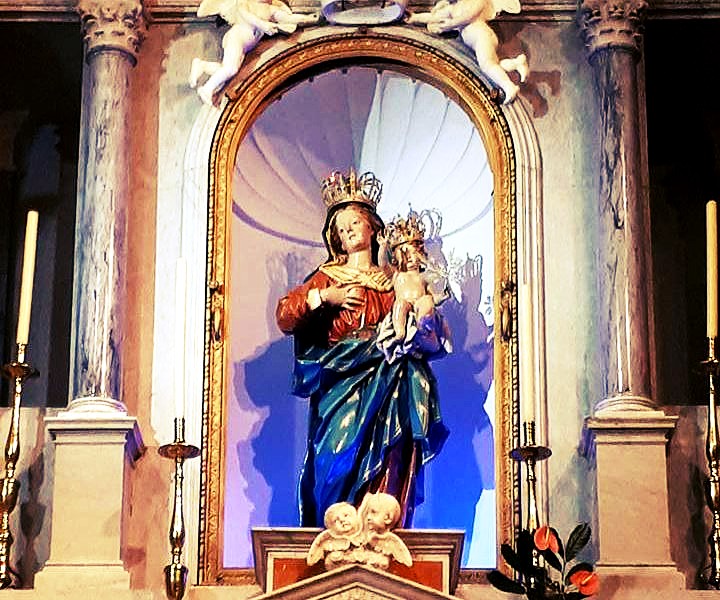
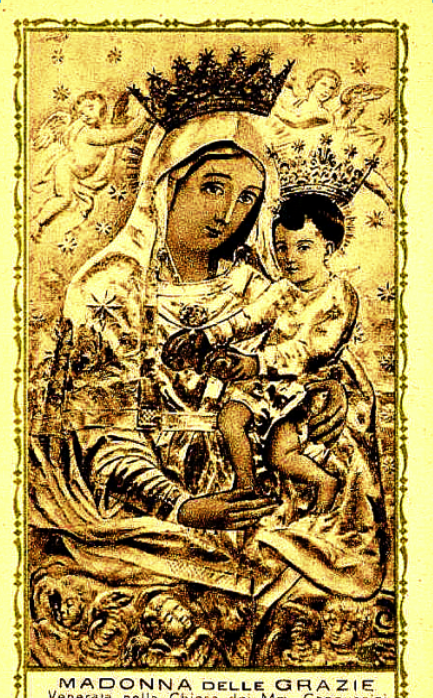
Ember Friday, Pentecost Friday, Our Lady, Help of Christians/Auxilium Christianorum, Our Lady of China and the Saints for 24 May

EMBER FRIDAY Fast and Partial Abstinence: https://anastpaul.com/2020/12/16/today-is-an-ember-day-did-you-remember/

Pentecost Friday

St Afra of Brescia
Bl Benedict of Cassino

Bl Diego Alonso
St Donatian of Nantes
St Gennadius of Astroga
St Hubert of Bretigny
St Joanna the Myrrhbearer
Blessed Juan del Prado OFM (1563-1631) Martyr, Priest, Religious of the Friars Minor
Bl John of Montfort
Blessed Juan of Huete
St Manahen
St Marciana of Galatia
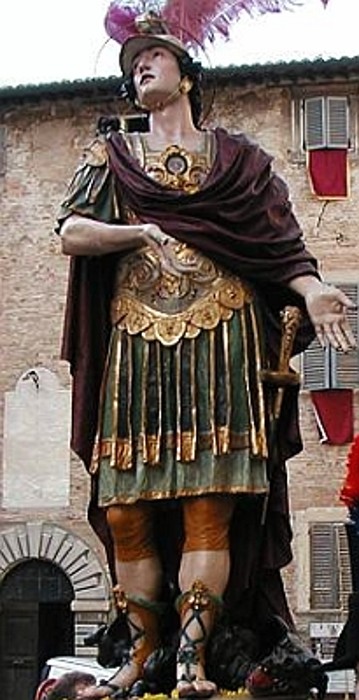
St Meletius the Soldier
Bl Nicetas of Pereslav
St Palladia
St Patrick of Bayeux

St Rogatian of Nantes
St Sérvulo of Trieste
St Simeon Stylites the Younger

Bl Thomas Vasière

St Vincent of Porto Romano

Posted in SAINT of the DAY

Saint/s of the Day – 23 May – Saint Eutychius of Valcastoria (6th Century) Abbot and Confessor and Saint Florentius of Valcastoria (6th Century) Confessor

Saint/s of the Day – 23 May – Saint Eutychius of Valcastoria (6th Century) Abbot and Confessor, Hermit and Saint Florentius of Valcastoria (6th Century) Confessor, Hermit, Miracle-worker. Also known as Eutizio and Fiorenzo. St Florentius attracts 2 additional memorils – on 1 June in Foligno and on 27 June in Norcia.

The Roman Martyrology reads: “In the territory of Norcia in Umbria, commemoration of Saint Eutizio, Abbot, who, as Pope Saint Gregory the Great recounts, first practiced a solitary life together with Saint Fiorenzo, leading many to God with their encouragement and later, governed the nearby Monastery with great holiness.

St Gregory the Great narrates their lives in the Dialogues. There is also a legend of Eutychius of late origin, in which the events told by St Gregory are attributed to him. And what is found in the fabulous Acts of another Eutychius are also sometimes attributed to today’s Saint.

After having led a solitary life together with Florentius in the Norcia Province, Eutychius was elected Abbot of a Monastery in Valcastoria, famous in the Middle Ages which he ruled for many years and which took its name from him, even though he was not its founder.

It is believed that the arrival of Eutychius to Valcastoria and the construction of the Monastery date o the early times of the Ostrogothic invasion, i.e. after 487.

When Eutychius became the Abbot, Florentius remained alone and, suffering as a result, he prayed to the Lord to send him a companion. As soon as he left the oratory he found a bear, to which he gave the task of taking four or five goats to pasture, a job which the animal carried out with care. But four of Eutychius’ Monks, envious of Florentius’ miracles, killed the bear, causing him great pain. Eutychius went to console him but Florentius, inconsolable, asked the Lord for severe punishment of the guilty. These, struck by a mysterious illness, died miserably.

Upon Eutychius’ death, Florentius probably took himself to Foligno, where he died around 540 and where he is commemorated on 1 June. In Norcia, his Feast is 27 June. The Martyrology of Farfa, from the 16th Century commemorates both our Saints today on 23 May as Confessors. Both are registered in the Roman Martyrology on 23 May.

Posted in SAINT of the DAY

Pentecost Thursday, Virgen de Gracia / Virgin of Grace, Spain (1575), St John Baptiste de Rossi and the Saints for 23 May

Pentecost Thursday

St Basileus of Braga

St Epitacius of Tuy
St Euphebius of Naples
St Eutychius of Valcastoria (6th Century) Abbot and Confessor
St Florentius of Valcastoria (6th Century)
Hermit and Confessor

St Goban Gobhnena

St Jane Antide Thouret
Bl Leontius of Rostov

St Onorato of Subiaco
St Spes of Campi
St Syagrius of Nice

Martyrs of Béziers: 20 Mercedarian Friars murdered by Huguenots for being Catholic. Martyrs. 1562 at the Mercedarian convent at Béziers, France.

Posted in SAINT of the DAY

Saint of the Day – 22 May – Saint Romanus of Subiaco (Died c560) Abbot

Saint of the Day – 22 May – Saint Romanus of Subiaco (Died c560) Abbot, Hermit and Monk. Protector and benefactor of St Benedict during the latter’s early years as a Hermit. Also known as Romano.

Life of St Benedict, Scene 4: The Monk Romanus Dresses Benedict by Il Sodoma,

The spirituality of the great Saint Benedict, Patron Saint of Europe, originated with a three-year Retreat at the so-called “Sacro Speco” of Subiaco. In this deep, almost inaccessible cave, the young Benedict dedicated himself, body and soul, to a very harsh ascetic practice.
However, not everyone knows that it was our Saint Romanus, a Monk near the Lazio village of Subiaco, who dressed the famous Saint of Norcia in the Hermit’s Habit, helped him enter the Sacro Speco and provided him with everything he needed to survive for three long years. All this, however, was done with secrecy, to prevent anyone from suspecting Benedict’s presence in the cave and possibly disturbing his asceticism.

Everyday, Romanus provided the penitent boy with some bread recovered from the canteen of his Monastery, climbing the cliff above the entrance to the cavity, he warned Benedetto of his arrival with a bell and letthe supplies, just as much as was needed, down to him down with a rope.

Legend has it that one day the bell was broken by the devil, enraged by the strong ascetic and charitable virtues which he found in Benedict and Romanus respectively. The latter, however, did not limit himself exclusively to providing the Saint of Norcia with material aid but thanks to his experience and his wisdom, he was able to reveal to him, the secrets of monastic asceticism which proved to be of fundamental importance in the drafting of the Benedictine Rule.

Unfortunately, it is not known with historical certainty whether the two Sints remained in contact even at the end of the three years of collaboration at the Holy Sepulchre of Subiaco. When Saint Benedict finally became famous as Abbot of Monte Cassino, tradition rather leans towards a transfer of Romanus to France, where he did his utmost to found a new Monastery and trained many young Monks. Here, upon his death, he was venerated for his immense spiritual merits which materialised mainly in the inspiration of Saint Benedict in the foundation of the new religious family, which formed the Christian soul of the old continent.

Posted in EMBER DAYS, MARIAN TITLES, MYSTICS, SAINT of the DAY

Ember Wed, sday – Fast & Partial Abstinence, Pentecost Wednesday, Beata Vergine di San Luca, Bologna, Italy / The Blessed Virgin of Saint Luke, Bologna, St Rita of Cascia and the Saints for 22 May

Ember Wednesday Fast & Partial Abstinence: https://anastpaul.com/2020/12/16/today-is-an-ember-day-did-you-remember/

Pentecost Wednesday

St Aigulf of Bourges
St Atto of Pistoia
St Aureliano of Pavia
St Ausonius of Angoulême
St Baoithin of Ennisboyne

St Boethian of Pierrepont
St Castus the Martyr
St Conall of Inniscoel
Bl Diego de Baja
Bl Dionisio Senmartin
St Emilius the Martyr
St Faustinus the Martyr

Bl Fulk of Castrofurli
Bl Giacomo Soler
Bl Giusto Samper
St Helen of Auxerre

St Lupo of Limoges
St Marcian of Ravenna Bishop and Confessor
St Margaret of Hulme
Bl Pedro of the Assumption
St Quiteria
St Romanus of Subiaco (Died c560) Abbot, Protector and benefactor of St Benedict during the latter’s early years as a Hermit.
St Timothy the Martyr
St Venustus the Martyr

Posted in DOCTORS of the Church, JESUIT SJ, MARIAN TITLES, SAINT of the DAY

Our Lady of Fatima 107th Anniversary of the First Apparition, Madonna del Soccorso / Our Lady of Succour of Sicily (14th Century), Our Lady of the Most Blessed Sacrament: St Peter Julian Eymard (1811-1868) and Our Lady of the Blessed Sacrament, Beatissimae Virginis et omnium Angelorum et Martyrum, Dedication of Saint Mary of the Angels and Martyrs (609) the Pantheon, St Robert Bellarmine and Memorials of the Saints – 13 May

Our Lady of Fatima 107th Anniversary of the First Apparition

Our Lady of the Holy Rosary (the name she gave herself when Lucia asked her name).
All about Our Lady of Fatima:

https://anastpaul.wordpress.com/2017/05/13/the-centenary-of-the-apparitions-of-our-lady-of-fatima-our-lady-of-the-holy-rosary-13-may-2017/

Madonna del Soccorso / Our Lady of Succour of Sicily (14th Century):
HERE:

https://anastpaul.com/2021/05/13/104th-anniversary-of-the-first-apparition-of-our-lady-of-fatima-madonna-del-soccorso-our-lady-of-succour-of-sicily-14th-century-our-lady-of-the-most-blessed-sacrament-1800s-and-memorials/

Our Lady of the Most Blessed Sacrament: St Peter Julian Eymard (1811-1868) and Our Lady of the Blessed Sacrament:
The Background:
https://anastpaul.wordpress.com/2018/05/13/feast-of-our-lady-of-the-most-blessed-sacrament-13-may/

Beatissimae Virginis et omnium Angelorum et Martyrum, Dedication of Saint Mary of the Angels and Martyrs (609) – 13 May:
https://anastpaul.com/2018/05/13/13-may-ascension-sunday-feast-of-our-lady-of-fatima-our-lady-of-help-our-lady-of-the-most-blessed-sacrament-dedication-of-saint-mary-of-the-martyrs-and-memorials-of-the-saints/

Rose Petals raining down on Pentecost Sunday in St Mary and the Martyrs (Pantheon), Rome

St Robert Bellarmine SJ (1542-1621) Doctor of the Church, Confessor, Bishop, Priest of the Society of Jesus, Bishop, Confessor, Cardinal, Theologian, Professor, Writer, Preacher, Mediator, Doctor of the Church.   Among others patronages, he is the Patron of Catechists and Catechumens.
His body is honoured with pious veneration at Rome in the Church of St Ignatius, near the tomb of St Aloysius, as he himself had desired. Blessed be God in His Holy Saints! Amen.
He was Beatified on 13 May 1923, Rome by Pope Pius XI and Canonised 29 June 1930, Rome by Pope Pius XI – he was named a Doctor of the Church by the same Pope a year later.  He is remembered as one of the most important Cardinals of the Catholic Counter Reformation.
Feast Day today. changed in 1969.
Biography:

https://anastpaul.com/2017/09/17/saint-of-the-day-17-september-st-robert-bellarmine-s-j-doctor-of-the-church/
AND:
https://anastpaul.com/2020/10/05/saint-of-the-day-5-october-blessed-raymond-of-capua-op-c-1330-1399/

St Abban of Abingdon (Died c520) Irish Hermit who served the Lord in England, Founded a Monastery.
St Agnes of Poitiers

St André-Hubert Fournet (1752-1834) “The Good Father” – Priest and Co-Founder with St Jeanne-Élisabeth Bichier des Ages of the Congregation of the Daughters of the Cross, Apostle of the poor, needy, children and the aged.
Until his old age, the Good Father kept an expression of simplicity and humility. In the sun of God’s love, the transfiguration of his being continued in deep holiness, charity, humility and zeal.
After the approval of 2 miracles, he was Beatified on 16 May 1926 by Pope Pius XI and Canonised on June 1933 by the same Pope, after a further 2 miracles.
About St André-Hubert :

https://anastpaul.com/2020/05/13/saint-of-the-day-13-may-saint-andre-hubert-fournet-1752-1834-the-good-father/

St Anno of Verona
St Argentea of Cordoba
St Euthymius the Illuminator
Bl Fortis Gabrielli
Bl Gerard of Villamagna
Bl Gemma of Goriano
St Glyceria of Trajanopolis

Blessed Imelda Lambertini (1322-1333) Child Mystic, Virgin. Patronage – First Communicants (named by Pope Saint Pius X).
Dear Little Imelda:

https://anastpaul.com/2021/05/13/saint-of-the-day-13-may-blessed-imelda-lambertini-1322-1333/

St John the Silent

Blessed Julian of Norwich (c 1342-c 1416) (aged 73–74) Anchorite, Mystic, Writer, Ascetic, Spiritual director
Biography:

https://anastpaul.com/2019/05/13/saint-of-the-day-13-may-blessed-julian-of-norwich-c-1342-c-1416/

St Lucius of Constantinople
St Mael of Bardsey
Bl Magdalen Albrizzi
St Merewenna of Rumsey
St Mucius of Byzantium
St Natalis of Milan
St Onesimus of Soissons
St Servatus of Tongres
St Valerian of Auxerre

Martyrs of Alexandria: A group of Christians Martyred in the Church of Theonas, Alexandria, Egypt by order of the Arian Emperor Valens. Their names have not come down to us. 372 in Alexandria, Egypt.

Posted in DOCTORS of the Church, JESUIT SJ, MARIAN QUOTES, SACRAMENTS, SAINT of the DAY

Quote/s of the Day – 27 April – St Peter Canisius

Quote/s of the Day – 27 April – St Peter Canisius SJ (1521-1597) Confessor, Doctor of the Church

These ceremonies which are used
in the administration of the Sacraments,
each of which we receive,
as delivered and entrusted to us
through the hands of the fathers,
must especially be retained
and observed with great devotion.

At the mention of this name
[the Blessed Virgin Mary],
the Angels rejoice
and the devils tremble.
Through this invocation,
sinners obtain
grace and pardon.

MORE:
https://anastpaul.com/2022/04/27/quote-s-of-the-day-27-april-st-peter-canisius/

St Peter Canisius (1521-1397)
Doctor of the Church

Posted in DOCTORS of the Church, DOMINICAN OP, franciscan OFM, INCORRUPTIBLES, JESUIT SJ, MARIAN TITLES, SAINT of the DAY

La Moreneta / Our Lady of Montserrat, Spain (718), St Peter Canisius SJ Confessor, Doctor and the Saints for 27 April

St Adelelmus of Le Mans
St Asicus of Elphin
St Castor of Tarsus
St Enoder
St Floribert of Liege

St Liberalis of Treviso
St Maughold

St Pollio of Cybalae
St Simeon of Jerusalem
St Stephen of Tarsus
St Tertullian of Bologna
St Theophilus of Brescia
St Winewald of Beverley

Posted in SAINT of the DAY

Saint of the Day – 26 April – St Clarence of Venice (12th Century) Bishop and Confessor,

Saint of the Day – 26 April – St Clarence of Venice (12th Century) Bishop and Confessor, a diligent and committed Apostle of the poor, the sick, the outcasts, founding Hospitals and Schools for their care. Clarence was renowned for his great wisdom, piety and humility and his exceptional administrative abilities and for his many miracles. Also known as – Clareno, Chiarenzio. Great confusion exists regarding our Saint today. He is most commonly confused with St Clarentius of Vienne who was celebrated yesterday, 25 April. The information below is not confirmed anywhere, unfortunately, nor am I able to find an image of our Saint.

St Mark’s Basilica in Venice

Although not much is known about his early life, it is believed that Clarence was born in the 12th Century in Italy and devoted his entire life to the service of God and his people.

He studied and was Ordained at a young age and quickly rose through the ranks due to his exceptional leadership qualities and commitment to preaching the Gospel. His devotion to his faith and the well-being and growth in sanctity of his flock, made him a beloved figure, both within the clergy and among the faithful.

As the Bishop of Venice, Clarence played a crucial role in the spiritual and moral development of the City. His pastoral efforts focused on promoting unity among the faithful and fostering a deep understanding of the importance of faith in their daily lives. He set an example of virtuous living and tirelessly preached the Gospel to his congregation, inspiring them to lead lives rooted in love, compassion and devotion.

Known for his exceptional administrative abilities, Clarence worked towards the improvement of the Diocese by establishing schools, hospitals and other charitable institutions. Under his guidance, the Church in Venice flourished and became a centre of learning and holiness.

Throughout his life, Clarence emphasised the importance of almsgiving and the care of the needy and less fortunate. He dedicated himself to serving the poor, the sick and the oppressed, tirelessly offering them support, hope and solace. His efforts to alleviate the suffering of others made him a true champion of the suffering and gained him great reverence among the people.

Clarence’s spiritual influence extended well beyond the confines of Venice. People from far and wide sought his counsel and his intercession. Known for his miracles and the extraordinary power of his prayers, he became widely recognised as a man of great holiness and virtue.

Saint Clarence of Venice on 26 April, leaving behind a legacy of devotion, humility and great love for his neighbour. His selfless and unwavering dedication to God and his people, earned him a special place in the hearts of the faithful. While Saint Clarence of Venice does not have any specific patronage attributed to him, he continues to be remembered and venerated by the faithful as a model of Christian virtue and a source of inspiration for all those who aspire to a life of holiness. His feast day is celebrated today 26 April, serving as a reminder of his legacy and the enduring impact he made on the Church and the world.

Mosaics on the Facade of St Mark’s Basilica
Posted in MARIAN TITLES, SAINT of the DAY

Our Lady of Genazzano (1467) / Our Lady of Good Counsel, Saints Cletus and Marcellinus, Popes and Martyrs, Remembering Bishop Daniel Dolan (1951-2022) and the Saints for 26 April

Our Lady of Genazzano (1467) / Our Lady of Good Counsel – 26 April:
HERE:
https://anastpaul.com/2021/04/26/our-lady-of-genazzano-1467-our-lady-of-good-counsel-and-memorials-of-the-saints-26-april/

Bl Alda of Siena
St Antoninus of Rome
St Basileus of Amasea (Died c319) Martyr Bishop
St Clarence of Venice (12th Century) Bishop and Confessor
St Claudius of Rome
St Cyrinus of Rome
St Exuerantia of Troyes
Bl Gregory of Besians
St Lucidius of Verona Bishop

St Pelligrino of Foggia

St Primitive of Gabi

St Trudpert of Munstertal
St William of Foggia Hermit

Posted in SAINT of the DAY

Saint of the Day – 25 April – Saint Franca Visalta O.Cist. (1170-1218) Virgin Abbess

Saint of the Day – 25 April – Saint Franca Visalta O.Cist. (1170-1218) Virgin Abbess in Piacenza and Pittolo, Foundress of a Cistercian Convent. Born in 1170 in Piacenza, Italy and died on 25 April 1218 in Pittoli, Italy of natural causes. Also known as – Franca of Piacenza, Francesca da Vitalta.

Franca was born into the Visalta family in Piacenza in Italy in the 12th Century. Even before her 7th year, she began to develop her beautiful virtues and soon expressed to her parents her desire to devote herself to God wholeheartedly in the Monastery. She was, therefore, taken in by the Benedictine nuns of St Syri in Piacenza, where she received her education.

At the age of 14 she entered the same Convent as a Novice. There she became a lamp of all virtues for her fellow sisters and in the wounds of her divine Saviour she found her most blissful consolations.  In 1206 she mediated between her hometown and Pope Innocent III and by her efforts, peace was restored. After the death of the Abbess, Franca was unanimously elected by her fellow sisters, who were around fifty in number, to be their Abbess. In this capacity she sought to promote godliness in every possible way, especially the spirit of mortification which is said to be the first adornment of a monastic community. In order to achieve this goal, however, she had to endure great difficulties and was finally removed from her office..

Nevertheless, one of the Nuns, Sister Carentia, agreed with her discipline. When Sr Carentia left St Syri Convent and entered the Cistercian Novitiate at Rapallo. Around the year 1216, Franca convinced her parents to build a Cistercian house at Montelana. There, she became the Abbess of the community at of Santa Maria di Montelana and Sr Carentia joined her there and was appointed as the Prioress. The community later moved to Pittoli.

Sanctuary of St Franca built in the 19th Century on the site of the former Monastery of Santa Maria di Montelana.
Montelana used to be the name of the mountain on which the Monastery stood.

Franca consistently maintained the severe penances she imposed on herself, even in the face of poor health. She spent most nights in the chapel, praying for hours.

She died in this Abbey on St Mark’s Day 1218. Her Relics were later translated to Piacenza where they are today, in the Church of San Raimondo.

Relics of St Franca at the Church of St Raimondo

Franca was Beatified on 21 March 1273 by Pope Gregory X and Canonised by Pope Paul V in the early part 17th Century.

Posted in ROGATION DAYS, SAINT of the DAY, The APOSTLES & EVANGELISTS

St Mark the Evangelist, Rogation Day – The Greater Litanies and the Saints for 25 April

Rogation Day – The Greater Litanies
(Sometimes called “St Mark’s Procession”):


The procession for the Greater Litanies is held on St Mark’s day, 25 April that, for the Rogations, or Lesser Litanies, may be recited on the Monday, Tuesday and Wednesday before Ascension day.
About Rogation Days HERE:

https://anastpaul.com/2022/05/23/virgen-de-gracia-virgin-of-grace-aes-puente-viesgo-pas-miera-cantabria-spain-1575-and-memorials-of-the-saints-23-may/

St Agathopodes of Antioch

St Callista of Syracuse
St Clarentius of Vienne
St Erminus of Lobbes (Died 737) Bishop and Confessor
St Evodius of Syracuse
Saint Franca Visalta O.Cist. (1170-1218) Virgin Abbess
St Heribaldus of Auxerre
St Hermogenes of Syracuse
St Kebius
St Macaille
St Macedonius
St Mario Borzaga
St Pasicrate of Mesia
St Phaebadius of Agen
St Philo of Antioch
St Robert of Syracuse
Bl Robert Anderton
Stefano of Antioch
St Valenzio of Mesia
Bl William Marsden

Posted in SAINT of the DAY

Saint of the Day – 23 April – St Ives of Huntingdonshire (6th-7th Century) Bishop

Saint of the Day – 23 April – St Ives of Huntingdonshire (6th-7th Century) Bishop, Missionary. Born in the 6th Century in Persia and died in Huntingdonshire (now Cambridgeshire) England of natural causes. Also known as – Ivo of Ramsey, Ive… Ives… Ivia… Yves. Additional Memorial – 10 June in St Ives.

Ives was born in the 6th Century, in Persia, of a noble family and became a Missionary and then the Bishop of Huntingdon in England.

He dedicated himself to itinerant preaching, on the model of St Paul the Apostle, first in Asia Minor and in Illyria (historical region of the Balkan Peninsula which became a Roman Province in 228).

On his travels, he passed through Rome and from there he arrived in France where he had great success, honoured by the King, the nobles and the people; perhaps from him the name Ives (Yves) began to establish itself more in France.

But Ives, wanting to refuse all the honours paid to him for his evident sanctity, went with three companions to England, where he worked fruitfully for several years in Mercia (one of the seven Kingdoms, founded by the Anglo-Saxons in the second half of 5th Century) finally establishing his residence in the City of Sleve, now St Ives, three miles from Huntingdon. It seems he was appointed as the Bishop although it is uncertain when. After several years of his pastoral apostolate among those populations, he died at the beginning of the 7th Century.

His Relics were miraculously discovered in 1001 and transferred to the Benedictine Abbey of Ramsey, the new name of Huntingdon his ‘Life’ from which subsequent biographies arose, was written by the Monk Goscelin of Westminster in 1091 on behalf of Abbot Erebert.
His celebration is on 24 April and 10 June.

St Ives Cathedral dedicated to All Saints
Posted in MARIAN TITLES, SAINT of the DAY

The Octave Day of the Patronage of St Joseph, Nostra Signora di Bonaria / Our Lady of Bonaria, Island of Sardinia (1370), , Nuestra Señora de Luján / Our Lady of Luján in Buenos Aires, St Fidelis of Sigmaringen and all the Saints for 24 April

The Octave Day of the Patronage of St Joseph

St Alexander of Lyon
St Anthimos of Nicomedia
St Authairius of La Ferté
St Bova of Rheims
St Deodatus of Blois
St Diarmaid of Armagh
St Doda of Rheims
St Dyfnan of Anglesey

St Eusebius of Lydda
St Gregory of Elvira Bishop and Confessor
St Honorius of Brescia Bishop
St Ives of Huntingdonshire (6th-7th Century) Bishop
St Leontius of Lydda
St Longinus of Lydda

Posted in franciscan OFM, SAINT of the DAY

Saint of the Day – 23 April – Blessed Giles of Assisi OFM (c1190-1262) The Third Follower of St Francis

Saint of the Day – 23 April – Blessed Giles of Assisi OFM (c1190-1262) Friar and Missionary of the Order of Friars Minor, Friend and the 3rd follower of St Francis. Giles held a leading place among the original Franciscans and St Francis called him “The Knight of our Round Table.” Giles was unlearned but a man of great wisdom, so much so, that all social classes came to learn aat his feet., he was a Mystic and man of deep contemplation and prayer. Born in c1190 in Assisi, Umbria, Papal States (in modern Italy) and died on 23 April 1262 at Perugia, Italy of natural causes. Also known as – Aegidius, Egidius.

Of Giles’ origins and early life nothing certain is known, other than that he was a simple farmer. In April, 1209, moved by the example of two leading fellow-Assisians and friends, who had already become the first followers of St Francis, he begged permission to join the little band and on the Feast of St George was invested in a poor religious habit which Francis had begged for him. Almost immediately afterwards he set out with Francis to preach in the Marches of Ancona. He accompanied Francis to Rome when the first Rule was orally approved by Pope Innocent III and appears to have then received the monastic tonsure.

Pope Innocent III approves the first Rule

About 1212 Giles made a pilgrimage to the Tomb of St James at Compostella, in Spain. Shortly after his return to Assisi, he started for Jerusalem, to venerate the Holy Places, visiting on his way home, the Italian Shrines of St Michael, at Monte Gargano and St Nicholas, at Bari. He is next found in Rome and still later at Tunis.

In these journeys, Giles was always at pains to procure, by manual labour, what food and shelter he needed. At Ancona he made reed baskets; at Brindisi he carried water and helped to bury the dead; at Rome he cut wood, trod the wine-press and gathered nuts; while the guest of a Cardinal at Rieti, he insisted on sweeping the house and cleaning the knives. He said: “Happiness is to do bodily labour for the love of the Most High and not to take any lesser wages than Paradise, for the good work one does.

During the course of these travels, Giles, a keen observer of people and events, acquired much valuable knowledge and experience which he turned to good account. He took every opportunity to preach the Gospel. His sermons were brief and heartfelt, replete with homely wisdom. He never eluded truth and spoke to all, with the same love.

After some years of missionary activity, included a period amongst the Muslims in Tunis, Giles was assigned by Francis to the Hermitage of Monteripido, outside Perugia, where he began a life of contemplation and ecstasy which continued until his death.

Giles was a stranger to theological and classical learning but engaged in constant contemplation of heavenly things. Men of all social classes were drawn to Perugia to hear Giles teach. The answers and advice these visitors received were remembered, talked over and committed to writing and thus was formed a collection of the familiar ‘Dicta’ or ‘Sayings’ of Giles. St Bonaventure held these ‘Sayings’ in high esteem and they are cited in the works of many subsequent ascetical writers. They are short, pithy, popular counsels on Christian perfection, applicable to all classes. Known for their mysticism, humanity and originality, they faithfully reflect the early Franciscan spirit and teaching.

It was in 1262, on the 52nd Anniversary of his reception into the Order of Friars Minor that this Blessed Giles died, already revered as a Saint. His immemorial cultus was confirmed by Pope Pius VI in 1777 and his Feast Day is celebrated today, the 23rd of April.

Blessed Giles before Pope Gregory IX by Bartolomé Estéban Murillo
Posted in franciscan OFM, SAINT of the DAY

St George and the Saints for 23 April

St Achilleus of Vienne
Bl Adalbert III of Salzburg
St Felix of Vienne
St Fortunatus of Vienna
St George of San Giorio
St Gerard of Orchimont

Bl essed Giles of Assisi OFM (c1190-1262) Friar and Missionary of the Order of Friars Minor, Friend and the 3rd follower of St Francis.

Bl Giles of Saumur

St Ibar of Meath
St Marolus of Milan
St Pusinna of Champagne

Posted in SAINT of the DAY

Saint of the Day – 22 April – Blessed Wolfhelm of Brauweiler (c1020-1091) Abbot o

Saint of the Day – 22 April – Blessed Wolfhelm of Brauweiler (c1020-1091) Abbot of Brauweiler Abbey, near Cologne, Theologian, Writer, Defender of the Doctrine of the Church and of the property of the Church, Miracle-worker. Born in c1020 in the Lower Rhineland (in modern Germany and died on 22 April 1091 at his Monastery of natural causes. Also known as – Wolfelmi Brunwilarensis, Wulfhelm… Wolphelmus… Name means: “the one who protects against the wolf” (Old High German). His sister Bertha, was a Nun of Vilich Abbey, who wrote a Vita of the Abbess Adelheid.

Wolfhelm was the son of a noble family from the Lower Rhine, He received his education at the Cathedral school in Cologne under Archbishop St Heribert(c970-1021) and then worked there as a teacher.

In Trier in 1036, Wolfhelm entered the Benedictine order in what was then the reform Monastery of St Maximinus. He later relocated to the Monastery in Gladbach – today’s Mönchengladbach – which was subordinate to his uncle, Abbot Heinrich of St Pantaleon in Cologne.

In 1065 he became the 3rd Abbot in Brauweiler. Wolfhelm wrote theological writings, for example in the Sacrament dispute against Berengar of Tours, who questioned the Doctrine of transubstantiation , and he campaigned emphatically for Church buildings and Monastery properties, especially the large Klotten estate on the Moselle River which was disputed between his own Monastery and the Archdiocese of Cologne. By his extreme difficult efforts, he managed to secure this inheritance from Queen Richeza for his Monastery of Brauweiler.

Even during his lifetime, numerous miracles were associated with his person. Around 1115, the Monk Konrad von Brauweiler wrote a life story with the aim of achieving Wolfhelm’s Canonisation.

Posted in SAINT of the DAY

Saint of the Day – 21 April – Saint Wolbodó of Liège (c950-1021) Bishop

Saint of the Day – 21 April – Saint Wolbodó of Liège (c950-1021) Bishop, Chaplain to the Emperor, supporter of Monasteries and the Founder of the Monastery of St Lawrence, which became his heir and where he is buried. Born in c950 in Flanders, Belgium and died on 21 April 1021 in Liège, Belgium of natural causes. Patronage – of Students. Also known as – Fulmodo, Vilpodo, Volbodo, Wolbodon.

His biography, although sparse in detail, tells us of a man of noble Flemish lineage, whose education at the Cathedral school of Utrecht, where he became a Canon, a Professor and finally led him to assume the role of Dean of the Cathedral of Saint Martin and, later, of Chaplain to the Court of Henry II.

Appointed as the Bishop of Liège in 1018 and in November of that year he was Consecrated Bishop by St Heribert of Cologne, assisted by Bishop Gerard of Cambrai, in the presence of Emperor Henry II. He led the Diocese with wisdom and devotion until 1021, the year of his death. He was responsible for the foundation of the Abbey of St Lawrence in Liège, testimony to his religious fervour and his commitment to the spread of the cult of the Saints.

St Lawrence Abbey Church

He named Olbert of Gamblou, as head of the Abbey of St James in Liège and in 1020 deposed Ingobrand as the Abbot of Lobbes Abbey, replacing him with Richard of Saint-Vanne. In 1020 he also installed St Poppo, the Prior of the Abbey of Saint-Vaast in Cambrai, as the Abbot of Stavelot Abbey.

In the official recorded listing of the Bishops, Wolbodó appears after Baldéric de Looz and before Durand.

Wolbodó bequeathed his moveables, 300 Marks of silver and his lands in Flanders, to the Abbey of St Lawrence, Liège and was buried in the Abbey’s Crypt which, at the time, was still under construction. In 1656 his tomb was opened and his remains reburied.

Saint Wolbodó is considered the Patron Saint of Students. In Delft, Holland, the Student Society, Menschen Vereeniging Wolbodó, is named after him.

Liège Cathedral
Posted in DOCTORS of the Church, MARIAN TITLES, SAINT of the DAY

The Third Sunday of Easter, Institution of the Confraternity of the Immaculate conception, Toledo, Spain (1484), St Anselm and the Saints for 21 April

The Third Sunday of Easter

St Abdechalas
St Anastasius I of Antioch Bishop
St Anastasius Sinaita of Sinai (Died c700) Abbot
St Apollo of Nicomedia
St Arator of Alexandria

St Crotates of Nicomedia
St Cyprian of Brescia
St Felix of Alexandria
St Fortunatus of Alexandria
St Frodulphus
St Isacius of Nicomedia
St Maelrubba of Applecross

St Silvius of Alexandria
St Simeon of Ctesiphon
St Vitalis of Alexandria
Bl Vitaliy Bayrak
St Wolbodó of Liège (c950-1021) Bishop

Posted in SAINT of the DAY

Saint of the Day – 20 April – Saint Peter Caedwalla of Wessex (c658-689) King of Wessex.

Saint of the Day – 20 April – Saint Peter Caedwalla of Wessex (c658-689) Layman, King of Wessex. Venerable St Bede wrote of him in his Ecclesiastical History of the English People. Born in c658 in Wessex, England and died on 20 April 689 at Rome, Italy. Reign as King of Wessex, 685–688, when he abdicated. Patronages – of converts, of reformed murderers. Also known as – Caedwalla of Wales, Cadwallader, Cadwallador, Cadwalla… Cadwallon… Ceadwalla… Cedualla… Peter Caedwalla.

From St Bede’s Ecclesiastical History of the English People, we learn that Caedwalla was a nobleman of the West Saxons, exiled from his Country as a youth, who returned with an army and killed the reigning Monarch. After much plunder and bloodshed, he became the new King.

Caedwalla then conquered the pagan Isle of Wight and did his best to exterminate all the natives and replace them with settlers from his own region, although Bede states that the natives remained a majority on the island.Although not yet Baptised, Caedwalla is said to have vowed that, should he conquer the Island, he would give a quarter of all the land and his spoils to the God of the Christians. This promise was honoured when he gave the promised bounty to Bishop Wilfrid. Wilfrid appointed a Priest to preach on the Island and to Baptise all who wished to convert to the Christian Faith.

When Cædwalla first attacked the South Saxons, Wilfrid was at the court of King Æthelwealh and on Æthelwealh’s death, Wilfrid attached himself to Cædwalla. The Life of Wilfrid records that Cædwalla sought Wilfrid out as a spiritual father.

This stained glass window (above) can be seen in the south aisle of St Mary’s Church in Ryde. It was designed and installed by the Victorian Catholic artist, Nathaniel Westlake in 1882. It depicts St. Wilfrid, having landed on the Isle of Wight in 686, with Benedictine Monks, seeking permission from Caedwalla to preach the Gospel. Being granted permission and given land on the Island, St Wilfrid and his followers, built the Island’s first (wooden) Church at Brading, on the site of the present Church of St Mary the Virgin. Hence, it could be said that our St Peter Caedwalla was the first Isle of Wight Saint. (St Wilfred: https://anastpaul.com/2018/10/12/saint-of-the-day-12-october-st-wilfrid-c-633-709/).

Two young Princes, brothers of the former King, when Caedwalla invaded the Island, escaped across the Solent. They were eventually betrayed, however and ordered to be put to death. Caedwalla, at this time, was living in seclusion while he recovered from wounds received while fighting on the Isle of Wight. The Abbot of Redbridge petitioned him to allow the young Princes to receive instruction in the Christian Faith and to receive Baptism before their execution. Caedwalla consented to this request and they were duly instructed, Baptised and then executed.

In 688 Caedwalla, after governing the people of Wessex “most ably” for two years, abdicated his throne and went on pilgrimage to Rome, where he hoped to receive Baptism. He arrived in Rome during the Pontificate of Pope Sergius and was Baptised by him (and given the name of Peter on account of his devotion to the Apostle, which had inspired his pilgrimage).

On Holy Saturday 689, Peter Caedwalla fell ill while “still wearing his white robes” that is, during Easter Week when the newly Baptised were wearing the white garment received by them as a sign of their purification from sin. He died on 20 April that year and was buried in St Peter’s. The Pope directed that an Epitaph be inscribed on his tomb to preserve his memory and devotion. It was composed by the Archbishop of Milan and is given in full by St Bede. The stone was discovered in the 16th Century when the Basilica of St Peter was being rebuilt. A s 16th Century mural in Chichester Cathedral depicts St Peter Caedwalla giving land to St Wilfrid, see below.

A 16th Century Mural by Lambert Barnard in Chichester Cathedral, depicting Saint Peter Cædwalla granting land to Saint Wilfrid.
Posted in INCORRUPTIBLES, MARIAN TITLES, SAINT of the DAY

Within the Octave of the Patronage of St Joseph, Our Lady of Schier, Bavaria and the Saints celebrated today – 20 April

Saturday in the Third Week of Easter

Within the Octave of the Patronage of St Joseph

St Peter Caedwalla of Wessex (c658-689) Layman, King of Wessex. Venerable St Bede wrote of him in his History of the English Church.
Bl Catwallon
St Domninus of Digne
Bl Gerald of Salles
Bl Harduin

St Hugh of Anzy-le-Duc
Bl John of Grace-Dieu

St Marcian of Auxerre
St Margaret of Amelia
Bl Maurice MacKenraghty
St Michel Coquelet
Bl Oda of Rivreulle
St Sara of Antioch
St Secundinus of Córdoba
St Servilian

St Sulpicius
St Theodore Trichinas
St Theotimus of Tomi
St Vincent of Digne
St Wiho of Osnabrück

Posted in SAINT of the DAY

Saint of the Day – 19 April – Saint Gerold of Saxony (c900-c978) Hermit

Saint of the Day – 19 April – Saint Gerold of Saxony (c900-c978) Hermit. … Born in in Rhaetia, in the lower part of the Alps (part of modern Austria/Switzerland) and died on 16 April 978 of natural causes in Frisun, today the Town of St Gerold. Also known as – Gerold Graziato, Gerold of Einsiedeln, Gerold of Großwalsertal, Gerold of Grosswalsertal, Gerold of Vorarlberg, Adam… Geroldus…

On 1 January 949, Otto I returned to a certain Adam, involved in a conspiracy against the Sovereign and deprived him of his assets by judicial sentence, his possession which was located in present-day Vorarlberg. Otto calls Adam “vir Dei” in his act of 949 which allows us to deduce that this Adam, had consecrated himself to the service of God.

However, he is not designated as a Monk and, in Einsiedeln, tradition has never considered him such. The Einsiedeln Calendar does indeed name an Adam on 16 April but without defining him as a Monk. The tradition traced by the dean Albrecht von Bonstetten in 1494, narrates that the proscribed Adam took refuge in the solitude of the Wals Valley, where – in order not to be recognised – he lived under the name of Gerold Graziato, remained in solitude.

He donated his possessions to the Monastery of Einsiedeln and died around the year 978. The day of his death is placed on different dates.
The obituary notices of Einsiedeln from the 10th Century, however, have an Adam on 16 April and the book of the anniversaries of Saint Gerold, dated to the 15th Century, indicates 19 April as the day on which his Feast is still celebrated today.

The place where Adam-Gerold lived, first called Frisun, appears in 1340 for the first time under the name of St Gerold. In Einsiedeln, the festival is celebrated on 19 April only after the exhumation of his bones which took place in 1663 and his Tomb is today preserved in the Monastery. When, in 1378, the suffragan Bishop of Chur consecrated the Altar of Saint Catherine to Saint Gerold, he granted an Indulgence for 4 June on the occasion of the commemoration of the blessed Gerolde – this proves that he was already venerated as a Saint then.

According to the tradition which makes Adam a Duke of Saxony (presumably because there is confusion with the old noble family of Sax, originally from Vorarlberg), he had two sons, Cuno (or also Chamo) and Ulrich (also called Henry), who by order of their father, became Monks of Einsiedeln. Cuno must have been dean and Ulrich custodian. After their father’s death, they both went to Frisun, where they died. Ulrich would have been buried in the provost’s Church, next to his father and Cuno in the Chapel of Saint Anthony ,next to the Church. However, there is no certain information about the two. In the Monastery, they were both venerated later (17th Century) as Blesseds, the Feast of Blessed Cuno on 8 March and that of Blessed Ulrich on 29 April.

Saint Gerold is depicted as a pilgrim with a hat and staff, sometimes even with a donkey because the Saint vowed to settle where the donkey carrying all his possessions would kneel. Sometimes he is represented with a bear, who helped him in the construction of his cell. A cycle of paintings created around 1683, depicting the life of the Saint, is found in the Church of Frisun, while the painting of the main Altar (by Rodolfo Blaettler, 1877) shows him with his two sons.

Statues in the provost’s house show the two sons as Monks and a 17th Century fresco in the Chapel of Saint Anthony represents the Blessed Cuno. Below is the Priory of St Gerold where these Statues reside although I can find no images of them.

Posted in franciscan OFM, MARIAN TITLES, SAINT of the DAY

Within the Octave of the Patronage of St Joseph, Notre-Dame de Fourvière Basilica / Our Lady of Lyons, France (1643) and the Saints for 19 April

Friday in the Third Week of Easter

Within the Octave of the Patronage of St Joseph

St Apollonius the Priest
St Aristonicus of Melitene

St Crescentius of Florence

Prayer to St Expeditus in Urgent Need

Our dear Martyr and protector, Saint Expeditus,
You who know what is necessary
and what is urgently needed.
I beg you to intercede
before the Blessed Trinity
that by your intercession,
my request will be granted.
……………………
(Clearly express your needs
and ask him to find a way to help you.)
May I receive your blessings and favours.
Through our Lord Jesus Christ,
in the unity of the Holy Ghost,
One God with the Almighty Father.
Amen.

If Saint Expeditus grants your request, place an advertisement in the local Catholic newspaper and/or your Parish Bulletin or Notice Board, thanking Saint Expeditus, so that his name and fame will grow

St Gaius of Melitene
St Galata of Melitene
St George of Antioch
St Gerold of Saxony (c900-c978) Hermit

St Martha of Persia
St Rufus of Melitene
St Vincent of Collioure

Posted in SAINT of the DAY

Saint of the Day – 18 April – Saint Galdinus della Sala of Milan (c1096-1176) Cardinal ArchBishop

Saint of the Day – 18 April – Saint Galdinus della Sala of Milan (c1096-1176) Cardinal ArchBishop of Milan from 1166 until his death in 1176., Born in c1096 at Milan, Italy and died on 18 April 1176 at Milan, Italy of natural causes. Patronages – of the Archdiocese of Milan and of Lombardy. Galdinus was Canonised by Pope Alexander III. Also known as – Galdini, Galdimus, Galdin, Galdino.

The Roman Martyrology reads today: “At Milan, St Galdini, Cardinal and Bishop of the City, who, at the conclusion of a discourse against heretics, gave up his soul to God.

Galdinus was the son of the noble della Sala family of Milan and from his childhood, he was educated for the Ecclesiastical life. He received Sacred Orders after occupying various important positions and became the Chancellor of the Church in Milan.

In 1165, Pope Alexander III honoured him with the Title of Cardinal in the Consistory of 15 December as the Cardinal Priest of the Titular Church of Santa Sabina and, a year later, made him the Archbishop of Milan.

One of his first aims was to destroy the schism created by partisans of the antipope, “pope” Victor IV favoured by Emperor Frederick Barbarossa and bring them to recognise the legitimate Pontiff Alexander III. In this mission, he skillfully employed the diplomatic gifts he had learned.

Galdinus was very humble, even after reaching this elevated position. He was known for his sweetness and goodness, welcoming all as equals, except in the case of defending his position, when he was an example of fortitude and vigour.

At that time, the Cathars from Cologne were spreading their errors throughout Lombardy and the area of Milan. Galdinus zealously strove to uproot those heresies. His constant preaching and efforts weakened him and his physical strength waned.

In 1176, the Sunday after conducting the Easter ceremonies, he went to the Altar of St Tecla in Milan Cathedral to celebrate Mass but found himself too weak to do so. Nonetheless, at the sermon, he went to the pulpit and delivered a long and vehement discourse refuting the heresies and infamies of the Cathars with greater vigour and virulence than ever. As he finished, he fainted and lost consciousness. He died as the Mass ended, whose Gospel had been that of the Good Shepherd.

He is buried in Milan Cathedral.

Posted in franciscan OFM, INCORRUPTIBLES, MARIAN TITLES

Within the Octave of the Patronage of St Joseph, Basilica della Santa Casa / The Basilica of Our Lady of Loreto erected (1586)

Thursday in the Third Week of Easter

Within the Octave of the Patronage of St Joseph

St Agia of Hainault
St Anthia of Illyria
St Antusa of Constantinople
Saint Apollonius the Apologist

St Athanasia of Aegina

St Bitheus
St Calocerus of Brescia
St Cogitosus
St Corebus
St Eleuterius of Illyria
St Elpidius of Melitene
St Eusebius of Fano
St Galdinus della Sala of Milan (c1096-1176) Cardinal Bishop
St Gebuinus of Lyons
St Genocus
St Hermogenes of Melitene

St Laserian of Leighlin
St Perfecto of Córdoba
St Pusicio
St Ursmar of Lobbes
St Wigbert of Augsburg

Posted in MYSTICS, SAINT of the DAY

Saint of the Day – 17 April – Blessed Mariana of Jesus OdeM(c1565-1624) “The Lily of Madrid”

Saint of the Day – 17 April – Blessed Mariana of Jesus OdeM(c1565-1624) “The Lily of Madrid” Tertiary Sister of the Mercadarian Order (the Servants of Mary) Mystic and Ecstatic, graced with Visions of Our Lord and His Mother and granted the ability, by her intercession, to be responsible for many miracles, Spiritual Director and Apostle of the poor and the sick. In addition, Mariana was known to bilocate and levitate during her ecstasies. Born on 17 January 1565 at Madrid, Spain as María Ana Navarro de Guevara y Romero and died on 17 April 1624 of natural causes at Madrid, aged 59. Patronages – of Madrid, Mercedarian Tertiaries Mercedarian Lay Fraternities and Apostolates. Also known as – “The Lily of Madrid,” “The Saint of Madrid,Mariana Navarra de Guevara, Mary Ann of Jesus Navarro, Maria Ana de Jesus Navarro de Guevara. Her body is Incorrupt.

Mariana was born in Madrid on 17 January 1565 into a wealthy family. Her father was an affluent merchant whose business supplied leather goods to the Spanish Court. He, himself being in the service of King Philip II.

She was Baptised on the 21st of the same month of her birth in the Church of Santiago (St James). Mariana was attracted very early to religious life. At the age of 22, she already had the firm determination to enter a Convent, despite the strong opposition of her father (who, widowed early, had remarried) and her stepmother, who had arranged her marriage. However, her parents’ attempts to separate her from her vocation were of little use. Legend says that she went as far as to disfigure her face and cut her hair in order to see herself rejected by the young man chosen for her..

In 1598 she retired as a penitent to the hermitage of Santa Bárbara in the Capital of the Kingdom. There she was assisted by Brother Juan Bautista Sacramento, a Mercedarian Religious and reformer of the Order, who was her Spiritual director until her death and by other pious people. She made her home in a small house, next to the Convent of the Discalced Mercedarians where she spent several years dedicated to prayer and penance, as well as serving the poor and needy of the City. In 1613 she was received into the Order of Mercy, given the Tertiary Habit by order of Brother Felipe Guimerán, Master General of the Order, who the following year, on 20 May 1614, received her profession.

The fame of her virtues and the supernatural appearances and miracles which accompanied her, spread quickly throughout Madrid. Her Superiors ordered her to write about these experiences. In these writings, Mariana narrates, among other things, the visions she had of Jesus Christ and the Virgin Mother and her mystical ecstasies.

The Queen of Spain , Isabel de Borbón, sent for Mariana to attend at the Palace whereafter their acquaintance grew so much that Mariana was considered one of the Queen’s closest friends. At that time, Mariana was already called “The Saint of Madrid.”

Mariana’s death occurred on 17 April 1624 in the Mercedarian Convent of Santa Bárbara in Madrid, as a result of a lung condition. He was 59 years old.

Her body is preserved Incorrupt in the Church of the Mercedarian Nuns of Don Juan Alarcón in Madrid as the Convent of Santa Bárbara was destroyed during later unrest. The Tomb where Mariana rests, was given by Queen Elizabeth II.

The extraordinary thing about her life of great solitude is precisely her ability to welcome, listen to and attend, to the spiritual and material needs of so many people who came to request assistance, or to ask for spiritual succour.

She was Beatified by Pope Pius VI on 18 January 1783.

If already during her life Mariana had achieved great renown for her piety and the prodigies of all kinds which were attributed to her, after her death, it only increased. It includes among them the fall of rain in Madrid, in times of severe drought, such as the one which devastated the two Castiles in 1613.

Mariana’s body was displayed to the public for two days in the midst of a large gathering. The artist Vicente Carducho made several death masks of the deceased. The same year of her death, the Canonical process of her Beatification began, encouraged by the people, the nobility and King Philip IV himself , a great devotee of hers. Barely a month after her death, the information process on the life and miracles of Mariana de Jesús began. 152 witnesses testified in it. On 8 August 1624, the Board of Theologians and Canonists of Madrid proposed that she could be given a private cult.

On 31 August 1627, her grave was opened and to the general astonishment, it was found that the body was intact, with fresh flesh and flexible limbs and exhaling a pleasant fragrance. Only her face was slightly disfigured due to the manipulations necessary to obtain the death mask. This fact has been verified each of the successive times when the mortal remains were inspected — in 1731, 1924 and 1965.

Posted in EASTER, INCORRUPTIBLES, MARIAN TITLES, SAINT of the DAY, St JOSEPH

The Solemnity of the Patronage of St Joseph, Nossa Senhora da Arrábida / Our Lady of Arrábida, Portugal (16th Century), St Pope Anicetus Martyr and the Saints for 17 April

Wednesday in the Third Week of Easter

The Solemnity of the Patronage of St Joseph
Wednesday preceding the Third Sunday after Easter:
Few Catholics are likely familiar with the Eastertide Solemnity of St Joseph.
According to Father Francis Xavier Lasance (1860-1946) it was instituted during the hostile occupation of Rome by the Troops of the Italian King, Victor Emmanuel II. The Pope proclaimed St Joseph the Patron of the oppressed Household of the Faith, entrusting to St Joseph, the defence of Holy Mother Church.

In the beginning, this Feast Day was observed on the Third Sunday after Easter but when Pope St Pius X reformed the Liturgical Calendar to restore the Sunday Offices to prominence over those of the Saints, the second Feast of St Joseph was moved to the Wednesday preceding the Third Sunday after Easter.
In 1911, the Feast was raised to a Double of the First Class and it was assigned an Octave after it was moved to the Wednesday before the Third Sunday after Easter.
It is a Common Octave, so the Octave may or may not be commemorated on the intra Octave days depending on the rank of the Feasts which occur during the Octave.
While this Feast day is not in the 1962 Missal, it is still kept by Priests who celebrate Holy Mass according to the pre-1955 reforms.

St Agia of Hainault
St Anthia of Illyria
St Athanasia of Aegina
St Bitheus
St Calocerus of Brescia
St Cogitosus
St Corebus

St Eleuterius of Illyria
St Elpidius of Melitene
St Eusebius of Fano
St Galdinus of Milan
St Gebuinus of Lyons
St Genocus
St Hermogenes of Melitene
St Innocent of Tortona Bishop and Confessor
Bl Idesbald of Dunes
Blessed James of Cerqueto OSA (1285-1366)

St Pantagathus of Vienne Bishop
St Perfecto of Córdoba
St Pusicio

St Ursmar of Lobbes
St Wigbert of Augsburg

Posted in SAINT of the DAY

Saint of the Day – 16 April – Saint Turibius of Astorga (c402-c460) Bishop

Saint of the Day – 16 April – Saint Turibius of Astorga (c402-c460) Bishop, Hermit, Monk, Defender of the Faith against heresy, in particular, the heresy of Priscilian., Miracle-worker (the image below is known as The Miracle of St Turibius of Astorga but unfortunately I can find no references to this ‘Miracle.’Born in Astorga in c402 and died there in c460 of natural causes. Patronages – Diocese of Palencia, Diocese of Santander, Diocese of Astorga. Also known as – Toribi, Toribio, Turrybiusz. Additional Memorial – On the Monday of the Second Week of Easter, a Solemnity is celebrated in the Diocese of Astorga.

The Roman Martyrology reads: “At Palencia, St Turibius, the Bishop of Astorga, Spain, who with the aid of Pope St Leo the Great, drove the heresy of Priscilian entirely out of Spain and, went to rest in the Lord with a great renown for miracles.

According to tradition, Turibius lived for some time as a Hermit in a cave in the mountains near the Monastery of Santo Toribio de Liébana near Pottes which has been named after Turibius of Liébana since 1181.

He undertook a pilgrimage to the Holy Land, was Ordained a Priest and was appointed as a Guard at the Holy places. Due to the Persian invasion of the Holy City, Turibius went to Rome taking with him a Relic belonging to the Cross of Jesus. In Rome, Pope Saint Leo the Great appointed him as the first Bishop of the Diocese of Astorga. Thus, he returned to his hometown as the Bishop and bringing the very important Relic with him. He solemnly deposited it in the Cathedral of Astorga. In the 8th Century and due to the Arab domination, it was brought to this Sanctuary of the Monestery of St Turibius of as a safe place.

The Cross containing the Relic of the Holy Cross of Jesus now residing in the Monastery of Sat Toribius of Liébana

This turned the Monastery into an important pilgrimage centre which is why, in 1512, Pope Julius II granted this place the privilege of the Holy Year. It is celebrated every time thathe Monastery lies on t 16 April, the Feast of Saint Turibius, falls on a Sunday. Another important aspect is the fact that the Monastery lies on route to Compostela and so attracts many visitors to view the Relic of the Holy Cross.

He also brought a Statue of the Blessed Virgin Mary which was, in later years, hidden from the Arabs during the times of war. For a long time the Statue was considered lost but was finally found around 1200, under a Holm Oak tree by a Knight Templar named Venacio Blanco who was involved in the construction of their new castle in Ponferrada. This Statue has been revered publicly ever since in that City; of Ponferrada.

Our Lady of the Holm Oak

The Church of Nuestra Señora de la Encina, Our Lady of the Holm Oak , was built there in the 16th Century retaining the ancient Holm Oak in front of the Church which remains there today.

Venacio Blanco. the Templar finds the Statue of the Blessed Virgin Mary hidden under a Holm Oak. A modern sculpture in front of the Church of Nuestra Señora de la Encina in Ponferrada.

As Bishop, Turibius brought about the conversion of the Suebi peoples who were residing in the area and confronted the supporters of Priscillianism. He wrote two books criticising this heresy and presented them to Pope Leo I, who then commissioned him to call a Council. Turibius’ efforts against the heretics was succesful and he vanquished this heresy from the Spanish land.

When the Visigoth King Theuderic II, conquered Astorga in 456, Turibius was captured and taken to Gaul. After his release, he contributed to the reconstruction of the City of Astorga.

St Turibius in the Cathedral of Astorga

Over time, more Hermits settled in the mountains of Liébana, the Monastery of San Martín was founded there – probably in the 6th or at the latest in the 8th Century. After the Muslim occupation of Spain, Turibius’ Relics were brought here to safety. With the spread of the cult of St Turibius in the late 12th Century, the Monastery was now named after him which is why Turibius of Astorga is often confused with its Founder also St Truibius but remembered as “of Liébana.”

The Cross of Turibius on the Way of St James, 4 km west of Astorga.
A recumbent Statue of St Turibius in the Monastery in Liébana.
Posted in INCORRUPTIBLES, MARIAN TITLES, SAINT of the DAY

Nostra Signora delle Vittorie / Our Lady of Victories in the Church of St Mark, Vienna (1683), St Benedict Joseph Labre and the Saints for 16 April

Tuesday in the Third Week of Easter

St Elias

St Herveus of Tours

St Lambert of Saragossa

St Turibius of Astorga (c402-c460) Bishop
St Vaise
St William Gnoffi

Posted in SAINT of the DAY

Saint of the Day – 15 April – Saint Ortarius of Landelles (Died c580) Priest, Abbot

Saint of the Day – 15 April – Saint Ortarius of Landelles (Died c580) Priest, Abbot of Landelles, near Vire in Normandy, France. A man of great wisdom, austerity and devotion, a renowned and rivetting Preacher, a skilled and beloved leader as well as the benefactor of all the poor and the sick within his reach. Also known as “The Apostle of Normandy,” Ortario. Additional Memorial – 21 May in Normandy.

The Roman Martyrology states: “In the Monastery of Landelles in the territory of Bayeux in Normandy, France, Saint Ortarius, the Abbot, dedicated to a life of austerity and prayer and assiduous in caring for the sick and assisting the poor.

The figure of Saint Ortarius, the Abbot of Landelles in Normandy, emerges from the mists of the 6th Century as a beacon of holiness and dedication to others. His life, although shrouded in the patina of time and enriched by popular legends, nevertheless offers us a portrait of a deeply religious man and a charismatic leader.

We know nothing about his precedents or his life before becoming a Monk of great religious fervour was appointed as the Abbot of the Monastery of Landelles, located near today’s Vire. Under his leadership, the monastic community flourished, becoming a centre of spiritual learning and culture in the region. The holiness and wisdom of Ortarius spread rapidly, attracting disciples and the faithful from all over the region.

Ortarius is considered “The Apostle of Normandy,” for his fundamental role in the spread of Christianity in the region. His fiery preaching and his example of virtuous life converted many pagans and strengthened the faith of the Christians. His evangelisation work left an indelible mark on the history of Normandy, helping to shape its Christian identity.

In addition to his dedication to prayer and preaching, Ortarius stood out for his profound charity towards the poor and the sick. He did his utmost in charitable works, treating the sick with his own hands and giving relief to the suffering. His compassion and generous and kind heart, made him a shining example of Christian charity.

The remains of Saint Ortarius rested for centuries in the Monastery of Landelles, a destination for pilgrimages and a place of veneration. The cult of the Saint spread around Normandy and the surrounding regions, with his Feast celebrated on 21 May, the anniversary of a translation of the Relics. In some calendars, his memory is also commemorated on 15 April.

Landelles Church