Posted in DECEMBER - The DIVINE INFANCY and The IMMACULATE CONCEPTION, JANUARY month of THE MOST HOLY NAME of JESUS, MARIAN TITLES, SAINT of the DAY, The DIVINE INFANT, The HOLY NAME

The Octave Day of St Stephen, The Feast of the Most Holy Name of Jesus, The Feast of the Infant Jesus of Prague, Nuestra Señora del Pilar / Our Lady of the Pillar (Zaragoza, Spain) (40) and Memorials of the Saints for 2 January

The Octave Day of St Stephen

The Feast of the Most Holy Name of Jesus
https://anastpaul.wordpress.com/2018/01/03/3-january-feast-of-the-most-holy-name-of-jesus/
AND:
https://anastpaul.com/2019/01/03/feast-of-the-most-holy-name-of-jesus-3-january/

The Feast of the Infant Jesus of Prague
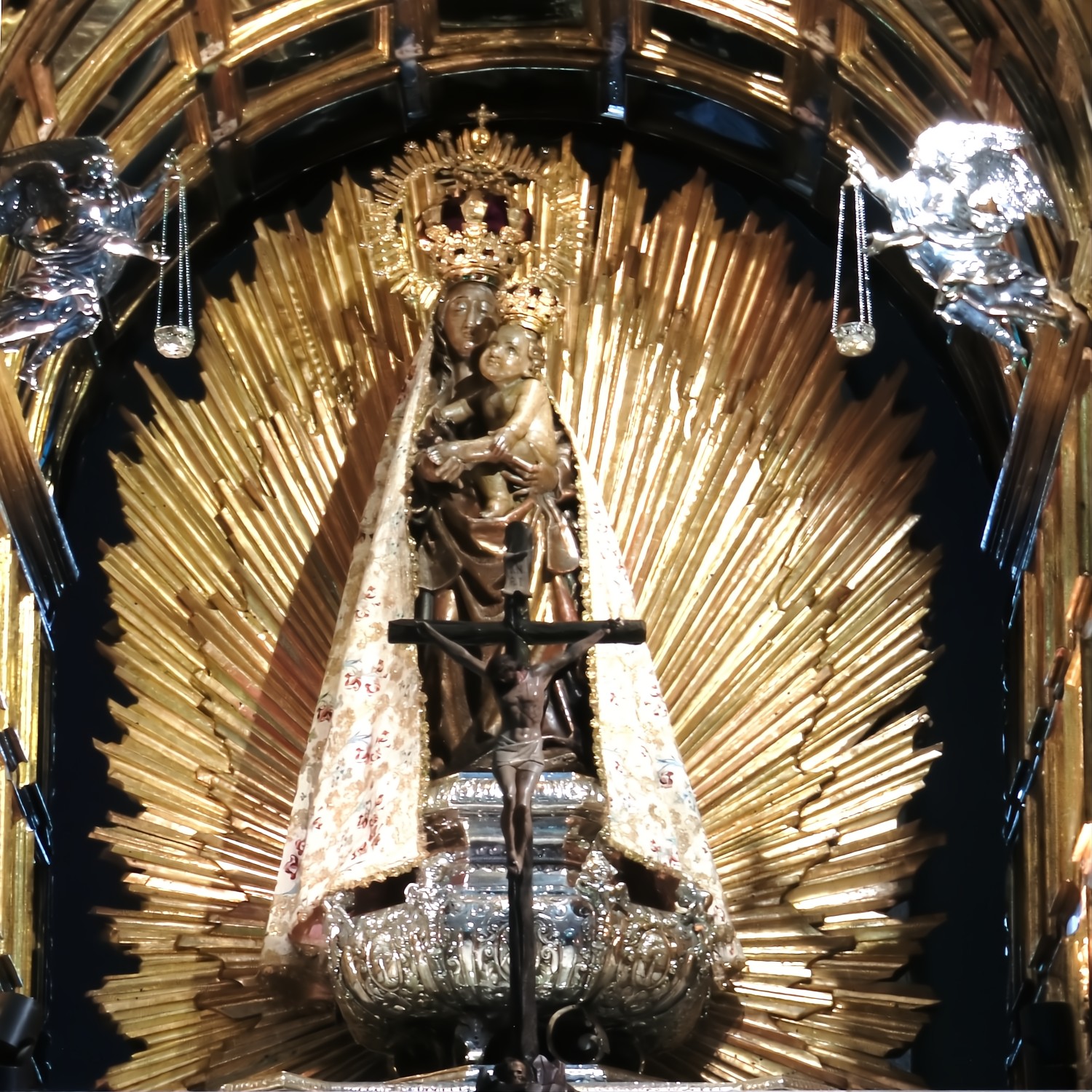
the 16th Century wax-coated wooden Statue of the Child Jesus, holding a globus cruciger (the Orb and Cross) with the right hand being raised in benediction, is of Spanish origin and is just under half a metre in height. It is now located in the Discalced Carmelite Church of Our Lady of Victories in Malá Strana, Prague, Czech Republic, see the Church at the bottom (one where I have been immensely blessed to attend Holy Mass before the Infant each day for a week some years ago). The Statue is venerated on 2 January, on 14 January and on the first Sunday of May.
Our Wonderful Infant:

https://anastpaul.com/2023/01/02/saint-of-the-day-2-january-feast-of-the-infant-jesus-of-prague/

Bl Airaldus of Maurienne
St Alverius of Agaunum
St Asclepius of Limoges
St Aspasius of Auch
St Baudimius of Auvergne
St Blidulf of Bobbio
St Dietmar of Prague (Died 982) Bishop
St Hortulana of Assisi
St Isidore of Antioch
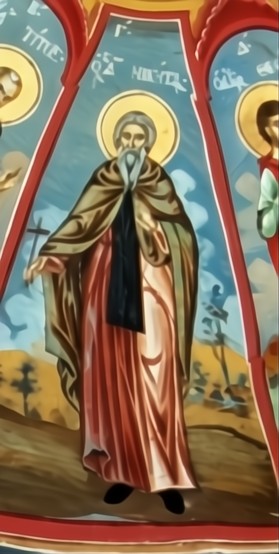
St Isidore of Nitri
St John Camillus the Good
St Macarius of Rome

St Mark the Mute
St Maximus of Vienne
St Munchin of Limerick
Bl Odino of Rot
St Paracodius of Vienne
St Sebastian of Agaunum
St Seiriol
Blessed Stephana de Quinzanis OP (1457-1530) Virgin, Dominican Tertiary, Mystic, Stigmatist
Bl Sylvester of Troina
St Telesphorus, Pope
St Theodota
St Theopistus
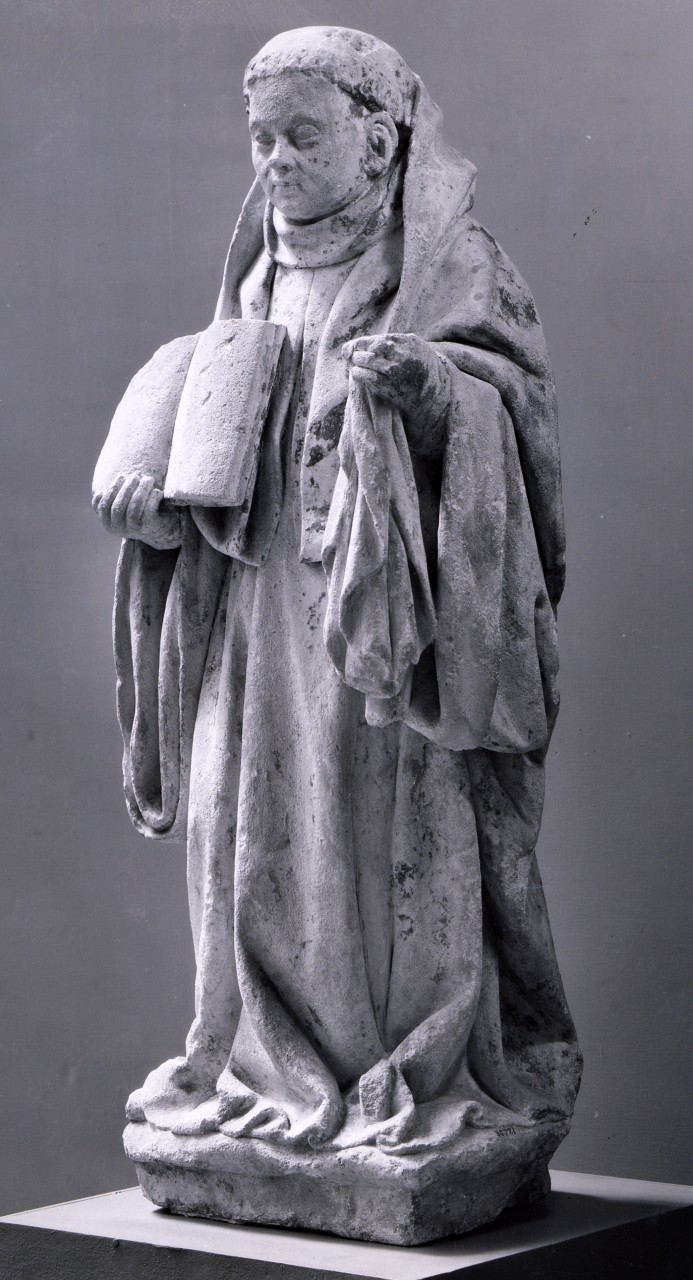
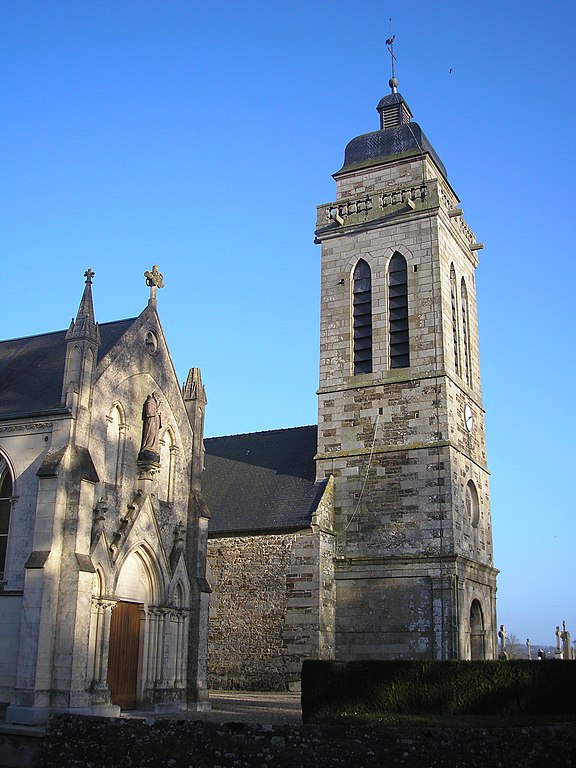
St Vincentian of Tulle
St Viance of Anjou

Martyrs of Jerusalem – 2 Saints: A group of Christians Martyred together for their faith. We know the names of two – Stephen and Vitalis.

Posted in SAINT of the DAY

Saint of the Day – 1 January – Saint Justin of Chieti (Died c540) Bishop and Patron of Chieti

Saint of the Day – 1 January – Saint Justin of Chieti (Died c540) the First Bishop of Chieti, Italy, Miracle-worker. Patron of the City and Archdiocese of Chieti-Vasto, Abruzzo, Italy.

The Roman Martyrology reads today: “At Chieti, in Abruzzo, the birthday of St Justin, Bishop of that City, illustrious for holiness of life and miracles.

Saint Justin is considered, by ancient tradition, to be the evangeliser of the City of Chieti, as well as its first Bishop, despite many uncertainties regarding the period in which he lived. In fact, there is no historical documentation from which to draw detailed information about his life. Only in the 15th Century did some of his “passios” appear, largely modelled on those of the Saints of the same name which end up confusing him with a Saint from Siponto who suffered Martyrdom in Abruzzo in the 3rd Century, together with his family.

However, it is certain that the Cathedral of Chieti was instead dedicated to the holy Bishop Justin at least since the 9th Century. In fact, the first documents on the Church which have come down to us, date to this era. Very probably, this mysterious Bishop ruled the Diocese of Chieti during the troubled period of the barbarian invasions and the spread of the Arian heresy, that is, around the end of the 4th Century.

At this historical juncture, faced with the dissolution of the state institutions of Italy at the time, the people began to rally around the shepherds, chosen from among the most charismatic figures of the Christian world. In fact, there are quite a few Italian Cities which venerate their Bishops of that period, as Saints.

Most of our Saint’s relics are still venerated today in an urn, placed in the crypt of the Theatine Cathedral. The object of a particular and ancient veneration, is the Holy Arm, to which popular devotion attributed numerous miracles, including that of 593 in which the Holy Arm, carried in procession by the Theatines, repelled an invasion of locusts which threatened the crops in the surroundings farms.

Saint Justin was once celebrated today, 1 January, then, in 1616, his feast was moved to 14 January and finally moved to 11 May. However,, the Roman Martyrology still commemorates him on the original date – 1 January.

The Cathedral of St Justin in Chieti
Posted in FEASTS and SOLEMNITIES, MARIAN TITLES, SAINT of the DAY

The Circumcision of the Lord (Holy Day), The Octave Day of the Nativity of the Lord, Mary, Mother of God, the Divine Motherhood and Memorials of the Saints – 1 January

All God’s richest blessings for 2024!🙏💖

The Circumcision of the Lord (Holy Day):
At that time, after eight days were accomplished that the Child should be circumcised; His Name was called Jesus, which was called by the Angel, before He was conceived in the womb.” – Luke 2:21
Excerpt from the Catechism of the Council of Trent,
(Part IV – “Hallowed be Thy Name“”)
https://anastpaul.com/2023/01/01/1-january-feast-of-the-circumcision-of-the-lord/

The Octave Day of the Nativity of the Lord

Titular Feast of the Society of Jesus –
But now celebrated on the Feast of the Holy Name of Jesus,
which is tomorrow 2 January

Bl Adalbero of Liege
St Baglan of Wales
St Basil of Aix
Bl Bonannus of Roio
St Brogan
St Buonfiglio Monaldi
Bl Catherine de Solaguti
St Clarus of Vallis Regia
St Clarus of Vienne
St Colman mac Rónán
St Colman Muillin of Derrykeighan
St Concordius of Arles
St Connat
St Cuan
St Demet of Plozévet
St Elvan
St Eugendus of Condat
St Euphrosyne of Alexandria
St Fanchea of Rossory
St Felix of Bourges
St Frodobert of Troyes

St Gisela of Rosstreppe
St Gregory Nazianzen the Elder
Bl Hugolinus of Gualdo Cattaneo
Bl Jean-Baptiste Lego
Bl Jean of Saint-Just-en-Chaussée
St Justin of Chieti (Died c540) Bishop
St Maelrhys
St Magnus the Martyr
St Mydwyn

St Odilo of Stavelot
St Peter of Atroa (773–837) Abbpt
St Peter of Temissis
St Sciath of Ardskeagh
St Severino Gallo
St Telemachus
St Thaumastus of Mainz
St Theodotus
St Tyfrydog
Bl Valentin Paquay
St William of Dijon
St Zedislava Berka OP (c 1220-1252) Married Laywoman and Mother, Tertiary of the Order of Preachers. Canonised by St Pius X on 28 August 1907.

Posted in Of BEGGARS, the POOR, against POVERTY, PATRONAGE - ORPHANS,ABANDONED CHILDREN, SAINT of the DAY

Saint of the Day – 31 December – Saint Zoticus of Constantinople (Died c350) Priest

Saint of the Day – 31 December – Saint Zoticus of Constantinople (Died c350) Priest, known as “The Feeder of Orphans,” possibly a Martyr. Patronages – of the poor and of orphans. Nickname: “Orphanotrophosthe one who feeds orphans. Name means: Z: the man full of life (Greek) and O: the orphan carer (Greek).

Originally from Rome, he journeyed to Constantinople (modern Istanbul, Turkey) when it became the capital city of the Empire under Constantine the Great (r. 324-337). There he founded a hospital for the poor and defended orthodox Christianity before the pro-Arian Emperor Constantius II (r. 641-668).

Some traditions declare him a Martyr due to the above defiance of the Arian Enmperor but the Roman Martyrology does not define him as a Martyr. It says: “The same day, St Zoticus, Roman Priest, who went to Constantinople and took upon himself the care of orphans.

Zoticus is revered as the founder of Byzantium ‘s first Orphanage

Posted in MARIAN TITLES, SAINT of the DAY

Sunday Within the Octave of Christmas, Santa María la Real de Uxue / Our Lady of Uxue, Spain (8th Century), St Pope Sylvester I (Died 335) and the Saints for 31 December

Sunday Within the Octave of Christmas

New Year’s Eve

Bl Dominic de Cubells
St Donatus of Rome
St Eustadius of Bourges
St Festus of Valencia
St Gelasius of Palestine
Bl Giuseppina Nicoli
St Hermes the Exorcist

St Offa of Benevento
St Peter of Subiaco
St Pinian
St Potentian of Sens
St Sabinian of Sens
St Theophylact of Ohrid
St Walembert of Cambrai
St Wisinto of Kremsmünster
St Zeno of Rome
St Zoticus of Constantinople (Died c350) Priest

Posted in SAINT of the DAY

Saint of the Day – 30 December – Saint Raoul of Vaucelles O.Cist. (Died 1152)

Saint of the Day – 30 December – Saint Raoul of Vaucelles O.Cist. (Died 1152) Cistercian Priest, Abbot and Founder of Vaucelles Abbey under the instruction of St Bernard (1090-1153) the Doctor of Clairvaux. Born in Sussex, England and died in 1152 of natural causes at the Monastery which he had founded in France. Also known as – Radulphe, Ralph, Raul. There are sadly no available images of our Saint.

Cistercian Monks

The Abbey, whose foundation was desired by St Bernard himself, included within its walls, the largest Cistercian Abbey Church in the world, is located in the Municipality of Rues-des-Vignes, was suppressed along with all other Catholic Churches, Monasteries and Convents) during the French Revolution.

Saint Raoul, who is believed to have been born in Merston, Sussex in England, was a Priest, who had been entrusted with a Parish in his own Country. Returning from a trip to Italy, Raoul stopped at the Clairvaux Abbey, and was fortunate enough to meet St Bernard along with the Monks of his community.

Raoul became deeply enthusiastic about this way of living his religious calling and he decided not to return to England and asked to become a Novice in that very Monastery.

In 1132, shortly after having pronounced his vows, he was sent by St Bernard together St Richard (Died 1169 – Feast day 28 January), another English Priest who had followed him in entering the Order,and with other Monk, to found the Abbey of Vaucelles, in the Diocese of Cambrai. Raoul was the main protagonist in the construction of the Abbey, whose Church was Consecrated in 1149 by Samson, the Bishop of Reims.

Cistercians at work in a detail from the Life of St Bernard

Saint Raoul was considered a model for his Monks as he personally trained them with the word and with the example of an upright religious life. He also had the temporal well-being of the Abbey under his care and at heart, so much so, that during his governance, the community began to prosper rapidly.

The story of the miracle of the endless wheat is also handed down about our Saint. During a severe famine, Raoul managed to guarantee the subsistence of a large number of poor people. And even when the grain diminished rapidly and he was advised to be prudent in his donations, he replied that as long as there was grain in the Monastery, he would feed all the unfortunate people who came along and, if the grain was not enough, he would also feed the hungry with the livestock of the Abbey.

We know that when he died, after twenty years of his Abbacy, his community was made up of over two hundred Monks.

Saint Raoul was buried in the chapter hall of the Monastery.
After the Lateran Council, his body together with that of St Richard the second Abbot and that of Nicholas the third Abbot, was moved to the cloister near the door of the Abbey by Abbot Adelgo, who governed the fate of the Monastery between 1166 and 1181.

The Feast day for St Raoul, in the Cistercian Menologium, was set for today, 30 December.

Monastery of Vaucelles
Posted in ART DEI, MARIAN TITLES, SAINT of the DAY

The Sixth Day of the Octave of Christmas, Madonna of San Luca / Our Lady of Saint Luke of La Guardia, Italy (433) and Memorials of the Saints – 30 December

The Sixth Day of the Octave of Christmas

St Anysia of Thessalonica
St Anysius of Thessalonica

St Elias of Conques
St Eugene of Milan
St Geremarus

St Hermes of Moesia
St Jucundus of Aosta
St Liberius of Ravenna

St Perpetuus of Tours
St Raoul of Vaucelles O.Cist. (Died 1152) Abbot

St Richard of Wedinghausen
St Ruggero of Canne
St Sebastian of Esztergom

Posted in "Follow Me", CHRIST, the WAY,TRUTH,LIFE, GOD ALONE!, QUOTES on HOPE, QUOTES on MARTYRDOM, QUOTES on PERSECUTION, QUOTES on the ANTI-christ, SAINT of the DAY

Quote/s of the Day – 29 December – St Thomas à Becket

Quote/s of the Day – 29 December – St Thomas à Becket (1118-1170) Martyr, Archbishop of Canterbury

Who shall resist Anti-Christ when he comes,
if we show such patience towards
the vices and crimes of his precursors?
By such leniency, we encourage
kings to become tyrants and tempt them
to withdraw every privilege
and all jurisdiction from the Churches
!”

My hopes are laid up within my own bosom,
for he is not alone, with whom the Lord is;
when he falls, he shall not be dashed to pieces,
for the Lord sustains him in His Hand!

The more I loved the King,
he more I opposed his injustice
until his brow fell lowering upon me.
He heaped calumny after calumny on my head
and I chose to be driven out,
rather than to subscribe.

MORE:
https://anastpaul.com/2022/12/29/quote-s-of-the-day-29-december-st-thomas-a-becket/

St Thomas à Becket (1118-1170)
Martyr, Archbishop of Canterbury

Posted in ACT of CONTRITION, Our MORNING Offering, PRAYERS of the SAINTS, QUOTES on REPENTANCE, QUOTES on SIN, QUOTES on THE WORLD, SAINT of the DAY

Our Morning Offering – 29 December – Please Lord, Make me Worthy! By St Thomas à Becket

Our Morning Offering – 29 December – St Thomas à Becket (1118-1170) Martyr, Archbishop of Canterbury

Please Lord, Make me Worthy!
Prayer of Supplication and Repentance
By St Thomas à Becket (1118-1170)
Martyr, Archbishop of Canterbury

My Lord,
I find it difficult to talk to Thee.
What can I say?
I, who have turned away from Thee
so often with indifference.
I have been a stranger to prayer,
undeserving of Thy friendship and love.
I have been without honour
and feel unworthy.
I am a weak and shallow creature,
clever only in the second-rate and worldly arts,
seeking my comfort and pleasure.
I gave my love, such as it was, elsewhere,
putting service to my earthly King,
before my duty to Thee.
Please Lord, teach me how to serve Thee
with all my heart, to know at last,
what it really is, to love, to adore.
So that I may worthily minister to
Thine Kingdom, here on earth
and find my true honour,
in observing Thine divine will.
Please Lord, make me worthy!
Amen

Posted in SAINT of the DAY

Saint of the Day – 29 December – Saint Trophimus of Arles (Died c280) Bishop

Saint of the Day – 29 December – Saint Trophimus of Arles (Died c280) the first Bishop of Arles, Gaul (modern France), Missionary Patronages – against drought, of Arles, France, of children. Additional Memorial – 30 September (translation of Relics).

Stained glass window in the Church of the Monastery in Eschau

There is great confusion regarding this Saint, according to some traditions, he was previously the companion of the Apostle St Paul named by him in his Epistle . He was Ordained Bishop in Rome , then worked in the mission in southern France and became the Bishop of Arles, where he achieved great things. Some traditions report his martyrdom by beheading.

Statue in the Church of the Monastery in Eschau

In 417 the Roman Bishop, Zosimus gave Bishop Patroclus of Arles, metropolitan power, as the major Bishop in Gaul, thereby strengthening him in the disputes with the Diocese of Vienne and justifying this, with the fact that a certain St Trophimus had been the first to be sent from Rome to Gaul, namely to Arles – this was the first recorded mention of Trophimus. A letter from 19 Bishops from Gaul to Pope Leo I names Trophimus as a messenger from Peter and the Apostles and thus argued that Arles and not Vienne, had priority in Gaul.

St Caesarius of Arles mentioned Trophimus, St Gregory of Tours described him as one of the seven men sent from Rome on a mission to Gaul around 250. St Florus of Lyon included him in his martyrology, Ado of Vienne equated him with Paul’s student Trophimus .

Statue of St Trophimus at the Chapelle de Saint-Trophime, Buis-les-Baronnies.

In 972, Trophimus’ bones were transferred to the Cathedral in Arles which has been dedicated to him since 1060. Since the journey to the Sanctuary of St James in Santiago de Compostela often led through Arles, Trophimus became widely known and revered from the 12th Century onwards. A Monastery in Arles also bears his name.

Cathédrale Saint-Trophime d’Arles
Posted in MARIAN Antiphons, MARIAN PRAYERS, MARIAN TITLES, SAINT of the DAY

St Thomas à Becket (1118-1170) Martyr, Archbishop of Canterbury, Unsere Liebe Frau vom Speyer / Our Lady of Speyer, Germany Featuring the Salve Regina and St Bernard (1146) and the Saints for 29 December

St Aileran of Clonard
St Albert of Gambron
St Aproniano de Felipe González
St David the King

St Florent of Bourges
Bl Francis Ruiz

St Girald of Fontenelle
St Libosus of Vaga
St Marcellus the Righteous
St Martinian of Milan
Bl Paul Mary
Bl Peter the Venerable
St Quartillosa of Carthage
St Thaddeus of Scythia
St Trophimus of Arles (Died c280) Bishop
St Trophimus of Ephesus

Posted in HYMNS, POETRY, QUOTES on MARTYRDOM, SAINT of the DAY

Our Morning Offering – 28 December – Salvete Flores Martyrum! – Hail, Ye Little Martyr Flowers!

Our Morning Offering – 28 December – “The Month of the Divine Infancy and the Immaculate Conception of the Blessed Virgin Mary” – The Feast of Holy Innocents, Martyrs

Salvete Flores Martyrum!
Hail, Ye Little Martyr Flowers!
By Prudentius (c348 – c413)
(Aurelius Prudentius Clemens)

The Renowned Poet

All Hail! ye infant Martyr flowers,
Cut off in life’s first dawning hours.
As rosebuds snap’t in temptest strife,
When Herod sought Thy Saviours life.

Thou, tender flock of lambs, we sing,
First victims slain for Christ Thy King.
Beside the very altar, gay
With palms and crowns, ye seem to play.

All honour, laud and glory be,
O Jesu, Virgin-born, to Thee;
All glory, as is ever meet,
To Father and to Paraclete.

Salvete Flores Martyrum is the Office Hymn for Lauds on the Feast of the Holy Innocents (28 Dec). Its stanzas are drawn from Prudentius’ Epiphany Hymn, Cathemerinon and were

Posted in SAINT of the DAY

Saint of the Day – 28 December – Blessed Johannes Riedgasse O.Praem. (Died 1600) Abbot

Saint of the Day – 28 December – Blessed Johannes Riedgasse O.Praem. (Died 1600) Abbot, Priest and Friar of the Premonstratensians or Norbertines, Born sometime in the 16th Century in Germany and died
there of natural causes in 1600.

Johannes joined the Premonstratensians, who are also called the Norbertines after their Founder, Saint Norbert of Xanten (c1080-1134), or White Canons after the colour of the Order’s Habit. He became a Canon Regular in their Monastery Obermarchtal in Swabia (now in the state of Baden-Württemberg).

In 1591, Johannes was elected Abbot and he held this office until his death. Despite his many duties, the exemplary Abbot participated day and night with the brothers in the choir prayer.

The blessed Reformer Servatius de Lairvelz (1560-1631), who made canonical visitations to Obermarchtal, was very impressed with Johannes’ piety and observence and governance of the Rule of the Order in his Monastery. This led to Johannes himself, being appointed as Visitor in his region, responsible for checking on other houses and helping their dedication.

According to tradition, during his last illness he received a vision of the blessed Ulrich, a predecessor as Abbot.

He died a holy death in 1600. He is honoured as Blessed by the Premonstratensians with a memorial day today, 28 December.

Posted in MARIAN TITLES, SAINT of the DAY

The Holy Innocents, Notre-Dame de Pontoise / Our Lady of Pontoise, France (13th Century) and Memorials of the Saints – 28 December

BL Claudia Weinhardt
St Conindrus
St Domitian the Deacon
St Domnio of Rome
St Eutychius
Bl Gregory of Cahors
St Iolande of Rome
Blessed Johannes Riedgasse O.Praem. (Died 1600) Abbot

Bl Nicolas Mello
Bl Hermann of Heidelberg
Bl Otto of Heidelberg
St Romulus
St Simon the Myroblite
St Theonas of Alexandria
St Theodore of Tabenna
St Troadius of Pontus

Posted in SAINT of the DAY

Saint of the Day – 27 December – Blessed Roger of Verdun O. Praem.(Died 1138) Priest

Saint of the Day – 27 December – Blessed Roger of Verdun O. Praem.(Died 1138) Priest or Regular Canon, Friar , Abbot and Preacher of the Premonstratensian Order (the Norbertines), Born in the late 11th Century in Germany and died in 1138 of natural causes

All Saints and Blesseds of the Premonstratensians

Roger was born at the end of the 11th Century in Germany. He was a nobleman and belonged to the Court of Emperor Lothar III (1125-1137). A few years earlier, Saint Norbert of Xanten (c1080-1134) had left the Court of Emperor Henry V (1106-1125) to live a true apostolic life as a pauper Christi .

Roger was so moved by Norbert’s person and preaching that he gave up his secure position at Court and followed the itinerant preacher. He joined his Order, the Premonstratensians – O.Praem),which are also called the Norbertines, after their Founder, or White Canons, after the colour of the Order’s Habit. When Norbert was appointed Archbishop of Magdeburg in 1126, Roger returned to solitude in the Mother Monastery Prémontré at Laon in the region of Picardy in northern France.

In 1135, Bishop Alberon of Verdun decided to reform the Monastery of Saint-Paul which was inhabited by Benedictines and replace the Monks with the Regular Canons from Prémontré. Roger was assigned by Blessed Hugh of Fosse to lead a group of Monks at the Monastery where he served as the Abbot until his death Under his leadership, the Monastery experienced a considerable renown and increase in Monks, so much so, that under his successor there were 300 religious.

Roger died in 1138. He is honoured as blessed by the Premonstratensians with a memorial day today, 27 December.

Posted in MARIAN TITLES, SAINT of the DAY, The APOSTLES & EVANGELISTS

St John the Apostle and Evangelist, the Beloved, Nossa Senhora do Rosário / Our Lady of the Rosary (Brazil) (1817) and Memorials of the Saints – 27 December

Bl Adelheidis of Tennenbach
Bl Christina Ebner

Bl Hesso of Beinwil
St Maximus of Alexandria
St Nicarete of Constantinople
Blessed Roger of Verdun O.Praem. (Died 1138) Abbot

St Theophanes of Nicaea
Bl Walto of Wessobrünn

Posted in SAINT of the DAY

Saint of the Day – 26 December – Blessed Giovanni Orsini (1333-1411) Cardinal Archbishop

Saint of the Day – 26 December – Blessed Giovanni Orsini (1333-1411) Cardinal Archbishop of Turin for forty-seven year! Reformer both socially and within the Church, Apostle of the poor and needy, carer of Monasteries Convents and the Religious who inhabited them. No images of this holy man have been found. The Shrine pictured below, is described in the last paragraph and resides at the Cathedral in Turin.

Giovanni Orsini was born in 1333 into the noble family of the Lords of Rivalta, near Turin. Son of Guglielmo, he had numerous brothers, including Pietro, who was also religious. Giovanni led an exemplary life from boyhood, he undertook ecclesiastical studies, graduating in Canon law.

He was then invested with the commandery of the Abbey of Rivalta which, thanks to the affiliation of 1266 to the Cistercians of Staffarla, had returned to its past splendour. Many members of his family, over the centuries, held this position. Noble both in birth and in soul, he acquired profound virtues, was dedicated to good works, helped the poor and dedicated a lot of time to preaching and Confessions.

He was the ideal successor to the chair of St Maximus and in 1364 he was elected Bishop of Turin. He was a zealous shepherd, who combined the firmness necessary to carry out his delicate task, in very complex times for the Church, with innate goodness. In the vast territory of the Diocese there were many problematic situations to deal with.

In 1367 the pious prelate visited Val Susa and found that in many Parishes there were hardships due to the wars and the continuous raids of the soldiers. Predecessors had attempted to remedy this but without great results. On 5 September 1368 he sent the convening letters for the calling of a Synod which was celebrated in the main Church of San Salvatore. Unfortunately, the documents have not reached us, even though we know that they were published in 1403. He then undertook the pastoral visit, starting from the valleys of Luserna and Angrogna, where the danger of the spread of heresies was greatest. The Waldensians, in particular, coming from France, had settled in the border valleys at the beginning of the previous Century. Giovanni made the visit with an Inquisitor and several collaborators. They mainly addressed the leaders of the communities, called ‘barba, because, by their conversion it would be easier to convince their followers.

In extreme cases, according to the laws of the time, the obstinate could be punished with capital punishment. The memory of the assassination of the Blessed Pietro da Ruffia in Susa which occurred precisely at the hands of the Waldensians on 2 February 1365, was still alive, while Bricherasio was the scene of the Martyrdom of the Blessed Antonio Pavoni which took place on a Sunday in 1374. The Pope had written a letter of encouragement, directing Antonio to Count Amedeo and Bishop Giovanni. The murderers were later captured and tried.

All the Clergy were required to collaborate with the Inquisitor and the Bishop, basically by preaching the truths of the faith in the Churches. Emblematic is the case of a man from Chieri, Giacomo Bech, who on 21 August 1388, in the Episcopal Palace of Turin, was listened to by Bishop Giovanni, in the presence of the Inquisitor. He had lived near Florence and in Perugia and had come into contact with a community of “apostolics”, partly originating from the Turin area.

The help that Orsini gave to the Poor Clares of Carignano was important, as can be seen in a patent dated 3 June 1372, where he confirmed the Nuns’ acquired rights. Their Monastery was not in good condition and was located in an unsafe place due to the wars. The Nuns took shelter in private homes then, when it was possible, decided to restore the ancient site, against the wishes of the inhabitants. The Nuns turned to Count Amedeo of Savoy and Bishop Giovanni. For jurisdictional reasons, the Abbot of Chiusa St Michele also rebelled against the new construction. The Poor Clares appealed to Pope Gregory XI who was in Avignon. Since no-one appeared on behalf of the Abbot, the Bishop’s actions were justified. The same Abbot was the protagonist of other controversies and even made accusations against the Pope. Giovanni was appointed to mediate but it led to the excommunication of that sad Abbot.

Bishop Giovann’s great concern was to counteract a certain laxity of customs among the Clergy and he promulgated some rules so that ecclesiastics respected the Sacred Canons. Thanks to his commitment, he brought many faithful who had drifted away, back to the Faith.

The Pope’s stay in Avignon caused divisions in some communities. These were the sad times of the Western Schism (which would only be resolved in 1415). Cardinal Egidio Albornoz, who had the difficult task of restoring the state of the Church in Italy, had Giovanni’s moral and economic support during his visits to Piedmont. The Turin Prelate collaborated in the return to Rome, albeit temporary, of the Blessed Pope Urban V. In 1370 Pope Gregory XI was elected and he returned to Italy but only in 1377 in a more complex context than ever.

Clement VII was appointed antipope and settled in Avignon. The Church was split in two. Giovanni, like the other Prelates of Savoy and France, supported Clement. They had great esteem for the “blessed” James of Savoy and William of Acaja, who appointed Giovanni as his Executor.

During his very long Episcopate Giovanni made important concessions. In 1380, he authorised the inhabitants of Fossano to rebuild the Collegiate Church of St Maria and St Giovenale, while he forgave many debts to the Poor Clares of Carignano, the Abbot of Rivalta and the Vicar of Lanzo. In 1395 he approved the election of Aimone da Romagnano as Provost of the Canons of Moncenisio.

After a long and fruitful Episcopate, forty-seven years, Giovanni died in June 1411. He was buried in his Cathedral. The fame of his sanctity spread and graces occurred at his Tomb, as was recorded in the chapter documents. In a document dated 21 February 1438 it was complained that the people were taking the ex-votos away from the Tomb. Unfortunately, his remains were lost in the reconstruction works of the Cathedral carried out at the end of the 15th Century and perhaps for this reason his cult decreased and was never confirmed, even though all Ecclesiastical and secular historians, unanimously praised his merits. In some Chapels of Rivalta he was depicted with a Cardinal’s hat and with a halo.

In a Chapel in the Cathedral of Turin there is today, a Plaque in a 15th Century Shrine and sarcophagus, with an epigraph engraved in 1892 which indicates the presence of the ashes of a man whose virtues are known only to God. Some scholars would place the Tomb of the Bishop of Rivalta there, while, due to the complex historical events of the Church of those decades, the appointment as Cardinal in 1388 and as Apostolic Legate to the Court of King Charles VI, is not certain.

Posted in MARIAN TITLES, SAINT of the DAY

St Stephen the ProtoMartyr, Madonna della Acheropita / Our Lady of Rossano, Italy (1140) and Memorials of the Saints – 26 December

Within the Octave of Christmas

St Abadiu of Antinoë
St Amaethlu of Anglesey
St Archelaus of Mesopotamia
Bl Daniel of Villiers

St Euthymius of Sardis
St Evaristo
Blessed Giovanni Orsini (1333-1411) Cardinal Archbishop of Turin
Bl Jean of Hainaut
St Margaret of Hohenfels
Bl Marinus of Rome
Bl Paganus of Lecco
Bl Pierre Boffet
St Tathai of Wales
St Theodore the Sacristan
St Zeno of Gaza

Posted in SAINT of the DAY

Saint of the Day – 25 December – Saint Fulk of Toulouse (c1155-1231) Bishop

Saint of the Day – 25 December – Saintt Fulk of Toulouse (c1155-1231) Bishop, a fierce and untiring Defender of the Faith against heresies, Musician, Composer and Lyricist, Poet, Born in c1155 at Genoa, Italy and died in 1231 in Toulouse of natural causes. Also known as – Folquet, Folquet de Marseille, Folquet de Marselha, Foulques de Toulouse, Coots of Toulouse, the Minstrel Bishop.

St Fulk depicted in an ancient Manuscript

Fulk was born into a Genoese merchant family but, in about 1180, he left his life as a merchant to become a singing and playing Minstrel Poet. He was widely respected and successful throughout Provence and Aragon. His works, which include love lyrics (often dedicated to his patron’s wife), crusading songs and religious poems and hymns, demonstrate a classical education and careful metrical forms.

Painting from Teruel Cathedral of musician Clergy, probably our St Fulk of Toulouse.

In 1195, Fulk’s life and career abruptly changed, when he experienced a profound religious conversion and decided to renounce his former life. He joined the strict Cistercian Order, entering the Monastery of Thoronet (Var, France) and appears to have placed his wife and two sons in monastic institutions as well. He soon rose in prominence and was elected Abbot of Thoronet which allowed him to help found the sister house of Géménos to house women, quite possibly including his wife.

In 1205 Fulk was elected Bishop of Toulouse and immediately he took a very active role in combatting heresy. Throughout his Episcopal career, he sought to create and encourage outlets for religious enthusiasm which were Catholic, in an effort to woo believers away from preachers of heresy (primarily Cathar and Waldensian). In 1206 he created what would become the Convent of Prouille, to offer women a religious community which would rival (and, where necessary, replace) those of the Cathars. He participated in the initial preaching mission of Saint Dominic which was led by Dominic’s superior, Bishop Alphonsus Didacus of Osma. He continued to support this new form of preaching after Bishop Alphonsus Didacus’ death by assisting St Dominic and his followers, eventually allotting to the nascent Dominicans, property and a portion of the tithes of Toulouse, to ensure their continued success. In July 1215 Fulk issued a Diocesan letter instituting St Dominic’s Order of Preachers. In November 1215 he and Dominic, with Guy of Montfort, were in Rome at the Fourth Lateran Council.

The Convent of Prouille, now a Museum

Bishop Fulk had tumultuous relations with his Diocese, primarily on account of his support of the Albigensian Crusade which was popularly perceived as a war of aggression against the region. Hated by many Toulousains and by Count Raymond VI of Toulouse. he left Toulouse on 2 April 1211, after the crusaders laid siege to the City. Our Saint requested a release from his See but the Pope refused. Fulk spent much of the following decade outside his Diocese, assisting the crusading army and the Church’s attempts to bring order to the region. He was at the Council of Sens in 1223.

In 1229, after the Peace of Paris finally ended the crusade, Fulk returned to Toulouse and began to construct the institutions that were designed to combat heresy in the region. He helped to create the University of Toulouse and administered the newly created Episcopal Inquisition.

Fulk died in 1231 and was buried, beside the tomb of William VII of Montpellier, at the Abbey of Grandselves, near Toulouse, where his sons, Ildefonsus and Petrus had been Abbots.

St Fulk of Toulouse in a 13th Century Manuscript, depicted in his Episcopal robes.
Posted in FEASTS and SOLEMNITIES, franciscan OFM, SAINT of the DAY

The Nativity of Our Lord, Christmas Day! and Memorials of the Saints – 25 December

The Nativity of Our Lord, Christmas Day!
Celebration of the Anniversary of the Birth of Our Lord. In the earliest days of the Church there was no such Feast, the Saviour’s Birth was commemorated with the Epiphany by the Greek and other Eastern Churches. First mention of the Feast, then kept on 20 May, was made by Clement of Alexandria c 200. The Latin Church began in c 300 to observe it on 25 December, though there is no certainty that Our Lord was born on that day.
Today, Priests have the privilege of saying three Masses, at midnight, daybreak and morning. This was originally reserved to the Holy Father alone – beginning about the 4th century he celebrated a midnight Mass in the Lateran Basilica (in which according to tradition, the manger of Bethlehem is preserved), a second in the Church of Saint Anastasia, whose Feast comes on 25 December and a third at the Vatican Basilica.
Many peculiar customs of the day are the outcome of the pagan celebrations of the January calendar. The Christmas tree, of which the first known mention was made in 1605 at Strasbourg, was introduced into France and England in 1840.
The Feast is a Holy Day of Obligation, preceded by the preparatory season of Advent and by a special Vigil – should it fall on a Friday it abrogates the law of abstinence. Of course, Christmas attracts an Octave, when this wonderful Mystery and Miracle is celebrated for eight days.
https://anastpaul.com/2019/12/25/the-solemnity-of-the-nativity-of-our-lord-jesus-christ-25-december-2/
AND:
https://anastpaul.com/2018/12/25/the-solemnity-of-the-nativity-of-our-lord-jesus-christ-25-december/
AND:
https://anastpaul.wordpress.com/2017/12/25/25-december-the-solemnity-of-the-birth-of-our-lord-jesus-christ-2/

St Adalsindis of Hamay
St Alburga of Wilton
St Anastasia of Sirmium

Bl Artale
St Basilée of the Via Latina

Bl Diego de Aro
St Eugenia of Rome
St Fulk of Toulouse (c1155-1231) Bishop

St Jovin of the Via Latina
Bl Matthew of Albano
Bl Michael Nakashima Saburoemon
Bl Nera

St Romulus of Berry

Posted in SAINT of the DAY

Saint of the Day – 24 December – Saint Delphinus of Bordeaux (Died 403) Bishop

Saint of the Day – 24 December – Saint Delphinus of Bordeaux (Died 403) the 2nd Bishop of Bordeaux, Defender of the True Faith, friend of St Ambrose and St Venerius of Milan. He was also instrumental in the conversion of the great St Paulinus of Nola, becoming his spiritual father and teacher. Also known as – Delfinus, Delphin.

We know little about his origins and early career but in 380 he became the 2nd Bishop of Bordeaux (380-403) after Orientalis, who attended the Council of Arles in 314.

The first we hear of Delphinus is when he attended the Synod of Saragossa in 380, where the Priscillianists and other heretics were condemned. This heresy argued that the renunciation of marriage and the acceptance of asceticism were prerequisites for following Christ.

Delphinus later assembled a Council at Bordeaux, his Episcopal City, whose assembly also condemned the same errors. Such was the force and zealous preaching of the Bishop of Bordeaux, against those who propagated this heresy in his territory that it undermined their influence entirely and they soon abandoned the region for Italy.

Delfinus seems in his time to have had a very great prestige which went beyond the boundaries of his own Diocese. He was a close friend of the old Bishop Febadius of Agen and had a regular correspondence with St Ambrose of Milan, who valued highly his correspondence with Delphinus. He was also a friend of Saint Venerius of Milan and Ordained Saint Amandus , who was to succeed him as Bishop of Bordeaux (404-410; 420-c431).

Delphinus had a great influence on Pontius Meropius Anicius Paulinus, who became the wonderful St Paulinus of Nola . Paulinus’ conversion was due in a large part to his wife and Bishop Delphinus, who baptised him in 388 and inspired in him, the desire to live a life of perfection. In several letters, St Paulinus speaks of St Delphinus as his father and his master. Five of Paulinus’ letters, to his spiritual father, were preserved for many years and testify to the great opinion and respect he had for Delphinus. The correspondence has now disappeared.

St Delphinus died on Christmas Eve in 403.

Posted in SAINT of the DAY

The Vigil of the Nativity of Our Lord Jesus Christ, The final day of the Christmas Novenas and Memorials of the Saints – 24 December

Christmas Novena to the Divine Infant Jesus
By St Alphonsus,
The Ninth Day:

https://anastpaul.com/2022/12/24/christmas-novena-to-the-divine-infant-jesus-by-st-alphonsus-day-nine-24-december/

The Miraculous Monthly Novena to the
Infant Jesus of Prague
The Ninth Day

All the Holy Ancestors of Christ – A commemoration of all the holy ancestors of Jesus Christ.
MORE HERE:

https://anastpaul.com/2020/12/24/24-december-vigil-of-the-nativity-of-the-lord-mass-at-midnight-and-memorials-of-the-saints-24-december/

St Adam the Patriarch
St Adela of Pfalzel
Bl Alberic of Gladbach
Bl Brocard of Strasbourg
St Bruno of Ottobeuren
St Caran of Scotland
St Delphinus of Bordeaux (Died 403) Bishop

St Euthymius of Nicomedia
St Eve the Matriarch
Bl Francesco dei Maleficii
St Gregory of Spoleto

St Mochua of Timahoe
Bl Peter de Solanes

Blessed Mercedarian Brother:
Blessed Dionysius Roneo
Blessed Philip Claro
Blessed Giulio Pons
Blessed Peter of Valladolid

Blessed Mercedarian Sisters:
Blessed Anna Maria Prieto
Blessed Anna de Arrano
Blessed Orsola de Larisgoizia
Blessed Maguna Mary
Blessed Margaret
Blessed Mary of the Assumption Sarria

Posted in SAINT of the DAY

Saint of the Day – 23 December – Saint Besa of Egypt (5th Century) Abbot

Saint of the Day – 23 December – Saint Besa of Egypt (5th Century) Abbot, a wise, compassionate and effective administrator, shepherd of the surrounding peoples Besa was the Senior Abbot of more than one double Monastery in the desert region of Thebes. Also known as – Wissa, Bêsa.

Besa became a Monk in the double Monastery of Dair al-Abiad in the Thebes region, later known as “The White Monastery” under the great Abbot St Sinuthius, who is said to have led the Monastery for 83 years before he died around the year 450 or possibly as late as around 466. He was then, according to tradition, 118 years old. Besa took over as Abbot and he immediately wrote St Sinuthius’ Vita.

Monks praying

In the 4th Century, Monasticism in Egypt was threatened by rebellious Monks and the peasant population received no religious education. But Besa preserved the legacy of a harmonious communal life among both Monks and Nuns. As an Abbot, he has been underestimated and has been overshadowed by the great St Sinuthius. But when one studies his character, his writings and exhortations and his administration – both of the White Monastery and the world outside (that is, neighbouring villages, Deacons and Clergy), one will see the same Besa – a light on top of the mountain of Monasticism.

He was powerful in character and had a deep sense of duty. His love of Sacred Scripture, shows the great emphasis he placed on moral thinking and spiritual reproof. For example, Besa did not hesitate to write a reprimanding letter to the Nun Aftonia (Aphthonia), who was the daughter of Count Alexandros. He must have been not only strong in character but also wise, for he dealt with such problems as theft, the reluctance of Monks and Nuns to renounce property and the reluctance to separate from the world (such things as receiving material gifts and leaving the Monastery without permission). In addition, many of his brothers did not agree with his open penal system. Despite this disagreement, he did not change his mind and he quoted the Scriptures to support his view, especially 1 Tim 5:20: “Those who sin, you must rebuke in the presence of everyone for the fear and warning of others.” His firm attitude in favour of the Gospel, kept the Monasteries alive in such trying times.

Image is a depiction of St Anthony Abbot

His writings also show his forceful character. His exhortations were passionate, especially when addressing a specific problem. His writings overflow with Scriptural quotations, sometime,s to such an extent that his own words became difficult to distinguish. Besa also shows, through his writings, the compassion and love he had for his Monks and Nuns. A pattern in his letters to those who had broken the rules of the Monastery, is that he never ceased to encourage his “sons and daughters” with hope and love at the end of each letter.

Besa was not only firm in character and compassionate in his heart, he was also a wise administrator. He wrote to neighbouring villages which shows that he had pastoral responsibility for them. He also opened the Monastery’s gates and resources, when a famine struck Egypt and forced 6,000 refugees to seek shelter. It is possible that he was the same “Apa Besa” who had a conversation with the Emperor Zeno (474-491), according to a fragment in the British Museum. The monastic community continued to play a central role in the outside world thanks to Besa.

With 4,000 Monks and Nuns under his care (2,200 Monks and 1,800 Nuns – in a few different locations) he cannot have been a weak figure. Many people of different financial and social status took monastic vows. With his wisdom and the experience he had gained from serving under St Sinuthius, Besa handled all the problems and needs which arose among his sons and daughters. His continuous exhortations helped those Monks who were weak to stand firm in their faith. St Sinuthius would not have left his life’s work to a man who was incapable of the many traits needed by an Abbot of such a huge community.

Besa wrote his biography of his predecessor St Sinuthius shortly after his death. It was written in Sahidic Coptic but only the Bohairic translation survived intact in a 9th Century manuscript. Some Sahidic fragments have been identified and published. There is also an extended version preserved in Arabic and a version similar to the Bohairic, is preserved in Ethiopic.

Posted in franciscan OFM, MARIAN TITLES, ROSARY QUOTES, SAINT of the DAY

EMBER SATURDAY. Christmas Novenas and Memorials of the Saints – 23 December

Christmas Novena to the Divine Infant Jesus
By St Alphonsus
THE EIGHTH DAY:

https://anastpaul.com/2022/12/23/christmas-novena-to-the-divine-infant-jesus-by-st-alphonsus-day-eight-23-december/

The Monthly Novena to the
Miraculous Infant of Prague

The Eight Day

EMBER SATURDAY

St Besa of Egypt (5th Century) Abbot
Bl Bincema
St Dagobert II of Austrasia
Bl Epifanio Gómez Alvaro
St Frithbert of Hexham

Bl Herman of Scheda
Bl James Aymerich

St John Cirita
St John Stone
St Mardonius of Rome
St Mazota of Abernethy
St Migdonius of Rome

Posted in SAINT of the DAY

Saint of the Day – 22 December – Saint Zeno of Nicomedia (Died 303) Martyr

Saint of the Day – 22 December – Saint Zeno of Nicomedia (Died 303) Martyr, Roman Commander. In the persecutions of Diocletian, Zeno died, after many tortures, by beheading in Nicomedia, Bithynia (modern Izmit, Turkey). Also known as – Zenon, Zinon. Additional Memorial – 28 December as one of the 20,000 Martyrs of Nicomedia.

The Roman Martyrology reads today: “At Nicomedia, St Zeno, soldier, who derided Diocletian for sacrificing to Ceres, wherefore, he had his jawbone fractured, his teeth plucked out and his head struck off.

Zeno was a Roman soldier who lived in Nicomedia in Bithynia in Asia Minor (today Izmit in Turkey). In this City the Roman Emperors had one of their favourite residences. The Emperor, at that time, was Diocletian (284-305), who goes down in history as the most bloodthirsty of the Christian persecutors. The last great persecution which Diocletian launched in February 303, was particularly virulent in this part of the Empire.

The renowned Bishop and Church historian, St Eusebius of Caesarea (c260-340) tells in his Church History (Historia Ecclesiastica), how the persecutions began. Emperor Diocletian issued an Edict on 24 February 303 ordering the destruction of all Churches and holy books. Shortly after the promulgation of the Edict, a fire broke out in the Imperial Palace in Nicomedia, for which the local Christians were blamed. The cause of the fire was undoubtedly a poorly extinguished light or a spark from the kitchen. But it was an eargerly awaited pretext to accuse the Christians leading the Emperor to order a fierce persecution. {Eusebius, Historia Ecclesiastica VIII 6, 13}

St Eusebius writes that a zealous Christian tore down the Imperial Edict, and from then on the Christian Priests were ordered to offer incense to the pagan gods, whenever they appeared in public. In 303, the City’s holy Bishop, Anthimos refused to sacrifice and was beheaded. A great many Christians were executed on the Emperor’s orders when the persecutions were extended tothe laity. Many who dcould not escape were burned alive, while some were thrown into the sea, some were beheaded and some were buried alive. 20,000 Christians were burned alive inside a Church on Christmas Day 303.

Zeno was the Commander of a Regiment and bravely condemned the conduct of the Emperor Diocletian in full public view and, he laughed, in the Name of God, when the Emperor sacrificed to the Roman god Ceres. He was oimmediately arrested on the Emperor’s order and had his teeth knocked out and his jaw crushed with stones, before he was beheaded.

Posted in SAINT of the DAY

Saint of the Day – 21 December – Blessed Tommaso Vitali OSM (1425-1490) Priest

Saint of the Day – 21 December – Blessed Tommaso Vitali OSM (1425-1490) Priest and Friar of the Order of the Servants of Mary (the Servites), a renowned and highly effective Preacher and patient spiritual guide. Born in 1425 in Endenna, Bergamo, Italy and died on 21 December 1490 in Pesaro, Italy of natural causes. Also known as – Thomas.

Tommaso lived for many years in the Hermitage of Monte Granaro in the Province of Pesaro together with Blessed Paolo Bigoni from Chiari (Brescia) and Blessed Bonaventura from Forlì.

The three blessed together formed an exemplary community characterised by an intense Marian spirituality, whose corner stones were prayer, study, manual work and preaching.

Tradition tells us that Blessed Tommaso grew in the grace of the Lord thanks to his penances, his prayer vigils and his continuous fasting.  A talented preacher, he was able to announce, with great enthusiasm, the experience of Jesus Christ Crucified, His suffering and His love for sinful man.

Living in conformity with his preaching, patiently listening to the Confessions of the faithful in order to be able to guide them wisely on the path of life aimed towards holiness.

He died in Pesaro on 21 December 1490. His body was kept in the Church of Santa Maria Monte Granaro until 1650 and subsequently, in the Church of St Maria delle Grazie. In 1922, when the Church of St Maria delle Grazie was demolished and the Servants of Mary moved to the Church of St Francesco, the body of Blessed Tommaso Vitali was placed under the Altar dedicated to the Seven Holy Founders of the Servite Order.

The Archdiocese of Pesaro counts him among its Blessed. Even if there is no celebration in memory of Blessed Tommaso Vitali, in some Martyrologies he is remembered on 21 December, on the anniversary of his death.

Posted in MARIAN TITLES, SAINT of the DAY, The APOSTLES & EVANGELISTS

Feast of St Thomas, Apostle of Christ, Martyr. Christmas Novenas, Notre-Dame de Saint-Acheul / Our Lady of Saint Acheul, Amiens, France (4th Century) and Memorials of the Saints – 21 December

Christmas Novena to the Divine Infant Jesus
By St Alphonsus – The Sixth Day:

https://anastpaul.com/2022/12/21/christmas-novena-to-the-divine-infant-jesus-by-st-alphonsus-day-6-21-december/

The Monthly Novena to the Infant Jesus of Prague
The Sixth Day

Bl Adrian of Dalmatia

St Baudacarius of Bobbio
St Beornwald of Bampton
Bl Bezela of Göda

St Dioscorus

St Festus of Tuscany
St Glycerius of Nicomedia
St James of Valencia
St John of Tuscany
St John Vincent
St Severin of Trèves (Died c300) Bishop, Confessor
Bl Sibrand of Marigård
St Themistocles of Lycia
Blessed Tommaso Vitali OSM (1425-1490) Priest and Friar of the Order of the Servants of Mary (the Servites)

Posted in Against a PAINFUL and STIFF NECK, SAINT of the DAY

Saint of the Day – 20 December – Saint Ursicinus of Saint-Ursanne (c552-c625) Abbot

Saint of the Day – 20 December – Saint Ursicinus of Saint-Ursanne (c552-c625) Abbot, Hermit, disciple of St Columban (543-615).  Born in c552 in either France or Ireland and died on 20 December in c625 near modern St-Ursanne, Jura, Switzerland of natural causes. Patronages – against a painful and stiff neck, Besançon in France and in Switzerland – Basel, Saint-Ursanne. Also known as – Ursicino del Giura, Ursan, Ursitz, Ursanne. Additional Memorial – 24 July in the Diocese of Basel, Switzerland.

Reliquary of St Ursicinu , 1519, in the Monastery Church in St Ursanne

The cult of St Ursicinus, a Hermit in the Jura, is attested in this Swiss region since the third part of the 7th Century. In fact, already before 67, the Abbot German of Moûtier-Grandval, had built a Church in our Saint’s honour near Grandval.

Furthermore, an ancient document reports that Abbot St Wandregisel (Died 668), built a Monastery around 630 in the same place where Ursicinus rested.

The Sarcophagus of the Hermit Saint, dating to the 7th Century, is still venerated in the beautiful Church of St Ursanne (Ursicinus), located in the bend of the Doubs river which rises in the French Jura and enters Swiss territory for a short stretch, forming the aforementioned bend, on whose shore the Church is located.

Altar and Sarcophagus in the Monastery Church in St Ursanne

As regards the life of Ursicinus, everything that the Hagiographers have considered and spread, comes from an ancient document, first cited by the Jesuit Claudio Sudan (1579-1665) in his work “Sacred Basel” but which unfortunately, he did not transcribe verbatim. The document was a liturgical legend in 24 lessons, which was composed at the request of Bishop Hugh I of Besançon, the Diocese to which the Hermit Ursicinus then belonged.

This ‘Vita’ which was lost, said that Ursicinus was an Irish Monk, a companion of St Colomban (543-615), the Abbot who emigrated from Ireland to France and then to Italy, where he founded the Monastery of Bobbio in 614. Ursicinus, who had followed the Abbot Colomban, together with the Monks Gallus, Sigisbert, Fromond, in the Gaul of the time, when in 610, they had to leave Luxeuil in French territory, split from his master who was headed for Italy and with Fromond, he went up the mountain range of Franco-Swiss Jura, looking for a suitable place for a Hermit’s life.

This Statue rests in the Hermitage Shrine

Tradition says that Ursicinus proposed to his fellow Monk to throw their sticks into the air from the top of a mountain, thus letting Heaven decide the correct indication at the point of where they fell. The sticks fell in different places and the two companions were separated, Ursicinus’ fell near a cave, in the valley of the Doubs river, where he retired as a Hermit.

St Ursicinus’ Hermitage

In this place he built a Chapel dedicated to St Peter and which would, in the future, take his name. Soon his fame attracted various disciples, so Ursicinus founded a Monastery for them, under the rule of his master, St Columban and under his governance.

After about ten years of an exemplary hmonastic life, Saint Ursicinus died around 625. Hhis name is found in the Litanies of the Saints venerated in Besançon since the 11th Century and in the Martyrology of the same Diocese today, 20 December.

The Monastery he founded in the Doubs valley underwent various changes over time, passed to the Benedictines, in 1040 it was dependent on that of Moûtier-Grandval, then in 1077 it was assigned to the Bishops of Basel. In 1119, one of these Bishops established a Collegiate Church there which lasted until 1793 when it was destroyed.

The Monastery of St Ursicinus

The Town of Saint Ursanne arose around the Monastery. He is venerated throughout the Northern Jura, in Besançon, Mainz, Basel. Images of him show him holding a book and lilies.

Posted in EMBER DAYS, MARIAN TITLES, SAINT of the DAY, The APOSTLES & EVANGELISTS

Vigil of St Thomas, EMBER WEDNESDAY, Apostle, Christmas Novenas – Fifth Day, Notre-Dame de Molène / Our Lady of Molene, France (1075) and the Saints for 20 December

Christmas Novena to the Divine Infant Jesus
By St Alphonsus Maria de Liguori (1696-1787)
THE FIFTH DAY:

https://anastpaul.com/2022/12/20/christmas-novena-to-the-divine-infant-jesus-by-st-alphonsus-the-fifth-day-20-december/

The Monthly Novena to the Miraculous
Infant Jesus of Prague
THE FIFTH DAY

EMBER WEDNESDAY – Fast and Abstinence
In case you have forgotten about Ember Days as they are not promoted or encouraged since Vatican II, here is a reminder:
https://anastpaul.com/2020/12/16/today-is-an-ember-day-did-you-remember/

St Attala of Strasbourg
St Bajulus of Rome
St Crescentius of Africa
St Damian of Padua
St Dominic of Brescia

St Eugene of Arabia
St Hoger of Hamburg-Bremen (Died 916) Bishop
Bl John de Molina
St Julius of Gelduba
Bl Lorenzo Company
St Liberatus of Rome
St Macarius of Arabia
St Malou of Hautvillers
St Paul of Latra
Blessed Peter de la Cadireta

St Thomas of Dover
St Ursicinus of Saint-Ursanne (c552-c625) Abbot

Posted in PATRONAGE - SPOUSAL ABUSE / DIFFICULT MARRIAGES / VICTIMS OF ABUSE, SAINT of the DAY

Saint of the Day – 19 December – Saint Adelaide of Susa (c1014-1091) Widow

Saint of the Day – 19 December – Saint Adelaide of Susa (c1014-1091) Countess of a part of the March of Lvrea (modern Piedmont, Italy) and Marchioness of Truin, Married Laywoman, mother of 5, widowed 3 times. Born in c1014 in Turin, Italy and died on 19 December 1091 also in Italy. Adelaide made donations to the Monasteries of Turin, founded the Monastery of Santa Maria at Pinerolo and received communication from many leading Ecclesiastical dignitaries of the day. She also furthered the processes of reform within the Church hierarchy. Also known as – Adelaide of Turin and Susa, Adelheid, Adelais, or Adeline.

Daughter of Odalirico Manfrido II, the Margrave of Turin and Bertha of Milan, wife to Herman IV, Duke of Swabia, secondly to Henry, Margrave of Montferrat and finally, to Otto I, Count of Savoy. Her first 2 husbands died within a year or so of marriage, during which period they had, for the large part, been away on campaigns. Adelaide and Otto’s marriage was blessed with 5 children, 3 sons and 2 daughters.

Adelaide was described as a beautiful woman with the soul of a lion having learned martial arts as a girl and bore her own arms and armour. She had great courage and energy and knew how to rule her inheritance. Her third marriage to Otto of Savoy in 1046, united a large territory on both sides of the Alps and it’s important Alpine passes, resulting in control of the majority of northern Italy, making Savoy one of the most powerful Houses of the Empire. After Otto’s death in 1060, Adelaide ruled, first jointly with her sons – Pietro I, died 1078, Amadeus II, died 1080 and finally, alone, until her death in 1091.

When Adelaide assumed the regency, there was great controversy raging in Northern Italy concerning the obligatory celibacy of the Clergy which had been discussed in several Ecclesiastical Councils but never settled. The Church of Milan allowed married men to take Orders and continue to cohabit with their wives, unless his wife died and he chose to remarry, he could not then continue to exercise his Office. After a long struggle, the married Clergy of the Church of Milan succeeded; the Pope sending a Legate to Adelaide in Milan, followed by a letter from the Pope recording laudatory expressions of her piety and other virtues, witnessing her great power as “mistress of a vast territory, situated between the Kingdoms of Italy and Burgundy and comprising many Episcopal Diocese” relying on her to enforce clerical celibacy and protect the Monasteries of Fruttuaria and San Michele della Chiusa.

Adelaide received letters from many of the leading Church powers, including Pope Alexander II, St Peter Damian and Pope Gregory VII. In 1074-1075, Adelaide and her son-in-law Henry IV, (the Holy Roman Emperor), became involved in the “Investiture Controversy,” the most important conflict between secular and religious powers regarding who had the ultimate authority in medieval Europe. When Henry IV was excommunicated, Adelaide assisted him in his supplications to the Pope , his penance and in regaining his membership within the numbers of the faithful (even though he soon fell again!)

Adelaide died on 19 December 1091. According to a later legend, she was buried in the parochial Church of Canischio in a small village in the Valle dell’Orco, where she had supposedly been living incognito for twenty-two years before her death. However, various historical reports call this account ‘absurb.’ In the Cathedral of Susa, in a niche in the wall, there is a statue of walnut wood, beneath a bronze veneer, representing Adelaide genuflecting in prayer. We are unsure whether her Relics might be there too or whether her cult has ever received any confirmation.

Our Saint today is not to be confused with St Adelaide of Italy/Burgundy – Holy Roman Empress (c 931-999) celebrated on 16 December: https://anastpaul.com/2017/12/16/saint-of-the-day-16-december-st-adelaide-of-italy-burgundy-c-931-999/