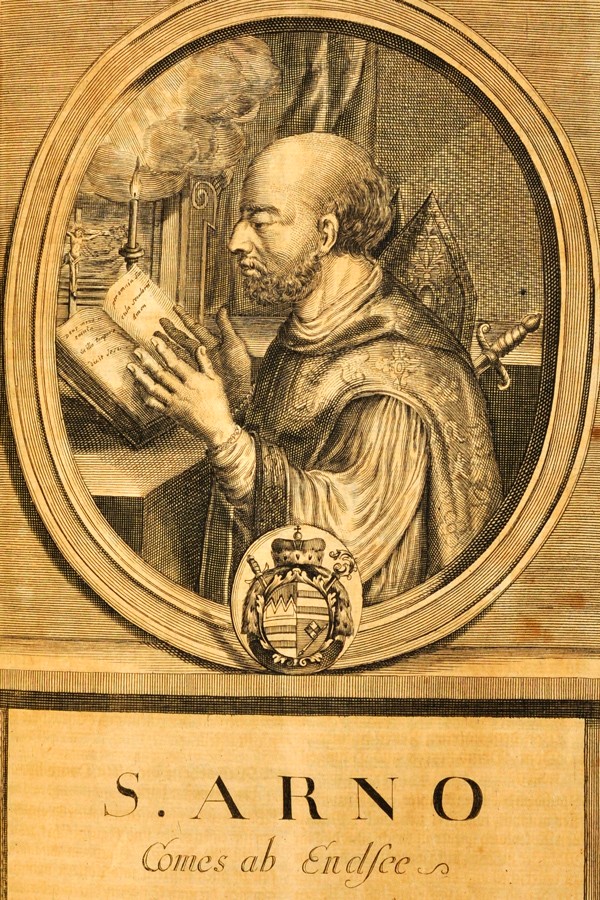
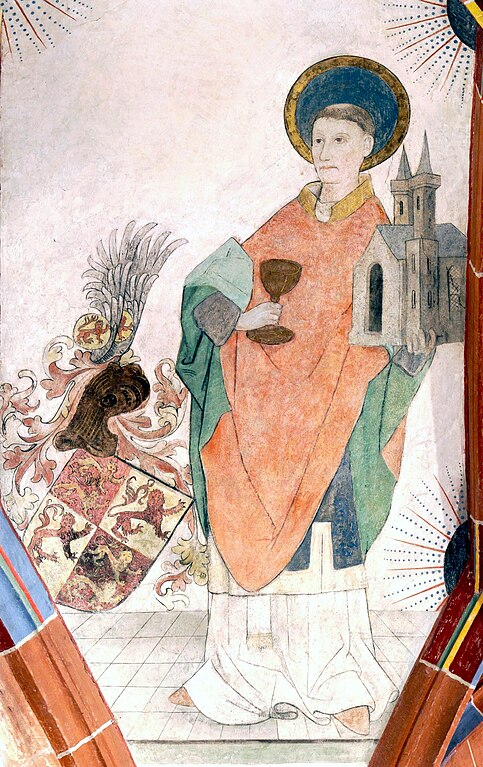
Saint of the Day – 13 July – Saint Arno of Würzburg (Died 892) Bishop Martyr. Born at an unknown location in the 9th Century and died on 13 July 892 at Chemnitz, Saxony (in modern Germany). Also known as – Artno, Arn. His name means ‘the eagle‘ in old high German.
Arno was a student of the Bishop of Würzburg, Gozbald. In 855 he was made Bishop of Würzburg by the King of the East Frankish Empire, Louis the German.
Arno had the Cathedral built there which was then dedicated to St Kilian and was constructed on the site of the the Cathedral of the Saviour which had burned down in 855.
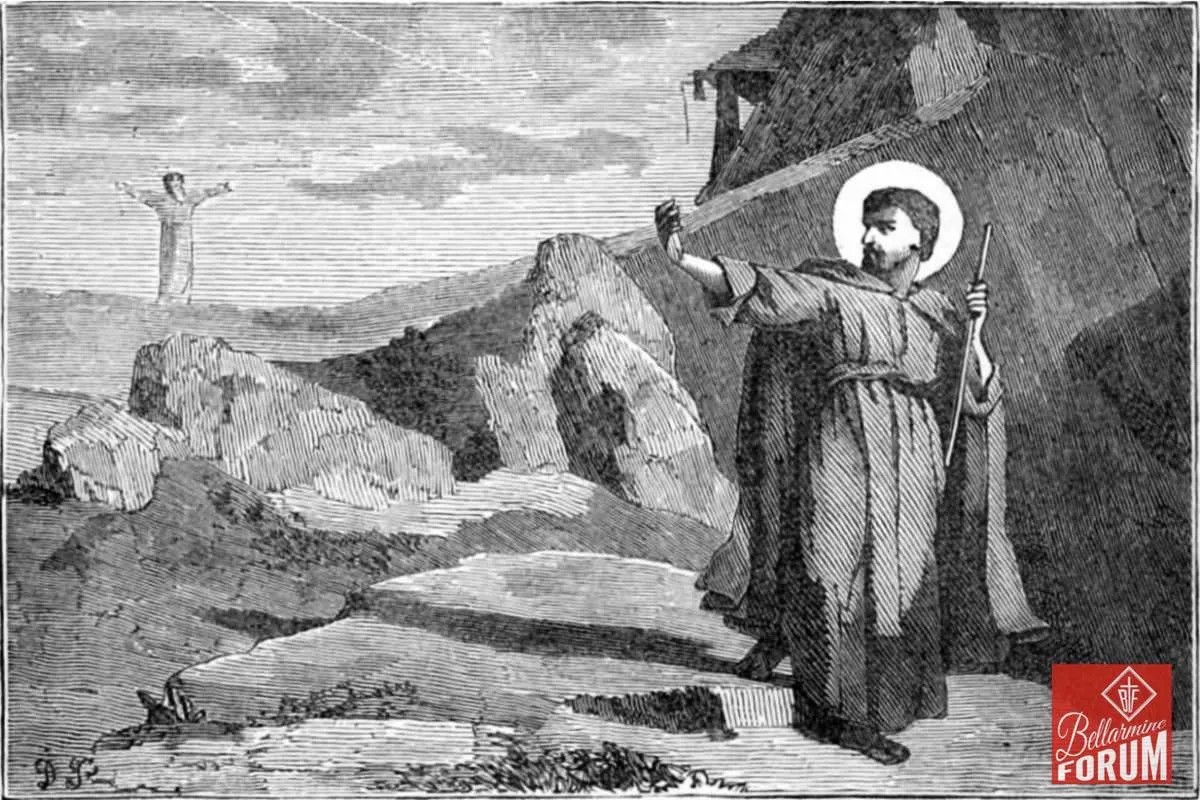
Under Arno’s Episcopal leadership, 9 new Churches were built in 10 years, mostly situate in the east of his Diocese, . He repeatedly took part in Imperial conferences and Imperial Synods and also participated in four of the King’s military campaigns: against the Bohemians , the Moravians , the Normans and against the Sorbs. During the latter campaign he was killed by pagan Sorbs – during the celebration of Holy Mass.
Würzburg Cathedral
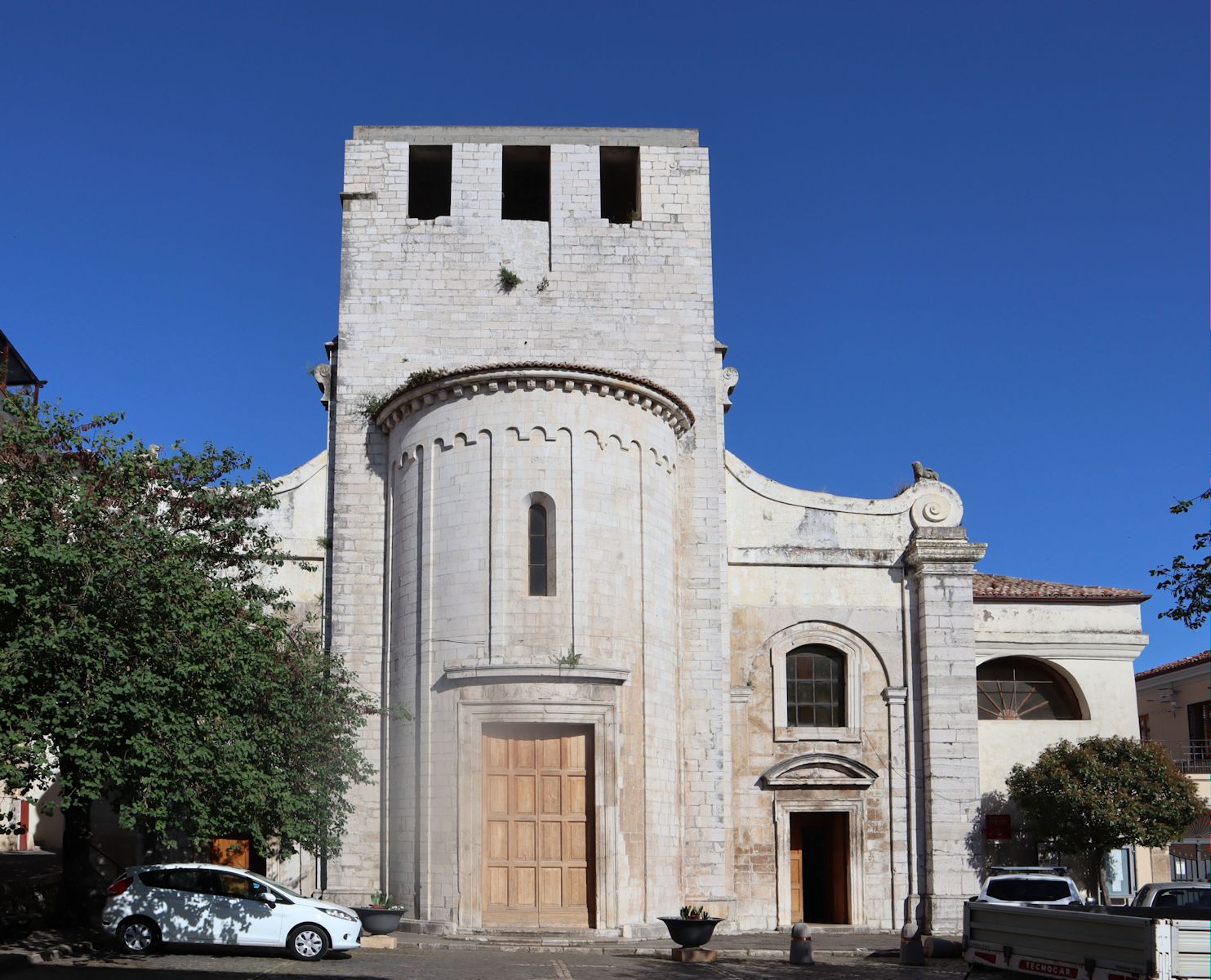
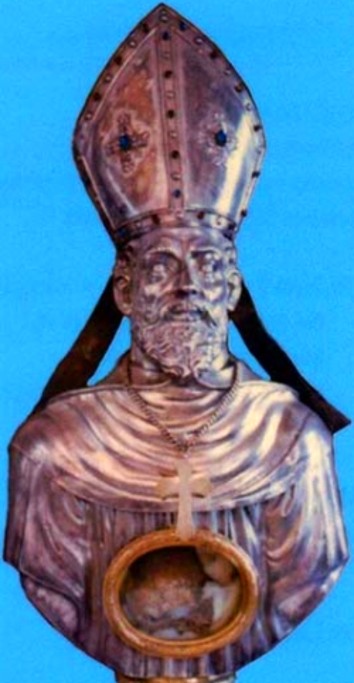
Arno died near Chemnitz in Saxony, in the district of Klaffenbach an old Stone Cross marks the possible place of death. Another possible place is Herrenhaide – a district of Burgstädt near Chemnitz – where a Memorial was erected in 2006. According to tradition, his Grave was in the – now demolished – Jacobi Church near the Castle in Colditz. Today his Gravestone is kept in the nearby Church of St Aegidien. Formal recognition of his cult was finally approved in the 18th Century although it had been highly active especially in the Franconia region for centuries.
Bl Anne-Andrée Minutte St Arno of Würzburg (Died 892) Bishop Martyr Bl Berthold of Scheide St Dogfan Bl Élisabeth Verchière St Esdras the Prophet St Eugene of Carthage St Giustina of Arzano
St Iosephus Wang Kuiju
Blessed James of Voragine OP (c1226 – 3 or 16 July 1298) Italian Archbishop of Genoa, Author of the ‘Golden Legend’ (a collection of lives of Saints and treatises on Christian festivals, one of the most popular religious works of the Middle Ages and is still published and referred to today – completed 1265), Priest and Friar of the Order of Preachers of St Dominic, Writer, Scholar of great genius, Prior and Provincial General of the Order. Blessed James was Beatified on 11 May 1816 by Pope Pius VII. Biography: https://anastpaul.com/2021/07/13/saint-of-the-day-13-july-blessed-james-of-voragine-op-c-1226-1298-author-of-the-golden-legend/
Bl Jean of France St Joel the Prophet Bl Marie-Anastasie de Roquard Bl Marie-Anne Depeyre Bl Marie-Anne Lambert
St Muritta of Carthage St Myrope St Salutaris of Carthage St Sarra of Egypt St Serapion of Alexandria Serapion of Macedonia St Silas (1st Century) Disciple of Sts Paul and Barnabas Bl Thérèse-Henriette Faurie Bl Thomas Tunstal
Martyrs of Cyprus – 300 Saints: 300 Christians who retired to Cyprus to live as cave Hermits, devoting themselves to prayer and an ascetic life devoted to God. Tortured and Martyred for their faith and their bodies thrown into the various caves in which they had lived. We know the names of five of them but no other details even about them – Ammon, Choulélaios, Epaphroditus, Eusthénios and Héliophotos. They were beheaded in the 12th century on Cyprus and their bodies dumped in the cave where they had lived and only rediscovered long afterwards.
Martyrs of Philomelio – 31 Saints: 31 soldiers Martyred for their faith in the persecutions of prefect Magno, date unknown. The only name that has come down to us is Alexander. In Philomelio, Phrygia (in modern Turkey).
Saint of the Day – 12 July – Saint Viventiolus of Lyons (c460–524) Bishop, Scholar, Spiritual Writer, Monk of Condat, an Abbey which boasted an important school. He was a teacher there and his knowledge was great. Born in Lyons in c460 and died there in 524 of natural causes. Also known as – Juventiole, Vivientol, Viventiole, Vivenziolo.
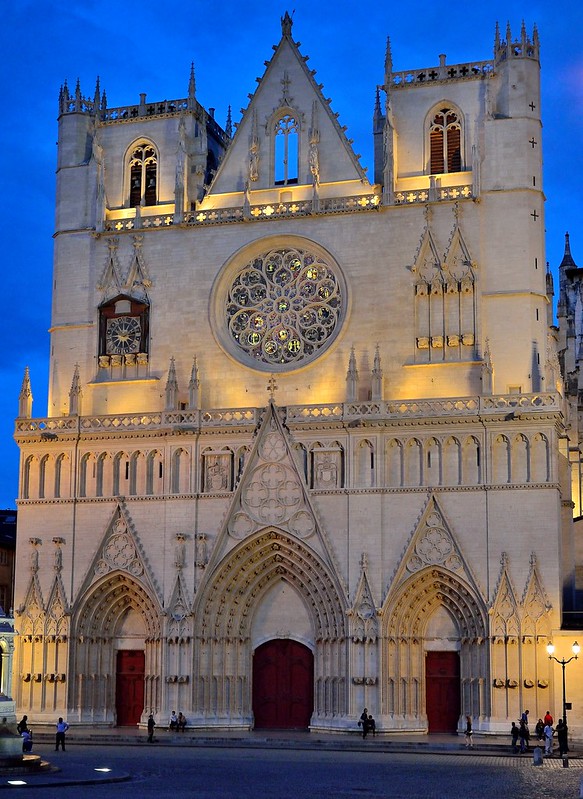
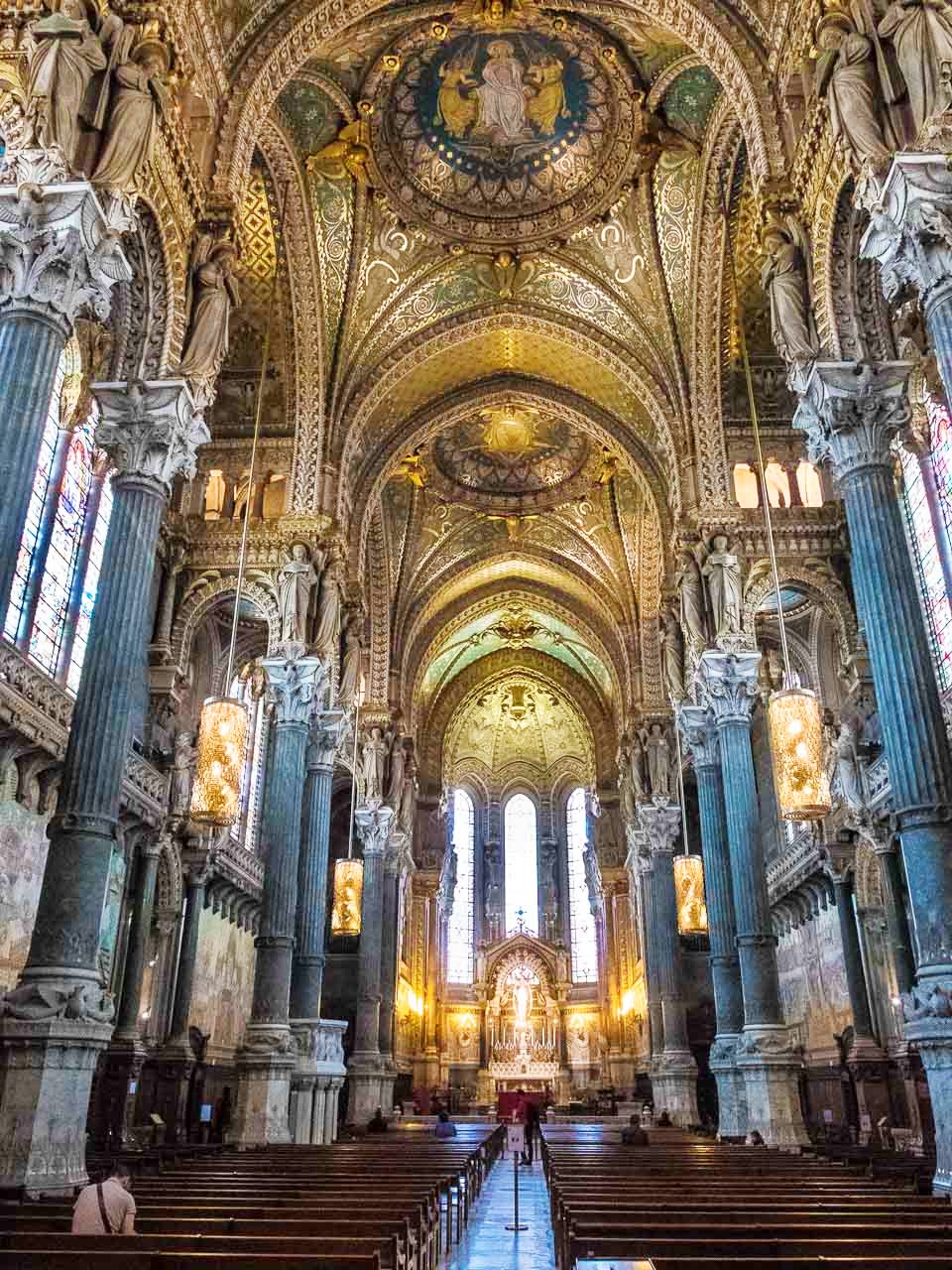
Lyons Cathedral Basilica
Viventiolus and his brother Rusticus were the sons of Aquilinus (c430-c470), a nobleman of Lyons and friend of St Sidonius Apollinaris. Aquilinus was a Priest of a Province in Gaul between 423 and 448 under Apollinaris, the father of Sidonius.
Through his paternal grandmother, Tullia, Viventiolus was the great-grandson of Saint Eucherius.
Viventiolus was a Monk in Jura, where he was elected Prior. Due to our Saint’s great learning and leadership abilities, St Avitus the Archbishopof Vienne, recommended him for the See of Lyons and his own Episcopal school there.
The Interior of the Apse of Lyons Cathedral Basilica
In 516-517, he and St Avitus presided over the Council of Agaune. From this Council we have received a large part of the speech he made there. Viventiolus speaks, with great finesse and great mystical depth, of the cloisters from which he desired reform, in order to eradicate the ignorance prevalent amongst the Monks.
He is also the Author of a book “The Lives of the Jura Fathers” which described the beginnings of monasticism in that region.
Bl Conrad of Maleville Bl David Gonson St Epiphana St Faustus the Soldier St Felix of Milan * Commemorated with St Nabor St Fortunatus of Aquileia (1st Century – Died c66) Deacon St Hermagorus of Aquileia (1st Century – Died c 66) Bishop, Disciple of St Mark the Evangelist Bl Guy Vignotelli St Hilarion of Ancyra St Jason of Tarsus Bl Jeanne-Marie de Romillon
Bl Madeleine-Thérèse Talieu Bl Marguerite-Eléonore de Justamond Bl Marie Cluse St Menas the Soldier St Menulphus of Quimper St Nabor of Milan * Commemorated with St Felix St Paternian of Bologna St Paulinus of Antioch St Phêrô Khan St Proclus of Ancyra St Proculus of Bologna St Uguzo of Carvagna St Ultán
St Viventiolus of Lyons (c460–524) Bishop
Three Holy Exiles: Three Christian men who became Benedictine Monks at the Saint James Abbey in Regensburg, Germany, then Hermits at Griestatten and whose lives and piety are celebrated together. – Marinus, Vimius and Zimius.
Martyrs of Rome – Four members of the Imperial Roman nobility. They were all soldiers, one or more may have been officers, and all were Martyred in the persecutions of Diocletian – Basilides, Cyrinus, Nabor and Nazarius. Died in c 304 outside Rome, Italy and were buried there along the Aurelian Way.
Martyrs of Nagasaki – 8 Beati: Additional Memorial – 10 September as one of the 205 Martyrs of Japan Eight lay people, many them related to each other, who were martyred together: Catharina Tanaka, Ioannes Onizuka Naizen, Ioannes Tanaka, Ludovicus Onizuka, Matthias Araki Hyozaemon, Monica Onizuka, Petrus Araki Chobyoe, Susanna Chobyoe, 12 July 1626 in Nagasaki, Japan. Beatified on 7 May 1867 by Pope Blessed Pius IX.
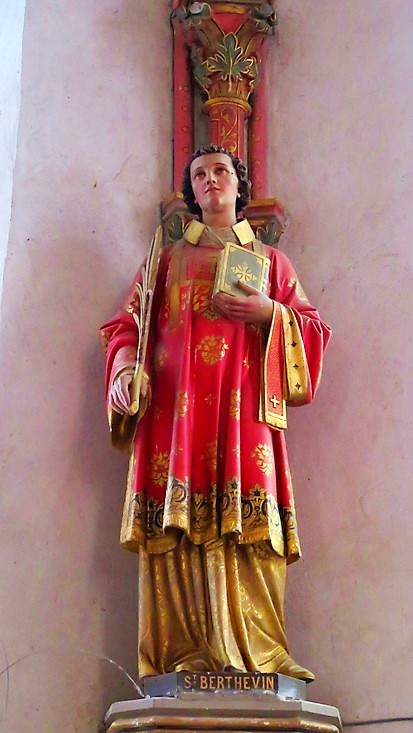
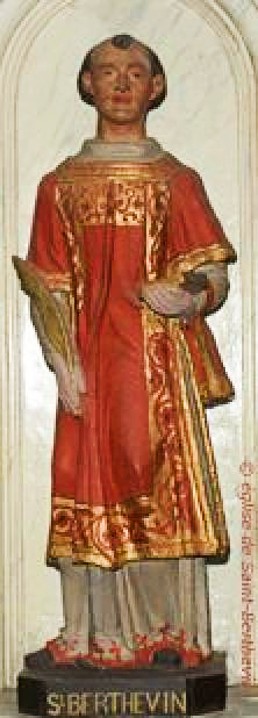
Saint of the Day – 11 July – Saint Berthevin of Laval (10th Century) Deacon Martyr, Hermit, Teacher. We believe he was born in Parigny, in the region of Lisieux, France and died in Laval by being murdered. Also known as – Berthevin of Laval, Berthevin of Parigny, Berthevin of Vicoin, Berthevin of Val-Guidon, Bertevin, Bertewin, Bertewinusn Berthvinn Berthwinus, Bertininus, Bertivinus, Bertunius, Bertunus, Bertuwinus, Bertuwius, Bertwin, Brévin. Additional Memorials – 11 June (translation of Relics) and 8 September on some calendars.
Berthevin was a member of the noble family of Argence. He is said to be the son of Pierre d’Argence. A village of the same name St Berthevin, still exists in Parigny today.
What we know about Saint-Berthevin was transcribed by a Monk of Mont Saint-Michel in the 12th or 14th Century.
Saint-Berthevin, a Cleric from Parigny in Normandy, became a Hermit to escape the Norman invaders. The Lord of Laval , noticed his virtues and he charged him with ensuring the education of his children. Berthevin carried out his new function with zeal. As soon as he had the leisure, he would retire to his old Hermit’s cave to pray and instruct thimself and he children of the surrounding area.
His Vita tells us that, while carrying out his duties with prudence and justice, he studied Sacred Scripture and spiritual literature and went to pray every day in a Church dedicated to Saint Nicholas .
Having gained the full trust of his Master, other servants killed him out of jealousy and threw his body into a river near which he was accustomed to pray. But then, fearing that his body would be discovered, they hid it, in turn, in a fountain in the Vicoin, before hoisting it into the crevice of a cliff overlooking the Vicoin. It was there that his godmother, warned by a heavenly voice, came to collect his body and brought it to Parigny.
St Pius I, Pope (Died c 154) Martyr – The Ninth Successor of St Peter. Papal Ascension c 142. Born at Aquileia, Italy and died in Rome. The Roman Martyrology states of him today: “At Rome, the blessed Pius, Pope and Martyr, who was crowned with Martyrdom in the persecution of Marcus Aurelius.” His Life and Death: https://anastpaul.com/2021/07/11/saint-of-the-day-11-july-saint-pope-pius-i-died-c-154/
St Abundius of Ananelos St Amabilis of Rouen St Anna An Jiaoshi St Anna An Xingshi Bl Antonio Muller St Berthevin of Laval (Died 10th Century) Deacon Martyr St Cindeus St Cowair St Cyprian of Brescia St Cyriacus the Executioner St Hidulf of Moyenmoutier St Januarius St John of Bergamo
St Leontius the Younger St Marcian of Lycaonia St Marciana of Caesarea Bl Maria An Guoshi Bl Maria An Linghua Bl Marie-Clotilde Blanc Bl Marie-Marguerite de Barbégie d’Albrède
St Olga Queen of Kiev (c 890-969) She was known as a ruthless and effective ruler but “when Olga was enlightened, she rejoiced in soul and body. The Bishop, who instructed her in the faith, said to her, ‘Blessed art thou among the women of Rus,’,for thou hast loved the light and quit the darkness. The sons of Rus’ shall bless thee to the last generation of thy descendants.” About St Olga: https://anastpaul.com/2020/07/11/saint-of-the-day-11-july-saint-olga-queen-of-kiev-c-890-969/
St Placidus of Disentis * (7th Century) Monk (see below)
Bl Rosalie-Clotilde Bes St Sabinus of Brescia St Sabinus of Poitiers St Sidronius
Saint of the Day – 10 July – Blessed Bernard of Quintavalle OFM (c1175-c1241) Friar of the Friars Minor, the first disciple of St Francis and is often called “First Fruits of the Minor Order.” Missionary, Master Provincial and trustworthy companion and legate of St Francis. He received. from St Francis on his deathbed, custody of the Friars Minor. He died nearly 20 years after St Francis. Born in c1175 in Assisi, Italy and died between 1241 and 1246 in Assisi of natural causes. Also known as – Bernard of Assisi, Bernardo… “First fruits of the Minor Order” (“Minorum Ordinis Prima Plantula”). Additional Memorial – 2 July on some calendars.
Bernard, son of Quintavalle di Berardello, was a wealthy young noble from Assisi. His family’s house still stands in Assisi to this day.
He studied at Bologna University receiving his Degree in both Civil and Canon Law. He also fought in the First Crusade.
He was a rich young merchant who became acquainted with St Francis when the Saint visited his palace. On the Feast of Saint Matthias, 24 February 1208, Francis had heard the Gospel, “And going, preach, saying: The Kingdom of Heaven is at hand. … Do not possess gold, nor silver, nor money in your purses … And when you come into the house, salute it, saying: Peace be to this house. … Behold I send you as sheep in the midst of wolves. Be ye therefore wise as serpents and simple as doves!” (Matthew 10:7-19).
Then Francis knew that his path was pointed out, took off his shoes and gave them away together with the staff and the belt. He put on an undyed woollen coat, tied it with a rope and went out as a beggar. This was the suit he gave to his brothers the following year.
Many began to admire Francis and some wanted to become his companions and disciples. The first of these was Bernard of Quintavalle. He sold everything he owned and shared the money among the poor and thus became the first fruit in the Order.
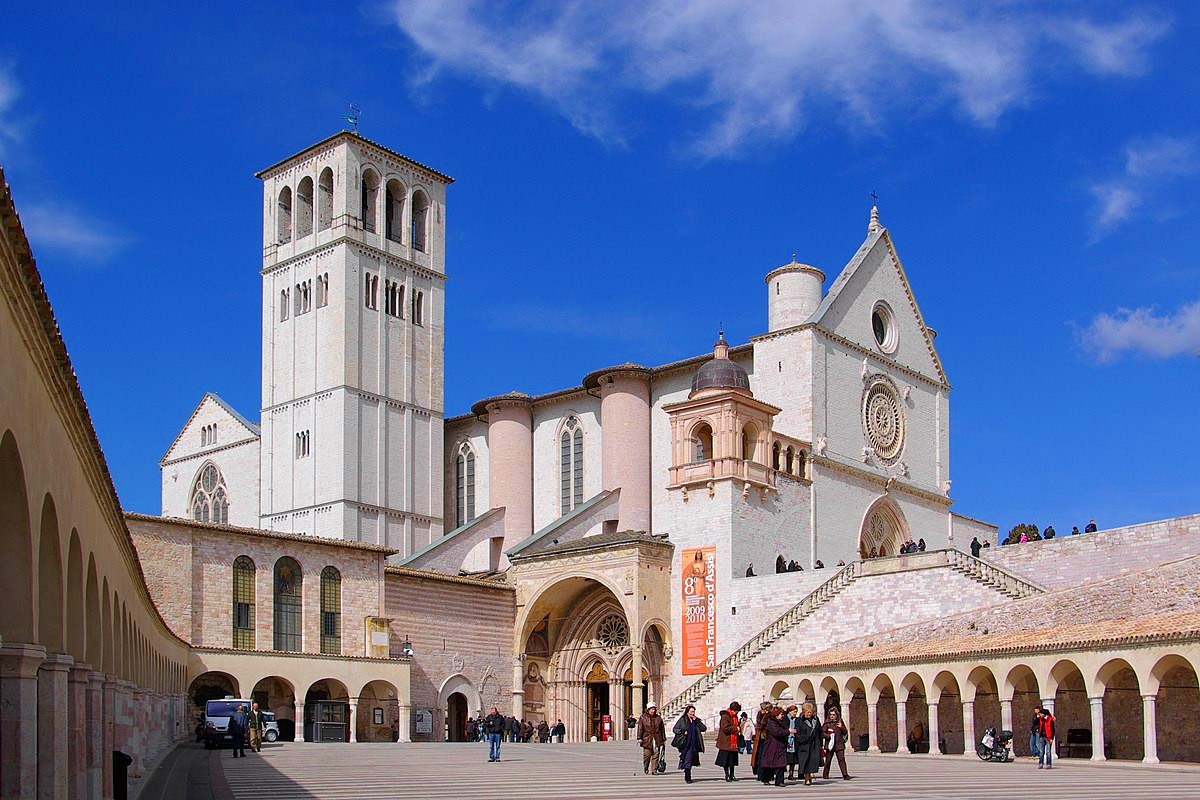
View of the Upper Basilica in Assisi
Peter of Cattaneo (Pietro Cattani), the Canon of the Cathedral of Assisi, also wanted to become Francis’s disciple and Francis gave them both the garb on 16 April 1208. The third to join them was the famous Blessed brother Giles , a man of great simplicity and spiritual wisdom. He arrived on 23 April.
Together with Francis, Bernard went to Rome to see Pope Innocent III (1198-1216) to obtain the approval of The Seraphic Rule (16 April 1209), then in 1211 he was in Florence and Bologna, places which can thank him for the beginning of his Franciscan presence in those Cities. Together with brother Giles, he travelled to Spain, where he was later,appointed as the Master Povincial (1217-1219). Between 1241 and 1243 he spent some time in Siena.
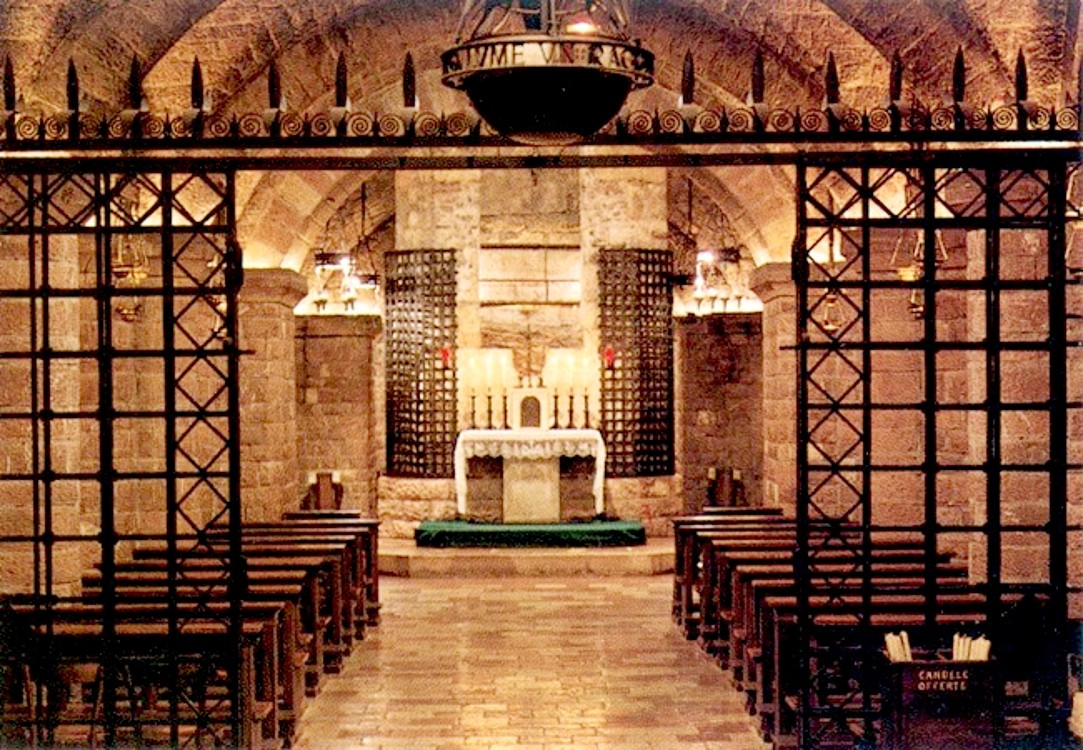
His date of death is not known, although some records declare it to have been 10 July 1241. What is quite clear, is that he was no longer alive on 11 August 1246, as his companions, the brothers Leo, Rufinus and Angelus, sent his memoirs of Francis to the General Minister and Crescentius and Bernard were then dead. He had died in Assisi as he had predicted and he is buried close to the Tomb of St Francis (below), in the Basilica of St Francis in Assisi. The Franciscan Martyrology commemorates him today, 10 July.
St Sylvanus of Pisidia Bl Sylvie-Agnès de Romillon St Waltram
Martyrs of Africa – 4 Saints: A group of Christians Martyred together in Africa. The only information that has survived are four of their names – Felix, Januarius, Marinus and Nabor.
Martyrs of Antioch – 10 Saints: A group of ten Christians Martyred together. We have no details about them but the names – Diogenes, Domnina, Esicius, Macarius, Maxima, Maximus, Rodigus, Timoteus, Veronia and Zacheus. They were martyred in Antioch, date unknown.
Martyrs of Damascus – 11 Beati: A group of Franciscans and laymen ordered by Druz Muslims to convert to Islam. They refused and were hacked to pieces. ‘Abd Al-Mu’ti Masabki Carmelo Bolta Bañuls Engelbert Kolland Francisco Pinazo Peñalver Fransis Masabki Juan Jacobo Fernández y Fernández Manuel Ruiz López Nicanor Ascanio de Soria Nicolás María Alberca Torres Pedro Soler Méndez Rufayil Masabki They were cut to pieces on 9-10 July 1860 in Damascus, Syria. Beatified on 10 October 1926 by Pope Pius XI.
Martyrs of Nicopolis – 45 Saints: A group of 45 Christians tortured and Martyred together in the persecutions of emperor Licinius. We know nothing else but six of their names – Anicetus, Anthony, Daniel, Leontius, Mauritius and Sisinno. c 329 in Nicopolis, Armenia (modern Koyulhisar, Turkey).
Martyrs of Nitria – 5 Saints: Fathers of Nitria – Four Monks and the Bishop of Alexandria, Egypt who were Martyred by heretics. Saint John Chrysostom wrote about them but their names have not come down to us. They were Martyred in the 4th century in Nitria, Egypt.
Saint of the Day – 9 July – Saint Brictius of Martola (Died c312) Bishop and Confessor. Brictius was the Bishop of Martola, near Spoleto in Umbria in Italy. Also known as Brixtius.
The Roman Martyrology reads: “At Martola, St Brixius, Bishop. Under the Judge Marcian, after having suffered much for the confession of Our Lord and converted a great multitude to Christ. he rested in peace.”
We have very little information about the life of our Saint. Tradition believes that he was imprisoned during the persecutions of Diocletian but escaped Martyredom and died peacefully as Constantine was begining to take power.
St Maria Goretti (1890-1902) Virgin and Martyr, known as “Saint Agnes of the 20th Century.” She was Canonised on 24 June 1950 by Pope Pius XII The ceremony was attended by 250,000 including her mother, the only time a parent has witnessed her child’s Canonisation. Her Life and Death: https://anastpaul.com/2017/07/06/saint-of-the-day-6-july-st-maria-goretti/
Blessed Adrian Fortescue TOSD (1476-1539) Martyr,. A husband and father, a Justice of the Peace, a Knight of the Realm, a Knight of Malta and a Dominican Tertiary (Lay Dominican), he was at once a loyal servant of the Crown so far as he could be but still more, he was a man of unshakeable faith and love of the One True Faith. He was Beatified on 13 May 1895 by Pope Leo XIII. His Life and Death: https://anastpaul.com/2018/07/09/saint-of-the-day-blessed-adrian-fortescue-1476-1539-martyr/
St Agrippinus of Autun St Alexander of Egypt St Audax of Thora St Brictius of Martola(Died c312) Bishop and Confessor St Copra of Egypt St Cyril of Gortyna Bl Dionysius the Rhetorician St Everild of Everingham St Faustina of Rome St Felician of Sicily
Blessed Giovanna Scopelli O.Carm (1428 – 1491) Virgin, Mystic, Italian Religious of the Carmelites and established her own Convent as its first Prioress. She was known, during her lifetime as a Miracle-worker with many coming to her to ask for her assistance and prayers. Her body is incorrupt. About Blessed Giovanna: https://anastpaul.com/2021/07/09/saint-of-the-day-9-july-blessed-giovanna-scopelli-o-carm-1428-1491/
St Floriana of Rome St Hérombert of Minden Bl Joachim Ho
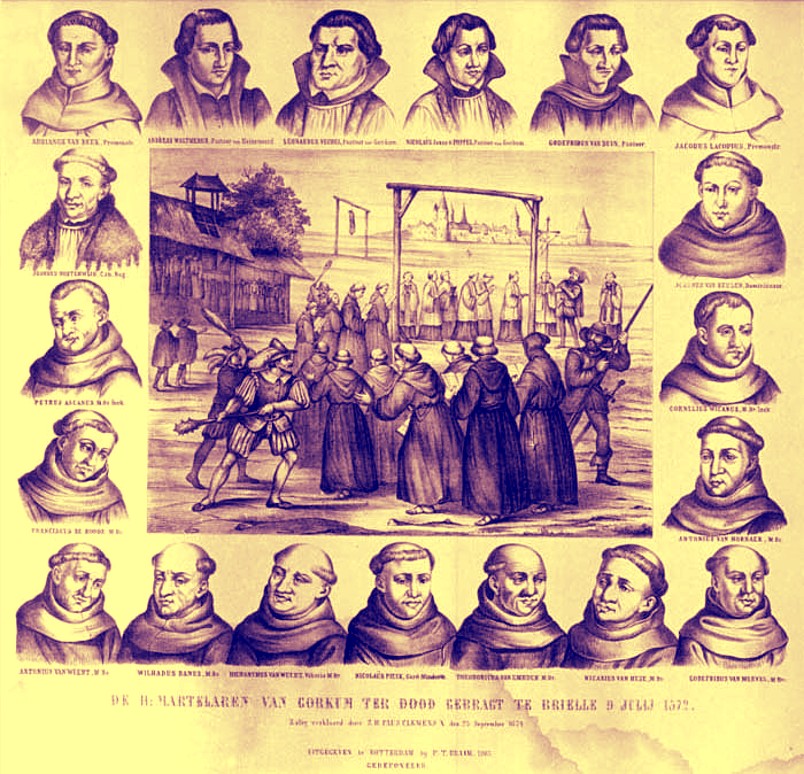
St John of Cologne OP (Died 1572) Priest Martyr and the MARTYRS of GORKUM
Bl Luigi Caburlotto Bl Marguerite-Marie-Anne de Rocher Bl Marie-Anne-Madeleine de Guilhermier St Patermutius of Egypt St Paulina do Coração Agonizante de Jesus
Four Holy Polish Brothers – 4 Saints: Four brothers who became hermits, Benedictine Monks and Saints – Andrew, Barnabas, Benedict and Justus. They were born in Poland and died in 1008 of natural causes.
Martyrs of Gorkum – 19 Saints: The Roman Martyrology (1914 Ed) notes today as the Feast of a group of Saints known as the Martyrs of Gorkum: “At Briel in Holland, the Martyrdom of the 19 Martyrs of Gorkum. For vindicating the authority of the Roman Church and the Real Presence of Christ in the Eucharist, they endured various ignominies and torments from the Calvinist heretics and ended their suffering by being put to death. In the year 1867, Pope Pius IX placed them among the holy Martyrs.” They are – Adrianus van Hilvarenbeek • Andreas Wouters • Antonius van Hoornaar • Antonius van Weert • Cornelius van Wijk • Francisus de Roye • Godfried van Duynen • Godfried van Melveren • Hieronymus van Weert • Jacobus Lacops • Joannes Lenaerts • John of Cologne • Leonardus van Veghel • Nicasius Janssen van Heeze • Nicolaas Pieck • Nicolaas Poppel • Petrus van Assche • Theodorus van der Eem • Willehad van Deem • They were hanged on 9 July 1572 in Brielle, Zuid-Holland, Netherlands. Beatified on 24 November 1675 by Pope Clement X and Canonised on 29 June 1867 by Pope Pius IX.
Martyrs of Orange – 32 Beati: 32 Nuns from several Orders who spent up to 18 months in prison and were finally executed for refusing to renounce Christianity during the persecutions of the French Revolution. Anne Cartier • Anne-Andrée Minutte • Dorothée-Madeleine-Julie de Justamond • élisabeth Verchière • élisabeth-Thérèse de Consolin • Jeanne-Marie de Romillon • Madeleine-Françoise de Justamond • Madeleine-Thérèse Talieu • Marguerite-Eléonore de Justamond • Marguerite-Marie-Anne de Rocher • Marguerite-Rose de Gordon • Marguerite-Thérèse Charensol • Marie Cluse • Marie-Anastasie de Roquard • Marie-Anne Béguin-Royal • Marie-Anne Depeyre • Marie-Anne Doux • Marie-Anne Lambert • Marie-Anne-Madeleine de Guilhermier • Marie-Claire du Bac • Marie-Clotilde Blanc • Marie-Elisabeth Pélissier • Marie-Gabrielle-Françoise-Suzanne de Gaillard de Lavaldène • Marie-Gertrude de Ripert d’Alauzier • Marie-Marguerite Bonnet • Marie-Marguerite de Barbégie d’Albrède • Marie-Rose Laye • Rosalie-Clotilde Bes • Suzanne-Agathe Deloye • Sylvie-Agnès de Romillon • Thérèse-Henriette Faurie They were guillotined between 6 July and 26 July 1794 at Orange, Vaucluse, France. Beatified on 10 May 1925 by Pope Pius XI.
Martyrs of the Baths – 10,204 Saints: A group of Christians enslaved by Diocletian to build the gigantic baths in imperial Rome, Italy. The end of their labours coincided with the beginning of the great persecutions of Diocletian and they were all executed. Ancient records indicated there were 10,204 of them; Zeno of Rome is the only one whose name has come down to us and we know nothing else about any of their individual lives.
Saint of the Day – 8 July – Saint Grimbald (c827-901) Abbot, Confessor, Overseer of the foundation of Newminster Monastery in England. Born in c827 at St Omer in Flanders, now Belgium (although this Town now lies within the French territories near the Belgiab border) and died on 8 July 901 of natural causes at jis new Monastery Newminster. Also known as – Grimwald, Grimbold.
Grimbald became a Monk at the Abbey of St Bertin near his home town of St Omer.
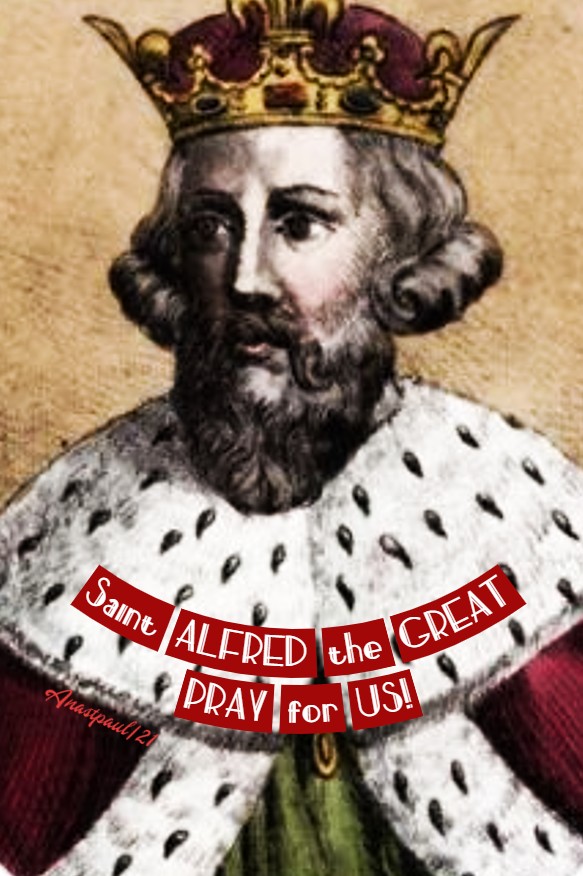
According to Grimbald’s ‘Vita Prima’ St Alfred the Great (849-899) King of Wessex (and effectively all of England) met Grimbald before his reign, at St Bertin’s Monastery whilst St Alfred was travelling to Rome. He was greatly impressed by our Saint and after his Coronation, in around 892, King Alfred, with the agreement and advice of St Eldred, the Archbishop of Canterbury, sent messengers to St Bertin’s to invite Grimbald to visit England.
Invited for his lpiety, devotion and scholarship, Grimbald was one of severallearned men who had been invited to the English Court to assist the King in his educational pursuits and was among the most prominent.
In fact, in the Introduction of his translation of St Gregory the Great’s Pastoral Care, KingAlfred mentions the assistance he had received from St Grimbald in the work and especially in translation of the Latin.
St Alfred is represented as the Founder of Oxford University together with our Saint and other learned and saintly men. It is believed that Grimbald was appointed as the first Professor of Divinity.
Grimbald refused King Alfred’s offer of the appointment to the See of Canterbury but after Alfred’s death, he accepted the appointment as the Abbot, to the yet unbuilt Monastery, Newminster, in Winchester by King Alfred’s son and successor as King, Edward the Elder.
After two decades in England, Grimbald became ill. He attended Holy Mass and sought the consolation of the reception of the Blessed Eucharist. He then spent several days in prayer and contemplation, gathered the Monks of the community to his cell for one last time of unity and died. It was 8 July 901. He was immediated venerated as a Saint and confessor and many Churches were dedicated to him. The Grimbald Gospels in the British Library are named after him.
St Elizabeth of Portugal TOSF (1271-1336) Widow, Queen Consort, Widow, Franciscan Tertiary, Apostle of Charity and Peace, Political Negotiator and Mediator. In the year 1694 Pope Innocent XII moved her Feast to 8 July, so that it would not conflict with the celebration of the Octave of Saints Peter and Paul, Apostles. Biography: https://anastpaul.com/2018/07/04/saint-of-the-day-4-july-st-elizabeth-of-portugal-t-o-s-f-1271-1336/
St Abraham the Martyr Bl Adolf IV of Schauenburg St Pope Adrian III
St Morwenna – No details about her have survived. She is reported to have appeared in visions in Morwenstow, Cornwall, England, where her Relics are apparently buried under the Church floor.
St Pancras of Taormina Bl Peter the Hermit St Procopius of Ceasarea St Sunniva of Bergen St Thibaud de Marly St Totnan of Thuringia
Abrahamite Monks/Martyrs of Constantinople: A group of Monks in a Monastery founded by Saint Abraham of Ephesus. Martyred in the iconoclast persecutions of Emperor Theophilus. In c 835 in Constantinople.
Martyrs of Shanxi – 7 Saints: In 1898 seven sisters of the Franciscan Missionaries of Mary were sent to the Shanxi Diocese in China to serve the poor in hospitals and care for the unwanted or other destitutes in orphanages. They were: Anne-Catherine Dierks, Anne-Francoise, Moreau, Clelia Nanetti, Irma Grivot, Jeanne-Marie Kuergin, Marianna Giuliani, Pauline Jeuris There they all died in one of the periodic persecutions against foreign missionaries. They were beheaded on 9 July 1900 at Taiyuanfu, China- Canonisedon 24 November 1946 by Pope Pius XII.
Martyrs of Syrmium – 5 Saints: Five Christians Martyred together for their faith. We know nothing else about them but the names – Cecilia, Eperentius, Eraclius, Sostratus and Spirus. They were martyred in the 4th century in Syrmium, Pannonia (modern Serbia).
Saint of the Day – 7 July – Saint Odo of Urgell (c1063-1122) Bishop, a zealous Defender of the rights of his See, builder and restorer of numerous Churches but most of all, Bishop Odo is remembered as a most gentle and generous benefactor of the poor, the needy and the ill. Born in Sort, Catalan, Spain in c1063 and died on 7 July 1122 in Urgell, Catalan, Spain. Patronage – of La Seu d’Urgell, Spain. Also known as – Oddone, (in Catalan -Ot, Dot) Odón.
Odo was the third son of Artal and Lucia, of the noble family of the Counts of Pallars. He was born in Sort between 1063 and 1065.
He embraced the Ecclesiastical state from a young age and was the Archdeacon of the Cathedral of Urgell for several years. He was elected as the Bishop in 1095.
Odo was a courageous defender of the rights of his See and built or restored numerous Churches. He promoted religious and social brotherhoods and spent much of this time and energy on assisting the poor and ill.
He died on 7 July 1122 and in the inscription engraved on his Tomb, he was praised as “father of orphans and widows, health of the sick and life of the poor.”
He is buried in the Monastery of Santa Maria de Gerri – see the Monastery below. In 1133 his successor declared him to be a Saint and he is venerated as such today. Odo is one of the Patron Saints of the town of La Seu d’Urgell.
His successor, Peter Berenguer (1123-1141) and the Cathedral Chapter, together authorised his public veneration on 21 June 1133. Since then, his Feast has been celebrated in Urgell, of which he is the Patron Saint, on 7 July, with his own Office until the reform of Saint Pius V in 1568 and with the O“ffice de Comuni Confessorum Pontificum,” thereafter. He entered the Roman Martyrology in the second edition of 1589.
Saint Cyril (827-869) Saint Methodius (826-885) “Apostles to the Slavs,” Sibling Brother Bishops, Confessors, Theologians, Missionaries, Writers, Preachers, Patrons of Europe. Creators of the Glagolitic alphabet, the first alphabet used to transcribe Old Church Slavonic and Cyrillac Alphabet, which was developed from it. Their Feast Day is 7 July (moved in 1969). The great Saints Cyril & Methodius: https://anastpaul.wordpress.com/2018/02/14/saints-of-the-day-14-february-sts-cyril-827-869-methodius-826-885/
St Lawrence of Brindisi OFM Cap (1559-1619) Confessor, The “Franciscan Renaissance Man,” Priest and Friar of the Friars Minor Capuchin, Theologian, Vicar General of the Franciscans, Language scholar, Humanist, Philosopher, Biblicist, Preacher, Missionary, Professor, International Administrator, Confidant of Popes, Emperors, Kings and Princes, Diplomatic envoy, Army Chaplain, Military Strategist and Morale builder, Polemicist, Prolific writer. He was Beatified on 1 June 1783 by Pope Pius VI and Canonised on 8 December 1881 by Pope Leo XIII. His Zealous Life: https://anastpaul.com/2017/07/21/saint-of-the-day-21-july-st-lawrence-of-brindisi-o-f-m-cap-doctor-of-the-church/
St Alexander St Angelelmus of Auxerre St Apollonius of Brescia
Blessed Pope Benedict XI OP (1240-1303) Cardinal-Priest of St Sabina, Bishop of Ostia then of Rome, Dominican Friar, Prior Provincial of Lombardy prior to becoming the Master of the Order in 1296, Apostolic Papal Legate to Hungary and France, Teacher, Preacher, Writer and renowned Scholar with special emphasis on Scriptural commentary. His Papacy began on 22 Ocober 1303 and ended at his death on 7 July 1304. His Life: https://anastpaul.com/2020/07/07/saint-of-the-day-7-july-blessed-pope-benedict-xi-1240-1303/
Bl Bodard of Poitiers St Bonitus of Monte Cassino St Carissima of Rauzeille St Eoaldus of Vienne
St Hedda of Wessex St Maelruan St Medran St Merryn Bl Oddino Barrotti St Odo of Urgell (c1063-1122) Bishop St Odran St Palladius of Ireland St Pantaenus of Alexandria
St Pantænus (Died c 216) Father of the Church, Theologian, Philosopher, Teacher, Confessor and Defender of the Faith, Writer and interpreter of the Bible, the Trinity and Christology, |Missionary. Convert of the disciples of the Apostles. Head of the Alexandrian School of Learning – a famous pupil was St Clement of Alexandria. Biography: https://anastpaul.com/2019/07/07/saint-of-the-day-7-july-st-pantaenus-father-of-the-church-died-c-216/
St Peter Fourier C.R.S.A. (1565-1640) Priest, Founder, Reformer, Confessor, Theologian, Teacher, Preacher, Apostle of Prayer, Penance and Charity, Marian devotee – “the Good Father of Mattaincourt” “le bon pere de Mattaincourt”. Although he died on 9 December his Feast Day is celebrated today, 7 July, possibly the date of the translation of part of his Relics. St Peter spread everywhere devotion to the Immaculate Conception of the Blessed Virgin. More than two centuries before the Miraculous Medal in 1830 and the proclamation of the dogma in 1854, he saw to the distribution of large quantities of a medal he had struck, on which were engraved the words – “Mary was conceived without sin.” He was Beatified by Pope Benedict XIII in 1730 and Canonised by Pope Leo XIII in 1897. St Peter Fourier is honoured by a statue of him in St Peter’s Basilica among the founders of religious orders. His Zealous Life: https://anastpaul.com/2018/12/09/saint-of-the-day-9-december-st-peter-fourier-c-r-s-a-1565-1640/
Martyrs of Durres – 7 Saints: Also known as – Martyrs of Dyrrachium/Martyrs of Durazzo. A group of seven Italian Christians who fled Italy to escape the persecutions of Emperor Hadrian. Arrived in Dyrrachium, Macedonia to find Saint Astius tied to a cross, covered in honey, laid in the sun and left to be tortured by biting and stinging insects. When they expressed sympathy for Astius, they were accused of being Christians, arrested, chained, weighted down, taken off shore and drowned. We know little more about each of them than their names – Germaus, Hesychius, Lucian, Papius, Peregrinus, Pompeius and Saturninus. They were born in Italy and were Martyred at sea c117 off the coast of Dyrrachium (Durazzo), Macedonia (modern Durres, Albania).
Saint of the Day – 6 July – St Goar (6th Century) Priest and Confessor, Hermit. Born at Aquitaine, modern France and died Also known as – Goaris, Goarus.
The Roman Martyrology reads: “In the region of Treves, St Goar, Priest and Confessor.”
The oldest information about this Saint dates to 765, when King Pepin donated the ‘holy cell of Goaris’ near Oberwesel, not far from Bingen, on the left bank of the Rhine, in the Diocese of Trier, to the Nonastery of Pruem.
In 782, Charlemagne definitively confirmed the donation and then Abbot Asuarius had a large Basilica built there in which the body of the Saint was enshriuned.
From that time on, the Goar’s Tomb began to be the destination of numerous pilgrimages, a city developed around the Basilica that took the name of the Saint (Sankt Goar) and the oldest biography was also written, by a Monk from Pruem.
According to the author, Goar was originally from Aquitaine, at the time of King Chidelbert he went to Trier and, after being Ordained a Priest by Bishop Felix, was given permission to build a cell near Oberwesel. There he celebrated Holy Mass everyday except Friday, recited the entire Psalter and assisted the pilgrims who visited him.
During the government of Bishop Rusticus, he had some troubles which he happily overcame; he refused the Episcopate of Trier, offered to him by King Sigebert and died full of years and merits on 6 July of an unknown year.
It is impossible to say when Goar actually lived, nor is his Gallic origin certain, since the name was already known in the 5th Century in the Rhinelands, however, it seems that it should be attributed to the 6th Century.
Since the veneration of Goar was growing more and more and miracles were multiplying at his Tomb, in 839, Abbot Marcward of Pruem ordered the Monk Wandelbert, to write a new biography of the Saint in a more fluent style and to add the miracles which had been granted by his intercession up to that time.
For the history of the cult of Goar, it must be noted that his Feast, in addition to the Martyrology of Wandelbert and that of Blessed Rabanus Mauru which depends on it, is remembered in the codices of the Geronimiano on 6 July.
St Gervais St Giusto of Condat St Goar (6th Century) Priest and Confessor, Hermit. St Godelieve St Monenna St Noyala of Brittany St Petrus Wang Zuolung
Martyrs of Campania – 23 Saints: A group of 23 Christians arrested, tortured and then beheaded together in the later 3rd century by order Gf Governor Rictiovarus during the persecutions of Diocletian. The names that have come down to us are – Antoninus, Arnosus, Capicus, Cutonius, Diodorus, Dion, Isidore, Lucia, Lucian, Rexius, Satyrus and Severinus.
Martyrs of Fiesole – 5 Saints: Five Christians Martyred together during the persecutions of Emperor Domitian – Carissimus, Crescentius, Dulcissimus, Marchisianus and Romulus. c 90 near Fiesole, Italy.
Saint of the Day – 5 July – Saint Zoe of Rome (Died c286) Married laywoman, Martyr. She lived during the reign of Emperor Diocletian and his early persecution of Christians. Also known as – Zoa.
The Roman Martyrology reads today: “At Rome, St Zoe, Martyr, wife of the blessed Martyr Nicostratus. Whilst praying at the tomb of the Apostle, St Peter, during the time of Diocletian, she was seized by the persecutors and cast into a dark dungeon, then, being suspended on a tree by her neck and hair and suffocated by loathsome smoke, she yielded up her soul in the confession of the Lord.”
Saint Zoe, Martyr (18th Century, Portuguese)
For six years Zoe had been unable to speak. Saint Sebastian made the Sign of the Coss upon her forehead and she immediately began to speak and glorified the Lord Jesus Christ.
Zoe asked for Baptism brining her husband and family to Christ too.
She became greatly devoted to Saint Peter and was discovered praying at his tomb when she was arrested for her faith.
She died, suffocated by the terrible smoke of a dung fire, lit beneath her suspended body. Her body was tied to arock and thrown into the River Tiber. The following night Zoe appears to St Sebastian and showed him the place where her body might be found. Her Relics are preserved in Rome, in the Basilica of Santa Prassede.
St Agatho of Sicily St Athanasius the Athonite St Athanasius of Jerusalem St Cast St Cyprille of Libya St Cyrilla of Cyrene St Domèce St Domitius of Phrygia St Edana of West Ireland
St Numerian of Treves St Philomena of San Severino St Probus of Cornwall St Rosa Chen Aijieh St Sedolpha of Tomi St Stephen of Reggio St Teresia Chen Qingjieh St Theodotus of Tomi St Thomas of Terreti St Triphina of Brittany St Triphina of Sicily St Zoe of Rome (Died c286) Married laywoman, Martyr
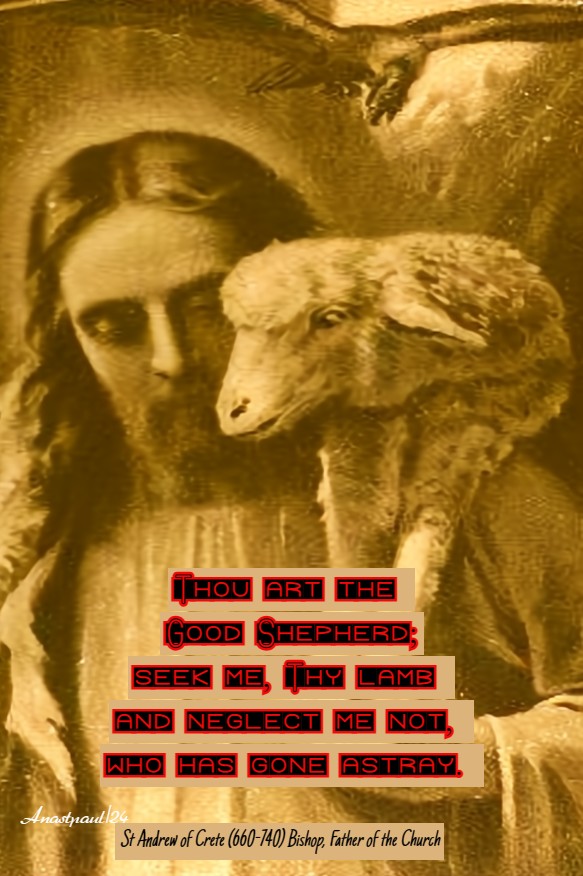
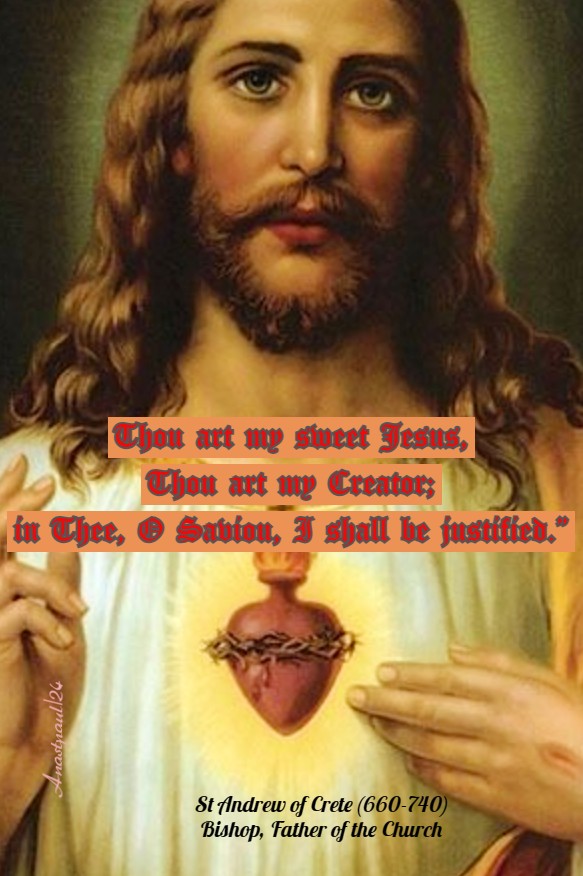
Quote/s of the Day – 4 July – The Feast of St Andrew of Crete (c660-c740) Bishop, Father of the Church
“Thou art the Good Shepherd; seek me, Thy lamb and neglect me not, who has gone astray. [John 10:11-14]”
“Thou art my sweet Jesus, Thou art my Creator; in Thee, O Saviour, I shall be justified.”
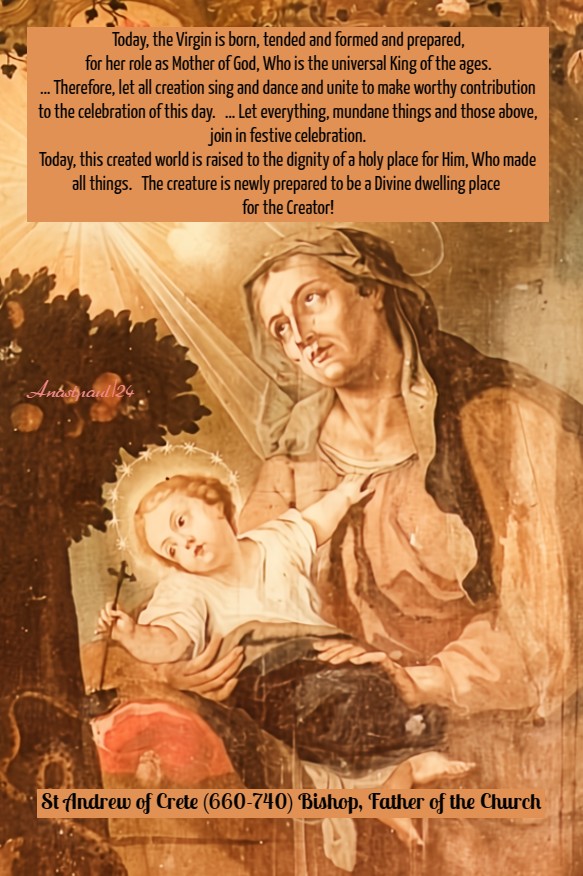
“Today, the Virgin is born, tended and formed and prepared, for her role as Mother of God, Who is the universal King of the ages. … Therefore, let all creation sing and dance and unite to make worthy contribution to the celebration of this day. … Let everything, mundane things and those above, join in festive celebration. Today, this created world is raised to the dignity of a holy place for Him, Who made all things. The creature is newly prepared to be a Divine dwelling place for the Creator!”
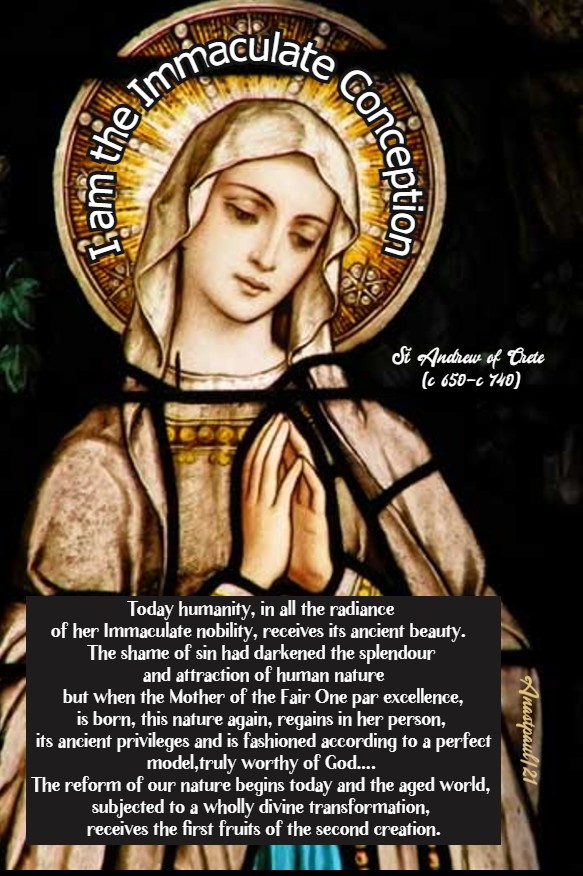
“Today humanity, in all the radiance of her Immaculate nobility, receives its ancient beauty. The shame of sin had darkened the splendour and attraction of human nature but when the Mother of the Fair One par excellence, is born, this nature again, regains, in her person, its ancient privileges and is fashioned according to a perfect model, truly worthy of God …. The reform of our nature begins today and the aged world, subjected to a wholly divine transformation, receives the first fruits of the second creation.”
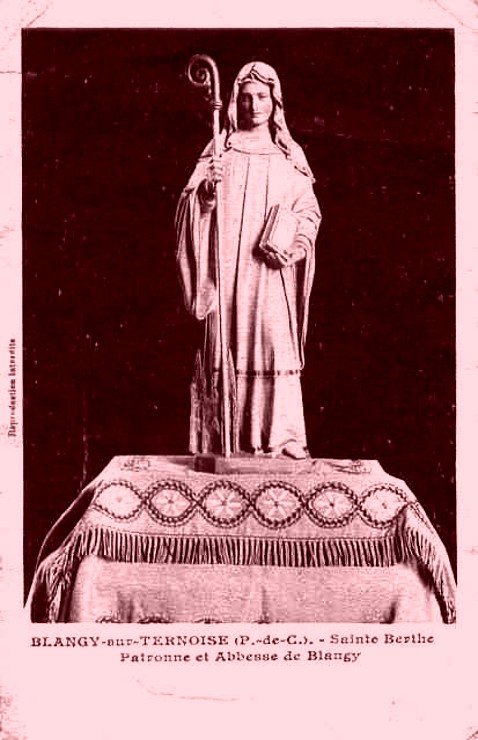
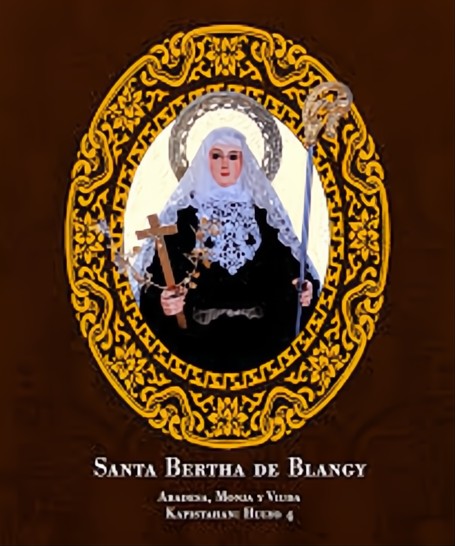
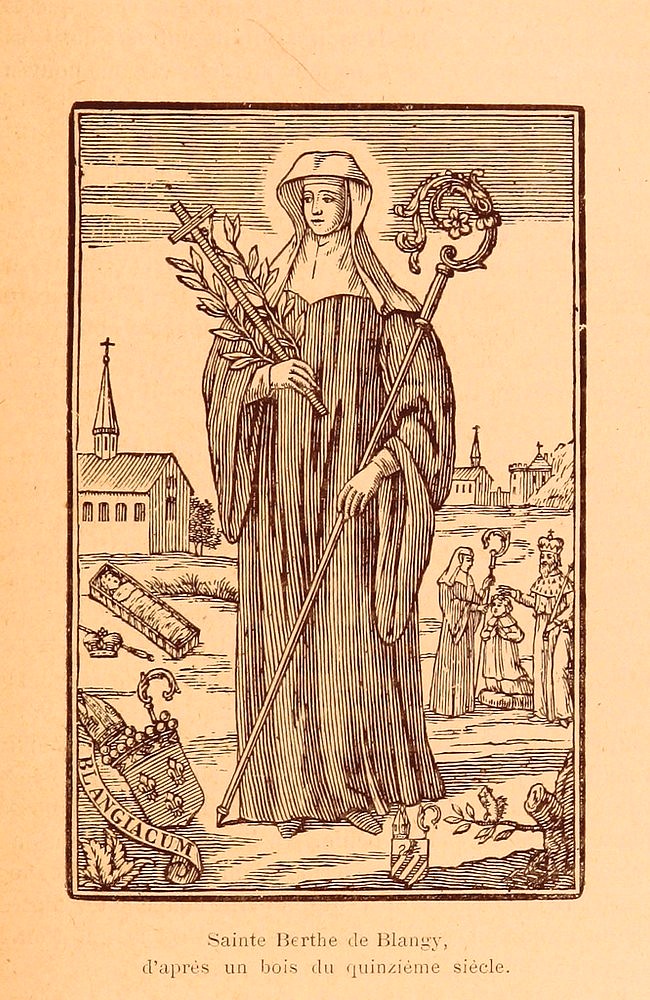
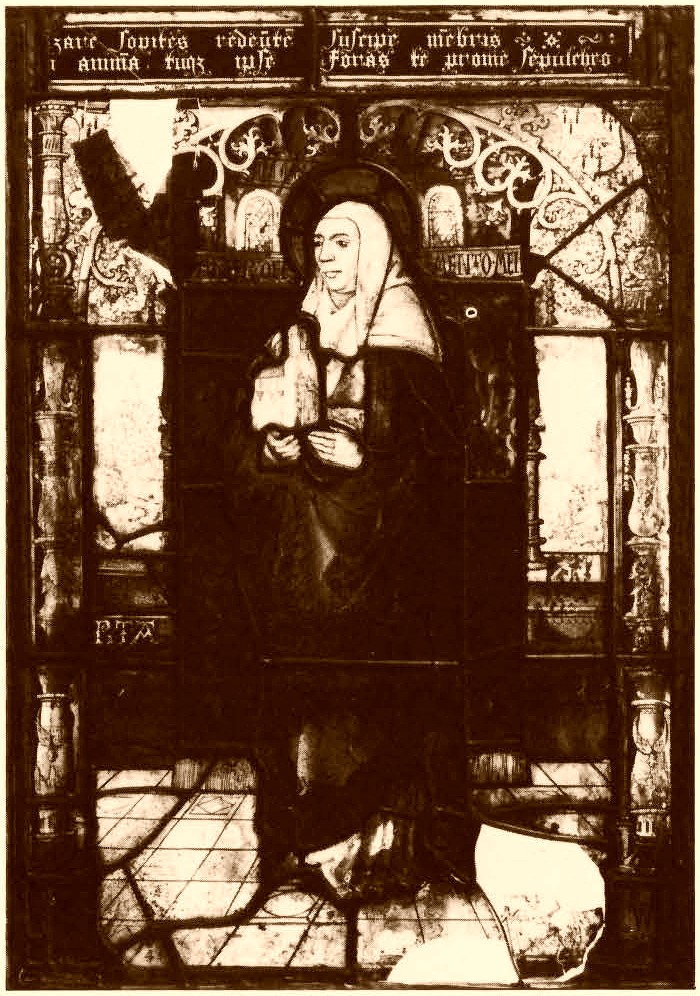
Saint of the Day – 4 July – Saint Bertha of Blangy (c644-c723) Widow, Abbess, Mother, Founder of a Monastery at Blangy, Artois and 3 Churches in the region. Born in c644 in France and died in c723 at her Convent in Blangy, France of natural causes. Patronage of Blangy. Also known as – Bertha of Artois, Berthe…
Bertha, born in France around the year 644, was the daughter of Count Rigobert, who served in the Court of King Clovis II and Princess Ursanna, the daughter of the King of Kent in England.
In the twentieth year of her age this beautiful and pious maiden was married to the cousin of the King, the noble Sigfried, who determined to advance with his spouse, along the paths of Christian perfection. They were blessed with five daughters, of whom two died in infancy; two others, Gertrude and Deotila, are Canonised Saints like their mother.
After several years of the most harmonious union, Sigfried died in 672 and Saint Bertha took the veil in a Monastery which by Divine instructions she built, at Blangy in the district of Artois. The Monastery was solemnly Consecrated in January of the year 682 and the holy widow endowed it with her terrains. Her daughters Gertrude and Deotila, greatly impressed by their mother’s act, soon followed her example.
Bertha was persecuted by Roger, or Rotgar, a young Lord of the Court of King Thierry III, who was furious over her refusal to give him her dauther, Gertrude’s hand in marriage, she already being a professed religious. He endeavoured to slander her mother as being opposed to the succession of Thierry and involved with the English Royalty in a conspiracy. The King sent for the Abbess to defend her cause, not sure that such conduct could be attributed to this holy woman. He was so impressed by Bertha’s demeanour and testimony that he took her under his protection and the persecution was immediately halted.
On her return to Blangy, Bertha had three Churches built, to honour Saint Omer, Saint Vaast and Saint Martin of Tours and completed the construction of her Convent. And then, after establishing the Rule of Saint Benedict and a regular observance in her community, she named Saint Deotila to replace her as the Abbess and retired to a solitary cell within the Convent, to spend the remainder of her days in prayer.
At the age of 79, having already buried her two daughters Deotila and Emma, she left Gertrude as Abbess in the Monastery of Blangy and died peacefully in the year 723 where she was buried and where her Relics (I believe) are still intact.
St Anthony Daniel St Aurelian of Lyons St Bertha of Blangy (c644-c723) Widow, Abbess St Carileffo of Anille Bl Catherine Jarrige St Cesidio Giacomantonio Bl Damiano Grassi of Rivoli St Donatus of Libya St Edward Fulthrop St Elias of Jerusalem St Finbar of Wexford St Fiorenzo of Cahors St Flavian of Antioch St Giocondiano Bl Giovanni of Vespignano St Haggai the Prophet Bl Hatto of Ottobeuren Bl Henry Abbot St Henry of Albano St Hosea the Prophet St Innocent of Sirmium Bl John Carey
Blessed John Cornelius SJ (1557– 1594) Martyr, English Priest of the Society of Jesus, Missionary. Additional Memorials – 29 October as one of the Martyrs of Douai, 1 December as one of the Martyrs of Oxford University. Fr Cornelius and his three companions, the Martyrs of England, were Beatified by Pope Pius XI on 15 December 1929. All their bodies were retrieved and given proper burial by Lady Arundell. His Life and Death: https://anastpaul.com/2021/07/04/saint-of-the-day-4-july-blessed-john-cornelius-sj-1557-1594-martyr/
St Jucundian St Laurian of Seville St Lauriano of Vistin St Namphanion the Archmartyr Bl Natalia of Toulouse St Odo the Good Bl Odolric of Lyon Bl Patrick Salmon St Sebastia of Sirmium St Theodore of Cyrene St Theodotus of Libya Bl Thomas Bosgrave Bl Thomas Warcop
Saint of the Day – 3 July – St Heliodorus (332-390) the first Bishop of Altino in Italy, disciple, close friend and assistant of St Jerome. Scholar, ex-soldier, Born in332 at Dalmatia (present-day Albania, much of Croatia, Bosnia and Herzegovina) and died in 390 at Altino, Italy of natural causes. Patronage – of Torcello, Italy. Also known as – Heliodorus of Altino. of Altinum, Eliodoro.
The Roman Martyrology reads: “At Altino, St Heliodorus, a Bishop, distinguished for holiness and learning.”
Heliodorus was born at Dalmatia, a Roman Province north-east of the Adriatic Sea which was also the native land of St Jerome. He soon sought out that great Doctor, not only to follow his teachings in matters relating to Christian perfection but also, to profit by his deep learning.
The life of a recluse held great attractions for him but, to enter a Monastery, it would have been necessary to leave his spiritual master and director, a sacrifice he was not prepared to make. He, therefore, remained in the world, although not part of it and following the example of the holy Hermits, passed his time in prayer and devout reading.
He accompanied St Jerome on his voyage to the Holy Land, visiting the various Churches of the Orient,and remained with him for a time but a desire to revisit his native land and to see his parents once more drew him back to Dalmatia. St Jerome tried to persuade him to remain but Heliodorus’ intention was to return to St Jerome, as soon as he had fulfilled the duties he owed his parents.
Finding his absence had grown prolonged and fearing that love for his family and attachment to worldly things might lure him from his vocation, St Jerome wrote him an earnest letter. He exhorted his good disciple to break entirely with the world and to consecrate himself to the service of God. But the Lord, who disposes all things, had a mission of activity reserved for His servant. After the death of his mother, Heliodorus went to Italy and soon was remarked for his eminent piety. He was made Bishop of Altino and became one of the most distinguished Prelates of an age fruitful in great men. He sustained the Catholic Faith against the Arian heresy and in 381 assisted at the Council of Aquilea in north-eastern Italy, called for that purpose.
Neither Heliodorus, the disciple, nor his former spirtual advisor, St Jerome, ever forgot their great friendship and bond. St Jerome, in one of his letters, testifies that he was a Bishop who lived in his Episcopal dignity with as much fervour and regular pious devotion, as in a Monastery.
St Heliodorus’ Sepulchre beneath his Altar at Torcello Cathedral
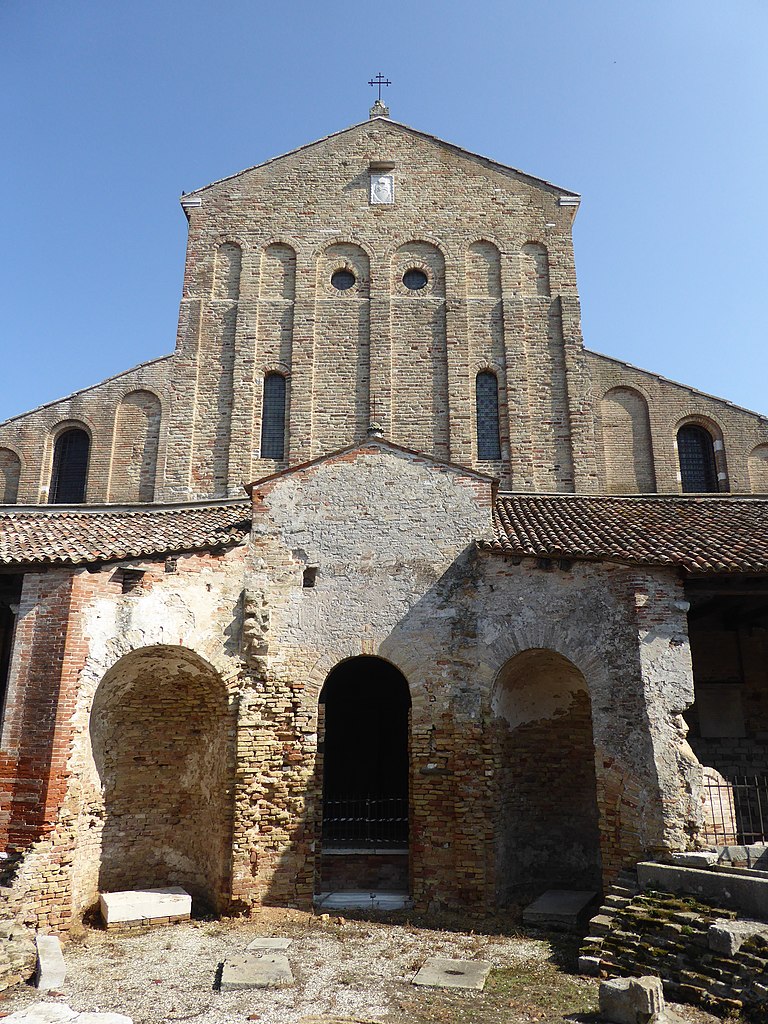
Saint Heliodorus died in 390. Heliodorus’ Relics were carried to Altino during the barbarian invasions and then to Torcello, where they rest in a Sepulchre in the Cathedral of Santa Maria Assunta, see below.
Bl Andreas Ebersbach Bl Barbara Jeong Sun-mae St Bladus St Byblig St Cillene St Dathus of Ravenna St Eusebius of Laodicea St Firminus St Firmus Bl Gelduin St Giuse Nguyen Ðình Uyen St Gunthiern St Guthagon St Heliodorus (c332-c390) Bishop, close friend and assistant of St Jerome. St Hyacinth of Caesarea St Irenaeus of Chiusi St Maelmuire O’Gorman St Mark of Mesia St Mennone the Centurian St Mucian of Mesia St Paul of Mesia
St Raymond of Toulouse (Died 1118) ArchDeacon, Canon of the Lateran Canons Regular at St Sernin Basilica in Toulouse, France. The Roman Martyrology reads: “In Toulouse on the Garonne in France, Saint Raymond Gayrard, who, as a teacher, remained a widower, passionately devoted himself to works of charity, founded a hospice and was finally admitted among the Canons of the Basilica of San Saturnin.” https://anastpaul.com/2023/07/03/saint-of-the-day-3-july-saint-raymond-of-toulouse-died-1118/
Martyrs of Alexandria – 13 Saints: Thirteen Christian companions Marytred together. No details about them have survived but the names – Apricus, Cyrion (2 of), Eulogius, Hemerion, Julian, Julius, Justus, Menelaus, Orestes, Porfyrios and Tryphon (2 of). They martyred in Alexandria, Egypt, date unknown.
Martyrs of Constantinople – 24 Saints: A group of 24 Christians Martyred in the persecutions of Arian Emperor Valens. We know little more than their names – Acacios, Amedinos, Ammonius, Ammus, Cerealis, Cionia, Cionius, Cyrianus, Demetrius, Eulogius (2), Euphemia, Heliodoros, Heraclios, Horestes, Jocundus, Julian, Martyrios, Menelaeus, Sestratus, Strategos, Thomas, Timotheos and Tryphon. They were martyred in c367 in Constantintinople.
Theodotus and Companions – 6 Saints: Six Christians who were imprisoned, tortured and Martyred together in the persecutions of Trajan. Saint Hyacinth ministered to them in prison. We know nothing else about them but their names – Asclepiodotus, Diomedes, Eulampius, Golinduchus, Theodota and Theodotus. They were beheaded in c110, location unknown.
Saint of the Day – 2 July – St Lidanus of Sezze (1026-1118) Abbot, Miracle-worker, Founder of the Monastery of Sezze dedicated to St Cecilia, Virgin Martyr and in memory of his own mother named for St Cecilia. Born in 1026 in Antena, today Civita d’Antino near Avezzano, Italy and died on 2 July 1118 (aged 91–92) at Murillo, today part of Sezze near Terracina in Italy. Patronage – of the City and Diocese of Sezze. Also known as – Lidanus of Antena, Lidan… Lidano…
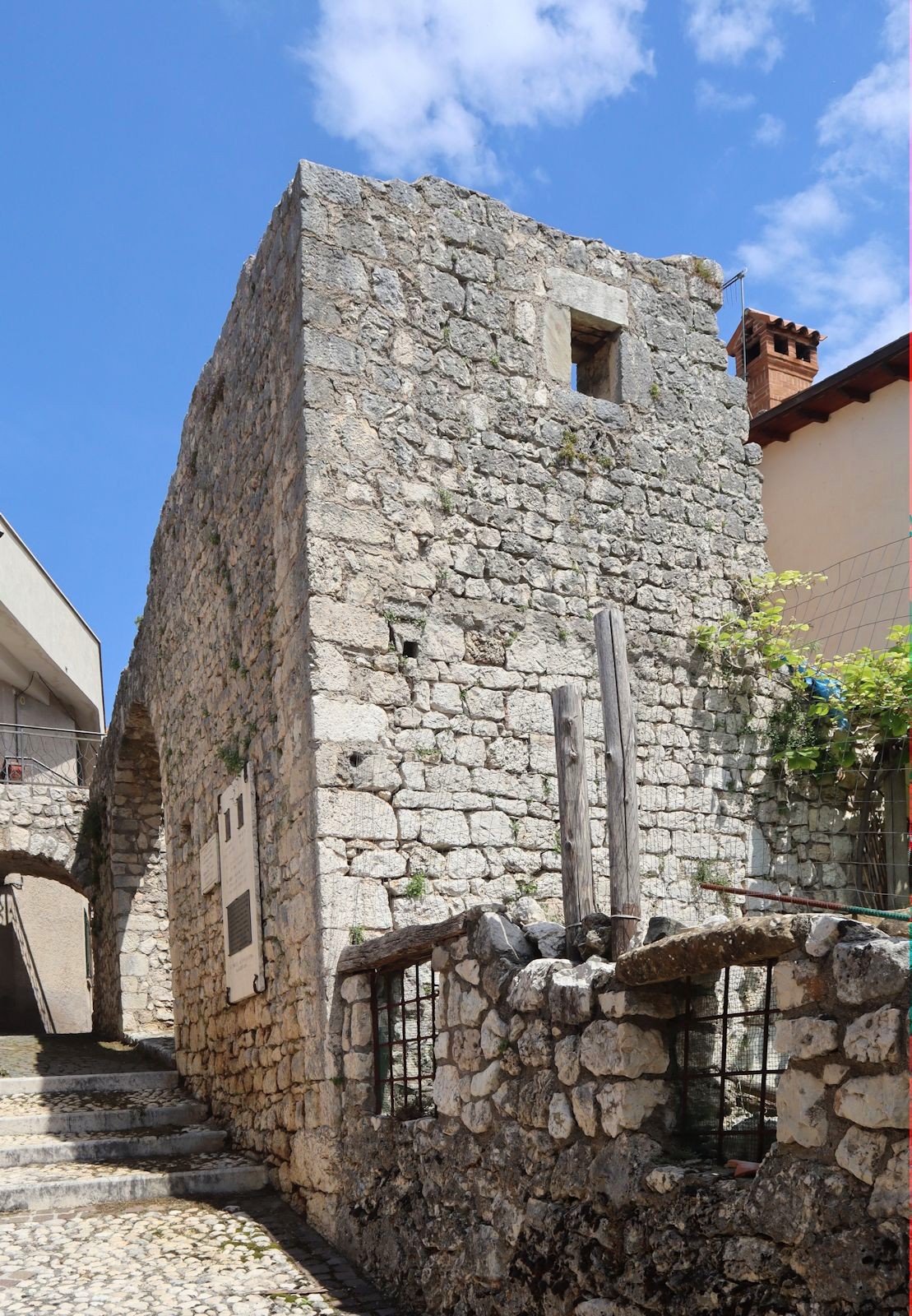
Ruins of the St Lidanus’ birth-home in Civita d’Antino
Lidanus was the only son of Gentilis, from the noble House of Avellarum and of Cecilia. At the very young age of nine, he joined the Benedictine Order at Monte Cassino . In 1043 when Lidanus was 17 years old, his parents died and left him a large fortune part of which he donated to be used, to drain the Pontine Marshes in order to improve the living conditions of all in the area and, with the consent of Abbot Richerio I (1038-1055) of Montecassino, the remainder was used for the construction of a Monastery with an adjoining Church, at the foot of Mount Antoniano, in the heart of the Pontine Marshes, in the Diocese of Sezze.
The area still retains the name of St Lidanus, in fact, he lived for seventy-two years in this Monastery there, of which he had become the Abbot. Lidanus ran the Monastery and lived with his brothers in strict penance, praying, fasting and mortification. His miraculous powers were praised – for example, when the frogs in the swamp were making too much noise, he silenced them with his staff.
Lidanus died in 1118 and was buried in the Church of his Monastery, he remained there until the destruction of that Church which occurred during the struggle between Emperor Frederick II (1194-1250) and the Papacy. His Relics were translated to the Cathedral of Sezze, by will of the Bishop Drusino.
The Cathedral of Sezze
Other official documents remind us of the cult paid to him in the Pontine area – in 1312 the largest of the Cathedral Bells, was dedicated to St Lidanus and, in 1473, the City Magistrate, with a Notarial Deed, committed himself to offering, in honour of the Saint, a new silver Chalice every two years.
Pope Leo X (1475-1521) confirmed the cult and regulated the Feast established by the Statutes of the City of Sezze. In 1606, there was the recognition of the Relics, with the construction of a new Altar, completed in 1672, with a gilded wooden reliquary. Many miracles o occurr at this resting place.
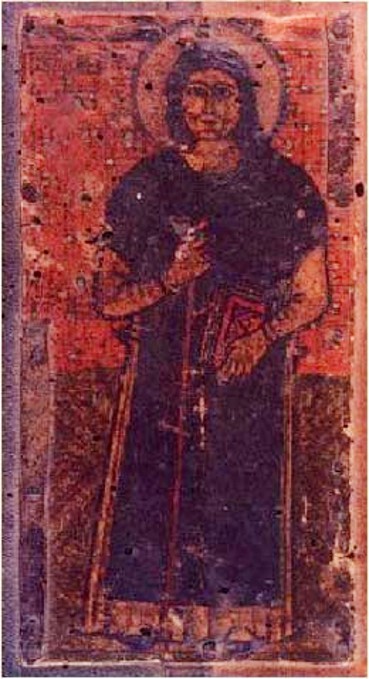
St Charles of Sezze (image below), always carried with him, a Relic of our Saint and with it, blessed the sick. Pope Pius VI Canonised St Lidanus on 9 April 1791, granted the proper Office and the solemn Feast of 2. A 14th Century document, preserved in the Capitular Archive of Sezze, contains the oldest image of Lidanus with the narration of his life, he is depicted with Benedictine monastic habits, with the book of the Rule and the Abbot’s pastoral staff in his hands.
Bl Giovanni da Fabriano Becchetti St Jacques Fermin Bl Jarich of Mariengaarde St Jéroche St Lidanus of Sezze (1026-1118) Abbot St Monegundis St Oudoceus
Martyred Soldiers of Rome – 3 Saints: Three soldiers who were converted at the Martyrdom of Saint Paul the Apostle. Then they were martyred, as well. We known nothing else about them but their names – Acestes, Longinus and Megistus. Martyred c68 in Rome, Italy
Martyrs in Carthage by Hunneric – 7 Saints: A group of seven Christians tortured and murdered in the persecutions of the Arian Vandal king Hunneric for remaining loyal to the teachings of orthodox Christianity. They were some of the many who died for the faith during a period of active Arian heresy. – Boniface, Liberatus, Maximus, Rogatus, Rusticus, Septimus and Servus.
Martyrs of Campania – 10 Saints: A group of ten Christians Marytred together in the persecutions of Diocletian. The only details about them to have survived are their names – Ariston, Crescention, Eutychian, Felicissimus, Felix, Justus, Marcia, Symphorosa, Urban and Vitalis. Martyred in 284 in Campania, Italy.
St Aaron of Caerleon St Aaron the Patriarch St Arnulf of Mainz St Calais of Anisole St Carilephus St Castus of Sinuessa St Cewydd St Concordius of Toledo St Cuimmein of Nendrum St Domitian (c347-440) Abbot Bl Elisabeth de Vans St Eparchius of Perigord St Eutychius of Umbria St Esther the Queen
St Gall of Clermont St Golvinus of Leon St Gwenyth of Cornwall Bl Huailu Zhang St Julius of Caerleon St Justino Orona Madrigal St Juthware St Leonorious of Brittany St Leontius of Autun St Martin of Vienne St Nicasius of Jerusalem
St Secundinus of Sinuessa St Servan of Culross St Theobald of Vicenza St Theodoric of Mont d’Or St Veep
Martyrs of Rome – 6 Saints: Six Christians who were Martyred together. No details have survived except their names – Esicius, Antonius, Processus, Marina, Serenus and Victor. They were martyred in Rome, Italy, date unknown.
Saint of the Day – 30 June – Saint Adele of Orp-le-Grand (Died c670) Abbess, Founder, Born in the early 7th Century in modern Belgium and died in c670 of natural causes at her Monastery. Patronage – agaomst eye diseases, ailmnts and vision disorders. Also known as – Adel, Adèlais. Additional Memorial – on the 1st Sunday in October (procession of her Relics through the streets of Orp-le-Grand) and 25 May on some calendars.
Adele of the Merovingian Dynasty noble family, decided to take the veil by entering the Monastery of Nivelles which had been founded by Itte Idoberge, widow of King Pepin the Elder and her daughter ,Saint Gertrude.
Around the year 640, she founded a Monastery at Orp-le-Grand, of which she became the first Abbess. While Childeric II governed, this new Monastery flourished, so much so, that it led her to construct a larger building which she had dedicated to Saint Martin, into which she moved her entire community.
There are two local traditions regarding St Adele’s life. The first tells how Saint Adele became blind and then miraculously recovered her sight, the second reports that the Saint was born blind and received her sight during her Baptism.
We know little more about her and it is said that Saint Adele of Orp-le-Grand died around the year 670 and was buried in the Crypt of Saint Martin’s Abbey.
Chapelle Sainte-Adele Orp-le-Grand Orp-Jauche
Every year on the 1st Sunday of October her Relics are carried in procession, with great participation of the faithful through the streets of Orp-le-Grand.
St Adele’s Church at Orp-le-Grand Abbey
She is popularly invoked for curing vision disorders and is traditionally represented in religious dress. There is a terracotta statue depicting her in the Church of St Omer. In homage to Saint Adele, many Churches have been dedicated to her in Saint-Géry, Fromiée and Hemptinne. In Brye, in Hainaut, next to the Chapel which bears her name, there is a well built in the 18th Century, where pilgrims draw miraculous water to bathe their eyes. The celebration and remembrance for Saint Adele of Orp-le-Grand is generally held on 30 June.
St Adele of Orp-le-Grand (Died c670) Abbess, Founder
St Adolphus of Osnabrück O.Cist. (1185-1224) Bishop St Alpinian of Limoges St Alrick the Hermit Bl Ambrose de Feis Bl Anthony de Tremoulières Bl Arnulf of Villers St Austriclinian of Limoges St Basilides of Alexandria St Bertrand of Le Mans St Clotsindis of Marchiennes
Bl Elisabeth Heimburg St Emiliana of Rome St Erentrude St Eurgain St Gaius Bl Jacob Clou St Leo the Deacon St Lucina of Rome St Lucina of the Callistus Catacombs St Marcian of Pampeluna St Martial of Limoges St Ostianus St Otto of Bamberg St Peter of Asti St Petrus Li Quanhui
Blessed Raymond Lull TOSF (c 1232 – c 1315) Martyr – known as “Doctor Illuminatus,” Raymond was a Philosopher, Logician, Writer, Poet, Pioneer in computation theory, Franciscan tertiary. Within the Franciscan Order he is honoured as a Martyr. He was Beatified on 25 February 1750 by Pope Benedict XIV (cultus confirmed) and reaffirmed in 1847 by Pope Pius IX. His Life and Death: https://anastpaul.com/2018/06/30/saint-of-the-day-30-june-blessed-raymond-lull-t-o-s-f-c-1232-c1315-martyr/
St Vihn Son Ðo Yen
Martyrs of Africa – 7 Saints: Seven Christians Martyred together. No detail about them have surived but the names – Cursicus, Gelatus, Italica, Leo, Timotheus, Zoilus, and Zoticus. Date and precise location in Africa unknown.
Saint of the Day – 29 June – Saint Syrus of Genoa (Died c380) Archbishop of Genoa, Miracle-worker. Born in a suburb of Genoa and died in his home City at an advanced age of natural causes and was buried there. He is the chief Patron of Genoa. Also known as – Siro. Additional Memorial – 7 July (translation of his relics; in Genoa).
Born at Struppa, a neighbourhood of Genoa, as a Priest, he soon acquired a reputation for holiness and zeal. He succeeded Saint Felix as the Bishop of Genoa, having previously been the Parish Priest at Saint Romulus Church.
As a boy, Syrus brought his pet blackbird back to life by means of his saliva and prayers. Later, while walking with his father in the hills, he wished that a ship making for the Port might be still, whereupon the wind died and the ship came to a halt as if at anchor. Asking his father for permission to go on board, Syrus expressed his wish the boat might come to the land, whereupon the wind returned and the boat freely entered the harbour.
St Syrus of Genoa. Painted by Denys Savchenko. The Painint resides at St Peter and St Therese of the Child Jesus Church in Genoa, Italy
Legend holds that the bisBop was able to banish a basilisk which dwelt in a well adjacent to the Church of the Twelve Apostles – a plaque on a nearby house recalls the miracle. This event is represented in a medieval Bas Relief on the Portico Arcade next to the Church, as well as a fresco by Carlone in the Apse.
The Basilica of San Siro is one of the oldest Churches in Genoa. It occupies the site of a former Church originally dedicated to the Twelve Apostles. In later centuries, the Church was renamed after St Syrus and was elevated to a Basilica. Originally, it was the Cathedral of Genoa but it stood outside of the original walls and was vulnerable to attacks from Saracen pirates the title of Cathedral was transferred to San Lorenzo.
There is another Church dedicated to San Siro, San Siro di Struppa, outside the City centre in the suburb where our Saint was born and where his Relics now lie enshrined . Below is an image of the Basilica Interior.
Sts Peter and Paul, Apostles: The joint commemoration of the Apostles, Peter and Paul, is one of the most ancient customs of the Roman Church, attested already in the oldest surviving Roman Liturgical Calendar, the Depositio Martyrum, written in 336. A verse of the Hymn, Apostolorum Passio, an authentic work of St Ambrose († 397) and still used in the Ambrosian liturgy, says that “the thick crowds make their way through the circuit of so great a city; the feast of the sacred Martyrs is celebrated on three streets.” These “three streets” are the via Cornelia, the main street running up to and over the Vatican hill; the via Ostiensis, where the burial and Church of St Paul are and the via Appia, on which resides the Cemetery “in Catacumbas.”
St Anastasius of Bourges (Died c274) Soldier. Martyr. Scourged to death in c274, no other information has survived.
St Benedicta of Sens
St Cassius (Died 558) Bishop of Narni, Italy from 537 to 558, the date of his deat, Miracle-worker. He was praised by St Gregory the Great and was noted for his charity. Died on 30 June 558 in Narni, Italy of natural causes. Relics enshrined in the Cathedral of Narni, Italy. The Roman Martyrology reads: “At Narni, St Cassius, Bishop of that City of whom St Gregory the Great relates, in writing and in sermons, that Cassius permitted scarely any day of his life to pass without offering the Victim of propitiation to Almight God and he was well worthy to do so, for he distributed in alms, all he possessed and his devotion was such that abundant tears flowed from his eyes during the Holy Sacrifice.At Last, he came to Rome on the birthday of the Apostles, as was his yearly custom and after having solemnly celebrated Mass and given the Lord’s Body and the Kiss of Peace to all, he departed for Heaven, the next day at Narni” This Holy man of God: https://anastpaul.com/2023/06/29/saint-of-the-day-29-june-st-cassius-died-558-bishop-of-narni/
St Ciwg ap Arawn St Cocha St Ilud Ferch Brychan St Judith of Niederaltaich
St Marcellus of Bourges (Died c274) Soldier. Martyr. Beheaded in c274, no other information has survived.
St Mary, the Mother of John Mark St Salome of Niederaltaich St Syrus of Genoa (Died c380) Bishop Bl William of Sann


























You must be logged in to post a comment.