Quote/s of the Day – 28 June – St Irenaeus (c130–c202) Bishop, Martyr, Father of the Church
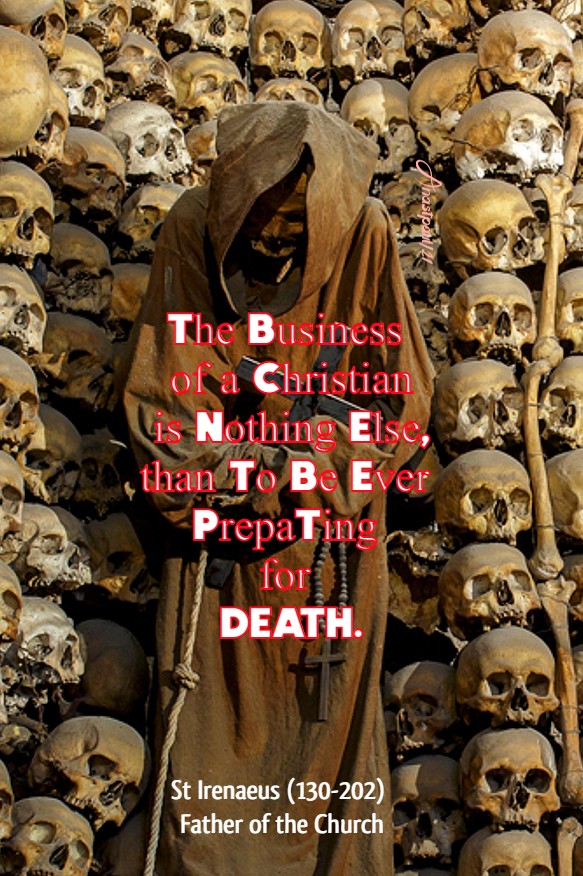
“The business of a Christian is nothing else, than to be ever preparing for death.”
“And, should anyone press you into service for one mile, go with him for two miles.” Matthew 5:41
“So, in everything, Christ invites you to be of service to your neighbour, taking no thought for his wickedness but filling your own goodness to the brim. Thus He invites us to become like our Father “who makes his sun rise on the bad and the good,” (Mt 5:45).”
“He is the Word of God who dwelt with man and became the Son of Man, to open the way for man, to receive God, for God to dwell with man, according to the will of the Father.”
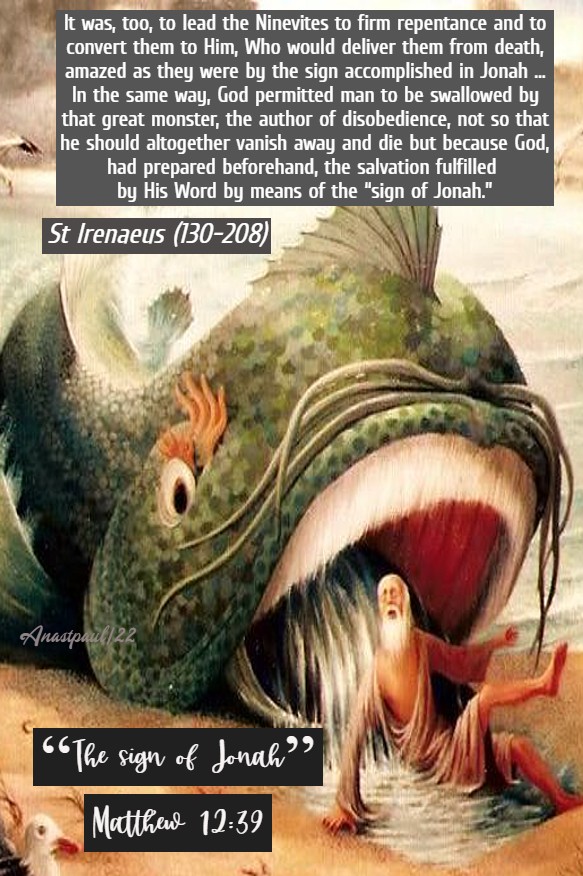
“It was, too, to lead the Ninevites to firm repentance and to convert them to Him, Who would deliver them from death, amazed as they were by the sign accomplished in Jonah … In the same way, God permitted man to be swallowed by that great monster, the author of disobedience, not so that he should altogether vanish away and die but because God, had prepared beforehand, the salvation fulfilled by His Word by means of the “sign of Jonah.”
Saint of the Day – 28 June –Saint John Southworth (1592-1654) Priest Martyr, Missionary. Known as ‘The Parish Priest of Westminster.’ Born in 1592 at Samlesbury, Lancashire, England and died by being hanged, drawn and quartered on 28 June 1654 at Tyburn Tree, London, England. Patronage – the Clergy of the Westminster Diocese. His remains were purchased by the Spanish Ambassador to England and were sent to the English College in Douai, France. There the Relics were hidden to prevent destruction during the French Revolution and were only rediscovered in 1927 and are now housed at Westminster Cathedral, London. Additional Memorials – 27 and 28 June in the Diocese of Westminster,25 October as one of the Forty Martyrs of England and Wales, 29 October as one of the Martyrs of Douai.
John was born in 1592 at Samlesbury Hall, near Preston in Lancashire, to a recusant Catholic family. He entered the English College in Douai and was Ordained a Priest in 1618.
Upon returning to England, he ministered in London and Lancashire, with a brief period as Chaplain to the Benedictine Nuns in Brussels.
John was first arrested and sentenced to death in 1626 at Lancashire Castle but reprieved through the efforts of Queen Henrietta Maria, the French wife of King Charles I. He was to be arrested three more times, spending much of the rest of his life effectively on parole.
Throughout the 1630’s he attended to the Plague victims in Westminster, administering the Sacraments and helping those in need, thus gaining him selfthe nickname ‘The Parish Priest of Westminster.’
In 1654 John was arrested for the last time, and tried at the Old Bailey in London. By this stage the courts were weary of executing Catholics and a more lenient sentence was likely. However, refusing to deny his Priesthood, John was sentenced to death.
On the 28 June 1654, John Southworth was hanged, drawn and quartered at Tyburn Tree after a long gallows speech.
“This gallows I look on as His Cross which I gladly take to follow my dear Saviour.”
Following his execution, the Spanish Ambassador bought the body for 40 Guineas, had it stitched back together and embalmed before returning it to the English College in Douai for veneration. During the war between England and France in 1793, the lead coffin containing the body of John Southworth was buried in an unmarked grave for safe keeping, where it remained hidden until 1927 when the College was demolished to make way for housing.
In 1929 John Southworth was Beatified and his major Relics were sent to St Edmund’s College, in Ware, Hertfordshire, England the successor of the English College in Douai, before being transferred to Westminster Cathedral in 1930 (pictured below).
The names of the 40 Martyrs of England and Wales which adorn the ceiling in the ‘Chapel of St George and the English Saints’ in Westminster Cathedral, where the body of St John is enshrined.
Bl Almus of Balmerino St Argymirus of Córdoba St Attilio of Trino St Austell of Cornwall St Benignus of Utrecht St Crummine Bl Damian of Campania St Egilo
Martyrs of Africa – 27 Saints: 27 Christians Martyred together. The only details about them to survive are the names – Afesius, Alexander, Amfamon, Apollonius, Arion, Capitolinus, Capitulinus, Crescens, Dionusius, Dioscorus, Elafa, Eunuchus, Fabian, Felix, Fisocius, Gurdinus, Hinus, Meleus, Nica, Nisia, Pannus, Panubrius, Plebrius, Pleosus, Theoma, Tubonus and Venustus. Unknown location in Africa, date unknown.
Martyrs of Alexandria – 8 Saints: A group of spiritual students of Origen who were Martyred together in the persecutions of emperor Septimius Severus – Heraclides, Heron, Marcella, Plutarch, Potamiaena the Elder, Rhais, Serenus and Serenus. They were burned to death c206 in Alexandria, Egypt.
Saint of the Day – 27 June – Saint Sampson of Constantinople (Died c530) Priest, Apostle of the poor and ill, Physician, founder of a hospital for the poor which lasted for hundreds of years. Born in Rome and died in c530 in Constantinople of natural causes. Also known as – Sampson the Hospitable, Samson…. Father of the Poor.
The Roman Martyrology reads: “At Constantinople, St Sampson, a Priest who harboured the poor.”
Sampsonwas born in Rome to a prominent and devout family. He was a Physician who devoted much of his time to helping the poor and sick.
He moved to Constantinople and there turned his home into a free hospitable, providing his patients with food, a bed and medical care. He was later Ordained a Priest.
When the Byzantine Emperor,Justinian the Great became ill, he sent for Sampson to cure him. He was the only Physician in the City to help the Emperor’s illness and the latter wanted to reward him. Sampson requested that the Emperor help him establish a new hospital for the poor. With the Emperor’s assistance, Sampson foundeda hospital which became the largest free clinic in the Empire and served the people of Constantinople for 600 years.
Sampson was buried in the Church of the Holy Martyr St Mocius (Died c190) in Constantinople.
St Adeodato of Naples St Aedh McLugack St Anectus of Caesarea St Arialdus of Milan St Arianell of Wales
Blessed Benvenutus of Gubbio OFM ) (Died 1232) Lay brother of the Order of the Friars Minor of St Francis, ex-Soldier, Apostle of the sick and of lepers. Benvenutus was graced with an ardent and mystical devotion to the Blessed Eucharist and to the Mother of God. So ardent was his faith and contemplation that he was seen to hold the Divine Infant in his arms. Biography: https://anastpaul.com/2021/06/27/saint-of-the-day-27-june-blessed-benvenutus-of-gubbio-ofm-died-1232/
St Crescentius of Mainz Bl Daniel of Schönau Bl Davanzato of Poggibonsi OFM (c1200-1295) Priest St Desideratus of Gourdon St Dimman St Felix of Rome St Ferdinand of Aragon St Gudene of Carthage Bl Hemma of Gurk St Joanna the Myrrhbearer St John of Chinon
Saint of the Day – 26 June – St Maxentius (c448-c515) Abbot, Miracle-worker, in of Poitou . Born in c448 in Agde, France and died in c515. Also known as – Masenzio, Massenzio, Maixent.
The Roman Martyrology records: “In the territory of Poitiers in Aquitaine, in today’s France, Saint Maxentius, Abbot, famous for his virtues.”
Maxentius was born at Agde,and Baptised with the name of Adjutor. He was placed, from his infancy, by his pious parents in the Monastery of St Severus and formed to piety by that holy Abbot, who never lost sight of him and continually taught him that everything in the world, is full of snares and temptations and unless we live in watchfulness and circumspection, the devil besieges us so close that it is impossible for us not to be surprised by him.
The youth, by walking always in holy fear, was happy to preserve his soul free from whatever could defile it. He fled with great dread the applause of men, as the bane of virtue. To avoid this danger, he stole away into a distant country but after two years was found and brought back by his parents and friends. The fear of the esteem of men again forced him abroad,and going into Poitou, he changed his name into that of Maxentius and put himself under the direction of a virtuous Abbot named Agapetus.
The brethren were struck with admiration to see one so perfectly disengaged from the world, so humble, so mortified, so full of charity and so enlightened in the paths of salvation and they unanimously chose him their superior. In his devotions he seemed animated with the spirit of David when he composed his psalms and in his instructions with the zeal and charity of John the Baptist. Austere towards himself, he showed in all his actions that he sought only that food which never perishes. Following the example of Agapetus, he laid down his office as soon as it was possible and shut himself up in a remote cell but the Monks obliged him still to continue to direct them by his counsels.
St Maxentius turns back the plundering army
Clovis, the King of the French, was then at war with Alaric, King of the Visigoths, who reigned in Spain, Languedoc and Aquitaine. A barbarous army was stopped by the Saint’s presence from plundering the Monastery and a soldier who attempted to strike him was seized with a numbness which continued until he was cured by the Saint. Nature on many occasions obeyed his voice, as St Gregory of Tours relates.
St Maxentius died about the year 515 and is named in the Roman Martyrology.
St John of Rome * Layman Brothers, Martyr St Paul of Rome * Layman Brothers, Martyr The year of their Martyrdom is uncertain according to their Acts; it occurred under the Emperor, Julian the Apostate. The Roman Martyrology reads today: “At Rome, on Mount Coelus, the holy Martyrs, John and Paul, brothers. The former was Steward, the other Secretary of the virgin Constantia, daughter of the Emperor Constantine. Afterwards, under Hulian the Apostate, they received the Palm of Martyrdom by being beheaded.” Their Lives and Deaths: https://anastpaul.com/2023/06/26/saints-of-the-day-26-june-saint-john-and-saint-paul-died-c362-laymen-brothers-martyrs/
St Acteie of Rome St Albinus of Rome
St Anthelm of Belley O. Cart. (c 1105-1178) Bishop of Belley, France, Prior of the Carthusian Grand Chartreuse. Reformer, talented Administrator, Founder of the female Carthusians and originated of the Carthusian Rule (with the zealous and learned assistance of Bless John the Spaniard whom we celebrated yesterday) Apostle of the poor, the sick and the needy. The wonderful St Anthelm: https://anastpaul.com/2021/06/26/saint-of-the-day-st-anthelm-of-belley-o-cart-c-1105-1178/
St Babolenus of Stavelot-Malmédy St Barbolenus of Fossés Bl Bartholomew of Vir St Corbican St David of Thessalonica St Deodatus of Nola St Dionysius of Bulgaria St Edburga of Gloucester St Hermogius of Tuy St John of the Goths St Maxentius of Poitou (c448-c515) Abbot St Medico of Otricoli St Pelagius of Oviedo St Perseveranda of Poitiers Bl Raymond Petiniaud de Jourgnac St Salvius Bl Sebastian de Burgherre St Soadbair St Superius St Terence of Rome St Vigilius of Trent
Martyrs of Africa – 4 Saints: Four Christians who were Martyred together – Agapitus, Emerita, Felix and Gaudentius at an unknown location in Africa, date unknown.
Martyrs of Alexandria – 3 Saints: Three Christians who were Martyred together but we really know little more that the names – Agatho, Diogenes and Luceja. They were Martyred in Alexandria, Egypt, date unknown.
Martyrs of Cambrai – 4 Beati: Four Daughters of Charity of Saint Vincent de Paul, Nuns at Arras, France. Imprisoned together in 1792 and executed together two years later in the anti-Catholic excesses of the French Revolution. They were: , Jeanne Gerard, Marie-Françoise Lanel, Marie-Madeleine Fontaine, Thérèse-Madeleine Fantou, They were guillotined on 26 June 1794 at Cambrai, Nord, France and Beatified in June 1920 by Pope Benedict XV.
One Minute Reflection – 25 June – “The Month of the Sacred Heart of Jesus” – St William (1085-1142) Abbot – Ecclesiasticus 45:1-6; Matthew 19:27-29 – Scripture search here: https://www.drbo.org/
“… Shall receive a hundredfold and shall possess life everlasting.” – Matthew 19:29
REFLECTION – “The possessions which we have, are not our own: God has given them to us to cultivate and He wishes us to render them fruitful and profitable … Always deprive yourself, therefore, of some part of your means, giving them to the poor with a willing heart … It is true that God will return it to you, not only in the next world but also in this, for there is nothing which makes a person prosper, in temporal matters, so much, as almsgiving. But until such time as God shall repay it, you will always be impoverished to that extent. Oh! how holy and rich is the impoverishment which is caused by almsgiving.
Love the poor and poverty, for by this love you will become truly poor, since, as Scripture says: “We become like the things that we love” (cf Hos 9:10). Love makes those who love, equal to one another: “Who is weak and I am not weak?” says St Paul (2 Cor 11:29). He might have said: “Who is poor, with whom I am not poor?” For love made him become, such as those whom he loved. If, then, you love the poor, you will be truly participating in their poverty and poor like them. Now, if you love the poor, be often among them; be pleased to see them in your house and to visit them in theirs; associate willingly with them; be glad that they are near you in the Churches, in the streets and elsewhere. Be poor in speech with them, speaking to them as their equal but be rich in deed, giving them of your goods, as one who possesses more abundantly.
Will you do even more? … Become a servant of the poor; go to serve them … with your own hands … and at your own expense. This service has more glory in it than a throne!” – St Francis de Sales (1567-1622) Bishop of Geneva and Doctor of the Church (Introduction to the devout life, Part three Ch 15).
PRAYER – O God, Who made Thy Saints an example and a help for our weakness, grant us, as we walk the path of salvation, so to venerate the virtues of the blessed Abbot William that we may obtain his intercession and follow in his footsteps. Through Jesus Christ, Thy Son our Lord, Who lives and reigns with Thee, in the unity of the Holy Ghost, God, world without end. Amen (Collect).
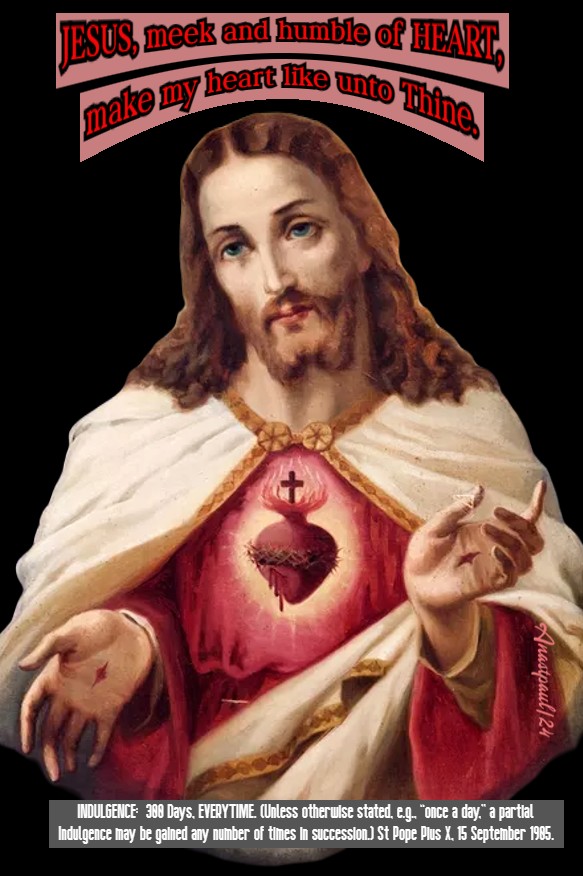
“JESUS, meek and humble of HEART, make my heart like unto Thine.” – 300 Days, EVERYTIME. (Unless otherwise stated, e.g., “once a day,” a partial Indulgence may be gained any number of times in succession.) St Pope Pius X, 15 September 1905.
Saint of the Day – 25 June – Blessed Burchard of Mallersdorf OSB (Died 1122) the 1st Abbot of the Monastery of Mallersdorf. Born in the 11th Century in the Upper Franconia (in modern Bavaria, Germany) died on 25 June 1122 of natural causes in Mallersdorf, Bavaria, Germany. Also known as – Burkhard.
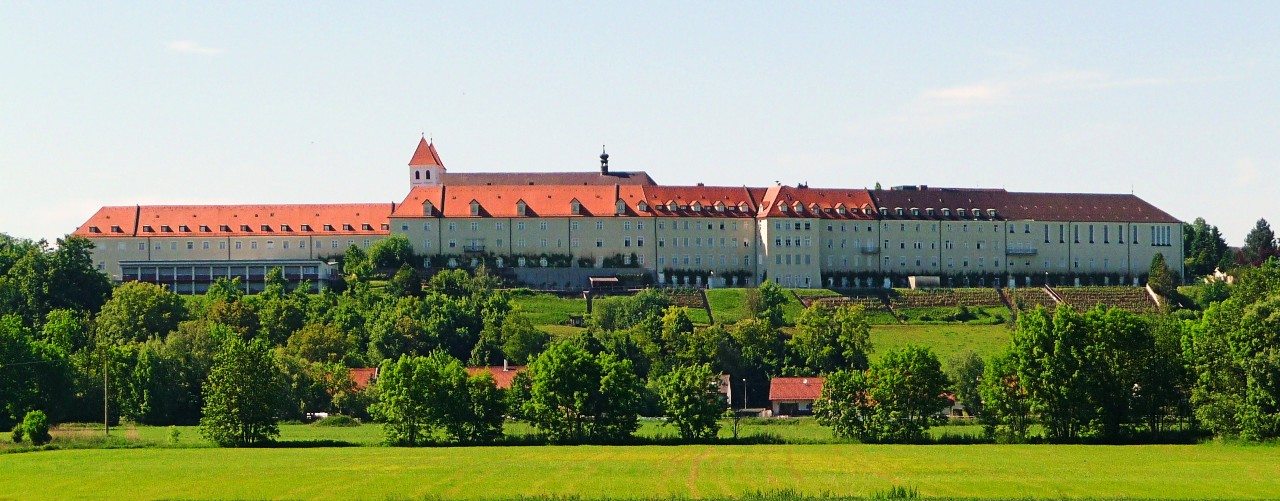
Mallersdorf Monastery is now a Franciscan Convent for Poor Clares
Little is known about Burchard’s early life but it is believed that he entered the monastic life at an early age. He joined the Benedictine Monastery of Saint Michael in Bamberg, Bavaria, where he devoted himself to a life of prayer and contemplation. His deep spirituality and commitment drew the attention of his fellow Monks and Superiors, who recognised his piety and wisdom. Burchard’s dedication to the monastic life was evident in his adherence to the Rule of Saint Benedict and his diligent study of the Sacred Scriptures.
In 1109, Burchard was appointed as the 1st Abbot of the newly founded Monastery of Mallersdorf. This appointment was a testament to his leadership qualities, spiritual depth and administrative skills. As Abbot, Burchard guided the community, fostering a spirit of holiness and discipline among them. Under his leadership, the Monastery flourished both spiritually and materially, becoming a centre of learning and devotion.
He was known for his humility and his care for the physical and spiritual well-being of his Monks. He provided for their needs and encouraged them to continually seek God through prayer, study and charitable works. As a teacher, Burchard imparted his knowledge and wisdom to his brothers, guiding them in the ways of sanctity and virtue.
Throughout his life, Burchard was a living example of holiness, inspiring those around him. . His devotion to the Virgin Mary was particularly notable, and he fostered a special reverence and love for her among the community.
Blessed Burchard died on 25 June 1122, in Mallersdorf, Bavaria, where he had served as the Abbot for many years. His Relics were enshrined in 1695, ensuring that his memory would be preserved for all of us.
While the Church has not officially recognised Burchard’s cult, he is venerated locally as such. l. His Feast Day is celebrated on 25 June. His legacy lives on in the monastic tradition, reminding us of the importance of seeking God wholeheartedly and offering ourselves in the service of others.
St Amand of Coly (6th Century) Founder and first Abbot of Saint-Amand-de-Coly Monastery, Diocese of Limoges, France. There is now a village named for St Amand. Blessed Burchard of Mallersdorf (Died 1122) Abbot St Cyneburga of Gloucester Bl Dorothy of Montau St Eurosia of Jaca St Febronia of Nisibis Bl Fulgentius de Lara St Gallicanus of Embrun
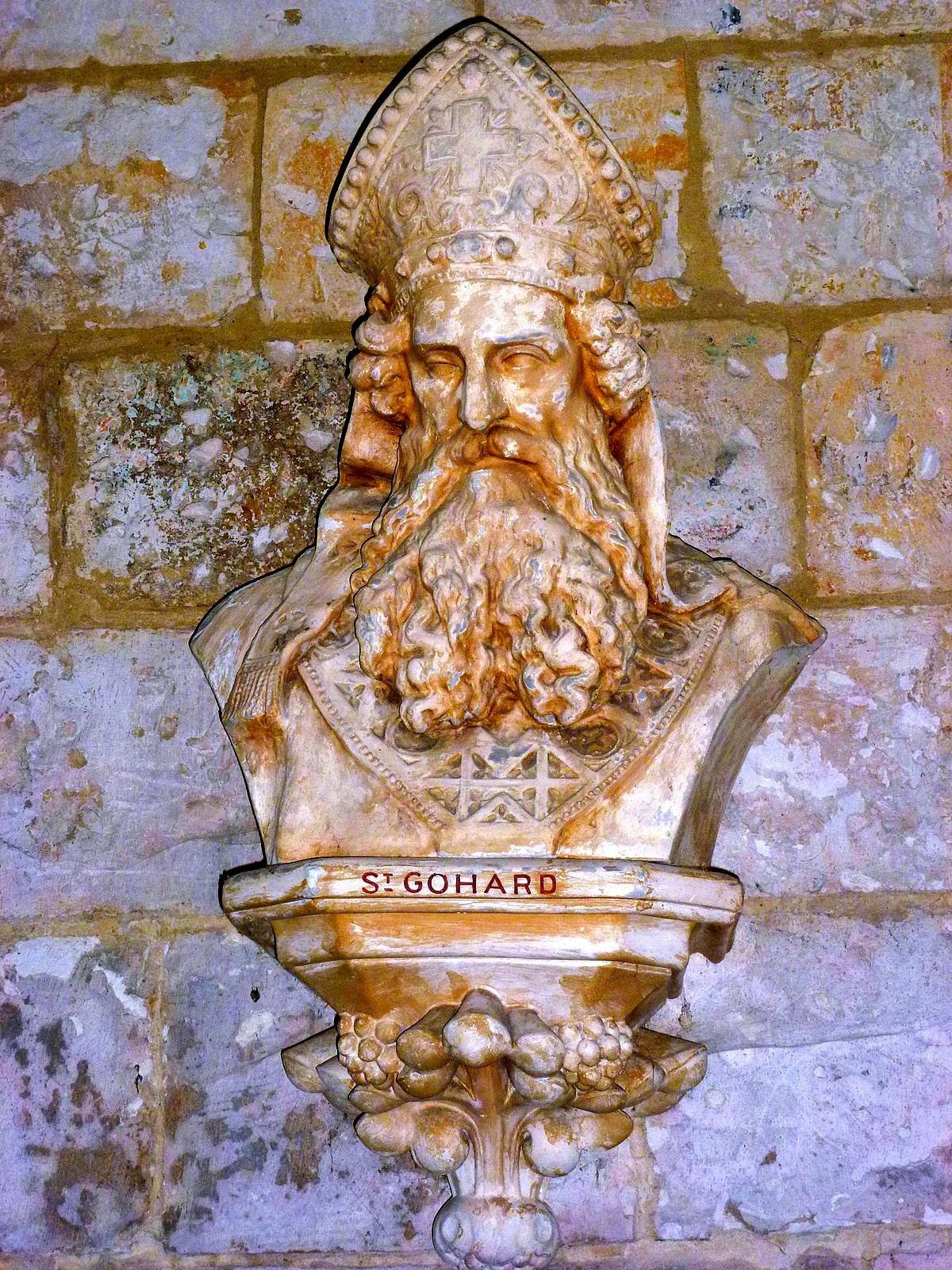
Saint of the Day – 24 June – Saint Gohardus of Nantes (Died 843) and his Companions, Bishop Martyr, a Cephalophore (from the Greek for “head-carrier”), Lord of Blain. Born in 8th Century Angers, Neustria (in modern France) died on 24 June 843 in the Cathedral of Saint Peter, Nantes, Marche de Bretagne. Also known as – Gohard, Gunardo, Gunhard, Gundhard, Gunthard, Godard, Gonhard, Guichard, Guihard, Wighard.
Gohardus was born in Blain in Angers. It was during his Episcopate, in 843 that the Battle of Blain took place, the first major battle between the Franks and the Britons. Damage caused by struggles between these two factions in the area was compounded by Viking raids.
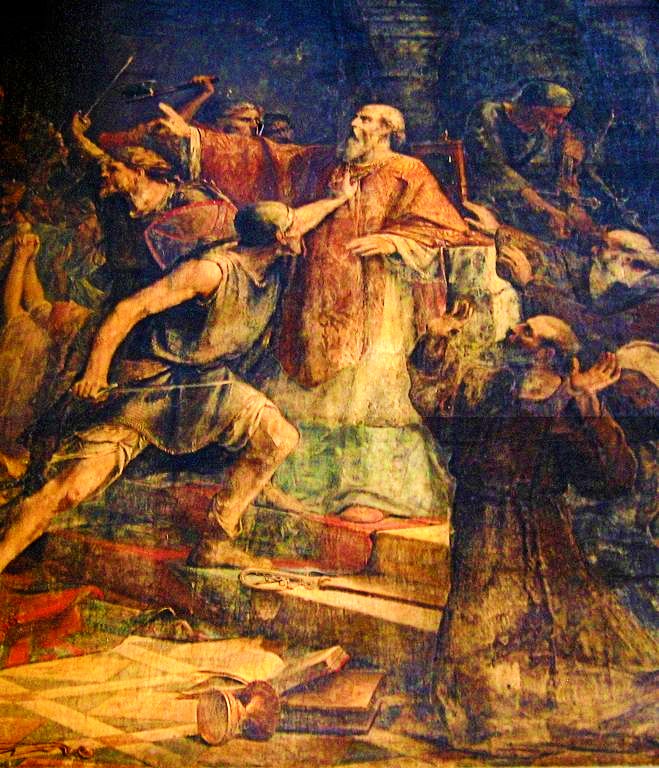
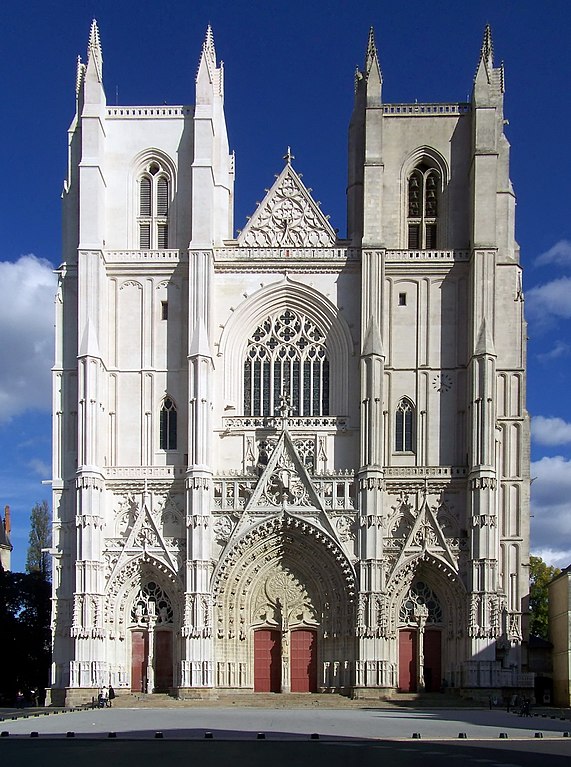
On the Feast day of St John the Baptist, a month after the defeat of Blain, the Vikings arrived at Nantes. Gohardus was celebrating Mass in Nantes Cathedral with a large community of Monks and Priests, when the Vikings attacked, killing the Bishop and his congregation.
Nantes Cathedra
Legend says that Gohardus picked up his severed head and walked down to the Loire River, where a boat took him to Angers. His body was buried in St Peter’s Collegiate Church in Angers, the City where he was born.
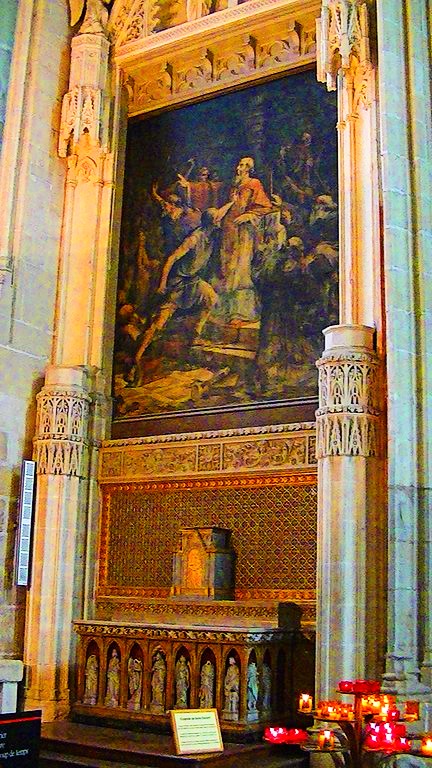
Gohardus was Canonised in 1096 by Pope Urban II. The Romanesque Crypt of Nantes Cathedral is dedicated to our Saint Gohardus and was redesigned shortly after his Canonisation to house his Relics brought from Angers. A side Chapel of the Cathedral is dedicated to enshrine his Relics.
His Feast Day is celebrated on 24 June.
St Gohardus Shrine and Relics in the Side Chapel at Nantes Cathedral dedicated to him
St Erembert I of Kremsmünster St Faustus of Rome and Companions St Festus of Rome St Germoc St Gohardus of Nantes (Died 843) Bishop Martyr St Henry of Auxerre/the Hagiographer St Ivan of Bohemia St John of Rome
St John of Tuy St Joseph Yuan Zaide St Rumold St Simplicio of Autun St Theodulphus of Lobbes
The First Martyrs of the Church of Rome: Countless numbers were Christians Martyred in the City of Rome during Nero’s persecution in 64. The event is recorded by both Tacitus and Pope Clement I, among others. They are celebrated today.
Martyrs of Satala: Seven Christian brothers who were soldiers in the imperial Roman army. They were expelled from the military, exiled and eventually martyred in the persecutions of Maximian. We know little more about them than their names – Cyriacus, Firminus, Firmus, Longinus, Pharnacius, Heros and Orentius. The martyrdoms occurred in c 311 at assorted locations around the Black Sea.
Saint of the Day – 23 June – St Bilio of Vannes (Died c915) Bishop, Martyr, Confessor, a zealous Defender of the Faith and of his flock. St Bilio is believed to have been the 31st Bishop of Vannes in Brittany, France during (circa 892-915/919). He was murdered by Norman invaders whilst defending his See and his people. Also known as – Bili, Bille, Bily, Bilius.
Bilio played a significant role in the history of the Church in Brittany during the 9th Century. His existence, although debated by some scholars, is testified by historical documents and by the popular veneration which elected him Patron of the parish of Plandren.
Information on Bilio comes from various sources, including:
Historical documents: The codex of the Abbey of San Salvatore di Redon preserves seven documents which mention the pastoral activity of Bilio between 892 and 913, offering concrete evidence of his life and his Episcopate.
Episcopal lists: The Episcopal list of Vannes includes our Saint in thirty-first place, placing him between Kenmonoc (878-888) and Cunadan. However, the reliability of this list, especially for the early Bishops, has been questioned by some scholars. -The Roman Martyrology: Recognises him as a Martyr, specifying that he was killed by the Normans invaders during their incursions into Brittany. -Hagiography: The hagiographic tradition narrates his Martyrdom during a Viking raid, elevating him to a symbol of heroic resistance and sacrifice for the Faith.
The period in which Bilio exercised his Episcopate (circa 892-915/919) was marked by the devastating Norman invasions which plagued Brittany. Despite difficulties and dangers, Bilio distinguished himself as a zealous and courageous shepherd, dedicated to the well-being of his people and the defence of the Faith and the Church.
According to tradition, Bilio met his death during one of these Norman incursions, suffering Martyrdom for his faith. His heroic resistance made him a symbol of reference for the Christian community, who venerated his remains and proclaimed him Patron of the parish of Plandren, where he is presumed to have been buried. The figure of St Bilio, although fascinating and full of meaning, is not exempt from historiographical debates. Some scholars question his Martyrdom, while his precise chronological lposition remains uncertain, due to the unreliability of some sources. Nevertheless, we will entreat his intercession for the whole Catholic Church and for ourselves, as time is non-existent in Heaven!
Bl Peter of Juilly Bl Thomas Corsini of Orvieto St Thomas Garnet Bl Walhere of Dinant St Zenas of Philadelphia St Zeno of Philadelphia
Martyrs of Ancyra: A family of converts who were arrested, tortured, and sent in chains to Ancyra, Galatia (modern Ankara, Turkey) where they was tortured again by order of governor Agrippinus during the persecutions of Diocletian. Martyrs. They were – Eustochius, Gaius, Lollia, Probus, Urban. Died by being roasted over a fire and finally beheaded c300 in Ancyra, Galatia (modern Ankara, Turkey).
Martyrs of Nicomedia: During the persecutions of Diocletian, many Christians fled their homes to live in caves in the area of Nicomedia. In 303 troops descended on the area, systematically hunted them down and murdered all they could find.
Quote/s of the Day – 22 June – St Paulinus of Nola (c 354-431) Bishop, Confessor, Father.
“The present is nothing. But eternity abides for those on whom all Truth, all Good, has shone, in One Entire and Perfect Light. ”
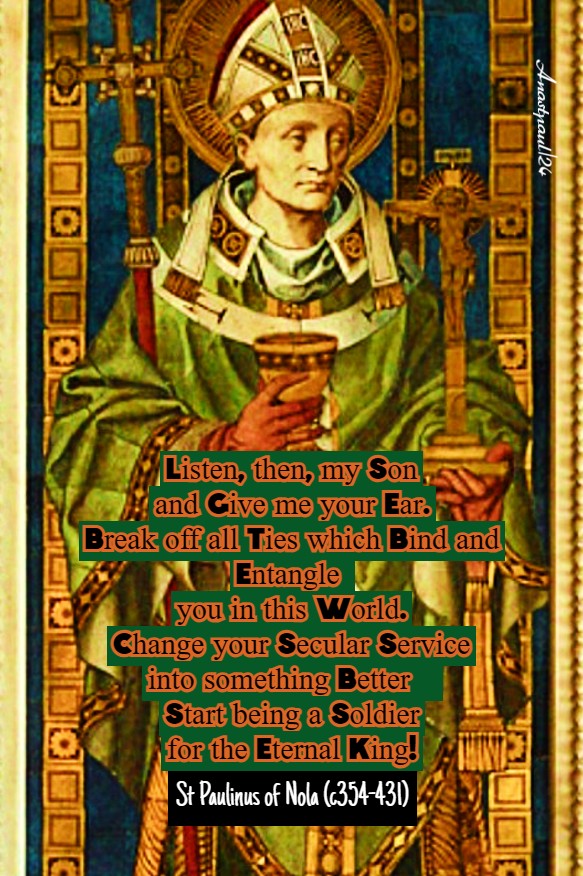
“Listen, then, my son and give me your ear. Break off all ties which bind and entangle you in this world. Change your secular service into something better – start being a soldier for the eternal King!”
“It is a loving act to show sadness when our dear ones are torn from us but, it is a holy act to be joyful,through hope and trust in the promises of God … Thankful joy is more acceptable to God than long and querulous grief.”
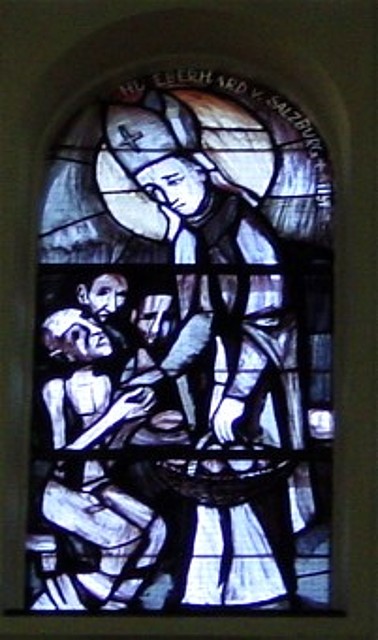
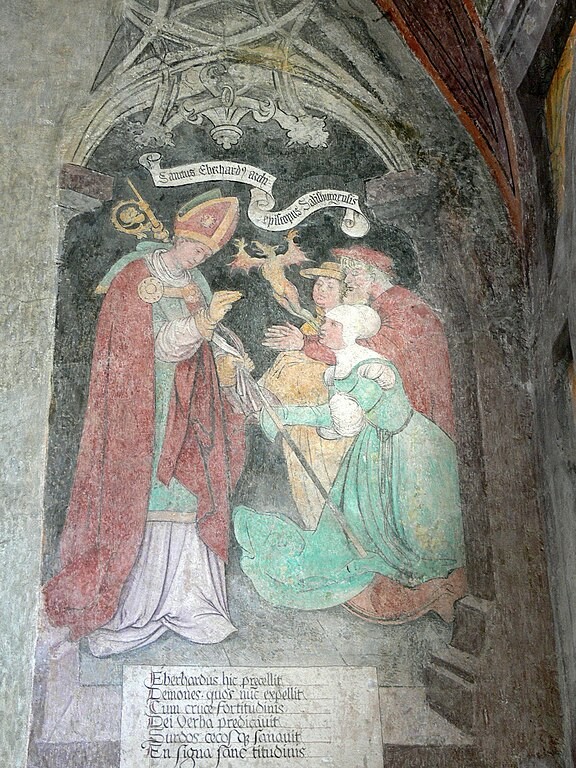
Saint of the Day – 22 June – Saint Eberhard of Salzburg (1085-1164) Archbishop of Salzburg, Austria, Defender of the Papacy, Apostle of the poor and sick, Papal Legate and negotiator. Born in 1085 at Nuremberg, Germany and died on 21 June 1164 at the Cistercian Monastery of Rein, Austria of natural causes. Patronages – Bamberg, Germany, Salzburg, Austria. Also known as – Ebergard, Everard.
Eberhard belonged to the noble Biburger family. From his mother, who with her own hands had taken part in the construction of the pilgrimage Church in Allersdorf, he had inherited a great devotion to the Blessed Virgin Mother of God.
Having received a Canonry in Bamberg, he completed his Ecclesiastical studies in that City. He attempted to enter the Abbey of St Michael but, as soon as he was received, he left due to unknown reasons. He continued his studies in Paris.
Now in his forties, he obtained, from Bishop Otto to embrace the monastic life in Prufening. In 1133 his family founded the Monastery of Biburg, reserving its Abbey dignity for Everhard whose virtue recommended him for this position but he, however, refused to receive the Abbey blessing, until, in 1138, during a trip to Rome with the Bishop of Bamberg, it was conferred upon him by Pope Innocent II.
On 11 May 1147 he was elected as the Archbishop of Salzburg. When, in 1159, after the election of Alexander III, Frederick Barbarossa and with him the majority of the German Bishops, favoured the antipope Victor IV, Everhard openly took the side of the legitimate Pope, without however separating himself from the Emperor, whose political power he respected. Frederick tried several times to win the Prelate to his cause – to this end, in 1162, after his triumphal entry into Milan, he had him come to Italy but Everard was able to defend his position and beliefs so well that Frederick let him return to his Diocese.
Having become Legate of the Pope (legitimate), Everard was unable to reconcile Barbarossa with Pope Alexander III. Returning from Styria, where he had ensured peace between the military leader of Leubnitz and Duke Ottokar, he was forced to stop at the Monastery of Rein, where he died on 21 June. 1164. Cardinal Archbishop Burchard of Weisspriach had begun the process of Canonisation,but it was interruptedin 1466, upon his death.
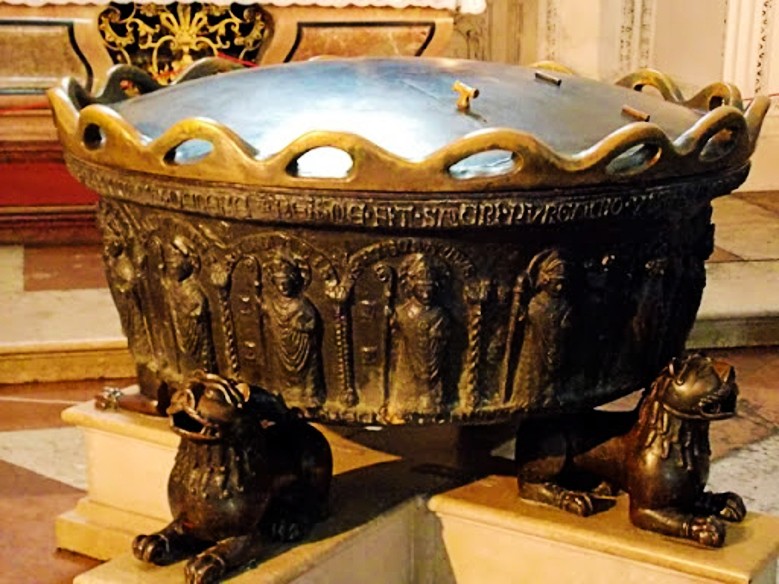
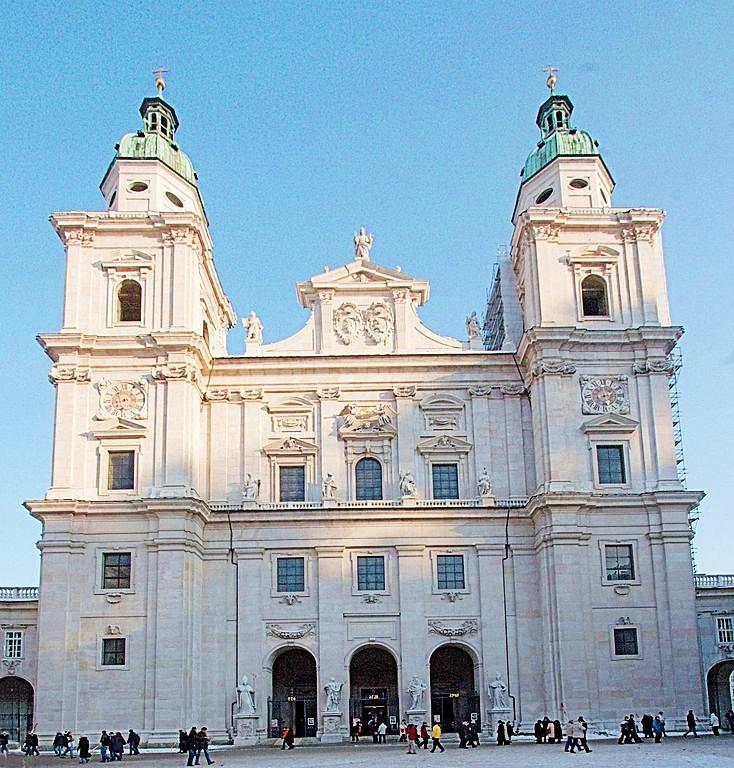
Everhard had his Mass and Office in Salzburg until the introduction of the Roman Breviary in 1598. That year the Cathedral was destroyed by fire and the Relics that had been kept safely there were never found again. The memory of the Saint is found in the Benedictine Martyrology on 22 June. Ssaint Eberhard is depicted on the Baptismal Fonts of Salzburg Cathedral which dates from 1321 and is particularly renowned as having been the site of Mozart’s Baptism.
St Paulinus of Nola (c 354-431) Bishop, Confessor, Poet, Writer, Apostle of Charity, Preacher, Orator, Senator and Governor. St Paulinus was an inspiration to many—including six great Saints of the Church, who referenced him in letters of encouragement to others: St Augustine, St Jerome, Melania, St Martin of Tours, St Gregory and St Ambrose. St Augustine wrote, “Go to Campania– there study Paulinus, that choice servant of God. With what generosity, with what still greater humility, he has flung from himself the burden of this world’s grandeurs to take on him the yoke of Christ and in His service how serene and unobtrusive his life!” This glorious Saint Paulinus!: https://anastpaul.com/2018/06/22/saint-of-the-day-22-june-st-paulinus-of-nola-c-354-431/ AND: https://anastpaul.com/2022/06/22/saint-of-the-day-22-june-st-paulinus-of-nola-c-354-431-2/
St Aaron of Brettany St Aaron of Pais-de-Laon St Alban of Britain Bl Altrude of Rome St Consortia St Cronan of Ferns St Eberhard of Salzburg (1085-1164)Archbishop St Eusebius of Samosata St Exuperantius of Como St Flavius Clemens St Gregory of Agrigento St Heraclius the Soldier St Hespérius of Metz
Blessed Pope Innocent V OP (c 1225-1275) Papal Ascesion 21 January 1276 unril 22 June 1276 (the date of his death. Friar of the Order of Preachers, Theologian, renowned Preacher, Scholar, Writer,, Dominican Office bearer, disciple of St Albert the Great and collaborator and friend of St Thomas Aquinas.and St Bonaventure. His Life: https://anastpaul.com/2021/06/22/saint-of-the-day-22-june-blessed-pope-innocent-v-op-c-1225-1275/
St John IV of Naples St Julius of Pais-de-Laon Bl Kristina Hamm Bl Marie Lhuilier St Nicetas of Remesiana St Precia of Epinal St Rotrudis of Saint-Omer St Rufinus of Alexandria
Martyrs of Samaria – 1480 Saints: 1480 Christians massacred in and near Samaria during the war between the Greek Emperor Heraclius and the pagan Chosroas of Persia. c 614 in the vicinity of Samaria, Palestine.
One Minute Reflection – 21 June – “The Month of the Sacred Heart of Jesus” – St Aloysius de Gonzaga SJ (1568-1591) Confessor – Ecclesiasticus 31:8-11, Matthew 22:29-40 – Scripture search here: https://www.drbo.org/
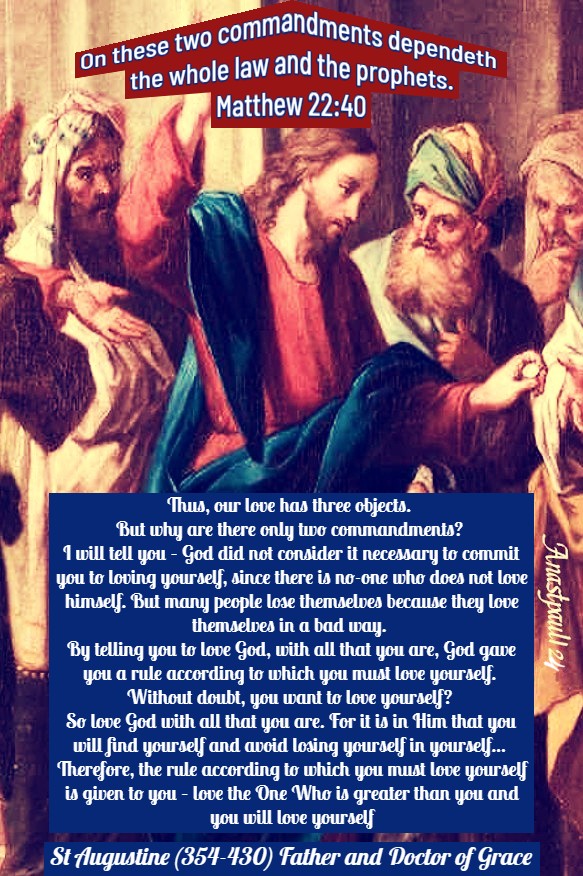
“On these two commandments dependeth the whole law and the prophets.” – Matthew 22:40
REFLECTION – “God does not ask many things of you, for charity alone fulfills the whole Law. But that love is double – love of God and love of the neighbour… When God tells you to love your neighbour, He does not tell you to love him with all your heart, with all your soul, with all your mind. Rather, He tells you to love your neighbour as yourself. Thus, love God with all that you are because He is greater than you are; love your neighbour as yourself because he is what you are…
Thus, our love has three objects. But why are there only two commandments? I will tell you – God did not consider it necessary to commit you to loving yourself, since there is no-one who does not love himself. But many people lose themselves because they love themselves in a bad way. By telling you to love God, with all that you are, God gave you a rule according to which you must love yourself. Without doubt, you want to love yourself? So love God with all that you are. For it is in Him that you will find yourself and avoid losing yourself in yourself… Therefore, the rule according to which you must love yourself is given to you – love the One Who is greater than you and you will love yourself!” – St Augustine (354-430) Father and Doctor of Grace of the Church (Sermon on the Letter of St James).
PRAYER – O God, bestower of heavenly gifts, Who in the angelic youth Aloysius joined wondrous innocence of life to an equally wondrous love of penance; grant, by his merits and prayers, that we who have not followed him in his innocence may imitate him in his penance. Through Jesus Christ, Thy Son our Lord, Who lives and reigns with Thee, in the unity of the Holy Ghost, God, world without end. Amen (Collect).
DIVINE Heart of JESUS, convert sinners, save the dying, set free the holy souls in Purgatory. Indulgence 300 Days Everytime – St Pius X, 11 September, 1907
Saint of the Day – 21 June – Saint Suibhne of Cobran (c670- c730) Bishop of Armagh, Ireland from 715 to 21 June 730. Died on 21 June c 730 of natural causes. Also known as – Suibhne of Armagh,Suibhne In-Sui, Suibhney… Suibne…Suivney…
Saint Suibhne depicted in the Lichfield Gospels,
The Martyrology of Tallagh, an ancient Irish text which lists the Saints venerated by the Irish Church, mentions Saint Suibhne as the Bishop of Cobran, a Diocese which unfortunately has not been identified with certainty. This mention, although valuable, provides no further details about his life or Episcopate.
However, modern hagiographers propose an alternative identification – Saint Suibhne as the Bishop of Armagh, one of the most important Episcopal sees of medieval Ireland. This hypothesis is based on a genealogy reported in the records of Armagh which indicates him as the son of Crundmáel mac Rónáin. These records also places him as the Bishop from 715 to 730, the year of his death.
Regardless of his Episcopal seat, Suibhne is commemorated on 21 June, the day dedicated to his memory. His veneration, attested by several hagiographic sources, suggests a significant role in the religious life of medieval Ireland. However, the lack of concrete details about his life and works, makes it difficult to fully understand the nature and extent of his cult.
St Cyriacus of Africa – Martyr. No other information has survived.
St Demetria of Rome St Dominic of Comacchio St Engelmund
St John Rigby (1570-1600) Martyr, Confessor, Layman’ The Roman Martyrology reads: “In London, England, St John Rigby, Martyr, who, arrested and sentenced to death under Queen Elizabeth I for reconciling with the Catholic Church, was hanged in Southwark and disemboweled while still alive.” His Life and Horrible Tortuous Death: https://anastpaul.com/2023/06/21/saint-of-the-day-21-june-saint-john-rigby-1570-1600-martyr/
Bl Juan of Jesus
St Lazarus the Leper St Leutfridus of La-Croix St Martia of Syracuse St Martin of Tongres St Melchiorre della Pace St Mewan of Bretagne Bl Nicholas Plutzer
St Rufinus of Syracuse Martyr. No other information has survived.
St Suibhne of Cobran (c670-730) Bishop St Terence St Ursicenus of Pavia
Martyrs of Taw – 3+ Saints: Three Christians of different backgrounds who were Martyred together – Moses, Paphnutius, Thomas. They were beheaded in Taw, Egypt, date unknown.
Saint of the Day – 20 June – Saint Bagne of Thérouanne (Died c706) the 5th Bishop of Thérouanne in northwest France (now St Omer) and then Abbot of Fontanelle, the Monastery of Saint Wandrille in Normandy, a disciple of *St Wandrille (c 605–668) Priest, Monk, Abbot. Died in c711 of natural causes Patronage – of Calais, France. Also known as – Theodericus Buinu (his birth name), Bagne of Calais, Bagnus, Bain, Baino, Bainus, Baiano. Additional Memorial – 10 June in Calais and possible universally at one time.
Fontanelle Abbey St Wandrille’s Monastery
Bagne was born to an illustrious family and was named Theodericus Buinus. He embraced the monastic life and was one of the most fervent disciples of St Wandrille. He built up the Monastery of Fontenelle so much by his prudence, his learning and his holiness that, after the death of Saint Drancius, Successor of Saint Omer to the see of Thérouanne and Boulogne, he was elected and called to govern the Diocese.
Baigne was at the head of this See for twelve years, fulfilling all the duties of his pastoral charge with extraordinary zeal and with the greatest perfection, from the year 685 to the year 697. He made several translations and went to Rome, where Pope Sergius I showered him with precious gifts and gave him marks of his high esteem and friendship.
Finally, overwhelmed by the fatigue of the pastoral care and jealous of imitating so many holy Bishops whose veneration he had made honourable, in 697, our Saint Bagne resigned from his Office and chose ,for the place of his retreat, his dear Abbey of Fontenelle, in which he had once spent days so full of meditation, prayer and peace.
Three years after his retirement. he had to yield to the entreaties of the Monks and accept the new Office of Abbot of Fontenelle. In 705 he transferred, from the Church of Saint Paul to that of Saint Peter, the bodies of Saint Wandrille and Saint Ansbert, which were found intact and emmiting the sweetest smell.
Saint Bagne only lived, it seems, for a very short time after this transfer. We are unsure of the precise date of his death, which is usually placed in c706.
There remains, says Father Van-Drival, who provided us with the above details (1635), a living memory of this holy Bishop in the name of the village of “Binghem” the home of Bagne. We have, in fact, the tradition that Saint Bagne sometimes lived in this place, where he had acquired land for the Church of Thérouanne. In 846, the Relics of Saint Bagne were translated to Saint Omer, in order to protect them from the desecration of the Danes. The City of Calais having been the Saint’s favourite place for preaching and this holy Bishop having reaped great fruits of conversion there, the Calaisians have always considered him as their very own Apostle and honoured him as their Patron. His feast is celebrated on 10 June in that City.
St Bagne of Thérouanne (Died c706) Bishop Blessed Benignus of Breslau O,Cist. (13th-14th Century) Cistercian Monk and Martyr St Edburga of Caistor St Florentia of Seville
Blessed Francisco Pacheco SJ (1566-1626) Martyr, Priest of the Society of Jesus, Missionary to India, China and Japan, Provincial Superior. Fr Pacheco and his eight Jesuit companions, together with the nine lay Christians, were included among the 205 Martyrs Beatified by Blessed Pope Pius IX on 7 May1867. His Life and Death: https://anastpaul.com/2021/06/20/saint-of-th-day-20-june-blessed-francisco-pacheco-sj-1566-1626/
St Gemma of Saintonge St Goban of Picardie St Helen of Öehren
St Macarius of Petra (Died c350) Bishop and Confessor St Methodius of Olympus
Blessed Michelina of Pesaro TOSF (1300-1356) Widow, Religious of the Third Order of the Friars Minor, Stigmatic, Penitent, Apostle of all in need, Founder of the Confraternity of the Annunciation, to care for the poor, nurse the sick and bury the dead. Patronages – Pesaro, widows, against mental illness, against death of children. Beatified on 13 April 1737 by Pope Clement XII. Her Holy Life: https://anastpaul.com/2022/06/20/saint-of-the-day-20-june-blessed-michelina-of-pesaro-tosf-1300-1356/
St Novatus of Rome (Died c151) Confessor, Layman. The Roman Martyrology reads today: “At Rome, the demise of St Novatus, son of the blessed Senator, Puden and brother of the saintly Priest, Timothy and of the Holy Virgins of Christ, Pudentiana and Praxedes, who were instructed in the Faith by the Apostles. Their house was converted into a Church and bore the title of Pastor.” A Zealous Life: https://anastpaul.com/2023/06/20/saint-of-the-day-20-june-saint-novatus-of-rome-died-c151-confessor/
Martyred in London: Bl Anthony Turner Bl John Fenwick Bl John Gavan BL Thomas Whitbread Blessed William Harcourt
Irish Martyrs – 260 Beati – This is the collective title given to the 260 or more persons who are credited with dying for the Faith in Ireland between 1537 and 1714.
Martyrs of Lower Moesia: Martyred on the Black Sea at Lower Moesia (in modern Bulgaria), date unknown. St Cyriacus St Paul
Martyred in Nagasaki: 9 Beati : burned alive on 20 June 1626 in Nagasaki, Japan. Their ashes were thrown into the sea and no relics remain. They were Beatified on 7 May 1867 by Pope Pius IX. Blessed Baltasar de Torres Arias Blessed Francisco Pacheco Blessed Gaspar Sadamatsu Blessed Giovanni Battista Zola Blessed Ioannes Kisaku Blessed Michaël Tozo Blessed Paulus Shinsuke Blessed Petrus Rinsei Blessed Vincentius Kaun
One Minute Reflection – 19 June – “The Month of the Sacred Heart of Jesus” – St Juliana Falconieri OSM (1270 – 1341) Virgin – 2 Corinthians 10:17-18, 11:1-2; Matthew 25:1-13 – Scripture search here: https://www.drbo.org/
“ … The Bridegroom came and they, who were ready, went in with Him … ” – Matthew 25:10
REFLECTION – “In this world, which is to say, in the Church, wholly following Christ, He says to all of us: “Whoever wishes to come after Me must deny himself.” This command is not being directed to virgins but not married women, to widows but not wives, to Monks but not husbands, to Priests but not laity. It is the whole Church, the whole Body of Christ with all its members, differentiated and divided according to their proper functions that is, to follow Christ. May she wholly follow Him, she who is one alone, the dove, the bride (Sg 6:9); may she follow Him, she who has been redeemed and endowed with the Blood of her Bridegroom. Virginal purity has its place here; the continence of widows has its place here; wedded chastity has its place here…
These members who have their place here should follow Christ, each according to their category, each according to their status, each after its fashion. Let them deny themselves, that is to say, let them not rely on themselves. Let them carry their cross that is to say, bear, for Christ’s sake in the world, all that the world inflicts on them. May they love Him, He, the Only One, Who never deceives or is deceived, the Only One ,Who is not mistaken. May they love Him because, what He promises is true. Yet because, He does not give it to us now, our faith falters. Keep going, persevere, bear and accept this delay and you have carried His Cross!” – St Augustine (354-430) Father and Doctor of Grace (Sermon 96:9)
PRAYER – O God, Who miraculously fortified blessed Juliana, Thy Virgin, in her last illness with the precious Body of Thy Son, grant, we beseech Thee, that with her merits pleading for us, we also, refreshed and strengthened by the same Sacrament in our dying agony, may be brought to our heavenly home. Through Jesus Christ, Thy Son our Lord, Who lives and reigns with Thee, in the unity of the Holy Ghost, God, world without end. Amen (Collect).
EUCHARISTIC Heart of JESUS, model of the priestly heart, have mercy on us. COR JESU Eucharisticum, cordis sacerdotalis exemplar, miserere nobis.– Indulgence 300 Days, Everytime – Raccolta 177St Pius X, 11 Sept
Saint of the Day – 19 June – Blessed Humphrey Middlemore O.Cart. (Died 1535) Priest, Martyr, Carthusian Monk and Prior. Died on 19 June 1535at Tyburn Tree , London for refusal to take the new Oath of Supremacy by being hanged, drawn and quartered. Additional Memorial – on 4 May as one of the Carthusian Martyrs of London during the violent horrors perpetrated by Henry VIII when Catholics refused to recognise his so-called marriage to Anne Boleyn.
Although the date of his birth is uncertain, his father was Thomas Middlemore of Edgbaston, Warwickshire, who had acquired his estate at Edgbaston by marriage with the heiress of Sir Henry Edgbaston. Humphrey’s mother was Ann Lyttleton, of Pillaton Hall, Staffordshire. Humphrey became attracted to the Carthusian Order at an early age and entered the London Charterhouse, where he was Professed and Ordained. He was subsequently appointed to the Office of Procurator. He was esteemed by the Prior, Dom John Houghton (also Martyred).
In 1534 the question of King Henry VIII’s marriage with Anne Boleyn arose. The King was determined that the more prominent of his subjects should expressly acknowledge the validity of the marriage and the right of succession of any issue therefrom. The Crown was at first anxious to secure the public acquiescence of the Monks of the London Charterhouse in this matter, since they enjoyed great prestige for the austerity and sincerity of their mode of life. Accordingly, the Royal Commissions paid a visit to the Charterhouse and required the Monks to take the Oath to that effect. Doms John Houghton and Humphrey Middlemore refused and were, in consequence, imprisoned in the Tower of London but, after a month’s imprisonment, they were persuaded to take the Oath conditionally and were released.
In the following year, on 4 May 1535, the authorities sent to their death at Tyburn Tree, three leading English Carthusians, first among them John Houghton, Prior of the London Charterhouse but also Robert Lawrence and Augustine Webster, respectively Priors of Beauvale and Axholme. This led to Middlemore becoming Vicar of the community.
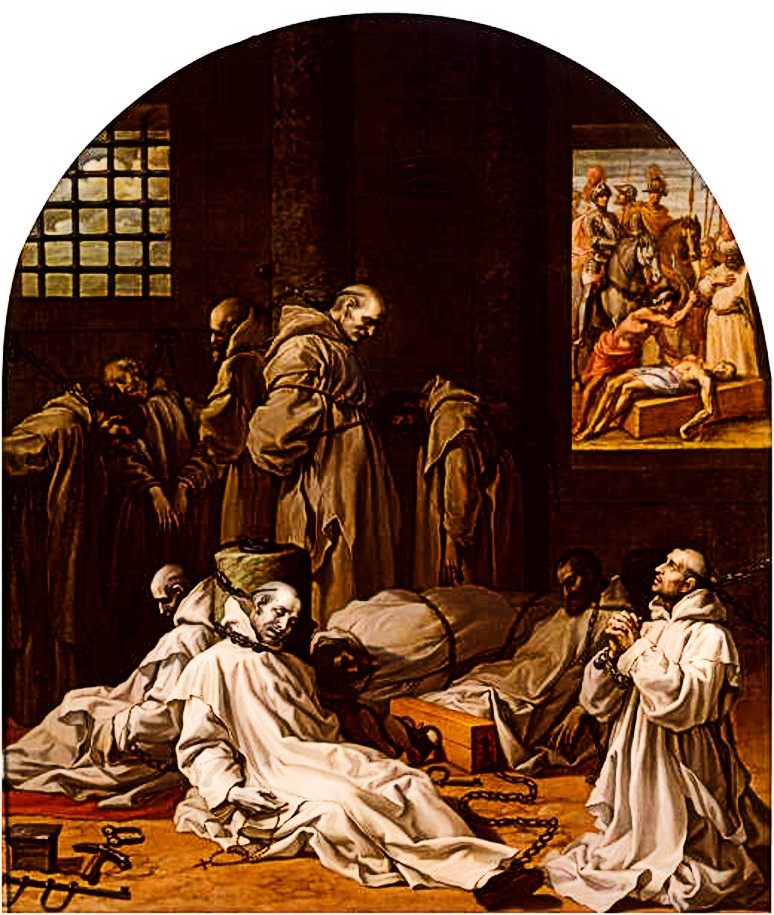
Meanwhile, Thomas Bedyll, one of the Royal Commissioners, had again visited the Charterhouse and endeavoured, both by conversation and writing, to shake the faith of Middlemore and his community, in the Papal supremacy. His efforts left them unmoved and, after debating with them, he obtained authority from Thomas Cromwell to arrest three leading Monks of the London House: Middlemore, as the Vicar and with him ,Doms William Exmew and Sebastian Newdigate. All three were thrown into prison, where they were treated with cruelty, being bound to posts with chains round their necks and legs and compelled to remain thus day and night for two weeks. They were then brought before the Council and required to take the Oath. They refused and gave arguments from Scripture and the Church Fathers in favour of the Pope and his supremacy over the Church of Christ.
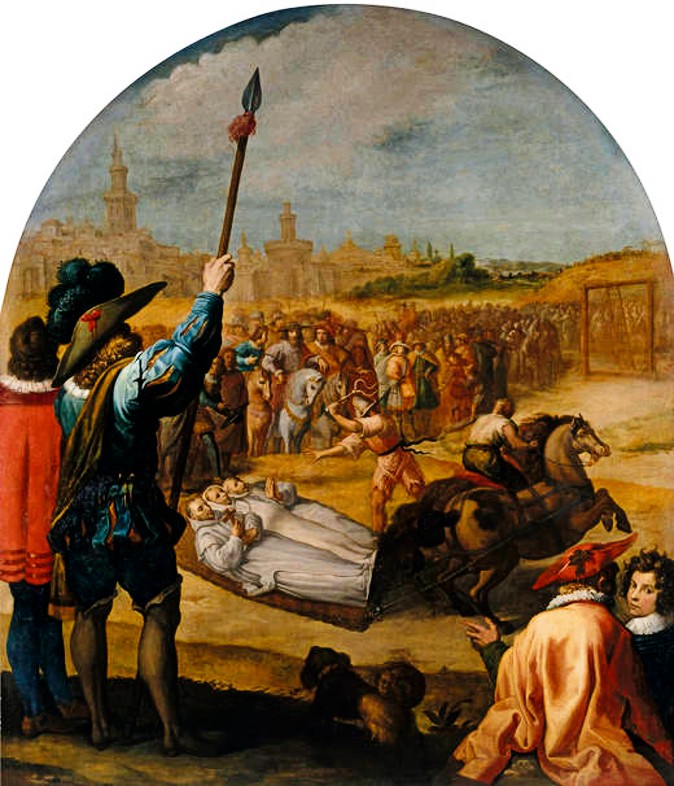
They were accordingly condemned to death and executed at Tyburn Tree on 19 June, being hanged, drawn and quartered. This was a little more than a month after their fellow Monks. This process of attrition was to claim fifteen of the London Carthusians.
Pope Leo XIII Beatified Blessed Humphrey on 29 December 1886.
Part of a stained glass window in St. Mary’s Roman Catholic Church in Bridge Gate, Derby
Sts Adleida and Lupo of Bergamo Married Martyrs Bl Arnaldo of Liniberio St Culmatius of Arezzo St Deodatus of Jointures St Deodatus of Nevers St Gaudentius of Arezzo
St Hildegrin of Châlons-sur-Marne Bishop St Hildemarca of Fecamp (Died c682) Abbess Blessed Humphrey Middlemore O.Cart. (Died 1535) Priest, Martyr St Innocent of Le Mans St Lambert of Saragossa Layman Martyr St Lupo of Bergamo St Modeste Andlauer St Nazario of Koper Bl Odo of Cambrai St Rémi Isoré Bl Sebastian Newdigate Bl Thomas Woodhouse Bl William Exmew St Zosimus of Umbria
Quote/s of the Day – 18 June – “The Harp of the Holy Ghost!” Father & Doctor of the Church, Confessor
“The Cross gives Light to the whole universe; it casts out darkness and gathers nations together in charity, into One Church, One Faith, One Baptism…”
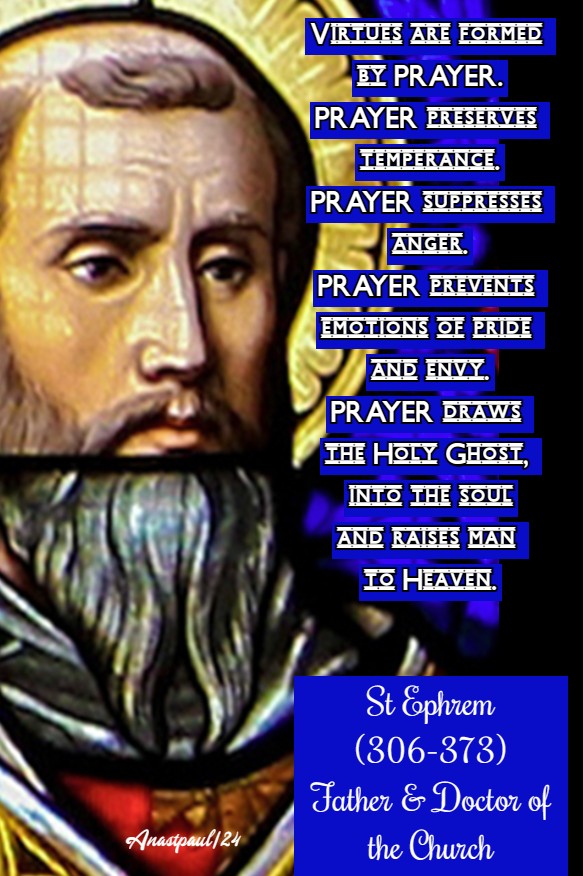
“Virtues are formed by PRAYER. PRAYER preserves temperance. PRAYER suppresses anger. PRAYER prevents emotions of pride and envy. PRAYER draws the Holy Ghost, into the soul and raises man to Heaven.”
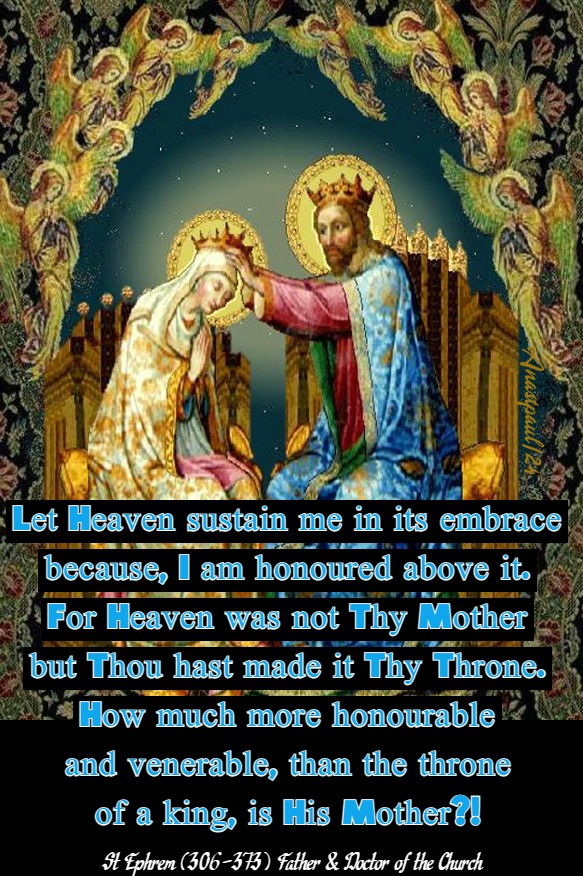
“Let Heaven sustain me in its embrace because, I am honoured above it. For Heaven was not Thy Mother but Thou hast made it Thy Throne. How much more honourable and venerable, than the throne of a king, is His Mother?!”
“Thou alone and Thy Mother, are in all things fair, there is no flaw in Thee and no stain in Thy Mother.”
“Some people, who were opposed to the Holy Ghost, said: “These people have had too much new wine; they are drunk.” Indeed, you speak truly! However, it is not as you think it is. It is not wine from the vineyard they have drunk. It is a new wine that flows from Heaven – a wine newly pressed on Golgotha. The Apostles caused it to be drunk and thus , they inebriated all creation. This is wine that was pressed on the Cross!”
Saint of the Day – 18 June – Saint Abraham of Clermont (Died c479) Abbot and Founder of the Monastery of St Cyriacus in Clermont-Ferrand, Hermit, Miracle-worker. Born in 5th Century Syria and died in c479 of natural causes in his Monastery in France. Patronage – against fever. Also known as – Abraham the Abbot.
Ancient Monks with an old Abbot
Abraham was born in Syria, along the Euphrates River and was of Persian origins. He later left for Egypt, to visit some of the hermits and Monks there, seeking knowledge of monastic life and rules. However, on the way to Egypt, he was kidnapped and held prisoner for five years.
Finally. he managed to escape and ardously travelled to Gaul (France). He settled in Clermont in the Auvergne region as a Hermit. His reputation for holiness spread rapidly and he attracted so many disciples that he needed to build a Monastery to house them, near the Basilica of Saint Cyricus not far from St Illidius Church in Clermont.
He died around 479. St Apollinaris Sedonius, the Bishop of Clermont wrote an Epitaph on the grave of St Abraham from which we have been granted confirmation of some facts concerning our Saint’s life.
St Alena of Dilbeek St Amandus of Bordeaux St Arcontius of Brioude St Athenogenes of Pontus St Calogero of Sicily St Calogerus of Fragalata St Calogerus the Anchorite St Colman mac Mici St Cyriacus of Malaga St Demetrius of Fragalata St Edith of Aylesbury
St Elpidius of Brioude St Equizio of Telese St Erasmo St Etherius of Nicomedia Bl Euphemia of Altenmünster St Fortunatus the Philosopher St Gerland of Caltagirone St Gregory of Fragalata
St Osanna of Northumberland St Osmanna of Jouarre St Paula of Malaga Bl Peter Sanchez
Hermits of Karden: A father (Felicio) and his two sons (Simplicio and Potentino) who became pilgrim to various European holy places and then hermits at Karden (modern Treis-Karden, Germany). (Born in Aquitaine (in modern France. ) Their relics transferred to places in the Eifel region of western Germany at some point prior to 930. They were canonised on 12 August 1908 by Pope Pius X (cultus confirmation).
Martyrs of Ravenna – 4 Saints: A group of four Christians Martyred together. We have no details but their names – Crispin, Cruciatus, Emilius and Felix. They were martyred in Ravenna, Italy, date unknown.
Martyrs of Rome – 3 Saints: Three Christians Martyred together . We have no details but their names – Cyriacus, Paul and Thomas. In Rome, Italy, date unknown.
Martyrs of Tripoli – 3 Saints: Three imperial Roman soldiers, at last two of them recent converts, who were imprisoned, tortured and executed for their faith. Martyrs – Hypatius, Leontius and Theodulus. They were Greek born and they died c135 at Tripoli, Phoenicia (in modern Lebanon).
Saint of the Day – 17 June – Saint Fulk (Died 900) Archbishop of Rheims in 883, Chancellor of Frankish Kingdom, protector and defender of the Church’s rights and assets for which position he was murdered on 17 June 900. Some sources name him a Martyr for the Church of Christ. Also known as – Foulques the Venerable, Coots the Venerable … Folco…Foulque…Fulco…Foulques of Reims… Fulko…Fulque…Fulquerio…Venerável…
Fulk was born into a noble Frankish family with close ties to the Carolingian dynasty. His brother, Anscarius I, became the first Marquis of Ivrea, giving rise to the Anscarici dynasty.
Fulk undertook an Ecclesiastical career from a young age, becoming a Palace Cleric at the Court of Charles II the Bald. In 877 his dedication and ability led to his appointment as the Abbot of the Benedictine Abbey of St Bertinus.
On 7 March 883, Fulk reached the pinnacle of his Ecclesiastical career with his appointment as the Archbishop of Rheims, one of the most prestigious Episcopal Sees of the West Frankish Kingdom. During his tenure, he fervently devoted himself to the restoration of the Diocesan Cathedral, the symbol of his spiritual authority.
In 898, Fulk assumed the role of the Chancellor of the Kingdom, taking a leading role in the political sphere. He became noticeable for his tenacious defence of Ecclesiastical assets from the expansionist aims of the nobles, countering secular interference in the properties of the Church.
Fulk’s strenuous defence of the rights of the Church led him to clash with Baldwin II, the powerful Count of Flanders. According to the chronicler Floardus, the King granted Fulk the Abbey of St Vaast in Arras, previously controlled by Baldwin. This act fuelled tensions between the two, leaders culminating in the assassination of Fulk on 17 June 900 at the hands of men in the service of the Flemish Count.
St Briavel of Gloucestershire St David of Bourges St Dignamerita of Brescia St Diogenes of Rome St Emily de Vialar St Fulk of Rheims (Died 900) Bishop St Gundulphus of Bourges
St Himerius of Amelia St Hypatius of Chalcedon St Molling of Wexford St Montanus of Gaeta St Nectan of Hartland Bl Paul Burali d’Arezzo Bl Peter Gambacorta Bl Philippe Papon St Prior St Rambold of Ratisbon
Martyrs of Apollonia – 7 Saints: A group of Christians who fled to a cave near Apollonia, Macedonia to escape persecution for his faith, but were caught and executed. The names we know are – Basil, Ermia, Felix, Innocent, Isaurus, Jeremias and Peregrinus. They were beheaded at Apollonia, Macedonia.
Martyrs of Aquileia – 4 Saints: Four Christian Martyrs memorialised together. No details about them have survived, not even if they died together – Ciria, Maria, Musca and Valerian. c.100 in Aquileia, Italy.
Martyrs of Chalcedon – 3 Saints: Three well-educated Christian men who were sent as ambassadors from King Baltan of Persia to the court of emperor Julian the Apostate to negotiate peace between the two states, and an end of Julian’s persecutions of Christians. Instead of negotiating, Julian imprisoned them, ordered them to make a sacrifice to pagan idols and when they refused, had them executed. Their names were Manuel, Sabel and Ismael. They were beheaded in 362 in Chalcedon (part of modern Istanbul, Turkey) and their bodies burned and no relics survive.
Martyrs of Fez – 4 Beati: A group of Mercedarians sent to Fez, Morocco to ransom Christians imprisoned and enslaved by Muslims. For being openly Christian they were imprisoned, tortured, mutilated and executed. Martyrs – Egidio, John, Louis and Paul. They were martyred in Fez, Morocco.
Martyrs of Rome – 262 Saints: A group of 262 Christians Martyred in the persecutions of Diocletian. In c303 in Rome, Italy. They were buried on the old Via Salaria in Rome.
Martyrs of Venafro – 3 Saints: Three Christian lay people, two of them imperial Roman soldiers, who were converts to Christianity and were Martyred together in the persecutions of Maximian and Diocletian – Daria, Marcian and Nicander. They were beheaded c.303 in Venafro, Italy. By 313 a basilica had been built over their graves which were re-discovered in 1930. They are patrons of Venafro, Italy.



































You must be logged in to post a comment.